
Part 37
5:6-21 ASSURANCE OF ETERNAL LIFE
The basis of assurance (5:6-12)
Those who taught Gnostic-type theories did not believe that the person who died on the cross was Jesus Christ the Son of God. They claimed that 'the Christ' (i.e. God) descended on Jesus (the man) in the form of a dove after his baptism and empowered him to do miracles, but departed before his crucifixion. According to them, the Jesus who suffered and died was merely a man. He was not 'the Christ'. In other words, 'the Christ' came through water (his baptism) but not through blood (his death).
John emphatically denies this by saying that Jesus was the Christ, the Son of God, through both experiences. John quotes three witnesses as evidence to support this. The first is the water, for Jesus was already both God and man when he was baptized (cf. John 1:29-34). The second is the blood, for the person who died on the cross was both God and man (cf. John 20:26-31; Acts 2:22-24). The third is the Spirit, for Christ's indwelling Spirit is the one who confirms this truth to the Christian (cf. 1 John 2:20; 3:24; 4:13). When the testimonies of three witnesses are in agreement, they must be accepted as evidence that cannot be disputed (6-8; cf. Deut 19:15).
If people accept the testimony of their fellow human beings, how much more should they accept the testimony of God. And God says that the one who died for the sins of the world was his Son. To deny the union of the divine and the human in Jesus is to call God a liar (9-10). God's Son is the source of eternal life, and those who accept God's testimony and believe in his Son have eternal life also (11-12).
Practical results of assurance (5:13-21)
When Christians know with assurance that God has accepted them and given them eternal life, they will have confidence to come to him with their requests. First, however, they must consider God's will, and not make requests from the wrong motives. They can then be assured that God will hear and answer their prayers (13-15). John encourages them to pray for one another, but he points out that there may be some cases where a person, through his sin, sets in motion a course of events that no amount of prayer can reverse. Christians must train themselves to see the difference between those cases where they should pray and those cases where they should not (16-17).
Sin is not a characteristic of Christians, because Christ keeps them from coming under the power of Satan. Since they belong to God, their lives are different from those of worldly people in general (18-19). John repeats that Jesus Christ, the Son of God who died for sinners, is the true God and he gives believers eternal life. The substitutes invented by the false teachers are false gods and must be avoided (20-21).
2 John
John wrote his Second Letter in relation to the same false teaching as he opposed in his First Letter (2 John 7). The teaching was a kind of Gnosticism, a heresy that distorted the truth of Christianity by trying to harmonize it with current philosophies. (For details of the false teaching see background notes to 1 John.)
This false teaching was not confined to the church addressed in the earlier letter, but was being spread around the region by travelling preachers. The short letter of 2 John was sent to a particular group of Christians, either a church or a large family, partly to encourage the believers and partly to warn them not to allow the teachers of false doctrine into their gathering (2 John 10-11).
CONTENTS OF THE LETTER
The 'elect lady' whom John mentions in his opening greeting could have been an individual known to John, but the expression seems more likely to refer to a church. If this is so, 'her children' would be the church members. Whoever they were, John addresses them in a way that shows the respect and love he has for them. They are united with John and with Christians everywhere through the truth of Christ that they hold in common and the love of Christ in which they all share. Truth and love are inseparable from the gospel by which they have been saved, and do not change to suit current trends and popular philosophies (1-3).
John is thankful that his readers have maintained their loyalty to the gospel, but he wants them to remember that they must also maintain their Christian love. Those who claim to live according to God's truth will show it in their love for one another and in their obedience to God's commands (4-6). In this way they will strengthen themselves and so will not be easily deceived by those who give wrong teaching concerning Christ. One error that some of the travelling preachers were spreading around was that Jesus Christ did not have a truly human body. John warns that if they are allowed to preach such things in the church, their erroneous ideas will soon destroy all the good work that the church has done (7-8).
The false teachers think that their teaching about Jesus is advanced, but actually it destroys all hope of salvation. By refusing to accept Jesus Christ as the Son of God who became a man, they are refusing God himself, for no one can have the Father without having the Son. Christians must not listen to such teaching nor give any encouragement or help to the teachers (9-11).
As John hopes to visit the believers soon, he will write no more at present. The group of Christians from which John writes (possibly the church in Ephesus) joins him in sending greetings (12-13).
3 John
In the letter known as 1 John, the apostle John opposed a kind of false teaching that seems to have been centred in Ephesus (1 John 2:26; 4:1). In 2 John he warned against travelling preachers who were spreading this teaching around other churches of the Ephesus region (2 John 7,10). However, not all travelling preachers were trouble-makers. Some were preachers of the true gospel, and 3 John was written to a church leader named Gaius, to encourage him to keep supporting such people, in spite of the difficulties he faced.
The letter does not state which church Gaius belonged to, but his difficulties were chiefly concerned with a man named Diotrephes who had worked himself into a position of power in the church. Diotrephes refused to receive the travelling preachers, claiming that they were representatives of the apostle John, whom he opposed. John's letter, therefore, in addition to giving encouragement to Gaius, gave advice concerning how to deal with Diotrephes (3 John 9-10).
CONTENTS OF THE LETTER
John is always glad to hear good news of Christians whom he has helped over the years. In particular, he is encouraged by the news he has heard about Gaius, namely, that he continues to grow in spiritual strength and remains faithful to the truth (1-4).
Besides being faithful to God in the things he believes and teaches, Gaius is helpful to the travelling preachers. He welcomes them to preach in the church and provides them with loving hospitality. This is true not just of those travellers who are his friends, but also of those who are strangers to him (5-6). By supporting such people, he is helping to preserve God's truth in a time of widespread false teaching. Others in the church should follow his example (7-8).
By contrast Diotrephes acts only out of selfish ambition. He opposes the authority of John (who was an apostle as well as an elder), refuses to pass on John's instruction to the church and makes false accusations against him. Harshly domineering and always self-assertive, he refuses to welcome the travelling preachers into the church and expels any who oppose him. If Gaius is unable to restore some harmony and order in the church, John himself may have to come and use his apostolic authority to punish Diotrephes (9-10).
John reminds Gaius of the need to stand firm for what is right and not to give in to wrongdoing merely for the sake of peace. He suggests that the respected Demetrius might be a reliable helper in this difficult time (11-12). John expects that he himself will visit Gaius soon, and this will give him the opportunity to talk over these and other matters at greater length. Meanwhile, he and his friends pass on their greetings to the church (13-15).
Jude
It is generally believed that the writer of this letter was Jude (or Judas), one of the brothers of Jesus (Mark 6:3). His older brother was James, a leading man in the Jerusalem church (Jude 1; cf. Acts 12:17; 15:13). Like James he was not a believer during the time of Jesus' public ministry (John 7:3-5), but he was among the disciples at the time of Jesus' ascension (Acts 1:11-14). It is believed that the resurrection had an impact on Jesus' brothers that helped turn them from unbelief to faith (cf. 1 Cor 15:4-7).
Jude seems to have later become a respected teacher in the church, though his letter does not indicate the region where he worked or the people whom he addressed. Nevertheless, the purpose of his letter is clear. He wrote to oppose a kind of false teaching that was doing great damage to Christianity through encouraging immoral behaviour (Jude 3-4).
The false teaching that Jude opposed was widespread during the second half of the first century. It was part of a developing Gnosticism (from the Greek gnosis, meaning 'knowledge'; see background notes to 1 John). The teaching claimed that self-control was not necessary for those who possessed a higher knowledge of spiritual things. In fact, immoral behaviour might even be a sign of spiritual maturity, as if people found true freedom through their higher knowledge. Jude pronounced God's certain punishment on those who taught and practised such a religion.
Parts of the letter of Jude are similar to parts of 2 Peter, particularly in the examples and illustrations that are used. The two writers opposed similar errors, and one may have borrowed from the other's letter. Alternatively, both may have used material that had become a widely accepted standard in dealing with the false teaching of the time.
CONTENTS OF THE LETTER
Condemnation of the false teachers (1-16)
Jude had intended to write about more general matters concerning the Christian faith, but when he heard of the activities of evil teachers he changed his mind. He now feels that it is more important to encourage the Christians to hold firmly to the truth they first heard and to fight against those who want to destroy it. Punishment is certain for those who distort the true teaching of the gospel in order to give themselves the freedom to practise immorality (1-4).
People may belong to a Christian community, or even be known as Christian teachers, but that is no guarantee of their salvation. If they do not truly believe, they will suffer God's condemnation. Three examples are given to illustrate this fact. First, all the people of Israel were delivered from Egypt, but those who did not believe were destroyed (5; cf. Num 14:26-35). Second, angels have high status, but those who rebelled met a terrifying judgment (6; cf. Gen 6:1-4). Third, Sodom and Gomorrah were great cities, but they were destroyed because of their immorality (7; cf. Gen 19:12-25).
Controlling neither their passions nor their words, these false teachers commit immoral sexual acts and insult both God and his angels. Yet the chief angel himself refused to condemn the devil with insulting words (even though he may have had good cause to), for he would not claim for himself the authority of judgment that belongs to God alone (8-9). (This story is taken from the apocryphal 'Assumption of Moses'. Apocryphal writings are certain recognized books written in the era of the Old Testament but not included in the Old Testament. They are grouped into two collections, the Apocrypha and the Pseudepigrapha.)
The ungodly teachers have no understanding of spiritual things, but act according to their physical instincts, like animals. They have Cain's jealousy, Balaam's greed, and Korah's spirit of rebellion against authority (10-11; cf. Gen 4:3-8; Num 16:1-50; 22:1-40; 25:1-9; 31:16). Their behaviour at Christian fellowship meals is a disgrace. Like rainless clouds they bring no good; like fruitless trees they are useless and should be destroyed; like the restless sea they are without control; like falling stars they will be swallowed up in the darkness, the darkness of God's eternal punishment (12-13).
Enoch's prophecy confirms the certain punishment of people characterized by such ungodliness. Whether they criticize or flatter, whether they grumble or boast, their actions are always motivated solely by what is going to benefit them personally (14-16). (The prophecy of Enoch is taken from the apocryphal 'Book of Enoch'.)
Encouragement to Christians (17-25)
The Christians are reminded of the words of the apostles. Years earlier they had warned that ungodly teachers would trouble the church, leading people into sin and causing divisions (17-19). The way to avoid their evil influence is to learn more of the Christian truth, to be more sincere in prayer, to grow in devotion to God, to hate sin in all its forms, and to help those affected by the false teachers to find new life in God (20-23).
Jude closes his letter on a note of magnificent praise to the only God and Saviour. God is supreme in majesty and authority, and the same power by which he saved Christians in the first place is still available to them. God is able to keep his people safe and pure amid the destructive corruption of the false teaching, and one day bring them triumphantly into his heavenly presence (24-25).
Revelation
As its name indicates, the book of Revelation reveals things that otherwise would remain unknown. The revelation originated in God and came from the risen Christ to the writer John, who then passed it on to a group of churches in the Roman province of Asia (in western Asia Minor). It was given towards the end of the first century and concerned things that were soon to happen (Rev 1:1,11).
The traditional view is that the person named John who wrote the book was the apostle John, though the book contains no statement that makes this identification certain. The writer had been arrested for his Christian faith and at the time of writing was imprisoned on the island of Patmos, off the coast from Ephesus (Rev 1:9-10). John the apostle seems to have lived in Ephesus during the latter part of the first century, and while there wrote his Gospel and letters (see background notes to 1 John). The churches with which John was concerned in his Gospel and letters were in the same region as those to whom the book of Revelation was sent.
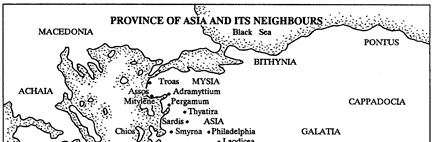
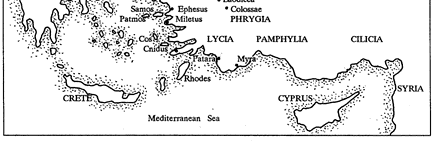
By this time the churches of the region were well established. In fact, about forty years had passed since the region had been first evangelized (cf. Acts 16:6-10; 18:19,20-28; 19:1,8-10). Those parts of the book that are addressed to specific churches give us a picture of conditions in Asia Minor at the end of the first century.
The troubled church
Almost from its beginning, the church of the first century was persecuted. In the early days persecution came mainly from the Jews, but as the decades passed, government authorities also turned against the Christians. The main periods of official persecution came in the AD 60s under the Emperor Nero and in the AD 90s during the time of the Emperor Domitian. This latter period was the time of the revelation that the writer John has recorded in this book.
It was a testing time for Christians. Thousands were imprisoned, tortured, killed or put to work as slaves. Oppression increased, people in general became more anti-Christian, and the government enforced Emperor worship as a regular policy. To make matters worse, false teachers created trouble within the churches by encouraging Christians to cooperate with the pagan religions of the state by joining in practices that were idolatrous and immoral (Rev 2:10,13-14,20; 6:9-11).
Many Christians were discouraged and confused, and some had even renounced their faith. It seemed to them that Jesus Christ, the king they had expected to return in power, was either unable or unwilling to save them from the evil forces that were working against them. The real power appeared to be not in the hands of the Almighty God, but in the hands of the Roman Emperor.
Through John, Jesus reassured his suffering people that he was still in control, though he did not give them false hopes by promising them quick relief. On the contrary he prepared them for greater endurance, by revealing both the extent of the troubles yet to come and the eternal reward that awaited those who stood firm for him. He was still the ruler of the world and he was still in control. In God's time Jesus would return to punish his enemies, save his people, and bring in an age of eternal peace and joy (Rev 1:5; 12:10-11; 19:15-16; 21:1-4; 22:7).
Style of the book
The book of Revelation belongs to a category of literature known as apocalyptic that was common at that time. (The name comes from the Greek apokalypsis, the word translated 'revelation' in Revelation 1:1.)
In apocalyptic literature God gives revelations to people by means of strange visions that are usually explained by angels. These visions often feature fearsome beasts and mysterious numbers, and are mostly concerned with God's conquest of evil and deliverance of his people. God intervenes in world affairs to overthrow the wicked, give victory to the righteous, establish his kingdom, and introduce the era of the new heavens and new earth.
It is difficult to form mental pictures of these strange visions, even more difficult to draw them on paper, and impossible to join them all together in a continuous picture-story. But they were not intended for that purpose. The modern reader should not think of the visions as if they are photographs or videos of future events that the biblical writer has seen in advance. Details within the visions, whether in relation to times, places, objects or living beings, should not be understood as if they are descriptions taken from a news report or historical account. They are stylized and symbolic, and are often inconsistent with the realities of the natural world.
Features that have a particular meaning in one vision may or may not have the same meaning in another vision. Similarly, a particular truth may be symbolized by certain features in one vision, and by entirely different features in another.
Interpretation of the book
These characteristics make apocalyptic literature difficult for people of a different culture and era to interpret. Over the centuries various schemes of interpretation have appeared. Some people interpret Revelation as applying solely to the time of John, while others interpret it as applying solely to a time in the future when God will bring the present age to an end. Some interpret the book as a continuous history of the world from the time of John to the coming eternal age, while others see the book not as a description of historical events but as a presentation of the victory of the gospel in symbolic pictures. The variations in interpretation, whether of the book as a whole or of its separate parts and details, are considerable.
Some people attempt to solve the difficulties by choosing one scheme of interpretation and rejecting all the others. But this is not the best way to understand the book's message. Undoubtedly, the book had a meaning for the people of John's day, as it has for people today, and as it will have for those on earth at the end of the age. Readers should therefore be careful not to restrict the book's message or mould its meaning to fit their favourite scheme of interpretation.
A further precaution for readers is not to treat the book as a collection of puzzles. It was not given to amuse Christians in their spare time by giving them mysteries to work out. It was given to strengthen and guide Christians who were suffering intense persecution. There is little spiritual profit in finding the meanings of symbols while ignoring their relevance to personal experience.
The symbolic pictures in the book are taken mainly from life under Roman rule as John knew it, but the principles apply to Christians everywhere. In every era and nation those who suffer persecution for Christ's sake can find strength and encouragement as they see the relevance of the visions to their own experiences.
Anti-Christian persecutions and divine judgments on the persecutors have occurred repeatedly throughout the church's history, and they will continue to be repeated till Jesus Christ returns. From the first century to the present, Christians have triumphed over the forces of the antichrist through Christ's victory on the cross (Rev 12:11). But the ultimate victory will be when Christ returns to banish evil, save his people and bring in the eternal age of peace and joy (Rev 1:5-7; 19:13-16; 22:1-5,12-14).
1:1-20 John's introduction 2:1-3:22 Letters to the seven churches 4:1-5:14 A vision of heaven 6:1-8:5 The seven seals 8:6-11:19 The seven trumpets 12:1-14:20 Pictures of conflict and triumph 15:1-16:21 The seven bowls of wrath 17:1-19:10 Babylon the great 19:11-20:15 The triumph of God 21:1-22:5 A new heaven and a new earth 22:6-21 Conclusion
1:1-20 JOHN'S INTRODUCTION
Greetings to the seven churches (1:1-8)
Jesus Christ received this revelation from God and passed it on to John by a series of visions that an angel interpreted for him. John, in turn, was to pass this revelation on to God's persecuted people in Asia Minor, for it concerned events about to take place that would affect them. All who took notice of the book would be blessed, both the person who read it to the church and those who listened as he read it (1:1-3).
The writer greets his readers in the name of the Trinity – the eternal God, the ever-present Spirit and the faithful Son. This Son was a faithful witness through his sufferings and is still Lord of the kings of the earth. These include the Roman Emperor, their persecutor. Christians may share Christ's sufferings, but they also share his victory. Through him they have been cleansed from their sins and given the privilege of worshipping and serving him as a kingdom of priests (4-6). Christ's enemies thought they had conquered him, but he will return to conquer them, for he is almighty. Nothing existed before him and nothing will exist after him (7-8).
A vision of Christ (1:9-20)
One Sunday, the day of the Lord's victorious resurrection, John received this revelation in a series of visions. He knew of the sufferings of Christians, because he himself was imprisoned on account of his Christian faith. He carried a message for persecuted believers that he was to send to seven churches in the Roman province of Asia. The order in which the churches are listed is probably the order in which they were visited by the person who delivered the letters. From these churches the message would no doubt spread to the smaller churches round about (9-11).
The first vision that John sees is of the Lord of the church, Jesus Christ, walking among the churches (symbolized by lampstands; see v. 20). His appearance displays the greatness, majesty, wisdom and authority of God (12-15). He holds the churches (symbolized this time by stars; see v. 20) in the protective care of his right hand. At the same time he has the sword of authority to act against any in those churches who oppose his will (16).
John was so overcome with this vision that he collapsed. But Christ strengthened him, pointing out that he should be encouraged, not afraid, for Christ has authority even over death. Persecuted believers need not fear that death will separate them from him (17-18).
The revelations that John is about to receive will concern both his time and the future. The seven angels to whom he must address his letters are symbolic representatives of seven churches. This emphasizes that although John has a message for Christians in general, he has a specific message for each of the seven churches (19-20).
2:1-3:22 LETTERS TO THE SEVEN CHURCHES
Apart from occasional minor variations, the seven letters follow the same pattern. They begin with a greeting from the risen Christ (whose titles are mostly taken from the vision described in 1:12-16), followed in turn by a statement of praise and/or criticism concerning the current state of the church, a warning, an instruction and a promise. Although each church received the particular message for itself, it would also hear the messages for the other churches if the whole book was read in each church. Therefore, there is a note of warning for all to take heed: 'Let anyone who has an ear listen to what the Spirit is saying to the churches.'
Letter to Ephesus (2:1-7)
Over the years the church at Ephesus had been troubled constantly by false teachers, as Paul had warned (cf. Acts 20:17,29-30). The false teaching condemned in Paul's letters to Timothy and in the letters of John was centred in Ephesus. Later the church in Ephesus was troubled by the Nicolaitans, who taught that Christians could best demonstrate their freedom from rules and regulations by eating food that had been offered to idols and joining in immoral behaviour.
At the outset of his message, the risen Christ praises the Ephesians for their hard work and patient endurance in opposing the evil teachers (2:1-3). Unfortunately, in the process their love for Christ has lost its original warmth. They have become harsh, critical and self-satisfied. They are warned that if they do not quickly change and regain their original spirit of love, the one who rules over the churches (see v. 1; cf. 1:12-13,16) will act in judgment and bring the church to an end (4-6). Those who triumph, however, will enjoy the fulness of eternal life in the world to come (7).
Letter to Smyrna (2:8-11)
Poor materially, but rich spiritually, the Christians in Smyrna were also severely persecuted. The persecution came mainly from the Jews, who thus showed that they were not God's people, but Satan's (8-9). But worse is to come, for the Roman authorities are going to launch a fresh attack on the Christians. Many will be imprisoned and some martyred, but this fierce attack will last only a limited period. Their Saviour, the eternal one who has himself conquered death (see v. 8; cf. 1:17-18), will not allow death to touch their souls. Through him they have victory and eternal life (10-11).
Letter to Pergamum (2:12-17)
The difficulties of the church in Pergamum were mainly connected with the religious system known as Emperor worship, which in the province of Asia had its headquarters in Pergamum. Christians on the whole had stood firm and refused to join in the Emperor worship. At least one, Antipas, had been martyred (12-13).
But as at Ephesus, there were some who taught and practised Nicolaitan teachings. Like Balaam, they caused God's people to sin by joining in idolatrous feasts and practising immorality (14-15; cf. Num 22:1-40; 25:1-9; 31:16). The divine judge (see v. 12; cf. 1:16) is about to act against them with swift punishment. But those who refuse to join in the idolatrous feasts will be invited to join in God's heavenly feast. He will give each a special blessing known only to the giver and the receiver. This blessing is likened to the engraved white stone which, according to a custom of those days, was given to people invited to an important feast as evidence of their right of entry (16-17).
Letter to Thyatira (2:18-29)
There had been considerable progress in the church at Thyatira (18-19). Yet this church also had been corrupted by teaching that encouraged participation in idol feasts and their associated immorality.
In Pergamum the false teachers were men and were likened to Balaam. In Thyatira the teacher was a woman and is likened to Jezebel, whose false religion was similarly characterized by idolatry and immorality (20; cf. 1 Kings 16:31-33; 2 Kings 9:22). This false prophetess is now given a final warning, for the penetrating eyes of the righteous God see all that she is doing (see v. 18; cf. 1:14-15). If she does not turn from her sins, God will punish her and her followers with sickness, disease or death, according to the extent of each person's sin (21-23).
On the other hand, those who are faithful to the end will be rewarded when Christ returns (24-25). Victorious believers will share the royal rule of their victorious Lord. The 'night' of suffering will be over, and Christ the 'morning star' will be with them for ever (26-29).
Letter to Sardis (3:1-6)
The church in Sardis had so much followed the ways of the society around it that it was Christian in name only. Spiritually it was dead (3:1). The Lord of the church can give it new life through the Spirit (see v. 1; cf. 1:4,20), but first the believers must wake up, change their ways, and determine to follow the teaching of the gospel they first believed. If not, swift judgment will fall upon them (2-3).
Some in the church had proved the genuineness of their faith by refusing to alter their beliefs or behaviour to suit the majority. They had 'kept their clothes clean'. They will therefore join Christ in heaven in 'clothes' of greater purity; for he himself has cleansed them, made them his own and brought them into his heavenly Father's presence (4-6).
Letter to Philadelphia (3:7-13)
Smyrna and Philadelphia are the only churches that receive no blame from the Lord, but only praise and encouragement. Yet Smyrna was poor and Philadelphia was small. Also, both churches received their opposition from the Jews.
He who carries the key of David has the authority to allow people into or shut them out from the city of David, which here is symbolic of the new Jerusalem, the kingdom of Jesus Christ (7; cf. v. 12). The Jews claimed they were the people of God's kingdom and tried to shut the Gentiles out. But, Christ points out, the small group of Christians who form the church of Philadelphia are the true people of God in that city. Christ has opened the door for these Gentile Christians, and no Jew is able to close it. In entering God's kingdom, Jews must follow the way of these Gentiles, not Gentiles follow the way of the Jews (89).
When God judges the ungodly, Christ will protect those who have remained loyal to him. He will reward them at his return (10-11). Each of the triumphant believers will be like a pillar in God's temple, secure in his presence for ever. Through Christ, who has the key to life and death (see v. 7; cf. 1:18), they will belong permanently to God, to the heavenly city and to their Saviour (12-13).
Letter to Laodicea (3:14-22)
Laodicea was an important commercial, educational and administrative centre whose citizens were secure and prosperous, lacking nothing. Sadly, the spirit of self-satisfaction among the people at large was found equally in the church. This church has no accusation of idolatry or immorality brought against it, yet it receives the strongest condemnation of all seven.
The Laodiceans not only thought they had all they needed, but they believed their prosperity had resulted from their spirituality. Actually, they were lacking in spirituality. Because of their reliance on material things, they could not exercise genuine faith in God. Nor could their lives witness to the total satisfaction that Christ brings. Christ introduces himself as the one who is faithful, the true witness, the creator with authority over all material things. He tells them plainly that he finds their comfortable spiritual pride repulsive (14-16). He urges them to see themselves as he sees them, as spiritually poor, blind and naked. They must realize that Christ alone can produce truly spiritual qualities in their lives, and he can do this only when they turn from their sins and humbly seek his help (17-19).
Christ still loves his people and asks them to welcome him into every part of their lives. Even if the church as a whole ignores his request, those individuals who open their lives to him will know the joy of constant fellowship with him. If they share their lives with him now, he will share his glory with them in the future (20-22).
4:1-5:14 A VISION OF HEAVEN
Vision of the throne (4:1-11)
Jesus has shown John the present state of the churches as he sees them. He now shows him, again from the divine viewpoint, certain things that are going to happen as God works out his purposes in the world. By means of a vision of heaven, John begins to have some understanding of how God sees the world's affairs. He is given a glimpse of the place where God, the possessor of absolute authority, reigns majestically in indescribable glory (4:1-3).
In this vision the throne on which the Almighty sits is in a large flat area that looks like a sea of crystal. The seven blazing lamps in front of the throne suggest the burning power of God's all-seeing
Spirit, while the lightning and thunder coming from the throne create a feeling of overwhelming awe. Twenty-four elders seated on smaller thrones encircle the throne of the Almighty. They appear to be angelic beings that belong to one of the heavenly orders (cf. Isa. 24:23), but they cannot cross the sea of crystal to share God's throne. His position is unique (4-6a).
Between the elders and the throne of God are four 'living creatures'. These are probably heavenly beings of another order and resemble the cherubim of the Old Testament. Like the cherubim they appear to be guardians of the throne of God (6b-8; cf. 1 Sam 4:4; Ps 80:1; Ezek 1:4-28; 10:15-17).
The significance of the vision becomes clearer when the living creatures and the elders begin to sing praises and worship God. The vision's central meaning is that in heaven God is worshipped unceasingly. He is the Creator and Lord of the universe and he is always in control. The persecuted Christians need never doubt his power or his wisdom (9-11).
Vision of the Lamb (5:1-14)
In the hand of the Almighty is a scroll, which no doubt contains the revelation that John is to receive. Like most important documents it is sealed. In fact, it has seven seals, and these can be broken only by someone with the authority to do so. Since the scroll will reveal matters of worldwide importance, the person to break these seals must be one who has authority over the world's affairs. John weeps when it appears that no one in all creation can be found who is worthy to open the scroll (5:1-4).
Then one is found. Jesus Christ, the conquering Lion from the tribe of Judah, the Messiah from the family of David, is able to open the seals (5). He is all-powerful and all-knowing ('seven horns and seven eyes'), but he has the right to reveal God's purposes and carry out God's judgments only because of his submissive and sacrificial death as the Lamb of God (6; cf. v. 9).
Christ then takes the scroll from the Almighty, but before he opens it the living creatures and the elders break forth in fresh praise, this time directed to Christ (7-8). By his death he has brought people of all nations to God. These people already share in the victory he won at the cross, and as a kingdom of priests they represent him in the world. One day they will enjoy the fruit of this victory in its fulness (910).
Others join in the song of praise, till the countless angels of heaven are united in singing the praises of the Lamb (11-12). They are joined by creatures out of all creation, to praise both the Almighty who sits on the throne and the Lamb who has overcome the power of sin (13-14). In summary it might be said that in Chapter 4 God is worshipped as Creator, and in Chapter 5 he is worshipped as Redeemer. He is the Controller of the world and the Saviour of his people.
6:1-8:5 THE SEVEN SEALS
Much of the next part of the book records three series of judgment visions that John saw – the seven seals (6:1-8:5), the seven trumpets (8:6-11:19) and the seven bowls of wrath (15:1-16:21). John also saw another series of visions, the seven thunders, but God did not allow him to record them (10:3-4). This is a reminder that God has not given us all the information about what he is doing, and will yet do, as he brings his purposes in the world to fulfilment.
In the symbolism of Revelation, the number seven is used repeatedly. It seems to represent one complete unit, and may signify such ideas as wholeness, fulness, completion or perfection. In each of the first two series of seven there is an interval before the seventh vision, suggesting that God waits as long as possible before acting in judgment. He does not want any to be destroyed, but wants all to turn from their sins and receive the salvation he offers (cf. Rom 2:2-6; 1 Tim 2:4; 2 Peter 3:8-10).
The judgments that Jesus reveals to John are similar to, but more detailed than, those that he described to his disciples on the Mount of Olives. There is a similar emphasis on war, famine, death, earthquakes and persecution, but because of God's patience and forbearance, 'the end is not yet' (Matt 24:3-14). Nevertheless, one day the end will come. There will be no more delay; the judgment must fall (Matt 24:29-31).
In the book of Revelation, as in all prophetic and apocalyptic writings, there is a lack of exactness concerning the time that events will take place. This is because the writer sees everything from God's viewpoint in eternity, where time is not measured by human standards, and may even seem irrelevant. Certain events will take place; 'after this', other events. The person who sees the vision (and the person who reads of it) cannot tell whether the latter events take place immediately after or thousands of years after the former events.
From the words of Jesus himself, Christians are reminded that they do not know when the end of the present age will come. Moreover, God does not intend them to know. He does not satisfy their curiosity about the future, but reminds them of their responsibility in the present, which is to spread the message of salvation (Mark 13:32; Acts 1:7-8). They are to be ready at all times for God's final great intervention in human affairs, for Jesus Christ will return when they least expect (Matt 24:44; 1 Thess 5:2-8).
God gave his revelation to John not so that Christians might draw up a timetable of history in advance, but so that the persecuted might be encouraged. The certainty of God's judgment is an incentive to all Christians to be more holy and more dedicated to God (1 Cor 4:5; 1 Peter 4:18-19; 2 Peter 3:11-12).
First six seals (6:1-17)
The scroll was sealed in such a way that it had to be unrolled section by section. When the first seal was broken, the scroll could be unrolled only enough to reveal the first part of the revelation. Then the second seal was broken and the scroll was unrolled a little further; and so on till all seven seals were broken and the scroll was completely unrolled. An unusual feature was that as each seal was broken, instead of someone reading the scroll, a vision appeared. John now describes these visions.
As each of the first four seals is broken a horse appears. The first represents nations going out to conquer other nations. The second indicates the war and bloodshed that follow (6:1-4). The third shows the beginning of famine, where a shortage of basic foods results in rationing and high prices. The common people suffer most, for the rich can afford more expensive foods that are not yet affected (5-6). The fourth vision shows that the situation worsens. Widespread death results from the combined effects of war, famine and disease (7-8).
When the fifth seal is broken the scene shifts to heaven, where a vision shows that although God's judgments fall upon a sinful world, believers need not fear. Certainly, sinners will react against God by killing his people, but that is no reason to question God's justice. Believers, not enemies, are the victors, a fact signified by the white robes given to them. Yet there will be more martyrs. The believers' prayers, though heard in heaven, do not bring an instant end to the suffering (9-11).
The vision of the sixth seal assures believers and unbelievers alike that God is still in control. He is righteous and at the right time his judgment will fall, accompanied by violent disturbances in the heavens and on the earth (12-14; cf. Matt 24:29-30). Sinners will not escape, no matter how powerful or rich they might be. He who carries out this judgment is the Lamb of God, the one who himself bore God's wrath so that sinners might escape it (15-17).
Interval before the seventh seal (7:1-17)
God gives John two additional visions before he reveals the vision of the final seal. He wants to reassure his people that he does not forget them during the difficult days when an ungodly world is preparing itself for judgment. God does not allow the winds of judgment to blow across the earth without thought for his people's security. He knows those who are his and marks them out for his special protection (7:1-3; cf. Ezek 9:4-6). The repetition of the number of people protected in each of the twelve tribes (symbolic of God's people on earth) emphasizes that God protects all his people. None is missed (4-8).
Having seen God's people on earth, John now sees the same people in heaven. They come from all nations and are more than anyone can count. They may have suffered persecution and even martyrdom on earth, but in heaven they are seen as conquerors, dressed in white and holding palm branches. The Lamb who died triumphed over death, and his victory is now theirs (9-10). Angels add their praise to that of the triumphant believers (11-12).
All this is explained to John, with special emphasis on the victory of the cross. Although the believers have been victorious in suffering persecution for Christ's sake, they are fit to stand in God's presence only because Christ died to give them cleansing and new life (13-14). As priests of God they will be permanently in his presence, where they will worship and serve him in true fellowship. No longer will they suffer, but the good shepherd, Jesus Christ, will protect them and care for them (15-17).
Seventh seal (8:1-5)
As the ungodly suffered the increasingly heavy judgments of the first six seals, they turned against the Christians with greater persecution. This had caused believers to ask God how long it would be before he dealt with those who were killing them (see 6:9-10). God is now going to answer that prayer. He has postponed judgment as long as possible, but now the time has come. All heaven waits silently. But when the seventh seal is broken, it reveals judgments so terrible that a new set of visions will be needed to explain them. The new visions will be announced by the blowing of trumpets (8:1-2).
Before seeing the new visions, John sees in picture form how the prayers of the persecuted Christians have brought about these judgments. He sees the prayers held by an angel in a golden container, then mixed with incense and burnt on the golden altar. As the smoke of the burning incense rises, it pictures the prayers going up to God (3-4). The angel then takes fire from the altar, puts it in the incense container, and throws the container to the earth. As soon as it hits the earth, terrible judgments break out. The whole vision is a dramatic way of showing how the prayers of God's people play an important part in his dealings with the ungodly world (5; cf. Matt 24:22).
8:6-11:19 THE SEVEN TRUMPETS
First four trumpets (8:6-13)
In the visions revealed by the breaking of the seals, the judgments arose largely from human sin. But in the judgments announced by the blowing of the trumpets, the judgments seem to come direct from God without the use of a human agency. The trumpet visions reveal another way of looking at God's judgment, but like the seal visions they build towards a climax.
The first trumpet announces widespread devastation on the land (6-7); the second, on the sea (8-9); the third, on the waters of the land (10-11); and the fourth, on the moon and stars (12). The destruction of the symbolic 'one third' is slightly more extensive than the 'one quarter' in the seal judgments (cf. 6:8), but is not a total judgment. It is a warning of what will happen if people do not repent. The three woes (GNB: horrors) announced by an eagle correspond to the three remaining trumpet judgments (13; cf. 9:1,12-13; 11:14-15).
Fifth and sixth trumpets (9:1-21)
Worse than the destruction by the forces of nature is the suffering brought by the forces of demons (fifth trumpet). These demonic forces are pictured in a strange and terrifying army of locusts. Though uncontrollable by any human power, they are not independent of the rule of God. He keeps them imprisoned in the abyss (RSV: bottomless pit), and even when he releases them he determines the extent of their activity (9:1-3).
The demons do not harm plant life (as ordinary locusts do), but harm people – though not God's people. They torment the ungodly with severe pain, rather like scorpions, but do not kill them. The vision shows how the ungodly become so tormented in mind and body by satanic forces that they wish to die, but they cannot. Just as a plague of locusts lasts for only a limited period, so does this attack by the forces of evil (4-6). John then describes the frightening appearance of this army of demons (7-10). He points out that they are led by a satanic leader whose name, whether in Hebrew or Greek, means 'destroyer' (11).
As the sixth trumpet sounds, a noise comes from the golden altar, giving a reminder that these judgments are a response to the prayers of the persecuted Christians (12-13; cf. 6:9-10). At that moment God allows wicked angels to be released and there is another outbreak of demonic activity. The locustlike demons were not allowed to kill people, but these demons bring widespread death to the human race (14-16). Again John describes the fearsome appearance of the demons. They are like an army of horses and riders equipped to bring suffering and death by the most frightful means (17-19).
God's aim is not merely to send his judgments upon the world, but to show people the seriousness of their sins so that they might repent and be saved. But no matter how severe his judgments, they continue in their sins (20-21).
Interval before the seventh trumpet (10:1-11)
During the lengthy interval before the blowing of the final trumpet, John has several other visions. First he sees a huge angel towering over land and sea, and holding a small scroll in his hand. The meaning apparently is that this angel is to make announcements that will affect the whole world. This results in a further series of visions, the seven thunders, but John is not allowed to record them (10:1-4). The angel announces that when the seventh trumpet is blown, it will introduce the final stage of God's plan (5-7).
John then eats the small scroll. Its contents must become part of him, so to speak, so that he can pass on its message with greater meaning and force. Because it is God's message he finds it sweet at first, but when he understands the judgments it reveals, he finds it unpleasant. He has no joy in announcing it (811; cf. Ezek 3:1-3; 2 Cor 2:15-16).
Two witnesses (11:1-14)
In Daniel 9:24-27 there is a prophecy that the enemies of the Jews would corrupt their city and their temple for three and a half years (which is the same as forty-two months, or 1260 days). This happened in 167-164 BC, when the ruler of the Syrian sector of the Greek Empire, Antiochus IV Epiphanes, conquered Jerusalem, killed Jews by the thousand and tried by every means to destroy their religion. His supreme expression of hate for God's people was to set up a Greek idol in their temple, build an altar, then take animals that the Jews considered unclean and sacrifice them to the Greek gods.
This event is now used as an illustration. Just as the Gentiles trampled the holy city and its temple for three and a half years, so for a time the ungodly world is allowed to trample the church. There is, however, a limit to the extent it can go. God's people in the world (compared in the vision to those in the outer courts of the temple) are persecuted and even killed; but from God's viewpoint they are eternally secure in his presence (compared in the vision to those worshipping within the temple). The message is one of encouragement to persecuted Christians. The church's task is difficult, but its triumph is certain. There may be martyrs, but God's church will not be destroyed (11:1-2).
Two messengers of God symbolize the church's powerful witness during this troubled period (3). This witness is likened to that of Zerubbabel and Joshua, who stood firm for God's truth in reestablishing the worship of God in Israel after the captivity in Babylon (4; cf. Zech 4:1-14). It is likened also to the witness of Moses and Elijah, to whom God gave his special power. As in the time of Moses, God saves his people from being destroyed by hostile rulers. As in the time of Elijah, he saves them from being destroyed by the corruption of false religion (5-6; cf. Exod 4:9; 7:1-12:51; 1 Kings 18:1-46; 19:1-21; 2 Kings 1:7-12).
But the more powerful the witness, the greater the opposition. Satanic power increases and large numbers of Christians are martyred (7). The world that killed Jesus Christ is now killing his followers. It is likened to a great city that is characterized by the wickedness of Sodom and the cruelty of Egypt (cf. Gen 19:1-24; Exod 1:9-16; 3:7). People rejoice when they get rid of those who expose their sin, and do all they can to bring the greatest possible shame upon the Christians (8-10).
The persecutors' apparent victory does not last long. They are filled with terror when they see that the church has not been destroyed but has received new life. The victory of Christ guarantees not only victory for believers, but also judgment for their opponents (11-12; cf. Phil 1:28). In John's vision the judgment is symbolized by an earthquake that brings extensive destruction upon the city and its citizens. The enemies of God at last give some recognition to his supreme authority and power (13; cf. 9:20-21). The third woe (i.e. the seventh trumpet) will now follow (14).
Seventh trumpet (11:15-19)
Having had an interval to consider the triumph of God's people, the revelation returns to the series of trumpet judgments. The climax of those judgments, announced by the blowing of the seventh trumpet, is the abolition of all human government and the establishment of God's everlasting kingdom under the rule of Jesus Christ (15). This brings with it the divinely appointed day of judgment for all people, when God rewards his servants and punishes sinners (16-18; cf. Acts 17:31; 2 Tim 4:1).
In a dramatic revelation, God then opens his heavenly temple and displays the ark, symbol of his covenant faithfulness. The significance of this is that through all his people's sufferings and trials, God has never forgotten them. The symbol of his faithfulness to them has always been before him in his heavenly sanctuary (19).
12:1-14:20 PICTURES OF CONFLICT AND TRIUMPH
The woman, the child and the dragon (12:1-17)
In this vision the woman who gives birth to a son seems to symbolize Israel who produced the Messiah, Jesus. But it is the true Israel, the true people of God, who are pictured here. The faithful of old Israel were those who began the Christian church, and in the church there is no distinction on the basis of nationality. All Christians are now God's people (12:1-2).
Then appears a dragon (identified in verse 9 as Satan) whose many heads, horns and crowns show his extraordinary power. He is hard to overcome. When apparently defeated in one place, he finds new energy in another. His conquest of a large portion of the angelic powers ('a third of the stars of heaven') is only a preparation for his main task, the conquest of the Messiah. He tried to destroy Jesus, from the day of his birth to the day of his death, but he never succeeded, not even at the crucifixion. Jesus Christ rose from the dead and returned in glory to his Father (3-5).
Unable to destroy Christ, Satan turns his attack on Christ's people. But God has foreseen this and he specially protects them and provides for them during this time. Persecuted Christians need not fear Satan. Their time of greatest trial (again represented by the symbolic figure of three and a half years; cf. 11:2-3) is their time of greatest blessing. They may be killed but they are not destroyed, for God saves them for his heavenly kingdom (6; cf. 2 Tim 4:6,18).
The battle between good and evil is fought in heaven as well as on earth. Believers can take courage when they learn that God's angels triumph, while the devil and his angels are thrown out of heaven (7-9). The heavenly conquest of Satan gives reassurance to Christ's people on earth that they too are conquerors of Satan. They share in the glorious victory of Christ's kingdom, and the basis of that victory is Christ's death. He was victorious through death, and those who are killed for his sake are likewise victorious (1011). Satan responds viciously. Knowing that little time remains before Christ returns and captures him, he intensifies his attacks on God's people (12).
Returning to the picture of the woman, the revelation repeats that when Satan finds that he cannot destroy Christ, he tries to destroy Christ's people (13). It repeats also that the time of the Christians' intense suffering is the time of God's special protection (14; cf. 11:2-3; 12:6; 13:5). ('A time, times and half a time' means 'a year plus two years plus half a year', or three and a half years.) Satan tries every method he knows to destroy Christ's people but is not successful. God, by his supernatural power, preserves them (15-16). Unable to destroy them, Satan nevertheless does whatever he can to oppose and persecute them (17).
Beast from the sea (13:1-10)
Like the dragon of Chapter 12, the beast that arises out of the sea has seven heads and ten horns. If the dragon symbolizes Satan, the opponent of God in the spirit world, the beast out of the sea probably symbolizes the opponent of God in the world of humankind. As God took human form in Jesus Christ, so Satan takes human form in one called the antichrist (GNB: enemy of Christ), or man of lawlessness (GNB: wicked one). He combines cunning, strength, cruelty and ferocity (13:1-2).
Though always in the world, the spirit of antichrist expresses itself in different ways in various people, eras and systems (1 John 2:18). In John's time it expressed itself in the Roman Empire, but its fullest expression will be in the days immediately before Christ's return (2 Thess 2:3-10).
The antichrist tries to imitate Christ by giving an appearance of death followed by resurrection. He appears to lose his power, only to regain it and do greater and more horrible evil. People in general are impressed with his show of power and believe that none, not even God, can fight against him. They are overcome with a sense of awe, and gladly give their allegiance to the antichrist and his master, Satan (3-4; cf. 2 Thess 2:3-4,9-12).
Suffering Christians are encouraged to endure by the news that God has set a limit to the time of the antichrist's rule. But while he rules he curses God and demands that people worship him instead. All people give him homage except the Christians, and these he mercilessly attacks (5-8). Christians are given a special reminder that it is useless to resist when they are about to be captured or killed. They cannot establish God's kingdom in the world by force (9-10).
Beast from the earth (13:11-18)
With the appearance of the beast from the earth (who is identified as the false prophet; see 16:13; 19:20), the trinity of evil is complete. As the true Christ received his authority from the Father, so the antichrist receives his authority from Satan (see 13:2b; cf. John 8:28). As the Holy Spirit gives glory to the true Christ, so the false prophet gives glory to the antichrist (see 13:12; cf. John 16:14). The spirit of the false prophet is always in the world, for it represents false religion, or whatever philosophy people use in place of religion (Matt 24:24; 2 Peter 2:1). It too will have its most intense expression in the days immediately before Christ's return (2 Thess 2:11-12).
The false prophet tries to make himself look as harmless as a lamb, but his speech shows that he belongs to Satan (11). He has the same satanic power as the antichrist and cooperates with him. The meaning seems to be that religious power (represented by the false prophet) joins with secular power (represented by the antichrist) to establish anti-God rule throughout the world. The false prophet gains worldwide worship for the antichrist and builds a living image of him. False religion supports the ungodly system that controls human society. Any who refuse to give their support face death (12-15).
Since God marks his people with his seal (see 7:3), the antichrist marks his people. If any refuse to follow the anti-Christian system, they suffer social and economic discrimination. They are not able to buy even the basic necessities for living (16-17). But whereas the seal placed on God's people is that of the living God (see 7:2), the seal placed on the ungodly is that of the human rebel who fights against God. Its number, 666, is that of a man, not God. It is a human number, for it falls short of the perfect divine number, 777. The antichrist wants to be God, but he must fail, for he is only a man (18; cf. 2 Thess 2:3-4).
Song of the redeemed (14:1-5)
In 7:1-8 God's faithful people were seen on earth and in 7:9-17 in heaven. They are now seen with Christ in his kingdom. The reason why they alone can sing the new song is that only saved sinners can know the experience of redemption (14:1-3). Not only have they been cleansed by Christ, but they have kept themselves pure by not giving in to the temptations of the anti-God world. Like the first products of harvest, they belong specially to God (4-5; cf. Exod 23:19).
Angels and the harvest of the earth (14:6-20)
Three angels now make proclamations. The first reminds people of the good news of God's salvation, adding a warning of judgment and urging sinners to repent (6-7). The second announces judgment on Babylon, symbol of ungodly humankind who, in pride and opposition to God, has corrupted the world (8). The third announces judgment on all who have followed the antichrist (9-11).
John desires that these visions encourage the Christians to be faithful in enduring their sufferings for Christ's sake. Their sufferings are but temporary, whereas the sufferings of their persecutors will be eternal. Even if they suffer death, they can be assured of eternal rest with their Lord as a fitting reward for their faithfulness (12-13).
Evil has now reached its fulness. Angels have announced judgment, and more angels now carry out that judgment. The sinful world is compared to a harvest field ready for reaping, the reaping being God's great and final judgment (14-16). The horror of the judgment is further pictured in a grape harvest. As wine is squeezed out when workers tread grapes in a winepress, so the blood of sinners will run over the earth when God acts in his righteous anger (17-20).
15:1-16:21 THE SEVEN BOWLS OF WRATH
The many visions so far recorded in Revelation have pictured God's judgments in many ways, each time adding a little more detail as the climax approaches. The visions of the seven bowls of God's wrath (or the seven last plagues) repeat to some extent what has been said before, but they place more emphasis on the climax. The end has come. People have not heeded God's warnings, nor have they repented. All that remains for them now is the terrible experience of God's holy wrath.
Preparing to pour out the bowls (15:1-8)
Before describing the seven plagues, John has a vision of Christians who have triumphantly come through the time of suffering. Their deliverance from the forces of the antichrist is similar to, though far greater than, Israel's deliverance from Egypt in the time of Moses. In contrast to those who have been deceived and impressed by the miraculous deeds of the antichrist, Christians are impressed with the wonderful deeds of God, the one who is holy, just and true, the almighty King (15:1-4).
The scene returns to the place where the final trumpet vision concluded, God's heavenly temple (5; cf. 11:15,19). This indicates that just as the seventh seal led to the visions of the seven trumpets (see 8:12), so the seventh trumpet leads to the visions of the seven bowls.
Seven angels dressed in white come out of God's heavenly dwelling place to receive the bowls containing the judgments. This signifies that the judgments come from God, and whatever comes from him is pure and holy (6-7). While this work of judgment is going on, no one can enter God's presence to ask for his mercy. Judgment can no longer be avoided or postponed. It is certain (8).
Pouring out the seven bowls (16:1-21)
The bowl judgments are similar to the trumpet judgments, only much more severe. The judgments announced by the trumpets affected only one third of the various areas (see 8:7-12), but here the judgments are total and final. The first judgment brings disease on the earth, the second death in the sea, and the third death in the waters on the land (16:1-4). God acts justly by inflicting the persecutors with punishments suited to the evil they have done (5-6). The voice from the altar confirms that the judgments are God's answer to the prayers of his persecuted people (7; cf. 6:9-10; 8:1-5; 9:13-14; 14:18).
When the angel pours out the fourth bowl there is unbearable heat, but instead of repenting, people curse God all the more (8-9). The fifth plague brings darkness and pain, but people still will not change. Earlier, in the series of trumpet judgments, people had refused to repent (see 9:20-21), but now they also curse God, indicating an increasing hardness against him (10-11).
With the outpouring of the sixth bowl, demonic spirits from the satanic trinity entice the rulers of the world to make war with one another. What results is not just a battle between nations, but the great day of battle for the Almighty himself when he destroys his enemies (12-14). Without warning God acts. The unexpectedness of his intervention is good reason for believers always to be prepared, so that they are not ashamed when he comes (15-16).
As with the seventh seal and the seventh trumpet, so with the seventh bowl there are flashes of lightning, peals of thunder and an earthquake (17-18; cf. 8:5; 11:19). Like the great city Babylon, the ungodly world has become so proud of its achievements and power that it has chosen to ignore God and build a civilization solely to suit itself. Therefore, like Babylon, it is destroyed in a terrible judgment from the all-powerful and all-holy God (19-21). (This judgment will be described in greater detail in Chapters 17 and 18.)
17:1-19:10 BABYLON THE GREAT
The prostitute and the beast (17:1-6)
John's next vision is of a lavishly adorned prostitute. She is symbolic of Babylon (see v. 5, 18), which in turn is symbolic of human society organized independently of God.
In different eras and cultures Babylon shows itself in different ways. In John's day it stood for Rome, but its fullest expression will be at the end of the age as it heads for inevitable judgment. The picture is of the human race's pursuit of prosperity and power through collective effort. Rulers make decisions based on self-interest, and their people support them. Nations seek selfish gain through political and economic treaties, but such unions are likened to sexual relations with a prostitute. They are unions of shame and dishonour, for they ignore God's standards and oppose his authority (17:1-2).
An angel then carries John to a place where, looking from God's point of view, he sees the truth about the woman. She is supported by none other than the beast, the antichrist. An arrogant and defiant humanity seeks greatness, but the spirit that supports and directs it is anti-God (3; cf. 13:1). The woman looks splendid to the world, but John sees that she is full of wickedness. She delights in slaughtering the people of God, as a drunkard delights in drinking wine (4-6).
Power of the beast (17:7-14)
The angel now explains the meaning of the beast and the prostitute. The antichrist, empowered by Satan, controls human society, using his power to fight against the authority of God. His attacks on God's people may die down for a period, but after he gains fresh life and strength the attacks will be renewed. In the end God will destroy him (7-8; cf. 13:3-4). (For believers of John's time this illustration was full of meaning. The calm that followed Nero's death was not permanent. Persecution was renewed under the Emperor Domitian, who appeared to the Christians to be a second Nero – Nero come back to life, so to speak.)
First century Rome, with its advanced civilization and organized opposition to God, was a clear expression of the anti-God spirit symbolized by the beast, the prostitute and Babylon. The seven heads of the beast, explained as representing both seven hills and seven rulers, symbolized the strength and stability of Rome. But in any age or society, as people's sense of collective self-sufficiency increases, they inevitably set themselves against God (9).
Interpreting the vision becomes more difficult when the angel gives further details of the seven rulers. Most of them already belong to the past. Only one is yet to appear, though he will be replaced by an eighth, who will display even greater satanic power than the previous seven. But God will destroy him. Again, events of the first century may have given this vision special meaning for Christians who experienced persecution under several emperors. No doubt the climax of evil at the end of the age will give the vision much fuller meaning. However, in any era Christians can look back on a line of ungodly rulers and look for relief in the future, even though the final ruler may embody the antichrist more than all who have gone before him. Rulers who become too harsh in their exercise of power usually bring about their own destruction (10-11).
There will always be rulers and nations who want to join forces with the antichrist. They see benefits for themselves in being part of the ungodly power system. They give wholehearted support to the antichrist, but their apparent success is only brief (12-13). In deciding to attack Christ, they guarantee their own destruction. Real power in the kingdoms of the world rests not with the beast (the antichrist) but with the Lamb (the true Christ) (14).
The beast destroys the prostitute (17:15-18)
In their pursuit of power and prosperity, people may develop international cooperation (15), but hatred and jealousy eventually bring disunity and conflict (cf. James 4:1-2). As the prostitute has relied on the beast to carry her, so the human race has relied on the forces of Satan to achieve stability, growth, wealth and power. But as the prostitute is killed by the beast that supported her, so the human race is destroyed by the very forces it has used to advance itself (16). People have a desire to build a society that is independent of God, and in the end God uses that desire to bring about their punishment (17-18).
Fall of Babylon (18:1-8)
The overthrow of human society in its worldwide opposition to God is announced as if it were the fall of the great and proud city of Babylon. The announcement, in the form of a funeral song, gives Christians a vivid picture of the world system in which they live. As they see the world as God sees it, they should want to avoid its dangers and live according to the principles of God's kingdom.
Once the commercial centre of the world, the city is now ruined and deserted, inhabited only by unclean spirits and foul birds. Human organization and commercial activity that ignore God lead in the end to destruction and death. They are likened to unlawful sexual acts, since they are guided by selfish lust without any thought for God's standards (18:1-3).
Christians, on the other hand, are guided by different values, ones that are based on their understanding of God. Their refusal to follow the ways of the ungodly may bring persecution and economic hardship (see 13:17), but at least it keeps them morally pure (4-5). In their proud selfsatisfaction, the people of the world boast of their advanced civilization and impressive achievements. But their progress leads them only to assert a greater independence of God, and therefore will lead in the end to a greater punishment (6-8).
Reactions to Babylon's fall (18:9-19:5)
Those who grew prosperous through their commerce with the city weep and mourn at its destruction. The rulers of the nations stand afar off, watching the destruction but doing nothing to help the city in its distress (9-10). Merchants and businessmen mourn for the burning city, not because they have any love for it, but because they have no more market for their goods. Like the rulers they are guided by motives that are entirely selfish. They are distressed only because of their loss of profits (11-16). Ship-owners and others who profit from international trade likewise mourn because their source of gain has suddenly been cut off (17-19).
Christians see the city differently. Because they stood firm for God and refused to follow the ways of the world, they rejoice that Babylon has been overthrown. For them the occasion is one of victory (20).
With the destruction of Babylon, sinful human society exists no more. All activities cease, whether connected with recreation, work, or the everyday affairs of life. Merchants and businessmen are especially condemned, since they are the ones who, through their greed, corrupted the city (21-23). But the main reason for the city's destruction is that it attacked God's people (24).