
Part 18
Two brief illustrations picture Judah's uselessness for God. In one illustration the nation is likened to a well cultivated vine that has grown wild. In the other it is likened to a filthy object that no amount of washing can cleanse (21-22). But the main illustration in this section is that of a woman who has left her husband for other men. Judah, however, claims that she cannot be held responsible for her idolatry. She is like an innocent person who has been led astray. God replies that, far from being innocent, she has actually lusted after other gods – as an animal in heat lusts for a mate. She has gone looking for foreign gods with the eagerness of a thirsty traveller who walks the desert searching for water till the sandals drop off his feet (23-25).
God's people will bring disgrace upon themselves because of their rebellion against him. They worship idols of wood and stone, but when these idols prove powerless to help them in a time of need, they turn back to God and expect him to save them. God will surely send shameful calamity upon such a worthless nation. Then the people will find out that their idols cannot save them (26-28).
As a father punishes his children to correct them, so God has punished his people, but it has not resulted in any change within them (29-30). He has not treated them harshly. They should feel no need to want to be 'free' from him. Yet they have done what would seem impossible: they have forgotten the one who gave them glory (31-32).
The wickedness of the people of Judah has become so great that they can even teach prostitutes how to be immoral. A person might happen to shed blood in defending himself against a robber, but the people of Judah attack the poor and helpless simply because they love violence. Their consciences have become so dull that they cannot see their wrongdoing (33-35). They have turned from God to trust in Egypt and Assyria, but these nations will prove to be treacherous friends. They will bring injury and shame upon Judah (36-37).
Judah unfaithful and unashamed (3:1-5)
By her spiritual adultery Judah has broken the marriage bond with Yahweh and defiled the land. In her immorality and idolatry she has acted like a prostitute who lures lovers in the city streets. She is like a desert outlaw who looks for innocent victims along the country's highways (3:1-2).
God sent drought to bring Judah to repentance, but the nation has remained unmoved. She is so shameless she even looks like a prostitute (3). Yet she is bold enough to ask God to act like an over-kind father and give her whatever she wants. But God will act in righteousness against her because of her sin (4-5).
Need for true repentance (3:6-18)
King Josiah had tried to reform Judah, but because people had not changed inwardly, the reformation affected only the external forms of religion. Looking from God's viewpoint, Jeremiah calls the people's so-called repentance a pretence (see v. 10). Judah had seen her sister nation Israel divorced from God and sent into captivity because of her spiritual adultery, but Israel's experience taught her nothing. She is now doing what Israel did. In accepting Josiah's reforms she pretends to be returning to God, but she is not sincere (6-10).
Judah's spiritual adultery is more blameworthy than Israel's, because she ignored the warning God gave her through the divine judgment poured out on Israel (11). Jeremiah promises the northerners that if they acknowledge their unfaithfulness and turn from it, God will bring them from captivity back to their own land (12-14). He will give them new leaders, who will lead the people in his ways (15). There will be no need for the ark of the covenant as symbol of God's presence, because God himself will dwell among them. He will rule over a united and obedient people (16-18).
Repentance means genuine change (3:19-4:4)
God wanted the relationship between him and his people to be like that between a father and a son, or between a husband and a wife. But his people have been rebellious and unfaithful (19-20). In hope, the prophet pictures the people turning from their false worship at Baal's high places and crying out to God for forgiveness. In response God promises that if they truly repent, he will forgive them and heal them (21-22a).
The people then turn to God and confess their sins. They admit that the worship of Baal has been a deception; instead of bringing them prosperity it has brought them disaster. They are ashamed of themselves, and return to Yahweh in acknowledgment that he alone is God (22b-25).
God reminds the people that if they repent, their repentance must be genuine. They must remove every trace of idolatry from their lives and renew their oath of absolute loyalty to him. Only then will they be able to serve him by taking his message to the nations (4:1-2).
People must break up their hardened hearts and remove wrongdoing from their lives, just as farmers break up the hard ground and remove weeds before they plant new seed. Inward change, not outward ceremony, is what is needed. Without such repentance, the nation will be destroyed in divine judgment (3-4).
The coming invasion (4:5-31)
Jeremiah now pictures the terrible judgment that will fall on Judah if it does not repent. With the enemy army sweeping down upon Judah from the north, a trumpeter sounds the alarm and the people of Judah flee to their walled cities for safety (5-6). Like an enraged lion the enemy prepares to pounce upon its victim. God is about to pour out his anger on the unfaithful people (7-8).
Judah's leaders, both civil and religious, are shocked at the sudden catastrophe that overtakes them. They now realize that by believing the false prophets, they have deceived themselves. They mistakenly thought that God would never allow a heathen nation to destroy them (9-10).
God's judgment burns up his people like a scorching desert wind (11-12). As Jeremiah pictures the enemy's horses and chariots sweeping across the northern frontier, he makes a last desperate plea to the Jerusalemites to repent (13-14). He sees the invasion forces moving down from Dan, crossing Ephraim's mountains, spreading over the country and besieging cities as they head for their main prize, Jerusalem. The people of Judah have brought this disaster upon themselves because of the way they have lived. They are about to reap the fruits of their ungodliness and idolatry (15-18).
Jeremiah can scarcely bear to look at the scene of destruction, and cries out in his distress (19-21). God assures him that the judgment is just. In their stupidity the people have rejected God and devoted themselves to wrongdoing. Now they are suffering the consequences (22).
To the prophet it seems that, with the fall of Judah, the earth has become barren, waste, dark and silent (23-26). God's judgment is so devastating that, were it not for his mercy, the people would be wiped out (27-28). In country towns people flee before the enemy and look for hiding places in forests and caves (29). Jerusalem tries to win favour with the enemy, as a prostitute tries to win the favour of lovers, but the enemy is not fooled. Jerusalem's end is as horrible as that of a brutally murdered prostitute; her screams are as piercing as those of a woman in agonizing childbirth (30-31).
Sins of Jerusalem and Judah (5:1-19)
A search of Jerusalem reveals that the city is wholly corrupt. Injustice and selfishness abound. People claim they belong to God and they swear oaths by his name, but they remain untouched by the lessons he is trying to teach them (5:1-3). There may be some excuse for the poor and uneducated if they know nothing of God's law, but the upper classes are just as ignorant. This indicates that the problem lies not with people's social background or material well-being, but with their hardened hearts. All alike reject the authority of God's law and refuse to be bound by his standards (4-5).
Jerusalem is ripe for judgment. The invading armies are likened to wild beasts ready to pounce and kill (6). In addition to being idolatrous, the people are so morally degraded they are little better than animals. There can be no forgiveness, only punishment, for a nation such as this (7-9).
As a vineyard is stripped, so Judah will be destroyed, though the destruction will not be total (10-11). The people have deceived themselves. They have refused to believe the words of God's prophets, and keep telling themselves that God will not destroy his own people. God will therefore act against them decisively, according to the judgments he announces by his prophet Jeremiah (12-14).
Through Jeremiah, God tells the people of Judah that a foreign nation will invade their country, and neither Judah's armed forces nor its defence fortifications will prevent widespread slaughter and ruin (1517). But the nation will not be completely wiped out. Those who survive the attack will be taken captive to a foreign land, which will be a fitting punishment for their disloyalty in serving foreign gods in their own land (18-19).
A corrupt society (5:20-31)
The people of Judah do not fear God for his mighty power (20-21), nor do they give him thanks for the benefits he gives them through nature (22-24). They think they can go their own way regardless of God, but in so doing they miss out on his blessings (25).
By cruelty, cunning and bribery, the wealthy increase their power, but the poor cannot obtain justice in even the smallest affairs. Administrators and judges alike are corrupt (26-28). God sees all this, and will not allow it to go unpunished (29). He sees also that priests and prophets cooperate in the wrongdoing, while the people in general, instead of rebuking them, encourage them. Judah is a nation of corrupt and greedy people who are concerned only for their immediate prosperity. They cannot see that they are heading for a dreadful end (30-31).
Destruction of Jerusalem and Judah (6:1-30)
Jeremiah warns that the enemy forces will invade from the north. The citizens of Jerusalem should therefore flee from the city to the hilly regions south of Jerusalem, where they may be able to find refuge from the invaders (6:1-2). As shepherds lead their sheep to feed in new pastures, so will the enemy commanders lead their forces to 'devour' Jerusalem. They will attack by day and by night (3-5). In building their siegeworks around the city, the enemy soldiers will ruin the nearby fields and forests. The reason for Jerusalem's destruction is that the city is morally corrupt and spiritually sick (6-8).
The enemy will be as thorough in destruction as a grape-picker is in picking every grape he can find on the vine. Jeremiah hopes that some might be spared, but he can find none who will listen to his message. Therefore, he can announce only judgment (9-11a). In this judgment, no age group will be spared. All property will be seized by the plundering invaders (11b-12). Common people and religious leaders alike are shamelessly corrupt, but all they have gained through injustice will be lost. Priests and prophets assure the people that all is well, when in fact the nation is doomed (13-15).
God has urged the people to follow the ways of godly people of the past who kept his law. He has warned them of punishment if they ignore him. But it has all been without result (16-17). God therefore announces to the nations of the world that his people will now reap the fruit of their disobedience (18-19). The people offer incense and sacrifices, but God is not pleased with such offerings when the offerers do not listen to his teaching. Religious exercises will not save a disobedient people from God's judgment (20-21).
Judah will be powerless against the invading armies of this cruel, well equipped enemy (22-24). Even innocent civilians, when fleeing to safety in the country, should be careful to keep well clear of the enemy forces (25-26).
As God's servant, Jeremiah is like a refiner of silver who tries to remove the dross (wickedness) from the precious metal (God's people). But the people refuse to be refined. They do not want to be separated from their evil. They are therefore rejected as worthless (27-30).
7:1-20:18 THE SPIRITUAL CONDITION OF JUDAH
Jeremiah at the temple (7:1-15)
This message seems to belong to the period of religious decline that followed the death of Josiah. Though Josiah had done well to restore the temple, the people developed a wrong, even superstitious, attitude towards it. They felt that it was sacred, that it belonged to God, and that therefore he would not allow any enemy to destroy it. They thought that the presence of the temple in Jerusalem guaranteed the city against capture by the enemy. God now tells Jeremiah to stand outside the temple and announce to the people that in thinking this way they are deceiving themselves. Only by changing their ways and replacing injustice with godliness will they save their temple, their city and their nation from certain destruction (7:1-7).
Jeremiah points out the stupidity of the people in thinking they can do as they wish and still expect God to save them. They are immoral, dishonest, violent and idolatrous, yet they think they are safe because they offer sacrifices in his temple (8-11). Shiloh was once the religious centre of the nation, the place where the tabernacle was set up; but God allowed Shiloh and the tabernacle to be invaded and smashed because of the people's wickedness. For the same reason he will now allow Jerusalem and its temple to be destroyed (12-15; cf. Josh 18:1; 1 Sam 1:3; Ps 78:60).
No hope for an idolatrous people (7:16-8:3)
God now tells Jeremiah that it is useless for him to persist in praying for the safety of the Judeans. They have so given themselves to idolatrous practices that nothing can save them from God's judgment. Throughout the cities and towns of Judah people worship foreign gods, but in the process they harm themselves (16-19). The harm will be much greater when God's judgment falls on them (20).
While openly worshipping heathen gods, the people also offer sacrifices to Yahweh. The offering of sacrifices was part of the religious system God gave to Israel through Moses, but the first thing God demanded of his people was always obedience (21-23). Israel's history shows that sacrifices will never save a stubborn and disobedient people from punishment (24-26).
Most of the people will ignore the prophet's warnings, but he must persist in announcing God's message (27-28). Jeremiah tells the people to shave off their hair as a sign of mourning for the death that is soon to overtake their nation (29). They have brought idolatrous practices into God's temple, and just outside Jerusalem they have established a site for the heathen practice of sacrificing children to the god Molech (30-31). But the place where they have slaughtered their children will become a dump for their own corpses. There they will rot in the sun and be eaten by foul birds (32-34; cf. 2 Kings 21:6; 23:10).
Not satisfied with butchering the helpless people, the invaders will do all they can to heap disgrace upon Judah. They will even drag out the bones of the nation's honoured dead from their tombs and scatter them like garbage on the ground. But such disgrace is preferable to the horror that will be experienced by people who live through those days (8:1-3).
Tophet and the Valley of Hinnom
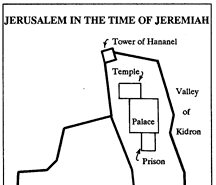
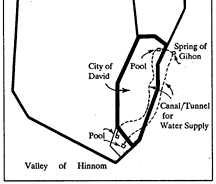
The place where the Judeans offered their children as burnt sacrifices was the Valley of Ben Hinnom, on the southern side of the city. The valley got its name from the son of Hinnom (the Hebrew ben meaning 'son') who at one time probably owned the land that stretched along the valley. The name Tophet seems to have meant 'place of burning' and was used originally in relation to the place in the Valley of Hinnom where people burnt their children as sacrifices. This was also the place where people from Jerusalem dumped broken pottery (see 19:1-2). In time it became a public garbage dump and fires burnt there continually.
When transliterated from Hebrew to Greek, 'Valley of Hinnom' (Hebrew: ge-hinnom) becomes gehenna. This was the word that Jesus used for the place of final punishment of the wicked, and is commonly translated 'hell' (Matt 10:28; 18:9; 23:33). The Valley of Hinnom was associated with judgment and burning (see 7:31-32; 19:4-7), and therefore gehenna became a fitting word to denote the place or state of eternal punishment (Mark 9:43-48; cf Matt 18:8-9; Rev 20:10,15).
Sin and its punishment (8:4-17)
It is natural for a person who falls to pick himself up again, but the people of Jerusalem who have fallen spiritually make no attempt to return to God (4-6). It is natural for a bird to obey the laws of instinct and know the time to migrate, but the people of Jerusalem do not know the laws of God or when to return to him (7).
The teachers of the law, the wisdom teachers, the priests and the prophets have all led the people astray. Instead of denouncing wrongdoing, they have told the people there is nothing to fear. They work solely for the benefits they hope to receive for themselves, but their gains will all be lost (8-11). Their behaviour is shameful, though they themselves feel no shame. They are supposed to be servants of God, but they are as useless as fruit trees that bear no fruit (12-13).
When the enemy invades, the people will realize that this is God's judgment on them because of their sin, but it will then be too late. There will be no safety for them, not even inside the walled cities. They have deceived themselves and now they must bear the consequences (14-15). The prophet sees them shaking with fear as the enemy armies descend on them from the north (16-17).
Mourning for Judah (8:18-9:22)
The prophet is overcome with grief as he foresees the tragic end of the nation. The people wonder why God their King does not save them. God replies that it is because of their idolatry. They now realize that they can no longer expect his salvation (18-20). Nothing can heal Judah's spiritual sickness now; the end has come. And nothing can heal the wounds of grief in Jeremiah's heart as he sees his people suffer (21-22).
Jeremiah is unable to express the extent of his grief. He feels he could weep for ever (9:1). On the other hand, he knows that the judgment is fitting. As he returns to consider the sinful city in which he lives, he wishes he could leave it and go to some quiet resting-place in the country (2).
Since Judah's society is characterized by lies and deceit (3-6), God warns that it is heading for a fiery judgment (7-9). The prophet foresees the desolation in Judah, with its cities ruined, its pasture lands destroyed, and its people either killed or taken captive to a foreign land (10-11).
If anyone asks why the land has been desolated (12), the answer is that the people have turned away from Yahweh and followed heathen gods. They have turned away from the law of God and followed their own stubborn hearts (13-16). In their distress and sorrow the people invite the professional mourners to come and wail over the dead city (17-19). This time, however, the mourning is real. Rich and poor, young and old die alike. Their corpses lie unburied in the streets and fields (20-22).
Knowledge of the only true God (9:23-10:16)
People may have knowledge, power and wealth, but these are no substitute for a true understanding and knowledge of God (23-24). The Judeans may have been circumcised as a sign that they are the covenant people of God, but in their hearts they have not been true to God or the covenant. They might as well be uncircumcised like their heathen neighbours. Israel's rite of circumcision is no more beneficial to disobedient people than the heathen rite of cutting the hair into certain shapes (25-26).
Jeremiah warns God's people against copying the practices of other nations and worshipping the sun, moon and stars. He warns them also against worshipping idols, which he describes as merely decorated pieces of wood (10:1-5). Judah's God, Yahweh, is not just one among many national gods. He is the only God, incomparable and all-powerful (6-7). People may be very artistic in carving or moulding their idols, and may go to much expense to clothe and decorate them, but the idols are still senseless and worthless. Yahweh alone is the true and living God (8-10).
Idols cannot make anything or do anything (11), but God created the universe and keeps it going. Idols are lifeless, and those who make them have no sense; but God is a living being, and all his works are the products of his wisdom (12-15). This God is the almighty Yahweh, the one who created all things and who chose Israel to be his people (16).
Prepare for captivity (10:17-25)
Picturing Jerusalem under siege, Jeremiah sadly tells the people that the end has almost come. They should collect their few remaining belongings and prepare for the long journey to captivity in Babylon (17-18). The people mourn for their nation, which has fallen like a collapsed tent. Chiefly to blame for this catastrophe are the nation's worthless leaders (19-21). Jeremiah then imagines the enemy armies roaring down from the north and desolating the towns of Judah (22).
As he pleads to God on behalf of his fellow countrymen, Jeremiah reminds God that people are naturally weak and are easily led astray (23). He asks, therefore, that God will not punish Judah too severely and that Judah will accept his correction. He prays that God's wrath will be poured out not upon Judah, but upon those ungodly nations who attack Judah with needless cruelty (24-25).
The broken covenant (11:1-17)
God had made a covenant with Israel after the people came out of Egypt, assuring them of blessing if they obeyed his law and punishment if they disobeyed. God now tells Jeremiah to remind the people of these conditions of the covenant (11:1-5). Past lessons should be a warning to them that unless they change their ways, they are heading for disaster (6-8). However, the people prefer to ignore the warnings. Like their forefathers they rebel against God and follow false gods (9-10). The towns of Judah are full of false gods, but the people will now find that these gods are powerless to save them from God's judgment (11-13).
It is too late to pray for Judah's deliverance. All her rituals and ceremonies will not save her from the punishment due to her (14-15). God intended Judah to be like a beautiful green olive tree, but when the storm of his judgment breaks, that olive tree will, as it were, be struck by lightning and burnt up. By worshipping Baal, Judah has brought about its own destruction (16-17).
A plot against Jeremiah (11:18-23)
The people of Anathoth, Jeremiah's home town, had become angry with Jeremiah. They did not like his uncompromising opposition to their false religious practices and his constant predictions of certain judgment. When God warned Jeremiah that they were plotting to kill him, Jeremiah cried to God for help (18-21). God now replies with a promise that he will protect Jeremiah and punish his would-be murderers (22-23).
Jeremiah's complaint; God's answer (12:1-17)
As he thinks back on the treachery of the people of Anathoth, Jeremiah is prompted to complain to God. Innocent people suffer, whereas wicked people live at ease. Why is it, he asks, that God allows the wicked to prosper? God gives them life and food, and they grow fat and prosperous, though their hearts are far from God (12:1-2). Jeremiah, by contrast, remains true to God, yet he suffers. Indeed, the whole land suffers because of the sins of people who are arrogant and evil. Jeremiah wishes they could all be destroyed (3-4).
In reply God rebukes his servant with some challenging questions. If he is discouraged by the comparatively small opposition of the people of his home town, how will he overcome the far greater opposition that he will face from the nation at large? If he is running from the opposition of a few friends and relatives, how will he survive when he faces a jungle of wild animals (5-6)?
God then assures Jeremiah that there is justice, and in God's time the wicked will be punished. Judah may be compared to God's household and God's beloved, but she has fought against God like a wild beast or a killer bird. God will therefore use other 'wild beasts' and 'wild birds' (enemy nations) to devour her (7-9). In another picture, Judah is likened to God's vineyard. But the leaders of the nation have trampled down his vineyard, and the enemy will now come in and destroy it completely. Judah will reap the fruits of her sin (10-13).
Not only Judah will be conquered, but also the neighbouring nations. They took advantage of Judah's weakened position to carry out raids against it (cf. 2 Kings 24:1-2), but they themselves will now be raided. Like Judah, they will go into captivity in Babylon (14). However, if any of these conquered nations renounces Baal and swears allegiance to Yahweh, then, like Judah, it will be brought back to its homeland (15-17).
A nation useless and disgraced (13:1-27)
In an effort to emphasize God's warnings to Judah more forcefully, Jeremiah gave them an illustration that they could all see. He took a piece of clean new cloth, put it around his waist, then walked to a distant river where he buried the cloth in the river bank. Some time later he returned to the river and brought back the cloth for all to see. It was now rotten and useless (13:1-7). The meaning is that Judah, the nation that was supposed to be morally pure and tied closely to God, has now become rotten and useless. Because it has rebelled against Yahweh and served other gods, it too will be taken to a distant land (8-11).
God then instructed Jeremiah to give a second illustration of warning to the people of Judah. To them there was nothing unusual in the sight of wine jars filled with wine, for they liked to enjoy their wrongly gained prosperity to the full. Jeremiah explains that wine, instead of symbolizing pleasure, now symbolizes wrath, God's wrath. The nation will drink that wrath till it becomes drunk and unable to save itself from disaster (12-14).
Jeremiah has a sincere love for his country and will be deeply grieved to see such a catastrophe occur. He urges the proud nation to humble itself and turn to God, otherwise judgment will overtake it, as darkness overtakes a frightened traveller in dangerous hill country (15-17). The king and others of the royal family will suffer the humiliation of being stripped of their royalty and taken to Babylon as common prisoners, along with citizens from the farthest areas of the kingdom (18-19).
Judah had once been friends with Babylon (2 Kings 20:12-19). How great, then, will be Judah's surprise when it sees Babylon's armies descending upon it from the north. They will attack Judah with the ruthlessness of wolves attacking sheep or a rapist attacking a woman (20-22). Judah's sin is so deeply embedded that reform is now impossible. The nation will be driven off into captivity, just as chaff is driven away by the desert wind (23-25). It has acted like a prostitute, and will be punished with public disgrace like a prostitute (26-27).
Drought, disease and war (14:1-15:9)
A severe drought had hit Judah. People in all walks of life, from nobles to farmers, were affected by it, and they covered their heads as a sign of their distress. They had difficulty in getting enough water to keep themselves alive, and their animals were beginning to suffer from disease. Some had already died because of the lack of food (14:1-6).
Pleading on behalf of the people, Jeremiah confesses the nation's sins. He asks God to cease acting as if he were an uninterested traveller passing through a strange land, and instead act to help them. After all, the land is his and so are the people (7-9). In reply God points out that he cannot overlook their sin. Jeremiah should stop pleading for them, because nothing can now save them from God's judgment, a judgment that will come through war, famine and disease (10-12).
Jeremiah tells God that prophets have been assuring the people that these calamities will not overtake them (13). God replies that such prophets are false prophets. They will perish in shame and so will all those who believe them. The people have welcomed these prophecies of peace, because by such assurances they feel free to increase their wrongdoing without fear of punishment (14-16). Jeremiah weeps publicly to impress upon people the sorrow he feels as he foresees their terrible suffering (17-18).
Though his past pleas have not been answered, Jeremiah pleads with God yet once more. On behalf of the people he confesses their wrongdoing and asks that God will be merciful to them and give them rain. He prays that God will not forsake his people but will remember his covenant with them. There is no other God they can call upon to help them (19-22).
God replies that though Moses and Samuel had in the past pleaded successfully on behalf of the people (e.g. Exod 32:11-14; Num 14:13-25; 1 Sam. 7:5-9; 12:19-25), the nation has now passed the point where God can extend his mercy further. The false religion promoted by Manasseh still controls the attitudes of the people, and the nation will come to a cruel and humiliating end (15:1-4).
Time and again God has punished his people, with the purpose that they might acknowledge their sin and return to him; but always it has been without result. They do not deserve any further pity (5-6). The final slaughter is too horrible to imagine, but when people refuse to change their ways, such a judgment becomes inevitable (7-9).
Jeremiah's anguish; God's comfort (15:10-21)
The prophet again complains to God because of the unjust treatment he suffers. He has done no harm to the people, and in fact has pleaded on their behalf for God's mercy upon them, yet they hate him. They are angered at his attacks on their sin and his forecasts of judgment. Their hearts are as hard as iron (1012). God's word is that the Judeans will be invaded, plundered and taken captive (13-14).
Knowing that God is understanding, Jeremiah asks that he will protect him from death and deal with his persecutors (15). He was glad to be God's representative, to receive God's message and pass it on to the people; but when they heard that message and knew that the prophet was angry with them because of their sin, they cut themselves off from him. Lonely and discouraged, Jeremiah feels that even God has failed him. He feels like a thirsty person who has come to a stream, only to find that the stream has dried up (16-18).
In response God tells Jeremiah that he must stop speaking idle words of self-pity, and speak useful words as a true servant of God should. He must not copy the people and their worthless attitudes; they must copy him. If they continue to oppose him, God will protect him (19-21).
Symbolic actions (16:1-21)
Again God instructs his prophet concerning certain courses of action designed to attract the people's attention. Jeremiah is to be a living reminder to the Judeans of what will happen to them if they do not repent. Firstly, he is not to marry or have children, as a grim warning to people that those with families will have greater distress when the final slaughter comes (16:1-4). Secondly, he is not to attend any funeral, as a warning that when Judah falls there will be no funerals, since the dead will lie unburied (57). Thirdly, he is not to join in any feast, as a sign that soon all merriment will be gone from Judah for ever (8-9).
When people question Jeremiah about his strange behaviour and the doom to which it points, he must give a forthright explanation. He must tell them plainly that this judgment is because of their rebellion against God in following false gods (10-13). Beyond the judgment there will be restoration. Just as God delivered Israel from slavery in Egypt, so in due course will he bring his people from captivity in Babylon back into their own land (14-15). First, however, they must go into captivity. As fish caught in a net or beasts hunted down by hunters, so the Judeans will be captured and dragged off to a foreign land (16-18).
As the prophet looks beyond the captivity to the restoration, he offers a prayer that expresses his confidence in God. He sees a day when God's people will return to their land and people of other nations will join with them to worship Yahweh as the only God (19-21).
Wrong attitudes and their outcome (17:1-13)
Baal worship has become so much a part of the people's everyday lives that God sees it as engraved on their hearts. It is so widely practised in Judah that it cannot be removed from the land unless the people themselves are removed (17:1-4). Those who ignore God and trust in themselves are likened to a useless stunted bush that tries to grow in barren ground. Those who trust in God are likened to a healthy green tree that flourishes in well-watered fertile soil (5-8).
Because of the deceitfulness of the human heart, people may not understand their own actions and motives. Only God knows the hidden attitudes of their hearts, and he treats people accordingly (9-10). Those who gain riches by dishonest methods are also deceiving themselves. They will one day lose their riches, just as a bird that hatches eggs stolen from another bird's nest will lose the young birds when they grow and fly away (11). The only security in life is with the eternal God, whose presence is symbolized in the temple. But even the temple will not save those who turn away from him. The nation's hope is in a person, not a building (12-13).
Forthright messages (17:14-27)
Jeremiah is still distressed and once more appeals to God for help. His complaint is that the people mock him when they do not see his prophecies come true (14-15). He reminds God that he has done no more than announce the message God has given him. He personally does not wish doom upon the nation. Therefore, he asks God to be his protector against his persecutors (16-18).
One of God's commands to Jeremiah was that he go around the various city gates and warn the people of Jerusalem not to work on the Sabbath day (19-21). They are not to repeat the sins of their ancestors, but are to keep the Sabbath day holy, according to the covenant (22-23). If the people are obedient to the requirements of the covenant, they will enjoy the blessings promised in the covenant. God will give them prosperity and contentment under the rule of Davidic kings indefinitely (24-26). But if they persist in their disobedience, the nation will be overthrown (27).
Lessons from the potter (18:1-23)
A potter can make a lump of clay into whatever shape he wants. He can also change the kind of vessel he is making, if he thinks that conditions require it (18:1-4). As a potter determines the kind of vessel he makes, so God determines the destinies of nations, and this is the lesson that the people of Judah must learn (5-6). He may announce judgments on a nation, but he may withdraw those judgments if the nation repents. On the other hand, he may promise blessings to a nation, but he may withdraw those blessings if the nation rebels (7-10). Jeremiah assures Judah that it can be saved from the coming destruction if it returns to God (11). Judah, however, refuses to change its ways (12).
In turning from God to idols, Judah has done something that is almost unbelievable. Such action is as unnatural as that of a virgin who suddenly turns prostitute, or of a snow-fed mountain stream that suddenly dries up (13-15). Onlookers shake their heads in amazement at Judah's folly. It can lead only to calamity (16-17).
Some of the Judeans plotted mischief against Jeremiah because of his outspoken criticisms. They refused to acknowledge him as God's spokesman. They comforted themselves in the assurance that they were loyal followers of the official priests, wisdom teachers and prophets, who, of course, approved of their sinful ways (18). Jeremiah reminds God that he has prayed for these people, and now they are returning evil for good (19-20). As he asks God to fight for him, he prays that God will destroy the plotters and their followers, according to the curse that the law of Moses pronounced upon the rebellious (21-23; cf. Deut 28:15-68).
The broken pot (19:1-20:6)
In another acted parable Jeremiah, carrying an earthenware pot in his hand, took the leaders of Jerusalem to a place outside the city walls where old pottery was dumped. This was in the valley where the Judeans once sacrificed their children to Molech and carried out other pagan rites (19:1-2; see 7:30-34 and section, 'Tophet and the Valley of Hinnom').
Through their leaders, the people of Judah are told that in this valley, where they have killed their children, they themselves will be killed. The place had been named the Valley of Hinnom, but the prophet announces that in the future it will be called the Valley of Slaughter (3-6). When the Babylonians finally destroy Jerusalem, many Judeans will be slaughtered in this valley, while those who remain in the besieged city will be so near to starvation that they will eat their own children (7-9).
Jeremiah then smashed the pot, to symbolize God's coming judgment on Jerusalem. The city will be smashed, destroyed. Tophet, which is already unclean through its association with idolatry, will become a dump for corpses. The defilement of Tophet will be the measure of Jerusalem's defilement (10-13).
Having made his announcement at the site of the coming slaughter, Jeremiah returned to the temple, where he repeated the announcement of judgment (14-15). Pashhur, the chief officer of the temple, furious at Jeremiah's words, arrested him, flogged him and imprisoned him for the night (20:1-2). But Jeremiah would not be silenced. He boldly announced that Pashhur himself would see the people slaughtered and the city plundered and destroyed. After that, Pashhur would be taken off to humiliating captivity in Babylon, where he would die (3-6).
Jeremiah complains again (20:7-18)
The prophet feels that God has not been fair to him. God has called him to be a prophet against his personal wishes, then, when he faithfully announces God's message, the people mock and curse him (78). If he decides to keep quiet he finds he cannot, for God's word burns within him and he must proclaim it. Even his friends have turned against him and now treacherously plot his downfall (9-10). When he remembers that God is on his side, he is assured that his enemies will not overcome him (11-13); but when he thinks about his own bitter experience of life, he wishes he had never been born (14-18).
Jeremiah's inner conflicts
An examination of the preceding chapters shows that Jeremiah was a true patriot who loved his people and his country dearly (8:18-9:1; 14:19-22). No one could honestly doubt his loyalty. He was filled with unspeakable sorrow when he had to announce his country's overthrow and urge his fellow Judeans to submit to the enemy (4:19-22; 10:17-21; 14:17-18; 17:16-17). He was deeply hurt when accused of being a traitor (37:13; 38:1-6); he preferred rather that people heed his warnings and repent, and so avoid the threatened calamity (7:5-7; 13:15-17; 26:16-19; 36:1-3).
The false prophets, by contrast, assured the people of safety, victory and peace. They knew that as long as they spoke words that pleased the people, they would receive suitable financial rewards (6:13; 8:11). Jeremiah wished for peace too, but he knew that there could be no peace as long as the people continued in their stubborn rebellion against God. He became increasingly distressed as he saw that the people's optimism, encouraged by the false prophets, would result in disappointment (7:1-15; 14:13-18; 23:9).
Much as it hurt him to announce these divine judgments to his people, Jeremiah did it faithfully as God's messenger (20:8-10). How great, then, was his agony of spirit as the people turned against him (11:19; 18:18). In bitterness he turned to God, arguing with God because of the cruel reward he received in return for his devoted loyalty (12:1-4; 15:10-12,17-18; 20:14-18). God rebuked his servant for this selfpity, though at the same time he gave him added strength for the greater conflicts that lay ahead (12:5-6; 15:19-21).
These experiences of Jeremiah emphasized the reality and importance of an individual's personal relationship with God. Those with no personal fellowship with God did not truly know God, even though they may have called themselves prophets (23:18,21-22). But those who sought God with the whole heart found him (29:13).
Jeremiah foresaw the day when this close relationship with God would be experienced by all God's people. God would make a new covenant, one characterized not by a community's conformity to a religious system, but by an individual's personal relationship with himself (31:31-34).
21:1-25:38 WARNINGS TO KINGS AND FALSE PROPHETS
A message for Zedekiah (21:1-10)
This message was given late in the reign of Judah's last king, Zedekiah. Jerusalem was under its last great siege, which resulted in its fall and destruction in 587 BC. The king sent to Jeremiah and asked that he would pray to God to save Jerusalem from the Babylonians (21:1-2). Jeremiah replies that God will not save Jerusalem but will fight for the Babylonians (Chaldeans) against Jerusalem. Many of the people within the city will die, and those who survive will be taken captive to Babylon (3-7). Since this is God's judgment, the people of Jerusalem have no chance of success against the invaders. Jeremiah tells them they would do better to surrender and so save their lives (8-10).
A king's responsibility (21:11-22:9)
As he has no doubt done many times, Jeremiah tells the leaders of Judah that they must correct the widespread social injustice that has corrupted their nation. If they do not, God will destroy the nation in judgment (11-12). They are deceiving themselves if they think that God will not allow anyone to attack Jerusalem. They are going to be disappointed if they think that the city's fortified position guarantees its safety (13-14).
The king has a duty to provide justice for all, no matter what their status in life. By ruling uprightly the king will ensure the continuance of the Davidic dynasty, but by ungodliness he is only helping to bring that dynasty to an end (22:1-5). As a mighty forest is cut down and burnt, so Judah will be destroyed if it forsakes God. When the king and his people abandon the covenant and worship other gods, they have no further assurance of God's saving power (6-9).
Concerning Shallum (22:10-12)
Jehoahaz, also known as Shallum, was made king by the people of Judah after his father Josiah was killed in battle. But after reigning three months, he was deposed and taken prisoner to Egypt (2 Kings 23:29-34). Jeremiah says that the people should mourn more for Shallum than for Josiah. At least Josiah died a hero on the battlefield, but Shallum will die a captive in a foreign land (10-12).
Concerning Jehoiakim (22:13-23)
Jehoiakim, another son of Josiah, was made king by Egypt in place of the unfortunate Jehoahaz. Jehoiakim was a cruel and oppressive ruler. In a time of extreme hardship, when the people were already burdened with heavy taxes to pay the overlord Egypt, Jehoiakim built luxurious palaces for himself. He demonstrated his contempt for his people by treating them almost as slaves and forcing them to work on his grand building projects without payment. He was the complete opposite of his father, who had shown a particular concern for the poor and needy (13-17; cf. 2 Kings 23:34-37).
God's response to Jehoiakim's evil is to assure him of a humiliating death. No one will mourn for him and he will receive no funeral. His dead body will be thrown on to the garbage dump outside Jerusalem as if it were the remains of an unclean animal (18-19; see also 36:30). The mountainous regions from which Jehoiakim obtained the luxuries for his extravagant living will be destroyed. His allies will be crushed, and the Jerusalem leaders who cooperated with him in his corrupt government will be driven into captivity as if blown by a strong wind (20-23).
Concerning Jehoiachin (22:24-30)
On Jehoiakim's death, his eighteen year old son Jehoiachin (also known Jeconiah, or Coniah) was made king. He was doomed to a short reign of only three months followed by a long captivity in Babylon. Other members of the royal family would also go into captivity, along with many of the leading citizens of Jerusalem (24-27; cf. 2 Kings 24:8-15). Jehoiachin died in a foreign country, and no son of his became king after him (28-30; but see also 2 Kings 25:27-30).
Return from captivity (23:1-8)
Judah's political leaders are likened to shepherds over a flock, but instead of caring for the sheep they have exploited them. They are the ones chiefly responsible for driving God's flock into captivity, and therefore God will punish them (23:1-2). Even in a foreign country, however, the flock still belongs to God. He does not forget his people, but will bring them back to their homeland and give them good leaders (3-4).
As a new branch shoots from the stump of a fallen tree, so will new leadership shoot from the fallen dynasty of David. The rule of the Davidic dynasty will be restored, so that it can reach its goal in a king who will be the embodiment of God's righteousness, the true Messiah (5-6). The nation's return from exile will be a sign of God's covenant faithfulness, just as his deliverance from Egypt was in the days of Moses (7-8).
Lying prophets (23:9-32)
From denouncing the political leaders, Jeremiah turns to denounce the spiritual leaders. He is filled with sorrow and anguish as he thinks of the evil of these people and the terrible judgment God will send them (9). They have encouraged idolatrous worship and immoral behaviour in every place, even in the temple of God. For this reason the land has already experienced God's judgment and worse is to come (10-12).
Baal worship in the northern kingdom and its capital Samaria was bad enough, but the situation is even worse in the southern capital, Jerusalem. The place is as immoral as Sodom or Gomorrah and is worthy of divine punishment (13-15).
The false prophets speak not God's words but their own. They encourage the people to do as they please, assuring them that God will not punish them (16-17). The reason the false prophets do not understand God's wrath is that they do not understand God. Their minds have never been taught by him (18-20). In spite of this they preach as if their words are the words of God (21). If the false prophets had heard God's words as Jeremiah had, they would announce God's judgment on wrongdoers, not his approval of them. They would be turning people from sin, not encouraging them in it (22).
When false prophets say what they like as if God cannot hear or see them, they are demonstrating their folly. Nothing can be hidden from God (23-24). God sees what they are doing and he is displeased. Their 'prophecies' originate in their own dreams and ideas (25-27).
The messages of the false prophets are like straw, whereas the messages of the true prophets are like wheat. They nourish what is good. At the same time they are like fire or a hammer, because they destroy what is worthless (28-29). False prophets only lie and deceive. They even take the words of the true prophets and misapply them in order to support their own ideas. In this way they lead people astray (3032).
God's burden (23:33-40)
Prophets often spoke of their message as a 'burden' from God. It was a responsibility they had to discharge by announcing it to the people. Sometimes people went to prophets, particularly those whom Jeremiah calls false prophets, to ask them for a message, or burden, that would give them direction or guidance. God tells Jeremiah that if they ask him for a burden, he is to tell them that they are the burden. They are a burden so heavy that God cannot carry them any longer. He will therefore get rid of them by throwing them into captivity (33).
The false prophets misused the word 'burden', so that no matter what announcement they made, they claimed it to be a burden from God. For this reason God commands the true prophets, such as Jeremiah, not to use the word any more (34-37). When false prophets persist in using the word, they show their defiance of God and their intention to deceive his people. God's punishment will be to treat them as a burden and throw them away. As those whom God has cast off, they will be taken captives to a distant land (38-40).
Good and bad figs (24:1-10)
On the occasion of Babylon's attack on Jerusalem in 597 BC, the king Jehoiachin (Jeconiah) was taken captive to Babylon, along with the best of Judah's people. The people that Babylon did not want were left in Judah and placed under the control of Zedekiah, the new king appointed by Babylon (2 Kings 24:10-17). Jeremiah's vision of two baskets of figs was concerned with these events (24:1-3).
The people left behind in Jerusalem thought that they had God's approval, because they were still in their homeland, whereas the others had been punished with shameful exile. Jeremiah points out that this is not so. Those taken captive are the 'good figs'. The shock of the captivity will awaken many of them to see their sin, repent of it and return to the Lord. God will then bring them back into their land, where they will enjoy a new and living relationship with him (4-7).
Those who remain in Jerusalem are the 'bad figs'. They continue in their evil ways and think that by relying on Egypt they will escape the power of the Babylonians. Jeremiah tells them that, far from escaping, they will come to the most humiliating and horrible end (8-10).
Seventy years captivity (25:1-14)
Babylon conquered Egypt in 605 BC (the fourth year of Jehoiakim's reign according to Judean reckoning, the third year of his reign according to Babylonian reckoning; cf. Dan 1:1-6). Judah therefore came for the first time under the direct control of Babylon. Jeremiah now clearly sees his prophecies being fulfilled before his eyes. He reminds the people that for over twenty years he has been bringing God's message to them but they have not listened (25:1-3). He has urged them to turn from their sin and idolatry, promising that if they did, God would allow them to remain in their land. But they have ignored his words and as a result brought harm upon themselves (4-7).
God is now going to punish Judah, and will use Babylon as his instrument of punishment. Joy and gladness will cease from Judah, the land will be left in ruins, and the people will be taken captive to Babylon. They will remain under Babylon's rule for seventy years (8-11).
However, Babylon has no right to do as it pleases. When it acts as if it is greater than God, it too will be destroyed. The outcome of this will be the release of God's people, so that after their seventy years of captivity, they will be able to return to their homeland (12-14).
Judgment on various nations (25:15-38)
God is righteous and holy, and in justice pours out his wrath on those who arrogantly defy his authority. His judgment upon wicked nations is likened to a cup of wine given to a person to make him drunk so that he staggers and falls (15-16). Through the spreading conquests of the Babylonian armies, God has punished Judah (17-18), along with a variety of other nations far and near (19-25). But in the end Babylon, the agent God has used to carry out his judgment, will itself be the object of God's wrath (26. Sheshach is another name for Babylon). No nation can escape once God has determined to punish it (2728), and Judah, God's chosen nation, will be the first to suffer (29).
A further picture of the terrible judgment to fall on the wicked is that of a lion's attack on a flock of sheep. When the judge of all the earth acts in his holy judgment, the wicked will find no place of refuge (30-31). The bodies of the dead will lie rotting and stinking in the sun, like manure (32-33). The leaders of the people (shepherds of the flock) will look for a way of escape when the day of disaster comes, but they too will perish (34-35). As shepherds cry out when they see violence at work within their peaceful pastures, so Judah's leaders will wail when they see the Babylonian armies desolating their land (36-38).
26:1-34:22 PROPHECIES OF EXILE AND RETURN
The dangerous life of a prophet (26:1-24)
Again Jeremiah went to the temple, where he could preach to people who came from all over Judah to worship. He stood in the open court and urged the worshippers to give up their sinful ways and return to God (26:1-3). If they refused, the temple would be demolished, as the tabernacle had been at Shiloh several centuries earlier (4-6; see notes on 7:1-15; cf. also 19:14-20:6).
Religious officials and ordinary citizens alike were so angered at Jeremiah's words that a riot threatened to develop and Jeremiah was in serious physical danger (7-9). When the city officials rushed to the temple to intervene in the crisis, the leaders among the crowd demanded that Jeremiah be executed (10-11).
Jeremiah defended himself by pointing out that he had only been speaking the message God gave him. His real desire was that the people repent, for only by such action would they save themselves and their temple from destruction (12-15). The city officials accepted his defence (16). Other respected leaders supported them, adding that instead of trying to kill the prophet, people should take notice of his warnings. If they changed their ways, they would save themselves from disaster. In this they would be following the good example of a former Judean king, Hezekiah, who heeded the prophet of his day (1719; cf. Micah 3:12).
Although Jeremiah on this occasion escaped death, another prophet who spoke a similar message did not. This man, Uriah, had heard of a threat to his life and fled to Egypt, but the wicked Jehoiakim had him brought back to Jerusalem and executed (20-23). Jeremiah received some protection at this dangerous time through the loyalty of an influential friend, Ahikam (24). (Ahikam seems to have been an important palace official. He had been a key man in the launching of Josiah's reforms; see 2 Kings 22:11-14.)
Submit to Babylon (27:1-22)
Early in the reign of Zedekiah, representatives from various neighbouring countries came to Jerusalem, in the hope of forming an alliance with Zedekiah against Babylon. Jeremiah delivered God's message to them, illustrating the message by putting an ox's yoke on his neck. The meaning was that the people were to submit to the yoke, or rule, of Babylon. This was God's will, and there was no use rebelling against it. Babylon would not be overthrown till God's time for it had come (27:1-7).
This message applied to all nations. All had to acknowledge Babylon's overlordship, regardless of the pronouncements of self-appointed prophets in Judah or fortune-tellers in other nations. Those who resisted Babylon were only inviting disaster and ruin (8-11). Jeremiah repeated the message for the benefit of the Judean king in particular, since he had mistakenly placed his hope in the assurances given by the false prophets (12-15).
The priests of Jerusalem were also building up false confidence in people. They announced that Babylon would soon be overthrown, and the temple vessels that Nebuchadnezzar had taken to Babylon would be returned. Such prophecies were lies (16-17; cf. Dan 1:2; 2 Kings 24:13). The priests and prophets should rather have been urging the people to repent and so prevent any further plundering of the temple by the Babylonians (18).
But Jeremiah knew that the people would not repent. As a result the few remaining treasures in the temple would also be taken to Babylon. Only in the distant future, when Babylon's power was gone, would these temple treasures return to Jerusalem (19-22).
Hananiah's false prophecy (28:1-17)
One of the temple prophets, Hananiah, publicly contradicted Jeremiah. He asserted that he had received a revelation from God that showed that within two years Babylon would be overthrown. The captive people and the temple treasures would then return to Jerusalem (28:1-4). Jeremiah replied that he wished such would be the case (5-6), but wishing for a thing does not make it come true. Some prophesy doom, others prophesy peace, but when the events take place then people will know who was right (7-9).
Hananiah, angry at Jeremiah's words, took the yoke from him and broke it. In this way he expressed his belief that God would break the yoke of Babylon. Jeremiah did nothing, but awaited a word from God (10-11). When that word came, it announced that the nations under Babylon's yoke would suffer even greater distress than they had so far experienced. The wooden yoke would be replaced by an iron yoke (12-14). As for the false prophet, within a few months he would die (15-16). Jeremiah's prophecy came true, but Hananiah's did not (17).
Letters to the captives in Babylon (29:1-32)
In 597 BC several thousand of Jerusalem's most capable people were taken captive to Babylon. Among them were some false prophets who began to predict, as Hananiah had done, that Babylon was about to fall and that the Judean captives were about to return to Jerusalem. Jeremiah, on hearing of this, wrote a letter to the community of captives (29:1-3).
The advice Jeremiah gives to the exiles is that they settle down to a more or less permanent way of life, as they will not be returning to Judah in the near future. They should try also to increase their numbers, for this would help them build towards a strong future (4-6). They should work for the good of the nation under whose government they live, and should not believe the predictions of the false prophets (7-9). The people will be in captivity for seventy years, but these will be years of discipline, during which God will prepare them for a better future (10-11). After this time of discipline, they will be in a better condition to enjoy true fellowship with God in their homeland again (12-14).
Turning from the exiles who were deceived by false prophets, Jeremiah has a few words concerning those still in Jerusalem who were similarly deceived (15-16). The Jerusalemites had made no attempt to reform in spite of God's warnings, and therefore they too will be punished. Some will die at the hand of the enemy, and others will be taken to join their fellow Judeans in captivity (17-19). The two false prophets, who by their deceptive announcements and immoral behaviour have been leading the exiles astray, will be publicly executed by the Babylonian rulers (20-23).
On hearing Jeremiah's letter read in Babylon, another of the false prophets among the exiles, Shemaiah, was furious. He wrote a letter to the priests in Jerusalem, accusing Jeremiah of being a madman and demanding that he be arrested and imprisoned (24-28).
Jeremiah then sent a letter back to the exiles, accusing Shemaiah of being a self-appointed prophet and a deceiver. As punishment, neither he nor any of his offspring would live to see the fulfilment of God's promise in the people's return to their homeland (29-32).
Disease, suffering and healing (30:1-24)
Although he has been prophesying the captivity of Judah, Jeremiah knows also that after seventy years the people will return to their homeland. A theme of hope and encouragement runs through the next few chapters (30:1-3).
The suffering of God's people will almost be more than they can bear, but God assures them that it will not last indefinitely (4-7). He will release them from bondage and give them independence and peace under the rule of the Davidic dynasty again (8-9). Nations who have oppressed Judah will be destroyed, but God will not destroy Judah. He will discipline Judah because of its sins, but when the people repent he will re-establish them as a nation (10-11).
Nothing can save Judah from either the present distress or the greater distress to follow. The nation is like a person who has an incurable disease (12-13). As an immoral woman tries to win the favour of lovers, so Judah has tried to gain the help of other nations. But those she thought were allies will prove useless to her (14-15). The covenant God, Yahweh, is the only one who can restore his people. By his own power he will destroy Judah's oppressors and heal her incurable disease (16-17).
Jerusalem will be rebuilt and its former power and prosperity will be restored. The population will increase to compensate for those slaughtered in the Babylonian destruction, and the streets of the city will be full of rejoicing again (18-20). The people will have their own kings to rule over them and they will worship God sincerely, as befitting those who belong to God (21-22). But before these glorious days come, God must punish the nation Judah for its wickedness (23-24).
The people return home (31:1-22)
God has not forgotten any of his people who have been driven into a harsh existence in distant countries. Those of both the northern kingdom Israel and the southern kingdom Judah will share in the restoration to the land of their ancestors (31:1-3). They will be reunited in a land of renewed contentment and prosperity. They will join again in the national religious festivals at Jerusalem (4-6).
The prophet pictures the joyous journey back to Palestine. Even the blind and the lame join in the long trek back, because God strengthens them and supplies their needs along the way. He cares for them as a father cares for his firstborn son (7-9). The God who scattered his people in many lands now gathers them. He releases them from the power of those who have held them captive (10-11). God will protect and care for his people, giving them agricultural prosperity, social contentment and religious satisfaction (12-14).
When the people go into captivity there is weeping and mourning (15), but God wants this to be replaced with rejoicing and hope (16-17). First, however, the people must acknowledge that they have sinned and that God has acted justly in punishing them. They pray to God in an attitude of humble repentance (18-19), and God, as their loving and merciful Father, forgives them (20).
In view of their expected return, the prophet suggests that when the people go into captivity, they leave markers along the way. This will enable them to know the pathway back to their homeland. Although the nation goes into captivity as an unfaithful daughter, she will be cleansed and will return as a pure bride. God is going to reverse the normal course of events; he is going to create something new (2122).
A new city and a new age (31:23-40)
Jeremiah has a vision of Jerusalem as a city of righteousness and Judah as a land of contentment. It is a vision that gives him the satisfaction of a pleasant dream (23-26). God had been responsible for the devastation of their land in the past, but he will also be responsible for its productivity in the future (2728). The people by then will have learnt the lessons of their captivity. They will no longer blame their forefathers for their misfortunes, but will realize that people are punished for their own sins (29-30).
The people of Israel had been unfaithful to the covenant that God made with them at Sinai, and therefore they never enjoyed the close relation with God that he intended for them. God now promises to make a new covenant (31-32).
God's new covenant will not be spoiled by people's imperfections, because it will not depend upon their obedience to a set of laws. God will change people by working within them, by giving them a better knowledge of his will and the inner strength to carry it out. Instead of priests alone being able to approach God, all will know God. People will not need priests as mediators between them and God, because God himself will deal with their sins. He will remove all barriers and bring them into direct fellowship with himself (33-34).
(This new covenant came into being through the death of Jesus Christ. All who have faith in him receive its blessings. For the New Testament development of Jeremiah's prophecy see Heb 8:6-13; 9:15; 10:12-18; Gal 3:14,28-29.)
As surely as God will continue to control the universe, so just as surely will he restore Israel and Judah to their land (35-37). Jerusalem will be rebuilt and possibly extended beyond its former boundaries. Places around the city that were formerly defiled will be purified, so that Jerusalem becomes a city entirely dedicated to God (38-40).
Jeremiah buys a field (32:1-15)
At the time of Babylon's final siege of Jerusalem, just before the city fell, Jeremiah was imprisoned (32:1-2). The king, Zedekiah, considered Jeremiah a traitor because he forecast the defeat of the city and the captivity of the king (3-5).
However, Jeremiah also forecast that the land of Judah would not be lost for ever, and that one day the people would repossess it. An opportunity now arose for Jeremiah to give practical demonstration of his faith in this future restoration. A relative of Jeremiah owned a piece of land that was occupied by the enemy armies. In these circumstances he saw no benefit in retaining ownership of the land, so gave Jeremiah the offer to buy it from him (6-8; cf. v. 24-25).
Jeremiah, having confidence in God's promises concerning Judah's future, bought the land (9). In carrying out the transaction he made sure that everything was done according to the legal requirements and that there were public witnesses (10-12). He then put the title deeds in an earthenware pot for safekeeping. He had faith to believe that some relative of a later generation would receive the right to inherit the land when the people returned from captivity (13-15).
God reassures Jeremiah (32:16-44)
After buying the field, Jeremiah began to have doubts. It seemed to him almost too much to expect that God could allow such a worthless people ever to return to their land. He therefore prayed to God (16), seeking to reassure himself that nothing is too hard for a God who is so loving and powerful (17-19). He reminds God of his steadfast faithfulness and miraculous power, which had saved his people in the past (20-22). But the people have been disobedient and have now brought this justly deserved punishment upon themselves (23). With the enemy siege machines battering the city walls, Jeremiah fears that Jerusalem's end has come. He wonders whether, in buying the field, he has correctly understood God's will (24-25).
God replies that nothing is too hard for him. Certainly he will destroy Jerusalem (26-29), for this is a judgment on the nation because of its idolatry (30-31). Kings, administrators, priests, prophets and common people alike have turned from God and followed pagan religions (32-35). However, after God has disciplined his people in foreign lands, he will bring them back to their land (36-37). He will do a work within them so that they will know him in a more spiritual relationship than they have previously experienced. They will have a renewed devotion to God and a fresh experience of God's blessing (38-41).
Jeremiah need have no doubts about the wisdom of buying the piece of land from his relative. The day will certainly come when this piece of land will be returned to Jeremiah's family. In fact, throughout the country people will buy and sell land as they did before (42-44).
The nation restored (33:1-26)
After this reassurance, God encourages Jeremiah to ask for further revelations of his plans for his people (3:1-3). Because of his imprisonment, Jeremiah may not know what is happening in and around the city. God shows him that the people of Jerusalem are desperate. They are demolishing houses and palaces in order to obtain materials to strengthen the city walls against the enemy's battering rams. But they are wasting their time, as the city is going to be destroyed (4-5).
Nevertheless, God will not forsake his people. After he has cleansed them from their sin, he will bring them back and they will rebuild the city to God's glory (6-9). In the cities of Judah there will be joy, in the pastures there will be peace, and in the temple there will be the sound of praise to God (10-13).
Once more a king of the dynasty of David will rule over Israel, and Jerusalem will be the city of God's salvation. Both the king and the city will be true expressions of God's righteousness (14-16; cf. 23:5-6). The Davidic dynasty and the Levitical priesthood will work together in perfect harmony, and worship will ascend to God perpetually (17-18). As certainly as night follows day and day follows night, God will fulfil his covenant promises to the dynasty of David and the tribe of Levi. Civil and religious power will work together for the good of his people as God intended (19-22).
When God punishes Israel and Judah, some people claim that he has rejected them. God tells Jeremiah that he has not. Despite their sin, they are still the descendants of Abraham, Isaac and Jacob, and they are still his people (23-26).
Note: After the time of exile, Zerubbabel, a descendant of David in the kingly line, became governor of Jerusalem (Hag 2:20-23; Matt 1:12,17), and Joshua, a descendant of Aaron, became high priest (Hag 1:1). There was peaceful cooperation between them and together they helped to reestablish Israel (Zech 6:13). But Israel did not maintain its loyalty to God. The nation never experienced fully all the blessings that Jeremiah pictures in this chapter. These blessings come in their fulness only through Jesus Christ, the messianic Son of David, the Great High Priest (Matt 22:42-44; Acts 13:33-34; Heb 4:14; 10:11-18).
Treacherous slave-owners (34:1-22)
Again Jeremiah tells King Zedekiah that Jerusalem will fall to the Babylonians. Zedekiah himself will be taken to Babylon but will not be executed. When he eventually dies he will be given a fitting royal funeral (34:1-7).