
Part 22
The 're-marriage' will be based on God's standards and maintained by his loving faithfulness to the marriage covenant. Israel will know Yahweh and be inseparably united with him (19-20). He, the only God of nature, will then give to Israel the blessings of nature that she desired. The curses signified by the names of Hosea's three children will then be turned into blessings (21-23).
Steadfast love (3:1-5)
The story now returns to relate how Hosea, having found that his prostitute wife had become a slave, bought her back. In the same way God will buy back his adulterous people from slavery (3:1-2).
But Gomer had first to undergo a period of discipline and live with Hosea as a slave, not as a wife. Israel likewise must have a period of discipline. She must live in captivity in a foreign land, where she will be without her own civil government and will be separated from all objects connected with former religious practices, good and bad. Only when she willingly responds to God's love and seeks him will she be truly his (3-5).
The love that God showed to Israel (and Hosea to Gomer) is a special kind of love that in Hebrew is called chesed. It is translated in the RSV as 'steadfast love', in the GNB as 'constant love' and in other versions as 'mercy', 'kindness' and 'loving kindness'.
Chesed love is covenant loyalty and faithfulness. A covenant is an agreement between two parties that carries with it obligations and blessings. In the case of Hosea and Gomer, that covenant is the marriage covenant, and chesed is that particularly strong form of love by which the two persons in that covenant are bound to be loyal to each other. This idea forms a basic theme of the book of Hosea. God exercised loyal love and covenant faithfulness towards his people, but they were not loving and faithful to him in return. Their chesed 'vanished like the morning mist' (see 6:4-6).
4:1-8:14 ISRAEL'S MORAL CORRUPTION
Hosea now turns from his personal experiences to the conditions in Israel that they illustrated. There appears to be little chronological order or logical development in this section. It consists of collections of numerous short messages that Hosea apparently delivered on various occasions over a number of years.
Corrupt religion; corrupt people (4:1-5:7)
The people have no knowledge of God or his law, and therefore they are unfaithful to him and deceitful in their dealings with one another. Their wickedness is the reason for the present drought they are suffering (4:1-3).
Chiefly to blame for this nationwide corruption are the priests. They have not taught God's law to the people (4-6). Instead they have encouraged the people to offer more sacrifices so that they (the priests) can profit. Since they receive the meat of the sin offering, the priests welcome the people's sins. The more the people sin, the more sin offerings the priests receive (7-8). The priests are as bad as people in general and are guilty of the same sins. They look for increase in their families, flocks and herds through the Baal practice of carrying out sexual rites with religious prostitutes. God will make sure that their hopes are disappointed (9-10).
Throughout the land people follow religious practices of the worst kind. They become drunk at their religious feasts. They look for guidance by superstitious ceremonies using sacred sticks. They offer sacrifices under sacred trees at the Baal high places. Their young women become religious prostitutes, though the chief blame lies with the men, who, by their immoral desires, made the women into prostitutes (11-14).
Judah is warned not to follow Israel in trying to mix the worship of the living God with the false religion that operates at places such as Gilgal. God cannot bless those who stubbornly go their own way (15-16). The idolatry, greed and immorality of Israel will be the cause of its destruction (17-19).
Priests, common people and the royal family are all corrupt. They are condemned as spiritual prostitutes and slaves to the false religion that is practised throughout the nation. The prophet names some of the more popular Baal centres (5:1-3). The people are firmly held by the power of idolatry and unable to return to God. They still offer their animal sacrifices, but God does not accept them. They are not his children, but the children of prostitution. Within a short time God will send another judgment upon them in the form of further devastation of their crops (4-7).
Foreign policies (5:8-15)
During the reigns of the Judean kings Jotham and Ahaz, Israel and Syria tried to persuade Judah to join them in an alliance aimed at resisting the spreading power of Assyria. When Judah refused to cooperate, Israel and Syria attacked Jerusalem, whereupon Ahaz, contrary to Isaiah's advice, asked Assyria for help. Assyria replied by conquering Syria and much of Israel. But Judah's independence also suffered, because in asking Assyria for help, it placed itself under Assyria's power (2 Kings 16:5-9; Isa 7:1-9; 8:4).
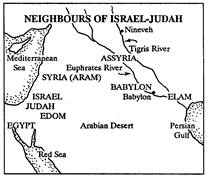
Hosea sees Israel going to battle and knows that the nation is about to bring a fitting calamity upon itself. He also condemns Judah, who took the opportunity to seize some of Israel's territory. He sees the inner decay of both kingdoms as a judgment of God upon them (812).
When Israel's foreign policy proved fatal, the king Pekah was assassinated by Hoshea, a sympathizer with Assyria who then became king (2 Kings 15:30; 17:3). But Assyria could not solve Israel's problems any more than it could Judah's. Both Israel and Judah were morally sick. They turned to foreign nations to help them instead of turning from their sins to God. Now they will find that God will use foreign nations to punish them. As a lion destroys a lamb, so God will destroy Israel and Judah (13-14). He will give no help to his people till they repent of their sins and seek him afresh (15).
Insincere repentance (6:1-6)
In view of God's warning in the previous chapter (see 5:15), the people decide to make a confession of repentance. But their confession is not sincere. They offer it to God in the hope that it will satisfy him and bring from him a speedy response. If God helps them, their future blessings are guaranteed (6:1-3).
God sees that the people's promise to return to him is nothing but words; their hearts have not changed. They have no covenant loyalty towards God, no love for him and no desire to know him. As long as they are without these qualities, all their sacrifices and offerings are useless. Religious exercises will not save a rebellious people from judgment (4-6).
Treachery, robbery and murder (6:7-7:7)
Priests and common citizens alike are guilty of treachery, robbery and murder. Hosea again names the places where they have practised these evils. He announces that the people, along with all their religious ceremonies and sacrifices, are repulsive to God (7-10). God wants to give blessings to his people, but they prevent such blessings because they refuse to repent. They prefer to continue with their cheating, stealing and violence (11-7:2).
The death of Jeroboam II was followed by a series of plots, conspiracies and assassinations (see 2 Kings 15:8-26). The successful assassin, who then became king, was pleased with the treacherous deeds of his fellow plotters, but he himself was not safe from the plotting of others. Just as a baker keeps the fire low until the dough is ready for an increase in heat, so these men plot their evil secretly until the time is ripe to murder the king (3-4). Pretending to be friends, they feast with him so that they can get him drunk, then murder him (5-7).
Alliances with other nations (7:8-16)
Israel is useless, like a cake that is burnt on one side but uncooked on the other. It has ruined itself by relying too much on other nations and too little on God. As a result Israel has, without realizing it, come under the power of these nations. God has allowed this to happen as a punishment on his people, but because of their arrogance they refuse to acknowledge the fact and will not return to God (8-10). Foolishly they make alliances, first with one nation then with another, but God sees all such alliances as rebellion against him. Far from saving the people, these alliances will be the cause of their destruction (11-13).
Like Baal worshippers, the Israelites wail and dance and cut themselves with knives, hoping that Baal will respond by giving them good harvests from their fields and vineyards. God is the one who has trained and strengthened them, but they have treacherously turned against him. They are as useless to God as a crooked bow is to an archer. Their defiant attitude towards him will lead to certain punishment (14-16).
A rebellious kingdom (8:1-14)
The people of Israel claim to know God, but they have broken their covenant with him and sinned against his law. God will use the Assyrian army (here symbolized by an eagle) to bring his punishment upon them (8:1-3). Their kings are not people appointed by God but traitors who murder to gain power. The centre of their religion is not God but the golden calves set up as idols in their cities (4-6; see 1 Kings 12:29-30).
Israel's foreign policy, besides being rebellious towards God, is politically foolish. The nation will now reap the fruits of its folly in disappointment and destruction. It will come under enemy control (already some of the people have been taken into captivity; 2 Kings 15:29), and finally the nation will come to an end (7-8). Israel has acted stubbornly like a wild ass and therefore will be treated like a wild ass. It will be left to wander alone – leaderless, oppressed and without friends (9-10).
Religious ceremonies, intended originally to be a help, have become a cause of sin. The people enjoy offering sacrifices because of the feast that follows; but God rejects their sacrifices because they are not interested in knowing or following the moral teachings of his law (11-13). Their prosperity is only hastening their day of judgment (14).
9:1-13:16 ISRAEL'S PUNISHMENT
Punishments to fit the sins (9:1-17)
Baal worship and its accompanying immoral rituals were aimed at increasing the produce from farms and vineyards. As a punishment God will destroy the farms and vineyards and send the people into captivity. There they will be forced to eat food that to them is unclean (9:1-3). They will not be able to offer the usual food and wine offerings; in fact, they will barely have enough to keep themselves alive. Meanwhile the land in which they once lived will become wild again through neglect (4-6).
The people do not like Hosea's denunciations and warnings. He is God's messenger to them, the nation's watchman, but they call him a fool and a madman. They even plot to kill him (7-8). Their sin is as great as that of Gibeah in the time of the judges (9; see Judg 19:1-20:48).
When God brought the people of Israel out of Egypt and led them through the wilderness, his desire was that they enter a new era of fruitfulness. But even before they reached the promised land, they had turned to Baalism and its immorality (10; see Num. 25:1-5). Such unfaithfulness has characterized the people ever since. They practise sexual rites, hoping that their families will increase. God's punishment, fittingly, will cause their families to decrease (11-14). Because of their Baal practices (as, for example, at Gilgal), they will be fruitless instead of fruitful. They will go into shameful captivity in a foreign land (15-17).
Reaping what they have sown (10:1-15)
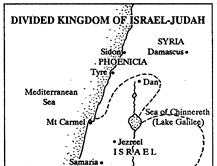
The more prosperous the people of Israel become, the more they increase their worship of Baal. The more certain, therefore, is their coming judgment (10:1-2). No one can be trusted. Injustice, like a poisonous plant, is having a deadly effect. It is killing the nation. The people do not fear God, and as a result will fall under his judgment. They, along with their king and the golden calf that they worship, will be carried off to Assyria (3-6). The land will be ruined and the Baal altars will become overgrown with weeds (7-8). Again, Israel's sin is compared to that of the Benjaminites in Gibeah, and their punishment is just as certain (9-10).
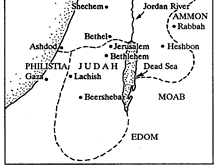
God compares Israel to a young ox whose original work (threshing) was not hard. But Israel has been so rebellious that if she is to avoid God's judgment she will have to do much harder work (ploughing). She must break up the hard, barren, long-neglected soil so that it can produce spiritual fruit for God (11-12). The people reap what they sow. They have sown evil and are now reaping a harvest of social injustice. They have trusted in the military strength of foreign nations, and so will be destroyed by the military strength of foreign nations (13-15).
The Father's love (11:1-11)
As a father loves a son, so God loved Israel and saved his people from slavery in Egypt. They turned from God to serve idols, but God still loved them and cared for them (11:1-4). However, they have refused to return to God, and now they are about to go into slavery again, this time in Assyria (5-7).
It hurts God to have to punish those whom he loves. He must punish them for their wickedness, because he cannot ignore sin. But within his justice there is mercy. His love is stronger and more faithful than anything that is found in human relationships. He will remove his people from their land, but he will not destroy them for ever as he did Sodom, Gomorrah and other cities (8-9; see Deut 29:23). God will overpower the enemies of Israel, release his people from captivity and bring them back to their homeland (10-11).
Deceit and wilfulness (11:12-12:14)
Israel's political agreements with foreign nations, whether concerning trade or defence, are unlawful in God's eyes. They are based on lies and dishonesty (11:12-12:1).
Such deceit has been a characteristic of Israel from the time of the nation's forefather, Jacob (the original Israel). From birth Jacob showed a desire to get his own way. As an adult he struggled even with God. Only when he was forced finally to give in did he win the blessing he so eagerly desired (2-5; see Gen 25:22-26; 32:24-30). In the same way the people who are descended from him and who bear his name must give in by turning from their sinful ways to God. Only in this way will they receive God's blessing (6).
Merchants have become wealthy by cheating and oppressing the poor, but now they are to receive fitting justice. They have used their wealth to bribe judges and administrators, but they cannot use it to bribe God. Their prosperous cities and luxurious houses will be destroyed and the people of Israel will be forced to live in tents, as they did on their journey from Egypt to Canaan. This was an experience that Israelites recalled each year when they lived in small temporary shelters during the Feast of Tabernacles (7-9; cf. Lev 23:40-43).
God had used prophets to speak to his people in many ways, but the people repeatedly ignored the messages and are now to suffer the consequences. Their heathen altars will be destroyed and left like heaps of stones in a field (10-11).
Jacob was a shepherd who looked after sheep, but Moses was a shepherd who looked after people. He was a prophet who led God's people Israel, but just as the people of Israel rebelled against Moses so they have rebelled against all the prophets after him. Their rebellion against God's messengers is really a rebellion against God himself. They have made God angry with them and thereby have made their own punishment certain (12-14).
The destruction of Israel (13:1-16)
Ephraim prided itself that it was the leading tribe in Israel and that the other tribes did as Ephraim told them. Ephraim must therefore bear the responsibility for the development of Baal worship in Israel. As the morning dew quickly vanishes with the rising of the sun, so Ephraim, and all the other tribes with it, will soon disappear (13:1-3).
God saved the Israelites from slavery, looked after them in the wilderness and gave them a land, but in their prosperity they forgot him (4-6). God will now destroy them. There will be no escape (7-8). Israel's original desire for a king was a rejection of God. The people will now find that the king will not give them the security they hoped for. The monarchy, as well as the nation, is doomed (9-11; cf. 1 Sam 10:19; 12:13-15).
Israel has been piling up sin for years, and the punishment for that sin is now to fall upon it in the form of national destruction. There is hope of salvation and new life if the nation responds to God, but it stubbornly refuses to. It is like an unborn child which, when the time for birth has come, refuses to come out of its mother's womb, and so dies (12-13). There can be no more mercy. Death is certain (14). As a hot wind from the desert can destroy the countryside, so the Assyrian army will destroy Israel. It will show no mercy (15-16).
14:1-9 GOD'S FORGIVING LOVE
God loves Israel in spite of its sin and rebellion, and he still desires the people's repentance rather than their destruction. He even gives them the words of confession to use in asking his forgiveness. In this prayer they acknowledge their sin, and promise that they will no longer look to foreign nations for help. They will not worship man-made gods, but will trust entirely in God and his mercy (14:1-3).
If they repent, God in his love will give them a spirit of faithfulness to replace their present unfaithfulness. He will bless them with refreshment, beauty and strength, and help them develop fruitful lives for him (4-7). God assures his people that he will give them blessings far greater than those they looked for, but never received, from their worship of Baal and their pursuit of prosperity (8).
The prophet closes his book with a wisdom saying to remind his readers that if they heed his message they will find blessing, but if they ignore it, they will meet disaster (9). We know from history that the people did not respond to God's appeal. The nation Israel (the northern kingdom) was conquered by Assyria in 722 BC, its cities destroyed, and its people taken into foreign captivity (2 Kings 17:1-6).
Joel
Among the prophets of the Old Testament, Joel differs from most of the others in that he does not state the period during which he preached. One suggestion is that he prophesied in Judah around the period 835-830 BC, during the reign of the boy-king Joash. This would explain why the book does not mention Syria, Assyria or Babylon, the chief enemies during the time of the divided kingdom, as these nations had not yet begun to interfere in Judah's affairs. It would also explain why the prophet does not mention a reigning king, for at that time the government of the country was largely in the hands of the priest Jehoiada (2 Kings 11:1-21; 12:1-2). The prominence of Jehoiada may also account for Joel's interest in the temple and its services (Joel 1:9,13; 2:12,15-17).
An alternative suggestion is that the book was written after the Jews' return from captivity. The most likely period is either 520-510 BC (after the ministry of Haggai and Zechariah and the rebuilding of the temple) or around 400 BC (a generation or so after the reforms of Ezra and Nehemiah). According to these suggestions, Joel is among either the first or the last of the writing prophets.
Purpose of the book
In spite of the absence of a specific date, the present-day reader should have no great difficulty in understanding the book of Joel. This is because the single event that forms the book's basis is not concerned with details of Judah's local politics or international affairs. The event is a severe locust plague, and the setting appears to be Jerusalem and the surrounding countryside.
The locust plague brought extensive agricultural damage and created widespread suffering to the people. What made the plague even more devastating was its occurrence at the height of a crippling drought. Joel interpreted these events as God's judgment on Judah for its sin. He promised the people that if they repented, God would renew his blessing by giving them productive crops and a more enlightened knowledge of himself. Joel saw these events as symbolic of God's future judgment on all enemies and his blessing on his people.
1:1-2:11 The great locust plague 2:12-32 God's mercy on the repentant 3:1-21 Final punishment and blessing
1:1-2:11 THE GREAT LOCUST PLAGUE
Effects of the plague (1:1-20)
So devastating is the current locust plague, that even the oldest people cannot remember anything like it. The whole countryside has been stripped bare. Joel tells the people to pass the story of the plague on to their children and grandchildren, so that it will not be forgotten (1:1-4). Those who have greedily lived for their own pleasure are punished. They will no longer get drunk with wine, because the locusts have destroyed the vineyards (5-7).
The people mourn as a young bride mourns when she has lost her bridegroom. She had looked forward to happiness, but instead she has misery (8). The priests mourn, because with the destruction of the fields and vineyards the people cannot bring their cereal and wine offerings (9). The ground mourns, because it cannot fulfil its natural purpose of producing grain, wine and oil (10). And the farmers mourn, because their crops have been ruined (11-12).
Joel now reveals that the locust plague is not an accident; it is a direct judgment from God. The priests therefore must lead the nation in repentance. First they must show their own repentance, then they must gather the leaders and people together to cry to the Lord for mercy (13-14).
The people must acknowledge that this disaster is from God. It is a foretaste of the great day of the Lord when he intervenes in judgment in the affairs of the human race. They have the evidence before their eyes in the form of hungry people, ruined crops and starving animals. Surely, they must see that this is God's judgment upon them (15-18). Therefore, God is the one to whom the prophet cries; he alone can save the nation from total ruin (19-20).
An army of locusts (2:1-11)
Joel now pictures the approaching swarms of locusts as a person in Jerusalem sees them. He compares them to an enemy army and commands the watchman on the city wall to blow the trumpet to warn the city's inhabitants of the attack. The swarms are so thick that they look like black clouds as they sweep down over the mountains (2:1-2). They spread over the countryside like an uncontrollable bushfire, turning healthy farmlands into barren wastes (3). People are terrified. They are helpless before the onslaught of this destructive army (4-6).
Finally, the locusts attack Jerusalem. City walls cannot keep this enemy out, as locusts swarm into the city and through the houses (7-9). The clouds of insects are so thick they blot out the sun. The darkness demonstrates to all that this is God's judgment and the day of the Lord is upon them (10-11).
2:12-32 GOD'S MERCY ON THE REPENTANT
Repentance and restoration (2:12-27)
Although God is the one who has sent this judgment, it is not too late for the people to ask for his mercy. However, this must be accompanied by genuine inward repentance, not just by the outward show of torn clothing, sackcloth and ashes. God may then restore their fields and vineyards, and they will be able to worship him with their cereal and wine offerings again (12-14).
Once more a trumpet is blown, but this time to call the people to the temple to seek God's mercy. No one is to be excluded, not even the children. All are to fast and mourn, even people who would normally be rejoicing and celebrating, such as those who have just been married (15-16). The priests gather in the temple court between the porch and the altar, and lead the people in prayer (17).
God accepts the people's repentance and promises to remove the locusts. He will drive them out to perish in the desert regions to the south, in the Dead Sea to the east, and in the Mediterranean Sea to the west. There may be some unpleasantness at first because of the smell from the millions of decaying locust carcasses, some lying in heaps on the ground, others washed up on to the shores. But after this, the land will become productive again (18-22). God will give good rains and good harvests to compensate for the losses suffered during the locust plague (23-25). This whole experience of judgment, repentance, forgiveness, blessing and thanksgiving will cause them to know God better (26-27).
Promise of the Spirit (2:28-32)
People may readily turn to God in days of hardship, but many of them just as readily forget God and become self-satisfied as soon as prosperity returns. They will be more obedient to God when they have a better understanding of his will. They will be more genuine in their devotion to him when they realize that his blessings consist of more than grain, wine and oil. Joel looks forward to the day when God will give all his people this better understanding by putting his Spirit within each one, regardless of age, sex or social status. It will not be like former times, when God gave his Spirit only to certain people for special tasks on special occasions (28-29).
All this must happen before the final great day of the Lord dawns. The darkness and terror of the locust plague is only a faint picture of the horror of that last great judgment. On that day believers will be saved but sinners will perish (30-32).
In New Testament times Peter saw a fulfilment of Joel's prophecy in the remarkable events of the Day of Pentecost. With the death, resurrection and ascension of Christ, a new age had dawned. The Spirit was now given to all God's people. Those who called on God's name had the assurance of salvation, but those who persisted in their sin had the assurance of judgment and condemnation (Acts 2:14-21; cf. John 16:7-15).
3:1-21 FINAL PUNISHMENT AND BLESSING
Up till now Joel has been emphasizing aspects of the day of the Lord that were not so well known, for example, judgment on all sinners, including Israel-Judah, and blessing on all the faithful, regardless of age, sex or status. Now he deals with aspects that were better known, namely, the salvation of God's people and the judgment of their enemies. However, he wants his readers to understand these matters in the light of what he has already told them about God's worldwide salvation and universal judgment. The people of God can be confident of their own salvation and their enemies' condemnation only if they have first repented of their sin (see 2:32; cf. Acts 2:37-39; 17:30-31).
Enemy nations judged (3:1-15)
Joel pictures enemy nations gathering for a last attack on Jerusalem. But these nations do not realize that God is the one who has brought them together. He is now going to execute his judgment upon them for their crimes against Judah. Chief among these crimes are their seizure of Judah's territory and their treatment of Judah's people, whether in driving them into other countries or in selling them as slaves (3:13). Tyre, Sidon and Philistia are examples of those nations that fought with Judah, plundered the Jerusalem temple and sold the people into slavery. In punishment God will now treat them as they treated Judah (4-8; cf. 2 Chron 21:16-17).
Returning to the picture of nations gathering for war in the valley outside Jerusalem, the prophet ironically urges the enemy armies to make full preparation for the battle. He then calls upon God to send down his angelic armies (his 'warriors'; v. 11b) to be ready to carry out his sentence of judgment upon the enemy (9-12).
God's moment of decision comes and he announces his verdict on the nations. They are guilty, their wickedness is great, and therefore they must die. They are cut down like grapes from a vine; their blood flows like grapejuice overflowing a winepress. The valley of God's judgment is filled with the bodies of dead soldiers (13-15).
Blessings for God's people (3:16-21)
The time of God's judgment on his enemies is also the time of his deliverance of Jerusalem. He protects his people from punishment, purifies them from uncleanness, and gives them peace and prosperity (16-18). Having punished all enemies (symbolized here by Egypt and Edom), God now dwells among his people for ever. The persecutors receive their just punishment, but the righteous enter into eternal life (19-21).
The day of the Lord
In his book Joel has shown how the events surrounding the locust plague were a picture and a foretaste of greater events that were yet to take place. He has shown how the day of the Lord brings both judgment and salvation. For the parallel between the judgment of the day of the Lord in Joel's day (the locust plague) and the judgment of the final great day of the Lord, compare 2:3 with 2:30; 2:10a with 3:16a; 2:10b with 3:15; 2:11a with 3:11b. For a parallel between the blessings on God's people after the locust plague and after God's final great intervention in human affairs, compare 2:23-24 with 3:18; 2:2627 with 3:16b-17.
Amos
Amos was the first of four prophets who prophesied during the eighth century BC, the others being Hosea, Isaiah and Micah. This was the time of the divided Israelite kingdom, and each of the writers carefully dated his writings according to the kings of Israel and Judah in whose reigns he prophesied. This helps the present-day reader to build up a picture of the circumstances surrounding each prophet's ministry.
The background notes to Hosea provide a summary of social, religious and political conditions in Israel and Judah during the time of the earlier eighth century prophets. A reading of those notes will provide a useful introduction to the notes on Amos below. Maps showing the divided kingdom and the neighbours of Israel-Judah are also located in the notes on Hosea.
Increased prosperity brings social evils
At the time Amos began his preaching, Jeroboam II reigned in the northern kingdom Israel, and Uzziah (also known as Azariah) reigned in the southern kingdom Judah. Under these kings, both nations enjoyed prosperity, but with the prosperity came changes that religiously, socially and morally were for the worse.
The rise of the merchant class, which began two hundred years earlier during the reign of Solomon, reached its peak during the time of Jeroboam II and Uzziah. No longer was society built around the simple agricultural life. With the rapid growth of commerce and trade, city life developed, and this brought social evils on a scale that neither Israel nor Judah had known before. Rapid prosperity for some meant increased poverty for others. As the upper classes grew in wealth and power they exploited the lower classes. Bribery and corruption flourished, even in the law courts, leaving the poor with no means of obtaining justice.
The fiery preaching of Amos
Amos, with bold attacks on the rich merchants and unjust rulers of Israel, was the first of the prophets to come to the defence of the poor. He was a shepherd-farmer who lived in a lonely village in the north of Judah, but most of his attacks are directed at Israel. This is probably because when he took his fruit and wool across the border to sell in the markets of Bethel and other towns, he saw the corruption of Israel's city life. He had first-hand knowledge of the situation, because he himself had to deal with the ruthless merchants and corrupt officials.
In his fiery sermons Amos condemned the disgusting greed and extravagant luxury of the rich, for he knew that they had gained their wealth by cheating, oppression and injustice (Amos 2:6-7; 3:10,15; 5:1012; 6:4-6; 8:4-6). They kept the religious festivals with much enthusiasm, paid their tithes and offered elaborate sacrifices, but all these things were worthless in God's sight so long as the worshippers persisted in their social injustice (Amos 5:21-24; 8:3,10). Amos clearly saw what Israel's upper classes did not see, namely, that the nation was heading for a terrible divine judgment (Amos 7:11).
1:1-2:16 Judgments on various nations 3:1-6:14 Reasons for Israel's punishment 7:1-9:10 Visions of judgment 9:11-15 Hope for the future
1:1-2:16 JUDGMENTS ON VARIOUS NATIONS
It seems that Amos announced most, if not all, of his message in Bethel, an important religious and commercial centre near Israel's southern border (see 7:10). He gained the attention of his audience by first announcing God's judgment on Israel's neighbours. This news no doubt pleased his hearers, but for Amos it was part of his build-up to the climax, which announced God's judgment on Israel.
The first three nations that Amos condemned were foreign nations unrelated to Israel. The next three were relatives of Israel, thus bringing the judgment nearer. (Edom was descended from Esau; Ammon and
Moab were descended from Lot.) Judgment became uncomfortably close when Israel's sister nation Judah was condemned. Finally, Israel was condemned. The announcement of judgment was longer for Israel than for any other nation. Yet it was only an introduction to the series of messages concerning Israel that fills up the rest of the book.
Judgment on Israel's neighbours (1:1-2:5)
Amos dates his prophecy according to a local earthquake that was well known to his original readers but is not mentioned in the biblical record. He is a shepherd but his announcement of judgment is like the roar of a lion. He is the mouthpiece for God, who declares from his dwelling place in Jerusalem that this judgment will affect all Israel. Lowland pastures and fertile hill country alike will dry up under the force of God's action (1:1-2).
The words that God uses to introduce each announcement of judgment – 'for three sins and for four I will not turn away from punishment' – show that the nation has sinned again and again, and can no longer escape punishment. God has been patient, to give sinners the opportunity to repent, but when they refuse to repent, judgment becomes inevitable. Sin has overflowed; judgment must fall.
Syria (capital: Damascus) is condemned to destruction and captivity because of its unrestrained cruelty. Under the kings Hazael and Ben-hadad, Syria tortured and butchered its victims by the most brutal methods (3-5; cf. 2 Kings 8:12-13; 10:32-33; 13:3,7,22). Philistia captured cities and sold entire populations as slaves – men, women and children. In punishment Philistia's own chief cities (Gaza, Ashdod, Ashkelon and Ekron) will be destroyed (6-8). The Phoenician city of Tyre, the leading commercial centre of the region, will also be conquered and burnt to the ground. It deceived its treaty partners, and bought and sold slaves as it would any other merchandise (9-10).
Edom is condemned for savagely attacking Israel without any thought for the blood relation between the two nations (11-12). Ammon (capital: Rabbah) also will suffer a devastating judgment, because it mercilessly killed whole populations, including defenceless women and children, merely to expand its territory (13-15). Moab, which bordered Ammon to the south, will be invaded by foreign armies. In an overwhelming judgment from God its cities will be burnt and its leaders killed, because it acted with uncontrolled hatred towards an enemy (2:1-3).
The six nations previously mentioned did not have God's law so they are not condemned by that law. They are condemned for ignoring the knowledge of right and wrong that God has put in the hearts of all people. Their inhumanity and cruelty are inexcusable (cf. Rom 2:12-15). But Judah did have God's law. It is condemned for disobeying that law and going its own way (4-5).
Judgment on Israel (2:6-16)
Israel is corrupt, socially, morally and religiously. Judges and officials favour those who bribe them, with the result that the poor and the innocent receive unjust treatment. The rich lend to the poor, then take them as slaves when they cannot repay their debts, even though the debt may be as little as the price of a pair of sandals (6-7a).
The wealthy seize the clothes of the poor as guarantees for the repayment of debts (even though the law of Moses prohibited the seizure of clothes and other essential items as guarantees; see Deut 24:6,1013). But since the wealthy have no desire to wear the clothes of the poor, they find an alternative use of them. They spread them out beside the Baal altars to make beds, where they engage in sexual rites with religious prostitutes. Their religious feasts become drinking parties, but again the wine comes from people who have been exploited. Corrupt officials place unjust fines on poor people such as farmers, then, when the farmers are unable to pay their fines, the officials seize their wine as payment (7b-8).
God had richly blessed the people of Israel, bringing them out of slavery, destroying the former inhabitants of Canaan, and giving them a prosperous land to dwell in (9-10). He gave them prophets and Nazirites for their spiritual upbuilding, but they rejected both (11-12; for Nazirites see Num 6:1-21). God will therefore crush his people, as an ox-cart loaded with grain crushes whatever is beneath it. Nothing will save them from his judgment. They will be destroyed (13-16).
3:1-6:14 REASONS FOR ISRAEL'S PUNISHMENT
The prophet's responsibility (3:1-8)
Many Israelites thought that because they were God's people, they could do as they liked without fear of punishment. On the contrary, says Amos, God's choice of them to be his people is all the more reason why he will punish them if they are disobedient (3:1-2).
To prevent the people from thinking that he is making idle threats, Amos points out that he has good reason for speaking with such boldness. He gives a list of illustrations to show that there is a reason for everything. For example, if people go on a journey together, the reason is they have arranged it. If a lion roars, the reason is it has caught its prey. If a bird-trap shuts, the reason is a bird has been caught in it. If troops assemble for battle, the reason is the city fears an attack (3-6). Likewise if a prophet speaks boldly, the reason is God has given him a warning to pass on to the people. They should therefore take notice (78).
The corruption of Samaria (3:9-4:3)
Amos tries to shame the people of Israel (capital: Samaria) by inviting their enemies to come and see how bad the nation is, with all its oppression, lawlessness, violence and greed (9-10). Israel will surely be conquered and plundered. The only things that will remain as a reminder of former luxury will be a few scraps of furniture. The remains of the nation will be like the remains of a sheep that has been attacked and eaten by wild animals (11-12). The altars of the Baal worshippers and the luxurious houses of the corrupt upper classes will be smashed to pieces (13-15).
The wealthy women, who have urged their husbands on to exploit the poor simply to increase their own extravagance, are likened to a lot of fat cows. When the enemy conquers Samaria, these women will be taken captive and led out, like cows, through the gaps in the broken city wall (4:1-3).
Religion without God (4:4-13)
In words of cutting irony, Amos calls the people to the places of worship, encouraging them to continue their zealous but unspiritual religious exercises. The more they do so, the more they will increase their sin. They are corrupt, immoral, ungodly, greedy, lawless and violent, yet they love to make a show of their religious zeal. Amos mocks them by urging them to offer their sacrifices daily (normally, private citizens did this yearly), to offer their tithes every three days (instead of every three years), to present their sacrifices with leaven (which was forbidden), and to advertise their free-will offerings (instead of offering them privately) (4-5).
God sent famine and drought, with the aim that the people would see these things as a punishment from him and so turn from their sins; but they did not (6-8). Mildew and locusts destroyed much of their crops; disease, war and an earthquake killed many of their people; but there was still no sign of repentance (9-11). God will therefore act in a more terrible judgment. It will be too late to repent and Israel will be forced to meet its God (12-13).
God requires repentance (5:1-15)
The prophet again recalls past warnings that the people had consistently ignored. He sees vividly that the result of the people's stubbornness will be the destruction of Israel. Samaria will be conquered and most of Israel's army wiped out (5:1-3).
What God wants is not an increase in religious ceremonies but a turning in heart and life to him. He does not want processions to religious holy places (which, in any case, will be destroyed) but the administration of civil justice that is fair to all (4-7). The all-powerful God will punish those who build up their power through oppressing others (8-9).
When corrupt people are accused by the poor of being dishonest, they respond with increased hatred and cruelty. They use their power to force the poor into greater hardship, then with the money they have dishonestly gained they build bigger and more luxurious houses and gardens. They are able to do all this without fear of opposition, because they bribe government officials and no one dares to speak out against them (10-13. The 'gate' in an ancient eastern city was the business and community centre, the place where people gathered to talk and where the city elders gave judgments in disputes). The people of Israel will escape God's punishment only if they change their ways individually and restore justice in their society (14-15).
The day of the Lord (5:16-27)
God's terrible judgment will result in grief and mourning throughout the nation, in city and country areas alike (16-17). This intervention of God in judgment is commonly called the day of the Lord. Israelites thought that this day would be one of victory and rejoicing for them because their enemies would be destroyed. Amos tells them that when God acts in judgment, he will act against all the wicked, and Israel will be the first to suffer. There will be no way of escape, no place of safety, when God's judgment falls (18-20).
Amos repeats that the remedy for the people's troubles is not to increase their religious rituals and ceremonies, but to change their conduct. Feasts and sacrifices are of value only when the offerers are doing God's will in their daily lives. They must behave with justice and uprightness towards their fellows if their religious exercises are to be acceptable to God (21-24).
The people's sacrifices, besides being offered without any thought of moral holiness or obedience, were corrupted through false religion. This was not the way Israelites offered sacrifices in the time of Moses. God will now punish Israel. Their sacrifices will cease, and they, with their foreign gods, will be taken into captivity (25-27).
Pride and its punishment (6:1-14)
Israel's leaders deceive themselves that the nation is secure. They live prosperously and see no possibility of any immediate crisis. Amos reminds them that other nations were stronger than Israel and other cities more prosperous than Samaria, but they still fell to enemy armies (6:1-3). These upper class people live in luxury, without any concern for the injustice that is ruining the nation. When Israel is conquered, they will be in the first group taken into captivity (4-7).
Amos pictures the scene when the enemy lays siege to Samaria. The people die in thousands because of famine and plague. When a person comes to a house to take away the corpse of a relative to burn it, the lone survivor in the house warns him not to speak, and certainly not to mention the name of Yahweh. They do not want to attract God's attention, in case he punishes them even more. They realize that God himself is the one who has sent this catastrophe (8-11).
A horse cannot run up a rocky cliff and a farmer cannot plough the sea, yet the people of Israel have done what seems equally impossible. They have turned justice into injustice, and right into wrong (12). They have also foolishly boasted of their military strength because they have overrun two small towns. God tells them that he will send an army to overrun their whole country, from north to south (13-14).
7:1-9:10 VISIONS OF JUDGMENT
God's patience before judgment (7:1-9)
Farmers paid their taxes by giving the king the first reaping of their harvest. After this a second crop grew up, which provided the main harvest for the people. It was this second crop that Amos, in his vision, saw threatened with destruction from a plague of locusts. If God judged Israel in this way, it might never recover. When Amos pleaded on Israel's behalf for God's mercy, God answered his prayer (7:1-3). God later answered a similar prayer after he had threatened to burn up the land with drought (4-6).
However, when Amos saw the people as a whole persist in their sin, he knew that judgment could no longer be avoided. As a builder tests a wall with a plumb-line to see if it is straight, so God tests Israel according to his perfect standard to see if it is morally upright. He finds that it is crooked beyond repair and must be demolished. Corrupt religion and corrupt administration have been the cause of the country's failure, and these are things upon which the judgment falls most heavily (7-9).
Amos and Amaziah (7:10-17)
Amaziah the priest heard Amos's preaching at Bethel, and was furious that he so boldly denounced Israel's religious practices. He planned to get rid of the unwelcome prophet by accusing him of treason because of his announcements of judgment on the royal house (10-11; see also v. 9).
The king apparently took no interest in the priest's accusations. Amaziah therefore tried to persuade Amos to return to Judah, where people would welcome his prophecies against Israel and so pay him generously (12-13). Amos replies that he is not a professional prophet and never has been. He is a common farmer whom God called to announce his message to Israel (14-15). In addition he has a message for Amaziah. When Israel is eventually conquered, Amaziah's wife will become a prostitute for the enemy soldiers, his children will be killed, and his land will be divided up by the conquerors (16-17).
Israel nears its end (8:1-14)
Just as the harvest comes to an end and the fruit is gathered into baskets, so Israel has come to its end and will be punished. Celebration will be turned to mourning, and hope will be replaced by despair. When the enemy attacks, the slaughter will be so extensive that bodies will lie unburied in the streets and fields for days (8:1-3).
Amos returns to conditions in Israel to indicate that one reason for the nation's downfall is the upper classes' exploitation of the lower classes (4). Greedy merchants, annoyed that they must stop work whenever there is a religious holy day, can hardly wait for the holy day to pass, so that they can get back to the job of making money. They have no principles of honesty. When selling grain they use undersized measures, and when weighing the buyer's money they use extra heavy weights. They also sell leftover grain, which normally would be given to the poor or fed to cattle (5-6).
The coming judgment will smash the sinful people like an earthquake and overthrow them like a flood (7-8). Not merely physical darkness but spiritual darkness will cover the nation, without even the small amount of light at present supplied by the prophets. In their mourning and distress people will suddenly become hungry for God's word, but they will not find it, no matter how hard they search (9-12). Neither the vigour of the nation's youth nor the imagined power of its false gods will be able to save Israel when God's judgment finally falls (13-14).
No possibility of escape (9:1-10)
In the final vision God causes a shrine to collapse on the heads of the worshippers. The picture is that of God's judgment on the people of Israel because of their false religion (9:1). None will escape his judgment. No place is beyond his reach (2-4). He is the God of nature, the controller of the universe. He has the power to carry out his plans (5-6).
Some Israelites might object that this could not happen to them, because they are God's chosen people. He brought them out of Egypt and he would not send them into a foreign country again. Amos points out that past blessings are not a guarantee of present safety. God directed the movements of other nations, not just Israel, but when people are sinful he will punish them, regardless of their nationality. In this matter Israelites have no advantage over people of other nationalities, such as Ethiopians, Philistines or Syrians. God will destroy Israel, but he will preserve the minority within Israel who remain faithful to him. Through these he will fulfil his purposes (7-8).
Amos gives a final picture of the certain judgment that is to fall on the sinful Israelites. As no pebble or other worthless matter falls through a sieve, so no sinner will escape God's judgment. If people think that because they are Israelites they will not experience God's judgment, they are only deceiving themselves (9-10).
9:11-15 HOPE FOR THE FUTURE
Beyond judgment Amos sees God's forgiveness. Captivity in a foreign land will bring to an end the old division between the northern state of Israel and the southern state of Judah. God will bring the reunited people back into their land, where they will live in security and prosperity under the rule of the restored Davidic dynasty. Israel's rule will extend over other nations, here represented by Edom (11-12). The land will become so productive that grain will grow faster than farmers can harvest it. The reaper will not be able to finish his work before the next planting is due. Cities will be rebuilt and the people will live in happiness and safety (13-15).
The blessings that the prophet pictures here are far greater than those experienced by post-exilic Israel. In the New Testament Amos's picture of the rule of the Davidic king over the nations is applied to the expansion of Christ's kingdom among the Gentiles (Acts 15:13-18; cf. Eph 3:6). No doubt there will be an greater application in the future (cf. Rom 8:19-23; 1 Cor 15:24-28; Rev 22:1-5).
Obadiah
The book of Obadiah belongs to the period that followed Jerusalem's final collapse and ultimate destruction by the Babylonians in 587 BC. Nothing is known of Obadiah's ministry apart from what is contained in the short book that bears his name, though he must have been one of the few genuine prophets left in Judah at the time of its overthrow and captivity. His book is concerned with God's judgment on the nation Edom.
Edom and the fall of Jerusalem
When the armies of Babylon finally broke through the walls of Jerusalem and destroyed the city, the Edomites joined in, taking wicked delight in helping to wipe out the last traces of the ancient Israelite nation (Ps 137:7; Ezek 35:1-5,12,15). The prophet Obadiah, writing some time later, announced God's judgment on Edom for acting with such hostility against its brother nation, whom it should rather have helped.
(The nation Israel was descended from Jacob, the nation Edom from Jacob's brother Esau; see Gen 25:23-26; 32:28; 36:1,8-9. For examples of the hatred that existed, first between the two brothers and later between the two nations descended from them, see Gen 27:36,39-45; Num 20:14-21; 2 Sam 8:13-14; 1 Kings 11:15-16; 2 Kings 8:20-22; 14:7; 16:6; 2 Chron 25:11-12; 28:17.)
Edom was situated south of Judah, between the Dead Sea and the Gulf of Aqabah, the north-eastern arm of the Red Sea. (See maps located in the commentaries on Numbers and Hosea.) It was a land of rugged mountains that provided it with strong defences against enemy attacks. Chief among its mountains was Mt Seir, after which the nation was sometimes called (Gen 32:3; 36:8-9; Deut 2:1-5; Ezek 35:2,15).
The chief towns of Edom were Sela (Petra), Bozrah and Teman in the inland regions, and Eziongeber on the Gulf of Aqabah. The Edomites, particularly those from the district of Teman, were famous for their wisdom and cunning (Job 2:11; Jer 49:7), but no amount of cleverness would deliver them from the impending judgment from God. As Obadiah predicted, the nation Edom was subsequently destroyed and its land devastated by enemy invasions (Mal 1:2-4).
OBADIAH'S MESSAGE
Edom's sin (1-14)
The Edomites thought their land was unconquerable because of the defence system that they had built throughout their rocky mountains. Obadiah warns them that no matter how high up the mountains they go or how strong they make their defences, nothing will save them from the coming destruction. Already the enemy armies are preparing to attack Edom (1-4).
A house burglar steals only what he wants, and leaves the remainder of the goods in the house; a vineyard worker picks the grapes that are ripe and leaves the rest; but when the enemy soldiers plunder Edom they will take everything. They will seize even the treasures that the Edomites have hidden in caves in the mountains (5-6).
Edom prided itself in its political skill and military strategy. Its leaders thought they were cleverer than the leaders of neighbouring nations, and often used their cunning to cheat their allies. Their shame in defeat will therefore be the greater when they discover that some of these neighbouring nations, who they thought were trusted allies, have betrayed them and helped bring about their downfall (7-9).
Obadiah now gives the reason why God will punish Edom so severely. When the Babylonian armies attacked and plundered Jerusalem, Edom did nothing to help its brother nation. Rather the opposite; it gladly helped the attackers (10-11). The Edomites were glad to see Jerusalem plundered, and even joined in the plundering. Worse than that, they helped the Babylonians capture the Jerusalemites by cutting off the escape route of those who tried to flee (12-14).
The day of the Lord (15-21)
In the day of the Lord, God will intervene in human affairs and punish sinners according to their sins. The Edomites celebrated their plunder of Jerusalem by holding wild drinking parties among the ruins of the temple on Mt Zion. They, as well as Jerusalem's other enemies, will now be drunk in a different way. They will drink the cup of God's wrath until, unable to stand any longer, they will stagger and fall (1516).
Having punished Jerusalem's enemies, God will release his people from captivity and bring them back to their homeland. He will restore holiness to Mt Zion, but send a fitting judgment upon Edom. He will destroy Edom as a fire burns up a field of dry grass (17-18).
From Jerusalem the re-established Israelite nation will expand south into Edomite territory, west over Philistine territory, north over its own territory that the Philistines had seized, and east across Jordan to retake former territory there (19; cf. Amos 9:12). Captives will be taken from various camps in foreign countries and resettled permanently in their own land, from Phoenicia in the north to the Negeb in the south (20). Israel will then rule over former enemies, showing clearly to everyone that God controls all history. Sovereign rule belongs to him (21).
Jonah
In contrast to other prophetical books, the book of Jonah does not record the name of its author. The book takes its name from the chief person in the story, a prophet who at one time correctly predicted the growth of the northern kingdom Israel under Jeroboam II (see 2 Kings 14:23,25 and associated map). A further contrast to other prophetical books is that Jonah contains little of the prophet's actual preaching. The book is mostly narrative and, again in contrast to most of the prophetical writings, is mostly in prose.
Purpose of the book
During the reign of Jeroboam II (793-753 BC), the nation Israel enjoyed such prosperity that people easily developed selfish nationalistic attitudes. (For conditions of the time see background to Hosea.) Even God's prophet Jonah was affected by this narrow-minded spirit.
No doubt Jonah was satisfied to see the fulfilment of his forecasts of Jeroboam's victories. He would have been far more satisfied to see the downfall of Assyria, whose rising power was about the only threat that Israel saw to its own independence. Already Assyria's capital Nineveh was threatened by an enemy from the north. Jonah was therefore surprised and angry when God told him to go and warn Nineveh of the coming attack. He was to urge the people to repent of their wickedness so that they might avoid a terrifying destruction (Jonah 3:4-5,10).
Jonah's first reaction was to refuse to go, for he would rather see Nineveh destroyed than spared such a fitting judgment. Jonah needed to learn that God was the controller of all nations, and he would have mercy on any people or nation as he wished, even on the wicked Ninevites.
As for God's people, since they had often experienced the love and mercy of God, they should show similar love and mercy to others. God took no pleasure in destroying people, and neither should they. Rather they should, like God, desire their repentance and forgiveness (Jonah 4:11; cf. Acts 11:18; Rom 3:29; 9:15).
1:1-17 Jonah's disobedience and its results 2:1-10 A psalm of thanksgiving 3:1-4:11 The Ninevites' repentance
1:1-17 JONAH'S DISOBEDIENCE AND ITS RESULTS
When God commanded Jonah to go and warn the sinful people of Nineveh of coming judgment, Jonah not only refused but fled in the opposite direction. He boarded a ship and headed for the distant Mediterranean port of Tarshish, somewhere in the region of Spain (1:1-3). But God determined to bring Jonah back. His first action was to send a fierce storm that threatened to sink the ship. The seamen, who were not Hebrews, prayed to their gods to save them, and tried to persuade Jonah to pray to his (4-6).
On seeing that their prayers brought no results, the seamen concluded that the storm must have been a supernatural punishment upon someone in the ship. When they drew lots to identify the guilty person, the lot indicated Jonah (7). Jonah confessed his sin, acknowledging that this was God's judgment upon him. He suggested that the only way the seamen would save their lives would be to throw him overboard (812).
Although they were pagans, the seamen pitied Jonah and respected Jonah's God (which was in sharp contrast to Jonah's lack of pity for the pagan Ninevites and lack of respect for God). Only when they were convinced that nothing else would save them did they throw Jonah overboard (13-16). Jonah apparently lost consciousness and was drowning, when God saved his life by sending a great fish to swallow him (17).
2:1-10 A PSALM OF THANKSGIVING
Jonah regained consciousness inside the great fish. This almost unbelievable experience caused him to believe that it was God's way of saving his life. From inside the fish he then thanked God for saving him from drowning. He seems to have remembered phrases from various psalms and prayers used in temple worship, and he brought these together to form his own prayer of thanksgiving.
In the opening words of the psalm Jonah recalled his prayer of desperation as he found himself overcome by the rough seas. He was sinking into what he feared was the world of the dead (2:1-3). As he sank deeper, the pressure of water increased and he could feel himself losing consciousness. He felt that his end had come and that he would be cut off from God for ever (4-6). The next thing he knew was that he was alive, inside the great fish. God had answered his prayer and saved him (7-8).
Jonah had no idea how he would return to the world of his fellow human beings, but he knew that if God had done this much for him, the same God would finish his work and save him fully. In confidence he offered thanks for his salvation, even though it was still not complete. God rewarded his faith and gratitude by delivering him from the fish (9-10).
Various attempts have been made to prove and disprove that a person could be swallowed by a great fish or whale and still live. Regardless of these arguments, the events described in Jonah were still the miraculous work of God. It was highly unlikely that such an animal should have been at the spot where Jonah was thrown overboard, that it should have swallowed him, and that the place it vomited him up should have been near the mainland shore. The entire course of events to this point, as well as what was to follow, was a demonstration of God's sovereignty. He had complete power over the natural world, he was in control of events, and he showed mercy on sinners.
3:1-4:11 THE NINEVITES' REPENTANCE
Jonah's preaching in Nineveh (3:1-10)
God repeated his command to Jonah to go and preach in Nineveh, and this time Jonah obeyed (3:1-3). God's message was that within forty days Nineveh would, because of its wickedness, be overthrown. The Ninevites, leaders and common people alike, heeded the warning and turned in repentance to God (4-5). The king even issued a decree commanding a moral reformation in the city (6-9). As a result of the Ninevites' repentance, God withdrew his threat of destruction (10).
A lesson about mercy (4:1-11)
It now became clear why Jonah did not want to preach in Nineveh. He wanted the Ninevites to be destroyed, not spared; he wanted them to be punished, not forgiven. He knew that God was merciful to sinners, but he wanted this divine blessing reserved solely for the people of Israel. He would rather die than see Gentiles forgiven the same as Israelites (4:1-3).
God wanted to make Jonah see that he had no right to be angry, but Jonah refused to listen. Apparently still hoping that God would change his mind and destroy Nineveh, he went outside the city, built himself a temporary shelter, and waited to see what would happen at the end of the forty days (4-5).
Since Jonah had not responded to God's earlier rebuke, God now gave him an object lesson in sympathy. When Jonah's shelter proved inadequate to protect him from the heat of the sun, God made a big leafy plant grow up to provide Jonah with shade. As a result Jonah felt thankful. Then God made the plant die, and exposed Jonah to the blazing sun and a burning wind. As a result Jonah became angry (68).
Jonah did not want the plant to die, and neither did God want the people of Nineveh to die. Jonah felt sorry for a plant that he had not made and that lasted only one day. How much more should God feel sorry for the people of Nineveh whom he had made and who, in their ignorance, had faced total destruction (9-11).
Micah
The eighth century BC brought some remarkable developments in the political and social life of Palestine, both in the northern kingdom Israel and in the southern kingdom Judah. Agriculture and commerce thrived, but with the rapid growth of wealth came the temptations of greed, corruption, injustice and immorality. This in turn resulted in rebukes and warnings from God's messengers, the prophets. Micah was the last of four prophets of this period whose writings have been preserved in the Bible.
Amos and Hosea, the first of this group, brought God's message mainly to the northern kingdom. The other two, Isaiah and Micah, were concerned more with the southern kingdom, and prophesied during the same period (Isa 1:1; Micah 1:1). Both were particularly concerned with the sins of the capital city, Jerusalem. There are many similarities between their books, and it has even been suggested that Micah might have been one of Isaiah's disciples (cf. Isa 8:16).
Social conditions
Judah's prosperity was not evenly spread throughout the population. Those who gained most from the flourishing economic activity were the merchants, officials and upper class city people in general. They became wealthy largely by exploiting poorer people such as farmers, and with their wealth came social and political power. Corruption in the law courts made it easy for them to do as they wished, with the result that as they increased their wealth, the poor were driven into greater poverty. (See also background notes to Amos and Hosea.)
This cruel injustice was hateful to God, and through his prophets he warned of the judgment that would fall on the nation if the people did not change their ways. Isaiah was a person of influence in Jerusalem, an adviser to the king who used his position to try to develop a greater concern for God's standards in the government of the nation. Micah, by contrast, was from a small farming village, and was particularly concerned about the plight of the poor farmers. He condemned the greed of the rich people in the cities, and defended those who were the victims of their oppression.
One of the farmers' main problems came from the economic pressure put on them by people in positions of power and influence. Because of the corruption of the officials and merchants, farmers were forced to borrow from the wealthy to keep themselves in business. The wealthy lent money at interest so high that the farmers found it impossible to repay their debts. The creditors then seized the farmers' possessions as payment – firstly clothing and household items (Micah 2:8), then, when these were not enough, the farmers' houses and land (Micah 2:1-3,9). In the end the farmers became tenants who were forced to rent their land from their new masters, which increased their burden even more.
This whole sorry state of affairs showed no thought for the rights of others, no understanding of the nature of true religion, and no knowledge of the character of God. Micah told the people that as long as their lives were characterized by such behaviour, they could never be pleasing to God, no matter how much they appeared to worship him by religious ceremonies (Micah 6:6-8). Unless the people turned from their sinful practices, Judah was heading for certain judgment (Micah 3:12; 6:16).
Political events
Micah prophesied during the reigns of the Judean kings Jotham, Ahaz and Hezekiah. (The overall extent of these three reigns was approximately from 740 to 687 BC.) Political conditions were reasonably stable during the reign of Jotham, but during the reign of Ahaz they became very unsettled. Ahaz weakened Judah's independence and almost ruined its economy through buying Assyrian protection against other enemies. This was a policy that Isaiah strongly opposed (2 Kings 16:1-9; Isa 7:1-9; 8:5-8). (For relevant maps of the period see commentary on Hosea.)
The next king, Hezekiah, reformed Judah's religion and set out to rid Judah of all Assyrian influence. There is no doubt that Hezekiah was influenced in his reforms by the preaching of Micah (Jer 26:18-19). He was also influenced by Isaiah. But when, instead of trusting in God for victory against Assyria, he trusted in military alliances with Egypt and other nations, Isaiah opposed him (2 Kings 18:1-7; Isa 30:1-
3,15). On one occasion Jerusalem was saved from what could have been a crushing siege by Assyria only through the miraculous intervention of God (2 Kings 18:13-19:37).
During the time of Micah's activity the northern kingdom Israel was conquered by Assyria and the people taken into captivity (in 722 BC; see 2 Kings 18:9-12). From that time on, the southern kingdom Judah was all that remained of the once united kingdom over which David had ruled. In contrast to the usual practice of referring to the northern and southern kingdoms as Israel and Judah respectively, Micah often makes no distinction. He uses the names Israel and Jacob to apply to the people in general. The comments below will follow Micah's more general usage of the name Israel, though it should be remembered that Micah is mainly concerned with the southern kingdom.
1:1-3:12 Samaria and Jerusalem doomed 4:1-5:15 The ideal kingdom 6:1-7:20 God accuses and the people reply
1:1-3:12 SAMARIA AND JERUSALEM DOOMED
A picture of coming destruction (1:1-16)
The prophet Micah was from a country village in the Judean foothills between the central mountain range and the coastal plain. He was probably a farmer, and he directed his attacks at the upper class city dwellers who drove the farmers into poverty. They lived in luxury by exploiting the poor. As a Judean he was concerned mainly with conditions in his country's capital, Jerusalem, but he also attacked the northern capital, Samaria (1:1).
Micah pictures the two cities crushed by the enemy, as if destroyed by the combined force of a volcano and an earthquake. This is God's judgment on the two kingdoms because of the sins of the people in Samaria and Jerusalem (2-5). Instead of being faithful to God, they went after idols. They were like a prostitute who goes after lovers. These idols and all the sacred objects associated with them (likened to the rewards a prostitute gains from her lovers) will be smashed to pieces, and Samaria will be left a heap of ruins (6-7). All these evils cause Micah unspeakable grief. They had their origins in the northern kingdom, but they have now spread to the southern kingdom. Consequently, it too will be punished (8-9).
In a short poem, announced no doubt with much feeling, the prophet pictures the advance of an enemy army as it moves along the coastal plain then turns east over the hills to attack Jerusalem. He sees the distress it brings in the various towns along the way as people are slaughtered and captured (10-11). Some flee with their goods loaded on horses and chariots; others look for safety by buying protection from better fortified towns; but their efforts are useless. Nothing will save them from defeat and captivity (12-16).
Those who oppress the poor (2:1-13)
To an Israelite, a person's land was his most prized possession. It was not only his means of income, but also part of the family heritage handed down from generation to generation. But the greedy moneyenders cared nothing for that. Micah pictures them lying awake at night working out schemes to seize the farmer's land and, if possible, take the farmer and his family as slaves. They have money and power, and therefore they can do as they wish without thought for the rights of others (2:1-2; cf. 1 Kings 21:1-16).
God announces that he will punish them by treating them as they treat others. They will be oppressed, their land will be seized and divided up (by the invading armies), and they will be taken away as captives (3-5).