
Part 31
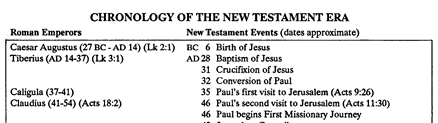
But where has Peter been all these years? We last read of him in relation to the meeting with Paul and other leaders at Jerusalem thirteen or fourteen years earlier (Acts 15:6-7,12-13). We shall therefore go back to the time immediately after that meeting to see if we can fill in some of the gaps in our knowledge concerning Peter.
Peter and Mark
When Barnabas left Paul before the start of Paul's second missionary journey, he went to Cyprus with Mark, while Paul and Silas went through Asia Minor to Europe (Acts 15:36-41). Early records indicate that after Barnabas and Mark finished their work in Cyprus, Mark joined Peter. These two then worked together for many years, preaching and teaching throughout the northern regions of Asia Minor that Paul had been forbidden to enter (Acts 16:7-8; 1 Peter 1:1).
There is good evidence to indicate that, after this, Peter and Mark went to Rome for a period and taught the Christians there. When Peter left, Mark stayed behind, and the Romans Christians asked Mark to write down the story of Jesus as they had heard it from Peter. Mark did as they requested and the result was Mark's Gospel.
Peter's influence in Mark's Gospel is seen in the rapid movement of the story, the straightforward reporting, the direct language and the vivid detail (Mark 1:30,41; 3:5; 4:38; 6:39; 10:14,21,32). This is particularly so when the story concerns Peter's mistakes (Mark 9:5-6; 14:66-72). Peter and Mark helped the Gentiles in Rome to understand the story of Jesus better by giving translations of Aramaic expressions (Mark 3:17; 5:41; 7:11,34; 15:22,34) and explanations of Jewish beliefs and practices (Mark 7:3-4; 12:18; 14:12; 15:42).
Mark and Luke
About this time, Paul arrived in Rome as a prisoner for the first time, having with him Aristarchus and Luke (Acts 28:16,30; cf. 27:2). Both Mark and Luke were therefore in Rome when Paul wrote the letters of his first imprisonment, and no doubt they got to know each other well (Col 4:10,14; Philem 24). Over the years Luke had been collecting and preparing materials for the book he himself was planning to write, and on arrival in Rome was pleased to find Mark's completed record. He was able to take some of Mark's material and include it in his own book, which eventually appeared in two volumes, Luke's Gospel and Acts.
In his Gospel, as in Acts, Luke wanted to show that Jesus Christ was God's Saviour for people everywhere, regardless of race (Luke 2:32; 3:6-8; 4:25-27; 7:9), and that his followers had a responsibility to spread the message of that salvation everywhere (Luke 4:18; 19:10; 24:47). The concern that Jesus' followers showed for the poor, the sick, the despised and other socially disadvantaged people was something they had learnt from him (Luke 6:20; 7:12,22; 13:11; 17:16).
Peter and Silas
After Paul's release from imprisonment, Mark also left Rome. Later, Paul was imprisoned in Rome again and, believing he was near death, sent for Mark and Timothy to come to him (2 Tim 4:9,11). Whether or not they reached Rome before Paul was executed, Mark seems to have stayed on in Rome, and was still there when Peter visited the city again (1 Peter 5:13. The early Christians referred to Rome symbolically as Babylon, the centre of organized opposition to God). Peter's co-worker at this time was Silas, the person who had gone with Paul on his second missionary journey. Using Silas as his secretary, Peter then wrote the letter referred to above (1 Peter) and sent it to the churches of northern Asia Minor that he had helped to evangelize (1 Peter 1:1; 5:12).
Peter and Jude
A year or so later, when Peter was in Rome again, he heard of the activities of false teachers around the churches to whom he had previously written. He therefore wrote and sent off a second letter (2 Peter 3:1). In it he opposed the false teachers, who claimed that faith was not related to behaviour, and therefore immoral practices were not wrong for those with higher spiritual knowledge (2 Peter 1:5-7; 2:1-3). Peter also opposed those who mocked the Christians' belief in Christ's return. He urged them to repent before it was too late, because Christ's return would bring in the final judgment (2 Peter 3:3-4,9-10).
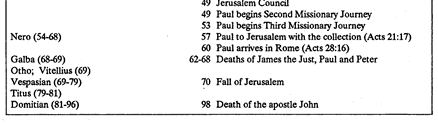
At the time of writing this letter, Peter was probably awaiting execution (2 Peter 1:14; cf. John 21:1819). According to tradition he was crucified in Rome during the latter half of the AD 60s.
The sort of false teaching dealt with in 2 Peter was causing growing concern among the churches. Another New Testament letter written to oppose it was the letter of Jude (Jude 4,19). The writer was probably a younger brother of Jesus and, like his older brother James, may have become a believer after the resurrection (Mark 6:3; John 7:3-5; Acts 1:14). The similarities between 2 Peter and Jude suggest that the two writers may have used a commonly accepted form of argument in opposing the false teaching. This destructive mixture of philosophy and religion was yet another early form of Gnosticism.
CLOSE OF AN ERA
Discouragement among Hebrew Christians
With the increasing persecution of Christians during the reign of Nero, some of the Jewish Christians began to wonder if they had done right in turning from Judaism to Christianity. They had believed that Israel's Old Testament religion fulfilled its purpose in Christ and that the temple in Jerusalem was to be destroyed. Yet thirty years after Jesus' death, the temple was still standing and the Jewish religious system was still functioning.
To some Jewish Christians it seemed that Judaism was as firm as ever, whereas Christianity was heading for disaster. Many became discouraged and stopped joining in the meetings of the church, while some even gave up their Christian faith and went back to Judaism. The Letter to the Hebrews was written in an effort to correct this backsliding (Heb 6:4-6,9-12; 10:23-25,35-39).
The writer of this letter does not record his name, though he must have been a well known Christian teacher of the time. He was probably a Jew (Heb 1:1), and both he and his readers had received the gospel through the apostles or others who had heard Jesus (Heb 2:3). The letter does not say where these disheartened Jewish Christians lived, but the writer hoped to visit them soon (Heb 13:19).
By one example after another, the writer contrasted the imperfections of the Jewish religious system with the perfection of Christ. Everything of the old era that was temporary, incomplete or insufficient found its fulfilment in him. He was far above prophets, angels, leaders and priests, and his one sacrifice did what all the Jewish sacrifices could never do (Heb 9:11-14; 10:11-18). If the Jewish Christians suffered because of their faith, they were only experiencing what all God's faithful people experienced. But the faithful endured (Heb 11:36-40; 12:1-2; 13:23). Even Jesus Christ suffered, but he also endured, and in God's time he was gloriously triumphant (Heb 12:2-4).
Final break with Judaism
During the AD 60s there was a growing feeling of unrest throughout the Jewish population of Judea, not so much because of the Christians as because of the Romans. Most Jews had always hated Rome, but their hatred increased as the Roman governors of Judea increasingly mismanaged Jewish affairs. The anti Roman extremists among the Jews were now prepared for open rebellion against Rome.
When war broke out the Jews were encouraged by some early successes, but they could not withstand Rome indefinitely. In due course the Roman armies, after conquering Galilee, Perea and Judea, laid siege to Jerusalem. At first they met strong opposition from the Jews, but by AD 70 they had conquered the city and reduced much of it, including the temple, to rubble. Although this devastated Judaism, it had a good effect on Christianity, because all the old visible ties with Judaism were now completely broken.
Preserving the Gospel records
About forty years had now passed since the death of Jesus Christ. Many of those who had been witnesses of Jesus' ministry were now scattered far and wide, and others had died. Because Christians wanted to preserve the teachings that these men handed down, many collections of the sayings and works of Jesus began to appear (Luke 1:1-2).
We have seen how Mark prepared an account of the ministry of Jesus for the Roman Christians, and as time passed this account became widely used among the churches. Luke also had prepared a written record, which, though designed for someone who was probably a government official, was also becoming widely known. Now another person, Matthew, prepared his Gospel. He used some of the material that Mark and others had already prepared, but the characteristic flavour of his Gospel comes from the extra material he added and the way he arranged it. Early records suggest that he wrote for Greek-speaking Jewish Christians in Syria.
Matthew was concerned to show that Jesus was the promised Messiah (Matt 9:27; 11:2-6), the one to whom the Old Testament pointed (Matt 2:5-6; 12:17-21), the fulfilment of God's purposes for Israel (Matt 1:17; 5:17), and the king through whom God's kingdom came into the world (Matt 4:17; 12:28;
27:11). Those who repented and believed the gospel were the people of Christ's kingdom, no matter what their nationality, whereas those who clung to the traditional Jewish religion were not (Matt 3:7-10; 8:1112; 21:43; 23:23-28).
Jewish Christians were therefore not to fall into the errors of the unbelieving Jews. They were to develop a standard of behaviour that consisted of more than merely keeping laws (Matt 5:22,28,42; 20:26), and they were to spread the good news of the kingdom to all people, regardless of race (Matt 5:13-16; 12:21; 24:14; 28:19-20).
The fourth Gospel
Towards the end of the century another account of Christ's ministry appeared, this time in Ephesus. The writer was the last living member of the original apostolic group, John, 'the disciple whom Jesus loved' (John 21:20,24). By that time the other three Gospels were widely known. John therefore did not write another narrative account of Jesus' ministry, but selected a number of incidents and showed what they signified. Most of these incidents involved miracles (or 'signs') which showed that Jesus was the Messianic Son of God (John 20:30-31). Usually they were followed by long debates between Jesus and the Jews (e.g. John 5:1-15 followed by 5:16-47; John 9:1-12 followed by 9:13-10:39).
Gnostic-type teachings were by now a bigger problem than ever, especially in the region around Ephesus. Some teachers denied that Jesus was fully divine, others that he was fully human. John firmly opposed both errors (John 1:1,14,18; 3:13; 19:28,34). But he was concerned with more than just opposing false teaching. He wanted to lead people to faith in Christ, so that they might experience the full and eternal life that Christ made possible (John 1:4; 3:15; 6:27; 10:10; 14:6; 20:31).
John's letters
Soon after writing his Gospel, John wrote a letter that was sent around the churches of the Ephesus region. Because of the Gnostic-type teachings, many Christians were confused. John denounced the false teachers as enemies of Christ. Their denial of either his deity or his humanity was an attack on the very foundation of Christian belief (1 John 2:18-19,22,26; 4:1-3). John wanted the believers to be assured of their salvation in Christ (1 John 5:13), and resistant to those who encouraged sin by teaching that the behaviour of the body did not affect the purity of the soul (1 John 2:4; 3:6,8). Christians were to be selfdisciplined and loving (1 John 2:6; 3:3,17; 5:3).
The false teaching was being spread around the churches by travelling preachers. John wrote the short letter known as 2 John to warn one particular church not to allow the false teachers into their gatherings (2 John 10-11).
On the other hand some travelling preachers were genuine preachers of the true gospel. But in one church a dictatorial person named Diotrephes refused to accept them. He claimed that they were followers of John, whom he opposed. John therefore wrote a short personal note (3 John) to one of the better leaders in the church, his friend Gaius, to help and encourage him (3 John 1,5,9-10).
Victory, not defeat
Ever since the outbreak of the persecution under Nero, the church had suffered official persecution. Although this persecution eased on occasions, it intensified during the reign of Domitian (AD 81-96). Thousands of Christians were killed, tortured or sent to work as slaves in various parts of the Empire. Oppression increased, evil men prospered, people in general became anti-Christian, and the government enforced Emperor worship as a settled policy. In addition, churches were troubled within by false teachers who encouraged Christians to join in practices that were pagan and immoral. These were the circumstances in which John received from God the messages recorded in the book of Revelation (Rev 1:1; 2:10,13-14; 6:9-11; 22:6).
John knew of the suffering that Christians were experiencing, for he himself had been arrested on account of his faith. He was being held prisoner on Patmos, an island off the coast from Ephesus. He sent his book to seven well known churches of the province of Asia, from where the message would spread to the smaller churches round about. The person who delivered the book probably took it to Ephesus first, then moved in a circuit around the other churches and back to Ephesus, from where he returned to Patmos (Rev 1:9-11).
Because of the difficulties that the churches faced, some Christians renounced their faith and others became discouraged. Many were confused, for it seemed that Jesus Christ, the glorious king they expected to return in power, was either unable or unwilling to save them from the power of Rome.
Through John, Jesus reassured his people that he was still in control, though he did not give them false hopes by promising quick relief. On the contrary he prepared them for greater endurance by revealing both the troubles that lay ahead and the ultimate victory that awaited those who stood firm for him. He was still the ruler of the world and he was still in control. In God's time he would return to punish his enemies, save his people, and bring in a new age of eternal peace and joy (Rev 1:5; 12:10-11; 19:15-16; 21:1-4).
Romans
Paul's letter to the Romans provides the New Testament's most carefully developed exposition of the Christian gospel. It sets out in a progressive and orderly arrangement the theological basis of the message of salvation that Paul preached. But at the same time it is a letter. Although Paul intended his presentation of the gospel to be a means of teaching Christian truth in general, he also had a definite missionary purpose in sending it to the church in Rome.
Paul's purpose for the Romans
The church in Rome was already well established when Paul wrote this letter to it. Paul did not found the church in Rome, and at the time of writing he had not even visited the city (Rom 1:13; 15:22). The church may have been founded by Roman Jews and proselytes who responded to Peter's preaching in Jerusalem on the Day of Pentecost and then took their new-found faith back to Rome (Acts 2:10). Christians from other parts of the Empire who went to live or work in Rome would also have helped to establish the church there (cf. Rom 16:3-15).
At the time of writing, Paul was nearing the end of his third missionary journey. He was in Corinth (Acts 20:2-3; Rom 16:23; cf. 1 Cor 1:14), making final preparations to go to Jerusalem with a gift of money that a number of the Gentile churches had donated to the Jewish Christians in Jerusalem (Rom 15:25-27; cf. Acts 19:21). Upon completing his work in Jerusalem, Paul intended going to Rome (Rom 15:28).
Rome was the centre of the Empire, and Paul saw that if the Roman church was firmly established in the gospel and keenly aware of its missionary responsibilities, Christianity would spread throughout the Empire. He therefore wrote to help the church understand its mission and to prepare it for the additional teaching he would give when he arrived (Rom 1:10-15; 10:12-17; 15:14-16,29). After spending some time in Rome, Paul wanted to move into the unevangelized regions to the west, till eventually he reached Spain (Rom 15:20,23-24,28).
Another issue that concerned Paul was the tension between Gentile and Jewish Christians in the Roman church. Some years earlier the anti-Jewish feeling in Rome was so strong that the Emperor expelled all Jews from the city (Acts 18:2), but they had now returned. In writing to the church, Paul sometimes spoke specifically to the Jews (Rom 2:17-19; 3:9; 4:1), other times specifically to the Gentiles (Rom 1:13-16; 11:13; 15:14-16). He warned against anti-Jewish feelings in the church (Rom 11:17-24; 15:27), and encouraged Jews and Gentiles to be tolerant of each other (Rom 14:1-23). The gospel is for all people equally, because all are sinners. Whether Jews or Gentiles, they can be saved only by God's grace (Rom 2:9-11; 3:9,23; 10:12; 11:32; 15:8-9).
Paul sent the letter to Rome with Phoebe, a Christian from a nearby church who was going to Rome at the time. Phoebe was a deacon in the church at Cenchreae, one of the port areas of Corinth (Rom 16:12).
1:1-17 Paul introduces himself and his subject 1:18-3:20 Humankind's sinful condition 3:21-5:21 The way of salvation 6:1-8:39 The way of holiness 9:1-11:36 A problem concerning Israel 12:1-15:13 Christian faith in practice 15:14-16:27 Plans, greetings and farewell
1:1-17 PAUL INTRODUCES HIMSELF AND HIS SUBJECT
In keeping with the practice of the time, Paul introduces himself at the beginning of his letter. He is a servant and apostle of God, called to preach the gospel. This gospel, or good news, was promised in the Old Testament writings and became a reality through Jesus Christ. As to his humanity, Jesus was a descendant of David, but as to his deity, he is the Son of God, a fact shown clearly and powerfully by his resurrection (1:1-4). This Jesus is the one who gave to Paul the task of taking the gospel to people of all nations, which is one reason why he now writes to the people in Rome (5-7).
Churches everywhere know about the faith of the Roman Christians (8). Not only does Paul pray for them but he wants to visit them, so that both he and they might be strengthened as they profit from each other's spiritual gifts (9-12). Until now he has not been able to visit them, even though he has often wanted to. His duty is to preach the gospel to people of all nations and cultures, and that makes him all the more eager to visit Rome (13-15).
Paul then gives a summary of the subject that he will expound in the following chapters. He wants his readers to have the same confidence in the gospel as he has, for the gospel is humankind's only hope. People, because of their sin, are weak and unable to save themselves, but God in his power can save them from sin and accept them as righteous in his sight. Through the gospel God can put people right with himself and still be righteous in doing so. But though this salvation is available to all, it is effective only in the lives of those who believe. Only by faith, and never by works, can sinners receive the status of righteousness that God in his grace gives (16-17).
1:18-3:20 HUMANKIND'S SINFUL CONDITION
The Gentile world (1:18-32)
Because God is holy, just and true, he has an attitude of wrath, or righteous anger, against all that is wrong. He is opposed to sin in all its forms, and therefore guilty sinners are under his judgment. The Gentiles may not have received the teaching about God that the Jews have received, but they cannot excuse themselves by saying they know nothing about God. The created universe should tell them that there is a supreme being, a powerful Creator, whom they should worship (18-20).
Instead of giving glory to God, however, people have insulted him. Instead of worshipping him as the Creator, they have made created things their idols. They claim to be wise, but actually are fools (21-23).
Idols have no life, and as a result those who worship them feel free to practise all kinds of sin, without fear of punishment. But God does not ignore their sin, and one way he punishes them is to leave them to follow their own sinful desires. As a result they go deeper and deeper into sin, both men and women, and in due course they reap the fruit of their sinful behaviour (24-27).
Sin is not limited to degrading sexual behaviour. Its effects are seen in every part of the human character, as it corrupts people's inner feelings and spoils their personal relationships (28-31). Even when people know their behaviour is wrong, they persist in it, and reassure themselves by approving of the wrongdoing of others (32).
The Jewish world (2:1-29)
Not only are pagan Gentiles under God's condemnation, Jews are also. Jews find fault with their Gentile neighbours, yet they do the same things themselves (2:1). They know that God is just and that he punishes sin. Therefore, when they suffer no immediate punishment for their behaviour, they think that God approves of them and will not punish them. They do not realize that in his kindness and patience he is giving them time to repent (2-4).
Those who increase their sin also increase their punishment, because God judges people according to what they do. They deceive themselves if they think they can live as they please and still claim eternal life. By contrast those who have eternal life, the life of the age to come, will show it by the way they live now (5-8). This applies to all people, Jews and Gentiles alike. God will show no favouritism on the day of judgment (9-11).
The Jews' knowledge of the law of Moses is of no benefit to them if they do not obey it. In fact, if people know the law and disobey it, they will be punished more severely than those who have never heard of it. God will judge the Jews according to the law of Moses, but not the Gentiles, for he did not give the law of Moses to the Gentiles (12-13). Nevertheless, Gentiles have a conscience, which, though not as clearcut a standard as the law, gives them at least some knowledge of right and wrong. The conscience is like a law within their own hearts, and God judges them according to their obedience or disobedience to that 'law' (14-16).
Jews were proud of the blessings they enjoyed as God's people. They boasted that they knew God's law, and thought that they could teach it to others (17-20). But they themselves did not practise what they taught, and so brought shame on the name of God (21-24).
Paul reminds the Jews that religious rites such as circumcision are of no value unless the person's life is in keeping with the meaning of the rite. Circumcision was a sign God gave to Israel that spoke of cleansing and holiness; but an uncircumcised person with a pure life is more acceptable to God than a circumcised person with an impure life (25-27). The true Jews, the true people of God, are not those who have the mark of circumcision, but those who have pure hearts (28-29). (Circumcision was a minor surgical operation performed on Jewish boys when they were eight days old. It was a rite that God gave to the father of the race, Abraham, and it passed on to all male descendants as a physical sign that Israel was God's covenant people; see Gen. 17:9-14.)
Some Jewish objections (3:1-8)
Many Jews might argue with Paul by putting to him a fairly obvious question. If what he said was true, why did God choose Israel as his special people (3:1)? Paul replies that God chose them so that through them he could make himself known to the people of the world. The Old Testament Scriptures, for example, were given to the human race by way of the Jews (2). The sad truth is that many of these favoured Jewish people have proved unfaithful to God, but he is still willing to save them. In fact, their unfaithfulness only shows how faithful God is (3-4).
There are some, however, who dispute the truth of Paul's teaching. They argue, irreverently, that if their unbelief has shown God's righteousness more clearly, it has been of service to God, and God is therefore unjust in punishing them (5). Certainly not, replies Paul. If that were the case there could never be any standards of judgment. Consequently, God could never judge the world (6). If the Jews are going to argue like that, says Paul, why do they accuse him of being a sinner because of the things he teaches? By their argument, Paul's 'sin' would help display God's righteousness just the same (7). In the end this reasoning would lead people to the dangerous belief that they may do evil in order to get a favourable result (8).
All humankind is sinful (3:9-20)
From his discussion on the state of the Gentile and Jewish worlds, Paul concludes that the whole human race is under the power of sin (9). He quotes from the Old Testament Scriptures to show how sin affects every part of human life. Sin causes people to be rebellious against God, both in their thoughts and in their actions (10-12). It causes their speech to be harmful and destructive (13-14) and their plans to be violently selfish (15-17). They have no respect for God, but live to please themselves (18).
Those Scriptures were written originally not in relation to Gentiles, but in relation to Jews, to whom God had given his law. But if Jewish people are judged guilty because they could not keep God's law, the Gentiles, who show the same characteristics, must also be under God's condemnation. The whole human race is guilty, and the law can do nothing but show up that guilt. There is no possibility that a person can be put right in God's sight by keeping its commandments (19-20).
3:21-5:21 THE WAY OF SALVATION (JUSTIFICATION)
Now that he has established that all humankind is sinful and under God's condemnation, Paul moves on to explain the salvation that God has made available through Jesus Christ. The following outline introduces a number of ideas and words that Paul uses in this section.
God's love
It is true that God loves sinners and wants to forgive them (2 Peter 3:9; 1 John 4:16), but genuine love also acts justly. It does not ignore wrongdoing. Suppose, for example, that a judge has before him a criminal who has rightly been found guilty. The judge places a fine on him and assures him that if he does not pay he will be sent to jail. The man has no money but pleads not to be sent to jail, so the judge, feeling sorry for him, forgives him and lets him go free. What the judge has displayed is not love, but an irrational emotion that is easily influenced regardless of what is right and just.
Suppose, on the other hand, that the judge acts out of genuine love. He places the same fine on the man and insists that it be paid. Being aware of the man's personal circumstances, he feels sorry for him, but he knows that genuine love does what is right, even if it is costly. He therefore goes to the man privately and, out of his own pocket, gives the man the money to pay the fine. The same judge who laid down the penalty has paid the fine on the man's behalf.
This is what God has done for repentant sinners. He is a loving and forgiving God, but he does not ignore sin. He is just and holy, and he cannot treat sin as if it does not matter. He will do only what is pure and honourable, even though it may be costly to himself.
In order to save his guilty human creatures, God entered the stream of human life in the person of Jesus Christ (John 1:14; Phil 2:6-7). Though he lived in the world of human existence and experienced life's hardships and frustrations, Jesus lived a perfect life. He never broke God's law, in thought, attitude, intention or action (1 Peter 2:22; 1 John 3:5), and so was not under God's judgment. Yet he willingly paid sin's penalty on behalf of the guilty. That penalty was death (Rom 6:23), and Jesus died in the place of, or as the substitute for, guilty sinners (Rom 5:6; 1 Peter 2:24).
We can see now what divine love has done. God the righteous judge laid down the punishment for sin, but through Jesus' death on the cross, he himself has taken that punishment. His justice is satisfied in paying sin's penalty, while his love flows out in forgiving the sinner (2 Cor 5:21).
Justification
Paul uses the words 'justify' and 'justification' in what might be called a legal sense. The picture is that of a courtroom, where justification is that act of the judge by which he declares a person to be righteous, or in the right. It is the opposite of condemn, which means to declare a person guilty, or in the wrong (cf. Deut 25:1; Job 32:2; Matt 12:37). (The words 'justify' and 'righteous' are different parts of the same word in the original languages of the Bible.)
Concerning the relationship between sinners and God, justification means that God declares repentant sinners righteous before him. He makes them right with himself. Sinners are not made righteous in the sense that they are made into perfect people who cannot sin any more. Certainly, their lives will be changed so that righteousness, not sin, becomes their chief characteristic (as Paul will explain later in the letter; cf. Rom 6:1-2,15-19; 8:10,12-13). But the truth that is emphasized in justification is that repentant sinners are declared righteous. They are given a righteousness that is not their own. God gives them a new status through Christ, a new standing that makes them fit for the presence of a holy God (Rom 4:6-8; 2 Cor 5:21). God now sees them as being 'in Christ', and accepts them not because of anything they have done, but because of what Christ has done through his death and resurrection (Rom 3:27-28; 4:24-25; Phil 3:9).
Only through the work of Jesus Christ is God able to be righteous in justifying those who have faith in him. Jesus bore their sins in his body on the cross, so that God can give his righteousness to them (Rom 3:24-26; 1 Peter 2:24). And once God has declared them righteous, no one can condemn them as sinners or even lay a charge against them (Rom 8:33-34). God does all this freely by his grace, his good favour which they do not deserve (Rom 3:24; Titus 2:11; 3:4-7).
Justification is more than forgiveness
When people do wrong against us we may forgive them, but that does not declare them righteous. When God forgives he also justifies. He does more than remove sin and hostility; he brings sinners into a right relationship with himself (Rom 3:25-26; 5:6-11; 8:1-2). Forgiveness is negative; justification is positive. Forgiveness removes condemnation; justification gives righteousness. Forgiveness is something that believers are always in need of because they are always likely to sin (Matt 6:12); justification is a declaration once and for all that God accepts them in his Son (Rom 5:1-2).
The forgiveness that believers need constantly concerns not their justification before God but their fellowship with God. Paul will explain later in his letter how believers have a constant battle with the evil effects of sin in the world. When they fail they may disappoint themselves and spoil their fellowship with God, but they can be assured that if they confess their sin God will forgive (1 John 1:9). Their justification, however, is never in question. Christ's death deals with sin's penalty for believers of all generations, past, present and future. Likewise it deals with the penalty for all the sins of individual believers, whether those sins be past, present or future (Rom 5:9,16).
Propitiation and reconciliation
Human sin has separated people from God and left them in a condition of spiritual helplessness where they are unable to bring themselves back to God (Isa 59:2; Rom 8:7-8; Eph 2:3). God always has an attitude of wrath against sin, and nothing sinners can do is able to propitiate God (i.e. pacify him, quiet his anger, remove his hostility or win his favour).
Pagans would sometimes try to calm the wrath of their gods by offering sacrifices; they would try to propitiate their gods. But guilty sinners cannot act towards God like that. Nothing they do can turn away God's wrath or win his favour. The only way God is propitiated is by the sacrificial death of Jesus Christ, who has been 'set forth as a propitiation' (Rom 3:25; Heb 2:17; 1 John 2:2; 4:10. RSV says 'expiation'; NIV says 'sacrifice of atonement'; GNB says 'the means by which people's sins are forgiven').
Propitiation means, then, that God's holy wrath against sin has been satisfied by the sacrificial death of Christ, and therefore God can show mercy on believing sinners. Once the cause of hostility (sin) has been removed, sinners can be reconciled, or brought back, to God. This is entirely the work of God. He replaces hostility with peace, and changes enemies into friends (Rom 5:10-11; 2 Cor 5:18-19; Col 1:2022).
Faith
All that has been said so far is not true of the whole human race. It is true only of those who believe. Salvation is available to all, but it is effective only in those who have faith. In other words, faith is the means by which a person receives salvation (Rom 1:16; 3:22,25). (In the Greek of the New Testament, 'faith' and 'believe' are different parts of the same word.)
When the Bible speaks about faith in relation to salvation, it is not speaking about some inner strength that enables people to triumph over difficulties. Faith is more concerned with helplessness than with strength. Faith is reliance. It is an attitude whereby people give up all their own efforts to win salvation, no matter how good they be, and trust completely in Christ, and him alone, for their salvation (Gal 2:16; Eph 2:8-9). It is not merely an intellectual acknowledgment of certain facts (though clearly believers must know what they are trusting in), but a belief wherein people turn to Christ and cling to him with the whole heart. It is not accepting certain things as true, but trusting in a person, Jesus Christ, and all that he has done through his life, death and resurrection (Rom 4:22-25; cf. John 3:14-15; 20:30-31).
A traveller waiting to board an aircraft may believe that it will fly, and may even understand how it flies, but that belief will not take him to his destination. He must exercise his faith in the aircraft by walking on to it. He commits himself to it, trusts in it, relies upon it. That is what the Bible means by faith. People not merely know about Jesus Christ, but trust in him. They rely upon what Christ has done for them, not on anything they do themselves. Faith in Christ means commitment to him. It takes people out of themselves and puts them into Christ (Rom 3:22; Gal 2:20-21; 3:26; 2 Tim 1:12; 1 John 5:12-13).
Yet faith in itself does not save. It is simply the means by which sinners accept the salvation that Christ offers. Salvation is not a reward for faith; it is a gift that no one deserves, but it can be received by faith (Rom 3:25, 5:15).
Faith is not something a person can boast about. All the merit lies in the object of faith, which is Jesus Christ (John 3:16). When the traveller walks on to the aircraft, he has not done anything to boast about. The power to get him to his destination lies in the aircraft, not in him, and he can do no more than put his trust in it. Faith is not trying, but ceasing from one's own efforts. It is not doing, but relying on what Christ has done. It is not feeling, but accepting God's promises as true and trusting in them (Rom 4:16; 10:4-5; Titus 3:4-5).
Since faith in Christ means committal to him, it involves turning from one's self-centredness. It involves a complete change of mind, attitude and behaviour, a turn-around that the Scriptures call repentance. In explaining the doctrinal basis of the gospel for the benefit of the Roman church, Paul emphasizes the importance of faith (Rom 1:16), but when he preached to non-Christians in general he consistently emphasized that true faith is inseparably linked with repentance (Acts 20:21; cf. 3:19; 11:21; Mark 1:15).
Redemption
Another word that the New Testament uses to picture salvation is redemption. In Bible times a slave could be set free from the bondage of slavery by the payment of a price, often called the ransom price. The slave was 'bought back', or redeemed, and the whole affair was known as the redemption of the slave (Lev 25:47-48). (The words 'redeem' and 'ransom' are related to the same root in the original languages.) God's deliverance of Israel from the power of its enemies was also called redemption, the most notable example being his redemption of Israel from bondage in Egypt (Exod 6:6).
Sinners are in bondage to sin and under sentence of death (John 8:34; Rom 6:17,23), but Jesus gave his life as a ransom to pay the price of sin and release sinners from its power (Matt 20:28; Rom 3:24; Eph 1:7). Again redemption is entirely the work of God. He buys sinners back, and the redemption price is the blood of Christ – his life laid down in sacrifice (Heb 9:12; 1 Peter 1:18-19). Christ has freed believers from the power of sin, and they must show this to be true by the way they live (Rom 6:16-18; 1 Cor 7:23; Heb 2:14-15).
Saved by grace, through faith (3:21-31)
The law cannot make people right with God (see v. 20), but God himself can. Because of Christ's death, God can now declare sinners righteous and still himself be righteous in doing so. He gives sinners a righteousness that makes them acceptable to him. It is not their own righteousness, but comes from God through Christ and is received by faith (21-22). Since all have sinned, all can be justified, but only because of the grace of God and because of what Christ has done (23-24).
When Christ died on the cross, he took the punishment of sin that God's holy wrath demanded. Now that God's righteous demands have been satisfied, his grace can flow out in giving a righteous status in Christ to any who will receive it by faith. Even the sins of those who lived before the time of Christ were forgiven on the basis of Christ's death. God accepted those who had faith in him. Their sacrifices could never remove sin (cf. Heb 10:4), but they could be an expression of faith by which they acknowledged their sin as being worthy of God's punishment and called on God's mercy to forgive them. God therefore accepted believing sinners, 'passing over' their sins, as it were, until Christ came and bore the full punishment (cf. Heb 9:15). Christ's death is the basis on which God justifies all who have faith in him, whether they lived before or after the time of Christ (25-26).
This plan of salvation leaves no room for human boasting, because it depends not on anything that people might do, but entirely on what God does. All that sinners can do is trust in what someone else has done, and there is no cause for boasting in that. This is true for both Jews and Gentiles (27-30). The righteous requirement of the law is therefore upheld. The law demanded death for those who broke it; Christ died to meet its full requirements on behalf of guilty sinners (31).
Some examples (4:1-25)
To illustrate what he has just been teaching, Paul refers to the example of Abraham. Abraham was justified because of his faith, not because of any good deeds that he did (4:1-3). (To understand the illustrations concerning Abraham that follow, read Genesis 12:1-3; 15:1-6; 16:1-16; 17:15-22; 18:1-15; 21:1-21.)
Righteousness is a gift received by faith, not payment for work that a person does (4-5). David, as well as Abraham, knew that righteousness comes only through God's grace, not through one's good works (6-8). It has nothing to do with circumcision either, because Abraham was justified before he was circumcised. He received circumcision later, as an outward sign of the inward faith that he already had. He might be called the spiritual father of all who are justified by faith, whether Jews or Gentiles (9-12).
Neither has this righteousness anything to do with the law, because Abraham simply accepted God's promise by faith. He did not have to work for it by trying to keep rules. The law does not make people righteous. It only shows up their disobedience and so brings God's wrath upon them (13-15).
The principle underlying God's dealings with humankind, Jews and Gentiles alike, is that he gives his promises by grace, and people receive them by faith (16). God promised childless Abraham that he would be the father of a multitude of people. Although Abraham and Sarah were well past the age when they might normally expect to have children, Abraham still trusted God's promise and believed God could do the impossible (17-21). God accepted Abraham as righteous because Abraham trusted him to do what he had promised. In like manner God will accept as righteous those who trust for their salvation in what Christ has done for them through his death and resurrection (22-25).
The believer's assurance (5:1-11)
When God justifies people (declares them to be righteous, or puts them right with him), he brings them into a relationship of peace with himself. In his grace he accepts them into his holy presence, and assures them of one day sharing his glory (5:1-2). Believers' anticipation of future glory is what the Bible calls hope. Hope in this sense is not a mere wish for something, but the expectation of something that is certain. It is an assured belief that enables believers to persevere through difficulties, and in the process develop Christian character. They have purpose and confidence in this perseverance because the love of God fills their hearts through the Holy Spirit (3-5).
This same love caused Jesus Christ to give his life for sinners. We may at times hear of someone who would give his life for a good person, but Christ died for those who are bad. He died for sinners (6-8). In his death Jesus bore the full wrath of God so that sinners might escape it and be reconciled to God. But Jesus triumphed over death, so that those whom he reconciles are guaranteed a victorious salvation, both in the present life and in the life to come (9-11).
Adam and Christ (5:12-21)
The Bible views the human race as existing originally in Adam. Therefore, when Adam sinned, humankind in general was involved in his sin. This doctrine is known as original sin; that is, humankind sinned originally in Adam (12).
It is true that sin is disobedience to a law, whether that law is in the form of the commandment God gave to Adam or in the form of the law-code he gave to Moses. Yet sin is present even where there is no law. This is clearly seen in the biblical record of the period from Adam to Moses. During that period no specific law-code (such as the law of Moses) was in force, yet death was the common experience of people everywhere. Since human death was the consequence of sin, this shows that sin affected the whole human race, not just Adam (13-14).
Adam's sin has brought disastrous consequences for the entire human race, but God's grace is more than able to cancel those consequences. His gift is not just the opposite of Adam's sin; it is far more. Adam's one act of sin brought condemnation and death, but God's gift of salvation through Jesus Christ brings justification and life, even though people have repeated Adam's sin countless times (15-16). As humankind's representative head, Adam brought death. As humankind's new representative head, Christ brings life (17). In contrast to Adam's one act of sin is Christ's one act of righteousness, his death on the cross. Adam was disobedient once, and through him all became sinners. Christ was obedient always, throughout his entire life and even to death, and through him all can be put right with God (18-19).
Although God gave the law to Israel for the people's good (cf. Lev 18:5; Deut 10:13), in practice it showed up their sin. When the law shows people how much they fall short of God's standard, sin appears to increase. But no matter how much it increases, God's grace through Christ can always triumph over it (20-21).
6:1-8:39 THE WAY OF HOLINESS (SANCTIFICATION)
Having spoken about justification by faith (how believers can be put right with God), Paul goes on to speak about sanctification by faith (how believers can live lives of practical holiness). In some of the other New Testament writings, 'sanctify' means 'declare holy', in much the same way as 'justify' means 'declare righteous'. ('Sanctify' and 'holy' are different parts of the same word in the original languages.) Sanctification, like justification, denotes what God does for believers on the basis of Christ's death (Heb 10:14; 1 Peter 1:2). The main emphasis in Romans, however, is on the practical expression of sanctification. Since God has declared believers righteous and holy, they must be righteous and holy in practice (Rom 6:19,22). The following outline will introduce some of the ideas and words that Paul uses in developing this subject.
Sinful human nature
When Adam sinned, he corrupted human nature. This means that all human beings, because of their union with Adam, are born with a sinful nature. Paul commonly calls this sinful human nature the flesh (Ps 51:5; Rom 5:12; 7:18; Gal 5:16-17).
People do not need anyone to teach them to do wrong. They do it naturally, from birth. Sinful behaviour is only the outward sign of a much deeper problem, and that is a sinful heart, mind and will (Jer 17:9; Mark 7:20-23; Eph 2:3). Every part of human life is affected by this disease of sin, including all that people are (their nature) and all that they do (their deeds) (Gen 6:5; Matt 7:18; Rom 7:18). This doctrine, known as total depravity, does not mean that all people are equally sinful, but that every part of human nature is affected by sin. The corruption is total.
Because of such forces as conscience, will-power, civil laws and social customs, not all people show this sinful condition equally. But in spite of the good that they do, human nature is still directed by sin. The flesh is hostile to God's law and will not submit to it (Isa 64:6; Rom 8:7-8). This creates constant conflict in people's lives, because when they want to do right they repeatedly do wrong. Sin is like a cruel master that they cannot escape, no matter how much they may want to (John 8:34; Rom 7:21-23). Yet all people are still responsible for their own actions, and have the ability to say 'yes' or 'no' when tempted to sin (1 Cor 10:13; James 1:14).
Victory through Christ
Jesus was born with a human nature, but his human nature was not affected by sin (1 John 3:5). He lived in complete obedience to God's law, died to pay its penalty on behalf of sinners, then rose victoriously to new life. In dealing with sin he broke its power so that people might no longer be enslaved by it (Rom 8:3; Heb 2:14-15). The old life that believers once lived, all that each person once was as a sinful descendant of Adam – the 'old self', the 'old being' – was crucified with Christ. Believers now have a new nature. They share in the life of Christ and are indwelt by the Holy Spirit (Rom 6:6; 8:9; Col 3:9-10; 2 Peter 1:4).
Nevertheless, believers still live in a world where everything suffers from the effects of sin. Their old nature, the flesh, though condemned by Christ at the cross, is not yet destroyed. It will be with them till the end of his present earthly life, but because of Christ they need not remain in its power (Rom 6:14,18; 8:1-2).
There is therefore a continual conflict in the lives of believers, the old nature fighting against the new, the flesh fighting against the Spirit (Rom 8:5; Gal 5:17). The flesh always wants to do evil, and if believers give way to it, it will bring them under its power again, ruling them like an evil master and making them useless for God. They can resist the power of the old nature by making sure that their behaviour is directed and controlled by the Spirit (Rom 6:12-18; 8:4; Gal 5:16).
Christians have no obligation to the flesh. They must not trust it or give it any opportunity to satisfy its evil desires (Rom 8:12-13; 13:14; Phil 3:3). Paul wants to show that Christ has already won the victory over the flesh, and through the power of Christ's indwelling Spirit believers can claim this victory as theirs daily (Rom 6:6-7; 8:1-3).
Freedom from sin (6:1-23)
In 5:20-21 Paul concluded that, no matter how much sin increases, God's grace increases all the more to meet it. He now warns against using that truth as an excuse for carelessness about sin. Christians ought not to sin. Their union with Christ means that with Christ they died to sin, with Christ they were buried, and with Christ they rose to new life. They pictured this in their baptism and they must now show it to be true in their daily lives (6:1-4).
For believers in Christ, the old life has gone, the new has come. When people die, no one can make any more demands on them. So also when believers died to sin through Christ, the full penalty that sin demanded was met for them. They are free from sin. It has no power over them (5-7). But having died for sin, Jesus rose again, and now sin and death can touch him no more. Because believers are 'in Christ', this death to sin and victorious entry into new life becomes theirs as well. They must believe it to be true and live accordingly (8-11). If, however, they allow sin to have the opportunity, it will conquer and rule them again. Therefore, they must give every part of themselves to God, so that God, not sin, might work through them (12-13). The law cannot enable people to overcome the power of sin, but God's grace can (14).
The freedom that grace gives is freedom from sin, not freedom from God. It does not allow people to sin with ease, as some think, for that would lead them back to slavery to their former master, sin. No matter what people do regularly, whether sin or righteousness, it will soon have power over them (15-16). Instead of allowing careless habits to drag them back into the bondage of sin, believers should concentrate on obeying the teachings of righteousness and so become true servants of God (17-18). This will enable them to produce lives of practical holiness (19).
Sinners feel no obligation to righteousness, but neither do they get any satisfaction from sin. They get only disappointment, bondage and death (20-21). Being a slave of God brings satisfaction and holiness in the present world, and the fulness of eternal life in the age to come (22-23).
The law cannot help (7:1-25)
Through Christ, believers have not only died to sin, they have died to the law also, which means that their lives are now different. Paul gives an example. If a husband dies, the wife is no longer bound to him and is free to marry again. Likewise believers have died to the law so that the bond between them and the law is broken. However, they have been raised to new life and are now united to another, the living Christ (7:1-4). Formerly, they found that the more the law forbids something, the more the human heart wants to do it. But the fruit of that broken law is death (5). Now that they are dead to the law, they can serve God with a willing heart. They no longer live in fear, because they are no longer under the law's dreadful power (6).
This does not mean that the law is sinful. Quite the opposite; the law is holy, and this holiness shows people how sinful they are. Paul describes his own former experience to show that when there is no law, people do not seem to notice sin. Sin lies motionless, so to speak, as if it were dead. But as soon as people learn about a specific commandment, sin springs to life and stirs up evil desires. It makes people want to do what they are told not to do. Thus the commandment 'Do not covet' taught Paul how to covet (7-9). Instead of bringing life, the law stirred up sin which brought death (10-11). The fault lies not with the law, which is holy and good, but with the sinful nature, which is so hopelessly bad that it reacts against what is good (12-13).
Paul refers to his own experience again, to show that the more believers try to live holy lives by keeping the law, the more they fail. Again, the sin lies not in the law but in human beings. They cannot do the things they know they should do; they do the things they know they should not do (14-17). This constant defeat shows the power of indwelling sin and the inability of believers to conquer it in their own strength (18-20). They know that the law is good and they want to obey it, but the law cannot give them power over their sinful nature (21-23). How then can they get the victory? Not through themselves at all, but through Jesus Christ (24-25a).
Before moving on to explain how Jesus Christ gives this victory, Paul summarizes the previous section. The conflict he has described is between the sincere desire to keep God's law and the pull of the old nature towards sin (25b).
Victory through the Spirit (8:1-17)
The reason believers can have victory through Christ is that the power of the indwelling Spirit of Christ is greater than the power of the old sinful nature. The downward pull of the sinful nature may be likened to the downward pull of the earth's gravity. A stone thrown into the air will fall to the ground, because it has no life or power to overcome the force of gravity. A bird thrown into the air will fly away, because it has a living power that enables it to overcome the downward pull of the earth. It has a new 'law', life, which is greater than the 'law' of gravity. Likewise in Christ believers have a new upward force of the Spirit that is greater than the downward pull of the old sinful nature (8:1-2).
Efforts to keep the law cannot produce righteousness, because the sinful nature is so bad it cannot be cured, or even improved. It can only be condemned to destruction, and Christ did this by his death on the cross. When, however, believers live according to the power of the Spirit, they can develop in their lives the righteousness that the law aimed at but could not produce (3-4). The mind cannot be controlled at the same time by both the old sinful nature and the Spirit. One results in hostility to God, the other in peace. One leads to death, the other to life (5-8).
The Spirit within believers is the Spirit of Christ. Through the Spirit, Christ dwells within them, giving them spiritual life, victory over the sinful nature, and in the end freedom from even the last physical effects of sin, death (9-11).
Since the flesh is no longer their master, Christians should not obey it. Rather they should kill off its sinful actions (12-13). They are now children of God, free from the fear of bondage and led by the Spirit.
Their union with Christ means that one day they will share in the Father's inheritance, but it also means that in the present life they must share in Christ's suffering (14-17).
Christian confidence (8:18-39)
Whatever sufferings believers may experience, they are of little significance when compared with the glory to be revealed on the day of final victory (18). On that day the physical creation, which from the time of Adam has suffered because of human sin (cf. Gen 1:28-30; 3:17-18), will enter its full glory along with redeemed human life (19-22). All the effects of sin will be removed, and believers will be raised from the dead in imperishable spiritual bodies suited to life in the coming age (23; cf. 1 Cor 15:42-57). Christians, being saved by faith, do not yet experience all that God has promised, but they look to the future with patience and confidence (24-25).
The same Spirit who gives hope for the future gives help in the present. When believers' prayers are unable to express their deepest thoughts and feelings, the indwelling Spirit pleads to God on their behalf. And God knows the mind of the Spirit (26-27). This concern that God has for his people involves everything. He is at work in all their affairs, right from his eternal choice of them to be his sons to his act of final glorification when they will share the likeness of Jesus Christ (28-30).
Christians need have no doubts about any aspect of their salvation. If God has given the greatest of all gifts, the gift of his Son, nothing is beyond him (31-32). They need not fear any accusations against them, because the one who has declared them righteous is God himself, and he has done so on the basis of the perfect work of Jesus Christ (33-34). Nor should they fear persecution or even martyrdom, because through Christ they are assured of final victory (35-37). No matter what happens to them, nothing can separate them from the unchanging love of God (38-39).
9:1-11:36 A PROBLEM CONCERNING ISRAEL
The problem stated (9:1-5)
As Paul thinks about the greatness of the salvation God has provided, he is filled with sorrow, because his own people, the Jews, have rejected it. He would do anything to see them repent and believe (9:1-3). God chose Israel to be his own special people and prepared them in many ways to receive the gospel. He gave them, among other things, the privileges of sonship, the security of the covenant, a form of worship, a law-code to live by and many outstanding leaders, but when the gospel finally came to them in the person of Christ, they rejected it (4-5). Paul now considers whether God's plan has failed and whether there is any hope for Israel.
God chooses according to his will (9:6-29)
Paul's first assertion is that the promise of God has not failed. He reminds his readers of what he said earlier, namely, that people who are Israelites physically are not necessarily Israelites spiritually. In other words, not all who are physically descended from Jacob (Israel) are the true people of God in the spiritual sense (6; cf. 2:28-29; 4:11-12).
To illustrate that not all descendants of a chosen person are truly God's people, Paul refers to the fathers of the nation. Abraham, for example, had several sons and many descendants, but the only descendants who were God's covenant people were those who came through Isaac. People belonged to God because of his promise, not because of their physical descent (7-9). Isaac, in turn, had two sons, Esau and Jacob, but God chose Jacob to be the father of his people and rejected Esau (10-13).
God's choice of one and rejection of the other does not mean that God is unjust. All people are sinners and none deserves his favour, but because he is God he may choose to have mercy on some (1416). He may also choose to harden some, such as people like Pharaoh who persistently rebel against him. But always he does what is right, according to his perfect will (17-18).
The opponents of God may argue that God is unjust to save some and harden others. Paul replies sharply by asking who do people imagine themselves to be if they think they can argue with God? God is not answerable to the human beings he created. A potter does not have to tell a lump of clay why he decides to make it into either a beautiful bowl or a common pot (19-21). So it is with God. He is always patient and longsuffering towards sinners, but when he chooses to show his judgment and power in some and his mercy and glory in others, no one can question his right to exercise his power (22-23). In choosing his people, therefore, God may decide to call Gentiles as well as Jews (24).
Even the Old Testament records the principle that God may call those who were previously not his people and make them his people. This is what he has now done in building his new people, the church, largely from Gentiles (25-26). He has included in this people only a minority from Israel, since most of the Israelites, as in Old Testament times, have been stubbornly rebellious (27-29).
Israel responsible for its own loss (9:30-10:21)
Whatever God's purposes may be, the Jews are still responsible for their own loss. They cannot say God has rejected them. They have rejected God. Gentiles, who have no law, are justified by faith, and Jews can be too, if they will believe instead of trying to win God's favour through keeping the law. They will not accept that the way of salvation for them is the same as for the Gentiles – through faith in Christ (30-33). Paul wants the Jews to be saved, but they cannot be saved while trying to create their own righteousness through law-keeping. They must admit they are helpless sinners and accept the righteousness of God through Christ (10:1-4).
The language of law says, 'Do all this and you will live'. The problem is that none is able to keep the law perfectly. All are condemned to death (5). The language of faith says, 'Do nothing. Do not try to climb the heavens or search the depths, for Christ has already come down from heaven to earth, has been crucified, buried and raised from the dead. He can be yours through faith right where you are (6-8). Believe in him as your risen Saviour, declare him to be your Lord, and you will receive from God the righteousness that saves (9-10). This applies to all who cast themselves upon God in faith, Jews and Gentiles alike' (11-13).
Before people can believe this message, they must hear it. Therefore, Christians must be sent to proclaim it (14-15). Not all will accept the message, but Christians must proclaim it nevertheless. And the message they proclaim is the good news concerning Jesus Christ (16-17). The Jews have indeed heard this message, so they have no excuse (18). Their problem is not that they have not heard or understood it, but that they have refused to believe it (see v. 16). They become angry and envious when they see their supposedly ignorant Gentile neighbours accepting the gospel, but they themselves will not listen to it (1921).
Salvation sent to the Gentiles (11:1-24)
All the above does not mean that God has totally rejected his people Israel. The fact that Paul has received salvation is proof that he has not (11:1). Just as in Elijah's time there was a minority in Israel who did not turn away from God, so too in Paul's time there is a minority whom God owns as his (2-5). These are God's people not because of their good works, but because of God's grace (6). They are few in number, but they have obtained the righteousness and salvation that Israel always wanted. As for the rebellious people as a whole, God has acted in judgment upon them by making them blind and deaf to the truth (7-10; cf. 9:17-18).
God's judgment on the people of Israel does not mean that they are now without hope. Their rejection of Christ has resulted in the enrichment of the world, through the preaching of the gospel to the Gentiles and the growth of God's people into a vast international community. How much greater, then, will be the blessing when the Jews accept the gospel (11-12). Paul reminds his Gentile readers of one result he hopes for as he preaches to the Gentiles. His desires that his fruit among them might stir the Jews to jealousy and cause some to believe (13-14). He likens such Jewish believers to the first loaf of a batch or the root of a tree. They give hope of more to come (15-16).
The great family of God is compared to an olive tree. Until now this tree had been Jewish in its roots, trunk and branches. When the Jews rejected Christ, many of these Jewish branches were broken off, and branches from a wild olive tree (Gentiles) were grafted, or joined, into it instead (17). The Gentiles should not despise the Jews or feel proud of themselves because they have now come into the family of God. They should remember that the Jews were the ones who prepared the way for the gospel that the Gentiles have now believed, Without this Jewish preparation, the Gentiles' salvation would not be possible (18).
God broke off cultivated Jewish branches because of their unbelief, and in his kindness grafted in wild Gentile branches instead. But if the Gentiles become arrogant, God can break them off also (19-22). If God can do what is contrary to nature and graft wild branches into the tree, he will have no difficulty in grafting cultivated Jewish branches into the parent tree again. The only reason why God holds back is the Jews' refusal to give up their unbelief (23-24).
Completion of God's great plan (11:25-36)
The Gentiles should not feel self-satisfied, but rather understand the purposes of God that Paul has now revealed to them. God has used the hardening of Israel to give the Gentiles the opportunity to receive the gospel, but neither the hardening of Israel nor the opportunity for the Gentiles will last for ever. God is using the conversion of the Gentiles to bring about the salvation of Israel. When Paul uses the words 'full number' and 'all' in speaking of the salvation of the Gentiles and of Israel, he is not saying that every Gentile and every Israelite will be saved. He has clearly shown earlier that faith, not nationality, is the basis of salvation. What he reveals here is how God is bringing about the completion of his great plan to build for himself a universal and everlasting people (25-27).
In turning from Israel to the Gentiles, God has not forgotten the promises he made to Israel's ancestors. He still has a special love for Israel, and that is why he wants the conversion of Gentiles to lead to the conversion of Jews (28-29). Gentiles and Jews have both in turn been disobedient; but just as the Jews were the means of God's mercy going to the Gentiles, so the Gentiles are now the means of his mercy going to the Jews. Because all are proved sinners, God can have mercy on all (30-32).
God's sovereign choice, far from being unjust, has been the means of his mercy being extended to people of all nations. This displays his unsearchable wisdom and causes his thankful people to give him praise and glory (33-36).
12:1-15:13 CHRISTIAN FAITH IN PRACTICE
Responsibilities and relationships (12:1-21)
For eleven chapters Paul has been explaining what God in his mercy has done, and will yet do, for repentant sinners. Now he reminds those who have experienced this mercy that the most fitting act of worship by which they can show their thanks is to offer themselves as living sacrifices to God. No longer are they to think and act like non-Christians. Their minds must be changed so that they see issues from a different point of view, God's point of view. As they learn to think in a more Christian way, they will know God's will better and their actions will be more pleasing to him (12:1-2).
This does not mean that they will become proud or hold high opinions of themselves. Rather they will learn to be more honest in acknowledging whatever abilities and limitations they have. They will recognize that as members of Christ's body, the church, all have been given different abilities (3-5). All should be diligent in carrying out the task for which God has fitted them, whether in the leadership roles in the church or in the various ministries to the needy (6-8).
Christians must be sincere and straightforward in everything they do. They must in particular have a loving care for those who are fellow members of Christ's body (9-10). Besides being spiritually enthusiastic, they must work hard at developing qualities of perseverance and prayerfulness. They must also be generous in giving practical help to their fellow believers (11-13).
These positive attitudes must be shown also towards those who are outside the church, even to persecutors (14-16). Christians should not look for revenge against those who do them wrong, but should try to live peacefully with everyone (17-18). The punishment of persecutors is a matter for God to decide. The responsibility of Christians is to treat them as if they were friends. This may in the end make the persecutors feel so ashamed that they will repent of their wrongdoing (19-21).
Duties to rulers and to others (13:1-14)
Since God is the source of all authority, governments exercise power by his permission. Christians should therefore obey the ruling authorities (13:1-2). If they keep the laws of the country, Christians have nothing to fear. They should have no difficulty in cooperating with the government, because the basic functions of government are the promotion of the well-being of society and the restraint of wrongdoing, and these functions are in keeping with Christian ideals (3-4). Christians should obey the law and pay their taxes, not just because they fear the penalties, but because they see these duties as further ways of acknowledging God's rule in the world (5-7).
Christians should also have good relations with their fellow citizens, again not just because the law tells them to, but because Christian love has changed them within (8-10). With the day of final salvation drawing nearer day by day, the time available for the development of truly Christian character grows shorter and shorter. Paul therefore urges Christians to wake up before it is too late. They must not behave