
Part 16
Jerusalem as it should be and as it is (2:1-22)
God's people always looked for the day when Jerusalem would be the religious centre of the world, where people of all nations would go to be taught the ways of God. In that day there would be no more war, but contentment and prosperity (2:1-4). (A note on the new Jerusalem is included in the introduction to Chapters 40-66, where the subject of Jerusalem's future glory is considered more fully.) Such hope for the future is all the more reason why Judah should walk in the ways of God now (5).
But the people of Judah, instead of leading other nations to know God and enjoy his peace, follow the idolatry and superstitious practices of those nations. Instead of trusting in God, they spend much energy building up their wealth and increasing their fighting force (6-8). Because they proudly trust in their own achievements, God will bring them low. God alone is to be exalted (9-11).
Israel and Judah had always hoped for the time when God would give them victory over all their enemies. Isaiah warns them that before God acts against their enemies, he must act against them (12). All the things they proudly trust in for security, whether natural resources, defence fortifications or prosperous trade, will be destroyed (13-16). Neither arrogant self-confidence nor devotion to idols will save them (17-18).
People will see the worthlessness of the things in which they have trusted, and will flee in a last desperate effort for safety when the day of God's judgment comes (19-21). They will at last see the uselessness of putting confidence in anything of human origin (22).
Ungodly society (3:1-4:1)
Isaiah now gives a picture of the end of a society characterized by human self-sufficiency and selfcentredness. The government collapses, resulting in a shortage of basic necessities such as food and water. Judah had previously depended for leadership on a variety of people, good and bad – statesmen, soldiers, judges, prophets, magicians – but now no one can be found to lead the country (3:1-3). Power falls into the hands of immature youths, and lawlessness results. People show no respect for former social values, but seize every opportunity to advance themselves and exploit their fellows (4-5).
In a time when food and clothing are so scarce, anyone who appears a little better off than others will be invited to take over the leadership in an effort to restore order in the chaotic city. But he will quickly make excuses and refuse the invitation, for no one will want to be leader in such a troubled time (6-7).
The people arrogantly declare themselves to be independent of God. They boast of their new-found moral freedom and are proud of their immoral acts (8-9). All the wrongdoers will suffer a fitting punishment, but the righteous will escape (10-11). The nation is almost without leadership, because the former leaders have either fled or been overthrown. Their corruption is the reason for the present crisis. They used their positions entirely for their own benefit, and now the nation has come to ruin (12-15).
These leaders oppressed and robbed the poor so that their wives could dress themselves lavishly. But women who once enjoyed the luxury of the upper classes now suffer humiliation (16-17). Their extravagance is replaced by poverty, their vanity by shame (18-24). They once tried to tempt men with their artificial beauty, but now they will find themselves begging men to marry them, so that they will not be left childless. So many men will be killed in battle that there will not be enough husbands for all the women (25-4:1).
New life (4:2-6)
Having judged his people and removed sin, God blesses the righteous that remain. This new blessing is symbolized by a tree that bursts into new life and by a field that brings fresh growth. A new Israel is born where the people of God are those whom he has saved and made holy (2-4). In the new Jerusalem God dwells among and protects his people in a relationship far more wonderful than in previous times (56).
God's love and Judah's response (5:1-30)
Judah and Israel together are likened to God's vineyard. God did everything possible to make it healthy, beautiful and fruitful, and he expected a good harvest of grapes, but the people brought God none of the fruit he expected (5:1-4). He therefore will cease to care for them, so that they might be left to suffer whatever ruin their sin brings upon them. Israel has already been destroyed and Judah will now follow (5-7).
Examples of the sins that brought this judgment are now given. The first people to be condemned are the rich landowners, who lend money to the poor at high rates of interest, then seize their lands when they are unable to pay their debts. But the houses and lands that the rich have dishonestly gained will bring them no profit (8-10).
Next to be condemned are the leading citizens of Jerusalem, who live only for pleasure and have fallen under the power of strong drink. Their greed will be replaced by tormenting thirst when they are carried captive into a foreign country. Many will die. The 'greedy one' in that day will be the world of the dead (Hebrew: sheol), who will eagerly 'swallow up' the multitudes killed by the enemy (11-14). God's justice will be carried out upon Jerusalem and the wicked city will be left in ruins. Its only inhabitants will be sheep and goats, for all the people will have been taken into captivity (15-17).
The prophet pictures the people of Jerusalem as having so much sin that they pull it along by the cartload. Some actually boast of the amount of sin they commit and challenge God to stop them (18-19). Others try to reverse God's standards by calling evil good and good evil. They claim that they know everything and have no need of God (20-21). Judges and officials love the social life of the upper classes. They are not interested in administering justice, but only in increasing their own luxury through collecting bribes (22-23).
When a nation claims to be God's people but defiantly ignores his standards, it only invites his judgment. It is like a field of dry grass about to be burnt (24-25). God responds by sending against it an enemy nation whose army is so highly disciplined, well equipped and fiercely aggressive that Judah cannot possible escape (26-30).
God's call of Isaiah (6:1-13)
Isaiah has gone to some length to describe Judah's spiritual and moral corruption before he mentions God's call to him to be a prophet. His reason for doing this seems to be that he wants his readers to see why God called him. Their understanding of conditions in Judah will help them understand the sort of task that lay before him.
King Uzziah's death marked the end of an era of prosperity unequalled in Judah's history. Yet this era brought with it the corruption that Isaiah has just described, and left the people with no respect for God and no knowledge of what his holiness demanded of them. Isaiah sees that God is glorious and majestic, the supreme ruler over Judah and all other nations. Even God's sinless heavenly servants dare not look on his glory, but busy themselves serving and praising him (6:1-4).
The vision of God's holiness makes Isaiah realize that not only are the people among whom he lives sinful, but so too is he. Therefore, before he can be God's messenger to others, his own sin must be cleansed. God graciously does this for him by removing his sin and transferring to him the benefits of God's holiness, symbolized in the coals from the altar (5-7).
When God asks who will take his message to such a corrupt people, Isaiah volunteers; but God quickly tells him that his task is going to be difficult. The more he preaches, the more his hearers will reject his message. As a result they will sink deeper into sin, and so make it increasingly difficult for them ever to turn to God and be forgiven (8-10).
Isaiah asks God how long such hardness will last, and receives the reply that there is no hope for any rapid improvement. On the contrary the condition of the nation will worsen, till eventually judgment must fall. Judah's cities will be destroyed and its people taken into captivity (11-12). But God will preserve the few who remain faithful to him, and from these will grow up a new people for God. To illustrate this destruction, apparent death and new life, God gives Isaiah the picture of a huge tree that is chopped down, so that only the stump remains; but from this stump springs new life (13).
7:1-12:6 JUDAH IN THE REIGN OF AHAZ
Chapters 7-12 belong to the reign of Ahaz, when Pekah the king of Israel and Rezin the king of Syria (Aram) joined forces to attack Ahaz, with the aim of forcing Judah into their anti-Assyrian alliance. Before reading these chapters, readers should be familiar with the historical background given in the introduction under the heading 'Israel and Syria attack Judah'.
Isaiah's message for Ahaz (7:1-25)
When the Judean king Ahaz hears of the approach of the Israelite-Syrian army, he and all his people are terrified (7:1-2). While Ahaz is inspecting Jerusalem's water supply in preparation for the siege, Isaiah meets him and points out that he need not fear Israel or Syria, nor need he ask Assyria for help. God is on the side of Judah. Pekah and Rezin plan to conquer Judah and put their own king on Judah's throne, but they will not succeed. They think they can overthrow Judah in a fiery conquest, but they are no more dangerous than the smoke from two smouldering sticks (3-6). Israel and Syria, along with their kings, are nearing the end of their existence. If Ahaz believes God he has nothing to fear; but if he does not, nothing will save him (7-9).
(Only three years after this prophecy, Syria fell to Assyria, and ten years later so did Israel. Within 65 years of Isaiah's prophecy, people of the former northern kingdom had become so scattered that they no longer had any national identity; see v. 8b.)
God then invites Ahaz to ask for a sign as an assurance of God's help. Ahaz responds with an attempt to appear religious, by saying that he will not put God to the test (10-12).
Whether Ahaz asks for a sign or not, God promises to give one. Ahaz will have reassurance that God is with Judah when he hears of the birth of a child whose mother has named him Immanuel (meaning 'God with us'). By the time this child is two or three years old, Israel and Syria will be powerless to trouble Judah further. But at the same time Judah will be troubled by a different enemy, the nation Assyria. There will be extensive damage, particularly to the farmlands. Crops will be ruined and the people will have to rely on animals and insects for their food (13-17; see also notes on 9:1-7 below).
Armies from Egypt and Assyria will invade Judah, covering the the land like insects and leaving it bare and fruitless (18-20). With all the crops destroyed, cultivated land will become wild again. The scattered inhabitants who remain will wander from place to place with their few animals, living off the products of these animals and any other wild food they can find (21-25).
Isaiah's son a sign for the people (8:1-10)
God then gives a second sign to guarantee the defeat of Israel and Syria. The sign of Immanuel had been given to the royal household, but this sign is given to the people. Another child is to be born, this one to Isaiah and his wife. The name of the child, Maher-shalal-hash-baz (meaning 'the spoil hastens, the plunder comes quickly'; cf. GNB: Quick Loot, Fast Plunder), is announced publicly in advance so that the birth of the child will give added assurance to the people that God's promises come true. The significance of the sign is that within a year or so of the child's birth, Judah's enemies (Israel and Syria) will be defeated and their goods seized by the conqueror (8:1-4).
The people of Judah, however, are unmoved; they still refuse to believe. They reject the help of God (likened to the waters of the gently flowing canal of Shiloah in Jerusalem), and prefer instead the help of Assyria (likened to the waters of the mighty river Euphrates). This river will not only destroy Israel and Syria, but will overflow into Judah, the land of Immanuel, almost drowning the people (5-8).
Then, turning to address Israel and Syria, Isaiah tells them that their plans for the conquest of Judah will not succeed. They have no chance of victory, because Judah is the land of Immanuel – 'God with us' (9-10).
Judah rejects Isaiah's preaching (8:11-22)
Once again God reminds Isaiah to trust in him alone. Isaiah is not to follow Ahaz and the people, whether in fearing the Israelite-Syrian alliance or in trusting in Judah's alliance with Assyria (11-12). God should be the means of Judah's safety; but if the people do not trust in him they will find that he is the means of their destruction (13-15).
When neither the king nor the people heed the messages he brings them from God, Isaiah ceases his public preaching for a time. He concentrates instead on building up the faith of the few who believe God and who will be preserved through the coming judgment. They will guard and preserve the teaching that God has delivered to his people through Isaiah (16-17; cf. 6:13).
This reminds Isaiah of the truth of the signs that God gave to Judah through him and his sons. The elder son, Shearjashub (meaning 'a remnant shall return'), speaks of judgment on Judah from which only the faithful few will be saved. The younger son, Maher-shalal-hash-baz (meaning 'the spoil hastens, the plunder comes quickly'), suggests that Assyria will invade and plunder not only Israel and Syria, but also Judah (18; cf. 7:3; 8:1-4). Nothing but terrifying judgment awaits a people who have turned from God and his teaching to practise witchcraft and spiritism (19-22).
Messiah, Prince of Peace (9:1-7)
The southern kingdom under Ahaz was about to enter a time of increasing distress and darkness (see 8:21-22). The northern kingdom was about to be attacked by Assyria, and the tribes of Zebulun and Naphtali in the far north Galilean region were about to be taken into captivity (2 Kings 15:29). Yet out of this darkness and from this conquered northern area will come the great deliverer, the Messiah, to lead his people to victory and to introduce an era of light, joy and peace. Oppressors will be overthrown and war will be banished (9:1-5).
This Messiah is the true Immanuel, 'God with us', and he was pictured in the child born in Ahaz's day. The sign of Immanuel was given not merely to Ahaz personally, but to Ahaz as representative of the dynasty of David. Now the eternal God comes to dwell among humankind in the person of Jesus Christ, the mighty Messiah-King, the great descendant of David, who brings everlasting peace and rules with justice for ever (6-7; cf. 7:13-14; Matt 1:21-23; 2:2).
The fall of Israel (9:8-10:4)
Isaiah now describes the situation in the northern kingdom Israel, which becomes weakened by enemy attacks and finally is conquered by Assyria. The northerners refuse to acknowledge that God is the one who has brought this catastrophe upon them. They make a show of self-assurance by saying they will rebuild, bigger and better, whatever their enemies have destroyed (8-12).
Because the people refuse to repent, God will punish them further. His purpose is to remove the whole nation from the land (13-14). Sin dominates in every level of Israel's society, from civil and religious leaders to the common people. Therefore, all must fall under God's judgment (15-17).
As a fire destroys a forest, so the people's wickedness has destroyed their nation. This catastrophe has been sent by God, as a punishment on the people for their sins (18-19). They are greedy and jealous, and attack each other like a lot of wild animals (20-21). Special blame is placed on the judges and civil leaders who, through injustice and corruption, have oppressed the people while making themselves rich. But their wealth will not save them when God sends a foreign army to destroy the nation and take its survivors captive (10:1-4).
Assyria's pride and punishment (10:5-34)
God is angry with the rebellious people of Israel and has used Assyria to punish them (5-6). Assyria, however, has no concern for God's purposes and thinks it has won its victories by its own might. It therefore decides to attack Jerusalem, confident that it will conquer Judah as it has conquered other nations (7-9). It thinks that because the gods of other nations have not been able to save them from Assyria's might, the God of Judah will not be able to save Jerusalem (10-11). This boastful selfconfidence and lack of respect for Yahweh is Assyria's big mistake. God will not allow it to go unpunished (12-14).
Assyria is merely a tool that God uses to do his work, but when that tool tries to make itself greater than the one who uses it, it must be destroyed. Assyria will come to a humiliating end. It will be like a mighty forest that is burnt down, like a strong soldier who grows sick and dies (15-19).
Israel may be destroyed and Judah attacked, but God will always preserve the remnant of faithful believers who trust in him and not in military alliances. Those who trust in Assyria will come under Assyria's power, and in the end will cause their nation to be taken into captivity. But a remnant will return and rebuild the nation (20-23).
On the basis of these certainties, Isaiah appeals to Judah once again not to fear Assyria nor to ask help from it. Assyria will be defeated, just as enemies in Israel's past history have been (24-27). Isaiah then paints a vivid picture of an Assyrian attack on Jerusalem – the setting up of the base camp, the rapid approach over the mountains and through the valleys, the conquest of towns along the way, the flight of the citizens (28-32). But the Assyrian army is suddenly smashed by God, like a giant tree that is chopped down and comes crashing to the ground (33-34).
The Messiah's kingdom (11:1-12:6)
A leading theme of this part of the book is that God preserves a remnant out of the destruction of Israel and Judah. Earlier this remnant was likened to the stump of a tree from which springs new life (see 6:13). The remnant is now identified with the royal line of David (son of Jesse) from which comes the Messiah (11:1). The Messiah reverences God and, having the Spirit of God in unlimited measure, knows how to apply God's wisdom in ruling God's people. He is the Prince of Peace who governs with perfect love and perfect justice. He is not deceived by outward appearances, and has a particular concern for those who are the victims of injustice and oppression (2-5).
In the Messiah's kingdom there is no hate, fear, cruelty or danger, but perfect peace and harmony. People truly know God, and therefore they no longer do evil to each other (6-9).
The blessings of the Messiah's kingdom were foreshadowed in the return of the Jews from their captivity in Babylon. The prophet pictures God's people coming from many nations to dwell together under the Messiah's rule (10-12). The tension that once existed between Israel and Judah is now gone, for the two kingdoms are united again. They work together in overpowering any nation that threatens the peace of the messianic kingdom (13-14). In a migration of people likened to the exodus from Egypt, those held in foreign captivity return to their homeland (15-16).
Just as Moses and his people sang a song of praise to God for his deliverance from Egypt, so the returned exiles sing their praise to God for his deliverance from Babylon. Now that he has forgiven them, they have no need to fear. God's salvation brings with it confidence, strength, refreshment and joy (12:13). Those who have received this salvation not only want to praise God, but they also want to tell others of him and all that he has done (4-6).
13:1-23:18 MESSAGES FOR VARIOUS NATIONS
All the nations are under the rule of God, who controls their rise to power and their final destruction according to his purposes. This is the truth that the prophet teaches in the collection of prophecies against various nations in Chapters 13 to 23. The first message is for Babylon, which in Isaiah's day had not yet risen to a position of international power. The fall of Babylon that is pictured in these chapters would not take place for more than one hundred and fifty years.
The pride and fall of Babylon (13:1-14:23)
Although a combined army of Medes and Persians overthrew Babylon, God was the one who moved them to do it. The prophet pictures the scene as the Medo-Persian army gets ready for battle, with soldiers shouting, signalling, organizing themselves and preparing their weapons (13:1-5). The people of Babylon shake with fear as they see that defeat is upon them (6-8). It is, for them, the day of the Lord, the day of God's great intervention in judgment (9-10). The chief cause of Babylon's punishment is its pride, for it boasted of its achievements, mocked God and dealt with people ruthlessly. When God decides that he will no longer tolerate the arrogance of the haughty, he pours out his wrath (11-13).
Enemy armies who invade the proud city show no mercy on its inhabitants, whether they be native Babylonians or foreigners (14-16). The Babylonians try to bribe the Medes into turning back, but the Medes will not listen. They carry on with the slaughter and destruction, till the people are wiped out (1718). The city that was once beautiful is left a ruin, inhabited only by wild animals (19-22).
A further reason for the overthrow of Babylon is now revealed. God wants to break the power of Babylon, so that the captive Jews can be released and return to their homeland. Peoples who once oppressed the Jews will now help them rebuild their ruined nation (14:1-2). (The permission for the Jews' return was given by the conquering Persian king, Cyrus.)
Then comes a song that the Jews sang to the disgrace of their former master, the king of Babylon. The king is seen as the embodiment of all Babylon's pride and evil (3-6). Now that he is dead and the captive Jews are free from his rule, the whole world rejoices. Nations feel a sense of relief after years of Babylonian oppression (7-8).
Those in the world of the dead welcome the fallen king, reminding him that though he was allpowerful in life, he is no better than they in death (9-11). Arrogant and ambitious, seeking after the highest place, the greatest honour and supreme power, he is brought down to the lowest place, the greatest shame and complete weakness (12-15). Those who see him can scarcely recognize him as the one who
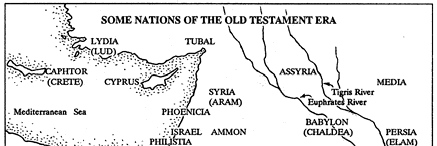
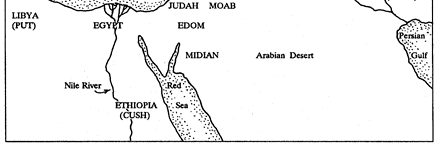
destroyed kingdoms and enslaved entire nations. They find it hard to believe that one who terrified the world can come to such a humiliating end (16-17).
Most kings are buried with honour, but this king is treated with disgrace. He is left unburied, his corpse thrown out to rot in the sun. His sons also are to be killed, to make sure they have no opportunity to copy their father (18-21). The power of Babylon must be destroyed, so that the nation can never rise again (22-23).
Concerning Assyria and Philistia (14:24-32)
In Isaiah's day the immediate threat came not from Babylon but from Assyria. But Assyria will suffer the same fate as Babylon. It may invade the land of Judah, but in that same land it will be defeated and its power over Judah broken (24-25). The almighty God has determined this, and therefore no one will be able to prevent it (26-27).
Ahaz had always tried to follow a pro-Assyrian policy, in spite of objections from Isaiah. Ahaz's son and successor, Hezekiah, was firmly opposed to Assyria. The rulers of neighbouring Philistia apparently knew this, for soon after the death of Ahaz they sent representatives to try to persuade Hezekiah to join them in rebelling against Assyria. It seemed a suitable opportunity, as Assyria had just suffered some sort of military setback. Isaiah warns against being foolishly optimistic. Assyria will soon recover and meet any rebellion with a ferocity greater than before, leaving the land desolate (28-31). The answer to give the Philistine messengers is that Judah will not cooperate in the plan but will trust entirely in God (32).
Devastation in Moab (15:1-16:14)
The place names mentioned in these two chapters indicate that the attack on Moab comes from the north, most likely from Assyria. The attack is swift and ruthless, and towns fall in a night. Wherever a person looks, there is mourning (15:1-4). Even Isaiah weeps as he sees the people fleeing pitifully, rushing along the streets, across the streams and over the fields that have been damaged by the invading armies. They take with them whatever precious possessions they can carry (5-7). There has already been plenty of bloodshed, but Isaiah sees that more is to come (8-9).
In desperation Moab's leaders send an urgent request to Jerusalem, asking the Judean leaders to allow Moab's fleeing and scattered refugees to enter Judah. With their request they send a gift of lambs as an expression of appreciation for the help they hope to receive (16:1-4a). The messengers from Moab try to win the Judeans' favour by declaring their confidence in Judah's future. They express the hope that Judah will conquer all enemies, and that the dynasty of David will continue to prosper till it achieves fully its ideals of faithfulness, love, righteousness and justice (4b-5).
However, the Judean rulers, remembering the Moabites' insults in the past, do not trust them. They refuse to help, no matter how much the Moabites weep and wail (6-7). Nevertheless, Isaiah feels pity for them as he sees their country ruined and their vineyards destroyed in the devastation of war (8-11). Moab's hour of judgment has come, and all the Moabites' prayers to their gods will not save them (1214).
Syria and Israel condemned (17:1-14)
This message belongs to the time of Ahaz, when Israel and Syria joined forces to attack Judah. The two attackers will themselves be destroyed (17:1-3). Israel in particular will suffer, because the nation has turned away from God. Throughout the nation, however, the scattered few remain faithful to God and these will be spared. They are likened to the odd pieces of fruit that remain on the trees after the harvest has been gathered (4-6).
The judgments will be so severe that some of the people will turn from their idolatry and cry to God for help. But for Israel as a whole there will be no help. The nation has followed Canaanite religious practices, and its destruction will be a fitting divine punishment (7-9). People plant sacred gardens and dedicate them to foreign gods, in the hope that this will bring rapid growth in their crops. But if they succeed in getting quick crops, those crops will be trampled and destroyed by the invading army (10-11).
By contrast the nation that remains faithful to God will be protected. Enemies may come against it like a flood, but (to change the illustration) they will be turned back like chaff blown by the wind (12-14).
Alliance with Ethiopia refused (18:1-7)
Along the upper reaches of the Nile River was the country known as Ethiopia (RSV), Sudan (GNB) or Cush (NIV). It was a land of tall smooth-skinned people, but also a land plagued by swarms of buzzing insects. From this country a group of government representatives came to visit Judah, travelling down the Nile and across to Jerusalem. They apparently hoped to gain Hezekiah's cooperation in an attack against Assyria. Isaiah sends them back as he had done the Philistine representatives earlier (18:1-2; cf. 14:2832).
Judah's need is to trust in God, not in foreign alliances. Even if the Assyrian army reaches the mountains of Judah and signals for the final attack on Jerusalem, the Judeans must keep trusting in God. God has been quietly watching the Assyrians' advance and at the right time he will cut them down, as a farmer cuts down the ripened grain. Birds will feed on the corpses of the dead soldiers (3-6). A group of Ethiopian representatives will then come to Jerusalem again, this time to thank God for his defeat of the Assyrians (7).
Egypt's punishment and conversion (19:1-25)
At various times Judah was tempted to rely on Egypt for help against aggressors. Isaiah shows in this message how useless such reliance is. He pictures the day when God acts against Egypt, and sees that all Egypt's magic and all her gods cannot save her. Civil war breaks out, followed by the harsh rule of a dictator (19:1-4).
Drought causes the Nile, Egypt's only water supply, to dry up. This ruins the nation's farming, fishing and cotton industries, and creates nationwide unemployment (5-10). Try as they may, the nation's rulers and advisers cannot solve its problems, for those problems have been sent upon them by God (1113). As a result the nation is reduced to helplessness. No one knows what to do (14-15).
Having been humbled, Egypt fears Judah. It also fears Judah's almighty God, Yahweh (16-17). Judeans then migrate to Egypt and establish the worship of Yahweh in places where people had once worshipped heathen gods. God now treats the people of Egypt as previously he treated those of Israel and Judah. He delivers them from their oppressors, punishes them for their sins, and forgives them when they repent (18-22). People from Egypt, along with people from other former enemies of Israel-Judah, will have an equal part with the people of Israel-Judah in God's universal kingdom (23-25).
Further warning against alliances (20:1-6)
Previous messages have shown Hezekiah the uselessness of forming alliances with Philistia, Ethiopia or Egypt for the purpose of fighting against Assyria (see 14:28-32; 18:1-6; 19:1-15). To emphasize the point afresh, Isaiah acts a message for everybody to see. He dresses himself as a prisoner of war, to show the people of Judah what will happen to them if they enter foreign alliances instead of trusting God for victory over Assyria. After three years the people have proof of the wisdom of Isaiah's advice. The Assyrians capture the Philistine city of Ashdod, after which they invade Egypt and Ethiopia and carry away many captives (20:1-4).
Philistia's hope of military help from Egypt and Ethiopia is sadly disappointed. This causes Judah to realize how disastrous it would have been to trust in any of those countries for its security (5-6).
Vision of the fall of Babylon (21:1-10)
The next message of judgment concerns 'the wilderness of the sea' (RSV), which we soon learn is another name for mighty Babylon. The prophet has a vision of its destruction, which occurred in 539 BC when the combined forces of Persia (Elam) and Media conquered the city (21:1-2). (Daniel 5:1-31 records the story of Babylon's capture while the king was feasting with his mighty men.)
Although the prophet always longed for the destruction of Judah's oppressors, now that the time has come he turns away in horror. The sight of the slaughter is terrifying (3-4). Babylon's leaders, who should be preparing the nation's defences, are all feasting merrily when the enemy attacks. They are suddenly stirred to action, but it is too late (5).
In his vision the prophet sends a man to Babylon to report what he sees (6-7). The man reports that he sees the invading army approaching, and he knows that this is the end for Babylon (8-9). This is good news for God's people, as it means that the nation that so long oppressed them has finally been overthrown (10).
Edomites and Arabs (21:11-17)
The prophet has a short message for the people of Edom, who cry out from their stronghold in Mt Seir, asking how much longer they must be oppressed. The answer is not encouraging. They will get a brief relief from their sufferings, but then they will be oppressed again (11-12).
Wandering Arabs also will suffer from the cruel attacks of the invaders. Thirsty and hungry, they will flee from place to place looking for safety and shelter (13-15). But whatever refuge they find will be only temporary, and within a year even the bravest of the Arab tribal peoples will virtually be wiped out (1617).
Jerusalem besieged (22:1-25)
In Judah, the land where the prophet had his visions of judgment on other nations, he recalls one of God's judgments on Judah, namely, the Assyrians' siege of Jerusalem. On that occasion the city was saved only through the faith of Hezekiah and Isaiah (2 Kings 18:13-19:37).
Ignoring the gracious intervention of God that had miraculously saved them, the people celebrate as if they had won the victory themselves. Isaiah is disgusted at the light-hearted attitude of the people, particularly when he recalls their cowardly behaviour during the siege. The city's leading officials fled the doomed city, only to be killed or captured by the enemy (22:1-4).
The prophet describes the scene during the siege. Outside Jerusalem enemy forces spread across the countryside, while battering rams try to smash the city walls. Soldiers hired from various countries are eager to start fighting (5-8a). Inside Jerusalem soldiers rush to the army headquarters for weapons, and there is much activity to save the city's water supply. Where the city wall is crumbling under the enemy attacks, the Jerusalemites desperately build it up, even demolishing their houses to obtain bricks for the work. But they do not turn to God for help (8b-11).
Other citizens, however, feel sure that Jerusalem will fall. They do nothing to help, but enjoy themselves as much as they can while they can. They show no repentance for the sins that have brought this disaster upon them (12-14).
Shebna, Hezekiah's chief official, is condemned for using his position for the benefit of himself instead of for the benefit of the people. He loved the honour of a procession of chariots preceding him wherever he went, but now he will be shamefully removed from office. Instead of having a magnificent funeral, he will be buried in disgrace (15-19). His position, which was the top decision-making position in the land after the king, will be taken by Eliakim (20-23). But Eliakim will be used by his relatives and friends for their own advantage, and this will eventually be the cause of his downfall (24-25). (By the time of the siege, Eliakim had already been promoted and Shebna demoted; see 2 Kings 18:18.)
Judgment on Phoenicia (23:1-18)
Commerce was the source of Phoenicia's power. Its merchant navy was well known throughout the ancient world, and Phoenician traders sailed to ports far and near. Phoenicia's own ports, Tyre and Sidon, were among the most prosperous cities of the time, but because of their commercial greed and corruption they too will be destroyed.
The prophet pictures the scene in various places when Tyre falls. Phoenician traders who have sailed to Cyprus are shocked when they hear the news. The sea without Phoenician ships is like a mother without children. Egypt panics on hearing the news, because her valuable grain trade is now ruined (23:15).
In former times the Phoenicians made colonies of other countries, but now they are forced to flee to other countries in search of refuge (6-7). The proud people are humiliated, and this humiliation has been brought upon them by God himself (8-9). In the far off port of Tarshish (in Spain) there is confusion and despair, because the city has depended much on Phoenician trade for its well-being. God has now destroyed Phoenicia, and there will be no escape for its greedy merchants (10-12). The nation that God uses to carry out his judgment on Phoenicia is Babylon (Chaldea) (13-14).
After an interval Phoenicia will revive, and will show the same interest as formerly in commercial activities. The prophet likens these activities to those of a prostitute, since they are guided by immoral greed and selfish desires, and give no thought for God's standards (15-17). Nevertheless, God will receive glory even from Phoenicia. In due course God's people will benefit from the wealth and merchandise of Phoenicia, and they will dedicate some of this to God (18; cf. Matt 15:21-28; Acts 21:2-6).
24:1-27:13 FINAL JUDGMENT AND SALVATION
The judgment of various contemporary nations leads the prophet to consider God's final great judgment on the world. Naturally, his illustrations are taken from the world that he knew, and the nations he mentions are those of his time, but the principles of judgment and salvation that he presents are those of the unchangeable God. They will find their fullest expression in God's mighty triumph at the end of the world's history.
Some will mourn, others rejoice (24:1-25:12)
When God judges sinners, he will make no distinctions on the basis of status or class. All who have rebelled against God and ignored his law will be punished (24:1-5). There will be few survivors (6). In a world where people previously lived mainly to enjoy themselves, the most noticeable feature will be an absence of joy and merriment (7-11). The only ones spared in the widespread judgment will be the few who have remained faithful to God. These are compared to the odd grapes left here and there after harvest (12-13).
This remnant then praises God for his salvation. The prophet finds it difficult to share their joyous feelings, for he thinks of the sinful people around him and foresees their terrible punishment (14-16). There will be no way of escape when that day of judgment comes. The world will stagger and fall under the weight of its sins (17-20).
High rank will not save those who have rebelled against God. The rulers of nations will be thrown together like prisoners locked in a crowded dungeon as they await their final punishment (21-22). After all the sinners are removed, God will reign in glory so dazzling that even the sun and moon will appear dark by comparison (23).
At this reminder of the final triumph and glory of God, the prophet breaks forth in a song of praise to him whose victory has been planned from the beginning. When people see God destroy the things they have proudly built, they will turn and praise him (25:1-3). He will give relief to those who are oppressed and will silence the boastful oppressors (4-5).
God will celebrate his victory with a great feast, and introduce an era of joy where all signs of mourning are removed and the possibility of death is gone for ever (6-8). God's people rejoice in his salvation (9), but his enemies suffer humiliating destruction. Their boasting cannot save them, and all their clever achievements finish in ruin (10-12).
Final victory for the godly (26:1-27:1)
Having destroyed the city built by human hands (that is, humankind's whole ungodly way of life; 25:2), God now builds his city. It is a city for the righteous, an eternal dwelling place for those who have experienced the perfect peace that comes through complete trust in God (26:1-3). Those who trust in him have stability and security, but those who trust in themselves are overthrown. God's city stands for ever; the world's city is smashed to the ground and trampled in the dust (4-6).
Godly people long to know God and his ways better, so that they can live righteously according to his directions. They desire this knowledge for others also, because only when people know God can they truly know what righteousness is (7-9). The ungodly do not know God and so cannot live uprightly (1011). The righteous know that God cares for them, and they respond with loyalty to him, even when they are oppressed by their enemies (12-13). In due course, however, the enemies are destroyed, but the righteous have peace. Their numbers increase, and God's blessing spreads throughout the land (14-15).
The righteous then recall how they have cried to God in their distress, but have received no apparent answer. All their efforts and all their expectations have come to nothing. They feel the disappointment and frustration of a woman who suffers birth pains but produces no child. Many of the godly have died without seeing any victory (16-18). Their victory must therefore lie in the future, when their bodies will be triumphantly raised from death (19).
God's people need not fear his wrath, for he will protect them when he carries out his work of judgment on a sinful world (20-21). By contrast his enemies, symbolized here by fierce monsters, will suffer his deadly punishment (27:1).
Shameful exile and glorious return (27:2-13)
From its beginning, Israel was God's chosen people. God compares the nation to a beautiful vineyard, which he has cared for and guarded continually (2-3). Israel's enemies are likened to thorns and briars, and unless they repent of their wrongdoing and seek God's forgiveness, they will suffer a fiery destruction (4-5). Israel, by contrast, will flourish like a giant tree and bring blessing to the whole world (6).
Before that can happen, however, God must deal with Israel because of its sins. The nation, in both its northern and southern kingdoms, must be punished because it has turned away from the true God to serve the false gods of its neighbours. God does not punish his people as severely as he punishes his enemies. Those nations he destroys, but his own people he only sends into captivity, so that when their sins are removed they can return to their own land (7-9).
The desolation of their homeland is a just punishment that God sends upon his rebellious people (1011). But when their punishment is ended, they will be gathered from many places back into their land, as grain is gathered together after it has been threshed (12-13).
28:1-33:24 HEZEKIAH AND THE ASSYRIANS
Before reading Chapters 28-33, readers should be familiar with the historical background found in the introduction under the heading 'Judah's new policies under Hezekiah'. Hezekiah reversed the policies of his father Ahaz. Whereas Ahaz sought help from Assyria to oppose Israel and Syria, Hezekiah sought help from Egypt to oppose Assyria. Isaiah opposed both policies alike. Faith in God, not reliance on foreign powers, is Judah's only hope for survival. The messages collected in these chapters were probably delivered by Isaiah during the three or four years from Hezekiah's revolt against Assyria to the miraculous rescue of Jerusalem in 701 BC.
Bad leadership and its results (28:1-29)
Although his rebukes are directed mainly against Judah, Isaiah opens the section with a short message he once preached against Israel. (The reason for this, as Isaiah will soon point out, is that the message is now equally relevant to Judah.)
The nation's rulers are a lot of drunkards, who live only to enjoy themselves and do not care about the welfare of the people. Because they are heavy wine-drinkers, they are likened to a flourishing vineyard. A severe hailstorm (symbol of the Assyrian invasion) will now destroy the vineyard, and enemy soldiers will trample the grapes underfoot (28:1-4). Nevertheless, the few who remain faithful to God will not be forsaken. God will give them his wisdom and strength, enabling them to come through the crisis successfully (5-6).
At this point Isaiah makes it plain that his prophecy against Israel applies also to Judah. Its leaders also are drunkards, even the religious leaders (7-8). They are annoyed at Isaiah for his persistent teaching, and indignantly ask him if he thinks he is teaching children. They are tired of hearing his same simple message over and over, telling them to turn from their evil ways and trust in God (9-10). Through Isaiah God has promised them true peace and perfect rest. If they refuse to listen to these clear and simple words, God will speak to them in a different language, one that they will not understand. That is, they will hear the foreign language of the Assyrian armies whom God sends against them to punish them (11-13).
Judah has made an agreement with Egypt to rebel against Assyria, but God sees it as a rebellion against him. It is like an agreement with the world of the dead instead of with the living God. It is based on falsehood instead of on God's truth (14-15). God is the only reliable foundation on whom Judah can build its hopes. If the Judeans trusted in him, they would not need to go running to Egypt for help (16). God will act in righteous judgment against his faithless people. Their alliance with Egypt will be as powerless against Assyria as a temporary shelter is against raging floodwaters (17-18).
Day and night the ferocious Assyrian attack will go on. The people of Judah will find that all their preparation has not been enough to give them the comfort they hoped for (19-20). In the place where David punished his enemies, David's people will be punished by their enemies. And the more they ignore Isaiah's warnings, the more difficult it will be for them to escape the punishment (21-22; cf. 1 Chron 14:11,16).
A farmer knows from experience that he must use different methods of planting and threshing for different crops. God likewise uses different methods in his dealings with people, and his actions are always based on his perfect knowledge (23-29).
God saves Jerusalem (29:1-24)
Isaiah then presents a frightening picture of the Assyrian siege of Jerusalem (called 'Ariel' in RSV and NIV, and 'God's altar' in GNB). The people think that their city is safe and that the cycle of annual festivals will go on indefinitely. Suddenly, they find their lives threatened by a terrible siege. Throughout the city people are distressed and humiliated, as the doomed city cries out to God, as it were, from the grave (29:1-4).
The enemy armies think their conquest of Jerusalem is certain, when unexpectedly God intervenes and miraculously saves the city. The enemy's disappointment is like that of a distressed person who has a pleasant dream, then awakes only to find it is not true (5-8; 2 Kings 19:35).
As usual the people of Judah do not respond to Isaiah's prophecy. They are morally dull and spiritually blind, and seem to have no ability at all to understand God's message. It is to them like a book that remains closed (9-12). They carry out the religious traditions, but they know nothing of God and are not even interested in him. They are fit only for God's judgment (13-14).
In planning alliances without thought for God, the people of Judah are deliberately ignoring the God who created them (15-16). God can do more for them than they can ask or think. He has planned a great future for Judah, where those who humbly trust in him will find complete satisfaction and contentment (17-19). However, those who are cruel, dishonest, selfish and unbelieving will have no share in this future, because God will first remove them in judgment (20-21).
When sin is removed there will be no more cause for shame. God's people will truly belong to him, and will have a genuine desire to understand his character and to walk in his ways (22-24).
The folly of relying on Egypt (30:1-33)
All Isaiah's warnings against an alliance with Egypt are in vain. As he learns that a group of Judean representatives is on its way to Egypt, he points out again how disastrous this alliance will prove to be.
Judah's reliance on Egypt is against God's will and in the end will bring only disgrace upon Judah (30:15).
Isaiah pictures the dangerous journey, as a caravan of donkeys and camels carry Judah's payment through the dry southern region of Judah towards Egypt. He knows that the journey is a waste of time, money and effort (6). Judah thinks of Egypt as a great dragon (Rahab) that will help it overthrow enemy Assyria, but Isaiah knows that Egypt will be powerless to help – like a dragon that sits still and does nothing (7).
The prophet writes this discouraging message down as a permanent record that the people have been warned (8). But the sinful people do not want to hear messages that come from God. They want to hear only those things that please them (9-11). They trust for their national defence in a treaty with Egypt, which, to them, is like a high wall that protects them from enemy Assyria. But this wall will collapse on top of them (12-14).
Instead of trusting quietly in God the people trust in military strength. This is only inviting defeat, because the military strength of Assyria is greater than that of Egypt (15-17). God wants to help his people, but first he wants them to learn to trust in him (18).
Despite Judah's rebellion, God in his mercy does not cast them off for ever (19). He is the great teacher who punishes his people when they turn from him, so that they might see their wrongdoing, give up their sinful ways and return to walk in the ways of God (20-22). Then God will pour out upon them the blessings of nature to an extent they have never before experienced (23-26). Upon their enemies, God will pour out his holy wrath (27-28). The people of God will celebrate their victory with much gladness and singing (29), but the Assyrians will be destroyed without mercy, as if burnt in a huge bonfire (30-33).
Egypt cannot save Judah (31:1-9)
Isaiah again condemns the Judeans for relying on Egypt instead of on God. The Judeans think they are wise, but actually they are foolish. Real wisdom rests with God, and he knows best how to overthrow Assyria. As for Egypt, it will be defeated, and when it falls, Judah also will fall (31:1-3).
Judah should learn to trust in God. A lion is not terrified by the shouts of shepherds, and God is not terrified by the threats of the Assyrians. He will protect Jerusalem as a mother bird protects her young (45). God desires that this whole experience will lead the people of Judah to repent of their sins and throw away their idols (6-7). They will see that victory over the Assyrians comes neither from Egypt nor from idols, but from the living God. He will act against the Assyrians and they will be miraculously defeated (8-9).
A kingdom of righteousness (32:1-20)
Looking beyond the victory over the Assyrians, Isaiah sees the day when the people of God are under the rule of an ideal government. At the head of this government is a king whose chief officials share his characteristics of integrity, justice and mercy. Together they give their people protection and contentment (32:1-2).
In such a kingdom the people as a whole reflect in their lives the qualities of their rulers. They have a desire to know more of God and his ways and to live lives of greater usefulness to others (3-4). If people speak foolishly, act selfishly, or plot cunningly how to exploit the disadvantaged, they will find that in such a society they are shown up to be what they really are (5-7). In the same way the upright will be recognized for what they are, and honoured accordingly (8).
Returning to the Jerusalem of his own time, Isaiah announces that the upper class women who live luxuriously will suddenly find themselves poor. The vineyards that provide them with a constant supply of wine will be destroyed, and the city where they find their pleasure will be smashed to ruins (9-14).
Only after the removal of all these evils does the ideal age begin. This age is characterized by justice and righteousness, because the people have God's Spirit poured out upon them (15-16). The result is peace, safety, joy, freedom and prosperity such as people have never known before (17-20).
Assyria defeated; Jerusalem blessed (33:1-24)
In speaking again about the current situation, Isaiah announces God's judgment on the Assyrians. They have plundered greedily and acted treacherously (33:1). Isaiah cries to God to save Jerusalem, so that the enemy armies will flee and the Jerusalemites can seize the goods left behind (2-4). Assured that God will act, the prophet praises him before the actual victory. God gives his people security and wisdom, and they respond with reverence and trust (5-6).
Isaiah then hears of the treachery of Assyria towards the Judean representatives who came to negotiate a peace settlement. Assyria accepted from Judah the heavy fine it demanded as the price of peace, then betrayed Judah by saying it would attack Jerusalem just the same. Judah's administration in the country areas had broken down as a result of the Assyrian invasion, so the Assyrians decided to finish the job properly by capturing the capital, Jerusalem (7-9; see 2 Kings 18:13-37).
But God will now act. He will fight against the Assyrians, turning their expected victory into a shattering defeat. His action will be so devastating that people everywhere will be amazed (10-13). God will act against the Jerusalemites also, sparing only those who live uprightly and who refuse to join in the misdeeds of the ungodly (14-16).
With the besieging armies gone, the people will look out on the open fields again. They will cheer their king as he appears before them in his royal robes (17). No longer will they hear the foreign language of the Assyrian generals who took the Judeans' money and then betrayed them (18-19). People will flock to Jerusalem for the feasts and festivals as in former days (20). Jerusalem will be safe, like a city on the edge of a broad river where no enemy warships approach and therefore no one needs to prepare any ships for battle. The city, by God's forgiving mercy, will be a place of good health and ample provision (2124).
34:1-35:10 MORE ABOUT JUDGMENT AND SALVATION
Jerusalem's final triumph over Assyria is followed by further pictures of God's final judgment on the world and the blessings that will follow. (See notes on the introduction to 24:1-27:13.) God's enemies in this section are represented by one of Israel's most ancient enemies, Edom.
Punishment of the wicked (34:1-17)
God calls sinners together to hear his judgment and receive his punishment. This judgment affects people worldwide, and involves the entire physical creation. Nothing in the heavens or on the earth can exist independently of God and nothing can withstand his power (34:1-4). One picture of this judgment is that of a great slaughter of animals, as if for sacrifice. The rebellious will fall by the sword of God's judgment (5-7). They will suffer a fitting punishment for their persecution and slaughter of God's people (8).
The scene then shifts to the earthly homeland of these people. Their country will be turned into a place of terrible torment, fear and confusion, a place that no human being would ever want to inhabit (911). The glory of its kingdom will be gone, and the ruins of its military defences will be inhabited by all sorts of fearsome animals and dreaded demons (12-15). This judgment has been determined by God, who has recorded the details in a book so that people everywhere might be assured that it is his doing (16-17).
A paradise for God's people (35:1-10)
In contrast to the terrifying end that awaits the wicked, the final state that God has prepared for the righteous is one of peace, joy and beauty. As judgment was pictured in the devastation of the land of Edom, so salvation is pictured in the restoration of the land of Israel. The picture is that of a desert that turns into a beautiful garden or a mighty forest. The Lord God dwells there and strengthens his people (35:1-4).
All the effects of sin are now banished, as God brings physical healing both to people's bodies and to the world of nature. There is perfect contentment and total satisfaction (5-7). God forgives his people's sins and prepares the way for them to come from all nations to dwell with him in his city. Nothing that is sinful or in any way harmful or dangerous will be allowed to enter. God's people will come to his city with joy, like captives returning from a foreign country, or like people flocking to Jerusalem for a festival (8-10).
36:1-39:8 HISTORICAL APPENDIX
The historical record in this appendix is almost identical to that found in 2 Kings 18:13-20:19. There seem to be two main reasons for this appendix. First, it provides the background to Isaiah's messages concerning Hezekiah and the Assyrians that have just been considered (Chapters 28-33). Second, it shows how Babylon began to become involved in Judean affairs, and so provides a fitting introduction to the second part of the book.
The Assyrian attack (36:1-22)
Once Hezekiah was satisfied that he had military backing from Egypt, he took the bold step of rebelling against the overlord, Assyria. He declared his independence of Assyria by refusing to pay further tribute (cf. 30:1-2; 2 Kings 18:7b).
After dealing with rebellions elsewhere, the Assyrian army, under the new king Sennacherib, set out to attack Jerusalem. When Hezekiah heard that the enemy had conquered the Judean countryside and was approaching Jerusalem, he quickly prepared the city's defences and cut off any water supply outside the city that might have been of use to the besieging armies (36:1; 2 Chron. 32:2-5).
Upon seeing the size of the Assyrian army, Hezekiah was sorry he had rebelled and offered to pay Sennacherib whatever amount he demanded (2 Kings 18:14-16). Sennacherib took a large sum of money, but then treacherously declared that he intended to punish Jerusalem anyway. He sent some of his chief officers to try to persuade Hezekiah to surrender, pointing out the uselessness of reliance on Egypt for help. In this the Assyrian officials agreed with the prophet Isaiah, though for different reasons (2-6).
The Assyrians went on to say that to depend on Yahweh was equally useless, as Yahweh was the one who had sent them to destroy Jerusalem. Their statements showed they had an inaccurate understanding of Judah's religion, but they felt confident that neither Judah's God nor Judah's army could withstand them (7-10).
When they found that Jerusalem's leaders were not willing to cooperate, the Assyrian officials turned to address the common people (11-12). They tried to win the people's approval by promising good treatment for them if they deserted Hezekiah and surrendered unconditionally (13-17). They brought about their own undoing, however, by insulting Israel's God. They claimed that Yahweh was no better than the gods of other nations that Assyria had conquered, and they challenged him to rescue Jerusalem from their crushing siege (18-20). In spite of the Assyrians' promises and threats, the common people remained loyal to Hezekiah (21-22).
Assyria defeated (37:1-38)
Hezekiah now realized his mistake in ignoring Isaiah and relying on Egypt. In a humble but open acknowledgment that Judah's plight was desperate, he sent to ask Isaiah to appeal to God for help (37:14). Isaiah reassured Hezekiah that God would not tolerate Assyria's mockery of him (5-7).
When the Assyrians temporarily withdrew from Jerusalem to deal with an enemy attack to the southwest, they sent a letter renewing their threats. They reminded the Jerusalemites that none of the gods of the nations had been able to save those nations from Assyria (8-13).
Hezekiah then presented the whole matter to God in complete trust (14). Although he wanted deliverance from the Assyrians, he was concerned also for the honour of God's name. He did not deny that the Assyrians had conquered many nations, but he objected to their insults against Yahweh. He wanted to be saved from the Assyrians in such a way that people everywhere would see that Yahweh was the only true God (15-20).
Isaiah, being God's spokesman, brought God's reply to Hezekiah. God knew what had happened, and he condemned Assyria for insulting him and despising his people (21-23). Assyria boasted of its achievements, when in fact it had been no more than God's instrument to carry out his judgments (24-27). Because of Assyria's blasphemy, God would now punish Assyria and save Jerusalem (28-29). The area around Jerusalem, where fields had not been farmed because of the besieging armies, would be sown afresh and become productive again. But more important than agricultural increase would be the increase in the number of truly faithful believers in Judah (30-32).
God showed that he could save Jerusalem from the Assyrians without the people of Jerusalem needing to carry out any military activity at all (33-35). Having announced his plans, God acted. He inflicted the Assyrian army with a deadly plague, so that it suffered heavy losses and was forced to flee. Some time later, back in Assyria, Sennacherib was assassinated (36-38).
Hezekiah's illness and recovery (38:1-22)
The events recorded in Chapters 38 and 39 probably happened before those of the previous chapters. Hezekiah was about to die (38:1), but in answer to his prayer God gave him an extension of life. It seems that the reason for preserving Hezekiah's life was to enable him to bring Judah through the time of conflict with Assyria (2-6). God gave Hezekiah a miraculous sign to confirm that this extension of life was according to the divine will (7-8).
Hezekiah then sang a psalm of praise to God for his recovery. He had expected to die, and his lack of knowledge of the future life gave him no cause for joy at all. Life seemed to him so short. Death, it seemed, would cut him off from all living things, even God (9-13). He was depressed, knowing he could do nothing to help himself, for life and death were in God's hands (14-15).
This realization, however, now gave Hezekiah cause for hope. If his life was in God's hands, God could save him. He realized that his sickness had been sent by God for his own benefit, so that his faith might be strengthened (16-17). He could not praise God if he were dead, but he could if he remained alive. He therefore determined that he would keep on praising God, both privately before his children and publicly in the temple (18-20).
Isaiah, who had announced God's promise of healing to the king (see v. 4-6), adds a note to explain how the healing may have come about (21-22).
Warning concerning Babylon (39:1-8)
At this time Babylon was increasing in power and was looking for allies to help it resist Assyria. Hezekiah's illness gave the Babylonian king an excuse to send representatives to Jerusalem with the aim of encouraging Hezekiah to join with Babylon against Assyria. Hezekiah's faith, which had been strengthened through his miraculous recovery from death, soon weakened. He could not resist the temptation of yet another anti-Assyrian alliance. He was proud of the prosperity he had brought to his kingdom (see 2 Chron 32:25,31), and he was pleased at the opportunity to impress Babylon. He therefore gladly showed his willingness to cooperate in the anti-Assyrian plot (39:1-2).
Isaiah seems to have suspected that Hezekiah was preparing the way for another alliance against Assyria (3-4). Once again the prophet condemned this willingness to enter foreign alliances. He saw that it would only result in conquest by the allied power. Judah would be conquered and its people carried captive to Babylon (5-8).
40:1-48:22 RETURN FROM BABYLON
Between Chapters 39 and 40 there is a gap of about one hundred and fifty years. The scene suddenly changes from Jerusalem in the time of Hezekiah (701 BC) to the distant kingdom of Babylon where the Judeans are held captive. (For the background to the Babylonian captivity see introductory notes, 'Captivity and return'.) From now on no distinction is made between the northern kingdom Israel and the southern kingdom Judah. The emphasis rather is on encouraging all those living in exile to be ready to return to their ancient homeland and, beginning in Jerusalem, to build a new Israel.
New Jerusalem
Much of Chapters 40-66 is concerned with the glorious future that the captive Israelites could look forward to in the rebuilt Jerusalem. The era that began with their return from exile is known as the postexilic era. However, many of the blessings pictured in these chapters are far greater than those of restored Israel.
As in former days, so in the post-exilic era, the nation turned away from God. The account in the four Gospels shows clearly that the Israel of Jesus' time was as far from God as the Israel of Isaiah's time (cf. Isa 29:13; Mark 7:6-8; 15:12-13). But, as in Isaiah's time, there were always those who believed, even though their number was small (cf. Isa 8:11-18; John 1:11-12; 6:66-69). This faithful remnant of the old Israel became the nucleus of the new people of God, the Christian church (Acts 1:13-15). The new Israel consists of Abraham's spiritual offspring. The new Jerusalem is a spiritual community of those of all nations who are born 'from above' (Gal 3:14; 3:26-29; 4:26-28).
Even this new community does not at present experience the full blessings pictured in Isaiah. The Messiah's kingdom has yet to be displayed in its full glory (Matt 25:31-34). But Isaiah's message seems to point to more than the coming of the Messiah in glory. The complete fulfilment of the prophet's message awaits the final state of all things, when God dwells for ever with all his redeemed people in a new order of life never before experienced (Rev 21:1-22:5).
God reassures his people (40:1-11)
According to Israelite custom, when the members of a family received an inheritance from their father, the eldest son received twice the amount that the others received. The nation Israel, being God's 'firstborn son' (Exod 4:22), likewise receive double from God, in punishment as well as blessing. The people's punishment in being taken captive to Babylon is proof that they are still God's 'firstborn son' and that he still has a special love for them. Now that he has dealt with their sins, he is ready to bless them afresh (40:1-2).
Just as people prepare a smooth highway for a king when he travels across the country, so God has prepared the way for his people to return to their land. Loyal subjects may watch a royal procession, but the whole world will watch when Israel returns to its homeland (3-5).
The prophet, representing the new Jerusalem, announces this good news to the captives. What people do is unreliable and temporary, but what God does is reliable and permanent. The restoration of ruined Jerusalem and the regathering of scattered Israel is certain, because God will do it (6-9). By his mighty power God will conquer the enemy. His reward will be to enjoy fellowship with his people again, caring for them as a shepherd cares for his sheep (10-11).
Israel's incomparable God (40:12-31)
Should any doubt God's ability to re-establish Israel in its homeland, the psalm of praise that follows drives away those doubts. God is the great Creator; the universe appears insignificant compared with him. He does whatever he wants, without any help or advice from his creatures (12-14). Israel has no need to fear Babylon or any other ruling power, for nations also are insignificant and powerless before him (1517). How absurd, therefore, for people to make lifeless idols and trust in them instead of in the living, almighty God. Yahweh's people need have no fear of Babylon's gods (18-20).
Since Yahweh created all and rules over all, the leaders of the nations are as powerless before him as ants or grasshoppers. They are as easily destroyed as dry grass (21-24). On the earth or in the heavens, God controls all (25-26).
In view of all this, the Jewish exiles need not become discouraged through thinking that God is either unwilling or unable to help them. He has not forgotten them, nor has he lost his power. Through him the weak can be made strong (27-29). Those who trust in their own strength will fail, no matter how capable they may appear to be. But those who trust in God will be constantly strengthened by his power, which will lead them on victoriously (30-31).
The living God and idols (41:1-29)
At that time Cyrus of Persia had been expanding his empire. He had conquered all the countries to the north and east, and was now threatening Babylon. The prophet imagines God calling the nations to assemble before him and asking them a question: who is it that has stirred up Cyrus to carry out this conquest? The answer: Yahweh (41:1-4).
As the armies of Cyrus approach these nations the people panic, and in their distress call upon their gods for protection. Isaiah pictures the goldsmiths and other craftsmen helping and encouraging each other as they work overtime to meet the heavy demand for idols (5-7).
The people of Israel, by contrast, are the people of the living God. He chose them long ago and he has not forgotten them. He is always present to strengthen and protect them (8-10). They need not fear their enemies, for God will fight for them – and no enemy can stand against him (11-13).
By God's power Israel will be victorious. As a farmer threshes and winnows wheat, so Israel will crush and scatter its enemies (14-16). God will answer the prayers of his people, and provide them with all they need for a healthy and prosperous life. His gracious gifts will be a demonstration of his character that all can see (17-20).
God then challenges the gods of the nations to prove their power by predicting coming events. Not only are they unable to predict the future, they cannot even relate the past. He challenges them to prove their existence by doing anything at all, good or bad, but again they are unable. They are lifeless (21-24).
God points out that he predicts correctly and acts decisively. None of the gods of the nations predicted Cyrus's conquest, but the God of Israel did (25-27). These gods can neither predict events nor answer questions. Being lifeless, they can only deceive those who worship them (28-29).
The Servant of Yahweh
In 42:1-4 we meet the first of the four so-called Servant Songs. (The others are in 49:1-6, 50:4-9 and 52:13-53:12.) The songs do not always give a clear indication who this servant is. In some cases the whole nation Israel is the servant, in other cases it is the faithful within Israel, while in some cases it is the Messiah, Jesus Christ.
The probable reason for this threefold meaning is that Israel as a whole failed, and the spiritual blessings God desired for Israel were experienced only by the faithful few who truly believed God. Yet even this faithful remnant did not experience the full blessings God intended for his people. God's purposes for Israel were fulfilled only in Jesus the Messiah. The nation Israel was Abraham's natural offspring (John 8:37); the few faithful believers within Israel, often referred to as the remnant, were his spiritual offspring (Rom 9:6-7; Gal 3:29); but the Messiah himself was the one and only perfect offspring, in whom all God's purposes for Israel were fulfilled and through whom people of all nations are blessed (Gal 3:16; cf. Gen 12:1-3,7).