
Part 21
The priests' rooms (42:1-20)
Ezekiel now gives further details concerning the rooms for the priests located in the inner court (see 40:44-47). There were two priests' buildings, one on the north side of the temple proper, the other on the south.
First the building on the north side is described. It was three storeys high and divided lengthways by a passage. On the temple yard side of this passage were three storeys consisting of one long narrow room on each storey. On the outer court side were three storeys of storerooms. The second storey on each side had a gallery, or verandah, attached to the rooms. On the third storey the rooms were narrower but the gallery wider. Since the rooms of each storey were narrower than those of the storey below, the buildings had a stepped appearance (42:1-6). The block on the outer court side of the passage took up only half the area of the block on the temple yard side. The other half of the area on the outer court side was separated from the passage by a wall but was open at the end, thereby forming a sheltered entrance to the bottom storey (7-9).
The priests' building on the south side of the temple proper was the same as that on the north (10-12). The various blocks of rooms within these two buildings were used by the priests when they changed their clothes or when they ate the food of the people's offerings (13-14).
Ezekiel's heavenly guide then left the inner court, went through the outer court, through the gate, and out of the temple compound. He measured the whole temple complex and found it to be square. The high wall enclosing this complex was to protect the holy things of God from the uncleanness of everyday life outside (15-20).
God returns to the temple (43:1-12)
Nineteen years earlier, Ezekiel had seen visions in which God left the temple, went out of Jerusalem to a nearby mountain, then destroyed the city and its inhabitants (see 8:1; 9:1-11; 10:19; 11:22-24). Now, with the new temple established, he sees God returning by the same route, coming to his temple and filling it with glory (43:1-5).
God then told Ezekiel that this temple was to be his earthly dwelling place. It was holy, and his people were not to defile it as their ancestors had defiled the previous temple, through worshipping idols and burying their kings there (6-9). Ezekiel was to describe the new temple to the exiles and explain to them how it was to function. His purpose was to help them understand more of God's holiness, so that they might live obediently and avoid wrongdoing (10-12).
Altar of sacrifice (43:13-27)
Positioned centrally in the inner court was the altar of burnt offering. In appearance it looked like three large square boxes placed one on top of the other, with the largest on the bottom and the smallest on the top, giving a stepped appearance. The whole structure was set on a large base built into the pavement. It was so huge that it needed steps so that the priest could climb up to reach the top level, on which the sacrifices were offered (13-17).
The altar was to be dedicated to the holy service of God in a ceremony involving sin offerings (indicating cleansing) and burnt offerings (indicating consecration). Only those priests descended from Zadok were allowed to carry out the actual sacrifice on the altar (18-24). The dedication ceremony was to last one week. After this the altar could be used for normal sacrificial offerings (25-27).
Service in the temple (44:1-31)
Because the glory of God had entered the temple through the east gate of the outer court, no human being was considered worthy to enter by this gate. It therefore had always to be kept shut (44:1-2). The king, however, could eat his sacrificial meal in the vestibule that was on the inside of the east gate. He had to enter the temple compound by either the north or the south gate, then enter the vestibule from the courtyard side (3).
The presence of God's glory in the temple meant that there were restrictions concerning those allowed to enter it. God did not want his temple to be defiled through the introduction of heathen practices (4-5). Therefore, only God's covenant people could enter the temple. Foreigners were not allowed even to be employed as temple servants (6-9; cf. Josh 9:23,27; 2 Kings 11:4-8).
Day to day duties in the temple, such as guarding its gates and helping with arrangements for the sacrifices, were to be carried out by the Levites along with those priests who were not of the family of Zadok. These non-Zadokite priests were excluded from higher responsibilities because of their idolatry in former days (10-14).
Zadokite priests, who were given full priestly responsibility, were to keep strictly all the laws concerning priests. They were not to allow anything connected with the sanctuary, not even the clothes they wore in the sanctuary, to be polluted through contact with people or things from the unclean world outside (15-19; cf. 42:14). In their appearance, habits, family life, purity and uprightness they were to be an example to the people of the true meaning of holiness (20-24). If for any reason they became ceremonially unclean, they had to go through the full purification rituals (25-27).
As in former days, priests were not to own any land. Their income and food supplies were to come from the various offerings of the people. However, the kind of food they ate was subject to the same restrictions as applied to the food of people in general (28-31).
Land for priests, Levites and king (45:1-12)
Clearly the division of the land described here was symbolic and stylized. Straight lines can easily be drawn on a flat sheet of paper, but a land of hills, valleys and streams, such as Palestine, could not be divided in this way. Ezekiel's division emphasized the important issues to be considered in the ideal division of the land.
Following the principle that operated in the offering of tithes and firstfruits to God, a section of the land was first set apart as God's portion. This was an acknowledgment that all the land was really his. Within this portion was the temple, surrounded by an open space to emphasize the separation of the holy things of God from the unclean things of everyday life outside. Priests and Levites were given first consideration in the resettlement arrangements, so that they could be near the temple. The portion of land in which the temple was situated was given to the priests, and a portion of the same size adjoining it given to the Levites (45:1-5). On the other side of the priests' land was land for the city (6).
Extending out to the Mediterranean Sea in the west and to the Jordan River in the east was land for the king. The king was to be satisfied with this generous allotment and was not to seize land that belonged to common people in other parts of the country (7-8).
While on the subject of taking advantage of others, Ezekiel adds further warnings. Rulers were not to use their positions of power for their own benefit, and merchants were not to cheat their customers. All weights and measures had to be exact (9-12).
Offerings and festivals (45:13-46:15)
All the people had a part in providing the offerings for national religious festivals. The offerings were collected by the king, who then offered them in sacrifice on behalf of his people (13-17). At the beginning and end of the first week of the new year, sacrifices were offered for the cleansing of the temple (18-20). The two main annual festivals to be celebrated at the temple were the Feast of Passover and Unleavened Bread at the beginning of the year (21-24; cf. Lev 23:4-8), and the Feast of Tabernacles (GNB: Festival of Shelters) half way through the year (25; cf. Lev 23:34-36).
The east gate leading from the outer court to the inner court was closed every day except the weekly Sabbath and the monthly day of the new moon, when the king presented sacrifices on behalf of the nation. On these days the king, and he alone, could enter the vestibule of the gate and watch the priests carry out the sacrificial rituals inside, but he could not pass through the gate (46:1-2; see also v. 8. Only priests and Levites were allowed into the inner court). The people were to gather in the outer court in front of the gate (3). The weekly and monthly sacrifices were to be according to the laws laid down (4-8).
Certain rules aimed at maintaining order when people crowded the outer court during the annual festivals. Upon entering the gate, people were to keep moving in one direction and exit through the gate on the opposite side (9-10). If the king offered a voluntary offering, he could watch the ritual connected with it by standing in the east gate as mentioned previously (11-12). In addition to the nation's weekly, monthly and annual sacrifices, there was a daily sacrifice (13-15).
More about the land and the temple (46:16-24)
If the king marked off a piece of his land and gave it to one of his sons, it remained the permanent property of the son. But if he made a similar gift to one of his servants, the land returned to the king at the year of jubilee. (Concerning the year of jubilee see Lev 25:8-34.) This ensured that the royal family retained possession of its land, and that the king was not tempted to seize other people's land to compensate for what he gave away (16-18).
Returning to the details of the temple, Ezekiel adds that there were kitchens inside the enclosure of the inner court. These were provided so that the priests who offered the sacrifices (i.e. the Zadokite priests; see 44:15-16) could cook their portions of food from the holy offerings, without having to go outside the holy enclosure (19-20). There were also kitchens in the four corners of the outer court, where other temple officials (i.e. the Levites and non-Zadokite priests; see 44:10-14) cooked those portions of the sacrificial food that belonged to the common people (21-24).
The river of life (47:1-12)
Upon completing his description of the temple and its rituals, Ezekiel moves on to the remarkable climax to his visions. He saw a trickle of water coming from under the door of the temple, then flowing across the court and under the main outer wall (just south of the east gate) (47:1-2). The stream headed east, rapidly growing wider and deeper until, within a very short distance, it became a large river (3-6a).
The first thing that Ezekiel noticed about this remarkable river was the number of trees growing along its banks (6b-7). He then learnt that the river was flowing towards the Dead Sea, and all along its course it brought life into previously stagnant waters (though it left some areas of salt that would be useful to the people of the land). The trees that grew on its banks, besides providing a constant supply of nourishing food, brought healing to the sick. The river pictured the healing, nourishing, life-giving blessings that flow from the presence of God to his people (8-12; cf. Rev 22:1-2).
Boundaries of the land (47:13-23)
In restored Israel the land was to be divided equally among the nation's twelve tribes. Levi had no tribal allotment, but Joseph, who received the firstborn's blessing, had two, Ephraim and Manasseh (1314; cf. Gen 48:5; 1 Chron 5:1).
The overall boundaries of the land are given. The northern boundary went from a point near Tyre on the coast to the Jordan headwaters. The eastern boundary followed the Jordan to the southern end of the Dead Sea. The southern boundary went from there to the Wadi (or Brook) of Egypt, which it then followed to the coast. The western boundary was the Mediterranean coast (15-20).
In the matter of land allocation, foreigners who lived among the Israelites had equal rights with them. They were to be given land in the territory of the tribe in which they lived (21-23).
Divisions of the land (48:1-29)
Land to the north of the specially allocated central portion (see 45:1-8) was divided into seven equal portions by drawing parallel lines from the Mediterranean Sea to the eastern boundary. Although the terrain of the country would make such a division impossible in practice, the division had meaning. It indicated a measure of equality among the tribes (for their portions were equal in area; see 47:14), though there was a difference in responsibility (for the more important tribes were closer to Jerusalem and the temple) (48:1-7).
In the centre of the land was the special portion for temple, priests, Levites, city and king (8; see notes on 45:1-8). The central section of this portion contained the site for the temple and was given to the priests (9-12). The section bordering it to the north was for the Levites (13-14).
The section bordering the priests' portion to the south was for the nation's capital and its citizens. The city proper was a square, surrounded by a strip of open land, and was inhabited by people taken from all twelve tribes. To the west and east of the city were farming areas, where food was grown to support the people of the city (15-19). The entire portion of land for priests, Levites and national capital was square in plan (20). Either side of this central square portion was land for the king (21-22; see 45:7-8).
To the south of the central portion were the remaining five tribes in their parallel strips of land. Again the more privileged tribes were closer to Jerusalem and the temple (23-29).
The gates of Jerusalem (48:30-35)
As he brings the account of his visions to a close, Ezekiel speaks again of the city. He points out that it had twelve gates, three in each of its four sides, representing the entire people of God (30-34; cf. Rev 21:12-14). Having restored his people to their land and re-established their national and religious life according to his perfect plan, God now dwells with them for ever (35; cf. Rev 21:23).
Daniel
The book of Daniel is set in the time of the Jews' exile in Babylon. This was the period that introduced the final stage of Israel's Old Testament history, which led in turn to the new era that dawned with the coming of Jesus Christ.
From the New Testament it is clear that the book of Daniel had an influence in later generations. The name that Jesus commonly used for himself, the Son of man, came from Daniel's vision of the God-sent universal king (Dan 7:13-14; Mark 2:28; 14:62). Jesus referred to Daniel's visions in warning the Jews of troubled times ahead (Matt 24:15), and John, in the book of Revelation, recorded visions where many features come from the book of Daniel (cf. Dan Chap. 2, 7 and 8 with Rev Chap. 11, 12, 13 and 17). The writer to the Hebrews referred to the man Daniel as an example of the person who has genuine faith (Heb 11:33).
The long career of Daniel
Daniel was one of the first citizens of Jerusalem to be carried off captive when Judah fell under the control of Babylon in 605 BC. This was the fourth year of the reign of the Judean king Jehoiakim (third year according to Babylonian reckoning), when Judah was rapidly approaching its end (2 Kings 24:1a; Jer 25:1; Dan 1:1-6). (For the history of this era see introductory notes to Ezekiel.)
At the time of his removal to Babylon, Daniel was only a teenager. He was one of a select group of intelligent young men whom the Babylonians chose from the upper class families of Jerusalem, with the aim of training them to be administrators in the royal court at Babylon (Dan 1:4).
During his long career in Babylon, Daniel held some of the top positions in the government. He outlasted the Babylonian Empire and was still alive in the third year of Cyrus, the Persian king who conquered Babylon in 539 BC (Dan 10:1). He therefore lived to see the first Jewish exiles return to Jerusalem to rebuild their nation (Ezra 1:1-4).
A book for the times
Jewish affairs were greatly affected by the changes and crises that occurred throughout the period covered by the book of Daniel. But God's people were not to lose their trust in him. A prominent theme in Daniel is the sovereignty of God. The book shows that God is in control of human affairs, whether everyday matters in the lives of his people or events relating to the rise and fall of nations.
The first half of the book records stories of Daniel and his friends that illustrate the care of God for those who were faithful to him. The second half shows, through a series of unusual visions, how God would continue his government in the affairs of his people during great events that were yet to take place.
These revelations were concerned mainly with the long period of confusion and conflict that followed the period of Persian rule and reached its climax in the events of the New Testament era. The New Testament writers, in turn, take details of these revelations and apply them to the great events connected with the return of Jesus Christ and the end of the age.
Features of the book
Because of his gift to understand and make known God's will, Daniel has been referred to since New Testament times as a prophet (Matt 24:15). But the Jews who arranged the books within the Hebrew Bible (equivalent to our Old Testament) did not so regard him. They did not include his book among the prophets, but put it with the miscellaneous writings. This was probably because they looked upon Daniel more as a statesman in the Babylonian palace than as a preacher who brought God's word to his people.
Nevertheless, Daniel was one through whom God revealed his purposes, and God usually did this by means of dreams and visions. As a result the book of Daniel has many characteristics of that kind of literature known as apocalyptic (from the Greek apokalupto, meaning 'to reveal or uncover').
In apocalyptic writings the visions are always strange or unnatural, with weird symbolism that frequently features fearsome beasts and mysterious numbers. The visions are given by God, interpreted by angels, and usually concern great conflicts out of which God and his people triumph. Although the overall meaning of a vision may be fairly clear, the details are often difficult. In seeking to understand these visions, the present-day reader must always bear in mind that any suggested interpretation must contain an element of uncertainty.
1:1-6:28 Stories about Daniel and his friends 7:1-12:13 Daniel's visions
1:1-6:28 STORIES ABOUT DANIEL AND HIS FRIENDS
Training for Nebuchadnezzar's court (1:1-21)
Babylon's first attack on Jerusalem came in 605 BC, during the reign of the Judean king Jehoiakim. In keeping with the usual practice among conquerors in ancient times, the Babylonian king Nebuchadnezzar plundered the temple of the conquered people, carried off its sacred objects and placed them in his own temple. In this way Nebuchadnezzar demonstrated his belief that Babylon's gods were superior to the God of the Jews (1:1-2).
Nebuchadnezzar also took back to Babylon a number of Jewish young men chosen from the upper class families of Jerusalem, his purpose being to prepare them for high positions in his royal court (see 'Background' above). He chose men whose good looks would add to the grace of his palace and whose intelligence would enable them to learn Babylonian ways quickly. He wanted them to be skilled in Babylonian law and wisdom, particularly Chaldean wisdom (3-4). (The Chaldeans were the dominant race among the Babylonian people, and the one to which Nebuchadnezzar belonged. Their wise men were famous for their skill in astrology, magic and ancient languages.)
The Babylonians put strong pressure on the young Jewish captives to break with their old religion and culture. To begin with they gave them Babylonian names (containing names of Babylonian gods) to replace their Hebrew names (which contained the name of the Hebrews' God). Also they gave them a share of the same food served to the Babylonian king (5-7).
Four of the Jewish youths, led by Daniel, asked to be excused from eating the king's food. They considered it unclean, either because it was of a kind forbidden by Jewish law, or because it represented fellowship with a heathen king and his idols (8). The official in charge of the court trainees refused their request. He feared that the simpler food the youths requested would have a bad effect on their appearance, and that he would be blamed for it (9-10). But Daniel and his friends made a secret arrangement with their personal dining attendant, so that they were served only the simpler food that they desired (11-16).
God rewarded the young men's faithfulness to him and their diligence in study. He gave them the attractive appearance that the king wanted and an understanding that in all spheres of learning was better than that of their fellows. He gave them also the ability to recognize the difference between the true and the false in Babylonian wisdom, and to Daniel he gave the extraordinary ability to understand visions and dreams (17-20). History shows that Daniel so enjoyed God's favour that he was still a person of importance even after the Babylonian Empire had fallen (21; cf. 10:1).
Nebuchadnezzar's dream (2:1-23)
Soon after completing their early training, Daniel and his friends were faced with a severe test. Nebuchadnezzar had a dream and wanted his wise men to tell him its meaning. However, he would not, or could not, tell them the dream. He insisted that they first describe the dream to him accurately, and then he could be sure that their interpretation also was accurate (2:1-6). The wise men replied that the king's demand was unreasonable. No person anywhere had such knowledge (7-11). Furious at their reply, the king ordered that all Babylon's wise men be executed (12).
Perhaps Daniel and his friends had kept themselves separate from the Babylonian magicians and sorcerers, for they did not appear with them before the king. When the king's guards came to arrest them to be executed, Daniel bravely went to the king and successfully asked for extra time to consider the matter (13-16). He immediately returned home and gathered his three friends with him to pray to their God (17-18).
That night God revealed the dream and its interpretation to Daniel in a vision. Without waiting to check with the king whether his vision of the dream was the same as the king's, Daniel confidently thanked God for answering his prayer (19). He praised God as the all-wise and all-powerful ruler of the world, who controls history, determines the destinies of kings, gives wisdom to the faithful and reveals mysteries to his servants (20-23).
The meaning of the dream (2:24-49).
Daniel had no thought of taking the opportunity to exalt himself above his unfortunate fellow officials. Rather he first of all ensured that they would not be executed (24) and even supported their statement that no person could be expected to meet the king's demand (25-27). Certainly, Daniel would tell the king the dream and its meaning, but the revelation was due entirely to God, not to any special skill that Daniel possessed (28-30).
What Nebuchadnezzar saw was a huge statue. It was made of a variety of substances, which, from head to feet, decreased in value while increasing in strength – except that the feet, which supported the statue, were brittle. A huge stone, supernaturally formed, struck the statue in the feet so that the whole structure crumbled to dust and was blown away. The stone, however, grew into a mountain that covered the whole earth (31-35).
The dream concerned the future of Nebuchadnezzar's kingdom and the climax to which coming events would lead (see v. 29). Its chief purpose so far as Nebuchadnezzar was concerned was to show him that God is the sovereign ruler of the world, and he sets up kingdoms and destroys them according to his own will.
In the light of later history, the meaning of the dream appears to be as follows. The mighty Babylonian Empire headed by Nebuchadnezzar (the head of gold) would soon be replaced by the MedoPersian Empire (the chest and arms of silver) as the ruling power in the world as Nebuchadnezzar knew it. The Medo-Persian Empire would in turn be replaced by the Greek Empire (belly and thighs of bronze), and this in turn by the Roman Empire (legs of iron) (36-40). The Roman Empire would take in more scattered states than any of the previous empires, but would not be able to hold its empire together in a stable union (feet partly of iron, partly of clay) (41-43).
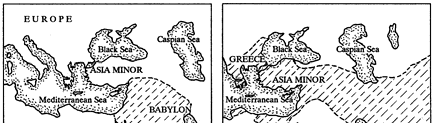
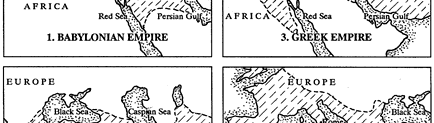
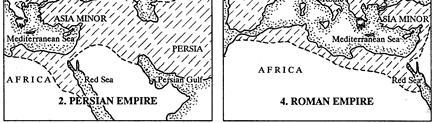
During the time of this Roman Empire, God would intervene. The mighty empires of human achievement, which started with Babylon and lasted till Rome, would crumble before the coming of a supernatural king, Jesus Christ (the supernatural stone that smashed the image). The kingdom of God introduced by Jesus Christ would spread worldwide and would last for ever (the stone became a great mountain and filled the whole earth) (44-45).
Though Nebuchadnezzar was forced to acknowledge the superiority of Daniel's God, he did not yet acknowledge that he was the only true God (46-47). The king promoted Daniel to chief administrator in the kingdom and head over his council of advisers. But Daniel, in his hour of greatness, did not forget his friends. He had them appointed administrators with responsibilities over various country regions, but he himself remained at the palace in the city of Babylon (48-49).
Saved from the fiery furnace (3:1-30)
Within Nebuchadnezzar's kingdom were people of many races, languages and religions. In a plan to create greater unity among these people, Nebuchadnezzar made a huge image as a national religious symbol, and demanded that all citizens, great and small, bow before it. He set up the image in open plain country where it could be seen from afar, then called all the leading officials from the country areas to a dedication ceremony (3:1-3). He gave instructions concerning the ritual to be followed in worshipping the image, and laid down the penalty for any who disobeyed (4-7).
Some Babylonian officials were jealous of the three Jews who had been recently appointed as provincial administrators. When they saw that the Jews refused to bow to the image, they were pleased to have an opportunity to bring accusations against them before Nebuchadnezzar (8-12). The king found it difficult to believe that people he had recently honoured would be so ungrateful and rebellious. Although he was furious with them, he gave them another chance, warning them that no God could save them once they were thrown into a fiery furnace (13-15).
The three men again refused to obey. They had no doubt that if the sentence against them was carried out, God could save them if he so chose. Whether he would save them, they were not sure. Either way, they were determined not to worship the king's image and were prepared to accept the consequences (1618).
Nebuchadnezzar, now in a rage, had the men bound and thrown into a fiery furnace (19-23). His rage quickly turned to fear when he saw that God sent his heavenly messenger to save them (24-25). The whole experience humbled Nebuchadnezzar. He praised the Jews' God, and issued a decree that gave the Jews religious freedom and protected them from further persecution. He also gave the three men higher positions in his government (26-30).
Nebuchadnezzar's madness (4:1-37)
In this chapter Nebuchadnezzar recounts, for the benefit of his subjects, an experience that humbled his pride and brought him to acknowledge Yahweh as the one and only true God (4:1-3). It all began when Nebuchadnezzar had a puzzling dream. After getting no help from his Babylonian wise men, he told it to Daniel in the hope of discovering its meaning (4-9).
The first thing that Nebuchadnezzar saw in his dream was a giant tree. It towered over the world and provided food and shelter for all creatures everywhere (10-12). A heavenly messenger then announced that this tree would be cut down, though its stump would be preserved (13-15a). The tree was also a person, who then lived for a time as an animal in the fields (15b-16). Angels announced that the purpose of the dream was to show that God rules over all the world's kingdoms and gives them to anyone he chooses (17-18).
Daniel, after hesitating at first, revealed that the dream applied to the great and powerful Nebuchadnezzar himself (19-22). The king would suffer a period of mental illness when, imagining he was an animal, he would go and live like an animal in the field. Although he would not be able to rule during this time, God would preserve his kingdom for him. Eventually he would come to realize that God, not he, was the all-powerful one who decided the destinies of nations. Then God would give him back his throne (23-26).
After revealing the dream's meaning, Daniel gave the king some advice. He urged the king to cease the oppression and injustice that characterized his rule, and begin instead to administer justice for the welfare of his people. Perhaps he would then avoid the threatened disaster (27).
God gave Nebuchadnezzar a year to repent as Daniel had urged, but the king would not change. Instead of repenting, he only grew more defiant and proud. The result was that God acted, and Daniel's dreadful forecasts concerning Nebuchadnezzar came true (28-33).
Only after Nebuchadnezzar lost his sense of self-importance and humbly submitted to God did his sanity return. Previously he had acknowledged that Daniel's God was one among many gods, maybe even the best god (see 2:47; 3:29), but now he openly acknowledged that Daniel's God was the one and only true God, to whom he must bow. This God is the one who determines the destinies of individuals and nations according to his will (34-37).
Belshazzar's feast (5:1-31)
The events of this chapter took place in 539 BC. If Daniel was about fifteen years of age when taken captive to Babylon in 605 BC, he would now be over eighty. Nebuchadnezzar had long been dead. The present king, Nabonidus, was absent in distant territories for much of his reign, and the rule of the country was largely in the hands of his son Belshazzar. The queen who appears in the story (v. 10) was probably the queen mother, wife of Nabonidus. Nebuchadnezzar is referred to in the story as Belshazzar's father (v. 2,11), not in the sense of being father by blood, but in the sense of being predecessor as king.
While the armies of Persia were preparing for their final attack on Babylon, Belshazzar and most of Babylon's leaders were enjoying themselves at an extravagant banquet. Belshazzar knew of the expanding power of the Medo-Persians, but he was so self-confident that he thought nothing could shake his mighty kingdom. He also knew of the God of the Jews who had humbled Nebuchadnezzar, but he showed his contempt for this God by taking the Jews' sacred vessels to use in his banquet of drunkenness and idolatry (5:1-4).
At the height of the feast, Belshazzar was overcome with a sickening terror when a hand suddenly appeared and wrote mysterious words on the wall (5-6). Panic-stricken, he asked his wise men to explain what it all meant. He promised that the one who explained the mystery would be given the next highest place in the kingdom after him. No one was successful (7-9).
When news of the confusion reached the queen mother, she came to the banquet hall to tell the king how Daniel had interpreted mysteries for Nebuchadnezzar many years previously (10-12. At this time Daniel no longer occupied a position of power in Babylon, either because of his age or because of the change in kings). Though able to interpret the writing, Daniel refused the king's reward (13-17). Also, he reminded Belshazzar of how God had humbled the mighty Nebuchadnezzar (18-21), yet although Belshazzar knew all this he deliberately treated God with contempt (22-23). Therefore, God sent him this terrifying message (24).
Daniel recognized three well known Aramaic words in the mysterious writing: mene, meaning 'numbered'; tekel, meaning 'weighed'; and parsin (plural of peres), meaning 'divided'. He then offered his interpretation of the words. God had numbered the days of Belshazzar's kingdom and fixed the day when it would collapse; he had judged (weighed) Belshazzar and found him to be a failure; he would divide Belshazzar's kingdom and give it to the Medes and Persians (25-28).
That night, before Belshazzar's banquet was over, Babylon fell to the armies of Medo-Persia under the leadership of the Persian king Cyrus. The Darius mentioned in the story could have been Cyrus under an alternative name, or it could have been a Median general whom Cyrus appointed over Babylon. He is not the Darius mentioned elsewhere in the Old Testament (29-31).
Daniel in the lion's den (6:1-28)
There had been no opportunity for Daniel to enjoy his return to high office, because Babylon fell the night he was reinstated (see 5:29-30). But the new rulers would have known of his record under Nebuchadnezzar, so they made him one of the three presidents appointed to administer the nation (6:1-2).
Daniel had such obvious ability that the other two presidents soon became jealous of him. They wanted to get rid of him, but were unable to find any accusation of mismanagement to bring against him. They saw that their only chance lay in bringing in a new religious law that Daniel's conscience would not allow him to obey (3-5).
In putting their suggestion to the king, the two men used words that made the king think Daniel agreed with them. Their suggestion was that for the next month all prayers to all gods had to pass through the king. It was a common Medo-Persian practice for the king to act as representative of the gods, so Darius agreed to the suggestion and made it law (6-9).
By the time Daniel heard about the new law, it had already been approved and sealed by the king, so he could do nothing to have it changed. He made no effort to obey it, and proceeded to pray to God as he had before (10). His enemies worked out a plan to catch him in the act of breaking their evil law, so that they could accuse him to the king (11-13). They had him condemned and thrown into a den of lions, even though this was against the king's wishes (14-18).
God's miraculous deliverance of Daniel showed that the kind of worship that he accepted was not the state-controlled worship, but Daniel's kind of worship. Daniel had refused to sin against his conscience, had done nothing against the king, had not retaliated against his enemies, and above all had trusted in God (19-22; cf. Heb 11:33). After punishing the plotters (23-24), the king issued a decree commanding that all his subjects respect the God of Daniel (25-27). As for Daniel himself, he continued to prosper in the high positions he held in the Persian administration (28).
7:1-12:13 DANIEL'S VISIONS
Although the visions collected in this section of the book are in approximate chronological order, there is no obvious connection leading one on to the next. Each vision has a separate and distinct message.
A vision of four beasts (7:1-14)
In the first vision (whose chronological position would be between Chapters 4 and 5), Daniel saw a severe storm stirring up the sea, then, coming up out of the raging waters, four strange beasts. The meaning (partly explained later in the chapter) seems to be that God was working in the affairs of the region, stirring up events that produced in turn four kingdoms (7:1-3; see also v. 17).
The four kingdoms represented here are the same four kingdoms illustrated in Chapter 2, but there is a difference in emphasis. Whereas the vision given to the heathen king Nebuchadnezzar dealt in general with the historical significance of the events symbolized, the vision given to God's servant Daniel dealt more with how these events would affect the people of God. The emphasis in Chapter 2 was that God controls the rise and fall of empires. The emphasis in Chapter 7 is that God preserves his people through the opposition that these empires bring.
Babylon, the kingdom symbolized by the first beast, was proud, ruthless and unconquerable at the beginning, but later its cruel power softened and it became more humane (4). The second beast, already eating one victim and getting ready to pounce on another, symbolized the Medo-Persian Empire in its greedy conquest (5). The third beast pictured the swift conquest by Alexander the Great and the spread of the Greek Empire (6).
The fourth beast, so horrible and terrible that it was beyond description, symbolized brutal allconquering Rome. From the many kingdoms ('ten horns') brought together in the Roman Empire, one leader (a 'little horn') emerged as more ruthless than all others. He murdered those who opposed him and established himself as a cruel unchallengeable dictator (7-8).
Daniel then had a vision of the fiery chariot-throne of God, upon which sat the Lord of the universe. He would judge his creatures with absolute purity and fearful justice (9-10). The 'little horn' dictator made such claims to power that God could tolerate him no longer. His day of judgment had come. The three previous kingdoms were merely overthrown – taken over rather than wiped out. This fourth kingdom, however, under the absolute rule of its arrogant dictator, was completely and mercilessly destroyed (11-12).
In place of this anti-God kingdom a new kingdom was set up, one that was different from all that had gone before. It was set up not by a beast-like figure but by a man-like figure. This was the universal kingdom of God (13-14).
Interpretation of the vision (7:15-28)
One of God's heavenly servants explained to Daniel the meaning of the vision. The kingdoms of the world may arrogantly oppose God in their ruthless drive for supremacy, but the kingdom that triumphs in the end is the kingdom of God, the people of God (15-18).
A reason is then given for God's devastating judgment on the 'little horn' dictator of the fourth beast: he had used his power to make war against God's people (19-22). He blasphemously challenged the Almighty and cruelly persecuted his people, even making special laws so that the whole power of the state could be turned against them. But God allowed him to rule only for a time, then suddenly intervened and destroyed him (23-26). Once again God's kingdom triumphed; his people were victorious (27). Daniel was disturbed as he considered what the vision foretold (28).
History shows that the Roman Empire used its power with arrogance and cruelty. It blasphemed God and persecuted his people without restraint. But God's people triumphed and the kingdom of God remained unconquerable, whereas the Roman Empire crumbled and even the most brutal of its emperors was destroyed. So will it be with all the 'beasts' and all the 'little horns', till the Son of man returns in power and glory, and his people in the fullest sense inherit his everlasting kingdom (v. 13-14,27; cf. Matt 24:30-31; 25:31-33; Mark 13:26; 14:61-62).
Vision of the ram and the goat (8:1-14)
This vision is easier to understand than that of the previous chapter (which was given to Daniel two years earlier; cf. 7:1; 8:1). This is partly because of the interpretation given to Daniel, and partly because of ancient records that show a remarkable correspondence between details of the vision and events as they actually happened.
It was now almost 550 BC, and though Babylon was still the dominant power in the region, Persia had now begun to challenge it. The significant event of 550 BC was Persia's conquest of the formerly great kingdom of Media. Then, in 539 BC, the combined armies of Persia and Media conquered Babylon. This combined Medo-Persian power was pictured in the vision as a ram, one of whose horns (Persia) was higher than the other (Media) (8:1-4; see also v. 20).
Persia ruled till about 333 BC, when Alexander the Great came from the west and with unbelievable speed overran the Persian Empire. His Greek Empire was symbolized in Daniel's vision as a goat, with Alexander as the large horn between the goat's eyes. But at the height of his power, when only thirty-two years of age, Alexander suddenly died. His empire soon split into four sectors ('four new horns') (5-8; see also. v. 21-22).
One of these sectors was centred on Syria. From this sector there arose, many years later, a king ('a little horn') who attacked God's people and even God himself ('the stars of heaven and the Prince of those stars'). This king, Antiochus Epiphanes, stopped the regular sacrifices that the Jews offered each morning and evening, set up Greek idols and a heathen altar in their holy temple, and forced the Jews to carry out practices that he knew their law prohibited (9-12; see also v. 23-25).
This attack on the Jewish religion lasted more than three years (1150 days, or 2300 morning and evening sacrifices). It came to an end in 165 BC, when the Jews regained control of their temple. They then cleansed and rededicated it to the holy worship of God (13-14).
Gabriel explains the vision (8:15-27)
An interpreting angel named Gabriel then set out to explain to the frightened Daniel the meaning of the vision of the ram and the goat (15-18). It was chiefly concerned with the climax of the Jews' troubles, when God would intervene in mighty judgment against Antiochus (19). But first the Medo-Persian and Greek Empires had to be established (20-22). Cruel, cunning, arrogant and powerful, Antiochus would slaughter the Jews, defile the temple and blaspheme God. But God, in his time, would destroy him (2325).
Gabriel revealed to Daniel that the terrifying events would not take place for some time. This, however, was small comfort, and for several days Daniel lay sick and depressed at the thought of what lay ahead for his people (26-27).
Daniel's prayer (9:1-23)
Persia conquered Babylon in 539 BC and Darius was placed in charge of the newly conquered territory (see 5:31). The Jews' seventy years captivity in Babylon, which Jeremiah had predicted, was now almost complete, and Daniel looked for their return to their homeland (9:1-2; see Jer 29:10). But he knew that repentance was necessary if they were to enjoy God's blessing, and therefore he came to God in prayer on behalf of his people (3).
Casting himself and his people entirely upon the unfailing love of God, Daniel confessed that they had rebelled against his word and disobeyed his messengers (4-6). He acknowledged God's justice in punishing them and scattering them among the nations, but reminded himself that God was also merciful and forgiving (7-10). Through the law of Moses, God warned his people of the consequences of disobedience, but they ignored his warnings. As a result Jerusalem was destroyed and the people taken captive to a foreign land. Yet they had still not asked God's forgiveness (11-14).
Daniel humbly confessed that the calamity that fell upon the nation was a just punishment for a sinful people. He now asked that God, on the basis of his mercy, would forgive. He prayed that God, for the sake of his great name, would act without delay and bring his people out of Babylon and back to their land, as once he had brought them out of Egypt (15-19).
While Daniel was still praying, the heavenly messenger Gabriel brought him God's answer. God had heard his prayer and would bring the Jews back to their land. However, God would give additional revelations, and Daniel would need to think about them carefully if he wanted to understand them (2023).
The seventy weeks (9:24-27)
Possibly no other portion of the Bible has produced as many interpretations as Daniel's 'seventy weeks'. This is for two main reasons. First, it is not clear who or what many of the symbols or statements refer to. Second, if a 'week' equals seven years, the timetable of 490 years does not correspond exactly with the historical record of events, no matter what meaning we give to the symbols or what method of chronological reckoning we use.
The following interpretation, which is only one among many possible explanations, does not attempt to draw up a timetable based on seventy lots of seven years. Rather it understands the seventy weeks as symbolic of the era about to dawn in answer to Daniel's prayer. The three divisions within the seventy weeks are therefore seen as symbolic of three phases within that era.
With the Jews' return to their homeland, the old era of seventy years captivity in Babylon would end (see v. 2), and a new era of seventy 'weeks' in Jerusalem would begin. During this period God would bring his age-long purposes to fulfilment. He would deal with sin finally and completely, and in its place would establish everlasting righteousness. Through the arrival of the promised Messiah, God would set his seal of absolute authority upon the visions of the prophets, for their predictions had now come true. As for the Messiah himself, he would be exalted to his rightful place in the holy presence of God (24).
At the time of Gabriel's revelation to Daniel, Persia had just taken control of the Jewish exiles in Babylon (see v. 1) and the Persian king was about to issue a decree allowing the Jews to return to Jerusalem to rebuild their city and temple (Ezra 1:1-4). Gabriel's message was that the first period (seven weeks) would see the city and the temple largely rebuilt, but the next several hundred years (sixty-two weeks) would be a time of constant trouble for Israel (25).
Following this time of trouble God's anointed one, the Messiah, would come (seventieth week), but his people would reject him and kill him. After this an enemy army would pour into Jerusalem like a flood, destroying both city and temple (26). (This predicted calamity occurred when the Roman armies under Titus destroyed Jerusalem in AD 70.)
The Messiah would bring in a new covenant. In the middle of the seventieth week he would be killed and the Jewish sacrifices would cease for ever. But in killing their Messiah, the Jews were preparing their own punishment. They were going to bring upon themselves the 'awful horror' and 'desolating abomination' of ruthless Roman attack. They, as well as their city and temple, would be destroyed. The Romans would be so savage in their attack that they too would be punished (27; cf. Matt 23:37-38; 24:1522).
A vision beside the Tigris (10:1-11:1)
Daniel's final vision was also his longest, and his account of it lasts till the end of the book. At this time Cyrus was in the third year of his rule over the Jews (10:1). The Jews who had returned to their land had already met so much opposition that they had stopped rebuilding their temple (Ezra 4:1-5,24).
Perhaps this opposition was part of the cause of Daniel's sadness (2-3). Whatever the cause, his mourning and fasting provided the circumstances in which he came face to face with a man-like figure more glorious than any he had met previously (4-6). The presence of this glorious figure was so overpowering that the people with Daniel fled and hid themselves, even though they had not seen him. Daniel remained, but was overcome with weakness (7-9).
First of all the superhuman messenger gave Daniel fresh strength. He then told Daniel that God was pleased with his humble attitude and sincere desire to know more of God and his ways. God had heard Daniel's prayer when he started praying three weeks previously, and had sent this messenger to him (1012; cf. v. 2-3), but the messenger had been delayed by forces opposed to God. One reason for the Jews' present troubles was that an evil spiritual power was behind the rulers of Persia. This evil spirit tried to prevent the messenger from reaching Daniel, but Michael, a good spirit who worked on behalf of God's people, came and won control over the evil spirit, thereby releasing the messenger to come to Daniel (1314).
On hearing about the spiritual conflicts going on in the unseen world, Daniel was again overcome with weakness and needed to be strengthened by God's heavenly messenger (15-19). Just as two years earlier this messenger had helped Michael (probably in securing the Jews' release from Persia), so now Michael would help the messenger. The two would fight on behalf of the Jews against the evil power behind Persia. Then, later, when Greece overthrew Persia, they would fight against other evil powers behind Greece (20-11:1).
Kings from the north and the south (11:2-20)
The messenger went on to describe to Daniel the conflicts involving Persia and Greece as they would affect the Jews. This account runs on unbroken through Chapters 11 and 12. The comments on these chapters below are designed to outline the history of the period and to show how events followed the pattern of the predictions given to Daniel.
After the death of Cyrus, the states in the region of Greece steadily grew in power. (Although there was no 'official' Greek nation at that time, these notes will use the name Greece to refer to the region in general. The most important of the Greek states was Macedonia in the north, which later became the centre of the Greek Empire.)
Earlier Persian kings had some outstanding successes against these Greek states, but the Greeks eventually re-established their independence and began to expand their power. Probably the most notable victory came in 333 BC, when the armies of Alexander the Great took control of the eastern Mediterranean region. The Greek conquest then spread rapidly through western Asia and northern Africa. Then, within only a few years of establishing his power, Alexander unexpectedly died, and his vast empire was divided among four of his generals (2-4; cf. 7:6; 8:8).
In the eastern areas of this divided empire there were two main sectors, Egyptian to the south and Syrian to the north. When the Syrian sector became dominant (under the leadership of a man who had previously served under the Egyptian leader), the struggle between the two sectors increased. Israel, caught between the two power centres, suffered much because of these conflicts (5).
Later an alliance was established between the south and the north when the Egyptian king gave his daughter in marriage to the Syrian king. But the marriage broke up and eventually the Syrian king was murdered (6). The woman's brother then invaded and plundered Syria. This was about 246 BC (7-8). During the next fifty years Syria and Egypt invaded each other on several occasions, both sides tasting victory and defeat (9-13).
A decisive battle as far as the people of Israel were concerned was fought in 198 BC. Some of the Jews joined with the Syrians against Egypt, thinking they were fulfilling a prophetic vision that would bring benefits to themselves. In the end they only brought themselves greater trouble, because Syria not only conquered Egypt but also took firm control of Palestine (14-16).
The Syrian king tried to gain full control of the Egyptian throne by giving his daughter in marriage to the king of Egypt, but the scheme did not bring him the success he hoped for (17). He then attacked Greece, but was defeated and forced to flee back to Syria, where he died (18-19). The new king, in order to obtain money to pay the victorious enemy, was attempting to plunder the Jewish temple treasures when he was suddenly murdered (20).
The rise of Antiochus Epiphanes (11:21-28)
Antiochus Epiphanes then became king over the region controlled by Syria. He was not the legal heir, but by bribery and flattery he managed to gain the throne. He was a 'contemptible person' (RSV), treacherous, cruel, greedy and ambitious for power. He devised the most evil schemes to deceive his allies, crush his enemies and plunder the defenceless (21-24).
Within a short time, Antiochus had conquered Egypt, helped by certain traitors in the Egyptian administration who betrayed their king (25-26). He tried to form a partnership with the new king that he had appointed in Egypt, but this king was as deceitful as Antiochus, and the partnership soon failed. Antiochus returned to Syria, planning to carry out the chief aim of his program, the destruction of the Jews and their religion (27-28).
Antiochus attacks the Jews (11:29-45)
Before he had a chance to launch his anti-Jewish campaign, Antiochus heard there was unrest in Egypt, so he returned south to put down the rebellion. But Egypt called in the help of a foreign navy and Antiochus was forced to flee back to Palestine. On his arrival in Jerusalem, he found that fighting had broken out between rival Jewish groups. One of these groups consisted of people who were loyal to their ancient religion, the other of people who were prepared to change their beliefs and practices to gain political benefits from their foreign overlords. Already angry because of his defeat in Egypt, Antiochus eagerly took the opportunity to attack the Jews (29-30).
The enraged Antiochus slaughtered Jews in thousands, made others slaves, and prohibited all from keeping their religious laws. Worse than this, he set up a Greek idol and a Greek altar in the Jewish temple, then sacrificed animals that the Jews considered unclean. To loyal Jews this was 'the abomination that makes desolate' (RSV), 'the awful horror' (GNB). Though some Jews joined Antiochus in order to save their lives, others stood firm no matter what it cost them (31-33).
Jewish resistance to Antiochus was led by a courageous priest and his five sons, known as the Maccabees. They persuaded many to join them in their fight for religious freedom. Amid all the persecution some Jews failed, but others stood firm and were martyred for their faith. The effect of the persecution among the people at large was one of spiritual cleansing. Purified faith enabled the faithful to stand firm, with the result that in 165 BC, after more than three years of fighting, they regained their religious independence and rededicated their temple (34-35).
In addition to blaspheming the God of the Jews, Antiochus dishonoured the Syrian and Greek gods. Considering himself to be above every god, he replaced the existing gods with others brought from elsewhere. He rewarded those who flattered him, by giving them gifts of land and promoting them to positions of power (36-39).
Towards the end of his reign Antiochus was attacked by Egypt. He began his successful counterattack by overrunning Palestine and once again slaughtering the unfortunate Jews, though he did not invade neighbouring states that were hostile to the Jews. He then moved down to take over Egypt along with those African states that were under Egypt's control (40-43).
When he was later attacked from the north-east by the Parthians, Antiochus left his temporary headquarters on the plains of Palestine and went out with his usual fury and confidence to meet the attack. But when returning from the battle he suddenly and unexpectedly died (44-45).
End of an era (12:1-13)
Having concluded his lengthy revelation concerning the arrogance, ambition and brutality of Antiochus Epiphanes, the interpreting angel gave encouragement to Daniel. He pointed out that the great angel Michael would fight on behalf of the Jews during the period of Antiochus's persecution. Those who were truly God's people would be saved through their time of suffering. Though good and bad alike would be killed in the widespread massacre, the righteous had no need to fear. They received the assurance that one day God would raise them to enjoy eternal life, whereas the wicked would be raised to suffer eternal disgrace. A special reward awaited those who could turn others from selfish wrongdoing to the ways of God (12:1-3).
Daniel was not yet to announce publicly the revelation that God had given him. He was to make sure that it was kept safe till the climax of Jewish suffering arrived with the appearance of Antiochus. Through
Daniel's prophecy true believers would then receive enlightenment from God concerning his purposes. The unfaithful, by contrast, would never discover God's purposes, no matter how hard they tried (4).
Two other angels appeared to Daniel, to assure him that God had set a limit to the period that he would allow his people to suffer under Antiochus (5-7). They informed him also of the outcome of the dreadful persecution. Many Jews would renounce their religion to preserve their lives, but in so doing would lose the only life worth having. Others would stand firm, and as a result their lives would be strengthened and purified (8-10).
History records that the period of Antiochus's apparent triumph, which began when he stopped the Jewish sacrifices and ended when the Jews rededicated the temple, was about three and a half years. This period is described as 'a time, two times and half a time', or 1290 days. Many did not live to see the end of the persecution, having been martyred for their unfailing commitment to God. Those who survived, though they had a longer time of suffering, received a blessing that made their suffering seem worthwhile. After three and a half years of persecution, they had the joy of seeing their temple rededicated and the temple services in full operation again. Their religion had survived the onslaught (11-12).
Daniel went to his 'rest' in the grave before these events happened. However, he was assured that he would still have a place in the final triumph of God's people (13).
The pattern repeated
Although Daniel's understanding had been helped by the interpreting angel, the visions and revelations that God gave him had more significance than he may have realized. Their symbolic meaning extended beyond the period of conflict that followed the Jews' return from Babylon. The terrible suffering under Antiochus, though it was the last great persecution of the Jews before the coming of the Messiah, was by no means the end of their troubles.
When the Messiah came, the Jewish people as a whole rejected him and brought upon themselves, at the hands of Rome, greater suffering than they had ever experienced before (cf. 7:23-25). Jesus more than once connected the Jews' rejection of him with the 'desolating abomination' and 'awful horror' of the Romans' destruction of Jerusalem (Matt 21:37-41; 23:37-38; 24:15-22,32-33; Luke 21:20-24; 23:28-31).
Many years after the destruction of Jerusalem, John wrote of the persecution of God's people, using symbolism that again was taken from the book of Daniel (Rev 11:1-3; 12:6-7,14; 13:1-12; 17:8-14). An anti-God spirit had motivated the persecutors of the Jews in Old Testament times, and now the same anti God spirit was motivating the persecutors of Christians in New Testament times. The anti-God spirit was now specifically anti-Christ. This spirit is always hostile to God and his people (1 John 2:18), and will have its fullest expression in the antichrist who will appear at the end of the age and who will be destroyed by Christ at his coming (2 Thess 2:3-12; Rev 19:20).
Whatever the era and whoever the antichrist, the message for God's people is always one of encouragement: 'he who endures to the end shall be saved' (Dan 12:12; Matt 24:13; 2 Tim 2:11-12; Rev 12:11; 13:10; 20:4). In the end all the powers of this world must give way to the rule of God, whose people inherit his eternal kingdom (Dan 7:27; Matt 25:34; Rev 11:15; 19:1-8).
APPENDIX
Summary of important events
605 BC First Jewish exiles taken to Babylon 597 More Jewish exiles taken to Babylon 587 Jerusalem destroyed; final deportation to Babylon 558 Cyrus becomes king of Persia 550 Persia conquers Media 539 Persia conquers Babylon 538 First Jews return to Jerusalem Work starts on rebuilding the temple (under leadership of Zerubbabel) 516 Temple finished 458 More Jews return to Jerusalem (with Ezra)
445 Nehemiah goes to Jerusalem as governor 333 Alexander the Great overpowers Persia 323 Alexander's empire splits into various sectors 301-198 Palestine ruled by Egyptian sector 198-143 Palestine ruled by Syrian sector 171 Antiochus Epiphanes becomes king of Syrian sector 168 Antiochus Epiphanes desecrates the Jewish temple 165 Jews under the Maccabees retake the temple 143 Palestine becomes independent again 63 Rome takes over Palestine 6 Birth of Jesus Christ AD 31 Death and resurrection of Jesus Christ 70 Destruction of Jerusalem by the Romans
Hosea
Hosea belongs to the period of Israelite history when the ancient nation was divided into two kingdoms, Israel in the north and Judah in the south. His ministry began during the reigns of Jeroboam II in Israel and Uzziah in Judah, and continued through the reigns of succeeding kings (Hosea 1:1).
A time of prosperity
Jeroboam II and Uzziah (or Azariah) came to power about the same time, in the early part of the eighth century BC. Both had long and prosperous reigns. During their time Israel and Judah experienced stability such as they had not known since the days of David, and economic prosperity unparalleled in their history. This was possible partly because the political situation in the region favoured Israel and Judah. Syria, the former major power, had declined, and Assyria, the rising power, was involved in a struggle with nations to its north and for forty years did not bother Israel and Judah.
Under these conditions Jeroboam II expanded his kingdom from Hamath in the north to the Dead Sea in the south, as foretold by the prophet Jonah. This gave him control over many of the region's trade routes, which helped considerably to increase Israel's strength. Religiously, however, he was a failure (2 Kings 14:23-29).
Uzziah, meanwhile, was extending his kingdom. He spread his rule west over Philistine territory, east over Ammonite territory, and south as far as the Red Sea and Egypt. He fortified Jerusalem, improved farming and pastoral conditions throughout the country, built up the armed forces, and equipped his army with the most modern weapons. His great mistake was to think that he could be religious head of the nation as well, and for this misguided zeal he was severely punished (2 Kings 15:1-7; 2 Chron 26:6-23).
Social conditions
The economic development of the eighth century brought with it greed and corruption far greater than anything Israel or Judah had experienced previously. Those who benefited from the prosperity were not the ordinary people (such as the farmers, who made up the majority of the population) but the officials and merchants. These were the people of power and influence. They exploited the poor as they pleased, knowing that because of the corruption of the courts, the poor had no way to defend themselves.
Godly people began to see that such practices would lead eventually to God's judgment in the destruction of the nation. The first prophet of this period whose writings are recorded was Amos, who directed his attacks mainly against the upper class people of the northern kingdom. (For fuller details of the social corruption of the time see background notes to Amos.)
Hosea's experiences
In spite of Amos's accusations and warnings, social conditions in Israel worsened. This is seen from the writings of Hosea. Like Amos, Hosea was concerned chiefly with the northern kingdom, though at times he referred to the southern kingdom.
Not only the merchants and officials but also the priests oppressed the poor. The religion was now completely corrupt, and this was what Hosea particularly opposed. He saw this as the cause of all Israel's evil. Baal worship, complete with its fertility rites and prostitution (see 'Baal worship' below), was more widely practised than in Amos's day. Israel knew nothing of the character of Yahweh (Hosea 4:1-6,17-19; 5:4; 6:6-10; 7:14-16; 8:5-6; 13:6; cf. Amos 2:7-8).
Since the covenant bond between Israel and Yahweh was likened to the marriage bond, Israel's association with other gods was really spiritual adultery. Hosea had this impressed upon him when his own wife, Gomer, committed adultery. She left him for other lovers. But her pleasures did not last and she was sold as a slave. All this time Hosea remained faithful to his marriage covenant and still loved his erring wife. When he found her a slave he therefore bought her back.
Hosea's love for his wife was a picture of the covenant love of God for his unfaithful people. They too would go into captivity, but when they had been cleansed of the filth of their adulterous association with the Canaanite gods, they would be brought back to live in their land again.
Baal worship
Canaanite gods were known as Baalim (plural of Baal, a word meaning 'master, owner, or husband'). Goddesses were known either as Ashtaroth (plural of Ashtoreth) or Asherim (plural of Asherah). These were gods of nature that people believed had the power to increase fertility in human beings, animals and soil alike.
From the early days of their settlement in Canaan, the Israelites had been easily led astray by the local Canaanite religions. They saw similarities between the worship of Yahweh and the worship of the local gods, and soon they combined the two. After all, they thought, Yahweh was the God of nature, and he was Israel's husband and master (Hebrew: baal). Also, the Canaanites worshipped at altars on the tops of hills (the 'high places'), just as Israel's leaders did in the past. Among the features of the Baalist places of worship were sacred gardens and pillars, the latter being known as Asherim (plural of Asherah, the goddess after whom they were named).
At these high places there were prostitutes, both male and female, with whom worshippers could conduct fertility rites. These were religious-sexual ceremonies that the worshippers believed could influence the gods to give increase in family, herds, flocks and crops. In forsaking Yahweh for Baal, Israelites were guilty of prostitution, both spiritual and literal (Hosea 2:5,8; 4:10-13; 7:14-16; 9:1-2).
Political decline in Israel and Judah
The social and religious evils that developed during the reigns of Jeroboam II and Uzziah continued in the reigns of the kings who followed. There were also serious political troubles.
In Israel Jeroboam had been in such firm control for so long, that when he died there was no one capable of governing the country as he had. The result was political chaos, as ambitious men fought to seize power. A series of plots and assassinations resulted in frequent changes of government and the nation quickly lost its stability (2 Kings 15:8-26).
Within a short time Assyria began to show interest in adding Israel to its rapidly expanding empire. As successive Israelite kings changed between pro-Assyrian and anti-Assyrian policies, Assyria became increasingly involved in Israel's affairs (2 Kings 15:19,29; 17:3-4). Finally, in 722 BC, Assyria conquered Israel and carried its people into captivity (2 Kings 17:5-6).
Political conditions in Judah were, for a while, more stable than in Israel. This was mainly because Jotham, the son of Uzziah, continued his father's policies (2 Kings 15:32-36). But the next king, Ahaz, had a disastrous reign. Politically weak, he led Judah into an alliance with Assyria that almost destroyed Judah's independence. Religiously he was a failure (2 Kings 16:1-20). The next king, Hezekiah, made a courageous effort to restore Judah's independence and reform its religion (2 Kings 18:1-19:37). (For fuller details of the reigns of Jotham, Ahaz and Hezekiah, see background notes to Micah, subheading 'Political events'.)
1:1-3:5 Hosea's family life and its lessons 4:1-8:14 Israel's moral corruption 9:1-13:16 Israel's punishment 14:1-9 God's forgiving love
1:1-3:5 HOSEA'S FAMILY LIFE AND ITS LESSONS
Hosea, Gomer and their children (1:1-2:1)
The prophet begins his book by outlining his experiences with his unfaithful wife, Gomer. Gomer was probably not a prostitute when Hosea was told to marry her. In recording the story, Hosea is looking back over the events that happened, recalling that the woman whom he married and who bore him children became a prostitute. Gomer's unfaithfulness in leaving him for other men pictured Israel's unfaithfulness in leaving Yahweh for the gods of neighbouring peoples (1:1-3).
Hosea had three children, all of whom were given names with symbolic meaning. The first foretold judgment on the dynasty of Jehu, to which Jeroboam II belonged. God's appointment of Jehu as king was for the purpose of destroying the wicked family of Ahab and Jezebel, but Jehu used it as an opportunity to satisfy his ambition for absolute power. He treacherously destroyed all opponents in a series of brutal massacres, but now the dynasty he established will come to an end (4-5; cf. 2 Kings 9:6-10; 10:1-27).
The name of the second child foretold that God will no longer have pity on the northern kingdom, but will allow it to suffer the full penalty of its sins. However, he will not yet withdraw his mercy from Judah, but will protect it by his miraculous power (6-7; cf. 2 Kings 19:21-37). By the time the third child was born, God no longer recognized Israel as his people. The nation (and, later, Judah as well) will be cut off from him and taken into captivity (8-9).
Despite these judgments, God will have pity on Israel and Judah; they will once more become his people. In Jezreel, where God's judgment fell, they will rejoice again. Israel and Judah will be brought back to their homeland and reunited as one people (10-2:1).
Unfaithful Israel (2:2-23)
In Chapter 2 Hosea's sons are apparently now grown up and Hosea asks them to plead with their mother to return to him. In the same way the minority of faithful believers in Israel plead with the faithless nation to return to God (2).
Israel's adultery was to follow Baal instead of Yahweh. The people believed that Baal was the god of nature and he would give them happiness. Just as a husband could strip his unfaithful wife and send her away naked, so God will, by drought and conquest, strip Israel's land, leaving it bare and fruitless (3-5).
God creates other hindrances designed to stop Israel from going after Baal and to help her return to him, but she persists in pursuing Baal. Only when she cannot get what she wants from Baal does she selfishly turn back to Yahweh, hoping he can do better for her (6-7).
In his grace God receives unfaithful Israel back, but by ruining the productivity of the land he will show her that he, not Baal, is the controller of nature (8-9). As an adulterous wife is shamed by being stripped naked, so the nation that is committing spiritual adultery with Baal will be shamed as her land is stripped bare (10-13).
After she acknowledges her wrong, God will win Israel back to himself. When Israel first entered her land, the Valley of Achor (GNB: Trouble Valley) brought warnings of judgment (see Josh 7:22-26), but when she returns it will bring hope (14-15). No longer will she try to follow both Yahweh and Baal. Yahweh will be her only husband. In fact, she will be so determined to avoid any identification of Yahweh with Baal, that she will refuse to use the word baal when speaking of Yahweh as her husband or master. She will use the alternative word ish (16-17). Yahweh will protect her from all dangers, whether from the world of nature or from the world of people. He is God of nature and God of history (18).