The MacArthur Study Bible (ESV) (continued)
and burned (cf. Ex. 29:14; Lev. 4:11–12; 8:17; 16:27), so the priests would be discarded and suffer humiliation and loss of office. The Lord's purpose in such a warning was to shake them out of their complacency.
Old Testament Names for God
Old Testament Names for God 1. Elohim, "God," i.e., His power and might Gen. 1:1; Ps. 19:1 2. El-Elyon, "The God Most High" Gen. 14:17–20; Isa. 14:13–14 3. El-Olam, "The everlasting God" Isa. 40:28–31 4. El-Roi, "The God of seeing" Gen. 16:13 5. El-Shaddai, "God Almighty" Gen. 17:1; Ps. 91:1 6. Adonai, "master," i.e., the Lordship of God Mal. 1:6 7. Jehovah (Yahweh), "The Lord," i.e., God's eternal nature Gen. 2:4 8. Jehovah-Jireh, "The Lord will provide" Gen. 22:13–14 9. Jehovah-Maccaddeshem, "The Lord, sanctify you" Ex. 31:13 10. Jehovah-Nissi, "The Lord Is My Banner" Ex. 17:15 11. Jehovah-Rapha, "The Lord, your healer" Ex. 15:26 12. Jehovah-Rohi, "The Lord is my shepherd" Ps. 23:1 13. Jehovah-Sabbaoth, "The Lord of hosts" Isa. 6:1–3 14. Jehovah-Shalom, "The Lord Is Peace" Judg. 6:24 15. Jehovah-Shammah, "The Lord Is There" Ezek. 48:35 16. Jehovah-Tsidkenu, "The Lord is our righteousness" Jer. 23:6 ©1997 by Thomas Nelson, Inc.
MALACHI—NOTE ON 2:4–5 my covenant with Levi. The relationship of God to the priesthood was clearly set forth in the Levitic Covenant (Num. 3:44–48; 18:8–24; Deut. 33:8–11). The covenant was one of mutual responsibility, in which God expected reverence for himself in exchange for life and peace for the priests. Verbally similar to the covenant made with Phinehas relating to the lineage of the high priest (cf. Num. 25:10–13), this covenant was made with Aaron of Levi's line and his descendants. The Jewish priests of Malachi's day had deceived themselves by claiming the privileges of the covenant, while neglecting the conditions of it, as if God was bound to bless them even while they rejected the obligation to serve him.
MALACHI—NOTE ON 2:4 So shall you know. The priests will know the price of disobedience by bitter experience with the consequences.
MALACHI—NOTE ON 2:6 Aaron, unlike the priests of Malachi's time, feared and reverenced God. Aaron also fulfilled this responsibility and lived the godliness he taught (Lev. 8–9). See note on Mal. 2:4–5.
MALACHI—NOTE ON 2:7 The priests were the messengers of God in Israel. Not only were they to represent the people to God, but they were also responsible to represent God to the people by teaching the law of Moses to the nation (cf. Lev. 10:9–11; Deut. 33:10; Ezra 7:10; Hos. 4:6).
MALACHI—NOTE ON 2:8–9 The priests of Malachi's day had made a radical departure from God's standard, originally given to Levi, causing others to stumble by their bad example and false interpretation of the law. Consequently, the worst shame and degradation fell upon them (cf. v. 3; Neh. 13:29).
MALACHI—NOTE ON 2:10–16 Israel's spiritual leaders committed grievous sins (1:6–2:9), leading the people to do the same. They too were violating the requirements of God's law by profaning the institution of the Levitical priesthood, marrying foreign wives (2:10–12), and divorcing the wives of their youth (vv. 13–16).
MALACHI—NOTE ON 2:10 one Father. Though God is Father of all through creation (cf. Acts 17:29; Eph. 3:14–15), the primary focus is directed to God as the Father of Israel as his covenant people (see "father" in Mal. 1:6, where this indictment began; also cf. Jer. 2:27).
MALACHI—NOTE ON 2:10–11 faithless. This key phrase (vv. 10–11, 14–16) refers to the violation of God's will by divorcing Jewish wives and marrying foreign women. God is the Father who gave life to Israel (cf. Isa. 43:1; 60:21), yet they had, through intermarriage with idol worshipers, introduced division by violating the covenant he made with their fathers to ensure the maintenance of a separated people (cf. Ex. 19:5; 24:8; 34:14–16; Lev. 20:24, 26; Deut. 7:1–4).
MALACHI—NOTE ON 2:11 married the daughter of a foreign god. A worshiper of an idol was considered to be its child (Jer. 2:27). The prophets often mixed the ideas of adultery and idolatry or physical and spiritual adultery. Unless they became true proselytes to Judaism, pagan women led their husbands into idolatry and thereby contaminated Israelite worship (cf. Judg. 3:5–7). Those Jews who married them profaned God's temple and the covenant community. Solomon's violation of this law had opened the door for idolatry to enter Judah (1 Kings
11:1–6). Both Ezra (Ezra 9:2–15) and Nehemiah (Neh. 13:23–29) faced this sinful problem.
MALACHI—NOTE ON 2:12 cut off. This common term was generally used for death. Their adulterous actions of divorce and intermarriage disqualified them from participation in the rights and privileges of the community of Israel, so their offerings to God would be rejected. any descendant. As the esv footnote indicates, the Hebrew says "any who wakes and answers." This is a proverbial expression referring to two classes of people: "the active watcher" who "awakens" people to reality and "the passive hearer" who "answers." This proverb apparently came from nomadic people who had guards around their tents to stay awake and make others aware of danger. This signified judgment so that everyone who sins in this gross, idolatrous way would be exterminated.
MALACHI—NOTE ON 2:13 cover the Lord's altar with tears. Weeping and wailing would achieve nothing because sin had shut the door of access to God. They had violated their marriage vows and the separation from idols as God required. This double disloyalty made their offerings a hypocritical mockery. Since lay people had no access to the altars but the priests did, it was clearly their guilt that was foremost, and their hypocrisy so unacceptable to God.
MALACHI—NOTE ON 2:14 your wife by covenant. The prophet accentuated the iniquity by mentioning the legally binding nature of the marriage contract, a covenant made before God as witness (cf. Gen. 31:50; Prov. 2:17). Wives were married young, sometimes before 15 years of age (cf. Prov. 5:18; Isa. 54:6).
MALACHI—NOTE ON 2:15 Noting God's original institution of marriage (Gen. 2:24), in which he made two into one, Malachi reminded them that God provided only one woman for one man. Though he had the life-giving power of the Spirit, and could have made Adam a number of wives, he created only one— to raise up a "godly offspring." Polygamy, divorce, and marriage to idolatrous women are destructive to obtaining the godly remnant in the line of the promised Messiah. Only when both parents remain faithful to their marriage vows can the children be given the security that provides the basis for godly living. Because this foundational divine institution of marriage was being threatened, Malachi urged that no husband act in a treacherous way toward his wife. For polygamy see note on 1 Kings 11:1–6.
MALACHI—NOTE ON 2:16 As the esv footnote indicates, the translation of this passage is disputed. Instead of rendering it as the divorcing man hating his wife, it can also be translated as the Lord hating divorce. If so, then the Lord is emphasizing what he had been saying by this emphatic declaration. In fact, God sees this unwarranted divorce as a gross act of sin that, like blood splattered from a murder victim on the killer, leaves evidence of the evil deed. For discussion of divorce, which God actually commanded the Jews to do by separating from these idolatrous wives, see notes on Ezra 10:9–18 and the Ezra Introduction: Interpretive Challenges. Though God hates divorce, there are times when it is the lesser of the evils and would prevent a future and even greater spiritual catastrophe. See notes on Matt. 5:32; 19:3–12; 1 Cor. 7:10–16.
MALACHI—NOTE ON 2:17–4:6 The denunciation of Israel's sins was followed by a declaration of judgment on the unrepentant and subsequent blessing on the faithful remnant. Verse 17 is the introduction to the rest of the book. These faithless, disobedient priests and people had worn out God's patience by their skepticism and self-justification, so judgment is on the way.
MALACHI—NOTE ON 2:17 wearied the Lord. Disillusionment followed the rebuilding of the temple. presence of God had not come to the new temple. They began to live in indifference to God. Calloused and lacking in spiritual discernment, the people persisted in cynical expressions of innocence. They had rejected all intention of taking right and wrong seriously. So deeply gripped by complacent self-righteousness, they had the gall to insolently question the Lord, implying that he seemed to favor the wicked and was unconcerned about the righteous. The prophet faced them with imminent judgment, telling them God was coming, but to refine and purify (cf. 3:1, 5).
MALACHI—NOTE ON 3:1 my messenger. It was a custom of the Near Eastern kings to send messengers before them to remove obstacles to their visit. Employing a wordplay on the name of Malachi, ("the Lord's messenger"), the Lord himself announced he was sending one who would "prepare the way before me." This is the voice of one "calling" in the wilderness (Isa. 40:3) and the Elijah of Mal. 4:5 who comes before the Lord. The NT clearly identifies him as John the Baptist (cf. Matt. 3:3; 11:10, 14; 17:12ff.; Mark 1:2; Luke 1:17; 7:26– 27; John 1:23). will suddenly come. To come "suddenly" does not mean immediately, but instantaneously and unannounced. It usually refers to a calamitous event (cf. Isa. 47:11; 48:3; Jer. 4:20, etc.). When all the preparations are completed, the Lord will come, not to Zerubbabel's temple, nor in partial fulfillment to Herod's temple (see notes on John 2:13–24), but finally to that millennial temple that Ezekiel describes in Ezek. 40–48. The unexpected coming of Christ, partially fulfilled at his first advent, will be accomplished in full at his second coming (cf. Matt. 24:40–42). messenger of the covenant. Probably not the messenger just mentioned. Rather, because this Messenger will "come to his temple," it is most likely a reference to the Lord himself, the One who has the authority to reward or judge his people on the basis of their faithfulness to his covenant with them. The title may reflect earlier OT references to his "angel," which is lit. "messenger" (cf. Ex. 23:20–23; 32:34; Isa. 63:9). in whom you delight. This is likely sarcastic. These sinful people were not delighting in God then, nor would they when he came in judgment on their hypocritical worship and cleansed the temple (cf. John 2:13–25). All the ungodly will be destroyed at his return (cf. Rev. 19:11ff.).
MALACHI—NOTE ON 3:2 refiner's fire . . . fullers' soap. Instead of bringing rewards, his coming is likened to two purifying agents—fire to burn off dross and alkali to whiten—an indication of the true condition of their hearts. The fire will burn off the dross of iniquity; the soap will wash out the stain of sin. His coming will be one in which he removes all impurities. No one will escape this cleansing. Significantly, he will come purifying and cleansing, but not necessarily destroying (cf. Isa. 1:25; 48:10; Jer. 6:29–30; Ezek. 22:17–22).
MALACHI—NOTE ON 3:3 purify the sons of Levi. Since the Levitical priests were instrumental in leading the nation astray and a new group of pure priests was required for the work of the millennial temple (cf. Ezek. 44–45:8), the cleansing of the nation would begin with them (cf. Ezek. 9:6). Then they can "present to the Lord" what is righteous as called for in the millennial sacrifices (cf. Ezek. 45:9–46:24). offerings in righteousness. Given from cleansed hearts in a right condition before God, their offerings will be "in righteousness." These millennial sacrifices will be a memorial for the redeemed nation of Israel, commemorating Christ's sacrifice at Calvary. See notes on Ezek. 44–46.
MALACHI—NOTE ON 3:4 the days of old. Only after the priesthood is purged and when the people are cleansed, will they be able to offer what pleases the Lord as in the days of Solomon (2 Chron. 7:8–10); Hezekiah (2 Chron. 30:26); Josiah (2 Chron. 35:18); and Ezra (Neh. 8:7).
MALACHI—NOTE ON 3:5 What is a refining process for the remnant of repentant Jews who acknowledge their Messiah (cf. Zech. 12–14; Rom. 11:25–27), preparing them to enter the kingdom and worship in the millennial temple, will be for others utter destruction. All the iniquitous behaviors in this verse are evidence that these are people who "do not fear" God. In Mal. 2:17, they asked a question, and here is the answer, "I will draw near to you for judgment." Occult practices were clearly forbidden (cf. Ex. 22:18; Deut. 18:10–12), but continued into NT times (cf. Acts 8:9). Adultery also violated God's law (Mal. 2:16), as did perjury (cf. Ex. 20:16; Lev. 19:12; Deut. 19:16–20), extortion, and oppression.
MALACHI—NOTE ON 3:6–12 These verses form a parenthesis between two messages concerning God's justice and judgment. What the Jews have labeled as God's injustice is not God's being unrighteous or unfair, but his being mercifully patient. A genuine call of repentance is then issued (v. 7) and the fruit of it described (v. 10).
MALACHI—NOTE ON 3:6–7 Contrary to God's having become unjust and thus not acting on behalf of Israel, in light of their history of rebellion, Israel's existence was due only to the Lord's unchanging character and unswerving commitment to his covenant promise with the patriarchs (cf. Num. 23:19; 1 Sam. 15:29; James 1:17 in general; Jer. 31:35–37; 33:14–22 in particular). They may experience God's goodness again, and be blessed—if they repent. In view of the Lord's coming to refine and purify, Malachi presents a powerful challenge to repent (cf. Zech. 1:3). Yet, apparently unwilling to admit the sins on their part needing repentance (also cf. Mal. 3:8b), the invitation to return is met with another cynical query, asking how they can return when, from their perspective, they haven't left—God has. The truth was, God hasn't changed and neither have they; he was as righteous as ever and they as unrighteous.
MALACHI—NOTE ON 3:8–12 In answer to their query about how they have deviated from God's way and need to return, the prophet picked an illustration of their spiritual defection that is very visible and undeniable. The Lord pointed out that they had not brought the required tithes and offerings, those used to fund the theocracy by sustaining the Levites (cf. Lev. 27:30–33; Num. 18:8–28; Deut. 12:18; Neh. 13:10), the national religious festivals (Deut. 12:6–17; 14:22–27), and the poor (Deut. 14:28–29). But in not paying their taxes, and so robbing God, they had robbed themselves, for God had withheld his blessing. On believers' responsibility to pay taxes, see notes on Matt. 22:21 and Rom. 13:1–7. On NT freewill giving, see 1 Cor. 16:1–2 and 2 Cor. 8–9.
MALACHI—NOTE ON 3:8–9 you are robbing me. Here was a glaring, widespread sin; they had stolen from God what was rightfully his by divine law.
MALACHI—NOTE ON 3:10–12 put me to the test. Contrary to the normal biblical pattern, the people were invited to put God to the test (cf. Isa. 7:11–12; 1 Kings 18:20–46). If they would honor him by reversing their robbery and in a show of true repentance bring what he required, he would shower them with excessive abundance (cf. Prov. 11:24–25), protect them from locusts ("the devourer"), and they would be the delight of the nations (cf. Isa. 62:4). See notes on Luke 6:38 and 2 Cor. 9:6–10.
MALACHI—NOTE ON 3:10 the full tithe. See note on vv. 8–12. When tithes were unpaid, the priests were deprived and had to give up their ministry and to begin farming. The nation's religious life was hindered and the poor and strangers suffered (cf. Neh. 13:10–11). But, the real iniquity was that such disobedience was robbing God, who was the true King of the theocracy of Israel. storehouse. A room in the temple to store the tithes of crops and animals brought by the people (cf. 2 Chron. 31:11; Neh. 10:38–39; 12:44; 13:12). This was the temple treasury. One of Nehemiah's tasks was to ensure that the supplies needed for support of the temple ministry did not fail as it had during his absence (cf. Neh. 13:10–13).
MALACHI—NOTE ON 3:13 These sinful priests and people had not just questioned God (2:17), violated God's covenant (2:11), disobeyed his laws (2:9), defiled his altar (1:7, 12) and despised his name (1:6), but had openly spoken against him. In spite of what was promised (3:10–12), the people complained that obedience to God's law brought no rewards (v. 14). Only the proud and wicked prospered, they said (v. 15).
MALACHI—NOTE ON 3:14 walking as in mourning. The people pretended to grieve for their sins, walking around in sackcloth or even with blackened faces to convey apparent sorrow (cf. Isa. 58:5; Joel 2:13; Matt. 6:16–18), then complained that all that religious activity was useless.
MALACHI—NOTE ON 3:15 put God to the test. The proud and wicked, with apparent impunity, put God to the test by seeing how far they could go in doing evil (cf. Ps. 73:2–14). In Mal. 3:10, God invited his people to see how far he would go in blessing.
MALACHI—NOTE ON 3:16–4:6 Malachi ended with an encouraging word for the faithful remnant.
MALACHI—NOTE ON 3:16 book of remembrance. In the hearts of the true and righteous worshipers who loved and served God in Israel, all the talk of judgment produced fear that they, too, might be swept away when God's wrath came. To encourage the godly remnant, Malachi noted how the Lord had not forgotten those "who feared the Lord and esteemed his name." The book may be a reference to the "book of life" in which the names of God's children are recorded (e.g., Ex. 32:32–34; Neh. 13:14; Ps. 69:28; Dan. 12:1). The Persians had a custom of recording in a book all acts of a person that should be rewarded in the future (e.g., Est. 6:1–2). The psalmist knew of such a book as well (Ps. 56:8).
MALACHI—NOTE ON 3:17 mine . . . my treasured possession. "Mine" is emphatic in the Hebrew. The godly remnant will belong to him and will be his special treasure, or "possession" (cf. same word in Ex. 19:5; Deut. 7:6; 14:2; 26:18; Ps. 135:4). In the midst of judgment, he will spare them (cf. Ps. 103:13).
MALACHI—NOTE ON 3:18 The distinction between the godly and ungodly will be evident for all when the righteous Lord is present, ruling from the throne of David in Jerusalem.
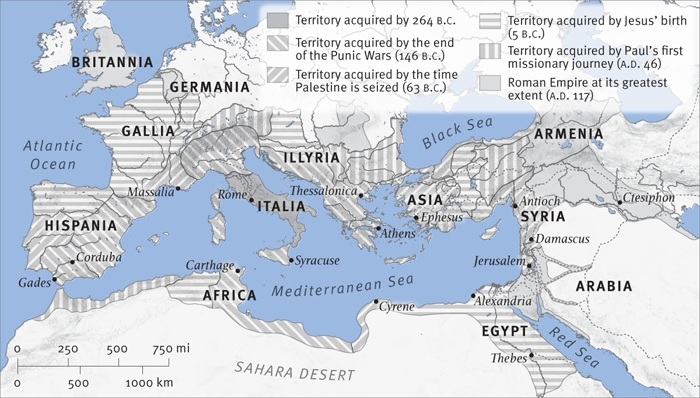
The Rise of the Roman Empire
From its earliest beginnings as a small kingdom centered in Rome, the Roman Empire eventually grew to become one of the most powerful empires the world has ever known. After solidifying control over the Italian peninsula, the Romans fought a series of wars (the Punic Wars) with the growing Carthaginian Empire and absorbed their territory in Africa and Hispania. Pushing eastward into Greece, Asia, and Syria, and westward into Gallia (Gaul) and western Hispania, the Romans continued to expand their territory until they ruled the entire Mediterranean region by A.D. 117.
MALACHI—NOTE ON 4:1 the day is coming. The first three verses continue the thought of the closing verses of the previous chapter, elaborating on God's punishment of the wicked and his deliverance of the godly (cf. 3:1–5). This eschatological reference to the day of the Lord (cf. Isa. 13:6; Joel 2:11, 31; Zeph. 1:14) is injected four times into the prophet's final words (Mal. 3:17; 4:1, 3, 5). It anticipated the return of the Lord Jesus in judgment (cf. Rev. 19:11–21). burning like an oven. Adding to the imagery of a refining fire (Mal. 3:2), Malachi spoke of God's judgment as a destructive fire that swiftly and totally consumes with excessive heat (cf. with the proud of 3:15). The destruction of the roots, normally protected by their subsurface location, provides a vivid, proverbial picture of its totality. All who refuse to repent will be cast into the fire of hell (cf. Rev. 20:11–15).
MALACHI—NOTE ON 4:2 sun of righteousness. While the wicked will be devoured by the heat of his wrath, those who fear him will feel his warmth with healing in his "light" (cf. Isa. 30:26; 60:1, 3). The reference is to the Messiah, "the Lord our righteousness" (Ps. 84:11; Jer. 23:5–6; 1 Cor. 1:30). healing. The reference should not be limited to the physical recovery from the harm done by the wicked (cf. Mal. 3:5). This sickness is inextricably linked with sin, with healing coming only through the suffering of the Servant (cf. Ps. 103:3; Isa.
53:5; 57:18–19; 1 Pet. 2:24). like calves from the stall. Calves, when confined to a stall for extended periods of time, leap for sheer joy when turned loose into the sunlight. The picture is one of a joyful, vigorous, and carefree life.
MALACHI—NOTE ON 4:3 ashes under . . . your feet. The destruction of the wicked is appreciated by those who suffered at their hand. Ashes were often poured on foot trails to provide a more solid pathway during wet weather. Here the wicked are compared to ashes, which the righteous will tread down as a result of the fire of God's judgment (cf. v. 1). The prophet desires, as should all believers, that there be far-reaching repentance, and if not, destruction of the impenitent is inescapable.
MALACHI—NOTE ON 4:4 Both the law and the prophets play a part in preparing for the arrival of the day of the Lord. First, the people were to remember what was given at Sinai (Horeb), the law of Moses primarily focusing on the obligations to obedience at the time of entering into that covenant (Ex. 24:1ff.; Josh. 8:32; 23:6; 1 Kings 2:3).
MALACHI—NOTE ON 4:5 Elijah. The mention of Elijah was to announce the Messiah's arrival (see Introduction: Interpretive Challenges). John the Baptist was a type of Elijah at Christ's first advent (cf. Luke 1:17). Moses and Elijah appeared together at the Mount of Transfiguration (cf. Matt. 17:1–4) and may be the two witnesses in the great tribulation (cf. Rev. 11:1–3). Most likely, this will be an Elijah-like person, as John the Baptist was Elijah-like (see note on Mal. 3:1). In that day, his task will be to preach reconciliation to God so that souls can believe and be spared God's curse. He will be effective (4:6).
MALACHI—NOTE ON 4:6 turn . . . hearts. The very opposite of what occurred at Christ's first coming (cf. Matt. 10:34–36) anticipates a general societal repentance (cf. Matt. 25:31–46; Rev. 7:9–17; 20:4–6), so that complete destruction might be averted. The earth will be restored to Edenic wonder, the curse reversed, the kingdom established with Messiah reigning, and the righteous Jews and Gentiles entering it. decree of utter destruction. This term refers to the practice of devoting things or persons irrevocably to God, often by total destruction. Cities of Canaan were put under the decree of utter destruction, and thus the people were to be exterminated (cf. Deut. 13:12–18; 20:16ff.). Its use here suggests that God would make a whole burnt offering of the earth if there was not a repentant remnant.
The Intertestamental Period
Introduction to the Intertestamental Period
Over 400 years separated the final events (Neh. 13:4–30) and final prophecy (Mal. 1:1–4:6) recorded in the Old Testament (c. 424 B.C.) from the beginning actions (Luke 1:5–25) narrated in the New Testament (c. 6 B.C.). Because there was no prophetic word from God during this time, this period is sometimes called "the four hundred silent years." However, the history of these years followed the pattern predicted in Daniel (Dan. 2:24–45; 7:1–28; 8:1–27; 11:1– 35) with exact precision. Though the voice of God was silent, the hand of God was actively directing the course of events during these centuries.
Jewish History
As predicted by Daniel, control of the land of Israel passed from the empire of Medo-Persia to Greece and then to Rome (Dan. 2:39–40; 7:5–7). For about 200 years, the Persian Empire ruled the Jews (539–332 B.C.). The Persians allowed the Jews to return, rebuild, and worship at the temple in Jerusalem (2 Chron. 36:22–23; Ezra 1:1–4). For about 100 years after the close of the Old Testament canon, Judea continued to be a Persian territory under the governor of Syria with the high priest exercising a measure of civil authority. The Jews were allowed to observe their religious tenets without any official governmental interference.
Between 334 B.C. and 331 B.C., Alexander the Great defeated the Persian king, Darius III, in three decisive battles that gave him control of the lands of the Persian Empire. The land of Israel thus passed into Greek control in 332 B.C. (Dan. 8:5–7, 20–21; 11:3). Alexander permitted the Jews in Judea to observe their laws and granted them an exemption from taxes during their sabbatical years. However, Alexander sought to bring Greek culture, called "Hellenism," to the lands he had conquered. He wished to create a world united by Greek language and thinking. This policy, carried on by Alexander's successors, was as dangerous to the religion of Israel as the cult of Baal had been, because the Greek way of life was attractive, sophisticated, and humanly appealing, but utterly ungodly.
Upon Alexander's death in 323 B.C., a struggle ensued among his generals as his empire was divided (Dan. 8:22; 11:4). Ptolemy I Sater, founder of the Ptolemies of Egypt, took control of Israel, even though an agreement in 301 B.C. assigned it to Seleucus I Nicator, founder of the Seleucids of Syria. This caused continuing contention between the Seleucid and Ptolemaic dynasties (Dan. 11:5). The Ptolemies ruled Judea from 301 B.C. to 198 B.C. (Dan. 11:6–12). Under the Ptolemies, the Jews had comparative religious freedom in a setting of economic oppression.
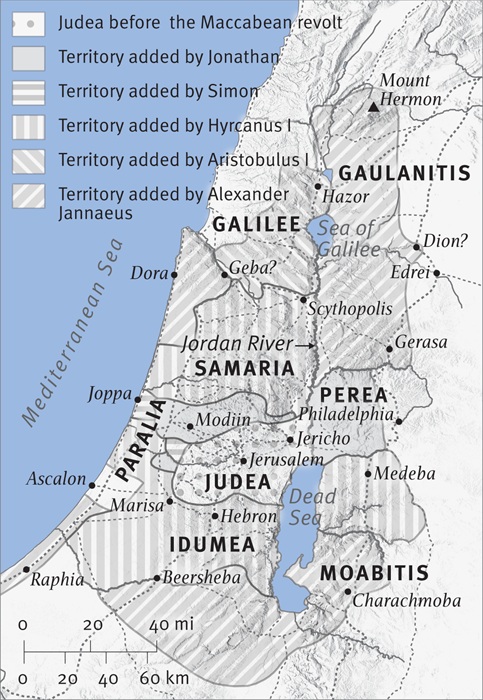
Maccabean Kingdom
The Maccabean kingdom of Israel had its beginnings when the priest Mattathias and his family refused to obey the Seleucid rulers' order to sacrifice to the pagan god Zeus at Modein. They led a revolt that initially controlled only the territory of Judea in the vicinity of Jerusalem. Over the next hundred years, however, the Maccabean rulers slowly added portions of territory to the kingdom until it resembled the borders of the territory allotted to the Israelite tribes by Joshua.
In 198 B.C., Antiochus III the Great defeated Ptolemy V Epiphanes and took control of Palestine (Dan. 11:13–16). Judea was under Seleucid rule until 143
B.C. (Dan. 11:17–35). Early Seleucid toleration of Jewish religious practices came to an end in the reign of Antiochus IV Epiphanes (175–164 B.C.). Antiochus desecrated and plundered the temple of Jerusalem in 170 B.C. In 167
B.C., Antiochus ordered Hellenization in Palestine and forbade the Jews from keeping their laws, observing the Sabbath, keeping festivals, offering sacrifices, and circumcising their children. Copies of the Torah were ordered destroyed, idolatrous altars were set up, plus the Jews were commanded by Antiochus to offer unclean sacrifices and to eat swine's flesh. Antiochus was the first pagan monarch to persecute the Jews for their faith (Dan. 8:9–14, 23–25; 11:21–35).
Chronology of the Intertestamental Period
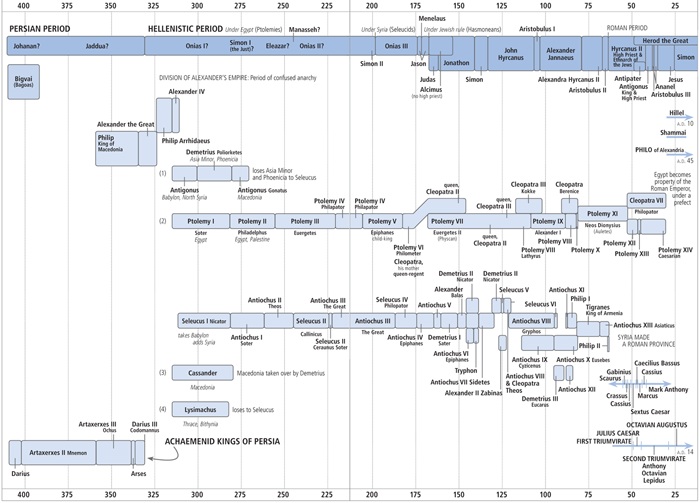
An aged priest, Mattathias, and his five sons led the Jewish resistance against Antiochus and his Seleucid successors. This was known as the Maccabean Revolt because Judas Maccabeus (lit., "Hammer") was the first leader among the five sons. After a 24-year war (166–142 B.C.), the Jews were able to gain their independence from Syria because of the growing Roman pressure on the Seleucids. The descendants of Mattathias founded the Hasmonean dynasty, a name derived from Hashmon, an ancestor of the Maccabees.
The Hasmoneans took over the office of high priest, although they did not belong to the line of Zadok (Num. 25:10–13; Ezek. 40:46; 48:11). Quickly, the Hasmoneans began to follow Hellenistic ways, the very practices they had at first resisted. The Greek influence continued in Palestine from 142 B.C. to 63
B.C.through this native dynasty.
The Hasmonean dynasty ended in 63 B.C. when Pompey, a general of Rome, intervened in a clash between two claimants to the high priesthood, Aristobolus II and Hyrcanus II. The land thus passed into Roman control (Dan. 2:40; 7:7). Continuing unrest led the Romans to make Herod the Great king of Judea. He was an Idumean by birth, a Jewish proselyte, and thoroughly Greco-Roman in outlook. He ruled Palestine from 37 B.C. to 4 B.C. and was the "king of the Jews" when Jesus was born (Matt. 2:1–2).
Jewish Developments
Diaspora. The dispersion of Israel began in the two exiles, i.e., Israel in Assyria (2 Kings 17:23) and Judah in Babylon (2 Kings 25:21). The majority of Israelites did not return to Judea after the exile and so became colonists, no longer captives, in the Persian Empire. The geographical movement of Israelites continued in the Greek and Roman Empires so that by the first century A.D., Jews were found throughout the Mediterranean basin and Mesopotamia. The majority of Israelites lived outside of Palestine during the later Intertestamental Period.
Scribes and Rabbis. Believing the exile had come because of a lack of knowledge of and obedience to the Torah, the Israelite exiles devoted themselves to the study of the Old Testament. The scribes became experts in and were considered authorities on the interpretation of the Scriptures during the Intertestamental Period. The rabbis were the teachers who passed on the scribal understanding of the Scriptures to the people of Israel.
Synagogue. With the destruction of the temple in 586 B.C., the synagogue became the place of education and worship for the Jews in exile. Since the majority of Jews did not return to Palestine after the exile, synagogues continued to function in the Diaspora and also became established in Palestine, even after the reconstruction of the temple by Zerubbabel in 516 B.C.
Septuagint. With the emphasis placed on using the Greek language from c. 330
B.C. on, the Jews of the Diaspora became predominately Greek-speakers. According to Jewish legend, in c. 250 B.C., Ptolemy Philadelphus brought together 72 scholars who translated the Old Testament into Greek in 72 days. Thus, the Latin word for 70, "Septuagint" (LXX), was the name attached to this translation. Probably translated over the period from 250 B.C. to 125 B.C. in Alexandria, Egypt, the Septuagint was the most important and widely used Greek translation of the Old Testament.
Pharisees. This religious party probably began as the "holy ones" associated with the Maccabees in the endeavor to rid the land of Hellenistic elements. When the Maccabees turned themselves to Hellenism once it was in power, these holy ones "separated" (the possible source of the name, Pharisee) from the official religious establishment of Judea. The Pharisees interpreted the law strictly in accordance with a developing oral tradition and sought to make their understanding binding upon all Jews. Though few in number, the Pharisees enjoyed the favor of the majority of the people in Palestine.
Sadducees. Probably from the name "Zadok," the high-priestly line, these Hellenized, aristocratic Jews became the guardians of the temple policy and practices. The Sadducees rejected the Old Testament as Scripture, except for the Torah, as well as any teaching they believed was not found in the Torah (the first five books of the OT), e.g., the resurrection from the dead (Acts 23:6–8).
Introduction to the Gospels
The English word "gospel" derives from the Anglo-Saxon word godspell, which can mean either "a story about God," or "a good story." The latter meaning is in harmony with the Greek word translated "gospel," euangellion, which means "good news." In secular Greek, euangellion referred to a good report about an important event. The four Gospels are the good news about the most significant events in all of history—the life, sacrificial death, and resurrection of Jesus of Nazareth.
The Gospels are not biographies in the modern sense of the word, since they do not intend to present a complete life of Jesus (cf. John 20:30; 21:25). Apart from the birth narratives, they give little information about the first 30 years of Jesus' life. While Jesus' public ministry lasted over three years, the Gospels focus much of their attention on the last week of his life (cf. John 12–20). Though they are completely accurate historically, and present important biographical details of Jesus' life, the primary purposes of the Gospels are theological and apologetic (John 20:31). They provide authoritative answers to questions about Jesus' life and ministry, and they strengthen believers' assurance regarding the reality of their faith (Luke 1:4).
Although many spurious gospels were written, the church from earliest times has accepted only Matthew, Mark, Luke, and John as inspired Scripture. While each Gospel has its unique perspective (see the discussion of the "Synoptic Problem" in the Introduction to Mark: Interpretive Challenges), Matthew, Mark, and Luke, when compared to John, share a common point of view. Because of that, they are known as the synoptic (from a Greek word meaning "to see together," or "to share a common point of view") Gospels. Matthew, Mark, and Luke, for example, focus on Christ's Galilean ministry, while John focuses on his ministry in Judea. The synoptic Gospels contain numerous parables, while John records none. John and the synoptic Gospels record only two common events (Jesus' walking on the water, and the feeding of the 5,000) prior to Passion Week. These differences between John and the synoptic Gospels, however, are not contradictory, but complementary.
As already noted, each Gospel writer wrote from a unique perspective, for a different audience. As a result, each Gospel contains distinctive elements. Taken together, the four Gospels form a complete testimony about Jesus Christ.
Matthew wrote primarily to a Jewish audience, presenting Jesus of Nazareth as Israel's long-awaited Messiah and rightful King. His genealogy, unlike Luke's, focuses on Jesus' royal descent from Israel's greatest king, David. Interspersed throughout Matthew are OT quotes presenting various aspects of Jesus' life and ministry as the fulfillment of OT messianic prophecy. Matthew alone uses the phrase "kingdom of heaven," avoiding the parallel phrase "kingdom of God" because of the unbiblical connotations it had in first-century Jewish thought. Matthew wrote his Gospel, then, to strengthen the faith of Jewish Christians, and it provides a useful apologetic tool for Jewish evangelism.
Mark targeted a Gentile audience, especially a Roman one (see Introduction to Mark: Background and Setting). Mark is the Gospel of action; the frequent use of "immediately" and "then" keeps his narrative moving rapidly along. Jesus appears in Mark as the Servant (cf. Mark 10:45) who came to suffer for the sins of many. Mark's fast-paced approach would especially appeal to the practical, action-oriented Romans.
Luke addressed a broader Gentile audience. As an educated Greek (see Introduction to Luke: Author and Date), Luke wrote using the most sophisticated literary Greek of any NT writer. He was a careful researcher (Luke 1:1–4) and an accurate historian. Luke portrays Jesus as the Son of Man (a title appearing 26 times), the answer to the needs and hopes of the human race, who came to seek and save lost sinners (Luke 9:56; 19:10).
John, the last Gospel written, emphasizes the deity of Jesus Christ (e.g., 5:18; 8:58; 10:30–33; 14:9). John wrote to strengthen the faith of believers and to appeal to unbelievers to come to faith in Christ. The apostle clearly stated his purpose for writing in 20:31: ". . . these are written so that you may believe that Jesus is the Christ, the Son of God, and that by believing you may have life in his name."
Taken together, the four Gospels weave a complete portrait of the God-Man, Jesus of Nazareth. In him were blended perfect humanity and deity, making him the only sacrifice for the sins of the world, and the worthy Lord of those who believe.
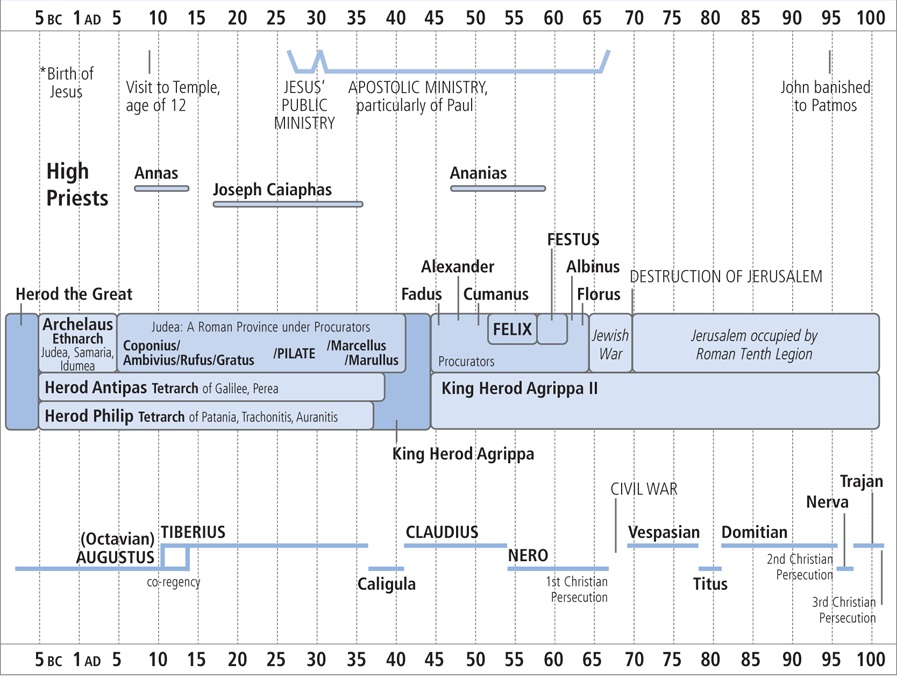
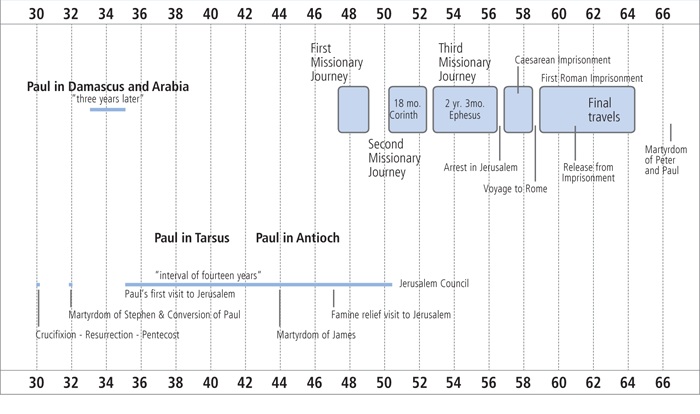
New Testament Chronology
The Roman Empire in the New Testament Era
The Ministries of the Apostles
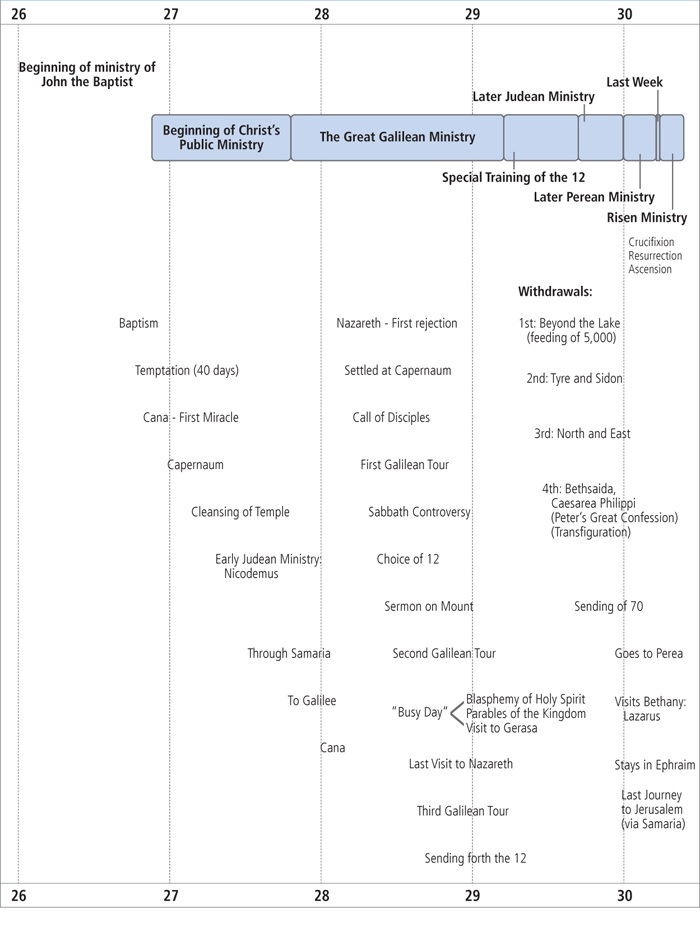
The Ministry of Jesus Christ