Search this book · ఈ పుస్తకంలో వెతకండి
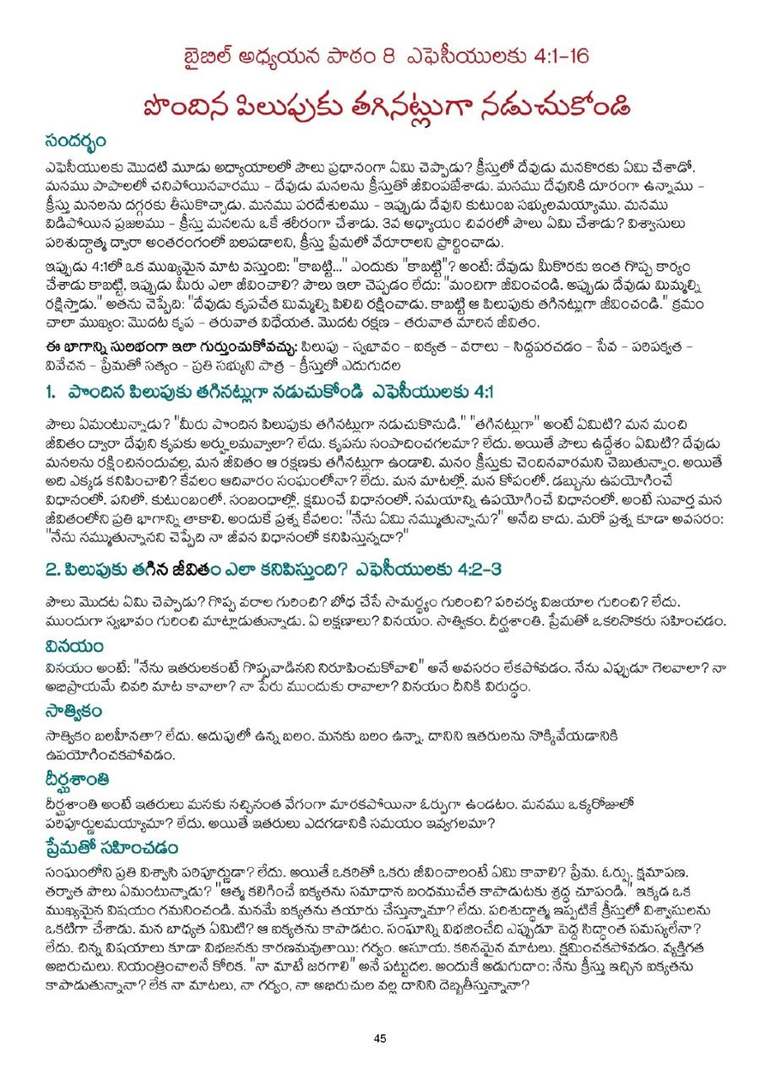
సందర్భం
ఎఫెసీయులకు మొదటి మూడు అధ్యాయాలలో పౌలు ప్రధానంగా ఏమి చెప్పాడు? క్రీస్తులో దేవుడు మనకొరకు ఏమి చేశాడో. మనము పాపాలలో చనిపోయినవారము – దేవుడు మనలను క్రీస్తుతో జీవింపజేశాడు. మనము దేవునికి దూరంగా ఉన్నాము – క్రీస్తు మనలను దగ్గరకు తీసుకొచ్చాడు. మనము పరదేశులము – ఇప్పుడు దేవుని కుటుంబ సభ్యులమయ్యాము. మనము విడిపోయిన ప్రజలము – క్రీస్తు మనలను ఒకే శరీరంగా చేశాడు. 3వ అధ్యాయం చివరలో పౌలు ఏమి చేశాడు? విశ్వాసులు పరిశుద్ధాత్మ ద్వారా అంతరంగంలో బలపడాలని, క్రీస్తు ప్రేమలో వేరూరాలని ప్రార్థించాడు.
ఇప్పుడు 4:1లో ఒక ముఖ్యమైన మాట వస్తుంది: "కాబట్టి..." ఎందుకు "కాబట్టి"? అంటే: దేవుడు మీకొరకు ఇంత గొప్ప కార్యం చేశాడు కాబట్టి, ఇప్పుడు మీరు ఎలా జీవించాలి? పౌలు ఇలా చెప్పడం లేదు: "మంచిగా జీవించండి. అప్పుడు దేవుడు మిమ్మల్ని రక్షిస్తాడు." అతను చెప్పేది: "దేవుడు కృపచేత మిమ్మల్ని పిలిచి రక్షించాడు. కాబట్టి ఆ పిలుపుకు తగినట్లుగా జీవించండి." క్రమం చాలా ముఖ్యం: మొదట కృప – తరువాత విధేయత. మొదట రక్షణ – తరువాత మారిన జీవితం.
ఈ భాగాన్ని సులభంగా ఇలా గుర్తుంచుకోవచ్చు: పిలుపు – స్వభావం – ఐక్యత – వరాలు – సిద్ధపరచడం – సేవ – పరిపక్వత – వివేచన – ప్రేమతో సత్యం – ప్రతి సభ్యుని పాత్ర – క్రీస్తులో ఎదుగుదల
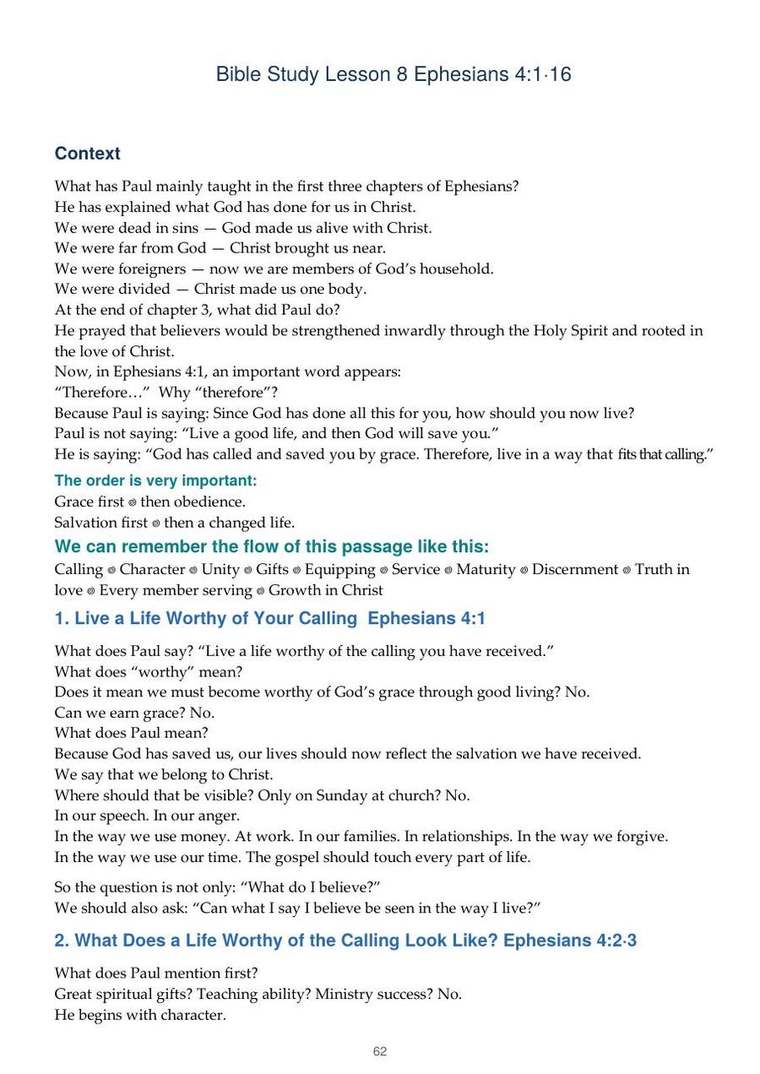
Context
What has Paul mainly taught in the first three chapters of Ephesians?
He has explained what God has done for us in Christ.
We were dead in sins — God made us alive with Christ.
We were far from God — Christ brought us near.
We were foreigners — now we are members of God’s household.
We were divided — Christ made us one body.
At the end of chapter 3, what did Paul do?
He prayed that believers would be strengthened inwardly through the Holy Spirit and rooted in the love of Christ.
Now, in Ephesians 4:1, an important word appears:
“Therefore…” Why “therefore”?
Because Paul is saying: Since God has done all this for you, how should you now live?
Paul is not saying: “Live a good life, and then God will save you.”
He is saying: “God has called and saved you by grace. Therefore, live in a way that fits that calling.”
The order is very important:
Grace first → then obedience.
Salvation first → then a changed life.
We can remember the flow of this passage like this:
Calling → Character → Unity → Gifts → Equipping → Service → Maturity → Discernment → Truth in love → Every member serving → Growth in Christ
1. పొందిన పిలుపుకు తగినట్లుగా నడుచుకోండి ఎఫెసీయులకు 4:1
పౌలు ఏమంటున్నాడు? "మీరు పొందిన పిలుపుకు తగినట్లుగా నడుచుకొనుడి." "తగినట్లుగా" అంటే ఏమిటి? మన మంచి జీవితం ద్వారా దేవుని కృపకు అర్హులమవ్వాలా? లేదు. కృపను సంపాదించగలమా? లేదు. అయితే పౌలు ఉద్దేశం ఏమిటి? దేవుడు మనలను రక్షించినందువల్ల, మన జీవితం ఆ రక్షణకు తగినట్లుగా ఉండాలి. మనం క్రీస్తుకు చెందినవారమని చెబుతున్నాం. అయితే అది ఎక్కడ కనిపించాలి? కేవలం ఆదివారం సంఘంలోనా? లేదు. మన మాటల్లో. మన కోపంలో. డబ్బును ఉపయోగించే విధానంలో. పనిలో. కుటుంబంలో. సంబంధాల్లో. క్షమించే విధానంలో. సమయాన్ని ఉపయోగించే విధానంలో. అంటే సువార్త మన జీవితంలోని ప్రతి భాగాన్ని తాకాలి. అందుకే ప్రశ్న కేవలం: "నేను ఏమి నమ్ముతున్నాను?" అనేది కాదు. మరో ప్రశ్న కూడా అవసరం: "నేను నమ్ముతున్నానని చెప్పేది నా జీవన విధానంలో కనిపిస్తున్నదా?"
1. Live a Life Worthy of Your Calling Ephesians 4:1
What does Paul say? “Live a life worthy of the calling you have received.”
What does “worthy” mean?
Does it mean we must become worthy of God’s grace through good living? No.
Can we earn grace? No.
What does Paul mean?
Because God has saved us, our lives should now reflect the salvation we have received.
We say that we belong to Christ.
Where should that be visible? Only on Sunday at church? No.
In our speech. In our anger.
In the way we use money. At work. In our families. In relationships. In the way we forgive.
In the way we use our time. The gospel should touch every part of life.
So the question is not only: “What do I believe?”
We should also ask: “Can what I say I believe be seen in the way I live?”
2. పిలుపుకు తగిన జీవితం ఎలా కనిపిస్తుంది? ఎఫెసీయులకు 4:2-3
పౌలు మొదట ఏమి చెప్పాడు? గొప్ప వరాల గురించి? బోధ చేసే సామర్థ్యం గురించి? పరిచర్య విజయాల గురించి? లేదు. ముందుగా స్వభావం గురించి మాట్లాడుతున్నాడు. ఏ లక్షణాలు? వినయం. సాత్వికం. దీర్ఘశాంతి. ప్రేమతో ఒకరినొకరు సహించడం.
వినయం
వినయం అంటే: "నేను ఇతరులకంటే గొప్పవాడినని నిరూపించుకోవాలి" అనే అవసరం లేకపోవడం. నేను ఎప్పుడూ గెలవాలా? నా అభిప్రాయమే చివరి మాట కావాలా? నా పేరు ముందుకు రావాలా? వినయం దీనికి విరుద్ధం.
సాత్వికం
సాత్వికం బలహీనతా? లేదు. అదుపులో ఉన్న బలం. మనకు బలం ఉన్నా, దానిని ఇతరులను నొక్కివేయడానికి ఉపయోగించకపోవడం.
దీర్ఘశాంతి
దీర్ఘశాంతి అంటే ఇతరులు మనకు నచ్చినంత వేగంగా మారకపోయినా ఓర్పుగా ఉండటం. మనము ఒక్కరోజులో పరిపూర్ణులమయ్యామా? లేదు. అయితే ఇతరులు ఎదగడానికి సమయం ఇవ్వగలమా?
ప్రేమతో సహించడం
సంఘంలోని ప్రతి విశ్వాసి పరిపూర్ణుడా? లేదు. అయితే ఒకరితో ఒకరు జీవించాలంటే ఏమి కావాలి? ప్రేమ. ఓర్పు. క్షమాపణ. తర్వాత పౌలు ఏమంటున్నాడు? "ఆత్మ కలిగించే ఐక్యతను సమాధాన బంధముచేత కాపాడుటకు శ్రద్ధ చూపండి." ఇక్కడ ఒక ముఖ్యమైన విషయం గమనించండి. మనమే ఐక్యతను తయారు చేస్తున్నామా? లేదు. పరిశుద్ధాత్మ ఇప్పటికే క్రీస్తులో విశ్వాసులను ఒకటిగా చేశాడు. మన బాధ్యత ఏమిటి? ఆ ఐక్యతను కాపాడటం. సంఘాన్ని విభజించేది ఎప్పుడూ పెద్ద సిద్ధాంత సమస్యలేనా? లేదు. చిన్న విషయాలు కూడా విభజనకు కారణమవుతాయి: గర్వం. అసూయ. కఠినమైన మాటలు. క్షమించకపోవడం. వ్యక్తిగత అభిరుచులు. నియంత్రించాలనే కోరిక. "నా మాటే జరగాలి" అనే పట్టుదల. అందుకే అడుగుదాం: నేను క్రీస్తు ఇచ్చిన ఐక్యతను కాపాడుతున్నానా? లేక నా మాటలు, నా గర్వం, నా అభిరుచుల వల్ల దానిని దెబ్బతీస్తున్నానా?
2. What Does a Life Worthy of the Calling Look Like? Ephesians 4:2–3
What does Paul mention first?
Great spiritual gifts? Teaching ability? Ministry success? No.
He begins with character.
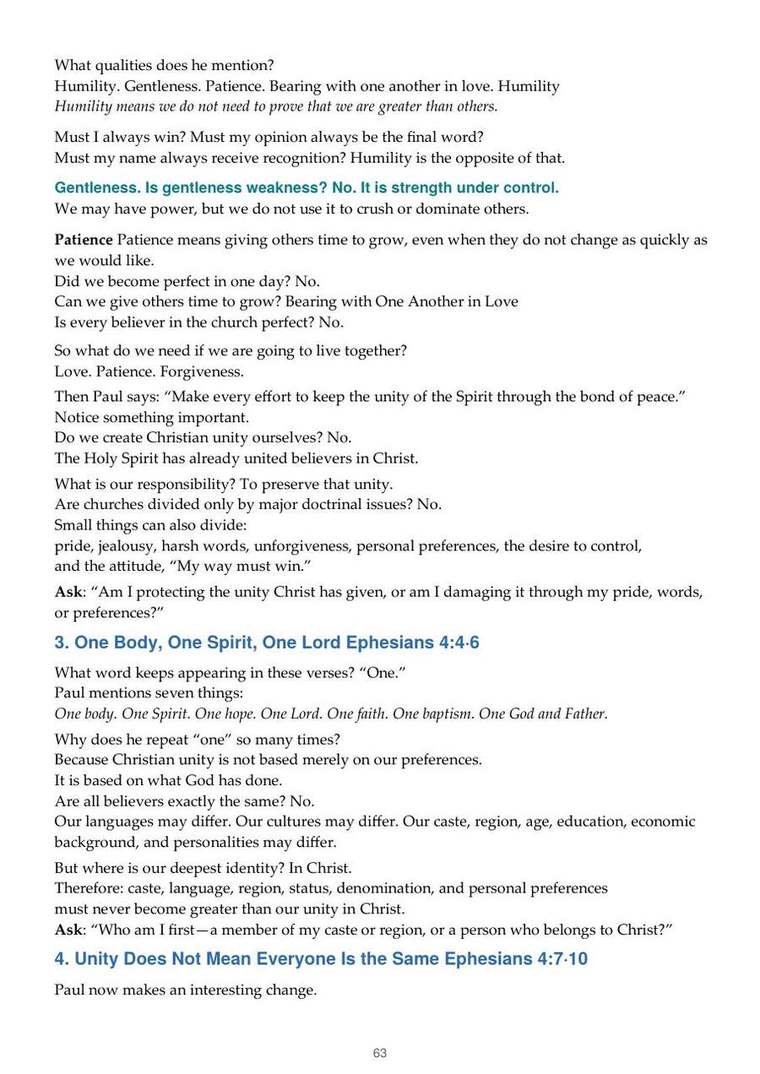
What qualities does he mention?
Humility. Gentleness. Patience. Bearing with one another in love. Humility
Humility means we do not need to prove that we are greater than others.
Must I always win? Must my opinion always be the final word?
Must my name always receive recognition? Humility is the opposite of that.
Gentleness. Is gentleness weakness? No. It is strength under control.
We may have power, but we do not use it to crush or dominate others.
Patience Patience means giving others time to grow, even when they do not change as quickly as we would like.
Did we become perfect in one day? No.
Can we give others time to grow? Bearing with One Another in Love
Is every believer in the church perfect? No.
So what do we need if we are going to live together?
Love. Patience. Forgiveness.
Then Paul says: “Make every effort to keep the unity of the Spirit through the bond of peace.”
Notice something important.
Do we create Christian unity ourselves? No.
The Holy Spirit has already united believers in Christ.
What is our responsibility? To preserve that unity.
Are churches divided only by major doctrinal issues? No.
Small things can also divide:
pride, jealousy, harsh words, unforgiveness, personal preferences, the desire to control, and the attitude, “My way must win.”
Ask: “Am I protecting the unity Christ has given, or am I damaging it through my pride, words, or preferences?”
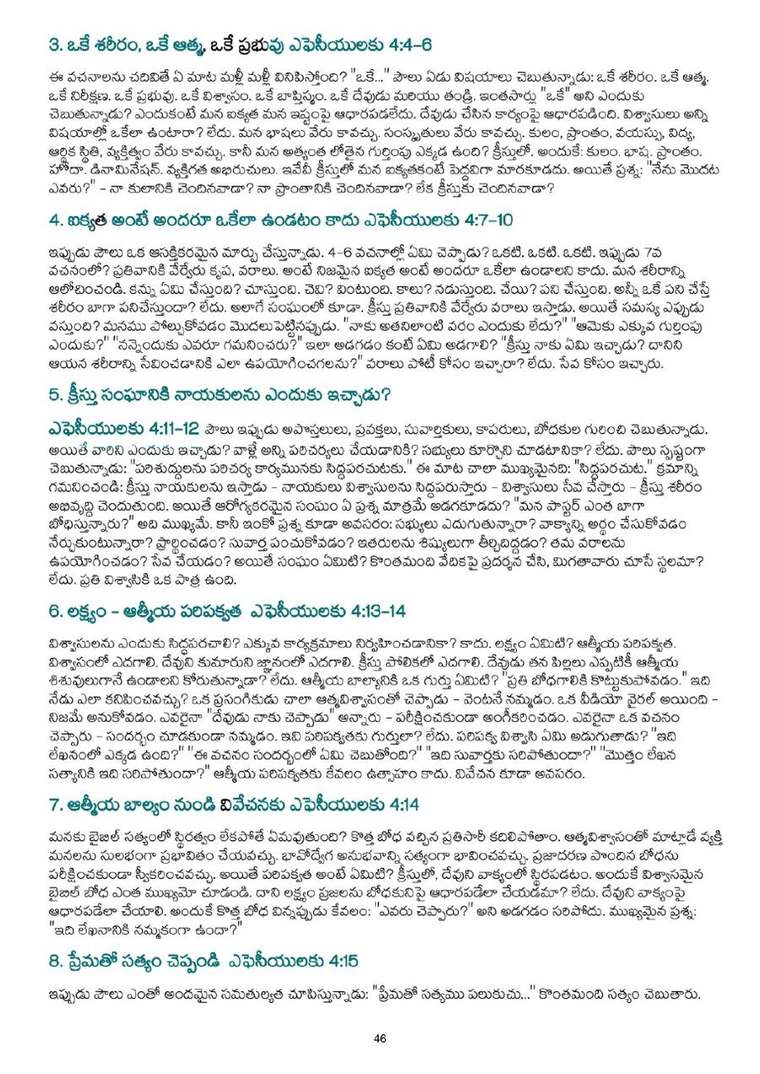
3. ఒకే శరీరం, ఒకే ఆత్మ, ఒకే ప్రభువు ఎఫెసీయులకు 4:4-6
ఈ వచనాలను చదివితే ఏ మాట మళ్లీ మళ్లీ వినిపిస్తోంది? "ఒకే..." పౌలు ఏడు విషయాలు చెబుతున్నాడు: ఒకే శరీరం. ఒకే ఆత్మ. ఒకే నిరీక్షణ. ఒకే ప్రభువు. ఒకే విశ్వాసం. ఒకే బాప్తిస్మం. ఒకే దేవుడు మరియు తండ్రి. ఇంతసార్లు "ఒకే" అని ఎందుకు చెబుతున్నాడు? ఎందుకంటే మన ఐక్యత మన ఇష్టంపై ఆధారపడలేదు. దేవుడు చేసిన కార్యంపై ఆధారపడింది. విశ్వాసులు అన్ని విషయాల్లో ఒకేలా ఉంటారా? లేదు. మన భాషలు వేరు కావచ్చు. సంస్కృతులు వేరు కావచ్చు. కులం, ప్రాంతం, వయస్సు, విద్య, ఆర్థిక స్థితి, వ్యక్తిత్వం వేరు కావచ్చు. కానీ మన అత్యంత లోతైన గుర్తింపు ఎక్కడ ఉంది? క్రీస్తులో. అందుకే: కులం. భాష. ప్రాంతం. హోదా. డినామినేషన్. వ్యక్తిగత అభిరుచులు. ఇవేవీ క్రీస్తులో మన ఐక్యతకంటే పెద్దవిగా మారకూడదు. అయితే ప్రశ్న: "నేను మొదట ఎవరు?" – నా కులానికి చెందినవాడా? నా ప్రాంతానికి చెందినవాడా? లేక క్రీస్తుకు చెందినవాడా?
3. One Body, One Spirit, One Lord Ephesians 4:4–6
What word keeps appearing in these verses? “One.”
Paul mentions seven things:
One body. One Spirit. One hope. One Lord. One faith. One baptism. One God and Father.
Why does he repeat “one” so many times?
Because Christian unity is not based merely on our preferences.
It is based on what God has done.
Are all believers exactly the same? No.
Our languages may differ. Our cultures may differ. Our caste, region, age, education, economic background, and personalities may differ.
But where is our deepest identity? In Christ.
Therefore: caste, language, region, status, denomination, and personal preferences must never become greater than our unity in Christ.
Ask: “Who am I first—a member of my caste or region, or a person who belongs to Christ?”
4. ఐక్యత అంటే అందరూ ఒకేలా ఉండటం కాదు ఎఫెసీయులకు 4:7-10
ఇప్పుడు పౌలు ఒక ఆసక్తికరమైన మార్పు చేస్తున్నాడు. 4-6 వచనాల్లో ఏమి చెప్పాడు? ఒకటి. ఒకటి. ఒకటి. ఇప్పుడు 7వ వచనంలో? ప్రతివానికి వేర్వేరు కృప, వరాలు. అంటే నిజమైన ఐక్యత అంటే అందరూ ఒకేలా ఉండాలని కాదు. మన శరీరాన్ని ఆలోచించండి. కన్ను ఏమి చేస్తుంది? చూస్తుంది. చెవి? వింటుంది. కాలు? నడుస్తుంది. చేయి? పని చేస్తుంది. అన్నీ ఒకే పని చేస్తే శరీరం బాగా పనిచేస్తుందా? లేదు. అలాగే సంఘంలో కూడా. క్రీస్తు ప్రతివానికి వేర్వేరు వరాలు ఇస్తాడు. అయితే సమస్య ఎప్పుడు వస్తుంది? మనము పోల్చుకోవడం మొదలు పెట్టినప్పుడు. "నాకు అతనిలాంటి వరం ఎందుకు లేదు?" "ఆమెకు ఎక్కువ గుర్తింపు ఎందుకు?" "నన్నెందుకు ఎవరూ గమనించరు?" ఇలా అడగడం కంటే ఏమి అడగాలి? "క్రీస్తు నాకు ఏమి ఇచ్చాడు? దానిని ఆయన శరీరాన్ని సేవించడానికి ఎలా ఉపయోగించగలను?" వరాలు పోటీ కోసం ఇచ్చారా? లేదు. సేవ కోసం ఇచ్చారు.
4. Unity Does Not Mean Everyone Is the Same Ephesians 4:7–10
Paul now makes an interesting change.
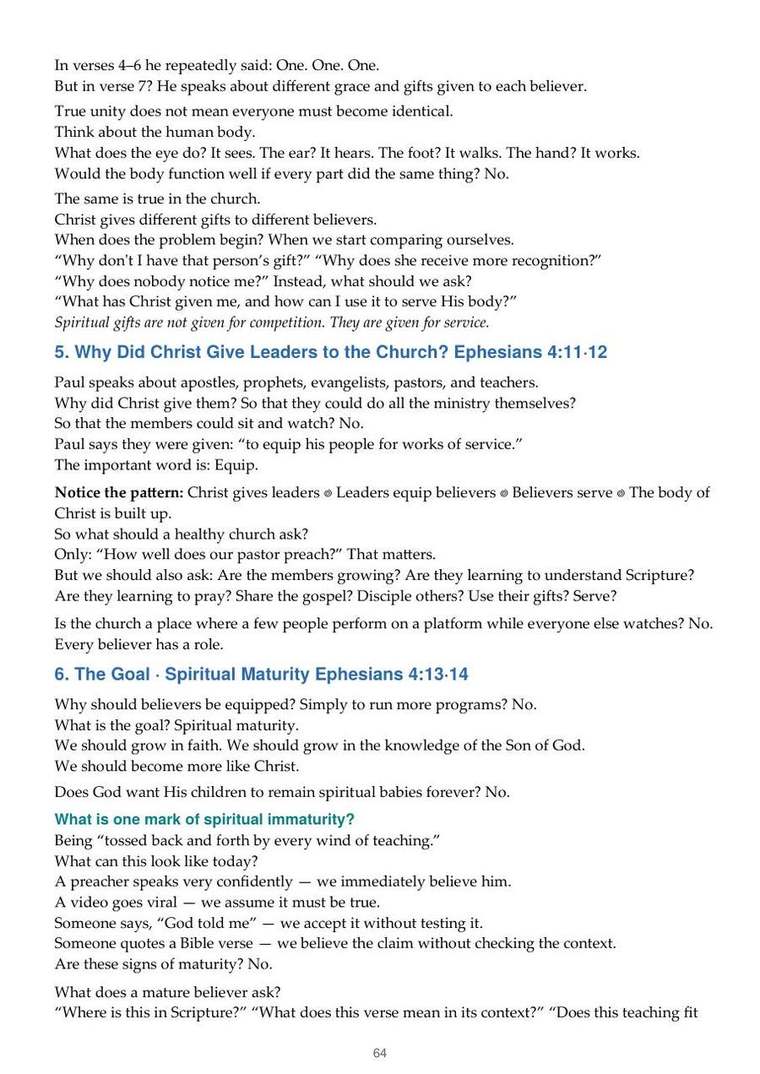
In verses 4–6 he repeatedly said: One. One. One.
But in verse 7? He speaks about different grace and gifts given to each believer.
True unity does not mean everyone must become identical.
Think about the human body.
What does the eye do? It sees. The ear? It hears. The foot? It walks. The hand? It works.
Would the body function well if every part did the same thing? No.
The same is true in the church.
Christ gives different gifts to different believers.
When does the problem begin? When we start comparing ourselves.
“Why don’t I have that person’s gift?” “Why does she receive more recognition?”
“Why does nobody notice me?” Instead, what should we ask?
“What has Christ given me, and how can I use it to serve His body?”
Spiritual gifts are not given for competition. They are given for service.
5. క్రీస్తు సంఘానికి నాయకులను ఎందుకు ఇచ్చాడు?
ఎఫెసీయులకు 4:11-12 పౌలు ఇప్పుడు అపొస్తలులు, ప్రవక్తలు, సువార్తికులు, కాపరులు, బోధకుల గురించి చెబుతున్నాడు. అయితే వారిని ఎందుకు ఇచ్చాడు? వాళ్లే అన్ని పరిచర్యలు చేయడానికి? సభ్యులు కూర్చొని చూడటానికా? లేదు. పౌలు స్పష్టంగా చెబుతున్నాడు: "పరిశుద్ధులను పరిచర్య కార్యమునకు సిద్ధపరచుటకు." ఈ మాట చాలా ముఖ్యమైనది: "సిద్ధపరచుట." క్రమాన్ని గమనించండి: క్రీస్తు నాయకులను ఇస్తాడు – నాయకులు విశ్వాసులను సిద్ధపరుస్తారు – విశ్వాసులు సేవ చేస్తారు – క్రీస్తు శరీరం అభివృద్ధి చెందుతుంది. అయితే ఆరోగ్యకరమైన సంఘం ఏ ప్రశ్న మాత్రమే అడగకూడదు? "మన పాస్టర్ ఎంత బాగా బోధిస్తున్నారు?" అది ముఖ్యమే. కానీ ఇంకో ప్రశ్న కూడా అవసరం: సభ్యులు ఎదుగుతున్నారా? వాక్యాన్ని అర్థం చేసుకోవడం నేర్చుకుంటున్నారా? ప్రార్థించడం? సువార్త పంచుకోవడం? ఇతరులను శిష్యులుగా తీర్చిదిద్దడం? తమ వరాలను ఉపయోగించడం? సేవ చేయడం? అయితే సంఘం ఏమిటి? కొంతమంది వేదికపై ప్రదర్శన చేసి, మిగతావారు చూసే స్థలమా? లేదు. ప్రతి విశ్వాసికి ఒక పాత్ర ఉంది.
5. Why Did Christ Give Leaders to the Church? Ephesians 4:11–12
Paul speaks about apostles, prophets, evangelists, pastors, and teachers.
Why did Christ give them? So that they could do all the ministry themselves?
So that the members could sit and watch? No.
Paul says they were given: “to equip his people for works of service.”
The important word is: Equip.
Notice the pattern: Christ gives leaders → Leaders equip believers → Believers serve → The body of Christ is built up.
So what should a healthy church ask?
Only: “How well does our pastor preach?” That matters.
But we should also ask: Are the members growing? Are they learning to understand Scripture?
Are they learning to pray? Share the gospel? Disciple others? Use their gifts? Serve?
Is the church a place where a few people perform on a platform while everyone else watches? No. Every believer has a role.
6. లక్ష్యం – ఆత్మీయ పరిపక్వత ఎఫెసీయులకు 4:13-14
విశ్వాసులను ఎందుకు సిద్ధపరచాలి? ఎక్కువ కార్యక్రమాలు నిర్వహించడానికా? కాదు. లక్ష్యం ఏమిటి? ఆత్మీయ పరిపక్వత. విశ్వాసంలో ఎదగాలి. దేవుని కుమారుని జ్ఞానంలో ఎదగాలి. క్రీస్తు పోలికలో ఎదగాలి. దేవుడు తన పిల్లలు ఎప్పటికీ ఆత్మీయ శిశువులుగానే ఉండాలని కోరుతున్నాడా? లేదు. ఆత్మీయ బాల్యానికి ఒక గుర్తు ఏమిటి? "ప్రతి బోధగాలికి కొట్టుకుపోవడం." ఇది నేడు ఎలా కనిపించవచ్చు? ఒక ప్రసంగికుడు చాలా ఆత్మవిశ్వాసంతో చెప్పాడు – వెంటనే నమ్మడం. ఒక వీడియో వైరల్ అయింది – నిజమే అనుకోవడం. ఎవరైనా "దేవుడు నాకు చెప్పాడు" అన్నారు – పరీక్షించకుండా అంగీకరించడం. ఎవరైనా ఒక వచనం చెప్పారు – సందర్భం చూడకుండా నమ్మడం. ఇవి పరిపక్వతకు గుర్తులా? లేదు. పరిపక్వ విశ్వాసి ఏమి అడుగుతాడు? "ఇది లేఖనంలో ఎక్కడ ఉంది?" "ఈ వచనం సందర్భంలో ఏమి చెబుతోంది?" "ఇది సువార్తకు సరిపోతుందా?" "మొత్తం లేఖన సత్యానికి ఇది సరిపోతుందా?" ఆత్మీయ పరిపక్వతకు కేవలం ఉత్సాహం కాదు. వివేచన కూడా అవసరం.
6. The Goal — Spiritual Maturity Ephesians 4:13–14
Why should believers be equipped? Simply to run more programs? No.
What is the goal? Spiritual maturity.
We should grow in faith. We should grow in the knowledge of the Son of God.
We should become more like Christ.
Does God want His children to remain spiritual babies forever? No.
What is one mark of spiritual immaturity?
Being “tossed back and forth by every wind of teaching.”
What can this look like today?
A preacher speaks very confidently — we immediately believe him.
A video goes viral — we assume it must be true.
Someone says, “God told me” — we accept it without testing it.
Someone quotes a Bible verse — we believe the claim without checking the context.
Are these signs of maturity? No.
What does a mature believer ask?
“Where is this in Scripture?” “What does this verse mean in its context?” “Does this teaching fit
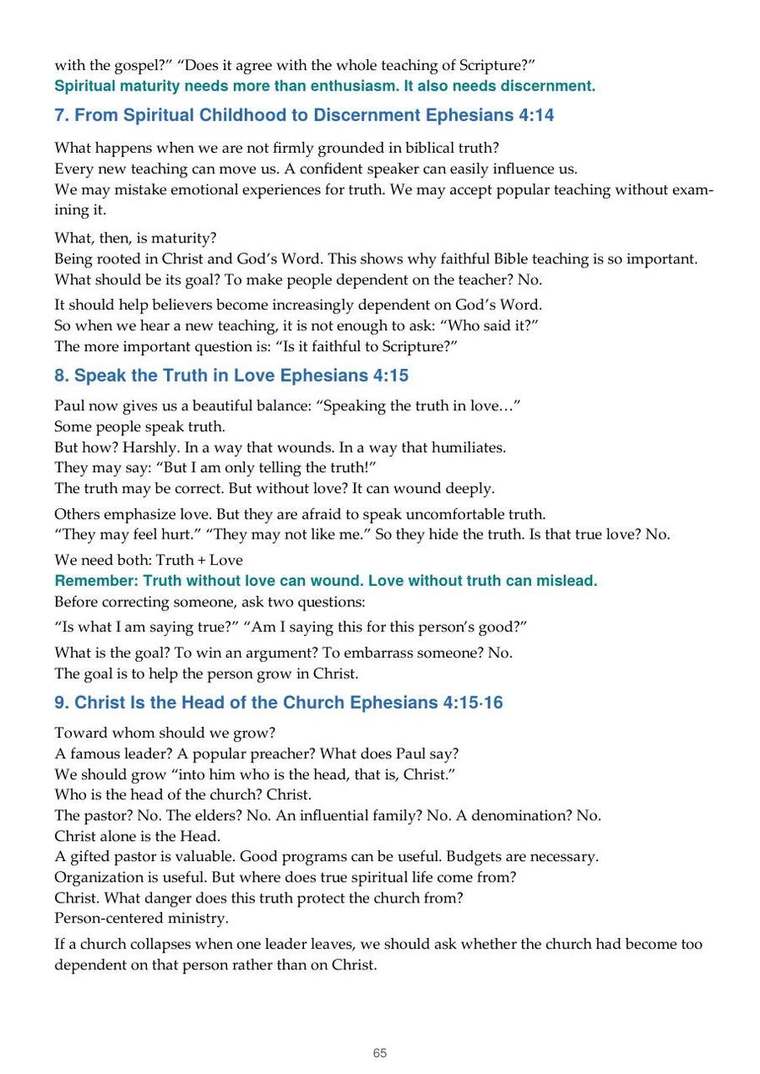
with the gospel?” “Does it agree with the whole teaching of Scripture?”
Spiritual maturity needs more than enthusiasm. It also needs discernment.
7. ఆత్మీయ బాల్యం నుండి వివేచనకు ఎఫెసీయులకు 4:14
మనకు బైబిల్ సత్యంలో స్థిరత్వం లేకపోతే ఏమవుతుంది? కొత్త బోధ వచ్చిన ప్రతిసారీ కదిలిపోతాం. ఆత్మవిశ్వాసంతో మాట్లాడే వ్యక్తి మనలను సులభంగా ప్రభావితం చేయవచ్చు. భావోద్వేగ అనుభవాన్ని సత్యంగా భావించవచ్చు. ప్రజాదరణ పొందిన బోధను పరీక్షించకుండా స్వీకరించవచ్చు. అయితే పరిపక్వత అంటే ఏమిటి? క్రీస్తులో, దేవుని వాక్యంలో స్థిరపడటం. అందుకే విశ్వాసమైన బైబిల్ బోధ ఎంత ముఖ్యమో చూడండి. దాని లక్ష్యం ప్రజలను బోధకునిపై ఆధారపడేలా చేయడమా? లేదు. దేవుని వాక్యంపై ఆధారపడేలా చేయాలి. అందుకే కొత్త బోధ విన్నప్పుడు కేవలం: "ఎవరు చెప్పారు?" అని అడగడం సరిపోదు. ముఖ్యమైన ప్రశ్న: "ఇది లేఖనానికి నమ్మకంగా ఉందా?"
7. From Spiritual Childhood to Discernment Ephesians 4:14
What happens when we are not firmly grounded in biblical truth?
Every new teaching can move us. A confident speaker can easily influence us.
We may mistake emotional experiences for truth. We may accept popular teaching without examining it.
What, then, is maturity?
Being rooted in Christ and God’s Word. This shows why faithful Bible teaching is so important. What should be its goal? To make people dependent on the teacher? No.
It should help believers become increasingly dependent on God’s Word.
So when we hear a new teaching, it is not enough to ask: “Who said it?”
The more important question is: “Is it faithful to Scripture?”
8. ప్రేమతో సత్యం చెప్పండి ఎఫెసీయులకు 4:15
ఇప్పుడు పౌలు ఎంతో అందమైన సమతుల్యత చూపిస్తున్నాడు: "ప్రేమతో సత్యము పలుకుచు..." కొంతమంది సత్యం చెబుతారు.
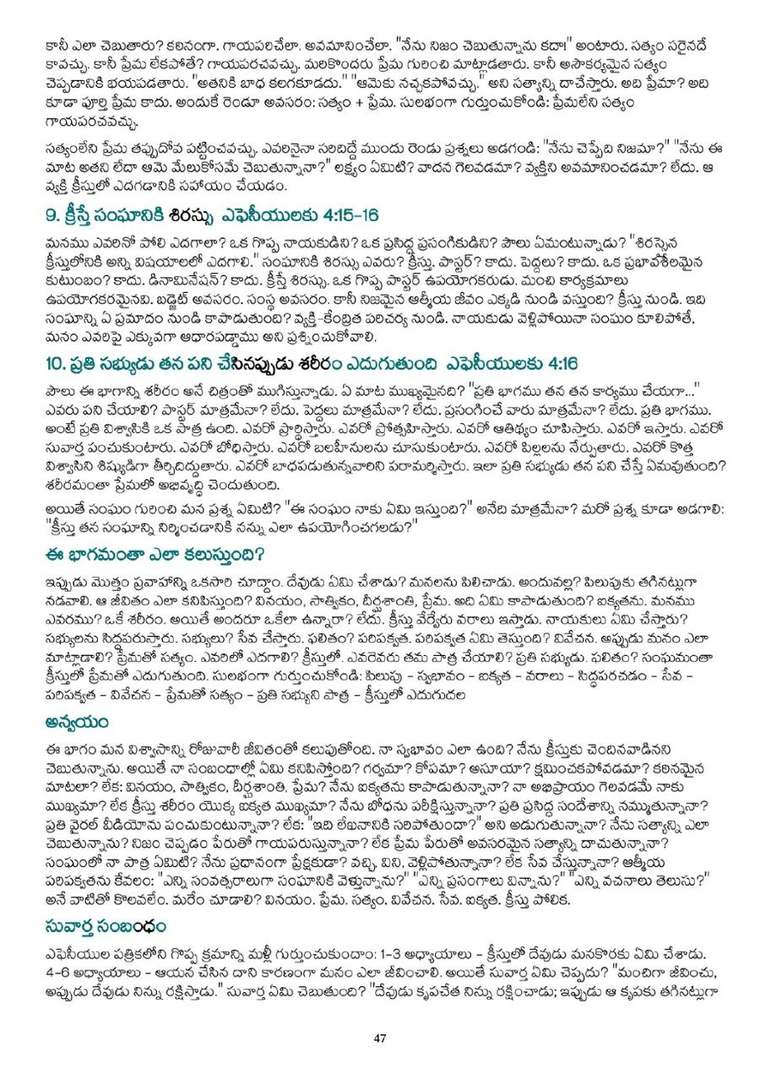
కానీ ఎలా చెబుతారు? కఠినంగా. గాయపరిచేలా. అవమానించేలా. "నేను నిజం చెబుతున్నాను కదా!" అంటారు. సత్యం సరైనదే కావచ్చు. కానీ ప్రేమ లేకపోతే? గాయపరచవచ్చు. మరికొందరు ప్రేమ గురించి మాట్లాడతారు. కానీ అసౌకర్యమైన సత్యం చెప్పడానికి భయపడతారు. "అతనికి బాధ కలగకూడదు." "ఆమెకు నచ్చకపోవచ్చు." అని సత్యాన్ని దాచేస్తారు. అది ప్రేమా? అది కూడా పూర్తి ప్రేమ కాదు. అందుకే రెండూ అవసరం: సత్యం + ప్రేమ. సులభంగా గుర్తుంచుకోండి: ప్రేమలేని సత్యం గాయపరచవచ్చు.
సత్యంలేని ప్రేమ తప్పుదోవ పట్టించవచ్చు. ఎవరినైనా సరిదిద్దే ముందు రెండు ప్రశ్నలు అడగండి: "నేను చెప్పేది నిజమా?" "నేను ఈ మాట అతని లేదా ఆమె మేలుకోసమే చెబుతున్నానా?" లక్ష్యం ఏమిటి? వాదన గెలవడమా? వ్యక్తిని అవమానించడమా? లేదు. ఆ వ్యక్తి క్రీస్తులో ఎదగడానికి సహాయం చేయడం.
8. Speak the Truth in Love Ephesians 4:15
Paul now gives us a beautiful balance: “Speaking the truth in love…”
Some people speak truth.
But how? Harshly. In a way that wounds. In a way that humiliates.
They may say: “But I am only telling the truth!”
The truth may be correct. But without love? It can wound deeply.
Others emphasize love. But they are afraid to speak uncomfortable truth.
“They may feel hurt.” “They may not like me.” So they hide the truth. Is that true love? No.
We need both: Truth + Love
Remember: Truth without love can wound. Love without truth can mislead.
*Remember: Truth without love can wound. Love without truth can mislead.*
Before correcting someone, ask two questions:
“Is what I am saying true?” “Am I saying this for this person’s good?”
What is the goal? To win an argument? To embarrass someone? No.
The goal is to help the person grow in Christ.
9. క్రీస్తే సంఘానికి శిరస్సు ఎఫెసీయులకు 4:15-16
మనము ఎవరినో పోలి ఎదగాలా? ఒక గొప్ప నాయకుడిని? ఒక ప్రసిద్ధ ప్రసంగికుడిని? పౌలు ఏమంటున్నాడు? "శిరస్సైన క్రీస్తులోనికి అన్ని విషయాలలో ఎదగాలి." సంఘానికి శిరస్సు ఎవరు? క్రీస్తు. పాస్టర్? కాదు. పెద్దలు? కాదు. ఒక ప్రభావశీలమైన కుటుంబం? కాదు. డినామినేషన్? కాదు. క్రీస్తే శిరస్సు. ఒక గొప్ప పాస్టర్ ఉపయోగకరుడు. మంచి కార్యక్రమాలు ఉపయోగకరమైనవి. బడ్జెట్ అవసరం. సంస్థ అవసరం. కానీ నిజమైన ఆత్మీయ జీవం ఎక్కడి నుండి వస్తుంది? క్రీస్తు నుండి. ఇది సంఘాన్ని ఏ ప్రమాదం నుండి కాపాడుతుంది? వ్యక్తి-కేంద్రిత పరిచర్య నుండి. నాయకుడు వెళ్లిపోయినా సంఘం కూలిపోతే, మనం ఎవరిపై ఎక్కువగా ఆధారపడ్డాము అని ప్రశ్నించుకోవాలి.
9. Christ Is the Head of the Church Ephesians 4:15–16
Toward whom should we grow?
A famous leader? A popular preacher? What does Paul say?
We should grow “into him who is the head, that is, Christ.”
Who is the head of the church? Christ.
The pastor? No. The elders? No. An influential family? No. A denomination? No.
Christ alone is the Head.
A gifted pastor is valuable. Good programs can be useful. Budgets are necessary.
Organization is useful. But where does true spiritual life come from?
Christ. What danger does this truth protect the church from?
Person-centered ministry.
If a church collapses when one leader leaves, we should ask whether the church had become too dependent on that person rather than on Christ.
10. ప్రతి సభ్యుడు తన పని చేసినప్పుడు శరీరం ఎదుగుతుంది ఎఫెసీయులకు 4:16
పౌలు ఈ భాగాన్ని శరీరం అనే చిత్రంతో ముగిస్తున్నాడు. ఏ మాట ముఖ్యమైనది? "ప్రతి భాగము తన తన కార్యము చేయగా..." ఎవరు పని చేయాలి? పాస్టర్ మాత్రమేనా? లేదు. పెద్దలు మాత్రమేనా? లేదు. ప్రసంగించే వారు మాత్రమేనా? లేదు. ప్రతి భాగము. అంటే ప్రతి విశ్వాసికి ఒక పాత్ర ఉంది. ఎవరో ప్రార్థిస్తారు. ఎవరో ప్రోత్సహిస్తారు. ఎవరో ఆతిథ్యం చూపిస్తారు. ఎవరో ఇస్తారు. ఎవరో సువార్త పంచుకుంటారు. ఎవరో బోధిస్తారు. ఎవరో బలహీనులను చూసుకుంటారు. ఎవరో పిల్లలను నేర్పుతారు. ఎవరో కొత్త విశ్వాసిని శిష్యుడిగా తీర్చిదిద్దుతారు. ఎవరో బాధపడుతున్నవారిని పరామర్శిస్తారు. ఇలా ప్రతి సభ్యుడు తన పని చేస్తే ఏమవుతుంది? శరీరమంతా ప్రేమలో అభివృద్ధి చెందుతుంది.
అయితే సంఘం గురించి మన ప్రశ్న ఏమిటి? "ఈ సంఘం నాకు ఏమి ఇస్తుంది?" అనేది మాత్రమేనా? మరో ప్రశ్న కూడా అడగాలి: "క్రీస్తు తన సంఘాన్ని నిర్మించడానికి నన్ను ఎలా ఉపయోగించగలడు?"
ఈ భాగమంతా ఎలా కలుస్తుంది?
ఇప్పుడు మొత్తం ప్రవాహాన్ని ఒకసారి చూద్దాం. దేవుడు ఏమి చేశాడు? మనలను పిలిచాడు. అందువల్ల? పిలుపుకు తగినట్లుగా నడవాలి. ఆ జీవితం ఎలా కనిపిస్తుంది? వినయం, సాత్వికం, దీర్ఘశాంతి, ప్రేమ. అది ఏమి కాపాడుతుంది? ఐక్యతను. మనము ఎవరము? ఒకే శరీరం. అయితే అందరూ ఒకేలా ఉన్నారా? లేదు. క్రీస్తు వేర్వేరు వరాలు ఇస్తాడు. నాయకులు ఏమి చేస్తారు? సభ్యులను సిద్ధపరుస్తారు. సభ్యులు? సేవ చేస్తారు. ఫలితం? పరిపక్వత. పరిపక్వత ఏమి తెస్తుంది? వివేచన. అప్పుడు మనం ఎలా మాట్లాడాలి? ప్రేమతో సత్యం. ఎవరిలో ఎదగాలి? క్రీస్తులో. ఎవరెవరు తమ పాత్ర చేయాలి? ప్రతి సభ్యుడు. ఫలితం? సంఘమంతా క్రీస్తులో ప్రేమతో ఎదుగుతుంది. సులభంగా గుర్తుంచుకోండి: పిలుపు – స్వభావం – ఐక్యత – వరాలు – సిద్ధపరచడం – సేవ – పరిపక్వత – వివేచన – ప్రేమతో సత్యం – ప్రతి సభ్యుని పాత్ర – క్రీస్తులో ఎదుగుదల
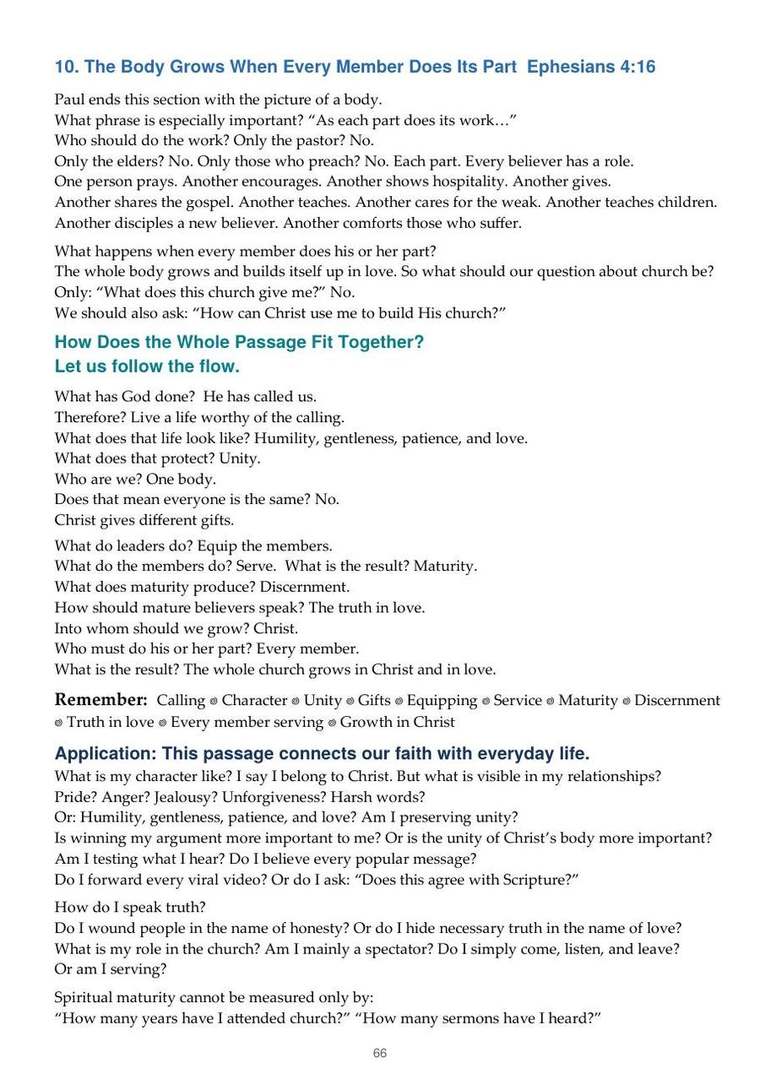
10. The Body Grows When Every Member Does Its Part Ephesians 4:16
Paul ends this section with the picture of a body.
What phrase is especially important? “As each part does its work…”
Who should do the work? Only the pastor? No.
Only the elders? No. Only those who preach? No. Each part. Every believer has a role.
One person prays. Another encourages. Another shows hospitality. Another gives.
Another shares the gospel. Another teaches. Another cares for the weak. Another teaches children. Another disciples a new believer. Another comforts those who suffer.
What happens when every member does his or her part?
The whole body grows and builds itself up in love. So what should our question about church be? Only: “What does this church give me?” No.
We should also ask: “How can Christ use me to build His church?”
How Does the Whole Passage Fit Together? Let us follow the flow.
What has God done? He has called us.
Therefore? Live a life worthy of the calling.
What does that life look like? Humility, gentleness, patience, and love.
What does that protect? Unity.
Who are we? One body.
Does that mean everyone is the same? No.
Christ gives different gifts.
What do leaders do? Equip the members.
What do the members do? Serve. What is the result? Maturity.
What does maturity produce? Discernment.
How should mature believers speak? The truth in love.
Into whom should we grow? Christ.
Who must do his or her part? Every member.
What is the result? The whole church grows in Christ and in love.
Remember: Calling → Character → Unity → Gifts → Equipping → Service → Maturity → Discernment → Truth in love → Every member serving → Growth in Christ
అన్వయం
ఈ భాగం మన విశ్వాసాన్ని రోజువారీ జీవితంతో కలుపుతోంది. నా స్వభావం ఎలా ఉంది? నేను క్రీస్తుకు చెందినవాడినని చెబుతున్నాను. అయితే నా సంబంధాల్లో ఏమి కనిపిస్తోంది? గర్వమా? కోపమా? అసూయా? క్షమించకపోవడమా? కఠినమైన మాటలా? లేక: వినయం, సాత్వికం, దీర్ఘశాంతి, ప్రేమ? నేను ఐక్యతను కాపాడుతున్నానా? నా అభిప్రాయం గెలవడమే నాకు ముఖ్యమా? లేక క్రీస్తు శరీరం యొక్క ఐక్యత ముఖ్యమా? నేను బోధను పరీక్షిస్తున్నానా? ప్రతి ప్రసిద్ధ సందేశాన్ని నమ్ముతున్నానా? ప్రతి వైరల్ వీడియోను పంచుకుంటున్నానా? లేక: "ఇది లేఖనానికి సరిపోతుందా?" అని అడుగుతున్నానా? నేను సత్యాన్ని ఎలా చెబుతున్నాను? నిజం చెప్పడం పేరుతో గాయపరుస్తున్నానా? లేక ప్రేమ పేరుతో అవసరమైన సత్యాన్ని దాచుతున్నానా? సంఘంలో నా పాత్ర ఏమిటి? నేను ప్రధానంగా ప్రేక్షకుడా? వచ్చి, విని, వెళ్లిపోతున్నానా? లేక సేవ చేస్తున్నానా? ఆత్మీయ పరిపక్వతను కేవలం: "ఎన్ని సంవత్సరాలుగా సంఘానికి వెళ్తున్నాను?" "ఎన్ని ప్రసంగాలు విన్నాను?" "ఎన్ని వచనాలు తెలుసు?" అనే వాటితో కొలవలేం. మరేం చూడాలి? వినయం. ప్రేమ. సత్యం. వివేచన. సేవ. ఐక్యత. క్రీస్తు పోలిక.
Application: This passage connects our faith with everyday life.
What is my character like? I say I belong to Christ. But what is visible in my relationships?
Pride? Anger? Jealousy? Unforgiveness? Harsh words?
Or: Humility, gentleness, patience, and love? Am I preserving unity?
Is winning my argument more important to me? Or is the unity of Christ’s body more important? Am I testing what I hear? Do I believe every popular message?
Do I forward every viral video? Or do I ask: “Does this agree with Scripture?”
How do I speak truth?
Do I wound people in the name of honesty? Or do I hide necessary truth in the name of love?
What is my role in the church? Am I mainly a spectator? Do I simply come, listen, and leave?
Or am I serving?
Spiritual maturity cannot be measured only by:
“How many years have I attended church?” “How many sermons have I heard?”
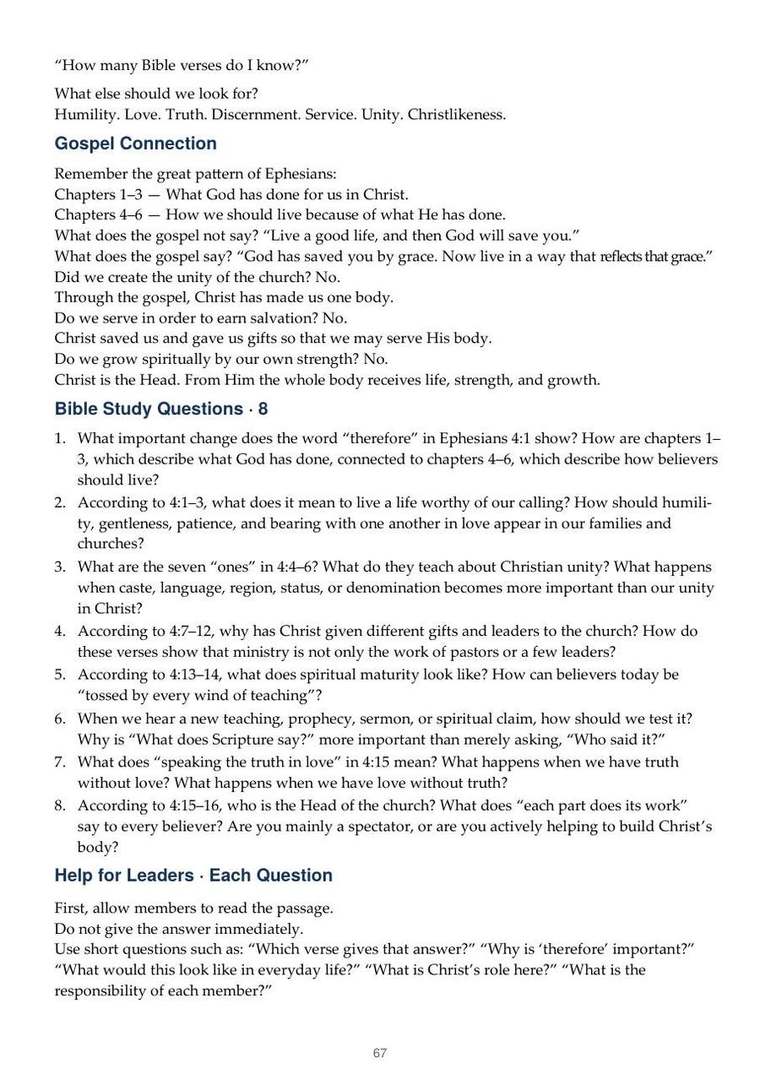
“How many Bible verses do I know?”
What else should we look for?
Humility. Love. Truth. Discernment. Service. Unity. Christlikeness.
సువార్త సంబంధం
ఎఫెసీయుల పత్రికలోని గొప్ప క్రమాన్ని మళ్లీ గుర్తుంచుకుందాం: 1-3 అధ్యాయాలు – క్రీస్తులో దేవుడు మనకొరకు ఏమి చేశాడు. 4-6 అధ్యాయాలు – ఆయన చేసిన దాని కారణంగా మనం ఎలా జీవించాలి. అయితే సువార్త ఏమి చెప్పదు? "మంచిగా జీవించు, అప్పుడు దేవుడు నిన్ను రక్షిస్తాడు." సువార్త ఏమి చెబుతుంది? "దేవుడు కృపచేత నిన్ను రక్షించాడు; ఇప్పుడు ఆ కృపకు తగినట్లుగా
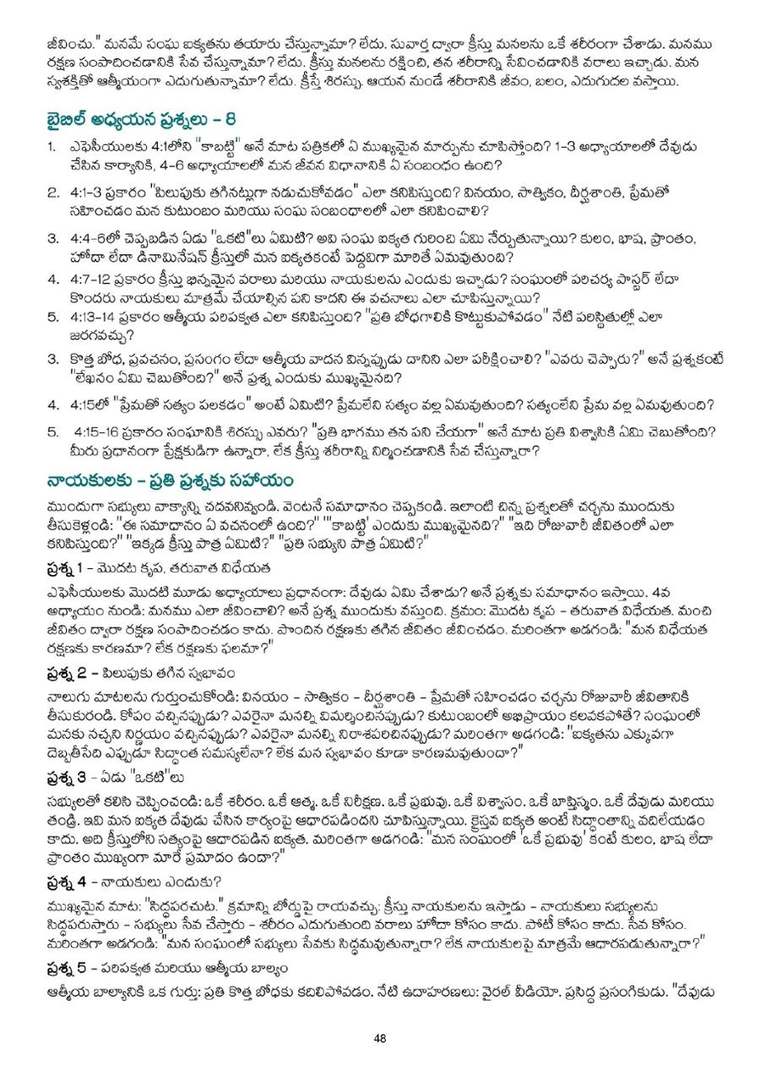
జీవించు." మనమే సంఘ ఐక్యతను తయారు చేస్తున్నామా? లేదు. సువార్త ద్వారా క్రీస్తు మనలను ఒకే శరీరంగా చేశాడు. మనము రక్షణ సంపాదించడానికి సేవ చేస్తున్నామా? లేదు. క్రీస్తు మనలను రక్షించి, తన శరీరాన్ని సేవించడానికి వరాలు ఇచ్చాడు. మన స్వశక్తితో ఆత్మీయంగా ఎదుగుతున్నామా? లేదు. క్రీస్తే శిరస్సు. ఆయన నుండే శరీరానికి జీవం, బలం, ఎదుగుదల వస్తాయి.
Gospel Connection
Remember the great pattern of Ephesians:
Chapters 1–3 — What God has done for us in Christ.
Chapters 4–6 — How we should live because of what He has done.
What does the gospel not say? “Live a good life, and then God will save you.”
What does the gospel say? “God has saved you by grace. Now live in a way that reflects that grace.” Did we create the unity of the church? No.
Through the gospel, Christ has made us one body.
Do we serve in order to earn salvation? No.
Christ saved us and gave us gifts so that we may serve His body.
Do we grow spiritually by our own strength? No.
Christ is the Head. From Him the whole body receives life, strength, and growth.
బైబిల్ అధ్యయన ప్రశ్నలు – 8
- ఎఫెసీయులకు 4:1లోని "కాబట్టి" అనే మాట పత్రికలో ఏ ముఖ్యమైన మార్పును చూపిస్తోంది? 1-3 అధ్యాయాలలో దేవుడు చేసిన కార్యానికి, 4-6 అధ్యాయాలలో మన జీవన విధానానికి ఏ సంబంధం ఉంది?
- 4:1-3 ప్రకారం "పిలుపుకు తగినట్లుగా నడుచుకోవడం" ఎలా కనిపిస్తుంది? వినయం, సాత్వికం, దీర్ఘశాంతి, ప్రేమతో సహించడం మన కుటుంబం మరియు సంఘ సంబంధాలలో ఎలా కనిపించాలి?
- 4:4-6లో చెప్పబడిన ఏడు "ఒకటి"లు ఏమిటి? అవి సంఘ ఐక్యత గురించి ఏమి నేర్పుతున్నాయి? కులం, భాష, ప్రాంతం, హోదా లేదా డినామినేషన్ క్రీస్తులో మన ఐక్యతకంటే పెద్దవిగా మారితే ఏమవుతుంది?
- 4:7-12 ప్రకారం క్రీస్తు భిన్నమైన వరాలు మరియు నాయకులను ఎందుకు ఇచ్చాడు? సంఘంలో పరిచర్య పాస్టర్ లేదా కొందరు నాయకులు మాత్రమే చేయాల్సిన పని కాదని ఈ వచనాలు ఎలా చూపిస్తున్నాయి?
- 4:13-14 ప్రకారం ఆత్మీయ పరిపక్వత ఎలా కనిపిస్తుంది? "ప్రతి బోధగాలికి కొట్టుకుపోవడం" నేటి పరిస్థితుల్లో ఎలా జరగవచ్చు?
- కొత్త బోధ, ప్రవచనం, ప్రసంగం లేదా ఆత్మీయ వాదన విన్నప్పుడు దానిని ఎలా పరీక్షించాలి? "ఎవరు చెప్పారు?" అనే ప్రశ్నకంటే "లేఖనం ఏమి చెబుతోంది?" అనే ప్రశ్న ఎందుకు ముఖ్యమైనది?
- 4:15లో "ప్రేమతో సత్యం పలకడం" అంటే ఏమిటి? ప్రేమలేని సత్యం వల్ల ఏమవుతుంది? సత్యంలేని ప్రేమ వల్ల ఏమవుతుంది?
- 4:15-16 ప్రకారం సంఘానికి శిరస్సు ఎవరు? "ప్రతి భాగము తన పని చేయగా" అనే మాట ప్రతి విశ్వాసికి ఏమి చెబుతోంది? మీరు ప్రధానంగా ప్రేక్షకుడిగా ఉన్నారా, లేక క్రీస్తు శరీరాన్ని నిర్మించడానికి సేవ చేస్తున్నారా?
Bible Study Questions — 8
1. What important change does the word “therefore” in Ephesians 4:1 show? How are chapters 1– 3, which describe what God has done, connected to chapters 4–6, which describe how believers should live?
2. According to 4:1–3, what does it mean to live a life worthy of our calling? How should humility, gentleness, patience, and bearing with one another in love appear in our families and churches?
3. What are the seven “ones” in 4:4–6? What do they teach about Christian unity? What happens when caste, language, region, status, or denomination becomes more important than our unity in Christ?
4. According to 4:7–12, why has Christ given different gifts and leaders to the church? How do these verses show that ministry is not only the work of pastors or a few leaders?
5. According to 4:13–14, what does spiritual maturity look like? How can believers today be “tossed by every wind of teaching”?
6. When we hear a new teaching, prophecy, sermon, or spiritual claim, how should we test it?
Why is “What does Scripture say?” more important than merely asking, “Who said it?”
7. What does “speaking the truth in love” in 4:15 mean? What happens when we have truth without love? What happens when we have love without truth?
8. According to 4:15–16, who is the Head of the church? What does “each part does its work”
say to every believer? Are you mainly a spectator, or are you actively helping to build Christ’s body?
నాయకులకు – ప్రతి ప్రశ్నకు సహాయం
ముందుగా సభ్యులు వాక్యాన్ని చదవనివ్వండి. వెంటనే సమాధానం చెప్పకండి. ఇలాంటి చిన్న ప్రశ్నలతో చర్చను ముందుకు తీసుకెళ్లండి: "ఈ సమాధానం ఏ వచనంలో ఉంది?" "'కాబట్టి' ఎందుకు ముఖ్యమైనది?" "ఇది రోజువారీ జీవితంలో ఎలా కనిపిస్తుంది?" "ఇక్కడ క్రీస్తు పాత్ర ఏమిటి?" "ప్రతి సభ్యుని పాత్ర ఏమిటి?"
Help for Leaders — Each Question
First, allow members to read the passage.
Do not give the answer immediately.
Use short questions such as: “Which verse gives that answer?” “Why is ‘therefore’ important?”
“What would this look like in everyday life?” “What is Christ’s role here?” “What is the responsibility of each member?”
ప్రశ్న 1 – మొదట కృప, తరువాత విధేయత
ఎఫెసీయులకు మొదటి మూడు అధ్యాయాలు ప్రధానంగా: దేవుడు ఏమి చేశాడు? అనే ప్రశ్నకు సమాధానం ఇస్తాయి. 4వ అధ్యాయం నుండి: మనము ఎలా జీవించాలి? అనే ప్రశ్న ముందుకు వస్తుంది. క్రమం: మొదట కృప – తరువాత విధేయత. మంచి జీవితం ద్వారా రక్షణ సంపాదించడం కాదు. పొందిన రక్షణకు తగిన జీవితం జీవించడం. మరింతగా అడగండి: "మన విధేయత రక్షణకు కారణమా? లేక రక్షణకు ఫలమా?"
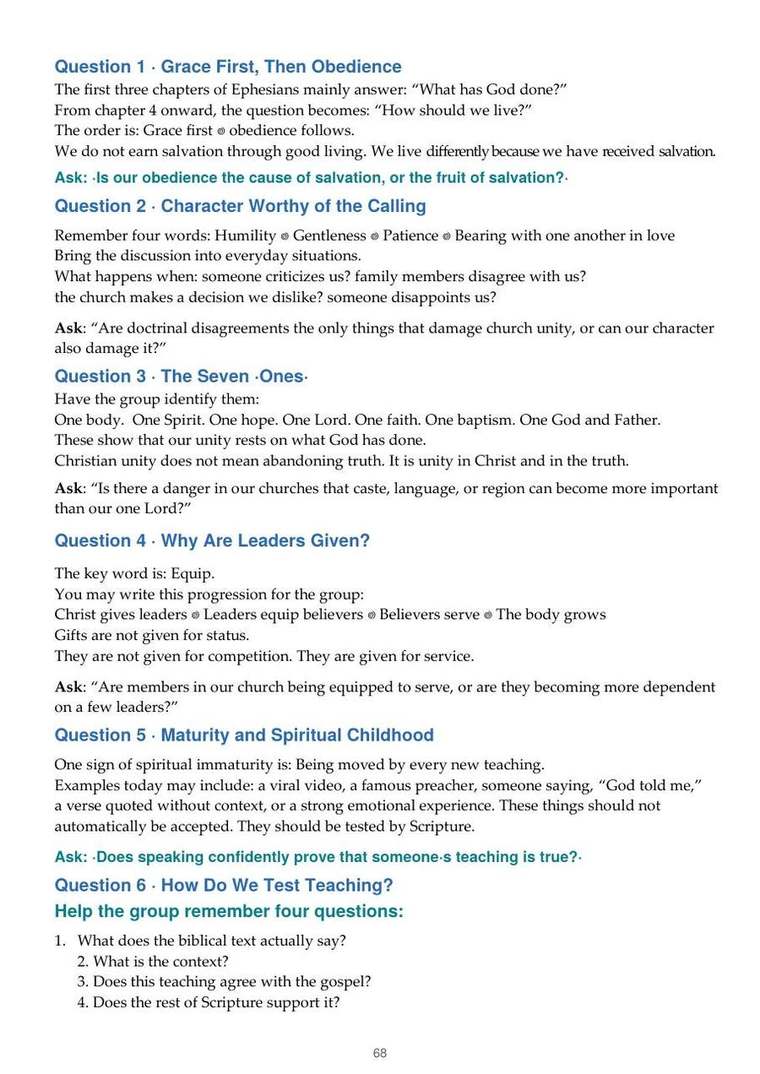
Question 1 — Grace First, Then Obedience
The first three chapters of Ephesians mainly answer: “What has God done?”
From chapter 4 onward, the question becomes: “How should we live?”
The order is: Grace first → obedience follows.
We do not earn salvation through good living. We live differently because we have received salvation.
Ask: “Is our obedience the cause of salvation, or the fruit of salvation?”
ప్రశ్న 2 – పిలుపుకు తగిన స్వభావం
నాలుగు మాటలను గుర్తుంచుకోండి: వినయం – సాత్వికం – దీర్ఘశాంతి – ప్రేమతో సహించడం చర్చను రోజువారీ జీవితానికి తీసుకురండి. కోపం వచ్చినప్పుడు? ఎవరైనా మనల్ని విమర్శించినప్పుడు? కుటుంబంలో అభిప్రాయం కలవకపోతే? సంఘంలో మనకు నచ్చని నిర్ణయం వచ్చినప్పుడు? ఎవరైనా మనల్ని నిరాశపరిచినప్పుడు? మరింతగా అడగండి: "ఐక్యతను ఎక్కువగా దెబ్బతీసేది ఎప్పుడూ సిద్ధాంత సమస్యలేనా? లేక మన స్వభావం కూడా కారణమవుతుందా?"
Question 2 — Character Worthy of the Calling
Remember four words: Humility → Gentleness → Patience → Bearing with one another in love Bring the discussion into everyday situations.
What happens when: someone criticizes us? family members disagree with us?
the church makes a decision we dislike? someone disappoints us?
Ask: “Are doctrinal disagreements the only things that damage church unity, or can our character also damage it?”
ప్రశ్న 3 – ఏడు "ఒకటి"లు
సభ్యులతో కలిసి చెప్పించండి: ఒకే శరీరం. ఒకే ఆత్మ. ఒకే నిరీక్షణ. ఒకే ప్రభువు. ఒకే విశ్వాసం. ఒకే బాప్తిస్మం. ఒకే దేవుడు మరియు తండ్రి. ఇవి మన ఐక్యత దేవుడు చేసిన కార్యంపై ఆధారపడిందని చూపిస్తున్నాయి. క్రైస్తవ ఐక్యత అంటే సిద్ధాంతాన్ని వదిలేయడం కాదు. అది క్రీస్తులోని సత్యంపై ఆధారపడిన ఐక్యత. మరింతగా అడగండి: "మన సంఘంలో 'ఒకే ప్రభువు' కంటే కులం, భాష లేదా ప్రాంతం ముఖ్యంగా మారే ప్రమాదం ఉందా?"
Question 3 — The Seven “Ones”
Have the group identify them:
One body. One Spirit. One hope. One Lord. One faith. One baptism. One God and Father.
These show that our unity rests on what God has done.
Christian unity does not mean abandoning truth. It is unity in Christ and in the truth.
Ask: “Is there a danger in our churches that caste, language, or region can become more important than our one Lord?”
ప్రశ్న 4 – నాయకులు ఎందుకు?
ముఖ్యమైన మాట: "సిద్ధపరచుట." క్రమాన్ని బోర్డుపై రాయవచ్చు: క్రీస్తు నాయకులను ఇస్తాడు – నాయకులు సభ్యులను సిద్ధపరుస్తారు – సభ్యులు సేవ చేస్తారు – శరీరం ఎదుగుతుంది వరాలు హోదా కోసం కాదు. పోటీ కోసం కాదు. సేవ కోసం. మరింతగా అడగండి: "మన సంఘంలో సభ్యులు సేవకు సిద్ధమవుతున్నారా? లేక నాయకులపై మాత్రమే ఆధారపడుతున్నారా?"
Question 4 — Why Are Leaders Given?
The key word is: Equip.
You may write this progression for the group:
Christ gives leaders → Leaders equip believers → Believers serve → The body grows Gifts are not given for status.
They are not given for competition. They are given for service.
Ask: “Are members in our church being equipped to serve, or are they becoming more dependent on a few leaders?”
ప్రశ్న 5 – పరిపక్వత మరియు ఆత్మీయ బాల్యం
ఆత్మీయ బాల్యానికి ఒక గుర్తు: ప్రతి కొత్త బోధకు కదిలిపోవడం. నేటి ఉదాహరణలు: వైరల్ వీడియో. ప్రసిద్ధ ప్రసంగికుడు. "దేవుడు
నాకు చెప్పాడు.” సందర్భం లేకుండా చెప్పిన వచనం. భావోద్వేగ అనుభవం. వీటిని వెంటనే నమ్మకూడదు. లేఖనంతో పరీక్షించాలి. మరింతగా అడగండి: “ఒక వ్యక్తి చాలా ఆత్మవిశ్వాసంగా మాట్లాడటం అతని బోధ నిజమని నిరూపిస్తుందా?”
Question 5 — Maturity and Spiritual Childhood
One sign of spiritual immaturity is: Being moved by every new teaching.
Examples today may include: a viral video, a famous preacher, someone saying, “God told me,” a verse quoted without context, or a strong emotional experience. These things should not automatically be accepted. They should be tested by Scripture.
Ask: “Does speaking confidently prove that someone’s teaching is true?”
ప్రశ్న 6 – బోధను ఎలా పరీక్షించాలి?
ఈ నాలుగు ప్రశ్నలను గుర్తుంచుకోవడానికి సహాయం చేయండి:
- వచనం నిజంగా ఏమి చెబుతోంది?
- సందర్భం ఏమిటి?
- ఈ బోధ సువార్తకు సరిపోతుందా?
- మిగతా లేఖనాలు దీనిని సమర్థిస్తున్నాయా? బోధకుడు ప్రసిద్ధుడా అనే దానికంటే బోధ బైబిలుకు నమ్మకంగా ఉందా అనేది ముఖ్యమైనది. మరింతగా అడగండి: “‘ఎవరు చెప్పారు?’ కంటే ‘దేవుని వాక్యం ఏమి చెబుతోంది?’ ఎందుకు ముఖ్యమైనది?”
Question 6 — How Do We Test Teaching? Help the group remember four questions:
1. What does the biblical text actually say?
2. What is the context?
3. Does this teaching agree with the gospel?
4. Does the rest of Scripture support it?
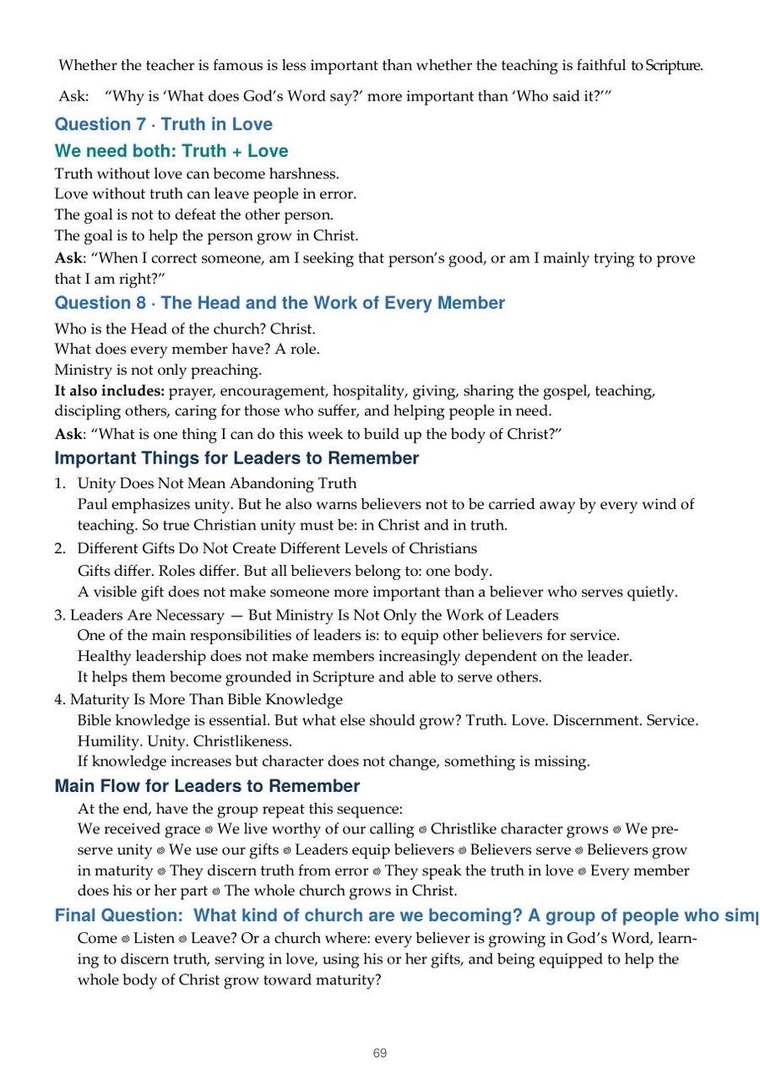
Whether the teacher is famous is less important than whether the teaching is faithful to Scripture.
Ask: “Why is ‘What does God’s Word say?’ more important than ‘Who said it?’”
ప్రశ్న 7 – ప్రేమతో సత్యం
రెండూ అవసరం: సత్యం + ప్రేమ సత్యం మాత్రమే ఉంటే? కఠినత్వం రావచ్చు. ప్రేమ మాత్రమే ఉంటే? తప్పును సరిదిద్దకపోవచ్చు. లక్ష్యం ఎదుటివారిని ఓడించడం కాదు. క్రీస్తులో ఎదగడానికి సహాయం చేయడం. మరింతగా అడగండి: “నేను ఒకరిని సరిదిద్దేటప్పుడు వారి మేలు కోరుతున్నానా? లేక నా మాటే నిజమని నిరూపించుకోవాలనుకుంటున్నానా?”
Question 7 — Truth in Love We need both: Truth + Love
Truth without love can become harshness.
Love without truth can leave people in error.
The goal is not to defeat the other person.
The goal is to help the person grow in Christ.
Ask: “When I correct someone, am I seeking that person’s good, or am I mainly trying to prove that I am right?”
ప్రశ్న 8 – శిరస్సు మరియు ప్రతి సభ్యుని పని
సంఘానికి శిరస్సు: క్రీస్తు. ప్రతి సభ్యునికి: ఒక పాత్ర. పరిచర్య అంటే ప్రసంగం మాత్రమే కాదు. ఇది కూడా పరిచర్యే: ప్రార్థన. ప్రోత్సాహం. ఆతిథ్యం. దానం. సువార్త పంచుకోవడం. బోధించడం. శిష్యులను తయారుచేయడం. బాధపడేవారిని పరామర్శించడం. అవసరంలో ఉన్నవారిని చూసుకోవడం. మరింతగా అడగండి: “ఈ వారం క్రీస్తు శరీరాన్ని నిర్మించడానికి నేను చేయగల ఒక పని ఏమిటి?”
నాయకులు గమనించవలసిన ముఖ్యమైన విషయాలు
1. ఐక్యత అంటే సత్యాన్ని వదిలేయడం కాదు
పౌలు ఐక్యత గురించి చెబుతున్నాడు. అదే సమయంలో ప్రతి బోధగాలికి కొట్టుకుపోకూడదని హెచ్చరిస్తున్నాడు. కాబట్టి నిజమైన ఐక్యత: క్రీస్తులో మరియు సత్యంలో ఉండాలి.
2. భిన్నమైన వరాలు వేర్వేరు స్థాయి క్రైస్తవులను సృష్టించవు
వరాలు వేరు. పాత్రలు వేరు. కానీ అందరూ? ఒకే శరీరానికి చెందినవారు. ఎవరికి కనిపించే వరం ఉందో వారు గొప్పవారు, కనిపించని సేవ చేసే వారు తక్కువవారు అని కాదు.
3. నాయకులు అవసరం – కానీ పరిచర్య అంతా నాయకుల పని కాదు
నాయకుల ముఖ్యమైన బాధ్యతలలో ఒకటి: ఇతర విశ్వాసులను సేవకు సిద్ధపరచడం. ఆరోగ్యకరమైన నాయకత్వం సభ్యులను మరింత ఆధారపడేలా చేయదు. మరింతగా వాక్యంలో నిలబడి, సేవ చేయగలవారిగా తీర్చిదిద్దుతుంది.
4. పరిపక్వత అంటే బైబిల్ జ్ఞానం మాత్రమే కాదు
బైబిల్ జ్ఞానం అవసరం. కానీ దానితో పాటు ఏమి కనిపించాలి? సత్యం. ప్రేమ. వివేచన. సేవ. వినయం. ఐక్యత. క్రీస్తు పోలిక. జ్ఞానం పెరుగుతూ స్వభావం మారకపోతే ఏదో లోపం ఉంది.
నాయకులు గుర్తుంచుకోవలసిన ప్రధాన ప్రవాహం
చర్చ చివర ఈ క్రమాన్ని సభ్యులతో కలిసి చెప్పించండి: కృప పొందాము – పిలుపుకు తగినట్లుగా నడుస్తాము – క్రీస్తుకు తగిన స్వభావం పెరుగుతుంది – ఐక్యతను కాపాడుతాము – వరాలను ఉపయోగిస్తాము – నాయకులు సభ్యులను సిద్ధపరుస్తారు – సభ్యులు సేవ చేస్తారు – విశ్వాసులు పరిపక్వులవుతారు – సత్యాన్ని వివేచిస్తారు – ప్రేమతో సత్యం చెబుతారు – ప్రతి సభ్యుడు తన పాత్రను నిర్వర్తిస్తాడు – సంఘమంతా క్రీస్తులో ఎదుగుతుంది.
Question 8 — The Head and the Work of Every Member
Who is the Head of the church? Christ.
What does every member have? A role.
Ministry is not only preaching.
It also includes: prayer, encouragement, hospitality, giving, sharing the gospel, teaching, discipling others, caring for those who suffer, and helping people in need.
Ask: “What is one thing I can do this week to build up the body of Christ?”
Important Things for Leaders to Remember
1. Unity Does Not Mean Abandoning Truth
Paul emphasizes unity. But he also warns believers not to be carried away by every wind of teaching. So true Christian unity must be: in Christ and in truth.
2. Different Gifts Do Not Create Different Levels of Christians
Gifts differ. Roles differ. But all believers belong to: one body.
A visible gift does not make someone more important than a believer who serves quietly.
3. Leaders Are Necessary — But Ministry Is Not Only the Work of Leaders
One of the main responsibilities of leaders is: to equip other believers for service.
Healthy leadership does not make members increasingly dependent on the leader.
It helps them become grounded in Scripture and able to serve others.
4. Maturity Is More Than Bible Knowledge
Bible knowledge is essential. But what else should grow? Truth. Love. Discernment. Service. Humility. Unity. Christlikeness.
If knowledge increases but character does not change, something is missing.
Main Flow for Leaders to Remember
At the end, have the group repeat this sequence:
We received grace → We live worthy of our calling → Christlike character grows → We preserve unity → We use our gifts → Leaders equip believers → Believers serve → Believers grow in maturity → They discern truth from error → They speak the truth in love → Every member does his or her part → The whole church grows in Christ.
చివరి ప్రశ్న
మన సంఘం ఎలా ఉంది? వచ్చి – విని – వెళ్లిపోయే ప్రజల సమూహమా? లేక, ప్రతి విశ్వాసి దేవుని వాక్యంలో ఎదిగి, సత్యాన్ని వివేచించి, ప్రేమతో సేవ చేసి, తన వరాలను ఉపయోగిస్తూ, క్రీస్తు శరీరమంతా పరిపక్వతలో ఎదగడానికి సిద్ధపరచబడుతున్న సంఘమా?
Final Question: What kind of church are we becoming? A group of people who simply:
Come → Listen → Leave? Or a church where: every believer is growing in God’s Word, learning to discern truth, serving in love, using his or her gifts, and being equipped to help the whole body of Christ grow toward maturity?
Original PDF pages · అసలు పేజీలు (Telugu 5 · English 8)
తెలుగు · Telugu edition
English edition