Search this book · ఈ పుస్తకంలో వెతకండి
సందర్భం
ఎఫెసీయులకు 1వ అధ్యాయం చివరలో పౌలు దేవుని గొప్ప శక్తి గురించి చెప్పాడు – క్రీస్తును మృతులలో నుండి లేపిన శక్తి (1:19-20). ఇప్పుడు 2వ అధ్యాయంలో అదే శక్తి పాపుల జీవితాల్లో ఎలా పనిచేస్తుందో చూపిస్తున్నాడు.
మన పరిస్థితి ఏమిటి? మనం కొంచెం బలహీనంగా ఉన్నామని, కొంత మెరుగుపడాల్సిన అవసరం మాత్రమే ఉందని పౌలు చెప్పడం లేదు. “మీ అపరాధములచేతను పాపములచేతను మీరు చచ్చినవారై యుండగా” అని చెబుతున్నాడు (2:1).
అయితే 4వ వచనంలో పరిస్థితి పూర్తిగా మారుతుంది: “అయినను దేవుడు...”
మనం చనిపోయినవారమై ఉన్నాము – కానీ దేవుడు మనలను బ్రతికించాడు. దేవుని ఉగ్రతకు పాత్రులమై ఉన్నాము – కానీ దేవుడు కనికరించాడు. ఈ లోక విధానాన్ని అనుసరిస్తున్నాము – కానీ దేవుడు క్రీస్తులో కొత్త జీవితం ఇచ్చాడు. మనలను మనమే రక్షించుకోలేకపోయాము – కానీ దేవుడు కృపచేత రక్షించాడు.
ఈ భాగంలోని క్రమాన్ని గమనించండి:
పాపంలో మృతి → లోకం, సాతాను, పాప స్వభావపు కోరికలు → దేవుని ఉగ్రతకు పాత్రులు → అయినను దేవుడు → కనికరం, గొప్ప ప్రేమ → క్రీస్తుతో జీవం → కృపచేత రక్షణ → విశ్వాసం → క్రియల వల్ల కాదు → దేవుని పనితనం → మంచి క్రియలు.
ఈ భాగం సువార్తను చాలా స్పష్టంగా చూపిస్తుంది. మనం ఎలా ఉన్నాము? మనలను ఏవి నడిపించాయి? మనం దేనికి పాత్రులమయ్యాము? దేవుడు ఏమి చేశాడు? మనం ఎలా రక్షించబడ్డాము? దేనికోసం రక్షించబడ్డాము?
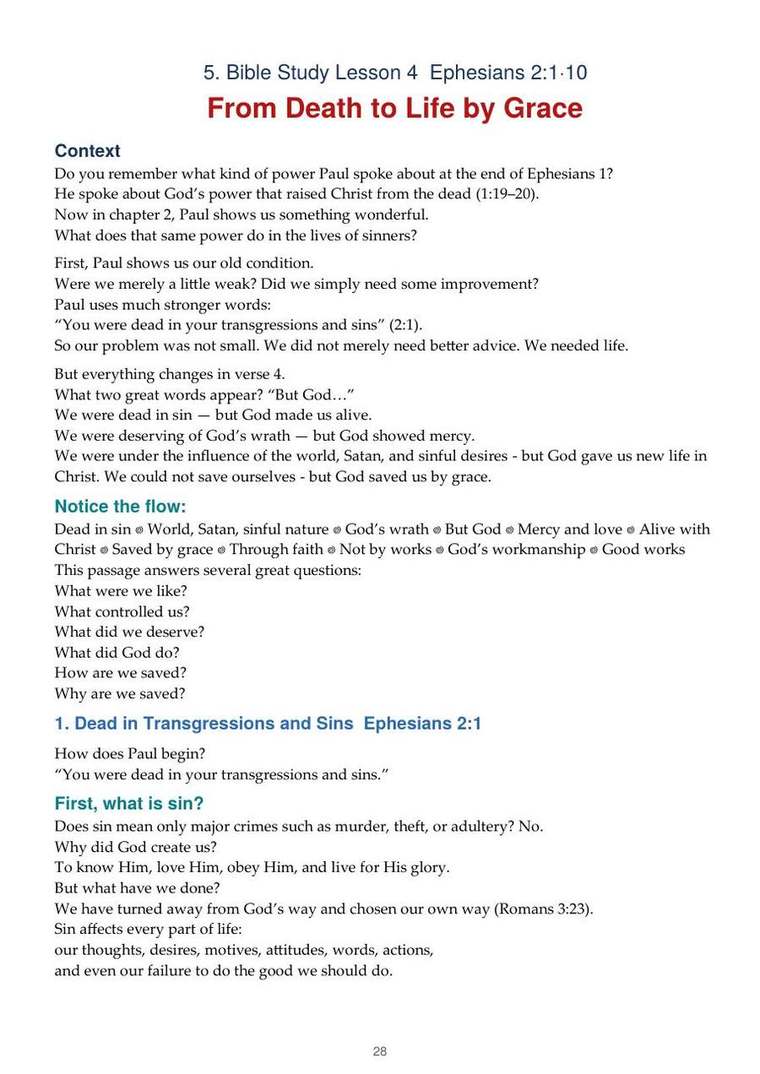
Context
Do you remember what kind of power Paul spoke about at the end of Ephesians 1?
He spoke about God’s power that raised Christ from the dead (1:19–20).
Now in chapter 2, Paul shows us something wonderful.
What does that same power do in the lives of sinners?
First, Paul shows us our old condition.
Were we merely a little weak? Did we simply need some improvement?
Paul uses much stronger words:
“You were dead in your transgressions and sins” (2:1).
So our problem was not small. We did not merely need better advice. We needed life.
But everything changes in verse 4.
What two great words appear? “But God…”
We were dead in sin — but God made us alive.
We were deserving of God’s wrath — but God showed mercy.
We were under the influence of the world, Satan, and sinful desires - but God gave us new life in Christ. We could not save ourselves - but God saved us by grace.
Notice the flow:
Dead in sin → World, Satan, sinful nature → God’s wrath → But God → Mercy and love → Alive with Christ → Saved by grace → Through faith → Not by works → God’s workmanship → Good works This passage answers several great questions:
What were we like?
What controlled us?
What did we deserve?
What did God do?
How are we saved?
Why are we saved?
1. అపరాధాలు మరియు పాపాలలో చనిపోయినవారు – ఎఫెసీయులకు 2:1
పౌలు, “మీ అపరాధములచేతను పాపములచేతను మీరు చచ్చినవారై యుండగా” అని ప్రారంభిస్తున్నాడు.
పాపం అంటే దేవుని ప్రమాణానికి తగకుండా ఉండటం. దేవునిని తెలుసుకోవడానికి, ప్రేమించడానికి, ఆయనకు విధేయత చూపడానికి, ఆయన మహిమ కోసం జీవించడానికి మనం సృష్టించబడ్డాము. కానీ మనం దేవుని నుండి తొలగిపోయి మన సొంత మార్గాన్ని ఎంచుకున్నాము (రోమా 3:23).
పాపం అంటే పెద్ద నేరాలు లేదా చెడ్డ పనులు మాత్రమే కాదు. మన ఆలోచనలు, కోరికలు, ఉద్దేశాలు, వైఖరులు, మాటలు, పనులు, అలాగే చేయవలసిన మంచిని చేయకపోవడం కూడా పాపంలో భాగమే.
అపరాధం అంటే దేవుడు పెట్టిన హద్దును దాటడం. ఏది సరైనదో దేవుడు చెప్పినా, ఆయన హద్దును దాటి మన సొంత మార్గాన్ని ఎంచుకోవడం. ఆదికాండము 3లో దీనికి స్పష్టమైన ఉదాహరణ కనిపిస్తుంది. దేవుడు ఆదాము హవ్వలకు ఒక హద్దు పెట్టాడు. వారు ఆ హద్దును తెలిసికూడా దాటారు.
కాబట్టి మన సమస్య అప్పుడప్పుడు కొన్ని తప్పులు చేయడం మాత్రమే కాదు. పాపం దేవునితో మన సంబంధాన్ని ప్రభావితం చేసింది. అందుకే పౌలు మన పరిస్థితిని ఆత్మీయ మరణంగా వర్ణిస్తున్నాడు.
చనిపోయిన వ్యక్తి తనకు తానే జీవం ఇచ్చుకోలేడు. అలాగే మనలను మనమే ఆత్మీయంగా బ్రతికించుకోలేం. దేవుడే జీవం ఇవ్వాలి. క్రైస్తవ విశ్వాసం అంటే చెడ్డవారు కొంచెం మంచివారవడం కాదు; ఆత్మీయంగా చనిపోయినవారు క్రీస్తులో జీవింపజేయబడటం.
ఆలోచించండి: పాపం అంటే ఇతరులు చేసే పెద్ద తప్పులు మాత్రమే అని అనుకుంటున్నానా? లేక నా ఆలోచనలు, కోరికలు, ఉద్దేశాలు, మాటలు, పనులు, అవిధేయతలో కూడా పాపాన్ని గుర్తిస్తున్నానా?
1. Dead in Transgressions and Sins Ephesians 2:1
How does Paul begin?
“You were dead in your transgressions and sins.”
First, what is sin?
Does sin mean only major crimes such as murder, theft, or adultery? No.
Why did God create us?
To know Him, love Him, obey Him, and live for His glory.
But what have we done?
We have turned away from God’s way and chosen our own way (Romans 3:23).
Sin affects every part of life:
our thoughts, desires, motives, attitudes, words, actions,
and even our failure to do the good we should do.
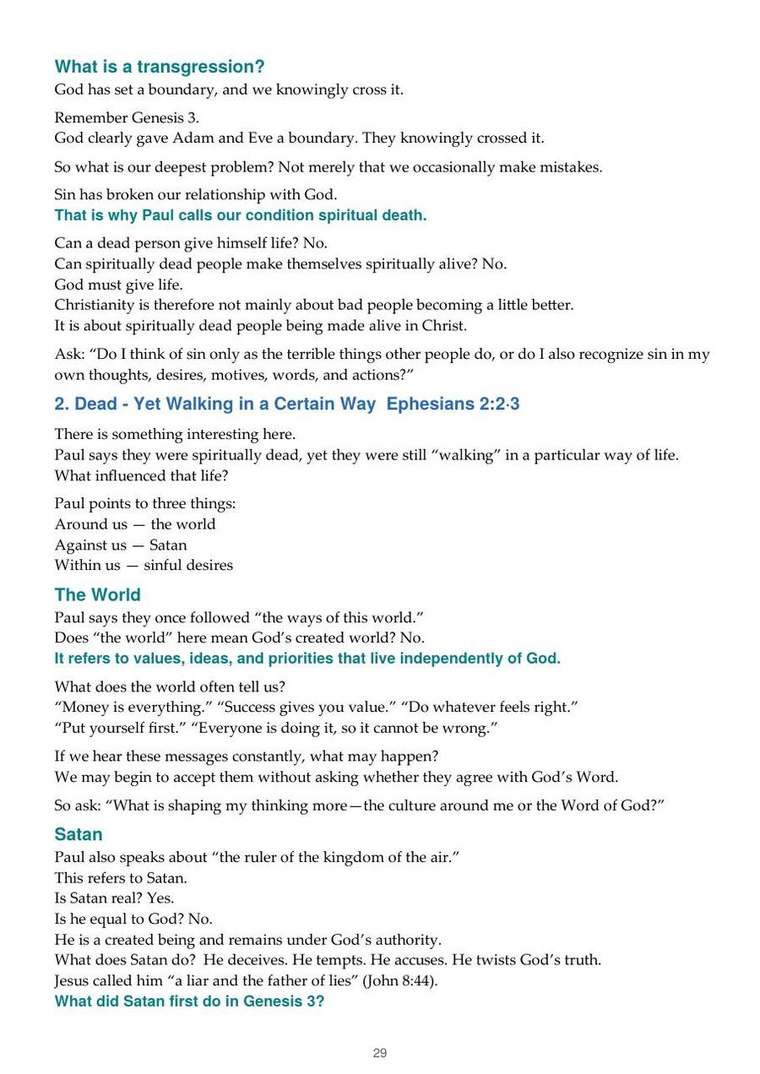
What is a transgression?
God has set a boundary, and we knowingly cross it.
Remember Genesis 3.
God clearly gave Adam and Eve a boundary. They knowingly crossed it.
So what is our deepest problem? Not merely that we occasionally make mistakes.
Sin has broken our relationship with God.
That is why Paul calls our condition spiritual death.
Can a dead person give himself life? No.
Can spiritually dead people make themselves spiritually alive? No.
God must give life.
Christianity is therefore not mainly about bad people becoming a little better.
It is about spiritually dead people being made alive in Christ.
Ask: “Do I think of sin only as the terrible things other people do, or do I also recognize sin in my own thoughts, desires, motives, words, and actions?”
2. చనిపోయినవారే – అయినా నడుస్తున్నారు – ఎఫెసీయులకు 2:2-3
ఇక్కడ పౌలు ఒక ఆసక్తికరమైన విషయం చెబుతున్నాడు. వారు ఆత్మీయంగా చనిపోయినవారే, అయినా ఒక విధమైన జీవితాన్ని “నడుస్తున్నారు.” ఆ జీవితాన్ని ఏవి ప్రభావితం చేస్తున్నాయి?
పౌలు మూడు ప్రభావాలను చూపిస్తున్నాడు:
మన చుట్టూ ఉన్న లోకం → మనకు విరోధిగా పనిచేసే సాతాను → మనలో ఉన్న పాప స్వభావపు కోరికలు.
లోకం
వారు ఒకప్పుడు “ఈ లోక ధర్మము చొప్పున” నడిచారని పౌలు చెబుతున్నాడు (2:2).
ఇక్కడ “లోకం” అంటే దేవుడు సృష్టించిన భూమి లేదా ప్రకృతి కాదు. దేవుని నుండి స్వతంత్రంగా జీవించే మానవ సమాజంలోని విలువలు, ఆలోచనలు, ప్రాధాన్యతలు, జీవన విధానాలు.
లోకం ఇలా చెప్పవచ్చు: “డబ్బే నీకు భద్రత ఇస్తుంది.” “విజయమే నీ విలువను నిర్ణయిస్తుంది.” “నీకు నచ్చినది చేసుకో.” “ముందుగా నీ గురించే ఆలోచించు.” “అందరూ చేస్తున్నారు కాబట్టి అది తప్పు కాదు.”
ఇలాంటి ఆలోచనలు సాధారణమైపోతే, అవి దేవుని వాక్యానికి సరిపోతున్నాయా అని కూడా మనం ప్రశ్నించకుండా ఉండవచ్చు.
ఆలోచించండి: నా ఆలోచనలను ఎక్కువగా ప్రభావితం చేస్తున్నది నా చుట్టూ ఉన్న సమాజమా, లేక దేవుని వాక్యమా?
సాతాను
పౌలు “వాయుమండల సంబంధమైన అధికారానికి అధిపతి” గురించి చెబుతున్నాడు (2:2). ఇది సాతానును సూచిస్తుంది.
సాతాను నిజమైనవాడు. కానీ అతడు దేవునితో సమానుడు కాదు. అతడు సృష్టించబడినవాడు; దేవుని సంపూర్ణ అధికారానికి లోబడి ఉన్నాడు. అతడు మోసం చేస్తాడు, శోధిస్తాడు, నిందిస్తాడు, దేవుని సత్యాన్ని వ్యతిరేకిస్తాడు. యేసు అతనిని “అబద్ధికుడును అబద్ధమునకు జనకుడును” అని చెప్పాడు (యోహాను 8:44). ఆదికాండము 3లో అతని పద్ధతిని చూస్తాము. మొదట దేవుని వాక్యంపై సందేహం కలిగించాడు. తరువాత దేవుని మంచితనంపైనే సందేహం కలిగించాడు.
అయితే విశ్వాసులు సాతానును నిర్లక్ష్యం చేయకూడదు; అదే సమయంలో అతని గురించి అతిగా భయపడకూడదు. ఎందుకంటే క్రీస్తు ప్రతి అధికారానికి, శక్తికి, ఆధిపత్యానికి ఎంతో పైగా ఉన్నాడు (ఎఫెసీయులకు 1:21).
పాప స్వభావపు కోరికలు
పౌలు తరువాత శరీరాశలు, మనస్సు కోరిన వాటిని చేయడం గురించి చెబుతున్నాడు (2:3).
మన సమస్య బయట మాత్రమే లేదు. “లోకం నన్ను ఇలా చేసింది,” లేదా “సాతాను నన్ను ఇలా చేయించాడు” అని మన పాపానికి బాధ్యతను పూర్తిగా బయటకు నెట్టలేం. మనలో కూడా దేవునికి విరుద్ధమైన కోరికలు ఉన్నాయి.
అందుకే ఈ మూడు ప్రభావాలను గుర్తుంచుకోండి:
లోకం మన చుట్టూ నుండి ఒత్తిడి చేస్తుంది → సాతాను మోసం చేస్తాడు → పాప స్వభావపు కోరికలు మనలో నుండి లాగుతాయి.
ఆలోచించండి: నా నిర్ణయాలను ఏది నడిపిస్తోంది – దేవుని వాక్యమా, లోకపు ఆలోచనా, సాతాను అబద్దాలా, లేక నా సొంత పాప కోరికలా?
2. Dead - Yet Walking in a Certain Way Ephesians 2:2–3
There is something interesting here.
Paul says they were spiritually dead, yet they were still “walking” in a particular way of life.
What influenced that life?
Paul points to three things:
Around us — the world
Against us — Satan
Within us — sinful desires
The World
Paul says they once followed “the ways of this world.”
Does “the world” here mean God’s created world? No.
It refers to values, ideas, and priorities that live independently of God.
What does the world often tell us?
“Money is everything.” “Success gives you value.” “Do whatever feels right.”
“Put yourself first.” “Everyone is doing it, so it cannot be wrong.”
If we hear these messages constantly, what may happen?
We may begin to accept them without asking whether they agree with God’s Word.
So ask: “What is shaping my thinking more—the culture around me or the Word of God?”
Satan
Paul also speaks about “the ruler of the kingdom of the air.”
This refers to Satan.
Is Satan real? Yes.
Is he equal to God? No.
He is a created being and remains under God’s authority.
What does Satan do? He deceives. He tempts. He accuses. He twists God’s truth.
Jesus called him “a liar and the father of lies” (John 8:44).
What did Satan first do in Genesis 3?
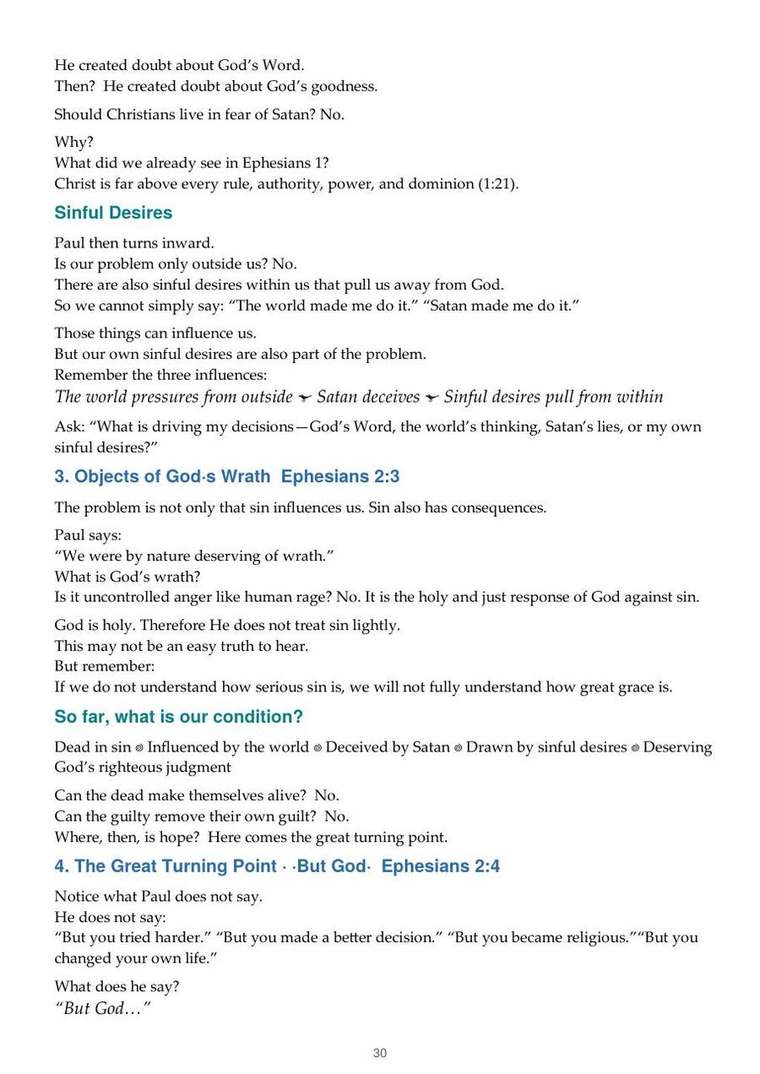
He created doubt about God’s Word.
Then? He created doubt about God’s goodness.
Should Christians live in fear of Satan? No.
Why?
What did we already see in Ephesians 1?
Christ is far above every rule, authority, power, and dominion (1:21).
Sinful Desires
Paul then turns inward.
Is our problem only outside us? No.
There are also sinful desires within us that pull us away from God.
So we cannot simply say: “The world made me do it.” “Satan made me do it.”
Those things can influence us.
But our own sinful desires are also part of the problem.
Remember the three influences:
The world pressures from outside → Satan deceives → Sinful desires pull from within
Ask: “What is driving my decisions—God’s Word, the world’s thinking, Satan’s lies, or my own sinful desires?”
3. దేవుని ఉగ్రతకు పాత్రులు – ఎఫెసీయులకు 2:3
పాపం మనలను నియంత్రించడం మాత్రమే సమస్య కాదు. అది మనలను దేవుని న్యాయమైన తీర్పుకు పాత్రులుగా చేసింది.
పౌలు మనం “స్వభావసిద్ధముగా దైవోగ్రతకు పాత్రులమై యుంటిమి” అని చెబుతున్నాడు (2:3).
దేవుని ఉగ్రత అంటే అదుపులేని కోపం కాదు. అది పాపం పట్ల పరిశుద్ధుడైన దేవుని న్యాయమైన స్పందన.
ఈ సత్యం వినడానికి కష్టంగా ఉండవచ్చు. కానీ పాపం ఎంత తీవ్రమైనదో అర్థం కాకపోతే, కృప ఎంత గొప్పదో కూడా అర్థం కాదు.
1–3 వచనాల చివరికి మన పరిస్థితి ఇలా కనిపిస్తుంది:
పాపంలో మృతి → లోక ప్రభావం → సాతాను మోసం → మనలో పాప కోరికలు → దేవుని న్యాయమైన తీర్పుకు పాత్రులు.
చనిపోయినవారు తమను తాము బ్రతికించుకోగలరా? అపరాధులు తమ అపరాధాన్ని తామే తొలగించుకోగలరా?
ఇక్కడే ఈ భాగంలోని గొప్ప మలుపు వస్తుంది.
3. Objects of God’s Wrath Ephesians 2:3
The problem is not only that sin influences us. Sin also has consequences.
Paul says:
“We were by nature deserving of wrath.”
What is God’s wrath?
Is it uncontrolled anger like human rage? No. It is the holy and just response of God against sin.
God is holy. Therefore He does not treat sin lightly.
This may not be an easy truth to hear.
But remember:
If we do not understand how serious sin is, we will not fully understand how great grace is.
So far, what is our condition?
Dead in sin → Influenced by the world → Deceived by Satan → Drawn by sinful desires → Deserving God’s righteous judgment
Can the dead make themselves alive? No.
Can the guilty remove their own guilt? No.
Where, then, is hope? Here comes the great turning point.
4. గొప్ప మలుపు – “అయినను దేవుడు” – ఎఫెసీయులకు 2:4
మన నిరీక్షణలేని పరిస్థితిని వివరించిన తరువాత పౌలు:
“కానీ మీరు మరింత ప్రయత్నించారు” అని చెప్పలేదు. “కానీ మీరు మతపరులయ్యారు” అని చెప్పలేదు.
“కానీ మీ జీవితాన్ని మీరు మార్చుకున్నారు” అని చెప్పలేదు.
అతను చెప్పింది: “అయినను దేవుడు...”
ఎఫెసీయుల పత్రికలో అత్యంత అందమైన మాటలలో ఇవి రెండు. రక్షణ మనం దేవుని కోసం చేసినదానితో ప్రారంభం కాదు. దేవుడు మన కోసం చేసినదానితో ప్రారంభమవుతుంది.
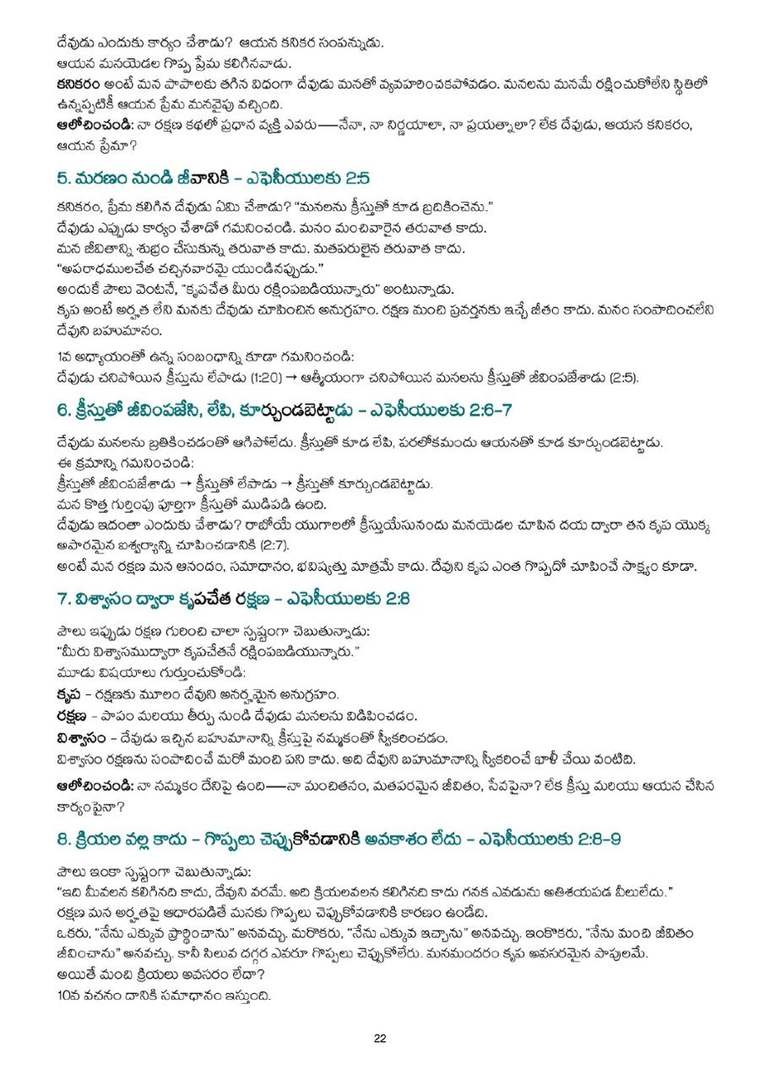
దేవుడు ఎందుకు కార్యం చేశాడు? ఆయన కనికర సంపన్నుడు.
ఆయన మనయెడల గొప్ప ప్రేమ కలిగినవాడు.
కనికరం అంటే మన పాపాలకు తగిన విధంగా దేవుడు మనతో వ్యవహరించకపోవడం. మనలను మనమే రక్షించుకోలేని స్థితిలో ఉన్నప్పటికీ ఆయన ప్రేమ మనవైపు వచ్చింది.
ఆలోచించండి: నా రక్షణ కథలో ప్రధాన వ్యక్తి ఎవరు—నేనా, నా నిర్ణయాలా, నా ప్రయత్నాలా? లేక దేవుడు, ఆయన కనికరం, ఆయన ప్రేమా?
4. The Great Turning Point — “But God” Ephesians 2:4
Notice what Paul does not say.
He does not say:
“But you tried harder.” “But you made a better decision.” “But you became religious.”“But you changed your own life.”
What does he say?
“But God…”
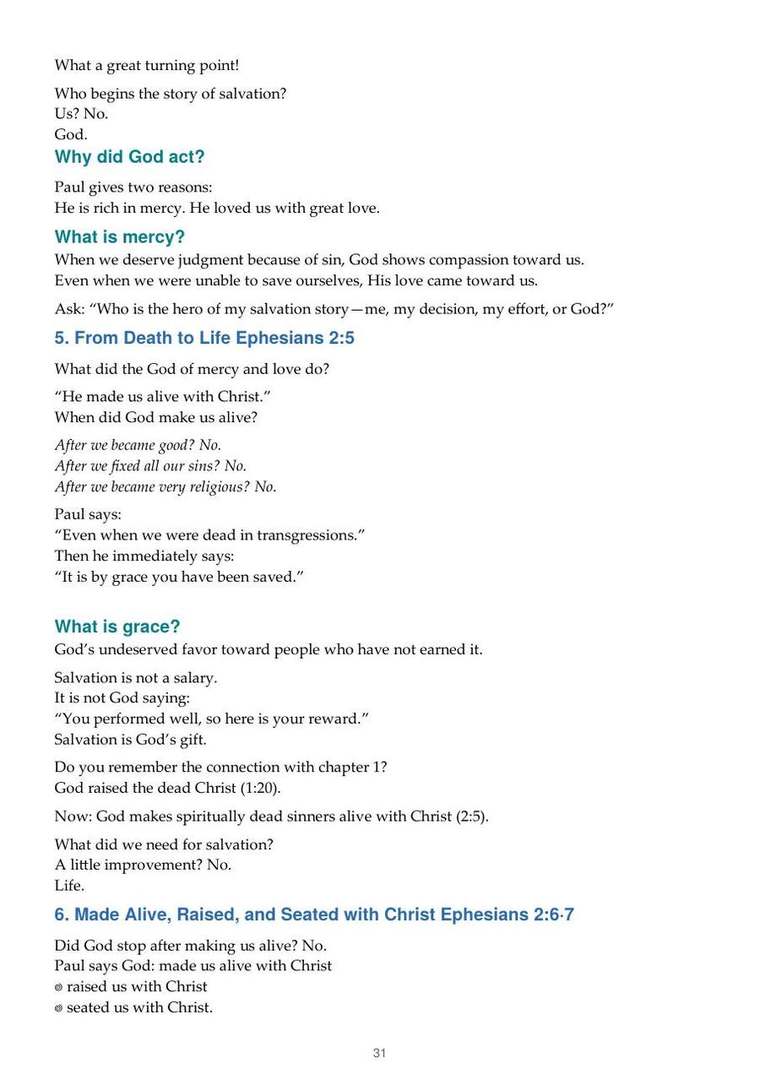
What a great turning point!
Who begins the story of salvation?
Us? No.
God.
Why did God act?
Paul gives two reasons:
He is rich in mercy. He loved us with great love.
What is mercy?
When we deserve judgment because of sin, God shows compassion toward us.
Even when we were unable to save ourselves, His love came toward us.
Ask: “Who is the hero of my salvation story—me, my decision, my effort, or God?”
5. మరణం నుండి జీవానికి – ఎఫెసీయులకు 2:5
కనికరం, ప్రేమ కలిగిన దేవుడు ఏమి చేశాడు? “మనలను క్రీస్తుతో కూడ బ్రదికించెను.”
దేవుడు ఎప్పుడు కార్యం చేశాడో గమనించండి. మనం మంచివారైన తరువాత కాదు.
మన జీవితాన్ని శుభ్రం చేసుకున్న తరువాత కాదు. మతపరులైన తరువాత కాదు.
“అపరాధములచేత చచ్చినవారమై యుండినప్పుడు.”
అందుకే పౌలు వెంటనే, “కృపచేత మీరు రక్షింపబడియున్నారు” అంటున్నాడు.
కృప అంటే అర్హత లేని మనకు దేవుడు చూపించిన అనుగ్రహం. రక్షణ మంచి ప్రవర్తనకు ఇచ్చే జీతం కాదు. మనం సంపాదించలేని దేవుని బహుమానం.
1వ అధ్యాయంతో ఉన్న సంబంధాన్ని కూడా గమనించండి:
దేవుడు చనిపోయిన క్రీస్తును లేపాడు (1:20) → ఆత్మీయంగా చనిపోయిన మనలను క్రీస్తుతో జీవింపజేశాడు (2:5).
5. From Death to Life Ephesians 2:5
What did the God of mercy and love do?
“He made us alive with Christ.”
When did God make us alive?
After we became good? No.
After we fixed all our sins? No.
After we became very religious? No.
Paul says:
“Even when we were dead in transgressions.”
Then he immediately says:
“It is by grace you have been saved.”
What is grace?
God’s undeserved favor toward people who have not earned it.
Salvation is not a salary.
It is not God saying:
“You performed well, so here is your reward.”
Salvation is God’s gift.
Do you remember the connection with chapter 1?
God raised the dead Christ (1:20).
Now: God makes spiritually dead sinners alive with Christ (2:5).
What did we need for salvation?
A little improvement? No.
Life.
6. క్రీస్తుతో జీవింపజేసి, లేపి, కూర్చుండబెట్టాడు – ఎఫెసీయులకు 2:6-7
దేవుడు మనలను బ్రతికించడంతో ఆగిపోలేదు. క్రీస్తుతో కూడ లేపి, పరలోకమందు ఆయనతో కూడ కూర్చుండబెట్టాడు.
ఈ క్రమాన్ని గమనించండి:
క్రీస్తుతో జీవింపజేశాడు → క్రీస్తుతో లేపాడు → క్రీస్తుతో కూర్చుండబెట్టాడు.
మన కొత్త గుర్తింపు పూర్తిగా క్రీస్తుతో ముడిపడి ఉంది.
దేవుడు ఇదంతా ఎందుకు చేశాడు? రాబోయే యుగాలలో క్రీస్తుయేసునందు మనయెడల చూపిన దయ ద్వారా తన కృప యొక్క అపారమైన ఐశ్వర్యాన్ని చూపించడానికి (2:7).
అంటే మన రక్షణ మన ఆనందం, సమాధానం, భవిష్యత్తు మాత్రమే కాదు. దేవుని కృప ఎంత గొప్పదో చూపించే సాక్ష్యం కూడా.
6. Made Alive, Raised, and Seated with Christ Ephesians 2:6–7
Did God stop after making us alive? No.
Paul says God: made us alive with Christ
→ raised us with Christ
→ seated us with Christ.
With whom is our new life completely connected? Christ.
Our old identity was in sin.
Where is our new identity? In Christ. Why did God do all this?
So that in the coming ages He might display the incomparable riches of His grace.
So salvation is not only for our benefit.
What should our changed lives display?
How great God’s grace is.
When people look at our lives, whose glory should finally be seen?
Ours? No.
God’s.
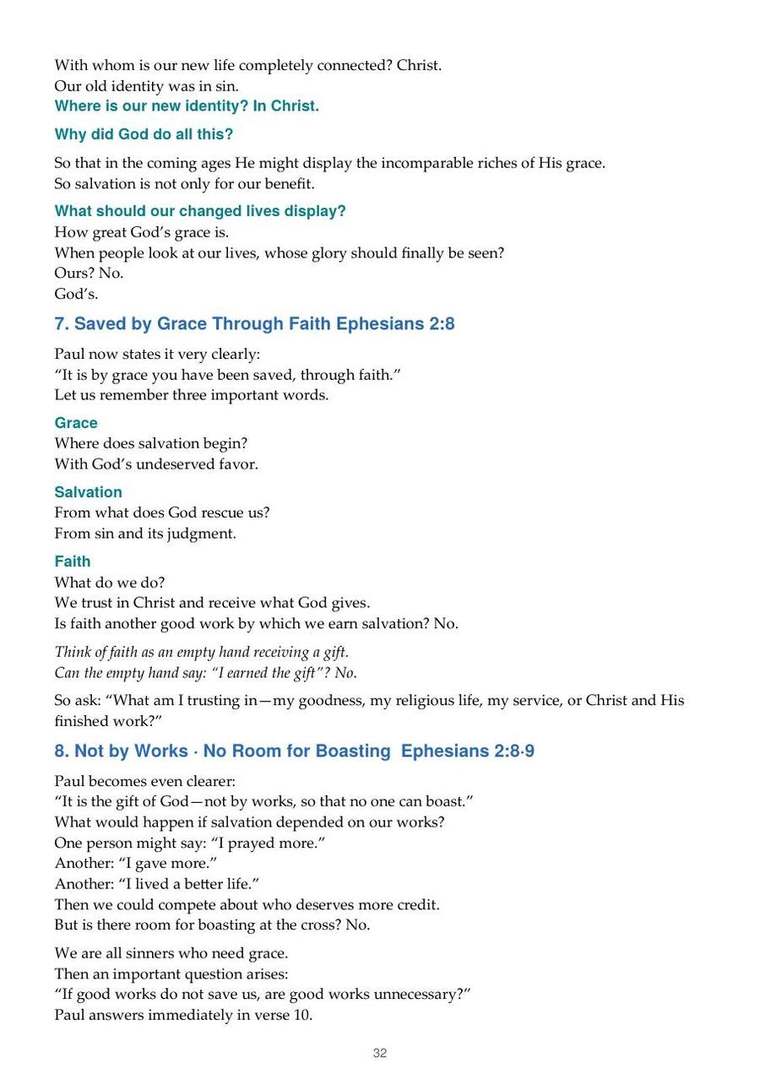
7. విశ్వాసం ద్వారా కృపచేత రక్షణ – ఎఫెసీయులకు 2:8
పౌలు ఇప్పుడు రక్షణ గురించి చాలా స్పష్టంగా చెబుతున్నాడు:
“మీరు విశ్వాసముద్వారా కృపచేతనే రక్షింపబడియున్నారు.”
మూడు విషయాలు గుర్తుంచుకోండి:
కృప – రక్షణకు మూలం దేవుని అనర్హమైన అనుగ్రహం.
రక్షణ – పాపం మరియు తీర్పు నుండి దేవుడు మనలను విడిపించడం.
విశ్వాసం – దేవుడు ఇచ్చిన బహుమానాన్ని క్రీస్తుపై నమ్మకంతో స్వీకరించడం.
విశ్వాసం రక్షణను సంపాదించే మరో మంచి పని కాదు. అది దేవుని బహుమానాన్ని స్వీకరించే ఖాళీ చేయి వంటిది.
ఆలోచించండి: నా నమ్మకం దేనిపై ఉంది—నా మంచితనం, మతపరమైన జీవితం, సేవపైనా? లేక క్రీస్తు మరియు ఆయన చేసిన కార్యంపైనా?
7. Saved by Grace Through Faith Ephesians 2:8
Paul now states it very clearly:
“It is by grace you have been saved, through faith.”
Let us remember three important words.
Grace
Where does salvation begin?
With God’s undeserved favor.
Salvation
From what does God rescue us?
From sin and its judgment.
Faith
What do we do?
We trust in Christ and receive what God gives.
Is faith another good work by which we earn salvation? No.
Think of faith as an empty hand receiving a gift.
Can the empty hand say: “I earned the gift”? No.
So ask: “What am I trusting in—my goodness, my religious life, my service, or Christ and His finished work?”
8. క్రియల వల్ల కాదు – గొప్పలు చెప్పుకోవడానికి అవకాశం లేదు – ఎఫెసీయులకు 2:8-9
పౌలు ఇంకా స్పష్టంగా చెబుతున్నాడు:
“ఇది మీవలన కలిగినది కాదు, దేవుని వరమే. అది క్రియలవలన కలిగినది కాదు గనక ఎవడును అతిశయపడ వీలులేదు.”
రక్షణ మన అర్హతపై ఆధారపడితే మనకు గొప్పలు చెప్పుకోవడానికి కారణం ఉండేది.
ఒకరు, “నేను ఎక్కువ ప్రార్థించాను” అనవచ్చు. మరొకరు, “నేను ఎక్కువ ఇచ్చాను” అనవచ్చు. ఇంకొకరు, “నేను మంచి జీవితం జీవించాను” అనవచ్చు. కానీ సిలువ దగ్గర ఎవరూ గొప్పలు చెప్పుకోలేరు. మనమందరం కృప అవసరమైన పాపులమే.
అయితే మంచి క్రియలు అవసరం లేదా?
10వ వచనం దానికి సమాధానం ఇస్తుంది.
8. Not by Works — No Room for Boasting Ephesians 2:8–9
Paul becomes even clearer:
“It is the gift of God—not by works, so that no one can boast.”
What would happen if salvation depended on our works?
One person might say: “I prayed more.”
Another: “I gave more.”
Another: “I lived a better life.”
Then we could compete about who deserves more credit.
But is there room for boasting at the cross? No.
We are all sinners who need grace.
Then an important question arises:
“If good works do not save us, are good works unnecessary?”
Paul answers immediately in verse 10.
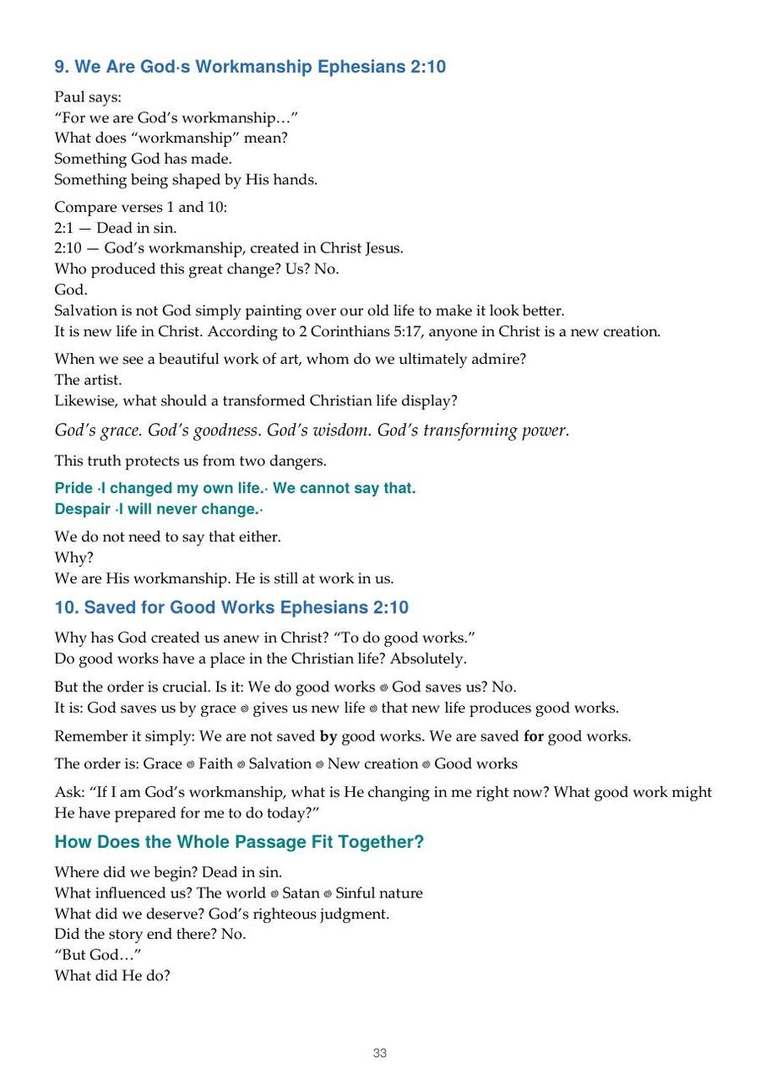
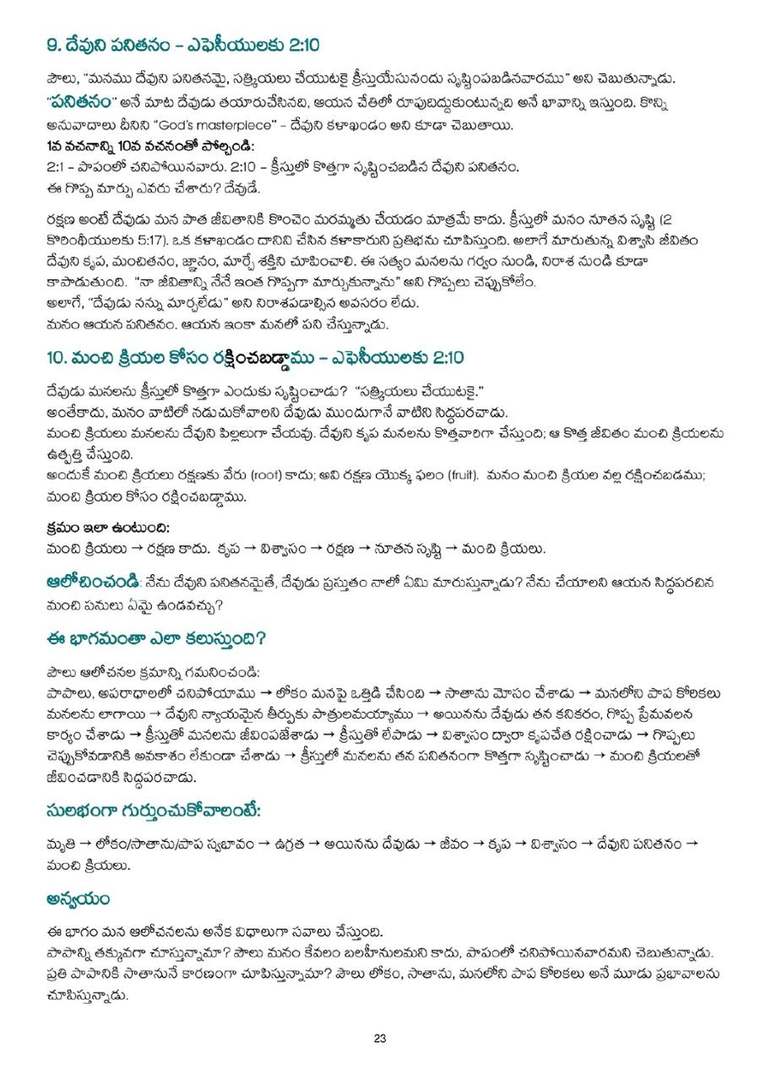
9. దేవుని పనితనం – ఎఫెసీయులకు 2:10
పౌలు, “మనము దేవుని పనితనమై, సత్క్రియలు చేయుటకై క్రీస్తుయేసునందు సృష్టింపబడినవారము” అని చెబుతున్నాడు.
“పనితనం” అనే మాట దేవుడు తయారుచేసినది, ఆయన చేతిలో రూపుదిద్దుకుంటున్నది అనే భావాన్ని ఇస్తుంది. కొన్ని అనువాదాలు దీనిని “God's masterpiece” – దేవుని కళాఖండం అని కూడా చెబుతాయి.
1వ వచనాన్ని 10వ వచనంతో పోల్చండి:
2:1 – పాపంలో చనిపోయినవారు. 2:10 – క్రీస్తులో కొత్తగా సృష్టించబడిన దేవుని పనితనం.
ఈ గొప్ప మార్పు ఎవరు చేశారు? దేవుడే.
రక్షణ అంటే దేవుడు మన పాత జీవితానికి కొంచెం మరమ్మతు చేయడం మాత్రమే కాదు. క్రీస్తులో మనం నూతన సృష్టి (2 కొరింథీయులకు 5:17). ఒక కళాఖండం దానిని చేసిన కళాకారుని ప్రతిభను చూపిస్తుంది. అలాగే మారుతున్న విశ్వాసి జీవితం దేవుని కృప, మంచితనం, జ్ఞానం, మార్చే శక్తిని చూపించాలి. ఈ సత్యం మనలను గర్వం నుండి, నిరాశ నుండి కూడా కాపాడుతుంది. “నా జీవితాన్ని నేనే ఇంత గొప్పగా మార్చుకున్నాను” అని గొప్పలు చెప్పుకోలేం.
అలాగే, “దేవుడు నన్ను మార్చలేడు” అని నిరాశపడాల్సిన అవసరం లేదు.
మనం ఆయన పనితనం. ఆయన ఇంకా మనలో పని చేస్తున్నాడు.
9. We Are God’s Workmanship Ephesians 2:10
Paul says:
“For we are God’s workmanship…”
What does “workmanship” mean?
Something God has made.
Something being shaped by His hands.
Compare verses 1 and 10:
2:1 — Dead in sin.
2:10 — God’s workmanship, created in Christ Jesus.
Who produced this great change? Us? No.
God.
Salvation is not God simply painting over our old life to make it look better.
It is new life in Christ. According to 2 Corinthians 5:17, anyone in Christ is a new creation.
When we see a beautiful work of art, whom do we ultimately admire?
The artist.
Likewise, what should a transformed Christian life display?
God’s grace. God’s goodness. God’s wisdom. God’s transforming power.
This truth protects us from two dangers.
Pride “I changed my own life.” We cannot say that. Despair “I will never change.”
We do not need to say that either.
Why?
We are His workmanship. He is still at work in us.
10. మంచి క్రియల కోసం రక్షించబడ్డాము – ఎఫెసీయులకు 2:10
దేవుడు మనలను క్రీస్తులో కొత్తగా ఎందుకు సృష్టించాడు? “సత్క్రియలు చేయుటకై.”
అంతేకాదు, మనం వాటిలో నడుచుకోవాలని దేవుడు ముందుగానే వాటిని సిద్ధపరచాడు.
మంచి క్రియలు మనలను దేవుని పిల్లలుగా చేయవు. దేవుని కృప మనలను కొత్తవారిగా చేస్తుంది; ఆ కొత్త జీవితం మంచి క్రియలను ఉత్పత్తి చేస్తుంది.
అందుకే మంచి క్రియలు రక్షణకు వేరు (root) కాదు; అవి రక్షణ యొక్క ఫలం (fruit). మనం మంచి క్రియల వల్ల రక్షించబడము; మంచి క్రియల కోసం రక్షించబడ్డాము.
క్రమం ఇలా ఉంటుంది:
మంచి క్రియలు → రక్షణ కాదు. కృప → విశ్వాసం → రక్షణ → నూతన సృష్టి → మంచి క్రియలు.
ఆలోచించండి: నేను దేవుని పనితనమైతే, దేవుడు ప్రస్తుతం నాలో ఏమి మారుస్తున్నాడు? నేను చేయాలని ఆయన సిద్ధపరచిన మంచి పనులు ఏమై ఉండవచ్చు?
ఈ భాగమంతా ఎలా కలుస్తుంది?
పౌలు ఆలోచనల క్రమాన్ని గమనించండి:
పాపాలు, అపరాధాలలో చనిపోయాము → లోకం మనపై ఒత్తిడి చేసింది → సాతాను మోసం చేశాడు → మనలోని పాప కోరికలు మనలను లాగాయి → దేవుని న్యాయమైన తీర్పుకు పాత్రులమయ్యాము → అయినను దేవుడు తన కనికరం, గొప్ప ప్రేమవలన కార్యం చేశాడు → క్రీస్తుతో మనలను జీవింపజేశాడు → క్రీస్తుతో లేపాడు → విశ్వాసం ద్వారా కృపచేత రక్షించాడు → గొప్పలు చెప్పుకోవడానికి అవకాశం లేకుండా చేశాడు → క్రీస్తులో మనలను తన పనితనంగా కొత్తగా సృష్టించాడు → మంచి క్రియలతో జీవించడానికి సిద్ధపరచాడు.
సులభంగా గుర్తుంచుకోవాలంటే:
మృతి → లోకం/సాతాను/పాప స్వభావం → ఉగ్రత → అయినను దేవుడు → జీవం → కృప → విశ్వాసం → దేవుని పనితనం → మంచి క్రియలు.
10. Saved for Good Works Ephesians 2:10
Why has God created us anew in Christ? “To do good works.”
Do good works have a place in the Christian life? Absolutely.
But the order is crucial. Is it: We do good works → God saves us? No.
It is: God saves us by grace → gives us new life → that new life produces good works.
Remember it simply: We are not saved by good works. We are saved for good works.
The order is: Grace → Faith → Salvation → New creation → Good works
Ask: “If I am God’s workmanship, what is He changing in me right now? What good work might He have prepared for me to do today?”
How Does the Whole Passage Fit Together?
Where did we begin? Dead in sin.
What influenced us? The world → Satan → Sinful nature
What did we deserve? God’s righteous judgment.
Did the story end there? No.
“But God…”
What did He do?
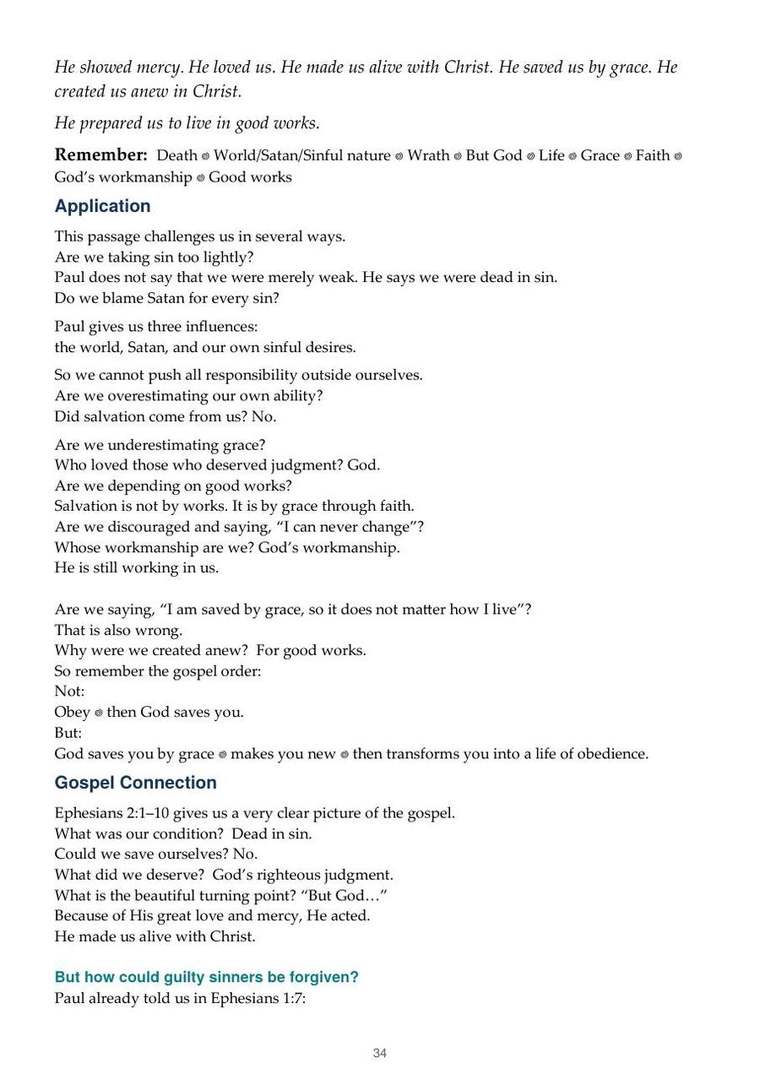
He showed mercy. He loved us. He made us alive with Christ. He saved us by grace. He created us anew in Christ.
He prepared us to live in good works.
Remember: Death → World/Satan/Sinful nature → Wrath → But God → Life → Grace → Faith → God’s workmanship → Good works
అన్వయం
ఈ భాగం మన ఆలోచనలను అనేక విధాలుగా సవాలు చేస్తుంది.
పాపాన్ని తక్కువగా చూస్తున్నామా? పౌలు మనం కేవలం బలహీనులమని కాదు, పాపంలో చనిపోయినవారమని చెబుతున్నాడు.
ప్రతి పాపానికి సాతానునే కారణంగా చూపిస్తున్నామా? పౌలు లోకం, సాతాను, మనలోని పాప కోరికలు అనే మూడు ప్రభావాలను చూపిస్తున్నాడు.
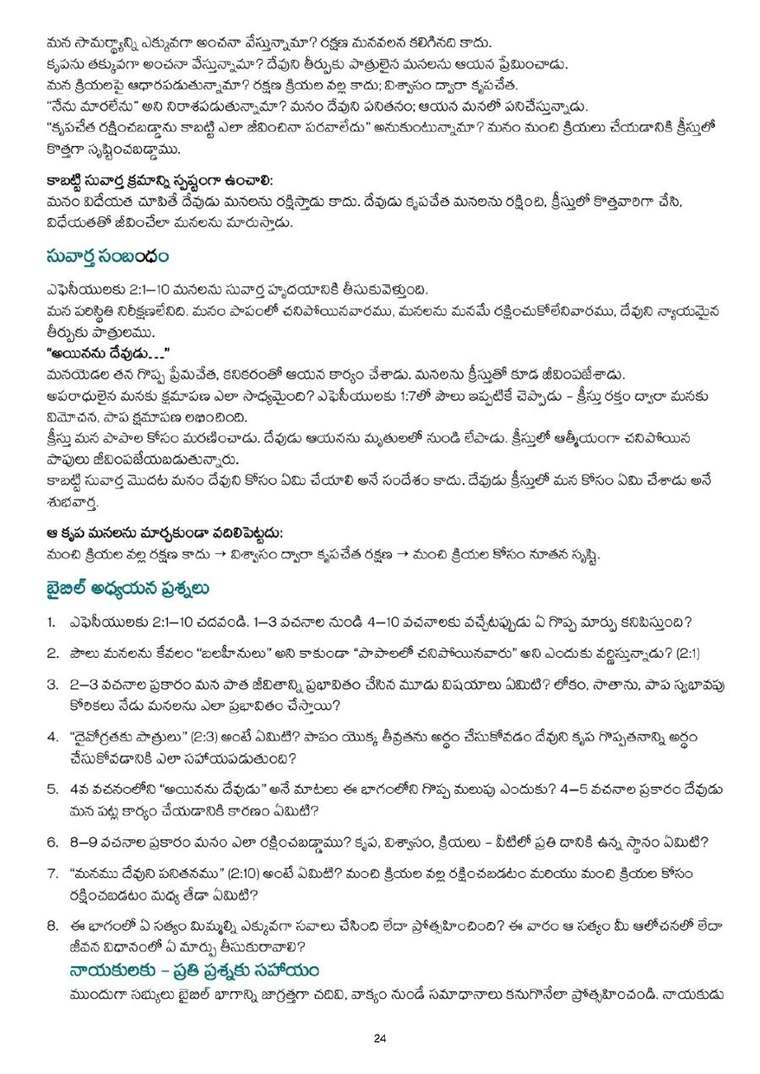
మన సామర్థ్యాన్ని ఎక్కువగా అంచనా వేస్తున్నామా? రక్షణ మనవలన కలిగినది కాదు.
కృపను తక్కువగా అంచనా వేస్తున్నామా? దేవుని తీర్పుకు పాత్రులైన మనలను ఆయన ప్రేమించాడు.
మన క్రియలపై ఆధారపడుతున్నామా? రక్షణ క్రియల వల్ల కాదు; విశ్వాసం ద్వారా కృపచేత.
“నేను మారలేను” అని నిరాశపడుతున్నామా? మనం దేవుని పనితనం; ఆయన మనలో పనిచేస్తున్నాడు.
“కృపచేత రక్షించబడ్డాను కాబట్టి ఎలా జీవించినా పరవాలేదు” అనుకుంటున్నామా? మనం మంచి క్రియలు చేయడానికి క్రీస్తులో కొత్తగా సృష్టించబడ్డాము.
కాబట్టి సువార్త క్రమాన్ని స్పష్టంగా ఉంచాలి:
మనం విధేయత చూపితే దేవుడు మనలను రక్షిస్తాడు కాదు. దేవుడు కృపచేత మనలను రక్షించి, క్రీస్తులో కొత్తవారిగా చేసి, విధేయతతో జీవించేలా మనలను మారుస్తాడు.
Application
This passage challenges us in several ways.
Are we taking sin too lightly?
Paul does not say that we were merely weak. He says we were dead in sin.
Do we blame Satan for every sin?
Paul gives us three influences:
the world, Satan, and our own sinful desires.
So we cannot push all responsibility outside ourselves.
Are we overestimating our own ability?
Did salvation come from us? No.
Are we underestimating grace?
Who loved those who deserved judgment? God.
Are we depending on good works?
Salvation is not by works. It is by grace through faith.
Are we discouraged and saying, “I can never change”?
Whose workmanship are we? God’s workmanship.
He is still working in us.
Are we saying, “I am saved by grace, so it does not matter how I live”?
That is also wrong.
Why were we created anew? For good works.
So remember the gospel order:
Not:
Obey → then God saves you.
But:
God saves you by grace → makes you new → then transforms you into a life of obedience.
సువార్త సంబంధం
ఎఫెసీయులకు 2:1–10 మనలను సువార్త హృదయానికి తీసుకువెళ్తుంది.
మన పరిస్థితి నిరీక్షణలేనిది. మనం పాపంలో చనిపోయినవారము, మనలను మనమే రక్షించుకోలేనివారము, దేవుని న్యాయమైన తీర్పుకు పాత్రులము.
“అయినను దేవుడు...”
మనయెడల తన గొప్ప ప్రేమచేత, కనికరంతో ఆయన కార్యం చేశాడు. మనలను క్రీస్తుతో కూడ జీవింపజేశాడు.
అపరాధులైన మనకు క్షమాపణ ఎలా సాధ్యమైంది? ఎఫెసీయులకు 1:7లో పౌలు ఇప్పటికే చెప్పాడు – క్రీస్తు రక్తం ద్వారా మనకు విమోచన, పాప క్షమాపణ లభించింది.
క్రీస్తు మన పాపాల కోసం మరణించాడు. దేవుడు ఆయనను మృతులలో నుండి లేపాడు. క్రీస్తులో ఆత్మీయంగా చనిపోయిన పాపులు జీవింపజేయబడుతున్నారు.
కాబట్టి సువార్త మొదట మనం దేవుని కోసం ఏమి చేయాలి అనే సందేశం కాదు. దేవుడు క్రీస్తులో మన కోసం ఏమి చేశాడు అనే శుభవార్త.
ఆ కృప మనలను మార్చకుండా వదిలిపెట్టదు:
మంచి క్రియల వల్ల రక్షణ కాదు → విశ్వాసం ద్వారా కృపచేత రక్షణ → మంచి క్రియల కోసం నూతన సృష్టి.
Gospel Connection
Ephesians 2:1–10 gives us a very clear picture of the gospel.
What was our condition? Dead in sin.
Could we save ourselves? No.
What did we deserve? God’s righteous judgment.
What is the beautiful turning point? “But God…”
Because of His great love and mercy, He acted.
He made us alive with Christ.
But how could guilty sinners be forgiven?
Paul already told us in Ephesians 1:7:
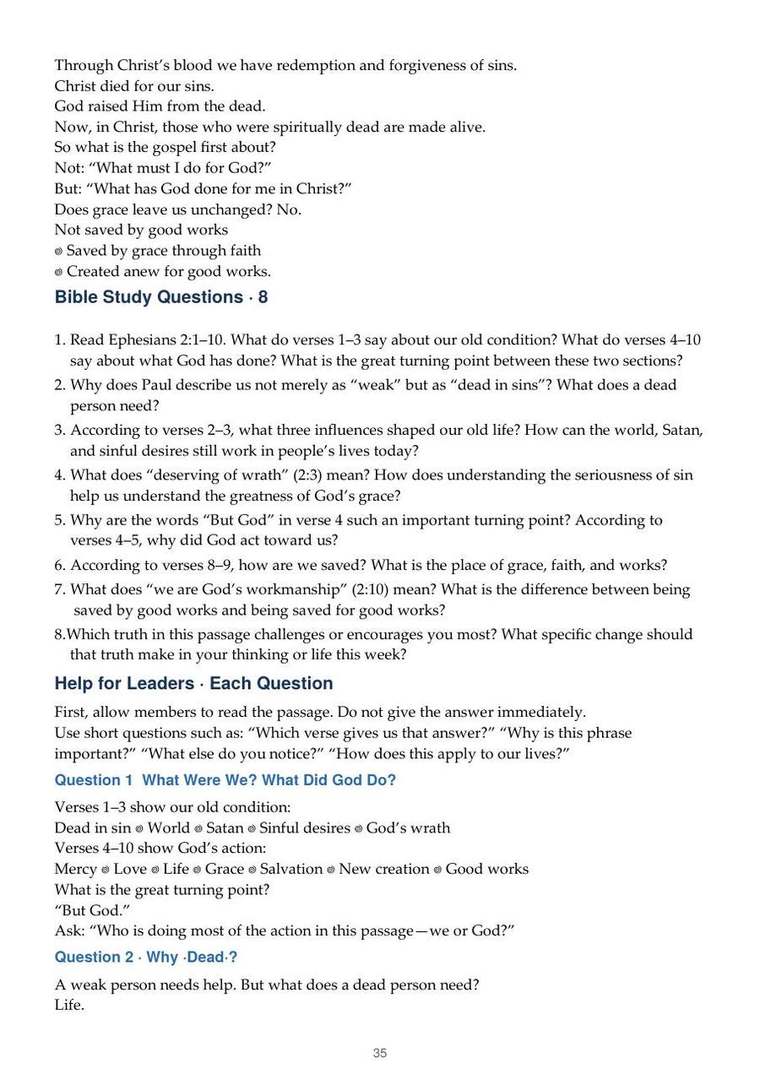
Through Christ’s blood we have redemption and forgiveness of sins.
Christ died for our sins.
God raised Him from the dead.
Now, in Christ, those who were spiritually dead are made alive.
So what is the gospel first about?
Not: “What must I do for God?”
But: “What has God done for me in Christ?”
Does grace leave us unchanged? No.
Not saved by good works
→ Saved by grace through faith
→ Created anew for good works.
బైబిల్ అధ్యయన ప్రశ్నలు
- ఎఫెసీయులకు 2:1–10 చదవండి. 1–3 వచనాల నుండి 4–10 వచనాలకు వచ్చేటప్పుడు ఏ గొప్ప మార్పు కనిపిస్తుంది?
- పౌలు మనలను కేవలం “బలహీనులు” అని కాకుండా “పాపాలలో చనిపోయినవారు” అని ఎందుకు వర్ణిస్తున్నాడు? (2:1)
- 2–3 వచనాల ప్రకారం మన పాత జీవితాన్ని ప్రభావితం చేసిన మూడు విషయాలు ఏమిటి? లోకం, సాతాను, పాప స్వభావపు కోరికలు నేడు మనలను ఎలా ప్రభావితం చేస్తాయి?
- “దైవోగ్రతకు పాత్రులు” (2:3) అంటే ఏమిటి? పాపం యొక్క తీవ్రతను అర్థం చేసుకోవడం దేవుని కృప గొప్పతనాన్ని అర్థం చేసుకోవడానికి ఎలా సహాయపడుతుంది?
- 4వ వచనంలోని “అయినను దేవుడు” అనే మాటలు ఈ భాగంలోని గొప్ప మలుపు ఎందుకు? 4–5 వచనాల ప్రకారం దేవుడు మన పట్ల కార్యం చేయడానికి కారణం ఏమిటి?
- 8–9 వచనాల ప్రకారం మనం ఎలా రక్షించబడ్డాము? కృప, విశ్వాసం, క్రియలు – వీటిలో ప్రతి దానికి ఉన్న స్థానం ఏమిటి?
- “మనము దేవుని పనితనము” (2:10) అంటే ఏమిటి? మంచి క్రియల వల్ల రక్షించబడటం మరియు మంచి క్రియల కోసం రక్షించబడటం మధ్య తేడా ఏమిటి?
- ఈ భాగంలో ఏ సత్యం మిమ్మల్ని ఎక్కువగా సవాలు చేసింది లేదా ప్రోత్సహించింది? ఈ వారం ఆ సత్యం మీ ఆలోచనలో లేదా జీవన విధానంలో ఏ మార్పు తీసుకురావాలి?
Bible Study Questions — 8
1. Read Ephesians 2:1–10. What do verses 1–3 say about our old condition? What do verses 4–10 say about what God has done? What is the great turning point between these two sections?
2. Why does Paul describe us not merely as “weak” but as “dead in sins”? What does a dead person need?
3. According to verses 2–3, what three influences shaped our old life? How can the world, Satan, and sinful desires still work in people’s lives today?
4. What does “deserving of wrath” (2:3) mean? How does understanding the seriousness of sin help us understand the greatness of God’s grace?
5. Why are the words “But God” in verse 4 such an important turning point? According to verses 4–5, why did God act toward us?
6. According to verses 8–9, how are we saved? What is the place of grace, faith, and works?
7. What does “we are God’s workmanship” (2:10) mean? What is the difference between being saved by good works and being saved for good works?
8.Which truth in this passage challenges or encourages you most? What specific change should that truth make in your thinking or life this week?
నాయకులకు – ప్రతి ప్రశ్నకు సహాయం
ముందుగా సభ్యులు బైబిల్ భాగాన్ని జాగ్రత్తగా చదివి, వాక్యం నుండే సమాధానాలు కనుగొనేలా ప్రోత్సహించండి. నాయకుడు
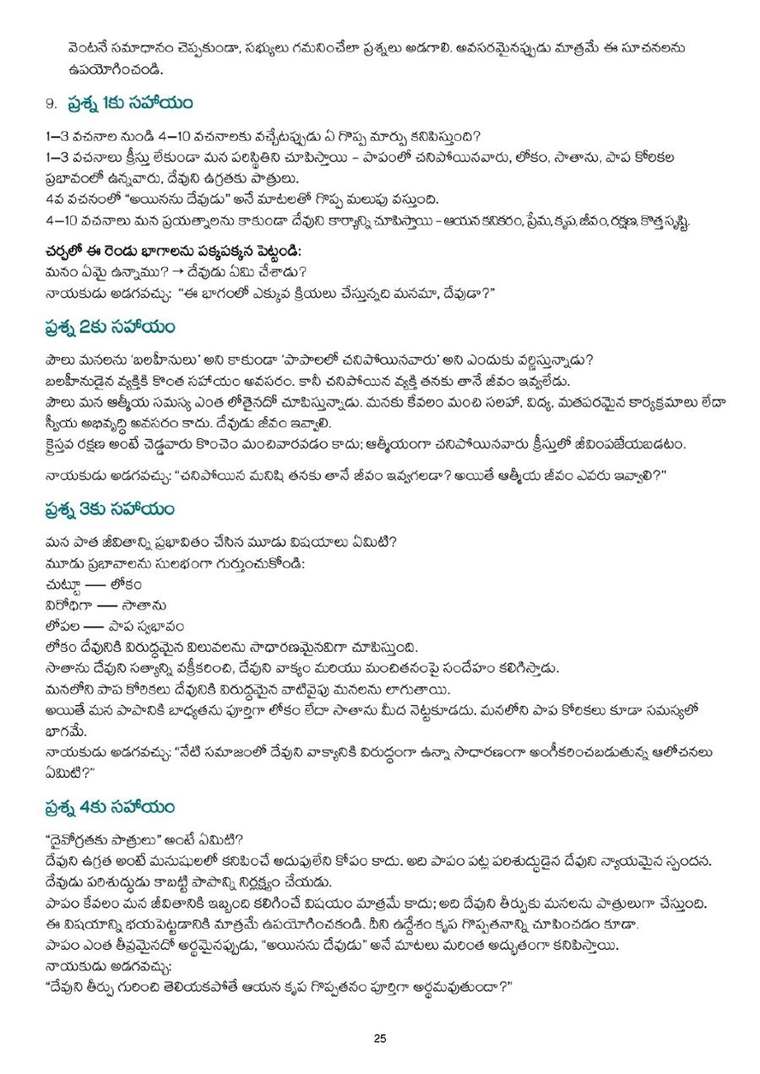
వెంటనే సమాధానం చెప్పకుండా, సభ్యులు గమనించేలా ప్రశ్నలు అడగాలి. అవసరమైనప్పుడు మాత్రమే ఈ సూచనలను ఉపయోగించండి.
9. ప్రశ్న 1కు సహాయం
1-3 వచనాల నుండి 4-10 వచనాలకు వచ్చేటప్పుడు ఏ గొప్ప మార్పు కనిపిస్తుంది?
1-3 వచనాలు క్రీస్తు లేకుండా మన పరిస్థితిని చూపిస్తాయి - పాపంలో చనిపోయినవారు, లోకం, సాతాను, పాప కోరికల ప్రభావంలో ఉన్నవారు, దేవుని ఉగ్రతకు పాత్రులు.
4వ వచనంలో “అయినను దేవుడు” అనే మాటలతో గొప్ప మలుపు వస్తుంది.
4-10 వచనాలు మన ప్రయత్నాలను కాకుండా దేవుని కార్యాన్ని చూపిస్తాయి - ఆయన కనికరం, ప్రేమ, కృప, జీవం, రక్షణ, కొత్త సృష్టి.
చర్చలో ఈ రెండు భాగాలను పక్కపక్కన పెట్టండి:
మనం ఏమై ఉన్నాము? → దేవుడు ఏమి చేశాడు?
నాయకుడు అడగవచ్చు: “ఈ భాగంలో ఎక్కువ క్రియలు చేస్తున్నది మనమా, దేవుడా?”
Help for Leaders — Each Question
First, allow members to read the passage. Do not give the answer immediately.
Use short questions such as: “Which verse gives us that answer?” “Why is this phrase important?” “What else do you notice?” “How does this apply to our lives?”
Question 1 What Were We? What Did God Do?
Verses 1–3 show our old condition:
Dead in sin → World → Satan → Sinful desires → God’s wrath
Verses 4–10 show God’s action:
Mercy → Love → Life → Grace → Salvation → New creation → Good works
What is the great turning point?
“But God.”
Ask: “Who is doing most of the action in this passage—we or God?”
ప్రశ్న 2కు సహాయం
పౌలు మనలను ‘బలహీనులు’ అని కాకుండా ‘పాపాలలో చనిపోయినవారు’ అని ఎందుకు వర్ణిస్తున్నాడు?
బలహీనుడైన వ్యక్తికి కొంత సహాయం అవసరం. కానీ చనిపోయిన వ్యక్తి తనకు తానే జీవం ఇవ్వలేడు.
పౌలు మన ఆత్మీయ సమస్య ఎంత లోతైనదో చూపిస్తున్నాడు. మనకు కేవలం మంచి సలహా, విద్య, మతపరమైన కార్యక్రమాలు లేదా స్వీయ అభివృద్ధి అవసరం కాదు. దేవుడు జీవం ఇవ్వాలి.
క్రైస్తవ రక్షణ అంటే చెడ్డవారు కొంచెం మంచివారవడం కాదు; ఆత్మీయంగా చనిపోయినవారు క్రీస్తులో జీవింపజేయబడటం.
నాయకుడు అడగవచ్చు: “చనిపోయిన మనిషి తనకు తానే జీవం ఇవ్వగలడా? అయితే ఆత్మీయ జీవం ఎవరు ఇవ్వాలి?”
Question 2 — Why “Dead”?
A weak person needs help. But what does a dead person need?
Life.
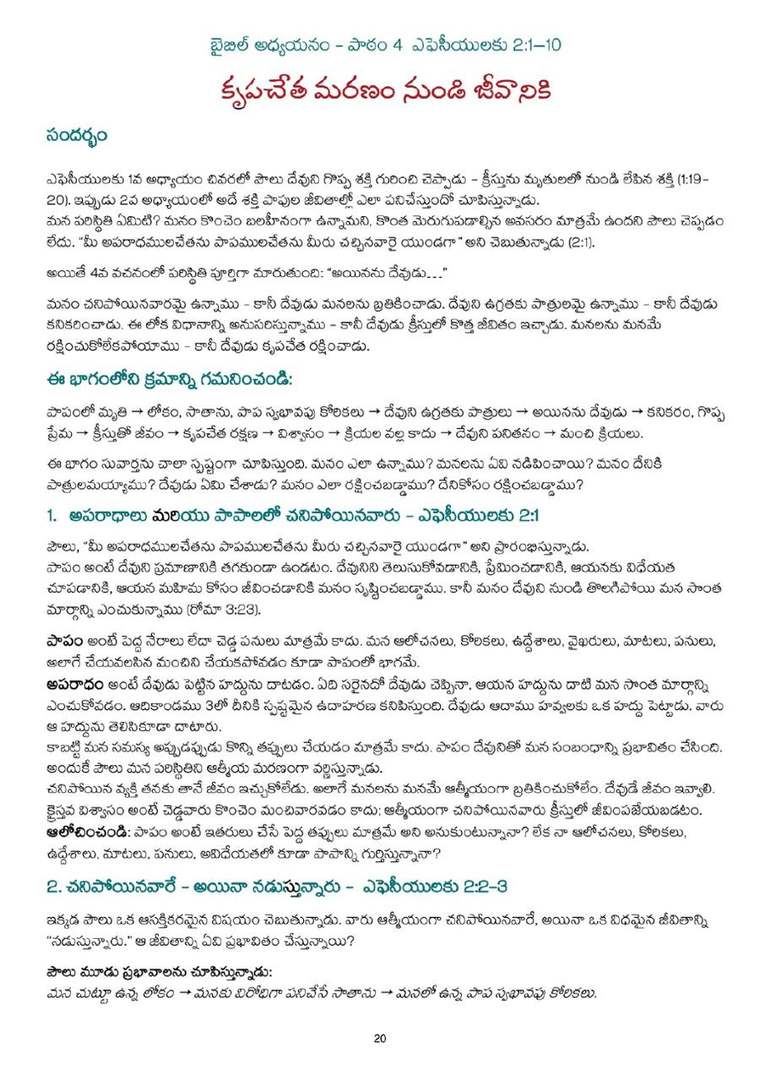
Paul is showing us how deep our spiritual problem is.
We do not merely need: better advice, education, religious activity, or self-improvement.
God must give life.
Ask: “If a dead person cannot give himself life, who must give spiritual life?”
ప్రశ్న 3కు సహాయం
మన పాత జీవితాన్ని ప్రభావితం చేసిన మూడు విషయాలు ఏమిటి?
మూడు ప్రభావాలను సులభంగా గుర్తుంచుకోండి:
చుట్టూ — లోకం
విరోధిగా — సాతాను
లోపల — పాప స్వభావం
లోకం దేవునికి విరుద్ధమైన విలువలను సాధారణమైనవిగా చూపిస్తుంది.
సాతాను దేవుని సత్యాన్ని వక్రీకరించి, దేవుని వాక్యం మరియు మంచితనంపై సందేహం కలిగిస్తాడు.
మనలోని పాప కోరికలు దేవునికి విరుద్ధమైన వాటివైపు మనలను లాగుతాయి.
అయితే మన పాపానికి బాధ్యతను పూర్తిగా లోకం లేదా సాతాను మీద నెట్టకూడదు. మనలోని పాప కోరికలు కూడా సమస్యలో భాగమే.
నాయకుడు అడగవచ్చు: “నేటి సమాజంలో దేవుని వాక్యానికి విరుద్ధంగా ఉన్నా సాధారణంగా అంగీకరించబడుతున్న ఆలోచనలు ఏమిటి?”
Question 3 — Three Influences
Remember:
Around us — The world
Against us — Satan
Within us — Sinful desires
The world makes values contrary to God seem normal.
Satan deceives through lies.
Sinful desires pull us from within.
Do not blame all sin only on the world or Satan.
Our own desires are also part of the problem.
Ask: “What ideas are widely accepted in our society today even though they may contradict God’s Word?”
ప్రశ్న 4కు సహాయం
“దైవోగ్రతకు పాత్రులు” అంటే ఏమిటి?
దేవుని ఉగ్రత అంటే మనుషులలో కనిపించే అదుపులేని కోపం కాదు. అది పాపం పట్ల పరిశుద్ధుడైన దేవుని న్యాయమైన స్పందన. దేవుడు పరిశుద్ధుడు కాబట్టి పాపాన్ని నిర్లక్ష్యం చేయడు.
పాపం కేవలం మన జీవితానికి ఇబ్బంది కలిగించే విషయం మాత్రమే కాదు; అది దేవుని తీర్పుకు మనలను పాత్రులుగా చేస్తుంది.
ఈ విషయాన్ని భయపెట్టడానికి మాత్రమే ఉపయోగించకండి. దీని ఉద్దేశం కృప గొప్పతనాన్ని చూపించడం కూడా.
పాపం ఎంత తీవ్రమైనదో అర్థమైనప్పుడు, “అయినను దేవుడు” అనే మాటలు మరింత అద్భుతంగా కనిపిస్తాయి.
నాయకుడు అడగవచ్చు:
“దేవుని తీర్పు గురించి తెలియకపోతే ఆయన కృప గొప్పతనం పూర్తిగా అర్థమవుతుందా?”
Question 4 — God’s Wrath
God’s wrath is not uncontrolled rage.
It is the holy God’s just response to sin.
God does not ignore evil.
But do not teach this merely to frighten people.
It should also make grace shine more clearly.
What words become especially beautiful when we understand the seriousness of sin?
“But God.”
Ask: “Can we fully appreciate grace if we do not understand what judgment we deserved?”
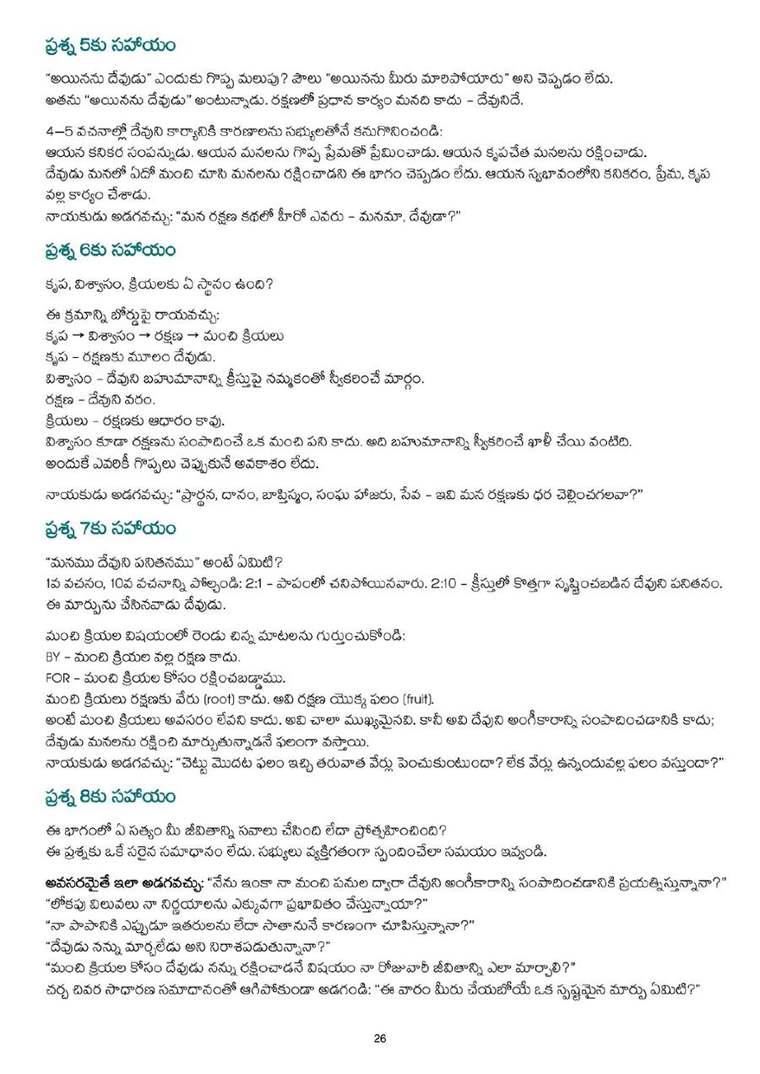
ప్రశ్న 5కు సహాయం
“అయినను దేవుడు” ఎందుకు గొప్ప మలుపు? పౌలు “అయినను మీరు మారిపోయారు” అని చెప్పడం లేదు.
అతను “అయినను దేవుడు” అంటున్నాడు. రక్షణలో ప్రధాన కార్యం మనది కాదు - దేవునిదే.
4-5 వచనాల్లో దేవుని కార్యానికి కారణాలను సభ్యులతోనే కనుగొనించండి:
ఆయన కనికర సంపన్నుడు. ఆయన మనలను గొప్ప ప్రేమతో ప్రేమించాడు. ఆయన కృపచేత మనలను రక్షించాడు.
దేవుడు మనలో ఏదో మంచి చూసి మనలను రక్షించాడని ఈ భాగం చెప్పడం లేదు. ఆయన స్వభావంలోని కనికరం, ప్రేమ, కృప వల్ల కార్యం చేశాడు.
నాయకుడు అడగవచ్చు: “మన రక్షణ కథలో హీరో ఎవరు - మనమా, దేవుడా?”
Question 5 — “But God”
Paul does not say: “But you…”
He says: “But God…”
Who performs the decisive work in salvation? God.
Let the group identify the reasons in verses 4–5:
Mercy, Great love, Grace
This passage does not say God saved us because He saw some great worthiness in us.
He acted because of His own character—His love, mercy, and grace.
Ask: “Who is the hero of our salvation story—us or God?”
ప్రశ్న 6కు సహాయం
కృప, విశ్వాసం, క్రియలకు ఏ స్థానం ఉంది?
ఈ క్రమాన్ని బోర్డుపై రాయవచ్చు:
కృప → విశ్వాసం → రక్షణ → మంచి క్రియలు
కృప - రక్షణకు మూలం దేవుడు.
విశ్వాసం - దేవుని బహుమానాన్ని క్రీస్తుపై నమ్మకంతో స్వీకరించే మార్గం.
రక్షణ - దేవుని వరం.
క్రియలు - రక్షణకు ఆధారం కావు.
విశ్వాసం కూడా రక్షణను సంపాదించే ఒక మంచి పని కాదు. అది బహుమానాన్ని స్వీకరించే ఖాళీ చేయి వంటిది.
అందుకే ఎవరికీ గొప్పలు చెప్పుకునే అవకాశం లేదు.
నాయకుడు అడగవచ్చు: “ప్రార్థన, దానం, బాప్తిస్మం, సంఘ హాజరు, సేవ - ఇవి మన రక్షణకు ధర చెల్లించగలవా?”
Question 6 — Grace, Faith, and Works
Help the group see the order: Grace → Faith → Salvation → Good works
Grace — salvation originates in God.
Faith — we trust Christ and receive God’s gift. Salvation — God’s gift.
Works — not the price of salvation.
Faith is not another achievement that earns salvation. It is like an empty hand receiving a gift.
Ask: “Can prayer, giving, baptism, church attendance, or Christian service pay the price for salvation?”
ప్రశ్న 7కు సహాయం
“మనము దేవుని పనితనము” అంటే ఏమిటి?
1వ వచనం, 10వ వచనాన్ని పోల్చండి: 2:1 - పాపంలో చనిపోయినవారు. 2:10 - క్రీస్తులో కొత్తగా సృష్టించబడిన దేవుని పనితనం.
ఈ మార్పును చేసినవాడు దేవుడు.
మంచి క్రియల విషయంలో రెండు చిన్న మాటలను గుర్తుంచుకోండి:
BY - మంచి క్రియల వల్ల రక్షణ కాదు.
FOR - మంచి క్రియల కోసం రక్షించబడ్డాము.
మంచి క్రియలు రక్షణకు వేరు (root) కాదు. అవి రక్షణ యొక్క ఫలం (fruit).
అంటే మంచి క్రియలు అవసరం లేవని కాదు. అవి చాలా ముఖ్యమైనవి. కానీ అవి దేవుని అంగీకారాన్ని సంపాదించడానికి కాదు; దేవుడు మనలను రక్షించి మార్చుతున్నాడనే ఫలంగా వస్తాయి.
నాయకుడు అడగవచ్చు: “చెట్టు మొదట ఫలం ఇచ్చి తరువాత వేర్లు పెంచుకుంటుందా? లేక వేర్లు ఉన్నందువల్ల ఫలం వస్తుందా?”
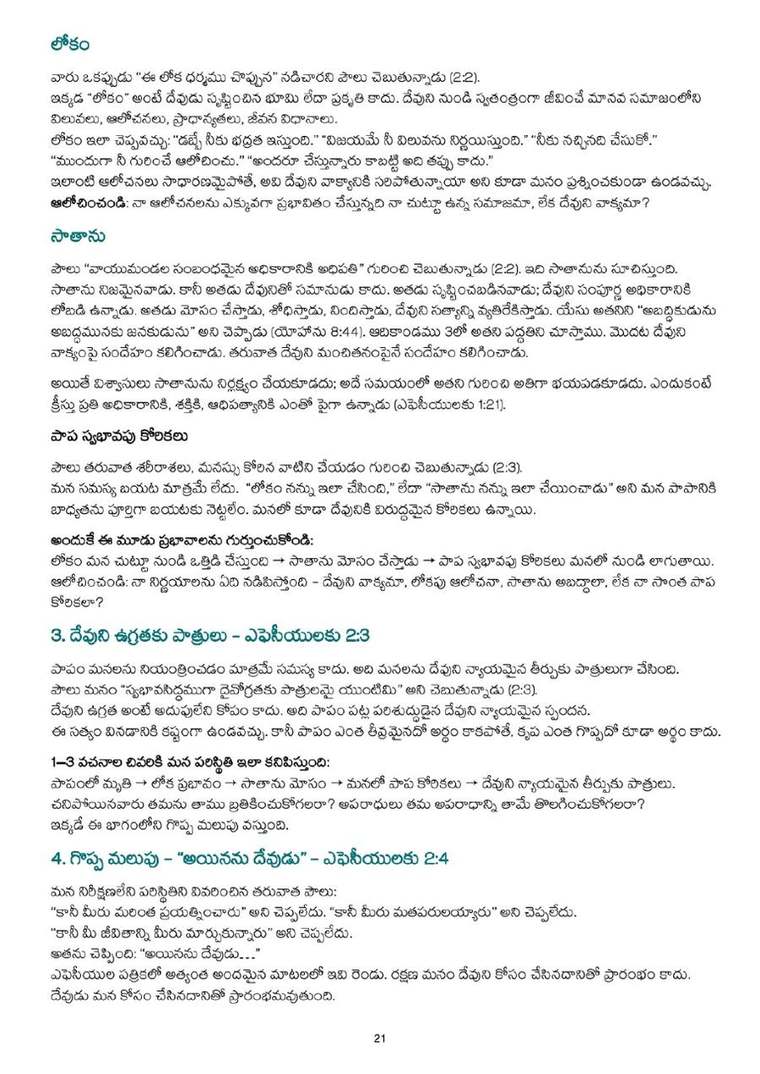
Question 7 — God’s Workmanship and Good Works
Compare verses 1 and 10:
2:1 — Dead in sin 2:10 — God’s workmanship, created in Christ Jesus
Who made the change? God.
Remember two simple words: BY — We are not saved BY good works. FOR — We are saved FOR good works. Good works are not the root of salvation. They are the fruit of salvation.
Ask: “Does a tree first produce fruit and then grow roots, or does fruit come because the tree is already alive and rooted?”
ప్రశ్న 8కు సహాయం
ఈ భాగంలో ఏ సత్యం మీ జీవితాన్ని సవాలు చేసింది లేదా ప్రోత్సహించింది?
ఈ ప్రశ్నకు ఒకే సరైన సమాధానం లేదు. సభ్యులు వ్యక్తిగతంగా స్పందించేలా సమయం ఇవ్వండి.
అవసరమైతే ఇలా అడగవచ్చు: “నేను ఇంకా నా మంచి పనుల ద్వారా దేవుని అంగీకారాన్ని సంపాదించడానికి ప్రయత్నిస్తున్నానా?”
“లోకపు విలువలు నా నిర్ణయాలను ఎక్కువగా ప్రభావితం చేస్తున్నాయా?”
“నా పాపానికి ఎప్పుడూ ఇతరులను లేదా సాతానునే కారణంగా చూపిస్తున్నానా?”
“దేవుడు నన్ను మార్చలేడు అని నిరాశపడుతున్నానా?”
“మంచి క్రియల కోసం దేవుడు నన్ను రక్షించాడనే విషయం నా రోజువారీ జీవితాన్ని ఎలా మార్చాలి?”
చర్చ చివర సాధారణ సమాధానంతో ఆగిపోకుండా అడగండి: “ఈ వారం మీరు చేయబోయే ఒక స్పష్టమైన మార్పు ఏమిటి?”
Question 8 — What Should Change in My Life?
There is no single answer. Give members time to examine themselves.
You may ask: “Am I still trying to earn God’s acceptance through good works?”
“Are the values of the world shaping my decisions?”
“Do I always blame other people or Satan for my sin?”
“Am I discouraged because I think God cannot change me?”
“How should knowing that God saved me for good works change my daily life?”
Finally ask: “What one clear change will you make this week?” Important Things for Leaders to Remember
There are two errors that should be avoided when teaching this passage.
1. Legalism “If I do enough good works, God will accept me.”
This is contrary to Ephesians 2:8–9.
Salvation is God’s gift. It is not by works.
2. Careless Living
“I am saved by grace, so it does not matter how I live.”
This is contrary to Ephesians 2:10.
Why were we created anew? To do good works.
Paul teaches neither error.
His order is: Dead in sin → But God → Alive with Christ → Saved by grace through faith → God’s workmanship → Good works
Good works are not the price of salvation.
But good works are not unrelated to salvation either.
They are the fruit of salvation.
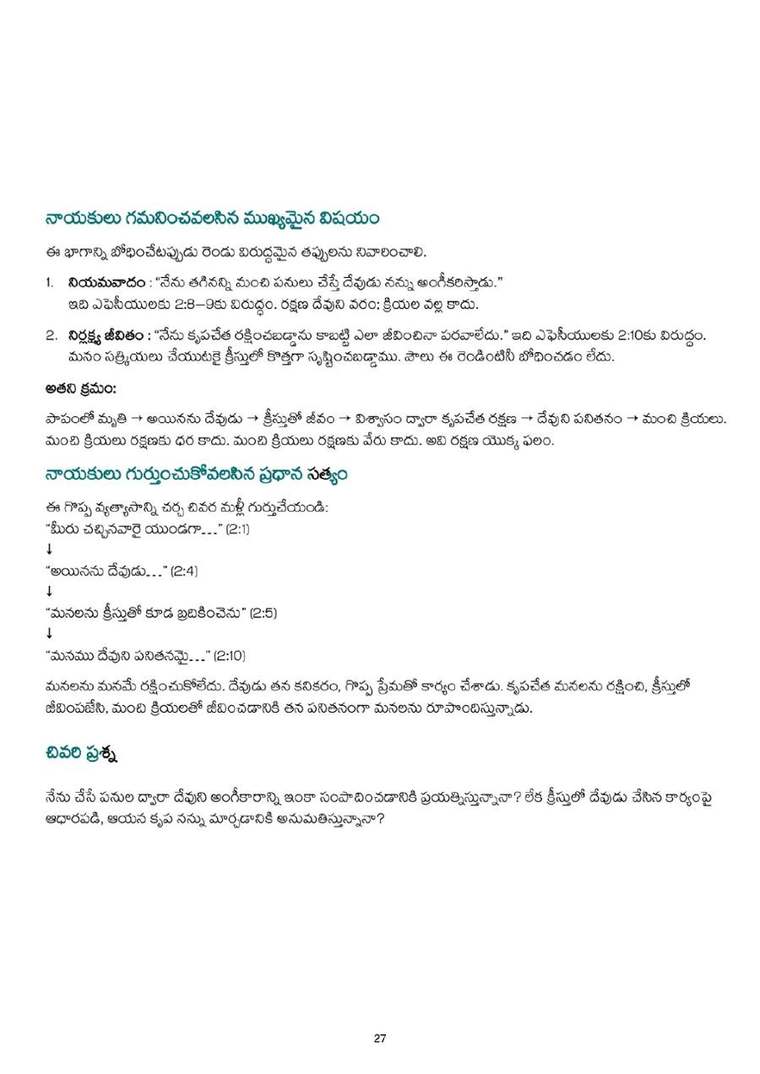
నాయకులు గమనించవలసిన ముఖ్యమైన విషయం
ఈ భాగాన్ని బోధించేటప్పుడు రెండు విరుద్ధమైన తప్పులను నివారించాలి.
- నియమవాదం : “నేను తగినన్ని మంచి పనులు చేస్తే దేవుడు నన్ను అంగీకరిస్తాడు.”
ఇది ఎఫెసీయులకు 2:8-9కు విరుద్ధం. రక్షణ దేవుని వరం; క్రియల వల్ల కాదు. - నిర్లక్ష్య జీవితం : “నేను కృపచేత రక్షించబడ్డాను కాబట్టి ఎలా జీవించినా పరవాలేదు.” ఇది ఎఫెసీయులకు 2:10కు విరుద్ధం. మనం సత్క్రియలు చేయుటకై క్రీస్తులో కొత్తగా సృష్టించబడ్డాము. పౌలు ఈ రెండింటినీ బోధించడం లేదు.
అతని క్రమం:
పాపంలో మృతి → అయినను దేవుడు → క్రీస్తుతో జీవం → విశ్వాసం ద్వారా కృపచేత రక్షణ → దేవుని పనితనం → మంచి క్రియలు.
మంచి క్రియలు రక్షణకు ధర కాదు. మంచి క్రియలు రక్షణకు వేరు కాదు. అవి రక్షణ యొక్క ఫలం.
నాయకులు గుర్తుంచుకోవలసిన ప్రధాన సత్యం
ఈ గొప్ప వ్యత్యాసాన్ని చర్చ చివర మళ్లీ గుర్తుచేయండి:
“మీరు చచ్చినవారై యుండగా...” (2:1)
↓
“అయినను దేవుడు...” (2:4)
↓
“మనలను క్రీస్తుతో కూడ బ్రదికించెను” (2:5)
↓
“మనము దేవుని పనితనమై...” (2:10)
మనలను మనమే రక్షించుకోలేదు. దేవుడు తన కనికరం, గొప్ప ప్రేమతో కార్యం చేశాడు. కృపచేత మనలను రక్షించి, క్రీస్తులో జీవింపజేసి, మంచి క్రియలతో జీవించడానికి తన పనితనంగా మనలను రూపొందిస్తున్నాడు.
Main Truth for Leaders to Remember
At the end, have the group repeat this great movement:
“You were dead…” (2:1) → “But God…” (2:4) → “Made us alive with Christ.” (2:5) → “We are God’s workmanship.” (2:10) We did not save ourselves.
God acted because of His mercy, great love, and grace. He made us alive in Christ.
He saved us by grace. Now He is shaping us as His workmanship to live in the good works He has prepared for us.
చివరి ప్రశ్న
నేను చేసే పనుల ద్వారా దేవుని అంగీకారాన్ని ఇంకా సంపాదించడానికి ప్రయత్నిస్తున్నానా? లేక క్రీస్తులో దేవుడు చేసిన కార్యంపై ఆధారపడి, ఆయన కృప నన్ను మార్చడానికి అనుమతిస్తున్నానా?
Final Question: Am I still trying to earn God’s acceptance through my good works?
Or am I resting in what God has done for me in Christ and allowing His grace to transform the way I live?
Original PDF pages · అసలు పేజీలు (Telugu 8 · English 10)
తెలుగు · Telugu edition
English edition