Search this book · ఈ పుస్తకంలో వెతకండి
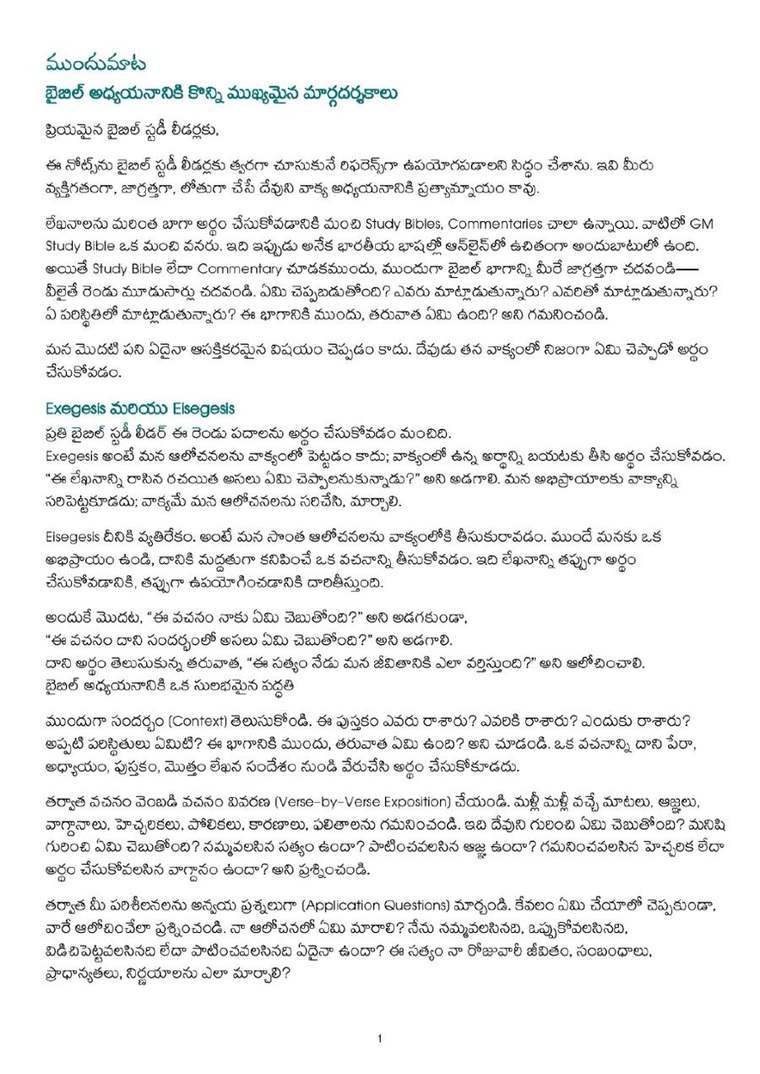
ప్రియమైన బైబిల్ స్టడీ లీడర్లకు,
ఈ నోట్స్ను బైబిల్ స్టడీ లీడర్లకు త్వరగా చూసుకునే రిఫరెన్స్గా ఉపయోగపడాలని సిద్ధం చేశాను. ఇవి మీరు వ్యక్తిగతంగా, జాగ్రత్తగా, లోతుగా చేసే దేవుని వాక్య అధ్యయనానికి ప్రత్యామ్నాయం కావు.
లేఖనాలను మరింత బాగా అర్థం చేసుకోవడానికి మంచి Study Bibles, Commentaries చాలా ఉన్నాయి. వాటిలో GM Study Bible ఒక మంచి వనరు. ఇది ఇప్పుడు అనేక భారతీయ భాషల్లో ఆన్లైన్లో ఉచితంగా అందుబాటులో ఉంది. అయితే Study Bible లేదా Commentary చూడకముందు, ముందుగా బైబిల్ భాగాన్ని మీరే జాగ్రత్తగా చదవండి—— వీలైతే రెండు మూడుసార్లు చదవండి. ఏమి చెప్పబడుతోంది? ఎవరు మాట్లాడుతున్నారు? ఎవరితో మాట్లాడుతున్నారు? ఏ పరిస్థితిలో మాట్లాడుతున్నారు? ఈ భాగానికి ముందు, తరువాత ఏమి ఉంది? అని గమనించండి.
మన మొదటి పని ఏదైనా ఆసక్తికరమైన విషయం చెప్పడం కాదు. దేవుడు తన వాక్యంలో నిజంగా ఏమి చెప్పాడో అర్థం చేసుకోవడం.
Exegesis మరియు Eisegesis
ప్రతి బైబిల్ స్టడీ లీడర్ ఈ రెండు పదాలను అర్థం చేసుకోవడం మంచిది.
Exegesis అంటే మన ఆలోచనలను వాక్యంలో పెట్టడం కాదు; వాక్యంలో ఉన్న అర్థాన్ని బయటకు తీసి అర్థం చేసుకోవడం. “ఈ లేఖనాన్ని రాసిన రచయిత అసలు ఏమి చెప్పాలనుకున్నాడు?” అని అడగాలి. మన అభిప్రాయాలకు వాక్యాన్ని సరిపెట్టకూడదు; వాక్యమే మన ఆలోచనలను సరిచేసి, మార్చాలి.
Eisegesis దీనికి వ్యతిరేకం. అంటే మన సొంత ఆలోచనలను వాక్యంలోకి తీసుకురావడం. ముందే మనకు ఒక అభిప్రాయం ఉండి, దానికి మద్దతుగా కనిపించే ఒక వచనాన్ని తీసుకోవడం. ఇది లేఖనాన్ని తప్పుగా అర్థం చేసుకోవడానికి, తప్పుగా ఉపయోగించడానికి దారితీస్తుంది.
అందుకే మొదట, “ఈ వచనం నాకు ఏమి చెబుతోంది?” అని అడగకుండా,
“ఈ వచనం దాని సందర్భంలో అసలు ఏమి చెబుతోంది?” అని అడగాలి.
దాని అర్థం తెలుసుకున్న తరువాత, “ఈ సత్యం నేడు మన జీవితానికి ఎలా వర్తిస్తుంది?” అని ఆలోచించాలి.
బైబిల్ అధ్యయనానికి ఒక సులభమైన పద్ధతి
ముందుగా సందర్భం (Context) తెలుసుకోండి. ఈ పుస్తకం ఎవరు రాశారు? ఎవరికి రాశారు? ఎందుకు రాశారు? అప్పటి పరిస్థితులు ఏమిటి? ఈ భాగానికి ముందు, తరువాత ఏమి ఉంది? అని చూడండి. ఒక వచనాన్ని దాని పేరా, అధ్యాయం, పుస్తకం, మొత్తం లేఖన సందేశం నుండి వేరుచేసి అర్థం చేసుకోకూడదు.
తర్వాత వచనం వెంబడి వచనం వివరణ (Verse-by-Verse Exposition) చేయండి. మళ్లీ మళ్లీ వచ్చే మాటలు, ఆజ్ఞలు, వాగ్దానాలు, హెచ్చరికలు, పోలికలు, కారణాలు, ఫలితాలను గమనించండి. ఇది దేవుని గురించి ఏమి చెబుతోంది? మనిషి గురించి ఏమి చెబుతోంది? నమ్మవలసిన సత్యం ఉందా? పాటించవలసిన ఆజ్ఞ ఉందా? గమనించవలసిన హెచ్చరిక లేదా అర్థం చేసుకోవలసిన వాగ్దానం ఉందా? అని ప్రశ్నించండి.
తర్వాత మీ పరిశీలనలను అన్వయ ప్రశ్నలుగా (Application Questions) మార్చండి. కేవలం ఏమి చేయాలో చెప్పకుండా, వారే ఆలోచించేలా ప్రశ్నించండి. నా ఆలోచనలో ఏమి మారాలి? నేను నమ్మవలసినది, ఒప్పుకోవలసినది, విడిచిపెట్టవలసినది లేదా పాటించవలసినది ఏదైనా ఉందా? ఈ సత్యం నా రోజువారీ జీవితం, సంబంధాలు, ప్రాధాన్యతలు, నిర్ణయాలను ఎలా మార్చాలి?
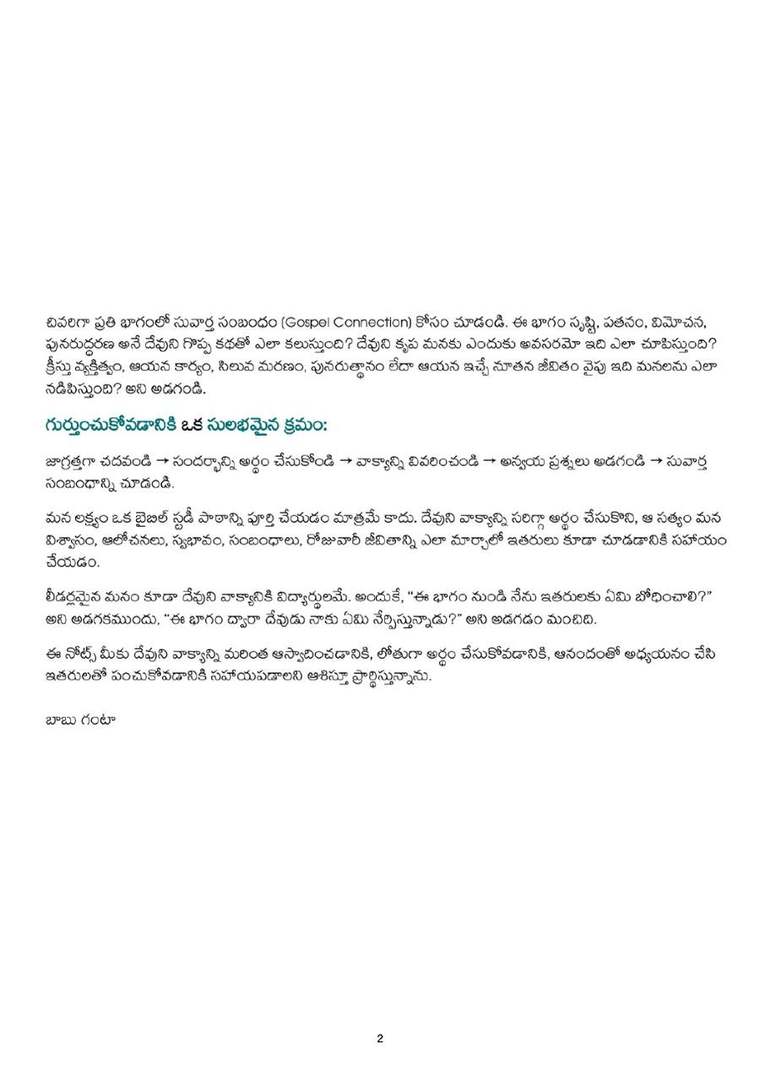
చివరిగా ప్రతి భాగంలో సువార్త సంబంధం (Gospel Connection) కోసం చూడండి. ఈ భాగం సృష్టి, పతనం, విమోచన, పునరుద్ధరణ అనే దేవుని గొప్ప కథతో ఎలా కలుస్తుంది? దేవుని కృప మనకు ఎందుకు అవసరమో ఇది ఎలా చూపిస్తుంది? క్రీస్తు వ్యక్తిత్వం, ఆయన కార్యం, సిలువ మరణం, పునరుత్థానం లేదా ఆయన ఇచ్చే నూతన జీవితం వైపు ఇది మనలను ఎలా నడిపిస్తుంది? అని అడగండి.
గుర్తుంచుకోవడానికి ఒక సులభమైన క్రమం:
జాగ్రత్తగా చదవండి → సందర్భాన్ని అర్థం చేసుకోండి → వాక్యాన్ని వివరించండి → అన్వయ ప్రశ్నలు అడగండి → సువార్త సంబంధాన్ని చూడండి.
మన లక్ష్యం ఒక బైబిల్ స్టడీ పాఠాన్ని పూర్తి చేయడం మాత్రమే కాదు. దేవుని వాక్యాన్ని సరిగ్గా అర్థం చేసుకొని, ఆ సత్యం మన విశ్వాసం, ఆలోచనలు, స్వభావం, సంబంధాలు, రోజువారీ జీవితాన్ని ఎలా మార్చాలో ఇతరులు కూడా చూడడానికి సహాయం చేయడం.
లీడర్లమైన మనం కూడా దేవుని వాక్యానికి విద్యార్థులమే. అందుకే, “ఈ భాగం నుండి నేను ఇతరులకు ఏమి బోధించాలి?” అని అడగకముందు, “ఈ భాగం ద్వారా దేవుడు నాకు ఏమి నేర్పిస్తున్నాడు?” అని అడగడం మంచిది.
ఈ నోట్స్ మీకు దేవుని వాక్యాన్ని మరింత ఆస్వాదించడానికి, లోతుగా అర్థం చేసుకోవడానికి, ఆనందంతో అధ్యయనం చేసి ఇతరులతో పంచుకోవడానికి సహాయపడాలని ఆశిస్తూ ప్రార్థిస్తున్నాను.
బాబు గంటా
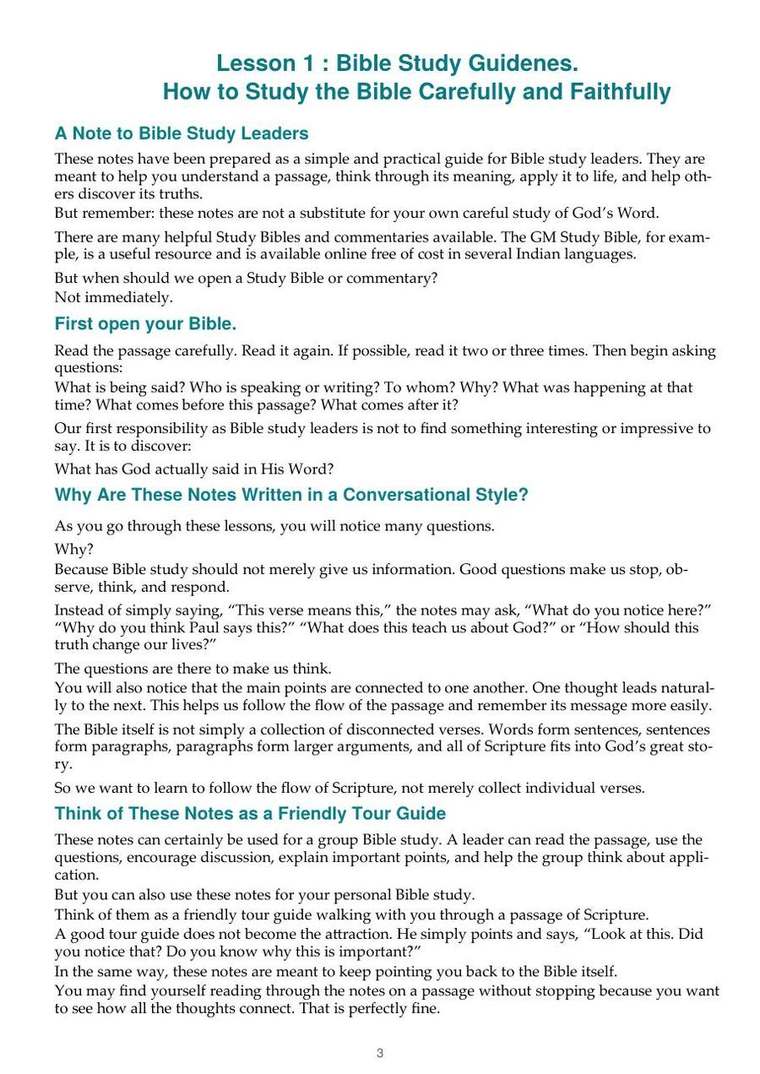
A Note to Bible Study Leaders
These notes have been prepared as a simple and practical guide for Bible study leaders. They are meant to help you understand a passage, think through its meaning, apply it to life, and help others discover its truths.
But remember: these notes are not a substitute for your own careful study of God’s Word.
There are many helpful Study Bibles and commentaries available. The GM Study Bible, for example, is a useful resource and is available online free of cost in several Indian languages.
But when should we open a Study Bible or commentary?
Not immediately.
First open your Bible.
Read the passage carefully. Read it again. If possible, read it two or three times. Then begin asking questions:
What is being said? Who is speaking or writing? To whom? Why? What was happening at that time? What comes before this passage? What comes after it?
Our first responsibility as Bible study leaders is not to find something interesting or impressive to say. It is to discover:
What has God actually said in His Word?
Why Are These Notes Written in a Conversational Style?
As you go through these lessons, you will notice many questions.
Why?
Because Bible study should not merely give us information. Good questions make us stop, observe, think, and respond.
Instead of simply saying, “This verse means this,” the notes may ask, “What do you notice here?” “Why do you think Paul says this?” “What does this teach us about God?” or “How should this truth change our lives?”
The questions are there to make us think.
You will also notice that the main points are connected to one another. One thought leads naturally to the next. This helps us follow the flow of the passage and remember its message more easily. The Bible itself is not simply a collection of disconnected verses. Words form sentences, sentences form paragraphs, paragraphs form larger arguments, and all of Scripture fits into God’s great story.
So we want to learn to follow the flow of Scripture, not merely collect individual verses.
Think of These Notes as a Friendly Tour Guide
These notes can certainly be used for a group Bible study. A leader can read the passage, use the questions, encourage discussion, explain important points, and help the group think about application.
But you can also use these notes for your personal Bible study.
Think of them as a friendly tour guide walking with you through a passage of Scripture.
A good tour guide does not become the attraction. He simply points and says, “Look at this. Did you notice that? Do you know why this is important?”
In the same way, these notes are meant to keep pointing you back to the Bible itself.
You may find yourself reading through the notes on a passage without stopping because you want to see how all the thoughts connect. That is perfectly fine.
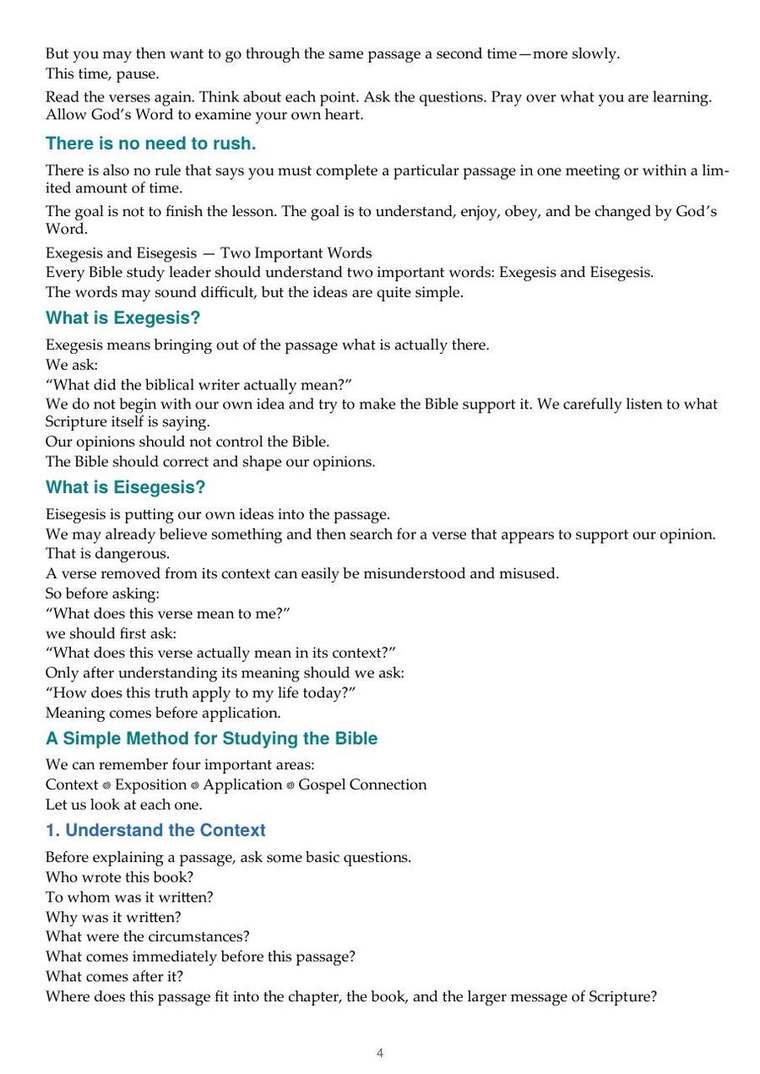
But you may then want to go through the same passage a second time—more slowly.
This time, pause.
Read the verses again. Think about each point. Ask the questions. Pray over what you are learning. Allow God’s Word to examine your own heart.
There is no need to rush.
There is also no rule that says you must complete a particular passage in one meeting or within a limited amount of time.
The goal is not to finish the lesson. The goal is to understand, enjoy, obey, and be changed by God’s Word.
Exegesis and Eisegesis — Two Important Words
Every Bible study leader should understand two important words: Exegesis and Eisegesis.
The words may sound difficult, but the ideas are quite simple.
What is Exegesis?
Exegesis means bringing out of the passage what is actually there.
We ask:
“What did the biblical writer actually mean?”
We do not begin with our own idea and try to make the Bible support it. We carefully listen to what Scripture itself is saying.
Our opinions should not control the Bible.
The Bible should correct and shape our opinions.
What is Eisegesis?
Eisegesis is putting our own ideas into the passage.
We may already believe something and then search for a verse that appears to support our opinion. That is dangerous.
A verse removed from its context can easily be misunderstood and misused.
So before asking:
“What does this verse mean to me?”
we should first ask:
“What does this verse actually mean in its context?”
Only after understanding its meaning should we ask:
“How does this truth apply to my life today?”
Meaning comes before application.
A Simple Method for Studying the Bible
We can remember four important areas:
Context → Exposition → Application → Gospel Connection
Let us look at each one.
1. Understand the Context
Before explaining a passage, ask some basic questions.
Who wrote this book?
To whom was it written?
Why was it written?
What were the circumstances?
What comes immediately before this passage?
What comes after it?
Where does this passage fit into the chapter, the book, and the larger message of Scripture?
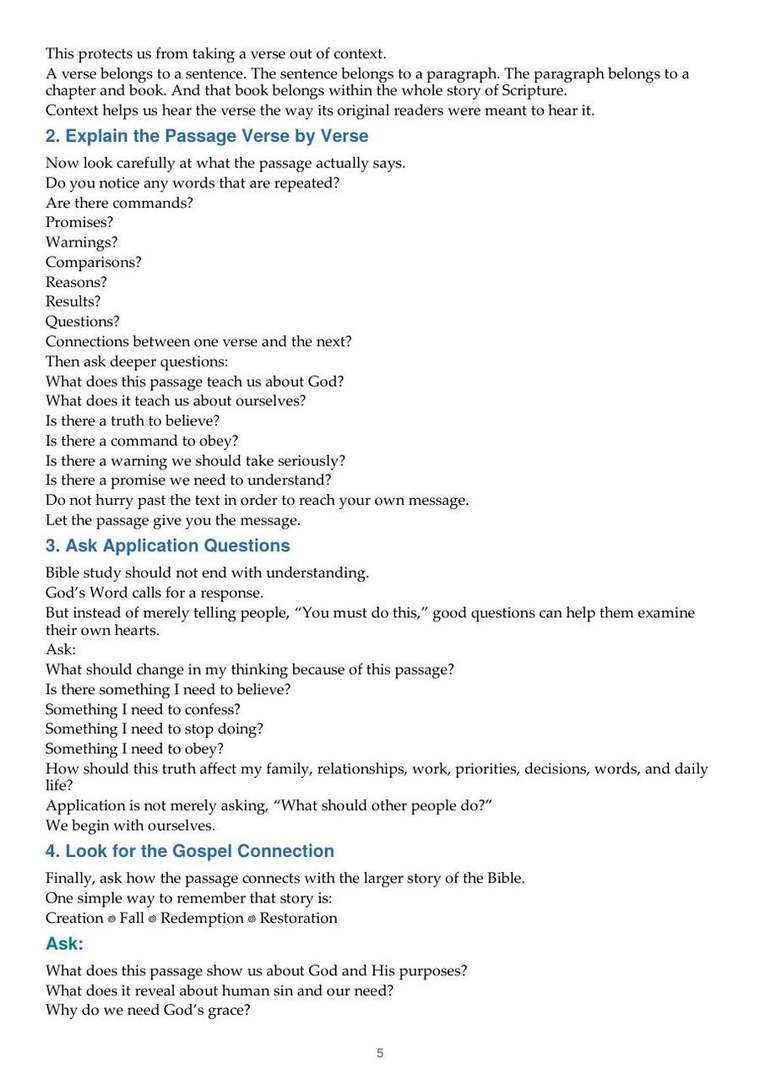
This protects us from taking a verse out of context.
A verse belongs to a sentence. The sentence belongs to a paragraph. The paragraph belongs to a chapter and book. And that book belongs within the whole story of Scripture.
Context helps us hear the verse the way its original readers were meant to hear it.
2. Explain the Passage Verse by Verse
Now look carefully at what the passage actually says.
Do you notice any words that are repeated?
Are there commands?
Promises?
Warnings?
Comparisons?
Reasons?
Results?
Questions?
Connections between one verse and the next?
Then ask deeper questions:
What does this passage teach us about God?
What does it teach us about ourselves?
Is there a truth to believe?
Is there a command to obey?
Is there a warning we should take seriously?
Is there a promise we need to understand?
Do not hurry past the text in order to reach your own message.
Let the passage give you the message.
3. Ask Application Questions
Bible study should not end with understanding.
God’s Word calls for a response.
But instead of merely telling people, “You must do this,” good questions can help them examine their own hearts.
Ask:
What should change in my thinking because of this passage?
Is there something I need to believe?
Something I need to confess?
Something I need to stop doing?
Something I need to obey?
How should this truth affect my family, relationships, work, priorities, decisions, words, and daily life?
Application is not merely asking, “What should other people do?”
We begin with ourselves.
4. Look for the Gospel Connection
Finally, ask how the passage connects with the larger story of the Bible.
One simple way to remember that story is:
Creation → Fall → Redemption → Restoration
Ask:
What does this passage show us about God and His purposes?
What does it reveal about human sin and our need?
Why do we need God’s grace?
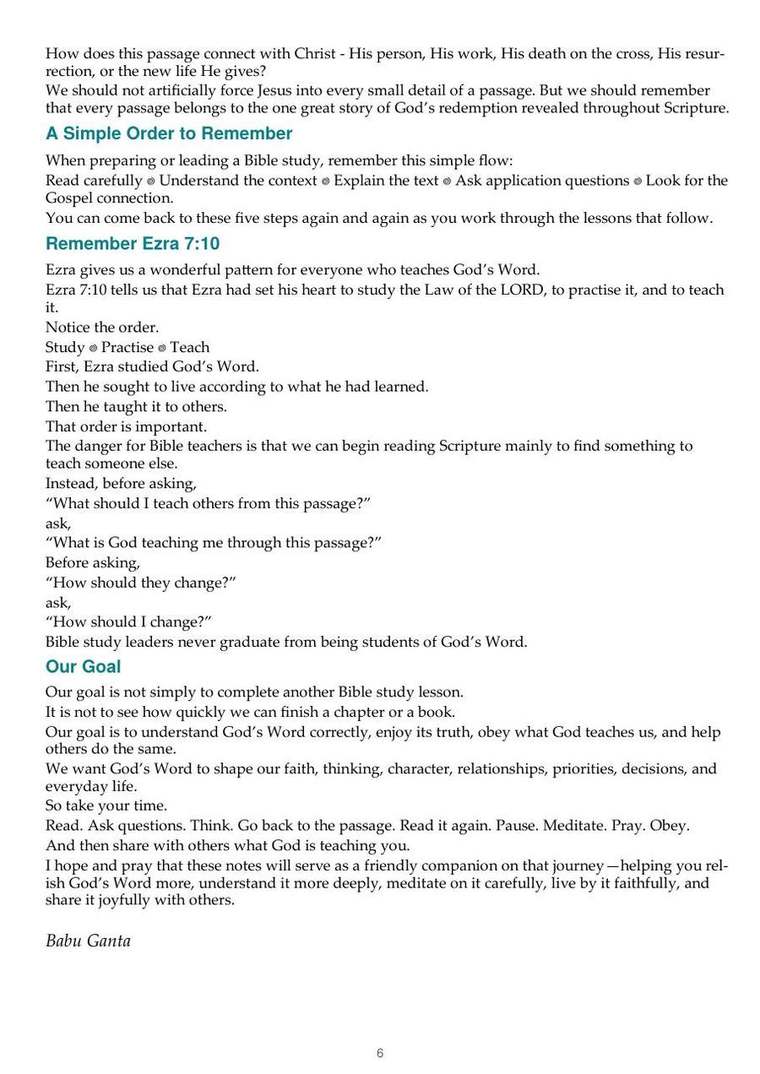
How does this passage connect with Christ - His person, His work, His death on the cross, His resurrection, or the new life He gives?
We should not artificially force Jesus into every small detail of a passage. But we should remember that every passage belongs to the one great story of God’s redemption revealed throughout Scripture.
A Simple Order to Remember
When preparing or leading a Bible study, remember this simple flow:
Read carefully → Understand the context → Explain the text → Ask application questions → Look for the Gospel connection.
You can come back to these five steps again and again as you work through the lessons that follow.
Remember Ezra 7:10
Ezra gives us a wonderful pattern for everyone who teaches God’s Word.
Ezra 7:10 tells us that Ezra had set his heart to study the Law of the LORD, to practise it, and to teach it.
Notice the order.
Study → Practise → Teach
First, Ezra studied God’s Word.
Then he sought to live according to what he had learned.
Then he taught it to others.
That order is important.
The danger for Bible teachers is that we can begin reading Scripture mainly to find something to teach someone else.
Instead, before asking,
“What should I teach others from this passage?”
ask,
“What is God teaching me through this passage?”
Before asking,
“How should they change?”
ask,
“How should I change?”
Bible study leaders never graduate from being students of God’s Word.
Our Goal
Our goal is not simply to complete another Bible study lesson.
It is not to see how quickly we can finish a chapter or a book.
Our goal is to understand God’s Word correctly, enjoy its truth, obey what God teaches us, and help others do the same.
We want God’s Word to shape our faith, thinking, character, relationships, priorities, decisions, and everyday life.
So take your time.
Read. Ask questions. Think. Go back to the passage. Read it again. Pause. Meditate. Pray. Obey.
And then share with others what God is teaching you.
I hope and pray that these notes will serve as a friendly companion on that journey—helping you relish God’s Word more, understand it more deeply, meditate on it carefully, live by it faithfully, and share it joyfully with others.
Babu Ganta
Original PDF pages · అసలు పేజీలు (Telugu 2 · English 4)
తెలుగు · Telugu edition
English edition