Search this book · ఈ పుస్తకంలో వెతకండి
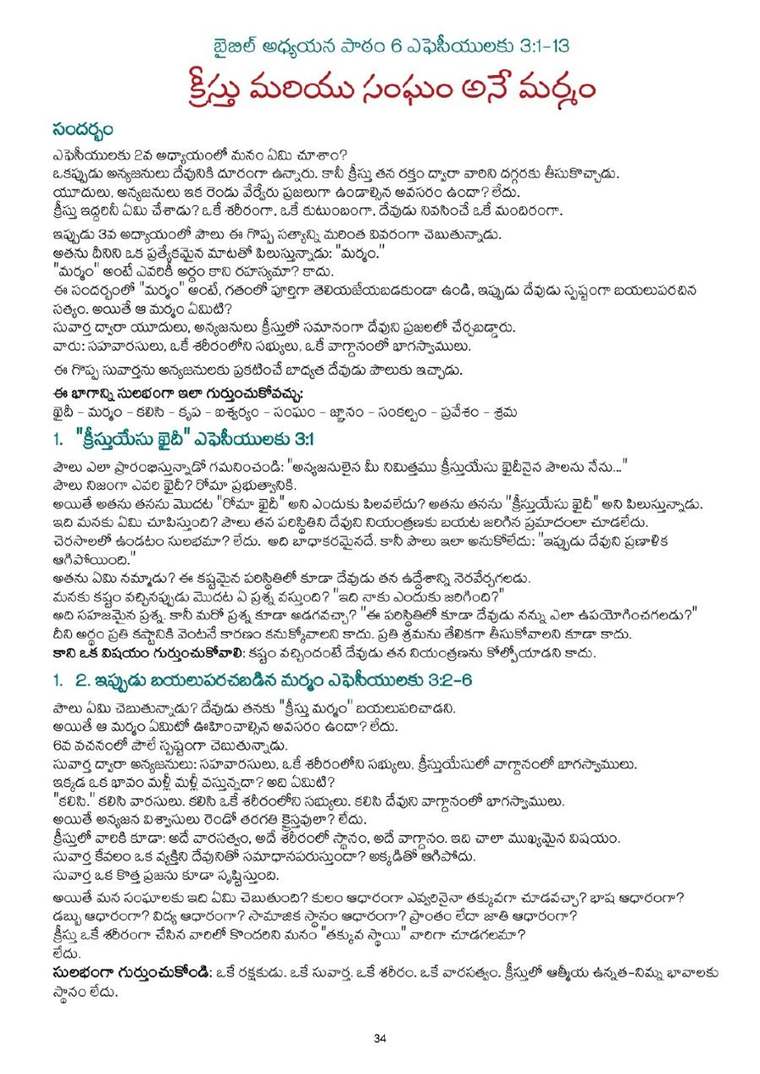
సందర్భం
ఎఫెసీయులకు 2వ అధ్యాయంలో మనం ఏమి చూశాం?
ఒకప్పుడు అన్యజనులు దేవునికి దూరంగా ఉన్నారు. కానీ క్రీస్తు తన రక్తం ద్వారా వారిని దగ్గరకు తీసుకొచ్చాడు.
యూదులు, అన్యజనులు ఇక రెండు వేర్వేరు ప్రజలుగా ఉండాల్సిన అవసరం ఉందా? లేదు.
క్రీస్తు ఇద్దరినీ ఏమి చేశాడు? ఒకే శరీరంగా, ఒకే కుటుంబంగా, దేవుడు నివసించే ఒకే మందిరంగా.
ఇప్పుడు 3వ అధ్యాయంలో పౌలు ఈ గొప్ప సత్యాన్ని మరింత వివరంగా చెబుతున్నాడు.
అతను దీనిని ఒక ప్రత్యేకమైన మాటతో పిలుస్తున్నాడు: “మర్మం.”
“మర్మం” అంటే ఎవరికీ అర్థం కాని రహస్యమా? కాదు.
ఈ సందర్భంలో “మర్మం” అంటే, గతంలో పూర్తిగా తెలియజేయబడకుండా ఉండి, ఇప్పుడు దేవుడు స్పష్టంగా బయలుపరచిన సత్యం. అయితే ఆ మర్మం ఏమిటి?
సువార్త ద్వారా యూదులు, అన్యజనులు క్రీస్తులో సమానంగా దేవుని ప్రజలలో చేర్చబడ్డారు.
వారు: సహవారసులు, ఒకే శరీరంలోని సభ్యులు, ఒకే వాగ్దానంలో భాగస్వాములు.
ఈ గొప్ప సువార్తను అన్యజనులకు ప్రకటించే బాధ్యత దేవుడు పౌలుకు ఇచ్చాడు.
ఈ భాగాన్ని సులభంగా ఇలా గుర్తుంచుకోవచ్చు:
ఖైదీ – మర్మం – కలిసి – కృప – ఐశ్వర్యం – సంఘం – జ్ఞానం – సంకల్పం – ప్రవేశం – శ్రమ
1. “క్రీస్తుయేసు ఖైదీ” ఎఫెసీయులకు 3:1
పౌలు ఎలా ప్రారంభిస్తున్నాడో గమనించండి: “అన్యజనులైన మీ నిమిత్తము క్రీస్తుయేసు ఖైదీనైన పౌలను నేను...”
పౌలు నిజంగా ఎవరి ఖైదీ? రోమా ప్రభుత్వానికి.
అయితే అతను తనను మొదట “రోమా ఖైదీ” అని ఎందుకు పిలవలేదు? అతను తనను “క్రీస్తుయేసు ఖైదీ” అని పిలుస్తున్నాడు.
ఇది మనకు ఏమి చూపిస్తుంది? పౌలు తన పరిస్థితిని దేవుని నియంత్రణకు బయట జరిగిన ప్రమాదంలా చూడలేదు.
చెరసాలలో ఉండటం సులభమా? లేదు. అది బాధాకరమైనదే. కానీ పౌలు ఇలా అనుకోలేదు: “ఇప్పుడు దేవుని ప్రణాళిక ఆగిపోయింది.”
అతను ఏమి నమ్మాడు? ఈ కష్టమైన పరిస్థితిలో కూడా దేవుడు తన ఉద్దేశాన్ని నెరవేర్చగలడు.
మనకు కష్టం వచ్చినప్పుడు మొదట ఏ ప్రశ్న వస్తుంది? “ఇది నాకు ఎందుకు జరిగింది?”
అది సహజమైన ప్రశ్న. కానీ మరో ప్రశ్న కూడా అడగవచ్చా? “ఈ పరిస్థితిలో కూడా దేవుడు నన్ను ఎలా ఉపయోగించగలడు?”
దీని అర్థం ప్రతి కష్టానికి వెంటనే కారణం కనుక్కోవాలని కాదు. ప్రతి శ్రమను తేలికగా తీసుకోవాలని కూడా కాదు.
కాని ఒక విషయం గుర్తుంచుకోవాలి: కష్టం వచ్చిందంటే దేవుడు తన నియంత్రణను కోల్పోయాడని కాదు.
Context
What did we see in Ephesians 2?
The Gentiles were once far from God, but Christ brought them near through His blood.
Do Jews and Gentiles now need to remain two separate peoples? No.
What has Christ made them?
One body, one family, and one dwelling place for God.
Now in chapter 3, Paul explains this great truth in more detail.
He uses a special word: “Mystery.”
Does “mystery” mean something that can never be understood? No.
In this context, a mystery is a truth that was not fully revealed before, but has now been made known clearly by God.
What is this mystery?
Through the gospel, Jews and Gentiles are equally included among God’s people in Christ.
They are: co-heirs, members of the same body, and sharers together in the promise.
God gave Paul the responsibility of proclaiming this great gospel to the Gentiles.
Remember the flow:
Prisoner → Mystery → Together → Grace → Riches → Church → Wisdom → Purpose → Access → Suffering
1. “A Prisoner of Christ Jesus” Ephesians 3:1
Notice how Paul begins:
“For this reason I, Paul, the prisoner of Christ Jesus for the sake of you Gentiles…”
Who was Paul physically imprisoned by? The Roman authorities.
Then why does he describe himself first as a “prisoner of Christ Jesus”?
Because Paul did not see his imprisonment as an accident outside God’s control.
Was prison easy? No.
It involved real suffering.
But Paul did not think: “God’s plan has now stopped.”
What did he believe?
That even in this difficult situation, God could continue fulfilling His purposes.
When suffering comes, what question often comes first?
“Why has this happened to me?”
That is a natural question.
But can we also ask: “How might God still use me in this situation?”
This does not mean we must immediately discover a specific reason for every difficulty.
Neither does it mean suffering should be treated lightly.
But we should remember: Difficulty does not mean God has lost control.
1. 2. ఇప్పుడు బయలుపరచబడిన మర్మం ఎఫెసీయులకు 3:2-6
పౌలు ఏమి చెబుతున్నాడు? దేవుడు తనకు “క్రీస్తు మర్మం” బయలుపరిచాడని.
అయితే ఆ మర్మం ఏమిటో ఊహించాల్సిన అవసరం ఉందా? లేదు.
6వ వచనంలో పౌలే స్పష్టంగా చెబుతున్నాడు.
సువార్త ద్వారా అన్యజనులు: సహవారసులు, ఒకే శరీరంలోని సభ్యులు, క్రీస్తుయేసులో వాగ్దానంలో భాగస్వాములు.
ఇక్కడ ఒక భావం మళ్లీ మళ్లీ వస్తున్నదా? అది ఏమిటి?
“కలిసి.” కలిసి వారసులు. కలిసి ఒకే శరీరంలోని సభ్యులు. కలిసి దేవుని వాగ్దానంలో భాగస్వాములు.
అయితే అన్యజన విశ్వాసులు రెండో తరగతి క్రైస్తవులా? లేదు.
క్రీస్తులో వారికి కూడా: అదే వారసత్వం, అదే శరీరంలో స్థానం, అదే వాగ్దానం. ఇది చాలా ముఖ్యమైన విషయం.
సువార్త కేవలం ఒక వ్యక్తిని దేవునితో సమాధానపరుస్తుందా? అక్కడితో ఆగిపోదు.
సువార్త ఒక కొత్త ప్రజను కూడా సృష్టిస్తుంది.
అయితే మన సంఘాలకు ఇది ఏమి చెబుతుంది? కులం ఆధారంగా ఎవ్వరినైనా తక్కువగా చూడవచ్చా? భాష ఆధారంగా? డబ్బు ఆధారంగా? విద్య ఆధారంగా? సామాజిక స్థానం ఆధారంగా? ప్రాంతం లేదా జాతి ఆధారంగా?
క్రీస్తు ఒకే శరీరంగా చేసిన వారిలో కొందరిని మనం “తక్కువ స్థాయి” వారిగా చూడగలమా?
లేదు.
సులభంగా గుర్తుంచుకోండి: ఒకే రక్షకుడు. ఒకే సువార్త. ఒకే శరీరం. ఒకే వారసత్వం. క్రీస్తులో ఆత్మీయ ఉన్నత-నిమ్న భావాలకు స్థానం లేదు.
2. The Mystery Now Revealed Ephesians 3:2–6
What does Paul say?
God revealed to him “the mystery of Christ.” Do we need to guess what the mystery is? No.
Paul explains it clearly in verse 6.
Through the gospel the Gentiles are: co-heirs, members together of one body, and sharers together in the promise in Christ Jesus.
Do you notice an idea that keeps appearing?
Together. Together as heirs. Together in one body. Together in God’s promise.
Are Gentile believers second-class Christians? No.
In Christ they receive: the same inheritance, the same place in the body, and the same promise.
This is very important.
Does the gospel merely reconcile an individual to God? No.
It also creates a new people.
What does this say to our churches today?
Can we look down on people because of caste, language, money, education, social status, region, or ethnicity?
Can we treat some members of the one body as spiritually inferior? No.
Remember: One Savior. One gospel. One body. One inheritance.
There is no room for spiritual superiority or inferiority in Christ.
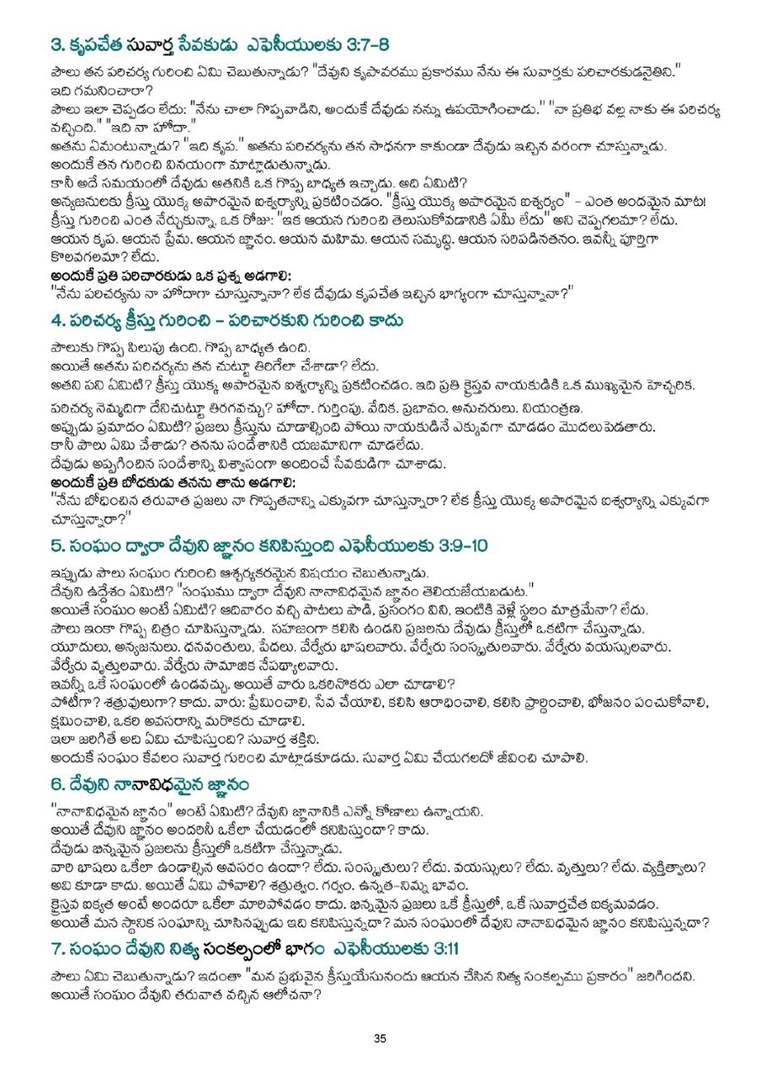
3. కృపచేత సువార్త సేవకుడు ఎఫెసీయులకు 3:7-8
పౌలు తన పరిచర్య గురించి ఏమి చెబుతున్నాడు? “దేవుని కృపావరము ప్రకారము నేను ఈ సువార్తకు పరిచారకుడనైతిని.”
ఇది గమనించారా?
పౌలు ఇలా చెప్పడం లేదు: “నేను చాలా గొప్పవాడిని, అందుకే దేవుడు నన్ను ఉపయోగించాడు.” “నా ప్రతిభ వల్ల నాకు ఈ పరిచర్య వచ్చింది.” “ఇది నా హోదా.”
అతను ఏమంటున్నాడు? “ఇది కృప.” అతను పరిచర్యను తన సాధనగా కాకుండా దేవుడు ఇచ్చిన వరంగా చూస్తున్నాడు.
అందుకే తన గురించి వినయంగా మాట్లాడుతున్నాడు.
కానీ అదే సమయంలో దేవుడు అతనికి ఒక గొప్ప బాధ్యత ఇచ్చాడు. అది ఏమిటి?
అన్యజనులకు క్రీస్తు యొక్క అపారమైన ఐశ్వర్యాన్ని ప్రకటించడం. “క్రీస్తు యొక్క అపారమైన ఐశ్వర్యం” – ఎంత అందమైన మాట!
క్రీస్తు గురించి ఎంత నేర్చుకున్నా, ఒక రోజు: “ఇక ఆయన గురించి తెలుసుకోవడానికి ఏమీ లేదు” అని చెప్పగలమా? లేదు.
ఆయన కృప. ఆయన ప్రేమ. ఆయన జ్ఞానం. ఆయన మహిమ. ఆయన సమృద్ధి. ఆయన సరిపడినతనం. ఇవన్నీ పూర్తిగా కొలవగలమా? లేదు.
అందుకే ప్రతి పరిచారకుడు ఒక ప్రశ్న అడగాలి:
“నేను పరిచర్యను నా హోదాగా చూస్తున్నానా? లేక దేవుడు కృపచేత ఇచ్చిన భాగ్యంగా చూస్తున్నానా?”
3. A Servant of the Gospel by Grace Ephesians 3:7-8
How does Paul describe his ministry?
“I became a servant of this gospel by the gift of God’s grace.”
Notice what Paul does not say.
He does not say: “ I am very important, so God chose me.” “My talent earned me this ministry.” “This is my position.”
What does he say? “It is grace.”
Paul sees ministry not as his achievement but as a gift from God.
That is why he speaks humbly about himself.
Yet God also gave him a great responsibility.
What was it? To proclaim to the Gentiles “the boundless riches of Christ.”
What a beautiful phrase!
Can we ever learn so much about Christ that one day we say:
“There is nothing more to discover about Him”? No.
Can we completely measure His grace, His love, His wisdom, His glory, His sufficiency, His riches? No.
Every Christian worker should therefore ask:
“Do I see ministry mainly as my position, or as a privilege God has given me by grace?”
4. పరిచర్య క్రీస్తు గురించి – పరిచారకుని గురించి కాదు
పౌలుకు గొప్ప పిలుపు ఉంది. గొప్ప బాధ్యత ఉంది.
అయితే అతను పరిచర్యను తన చుట్టూ తిరిగేలా చేశాడా? లేదు.
అతని పని ఏమిటి? క్రీస్తు యొక్క అపారమైన ఐశ్వర్యాన్ని ప్రకటించడం. ఇది ప్రతి క్రైస్తవ నాయకుడికి ఒక ముఖ్యమైన హెచ్చరిక.
పరిచర్య నెమ్మదిగా దేనిచుట్టూ తిరగవచ్చు? హోదా. గుర్తింపు. వేదిక. ప్రభావం. అనుచరులు. నియంత్రణ.
అప్పుడు ప్రమాదం ఏమిటి? ప్రజలు క్రీస్తును చూడాల్సింది పోయి నాయకుడినే ఎక్కువగా చూడడం మొదలుపెడతారు.
కానీ పౌలు ఏమి చేశాడు? తనను సందేశానికి యజమానిగా చూడలేదు.
దేవుడు అప్పగించిన సందేశాన్ని విశ్వాసంగా అందించే సేవకుడిగా చూశాడు.
అందుకే ప్రతి బోధకుడు తనను తాను అడగాలి:
“నేను బోధించిన తరువాత ప్రజలు నా గొప్పతనాన్ని ఎక్కువగా చూస్తున్నారా? లేక క్రీస్తు యొక్క అపారమైన ఐశ్వర్యాన్ని ఎక్కువగా చూస్తున్నారా?”
4. Ministry Is About Christ, Not the Minister
Paul had a great calling. He had great responsibility.
But did he make ministry revolve around himself? No.
What was his task?
To proclaim the boundless riches of Christ.
This is an important warning for every Christian leader.
What can ministry slowly begin to revolve around?
Position. Recognition. The platform. Influence. Followers. Control.
What is the danger?
People may begin looking more at the leader than at Christ.
But how did Paul see himself?
Not as the owner of the message.
He saw himself as a servant entrusted with a message from God.
Every teacher should therefore ask:
“After I teach, do people leave more impressed with me, or more amazed by the riches of Christ?”
5. సంఘం ద్వారా దేవుని జ్ఞానం కనిపిస్తుంది ఎఫెసీయులకు 3:9-10
ఇప్పుడు పౌలు సంఘం గురించి ఆశ్చర్యకరమైన విషయం చెబుతున్నాడు.
దేవుని ఉద్దేశం ఏమిటి? “సంఘము ద్వారా దేవుని నానావిధమైన జ్ఞానం తెలియజేయబడుట.”
అయితే సంఘం అంటే ఏమిటి? ఆదివారం వచ్చి పాటలు పాడి, ప్రసంగం విని, ఇంటికి వెళ్లే స్థలం మాత్రమేనా? లేదు.
పౌలు ఇంకా గొప్ప చిత్రం చూపిస్తున్నాడు. సహజంగా కలిసి ఉండని ప్రజలను దేవుడు క్రీస్తులో ఒకటిగా చేస్తున్నాడు.
యూదులు, అన్యజనులు. ధనవంతులు, పేదలు. వేర్వేరు భాషలవారు. వేర్వేరు సంస్కృతులవారు. వేర్వేరు వయస్సులవారు. వేర్వేరు వృత్తులవారు. వేర్వేరు సామాజిక నేపథ్యాలవారు.
ఇవన్నీ ఒకే సంఘంలో ఉండవచ్చు. అయితే వారు ఒకరినొకరు ఎలా చూడాలి?
పోటీగా? శత్రువులుగా? కాదు. వారు: ప్రేమించాలి, సేవ చేయాలి, కలిసి ఆరాధించాలి, కలిసి ప్రార్థించాలి, భోజనం పంచుకోవాలి, క్షమించాలి, ఒకరి అవసరాన్ని మరొకరు చూడాలి.
ఇలా జరిగితే అది ఏమి చూపిస్తుంది? సువార్త శక్తిని.
అందుకే సంఘం కేవలం సువార్త గురించి మాట్లాడకూడదు. సువార్త ఏమి చేయగలదో జీవించి చూపాలి.
5. God’s Wisdom Is Displayed Through the Church Ephesians 3:9–10
Paul now says something remarkable about the church.
What is God’s purpose?
That “through the church, the manifold wisdom of God should be made known.”
What, then, is the church?
Merely a place where people come on Sunday, sing songs, hear a sermon, and go home? No.
Paul gives us a much bigger picture.
God is bringing together people who would not naturally belong together.
Jews and Gentiles. Rich and poor. Different language groups. Different cultures.Different ages.
Different occupations.Different social backgrounds.All of them may belong to the same church.
How should they treat one another?
Not as rivals. Not as enemies. They should love one another, serve one another, worship together, pray together, share meals, forgive one another, and care for one another’s needs.
When this happens, what does it display?
The power of the gospel.
The church should not merely talk about what the gospel can do. It should live out what the
gospel has done.
6. దేవుని నానావిధమైన జ్ఞానం
“నానావిధమైన జ్ఞానం” అంటే ఏమిటి? దేవుని జ్ఞానానికి ఎన్నో కోణాలు ఉన్నాయని.
అయితే దేవుని జ్ఞానం అందరినీ ఒకేలా చేయడంలో కనిపిస్తుందా? కాదు.
దేవుడు భిన్నమైన ప్రజలను క్రీస్తులో ఒకటిగా చేస్తున్నాడు.
వారి భాషలు ఒకేలా ఉండాల్సిన అవసరం ఉందా? లేదు. సంస్కృతులు? లేదు. వయస్సులు? లేదు. వృత్తులు? లేదు. వ్యక్తిత్వాలు? అవి కూడా కాదు. అయితే ఏమి పోవాలి? శత్రుత్వం. గర్వం. ఉన్నత-నిమ్న భావం.
క్రైస్తవ ఐక్యత అంటే అందరూ ఒకేలా మారిపోవడం కాదు. భిన్నమైన ప్రజలు ఒకే క్రీస్తులో, ఒకే సువార్తచేత ఐక్యమవడం.
అయితే మన స్థానిక సంఘాన్ని చూసినప్పుడు ఇది కనిపిస్తున్నదా? మన సంఘంలో దేవుని నానావిధమైన జ్ఞానం కనిపిస్తున్నదా?
6. The Manifold Wisdom of God
What does “manifold wisdom” mean?
It means God’s wisdom has many beautiful dimensions.
Is God’s wisdom displayed by making everyone exactly the same? No.
God brings different people together in Christ.
Do they all need the same language? No.
The same culture? No.
The same age? No.
The same occupation? No.
The same personality? No.
What must disappear?
Hostility. Pride. Superiority. Inferiority.
Christian unity does not mean that everyone becomes identical.
It means different people are united in one Christ through one gospel.
So ask: “When people look at our local church, can they see the many-sided wisdom of God?”
7. సంఘం దేవుని నిత్య సంకల్పంలో భాగం ఎఫెసీయులకు 3:11
పౌలు ఏమి చెబుతున్నాడు? ఇదంతా “మన ప్రభువైన క్రీస్తుయేసునందు ఆయన చేసిన నిత్య సంకల్పము ప్రకారం” జరిగిందని.
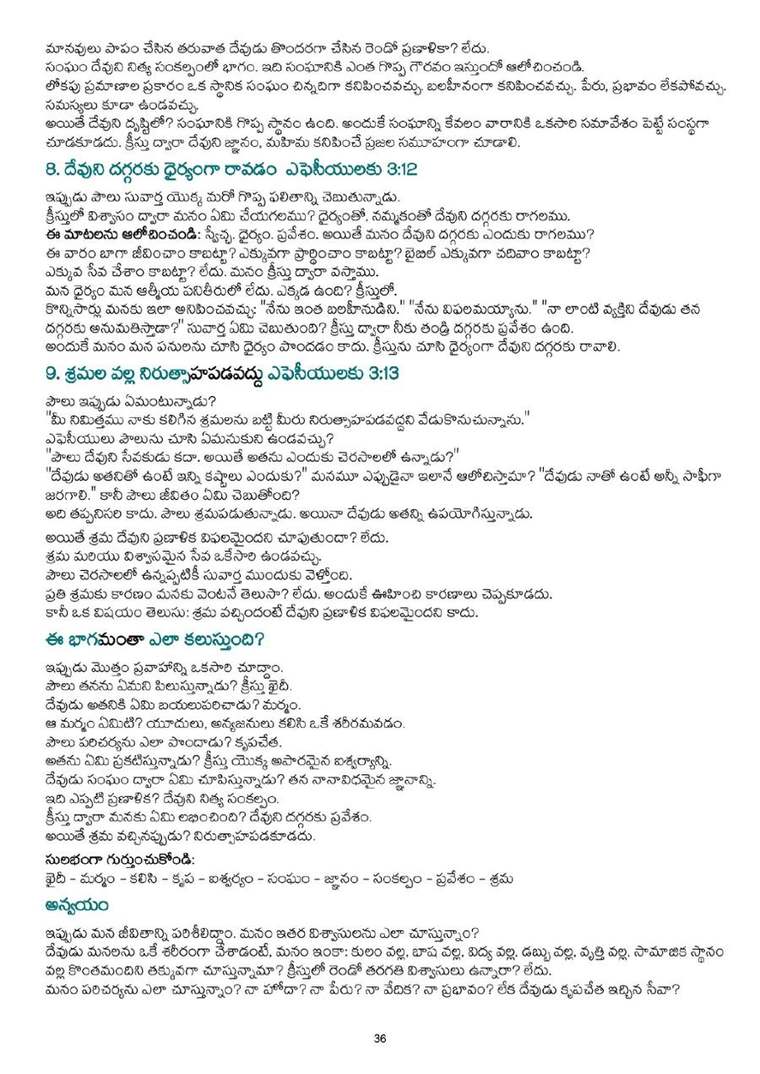
అయితే సంఘం దేవుని తరువాత వచ్చిన ఆలోచనా?
మానవులు పాపం చేసిన తరువాత దేవుడు తొందరగా చేసిన రెండో ప్రణాళికా? లేదు.
సంఘం దేవుని నిత్య సంకల్పంలో భాగం. ఇది సంఘానికి ఎంత గొప్ప గౌరవం ఇస్తుందో ఆలోచించండి.
లోకపు ప్రమాణాల ప్రకారం ఒక స్థానిక సంఘం చిన్నదిగా కనిపించవచ్చు. బలహీనంగా కనిపించవచ్చు. పేరు, ప్రభావం లేకపోవచ్చు. సమస్యలు కూడా ఉండవచ్చు.
అయితే దేవుని దృష్టిలో? సంఘానికి గొప్ప స్థానం ఉంది. అందుకే సంఘాన్ని కేవలం వారానికి ఒకసారి సమావేశం పెట్టే సంస్థగా చూడకూడదు. క్రీస్తు ద్వారా దేవుని జ్ఞానం, మహిమ కనిపించే ప్రజల సమూహంగా చూడాలి.
7. The Church Is Part of God’s Eternal Purpose Ephesians 3:11
Paul says all this happened:
“according to his eternal purpose that he accomplished in Christ Jesus our Lord.”
Was the church an afterthought in God’s plan?
Was it an emergency solution after human beings sinned? No.
The church belongs to God’s eternal purpose.
Think about how much dignity this gives to the church.
A local church may look small by worldly standards. It may appear weak. It may have little influence or recognition. It may even have many problems.
But how does God see His church?
As part of His eternal purpose.
So we should not think of the church merely as an organization that holds weekly meetings. It is a people through whom God displays His wisdom and glory in Christ.
8. దేవుని దగ్గరకు ధైర్యంగా రావడం ఎఫెసీయులకు 3:12
ఇప్పుడు పౌలు సువార్త యొక్క మరో గొప్ప ఫలితాన్ని చెబుతున్నాడు.
క్రీస్తులో విశ్వాసం ద్వారా మనం ఏమి చేయగలము? ధైర్యంతో, నమ్మకంతో దేవుని దగ్గరకు రాగలము.
ఈ మాటలను ఆలోచించండి: స్వేచ్ఛ. ధైర్యం. ప్రవేశం. అయితే మనం దేవుని దగ్గరకు ఎందుకు రాగలము?
ఈ వారం బాగా జీవించాం కాబట్టా? ఎక్కువగా ప్రార్థించాం కాబట్టా? బైబిల్ ఎక్కువగా చదివాం కాబట్టా?
ఎక్కువ సేవ చేశాం కాబట్టా? లేదు. మనం క్రీస్తు ద్వారా వస్తాము.
మన ధైర్యం మన ఆత్మీయ పనితీరులో లేదు. ఎక్కడ ఉంది? క్రీస్తులో.
కొన్నిసార్లు మనకు ఇలా అనిపించవచ్చు: “నేను ఇంత బలహీనుడిని.” “నేను విఫలమయ్యాను.” “నా లాంటి వ్యక్తిని దేవుడు తన దగ్గరకు అనుమతిస్తాడా?” సువార్త ఏమి చెబుతుంది? క్రీస్తు ద్వారా నీకు తండ్రి దగ్గరకు ప్రవేశం ఉంది.
అందుకే మనం మన పనులను చూసి ధైర్యం పొందడం కాదు. క్రీస్తును చూసి ధైర్యంగా దేవుని దగ్గరకు రావాలి.
8. Bold and Confident Access to God Ephesians 3:12
Paul now describes another great result of the gospel.
Through faith in Christ, what can we do?
We can approach God with freedom, boldness, and confidence.
Why are we able to come near to God?
Because we lived very well this week?
Because we prayed enough?
Because we read enough Bible?
Because we served enough? No.
We come through Christ.
Our confidence is not in our spiritual performance.
Where is it? In Christ.
Sometimes we may think: “I am too weak.” “I have failed.” “Would God really allow someone like me to come near Him?”
What does the gospel say?
Through Christ, you have access to the Father. So our confidence does not come from looking at our record. We look to Christ and come boldly to God.
9. శ్రమల వల్ల నిరుత్సాహపడవద్దు ఎఫెసీయులకు 3:13
పౌలు ఇప్పుడు ఏమంటున్నాడు?
“మీ నిమిత్తము నాకు కలిగిన శ్రమలను బట్టి మీరు నిరుత్సాహపడవద్దని వేడుకొనుచున్నాను.”
ఎఫెసీయులు పౌలును చూసి ఏమనుకుని ఉండవచ్చు?
“పౌలు దేవుని సేవకుడు కదా. అయితే అతను ఎందుకు చెరసాలలో ఉన్నాడు?”
“దేవుడు అతనితో ఉంటే ఇన్ని కష్టాలు ఎందుకు?” మనమూ ఎప్పుడైనా ఇలానే ఆలోచిస్తామా? “దేవుడు నాతో ఉంటే అన్నీ సాఫీగా జరగాలి.” కానీ పౌలు జీవితం ఏమి చెబుతోంది?
అది తప్పనిసరి కాదు. పౌలు శ్రమపడుతున్నాడు. అయినా దేవుడు అతన్ని ఉపయోగిస్తున్నాడు.
అయితే శ్రమ దేవుని ప్రణాళిక విఫలమైందని చూపుతుందా? లేదు.
శ్రమ మరియు విశ్వాసమైన సేవ ఒకేసారి ఉండవచ్చు.
పౌలు చెరసాలలో ఉన్నప్పటికీ సువార్త ముందుకు వెళ్తోంది.
ప్రతి శ్రమకు కారణం మనకు వెంటనే తెలుసా? లేదు. అందుకే ఊహించి కారణాలు చెప్పకూడదు.
కానీ ఒక విషయం తెలుసు: శ్రమ వచ్చిందంటే దేవుని ప్రణాళిక విఫలమైందని కాదు.
ఈ భాగమంతా ఎలా కలుస్తుంది?
ఇప్పుడు మొత్తం ప్రవాహాన్ని ఒకసారి చూద్దాం.
పౌలు తనను ఏమని పిలుస్తున్నాడు? క్రీస్తు ఖైదీ.
దేవుడు అతనికి ఏమి బయలుపరిచాడు? మర్మం.
ఆ మర్మం ఏమిటి? యూదులు, అన్యజనులు కలిసి ఒకే శరీరమవడం.
పౌలు పరిచర్యను ఎలా పొందాడు? కృపచేత.
అతను ఏమి ప్రకటిస్తున్నాడు? క్రీస్తు యొక్క అపారమైన ఐశ్వర్యాన్ని.
దేవుడు సంఘం ద్వారా ఏమి చూపిస్తున్నాడు? తన నానావిధమైన జ్ఞానాన్ని.
ఇది ఎప్పటి ప్రణాళిక? దేవుని నిత్య సంకల్పం.
క్రీస్తు ద్వారా మనకు ఏమి లభించింది? దేవుని దగ్గరకు ప్రవేశం.
అయితే శ్రమ వచ్చినప్పుడు? నిరుత్సాహపడకూడదు.
సులభంగా గుర్తుంచుకోండి:
ఖైదీ – మర్మం – కలిసి – కృప – ఐశ్వర్యం – సంఘం – జ్ఞానం – సంకల్పం – ప్రవేశం – శ్రమ
9. Do Not Be Discouraged by Suffering Ephesians 3:13
What does Paul say?
“I ask you, therefore, not to be discouraged because of my sufferings for you.”
What might the Ephesian believers have thought?
“Paul is God’s servant. Why is he in prison?”
“If God is with him, why is he suffering?”
Do we sometimes think the same way?
“If God is with me, everything should go smoothly.”
But what does Paul’s life show?
That is not always true.
Paul is suffering.
Yet God is still using him.
Does suffering prove that God’s plan has failed? No.
Suffering and faithful service can exist at the same time.
Even while Paul is imprisoned, the gospel continues to advance.
Do we always know the specific reason for every suffering? No.
So we should not invent explanations.
But we do know this: Suffering does not mean God’s purpose has failed.
How Does the Whole Passage Fit Together?
Let us follow the flow.
What does Paul call himself? A prisoner of Christ.
What has God revealed? The mystery.
What is that mystery? Jews and Gentiles are brought together into one body.
How did Paul receive his ministry? By grace.
What does he proclaim? The boundless riches of Christ.
What is God displaying through the church? His manifold wisdom.
How old is this plan? It belongs to God’s eternal purpose.
What do we receive through Christ? Access to God.
And when suffering comes? Do not lose heart.
Remember:
Prisoner → Mystery → Together → Grace → Riches → Church → Wisdom → Purpose → Access → Suffering
అన్వయం
ఇప్పుడు మన జీవితాన్ని పరిశీలిద్దాం. మనం ఇతర విశ్వాసులను ఎలా చూస్తున్నాం?
దేవుడు మనలను ఒకే శరీరంగా చేశాడంటే, మనం ఇంకా: కులం వల్ల, భాష వల్ల, విద్య వల్ల, డబ్బు వల్ల, వృత్తి వల్ల, సామాజిక స్థానం వల్ల కొంతమందిని తక్కువగా చూస్తున్నామా? క్రీస్తులో రెండో తరగతి విశ్వాసులు ఉన్నారా? లేదు.
మనం పరిచర్యను ఎలా చూస్తున్నాం? నా హోదా? నా పేరు? నా వేదిక? నా ప్రభావం? లేక దేవుడు కృపచేత ఇచ్చిన సేవా?
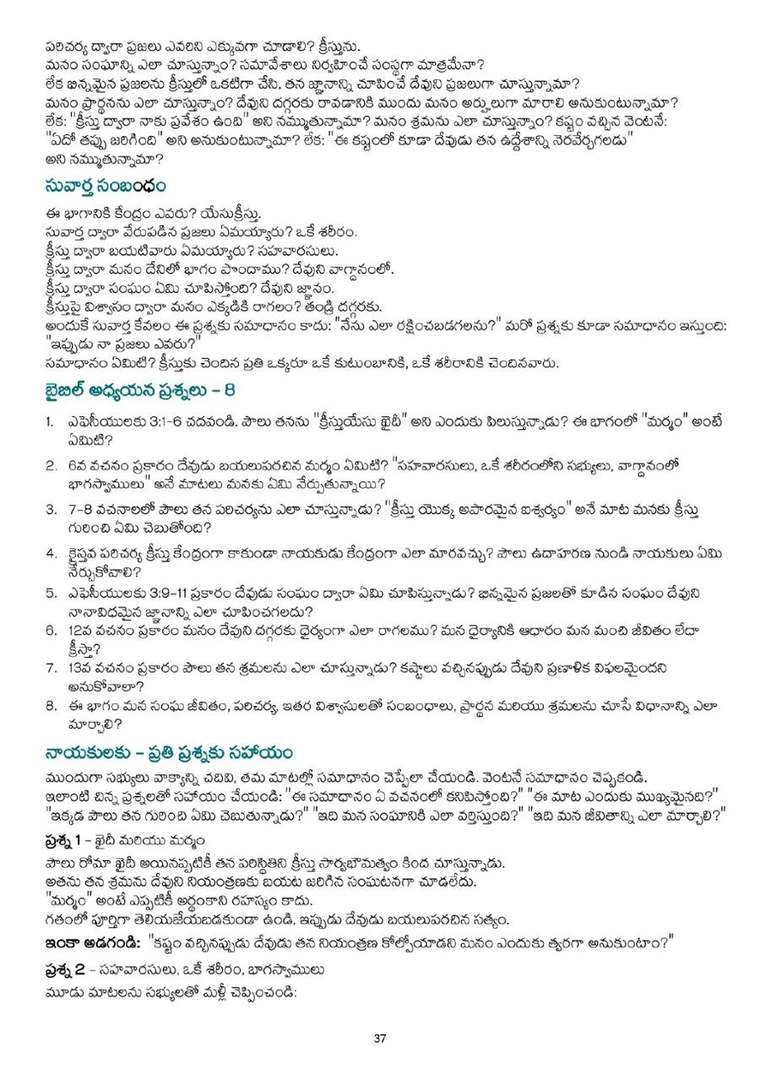
పరిచర్య ద్వారా ప్రజలు ఎవరిని ఎక్కువగా చూడాలి? క్రీస్తును.
మనం సంఘాన్ని ఎలా చూస్తున్నాం? సమావేశాలు నిర్వహించే సంస్థగా మాత్రమేనా?
లేక భిన్నమైన ప్రజలను క్రీస్తులో ఒకటిగా చేసి, తన జ్ఞానాన్ని చూపించే దేవుని ప్రజలుగా చూస్తున్నామా?
మనం ప్రార్థనను ఎలా చూస్తున్నాం? దేవుని దగ్గరకు రావడానికి ముందు మనం అర్హులుగా మారాలి అనుకుంటున్నామా?
లేక: “క్రీస్తు ద్వారా నాకు ప్రవేశం ఉంది” అని నమ్ముతున్నామా? మనం శ్రమను ఎలా చూస్తున్నాం? కష్టం వచ్చిన వెంటనే: “ఏదో తప్పు జరిగింది” అని అనుకుంటున్నామా? లేక: “ఈ కష్టంలో కూడా దేవుడు తన ఉద్దేశాన్ని నెరవేర్చగలడు” అని నమ్ముతున్నామా?
Application
Let us examine our own lives.
How do we look at other believers?
If God has made us one body, do we still look down on people because of caste, language, education, money, occupation, or social status?
Are there second-class Christians in Christ? No.
How do we view ministry?
Is it about my title, my name, my platform, or my influence?
Or is it a service God has given by grace?
Through our ministry, whom should people see most clearly?
Christ.
How do we view the church?
Only as an organization that conducts meetings?
Or as a people through whom God displays His wisdom by bringing different people together in Christ?
How do we view prayer?
Do we think we must first make ourselves worthy before approaching God?
Or do we believe: “Through Christ I have access to the Father”?
How do we view suffering?
When difficulty comes, do we immediately think: “Something must have gone wrong”?
Or can we also trust: “Even here, God can continue accomplishing His purpose”?
సువార్త సంబంధం
ఈ భాగానికి కేంద్రం ఎవరు? యేసుక్రీస్తు.
సువార్త ద్వారా వేరుపడిన ప్రజలు ఏమయ్యారు? ఒకే శరీరం.
క్రీస్తు ద్వారా బయటివారు ఏమయ్యారు? సహవారసులు.
క్రీస్తు ద్వారా మనం దేనిలో భాగం పొందాము? దేవుని వాగ్దానంలో.
క్రీస్తు ద్వారా సంఘం ఏమి చూపిస్తోంది? దేవుని జ్ఞానం.
క్రీస్తుపై విశ్వాసం ద్వారా మనం ఎక్కడికి రాగలం? తండ్రి దగ్గరకు.
అందుకే సువార్త కేవలం ఈ ప్రశ్నకు సమాధానం కాదు: “నేను ఎలా రక్షించబడగలను?” మరో ప్రశ్నకు కూడా సమాధానం ఇస్తుంది: “ఇప్పుడు నా ప్రజలు ఎవరు?”
సమాధానం ఏమిటి? క్రీస్తుకు చెందిన ప్రతి ఒక్కరూ ఒకే కుటుంబానికి, ఒకే శరీరానికి చెందినవారు.
Gospel Connection
Who is at the center of this whole passage? Jesus Christ.
Through the gospel, what happens to divided people? They become one body.
Through Christ, what happens to outsiders? They become co-heirs.
Through Christ, what do we share? God’s promise.
Through Christ, what does the church display? God’s wisdom.
Through faith in Christ, where can we come? To the Father.
So the gospel does not only answer: “How can I be saved?”
It also answers: “Who are my people now?”
What is the answer?
Everyone who belongs to Christ belongs to the same family and the same body.
బైబిల్ అధ్యయన ప్రశ్నలు – 8
- ఎఫెసీయులకు 3:1-6 చదవండి. పౌలు తనను “క్రీస్తుయేసు ఖైదీ” అని ఎందుకు పిలుస్తున్నాడు? ఈ భాగంలో “మర్మం” అంటే ఏమిటి?
- 6వ వచనం ప్రకారం దేవుడు బయలుపరచిన మర్మం ఏమిటి? “సహవారసులు, ఒకే శరీరంలోని సభ్యులు, వాగ్దానంలో భాగస్వాములు” అనే మాటలు మనకు ఏమి నేర్పుతున్నాయి?
- 7-8 వచనాలలో పౌలు తన పరిచర్యను ఎలా చూస్తున్నాడు? “క్రీస్తు యొక్క అపారమైన ఐశ్వర్యం” అనే మాట మనకు క్రీస్తు గురించి ఏమి చెబుతోంది?
- క్రైస్తవ పరిచర్య క్రీస్తు కేంద్రంగా కాకుండా నాయకుడు కేంద్రంగా ఎలా మారవచ్చు? పౌలు ఉదాహరణ నుండి నాయకులు ఏమి నేర్చుకోవాలి?
- ఎఫెసీయులకు 3:9-11 ప్రకారం దేవుడు సంఘం ద్వారా ఏమి చూపిస్తున్నాడు? భిన్నమైన ప్రజలతో కూడిన సంఘం దేవుని నానావిధమైన జ్ఞానాన్ని ఎలా చూపించగలదు?
- 12వ వచనం ప్రకారం మనం దేవుని దగ్గరకు ధైర్యంగా ఎలా రాగలము? మన ధైర్యానికి ఆధారం మన మంచి జీవితం లేదా క్రీస్తా?
- 13వ వచనం ప్రకారం పౌలు తన శ్రమలను ఎలా చూస్తున్నాడు? కష్టాలు వచ్చినప్పుడు దేవుని ప్రణాళిక విఫలమైందని అనుకోవాలా?
- ఈ భాగం మన సంఘ జీవితం, పరిచర్య, ఇతర విశ్వాసులతో సంబంధాలు, ప్రార్థన మరియు శ్రమలను చూసే విధానాన్ని ఎలా మార్చాలి?
Bible Study Questions - 8
1. Read Ephesians 3:1–6. Why does Paul call himself “a prisoner of Christ Jesus”? What does the word “mystery” mean in this passage?
2. According to verse 6, what is the mystery God has revealed? What do the words “co-heirs, members together of one body, and sharers together in the promise” teach us?
3. How does Paul view his ministry in verses 7–8? What does the phrase “the boundless riches of Christ” teach us about Christ?
4. How can Christian ministry slowly become leader-centered instead of Christ-centered? What should leaders learn from Paul’s example?
5. According to Ephesians 3:9–11, what is God displaying through the church? How can a church made up of very different people display the manifold wisdom of God?
6. According to verse 12, how can we approach God with boldness and confidence? Is our confidence based on our good performance or on Christ?
7. According to verse 13, how does Paul view his suffering? Should we assume that suffering means God’s plan has failed?
8. How should this passage change the way we view church life, ministry, other believers, prayer, and suffering?
నాయకులకు – ప్రతి ప్రశ్నకు సహాయం
ముందుగా సభ్యులు వాక్యాన్ని చదివి, తమ మాటల్లో సమాధానం చెప్పేలా చేయండి. వెంటనే సమాధానం చెప్పకండి.
ఇలాంటి చిన్న ప్రశ్నలతో సహాయం చేయండి: “ఈ సమాధానం ఏ వచనంలో కనిపిస్తోంది?” “ఈ మాట ఎందుకు ముఖ్యమైనది?” “ఇక్కడ పౌలు తన గురించి ఏమి చెబుతున్నాడు?” “ఇది మన సంఘానికి ఎలా వర్తిస్తుంది?” “ఇది మన జీవితాన్ని ఎలా మార్చాలి?”
Help for Leaders - Each Question
First, allow members to read the passage and answer in their own words.
Do not give the answers immediately.
Use short questions such as: “Which verse gives that answer?” “Why is this word important?”
“What does Paul say about himself here?” “How does this apply to our church?” “How should this change our lives?”
ప్రశ్న 1 – ఖైదీ మరియు మర్మం
పౌలు రోమా ఖైదీ అయినప్పటికీ తన పరిస్థితిని క్రీస్తు సార్వభౌమత్వం కింద చూస్తున్నాడు.
అతను తన శ్రమను దేవుని నియంత్రణకు బయట జరిగిన సంఘటనగా చూడలేదు.
“మర్మం” అంటే ఎప్పటికీ అర్థంకాని రహస్యం కాదు.
గతంలో పూర్తిగా తెలియజేయబడకుండా ఉండి, ఇప్పుడు దేవుడు బయలుపరచిన సత్యం.
ఇంకా అడగండి: “కష్టం వచ్చినప్పుడు దేవుడు తన నియంత్రణ కోల్పోయాడని మనం ఎందుకు త్వరగా అనుకుంటాం?”
Question 1 — Prisoner and Mystery
Although Paul is physically a Roman prisoner, he sees his situation under the sovereign rule of Christ.
He does not view his suffering as something outside God’s control.
A “mystery” is not a secret that can never be understood.
It is a truth that was not fully revealed before but has now been made known by God.
Ask: “Why are we sometimes quick to think that God has lost control when suffering comes?”
ప్రశ్న 2 – సహవారసులు, ఒకే శరీరం, భాగస్వాములు
మూడు మాటలను సభ్యులతో మళ్లీ చెప్పించండి:
సహవారసులు – ఒకే శరీరంలోని సభ్యులు – వాగ్దానంలో భాగస్వాములు
అన్యజన విశ్వాసులు రెండో తరగతి క్రైస్తవులు కాదు.
క్రీస్తులో వారికి కూడా: అదే వారసత్వం, అదే శరీరంలో స్థానం, అదే వాగ్దానం.
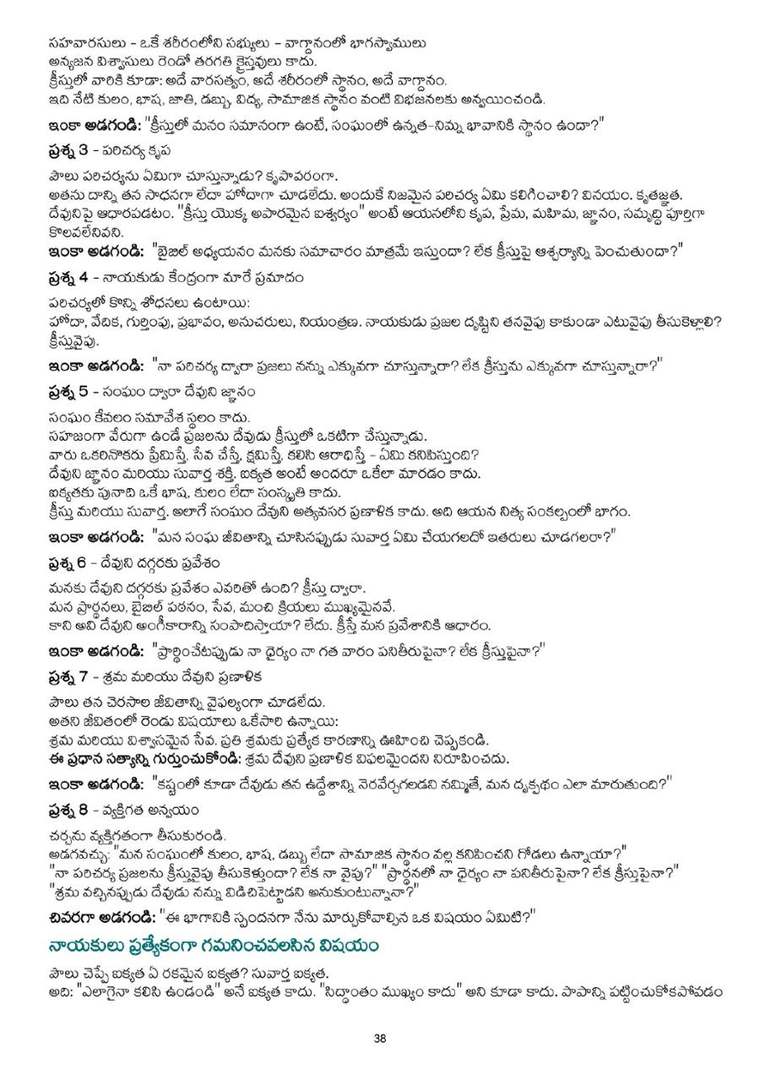
ఇది నేటి కులం, భాష, జాతి, డబ్బు, విద్య, సామాజిక స్థానం వంటి విభజనలకు అన్వయించండి.
ఇంకా అడగండి: “క్రీస్తులో మనం సమానంగా ఉంటే, సంఘంలో ఉన్నత-నిమ్న భావానికి స్థానం ఉందా?”
Question 2 Co-Heirs, One Body, Sharers in the Promise
Have the group repeat the three phrases:
Co-heirs → Members together of one body → Sharers together in the promise
Gentile believers are not second-class Christians.
In Christ they receive the same inheritance, the same place in the body, and the same promise.
Apply this to divisions involving caste, language, ethnicity, money, education, and social status.
Ask:
“If we are equally included in Christ, is there room for superiority and inferiority in the church?”
ప్రశ్న 3 – పరిచర్య కృప
పౌలు పరిచర్యను ఏమిగా చూస్తున్నాడు? కృపావరంగా.
అతను దాన్ని తన సాధనగా లేదా హోదాగా చూడలేదు. అందుకే నిజమైన పరిచర్య ఏమి కలిగించాలి? వినయం. కృతజ్ఞత. దేవునిపై ఆధారపడటం. “క్రీస్తు యొక్క అపారమైన ఐశ్వర్యం” అంటే ఆయనలోని కృప, ప్రేమ, మహిమ, జ్ఞానం, సమృద్ధి పూర్తిగా కొలవలేనివని.
ఇంకా అడగండి: “బైబిల్ అధ్యయనం మనకు సమాచారం మాత్రమే ఇస్తుందా? లేక క్రీస్తుపై ఆశ్చర్యాన్ని పెంచుతుందా?”
Question 3 — Ministry Is Grace
How does Paul view ministry? As a gift of grace.
He does not view it primarily as his personal achievement or status.
What should true ministry therefore produce? Humility. Gratitude. Dependence on God.
What are the “boundless riches of Christ”?
His grace, love, glory, wisdom, sufficiency, and abundance can never be completely exhausted.
Ask: “Should Bible study merely increase our information, or should it also increase our wonder at Christ?”
ప్రశ్న 4 – నాయకుడు కేంద్రంగా మారే ప్రమాదం
పరిచర్యలో కొన్ని శోధనలు ఉంటాయి:
హోదా, వేదిక, గుర్తింపు, ప్రభావం, అనుచరులు, నియంత్రణ. నాయకుడు ప్రజల దృష్టిని తనవైపు కాకుండా ఎటువైపు తీసుకెళ్లాలి? క్రీస్తువైపు.
ఇంకా అడగండి: “నా పరిచర్య ద్వారా ప్రజలు నన్ను ఎక్కువగా చూస్తున్నారా? లేక క్రీస్తును ఎక్కువగా చూస్తున్నారా?”
Question 4 The Danger of Leader-Centered Ministry
Some temptations in ministry include: position, platform, recognition, influence, followers, and control.
Where should a Christian leader direct people’s attention? Toward Christ.
Ask: “Through my ministry, are people becoming more impressed with me, or more impressed with Christ?”
ప్రశ్న 5 – సంఘం ద్వారా దేవుని జ్ఞానం
సంఘం కేవలం సమావేశ స్థలం కాదు.
సహజంగా వేరుగా ఉండే ప్రజలను దేవుడు క్రీస్తులో ఒకటిగా చేస్తున్నాడు.
వారు ఒకరినొకరు ప్రేమిస్తే, సేవ చేస్తే, క్షమిస్తే, కలిసి ఆరాధిస్తే – ఏమి కనిపిస్తుంది?
దేవుని జ్ఞానం మరియు సువార్త శక్తి. ఐక్యత అంటే అందరూ ఒకేలా మారడం కాదు.
ఐక్యతకు పునాది ఒకే భాష, కులం లేదా సంస్కృతి కాదు.
క్రీస్తు మరియు సువార్త. అలాగే సంఘం దేవుని అత్యవసర ప్రణాళిక కాదు. అది ఆయన నిత్య సంకల్పంలో భాగం.
ఇంకా అడగండి: “మన సంఘ జీవితాన్ని చూసినప్పుడు సువార్త ఏమి చేయగలదో ఇతరులు చూడగలరా?”
Question 5 — God’s Wisdom Through the Church
The church is not merely a meeting place.
God brings together people who would naturally remain separate.
When they love, serve, forgive, worship, and care for one another, what becomes visible?
God’s wisdom and the power of the gospel.
Unity does not mean that everyone becomes the same.
Its foundation is not one language, caste, culture, or social background.
Its foundation is: Christ and the gospel. The church is also not God’s emergency plan.
It belongs to His eternal purpose.
Ask: “When others observe our church life, can they see what the gospel is able to do?”
ప్రశ్న 6 – దేవుని దగ్గరకు ప్రవేశం
మనకు దేవుని దగ్గరకు ప్రవేశం ఎవరితో ఉంది? క్రీస్తు ద్వారా.
మన ప్రార్థనలు, బైబిల్ పఠనం, సేవ, మంచి క్రియలు ముఖ్యమైనవే.
కాని అవి దేవుని అంగీకారాన్ని సంపాదిస్తాయా? లేదు. క్రీస్తే మన ప్రవేశానికి ఆధారం.
ఇంకా అడగండి: “ప్రార్థించేటప్పుడు నా ధైర్యం నా గత వారం పనితీరుపైనా? లేక క్రీస్తుపైనా?”
Question 6 — Access to God
Through whom do we have access to God? Through Christ.
Prayer, Bible reading, service, and good works are important.
But do they earn God’s acceptance? No. Christ is the basis of our access.
Ask: “When I pray, is my confidence based on how well I performed last week, or on Christ?”
ప్రశ్న 7 – శ్రమ మరియు దేవుని ప్రణాళిక
పౌలు తన చెరసాల జీవితాన్ని వైఫల్యంగా చూడలేదు.
అతని జీవితంలో రెండు విషయాలు ఒకేసారి ఉన్నాయి:
శ్రమ మరియు విశ్వాసమైన సేవ. ప్రతి శ్రమకు ప్రత్యేక కారణాన్ని ఊహించి చెప్పకండి.
ఈ ప్రధాన సత్యాన్ని గుర్తుంచుకోండి: శ్రమ దేవుని ప్రణాళిక విఫలమైందని నిరూపించదు.
ఇంకా అడగండి: “కష్టంలో కూడా దేవుడు తన ఉద్దేశాన్ని నెరవేర్చగలడని నమ్మితే, మన దృక్పథం ఎలా మారుతుంది?”
Question 7 — Suffering and God’s Purpose
Paul does not see imprisonment as proof of failure.
Two realities exist together in his life: Suffering and faithful service.
Do not invent specific reasons for every suffering.
Keep the main truth clear: Suffering does not prove that God’s plan has failed.
Ask: “How would our perspective change if we trusted that God can still accomplish His purposes in difficult circumstances?”
ప్రశ్న 8 – వ్యక్తిగత అన్వయం
చర్చను వ్యక్తిగతంగా తీసుకురండి.
అడగవచ్చు: “మన సంఘంలో కులం, భాష, డబ్బు లేదా సామాజిక స్థానం వల్ల కనిపించని గోడలు ఉన్నాయా?”
“నా పరిచర్య ప్రజలను క్రీస్తువైపు తీసుకెళ్తుందా? లేక నా వైపు?” “ప్రార్థనలో నా ధైర్యం నా పనితీరుపైనా? లేక క్రీస్తుపైనా?”
“శ్రమ వచ్చినప్పుడు దేవుడు నన్ను విడిచిపెట్టాడని అనుకుంటున్నానా?”
చివరగా అడగండి: “ఈ భాగానికి స్పందనగా నేను మార్చుకోవాల్సిన ఒక విషయం ఏమిటి?”
నాయకులు ప్రత్యేకంగా గమనించవలసిన విషయం
పౌలు చెప్పే ఐక్యత ఏ రకమైన ఐక్యత? సువార్త ఐక్యత.
అది: “ఎలాగైనా కలిసి ఉండండి” అనే ఐక్యత కాదు. “సిద్ధాంతం ముఖ్యం కాదు” అని కూడా కాదు. పాపాన్ని పట్టించుకోకపోవడం
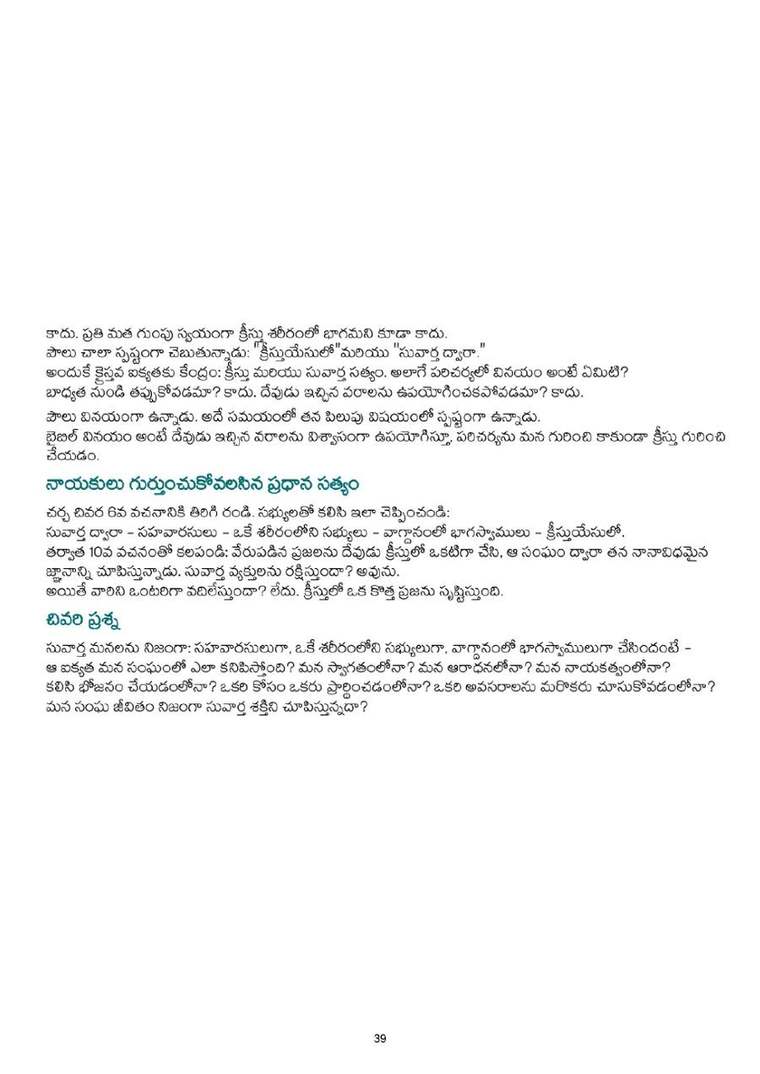
కాదు. ప్రతి మత గుంపు స్వయంగా క్రీస్తు శరీరంలో భాగమని కూడా కాదు.
పౌలు చాలా స్పష్టంగా చెబుతున్నాడు: "క్రీస్తుయేసులో" మరియు "సువార్త ద్వారా."
అందుకే క్రైస్తవ ఐక్యతకు కేంద్రం: క్రీస్తు మరియు సువార్త సత్యం. అలాగే పరిచర్యలో వినయం అంటే ఏమిటి?
బాధ్యత నుండి తప్పుకోవడమా? కాదు. దేవుడు ఇచ్చిన వరాలను ఉపయోగించకపోవడమా? కాదు.
పౌలు వినయంగా ఉన్నాడు. అదే సమయంలో తన పిలుపు విషయంలో స్పష్టంగా ఉన్నాడు.
బైబిల్ వినయం అంటే దేవుడు ఇచ్చిన వరాలను విశ్వాసంగా ఉపయోగిస్తూ, పరిచర్యను మన గురించి కాకుండా క్రీస్తు గురించి చేయడం.
Question 8 Personal Application
Bring the discussion into everyday life.
Ask: “Are there invisible walls in our church because of caste, language, money, or social status?” “Does my ministry point people toward Christ or toward me?”
“Is my confidence in prayer based on my performance or on Christ?”
“When suffering comes, do I immediately assume that God has abandoned me?”
Finally ask: “What is one thing I need to change in response to this passage?”
నాయకులు గుర్తుంచుకోవలసిన ప్రధాన సత్యం
చర్చ చివర 6వ వచనానికి తిరిగి రండి. సభ్యులతో కలిసి ఇలా చెప్పించండి:
సువార్త ద్వారా – సహవారసులు – ఒకే శరీరంలోని సభ్యులు – వాగ్దానంలో భాగస్వాములు – క్రీస్తుయేసులో.
తర్వాత 10వ వచనంతో కలపండి: వేరుపడిన ప్రజలను దేవుడు క్రీస్తులో ఒకటిగా చేసి, ఆ సంఘం ద్వారా తన నానావిధమైన జ్ఞానాన్ని చూపిస్తున్నాడు. సువార్త వ్యక్తులను రక్షిస్తుందా? అవును.
అయితే వారిని ఒంటరిగా వదిలేస్తుందా? లేదు. క్రీస్తులో ఒక కొత్త ప్రజను సృష్టిస్తుంది.
Important Note for Leaders
What kind of unity is Paul describing? Gospel unity.
It is not: “Stay together at any cost.”
It does not mean: “Doctrine does not matter.”
It does not mean ignoring sin. It does not mean that every religious group automatically belongs to Christ’s body.
Paul is very clear: “In Christ Jesus” and “Through the gospel.”
Therefore, Christian unity is centered on: Christ and the truth of the gospel.
Also, what does humility in ministry mean?
Does it mean avoiding responsibility? No.
Does it mean refusing to use the gifts God has given? No.
Paul was humble, but he was also clear about his calling.
Biblical humility means: faithfully using the gifts God has given while making ministry about Christ rather than about ourselves.
Main Truth for Leaders to Remember
At the end of the discussion, return to verse 6.
Have the group repeat: Through the gospel → Co-heirs → Members together of one body → Sharers together in the promise → In Christ Jesus.
Then connect this with verse 10:
God brings divided people together in Christ and displays His manifold wisdom through the church.
Does the gospel save individuals? Yes.
But does it leave them isolated? No.
It creates a new people in Christ.
చివరి ప్రశ్న
సువార్త మనలను నిజంగా: సహవారసులుగా, ఒకే శరీరంలోని సభ్యులుగా, వాగ్దానంలో భాగస్వాములుగా చేసిందంటే –
ఆ ఐక్యత మన సంఘంలో ఎలా కనిపిస్తోంది? మన స్వాగతంలోనా? మన ఆరాధనలోనా? మన నాయకత్వంలోనా?
కలిసి భోజనం చేయడంలోనా? ఒకరి కోసం ఒకరు ప్రార్థించడంలోనా? ఒకరి అవసరాలను మరొకరు చూసుకోవడంలోనా?
మన సంఘ జీవితం నిజంగా సువార్త శక్తిని చూపిస్తున్నదా?
Final Question : If the gospel has truly made us co-heirs, members of one body, and sharers
together in God’s promise, how should that unity become visible in our church?
In the way we welcome people? In our worship? In leadership?In sharing meals? In praying for one another? In caring for one another’s needs? Does our church life truly display the power of the gospel?
Original PDF pages · అసలు పేజీలు (Telugu 6 · English 8)
తెలుగు · Telugu edition
English edition