Search this book · ఈ పుస్తకంలో వెతకండి
సందర్భం
ఎఫెసీయులకు 4:1-16లో పౌలు ఏమి చెప్పాడో గుర్తుందా? విశ్వాసులు తమకు వచ్చిన పిలుపుకు తగినట్లుగా నడవాలి అని చెప్పాడు. వినయం, సాత్వికం, దీర్ఘశాంతి, ఐక్యత, ఆత్మీయ వరాలు, సంఘ పరిపక్వత, ప్రేమతో సత్యం చెప్పడం గురించి వివరించాడు. ఇప్పుడు 4:17-32లో పౌలు ఇంకా ఆచరణాత్మకంగా మాట్లాడుతున్నాడు. ఒక ప్రశ్న అడుగుదాం: క్రీస్తు మనకు కొత్త జీవితం ఇచ్చాడంటే మన రోజువారీ జీవితంలో ఏమైనా మార్పు కనిపించాలా? “నేను యేసును నమ్ముతున్నాను” అని చెప్పి, మునుపటిలాగే ఆలోచిస్తూ, మాట్లాడుతూ, కోపపడుతూ, మోసం చేస్తూ, క్షమించకుండా జీవించగలమా? పౌలు సమాధానం స్పష్టంగా ఉంది: లేదు. సువార్త మనం చనిపోయిన తరువాత ఎక్కడికి వెళ్తామో మాత్రమే మార్చదు. ఇప్పుడే మన: ఆలోచనలను, కోరికలను, మాటలను, సంబంధాలను, ప్రవర్తనను మార్చడం మొదలుపెడుతుంది. ఈ భాగంలోని ప్రధాన నమూనాను మొదటే గుర్తుంచుకుందాం: పాతదాన్ని విడిచిపెట్టు – మనస్సును నూతనపరచు – కొత్తదాన్ని ధరించు.
Context
Do you remember what Paul taught in Ephesians 4:1–16? He said that believers should live a life worthy of their calling. He spoke about humility, gentleness, patience, unity, spiritual gifts, maturity in the church, and speaking the truth in love.
Now, in Ephesians 4:17–32, Paul becomes even more practical. Let us ask an important question: If Christ has given us new life, should there be a visible change in our everyday lives?
Can we say, “I believe in Jesus,” but continue thinking, speaking, getting angry, deceiving others, and refusing to forgive exactly as before? Paul’s answer is clear: No.
The gospel does not only change where we will go after death. It begins changing us now—our:
thoughts, desires, words, relationships, and behavior. Remember the main pattern of this passage: Put off the old → Renew your mind → Put on the new
1. ముందులా ఇక జీవించవద్దు ఎఫెసీయులకు 4:17-19
పౌలు విశ్వాసులతో ఏమంటున్నాడు? అన్యజనులు తమ వ్యర్థమైన ఆలోచనల ప్రకారం నడిచినట్లు మీరు ఇక నడవకండి. ఇక్కడ ఒక ముఖ్యమైన విషయం గమనించారా? పౌలు మొదట ప్రవర్తనతో ప్రారంభించాడా? లేదు. ఆలోచనతో ప్రారంభించాడు. ఎందుకు? ఎందుకంటే తప్పు జీవితం చాలాసార్లు తప్పు ఆలోచన నుండి వస్తుంది. మనము దేవుని గురించి ఏమి నమ్ముతున్నాం? మన గురించి ఏమి నమ్ముతున్నాం? ఆనందం ఎక్కడ దొరుకుతుందని నమ్ముతున్నాం? పాపం నిజంగా ఏమి చేస్తుందని అనుకుంటున్నాం? ఈ విషయాలు మన కోరికలను, నిర్ణయాలను, ప్రవర్తనను ప్రభావితం చేస్తాయి. పౌలు చెప్పే క్రమాన్ని చూడండి: చీకటి పట్టిన ఆలోచన – కఠినమైన హృదయం – అదుపులేని కోరికలు – పాప ప్రవర్తన అయితే పాపంతో పోరాడేటప్పుడు కేవలం: “నేను ఏమి చేశాను?” అని అడగడం సరిపోతుందా? లేదు. ఇంకా లోతుగా అడగాలి: “నేను ఏమి నమ్మాను?” “నా హృదయం ఏమి కోరుకుంది?” “ఈ పని చేయడానికి నన్ను నడిపించిన ఆలోచన ఏమిటి?” ఉదాహరణకు, నేను అబద్ధం చెప్పాను అనుకుందాం. ఎందుకు చెప్పాను? శిక్ష తప్పించుకోవాలని? ఇతరులు నన్ను గొప్పగా చూడాలని? నిజం చెబితే నేను నష్టపోతానని నమ్మానా? అప్పుడు సమస్య అబద్ధం మాత్రమే కాదు. దాని వెనుక ఒక అబద్ధమైన నమ్మకం కూడా ఉంది. అందుకే బైబిలు మార్పు బయట ప్రవర్తనతో మొదలై అక్కడే ఆగిపోదు. మనస్సు, హృదయం, కోరికల వరకు వెళ్తుంది.
1. Do Not Live as You Used to Live Ephesians 4:17-19
What does Paul tell believers? Do not live as the Gentiles do, in the futility of their thinking. Notice something important.
Does Paul begin with behavior? No.
He begins with thinking. Why? Because wrong living often grows out of wrong thinking.
What do we believe about God? What do we believe about ourselves? Where do we believe happiness can be found? What do we believe sin will give us? These beliefs influence our desires, choices, and behavior.
Notice Paul’s progression: Darkened thinking → Hardened heart → Uncontrolled desires → Sinful behavior So when fighting sin, is it enough to ask: “What did I do?” No. We should go deeper:
“What did I believe?” “What did my heart desire?” “What thought led me to this action?”
For example, suppose I told a lie. Why did I lie? Was I trying to escape punishment? Did I want others to think highly of me? Did I believe that telling the truth would cost me too much? Then the problem is not only the lie. Behind the lie may be a false belief.
Biblical change therefore does not merely deal with outward behavior. It goes deeper—to our mind, heart, and desires.
2. “మీరు క్రీస్తును అలా నేర్చుకోలేదు” ఎఫెసీయులకు 4:20-21
ఇప్పుడు పౌలు ఒక గొప్ప వ్యత్యాసాన్ని చూపిస్తున్నాడు: “అయితే మీరు క్రీస్తును అలా నేర్చుకోలేదు.” ఇది ఎంత అందమైన మాట! అతను “మీరు కొన్ని కొత్త నియమాలు నేర్చుకున్నారు” అని చెప్పడం లేదు. ఏమంటున్నాడు? “మీరు క్రీస్తును నేర్చుకున్నారు.” క్రైస్తవ విశ్వాసం అంటే కేవలం కొత్త మత నియమాలు నేర్చుకోవడమా? లేదు. మనము క్రీస్తును తెలుసుకుంటాము. క్రీస్తును నేర్చుకుంటాము. క్రీస్తును అనుసరిస్తాము. యేసు క్రైస్తవ సందేశంలో ఒక భాగమా? లేదు. ఆయనే కేంద్రం. తర్వాత పౌలు ఏమంటున్నాడు? “సత్యము యేసునందున్నది.” అయితే జీవితంలో నిర్ణయాలు తీసుకునేటప్పుడు మనం ఏ ప్రశ్నలు మాత్రమే అడగకూడదు? “సంస్కృతి ఏమి చెబుతోంది?” “అందరూ ఏమి చేస్తున్నారు?” “నాకు ఏది సరైనట్లు అనిపిస్తోంది?” “మెజారిటీ ఏమి అంగీకరిస్తోంది?” ఈ ప్రశ్నలకంటే ముఖ్యమైన ప్రశ్న: “యేసు ప్రకారం సత్యం ఏమిటి? దేవుని వాక్యం ఏమి చెబుతోంది?” మన భావాలు మారుతాయి. సమాజపు విలువలు మారుతాయి. ప్రజల అభిప్రాయాలు మారుతాయి. కానీ మన చివరి ప్రమాణం ఎవరు? క్రీస్తు మరియు ఆయన వాక్యం.
2. “That Is Not the Way You Learned Christ” Ephesians 4:20-21
Paul now gives a powerful contrast: “That, however, is not the way of life you learned when you heard about Christ.” What a beautiful statement! He does not say: “You learned some new religious rules.” He points them to Christ.
Christianity is not merely learning a new set of rules. We know Christ. We learn Christ. We follow Christ. Is Jesus merely one part of the Christian message? No. He is the center.
Paul then reminds them that truth is in Jesus. So when making decisions, should our main questions be: “What does culture say?” “What is everyone else doing?” “What feels right to me?” “What does the majority accept?”
There is a more important question: “What is true according to Jesus? What does God’s Word say?” Our feelings change. Cultural values change. Popular opinion changes. But what is our final standard? Christ and His Word.
1. 3. పాత స్వభావాన్ని విడిచిపెట్టండి ఎఫెసీయులకు 4:22
ఇప్పుడు పౌలు ఒక సులభమైన చిత్రం ఉపయోగిస్తున్నాడు. ఏ చిత్రం? బట్టలు మార్చుకోవడం. పాత, మురికైన బట్టలు వేసుకుని స్నానం చేసిన తరువాత వాటినే మళ్లీ వేసుకుంటామా? సాధారణంగా కాదు. పాత బట్టలు తీసివేసి కొత్త బట్టలు వేసుకుంటాం. అలాగే పౌలు ఏమంటున్నాడు? పూర్వ జీవన విధానానికి చెందిన “పాత మనుష్యత్వాన్ని” విడిచిపెట్టండి. పాత స్వభావం అంటే ఏమిటి? క్రీస్తును తెలుసుకోకముందు మనలను నడిపించిన పాపపు జీవన విధానం. పౌలు పాపపు కోరికలను ఎలా వర్ణిస్తున్నాడు? “మోసపూరితమైన దురాశలు.” ఎందుకు “మోసపూరితమైనవి”? ఎందుకంటే పాపం ముందుగానే పూర్తి నిజం చెబుతుందా? లేదు. పాపం ఇలా చెబుతుంది: “ఇది నిన్ను సంతోషపరుస్తుంది.” “ఒక్కసారి చేస్తే ఏమవుతుంది?” “ఎవరికీ తెలియదు.” “నీకు ఇది అవసరం.” “నీకు అన్యాయం జరిగింది; ప్రతీకారం తీర్చుకోవాలి.” కానీ పాపం తరువాత ఏమి వస్తుందో చెబుతుందా? చాలాసార్లు కాదు. స్వేచ్ఛ ఇస్తానని చెప్పి బానిసత్వానికి నడిపిస్తుంది. ఆనందం ఇస్తానని చెప్పి అపరాధభావాన్ని మిగులుస్తుంది. తృప్తి ఇస్తానని చెప్పి ఇంకా ఎక్కువ కోరికను పెంచుతుంది. అందుకే శోధన వచ్చినప్పుడు ఒక మంచి ప్రశ్న: “ఈ కోరిక నాకు ఏమి వాగ్దానం చేస్తోంది? అది నిజమేనా?”
3. Put Off the Old Self Ephesians 4:22
Paul now uses a simple picture. What is it? Changing clothes. After bathing, would we normally put the same dirty clothes back on? No. We take off the dirty clothes and put on clean ones. In the same way, Paul says to put off the old self, which belongs to the former way of life.
What is the old self? It is the sinful way of life that characterized us apart from Christ. How does Paul describe sinful desires? Deceitful desires. Why are they deceitful? Because does sin tell us the whole truth beforehand? No.
Sin says: “This will make you happy.” “Just once will not hurt.” “No one will know.” “You need this.” “They hurt you, so you deserve revenge.” But does sin tell us what may come afterward?
Usually not. It promises freedom but leads toward slavery. It promises pleasure but may leave guilt. It promises satisfaction but often creates a desire for more.
So when temptation comes, ask: “What is this desire promising me? Is that promise really true?”
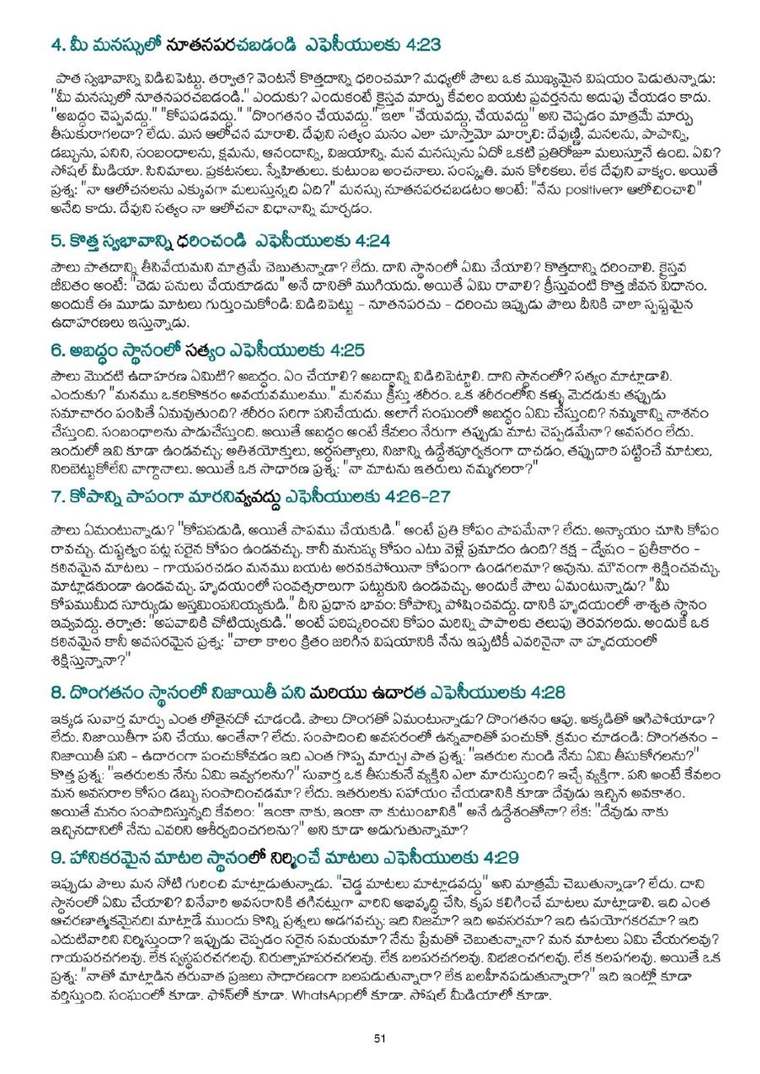
4. మీ మనస్సులో నూతనపరచబడండి ఎఫెసీయులకు 4:23
పాత స్వభావాన్ని విడిచిపెట్టు. తర్వాత? వెంటనే కొత్తదాన్ని ధరించమా? మధ్యలో పౌలు ఒక ముఖ్యమైన విషయం పెడుతున్నాడు: “మీ మనస్సులో నూతనపరచబడండి.” ఎందుకు? ఎందుకంటే క్రైస్తవ మార్పు కేవలం బయట ప్రవర్తనను అదుపు చేయడం కాదు. “అబద్ధం చెప్పవద్దు.” “కోపపడవద్దు.” “దొంగతనం చేయవద్దు.” ఇలా “చేయవద్దు, చేయవద్దు” అని చెప్పడం మాత్రమే మార్పు తీసుకురాగలదా? లేదు. మన ఆలోచన మారాలి. దేవుని సత్యం మనం ఎలా చూస్తామో మార్చాలి: దేవుణ్ణి, మనలను, పాపాన్ని, డబ్బును, పనిని, సంబంధాలను, క్షమను, ఆనందాన్ని, విజయాన్ని. మన మనస్సును ఏదో ఒకటి ప్రతిరోజూ మలుస్తూనే ఉంది. ఏవి? సోషల్ మీడియా. సినిమాలు. ప్రకటనలు. స్నేహితులు. కుటుంబ అంచనాలు. సంస్కృతి. మన కోరికలు. లేక దేవుని వాక్యం. అయితే ప్రశ్న: “నా ఆలోచనలను ఎక్కువగా మలుస్తున్నది ఏది?” మనస్సు నూతనపరచబడటం అంటే: “నేను positiveగా ఆలోచించాలి” అనేది కాదు. దేవుని సత్యం నా ఆలోచనా విధానాన్ని మార్చడం.
4. Be Made New in the Attitude of Your Minds Ephesians 4:23
Put off the old self. Then what? Before Paul says to put on the new self, he places something very important in between: “Be made new in the attitude of your minds.” Why? Because Christian transformation is not merely controlling outward behavior. “Don’t lie.” “Don’t get angry.” “Don’t steal.” Will simply repeating “Don’t do this” produce deep transformation? No. Our thinking must change.
God’s truth must change the way we see: God, ourselves, sin, money, work, relationships, forgiveness, happiness, and success. Something is shaping our minds every day. What might it be? Social media. Movies. Advertising. Friends. Family expectations. Culture. Our own desires. Or God’s Word.
So ask: “What is shaping my thinking the most?” Renewing the mind does not mean merely:
“Think positively.” It means allowing God’s truth to reshape the way we think.
5. కొత్త స్వభావాన్ని ధరించండి ఎఫెసీయులకు 4:24
పౌలు పాతదాన్ని తీసివేయమని మాత్రమే చెబుతున్నాడా? లేదు. దాని స్థానంలో ఏమి చేయాలి? కొత్తదాన్ని ధరించాలి. క్రైస్తవ జీవితం అంటే: “చెడు పనులు చేయకూడదు” అనే దానితో ముగియదు. అయితే ఏమి రావాలి? క్రీస్తువంటి కొత్త జీవన విధానం. అందుకే ఈ మూడు మాటలు గుర్తుంచుకోండి: విడిచిపెట్టు – నూతనపరచు – ధరించు ఇప్పుడు పౌలు దీనికి చాలా స్పష్టమైన ఉదాహరణలు ఇస్తున్నాడు.
5. Put On the New Self Ephesians 4:24
Does Paul only tell us to remove the old? No. What must replace it? The new self. The Christian life does not end with: “Stop doing bad things.” Something new must take their place. We begin living in a way that reflects Christ. Remember these three movements: Put off → Renew → Put on Paul now gives several very practical examples.
6. అబద్ధం స్థానంలో సత్యం ఎఫెసీయులకు 4:25
పౌలు మొదటి ఉదాహరణ ఏమిటి? అబద్ధం. ఏం చేయాలి? అబద్ధాన్ని విడిచిపెట్టాలి. దాని స్థానంలో? సత్యం మాట్లాడాలి. ఎందుకు? “మనము ఒకరికొకరం అవయవములము.” మనము క్రీస్తు శరీరం. ఒక శరీరంలోని కళ్ళు మెదడుకు తప్పుడు సమాచారం పంపితే ఏమవుతుంది? శరీరం సరిగా పనిచేయదు. అలాగే సంఘంలో అబద్ధం ఏమి చేస్తుంది? నమ్మకాన్ని నాశనం చేస్తుంది. సంబంధాలను పాడుచేస్తుంది. అయితే అబద్ధం అంటే కేవలం నేరుగా తప్పుడు మాట చెప్పడమేనా? అవసరం లేదు. ఇందులో ఇవి కూడా ఉండవచ్చు: అతిశయోక్తులు, అర్ధసత్యాలు, నిజాన్ని ఉద్దేశపూర్వకంగా దాచడం, తప్పుదారి పట్టించే మాటలు, నిలబెట్టుకోలేని వాగ్దానాలు. అయితే ఒక సాధారణ ప్రశ్న: “నా మాటను ఇతరులు నమ్మగలరా?”
6. Replace Falsehood with Truth Ephesians 4:25
What is Paul’s first example? Lying. What should we do? Put away falsehood. What should replace it? Speak truthfully. Why? Because we are members of one another. We belong to Christ’s body. Imagine if the eyes sent false information to the brain. Would the body function properly? No. In the same way, what does dishonesty do in the church? It destroys trust. It damages relationships.
Does lying only mean directly saying something false? Not necessarily. It can also include:
exaggeration, half-truths, deliberately hiding important facts, misleading statements, and
promises we have no intention of keeping. Ask yourself: “Can people trust my word?”
7. కోపాన్ని పాపంగా మారనివ్వవద్దు ఎఫెసీయులకు 4:26-27
పౌలు ఏమంటున్నాడు? “కోపపడుడి, అయితే పాపము చేయకుడి.” అంటే ప్రతి కోపం పాపమేనా? లేదు. అన్యాయం చూసి కోపం రావచ్చు. దుష్టత్వం పట్ల సరైన కోపం ఉండవచ్చు. కానీ మనుష్య కోపం ఎటు వెళ్లే ప్రమాదం ఉంది? కక్ష – ద్వేషం – ప్రతీకారం – కఠినమైన మాటలు – గాయపరచడం మనము బయట అరవకపోయినా కోపంగా ఉండగలమా? అవును. మౌనంగా శిక్షించవచ్చు. మాట్లాడకుండా ఉండవచ్చు. హృదయంలో సంవత్సరాలుగా పట్టుకుని ఉండవచ్చు. అందుకే పౌలు ఏమంటున్నాడు? “మీ కోపముమీద సూర్యుడు అస్తమింపనియ్యకుడి.” దీని ప్రధాన భావం: కోపాన్ని పోషించవద్దు. దానికి హృదయంలో శాశ్వత స్థానం ఇవ్వవద్దు. తర్వాత: “అపవాదికి చోటియ్యకుడి.” అంటే పరిష్కరించని కోపం మరిన్ని పాపాలకు తలుపు తెరవగలదు. అందుకే ఒక కఠినమైన కానీ అవసరమైన ప్రశ్న: “చాలా కాలం క్రితం జరిగిన విషయానికి నేను ఇప్పటికీ ఎవరినైనా నా హృదయంలో శిక్షిస్తున్నానా?”
7. Do Not Let Anger Become Sin. Ephesians 4:26–27
Paul says: “In your anger do not sin.” Does that mean every kind of anger is sinful? No. We may rightly feel anger about injustice or evil. But where can human anger quickly lead?
Bitterness → Hatred → Revenge → Harsh words → Hurtful actions
Can we remain angry without shouting? Yes. We may punish someone with silence. We may refuse to speak. We may carry resentment for years. So Paul says: “Do not let the sun go down while you are still angry.”
The main point is: Do not feed your anger. Do not give it a permanent home in your heart. Then Paul says: “Do not give the devil a foothold.” Unresolved anger can open the door to further sin. So here is a difficult but necessary question: “Am I still punishing someone in my heart for something that happened a long time ago?”
8. దొంగతనం స్థానంలో నిజాయితీ పని మరియు ఉదారత ఎఫెసీయులకు 4:28
ఇక్కడ సువార్త మార్పు ఎంత లోతైనదో చూడండి. పౌలు దొంగతో ఏమంటున్నాడు? దొంగతనం ఆపు. అక్కడితో ఆగిపోయాడా? లేదు. నిజాయితీగా పని చేయు. అంతేనా? లేదు. సంపాదించి అవసరంలో ఉన్నవారితో పంచుకో. క్రమం చూడండి: దొంగతనం – నిజాయితీ పని – ఉదారంగా పంచుకోవడం ఇది ఎంత గొప్ప మార్పు! పాత ప్రశ్న: “ఇతరుల నుండి నేను ఏమి తీసుకోగలను?” కొత్త ప్రశ్న: “ఇతరులకు నేను ఏమి ఇవ్వగలను?” సువార్త ఒక తీసుకునే వ్యక్తిని ఎలా మారుస్తుంది? ఇచ్చే వ్యక్తిగా. పని అంటే కేవలం మన అవసరాల కోసం డబ్బు సంపాదించడమా? లేదు. ఇతరులకు సహాయం చేయడానికి కూడా దేవుడు ఇచ్చిన అవకాశం. అయితే మనం సంపాదిస్తున్నది కేవలం: “ఇంకా నాకు, ఇంకా నా కుటుంబానికి” అనే ఉద్దేశంతోనా? లేక: “దేవుడు నాకు ఇచ్చినదానిలో నేను ఎవరిని ఆశీర్వదించగలను?” అని కూడా అడుగుతున్నామా?
8. Replace Stealing with Honest Work and Generosity. Ephesians 4:28
Here we see how deep gospel transformation goes. What does Paul tell the thief? Stop stealing.
Does he stop there? No. Work honestly. Is that all? No. Work so that you may have something to share with those in need.
Notice the progression: Stealing → Honest work → Generous giving What a transformation! The old question was: “What can I take from others?”
The new question is: “What can I give to others?” What does the gospel do to a person who once lived by taking? It begins making that person a giver. Is work only about earning enough for ourselves? No.
Work can also become one of the ways God enables us to bless others. So ask: “Is everything I earn simply about more for me and my family, or do I also ask, ‘Whom can I bless with what God has given me?’”
9. హానికరమైన మాటల స్థానంలో నిర్మించే మాటలు ఎఫెసీయులకు 4:29
ఇప్పుడు పౌలు మన నోటి గురించి మాట్లాడుతున్నాడు. “చెడ్డ మాటలు మాట్లాడవద్దు” అని మాత్రమే చెబుతున్నాడా? లేదు. దాని స్థానంలో ఏమి చేయాలి? వినేవారి అవసరానికి తగినట్లుగా వారిని అభివృద్ధి చేసి, కృప కలిగించే మాటలు మాట్లాడాలి. ఇది ఎంత ఆచరణాత్మకమైనది! మాట్లాడే ముందు కొన్ని ప్రశ్నలు అడగవచ్చు: ఇది నిజమా? ఇది అవసరమా? ఇది ఉపయోగకరమా? ఇది ఎదుటివారిని నిర్మిస్తుందా? ఇప్పుడు చెప్పడం సరైన సమయమా? నేను ప్రేమతో చెబుతున్నానా? మన మాటలు ఏమి చేయగలవు? గాయపరచగలవు. లేక స్వస్థపరచగలవు. నిరుత్సాహపరచగలవు. లేక బలపరచగలవు. విభజించగలవు. లేక కలపగలవు. అయితే ఒక ప్రశ్న: “నాతో మాట్లాడిన తరువాత ప్రజలు సాధారణంగా బలపడుతున్నారా? లేక బలహీనపడుతున్నారా?” ఇది ఇంట్లో కూడా వర్తిస్తుంది. సంఘంలో కూడా. ఫోన్లో కూడా. WhatsAppలో కూడా. సోషల్ మీడియాలో కూడా.
9. Replace Harmful Words with Words That Build Up Ephesians 4:29
Paul now speaks about our mouths. Does he merely say: “Don’t use bad words”? No. What should replace harmful speech? Words that build others up according to their needs and benefit those who listen.
This is very practical. Before speaking, we can ask: Is it true? Is it necessary? Is it helpful? Will it build this person up? Is this the right time to say it? Am I saying it in love? What can words do?
They can wound - or heal. They can discourage - or strengthen. They can divide - or bring people together. Ask: “After people talk with me, do they usually feel strengthened or weakened?” This applies: at home, in church, on the phone, on WhatsApp, and on social media.
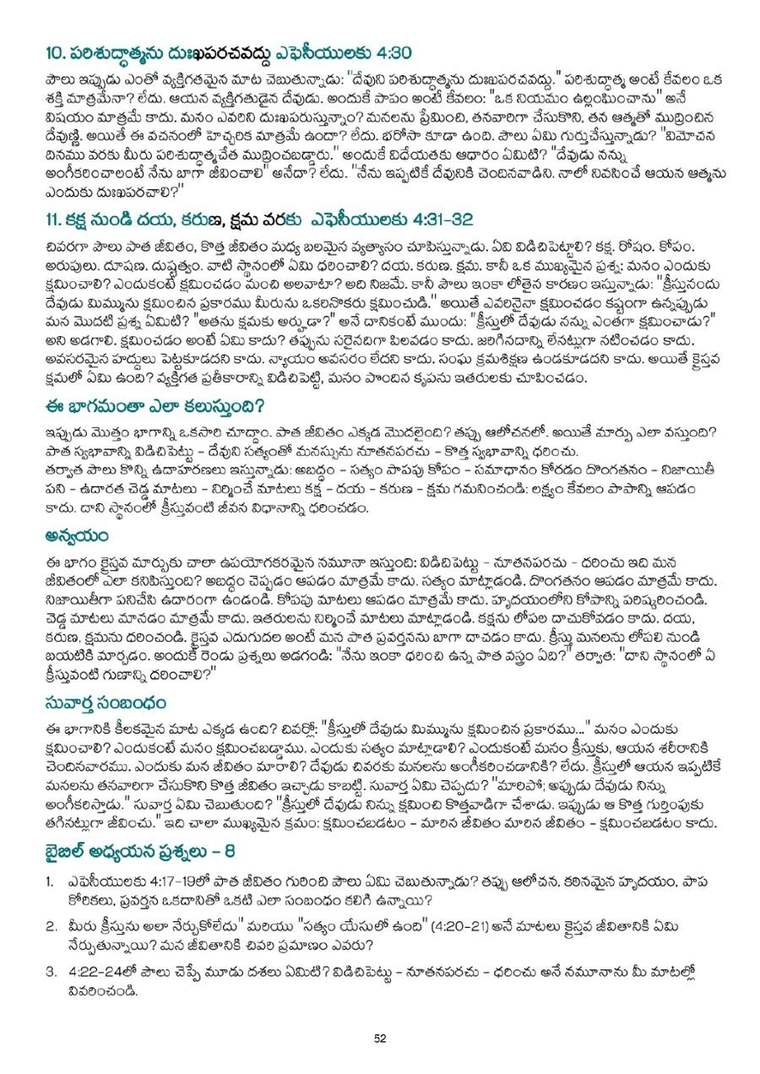
10. పరిశుద్ధాత్మను దుఃఖపరచవద్దు ఎఫెసీయులకు 4:30
పౌలు ఇప్పుడు ఎంతో వ్యక్తిగతమైన మాట చెబుతున్నాడు: “దేవుని పరిశుద్ధాత్మను దుఃఖపరచవద్దు.” పరిశుద్ధాత్మ అంటే కేవలం ఒక శక్తి మాత్రమేనా? లేదు. ఆయన వ్యక్తిగతుడైన దేవుడు. అందుకే పాపం అంటే కేవలం: “ఒక నియమం ఉల్లంఘించాను” అనే విషయం మాత్రమే కాదు. మనం ఎవరిని దుఃఖపరుస్తున్నాం? మనలను ప్రేమించి, తనవారిగా చేసుకొని, తన ఆత్మతో ముద్రించిన దేవుణ్ణి. అయితే ఈ వచనంలో హెచ్చరిక మాత్రమే ఉందా? లేదు. భరోసా కూడా ఉంది. పౌలు ఏమి గుర్తుచేస్తున్నాడు? “విమోచన దినము వరకు మీరు పరిశుద్ధాత్మచేత ముద్రించబడ్డారు.” అందుకే విధేయతకు ఆధారం ఏమిటి? “దేవుడు నన్ను అంగీకరించాలంటే నేను బాగా జీవించాలి” అనేదా? లేదు. “నేను ఇప్పటికే దేవునికి చెందినవాడిని. నాలో నివసించే ఆయన ఆత్మను ఎందుకు దుఃఖపరచాలి?”
10. Do Not Grieve the Holy Spirit. Ephesians 4:30
Paul now says something deeply personal: “Do not grieve the Holy Spirit of God.” Is the Holy Spirit merely an impersonal power? No. He is the personal Spirit of God. Therefore, sin is not merely: “I broke a rule.” Whom do we grieve by our sin? The God who loved us, made us His own, and sealed us with His Spirit. But is there only a warning in this verse? No.
There is also great assurance. Paul reminds believers that they were: “sealed for the day of redemption.” So what is the basis of our obedience? Is it: “I must live well so that God will finally accept me”? No. It is: “I already belong to God. Why would I want to grieve the Holy Spirit who lives in me?”
11. కక్ష నుండి దయ, కరుణ, క్షమ వరకు ఎఫెసీయులకు 4:31-32
చివరగా పౌలు పాత జీవితం, కొత్త జీవితం మధ్య బలమైన వ్యత్యాసం చూపిస్తున్నాడు. ఏవి విడిచిపెట్టాలి? కక్ష. రోషం. కోపం. అరుపులు. దూషణ. దుష్టత్వం. వాటి స్థానంలో ఏమి ధరించాలి? దయ. కరుణ. క్షమ. కానీ ఒక ముఖ్యమైన ప్రశ్న: మనం ఎందుకు క్షమించాలి? ఎందుకంటే క్షమించడం మంచి అలవాటా? అది నిజమే. కానీ పౌలు ఇంకా లోతైన కారణం ఇస్తున్నాడు: “క్రీస్తునందు దేవుడు మిమ్మును క్షమించిన ప్రకారము మీరును ఒకరినొకరు క్షమించుడి.” అయితే ఎవరినైనా క్షమించడం కష్టంగా ఉన్నప్పుడు మన మొదటి ప్రశ్న ఏమిటి? “అతను క్షమకు అర్హుడా?” అనే దానికంటే ముందు: “క్రీస్తులో దేవుడు నన్ను ఎంతగా క్షమించాడు?” అని అడగాలి. క్షమించడం అంటే ఏమి కాదు? తప్పును సరైనదిగా పిలవడం కాదు. జరిగినదాన్ని లేనట్లుగా నటించడం కాదు. అవసరమైన హద్దులు పెట్టకూడదని కాదు. న్యాయం అవసరం లేదని కాదు. సంఘ క్రమశిక్షణ ఉండకూడదని కాదు. అయితే క్రైస్తవ క్షమలో ఏమి ఉంది? వ్యక్తిగత ప్రతీకారాన్ని విడిచిపెట్టి, మనం పొందిన కృపను ఇతరులకు చూపించడం.
ఈ భాగమంతా ఎలా కలుస్తుంది?
ఇప్పుడు మొత్తం భాగాన్ని ఒకసారి చూద్దాం. పాత జీవితం ఎక్కడ మొదలైంది? తప్పు ఆలోచనలో. అయితే మార్పు ఎలా వస్తుంది? పాత స్వభావాన్ని విడిచిపెట్టు – దేవుని సత్యంతో మనస్సును నూతనపరచు – కొత్త స్వభావాన్ని ధరించు.
తర్వాత పౌలు కొన్ని ఉదాహరణలు ఇస్తున్నాడు: అబద్ధం – సత్యం పాపపు కోపం – సమాధానం కోరడం దొంగతనం – నిజాయితీ పని – ఉదారత చెడ్డ మాటలు – నిర్మించే మాటలు కక్ష – దయ – కరుణ – క్షమ గమనించండి: లక్ష్యం కేవలం పాపాన్ని ఆపడం కాదు. దాని స్థానంలో క్రీస్తువంటి జీవన విధానాన్ని ధరించడం.
11. From Bitterness to Kindness, Compassion, and Forgiveness Ephesians 4:31–32
Finally, Paul gives a powerful contrast between the old life and the new life. What should we put away? Bitterness. Rage. Anger. Brawling. Slander. Malice. What should replace them? Kindness.
Compassion. Forgiveness. But why should we forgive? Simply because forgiveness is a good habit? That is true, but Paul gives a much deeper reason: “Forgiving each other, just as in Christ God forgave you.” When forgiving someone is difficult, should our first question be: “Does this person deserve my forgiveness?”
There is a deeper question: “How much has God forgiven me in Christ?” What does forgiveness not mean? It does not mean calling evil good. It does not mean pretending nothing happened. It does not mean that boundaries are never necessary. It does not mean justice is unnecessary. It does not mean church discipline can never be necessary. What, then, does Christian forgiveness involve? Giving up personal revenge and extending to others something of the grace we ourselves have received.
How Does the Whole Passage Fit Together?
Where does the old life begin? In wrong thinking. How does transformation happen?
Put off the old self → Renew your mind with God’s truth → Put on the new self
Then Paul gives practical examples: Falsehood → Truth Sinful anger → Seek resolution Stealing → Honest work → Generosity Harmful speech → Words that build up Bitterness → Kindness → Compassion → Forgiveness Notice something important.
The goal is not merely to stop sinning. The old behavior must be replaced with a Christlike way of living.
అన్వయం
ఈ భాగం క్రైస్తవ మార్పుకు చాలా ఉపయోగకరమైన నమూనా ఇస్తుంది: విడిచిపెట్టు – నూతనపరచు – ధరించు ఇది మన జీవితంలో ఎలా కనిపిస్తుంది? అబద్ధం చెప్పడం ఆపడం మాత్రమే కాదు. సత్యం మాట్లాడండి. దొంగతనం ఆపడం మాత్రమే కాదు. నిజాయితీగా పనిచేసి ఉదారంగా ఉండండి. కోపపు మాటలు ఆపడం మాత్రమే కాదు. హృదయంలోని కోపాన్ని పరిష్కరించండి. చెడ్డ మాటలు మానడం మాత్రమే కాదు. ఇతరులను నిర్మించే మాటలు మాట్లాడండి. కక్షను లోపల దాచుకోవడం కాదు. దయ, కరుణ, క్షమను ధరించండి. క్రైస్తవ ఎదుగుదల అంటే మన పాత ప్రవర్తనను బాగా దాచడం కాదు. క్రీస్తు మనలను లోపలి నుండి బయటికి మార్చడం. అందుకే రెండు ప్రశ్నలు అడగండి: “నేను ఇంకా ధరించి ఉన్న పాత వస్త్రం ఏది?” తర్వాత: “దాని స్థానంలో ఏ క్రీస్తువంటి గుణాన్ని ధరించాలి?”
Application
This passage gives us a very useful pattern for Christian transformation: Put off → Renew → Put on What does this look like in everyday life? Do not merely stop lying. Start speaking truth. Do not merely stop stealing. Work honestly and become generous. Do not merely stop angry words. Deal with the anger in your heart. Do not merely stop harmful speech. Speak words that build others up. Do not hide bitterness inside. Put on kindness, compassion, and forgiveness.
Christian growth does not mean becoming better at hiding our old nature. It means Christ changing us from the inside out. So ask two questions: “What old garment am I still wearing?”
And then: “What Christlike quality should replace it?”
సువార్త సంబంధం
ఈ భాగానికి కీలకమైన మాట ఎక్కడ ఉంది? చివర్లో: “క్రీస్తులో దేవుడు మిమ్మును క్షమించిన ప్రకారము...” మనం ఎందుకు క్షమించాలి? ఎందుకంటే మనం క్షమించబడ్డాము. ఎందుకు సత్యం మాట్లాడాలి? ఎందుకంటే మనం క్రీస్తుకు, ఆయన శరీరానికి చెందినవారము. ఎందుకు మన జీవితం మారాలి? దేవుడు చివరకు మనలను అంగీకరించడానికి? లేదు. క్రీస్తులో ఆయన ఇప్పటికే మనలను తనవారిగా చేసుకొని కొత్త జీవితం ఇచ్చాడు కాబట్టి. సువార్త ఏమి చెప్పదు? “మారిపో; అప్పుడు దేవుడు నిన్ను అంగీకరిస్తాడు.” సువార్త ఏమి చెబుతుంది? “క్రీస్తులో దేవుడు నిన్ను క్షమించి కొత్తవాడిగా చేశాడు. ఇప్పుడు ఆ కొత్త గుర్తింపుకు తగినట్లుగా జీవించు.” ఇది చాలా ముఖ్యమైన క్రమం: క్షమించబడటం – మారిన జీవితం మారిన జీవితం – క్షమించబడటం కాదు.
Gospel Connection
Where do we find one of the key gospel statements in this passage? At the end: “Just as in Christ God forgave you.” Why do we forgive? Because we have been forgiven. Why do we speak truth?
Because we belong to Christ and to His body. Why should our lives change? So that God will finally accept us? No. Because in Christ, God has already made us His own and given us new life.
The gospel does not say: “Change yourself, and then God will accept you.” The gospel says: “In Christ, God has forgiven you and made you new. Now live according to that new identity.” The order is very important: Forgiven → Transformed life Not: Transformed life → Forgiven
బైబిల్ అధ్యయన ప్రశ్నలు – 8
- ఎఫెసీయులకు 4:17-19లో పాత జీవితం గురించి పౌలు ఏమి చెబుతున్నాడు? తప్పు ఆలోచన, కఠినమైన హృదయం, పాప కోరికలు, ప్రవర్తన ఒకదానితో ఒకటి ఎలా సంబంధం కలిగి ఉన్నాయి?
- మీరు క్రీస్తును అలా నేర్చుకోలేదు” మరియు “సత్యం యేసులో ఉంది” (4:20-21) అనే మాటలు క్రైస్తవ జీవితానికి ఏమి నేర్పుతున్నాయి? మన జీవితానికి చివరి ప్రమాణం ఎవరు?
- 4:22-24లో పౌలు చెప్పే మూడు దశలు ఏమిటి? విడిచిపెట్టు – నూతనపరచు – ధరించు అనే నమూనాను మీ మాటల్లో వివరించండి.
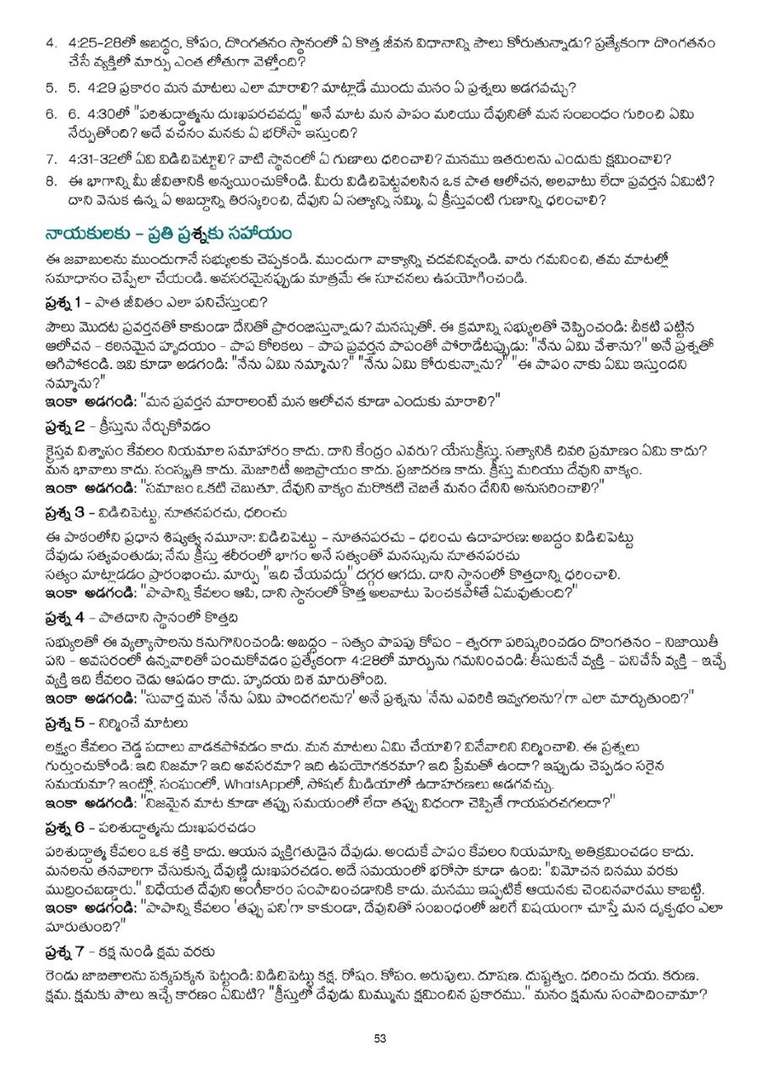
- 4:25-28లో అబద్ధం, కోపం, దొంగతనం స్థానంలో ఏ కొత్త జీవన విధానాన్ని పౌలు కోరుతున్నాడు? ప్రత్యేకంగా దొంగతనం చేసే వ్యక్తిలో మార్పు ఎంత లోతుగా వెళ్తోంది?
- 5. 4:29 ప్రకారం మన మాటలు ఎలా మారాలి? మాట్లాడే ముందు మనం ఏ ప్రశ్నలు అడగవచ్చు?
- 6. 4:30లో “పరిశుద్ధాత్మను దుఃఖపరచవద్దు” అనే మాట మన పాపం మరియు దేవునితో మన సంబంధం గురించి ఏమి నేర్పుతోంది? అదే వచనం మనకు ఏ భరోసా ఇస్తుంది?
- 4:31-32లో ఏవి విడిచిపెట్టాలి? వాటి స్థానంలో ఏ గుణాలు ధరించాలి? మనము ఇతరులను ఎందుకు క్షమించాలి?
- ఈ భాగాన్ని మీ జీవితానికి అన్వయించుకోండి. మీరు విడిచిపెట్టవలసిన ఒక పాత ఆలోచన, అలవాటు లేదా ప్రవర్తన ఏమిటి? దాని వెనుక ఉన్న ఏ అబద్ధాన్ని తిరస్కరించి, దేవుని ఏ సత్యాన్ని నమ్మి, ఏ క్రీస్తువంటి గుణాన్ని ధరించాలి?
Bible Study Questions - 8
1. According to Ephesians 4:17–19, what does Paul say about the old way of life? How are wrong thinking, a hardened heart, sinful desires, and sinful behavior connected?
2. What do the words “That is not the way you learned Christ” and “truth is in Jesus” (4:20–21) teach us about the Christian life? Who or what is our final standard for truth?
3. What three movements does Paul describe in 4:22–24? Explain in your own words: Put off → Renew → Put on
4. In 4:25–28, what new behaviors should replace lying, sinful anger, and stealing? How deep is the transformation of the person who used to steal?
5. According to 4:29, how should our speech change? What questions can we ask ourselves before speaking?
6. What does “Do not grieve the Holy Spirit” (4:30) teach us about sin and our relationship with God? What assurance does the same verse give us?
7. According to 4:31–32, what must be put away, and what qualities should replace them? Why should Christians forgive others?
8. Apply this passage personally. What old thought, habit, or behavior do you need to put off?
What lie behind it needs to be rejected? What truth of God should renew your thinking? What Christlike quality should you put on instead?
నాయకులకు – ప్రతి ప్రశ్నకు సహాయం
ఈ జవాబులను ముందుగానే సభ్యులకు చెప్పకండి. ముందుగా వాక్యాన్ని చదవనివ్వండి. వారు గమనించి, తమ మాటల్లో సమాధానం చెప్పేలా చేయండి. అవసరమైనప్పుడు మాత్రమే ఈ సూచనలు ఉపయోగించండి.
Help for Leaders - Each Question
Do not give these answers to the group immediately. First, let them read the passage. Allow them to observe the text and answer in their own words. Use these notes only when necessary.
ప్రశ్న 1 – పాత జీవితం ఎలా పనిచేస్తుంది?
పౌలు మొదట ప్రవర్తనతో కాకుండా దేనితో ప్రారంభిస్తున్నాడు? మనస్సుతో. ఈ క్రమాన్ని సభ్యులతో చెప్పించండి: చీకటి పట్టిన ఆలోచన – కఠినమైన హృదయం – పాప కోరికలు – పాప ప్రవర్తన పాపంతో పోరాడేటప్పుడు: “నేను ఏమి చేశాను?” అనే ప్రశ్నతో ఆగిపోకండి. ఇవి కూడా అడగండి: “నేను ఏమి నమ్మాను?” “నేను ఏమి కోరుకున్నాను?” “ఈ పాపం నాకు ఏమి ఇస్తుందని నమ్మాను?”
ఇంకా అడగండి: “మన ప్రవర్తన మారాలంటే మన ఆలోచన కూడా ఎందుకు మారాలి?”
Question 1 — How Does the Old Life Work?
What does Paul begin with? Not behavior. The mind. Help the group notice this progression:
Darkened thinking → Hardened heart → Sinful desires → Sinful behavior When dealing with sin, do not stop with: “What did I do?” Also ask: “What did I believe?” “What did I want?” “What did I believe this sin would give me?” Ask further: “Why must our thinking change if our behavior is going to change deeply?”
ప్రశ్న 2 – క్రీస్తును నేర్చుకోవడం
క్రైస్తవ విశ్వాసం కేవలం నియమాల సమాహారం కాదు. దాని కేంద్రం ఎవరు? యేసుక్రీస్తు. సత్యానికి చివరి ప్రమాణం ఏమి కాదు? మన భావాలు కాదు. సంస్కృతి కాదు. మెజారిటీ అభిప్రాయం కాదు. ప్రజాదరణ కాదు. క్రీస్తు మరియు దేవుని వాక్యం.
ఇంకా అడగండి: “సమాజం ఒకటి చెబుతూ, దేవుని వాక్యం మరొకటి చెబితే మనం దేనిని అనుసరించాలి?”
Question 2 — Learning Christ
Christianity is not merely a collection of rules. Who is at its center? Jesus Christ. What is not our final standard of truth? Our feelings. Culture. Majority opinion. Popularity. Our final standard is: Christ and the Word of God. Ask: “If society says one thing and God’s Word says another, which one should shape our lives?”
ప్రశ్న 3 – విడిచిపెట్టు, నూతనపరచు, ధరించు
ఈ పాఠంలోని ప్రధాన శిష్యత్వ నమూనా: విడిచిపెట్టు – నూతనపరచు – ధరించు ఉదాహరణ: అబద్ధం విడిచిపెట్టు
దేవుడు సత్యవంతుడు; నేను క్రీస్తు శరీరంలో భాగం అనే సత్యంతో మనస్సును నూతనపరచు
సత్యం మాట్లాడడం ప్రారంభించు. మార్పు “ఇది చేయవద్దు” దగ్గర ఆగదు. దాని స్థానంలో కొత్తదాన్ని ధరించాలి.
ఇంకా అడగండి: “పాపాన్ని కేవలం ఆపి, దాని స్థానంలో కొత్త అలవాటు పెంచకపోతే ఏమవుతుంది?”
Question 3 — Put Off, Renew, Put On
This is the main discipleship pattern of the lesson: Put off → Renew → Put on For example: Put off lying → Renew your mind with the truth that God is truthful and that you belong to Christ’s body → Begin speaking truth. Transformation does not stop at: “Don’t do this.” Something new must replace the old. Ask: “What may happen if we stop a sinful habit but never replace it with a new godly pattern?”
ప్రశ్న 4 – పాతదాని స్థానంలో కొత్తది
సభ్యులతో ఈ వ్యత్యాసాలను కనుగొనించండి: అబద్ధం – సత్యం పాపపు కోపం – త్వరగా పరిష్కరించడం దొంగతనం – నిజాయితీ పని – అవసరంలో ఉన్నవారితో పంచుకోవడం ప్రత్యేకంగా 4:28లో మార్పును గమనించండి: తీసుకునే వ్యక్తి – పనిచేసే వ్యక్తి – ఇచ్చే వ్యక్తి ఇది కేవలం చెడు ఆపడం కాదు. హృదయ దిశ మారుతోంది.
ఇంకా అడగండి: “సువార్త మన ‘నేను ఏమి పొందగలను?’ అనే ప్రశ్నను ‘నేను ఎవరికి ఇవ్వగలను?’గా ఎలా మార్చుతుంది?”
Question 4 — Replace the Old with the New
Help the group identify these contrasts: Falsehood → Truth Sinful anger → Deal with it rather than feeding it Stealing → Honest work → Sharing with those in need Pay special attention to 4:28. The person changes from: A taker → A worker → A giver This is more than stopping bad behavior. The direction of the heart is changing. Ask: “How does the gospel change the question ‘What can I get?’ into ‘What can I give?’”
ప్రశ్న 5 – నిర్మించే మాటలు
లక్ష్యం కేవలం చెడ్డ పదాలు వాడకపోవడం కాదు. మన మాటలు ఏమి చేయాలి? వినేవారిని నిర్మించాలి. ఈ ప్రశ్నలు గుర్తుంచుకోండి: ఇది నిజమా? ఇది అవసరమా? ఇది ఉపయోగకరమా? ఇది ప్రేమతో ఉందా? ఇప్పుడు చెప్పడం సరైన సమయమా? ఇంట్లో, సంఘంలో, WhatsAppలో, సోషల్ మీడియాలో ఉదాహరణలు అడగవచ్చు.
ఇంకా అడగండి: “నిజమైన మాట కూడా తప్పు సమయంలో లేదా తప్పు విధంగా చెప్పితే గాయపరచగలదా?”
Question 5 — Words That Build Up
The goal is not simply to avoid bad language. What should our words do? Build up those who listen. Remember these questions: Is it true? Is it necessary? Is it helpful? Is it loving? Is this the right time to say it? Ask for examples from home, church, WhatsApp, or social media. Ask further: “Can something be true but still hurt someone because we say it at the wrong time or in the wrong way?”
ప్రశ్న 6 – పరిశుద్ధాత్మను దుఃఖపరచడం
పరిశుద్ధాత్మ కేవలం ఒక శక్తి కాదు. ఆయన వ్యక్తిగతుడైన దేవుడు. అందుకే పాపం కేవలం నియమాన్ని అతిక్రమించడం కాదు. మనలను తనవారిగా చేసుకున్న దేవుణ్ణి దుఃఖపరచడం. అదే సమయంలో భరోసా కూడా ఉంది: “విమోచన దినము వరకు ముద్రించబడ్డారు.” విధేయత దేవుని అంగీకారం సంపాదించడానికి కాదు. మనము ఇప్పటికే ఆయనకు చెందినవారము కాబట్టి.
ఇంకా అడగండి: “పాపాన్ని కేవలం ‘తప్పు పని’గా కాకుండా, దేవునితో సంబంధంలో జరిగే విషయంగా చూస్తే మన దృక్పథం ఎలా మారుతుంది?”
Question 6 — Grieving the Holy Spirit
The Holy Spirit is not merely a power. He is the personal Spirit of God. Therefore, sin is not merely breaking a rule. It grieves the God who has made us His own. But notice the assurance: We have been sealed for the day of redemption. Our obedience is not an attempt to earn God’s acceptance. We obey because we already belong to Him. Ask: “How does our view of sin change when we see it not merely as ‘doing something wrong,’ but as something that affects our relationship with God?”
ప్రశ్న 7 – కక్ష నుండి క్షమ వరకు
రెండు జాబితాలను పక్కపక్కన పెట్టండి: విడిచిపెట్టు కక్ష. రోషం. కోపం. అరుపులు. దూషణ. దుష్టత్వం. ధరించు దయ. కరుణ. క్షమ. క్షమకు పౌలు ఇచ్చే కారణం ఏమిటి? “క్రీస్తులో దేవుడు మిమ్మును క్షమించిన ప్రకారము.” మనం క్షమను సంపాదించామా?
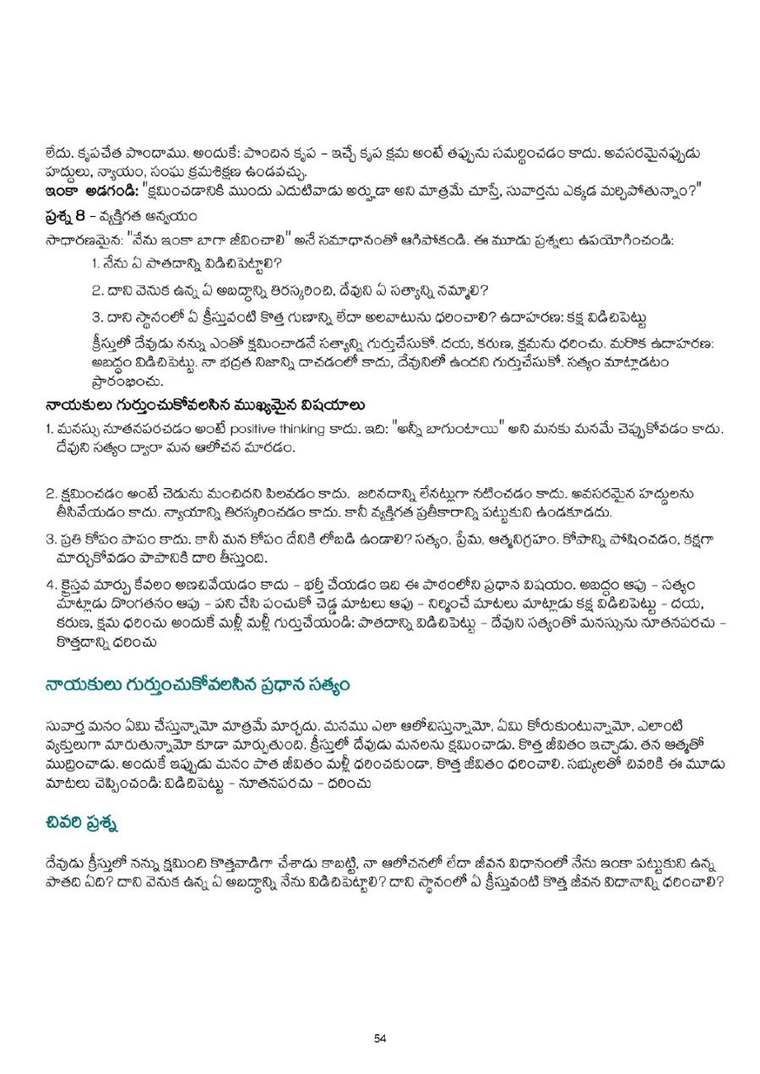
లేదు. కృపచేత పొందాము. అందుకే: పొందిన కృప – ఇచ్చే కృప క్షమ అంటే తప్పును సమర్థించడం కాదు. అవసరమైనప్పుడు హద్దులు, న్యాయం, సంఘ క్రమశిక్షణ ఉండవచ్చు.
ఇంకా అడగండి: “క్షమించడానికి ముందు ఎదుటివాడు అర్హుడా అని మాత్రమే చూస్తే, సువార్తను ఎక్కడ మర్చిపోతున్నాం?”
Question 7 — From Bitterness to Forgiveness
Place the two lists side by side. Put off: Bitterness. Rage. Anger. Brawling. Slander. Malice. Put on: Kindness. Compassion. Forgiveness. Why does Paul say we should forgive? “Just as in Christ God forgave you.” Did we earn God’s forgiveness? No. We received it by grace. Therefore: Grace received → Grace extended Forgiveness does not mean approving wrongdoing. Where necessary, there may still need to be boundaries, justice, accountability, or church discipline. Ask: “If we only ask whether the other person deserves forgiveness, what part of the gospel are we forgetting?”
ప్రశ్న 8 – వ్యక్తిగత అన్వయం
సాధారణమైన: “నేను ఇంకా బాగా జీవించాలి” అనే సమాధానంతో ఆగిపోకండి. ఈ మూడు ప్రశ్నలు ఉపయోగించండి:
- నేను ఏ పాతదాన్ని విడిచిపెట్టాలి?
- దాని వెనుక ఉన్న ఏ అబద్ధాన్ని తిరస్కరించి, దేవుని ఏ సత్యాన్ని నమ్మాలి?
- దాని స్థానంలో ఏ క్రీస్తువంటి కొత్త గుణాన్ని లేదా అలవాటును ధరించాలి? ఉదాహరణ: కక్ష విడిచిపెట్టు
క్రీస్తులో దేవుడు నన్ను ఎంతో క్షమించాడనే సత్యాన్ని గుర్తుచేసుకో. దయ, కరుణ, క్షమను ధరించు. మరొక ఉదాహరణ: అబద్ధం విడిచిపెట్టు. నా భద్రత నిజాన్ని దాచడంలో కాదు, దేవునిలో ఉందని గుర్తుచేసుకో. సత్యం మాట్లాడటం ప్రారంభించు.
Question 8 — Personal Application
Do not settle for a general answer such as: “I need to live a better life.” Use these three questions: 1. What old thing must I put off? 2. What lie behind it must I reject, and what truth of God must renew my thinking? 3. What new Christlike quality or habit must I put on? For example: Put off bitterness → Remember that God has forgiven me greatly in Christ → Put on kindness, compassion, and forgiveness. Another example: Put off lying → Remember that my security is not found in hiding the truth but in God → Begin speaking truthfully.
Important Things for Leaders to Remember
1. Renewing the Mind Is Not Positive Thinking It does not mean simply telling ourselves:
“Everything will be fine.” It means allowing God’s truth to reshape our thinking.
2. Forgiveness Does Not Mean Calling Evil Good It does not mean pretending nothing happened. It does not remove every necessary boundary. It does not reject justice. But we should not continue holding on to personal revenge.
3. Not All Anger Is Sin But what must govern our anger? Truth, love, and self-control. Feeding anger and allowing it to grow into bitterness leads toward sin.
4. Christian Transformation Is Not Merely Suppression — It Is Replacement This is one of the main truths of the passage: Stop lying → Speak truth Stop stealing → Work and share Stop harmful speech → Speak words that build up Put away bitterness → Put on kindness, compassion, and forgiveness So keep returning to the pattern: Put off the old → Renew your mind with God’s truth → Put on the new
నాయకులు గుర్తుంచుకోవలసిన ముఖ్యమైన విషయాలు
- మనస్సు నూతనపరచడం అంటే positive thinking కాదు. ఇది: “అన్నీ బాగుంటాయి” అని మనకు మనమే చెప్పుకోవడం కాదు. దేవుని సత్యం ద్వారా మన ఆలోచన మారడం.
- క్షమించడం అంటే చెడును మంచిదని పిలవడం కాదు. జరినదాన్ని లేనట్లుగా నటించడం కాదు. అవసరమైన హద్దులను తీసివేయడం కాదు. న్యాయాన్ని తిరస్కరించడం కాదు. కానీ వ్యక్తిగత ప్రతీకారాన్ని పట్టుకుని ఉండకూడదు.
- ప్రతి కోపం పాపం కాదు. కానీ మన కోపం దేనికి లోబడి ఉండాలి? సత్యం, ప్రేమ, ఆత్మనిగ్రహం. కోపాన్ని పోషించడం, కక్షగా మార్చుకోవడం పాపానికి దారి తీస్తుంది.
- క్రైస్తవ మార్పు కేవలం అణచివేయడం కాదు – భర్తీ చేయడం ఇది ఈ పాఠంలోని ప్రధాన విషయం. అబద్ధం ఆపు – సత్యం మాట్లాడు దొంగతనం ఆపు – పని చేసి పంచుకో చెడ్డ మాటలు ఆపు – నిర్మించే మాటలు మాట్లాడు కక్ష విడిచిపెట్టు – దయ, కరుణ, క్షమ ధరించు అందుకే మళ్లీ మళ్లీ గుర్తుచేయండి: పాతదాన్ని విడిచిపెట్టు – దేవుని సత్యంతో మనస్సును నూతనపరచు – కొత్తదాన్ని ధరించు
నాయకులు గుర్తుంచుకోవలసిన ప్రధాన సత్యం
సువార్త మనం ఏమి చేస్తున్నామో మాత్రమే మార్చదు. మనము ఎలా ఆలోచిస్తున్నామో, ఏమి కోరుకుంటున్నామో, ఎలాంటి వ్యక్తులుగా మారుతున్నామో కూడా మార్చుతుంది. క్రీస్తులో దేవుడు మనలను క్షమించాడు. కొత్త జీవితం ఇచ్చాడు. తన ఆత్మతో ముద్రించాడు. అందుకే ఇప్పుడు మనం పాత జీవితం మళ్లీ ధరించకుండా, కొత్త జీవితం ధరించాలి. సభ్యులతో చివరికి ఈ మూడు మాటలు చెప్పించండి: విడిచిపెట్టు – నూతనపరచు – ధరించు
Main Truth for Leaders to Remember
The gospel does not only change what we do. It also changes: how we think, what we desire, and the kind of people we are becoming. God has forgiven us in Christ. He has given us new life. He has sealed us with His Spirit. Therefore, we should not continue wearing the clothes of the old life. We are called to put on the new. Have the group repeat these three words at the end: Put off → Renew → Put on
చివరి ప్రశ్న
దేవుడు క్రీస్తులో నన్ను క్షమించి కొత్తవాడిగా చేశాడు కాబట్టి, నా ఆలోచనలో లేదా జీవన విధానంలో నేను ఇంకా పట్టుకుని ఉన్న పాతది ఏది? దాని వెనుక ఉన్న ఏ అబద్ధాన్ని నేను విడిచిపెట్టాలి? దాని స్థానంలో ఏ క్రీస్తువంటి కొత్త జీవన విధానాన్ని ధరించాలి?
Final Question
Because God has forgiven me in Christ and made me new: What old way of thinking or living am I still holding on to? What lie behind it do I need to reject? And what new, Christlike way of life should I put on in its place?
Original PDF pages · అసలు పేజీలు (Telugu 5 · English 7)
తెలుగు · Telugu edition
English edition