Search this book · ఈ పుస్తకంలో వెతకండి
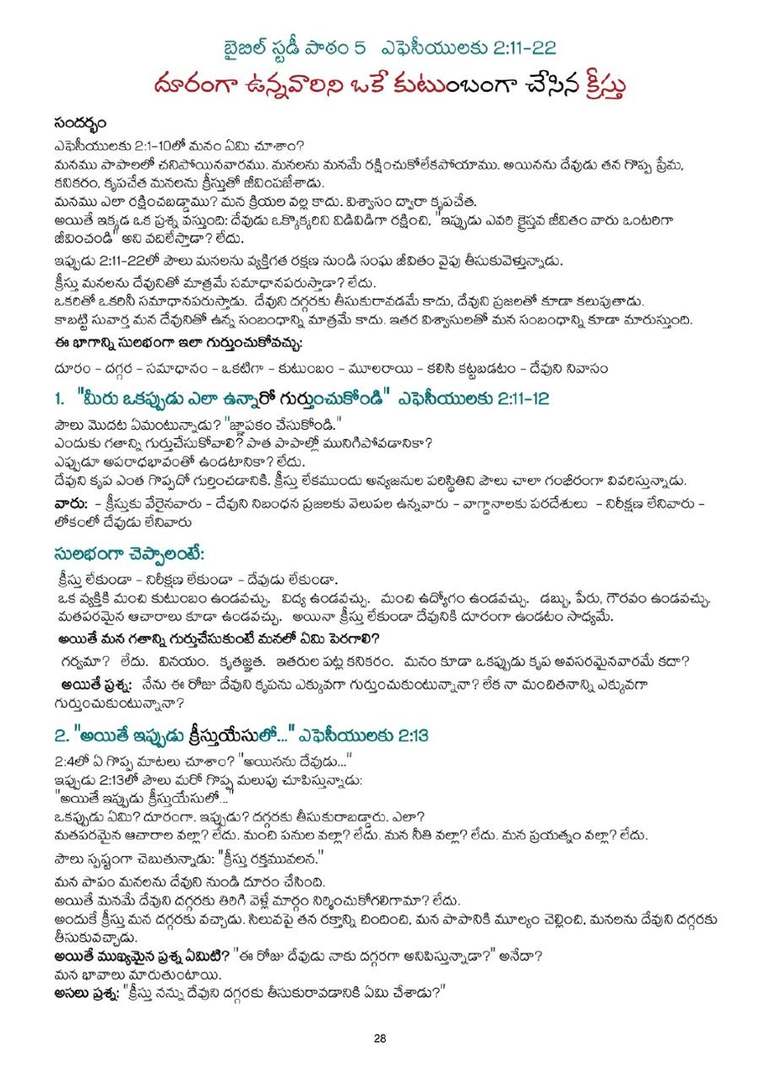
సందర్భం
ఎఫెసీయులకు 2:1-10లో మనం ఏమి చూశాం?
మనము పాపాలలో చనిపోయినవారము. మనలను మనమే రక్షించుకోలేకపోయాము. అయినను దేవుడు తన గొప్ప ప్రేమ, కనికరం, కృపచేత మనలను క్రీస్తుతో జీవింపజేశాడు.
మనము ఎలా రక్షించబడ్డాము? మన క్రియల వల్ల కాదు. విశ్వాసం ద్వారా కృపచేత.
అయితే ఇక్కడ ఒక ప్రశ్న వస్తుంది: దేవుడు ఒక్కొక్కరిని విడివిడిగా రక్షించి, "ఇప్పుడు ఎవరి క్రైస్తవ జీవితం వారు ఒంటరిగా జీవించండి" అని వదిలేస్తాడా? లేదు.
ఇప్పుడు 2:11-22లో పౌలు మనలను వ్యక్తిగత రక్షణ నుండి సంఘ జీవితం వైపు తీసుకువెళ్తున్నాడు.
క్రీస్తు మనలను దేవునితో మాత్రమే సమాధానపరుస్తాడా? లేదు.
ఒకరితో ఒకరినీ సమాధానపరుస్తాడు. దేవుని దగ్గరకు తీసుకురావడమే కాదు, దేవుని ప్రజలతో కూడా కలుపుతాడు.
కాబట్టి సువార్త మన దేవునితో ఉన్న సంబంధాన్ని మాత్రమే కాదు. ఇతర విశ్వాసులతో మన సంబంధాన్ని కూడా మారుస్తుంది.
ఈ భాగాన్ని సులభంగా ఇలా గుర్తుంచుకోవచ్చు:
దూరం - దగ్గర - సమాధానం - ఒకటిగా - కుటుంబం - మూలరాయి - కలిసి కట్టబడటం - దేవుని నివాసం
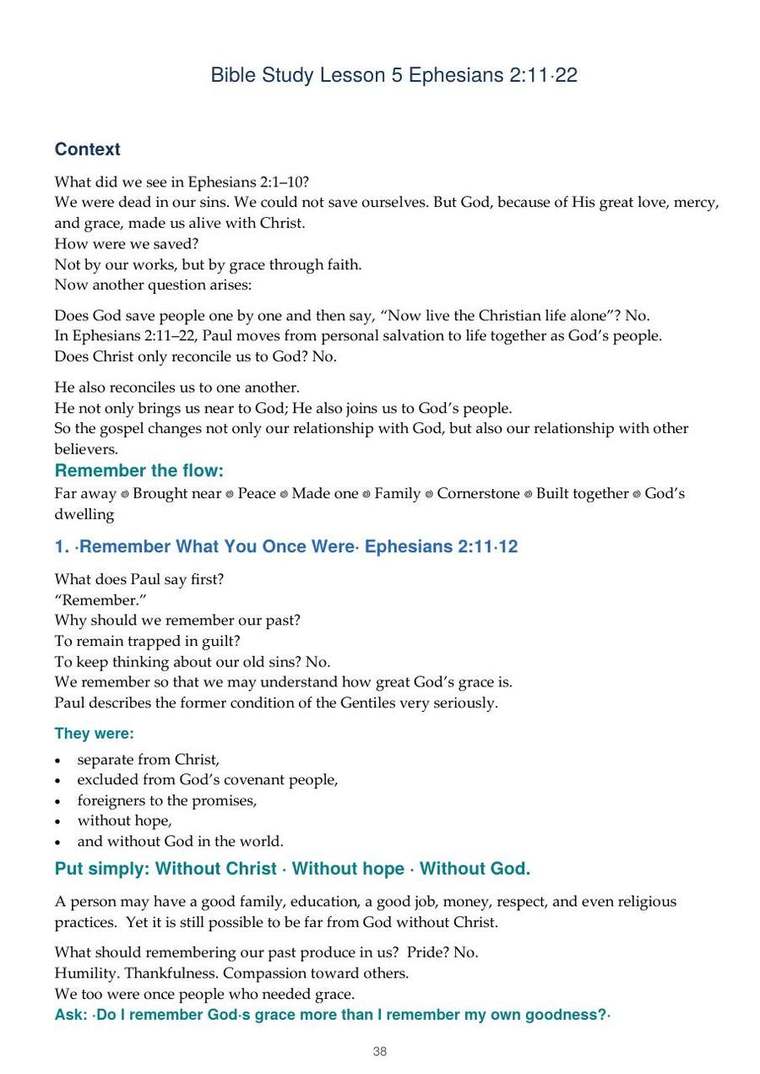
Context
What did we see in Ephesians 2:1–10?
We were dead in our sins. We could not save ourselves. But God, because of His great love, mercy, and grace, made us alive with Christ.
How were we saved?
Not by our works, but by grace through faith.
Now another question arises:
Does God save people one by one and then say, “Now live the Christian life alone”? No.
In Ephesians 2:11–22, Paul moves from personal salvation to life together as God’s people.
Does Christ only reconcile us to God? No.
He also reconciles us to one another.
He not only brings us near to God; He also joins us to God’s people.
So the gospel changes not only our relationship with God, but also our relationship with other believers.
Remember the flow:
Far away → Brought near → Peace → Made one → Family → Cornerstone → Built together → God’s dwelling
1. "మీరు ఒకప్పుడు ఎలా ఉన్నారో గుర్తుంచుకోండి" ఎఫెసీయులకు 2:11-12
పౌలు మొదట ఏమంటున్నాడు? "జ్ఞాపకం చేసుకోండి."
ఎందుకు గతాన్ని గుర్తుచేసుకోవాలి? పాత పాపాల్లో మునిగిపోవడానికా?
ఎప్పుడూ అపరాధభావంతో ఉండటానికా? లేదు.
దేవుని కృప ఎంత గొప్పదో గుర్తించడానికి. క్రీస్తు లేకముందు అన్యజనుల పరిస్థితిని పౌలు చాలా గంభీరంగా వివరిస్తున్నాడు.
వారు:
- క్రీస్తుకు వేరైనవారు - దేవుని నిబంధన ప్రజలకు వెలుపల ఉన్నవారు - వాగ్దానాలకు పరదేశులు - నిరీక్షణ లేనివారు - లోకంలో దేవుడు లేనివారు
సులభంగా చెప్పాలంటే:
క్రీస్తు లేకుండా - నిరీక్షణ లేకుండా - దేవుడు లేకుండా.
ఒక వ్యక్తికి మంచి కుటుంబం ఉండవచ్చు. విద్య ఉండవచ్చు. మంచి ఉద్యోగం ఉండవచ్చు. డబ్బు, పేరు, గౌరవం ఉండవచ్చు. మతపరమైన ఆచారాలు కూడా ఉండవచ్చు. అయినా క్రీస్తు లేకుండా దేవునికి దూరంగా ఉండటం సాధ్యమే.
అయితే మన గతాన్ని గుర్తుచేసుకుంటే మనలో ఏమి పెరగాలి?
గర్వమా? లేదు. వినయం. కృతజ్ఞత. ఇతరుల పట్ల కనికరం. మనం కూడా ఒకప్పుడు కృప అవసరమైనవారమే కదా?
అయితే ప్రశ్న: నేను ఈ రోజు దేవుని కృపను ఎక్కువగా గుర్తుంచుకుంటున్నానా? లేక నా మంచితనాన్ని ఎక్కువగా గుర్తుంచుకుంటున్నానా?
1. “Remember What You Once Were” Ephesians 2:11–12
What does Paul say first?
“Remember.”
Why should we remember our past?
To remain trapped in guilt?
To keep thinking about our old sins? No.
We remember so that we may understand how great God’s grace is.
Paul describes the former condition of the Gentiles very seriously.
They were:
- separate from Christ,
- excluded from God’s covenant people,
- foreigners to the promises,
- without hope,
- and without God in the world.
Put simply: Without Christ → Without hope → Without God.
A person may have a good family, education, a good job, money, respect, and even religious practices. Yet it is still possible to be far from God without Christ.
What should remembering our past produce in us? Pride? No.
Humility. Thankfulness. Compassion toward others.
We too were once people who needed grace.
Ask: “Do I remember God’s grace more than I remember my own goodness?”
2. "అయితే ఇప్పుడు క్రీస్తుయేసులో..." ఎఫెసీయులకు 2:13
2:4లో ఏ గొప్ప మాటలు చూశాం? "అయినను దేవుడు..."
ఇప్పుడు 2:13లో పౌలు మరో గొప్ప మలుపు చూపిస్తున్నాడు:
"అయితే ఇప్పుడు క్రీస్తుయేసులో..."
ఒకప్పుడు ఏమి? దూరంగా. ఇప్పుడు? దగ్గరకు తీసుకురాబడ్డారు. ఎలా?
మతపరమైన ఆచారాల వల్లా? లేదు. మంచి పనుల వల్లా? లేదు. మన నీతి వల్లా? లేదు. మన ప్రయత్నం వల్లా? లేదు.
పౌలు స్పష్టంగా చెబుతున్నాడు: "క్రీస్తు రక్తమువలన."
మన పాపం మనలను దేవుని నుండి దూరం చేసింది.
అయితే మనమే దేవుని దగ్గరకు తిరిగి వెళ్లే మార్గం నిర్మించుకోగలిగామా? లేదు.
అందుకే క్రీస్తు మన దగ్గరకు వచ్చాడు. సిలువపై తన రక్తాన్ని చిందించి, మన పాపానికి మూల్యం చెల్లించి, మనలను దేవుని దగ్గరకు తీసుకువచ్చాడు.
అయితే ముఖ్యమైన ప్రశ్న ఏమిటి? "ఈ రోజు దేవుడు నాకు దగ్గరగా అనిపిస్తున్నాడా?" అనేదా?
మన భావాలు మారుతుంటాయి.
అసలు ప్రశ్న: "క్రీస్తు నన్ను దేవుని దగ్గరకు తీసుకురావడానికి ఏమి చేశాడు?"
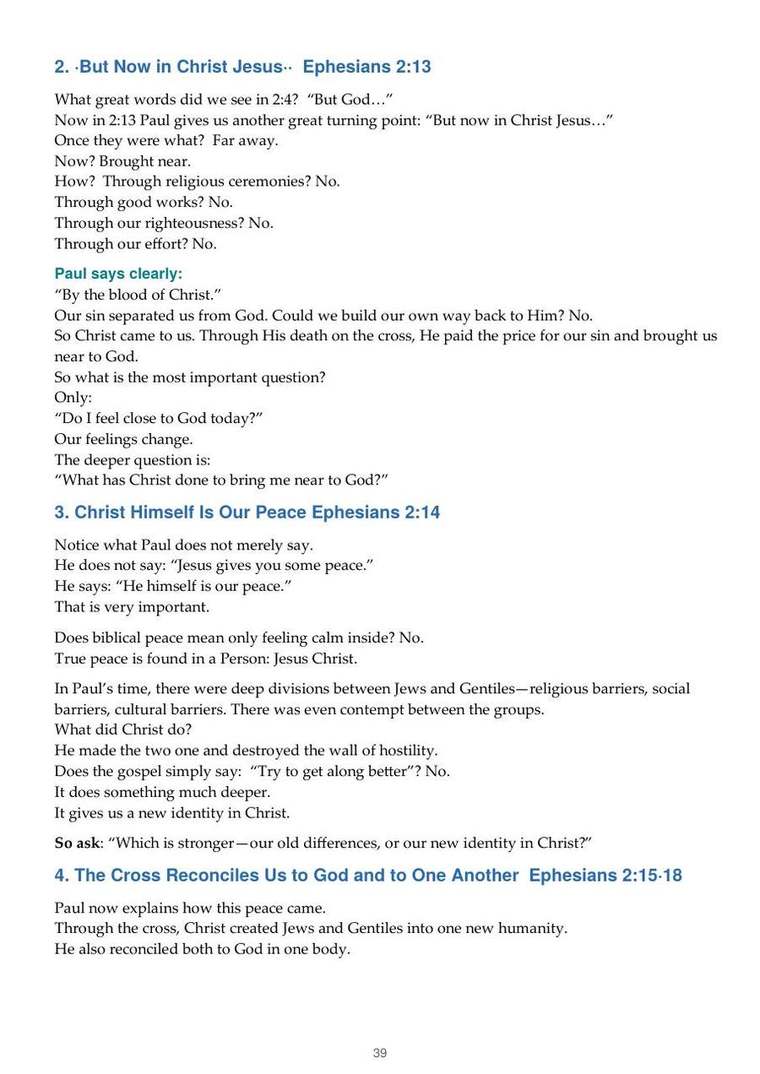
2. “But Now in Christ Jesus…” Ephesians 2:13
What great words did we see in 2:4? “But God…”
Now in 2:13 Paul gives us another great turning point: “But now in Christ Jesus…”
Once they were what? Far away.
Now? Brought near.
How? Through religious ceremonies? No.
Through good works? No.
Through our righteousness? No.
Through our effort? No.
Paul says clearly:
“By the blood of Christ.”
Our sin separated us from God. Could we build our own way back to Him? No.
So Christ came to us. Through His death on the cross, He paid the price for our sin and brought us near to God.
So what is the most important question?
Only:
“Do I feel close to God today?”
Our feelings change.
The deeper question is:
“What has Christ done to bring me near to God?”
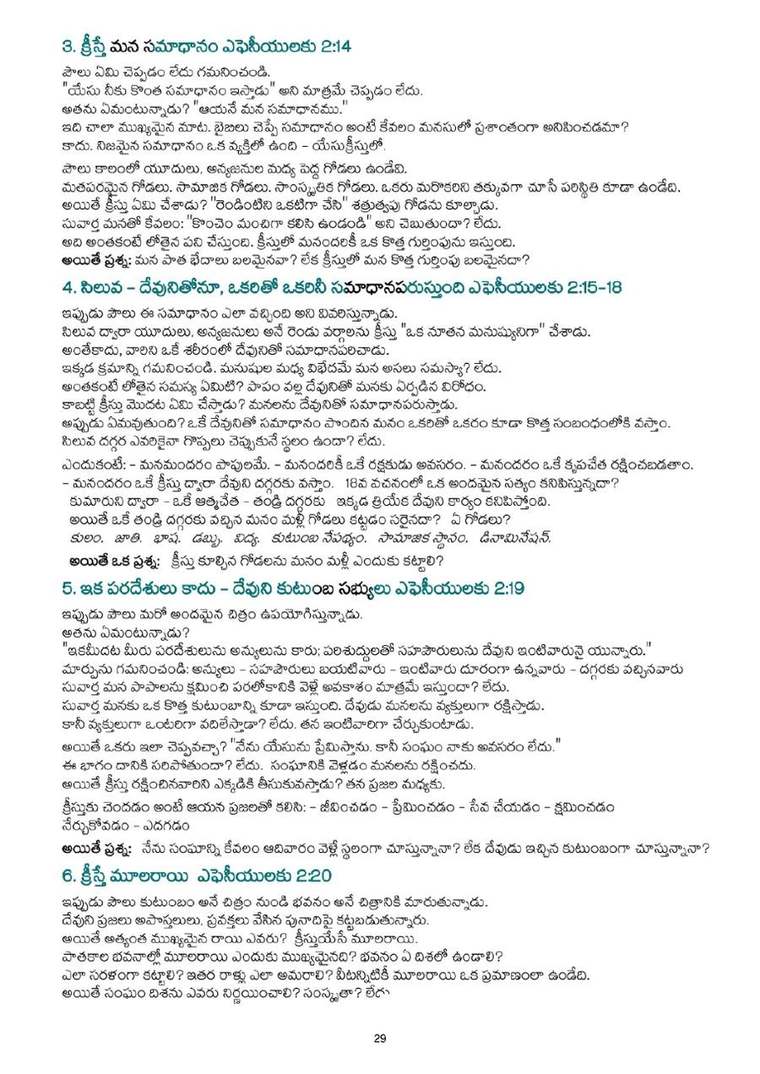
3. క్రీస్తే మన సమాధానం ఎఫెసీయులకు 2:14
పౌలు ఏమి చెప్పడం లేదు గమనించండి.
"యేసు నీకు కొంత సమాధానం ఇస్తాడు" అని మాత్రమే చెప్పడం లేదు.
అతను ఏమంటున్నాడు? "ఆయనే మన సమాధానము."
ఇది చాలా ముఖ్యమైన మాట. బైబిలు చెప్పే సమాధానం అంటే కేవలం మనసులో ప్రశాంతంగా అనిపించడమా?
కాదు. నిజమైన సమాధానం ఒక వ్యక్తిలో ఉంది - యేసుక్రీస్తులో.
పౌలు కాలంలో యూదులు, అన్యజనుల మధ్య పెద్ద గోడలు ఉండేవి.
మతపరమైన గోడలు. సామాజిక గోడలు. సాంస్కృతిక గోడలు. ఒకరు మరొకరిని తక్కువగా చూసే పరిస్థితి కూడా ఉండేది.
అయితే క్రీస్తు ఏమి చేశాడు? "రెండింటిని ఒకటిగా చేసి" శత్రుత్వపు గోడను కూల్చాడు.
సువార్త మనతో కేవలం: "కొంచెం మంచిగా కలిసి ఉండండి" అని చెబుతుందా? లేదు.
అది అంతకంటే లోతైన పని చేస్తుంది. క్రీస్తులో మనందరికీ ఒక కొత్త గుర్తింపును ఇస్తుంది.
అయితే ప్రశ్న: మన పాత భేదాలు బలమైనవా? లేక క్రీస్తులో మన కొత్త గుర్తింపు బలమైనదా?
3. Christ Himself Is Our Peace Ephesians 2:14
Notice what Paul does not merely say.
He does not say: “Jesus gives you some peace.”
He says: “He himself is our peace.”
That is very important.
Does biblical peace mean only feeling calm inside? No.
True peace is found in a Person: Jesus Christ.
In Paul’s time, there were deep divisions between Jews and Gentiles—religious barriers, social barriers, cultural barriers. There was even contempt between the groups.
What did Christ do?
He made the two one and destroyed the wall of hostility.
Does the gospel simply say: “Try to get along better”? No.
It does something much deeper.
It gives us a new identity in Christ.
So ask: “Which is stronger—our old differences, or our new identity in Christ?”
4. సిలువ - దేవునితోనూ, ఒకరితో ఒకరినీ సమాధానపరుస్తుంది ఎఫెసీయులకు 2:15-18
ఇప్పుడు పౌలు ఈ సమాధానం ఎలా వచ్చింది అని వివరిస్తున్నాడు.
సిలువ ద్వారా యూదులు, అన్యజనులు అనే రెండు వర్గాలను క్రీస్తు "ఒక నూతన మనుష్యునిగా" చేశాడు.
అంతేకాదు, వారిని ఒకే శరీరంలో దేవునితో సమాధానపరిచాడు.
ఇక్కడ క్రమాన్ని గమనించండి. మనుషుల మధ్య విభేదమే మన అసలు సమస్యా? లేదు.
అంతకంటే లోతైన సమస్య ఏమిటి? పాపం వల్ల దేవునితో మనకు ఏర్పడిన విరోధం.
కాబట్టి క్రీస్తు మొదట ఏమి చేస్తాడు? మనలను దేవునితో సమాధానపరుస్తాడు.
అప్పుడు ఏమవుతుంది? ఒకే దేవునితో సమాధానం పొందిన మనం ఒకరితో ఒకరం కూడా కొత్త సంబంధంలోకి వస్తాం.
సిలువ దగ్గర ఎవరికైనా గొప్పలు చెప్పుకునే స్థలం ఉందా? లేదు.
ఎందుకంటే: - మనమందరం పాపులమే. - మనందరికీ ఒకే రక్షకుడు అవసరం. - మనందరం ఒకే కృపచేత రక్షించబడతాం. - మనందరం ఒకే క్రీస్తు ద్వారా దేవుని దగ్గరకు వస్తాం. 18వ వచనంలో ఒక అందమైన సత్యం కనిపిస్తున్నదా?
కుమారుని ద్వారా - ఒకే ఆత్మచేత - తండ్రి దగ్గరకు ఇక్కడ త్రియేక దేవుని కార్యం కనిపిస్తోంది.
అయితే ఒకే తండ్రి దగ్గరకు వచ్చిన మనం మళ్లీ గోడలు కట్టడం సరైనదా? ఏ గోడలు?
కులం. జాతి. భాష. డబ్బు. విద్య. కుటుంబ నేపథ్యం. సామాజిక స్థానం. డినామినేషన్.
అయితే ఒక ప్రశ్న: క్రీస్తు కూల్చిన గోడలను మనం మళ్లీ ఎందుకు కట్టాలి?
4. The Cross Reconciles Us to God and to One Another Ephesians 2:15–18
Paul now explains how this peace came.
Through the cross, Christ created Jews and Gentiles into one new humanity.
He also reconciled both to God in one body.
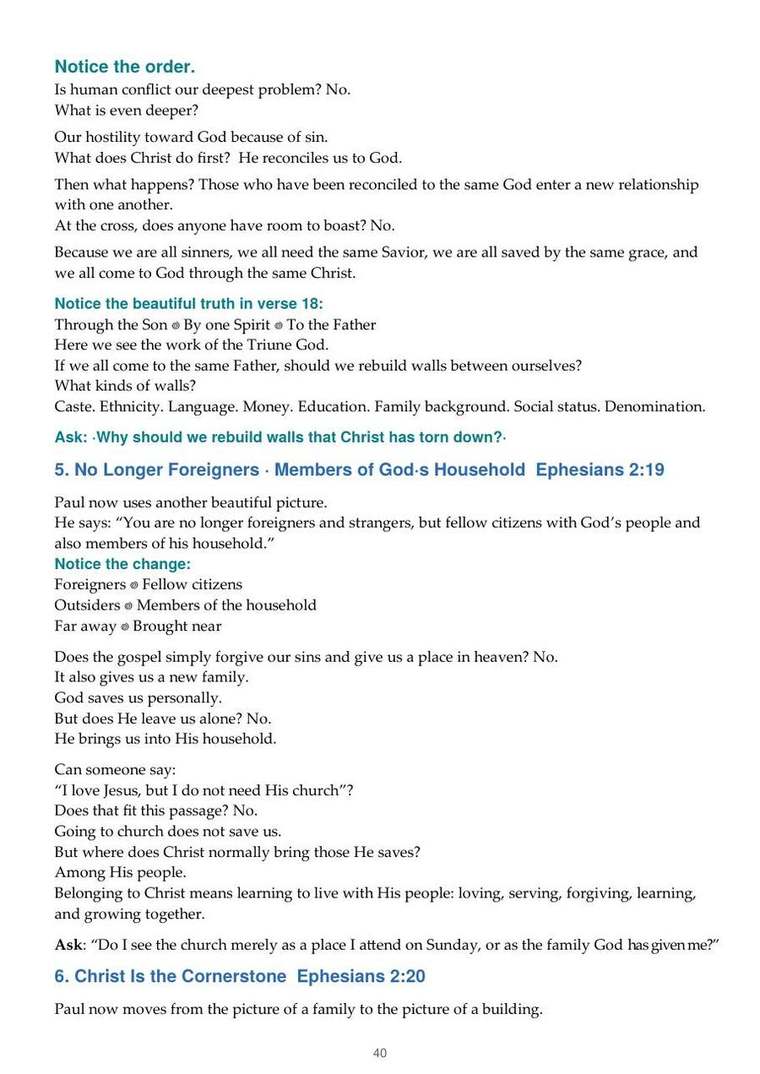
Notice the order.
Is human conflict our deepest problem? No.
What is even deeper?
Our hostility toward God because of sin.
What does Christ do first? He reconciles us to God.
Then what happens? Those who have been reconciled to the same God enter a new relationship with one another.
At the cross, does anyone have room to boast? No.
Because we are all sinners, we all need the same Savior, we are all saved by the same grace, and we all come to God through the same Christ.
Notice the beautiful truth in verse 18:
Through the Son → By one Spirit → To the Father
Here we see the work of the Triune God.
If we all come to the same Father, should we rebuild walls between ourselves?
What kinds of walls?
Caste. Ethnicity. Language. Money. Education. Family background. Social status. Denomination.
Ask: “Why should we rebuild walls that Christ has torn down?”
5. ఇక పరదేశులు కాదు - దేవుని కుటుంబ సభ్యులు ఎఫెసీయులకు 2:19
ఇప్పుడు పౌలు మరో అందమైన చిత్రం ఉపయోగిస్తున్నాడు.
అతను ఏమంటున్నాడు?
"ఇకమీదట మీరు పరదేశులును అన్యులును కారు; పరిశుద్ధులతో సహపౌరులును దేవుని ఇంటివారునై యున్నారు."
మార్పును గమనించండి: అన్యులు - సహపౌరులు బయటివారు - ఇంటివారు దూరంగా ఉన్నవారు - దగ్గరకు వచ్చినవారు
సువార్త మన పాపాలను క్షమించి పరలోకానికి వెళ్లే అవకాశం మాత్రమే ఇస్తుందా? లేదు.
సువార్త మనకు ఒక కొత్త కుటుంబాన్ని కూడా ఇస్తుంది. దేవుడు మనలను వ్యక్తులుగా రక్షిస్తాడు.
కానీ వ్యక్తులుగా ఒంటరిగా వదిలేస్తాడా? లేదు. తన ఇంటివారిగా చేర్చుకుంటాడు.
అయితే ఒకరు ఇలా చెప్పవచ్చా? "నేను యేసును ప్రేమిస్తాను. కానీ సంఘం నాకు అవసరం లేదు."
ఈ భాగం దానికి సరిపోతుందా? లేదు. సంఘానికి వెళ్లడం మనలను రక్షించదు.
అయితే క్రీస్తు రక్షించినవారిని ఎక్కడికి తీసుకువస్తాడు? తన ప్రజల మధ్యకు.
క్రీస్తుకు చెందడం అంటే ఆయన ప్రజలతో కలిసి: - జీవించడం - ప్రేమించడం - సేవ చేయడం - క్షమించడం
నేర్చుకోవడం - ఎదగడం
అయితే ప్రశ్న: నేను సంఘాన్ని కేవలం ఆదివారం వెళ్లే స్థలంగా చూస్తున్నానా? లేక దేవుడు ఇచ్చిన కుటుంబంగా చూస్తున్నానా?
5. No Longer Foreigners — Members of God’s Household Ephesians 2:19
Paul now uses another beautiful picture.
He says: “You are no longer foreigners and strangers, but fellow citizens with God’s people and also members of his household.”
Notice the change:
Foreigners → Fellow citizens
Outsiders → Members of the household
Far away → Brought near
Does the gospel simply forgive our sins and give us a place in heaven? No.
It also gives us a new family.
God saves us personally.
But does He leave us alone? No.
He brings us into His household.
Can someone say:
“I love Jesus, but I do not need His church”?
Does that fit this passage? No.
Going to church does not save us.
But where does Christ normally bring those He saves?
Among His people.
Belonging to Christ means learning to live with His people: loving, serving, forgiving, learning, and growing together.
Ask: “Do I see the church merely as a place I attend on Sunday, or as the family God has given me?”
6. క్రీస్తే మూలరాయి ఎఫెసీయులకు 2:20
ఇప్పుడు పౌలు కుటుంబం అనే చిత్రం నుండి భవనం అనే చిత్రానికి మారుతున్నాడు.
దేవుని ప్రజలు అపొస్తలులు, ప్రవక్తలు వేసిన పునాదిపై కట్టబడుతున్నారు.
అయితే అత్యంత ముఖ్యమైన రాయి ఎవరు? క్రీస్తుయేసే మూలరాయి.
పాతకాల భవనాల్లో మూలరాయి ఎందుకు ముఖ్యమైనది? భవనం ఏ దిశలో ఉండాలి?
ఎలా సరళంగా కట్టాలి? ఇతర రాళ్లు ఎలా అమరాలి? వీటన్నిటికీ మూలరాయి ఒక ప్రమాణంలా ఉండేది.
అయితే సంఘం దిశను ఎవరు నిర్ణయించాలి? సంస్కృతా? లేదు.
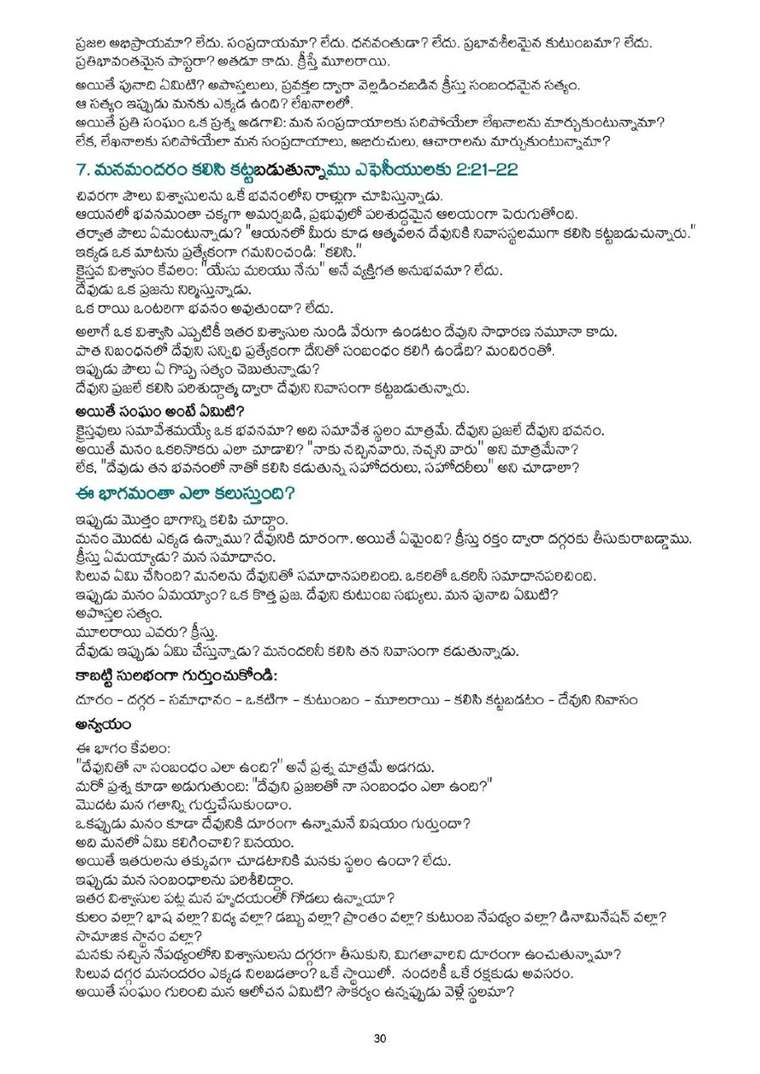
ప్రజల అభిప్రాయమా? లేదు. సంప్రదాయమా? లేదు. ధనవంతుడా? లేదు. ప్రభావశీలమైన కుటుంబమా? లేదు.
ప్రతిభావంతమైన పాస్టరా? అతడూ కాదు. క్రీస్తే మూలరాయి.
అయితే పునాది ఏమిటి? అపొస్తలులు, ప్రవక్తల ద్వారా వెల్లడించబడిన క్రీస్తు సంబంధమైన సత్యం.
ఆ సత్యం ఇప్పుడు మనకు ఎక్కడ ఉంది? లేఖనాలలో.
అయితే ప్రతి సంఘం ఒక ప్రశ్న అడగాలి: మన సంప్రదాయాలకు సరిపోయేలా లేఖనాలను మార్చుకుంటున్నామా?
లేక, లేఖనాలకు సరిపోయేలా మన సంప్రదాయాలు, అభిరుచులు, ఆచారాలను మార్చుకుంటున్నామా?
6. Christ Is the Cornerstone Ephesians 2:20
Paul now moves from the picture of a family to the picture of a building.
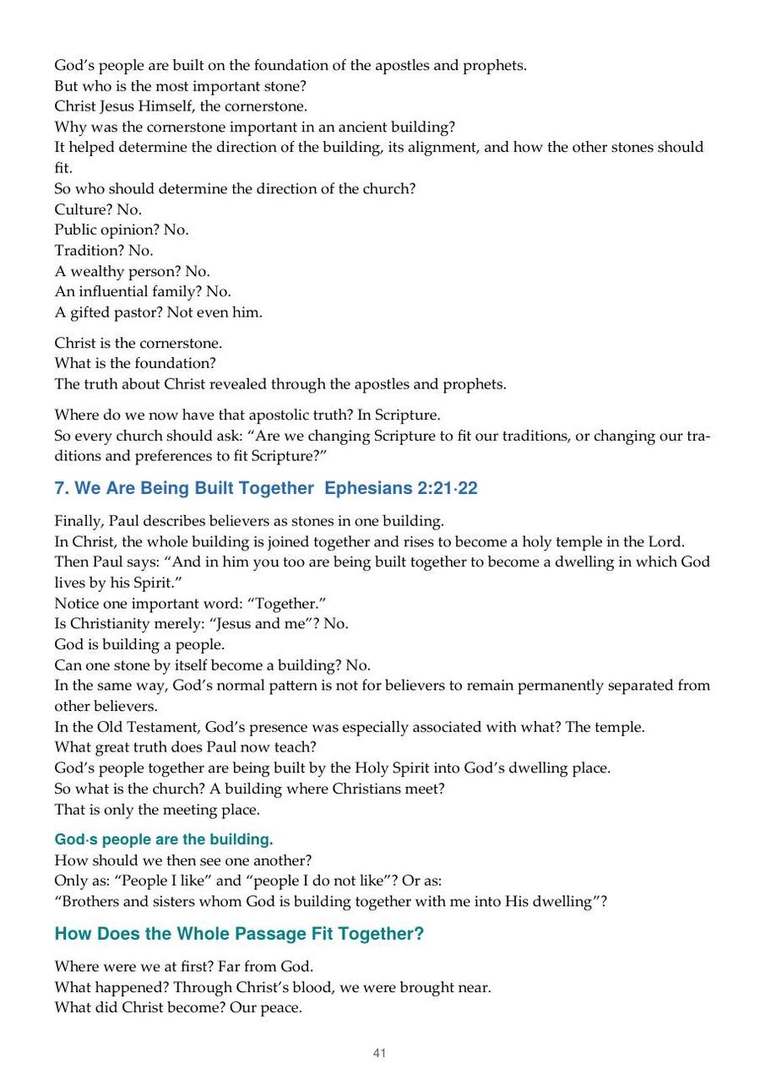
God’s people are built on the foundation of the apostles and prophets.
But who is the most important stone?
Christ Jesus Himself, the cornerstone.
Why was the cornerstone important in an ancient building?
It helped determine the direction of the building, its alignment, and how the other stones should fit.
So who should determine the direction of the church?
Culture? No.
Public opinion? No.
Tradition? No.
A wealthy person? No.
An influential family? No.
A gifted pastor? Not even him.
Christ is the cornerstone.
What is the foundation?
The truth about Christ revealed through the apostles and prophets.
Where do we now have that apostolic truth? In Scripture.
So every church should ask: “Are we changing Scripture to fit our traditions, or changing our traditions and preferences to fit Scripture?”
7. మనమందరం కలిసి కట్టబడుతున్నాము ఎఫెసీయులకు 2:21-22
చివరగా పౌలు విశ్వాసులను ఒకే భవనంలోని రాళ్లుగా చూపిస్తున్నాడు.
ఆయనలో భవనమంతా చక్కగా అమర్చబడి, ప్రభువులో పరిశుద్ధమైన ఆలయంగా పెరుగుతోంది.
తర్వాత పౌలు ఏమంటున్నాడు? "ఆయనలో మీరు కూడ ఆత్మవలన దేవునికి నివాసస్థలముగా కలిసి కట్టబడుచున్నారు."
ఇక్కడ ఒక మాటను ప్రత్యేకంగా గమనించండి: "కలిసి."
క్రైస్తవ విశ్వాసం కేవలం: "యేసు మరియు నేను" అనే వ్యక్తిగత అనుభవమా? లేదు.
దేవుడు ఒక ప్రజను నిర్మిస్తున్నాడు.
ఒక రాయి ఒంటరిగా భవనం అవుతుందా? లేదు.
అలాగే ఒక విశ్వాసి ఎప్పటికీ ఇతర విశ్వాసుల నుండి వేరుగా ఉండటం దేవుని సాధారణ నమూనా కాదు.
పాత నిబంధనలో దేవుని సన్నిధి ప్రత్యేకంగా దేనితో సంబంధం కలిగి ఉండేది? మందిరంతో.
ఇప్పుడు పౌలు ఏ గొప్ప సత్యం చెబుతున్నాడు?
దేవుని ప్రజలే కలిసి పరిశుద్ధాత్మ ద్వారా దేవుని నివాసంగా కట్టబడుతున్నారు.
అయితే సంఘం అంటే ఏమిటి?
క్రైస్తవులు సమావేశమయ్యే ఒక భవనమా? అది సమావేశ స్థలం మాత్రమే. దేవుని ప్రజలే దేవుని భవనం.
అయితే మనం ఒకరినొకరు ఎలా చూడాలి? "నాకు నచ్చినవారు, నచ్చని వారు" అని మాత్రమేనా?
లేక, "దేవుడు తన భవనంలో నాతో కలిసి కడుతున్న సహోదరులు, సహోదరీలు" అని చూడాలా?
ఈ భాగమంతా ఎలా కలుస్తుంది?
ఇప్పుడు మొత్తం భాగాన్ని కలిపి చూద్దాం.
మనం మొదట ఎక్కడ ఉన్నాము? దేవునికి దూరంగా. అయితే ఏమైంది? క్రీస్తు రక్తం ద్వారా దగ్గరకు తీసుకురాబడ్డాము.
క్రీస్తు ఏమయ్యాడు? మన సమాధానం.
సిలువ ఏమి చేసింది? మనలను దేవునితో సమాధానపరిచింది. ఒకరితో ఒకరినీ సమాధానపరిచింది.
ఇప్పుడు మనం ఏమయ్యాం? ఒక కొత్త ప్రజ. దేవుని కుటుంబ సభ్యులు. మన పునాది ఏమిటి?
అపొస్తల సత్యం.
మూలరాయి ఎవరు? క్రీస్తు.
దేవుడు ఇప్పుడు ఏమి చేస్తున్నాడు? మనందరినీ కలిసి తన నివాసంగా కడుతున్నాడు.
కాబట్టి సులభంగా గుర్తుంచుకోండి:
దూరం - దగ్గర - సమాధానం - ఒకటిగా - కుటుంబం - మూలరాయి - కలిసి కట్టబడటం - దేవుని నివాసం
7. We Are Being Built Together Ephesians 2:21–22
Finally, Paul describes believers as stones in one building.
In Christ, the whole building is joined together and rises to become a holy temple in the Lord.
Then Paul says: “And in him you too are being built together to become a dwelling in which God lives by his Spirit.”
Notice one important word: “Together.”
Is Christianity merely: “Jesus and me”? No.
God is building a people.
Can one stone by itself become a building? No.
In the same way, God’s normal pattern is not for believers to remain permanently separated from other believers.
In the Old Testament, God’s presence was especially associated with what? The temple.
What great truth does Paul now teach?
God’s people together are being built by the Holy Spirit into God’s dwelling place.
So what is the church? A building where Christians meet?
That is only the meeting place.
God’s people are the building.
How should we then see one another?
Only as: “People I like” and “people I do not like”? Or as:
“Brothers and sisters whom God is building together with me into His dwelling”?
How Does the Whole Passage Fit Together?
Where were we at first? Far from God.
What happened? Through Christ’s blood, we were brought near.
What did Christ become? Our peace.
What did the cross accomplish? It reconciled us to God.
It also reconciled us to one another.
What are we now? A new people. Members of God’s family.
What is our foundation? Apostolic truth.
Who is the cornerstone? Christ.
What is God doing now? Building us together into His dwelling place.
Remember: Far away → Brought near → Peace → Made one → Family → Cornerstone → Built together → God’s dwelling
అన్వయం
ఈ భాగం కేవలం:
"దేవునితో నా సంబంధం ఎలా ఉంది?" అనే ప్రశ్న మాత్రమే అడగదు.
మరో ప్రశ్న కూడా అడుగుతుంది: "దేవుని ప్రజలతో నా సంబంధం ఎలా ఉంది?"
మొదట మన గతాన్ని గుర్తుచేసుకుందాం.
ఒకప్పుడు మనం కూడా దేవునికి దూరంగా ఉన్నామనే విషయం గుర్తుందా?
అది మనలో ఏమి కలిగించాలి? వినయం.
అయితే ఇతరులను తక్కువగా చూడటానికి మనకు స్థలం ఉందా? లేదు.
ఇప్పుడు మన సంబంధాలను పరిశీలిద్దాం.
ఇతర విశ్వాసుల పట్ల మన హృదయంలో గోడలు ఉన్నాయా?
కులం వల్లా? భాష వల్లా? విద్య వల్లా? డబ్బు వల్లా? ప్రాంతం వల్లా? కుటుంబ నేపథ్యం వల్లా? డినామినేషన్ వల్లా? సామాజిక స్థానం వల్లా?
మనకు నచ్చిన నేపథ్యంలోని విశ్వాసులను దగ్గరగా తీసుకుని, మిగతావారిని దూరంగా ఉంచుతున్నామా?
సిలువ దగ్గర మనందరం ఎక్కడ నిలబడతాం? ఒకే స్థాయిలో. నందరికీ ఒకే రక్షకుడు అవసరం.
అయితే సంఘం గురించి మన ఆలోచన ఏమిటి? సౌకర్యం ఉన్నప్పుడు వెళ్లే స్థలమా?
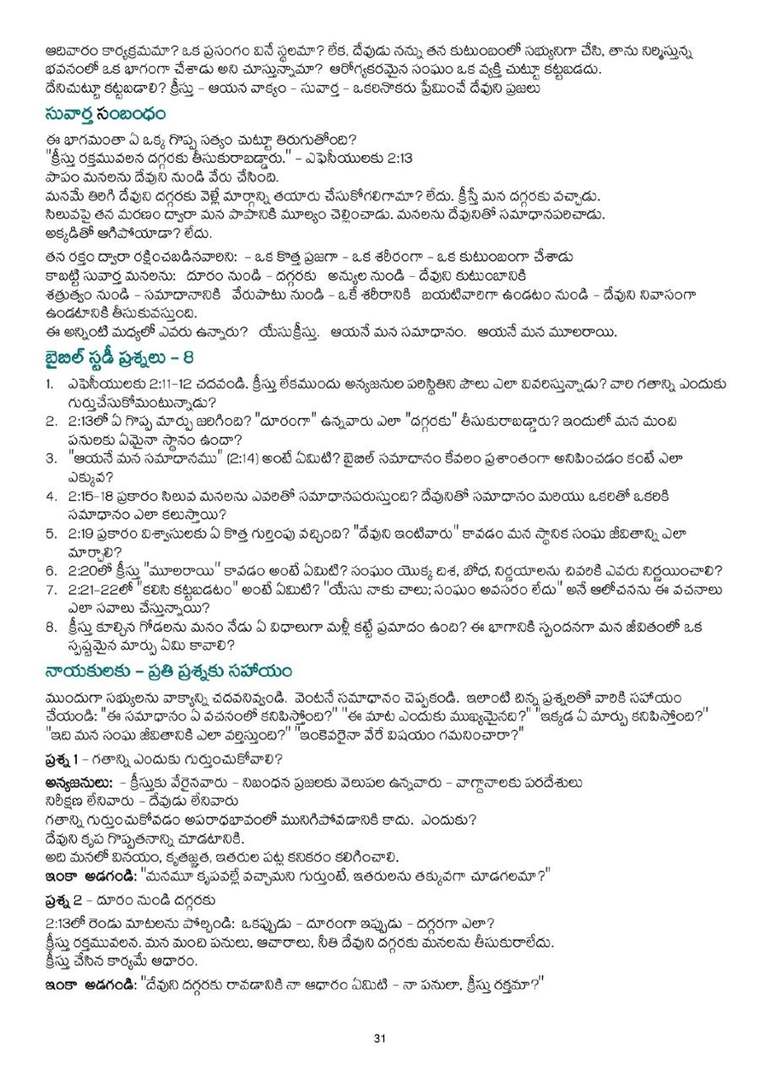
ఆదివారం కార్యక్రమమా? ఒక ప్రసంగం వినే స్థలమా? లేక, దేవుడు నన్ను తన కుటుంబంలో సభ్యునిగా చేసి, తాను నిర్మిస్తున్న భవనంలో ఒక భాగంగా చేశాడు అని చూస్తున్నామా? ఆరోగ్యకరమైన సంఘం ఒక వ్యక్తి చుట్టూ కట్టబడదు.
దేనిచుట్టూ కట్టబడాలి? క్రీస్తు – ఆయన వాక్యం – సువార్త – ఒకరినొకరు ప్రేమించే దేవుని ప్రజలు
Application
This passage does not only ask: “How is my relationship with God?”
It also asks: “How is my relationship with God’s people?”
First, remember where we came from.
Do we remember that we too were once far from God?
What should that produce? Humility.
Do we then have any reason to look down on others? No.
Now examine our relationships.
Are there walls in our hearts toward other believers because of caste, language, education, money, region, family background, denomination, or social status?
Do we draw close only to believers from backgrounds we prefer and keep others at a distance?
Where do all of us stand at the cross? On the same level.
We all need the same Savior.
How do we think about the church?
Is it merely a convenient place to attend, a Sunday program, or a place to hear a sermon?
Or do we understand:
“God has made me a member of His family and part of the building He is constructing”?
A healthy church is not built around one personality.
What should it be built around?
Christ → His Word → The gospel → God’s people loving one another
సువార్త సంబంధం
ఈ భాగమంతా ఏ ఒక్క గొప్ప సత్యం చుట్టూ తిరుగుతోంది?
“క్రీస్తు రక్తమువలన దగ్గరకు తీసుకురాబడ్డారు.” – ఎఫెసీయులకు 2:13
పాపం మనలను దేవుని నుండి వేరు చేసింది.
మనమే తిరిగి దేవుని దగ్గరకు వెళ్లే మార్గాన్ని తయారు చేసుకోగలిగామా? లేదు. క్రీస్తే మన దగ్గరకు వచ్చాడు.
సిలువపై తన మరణం ద్వారా మన పాపానికి మూల్యం చెల్లించాడు. మనలను దేవునితో సమాధానపరిచాడు.
అక్కడితో ఆగిపోయాడా? లేదు.
తన రక్తం ద్వారా రక్షించబడినవారిని: – ఒక కొత్త ప్రజగా – ఒక శరీరంగా – ఒక కుటుంబంగా చేశాడు
కాబట్టి సువార్త మనలను: దూరం నుండి – దగ్గరకు అన్యుల నుండి – దేవుని కుటుంబానికి
శత్రుత్వం నుండి – సమాధానానికి వేరుపాటు నుండి – ఒకే శరీరానికి బయటివారిగా ఉండటం నుండి – దేవుని నివాసంగా ఉండటానికి తీసుకువస్తుంది.
ఈ అన్నింటి మధ్యలో ఎవరు ఉన్నారు? యేసుక్రీస్తు. ఆయనే మన సమాధానం. ఆయనే మన మూలరాయి.
Gospel Connection
What great truth stands at the center of this whole passage?
“You who once were far away have been brought near by the blood of Christ” (Ephesians 2:13). Sin separated us from God.
Could we build our own way back? No.
Christ came to us. Through His death on the cross, He paid the price for our sin.
He reconciled us to God.
Did He stop there? No.
Those saved by His blood are also made one new people, one body, one family. So the gospel takes us: From far away → To near
From strangers → To God’s family
From hostility → To peace
From separation → To one body
From outsiders → To God’s dwelling place
Who stands at the center of it all? Jesus Christ.He is our peace. He is our cornerstone.
బైబిల్ స్టడీ ప్రశ్నలు – 8
- ఎఫెసీయులకు 2:11-12 చదవండి. క్రీస్తు లేకముందు అన్యజనుల పరిస్థితిని పౌలు ఎలా వివరిస్తున్నాడు? వారి గతాన్ని ఎందుకు గుర్తుచేసుకోమంటున్నాడు?
- 2:13లో ఏ గొప్ప మార్పు జరిగింది? “దూరంగా” ఉన్నవారు ఎలా “దగ్గరకు” తీసుకురాబడ్డారు? ఇందులో మన మంచి పనులకు ఏమైనా స్థానం ఉందా?
- “ఆయనే మన సమాధానము” (2:14) అంటే ఏమిటి? బైబిల్ సమాధానం కేవలం ప్రశాంతంగా అనిపించడం కంటే ఎలా ఎక్కువ?
- 2:15-18 ప్రకారం సిలువ మనలను ఎవరితో సమాధానపరుస్తుంది? దేవునితో సమాధానం మరియు ఒకరితో ఒకరికి సమాధానం ఎలా కలుస్తాయి?
- 2:19 ప్రకారం విశ్వాసులకు ఏ కొత్త గుర్తింపు వచ్చింది? “దేవుని ఇంటివారు” కావడం మన స్థానిక సంఘ జీవితాన్ని ఎలా మార్చాలి?
- 2:20లో క్రీస్తు “మూలరాయి” కావడం అంటే ఏమిటి? సంఘం యొక్క దిశ, బోధ, నిర్ణయాలను చివరికి ఎవరు నిర్ణయించాలి?
- 2:21-22లో “కలిసి కట్టబడటం” అంటే ఏమిటి? “యేసు నాకు చాలు; సంఘం అవసరం లేదు” అనే ఆలోచనను ఈ వచనాలు ఎలా సవాలు చేస్తున్నాయి?
- క్రీస్తు కూల్చిన గోడలను మనం నేడు ఏ విధాలుగా మళ్లీ కట్టే ప్రమాదం ఉంది? ఈ భాగానికి స్పందనగా మన జీవితంలో ఒక స్పష్టమైన మార్పు ఏమి కావాలి?
Bible Study Questions - 8
1. Read Ephesians 2:11–12. How does Paul describe the condition of the Gentiles before Christ? Why does he tell them to remember their past?
2. What great change takes place in 2:13? How were those who were “far away” brought near? What place do our good works have in this?
3. What does “He himself is our peace” (2:14) mean? How is biblical peace more than simply feeling calm?
4. According to 2:15–18, with whom does the cross reconcile us? How are peace with God and peace with one another connected?
5. According to 2:19, what new identity do believers receive? How should being “members of God’s household” change our life in the local church?
6. What does it mean that Christ is the “cornerstone” in 2:20? Who should finally determine the church’s direction, teaching, and decisions?
7. What does “being built together” mean in 2:21–22? How do these verses challenge the idea, “Jesus is enough for me; I do not need the church”?
8. In what ways are we in danger of rebuilding walls that Christ has torn down? What is one clear change we should make in response to this passage?
నాయకులకు – ప్రతి ప్రశ్నకు సహాయం
ముందుగా సభ్యులను వాక్యాన్ని చదవనివ్వండి. వెంటనే సమాధానం చెప్పకండి. ఇలాంటి చిన్న ప్రశ్నలతో వారికి సహాయం చేయండి: “ఈ సమాధానం ఏ వచనంలో కనిపిస్తోంది?” “ఈ మాట ఎందుకు ముఖ్యమైనది?” “ఇక్కడ ఏ మార్పు కనిపిస్తోంది?” “ఇది మన సంఘ జీవితానికి ఎలా వర్తిస్తుంది?” “ఇంకెవరైనా వేరే విషయం గమనించారా?”
Help for Leaders - Each Question
First, let the group read the passage. Do not give the answer immediately. Use short questions such as: “Which verse gives us that answer?” “Why is this word important?”
“What change do you see here?” “How does this apply to church life?”
“Did anyone notice something else?”
ప్రశ్న 1 – గతాన్ని ఎందుకు గుర్తుంచుకోవాలి?
అన్యజనులు: – క్రీస్తుకు వేరైనవారు – నిబంధన ప్రజలకు వెలుపల ఉన్నవారు – వాగ్దానాలకు పరదేశులు
నిరీక్షణ లేనివారు – దేవుడు లేనివారు
గతాన్ని గుర్తుంచుకోవడం అపరాధభావంలో మునిగిపోవడానికి కాదు. ఎందుకు?
దేవుని కృప గొప్పతనాన్ని చూడటానికి.
అది మనలో వినయం, కృతజ్ఞత, ఇతరుల పట్ల కనికరం కలిగించాలి.
ఇంకా అడగండి: “మనమూ కృపవల్లే వచ్చామని గుర్తుంటే, ఇతరులను తక్కువగా చూడగలమా?”
Question 1 — Why Remember the Past?
The Gentiles were separate from Christ, outside the covenant people, foreigners to the promises, without hope, and without God.
Remembering the past is not meant to trap us in guilt.
Why do we remember?
To see the greatness of God’s grace.
That should produce humility, thankfulness, and compassion toward others.
Ask:
“If we remember that we too came only by grace, can we look down on others?”
ప్రశ్న 2 – దూరం నుండి దగ్గరకు
2:13లో రెండు మాటలను పోల్చండి: ఒకప్పుడు – దూరంగా ఇప్పుడు – దగ్గరగా ఎలా?
క్రీస్తు రక్తమువలన. మన మంచి పనులు, ఆచారాలు, నీతి దేవుని దగ్గరకు మనలను తీసుకురాలేదు.
క్రీస్తు చేసిన కార్యమే ఆధారం.
ఇంకా అడగండి: “దేవుని దగ్గరకు రావడానికి నా ఆధారం ఏమిటి – నా పనులా, క్రీస్తు రక్తమా?”
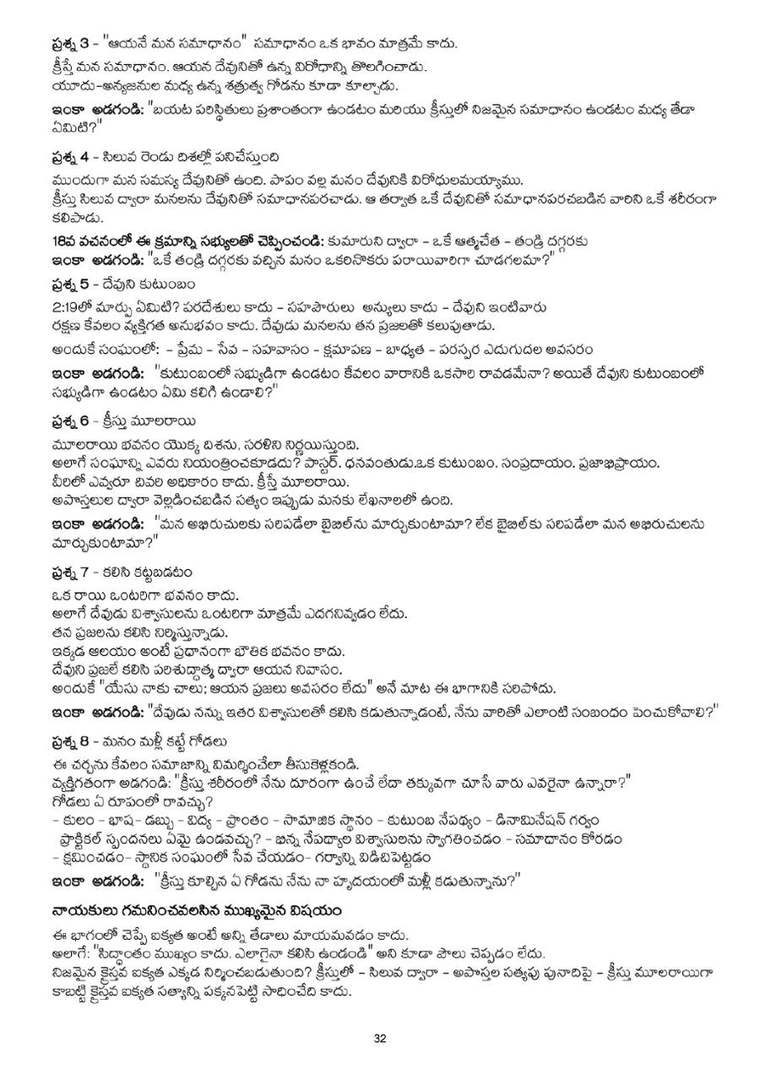
ప్రశ్న 3 – “ఆయనే మన సమాధానం” సమాధానం ఒక భావం మాత్రమే కాదు.
క్రీస్తే మన సమాధానం. ఆయన దేవునితో ఉన్న విరోధాన్ని తొలగించాడు.
యూదు-అన్యజనుల మధ్య ఉన్న శత్రుత్వ గోడను కూడా కూల్చాడు.
ఇంకా అడగండి: “బయట పరిస్థితులు ప్రశాంతంగా ఉండటం మరియు క్రీస్తులో నిజమైన సమాధానం ఉండటం మధ్య తేడా ఏమిటి?”
Question 2 — From Far Away to Near
Compare the two phrases in 2:13:
Once — Far away
Now — Brought near
How? By the blood of Christ.
Our good works, rituals, or moral achievements did not bring us near to God.
Christ’s work is the basis.
Ask: “What is the basis of my access to God—my works or Christ’s blood?” Question 3 — “He Himself Is Our Peace”
Peace is not merely a feeling.
Christ Himself is our peace.
He removed the hostility between us and God.
He also broke down the hostility between Jew and Gentile.
Ask: “What is the difference between peaceful circumstances and true peace in Christ?”
ప్రశ్న 4 – సిలువ రెండు దిశల్లో పనిచేస్తుంది
ముందుగా మన సమస్య దేవునితో ఉంది. పాపం వల్ల మనం దేవునికి విరోధులమయ్యాము.
క్రీస్తు సిలువ ద్వారా మనలను దేవునితో సమాధానపరచాడు. ఆ తర్వాత ఒకే దేవునితో సమాధానపరచబడిన వారిని ఒకే శరీరంగా కలిపాడు.
18వ వచనంలో ఈ క్రమాన్ని సభ్యులతో చెప్పించండి: కుమారుని ద్వారా – ఒకే ఆత్మచేత – తండ్రి దగ్గరకు
ఇంకా అడగండి: “ఒకే తండ్రి దగ్గరకు వచ్చిన మనం ఒకరినొకరు పరాయివారిగా చూడగలమా?”
Question 4 — The Cross Works in Two Directions
Our deepest problem was first with God.
Because of sin, we were alienated from Him.
Through the cross, Christ reconciles us to God.
Then He brings those reconciled to the same God into one body.
Have the group repeat the pattern from verse 18:
Through the Son → By one Spirit → To the Father
Ask: “If we come to the same Father, can we continue treating one another like strangers?”
ప్రశ్న 5 – దేవుని కుటుంబం
2:19లో మార్పు ఏమిటి? పరదేశులు కాదు – సహపౌరులు అన్యులు కాదు – దేవుని ఇంటివారు
రక్షణ కేవలం వ్యక్తిగత అనుభవం కాదు. దేవుడు మనలను తన ప్రజలతో కలుపుతాడు.
అందుకే సంఘంలో: – ప్రేమ – సేవ – సహవాసం – క్షమాపణ – బాధ్యత – పరస్పర ఎదుగుదల అవసరం
ఇంకా అడగండి: “కుటుంబంలో సభ్యుడిగా ఉండటం కేవలం వారానికి ఒకసారి రావడమేనా? అయితే దేవుని కుటుంబంలో సభ్యుడిగా ఉండటం ఏమి కలిగి ఉండాలి?”
Question 5 — God’s Family
What change do we see in 2:19?
No longer foreigners → Fellow citizens
No longer strangers → Members of God’s household
Salvation is not merely an individual experience.
God joins us to His people.
Therefore church life should include love, service, fellowship, forgiveness, responsibility, and mutual growth.
Ask: “Does being part of a family mean merely appearing once a week? What should being part of God’s family involve?”
ప్రశ్న 6 – క్రీస్తు మూలరాయి
మూలరాయి భవనం యొక్క దిశను, సరళిని నిర్ణయిస్తుంది.
అలాగే సంఘాన్ని ఎవరు నియంత్రించకూడదు? పాస్టర్. ధనవంతుడు. ఒక కుటుంబం. సంప్రదాయం. ప్రజాభిప్రాయం.
వీరిలో ఎవ్వరూ చివరి అధికారం కాదు. క్రీస్తే మూలరాయి.
అపొస్తలుల ద్వారా వెల్లడించబడిన సత్యం ఇప్పుడు మనకు లేఖనాలలో ఉంది.
ఇంకా అడగండి: “మన అభిరుచులకు సరిపడేలా బైబిల్ను మార్చుకుంటామా? లేక బైబిల్కు సరిపడేలా మన అభిరుచులను మార్చుకుంటామా?”
Question 6 — Christ the Cornerstone
The cornerstone determined the direction and alignment of the building.
Likewise, who should not be the final authority in the church?
The pastor. A wealthy person. An influential family. Tradition. Public opinion.
None of these is final.
Christ is the cornerstone.
The apostolic truth about Christ is now given to us in Scripture.
Ask: “Do we adjust the Bible to fit our preferences, or adjust our preferences to fit the Bible?”
ప్రశ్న 7 – కలిసి కట్టబడటం
ఒక రాయి ఒంటరిగా భవనం కాదు.
అలాగే దేవుడు విశ్వాసులను ఒంటరిగా మాత్రమే ఎదగనివ్వడం లేదు.
తన ప్రజలను కలిసి నిర్మిస్తున్నాడు.
ఇక్కడ ఆలయం అంటే ప్రధానంగా భౌతిక భవనం కాదు.
దేవుని ప్రజలే కలిసి పరిశుద్ధాత్మ ద్వారా ఆయన నివాసం.
అందుకే “యేసు నాకు చాలు; ఆయన ప్రజలు అవసరం లేదు” అనే మాట ఈ భాగానికి సరిపోదు.
ఇంకా అడగండి: “దేవుడు నన్ను ఇతర విశ్వాసులతో కలిసి కడుతున్నాడంటే, నేను వారితో ఎలాంటి సంబంధం పెంచుకోవాలి?”
Question 7 — Built Together
One stone by itself is not a building.
In the same way, God is not merely growing isolated believers.He is building His people together. The temple here is not primarily a physical church building.
God’s people together are His dwelling place by the Holy Spirit.
So the statement: “I need Jesus, but I do not need His people”
does not fit the picture Paul gives here.
Ask: “If God is building me together with other believers, what kind of relationship should I develop with them?”
ప్రశ్న 8 – మనం మళ్లీ కట్టే గోడలు
ఈ చర్చను కేవలం సమాజాన్ని విమర్శించేలా తీసుకెళ్లకండి.
వ్యక్తిగతంగా అడగండి: “క్రీస్తు శరీరంలో నేను దూరంగా ఉంచే లేదా తక్కువగా చూసే వారు ఎవరైనా ఉన్నారా?”
గోడలు ఏ రూపంలో రావచ్చు?
– కులం – భాష – డబ్బు – విద్య – ప్రాంతం – సామాజిక స్థానం – కుటుంబ నేపథ్యం – డినామినేషన్ గర్వం
ప్రాక్టికల్ స్పందనలు ఏమై ఉండవచ్చు? – భిన్న నేపథ్యాల విశ్వాసులను స్వాగతించడం – సమాధానం కోరడం
– క్షమించడం – స్థానిక సంఘంలో సేవ చేయడం – గర్వాన్ని విడిచిపెట్టడం
ఇంకా అడగండి: “క్రీస్తు కూల్చిన ఏ గోడను నేను నా హృదయంలో మళ్లీ కడుతున్నాను?”
Question 8 — Rebuilding the Walls
Do not allow the discussion to remain only as criticism of society.
Bring it personally.
Ask: “Is there anyone in Christ’s body whom I keep at a distance or quietly consider inferior?” What walls can appear?
Caste. Language. Money. Education. Region. Social status. Family background. Denominational pride.
What practical responses may be needed?
Welcome believers from different backgrounds. Seek reconciliation. Forgive. Serve in the local church. Let go of pride.
Ask: “Which wall that Christ has broken down am I rebuilding in my own heart?”
Important Things for Leaders to Remember
The unity in this passage does not mean that all differences disappear.
Neither is Paul saying:
“Doctrine does not matter. Just stay together somehow.”
Where is true Christian unity built?
In Christ → Through the cross → On apostolic truth → With Christ as the cornerstone So Christian unity is not created by putting truth aside.
It is built around the truth of the gospel and our shared identity in Christ.
Also, “peace” does not mean ignoring serious sin, injustice, or abuse.
Biblical peace includes truth, repentance, forgiveness, justice, and holiness.
నాయకులు గమనించవలసిన ముఖ్యమైన విషయం
ఈ భాగంలో చెప్పే ఐక్యత అంటే అన్ని తేడాలు మాయమవడం కాదు.
అలాగే: “సిద్ధాంతం ముఖ్యం కాదు. ఎలాగైనా కలిసి ఉండండి” అని కూడా పౌలు చెప్పడం లేదు.
నిజమైన క్రైస్తవ ఐక్యత ఎక్కడ నిర్మించబడుతుంది? క్రీస్తులో – సిలువ ద్వారా – అపొస్తల సత్యపు పునాదిపై – క్రీస్తు మూలరాయిగా
కాబట్టి క్రైస్తవ ఐక్యత సత్యాన్ని పక్కనపెట్టి సాధించేది కాదు.
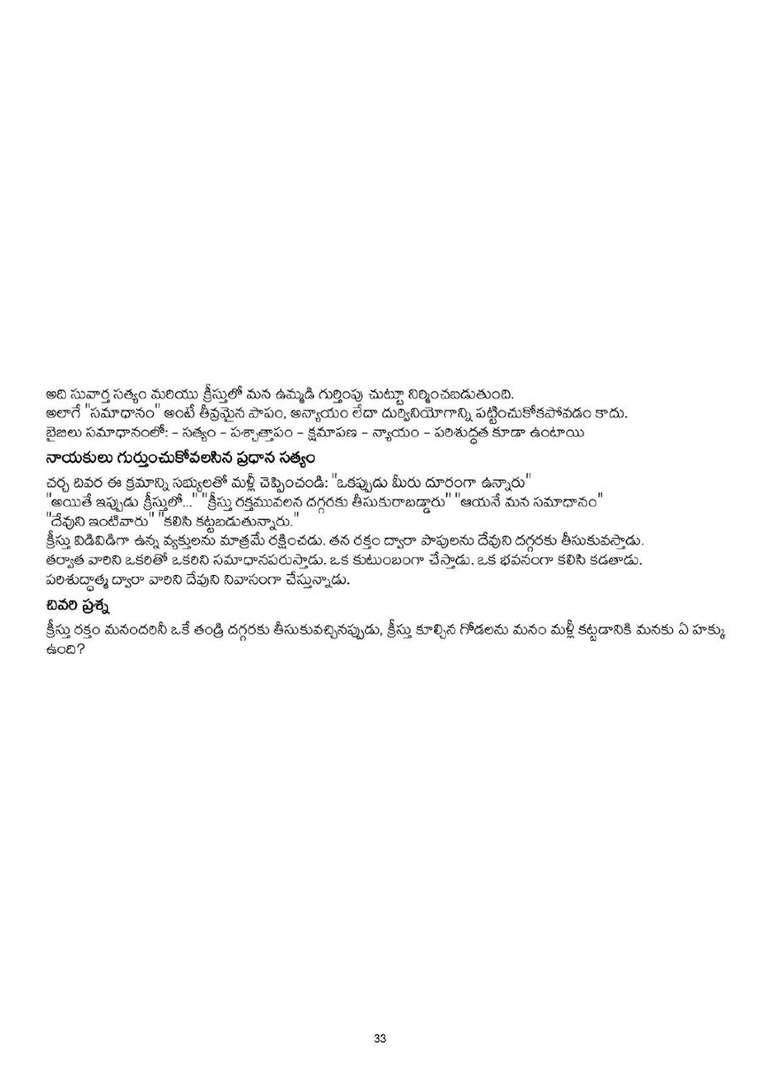
అది సువార్త సత్యం మరియు క్రీస్తులో మన ఉమ్మడి గుర్తింపు చుట్టూ నిర్మించబడుతుంది.
అలాగే “సమాధానం” అంటే తీవ్రమైన పాపం, అన్యాయం లేదా దుర్వినియోగాన్ని పట్టించుకోకపోవడం కాదు.
బైబిలు సమాధానంలో: – సత్యం – పశ్చాత్తాపం – క్షమాపణ – న్యాయం – పరిశుద్ధత కూడా ఉంటాయి
నాయకులు గుర్తుంచుకోవలసిన ప్రధాన సత్యం
చర్చ చివర ఈ క్రమాన్ని సభ్యులతో మళ్లీ చెప్పించండి: “ఒకప్పుడు మీరు దూరంగా ఉన్నారు”
“అయితే ఇప్పుడు క్రీస్తులో...” “క్రీస్తు రక్తమువలన దగ్గరకు తీసుకురాబడ్డారు” “ఆయనే మన సమాధానం”
“దేవుని ఇంటివారు” “కలిసి కట్టబడుతున్నారు.”
క్రీస్తు విడివిడిగా ఉన్న వ్యక్తులను మాత్రమే రక్షించడు. తన రక్తం ద్వారా పాపులను దేవుని దగ్గరకు తీసుకువస్తాడు.
తర్వాత వారిని ఒకరితో ఒకరిని సమాధానపరుస్తాడు. ఒక కుటుంబంగా చేస్తాడు. ఒక భవనంగా కలిసి కడతాడు.
పరిశుద్ధాత్మ ద్వారా వారిని దేవుని నివాసంగా చేస్తున్నాడు.
Main Truth for Leaders to Remember
At the end, have the group repeat this progression:
“Once you were far away”
→ “But now in Christ…”
→ “You have been brought near by the blood of Christ”
→ “He Himself is our peace”
→ “Members of God’s household”
→ “Being built together.”
Christ does not merely save isolated individuals.
Through His blood, He brings sinners near to God.
Then He reconciles them to one another.
He makes them one family.
He builds them together into one dwelling place.
Through the Holy Spirit, they become God’s temple.
చివరి ప్రశ్న
క్రీస్తు రక్తం మనందరినీ ఒకే తండ్రి దగ్గరకు తీసుకువచ్చినప్పుడు, క్రీస్తు కూల్చిన గోడలను మనం మళ్లీ కట్టడానికి మనకు ఏ హక్కు ఉంది?
Final Question: If the blood of Christ has brought all of us to the same Father, what right do
we have to rebuild the walls that Christ has already torn down?
Original PDF pages · అసలు పేజీలు (Telugu 6 · English 8)
తెలుగు · Telugu edition
English edition