Search this book · ఈ పుస్తకంలో వెతకండి
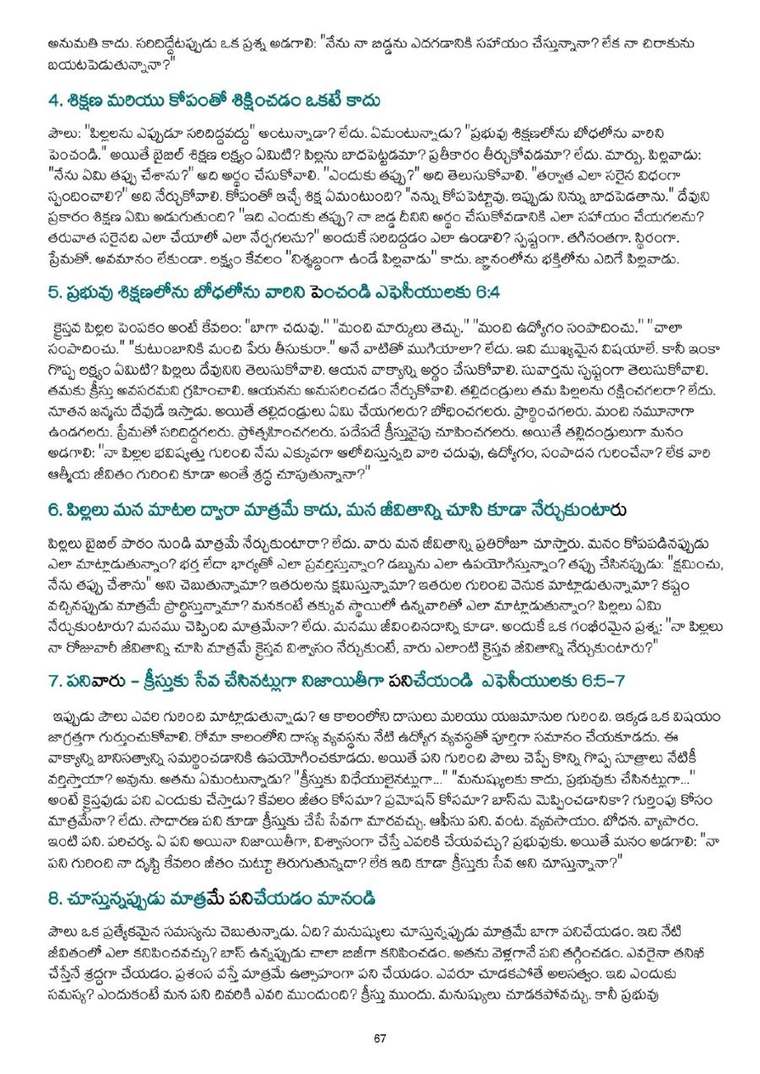
సందర్భం
ఎఫెసీయులకు 5వ అధ్యాయంలో పౌలు ఏమి చెప్పాడో గుర్తుందా? “పరిశుద్ధాత్మతో నింపబడండి.” ఆత్మతో నింపబడిన జీవితం కేవలం ప్రార్ధనలో, పాటల్లో, సంఘ సమావేశంలో మాత్రమే కనిపిస్తుందా? లేదు. అది మనకు అత్యంత దగ్గరైన సంబంధాలలో కూడా కనిపించాలి. మొదట పౌలు భార్యాభర్తల గురించి మాట్లాడాడు. ఇప్పుడు పిల్లలు–తల్లిదండ్రులు, పనివారు–యజమానులు అనే రోజువారీ సంబంధాలకు వస్తున్నాడు. ఎందుకు? ఎందుకంటే మన క్రైస్తవ జీవితం నిజంగా ఎలా ఉందో తెలుసుకోవాలంటే కేవలం ఆదివారం సంఘంలో మన ప్రవర్తనను మాత్రమే చూడకూడదు. ఇంట్లో ఎలా మాట్లాడుతున్నాం? పిల్లలతో ఎలా ప్రవర్తిస్తున్నాం? తల్లిదండ్రులను ఎలా గౌరవిస్తున్నాం? పనిస్థలంలో ఎంత నిజాయితీగా ఉన్నాం? మన ఆధీనంలో ఉన్నవారితో ఎలా వ్యవహరిస్తున్నాం? ఇవన్నీ కూడా మన ఆత్మీయ జీవితాన్ని చూపిస్తాయి. ఈ భాగమంతటిలో ఒక గొప్ప సత్యం మళ్లీ మళ్లీ కనిపిస్తుంది: క్రీస్తు ప్రతి సంబంధానికి ప్రభువు. పిల్లలు ఆయనకు జవాబుదారులు. తల్లిదండ్రులు ఆయనకు జవాబుదారులు. పనివారు ఆయనకు జవాబుదారులు. యజమానులు, నాయకులు కూడా ఆయనకే జవాబుదారులు. సులభంగా గుర్తుంచుకోవాలంటే: ఇంటిలో క్రీస్తు – పిల్లల పెంపకంలో క్రీస్తు – పనిలో క్రీస్తు – అధికార వినియోగంలో క్రీస్తు
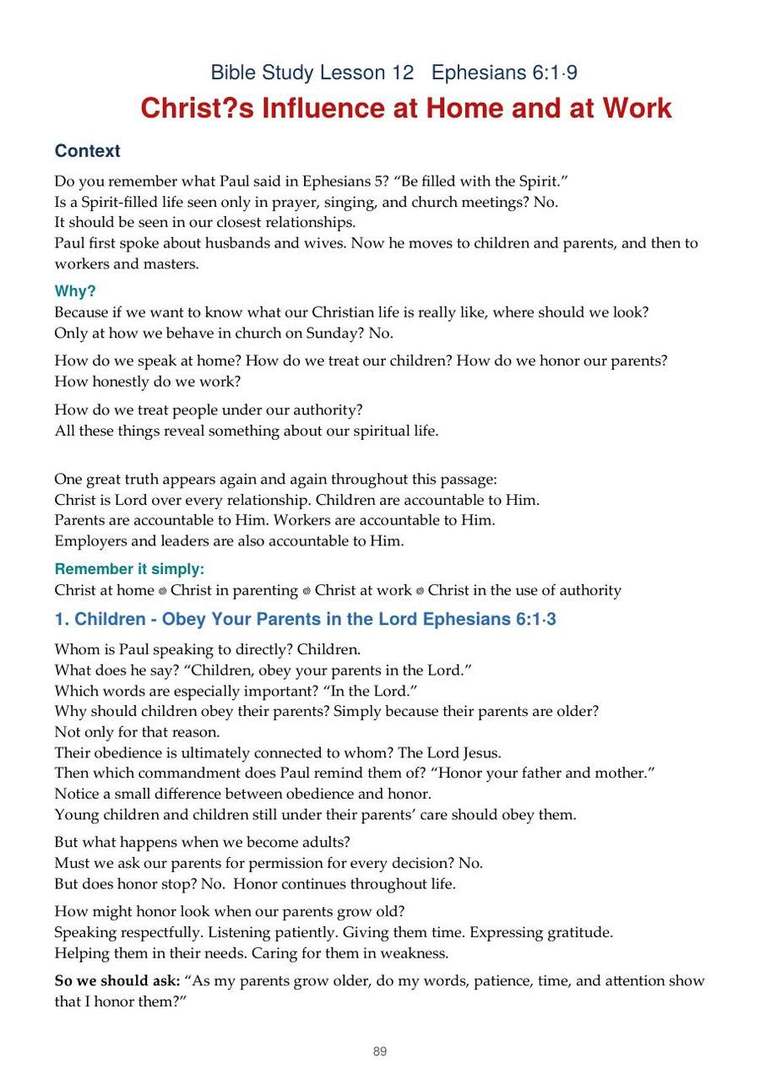
Context
Do you remember what Paul said in Ephesians 5? “Be filled with the Spirit.”
Is a Spirit-filled life seen only in prayer, singing, and church meetings? No.
It should be seen in our closest relationships.
Paul first spoke about husbands and wives. Now he moves to children and parents, and then to workers and masters.
Why?
Because if we want to know what our Christian life is really like, where should we look?
Only at how we behave in church on Sunday? No.
How do we speak at home? How do we treat our children? How do we honor our parents?
How honestly do we work?
How do we treat people under our authority?
All these things reveal something about our spiritual life.
One great truth appears again and again throughout this passage:
Christ is Lord over every relationship. Children are accountable to Him.
Parents are accountable to Him. Workers are accountable to Him.
Employers and leaders are also accountable to Him.
Remember it simply:
Christ at home → Christ in parenting → Christ at work → Christ in the use of authority
1. పిల్లలారా – ప్రభువులో మీ తల్లిదండ్రులకు విధేయులై ఉండండి ఎఫెసీయులకు 6:1-3
పౌలు ఎవరితో నేరుగా మాట్లాడుతున్నాడు? పిల్లలతో. అతను ఏమంటున్నాడు? “ప్రభువులో మీ తల్లిదండ్రులకు విధేయులై ఉండండి.” ఇక్కడ ఏ మాట చాలా ముఖ్యమైనది? “ప్రభువులో.” పిల్లలు తల్లిదండ్రులకు ఎందుకు విధేయత చూపాలి? వారు పెద్దవారు కాబట్టేనా? అదొక్కటే కాదు. వారి విధేయత చివరికి ఎవరితో సంబంధం కలిగి ఉంది? ప్రభువైన యేసుతో. తర్వాత పౌలు ఏ ఆజ్ఞను గుర్తుచేస్తున్నాడు? “నీ తండ్రిని నీ తల్లిని సన్మానించుము.” ఇక్కడ “విధేయత” మరియు “గౌరవం” మధ్య చిన్న తేడా గమనించాలి. చిన్న పిల్లలు, తల్లిదండ్రుల సంరక్షణలో ఉన్న పిల్లలు వారికి విధేయత చూపాలి. కానీ మనం పెద్దవారైన తరువాత ప్రతి విషయానికి తల్లిదండ్రుల అనుమతి తీసుకోవాలా? అవసరం లేదు. కానీ గౌరవం ఆగిపోతుందా? లేదు. గౌరవం జీవితాంతం కొనసాగుతుంది. మన తల్లిదండ్రులు వృద్ధులవుతున్నప్పుడు గౌరవం ఎలా కనిపించవచ్చు? గౌరవంగా మాట్లాడటం. ఓపికగా వినడం. సమయం ఇవ్వడం. కృతజ్ఞత చెప్పడం. అవసరాల్లో సహాయం చేయడం. బలహీనత వచ్చినప్పుడు చూసుకోవడం. అయితే మనం మనలను మనం అడగాలి: “నా తల్లిదండ్రులు వృద్ధులవుతున్నప్పుడు, నా మాటలు, నా ఓర్పు, నా సమయం, నా శ్రద్ధ వారికి గౌరవం చూపుతున్నాయా?”
1. Children - Obey Your Parents in the Lord Ephesians 6:1–3
Whom is Paul speaking to directly? Children.
What does he say? “Children, obey your parents in the Lord.”
Which words are especially important? “In the Lord.”
Why should children obey their parents? Simply because their parents are older?
Not only for that reason.
Their obedience is ultimately connected to whom? The Lord Jesus.
Then which commandment does Paul remind them of? “Honor your father and mother.”
Notice a small difference between obedience and honor.
Young children and children still under their parents’ care should obey them.
But what happens when we become adults?
Must we ask our parents for permission for every decision? No.
But does honor stop? No. Honor continues throughout life.
How might honor look when our parents grow old?
Speaking respectfully. Listening patiently. Giving them time. Expressing gratitude.
Helping them in their needs. Caring for them in weakness.
So we should ask: “As my parents grow older, do my words, patience, time, and attention show that I honor them?”
2. గౌరవం అంటే పాపానికి విధేయత కాదు
“ప్రభువులో” అనే మాట ఇంకో విషయం కూడా చెబుతోంది. తల్లిదండ్రుల అధికారం నిజమైనదే. కానీ అది సంపూర్ణమైనదా? లేదు. వారికంటే పైగా ఎవరు ఉన్నారు? క్రీస్తు. అయితే తల్లిదండ్రులు దేవుని వాక్యానికి స్పష్టంగా విరుద్ధమైన పని చేయమని చెప్పితే? మన మొదటి విధేయత ఎవరికి? దేవునికి. కానీ ఇక్కడ పిల్లలు ఒక ప్రమాదం కూడా గుర్తుంచుకోవాలి. తమకు నచ్చని ప్రతి విషయానికీ: “దేవుడు నాకు ఇలా చెప్పాడు” అని చెప్పి తల్లిదండ్రుల మాటను తిరస్కరించవచ్చా? లేదు. అది నిజమైన ఆత్మీయత కాదు. సాధారణ బైబిల్ నమూనా ఏమిటి? క్రీస్తు ప్రభుత్వం కింద గౌరవపూర్వకమైన విధేయత. అయితే ప్రశ్న: “నా విధేయత నిజంగా క్రీస్తుపట్ల గౌరవం నుండి వస్తున్నదా? లేక నాకు నచ్చినప్పుడు మాత్రమే తల్లిదండ్రుల మాట వింటున్నానా?”
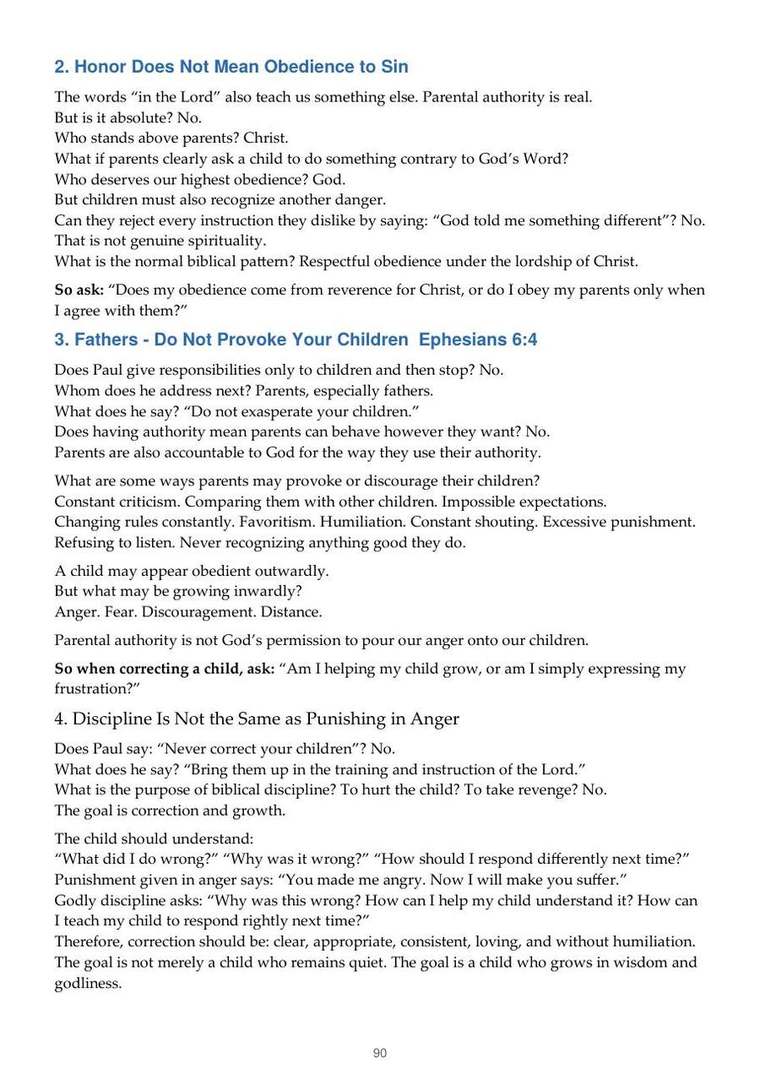
2. Honor Does Not Mean Obedience to Sin
The words “in the Lord” also teach us something else. Parental authority is real.
But is it absolute? No.
Who stands above parents? Christ.
What if parents clearly ask a child to do something contrary to God’s Word?
Who deserves our highest obedience? God.
But children must also recognize another danger.
Can they reject every instruction they dislike by saying: “God told me something different”? No. That is not genuine spirituality.
What is the normal biblical pattern? Respectful obedience under the lordship of Christ.
So ask: “Does my obedience come from reverence for Christ, or do I obey my parents only when I agree with them?”
3. తండ్రులారా – మీ పిల్లలను రెచ్చగొట్టవద్దు ఎఫెసీయులకు 6:4
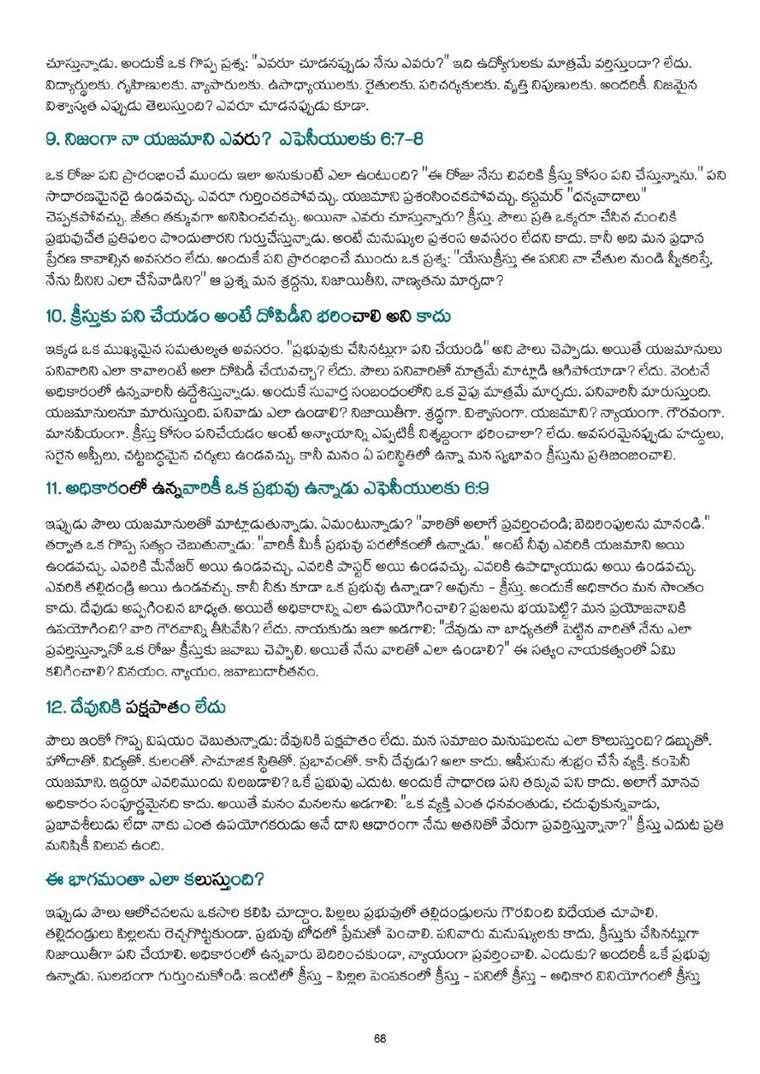
పౌలు పిల్లలకే బాధ్యత చెప్పి ఆగిపోయాడా? లేదు. ఇప్పుడు ఎవరితో మాట్లాడుతున్నాడు? తల్లిదండ్రులతో, ప్రత్యేకంగా తండ్రులతో. అతను ఏమంటున్నాడు? “మీ పిల్లలకు కోపం రేపకండి.” అంటే తల్లిదండ్రులకు అధికారం ఉంది కాబట్టి ఎలా కావాలంటే అలా ప్రవర్తించవచ్చా? లేదు. తల్లిదండ్రులు కూడా తమ అధికార వినియోగానికి దేవునికి జవాబు చెప్పాలి. పిల్లలను రెచ్చగొట్టే కొన్ని విషయాలు ఏమిటి? నిరంతర విమర్శ. ఇతర పిల్లలతో పోల్చడం. అసాధ్యమైన అంచనాలు. ఒకరోజు ఒక నియమం, మరొకరోజు ఇంకో నియమం. పక్షపాతం. అవమానించడం. ఎప్పుడూ అరవడం. అతిగా శిక్షించడం. పిల్లల మాట వినకపోవడం. వారు చేసిన మంచిని ఎప్పుడూ గుర్తించకపోవడం. పిల్లవాడు బయటకు విధేయంగా కనిపించవచ్చు. కానీ లోపల ఏమి పెరుగుతుండవచ్చు? కోపం. భయం. నిరుత్సాహం. దూరం. అందుకే తల్లిదండ్రుల అధికారం తమ కోపాన్ని పిల్లలపై కుమ్మరించడానికి దేవుడు ఇచ్చిన
అనుమతి కాదు. సరిదిద్దేటప్పుడు ఒక ప్రశ్న అడగాలి: “నేను నా బిడ్డను ఎదగడానికి సహాయం చేస్తున్నానా? లేక నా చిరాకును బయటపెడుతున్నానా?”
4. శిక్షణ మరియు కోపంతో శిక్షించడం ఒకటే కాదు
పౌలు: “పిల్లలను ఎప్పుడూ సరిదిద్దవద్దు” అంటున్నాడా? లేదు. ఏమంటున్నాడు? “ప్రభువు శిక్షణలోను బోధలోను వారిని పెంచండి.” అయితే బైబిల్ శిక్షణ లక్ష్యం ఏమిటి? పిల్లను బాధపెట్టడమా? ప్రతీకారం తీర్చుకోవడమా? లేదు. మార్పు. పిల్లవాడు: “నేను ఏమి తప్పు చేశాను?” అది అర్థం చేసుకోవాలి. “ఎందుకు తప్పు?” అది తెలుసుకోవాలి. “తర్వాత ఎలా సరైన విధంగా స్పందించాలి?” అది నేర్చుకోవాలి. కోపంతో ఇచ్చే శిక్ష ఏమంటుంది? “నన్ను కోపపెట్టావు. ఇప్పుడు నిన్ను బాధపెడతాను.” దేవుని ప్రకారం శిక్షణ ఏమి అడుగుతుంది? “ఇది ఎందుకు తప్పు? నా బిడ్డ దీనిని అర్థం చేసుకోవడానికి ఎలా సహాయం చేయగలను? తరువాత సరైనది ఎలా చేయాలో ఎలా నేర్పగలను?” అందుకే సరిదిద్దడం ఎలా ఉండాలి? స్పష్టంగా. తగినంతగా. స్థిరంగా. ప్రేమతో. అవమానం లేకుండా. లక్ష్యం కేవలం “నిశ్శబ్దంగా ఉండే పిల్లవాడు” కాదు. జ్ఞానంలోను భక్తిలోను ఎదిగే పిల్లవాడు.
3. Fathers - Do Not Provoke Your Children Ephesians 6:4
Does Paul give responsibilities only to children and then stop? No.
Whom does he address next? Parents, especially fathers.
What does he say? “Do not exasperate your children.”
Does having authority mean parents can behave however they want? No.
Parents are also accountable to God for the way they use their authority.
What are some ways parents may provoke or discourage their children?
Constant criticism. Comparing them with other children. Impossible expectations.
Changing rules constantly. Favoritism. Humiliation. Constant shouting. Excessive punishment.
Refusing to listen. Never recognizing anything good they do.
A child may appear obedient outwardly.
But what may be growing inwardly?
Anger. Fear. Discouragement. Distance.
Parental authority is not God’s permission to pour our anger onto our children.
So when correcting a child, ask: “Am I helping my child grow, or am I simply expressing my frustration?”
4. Discipline Is Not the Same as Punishing in Anger
Does Paul say: “Never correct your children”? No.
What does he say? “Bring them up in the training and instruction of the Lord.”
What is the purpose of biblical discipline? To hurt the child? To take revenge? No.
The goal is correction and growth.
The child should understand:
“What did I do wrong?” “Why was it wrong?” “How should I respond differently next time?”
Punishment given in anger says: “You made me angry. Now I will make you suffer.”
Godly discipline asks: “Why was this wrong? How can I help my child understand it? How can I teach my child to respond rightly next time?”
Therefore, correction should be: clear, appropriate, consistent, loving, and without humiliation.
The goal is not merely a child who remains quiet. The goal is a child who grows in wisdom and godliness.
5. ప్రభువు శిక్షణలోను బోధలోను వారిని పెంచండి ఎఫెసీయులకు 6:4
క్రైస్తవ పిల్లల పెంపకం అంటే కేవలం: “బాగా చదువు.” “మంచి మార్కులు తెచ్చు.” “మంచి ఉద్యోగం సంపాదించు.” “చాలా సంపాదించు.” “కుటుంబానికి మంచి పేరు తీసుకురా.” అనే వాటితో ముగియాలా? లేదు. ఇవి ముఖ్యమైన విషయాలే. కానీ ఇంకా గొప్ప లక్ష్యం ఏమిటి? పిల్లలు దేవునిని తెలుసుకోవాలి. ఆయన వాక్యాన్ని అర్థం చేసుకోవాలి. సువార్తను స్పష్టంగా తెలుసుకోవాలి. తమకు క్రీస్తు అవసరమని గ్రహించాలి. ఆయనను అనుసరించడం నేర్చుకోవాలి. తల్లిదండ్రులు తమ పిల్లలను రక్షించగలరా? లేదు. నూతన జన్మను దేవుడే ఇస్తాడు. అయితే తల్లిదండ్రులు ఏమి చేయగలరు? బోధించగలరు. ప్రార్థించగలరు. మంచి నమూనాగా ఉండగలరు. ప్రేమతో సరిదిద్దగలరు. ప్రోత్సహించగలరు. పదేపదే క్రీస్తువైపు చూపించగలరు. అయితే తల్లిదండ్రులుగా మనం అడగాలి: “నా పిల్లల భవిష్యత్తు గురించి నేను ఎక్కువగా ఆలోచిస్తున్నది వారి చదువు, ఉద్యోగం, సంపాదన గురించేనా? లేక వారి ఆత్మీయ జీవితం గురించి కూడా అంతే శ్రద్ధ చూపుతున్నానా?”
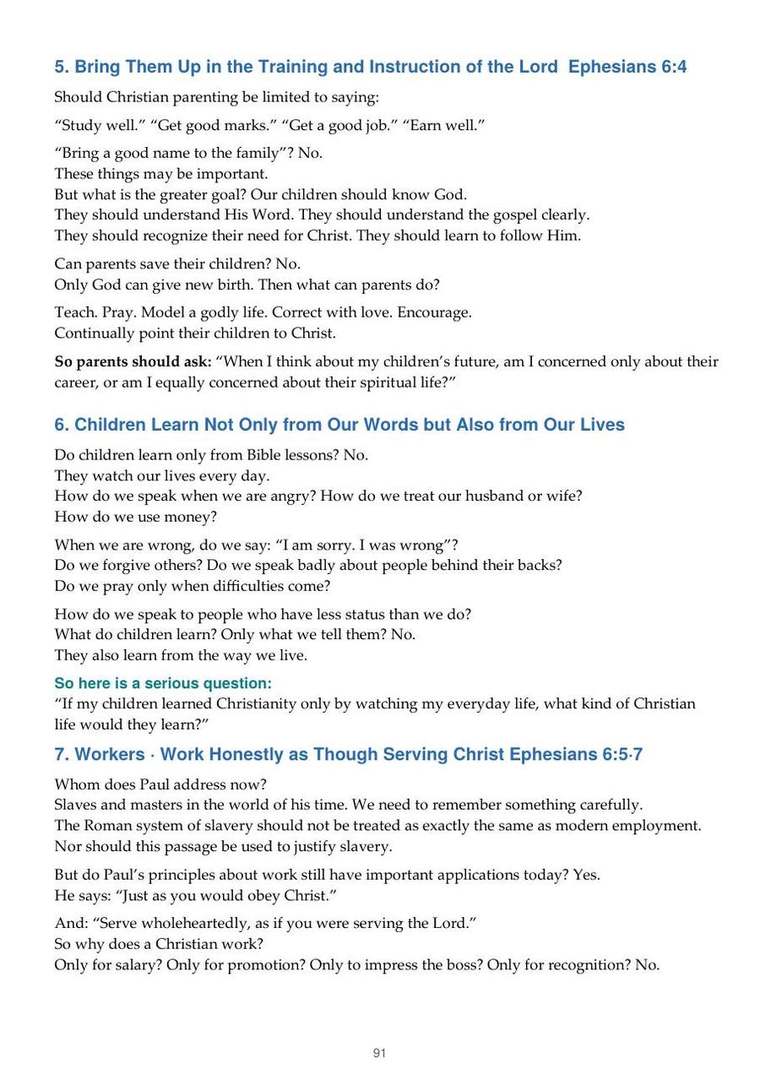
5. Bring Them Up in the Training and Instruction of the Lord Ephesians 6:4
Should Christian parenting be limited to saying:
“Study well.” “Get good marks.” “Get a good job.” “Earn well.”
“Bring a good name to the family”? No.
These things may be important.
But what is the greater goal? Our children should know God.
They should understand His Word. They should understand the gospel clearly.
They should recognize their need for Christ. They should learn to follow Him.
Can parents save their children? No.
Only God can give new birth. Then what can parents do?
Teach. Pray. Model a godly life. Correct with love. Encourage.
Continually point their children to Christ.
So parents should ask: “When I think about my children’s future, am I concerned only about their career, or am I equally concerned about their spiritual life?”
6. పిల్లలు మన మాటల ద్వారా మాత్రమే కాదు, మన జీవితాన్ని చూసి కూడా నేర్చుకుంటారు
పిల్లలు బైబిల్ పాఠం నుండి మాత్రమే నేర్చుకుంటారా? లేదు. వారు మన జీవితాన్ని ప్రతిరోజూ చూస్తారు. మనం కోపపడినప్పుడు ఎలా మాట్లాడుతున్నాం? భర్త లేదా భార్యతో ఎలా ప్రవర్తిస్తున్నాం? డబ్బును ఎలా ఉపయోగిస్తున్నాం? తప్పు చేసినప్పుడు: “క్షమించు, నేను తప్పు చేశాను” అని చెబుతున్నామా? ఇతరులను క్షమిస్తున్నామా? ఇతరుల గురించి వెనుక మాట్లాడుతున్నామా? కష్టం వచ్చినప్పుడు మాత్రమే ప్రార్థిస్తున్నామా? మనకంటే తక్కువ స్థాయిలో ఉన్నవారితో ఎలా మాట్లాడుతున్నాం? పిల్లలు ఏమి నేర్చుకుంటారు? మనము చెప్పింది మాత్రమేనా? లేదు. మనము జీవించినదాన్ని కూడా. అందుకే ఒక గంభీరమైన ప్రశ్న: “నా పిల్లలు నా రోజువారీ జీవితాన్ని చూసి మాత్రమే క్రైస్తవ విశ్వాసం నేర్చుకుంటే, వారు ఎలాంటి క్రైస్తవ జీవితాన్ని నేర్చుకుంటారు?”
6. Children Learn Not Only from Our Words but Also from Our Lives
Do children learn only from Bible lessons? No.
They watch our lives every day.
How do we speak when we are angry? How do we treat our husband or wife?
How do we use money?
When we are wrong, do we say: “I am sorry. I was wrong”?
Do we forgive others? Do we speak badly about people behind their backs?
Do we pray only when difficulties come?
How do we speak to people who have less status than we do?
What do children learn? Only what we tell them? No.
They also learn from the way we live.
So here is a serious question:
“If my children learned Christianity only by watching my everyday life, what kind of Christian life would they learn?”
7. పనివారు – క్రీస్తుకు సేవ చేసినట్లుగా నిజాయితీగా పనిచేయండి ఎఫెసీయులకు 6:5-7
ఇప్పుడు పౌలు ఎవరి గురించి మాట్లాడుతున్నాడు? ఆ కాలంలోని దాసులు మరియు యజమానుల గురించి. ఇక్కడ ఒక విషయం జాగ్రత్తగా గుర్తుంచుకోవాలి. రోమా కాలంలోని దాస్య వ్యవస్థను నేటి ఉద్యోగ వ్యవస్థతో పూర్తిగా సమానం చేయకూడదు. ఈ వాక్యాన్ని బానిసత్వాన్ని సమర్థించడానికి ఉపయోగించకూడదు. అయితే పని గురించి పౌలు చెప్పే కొన్ని గొప్ప సూత్రాలు నేటికీ వర్తిస్తాయా? అవును. అతను ఏమంటున్నాడు? “క్రీస్తుకు విధేయులైనట్లుగా...” “మనుష్యులకు కాదు, ప్రభువుకు చేసినట్లుగా...” అంటే క్రైస్తవుడు పని ఎందుకు చేస్తాడు? కేవలం జీతం కోసమా? ప్రమోషన్ కోసమా? బాస్ను మెప్పించడానికా? గుర్తింపు కోసం మాత్రమేనా? లేదు. సాధారణ పని కూడా క్రీస్తుకు చేసే సేవగా మారవచ్చు. ఆఫీసు పని. వంట. వ్యవసాయం. బోధన. వ్యాపారం. ఇంటి పని. పరిచర్య. ఏ పని అయినా నిజాయితీగా, విశ్వాసంగా చేస్తే ఎవరికి చేయవచ్చు? ప్రభువుకు. అయితే మనం అడగాలి: “నా పని గురించి నా దృష్టి కేవలం జీతం చుట్టూ తిరుగుతున్నదా? లేక ఇది కూడా క్రీస్తుకు సేవ అని చూస్తున్నానా?”
7. Workers — Work Honestly as Though Serving Christ Ephesians 6:5–7
Whom does Paul address now?
Slaves and masters in the world of his time. We need to remember something carefully.
The Roman system of slavery should not be treated as exactly the same as modern employment. Nor should this passage be used to justify slavery.
But do Paul’s principles about work still have important applications today? Yes.
He says: “Just as you would obey Christ.”
And: “Serve wholeheartedly, as if you were serving the Lord.”
So why does a Christian work?
Only for salary? Only for promotion? Only to impress the boss? Only for recognition? No.
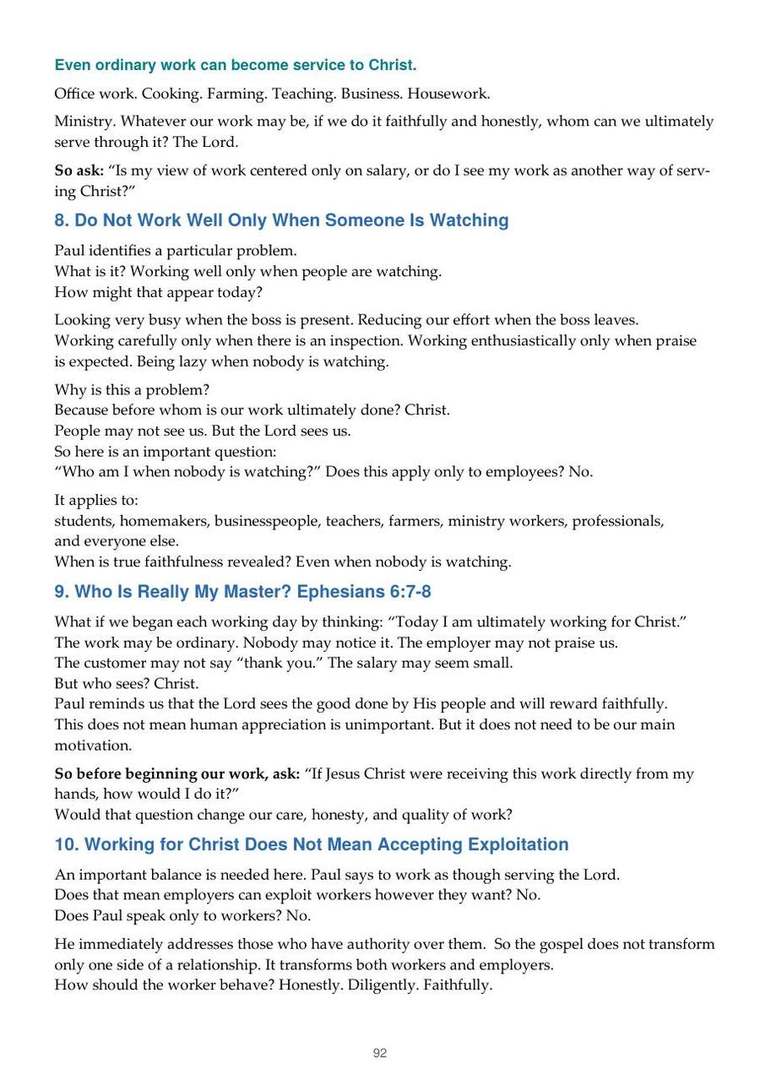
Even ordinary work can become service to Christ.
Office work. Cooking. Farming. Teaching. Business. Housework.
Ministry. Whatever our work may be, if we do it faithfully and honestly, whom can we ultimately serve through it? The Lord.
So ask: “Is my view of work centered only on salary, or do I see my work as another way of serving Christ?”
8. చూస్తున్నప్పుడు మాత్రమే పనిచేయడం మానండి
పౌలు ఒక ప్రత్యేకమైన సమస్యను చెబుతున్నాడు. ఏది? మనుష్యులు చూస్తున్నప్పుడు మాత్రమే బాగా పనిచేయడం. ఇది నేటి జీవితంలో ఎలా కనిపించవచ్చు? బాస్ ఉన్నప్పుడు చాలా బిజీగా కనిపించడం. అతను వెళ్లగానే పని తగ్గించడం. ఎవరైనా తనిఖీ చేస్తేనే శ్రద్ధగా చేయడం. ప్రశంస వస్తే మాత్రమే ఉత్సాహంగా పని చేయడం. ఎవరూ చూడకపోతే అలసత్వం. ఇది ఎందుకు సమస్య? ఎందుకంటే మన పని చివరికి ఎవరి ముందుంది? క్రీస్తు ముందు. మనుష్యులు చూడకపోవచ్చు. కానీ ప్రభువు
చూస్తున్నాడు. అందుకే ఒక గొప్ప ప్రశ్న: “ఎవరూ చూడనప్పుడు నేను ఎవరు?” ఇది ఉద్యోగులకు మాత్రమే వర్తిస్తుందా? లేదు. విద్యార్థులకు. గృహిణులకు. వ్యాపారులకు. ఉపాధ్యాయులకు. రైతులకు. పరిచర్యకులకు. వృత్తి నిపుణులకు. అందరికీ. నిజమైన విశ్వాస్యత ఎప్పుడు తెలుస్తుంది? ఎవరూ చూడనప్పుడు కూడా.
8. Do Not Work Well Only When Someone Is Watching
Paul identifies a particular problem.
What is it? Working well only when people are watching.
How might that appear today?
Looking very busy when the boss is present. Reducing our effort when the boss leaves.
Working carefully only when there is an inspection. Working enthusiastically only when praise is expected. Being lazy when nobody is watching.
Why is this a problem?
Because before whom is our work ultimately done? Christ.
People may not see us. But the Lord sees us.
So here is an important question:
“Who am I when nobody is watching?” Does this apply only to employees? No.
It applies to:
students, homemakers, businesspeople, teachers, farmers, ministry workers, professionals, and everyone else.
When is true faithfulness revealed? Even when nobody is watching.
9. నిజంగా నా యజమాని ఎవరు? ఎఫెసీయులకు 6:7-8
ఒక రోజు పని ప్రారంభించే ముందు ఇలా అనుకుంటే ఎలా ఉంటుంది? “ఈ రోజు నేను చివరికి క్రీస్తు కోసం పని చేస్తున్నాను.” పని సాధారణమైనదై ఉండవచ్చు. ఎవరూ గుర్తించకపోవచ్చు. యజమాని ప్రశంసించకపోవచ్చు. కస్టమర్ “ధన్యవాదాలు” చెప్పకపోవచ్చు. జీతం తక్కువగా అనిపించవచ్చు. అయినా ఎవరు చూస్తున్నారు? క్రీస్తు. పౌలు ప్రతి ఒక్కరూ చేసిన మంచికి ప్రభువుచేత ప్రతిఫలం పొందుతారని గుర్తుచేస్తున్నాడు. అంటే మనుష్యుల ప్రశంస అవసరం లేదని కాదు. కానీ అది మన ప్రధాన ప్రేరణ కావాల్సిన అవసరం లేదు. అందుకే పని ప్రారంభించే ముందు ఒక ప్రశ్న: “యేసుక్రీస్తు ఈ పనిని నా చేతుల నుండి స్వీకరిస్తే, నేను దీనిని ఎలా చేసేవాడిని?” ఆ ప్రశ్న మన శ్రద్ధను, నిజాయితీని, నాణ్యతను మార్చదా?
9. Who Is Really My Master? Ephesians 6:7-8
What if we began each working day by thinking: “Today I am ultimately working for Christ.”
The work may be ordinary. Nobody may notice it. The employer may not praise us.
The customer may not say “thank you.” The salary may seem small.
But who sees? Christ.
Paul reminds us that the Lord sees the good done by His people and will reward faithfully.
This does not mean human appreciation is unimportant. But it does not need to be our main motivation.
So before beginning our work, ask: “If Jesus Christ were receiving this work directly from my hands, how would I do it?”
Would that question change our care, honesty, and quality of work?
10. క్రీస్తుకు పని చేయడం అంటే దోపిడీని భరించాలి అని కాదు
ఇక్కడ ఒక ముఖ్యమైన సమతుల్యత అవసరం. “ప్రభువుకు చేసినట్లుగా పని చేయండి” అని పౌలు చెప్పాడు. అయితే యజమానులు పనివారిని ఎలా కావాలంటే అలా దోపిడీ చేయవచ్చా? లేదు. పౌలు పనివారితో మాత్రమే మాట్లాడి ఆగిపోయాడా? లేదు. వెంటనే అధికారంలో ఉన్నవారినీ ఉద్దేశిస్తున్నాడు. అందుకే సువార్త సంబంధంలోని ఒక వైపు మాత్రమే మార్చదు. పనివారినీ మారుస్తుంది. యజమానులనూ మారుస్తుంది. పనివాడు ఎలా ఉండాలి? నిజాయితీగా. శ్రద్ధగా. విశ్వాసంగా. యజమాని? న్యాయంగా. గౌరవంగా. మానవీయంగా. క్రీస్తు కోసం పనిచేయడం అంటే అన్యాయాన్ని ఎప్పటికీ నిశ్శబ్దంగా భరించాలా? లేదు. అవసరమైనప్పుడు హద్దులు, సరైన అప్పీలు, చట్టబద్ధమైన చర్యలు ఉండవచ్చు. కానీ మనం ఏ పరిస్థితిలో ఉన్నా మన స్వభావం క్రీస్తును ప్రతిబింబించాలి.
10. Working for Christ Does Not Mean Accepting Exploitation
An important balance is needed here. Paul says to work as though serving the Lord.
Does that mean employers can exploit workers however they want? No.
Does Paul speak only to workers? No.
He immediately addresses those who have authority over them. So the gospel does not transform only one side of a relationship. It transforms both workers and employers.
How should the worker behave? Honestly. Diligently. Faithfully.
How should the employer behave? Justly. Respectfully. Humanely.
Does working for Christ mean silently accepting injustice forever? No.
When necessary, there may be appropriate boundaries, proper appeals, and lawful action.
But whatever our situation, our character should continue to reflect Christ.
11. అధికారంలో ఉన్నవారికీ ఒక ప్రభువు ఉన్నాడు ఎఫెసీయులకు 6:9
ఇప్పుడు పౌలు యజమానులతో మాట్లాడుతున్నాడు. ఏమంటున్నాడు? “వారితో అలాగే ప్రవర్తించండి; బెదిరింపులను మానండి.” తర్వాత ఒక గొప్ప సత్యం చెబుతున్నాడు: “వారికీ మీకీ ప్రభువు పరలోకంలో ఉన్నాడు.” అంటే నీవు ఎవరికి యజమాని అయి ఉండవచ్చు. ఎవరికి మేనేజర్ అయి ఉండవచ్చు. ఎవరికి పాస్టర్ అయి ఉండవచ్చు. ఎవరికి ఉపాధ్యాయుడు అయి ఉండవచ్చు. ఎవరికి తల్లిదండ్రి అయి ఉండవచ్చు. కానీ నీకు కూడా ఒక ప్రభువు ఉన్నాడా? అవును – క్రీస్తు. అందుకే అధికారం మన సొంతం కాదు. దేవుడు అప్పగించిన బాధ్యత. అయితే అధికారాన్ని ఎలా ఉపయోగించాలి? ప్రజలను భయపెట్టి? మన ప్రయోజనానికి ఉపయోగించి? వారి గౌరవాన్ని తీసివేసి? లేదు. నాయకుడు ఇలా అడగాలి: “దేవుడు నా బాధ్యతలో పెట్టిన వారితో నేను ఎలా ప్రవర్తిస్తున్నానో ఒక రోజు క్రీస్తుకు జవాబు చెప్పాలి. అయితే నేను వారితో ఎలా ఉండాలి?” ఈ సత్యం నాయకత్వంలో ఏమి కలిగించాలి? వినయం. న్యాయం. జవాబుదారీతనం.
11. Those in Authority Also Have a Master Ephesians 6:9
Now Paul speaks to masters.
What does he say? “Treat your slaves in the same way. Do not threaten them.”
Then he gives a powerful truth: “He who is both their Master and yours is in heaven.”
You may be someone’s employer. Someone’s manager. Someone’s pastor. Someone’s teacher.
Someone’s parent.
But do you also have a Master? Yes. Christ.
Therefore, authority does not ultimately belong to us.
It is a responsibility entrusted to us by God.
How should authority be used? To frighten people?
To use them for our own advantage? To strip them of dignity? No.
A leader should ask:
“One day I will answer to Christ for the way I treat those under my responsibility.
So how should I treat them?” What should this truth produce in leadership? Humility.
Justice. Accountability.
12. దేవునికి పక్షపాతం లేదు
పౌలు ఇంకో గొప్ప విషయం చెబుతున్నాడు: దేవునికి పక్షపాతం లేదు. మన సమాజం మనుషులను ఎలా కొలుస్తుంది? డబ్బుతో. హోదాతో. విద్యతో. కులంతో. సామాజిక స్థితితో. ప్రభావంతో. కానీ దేవుడు? అలా కాదు. ఆఫీసును శుభ్రం చేసే వ్యక్తి. కంపెనీ యజమాని. ఇద్దరూ ఎవరిముందు నిలబడాలి? ఒకే ప్రభువు ఎదుట. అందుకే సాధారణ పని తక్కువ పని కాదు. అలాగే మానవ అధికారం సంపూర్ణమైనది కాదు. అయితే మనం మనలను అడగాలి: “ఒక వ్యక్తి ఎంత ధనవంతుడు, చదువుకున్నవాడు, ప్రభావశీలుడు లేదా నాకు ఎంత ఉపయోగకరుడు అనే దాని ఆధారంగా నేను అతనితో వేరుగా ప్రవర్తిస్తున్నానా?” క్రీస్తు ఎదుట ప్రతి మనిషికీ విలువ ఉంది.
ఈ భాగమంతా ఎలా కలుస్తుంది?
ఇప్పుడు పౌలు ఆలోచనలను ఒకసారి కలిపి చూద్దాం. పిల్లలు ప్రభువులో తల్లిదండ్రులను గౌరవించి విధేయత చూపాలి. తల్లిదండ్రులు పిల్లలను రెచ్చగొట్టకుండా, ప్రభువు బోధలో ప్రేమతో పెంచాలి. పనివారు మనుష్యులకు కాదు, క్రీస్తుకు చేసినట్లుగా నిజాయితీగా పని చేయాలి. అధికారంలో ఉన్నవారు బెదిరించకుండా, న్యాయంగా ప్రవర్తించాలి. ఎందుకు? అందరికీ ఒకే ప్రభువు ఉన్నాడు. సులభంగా గుర్తుంచుకోండి: ఇంటిలో క్రీస్తు – పిల్లల పెంపకంలో క్రీస్తు – పనిలో క్రీస్తు – అధికార వినియోగంలో క్రీస్తు
12. God Shows No Favoritism
Paul adds another important truth: God shows no favoritism.
How does society often measure people?
By money. Position. Education. Caste. Social status. Influence.
But does God measure people that way? No.
The person cleaning an office and the owner of the company must both stand before whom?
The same Lord.
Therefore, ordinary work is not worthless work. And human authority is never absolute.
So ask: “Do I treat people differently according to how wealthy, educated, influential, or useful they are to me?”
Every human being has dignity before God.
How Does the Whole Passage Fit Together?
Let us bring Paul’s thoughts together.
Children - Honor and obey their parents in the Lord.
Parents - Do not provoke their children, but lovingly raise them in the instruction of the Lord. Workers - Work honestly as though serving Christ rather than merely people.
Those in Authority - Do not threaten or exploit others, but act justly.
Why? Because everyone has the same Lord.
Remember: Christ at home → Christ in parenting → Christ at work → Christ in the use of authority
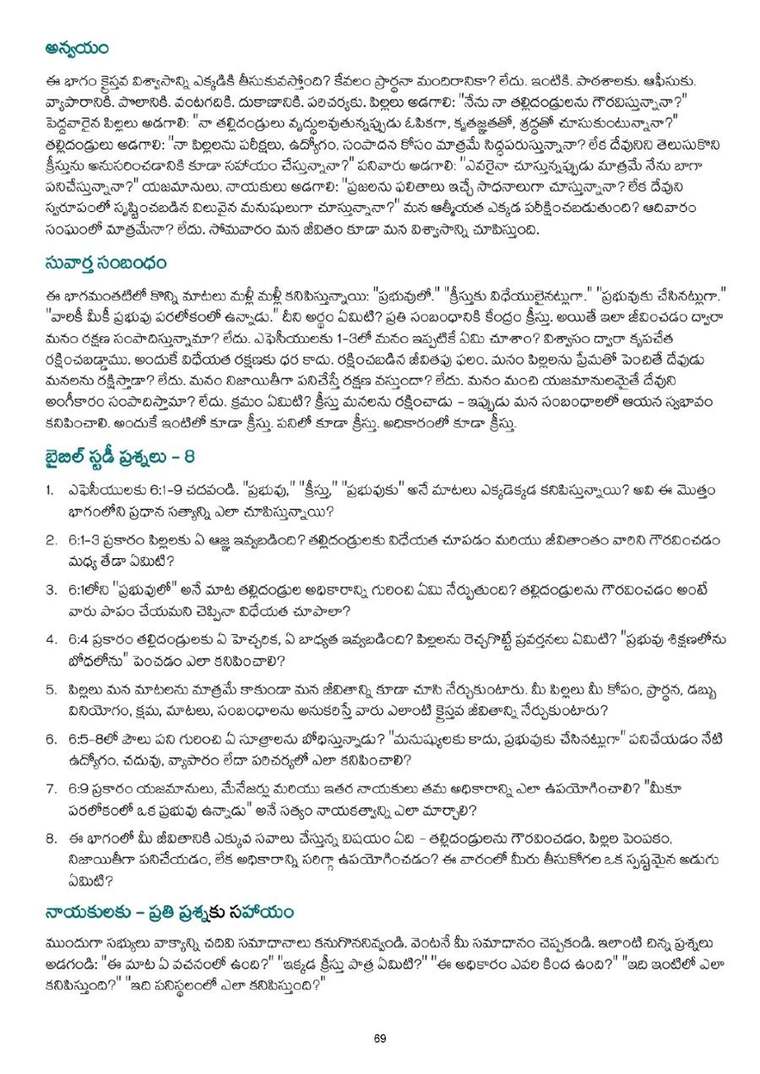
అన్వయం
ఈ భాగం క్రైస్తవ విశ్వాసాన్ని ఎక్కడికి తీసుకువస్తోంది? కేవలం ప్రార్థనా మందిరానికా? లేదు. ఇంటికి. పాఠశాలకు. ఆఫీసుకు. వ్యాపారానికి. పొలానికి. వంటగదికి. దుకాణానికి. పరిచర్యకు. పిల్లలు అడగాలి: “నేను నా తల్లిదండ్రులను గౌరవిస్తున్నానా?” పెద్దవారైన పిల్లలు అడగాలి: “నా తల్లిదండ్రులు వృద్ధులవుతున్నప్పుడు ఓపికగా, కృతజ్ఞతతో, శ్రద్ధతో చూసుకుంటున్నానా?” తల్లిదండ్రులు అడగాలి: “నా పిల్లలను పరీక్షలు, ఉద్యోగం, సంపాదన కోసం మాత్రమే సిద్ధపరుస్తున్నానా? లేక దేవునిని తెలుసుకొని క్రీస్తును అనుసరించడానికి కూడా సహాయం చేస్తున్నానా?” పనివారు అడగాలి: “ఎవరైనా చూస్తున్నప్పుడు మాత్రమే నేను బాగా పనిచేస్తున్నానా?” యజమానులు, నాయకులు అడగాలి: “ప్రజలను ఫలితాలు ఇచ్చే సాధనాలుగా చూస్తున్నానా? లేక దేవుని స్వరూపంలో సృష్టించబడిన విలువైన మనుషులుగా చూస్తున్నానా?” మన ఆత్మీయత ఎక్కడ పరీక్షించబడుతుంది? ఆదివారం సంఘంలో మాత్రమేనా? లేదు. సోమవారం మన జీవితం కూడా మన విశ్వాసాన్ని చూపిస్తుంది.
Application
Where does this passage bring our Christian faith?
Only into the church building? No.
Into the home. Into the school. Into the office. Into the business. Into the field. Into the kitchen.
Into the shop. Into ministry.
Children should ask: “Am I honoring my parents?”
Adult children should ask: “As my parents grow older, am I treating them with patience, gratitude, attention, and care?”
Parents should ask: “Am I preparing my children only for exams, careers, and earning money, or am I also helping them know God and follow Christ?”
Workers should ask: “Do I work well only when someone is watching?”
Employers and leaders should ask: “Do I see people merely as tools for producing results, or as human beings who have dignity before God?”
Where is our spirituality tested? Only in church on Sunday? No.
Our Monday life also reveals our faith.
సువార్త సంబంధం
ఈ భాగమంతటిలో కొన్ని మాటలు మళ్లీ మళ్లీ కనిపిస్తున్నాయి: “ప్రభువులో.” “క్రీస్తుకు విధేయులైనట్లుగా.” “ప్రభువుకు చేసినట్లుగా.” “వారికీ మీకీ ప్రభువు పరలోకంలో ఉన్నాడు.” దీని అర్థం ఏమిటి? ప్రతి సంబంధానికి కేంద్రం క్రీస్తు. అయితే ఇలా జీవించడం ద్వారా మనం రక్షణ సంపాదిస్తున్నామా? లేదు. ఎఫెసీయులకు 1-3లో మనం ఇప్పటికే ఏమి చూశాం? విశ్వాసం ద్వారా కృపచేత రక్షించబడ్డాము. అందుకే విధేయత రక్షణకు ధర కాదు. రక్షించబడిన జీవితపు ఫలం. మనం పిల్లలను ప్రేమతో పెంచితే దేవుడు మనలను రక్షిస్తాడా? లేదు. మనం నిజాయితీగా పనిచేస్తే రక్షణ వస్తుందా? లేదు. మనం మంచి యజమానులమైతే దేవుని అంగీకారం సంపాదిస్తామా? లేదు. క్రమం ఏమిటి? క్రీస్తు మనలను రక్షించాడు – ఇప్పుడు మన సంబంధాలలో ఆయన స్వభావం కనిపించాలి. అందుకే ఇంటిలో కూడా క్రీస్తు. పనిలో కూడా క్రీస్తు. అధికారంలో కూడా క్రీస్తు.
Gospel Connection
Several expressions appear repeatedly throughout this passage:
“In the Lord.” “As you would obey Christ.” “As if you were serving the Lord.”
“Your Master is in heaven.”
What does this tell us?
Christ is at the center of every relationship.
But do we earn salvation by living this way? No.
What have we already learned in Ephesians 1–3?
We are saved by grace through faith.
Therefore, obedience is not the price of salvation.
It is the fruit of a life that has been saved.
Will God save us because we raise our children well? No.
Do we receive salvation because we work honestly? No.
Do we earn God’s acceptance by becoming good employers? No.
What is the order?
Christ has saved us → Now His character should be seen in our relationships.
Therefore: Christ at home. Christ at work. Christ in our authority.
బైబిల్ స్టడీ ప్రశ్నలు – 8
- ఎఫెసీయులకు 6:1-9 చదవండి. “ప్రభువు,” “క్రీస్తు,” “ప్రభువుకు” అనే మాటలు ఎక్కడెక్కడ కనిపిస్తున్నాయి? అవి ఈ మొత్తం భాగంలోని ప్రధాన సత్యాన్ని ఎలా చూపిస్తున్నాయి?
- 6:1-3 ప్రకారం పిల్లలకు ఏ ఆజ్ఞ ఇవ్వబడింది? తల్లిదండ్రులకు విధేయత చూపడం మరియు జీవితాంతం వారిని గౌరవించడం మధ్య తేడా ఏమిటి?
- 6:1లోని “ప్రభువులో” అనే మాట తల్లిదండ్రుల అధికారాన్ని గురించి ఏమి నేర్పుతుంది? తల్లిదండ్రులను గౌరవించడం అంటే వారు పాపం చేయమని చెప్పినా విధేయత చూపాలా?
- 6:4 ప్రకారం తల్లిదండ్రులకు ఏ హెచ్చరిక, ఏ బాధ్యత ఇవ్వబడింది? పిల్లలను రెచ్చగొట్టే ప్రవర్తనలు ఏమిటి? “ప్రభువు శిక్షణలోను బోధలోను” పెంచడం ఎలా కనిపించాలి?
- పిల్లలు మన మాటలను మాత్రమే కాకుండా మన జీవితాన్ని కూడా చూసి నేర్చుకుంటారు. మీ పిల్లలు మీ కోపం, ప్రార్థన, డబ్బు వినియోగం, క్షమ, మాటలు, సంబంధాలను అనుకరిస్తే వారు ఎలాంటి క్రైస్తవ జీవితాన్ని నేర్చుకుంటారు?
- 6:5-8లో పౌలు పని గురించి ఏ సూత్రాలను బోధిస్తున్నాడు? “మనుష్యులకు కాదు, ప్రభువుకు చేసినట్లుగా” పనిచేయడం నేటి ఉద్యోగం, చదువు, వ్యాపారం లేదా పరిచర్యలో ఎలా కనిపించాలి?
- 6:9 ప్రకారం యజమానులు, మేనేజర్లు మరియు ఇతర నాయకులు తమ అధికారాన్ని ఎలా ఉపయోగించాలి? “మీకూ పరలోకంలో ఒక ప్రభువు ఉన్నాడు” అనే సత్యం నాయకత్వాన్ని ఎలా మార్చాలి?
- ఈ భాగంలో మీ జీవితానికి ఎక్కువ సవాలు చేస్తున్న విషయం ఏది – తల్లిదండ్రులను గౌరవించడం, పిల్లల పెంపకం, నిజాయితీగా పనిచేయడం, లేక అధికారాన్ని సరిగ్గా ఉపయోగించడం? ఈ వారంలో మీరు తీసుకోగల ఒక స్పష్టమైన అడుగు ఏమిటి?
Bible Study Questions — 8
1. Read Ephesians 6:1–9. Where do you find the words “Lord,” “Christ,” or expressions such as “as to the Lord”? How do these expressions reveal the main truth of the whole passage?
2. According to 6:1–3, what command is given to children? What is the difference between obeying parents while under their care and honoring them throughout life?
3. What does the expression “in the Lord” in 6:1 teach us about parental authority? Does honoring parents mean obeying them even when they clearly tell us to sin?
4. According to 6:4, what warning and responsibility are given to parents? What behaviors can provoke children? What does bringing them up “in the training and instruction of the Lord” look like?
5. Children learn not only from what we say but also from how we live. If your children copied your anger, prayer life, use of money, forgiveness, speech, and relationships, what kind of Christian life would they learn?
6. What principles about work does Paul teach in 6:5–8? What does working “as if you were
serving the Lord” look like today in employment, education, business, home, or ministry?
7. According to 6:9, how should employers, managers, pastors, teachers, parents, and other leaders use authority? How should the truth “you also have a Master in heaven” transform leadership?
8. Which part of this passage challenges you most—honoring parents, raising children, working faithfully, or using authority properly? What one specific step can you take this week?
నాయకులకు – ప్రతి ప్రశ్నకు సహాయం
ముందుగా సభ్యులు వాక్యాన్ని చదివి సమాధానాలు కనుగొననివ్వండి. వెంటనే మీ సమాధానం చెప్పకండి. ఇలాంటి చిన్న ప్రశ్నలు అడగండి: “ఈ మాట ఏ వచనంలో ఉంది?” “ఇక్కడ క్రీస్తు పాత్ర ఏమిటి?” “ఈ అధికారం ఎవరి కింద ఉంది?” “ఇది ఇంటిలో ఎలా కనిపిస్తుంది?” “ఇది పనిస్థలంలో ఎలా కనిపిస్తుంది?”
Help for Leaders — Question by Question
First allow the group to read the passage and discover the answers themselves.
Do not immediately give them your answers.
Ask simple questions such as: “Where do you see that in the passage?” “What role does Christ have here?” “Under whose authority is this person?” “What would this look like at home?”
“What would this look like at work?”
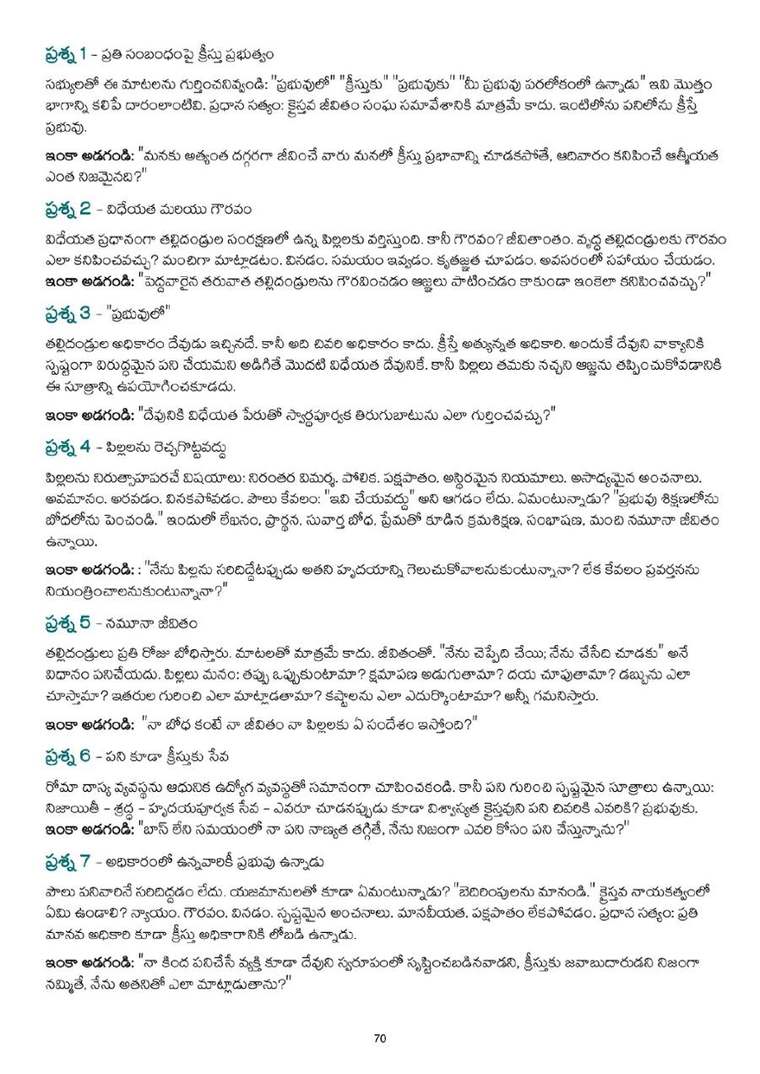
ప్రశ్న 1 – ప్రతి సంబంధంపై క్రీస్తు ప్రభుత్వం
సభ్యులతో ఈ మాటలను గుర్తించనివ్వండి: “ప్రభువులో” “క్రీస్తుకు” “ప్రభువుకు” “మీ ప్రభువు పరలోకంలో ఉన్నాడు” ఇవి మొత్తం భాగాన్ని కలిపే దారంలాంటివి. ప్రధాన సత్యం: క్రైస్తవ జీవితం సంఘ సమావేశానికి మాత్రమే కాదు. ఇంటిలోను పనిలోను క్రీస్తే ప్రభువు.
ఇంకా అడగండి: “మనకు అత్యంత దగ్గరగా జీవించే వారు మనలో క్రీస్తు ప్రభావాన్ని చూడకపోతే, ఆదివారం కనిపించే ఆత్మీయత ఎంత నిజమైనది?”
Question 1 — Christ Is Lord Over Every Relationship
Ask the group to identify expressions such as:
“In the Lord.” “To Christ.” “As to the Lord.” “Your Master is in heaven.”
These expressions are like a thread connecting the whole passage.
The main truth is: Christianity is not only for church meetings. Christ is Lord at home and at work. Ask further: “If the people who live closest to us cannot see Christ’s influence in us, how genuine is the spirituality we display on Sunday?”
ప్రశ్న 2 – విధేయత మరియు గౌరవం
విధేయత ప్రధానంగా తల్లిదండ్రుల సంరక్షణలో ఉన్న పిల్లలకు వర్తిస్తుంది. కానీ గౌరవం? జీవితాంతం. వృద్ధ తల్లిదండ్రులకు గౌరవం ఎలా కనిపించవచ్చు? మంచిగా మాట్లాడటం. వినడం. సమయం ఇవ్వడం. కృతజ్ఞత చూపడం. అవసరంలో సహాయం చేయడం.
ఇంకా అడగండి: “పెద్దవారైన తరువాత తల్లిదండ్రులను గౌరవించడం ఆజ్ఞలు పాటించడం కాకుండా ఇంకెలా కనిపించవచ్చు?”
Question 2 — Obedience and Honor
Obedience applies particularly to children who are still under parental care.
But what about honor? It continues throughout life.
How can we honor aging parents? Speaking respectfully. Listening. Giving time. Showing gratitude. Helping when needed.
Ask: “After we become adults, how can honoring our parents continue even though obedience takes a different form?”
ప్రశ్న 3 – “ప్రభువులో”
తల్లిదండ్రుల అధికారం దేవుడు ఇచ్చినదే. కానీ అది చివరి అధికారం కాదు. క్రీస్తే అత్యున్నత అధికారి. అందుకే దేవుని వాక్యానికి స్పష్టంగా విరుద్ధమైన పని చేయమని అడిగితే మొదటి విధేయత దేవునికే. కానీ పిల్లలు తమకు నచ్చని ఆజ్ఞను తప్పించుకోవడానికి ఈ సూత్రాన్ని ఉపయోగించకూడదు.
ఇంకా అడగండి: “దేవునికి విధేయత పేరుతో స్వార్థపూర్వక తిరుగుబాటును ఎలా గుర్తించవచ్చు?”
Question 3 — “In the Lord”
Parental authority is given by God. But it is not the highest authority. Christ is the highest authority. Therefore, if parents clearly ask someone to act contrary to God’s Word, the believer’s highest obedience belongs to God.
But children should not use this principle simply to escape instructions they dislike.
Ask: “How can we distinguish genuine obedience to God from selfish rebellion?”
ప్రశ్న 4 – పిల్లలను రెచ్చగొట్టవద్దు
పిల్లలను నిరుత్సాహపరచే విషయాలు: నిరంతర విమర్శ. పోలిక. పక్షపాతం. అస్థిరమైన నియమాలు. అసాధ్యమైన అంచనాలు. అవమానం. అరవడం. వినకపోవడం. పౌలు కేవలం: “ఇవి చేయవద్దు” అని ఆగడం లేదు. ఏమంటున్నాడు? “ప్రభువు శిక్షణలోను బోధలోను పెంచండి.” ఇందులో లేఖనం, ప్రార్థన, సువార్త బోధ, ప్రేమతో కూడిన క్రమశిక్షణ, సంభాషణ, మంచి నమూనా జీవితం ఉన్నాయి.
ఇంకా అడగండి: : “నేను పిల్లను సరిదిద్దేటప్పుడు అతని హృదయాన్ని గెలుచుకోవాలనుకుంటున్నానా? లేక కేవలం ప్రవర్తనను నియంత్రించాలనుకుంటున్నానా?”
Question 4 — Do Not Provoke Your Children
What may discourage or provoke children?
Constant criticism. Comparison. Favoritism. Inconsistent rules. Impossible expectations.
Humiliation. Shouting. Refusing to listen.
Paul does not merely say: “Do not do these things.”
What does he say? “Bring them up in the training and instruction of the Lord.”
This includes: Scripture, prayer, gospel teaching, discipline, conversation, and a godly example.
Ask: “When I correct my child, am I trying to reach the child’s heart and help them grow, or am I merely trying to control behavior?”
ప్రశ్న 5 – నమూనా జీవితం
తల్లిదండ్రులు ప్రతి రోజు బోధిస్తారు. మాటలతో మాత్రమే కాదు. జీవితంతో. “నేను చెప్పేది చేయి; నేను చేసేది చూడకు” అనే విధానం పనిచేయదు. పిల్లలు మనం: తప్పు ఒప్పుకుంటామా? క్షమాపణ అడుగుతామా? దయ చూపుతామా? డబ్బును ఎలా చూస్తామా? ఇతరుల గురించి ఎలా మాట్లాడతామా? కష్టాలను ఎలా ఎదుర్కొంటామా? అన్నీ గమనిస్తారు.
ఇంకా అడగండి: “నా బోధ కంటే నా జీవితం నా పిల్లలకు ఏ సందేశం ఇస్తోంది?”
Question 5 — A Life Worth Following
Parents teach every day. Not only with words. They teach with their lives.
“Do what I say, not what I do” does not work.
Children observe whether we: admit when we are wrong, ask forgiveness, show kindness, use money wisely, and speak respectfully about others.
Ask: “Will my children remember my anger more than my prayers? What message is my life communicating more loudly than my teaching?”
ప్రశ్న 6 – పని కూడా క్రీస్తుకు సేవ
రోమా దాస్య వ్యవస్థను ఆధునిక ఉద్యోగ వ్యవస్థతో సమానంగా చూపించకండి. కానీ పని గురించి స్పష్టమైన సూత్రాలు ఉన్నాయి: నిజాయితీ – శ్రద్ధ – హృదయపూర్వక సేవ – ఎవరూ చూడనప్పుడు కూడా విశ్వాస్యత క్రైస్తవుని పని చివరికి ఎవరికి? ప్రభువుకు.
ఇంకా అడగండి: “బాస్ లేని సమయంలో నా పని నాణ్యత తగ్గితే, నేను నిజంగా ఎవరి కోసం పని చేస్తున్నాను?”
Question 6 — Work Is Also Service to Christ
Do not treat Roman slavery as identical to modern employment.
But there are clear principles about work: Honesty → Diligence → Wholehearted service → Faithfulness even when nobody is watching
Whom is the Christian ultimately serving? The Lord.
Ask: “If the quality of my work drops whenever my boss is absent, whom am I really working for?”
ప్రశ్న 7 – అధికారంలో ఉన్నవారికీ ప్రభువు ఉన్నాడు
పౌలు పనివారినే సరిదిద్దడం లేదు. యజమానులతో కూడా ఏమంటున్నాడు? “బెదిరింపులను మానండి.” క్రైస్తవ నాయకత్వంలో ఏమి ఉండాలి? న్యాయం. గౌరవం. వినడం. స్పష్టమైన అంచనాలు. మానవీయత. పక్షపాతం లేకపోవడం. ప్రధాన సత్యం: ప్రతి మానవ అధికారి కూడా క్రీస్తు అధికారానికి లోబడి ఉన్నాడు.
ఇంకా అడగండి: “నా కింద పనిచేసే వ్యక్తి కూడా దేవుని స్వరూపంలో సృష్టించబడినవాడని, క్రీస్తుకు జవాబుదారుడని నిజంగా నమ్మితే, నేను అతనితో ఎలా మాట్లాడుతాను?”
Question 7 — Those in Authority Also Have a Master
Paul does not correct only workers.
What does he say to masters? “Do not threaten them.”
What should Christian leadership include? Justice. Respect. Listening. Clear expectations.
Humanity. No favoritism.
The main truth is: Every human authority is under Christ’s authority.
Ask: “If I truly believe that the person working under me is valuable before Christ, how will that change the way I speak to that person?”
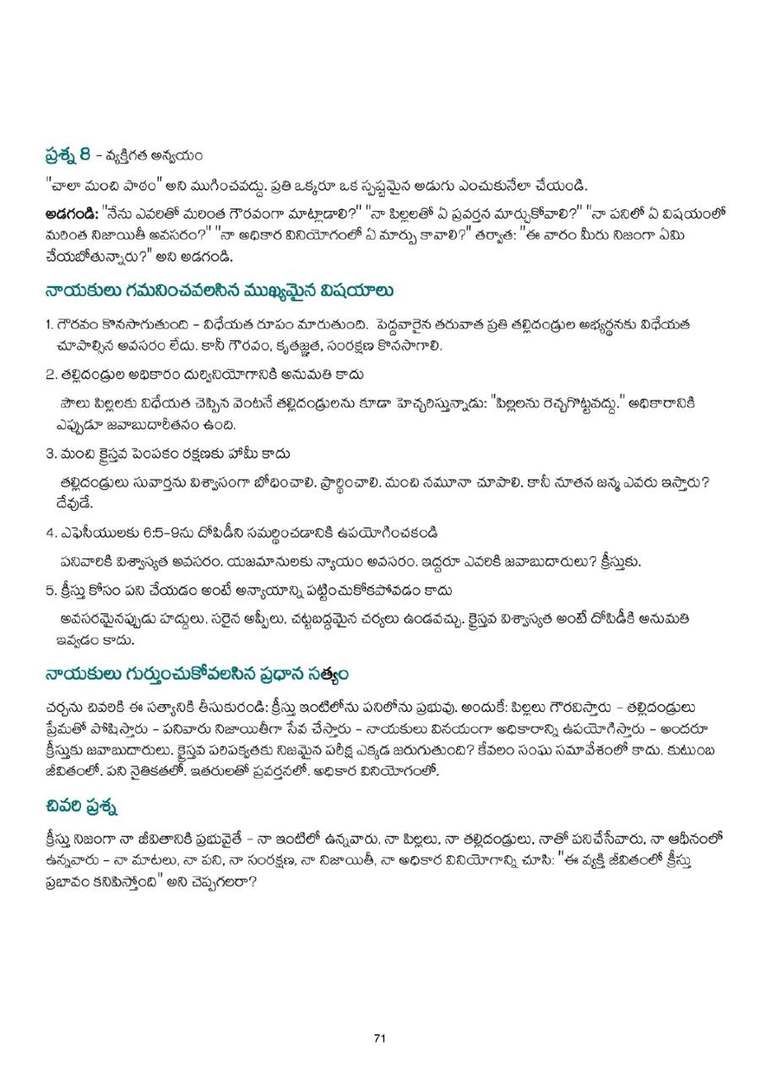
ప్రశ్న 8 – వ్యక్తిగత అన్వయం
“చాలా మంచి పాఠం” అని ముగించవద్దు. ప్రతి ఒక్కరూ ఒక స్పష్టమైన అడుగు ఎంచుకునేలా చేయండి.
అడగండి: “నేను ఎవరితో మరింత గౌరవంగా మాట్లాడాలి?” “నా పిల్లలతో ఏ ప్రవర్తన మార్చుకోవాలి?” “నా పనిలో ఏ విషయంలో మరింత నిజాయితీ అవసరం?” “నా అధికార వినియోగంలో ఏ మార్పు కావాలి?” తర్వాత: “ఈ వారం మీరు నిజంగా ఏమి చేయబోతున్నారు?” అని అడగండి.
Question 8 — Personal Application
Do not end merely by saying: “That was a good Bible study.”
Encourage everyone to choose one specific step.
Ask: “Whom do I need to speak to more respectfully?”
“What behavior toward my children needs to change?”
“Where do I need greater honesty or faithfulness in my work?”
“What needs to change in the way I use authority?”
Then ask: “What are you actually going to do about it this week?”
Important Points for Leaders
1. Honor Continues; the Form of Obedience Changes
2. When children become adults, they do not necessarily have to obey every parental request.
But respect, gratitude, and appropriate care should continue.
3. Parental Authority Is Not Permission for Abuse
4. Immediately after telling children to obey, Paul also warns parents:
“Do not exasperate your children.” Authority always carries accountability.
5. Good Christian Parenting Does Not Guarantee Salvation.
Parents should faithfully teach the gospel. They should pray. They should model godliness.
But who gives new birth? God alone.
6. Do Not Use Ephesians 6:5–9 to Justify Exploitation
7. Workers are called to faithfulness. Those in authority are called to justice.
To whom are both accountable? Christ.
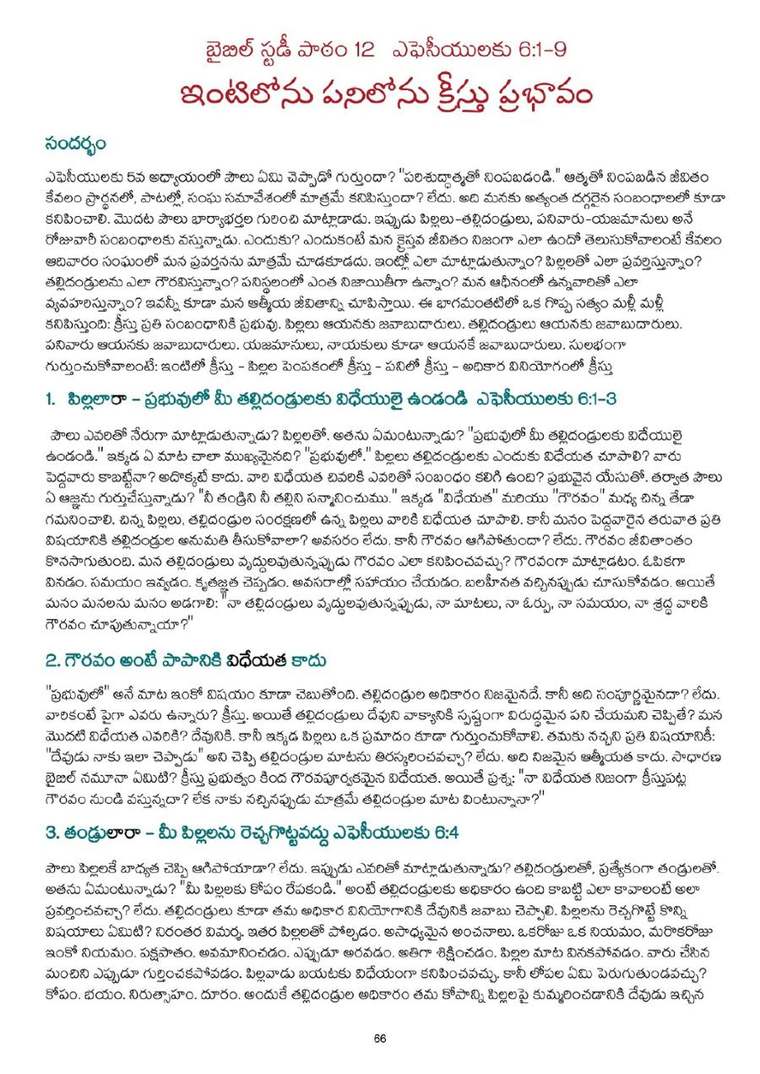
Working for Christ Does Not Mean Ignoring Injustice
8. When necessary, there may be:
appropriate boundaries, proper appeals, and lawful action.
Christian faithfulness does not mean giving permission for exploitation.
నాయకులు గమనించవలసిన ముఖ్యమైన విషయాలు
- గౌరవం కొనసాగుతుంది – విధేయత రూపం మారుతుంది. పెద్దవారైన తరువాత ప్రతి తల్లిదండ్రుల అభ్యర్థనకు విధేయత చూపాల్సిన అవసరం లేదు. కానీ గౌరవం, కృతజ్ఞత, సంరక్షణ కొనసాగాలి.
- తల్లిదండ్రుల అధికారం దుర్వినియోగానికి అనుమతి కాదు
పౌలు పిల్లలకు విధేయత చెప్పిన వెంటనే తల్లిదండ్రులను కూడా హెచ్చరిస్తున్నాడు: “పిల్లలను రెచ్చగొట్టవద్దు.” అధికారానికి ఎప్పుడూ జవాబుదారీతనం ఉంది.
3. మంచి క్రైస్తవ పెంపకం రక్షణకు హామీ కాదు
తల్లిదండ్రులు సువార్తను విశ్వాసంగా బోధించాలి. ప్రార్థించాలి. మంచి నమూనా చూపాలి. కానీ నూతన జన్మ ఎవరు ఇస్తారు? దేవుడే.
4. ఎఫెసీయులకు 6:5-9ను దోపిడీని సమర్థించడానికి ఉపయోగించకండి
పనివారికి విశ్వాస్యత అవసరం. యజమానులకు న్యాయం అవసరం. ఇద్దరూ ఎవరికి జవాబుదారులు? క్రీస్తుకు.
5. క్రీస్తు కోసం పని చేయడం అంటే అన్యాయాన్ని పట్టించుకోకపోవడం కాదు
అవసరమైనప్పుడు హద్దులు, సరైన అప్పీలు, చట్టబద్ధమైన చర్యలు ఉండవచ్చు. క్రైస్తవ విశ్వాస్యత అంటే దోపిడీకి అనుమతి ఇవ్వడం కాదు.
నాయకులు గుర్తుంచుకోవలసిన ప్రధాన సత్యం
చర్చను చివరికి ఈ సత్యానికి తీసుకురండి: క్రీస్తు ఇంటిలోను పనిలోను ప్రభువు. అందుకే: పిల్లలు గౌరవిస్తారు – తల్లిదండ్రులు ప్రేమతో పోషిస్తారు – పనివారు నిజాయితీగా సేవ చేస్తారు – నాయకులు వినయంగా అధికారాన్ని ఉపయోగిస్తారు – అందరూ క్రీస్తుకు జవాబుదారులు. క్రైస్తవ పరిపక్వతకు నిజమైన పరీక్ష ఎక్కడ జరుగుతుంది? కేవలం సంఘ సమావేశంలో కాదు. కుటుంబ జీవితంలో. పని నైతికతలో. ఇతరులతో ప్రవర్తనలో. అధికార వినియోగంలో.
Main Truth for Leaders to Remember
Bring the discussion back to this truth:
Christ is Lord at home and at work.
Therefore:
Children honor and obey
→ Parents lovingly nurture
→ Workers serve faithfully
→ Leaders use authority humbly
→ Everyone is accountable to Christ.
Where is Christian maturity truly tested?
Not only in church meetings.
In family life.
In our work ethic.
In the way we treat people.
In the way we use authority.
చివరి ప్రశ్న
క్రీస్తు నిజంగా నా జీవితానికి ప్రభువైతే – నా ఇంటిలో ఉన్నవారు, నా పిల్లలు, నా తల్లిదండ్రులు, నాతో పనిచేసేవారు, నా ఆధీనంలో ఉన్నవారు – నా మాటలు, నా పని, నా సంరక్షణ, నా నిజాయితీ, నా అధికార వినియోగాన్ని చూసి: “ఈ వ్యక్తి జీవితంలో క్రీస్తు ప్రభావం కనిపిస్తోంది” అని చెప్పగలరా?
Final Question
If Christ is truly Lord of my life, could:
my family,
my children,
my parents,
my coworkers,
and those under my authority
look at my words, work, care, honesty, and use of authority and say:
“I can see the influence of Christ in this person’s life”?
Original PDF pages · అసలు పేజీలు (Telugu 6 · English 9)
తెలుగు · Telugu edition
English edition