Search this book · ఈ పుస్తకంలో వెతకండి
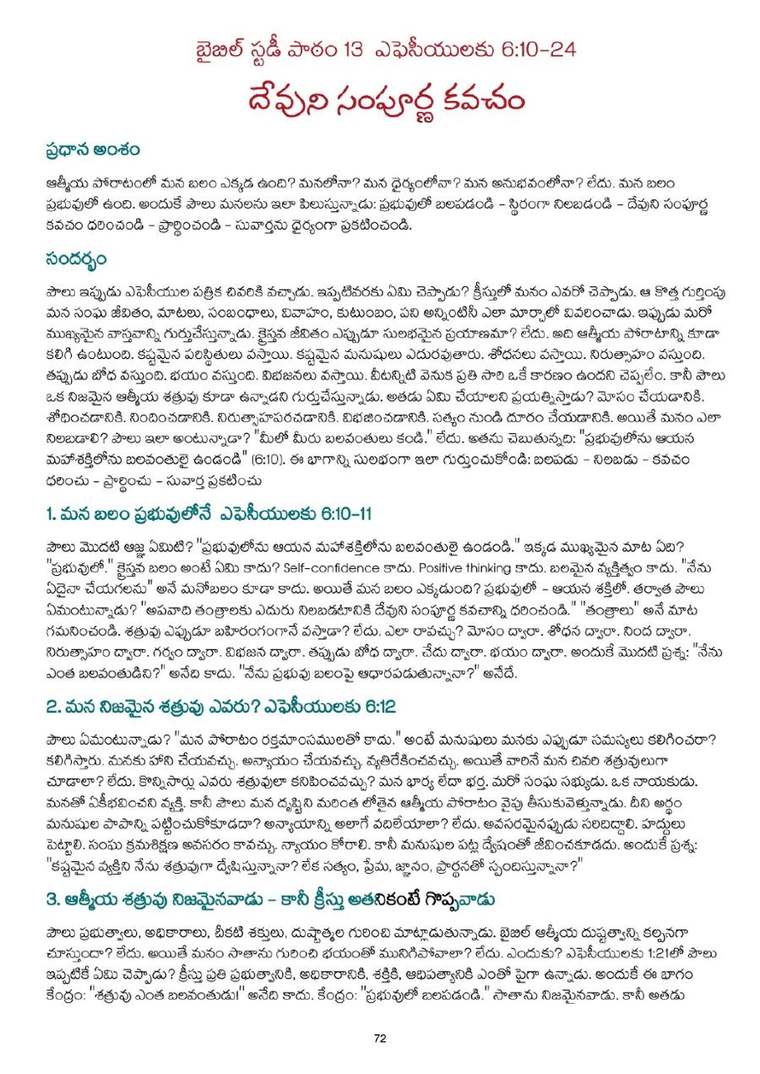
ప్రధాన అంశం
ఆత్మీయ పోరాటంలో మన బలం ఎక్కడ ఉంది? మనలోనా? మన ధైర్యంలోనా? మన అనుభవంలోనా? లేదు. మన బలం ప్రభువులో ఉంది. అందుకే పౌలు మనలను ఇలా పిలుస్తున్నాడు: ప్రభువులో బలపడండి – స్థిరంగా నిలబడండి – దేవుని సంపూర్ణ కవచం ధరించండి – ప్రార్థించండి – సువార్తను ధైర్యంగా ప్రకటించండి.
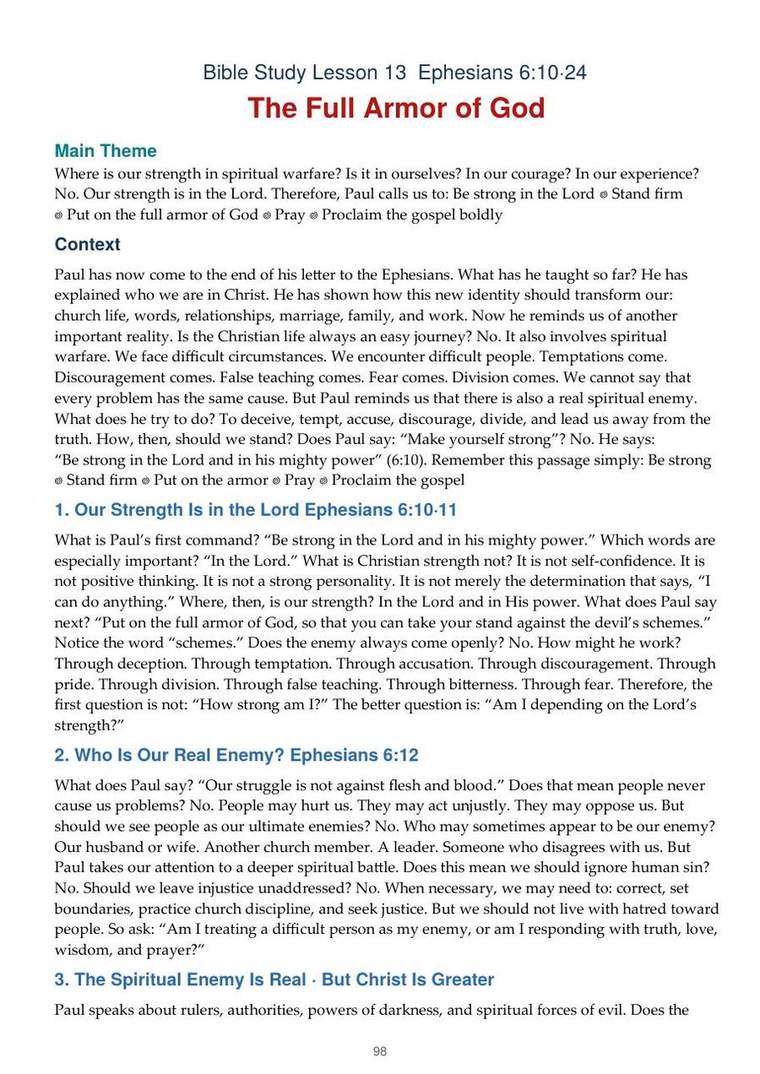
Main Theme
Where is our strength in spiritual warfare? Is it in ourselves? In our courage? In our experience?
No. Our strength is in the Lord. Therefore, Paul calls us to: Be strong in the Lord → Stand firm → Put on the full armor of God → Pray → Proclaim the gospel boldly
సందర్భం
పౌలు ఇప్పుడు ఎఫెసీయుల పత్రిక చివరికి వచ్చాడు. ఇప్పటివరకు ఏమి చెప్పాడు? క్రీస్తులో మనం ఎవరో చెప్పాడు. ఆ కొత్త గుర్తింపు మన సంఘ జీవితం, మాటలు, సంబంధాలు, వివాహం, కుటుంబం, పని అన్నింటినీ ఎలా మార్చాలో వివరించాడు. ఇప్పుడు మరో ముఖ్యమైన వాస్తవాన్ని గుర్తుచేస్తున్నాడు. క్రైస్తవ జీవితం ఎప్పుడూ సులభమైన ప్రయాణమా? లేదు. అది ఆత్మీయ పోరాటాన్ని కూడా కలిగి ఉంటుంది. కష్టమైన పరిస్థితులు వస్తాయి. కష్టమైన మనుషులు ఎదురవుతారు. శోధనలు వస్తాయి. నిరుత్సాహం వస్తుంది. తప్పుడు బోధ వస్తుంది. భయం వస్తుంది. విభజనలు వస్తాయి. వీటన్నిటి వెనుక ప్రతి సారి ఒకే కారణం ఉందని చెప్పలేం. కానీ పౌలు ఒక నిజమైన ఆత్మీయ శత్రువు కూడా ఉన్నాడని గుర్తుచేస్తున్నాడు. అతడు ఏమి చేయాలని ప్రయత్నిస్తాడు? మోసం చేయడానికి. శోధించడానికి. నిందించడానికి. నిరుత్సాహపరచడానికి. విభజించడానికి. సత్యం నుండి దూరం చేయడానికి. అయితే మనం ఎలా నిలబడాలి? పౌలు ఇలా అంటున్నాడా? “మీలో మీరు బలవంతులు కండి.” లేదు. అతను చెబుతున్నది: “ప్రభువులోను ఆయన మహాశక్తిలోను బలవంతులై ఉండండి” (6:10). ఈ భాగాన్ని సులభంగా ఇలా గుర్తుంచుకోండి: బలపడు – నిలబడు – కవచం ధరించు – ప్రార్థించు – సువార్త ప్రకటించు
Context
Paul has now come to the end of his letter to the Ephesians. What has he taught so far? He has explained who we are in Christ. He has shown how this new identity should transform our:
church life, words, relationships, marriage, family, and work. Now he reminds us of another important reality. Is the Christian life always an easy journey? No. It also involves spiritual warfare. We face difficult circumstances. We encounter difficult people. Temptations come.
Discouragement comes. False teaching comes. Fear comes. Division comes. We cannot say that every problem has the same cause. But Paul reminds us that there is also a real spiritual enemy.
What does he try to do? To deceive, tempt, accuse, discourage, divide, and lead us away from the truth. How, then, should we stand? Does Paul say: “Make yourself strong”? No. He says:
“Be strong in the Lord and in his mighty power” (6:10). Remember this passage simply: Be strong → Stand firm → Put on the armor → Pray → Proclaim the gospel
1. మన బలం ప్రభువులోనే ఎఫెసీయులకు 6:10-11
పౌలు మొదటి ఆజ్ఞ ఏమిటి? “ప్రభువులోను ఆయన మహాశక్తిలోను బలవంతులై ఉండండి.” ఇక్కడ ముఖ్యమైన మాట ఏది? “ప్రభువులో.” క్రైస్తవ బలం అంటే ఏమి కాదు? Self-confidence కాదు. Positive thinking కాదు. బలమైన వ్యక్తిత్వం కాదు. “నేను ఏదైనా చేయగలను” అనే మనోబలం కూడా కాదు. అయితే మన బలం ఎక్కడుంది? ప్రభువులో – ఆయన శక్తిలో. తర్వాత పౌలు ఏమంటున్నాడు? “అపవాది తంత్రాలకు ఎదురు నిలబడటానికి దేవుని సంపూర్ణ కవచాన్ని ధరించండి.” “తంత్రాలు” అనే మాట గమనించండి. శత్రువు ఎప్పుడూ బహిరంగంగానే వస్తాడా? లేదు. ఎలా రావచ్చు? మోసం ద్వారా. శోధన ద్వారా. నింద ద్వారా. నిరుత్సాహం ద్వారా. గర్వం ద్వారా. విభజన ద్వారా. తప్పుడు బోధ ద్వారా. చేదు ద్వారా. భయం ద్వారా. అందుకే మొదటి ప్రశ్న: “నేను ఎంత బలవంతుడిని?” అనేది కాదు. “నేను ప్రభువు బలంపై ఆధారపడుతున్నానా?” అనేదే.
1. Our Strength Is in the Lord Ephesians 6:10–11
What is Paul’s first command? “Be strong in the Lord and in his mighty power.” Which words are especially important? “In the Lord.” What is Christian strength not? It is not self-confidence. It is not positive thinking. It is not a strong personality. It is not merely the determination that says, “I can do anything.” Where, then, is our strength? In the Lord and in His power. What does Paul say next? “Put on the full armor of God, so that you can take your stand against the devil’s schemes.” Notice the word “schemes.” Does the enemy always come openly? No. How might he work?
Through deception. Through temptation. Through accusation. Through discouragement. Through pride. Through division. Through false teaching. Through bitterness. Through fear. Therefore, the first question is not: “How strong am I?” The better question is: “Am I depending on the Lord’s strength?”
2. మన నిజమైన శత్రువు ఎవరు? ఎఫెసీయులకు 6:12
పౌలు ఏమంటున్నాడు? “మన పోరాటం రక్తమాంసములతో కాదు.” అంటే మనుషులు మనకు ఎప్పుడూ సమస్యలు కలిగించరా? కలిగిస్తారు. మనకు హాని చేయవచ్చు. అన్యాయం చేయవచ్చు. వ్యతిరేకించవచ్చు. అయితే వారినే మన చివరి శత్రువులుగా చూడాలా? లేదు. కొన్నిసార్లు ఎవరు శత్రువులా కనిపించవచ్చు? మన భార్య లేదా భర్త. మరో సంఘ సభ్యుడు. ఒక నాయకుడు. మనతో ఏకీభవించని వ్యక్తి. కానీ పౌలు మన దృష్టిని మరింత లోతైన ఆత్మీయ పోరాటం వైపు తీసుకువెళ్తున్నాడు. దీని అర్థం మనుషుల పాపాన్ని పట్టించుకోకూడదా? అన్యాయాన్ని అలాగే వదిలేయాలా? లేదు. అవసరమైనప్పుడు సరిదిద్దాలి. హద్దులు పెట్టాలి. సంఘ క్రమశిక్షణ అవసరం కావచ్చు. న్యాయం కోరాలి. కానీ మనుషుల పట్ల ద్వేషంతో జీవించకూడదు. అందుకే ప్రశ్న: “కష్టమైన వ్యక్తిని నేను శత్రువుగా ద్వేషిస్తున్నానా? లేక సత్యం, ప్రేమ, జ్ఞానం, ప్రార్థనతో స్పందిస్తున్నానా?”
2. Who Is Our Real Enemy? Ephesians 6:12
What does Paul say? “Our struggle is not against flesh and blood.” Does that mean people never cause us problems? No. People may hurt us. They may act unjustly. They may oppose us. But should we see people as our ultimate enemies? No. Who may sometimes appear to be our enemy? Our husband or wife. Another church member. A leader. Someone who disagrees with us. But Paul takes our attention to a deeper spiritual battle. Does this mean we should ignore human sin? No. Should we leave injustice unaddressed? No. When necessary, we may need to: correct, set boundaries, practice church discipline, and seek justice. But we should not live with hatred toward people. So ask: “Am I treating a difficult person as my enemy, or am I responding with truth, love, wisdom, and prayer?”
3. ఆత్మీయ శత్రువు నిజమైనవాడు – కానీ క్రీస్తు అతనికంటే గొప్పవాడు
పౌలు ప్రభుత్వాలు, అధికారాలు, చీకటి శక్తులు, దుష్టాత్మల గురించి మాట్లాడుతున్నాడు. బైబిల్ ఆత్మీయ దుష్టత్వాన్ని కల్పనగా చూస్తుందా? లేదు. అయితే మనం సాతాను గురించి భయంతో మునిగిపోవాలా? లేదు. ఎందుకు? ఎఫెసీయులకు 1:21లో పౌలు ఇప్పటికే ఏమి చెప్పాడు? క్రీస్తు ప్రతి ప్రభుత్వానికి, అధికారానికి, శక్తికి, ఆధిపత్యానికి ఎంతో పైగా ఉన్నాడు. అందుకే ఈ భాగం కేంద్రం: “శత్రువు ఎంత బలవంతుడు!” అనేది కాదు. కేంద్రం: “ప్రభువులో బలపడండి.” సాతాను నిజమైనవాడు. కానీ అతడు
దేవునికి సమానుడు కాదు. క్రీస్తు అతనికంటే ఎంతో గొప్పవాడు. అందుకే భయం కాదు. అలక్ష్యం కూడా కాదు. క్రీస్తుపై ఆధారపడే జాగ్రత్త.
3. The Spiritual Enemy Is Real — But Christ Is Greater
Paul speaks about rulers, authorities, powers of darkness, and spiritual forces of evil. Does the
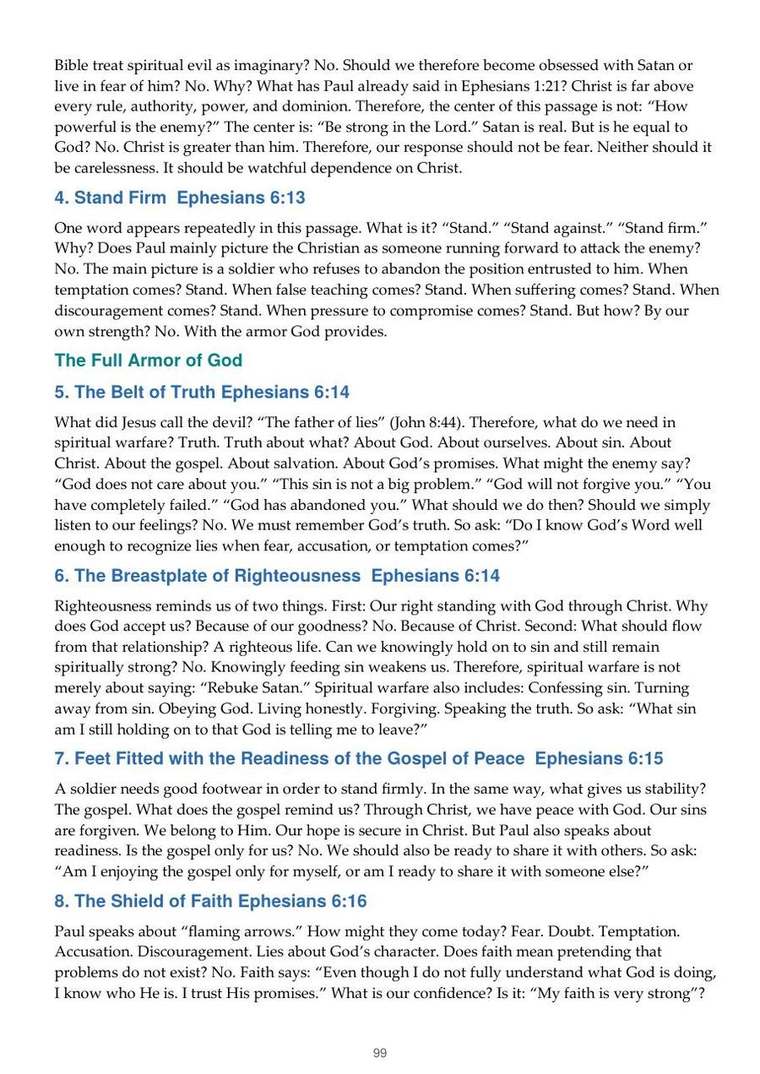
Bible treat spiritual evil as imaginary? No. Should we therefore become obsessed with Satan or live in fear of him? No. Why? What has Paul already said in Ephesians 1:21? Christ is far above every rule, authority, power, and dominion. Therefore, the center of this passage is not: “How powerful is the enemy?” The center is: “Be strong in the Lord.” Satan is real. But is he equal to God? No. Christ is greater than him. Therefore, our response should not be fear. Neither should it be carelessness. It should be watchful dependence on Christ.
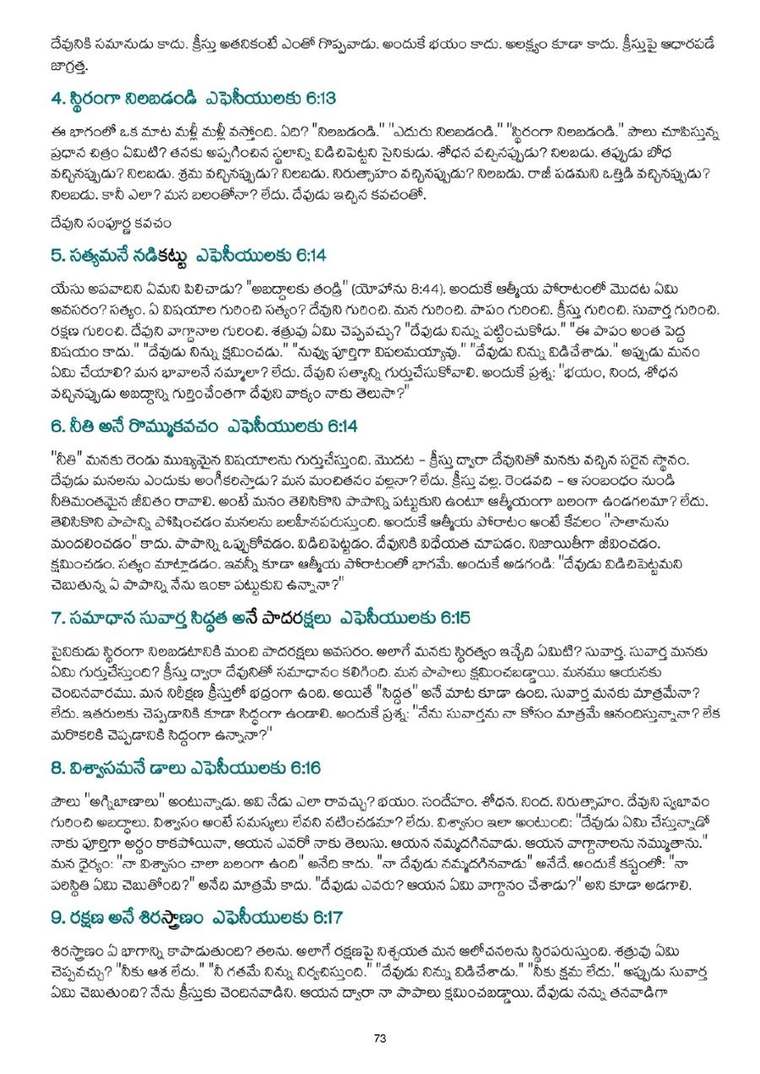
4. స్థిరంగా నిలబడండి ఎఫెసీయులకు 6:13
ఈ భాగంలో ఒక మాట మళ్లీ మళ్లీ వస్తోంది. ఏది? “నిలబడండి.” “ఎదురు నిలబడండి.” “స్థిరంగా నిలబడండి.” పౌలు చూపిస్తున్న ప్రధాన చిత్రం ఏమిటి? తనకు అప్పగించిన స్థలాన్ని విడిచిపెట్టని సైనికుడు. శోధన వచ్చినప్పుడు? నిలబడు. తప్పుడు బోధ వచ్చినప్పుడు? నిలబడు. శ్రమ వచ్చినప్పుడు? నిలబడు. నిరుత్సాహం వచ్చినప్పుడు? నిలబడు. రాజీ పడమని ఒత్తిడి వచ్చినప్పుడు? నిలబడు. కానీ ఎలా? మన బలంతోనా? లేదు. దేవుడు ఇచ్చిన కవచంతో.
దేవుని సంపూర్ణ కవచం
5. సత్యమనే నడికట్టు ఎఫెసీయులకు 6:14
యేసు అపవాదిని ఏమని పిలిచాడు? “అబద్ధాలకు తండ్రి” (యోహాను 8:44). అందుకే ఆత్మీయ పోరాటంలో మొదట ఏమి అవసరం? సత్యం. ఏ విషయాల గురించి సత్యం? దేవుని గురించి. మన గురించి. పాపం గురించి. క్రీస్తు గురించి. సువార్త గురించి. రక్షణ గురించి. దేవుని వాగ్దానాల గురించి. శత్రువు ఏమి చెప్పవచ్చు? “దేవుడు నిన్ను పట్టించుకోడు.” “ఈ పాపం అంత పెద్ద విషయం కాదు.” “దేవుడు నిన్ను క్షమించడు.” “నువ్వు పూర్తిగా విఫలమయ్యావు.” “దేవుడు నిన్ను విడిచేశాడు.” అప్పుడు మనం ఏమి చేయాలి? మన భావాలనే నమ్మాలా? లేదు. దేవుని సత్యాన్ని గుర్తుచేసుకోవాలి. అందుకే ప్రశ్న: “భయం, నింద, శోధన వచ్చినప్పుడు అబద్ధాన్ని గుర్తించేంతగా దేవుని వాక్యం నాకు తెలుసా?”
4. Stand Firm Ephesians 6:13
One word appears repeatedly in this passage. What is it? “Stand.” “Stand against.” “Stand firm.” Why? Does Paul mainly picture the Christian as someone running forward to attack the enemy?
No. The main picture is a soldier who refuses to abandon the position entrusted to him. When temptation comes? Stand. When false teaching comes? Stand. When suffering comes? Stand. When discouragement comes? Stand. When pressure to compromise comes? Stand. But how? By our own strength? No. With the armor God provides.
The Full Armor of God 5. The Belt of Truth Ephesians 6:14
What did Jesus call the devil? “The father of lies” (John 8:44). Therefore, what do we need in spiritual warfare? Truth. Truth about what? About God. About ourselves. About sin. About Christ. About the gospel. About salvation. About God’s promises. What might the enemy say?
“God does not care about you.” “This sin is not a big problem.” “God will not forgive you.” “You have completely failed.” “God has abandoned you.” What should we do then? Should we simply listen to our feelings? No. We must remember God’s truth. So ask: “Do I know God’s Word well enough to recognize lies when fear, accusation, or temptation comes?”
6. నీతి అనే రొమ్ముకవచం ఎఫెసీయులకు 6:14
“నీతి” మనకు రెండు ముఖ్యమైన విషయాలను గుర్తుచేస్తుంది. మొదట – క్రీస్తు ద్వారా దేవునితో మనకు వచ్చిన సరైన స్థానం. దేవుడు మనలను ఎందుకు అంగీకరిస్తాడు? మన మంచితనం వల్లనా? లేదు. క్రీస్తు వల్ల. రెండవది – ఆ సంబంధం నుండి నీతిమంతమైన జీవితం రావాలి. అంటే మనం తెలిసికొని పాపాన్ని పట్టుకుని ఉంటూ ఆత్మీయంగా బలంగా ఉండగలమా? లేదు. తెలిసికొని పాపాన్ని పోషించడం మనలను బలహీనపరుస్తుంది. అందుకే ఆత్మీయ పోరాటం అంటే కేవలం “సాతానును మందలించడం” కాదు. పాపాన్ని ఒప్పుకోవడం. విడిచిపెట్టడం. దేవునికి విధేయత చూపడం. నిజాయితీగా జీవించడం. క్షమించడం. సత్యం మాట్లాడడం. ఇవన్నీ కూడా ఆత్మీయ పోరాటంలో భాగమే. అందుకే అడగండి: “దేవుడు విడిచిపెట్టమని చెబుతున్న ఏ పాపాన్ని నేను ఇంకా పట్టుకుని ఉన్నానా?”
6. The Breastplate of Righteousness Ephesians 6:14
Righteousness reminds us of two things. First: Our right standing with God through Christ. Why does God accept us? Because of our goodness? No. Because of Christ. Second: What should flow from that relationship? A righteous life. Can we knowingly hold on to sin and still remain spiritually strong? No. Knowingly feeding sin weakens us. Therefore, spiritual warfare is not merely about saying: “Rebuke Satan.” Spiritual warfare also includes: Confessing sin. Turning away from sin. Obeying God. Living honestly. Forgiving. Speaking the truth. So ask: “What sin am I still holding on to that God is telling me to leave?”
7. సమాధాన సువార్త సిద్ధత అనే పాదరక్షలు ఎఫెసీయులకు 6:15
సైనికుడు స్థిరంగా నిలబడటానికి మంచి పాదరక్షలు అవసరం. అలాగే మనకు స్థిరత్వం ఇచ్చేది ఏమిటి? సువార్త. సువార్త మనకు ఏమి గుర్తుచేస్తుంది? క్రీస్తు ద్వారా దేవునితో సమాధానం కలిగింది. మన పాపాలు క్షమించబడ్డాయి. మనము ఆయనకు చెందినవారము. మన నిరీక్షణ క్రీస్తులో భద్రంగా ఉంది. అయితే “సిద్ధత” అనే మాట కూడా ఉంది. సువార్త మనకు మాత్రమేనా? లేదు. ఇతరులకు చెప్పడానికి కూడా సిద్ధంగా ఉండాలి. అందుకే ప్రశ్న: “నేను సువార్తను నా కోసం మాత్రమే ఆనందిస్తున్నానా? లేక మరొకరికి చెప్పడానికి సిద్ధంగా ఉన్నానా?”
7. Feet Fitted with the Readiness of the Gospel of Peace Ephesians 6:15
A soldier needs good footwear in order to stand firmly. In the same way, what gives us stability? The gospel. What does the gospel remind us? Through Christ, we have peace with God. Our sins are forgiven. We belong to Him. Our hope is secure in Christ. But Paul also speaks about readiness. Is the gospel only for us? No. We should also be ready to share it with others. So ask:
“Am I enjoying the gospel only for myself, or am I ready to share it with someone else?”
8. విశ్వాసమనే డాలు ఎఫెసీయులకు 6:16
పౌలు “అగ్నిబాణాలు” అంటున్నాడు. అవి నేడు ఎలా రావచ్చు? భయం. సందేహం. శోధన. నింద. నిరుత్సాహం. దేవుని స్వభావం గురించి అబద్ధాలు. విశ్వాసం అంటే సమస్యలు లేవని నటించడమా? లేదు. విశ్వాసం ఇలా అంటుంది: “దేవుడు ఏమి చేస్తున్నాడో నాకు పూర్తిగా అర్థం కాకపోయినా, ఆయన ఎవరో నాకు తెలుసు. ఆయన నమ్మదగినవాడు. ఆయన వాగ్దానాలను నమ్ముతాను.” మన ధైర్యం: “నా విశ్వాసం చాలా బలంగా ఉంది” అనేది కాదు. “నా దేవుడు నమ్మదగినవాడు” అనేదే. అందుకే కష్టంలో: “నా పరిస్థితి ఏమి చెబుతోంది?” అనేది మాత్రమే కాదు. “దేవుడు ఎవరు? ఆయన ఏమి వాగ్దానం చేశాడు?” అని కూడా అడగాలి.
8. The Shield of Faith Ephesians 6:16
Paul speaks about “flaming arrows.” How might they come today? Fear. Doubt. Temptation.
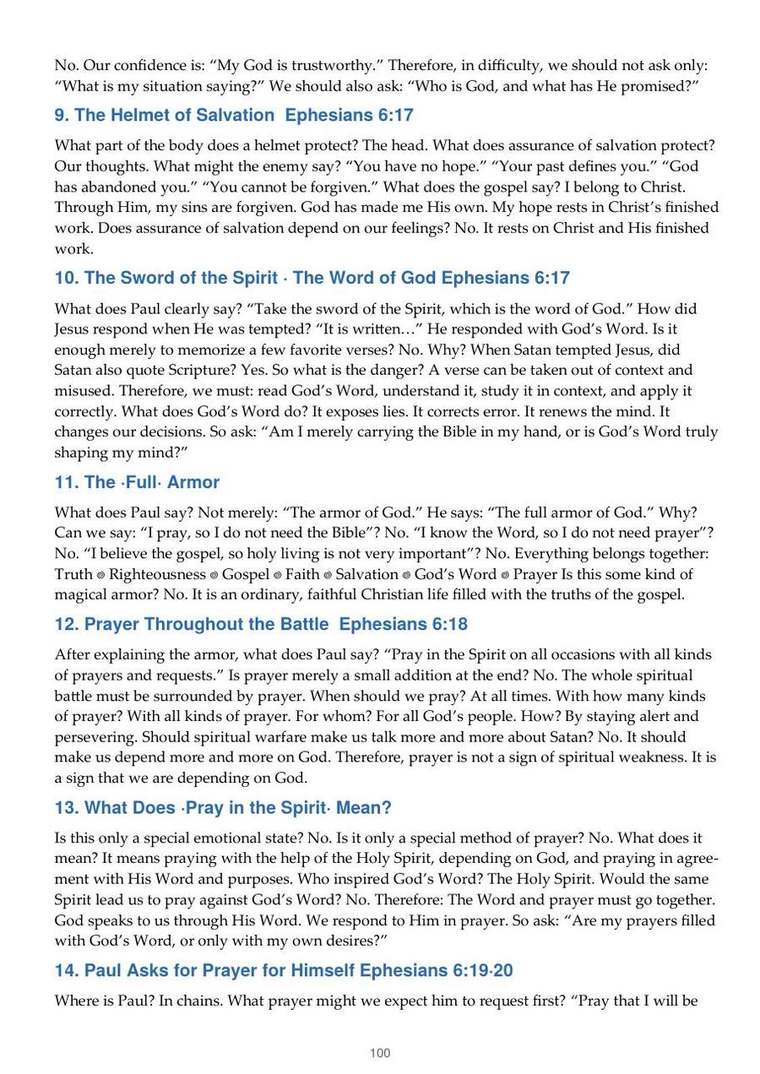
Accusation. Discouragement. Lies about God’s character. Does faith mean pretending that problems do not exist? No. Faith says: “Even though I do not fully understand what God is doing, I know who He is. I trust His promises.” What is our confidence? Is it: “My faith is very strong”?
No. Our confidence is: “My God is trustworthy.” Therefore, in difficulty, we should not ask only: “What is my situation saying?” We should also ask: “Who is God, and what has He promised?”
9. రక్షణ అనే శిరస్త్రాణం ఎఫెసీయులకు 6:17
శిరస్త్రాణం ఏ భాగాన్ని కాపాడుతుంది? తలను. అలాగే రక్షణపై నిశ్చయత మన ఆలోచనలను స్థిరపరుస్తుంది. శత్రువు ఏమి చెప్పవచ్చు? “నీకు ఆశ లేదు.” “నీ గతమే నిన్ను నిర్వచిస్తుంది.” “దేవుడు నిన్ను విడిచేశాడు.” “నీకు క్షమ లేదు.” అప్పుడు సువార్త ఏమి చెబుతుంది? నేను క్రీస్తుకు చెందినవాడిని. ఆయన ద్వారా నా పాపాలు క్షమించబడ్డాయి. దేవుడు నన్ను తనవాడిగా
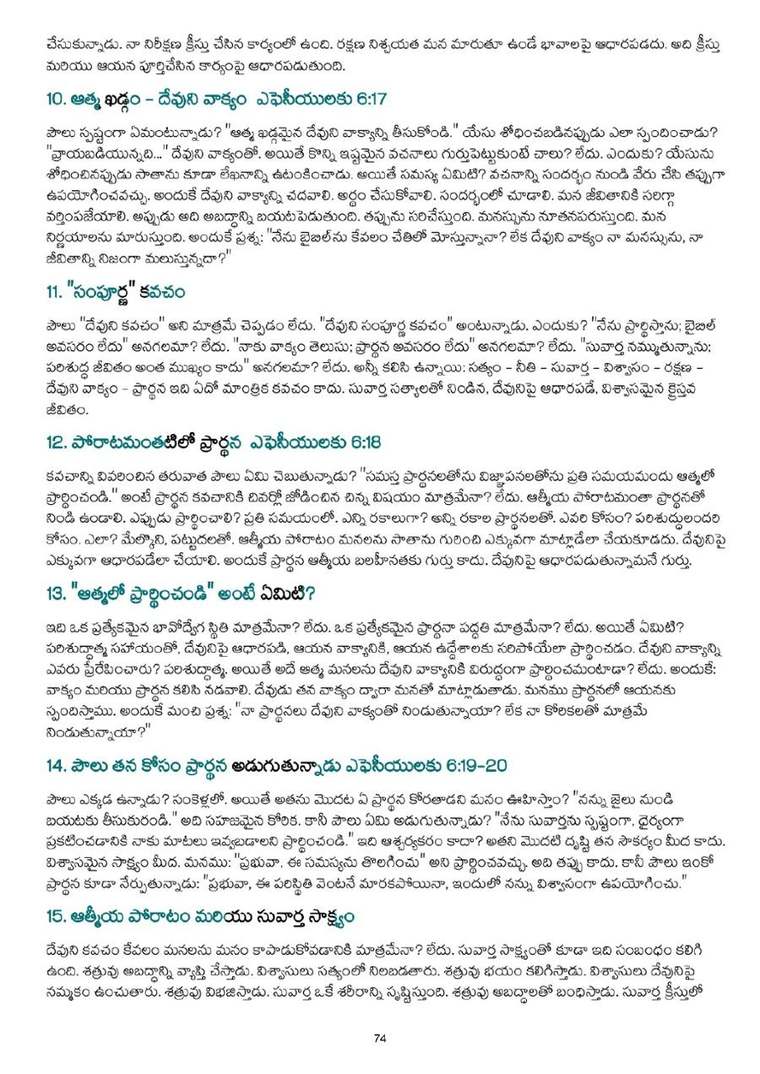
చేసుకున్నాడు. నా నిరీక్షణ క్రీస్తు చేసిన కార్యంలో ఉంది. రక్షణ నిశ్చయత మన మారుతూ ఉండే భావాలపై ఆధారపడదు. అది క్రీస్తు మరియు ఆయన పూర్తిచేసిన కార్యంపై ఆధారపడుతుంది.
9. The Helmet of Salvation Ephesians 6:17
What part of the body does a helmet protect? The head. What does assurance of salvation protect? Our thoughts. What might the enemy say? “You have no hope.” “Your past defines you.” “God has abandoned you.” “You cannot be forgiven.” What does the gospel say? I belong to Christ.
Through Him, my sins are forgiven. God has made me His own. My hope rests in Christ’s finished work. Does assurance of salvation depend on our feelings? No. It rests on Christ and His finished work.
10. ఆత్మ ఖడ్గం – దేవుని వాక్యం ఎఫెసీయులకు 6:17
పౌలు స్పష్టంగా ఏమంటున్నాడు? “ఆత్మ ఖడ్గమైన దేవుని వాక్యాన్ని తీసుకోండి.” యేసు శోధించబడినప్పుడు ఎలా స్పందించాడు? “వ్రాయబడియున్నది...” దేవుని వాక్యంతో. అయితే కొన్ని ఇష్టమైన వచనాలు గుర్తుపెట్టుకుంటే చాలు? లేదు. ఎందుకు? యేసును శోధించినప్పుడు సాతాను కూడా లేఖనాన్ని ఉటంకించాడు. అయితే సమస్య ఏమిటి? వచనాన్ని సందర్భం నుండి వేరు చేసి తప్పుగా ఉపయోగించవచ్చు. అందుకే దేవుని వాక్యాన్ని చదవాలి. అర్థం చేసుకోవాలి. సందర్భంలో చూడాలి. మన జీవితానికి సరిగ్గా వర్తింపజేయాలి. అప్పుడు అది అబద్ధాన్ని బయటపెడుతుంది. తప్పును సరిచేస్తుంది. మనస్సును నూతనపరుస్తుంది. మన నిర్ణయాలను మారుస్తుంది. అందుకే ప్రశ్న: “నేను బైబిల్ను కేవలం చేతిలో మోస్తున్నానా? లేక దేవుని వాక్యం నా మనస్సును, నా జీవితాన్ని నిజంగా మలుస్తున్నదా?”
10. The Sword of the Spirit — The Word of God Ephesians 6:17
What does Paul clearly say? “Take the sword of the Spirit, which is the word of God.” How did Jesus respond when He was tempted? “It is written…” He responded with God’s Word. Is it enough merely to memorize a few favorite verses? No. Why? When Satan tempted Jesus, did Satan also quote Scripture? Yes. So what is the danger? A verse can be taken out of context and misused. Therefore, we must: read God’s Word, understand it, study it in context, and apply it correctly. What does God’s Word do? It exposes lies. It corrects error. It renews the mind. It changes our decisions. So ask: “Am I merely carrying the Bible in my hand, or is God’s Word truly shaping my mind?”
11. “సంపూర్ణ” కవచం
పౌలు “దేవుని కవచం” అని మాత్రమే చెప్పడం లేదు. “దేవుని సంపూర్ణ కవచం” అంటున్నాడు. ఎందుకు? “నేను ప్రార్థిస్తాను; బైబిల్ అవసరం లేదు” అనగలమా? లేదు. “నాకు వాక్యం తెలుసు; ప్రార్థన అవసరం లేదు” అనగలమా? లేదు. “సువార్త నమ్ముతున్నాను; పరిశుద్ధ జీవితం అంత ముఖ్యం కాదు” అనగలమా? లేదు. అన్నీ కలిసి ఉన్నాయి: సత్యం – నీతి – సువార్త – విశ్వాసం – రక్షణ – దేవుని వాక్యం – ప్రార్థన ఇది ఏదో మాంత్రిక కవచం కాదు. సువార్త సత్యాలతో నిండిన, దేవునిపై ఆధారపడే, విశ్వాసమైన క్రైస్తవ జీవితం.
11. The “Full” Armor
What does Paul say? Not merely: “The armor of God.” He says: “The full armor of God.” Why?
Can we say: “I pray, so I do not need the Bible”? No. “I know the Word, so I do not need prayer”? No. “I believe the gospel, so holy living is not very important”? No. Everything belongs together: Truth → Righteousness → Gospel → Faith → Salvation → God’s Word → Prayer Is this some kind of magical armor? No. It is an ordinary, faithful Christian life filled with the truths of the gospel.
12. పోరాటమంతటిలో ప్రార్థన ఎఫెసీయులకు 6:18
కవచాన్ని వివరించిన తరువాత పౌలు ఏమి చెబుతున్నాడు? “సమస్త ప్రార్థనలతోను విజ్ఞాపనలతోను ప్రతి సమయమందు ఆత్మలో ప్రార్థించండి.” అంటే ప్రార్థన కవచానికి చివర్లో జోడించిన చిన్న విషయం మాత్రమేనా? లేదు. ఆత్మీయ పోరాటమంతా ప్రార్థనతో నిండి ఉండాలి. ఎప్పుడు ప్రార్థించాలి? ప్రతి సమయంలో. ఎన్ని రకాలుగా? అన్ని రకాల ప్రార్థనలతో. ఎవరి కోసం? పరిశుద్ధులందరి కోసం. ఎలా? మేల్కొని, పట్టుదలతో. ఆత్మీయ పోరాటం మనలను సాతాను గురించి ఎక్కువగా మాట్లాడేలా చేయకూడదు. దేవునిపై ఎక్కువగా ఆధారపడేలా చేయాలి. అందుకే ప్రార్థన ఆత్మీయ బలహీనతకు గుర్తు కాదు. దేవునిపై ఆధారపడుతున్నామనే గుర్తు.
12. Prayer Throughout the Battle Ephesians 6:18
After explaining the armor, what does Paul say? “Pray in the Spirit on all occasions with all kinds of prayers and requests.” Is prayer merely a small addition at the end? No. The whole spiritual battle must be surrounded by prayer. When should we pray? At all times. With how many kinds of prayer? With all kinds of prayer. For whom? For all God’s people. How? By staying alert and persevering. Should spiritual warfare make us talk more and more about Satan? No. It should make us depend more and more on God. Therefore, prayer is not a sign of spiritual weakness. It is a sign that we are depending on God.
13. “ఆత్మలో ప్రార్థించండి” అంటే ఏమిటి?
ఇది ఒక ప్రత్యేకమైన భావోద్వేగ స్థితి మాత్రమేనా? లేదు. ఒక ప్రత్యేకమైన ప్రార్థనా పద్ధతి మాత్రమేనా? లేదు. అయితే ఏమిటి? పరిశుద్ధాత్మ సహాయంతో, దేవునిపై ఆధారపడి, ఆయన వాక్యానికి, ఆయన ఉద్దేశాలకు సరిపోయేలా ప్రార్థించడం. దేవుని వాక్యాన్ని ఎవరు ప్రేరేపించారు? పరిశుద్ధాత్మ. అయితే అదే ఆత్మ మనలను దేవుని వాక్యానికి విరుద్ధంగా ప్రార్థించమంటాడా? లేదు. అందుకే: వాక్యం మరియు ప్రార్థన కలిసి నడవాలి. దేవుడు తన వాక్యం ద్వారా మనతో మాట్లాడుతాడు. మనము ప్రార్థనలో ఆయనకు స్పందిస్తాము. అందుకే మంచి ప్రశ్న: “నా ప్రార్థనలు దేవుని వాక్యంతో నిండుతున్నాయా? లేక నా కోరికలతో మాత్రమే నిండుతున్నాయా?”
13. What Does “Pray in the Spirit” Mean?
Is this only a special emotional state? No. Is it only a special method of prayer? No. What does it mean? It means praying with the help of the Holy Spirit, depending on God, and praying in agreement with His Word and purposes. Who inspired God’s Word? The Holy Spirit. Would the same Spirit lead us to pray against God’s Word? No. Therefore: The Word and prayer must go together. God speaks to us through His Word. We respond to Him in prayer. So ask: “Are my prayers filled with God’s Word, or only with my own desires?”
14. పౌలు తన కోసం ప్రార్థన అడుగుతున్నాడు ఎఫెసీయులకు 6:19-20
పౌలు ఎక్కడ ఉన్నాడు? సంకెళ్లలో. అయితే అతను మొదట ఏ ప్రార్థన కోరతాడని మనం ఊహిస్తాం? “నన్ను జైలు నుండి బయటకు తీసుకురండి.” అది సహజమైన కోరిక. కానీ పౌలు ఏమి అడుగుతున్నాడు? “నేను సువార్తను స్పష్టంగా, ధైర్యంగా ప్రకటించడానికి నాకు మాటలు ఇవ్వబడాలని ప్రార్థించండి.” ఇది ఆశ్చర్యకరం కాదా? అతని మొదటి దృష్టి తన సౌకర్యం మీద కాదు. విశ్వాసమైన సాక్ష్యం మీద. మనము: “ప్రభువా, ఈ సమస్యను తొలగించు” అని ప్రార్థించవచ్చు. అది తప్పు కాదు. కానీ పౌలు ఇంకో ప్రార్థన కూడా నేర్పుతున్నాడు: “ప్రభువా, ఈ పరిస్థితి వెంటనే మారకపోయినా, ఇందులో నన్ను విశ్వాసంగా ఉపయోగించు.”
14. Paul Asks for Prayer for Himself Ephesians 6:19–20
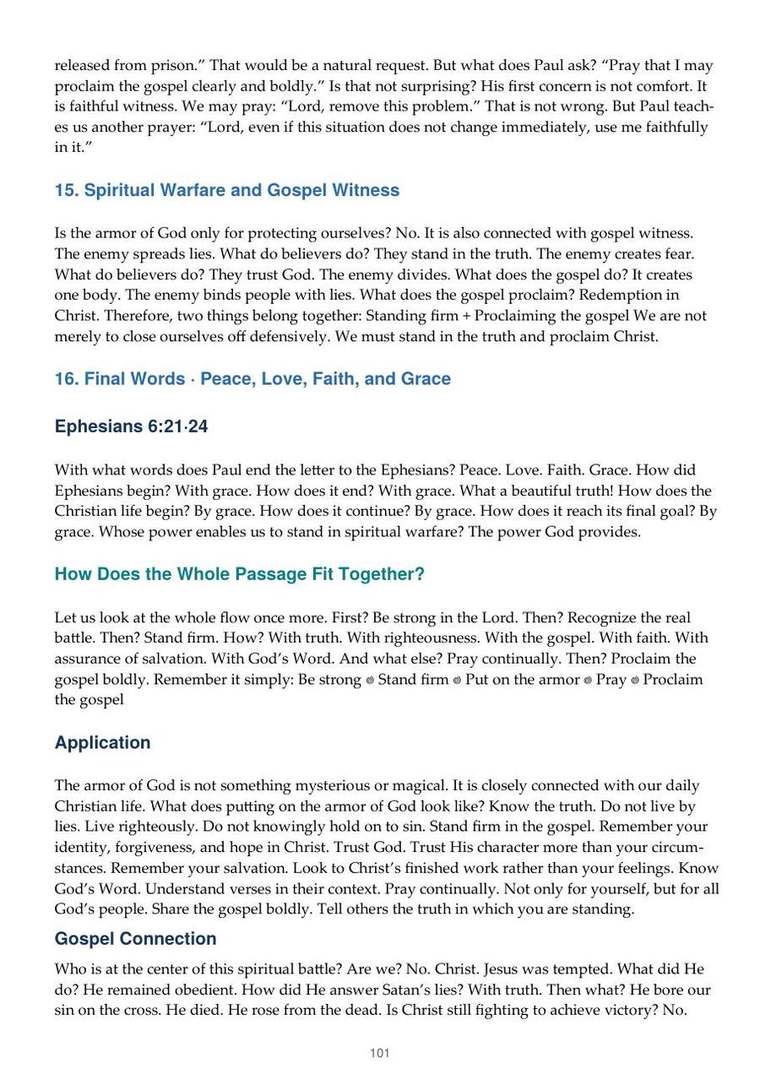
Where is Paul? In chains. What prayer might we expect him to request first? “Pray that I will be released from prison.” That would be a natural request. But what does Paul ask? “Pray that I may proclaim the gospel clearly and boldly.” Is that not surprising? His first concern is not comfort. It is faithful witness. We may pray: “Lord, remove this problem.” That is not wrong. But Paul teaches us another prayer: “Lord, even if this situation does not change immediately, use me faithfully in it.”
15. ఆత్మీయ పోరాటం మరియు సువార్త సాక్ష్యం
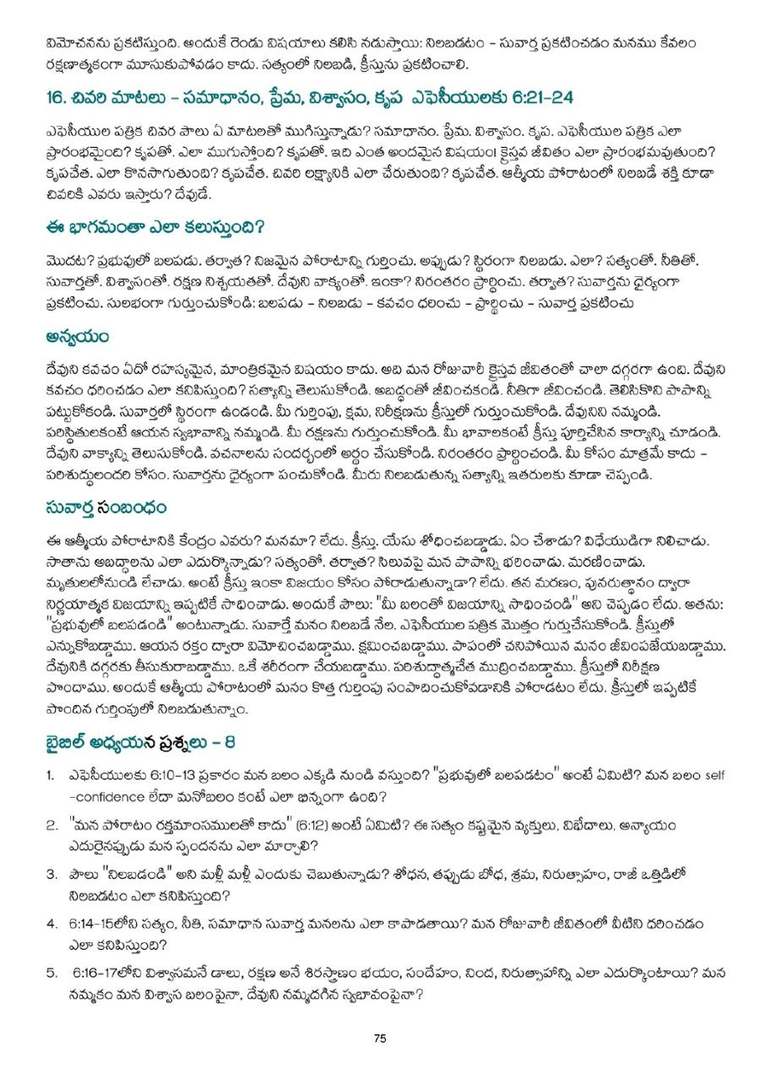
దేవుని కవచం కేవలం మనలను మనం కాపాడుకోవడానికి మాత్రమేనా? లేదు. సువార్త సాక్ష్యంతో కూడా ఇది సంబంధం కలిగి ఉంది. శత్రువు అబద్ధాన్ని వ్యాప్తి చేస్తాడు. విశ్వాసులు సత్యంలో నిలబడతారు. శత్రువు భయం కలిగిస్తాడు. విశ్వాసులు దేవునిపై నమ్మకం ఉంచుతారు. శత్రువు విభజిస్తాడు. సువార్త ఒకే శరీరాన్ని సృష్టిస్తుంది. శత్రువు అబద్ధాలతో బంధిస్తాడు. సువార్త క్రీస్తులో
విమోచనను ప్రకటిస్తుంది. అందుకే రెండు విషయాలు కలిసి నడుస్తాయి: నిలబడటం – సువార్త ప్రకటించడం మనము కేవలం రక్షణాత్మకంగా మూసుకుపోవడం కాదు. సత్యంలో నిలబడి, క్రీస్తును ప్రకటించాలి.
15. Spiritual Warfare and Gospel Witness
Is the armor of God only for protecting ourselves? No. It is also connected with gospel witness.
The enemy spreads lies. What do believers do? They stand in the truth. The enemy creates fear.
What do believers do? They trust God. The enemy divides. What does the gospel do? It creates one body. The enemy binds people with lies. What does the gospel proclaim? Redemption in Christ. Therefore, two things belong together: Standing firm + Proclaiming the gospel We are not merely to close ourselves off defensively. We must stand in the truth and proclaim Christ.
16. చివరి మాటలు – సమాధానం, ప్రేమ, విశ్వాసం, కృప ఎఫెసీయులకు 6:21-24
ఎఫెసీయుల పత్రిక చివర పౌలు ఏ మాటలతో ముగిస్తున్నాడు? సమాధానం. ప్రేమ. విశ్వాసం. కృప. ఎఫెసీయుల పత్రిక ఎలా ప్రారంభమైంది? కృపతో. ఎలా ముగుస్తోంది? కృపతో. ఇది ఎంత అందమైన విషయం! క్రైస్తవ జీవితం ఎలా ప్రారంభమవుతుంది? కృపచేత. ఎలా కొనసాగుతుంది? కృపచేత. చివరి లక్ష్యానికి ఎలా చేరుతుంది? కృపచేత. ఆత్మీయ పోరాటంలో నిలబడే శక్తి కూడా చివరికి ఎవరు ఇస్తారు? దేవుడే.
ఈ భాగమంతా ఎలా కలుస్తుంది?
మొదట? ప్రభువులో బలపడు. తర్వాత? నిజమైన పోరాటాన్ని గుర్తించు. అప్పుడు? స్థిరంగా నిలబడు. ఎలా? సత్యంతో. నీతితో. సువార్తతో. విశ్వాసంతో. రక్షణ నిశ్చయతతో. దేవుని వాక్యంతో. ఇంకా? నిరంతరం ప్రార్థించు. తర్వాత? సువార్తను ధైర్యంగా ప్రకటించు. సులభంగా గుర్తుంచుకోండి: బలపడు – నిలబడు – కవచం ధరించు – ప్రార్థించు – సువార్త ప్రకటించు
16. Final Words — Peace, Love, Faith, and Grace
Ephesians 6:21–24
With what words does Paul end the letter to the Ephesians? Peace. Love. Faith. Grace. How did Ephesians begin? With grace. How does it end? With grace. What a beautiful truth! How does the Christian life begin? By grace. How does it continue? By grace. How does it reach its final goal? By grace. Whose power enables us to stand in spiritual warfare? The power God provides.
How Does the Whole Passage Fit Together?
Let us look at the whole flow once more. First? Be strong in the Lord. Then? Recognize the real battle. Then? Stand firm. How? With truth. With righteousness. With the gospel. With faith. With assurance of salvation. With God’s Word. And what else? Pray continually. Then? Proclaim the gospel boldly. Remember it simply: Be strong → Stand firm → Put on the armor → Pray → Proclaim the gospel
అన్వయం
దేవుని కవచం ఏదో రహస్యమైన, మాంత్రికమైన విషయం కాదు. అది మన రోజువారీ క్రైస్తవ జీవితంతో చాలా దగ్గరగా ఉంది. దేవుని కవచం ధరించడం ఎలా కనిపిస్తుంది? సత్యాన్ని తెలుసుకోండి. అబద్ధంతో జీవించకండి. నీతిగా జీవించండి. తెలిసికొని పాపాన్ని పట్టుకోకండి. సువార్తలో స్థిరంగా ఉండండి. మీ గుర్తింపు, క్షమ, నిరీక్షణను క్రీస్తులో గుర్తుంచుకోండి. దేవునిని నమ్మండి. పరిస్థితులకంటే ఆయన స్వభావాన్ని నమ్మండి. మీ రక్షణను గుర్తుంచుకోండి. మీ భావాలకంటే క్రీస్తు పూర్తిచేసిన కార్యాన్ని చూడండి. దేవుని వాక్యాన్ని తెలుసుకోండి. వచనాలను సందర్భంలో అర్థం చేసుకోండి. నిరంతరం ప్రార్థించండి. మీ కోసం మాత్రమే కాదు – పరిశుద్ధులందరి కోసం. సువార్తను ధైర్యంగా పంచుకోండి. మీరు నిలబడుతున్న సత్యాన్ని ఇతరులకు కూడా చెప్పండి.
Application
The armor of God is not something mysterious or magical. It is closely connected with our daily Christian life. What does putting on the armor of God look like? Know the truth. Do not live by lies. Live righteously. Do not knowingly hold on to sin. Stand firm in the gospel. Remember your identity, forgiveness, and hope in Christ. Trust God. Trust His character more than your circumstances. Remember your salvation. Look to Christ’s finished work rather than your feelings. Know God’s Word. Understand verses in their context. Pray continually. Not only for yourself, but for all God’s people. Share the gospel boldly. Tell others the truth in which you are standing.
సువార్త సంబంధం
ఈ ఆత్మీయ పోరాటానికి కేంద్రం ఎవరు? మనమా? లేదు. క్రీస్తు. యేసు శోధించబడ్డాడు. ఏం చేశాడు? విధేయుడిగా నిలిచాడు. సాతాను అబద్ధాలను ఎలా ఎదుర్కొన్నాడు? సత్యంతో. తర్వాత? సిలువపై మన పాపాన్ని భరించాడు. మరణించాడు. మృతులలోనుండి లేచాడు. అంటే క్రీస్తు ఇంకా విజయం కోసం పోరాడుతున్నాడా? లేదు. తన మరణం, పునరుత్థానం ద్వారా నిర్ణయాత్మక విజయాన్ని ఇప్పటికే సాధించాడు. అందుకే పౌలు: “మీ బలంతో విజయాన్ని సాధించండి” అని చెప్పడం లేదు. అతను: “ప్రభువులో బలపడండి” అంటున్నాడు. సువార్తే మనం నిలబడే నేల. ఎఫెసీయుల పత్రిక మొత్తం గుర్తుచేసుకోండి. క్రీస్తులో ఎన్నుకోబడ్డాము. ఆయన రక్తం ద్వారా విమోచించబడ్డాము. క్షమించబడ్డాము. పాపంలో చనిపోయిన మనం జీవింపజేయబడ్డాము. దేవునికి దగ్గరకు తీసుకురాబడ్డాము. ఒకే శరీరంగా చేయబడ్డాము. పరిశుద్ధాత్మచేత ముద్రించబడ్డాము. క్రీస్తులో నిరీక్షణ పొందాము. అందుకే ఆత్మీయ పోరాటంలో మనం కొత్త గుర్తింపు సంపాదించుకోవడానికి పోరాడటం లేదు. క్రీస్తులో ఇప్పటికే పొందిన గుర్తింపులో నిలబడుతున్నాం.
Gospel Connection
Who is at the center of this spiritual battle? Are we? No. Christ. Jesus was tempted. What did He do? He remained obedient. How did He answer Satan’s lies? With truth. Then what? He bore our sin on the cross. He died. He rose from the dead. Is Christ still fighting to achieve victory? No.
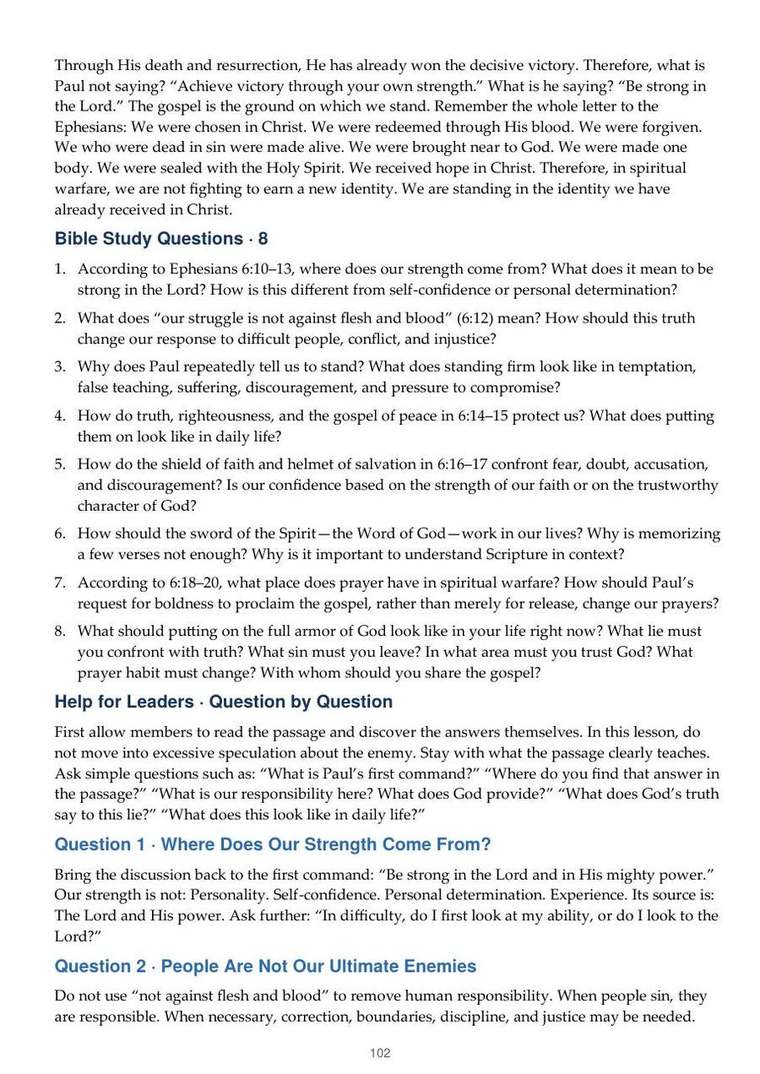
Through His death and resurrection, He has already won the decisive victory. Therefore, what is Paul not saying? “Achieve victory through your own strength.” What is he saying? “Be strong in the Lord.” The gospel is the ground on which we stand. Remember the whole letter to the Ephesians: We were chosen in Christ. We were redeemed through His blood. We were forgiven.
We who were dead in sin were made alive. We were brought near to God. We were made one body. We were sealed with the Holy Spirit. We received hope in Christ. Therefore, in spiritual warfare, we are not fighting to earn a new identity. We are standing in the identity we have already received in Christ.
బైబిల్ అధ్యయన ప్రశ్నలు – 8
- ఎఫెసీయులకు 6:10-13 ప్రకారం మన బలం ఎక్కడి నుండి వస్తుంది? “ప్రభువులో బలపడటం” అంటే ఏమిటి? మన బలం self-confidence లేదా మనోబలం కంటే ఎలా భిన్నంగా ఉంది?
- “మన పోరాటం రక్తమాంసములతో కాదు” (6:12) అంటే ఏమిటి? ఈ సత్యం కష్టమైన వ్యక్తులు, విభేదాలు, అన్యాయం ఎదురైనప్పుడు మన స్పందనను ఎలా మార్చాలి?
- పౌలు “నిలబడండి” అని మళ్లీ మళ్లీ ఎందుకు చెబుతున్నాడు? శోధన, తప్పుడు బోధ, శ్రమ, నిరుత్సాహం, రాజీ ఒత్తిడిలో నిలబడటం ఎలా కనిపిస్తుంది?
- 6:14-15లోని సత్యం, నీతి, సమాధాన సువార్త మనలను ఎలా కాపాడతాయి? మన రోజువారీ జీవితంలో వీటిని ధరించడం ఎలా కనిపిస్తుంది?
- 6:16-17లోని విశ్వాసమనే డాలు, రక్షణ అనే శిరస్త్రాణం భయం, సందేహం, నింద, నిరుత్సాహాన్ని ఎలా ఎదుర్కొంటాయి? మన నమ్మకం మన విశ్వాస బలంపైనా, దేవుని నమ్మదగిన స్వభావంపైనా?
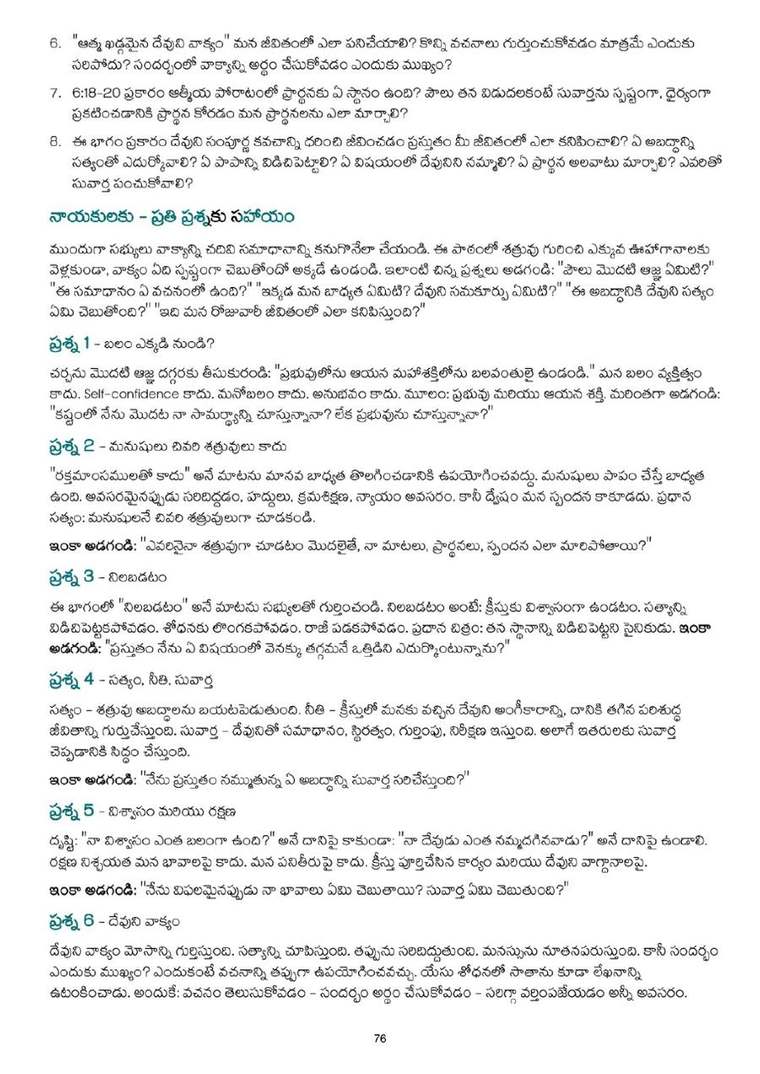
- “ఆత్మ ఖడ్గమైన దేవుని వాక్యం” మన జీవితంలో ఎలా పనిచేయాలి? కొన్ని వచనాలు గుర్తుంచుకోవడం మాత్రమే ఎందుకు సరిపోదు? సందర్భంలో వాక్యాన్ని అర్థం చేసుకోవడం ఎందుకు ముఖ్యం?
- 6:18-20 ప్రకారం ఆత్మీయ పోరాటంలో ప్రార్థనకు ఏ స్థానం ఉంది? పౌలు తన విడుదలకంటే సువార్తను స్పష్టంగా, ధైర్యంగా ప్రకటించడానికి ప్రార్థన కోరడం మన ప్రార్థనలను ఎలా మార్చాలి?
- ఈ భాగం ప్రకారం దేవుని సంపూర్ణ కవచాన్ని ధరించి జీవించడం ప్రస్తుతం మీ జీవితంలో ఎలా కనిపించాలి? ఏ అబద్ధాన్ని సత్యంతో ఎదుర్కోవాలి? ఏ పాపాన్ని విడిచిపెట్టాలి? ఏ విషయంలో దేవునిని నమ్మాలి? ఏ ప్రార్థన అలవాటు మార్చాలి? ఎవరితో సువార్త పంచుకోవాలి?
Bible Study Questions — 8
1. According to Ephesians 6:10–13, where does our strength come from? What does it mean to be strong in the Lord? How is this different from self-confidence or personal determination?
2. What does “our struggle is not against flesh and blood” (6:12) mean? How should this truth change our response to difficult people, conflict, and injustice?
3. Why does Paul repeatedly tell us to stand? What does standing firm look like in temptation, false teaching, suffering, discouragement, and pressure to compromise?
4. How do truth, righteousness, and the gospel of peace in 6:14–15 protect us? What does putting them on look like in daily life?
5. How do the shield of faith and helmet of salvation in 6:16–17 confront fear, doubt, accusation, and discouragement? Is our confidence based on the strength of our faith or on the trustworthy character of God?
6. How should the sword of the Spirit—the Word of God—work in our lives? Why is memorizing a few verses not enough? Why is it important to understand Scripture in context?
7. According to 6:18–20, what place does prayer have in spiritual warfare? How should Paul’s request for boldness to proclaim the gospel, rather than merely for release, change our prayers?
8. What should putting on the full armor of God look like in your life right now? What lie must you confront with truth? What sin must you leave? In what area must you trust God? What prayer habit must change? With whom should you share the gospel?
నాయకులకు – ప్రతి ప్రశ్నకు సహాయం
ముందుగా సభ్యులు వాక్యాన్ని చదివి సమాధానాన్ని కనుగొనేలా చేయండి. ఈ పాఠంలో శత్రువు గురించి ఎక్కువ ఊహాగానాలకు వెళ్లకుండా, వాక్యం ఏది స్పష్టంగా చెబుతోందో అక్కడే ఉండండి. ఇలాంటి చిన్న ప్రశ్నలు అడగండి: “పౌలు మొదటి ఆజ్ఞ ఏమిటి?” “ఈ సమాధానం ఏ వచనంలో ఉంది?” “ఇక్కడ మన బాధ్యత ఏమిటి? దేవుని సమకూర్పు ఏమిటి?” “ఈ అబద్ధానికి దేవుని సత్యం ఏమి చెబుతోంది?” “ఇది మన రోజువారీ జీవితంలో ఎలా కనిపిస్తుంది?”
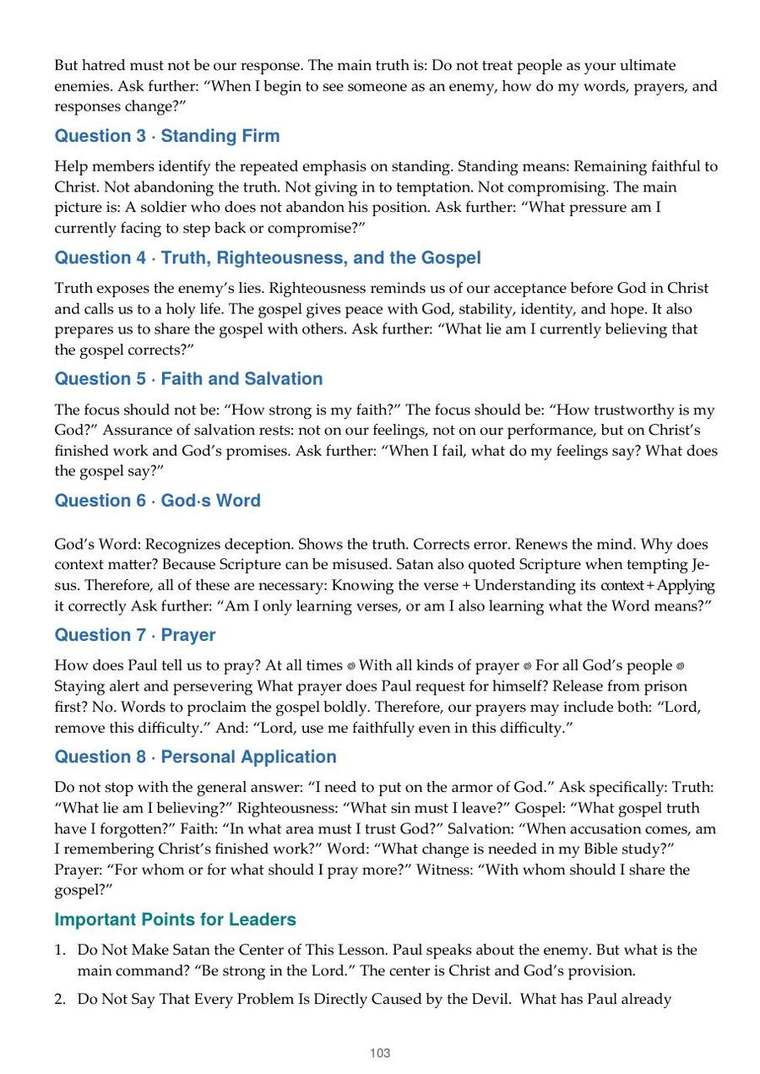
Help for Leaders — Question by Question
First allow members to read the passage and discover the answers themselves. In this lesson, do not move into excessive speculation about the enemy. Stay with what the passage clearly teaches. Ask simple questions such as: “What is Paul’s first command?” “Where do you find that answer in the passage?” “What is our responsibility here? What does God provide?” “What does God’s truth say to this lie?” “What does this look like in daily life?”
ప్రశ్న 1 – బలం ఎక్కడి నుండి?
చర్చను మొదటి ఆజ్ఞ దగ్గరకు తీసుకురండి: “ప్రభువులోను ఆయన మహాశక్తిలోను బలవంతులై ఉండండి.” మన బలం వ్యక్తిత్వం కాదు. Self-confidence కాదు. మనోబలం కాదు. అనుభవం కాదు. మూలం: ప్రభువు మరియు ఆయన శక్తి. మరింతగా అడగండి: “కష్టంలో నేను మొదట నా సామర్థ్యాన్ని చూస్తున్నానా? లేక ప్రభువును చూస్తున్నానా?”
Question 1 — Where Does Our Strength Come From?
Bring the discussion back to the first command: “Be strong in the Lord and in His mighty power.” Our strength is not: Personality. Self-confidence. Personal determination. Experience. Its source is: The Lord and His power. Ask further: “In difficulty, do I first look at my ability, or do I look to the Lord?”
ప్రశ్న 2 – మనుషులు చివరి శత్రువులు కాదు
“రక్తమాంసములతో కాదు” అనే మాటను మానవ బాధ్యత తొలగించడానికి ఉపయోగించవద్దు. మనుషులు పాపం చేస్తే బాధ్యత ఉంది. అవసరమైనప్పుడు సరిదిద్దడం, హద్దులు, క్రమశిక్షణ, న్యాయం అవసరం. కానీ ద్వేషం మన స్పందన కాకూడదు. ప్రధాన సత్యం: మనుషులనే చివరి శత్రువులుగా చూడకండి.
ఇంకా అడగండి: “ఎవరినైనా శత్రువుగా చూడటం మొదలైతే, నా మాటలు, ప్రార్థనలు, స్పందన ఎలా మారిపోతాయి?”
Question 2 — People Are Not Our Ultimate Enemies
Do not use “not against flesh and blood” to remove human responsibility. When people sin, they are responsible. When necessary, correction, boundaries, discipline, and justice may be needed.
But hatred must not be our response. The main truth is: Do not treat people as your ultimate enemies. Ask further: “When I begin to see someone as an enemy, how do my words, prayers, and responses change?”
ప్రశ్న 3 – నిలబడటం
ఈ భాగంలో “నిలబడటం” అనే మాటను సభ్యులతో గుర్తించండి. నిలబడటం అంటే: క్రీస్తుకు విశ్వాసంగా ఉండటం. సత్యాన్ని విడిచిపెట్టకపోవడం. శోధనకు లొంగకపోవడం. రాజీ పడకపోవడం. ప్రధాన చిత్రం: తన స్థానాన్ని విడిచిపెట్టని సైనికుడు. ఇంకా అడగండి: “ప్రస్తుతం నేను ఏ విషయంలో వెనక్కు తగ్గమనే ఒత్తిడిని ఎదుర్కొంటున్నాను?”
Question 3 — Standing Firm
Help members identify the repeated emphasis on standing. Standing means: Remaining faithful to Christ. Not abandoning the truth. Not giving in to temptation. Not compromising. The main picture is: A soldier who does not abandon his position. Ask further: “What pressure am I currently facing to step back or compromise?”
ప్రశ్న 4 – సత్యం, నీతి, సువార్త
సత్యం – శత్రువు అబద్ధాలను బయటపెడుతుంది. నీతి – క్రీస్తులో మనకు వచ్చిన దేవుని అంగీకారాన్ని, దానికి తగిన పరిశుద్ధ జీవితాన్ని గుర్తుచేస్తుంది. సువార్త – దేవునితో సమాధానం, స్థిరత్వం, గుర్తింపు, నిరీక్షణ ఇస్తుంది. అలాగే ఇతరులకు సువార్త చెప్పడానికి సిద్ధం చేస్తుంది.
ఇంకా అడగండి: “నేను ప్రస్తుతం నమ్ముతున్న ఏ అబద్ధాన్ని సువార్త సరిచేస్తుంది?”
Question 4 — Truth, Righteousness, and the Gospel
Truth exposes the enemy’s lies. Righteousness reminds us of our acceptance before God in Christ and calls us to a holy life. The gospel gives peace with God, stability, identity, and hope. It also prepares us to share the gospel with others. Ask further: “What lie am I currently believing that the gospel corrects?”
ప్రశ్న 5 – విశ్వాసం మరియు రక్షణ
దృష్టి: “నా విశ్వాసం ఎంత బలంగా ఉంది?” అనే దానిపై కాకుండా: “నా దేవుడు ఎంత నమ్మదగినవాడు?” అనే దానిపై ఉండాలి. రక్షణ నిశ్చయత మన భావాలపై కాదు. మన పనితీరుపై కాదు. క్రీస్తు పూర్తిచేసిన కార్యం మరియు దేవుని వాగ్దానాలపై.
ఇంకా అడగండి: “నేను విఫలమైనప్పుడు నా భావాలు ఏమి చెబుతాయి? సువార్త ఏమి చెబుతుంది?”
Question 5 — Faith and Salvation
The focus should not be: “How strong is my faith?” The focus should be: “How trustworthy is my God?” Assurance of salvation rests: not on our feelings, not on our performance, but on Christ’s finished work and God’s promises. Ask further: “When I fail, what do my feelings say? What does the gospel say?”
ప్రశ్న 6 – దేవుని వాక్యం
దేవుని వాక్యం మోసాన్ని గుర్తిస్తుంది. సత్యాన్ని చూపిస్తుంది. తప్పును సరిదిద్దుతుంది. మనస్సును నూతనపరుస్తుంది. కానీ సందర్భం ఎందుకు ముఖ్యం? ఎందుకంటే వచనాన్ని తప్పుగా ఉపయోగించవచ్చు. యేసు శోధనలో సాతాను కూడా లేఖనాన్ని ఉటంకించాడు. అందుకే: వచనం తెలుసుకోవడం – సందర్భం అర్థం చేసుకోవడం – సరిగ్గా వర్తింపజేయడం అన్నీ అవసరం.
ఇంకా అడగండి: “నేను వచనాలను మాత్రమే తెలుసుకుంటున్నానా? లేక వాక్యపు అర్థాన్ని కూడా నేర్చుకుంటున్నానా?”
Question 6 — God’s Word
God’s Word: Recognizes deception. Shows the truth. Corrects error. Renews the mind. Why does context matter? Because Scripture can be misused. Satan also quoted Scripture when tempting Jesus. Therefore, all of these are necessary: Knowing the verse + Understanding its context + Applying it correctly Ask further: “Am I only learning verses, or am I also learning what the Word means?”
ప్రశ్న 7 – ప్రార్థన
పౌలు ఏ విధంగా ప్రార్థించమంటున్నాడు? ప్రతి సమయంలో – అన్ని రకాల ప్రార్థనలతో – పరిశుద్ధులందరి కోసం – మేల్కొని, పట్టుదలతో. పౌలు తన కోసం ఏ ప్రార్థన కోరాడు? మొదట జైలు విడుదలనా? లేదు. సువార్తను ధైర్యంగా ప్రకటించే మాటలు. అందుకే మన ప్రార్థనలో రెండు విషయాలు ఉండవచ్చు: “ప్రభువా, ఈ కష్టాన్ని తొలగించు.” అలాగే: “ఈ కష్టంలో కూడా నన్ను విశ్వాసంగా ఉపయోగించు.”
Question 7 — Prayer
How does Paul tell us to pray? At all times → With all kinds of prayer → For all God’s people → Staying alert and persevering What prayer does Paul request for himself? Release from prison first? No. Words to proclaim the gospel boldly. Therefore, our prayers may include both: “Lord, remove this difficulty.” And: “Lord, use me faithfully even in this difficulty.”
ప్రశ్న 8 – వ్యక్తిగత అన్వయం
“నేను దేవుని కవచం ధరించాలి” అనే సాధారణ సమాధానంతో ఆగిపోకండి. స్పష్టంగా అడగండి: సత్యం – “నేను ఏ అబద్ధాన్ని నమ్ముతున్నాను?” నీతి – “ఏ పాపాన్ని విడిచిపెట్టాలి?” సువార్త – “నేను ఏ సువార్త సత్యాన్ని మర్చిపోయాను?” విశ్వాసం – “ఏ విషయంలో దేవునిని నమ్మాలి?” రక్షణ – “నింద వచ్చినప్పుడు క్రీస్తు చేసిన కార్యాన్ని గుర్తుంచుకుంటున్నానా?” వాక్యం – “నా బైబిల్ అధ్యయనంలో ఏ మార్పు కావాలి?” ప్రార్థన – “ఎవరి కోసం లేదా ఏ విషయానికి ఎక్కువగా ప్రార్థించాలి?” సాక్ష్యం – “ఎవరితో సువార్త పంచుకోవాలి?”
Question 8 — Personal Application
Do not stop with the general answer: “I need to put on the armor of God.” Ask specifically: Truth: “What lie am I believing?” Righteousness: “What sin must I leave?” Gospel: “What gospel truth have I forgotten?” Faith: “In what area must I trust God?” Salvation: “When accusation comes, am I remembering Christ’s finished work?” Word: “What change is needed in my Bible study?”
Prayer: “For whom or for what should I pray more?” Witness: “With whom should I share the gospel?”
Important Points for Leaders
1. Do Not Make Satan the Center of This Lesson. Paul speaks about the enemy. But what is the main command? “Be strong in the Lord.” The center is Christ and God’s provision.
2. Do Not Say That Every Problem Is Directly Caused by the Devil. What has Paul already
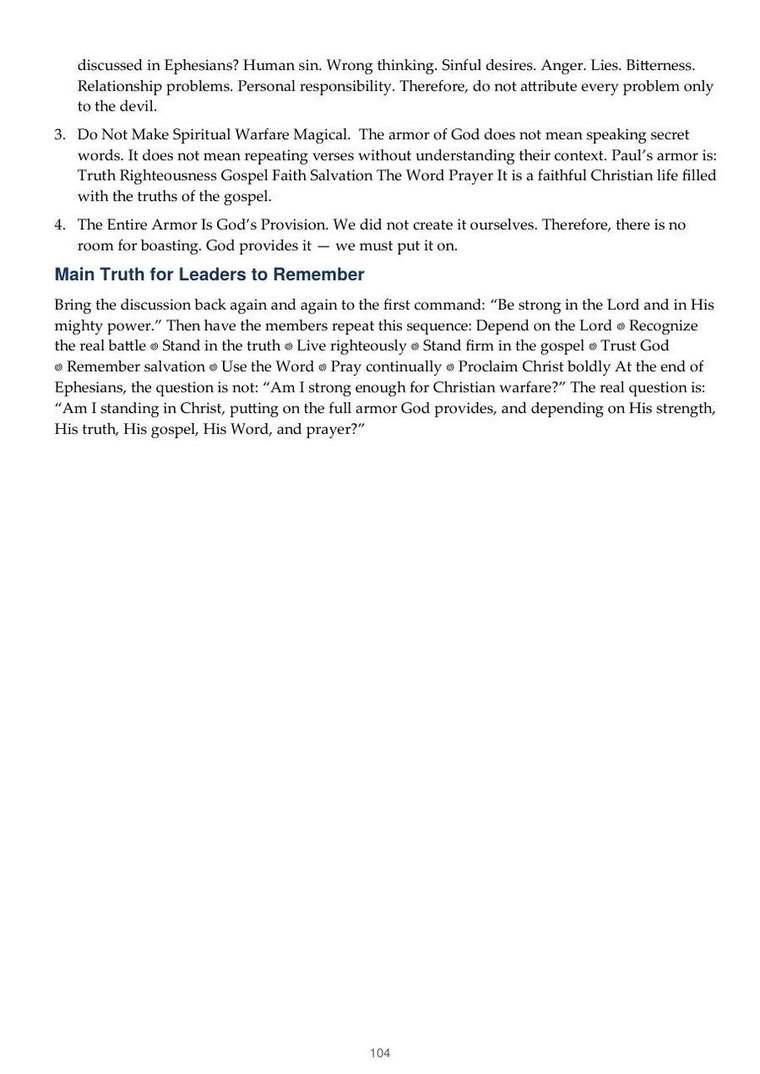
discussed in Ephesians? Human sin. Wrong thinking. Sinful desires. Anger. Lies. Bitterness.
Relationship problems. Personal responsibility. Therefore, do not attribute every problem only to the devil.
3. Do Not Make Spiritual Warfare Magical. The armor of God does not mean speaking secret words. It does not mean repeating verses without understanding their context. Paul’s armor is: Truth Righteousness Gospel Faith Salvation The Word Prayer It is a faithful Christian life filled with the truths of the gospel.
4. The Entire Armor Is God’s Provision. We did not create it ourselves. Therefore, there is no room for boasting. God provides it — we must put it on.
నాయకులు గమనించవలసిన ముఖ్యమైన విషయాలు
1. సాతానును ఈ పాఠానికి కేంద్రంగా చేయవద్దు
పౌలు శత్రువు గురించి మాట్లాడుతున్నాడు. కానీ ప్రధాన ఆజ్ఞ ఏమిటి? “ప్రభువులో బలపడండి.” కేంద్రం సాతాను కాదు. క్రీస్తు మరియు దేవుని సమకూర్పు.
2. ప్రతి సమస్యకు నేరుగా దయ్యమే కారణం అని చెప్పవద్దు
ఎఫెసీయుల పత్రికలో ఇప్పటికే పౌలు మానవ పాపం, తప్పు ఆలోచనలు, పాప కోరికలు, కోపం, అబద్ధం, చేదు, సంబంధ సమస్యలు, వ్యక్తిగత బాధ్యత గురించి మాట్లాడాడు. అందుకే ప్రతి సమస్యను దయ్యానికి మాత్రమే ఆపాదించకండి.
3. ఆత్మీయ పోరాటాన్ని మాంత్రికంగా చేయవద్దు
దేవుని కవచం అంటే ప్రత్యేకమైన రహస్య పదాలు పలకడం కాదు. సందర్భం లేకుండా కొన్ని వచనాలు పలకడం కూడా కాదు. పౌలు చెప్పే కవచం: సత్యం – నీతి – సువార్త – విశ్వాసం – రక్షణ – వాక్యం – ప్రార్థన అంటే సువార్త సత్యాలతో నిండిన విశ్వాసమైన జీవితం.
4. కవచమంతా దేవుని సమకూర్పు
ఇది మనం తయారు చేసుకున్నది కాదు. దేవుడు సమకూరుస్తాడు – మనం ధరించాలి. అందుకే గర్వానికి స్థానం లేదు. ఆధారపడటానికి మాత్రమే స్థానం ఉంది.
నాయకులు గుర్తుంచుకోవలసిన ప్రధాన సత్యం
చర్చను మళ్లీ మొదటి ఆజ్ఞ దగ్గరకు తీసుకురండి: “ప్రభువులోను ఆయన మహాశక్తిలోను బలవంతులై ఉండండి.” తర్వాత ఈ క్రమాన్ని సభ్యులతో కలిసి చెప్పించండి: ప్రభువుపై ఆధారపడు – నిజమైన పోరాటాన్ని గుర్తించు – సత్యంలో నిలబడు – నీతిగా జీవించు – సువార్తలో స్థిరపడు – దేవునిని నమ్ము – రక్షణను గుర్తుంచుకో – వాక్యాన్ని ఉపయోగించు – నిరంతరం ప్రార్థించు – క్రీస్తును ధైర్యంగా ప్రకటించు.
ఎఫెసీయుల పత్రికకు ముగింపు
ఎఫెసీయుల పత్రిక మొదట మనకు ఏమి చెప్పింది? క్రీస్తులో మనం ఎవరం. తర్వాత ఏమి చెప్పింది? క్రీస్తులో పొందిన కొత్త గుర్తింపుకు తగినట్లుగా ఎలా జీవించాలి. చివర ఏమి చెబుతోంది? ఆ కొత్త జీవితాన్ని వ్యతిరేకించే ఆత్మీయ పోరాటంలో ఎలా నిలబడాలి. అందుకే ఎఫెసీయుల పత్రికను మూడు చిన్న ప్రశ్నలతో గుర్తుంచుకోవచ్చు: క్రీస్తులో నేను ఎవరు? క్రీస్తుకు తగినట్లుగా నేను ఎలా నడవాలి? ఆ జీవితం కోసం పోరాటంలో నేను ఎలా నిలబడాలి? సమాధానం? క్రీస్తులో – క్రీస్తు ద్వారా – క్రీస్తు బలంతో.
చివరి ప్రశ్న
ఎఫెసీయుల పత్రిక చివర మనం అడగాల్సిన ప్రశ్న: “నేను క్రైస్తవ పోరాటానికి తగినంత బలవంతుడినా?” అనేది కాదు. అసలు ప్రశ్న: “నేను క్రీస్తులో నిలబడి, దేవుడు ఇచ్చిన సంపూర్ణ కవచాన్ని ధరించి, ఆయన బలం, ఆయన సత్యం, ఆయన సువార్త, ఆయన వాక్యం,
Main Truth for Leaders to Remember
Bring the discussion back again and again to the first command: “Be strong in the Lord and in His mighty power.” Then have the members repeat this sequence: Depend on the Lord → Recognize the real battle → Stand in the truth → Live righteously → Stand firm in the gospel → Trust God → Remember salvation → Use the Word → Pray continually → Proclaim Christ boldly At the end of Ephesians, the question is not: “Am I strong enough for Christian warfare?” The real question is: “Am I standing in Christ, putting on the full armor God provides, and depending on His strength, His truth, His gospel, His Word, and prayer?”
Original PDF pages · అసలు పేజీలు (Telugu 6 · English 7)
తెలుగు · Telugu edition
English edition