Search this book · ఈ పుస్తకంలో వెతకండి
సందర్భం
4వ అధ్యాయం చివరలో పౌలు ఏమి చెప్పాడో గుర్తుందా? “క్రీస్తులో దేవుడు మిమ్మల్ని క్షమించిన ప్రకారం, మీరు ఒకరిపట్ల ఒకరు దయగలవారై, కరుణగలవారై, ఒకరినొకరు క్షమించండి” (ఎఫెసీ 4:32). ఇప్పుడు 5వ అధ్యాయంలో అదే ఆలోచనను కొనసాగిస్తున్నాడు. దేవుడు క్రీస్తులో మనలను ప్రేమించాడు. క్షమించాడు. తన పిల్లలుగా చేసుకున్నాడు. అయితే ఇప్పుడు ప్రశ్న ఏమిటి? దేవుని పిల్లలమని చెప్పుకునే మన రోజువారీ జీవితం ఎలా ఉండాలి? పౌలు ఈ భాగంలో క్రైస్తవ జీవితాన్ని ఒక “నడక”తో పోలుస్తున్నాడు. నడక అంటే ఒక్కసారి చేసే పని కాదు కదా? ఒక్కొక్క అడుగు వేసుకుంటూ ముందుకు వెళ్తాం. అలాగే క్రైస్తవ జీవితం కూడా ఆదివారం కొన్ని గంటల అనుభవం మాత్రమే కాదు. మన రోజువారీ: మాటలు, కోరికలు, సంబంధాలు, సమయం, ఎంపికలు, ఆరాధన, ప్రవర్తన అన్నింటిలో కనిపించాలి. ఈ భాగాన్ని నాలుగు మాటలతో సులభంగా గుర్తుంచుకోవచ్చు: ప్రేమ – వెలుగు – జ్ఞానం – ఆత్మతో నింపబడిన జీవితం
Context
Do you remember what Paul said at the end of Ephesians 4? “Be kind and compassionate to one another, forgiving each other, just as in Christ God forgave you” (Ephesians 4:32). Now in chapter 5, Paul continues the same thought. God has loved us in Christ. He has forgiven us. He has made us His children. So what is the question now? What should the daily life of God’s children look like? In this passage, Paul describes the Christian life as a “walk.” Walking is not something we do only once. We keep taking one step after another. In the same way, the Christian life is not merely a few hours of experience on Sunday. It should be seen in our everyday: words, desires, relationships, use of time, choices, worship, and behavior.
We can remember this passage with four words: Love → Light → Wisdom → Spirit-filled life
1. ప్రియమైన పిల్లలుగా దేవునిని అనుకరించండి ఎఫెసీయులకు 5:1-2
పౌలు మొదట ఏమంటున్నాడు? “ప్రియమైన పిల్లలవలె దేవునిని అనుకరించండి.” ఇక్కడ క్రమాన్ని గమనించండి. “దేవుడు మిమ్మల్ని ప్రేమించాలంటే ఆయనను అనుకరించండి” అంటున్నాడా? లేదు. వారు ఇప్పటికే ఏమిటి? “ప్రియమైన పిల్లలు.” అందుకే ఇప్పుడు తమ పరలోక తండ్రిని పోలి ఉండాలి. పిల్లలు తమ తల్లిదండ్రులను గమనించి అనుకరించరా? వారి మాటలు, అలవాట్లు, ప్రవర్తన కూడా కొంతవరకు తీసుకుంటారు. అయితే దేవుని పిల్లలమైన మనలో ఏమి కనిపించాలి? ప్రేమ. దయ. క్షమ. పరిశుద్ధత. ఈ ప్రేమకు గొప్ప ఉదాహరణ ఎవరు? క్రీస్తు. పౌలు ఏమంటున్నాడు? “క్రీస్తు మనలను ప్రేమించి మనకొరకు తన్నుతాను అప్పగించుకొనిన ప్రకారము ప్రేమలో నడుచుకొనుడి.” అయితే బైబిల్ ప్రేమ అంటే కేవలం ఒక మంచి భావమా? లేదు. ప్రేమ ఇస్తుంది. ప్రేమ త్యాగం చేస్తుంది. ప్రేమ ఇతరుల మేలు కోరుతుంది. యేసు కేవలం: “నేను మిమ్మల్ని ప్రేమిస్తున్నాను” అని అన్నాడా? లేదు. మనకొరకు తనను తాను ఇచ్చాడు. అయితే మన ప్రేమ ఎలా కనిపించాలి? మాటల్లో మాత్రమేనా? లేదు. కార్యాల్లో కూడా. అందుకే అడుగుదాం: నేను ఎవరినైనా ప్రేమిస్తున్నానని చెబితే, వారి మేలు కోసం నేను ఏమి ఇవ్వడానికి లేదా త్యాగం చేయడానికి సిద్ధంగా ఉన్నాను?
1. Imitate God as Dearly Loved Children Ephesians 5:1–2
What does Paul say first? “Follow God’s example, therefore, as dearly loved children.” Notice the order. Does Paul say: “Imitate God so that He will love you”? No. What are they already? Dearly loved children. Therefore, they should now become more like their heavenly Father. Do children not often imitate their parents? They pick up their words, habits, attitudes, and behavior. So what should be seen in us as God’s children? Love. Kindness. Forgiveness. Holiness. Who is the greatest example of this love? Christ. Paul says: “Walk in the way of love, just as Christ loved us and gave himself up for us.” Is biblical love merely a warm feeling? No. Love gives. Love sacrifices. Love seeks the good of others. Did Jesus merely say: “I love you”? No. He gave Himself for us. So how should our love be seen? Only in words? No. Also in actions. Ask: “If I say I love someone, what am I willing to give or sacrifice for that person’s good?”
2. ప్రేమ అంటే కామం కాదు ఎఫెసీయులకు 5:3-7
క్రీస్తు త్యాగప్రేమ గురించి చెప్పిన వెంటనే పౌలు ఏ విషయాలకు వస్తున్నాడు? లైంగిక అపవిత్రత, అశుద్ధత, లోభం. ఎందుకు? ఎందుకంటే నిజమైన ప్రేమకు, స్వార్థపూరితమైన కామానికి చాలా తేడా ఉంది. సులభంగా ఇలా గుర్తుంచుకోండి: ప్రేమ అడుగుతుంది: “నీ మేలు కోసం నేను ఏమి చేయగలను?” కామం అడుగుతుంది: “నిన్ను ఉపయోగించి నేను ఏమి పొందగలను?” ప్రేమ ఇస్తుంది. కామం తీసుకోవాలని చూస్తుంది. లోభం కూడా ఏమంటుంది? “నాకు ఇంకా కావాలి.” అయితే పౌలు శరీర ప్రవర్తన గురించి మాత్రమే మాట్లాడుతున్నాడా? లేదు. మన మాటల గురించి కూడా మాట్లాడుతున్నాడు. అసభ్యమైన మాటలు. మూర్ఖమైన మాటలు. నీచమైన హాస్యం. ఇవి క్రీస్తుకు చెందినవారికి తగవని చెబుతున్నాడు. వాటి స్థానంలో ఏమి రావాలి? కృతజ్ఞత. అంటే సువార్త దేనిని మార్చాలి? మన ఆదివారం ఆరాధనను మాత్రమేనా? లేదు. మన శరీరాన్ని. మన కోరికలను. మన మాటలను. మన హాస్యాన్ని. మన డబ్బు పట్ల వైఖరిని. మన సంబంధాలను. అందుకే ఒక ప్రశ్న: సమాజం ఏదైనా అంగీకరిస్తోంది కాబట్టి అది దేవుని దృష్టిలో కూడా సరైనదేనా? లేక క్రీస్తుకు చెందినవారిగా మనకు వేరే ప్రమాణం ఉందా?
2. Love Is Not Lust Ephesians 5:3–7
Immediately after speaking about Christ’s sacrificial love, what does Paul discuss? Sexual immorality, impurity, and greed. Why? Because there is a great difference between true love and selfish lust. Remember it simply: Love asks: “What can I do for your good?” Lust asks: “What can I get from you for my satisfaction?” Love gives. Lust seeks to take. Greed also says: “I want more.” Is Paul speaking only about bodily behavior? No. He also speaks about our words: obscene talk, foolish talk, and crude joking. These are not fitting for those who belong to Christ. What should replace them? Thanksgiving. So what should the gospel change? Only our Sunday worship? No. It should change: our bodies, our desires, our words, our humor, our attitude toward money, and our relationships. Ask: “Just because society accepts something, does that make it right in God’s sight? Or do we belong to Christ and therefore live by a different standard?”
3. ఒకప్పుడు చీకటి – ఇప్పుడు ప్రభువులో వెలుగు ఎఫెసీయులకు 5:8-10
పౌలు చాలా బలమైన మాట చెబుతున్నాడు: “ఒకప్పుడు మీరు చీకటిగా ఉండిరి; ఇప్పుడైతే ప్రభువునందు వెలుగై ఉన్నారు.” గమనించండి. అతను: “మీరు చీకటిలో నడిచారు” అని మాత్రమే చెప్పడం లేదు. ఏమంటున్నాడు? “మీరు చీకటిగా ఉండిరి.” ఇప్పుడు? “ప్రభువులో వెలుగు.” ఇక్కడ మళ్లీ అదే క్రమం: గుర్తింపు ముందు – ప్రవర్తన తరువాత మన మంచి పనుల వల్ల దేవుడు మనలను వెలుగుగా చేశాడా? లేదు. ప్రభువులో మన గుర్తింపు మారింది. అందుకే ఇప్పుడు ఎలా జీవించాలి? వెలుగు పిల్లలుగా. వెలుగు ఫలం ఏమిటి? పౌలు మూడు విషయాలు చెబుతున్నాడు: మంచితనం. నీతి. సత్యం. తర్వాత ఒక చాలా ఉపయోగకరమైన మాట చెబుతున్నాడు: “ప్రభువుకు ఇష్టమైనదేదో పరీక్షించండి.” మన నిర్ణయాల్లో సాధారణంగా ఏమి అడుగుతాం? “ఇది చేయవచ్చా?” “అందరూ చేస్తున్నారా?” “ఎవరికీ తెలియకుండా చేయగలనా?” “ఇది చట్టవిరుద్ధమా?” ఇవన్నీ మాత్రమే అడగడం సరిపోతుందా? లేదు. ఇంకా మంచి ప్రశ్న: “ఇది ప్రభువును సంతోషపరుస్తుందా?” మన జీవితం: “ఎంత వరకు తప్పు చేయకుండా ఉండగలను?” అనే ప్రశ్నతో కాకుండా, “నా ప్రభువును ఎలా సంతోషపరచగలను?” అనే ప్రశ్నతో నడవాలి.
3. Once Darkness - Now Light in the Lord Ephesians 5:8 -10
Paul uses very strong language: “For you were once darkness, but now you are light in the Lord.” Notice what he does not merely say. He does not say only: “You once walked in darkness.” He says: “You were darkness.” But now? “You are light in the Lord.” Again we see the same order:
Identity first → behavior follows Did God make us light because of our good works? No. Our
identity has changed in the Lord. Therefore, how should we now live? As children of light. What is the fruit of light? Paul gives three things: Goodness. Righteousness. Truth. Then he gives a very practical instruction: “Find out what pleases the Lord.” What questions do we often ask when making decisions? “Is this allowed?” “Is everyone doing it?” “Can I do this without anyone knowing?” “Is this illegal?” Are those questions enough? No. There is a better question: “Does this please the Lord?” The Christian life should not be guided only by: “How close can I get to sin without crossing the line?” But by: “How can I please my Lord?”
4. వెలుగు చీకటిని బయటపెడుతుంది ఎఫెసీయులకు 5:11-14
పౌలు ఏమంటున్నాడు? “చీకటి యొక్క ఫలహీనమైన క్రియలతో సహవాసం చేయకండి; వాటిని బయటపెట్టండి.” వెలుగు ఏమి చేస్తుంది? దాచబడినది కనిపించేలా చేస్తుంది. చీకట్లో గది మురికిగా ఉందో లేదో స్పష్టంగా కనిపించకపోవచ్చు. లైట్ వేసినప్పుడు? అన్నీ కనిపిస్తాయి. అలాగే దేవుని వెలుగు మన జీవితాన్ని బయటపెడుతుంది. అయితే దీని అర్థం: “ఇప్పుడు ఇతరుల తప్పుల కోసం వెతకండి” అనా? లేదు. ముందుగా ఎక్కడ వెలుగు రావాలి? మన సొంత జీవితంలో. అందుకే మొదటి ప్రశ్న: “ఇతరులలో ఏ చీకటిని బయటపెట్టాలి?” అనేది కాదు. ముందుగా: “నా జీవితంలో దేవుని వెలుగులోకి తీసుకురావడానికి నేను ఇష్టపడని విషయం ఏదైనా ఉందా?” మనకు దాచుకోవాలనిపించే ప్రాంతం ఏదైనా ఉందా? మన ఫోన్లో? మన సంబంధాల్లో? మన డబ్బు వ్యవహారాల్లో? మన ఆలోచనల్లో? మన మాటల్లో? 5:14లో పౌలు ఒక మేల్కొలుపు పిలుపు ఇస్తున్నాడు. విశ్వాసి కూడా ఆత్మీయంగా నిద్రపోగలడా? అవును. నిర్లక్ష్యంగా మారవచ్చు. అలవాటుగా జీవించవచ్చు. పాపంపై సున్నితత్వం తగ్గవచ్చు. అందుకే పిలుపు: మేల్కొను. క్రీస్తు వెలుగులో జీవించు.
4. Light Exposes Darkness Ephesians 5:11–14
Paul says: “Have nothing to do with the fruitless deeds of darkness, but rather expose them.”
What does light do? It makes hidden things visible. A room may look fine in the dark. What happens when the light is switched on? The dirt becomes visible. In the same way, God’s light exposes what is hidden in our lives. Does this mean: “Go around looking for other people’s sins”? No. Where should the light shine first? Into our own lives. So the first question is not: “What darkness should I expose in others?” But: “Is there anything in my own life that I do not want brought into God’s light?” Is there something we want to hide? On our phone? In our relationships? In our finances? In our thoughts? In our speech? Verse 14 gives a wake-up call.
Can a believer become spiritually sleepy? Yes. We can become careless. We can live on spiritual autopilot. We can lose sensitivity toward sin. So the call is: Wake up. Live in the light of Christ.
5. జాగ్రత్తగా, జ్ఞానంతో నడవండి ఎఫెసీయులకు 5:15-17
ఇప్పుడు పౌలు ప్రేమ, వెలుగు నుండి దేనికి వస్తున్నాడు? జ్ఞానం. అతను ఏమంటున్నాడు? “మీరు ఎలా నడుచుకొనుచున్నారో జాగ్రత్తగా చూచుకొనుడి; జ్ఞానము లేనివారివలె కాక జ్ఞానులవలె నడుచుకొనుడి.” బైబిల్ ప్రకారం జ్ఞానం అంటే ఏమిటి? చాలా సమాచారం తెలుసుకోవడమా? డిగ్రీలు ఉండడమా? తెలివిగా మాట్లాడడమా? అవి జ్ఞానం కావచ్చు. కానీ బైబిల్ జ్ఞానం అంతకంటే ఎక్కువ. దేవుని సత్యం తెలుసుకొని, దానికి తగినట్లుగా జీవించడం. అందుకే పౌలు వెంటనే ఏమంటున్నాడు? “కాలమును సద్వినియోగము చేసికొనుడి.” సమయం ఎందుకు ముఖ్యమైనది? పోయిన డబ్బు తిరిగి సంపాదించవచ్చు. పోయిన వస్తువు తిరిగి కొనవచ్చు. కానీ నిన్నటి ఒక గంట తిరిగి వస్తుందా? లేదు. అయితే మన సమయం ఎక్కడికి పోతోంది? మనకు తెలుసా? లేక ఫోన్, వీడియోలు, నిరర్థక సంభాషణలు, నిర్లక్ష్యపు అలవాట్లు మన సమయాన్ని తీసుకుపోతున్నాయా? అయితే సమయాన్ని సద్వినియోగం చేయడం అంటే ప్రతి నిమిషం బైబిల్ చదవాలా? లేదు. విశ్రాంతి అవసరం. నిద్ర అవసరం. కుటుంబ సమయం అవసరం. పని అవసరం. ఆరోగ్యకరమైన వినోదం కూడా అవసరం. ప్రశ్న: నేను నా సమయాన్ని ఉద్దేశ్యంతో ఉపయోగిస్తున్నానా? లేక అది తెలియకుండానే జారిపోతోందా?
5. Walk Carefully and Wisely Ephesians 5:15–17
Paul now moves from love and light to what? Wisdom. He says: “Be very careful, then, how you live—not as unwise but as wise.” What is wisdom according to the Bible? Knowing a lot of information? Having many degrees? Speaking intelligently? Those things may be useful, but biblical wisdom is more than that. Biblical wisdom means: Knowing God’s truth and living according to it. So what does Paul immediately say? “Making the most of every opportunity.” Why is time so important? Lost money may sometimes be earned again. A lost possession may be replaced. But can yesterday’s hour ever return? No. So where is our time going? Do we know? Or are our phones, videos, meaningless conversations, and careless habits quietly consuming it? Does making good use of time mean reading the Bible every minute? No. We need rest. We need sleep. We need family time. We need work. Healthy recreation also has a place. The question is: “Am I using my time intentionally, or is it simply slipping away?”
6. ప్రభువు చిత్తాన్ని అర్థం చేసుకోండి ఎఫెసీయులకు 5:17
పౌలు ఏమంటున్నాడు? “అవివేకులు కాక ప్రభువు చిత్తమేమిటో గ్రహించండి.” “దేవుని చిత్తం” అని విన్నప్పుడు మనకు మొదట ఏవి గుర్తుకు వస్తాయి? “ఏ ఉద్యోగం తీసుకోవాలి?” “ఎవరిని వివాహం చేసుకోవాలి?” “ఏ నగరంలో ఉండాలి?” “ఈ పని చేయాలా వద్దా?” ఇవి ముఖ్యమైన ప్రశ్నలే. కానీ దేవుని చిత్తం అంతటితో ముగుస్తుందా? లేదు. దేవుడు తన వాక్యంలో ఇప్పటికే చాలా విషయాలు స్పష్టంగా చెప్పాడు: పరిశుద్ధత. ప్రేమ. సత్యం. కృతజ్ఞత. క్షమ. సేవ. జ్ఞానం. క్రీస్తువంటి స్వభావం. అయితే మనం కొన్నిసార్లు ఏమి చేస్తాం? దేవుని దాచబడిన చిత్తం తెలుసుకోవడానికి చాలా ఆసక్తి చూపుతాం. కానీ ఆయన ఇప్పటికే చెప్పిన చిత్తానికి? విధేయత చూపకపోవచ్చు. అందుకే ఒక మంచి ప్రశ్న: “దేవుడు నాకు ఇంకా ఏమి చెప్పాలి?” అని అడగకముందు, “ఆయన ఇప్పటికే చెప్పిన దేనికి నేను విధేయత చూపడం లేదు?” అని అడుగుతున్నానా?
6. Understand the Lord’s Will Ephesians 5:17
Paul says: “Do not be foolish, but understand what the Lord’s will is.” When we hear the words “God’s will,” what do we often think about first? “What job should I take?” “Whom should I marry?” “Which city should I live in?” “Should I do this or not?” These are important questions.
But is God’s will limited to those decisions? No. God has already clearly revealed many things in His Word: holiness, love, truth, thanksgiving, forgiveness, service, wisdom, and Christlike character. What do we sometimes do? We become very interested in discovering God’s hidden will. But what about the will He has already revealed? We may ignore it. So before asking: “What more does God need to tell me?” we should ask: “What has God already told me that I am not obeying?”
7. మద్యం చేత మత్తెక్కకండి – ఆత్మతో నింపబడండి ఎఫెసీయులకు 5:18
ఇప్పుడు పౌలు ఒక బలమైన వ్యత్యాసం చూపిస్తున్నాడు: “ద్రాక్షారసముచేత మత్తులై యుండకుడి... అయితే ఆత్మపూర్ణులై యుండుడి.” ఎందుకు ఈ రెండింటిని పోలుస్తున్నాడు? ముఖ్యమైన విషయం ఏమిటి? ప్రభావం మరియు నియంత్రణ. మద్యం ఒక వ్యక్తిని ప్రభావితం చేయగలదా? అవును. ఆలోచనను. మాటలను. తీర్పును. ప్రవర్తనను. అయితే విశ్వాసిని ఎవరు ప్రభావితం చేయాలి? పరిశుద్ధాత్మ. ఆత్మతో నింపబడటం అంటే కేవలం ఒక ప్రత్యేకమైన భావోద్వేగ అనుభవమా? లేదు. అది జీవితంలో ఎలా కనిపించాలి? మన ఆలోచనలు మారాలి. మాటలు మారాలి. నిర్ణయాలు మారాలి. వైఖరి మారాలి. సంబంధాలు మారాలి. ప్రవర్తన మారాలి. అంటే పరిశుద్ధాత్మ ప్రభావం మన జీవితమంతటిలో కనిపించాలి. అందుకే ఒక ముఖ్యమైన ప్రశ్న: నన్ను ఏది నియంత్రిస్తోంది? నా కోపమా? నా కోరికలా? నా భయమా? ఇతరుల అభిప్రాయాలా? నా అలవాట్లా? డబ్బా? ప్రజల ప్రశంసా? లేక, దేవుని ఆత్మ ప్రభావంలో నేను జీవిస్తున్నానా?
7. Do Not Get Drunk — Be Filled with the Spirit Ephesians 5:18
Paul now gives a strong contrast: “Do not get drunk on wine… Instead, be filled with the Spirit.”
Why does he compare these two things? The main idea is influence and control. Can alcohol influence a person? Yes. It can affect: thinking, speech, judgment, and behavior. Who should influence and direct the believer? The Holy Spirit. Does being filled with the Spirit mean only having a special emotional experience? No. How should it appear in everyday life? Our thinking should change. Our speech should change. Our decisions should change. Our attitudes should change. Our relationships should change. Our behavior should change. The influence of the Holy Spirit should touch the whole of life. So ask: “What is controlling me?” My anger? My desires? My fears? Other people’s opinions? My habits? Money? The desire for praise? Or am I living under the influence of the Holy Spirit?
8. ఆత్మతో నింపబడిన జీవితం ఎలా కనిపిస్తుంది? ఎఫెసీయులకు 5:19-21
పౌలు “ఆత్మతో నింపబడండి” అని చెప్పి అక్కడే ఆగిపోయాడా? లేదు. వెంటనే దాని ఫలితాలను చూపిస్తున్నాడు.
ఆరాధన కీర్తనలు, స్తుతిగీతాలు, ఆత్మీయ గీతాలతో ఒకరితో ఒకరు మాట్లాడుకోవడం. అంటే ఆత్మతో నింపబడిన జీవితం దేవుని సత్యంతో నిండిన ఆరాధనలో కనిపిస్తుంది.
హృదయపూర్వక స్తుతి
హృదయంతో ప్రభువుకు పాడటం. కేవలం నోరు పాడుతుందా? హృదయం కూడా పాల్గొనాలి.
కృతజ్ఞత
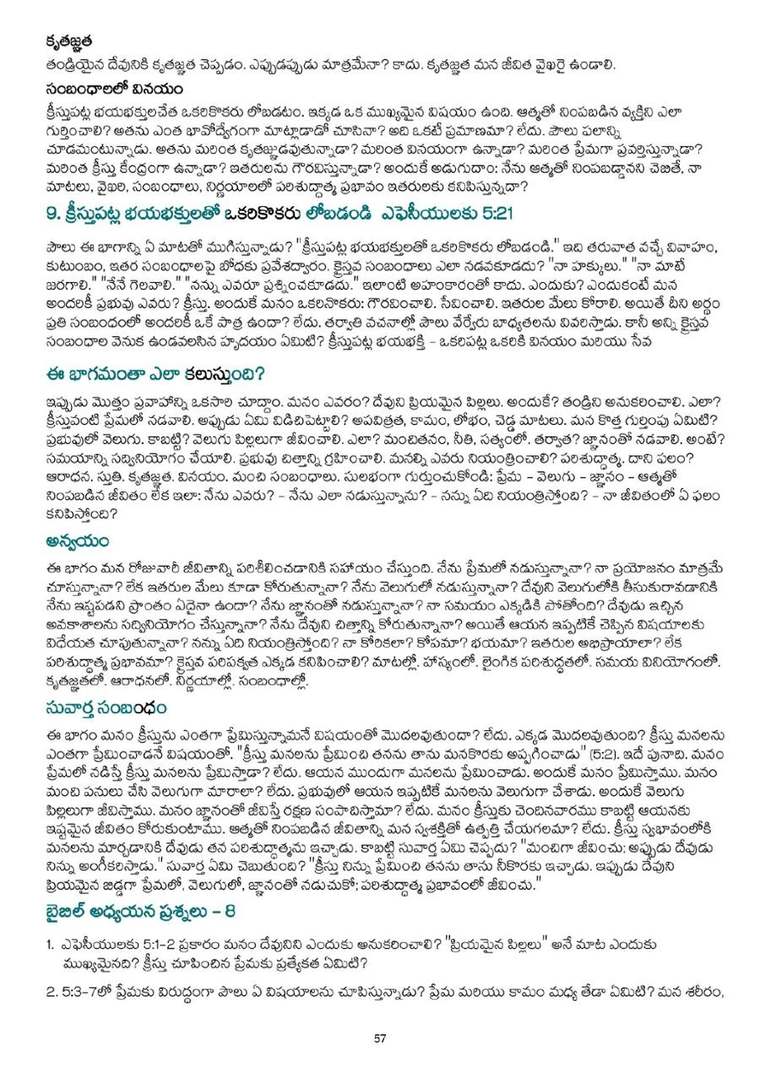
తండ్రియైన దేవునికి కృతజ్ఞత చెప్పడం. ఎప్పుడప్పుడు మాత్రమేనా? కాదు. కృతజ్ఞత మన జీవిత వైఖరై ఉండాలి.
సంబంధాలలో వినయం
క్రీస్తుపట్ల భయభక్తులచేత ఒకరికొకరు లోబడటం. ఇక్కడ ఒక ముఖ్యమైన విషయం ఉంది. ఆత్మతో నింపబడిన వ్యక్తిని ఎలా గుర్తించాలి? అతను ఎంత భావోద్వేగంగా మాట్లాడాడో చూసినా? అది ఒకటే ప్రమాణమా? లేదు. పౌలు ఫలాన్ని చూడమంటున్నాడు. అతను మరింత కృతజ్ఞుడవుతున్నాడా? మరింత వినయంగా ఉన్నాడా? మరింత ప్రేమగా ప్రవర్తిస్తున్నాడా? మరింత క్రీస్తు కేంద్రంగా ఉన్నాడా? ఇతరులను గౌరవిస్తున్నాడా? అందుకే అడుగుదాం: నేను ఆత్మతో నింపబడ్డానని చెబితే, నా మాటలు, వైఖరి, సంబంధాలు, నిర్ణయాలలో పరిశుద్ధాత్మ ప్రభావం ఇతరులకు కనిపిస్తున్నదా?
8. What Does a Spirit-Filled Life Look Like? Ephesians 5:19–21
Does Paul say: “Be filled with the Spirit” and then stop? No. He immediately shows what the result looks like. Worship Speaking to one another with psalms, hymns, and songs from the Spirit. A Spirit-filled life is marked by worship shaped by God’s truth. Heartfelt Praise Singing and making music from the heart to the Lord. Is worship only with the mouth? No. The heart should also be involved. Thanksgiving Giving thanks to God the Father. Only occasionally? No.
Thanksgiving should become a way of life. Humility in Relationships “Submit to one another out of reverence for Christ.” Here is an important point. How do we recognize a Spirit-filled person? Only by how emotional that person sounds? Is that the only test? No. Paul points us to the fruit. Is the person becoming more thankful? More humble? More loving? More Christ-centered? More respectful toward others? So ask: “If I say I am filled with the Spirit, can others see the Spirit’s influence in my words, attitudes, relationships, and decisions?”
9. క్రీస్తుపట్ల భయభక్తులతో ఒకరికొకరు లోబడండి ఎఫెసీయులకు 5:21
పౌలు ఈ భాగాన్ని ఏ మాటతో ముగిస్తున్నాడు? “క్రీస్తుపట్ల భయభక్తులతో ఒకరికొకరు లోబడండి.” ఇది తరువాత వచ్చే వివాహం, కుటుంబం, ఇతర సంబంధాలపై బోధకు ప్రవేశద్వారం. క్రైస్తవ సంబంధాలు ఎలా నడవకూడదు? “నా హక్కులు.” “నా మాటే జరగాలి.” “నేనే గెలవాలి.” “నన్ను ఎవరూ ప్రశ్నించకూడదు.” ఇలాంటి అహంకారంతో కాదు. ఎందుకు? ఎందుకంటే మన అందరికీ ప్రభువు ఎవరు? క్రీస్తు. అందుకే మనం ఒకరినొకరు: గౌరవించాలి. సేవించాలి. ఇతరుల మేలు కోరాలి. అయితే దీని అర్థం ప్రతి సంబంధంలో అందరికీ ఒకే పాత్ర ఉందా? లేదు. తర్వాతి వచనాల్లో పౌలు వేర్వేరు బాధ్యతలను వివరిస్తాడు. కానీ అన్ని క్రైస్తవ సంబంధాల వెనుక ఉండవలసిన హృదయం ఏమిటి? క్రీస్తుపట్ల భయభక్తి – ఒకరిపట్ల ఒకరికి వినయం మరియు సేవ
ఈ భాగమంతా ఎలా కలుస్తుంది?
ఇప్పుడు మొత్తం ప్రవాహాన్ని ఒకసారి చూద్దాం. మనం ఎవరం? దేవుని ప్రియమైన పిల్లలు. అందుకే? తండ్రిని అనుకరించాలి. ఎలా? క్రీస్తువంటి ప్రేమలో నడవాలి. అప్పుడు ఏమి విడిచిపెట్టాలి? అపవిత్రత, కామం, లోభం, చెడ్డ మాటలు. మన కొత్త గుర్తింపు ఏమిటి? ప్రభువులో వెలుగు. కాబట్టి? వెలుగు పిల్లలుగా జీవించాలి. ఎలా? మంచితనం, నీతి, సత్యంలో. తర్వాత? జ్ఞానంతో నడవాలి. అంటే? సమయాన్ని సద్వినియోగం చేయాలి. ప్రభువు చిత్తాన్ని గ్రహించాలి. మనల్ని ఎవరు నియంత్రించాలి? పరిశుద్ధాత్మ. దాని ఫలం? ఆరాధన. స్తుతి. కృతజ్ఞత. వినయం. మంచి సంబంధాలు. సులభంగా గుర్తుంచుకోండి: ప్రేమ – వెలుగు – జ్ఞానం – ఆత్మతో నింపబడిన జీవితం లేక ఇలా: నేను ఎవరు? – నేను ఎలా నడుస్తున్నాను? – నన్ను ఏది నియంత్రిస్తోంది? – నా జీవితంలో ఏ ఫలం కనిపిస్తోంది?
9. Submit to One Another Out of Reverence for Christ Ephesians 5:21
How does Paul end this section? “Submit to one another out of reverence for Christ.” This verse becomes the doorway into Paul’s teaching about marriage, family, and other relationships. How should Christian relationships not operate? “My rights.” “My way must win.” “I must have the final word.” “No one should question me.” Not with that kind of pride. Why? Because who is Lord over all of us? Christ. Therefore, we should: respect one another, serve one another, and seek one another’s good. Does this mean everyone has exactly the same role in every relationship? No. In the following verses, Paul explains different responsibilities. But what heart should lie behind all Christian relationships? Reverence for Christ → humility and service toward one another
How Does the Whole Passage Fit Together?
Let us follow the flow. Who are we? God’s dearly loved children. Therefore? Imitate the Father.
How? Walk in Christlike love. What should we leave behind? Impurity, lust, greed, and corrupt speech. What is our new identity? Light in the Lord. Therefore? Live as children of light. How? In goodness, righteousness, and truth. Then? Walk wisely. What does that mean? Use your time well. Understand the Lord’s will. Who should control and influence us? The Holy Spirit. What is the result? Worship. Praise. Thanksgiving. Humility. Healthy relationships. Remember: Love → Light → Wisdom → Spirit-filled life Or: Who am I? → How am I walking? → What is controlling me? → What fruit is visible in my life?
అన్వయం
ఈ భాగం మన రోజువారీ జీవితాన్ని పరిశీలించడానికి సహాయం చేస్తుంది. నేను ప్రేమలో నడుస్తున్నానా? నా ప్రయోజనం మాత్రమే చూస్తున్నానా? లేక ఇతరుల మేలు కూడా కోరుతున్నానా? నేను వెలుగులో నడుస్తున్నానా? దేవుని వెలుగులోకి తీసుకురావడానికి నేను ఇష్టపడని ప్రాంతం ఏదైనా ఉందా? నేను జ్ఞానంతో నడుస్తున్నానా? నా సమయం ఎక్కడికి పోతోంది? దేవుడు ఇచ్చిన అవకాశాలను సద్వినియోగం చేస్తున్నానా? నేను దేవుని చిత్తాన్ని కోరుతున్నానా? అయితే ఆయన ఇప్పటికే చెప్పిన విషయాలకు విధేయత చూపుతున్నానా? నన్ను ఏది నియంత్రిస్తోంది? నా కోరికలా? కోపమా? భయమా? ఇతరుల అభిప్రాయాలా? లేక పరిశుద్ధాత్మ ప్రభావమా? క్రైస్తవ పరిపక్వత ఎక్కడ కనిపించాలి? మాటల్లో. హాస్యంలో. లైంగిక పరిశుద్ధతలో. సమయ వినియోగంలో. కృతజ్ఞతలో. ఆరాధనలో. నిర్ణయాల్లో. సంబంధాల్లో.
Application
This passage helps us examine our everyday lives. Am I walking in love? Am I thinking only about my own interests? Or am I also seeking the good of others? Am I walking in the light? Is there an area of my life that I do not want brought into God’s light? Am I walking wisely? Where is my time going? Am I making good use of the opportunities God gives me? Am I seeking God’s will? If so, am I obeying what He has already clearly revealed? What is controlling me? My desires? Anger? Fear? Other people’s opinions? Or the influence of the Holy Spirit? Where should Christian maturity be seen? In our words. In our humor. In sexual purity. In the use of time. In thanksgiving. In worship. In decisions. In relationships.
సువార్త సంబంధం
ఈ భాగం మనం క్రీస్తును ఎంతగా ప్రేమిస్తున్నామనే విషయంతో మొదలవుతుందా? లేదు. ఎక్కడ మొదలవుతుంది? క్రీస్తు మనలను ఎంతగా ప్రేమించాడనే విషయంతో. “క్రీస్తు మనలను ప్రేమించి తనను తాను మనకొరకు అప్పగించాడు” (5:2). ఇదే పునాది. మనం ప్రేమలో నడిస్తే క్రీస్తు మనలను ప్రేమిస్తాడా? లేదు. ఆయన ముందుగా మనలను ప్రేమించాడు. అందుకే మనం ప్రేమిస్తాము. మనం మంచి పనులు చేసి వెలుగుగా మారాలా? లేదు. ప్రభువులో ఆయన ఇప్పటికే మనలను వెలుగుగా చేశాడు. అందుకే వెలుగు పిల్లలుగా జీవిస్తాము. మనం జ్ఞానంతో జీవిస్తే రక్షణ సంపాదిస్తామా? లేదు. మనం క్రీస్తుకు చెందినవారము కాబట్టి ఆయనకు ఇష్టమైన జీవితం కోరుకుంటాము. ఆత్మతో నింపబడిన జీవితాన్ని మన స్వశక్తితో ఉత్పత్తి చేయగలమా? లేదు. క్రీస్తు స్వభావంలోకి మనలను మార్చడానికి దేవుడు తన పరిశుద్ధాత్మను ఇచ్చాడు. కాబట్టి సువార్త ఏమి చెప్పదు? “మంచిగా జీవించు; అప్పుడు దేవుడు నిన్ను అంగీకరిస్తాడు.” సువార్త ఏమి చెబుతుంది? “క్రీస్తు నిన్ను ప్రేమించి తనను తాను నీకొరకు ఇచ్చాడు. ఇప్పుడు దేవుని ప్రియమైన బిడ్డగా ప్రేమలో, వెలుగులో, జ్ఞానంతో నడుచుకో; పరిశుద్ధాత్మ ప్రభావంలో జీవించు.”
Gospel Connection
Does this passage begin with how much we love Christ? No. Where does it begin? With how much Christ has loved us. “Christ loved us and gave himself up for us” (5:2). That is the foundation. Does Christ love us because we walk in love? No. He loved us first. Therefore, we love. Do we become light by doing enough good works? No. In the Lord, He has already made us light. Therefore, we live as children of light. Do we earn salvation by living wisely? No. Because we belong to Christ, we now desire to live in a way that pleases Him. Can we produce a Spirit-filled life through our own strength? No. God has given us His Holy Spirit to transform us into the character of Christ. So what does the gospel not say? “Live well, and then God will accept you.” What does the gospel say? “Christ loved you and gave Himself for you. Now, as God’s dearly loved child, walk in love, live in the light, walk wisely, and live under the influence of the Holy Spirit.”
బైబిల్ అధ్యయన ప్రశ్నలు – 8
- ఎఫెసీయులకు 5:1-2 ప్రకారం మనం దేవునిని ఎందుకు అనుకరించాలి? “ప్రియమైన పిల్లలు” అనే మాట ఎందుకు ముఖ్యమైనది? క్రీస్తు చూపించిన ప్రేమకు ప్రత్యేకత ఏమిటి?
- 5:3-7లో ప్రేమకు విరుద్ధంగా పౌలు ఏ విషయాలను చూపిస్తున్నాడు? ప్రేమ మరియు కామం మధ్య తేడా ఏమిటి? మన శరీరం,
కోరికలు, మాటలు, హాస్యంలో పరిశుద్ధత ఎందుకు అవసరం?
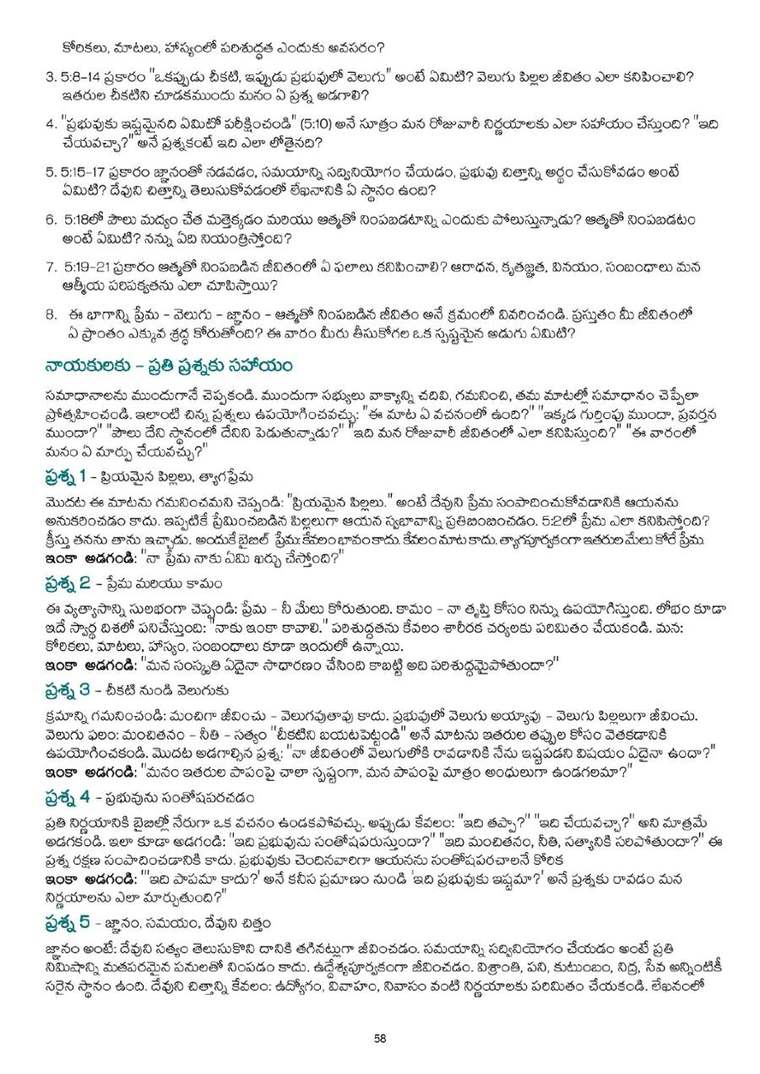
3. 5:8-14 ప్రకారం “ఒకప్పుడు చీకటి, ఇప్పుడు ప్రభువులో వెలుగు” అంటే ఏమిటి? వెలుగు పిల్లల జీవితం ఎలా కనిపించాలి? ఇతరుల చీకటిని చూడకముందు మనం ఏ ప్రశ్న అడగాలి?
4. “ప్రభువుకు ఇష్టమైనది ఏమిటో పరీక్షించండి” (5:10) అనే సూత్రం మన రోజువారీ నిర్ణయాలకు ఎలా సహాయం చేస్తుంది? “ఇది చేయవచ్చా?” అనే ప్రశ్నకంటే ఇది ఎలా లోతైనది?
5. 5:15-17 ప్రకారం జ్ఞానంతో నడవడం, సమయాన్ని సద్వినియోగం చేయడం, ప్రభువు చిత్తాన్ని అర్థం చేసుకోవడం అంటే ఏమిటి? దేవుని చిత్తాన్ని తెలుసుకోవడంలో లేఖనానికి ఏ స్థానం ఉంది?
6. 5:18లో పౌలు మద్యం చేత మత్తెక్కడం మరియు ఆత్మతో నింపబడటాన్ని ఎందుకు పోలుస్తున్నాడు? ఆత్మతో నింపబడటం అంటే ఏమిటి? నన్ను ఏది నియంత్రిస్తోంది?
7. 5:19-21 ప్రకారం ఆత్మతో నింపబడిన జీవితంలో ఏ ఫలాలు కనిపించాలి? ఆరాధన, కృతజ్ఞత, వినయం, సంబంధాలు మన ఆత్మీయ పరిపక్వతను ఎలా చూపిస్తాయి?
8. ఈ భాగాన్ని ప్రేమ – వెలుగు – జ్ఞానం – ఆత్మతో నింపబడిన జీవితం అనే క్రమంలో వివరించండి. ప్రస్తుతం మీ జీవితంలో ఏ ప్రాంతం ఎక్కువ శ్రద్ధ కోరుతోంది? ఈ వారం మీరు తీసుకోగల ఒక స్పష్టమైన అడుగు ఏమిటి?
Bible Study Questions - 8
1. According to Ephesians 5:1–2, why should we imitate God? Why are the words “dearly loved children” important? What is distinctive about the love Christ showed?
2. In 5:3–7, what does Paul present as the opposite of love? What is the difference between love and lust? Why does holiness matter in our bodies, desires, speech, and humor?
3. According to 5:8–14, what does “once darkness, but now light in the Lord” mean? What should the life of a child of light look like? Before exposing darkness in others, what question should we ask ourselves?
4. How can the principle “find out what pleases the Lord” (5:10) guide our everyday decisions? How is this deeper than merely asking, “Is this allowed?”
5. According to 5:15–17, what does it mean to walk wisely, make the most of our time, and understand the Lord’s will? What role does Scripture have in understanding God’s will?
6. Why does Paul contrast being drunk with wine and being filled with the Spirit in 5:18? What does being filled with the Spirit mean? What is controlling my life?
7. According to 5:19–21, what fruit should be seen in a Spirit-filled life? How do worship, thanksgiving, humility, and relationships reveal spiritual maturity?
8. Explain this passage using the sequence: Love → Light → Wisdom → Spirit-filled life. Which area of your life needs the most attention right now? What one clear step can you take this week
నాయకులకు – ప్రతి ప్రశ్నకు సహాయం
సమాధానాలను ముందుగానే చెప్పకండి. ముందుగా సభ్యులు వాక్యాన్ని చదివి, గమనించి, తమ మాటల్లో సమాధానం చెప్పేలా ప్రోత్సహించండి. ఇలాంటి చిన్న ప్రశ్నలు ఉపయోగించవచ్చు: “ఈ మాట ఏ వచనంలో ఉంది?” “ఇక్కడ గుర్తింపు ముందా, ప్రవర్తన ముందా?” “పౌలు దేని స్థానంలో దేనిని పెడుతున్నాడు?” “ఇది మన రోజువారీ జీవితంలో ఎలా కనిపిస్తుంది?” “ఈ వారంలో మనం ఏ మార్పు చేయవచ్చు?”
Help for Leaders - Each Question
Do not give the answers immediately. First encourage the group to read the passage carefully, observe the text, and answer in their own words. Use short questions such as: “Which verse says that?” “Which comes first here—identity or behavior?” “What does Paul replace with something better?” “What would this look like in everyday life?” “What can we change this week?”
ప్రశ్న 1 – ప్రియమైన పిల్లలు, త్యాగప్రేమ
మొదట ఈ మాటను గమనించమని చెప్పండి: “ప్రియమైన పిల్లలు.” అంటే దేవుని ప్రేమ సంపాదించుకోవడానికి ఆయనను అనుకరించడం కాదు. ఇప్పటికే ప్రేమించబడిన పిల్లలుగా ఆయన స్వభావాన్ని ప్రతిబింబించడం. 5:2లో ప్రేమ ఎలా కనిపిస్తోంది? క్రీస్తు తనను తాను ఇచ్చాడు. అందుకే బైబిల్ ప్రేమ: కేవలం భావం కాదు. కేవలం మాట కాదు. త్యాగపూర్వకంగా ఇతరుల మేలు కోరే ప్రేమ.
ఇంకా అడగండి: “నా ప్రేమ నాకు ఏమి ఖర్చు చేస్తోంది?”
Question 1 — Dearly Loved Children and Sacrificial Love
Ask the group to notice the phrase: “Dearly loved children.” We do not imitate God in order to earn His love. We reflect His character because we are already loved as His children. How does love appear in 5:2? Christ gave Himself. Therefore biblical love is: not merely emotion, not merely words, but sacrificial love that seeks the good of another person.
Ask: “What is my love actually costing me?”
ప్రశ్న 2 – ప్రేమ మరియు కామం
ఈ వ్యత్యాసాన్ని సులభంగా చెప్పండి: ప్రేమ – నీ మేలు కోరుతుంది. కామం – నా తృప్తి కోసం నిన్ను ఉపయోగిస్తుంది. లోభం కూడా ఇదే స్వార్థ దిశలో పనిచేస్తుంది: “నాకు ఇంకా కావాలి.” పరిశుద్ధతను కేవలం శారీరక చర్యలకు పరిమితం చేయకండి. మన: కోరికలు, మాటలు, హాస్యం, సంబంధాలు కూడా ఇందులో ఉన్నాయి.
ఇంకా అడగండి: “మన సంస్కృతి ఏదైనా సాధారణం చేసింది కాబట్టి అది పరిశుద్ధమైపోతుందా?”
Question 2 — Love and Lust
Keep the contrast simple: Love — seeks your good. Lust — uses you for my satisfaction. Greed moves in the same selfish direction: “I want more.” Do not limit purity only to physical actions. It also includes: desires, speech, humor, and relationships.
Ask: “Does something become holy simply because our culture has made it normal?”
ప్రశ్న 3 – చీకటి నుండి వెలుగుకు
క్రమాన్ని గమనించండి: మంచిగా జీవించు – వెలుగవుతావు కాదు. ప్రభువులో వెలుగు అయ్యావు – వెలుగు పిల్లలుగా జీవించు. వెలుగు ఫలం: మంచితనం – నీతి – సత్యం “చీకటిని బయటపెట్టండి” అనే మాటను ఇతరుల తప్పుల కోసం వెతకడానికి ఉపయోగించకండి. మొదట అడగాల్సిన ప్రశ్న: “నా జీవితంలో వెలుగులోకి రావడానికి నేను ఇష్టపడని విషయం ఏదైనా ఉందా?”
ఇంకా అడగండి: “మనం ఇతరుల పాపంపై చాలా స్పష్టంగా, మన పాపంపై మాత్రం అంధులుగా ఉండగలమా?”
Question 3 — From Darkness to Light
Notice the order: Not: Live well → become light. But: You are light in the Lord → therefore live as children of light. The fruit of light is: Goodness → Righteousness → Truth Do not use “expose the darkness” as an excuse to search for other people’s sins. The first question is: “Is there something in my own life that I do not want brought into the light?”
Ask further: “Can we be very clear about other people’s sins while remaining blind to our own?”
ప్రశ్న 4 – ప్రభువును సంతోషపరచడం
ప్రతి నిర్ణయానికి బైబిల్లో నేరుగా ఒక వచనం ఉండకపోవచ్చు. అప్పుడు కేవలం: “ఇది తప్పా?” “ఇది చేయవచ్చా?” అని మాత్రమే అడగకండి. ఇలా కూడా అడగండి: “ఇది ప్రభువును సంతోషపరుస్తుందా?” “ఇది మంచితనం, నీతి, సత్యానికి సరిపోతుందా?” ఈ ప్రశ్న రక్షణ సంపాదించడానికి కాదు. ప్రభువుకు చెందినవారిగా ఆయనను సంతోషపరచాలనే కోరిక
ఇంకా అడగండి: “‘ఇది పాపమా కాదు?’ అనే కనీస ప్రమాణం నుండి ‘ఇది ప్రభువుకు ఇష్టమా?’ అనే ప్రశ్నకు రావడం మన నిర్ణయాలను ఎలా మార్చుతుంది?”
Question 4 — Pleasing the Lord
The Bible may not give a direct verse for every decision. So do not ask only: “Is this wrong?” or “Am I allowed to do this?” Also ask: “Does this please the Lord?” “Does it fit with goodness, righteousness, and truth?” This is not an attempt to earn salvation. It is the desire of people who already belong to the Lord.
Ask: “How does moving from ‘Is this sinful?’ to ‘Does this please the Lord?’ change our decisions?”
ప్రశ్న 5 – జ్ఞానం, సమయం, దేవుని చిత్తం
జ్ఞానం అంటే: దేవుని సత్యం తెలుసుకొని దానికి తగినట్లుగా జీవించడం. సమయాన్ని సద్వినియోగం చేయడం అంటే ప్రతి నిమిషాన్ని మతపరమైన పనులతో నింపడం కాదు. ఉద్దేశ్యపూర్వకంగా జీవించడం. విశ్రాంతి, పని, కుటుంబం, నిద్ర, సేవ అన్నింటికీ సరైన స్థానం ఉంది. దేవుని చిత్తాన్ని కేవలం: ఉద్యోగం, వివాహం, నివాసం వంటి నిర్ణయాలకు పరిమితం చేయకండి. లేఖనంలో
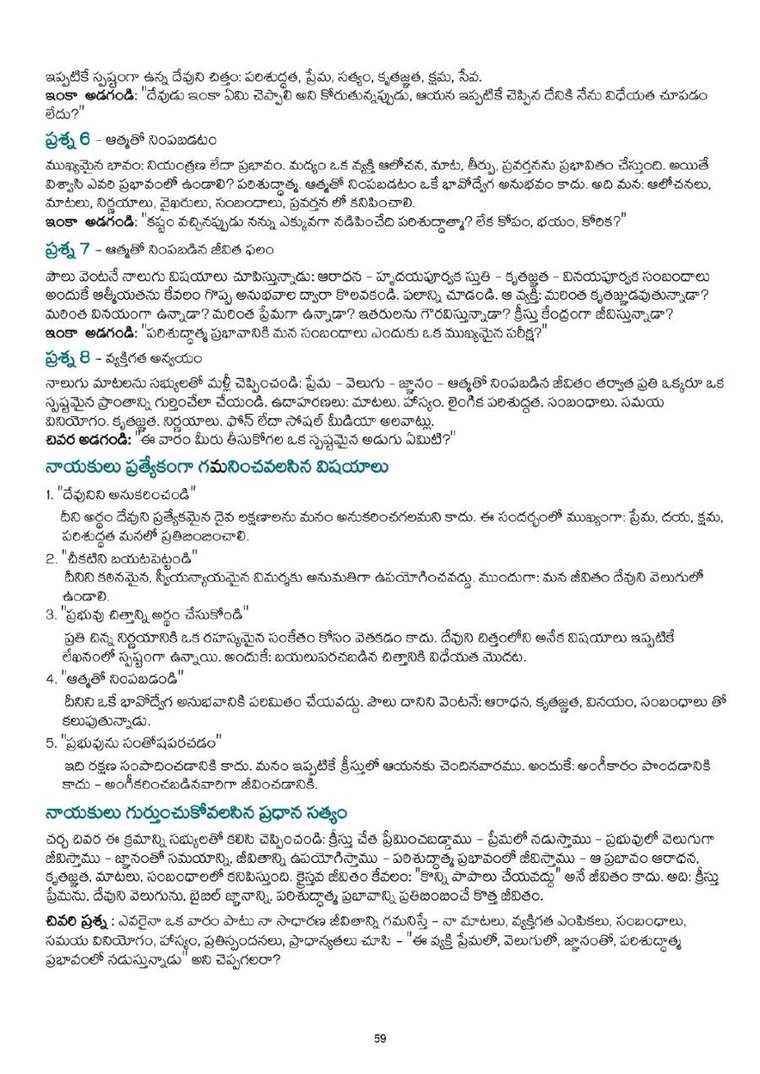
ఇప్పటికే స్పష్టంగా ఉన్న దేవుని చిత్తం: పరిశుద్ధత, ప్రేమ, సత్యం, కృతజ్ఞత, క్షమ, సేవ.
ఇంకా అడగండి: “దేవుడు ఇంకా ఏమి చెప్పాలి అని కోరుతున్నప్పుడు, ఆయన ఇప్పటికే చెప్పిన దేనికి నేను విధేయత చూపడం లేదు?”
Question 5 — Wisdom, Time, and God’s Will
Wisdom means: Knowing God’s truth and living according to it. Making good use of time does not mean filling every minute with religious activity. It means living intentionally. Rest, work, family, sleep, and service all have a proper place. Do not limit God’s will to questions such as:
jobs, marriage, or where to live. God has already revealed His will in Scripture concerning:
holiness, love, truth, thanksgiving, forgiveness, and service.
Ask: “While I am asking God to reveal more, what has He already revealed that I am not obeying?”
ప్రశ్న 6 – ఆత్మతో నింపబడటం
ముఖ్యమైన భావం: నియంత్రణ లేదా ప్రభావం. మద్యం ఒక వ్యక్తి ఆలోచన, మాట, తీర్పు, ప్రవర్తనను ప్రభావితం చేస్తుంది. అయితే విశ్వాసి ఎవరి ప్రభావంలో ఉండాలి? పరిశుద్ధాత్మ. ఆత్మతో నింపబడటం ఒకే భావోద్వేగ అనుభవం కాదు. అది మన: ఆలోచనలు, మాటలు, నిర్ణయాలు, వైఖరులు, సంబంధాలు, ప్రవర్తన లో కనిపించాలి.
ఇంకా అడగండి: “కష్టం వచ్చినప్పుడు నన్ను ఎక్కువగా నడిపించేది పరిశుద్ధాత్మా? లేక కోపం, భయం, కోరిక?”
Question 6 — Being Filled with the Spirit
The key idea is: Influence or control. Alcohol can influence a person’s: thoughts, speech, judgment, and behavior. Who should influence the believer? The Holy Spirit. Being filled with the Spirit is not merely one emotional experience. It should be seen in our: thinking, speech, decisions, attitudes, relationships, and behavior.
Ask: “When difficulty comes, what directs me most—the Holy Spirit, or my anger, fear, and desires?”
ప్రశ్న 7 – ఆత్మతో నింపబడిన జీవిత ఫలం
పౌలు వెంటనే నాలుగు విషయాలు చూపిస్తున్నాడు: ఆరాధన – హృదయపూర్వక స్తుతి – కృతజ్ఞత – వినయపూర్వక సంబంధాలు అందుకే ఆత్మీయతను కేవలం గొప్ప అనుభవాల ద్వారా కొలవకండి. ఫలాన్ని చూడండి. ఆ వ్యక్తి: మరింత కృతజ్ఞుడవుతున్నాడా? మరింత వినయంగా ఉన్నాడా? మరింత ప్రేమగా ఉన్నాడా? ఇతరులను గౌరవిస్తున్నాడా? క్రీస్తు కేంద్రంగా జీవిస్తున్నాడా?
ఇంకా అడగండి: “పరిశుద్ధాత్మ ప్రభావానికి మన సంబంధాలు ఎందుకు ఒక ముఖ్యమైన పరీక్ష?”
Question 7 — The Fruit of a Spirit-Filled Life
Paul immediately points to several things: Worship → Heartfelt praise → Thanksgiving → Humble relationships Therefore, do not measure spirituality only by dramatic experiences. Look at the fruit. Is the person becoming: more thankful? more humble? more loving? more respectful? more Christ-centered?
Ask: “Why are our relationships such an important test of the Holy Spirit’s influence?”
ప్రశ్న 8 – వ్యక్తిగత అన్వయం
నాలుగు మాటలను సభ్యులతో మళ్లీ చెప్పించండి: ప్రేమ – వెలుగు – జ్ఞానం – ఆత్మతో నింపబడిన జీవితం తర్వాత ప్రతి ఒక్కరూ ఒక స్పష్టమైన ప్రాంతాన్ని గుర్తించేలా చేయండి. ఉదాహరణలు: మాటలు. హాస్యం. లైంగిక పరిశుద్ధత. సంబంధాలు. సమయ వినియోగం. కృతజ్ఞత. నిర్ణయాలు. ఫోన్ లేదా సోషల్ మీడియా అలవాట్లు.
చివర అడగండి: “ఈ వారం మీరు తీసుకోగల ఒక స్పష్టమైన అడుగు ఏమిటి?”
నాయకులు ప్రత్యేకంగా గమనించవలసిన విషయాలు
1. “దేవునిని అనుకరించండి”
దీని అర్థం దేవుని ప్రత్యేకమైన దైవ లక్షణాలను మనం అనుకరించగలమని కాదు. ఈ సందర్భంలో ముఖ్యంగా: ప్రేమ, దయ, క్షమ, పరిశుద్ధత మనలో ప్రతిబింబించాలి.
2. “చీకటిని బయటపెట్టండి”
దీనిని కఠినమైన, స్వీయన్యాయమైన విమర్శకు అనుమతిగా ఉపయోగించవద్దు. ముందుగా: మన జీవితం దేవుని వెలుగులో ఉండాలి.
3. “ప్రభువు చిత్తాన్ని అర్థం చేసుకోండి”
ప్రతి చిన్న నిర్ణయానికి ఒక రహస్యమైన సంకేతం కోసం వెతకడం కాదు. దేవుని చిత్తంలోని అనేక విషయాలు ఇప్పటికే లేఖనంలో స్పష్టంగా ఉన్నాయి. అందుకే: బయలుపరచబడిన చిత్తానికి విధేయత మొదట.
4. “ఆత్మతో నింపబడండి”
దీనిని ఒకే భావోద్వేగ అనుభవానికి పరిమితం చేయవద్దు. పౌలు దానిని వెంటనే: ఆరాధన, కృతజ్ఞత, వినయం, సంబంధాలు తో కలుపుతున్నాడు.
5. “ప్రభువును సంతోషపరచడం”
ఇది రక్షణ సంపాదించడానికి కాదు. మనం ఇప్పటికే క్రీస్తులో ఆయనకు చెందినవారము. అందుకే: అంగీకారం పొందడానికి కాదు – అంగీకరించబడినవారిగా జీవించడానికి.
Question 8 — Personal Application
Have the group repeat the four words: Love → Light → Wisdom → Spirit-filled life Then help each person identify one area needing attention. For example: speech, humor, sexual purity, relationships, use of time, thanksgiving, decision-making, phone habits, or social media.
Finally ask: “What one clear step will you take this week?”
Important Things for Leaders to Remember
1. “Imitate God” This does not mean that we can imitate God’s unique divine attributes. In this context, His: love, kindness, forgiveness, and holiness should be reflected in us.
2. “Expose the Darkness” Do not use this as permission for harsh, self-righteous criticism. First: Let our own lives come into God’s light.
3. “Understand the Lord’s Will” This does not mean looking for mysterious signs for every small decision. Many aspects of God’s will are already clearly revealed in Scripture. Therefore:
Obedience to His revealed will comes first.
4. “Be Filled with the Spirit” Do not reduce this to one emotional experience. Paul immediately connects it with: worship, thanksgiving, humility, and relationships.
5. “Please the Lord” This is not about earning salvation. We already belong to God in Christ.
Therefore: We do not live to gain acceptance—we live as people who have already been accepted in Christ.
నాయకులు గుర్తుంచుకోవలసిన ప్రధాన సత్యం
చర్చ చివర ఈ క్రమాన్ని సభ్యులతో కలిసి చెప్పించండి: క్రీస్తు చేత ప్రేమించబడ్డాము – ప్రేమలో నడుస్తాము – ప్రభువులో వెలుగుగా జీవిస్తాము – జ్ఞానంతో సమయాన్ని, జీవితాన్ని ఉపయోగిస్తాము – పరిశుద్ధాత్మ ప్రభావంలో జీవిస్తాము – ఆ ప్రభావం ఆరాధన, కృతజ్ఞత, మాటలు, సంబంధాలలో కనిపిస్తుంది. క్రైస్తవ జీవితం కేవలం: “కొన్ని పాపాలు చేయవద్దు” అనే జీవితం కాదు. అది: క్రీస్తు ప్రేమను, దేవుని వెలుగును, బైబిల్ జ్ఞానాన్ని, పరిశుద్ధాత్మ ప్రభావాన్ని ప్రతిబింబించే కొత్త జీవితం.
చివరి ప్రశ్న : ఎవరైనా ఒక వారం పాటు నా సాధారణ జీవితాన్ని గమనిస్తే – నా మాటలు, వ్యక్తిగత ఎంపికలు, సంబంధాలు, సమయ వినియోగం, హాస్యం, ప్రతిస్పందనలు, ప్రాధాన్యతలు చూసి – “ఈ వ్యక్తి ప్రేమలో, వెలుగులో, జ్ఞానంతో, పరిశుద్ధాత్మ ప్రభావంలో నడుస్తున్నాడు” అని చెప్పగలరా?
Main Truth for Leaders to Remember
At the end of the discussion, help the group repeat this sequence: We have been loved by Christ → therefore we walk in love → we live as light in the Lord → we use our time and lives wisely → we live under the influence of the Holy Spirit → and His influence becomes visible in our worship, thanksgiving, speech, and relationships. The Christian life is not merely: “Do not commit certain sins.” It is a new life that reflects: the love of Christ, the light of God, the wisdom of Scripture, and the influence of the Holy Spirit.
Final Question
If someone watched my ordinary life for one week— my words, private choices, relationships, use of time, humor, reactions, and priorities— would they be able to say: “This person is walking in love, in the light, in wisdom, and under the influence of the Holy Spirit”?
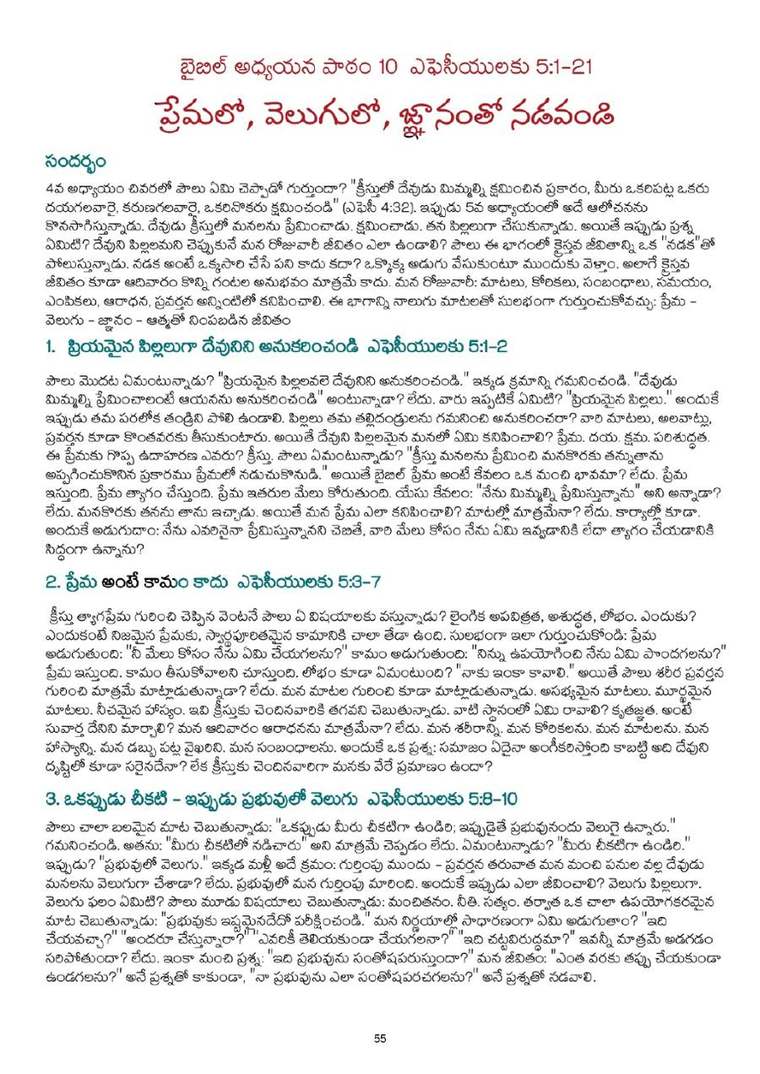
Original PDF pages · అసలు పేజీలు (Telugu 5 · English 6)
తెలుగు · Telugu edition
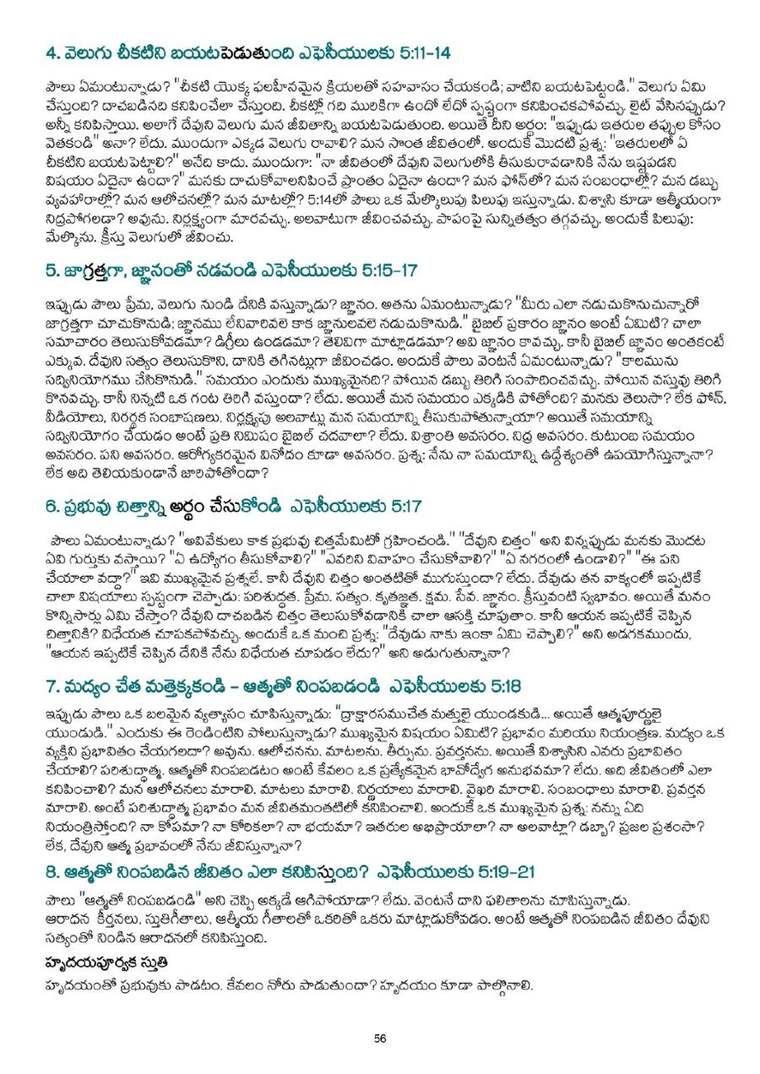
English edition