
Part 8

"precarious balance between state and society" and this has ushered in a shift in the "centre of political gravity" (Chazan 1988).
A concept that attempts to incorporate this perspective and balance the actors is that of governance a concept that the Carter Centre of the Emory University of Atlanta, and, more specifically , Richard Joseph, Micheal Bratton and Goran Hyden sought to popularized it among
Africans. The basic idea is that political power is vested outside the government as well, and, as a

result, the government is forced to make concessions and bargains with different sections of society in order to maintain its political support base and legitimacy. Hyden, (1989, 1992) thus, goes beyond the performance of government to the social roots of authority, pointing out that the governance is "characterized by reciprocal behaviour and legitimate relations of power between governers and governed".
Governance refers to "all of processes of governing, whether undertaken by a government, market or network, whether over a family, tribe, formal or informal organization or territory and whether through the laws, norms, power or language."
As OECD (1995) outlined that the states were the central focus of governance and the "pursuit of common reform agenda driven by the need for fiscal consolidation, by the globalization of the economy and by the impossibility of meeting an apparently indefinite set of demands in public resources"
Defining governance and the 'minimalistic' state: Etymologically, The word "governance" came from the Latin verb "gubernare," or more originally from the Greek word "kubernaein," which means "to steer." Basing on its etymology, governance refers to the manner of steering or governing, or of directing and controlling, a group of people or a state.
Concept of Governance, Bulbul Dhar-James

The term "governance" is not new. The emphasis placed on it today reflects "the perception of increased social complexity" and the changed responsibility of the state is to facilitate - through a range of interventions, the inescapable adjustment and adaptation to globalised free markets and "controlled structured change" in support of the Liberal Market.
For the World Bank governance was "the manner in which power is exercised in the management of a country's economic and social resources for development … creating and sustaining an

environment which fosters strong and equitable development, and it is an essential complement to sound economic policies. (World Bank 1992:1)
Further, governance is defined as " the traditions and institutions by which authority in a country is exercised for the common good. This includes (i) the process by which those in authority are selected , monitored and replaced, (ii) the capacity of the government to effectively manage its Globalisation Globalization essentially means integration of the national economy with the world economy. It implies a free flow of information, ideas, technology, goods and services, capital and even people across different countries and societies. It increases connectivity between different markets in the form of trade, investments and cultural exchanges. The concept of globalization has been explained by the IMF (International Monetary Fund) as 'the growing economic interdependence of countries worldwide through increasing volume and variety of cross border transactions in goods and services and of international capital flows and also through the more rapid and widespread diffusion of technology.' resources and implement sound policies, and (iii) the respect of citizens and the state for the institutions that govern economic and social interactions. " (World Bank 2000)
It thus implied different things in different subfields, and its meaning is masked further by its use as a synonym for Governance could occurs without Government, But Government cannot happen without Governance. government . Ambiguity is increased by the blurry boundaries between it and related concepts such as globalization and social capital. The opinions are divided about whether or not governance helps or obscures our understanding of
Concept of Governance, Bulbul Dhar-James

contemporary society and politics, but it is clear that as a concept it can far from be ignored especially in the era of globalization.
Since Governance has been used at every level from the global to the local, as well as outside the political , an all-embracing definition is unattainable. And within this macro perspective, many of the previously "state" activities are undertaken by organizations other than governments, but governments specialize in them: so whilst governance occurs without government, government

cannot happen without governance.
Apprehensions in the network-state relationship are inevitable with the state becoming one of the participants amongst others in the pluralistic governance system and according to Jessop, "the state's influence depends as much as its role as a prime source and mediator of collective intelligence as its command over economic resources or legitimate coercion" Thus the state provides a strategic outline, determining priorities, retaining considerable economic and coercive resources. Political or Economic failure is prevalent and but these are failures of specific governance strategies and not a failure of government as a whole. Governance is a different way of presenting state adaptation to failure and instability which are universal aspects of politics.
Government Versus Governance:
Frequently used interchangeably, it was in the 1980s, that political scientists broadened the meaning of governance as including, not just government actors, but also civil-society actors.
Today, governance includes three sectors: the public sector (state actors and institutions), the private sector (households and companies), and the civil society (non-governmental organizations). These three sectors are said to work hand in hand in the process of governance. This new use of the term focuses on the role of "networks" in the achievement of the common good, whether these networks are intergovernmental, transnational, or international. In other words governance is broader than government in that other sectors are included in it.
Concept of Governance, Bulbul Dhar-James

Government is often associating with Centralization of power - a central institution which wields power over its subjects - "control and domination," and governance is considered akin to a concept of decentralization of power and the need for inter-sectoral management.
Governance is based on the realization that the government cannot do everything for the people, so that in order to survive the state should not only rely on government but also on the other sectors of the society.

Conventional hierarchical exercise of power by the government has given way to the new notion of a "dispersed and relational power in governance" – from government to governance. To govern should now mean to facilitate or regulate, not to dominate or command.
Plurality of the State, Civil Society and Market:
To be appreciative of the processes of decision-making and implementation of the decision, that go into the Governance, an analysis of the concerned key "actors" and "structures" needs to be done.
But this was/is a very broad scope, governance has different facets that may be applied in different contexts, be it corporate governance, international governance, and national and local governance.
Depending on the context, governance has different actors and structures. Depending on the kind of decision made and the structure implementing it, governance may be good or bad governance.
State
Market Civil Society
(Source: UNDP 1997)
Concept of Governance, Bulbul Dhar-James

As the figure portrays, governance is about engaging plurality of actors in various ways. Government can be, therefore, seen as one of the organisation involved in governance. It is possible, in other words, to have 'governance without government'. For example, the box underneath provides the story of the residents of Baner and Balewadi areas in Pune who faced collect social life problem but overcame the crisis of governance sans civic authorities.
The residents of Baner and Balewadi areas in Pune came together on Sunday to construct an

approach road to a school for the convenience of students. After several failed attempts to convince civic authorities to take up the construction, women in the area decided to lead a citizen movement and build the road themselves, which is about 500-metres-long. Authorities were not taking up the construction project for the last six years because it was stuck in a dispute between Pune Municipal Corporation, the Panchayat and Pune Metropolitan Regional Development Authority (PMRDA) authorities. This was when they formed a virtual group on WhatsApp and decided to construct a make-shift road themselves, under the supervision of mothers of some school students.
The government or the Public Sector is almost always the main actor in governance, whether it is in the corporate, international (international organizations and multi-national corporations), national or local level. But it is not the only actor. All actors other than the government are what we can broadly call the "civil society."
The civil society includes non-governmental organizations, and other community-based and sectoral organizations, such as association of farmers, charitable institutions, cooperatives, religious communities, political parties, and research institutes. These organizations are private in nature but have public functions or objectives and are indispensable partner in development. To cope with the ever growing demands of development, the public sector must necessarily tie-up with the private sector. In the national and international level, decision-making is greatly influenced by actors like the media, international organizations, multi-national corporations, and international donors. Thus, from the foregoing, it should be clear that governance involves several actors in multi-level structures in the modern Globalization era.
Concept of Governance, Bulbul Dhar-James

Modern complex societies, in order to meet the growing demands of development, are managed in different levels by various actors. The central role of the public sector in the era of Globalization and Liberalization is to provide an enabling environment for the other actors of governance to participate and respond to the mandate of the common good. To make the economy more profitable for business, by adopting the policy of strategic retreat of the state (in favour of private bussiness) the engines of growth are private actors especially the Markets.

Governance is now understood to include the wide range of ways in which the political, social, and administrative structure of a society affects the access of its members to basic opportunities and capabilities. Governance is a continuum, and not necessarily unidirectional: it does not automatically improve over time. Historical record suggests importance of building on the relative strengths of the state, along with the civil society and the market to better the state's institutional capability. It is a plant that needs constant tending. (World Bank, 1992).
Re-conceive the government from 'Rowing' to 'Steering' : Advocates of governance proposed 'reinventing government', shifting government 'from rowing to steering', a change to be embraced by industrialised and developing countries because of globalization and electoral pressure to deliver more and better services at lower cost to the taxpayer (Osborne and Gaebler 1992).
Governance is not new, but the emphasis placed on it reflects the perception of increased social complexity, and the state's role is to ease the inescapable adaption to globalised free markets.
Governance is about producing 'controlled structural change' in support of a market liberal order through a variety of state interventions. The state has resources not available to any other
Markets: Based on pure purchasing power of the economic agents, Markets are not are democratic institutions. Though the most efficient, they tend to have fostered inequality and marginalization of the already weak as markets are not moderated by considerations of human value. Governments (and states) are held responsible for their people, markets are not.
Concept of Governance, Bulbul Dhar-James

organisation, which enable it to facilitate negotiations, reduce transaction costs and disseminate 'best practice', and boost social cohesion (Jessop 1997).
Governance is a process , not an end, and is inevitably fragmented, but has two key aspects: The creation of distributive consensus. This involves domestic and non-domestic actors on how the national income will be distributed: and The orchestration of a social consensus behind policies in the general interest of capital

Contemporary use of the term - Governance:
The backdrop of the contemporary use of the term - Governance is the World Bank and IMF establishment of the rules of markets efficiency and the role of the governments (more problematic) correcting the market failure with the measures defined by the International Financial Institutions.
The 2009 Global Monitoring Report sees governance as 'power relationships,' 'formal and informal processes of formulating policies and allocating resources,' 'processes of decision-making' and 'mechanisms for holding governments accountable.' International agencies such as UNDP, the World
Bank, the OECD Development Assistance Committee (DAC) and others define governance as the exercise of authority or power in order to manage a country's economic, political and administrative affairs.
According to UNESCO, there is often a tendency to equate governance with management, the latter primarily referring to the planning, implementation and monitoring functions in order to achieve predefined results. Management encompasses processes, structures and arrangements that are designed to mobilize and transform the available physical, human and financial resources to achieve concrete outcomes. Management refers to individuals or groups of people who are given the authority to achieve the desired results. Governance systems set the parameters under which management and administrative systems will operate. Governance is about how power is distributed and shared, how policies are formulated, priorities set and stakeholders made accountable.
Concept of Governance, Bulbul Dhar-James

GOOD GOVERNANCE
In the development literature, the term 'good governance' is frequently used. In particular, the donors promote the notion of 'good governance' as a necessary pre-condition for creating an enabling environment for poverty reduction and sustainable human development. Good governance has also been accepted as one of the targets of the Millennium Development Goals (MDGs). The good

governance agenda stems from the donor concern with the effectiveness of the development efforts.
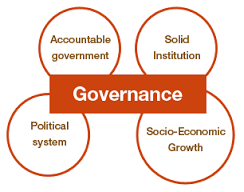
The yardsticks of Good "democratic" governance, viz
GOOD DEMOCRATIC GOVERNANCE: Participatory Transparent Decision Making Accountable & Responsive Effective and equitable Promote rule of law Equitable and Inclusive Consensus Oriented; Participatory, Transparent Decision Making, Accountable
& Responsive, Effective and equitable Promoting Rule of law, Equitable and Inclusive and Consensus Oriented; are inextricably related to each other. For instance, without active participation among the various actors in governance, there would be a concomitant lack of responsiveness.
Participation: means active involvement of all affected and interested parties in the decision-making process. It requires an enabling environment wherein pertinent information is effectively disseminated and all the people (women, men, trans-people) could respond in an unimpeded manner. Thus gender equality is central to it with the recognition of critical roles of both men and women in decisionmaking. From a "verticalized system" of The participation of women in governance within the context of " gendered socialization" rests on how responsive the structures and processes are to their roles and needs. governance to "horizontal system" where the government works hand in hand with other sectors of the society as partners (not monopoly) of the government in attaining development goals. Diffusing power through decentralization is central to participation.
Concept of Governance, Bulbul Dhar-James

Rule of Law as an essential ingredient of Democracy, whereby No one, not even the government can arbitrarily act in contravention of Those who have less in life should have more in the law. It demands that the people and the civil society render habitual obedience to the law and the government acts within the law limits of the powers and functions prescribed by the law.
Effectiveness and Efficiency:

Effectiveness (meeting the needs) and efficiency (proper utilization of resources) must necessarily go together to ensure the best possible results for the community. An operationalization of this would be professionalization of bureaucracy, elimination of redundancies, a citizen-centered government, Public service delivery, amongst others
Transparency:
Transparency, as an indicator of good governance, is anchored on the democratic right to information and right to access of the same, not just from government transactions but also in those transactions of the civil society and private sector imbued with public interests.
Responsiveness
Interests of all citizens must be well protected. While responsiveness is also a characteristic sought from the private sector and civil society, more is demanded from the government or the public sector.
Gender concerns that respond to the women and their community must always be part of the agenda of public sector and civil society. Thus, emerging as important areas in the study of democratic governance are "Gender and Development" and "Gender Responsiveness."
Thus, good democratic governance is fundamentally adherence to the rule of law that is not Archaic or irrelevant, but responsive to the needs of the society.
Equity and Inclusiveness
All the members of the society, especially the most vulnerable ones must be taken into consideration in policy-making. Everyone has a stake in the society and no one should feel alienated from it. It is based on the principle that those who have less in life should have more in law. Good governance demands
Concept of Governance, Bulbul Dhar-James

that the actors must give preferential attention to the plight of the poor. Laws must be geared towards this end and the society must actively participate in the promotion of the same.
Consensus Orientation:
When decisions are made after taking into consideration the different viewpoints of the actors of the society. Fundamentally, democratic governance is based on the partnership of the actors of the society in providing public services.

Accountability
The actors have an obligation to explain and be answerable for the consequences of decisions and actions they have made on behalf of the community it serves. It comes in various forms: political, hierarchical, and managerial accountability. A system of rewards and punishment must be in place to strengthen the processes and institutions of governance.
Thus, in relation to development good governance should not be based exclusively on economic growth.
Through global persuasion, good governance and development signify a broader spectrum of things, such as protection of human rights, equitable distribution of wealth, enhancement of individual capabilities and creation of an enabling environment to foster participation, gender equality and growth of human potentials.
"Good governance means creating well-functioning and accountable institutions – political, judicial and administrative – which citizens regard as legitimate, in which they participate in decisions that affect their daily lives and by which they are empowered.‟ perhaps "good governance is the single most important factor in eradicating poverty and promoting development". ~ former UN Secretary-General Kofi Annan
Concept of Governance, Bulbul Dhar-James

The term "good governance" has been extensively used within the international community in the last fifteen years and has acquired the characteristics of a "container concept", which incorporates a variety of principles and is as general as concepts such as globalisation or global governance. Good governance is a term different to governance which is mainly a political and technocratic term without normative aspirations and suggests that governance should be "good" and not "bad".
Assessment and Evaluation

Questions
1. Who are the actors in the process of governance? How do they interact in coming up with, and in implementing, decisions?
2. How are the indicators of good governance related to each other? Give a concrete example of your answer.
3. Give your recommendations on how to improve governance in India.
4. How is it possible to have 'governance without government'? Discuss
5. What is 'new' about the nature of contemporary governance?
Concept of Governance, Bulbul Dhar-James

Paper No. : Women and Governance ; Issues and Challenges
Module : Women in Governance: Institutional, Social, Economic and Structural Barriers
Development
Prof. Sumita Parmar Allahabad University, Allahabad
Principal Investigator
Prof. Chandrakala Padia Maharaja Ganga Singh Univesity, Bikaner
Paper Coordinator
Dr. Bulbul Dhar-James, Former Director,WSC, JMI Mr. Vijender Singh Beniwal, ICSSR Fellow, New Delhi,
Content Writer
Prof. Chandrakala Padia Maharaja Ganga Singh Univesity, Bikaner
Content Reviewer
Description of Module
Subject Name Women's Studies
Paper Name WOMEN AND GOVERNANCE: ISSUES AND CHALLENGES
Module Name/Title WOMEN IN GOVERNANCE: INSTITUTIONAL, SOCIAL, ECONOMIC AND
STRUCTURAL BARRIERS Module Id
Pre-requisites The reader is expected to have the knowledge of key debates in

Globalisation, Governance, Global Development discourse of governance, Women in leadership roles and their constraints
Objectives To make the reader understand the concept of governance, the contours of women's representation in Public governance in India and major hindrances being faced by them during their journey towards higher echelons of public governance.
Keywords Governance, Glass ceiling, Gender stereotypes, Public institutions, Challenges to leadership
Women in Governance: Institutional, Social, Economic and Structural Barriers
Understanding women's issues indeed gender issues in governance requires examining participation and decisionmaking of women and men in different institutions. Addressing gender gaps in governance entails the adoption of reforms to engender different governing institutions at the various levels.
Gender and Governance Nussbaum asserted that the participation of women in governance has long been hindered by the assumption that their proper sphere is the "private" sphere, and this same assumption has been an obstacle to good theoretical and practical work on the question of gender and governance. From the very origins of Western political theory, theorists from Aristotle to Robert Nozick (Classical Liberal to Libertarian) have carved society into two domains: a "public" domain, the domain of political authority and contestation, and a "private" realm, associated with family and the home. These spheres are conceived as operating in very different ways. In the public sphere, each person's actions must be constrained by the recognition that he is one among many citizens. Any attempt to gain unlimited or supreme power is typically taken to be both dangerous and inappropriate. The "private" realm of the household is understood in a very different way. Here the traditional idea is that the male head of the household and should exercise a type of kingly authority. Because he is surrounded not by equals, but by inferiors, his job is to control them. Modern liberal theory has typically associated the public/private divide with a further distinction: the distinction between a sphere regulated by law and a sphere in which law should not interfere. While conventional Hindu law gives household considerable autonomy, however, at the same time, the householder [male] exercises strict control over the women of the house. In this way, the idea of the household as a protected sphere of male authority is established. New governance discourse, emerged in recent years, has recognized and emphasized plurality of realms, that is, state, market and civil society. A gendered perspective on governance must encompass all the realms that the new discourse of governance recognises, and more. Indeed, the three domains of governance should not be seen as unproblematically hospitable to gender issues. In fact, there is nothing inherently gender-friendly in this widening of the ambit of governance beyond the state. Even in advanced capitalist societies, the role of the state as the 'orchestrator of social consensus' remains relevant. Markets are notoriously hostile to the poor, and given the gendered nature of poverty, to women belonging to these sections. Civil society is not definitionally gender-neutral, either. Even as women's movements are located on this site, we cannot ignore the fact that many civil society organisations - such as religious fundamentalist groups - are neither civil nor democratic nor empowering, and frequently conservative in the way they define women's roles. As pointed out Niraja Jayal, this definition retains vestiges of the instrumentalist view, for though the larger document explicitly recognises that governance encompasses every institution and organisation in society, from the family to the state, the definition pointedly isolates only the three important domains of governance which, it claims, directly contribute to sustainable human development: the state (political and governmental institutions), civil

society organisations and the private sector. This focus on essentially public institutions carries an implicit endorsement of the public-private divide. The very definition of governance needs to be engendered before we can embark upon the project of engendering governance itself. This implies a recognition of the fact that, through their emphasis upon public institutions of authority, current definitions reinforce the public-private divide, and make little or no attempt to recognize the private sphere as an arena of governance – e.g., the family – or as an arena influencing the exercise of social power and modes of governance. Is it then unreasonable to expect the idea of governance to explain or interrogate the mutually reinforcing relationship between what Sylvia Walby has called public and private patriarchies? The author is restricted the debate on, for present venture, women in governance to the domain of state i.e. public institutions. In other words, women visibility in public institutions will be the main agenda to document in the following text. Women in Governance - Global Scenario Although the number of women government ministers grew from 670 to 715 in the 12 months since 1st January 2014, that figure represents only 17.7 per cent of all government ministers in the world. Since 2005, the percentage of women ministers has only increased by 3.5 points. There is also an unmistakable pattern in the nature of portfolios held by women, that is, the most substantial concentration of women ministers worldwide was in ministries of social affairs, health, women's affairs, family/children/youth, culture and heritage, education, environment and labour. Very few women ministers held portfolios related to defence, finance, trade, and home affairs. This bias is reinforced by a recent study of women in several levels of decision-making positions in politics in 27 industrialised societies, which found inequalities in the distribution of "political areas of responsibility: women are more prevalent in `social' or `female' issues". On the other hand, men were mainly involved in policy areas such as internal affairs, economic affairs, fiscal policy, defence and international affairs, industrial policy and agriculture. Similarly, Peterson and Runyan (1993) argued that a look at the gendered pattern of employment in international agencies (the United Nations, the World Bank and USAID) also suggests the virtual invisibility of women from the top management of these organisations, and a preponderance - even overrepresentation - of women at the secretarial and clerical levels. Thus, women constitute 3.6 per cent of decision-making elites in the United Nations, but 85 per cent of the workers at the clerical and support staff levels. As of January 2015, only 17 per cent of government ministers were women, with the majority overseeing social sectors, such as education and the family. Research on panchayats (local councils) in India discovered that the number of drinking water projects in areas with femaleled councils was 62 per cent higher than in those with male-led councils. In Norway, a direct causal relationship between the presence of women in municipal councils and childcare coverage was found. Women in Governance - Indian Scenario This section began with the claim that the engendering of state institutions of governance mostly represents little more than the gendering of state elites. This claim has been justified with reference to the legislature, executive, judiciary, and bureaucracy. In all these spheres, further, we observed a concentration of women at the lower levels of structures of

governance, with however little impact on decision-making processes and outcomes. It is, further, arguable that the engendering of state personnel, and the engendering of policy, should be, but rarely are, parallel processes. It is evident that even where the first (engendering of personnel) has been promoted by states - as, for instance, through quotas and reservations - it has resulted in personal empowerment, rather than in more generalized emancipatory outcomes. For instance, in India, the Economic Survey for 2001 has, for the first time (as a result of intense lobbying by women's groups) recognised that the impact of budgets is gender-differentiated. Women in Political Executive Although the representation of women in the council of ministers, Government of India since 1952 to 2009, has shown steady augment but still far away from satisfactory. Only during last decade women numeral touched double digit in terms of their presence in council of ministers.

Table I: Women in Political Executive as on 12.07.2016 SN Designation Total Male Female Female % 1 Cabinet Ministers 26 21 05 19.2 2 Minister of State (Independent) 13 12 01 7.6 3 Minister of State 36 33 03 8.3 4 Council of Ministers 75 66 09 12.0 5 Governor/UTs Administrator 29/06 26/05 03/01 11.4 6 Chief Minister (including New Delhi & Puducherry)
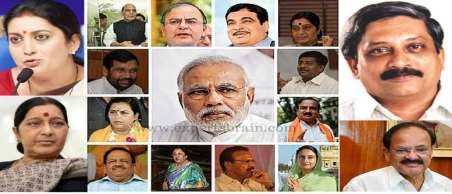
29/02 25/02 04 12.9 (Source: www.cabsec.nic.in) The representation of women has been very low in various ministries and invariably women are 'soft portfolios' which are an extension of women's stereotypical images. These portfolios rarely have the resources or decision-making powers to back women and therefore relegate them again to the backseat. Hardly any woman is visible in powerful ministries e.g. Finance, Defence, Home etc [regulatory and distributive]. In 16th Lok Sabha, 8 women ministers out of total 66 ministers. Modi government has promised a new outlook by inducting 6 women in cabinet. Additionally, the present government also attempted to wither out old stereotypes by allocating non-traditional portfolios among women such as External Affairs, HRD etc. But latest reshuffle in Modi's cabinet has shown reverse trend and divulge orthodoxy. Table I above depicts women in political executive is quite low barely touching two digit figure except in cabinet ministers. On deeper analysis undoubtedly this is done for window dressing in IUP ranking (the report includes only cabinet ministers) of countries on the basis of women in ministerial positions. Otherwise, women strength in the council of minister (especially MOS) is even less than 10 percent.
Women in Permanent Executive During British rule, women were disqualified for higher administrative posts. Immediately after Independence, women were allowed to take the competitive examination for the administrative service. However, rule 5 (3) of the Indian Administrative Services' Rules of 1954 empowered the government to demand the resignation of a female officer after marriage on ground of efficiency notwithstanding the Constitutional equality (Art 15 & 16). In 1972, formal gender parity was introduced in the All India Services at entry level. Nevertheless, the percentage of women IAS remains very low-not more than 15 percent of the total especially in office of substance. The table II below demonstrates that male only club notion exist in permanent executive. The political bosses have a penchant disposition of replicate their gendered cognition while appointing their support staff. For instance, we can see the glimpse of only men's club in PMO as well as Central Secretariat when it comes to the question of chairing vital portfolios/departments. There are only 15 women secretary in various ministries at union level. Further analysis unambiguously exposes that women are confined mainly in the sectors that foster prevailing gender stereotypes of their innateness province of bear, rear and nurture.

Table II: Women in Permanent Executive as on 01.08.2016 SN Designation Total Man Women Women % 1 Secretary in President/VP Office 02 01 01 50 2 Secretary in PMO 03 03 Nil Nil 3 Cabinet Secretariat 05 05 Nil Nil 4 Secretary in Union Ministries 85 71 14 16.4 Total 95 80 15 15.7
5 Chief Secretary in States/UTs 36 34 02 5.5 (Source: DoPT, Ministry of Personnel, Public Grievances and Pensions, GOI) While male officers can catch up with superiors and others who matter outside office as well, it is just home-after-office for women. And the brutal reality is that this acts against them as they are tagged 'undependable'. Currently, a number of influential women secretaries are at the helms of various departments, but 'key and hard' ministries like home, defence and finance don't have any women secretary. The factors that work at securing the cabinet secretary post and other coveted ministries are age, high ranking in merit-cum seniority list and at times prior experiences in ministries in addition to luck and influence. For example, we can envisage unfair game from unceremoniously departure of the foreign secretary, Ms Sujatha, Singh in January 2015. So far no femocrat has become cabinet secretary, India's top bureaucrat by status, power, rank and pay (entitled bungalow in the heart of Lutyens' Delhi). The reason is more of technical in nature than competence and capabilities of corridor's top women. In summer of 2009, it was a narrow miss for 1972 batch Kerala cadre IAS Sudha Pillai who was then the senior most IAS, and then cabinet secretary KM Chandrasekhar's two-year term was to end. But it's a different matter that Chandrasekhar got serial extensions which not only denied Mrs Pillai her 'due' to become country's top most bureaucrats. The cabinet secretary plays a key role in top level appointments of bureaucrats, pioneers changes in administrative laws and rules, and helps the Prime Minister in key decisions and cabinet meetings. The fact that women are making greater headway worldwide in the matter of parliamentary representation than in civil service recruitment may also be viewed as a matter of concern, as parliamentary power declines and that of technocrats increases It has further been observed that women in higher level administrative positions tend to be less receptive to the voice of women's movements. Women in Police Kerala was the first Indian state to have women in the police force, beginning with the first woman inducted into the then Travancore Royal Police in 1933. Thereafter recruitment of women into the police in other states began only after independence, and even then it was sporadic at best. It was not until 1972 that the first woman was appointed to the Indian Police Service. By the time the National Police Commission completed its eight reports in 1981, women accounted for a mere 3000 or 0.4% of the total police in the country.

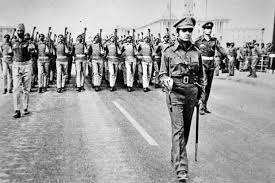
As on 1/1/2015, there are 110872 female police personnel in India, making up a national average of 6.4% of the police. Many states have acted on the MHA's advisories to adopt a reservation (33%) policy for women in police forces at entry level. However, the target remains very much on paper and the government is least interested to address the issue. Maharashtra has had a reservation (30%) in place since 1971 (the longest running at 44 years to the present), but women police are barely pushing 10.9% of the force. Even with evidence of minor incremental gains, these dismal figures reveal the lack of priority to actually fill the numbers with women in police departments.
Table III: Women in Police as on 01.01.2015 Rank Total Woman % of Women
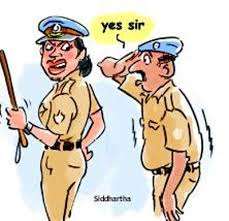
DGP/Spl. DG/ADGP 463 25 5.3 IGP 530 46 8.6 DIG 415 23 5.5 AIGP/SSP/COM 2497 192 7.6 Addl. SP/DY. COM 1978 187 9.4 ASP/DSP/ Asstt. COM 9006 636 7.0 INP 26710 1310 4.9 SI 82644 6710 8.1 ASI 101558 3303 3.2 Head Constable 351213 9367 2.6 Constable 1144087 89073 7.7 Total 1721101 110872 6.4 (Source: Annual Report 2015, BPRD) As in other contexts, women are concentrated in the constable and head constable positions. As table III reveals that out of a total 463 DGP/Spl. DG/ADGP posts, a mere 25 are women; only 23 out of 415 DIGs; and 1310 out of 26710 inspectors. Percentages of women represented in higher ranks are slightly higher only because the total numbers of all personnel at those ranks are lower. It must be emphasized that these figureswhich clearly show the ranks and levels at which there problems are worst. Male model of police; non-acceptability of women by their male counterparts; irregular working hours, hierarchic pressure and dealing with antisocial element; and uncertain role in department (women are place in domestic and family matters) which limit them to 'traditional roles' among other are major challenges faced by women in police.

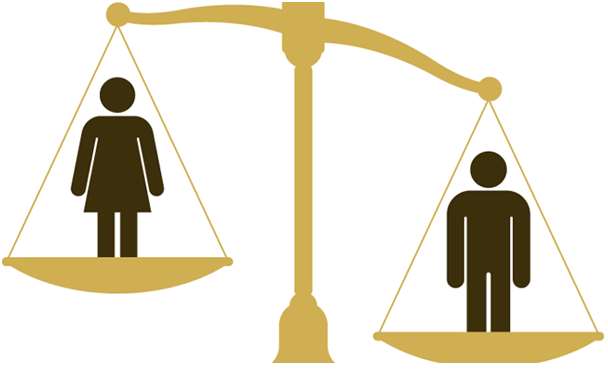
Women in Judiciary The first woman to be appointed to the Supreme Court was Justice Fatima Beevi in 1987. Presently, we have only one women judge in the Supreme Court, Justice R Banumati, who was appointed in August 2014. Since India's independence, barely five women have been elevated as judges in the apex court. The number in the lower courts is no better. Presently there are only two women chief justice in High court - Ms Manjula Chellur and Ms Gorla Rohini in Kolkata and Delhi HC respectively. Of the 611 judges in the High Courts, merely 62 of them are women and in the trial courts, the number is roughly 10%. The number crunch among lawyers is just as dismal. Of the 477 senior advocates in the SC and the HC, barely 14 are women. That constitutes to barely 2.9%. Manifestly, there is no doubt that it is a boys club and there is camaraderie between them.
Table IV: Women in Judiciary as on 01.08.2016 S N Court Total Men Women % of Women 1 Judges in SC 31 30 1 3.2 2 Chief Justice ( HC) 24 22 2
8.3
3 Judges in HC 673 611 62 10.1 (Source: Ministry of Law & Justice) Retired Chief Justice Leila Seth's experience as the first woman to be appointed a justice in the Delhi HC, and later the Chief Justice of Himachal Pradesh is memorable. "I had to play the game very carefully to make sure I did not upset my male colleagues," said Seth. Recently women lawyers made a vociferous plea - the collegium which selects judges must shed its inhibition to choose woman lawyers as judges. "Look at their numbers. There are just 62 women judges compared to 611 male judges (in high courts) in the entire country," was their refrain. Justice Khehar replied, "What is the ratio of female advocates to male advocates? Ratio of female judges to male judges must be in the same ratio." In the judgment striking down NJAC, the SC had quoted an exchange between the then President and the Chief Justice of India regarding selection of judges.

President - "Eligible persons from weaker sections and women are available and their under-representation or nonrepresentation would not be justifiable. Hence, present practices of judicial appointments are not reflecting the spirit of our constitutional." CJI - "I would like to assert that our Constitution envisages that merit alone is the criterion for all appointments to the Supreme Court and high courts. And we are scrupulously adhering to these provisions." Strangely enough under no circumstance can only 6 women judges out of the total 229 in 70 years be a fair outcome of any "merit-alone" selection process. If women can climb Everest, head huge banks and financial institutions, run successful business houses, surely they can be good judges. The need of the hour is a change of mindset, both for the collegium headed by the CJI and the tradition bound Shani temple management.

While no discernible trend in respect of gender justice can be ascertained from the judgments delivered by the four women judges in the Supreme Court, it cannot be denied that there are some instances where path breaking concepts in women's rights have been addressed by benches of which they were a part. Justice Sujata Manohar was part of the three judge bench in the landmark case of Vishaka. Similarly, Justice Ruma Pal often considered a tough-as-nails judge, through her judgments in Vinita Saxena vs Pankaj Pandit case, extensively elaborated on the concepts of 'mental cruelty' in a marriage and 'cruelty as a ground for divorce'. Barriers to Women's Participation in Public Decision making Structural These are the many overt and covert 'glass-ceiling' factors that impede women's career paths.
These include: male managerial styles, discourse and language that 'shut' women out; informal organizational cultures also referred to as the 'old boys club'; women's reluctance to self-promote their achievements and capabilities making them institutionally invisible; The persistence of cultural values and attitudes that strongly support women's childcare, family and domestic responsibilities as priority over career aspirations. There are women well-qualified for academic positions who nevertheless fail to be selected. Customarily both politicians and bureaucrats are predispose to patriarch ideology – 'a man is preferred because he is a man'. Discriminatory appointment and promotion practices constitute barriers in institutions without equal opportunity policies. In other words, a large part of the problem is the entrenched notion that men were more 'natural' leaders than women – something exacerbated by the increasing use of generally male-led and male-dominated search committee/s for appointment Socio-economic/Cultural Factors
Deeply entrenched gender roles and negative gender stereotyping have immensely limited women's participation in public domain
Traditional cultural attitudes and values are serious constraints to achieving gender equality. Strong and different values on gender-roles create barriers, discriminate against women and impede the achievement of equality between men and women in Indian society The dual burden of domestic and professional obligations and economic resource constraints restrict opportunities for women to participate in political and public life. Hierarchical social structures and culture of public patriarchy create an environment that impedes women's ability to be equal partners in public decision-making. Stereotypes continue to consider women as subordinates who cannot participate in politics and hold senior decision-making positions. Generally women are bereft of vital resources (economic, political and cultural) that are pre-requisite while negotiating for their entry in public institutions.

Institutional Factors Despite a robust gender equality perspective reflected in national gender equality policy initiatives and legal frameworks, challenges remain.
Discrimination impacts the ability of women to be promoted. Gender specific gaps in national laws, including the absence of a comprehensive definition of 'gender-based discrimination' contribute to the challenge of addressing discrimination against women, including in appointed and elected positions. Decision-making processes and structures form additional barriers for women to participate in public and political life. Women are concentrated in sectors traditionally associated with women and at the lower levels of government. Opportunities for women to participate in decision-making processes in sectors such as economics, industry and energy, mines, urban management and transport are further constrained. Conclusion Seeing that there are institutionalization of practices, patterns and beliefs, corollary, women are often assumed to be less available for leadership positions by those who hire. Additionally, many women make career decisions around issues of family, while many men make family decisions around issues of career. The impact of gender inequality on governance is as debilitating as it is widespread. Complicated by other intersecting hierarchies, such as class, caste, ethnicity and religion, the differences ascribed to women and men on the basis of sex are recreated, maintained and manipulated in contests for state power and resource allocation. Women's presence within the executive branch is also politically important. The chief executive and the cabinet set the policy agenda of a nation, determine the content of many policies and oversee and guide policy implementation and administration, including any policies to advance women. The global literature suggests that women and men in public institutions are largely placed differently, with differential access to leadership, and hence to influencing meanings, discourses and practices. Gender in governance is about more than focussing on women's under-representation. Thus the fate of further advances in the status of women in managerial positions in public life, as in other spheres of society, will to a large extent depend on broader structural, institutional and cultural changes. We need positive interventions of the government to expedite this momentum to make academy sustainable and gender neutral. Summary
Governance is about unleashing all potential actors viz. state, civil society and market in the process of catering collective needs of citizens. Public-private divide need to be mitigated through locating gender in the new discourse of governance Worldwide women have very less visibility in critical structures of public governance, that is, legislative, executive/administrators, and judiciary Women are facing myriad challenges viz. barriers to their participation in public decision-making In Asia in general and Indian in particular, gender inequality in governance is further compounded by other intersecting hierarchies such as class, caste, ethnicity and religion

PAPER-11 MODULE-23
Women's Leadership and Governance
Personal Details
Role Name Affiliation
Principal Investigator Prof. Sumita Parmar
Allahabad University, Allahabad
Paper Coordinator Prof Chandrakala Padia
Chairperson ,IIAS, Shimla and Vice Chancellor MGS University Bikaner

Dr. Bulbul DharJames,
Former Director,WSC, JMI Jamia Millia Islamia,N. Delhi .
Content Writer/Author (CW)
Mr. Vijender Singh Beniwal,
ICSSR Fellow, New Delhi,
Content Reviewer (CR) Prof Chandrakala Padia
Chairperson ,IIAS, Shimla and Vice Chancellor MGS University Bikaner
Language Editor (LE) Prof. Sumita Parmar
Allahabad University, Allahabad
Description of Module
Subject Name Women's Studies
Paper Name Women, Governance and Politics
Module Name/Title Women's Leadership and Governance
Module Id PAPER-11 MODULE-23
Pre-requisites The student is expected to have the knowledge of leadership approaches and notion of genderisation of societal institutions.
Objectives To make the reader understand the concept of leadership and acquaint them with prevailing leadership styles under the umbrella of neoliberalism
Content Reviewer
Keywords Leadership, masculinity, gender bias, stereotypes and neoliberalism
Women's Leadership and Governance
'As long as women of India do not take part in public life there can be no salvation for the country and we are not likely to attain Swaraj; and if we did, I would have no use for that kind of Swaraj, for which women have not made their full contribution".
(Mahatma Gandhi) Introduction Do you have an idea of the numbers of elite [leaders] who are governing our planet? In 2015 Forbes survey concluded that the men and women who are featured on Forbes' annual ranking of the World's Most Powerful People are the 0.00000001% - the global elite whose actions move the planet. These heads of state, financiers, philanthropists and entrepreneurs truly run the world. The second most powerful person in the world also happens to be the most powerful woman: Chancellor of Germany Angela Merkel. But at the same time out of total 100 such person merely 9 , that is even less than 10 percent, are women nevertheless they are around 3.2 billion on the planet. These raise the questions like – who are these women? How they have reached on top? And why there are only few women leaders? Do they have same leadership style? Or women and men differ in the way they govern us. This sub-unit will focus on women's leadership and governance with special reference to their participation in, one of the main domains of governance-market; other two are – state and civil society. As we have already discussed women's representation in state and civil society. This chapter is divided into four parts. First part delineates the concept of leadership and its various facets. The debate of gender and leadership is presented in the second part. The third part dwells on current global as well Indian trends with reference to women in leadership position. The concluding remarks are incorporated in the final part. The Concept of Leadership Leadership is a process by which a person influences others to accomplish an objective and directs the organization in a way that makes it more cohesive and coherent. Leadership is a process of social influence, which maximizes the efforts of others, towards the achievement of a goal. It is about seeing through the situation and ensures smooth transition from one stage to another. Leader, followers, communication and situation are essential paraphernalia that are involved in leadership.

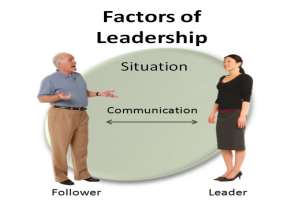
Also note that the situation normally has a greater effect on a leader's action than his or her traits. This is because while traits may have an impressive stability over a period of time, they have little consistency across situations. This is why a number of leadership scholars think the Process Theory of Leadership is a more accurate than the Trait Theory of Leadership. Historically, leadership has carried the notion of masculinity and the belief that men make better leaders than women is still common today. Although the number of female leaders has increased, they are often named as an afterthought. According to Højgaard (2002), the societal conventions regarding gender and leadership traditionally exclude women, and top leadership is viewed as a masculine domain. The same author further argues that the cultural construction of leadership in itself instigates difference and this is only now being transformed or contested as women gain access to leadership positions. In underdeveloped and developing societies such as Asia, Africa among others, it is believed that men lead and women follow. It is not uncommon in countryside to find the man literally walking ahead of the woman. Different reasons may be advanced for this but ultimately it illustrates the deeply held notion of leadership as masculine. Leadership Debate - Feminist perspective According to great man theory leaders were born with certain leadership traits. However, current thinking on leadership assumes that leadership can be taught and learned, hence the many leadership-training programs. Scholars list the traits commonly associated with leadership as effective communication skills, task completion, responsibility, problem solving, originality, decision making, action taking, vision, self awareness, confidence, experience and power. While it is possible to develop these traits in any individual, regardless of gender, in male dominated societies, male leadership and leadership styles predominate and are regarded as the more acceptable forms of leadership. Gilligan's work supports the notion that for women norms are continuously created and recreated, that they are all about the context of a situation and about how to relate to one another. From a masculine perspective, norms exist as law or tradition and one must conform to them. Calas and Smircich state that the feminine-in-management rhetoric maintains intact - even strengthens - traditional managerial ideologies, because it is the 'female' constructed under patriarchy who is given voice and presence, extending the patriarchal family's female role from the private to the public domain. …This is the primary role that the feminine-in-management performs in the discourses of your relationship with your seniors the skills of your followers the informal leaders within your organization how your organization is organized

globalization – as suggested by the saying, 'Behind every successful man there is a woman'. They emphasized that traditional management practices, understandably, have definitive masculine asserts that elements. The masculine traits of organizational behavior emphasize a hierarchical structure of authority, a strategic direction, planning, and rational problem solving. …The ability and competencies that women have are not what is keeping them from the top positions within the managerial structure; the current paradigms that our culture operates within are where the ceiling begins.
Figure 1: Understanding the Leadership Labyrinth
Human capital
Education Work experince Work-home conflict

Developmental
opportunites
Leadership
Labyrinth
Prejudices Gender stereotypes Biased perceptions
Gender differences Style & effectiveness
Commitment &
Evaluation vulnerability Cross-pressures motivation Negotitation traits
Self-promotion
Number of scholars discusses the fundamentally gendered nature of organizations, despite the gender neutrality that is claimed by [male] mainstream organizational theorists. Joan Acker describes the elements in a theory of gendered organizations and makes note that:- "Today, there are two types of workers, those, mostly men, who, it is assumed, can adhere to organizational rules, arrangements, and assumptions, and those, mostly women, who, it is assumed, cannot, because of other obligations to family and reproduction." In a nutshell, as maintained by Morley, the global literature suggests that there is a two-way gaze to discern the phenomenon of gendered leadership in neoliberal world. First, women are being seen as deficit of men, that is, women are generally not being recognised, developed, selected and promoted into senior leadership posts in most developing and developed countries. Secondly, women are viewing leadership via lens neo-liberal, resultantly, there are self-perceived exclusion on their part. Leadership is proving to be a site of ambivalence with many women refusing, rejecting or reluctant to occupy these posts in the highly performative, patriarchal, competitive and corporatized world.
Gender Neutrality in Leadership Literature also shows that there are no assessable differences in leadership styles between genders, but the fact that leadership styles in their roles are highly situational. This side of argument debates that neither of the genders is better in employing a leadership style, but the effectiveness is conditional to various internal and external environments of the group. Contingency theories recognize that there is no best style of leadership, but rather "leader effectiveness depends, or is contingent on, the interaction of leader behavior and the situation". However, Kanter argues that organizational roles override gender roles when it comes to management or leadership positions. He brings forward that irrespective of the gender in a same leadership role, theoretically do not differ much in their leadership approaches, because leaders at these roles "are presumably more concerned about managing effectively than about representing sex-differentiated features of societal gender roles." Powell argues that overall, leadership differences between men and women are insignificant because they are cancelled out when looking at studies as a whole as both genders use equal amounts of task-oriented and relationship-oriented behaviors. Oppositely, there is extensive availability of literature that shows that differences in leadership styles do exist, as men and women behave differently in thinking, acting and analyzing which is presumed also to effect the leadership style they employ. Gender differences in Leadership Eagly, Johannesen-Schemidt and Engen found small but robust differences between male and female leaders. Many research studies have assessed the styles of male and female leaders since the fifties and found that there definitely exist the differences in leadership styles. One of the differences, is that, the female leaders are seen to adopt a more 'democratic and participative' style than their male counterparts. Men in leadership positions are found to adopt a top-down style, in general. This is the 'command and control' style. Researchers have specially analyzed and uncovered an asexual style termed as transformational style of leadership, a highly effective style, which comprehends several interrelated types of behavior. Thus transformational leaders succeed at being inspirational role models, nurture good relationships, cultivate the skills of the member followers and motivate to think out of the confines of the job requisites. Analysis also shows that female leaders employ transformational styles more than the males. Another leadership style, transactional leadership is also seen in more female managers in which they tend to motivate their members with positive, reward-based incentives. Men, in contrast, employ more strict and less effective threatening styles of leadership. Enhancing confidence in these findings on transformational and transactional leadership are two large studies that have replicated them. The table I below is not exhaustive nevertheless it succinctly captures robust differences between male and female leaders.

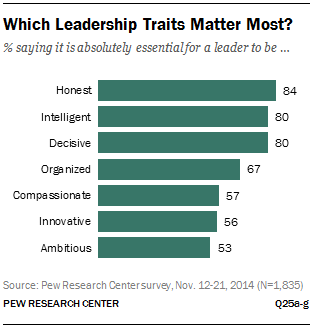
Table: I Women's Vs. Men's Leadership Styles SN Women's Leadership Men's Leadership Style 1 'Transformational' – Tying employee self interest to the goals of the organisation 'Transactional' – job performance as a series of transactions to be rewarded or disciplined 2 Prefer flat structure Prefer hierarchical structure 3 Focus on relationships Focus on performance 4 Persuade/encourage/motivate Give orders/have them followed 5 Cooperative Competitive 6 Indirect Communication style Direct communication style (Source: derived from Egaly and Johannesen-Schmidt, 2001) Do these values and attitudes differences affect leaders? There are numerous indications that they probably do. For example, as members of legislative bodies, women are more likely than their male colleagues to advocate for changes that promote the interests of women, children, and families and that support public welfare in areas such as health care and education. Although women are not a monolithic political bloc on these issues, political scientists have shown that these tendencies in general transcend political parties and nations. Similarly, a natural experiment involving Indian women village leaders who gained office through a government mandate revealed that women, more than men, enacted policies that provided for the public good, such as bringing clean water to their villages. What Makes a Good Leader, and Does Gender Matter? Whether they are heading a major corporation or serving in elected office, leaders bring a combination of traits to the table. In the public's estimation, some traits are clearly more important than others. Honesty, intelligence and decisiveness are considered "absolutely essential" leadership qualities by at least eight-in-ten adults. Roughly two-thirds of adults (67%) say that being organized is an essential quality in a leader. Somewhat smaller shares of the public say that being compassionate (57%), innovative (56%) or ambitious (53%) are essential for leadership. Men and women tend to agree on the relative importance of the top tier of leadership traits. Nearly equal shares of each say being honest, intelligent, organized and decisive are absolutely essential, although women place somewhat more importance on intelligence and honesty than do men.

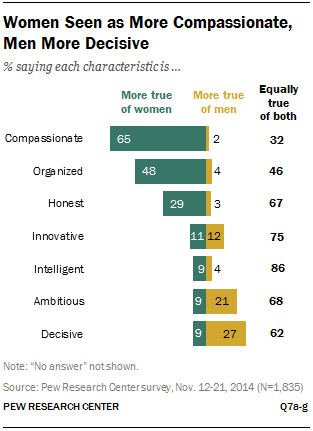
Who Has the Right Stuff to Lead - Men or Women? The public sees little distinction between men and women on several of these leadership traits. Large majorities say that when it comes to intelligence and innovation, men and women display those qualities equally. And solid majorities see no gender differences in ambition, honesty and decisiveness. While solid majorities of the public see no difference between men and women on decisiveness and ambition, among those who do draw a distinction on these traits, men have an edge over women. Some 27% of adults say that men are more decisive than women, while only 9% see women as more decisive than men. About six-in-ten (62%) say men and women are equally decisive. Similarly, while 21% of the public says men are more ambitious than women, half as many (9%) say women are more ambitious than men. (A 68% majority see no gender difference on this trait.)

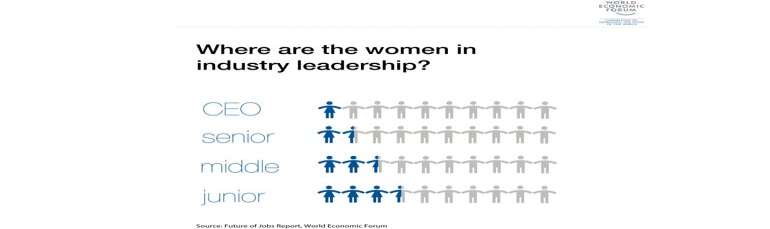
Women in Leadership Positions – Global Outlook According to a report by the European Commission (2012), in the European Union, as of beginning 2012, women constituted only 13.7% of board seats. Even more dissatisfactory, women constitute only 3.4% of chairs and presidents within the European Union. Other parts of the world see the same trends. Although the US sees a slightly better figure (15.7%), Australia and Canada both see female board representation of around 10%. India's boardrooms only constitute less than 5% women (European Commission, 2012). Moreover, in 2010, for the Asia-Pacific region, women comprise only 6.5% of the board members, whereas for the Middle East and NorthAfrica, this number is only 3.2% (Corporate Women Directors International, 2010). In Australia, female representation within government boards was 38.4% in 2012.
Figure II: Leadership Gender Gap around the World in 2015

• Top eraners
8.1%
12.6
• Board seats
14.5
• Executive officers
• Management
35%
Women in Labour Force
(Source: Catalyst Research 2013)
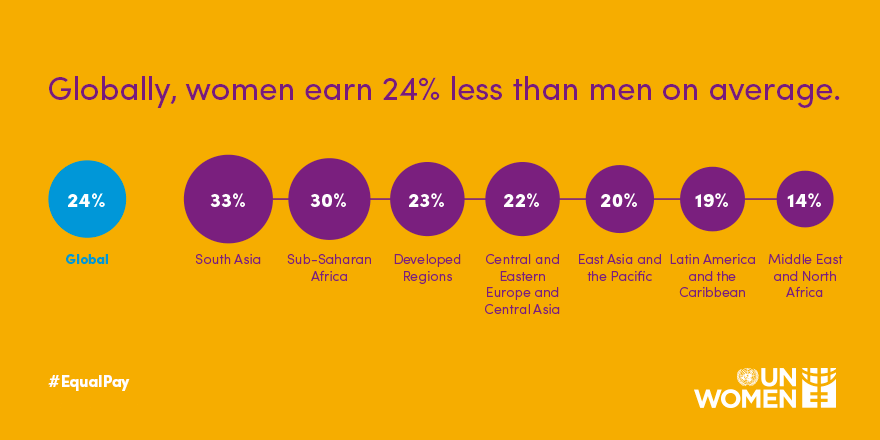
Should We Mind the Gap? Equal pay for equal work seems quite innocuous and rational assertion especially in 21st century. It is hard to believe that in 2016, we are still talking about the gender pay gap. And yet the fact remains that there is no country in the world where women earn the same as men.
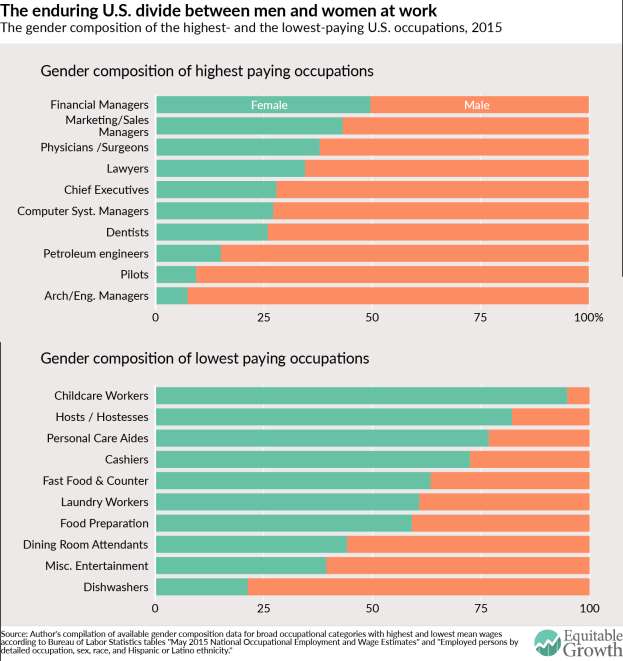
One of the arguments used to explain and sometimes justify this stubborn gap is the idea of choice. Women simply choose to study less lucrative subjects, enter lowerpaying professions and stay towards the bottom rungs of the career ladder. While these choices might give them shorter working hours and greater flexibility, it also negatively affects their earnings. The latest data from the US Bureau of Labor Statistics does indeed show that women are under-represented in some of the highest-paying occupations.

It is not that women engineers are getting paid less than men doing the same job: it is that a childcare worker is getting paid less than an engineer, or so the argument goes. If that is the case, the answer is simple: women should start moving into those careers that do pay well. Instead of becoming a social worker, become a software developer. But that's only part of the story. The fact is that even within those lucrative, male-dominated professions, the gender pay gap is still there. "There is a belief, which is just not true, that women are in bad occupations and if we just put them in better occupations, we would solve the gender gap problem," Claudia Goldin of Harvard University told the New York Times. As her research has shown, even when men and women do the same work, there's still a gender pay gap – particularly in higher-paying jobs.

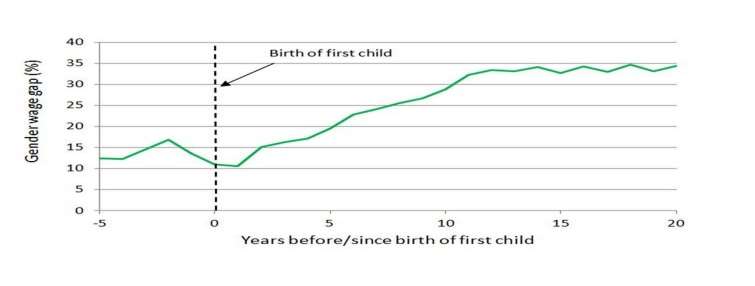
Is the Motherhood Penalty? Women, who return to work after having a baby, fall even further behind men in earning power, according to a new report. The study, by the UK-based Institute for Fiscal Studies, found that, on average, women in paid work receive about 18% less per hour than men. That pay gap increases once women become mothers. By the 12th year after their first child, the gap has increased to 33%. Further, the report also says that mothers miss out on opportunities for promotion to better-paid positions and do not accrue the same valuable experience as men. By 20 years after the birth of their first child, women have, on average, been in paid work for four years less than men and have spent nine years less in paid work of more than 20 hours per week.

Women's Leadership in India According to study by Mckinsey reports only 5% of working women in India make it to senior leadership positions in the corporate sector/ compared to the global average of 20%. In India, women's strength in the labour force stands at 28% in the junior level, 14.9% at the middle and 9.32% at the senior level. India also ranks at the top in the dropout rate as well. Out of 323 total executive directorship positions generally considered to be the prerequisites to holding the CEO position on the Bombay Stock Exchange-100, just 8 (2.5%) are held by women.
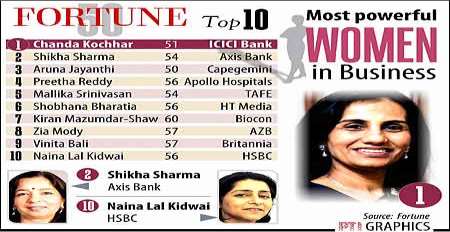
According to a study by Prime Database, approximately 60% of 1463 companies listed on NSE don't have even one woman director on their board; i.e. 886 companies were yet to appoint a woman director as on July 24, 2014. Of the companies which have since complied with the requirement of one director on the board, about 20 have been filled by appointing women belonging to the promoter or friend group. Among the companies that have filled the vacancies by naming women related to family are, for example, Reliance Industries Limited (Nina Ambani, wife of Mukesh Ambani, Chairman), Asian Paints Ltd. (Amrita Amar Vakil), Godfrey Phillips India Ltd (Bina Modi, wife of Chairman K. K. Modi), Kirloskar Oil Engines Ltd (Gauri Kirloskar, Chairman Atul Kirloskar's daughter), Raymond Ltd. (Nawaz Gautam Singhania, wife of Gautam Singhania). Further there are only 4% of the directors of publicly listed Indian companies are women. Men hold 8,640 boardroom positions and women 350 in the country's 1,470 listed firms. India has two companies in the fortune 500, Reliance Industries and Indian Oil, but only one is woman out of total of 30 directors. The scarcity of women in the boardroom is not unique to India - nearly one fifth of the world's 200 largest companies have no women directors.
Gender ratio skewed in Corporate Workforce HDFC Chairman Deepak Parekh today said some public listed entities are perceiving the Security and Exchange Board of India's mandate of having at least one woman director on the Board of a listed company as a "compliance exercise" and some listed companies are adopting only a 'tick the box' approach.


According to prime database, nearly 75 per cent of these appointments are nonindependent and family members defeating the very purpose of bringing in diversity in the corporate world. Many corporate have not even followed the Sebi requirement. On the other hand, even Sebi has not been able to do anything out of the 1,000s of companies that are listed. Parekh said it was not right for the corporate India to lament that there is not a large enough pool of talent to recruit women directors. He said there was a need to harness the country's human resources and ensure the corporate do not fritter away (these) opportunities and lose stand. Though many employers have recognized the benefits of diversity in workforce, the reality is the gender ratio still remains immensely skewed. Many women tend to drop off the corporate ladder for a variety of reasons, primarily due to family commitments or to pursue other skills. Unfortunately getting back on track post the work break is difficult and we need a mindset change here and taking a break must not be construed as detrimental to one's career," he said. Women are deliberately excluded from the leadership position and patriarchy is perpetuated and reinforced by the public institutions including state. For instance, recently the Maternity Benefit (Amendment) Bill 2016, passed by Rajya Sabha in August 2016, reinforces the already deeply entrenched social norm of child-rearing relieving being left exclusively to the mother, effectively reliving the father of responsibility. The maternity bill, indeed, has flavor that infer "men leave childcare to their wives and glorify motherhood." In other words, maternity leave has statutory backing and paternity leave doer no, has a threat to employment parity among the sexes. And discursively suggestive that family (looking after children) is sole territory of female.
Women Power in Sports Do you know that a total of 83 athletes, 60 men (72.3%) and 23 women (27.7%), competed in the 2012 Summer Olympics game at London. Women bagged 2 medals (33.3%) out of 6 medals won by India. India has sent the nation's largest ever delegation of a total 117, 63 men (53.8%) and 54 women (46.2%), in the 2016 Summer Olympics at Rio. Showering praise on Olympic medalists PV Sindhu and Sakshi Malik Prime Minister Modi Tuesday said these 'daughter' were the saving grace of India at the Rio Olympics. After girls' performance in Rio, people have started saying 'Beti Bachao, Beti Padhao and Beti Khilao'. So let's encourage our daughters to take up sport activities. The new generation of Indian sportswomen are also the grittiest of them all. Dipa Karmakar risked her life to perform the Produnova vault, widely known as one of the most dangerous feats in gymnastics; Sakshi Malik overcame deficits in the dying seconds of her bout, and Sindhu, minutes after a spell of losing 7 out of 9 points, won 11 consecutive points to reach the final. "They are severe risk takers, have a neversay-die determination and a seething killer instinct. These are not qualities we associate with Indians, and certainly not its women," The performances in sport clearly show that Indian women "wish to write their own futures". "More and more young girls want to break barriers and fulfil the same ambitions as men or their own ambitions and are less afraid and less cowed down by societal controls," she says. This is truly revolutionary.

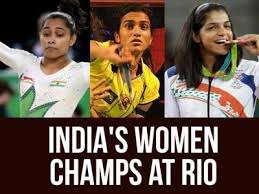
Paradoxically, a state infamous for its low sex ratio, kangaroo courts, women in veils and stark patriarchy is producing a large number of women athletes: 12 of the 20strong contingent from Haryana to Rio are women Women Leadership: Barriers Although women have the styles to thrive as senior leaders, yet they hardly succeed into higher positions. If it is not the ability that causes differences in leadership positions, other barriers must exist that are keeping women from advancement.
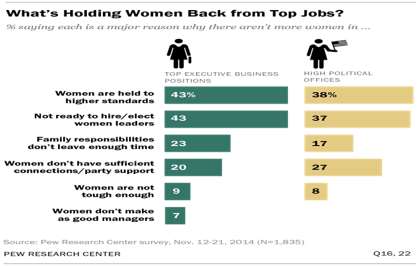

Authority and Negotiations According to McGinn and Bowles, women do not experience difficulties in adopting appropriate leadership styles; the problem resides in claiming authority. For instance, they found that men and women do not necessarily differ in their negotiations for salaries, but did differ in their negotiation of additional packages. Women enter a negotiation with lower expectations. One compelling explanation comes from the standard used to determine how much pay you deserve, where women are more likely to compare themselves to women, and men are likely to compare themselves to men. Evidence comes from social proof theory, where people look at those similar to themselves to help define an ambiguous situation. The other explanation is based upon the entitlement effect. When asked how much they would think they deserve, women report less for comparable work. McGinn and Bowles state that attitudes follow behaviour, thus if women stand up for their righteous entitlements, other women will use that as their standard.
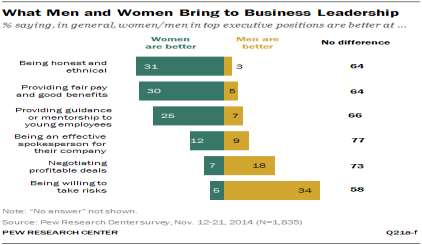

Family Responsibilities Four-in-ten Americans do not believe that women's responsibilities to family stand in the way of them becoming top business executives, but about a quarter (23%) say this is a major reason and an additional 35% say it is at least a minor reason that more women are not running large businesses. Women are somewhat more likely than men to see family responsibilities as a significant barrier for women hoping to reach the top levels of corporate leadership; 26% of women and 20% of men say this is a major reason that more women are not in top executive business positions.

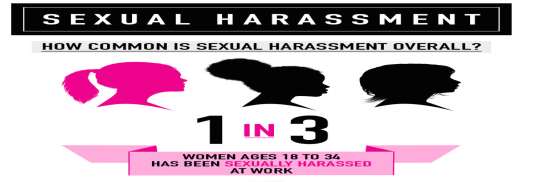
When asked if it's better for a woman who wants to reach a top executive position in business to have children early on in her career, to wait until she is well established in her career to have children, or to not have children at all, Americans are divided: 40% say it is better to wait, and 36% say it is better to have children early on. About one-in-five (22%) say a woman with top business leadership aspirations is better off not having children. Men and women offer similar opinions about when women who want to reach a top executive position should have children, but there is a considerable generation gap on this matter. Gender Biases – Discrimination and Harassment Women leaders are likely to be viewed negatively when adopting masculine leadership characteristics. When women do remain feminine but perform a male role, they are perceived as too emotional and lack assertiveness. This means that women leaders face a compromise between being liked and perceived competence. Besides, they face plethora of discrimination and harassment at work place.
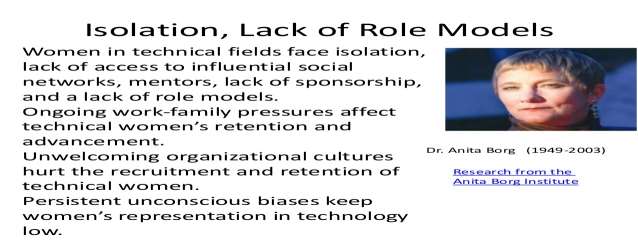
Role Models There are not enough good female role models, who are needed as an exhibit of successful and effective female leadership. Women tend to use communication and behaviour strategies that have worked for them in the past, whereas men will imitate strategies used by their seniors. Therefore role modelling is not instinctive in women. Moreover, women will try more modest behaviours in order to avoid disapproval, whereas men signal their conformity to company's norms, albeit feeling unnatural.

Scrutiny The last, less obvious, challenge is that of women leaders' heightened visibility due to the scarcity of women leaders at more senior positions. When women become one of the few that have reached the top, they will be watched closer, and subjected to greater scrutiny resulting in risk aversion.

Further, as women climb the ladder, the responsibilities will become more demanding and they may be faced with lesser flexibility geographically. Thus, McKinsey (2007) argues that the needs for senior management are intolerant to the career paths and needs of women.
Conclusion Consider comments made by President Richard Nixon, when explaining why he would not appoint a woman to the U.S. Supreme Court, Nixon said, "I don't think a woman should be in any government job whatsoever…mainly because they are erratic and emotional. Men are erratic and emotional, too, but the point is a woman is more likely to be." In a culture where such opinions were widely held, women had virtually no chance of attaining influential leadership roles. There is considerable evidence that female leaders have a somewhat more participative, androgynous, and transformational leadership style than their male counterparts. There are also multiple indications that women, compared with men, enact their leader roles with a view to producing outcomes that can be described as more compassionate, benevolent, universalistic, and ethical, thus promoting the public good. Do these generalizations about sex-related aspects of leadership challenge conventional wisdom? The challenge score is mixed. Early meta-analytic findings challenged prominent researchers' denial of any sex differences in leadership style, but confirmed, albeit quite mildly, the claims of trade book writers. More generally, meta-analytic findings on leadership style also confirm the conventional wisdom inherent in gender stereotypes and thus should not surprise the general public.

References Books/Articles Acker, J. (1992). "Gendering organizational theory". In A. Mills & P. Tancred (Eds.), Gender, work and organization. London: Sage. Adams, R. B., & Ferreira, D. (2009). "Women in the boardroom and their impact on governance and performance." Journal of Financial Economics, 94, 291-309. Avolio, B. J. (2010). Full range leadership development. Thousand Oaks, CA: Sage Belenky, M. F. (1997). Women's ways of knowing: the development of self, voice, and mind. New York: Basic Books. Bem, S. L. (1993). The lenses of gender. New Haven: Yale University Press. Beutel, A. M., & Marini, M. M. (1995). "Gender and values." American Sociological
Review, 60, 436-448. Brescoll, V. L. (2011). "Who takes the floor and why? Gender, power, and volubility in

organizations." Administrative Science Quarterly, 56, 622-641. Calas, M. B., & Smircich, L. (1996). From 'the woman's point of view: Feminist approaches to organization studies. In S. Clegg, C. Hardy, & W.R. Nord (Eds.), Handbook of Organization Studies. London: Sage. Condit, D. M., & Hutchinson, J. R., (1997). "Women in public administration: