
Part 10
1.2.1 What is gender analysis?
Gender analysis is the study of the different roles of women and men in order to understand what they do, what resources they have, and what their needs and priorities are.
Gender analysis has commonly been used as a tool for development and emergency relief projects. The socially constructed roles of men and women must be understood in project or program design, as must roles related to class, caste, ethnicity and age. The techniques are also important in understanding management of natural resources. Gender analysis is relevant to education, although the frameworks used for development projects must be adapted to meet the needs of educational projects.
It ensure maximum participation by women and therefore increase benefits to society from women's skills better target policies, programs and services, ensuring that their desired outcomes are met support gender diversity. A strong positive association between women leaders and economic and social performance has been shown in several recent national and international studies. Business outcomes include improved marketing strategies, new product development and a broader clientele broaden the focus of economic analysis to inspire different questions to be asked and issues raised. For example, the issue of more women than men being in lower paid or unpaid work can be examined in terms of structural barriers that may limit women's opportunities for participation in the labor market analyzes the equity of policy, program and service outcomes.
Applying gender analysis will ensure that the needs of both women and men are addressed, which in turn leads to better social and economic outcomes. These outcomes are good for individuals, communities, businesses and governments. For example, ensuring that more women are able to participate in the workforce will:

help individual women secure economic independence
benefit the communities in which women are active participants
benefit the economy through increased income tax revenue
potentially minimise women's reliance on government support mechanisms.
Gender analysis takes diversity into account and can be used to identify impacts on specific groups such as Aboriginal and Torres Strait Islander women, culturally and linguistically diverse groups of women and women with disabilities.
1.2.3Framework of Gender Analysis
Gender analysis has various framework .Framework of gender analysis identifies the nature of task to be done in the process of finding position of gender in organization. Some of them are given below; Harvard Analytical FrameworkIt is called efficiency approach and understood as gender roles framework. It was developed by Harvard Institute for International Development and represented by Catherine Overholt in 1984.
Moser Framework -This framework was represented by Caroline Moser for gender analysis. It focus on gender roles identification, gender needs assessment, disaggregating control of resources and decision making within the household, planning for balancing the triple role, distinguishing between different aims in interventions and involving women and gender-aware organizations in planning.
Gender Analysis MatrixIt was developed by Rani Parker in copartnership with other development professionals. It focused on participatory planning and supported grassroots work for Middle Eastern
NGO.
Capacity and Vulnerability Analysis Framework.CVA was developed at Harvard University. It presented its analysis on 30 case studies of NGOS that worked for disaster situations.
Longwe's Women's Empowerment Framework - Sara Hlupekile Longwe developed Women's
Empowerment Framework. The framework helps planners understand the practical meaning of women's empowerment and equality, and then to evaluate whether a development initiative supports this empowerment
Social Relations Approach-This framework was developed by Naila Kabir. It is used for knowing how gender discrimination and inequalities are created, maintained and reproduced in institution such as

state, society, family and market.
In sum, it could be said that these framework for gender analysis provides micro vision and insights for understanding the way of men's and women's tasks and behaviors are considered in institutions. It helps to understand structural discrimination based on gender.
1.3 Gender analysis in civil society
Gender analysis in any organization determines the position of women in compare to men and also keep differences of gender while supervision. Thus, gender analysis in civil society are ; Identifying the development of men and women together. And analyzing men's and women's status and study whether men or women are getting worse and better from the development.
Getting to know who has command and access on ideology and resources in civil society
What efforts are made by civil society for bridging gap between men and women? And what is to be done for achieving gender equity.
1.3.1Difference between Gender Equity and gender Equality
Gender Equality is to treat men and women equally and not to be discriminated based on gender. It means men and women enjoy their rights and opportunity equally.But this approach faces criticism as men and women cannot be treated in same way. If their differences are ignored then it would be difficult to reach roots problems to resolve any issues regarding gender.
Gender Equity is meant to recognize differences in men' and women's lives. Because that they have different life experiences. One should respect gender differences and should not avoid it. Thus achieving gender equality in terms of differences is called gender equity so that men and women can enjoy their rights and opportunity respectively.
Text Box (i) "Equality focuses on creating the same starting line for everyone. Equity has the goal of providing everyone with the full range of opportunities and benefits – the same finish line".
1.4 Relationship between civil society and gender
Vaclav Havel (2001) argues, civil society represents "the power of the powerless". Moreover, it is the place where women started the fight for equality without having citizen status. It extended the political place for

them. Consequently, feminist participation in civil society for gender quality impacted across the world and they were granted citizenship by their states.
There are many reasons to study closely the relationship between civil society and gender. Jude Howell ,(2005 ) specifies four main reasons. These are as follows; The first, from the feminist perspective, women have been striking participant in the arena of civil societies everywhere in the world. Civil society provides them place where they feel more inclusive and active to raise their voice, articulate their demands in the welfare of women. They never shared such space in state institution and male dominated politics they feel excluded there. Thus, women found easier access to civil society than other state apparatus.In civil society it is easier to participate at local level by joining community, organizations, selfgroups, traders, associations, faith-based organizations, mothers' groups etc.
The Second reason is to highlight the issues of women and gender relations that have been missing in researcher's work of civil society. So that is the reason to pay attention on civil society from gender perspective.
Third, civil society is a double-edged sword for feminist. One place it can encourage solidarity , mutual respect and gender equality on contrary it can be arena of promoting conservative ideology of women's dependence.
As Anne Phillips cautions, civil society is unregulated space compare to state and this cause of vulnerability to sexist and discriminatory practices.
Forth, civil society in ideological sense has been favorable to stimulate particular agendas and positions.
Finally, women's own experience and their stress on issues of oppression and emancipation, feminist are well founded to take up issues of subordination, domination and power in civil society. This problematizes nature of civil society that is considered as a comfortable and benign field of diversity and plurality or as the site of peace and justice.
1.4.1Theoretical perspectives of civil society and gender analysis
There has been always debate on whether household and family is a part of civil society. Since civil society is understood as separate arena from family and state.Hegel explicitly separated family from civil society. He located civil society between state and family. This understanding fosters patriarchal nature of civil society and subordinate family as it is sphere of women. Thus , enlightenment and post enlightenment thinkers such as Rousseau , Ferguson , Pain and De Tocqueville sees civil society as in opposition of not only state but family too. It was very challenging to introduce gender aspects in civil society sphere. Some of contemporary theorists such as Jean Cohen and Arato emphasized to include family into sphere of civil society. However, feminist theorist like Jean Landes, Marry Ryan and Nancy Fraser made significant effort to challenge dogmatic views of theory that excluded family from public sphere. They brought gender issues in discourse of civil society.

Therefore, globally and nationally civil society is seemed more accessible and favorable place for gender equality.
Karen Baren and Peter Albrecht see importance of introducing gender issues in civil society oversight of security sector. Involving women in civil society oversight efforts can make oversight inclusive and adequately representative. In order to different participation and preferences, women's organization can be substantial factor to civil society oversight process: CSOs can bring gender issues effectively which men and women face different types of insecurity.
Women's organization can easily access those marginalized groups and collect information that would otherwise be overlooked.
Women 's organization may give different outlook on gender that can be introduce in security sector's policies and practices.
Women's organization may points out that behavior that mark serious violation against women such as rape or harassment by security sector personnel.
Gender analysis ensure maximum participation by women and therefore increase benefits to society from women's skills better target policies, programs and services, ensuring that their desired outcomes are met support gender diversity. A strong positive association between women leaders and economic and social performance has been shown in several recent national and international studies. Business outcomes include improved marketing strategies, new product development and a broader clientele broaden the focus of economic analysis to inspire different questions to be asked and issues raised. For example, the issue of more women than men being in lower paid or unpaid work can be examined in terms of structural barriers that may limit women's opportunities for participation in the labor market analyzes the equity of policy, program and service outcomes.
Applying gender analysis will ensure that the needs of both women and men are addressed, which in turn leads to better social and economic outcomes. These outcomes are good for individuals, communities, businesses and governments. For example, ensuring that more women are able to participate in the workforce will: help individual women secure economic independence
benefit the communities in which women are active participants
benefit the economy through increased income tax revenue
potentially minimise women's reliance on government support mechanisms.

Gender analysis takes diversity into account and can be used to identify impacts on specific groups such as Aboriginal and Torres Strait Islander women, culturally and linguistically diverse groups of women and women with disabilities.
Text Box (ii) "Aboriginal people are often known as first peoples, indigenous peoples. They are ethnic groups who are descended from and identify with the original inhabitants of a given region, in contrast to groups that have settled, occupied or colonized the area more recently".
Thus civil society provides adequate place for raising voice for gender issues. For instances at global level the largest umbrella organization of women association in European Union including more than 2500 members.EU is kind of civic association that has been significant actor in promoting gender equality. United Nation also pays attention on gender issues through civil society help groups. Consultations in global, regional and national civil society advisory groups help UN Women draw upon their diverse expertise, experience, outreach and knowledge.
1.5 Indian Context
India has a long history of civil society based on concept of daana( giving) and seva ( service).Voluntary organizations – organization that are voluntary in spirit and without profitmaking objectiveswere active in cultural promotion, education, health, and natural disaster relief as early as the medieval era. They proliferated during British rule, working to social welfare and literacy and perusing relief projects. During the second half of the 19th centuary, nationalist consciousness spread across India and self-help emerged as the primary focus of sociopolitical movements. Numerous organizations were established during this period,including the Friend-in Need Society(1858), Prathana Samaj(1864), Sarya Shodhan samaj( 1873) Arya Samaj (1875), the Indian National Council for Women in India (1875), and the Indian National Conference ( 1887).
Today, about 1.5 million NGOs work in India(i.e., nonprofit, voluntary citizens' groups organized on a local, national, or international level). This includes temples, churches, mosques, gurudwaraa( sikh place of workshop), sports associations, hospitals, educational institutions, and ganeshtotsav mandals( temporary set up (Temporary set up to house Ganesh Festival celebrations). Most NGOs in India are small and dependent on volunteers. According to a survey conducted by society for Participatory research in Asia ( PRIA), 73.4% of NGOs have one or no paid staff, although across the country, more than 19 million persons work as volunteers or paid staff at an NGOs.

Text Box(iii) NGOs
"NGOs cannot be part of political party but works as organized civil society, as an organization to advocate, promote and monitor the political working based on development of society with the human right issues, education, health, environment and other welfare and development causes, aims, objects and issues".
India ranked 114 out of 144 countries in the Global Gender Gap Index. It is very worse rank. India is still stand very far from satisfactory gender rank at global arena. Although no country has achieved completely gender equality. Therefore, there is need to be brought more awareness programs at grassroots level. Awareness can be brought through voluntary association and participation of women within it.
India had experienced improvement of its overall score since 2010, when it had ranked 112. It had ranked 105 in 2012 and 101 last year but saw a decrease in 2014 due to a drop in scores on the economic participation and opportunity and educational attainment sub indexes.
India has performed poorly in removing gender-based disparities, ranking 114 out of 142 countries in World
Economic Forum's 2014 gender gap index, scoring below average on parameters like economic participation, educational attainment and health and survival.
India's slipped 13 spots from its last year's ranking of 101 on the Gender Gap Index by the World Economic
Forum. India is part of the 20 worst-performing countries on the labour force participation, estimated earned income, literacy rate and sex ratio at birth indicators.
On the other hand, India is among the top 20 best-performing countries on the political empowerment subindex.
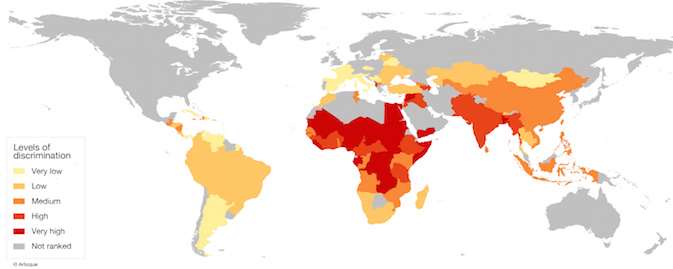

Source : http://www.genderindex.org/content/2014-categories
India was categorized into high level of discrimination in Social Institution Gender Index (SIGI). On average 32% of women have been victims of domestic violence in their lifetime, and more than 49% of women agree that domestic violence is justified under certain circumstances. India was valued 0.265 in SIGI category. Thus, Gender Index reports indicates that formal and informal institution must be concenrned more towards gender issues in India.
Text Box (iv) "The OECD Development Centre's Social Institutions and Gender Index (SIGI) is a cross-country measure of discrimination against women in social institutions (formal and informal laws, social norms, and practices) across 160 countries"
Although, Civil Society organization and social institution have been seeing more active towards women's empowerment in past years. There are some organization who is focusing on gender quality such as PRIA, SEVA, Action India etc.
Participatory Research in Asia (PRIA)-PRIA's focus on participatory approach of all section in democracy. Its goal to achieving building capacities of citizens, communities and institutions to enable vibrant, gender equal society. In 2014-15, the campaign to eliminate violence against women in public spaces reached out to 92,000 community members, building capacities of 8,500 youth and developing 35 citizen youth leaders. In 2013-14, PRIA's reached out to over 6,000 poor and marginalized, impacting over 85,000 people indirectly across 65 gram panchayats in 10 states and 195 slums in 20 cities.
Self Employed Voluntary Association (SEWA )-SEWA is in its attempt of bringing its member, the self employed women into knowledge of world. Through, action oriented approach it gets to know lives of its member and directs action accordingly.
Action India – It has been working for achieving its goal of gender quality and equity both with help of grassroots women. It has significant impact on women's lives as it recognizes their identity in public sphere and private sphere. This association evolves feminist perspectives by their action.

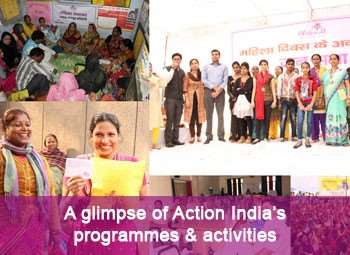
http://www.action-india.org/home
Text Box(v)
"Action India is a grassroots civil society organization working with the vision of gender just and egalitarian society with a gender lens. The mission of Action India is to achieve equality and equity in the society with a right to live with dignity and self esteem."
1.6 Global Context
At global level, internationational NGOs and association are found very active in addressing gender issues.
Although these organization needs to be regulated by some universal norms so that gender disparity can be reduced. Discrimination based on gender is deeply rooted in most societies in the world. So there is need to women's participation in international organization so that they can stand for their right themselves globally.
Even this approach to make women participation equally in compare of men is progressive step. Moreover, gender analysis increases the chances for women to get fair opportunity of expressing themselves.UN Women, The association for Women's rights in Development, Amnesty International, EU and many others have been working for gender equality in collaboration with state civil society.


Ms Openshaw said 'Women human rights defenders challenge gender inequality and stereotypes, advance sexual and reproductive rights and promote women's empowerment and participation. They often also challenge religious and cultural interpretations which subordinate, stigmatize or restrict women,'
Ms Marisa Viana said that support of civil society from all regions for women human rights defenders ,who faced violation showed the seriousness of issue that women human rights defender faced. Thus, it is necessary for states to take strong measures to stop violation against women human rights defenders. Consequently, UN
General Assembly's third committee adopted the first ever resolution on human rights defenders. It is the significant step in protection of those human right activists who face risks and attacks for their work to promote human rights including women's rights.
On the other hand, at global level CIVICUS organization is making tremendous effort to address gender issues within and outside the orgnisation. CIVICUS is an international non-profit organization, which describes itself as "a global alliance dedicated to strengthening citizen action and civil society around the world".
Inclusion of excluded groups must start at home for that CIVICUS first starting challenge to exclusion within civil society organization.Thus, "established CSOs in particular may be accused of reproducing exclusion in their internal workings, by not having a diverse membership, staff and leadership. For example, research points to wide disparity between the percentage of CSO staff who are women and the percentage of women leaders of CSOs, with leadership by women rarer in larger and better resources."

Source; http://www.civicus.org/index.php/en/about-us-125/gender-and-diversity
CIVICUS also refers to Gender Working Group that is "member-based advisory group focused on gender mainstreaming and women leadership across the Alliance. One of objective of the Gender Working Groups is

to generate dialogue around gender issues and increase the visibility of gender issues in civil society. Utilize
CIVICUS membership to address research/policy questions related to gender in civil society establishing substantive papers, positions and advocacy tools on the subject".
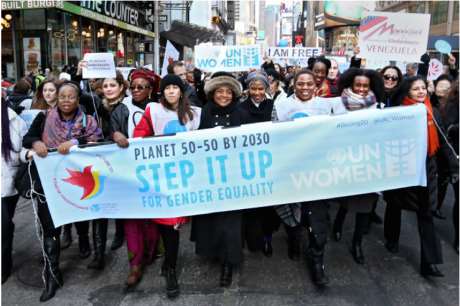
Campaign for gender equality initiated by UN Women
Therefore Voices from groups like JASS, WEDO, and the African Women's Development Fund (ADWF) urged to think about an approach that put women's movements and women's rights defenders front and center and to strategize about how to leverage the growing impatience and anti-colonial sentiments from many nations in the developing world with a more feminist agenda for the United Nations.
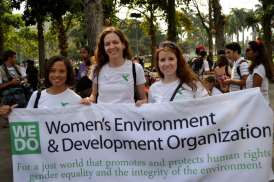
Source: http://wedo.org/about-us/vision-mission/
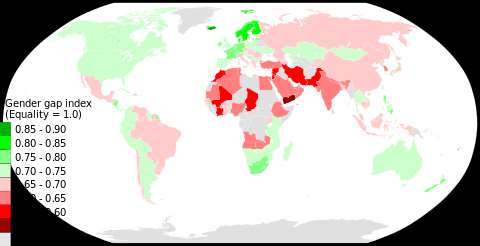

Global Gender Gap Index
The Global Gender Gap Index provides the framework to measure gender equality. The Global Gender Gap
Report 2015 provides a comprehensive overview of current performance and progress over the last decade.
On average, in 2015, over 96% of the gap in health outcomes, 95% of the gap in educational attainment, 59% of the gap in economic participation and 23% of the gap in political empowerment has been closed. No country in the world has achieved gender equality. The highest ranked countries—Iceland, Norway, Finland, Sweden and Ireland —have closed over 80% of their gender gaps, while the lowest ranked country—Yemen—has closed a little less than half of its gender gap (48%). Therefore, it is observed that women's empowerment in all spheres is required in achieving its goal of gender equality and gender equity.
Summary
Civil society plays crucial role in gender analysis.
Women can easily access to civil society than state.
Women's participation in civil society gives opportunity to realize gender equality.
Gender analysis is the study of different roles of men and women in order to measure their development respectively.
Participation of women's organisation brings lot of positive changes in civil society oversight process.
Gender analysis takes diversity into account that has positive impact on special groups such as indigenous people.
Vaclov Havel argues that civil society represents " the power of the powerless".
Main goal of gender analysis approach is to achieve gender equity with gender quality
Gender analysis in institution can be vary in relation with different framework of study.
Participatory Research in Asia has reached out to over 6,000 poor and marginalised people.
Indian civil society have been playing crucial role in achieving women's empowerment.

India is diverse country so there is need to understand gender issues in context of different culture.
Women's participation is increasing in international organisation.
UN Women, CIVICUS, WEDO, JASS and others organisation plays role of civic association and determines women's representation .

Paper No. :Gender and Citizenship
Module : Grassroots Citizenship
P Development Team
Prof. Sumita Parmar Allahabad University, Allahabad
Principal Investigator
Prof. Chandrakala Padia Maharaja Ganga Singh Univesity, Bikaner
Paper Coordinator
Content Writer
Dr. Bulbul Dhar-James, JMI, N Delhi. & Ms. Savita Sagar, UGC Senior Research Fellow,
Content Reviewer
Prof. Chandrakala Padia Maharaja Ganga Singh Univesity, Bikaner
GENDER, GOVERNANCE & POLITICS; Gender and Citizenship
Grassroots Citizenship ; Bulbul Dhar-James & Savita Sagar
Description of Module
Subject Name
Women's Studies
Paper Name Gender and Citizenship
Module Name/Title
Grassroots Citizenship – Meaning of Citizenship, Grassroots Citizenship, Issues of Grassroots Citizenship, Indian perspectives; developments of citizenship , Indian Constitution Rights to Women, Women Related Legislation, Women suffrage at Global Level, Women in Parliament globally.

Module Id
Prerequisites
The student is expected to have the knowledge of importance of grassroots citizenship nationally and globally.
Objectives To make the reader understand the concept of citizenship in terms of marginalized identify such as women at local level and sensitize them about its relevance and sensitize them about its significance in today's global world.
Keywords Citizenship, Grassroots Citizenship, Rights, Marginalized, Uniform citizenship, Differentiated citizenship, Gender, Suffrage, Women Participation at local level.
GRASSROOT CITIZENSHIP
Dr. Bulbul Dhar-James Former Director, SNCWS, JMI Email : [email protected]
Ms. Savita Sagar UGC Senior Research Fellow, Department of Political Science, Jamia Millia Islamia, New Delhi 110025
Email : [email protected]
1.1 Meaning of Citizenship:
Citizenship is the entitlement of rights and privileges that people have in their country as being a member of state. State recognizes its people as a citizen by giving them various rights and duties. Every country has their own criteria of considering people as its citizen such as born in within nation, through parent's citizenship, by staying legally certain years in country, on the basis of marriage and so on. It is the legal status given by the state.
GENDER, GOVERNANCE & POLITICS; Gender and Citizenship
Grassroots Citizenship ; Bulbul Dhar-James & Savita Sagar
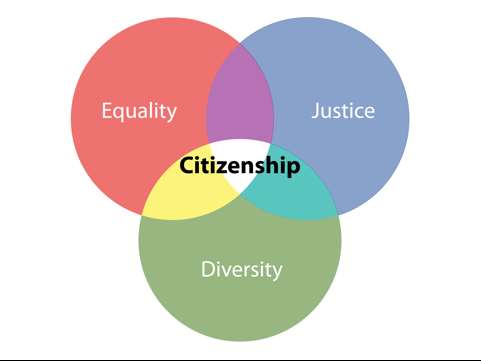

Source: http://www.iriss.org.uk/resources/imagining1
Citizenship is a very constructive concept with which to understand social and Political Processes because of its component parts - RIGHTS, RESPONSIBILITIES & PARTICIPATION, are crucial in any system of governance built upon DEMOCRATIC PRINCIPLES. Our attachment to our identity as a citizen, ensures the legitimacy of the government and it is through the exercise of rights, responsibilities & participation the common institutions of Politics can be sustained and improved.
The commonly accepted definition of citizenship by T.H Marshal in Citizenship and social class (1950) as 'full and equal membership in a political community' holds the promise of equality and integration within the political community.
T.H ,Marshall defines citizenship in context of rights that falls into three category of rights; civil, political, and social. Civil and Political rights are considered negative rights as it puts limits on government action. But social right that Marshal sees it as a positive rights since these rights allowed government to take affirmative action to provide its citizen a minimum social status so that they can enjoy civil and political rights.
Text Box(i)
GENDER, GOVERNANCE & POLITICS; Gender and Citizenship
Grassroots Citizenship ; Bulbul Dhar-James & Savita Sagar
Civil rights are individual rights such as freedom of expression, speech, religion, press, assembly, movement and right to equality and own property etc irrespective any differences. Political rights are rights such as right to fair justice, the right to vote, right to participation in politics and right to form association etc.
Liberals like Marshall have assumed that citizenship will be universal in its benefits and demamds : that citizenship will recognize the equality of all members of the polity. Kaith Faulks (2002) points

out that the "problem with this assumption has been highlighted by Feminist writers amongst others who argue that a single universal model of citizenship infact entails supression of important differences". Historically, citizenship is associated with the privileges of membership of political community where their members enjoy certain equal political status in decision making to regulate social life (Bellamy 2008). Anupama Roy considers citizenship as a evolving concept that changes with the course of time.
Text Box(ii)
Globalization means that we cannot rely on states to defend our Rights and facilitate our responsibilities. Contemporary context has highlighted the need for greater cooperation between diverse political communities and the need to rethink citizenship in ways which no longer privilege the relationship between the individual and the state.
GENDER, GOVERNANCE & POLITICS; Gender and Citizenship
Grassroots Citizenship ; Bulbul Dhar-James & Savita Sagar
1.2 Grassroots Citizenship


https://participationdictionary.wordpress.com/2014/04/25/g-for-grassroots-movement/
There are multiple meanings of grassroots. Since organizations have their own version of this term.
However, Grassroots term in women's studies indicates to 'women out there'. It involves those poor and marginalized women who are striving for their basic rights and gender equality as well. Thus, it distinction between elite / grassroots, nonpoor /poor, urban rural and here and out there. Some
CSOs, NGOS link this grassroots term to decentralization of power in institution that represents women in decision making process. Challenging second waves of feminism in 1990s third wave feminist raised the voice for marginalized and oppressed women and other identities as well. It is more closed to grassroots citizenship. Thus, third wave was more gender focused rather first and second waves of feminism.
Therefore grassroots citizenship here meant to citizenship at local level where women and other marginalized identities are in centre. Gender equity and equality need to be addressed through grassroots citizenship. So it is well known slogan in global women's movement is "think globally, act locally". It means that changes will not come only by thinking globally but need to act in practice at grassroots level that is called local. Moreover, U.Kaplagam gives more value to this slogan by adding the term think locally, act locally. He argued that feminist theory should come forward to GENDER, GOVERNANCE & POLITICS; Gender and Citizenship
Grassroots Citizenship ; Bulbul Dhar-James & Savita Sagar help people to think locally. Therefore, those marginalized women citizen that live in remote areas, and unable to know about their citizenship rights due to lack of awareness can be recognized in context of citizenship. Gendered often neglected because of faith in religion, different social structural.
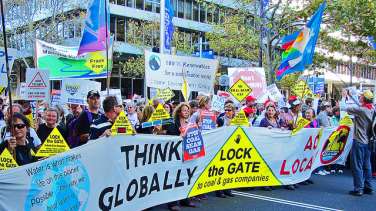

Sorce; Globalsolutions.org 1.2.1 Issues of grassroots citizenship
Poverty, discrimination and social exclusion that undermine the benefits of citizenship.
Public private divide that creates obstacle to enjoy citizenship rights where female belongs to private sphere called family and male belongs to public sphere.
Women suffer double discrimination due to social divisions such as cast, class, race, religion and due to being women.
Cultural and religious identity.
Hierarchical society that determines gender's role in social and political sphere.
Issues of power and inequality have been addressed by feminist theorist.
Text Box (iii ) "The personal is political "is the slogan used by second wave of feminist in late 1960s. It was the collective voice of feminists that attempted to break the division between public and private sphere.
GENDER, GOVERNANCE & POLITICS; Gender and Citizenship
Grassroots Citizenship ; Bulbul Dhar-James & Savita Sagar
Liberal model of citizenship dominates contemporary democracy. Liberal notion has two strands one is republic notion of citizenship and second is liberal individualism. The liberal individual ideology focuses on equality so that each individual cannot be discriminated by the state. Thus, legally it advocates equality before law and uniformity of citizenship disregards any differences.
This notion was criticized on feminist, communitarian and Marxist grounds by calling liberal notion as exclusive and passive tradition of citizenship. On the other hand civic republicanism advocates citizenship rights in context of duties of citizens. Responsible citizens participate in voluntary

association and secure their rights .So this concept bring concept of good citizens and communitarian aspect of citizenship.
Grassroots citizenship gives critical insights to understand right of women. It questions and challenges the public private divide that falls into material and cultural context. Why is this divide prevailing in society? Grassroots citizenship tries to reach out to livelihood, family and infrastructurte.Gender citizenship question on citizenship rights of women that are made in the framework of social structure. All feminist criticized the idea of 'uniform citizenship' because it ignores gender aspects and fails to understand the fact that citizenships are given in patriarchal tradition. So some feminist such as Will Kymilica and Iris Marian Young advocated differentiated citizenship that includes marginalized and excluded section not as an individual but groups
Text Box (iv)
Social structure- "The social structures based on class, caste, gender, ethnicity, region and language limits the possibility of engaging actively in the public sphere and for accessing one's rights".
1.3 Indian perspectives
In Pre-independence, women's movement was basically focused on women's issues not as such gender relation. It was an attempt of bringing about change in status of women. Political participation in national struggle opened the space for women in politics. In this attempt Gandhi's role was significant to encourage women to come out of their home. Women were seen in national struggle as political actor. So in India they did not face problem in getting political rights constitutionally. However, it did not bring any substantial change in their status because mere
GENDER, GOVERNANCE & POLITICS; Gender and Citizenship
Grassroots Citizenship ; Bulbul Dhar-James & Savita Sagar getting right to vote was not enough to change mindset of people in society. For that, there was need to active participation in each sphere.
"In India in the 1950s and 1960s, the emphasis shifted to modernizing society, and building a modern nation-state, in the immediate aftermath of independence from British rule. This required challenging many of the cultural practices that had gone into forging a national identity during the anti-colonial struggle. Lawmakers who wrote the Constitution for a newly independent India had to tread cautiously, especially in the domain of the so-called personal laws. These laws about

marriage, inheritance, and many other cultural-traditional practices had to accommodate the sensitivities of religious communities".
The period of 1960s and 1970s was significant in the development of women's movement. They recognized structural inequalities and gender relation in public private sphere. Indian women's movement was the struggle for gender citizenship. So women's movement in India raised many issues related to grassroots citizenship such as division of labour,domestic violence, crime against women, sexual harassment etc.Women's movement have to confront with the state in order to achieve grassroots citizenship.
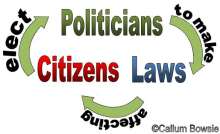
Source; en.wikipedia.org
1.3.1 Indian Constitution Rights to Women:
"The rights and safeguards enshrined in the constitution for women in India are listed below: The state shall not discriminate against any citizen of India on the ground of sex [Article
15(1].
GENDER, GOVERNANCE & POLITICS; Gender and Citizenship
Grassroots Citizenship ; Bulbul Dhar-James & Savita Sagar
The state is empowered to make any special provision for women. In other words, the provision enables the state to make affirmative discrimination in favour of women [Article
15(3)].
No citizen shall be discriminated against or be ineligible for any employment or office under the state on the ground of sex [ Article 16(2)].
Traffic in human beings and forced labour are prohibited [Article 23(1)].
The state to secure for men and women equally the right to an adequate means of livelihood

[Article 39(a)].
The state to secure equal pay for equal work for both Indian men and women[Article 39(a)].
The state is required to ensure that the health and strength of women workers are not abused and that they are not forced by economic necessity to enter avocations unsuited to their strength [Article 39(e)].
The state shall make provision for securing just and humane conditions of work and maternity relief [Article 42].
It shall be the duty of every citizen of India to renounce practice derogatory to the dignity of women [Article 51-A(e)].
Onethird of the total number of seats to be filled by direct election in every Panchayat shall be reserved for women [Article 243-D (3)].
Onethird of the total number of offices of chairpersons in the panhayat at each level shall be reserved for women [Article243-D(4)].
One-third of the total number of seats to be filled by direct election in every Municipality shall be reserved for women [Article 243-T(3)].
The offices of chairpersons in the Municipalities shall be reserved for women in such manner as the state legislature may provide [Article 243-T(4).
1.3.3Women –Related Legislation
1. The Indian Penal Code,1860
2. The Indian Evidence Act, 1872
GENDER, GOVERNANCE & POLITICS; Gender and Citizenship
Grassroots Citizenship ; Bulbul Dhar-James & Savita Sagar
3. The Indian Christian Marriage Act, 1872 (15 of 1872)
4. The Married Women's Property Act, 1874 (3 of 1874)
5. The Guardians and Wards Act,1890
6. The Workmen's Compensation Act, 1923
7. The Trade Unions Act 1926
8. The Child Marriage Restraint Act, 1929 (19 of 1929)
9. The Payments of Wages Act, 1936

10. The Payments of Wages (Procedure) Act, 1937
11. The Muslim Personal Law (Shariat) Application Act, 1937
12. Employers Liabilities Act 1938
13. The Minimum Wages Act, 1948
14. The Employees' State Insurance Act,1948
15. The Factories Act, 1948
16. The Minimum Wages Act, 1950
17. The Plantation Labour Act, 1951 (amended by Acts Nos. 42 of 1953, 34 of 1960, 53 of1961,
58 of 1981 and 61 of 1986)
18. The Cinematograph Act, 1952
19. The Mines Act 1952
20. The Special Marriage Act, 1954
21. The Protection of Civil Rights Act 1955
22. The Hindu Marriage Act, 1955 (28 of 1989)
23. The Hindu Adoptions & Maintenance Act, 1956
24. The Hindu Minority & Guardianship Act, 1956
25. The Hindu Succession Act, 1956
26. The Maternity Benefit Act, 1961 (53 of 1961)
27. The Beedi & Cigar Workers (Conditions of Employment) Act, 1966
28. The Foreign Marriage Act, 1969 (33 of 1969)
29. The Indian Divorce Act, 1969 (4 of 1969)
30. The Contract Labour (Regulation & Abolition) Act, 1970
31. The Medical Termination of Pregnancy Act, 1971 (34 of 1971)
32. Code of Criminal Procedure, 1973
GENDER, GOVERNANCE & POLITICS; Gender and Citizenship
Grassroots Citizenship ; Bulbul Dhar-James & Savita Sagar
33. The Equal Remuneration Act, 1976
34. The Bonded Labour System (Abolition) Act, 1979
35. The Inter-State Migrant Workmen (Regulation of Employment and Conditions of Service) Act,
36. The Family Courts Act, 1984
37. The Muslim women (Protection of Rights on Divorce) Act, 1986
38. Mental Health Act, 1987

39. National Commission for Women Act, 1990 (20 of 1990)
40. The Protection of Human Rights Act, 1993 [As amended by the Protection of Human Rights (Amendment) Act, 2006 - No. 43 of 2006]
41. Juvenile Justice (Care and Protection of Children) Act, 2000
42. The Child Labour (Prohibition & Regulation) Act
43. The Pre-Conception and Pre-Natal Diagnostic Techniques (Prohibition of Sex Selection) Act,
44. The Prohibition of Child Marriage Act, 2006
GENDER, GOVERNANCE & POLITICS; Gender and Citizenship
Grassroots Citizenship ; Bulbul Dhar-James & Savita Sagar
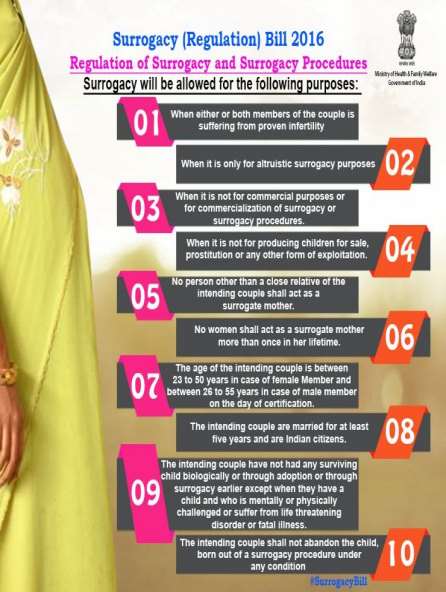

Surrogacy Indian Bill 2016
Recently India's draft Surrogacy (Regulation) Bill has been becoming question of debate. Surrogacy bill 2016 could be crucial to bring transparency in its procedure and also will stop commercialization of surrogacy. This bill somehow, ensures women's rights and stops any violation against women as it gets legality but it has alongside sparked offf debate over the government's role in reproduction.
Text Box V
A surrogacy arrangement or surrogacy agreement is the carrying of pregnancy for intended parents. In surrogacy, a woman carries a child to term for its intended parents via different fertility techniques, including IVF implantation. She is compensated for carrying the child, hence the term commercial surrogacy
As expected, the bill has generated a lot of debate around the country. Opponents have argued that by allowing surrogacy for select classes of citizens on the basis of their lifestyle, sexual orientation, GENDER, GOVERNANCE & POLITICS; Gender and Citizenship
Grassroots Citizenship ; Bulbul Dhar-James & Savita Sagar and life choices, the bill would violate citizens' Fundamental Rights as laid down in Article 14 of the Indian Constitution.
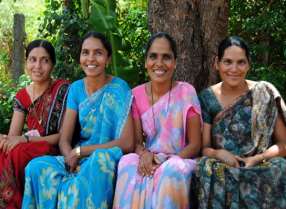


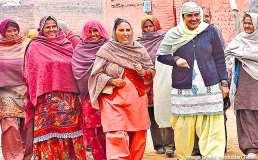
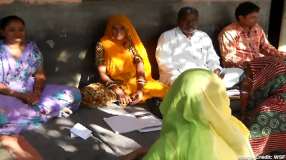
Five Women Sarpanch leaders in Panchayat source; http://www.jaagore.com/power-of-49/5-women-sarpanch-leaders-showing-india-the-wayforward
These women breaks the concept of "glass ceiling" by keeping themselves at leadership position.
Women's representation in local governments can make a difference. Research on panchayats (local councils) in India discovered that the number of drinking water projects in areas with women-led councils was 62 per cent higher than in those with men-led councils. In Norway, a direct causal relationship between the presence of women in municipal councils and childcare coverage was found.Thus, participation at local level increases women's capacity of decision making and problem
GENDER, GOVERNANCE & POLITICS; Gender and Citizenship
Grassroots Citizenship ; Bulbul Dhar-James & Savita Sagar solving. Apart of that local institution gives them opportunity to realize their rights in public and private sphere.
Text Box (vi)
Glass ceiling is the notion used by feminist that stops women to be in higher post especially as a leading head in everywhere at work place. It is just assumed that women have not that capability of handling this kind of job. Men are by nature made for that higher executive post.

1.4 Citizenship Movements and Gender
Across the world there is an active, mass-based demand for an end to gendered injustice in all domains of our social, economic, political and cultural lives. Social movements – led by feminist, women's and gender justice activists and movements – have been pivotal in demanding, making and sustaining these changes. However, while women's rights and gender justice are 'on the agenda' in many arenas, activists still encounter strong resistance to changing gendered politics and practices within movements and allied organisations. When it comes to making an impact on transforming gender power relations, social movements matter. Social movements are forms of collective action that emerge in response to situations of inequality, oppression and/or unmet social, political, economic or cultural demands. They are comprised of 'an organised set of constituents pursuing a common political agenda of change through collective action' (Batliwala 2012: 3). Social movements are not inherently progressive. Religious fundamentalisms, neo-Nazism and ethnic nationalism have all been rooted in and propagated by social movements.
GENDER, GOVERNANCE & POLITICS; Gender and Citizenship
Grassroots Citizenship ; Bulbul Dhar-James & Savita Sagar
Across the social movement spectrum Women's movements for women's rights and gender justice The majority of historical and contemporary activism on gender justice has been led by women and in all-women movements for change. Progressive women's movements are united around a common cause of challenging gender inequalities and injustices in society, although there is diversity in perspectives on this, including from the vantage points of race, class, ability, age and sexual orientation. Women-led movements for broad social justice agendas Women have also led activism for broader social and political change using approaches that acknowledge both gender inequities and political, social or economic issues, resulting in broad societal or political change and increased rights and justice for women. Men's movements for women's rights and/or gender justice Male gender equality activists have developed theoretical and practical insights into the ways patriarchal power affects men and

boys, questioning definitions of masculinity, including social norms, expectations and behaviours around men's labour, relationships in the family, sexuality, self-care and violence and aggression; and considering how men can relate to women in more egalitarian ways.
Historically, most progressive social movements have not embraced a commitment to consider gender inequality or challenge patriarchy from the outset. Frequently, gender analysis and action begins in mixed movements when women activists start to question why they are being left out of movement visions or not acknowledged in movement leadership.
There is a peculiar quality to injustice – it often seems to blind its victims to other forms of injustice. Movements against injustice carry the same trait: even as they muster indignation and a demand for change among their own citizenry, they can be blind to other injustices, and especially
A gender-just Citizenship movement Affirms the importance of tackling gender inequality and patriarchal power as an integral component of justice for all and names this as an explicit priority for action. • Creates a positive environment for internal reflection and action on women's rights and gender justice.
Provides active and formalised support for women's participation and leadership in all areas of movement practice. • Consistently tackles gender-based violence and establishes zero tolerance for sexual harassment in movement spaces. • Assesses gender bias in movement roles and redistributes labour along genderjust lines. • Enables full participation of both women and men, taking into account care work and reproductive roles. • Appreciates the gender dimensions of backlash and external opposition faced by activists. • Engages with norms and notions around gender, taking into account context-specific gender identities, trans and intersex identities and shifting understandings of gender in social life and activism.
GENDER, GOVERNANCE & POLITICS; Gender and Citizenship
Grassroots Citizenship ; Bulbul Dhar-James & Savita Sagar to those practiced within and by their own ranks. The sense of righteousness about their cause often results in a narrow, myopic, and exclusionary view - a hierarchy of injustices where theirs sits at the top, Gender and social Movements more urgently in need of redress than any other.
This is a syndrome that is particularly evident in the context of gender relations because women's subordinate position, and the gendered division of labour, privilege, decision-making power and leadership, has been so normalised, so deeply embedded in the fabric of daily life, that it is invisible unless we consciously search for its manifestations. Despite social justice movements

engage in struggles for a diversity of economic, social and political rights, the aspirations and interests of women within these are either forgotten, assumed to be the same as men's, or equally advanced by the movement's strategic agenda. Worse, many movements have actively opposed a focus on gender issues as divisive and disruptive of the larger struggle, and ironically, accuse women's movements of being too exclusive and myopic in their focus. The result is that there are very few social justice movements in the world that have authentically integrated gender justice within their worldview and strategies for change.
In India's capital city of New Delhi, a young girl was gang raped on December 16th 2012, and brutally assaulted for resisting her attackers. She died a few weeks later from the severe internal injuries inflicted upon her – but not before cities across the nation erupted in a wave of protests that brought men and women of all ages and classes onto the streets, demanding an end to violence against women and more stringent laws to punish the guilty. Veterans of the Indian women's movement, were amazed and bemused by this spontaneous demonstration of outrage, around what had just a decade earlier been considered a 'women's issue'. Somehow, somewhere, a powerful shift had occurred – this young girl's rape and murder, and the thousands of rapes, murders, and more mundane indignities women and girls suffer in daily life, was no longer a women's issue, or the responsibility of women's rights organisations or women's movements at large. It was everyone's issue, because it was everyone's shame.
Young women and men interviewed on television, at the words inscribed on countless placards: 'Teach your sons not to rape', 'Teach your sons to respect women', 'I am a woman, I am free, I will go anywhere, anytime'. Protests, marches, and vigils were being organised by groups across the widest possible spectrum – from neighbourhood residents' associations to human rights groups and youth organisations. It seemed as though our feminist dream that one day, all society would wake up and take ownership of the need to empower women and guarantee gender equality, had actually come true.
GENDER, GOVERNANCE & POLITICS; Gender and Citizenship
Grassroots Citizenship ; Bulbul Dhar-James & Savita Sagar
Building gender-just social movements: (Horn 2013) : There is tremendous diversity in social movement practice across contexts, so there is no straightforward 'recipe for change'. But experience shows that change is easier if a number of elements are in place to help alter both internal power dynamics and external strategies so that they are more inclusive of gendered politics viz : Recognise and transform culture, power dynamics and hierarchies within movements By making visible the way that gendered power is understood and practised in the 'deep

structure' of movements we can challenge the hidden and invisible power dynamics that make movement participation uncomfortable or unbearable for women and gender minorities, allow gender-based violence to continue within activist spaces, and undermine the lived politics of a movement.
Support internal activism for change The most powerful accountability mechanism in any movement is its own constituency. It is, therefore, vital to consider and support initiatives by movement members that call for women's rights and gender justice to be addressed in their movements' politics and practices. This might involve supporting both women's collective power and individual change-makers, building feminist leadership, developing platforms and caucuses on equality, and anticipating and responding to backlash.
Draw the line on impunity for gender-based violence Holding movement members to account for ethical conduct around gender relations – be it in public or private – is essential in creating gender-just movements. This includes issues such as domestic violence or sexual harassment by movement members, be it to others in their movements or in their personal lives. It also includes challenging impunity and the failure of movement leadership to take a stand against discrimination or violence within movements.
Develop the politics and make the arguments on gender and movements Political visions are what make a movement, and taking a position on gendered injustice and oppression is a necessary component of building gender-just movements. Elements of this process may include making women's rights and gender justice clearly visible in movements' external agendas, and creating spaces for learning and for open discussions on what a gender focus will mean in different movement contexts.
Build inclusive alliances, shared analysis and common cause The important process of building alliances and finding common cause between feminist and other social movement
GENDER, GOVERNANCE & POLITICS; Gender and Citizenship
Grassroots Citizenship ; Bulbul Dhar-James & Savita Sagar politics involves openness to critique and a desire to listen and to change. Intersectional analysis is a useful tool for movements to help identify how different axes of power intersect and to define areas of common struggle between social movements. Common cause may be built around a need to unite against common adversaries, but in the process, movement actors may build longer-term relationships.
Expand inclusion within women's and feminist movements Women's movements are not static; they emerge, grow and change in response to internal and external factors.

Challenging inequalities and the exercise of discriminatory power within women's movements needs to be ongoing, as movements self-critique and work towards increasingly inclusive politics of transformation. This in turn strengthens solidarities with other movements that women's movement members are a part of, and contributes to pushing progressive politics forward.
Operationalise gender justice in movements and movement-linked organisations In many cases movements have an organisational base or platform relevant to or influential in guiding movement thinking and practice. This base can play a key role in determining whether and how women's rights and gender justice are embraced. Organisational change strategies and auditing and evaluation approaches, if adapted and developed for specific movement contexts, can help to support this process, with senior-level commitment a key driver for strategies to transform internal culture and external political agendas.
Remain attentive to movement–organisation power relations Relationships between movements and organisations are multifaceted: organisations may support movements; movements may be allied with organisations or even create them. It is critical to be alert to the tremendous opportunities as well as tensions involved in these interactions.
Organisations explicitly dedicated to movement-building and support should consider how they can encourage and support movements to be inclusive, tackle new forms of oppression and recognise emerging constituencies. Donors should take steps to align their practices with requirements for gender-just movement-building and longer-term transformation.
Stay with it, and support change over time Time is an important factor in social movement development and success. While individual campaigns or instances of uprising for change may take place within a fixed timescale, the broader struggle for women's rights and gender justice remains ongoing. Success can bring backlash, and new forms of injustice, GENDER, GOVERNANCE & POLITICS; Gender and Citizenship
Grassroots Citizenship ; Bulbul Dhar-James & Savita Sagar marginalisation and inequality emerge as mainstream power takes on new forms or extends its reach in new domains. While shifts in how movements engage with gender are important, the real test is sustaining this respect and working on the full integration of women's rights and gender justice over time.
1.5 Women's Suffrage at Global Level
New Zealand was the first country to allow women to vote (in 1893), while the King Abdullah of

Saudi Arabia granted women the right to vote in 2011. The United States finally began allowing women to vote in 1920, after the ratification of the 19th Amendment to the Constitution.
1893 New Zealand
1902 Australia
1906 Finland
1913 Norway
1915 Denmark
1917 Canada
1918 Austria, Germany, Poland, Russia
1919 Netherlands
1920 United States
1921 Sweden
1928 Britain, Ireland
1931 Spain
1934 Turkey
1944 France
1945 Italy
1947 Argentina, Japan, Mexico, Pakistan
1949 China
1950 India
1954 Colombia
1957 Malaysia, Zimbabwe
1962 Algeria
GENDER, GOVERNANCE & POLITICS; Gender and Citizenship
Grassroots Citizenship ; Bulbul Dhar-James & Savita Sagar
1963 Iran, Morocco
1964 Libya
1967 Ecuador
1971 Switzerland
1972 Bangladesh
1974 Jordan
1976 Portugal

1989 Namibia
1990 Western Samoa
1993 Kazakhstan, Moldova
1994 South Africa
2005 Kuwait
2006 United Arab Emirates
2011 Saudi Arabia
Text Box(vi)
1. "Australian women, with the exception of aboriginal women, won the vote in 1902. Aborigines, male and female, did not have the right to vote until 1962. 2. Canadian women, with the exception of Canadian Indian women, won the vote in 1917. Canadian Indians, male and female, did not win the vote until 1960. Source: The New York Times, May 22, 2005. 3. King Abdullah issued a decree in 2011 ordering that women be allowed to stand as candidates and vote in municipal elections, but their first opportunity did not come until Dec. 2015, almost a year after the king's death in January".
1.5.1 Women in parliaments globally
Women's representation in parliament shows the possibility of using citizenship rights in legal and political term. Somehow, this removes the social and the religious hurdle that comes in their way to participate in poltics.It also breaks the public –private dichotomy. In past years, across the world women are talking interest in politics and becoming part of policy making process that can bring drastic change in their lives. It would be a substantive effort for achieving gender equality through claiming gender citizenship. Although their progress is very slow but it impacted at global and local level.
GENDER, GOVERNANCE & POLITICS; Gender and Citizenship
Grassroots Citizenship ; Bulbul Dhar-James & Savita Sagar
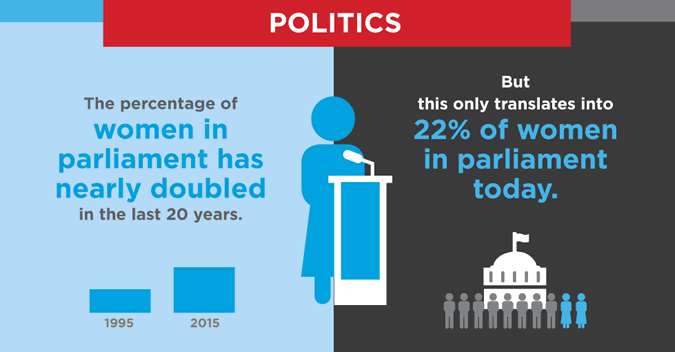
"Only 22.8 per cent of all national parliamentarians were women as of June 2016, a slow increase from 11.3 per cent in 1995. As of August 2016, 11 women are serving as Head of State and 10 are serving as Head of Government.
Rwanda had the highest number of women parliamentarians worldwide. Women there have won 63.8 per cent of seats in the lower house. Globally, there are 38 States in which women account for less than 10 per cent of parliamentarians in single or lower houses, as of June 2016, including 4 chambers with no women at all".

http://www.unwomen.org/en/what-we-do/leadership-and-political-participation/facts-and-figures
Recently, identity based issues are coming up globally for instance ban on Burkini in France got the attention of feminist activist. It is considered as an extension of Franc's nationwide ban on burkas.
Here,It rasises the question on freedom of what to wear or what to not. In this sense, should the state have rights on to decide one's dress? It is again identity issue that is related to one's faith and community.

https://www.theguardian.com/world/2016/aug/24/french-police-make-woman-remove-burkini-onnice-beach
GENDER, GOVERNANCE & POLITICS; Gender and Citizenship
Grassroots Citizenship ; Bulbul Dhar-James & Savita Sagar
Summary
In particular Citizenship is the legal status of individual country.
Developments of citizenship rights can be understood in three types of rights civil, political and social.
It is progressive concept that with course of time tries to expand its boundary to excluded and marginalized people.

Grassroots citizenship is gendered focused that is in an attempt of making society, politics and economic equal to all.
Third wave of feminism came as failure of second wave and deals with grassroots citizenship issues while first wave of feminism dealt with women's suffrage.
Grassroots citizenship is very essential for women's right.
There is need to think at local level as people there have been facing discrimination since years.
Indian women's movement has great impact in Indian diverse society to introduce gender relations.
Indian constitution gives significant rights to women however there is need to realize in substantive way
A gender-just Citizenship movement affirms the importance of tackling gender inequality and patriarchal power as an integral component of justice for all and names this as an explicit priority for action. and engages with norms and notions around gender, taking into account context-specific gender identities, trans and intersex identities and shifting understandings of gender in social life
Women participation in local institution can reduce gender disparity in public and private sphere.
Globally, grassroots citizenship can be achieved through equal participation by all excluded and oppressed identities including women, transgender etc
Across the world, women's participation has increased compare to past years.
GENDER, GOVERNANCE & POLITICS; Gender and Citizenship
Grassroots Citizenship ; Bulbul Dhar-James & Savita Sagar

Paper No. : Women's Studies as an Academic Discipline Module : Concept of Good Governance
Development Team
Prof. Sumita Parmar Allahabad University, Allahabad
Principal Investigator
Prof. Reicha Tanwar Kurukshetra Univesity, Kurukshetra
Paper Coordinator
Prof. Rajesh Gill Punjab University, Chandigarh
Content Writer
Prof. Reicha Tanwar Kurukshetra Univesity, Kurukshetra
Content Reviewer
Women's Studies as an Academic Discipline Concept of Good Governance, Gender and Citizenship, Gender Budgeting, Mirror Representation, Gender Responsive Governance
Women's Studies
Description of Module
Subject Name Women's Studies
Paper Name Women's Studies as an Academic Discipline
Module Name/Title Concept of Good Governance
Module Id

Pre-requisites The Reader is expected to have the knowledge of Indian social structure
Objectives To make the reader understand the concept of good governance
Keywords Governance ; Gender; Women
Women's Studies as an Academic Discipline Concept of Good Governance, Gender and Citizenship, Gender Budgeting, Mirror Representation, Gender Responsive Governance
Women's Studies
1.1 Concept of Good Governance
Governance is widely understood, when used with regard to government or the public sector, to refer to the institutional underpinnings of public authority and decision making. In this way, governance encompasses the institutions, systems, and other factors that determine how political and economic interactions are structured and how decisions are made and resources allocated. Clearly implicit in the

general concept is the notion that good governance is a positive feature of political systems and that bad governance is a problem that countries need to overcome.
Recently, the terms "governance" and "good governance" are being increasingly used in development literature. Bad governance is being increasingly regarded as one of the root causes of all evil within our societies. Major donors and international financial institutions are increasingly basing their aid and loans on the condition that reforms to ensure "good governance" are undertaken. The concept of "governance" is not new. It is as old as human civilization. Simply put "governance" means: the process of decision-making and the process by which decisions are executed (or not executed).
Governance can be used in several contexts such as corporate governance, international governance, national governance and local governance. Since governance is the process of decision making and the process by which decisions are implemented, an analysis of governance focuses on the formal and informal actors involved in decision-making and implementing the decisions made and the formal and informal structures that have been set in place to arrive at and implement the decision.
The term "good governance" has been extensively used within the international community in the last fifteen years and has acquired the characteristics of a "container concept", which incorporates a variety of principles and is as general as concepts such as globalisation or global governance. Good governance is a term different to governance which is mainly a political and technocratic term without normative aspirations and suggests that governance should be "good" and not "bad". Rachel
Gisselquist highlights the problem of conceptual clarity when it comes to "good governance" and why
Women's Studies as an Academic Discipline Concept of Good Governance, Gender and Citizenship, Gender Budgeting, Mirror Representation, Gender Responsive Governance
Women's Studies this is problematic for the practical outcomes that development institutions and the like are trying to achieve.
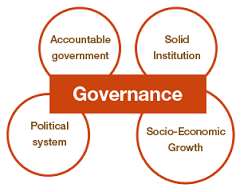

What is good governance?
There is no single and exhaustive definition of "good governance," nor is there a delimitation of its scope, that commands universal acceptance. The term is used with great flexibility; which is an advantage, but also a source of some difficulty at the operational level. Depending on the context and the overriding objective sought, good governance has been said at various times to encompass: full respect of human rights, the rule of law, effective participation, multi-actor partnerships, political pluralism, transparent and accountable processes and institutions, an efficient and effective public sector, legitimacy, access to knowledge, information and education, political empowerment of people, equity, sustainability, and attitudes and values that foster responsibility, solidarity and tolerance.
However, there is a significant degree of consensus that good governance relates to political and institutional processes and outcomes that are deemed necessary to achieve the goals of development. It has been said that good governance is the process whereby public institutions conduct public affairs, manage public resources and guarantee the realization of human rights in a manner essentially free of abuse and corruption and with due regard for the rule of law. The true test of "good" governance is the degree to which it delivers on the promise of human rights: civil, cultural, economic, political and Women's Studies as an Academic Discipline Concept of Good Governance, Gender and Citizenship, Gender Budgeting, Mirror Representation, Gender Responsive Governance
Women's Studies social rights. The key question is: are the institutions of governance effectively guaranteeing the right to health, adequate housing, sufficient food, quality education, fair justice and personal security?
Key factors of good governance
The concept of good governance has been clarified by the work of the former Commission on Human
Rights. In its resolution 2000/64, the Commission identified the key attributes of good governance:

transparency
responsibility
accountability
participation
responsiveness (to the needs of the people)
By linking good governance to sustainable human development, emphasizing on the principles such as accountability, participation and the enjoyment of human rights, and rejecting prescriptive approaches to development assistance, the resolution stands as an implicit endorsement of the rights-based approach to development.
Commission on Human Rights Resolution 2000/64 expressly linked good governance to an enabling environment conducive to the enjoyment of human rights and "prompting growth and sustainable human development." In emphasizing the importance of development cooperation for securing good governance in countries in need of external support, the resolution recognized the value of partnership approaches to development cooperation and the inappropriateness of prescriptive approaches.
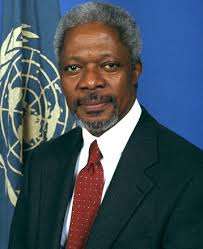
Almost all major development institutions today say that promoting good governance is an important part of their agendas. In a well-cited quote, former UN Secretary-General Kofi Annan noted that Good governance means creating well-functioning and accountable institutions – political, judicial and administrative – which citizens regard as legitimate, in which they participate in decisions that affect
Women's Studies as an Academic Discipline Concept of Good Governance, Gender and Citizenship, Gender Budgeting, Mirror Representation, Gender Responsive Governance
Women's Studies their daily lives and by which they are empowered.‟ perhaps "good governance is the single most important factor in eradicating poverty and promoting development".

Good governance is recognized as essential to poverty reduction efforts and respect for human rights, as conflict prevention, growth, and environmental protection. Definitions of "governance" range from a restricted view focusing on sound management of the economy, to a more expansive view that embraces political liberalization and problems of social inequality. According to the expansive definition, good governance implies democratic governance, meaning an agenda for participation, human rights, and social justice.
Despite this consensus, "good governance" is an extremely elusive objective. It means different things to different organizations, not to mention to different actors within these organizations (to make matters even more confusing, governance experts also routinely focus on other types of governance — global governance, corporate governance, IT governance, participatory governance and so on which may be related only peripherally to the good governance agenda vis-à-vis domestic politics and administration
Women's Studies as an Academic Discipline Concept of Good Governance, Gender and Citizenship, Gender Budgeting, Mirror Representation, Gender Responsive Governance
Women's Studies
In general, work by the World Bank and other multilateral development banks on good governance address economic institutions and public sector management, including transparency and accountability, regulatory reform, and public sector skills and leadership. Other organizations, like the United Nations, European Commission and OECD, are more likely to highlight democratic governance and human rights, aspects of political governance avoided by the Bank. Some of the many issues that are treated under the governance programmes of various donors include election monitoring, political

party support, combating corruption, building independent judiciaries, security sector reform, improved service delivery, transparency of government accounts, decentralization, civil and political rights, government responsiveness and "forward vision", and the stability of the regulatory environment for private sector activities (including price systems, exchange regimes, and banking systems).
In 1999 political scientist John Gerring spelled out eight "criteria of conceptual goodness" that provide a useful framework. Four of these criteria are especially relevant here: First, "good governance" lacks parsimony. Unlike good concepts, good governance has endless definitions, and we always need the details of each to understand if we are talking about the same thing.
Second, "good governance" lacks differentiation. Well-governed countries often sound a lot like functioning liberal democracies, for instance, and it is not clear how they differ.
Third, "good governance" lacks coherence. Its many possible characteristics — from respect for human rights to efficient banking regulations — do not clearly belong together.
Fourth, and most important, "good governance" lacks theoretical utility. It confuses, rather than aids, in the formulation of theory and the related project of hypothesis testing, not least because the concept is so fluid that analysts can easily define it in the way that best fits their data.
Despite some differences in the definition, the idea of good governance has also influenced across a wide political spectrum. For those on the political right, good governance has meant order, rule of law, Women's Studies as an Academic Discipline Concept of Good Governance, Gender and Citizenship, Gender Budgeting, Mirror Representation, Gender Responsive Governance
Women's Studies and the institutional conditions for free markets to flourish. For those on the political left, good governance incorporates notions of equity and fairness, protection for the poor, for minorities, and for women, and a positive role for the state. For many others found along the continuum from right to left, the concept is attractive for its concern about order, decency, justice, and accountability.
The emergence and popularity of the idea of good governance can be credited to more than its

attractive characteristics and admirable policy goals. Indeed, by the late 1980s, a confluence of intellectual and experiential trends brought increased visibility to this idea. Particularly in the fields of economics and political science, and echoed in practitioner and advocacy communities, the concept was a useful way to re-acknowledge the important role of the state in development. It took on greater life as a solution to a practical dilemma faced by development practitioners—how to frame political interactions in a way that appeared to be apolitical. It also grew in influence as the result of research practices that privileged large samples of countries over in-depth analysis of individual cases. And it became even more popular when advocates of various causes found it a useful umbrella under which to present and justify their particular concerns. The idea of good governance thus proved useful—and flourished from the late 1980s to the present.
Good governance has eight main features. It is participatory, consensus-oriented, accountable, transparent, responsive, effective and efficient, equitable and inclusive and also follows the rule of law.
It assures that corruption is minimized, the views of minorities are taken into consideration and that the voices of the least advantaged people in society are heard in decision-making. It is also accountable to the present and future needs of society.
Women's Studies as an Academic Discipline Concept of Good Governance, Gender and Citizenship, Gender Budgeting, Mirror Representation, Gender Responsive Governance
Women's Studies
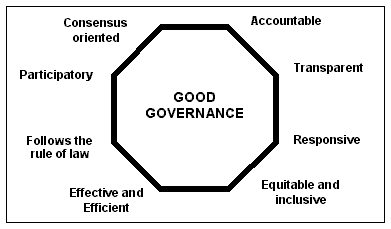

Participation by both men and women is a key cornerstone of good governance. Participation could be either direct or through legitimate intermediate institutions or representatives. It is important to point out that representative democracy does not necessarily mean that the concerns of the most vulnerable in society would be taken into consideration in decision making. Participation needs to be informed and organized. This means freedom of association and expression on the one hand and an organized civil society on the other hand.
Rule of law: Good governance requires fair and transparent legal frameworks that are enforced impartially. It also requires full protection of human rights, particularly those of minorities and downtrodden. Impartial enforcement of laws requires an independent judiciary and an impartial and honest police. Transparency means that decisions taken and their enforcement are done in a manner that follows rules and regulations. It also means that information is freely available and directly accessible to those who will be affected by such decisions and their implementation. It also means that enough information is provided and that it is provided in easily understandable forms and media.
Women's Studies as an Academic Discipline Concept of Good Governance, Gender and Citizenship, Gender Budgeting, Mirror Representation, Gender Responsive Governance
Women's Studies
Responsiveness: Good governance requires that institutions and processes try to serve all stakeholders within a reasonable timeframe.
Consensus oriented: There are several actors and as many view points in a given society. Good governance requires mediation of the different interests in society to reach a broad consensus in society on what is in the best interest of the whole community and how this can be achieved. It also requires a broad and long-term perspective on what is needed for sustainable human development and how to

achieve the goals of such development. This can only achieved from an understanding of the historical, cultural and social contexts of a given society or community. Equity and inclusiveness: A society's well being depends on ensuring that all its members feel that they have a stake in it and do not feel excluded from the mainstream of society. This requires all groups, but particularly the most vulnerable, have opportunities to improve or maintain their well being.
Effectiveness and efficiency: Good governance means that processes and institutions produce results that meet the needs of society while making the best use of resources at their disposal. The concept of efficiency in the context of good governance also covers the sustainable use of natural resources and the protection of the environment.
Accountability is a key requirement of good governance. Not only governmental institutions but also the private sector and civil society organizations must be accountable to the public and to their institutional stakeholders. Who is accountable to whom varies depending on whether decisions or actions taken are internal or external to an organization or institution. In general an organization or an institution is accountable to those who will be affected by its decisions or actions. Accountability cannot be enforced without transparency and the rule of law.
Good governance promotes equity, participation, pluralism, transparency, accountability and the rule of law, in a manner that is effective, efficient and enduring. In translating these principles into practice, it is necessary to conduct free, fair and frequent elections, representative legislatures that make laws and provides oversight, and an independent and impartial judiciary to interpret those laws.
Women's Studies as an Academic Discipline Concept of Good Governance, Gender and Citizenship, Gender Budgeting, Mirror Representation, Gender Responsive Governance
Women's Studies
The greatest threats to good governance come from corruption, violence, injustice and poverty, all of which emphasize on transparency, human security, participation and fundamental freedoms.
Democratic governance advances development, by bringing its energies to bear on such tasks as eradicating poverty, protecting the environment, ensuring gender equality, and providing for sustainable livelihoods. It ensures that civil society plays an active role in setting priorities and making

the needs of the least advantaged people in society known.
In fact, well-governed countries are less likely to be violent and less likely to be poor. When the alienated are allowed speaking and their human rights are protected, they are less likely to turn to violence as a solution. When the poor are given a voice to express their views, their governments are more likely to invest in national policies to reduce poverty. In so practicing, good governance provides the setting for the equitable distribution of benefits from growth.
The UN system works closely with governments to achieve these ends. It also works closely with civil society, a term which encompasses a wide range of organizations and groups from the private sector having varying interests and objectives, including professional, business, and service, religious and recreational bodies.
The UN system promotes good governance through many avenues. The UN Development Programme (UNDP), for example, actively support national processes of democratic transition. In the process, it focuses on providing policy advice and technical support and strengthening the capacity of institutions and individuals. It engages in advocacy and communications, supports public information campaigns, and promotes dialogue. It also facilitates "knowledge networking" and the sharing of good practices.