
Social-Reform-Movement-and-Women-s-Participation
Paper-11 Module-1 Social Reform Movement and Women's Participation.
Personal Details
Role Name Affiliation Principal Investigator Prof. Sumita Parmar
Allahabad University, Allahabad Paper Coordinator Prof. Chandrakala Padia
Chairperson ,IIAS, Shimla, Professor, Dept. of Political Science, Banaras Hindu University, Varanasi and Ex-Vice Chancellor, MGS University, Bikaner Content Writer/Author (CW)
Dr. Preeti Singh Assistant Professor, Dept. of Political Science, Vasanta College for Women, Rajghat, Varanasi Content Reviewer (CR) Prof.
Chairperson ,IIAS, Shimla and Vice Chancellor, MGS University, Bikaner
Chandrakala Padia
Description of the Module
Subject Name
Women's Studies
Paper Name Women, Governance and Politics Module Name
Social Reform Movement and Women's Participation Module Id Paper-11 Module-1 Prerequisites
The reader is expected to have a basic understanding of the 19th century social reform movement. Objectives To make the reader understand how the social reform movement created a niche for women in the public sphere, and critically analyze the social reform movement from Women's Studies perspective.
Keywords Public-Private; Reformist, Revivalist, Radical, Patriarchy
The Social Reform Movement
Introduction
The 19th century occupies a very significant place in the history of modern India. This was the period when many images of India and Indians were constructed, mis-constructed and reconstructed by the British imperial power as well as the revivalists, radicals and the reformists. In this process, the question of women was at the centre. What is significant to note is that though the question of woman was at the centre during the 19th century reform movement, voices of women remained at the margin. Forbes (1998) rightly writes that "in the 19th century, the 'woman question' loomed large. This was not a question of 'what do women want' but rather 'how can they be modernized". [Forbes, 1998]. In fact, in the early 19th century, as a response to colonial encounter and imperial allegation of backwardness of the Indian society, women were converted from the "object of oppression" to the "site of reform". The issues of social reform movement related to women were mainly determined by the male social reformers. In fact, apart from the revivalist/reformist divide, the social reform movement can be divided into three categories: social reform movement by upper caste male reformers; social reform movement by low caste male reformers, and social reform movement by women reformers. However, these three categories cannot be understood in total separation with each other, because one created space for the other.
During the early phase of the social reform movement, the male social reformers were the dominant actors. To illustrate, Raja Rammohan Roy raised his voice against the inhuman practice of sati. In his historical article, "A Conference between an Advocate for and an Opponent to the Practice of Burning Widow Alive" he argued that none of the scriptures prescribe the practice of sati. His attempt was widely opposed by the orthodoxy.
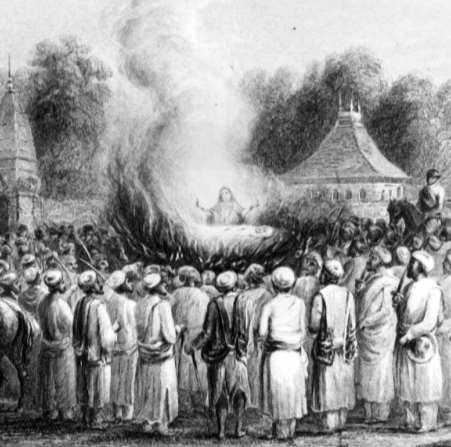
However, finally efforts of Roy and many of his supporters led to promulgation of Bengal Sati Regulation, 1829 which declared the practice of Sati illegal and punishable by the criminal court.
Legal abolition of Sati though paved the way for right to life for Hindu widows, but still, the right to a dignified life for widows was a far goal to achieve due to the hardships imposed on them. Ishwar Chandra Vidyasagar took up the cause of widows and it led the campaign for legalizing widow remarriage which ultimately resulted in the passing of the Hindu Widow Remarriage Act, 1856. He also challenged the Hindu practice of polygamy and presented a petition to the government signed by twenty five hundred persons to legally prohibit polygamy.
Another major issue taken up by the reformers was child marriage. Social reformers like Behram Malabari and G.H. Deshmukh blamed the practice as responsible for weakness of the Indian nation and race. These reformers fought for raising the age of consent and this time women also came forward to support the cause. A petition signed by sixteen hundred women was sent to Queen Victoria for raising the age of consent in 1890. Amid the oppositions by the orthodox and nationalists, the social reformers kept on fighting for the cause and could get the Age of Consent Act passed in 1891.
Unlike the issues of Sati, child marriage, tonsure of widows, widow remarriage and polygamy, the issue of education for women got acceptance of reformists, revivalists as well as of radicals. However, though all these groups agreed that women should be educated, but there was disagreement on 'what to teach women' and 'why to teach women'. The major issue was whether to educate women as individuals to develop their rational faculty or as wives and mothers to enable them to perform their roles in a better way. However, the main stress was on educating women to be better wives and mothers.
Unlike the elite upper caste male social reformers who were mostly either conservative or moderate in their approach, Jyotirao Phule, representing the depressed section of the society, unravelled the connection between the subordination of women and caste hierarchy. He openly challenged Brahmin patriarchy through his radical arguments and social reform initiatives.
The above account makes it clear that the male social reformers did not form a homogeneous group. But it cannot be denied that these male social reformers whether moderate, revivalist or radical-knowingly or unknowingly, intentionally or unintentionally created a space for women and hence facilitated their participation.
Women's Participation in Social Reform Movement
Since the question of woman constituted the core of the 19th century social reform movement, there are few questions relating to women's participation which need to be answered, like where were the voices of women in the social reform movement? How did women look upon the woman's question? Was there any difference between the perspectives of female and male social reformers?
So far the matter concerned with the issues, we find that both the male and female social reformers fought for almost similar causes. Few major names of women who played a very significant role in the social reform movement are Francina Sorabjee, Parvati Ayyappan, Ramabai Ranade, Rakhmabai, Pandita Ramabai, Mataji Maharani Tapaswini, Begum Rokeya Sakhawat etc. Like male social reformers, these female social reformers also raised their voices against social evils, but their main focus was on educating women, to mention a few significant steps taken by women reformers in this direction. Francina Sorabjee founded three schools at Poona and also started a Teachers Training School in 1872; Lakshmi Bayamma from Andhra Pradesh founded Saradaniketan, a residential school for women at Guntur; and Ramabai Ranade, along with her husband Justice Ranade, founded Seva Sadan and the Seva Sadan Nursing and Medical Association.
Further, when we look at the approach of women social reformers, we find that women social reformers may be classified into two different categories: first, those women who did not raise their independent voice rather followed the agenda set by their male counterparts–either reformist or revivalist; second; women who directly challenged patriarchy by raising their voices against female subordination and other social evils in their personal life as well as in public life by leading social campaigns against such practices. The second category of women can be regarded as the forerunners of modern day feminists. But these two categories are overlapping and hence no watertight compartment can be made between the two.
Women's Participation in Social Reform Movement: The
Traditionalist View of Women's Education
Revivalist vision, which was in favour of social reform on Indian lines, was one of the most dominant views during this phase. One very significant woman figure who immensely contributed to the cause of women's education was Mataji Maharani Tapaswini. Her views on women's education were in full agreement with the revivalist vision which wanted to educate 'girls on strictly nationalist lines in the hope that they might regenerate Hindu society'. [Forbes,1998] Mataji Maharani Tapaswini started her first school with thirty students with the purpose of educating women in accordance with the Hindu religion and moral principles. She founded the Mahakali Pathshala in Calcutta in 1893.The founders of the school supported the cause of women's education, but their
approach was quite conservative, as they opposed co-education and advocated the idea of different syllabi for girls to meet the specific needs of their roles as wives and mothers. Mataji
Maharani Tapaswini was of the opinion that girls' syllabus should include "knowledge of sacred literature and history, an understanding of myths and legends that spoke of the duties of the daughter, wife, daughter-in-law and mother and practical skills such as cooking and sewing." [Forbes, 1998] The syllabus of the Mahakali Pathshala, based on the traditional view of women's role in family and society, was widely praised by the conservative middle class Hindu men who were of the opinion that any attempt to educate women on modern lines would ultimately 'demoralize' and 'denationalize' young Hindu women. Due to its conventional syllabus, the popularity of the school grew very rapidly and within ten years of its establishment the school had twenty three branches with 450 students.
Like Mataji Maharani, Anandibai and Parvatibai also stressed upon the need of educating women but with a traditional perspective.
Anandibai was a child widow who at the age of twenty two got married to Dhondo Keshav Karve. Parvatibai, Anandibai's sister, was also a widow who decided not to remarry and to lead a meaningful life. These two women worked for women's education under the leadership of Karve who was an advocate of education
for women, especially widows, to make them economically self dependent. What must be underlined here is that though Karve was a great supporter of women's education, he was not in favour of giving same kind of education to all women. His argument was that the purpose of education for widows should be to make them economically self-sufficient, but for unmarried girls education should be a means to make them 'good wives, good mothers, good neighbours.'[Parvati Athavali, 1930] With these dual goals he founded the Mahila Vidyalaya. In 1916 Karve established
Women's University with the same goal as an alternative to Western co-educational university. In this Women's University focus was on instructions in vernaculars and courses like Home
Science. Karve was of the opinion the women must be educated like men but they need not be given the same education as both have different roles to play. To quote him: " we must recognize that both national and social economy require that women should occupy a station of their own distinct from that of men… but that the office they have to fill is different, through equal – perhaps greater in importance."[D.K. Karve, 1936]
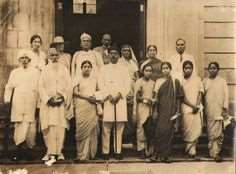
Parvatibai Athavali who became the superintendent of the Mahila
Vidyalaya was in full agreement with Karve's vision on women's education and was of the opinion that women should be educated for performing their 'natural roles' more perfectly and not at all for entering into the public realm. Like Karve, she also considered 'public roles for women as an aberration rather than the norm'.[
Forbes, 1998] It is significant to point out here that Parvatibai's stand on women's issues was somewhere between reformist and conservative. On the one hand, she refused to accept the orthodox view that widows were a worthless section of the society who could not lead a meaningful life after the death of their husbands and hence advocated education for widow to make them self reliant; on the other, she was against the reformist agenda of widow remarriage. Further, her views on girls' education testify her conservative position as she argued that the purpose of
education for girls is not to make them self dependent because the ultimate purpose of a girl's life is to marry and so the education for girls should be such as would prepare them for their marital and family responsibilities. Therefore, she supported curriculum of the Mahila Vidyalaya where emphasis was on training in child care and home craft.
Thus, efforts of these traditionalist women social reformers for women's education were based on the principle that though men and women both have a role to play in betterment of the society, their roles are different and complementary.
Muslim Women's Education and Contribution of Begum
Rokeya Sakhawat
While Maharani Tapaswini, Anandibai and Parvatibai took up the task of educating Hindu girls, Begum Rokeya Sakhawat became a significant figure in educating Muslim girls. She started an institution for Muslim girls in Bhagalpur, Bihar in 1909. Then in 1911 she founded Sakhawat Memorial Girls' School in Calcutta.
Begum Rokeya understood that any radical move on her part would be damaging to her goal of educating Muslim girls.
Therefore, Purdah rules were strictly followed in her school while transporting the girl students. She made it clear that education would not divert women from their traditional roles, rather would
enable them in performing these roles more efficiently. Keeping this goal in mind, the curriculum in Rokeya's school included practical subjects like handicrafts, home Science, gardening etc.
Begum Rokeya, on the one hand, appears to be a moderate who wanted to educate Muslim girls without intervening into the practices prevalent in the then Muslim society; on the other she expressed her radicalism through her writings. She was a prolific writer who wrote several articles on women's pathetic condition where she stressed the need to educate women, especially Muslim women who were deprived of economic means and were compelled to live a life of deprivation and permanent confinement.
She realized that it is only education which could free women from this life of permanent deprivation and would help them in playing their due role in society. Some of her famous essays are – 'Borka', 'Ardhangi', 'Griha' and 'Sugrihini'. Raising her voice against the practice of seclusion, she boldly wrote that seclusion 'is not a gaping wound, hurting people. It is rather a silent killer like carbon monoxide gas.' [Forbes, 1998] For such writings – which were too radical for the 19th century Muslim society – Rokeya was widely criticized and was even accused 'of being Pro-Christian and Europhile'. [Forbes, 1998]
Radical Women Voices and the Social Reform Movement
Unlike Anandiba and Parvatibai whose position was somewhere between reformist and conservative, there were women who blatantly took a radical position and directly objected to the patriarchal structure of the Indian society. They challenged the beliefs and norms of the Hindu society and thus met with strong opposition and were projected as women who would 'degenerate' and 'denationalize' young Hindu women. Representatives of this radical strand were Pandita Ramabai, Rakhmabai and Savitribai
Phule, who did not confine their efforts only to the cause of education but directly attacked upon the gendered norms of the Hindu society.
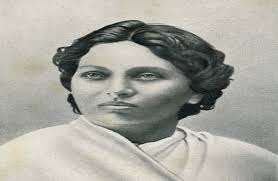
Pandita Ramabai overtly challenged Hindu patriarchy in her book
The High Caste Hindu Woman. Pandita Ramabai was a great
Sanskrit scholar and had studied the Hindu Shastras and Purans.
She was also an eloquent speaker. Being influenced by her oratory she was given the title of 'Saraswati' by the Calcutta elite. In Poona, she started working with the reformers to educate women through the Arya Mahila Samaj. While presenting evidence before Hunter Commission, she stressed on the need of educating women and the need for women doctors and teachers. Gradually her acts and views turned radical. She decided to learn English and study medicine and with the financial help of the Anglo Catholic
Community of St. Mary the Virgin, she went to England where she
decided to accept baptism. Her move was harshly criticized in her native country and her reforms were viewed with much suspicion.
With the goal of educating women for making them self-reliant, she started Sharada Sadan, a school for widows in Bombay. Her school was targeted by the revivalists and orthodoxy as a centre to convert Hindu widows to Christianity. To reject such charges, Ramabai made it clear at the opening of the school that the school 'would not actively preach Christianity or try to make converts.'
[Radha Kumar, 1993] But despite this, Pandita Ramabai's project of educating women to make them self-reliant met with much opposition.
This suspicion was further increased by a news published in the December 1889 issue of the Christian Weekly which reported that 'at present there are seven young widows in the Sharda Sadan, two
of whom have expressed their love for Christianity' [Radha
Kumar, 1993].This news led to much outrage in revivalist circles.
To stop such criticisms and oppositions, Ramabai formed an Executive Committee composed of reformers having a staunch
Hindu image. She thought that this step would silence the charge of Anglicization, but this did not work and the orthodoxy and revivalists kept criticizing Sharda Sadan as a centre of degeneration and denationalization of Hindu womanhood. The nationalist newspaper Keshari charged that Ramabai was converting widows to Christianity. Finally, the school was shifted to Poona due to financial crisis. Under the influence of revivalists and conservatives many families withdrew their girls from the school. But amid such criticisms and hardships Sharda Sadan did not deviate from its primary goal of making women self reliant.
Eighty women had been trained by the school, and could earn their livelihood through nursing and teaching by the year 1900.
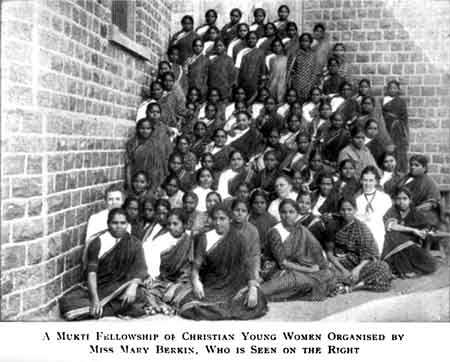
In 1897 she established another school 'Mukti' at Kedgaon near
Poona where 2000 women and children were attending school as well as getting industrial training. This school received funding from an American Committee and due to financial support of the committee–which did not have any objection to Ramabai's innovative and sometimes even radical schemes – Ramabai could implement her plan of imparting such education which would not
make the inmates only materially self reliant but would lead to generation of democratic spirit. A glance at the curriculum of the school – which included Physiology, Botany, and industrial training in printing, carpentry, tailoring, masonry, wood-cutting, weaving and needle work and training in farming and gardening – exemplifies the innovative ideas of Ramabai. When this curriculum is compared to curriculum of Mataji Maharani
Tapswini's Mahakali Pathshala and D.K. Karve's Women's
University where the focus was on subjects like Home Science and handicrafts, the difference between the traditionalist and radical approaches is quite evident. While the former wanted to make women self-reliant citizens, the latter intended to make them better wives and mothers. Though, both the groups agreed on the need of educating women, they had major differences of opinion on the purpose and content of women's education. Recognizing
Ramabai's unique contribution to the 19th century Social Reform
Movement, Forbes rightly comments: "Ramabai's educational work impressed contemporaries but her connection with Christianity has obfuscated her contribution to women's education. An acknowledged Christian when hatred of the ruling power was growing daily, her work angered some of the most powerful men in Western India. [Forbes, 1998]
Ramabai could see the caste dimension of such criticisms and boldly argued that, this new education is opposed by the high caste men because it poses challenge to their dominant position.
'Ramabai believed that the intensity of their [high caste men] anger related to the fact that many of her pupils came from the higher castes. She argued that these men would have remained unconcerned if her work were confined to low-caste women.'
[Forbes,1998] .
Rakhmabai, another major radical figure made her life itself a site for radical social reform. She got married to Dadabhai Bhikaji in her childhood but when she grew up, she refused to live with her husband and thus started a fight against the practice of child marriage. Bhikaji filed a petition for restitution of his conjugal
rights and also won his case in the High Court of Appeal. But even the decision of the Court could not stop Rakhmabai's radical zeal for freedom. She refused to obey the order of the Court and rather preferred to pay the fine imposed by the Court. Her audacious step was supported by Ramabai who openly condemned the judgment of the Court and wrote: "Our only wonder is that a defenseless woman like Ruhkamabai dared to raise her voice in the face of the powerful Hindu law, the mighty British Government, the 129,000,000 men and the 330,000,000 Gods of the Hindus; all these have conspired together to crush her into nothingness. We cannot blame the English Government for not defending a helpless woman; it is only fulfilling its agreement made with the male population of India." [Pandita Ramabai,1888]
Thus, Rakhmabai not only opposed child marriage but translated her ideas into action. Uma Chakravarti addresses her as 'the recalcitrant wife whose education was the source of her desire for a companionate marriage and the disavowal of her conjugal obligations.' [Uma Chakravarti, 2000]. However, her resistance was not limited to her personal life. She became one of the strongest voices against patriarchal Hindu institutions and practices. Opposing the Hindu institution of marriage, she argued that the Hindu institution of marriage is suffocating for women, as it is based on total submission of wife to her husband. She was of
the view that this hierarchical marriage should be replaced by companionate marriage. She was also a staunch critic of the imposed widowhood. In her letter to The Times of India on 'Enforced Widowhood', Rakhmabai questioned the harsh treatment given to Hindu windows. Unravelling the double standards of Hindu Shastras and customs, she raised the point that while a man is allowed to remarry immediately after the death of his wife, but a woman after the death of her husband is treated as sexually and morally dead being. She further charged that while prescribing the rules to be followed by the widow, the Shastras did not take into consideration the age of the widow and prescribed one set of rules for all the widows. Ridiculing the practice, she said that if a girl of five or six years married for the gratification of her parents, loses her 'child–husband', this 'child–wife' – who hardly knows the meaning of the words 'husband' and 'wife', 'wifedom' and 'widowhood' and 'happiness' and 'misery' – is as much a widow as an elderly woman who loses her husband at the age of seventy. Rakhmabai divided widows into three categories: (a) from the age of 5 to 15 (b) 15 to 25 and (c) 25 to 35. Lamenting the pathetic state of the widows of the first category, Rakhmabai said that a widow of tender age 'grows up in blessed ignorance till she becomes a young woman and is able to comprehend the terrible future that has been reserved for her by the gentle decree of her
human legislators.' [Chakravarti and Gill, 2001]
Rakhmabai unflinchingly spoke against such double standards and opined that these inhuman laws have remained unchallenged because these laws were formulated by men to protect their interests. In her letter to Ramabai she argued that these laws are outdated and should be removed. To quote from her letter : "the learned and civilized judges of the full benches are determined to enforce in this enlightened age the inhuman laws enacted in barbaric times, four thousand year ago." [Quoted in Pandita
Ramabai, the High Caste Hindu Woman, 1888]
Like Ramabai and Rakhmabai, a very strong voice against patriarchy in general and specifically against the upper caste patriarchy was of Savitribai Phule who posed twin challenge to the caste system and patriarchy.
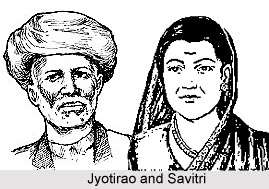
Savitribai opened many schools in Maharashtra to educate lower caste women and girls. Her most radical contribution to the social reform movement was establishment of a centre 'Balhatya
Pratibandhak Griha' (Infanticide Prohibition Centre), where unmarried women and widows could give birth to their illegitimate children. She established this centre with her husband as a mark of resistance against upper caste patriarchal morality. Continuing their resistance against the gendered social customs of the Hindu society, the couple, further, organized a strike to stop the barbers from shaving the heads of widows as a mark of resistance against the inhuman practice of tonsure of widows.
Analyzing Social Reform Movement from Women's Studies Perspective
From the above account of women's participation in the social reform movement, it is quite clear that women who participated in the social reform movement vary in their approaches and perspectives. Further, from the above account of women social reformers, it cannot be and must not be concluded that women
equally participated in the social reform movement. On the contrary, women were not the actual actors rather were treated as the objects of reform. In fact, social reform movement was dominantly a male movement. Sumit Sarkar rightly argues that the social reform movement was aimed at only 'limited and controlled emancipation'. [Sumit Sarkar, 1973] Despite the few available names of women social reformers, it is significant to underline that 'women themselves were not partners in the schemes created for their regeneration; more often they were portrayed as opposed to their own liberation'. [Forbes, 1998] It was not at all a movement for gender equality and gender justice in true sense of the terms. A scrutiny of the 19th century social reform movement and women's participation in it from Women's Studies perspective discovers the point that though women participated in the social reform movement but the perspective of women was largely missing.
Leela Kasturi and Vina Mazumdar rightly observe: " Barring a few exceptions, the 'modernists' or the 'revivalists' were not really concerned with gender equality, women's own desires or their perspectives on dignity and justice. Nor were they aware of the inter-relationship between patriarchal controls over women's freedom, roles and behaviour and the carefully preserved pluralist hierarchical organisation of Indian society. Issues such as the radical restructuring of the social order or of bridging the social
gap between different classes/ castes/ communities were very far from most reformers' aims. There were however some outstanding exceptions."
Summary
The question of woman was at the centre during the 19th century social reform movement, but voices of women mostly remained at the margin.
The major issues during the social reform movement were: child marriage, Sati, widow remarriage, widow tonsure, polygamy and women's education.
Women who participated in the social reform movement can be divided into two categories: women who conformed to the traditional roles and norms; and women who revolted against them and were comparatively radical in their approach.
On the issue of women's education there was consensus on the need of educating women among revivalists, reformists and radicals but these three groups stand in opposition to each other on the question of 'why to teach' and 'what to teach'.
Mataji Maharani Tapaswini's Mahakali Pathshala was in conformity with the revivalist ideal of education.
Begum Rokeya Sakhwat took up the cause of Muslim women's education.
Pandita Ramabai,Rakhmabai and Savitribai Phule were the representatives of radical voices of resistance.
Though women participated in the social reform movement but the perspective of women was largely missing
References
Athavale, Parvati. My Story: The Autobiography of a Hindu
Widow, (trans.) Revd. Justin E Abbott, New York: G.P.
Putnam, 1930.
Karve,D,K. Looking Back, Poona: StreeShikshan
Samsatha,1936.
Kaur, M,M. The Role of Women in the Freedom Movement (1857-1947), New Delhi: Sterling, 1968.
Cowan,Minna, S. The Education of the Women of India, Edinburgh: Oliphant, Anderson and Ferrier, 1912.
Kosambai, Meera. "Woman Emancipation and Equality: Pandita Ramabai's Contribution to Women's Cause", EPW
23,No.44, October 29, 1988.
The Letters and Correspondence of Pandita Ramabai, compiled by Sister Geraldine, (ed.) A.B. Shah, Bombay: Maharashtra State Board of Literature and Culture, 1977.
Chakravarti, Uma: Rewriting History, Delhi: Kali for Women, 2000.
Ramabai,Pandita. The High Caste Hindu Woman, New
Delhi: Inter – India Publications, 1888.
Chakravarti, Uma. and Gill, Preeti. Shadow Lives : Writings on Widowhood, Delhi: Kali for Women, 2001
Forbes,Geraldine. Women in Modern India, U.K.: Cambridge
University Press, 1998.
Kumar,Radha. History of Doing, New Delhi: Zubaan, 1993.
Bala, Usha. Indian Women Freedom Fighters, New Delhi:
Manohar, 1986.
Everett,Jana, Matson. Women and Social Change in India, New Delhi: Heritage Publishers, 1995.
Sarkar, Sumit. "The Complexities of Bengal", Nineteenth
Century Studies, 4, 1973.
-------------" Rammohun Roy and Break with the Past", in V.C.Joshi (ed.), Rammohan Roy and the Process of Modernisation in India, Delhi :Vikas , 1975.
Description of Module
Subject Name Women's Studies
Paper Name Women's Studies as an Academic Discipline
Module Name/Title Women's Participation in Nationalist Movement: Moderate Phase
Module Id
Pre-requisites The Reader is expected to have the knowledge of British Colonialism and Indian freedom struggle Objectives To make the reader understand the condition of Indian women, their issues and participation in public life Keywords Nationalist Movement, Indian National Congress, Moderates, Women Participation
Women's Participation in Nationalist Movement : Moderate Phase. Personal Details
Role Name Affiliation Principal Investigator Prof. Sumita Parmar
Allahabad University, Allahabad
Paper Coordinator Prof Chandrakala Padia
Chairperson ,IIAS, Shimla, Ex. Vice Chancellor MGS University, Bikaner & Professor of Political Science, Banaras Hindu University, Varanasi Content Writer/Author (CW)
Dr. Afreen Khan Assistant Professor Department of Political Science & Public Administration Dr Harisingh Gour Vishwavidyalaya (A Central University) Sagar, Madhya Pradesh Content Reviewer (CR) Prof Chandrakala Padia
Chairperson ,IIAS, Shimla, Ex. Vice Chancellor MGS University, Bikaner & Professor of Political Science, Banaras Hindu University, Varanasi Language Editor (LE) Prof Chandrakala Padia
Chairperson ,IIAS, Shimla, Ex. Vice Chancellor MGS University, Bikaner & Professor of Political Science, Banaras Hindu University, Varanasi
Women's Participation in Nationalist Movement: Moderate Phase
1.1 Nationalist Movement of India 1.2 Foundation of Indian National Congress 1.3 Moderate Character of Indian National Congress 1.4 Women Participation in nationalist movement 1.5 Women's Organizations and activists 1.6 Moderate Phase of Congress and Womens Participation 1.7 Conclusion 1.8 References 1.1 Nationalist Movement of India
The national movement covered a time span of sixty two years starting with the birth of the Indian National Congress in 1885 up to 1947. But before that the freedom struggle against British rule started with the great revolt of 1857. Though this revolt did not succeed the way was planned yet it helped in raising the socio-political consciousness of the people of India and it made them realize the need to be free from an alien rule. The failure of this Revolt and its aftermath convinced Indian people that the method of `blood and bomb' without proper organization and adequate preparedness would not be sufficient to challenge the might of the British Empire. The educated Indians realized that the political revolution in the country could not be brought about without psychological revolution. With this aim in view, concrete and far reaching steps were taken in the post-revolt years to generate among the masses a genuine desire to liberate themselves from the age-old customs, traditions and dogmas and ultimately to bring about their political, social and economic development.
After 1857, political nationalism developed in India as a result of several forces working simultaneously or in close succession. It is important to note that the birth of nationalism in India was as a reaction to selfish interests of the British rulers. As these interests came into conflict with those of the Indian people, and the British rulers sacrificed the interests of the Indians for their own sake, discontent and resentment grew. This naturally led to the growth of political nationalism. This new phase of national consciousness was manifested in the emergence of Provincial Political Associations. The Provincial Associations brought nineteenth century India on the threshold of modern politics though they had limited scope and programme. However, during the course of the century, a number of associations came to be established in different parts of the country by groups of men united by secular interests. The factors which held them together were common education, common skills and functions, common aspirations and resentment against the policies of the British rulers. They drew their support from certain sections of the society such as students, professionals, landlords, merchants and others. Their activities were limited to narrow geographical areas. But gradually more ambitious political organizations began to emerge extending beyond the narrow considerations. These were the Provincial Associations which began to search for ways and means of working together in India as a whole. This trend provided education to the Indians in the politics of associations which culminated in the establishment of the Indian National Congress. Between the years 1843 and 1850, there were only two political associations in the whole of India, the Bengal British India Society and the Zamindar Association. (Sen, 1997) There was some attempt to organize branch associations in other parts of the country but without much success.
The British Indian Association with its exclusive character could not meet the aspirations of the rapidly growing middle class community in Bengal and failed to secure any substantial advantages for them. The middle class was developing new ideas of patriotism and politics. This new phase of political consciousness was manifested in the emergence of political Associations. Like Bengal there were some other associations established in Maharastra and Madras. They were the British Indian Associations, the Indian Association, the Bombay Association, the Bengal British India Association, the Poona Sarvajanik Sabha, the Mahajan Sabha of Madras and the National Conference. Due to these associations the All India National Congress was established on 28th December, 1885 at Bombay.
1.2 Foundation of Indian National Congress
The foundation of the Indian National Congress in 1885 was not an isolated, sudden event or a historical accident. It was the result of the evolution of long drawn political ideas and organizations. The politically matured intellectuals broke the shackles of narrow groupism and regional interests and projected themselves as representatives of national interests. The all-India nationalist organization that eventually emerged served as the platform, the organizer, the headquarters and the symbol of the new national spirit and politics.
Allan Octavian Hume was the founding father of the Congress. Emphasizing the need to form an organization, Hume said, 'Scattered individuals, however capable and however well-meaning, are powerless singly. What is needed is union, organization, and to secure these, an association is required, armed and organized with unusual care, having for its object to promote the mental, moral, social and political regeneration of the people of India'. (Pandey 1997) The First Session of the Congress took place in Mumbai on 28th December, 1885, in the presence of 72 all India delegates. (Sen 1997: 60) W.C. Bannerjee, the President of the first session declared the aims and objectives of the Congress and passed several resolutions in the same session. The speeches of the delegates at the first session of Indian National Congress were characterized by moderation and loyalty to the British Crown. In his Presidential address W.C. Bannerjee expressed his belief that the Congress would be equally advantageous to the authorities and to people. (Mookerjee 1974)
With the establishment of the Indian National Congress, the national movement and the struggle for freedom from the British rule was launched in an organized manner. For more than twenty years following the foundation of the Indian National Congress, the political life of the country was completely dominated by Moderates. It also gave shape and form to the ideas of administrative and constitutional reforms which were the main aspects of the political programme of the nationalists. However, it is not historically correct to say that the history of the freedom struggle in India is nothing but the history of the Indian National Congress. In fact there were other forces and undercurrents also which contributed to a considerable extent to the freedom struggle of the country. Nevertheless, it must be noted that the Indian National Congress was the paramount nationalist organization which led the country to its final liberation from the British yoke. (Suguna 2009) 1.3 Moderate Character of Indian National Congress
The Congress provided a common platform for the nationalist leaders from different parts of the country to meet and voice their grievances and place their demands before the British Government. The early Indian leadership was represented by people like Dadabhai Naoroji, Justice M. G. Ranade, Sir Pherozshah Mehta and Gopal Krishna Gokhale and came to be described as 'Moderates'. These and other such moderate leaders, fascinated by British parliamentary institutions, hoped to introduce such kind of institutions in India gradually and through constitutional methods. They were reformers and not revolutionaries. The beneficence of British rule was the foundation of their political philosophy, but they laboured ceaselessly for the liberalization of that rule. The moderates voiced the demands of the English educated class which was drawn mainly from Bengal, Bombay and Madras, where English education was first introduced. (Ghose 1984) It was the above method of political work of the early nationalists that earned them the epithet of 'moderates'. These methods can be summed up briefly as 'constitutional agitation' within the four corners of the law. They believed that their main task was to educate people in modern politics and arouse national consciousness and to create a united public opinion on political questions. For this purpose the moderates adopted several methods. They held public meetings, made speeches, passed resolutions setting forth popular demands. Through the press, the moderates carried on a daily critique of the government. They also sent a number of memorials and petitions to high government officials and even to the British Parliament. A second objective of the early nationalist leaders was to influence the British Government and the British public opinion to introduce the necessary reforms in various fields of administration. The moderates believed that the British were unaware of the real conditions of India. They therefore made all efforts to enlighten the British public through memorials and petitions and by carrying on an active political propaganda in England. The moderates have been considered the pioneers of nationalism in India. They tried for the first time to weld India into a nation. The British government created a geographical unity and the moderates created a 'we-sentiment' in India. (Stein 1998)
1.4 Women's Issues and Participation in Nationalist Movement
In Indian society, the coming of British rule led to the upsurge of women's question which figured prominently in their colonial discourses. While British rule projected the pitiable position of women in India to highlight their role of Civilizing Mission, the Indian reformers used the analogy of female goddesses to free Bharat Mata from the colonial rapists. The colonized society was considered to be 'effeminate' in character, as opposed to 'colonial masculinity', which was held as a justification for its loss of independence. But women's role vis-a-vis the family was looked through the patriarchal lens. However this journey of confluence and conflict of gender and colonialism in India was multidimensional and multi the layered. (Singh 2015) Traditional histories of nationalism have largely been written from male perspective. Although mining of new kinds of sources – women's writings, correspondences, biographical literature, interviews as well as the reworking of more standard historical document: organizational and private papers, official reports and correspondence widened the ambit and scope of women's history. (Davis 1997) In the Great Uprising of 1857, some Indian women boldly contributed, directly or indirectly, to the cause of freedom. Maharani Lakshmibai 'the bravest of all rebels' shines like a bright star on the horizon of that mass movement. She was, among others, very ably and wholeheartedly assisted not only by the Hindu women but also by the Muslim women. Nevertheless, the number of such dauntless women crusaders was very few. Thereafter came a period of Orthodoxism among both the Hindus and Muslims, particularly with regard to their womenfolk. The mobility of women was by and large restricted to the four walls of their dwellings. An average Indian woman had no access to school, college and other public places. A fairly large majority of them lived as deaf and dumb driven cattle. In a way it was Dark Age for the Indian women. It has been very often and correctly said that India's struggle for independence has also been a struggle for Indian woman's emancipation.
It reveals a story of movement within a movement. Indian women contested for their legitimate space in society challenging the overarching patriarchal set up and also participated in the National Struggle for independence. It was a unique balancing act, wherein they had at times to compromise and console themselves with the partial fruits of their long and ardours struggle and other times to sacrifice it altogether. Women's participation in the Indian national movement expanded base of women's movement in India. Their participation in freedom struggle strengthened not only the national struggle for freedom, it also provided them a forum to bring forth the contestations and contractions of the patriarchal society. The freedom struggle saw the participation of women move from a passive to active to an activist's role. The basic form of women's movement was triggered by nineteenth century male reformers. Colonial social reform of the nineteenth century tried to abolish abuses of social life and tried to usher in more progressive gender relations. (Sarkar 2007)
In the early nineteenth century, the liberal reformers or the revivalists, made women as the recipient of social change. Brahmo samaj and Prarthana samaj especially did valuable work in educating women and gave them their first experience with public work. By the end of the nineteenth century women themselves took the role of emancipators and fought cudgels for personal reforms and political rights. The number of women in public sphere increased considerably. The novels of Nirupama Devi and Anurupa Devi were appreciated and being referred in Bengali literary circle. Maharashtra's first woman novelist kashibai Kantikar, started writing in 1890 and first woman doctor, Anandibai Joshi qualified at the same time. In 1882, Tarabai Shinde, known as the first Indian feminist (Guha 2012), wrote the book 'Comparison between man and woman' and despite the fact that the book was greeted with hostility the reformist organizations and many reformers like Phule defended this book. According to Gail Omvedt, to Phule 'the issue was the formation of a new and equalitarian husband-wife relationship; the goal was the breakdown of the old authority structure within the family.' Many other women like Ramabai and Mai Bhgwati started working as a reformer and preachers in public meetings. It was in these years that women began to get involved in nationalist campaigns and organizations. (Kumar 2009)
Apart from the achievement of political independence, the second best benefit that flowed out of our nationalist movement has been the liberation of our women, particularly those hailing from urban settlements. However, the path shown by them is continuously being followed by the rural women also. Many of the enlightened women then plunged into India's freedom movement.
1.5 Women's Organizations and activists
Urvashi Butalia (1998), Ritu Menon and Kamala Bhasin (1998) have alleged that there was deliberate absence of a record of women's voice and contribution to political situations in pre-independence India and of the patriarchal nature of our documented history. Given the fact that in our history there is sufficient evidence that women were excluded from the formal education system, it is not surprising that their voices have not been reflected in the written texts that stand as testimonies of our history. We do not argue, therefore, about the general gender-biased nature of our history, but take that as given. There are records, however, of cases of 'exceptional' women, women who challenged the norms of the times such as Swarnakumari devi, sister of Poet Rabindranath Tagore, an author in her own right and a novelist of distinction, who organized the Shakti Samiti in 1882. Pandita Ramabai Saraswati, that remarkable woman from Poona, founded the Arya Samaj and went on to set up a series of woman's association in various towns of Bombay presidency. She also started the Sharda Sadan to provide employment and education to women, particularly to young widows. Women's organization were also started in Madras, Mysore, Bombay, Calcutta and Gujarat. Initially, these associations were confined to a locality or a city. The credit for starting the first All-India women's organization, the Bharat Stri Mahamandal (1901) must go to Sarladevi Chaudhrani. Being Conscious of their political rights and influenced by democratic values, all of these organizations worked actively to generate political consciousness among contemporary women during the early decades. In a few reform efforts, issues of caste and class were also taken up. For example, Satyashodak Mandal was set up by Jotibha Savithribai Phule. It was meant to promote alliance between sudras and women of the upper caste. They built school for lower caste girls. This led to a questioning of upper-caste values based on the wisdom of the Vedas, as well as the callous treatment of women, irrespective of caste. The late nineteenthcentury writings of women such as Muktabai and Tarabai Shinde can be quoted as instances of some early feminists' perspectives, appearing at the time of first attempts at reforming women's education, especially among the lower caste. (O'Hanlon 1994) Reform movements in different regions lead by the Brahmo Samaj, the Parthana Samaj, and the Theosophical Society supported female education and also marked a turning point for its growing acceptance and development. Major development tooks place in North India when member of Arya Samaj opened the Arya Kanya Pathshala and the Kanya Mahavidyalaya in Jallundher. In Bengal, the Bramho Samaj supported female education and progressive organization for women.
1.6 Moderate Phase of Congress and Women Participation The early Indian National Congress, because it claimed to speak for all groups and all classes in India, decided to avoid issues which would foster antagonism. This meant that issues of women's status, education, child marriage, polygamy, purdah and widowhood were discussed on the platform of the National Social Conference. (Gordon 1973) Indian women played a role in the meetings from the very beginning. Attitudes towards social reform, development of educational institutions for women, women's journalism, and clubs for women had all contributed to the emergence of a new group of women in India. Although this was a small group and its members were not representatives of Indian women as a whole, their numbers were growing, as was their interest in women's issues and in political and social transformation. All the earliest women's organizations had some connections, either through their members or their parent organization, with Congress, and it is this connection that has bequeathed history the notion of the inseparability of the women's movement with that of the Indian National Congress. Unfortunately, the most active women worked with the support of their husbands and families and generally the women in the women's movement were the same who involved themselves with politics. To see them as puppets (came out of purdah into political agitation) or dupes (tricked or coerced into abandoning feminism for nationalism) ignores the legacy of the nineteenth century and denies both the intelligence of these women as well as the complexity of their relationship with Congress. It also overlooks the way in which consciousness and ideology developed. For many women, political involvement spurred their feminism, while commitment to improving the status of women encouraged their involvement in the freedom struggle. (Forbes, 1988p 56)
Right since its inception the Indian National Congress had no reservations about women becoming its members. Though there were no women delegates among those who entered their names in the register at the inauguration of the Indian National Congress (Ali 1991), in the fourth session of the Congress at Bombay in 1889 ten female delegates graced the assembly, one elected by men at a public meeting, the other by various women's associations. Among these ten women who attended the fourth session were Europeans, Christians, one Parsi, one orthodox Hindu and three Brahmos. Pandita Ramabai, a social reformer, educationalist and noted Sanskrit scholar, Swarnakumari Devi, a well-known Bengali writer and editor of Bharati; Kadambini Ganguli, Bengal's first woman doctor; and a number of Bombay women were other participants. In fact the participation of women in this congress session appears to have been chiefly due to Ramabai's initiative. She responded to the suggestions of Charles Bradlough that women should join the congress from this time on. However, though the women delegates were allowed to sit on the platforms, they were not allowed to speak or vote on resolutions. (Kumar 2009)
The following year, when the Congress met in Calcutta, both Swarnakumari Devi and Kadambini Ganguli attended as delegates and Miss Ganguly was allowed to present a vote of thanks to the President and she thanked him for allowing her to speak (Basu 1976). In 1901 a song, 'Hindustan', written by Swarnakumari's younger daughter Saraladevi, was performed by a chorus of fifty-six girls representing all regions of India. The following year the National Congress anthem was sung in Gujarati by Lady Vidyagauri Nilkanth and her sister Sharda Mehta (Mazumdar and Mazumdar 1967). This remained the Congress anthem until 1905 when Saraladevi sung Bankim Chandra Chatterjee's 'Bande Mataram' at the Banaras session. Sarojini Naidu attended the first session of Congress in 1904 in Bombay where she was invited to recite her poem, "Ode to India" before Congress. When Congress met in Calcutta in 1906 Sarojini's fiery speech so impressed Gokhale that he urged her to dedicate her life to the country. By this time she was clearly established as a forceful public speaker who linked the cause of India's freedom with the need to improve women's status. Later she emerged as a strong woman leader of the Congress.
In addition to providing Congress with a few observers and delegates and the spirit of song, a number of Bengali women organized meetings and social events to encourage women to participate in political and social issues. Saraladevi introduced festivals and rituals to celebrate Bengali heroes and arranged a swadeshi exhibition for the Bombay Congress in 1904. Kadambini Ganguli arranged a Mahila Sammelan (Women's Conference) in Calcutta for the wives of Congress members gathered at the Annual Session in 1906 (Bagal 1954).
On a larger scale the protest movement against Lord Curzon's partition of Bengal gained the support of many women. The boycott agitation, begun earlier, finally received Congress approval at the Banaras session of 1905. While some of the Swadeshi movement actions fit the traditional pattern of meetings, speeches and petitions, the press and the platform were used 'to preach the new creed, of radical nationalism' and reach an audience previously untouched by political action (Sarkar 1973). And this new audience included Bengali housewives who were neither formally educated nor had the autonomy or leisure to attend political gatherings with any regularity. The moderate phase begins with the formation of the Congress in 1885 and continued till the 1907 Surat congress where the extremists appeared on the political scene.
1.7 Conclusion
However, despite the contributions made by the women, it would be fair to say that in the early stages of the Congress, though women played a significant role in agitation politics, they did not develop their own political organizations nor were they integrated into decisionmaking bodies in Congress. The impact of their activities was primarily symbolic both for the British and for Indians. They neither placed any demands before the Congress, nor did they express any independent opinion on any issue. They were thus symbols rather than full fledged political participants. Moreover, in view of the fact that the Congress proceedings during the moderate phase were mostly conducted in English, most of the Indian women could not identify themselves with these meetings. Only some well educated urban women initially took part in the early Congress sessions. Furthermore, the constraints of physical mobility, financial resources and knowledge of English were factors which discouraged the middle class women to actively associate themselves with the Congress in its early stages. Significantly, out of a hundred delegates who participated in 1904 session, only 20 were women. But at Banaras Congress session of 1905, as many as 600 women representing different parts of the country assembled with the purpose of 'demonstration of female solidarity across India and the mobilization of women's support for the nationalist movement.'(Borthwick 1984)
Thus notwithstanding the fact that women's participation in the moderate phase of Congress was symbolic rather than active involvement, yet their very presence at Congress sessions served as a great source of inspiration for women of future generations who were more actively involved in the later period of nationalist movement. 1.8 References
Ali, Aruna Asaf. 1991. Resurgence of Indian Women. Delhi, Radiant Publishers
Basu, Aparna. 1976. The Role of Women in the Indian Struggle for Freedom' in B. R. Nanda (ed) Indian Women: From Purdah to Modernity. New Delhi, Vikas Publication House
Borrthwick, M. I984. The Changing Role of Women in Bengal, 1849-1995. Delhi, Princeton Publisher. P 344
Davis, Neera Yuavl. 1997. Gender and Nation. London, Sage Publication
Forbes, Geraldine, 1998, Women in Modern India, Cambridge University Press, Cambridge.
Ghose, Sankar. 1984. Modern Indian Political Thought. Michigan, Allied Pub. Pvt. Ltd.
Gordon Johnson. 1973. Provincial Politics and Indian Nationalism: Bombay and the Indian National Congress, 1880-1915. London, Cambridge University Press
Guha, Ramchand. 2012. Makers of Modern India. New Delhi, Penguin Books
J. C. Bagal. 1654. Jattiya Andolane Bangla Nari. Calcutta, Vishva-Bharati, Bhadra
Kumar, Radha.1999. A History of Doing: an Illustrated Account of Movements for Women's Rights and Feminist in India 1800-1990. London, Verso
Majumdar, Bimanbehari and Majumdar, Bhakat Prasad. 1976. Congress and Congressmen in the Pre-Gandhian Era, 1885-1917. Calcutta, Firma K. L. Mukhopadhyay
Menon, Ritu and Bhasin, Kamala. 2000. Borders and Boundaries: Women in India's Partition. New Delhi, Kali for Women
Mookerjee, G.K. 1974. History of the National Congress (1832-1947). Delhi
O'Hanlon, Rosalind. 1996. A Comparison between Men and Women: Tarabai Shinde and the Critique of Gender Relations in Colonial India. New Delhi, Oxford University Press
Pandey, B.N. (ed) 1991. A Centenary History of the Indian National Congress (1885-1985)
Sarkar, Sumit and Sarkar, Tanika (ed.), 2007, Women and Social Reform in Modern India Volume I, Permanent Black, New Delhi
Sarkar, Sumit. 1973. The Swadeshi Movement in Bengal 1903-1908. New Delhi, People's Publishing House
Sen, S.N. 1997. History of Freedom Movement in India (1857-1947). New Delhi, New Age International (P) Limited Publishers
Singh, Namrata. 2015. The Women's Question: Participation in the Indian National Movement and its impact. IOSR Journal of Humanities and Social Science (IOSR-JHSS), Volume 20, Issue 4, Ver. 1. Apr. PP 23-26
Stein, Burton. 1998. A History of India. New Delhi: Oxford University Press. PP. 254–255
Suguna, B. 2009. Women's Movement. New Delhi, Discovery Publishing House Pvt. Ltd.
Butalia, Urvashi. 1998. The Other Side of Silence: Voices from the Partition of India. New Delhi, Penguin Books e-pathashala
Description of the Module
Subject Name Women's Studies Paper Name Women, Governance and Politics Module Name Women's Participation in Nationalist Movement: Extremist Phase Module Id Pre-requisites The Reader is expected to have a basic understanding of the 19th century feminist movement, literature and nationalist movement in India. Objectives To make the Reader understand how the nationalist movement in extremist phase made way for women in the public sphere, and analyze the changing nature and patterns of women's political participation in India during the nationalist movement. Keywords Personhood, Emboldened, Feminist Movement and literature, Self Reliance.
1.1 Women's Participation in Nationalist Movement
Studies on women's role in the nationalist movement or of the implications social or political-of their momentous entry into the public sphere are scant. Important works on the national movement mostly fail to examine the significance of women's participation in the freedom struggle. The history of national movement would be incomplete without mentioning the contributions of women. Women shouldered critical responsibilities in India's struggle for freedom. The sacrifice made by the women of India occupies the foremost place. They fought with true spirit and unafraid courage and faced various tortures, exploitations, and hardships to earn us freedom. When most of the men freedom fighters were in prison, the women came forward and took charge of the struggle. The list of great women whose names have gone down in history for their dedication and undying devotion to the service of India is a long one.
1.2 Women's Participation in Nationalist Movement: Extremist Phase
The closing decade of the nineteenth century and early years of the twentieth century witnessed emergence of a new and younger group within the Indian National Congress who were sharply critical of moderate policy of loyalty to British and advocacy of the constitutional means. The younger group alias extremists demanded for more vigorous political actions and methods than those of the meetings, petitions, memorials etc. If we focus over the social composition of moderate leadership, we can underline two specific features; firstly the moderate leaders were very successful in their professions so politics was only a part time affair for them. Secondly, almost all of them were English educated people. So, they were not sharing social base with common people. On the other hand, the new, extremists, emerged appealed to a wider circle of the lower middle class, students and sections of peasants and workers. Instead of prayers and petitions, self reliance and constructive work became the new slogan, self help, passive resistance, use of vernaculars, utilization of traditional popular customs like village fair came to be recognized as the best way of bridging the gulf between have and have not's.
With the beginning of the extremist phase, the nature and focus of the national movement took a major shift. In this phase, women's interests and concerns started taking a concrete shape. Unlike the late 19th century, when women organizations were mostly formed by men, in this phase, many such organizations were established by women themselves. Four reasons can be underlined behind this phenomenon:
a) Feminist Movement.
b) Feminist Literature.
c) Swadeshi Movement.
d) Organizations established by women.
Unlike the western Feminist movement, India's movement was initiated by men, and later joined by women. The efforts of these men included abolishing sati, abolishing the custom of child marriage, abolishing the disfiguring of widows, introducing the marriage of upper caste Hindu widows, promoting women's education, obtaining legal rights for women to own property, and requiring the law to acknowledge women's status by granting them basic rights in matters such as adoption. The nineteenth century was a period that saw a majority of women's issues come under the spotlight and reforms began to be made. Much of the early reforms for Indian women were conducted by men. However, by the late nineteenth century, they were joined in their efforts by their wives, sisters, daughters, protégées and other individuals directly affected by campaigns such as those carried out for women education. Emboldened women gained greater autonomy through the formation of independent women's own organizations. Likewise, women writers by actively entering the scene and shifting attention from social perspective to personal ones provided a new direction for both social and fictional development. They focused on women's freedom, their rights to health and were in general critical of those practices which denigrated women.
The work of women writers is different from the work of their male predecessors. There is a shift from married or abandoned women to questions which relate to the formation of female self. Women are beginning to be seen as active agents of the making of their selves (an unfinished story, Swarnkumari Devi) and as an individual endowed with psychological perceptions (Sattnianadhan's novel). The novels reflect upon moral values, the question of right and wrong and to say about religious strictures which confine women with their rigid practices. Tarabai Shinde made fun of the reformist zeal and labeled it as male self indulgence. She advocated speeding up of processes of enabling women so that they could define their own directions. By beginning to focus attention on questions like choice and freedom, Swarnakumari Devi and Karupa Bai Sattnianadhan drew attention to the personhood of women. Not only this affects the work of later male writers and their construction of womanhood but also called attention to the intellectuals being a woman. In this line Rokeya Sakhawat Hossain went a step further and created an imaginary utopian world which offered comment on both the reality and aspirations of women. Belonging to an orthodox muslim family, she was able to learn both English and Bengali through sheer determination. Besides playing a dominant role in the women's movement in writing fiction, Rokeya Sakhawat Hossain also wrote two fictional works Padmaraga in 1903 and Sultana Dreams in 1905. Both of them have stronger gender statements. Moreover she founded an education institution for the Muslim girls in Bhagalpur (Bihar) in the year 1909. Later in the year 1911, she also founded Sakhawat Memorial Balika Vidyalaya in Calcutta. There are many other female writers in the line, the writing of whom made woman emboldened enough to become a part of mainstream of life and National Movement.
In 1890's the women constantly participated in congress activities. Among them women activists like Pandita Ramabai ( who was awarded by the medal of Keiseri- Hind for community service in 1919. On 26th October, 1989, in recognition of her contribution to the advancement of Indian women, the Government of India issued a commemorative stamp.) and female professionals like Dr. Kadambini Ganguly who organized the women's conference in Calcutta on the partition of Bengal in 1905, were notable.
The early twentieth century, further active political female participation occurred with the increase in nationalism, mass strife for self rule including the boycott of British goods and events such as the arrest of extremist leader B.G. Tilak led to the strike in bombay. Women joined the agitation, organized Swadeshi meetings, boycotted foreign articles and donated money. Swarnakumari Devi founded 'Sakhi Samiti' with the aim of educating widows to be self-reliant. She also started organizing Mahila Shilpa Melas which served three major purposes: Fund raising for Sakhi Samiti; Making women self reliant; and Promoting indigenous cottage industry as a mark of Swadeshi. These fairs created a new role for women in the national movement and also made self-reliance of women and national interest as complementary to each-other. Further, Sarala Debi Chaudharani stressed upon the need of a permanent women's organization. This stand of hers was widely opposed by her male counterparts. But in reply to her opponents, she blamed them for still living in the 'shade of Manu' who could not accept women's independent voices and actions. [Sarala Devi, 'A Women's Movement, Modern Review, October, 1911] She founded 'Bharat Stree Mahamandal' which mainly focused on women related social and political issues but also enabled and trained women in putting their demands to the government.
During this phase, on the one hand, INC with it extremist policies wanted to involve masses in the national movement, on the other, women through participation in organizations like Sakhi Samiti and Bharat Stree Mahamandal were quite prepared to adopt the new role of active participants in the national movement. However, women's active participation during this phase in the national movement - especially in the programmes of Swadeshi and boycott - was not a nationwide feature rather region specific. Since Bengal was the major sufferer of the hostile policy of British, as a part of which it had undergone partition, the outrage against the British Rule was much stronger in the region and so women's participation in Swadeshi Movement in Bengal was remarkable. For example, about five hundred women assembled in Jenokard Village in the district of Murshidabad to protest against partition of Bengal and also to advocate use of Swadeshi goods. Many women belonging to nationalist families formed support groups for the movement. Besides, middle class women contributed their jewelry and money for the cause of Swadeshi.
Though Bengal stood first in women's participation in Swadeshi Movement but in other parts also there were few instances of women's participation. In Maharashtra, one hundred twenty high caste Brahmin women took part in a meeting on Swadeshi presided over by Parvati Bapat, where they adopted a resolution to boycott the foreign goods. Similarly in Punjab, women organized a Ladies Meeting at the Industrial and Agricultural Exhibition of 1909 where they spoke for promoting Swadeshi at Lahore.
Thus, during the extremist era, the Swadeshi Movement provided a new opportunity to women outside the elite circle to participate in the national movement. It cannot be denied that during this phase women moved ahead from their symbolic presence to substantial presence. Referring to this changing nature of women's participation, Forbes has rightly commented: The activities of these Bengali women sympathetic to the Swadeshi movement were quite different from their representative roles in the INC. There the delegates appeared as the equals of men, but their true significance was symbolic … In the protest movement against the partition of Bengal, women did not do the same things as men. Instead they used their traditional roles to mark a range of political activities. While the public and the private continued to exist as distinct categories, usual definitions of appropriate in each sphere were redefined and given political meaning. [Forbes, 1998]
Even the wives of Governor Generals and British administrators also contributed in the emancipation of women during those days like lady Dufferin, lady Curzon, lady Harding. Lady Dufferin founded a national organization with its regional offices in order to provide medical help to women. Later in 1914, this organization gave way to formation of Indian Woman Medical services. Similarly, lady Curzon, in order to give training to maids established Victoria Memorial scholarship fund in 1903. In 1916, it was the efforts of lady Harding which were culminated into the formation of Lady Harding Medical College in Delhi to provide medical education to women.
Anjuman-e-khawateen-e-Islam, a Punjab-based Muslim women organization was formed in 1914. It's founder member was Amir-u-Nisha. In 1914 Annie Wood Besant's influence increased in the Congress. Under her mediation the door of Congress was opened for the Extremists in 1915 resulted into famous Lucknow Session of 1916. Annie Besant also advocated emancipation of Indian women. In fact, many Indian women joined her Home Rule Movement. According to her, the Home Rule Movement was rendered tenfold more effective by the involvement of large number of women, who brought to it the uncalculating heroism, the endurance, and the self sacrifice of the feminine nature (Meera Desai, p. 135). She became the first chairperson of the Women's Indian Association formed in the year 1917. It was the first national women's organization founders of which were Margret Kugins and Dorothy Jinarajadasa. These along with Malati Patwardhan, Ammi Swaminathan, Mrs. Dadabhai and Mrs. Angujmal were its secretaries. The organization had its monthly magazine called Stri Dharma. Its main works were to build up education, religion, politics and equity bases society. W.I.A. joined itself with self respect movement in Madras. Dorothy De La Hey helped in establishing Madras's first Women's College known as Queens Mary College. It was opened by government in 1914 as the Madras College for Women. But in 1917 it was renamed Queen Mary College after the Queen Empress. It was the third oldest Women's college in the country, the second oldest in the south and the oldest in Madras city. Under Dorothy De La Hey the college was not only to play a major role in the emancipation of woman in the south but also encouraged many of its brighter students to join its neighbor, Presidency College, for higher studies. Another forerunner of women's participation in the National Movement was Sarojini Naidu. She worked as an active politician and freedom fighter. In 1917, she led the delegation to meet Mr. Montagu for women's suffrage and played a major role in decision making in whole of the National movement.
It is thus significant to underline here that the extremist phase resulted into double advantage for women. One, increase in participation of ordinary women in Swadeshi movement; the other, substantial role of women in INC in place of mere symbolic role .It was the extremist period which provided army of trained female volunteers to Gandhi to launch national movements like NCM ,CDM, QIM .Thus, one can unequivocally claim that there was a major shift in the nature of women's participation in the national movement during the extremist phase.
1.3 Summary
The lives and conditions of the large majority of women, or their response to changing historical forces have consistently been unexplored and thus marginalised in history.
The issues of child marriage, Sati, denial of remarriage to widow, widow tonsure, polygamy and restrictions on women's education dominated during extremist phase of national movement.
Women who participated in the extremist era of national movement revolted against their traditional roles and thus exhibited their radical approach.
Extremist Movement expended the base of national movement and to some extent enlarged the scope for women's participation.
A large number of women took part in the Swadeshi Movement especially in Bengal.
References
Aparna Basu, 'The Role of Women in the Indian Struggle for Freedom", in B.P. Nanda (ed.). Indian Women: From Purdah to Modernity, Delhi, Nehru Memorial Museum and Library (NMML) and Vikas/Radiant Publishers, 1976/1990.
Charles H. Heimsath, Indian Nationalism and Hindu Social Reform, Princeton, NJ Princeton University Press, 1964.
Geraldine Forbes, Women in Modern India, Cambridge, Cambridge University
Press, 1889.
Jana Matson Everett, Women and Social Change in India, New Delhi, Heritage
Publishers, 1995.
Kumar, Raj Rameshwari Devi and Romila Pruthi. Annie Besant: Founder of Home Rule Movement, Pointer Publishers, 2003.
Manmohan Kaur, Women in India's Freedom Struggle, Delhi, Sterling Publishers, 1985.
Radha Krishna Sharma, Nationalism, Social Reform and Indian Women, New
Delhi Janaki Prakashan, 1981.
Radha Kumar, History of Doing, New Delhi, Zubaan, 1993.
Sandip Bandopadhyay, "Women in Bengal Revolutionary Movement", Manushi, No. 65, July-August, 1991.
Susie Tharu and K. Lalitha, (ed.), Women Writings in India, Vol. I, New York, The Feminist Press, 1991.
Usha Bala, Indian Women and Social Change in India, New Delhi, Heritage
Publishers, 1995.
Learn More
GLOSSARY
Extremist Movement: The period of time when voices of dissents emerged within INC against ideologies and methods of moderates was known as the era of extremism in the Indian National Movement. The extremists or the aggressive nationalists believed that success could be achieved through bold means. The Extremists had no faith in the British sense of justice and fair play. They pointed out the forceful means by which the British had taken control of India and believed that political rights will have to be fought for. They had the spirit of selfreliance and self determination. The methods used by the extremists were not cooperating with the British Government by boycotting government courts, schools and colleges, promotion of Swadeshi and boycott of foreign goods, introduction and promotion of national education.
National Movement: The period of time i.e. 1885-1847 is known as the Indian
National Movement which is divided into three phases: Moderate, Extremist and Gandhian era.
INTERESTING FACTS
In Bengal, Swarnakumari Devi's Sakhi Samiti (1886), a women's association,
was concerned with traditional women's handicrafts.
Annie Wood Besant founded the Theosophical Society of India. She was the President (First Woman President) of Indian National Congress for one term at Calcutta in 1917. She also edited 'New India' and 'Commonwealth'. Sarojini Naidu was known as "Cuckoo of India". She was a distinguished poet; renowned freedom fighter. Her father was principal in Nizam College. Sarla Debi Chaudhurani together with her husband Rambhuj Dutt Chaudhari (an Arya Samaji leader) founded'Hindu Sahayak Sabha' in Lahore in 1906. Later branches of this Sabha were founded in Multan, Jhang, Sialkot, Lyallpur and Gujranwala.
DID YOU KNOW?
Most of the accounts of women's role in the national movement are descriptive not critical or analytical. Apart from a few autobiographies of women leaders, mostly from elite groups, we know little about the lives, the beliefs or the social background of the mass of women who entered the movement in the different regions, as virtually no work has been done in this area, except in the last few years. Analysis of the records of women's organisations has already yielded valuable insights into the extremist phase of national movement. Rewarding sources such as the journals of women's organisations which were mouthpieces and/or forums in which debates on women's issues were conducted; women's autobiographies: collections of speeches and essays by women leaders (e.g. Besant, Naidu, Cousins); regional literature, reflecting variations in social perception and the response of specific societies and communities to the movements; proceedings of local women's associations etc. certainly need further analysis for understanding role of women in national movement. Sarla Devi Chaudhurani was the founder of the first women organization in India, the Bharat Stree Mahamandal in Allahabad in 1910. The organization opened several offices in Lahore,Allahabad, Delhi, Karachi, Amritsar ,Hyderabad, Kanpur, Bankura, Hazaribagh, Midnapur and Kolkata to improve the situation of women all over India. In 1904 she opened a swadeshi shop called Lakkhir Bhandar. For her efforts in promoting swadeshi trade, the Indian National Congress gave her a gold medal.
WEBLINKS
www.womensweb.in
www.britannica.com/.../Indian-National...
www.historydiscussion.net/...india/extre..
www.cwds.ac.in/.../womenandindiannat..
https://archive.org/.../panditaramabaisa
www.yourarticlelibrary.com/sociology/..
odisha.gov.in/e-magazine/... /74-76.pdf
Paper-1 Module-4 Women's Participation in Revolutionary Nationalist Movement (A) Personal Details
Role Name Affiliation Principal Investigator Prof. Sumita
Allahabad University, Allahabad Paper Coordinator Prof Chandrakala Padia
Parmar
Chairperson ,IIAS, Shimla and Vice Chancellor MGS University Bikaner Content Writer/Author (CW)
Associate Professor, Dept. of History Maharaja Ganga Singh University, Bikaner (Rajasthan) Mob. : 09828560739 E-mail : [email protected] Content Reviewer (CR)
Dr. Narayan Singh Rao
Chairperson ,IIAS, Shimla and Vice Chancellor MGS University Bikaner Language Editor (LE) Prof. Sumita
Prof Chandrakala Padia
Allahabad University, Allahabad Description of Module
Parmar
Subject Name Women's Studies Paper Name Women, Governance and Politics Module Name Women's Participation in Revolutionary Nationalist Movement Module Id Paper-1 Module-4 Pre-requisites The Reader is expected to have a basic understanding of the 20th century Indian society and Indian national movement.
Women's Participation in Revolutionary Nationalist Movement
Dr. Narayan Singh Rao*
It is often argued that women were invisible in history, hidden from history and consequently were deprived from their legitimate role and space in history. Questions were also raised very frequently that 'was there a women's history'1. Such questions are not relevant in the context of India, because in India right from the inception of human civilization women played
a very vital role in society. Wars could not have been fought, revolutions could not have taken place had the full support of women not been there in such human endevours.2 The women wielded weapons, assumed postures, in the incarnation of Kali, Durga, Amba, Parvati etc. and they restored moral order and peace by punishing the wrong doers. Our shastras, epics and chronicles provide data on revolutionary women who struck terror in the hearts of their foes.3 Rani Durgawati, Tara Bai, Chand Bibi4, Razia Sultana were the great women warriors of their times who gallantly fought against their enemies and earned name and fame.5 Kautilya prominently discusses the role of armed women guards and secret agents in preserving peace and order of the state.6 Rajput women earned name and fame when they gave up their lives to preserve their dignity and honour.7 North East India produced a series of women revolutionaries. These included Kuranganayani who single handedly killed Ragha the leader of the Moamariya rebellion. When a mass based armed rebellion took place against the oppressive and exploitative regime of the Ahom Kings. Women revolutionaries organized themselves under the command of women leaders such as Chandramala, Rambha, * Associate Professor & Head, Department of History, Maharaja Ganga Singh University, Bikaner (Rajasthan)
Jayanti, Bhanumati, Bhadrawati, Subhadra, Suchala, Jaya Rohini and Sumati.
These women revolutionaries wielded weapons such as bows and arrows; paraded in cities and towns with a war cry "United in one person we are going to kill the Mulungs (weak and oppressive). Oh youth hold your bow and arrows tightly and row your boat carefully". These lady warriors inspired the successive waves of the revolutionaries who wanted to end the oppressive
Ahom rule.8 Thus it is not the women who are hidden from history. It is the leading historians of India who could not see through their spectacle the impressive and equally significant role played by the women in our history.
The Marxist as well as nationalist historians deliberately and programmatically excluded women from history. Therefore it is the responsibility of the historians of modern times to provide a healthy corrective by unearthing the facts on history of women, especially their role in revolutionary movements.
India's struggle for freedom against colonial resistance, marked by huge participation of women revolutionary leaders and activists is one of the longest in history. Right from the advent of British rule in Assam, the Queen
Mother of ex-Ahom rulers Raja Rajeshwar Singha protested against the British Commissioner Jenkin for the kind of sufferings under the new regime.
In the First War of Independence (1857)9 Begum Hazrat Mahal heroically defied the mighty British Empire, revolted against the government, took over the reigns at Lucknow. She openly proclaimed her son Brijis Qadir and organized regular administration and raised an army of 40,000 soldiers and officers and offered heroic resistance to the British.10 She inspired people to rise in revolt against the racist colonial government throughout the province of Awadh, rode on an elephant to fight the British Army, defeated the British
Army headed by Colin Campbell and compelled him to retire. She occupied
Banaras, Allahabad in November, 1857. Like a Sultana and Supreme
Commander of the army of Awadh she addressed her sardars: "be courageous, demonstrate your valour and gallantry and fight with our enemy". She restored the moral and confidence of her people and participated in an armed attack on Alam Bagh which controlled by the British and continued to fight against the British till Lucknow was occupied by Colin Campbell on March
19, 1858. Even after the fall of Lucknow she thundered: "Fight against the British in an open field, keep an eye on river Bridges and Ghats, disrupt the postal communication of British, destroy their ration depots, military outposts
and do not allow the firangis any moment of rest." In 1858, she ordered procurement of soldiers and weapons for the defense of Pilibhit. But when she saw that the revolt of 1857-58 was suppressed and most of her supporters were killed, she escaped towards the jungles of Nepal rather than surrendering before the British. Thus Begum Hazrat Mahal was a great revolutionary, lived as independent person, never thought of submission before the foreign government and spent rest of her life in jungles of Nepal.11
One of the most outstanding women revolutionary leaders of India was Rani Lakshmi Bai. Lord Dalhousie, the Governor General had refused to allow her adopted son to succeed to the throne after her husband died and had annexed the state by the application of the Doctrine of Lapse. Rani Lakshmi
Bai joined the sepoys and emerged as one of the most formidable enemies that the British Empire had to contend with. The people of Jhansi revolted on 5 June, 1857 and killed prominent British officials and on 9 June, 1857 Rani
Lakshmi Bai formally became ruler of Jhansi, issued administrative orders, recruited 14 thousand soldiers, prepared artillery guns and hoisted the flag and collected taxes. But British regrouped their armies and on March 22, 1858
Jhansi was surrounded and beseiged by the British army headed by General
Hugh Rose. In the ensuing military encounter Hugh Rose saw that even women soldiers were fighting against the British Army. Lakshmi Bai fought gallantly and did not give up even when on 28 March, 1858 the British Army destroyed her ammunition depot and deprived her of the military assistance of 22,000 soldiers of Tantya Tope. Rani Lakshmi Bai miraculously and gallantly escaped from the cordon of British army and covered the distance of 21 miles by marching throughout the night. In the morning she challenged the British troops and also lost 40 soldiers in the battle. But again she escaped and on April 5, 1858 and arrived at Bhander, and remained without any food for
three days. Subsequently, she came to Kalpi where she could meet Tantya
Tope and the Nawab of Banda. But in the meanwhile General Hugh Rose also appeared on the scene with a strong British expeditionary force and battle between the Rani and the British became inevitable. Rani Lakshmi Bai wore male battle robe, wielded swords, gave a loud battle cry and heroically fought against the British army. But unfortunately, Kalpi came under the control of British and the Rani escaped towards the fort of Gwalior. In the meantime, British General Smith arrived at Gwalior with a strong British Army to compel her to surrender. With stoic courage, supreme spirit of sacrifice, Rani came out from the fort and challenged the British army. She heroically fought at every stage, got wounded her eyes, her right arm was hit by an artillery shell, her woman attendant got killed, she was surrounded on all corners by the British troops. But to everyone's surprise she managed to escape from the British and died as a revolutionary leader far away from the reach of British.
General Hugh Rose, who fought against her paid very high and rich tribute to his enemy when he said that, "here lay the woman who was the only man among the rebels". He also observed that Rani Lakshmi Bai was very affectionate and large hearted towards her soldiers and possessed all the finest qualities of a General. Because of her military prowess and individual gallantry/bravery she emerged as the stalwart competitor of the British in India. Mallison also praised the heroic deeds of Rani and opined that "in the eyes of British whatsoever may be the fault of Rani, but her countrymen would always remember her. He started that "ill treatment and misconduct of the British government compelled her to rise up in arms against the British".12
Avanti Bai Lodhi was another great revolutionary leader of the revolt of 1857. When the British authorities dismissed her son Vikramjeet Singh
from the Rajaship of Ramgarh (Dist. Mandla, Tehsil-Dinderi, Madhya
Pradesh). Avanti Bai Lodhi took up arms, expelled British officers, consolidated and strengthened her hold on administration, reorganized her army by appointing Umrao Singh Lodhi as the new army commander and revolted against the government. Avanti Bai proudly refused to meet the British Commissioner of Jabalpur (August, 1858) and started preparations for a war against the foreign rulers. She strengthened the fort of Ramgarh, increased the strength of her army and contacted village head men and jagirdars of that area. On April 1, 1858 Captain Washington was directed by the British government to occupy Ramgarh. Rani Avanti Bai Lodhi came out in the open field with stoic courage and spirit of supreme sacrifice at the altar of her motherland. She rode on a mounted horse and gallantly fought against the British Army, which even surprised Captain Washington.
The British troops were badly defeated and the son of Captain
Washington was left behind as he hurriedly returned. But the Rani took care of the child and restored the child to captain Washington safe and secure. But the brutal and merciless British authorities dispatched three army contingents from different directions, which surrounded Rani. She fought gallantly. Later she retreated to the jungles and waged guerilla warfare against the British and raided several British Army posts. But ultimately she realized that her arrest was imminent. Therefore, she ended her life by plunging the sword in her chest. She preferred to bravely rather than living as prisoner of the racist foreign rulers. Thus Rani Lakshmi Bai, Zeenat Mahal, Begum Hazrat Mahal and Rani Avanti Bai Lodhi rose in rebellion against the British as revolutionaries and sometimes even surpassed their male counterparts in terms of their military skills, gallantry, courage and spirit of sacrifice for the motherland.13
Being inspired by Bankim Chandra's Ananda Math (1882) women revolutionaries recited the famous slogan of Vande Mataram (hail to the motherland) and came out openly to support the Ilbert Bill that would allow
Indian judges to try cases involving Europeans. In 1905, when the British partitioned Bengal, the revolutionary Bengali women burnt foreign clothes and smashed foreign-made utensils. Women extended their full support to revolutionary organizations. Nanibala Devi (1888-1967), married at eleven and widowed at fifteen, joined the Jugantar Party (a revolutionary outfit). She dedicated her life to violent defeat of the British rulers. Nanibala was a hardcore revolutionary woman who acted as spy, housekeeper, occasionally posing as wife of a revolutionary. She succeeded in hiding her political activities from the British. Women revolutionaries also managed to hide weapons, sheltered fugitive revolutionaries and played domestic roles to cover their subversive and revolutionary acts. Women revolutionary leaders sang in praise of Mother India and posed as regenerated Indian womanhood.14
Being inspired by Netaji Subhash Chandra Bose, Latika Ghosh, an Oxford educated teacher founded Mahila Rashtriya Sangh (MRS). She successfully organized an impressive all women's demonstration against the Simon Commission that aimed at securing self rule. MRS espoused radical ideology and appealed to take a stock of their country; how India was a very rich country, but now ruined by the foreign rulers. She asked women to think and reflect upon the battles between Devis and the Asuras (Demons). Just when Devis were loosing, the fearsome Goddess Durga appeared as Shakti (Divine energy) and the Asuras were defeated. She also gave examples of Rajput Queens who first sent their husbands and sons to the battle and got prepared themselves for all kinds of sacrifices such as Johar. Seeing her courage, and commitment, Netaji gave her the rank of a Colonel in 1928 and motivated her to create a corps of armed women volunteers. Latika Ghosh
beautifully demonstrated the martial qualities of Indian womanhood by organizing armed drill and parade of women volunteers.
In Calcutta, Urmila Devi, Jyotirmoyee Ganguli, Santi Das, and Bimal
Protiba Devi formed the Nari Satyagriha Samiti and staged protests against foreign rule. Initially women got influenced by the political ideas of Mahatma
Gandhi, but soon they got disillusioned and started joining revolutionary groups. The women activists advocated for violent action as the British were also using violence to suppress the revolutionaries. In 1929, when Kamala
Dasgupta read Sarat Chandra Chatterjee's novel Pather Dabi ("The Right of the Way"), attracted by romance and heroism, Kamala joined the Jugantar
Party a way to sacrifice herself for India. Most of the women who joined the extremist organizations/groups were young students at that time.
Revolutionary ideals appealed to them in a big way. They also joined secret societies. Bina Das who fired a Pistol at Governor Jackson is regarded as one of the most dreaded and famous acts by the revolutionary women. Bina, her sister Kalyani, Surama Mitra and Kamala Das Gupta first formed a forum of students to discuss and debate political issues. The Chhatri Sanga (association of female students) organized study circles, discussions and sports events and got accustomed to public life. In 1930, Kalyani led the Chhatri Sangha girls to organize a massive demonstration in front of Bethune College. Kalyani wrote that time was ripe for revolutionary movement and called for spontaneous action without any order from the above: they formed new organizations, recruited women and planned daring attacks. On 18 April, 1930 Indian Republican Army led by Surya Sen attacked the city of Chittagong, though the police successfully counter attacked within few hours.
But this daring strike had an electrifying effect on the youth. A large number of women and girls came forward to join the extremist groups. They started
assisting the revolutionary terrorist groups as housekeepers, messengers, custodians of arms/weapon depots and even as comrades. Kalyani suffered police brutalities when arrested for addressing a meeting in Hazra Park. She was confined in an underground cell without saris, bedding, mosquito net and sufficient water. Such a torture made women all the more violent. They now directly started participating in acts of violence and terrorism. Santi and Suniti (from Comilla) shot Magistrate Stevens to death on December 14, 1931.
Suniti and Santi were taken to Comilla jail where they admitted their guilt without any hesitation and fear. Both the women revolutionaries wanted to be the first women martyrs. But they were disappointed when they heard that they were not going to be hanged but kept in prison.
In February 1932, Bina Das attempted to kill the Governor of Bengal.
She was a well educated Brahman girl belonging to a respectable family, developed her faith in revolution. In 1928, when she was marching with Latika Ghosh, members of secret societies contacted her and she accepted their request instantly. She recruited students for the cause of revolution and decided to shoot Governor Jackson. During the course of her trial she spoke about depression caused by indiscriminate police firing, custodial torture and death of innocents, and police brutalities in Midnapur and Hijli detention centres. She said in the court, "I would go mad if I could not find relief in death. I only sought way to death by offering myself at the feet of my country".
Pritilata Waddedar, a Chittagong School teacher, emerged as a dreaded revolutionary due to her heroic deeds. She led fifteen patriots who organized a miraculous raid on Chittagong Club of Europeans. In the shooting and firing
10-15 people got injured and a European woman got killed. Like a suicide
bomber Pritilata escaped from the club and consumed poison to offer herself as a gift to mother India for her liberation. She left a statement : 'I wonder why there should be any distinction between males and females in a fight for the cause of the country's freedom? If our brothers can join a fight for the cause of motherland why can't the sisters? Instances are not rare that the Rajput ladies…. fought bravely in the battle fields and did not hesitate to kill their country's enemies. The pages of history are replete with high admiration for the historic exploits of these distinguished ladies. Then why should we the modern Indian women be deprived of joining this noble fight to redeem our country from foreign domination? If sisters can stand side by side with the brothers in a Satyagraha movement, why are they not so entitled in a revolutionary movement".
By 1933, the number of women revolutionaries rose to 60-70, who assisted and added revolutionary terrorist organizations. These were all young women patriots who worked for arousing the masses to action and prove that women could be as brave as men. Jyotimoyee Ganguli addressed 300 women and 700 men at Naraghat defying warnings from the police. However, there was lot of discontentment among the women leaders of Congress as the party did not bother about women's issues and rights. Saraladevi Chaudhrani contended that women were treated as separate and inferior and discriminated at every stage of their life. She also expressed doubt about the men that whether they really cared for improving the lives of women. She said that Congress assigned to women the position of law breakers and not the law makers. Thus, because of the paternalistic attitude of Congress leaders many of its women cadres preferred to join revolutionary terrorist organizations or remained with Netaji Subhash Chandra Bose.15
Women Revolutionaries of North East India :
In the first half of 20th century Rani Gaidinliu emerged as one of the greatest revolutionary women of North East India. She was born on January
26, 1915 in Langkao village of Tamenglong district of Manipur in Rongmei
Tribe. Though deprived of education, Gaidinliu joined the Jadonong movement at the age of 13 and aimed at uprooting the foreign religion and culture, and even the British rule. The British government hated the Jadonong movement which aimed at restoration of the indigenous culture of the Nagas, and protection of the traditional rights of the tribals. The British government arrested Jadonong and hanged him to death without any trial. At this hour of mourning Gaidinliu did not shed tears but stoically resolved to fight against the foreign masters. To everyones surprise she took leadership of the Jadonong movement and emerged as spiritual and political leader of the Naga people of North East India at the age of 13. She composed patriotic and revolutionary songs, mobilized Naga people to wage an unequal but heroic struggle to eliminate the British regime. She appealed the Nagas to not to pay taxes. Thousands of men and women joined her movement. People got inspired by the strong moral character of Queen Gaidinliu. No male could compete with her with regard to her extraordinary courage and military leadership skills. The Nagas readily accepted her leadership. But above all she was a God fearing woman.
British authorities were alarmed over the growing popularity of the Jadonong movement which was weakening British authority in the North East
India as armed struggle was launched by the Naga Queen against British authorities in the villages. The British officials complained to the higher authorities in 1932 that her armed followers had challenged the British
Government. Consequently, an operation was launched against the young
freedom loving revolutionary woman who was just 17 year old. The British
Government ordered the 3rd and 4th battalion of Assam Rifles to eliminate the young Naga Queen. J.P. Mills, Deputy Commissioner of Naga Hill District, personally supervised this military operation to arrest the young girl dead or alive. He declared a reward of Rs. 500/- and tax rebate/remission for 10 years to anyone who could provide information about her. Rani Gaidinliu evaded her arrest, gallantly waged guerilla warfare against the British army of 2000-
3000. Like a true General she moved from village to village and mobilized her people to uproot the British regime. She attacked Assam Rifle's troops at Hongrum on March 18, 1932 and shook the very foundations of the British
Empire. The British troops got nervous and fearful, and committed horrible atrocities on the innocent Nagas. In 1932, Gaidinliu moved to Pulomi village to construct a fort. Meanwhile, Captain Mac Donald of Assam Rifles suddenly entered the village with 100 soldiers. He organized a surprise attack on the village and arrested the Naga Queen on October 17, 1932. She was brought to Kohima Jail and after two months she was taken to Imphal and tried in the court of Political Agent and sentenced to life imprisonment. From 1933 to 1947, she spent her time in jails at Guwahati, Shillong, Aizwal and Tura. Rani Gaidinliu was released from jail in 1947. Subsequently, she played a vital role in promotion of indigenous culture and tradition of the people of north east India. She died on February 17, 1992 at the age of 78. Both Mahatma Gandhi and Jawaharlal Nehru praised the historic role of Queen
Gaidinliu in arousing the nationalist consciousness among the people of north east India.16
Revolutionary Assamese Women :
Right from 1857, the women of northeast India jumped into India's struggle for freedom. The songs of Manipuri girl Parwati, Raktima Bora and
Pushpa Uzir motivated the youth of Brahamaputra valley to fight against the British rule. Revolutionary women leaders such as Chandraprova Saikiani, Hemoprova Das, Amol Prova Das, Rajbala Das were the early women freedom fighters of Assam, who promoted Swadeshi and opposed British rule.17
In 1930, prominent women leaders Guneshwari Devi and Mukteshwari
Devi of Nowgong were the first batch of ladies of Assam to be arrested by the British police. Girijabala Gupta organized women at Karimganj, and Chandraprova Saikiani in Gauhati against the British rule. More than 80 women activists were arrested in 1932 by the police.18 In Chaiduar area of Assam, women joined Mrityu Bahini under the leadership of Jogeshwari
Borah, Lokeshwari Mahanta, Chenimai Bhuyan, Rambhawati Bhuyan, Taruni
Mahanta, Labanya Bora and Swarnalata Singha. They toured villages and motivated the women and men folk to fight against the alien rule of British. A 13 year old Revolutionary girl Kanaklata Barua became volunteer of Mritu
Bahini. She insisted on leading a big procession of freedom fighters on September 20, 1942 and said that she was not afraid of bullets of the British military police and was ready to die to uphold the national flag. She was given the leadership of the procession of freedom fighters which targeted the British Police Thana of Gohpur. When elderly leaders advised her to go back she argued that "girls cannot be taken so lightly, we are not tame, women's history is full of heroism and bravery. How anyone expects us to live when our young men have laid down their lives? We will not allow them to die alone. We will do or die together". When the procession reached to the gate of Gohpur Thana, Kanaklata Barua, the youngest freedom fighter rushed to the gate to hoist the national flag on top of the Thana. The policemen on duty warned her and a heated argument ensued. In the meanwhile OC of the Thana ordered firing. Several bullets pierced the heart and shoulder of Kanaklata
Barua. Thus Kanaklata Barua laid down her life, and overnight she became the heroine of northeast India. At a very tender age when she was supposed to be in school and playgrounds, she took up a vow to end the British rule and became the youngest martyr in the annals of India's struggle for freedom.19
Women revolutionaries responded enthusiastically to the call of Netaji
Subhash Chandra Bose when he announced the formation of a strong armed unit of brave Indian women. He called upon the Indian women on July 9, 1943 to join an all women regiment of Indian National Army (INA). Women accepted this challenge and call for duty at the altar of motherland. Thousands of Indian women gathered in Singapore and organized a procession on July
12, 1943. Netaji formed the Rani Jhansi regiment and even the Japanese military officials were surprised when they saw huge response from brave
Indian women. Dr. Lakshmi Swaminathan was appointed as head of this regiment with the rank of Captain and CO. Janaki Davar was appointed as head of nursing department at the age of just 17. The women soldiers of Rani
Jhansi battalion were posted at Singapore, Rangoon and Bangkok with 1000 women soldiers and few nurses. They wore the same uniform used by males, took hair cuts like male recruits, and appeared as smart and fit as their male counterparts. They heroically participated in the Burma campaign, but later on they were withdrawn due to British occupation of Burma. Women soldiers of Rani Jhansi Brigade saw Netaji for the last time on August 14, 1945 when they staged a drama on the life of Rani Jhansi. The women soldiers and officers of INA boldly faced the British officers who interrogated them. They reported in full uniform, smartly saluted, announced their identity of being members of INA. The romantic tales of these women soldiers demonstrated that Indian women were ready to take up arms to liberate their motherland from the foreign rulers.20
The impact of the enrolment of revolutionary women cadets in INA and deployment on the war front, their extraordinary military skills, acts of bravery and the revolutionary terrorist activities organized by them had deep psychological impact. Each and every woman of India felt greatly empowered and got thrilled by hearing tales of these brave women. It was unique experiment that proved that women were as capable as men; they played equal roles and sometimes even surpassed their male counterparts, like Rani
Lakshmi Bai of Jhansi. The extraordinary courage and fortitude displayed by Indian women was one of the reasons for the success of India's struggle for independence.
References :
1. Aparna Basu and Anup Taneja (ed.); Breaking out of Invisibility, Women in Indian History, ICHR, New Delhi, 2002, pp. Preface and Introduction.
2. Ibid.
3. Biswanarayan Shastri (ed.); Kalika Purane Murtivinirdesah, Indira
Gandhi National Centre for the Arts, New Delhi, 1994, pp. 5-109.
4. A.L. Srivastava; The Mughal Empire, 1526-1803 A.D., Agra, 1994, pp.
145, 157, 411.
5. Mohammed Habib & K.A. Nizami; Comprehensive History of India, Vol. V, Part-I, New Delhi, 1970, pp. 237-44.
6. L.N. Rangarajan (ed.); The Arthshastra, New Delhi, 1987, pp. 65-71, 153-156, 499-540.
7. See Reference No. 4, pp. 140-148.
8. S.L. Barua; Last Days of Ahom Monarchy, History of Assam from 1769
to 1826, New Delhi, 1993, pp. 70, 97.
9. S.L. Barua, Comprehensive History of Assam, New Delhi, 1997, pp.
485-486.
10. Bipin Chandra; India's Struggle for Independence, 1857-1947, New
Delhi, 1988, p. 32.
11. L.P. Mathur; Bharat Ki Mahila Swatantra Senani, Jaipur, 2010, pp. 14-
12. Ibid, pp. 7-14. Also see Bipin Chandra, Op.cit., p. 37-39.
13. Ibid, pp. 20-22.
14. See, Geraldine Forbes, Women in Modern India, New Delhi, Cambridge University Press, 2015.
15. Ibid, pp. 135-143.
16. K.S. Singh; Resurrection, Demystification and Gender Struggle, Breaking Out of Invisibility, Women in Indian History, Basu Aparna &
Taneja Anup, Op.cit., p. 206-231.
17. Sheila Bora; The Role of Education in Fashioning Women in Brahamaputra Valley in the Nineteenth and Early Twentieth Century, Presidential Address, Twenty Sixth Session, Proceedings of North East
India History Association, Kokhrajar Session, 2005, pp. 24-26.
18. Ibid, p. 28-29, Also see S.L.Barua; Comprehensive History of Assam, Op.cit., pp. 539-541, 546, 551, 602, 615.
19. Ajit Kumar Kanwar; The Quit India Movement in Assam : A Study of Kanaklata Barua and Other Leading Women of Chaiduar Area of Assam, Proceedings of North East India History Association, 2005, pp.
35-43. Also see Sharma, Dipti; Assames Women in the Freedom
Struggle, Guwahati, 1993, pp. 235-36.
20. Geraldin Forbes, Op.cit., p. 135-42, 212-14, Sarkar Sumit; Modern
India, New Delhi, 1983, pp. 410-411, Gupta Asha; Subhash Chandra
Bose, New Delhi, 2011, pp. 133, 143, Chandra Bipin, Op.cit., p. 470-
Paper-11 Module-5 Gandhian Era and Women's Participation in National Movement (A) Personal Details
Role Name Affiliation Principal Investigator
Allahabad University, Allahabad Paper Coordinator Prof. Chandrakala Padia
Prof. Sumita Parmar
Chairperson ,IIAS, Shimla and Vice Chancellor, MGS University, Bikaner Content Writer/Author (CW)
Assistant Professor, Dept. of Political Science, Vasanta College for Women, Rajghat, Varanasi Content Reviewer (CR)
Dr. Preeti Singh
Chairperson ,IIAS, Shimla and Vice Chancellor, MGS University, Bikaner Language Editor (LE)
Prof. Chandrakala Padia
Allahabad University, Allahabad Description of Module
Prof. Sumita Parmar
Subject Name
Women's Studies
Paper Name Women, Governance and Politics Module Name
Gandhian Era and Women's Participation in National Movement.
Module Id Paper-11 Module-5 Prerequisites
The Reader is expected to have a basic understanding of the 20th century Indian society and Indian national movement. Objectives To make the reader understand how the national movement became a mass movement under the leadership of Gandhi, how a new space was created for women who became an integral part of the national movement, and to critically analyze the contribution of Gandhian era to the cause of women's political participation.
Keywords Public-Private, Swadeshi, Satyagraha, Nonviolence
Gandhian Era and Women's Participation in National
Movement.
Introduction
Arrival of Gandhi and the New Dimensions of National Movement
The national movement had taken an organized form by the 20th century and gradually had extended its scope and base. While in the moderate era it was dominantly limited to a small Western educated elite class, its scope was extended with the advent of extremist leadership. The Partition of Bengal proved to be a crucial event which brought a major shift in the nature of the national movement. With the launch of the Swadeshi movement, the national movement gradually started penetrating into the different sections of the society. But it truly took a mass character only after the arrival of Gandhi, who had rich experience of working with masses and hence was aware of their power. Gandhi had a clear vision of connecting the 'ordinary men' with the national movement. He brought the issues of the poor, illiterate and downtrodden in the mainstream national movement, perhaps, as a part of his strategy of enlarging the base and scope of the national movement. In the beginning, he focused on the local issues affecting the
poor peasantry and working class, e.g. he started his experiment of Satyagraha from Champaran in Bihar (against the exploitation of local farmers by European Indigo planters) in 1917. Then he chose Kheda in Gujarat where he launched a movement in support of the local peasants. In Ahmedabad, he started a movement to support mill workers and even kept a fast unto death for their cause. Through such movements, he made these local issues a matter of national concern and also created a base for the national movement at the grassroot level. His strategy bridged the gap between the elite and the masses, urban and rural, and national and local, hence the national movement which was hitherto dominantly an elite-urban movement and a distant reality for the masses reached the remote corners of the country. Issues and concerns of the peasants and working class became the part of 'national question' and thereby these deprived groups saw a new role for themselves in the national movement. Gandhi's principle of nonviolence and strategy of Satyagraha made it clear that in order to be a part of the national movement, one is not expected to do 'big things' and undertake 'big sacrifices', rather one can be a part of the movement through any given role, space and occupation. Through this approach, Gandhi could connect every role, space and occupation with the cause of nation and could make the national movement everyone's movement. 'Brown has argued that Gandhi appealed to a variety of groups not established in the system of associational politics which resulted in the increased participation of Muslims, low caste Hindus, and commercial men in the national movement'
[Everett, 1995]. But scholars like Brown and Omvedt also argue that though this mass mobilization facilitated the entry of the masses in the national movement, leadership still remained in the hands of the elite class.
Brown and Omvedt consider this mass mobilization a vertical mass
mobilization which is different from or in fact in contrast to the 'Chinese
Communist Party strategy of horizontal mass mobilization. In India power remained in the hands of the educated elite or the "sub – contractors" if they could retain a sufficient number of supporters. Mass mobilization in India was also sporadic. There were periods of political quietude between Gandhian campaigns when earlier patterns of elite representation returned"
[Everett, 1995]. However, though there can be differences of opinion on the nature of mass mobilization during the Gandhian era, the one point which cannot be denied is that mass mobilization was a unique contribution of the Gandhian era.
Creation of New Space for Women
This major shift in the nature of the national movement created a new space for women. This does not mean that earlier women were totally invisible in the national movement. On the contrary, when Gandhi came to India, women had already emerged as a strong force in the Indian National
Congress. Moreover, by this time the scattered attempts of different women groups and leaders to protect women's interests had taken the shape of an organized women's movement. In order to make women's voices audible at the national platform, the Women's Indian Association had already been established in 1917. Besides, the presence of leaders like Sarojini Naidu and Annie Besant in the Indian National Congress made women's presence felt, and their role stronger. But it should be pointed out here that though women were visible, these women mostly represented the elite class, and the illiterate, poor, rural and working class women and their issues were still invisible. The major contribution of the Gandhian era was the inclusion of this 'excluded' section of women in the national movement. Gandhi made
women realize that they had immense potential to contribute to the movement. To quote his words: "Since resistance in Satyagraha is offered through self-suffering. It is a weapon pre-eminently open to women... She can become the leader in Satyagraha which does not require the learning that books give but does require the stout heart that comes from suffering and faith." [Young India, 14 January 1930]
Hence, Gandhi made it clear that there is a special role to be played by women in Satyagraha and in fact Indian women's special ability of selfsuffering would prove them to be the best soldiers of non-violence. Knowing the nature of Indian society, Gandhi made it clear that in order to take part in the movement, women need not necessarily come out of their private domain but could contribute to the movement even through their roles within the family. He suggested that 'Do what you can' because every act is significant. [Forbes, 1998] Through this message, Gandhi ,on the one hand, gave a new agenda to women who were ,so far, unable to see any role for themselves in the world outside the 'private realm', on the other, he did not demand any major change in the Indian social values where the private realm was seen as the centre of women's lives. Thus, his scheme of bringing women into the national movement was not against the traditional structure of Indian society and hence was not opposed. Referring to the uniqueness of Gandhi's scheme of creating a new space for women, Sucheta
Kriplani commented: 'Gandhi's personality was such that it inspired confidence not only in women but in guardians of women, their husbands, fathers and brothers.' [Sucheta Kriplani, Oral History Transcripts, NMML]
What is significant to note here is that Gandhi dismantled the barrier
between the public and private. Though he did not make it essential for women to come out of the private realm, he changed the very character of the private by transporting public concerns and issues to the private realm.
The private realm did not remain anymore the dull sphere where household chores had to be performed in a routine manner, but rather a politically conscious and vibrant space where these household chores had to be performed keeping in mind the broader nationalist goal. Thus, he politicized the private. In fact, by giving this new character and significance to the private sphere, a new space was created for ordinary women in the national movement.
However, Gandhi's appeal to women for agitation against the Rowlatt Act can be regarded as the formal entry of ordinary women in the national movement. The Rowlatt Act of 1919 was an open attack on individual liberty and legally enabled the government to arrest and to detain Indians only on the ground of suspicion and to keep them in prisons without trial.
The Act was fiercely opposed through out the country with the popular slogan: 'Na Vakil, Na Dalil, Na Appeal'. [N. N. Mitra, 1920] Opposing the Act, Gandhi declared April 6, 1919 as the date for general strike. He appealed to women of all classes and communities to take part in Satyagraha against the draconian Act. [CWMG, 1964] Women actively came forward to take part in protests organized in different parts of the country. The massacre at Jallianwala Bagh on April 13, 1919 resulted in increased anger among women against the British rule, especially in the province of Punjab, where women were the major sufferers they had lost their husbands, sons, fathers, and other relatives. The massacre and brutality inflicted upon women by the police under the Martial Law played a very
significant role in raising women's consciousness against British rule.
Women actively worked for collecting funds to help the victims of the Jallianwala Bag massacre. Lado Rani Zutshi set up a stall at the Congress, selling goods made by members of the Kumari Sabha to help the victims.
"According to Lado Rani, the Indians and English were completely polarized in both Amritsar and Lahore in 1919; the open and ugly racism of the English was met by intense resentment..... Recounting one such encounter with an English woman in a bus, she said she was so furious that when she got off the bus, she warned the Punjabi woman who was getting on at the same time to keep out of the Englishwoman's way. The woman retorted that if 'they' said anything to her. She would throw them out of the window" [ Radha Kumar, 1993].
This incidence speaks of the fact that gradually ordinary women had learnt the language of resentment and had become politically conscious to perceive and challenge British racism. This anger paved the way for active participation of women in the Non-Cooperation movement.
Non - Cooperation Movement and Women's Participation
In August 1920 Gandhi decided to launch the NonCooperation Movement and his proposal was accepted by the Indian National Congress at the special session held on August 20, 1920. The major programmes of the Non
- Cooperation Movement were : surrender of titles and honorary positions; resignation from local bodies; boycott of government functions, courts,
government schools and colleges; boycott of foreign goods; and promotion of Swadeshi goods and Khadi. In these programmes women actively participated. Women who participated in this movement can be broadly divided into two groups: first those women who worked for the promotion of Swadeshi and boycott of foreign goods from within the domestic sphere; second those women who came out in the public sphere to support the movement. Women even started making their own organizations. For example, Rashtriya Stree Sangh (RSS), an independent women's organization, was formed with the aim of connecting women to the cause of nation. The members of the organization were required to be members of Congress. It worked for promotion of Khadi in Bombay and organized strikes against the visit of Prince of Wales in November, 1921. However, women who were active in this movement and working to mobilize women were mostly relatives of the prominent male nationalist leaders. Urmila
Devi, widowed sister of C. R. Das, appealed to women to come out of their domestic spaces to serve the nation. The female members of the Das family–Basanti Devi, Urmila Devi and Suniti Devi–actively took part in promotion of Khadi and picketing shops selling foreign cloth and got arrested . Their detainment 'had an electric effect on the people.
Immediately, more than a thousand young men offered themselves for arrest'. [Radha Kumar, 1993] Gandhi appreciated this brave act of women of the Das family and appealed to women from other parts of the country to follow the example set by these women. Forbes argues that the electrifying impact of arrest of women made Gandhi realize the significance of women picketers. 'The arrest of respectable women was viewed as an appropriate tactic to shame men into joining the protests.' [Forbes, 1998]
Women's participation increased rapidly in the movement. The All Indian
Ladies Conference at Ahmadabad was attended by 6000 women who came to listen to Bi Amma who appealed to women to join Congress as volunteers. The participation of women was not limited to any specific province. It was a nationwide feature, but the nature of participation varied from province to province. In Bombay and Calcutta, women actively picketed liquor shops but in Punjab the nature of women's participation was a little different. The following excerpt from Radha Kumar's History of Doing, where she refers to the view of Lajjavanti – who was one of the prominent figures among women leaders in Lahore, throws light on the distinct nature of women's participation in the Non-Cooperation Movement in Punjab: "The nationalist sympathies of all women 'who were even a little educated' were intense though there were restrictions on the nature of their participation. Hundreds of women went hawking Khadi and Charkhas from lane to lane in the city and took out procession to popularize Khadi at which they sang songs mocking 'fashions' and collectively burnt their foreign clothes. But they did not go picketing liquor shops nor did they court arrest."[ Radha Kumar, 1993]
Thus, women from all parts of India took active part in the movement but there was regional variation in the nature of their participation and the activities they were involved in. Moreover, it was not only that women from all provinces participated but there are accounts which prove that women from every section, even the so called 'fallen women', participated in the movement. During Gandhi's visit to Kakinada in April 1921 and with the efforts of Durgabai, a separate meeting for Devadasis was arranged, where
around one thousand women came to listen to Gandhi and who, after listening to him, gave up their jewellery and contributed a sum of Rupees
20,000. Similarly, in Bengal, a group of prostitutes influenced by Gandhi's call collected funds for the Congress in 1922. [Forbes, 1998] These incidents show how women became an essential part of the movement and a new space was opened up for them which filled them with a sense of self worth and freedom. This new sense of freedom among women is beautifully captured in the following poem 'Dance of Liberation' written by the Tamil
Nationalist Poet Subramanya Bharati:
Dance! Rejoice! Those who said it is evil for women to touch books are dead; the lunatics who said they would lock women in their houses cannot show their faces now. They showed us our place in the home as if we were bullocks bred and beaten to dumb labour. We have ended that ring and dance! [taken from Radha Kumar, 1993]
The above lines speak of the changing self perception of women during this era. During this phase the numerical strength of women in the Indian
National Congress was also increasing. A hundred and forty four women delegates attended the 1921 Congress Session. In 1922, the Bengal
Provincial Congress Committee Session was presided over by a woman, Basanti Devi. In addition to this, a special Girl Volunteer Corps' under the headship of Durgabai Deshmukh was formed.
After suspension of the Non-Cooperation Movement, Gandhi turned his focus to a constructive programme where he saw a special role for women.
He projected spinning as the key solution to the Indian problems as well as to the women's problem. [CWMG, XXV] He was of the opinion that educated women should turn their attention to the problems of their rural and
poor sisters and should work for their upliftment. He appealed to educated women to 'descend from their Western heights and come down to India's plains' and argued that 'these questions of the liberation of women, liberation of India, removal of untouchability, amelioration of the economic condition of the masses, and the like, resolve themselves by penetrating into the villages and reconstruction, or rather reformation of village life'.
[ taken from Radha Kumar, 1993]
Women's Participation in Civil Disobedience Movement
The Civil Disobedience Movement, launched by Gandhi in 1930, gave a new momentum to women's participation. The movement started with Gandhi's historic Dandi March from Ahmadabad to Dandi to make salt in defiance of the British rule. Initially, Gandhi was a little reluctant to allow women to participate in the Dandi
March, but his decision was widely opposed by women organizations and Women leaders like Khurshed Naoroji, Margaret
Cousins and Sarojini Naidu. Ultimately due to mounting pressure of women leaders and organizations, Gandhi wrote to the Congress
Committee to allow women to participate in the movement. After removal of the restriction, women from different parts of the country, beating all previous record of women's participation, took active part in the movement. While on his way to Dandi, Gandhi
talked to women at every stop and suggested various ways to them to contribute to the movement viz. 'picketing liquor and toddy shops, boycotting taxed salt and spinning and wearing Khadi.'
[Radha Kumar,1993] Responding to Gandhi's call many women groups were formed. The Congress Working Committee, which was earlier against women's participation in Salt Satyagraha, started giving them major responsibilities. Highlighting the increasing share of women in the movement, Radha Kumar writes that many women were entrusted with the responsibility to lead the Cells which were formed to organize Satyagraha. Sarojini Naidu, Lado Rani Zutshi, Kamala Nehru, Hansa Mehta, Avantikabai
Gokhale, Satyavati, Parvatibai, Rukmini Lakshmipaty, Perin and Goshiben Captain, Lilavati Munshi, Durgabai Deshmukh, Kamaladevi Chattopadhyaya were main among those who took up the leadership role.[Radha Kumar,1993]
Further a number of women organizations like Mahila Rashtriya
Sangha, Desh Sevika Sangha, Nari Satyagraha Samiti, the Ladies'
Picketing Board, Stree Swarajya Sangha and the Swyam Sevika
Sangha were set up by women to mobilize women for political participation. These organizations had twin goals: political mobilization of women, and training them in constructive programmes. Thus, these organizations had a very wide agenda. To
illustrate, the Ladies' Picketing Board in Bengal was divided into five sections: the Boycott and Picketing Section, the Constructive Worker's Section, Swadeshi Prachar Section , Prabhat Pheri Section and a General Section in order to meet broad objectives of the Board which were 'to struggle against the use of foreign goods; to popularize home industries, especially of spinning and weaving Khadi; to arrange processions and meetings demonstrating the greatness of liberty and equality of nations ; to preach to the people the need for removal of untouchability; to enlist as many people as possible as members of the Congress; and to work in accordance with the direction of the Indian
National Congress and in affiliation with the Bengal Provincial Congress
Committee.' [Radha Kumar, 1993]
Organized participation of women in the Civil Disobedience Movement made it clear that women's participation was not only a matter of giving some concession to the weaker sex, rather it was essential to strengthen the voice of the nation against the imperial power. In fact, brutality inflicted by the police upon women Satyagrahis who were nonviolently opposing unjust laws unmasked the 'civilizing mission claim' of the imperial power. British officials themselves accepted that it was participation of women in the movement which put the British government in a tough position. The movement got wide national and international attention and sympathy due to their participation. One of the officials accepted that 'there is no doubt that but for them [women] the movement would never have gained the force it has had. It is due to them that the sympathy of many not otherwise likely to
have been in sympathy has been evoked'. [Government of India, Home
Department, Political File No. 253/30/1930].
Thus, women's massive participation in the nonviolent movement gave validity to the movement and shifted moral authority from the British rulers to 'the unarmed, non violent [Indian] subjects.' [Forbes, 1998] Besides, women's unconditional participation gave validity to women's claims that women have equal potential and commitment to serve the cause of the nation which make them fit to demand their equal share in the political sphere. Forbes rightly comments: "The participation of women in the freedom movement also shaped the movement for women's rights. Most important, it legitimized their claim to a place in government of India".
[Forbes, 1998]
Nonviolent women soldiers proved that if a citizen is a person who has commitment to the country, and who gives priority to the cause of country over the self and can even embrace death for the cause of country, then women are equally capable to be citizens of the country and thus should not be denied the right to vote anymore. Sarala Devi Chaudhurani suggested to women that the best way of attaining rights is through 'the strength of our agitation. We must force men folk to concede to our demands and at the same time carry on propaganda among ourselves'. [Forbes, 1998]
Women's Participation in the National Movement during Gandhian era and Movement for Women's Rights
During the Gandhian phase movement for women's rights and national movement were running parallel. A major demand of the women's
movement was women's franchise. In 1917 Sarojini Naidu led the delegation to meet Montague for women's suffrage. In 1918 due to her efforts a resolution was passed at the Special Congress Session in support of women's suffrage. The arguments she made in support of women's rights were not based on sameness principle rather on the complementarity ideal.
Pleading the case for women suffrage, she ensured that right to vote would never deviate women from their traditional roles. To quote her: "Never, never, for we realize that men and women have their separate goals, separate destinies and thus just as man can never fulfill the responsibility of a woman, a woman cannot fulfill the responsibility of man .... We ask for the vote, not that we might interfere with you in your official functions, your civic duties, your public place and power , but rather that we might lay the foundation of national character in the souls of the children that we hold upon our laps, and instill into them the ideal of national life". [Quoted in Forbes, 1998]
But unlike the moderate tone of Sarojini Naidu, women leaders like Sarala
Devi supported the cause of women's equal share in the public realm arguing that women can perform same roles as 'the fellow workers of men in politics and other spheres.' [Forbes, 1998]
During this phase, on the one hand, awareness among women, especially among the educated women, regarding franchise was taking a concrete shape, on the other nationalist leaders like Gandhi were in favour of postponing the demands of women's franchise and to turn the focus solely on the fight against the common enemy . Some women leaders were also of the similar opinion. To quote Madame Cama: "Work for Indians freedom and independence women will get not only the vote but all other rights."
["Madam Bhikaji Cama", Dictionary of National Biography, Vol. I].
But despite patriarchal oppositions and paternalistic suggestions profranchise women continued their fight. Such women leaders questioned the policy of Indian National Congress relating to women's role in the Indian
National Congress and national movement. In fact, the roots of contemporary demands for equal participation and representation of women in politics can be traced during this phase. Resenting the Indian National
Congress's neglect of women's issues, a meeting was called by women leaders in Bengal to form a separate Congress. [Amrita Bazar Patrika, April
29, 1931] Sarala Devi Chaudhurani stressed the need of a separate Congress for women and gave a call to women to join the worldwide women's movement. Commenting on the limited role given to women by Congress in the national movement, she said Congress 'assigned to women the position of law-breakers only and not law makers. Therefore, women must demand equal treatment and equal status.' [The Hindu, May 3, 1931]
Some of the profranchise women activists and leaders advocated equal rights for women using nationalist arguments. Radha Kumar gives an account of such views, she writes: "They [women] used nationalist argument to defend demands for women's rights to equality with men.... A series of questions were put to male nationalists who either opposed women's rights or counselled caution in the matter of fighting for them. Those who said women would be given their rights in due course were reminded of their own arguments that rights had to be fought for; those who advised a gradual method of gaining these rights were reminded that the Congress moderates had been criticized precisely for advocating this, and so on. Moreover, some women now began to express
that women, in order to be free, had to engage in a struggle with men."[Radha Kumar, 1993]
Such strong views gradually resulted in some success in securing limited right to vote for women at the level of provincial legislatures. But the goal of universal franchise was still a far goal to achieve. Women's organizations and women leaders continued their fights for the right to vote but gradually women leaders themselves got divided on the issue. While leaders like
Begum Shah Nawaz and Mrs. Kamala Subbaroyan agreed on special reservations for women in place of universal franchise as an interim measure at the Round Table Conference, women leaders of Women's
Indian Association , All India Women's Conference and National Council of Women in India were against it and were demanding nothing less than universal franchise.
Thus, the women's movement during this phase was uniform neither on issues nor strategies. It was divided into multiple groups like nationalist and feminist; moderates and extremists; and supporters of sameness principle and complementarity ideal. Further, the women's organizations during this phase did not represent the interests of all Indian women. The ordinary poor, working, rural, illiterate women actively participated in the nationalist movement but women's organizations led by western educated elite women could not integrate these women and their issues into the women's movement. Thus, women's movement remained 'too Hindu, too middle class, and too urban to appeal to or adequately represent all Indian women'.
[Forbes, 1998]
Quit India Movement and Women's Participation
After the active participation of women in the Civil Disobedience
Movement, participation of women became an accepted fact and in fact essential for the success of the movement. Being disappointment by the British war policy and their neglect of Indian demands, All India Congress
Committee in Bombay Session on August 8, 1942 passed the historic 'Quit
India' resolution and urged for a mass nonviolent struggle. But this time it was made clear that people should be prepared for all odds including the arrest of Congress leaders. After the arrest of Congress leaders on August 9, 1942, the outrage of people resulted in a country–wide protest wherein women's participation was remarkable. They were involved in this movement in different capacities–from participating in mass protests, strikes and demonstrations to running parallel government and conducting secret underground activities: "The women not only took out processions and held demonstrations but also organized camps in which women were given training in Indian constitution, civic duties, first aid, democracy and women's organizations. Training in Lathi and Drill was also imparted in these camps". [Hindustan Standard, 1942]
Women Self Defence Committees were set up to impart training in self defence in Barishal, Hooghly, Bally, Chinsurah and Maheshtala in 24
Pargana district, Bengal. To coordinate these self defense committees
Mahila Atmaraksha Samiti was formed. Thus, Gandhi's 'Do and Die' speech had an electrifying impact on all women – ruralurban, illiterate – literate, working class and peasant.
Women leaders like Usha Mehta, Aruna Asaf Ali, Matangini Hazra, Sucheta
Kriplani and Sarojini Naidu led campaigns in a very strategic manner which proved that by this time women were fully capable of not only participating in the movement, but rather of leading the movement. Apart
from these big names there were a large number of women who led campaigns at the local levels. Usha Mehta, who joined the movement as volunteer, set up a radio transmitter 'Voice of Freedom' to broadcast news of protests and arrests which became a major medium of spreading patriotic feelings. Aruna Asaf Ali along with Jaiprakash Narayan, Ram Manohar
Lohia, Achyut Patwaradhan and Sucheta Kriplani went underground with the objective of avoiding detainment and hence to control and direct the movement. Sucheta Kriplani relentlessly worked to maintain contact with different groups engaged in the movement to keep their moral high and to prevent these groups from turning violent. She wrote that her aim 'was to bring the government to a standstill by any method, excluding violence against individuals.' [Forbes, 1998]
Thus, during the Quit India Movement women participated with new vigour as self-disciplined soldiers who could take their own stands in absence of leaders. In the movement women's role was beyond the complementarity ideal advocated by Gandhi. Unlike the previous movements, this time there was no demarcation like men's role and women's role, they almost took up the same responsibility and roles. Further, the cause of the nation took a lead over the cause of women and hence barring a few exceptions women leaders and organizations got united on the point that this was the high time for thinking in terms of the nation and so to put a temporary stop on the feminist agenda. Analyzing the nature of women's participation in the Quit India
Movement and highlighting how it differed from women's participation in earlier movements of Gandhian era, Forbes writes: "In contrast to 1930, when women were asked to wait until men completed the March to Dandi and then assigned special duties, in 1942 women fought
along side men and suffered the same consequences. Activist women were so caught up in the struggle; they ignored gender issues or, like Sucheta
Kriplani, put them aside until independence had been achieved". [ Forbes, 1998]
Women and Gandhian Movements: An Appraisal
On the basis of the above account it can be concluded that the Gandhian era created a wide space for women in mainstream national movement. This time their participation was neither limited nor symbolic. But the scholars have shown their reservations on the nature of women's participation in Gandhian movements and on Gandhi's view on women's role in the movement. Everett criticizes Gandhi's idea of complementary sex roles which supports different set of duties and roles for men and women and argues that 'he was not always so supportive of women's participation in public life.' She, further, charges that though Gandhian movements encouraged women's participations but he was not in favour of giving them leadership roles. Though there were women like Sarojini Naidu and Anasuya
Sarabhai who held leadership position, they were not independent leaders, as 'Gandhi was always the supreme commander. He included women in most of his Satyagraha campaigns but he carefully orchestrated their participation and responded angrily when women wanted to step over the limits he set'.
[Everett, 1995]
Further, most of the women holding leadership positions in Gandhian movements were allowed to assume leadership positions only when their male relatives got arrested. Everett even argued that most of women leaders who joined Gandhian campaigns were relatives of prominent male leaders and were acting as representatives of these male leaders and not as
independent leaders. She argues: "The encouragement of female relatives to participate in the Gandhian campaigns appears to have been motivated in part by the desire of the leaders to maintain their positions of influence."
[Everett, 1995]
Similarly Gail Omvedt argues that Gandhi, though an advocate of political revolution, wanted to keep the Indian social structure and relations intact and thus appeared to be a conservative in the social realm. To quote Omvedt: "...the social function of Gandhian nonviolence in Indian history has been to allow India to achieve a political revolution without having a social revolution." [Gail Omvedt, 1973]
However, despite the above criticisms, it cannot be denied that the Gandhian era unfolded new vistas for women in the political and public realm and created a niche for women in postindependence Indian politics. Madhu
Kishwar writes that Gandhian movements created 'for women a new dignity in public life, a new confidence, and a new self-view' and thus transformed women 'from passive object' to 'active subjects or agents of reform'.
[Madhu Kishwar, 'Gandhi on Women', here taken from Radha Kumar,1993]
SUMMARY
Gandhian era transformed Indian national movement into a mass movement and women across region, class and caste became a major force of the national movement.
In the non-violent Gandhian movements women's qualities of love and nurturance were projected as their major strengths making them the most perfect candidates for Satyagraha.
The credit of including the illiterate, poor and rural women in the mainstream national movement goes to Gandhian movements.
Gandhi initially did not assign the same role to men and women.
Rather, he appealed women to support the cause of Swadeshi through their traditional roles as wives and mothers.
During the Non-Cooperation Movement women actively participated throughout the country, but the nature of their participation had regional variations.
During the Civil Disobedience Movement women's participation took a very organized shape.
Nationalist movement and women's movement were running parallel during this phase.
The nature of women's participation in Quit India Movement was different from previous movements as they took up the same activities like their male counterparts and were not expected to perform a different set of duties.
The Gandhian era gave a new dimension to the private realm by giving it a political character.
The greatest contribution of the Gandhian era is that it transformed women from 'passive objects' to 'active agents'.
References
Forbes, Geraldine. Women in Modern India, U.K.:Cambridge
University Press, 1998.
Kumar, Radha. History of Doing, New Delhi: Zubaan, 1993.
Bala, Usha. Indian Women Freedom Fighters, New Delhi: Manohar, 1986.
Everett,Jana, Matson. Women and Social Change in India, New
Delhi: Heritage Publishers, 1995.
Kriplani , Sucheta. Oral History Transcripts, NMML.
Mitra,N, N. The Indian Annual Register, Vol. I, Calcutta, 1920.
Gandhi,M.K. Collected Works of Mahatma Gandhi , Vol. XV, New
Delhi: The Publication Division, Ministry of Information and Broadcasting , 1964.
Omvedt,Gail. "Gandhi and the Pacification of the Indian Nationalist
Movement", Bulletin of Concerned Asian Scholars, 1973.
Government of India, Home Department, Political File No.
253/30/1930.
Hindustan Standard, 1942.
'Bengal Women's Conference', The Hindu ,May 3, 1931.
'Future of Indian Womanhood', Amrita Bazar Patrika, April 29, 1931.
"Madam Bhikaji Cama", Dictionary of National Biography, Vol. I.
Young India, 14 January 1930.
Paper-11 Module-4 Defining Political Participation. Personal Details.
Role Name Affiliation Principal Investigator Prof.SumitaParmar University of Allahabad Paper Coordinator Prof. Chandrakala Padia
MGS University Bikaner
Content Writer/Author (CW)
Asst. Professor, Vasanta College, Varanasi
Ms. Manisha Misra
(B) Description of Module Items Description of Module Subject Name Women's Studies Paper Name Women, Governance & Politics Module Name/ Title, description
Content Reviewer (CR)
Prof. Chandrakala Padia
MGS University Bikaner
Language Editor (LE) Prof.SumitaParmar University of Allahabad
Defining Political Participation
Module ID Paper-11 Module-4 Pre-requisites Some awareness of the political processes of the country Objectives To show the nature of political participation of women Keywords Participation, feminism, election, representation
DEFINING POLITICAL PARTICIPATION
Women, Governance and Politics
Women's
Studies
Women's Political Participation: Theories and DebatesUnit-II – Defining Political Participation
Introduction
Meaning of 'Political' According to Aristotle (Politics, 1), 'Man is by nature a political animal'. The term 'political' is inextricably linked to the phenomena of conflict and cooperation. The activity through which people make, preserve and amend the general rules under which they live is known as politics. The study of government, the state and politics, the application of empirical theory and scientific methods to the analysis of political matters comes under the gamut of 'political'. There are several views on politics. It is considered as :-
1. The art of government 2. As public affairs 3. As compromise and consensus 4. As power and the distribution of resources Disagreement about the nature of political activity is matched by controversy about the nature of politics as an academic discipline. One of the most ancient spheres of intellectual enquiry reveals that politics was originally seen as an arm of philosophy, history or law.
Its central purpose was to uncover the principles upon which human society should be based. It is essentially social activity, inextricably linked on the one hand, to the existence of diversity and conflict, and on the other to a willingness to cooperate and act collectively. It is better seen more as a search for conflict resolution than as its achievement, as not all conflicts are, or can be, resolved. There is considerable debate about the realm of 'the political'. Conventionally, politics has narrowly been seen as embracing institutions and actors operating in a 'public' sphere concerned with the collective organization of social existence. However, when politics is understood in terms of power-structured relationships, it may be seen to operate in the 'private' sphere as well.
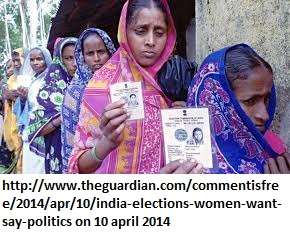
The shorter Oxford English Dictionary defines politics as 'the art and science of government' and as 'that branch of moral philosophy dealing with the state or social organism as a whole'. In this tradition of thought, 'politics' and 'the political' are linked to public life, the state; and political parties.
Women, Governance and Politics
Women's
Studies
Women's Political Participation: Theories and DebatesUnit-II – Defining Political Participation
But there is widespread recognition of broader and more historically and culturally variable connotations. Vicki Randall identifies the common ground in its relationship to scarce resources and conflict over their distribution. She differentiates the concepts of politics as activity and as relationship. In relation to the arena of public life, feminism has been concerned to expose the gendered nature of political activity, and to win full political participation for women. Basically, feminism is a political project to understand and therefore to change women's inequality and exploitation.
Understanding Participation
Participation is the involvement and consultation of those affected by decisions in the process of decision making. Involvement may include a right to elect representatives, to vote on issues, to campaign and canvass, to decide matters, to veto etc. Participation is related to one's status, education, occupation, income and membership of organization. Participation by both men and women is a key cornerstone of good governance. Participation could be either direct or through legitimate intermediate institutions or representatives. It is important to point out that representative democracy does not necessarily mean that the concerns of the most vulnerable in society would be taken into account in decision making. Participation needs to be informed and organized. This means freedom of association and expression on the one hand and an organized civil society on the other hand. The idea of this participation, assumes greater importance in a democratic system which, indeed, demands it. In International Encyclopedia of the Social Sciences, H. McClosky defines participation as "the principal means by which consent is granted or withdrawn in a democracy and rulers are made accountable to the ruled."
However, in case of female participation, one can find a severe political apathy. Women have remained marginalized and disadvantaged group throughout the globe. The sphere of world politics is no exception to it. J. Ann Tickner, one of the "Scholar-come-Mother Thinker" of the feminist stream of International Relations, is surprised by non-recognition of women's participation and less number of women active in this sphere. Women are not only excluded as active political participators and
Women, Governance and Politics
Women's
Studies
Women's Political Participation: Theories and DebatesUnit-II – Defining Political Participation researchers but also as subjects of study. In the practical political arena, the supremacy of men and subjection of women exist in most of the societies. After the adoption of democracy in the 20th century by most of the countries in Asia, Africa and Latin American Continent, there is some progress in women's participation in politics. Still, this is not satisfactory.
Studying Political Participation :-
One of the most important ingredients of every political system is 'Political Participation'. It is a known fact that political power in every society is monopolized by a few selective persons. By involving the common people in the affairs of the state, political participation fosters stability and order by reinforcing the legitimacy of political authority.
A society in which a major part of the population is denied any participation whatsoever, is likely to be highly vulnerable. That is why even in modern non-democratic political systems, the idea of political participation seems to be well-established. A modern fascist or a modern dictator, notwithstanding whatever power he is free to exercise; will certainly try to cloak his arbitrary decisions with the veil of a mass approval secured through some forms of political participation by the people.
This, however, does not mean that the rate of political participation is always high in modern stable democracies. Indeed a democracy like the U.S.A. reveals a rather poor rate of political participation in comparison with the corresponding rates in other democracies like Australia, New Zealand, Great Britain and the Scandinavian countries.
Women's empowerment and their active participation on the basis of equality in all spheres of life, especially participation in politics, governance, in the decision-making process and policy-formulation are vital for the overall development of society. Let us first of all understand what do we mean by political participation in order to spotlight the problem of women's under-representation in politics. Participation in electoral processes involves much more than just voting. Political participation derives from the freedom to speak out, assemble and associate; the ability to take part in the conduct of public
Women, Governance and Politics
Women's
Studies
Women's Political Participation: Theories and DebatesUnit-II – Defining Political Participation affairs; and the opportunity to register as a candidate, to campaign, to be elected and to hold office at all levels of government. There is no such thing as a free choice in politics. People's preferences are influenced and conditioned by the social and political context in which they live. One can distinguish three kinds of political participation: Voting, Electoral campaigning and Non-partisan lobbyingparticularly on local community affairs or even particularized contacts with officials to achieve some personal benefit.
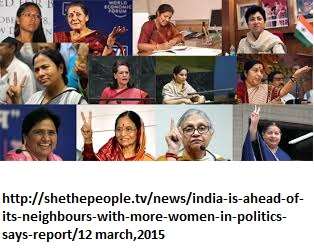
Political participation denotes a series of voluntary activities which have a bearing on the political process that involves issues like the selection of rulers and the various aspects of the formation of public policy. These activities are –
1) Voting at the polls 2) Supporting possible pressure groups by being a member of them 3) Personally communicating directly with legislators 4) Participation in political party activity, thus acquiring a claim on legislators and 5) Engaging in habitual dissemination of political opinions through word-of-mouth communications to other citizens.
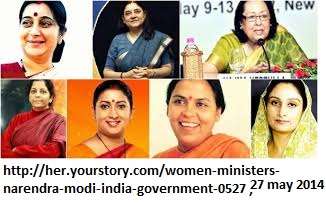
Milbrath's classification tends to show that political participation basically is of two types – active and passive. This distinction is a necessary outcome of the most common fact that political participation in every society has a cost that involves time, energy and resources.
Political participation may further be classified in terms of its purpose as instrumental and expressive. Instrumental political participation is essentially directed to the achievement of concrete
Women, Governance and Politics
Women's
Studies
Women's Political Participation: Theories and DebatesUnit-II – Defining Political Participation goals like securing a party victory or the passage of a bill or just a rise in one's status or influence. Expressive political participation does not aim at the realization of any concrete goal. It is concerned with some immediate satisfaction or a mere release of feeling. Thus, some vote not because they are really interested in the political results flowing from the elections or any material gain for themselves, but because they just have a feeling of satisfaction in exercising their voting right. In actual practice, however, instrumental participation often gets mixed up with expressive participation.
In case of women, there is a huge vacuum between procedural and substantive participation of women in politics. The question arises as to what are the reasons for lack of substantive participation of women? The reason behind the insufficient participation of women in electoral politics, both at citizen and elite levels, is the male domination in the family and patriarchal mindset of society. In this system, in "him" was vested the authority to represent his family's interests in the "outside" world. The opponents of women's suffrage argue that how could it be possible for a woman to have an opinion, separate and different from that of her husband.
1.4 Defining political participation
Verba and Nie define political participation as behavior designed to affect the choice of governmental personnel and/or policies.
They exclude passive forms, civil disobedience and political violence, efforts to change or maintain the form of government, behavior outside the sphere of government, behavior mobilized by the government and unintended political outcomes.
Barnes, Kase et al. (1979) define Political Participation as "all voluntary activities by individual citizens intended to influence either directly or indirectly political choices at various levels of the political system."
It is their contention that a conceptualization of political participation must include protest and violence to present an adequate view of politics in the United States and Western Europe.
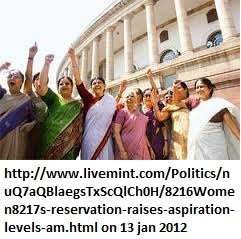
Nelson defines Political Participation as an "action by private citizens intended to influence the actions or the composition of national or local governments."
Women, Governance and Politics
Women's
Studies
Women's Political Participation: Theories and DebatesUnit-II – Defining Political Participation
Firstly, it includes illegal and violent actions intended to influence the government.
Secondly, attention can be focused on the form of government.
Third, the definition includes political action by the urban poor which is mobilized or manipulated by others. To Nelson, most political participation by the poor is at least partly prompted and more or less successfully guided by elites or middle-class groups. Much political participation combines an element of manipulation by others with some degree of independent choice and judgment. This is particularly true with respect to the poor, dependent, and insecure.
Broadly, political participation can be understood as behavior influencing or attempting to influence the distribution of public goods (roads, schools, health centers provided by government).
Concept of Political Participation
Essential variables working behind political participation can be categories as: a) Psychological b) Social and c) Political
Psychological Variable :- Political participation tends to meet one's psychological needs of overcoming loneliness. Politics may offer to the lonely man, new opportunities for association with others. It is the conscious psychological grounds of political participation.
Participation may also be attributed to unconsciously operative psychological elements. For example, political participation is likely to provide relief to a man's intra-psychic tensions growing mostly at the unconscious level and generated either by a conflict of his impulses or by a conflict between his impulses, on the one hand, and his mental control mechanisms, on the other – the external background of this conflict being provided by either the familial sphere or the social sphere. Men are always psychologically motivated by a kind of power-seeking. The needs for self-esteem are to a large extent gratified by political participation.
Social Variable – An individual's social environment contains diverse elements that have a clear bearing on the nature and extent of his political participation. The most important among these elements are education, occupation, income, sex, age, residence, mobility, religion, race and group influence. Political participation is relatively high in case of the better educated, members of the higher occupation and income groups, male members of the society, settled residents, urban dwellers and members of voluntary associations. People holding higher occupations usually reveal a greater willingness for participation. The manual or clerical workers who usually have to work long regular hours and who have less security in their work cannot be expected to have a high political participation.
Extensive data from various countries like the U.S.A., Great Britain, Italy, France, Germany, Mexico, Sweden, Norway and Japan confirm that men participate more than women who are found to be more conservative, less liable to heterodoxy, less well-informed about political issues and public
Women, Governance and Politics
Women's
Studies
Women's Political Participation: Theories and DebatesUnit-II – Defining Political Participation figures, give less attention to the diverse points of view and, therefore, have less interest in politics. Sometimes, women's major pre-occupation with home and family may account for their low participation. Women are more submissive to the general culture that usually emphasizes moral, dependent and politically less competent images of women which, in effect, reduce their partisanship and sense of political efficacy and, thus fix for them a less active political role.
Generally, life conditions of the middle age, including property ownership, increased family responsibilities, acceptance of group status and more homogenous social environment, tend to promote greater political participation.
Political Variable - Political participation is not natural; it has, in fact, to be learnt. An individual derives an important part of this learning from the members of the group to which he belongs and it is in this way that group membership especially the membership of voluntary associations – increases a person's political interest.
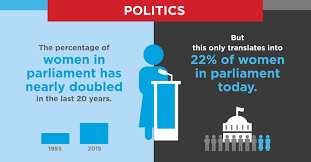
http://www.unwomen.org/en/what-we-do/leadership-and-political-participation/facts-and-figures
If the political map of a country is too large, if the machineries of political communication do not properly function, people are likely to develop somewhat a feeling of remoteness that seriously affects the rate of their political participation. On the contrary, the more open is the competition for power in a society and the more open is the competition based on established and accepted forms of procedure; the greater will be the tendency to participate.
http://www.openthemagazine.com/article/nation/kejriwal-is-no-match-for-me
Women, Governance and Politics
Women's
Studies
Women's Political Participation: Theories and DebatesUnit-II – Defining Political Participation
The government's effort to encourage and instruct the potential voters is also a factor to count, although this kind of effort is more to be found in the newly independent territories like India rather than in the established democracies of the West. Among all the political influences or participation, the party is surely the most important. Since, it is a very significant vehicle for conveying the wishes of the people to the government. Party campaigns have a great impact on political participation.
However, women's experiences and ideas about politics are rarely admitted in the mainstream discipline. In International context, Cythia Enloe has put up the question, "Where are the women"? Women are often underrepresented in formal politics, as heads of state or representatives in parliament. The women's movement has pursued the goals that range from the sanction of women suffrage to an increase in the number of women in responsible positions in public life .The concept of women empowerment especially in the field of politics has achieved momentum in view of certain women reaching new heights in state administration. Some have performed well in industrial management and span of research. One can find few cases in high administrative politics. Although, this has encouraged new thinking but what about the real practices? Gender inequality is in itself a form of violence which contributes to the insecurity of all individual. Prof. J.Ann Tickner expresses her concern, "Why are there so few women in my discipline of International Relations?'' The disciples such as International Relations focus on the 'high politics' that is related to diplomacy, war and statecraft and gives emphasis on the world of statesmen and soldiers, who were male. Until very recently, and still in many states, women are prohibited from securing the commanding levels.
Concluding Observations
Political participation is any action (or inaction) of an individual or collectively by individuals who intentionally or unintentionally oppose or support changes or maintain some features of a government or community. At most, awareness is a precondition for political participation. It is an action at the national or local level that supports or opposes state structures, authorities, and decisions regarding allocation of public goods.
Participation is an indication as well as a condition of women's status and power. It is a vital requirement for influencing the decisions, for promoting women's rights and development. A direct and effective participation helps to enlarge the freedom of women as it is the process to empower them. The representation of women in a political system is a good test of its claims to democracy. The women's liberation movements that began in the 1960s were, in many countries, ambivalent about
Women, Governance and Politics
Women's
Studies
Women's Political Participation: Theories and DebatesUnit-II – Defining Political Participation formal political representation. However, by the end of the twentieth century women's movements, were active to secure equality of representation throughout the world.
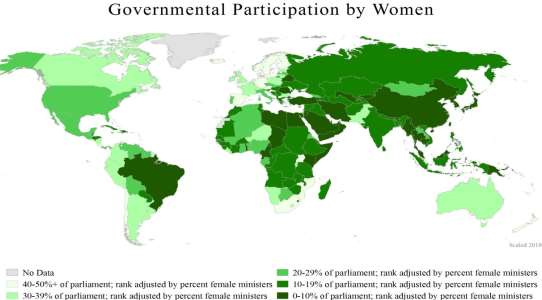
Suffrage campaigns over right to education, to paid work, to equal pay, to personal dignity and security, to sexual autonomy were also concerned about the inclusion of women's interests in policymaking. Later movements for representation in legislatures and assemblies were movements for presence that challenged political arrangements and sought to insert women's interest into policymaking by ensuring they were amongst the policy-makers. Since the nineteenth century women's movement, activists have demanded state action on a range of issues that include anti-discrimination policies, anti-violence policies, reproductive rights, childcare and political equality. Making women more vital to government concerns is partly about electing and appointing more women to public office that is descriptive representation. It is also about incorporating women's concerns into the policy process, that is, substantive representation. Whilst increasing women's descriptive representation may lead to the inclusion of women's concerns, it is only one of the several ways of enhancing women's representation.
Coral Cohn takes us inside the world of strategic planners, who were mostly men and examines their modes of discourse, which she describes as loaded with masculine imagery. It is difficult for anyone involved in national security planning to express ideas marked as "feminine" ( for instance, a preference for negotiations over coercive threatening). Women have always been active agents in international politics; their participation has more often taken place in non-governmental settings such as social movements rather than in inter-state policy making.
Women, Governance and Politics
Women's
Studies
Women's Political Participation: Theories and DebatesUnit-II – Defining Political Participation
If we have to break the current political stalemate, we have to change the mindset, keeping in view the gap between the myth and reality of women's participation in politics.
References
Andermahr, Sonya et al. 1997. A Glossary of Feminist Theory. London, Arnold.
Barnes, Kaase et. al. 1979. Political Action: Mass Participation in Five Western Democracies.
Bevely Hills, Sage Publications. Bellows, T.J., Erikson, S & Winter H.R. (eds.) 1971. Political Science: Introductory Essays and Readings. California, Duxbury Press, Belmont.
Conge, P.J. 1998. The Concept of Political Participation: toward a Definition in Comparative
Politics. Vol. 20, No. 2, The City University of New York. Dahl, R.A. 1965. Modern Political Analysis. New Delhi, Prentice – Hall of India (Pvt.) Ltd.
Foskett, J.M. 1955. "Social Structure and Social Participation" in American Sociological
Review, Vol. 20
Hawkesworth, M and Kogan, M (eds.) 1992. Encyclopaedia of Government and Politics.
London, Routledge. Heywood, A. 2005. Politics. New York, Palgrave.
Lipset, S.M. 1973. Political Man. New Delhi, Arnold – Heinemann.
Lovenduski, J. (ed.) 2005. State Feminism and Political Representation. Cambridge, Cambridge University Press. McClosky H. 1968. "Political Participation" in International Encyclopaedia of Social Sciences, New York, Collier – Macmillan.
Milbrath, L. 1985. Political Participation. Chicago, Rand McNally.
Nelson, B.J. & Choudhary, N (ed.) 1997. Women and Politics Worldwide. Delhi, Oxford
University Press.
Nelson, J.M. 1979. Access to Power: Politics and the Urban Poor in Developing Nations.
Princeton, Princeton University Press. Phillips, Anne (ed.) 1998. Feminism and Politics. New Delhi, Oxford University Press. Phillips, Anne. 1995. The Politics of Presence. Oxford, Clarendon Press. Pietila, H & Vickers, J. 1994. Making Women Matter: The Role of the United Nations. London, Zed Books Ltd.
Pettman, J.J. 2008. Gender Issues, in J Baylis et. al. (eds.) The Globalization of World Politics: An Introduction to International Relations.- New Delhi, Oxford University Press.
Women, Governance and Politics
Women's
Studies
Women's Political Participation: Theories and DebatesUnit-II – Defining Political Participation
Paper No. : Women, Governance and Politics
Module : Political Participation as tool of Women's Empowerment Role Name Affiliation Principal Investigator Prof.Sumita Parmar University of Allahabad Paper Coordinator Prof. Chandrakala Padia
Vice Chancellor, MGS University, Bikaner & Chairperson, IIAS, Shimla. Content Writer/Author (CW)
Vasanta College for Women, Varanasi
Ms. Manisha Misra
Content Reviewer (CR) Prof. Chandrakala Padia
Vice Chancellor, MGS University, Bikaner & Chairperson, IIAS, Shimla. Language Editor (LE) (B) Description of Module
Items Description of Module Subject Name Women's Studies Paper Name Women, Governance & Politics Module Name/ Title, description
Political Participation as tool of Women's Empowerment
Module ID Paper-11, ModulePre-requisites The Reader is expected to have the preliminary knowledge of Political Participation and Women Empowerment Objectives To study the current status of women empowerment and transformation through participation politically. Keywords Empowerment, Participation, Authority, Citizenship, Development, Decentralization
Women, Governance and Politics
Women's
Women's Political Participation: Theories and DebatesUnit-II –Political Participation as tool of Women's Empowerment
Studies
POLITICAL PARTICIPATION AS TOOL OF WOMEN'S EMPOWERMENT
2.1 Participation as a tool
Political Participation can be understood as actions on the part of individuals which either directly or indirectly affect the authoritative allocation of scarce resources, either material or symbolic,
in their community or between communities either within or outside their society.
Within a wide range of countries there is a uniformly high correlation between citizen's socioeconomic resources and their psychological involvement with politics-that is their interest in politics and their inclination to discuss political questions. But there is a much lower and more variable correlation between 'citizens' socio-economic resources and their actual, physical participation.
Conversely, particular groups may be legally excluded from the franchiselike conscientious objectors after the First World War in Britain for instance, or women in Spain before 1977.
Although 'the women questions' has often figured as a political issue since the middle of the nineteenth century, the question of the political significance of gender only became an issue in the study of politics in the 1970s.
Women, Governance and Politics
Women's
Women's Political Participation: Theories and DebatesUnit-II –Political Participation as tool of Women's Empowerment
Studies
Psychological involvement with
Personal SocioEconomic resources
politics
Legal incentives or restrictions
Other institutional incentives or restrictions (esp. partisanship)
Actual participation in voting, campaigning, lobbying and protesting
Fig. 1 A general model of participation
It arose partly in response to the women's studies movement which first emerged as part of the Women's Liberation Movement (WLM) which began in the 1960s. Prior to that, the study of women and politics was not regarded as important enough to warrant any special attention. During the 1970s these prevailing views were challenged and a wide-ranging debate was generated which continued
Women, Governance and Politics
Women's
Women's Political Participation: Theories and DebatesUnit-II –Political Participation as tool of Women's Empowerment
Studies throughout the 1980s. It has evolved from an initial and modest concern with mapping women's political behavior using traditional categories of analysis –the 'add women and stir' approach to a challenging critique of the very basis of political science. Women have played key roles in national liberation struggles and in the great political revolutions of modern times. There is a robust and growing women liberation movement in India. There are also data which indicate that women who are
in paid employment, full or part time, participate more frequently than full-time housewives. This suggests that where women are economically integrated they are more likely to be politically integrated, a finding that has been replicated in a number of countries.
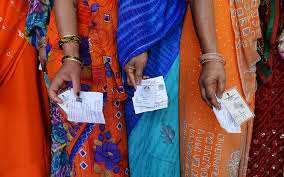
The Danish political scientist, Drude Dahlerup, studied the changes brought about when women became a sizable minority in a national legislature. She tested the notion that only when the minority of women in legislatures reaches a certain size (critical mass) the presence of women makes a difference.
She hypothesized that one would expect to find six different kinds of change:
1. In reactions to women politicians
2. In the performance and efficiency of the women politicians
3. In the political culture
Women, Governance and Politics
Women's
Women's Political Participation: Theories and DebatesUnit-II –Political Participation as tool of Women's Empowerment
Studies
4. In the political discourse
5. In policy (Political decisions)
6. In the empowerment of women
Women should be able to act on the strength of being women and not merely despite being women.
Democracy and the constitutions have provided women in most of the countries with political freedom
and rights to plan for their own future and pursue their own interests. According to the Jakarta
Declaration, "Involvement of women in the political arena and in decision-making roles is an important tool for empowerment as well as monitoring standards of political performance."
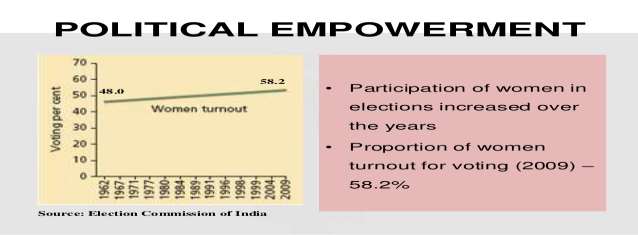
Election commission of India-http://www.slideshare.net/raghurh/women-empowerment-2
2.2 Understanding Empowerment
Before coming to the theme of Women Empowerment, let us understand the concept of Empowerment.
Women, Governance and Politics
Women's
Women's Political Participation: Theories and DebatesUnit-II –Political Participation as tool of Women's Empowerment
Studies
Empowerment means 'to invest within power'. 'Empowerment' has become a frequently used and buzz word. If essentially means, decentralized of authority and power. In other word giving voice to voiceless. Empowerment aims at getting participation of deprived sections of people in decisionmaking process. Unless capacity is built in these sections in reality the power is used by others rather than the section for which they are meant.
Activists want government to empower poor people including women by legislative measures
and welfare programmes. Empowerment is the process by which the disempowered or powerless people can change their circumstances and begin to have control over their lives. It results in a change in the balance of power, in the living conditions and it the relationships.
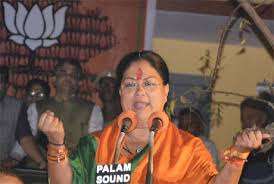
2.3 Women Empowerment and Political participation
Women empowerment means equal status to women, opportunity and freedom to develop herself. The focus of empowerment is equipping women to economically independent, self-reliant, have a positive self esteem to enable them to face any difficult situation and they should be able to participate in the process of decision-making.
Women's Empowerment as a phenomenon is not something new. It has been present throughout history in almost all societies for various reasons. What is recent is the increasing realization and
Women, Governance and Politics
Women's
Women's Political Participation: Theories and DebatesUnit-II –Political Participation as tool of Women's Empowerment
Studies recognition that empowering women is absolutely essential rather significant, for familial, societal, national and international development and progress.
The term 'Women empowerment' has become popular in the development field since 1980s. It is vividly recognized that women empowerment is essential for sustainable economic growth and reduction in poverty in developing countries. 'Empowering' women has become a frequently cited goal of development interventions. Women empowerment is central to human development. Targeted
actions aimed at empowering women and righting the gender inequalities in the social and economic share, as well as in terms of social and political rights, must be taken alongside effort to en-gender the development process.
The extent of women empowerment in a country is largely determined by three factors:-
1. Economic
2. Social and
3. Political identity
The term 'empowerment' denotes women's increased control over their own lives, bodies and environment. In discussion of women's empowerment, emphasis is often placed on Women's decision making roles, their economic self-reliance and their legal rights to equal treatment, inheritance and protection against all forms of discrimination. The popular UNESCO slogan should be considered as an ideal for not only empowerment but also development of women: "Educated a man and you educate an individual, educate a women and you educate a family".
Women, Governance and Politics
Women's
Women's Political Participation: Theories and DebatesUnit-II –Political Participation as tool of Women's Empowerment
Studies
It has been accepted that genuine commitment and efforts have to be made by each country at the government, non-government and individual levels to work, towards establishing women's empowerment as nationally and internationally discussed in UN World Conference on Women and agreed upon in the Plan of Action. A general awareness of the exploitation of women on various fronts like social, cultural, political and economic fronts has led to strong protests manifested in women's liberation movement, which emerged in the United States since the early 1970s.
Some prominent organizations associated with this movement were: National Organization for Women (NOW), Boston's Bread and Roses, Berkeley Women Liberation Group, Women's Radical Action
Project, Women's Equity Action League (WEAL), National Women's Political Caucus (NWPC) and others. According to Peterson and Runyan, 'A gender-sensitive lens enables us to 'see' how the world is shaped by gendered concepts, practices and institutions…'
Feminists assert that until the condition of equal participation of women in public life is fulfilled, the concept of citizenship cannot be brought to its logical conclusion. In India a beginning in this direction has been made by making reservation of one-third of the seats in Panchayats for women.
This will encourage women to join politics at grass-root level.
By and by their representation at this level can be increased to one-half, and provision can also be made for their adequate representation in legislative assembles and parliament. The opening up of vast opportunities of higher education would prove to be instrumental to their larger representation in administration and high-profile professions. In this way the idea of equal citizenship can be fully realized from the feminist point of view.
Women, Governance and Politics
Women's
Women's Political Participation: Theories and DebatesUnit-II –Political Participation as tool of Women's Empowerment
Studies
Access to Resources
Autonomy (Power of Decision Making)
Empowerment
Agency (Power to Act upon one's own defining goal)
Well Being (Achievement)
Fig.2 Four Components of Empowerment
However in practice, famous few women can be mentioned in politics such as Indira Gandhi and Margaret Thatcher. Such personalities acquiring women were strong leaders, who showed no hesitation to take firm decisions and also to use force in international conflicts. This led some to say that the only difference between men and women is that women are rarely in power, if they are, they behave like men. Similarly, men who appear compassionate or seek to negotiate away from conflict may accuse of
Women, Governance and Politics
Women's
Women's Political Participation: Theories and DebatesUnit-II –Political Participation as tool of Women's Empowerment
Studies being 'women' like. The 'public-private dichotomy' has played a vital role for suppression of women's rights.
2.4 International Scenario
At the International Conference on Population and Development in Cairo (1994), Women's empowerment was recognized as a cornerstone for effective policies. Empowerment of women in
all spheres, in particular the political sphere is critical for their advancement and the foundation of a gender-equal society.
Text Box (i):
Women's political empowerment is premised on "three fundamental and nonnegotiable principles: (a) The equality between women and men; (b) Women's right to the full development of their potentials; and (c) Women's right to self-representation and self-determination."
In empowerment, the key indeed is 'power', it is power to 'access', 'control' and make 'informed choices.' In the sphere of international politics the participation of women is still meager. However some instances can be given of outstanding women internationally, who are renowned for their achievements in politics: Margaret Thatcher was the first women Prime Minister of Great Britain. She has been called the 'Iron Lady' for her strong decisions.
Sirimavo Bandaranaike became the Prime Minister of Srilanka in 1960 and was the first women
Prime Minister of the World. Her daughter Chandrika Bandaranaike Kumartunga is the first women president of Srilanka.
Golda Meir was one of the founders and the fourth Prime Minister of the state of Israel.
Women, Governance and Politics
Women's
Women's Political Participation: Theories and DebatesUnit-II –Political Participation as tool of Women's Empowerment
Studies
Hillary Clinton is a leading candidate for the presidential election in United States in present time and earlier in 2008. She is also a famous lawyer and served as foreign secretary in US government.
Aung San Su Kyi, is the leader of the movement for democracy in Myanmar. She has spent many years under house arrest. In 1991, she is awarded with the Nobel Peace Prize for her non-
violent resistance to the military dictatorship in Myanmar. She has been released from her house arrest as a result of constant pressure from the general public.
Benazir Bhutto was the Prime Minister of Pakistan and the first women to be elected head of a Muslim country in modern times. She was killed before an election in December, 2007 to remove her from the national politics of Pakistan.
Begaum Khaleda Zia is the first women Prime Minister of Bangladesh.
German Chancellor Angela Merkel is also one of the strong women in contemporary international politics. By the end of 2005, Germany had elected its first women chancellor.
Happily, by the beginning of 2006, Chile and Liberia had elected their women presidents. Then in 2007 India and Argentina had the distinction of having women presidents. Srilanka, Israel, India
Pakistan and Bangladesh have the record of having women Prime Minister or Head of Government.
Thus, in Indian-subcontinent from ancient time, women have played important role in leadership and statesmanship. Some women have excellent record of performance in various important positions, like those in legislatures, cabinets, bureaucracy, diplomacy, journalism, legal profession, fine arts, academics and scientific research etc. This record is enough proof of the potential of women's power.
Women, Governance and Politics
Women's
Women's Political Participation: Theories and DebatesUnit-II –Political Participation as tool of Women's Empowerment
Studies
2.5 Indian context
In our country though we find anomalies in Panchayati Raj, where a women is selected as sarpanch, it is possible that her way of working is mostly influenced by a male member of her family.
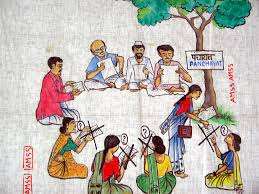
However this tendency should not be taken for granted. Looking back to the Indian history, one can find that women have played a vital role in politics. Though, before independence Indian politics is not formally well structured as it exists in contemporary period, still for understanding the journey of political empowerment of women in India, we have to take into account the contribution of the earlier empowered women. Symbolically some instances can be given in this context: Razia Sulatana, who ruled over Indian from 1236 to 1240 AD, was the very first ruler in Muslim history. She became one of the most powerful rulers of the Delhi Sultanate.
Rani Lakshmibai of Jhansi organized her fight against the British conspiracy and torture. She lived a short life of 23 years only, gave arousing call to the free-princely states to be united for
Women, Governance and Politics
Women's
Women's Political Participation: Theories and DebatesUnit-II –Political Participation as tool of Women's Empowerment
Studies the freedom of motherland. She moved the British Queen by her fierce leadership, lead the movement of 1857, but did not surrender. She died while fighting against the British rulers.
Similarly, Rani Durgavati and Rani Ahilyabai had also played significant role in preindependence period.
Indira Gandhi, at age 12, she had already joined the fight for India's independence and at an
advance age became the first women Prime Minister of India. But she was brutally killed by terrorists.
In modern times, the place of women in Indian politics reflects the opportunities and constraints that are associated with its democracy. Women have been key actors in the numerous social movements and non-governmental organizations that underlie India's vibrant civil society.
India's most influential, Prime Minister was Indira Gandhi, and her daughter-in-law, Sonia Gandhi, is the major force within the Congress party today. India's former president Pratibha Patil and several state leaders have been women, including Mayawati, who served four times as Chief
Minister of Uttar Pradesh.
Women, Governance and Politics
Women's
Women's Political Participation: Theories and DebatesUnit-II –Political Participation as tool of Women's Empowerment
Studies
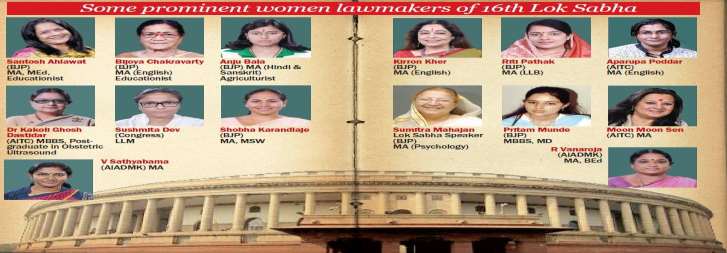
http://www.newindianexpress.com/thesundaystandard/It%E2%80%99s-Official-Women-are-Smarter-
Than-Men-Even-in-the-LokSabha/2014/11/16/article2524932.ece
In India, numerous steps have been undertaken to provide constitutional safeguards and institutional framework for activities of women welfare. There have been various shifts in policy approaches during the last 40 years from the concept of 'welfare', in the 1970s to 'development' in 1980s, now to 'empowerment' in the '1990s and afterwards.
The Government of India has declared the year 2001 as year for the Empowerment of women. The concern for women's political equality in India first emerged as political issue during the national movement in which women were active participants. Act of 1935, provided with the right to vote to all women over 21 years if they fulfilled the conditions of property and education.
In Post-Independence period, women continued to play a significant role in less conventional political activities such as environmental movement, anti-alcohol agitation and peace movements.
It was only with the setting up of the Committee on the Status of Women in India (CSWI) in September, 1971 that the demand for greater representation of women in political institutions in India was taken up in a systematic way.
Women, Governance and Politics
Women's
Women's Political Participation: Theories and DebatesUnit-II –Political Participation as tool of Women's Empowerment
Studies
The CSWI Report "Towards Equality" (1974) reveals that political parties have "tended to see the women voters and citizens as appendages of the males...." It also refers to the 'tokenism' involved in having a few women's rights on account of their dependent and minority status.
In Indian scenario, with women's concerns gaining prominence in both governmental and nongovernmental organizations during eighties (1980s), women's issues became an important agenda for all political parties. While the subjugation of women is gaining attention everywhere, women's
organizations will be forced to choose their political allies within the existing political set up.
Over a million women are represented in the three-tiered panchayats. With the growth of a multi-party system since the early 1990s, political parties have increasingly sought women's electoral support. And yet most women continue to lack effective political power in parties and the state.
Women's access to power is still mediated by their relationship to male kin, and is often indirect and symbolic. Parties have done little to provide women access to the networks and resources that would enable them to ascent the ranks of party hierarchies.
Hopefully, the continued administrative decentralization through programs like NRHM, have demonstrated the Government of India's commitment to increasing the political participation of marginalized groups, especially poor women. The bureaucratic structure of India is very complex and
Women, Governance and Politics
Women's
Women's Political Participation: Theories and DebatesUnit-II –Political Participation as tool of Women's Empowerment
Studies messy and because of that we find lot of departmentalization in ministries and various administrative posts. Women here can play a very effective role and in fact women have been doing so but the level of participation has decreased.
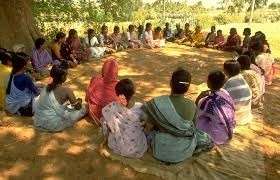
Further the 73rd and 74th amendments to the Indian Constitution in 1992 and 1993, provided with 33 percent reservation for women in panchayats and urban local bodies. Women have acquired resources and the development of skills, which have enabled them to excel in managing development.
They have been able to articulate their priorities for basic needs and amenities such as food, drinking water, schools, healthcare centres, roads, and security. Some instances can be given to prove that how political participation works as tool of women's empowerment: Two detailed village surveys carried out in two districts, Birbhum in West Bengal and Udaipur in Rajasthan; found that women invest more than men in projects that meet community needs, which are water and roads in West Bengal and water in Rajasthan. In West Bengal, the panchayats are authorized to establish informal education centres. In Rajasthan, the panchayats can spend money on local infrastructure.
Women, Governance and Politics
Women's
Women's Political Participation: Theories and DebatesUnit-II –Political Participation as tool of Women's Empowerment
Studies
In rural Punjab, over 4500 women heading 2446 panchayats have a common minimum programme: to work for uplift of weaker sections of society, adult literacy, pensions for aged and the poor, better education and healthcare facilities, and the development of their villages in their five-year term.
Another success story is the Belandur gram panchayat in Karnataka, where six out of
twelve members are women. It is estimated that collections of taxes have risen more than seven times. With the devolution of responsibility to the panchayats, the cost of the delivery of government services has gone down significantly, and a system of transparency and accountability has developed.
Women panchayat members have also taken up questions of gender inequality in many places. In UP, 100 village leaders have banned the practice of giving or demanding dowry.
In Akola district in Maharashtra, an all-women panchayat had the only liquor shop of the village closed down as it was resulting in the men of the village returning home drunk and beating their wives.
In Madhya Pradesh, the Institute of Social Sciences, New Delhi, awarded a woman sarpanch in the Jamunia taluk in district Sehore the "Outstanding Woman
Panchayat Leader Award" for 2003. Her achievements included providing women with land rights, distributing land to ninety-five couples under a housing scheme, and ensuring that the documents were in woman's name.
In Orissa, the Narayanpur gram panchayat under the leadership of its sarpanch
Rajehwari Rao passed a resolution banning child marriage. Even families who had
Women, Governance and Politics
Women's
Women's Political Participation: Theories and DebatesUnit-II –Political Participation as tool of Women's Empowerment
Studies performed child marriages before the ban was put in place were not sparedthe adults responsible were required to pay a fine of Rs. 1000, to be used for the children's education.
The enactment of the 73rd and 74th Constitutional Amendments represented a milestone in the process of decentralization. The 73rd Amendment Act made the Gram Sabha, comprising all adult villagers, the
pillar stone of village governance. The amendments contain provisions for the reservations of 33 percent of elective seats for women in the village, block and district councils and an equal number in the urban municipal councils. Consequently, an estimated five million women entered local politics directly or indirectly in the last ten years. India's population consists of 15% Scheduled Castes and 7.5%, Scheduled Tribes. As a result, 22.5% of seats are reserved for them, out of which one-third are for women. The reservation of seats in each state is proportional to their population. The reservation of seats for women, SCs and STs applies also to office bearers, so that one-third of sarpanch must be women. These amendments, as a strategy of affirmative action, served as a major breakthrough towards ensuring women's equal access and increased participation in political power structures.
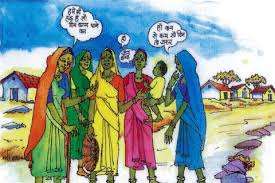
Women, Governance and Politics
Women's
Women's Political Participation: Theories and DebatesUnit-II –Political Participation as tool of Women's Empowerment
Studies
2.6 Conclusion
Women empowerment is one of the momentous issues of contemporary development policies in developing countries. Society should take initiative to create climate in which there is no gender discrimination and women have full opportunities of self-decision making and participating in political life of the country with the sense of equality. The past two decades have witnessed two new patterns:
1. Attempts by political parties to foster closer ties to social movements and non-governmental organizations.
2. Attempt by some feminists to work with parties and the state.
The most significant example of collaboration between women's organizations and the state has occurred around the issue of reservations for women in local government. For increasing women's political participation, gender quotes has been recognized as a significant measure. In this context, statement made by Sushma Swaraj can be quoted here, 'We have tried reserved parliamentary seats for village panchayats, and from my experience, this is a very effective measure. We have reserved 33% of the seats in panchayats for women. Before this policy, we did not have women prepared for leadership positions, but as a result of the policy, political parties have to search for women. We got a mixed response. Some men did not want women to come forward, so they put forward their wives, sisters-in-law and mothers. But talented, educated women also came forward. Now the old argument that there are no able women to become candidates for legislature assemblies no longer holds. Because now the women serving as mayors and as chairman of the municipal committees will be groomed as prospective candidates for parliament. More and more
Women, Governance and Politics
Women's
Women's Political Participation: Theories and DebatesUnit-II –Political Participation as tool of Women's Empowerment
Studies women have been elected to panchayats and this is a valuable pool of women for legislative assemblies. Thus the reservation of seats is a very effective measure, especially in countries such as India where there is such meager representation of women in parliament. In India, only 6.5 percent of parliamentarians, 39 members of a house of 543, are women. A bill for reservation of seats for women in parliament is also pending; discussions are going. It was not yet passed, but I think it will see the
light of day.'
Women empowerment which is declared as Millennium Development Goal by UNDP could be achieved only when all concerned bodies will work in cooperation. Empowering Women politically is an important end in itself not only as human right but also as having the potential to enhanced human wellbeing.
Women, Governance and Politics
Women's
Women's Political Participation: Theories and DebatesUnit-II –Political Participation as tool of Women's Empowerment
Studies
2.7 Summary
The question of the political significance of gender became an issue in the study of politics in the 1970s.
The extent of women empowerment in a country is largely determined by three factors: Economic, Social and Political identity.
Empowerment aims at getting participation of deprived sections of people in decision-making process.
Women Empowerment means equal status to women, opportunity and freedom to develop herself.
Empowerment of women in all spheres, particularly in the political sphere is critical for their advancement and foundation of a gender-equal society.
73rd and 74th Constitutional Amendments have strengthened women's political participation and democracy in India.
At the International Conference on Population and Development in Cairo (1994), Women's empowerment was recognized as a cornerstone for effective policies.
For increasing women's political participation, gender quotes has been recognized as a significant measure.
Women, Governance and Politics
Women's
Women's Political Participation: Theories and DebatesUnit-II –Political Participation as tool of Women's Empowerment
Studies
Paper-11 Module-6 Political Participation as mere symbolism. Role Name Affiliation Principal Investigator Prof.Sumita Parmar University of Allahabad Paper Coordinator Prof. Chandrakala Padia
Vice Chancellor, MGS University, Bikaner & Chairperson, IIAS, Shimla. Content Writer/Author (CW)
Vasanta College for Women, Varanasi
Ms. Manisha Misra
Content Reviewer (CR) Prof. Chandrakala Padia
Vice Chancellor, MGS University, Bikaner & Chairperson, IIAS, Shimla. Language Editor (LE) Prof.Sumita Parmar University of Allahabad (B) Description of Module
Items Description of Module Subject Name Women's Studies Paper Name Women, Governance & Politics Module Name/ Title, description
Political Participation as mere symbolism.
Module ID Paper-11 Module-6 Pre-requisites The Reader is expected to have preliminary perception about the myth and reality of women political participation persisting in our society. Objectives To raise the reader's critical consciousness to make him understood the actual scenario of women's political participation. Keywords Democracy, Representation, Reservation, Election, Public life, Leadership
Women, Governance and Politics
Women's
Women's Political Participation: Theories and DebatesUnit-III –Political Participation as mere symbolism
Studies
Political participation as mere symbolism
Introduction
On the 14th of April 2008 a seven-month pregnant Minister of Defense shows the Spanish troops for the first time; first time not only for her, but also for other women, all citizens, the army and democracy in Spain. Carme ChaconThe first women to have inspected the troops in Spainwas appointed minister within the Spanish socialist cabinet of President Rodriguez Zapatero.
(Emanuela Lombardo & Petra Meier, The symbolic representation of gender: an introduction, Paper for delivery at the XXII IPSA World Congress of Political Science, Madrid, 8-12 July, 2012, p.1)
The sight of Minister Chacon inspecting the troops on her first day in office with her rounded belly covered by a white maternity blouse is a picture that Spaniardsand other people outside Spainwill not easily forget. It occupied the front page of several national and international newspapers. Why is that picture so powerful to attract people and media's attention? At a first glance, it shows, maternity, symbol of womanhood, in an unusually represented position of leadership and command, and, the army, symbol of masculinity as associated with physical strength and defense, this time in an also unusually represented situation of subordination and obedience towards a woman in a position of supreme authority. The pregnant minister is 'invading a space' that tends to be associated with men. This picture could also attract people's attention due to the suggestion of a possible clash between life, as symbolized by maternity, and death, as symbolized by the army. It turned upside down socially ingrained expectations about the role of women and men and the respective hierarchy between the sexes that are still very much present and perpetuated through dominant cultural codes.
After this illustration now the question arises, have democracies become more representative in the sense that they have incorporated women in ways
Women, Governance and Politics
Women's
Women's Political Participation: Theories and DebatesUnit-III –Political Participation as mere symbolism
Studies which ensure that their interests are advocated and considered? What mechanisms exist to facilitate gender – balanced policies and how effective are those mechanisms? Anne Phillips (1995) points out that post-industrial democracy are deficient because they fail to represent women's interests and needs adequately. They neither include women in positions of power nor routinely incorporate gender perspectives in the policy process.
geekfeminism.org
Comparative research shows that there is generally a pattern of decreasing number of women as decision-making hierarchies are ascended. There is a functional division of labour between women and men representatives whereby women are more likely to specialise in 'soft' and less prestigious policy areas such as health, cultural affairs, education and social welfare while men dominate the traditionally more prestigious areas of economic management, foreign affairs and home affairs. The patterns raise the important question of what if any influence women representatives have and where and how they are able to exercise it.
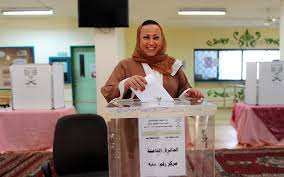
www.radionz.co.nz
Women, Governance and Politics
Women's
Women's Political Participation: Theories and DebatesUnit-III –Political Participation as mere symbolism
Studies
In practice, the opportunities for exercising rights are limited and women's access to decide their own future is restricted due to the lack of free movement, exposure, patriarchal forces and values.
This is similar to and is an extension of the situation obtained in home where women are consulted rarely in important economic matters like purchase and sale of property or spending patterns of the income. Even in the public sphere women's participation making level is only marginal.
3.2 Women Presence in Assemblies Women are often more likely than men to face practical barriers to entering politics, including a paucity of financial resources, lower levels of education, less access to information, greater family responsible, and a deprivation of rights that has left them with fewer opportunities to acquire political experience. With the exception of the close relatives of male politicians, women generally lack the political networks necessary for electoral success. However, political participation and grassroots democracy have been strengthened considerably by the 73rd and 74th constitutional amendments that have created new democratic institutions for local governance. Of the 28 lakh elected Panchayat representatives, around 10 lakh are estimated to be women. The average of women representation in panchayats across the country is 36.94 percent. On the other hand, a few states have gone beyond the mandated 33 percent and provided more reservation for women. For example Bihar, Madhya Pradesh, Uttarakhand and Rajasthan have reserved 50 percent seats for women in panchayats. The constitution's 110th Amendment Bill 2009 provides reservation for women from 33 percent to 50 percent in Panchayati Raj Institutions.
Mrs. Shailja Singh, Gram Pradhan, Masuriya Village, Ballia, Uttar Pradesh
Nevertheless, the matter of concern is that women representation have always been criticised as the representation is only a puppet show and the master is 'Pradhanpati' (Husband of female representative), or the 'Pradhanputra' (Son of female representative). On this issue, Mrs. Shailja Singh (Gram Pradhan, Masuriya Village, Ballia, Uttar Pradesh) stated that, "It is not
Women, Governance and Politics
Women's
Women's Political Participation: Theories and DebatesUnit-III –Political Participation as mere symbolism
Studies possible that suddenly women will have full command on all the power-structures and decisionmaking processes. So, assistance of her husband or son is of real representation of UN Women's Campaign- 'He for She'. Gradually women will achieve full command in this respect."
In India, women have not found adequate representation in Lok Sabha. The percentage of elected women Lok Sabha members has never exceeded 12 percent.
Table 1 : Women presence in the Lok Sabha
Year Seats Women MPs % of women MPs 1996 543 39 7.18 1998 543 43 7.92 1999 543 49 9.02 2004 543 45 8.03 2009 543 59 10.86 2014 543 61 11.23 Average 531.06 36.87 6.91
First woman speaker of Lok Sabha - Meira Kumar
Women politicians
Munmunsen and Dimple yadav
Women, Governance and Politics
Women's
Women's Political Participation: Theories and DebatesUnit-III –Political Participation as mere symbolism
Studies
The presence of women in the Upper House has been only slightly higher overall, probably due to indirect elections and nomination of some women members. It was highest in 1990 at 15.5 percent and shows a declining trend thereafter.
Table: 2 Women Presence in the Rajya Sabha
Year Total Seats No. of Women % of women 1990 245 38 15.5 1996 223 20 9.0 1998 223 19 8.6 2004 245 27 11.1 2009 245 22 8.97 2014 245 29 11.83 Average 238.21 22.92 9.62
It is significant to note that the Deputy Chairperson of the Rajya Sabha at least for more than 25 years has been a women yet women face increasing competition from male politicians for nomination. The number of women contesting election has always been low. The highest number of women contestants has been merely 636 in 2014. The losing seats are offered to women candidates by the respective political parties. This scenario is also typical at the state level. Sources reveal that the highest percentage of women in the State Legislative Assemblies has been 10.8 percent in 1957 in Madhya Pradesh. Generally, there seems to be no correlation between literacy and female representation. Kerala, with its high literacy rate, has a low state average of 3.6 percent. The representation of women in the Union Council of Ministers has also remained very low.
Table : 3 Representation of Women in the Union Council of Minister (2001-2014)
Year Number of Minister Number of Women Minister Cabinet Minister Minister of State Deputy Minister Cabinet Minister Minister of State Deputy Minister 2001 30 7 35 3 2 4 2002 31 45 0 2 5 0 2004 28 38 0 1 6 0 2009 34 45 0 3 5 0 2014* 23 23 0 6 1 0 * First phase of Narendra Modi's Council of Ministers which took oath on May 26, 2014
Thus, the representation of women at various levels in services, representative bodies and judiciary remain grossly inadequate.
3.3 Reservation of Women in Parliament and State legislatures
Initially, most political parties agreed to introduce 33 percent reservation for women in Parliament and State Legislatures. But soon doubts surfaced. The objections focused around two main issues: (i) The issue of overlapping quotas for women in general and those for women of the lower castes. (ii) The issue of elitism.
Women, Governance and Politics
Women's
Women's Political Participation: Theories and DebatesUnit-III –Political Participation as mere symbolism
Studies
The bill was first introduced by Dev Gowda led United front Government. The Bill has already been introduced five times, but is stalled each time. However, the Rajya Sabha on March 9, 2010 took a 'historic step' by voting (191 for and 1 against) to amend the constitution, providing one-third reservation in Parliament and State Assemblies for women. Till today bill is not passed by the Lok Sabha and ratified by one-half of the states before it comes into effect. Barriers to women's political participation are often magnified in post-conflict societies, which may be characterized by militarism, a volatile security situation, the political dominance of a small group of elites, the absence of well-established political parties, the failure to include women in peace negotiations, and other limiting factors which confirm that political participation by women has become mere symbolism.
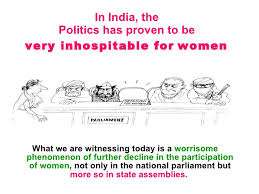
www.slideshare.net 3.4 Women and Political Parties In Indian politics, women continue to lack effective, political power in parties and the state. Women's access to power is still mediated by their relationship to male kin, and is often indirect and symbolic. Parties have done little to provide women access to the networks and resources that would enable them to ascend the ranks of party hierarchies. One of the significant questions arises concerning the relationship between women's electoral support for particular parties and these parties' commitments to eradicate gender inequality. Parties have increasingly directed their appeals at women by addressing their distinctive interests and identities, and by involving women in electoral campaigns. The Bharatiya Janata Party (BJP), Telugu Desam Party (TDP) and Dravida Munnetra Kazhagam (DMK) have not only viewed women as vote banks, but also made them figureheads and spokespersons for their parties, and often very militant ones. And yet they have generally not offered them lasting institutional power, nor rights that would increase their autonomy from their families. The BJP has mobilized women around Hindu nationalist themes, but has interspersed these with displays of its secular commitments. As a centrist party with historically secular, socialist leanings, Congress has claimed women support through its commitment to minority rights and secularism. However, these parties' ideologies have not determined their positions on gender inequality. For women's rights activists, the major failure of the Congress Party resulted from its ambivalent stance towards secularism. When Congress tried to pass the Hindu Code Bill providing equal rights to men and women within the family in 1944, it encountered deep-rooted opposition from
Women, Governance and Politics
Women's
Women's Political Participation: Theories and DebatesUnit-III –Political Participation as mere symbolism
Studies conservative religious groups, which viewed secular law as undermining religions and patriarchal authority. The Bill Congress passed in the mid1950s was deeply compromised by concessions to this opposition.
During the early period of its ascent, BJP was especially keen to distinguish itself from the Congress Party. Its support for the Uniform Civil Code in the 1990s was in part a response to Rajiv Gandhi's handling of the Shah Bano issue. Like all political parties, BJP also makes certain promises that it does not keep. For instance, it did not implement reservations for women, which it pledged to do at election time.
The relatively small number of women in political office is a reflection of biases on the part of parties than that of the electorate. It may be that parties only ran women in elections they considered winnable. If they felt that the electorate was less likely to vote for a woman, all else being equal, it made sense to run women in seats where victory was more likely. Venkaiah Naidu claimed, 'We want to field more women candidates but there are few of them.' However the data does not bear out Naidu's contention that women do not win elections. The percentage of women candidates who were elected was 51.9% in 1996, 46.9% in 1998 and 60% in 1999.The Congress Party nominated more women than the BJP in every election. However, a larger proportion of women candidates were elected from the BJP than from the Congress.
Three successive governments dating back to 1996 have supported the EightyFirst Amendment Bill guaranteeing at least 33% reserved seats for women in parliament and the legislative assembly. However, although most political parties have endorsed the bill in their election manifestos, they have not supported its passage in Parliament.
3.5 Elections and Women's Leadership
Feminists argue that even after getting full citizenship in law, women continue to suffer from subjection in their social life. From 1960s and 1970s the status of women in society and politics has become the centre of attention.
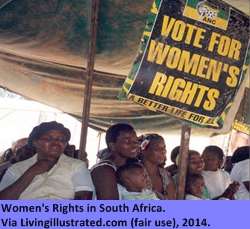
www.africafiles.org
Women, Governance and Politics
Women's
Women's Political Participation: Theories and DebatesUnit-III –Political Participation as mere symbolism
Studies
Earlier it was usually thought that after establishing legal equality of men and women, women were not left with any issue of complaint. After the extension of right to vote to women, there were some studies on voting behaviour. It was found that women's participation in voting was lower in comparison to men. To explain this situation it was argued that women were largely interested in private and domestic affairs; they were less interested in politics and public affairs and probably they had no time to attend to these matters.
In the sphere of international politics the representation of women is still meager. In November 1990, thirty-four Heads of Government of European countries gathered to sign the historic charter of Paris for the New Europe. The gathering marked the end of the cold War. In newspaper headlines it was described as the end of an era. But feminists ask. "Which era had come to an end?" in any case, it was not an end of the patriarchal era. In the group-photo of these thirty-four heads of government, only two women could be spotted after a thorough search. These are: Gro Brundtland, Prime Minister of Norway, and Margaret Thatcher, Prime Minister of Britain. Two days after this Conference, Mrs. Thatcher also resigned, and a man replaced her as Prime Minister. In this situation, what is the consequence of granting full political rights to women if their representation in public life remains so negligible?
In countries outside Europe and America, Women's representation is very insignificant at the level of political authority. Opportunities are not open to women as their share in these positions continues to be very inadequate.
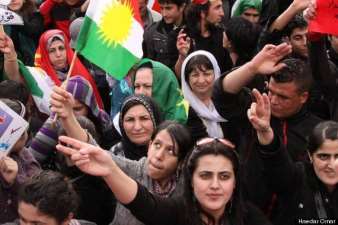
alternative.net/social-movements/indiatogether.org
In India, women's voting rates increased from 37% in 1952 to a high of 68% in 1984; they fell to 47% in 1991. Women's participation in the panchayats is constrained by a dearth of financial resources, the lack of independent staffing, and reliance on an uncooperative bureaucracy. Opposition to the Eighty first Amendment Bill guaranteeing at least 33% reserved seats for women in Parliament and the Legislative Assembly, from some segments of the women's movement partly reflects a distrust of political parties. These include,
Women, Governance and Politics
Women's
Women's Political Participation: Theories and DebatesUnit-III –Political Participation as mere symbolism
Studies
Quotas could form a ceiling rather than a minimum;
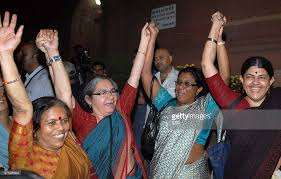
Women candidates might be malleable because of their dependence on male party leaders.
Reservations treat women like a homogeneous group, which increase the likelihood of the 'biwi (wife) brigade' of educated, upper-class, upper-caste women being elected, particularly because the bill does not provide for sub-quotas of OBCs. Similar trend of successful 'unmarried women in politics' can be visualized. While looking at women's leadership, one could find that woman who have been elected to parliament without the support of an organized constituency have been few in number, and relatively ineffective in challenging gender inequality.
The power of women MPs (Member of Parliament) is generally very limited. They are expected to strictly adhere to party policy, and none of them have placed questions concerning gender inequality high on their agendas. Although they have regular contact with women's wings of political parties and with the party leadership on issues regarding the family, they do not have much to do with autonomous women's organizations.
Consider the roles of some women who have emerged as power brokers within Indian politics today. They include the Italian-born Sonia Gandhi, who was positioned to become Prime Minister in 2004, Jayaram Jayalalitha, who heads the regionally based AIADMK and is the former Chief Minister of the southern state of Tamil Nadu; Sheila Dikshit, former Chief Minister of Delhi, Vasundhara Raje, former Chief Minister of Rajasthan and Rabri Devi, the former Chief Minister of Bihar.
Women, Governance and Politics
Women's
Women's Political Participation: Theories and DebatesUnit-III –Political Participation as mere symbolism
Studies
All these women rose to power as appendages to men rather than through movements or institutional channels. Rabri Devi only emerged from her role as housewife when her husband was imprisoned, and she replaced him as the Chief Minister of Bihar.
Sheila Dikshit rode to power on the coat-tails of her powerful father-in-law, Uma Shankar Dikshit. Vasundhara Raje Scindia is the daughter of Vijayaraje Scindia and is of royal ancestry; Jayalalitha is the mistress of actor-turned-politician M.G. Ramachandran, whom she succeeded as Chief Minister of Tamil Nadu. Sonia Gandhi is the widow of former Prime Minister Rajiv Gandhi and the daughter-in-law of former Prime Minister Indira Gandhi. Hence, in our country these illustrations reflect mere symbolism of women political participation. One can utter the names of 'famous few' who hold the higher positions due to their political family background or any other type of influential political support. However, women experience more constraints than men in gaining political power.
India's women leaders may be important symbols of the nation; in the absence of support from organized movements they have not become powerful in their own right. In such a realm, their connections to male family members assume paramount importance. Nor do these women share common values, ideals, or agendas. Their role in bringing down governments may be as close as they will ever come to collaborating.
Their deepest commitments are to their parties and to themselves, not to the collective interests of women. At the present time, the question of how to engage in elections selectively and creatively possesses important challenge for the women's movement.
Conclusion
Symbolism here is used in the sense of not being effective. There is a marginal achievement in this regard. While analyzing the term "symbolism" one can refers to Mazur's writings. In Mazur's analysis of French equal employment policies, symbolic reform occurs when policies designed to address certain social problems fail to effectively solve those problems. Symbolic policies would serve a symbolic purpose of 'image making' for politicians, but they appear destined to have little real impact. Symbolism is then seen as the opposite of substantial, which focuses on the fact that something really substantial is (being) achieved.
There is absence of a concerted and assertive women's movement, focusing precisely at the ascertainment of equitable political participation of women in all segments of the political life in our country. It proved congenial for the custodians of Indian politics, immediately after independence, to gloss over the gender perspective of the government and politics in the country without being held accountable for this act of omission. So, they have introduced some of the reforms to increase women's political participation. Political Participation in particular seems to be limited for at least two reasons:
1. The tone and substance of the constitutional provisions apparently remain confined to only those aspects of the women's development which would have probably been dovetailed to them in the course of increased awakening amongst the people.
Women, Governance and Politics
Women's
Women's Political Participation: Theories and DebatesUnit-III –Political Participation as mere symbolism
Studies
2. The constitutional provisions happen to be of foundational nature acting as the signpost for the politicians and the policy makers to evolve suitable and innovative measures to ensure greater role and participation of the women in the decision making institutions and processes in the country.
On the other hand, the long years of enjoyment of domination over the women by men is probably dissuading the dominant section of the society to cease from emanating any innovative law or taking any path breaking decision sanctioned by the constitution to catapult the women in the mainstream of the India politics.
Two contemporary issues, Uniform Civil Code and Reservation of seats for women in National Parliament and State Legislatures, have redefined the contours of feminist politics in India. The controversy over the uniform civil code began with the 1985 Supreme Court judgment granting financial support to Shah Bano (who once divorced, demanded maintenance from her husband) under a provision in secular criminal law. This verdict provoked the Muslims who characterized this interference by the Supreme Court as having fiddled with their personal law. Law could be an aid, once the decision is negotiated at the political level. Otherwise, a mere intervention of the court is too weak to bypass the hegemonic patriarchal social structure. The issue of reservation of seats for women has been already discussed above. The urge towards uniform civil code continues to remain a mere slogan unless it is debated at the grass roots level. Similarly, the reservation bill cannot ensure political equality for all; it simply seeks to expand the number of women in the political decision making.
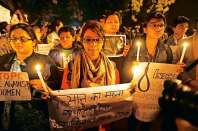
www.livemint.com/politics/zrgmalFAEkdD89ak7GYdbN/political-parties-yet-to-move-beyondsymbols-on-womens-empo.html
Summary-
Anne Phillips points out that post-industrial democracy are deficient because they fail to represent women's interests and needs adequately.
Political participation and grassroots democracy have been strengthened by the 73rd and 74th constitutional amendments.
The percentage of elected women Lok Sabha members has never exceeded 12 percent.
There seems to be no correlation between literacy and female representation in India.
Women, Governance and Politics
Women's
Women's Political Participation: Theories and DebatesUnit-III –Political Participation as mere symbolism
Studies
The relatively small number of women in political office is a reflection of biases on the part of parties than that of the electorate.
81st Amendment Bill is associated with guaranteeing at least 33% reserved seats for women in parliament and the legislative assembly.
Women's participation in voting was lower in comparison to men.
Women's participation in the Panchayats is constrained by a dearth of financial resources, the lack of independent staffing and reliance on an uncooperative bureaucracy.
Women, Governance and Politics
Women's
Women's Political Participation: Theories and DebatesUnit-III –Political Participation as mere symbolism
Studies
References-
1. Chakrabarty, Bidyut and Pandey, R.K. 2008. Indian Government and Politics, New Delhi, Sage Publications India Pvt. Ltd.
2. Election Commission of India. Election Statistics Pocket Book 2014: Election Commission of India.
3. Gauba, O.P. 2013. An Introduction to political Theory. New Delhi, Macmillan.
4. Ghosh, Peu. 2014. International Relations, Delhi, PHI Learning Pvt. Ltd.
5. Heywood, A. 2005. Politics. New York, Palgrave.
6. Jayal, N.G. and Mehta, P.B. 2010. The Oxford companion to Politics in India. New Delhi, Oxford University Press.
7. Kapur Promilla. 2001. Empowering the Indian Women. New Delhi, Publications Division.
8. Khullar, M (ed.) 2005. Writing the Women's Movement: A Reader. New Delhi, Zubaan.
9. Lombardo, Emanuela and Meier, Petra. 2012. The symbolic representation of gender: An Introduction. Madrid, Paper for delivery at the XXII IPSA World Congress of Political Science.
10. Mohanty, Manorajan (ed.) 2004. Class, Caste, Gender. New Delhi, Sage Publications.
11. Pease, Kelly Kate S. 2000. International Organizations, Perspectives on Governance in the Twenty First Century. Upper Saddle River, Nj, Prentice Hall.
12. Sinha, M, Guy, D and Wollacott, A. 1999. Feminisms and Internationalism. Oxford, Blackwell Publishers.
Women, Governance and Politics
Women's
Women's Political Participation: Theories and DebatesUnit-III –Political Participation as mere symbolism
Studies
Paper No. : Women, Governance and Politics
Module : Approaches to Increase Women's Democratic Participation & Recommendations made at Different Global Meets regarding Women's Political Participation
Development Team
Prof. Sumita Parmar Allahabad University, Allahabad
Principal Investigator
Prof. Chandrakala Padia, V.C., MGS University, Bikaner
Paper Coordinator
Manisha Misra, Assistant Professor, Vasanta College for Women, Varanasi
Content Writer
Prof. Chandrakala Padia, V.C., MGS University, Bikaner
Content Reviewer
Women, Governance and Politics
Approaches to Increase Women's Democratic Participation &
Women's
Studies
Recommendations made at Different Global Meets regarding Women's Political Participation
Description of Module
Subject Name Women's Studies
Paper Name Women, Governance and Politics
Module Name/Title Women's Political Participation : Theories and Debates - Recommendations made at different Global Meets regarding Women's Political Participation: Beijing Conference, South Asia Watch, Asia Pacific Women's Watch, Inter-Parliamentary Union, UNDP & Commonwealth & Approaches to Increase Women's Democratic Participation
Module Id
Pre-requisites The student is expected to have the insight of understanding gender issue as a global issue of contemporary period.
Objectives To make the reader understand the gist of major recommendations made for women's political participation at global level and possible efforts which can be taken to enhance women's democratic participation.
Keywords Human Right, Equality, Decision Making, Platform For Action, Organization and Parliament
Approaches to Increase Women's Democratic Participation & Recommendations made at different Global Meets regarding Women's Political Participation: Beijing Conference, South Asia Watch, Asia Pacific Women's Watch, Inter-Parliamentary Union, UNDP and Commonwealth
By Ms. Manisha Misra
Assistant Professor
Department of Political Science
Vasanta College for Women,
Rajghat, Varanasi-221001
Email : [email protected]
Women, Governance and Politics
Approaches to Increase Women's Democratic Participation &
Women's
Studies
Recommendations made at Different Global Meets regarding Women's Political Participation
4. Approaches to Increase Women's Democratic Participation
The contemporary democratic ideal is based on the concept that political power has its roots in sovereign people. Therefore, there can be no democracy without involvement, without participation of the people in political life. Under International standards, men and women have an equal right to participate fully in all aspects of the political process. In practice, it is often harder for women to exercise this right.
However mere participation is not enough; to be meaningful and capable of bringing about the necessary changes in the society, such participation has to be at the effective level of decision making and implementation, that is at the managerial or leadership levels. It is then that it can lead to the empowerment of womena process and a target that equip women with the capacity to act and impact.
Empowerment is thus a long term process; it does not happen overnight or with government legislation like the one third reservations in Panchayati Raj or with a series of policies and programmes. Centuries of patriarchal subordination and internalization of inherited values cannot be overcome in a short span.
Constitutional provisions, legislations, policies, and social actions are the necessary instruments for the process of empowerment.
Political parties are among the most important institutions affecting women's political participation.
Women's networks, trade unions, non-governmental organizations and the media can provide avenues for women's political participation.
Post-conflict countries frequently offer unique opportunities to institute changes in the political structure and political culture that ensure the recognition of women's right to participate fully and equally in politics.
Women, Governance and Politics
Approaches to Increase Women's Democratic Participation &
Women's
Studies
Recommendations made at Different Global Meets regarding Women's Political Participation
Text Box: (i.) He For She
The movement for gender equality was originally conceived as a struggle led only by women for women. In recent years men have begun to stand-up in addressing inequalities and discrimination faced by women and girls. He For She is a solidarity movement for gender equality that brings together one half of humanity in support of the other half of humanity, for the benefit of all. All over the world, men are taking a stand for gender equality. It is the programme initiated and run by UN Women.
Advancing women's political participation requires determined efforts not only by women themselves, but also by Governments, the international community and civil society. Some strong steps that can be taken by prominent social and political groups are as following: 4.1 Political Parties
Political Parties should adopt internal democratic structure. In proportional systems, they place women contenders high enough on the candidate lists to ensure they will be elected, including through such mechanisms as "zippered" lists, and consider voluntary quotas for women candidates.
In the majority systems parties should establish voluntary targets to ensure a specified minimum number of women are put forward as candidates. They should provide support and resources to ensure the election of women candidates. Make certain that women are fully represented in party leadership and policy committees.
Women, Governance and Politics
Approaches to Increase Women's Democratic Participation &
Women's
Studies
Recommendations made at Different Global Meets regarding Women's Political Participation
Clearly identify the advancement of women and issues of special concern to women as priorities in their platforms. In the worst cases, parties in some countries require women to submit pre-signed letters of resignation when they are nominated so that they can be replaced with new if they are elected. This type of situation can be avoided if the law specifies that any woman removed from a candidate list or resigning from office must be replaced by another woman.
Parties may also adopt a code of conduct that includes requirements regarding participation by women and gender equality. These approaches require a serious commitment.
4.2 Governmental Actors
Governmental actors should ensure that political party laws and other election-related legislation do not indirectly disadvantage women. They should consider legislation requiring political parties to adopt democratic procedures for their internal operations. Further, consider temporary special measures requiring political parties to include a substantial proportion of women high on their candidate lists. Provide incentives for political parties to promote women candidates, including resources, training and increased access to broadcast time. 4.3 International Actors International actors should provide advice on legislation, electoral systems and best practices that can advance women's participation in the electoral process. Assist in the training of women candidates. Provide training to political parties, journalists, security forces and others to convey the significance of women's political participation and gender sensitivity.
Women, Governance and Politics
Approaches to Increase Women's Democratic Participation &
Women's
Studies
Recommendations made at Different Global Meets regarding Women's Political Participation
Help to establish and support cross-party cooperation among women. Provide support and training to women who have been elected to office to enable them to function more effectively in their new roles.
Text Box : (ii.) UN WOMEN
UN WOMEN (The United Nations Entity for Gender Equality and the Empowerment of Women) is a United Nations Organization dedicated to gender equality and the empowerment of women. UN
Women became operational in January 2011. As with UNIFEM previously, UN Women is a member of the United Nations Development Group.
4.4 Civil Society Civil Society actors should identify women willing to run the offices. Provide training and other types of support for women candidates. They can make Lobby for legislative changes to advance women's empowerment. Develop cross-party networks of women. Further, develop and disseminate gender-sensitive messages for voters. Advocate improved media coverage of women's issues and women candidates. Persuade international donors to support projects aimed at advancing women's political participation.
4.5 Media
The Media should provide gender-sensitive coverage of elections, avoiding negative stereotypes and presenting positive images of women as leaders.
Provide women candidates with at least as much airtime and print space as that given to men.
Women, Governance and Politics
Approaches to Increase Women's Democratic Participation &
Women's
Studies
Recommendations made at Different Global Meets regarding Women's Political Participation
Focus attention on issues of special concern to women in news programming.
Undertake voter and civic education programmes aimed specifically at women. The portrayal of women in the media as active political participants and leaders can greatly boost their political participation.
Text Box: (iii) Planet 50-50 by 2030
Planet 50-50 by 2030: 'Step It up for Gender equality' is a new programme launched on the occasion of International Women's Day 2015. It emphasizes national governments to make national commitments to address the challenges that are holding women back from reaching their full potential. This is programme is initiated by UN WOMEN.
Amartya Sen in his book, "India: Economic Development and Social Opportunity", observed that, "Women's empowerment can positively influence the lives not only of women themselves but also of men, and of course, those of children."
Political parties cannot remain indifferent towards women who constitute 586.5 million population in India and nearly 48.46 percent of the electorate (2011 Census).
Former Chief Election Commissioner M.S. Gill's proposal was to make it mandatory for all political parties to nominate at least a-third of women candidates for the seats deserves to be commended.
Politicians are not prepared to accept the principle of representation within their own parties, what moral right do they have to advocate reserving parliamentary constituencies for women.
The empowerment and autonomy of women and the improvement of women's social, economic and political status is essential for the achievement of both transparent along with accountable government
Women, Governance and Politics
Approaches to Increase Women's Democratic Participation &
Women's
Studies
Recommendations made at Different Global Meets regarding Women's Political Participation as well as administration and sustainable development in all areas of life. Achieving the goal of equal participation of women and men in decision-making will provide a balance that more accurately reflects the composition of society and is needed in order to strengthen democracy furthermore promote its proper functioning.
Equality in political decision-making performs an influential function without which it is highly doubtful that a real integration of the equality dimension in government policy-making is viable. In this respect, women's equal participation in political life plays a crucial role in the general process of the advancement of women. Women's equal participation in decision making is not only a demand for simple justice or democracy but can also be seen as a necessary condition for women's interests to be taken into account. Without the active participation of women and the incorporation of women's perspective at all levels of decision-making, the goals of equality, development and peace cannot be achieved.
Globally, only 10 per cent of the members of legislative bodies and lower percentage of ministerial positions are now held by women. Although women make up at least half of the electorate in almost all countries and have attained the right to vote and hold office in almost all States Members of the United
Nations, they still continue to be seriously underrepresented as candidates for public office.
Milbrath and Goel observed that it is a tradition in almost all societies that politics is mainly an affair of men and that women should fall in line with them politically. Women in politics and decisionmaking positions in governments and legislative bodies contribute to redefining political priorities, placing new items on the political agenda that reflects and address women's gender-specific concerns, values and experiences, and providing new perspectives on conventional political issues.
Women, Governance and Politics
Approaches to Increase Women's Democratic Participation &
Women's
Studies
Recommendations made at Different Global Meets regarding Women's Political Participation
5. Recommendations made at different Global Meets regarding Women's
Political Participation
When the Universal Declaration of Human Rights was adopted on 10th December, 1948, its Article 1, proclaimed that, "all human beings are born free and equal in dignity and rights". Article 2 provide for equality of sexes. It declares that "everyone is entitled to all rights and freedoms without distinction of sex." It is considered as a clarion call for the cause of women empowerment.
The U.N. Convention on the Elimination of All forms of Discrimination Against Women which is considered as the Human Rights Bill of Women (CEDAW) came into being in 1979. This treaty upholds the following rights of women:- (i) Their right to vote in all general elections and referendums and to be elected to general assemblies.
(ii) Their right to participate in the formulation, implementation of governmental policies and to hold public offices, and (iii) Their right to participate in non-governmental and socio-political organisation.
Women from the South began to organize around the impact of the economic crisis of the 1970s caused by high prices of food grain and oil in the international market and a downturn in the global economy. Their work led to the establishment of a network of southern women known as Development
Alternatives with Women for New Era (DAWN). DAWN is not only engaged in political advocacy, using feminist knowledge, it also publishes analyses of the impact of global economic policy on southern countries, focusing on southern women.
Further, adoption of the Gender Development Index (GDI) by the UN Human Development
Programme in 1995 was a significant step in helping to formulate policies to improve women's well
Women, Governance and Politics
Approaches to Increase Women's Democratic Participation &
Women's
Studies
Recommendations made at Different Global Meets regarding Women's Political Participation being. Another important step towards gender equality was the adoption by the UN and other international intergovernmental organizations of a policy called gender mainstreaming. Gender mainstreaming requires organizations that adopt it to evaluate the gendered effects of all aspects of their institutional decision-making.
Milestones in Women's organizing
1975 First United Nations World Conference on Women, Mexico City, Mexico.
1976-85 UN Decade for Women.
1979 The Convention on the Elimination of All forms of Discrimination Against Women (CEDAW) adopted by the UN General Assembly.
1980 Second UN World Conference on Women, Copenhagen, Denmark
1985 UN World Conference to Review and Appraise the Achievements of the UN Decade for Women Nairobi, Kenya.
1995 Fourth UN World Conference on Women, Beijing, China.
1996 Gender Mainstreaming adopted as official UN Policy by the UN General Assembly.
2000 Women 2000 : Gender Equality, Development and Peace for the 21st century, also known as 'Beijing + 5'. Held at UN headquarters, New York, USA.
2005 Review and Appraisal of the 1995 World Conference on Women in Beijing and Beijing
5, Commission on the Status of Women (CSW), 49th Session, United Nations, New
York, USA
In 1996, the International Labour Organisation adopted a convention that set international standards for the type of home based work. Pressure for adoption began with the organizing and lobbying efforts of the Self-Employed Women's Association (SEWA), a Trade Union based in India composed of women engaged in small-scale trade and home-based work.
Women, Governance and Politics
Approaches to Increase Women's Democratic Participation &
Women's
Studies
Recommendations made at Different Global Meets regarding Women's Political Participation
The Self-Employed Women's Association (SEWA) is a women's labour union founded in 1972 in the city of Ahmedabad, India. It has grown into a community based movement organizing selfemployed women in 13 Indian states into labour unions, a lending cooperative, education, and community-based empowerment initiative. It has also advocated for and achieved policy changes in national and international forums.
At the World Conference on Human Rights in Vienna (1993), governments acknowledged that women's rights are human rights and headed the evidence of widespread violence against women. At the UN Conference on Environment and Development in Rio de Jainiero (1992) world leaders accepted women's vital role in achieving sustainable development.
At global level, the Commission on the Status of Women was one of the first bodies established by the United Nations after its foundation. It is responsible for organizing four World
Conferences on Women. They have contributed in strengthening the legal, economic, social and political dimensions of the role of women.
5.1 Beijing Conference
The fourth world conference on women took place in Beijing in September 1995 followed by Beijing +5 held in Geneva in 2000. Delegate discussed and adopted the Beijing Declaration and Platform for Action. They also heard plenary statements and commitments from member states regarding the actions they would take to promote equality, development and peace in world and with the concern of the women of the world.
The theme of the Beijing Conference was "Action for Equality, Development and Peace". Aung San
Sun Kyi delivered the keynote address. Beijing Platform for Action aims at accelerating the implementation of the Nairobi Forward-looking strategies for the advancement of women and at
Women, Governance and Politics
Approaches to Increase Women's Democratic Participation &
Women's
Studies
Recommendations made at Different Global Meets regarding Women's Political Participation removing all the obstacles to women's active participation in all spheres of public and private life through a full and equal share in economic, social, cultural and political decision-making.
The strategic objectives were to :
1. Take measures to ensure women's equal access and full participation in power structures and decision-making.
2. Increase women's capacity to participate in decision-making and leadership.
3. Women and the Media diagnosis emphasized on the strategic objective to increase the participation and access of women to expression and decision making in and through the media and new technologies.
4. Further, the girl-child diagnosis emphasized on the strategic objective to promote the girlchild's awareness and participation in social, economic and political life.
The Beijing Declaration and Platform for Action :-
The attainment of a consensus agreement on the platform for Action, which deals with, identifies, analyzes, and invites action by Governments, was one baseline of success for some participants.
Many saw this conference as a platform to consolidate and reaffirm commitments made at other
UN conferences in a single document focused on the role of women.
Delegates declared that systematic rape during armed conflict is a war crime and, in some cases, a crime against humanity. They recognized the rights of women to exercise control over their sexual and reproductive health and decision-making. Recognition was made that parental rights and responsibilities must be qualified to ensure that adolescents and children enjoy respect, privacy and access to counseling and other health-oriented facilities when required and that the best interests of the child are a primary consideration.
Women, Governance and Politics
Approaches to Increase Women's Democratic Participation &
Women's
Studies
Recommendations made at Different Global Meets regarding Women's Political Participation
Conference of Commitment :- This conference became a "Conference of Commitments". Credit goes to a 1994 Australian proposal, supported by NGOs, to invite participating states to use their plenary speeches to announce undertakings consisted with the objectives of the Platform for Action. The idea gathered importance during the 39th session of the Platform for Action.
The Global process : There is a sense that women will not only be seen to take power but use it to participate in a re-definition of economic, political and social life and re-make peace and development in the image of a more balanced and just humanity.
Between Nairobi and Beijing, the women's agenda became a gender agenda. It was emphasized that men's opportunities for different roles as nurturers must also be enhanced. The transition to a universal agenda was captured in Beijing by the reaffirmation of women's rights as human rights. The fourth world conference on women is a product of the UN system's advanced thinking on women's issues, which has contributed to a recognition that gender is an indispensable component of its crosscutting programme of world conferences on the environment, population, human rights, and social and economic development.
For the member states, the UN conferences on women (Mexico 1975, Nairobi 1985) and agreements (Convention for the Elimination of all forms of Discrimination against Women, 1979) serve as a powerful mechanism, mediating between the demands of a worldwide network of women's movements in civil society and national legislators. Government's attitudes toward women's participation and the politics of gender vary immensely, as was witnessed during the Beijing
Conference.
For the vanguard of the women's movement(s), the UN process has fostered the internationalization of their issues and provided unique opportunities for face-to-face networking, agenda development and mobilization. It is interested in accessing and influencing both the intergovernmental negotiations at the formal conference and maintaining their power to mobilize and exchange ideas.
Women, Governance and Politics
Approaches to Increase Women's Democratic Participation &
Women's
Studies
Recommendations made at Different Global Meets regarding Women's Political Participation
Nevertheless, those who have followed the process, reported that, issues that were once beyond the pale for some delegations at international forum, including domestic violence and sexual rights are now firmly on the agenda. The UN is currently conducting a review of its procedures for NGO access to its negotiations. The evolving relationship between NGOs and the UN reflects the more global movement in which women are setting their own agenda, taking action and encouraging governments to follow.
In the Chapter IV of the Platform for Action, one of Section G is entitled as Decision making. This Section notes that women's equal participation in decision-making and political life plays a pivotal role in the advancement of women. Women are under-represented at most levels of the government and in decision-making positions in nearly all other fields. Socialization and negative stereotyping have kept decision-making in the domain of men. Women have gained access to power through alternative structures such as NGOs. Actors are called on to: Create a gender balance in government and administration; Integrate women into political parties; Recognize that shared work and parental responsibilities promote women's increased participation in public life; Promote gender balance within the UN system; Work toward equality between women and men in the private sector; Establish equal access for women to training; Increase women's capacity to participate in decision-making and leadership; and Increase women's participation in the electoral process and political activities.
The final text says that women's participation in decision making is needed in order to strengthen democracy and promote its regular functioning.
Women, Governance and Politics
Approaches to Increase Women's Democratic Participation &
Women's
Studies
Recommendations made at Different Global Meets regarding Women's Political Participation
In 2014, UN Women began its commemoration of the 20th Anniversary of the Fourth World
Conference on Women with the "Empowering Women, Empowering Humanity, Picture it!" campaign, also called the Beijing +20 campaign.
5.2 SOUTH ASIA WATCH (SAW)
It is a Non-Profit organisation to forge a greater harmony in South Asia Region. One of its objectives is to promote female empowerment and assist disadvantaged population. One of its Committees, Committee on Women, Population and the Environment at Adelphi University initiates talk about Dangerous Contraceptives.
Through Depo Diaries, Community Story telling tool, women talk about their experiences with Depo
Provera. They emphasize on End sex section. In their Newsletters the issue of Afghanistan Women's forced chastity belts and Committee on the elimination of discrimination against women in Guatemala and its working has been highlighted.
5.3 Asia Pacific Women's Watch (APWW)
It is a regional network of women's groups which monitors governments and non-government organizations (NGOs) in empowering women and advancing their human rights. With the Mission of Gender Equality, Development and Peace, APWW aims to: Promote gender mainstreaming in all decision-making structures.
Disseminate information on good practices and lessons learned in advancing the status of women.
Enhance women's leadership in peace-making.
In August 2011, APWW Training and Steering Committee Meeting 'Joining the dots – Exploring the economic empowerment of women in conflict affected areas – combining UNSCR 1325,
Women, Governance and Politics
Approaches to Increase Women's Democratic Participation &
Women's
Studies
Recommendations made at Different Global Meets regarding Women's Political Participation
CEDAW, BPFA AND MDGs', was held at Colombo, Srilanka. The Asia Pacific NGO Group document "Voices from Asia and the Pacific" reflects NGO's vision for the transformation of society so as to engender structures, processes and forms of governance that would empower women and men to work together as equal partners towards equality, democracy, sustainable development and peace. In April 2006, APWW was called to be part of the campaign for Gender Equality in UN Reform.
5.4 Inter-Parliamentary Union (IPU)
In the majority of countries, the political arena remains largely dominated by men. Yet this neglects a fundamental principle of democracy, which the Inter-Parliamentary Union incorporated in the Universal Declaration on Democracy using the following word: Text Box : (iii) "The achievement of democracy presupposes a genuine partnership between men and women in the conduct of the affairs of society in which they work in equality and complementarily; drawing mutual enrichment from their differences."
Following data compiled by the Inter-Parliamentary Union (1st May 2015) focused on some major powers: Table : 4 Percentage of Women in Lower/Upper House
Rank Country Lower or Single house Upper house
Seats Women %W Seats Women %W
1st Rwanda 80 51 63.8% 26 10 38.5%
2nd Bolivia 130 69 53.1% 36 17 47.2%
Women, Governance and Politics
Approaches to Increase Women's Democratic Participation &
Women's
Studies
Recommendations made at Different Global Meets regarding Women's Political Participation
20th Germany 631 230 36.5% 69 28 40.6%
54th China 5959 699 23.6% - - -
58th United Kingdom
72th USA 432 84 19.4% 100 20 20.0%
105th India 543 65 12.0% 243 31 12.8%
116th Japan 475 45 9.5% - - -
According to this above data, the participation scenario is very depressing worldwide. Another study made by IPU on 1st May 2015, reveal percentage of women in both houses and its world average is very low.
Table : 5 WORLD AVERAGE
Both Houses Combined
Total MPs 44'943
Men 34'751
Women 9'838
Percentage of Women 22.1%
Single House or Lower House Upper House or Senate
Total MPs 38018 Total MPs 6925
Gender breakdown known for 37664 Gender breakdown known for 6925
Women, Governance and Politics
Approaches to Increase Women's Democratic Participation &
Women's
Studies
Recommendations made at Different Global Meets regarding Women's Political Participation
Men 29237 Men 5514
Women 8427 Women 1411
Percentage of Women 22.4% Percentage of Women 20.4%
Regional Averages
Single House or
Upper House or
Both Houses
Lower House
Senate
combined
Nordic countries 41.3% - -
Americas 26.8% 25.8% 26.6%
Europe-OSCE member countries
including Nordic countries
Europe-OSCE member countries
excluding Nordic countries
Sub-Saharan Africa 22.5% 20.1% 22.2%
Asia 19.0% 13.4% 18.5%
Arab States 17.3% 7.3% 15.2%
Pacific 13.1% 36.0% 15.7%
Regions are classified by descending order of the percentage of women in the lower or single house.
However, in actual practice, one can find the progress only in procedural participation, not in the substantive participation.
Women, Governance and Politics
Approaches to Increase Women's Democratic Participation &
Women's
Studies
Recommendations made at Different Global Meets regarding Women's Political Participation
5.5 United Nations Development Programme
UNDP through its support of various projects and forums to help, strengthen parliaments and encourage female participation at the decision-making level. Its major recommendations are: Gender equality legislation can provide an important basis for promoting women's political rights.
Elected bodies should also review their interval procedures to ensure the inclusion of gendersensitive policies, including consideration of parliamentary sitting hours and the provision of childcare and maternal facilities within parliaments.
Right now, 39 of UNDP's 68 parliamentary strengthening projects specifically promote women's empowerment. UNDP held a workshop for women parliamentarians from 4 to 7 June 2013 at Lesotho, to enhance their confidence and increase their participation in parliamentary debates. Major recommendations of this meeting are: Women's caucus should raise awareness for women related issues in Parliament including maternity leave, the Married Person's Equality Act and all laws of equal significance.
Networking with other women in different Parliaments for skill sharing purposes and training in conflict management.
In 2013, a milestone was reached in women's participation in Parliament, with one in five MPs in the world now being female. In the same year over 300 women MPs from around the world met at the European Parliament in Brussels for the Women in Parliaments Global Forum Summit. The discussion in Brussels reflected on a number of factors contributing to why women are still politically under represented, and why many still face obstacles in entering and advancing in public life. Violence in
Women, Governance and Politics
Approaches to Increase Women's Democratic Participation &
Women's
Studies
Recommendations made at Different Global Meets regarding Women's Political Participation politics, discriminatory institutional political, legislative and electoral frameworks that have discouraged and disadvantaged women – all of these came up in the experience – sharing part of the panel discussion.
While casting light on UNDP's comprehensive field, one can find the following work is being implemented by UNDP Country offices: In Algeria, UNDP sponsored a parliamentary forum on effective and sustainable participation of women in elected assemblies in December 2013, which facilitated the launch of an Algerian Action Plan for women MPs.
In Tunisia, UNDP supported Tunisian Parliamentarian's knowledge of international best practice on gender equality, quotas and equality provisions. The new constitution of Tunisia (adopted on 26 January 2014) is ground-breaking in its provisions to assure women's equality.
In Libya, UNDP facilitated intensive workshops for 180 women candidates who were trained in media skills and electoral campaign management in advance of the General
National Congress elections; eight of these women are currently elected members of the National Congress.
In Argentina, UNDP helped to develop a toolkit for legislators on gender mainstreaming, In Bosnia and Herzegovina, UNDP assisted members of the Committee for Gender
Equality to come to an in-depth awareness of relevant international obligations and national frameworks for the promotion of women's political participation.
In Jordan, UNDP supported the finalization of a Gender strategy for the Independent
Electoral Commission. UNDP has also been promoting equal access for women candidates to political parties campaign funding.
Women, Governance and Politics
Approaches to Increase Women's Democratic Participation &
Women's
Studies
Recommendations made at Different Global Meets regarding Women's Political Participation
In Nigeria, UNDP has supported the development of Nigeria's National Assembly
Gender Technical Unit (GTU), which supports gender mainstreaming and Women's rights agenda at the Parliament.
In Bangladesh, UNDP ensures gender messages are a central component of parliamentary education initiatives, roundtable discussions focusing on the gender aspects of the budget were held with parliamentary committees, and increasing their understanding of their role in budgetary oversight from a gender perspective.
In Pakistan, UNDP has supported the establishment of a Women's Caucus, whose aims include cutting across party lines, allowing consensus-building around priority issues concerning women and ensuring that gender concerns are addressed through legislation, policies and programmes.
In India, UNDP has called for the formation of a caucus of women political leaders across party lines to enhance women's participation within political parties, and to advocate for the Women's Reservation Bill. Caitlin Wiesen, UNDP Country Director in India commented, "The key ingredients of success for women's participation in politics are money, mentoring, mobilization and men."
UNDP is cooperating with partners to host two global online knowledge platformsAGORA – the portal on Parliamentary development and the International Knowledge Network on Women in Politics (iKNOW Politics).
5.6 Commonwealth
Gender equality in politics is still a distant reality across the globe, with only one-third of Commonwealth countries exceeding the global target of 30 percent women's representation in
Women, Governance and Politics
Approaches to Increase Women's Democratic Participation &
Women's
Studies
Recommendations made at Different Global Meets regarding Women's Political Participation
Parliament. The 10th Commonwealth Women's Affairs Ministerial Meeting Partners' Forum (10WPF) made some recommendations: Stronger public-private partnerships, greater accountability and a participatory framework for policy making that include the voices of women entrepreneurs.
Active participation of women in economic decision-making, as well as women's full and equal participation in public and political life that results in equitable outcomes for all.
The 10th Commonwealth Women's Affairs Forum also acknowledges the improvements made by some countries in addressing the rights of women and girls in areas such as health and education, in part due to Millennium Development Goals (MDGs). A framework that can be adopted by the Commonwealth is the UN Women and UN Global Compact Women's Empowerment Principles : Equality means business. UNDP is currently working to strengthen Parliaments in 22 of the 53 members of the commonwealth. The Commonwealth Parliamentary Association is an important partner in this work to increase women's political participation. The Commonwealth Plan of Action for Gender Equality
2005-2015 draws international commitments for the realization of women's rights.
It can be categorically stated that there has been a radical change in the scenario of women's political participation at global level. Recognition is dawning that women are indeed becoming a political force, both nationally and internationally. Although many countries have attempted to build women organizations to secure their support and make their organizations more broad-based, but in practice they have fielded much less proportion of women candidates in their elections giving them proportionately much less representation in the legislative bodies than their actual population strength.
If we have to break the current political stalemate, we have to change the mindset, keeping in view the gap between the myth and reality of women's participation in politics.
Women, Governance and Politics
Approaches to Increase Women's Democratic Participation &
Women's
Studies
Recommendations made at Different Global Meets regarding Women's Political Participation
Summary
First ever world conference on women held at Mexico in 1975, second at Copenhagen in 1980 and third at Nairobi in 1985.
Fourth World Conference on women took place in Beijing in September 1995 followed by Beijing +5 held in Geneva in 2000.
South Asia Watch is a Non-Profit organization to forge a greater harmony in South Asia
Region. One of its objectives is to promote female empowerment.
Asia Pacific Women's Watch is a regional network of Women's groups which monitors governments and non-government organizations in empowering women and advancing their human rights.
Inter-Parliamentary Union compiled data on percentage of women in lower/upper houses worldwide.
UNDP through its support of various projects and forums to help, strengthen parliaments and encourage female participation at the decision-making level.
The Commonwealth Parliamentary Association is an important partner in the work of strengthening Parliaments in 22 of the 53 members of the commonwealth to increase women's political participation.
CEDAW is considered as the Human Rights Bill of women, came into being in 1979.
Political parties should adopt internal democratic structure. Mechanisms such as "zippered" list should be used during elections.
Governmental actors should ensure that political party laws and other election-related legislation do not indirectly disadvantage women.
International actors should assist in the training of women candidates.
Civil society actors should develop cross party networks of women.
Media should provide gender-sensitive coverage of elections.
Women, Governance and Politics
Approaches to Increase Women's Democratic Participation &
Women's
Studies
Recommendations made at Different Global Meets regarding Women's Political Participation
Paper-11 Module-10
Defining Political Representation
Personal Details
Role Name Affiliation
Principal Investigator Prof. Sumita Parmar Allahabad University, Allahabad
Paper Coordinator Prof Chandrakala Padia Chairperson ,IIAS, Shimla and Vice Chancellor MGS University Bikaner
Content Writer/Author (CW) Prof. Sonali Singh Professor, Dept. of Political Science, Banaras Hindu University, Varanasi
Content Reviewer (CR) Prof Chandrakala Padia Chairperson ,IIAS, Shimla and Vice Chancellor MGS University Bikaner
Language Editor (LE) Prof. Sumita Parmar Allahabad University, Allahabad
Description of the Module
Women's Studies
Subject Name
Paper Name Women, Governance and Politics
Module Name Defining Political Representation.
Module Id Paper-11 Module-8
Pre-requisites The Reader is expected to have a basic understanding of the concept of state, government, elections and democracy
To make the Reader understand the notion of political representation, its key components, theories, types of representation, significance of representation and women's political representation
Objectives
Keywords Representation, democracy, elections, electoral system
Defining political representation
Introduction
Political representation is not easy to define as different scholars have tried to define it in different ways. There is a general and specific understanding of political representation. In a general sense representation means that when a group of people or individuals represents and acts on behalf of a group which is so large that all its members cannot directly participate in its deliberations, then this is the general understanding of representation. In the specific sense, political representation "is the process through which attitudes, preferences, viewpoints and desires of the entire citizenry or a part of them are, with expressed approval, shaped into government action on their behalf by a smaller number among them, with binding effect upon those represented."1 According to German social theorist, Robert Von Mohl, representation, " is the process through which the influence which the entire citizenry or a part of them have upon government action, is with their expressed approval, exercised on their behalf by a small number among them, with binding effects upon those represented".2 Hanna Pitkin provides, perhaps, one of the most straightforward definitions: to represent is simply to "make present again."3 On this definition, political representation is the activity of making citizens' voices, opinions, and perspectives "present" in the public policy-making processes. Political representation occurs when political actors speak, advocate, symbolize, and act on behalf of others in the political arena. In short, political representation is a kind of political assistance4. But there are many controversial aspects related to representation, for example what should be the objective principles to judge political representatives? Different models of representation provide different criteria for evaluating representatives. Further, there are several questions which arise: (i) what should be the autonomy of the representatives and those represented, (ii) how representatives can be made accountable to the represented, (iii) how much representatives be given freedom to act as per their discretion, (iv) under what conditions representatives can defy the opinion of the people represented etc.? Pitkin offers one of the most comprehensive discussions of the concept of political representation, pointing out its contradictory character in her The Concept of Representation.5 Pitkin maintains that in order to understand the concept of political representation, one must consider the different ways in which the term is used. Each of these different uses of the term provides a different view of the concept. Pitkin compares the concept of representation to "a rather complicated, convoluted, three–dimensional structure in the middle of a dark enclosure." Political theorists provide "flash-bulb photographs of the structure taken from different angles". From this perspective, Pitkin identifies at least four different views of representation: formalistic representation, descriptive representation, symbolic representation, and substantive representation6. Brief explanations of these different types are given below7:
Formalistic representation
This refers to the institutional arrangements that precede and initiate representation. Formal representation has two dimensions: authorization and accountability. Authorization is the means by which a representative obtains his or her standing, status, position or office. Accountability is the ability of constituents to punish their representative for failing to act in accordance with their wishes (e.g., voting an elected official out of office) or the responsiveness of the representative to the constituents.
Symbolic representation This refers to the ways that a representative "stands for" the represented — that is, the meaning that a representative has for those being represented.
Descriptive representation This means the extent to which a representative resembles those being represented.
Substantive representation This refers to the activity of representatives—that is, the actions taken on the behalf of, in the interest of, as an agent of, and as a substitute for the represented.
In recent years, there have been changes in the traditional understanding of political representation with changing national and international scenario. At the international level, with the rise of transnational actors and non-governmental associations, the influence of formal representatives has reduced in policy formulations at the national and international level. Similarly, interest groups and social bodies are also playing important role in deciding the contours of policies along with the formal representatives.
Further there have been recommendations by scholars to rethink the traditional understanding of political representation as principal-agent relationship8. For example, Melissa William recommends understanding representation as "mediation". In particular Williams identifies three dimensions of political life that representatives must "mediate": the dynamics of legislative decision-making, the nature of legislator-constituent relations, and the basis for aggregating citizens into representable constituencies. Nadia Urbinati argues for understanding representation as "advocacy". For Urbinati, the point of representation should not be the aggregation of interests but the preservation of disagreements necessary for preserving liberty. Urbinati identifies two main features of advocacy: 1. The representative's passionate link to the elector's cause and 2. The representative's relative autonomy of judgement9. Hence, it is clear from above discussions that the issue of political representation is complex and it's any single definition of is it elusive. There are myriad ways in which representation can be understood. In addition, the criteria for evaluating representatives and the principles that should define representative-represented relationships are varied.
Key Components of Political Representation
Political representation, in general exhibits the following four components10:
1. Some party that is representing (the representative, an organization, movement, state agency, etc.);
2. Some party that is being represented (the constituents, the clients, etc.);
3. Something that is being represented (opinions, perspectives, interests, discourses, etc.); and
4. A setting within which the activity of representation is taking place (the political context).
The above four components constitute the basic features of any type of political representation. The first component is the party representing, which can be not only an individual but also a group, organization, movement or even a state's agency. There are certain terms and conditions prescribed by the government for being elected as representative at local, state and national levels. Like there may be age bar on representatives for contesting elections and there can be some educational qualifications also prescribed for them. There are different ways for electing representatives and sometimes they are even nominated by the people. The second component is the people or the constituency being represented and there are various ways of representing people like through territorial division, functional or proportional representation. When each and every individual was the power of electing their representatives, it is known as a democratic form of representation. Earlier, representation was not democratic but elitist in nature as only few propertied and privileged class had the power to elect their representatives. The third component is the purpose of representation, that is what for representatives have been elected and what functions they are to perform on behalf of the constituency. It can be general welfare to the fulfillment of specific objectives or functions and also building policies for the citizens. There are different viewpoints on whether representatives should simply carry forward the interests of the people or exercise their discretion to decide what is beneficial for their constituency. The fourth component is the political setting in which representation takes place. There can be many different contexts like representation may take place in a democratic or a non-democratic set up. For certain politicized and disadvantaged communities, representation may be a big issue for carrying forward their interests and they may voice for representation amongst their own communities.
In spite of differences within all the four components of political representation, they are linked with each other as the properties of each one of them determine the nature and outcome of political representation.
Nature of Representation
There is no consensus on the nature of representation. There are multiple theories which are based on different ideological and political considerations. For example, according to A.R. Ball, the theories of representation may be put into two categories-liberal-democratic and socialistic or collectivistic-and the implications of the term 'representation' differ in both11. There are many principles guiding political representation and four models of nature of representation can be put forward12:
1.Trusteeship
2. Delegation
3. Mandate
4. Resemblance
Trustee Model Trustee is one who is vested with responsibility to act on behalf of other's affairs. It is assumed that trustee is educated and more conscientious than the common people and can act on their behalf. It is assumed that common man has less understanding of politics and governance and trustees are those who have the capabilities to deliberate on behalf of the people. Some of the important proponents of the trustee model have been Edmund Burke and J.S. Mill. According to Burke, the essence of representation was to serve one's constituents by the exercise of 'mature judgement' and 'enlightened conscience'13. Similarly, Mill reiterated that although all individuals have a right to be represented, not all political opinions are of equal value. Mill proposed a system of plural voting in which four or five votes would be allocated to holders of learned diplomas or degrees, two or three to skilled or managerial workers, and a single vote to ordinary workers.14
Some of the criticisms of this model are: first, it promotes an elitist model of representation which is antagonistic to the notions of democracy and equality. Second, it is wrong to consider that people are incapable of deciding about their matters because if it is so, then they should also be considered incapable of choosing their representatives.
Delegation In delegation, representatives are given the powers and instructions to work on behalf of others. They cannot act on their own and their powers and authority can be withdrawn any time depending upon the wish of the delegating authority. The people try to control the representatives by means such as referendum, recall and initiatives, regular elections and fixed terms in office. James Madison (1787–8) is one of the leading historical figures who articulated a delegate conception of representation. One of the advantages of delegate representation is that it comes very close to direct democracy though not same. Because the representatives totally represent the will of their constituency and have very less scope to exercise their own discretion. Disadvantages of this type of representation is that it gives very less leverage to the politicians to exercise their will and act as per their rational choice, that kills initiatives and creativity on the part of the politicians. It may lead to demagogy as representatives may try to manipulate the will of the people which may not be rational and beneficial to their interest.
Mandate Here the representative fights on behalf of a political party and he is chosen because of his party and its ideologies. Both the trustee and the delegate model have developed before the emergence of modern political parties and therefore view representatives as essentially independent actors. Mandate is a one of the most influential of the new theories of representation. It is based on the idea that, in winning an election, a party gains a popular mandate that authorizes it to carry out whatever policies or programs it outlined during the election campaign 15. The doctrine of the mandate thus guarantees responsible party government, in that the party in power can only act within the mandate it has received. This is a 'policy mandate'.16 One of the drawbacks of mandate system is that political parties call the shots and representatives have very less leverage to rise beyond party politics. Secondly, the political parties try to manipulate the opinion of the people.
Resemblance According to this model, representatives should resemble the group they represent. If the representative is from his own communities, then it will better represent the interests of that group. For example, it is believed that women can better represent women community, dalit representative is better capable of carrying forward the interests of dalit community. It is based on the assumption that in the government, there should be representatives from different sections of the society so that an inclusive government in the true sense of the term can be established. The benefits of this type of model is that it helps in providing representation to all segments of the society especially the minorities and socially disadvantaged groups. On the other hand, it promotes parochialism and narrowness in the society as representatives represent only small groups and it may lead to conflict of interests. Also it will be very difficult to develop consensus on policies amongst the representatives. Further, there is no guarantee that representatives from one community will always protect the interests of that group, for example, sometimes a Dalit representative may not be sensitive enough towards the welfare of his community.
Types of representation
Representation was practiced in some form or other since time immemorial. It was prevalent even in the ancient and medieval period but the nature of representation was different from the modern times. In the earlier times, representation was the privilege of the elite and the propertied class and they used to select representatives for the entire population. With the advent of democracy and extension of adult franchise to all segments of the population, now every individual has got the right to elect representatives. Many criteria have been developed for the basis of representation like territory, functions and gender to elect representatives and each one of them has its own merits and demerits. Some of them are described below17: Territorial representation As per the number of seats in the legislature, the entire territory is divided into electoral districts, which are termed as 'constituencies'. The constituencies may be single member or multi-member constituencies, in proportion to the number of people living in that area. One of the features of territorial representation is that each representative must represent roughly an equal segment of the population. To ensure this, each constituency is divided in such a way that they have almost equal population. One of the basic assumptions of the territorial representation is that people within a constituency are similar and have like-minded interests and a representative which they will elect by the majority will better represent the population. This type of representation is universally adopted by countries across the world. But this model of representation has many disadvantages also, like, since the representatives are elected on the basis of majority, the minority do not get a chance to be represented and their interests get sidelined. Secondly, it gives importance to the proportion of population in representation and ignores other factors like functions, occupations in the society. Thirdly, it does not ensure that women who constitute half of the population gets adequately represented. Fourth, the division of constituencies on the basis of population may lead to 'gerrymandering' where the constituencies may be divided in such a way that it may increase the winning chances of some candidates. Fifth, since in modern democracy the fight between representatives is actually a fight between major political parties, in such a scenario smaller parties have very less chances of winning elections and sending their representatives. Some of the shortcomings of the territorial representation has been addressed with functional and proportional representation which is explained below.
Functional Representation In contrast to territorial representation, where the representation is done on the basis of territory, in functional representation, the representation is done on the basis of occupations in the society. In modern society, there is tremendous functional and occupational specialization and any system of representation should represent the interests of these various occupational groups in the society. In the modern government, these different occupational groups should be represented by representatives belonging to them. It is believed that functional representatives can better represent the interests of different sections of the society. For this a census should be done to find out the different occupational patterns in the country and based on that representatives should be chosen. Like the teaching community would chose teachers, a business community will elect business representatives amongst themselves; workers will choose workers' representatives, etc. It is based upon the assumption that such a type of representation will help in choosing better and competent persons. Parliament is supposed to represent the general will of the people and territorial representation helps in choosing general representatives but it does not necessarily lead to representation of experts in the legislature. G.D.H. Cole is one of the most important proponents of functional representation. Though the idea of functional representation has many merits but it is having many disadvantages also. First, representation according to occupational interests creates narrow parochial groups in the parliament where there is always conflict of interests and it is very difficult to build consensus on any issue of national importance. Second, it is not congenial for the national integration as different occupational interests may work in opposite directions and pose challenge to the national interests. Third, it is very difficult to have census of different occupational groups and to have representatives representing all the interests.
Proportional Representation It stands on the principle that 'votes should be weighed, not counted'. It has three ingredients: 1. There should be a multi-member constituency, 2. A candidate should be elected not by gaining an absolute or relative majority but by obtaining a quota of votes that is equivalent to the total number of votes cast and divided by number of seats to be filled, and 3. There should be a mathematically exact, as far as possible, representation of electorate in the legislature18.
Proportional representation is a system by which divisions in an electorate are reflected proportionately in the elected body. If 30% of the electorate support a particular political party, then roughly 30% of seats will be won by that party. The method of proportional representation is put into practice in two wayssingle transferable vote system and list system19.
The single transferable vote system was first devised by Danish minister Carl Andrae, but it was presented in a refined form by Thomas Hare of England in 1859. So it is also known as the Hare system20. According to this system, voters rank candidates in order of preference. To be elected, any candidate has to achieve a set number of votes. At the first stage, only the first preferences are counted and any candidate who has votes above the quota is elected. The surplus votes of the candidates that is which is above the quota are then distributed to the second preferences shown on the ballot papers. When no candidate has reached the quota, the bottom candidates are eliminated and his votes are transferred to the other candidates, according to the order of second preference marked on the ballot paper. This procedure continues until all the seats are filled up. The electoral quota is calculated by dividing the total number of valid votes by number of seats to be filled up plus 1 and then the figure of 1 is added to the quotient. The formula is given below21:
Total Number of Valid Votes + 1 = Electoral Quota
Total Number of Seats + 1
According to David Robertson, this is a method of election which seeks to ensure that minorities as well as majorities and pluralities are adequately represented in the legislature and which distributes seats or units of legislative representation in accordance with the proportion of votes recorded in the whole electoral division.22
The second method of proportional representation is the list system, in which the vote is cast for a party's list of candidates though in most countries the elector can also express support for individual candidates on the list. Each party submits a list of candidates which is equal to the number of seats to be filled up or even less than that. For the purpose of counting, the electoral quota is calculated in the manner as given above. Depending upon the percentage of votes secured by the parties the seats are assigned to them accordingly.
The number of votes won by a party determines how many candidates are elected from that party's list. The order in which the candidates appear on the list (usually decided by the party itself) governs which people are elected to represent that party. For example, suppose a party wins 10 percent of the vote in an election to a 150 seat assembly. That party will be entitled to 15 MPs, who will be top 15 candidates on its list. So list voting is party voting. This method therefore weakens the link between the representative and a particular constituency23. One of the merits of proportional representation is that it gives representation to all sections of the people as far as possible. It also gives a sense of security to people belonging to minority groups or political parties. The demerit of this system is that it leads to a multi-party system in the country that may not be congenial for a stable government. It may also lead to increase in expenses and labor.
Minority Representation Minority representation is one in which representation is given to minority on the grounds of religion, language, culture, race, etc. In democracy, the majority gets represented but there should also be measures to represent minorities as otherwise it will lead to iniquitous rule in the society. In a democratic government various measures are used for representation of minorities which are given below24:
Limited Vote System It requires that there should be at least three seats in a multi-member constituency and the voters be given votes less than the number of seats; they should also not be allowed to cast more than one vote for a candidate. In such a situation the position of the minorities is improved a little and they may have a chance of capturing one seat if they are fairly united and well organized.
Single Vote System It prevails in a multi-member constituency with one vote of each voter. The candidates are elected on the basis of the majority of votes. The position of the minorities is much improved in this system in as much as they may cast their votes for their own candidate, while the votes of the persons in majority would be distributed among different candidates.
Proxy Vote System Under it a voter may cast his vote for one candidate in a multi-member constituency. A minimum number of votes are fixed and a candidate securing that point is declared elected. It is also provided that those who vote for a candidate, who fails to be successful, may vote again for others so that the unfilled posts may be filled up. Obviously, this would require either a preferential ballot, or one which is most secret.
Cumulative Vote System Under this system a voter has as many votes as there are seats to be filled up and he is allowed to cast his votes either for different candidates or all votes for a single candidate. It is obvious that the persons in minority may cast all their votes in favour of a candidate of their community. It is also known as plumping vote system.
Weightage It means that the persons in minority may be given some extra benefits. That is, they may be entitled for more votes than those given to persons in majority. For instance, in India in preindependence days, the Muslims, the Sikhs and the Christians had one vote in the general constituency and one more vote for election in a separate constituency for the candidates of their own community.
Nominations/Reservations There may be a system of nominations by the head of the state or reservation of seats for the candidates of a particular class in minority. In India, some seats are reserved for the persons of Scheduled Castes and Scheduled Tribes, while two members of the Anglo-Indian community may be nominated by the President to the Lok Sabha and one member of this community may be nominated by the Governor to the State Legislative Assembly.
Why Representation is significant?
Representation is an important component of democracy and a necessary corollary of elections. Representation is significant in a democracy because representatives have status and authority derived from the people, have access to political power and privileges that make them powerful members of the society. Representatives have important decision-making powers and have considerable control over the resources and its distribution in the society. Therefore, it is understandable why people aspire to become political representatives and why it is important that right persons are chosen as representatives. It is ironical that since independence there has been rise in people having criminal and strong financial background contesting elections and becoming representatives of the people. Another unfortunate trend has been the continuous dominance of male members in the Parliament in comparison with female representatives across the world. Various factors like patriarchal mindset and criminalization of politics have deterred women from participation in politics. Invisibility of women in political sphere has led to unfair treatment of issues related to women. Another point is whether any representative can represent all segments of the society. In the context of women this is important because they constitute half of the population and have about 10-11% representation in parliament. Low representation of women has to be understood keeping in mind the lower and inferior standard of women in our society. Dominant male sections of the party control the process of elections by deciding who will contest elections and most often control the outcome through money and manipulative powers. It is a well-established fact that people with economic powers have often tried to control politics through the process of representation. The discrimination in representation is visible not only in the economic and gender field but in the social sphere also as some privileged castes have tried to dominate elections and representation for a long time.
The process of representation and the representatives are important because the latter act on behalf of people and is responsible of representing their interests and formulating policies in their favor. Further there is the question of the accountability of the representatives to the people that is invariably connected with the ways by which people can exercise control over their representatives. It is not simply majority representation that is important but each and every segments of the society should get a chance to be represented in the legislature. In this context, women's representation is significant question that is discussed below.
What is women's political representation?
Women's representation means the participation of women in the decision making process, exercising political power, political activism, rise of political consciousness, etc. They constitute half of the population but are not adequately represented in the Parliament. Till now women have a poor 11% representation in Lok Sabha and 10.6% in the Rajya Sabha, making India 108th among 188 countries covered in the annual analysis on statistics of women members of parliament (MPs) conducted by the Inter-Parliamentary Union (IPU). Though women have participated in the Indian national movement to a large extent, after independence the representation of women in politics has been very low. Though the Constitution of India has enumerated various provisions for the removal of gender inequality in India. In spite of low representation of women in politics in general, women have held the posts of the President and Prime Minister in India, as well as chief ministers of various states. Indian voters have elected women to numerous state legislative assemblies and national parliament but their number has been low. To increase representation of women at the local level, the government passed the 73rd and 74th Constitutional Amendment Bills in 1993 that reserved 33% of seats for women at local government level. After the establishment of women's reservations at local level, political participation went from 4-5% to 25-40% among women, and gave millions of women the opportunity to serve as leaders in local government. In contrast to the local level, at the national level, since long women groups are struggling for the passage of Women's Reservation Bill or The Constitution (108th Amendment) Bill, which is a pending bill in India that proposes to amend the Constitution of India to reserve 33 per cent of all seats in the Lower house of Parliament of India, the Lok Sabha, and in all state legislative assemblies for women. The Upper House Rajya Sabha passed the bill on 9th March 2010. Till now, the Lok Sabha has not voted on the bill. If the Lok Sabha were to approve the bill, it would then have to be passed by half of India's state legislatures and signed by the President. Patriarchal mindset amongst the male members of political parties have led to various objections being raised by them on some pretext or other that have prevented the passage of this Bill till date. Whenever the Bill is passed, it will herald a new era for women's representation in politics, by not only changing the demography of our elected bodies but bringing new hopes for empowering women through power sharing.
References
1 Encyclopedia Britannica, Vol.19, p.135 as quoted in J.C. Johari, Principles of Modern
Political Science, Sterling Publishers, New Delhi, 1989, p.365
2 J.C. Johari, p.365
3 "Political Representation", Stanford Encyclopedia of Philosophy as available on webpage http://plato.stanford.edu/entries/political-representation/ accessed on 15th
August, 2016
4 Ibid.
5 Ibid.
6 Ibid.
7 Ibid.
8 Ibid.
9 Ibid.
10 Ibid.
11 A.R.Ball, Modern Politics and Government, Macmillan, London, 1976, pp.123-26 as quoted in J.C. Johari, Principles of Modern Political Science, p.365
12 Andrew Heywood, Politics, Palgrave Macmillan, New York, p.248
13 Ibid., p.249
14 Ibid.
15 Ibid., p.251
16 Ibid., p.252
17 J.C. Johari, Principles of Modern Political Science, p369-376
18 Ibid., p.371
19 Ibid.
20 Ibid.
21 Ibid. p.372
22 David Robertson, A Dictionary of Modern Politics, Europa, London, 1985, p.277
23 Rod Hague, Martin Harrop & Shaun Breslin, Comparative Government and Politics: An Introduction, Macmillan, London, p. 102
24 J.C. Johari, Principles of Modern Political Science, p.375
Paper-11 Module-13
Women's Representation in legislative bodies
Personal Details
Role Name Affiliation
Principal Investigator Prof. Sumita Parmar Allahabad University, Allahabad
Paper Coordinator Prof Chandrakala Padia Chairperson ,IIAS, Shimla and Vice Chancellor MGS University Bikaner
Content Writer/Author (CW) Dr. Swati Sucharita Nanda
DAV PG College, Varanasi
Content Reviewer (CR) Prof Chandrakala Padia Chairperson ,IIAS, Shimla and Vice Chancellor MGS University Bikaner
Language Editor (LE) Prof. Sumita Parmar Allahabad University, Allahabad
Description of Module
Subject Name Women's Studies
Paper Name Women, Governance and Politics.
Module Name/Title Women's Representation in legislative bodies.
Module Id Paper-11 Module-13
Pre-requisites The Reader is expected to have the knowledge of issues relating to women's political participation.
Objectives To make the reader understand the need to integrate women as people's representatives and the challenges they face with special reference to India Keywords Politics; Representation ; Legislature; Inclusion/Exclusion
Women's Representation in legislative bodies
Introduction
Post-independent India has been witness to debates on how to make the legislature most representative of various sections of population especially the marginalized groups. One of the most important debates among these has been related to the representation of women in the legislative bodies such as the parliament and the state legislatures.
Modern democracy is rooted in the idea of separation of power between the three branches of government, viz., legislature, executive and the judiciary. Among these three branches, the legislature formulates the will of the state by making laws. The functions of the other two branches are contingent upon the legislature and its functions. If there is no law, there is no need for the executive to enforce law and for the judiciary to interpret law. Thus, the legislative branch of the government is the most significant in the modern democratic framework.
At the most basic level, legislatures are organized either on the principle of unicameralism or bicameralism. At another level, large states have separate legislatures for the union or federation and the constituent or provincial units. The basic idea in both the cases is to make the legislature as much representative as possible.
India has adopted the principle of bicameralism at the level of the union while a mix of unicameralism and bicameralism is found at the state level. The central legislature known as the Parliament is divided into two housesthe Lok Sabha (House of the people) and Rajya Sabha (Council of states). Members of the Lok Sabha, the lower house, are elected directly by the Indian citizens for a term of five years while members of Rajya Sabha, the upper house, are indirectly elected. In Indian democratic set-up, Lok Sabha is considered as a much more significant house than the Rajya Sabha because its members are directly accountable to the citizens.
As the highest law-making bodies, the Parliament at the center and the assemblies (and councils) at the state level determine the direction in which the democracy ought to proceed. It is through the laws made by these legislative bodies that the status of various sections of the society is decided. It is through the legislative bodies that an inclusive polity could be established, sustained and preserved in a democracy. Since representatives are the ones who run the democracy through the government, it becomes very important as to who or what do the representatives represent? It is necessary for the legislative bodies to reflect diverse voices of the citizens – the mainstream as well as the margins. In other words, representation of all sections of the society is essential for a successful democracy. It is against this background that the following sections discuss the representation of women in legislative bodies. The first section presents data from across the globe as well as from India to demonstrate the status of representation of women in legislative bodies. The second section discusses the need for the inclusion of women in politics, in general, and in the legislative bodies, in particular.
Representation of women at various levels
As per data compiled by Inter-parliamentarian Union in 2016, Rwanda tops the list of having 63.8% women in its lower house. Bolivia is ranked second with 53.1% in its lower house.
Belgium has most women in its upper house with 30 out of 60 seats going to female representatives while Zimbabwe is ranked second with 47.5%. (IPU, 2016)
As per data made available by the UN, there are wide variations in the average percentages of women in legislative bodies in each region across the chambers. In 2015, countries of the Nordic region such as Norway, Sweden and Finland had 41.1% while the rest of Europe (excluding the Nordic region) had 24.4 per cent. The Americas (both North & south) had 25.5% per cent representation of women in their legislative bodies while sub-Saharan Africa region accounted for 23.0 per cent followed by the Asian region that had 18.4 per cent. Middle East and North Africa had 17.1 per cent while the pacific region had the lowest representation of women in the legislatures with 15.7 per cent. The global average for women in parliaments stands at 22 per cent.(UNWOMEN, 2016)
Women's representation in Lok Sabha and Rajya Sabha does not paint a very bright picture. As per the data compiled by the Inter-parliamentary Union, India is ranked at 141 with 12% both in Lok Sabha and the Rajya Sabha. (IPU, 2016)Yet, the percentage is better than what has been seen in the past. It is also better than what one finds in the state legislative assemblies. The national average of the representation of women in state legislative bodies stands at 9%. Bihar, Rajasthan and Haryana fare comparatively better with 14% representation while Pondicherry and Nagaland have no women in the state legislature at all. (Rao, 2016)
When contrasted with other SAARC countries, India occupies fifth position with Bhutan, Maldives and Sri Lanka following our country. Nepal tops the list with 29.5% followed by Afghanistan with 27.7% and Pakistan with 20% and Bangladesh again with 20 % (Rao, 2016).
India does not fare well even in comparison to the five BRICS countries where it occupies fourth rank with only Brazil to follow with 9% representation. At the level of the Asian region, countries like Saudi Arab fare better than India. This is surprising given the fact that women's lack of freedom at the societal level in Saudi Arab has been a hot theme within feminist debates (Rao, 2016).
Need for representation of women in legislative bodies
Before we turn our attention to the reasons of women's lack of better representation in legislative bodies in most countries in general and in India in particular, let us try to understand the arguments in favour of women's representation. First, women's representation is important for furtherance of human rights conditions. A real democracy is one where all sections of the population get the opportunity to present their demands. If democracy is to be made vibrant and just, women have to be incorporated at different levels. This fact was realized way back in 1952 at the UN convention on political rights of women. This has been reiterated in the World Plan of Action in Mexico (1975), the Copenhagen Plan of Action (1980), World Conference on the UN Decade of Women in Nairobi (1985), and the World Congress of women in Beijing (1995).
Second, women's representation is needed to change the existing rules of game in politics. Politics, in most countries, is seen as a dirty arena of corruption and muscle power. This is largely due to the predominance of what are considered as masculine values such as 'competition and confrontation' as well as 'winning and losing'. Women have the potential to bring about changes by promoting values of 'cooperation and collaboration' and 'compromise'. After all, in their daily lives, these are the values that women practice to keep the families and the societies intact. Women's inclusion into the parliamentary framework can bring in important skills, attributes and perspectives into the process of governance.
Third, since parliament is the most important decision-making structure in a democratic state, women's inclusion has the potential to pose serious challenge to the societal subordination of women in its various manifestations. A critical mass of women parliamentarians can lead a gender-insensitive society to a gender-sensitive one. While it is often quoted both by women and men parliamentarians that gender equity is very essential for the progress of a society, very few actually take steps towards that. One case in point is the women's reservation bill in the Indian Parliament that has repeatedly been shelved since 1996 despite demands from women's networks that it has strong potential to facilitate empowering conditions for women.
Challenges to representation of women in legislative bodies
Traditionally, politics has been a male-dominated arena all over the world. Women entering into the political arena have to face many individual and social antagonisms. Such antagonisms often present a host of gender-related, economic, and political challenges that women have to overcome in order to succeed.
Gender-related Challenges:
Though most democratic constitutions have pledged to act as agents to bring about changes in traditional mindsets, the nature of citizenship in most developing countries remains clearly gendered. In these countries, women's citizen identity is mediated by their social identities such as wifehood and motherhood. They are expected to perform their social duties even if it may lead to avoidance of their citizen duties. It is taken in most societies that women are the repository of family dignity and community honour. Such notions act as barriers in facilitating women's participation in politics which might imply travelling and interacting with men.
Making women bound to the 'private' sphere often leads to lower their level of confidence when suddenly exposed to the 'public' sphere. A parliamentarian as the member of the highest decision-making structure in a democratic set-up ought to exude confidence. Most societies that tie their women to 'private' sphere end up in having low-confident women who cannot be expected to be confident politicians. This is what has been found in most Panchayats where women's reservation has produced so-called 'proxy-women leaders'.
Economic Challenges:
Women's access into legislative bodies is contingent upon the availability of economic resources with them. Elections in democracies are, by no means, inexpensive affairs. Given the fact that most women in Asia and Africa are excluded from access and control over land, technology and credit, it is almost impossible for them to mobilize enough resources even to contest a local election. According to the UNDP, women constitute 70% of the world's poor. Women's poverty is a direct consequence of that they are paid less for their labour compared to men, have fewer resources at their disposal, and are less likely to be in a position to utilize available resources in their own favour. (Nanda & Alam, 2013) When combined with illiteracy such lack of access to economic resources has the potential to block women's entry into political domain.
Political Challenges:
A majority of the countries across the globe have granted women the two most fundamental democratic rights of voting and contesting elections. Theoretically, such initiatives have placed women in an equal pedestal with men within societies making them politically independent. However, reality in most countries presents a different picture. In most countries, women's rights to vote are restricted by their families and communities who decide whether they should be sent to exercise their fundamental democratic right to vote.
According to a report of the Delhi Policy Group, registered women voters in India have increased from 45% in 1951 elections to 47.6% in the 2014 elections, that is, by a pitiful 2.7% (Rathod, 2014). Despite voter awareness campaigns and improvement in the level of education of women, such trends not only paint a dismal picture but also point towards deeper issues that need to be carefully addressed. Similarly, there has been a marginal increase of women contestants in elections in India over the years (Rathod, 2014). According to the data cited by the report of the Delhi Policy Group, there was a marginal increase of 0.4% between the women contesting Lok Sabha elections in 2004 and 2009. In 2014, the number of women contesting the Lok Sabha elections was 636 as against more than 8000 men. (Rukmini and Byatnal, 2014)
The following discussions attempt to understand the major political hurdles that keep women away from parliamentary politics. First, Indian political arena, like most countries across the globe, is dominated not only by men but also by masculine values and masculine models. Masculine values and models imply towards the fact that it is men who write the rules of the game right from the beginning and then, decide the standards of evaluation. Masculine values such as 'winners and losers' and 'competition and confrontation' are considered as the rules of politics. It is so very different from the values of collaboration and consensus that society wants women to inculcate right from their childhood. Therefore, it is only natural that most women find political arena as an uncomfortable zone. Similarly, electoral work schedules, travelling for campaigns and meetings and visiting constituencies may often clash with the nurturing roles that women play within families. Recently, a Brazilian member of parliament drew a lot of comic attention on social media when she decided to breast feed her hungry infant while participating in a political debate. For most women, it is a choice between either family life or political life; while for men, women of their households become the supportive agents to run the family in a stable manner.
Most political parties are also not very receptive to women contestants. They do need women members to present a gender-friendly image of the party. Women are also seen campaigning and mobilizing other women for electoral gains of respective parties. But when it comes to choosing candidate for contesting elections, not many female candidates are given the opportunity. Logic of 'winnability' is what decides who should be given tickets. 'Winnability', in turn, is determined by financial resources and muscle power available with the candidates. As Sushma Swaraj, now the Minister of External Affairs, Government of India says, 'It is very difficult for a woman to make up her mind to enter politics. Once she makes up her own mind, then she has to prepare her husband, and her children, and her family. Once she has overcome all these obstacles and applies for the ticket, then the male aspirants against whom she is applying makeup all sorts of stories about her. And after all this, when her name goes to the party bosses, they do not select her name because they fear losing that seat' (Shvedova, 1998).
What also works against most of the women candidates is their lack of networking support. While men are encouraged right from their childhood to go outside and maintain friendships that goes on to facilitate their understanding of potential benefits of networking, women are encouraged to develop nurturing and serving people. As a consequence, most women do not consider networking as beneficial for career and professional growth of self. Even if they want to network, most women lack of resources to invest in such contacts.
The 33% and Beyond
The Constitution (Seventy-third Amendment) Act, 1993 and the Constitution (Seventy-fourth Amendment) Act, 1993 heralded a new age in India with reservation of 33% of seats at the local bodies such as the Panchayats and the Municipalities. The main aims of the amendments were to integrate women into the decision-making process at the local level. At another level, it was also an experiment to see the implications of gender quotas on women's status and social empowerment. Prior to reservation, the arena was considered as belonging to men. A woman got space only if an influential male family member wanted her to contest. By the fifteenth anniversary of reservation in 2008, however, women's participation had made headway. It was reported in 2008 that "Today more than 26 lakh representatives stand elected to the three levels of Panchayats. Of these, over 10 lakh are women. The last fifteen years of Panchayati Raj, have thus succeeded in empowering marginalized groups who have gained political representation and valuable experience. Many of them have successfully taken on the challenge of governance and brought about enduring social change through their close links with the community" (Fifteenth Anniversary Charter on Panchayati Raj, 2008). Encouraged by the results of the 33% reservation of women in the local bodies, the Constitution 108th Amendment Bill, 2008, popularly known as the Women's Reservation Bill, was introduced in the Parliament. The chief aim of the bill is to empower women politically through reservations in Lok Sabha and the Vidhan Sabhas of each state in India. However, even after eight years of its introduction the bill has not been succeeded to become an Act.
The Way forward
It has been often been discussed that the liberalization policy in India has been favorable towards participation of women in the Indian political arena. Opening up of the Indian economy has resulted in the emergence of private media houses and competition among them which, though unintentionally, have been agents for creating awareness among women about their political as well as electoral rights. Based on this, many women's networks and groups started lobbying for gender quotas within the Parliament and the state legislative bodies.
There is a strong need to increase not only the level of female literacy but level of female education. While female literacy points towards how many women have been going to the educational institutions, levels of female education indicate the independence of minds of women. Female education could contribute to more women making independent choices about the kind of profession they would like to be into. This, again, could go a long way into facilitating women's choices to be people's political representative in the legislative bodies.
However, increasing the quantity and quality of women in legislative bodies would require changes beyond mere policies. It must begin with changing the traditional societal mindset that ties women to the 'private' sphere making them repository of family dignity and community honor. In this context, civil society groups, advocacy organizations have played a very significant role in gradually breaking this notion. Even government-sponsored researches and centers for research on women both within and outside universities have acted as agents of change in this regard.
What is also important is to dispel the notion that politics is a dirty game of corruption and muscle power. Therefore, it is not meant for women. These notions could be changed only if the rules of the game of politics could be changed. Here, the election commission has a very important role to play in conducting free, fair and violence-free elections where women could feel comfortable to participate in the political process both as voters and contestants. Initiatives of the election commission in the 1990s towards this have been found to have resulted in larger turnout of female voters.
Political parties also have an important role to play in cleaning the mess in the political arena through encouraging the more women members in decision-making positions. Voluntary gender quotas within political parties could actually go a long way in opening gates for a better representation of women in the legislative bodies. Besides, parties must ensure that women's demands must be included in the electoral manifestoes. Political parties should also take a deliberate decision not to distribute tickets to candidates who are in any manner involved in gender-based violence or have any history of making sexist comments.
Most importantly, the strongest need is to cultivate leadership qualities among women. In addition to education, they need to be given capacity-building training programmes irrespective of whichever field they are from. This could facilitate the creation of a large pool of women leaders from various backgrounds. In conclusion, parliamentary and electoral reforms along with attitudinal change can facilitate more representation of women in legislative bodies.
Summary
In democracies, the roles legislative bodies are extremely critical for establishing an inclusive polity and society. Increase in the representation of the poor and the marginalized section of the society in legislative bodies would not only make them inclusive but would also create spaces for the marginalized voices. The under-representation of women in legislative bodies is a major handicap in inclusive polity. Women remain under-represented in legislative bodies across the globe. Gender roles of women that tie them to the private sphere serve an important cause of their under-representation in the legislative bodies. Existing values, nature, and structure of political institutions also do not favour women's political participation and consequently, their representation in the legislative bodies. Parliamentary, electoral reforms and attitudinal changes can facilitate women's representation in the legislative bodies.
References
- Inter-Parliamentary Union compilation of data on National Parliaments 2016 accessed on Dt. 02/08/2016 from http://www.ipu.org/wmn-e/classif.htm.
- Karam, Azza (ed.). 1998. Women and Parliament: Beyond Numbers, Stockholm: International IDEA.
- Rao, Bhanupriya. 2016.Women in Parliament: Where does India figure among the rest of the world?, accessed on dt.02/08/2016 from http://factly.in/women-in-parliament-where-does-india-figure-among-therest-of-the-world/
- Rathod, Apoorva (2014). Women's Political participation and representation in India, Delhi Policy Group, Issue Brief, New Delhi: Delhi Policy Group.
- Rukmini, S. & Byatnal, A. 2014. Fewer Muslims and More Women in the New House, The Hindu, Dt.17/05/2014.
- Shvedova, Nadezhda.(1998) Obstacles to Women's participation in Paliament (Chapter-2), pp. 33-50 in Azza Karam, Women in Parliament: Beyond Numbers, Stockholm: International IDEA.
- UNWOMEN, 2016 accessed on dt.02/08/2016 from http://www.unwomen.org/en/what-we-do/leadershipand-political-participation/facts-and-figures.
- Nanda, Swati S. & Alam, S. 2013. Linking Gender and Poverty: Evidences from India Agriculture, in A. Chattopadhyay (Ed.), Poverty and Social Exclusion in India, New Delhi: Rawat Publications.
- Fifteenth Anniversary Charter on Panchayati Raj -''Inclusive Growth through Inclusive Governance'', April 2008, cited in Reservation of Seats for Women in Legislative Bodies: Perspectives, Occasional paper Series-1/2008, Rajya Sabha Secretariat, New Delhi, 2008.
Paper-11 Module-12
Women's Representation in Executive bodies
Personal Details
Role Name Affiliation
Principal Investigator Prof. Sumita Parmar Allahabad University, Allahabad
Paper Coordinator Prof Chandrakala Padia Chairperson ,IIAS, Shimla and Vice Chancellor MGS University Bikaner
Content Writer/Author (CW) Dr. Swati Sucharita Nanda
DAV PG College, Varanasi
Content Reviewer (CR) Prof Chandrakala Padia Chairperson ,IIAS, Shimla and Vice Chancellor MGS University Bikaner
Language Editor (LE) Prof. Sumita Parmar Allahabad University, Allahabad
Description of Module
Subject Name Women's Studies
Paper Name Women, Governance and Politics.
Module Name/Title Women's Representation in Executive bodies.
Module Id Paper-11 Module-10
Pre-requisites The Reader is expected to have a basic understanding of different governmental structures prevalent across the globe.
Objectives To facilitate understanding of the reader about the challenges to representation of women in political executive posts with special reference to India. Keywords Government ; Executive; Political Parties
Women's Representation in Executive bodies
Introduction
Executive bodies have very important constitutional roles to play in democracies. The primary function of the executive is to enforce the laws made by the legislative bodies. As enforcement authorities, they are responsible for formulating policies, programmes and making the citizens aware of the laws. They are also accountable for the daily administration and maintenance of law and order within the territory.
In presidential systems such as the United States of America, the president serves as the constitutional head of the government assisted by a group of ministers or secretaries while in parliamentary systems the structure of executive is a little more complex. Parliamentary systems such as England and India have nominal executives who serve as the constitutional heads while the Prime minister exercises all the executive authority in reality. The Prime minister is at the same time not as independent and powerful as the chief executive of the presidential system. This is because he is constitutionally a part of the council of ministers with which he must share his power. States or constituent units of federations follow similar patterns as their centres.
Besides such political executives, democracies also have non-political executives such as the bureaucrats who, in reality, are the actual administrators. While the political executives come to power for a short time period, non-political executives such as the bureaucrats work as administrators till their retirement. As the term suggests, bureaucrats are, by the very nature of their job, independent and impartial towards political parties and political executives. The present unit looks at the representation of women in political executive positions.
Representation of women at various levels
Data from Inter-Parliamentary Union show that there were just over a dozen women serving as heads of state or government around the world in 1911.1 Five years later, the scenario had not changed a lot. As per data from the UN, only 17 per cent of government ministers during 2014-15 around the world were women. But when compared to the 1960s and 1970s, the data does paint a brighter picture. There were only 3 heads serving as heads of state in the 1960s that was upgraded to 6 in the 1970s and to 7 in the 1980s. Data from the 1990s shows a swift rise to 26 while the first decade of the twenty-first century witnessed 29 women serving as chief executives of governments across the globe. The UNWOMEN data found majority of these ministers to be overseeing social sectors such as education, family welfare and women development ministry.
South Asia is often taken as example with a focus on Sirimavo Bandaranaike, Indira Gandhi, Benazir Bhutto, Sheikh Hasina and Begum Khaleda Zia. However, the truth remains that all the above leaders came from influential political families. For a woman from non-political family, contesting elections is no easy job even in the twenty first century. However, the present Government has seven women ministers at the center.
Need for representation of women in executive bodies
1Data presented in the paragraph have been gathered from Inter-Parliamentary Union, UNWOMEN and Bauer & Tremblay (2011)
A natural question that arises is 'how are things going to change if women are given political executive positions'? While there is no strong evidence to back any claim that shattering the 'glass ceiling' for women in politics necessarily makes a difference, it would be concealing the achievements of many women leaders across the globe if we respond in negative. Whether women can or cannot make difference depends largely upon their level of education, networking capability and strategic ability influence situations. There are a number of examples where women political executives have acted very decisively in adverse situations (Caprioli & Boyer, 2001).These include Indira Gandhi during India's clash with Pakistan in 1971, Golda Meir's handling of attacks on Israel between 1969 and 1973 and Margaret Thatcher's response to Falklands war in 1982. Female representatives not only advance women's rights, but also advance the rights of children. In all these cases, the respective leaders have reacted to the adverse situations in a very decisive way.
Many feminists such as Carol Gilligan (1982) and Sara Ruddick (1995) have established that women and men have different perspectives over the same life situation owing to the gendered nature of child-rearing. This logic could very well be extended to the political realm. Thus, women political executives can bring in their viewpoints to resolving political challenges and in formulating policies which could result in a holistic approach to various problems.
A report of the UNICEF (2006: 50) has stated that "a growing body of evidence suggests that women in politics have been especially effective advocates for children at all levels, sponsoring legislation and fostering tangible changes in policy outcomes that reflect the rights, priorities, experiences and contributions of women, children and families".
Women Gram Panchayat leaders who have come to power due to the reservation accorded to women through the 73rd constitutional amendment act have been lauded to have made differences to the lives of many people in local communities. One such example was documented by Pushpa Achanta (2013: WFS REF NO: INDM917H) in Attibele Gram Panchayat of Anelak block located in Bangalore urban district of Karnataka.The population of Anekal block, which falls in Bangalore Urban district - some 40 kilometres to the southeast of Karnataka's capital, Bengaluru - is largely dalit, although it has a Muslim and adivasi (tribal) presence as well. Of its three lakh people, around 35,000 live in the eight wards of the Attibele Gram Panchayat, which is the site of a quiet revolution. The women in Panchayati Raj institutions have been able to make a considerable difference to the lives of the local community. They have been able especially reach out to women from marginalised communities who were otherwise outside the loop. They have done this in spite of the fact that many men are not comfortable with the presence of women in the gram panchayat and have sometimes resorted to talking ill about them. But the women have persevered and what is striking is that there have been no instances of financial irregularities in the Attibele Gram Panchayat.
The Road ahead for women aspirants for political executive posts
For an ordinary woman from non-influential, non-political family, the road to the position of political executive goes via: - Self: she has to have awareness, belief and confidence in her own capability to lead
- Family: Her family must believe in her and support her decisions. This is important as women in almost all societies are tied to gendered roles within families.
- Community: Being a political executive implies not only representing interests of community but also leading them. Community support base is very important for a woman (as much as a man) in order to go ahead.
- Political Party: Political parties are the medium through which representatives get larger ideological support base. It is very important for women aspirants of political executive posts to gain support of the political party that she is a part of.
Challenges to representation of women in executive bodies
While discussing challenges for representation of women into political executive positions, one is forced to turn attention towards two aspects. First, there are certain challenges that are faced by women on account of their gender. Gender ensures that they remain tied to the societal stereotypes while choosing careers and trying to succeed. The second aspect of the challenge faced by women is the political parties that mediate the road between the political executive aspirants and the executive positions within the government. The discussion below is based on these two aspects.
Gender Roles: Women's traditional gender roles as nurturers and caregivers within family tie them to household and childcare responsibilities either as a choice or as a necessity. This certainly implies higher costs of entering into 'public spaces' that demand a lot of time, energy and attention.
In most societies, women are not allowed to explore their potentials as they are traditionally tied to gender stereotypes. Though educated, most women prefer to go into professions that are approved by their societies as feminine. That is why one finds more women in sectors such as education, healthcare, interior decoration and fashion designing. Considered as a masculine realm, politics is one of the lesser attractive professional option for women in most societies. As a result, many women may not enter into politics even if gender quota is enforced political realm. In India, for example, gender quota in Panchayati Raj institutions has led to rise of women candidates who act as proxy for their male family members.
Need to prove more: It is held in popular imagination across societies that women are not made for tougher jobs. Women, in most societies, are seen as the softer and milder sex who should be given jobs that nurture and serve. This is ironical given the fact that women are now are not only performing many jobs requiring rigorous physical labour but also have proved to be influential decision-makers. Yet, in most societies, both developing and developed, the standards set for women are higher than those for men. This is especially true for women who wish to run for political decision-making posts. Such women are held to higher standards than men and are always have to face critical scrutiny. This is, indeed, ironical as the world has been witness to many influential women leaders.
Lack of preparation for political activity: Disproportionately burdened with family and households chores, women naturally prefer non-competitive environments for professional options. This may restrict their drive to participate in highly competitive race such as elections for political executive posts. Result of a series of experiments to determine how women and men perform in non-competitive environments showed women are less successful than men in tournament-based environments (Gneezy, Niederle & Rustichini, 2003).This effect is strongest when women compete against men, rather than only women.
This may present an additional challenge to women competing in largely male-dominated winner-takes-all environments.
Discriminatory system of selection: Existing systems of selection of candidature may not favour women's political participation as candidates to political executive positions. Parties take into account a host of factors such as ability to mobilize financial resources, public opinions, popular support and close association with the party leaders while deciding the candidature for political executive posts. It is not easy for women to prove themselves on these counts. Research has shown that proportional representation systems lead to greater representation of women versus other systems (Matland, 1998).
A study conducted by the Center for Social Research for the UN found that women in a number of South Asian Countries had to confront both discrimination and violence (CSR, 2014). This was found more in case of women who were first generation politicians. Considered as having less ability to take decisions, most women struggle hard to get sufficient space within political parties. This implies fewer women getting tickets to contest elections. Very often, the logic of 'winnability' is used against women. The same study found women leaders being provided inappropriate election symbols that, at times, is used to humiliate them. They also risk harassment and violence both by their own and opposition party members while campaigning.
Prevalence of sexism in political domain: Sexism is a widely found phenomenon in politics across the globe. This could be seen if one analyses the speeches of male political candidates during election time. Be it India's Lok Sabha elections 2014 or the ongoing campaigns for American presidential elections 2016, women candidates have to face personalized and sexualized comments from the male counterparts. To cite an example, the comment by a male leader for a female leader of his opposition party- "I don't understand how I should look at her --- as a sister, a wife or a virgin daughter"- is a case in point. Even in the US presidential elections 2016, female presidential candidate Hillary Clinton had to face an internet campaign called 'Iron my shirt Hillary'.
What needs to be done?
The following measures can be adopted to improve the visibility of women in political arena.
Breaking gender stereotypes in societies and political parties: Political arena demands the representative to be an 'agency'. The World Bank's World Development Report on Gender Equality and Development (WDR2012) defines agency as 'the ability to use endowments to take advantage of opportunities to achieve desired outcomes'. (Markham, 2013) The main focus was on five "expressions" of agency such as women's access to and controls over resources; freedom of movement; freedom from the risk of violence; decision-making over family formation; and having voice in society and influencing policy (Markham, 2013).
Achieving such agency would require women to break the gender stereotypes created and accentuated by societies through norms and rules that expect women to be subservient to men within families.
Training & Capacity–building programmes for women: There is a strong need to cultivate leadership qualities among women through training and capacity-building programmes. Many women manage daily affairs of homes and lead households in the absence of men even without much education. Education certainly is an important but not a necessary condition for leadership. But what certainly is an essential attribute for leadership is an awareness of self and one's own capacities. This is where training and capacity-building can act as facilitators for future political executives. Such capacity-building programmes held by both governmental and non-governmental agencies have been supporting many women Panchayat leaders.
Making sexism accountable: Sexist comments should not be tolerated by any political party within democracy. Such comments should be made punishable offence within the parties so that female members of the parties feel confident enough to aspire for both positions within the party and to contest for political executive positions.
Gender quota: Gender quotas or reservation is widely seen as an important medium to get more women into higher political positions. Success of reservation policy for women in Panchayati Raj institutions in India have encouraged many from the women's movement to consider such quotas for the political executive positions at the central and state level. There could be three types of quota that could help increase representation of women in executive bodies. First, political parties could adopt voluntary party quotas committing themselves to nominate a certain percentage of female candidates for electoral lists. This could be done by making sure that every second entry on the list must be a woman. Second, law could be passed making candidate quotas constitutional that reserves a certain number of candidate positions for women. Third, certain percentage of constituencies or seats could be reserved only for women thus making women only contests in those seats. Many countries the South Asian region have adopted the system of quotas. Summary
In democracies, executive bodies play the most significant role in establishing an inclusive polity. There is a strong need to increase representation of women in executive bodies. However, women remain under-represented in executive bodies across the globe. Besides gender stereotypes set by societies, existence of sexism within the political parties and the larger society serve as important causes of their under-representation in the executive bodies. Gender quotas are seen as one of the most significant ways to increase women's representation in the executive bodies.
References
Achanta, Pushpa. 2013. Women in Charge, Karnataka's quiet revolution, WFS REF NO: INDM917H, accessed on dated 12/08/2016 from http://www.wfsnews.org/thp20%20yearsempowerment-2013.html
Bauer, Gretchen, Tremblay, Manon, 2011. (eds.) Women in Executive Power: A global Overview. New York/Oxon, Routledge. • Caprioli, Mary & Boyer, Mark A. 2001. Gender, Violence and International Crisis. Journal of Conflict Resolution, 45 (4): 503-518.
Country Report, State of women in urban local government: India. • CSR. 2014. Violence against women in politics: A study conducted in India, Nepal and Pakistan. New Delhi, UNWOMEN.
Deshpande, Rajeshwari 2004. How Gendered Was Women's Participation Women in Election 2004.Economic & Political Weekly, 39 (51), pp. 5431-36. • Gilligan, Carol. 1982. In a Different Voice. Cambridge: Harvard University Press. • Gneezy, U., Niederle, M., & Rustichini, A. 2003. Performance in Competitive Environments: Gender Differences. Quarterly Journal of Economics, 118(3): 10491074.
Inter-Parliamentary Union (IPU), 1989. Reports and Conclusions of the InterParliamentary Symposium on the Participation of Women in the Political and Parliamentary Decision-Making Process. Reports and Documents No. 16, Geneva, IPU • Karam, Azza 1998. (ed.) Women and Parliament: Beyond Numbers, Stockholm: International IDEA.
Kishwar, Madhu, 1996. Women and Politics: Beyond Quotas. Economic &Political Weekly, 31 (3), p. 2871. • Markham, Susan, 2013.Gender, Equity and Development: Women as agents of change: having voice in Society and influencing policy. World Bank: Women's Voice, Agency, & Participation Research Series No. 5.
Markham, Susan. 2013. Women as agents of change: having voice in society and influencing policy, Women's Voice, Agency, & Participation Research Series 2013 No.5.
Matland, R. 1998. Enhancing Women's Political Participation: Legislative Recruitment and Electoral Systems. In Azza Karam, ed. Women in Parliament: Beyond Numbers, pp. 99-110. Stockholm: International IDEA.
Matland, Richard E., 1998a. 'Women's Representation in National Legislatures: Developedand Developing Countries'. Legislative Studies Quarterly, 23 (1), pp. 109– 25.
Menon, Nivedita, (ed.) 1999. Themes in Politics. Gender and Politics in India, Oxford University Press, New Delhi. • Narayana, Jayaprakash, Sheth Dhirubai, YadavYogendra, Keshwar Madhu, 2000. Enhancing Women'sRepresentation in Legislatures. An Alternative to the Government Bill for Women's Reservation. Manushi, pp-1167. • Pande, Rohini, and Ford, Deanna, 2011. Background paper: Gender quotas and female leadership. World Development Report 2012: Gender Equality and Development • Rai, Praveen, 2011. Electoral Participation of Women in India: Key Determinants and Barriers.Economic & Political Weekly, 46 (3), pp. 47-55. • Randall, V. 1987.Women and Politics: an International Perspective. Basingstoke, Macmillan, 2nd Edition 1994. • Ruddick, Sara.1995. Maternal Thinking: Towards a Theory of Peace. New York: Beacon Press. • Siwal B.R, 2001. Political Empowerment of Women. Women's Link, April-June, 2001, pp. 23. • State of world's Children 2007, New York: UNICEF, 2006,
Vibuthi Patel, 2005. Getting a Foot Hold in Politics, Women in Political Decision Making Process. Social Action, 65 (1), pp.40. • Vissandjée Bilkis, Abdool Shelly, Apale Alisha and Dupéré Sophie. 2006. Women's Political Participation in Rural India: Discerning Discrepancies through a Gender Lens. Indian Journal of GenderStudies, 13. 425. • Vyasulu, P. and V. Vyasulu, 1999.Women in Panchayati Raj: Grassroots Democracy in India, Experience in Malgudi.Background Paper No. 4, New Delhi, United Nations Development Programme.
Paper-11 Module-11
Women Representation in Local Bodies
Personal Details
Role Name Affiliation
Principal Investigator Prof. Sumita Parmar
Allahabad University, Allahabad
Paper Coordinator Prof Chandrakala Padia
Chairperson ,IIAS, Shimla and Vice Chancellor MGS University Bikaner
Dr. Deepak Kumar Pandey
Content Writer/Author (CW)
Assistant Professor Govt. Post Graduate College, Bazpur (US Nagar), Uttarakhand Content Reviewer (CR) Prof Chandrakala Padia
Chairperson ,IIAS, Shimla and Vice Chancellor MGS University Bikaner
Language Editor (LE) Prof. Sumita Parmar
Allahabad University, Allahabad
Description of Module
Subject Name Women Studies
Paper Name Women, Governance and Politics.
Module Name/Title Women Representation in Local Bodies.
Module Id Paper-11 Module-11
Pre-requisites The reader is expected to have knowledge about Indian socio-political conditions.
Objectives To make the reader understand the evolution of the demand of women representation in Indian Polity, constitutional provisions of Panchayati Raj and status of Women representation in India, comparative assessment with other states, challenges of women representation in local bodies. Keywords Women representation, Local bodies, Panchayati raj, Feminist rights, 73rd & 74th Amendment, Gender responsive governance (GRG), Development Administration, Elected Women Representatives (EWRs), Gender Quota, Women Component Plan (WCP).
Women Representation in Local Bodies
Introduction
The quest for women's rights in India during the decades of the70s ran parallel with the global quest for women rights. The demand for gender sensitive politics with adequate representation of women and their issues was the main agenda of their movement. The Indian feminist rights movement has striven for women's status in the political and economic field along with addressing the issues of socio-cultural barriers. The new wave of feminism in the 1970s was in response to gender inequality issues and the stagnation of development in India.i The Committee on the Status of Women in India released a report in 1974, and had a significant influence on the re-emergence of activism for gender equality. The report highlighted the significant differences between men and women in India, including the disparity in the sex ratio, mortality rates as well as employment, literacy, and wage discrimination. The report fuelled the women's movement by underscoring the ongoing discrimination towards women in India. ii Gender inequality has remained the focus of the women's movement with specific emphasis on issues such as the Uniform Civil Code, Women's Reservation Bill, and sexual violence against women.iii
The Women's movement in India has been successful in the sense that it has been successful in drawing attention to and addressing the many issues of women, especially in the form of domestic and structural violence law, dowry law, laws related to abolition of female foetus and many more along with the remarkable constitutional provision (through the 73rd & 74th amendment) of one third women representationn in local bodies. This very provision which provides substantial women representation in local bodies is gradually and slowly changing the course of Indian polity on many fronts. This amendment has opened a new chapter in the history of women's struggle for empowerment and a result of the relentless women's efforts against formidable odds. iv Though women's representation in local bodies has brought significant changes in the self esteem and status of women, there are still miles to go for the arrival of a gender sensitive egalitarian structure, in which women may play a greater role. The following figure shows the evolution of Indian women in political societyv:
Initiation of greater role in Indian polity.
Early 70s
• Fight for Equal representation in democratic politics.
Early 80s
New Dimension of Indian women emerged through social and political changes.
Early 90s
Fig.1 Evolution of Women's role in Political Society.
The Preamble to the Constitution assured political justice and economic empowerment to all, increasing their quality of life. Political justice means having a say in decisionmaking and participation at different levels of the political system. Political participation in itself is a very wide term which includes and relates to participation in decision making, political awareness along with electoral involvement and consciousness. Despite the constitution assuring political justice and participation of everyone in the political system in legal terms, constitution writers were quite aware of the fact that mere legal assurance of equality in any aspect will not be realized in real terms, unless and until the social milieu also changes in accordance to assure equality to everyone. Because of this reason, despite the notion of equality, provisions of some positive discrimination has been made to counter social imbalances. Any political structure grows in its social milieu and vice-versa, the social milieu also gets affected and evolves through its political structures and its outcomes.
Women being the most important centre of the any society, determining its socio-cultural and even economic growth, have been denied their due role in the political structure and decision-making. Our constitution makers were both progressive and broadminded in their attitudes to give equal rights and space to women who were largely confined behind the big walls of their aangans, covered by their ghoonghats.
In order to make accessible the political space for the people at the periphery, a big social leap is required and in the case of women, this leap has to cross many barriers too, which are due to the prevailing socio-cultural ethos and value system. Even in the contemporary scenario the rationality and intelligence of women is questioned and there is a tendency to use them as rubber stamps in political decision-making. Gender responsive and sensitive policies are to be realized which are direly missing from our institutions and structures. They can be realized only through gender responsive governance in which every structure and institution must be sensitized towards the specific needs and issues of women, bridging the gap between men and women. Gender Responsive Governance (GRG) is a process that embodies measures, attitudes and practices of different stakeholders, both men and women, at different levels of governance with a clear purpose to impact issues that foster women's empowerment and promote gender equity and social justice. It is a process that promotes and sustains the ability of women to fully participate in the governance and development process, enhances their ability to raise critical questions about inequity and collectivise without fear and pressure, and ensures gains from services.vi
In order to cross the barriers (whether imposed by social order or by them) women need special training. The preamble and various articles contained in part III and part IV of the constitution of India, promotes social justice, so that life of every individual and women in particular becomes meaningful in general. This long cry of adequate women representation gets realized through Panchayati Raj Amendment Act in the constitution. Efforts since independence to institutionalize Panchayati Raj system as one of the Holy Grail of Gandhian ideology and part of the directive principles of state get realized in constitutional and institutional form through this historic Panchayati Raj Act. Through this amendment, not only does the system of local self government get established for rural (three tier) and urban local administration as Panchayati Raj, but the long awaited provision for women representation is also incorporated in this system. For the first time the share of women representation has been included as a legal and constitutional part. Though this was a turning point for women representation and for local administration, yet it was not easy to get it realized in the true sense. Socio-cultural hurdles are still hindering their path, confining them to only rubber stamp roles the de-facto power centre being others, especially those whose control is in the household decision-making. Despite their crucial role in household management, women in general have been relegated to a secondary position in each matter. Likewise they have been excluded in every decision making process making a mockery of their constitutional and legal status. The irony is that it has been accepted not only by socio-cultural structures but institutional structures too.
The Panchayati Raj system has been accepted as a tool of administrative development in which participation at local level or grass root level is envisioned for the formation and effective implementation of policies. It has been accepted that direct participation of affected people in their development policies and administration will lead to speedy and transparent development; women being the most and worst affected at local level, whether it is availability of safe drinking water, availability of nutritional foods, sanitation, road, health, education etc., their involvement will affect the policy and its implementation at ground level. Women empowerment is considered as integral part of the development administration. In the words of of Richard Young, "initiation and entry of women into political and legal structures are expected to transform the process and institutions of governance."vii
Though it cannot be denied that women's participation and role is symbolic in most of the cases, but it is equally true that this representation of women in local bodies is gradually empowering and enabling them to take appropriate decisions, changing their roles in sociopolitical matrix slowly. Elected Women Representatives (EWRs) are making need based development schemes, which is the core of development administration. From listeners and followers, women are now turning themselves into leaders and decision makers.
According to the World Economic Forum's annual global gender gap index studies, India has ranked in the top 20 countries worldwide for many years coming 9th best in 2013 - a score reflecting more women's participation in India's political process than Denmark, Switzerland, Germany, France and United Kingdom.viii This is great achievement in many senses not only for democratic values, but for the sake of gender equity too. The faith of Indian constitution makers, who in the form of universal adult suffrage (Art 326), provided equal status to women in the political domain, gets strengthened through their active participation at the grass root level. In more than one hundred countries, women representation has been promoted through statutory measures, but not realized in its spirit in many of them. Their representation in different countries could be classified under three broad categoriesix:
Classification of Quotas
Nature of Reservation Characteristics Reserved Seats A certain portion of seats are exclusively for female candidates according to convention Party Quota Discretionary power of a party to nominate a certain number of women candidates Legislative Quota A certain portion of seats are exclusively for female candidates according to constitutional sanction as it is found in women representation in local bodies in India.
In countries with gender quotas, female representations on average stand at twenty two percent, in contrast with countries with no gender quota, where female representation stands at just thirteen percent.x The Indian scenario is even better than many of the developed countries as per the World Economic Forum's annual global gender gap index studies (2013). Many states in India go beyond the limit of one third reservations (as provision made in the Panchayati Raj Act) for women in local bodies, stretching it from thirty three to fifty percent. Bihar was the first state to make such provision; other states which followed this line are Madhya Pradesh Uttarakhand, Himachal Pradesh, Orissa, Karnataka, Andhra Pradesh, Chhattisgarh, Jharkhand, Kerala, Maharashtra, Rajasthan and Tripuraxi. This is remarkable in its own sense, because Bihar is considered one of the least developed states and statistically far behind on the scores of development in comparison to many other states, but the share of women representation in its local bodies and their involvement is indoubtedly a great achievement. Encouraged from making provision of fifty percent reservations by different states, the Union Cabinet of the Government of India approved 50% reservation for women in PRIs (Panchayati Raj Institutions) on August 27, 2009. The Following table will show the details of representation in different states:
Number of Panchayats and Elected Representatives in All the Three Tiers of Panchayats (As on March, 31, 2008)
All Panchayts, No. of Elected Representatives Gen. (Non SC/St)
S. No State/UT No. of Panchayats
SC ST OBC Total Women
State No % No % No. No No % 1 Andhra Pradesh
22945 172136 34025 15.19 17842 7.97 N.A. 224003 74019 33.04
2 Arunanchal Pradesh
1789 0 0 0 8260 100 N.A. 8260 3183 38.54
3 Assam 2431 23206 1344 5.284 886 3.48 N.A. 25436 9903 38.93 4 Bihar 9040 109767 19440 14.94 884 0.68 N.A. 130091 70400 54.12 5 Chhatisgarh 9982 76062 17553 10.93 66933 41.69 N.A. 160548 54159 33.73 6 Goa 191 844 0 0 181 11.61 N.A. 1559 534 34.25 7 Gujarat 14068 83982 7970 6.98 22235 19.47 N.A. 114187 38068 33.34 8 Haryana 6325 36578 7724 11.07 0 0.00 N.A. 69805 25503 36.53 9 Himachal Pradesh
3330 16706 6575 26.75 1300 5.29 N.A. 24581 9552 38.86
10 Jharkhand 3979 0 0 0 0 0 N.A. 0 0 0 11 Karnataka 5833 67920 17859 18.59 10311 10.73 N.A. 96090 41210 42.89 12 Kerala 1165 10629 2005 10.85 226 1.22 N.A. 18482 5614 30.38 13 Madhya Pradesh
23412 231246 59106 14.91 106350 26.82 N.A. 396516 136196 34.35
14 Maharashtra 28277 176874 25269 11 27597 12.01 N.A. 229740 76581 33.33 15 Manipur 169 1556 39 2.247 41 2.36 N.A. 1736 758 43.66 16 Odisha 6578 52333 16007 17.31 24114 26.08 N.A. 92454 33630 36.37 17 Punjab 12604 62614 28349 31.17 0 0 N.A. 90963 31809 34.97 18 Rajasthan 9457 22858 25385 21.16 21415 17.85 50245 119975 42434 35.37 19 Sikkim 258 483 57 5.781 446 45.23 N.A. 986 394 39.96 20 Tamil Nadu 13031 91958 23653 20.31 877 0.75 N.A. 116488 39364 33.79 21 Tripura 540 3914 1509 26.32 310 5.41 N.A. 5733 1986 34.64 22 Uttar Pradesh 52890 578984 191950 24.87 727 0.09 N.A. 771661 299025 38.75 23 Uttarakhand 7335 44450 11077 19.26 1973 3.43 N.A. 57500 21517 37.42 24 West Bengal 3713 37434 17112 29.09 4282 7.28 N.A. 58828 21351 36.29 UTs 25 A & N Islands 75 856 0 0 0 0.00 N.A. 856 296 34.58
26 Chandigarh 19 153 34 18.18 0 0.00 N.A. 187 62 33.10 27 D & N Haveli 12 7 3 2.4 115 92.00 N.A. 125 49 39.2 28 Daman & Diu 15 81 2 2.062 14 14.43 N.A. 97 37 38.14 29 Lakshdweep 11 4 0 0 106 96.36 N.A. 110 41 37.27 30 Puducherry 108 784 237 23.21 0 0.00 N.A. 1021 370 36.24 Total 239582 1904419 514284 18.25 317425 11.26 50245 2818018 1038045 36.84 Table: 1 Source:GOI, Panchayati Raj, Annual Report, 2007-08
The bove data clearly shows that women representation is highest in Bihar and even higher than one third ratio in a state like Haryana. The overall ratio of women representation at the national level is higher than one third. This is a very welcome and positive sign not only for women's representation and their role in the socio-political structure but also as a sign of change in mindset and value patterns. Dispensation of social justice and achievement of the goals set forth in the constitution are not possible without the abolition of social evils like gender discrimination. Reservation for women in local bodies may prove an effective tool not only to eradicate gender discrimination and other associated social evils, but will also help in realizing an egalitarian society in true sense. As per the data available on the website of Panchayati Raj, about three million elected representatives are managing these local bodies and are involved in planning for economic development and social justice in rural areas. Amongst these three million elected representatives in local bodies about 12.70 lakhs are women representatives.xii
In this era, where cases of sexual and physical harassment of women is frequently visible in public and inside the household, it is a great challenge for society to create an atmosphere, where women at large would feel safe and secure. Domestic and societal violence against women despite so many legal provisions and the inactive involvement of so many structures and institutions for their safeguard, especially media, reflects that more concrete steps are needed to be taken especially towards building the sensitivity and respect towards women keeping in mind their dignity. Women's representation and their de-facto role in decision making may change the nature and mindset of society. Women's representation in local bodies is not related to merely representing women in numbers, its goal is to enhance their capacity and make them confident and increase their self esteem, so that they may move in tandem with other parts of society. Even in Plato's view, society should not be bereft of its half of potentialities embedded in women, rather they should be granted equal status in all spheres of life which ultimately benefits society at large. In the case of women's representation, this is very much true that, women with their active participation are going not only to benefit themselves individually but will prove beneficial for society in their different capacities. Indian society is still waiting for that grand day, when the bill of one third reservations for women in legislative bodies will be realized and become a turning point for both Indian polity and society. It is very pathetic that, despite their high status in the Vedic ages; their reduction to almost commodities (in mindsets) indicates our fallen value system. India ranks 20th rank from the bottom in terms of representation of women in Parliamentxiii There are many examples, where women representatives while realizing their real power of decision making did exceptionally well not only for their own community but society at large too. The tribal-dominated Jhabua district of Madhya Pradesh stands out for high representation of women in the local administration and politics.xiv
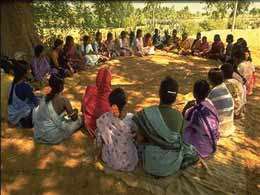
Fig.2
Women representation can be seen roughly in these stages: First Stage: Initiation of women representation in form of quota system in local bodies, through 73rd & 74th amendment in 1994. Period of Symbolic Representation.
Second Stage: Period of Slightly Active Participation. Impact of many socioeconomic changes, especially Structural Adjustment Programmes after economic liberalization.
Third Stage: Period of active Participation. Involvement in decision making, impact of communication and technology along with economic growth. Several rules and laws like RTI and promoting transparency and accountability. Women turnout during India's 2014 parliamentary general elections was 65.63%, compared to 67.09% turnout for menxv which show that how women in general are now ready to take the polity with status of equality.
Fourth Stage: Leap Forward Stage. Independent role in decision making, proactive participation. Leading from the front. This stage is yet to come.
These stages and their characteristics may vary from society to society and space to space in the diverse Indian culture. But largely in case of women representation Indian society is in transition and now between the second and third stage. As per answer responded to for starred question no 152 put up in Lok Sabha, the Honourable Union Minister for Panchayati Raj Shri Chaudhary Birender Singh said that, as per study on Elected Women Representatives (EWRs) commissioned by the Ministry of Panchayati Raj published in 2008, it has been found that; elected women representatives had made efforts to encourage girls' enrolment in schools and mitigate domestic violence.xvi In many media reports it has been reported that elected women representatives played pro active roles preventing sex determination (through selection of male foetus and abortion of female), thus trying to bridge the imbalance not only of sex ratio but also changing societal mindsets.
Challenges of Women Representation:
The extent to which women members have addressed the needs of women and children is crucial as this would give an idea as to whether women's entry into local politics and leadership position holds promise for socio-economic transformation of society on equitable terms with wider opportunities to the marginalized sections or not? It is equally true that, barring few examples, many of the EWRs are unable to impact even the local polity and leadership. Women have been walking on the tightrope as because of the power relations with their male counterparts (whether inside the household or outside), in which men generally tend to subjugate and exclude the women despite their legal positions. There is usually a deep conflict between their ingrained social conditioning on one side and their aspirations on the other. This conflict often impacts their capacity of decision-making and leadership. In the view of Richard Young, "Women's entry and productive role in governance are constrained by a number of factors like lack of gender sensitivity of those concerned, poor access to basic social services like education, unfriendly legal structures and absence of mechanisms which can ensure women's active participation in developmental and political processes for advancement and which can facilitate community support to assurance of the rights of women and children."xvii There are many challenge ahead for EWRs, which hinders the realization of their true leadership, which could be seen as following:
SocioCultural Atmosphere: The main hindrance before the EWRs is the socio-cultural matrix in which they have to work. The general impression and feeling is that, women's roles are inside their home and their main duty is to look after the household management and their children. Male Dominant Society: Another major hurdle is inherent in the nature of society, in which male dominance (patriarchy) is a common phenomenon. In this societal structure, despite the election of women as legal compulsion, control and decision remains in the hands of the male. This could be visualized in election campaign too, where poster and other mode of advertisement is dominated by the name of the men. Separate identity and leadership of women is not accepted positively by these societal structures. Character Assassination and Sexual Violence: Related to the above mindset is the character assassination of women along with direct/indirect form of sexual violence against women at different levels if they establish their independent identity and pose a challenge to established leadership status. Household Management (Double Burden): household management is supposed to be the responsibility only of women and despite their new role and function, they have not been given free time and space to cope up and manage the new situation and demands. In most of the cases, women have to carry a double burden and because of their conditioning. they consider their roles of housewives as their prime responsibility, avoiding or giving very little time to their new role. Family support: In general women do not get their family's support, if they wish to make politics their career. Economic dependency: Women are generally economically dependent, so their decisions and roles are conditioned by this barrier too. It also affects their persona. Lack of Self Confidence: If elected, Women generally feel aliens in the arena of polity. They lack self esteem and confidence to run the polity. Education and Capacity Building: Though it's not an essential condition, but the educational standard (most of the EWRs are illiterate) which affects the capacity building too; is another major hindrance to come over. Subjects under the control: Apart from the above; despite continuous promises, states show some kind of unwillingness and hesitation in allocating those subjects to Panchayats, which are related to women because of their. In this scenario, EWRs do not get proper opportunities to work .
Budget: Budget is another major and important constraint in realizing the goals of EWRs.
Need and demand for gender based budgeting is continuously floating in the political arena. The Panchayati Raj Act calls for setting up of the finance commission to propose new ways to mobilize the funds and resources for the effective implementation of Panchayati Raj. Though problems of resources and funds are main hurdles in the way the of effective implementation many states like Kerala, which earmarked 40 percent of the budgetary allotment for the panchayats and urban local bodiesxviii is a positive sign in the development of these institutions through need based policy making and its implementation. In the people's campaign for the Ninth plan, cost-benefit assessment of the projects, a gender impact statement was made mandatory in Kerala. The local bodies were advised to set apart 10 percent of the grant-in aid under women component plan (WCP) for projects directly targeting women.xix These efforts were aimed for economic empowerment of women at the grass root level which has the potential to change the dynamics of polity at the core level, enhancing the capacity of half of its population.
Fig. 3
One third Women representation in local bodies is a very welcome and positive step for women rights. Despite having many odds at different level, the participation and role of EWRs is gradually increasing in the right direction. Change at policy and societal level is going on to accommodate their issues and needs. Though goal of Panchayati Raj is still far away, yet the movement is moving in the right direction, in which women are its carriers. In Kodassery Panchayat in Kerala 100% of elected members are Womenxx which is a great achievement in its own way, setting very high standards of women participation. Efforts like WCP are not only empowering women but are making them capable of thinking beyond the horizon. The world's largest democratic country can attain its real democratic values only through de facto participation and role of women in the polity, which is initiated through substantial women representation in local bodies. Women should no longer be left behind in utilizing their energy and potential in the field of polity, in which they have proved themselves. There exclusion from decision-making at all levels must come to an end and for this women representation is the first step.
References: i Agnihotri, Indu; Vina Mazumdar (July 22, 1995). "Changing Terms of Political Discourse: Women's Movement in India, 1970s-1990s". Economic and Political Weekly. 30 (29): 1869–1878. ii Guha, Phulrenu; et al. (December 1974). "Towards Equality: Report of the Committee on the Status of Women in India" (PDF). Government of India. Ministry of Education and Social Welfare. Retrieved 25 March 2014. iii Phadke, Shilpa (October 25, 2003). "Women' Studies Reflects on the Women's Movement". Economic and Political Weekly: 4567. Retrieved 25 March 2014. iv Chowdhury, Radha S and Roy Bulu, "Women in Local Bodies" published by Kerala Research Programme on Local Level Development (KPLLD), 2002, p. 5 v Basu, Anindya & Shukla Bhaduri, "Role of Women Elected Representatives in Local Area Development: ACase Study of Kolkata Municipal Corporation" International Journal of Research in Humanities and Social Studies, Vol.2, issue 6, june 2015 p. 2 vi Ibid. vii Young Richard, paper in state level Conference on Women in panchayati raj 'Issues and Strategies, 1999. C.f. Chowdhury, Radha S and Roy Bulu, "Women in Local Bodies" published by Kerala Research Programme on Local Level Development (KPLLD), 2002, p. 8 viii The Global Gender Gap Report 2012, World Economic Forum, Switzerland, page 16 and The Global Gender Gap Report 2013, World Economic Forum, Switzerland, Table 3b and 5, page 13 and 19, source: Wikipedia. ix Basu, Anindya & Shukla Bhaduri, "Role of Women Elected Representatives in Local Area Development: ACase Study of Kolkata Municipal Corporation" International Journal of Research in Humanities and Social Studies, Vol.2, issue 6, june 2015 p. 2 x ibid xii According to answer submitted by honourable Cabinet minister of Panchayati Raj Shri Chaudhary Birender Singh in response to the starred question no 152. in loksabha on dated 05.03.2015 xiii The Global Gender Gap Report 2012, World Economic Forum, Switzerland, page 16 xiv http://post.jagran.com/Women-for-more-representation-in-local-bodies-in-Jhabua-district xv State-Wise Voter Turnout in General Elections 2014 Government of India (2014) xvi According to answer submitted by honourable Cabinet minister of Panchayati Raj Shri Chaudhary Birender Singh in response to the starred question no 152. in loksabha on dated 05.03.2015. xvii Young Richard, paper in state level Conference on Women in panchayati raj 'Issues and Strategies, 1999. C.f. Chowdhury, Radha S and Roy Bulu, "Women in Local Bodies" published by Kerala Research Programme on Local Level Development (KPLLD), 2002, p. 8 xviii Chowdhury, Radha S and Roy Bulu, "Women in Local Bodies" published by Kerala Research Programme on Local Level Development (KPLLD), 2002, p. 5 xix Ibid. p.14
Paper-11 Module-14
Women's Representation in Political Parties
Personal Details
Role Name Affiliation
Principal Investigator Prof. Sumita Parmar Allahabad University, Allahabad
Paper Coordinator Prof Chandrakala Padia
Chairperson ,IIAS, Shimla and Vice Chancellor MGS University Bikaner
Content Writer/Author (CW) Dr. Meenakshi Jha Research Officer, CWSD, BHU, Varanasi.
Content Reviewer (CR) Prof Chandrakala Padia
Chairperson ,IIAS, Shimla and Vice Chancellor MGS University Bikaner
Language Editor (LE) Prof. Sumita Parmar Allahabad University, Allahabad
Description of Module
Subject Name Women Studies
Paper Name Women, Governance and Politics
Women's Representation in Political Parties.
Module
Name/Title
Module Id Paper-11 Module-14
Pre-requisites The Reader is expected to have the knowledge of issues relating to women's political participation. And to have understanding of issues relating to women's political participation both within and outside India.
Objectives To make the reader understand the role and importance of women in political parties for successful representative government and for creating gender equal society.
Keywords Political Parties; Women's Representation; Development; Quota system; Gender
Auditing
Women's Representation in Political Parties
Introduction
Definition, Role and Functions of Political Parties
"Countries should not become fit for Democracy, but fit through Democracy".(Amartya Sen) "Modern democracy is unthinkable save in terms of parties" (E.E – Schattschneider).
A well-known definition of political parties comes from the American political scientist Antony Downs, who wrote: "A political party is a team of men seeking to control the governing apparatus by gaining office in a duly constituted election".
The 2002 Human Development Report, Deepening Democracy in a Fragmented World, emphasizes, "A well-functioning democracy depends on wellfunctioning political parties responsive to people".
In many countries today, Political Parties are an essential part of the apparatus of governance. Ideally, they play a fundamental role in the exercise of democracy. A political party is basically a group of dedicated and sincere people who believe in a common ideology and come together to form the government, formulate policies and protect the interests of all segments of society in a country.
Kay Lawson analyses the role of parties 'as agencies for forging links between citizens and policymakers."(Kay Lawson, 1980).Lawson identifies four types of links: Participatory linkage in which parties serve as agencies through which citizens can participate in government. Policy-responsive linkage in which parties "serve as agencies for ensuring that government officials will be responsive to the views of rank-and-file-voters"; linkage by reward in which parties act primarily as channels for the exchange of voters for favours'; and directive linkage which parties "are used by governments as aids to maintain coercive control over their subjects (Kay Lawson ,1980).
Main Functions of Political Parties:
The most important function of a political party is organizing and running elections "A political party is first of all an organized attempt to get power. Power here is defined as control of the government". (E.E. Schattschneider, 1942). Political parties play a fundamental role in the democratic process in selecting and socializing prospective political representatives and leaders, as well as in advancing a gender equality perspective within the political party system. Political Parties formulate public policies, represent the views and perspectives of citizens – both men and women and channel these into appropriate public policies. Political Parties educate, formulate and organize public opinion. They also help in the growth of the level of political consciousness of common citizens.
Thus political parties are an important instrument and institution of politics in a modern democratic system which represent the will and the interests of the citizens as authentically as possible and articulate and integrate different interests, visions and opinions.
Need for Women's Representation
Theoretically, democracy should be positively linked to increased women's participation in politics. Democracies generally (1) include gender equality in their constitutions, (2) allow women's groups and movements to mobilize in pushing for gender equality, and (3) reduce formal and informal barriers that deny women access to political power. (Daniel Stockemer, 2015).
However, even in the early twenty-first century, the goal of achieving meaningful gender equality in politics continues to remain elusive. Today, women cast ballots in equal or even greater numbers than men. Yet women continue to lag behind men as party members and campaign activists, as candidates running for legislative office; as elected members and leaders of local councils, regional assemblies and national parliament; as members of the judiciary and top civil service; and in the highest positions as cabinet ministers and heads of government and state for elected office. The empirical evidence suggests that women are still under-represented in the parliaments all over the world except for a few countries. As of September 2013, women constitute only just in excess of a fifth of legislators in lower houses across the world. This is widely viewed as a 'democratic deficit', given that women constitute 50 percent of world's population. The severe under-representation of one-half of the population not only limits the diversity of parliaments but also contradicts one of the central tenets of representative democracy. (Miki Caul, 1999).This situation persists in spite of the fact that equal rights for women, including rights to citizenship and suffrage, are guaranteed in the constitutions of all modern democracies. (Ann Towns, 2010). Thus to make democracy more gender balanced and to enable women to participate in the national decision-making process, there is a need to include more and more women's representative at every level of government.
Electing greater number of women to public office will build confidence among women, contribute to strengthening legislative and policy agenda, and increase trust by the electorate in the political system. The presence of women in elected office may lead to broader positive changes in the social and cultural perceptions of women's capacity. The presence of strong, capable women in public office can result in changes in societal perceptions, and can help combat gender-based stereotypes and discriminatory attitudes. (Handbook on Promoting Women's Participation in Political Parties, 2014).
A range of studies have found that female politicians often serve as role models who inspire other women to become politically involved, as citizens, party members and political activists. Evidence suggests that the inclusion of women's voices – especially when addressing complex challenges – broadens the diversity of viewpoints, experiences, interests and expertise brought into parliamentary debates. Electing more women from different backgrounds and political parties can further enhance these positive effects by allowing women's views to be channelled into public policy discussions.
Women's inclusion in decision making process will also lead to the advancement of policy issues that are important to women, such as childcare, equal pay, and protection against violence.
Women and Political Parties
Though women's representation in elected office in any given country is determined and influenced by a number of factors such as the design of political and electoral systems, the degree to which decision-making processes are institutionalized and the broader economic and cultural developments in society make the political parties – and the process by which they are governed – play a key role in determining the degree to which women participate in political and public life.
Referred to as the gatekeepers of democracy and of women's political participation in particular, political parties have failed to provide adequate representation of women. In view of this in its 2012 Resolution on women and political participation, the UN General Assembly urged all states parties to:
aStrongly encourage political parties to remove all barriers that directly or indirectly discriminate against the participation of women, bDevelop their capacity to analyse issues from a gender perspective and cAdopt policies to promote the ability of women to participate fully at all levels of decision-making (UN Resolution of the G.A. 66/130 on women and political participation, 2012)
Given the important role of political parties, it is essential that political parties should develop and apply different voluntary measures to promote women's participation as party members, decision makers and candidates for public offices.
Challenges to Women
Candidate Recruitment/Selection
Candidate recruitment and selection processes that are not formalized or written down can be easily manipulated or ignored by party leadership, to the detriment of potential women candidates. Thus a party should promote more transparent, fair and suitable process for candidate recruitment and/or selection. The number of women selected as candidates by party leaders can give a clear indication of whether or not a party is biased against women. For example if a political party claims that half its members are female and that its female members hold leadership positions, but selects less than 20 percent of women to make up its candidate list then it may be an indication of gender-based bias in the party's candidate-selection process.
Promotion Procedure
Procedures for party promotions that are not institutionalized in party documents may result in political advancement based on connections rather than merit. Unequal Access to and Distribution of Party Resources
One key obstacle to increasing women's participation is unequal access to and distribution of party resources. This is due to inadequate funding of women candidates, on the one hand, and the high cost of campaigning, on the other. Thus unequal access to, as well as allocation of, party resources disproportionately affect women, who often have less access to external patrons and support networks, and less experience in fund raising.
Party Culture
Party culture-including traditional means of communicating, socializing and campaigning-can be reminiscent of "old boys clubs" that marginalize or openly discriminate against women, or perpetrate gender-based stereotypes and double standards.
Party Operations and Functioning
Modes of party operating-including working hours, holding meetings on the evenings and weekends and other social requirements-can conflict with women's other responsibilities, particularly if there is a lack of balance in family roles. Party culture can be particularly discriminatory when it reflects the prevailing norms of the broader political culture. For example, the qualities deemed necessary for political success are often viewed positively in men (authoritative, ambitious, driven, tenacious, principled) but are viewed negatively in women, or are transformed into negative traits (aggressive, power hungry, belligerent, passive-aggressive, stubborn).
Patriarchal Society and Male Chauvinism
One of the most important barriers that women face within a party is gender blind party regulations. The founding documents of political parties often do not include measures to support women's advancement, and can be written in a language that directly or indirectly discriminates against women.
Other Institutional Aspects
Long and late working hours, unenforceable rules, informal practices and unwritten customs, serve as further constraints.
Measures to be adopted by parties for increased participation of women: Quota System Recent Studies show that quotas: legally binding quotas and party quotas, are significant means of increasing women's participation in politics and decision making bodies. While the legally binding quota is either guaranteed by the constitution or by statute law, political party quota are adopted by individual parties and incorporated into their rules. Generally, legally binding quotas take either the form of reserved seats or candidate quotas that participate in a given election. In general such quotas are very efficient, as they guarantee a certain number of seats in parliament or on a candidate list. In addition to this direct effect, legally regulated quota rules should also have an indirect and more psychological effect, encouraging women to seek political involvement because they know they might succeed.
Similarly, political parties also have dual influence on women's representation. On the one hand they have a direct influence on higher women's representation; on the other, if parties make sure through their rules and regulations (to nominate a set number of women for parliamentary positions), these will definitely increase the overall percentage of women in elected office. In addition, if parties pledge to nominate 30, 40, or 50 percent women on their lists, other parties with no quota rules may be influenced to follow suit by nominating more women.
Following classical sociological approaches and modernization theory, governments and parties in post-materialist countries might respond to pressure from women's movements to implement quota rules to provide for a more equal representation of women in politics. Further, developed and affluent countries might also have the means and control mechanism necessary to enforce this quota provision. In contrast, party structures and political institutions tend to be developed in less affluent countries, making the implementation and supervision of quota provision more difficult (Leys, 2010).
Encouraging the Creation and/or Strengthening of the Role of Women's Sections/ Wings or other Gender-Equality Bodies within Parties
Party leaders alone do not always have the expertise, resources or time to introduce the changes to party statutes, by-laws, policies and strategies that are necessary to promote women's political advancement and encourage greater gender equality. An efficient and effective means of capitalizing on the gender expertise of party members (where it exists) is to support the establishment or strengthening of women's sections within parties. Women's sections, also referred to as women's wings, are internal party bodies established to facilitate women's participation in the party. They can play a key role in promoting women's political advancement by advocating on issues of concern to members, supporting women's leadership development and helping to select potential new members and candidates, as well as providing resources and/or support to women running for public office. Institutionalizing Gender Equality within Party Structures, Processes and Practices It focuses on strategies to introduce gender equality as a principle and gender balance as a goal in party documents, processes and procedures. Undertaking a gender audit is an important first step in identifying gaps in party statutes, processes and practices related to gender equality. A political party gender audit or "self-assessment" is a methodology for assessing party processes, procedures, structures, culture and activities from a gender perspective, with the aim of identifying discriminatory practices. Gender audits are not meant to be undertaken as ends in themselves but, rather, to provide the necessary information a party needs to improve its policies, strategies, procedures, structures and activities in favour of greater gender equality It is a tool to equip political party leaders with the necessary information to adjust its political party policies, programmes and campaign strategies as regards gender equality. A party can establish an internal working group comprised of party activists, decision makers and gender experts to undertake a gender audit within a specified period of time. Develop Gender Action For the effective implementation of the suggestions of gender audit a party should develop gender action plan which may include different components such as Conduct a gender audit of internal party procedures, Develop and build party leadership support for a Gender Equality Action Plan, Strengthen party founding documents, Include women's sections in party statutes/by-laws, gender equality mechanism/ women's section, Enhance internal party democracy by making party processes more transparent and fair, Adopt internal party measures to promote women as leaders and candidates, Conduct internal party awareness raising, Develop concrete party platform positions on gender equality-related issues, Link party recruitment and promotion to gender equality efforts of prospective and actual members Providing Skills Based Training to Women Research shows that providing skills based training, specifically enhancing women's skills in campaigning, media management, public speaking, meeting procedures, fund raising etc is beneficial for women candidates. Recently in British Conservative Party, women have initiated campaign with the goal of providing women with the skills to wage effective political campaigns. All women receive training in Australian Labour Party.
Providing Financial Incentive and Aid to Women Candidates
Political parties should adopt certain measures to provide financial incentive and aid to women candidates during campaigns and while they hold public office. Some Political Parties offer women candidates breaks on membership dues, registration forms, and other campaign expenses to increase women's participation in the political process.
Fund Raising For Women
Another important issue for women candidates is fund raising, which has become particularly important as the cost of political campaigns have increased. Political Parties can play an instrumental role by providing women with equal access to public funds and creating special funds raising networks for women candidates.
Providing Women a Forum for Policy Lobbying and Discussion
Political parties should provide women forums for policy lobbying and discussions as it may be critical in putting women's issues on political agendas and creating intra-party alliances to advance women in politics. Austrian Labour Party's Labour Women's Organization (LWO) holds its own conference every year to give women an opportunity to discuss policy issues, to lobby on specific issues, and to network with each other. ALP also has a women's policy committee that influences party policy.
Bringing Effective Changes in Party's Organizational Structure and Ideology
Party's organization structure, ideology, the proportion of women party activists, party's genderrelated representation rules, and party's leadership affect the proportion of women's participation. Party with left orientation may be more likely to support women candidates because left parties espouse egalitarian ideologies. Traditionally the women's movement has been linked to left parties (Jenson, 1995). However, the rise of a New Politics cleavage adds a new dimension to our conceptualization of ideology. New set of issues like environmental equality, alternative lifestyles, minority rights, participation, and social equality (Dalton, 1986) add new dimension to left ideology. Thus new left parties may be even more closely linked to the women's movement and may encourage women to run for office. With more and more women active at different levels within a party especially at high level may encourage more women in parliament, may lead to the adoption of candidate rules and can add the direct pressure necessary to create and implement gender quotas and goals.
Thus political parties as the gatekeepers to parliamentary office, through direct and indirect efforts can increase the proportion of underrepresented women in parliament. However, these measures need to be accompanied by initiatives to actively encourage and support women within parties to advance their political careers.
Global Experiment:
In the last few decades, in many countries the adoption of party quota has become very popular. Quotas for women candidates contesting elections which started in Argentina in early 1990s (30 percent) has been rapidly adopted by other countries.
Legislated quotas (percentage) for women candidate in political parties have increased up to 50 percent in countries like
France - 50
Panama - 50
Korea – 50
Mauritania – 50
Nepal – 50
Costa Rica – 50
Belgium – 50
Bolivia – 50
Tunisia – 50
In many other countries it varies from 20 percent to 40 percent. (International IDEA,Stockholm). Countries such as Argentina, Mexico and Costa Rica through legislated party quotas have over 36 percent female representation in their national legislatures. South Africa, Germany, and Sweden have successfully achieved similar levels of female representation through voluntary quotas by political parties. With women comprising 44.8 percent of its current National Assembly, South Africa serves as an excellent example of a successful experiment with voluntary party quotas (Quota Project).The important thing is that the voluntary quotas for women in South Africa emerged largely from the women's organization within the African National Congress itself. Global experimentation with different forms of women's reservation is both inspirational and an early warning for India.
IDEA has summarized the global experience with quotas in following words: "In almost all political systems no matter what electoral regime, it is the political parties, not the voters that constitute the real gatekeepers to elected offices" (IDEA: Stockholm).
Women's Wing: A success Story
Creating women's wings of political parties is not a new phenomenon and has been promoted by parties and women activists since the last century. The social Democratic Party of Sweden established its women's branch in 1920, and now includes over 300 local women's clubs throughout the country. (iknow Politics, 2007).Another good example is the women's League of the African National Congress (ANC) in South Africa. The advocacy efforts organized by the ANC women's League against all forms of discrimination and gender imbalance led to the ANC resolution that one third of its representatives in parliament must be women, which had a far reaching effect in transforming the newly-elected democratic parliament of South Africa. Mexico's Partido de Accion Nacional (PAN, National Action Party) is yet another example. It transformed its women's wing from a women's social organization into an effective base for promoting women's entry into mainstream leadership positions.
Indian Scenario
Though women have held the posts of President, Prime Minister, as well as Chief Ministers of various states still India has a minimal percentage of 10.0% women elected representative in the present national parliament. Globally this number is double, at 20.4%. The severe political underrepresentation of women in elected office as well as in political parties presents a very grim situation for gender equality in India.
An analysis of Election Commission of India (ECI) data highlights that in the outgoing 15th Lok Sabha, only 59 of the 543 seats were occupied by women. Even in terms of the number of candidates who contested elections, the scales were tilted vastly against women .Of the 8070 only 556 or 6.9 percent were women.
Female candidates fielded by Parties in 2009
National Parties – 24%
State Parties – 5%
Registered unrecognized parties – 34%
Independents – 37%
(Source: Election Commission of India).
Thus, only 29 percent of these women candidates were ticket-holders of national or state political parties. While 34 percent of the female candidates belonged to registered unrecognized parties, 37 percent ran as Independents. This has been the trend for women candidates since 1989.
Though political parties in India have increased outreach among women voters (women turnout during India's 2014 parliamentary general elections was 65.63%. compared to 67.09% turn out for men-(state-wise voter turnout in General Elections 2014, Government of India 2014)but as far as the number of women ticket holders from these parties is concerned it is significantly low. The number of women ticket holders from state parties fell sharply from 66 in 2004 to 27 in 2009. For national parties, the number of women candidates actually increased from 110 to 134, but nearly 60 percent of this increase is credited to the BJP alone (Election Commission of India).
In the 16th Lok Sabha election in 2014, 61 women have secured seats in the Lok Sabha. We have maximum number of women parliamentarians from the state of West Bengal. It is 14 out of 42. Not a single woman representative has been selected from Haryana, Meghalaya and Jharkhand. ( Election Commission of India).
Though the three largest national parties in India i.e. the Indian National Congress (INC), the Bhartiya Janata Party (BJP), and the Communist Party of India (CPI) have created women's wing (the BJP's wing is the BJP Mahila Morcha, the INC's wing is All India Mahila Congress, and the CPI's wing is the National Federation of Indian Women) but unfortunately they are not fielding enough women candidates. It is highly ironical that Congress Party is headed by Ms. Sonia Gandhi, Trinamool Congress is led by Ms. Mamta Banerjee, AIDMK is having Ms. Jaylalita as its Chief and BSP has Ms. Mayawati as its Supremo and yet there are not enough representations of women in these political parties.
However, it is interesting to note that different political parties make tall claims about women's inclusion in every rank and file. According to the constitution of the INC, 33 percent of the seats in different committees, 33 percent of members of the Executive Committees, and 33 percent of the seats for the All India Congress Committee (AICC) are to be reserved for women". (INC, 2010). Similarly, Rule 9 of the Trinamool Congress's Constitution "reserves 33 percent of seats in different committees for women". (All India Trinamool Congress; constitution). Even the Aam Aadmi Party has a ruling that "7 of the 30 members in its highest executive body be women". (Aam Aadmi Party; our constitution).
But, the challenge among Indian political parties is that these impressive constitutional rules are seldom followed. In the case of INC, only 5 of the 42 members of the party's executive body, the CWC, are women. Similarly, 6 of the 57 AICC members are women and only 4 of the 14 members of their Election Committee are women. However, 30 (of 35) state screening committees for elections don't have a single woman. (INC; organization).
Data from Trinamool Congress and AAP are also far from satisfactory, within the Trinamool, none of the 30 Presidents are women, and only 2 out of the 8 General Secretaries, and 1 out of 14 Secretaries, are women. The party has 10 frontal organizations in West Bengal, of which only one – the Trinamool Mahila Congress – is led by a woman (All India Trinamool Congress: Office Bearers). The AAP has 24-member National Executive, of which only two are women. This is significantly less than the 25 percent benchmark stated in their constitution.
Both the BJP and the Congress were severely criticized by the Communist Party of India (Marxist) for their failure to pass the women's Reservation Bill in Parliament, stating that "denying women their place in elected policy making institutions, is a subversion of democracy", (Communist Party of India: Marxist). Ironically, the CPI (M) itself has failed to adequately represent women in the Party's top leadership positions. There is only one woman in the 12 member polit bureau and only 11 out of the 74 Central Committee members are women (Communist Party of India (Marxist): Leadership).
BJP is the only party from which the data is encouraging. Its experiment with internal party quotas has been more successful. In 2007, the party changed its constitution to include 33 percent reservation for women, following the recommendations of a committee led by Ms. Sushma Swaraj. This was followed with another amendment in 2010 that increased the number of women in cadre posts.
The powers of the BJP Mahila Morcha are clearly defined. At the national level, the National President of the Mahila Morcha serves as an ex-officio member of the Central Election Committee, which is responsible for making the final selection of candidates for the State
Legislatures and Parliament, as well as administering election campaigns. Similarly, at the state level, the President of the State Mahila Morcha serves on the State Election Committee.
As a result of these changes in BJP, we find certain improvement in the women's representation in the party. 26 of the 77 members, or 33.7% - of the BJP National Executive are women leaders. Women comprise 26% of BJP national office bearers. Despite these improvements, certain statistical data raise concern. Only 2 of the 19 members of the Central Election Committee are women; out of the 12-member Parliamentary Board, there is only 1 woman representative. There is no female representation on the Economic, Agriculture, Security and Legal groups (BJP,Organization).
Consequently we find that most political parties in India flout the rules of their own constitutions. The absence of women in party leadership position exposes the gender-biased patriarchal attitude of political-parties in India. It also highlights the absence of a pipeline of women leaders. Our political apparatus has collectively failed to nurture women leaders, leaving it unprepared even if quotas in Parliament be legislated.
Therefore, Indian Political Parties must realize their critical role as gatekeepers in women's political participation. National Parties like the BJP and Congress, or new Parties such as the APP each have to evolve internally to facilitate a greater culture of inclusiveness and operational democracy. The Election Commission of India too can play a pivotal role by holding parties accountable for their stated rules and promises in their constitutions and manifestos
Importance of women in Political Parties
The active participation of women makes democracies stronger. According to research, both men and women believe that "government is more democratic if it includes a substantial proportion of women". (Leslie A. Schwindt-Bayer and William Mishler,2005). Women are viewed as less corrupt. Women are effective money managers. Women help in establishing support groups for political parties.
Benefits for Women
Women get opportunity to utilize their talents. Women can serve as catalyst for change on behalf of other women. Expands the pool of women willing to go for public office. Changes the perceptions of society and political stakeholders regarding women's capacity. Strengthens confidence of women to influence policy agendas in Parties and Parliament.
Benefits for Political Parties
Improves a Political Party's Image and Reputation. Formulating and publicizing a clear policy in support of gender equality may have a positive impact on increasing the party's legitimacy, membership and voter base.
Enhance Party Platforms and Policy agenda. A large scale survey of members of parliament undertaken by the Inter-Parliamentary Union (Inter-Parliamentary Union, Reports and Documents, 2008) found that more than 90 Percent of respondents agreed that women bring different views, perspectives and talents to politics by introducing new perspectives into policy areas traditionally dominated by men, such as defence, security, economics and business. Women's role in peace and reconciliation efforts, conflict prevention, post-conflict rehabilitation and peace building more generally can bring new views on how to prevent, manage and resolve conflict. Women also provide specific expertise on social issues like education, health care and welfare. Strengthens Political Party's Electoral and /or Campaign Strategies: Diversifies
Electoral Strategies by Diversifying Candidates
A national or regional list of candidates that reflects a cross section of society can help maximize the potential electoral appeal of political parties to different groups in the voting public. Including more female candidates can thus help to "get out the vote" among women members of the electorate. Especially local community leaders tend to be chosen from among teachers, medical nurses, doctors, shopkeepers or small-business owners-positions that women hold in large numbers. (ODIHR, 2012).Female voters may feel inspired and motivated to vote if they see a woman running for office.
Expands the party's pool of skills, knowledge and expertise
Inclusion of greater number of women into political party leads to the expansion of the pool of resources-skills, knowledge and expertise-that woman can bring to political parties.
Combats Falling Party Membership
The evidence suggests that engaging more women in politics provides tangible benefits for political parties. In many countries the turnout of women voters is more in comparison to their male-counter part. A recent report of the United Nations Development Programme (UNDP) and the National Democratic Institute (NDI) states that women can "deliver the margin of victory for successful parties and candidates", ( UNDP/NDI, 2011). Growing numbers of parties around the world have found that nominating more female candidates can be one way to attract women voters for the party (Louise K. Davidson-Schmich, 2006). On the other hand, women-once elected-can strengthen the party in important ways in addition to the vital work that non-elected women perform at the grassroots level.
Benefits for Society
Society in general benefits from the increased representation of women in political parties and elected office. Women's political presence can ensure that policy issues affecting women in particular are channeled into political debates. In raising awareness about gender-based discrimination in all spheres of political and public life and enhanced socio-economic development, women's greater presence is essential.
Increases Public Trust in the Political System.
The presence of women in political office, both elected and appointed, can increase the political system's legitimacy and, thus, public confidence in the system.In addition, greater inclusiveness and representativeness of the electorate in political office can lead to greater political stability, constituting one of the most effective tools of conflict prevention.
Impacts the Policy Agenda
A critical mass of women in politics can bring vital attention to issues that disproportionately affect women. Many countries the world over continue to face major challenges in achieving gender quality in the areas such as education, remuneration, labour market, military service and social issues like health care domestic violence, trafficking. If women are absent from politics or constitute only a small fraction of elected assemblies, such issues are not likely to be prioritized or addressed.
Contributes to Socio-Economic Development
There is some evidence suggesting that a higher number of women in elected offices lead to greater economic advantages. The World Bank argues that promoting gender equality is "smart economics", because it can increase output per worker by 3 percent to 25 percent across a range of countries: "Countries that create better opportunities and conditions for women and girls can raise productivity, improve outcomes for children, make institutions more representatives, and advance development prospects for all". (World Development Report, 2012). Promotes Better Understanding of Gender-Equality Issues In Society
When elected representatives are able to define gender equality and identify the benefits of gender equality for society at large, there is a greater chance that these messages can be communicated in a positive way to citizens-both male and female.
General factors which may contribute in increasing women's representation in politics
Since the 1990s the representation of women in Parliament has become a focal point for gender-equality campaigning both at transnational and national levels. Political scientists have undertaken numerous case studies to identify factors that foster increased representation of women. These analyses relate women's representation to various institutional factors such as quota laws, the electoral system type, and the strength of left-wing parties; to socioeconomic indicators such as the GDP per capita; to contextual factors such as the number of women in the workforce; and to cultural indicators such as the degree of religiosity in a state.
While the factors that contribute to higher levels of women's representation (that is, quota rules, proportional representation, large districts, and an egalitarian political culture) have been quite clearly identified in western countries, the same cannot be said for the non-western world (Schwindt-Bayer, 2010) .In fact, it may not be surprising, to find that the factors impacting on women's Parliamentary representation in developed countries are different from those in developing countries. (Daniel stockemer, 2015). Compared to citizen of high-income countries, citizen in low-income countries tend to hold different or more traditional cultural values, face different economic realities (for ex., material needs may not be satisfied), and live under different political conditions.
The fairer representation of women in the workforce can create direct and indirect pressures for political parties to represent women within the party structures and in elected office (Darcy et al., 1994) But in poorer countries, women lack access to higher education and work in low-paid jobs in the agricultural or industrial sectors which are not considered viable for political participation.
Thus what we find is that even the female activity rate and their workforce participation is stronger in developed countries and this makes for a better chance of increased women's participation in representative bodies in developed countries. However, empirical evidence suggests a contrary picture. For example, in United Arab Emirates which is materially highly developed, women's representation ranges from 0.0 percent and in Rwanda which is economically a poor country, it is 56.3 percent. Even in some of the richest western countries (for example, Germany and Denmark) women's representation has stagnated. But on an average we find positive relationship between development and women's higher representation. From 1995 to 2010, women comprised 18.8% of all Parliamentarians in high income countries, slightly greater than 15 percent in medium-high-income countries, and around 12% in medium-low-countries and low income countries (Daniel Stockemer, 2015)
Therefore, we may conclude that with development, political and individual freedom may lead to increased women's political representation. Strong international pressures to include more women in public decision making may also complement these. The 1948 Universal Declaration of Human Rights (UDHR) enshrines "equal rights of men and women", including the right to participate in government. This declaration was followed by a number of international commitments in the area of women's rights, most comprehensively in the 1979 United Nations (UN) Convention on the Elimination of All Forms of Discrimination against Women (CEDAW), the 1995 UN Beijing Declaration and Platform for Action (mandated that Member States "take measures to ensure women's equal access to and full participation in power structures and decision-making", and finally United Nations Decade for Women (1976–1985). All these reflect a new international commitment to the goals of equality, development and empowerment for all women.
Thus spearheaded by national and international feminist organizations, international organizations (such as the Inter-Parliamentary Union), and the creation of Parliamentary commissions on gender issues within national Parliaments, legislatures around the world have seen the number of women representatives increase. This increase is particularly sharp in postconflict states, where the norm of a balanced representation of the sexes is frequently incorporated into the design of new institutional framework. As such, post-conflict countries such as Mozambique, South Africa, or Timor Leste have around 40 percent female representations and in the case of Rwanda, as mentioned earlier, it is 56.3 percent.
Despite such advancement, the road to gender equality in political representation remains a long one.
References
Aam Admi Party: Our Constitution,Viewed on 24 April 2014. http://www.aamaadmiparty.org/ourconstitution
All India Trinamool Congress: Constitution, Viewed on 24 April 2014. https://aitmc.org/partycons.php
All India Trinamool Congress: Office Bearers, Viewed on 24 April 2014. https://www.aitmc.org/office_bearers.php
Ann Towns, Women and States: Norms and Hierarchies in International Society (New York: Cambridge University Press, 2010) Anne Phillips, The Politics of Presence (New York: Oxford University Press, 1995); Jane Mansbridge, "Should Blacks Represent Blacks and Women Represent Women? A Contingent Yes", Journal of Politics, Vol. 61, No. 3, 1999, pp.628–657. Bhartiya Janata Party: Organisation, Viewed on 24 April 2014. http://www.bjp.org/org/organisation
Communist Party of India (Marxist): In Defence of Women's Rights, Viewed on 24 April 2014. http://cpim.org/elections-issues/defence-women%E2%80%99s-rights
Communist Party of India (Marxist): Leadership, Viewed on 24 April 2014. http://www.cpim.org/leadership
Consolidated Response on Establishing Women's Party Sections. iknow Politics,www.iknowpolitics.org, 2007 Dalton, Russell J. (1986) citizen Politics, Chatham, NJ: Chatham Home Publications.
Daniel Stockewer, Women's Descriptive Representation in Developed and Developing Countries, International Political Science Review, 2015, Vol. 36 (4) .
Dalrelup, Drude: "Quotas-A Jump to Equality?" in The Implementation of quotas: Asian Experiences (International IDEA: Stockholm; Sweden) Darcy, Robert, Susan Welch and Janet Clark (1994) Women, Elections, and Representation, 2nd edn. Lincoln: Nebraska University Press. Data source: Quota Project, International Institute for Democratic and Electoral Assistance, Stockholm and Inter-parliamentary Union E.E. Schattschnelder, Party Government, New York: Holt, Rinehart and Winston, 1942, P. 35 Empowering Women for Stronger Political Parties. A Good Practices Guide to Promote Women's Political Participation, UNDP/NDI, 2011, <http://www.undp.org/content/undp/en/home/librarypage/womens-empowerment/empowerwomen-political-parties.html>, "Equality in Politics: A Survey of Men and Women in Parliaments", Inter-Parliamentary Union, Reports and Documents no. 54, 2008. . Frameeschet, Susan, Mona Lena Krook and Jennifer M Piscopo, The Impact of Gender equotas, New York, Oxford University Press, 2012.
Handbook on promoting women's participation in political parties, the OSCE Office for Democratic Institutions and Human Rights (ODIHR), Warsaw,2014 Indian National Congress: Organisation, Viewed on 24 April 2014. http://www.inc.in/organization
Jenson, Jane (1995) Extending the Boundaries of Citizenship: Women's Movements of Western Europe, in Amrita Basu (ed), The Challenge of Local Feminisms, Boulder, Co: West view.
Kay Lawson,ed. A Comparative Perspective, yale University Press, 1980.
Leslie A. Schwindt-Bayer and William Mishler, "An Integrated Model of Women's Representation", Journal of Politics, Vol. 67, No. 2, 2005 Leys, Colin (2010) Politics and Change in Developing Countries Cambridge, Cambridge University Press.
Louise K. Davidson-Schmich, "Implementation of Political Party Gender Quotas: Evidence from the German Lander 1990–2000", Party Politics, Vol. 12, No. 2, 2006 Miki Caul, (1999) Women's Representation in parliament, The Role of Political Parties, Party Politics, Sage, London, Vol. 5, No. 1, PP79-98.
ODIHR, e-mail interview with Karolina Ó Beacháin Stefańczak, 31 October 2012. Quota Project: Country Overview http://www:quotaproject.org/country.cfm Schwindt-Bayer, Leslie (2010) Political Power and Women's Representation in Latin America. New York: Oxford University Press. UN Resolution of the G.A. 66/130 on women and political participation, 2012
Vyas, Neena (2007): "BJP for 33% reservation for women in party," 23 September, The Hindu http://www.thehindu.com/todays-paper/bjp-for-33-reservation-for-women-inparty/article1916300.ece "World Development Report 2012: Gender Equality and Development", The World Bank, 2012,<http://go.worldbank.org/CQCTMSFI40>.
Paper-11, Module-15 Concept of Positive Discrimination Personal details Role Name Affiliation Principal Investigator Prof.Sumita Parmar University of Allahabad Paper Coordinator Prof. Chandrakala Padia
Vice Chancellor, MGS University, Bikaner & Chairperson, IIAS, Shimla. Content Writer/Author (CW)
Dr. Vinita Chandra Assistant Professor-cum Assistant Director Centre for Study of Social Exclusion and Inclusive Policy Faculty of Social Sciences B.H.U Content Reviewer (CR) Prof. Chandrakala Padia
Vice Chancellor, MGS University, Bikaner & Chairperson, IIAS, Shimla. Language Editor (LE) Prof.Sumita Parmar University of Allahabad
B) Description of Module
Items Description of Module Subject Name Women's Studies Paper Name Women, Governance & Politics Module Name/ Title, description
Concept of Positive Discrimination
Module ID Paper-11, Module-15 Pre-requisites The reader should have an interest in conceptual issues like justice and equality.
Objectives To introduce the concept of positive discrimination, particularly with reference to reservations for women. Keywords Justice, social justice, discrimination, positive discrimination, women's reservation
Concept of Positive Discrimation INTRODUCTION TO THE CONCEPT In any society, there may be some sections or groups who have suffered disadvantage in the past. For such groups, special ameliorative measures may be undertaken. Such special measures are known by different namescompensatory discrimination, reverse discrimination, positive discrimination, affirmative discrimination, positive action etc. Positive discrimination refers to a situation where individuals or groups are accorded special treatment in order to undo or compensate for the disadvantage that accrues to them out of their membership in a disadvantaged group or groups. Such disadvantage may emanate out of historical injustices or institutionalized inequalities in society. Positive discrimination has been practiced in one form or the other in many countries including the United States, India, Malaysia, and Sri Lanka. In spite of the fact that almost all of these countries subscribe to the principle of equality of opportunity for individuals, the argument given in favour of positive discrimination is that being a member of underprivileged group deprives individuals or groups of the equality of opportunity available to other members of the society. Positive discrimination, thus, is construed as a compensatory mechanism for making those equal who have been hitherto less than equal. As Wang suggests, "Such reasoning can take one or more of the following forms. First, the group or groups in question have suffered significant negative discrimination in the past, and society must therefore make restitution for this injustice. Second, the group(s) have special rights in the society by virtue of certain historical positions or constitutional provisions. And third, in the interests of the political integration of a plural society, the lines of economic and educational inequalities should cut across rather than coincide with racial or ethnic lines."1 POSITIVE DISCRIMINATION: DEBATE AROUND THE CONCEPT Positive discrimination has raised critical questions and raised a moral debate based on the philosophical principles of justice and equality and their application in practice. In fact, the term positive discrimination is sometimes considered an oxymoron – a self contradiction. Given the best of intentions, discrimination based on ascribed rather than achieved characteristics is unjust.2 While the rationale for positive discrimination policies proceeds from an awareness of the entrenched and cumulative structural character of historic inequality, and an urge to undo it or at least, compensate for it; it entails a systematic and deliberate departure from norms of formal equality. It is rather premised on the assumption that formal equality may tend to perpetuate and increase the
1 Bee-Lan Chang Wang, "Positive Discrimination in Education: A Comparative Investigation of its Bases, Forms, and Outcomes", Comparative Education Review, Vol. 27, No. 2 (Jun., 1983), p 192. 2 Clabaugh, Gary K., "Positive Discrimination", Educational Horizons, Vol. 73, No. 3, Special Issue: Mentoring (Spring 1995), p. 103. historically existent inequalities and injustices in any society. While the notion of justice is itself complex, its confrontation with another complex notion of equality marks the domain of policies for positive discrimination, amounting to a slew of controversies. Positive discrimination may take various forms like reservations, quotas, and affirmative action. Acharya points towards the fact that the 'theme of affirmative action usually triggers controversies and evokes passionate reactions and debates among both the adherents and detractors… Both the most ardent advocates of affirmative action and its most vehement foes loudly proclaim their allegiance to the ideal of equality."3 Mohanty also points out, "The quest to rectify historical wrongs has triggered new and unanticipated social tensions."4 However, the rationale for furthering the policies of affirmative action varies from place to place and time to time. Mohanty has given two major approaches for justifying affirmative action- (i) forward-looking (i.e. utility based), which appeals exclusively to the good result expected from such programme; and (ii) backward-looking (i.e. reparations based), that focuses on past injustice and demands reparation. 5 However, looking at the causes for controversies, particularly in India, he further adds that, "In India affirmative action is essentially rooted in approach based on past injustice and reparations. Positive discrimination expresses wrong messages when they are based exclusively or primarily on either of these two arguments."6 Rai also points towards two kinds of programmesprogrammes for compensatory justice and redistribution programmes. 7 She writes, "Compensatory programmes differ from redistribution programmes mainly with regard to their concern with the past. Redistribution is concerned with eliminating the present inequalities, while compensatory justice is concerned not only with this but with also providing compensation for unfair burdens borne in the past."8 THE INDIAN CONTEXT In the case of Indian society, it has been accepted that some sections of society faced historic disadvantage and ameliorative measures are needed to undo the wrongs. "It is no more disputed that Indian society has been horizontally and vertically split and stratified on the basis of caste. Caste in India has been believed to have bred structure of cumulative institutionalized inequality. Since it has been a site for historical injustice and disadvantage, the principle of positive discrimination was adopted to retrieve the disadvantaged sections, specially the scheduled castes (SCs) and scheduled tribes (STs) …from the cul-
3 Acharya, Ashok, "Affirmative Action for Disadvantaged Groups: A Cross-Constitutional Study of India and the US", in Rajeev Bhargava (ed.), Politics and Ethics of the Indian Constitution, Oxford University Press, New Delhi, 2009, p. 267. 4 Mohanty, Amarnath, "Affirmative Action in India: An Alternative Perspective", Economic and Political Weekly, Vol.42, No. 30, Jul 28Aug 3, 2007, p. 3151. 5 Mohanty, Amarnath, "Affirmative Action in India: An Alternative Perspective", Economic and Political Weekly, Vol.42, No. 30, Jul 28Aug 3, 2007, p. 3152. 6 Ibid. 7 Rai, Sheela, "Social and Conceptual Background to the Policy of Reservation", Economic and Political Weekly, Vol. 37, No. 42 (Oct. 19-25, 2002), p. 4309. 8 Ibid. de-sac."9 According to Christophe Jaffrelot, India was probably the first field for experimentation with positive discrimination policies; initiated by the Christian missionaries and the colonial authorities for the advancement of the underpriviledged. The British initiated the caste based quotas in the country and also established a nationwide legal system with the norm of equality before the law.10 Acharya also writes that affirmative action in India can be traced back to British India, through which the British ensured the equal representation of different communities.11 He further says that their discrimination was based on two principles, one to create a balanced situation between competing communities and the second was to divide anti-colonial forces or nationalist front. In fact, the central problem that confronted the Constituent Assembly while framing the Constitution of India was the problem of justice. Thus, the problem of justice acquired central focus of the constitution-makers, while they grappled with the challenge of striking at the roots of the accumulated historical injustice. The framers of the Constitution had a particular conception of justice in their mind. This conception as reflected in the underlying philosophy of our Constitution, is multidimensional, and encompasses not only the urge to foster socio-economic but political justice as well. Socio-economic justice implied rendering material and substantive benefits to the historically disadvantaged sections, in order to bridge the gap between different sections of society; and give the poor the right and opportunity to live a decent human existence. Political justice implied the right and opportunity to share political power and participate in decision making through political representation. However, apparently the socio-economic aspect was given precedence over the political justice. The three spheres in which policies based on the philosophy of positive discrimination have been applied in practice in India primarily arepolitical representation, educational institutions (mainly higher education institutions), and employment. Ashok Acharya defines affirmative action as "a formal effort to provide increased employment and education opportunity for unrepresented and disadvantaged groups at a level sufficient to overcome past pattern of discrimination and present structural inequalities."12 The Constitution makers, while ensuring equality before law and equal protection of law, and prohibiting discrimination against any citizen on grounds of religion, race, caste, sex, place of birth; provided space for positive discrimination for the weaker sections of the society (Articles 15(4), 16(4), 330, 332, 335), and making special provisions for women and children (Articles 14, 15, 15 (3), 15 (4)). The principle of legislative seat reservations for scheduled (the lowest ranking) castes and scheduled tribes was enshrined in the 1950 Constitution…The constitution also allowed for positive discrimination to assist
9 Ibid., p. 3151. 10 Jaffrelot, Cristopher, "The Impact of Affirmative Action in India: More Political than Economic", India Review, Vol.5, No. 2 (April 2006). 11 Acharya, Ashok, "Affirmative Action for Disadvantaged Groups: A Cross-Constitutional Study of India and the US", in Rajeev Bhargava (ed.), Politics and Ethics of the Indian Constitution, Oxford University Press, New Delhi, 2009, p. 269. 12 Bhargava, Rajeev and Acharya, Ashok (eds.), Political Theory: an Introduction, Pearson Education India, 2008, p. 302.
'other backward castes'.13 The Government of India Act of 1935, which implemented the concept of group representation on a new scale; for the first time granted women reserved seats, along with some 11 other categories.14 While this got translated into reservations for the SCs and STs in all the three spheres referred to above, in the case of women, even the discussion remained limited to considering positive discrimination for women in the sphere of political representation alone. As discussed earlier, this too remained a contested domain beyond the smooth passage of the 73rd and 74th Constitutional Amendment Bills granting 33% reservations to women in the Panchayati Raj institutions. This also raises the question as to whether women have faced only political disadvantage in the Indian society in the form of exclusion from participation in political decision making. The policies directed at gender justice for women in India should be aimed at fostering socio-economic justice along with political justice. This has given rise to the debate on whether positive discrimination for political justice in the form of granting political representation, may foster socioeconomic justice or not, and has prepared the ground for defeat of the proposals for women's reservation. 1.4 POSITIVE DISCRIMINATION FOR WOMEN IN INDIA The problem of justice remained the cardinal problem for the Indian state after independence, even though this has been the central focus of the Indian Constitution. Even in the case of the weaker sections of the society, much success could not be achieved in spite of a long history of reservations. Also, new tensions have come to the fore on the issue of representation. At the outset, it needs to be acknowledged that the need for positive discrimination for women is not as pronounced even in the Constitution as for the weaker sections. Nevertheless, positive discrimination policies for women are provisioned in the Indian Constitution, which is reflected in the Preamble, fundamental rights, fundamental duties and directive principles of state policy. These policies not only provide the equal status for women but also direct the state to make provision for the betterment of the socio economic and political condition. As women in India faced dual discrimination and exploitation based on caste and gender, to erase these dual identity based atrocities Indian constitution empowers women through many privileges. Few of the most important provisions in this respect included-
(i) Equality before law for women (Article 14) (ii) The State not to discriminate against any citizen on grounds only of religion, race , caste, sex, place of birth or any of them (Article 15 (i)) (iii) The State to make any special provision in favour of women and children (Article 15 (3))
However, as mentioned earlier, unlike the SC/STs, the debate on positive discrimination for women in the form of reservations for women took a particularly sharp turn in the case of such provisions in legislative bodies. In fact, 13 Randall, Vicky, "Legislative Gender Quotas and Indian Exceptionalism: The Travails of the Women's Reservation Bill", Comparative Politics, Vol. 39, No. 1 (Oct., 2006), p. 66. 14 Lama-Rewal, Stephanie Tawa, "Fluctuating, Ambivalent Legitimacy of Gender as a Political Category", Economic and Political Weekly, Vol. 36, No. 17 (Apr. 28May 4, 2001), p. 1436. as the history of women's representation tells us, the issue of reservations for women has faced ambiguity even amongst women representatives. When the question of reservations for women came up before the Constituent Assembly, it was rejected by the leaders of the Women's Movement themselves. The rejection was made on the plea that this kind of preferential treatment is to underestimate the strength of women to compete as equals,15 and would imply an admission of inferiority. Further, as Vina Mazumdar writes, "The Constitution's radical departure from inherited social values represented to women of that generation its intrinsic quality. For the women of my generation,…the acceptance of gender equality in the Constitution was the fulfillment of a dream…"16 However, the confidence with which this rejection was made, and the pleasure with which the provision of gender equality in the Constitution was embraced, could not survive for long. For this optimism belonged to the women from 'progressive middle class families, …trained in higher education, and having little experience of what life was really like outside their protected and privileged existence; in families, communities or institutions which did not feel it necessary to adapt to the Constitutional guarantees, or remained unaware of them.'17 A quarter century later, by 1974, when the report Towards Equality became public, it shattered the illusion of equality. The question of reservations for women surfaced again before the Committee on the Status of Women in India (CSWI). Opposition to the question of reservations for women came on similar counts as earlier. However, the report was an eye-opener and revealed the gross underrepresentation of women in all counts of life, particularly in decision making. On the issue of rural women, the Committee was unanimous in making the recommendation of establishment of statutory women's panchayats. The CSWI, however, rejected the reservation of seats for women in parliament and state assemblies. This was not an easy decision, however, as the members could not reach consensus on this point. The decision was reached at by a majority vote, wherein it was decided to uphold the position taken by women leaders in the Constituent Assembly. There were several points discussed in both favour of and against reservations for women. While the aforementioned points were discussed after a long practice of positive discrimination in the case of SCs, STs and OBCs; in the case of women, these very points were instrumental in rejection of reservations for women in legislative bodies as early as the 1970s when the report of the CSWI came out. This becomes evident on studying the reasons given by the CSWI for not favouring women's reservations in legislative bodies. The question surfaced again only during the 1990s, defined by Mary E. John as 'watershed years in India's history, a time of transition, when the nation-state we took for granted was subjected to unprecedented pressures from without and within.18 John locates the introduction of the 81st Amendment Bill in the context
15 Menon, Nivedita, "Elusive 'Woman': Feminism and Women's Reservation Bill", Economic and Political Weekly, Vol. 35, No. 43/44 (Oct. 21Nov. 3, 2000), p. 3835. 16 Mazumdar, Vina, "Political Ideology of the Women's Movement's Engagement with Law", CWDS Occasional Paper No. 16, CWDS, 2000, p. 5. 17 Ibid. 18 John, Mary E., "Reservations and the Women's Movement in Twentieth Century India", in Dhanda, Meena (ed.), Reservations for Women, Women Unlimited, New Delhi, 2008, p. 51. of liberalization of the Indian economy, the anti-Mandal agitations against the extension of reservations to the Other Backward Classes (OBCs), the emergence of lower caste parties such as the Bahujan Samaj Party and the Samajwadi Party, and the rise of the dominance of a BJP led coalition at the Centre.19 It was in this context that the Women's Reservation Bill was mired in the conflict over demand for sub quotas for women belonging to Other Backward Classes and minorities. Speculating about the reasons 'why political parties who supported the reservation of seats for women in local bodies are reluctant regarding similar legislation at the parliamentary level, Shirin Rai and Kumud Sharma wonder, "Could it be that enhanced representation of women in the national parliament spells a far greater and immediate challenge to the gendered status quo within the party political system?" Or conversely, "Is it that the pattern of quota systems in India have shown that elite-based strategies of empowerment are less helpful to groups seeking greater recognition than those based on grassroots institutions?"20 While trying to identify the reasons for such hot contestation, the moot point is that the philosophy of positive discrimination itself is not free from contestation and debate. Plural societies have faced problems like group politics, and stigmatizing (of the positively discriminated groups) upon implementing positive discrimination policies. A major question regarding ascriptively based positive discrimination policies is the question of termination. Once begun, it is often politically difficult, to terminate such practices.21 Even one of the major issues strangling the Women's Reservation Bill was the question of the termination of the reservation thus granted. However, after the derailing of the Bill four times in the Lok Sabha, scholars have been debating on the causes for rejection of reservations for women. Particularly surprising has been the near smooth passage of the 33% reservation of seats for women in local bodies incorporated in the 73rd and 74th Constitutional Amendment Bills. This points to the fact that it is not the theoretical debate surrounding the principle of positive discrimination, that is instrumental behind the fate that the issue of women's reservation is meted out with. A bigger issue is perhaps, as Randall points out, that 'demands for reservations for women impinge on and must compete with actual or claimed reservations on behalf of other social categories in what is a crowded and bitterly contested arena.'22 This brings us to the debate on legislative gender quotas, and the contestation therein which has been cited as one of the most significant causes for the derailment of the Women's Reservation Bill. 1.5 SUMMARY In any society, there may be some sections or groups who have suffered
disadvantage in the past. For such groups, special ameliorative measures may be undertaken.
19 Ibid., pp. 51-52. 20 Rai, Shirin M., "Democratic Institutions, political representation and women's empowerment: The Quota Debate in India", Democratization, Vol. 6, No.3, p. 88. 21 Wang, Bee-Lan Chang, "Positive Discrimination in Education: A Comparative Investigation of its Bases, Forms, and Outcomes", Comparative Education Review, Vol. 27, No. 2 (Jun., 1983), p. 201. 22 Randall, Vicky, "Legislative Gender Quotas and Indian Exceptionalism: The Travails of the Women's Reservation Bill", Comparative Politics, Vol. 39, No. 1 (Oct., 2006), p. 66.
Such special measures are known by different namescompensatory discrimination, reverse discrimination, positive discrimination, affirmative discrimination, positive action etc. Positive discrimination has been practiced in one form or the other in many countries including the United States, India, Malaysia, and Sri Lanka. Positive discrimination is construed as a compensatory mechanism for making them equal who have been hitherto less than equal. Positive discrimination has raised critical questions and raised a moral debate based on the philosophical principles of justice and equality and their application in practice. Positive discrimination entails a systematic and deliberate departure from norms of formal equality. It is rather premised on the assumption that formal equality may tend to perpetuate and increase the historically existent inequalities and injustices in any society. In the case of Indian society, it has been widely accepted that some
sections of society faced historic disadvantage and ameliorative measures are needed to undo the wrongs. In fact, the central problem that confronted the Constituent Assembly while framing the Constitution of India was the problem of justice. The three spheres in which policies based on the philosophy of positive discrimination have been applied in practice in India primarily arepolitical representation, educational institutions (mainly higher education institutions), and employment. The Constitution makers, while ensuring equality before law and equal protection of law, and prohibiting discrimination against any citizen on grounds of religion, race, caste, sex, place of birth; provided space for positive discrimination for the weaker sections of the society (Articles 15(4), 16(4), 330, 332, 335), and making special provisions for women and children (Articles 14, 15, 15 (3), 15 (4)). However, as mentioned earlier, unlike the case of SC/STs, the debate on positive discrimination for women in the form of reservations for women took a particularly sharp turn in the case of such provisions in legislative bodies. Reservations for women in legislative bodies, has been a demand turned down severally.
Paper-11 Module-17 Quota Politics and Gender Personal Details
Role Name Affiliation Principal Investigator Prof. Sumita Parmar
Allahabad University, Allahabad
Paper Coordinator Prof Chandrakala Padia
Chairperson ,IIAS, Shimla and Vice Chancellor MGS University Bikaner Content Writer/Author (CW)
Dr. Vinita Chandra Assistant Professor & Assistant Director Centre for Study of Social Exclusion and Inclusive Policy Faculty of Social Sciences BHU VARANASI Content Reviewer (CR) Prof Chandrakala Padia
Chairperson ,IIAS, Shimla and Vice Chancellor MGS University Bikaner Language Editor (LE) Prof. Sumita Parmar
Allahabad University, Allahabad
Description of Module
Subject Name Women's Studies
Paper Name Women, Governance and Politics
Module Name/Title
Quota Politics and Gender
Module Id Paper-11 Module-17
Pre-requisites The reader shall have an interest in understanding the issue of women's representation. Objectives To orient the reader towards how gender plays as a category in the dynamics of the quota politics. Keywords reservation, quota, women's reservation, gender
Women's Studies as an Academic Discipline Patriarchy, Rise of Patriarchy and Subversion of Matriarchal Ethos in Indian Society, Femininity, Masculinity, Sexual Division of Labour
Women's Studies
QUOTA POLITICS AND GENDER
INTRODUCTION Promoting citizenship and equality have been the central concerns of all newly formed liberal democracies, particularly with a multicultural or plural society, based on hierarchies. Positive discrimination in the form of reservations implying the creation of statutory quotas for specific groups was believed to provide a solution.
In the Indian context, however, the subject of reservations has remained a 'critical issue in the political history of 20th century India.'1 In the 21st century, it still continues to be so, more so in the context of reservations for women. In the words of Mary E John, "…The fact that a subject like reservations carries such a powerful emotive charge, especially among the middle classes is yet another reason why a special effort is needed to uncover the many latent fears and tensions that may be implicated."2
Quota system is one of the modes of positive discrimination. "A quota is a numerical goal or requirement for the hiring or admission of the members of specified groups within a certain time and until a certain percentage is reached."3
Gender quota in legislative bodies has been an issue surrounded with controversy. There have also been proposals of gender quotas within the political parties themselves as an alternative to gender quotas in legislative bodies. The Nordic countries were the first ones to adopt gender quotas in political parties as the policy directed towards positive action for women in the1970s. In Germany too, gender quotas have been operated at the level of political parties. Through the 1990s, twelve countries in the Latin America adopted national quotas for women in parliament. Even some African countries and the East Asian country Taiwan have adopted gender quotas. Gender quotas have been seen as an effective way of redressing gender imbalance, and have been justified on grounds of gender justice and equality. However, this proposal also has been the ground for intense debate in the case of India.
TYPES OF QUOTAS The two most common types of electoral gender quotas are candidate quotas and reserved quotas.
1 John, Mary E, "Alternative Modernities? Reservations and Women's Movement in 20th Century India", Economic and Political Weekly, Vol.35, No. 43/44, (Oct. 21Nov. 3, 2000), p 3822. 2 Ibid. 3 Nickel, James M., "Preferential Policies in Hiring and Admissions: A Jurisprudential Approach", Columbia Law Review, Vol. 75, No. 534, 1975.
Women's Studies as an Academic Discipline Patriarchy, Rise of Patriarchy and Subversion of Matriarchal Ethos in Indian Society, Femininity, Masculinity, Sexual Division of Labour
Women's Studies
Candidate Quota
Candidate quotas applies to the lists of candidates for election given by political parties. It specifies the minimum percentage of candidates for election that must be women. It could be done in two ways- (i) Legal candidate quotas which may be laid down by the Constitution, in electoral laws or in the laws regulating political parties. Enacted by legislation, such a quota may force all the political parties to nominate/ select women as constituting the required percentage of electoral candidates. (ii) Voluntary party quotas which may be adopted voluntarily by political parties. Reserved Quota In this system, a certain number of seats in a legislature are set aside for women among the representatives. This may be done by specifying in the Constitution or enforcement through legislation. A constitutionally provided electoral quota for women is found in Nepal, Burkina Faso, the Philippines and Uganda. Legislative quotas are provided in many parts of Latin America, Belgium, Bosnia-Herzegovina, Serbia and Sudan.
Reserved seats may be filled by appointment or by election. Filling the reserved seats by election implies counting them among the electoral quotas. This is practiced in Uganda (where 56 seats are reserved for women, one woman in each district to be elected by a special electorate), Rwanda (where 30% of the seats are reserved for women by the Constitution, where women are elected by a special procedure), and Tanzania (where 20% of the seats are reserved for women, which are allocated to the political parties in proportion to the number of parliamentary seats won in an election). Reserved seats can also be filled by appointment. Examples of such a system being practiced are such as in Kenya and some Arab states.
Gender-neutral quotas
Instead of being gender-specific, as the abovementioned quota systems are, quotas can be genderneutral. Quotas for women require a minimum number or percentage of women. Gender-neutral quota provisions set a minimum and maximum for both sexes, typically no more than 60 per cent and no less than 40 per cent of positions for either sex. In the case of gender-neutral quota provisions, the quota sets a maximum for both sexes, which quotas for women do not.4 In countries with a high level of female parliamentarians, such as the Scandinavian countries, gender-neutral quotas have in a few cases led to men moving up on lists in order to fulfill the quota provisions.5 Gender neutral quota
4 Dahlerup, Drude, 'Increasing Women's Political Representation: New Trends in Gender Quotas', in International IDEA, Women in Parliament: Beyond Numbers. A Revised Edition (Stockholm: International IDEA), 2005, p 142. 5 Freidenvall, Lenita, Dahlerup, Drude and Skjeie, Hege, 'The Nordic Countries: An Incremental Model', in Drude Dahlerup (ed.), Women, Quotas and Politics, Routledge, New York and London, 2006, p 69.
Women's Studies as an Academic Discipline Patriarchy, Rise of Patriarchy and Subversion of Matriarchal Ethos in Indian Society, Femininity, Masculinity, Sexual Division of Labour
Women's Studies rules are sometimes used as a strategic choice in order to refute the arguments of opponents of quotas that they are discriminatory against men.
1.3 DEBATE ON QUOTA Arguments in defense of Gender Quotas
Anne Phillips has divided the arguments relating to proportion of women elected into four groups (1) those who dwell on the role model successful women politicians offer; (2) those that appeal to principles of justice between the sexes; (3) those that identify particular interests of women that would be otherwise overlooked; and (4) those that stress women's different relationship to politics and the way their presence will enhance the quality of political life.6 The following arguments have been made in favour of quotas for women, largely falling within Phillips four groups of arguments:
(a) It has been argued that 'institutionalised inequalities' require 'institutionalised counter measures.'7 (b) The question of women's under-representation in legislative bodies is also cited as one of the causes why gender quotas are considered to be necessary. As Kumud Sharma writes, "The number of women Parliamentarians has never exceeded more than seven per cent. The protagonists of reservation for women argue that the male dominated political system refuses to provide space for women, and reservation of seats will help in creating political space for women and will also lead to the social mobilisation of women. Women are arguing for parity and not charity and see reservation was a vehicle for social justice'.8 (c) It has been argued that only women can speak on behalf of women, expressing their wishes and concerns, and the diversity of their views. Women as representatives is thus expected to bring women's issues and perspectives into focus in the political space, and affect decision-making positively. (d) It is contended that 'fewer the women in public life the lesser the likelihood of distinctively female values, priorities and characteristics finding expression. Hence women's involvement in political process and decision-making in greater numbers can make a significant difference.' A faith in 'women's moral superiority in providing clean politics' is expressed.
Arguments against Gender Quotas (a) Firstly, those arguing against gender quotas called it 'inherently undemocratic and against the principle of inequality'.
6 Phillips, Anne, "Quotas for Women", in Dhanda, Meena (ed.), Reservations for Women, Women Unlimited, 2008, p 87. 7 Mazumdar, Vina, "Historical Soundings", Seminar, No. 457, September 1997, p 19. 8 Sharma, Kumud, "Power vs. Representation: Feminist Dilemmas, Ambivalent State and the Debate on Reservation for Women in India", CWDS Occasional Paper, 1998, p 14.
Women's Studies as an Academic Discipline Patriarchy, Rise of Patriarchy and Subversion of Matriarchal Ethos in Indian Society, Femininity, Masculinity, Sexual Division of Labour
Women's Studies
(b) As Dhanda has pointed out, "It (gender quotas) raises troubling doubts about what it means to be 'represented'.9 There have been doubts regarding whether the quotas would sufficiently ensure women's issues to be taken up. Whether the women representatives would be able to and willing to voice out women's concerns in the Parliament? (c) It has been argued that gender quotas do not take into account the differences between women.
In the Indian context, this argument has been extended to the demand for quotas within quotas, or sub-quotas. (d) There have been doubts regarding the efficacy of such an intervention without necessary
structural changes in the society. As Singh commented, "To try and push reforms without necessary social support is mere adventurism, mere symbolism…the damaging impact of illthought intervention, even if the intention is noble, is no less serious than inaction and paralysis."10 (e) 'Questions have been raised against reservation as to whether an increase in numerical strength of women in the political process and decision making bodies automatically leads to a qualitative shift in power and whether women on balance pay greater attention to the concerns of women more than male politicians. Problems of tokenism, visibility, marginality etc. are often discussed in referring to women as a 'minority' operating in a male domain. Women's rights and responsibilities to participate equally in political life should not however be treated as a 'minority' issue. The political space must belong to all citizens – women and men.' (f) There have been doubts about the caliber of women parliamentarians who might benefit from a quota, without having any work to show for it. (g) There are doubts that gender quotas will lead to women being entrapped in divisive politics, where women will be pitched against women. (h) Some have even referred to the problem of 'ghettoization' of women's issues. (i) Even those like Kishwar, who are in favour of increasing women's political participation, raise technical questions regarding the suggested procedures for instituting gender quota in legislative bodies.11 (j) There have been doubts regarding the goal of gender quotas which is construed to be just 'mirror representation' without any change in the power equations. (k) There has been skepticism regarding rise of nepotism, and tokenism; even to the extent where Kishwar explicitly raises concerns regarding ending up with a 'biwi-beti brigade'.12 Even in the case of women representatives in local bodies, many of them have been labeled as 'proxy women', 9 Dhanda, Meena, "Representation for Women: Should Feminists Support Quotas?", Economic and Political Weekly, Vol. 35, No. 33 (Aug. 12-18, 2000), p 2969. 10 Singh Tejbir, "The Problem", in Singh, Tejbir (ed.), Empowering Women: A Symposium on Political Reservations for Women, Seminar, 457, New Delhi, September 1997; cited in Dhanda Meena, Op. cit., 2000, p 2969. 11 Kishwar, Madhu, "The Logic of Quotas: Women's Movement Splits on the Reservation Bill", Manushi, No. 107, p 31-39. 12 Ibid, p 32.
Women's Studies as an Academic Discipline Patriarchy, Rise of Patriarchy and Subversion of Matriarchal Ethos in Indian Society, Femininity, Masculinity, Sexual Division of Labour
Women's Studies where their husbands may act as stand-ins for them so much so that they can take decisions on their behalf. (l) It has been alleged that the bid to introduce the Women's Reservation Bill on gender quotas is an upper caste ploy to stem the rising tide of lower caste men in legislative bodies. Wandana Sonalkar contends that the question of caste and gender as aspects of the citizen-subject has been brought to the fore, even as the 81st constitutional amendment brought up the issue of reservations for non-upper caste women within the reservations for women in parliament and state legislatures.13 Vasanthi Raman also writes, "In a plural society like ours, the political system has to ensure a modicum of equality between all the groups and communities if history's longest oppression is to be seriously tackled. This would imply that the struggle for gender justice and equality will have to be woven into the struggle for emancipation of each of the oppressed groups and communities."14 Dhanda has tried to analyze the impasse that is reached between those debating in favour of and against the gender quotas.15 While doing so, she has argued that justifications for gender quotas in legislative bodies must move beyond a 'consequentialist framework'. She has rather suggested paying more attention to 'identity concerns', as a 'more fruitful way of understanding the opposition and support for the use of gender quotas in ensuring the representation of women in legislative bodies.16
1.4 OTHER ISSUES Besides the above arguments for and against quotas, there have been other discussions and debates on the issue of quotas for women. These range from discussion on the determination of 33% as the 'critical mass', to theoretical issues, to challenges in implementation of quotas.
Why 33%? The Critical Mass Theory
The Women's Reservation Bill seeks to reserve 33% of the seats for women in the lower house of the Parliament and the state legislatures, based on the 'critical mass theory'. The theory stems from the seminal works of Kanter,17 and Dahlerup18. In a study of an American corporation with culturally diverse population, she found that the numerically manythe 'dominants' control the group's culture, while the numerically fewthe 'tokens' are reduced to symbolic representatives of their social
13 Sonalkar, Vanadana, "An Agenda for Gender Politics", Economic and Political Weekly, Vol. 34, No. 1/ 2 (Jan. 2-15, 1999), p 24. 14 Raman, Vasanthi, "Women's Reservation and Democratisation: An Alternative Perspective", Economic and Political Weekly, Vol. 34, No. 50 (Dec. 11-17, 1999), p 3495. 15 Dhanda, Meena, Op. cit. 16 Dhanda, Meena, p 2975. 17 Kanter, Rosabeth Moss, Men and Women of the Corporation, Basic Books, 1977. 18 Dahlerup, Drude, "From a Small to a Large Minority: Women in Scandinavian Politics", Scandinavian Political Studies, Bind 11 (New Series), No. 4 (1988), pp 275-297.
Women's Studies as an Academic Discipline Patriarchy, Rise of Patriarchy and Subversion of Matriarchal Ethos in Indian Society, Femininity, Masculinity, Sexual Division of Labour
Women's Studies category. Taking Kanter's work further to women in politics, Dahlerup argued that minorities in proportion ranging between 15 to 40 are strong enough to begin to influence the culture of the group. The notion of the critical mass is borrowed from Physics, which refers to the quantity needed to start an irreversible process. Dahlerup studied the Scandinavian Parliament, taking 30% as the critical mass for a minority to make difference. The Scandinavian Parliament had around one-third of its seats occupied by women at the time of this study. In 1990, the United Nations Economic and Social Council endorsed the implementation of measures to reach the target of 30% women in national legislatures by 1995.
However, there have been questions on the 'magic number' of 33% by some scholars. Madhu Kishwar points out that reservations to the SCs and STs in India was determined on the basis of their proportion in the overall population. Extending the same logic to reservations for women would imply extending 49% reservation to women.19
Theoretical issues
The discussion on quotas includes discussions on some important theoretical issues. As Dahlerup points out, "Quotas represent a change in public equality policy, from 'equal opportunities' to 'equality of results'."20 However, there are more theoretical questions regarding the concept of 'representation' itself. In her classic text, The Concept of Representation, Hanna Pitkin argues that there is no common understanding about the nature of representation and about what fair representation is.21 In regard to the distinction between the representation of ideas and social representation,22 quotas for women relate to the latter position. Opponents of quota systems often argue from the standpoint of the former. Menon also refers to this in her paper, where she alludes to the phenomenon of groups seeking recognition in representative bodies on the basis of ethnic, religious or gender identity as a shift from 'ideology' to 'identity'.23
While analyzing the many arguments against quotas, Anne Phillips asks why everybody accedes to the demand for women's participation, but not for equal representation. She advocates gender quotas in 19 Kishwar, Madhu, "Women and Politics: Beyond Quotas", Economic and Political Weekly, Vol. 31, No. 43 ( October 26, 1996), p. 2872. 20 Dahlerup, Drude, "Comparative Studies of Electoral Gender Quotas", Paper presented at the International IDEA Workshop, Peru, 23-24 February, 2003. 21 Pitkin, Hannah, The Concept of Representation, University of California Press, Berkeley, 1967. 22 Esaiasson, Peter and Søren Holmberg, Representation from Above – Members of Parliament and Representative Democracy in Sweden, Dartmouth Publishing, Aldershot, 1996; cited in Dahlerup, Drude, "Comparative Studies of Electoral Gender Quotas", Paper presented at the International IDEA Workshop, Peru, 23-24 February, 2003. 23 Menon, Nivedita, "Elusive 'Woman': Feminism and Women's Reservation Bill", Economic and Political Weekly, Vol. 35, No. 43/ 44 (Oct. 21-Nov. 3, 2000), p 3839.
Women's Studies as an Academic Discipline Patriarchy, Rise of Patriarchy and Subversion of Matriarchal Ethos in Indian Society, Femininity, Masculinity, Sexual Division of Labour
Women's Studies a system that combines the politics of ideas with politics of presence.24 Phillips only, thus, as Menon notes, 'makes a minimalist case for quotas, while rejecting the idea of representation.'25
Electoral Systems and Quota Designs: Quotas in Proportional Representation Systems
It has also been argued that quotas work differently under different electoral systems. As Dahlerup writes, "Quotas are most easily introduced in proportional representation (PR) systems and other multi-list systems."26 In general, it is much more complicated to construct gender quotas that are appropriate for single member constituency electoral systems (Dahlerup and Freidenvall, forthcoming). Only one-third of the countries around the world with plurality/majority electoral systems have introduced some sort of gender quota, as compared to four-fifths of the countries with PR systems (Dahlerup 2007: 80– 1).
Randall also writes that, "Ceteris paribus, women are much less likely to be selected as party candidates in single member districts under a first-past-the-post electoral system, because they will be in direct competition with men in a zero-sum contest. In addition, although in these circumstances gender quotas might seem more necessary, the evidence from developed countries indicates that parties are more reluctant to adopt them."27 Adoption of gender quotas is positively associated with party-list proportional representation systems and, perhaps more significant, multimember districts.28 It is to note that India adopted a single member first past-the-post system after independence in continuance of the one during the colonial times, rejecting the demands from minority groups, on the plea of it being a complex system to carry on.
Quotas in Political Parties
Many political parties in Europe have introduced party quotas through party statutes. Party quotas have been a common policy in Norway, Sweden and Germany. Table 1 shows the ways in which political representation had been granted to women in various countries.
24 Phillips, Anne, The Politics of Presence, Clarendon Press, Oxford, 1995. 25 Menon, Op. Cit., p 3841. 26 Dahlerup, Drude, "Comparative Studies of Electoral Gender Quotas", IDEA, 2003. 27 Randal, Vicky, "Legislative Gender Quotas and Indian Exceptionalism: The Travails of the Women's Reservation Bill", Comparative Politics, Vol. 39, No. 1 (Oct., 2006), p 75. 28 Caul, Miki, "Women's Representation in Parliament: The Role of Political Parties", Party Politics, No. 5, 1999, pp 79-98; cited in ibid., p 75.
Women's Studies as an Academic Discipline Patriarchy, Rise of Patriarchy and Subversion of Matriarchal Ethos in Indian Society, Femininity, Masculinity, Sexual Division of Labour
Women's Studies
Table 1: Country data on political representation of women
Quota in Parliament Quota in political parties Sweden 47 (2006) No Yes Argentina 40 (2007) Yes Yes Norway 36 (2005) No Yes Canada 24 (2006) No Yes Pakistan 21 (2008) Yes No United Kingdom 20 (2005) No Yes France 18 (2007) No Yes USA 17 (2006) No No Sri Lanka 6 (2004) No No Sources: Global Database of Quotas for Women, International IDEA and Stockholm University and Inter Parliamentary Union (http://www.ipu.org/wmne/classif.htm).
Country % of elected women
The table shows that the countries where women are getting widest representation are mostly those providing for quota in political parties. In general, the political parties are the gatekeepers to gender balance in political decision making because they control 'the secret garden of nominations'.29 In democratic political systems, parties control or dominate the selection and nomination processes. This points towards recruitment, and an admission of the importance of such recruitments may lead to the contention that even legislative quotas may be rendered ineffective in the wake of absence of party quotas. Even the supporters of quotas have been skeptical regarding the possibility of reaching the level of quota even if it is enacted. There are others who consider quotas in political parties to be a better alternative. However, the reluctance of political parties to accept or implement party quotas offers a big hurdle in this. In India, only very few of the political parties have tried to increase the number of women in party organizations. This may have to do with the tacit acceptance of the fact that the political climate of the country renders it difficult for women to enter and survive in politics.
Menon refers to a proposal made by the Election Commission, whereby all political parties should mutually agree on the percentage of seats where they will mandatorily field women candidates in parliamentary and Assembly elections.30 This was, however, construed to be a 'compromise formula' by the Left parties, that will only ensure tickets for women, and not guarantee their victory.31 Menon says that such a move should be a self-regulatory move instead of being a kind of 'policing by the 29 Dahlerup, D. and Freidenvall L., "Electoral Gender Quota Systems and their Implementation in Europe", Directorate General for Internal Policies, WIP and IDEA, 2008. 30 Menon, Op. cit., p 3842. 31 Shahid Faridi 'Left Criticises Gill Formula for Women's Reservation', Asian Age, April 25, 2000; cited in Menon, Op.cit., p 3842.
Women's Studies as an Academic Discipline Patriarchy, Rise of Patriarchy and Subversion of Matriarchal Ethos in Indian Society, Femininity, Masculinity, Sexual Division of Labour
Women's Studies
Election Commission'.32 Gail Omvedt also, while supporting the proposal of parties reserving a proportion of their tickets for women, does not talk about any role of EC in it.33
Kishwar, while proposing the Alternative Women's Reservation Bill (AWRB), also proposes enacting of a law to making it mandatory for all political parties to nominate women candidates in election in one-third of the constituencies. This should be done also in the case of seats reserved for SCs and STs.34
The Implementation of Gender Quotas
There have also been debates about whether quotas may work for women, or they have to be made to work for women. This points towards implementation issues, which may render quotas useless.
1.5 SUMMARY A quota is a numerical goal or requirement for the hiring or admission of the members of specified groups within a certain time and until a certain percentage is reached. Gender quotas have been operated at the level of political parties in Nordic countries, Germany etc., while several other countries adopted national quotas for women in parliament. In spite of controversies, gender quotas have been largely seen as an effective way of redressing gender imbalance, and ensuring gender justice and equality. The two most common types of electoral gender quotas are candidate quota and reserved quota. Candidate quota applies to the lists of candidates for election given by political parties. Reserved quota implies a certain number of seats in a legislature being set aside for women among the representatives. Besides, there may be gender-neutral quota which sets a minimum and maximum for both sexes, typically no more than 60 per cent and no less than 40 per cent of positions for either sex. Arguments are given both in defence and opposition of quota for women. It has also been argued that quotas work differently under different electoral systems. Implementation of quotas is a challenging task, and may render them useless if not done properly.
32 Menon, Op. cit., p 3842. 33 Omvedt, Gail, "Women and PR", The Hindu, September 12, 2000. 34 Kishwar, Madhu, "Equality of Opportunity vs Equality of Results: Improving Women's Reservation Bill", Economic and Political Weekly, Vol. 35, No. 47 (Nov. 18-24, 2000), pp 4151-4156.
Women's Studies as an Academic Discipline Patriarchy, Rise of Patriarchy and Subversion of Matriarchal Ethos in Indian Society, Femininity, Masculinity, Sexual Division of Labour
Women's Studies
PAPER-11 MODULE-19 WOMEN'S RESERVATION BILL: MAJOR PROVISIONS Personal Details
Role Name Affiliation Principal Investigator Prof. Sumita Parmar Allahabad University, Allahabad Paper Coordinator Prof Chandrakala Padia Chairperson ,IIAS, Shimla and Vice Chancellor MGS University Bikaner Content Writer/Author (CW) Dr. Vinita Chandra Assistant Professor-cum AssistantDirector Centre for Study of Social Exclusion and Inclusive Policy Faculty of Social Sciences BHU VARANASI Content Reviewer (CR) Prof Chandrakala Padia Chairperson ,IIAS, Shimla and Vice Chancellor MGS University Bikaner Language Editor (LE) Prof. Sumita Parmar Allahabad University, Allahabad
Description of Module
Subject Name Women's Studies
Paper Name Women, Governance & Politics
Module Name/Title WOMEN'S RESERVATION BILL: MAJOR PROVISIONS Module Id PAPER-11 MODULE-19
Pre-requisites The reader shall have an interest in understanding the issue of women's representation.
Objectives To make the reader aware of the meaning and debates surrounding the issue of sub-quota in women's reservation Keywords quota, sub quota, reservation, women's reservation, women's reservation bill, gender
Subject Name Women's Studies
WOMEN'S RESERVATION BILL: MAJOR PROVISIONS
Introduction 1.1 HISTORICAL BACKGROUND The question of reservations for women in representative institutions has a long history of debate and discussion. It surfaced in the 20th century with the attempts at creating a new political entity as the Indian nation, when it was realized and accepted that oppressed sections of the Indian people shall be provided a stake in that future. The removal of institutionalized inequalities became a political imperative, and it was realized that institutionalized counter measures were required to undo the historical injustices. This imperative was acknowledged by the Constituent Assembly, and accordingly, the Constitution of India put forward the basic principle of equality of all citizens before the law, irrespective of caste, creed or gender (Articles 14 and 16). Further, cognizant of the institutionalized inequalities existing in the Indian society, the Constitution provided a framework for positive discrimination (Article 15), which became an instrument for affirmative action in the case of the Scheduled Castes and Scheduled Tribes (Article 15 (4)). The question of reservations for women also came up before the Constituent Assembly, however, it was rejected by the leaders of the Women's Movement themselves. The rejection was made on the plea that this kind of preferential treatment is to underestimate the strength of women to compete as equals,1 and would imply an admission of inferiority. Further, as Vina Mazumdar writes, "The Constitution's radical departure from inherited social values represented to women of that generation its intrinsic quality. For the women of my generation,…the acceptance of gender equality in the Constitution was the fulfillment of a dream…"2
However, the confidence with which this rejection was made, and the pleasure with which the provision of gender equality in the Constitution was embraced, could not survive for long. For this optimism belonged to the women from 'progressive middle class families, …trained in higher education, and having little experience of what life was really like outside their protected and privileged existence; in families, communities or institutions which did not feel it necessary to adapt to the Constitutional guarantees, or remained unaware of them.'3
A quarter of a century later, in 1974, the Committee on the Status of Women in India (CSWI), which was constituted in 1971, submitted its report Towards Equality.4 This report, which was considered to be a benchmark when it was first published, was an eye-opener. The authors of the report, were 'shattered by their discoveries of the illusion of equality.'5 The question of reservations for women surfaced again before this Committee. Opposition came on similar
1 Menon, Nivedita, "Elusive 'Woman': Feminism and Women's Reservation Bill", Economic and Political Weekly, Vol. 35, No. 43/44 (Oct. 21Nov. 3, 2000), p. 3835. 2 Mazumdar, Vina, "Political Ideology of the Women's Movement's Engagement with Law", CWDS Occasional Paper No. 16, CWDS, 2000, p. 5. 3 Ibid. 4 Towards Equality, Report of Committee on the Status of Women in India, Ministry of Education and Social Welfare, Government of India, New Delhi, 1975. 5 Ibid, p 3. accounts as twenty five years earlier from a section of women. However, the findings of the report revealed that while the participation of women as voters had been increasing, their representation as candidates was steadily decreasing.6 The report revealed that the condition of the lives of mass of Indian women had not changed in spite of progressive legal changes. Women continued to be underrepresented, and this inhibited their role in the decision-making processes. On the issue of rural women, the Committee was unanimous in making the recommendation of establishment of statutory women's panchayats. The elected office bearers of these women's panchayats were then to fill the seats reserved for women by the Panchayat Acts in various states. Earlier the Panchayat Acts of most states reserved one or two seats for women, to be filled by nomination, which was seen as mere tokenism by the authors of the report.
The CSWI, however, rejected the reservation of seats for women in parliament and state assemblies. This was not an easy decision, however, as the members could not reach consensus on this point. The decision was reached at by a majority vote, wherein it was decided to uphold the position taken by women leaders in the Constituent Assembly. Dissent was registered by none less than Vina Mazumdar, Lotika Sarkar and Neera Dogra, who pointed out that 'the committee had failed to address the problem of under-representation caused by institutionalized inequalities which 25 years of democracy had failed to dislodge'. 7 As Mazumdar accepts, this stand marked an 'ideological and conceptual shift' for herself and Sarkar, who as 'daughters of independence' had rejected special representation or class representation, regarding these as 'legacy of the colonial period which institutionalized the backwardness of certain sections'.8 The three activists also felt that 'greater heed should have been paid to the pleas of some social scientists that reservations for women was necessary for the health of Indian democracy.'9 Iqbal Narain, Upendra Baxi and V.M. Siriskar were prominent among these social scientists. Siriskar advocated reservations for women, hoping that this would bring 'qualitative change in the very character of Indian legislature and the process of representation'.10
The debate within the committee on the issue of reservations for women in legislatures and parliament, anticipated most of the arguments raised during debates on reservations for women today. Arguments made against reservations ranged from 'preserving male support in improving status of women', to other theoretical issues. These included- (a) It was thought that it would contradict the principle of equality enshrined in the Constitution. 6 Towards Equality, Report of Committee on the Status of Women in India, Ministry of Education and Social Welfare, Government of India, New Delhi, 1975, Chapter 7. 7 Mazumdar, Vina, "Historical Soundings", in Dhanda, Meena (ed.), Reservations for Women, Women Unlimited, 2008, p 18. 8 Ibid., p. 19. 9 Ibid., p. 18. 10 Siriskar V.M., 'Political Awareness and Participation of Women in India', a three State Survey commissioned for the CSWI; cited in Mazumdar, Vina, "Political Ideology of the Women's Movement's Engagement with Law", CWDS Occasional Paper No. 16, CWDS, 2000, p. 28.
(b) There was reluctance to equate women with the socially backward and minority groups on grounds that 'women are not a community but a category', and are not a socially homogenous group. It was emphasized that women do not form a caste, do not occupy a region; rather they are across caste, class, regions etc. It was rather, feared that even as a transitory measure, reservations for women would get translated into privilege for a few women from upper class and caste.
(c) It was asserted that 'women must come up on the strength of their abilities and not through special provisions'. An acceptance of special provisions was believed to be retrogressive for women, as an admission of their inferiority and reinforcement of the common belief that women are weaker. An emphasis was made on 'competing with men as equals'.
(d) A danger was sensed regarding 'ghettoizing of women's issues', projection of women as only women's leaders, and 'reinforcing the concept of separate identities'; which could have threatened the integration of women in society.
(e) It was also emphasized that women are neither the only inhabitants of any constituency nor do they represent any specific social group. Sex being the basis of selection of a candidate is therefore, not logical.
(f) It was also emphasized that although some of women's interests might be different from men's in some ways; women's interests cannot be completely seen in isolation from the social, political and economic interests of the society at large.
(g) It was feared that once granted, reservations would be difficult to withdraw and in the long term, may promote 'a sort of vested interest in backwardness'.
Arguments made in favour of reservations included- (a) There was a concern regarding the number of women legislators which was abysmally low. 1952 onwards, 'the percentage of women among contestants remained virtually stagnant at 3.2%'. 11 The success ratio of women also declined. Under such circumstances, women legislators remained a minority, confining the role played by them in the legislatures and the parliament. The inhibition regarding further continuation of this trend adding to the limitations on role of women legislators, was cited as one of the arguments in favour of reservations for women.
(b) It was argued that as a 'transition provision', reservation for women would 'break through' the existing structures of inequality, and would serve the long term objectives of equality and democracy better than the present system.
11 Mazumdar, Vina, "Political Ideology of the Women's Movement's Engagement with Law", CWDS Occasional Paper No. 16, CWDS, 2000, p 27.
(c) As a transition provision, reservation was advocated 'as an integral aspect of the necessity of broadening the political elite structure'. It was believed that it would bring a qualitative change in the very character of Indian legislature and the process of representation.
(d) It was believed that it would help increase women's participation and 'motivate them to shoulder their political responsibilities'.
(e) It was believed it would check the earlier 'tokenism', and would help improve rural women's material, social and political conditions.
For over a decade, the committee's recommendations remained unheeded, and it was only in the late 1980s that the debate was reopened with the recommendations of the Core Group appointed by the then Government of India, to prepare the National Perspective Plan (19882000). The National Perspective Plan (NPP) recommended 30% reservation of seats for women in panchayats and municipalities. The 73rd and 74th Constitution Amendments provided for 30% reservation of seats for women in panchayati raj institutions nationwide. The enthusiasm that followed among women's organizations culminated in the joint demand made by them to all the political parties before the general elections of 1996, for one-third reservation in the state assemblies and parliament. All the major parties accepted the demand and it appeared in their manifestoes. As Menon points out, however, this was in spite that 'they themselves gave less than 15 percent of their total number of tickets to women'.12 The Common Minimum Program of the coalition government of the United Front included the Women Reservation Bill, and after assuming office, introduced the 81st Amendment Bill in 1996. This Bill proposed reservation of 33% of the seats in the Lok Sabha, as well as in the state assemblies. This implied that in those constituencies for which seats would be reserved, all contesting parties shall run only women candidates.
In spite of the fact that every party had a section of people in favour of the Bill, it ran into an inconclusive debate. It was then referred to a Joint Select Committee, which had women MPs constituting one-third of its members. However, the Bill was caught in the conflict emerging out of demands for special quotas for women of Other Backward Classes and minorities. Even though the Joint Select Committee submitted its report in an year, it could not be proceeded for vote.
The Bill was again introduced by the BJP government as the 84th Amendment Bill in July 1998. However, it met strong opposition again and the discussion had to be stalled without the Bill going to an initial vote. Particularly notable is that the Bill "provoked a stormy session in the House, featuring "unprecedented scenes of snatching of papers from the Speaker and the law minister and the virtual coming to blows of members…"13 Introduced the third time as the 85th Amendment Bill in December 2000, the Bill met a similar fate. Another time the Bill was 12 Menon, Nivedita, "Elusive Women", ': Feminism and Women's Reservation Bill", Economic and Political Weekly, Vol. 35, No. 43/44 (Oct. 21Nov. 3, 2000), p. 3836. 13 Randall, Vicky, "Legislative Gender Quotas and Indian Exceptionalism: The Travails of the Women's Reservation Bill", Comparative Politics, Vol. 39, No. 1 (Oct., 2006), p. 63. introduced in May 2003. Again, noisy protests were staged and the Parliamentary session had to be adjourned.
While the Bill suffered multiple derailments, the problem of under-representation of women in the parliament and state legislatures continues. The following section presents a picture of women's representation, thereby building up a case for as to why it is necessary to rethink on the issue of women's reservation, as well as analyze the causes for the derailment of the Women's Reservation Bill.
1.2 WOMEN'S REPRESENTATION IN PARLIAMENT/ STATE LEGISLATURES
Lok Sabha
The first Lok Sabha of independent India had 22 women, which constituted less than 4.4% of the total number of representatives in the House. Table 1 shows that it increased marginally over the years till the fourteenth Lok Sabha, except in the Sixth Lok Sabha, when there were only 19 women members in the House. In the fifteenth Lok Sabha, the number of women members was 58, constituting 11% of the total. The sixteenth Lok Sabha featured the highest number of women members, i.e., 62 women members, constituting 11% of the total.
Table 1: Number of Women Elected to the Lok Sabha
General Elections Number of Women Elected Percentage First 22 4.4 Second 27 5.4 Third 34 6.7 Fourth 31 5.9 Fifth 22 4.2 Sixth 19 3.4 Seventh 28 5.1 Eighth 44 8.1 Ninth 28 5.29 Tenth 39 7.02 Eleventh 40 7.36 Twelfth 44 8.07 Thirteenth 49 9.02 Fourteenth 51 9.51 Source: Who's Who Lok Sabha
Even though touching the highest mark in the sixteenth Lok Sabha, which evoked optimism; the number is abysmally low. Reaching the 33% demanded in the Women's Reservation Bill, based on the 'critical mass theory', is still a far cry.
Rajya Sabha
In the Rajya Sabha, in 1952, the number of women members was merely 15, constituting 6.94 per cent of the membership of the House. Over the years, the percentage of women has increased and by 2008, the figure reached to 23 out of 242 members, constituting 9.50 per cent of the House.
Representation of women in state legislatures also has been abysmal.
However, this is not specific to India alone and represents a picture which is true for most of the countries in the world. In spite of commitment by the international community to gender equality, gender gap in politics still exists. According to the United Nations Development Programme (UNDP) Report (2005), the international community reinforced the Convention on Elimination of All Forms of Discrimination against Women (CEDAW) and the Beijing Platform of Action, but only twelve countries had women who held 33% or more seats in their parliaments. Different countries have adopted preferential treatment, positive discrimination, quotas etc. to reinforce their commitment to gender equality and ensure women's political participation. 1.3 WOMEN'S RESERVATION BILL: PROVISIONS The Bills for women's reservation were introduced in Parliament in 1996, 1998 and 1999, respectively, but could never be passed in the wake of strong opposition and intense controversy. Introduced the fourth time, as the Constitution (Eighty-first Amendment) Bill, 1996, on 12 September, 1996; it carried the following significant points:-
(i) One-third of the total number of seats filled by direct elections in the House of the People and in Legislative Assemblies of the States shall be reserved for women. (ii) One-third of seats shall be reserved for women belonging to the Scheduled Castes and the Scheduled Tribes from amongst the seats reserved for the Scheduled Castes and the Scheduled Tribes under clause (1) of article 330 and clause (1) of article 332 of the Constitution. (iii) No reservation of seats in Lok Sabha for women from a State having less than three seats in the Lok Sabha. (iv) If the number of seats reserved for the Scheduled Castes or the Scheduled Tribes was less than three in any State, no reservation for women belonging to the Scheduled Castes and the Scheduled Tribes was provided for in the State. (v) The seats were to be reserved for women by rotation in the manner laid down by law of Parliament. (vi) No time limit up to which reservation for women was to continue. (vii) It did not provide for reservation of seats for women belonging to the Other Backward Classes. (viii) It did not provide reservation of seats for women in the Rajya Sabha and the Legislative Councils of the States. The Bill was referred to a Joint Committee of Parliament consisting of 31 members from both Houses of Parliament, after intense debate and heated dissent in the House that followed its introduction. The Committee presented its report on 9 December 1996. The Committee in its report, inter alia, recommended as under— (i) The words 'not less than one-third' occurring in the Bill should be replaced with 'as nearly as may be, one-third'. (ii) The Legislative Assembly of the National Capital Territory of Delhi should also be brought under the purview of the Bill. (iii) The provision for reservation of seats for women should also be made in respect of nominations made under Articles 331 and 333 of the Constitution. (iv) The provision of reservation for women should cease to have effect on the expiry of a period of fifteen years from the commencement of the Constitution (Eighty-first Amendment) Act, 1996. (v) The issue of extending the benefit of reservation to Other Backward Classes may be considered by the Government at the appropriate time. (vi) The Government should work out the modalities for providing reservation of seats for women in Rajya Sabha and in the Legislative Councils and bring out suitable legislation in this regard at the appropriate time. The Constitution (Eighty-first Amendment) Bill, 1996, as reported by the Joint Committee of Parliament, lapsed with the dissolution of the Eleventh Lok Sabha. A similar Bill, the Constitution (Eighty-fourth Amendment) Bill, 1998 was introduced on 14 December 1998. This Bill also lapsed on the dissolution of Twelfth Lok Sabha. Yet another attempt was made by introducing the Constitution (Eighty fifth Amendment) Bill, 1999 in Lok Sabha on 23 December 1999. But due to lack of consensus amongst the political parties, even this Bill could not be carried further. The Bill was introduced twice in the Parliament in 2003 but could not be passed. On May 6, 2008, the Bill was again introduced as the 108th Constitutional Amendment Bill. Highlights of the 108th Amendment Bill
The Constitution (One Hundred and Eighth Amendment) Bill, 2008 seeks to reserve onethird of all seats for women in the Lok Sabha and the state legislative assemblies. The allocation of reserved seats shall be determined by such authority as prescribed by Parliament. One third of the total number of seats reserved for Scheduled Castes and Scheduled
Tribes shall be reserved for women of those groups in the Lok Sabha and the legislative assemblies. Reserved seats may be allotted by rotation to different constituencies in the state or union territory. One third of the total number of constituencies to be reserved for women candidates shall be determined through a draw of lots. Reservation of seats for women shall cease to exist 15 years after the commencement of this Amendment Act. Table 1: Key recommendations of the Joint Committee on the 1996 Bill and provisions of the 2008 Bill Key Recommendations of the Joint Committee on the Constitution (81st Amendment) Bill, 1996
2008 Bill
Reservation should be extended to Rajya Sabha and the Legislative Councils.
The reservation should be extended in the first instance for 15 Yes (no years then reviewed to decide whether it should be continued. provision for review) Reservation should be provided for women from Other Backward Classes after the Constitution extends reservation to OBCs.
Reservation to be extended to women of the Anglo-Indian community.
Yes
Provision should be made to reserve seats in cases where a state has less than three seats in the Lok Sabha or less than three seats are reserved for SC/STs.
Yes
Legislative Assembly of Delhi should be included. (Reservation in Puducherry Assembly requires only an ordinary Act).
Yes
Substitute the words 'not less than one-third' with 'as nearly as may be, one-third'.
Yes
Source: Report of the Joint Committee on the Constitution (Eighty First Amendment) Bill, 1996, December 9, 1996; PRS. Amidst raging controversy and high drama, which resulted in suspension of seven members who violently disrupted meetings,14 the Bill was passed in the Rajya Sabha on March 9, 2010. Although this was considered as a historic moment in the protracted history of the Bill which met severe roadblocks, the Bill remained pending in the 15th Lok Sabha and lapsed with its dissolution. 1.4 CRITICISM OF THE BILL AND SUGGESTED ALTERNATIVES The failure of the Bill to get passed in spite of concerted efforts from the women's movement, and support for it from various political parties, has been attributed to several conceptual flaws in it. Kishwar calls it 'a seriously flawed piece of legislation'.15 The basic shortcoming is seen to be the reservation of seats through rotating lottery system, which according to Kishwar, 'will automatically result in two-thirds of the incumbents being forcibly unseated in every general election', while doing no good to the women legislators as well, as they would get no time to 'nurse their constituencies on a long term basis'.16 Other grounds on which Kishwar criticizes what she calls the Government's Women's Reservation Bill (GWRB), include 'putting an artificial freeze of 33 percent on women representation and ghettoization of women's politics'. Further she contends that 'leadership acquired in this manner would be construed as acquired in a manner which will be seen as 'unnatural, artificial and foisted on the electorate'.17
14 Times of India, March 9, 2010. 15 Kishwar, Madhu, "Equality of Opportunities vs Equality of Results: Improving Women's Reservation Bill", Economic and Political Weekly, Vol. 35, No. 47 (Nov. 18-24, 2000), p. 4151. 16 Ibid., p. 4152. 17 Ibid.
Nanivadekar also writes that rotation of reserved seats may reduce the incentive for an MP to work for his constituency as he could be ineligible to seek re-election from that constituency.18 A study by Ministry of Panchayati Raj recommended that rotation of constituencies should be discontinued at the panchayat level because almost 85% women were first-timers and only 15% women could get re-elected because the seats they were elected from were de-reserved.19 Accordingly, some alternatives have been suggested. However, the biggest show-downs on the Bill have been staged on the issue of quotas within quota, from the leaders of political parties like Sharad Yadav, Mulayam Singh Yadav and others. Alternatives to the Bill Two alternatives have been suggested to the Women's Reservation Bill: reservation for candidates within political parties; and dual member constituencies where some constituencies shall have two candidates, one being a woman. The most noticeable intervention has come from Madhu Kishwar, who proposed an Alternative Women's Reservation Bill (AWRB), advocated by the Forum for Democratic Reforms; the other authors of the AWRB including Jayprakash Narayan, Yogendra Yadav, and Dhirubhai Sheth. Shetkari Sangathana leader Sharad Joshi is a staunch supporter of this proposal. The AWRB got the status of a private member's bill, and subsequently got the support of the Chief Election Commissioner himself. The distinct features of this Bill include:
(a) It recommended amendment to the Representation of People Act 1951, making it mandatory for every recognized political party to nominate women candidates for election in one-third of the constituencies; instead of reserving constituencies exclusively for women as suggested in the Women's Reservation Bill. (b) For the shortfall of every single woman candidate, two male candidates of the party shall lose party symbol and affiliation and all the recognition-related advantages. According to Nanivadekar, 'The second point that provides for the penalty clause is the most problematic provision in Alternate Bill.'20 The other proposal is the suggestion of conversion of all constituencies into dual-member constituencies by Rami Chhabra.21 The proposal aimed at facilitating greater representation of women without disrupting the present balance among the different states, by linking women's representation with the issue of delimitation of constituencies. Table 2: Pros and cons of reservation in political parties and dual member constituencies Advantages Disadvantages Political Parties
Provide more democratic choice to voters.
No guarantee that a significant number of women would get elected.
18 Nanivadekar, Medha, "Dual-Member Constituencies: Resolving Deadlock on Women's Reservation," Economic and Political Weekly, Vol. 38, No. 43 (Oct. 25-31, 2003), p. 4506. 19 PRS Legislative Brief, The Constitution (One Hundred and Eighth Amendment) Bill, 2008. 20 Nanivadekar, Medha, "Dual-Member Constituencies: Resolving Deadlock on Women's Reservation," Economic and Political Weekly, Vol. 38, No. 43 (Oct. 25-31, 2003), p 4507. 21 Chhabra, Rami, "Alternative Strategies", India International Centre Quarterly, Vol. 36, No. 1 (Summer 2009), pp. 132-149.
Allow more flexibility to parties to choose candidates and constituencies depending on local political and social factors.
Political parties may assign women candidates to constituencies where they are weak.
Can nominate women from minority communities in areas where this will be an electoral advantage.
Might lead to resentment if a woman is accommodated to the disadvantage of a stronger male candidate.
Allow flexibility in the number of women in Parliament.
Dual-member constituencies
Sitting members may have to share their political base. Does not discriminate against male candidates.
Does not decrease the democratic choice for voters.
Women may become secondary persons or add-ons. Might make it easier for members to nurture constituencies whose average size is about 2 million people.
To fulfill criteria of 33% women, half of the seats need to be dual constituencies. This would increase the total number of MPs by 50%, which could make deliberation in Parliament more difficult.
Source: PRS Legislative Brief, The Constitution (One Hundred and Eighth Amendment) Bill, 2008.
1.5 SUMMARY
The question of reservations for women first surfaced in the 20th century before the Constituent Assembly. However, it was rejected by the leaders of the Women's Movement themselves on the plea that this kind of preferential treatment is to underestimate the strength of women to compete as equals. The question surfaced again before the Committee on the Status of Women in India (CSWI) constituted in 1971. The Committee was unanimous in making the recommendation of establishment of statutory women's panchayats. The CSWI, however, rejected the reservation of seats for women in parliament and state assemblies. The National Perspective Plan (NPP) (1988-2000) recommended 30% reservation of seats for women in panchayats and municipalities. The 73rd and 74th Constitution Amendments provided for 30% reservation of seats for women in panchayati raj institutions nationwide. The Common Minimum Program of the coalition government of the United Front introduced the 81st Amendment Bill in 1996, proposing reservation of 33% of the seats in the Lok Sabha, as well as in the state assemblies.
The Bills for women's reservation were introduced in Parliament in 1996, 1998 and 1999, respectively, but could never be passed in the wake of strong opposition and intense controversy. On May 6, 2008, the Bill was again introduced as the 108th Constitutional Amendment
Bill. The following were the main features of this Bill- It sought to reserve one-third of all seats for women in the Lok Sabha and the state legislative assemblies. One third of the total number of seats reserved for Scheduled Castes and Scheduled Tribes shall be reserved for women of those groups in the Lok Sabha and the legislative assemblies. Reserved seats may be allotted by rotation to different constituencies in the state or union territory. Reservation of seats for women shall cease to exist 15 years after the commencement of this Amendment Act. The Bill was passed in the Rajya Sabha on March 9, 2010, although remained pending in
the 15th Lok Sabha and lapsed with its dissolution. Two alternatives have been suggested to the Women's Reservation Bill: reservation for candidates within political parties; and dual member constituencies where some constituencies shall have two candidates, one being a woman. The most noticeable intervention has come from Madhu Kishwar, who proposed an Alternative Women's Reservation Bill (AWRB), advocated by the Forum for Democratic Reforms; the other authors of the AWRB including Jayprakash Narayan, Yogendra Yadav, and Dhirubhai Sheth. The other proposal is the suggestion of conversion of all constituencies into dualmember constituencies by Rami Chhabra. The proposal aimed at facilitating greater representation of women without disrupting the present balance among the different states, by linking women's representation with the issue of delimitation of constituencies.
PAPER-11 MODULE-16
Debate on Quota within Quota
(A) Personal Details
Role Name Affiliation Principal Investigator Prof. Sumita Parmar Allahabad University, Allahabad Paper Coordinator Prof Chandrakala Padia Chairperson ,IIAS, Shimla and Vice Chancellor MGS University Bikaner Content Writer/Author (CW) Dr.Vinita Chandra Assistant Professor-cum-Assistant Director Centre for Study of Social Exclusion and Inclusive Policy Faculty of Social Sciences BHU VARANASI Content Reviewer (CR) Prof Chandrakala Padia Chairperson ,IIAS, Shimla and Vice Chancellor MGS University Bikaner Language Editor (LE) Prof. Sumita Parmar Allahabad University, Allahabad
Description of Module
Subject Name Women's Studies
Paper Name Women Governance and Politics.
Module Name/Title
Debate on Quota within Quota
Module Id PAPER-11 MODULE-16
Pre-requisites The reader shall have an interest in understanding the issue of women's representation.
Objectives To make the reader aware of the meaning and debates surrounding the issue of sub-quota in women's reservation Keywords quota, sub quota, reservation, women's reservation, women's reservation bill, gender
INTRODUCTION
In simple words, a quota within quota means, 'sub-reservation for SCs, STs, OBCs and Minority communities within the 33 percent quota' demanded by the Women's Reservation Bill. This amounts to the demand that other marginalized entities too should have representation within the women's quota. Besides the divergent and often, conflicting views on the issue of women's reservation in legislatures, including debates on the provisions of the Bill; the biggest debate that surrounds the issue and has been instrumental in the successive derailments of the Bill, is the issue of quota within quota (sub-quota). The Bill introduced multiple times in the Lok Sabha, met fierce opposition from several political leaders, who have seen the Women's Reservation Bill as an 'upper caste ploy to stem the rising tide of lower caste men in politics'.1
ARGUMENTS OF THE OBC AND MINORITY LEADERS
It is argued that a blanket reservation policy would only bring in the privileged upper caste and upper caste women. Consequently, it is the advocates of the backward castes in particular, who have raised the biggest hue and cry against the Bill. The critiques of the Bill have demanded sub-quotas for OBC women. They were soon joined by Muslim and later Dalit leaders demanding sub-quotas for Muslim and Dalit women respectively.
The lobby opposing the Bill on account of demand for quota within quota consisted of politicians, maximum of whom were male, belonging to the Janata Dal, the Bahujan Samaj Party,the Samajwadi Party,one faction of the Bharatiya Janata Party led by Uma Bharati, and the Shetkari Sangathana women's front, the Shetkari Mahila Aghadi. Mulayam Singh Yadav of the Samajwadi Party, Sharad Yadav of the Janata Dal, and Laloo Prasad Yadav of the Rashtriya Janata Dal refused to let the bill be introduced in parliament unless it provides for 20 percent sub-quota within the 33 percent, for women of backward castes. They argued that if women from OBC category were not granted a sub-quota, the benefits of reservation will be appropriated by the "women of the elite class" who will not promote the interests of the lower classes/castes. The opposition of the aforementioned leaders was coupled with the reluctance of the same political parties towards the issue, who had earlier supported reservation for women in local bodies. Mary E. John argues that it is the silence of the supporters rather than the opposition to the Bill that has gone a long way in stalling it. She writes, "It is the silent subversion of the 'ayes', and not the noisy disruption of the 'nays', that has been responsible for the fourteen years of exile endured by this Bill."2 She refers back to the media demonizing the backward caste and Muslim politicians opposing the Bill, while serving to "obscure the unspoken patriarchies that are at work in every political party."3 She further writes that "a 1 Rajshekhar, P.T. (ed.), Dalit Voice (The Voice of the Persecuted Nationalities Denied Human Rights), Vol. 17, No. 18, August 1-15, 1998, pp. 3-5, cited in Dhanda, Meena, "Representation for Women: Should Feminists Support Quotas?", Economic and Political Weekly, Vol. 35, No. 33 (Aug. 12-18, 2000), p 2971. 2 John, Mary E., "The Politics of Quotas and the Women's Reservation Bill in India", in Tsujimura, Miyoko and Steele, Jackie F. (eds.), Gender Equality in Asia: Policies and Political Participation, Tohoku University Press, Sedai, 2011, p. 187. 3Ibid. feminist perspective on the question of 'reservations for women' today would have to take account of subjugated or dominated patriarchies."4
THEORETICAL ISSUES
Menon further places the debate on another ground based on "a defence of abstract citizenship against any kind of affirmative action. That is, an anti-reservation position in general."5 She notes that even though this position interestingly was not taken by any political party, but was voiced out by individual writers.
Wandana Sonalkar says that the bringing up of the issue of reservations for non-upper caste women in parliament and state legislatures by the opponents of the 81st Amendment Bill, has brought to the fore the question of caste and gender as aspects of the citizen-subject'.6 Sakuntala Narasimhan also writes, "Among feminist issues worldwide, perhaps few typify class– caste–gender alignments as eloquently as the curious case of India's Women's Reservation Bill (WRB), which has been the subject of uproarious arguments in parliament for the last five years."7 Thus, the issue of who represents whom, or more categorically who can represent whom became central in the debate theoretically.
VIEWS FROM FEMINISTS/ WOMEN'S ORGANISATIONS
The most common feminist stance to the question of sub-quota was that of asserting the commonality of women's interests, and therefore no need for sub-quota for OBC or Muslim women. They even saw the demand for sub-quota as an attempt at dividing women with the objective of diluting the demand for women's reservation. In that sense it was seen as a male chauvinist ploy of the male politicians. Narasimhan says that the demand for sub-quota raises three questions, one of which is 'does gender divide (on the basis of class-and-caste, as the Yadavs claim)or does gender unite women as a group, across class–caste divisions?'8 However, there were debates regarding this stand taken by feminists. Kishwar writes, "By polarising the issue on gender lines, the pro-reservationists have actually exposed the weakness in their own ranks. They claim to speak on behalf of all of India's women. Yet OBC and Muslim women prefer to go along with their men's politics, no matter how chauvinist, no matter how dishonest, than with the feminist lobby. When the bill suffered a humiliating defeat in Parliament amidst very ugly scenes by OBC and Muslim MPs, none of the OBC or Muslim women leaders stood up to defend the bill or claim solidarity with the pro-women's reservation
4 John, Mary E., "Alternate Modernities? Reservations and Women's Movement in 20th Century India", Economic and Political Weekly, Vol. 35, No. 43/44 (Oct. 21Nov. 3, 2000), p 3829. 5 Menon, Nivedita, "Elusive 'Woman': Feminism and Women's Reservation Bill", Economic and Political Weekly, Vol. 35, No. 43/44 (Oct. 21-Nov. 3, 2000), p. 3838. 6 Sonalkar, Wandana, "An Agenda for Gender Politics", Economic and Political Weekly, Vol.34, No. 1/ 2 (Jan. 2-15, 1999), p. 24. 7 Narasimhan, Sakuntala, "Gender, Caste and Class Schisms in Affirmative Action Policies: The Curious Case of India's Women's Reservation Bill", Feminist Economics, Vol. 8, No. 2, p. 184. 8Ibid. lobby."9 While challenging the ability of the feminist groups to speak on the behalf of all women of the country, Kishwar also challenged the notion of quota itself in proving a sufficient way for ensuring representation of groups in Indian society. She writes, "This demand for reservations within reservations demonstrates how the very logic of reservations can be stretched endlessly, especially given a situation of high fragmentation within our society, existence of gross inequalities within every group and the general dysfunctionality of democratic institutions so that virtually every group feels aggrieved."10 She stresses that if the logic of sub quota is that the oppressed groups among women should have special provisions, why just talk of the OBC women? The list of marginalised groups is indeed endless and may include physically handicapped women, women afflicted with leprosy, beggars, prostitutes, and so on. She says that the women's organizations have taken up the debate on sub quota for OBC and Muslim women only because men of these communities have put the issue on the agenda.11 She rejected the idea of caste and communal quotas within a women's quota, as this would amount to essentially delegitimise the idea that women as a group have common interests; rendering the very demand for a women's quota infructuous.12 At another place, Kishwar also rejects the demand for sub-quotas on grounds that within the backward castes, the few women to get benefitted would include women from the upper castes. She writes, "But the chances are that we will be saddled with more 'biwi-beti' brigades because OBC leaders are likely to resort to fielding their mothers or sisters or wives to ensure that the women's quota stays within their caste control and women legislators do not pose any challenge to their power."13
John makes a case for the defense of sub quotas for OBC women. She argues that interlocking structures of exclusion prevent the emergence of representative women politicians. Patriarchies are diverse and unequal and OBC women are trapped within low levels of education, absence of property rights, and powerful ideologies of domesticity.14 Thus subquotas are required for their greater political presence.
In response to the OBC leaders' opposition to the Bill on account of demand for sub-quota, questions have been raised regarding their intention to really promote the cause of OBC or minority women. It has been contended that the real agenda is not to help OBC and minority women come to the forefront, but to forestall the issue of women's reservation itself. Narasimhan writes, "That the insistence on sub-quotas is not born of any special concern for OBC women, is evidenced by the report that Mulayam and Sharad Yadav are willing to accept a 9 Kishwar, Madhu, "The Logic of Quotas: Women's Movement Splits on the Reservation Bill", Manushi, No. 107, p. 37. 10Ibid., p. 38. 11Ibid. 12Ibid., p. 39. 13 Kishwar, Madhu, "Women and Politics: Beyond Quotas", Economic and Political Weekly, Vol. 31, No. 47, October 26, 1996, p 2872. 14 John, Mary E., "The Politics of Quotas and the Women's Reservation Bill in India", in Tsujimura, Miyoko and Steele, Jackie F. (eds.), Gender Equality in Asia: Policies and Political Participation, Tohoku University Press, Sedai, 2011, p. 191. deal that cuts the quota to 10 or15 percent, without a sub-quota for OBCs. Since women's representation in parliament is already 9 percent, this would be no big deal."15 She further questions the silence of the ruling party leaders including the then Prime Minister's refusal to concede to the demand for sub-quotas when it could have ensured the passage of the Bill. She infers that, "Curiously, then, both sides of male players are engaged in tactics that will enable them to project themselves as "champions of women's progress" without having to actually yield ground towards gender equity. Gender, then, is the crucial determinant, and class–caste factors get used as excuses to strengthen male dominance. Class-and-caste are not red herrings, but strong, powerful emotional arsenal, used for sexist ends. This then, is the crux. Between political priorities and social equity, the former ends up winning – because politics is dominated by males (a typical Catch-22 situation)."16 There were few others who accepted the need for reservations for OBC and minority women, but wished to take that demand up at a later stage. Few others articulated the demand for quota for women within the broader context of demand for OBC reservations in India. Vasanth and Kalpana Kannibaran write, "Nobody who firmly believes in affirmative action would oppose reservations for OBCs. Further, when women are today asking for proportionate representation, to deny it to backward classes would be a gross self-contradiction. The struggle for reservations for the OBCs in general is yet to make significant headway, unlike SC/ST reservations which are already guaranteed by the Constitution and hence become operative within the women's quota as well. Right now, the urgency is to articulate a demand for OBC reservations in parliament, which will then automatically become operative in the women's quota."17 They further say that women may have to demand for reservation within the OBC quota and find a difficult way there. They write, "The test will be when, if OBC quota is granted, how easily it will include 33 per cent reservation for women within that quota. And that really is the key question that nobody against the 81st amendment is even thinking about. What Uma Bharati and Phoolan Devi, the latter still too young in politics, will soon realise is that they too, in their defence of the rights of the OBCs, will very soon have to shift their gaze to think of how women's interests can be contained in the arguments of the OBC lobby which is far too overwhelmingly and self-centredly male."18
Thus, it was being contended by most of the feminists and women's organizations that the issue of sub-quota was only raised as a ploy to stem the tide of mounting support for the Women's Reservation Bill and to catch it in controversy, as also to seek to divide women amongst themselves. Also, the non-acceptance of the demand may have stalled chances of any reconciliation.
However, there is lack of consensus around the issue of quota within quota. The demand has been construed to be unconstitutional as the Constitution neither grants reservations for OBCs, 15 Narasimhan, Sakuntala, "Gender, Caste and Class Schisms in Affirmative Action Policies: The Curious Case of India's Women's Reservation Bill", Feminist Economics, Vol. 8, No. 2, p. 188. 16Ibid. 17 Kannibaran, Vasanth and Kannibaran, Kalpana, "From Social Action to Political Action: Women and the 81st Amendment", Economic and Political Weekly, Vol. 32, No. 5 (Feb. 1-7, 1997), p 196. 18Ibid. nor on the basis of religion. Vidhu Verma has highlighted this point that the demand for subquotas for OBCs and Muslims has not been within the original mandate of the Constitution. Thus if it is to be granted in case of OBC and minority women, it will have to be accompanied by constitutional modification. She also points out that the OBC community is not in general politically and electorally marginalized. Thus as of now, there has been no demand for reservations for the OBCs in legislature. Being a diverse category, the demand for the reservations for OBC women, thus, needs to have sound factual details of who OBC women are. She further writes, "The arguments over sub-quotas prove that gender as a legitimate political category is less than religion, caste, class and tribe and these group identities would have to be negotiated before pressing for reservations for women…"19
Regarding demand for SC women's quota, Kishwar points out that they were "unmindful of the fact that the provision for the latter already exists in the proposed bill. Or perhaps it is a strategy to corner extra seats for SCs from the women's quota rather than yield seats for women of their communities from the existing SC quota."20 Although having mixed responses on the issue, most women's groups accept the principle of quotas within quotas, but while some groups are prepared for a redrafting of the present Bill to include such quotas, others, like the Left groups, continue to insist that the Bill must be passed first, and further quotas can be worked out later.21 A quandary which women's groups find themselves in with respect to caste quotas 'within quotas', is well exemplified by Manasa.22 Finding itself unable to decide whether or not to support the Women's Reservation Bill, they contend that raising the demand for reservations for OBC within reservation for women might put the Bill 'into the freezer for another 20 years'; while endorsing it as it is without sub-quotas leaves the problem 'how do we plan to lobby for later amendments so that OBC women get adequate representation in politics?'23
Lama-Rewal writes that the claim for sub-quotas for OBC and Muslim women stalled the Bill in three respects24From a legal angle, the introduction of a sub quota for OBC and Muslim women would require beforehand the implementation of quotas for OBCs and for Muslims as a whole in political assemblies. From a political angle, if OBC and Muslim women were granted a sub-quota, then other 'more backward' communities could also claim specific provisions for their women. Lastly, and perhaps most importantly, the very mention of quotas for Muslim
19 Verma, Vidhu, Non-discrimination and Equality in India: Contesting Boundaries of Social Justice, Routledge, London, 2012, p 175. 20 Kishwar, Madhu, "The Logic of Quotas: Women's Movement Splits on the Reservation Bill", Manushi, No. 107, p. 37. 21 Menon, Nivedita, "Elusive Women: Feminism and Women's Reservation Bill", Economic and Political Weekly, Vol. 35, No. 43/44 (Oct. 21-Nov. 3, 2000), p 3838. 22 Dhanda Meena, "Introduction", in Dhanda, Meena (ed.), Reservations for Women, Women Unlimited, New Delhi, 2008, p xxiv. 23 Manasa, 2000, p. 3453. 24 Lama-Rewal, Stephanie Tawa, "Fluctuating, Ambivalent Legitimacy of Gender as Poltical Category", Economic and Political Weekly, Vol. 36, No. 17 (Apr. 28May 4, 2001), p. 1439. women makes the WRB appear as a potential Pandora box of the division of the electorate on communal grounds, which renders it taboo. It might be difficult as it implies finding a legally and politically defensible strategy to 'turn the idea into a workable model of representation'. Rai writes, "The Indian example critically points to the importance of the recognition of difference between women and women's groups. Because women's groups arguing for quota did not think it strategically necessary to proactively raise the issue of difference among women based on caste, they were wrong-footed politically."25 However, Gail Omvedt, an opponent of 'quotas within quotas', points out, by now the stark antagonism between OBC and feminist leaders is easing.26
However, what is interesting about the WRB is not only the overt oppositions from advocates of the backward classes but also the reluctance of the same political parties that had earlier supported reservation for women in local bodies. It may be concluded that the demand for sub quota was one of the defining factors behind the stalling of the Bill.
SUMMARY
A quota within quota means, 'sub-reservation for SCs, STs, OBCs and Minority communities within the 33 percent quota' demanded by the Women's Reservation Bill. The issue of sub-quota has been one of the major hindrances in the passage of the Women's Reservation Bill. The Bill introduced in the Lok Sabha multiple times, met derailments due to fierce opposition on this count. It is argued that a blanket reservation policy would only bring in the privileged upper caste and upper caste women. It were mainly the OBC, Muslim and SC leaders who opposed the Bill on this count. The lobby opposing the Bill on account of demand for quota within quota consisted of politicians, maximum of whom were male, belonging to the Janata Dal, the Bahujan Samaj Party, the Samajwadi Party, one faction of the Bharatiya Janata Party led by Uma Bharati, and the Shetkari Sangathana women's front, the Shetkari Mahila Aghadi. They argued that if women from OBC category were not granted a sub-quota, the benefits of reservation will be appropriated by the "women of the elite class" who will not promote the interests of the lower classes/castes. The debate was also placed on the theoretical ground of anti-reservation position in general. The most common feminist stance to the question of sub-quota was that of asserting the commonality of women's interests, and therefore no need for sub-quota for OBC or Muslim women. They even saw the demand for sub-quota as an attempt at dividing women with the objective of diluting the demand for women's reservation.
25 Rai, Shirin M., "Democratic Institutions, Political Representation and Women's Empowerment", in Dhanda, Meena (ed.), Reservations for Women, Women Unlimited, New Delhi, 2008, p 129. 26 Omvedt, Gail, "Women and PR", The Hindu, September 12, 2000.
It has been contended that the real agenda is not to help OBC and minority women come to the forefront, but to forestall the issue of women's reservation itself. The demand has been construed to be unconstitutional as the Constitution neither grants reservations for OBCs, nor on the basis of religion.
PAPER-11 MODULE-18
Reservation for Women and Women's Empowerment: Ground Realities.
(A) Personal Details
Role Name Affiliation
Principal Investigator Prof. Sumita Parmar Allahabad University, Allahabad
Paper Coordinator Prof Chandrakala Padia
Chairperson ,IIAS, Shimla and Vice Chancellor MGS University Bikaner
Content Writer/Author (CW) Dr.Vinita Chandra Assistant Professor-cum AssistantDirector Centre for Study of Social Exclusion and Inclusive Policy Faculty of Social Sciences.
Content Reviewer (CR) Prof Chandrakala Padia
Chairperson ,IIAS, Shimla and Vice Chancellor MGS University Bikaner
Language Editor (LE) Prof. Sumita Parmar Allahabad University, Allahabad
Description of Module
Subject Name Women's Studies
Paper Name Women, Governance and Politics
Module Name/Title
Reservation for Women and Women's Empowerment: Ground Realities
Module Id Paper-11 Module-18.
Pre-requisites The reader shall have an interest in understanding the issue of women's representation.
Objectives To develop an analytical approach towards the understanding of empowerment and how far it is achievable through reservations. Keywords empowerment, reservation, women's reservation, women's reservation bill, gender
Women's Studies as an Academic Discipline Patriarchy, Rise of Patriarchy and Subversion of Matriarchal Ethos in Indian Society, Femininity, Masculinity, Sexual Division of Labour
Women's Studies
Reservation for Women and Women's Empowerment: Ground Realities
INTRODUCTION
Reservation of seats is a basic, consistent and logical step towards both women's emancipation and inclusive development - particularly for a government which promised that the "equal access to participation and decision making of women in the social, political and economic life of the nation" would be at the heart of its agenda (National Policy for the Empowerment of Women, 2001).
Concern for women in post-independence India has evolved through three phases: welfare, development and empowerment. The early Five Year Plans, till the Fifth Five Year Plan, had an emphasis on welfarism. The Sixth Plan marked a shift from welfare to development in the context of policy framework for women. In the Seventh Plan (1985-90), the concern with women's development became more pronounced. However, it was the National Perspective Plan for Women (1988-2000) which sought to project women as partners in development and not merely as beneficiaries of development processes. Along with women's development, another perspective that has emerged in the contemporary discourse on the modalities of gender equity is women's empowerment.1 Following the Beijing Conference, the women's empowerment perspective became central to policy discourse. Since then, the idea of empowerment has taken hold over the minds of increasing number of persons in the last few years.2 There have been talks regarding empowerment of the poor, disadvantaged, backward communities, as also women. Empowerment has been seen as the panacea for the variety of problemsexploitation, injustice, subjugation, suppression, oppression faced by various communities or groups in India. Since women have been envisaged as one of the disadvantaged groups of the society, a need for women's empowerment has received great emphasis. However, as Beteille has said, "…It means different things to different persons, and in some cases even to the same person. It bears the risk of being put to too many uses by too many persons to serve the requirement of systematic social analysis."3 The buzz associated with the empowerment of women as dire necessity needs to be contextualized within the maze of meanings attached to empowerment. First, it implies the admission that women have been un-empowered. Moving from the paradigm of disadvantage to un-empowerment, marks a shift from the economic to the political. This implies that power has been centered in the hands of men in Indian society and in order to empower women, the distribution of power must be re-worked upon. In this sense, where 'empowerment' is seen as a derivative of 'power', defining power becomes central to the understanding of empowerment. 1 Sharma, S.L., "Empowerment without Antagonism: A Case for Reformulation of Women's Empowerment Approach", Sociological Bulletin, Vol. 49, No. 1 (March 2000), p. 19. 2 Beteille, Andre, "Empowerment", Economic and Political Weekly, Vol. 34, No. 10/11 (March 6-19, 1999), p 589. 3Ibid.
Women's Studies as an Academic Discipline Patriarchy, Rise of Patriarchy and Subversion of Matriarchal Ethos in Indian Society, Femininity, Masculinity, Sexual Division of Labour
Women's Studies
Further, with increasing talks about women's participation and representation in politics, women's reservation is seen as one of the most effective ways to empower women. The 1996 Beijing Declaration of the United Nations provides a link between political participation and empowerment4: 'The empowerment and autonomy of women and the improvement of women's social, economic and political status is essential for the achievement of both transparent and accountable government and administration and sustainable development in all areas of life.'
Empowerment of women is also one of the Millenium Development Goals. Even the National Policy for the Empowerment of Women (2001) has pronounced this while emphasizing upon the need to ensure women's equality in power sharing and active participation in decision making, including decision making in political process at all levels for the achievement of the goals of empowerment.5It further says that affirmative action such as reservations/quotas, including in higher legislative bodies, will be considered whenever necessary on a time bound basis.
1.2 WHAT IS EMPOWERMENT?
Before moving towards analyzing whether the reservation for women can be translated into empowerment or not; it would be worthwhile to have a glance on the meaning of the concept of empowerment.
Scholars such as Beteille (1999) and Shirin M. Rai (1999) have noted the absence of the term empowerment in glossaries and dictionaries of Political Theory. However, the term empowerment encompasses and is encompassed in a wide range of social, political and economic scenarios. This is why numerous interpretations of empowerment abound across inter-disciplinary scholarly circles. It has also caught the attention of Feminists and is used in several feminist writings.
As mentioned earlier, in the sense of being a derivative of power, the term empowerment presupposes the primacy of power over other dimensions. Recent interpretations of empowerment have therefore understandably focused mainly on the power dimension.6 Griffen defines women's empowerment as 'adding to women's power'.7 Kabeer also interprets it as a radical transformation of 4 United Nations, Platform for Action and The Beijing Declaration, 1996, p. 109; cited in Rai, Shirin M., "Democratic Institutions, Political Representation and Women's Empowerment: The Quota Debate in India", Democratisation, Vol. 6, No. 3, 1999, p. 85. 5National Policy for the Empowerment of Women, Department of Women and Child Development, Ministry of Human Resource Development, Government of India, 2001. 6 Sharma, S.L., "Empowerment without Antagonism: A Case for Reformulation of Women's Empowerment Approach", Sociological Bulletin, Vol. 49, No. 1 (March 2000), p 23. 7 Griffen, V. (ed.), Women, development and empowerment: A Pacific Feminist Perspective, Asia and Pacific Development Centre, Kuala Lumpur, 1989.
Women's Studies as an Academic Discipline Patriarchy, Rise of Patriarchy and Subversion of Matriarchal Ethos in Indian Society, Femininity, Masculinity, Sexual Division of Labour
Women's Studies power relations between men and women.8 Beteille also concedes that empowerment seeks to change society through rearrangement of power.9 While referring to the notion of power in sociological theory, Beteille refers to two conceptions of powerthe anarchist and the populist.10 The former conception talks of a social arrangement where power may be abolished and human life may be reconstituted in a way that the exercise of power becomes redundant. The latter emphasizes on the redistribution of power rather than abolition of it. In this sense, empowerment is concerned with the second view. As Beteille points out, in such a redistribution of power, if empowerment implies gain of power by some, it also implies at the same time, loss of corresponding amount of power by some others.
This may be seen in the context of Weber's definition of power: "In general, we understand by 'power' the chance of a man or a number of men to realize their own will in a social action even against the resistance of others who are participating in the action."11 According to Shils, such a conception includes coercion, domination and manipulation.12 Beteille calls this approach to powerthe zero-sum approach, where some have the power to the extent others do not have it; the more power some have, the less others have of it.13 Kabeer also refers to the fact that, "As long as women's empowerment was argued for as an end in itself, it tended to be heard as a 'zero-sum' game with politically weak winners and powerful losers.14 Kabeer also defines empowerment within the framework of power. She writes, "One way of thinking about power is in terms of the ability to make choices: to be disempowered, therefore, implies to be denied choice. My understanding of the notion of empowerment is that it is inescapably bound up with the condition of disempowerment and refers to the processes by which those who have been denied the ability to make choices acquire such an ability.15 She further differentiates between being 'powerful' and 'empowered'- "In other words, empowerment entails a process of change. People who exercise a great deal of choice in their lives may be very powerful, but they are not empowered in the sense in which I am using the word, because they were never disempowered at the first place.16
Parsons is one of those who propose an alternative approach to power, which has been termed as positive sum approach by Beteille, where power may be viewed as a resource of the community as a 8 Kabeer, Naila, "Gender, development and training: Raising awareness in development planning", GAADU Newspack, No. 14, 1990, p. 8. 9 Beteille, Andre, Op.Cit., p. 591. 10Ibid. 11 Weber, Economy and Society, 2 Vols., University of California Press, Berkeley, 1978, p. 926. 12 Shils, E., Centre and Periphery, University of Chicago Press, Chicago, 1975, pp. 239-248. 13 Beteille, Andre, Op.Cit., p. 592. 14 Kabeer, Naila, "Resources, Agencies, Achievements: Reflections on the Measurement of Women's Empowerment", Development and Change, Vol. 30, 1999, p. 436. 15Ibid., pp. 436-437. 16Ibid., p. 437.
Women's Studies as an Academic Discipline Patriarchy, Rise of Patriarchy and Subversion of Matriarchal Ethos in Indian Society, Femininity, Masculinity, Sexual Division of Labour
Women's Studies whole which it may use more or less effectively in the attainment of its goals.17 In this conception, there may an overall increase in the power of a society. With reference to the question of women's empowerment, perhaps it is the second approach which may be found more tenable. Implicit in the conception of empowerment is the assumption that power, which is otherwise believed to have a corrupting influence, may be used as a source of all the good. In that sense, empowerment may have a transformative potential.
Empowerment is defined by Bystydzienski as 'a process by which oppressed persons gain some control over their lives by taking part with others in development of activities and structures that allow people increased involvement in matters which affect them directly. '18
However, as noted by Rai, feminist preference of the term empowerment over power is because of various reasonsthe focus on those who are oppressed, rather than the oppressors, its emphasis on 'power to' rather than the assumption of 'power over' as well as its insistence on power as enabling and competence rather than power as dominance. What explains the growing concerns over underrepresentation of women in political institutions is the expansion of the term empowerment to include institutional strategies for empowerment.19 Kabeer also writes, "The second dimension of power relates to agencythe ability to define one's goals and act upon them… Agency has both positive and negative meanings in relation to power. In the positive sense of the 'power to', it refers to people's capacity to define their own life-choices and to pursue their own goals, even in the face of opposition from others. Agency can also be exercised in the more negative sense of 'power over', in other words, the capacity of an actor or category of actors to override the agency of others, for instance, through the use of violence, coercion and threat.20 Agency, in relation to empowerment, therefore, implies not only actively exercising choice, but also doing this in ways that challenge power relations.21
It is in this sense that empowerment has also been defined as a process that enables women to gain access to, and control of, material, intellectual and human resources. Political empowerment of women is part of the overall empowerment process in this context. Political participation is considered to help women gain such access and control. Participation in the decision-making processes, leading to increased decision-making power is hoped to lead to women's empowerment.
17Ibid., p. 593. 18 Bystydzienski, J.M. (ed.), Women Transforming Politics: Worldwide Strategies for Empowerment, Indiana University Press, Bloomington, IN, 1992, p. 3; Cited in Rai, Shirin M., Op.Cit., p. 85. 19 Rai, Shirin M., Op. Cit., p. 85. 20 Kabeer, Naila, "Resources, Agencies, Achievements: Reflections on the Measurement of Women's Empowerment", Development and Change, Vol. 30, 1999, p. 438. 21 Kabeer, Naila, "Gender Equality and Women's Empowerment: A Critical Analysis of the Third Millenium Development Goal", Development and Change, Vol. 13, No. 1, March 2005, p. 14.
Women's Studies as an Academic Discipline Patriarchy, Rise of Patriarchy and Subversion of Matriarchal Ethos in Indian Society, Femininity, Masculinity, Sexual Division of Labour
Women's Studies
1.3 POLITICAL PARTICIPATION, REPRESENTATION AND WOMEN'S EMPOWERMENT
Such an exposition of women's empowerment sets before women the task of increasing their participation by becoming actively involved in the process of decision-making. For ensuring participation in political decision making, legislation to this effect has been seen as an imperative by the advocates of women empowerment. Quotas for women have been considered to be one of the most effective tools in this regard. It is also believed that women's increasing representation may lead to better decision-making and evolution of gender-sensitive legal framework, which may further strengthen women and empower them.
However, the belief in the potential of representation to really empower women has been challenged by various scholars.
Beteille writes, "So in the end, the Indian way of securing empowerment for the unempowered seems to be by the safe way of providing, as extensively as possible, quotas on the basis of community, caste and gender."22 Beteille further writes that, "In this way, the burden of empowerment comes to be placed on the system of quotas; it is a very heavy burden for such a system to bear.23 He further says that such a system can at best only touch the upper fringes of the redistribution of power in a large and complex society as the Indian society. He believes that the faith that they can by themselves bring about radical or even a perceptible redistribution of power, is nothing more than 'wishful thinking' implying a social cost.
Nanivadekar also points towards the fact that 'so far the Women's Movement has not been successful in inducting their spokesperson into the positions of formal power.24 While she accepts that reservations do ensure effective participation of women, however, absence of overall conducive environment has instead led to trends counter-productive to genuine empowerment of women.25 Based on the study of implementation of reservation in Municipal Corporations in Maharashtra, she contends that the counter-productive trends may be contained by introducing effective mechanisms charting a way for reaching the goals of the reservation policy.26
1.4 EXPERIENCES OF RESERVATION FOR WOMEN IN PANCHAYATI RAJ
However, some scholars cite the success of the 73rd and 74th Amendment Acts in empowering women as the justification for further reservations for women in Parliament and state legislatures. It has been said that with the introduction of reservation or quota system in the Panchayati Raj institutions, a 22Ibid., p. 597. 23Ibid. 24 Nanivadekar, Medha, "Reservations for Women: Challenge of Tackling Counter-Productive Trends", Economic and Political Weekly, Vol. 33, No. 28 (Jul. 11-17, 1998), pp. 1815-1819, p. 1815. 25Ibid. 26Ibid., p. 1819.
Women's Studies as an Academic Discipline Patriarchy, Rise of Patriarchy and Subversion of Matriarchal Ethos in Indian Society, Femininity, Masculinity, Sexual Division of Labour
Women's Studies great beginning has been made in the direction of legislative empowerment of women and it is hoped that along with women's empowerment through collective voicing and participation in the development stream, it should go a long way in the real empowerment of women. Mathew writes, "…the 73rd and 74th Amendments providing for reservation of not less than one-third of the total seats for women in all the three tiers of Panchayat system have set in motion a silent revolution in the country towards promoting women's empowerment."27 Mohanty also sees it as a silent revolution in the country, however, opines that if reservations have to lead to women's empowerment in real terms; then social, economic and political conditions which facilitate and encourage their participation need to be created.28
Reservations at the Panchayati Raj or the village governance level are generally perceived as successful methods to draw out women, particularly the rural population, into a political space. However, as many people pointed out that in such large numbers, there are both successful and unsuccessful stories. In many cases, women are merely puppet representatives of their men folk and return to their household activities as soon as their terms are over. Thus, the critical question is as to how far reservation for women has been really effective in involving women in the decision making process and raising the issues related with women community and getting them integrated with the mainstream of decision making? Has it really worked in solving the basic issues and problems faced by women in the society?
DN writes, "Reservation for women, and that too only in very minor political bodies, touches merely the surface of the problem of women. But this surface too is determined by the basic structures. An analysis of these basic structures of women's exploitation and oppression is essential for taking a historical stand even on issues that are manifested on the surface."29
While analyzing the role of political participation and representation in empowering women in one of her papers, Kabeer refers to one of the most serious problems in the way of such an empowerment. This is the problem of what she calls the abuse of reservations.30 She further refers to it while she writes, "There has been much discussion in India about the possibility that women are merely proxies for their husbands or powerful men within their families or caste.31 She further alludes to the allegation that women are made to spend funds not in the interest of other women, but as directed by the men. Nevertheless, she also refers to studies from India, which showed that many of the elected women in panchayats were gaining confidence; while they also questioned the priorities of 27 Mathew, George, "Beginning of a Silent Revolution", The Hindu, 18 December 1993. 28 Mohanty, Bidyut, "Panchayati Raj, 73rd Constitution Amendment and Women", Economic and Political Weekly, Vol. 30, No. 52 (Dec. 30, 1995), p 3346. 29 D.N., "Reservations for Women in Panchayats", Economic and Political Weekly, Vol. 24, No. 23 (Jun. 10, 1989), p 1270. 30 Kabeer, Naila, "Gender Equality and Women's Empowerment: A Critical Analysis of the third Millenium Development Goal", Development and Change, Vol. 13, No. 1, March 2005, p. 22. 31Ibid.
Women's Studies as an Academic Discipline Patriarchy, Rise of Patriarchy and Subversion of Matriarchal Ethos in Indian Society, Femininity, Masculinity, Sexual Division of Labour
Women's Studies panchayat development programs, emphasized local issues affecting women's lives such as fuel and water.32 Thus she concludes that reservations for women granting them participation and representation in political structures, can result in the fulfillment of the objective of women's empowerment only if such a participation and representation brings grassroots women to the fore. She writes, "Women's presence in the governance structures of society clearly carries the potential to change unjust practices, but if the women in question are drawn from the narrow elite, if they have been invited rather than elected, and if they have no grassroots constituency to represent and answer to, their presence will only be a token one."33
It has been said that 'from early on debates about participatory politics at the local levels have been important within feminist politics.'34 While most of the feminists have supported the cause of reservations for women in the form of quotas, some are opposed to this move on grounds of tokenism. Such a thinking is grounded in apprehension regarding women seeking inclusive spaces within an overwhelmingly male space, in the backdrop of the elitist character of parliamentary democracy in India. Kishwar is opposed to the idea of reserving constituencies for women as she believes forcing women to contest against women only will ghettoize women.35 This contention is consistent with the idea of empowerment based on the zero-sum approach. In the case of reserved constituencies for women, some women might gain power at the expense of not the men, but other women. Such a system may not result in real empowerment of women.
Rai writes that the concerns about co-optation and elitism remain real for many feminist and women's groups in India,36 while she cites Menon- "the link between reservations in Parliament and 'empowerment' of women is at best tenuous, and may even be a way of closing off possibilities of further radicalization of Indian politics…If we attempt to recover feminist politics as subversion,… we would need to move away from politics as merely seeking space within already defined boundaries of power."37
Some others find the reservations as an inadequate method for challenging the gender hierarchy, and thus empowering women. Hoskyns and Rai say that 'the selective inclusion of women in the political process is importantbut inadequate in challenging the established hierarchy of power relations.38
32Ibid. 33Ibid., p. 24. 34 Phillips, Anne, Engendering Democracy, Polity Press, Cambridge, 1991. 35 Kishwar, Madhu, "Do we need 'Biwi Brigades' in Parliament", The Times of India, 22 December 1996, Review Section, p. 2. 36 Rai, Shirin M., Op. Cit., p. 89. 37 Menon, Nivedita, "Reservations and Representation", Seminar, Special Issue on 'Empowering Women', No. 457 (Sept. 1997), p. 41; cited in Ibid. 38 Hoskyns, C. and Rai, S., "Gender, Class and Representation: India and the European Union", European Journal of Women's Studies, Vol. 5 (Nov. 1998), pp. 345-65.
Women's Studies as an Academic Discipline Patriarchy, Rise of Patriarchy and Subversion of Matriarchal Ethos in Indian Society, Femininity, Masculinity, Sexual Division of Labour
Women's Studies
Thus, the issue of whether or not reservations pave the way for empowerment of women is a debated one. Nevertheless, it may be argued that at least some connections may be drawn between representation, participation, reservation and empowerment.
1.5 SUMMARY
Concern for women in post-independence India has evolved through three phases: welfare, development and empowerment. Along with women's development, another perspective that has emerged in the
contemporary discourse on the modalities of gender equity is women's empowerment. Following the Beijing Conference, the women's empowerment perspective became central to policy discourse. With increasing talks about women's participation and representation in politics, women's reservation is seen as one of the most effective ways to empower women. Empowerment of women is also one of the Millenium Development Goals. Even the National Policy for the Empowerment of Women (2001) has pronounced this while emphasizing upon the need to ensure women's equality in power sharing and active participation in decision making, including decision making in political process at all levels for the achievement of the goals of empowerment. In the sense of being a derivative of power, the term empowerment presupposes the primacy of power over other dimensions. Empowerment has also been defined as a process that enables women to gain access to, and control of, material, intellectual and human resources. Political participation is considered to help women gain such access and control. Participation in the decision-making processes, leading to increased decision-making power is hoped to lead to women's empowerment. However, the belief in the potential of representation to really empower women has been challenged by various scholars. While most of the feminists have supported the cause of reservations for women in the form of quotas, some are opposed to this move on grounds of tokenism.
Women's Studies as an Academic Discipline Patriarchy, Rise of Patriarchy and Subversion of Matriarchal Ethos in Indian Society, Femininity, Masculinity, Sexual Division of Labour
Women's Studies

Paper-11 Module-20
Concept of Governance
Personal Details
Role Name Affiliation

Principal Investigator Prof. Sumita Parmar Allahabad University, Allahabad
Paper Coordinator Prof Chandrakala Padia
Chairperson ,IIAS, Shimla and Vice Chancellor MGS University Bikaner
Content Writer/Author (CW) Dr. Bulbul Dhar James Former Director, Sarojini Naidu
Centre for Women';s Studies, Jamia Millia Islamia,N. Delhi Content Reviewer (CR) Prof Chandrakala Padia
Chairperson ,IIAS, Shimla and Vice Chancellor MGS University Bikaner
Language Editor (LE) Prof. Sumita Parmar Allahabad University, Allahabad
Description of Module
Subject Name Women's Studies
Paper Name Women, Governance and Politics
Module Name/Title
Concept of Governance
Module Id PAPER-11 MODULE-20
Pre-requisites The Reader is expected to have the knowledge of Indian social structure
Objectives To make the reader understand the concept of good governance
Keywords Governance ; Gender; Women
WOMEN AND GOVERNANCE: ISSUES AND CHALLENGES
Women's
Concept of Governance, Bulbul Dhar-James
Studies

Concept of Governance
Introduction
We often come across the term "Governance" in newspapers or TV programmes or in public

meetings and so on these days. For example, in the first report of 2nd ARC deals with 'RTI – Master
Key to Good Governance' or just recollect that you might have come across Prime Minister
Narendra Modi had promised 'Minimum Government, Maximum Governance' during his successful election campaign of 16th Lok Sabha. So this brings us to the question, what does the 'governance' mean? What does it refers to? This module attempts to provide a comprehensive analysis of the concept of governance, it's various dimensions and the development in contemporary times to the Dr. Bulbul Dhar-James, Former Director, Sarojini Naidu Centre for Women';s Studies, Jamia Millia Islamia,N. Delhi . notion of 'good' governance.
Conceptions of Governance: Like many other concepts of political theory, the meaning of the term
Principal Investigator civil society has undergone several changes in the history and there is no consensus in the meaning of governance among its contemporary users and proponents. Governance is frequently defined as Prof. Chandrakala Padia Maharaja Ganga Singh Univesity, Bikaner
Paper Coordinator the exercise of power or authority by political leaders for the well-being of their country's citizens or subjects. It is the complex process whereby some sectors of the society wield power, and enact and disseminate public policies which directly affect human and institutional interactions, and
Content Writer economic and social development. The power exercised by the participating sectors of the society is always for the common good, as it is essential for demanding respect and cooperation from the Prof. Chandrakala Padia Maharaja Ganga Singh Univesity, Bikaner
Content Reviewer citizens and the state. In this sense it extended to mean "GOOD Governance and is about the proper and effective utilization of resources.
History of the Contemporary concept of Governance :The term came into use from the late 1980's and early 1990's and the first significant usage was probably the World Development Report which borrowed it from a 1989 Berg report identifying an African 'crisis of governance' (World Bank 1992).
This was a time when established models of governing were being questioned after the political-
WOMEN AND GOVERNANCE: ISSUES AND CHALLENGES
Women's
Concept of Governance, Bulbul Dhar-James
Studies

economic crises of the late 1970s
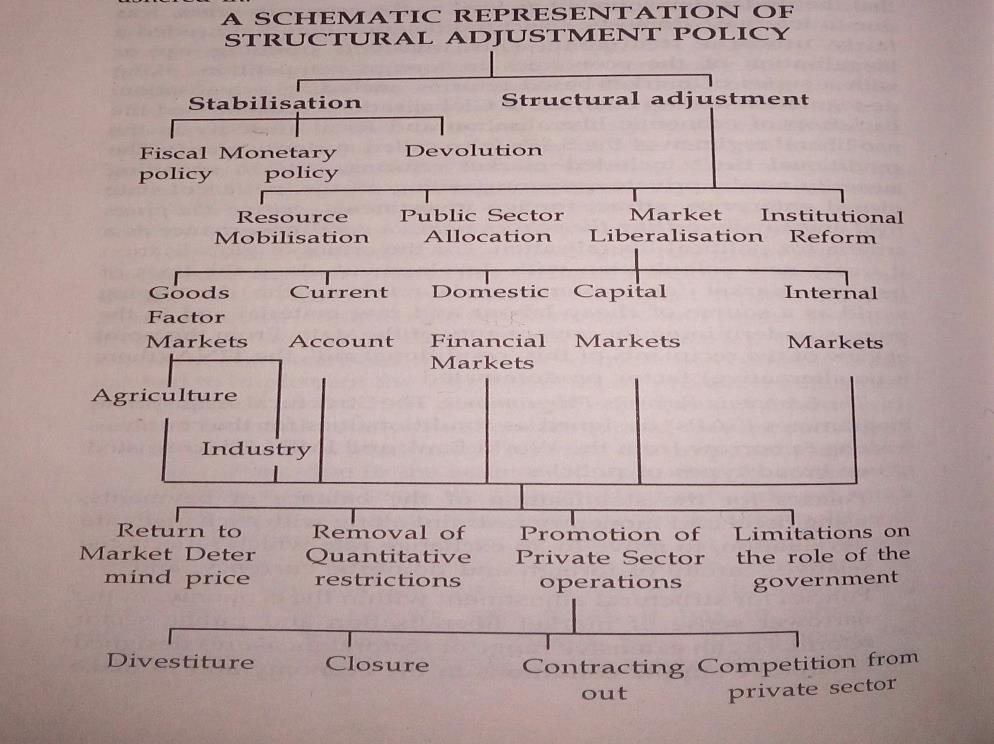
and early 1980s (Goldthorpe
1984).The collapse of the Soviet
empire, the 'third wave' of
democratization, and globalization
were the backdrop to the rise of
governance. Governance was also

applied to states whose kleptocratic
and authoritarian bureaucracies
were identified as obstacles to
growth (Charap and Harm 1999;
Hyden 1991).
The outcome was a 'global
revolution in governance'
Source; Bulbul Dhar-James; 2008
legitimizing neoliberal ideas because of a broad distrust of the state's capability in the light of the economic crisis worldwide that economically translated to Economic Liberalization in the form of Economic reform or Structural Adjustment programmes (SAPs). These were designed as conditionalities for the countries wishing to borrow from the World
Bank and the IMFconsisting of two broad type of policies Stabilization measures (for Balance of payments using fiscal and monetary exchange, exchange rate devaluation amongst other measures) and longer term Structural Adjustment. The latter involved market liberalization and public sector reforms ie a range of sectoral measures designed to improve supply side conditions in the economy, de-regulate the product and factor markets, to make domestic prices correspond to shadow prices and Institutional reforms especially of the government.
With the centrality of the state lost in Political analysis and doubts being cast on the state's role in fulfilling economic and political activitiesthere was a blossoming non-formal activities and a movement between the unofficial and Official, public and private, rural and urban - resulting in a
WOMEN AND GOVERNANCE: ISSUES AND CHALLENGES
Women's
Concept of Governance, Bulbul Dhar-James
Studies

"precarious balance between state and society" and this has ushered in a shift in the "centre of political gravity" (Chazan 1988).
A concept that attempts to incorporate this perspective and balance the actors is that of governance a concept that the Carter Centre of the Emory University of Atlanta, and, more specifically , Richard Joseph, Micheal Bratton and Goran Hyden sought to popularized it among
Africans. The basic idea is that political power is vested outside the government as well, and, as a

result, the government is forced to make concessions and bargains with different sections of society in order to maintain its political support base and legitimacy. Hyden, (1989, 1992) thus, goes beyond the performance of government to the social roots of authority, pointing out that the governance is "characterized by reciprocal behaviour and legitimate relations of power between governers and governed".
Governance refers to "all of processes of governing, whether undertaken by a government, market or network, whether over a family, tribe, formal or informal organization or territory and whether through the laws, norms, power or language."
As OECD (1995) outlined that the states were the central focus of governance and the "pursuit of common reform agenda driven by the need for fiscal consolidation, by the globalization of the economy and by the impossibility of meeting an apparently indefinite set of demands in public resources"
Defining governance and the 'minimalistic' state: Etymologically, The word "governance" came from the Latin verb "gubernare," or more originally from the Greek word "kubernaein," which means "to steer." Basing on its etymology, governance refers to the manner of steering or governing, or of directing and controlling, a group of people or a state.
WOMEN AND GOVERNANCE: ISSUES AND CHALLENGES
Women's
Concept of Governance, Bulbul Dhar-James
Studies

The term "governance" is not new. The emphasis placed on it today reflects "the perception of increased social complexity" and the changed responsibility of the state is to facilitate - through a range of interventions, the inescapable adjustment and adaptation to globalised free markets and "controlled structured change" in support of the Liberal Market.
For the World Bank governance was "the manner in which power is exercised in the management of a country's economic and social resources for development … creating and sustaining an

environment which fosters strong and equitable development, and it is an essential complement to sound economic policies. (World Bank 1992:1)
Further, governance is defined as " the traditions and institutions by which authority in a country is exercised for the common good. This includes (i) the process by which those in authority are selected , monitored and replaced, (ii) the capacity of the government to effectively manage its Globalisation Globalization essentially means integration of the national economy with the world economy. It implies a free flow of information, ideas, technology, goods and services, capital and even people across different countries and societies. It increases connectivity between different markets in the form of trade, investments and cultural exchanges. The concept of globalization has been explained by the IMF (International Monetary Fund) as 'the growing economic interdependence of countries worldwide through increasing volume and variety of cross border transactions in goods and services and of international capital flows and also through the more rapid and widespread diffusion of technology.' resources and implement sound policies, and (iii) the respect of citizens and the state for the institutions that govern economic and social interactions. " (World Bank 2000)
It thus implied different things in different subfields, and its meaning is masked further by its use as a synonym for Governance could occurs without Government, But Government cannot happen without Governance. government . Ambiguity is increased by the blurry boundaries between it and related concepts such as globalization and social capital. The opinions are divided about whether or not governance helps or obscures our understanding of
WOMEN AND GOVERNANCE: ISSUES AND CHALLENGES
Women's
Concept of Governance, Bulbul Dhar-James
Studies

contemporary society and politics, but it is clear that as a concept it can far from be ignored especially in the era of globalization.
Since Governance has been used at every level from the global to the local, as well as outside the political , an all-embracing definition is unattainable. And within this macro perspective, many of the previously "state" activities are undertaken by organizations other than governments, but governments specialize in them: so whilst governance occurs without government, government

cannot happen without governance.
Apprehensions in the network-state relationship are inevitable with the state becoming one of the participants amongst others in the pluralistic governance system and according to Jessop, "the state's influence depends as much as its role as a prime source and mediator of collective intelligence as its command over economic resources or legitimate coercion" Thus the state provides a strategic outline, determining priorities, retaining considerable economic and coercive resources. Political or Economic failure is prevalent and but these are failures of specific governance strategies and not a failure of government as a whole. Governance is a different way of presenting state adaptation to failure and instability which are universal aspects of politics.
Government Versus Governance:
Frequently used interchangeably, it was in the 1980s, that political scientists broadened the meaning of governance as including, not just government actors, but also civil-society actors.
Today, governance includes three sectors: the public sector (state actors and institutions), the private sector (households and companies), and the civil society (non-governmental organizations). These three sectors are said to work hand in hand in the process of governance. This new use of the term focuses on the role of "networks" in the achievement of the common good, whether these networks are intergovernmental, transnational, or international. In other words governance is broader than government in that other sectors are included in it.
WOMEN AND GOVERNANCE: ISSUES AND CHALLENGES
Women's
Concept of Governance, Bulbul Dhar-James
Studies

Government is often associating with Centralization of power - a central institution which wields power over its subjects - "control and domination," and governance is considered akin to a concept of decentralization of power and the need for inter-sectoral management.
Governance is based on the realization that the government cannot do everything for the people, so that in order to survive the state should not only rely on government but also on the other sectors of the society.

Conventional hierarchical exercise of power by the government has given way to the new notion of a "dispersed and relational power in governance" – from government to governance. To govern should now mean to facilitate or regulate, not to dominate or command.
Plurality of the State, Civil Society and Market:
To be appreciative of the processes of decision-making and implementation of the decision, that go into the Governance, an analysis of the concerned key "actors" and "structures" needs to be done.
But this was/is a very broad scope, governance has different facets that may be applied in different contexts, be it corporate governance, international governance, and national and local governance.
Depending on the context, governance has different actors and structures. Depending on the kind of decision made and the structure implementing it, governance may be good or bad governance.
State
Market Civil Society
(Source: UNDP 1997)
WOMEN AND GOVERNANCE: ISSUES AND CHALLENGES
Women's
Concept of Governance, Bulbul Dhar-James
Studies

As the figure portrays, governance is about engaging plurality of actors in various ways. Government can be, therefore, seen as one of the organisation involved in governance. It is possible, in other words, to have 'governance without government'. For example, the box underneath provides the story of the residents of Baner and Balewadi areas in Pune who faced collect social life problem but overcame the crisis of governance sans civic authorities.
The residents of Baner and Balewadi areas in Pune came together on Sunday to construct an

approach road to a school for the convenience of students. After several failed attempts to convince civic authorities to take up the construction, women in the area decided to lead a citizen movement and build the road themselves, which is about 500-metres-long. Authorities were not taking up the construction project for the last six years because it was stuck in a dispute between Pune Municipal Corporation, the Panchayat and Pune Metropolitan Regional Development Authority (PMRDA) authorities. This was when they formed a virtual group on WhatsApp and decided to construct a make-shift road themselves, under the supervision of mothers of some school students.
The government or the Public Sector is almost always the main actor in governance, whether it is in the corporate, international (international organizations and multi-national corporations), national or local level. But it is not the only actor. All actors other than the government are what we can broadly call the "civil society."
The civil society includes non-governmental organizations, and other community-based and sectoral organizations, such as association of farmers, charitable institutions, cooperatives, religious communities, political parties, and research institutes. These organizations are private in nature but have public functions or objectives and are indispensable partner in development. To cope with the ever growing demands of development, the public sector must necessarily tie-up with the private sector. In the national and international level, decision-making is greatly influenced by actors like the media, international organizations, multi-national corporations, and international donors. Thus, from the foregoing, it should be clear that governance involves several actors in multi-level structures in the modern Globalization era.
WOMEN AND GOVERNANCE: ISSUES AND CHALLENGES
Women's
Concept of Governance, Bulbul Dhar-James
Studies

Modern complex societies, in order to meet the growing demands of development, are managed in different levels by various actors. The central role of the public sector in the era of Globalization and Liberalization is to provide an enabling environment for the other actors of governance to participate and respond to the mandate of the common good. To make the economy more profitable for business, by adopting the policy of strategic retreat of the state (in favour of private bussiness) the engines of growth are private actors especially the Markets.

Governance is now understood to include the wide range of ways in which the political, social, and administrative structure of a society affects the access of its members to basic opportunities and capabilities. Governance is a continuum, and not necessarily unidirectional: it does not automatically improve over time. Historical record suggests importance of building on the relative strengths of the state, along with the civil society and the market to better the state's institutional capability. It is a plant that needs constant tending. (World Bank, 1992).
Re-conceive the government from 'Rowing' to 'Steering' : Advocates of governance proposed 'reinventing government', shifting government 'from rowing to steering', a change to be embraced by industrialised and developing countries because of globalization and electoral pressure to deliver more and better services at lower cost to the taxpayer (Osborne and Gaebler 1992).
Governance is not new, but the emphasis placed on it reflects the perception of increased social complexity, and the state's role is to ease the inescapable adaption to globalised free markets.
Governance is about producing 'controlled structural change' in support of a market liberal order through a variety of state interventions. The state has resources not available to any other
Markets: Based on pure purchasing power of the economic agents, Markets are not are democratic institutions. Though the most efficient, they tend to have fostered inequality and marginalization of the already weak as markets are not moderated by considerations of human value. Governments (and states) are held responsible for their people, markets are not.
WOMEN AND GOVERNANCE: ISSUES AND CHALLENGES
Women's
Concept of Governance, Bulbul Dhar-James
Studies

organisation, which enable it to facilitate negotiations, reduce transaction costs and disseminate 'best practice', and boost social cohesion (Jessop 1997).
Governance is a process , not an end, and is inevitably fragmented, but has two key aspects: The creation of distributive consensus. This involves domestic and non-domestic actors on how the national income will be distributed: and The orchestration of a social consensus behind policies in the general interest of capital

Contemporary use of the term - Governance:
The backdrop of the contemporary use of the term - Governance is the World Bank and IMF establishment of the rules of markets efficiency and the role of the governments (more problematic) correcting the market failure with the measures defined by the International Financial Institutions.
The 2009 Global Monitoring Report sees governance as 'power relationships,' 'formal and informal processes of formulating policies and allocating resources,' 'processes of decision-making' and 'mechanisms for holding governments accountable.' International agencies such as UNDP, the World
Bank, the OECD Development Assistance Committee (DAC) and others define governance as the exercise of authority or power in order to manage a country's economic, political and administrative affairs.
According to UNESCO, there is often a tendency to equate governance with management, the latter primarily referring to the planning, implementation and monitoring functions in order to achieve predefined results. Management encompasses processes, structures and arrangements that are designed to mobilize and transform the available physical, human and financial resources to achieve concrete outcomes. Management refers to individuals or groups of people who are given the authority to achieve the desired results. Governance systems set the parameters under which management and administrative systems will operate. Governance is about how power is distributed and shared, how policies are formulated, priorities set and stakeholders made accountable.
WOMEN AND GOVERNANCE: ISSUES AND CHALLENGES
Women's
Concept of Governance, Bulbul Dhar-James
Studies

GOOD GOVERNANCE
In the development literature, the term 'good governance' is frequently used. In particular, the donors promote the notion of 'good governance' as a necessary pre-condition for creating an enabling environment for poverty reduction and sustainable human development. Good governance has also been accepted as one of the targets of the Millennium Development Goals (MDGs). The good

governance agenda stems from the donor concern with the effectiveness of the development efforts.
The yardsticks of Good "democratic" governance, viz
GOOD DEMOCRATIC GOVERNANCE: Participatory Transparent Decision Making Accountable & Responsive Effective and equitable Promote rule of law Equitable and Inclusive Consensus Oriented; Participatory, Transparent Decision Making, Accountable
& Responsive, Effective and equitable Promoting Rule of law, Equitable and Inclusive and Consensus Oriented; are inextricably related to each other. For instance, without active participation among the various actors in governance, there would be a concomitant lack of responsiveness.
Participation: means active involvement of all affected and interested parties in the decision-making process. It requires an enabling environment wherein pertinent information is effectively disseminated and all the people (women, men, trans-people) could respond in an unimpeded manner. Thus gender equality is central to it with the recognition of critical roles of both men and women in decisionmaking. From a "verticalized system" of The participation of women in governance within the context of " gendered socialization" rests on how responsive the structures and processes are to their roles and needs. governance to "horizontal system" where the government works hand in hand with other sectors of the society as partners (not monopoly) of the government in attaining development goals. Diffusing power through decentralization is central to participation.
WOMEN AND GOVERNANCE: ISSUES AND CHALLENGES
Women's
Concept of Governance, Bulbul Dhar-James
Studies

Rule of Law as an essential ingredient of Democracy, whereby No one, not even the government can arbitrarily act in contravention of Those who have less in life should have more in the law. It demands that the people and the civil society render habitual obedience to the law and the government acts within the law limits of the powers and functions prescribed by the law.
Effectiveness and Efficiency:

Effectiveness (meeting the needs) and efficiency (proper utilization of resources) must necessarily go together to ensure the best possible results for the community. An operationalization of this would be professionalization of bureaucracy, elimination of redundancies, a citizen-centered government, Public service delivery, amongst others
Transparency:
Transparency, as an indicator of good governance, is anchored on the democratic right to information and right to access of the same, not just from government transactions but also in those transactions of the civil society and private sector imbued with public interests.
Responsiveness
Interests of all citizens must be well protected. While responsiveness is also a characteristic sought from the private sector and civil society, more is demanded from the government or the public sector.
Gender concerns that respond to the women and their community must always be part of the agenda of public sector and civil society. Thus, emerging as important areas in the study of democratic governance are "Gender and Development" and "Gender Responsiveness."
Thus, good democratic governance is fundamentally adherence to the rule of law that is not Archaic or irrelevant, but responsive to the needs of the society.
Equity and Inclusiveness
All the members of the society, especially the most vulnerable ones must be taken into consideration in policy-making. Everyone has a stake in the society and no one should feel alienated from it. It is based on the principle that those who have less in life should have more in law. Good governance demands
WOMEN AND GOVERNANCE: ISSUES AND CHALLENGES
Women's
Concept of Governance, Bulbul Dhar-James
Studies

that the actors must give preferential attention to the plight of the poor. Laws must be geared towards this end and the society must actively participate in the promotion of the same.
Consensus Orientation:
When decisions are made after taking into consideration the different viewpoints of the actors of the society. Fundamentally, democratic governance is based on the partnership of the actors of the society in providing public services.

Accountability
The actors have an obligation to explain and be answerable for the consequences of decisions and actions they have made on behalf of the community it serves. It comes in various forms: political, hierarchical, and managerial accountability. A system of rewards and punishment must be in place to strengthen the processes and institutions of governance.
Thus, in relation to development good governance should not be based exclusively on economic growth.
Through global persuasion, good governance and development signify a broader spectrum of things, such as protection of human rights, equitable distribution of wealth, enhancement of individual capabilities and creation of an enabling environment to foster participation, gender equality and growth of human potentials.
"Good governance means creating well-functioning and accountable institutions – political, judicial and administrative – which citizens regard as legitimate, in which they participate in decisions that affect their daily lives and by which they are empowered.‟ perhaps "good governance is the single most important factor in eradicating poverty and promoting development". ~ former UN Secretary-General Kofi Annan
WOMEN AND GOVERNANCE: ISSUES AND CHALLENGES
Women's
Concept of Governance, Bulbul Dhar-James
Studies

The term "good governance" has been extensively used within the international community in the last fifteen years and has acquired the characteristics of a "container concept", which incorporates a variety of principles and is as general as concepts such as globalisation or global governance. Good governance is a term different to governance which is mainly a political and technocratic term without normative aspirations and suggests that governance should be "good" and not "bad".
Assessment and Evaluation

Questions
1. Who are the actors in the process of governance? How do they interact in coming up with, and in implementing, decisions?
2. How are the indicators of good governance related to each other? Give a concrete example of your answer.
3. Give your recommendations on how to improve governance in India.
4. How is it possible to have 'governance without government'? Discuss
5. What is 'new' about the nature of contemporary governance?
WOMEN AND GOVERNANCE: ISSUES AND CHALLENGES
Women's
Concept of Governance, Bulbul Dhar-James
Studies
Paper No. : Women and Governance ; Issues and Challenges
Module : Women in Governance: Institutional, Social, Economic and Structural Barriers
Development
Prof. Sumita Parmar Allahabad University, Allahabad
Principal Investigator
Prof. Chandrakala Padia Maharaja Ganga Singh Univesity, Bikaner
Paper Coordinator
Dr. Bulbul Dhar-James, Former Director,WSC, JMI Mr. Vijender Singh Beniwal, ICSSR Fellow, New Delhi,
Content Writer
Prof. Chandrakala Padia Maharaja Ganga Singh Univesity, Bikaner
Content Reviewer
Description of Module
Subject Name Women's Studies
Paper Name WOMEN AND GOVERNANCE: ISSUES AND CHALLENGES
Module Name/Title WOMEN IN GOVERNANCE: INSTITUTIONAL, SOCIAL, ECONOMIC AND
STRUCTURAL BARRIERS Module Id
Pre-requisites The reader is expected to have the knowledge of key debates in
Globalisation, Governance, Global Development discourse of governance, Women in leadership roles and their constraints
Objectives To make the reader understand the concept of governance, the contours of women's representation in Public governance in India and major hindrances being faced by them during their journey towards higher echelons of public governance.
Keywords Governance, Glass ceiling, Gender stereotypes, Public institutions, Challenges to leadership
Women in Governance: Institutional, Social, Economic and Structural Barriers
Understanding women's issues indeed gender issues in governance requires examining participation and decisionmaking of women and men in different institutions. Addressing gender gaps in governance entails the adoption of reforms to engender different governing institutions at the various levels.
Gender and Governance Nussbaum asserted that the participation of women in governance has long been hindered by the assumption that their proper sphere is the "private" sphere, and this same assumption has been an obstacle to good theoretical and practical work on the question of gender and governance. From the very origins of Western political theory, theorists from Aristotle to Robert Nozick (Classical Liberal to Libertarian) have carved society into two domains: a "public" domain, the domain of political authority and contestation, and a "private" realm, associated with family and the home. These spheres are conceived as operating in very different ways. In the public sphere, each person's actions must be constrained by the recognition that he is one among many citizens. Any attempt to gain unlimited or supreme power is typically taken to be both dangerous and inappropriate. The "private" realm of the household is understood in a very different way. Here the traditional idea is that the male head of the household and should exercise a type of kingly authority. Because he is surrounded not by equals, but by inferiors, his job is to control them. Modern liberal theory has typically associated the public/private divide with a further distinction: the distinction between a sphere regulated by law and a sphere in which law should not interfere. While conventional Hindu law gives household considerable autonomy, however, at the same time, the householder [male] exercises strict control over the women of the house. In this way, the idea of the household as a protected sphere of male authority is established. New governance discourse, emerged in recent years, has recognized and emphasized plurality of realms, that is, state, market and civil society. A gendered perspective on governance must encompass all the realms that the new discourse of governance recognises, and more. Indeed, the three domains of governance should not be seen as unproblematically hospitable to gender issues. In fact, there is nothing inherently gender-friendly in this widening of the ambit of governance beyond the state. Even in advanced capitalist societies, the role of the state as the 'orchestrator of social consensus' remains relevant. Markets are notoriously hostile to the poor, and given the gendered nature of poverty, to women belonging to these sections. Civil society is not definitionally gender-neutral, either. Even as women's movements are located on this site, we cannot ignore the fact that many civil society organisations - such as religious fundamentalist groups - are neither civil nor democratic nor empowering, and frequently conservative in the way they define women's roles. As pointed out Niraja Jayal, this definition retains vestiges of the instrumentalist view, for though the larger document explicitly recognises that governance encompasses every institution and organisation in society, from the family to the state, the definition pointedly isolates only the three important domains of governance which, it claims, directly contribute to sustainable human development: the state (political and governmental institutions), civil
society organisations and the private sector. This focus on essentially public institutions carries an implicit endorsement of the public-private divide. The very definition of governance needs to be engendered before we can embark upon the project of engendering governance itself. This implies a recognition of the fact that, through their emphasis upon public institutions of authority, current definitions reinforce the public-private divide, and make little or no attempt to recognize the private sphere as an arena of governance – e.g., the family – or as an arena influencing the exercise of social power and modes of governance. Is it then unreasonable to expect the idea of governance to explain or interrogate the mutually reinforcing relationship between what Sylvia Walby has called public and private patriarchies? The author is restricted the debate on, for present venture, women in governance to the domain of state i.e. public institutions. In other words, women visibility in public institutions will be the main agenda to document in the following text. Women in Governance - Global Scenario Although the number of women government ministers grew from 670 to 715 in the 12 months since 1st January 2014, that figure represents only 17.7 per cent of all government ministers in the world. Since 2005, the percentage of women ministers has only increased by 3.5 points. There is also an unmistakable pattern in the nature of portfolios held by women, that is, the most substantial concentration of women ministers worldwide was in ministries of social affairs, health, women's affairs, family/children/youth, culture and heritage, education, environment and labour. Very few women ministers held portfolios related to defence, finance, trade, and home affairs. This bias is reinforced by a recent study of women in several levels of decision-making positions in politics in 27 industrialised societies, which found inequalities in the distribution of "political areas of responsibility: women are more prevalent in `social' or `female' issues". On the other hand, men were mainly involved in policy areas such as internal affairs, economic affairs, fiscal policy, defence and international affairs, industrial policy and agriculture. Similarly, Peterson and Runyan (1993) argued that a look at the gendered pattern of employment in international agencies (the United Nations, the World Bank and USAID) also suggests the virtual invisibility of women from the top management of these organisations, and a preponderance - even overrepresentation - of women at the secretarial and clerical levels. Thus, women constitute 3.6 per cent of decision-making elites in the United Nations, but 85 per cent of the workers at the clerical and support staff levels. As of January 2015, only 17 per cent of government ministers were women, with the majority overseeing social sectors, such as education and the family. Research on panchayats (local councils) in India discovered that the number of drinking water projects in areas with femaleled councils was 62 per cent higher than in those with male-led councils. In Norway, a direct causal relationship between the presence of women in municipal councils and childcare coverage was found. Women in Governance - Indian Scenario This section began with the claim that the engendering of state institutions of governance mostly represents little more than the gendering of state elites. This claim has been justified with reference to the legislature, executive, judiciary, and bureaucracy. In all these spheres, further, we observed a concentration of women at the lower levels of structures of
governance, with however little impact on decision-making processes and outcomes. It is, further, arguable that the engendering of state personnel, and the engendering of policy, should be, but rarely are, parallel processes. It is evident that even where the first (engendering of personnel) has been promoted by states - as, for instance, through quotas and reservations - it has resulted in personal empowerment, rather than in more generalized emancipatory outcomes. For instance, in India, the Economic Survey for 2001 has, for the first time (as a result of intense lobbying by women's groups) recognised that the impact of budgets is gender-differentiated. Women in Political Executive Although the representation of women in the council of ministers, Government of India since 1952 to 2009, has shown steady augment but still far away from satisfactory. Only during last decade women numeral touched double digit in terms of their presence in council of ministers.
Table I: Women in Political Executive as on 12.07.2016 SN Designation Total Male Female Female % 1 Cabinet Ministers 26 21 05 19.2 2 Minister of State (Independent) 13 12 01 7.6 3 Minister of State 36 33 03 8.3 4 Council of Ministers 75 66 09 12.0 5 Governor/UTs Administrator 29/06 26/05 03/01 11.4 6 Chief Minister (including New Delhi & Puducherry)
29/02 25/02 04 12.9 (Source: www.cabsec.nic.in) The representation of women has been very low in various ministries and invariably women are 'soft portfolios' which are an extension of women's stereotypical images. These portfolios rarely have the resources or decision-making powers to back women and therefore relegate them again to the backseat. Hardly any woman is visible in powerful ministries e.g. Finance, Defence, Home etc [regulatory and distributive]. In 16th Lok Sabha, 8 women ministers out of total 66 ministers. Modi government has promised a new outlook by inducting 6 women in cabinet. Additionally, the present government also attempted to wither out old stereotypes by allocating non-traditional portfolios among women such as External Affairs, HRD etc. But latest reshuffle in Modi's cabinet has shown reverse trend and divulge orthodoxy. Table I above depicts women in political executive is quite low barely touching two digit figure except in cabinet ministers. On deeper analysis undoubtedly this is done for window dressing in IUP ranking (the report includes only cabinet ministers) of countries on the basis of women in ministerial positions. Otherwise, women strength in the council of minister (especially MOS) is even less than 10 percent.
Women in Permanent Executive During British rule, women were disqualified for higher administrative posts. Immediately after Independence, women were allowed to take the competitive examination for the administrative service. However, rule 5 (3) of the Indian Administrative Services' Rules of 1954 empowered the government to demand the resignation of a female officer after marriage on ground of efficiency notwithstanding the Constitutional equality (Art 15 & 16). In 1972, formal gender parity was introduced in the All India Services at entry level. Nevertheless, the percentage of women IAS remains very low-not more than 15 percent of the total especially in office of substance. The table II below demonstrates that male only club notion exist in permanent executive. The political bosses have a penchant disposition of replicate their gendered cognition while appointing their support staff. For instance, we can see the glimpse of only men's club in PMO as well as Central Secretariat when it comes to the question of chairing vital portfolios/departments. There are only 15 women secretary in various ministries at union level. Further analysis unambiguously exposes that women are confined mainly in the sectors that foster prevailing gender stereotypes of their innateness province of bear, rear and nurture.
Table II: Women in Permanent Executive as on 01.08.2016 SN Designation Total Man Women Women % 1 Secretary in President/VP Office 02 01 01 50 2 Secretary in PMO 03 03 Nil Nil 3 Cabinet Secretariat 05 05 Nil Nil 4 Secretary in Union Ministries 85 71 14 16.4 Total 95 80 15 15.7
5 Chief Secretary in States/UTs 36 34 02 5.5 (Source: DoPT, Ministry of Personnel, Public Grievances and Pensions, GOI) While male officers can catch up with superiors and others who matter outside office as well, it is just home-after-office for women. And the brutal reality is that this acts against them as they are tagged 'undependable'. Currently, a number of influential women secretaries are at the helms of various departments, but 'key and hard' ministries like home, defence and finance don't have any women secretary. The factors that work at securing the cabinet secretary post and other coveted ministries are age, high ranking in merit-cum seniority list and at times prior experiences in ministries in addition to luck and influence. For example, we can envisage unfair game from unceremoniously departure of the foreign secretary, Ms Sujatha, Singh in January 2015. So far no femocrat has become cabinet secretary, India's top bureaucrat by status, power, rank and pay (entitled bungalow in the heart of Lutyens' Delhi). The reason is more of technical in nature than competence and capabilities of corridor's top women. In summer of 2009, it was a narrow miss for 1972 batch Kerala cadre IAS Sudha Pillai who was then the senior most IAS, and then cabinet secretary KM Chandrasekhar's two-year term was to end. But it's a different matter that Chandrasekhar got serial extensions which not only denied Mrs Pillai her 'due' to become country's top most bureaucrats. The cabinet secretary plays a key role in top level appointments of bureaucrats, pioneers changes in administrative laws and rules, and helps the Prime Minister in key decisions and cabinet meetings. The fact that women are making greater headway worldwide in the matter of parliamentary representation than in civil service recruitment may also be viewed as a matter of concern, as parliamentary power declines and that of technocrats increases It has further been observed that women in higher level administrative positions tend to be less receptive to the voice of women's movements. Women in Police Kerala was the first Indian state to have women in the police force, beginning with the first woman inducted into the then Travancore Royal Police in 1933. Thereafter recruitment of women into the police in other states began only after independence, and even then it was sporadic at best. It was not until 1972 that the first woman was appointed to the Indian Police Service. By the time the National Police Commission completed its eight reports in 1981, women accounted for a mere 3000 or 0.4% of the total police in the country.
As on 1/1/2015, there are 110872 female police personnel in India, making up a national average of 6.4% of the police. Many states have acted on the MHA's advisories to adopt a reservation (33%) policy for women in police forces at entry level. However, the target remains very much on paper and the government is least interested to address the issue. Maharashtra has had a reservation (30%) in place since 1971 (the longest running at 44 years to the present), but women police are barely pushing 10.9% of the force. Even with evidence of minor incremental gains, these dismal figures reveal the lack of priority to actually fill the numbers with women in police departments.
Table III: Women in Police as on 01.01.2015 Rank Total Woman % of Women
DGP/Spl. DG/ADGP 463 25 5.3 IGP 530 46 8.6 DIG 415 23 5.5 AIGP/SSP/COM 2497 192 7.6 Addl. SP/DY. COM 1978 187 9.4 ASP/DSP/ Asstt. COM 9006 636 7.0 INP 26710 1310 4.9 SI 82644 6710 8.1 ASI 101558 3303 3.2 Head Constable 351213 9367 2.6 Constable 1144087 89073 7.7 Total 1721101 110872 6.4 (Source: Annual Report 2015, BPRD) As in other contexts, women are concentrated in the constable and head constable positions. As table III reveals that out of a total 463 DGP/Spl. DG/ADGP posts, a mere 25 are women; only 23 out of 415 DIGs; and 1310 out of 26710 inspectors. Percentages of women represented in higher ranks are slightly higher only because the total numbers of all personnel at those ranks are lower. It must be emphasized that these figureswhich clearly show the ranks and levels at which there problems are worst. Male model of police; non-acceptability of women by their male counterparts; irregular working hours, hierarchic pressure and dealing with antisocial element; and uncertain role in department (women are place in domestic and family matters) which limit them to 'traditional roles' among other are major challenges faced by women in police.
Women in Judiciary The first woman to be appointed to the Supreme Court was Justice Fatima Beevi in 1987. Presently, we have only one women judge in the Supreme Court, Justice R Banumati, who was appointed in August 2014. Since India's independence, barely five women have been elevated as judges in the apex court. The number in the lower courts is no better. Presently there are only two women chief justice in High court - Ms Manjula Chellur and Ms Gorla Rohini in Kolkata and Delhi HC respectively. Of the 611 judges in the High Courts, merely 62 of them are women and in the trial courts, the number is roughly 10%. The number crunch among lawyers is just as dismal. Of the 477 senior advocates in the SC and the HC, barely 14 are women. That constitutes to barely 2.9%. Manifestly, there is no doubt that it is a boys club and there is camaraderie between them.
Table IV: Women in Judiciary as on 01.08.2016 S N Court Total Men Women % of Women 1 Judges in SC 31 30 1 3.2 2 Chief Justice ( HC) 24 22 2
8.3
3 Judges in HC 673 611 62 10.1 (Source: Ministry of Law & Justice) Retired Chief Justice Leila Seth's experience as the first woman to be appointed a justice in the Delhi HC, and later the Chief Justice of Himachal Pradesh is memorable. "I had to play the game very carefully to make sure I did not upset my male colleagues," said Seth. Recently women lawyers made a vociferous plea - the collegium which selects judges must shed its inhibition to choose woman lawyers as judges. "Look at their numbers. There are just 62 women judges compared to 611 male judges (in high courts) in the entire country," was their refrain. Justice Khehar replied, "What is the ratio of female advocates to male advocates? Ratio of female judges to male judges must be in the same ratio." In the judgment striking down NJAC, the SC had quoted an exchange between the then President and the Chief Justice of India regarding selection of judges.
President - "Eligible persons from weaker sections and women are available and their under-representation or nonrepresentation would not be justifiable. Hence, present practices of judicial appointments are not reflecting the spirit of our constitutional." CJI - "I would like to assert that our Constitution envisages that merit alone is the criterion for all appointments to the Supreme Court and high courts. And we are scrupulously adhering to these provisions." Strangely enough under no circumstance can only 6 women judges out of the total 229 in 70 years be a fair outcome of any "merit-alone" selection process. If women can climb Everest, head huge banks and financial institutions, run successful business houses, surely they can be good judges. The need of the hour is a change of mindset, both for the collegium headed by the CJI and the tradition bound Shani temple management.
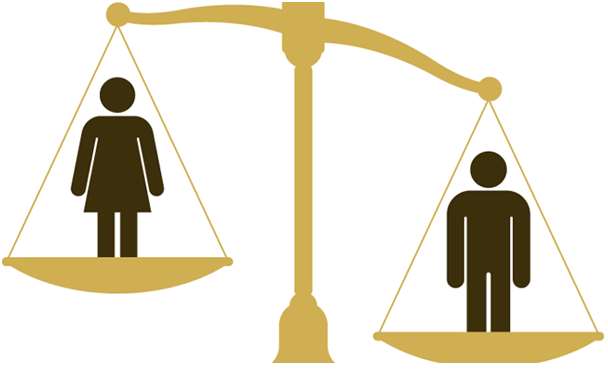
While no discernible trend in respect of gender justice can be ascertained from the judgments delivered by the four women judges in the Supreme Court, it cannot be denied that there are some instances where path breaking concepts in women's rights have been addressed by benches of which they were a part. Justice Sujata Manohar was part of the three judge bench in the landmark case of Vishaka. Similarly, Justice Ruma Pal often considered a tough-as-nails judge, through her judgments in Vinita Saxena vs Pankaj Pandit case, extensively elaborated on the concepts of 'mental cruelty' in a marriage and 'cruelty as a ground for divorce'. Barriers to Women's Participation in Public Decision making Structural These are the many overt and covert 'glass-ceiling' factors that impede women's career paths.
These include: male managerial styles, discourse and language that 'shut' women out; informal organizational cultures also referred to as the 'old boys club'; women's reluctance to self-promote their achievements and capabilities making them institutionally invisible; The persistence of cultural values and attitudes that strongly support women's childcare, family and domestic responsibilities as priority over career aspirations. There are women well-qualified for academic positions who nevertheless fail to be selected. Customarily both politicians and bureaucrats are predispose to patriarch ideology – 'a man is preferred because he is a man'. Discriminatory appointment and promotion practices constitute barriers in institutions without equal opportunity policies. In other words, a large part of the problem is the entrenched notion that men were more 'natural' leaders than women – something exacerbated by the increasing use of generally male-led and male-dominated search committee/s for appointment Socio-economic/Cultural Factors
Deeply entrenched gender roles and negative gender stereotyping have immensely limited women's participation in public domain
Traditional cultural attitudes and values are serious constraints to achieving gender equality. Strong and different values on gender-roles create barriers, discriminate against women and impede the achievement of equality between men and women in Indian society The dual burden of domestic and professional obligations and economic resource constraints restrict opportunities for women to participate in political and public life. Hierarchical social structures and culture of public patriarchy create an environment that impedes women's ability to be equal partners in public decision-making. Stereotypes continue to consider women as subordinates who cannot participate in politics and hold senior decision-making positions. Generally women are bereft of vital resources (economic, political and cultural) that are pre-requisite while negotiating for their entry in public institutions.
Institutional Factors Despite a robust gender equality perspective reflected in national gender equality policy initiatives and legal frameworks, challenges remain.
Discrimination impacts the ability of women to be promoted. Gender specific gaps in national laws, including the absence of a comprehensive definition of 'gender-based discrimination' contribute to the challenge of addressing discrimination against women, including in appointed and elected positions. Decision-making processes and structures form additional barriers for women to participate in public and political life. Women are concentrated in sectors traditionally associated with women and at the lower levels of government. Opportunities for women to participate in decision-making processes in sectors such as economics, industry and energy, mines, urban management and transport are further constrained. Conclusion Seeing that there are institutionalization of practices, patterns and beliefs, corollary, women are often assumed to be less available for leadership positions by those who hire. Additionally, many women make career decisions around issues of family, while many men make family decisions around issues of career. The impact of gender inequality on governance is as debilitating as it is widespread. Complicated by other intersecting hierarchies, such as class, caste, ethnicity and religion, the differences ascribed to women and men on the basis of sex are recreated, maintained and manipulated in contests for state power and resource allocation. Women's presence within the executive branch is also politically important. The chief executive and the cabinet set the policy agenda of a nation, determine the content of many policies and oversee and guide policy implementation and administration, including any policies to advance women. The global literature suggests that women and men in public institutions are largely placed differently, with differential access to leadership, and hence to influencing meanings, discourses and practices. Gender in governance is about more than focussing on women's under-representation. Thus the fate of further advances in the status of women in managerial positions in public life, as in other spheres of society, will to a large extent depend on broader structural, institutional and cultural changes. We need positive interventions of the government to expedite this momentum to make academy sustainable and gender neutral. Summary
Governance is about unleashing all potential actors viz. state, civil society and market in the process of catering collective needs of citizens. Public-private divide need to be mitigated through locating gender in the new discourse of governance Worldwide women have very less visibility in critical structures of public governance, that is, legislative, executive/administrators, and judiciary Women are facing myriad challenges viz. barriers to their participation in public decision-making In Asia in general and Indian in particular, gender inequality in governance is further compounded by other intersecting hierarchies such as class, caste, ethnicity and religion
PAPER-11 MODULE-23
Women's Leadership and Governance
Personal Details
Role Name Affiliation
Principal Investigator Prof. Sumita Parmar
Allahabad University, Allahabad
Paper Coordinator Prof Chandrakala Padia
Chairperson ,IIAS, Shimla and Vice Chancellor MGS University Bikaner
Dr. Bulbul DharJames,
Former Director,WSC, JMI Jamia Millia Islamia,N. Delhi .
Content Writer/Author (CW)
Mr. Vijender Singh Beniwal,
ICSSR Fellow, New Delhi,
Content Reviewer (CR) Prof Chandrakala Padia
Chairperson ,IIAS, Shimla and Vice Chancellor MGS University Bikaner
Language Editor (LE) Prof. Sumita Parmar
Allahabad University, Allahabad
Description of Module
Subject Name Women's Studies
Paper Name Women, Governance and Politics
Module Name/Title Women's Leadership and Governance
Module Id PAPER-11 MODULE-23
Pre-requisites The student is expected to have the knowledge of leadership approaches and notion of genderisation of societal institutions.
Objectives To make the reader understand the concept of leadership and acquaint them with prevailing leadership styles under the umbrella of neoliberalism
Content Reviewer
Keywords Leadership, masculinity, gender bias, stereotypes and neoliberalism
Women's Leadership and Governance
'As long as women of India do not take part in public life there can be no salvation for the country and we are not likely to attain Swaraj; and if we did, I would have no use for that kind of Swaraj, for which women have not made their full contribution".
(Mahatma Gandhi) Introduction Do you have an idea of the numbers of elite [leaders] who are governing our planet? In 2015 Forbes survey concluded that the men and women who are featured on Forbes' annual ranking of the World's Most Powerful People are the 0.00000001% - the global elite whose actions move the planet. These heads of state, financiers, philanthropists and entrepreneurs truly run the world. The second most powerful person in the world also happens to be the most powerful woman: Chancellor of Germany Angela Merkel. But at the same time out of total 100 such person merely 9 , that is even less than 10 percent, are women nevertheless they are around 3.2 billion on the planet. These raise the questions like – who are these women? How they have reached on top? And why there are only few women leaders? Do they have same leadership style? Or women and men differ in the way they govern us. This sub-unit will focus on women's leadership and governance with special reference to their participation in, one of the main domains of governance-market; other two are – state and civil society. As we have already discussed women's representation in state and civil society. This chapter is divided into four parts. First part delineates the concept of leadership and its various facets. The debate of gender and leadership is presented in the second part. The third part dwells on current global as well Indian trends with reference to women in leadership position. The concluding remarks are incorporated in the final part. The Concept of Leadership Leadership is a process by which a person influences others to accomplish an objective and directs the organization in a way that makes it more cohesive and coherent. Leadership is a process of social influence, which maximizes the efforts of others, towards the achievement of a goal. It is about seeing through the situation and ensures smooth transition from one stage to another. Leader, followers, communication and situation are essential paraphernalia that are involved in leadership.
Also note that the situation normally has a greater effect on a leader's action than his or her traits. This is because while traits may have an impressive stability over a period of time, they have little consistency across situations. This is why a number of leadership scholars think the Process Theory of Leadership is a more accurate than the Trait Theory of Leadership. Historically, leadership has carried the notion of masculinity and the belief that men make better leaders than women is still common today. Although the number of female leaders has increased, they are often named as an afterthought. According to Højgaard (2002), the societal conventions regarding gender and leadership traditionally exclude women, and top leadership is viewed as a masculine domain. The same author further argues that the cultural construction of leadership in itself instigates difference and this is only now being transformed or contested as women gain access to leadership positions. In underdeveloped and developing societies such as Asia, Africa among others, it is believed that men lead and women follow. It is not uncommon in countryside to find the man literally walking ahead of the woman. Different reasons may be advanced for this but ultimately it illustrates the deeply held notion of leadership as masculine. Leadership Debate - Feminist perspective According to great man theory leaders were born with certain leadership traits. However, current thinking on leadership assumes that leadership can be taught and learned, hence the many leadership-training programs. Scholars list the traits commonly associated with leadership as effective communication skills, task completion, responsibility, problem solving, originality, decision making, action taking, vision, self awareness, confidence, experience and power. While it is possible to develop these traits in any individual, regardless of gender, in male dominated societies, male leadership and leadership styles predominate and are regarded as the more acceptable forms of leadership. Gilligan's work supports the notion that for women norms are continuously created and recreated, that they are all about the context of a situation and about how to relate to one another. From a masculine perspective, norms exist as law or tradition and one must conform to them. Calas and Smircich state that the feminine-in-management rhetoric maintains intact - even strengthens - traditional managerial ideologies, because it is the 'female' constructed under patriarchy who is given voice and presence, extending the patriarchal family's female role from the private to the public domain. …This is the primary role that the feminine-in-management performs in the discourses of your relationship with your seniors the skills of your followers the informal leaders within your organization how your organization is organized
globalization – as suggested by the saying, 'Behind every successful man there is a woman'. They emphasized that traditional management practices, understandably, have definitive masculine asserts that elements. The masculine traits of organizational behavior emphasize a hierarchical structure of authority, a strategic direction, planning, and rational problem solving. …The ability and competencies that women have are not what is keeping them from the top positions within the managerial structure; the current paradigms that our culture operates within are where the ceiling begins.
Figure 1: Understanding the Leadership Labyrinth
Human capital
Education Work experince Work-home conflict
Developmental
opportunites
Leadership
Labyrinth
Prejudices Gender stereotypes Biased perceptions
Gender differences Style & effectiveness
Commitment &
Evaluation vulnerability Cross-pressures motivation Negotitation traits
Self-promotion
Number of scholars discusses the fundamentally gendered nature of organizations, despite the gender neutrality that is claimed by [male] mainstream organizational theorists. Joan Acker describes the elements in a theory of gendered organizations and makes note that:- "Today, there are two types of workers, those, mostly men, who, it is assumed, can adhere to organizational rules, arrangements, and assumptions, and those, mostly women, who, it is assumed, cannot, because of other obligations to family and reproduction." In a nutshell, as maintained by Morley, the global literature suggests that there is a two-way gaze to discern the phenomenon of gendered leadership in neoliberal world. First, women are being seen as deficit of men, that is, women are generally not being recognised, developed, selected and promoted into senior leadership posts in most developing and developed countries. Secondly, women are viewing leadership via lens neo-liberal, resultantly, there are self-perceived exclusion on their part. Leadership is proving to be a site of ambivalence with many women refusing, rejecting or reluctant to occupy these posts in the highly performative, patriarchal, competitive and corporatized world.
Gender Neutrality in Leadership Literature also shows that there are no assessable differences in leadership styles between genders, but the fact that leadership styles in their roles are highly situational. This side of argument debates that neither of the genders is better in employing a leadership style, but the effectiveness is conditional to various internal and external environments of the group. Contingency theories recognize that there is no best style of leadership, but rather "leader effectiveness depends, or is contingent on, the interaction of leader behavior and the situation". However, Kanter argues that organizational roles override gender roles when it comes to management or leadership positions. He brings forward that irrespective of the gender in a same leadership role, theoretically do not differ much in their leadership approaches, because leaders at these roles "are presumably more concerned about managing effectively than about representing sex-differentiated features of societal gender roles." Powell argues that overall, leadership differences between men and women are insignificant because they are cancelled out when looking at studies as a whole as both genders use equal amounts of task-oriented and relationship-oriented behaviors. Oppositely, there is extensive availability of literature that shows that differences in leadership styles do exist, as men and women behave differently in thinking, acting and analyzing which is presumed also to effect the leadership style they employ. Gender differences in Leadership Eagly, Johannesen-Schemidt and Engen found small but robust differences between male and female leaders. Many research studies have assessed the styles of male and female leaders since the fifties and found that there definitely exist the differences in leadership styles. One of the differences, is that, the female leaders are seen to adopt a more 'democratic and participative' style than their male counterparts. Men in leadership positions are found to adopt a top-down style, in general. This is the 'command and control' style. Researchers have specially analyzed and uncovered an asexual style termed as transformational style of leadership, a highly effective style, which comprehends several interrelated types of behavior. Thus transformational leaders succeed at being inspirational role models, nurture good relationships, cultivate the skills of the member followers and motivate to think out of the confines of the job requisites. Analysis also shows that female leaders employ transformational styles more than the males. Another leadership style, transactional leadership is also seen in more female managers in which they tend to motivate their members with positive, reward-based incentives. Men, in contrast, employ more strict and less effective threatening styles of leadership. Enhancing confidence in these findings on transformational and transactional leadership are two large studies that have replicated them. The table I below is not exhaustive nevertheless it succinctly captures robust differences between male and female leaders.
Table: I Women's Vs. Men's Leadership Styles SN Women's Leadership Men's Leadership Style 1 'Transformational' – Tying employee self interest to the goals of the organisation 'Transactional' – job performance as a series of transactions to be rewarded or disciplined 2 Prefer flat structure Prefer hierarchical structure 3 Focus on relationships Focus on performance 4 Persuade/encourage/motivate Give orders/have them followed 5 Cooperative Competitive 6 Indirect Communication style Direct communication style (Source: derived from Egaly and Johannesen-Schmidt, 2001) Do these values and attitudes differences affect leaders? There are numerous indications that they probably do. For example, as members of legislative bodies, women are more likely than their male colleagues to advocate for changes that promote the interests of women, children, and families and that support public welfare in areas such as health care and education. Although women are not a monolithic political bloc on these issues, political scientists have shown that these tendencies in general transcend political parties and nations. Similarly, a natural experiment involving Indian women village leaders who gained office through a government mandate revealed that women, more than men, enacted policies that provided for the public good, such as bringing clean water to their villages. What Makes a Good Leader, and Does Gender Matter? Whether they are heading a major corporation or serving in elected office, leaders bring a combination of traits to the table. In the public's estimation, some traits are clearly more important than others. Honesty, intelligence and decisiveness are considered "absolutely essential" leadership qualities by at least eight-in-ten adults. Roughly two-thirds of adults (67%) say that being organized is an essential quality in a leader. Somewhat smaller shares of the public say that being compassionate (57%), innovative (56%) or ambitious (53%) are essential for leadership. Men and women tend to agree on the relative importance of the top tier of leadership traits. Nearly equal shares of each say being honest, intelligent, organized and decisive are absolutely essential, although women place somewhat more importance on intelligence and honesty than do men.
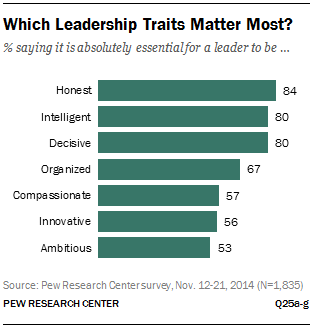
Who Has the Right Stuff to Lead - Men or Women? The public sees little distinction between men and women on several of these leadership traits. Large majorities say that when it comes to intelligence and innovation, men and women display those qualities equally. And solid majorities see no gender differences in ambition, honesty and decisiveness. While solid majorities of the public see no difference between men and women on decisiveness and ambition, among those who do draw a distinction on these traits, men have an edge over women. Some 27% of adults say that men are more decisive than women, while only 9% see women as more decisive than men. About six-in-ten (62%) say men and women are equally decisive. Similarly, while 21% of the public says men are more ambitious than women, half as many (9%) say women are more ambitious than men. (A 68% majority see no gender difference on this trait.)
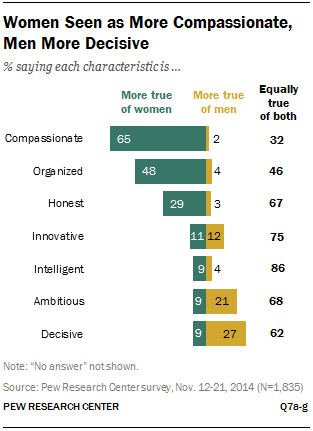
Women in Leadership Positions – Global Outlook According to a report by the European Commission (2012), in the European Union, as of beginning 2012, women constituted only 13.7% of board seats. Even more dissatisfactory, women constitute only 3.4% of chairs and presidents within the European Union. Other parts of the world see the same trends. Although the US sees a slightly better figure (15.7%), Australia and Canada both see female board representation of around 10%. India's boardrooms only constitute less than 5% women (European Commission, 2012). Moreover, in 2010, for the Asia-Pacific region, women comprise only 6.5% of the board members, whereas for the Middle East and NorthAfrica, this number is only 3.2% (Corporate Women Directors International, 2010). In Australia, female representation within government boards was 38.4% in 2012.
Figure II: Leadership Gender Gap around the World in 2015
• Top eraners
8.1%
12.6
• Board seats
14.5
• Executive officers
• Management
35%
Women in Labour Force
(Source: Catalyst Research 2013)
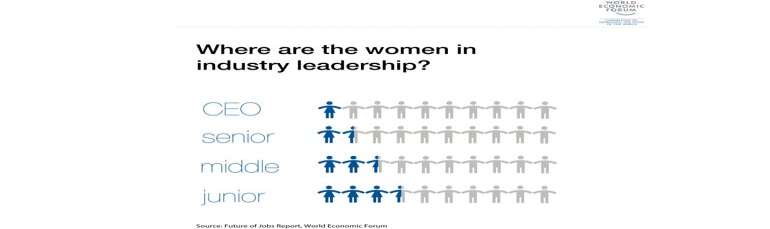
Should We Mind the Gap? Equal pay for equal work seems quite innocuous and rational assertion especially in 21st century. It is hard to believe that in 2016, we are still talking about the gender pay gap. And yet the fact remains that there is no country in the world where women earn the same as men.
One of the arguments used to explain and sometimes justify this stubborn gap is the idea of choice. Women simply choose to study less lucrative subjects, enter lowerpaying professions and stay towards the bottom rungs of the career ladder. While these choices might give them shorter working hours and greater flexibility, it also negatively affects their earnings. The latest data from the US Bureau of Labor Statistics does indeed show that women are under-represented in some of the highest-paying occupations.
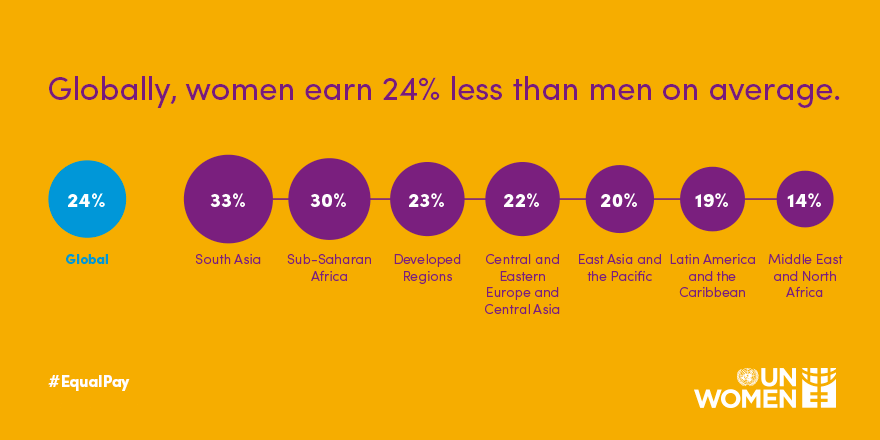
It is not that women engineers are getting paid less than men doing the same job: it is that a childcare worker is getting paid less than an engineer, or so the argument goes. If that is the case, the answer is simple: women should start moving into those careers that do pay well. Instead of becoming a social worker, become a software developer. But that's only part of the story. The fact is that even within those lucrative, male-dominated professions, the gender pay gap is still there. "There is a belief, which is just not true, that women are in bad occupations and if we just put them in better occupations, we would solve the gender gap problem," Claudia Goldin of Harvard University told the New York Times. As her research has shown, even when men and women do the same work, there's still a gender pay gap – particularly in higher-paying jobs.
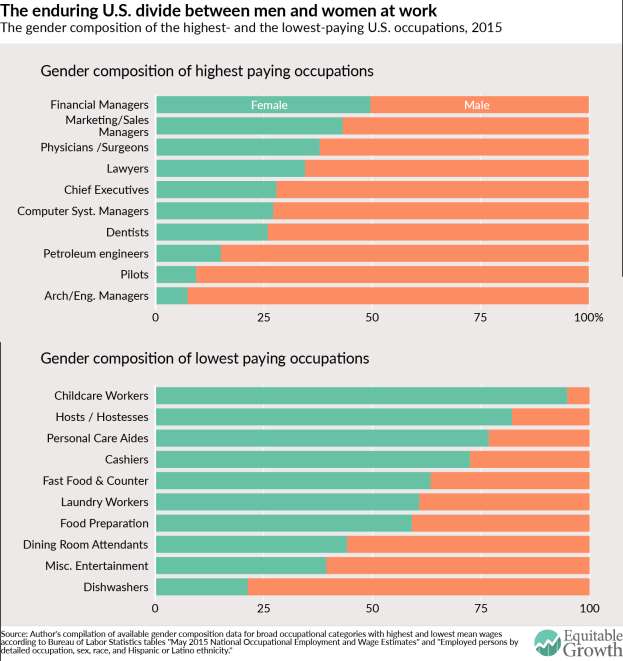
Is the Motherhood Penalty? Women, who return to work after having a baby, fall even further behind men in earning power, according to a new report. The study, by the UK-based Institute for Fiscal Studies, found that, on average, women in paid work receive about 18% less per hour than men. That pay gap increases once women become mothers. By the 12th year after their first child, the gap has increased to 33%. Further, the report also says that mothers miss out on opportunities for promotion to better-paid positions and do not accrue the same valuable experience as men. By 20 years after the birth of their first child, women have, on average, been in paid work for four years less than men and have spent nine years less in paid work of more than 20 hours per week.
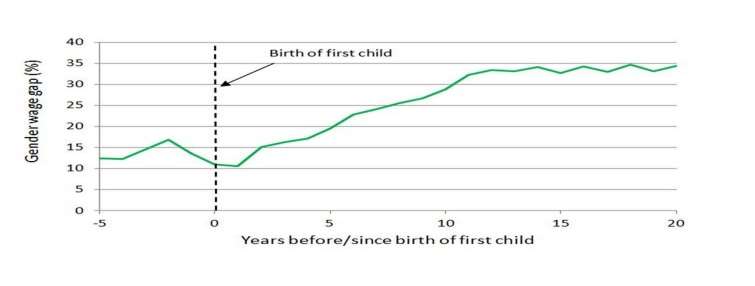
Women's Leadership in India According to study by Mckinsey reports only 5% of working women in India make it to senior leadership positions in the corporate sector/ compared to the global average of 20%. In India, women's strength in the labour force stands at 28% in the junior level, 14.9% at the middle and 9.32% at the senior level. India also ranks at the top in the dropout rate as well. Out of 323 total executive directorship positions generally considered to be the prerequisites to holding the CEO position on the Bombay Stock Exchange-100, just 8 (2.5%) are held by women.
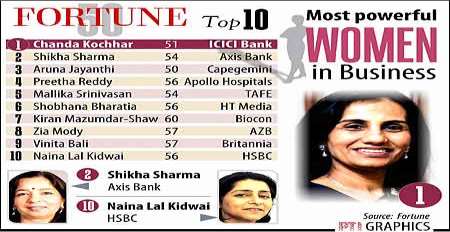
According to a study by Prime Database, approximately 60% of 1463 companies listed on NSE don't have even one woman director on their board; i.e. 886 companies were yet to appoint a woman director as on July 24, 2014. Of the companies which have since complied with the requirement of one director on the board, about 20 have been filled by appointing women belonging to the promoter or friend group. Among the companies that have filled the vacancies by naming women related to family are, for example, Reliance Industries Limited (Nina Ambani, wife of Mukesh Ambani, Chairman), Asian Paints Ltd. (Amrita Amar Vakil), Godfrey Phillips India Ltd (Bina Modi, wife of Chairman K. K. Modi), Kirloskar Oil Engines Ltd (Gauri Kirloskar, Chairman Atul Kirloskar's daughter), Raymond Ltd. (Nawaz Gautam Singhania, wife of Gautam Singhania). Further there are only 4% of the directors of publicly listed Indian companies are women. Men hold 8,640 boardroom positions and women 350 in the country's 1,470 listed firms. India has two companies in the fortune 500, Reliance Industries and Indian Oil, but only one is woman out of total of 30 directors. The scarcity of women in the boardroom is not unique to India - nearly one fifth of the world's 200 largest companies have no women directors.
Gender ratio skewed in Corporate Workforce HDFC Chairman Deepak Parekh today said some public listed entities are perceiving the Security and Exchange Board of India's mandate of having at least one woman director on the Board of a listed company as a "compliance exercise" and some listed companies are adopting only a 'tick the box' approach.

According to prime database, nearly 75 per cent of these appointments are nonindependent and family members defeating the very purpose of bringing in diversity in the corporate world. Many corporate have not even followed the Sebi requirement. On the other hand, even Sebi has not been able to do anything out of the 1,000s of companies that are listed. Parekh said it was not right for the corporate India to lament that there is not a large enough pool of talent to recruit women directors. He said there was a need to harness the country's human resources and ensure the corporate do not fritter away (these) opportunities and lose stand. Though many employers have recognized the benefits of diversity in workforce, the reality is the gender ratio still remains immensely skewed. Many women tend to drop off the corporate ladder for a variety of reasons, primarily due to family commitments or to pursue other skills. Unfortunately getting back on track post the work break is difficult and we need a mindset change here and taking a break must not be construed as detrimental to one's career," he said. Women are deliberately excluded from the leadership position and patriarchy is perpetuated and reinforced by the public institutions including state. For instance, recently the Maternity Benefit (Amendment) Bill 2016, passed by Rajya Sabha in August 2016, reinforces the already deeply entrenched social norm of child-rearing relieving being left exclusively to the mother, effectively reliving the father of responsibility. The maternity bill, indeed, has flavor that infer "men leave childcare to their wives and glorify motherhood." In other words, maternity leave has statutory backing and paternity leave doer no, has a threat to employment parity among the sexes. And discursively suggestive that family (looking after children) is sole territory of female.
Women Power in Sports Do you know that a total of 83 athletes, 60 men (72.3%) and 23 women (27.7%), competed in the 2012 Summer Olympics game at London. Women bagged 2 medals (33.3%) out of 6 medals won by India. India has sent the nation's largest ever delegation of a total 117, 63 men (53.8%) and 54 women (46.2%), in the 2016 Summer Olympics at Rio. Showering praise on Olympic medalists PV Sindhu and Sakshi Malik Prime Minister Modi Tuesday said these 'daughter' were the saving grace of India at the Rio Olympics. After girls' performance in Rio, people have started saying 'Beti Bachao, Beti Padhao and Beti Khilao'. So let's encourage our daughters to take up sport activities. The new generation of Indian sportswomen are also the grittiest of them all. Dipa Karmakar risked her life to perform the Produnova vault, widely known as one of the most dangerous feats in gymnastics; Sakshi Malik overcame deficits in the dying seconds of her bout, and Sindhu, minutes after a spell of losing 7 out of 9 points, won 11 consecutive points to reach the final. "They are severe risk takers, have a neversay-die determination and a seething killer instinct. These are not qualities we associate with Indians, and certainly not its women," The performances in sport clearly show that Indian women "wish to write their own futures". "More and more young girls want to break barriers and fulfil the same ambitions as men or their own ambitions and are less afraid and less cowed down by societal controls," she says. This is truly revolutionary.
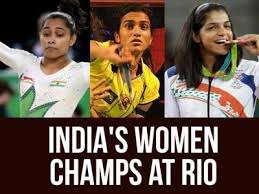
Paradoxically, a state infamous for its low sex ratio, kangaroo courts, women in veils and stark patriarchy is producing a large number of women athletes: 12 of the 20strong contingent from Haryana to Rio are women Women Leadership: Barriers Although women have the styles to thrive as senior leaders, yet they hardly succeed into higher positions. If it is not the ability that causes differences in leadership positions, other barriers must exist that are keeping women from advancement.
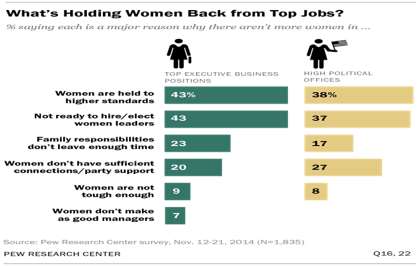
Authority and Negotiations According to McGinn and Bowles, women do not experience difficulties in adopting appropriate leadership styles; the problem resides in claiming authority. For instance, they found that men and women do not necessarily differ in their negotiations for salaries, but did differ in their negotiation of additional packages. Women enter a negotiation with lower expectations. One compelling explanation comes from the standard used to determine how much pay you deserve, where women are more likely to compare themselves to women, and men are likely to compare themselves to men. Evidence comes from social proof theory, where people look at those similar to themselves to help define an ambiguous situation. The other explanation is based upon the entitlement effect. When asked how much they would think they deserve, women report less for comparable work. McGinn and Bowles state that attitudes follow behaviour, thus if women stand up for their righteous entitlements, other women will use that as their standard.
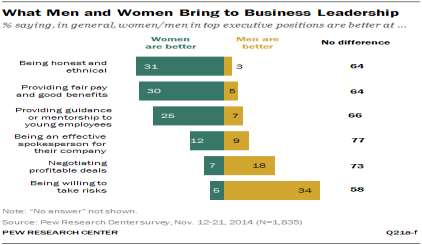
Family Responsibilities Four-in-ten Americans do not believe that women's responsibilities to family stand in the way of them becoming top business executives, but about a quarter (23%) say this is a major reason and an additional 35% say it is at least a minor reason that more women are not running large businesses. Women are somewhat more likely than men to see family responsibilities as a significant barrier for women hoping to reach the top levels of corporate leadership; 26% of women and 20% of men say this is a major reason that more women are not in top executive business positions.

When asked if it's better for a woman who wants to reach a top executive position in business to have children early on in her career, to wait until she is well established in her career to have children, or to not have children at all, Americans are divided: 40% say it is better to wait, and 36% say it is better to have children early on. About one-in-five (22%) say a woman with top business leadership aspirations is better off not having children. Men and women offer similar opinions about when women who want to reach a top executive position should have children, but there is a considerable generation gap on this matter. Gender Biases – Discrimination and Harassment Women leaders are likely to be viewed negatively when adopting masculine leadership characteristics. When women do remain feminine but perform a male role, they are perceived as too emotional and lack assertiveness. This means that women leaders face a compromise between being liked and perceived competence. Besides, they face plethora of discrimination and harassment at work place.
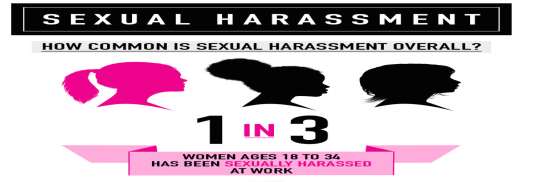
Role Models There are not enough good female role models, who are needed as an exhibit of successful and effective female leadership. Women tend to use communication and behaviour strategies that have worked for them in the past, whereas men will imitate strategies used by their seniors. Therefore role modelling is not instinctive in women. Moreover, women will try more modest behaviours in order to avoid disapproval, whereas men signal their conformity to company's norms, albeit feeling unnatural.
Scrutiny The last, less obvious, challenge is that of women leaders' heightened visibility due to the scarcity of women leaders at more senior positions. When women become one of the few that have reached the top, they will be watched closer, and subjected to greater scrutiny resulting in risk aversion.

Further, as women climb the ladder, the responsibilities will become more demanding and they may be faced with lesser flexibility geographically. Thus, McKinsey (2007) argues that the needs for senior management are intolerant to the career paths and needs of women.
Conclusion Consider comments made by President Richard Nixon, when explaining why he would not appoint a woman to the U.S. Supreme Court, Nixon said, "I don't think a woman should be in any government job whatsoever…mainly because they are erratic and emotional. Men are erratic and emotional, too, but the point is a woman is more likely to be." In a culture where such opinions were widely held, women had virtually no chance of attaining influential leadership roles. There is considerable evidence that female leaders have a somewhat more participative, androgynous, and transformational leadership style than their male counterparts. There are also multiple indications that women, compared with men, enact their leader roles with a view to producing outcomes that can be described as more compassionate, benevolent, universalistic, and ethical, thus promoting the public good. Do these generalizations about sex-related aspects of leadership challenge conventional wisdom? The challenge score is mixed. Early meta-analytic findings challenged prominent researchers' denial of any sex differences in leadership style, but confirmed, albeit quite mildly, the claims of trade book writers. More generally, meta-analytic findings on leadership style also confirm the conventional wisdom inherent in gender stereotypes and thus should not surprise the general public.
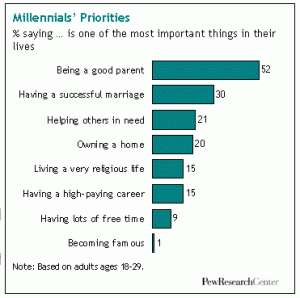
References Books/Articles Acker, J. (1992). "Gendering organizational theory". In A. Mills & P. Tancred (Eds.), Gender, work and organization. London: Sage. Adams, R. B., & Ferreira, D. (2009). "Women in the boardroom and their impact on governance and performance." Journal of Financial Economics, 94, 291-309. Avolio, B. J. (2010). Full range leadership development. Thousand Oaks, CA: Sage Belenky, M. F. (1997). Women's ways of knowing: the development of self, voice, and mind. New York: Basic Books. Bem, S. L. (1993). The lenses of gender. New Haven: Yale University Press. Beutel, A. M., & Marini, M. M. (1995). "Gender and values." American Sociological
Review, 60, 436-448. Brescoll, V. L. (2011). "Who takes the floor and why? Gender, power, and volubility in
organizations." Administrative Science Quarterly, 56, 622-641. Calas, M. B., & Smircich, L. (1996). From 'the woman's point of view: Feminist approaches to organization studies. In S. Clegg, C. Hardy, & W.R. Nord (Eds.), Handbook of Organization Studies. London: Sage. Condit, D. M., & Hutchinson, J. R., (1997). "Women in public administration: extending the metaphor of the emperor's new clothes." American Review of Public Administration, 27(2), 181-198. Connell, R. W. (1994). "The state, gender and sexual politics: Theory and appraisal."
In H. L. Radtke & H. J. Stam (Eds.), Power/gender: Social relations in theory and practice. Thousand Oaks, CA: Sage Publications. Denhardt, R. B. & Perkins, J. (1976). "The coming death of administrative man."
Public Administration Review, 379-384. Dolan, J. (2004). "Gender equity: Illusion or reality for women in the federal executive service?" Public Administration Review, 64(3), 299-308. Duerst-Lahti, G. & Kelly, R. M. (1995). Gender power, leadership, and governance.
Ann Arbor: The University of Michigan Press. Eagly, A. H., & Carli, L. L. (2007). Through the labyrinth: The truth about how women become leaders. Cambridge: Harvard Business Review Press. Eagly, A. H., & Johannesen-Schmidt, M. (2001). "The Leadership Styles of Women and Men." Journal of Social Issues. 57(4), 781-97. Gilligan, C. (1993). In a different voice: psychological theory and women's development. Cambridge: Harvard University Press Helgesen, S. (1995). The female advantage : women's ways of leadership. New York: Doubleday Currency. Højgaard, L. (2002). "Tracing Differentiation in Gendered Leadership: An Analysis of Differences in Gender Composition in Top Management in Business." Politics and the Civil Service" Gender, Work & Organisation, 9(1), 15-38. Hutchinson, J. R. (2001). "Multi-gendering PA: Anti-administration, anti-blues."
Administrative Theory & Praxis, 23(4), 589-604. Kanter, R. M. (1977). Some effects of proportions on group life: Skewed sex ratios and responses to token women. American Journal of Sociology, 82, 965-990 Moran, B. B. (1992). "Gender differences in leadership." Library trends, 40(3), 475-
Morley, Louise & Crossouard, Barbara. (2016). "Gender in the neoliberalised global academy: the affective economy of women and leadership in South Asia." British Journal of Sociology of Education. 37(1), 149-68. Olsson, S. (2000). "Acknowledging the female archetype: Women managers' narratives of gender." Women in Management Review, 15(5/6), 296-302. Powell, G. N. (1990). One More Time: Do Female and Male Manager Differ. The Executive, August, 68-75 Rosener, J. B. (1990). "Ways women lead." Harvard Business Review, 68(6), 119–125. Sargent. A. G. (1981). The androgynous manager. New York: Amacom. Shlain, L. (1998). The alphabet versus the goddess: The conflict between word and image. New York: Penguin Putnam. Stivers, C (2002). Gender Images in Public Administration (2nd ed.). Thousand Oaks,
CA: Sage Publications.
Paper No. : Women and Governance ; Issues and Challenges
Module : Mainstreaming Gender in Governance
Development Team
Prof. Sumita Parmar Allahabad University, Allahabad
Principal Investigator
Prof. Chandrakala Padia Maharaja Ganga Singh Univesity, Bikaner
Paper Coordinator
Dr. Bulbul Dhar-James, Former Director, SNCWS, JMI Mr. Vijender Singh Beniwal, ICSSR Fellow, New Delhi
Content Writer
Prof. Chandrakala Padia Maharaja Ganga Singh Univesity, Bikaner
Content Reviewer
WOMEN AND GOVERNANCE: ISSUES AND CHALLENGES
Women's
Mainstreaming Gender in Governance, Bulbul Dhar-James
Studies
Description of Module
Subject Name Women's Studies
Paper Name WOMEN AND GOVERNANCE: ISSUES AND CHALLENGES
Module Name/Title
MAINSTREAMING GENDER IN GOVERNANCE
Module Id
Pre-requisites The reader is expected to have the knowledge of key debates in Women Gender and Work, discourse on Good Governance, the UN and International Financial Institutions - the content of the earlier modules in this paper
Objectives To make the reader understand the concept of mainstreaming gender in the macro perspective of governance and its significance in policy making and implementation.
Keywords Gender Roles, Gender Equality and Inequality, Gender impact assessment, International Initiatives and Conventions towards gender justice.
Introduction
With some 5,000 representatives from 192 countries, coming together along with about 30,000 women and men representing 3,000 non-governmental organizations, gathered in Beijing in September, 1992, for the Fourth World Conference on Women, and adopting a far-reaching "Platform for Action" - that the concern for "mainstreaming" gender issues across the policy process was iterated with such a resounding aplomb. Although the idea of mainstreaming gender issues across the policy process had antecedents in the previous two decades, the official recognition and endorsement of mainstreaming as a formal goal of all UN member states has provided a global mandate for change, and an outline against which to judge both national and international policies. But with the Beijing "Platform for Action" his was radicalized with gender issues becoming a core consideration not simply for specific
WOMEN AND GOVERNANCE: ISSUES AND CHALLENGES
Women's
Mainstreaming Gender in Governance, Bulbul Dhar-James
Studies departments or ministries dealing with women, but rather for all state and non state actors across a range of issue-areas and at all stages in the policy process from conception and legislation to implementation and evaluation. The 'rapid and nearly universal acceptance of gender mainstreaming seems at first glance to approximate the sociological concept of "institutional isomorphism," whereby a norm, once adopted in a particular institutional setting, diffuses quickly to a wide range of other institutions whose members accept the legitimacy of that norm.' (ADB Group, July 2009)
Gender: There are still uncertainties concerning its meaning and application but broadly Gender refers to the array of socially constructed roles and relationships, personality traits, attitudes, behaviours, values, relative power and influence that society ascribes to the two sexes on a differential basis. Gender roles are determined by the social, cultural and economic organisation of a society as well as by dominant religious, moral and legal conceptions. Most incorrectly it is used as synonymous with woman / women. Margreat Mead's anthropological study concluded that gendered behaviour was determined by custom rather than nature. Academics have however used the term to refer to differences between men and women leading to different roles for each sex and to differentials in power and influence. It signifies cultural hierarchy where men are more valued than women. Another facet of looking at these differences as constructed or artificial most eloquently manifest in Simone de Beouvoir statement in the Second Sex that " one is not born, one is made a women". Gender as a fabrication, inauthentic identity although it was said to be a natural condition. Further in a tussle between gender versus sex, Judith Butler believes that both are culturally determined and defined.
Gender and Sex Dichotomy:: Gender roles are individually learned. Whereas biological sex is determined by genetic and anatomical characteristics and might also change, gender is an acquired identity that is learned, changes over time, and varies widely within and across cultures. Gender roles are also influenced by social and family status, ethnic and religious belonging. Gender is relational and refers not simply to either women or men, but to the social relationships between them. Apropos transgender, used as an umbrella term for persons whose gender identity, gender expression or behavior does not conform to that typically associated with the sex to which they were assigned at birth also needs to be considered. Thus Gender roles are not neutral, but connected with different options, rights and decision-making possibilities. In most cases these tend to be in favour of men.
WOMEN AND GOVERNANCE: ISSUES AND CHALLENGES
Women's
Mainstreaming Gender in Governance, Bulbul Dhar-James
Studies
Approaches to Gender Issues
There could be three ideal-typical approaches to gender issues (Rees, 1998):
Equality of Access :
Equality of Access or Equal treatment: 'implies that no individual should have fewer human rights or opportunities than any other,' and the application of such a policy involves the creation and enforcement of formally equal rights for men and women, such as the right to equal pay for equal work amongst others. But Rees points out that such an equal treatment approach fails to address the fundamental causes of sexual inequality in the informal "gender contracts" among women and men. In contrast positive action, is highlighted which alters the focus from equality of access (Equal treatment ) to creating conditions more likely to result in equality of outcome" is an essential element in any equal opportunities policy but is however flawed in focusing exclusively on the formal rights of women as workers.
Equality of Action :
The Positive action involves the adoption of specific actions on behalf of women, in order to overcome their unequal starting positions in a male-dominated or patriarchal society. At the extreme, positive action may also take the form of positive discrimination, which seeks to increase the participation of women (or other under-represented groups) through the use of affirmative-action preferences or quotas. Positive discrimination finds many supporters among women's rights activists or equal representation of women and men, among candidates for political office–but throughout most of the world it remains a controversial and divisive approach, raising questions about fairness and the individual rights of men who are thus discriminated against.
Mainstreaming
'Gender mainstreaming is the (re)organization, improvement, development and evaluation of policy processes, so that a gender equality perspective is incorporated in all policies at all levels and at all stages, by the actors normally involved in policy-making.' In this sense, gender mainstreaming is a radical input bringing a gender dimension into international governance and is particularly challenging a concept, that introduces the espousal of a gender perspective by all the vital actors in the policy process, most of whom may have little experience or interest in gender issues!
WOMEN AND GOVERNANCE: ISSUES AND CHALLENGES
Women's
Mainstreaming Gender in Governance, Bulbul Dhar-James
Studies
Understanding the terminology of Gender Mainstreaming: "Mainstreaming gender perspective is the process of assessing the implications for women and men of any planned action, including legislation, policies or programs, in all areas and at all levels. It is a strategy for making women's as well as men's concerns and experiences an integral dimension of the design, implementation, monitoring and evaluation of policies and programs in all political, economic and societal spheres so that women and men benefit equally and inequality is not perpetuated. The ultimate goal is to achieve gender equality. But it is a critical strategy not only in the pursuit of gender equality – a development goal in its own right – but also in the achievement of other development goals, including economic ones. Indeed, overlooking relevant gender factors in macroeconomic policies and institutions can undermine the successful outcome of those very same policies and institutions". Central in mainstreaming a gender perspective is achieving :
"Mainstreaming" is a process rather than a goal that consists in bringing what can be seen as marginal into the core business and main decision making process of an organization. UNIFEM's experience in mainstreaming, Gender awareness Gender sensitivity Gender equality Development goals, including economic ones
Gender awareness is the ability to view society from the perspective of gender roles and how this has affected women's needs in comparison to the needs of men. Gender sensitivity is translating this awareness into action in the design of development policies, programs and budgets.
Efforts to integrate gender concerns into existing institutions of the mainstream have little value for their own sake. A gender perspective is being mainstreamed to achieve gender equality and improve the relevance and effectiveness of development agendas as a whole, for the benefit of all women and men.
WOMEN AND GOVERNANCE: ISSUES AND CHALLENGES
Women's
Mainstreaming Gender in Governance, Bulbul Dhar-James
Studies
GENDER EQUALITY does not mean that women and men will become the same, but rather implies equal treatment of women and men in laws and equal access to resources and services within families, communities and society at large. To achieve this goal, a two pronged approach of GM is often required: 1) systematically analyzing and addressing in all initiatives the specific needs of both women and men; and 2) targeted interventions to enable women and men to participate in – and benefit equally from – development efforts. A full understanding of gender roles within a society, and consideration of women's and men's specific interests, needs, and priorities is necessary to achieve and sustain the goals of any project. Gender equality is not solely a women's issue; in fact, it seeks to tailor activities to the beneficiaries of the project from both sexes. Gender equality should serve to the advantage of both men and women and cannot be achieved without the full engagement of both.[ UNDP, 2007, Gender Mainstreaming: Key Driver of Development in Environment & Energy – Conceptual Overview, New York
The Origins of Gender Mainstreaming:
The origins of gender mainstreaming predate the Beijing conference by at least a decade, and lie in the efforts of women activists and entrepreneurs to increase the visibility of women and the importance of gender in the policies, programs and projects of international development agencies. Prior to the 1970s, the issue of gender had played at best a marginal role in international governance, limited largely to a little-invoked reference in the 1948 UN Declaration, which reaffirmed the equal rights of women and men, and an occasional reference to women in the context of the UN's support for economic and social development.
Equality of rights for women is a basic principle of the United Nations and by the terms of the Charter, the first international instrument to refer specifically to human rights and to the equal rights of men and women, all members of the United Nations are legally bound to strive towards the full realization of all human rights and fundamental freedoms. The status of human rights, including the goal of equality between women and men, is thereby elevated: a matter of ethics becomes a contractual obligation of all Governments and of the UN.
The International Bill of Human Rights, combined with related human rights treaties, places a comprehensive set of rights to which all persons, including women, are entitled. However, the fact of women's humanity proved insufficient to guarantee them the enjoyment of their internationally agreed rights. Since its establishment, the Commission
WOMEN AND GOVERNANCE: ISSUES AND CHALLENGES
Women's
Mainstreaming Gender in Governance, Bulbul Dhar-James
Studies on the Status of Women (CSW) has sought to define and elaborate the general guarantees of non-discrimination in these instruments from a gender perspective. The work of CSW has resulted in a number of important declarations and conventions that protect and promote the human rights of women. Between 1949 and 1959, the Commission elaborated the Convention on the Political Rights of Women, adopted by the General Assembly on 20 December 1952, the Convention on the Nationality of Married Women, adopted by the Assembly on 29 January 1957, the Convention on Consent to Marriage, Minimum Age for Marriage and Registration of Marriages adopted on 7 November 1962, and the Recommendation on Consent to Marriage, Minimum Age for Marriage and Registration of Marriages adopted on 1 November 1965. Each of these treaties protected and promoted the rights of women in areas in which the Commission considered such rights to be particularly vulnerable. But it was believed that, except in those areas, women's rights were best protected and promoted by the general human rights treaties. But instruments and, the approach they reflected was fragmentary, as they failed to deal with discrimination against women in a comprehensive way. In addition, there was concern that the general human rights regime was not, in fact, working as well as it might to protect and promote the rights of women.
The General Assembly, on 5 December 1963, adopted its resolution 1921 (XVIII), in which it requested the Economic and Social Council to invite the CSW to prepare a draft declaration that would combine in a single instrument international standards articulating the equal rights of men and women. Drafting of the declaration, by a committee selected from within the CSW, began in 1965, with the Declaration on the Elimination of Discrimination against Women ultimately being adopted by the GA on 7 November 1967. Article 6, concerning equality in marriage and the family, and article 10, relating to employment, proved to be particularly controversial, as did the question of whether the Declaration should call for the abolition of the customs and laws perpetuating discrimination or for their modification or change.
The 1960s and 70s saw the emergence, in many parts of the world, of a new consciousness of the patterns of discrimination against women and a rise in the number of organizations committed to combating the effect of such discrimination. The adverse impact of some development policies on women also became apparent. In 1974, at its twenty-fifth session and in the light of the report of this working group, the Commission decided, in principle, to prepare a single, comprehensive and internationally binding instrument to eliminate discrimination against women. This instrument was to be prepared without prejudice to any future recommendations that might be made by the United Nations or its specialized agencies with respect to the preparation of legal instruments to eliminate discrimination in specific fields.
WOMEN AND GOVERNANCE: ISSUES AND CHALLENGES
Women's
Mainstreaming Gender in Governance, Bulbul Dhar-James
Studies
CEDAW ;Convention on the Elimination of all Forms of Discrimination Against Women
CEDAW (1979) provides the basis for realizing equality between women and men through affirming & ensuring
Party through Signature and ratification
Party through accession or succession Unrecognized state, abiding by treaty
women's equal access to,
and equal opportunities in, political and public life -- including the right to vote and to stand for election -- as well as education, health and employment. States parties agree to take
Only signed Non-signatory
Signed 18 December 1979
Location New York City
Effective 3 September 1981
Condition 20 ratifications all appropriate measures, including legislation and temporary special measures, so that women can enjoy all their human rights and fundamental freedoms. women's rights to acquire, Signatories 99
Parties 189 (Complete List)
Depositary Secretary-General of the United Nations
Languages Arabic, Chinese, English, French, Russian and Spanish change or retain their nationality and the nationality of their children. States parties also agree to take appropriate measures against all forms of traffic in Convention on the Elimination of All Forms of Discrimination Against Women at Wikisource women and exploitation of women.
Consisting of a preamble and 30 articles, it defines what constitutes discrimination against women and sets up an agenda for national action to end such discrimination
The Convention is the only human rights treaty which affirms the reproductive rights of women and targets culture and tradition as influential forces shaping gender roles and family relations.
WOMEN AND GOVERNANCE: ISSUES AND CHALLENGES
Women's
Mainstreaming Gender in Governance, Bulbul Dhar-James
Studies
Countries that have ratified or acceded to the Convention are legally bound to put its provisions into practice. They are also committed to submit national reports, at least every four years, on measures they have taken to comply with their treaty obligations.
It was the 1984 creation of UNIFEM, the UN agency for women, which was given an explicit mandate to promote the mainstreaming of gender issues across the full range of UN activities, that initial instances of mainstreaming language can be found.
Beijing Platform for Action (1995) : flagged 12 key areas where urgent action was needed to ensure greater equality and opportunities for women and men, girls and boys. It also laid out 12 Critical Areas and concrete ways for countries to bring about change.

(1) Women and environment (2) Women in decision making (3) Girl Child (4) Women and Economy (5) Human Rights of Women (6) Education and Training of Women (7) Violence against Women (8) Women and Poverty (9) Institutional Mechanism (10) Women and Health (11) Women & armed conflict (12) Women and media
WOMEN AND GOVERNANCE: ISSUES AND CHALLENGES
Women's
Mainstreaming Gender in Governance, Bulbul Dhar-James
Studies
Major progress was reached in determining the strategic objectives for gender equality: women's rights were confirmed as human rights, women's right to sexual self-determination was recognised for the first time and violence against women and girls clearly condemned, the principle of equality between women and men as opposed to the concept of equity was enforced, governments gave an undertaking to register and assess unpaid work so as to elucidate the economic equity of the performance of women and men, GENDER MAINSTREAMING WAS ADOPTED AS AN OVERARCHING PRINCIPLE.
Apart from CEDAW, and the Beijing Platform for Action the state and non state actors and stakeholders can refer to the following documents: Millennium Development Declaration (2000) UN-Resolution 1325 on Women, Peace and Security (2000) Solemn Declaration on Gender Equality (2004) BMZ Concept for the Promotion of Equal Participation by Women and Men in Development Process (2001/05), Followed by BMZ Genderaktionsplan (2009) UN-Resolution 1820 on Sexual Violence against Civilians in Conflict (2008) Accra Agenda for Action (2008) The term "mainstreaming" emerged in the early 1980s when in the midst of the United Nations Decade for Women, the international women's movement was concerned that the women specific programme strategies had not achieved significant results. Women units and national machineries established during this period had too often been understaffed and marginalized from real decision-making and policy formulation within UN entities and governments.
The profile of women in governance was, of course, substantially increased by the UN decision to declare 1975 the International Women's Year, and the declaration of the following decade (1976-1985) as the United Nations Decade for Women, which witnessed the rise of an international women's movement, most notably in the area of economic development even though officially the focus was threefold - peace, equality, and development. The Decade began in 1975 with the First World Conference on Women in Mexico City, and then Stockholm (1980), followed by the Third World Women's Conference in Nairobi, Kenya and the parallel NGO forum, giving gender mainstreaming advocates the first foundations of a policy platform from which to pressure government agencies and states.
WOMEN AND GOVERNANCE: ISSUES AND CHALLENGES
Women's
Mainstreaming Gender in Governance, Bulbul Dhar-James
Studies
Women in Development (WID) to Gender and Development (GAD): United Nations Decade for Women, (1976-1985) which witnessed the rise of an international women's movement, most notably in the area of economic development ( even though officially the focus was threefold - peace, equality, and development) and specifically Women in Development (WID).
This was movement forward from the precedingthe 1950s and 1960s, gender-blind development course when the national development agencies in countries like Netherlands and the Scandinavian countries, USA, Canada amongst others focused on WID. But in retrospect one can see that the WID programs frequently implied in practical terms, the creation of narrowly targeted projects focused primarily on Maternal and childhealth to provide specific, targeted actions aimed at women in developing countries.
Table 1: Developing Countries' Policy approaches
& Women Origin
Growth/Economic development model Original WID approach
UN Decade for Women
Redistribution with
Growth and Basic Needs Stabilization and SAP
Women's Eco
Contribution to development Associated with Equity Contemporary MDG's and the current
SDGs approach to Gender & development
The International development agencies like the UNDP and the World Bank followed suit. Thus the stress remained women's 'reproductive' role. Women continue to bear a disproportionate share of the domestic workload and that this uneven division of labor in the home is implicated in divisions of labor in the paid work force (primarily taking the form of gendered segregation). The productive activities performed by women got sidetracked and "left the vast majority of "mainstream" projects untouched".
Scholars point to the creation of a "WID ghetto" by the end of the decade (Jahan 1995; Reanda 1999) and in theoretical terms, this change was articulated in terms of a shift from WID (Women in Development) to GAD (Gender and Development). "While WID identifies women as a special, or separate interest group, GAD identifies gender as an integral part of a development strategy. Under GAD the situation of women is no longer analyzed independently of, but rather in relation to, that of men" (World Bank 1998).
WOMEN AND GOVERNANCE: ISSUES AND CHALLENGES
Women's
Mainstreaming Gender in Governance, Bulbul Dhar-James
Studies
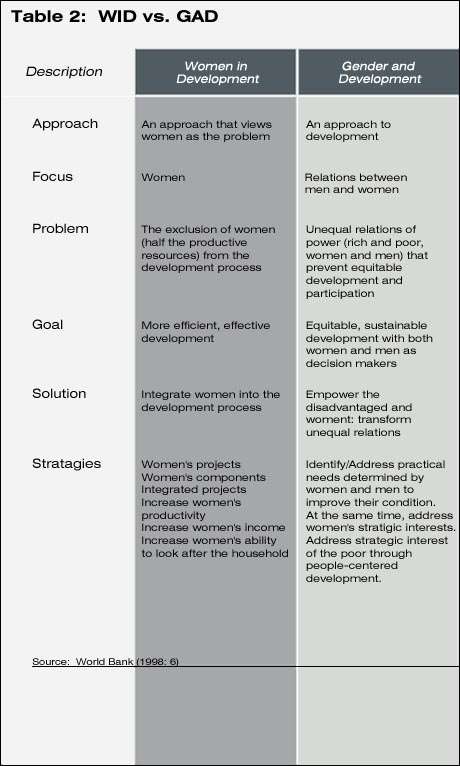
In operational terms, the shift manifested itself in the transition from relatively isolated WID to mainstreaming approaches and language which sought to diffuse gender analysis and gender procedures. A clear instance was the UNIFEM (1984), the UN agency for women, which was given an explicit mandate to promote the mainstreaming of gender issues across the full range of UN activities.
WOMEN AND GOVERNANCE: ISSUES AND CHALLENGES
Women's
Mainstreaming Gender in Governance, Bulbul Dhar-James
Studies
The Nairobi Forward Looking Strategies - UN report of the World Conference to review and appraise the achievements of the United Nations decade for women: Equality, Development And Peace, Nairobi, 15-26 July 1985 (United Nations, New York, 1986 ) unambiguously called for mainstreaming a decade prior to the Beijing Platform.
It is vital that the link between the advancement of women and socio-economic and political development be emphasized for the effective mobilization of resources for women. (Paragraph 119).
Nairobi Forward Looking Strategies, (paragraph 114) explicitly calls for mainstreaming viz : " Effective participation of women in development should be integrated in the formulation and implementation of mainstream programs and projects, and should not be confined solely to statements of intent within plans or to small-scale, transitory projects relating to women" "Women should be an integral part of the process of defining the objectives and modes of development, as well as of developing strategies and measures for their implementation. The need for women to participate fully in political processes and to have an equal share of power in guiding development efforts and in benefiting from them should be recognized. Organizational and other means of enabling women to bring their interests and preferences into the evaluation and choice of alternative development objectives and strategies should be identified and supported. This would include special measures designed to enhance women's autonomy, bringing women into the mainstream of the development process on an equal basis with men, or other measures designed to integrate women fully in the total development effort." (Paragraph 111 ) This idea of socio-economic and political development not being possible without ' advancement of women ' was taken up by women's advocates in NGOs, in international development agencies, and at the various UN "social summits" held during the first half of the decade. It was over the course of the decade between Nairobi and Beijing, that a definitive shift from WID to GAD was attempted with an additional momentum by the official endorsement of mainstreaming at the Beijing Conference in September of 1995. This has since the MDGs (2000) and now the SDG's incorporated the environment as a significant dimension.
WOMEN AND GOVERNANCE: ISSUES AND CHALLENGES
Women's
Mainstreaming Gender in Governance, Bulbul Dhar-James
Studies
International development community ; A Policy Frame of Gender mainstreaming: From a Political Economy perspective, what emerges is the logic that people, states and organizations can be placed along a continuum in terms of their support for either a neoliberal frame ( World Bank and other International Financial Organizations) emphasizing the efficiency of market mechanisms, or a more interventionist frame, (UN
Organizations like the UNDP, UNIFEM amongst others), which accepts the intervention of states and international organizations in the marketplace in pursuit of social goals— including the goal of sexual equality. (Hafner-Burton & Pollack; 2000).
However, if gender mainstreaming is an extraordinarily promising principle, it is also an extraordinarily demanding one, which requires international organizations and state governments to alter their policy-making procedures in fundamental ways.
Gender mainstreaming, is a potentially revolutionary concept, which promises to change the way in which "mainstream" policies are formulated, decided upon, implemented and evaluated, and which promises to put all the policy tools of states and international organizations at the service of gender.
A mixture of political opportunities, mobilizing structures, and strategic framing explains the rise of social movements and their impact on both domestic and international governance. These are "consistent—but not necessarily formal or permanent—dimensions of the political environment that provide incentives for collective action by affecting people's expectations for success or failure" and often begin with a discussion of political opportunities. (Tarrow,1998). The political opportunity structure is distinguished by Kitschelt (1986), as two aspects of input structures, which determine the openness of a political system to social movements seeking change; and output structures, which determine the capacity of a given state to implement its own policies.
With change of governments, Political opportunities, may change over time as new organizations are formed, and new access points and elite allies create "windows of opportunity" for social movements. In the case of the international women's movement,
WOMEN AND GOVERNANCE: ISSUES AND CHALLENGES
Women's
Mainstreaming Gender in Governance, Bulbul Dhar-James
Studies the turning point was undoubtedly the declaration of the UN Decade for Women (1976-
1985), and the convocation of a series of increasingly large and ambitious World
Conferences on Women in Mexico City (1975), Copenhagen (1980), Nairobi (1985), Beijing (1995), and New York (2000). These conferences, and the parallel NGO forums that have become a staple of all major UN conferences, offered women's groups from both North and South the opportunity to lobby governments for concrete international policies on behalf of women, as well as the chance to form transnational networks across borders, while the
creation of new UN bodies such as UNIFEM and the UN Division on the Advancement of Women (UNDAW) provided new elite allies for women's NGOs.
As Keck and Sikkink (1998) point out, the various UN conferences have allowed women's
NGOs to meet regularly, exchange information, and adopt a common agenda to overcome the North-South quarrels that had created severe divisions at the Mexico City and Copenhagen conferences. By the time of the Beijing Conference in 1995, the international women's movement had grown to include thousands of NGOs from the developed and developing world, with support from sympathetic governments and international organizations, and increasingly sophisticated communications networks taking advantage of the internet and other advances in communications technology. NGO's however, are not the only members of the international women's movement, nor the only advocates of gender mainstreaming. In the international arena, for example Keck and Sikkink (1998) have suggested that women's groups successfully re-framed the issue of violence against women in terms of the broader, existing frame of human rights, thereby making it possible for the UN system to address an issue previously defined as "private" or "domestic."
Challenges in implementation of gender mainstreaming
The central problem in gender mainstreaming is that of operationalization and measurement. (Hafner-Burton Emilie and Mark A. Pollack; 2000).Generally
Development organizations tend to consider any program as gender-related that mentions women or gender. It is debatable whether these programs are actually guided by a gender perspective, contain specific gender-related projects, or have a positive impact "on the
WOMEN AND GOVERNANCE: ISSUES AND CHALLENGES
Women's
Mainstreaming Gender in Governance, Bulbul Dhar-James
Studies ground." To circumvent this, studies focus on internal processes for the diffusion and mainstreaming of gender issues, on the assumption that such processes will, eventually, manifest themselves in terms of policy outputs.
The problems of measurement are amplified, finally, by the fundamental distinction in the literature between: Integrationist : essentially introduces a gender perspective into existing policy
processes, but does not challenge existing policy paradigms.
Agenda-setting versions of the concept is more radical and involves a fundamental rethinking, not simply of the means or procedures of policymaking, but of the ends or goals of policy from a gender perspective. In this approach, "Women not only become part of the mainstreaming, they also reorient the nature of the mainstream"
Ceteris paribus, each of the following tools amongst others should be engaged to streamline the policy process and ensure that gender issues are incorporated into the planning of policies (not simply added as an afterthought).
Collection of gender-disaggregated statistics and other indicators. The identification of gender inequality–the first phase in the process of creating policies and programs to mainstream gender–requires the reliable and replicable collection of sex-disaggregated data. Without separate data divided by sex for all indicators, it is impossible to comparatively assess the status of important variables that may shape inequalities between men and women's living conditions, such as differences in education, access to health care, income, or the division of labor. Unfortunately, pertinent data are often not available by sex breakdown because gender has rarely been considered an important indicator for analysis during the data collection stage or because some aspects of gender inequality are difficult to quantitatively measure. Such measurement is important in both the recognition of gender inequalities, which form the basis of an organization's gender mainstreaming projects, and with respect to implementation, where sex-disaggregated data is a crucial component to the evaluation of gender mainstreaming progress.
WOMEN AND GOVERNANCE: ISSUES AND CHALLENGES
Women's
Mainstreaming Gender in Governance, Bulbul Dhar-James
Studies
Gender Training of personnel is an essential component before an organization can actualize a gender mainstreaming mandate, all personnel must not only understand and accept the importance of gender equality as an ultimate goal, but must also have the necessary skills with which to create, implement, and evaluate gender mainstreaming programs.
Gender impact assessment and gender-proofing - allows for the screening of a given policy proposal, in order to detect and assess its differential impact or effects on women and
men, so that these imbalances can be redressed before the proposal is endorsed. With its roots in the environmental sectors it draws a very accurate picture of the effects of a given policy and is a relatively less detailed review of policy proposals to identify unintended sexist language or differential effects of policy on women and men. The drawback of course is the fact that they constitute an essentially reactive process, in which gender is taken into account before implementation, but after the conceptualization and planning of policy.
Checklists, manuals, and handbooks are additional, commonly used tools besides guidelines, terms of reference, manuals, and handbooks–may provide additional, and more detailed, information instructing staff on ways to integrate a gender perspective into their work.
Monitoring and evaluation is necessary to ensure organizational and governmental compliance and to assess the effectiveness of a given policy or method.
Conclusion:
Despite the initiatives undertaken, more needs to be done to mainstream gender issues in good governance initiatives in a more systematic way. The link between gender and good governance is significant. Concentration on the following (Gender And Development Group, The World Bank, April
2006) amongst other areas requires special attention: Ensuring gender sensitivity in public expenditures. Public financial management policies, e.g., public expenditure reviews (PERs), can be effective instruments to monitor the use of
WOMEN AND GOVERNANCE: ISSUES AND CHALLENGES
Women's
Mainstreaming Gender in Governance, Bulbul Dhar-James
Studies public funds and link them to performance outcomes, including gender-specific ones.
However, more quantitative and qualitative studies of sexdisaggregated benefit incidence are needed. Such tools can assess the gender impacts of public spending and link findings to specific policy actions.
Promoting gender equality in citizenship rights. Citizenship, constitutional, and other rights determine the ways in which women and men participate as citizens and access and
utilize the potential resources and services necessary for the well-being of families and societies. Significant untapped potential exists to study how gender inequalities in citizenship affect access to rights and resources, and countries' growth and poverty reduction prospects.
Creating an enabling governance environment to strengthen women's voices. The Bank's governance agenda is increasingly emphasizing effective and transparent political processes to ensure effective participation, representative systems of government and the effective delivery of services, especially at the local level. This creates a need to better understand the link between gender issues and the politics of reform. Special attention needs to be placed on reviewing policy options to enhance the ability of national, sub-regional, district and municipal level policy and administrative bodies to effectively represent and give voice to women's and men's different priorities.
A central element of good governance is the responsiveness of policies and public institutions to the needs of all citizens. Policies and institutions must represent the interests of trans people, women and men and promote equal access to resources, rights, and voice.This module sought to explain both the origins of gender mainstreaming as a `policy frame' in Domestic and International
Relations, as well as the capricious realization of mainstreaming over time and across various organizations and levels of government. Even though mainstreaming has been endorsed almost universally, the rhetorical recognition of mainstreaming obscures considerable diversity and variation in both the timing and the nature of mainstreaming. that can be explained in terms of the categories of political opportunity, mobilizing structures, social movements and strategic framing.
WOMEN AND GOVERNANCE: ISSUES AND CHALLENGES
Women's
Mainstreaming Gender in Governance, Bulbul Dhar-James
Studies
Paper-11 Module-25
Concept of Citizenship
Personal Details
Role Name Affiliation
Principal Investigator Prof. Sumita Parmar
Allahabad University, Allahabad
Paper Coordinator Prof Chandrakala Padia
Chairperson ,IIAS, Shimla and Vice Chancellor MGS University Bikaner
Dr. Manjeet Bhatia Centre for Women's Studies.
Content Writer/Author (CW)
Delhi University
Content Reviewer (CR) Prof Chandrakala Padia
Chairperson ,IIAS, Shimla and Vice Chancellor MGS University Bikaner
Language Editor (LE) Prof. Sumita Parmar
Allahabad University, Allahabad
(B) Description of Module Items Description of Module Subject Name Women's Studies Paper Name Women, Governance and Politics Module Name/ Title, description
Concept of Citizenship
Module ID Paper-11 Module-25 Pre-requisites Student should be aware of the concepts of democracy and citizenship Objectives To contextualize gender into these concepts
Keywords Citizen, concept, history, private, public
Concept of Citizenship
Introduction
The concept
Citizenship is a complex and contested concept. Its theoretical trajectory itself indicates the context in which it is shaped out. Aristotle linked it with active participation in the polis from which both slaves and women were kept out; as women and slaves were considered legally equivalent to children (Barbara Einhorn. 2013).
Citizenship is critically analysed in two categories - active and passive (Rajiv Bhargav, 2005). Passive citizen enjoys certain benefits from the state but hardly play any active role in the public sphere. Their private space is protected by the state. Whereas active citizens also get rights from the state but they actively engage with it to negotiate by way of participation in deciding the distribution of collective burdens, benefits and obligations. An active citizen is an important entity for a dynamic public sphere since she/he carries significant responsibilities.
Roy (2005) argues that the idea of citizenship in specific historical contexts remains a terrain of conflict and struggle, 'where a multitude of social and political forces and ideological formulations exist in unequal and often conflicting relationships' and on the other it is potentially emancipatory as at different times in history becoming a citizen has been either an extension of status to people or has provided liberty to replace oppressing structures with more egalitarian and inclusive ones.
Conceptually it does not easily give in to definition as 'its constituent elements are uncertain and often contradictory'. It is difficult to say with certainty what the arena of operation of Citizenship is. Is it political and state activity or culture, economic, and social ?
So to understand the historical development of the concept of citizenship, the pertinent questions to be asked according to Roy (2005) are, who are the citizens? Who are excluded and what is the process and basis of exclusion? What is the nature of citizenship? Is it legal as a sign of some entitlements or is it political indicating active participation in political life? Further, what are the avenues of participation to build responsible citizens?
Historical Overview
Roy (2005) puts the development of the concept of citizenship in four broad historical periods:
1. classical and republican Citizenship, Greek republics or city states (fifth century BC onwards) 2. The late medieval and early modern periods that ' combined the classical connotation of citizenship as civic participation with modern liberal individualism, civic republicanism, French and American revolutions 3. The 19th and 20th centuries , corresponding to the growing influence of liberalism and capitalism; and 4. New contexts: Globalisation and Multiculturalism.
Classically, citizenship was connected to freedom and the capacity to actively participate and get governed. Greek citizenship was limited to 'free native-born men'. In polis, citizenship was a privileged category of men excluding, women, children, slaves and resident aliens.
Thus it was based on a hierarchy and the exclusion of family and economic affairs. The legacy of citizenship as a sphere of freedom and participation was also linked with privilege and exclusion.
As the Roman imperialism developed and many empires had to be integrated, the expansion of citizenship became necessary for both administrative purposes and the consolidation of power. Citizenship, as it has existed earlier had to be broadened and could no more be restricted to active participation in governance alone. Gradation within the framework of Greek citizenship was introduced, which brought into existence the notion of passive citizenship as legal status. Legal status involved certain rights and equal protection of the law. This change also added hierarchy of statusa second class category of citizens who did not have political rights, (without franchiselegal but not political). Governance was left to a small category of citizens. Active participation however, remained the predominant idea. Citizens were expected to develop the civic virtues of performing military duty, patriotism and devotion to law. Women and the lowest category of the population was still kept out of any kind of citizenship.
By the sixteenth century it was the legalpassive strand of the graded citizenship that became the dominant mode. Absolute state controlling a heterogeneous population gave the context in which individual freedom and protection on equal terms got the sanction of early liberals, (Hobbes, Bodin, Montesquieu and Locke). With the French revolution though, the early concept of modern passive citizenship was challenged. In its place, the Revolution tried to resurrect the republican ideals of participation as against the imperial or monarchical or liberal state. One of the most important contribution of the French Revolution was the introduction of the idea of individual rights on equal terms. 'Thus the conception of the citizenship established by the French Revolution combined the classical connotation of citizenship as civic participation with modern liberal individualism.' (Roy, 2005, p.10)
With the development of capitalist markets, and the influence of liberalism in the nineteenth century, this combination of civic participation with modern liberalism became weakened. Citizens having individual rights got precedence over the common good.
Broad Theoretical Constructs
Broadly, the citizenship discourse can be placed under two traditions, (Roy, 2005) – civic republicanism and liberal citizenship. Republics are concerned about active participation of citizens in civic life; holding the ideas of public spirit, common good and political participation as civic virtues. Such a terrain of citizenship also gets connected with status. The more important area of how communities are formed is overlooked by such a tradition. According to its critiques, Republican tradition does not offer an adequate theory of citizenship, ( Faulks , 2000) because such a conception is based on an abstract approach to politics.
The liberal tradition's starting point is that all citizens are equal, have the same status and equal rights and duties. Thus discrimination based on gender, class and caste have no place in this discourse. Citizenship is concerned with the benefits for the individual to be part of the political community and the validating process thus involved. Important questions of power in the formation of such a community are out of purview of the liberals.
It is also important to note that due to social conditions (Jayal, 1999) citizenship is enjoyed differentially by different citizens.
Liberals, true to this tradition, concerned themselves with normative theories that would advance individuals rights and duties without taking into consideration the social conditions of constraints posed by gender, class and ethnicity. Kymlicka and Norman (1994) argue that possession of rights is the prevalent idea of citizenship in political theories. They also observe rightly that the liberal idea of citizenship is that of a passive citizen who is focussed on her entitlements rather than participation in public sphere. Faulks (2000) gives the right twist to the discourse by bringing attention on the power involved in giving citizenship rights. Since rights involve distribution of resources and social contexts in which obligations are exercised, power is implicit in giving these rights. Any discussion on citizenship is therefore also consideration of power –an intersection of recourses, responsibilities and their interplay vis a vis the larger social context.
Liberals in their zeal of ensuring individual rights have failed to pay attention to the power structures that obstruct or facilitate the exercise of citizens' rights or obligations. Republicans criticize the liberal understanding of citizenship as of an amoral community in which the notion of the common good is a-priori, given.
Citizenship as rights
T H Marshall (1950) in his influential account of citizenship in Britain over two centuries sees its growth in a typical relationship of conflict and collusion with capitalism. The basis of his widely accepted definition of citizenship 'as full and equal member of a political community' is citizenship as a process of expanding equality against the inequality of social class. Marshall (1950) distinguishes three strands of rights, viz., civil, political, and social.
Civil rights are in a way negative rights against the power of the State over the freedom of speech, movement, equality before law and right to own property. Political rights i.e.the right to vote, contest election and the right to hold public office give the individual right to participate in the political life of the polity. Social rights ensure a minimum social status to live a life with dignity and provide the enabling basis for the individual to enjoy the other two categories of rights. Social rights are guaranteed by the active intervention of the state.
These rights had different historical trajectories in different parts of world. Before most of the European States ensured civil rights, for instance, America guaranteed these rights to its citizens. At the same time America excluded people of Negro descent—the blacks, as they were referred to in common parlance. While political rights were expanding in Europe, colonization was underway and ran parallel to the growth of the imperialism of European nations. Colonized peoples were inevitably excluded from full citizenship of the parent states of the colonised regime. Yet, in modern states globalization has provided a context that has the potential to close this historical gap.
Citizenship had become synonymous with individual freedom which logically opened the possibility of further expansion of rights. For instance, equality before the law without choosing law makers would have been void. Marshall noted that the principle of civil rights contained the 'drive' for further equality. Thus the concept of civil rights was antithetical to the idea of grounding them in any hierarchical structure. In fact, civil rights paved the way for subverting the idea of basing political rights on social class. Political rights in Great Britain caught up with civil, as more and more people got the right to vote including women.
Of course women had to wage a long and hard battle to win the right to vote. Their struggle met with fierce opposition. The very idea of women being equal to men was not only a novel one but an unpleasant one. Socially embedded values of women being nurturers and essentially homemakers, quite unfit for the more "serious" responsibilities of governance were not easy to remove. However, it must also be noted that in their struggle for political emancipation, women had the support of many enlightened men. Parallel to such developments was an important development of the Labour Party entering the Parliament. However the trajectory from civil and political rights to social had not been that clearly logical. Marshall though noted that to fulfil the responsibilities of a citizen, citizens have to be provided with opportunities to enhance their capacities by education and have a sense of security to enjoy their civil and political rights. Without education, a citizen cannot distinguish between the various grades and shades of the quality of a strong leadership and is unable to make the correct choices that are so necessary for a good government. Without enhanced capacities and education, a citizen also cannot contribute to the national economy. .
Marxian critique
Generally speaking, for Marx, citizenship as claims to rights of equality and freedom were incompatible with capitalism. This incompatibility lay in the conflict of interest of a bourgeois state with that of individual freedom. For Marx, the bourgeois state is made of capitalist structures that are not capable of offering promised citizenship. That is why citizenship as status is a garb in the context of capitalism. 'political man is only the abstract fictional man' (McLellan, 1977,p.56)1. Without addressing the inequality in attributes, needs, social contexts, formulations of rights as right to equality only reinforces inequality that is inherent in the capitalist system. Political and civil rights in this analysis are only superficial without content, they do not translate to actual day to day living. Essentially, the inequalities remain embedded in the system and the dominant classes retain their privileges and working classes remain subjugated and exploited.
Some writers have pointed out the discomfort of Marxists with citizenship2. Marxism lacks the basic 'theoretical vocabulary to represent conditions of choice, individual liberty and dignity' (Roy, 2005, p.23). Marxism cannot believe in rights as it sees rights as representing egoism of bourgeoisie society and sees them as abstract and decontextualized. However, Roy (2005) sees ambivalence in Marx, in so far as he also sees Citizenship as progressive. Though, he finds mere political emancipation as inadequate, unless persons are free from 'determining power of private property and its associated institutions'. Distinction on the basis of status emanating from wealth and ownership in civil society, for instance is not addressed by political rights. Such rights subordinate the rights of a person. Men and women who occasionally imagine themselves as citizens, actually have their daily actions dictated by market imperatives. Rights though are possible only in a community, so one has to belong to a community to have any kind of right.
1 Mc Lellan, D, ed. (1971): Karl Marx, Selected Writings, Oxford: Oxford University Press, as referred by Anupama Roy, (2005): Gendered Citizenship: Historical and Conceptual Explorations Hyderabad: Orient Longman. 2 Michel Walzer, 'Citizenship' in Political Innovation, eds. Ball, Farr and Hanson (1989), and 'The Civil Society Argument' in Dimensions of Radical Democracy, ed. Chantal Mouffe (1992), as referred by Roy (2005), Ibid.
Cultural pluralist intervention
Contemporary debates on citizenship have questioned the assumption in the conception of universal rights of citizens contending that such rights can be enjoyed detached from the context to which s/he belongs. A significant terrain of contestation was recognised by 1980(Roy, 2005) in the citizenship theory owing to multiculturalism, plurality, diversity, and difference as terms of reference. Cultural pluralists invite our attention to difference. Citizenship to them is a sign of identity. In modem multicultural societies, the specific context of ethnic, religious, cultural, linguistic, etc. have gained significance in determining citizenship. The notion of 'differentiated citizenship'3 thus gained currency as some theorists felt that the common rights of citizenship , originally defined by and for white men could not accommodate the needs of specific cultural groups. Such theoretical interventions are based on two assumptions, viz., relating to excluded groups' political rights and second to their special needs which can be addressed only through group-differentiated policies. Critics of differentiated citizenship (Kymlicka and Norman, 1994), worry that such movements when grown inwards may be a hurdle in expanding fraternity.
With changing contexts of the late twentieth century i.e. globalization, migration and multicultural national population, citizenship is redefined. The concept of citizenship is now seen as a multi-tier construct (Yuval-Davis, 1997b) by way of linking the membership of a community to that of citizenship rights. Individuals may belong to local, regional, national and international groups. In the era of globalization individuals are fast adopting global outlooks, working and transiting different cultural spaces and belong to different groups. National bodies such as the EU that takes over many functions that were earlier the prerogative of the individual state's opens possibilities of yet another context in which citizenship rights are claimed and obligations administered and Neo-liberal states redefine their roles.
Conclusion
The idea of citizenship has been moulded by political, social and economic forces in the course of the world's history. In the Greek polis it was the prerogatives of a few men, free to actively participate in the governance of polis. They were free because they had assigned slaves for economic activity and women for family responsibilities. Citizenship thus was based on exclusion of many and the privilege of a few. Various, political, social, economic developments have challenged such a concept of citizenship through political exigencies (expansion of empires), socio-political upheavals (French Revolution), economic changes (globalization) and social movements ( Left, Plural, Feminist).
The liberal tradition is egalitarian and begins with the assumption that all citizens are equal, have same status and equal rights and duties. Republicans are critiqued for advocating abstract notion of politics and liberals for the zeal of advocating equality of rights, overlooking differences and special needs.
With the growing capitalism and influence of liberalism, the combination of the two traditionsrepublicanism and liberalism got weak. The notion of citizen as an individual with private rights got precedence over the common good. The virtue of public service and active political participation got out of fashion. It got replaced with less committed liberal citizenship that was loosely controlled by the State.
3 The term used by Iris Marion Young in 1989- 'polity and Group Difference: A Critique of the ideal of Universal Citizenship'(1989)
Citizenship predominantly remained rights based. T H Marshall has listed three bundles of rights: political, civil and social. Rights grew in a peculiar relationship of conflict and collusion with Capitalism in the history of 250 years of Britain. Such rights though grew in different counties and geographical regions at different time periods, population of colonised regions/states were invariably denied these rights.
Marxian and multiculturalists challenged such a conception of citizenship. Marx felt that political freedom is not emancipatory till such time when personal freedom from suppression by structures based on private property and ownership were not addressed. The context to which one belongs needs to be taken on board while we take citizenship as epitome of equality. With modern societies comprised of multicultural populations, scholars have criticised the liberal notion of equal citizenship that perpetuates contextual inequalities as such notions of equality cloaks them. Multiculturalists also advocated for special needs of groups and policies to accommodate their specific identities.
References
Einhorn, Barbara, (2013), Citizenship in Gender: The Key Concepts, by Mary Evans and Carolyn H. Willams, Routledge, special Indian print, 2015. Bhatia M. (2012),Domestic Violence in India: Cases Under the Protection of Women from Domestic Violence Act, 2005. South Asia Research, 32(2), Sage Chari, Anurekha (2009) Gendered Citizenship and Women's Movement, Vol - XLIV No. 17, April 25, Review Issues Yuval-Davis, N (1997): "Women, Citizenship and Difference", Feminist Review, No 57, pp 4-27. Faulks, K (2000): Citizenship (London: Routledge). Roy, A (2005): Gendered Citizenship: Historical and Conceptual Explorations (Hyderabad: Orient Longman ePathshala: Women's Studies
Gender and Citizenship
A. Concept of Citizenship
The concept
Citizenship is a complex and contested concept. Its theoretical trajectory itself indicates the context in which it is shaped out. Aristotle linked it with active participation in the polis to which both slaves and women were kept out; as women and slaves were considered as legally equivalent to children (Barbara Einhorn. 2013).
Citizenship is critically analysed in to active and passive categories (Rajiv Bhargav, 2005). Passive citizen enjoys certain benefits from the state but hardly plays any active role in the public sphere. Her private space is protected by the state. Whereas active citizen also gets rights from the state but she actively engages with it to negotiate byway of participating in deciding the distribution of collective b urdens, benefits and obligations. Active citizen is an important entity for dynamic public sphere.
Roy (2005) argues that idea of citizenship in specific historical context remains a terrain of conflict and struggle, 'where a multitude of social and political forces and ideological formulations exist in unequal and often conflicting relationships' and on the other it is potentially emancipatory as at different times in history becoming citizen has been either extension of status to more people or liberty to replace oppressing structures with more egalitarian and inclusive ones.
Conceptually it does not easily give in to definition as 'its constituent elements are uncertain and often contradictory'. It is difficult to say with certainty what the arena of operation of Citizenship is. Is it political and state activities or culture, economic, and society?
So to understand the historical development of the concept of citizenship, pertinent questions to be asked according to Roy (2005) are who are the citizens? Who are excluded and what is the process and basis of exclusion? What is the nature of citizenship? Is it legal as a sign of some entitlements or is it political indicating active participation in political life? Further, what are the avenues of participation to build responsible citizens?
Historical Overview
Roy (2005) puts the development of the concept of citizenship in four broad historical periods: (1) classical and republican Citizenship, Greek republics or city states (fifth century BC onwards); (2) The late medieval and early modern periods that ' combined the classical connotation of citizenship as civic participation with modern liberal individualism the civic republicanism, French and American revolutions; (3) The 19th and 20th centuries , corresponding to the growing influence of liberalism and capitalism; and (4) New contexts Globalisation and Multiculturalism.
Classically citizenship was connected to freedom and capacity to actively participate and get governed. Greek citizenship was limited to 'free native-born men'. In polis citizenship was a privileged category of men excluding, women, children, slaves and resident aliens. Thus it was based on subordination and exclusion of family and economic affairs. Legacy of citizenship as a sphere of freedom and participation was also linked with privilege and exclusion.
As the Roman imperialism developed and many empires had to be integrated, it necessitated expansion of citizenship. It could no more be restricted to active participation in governance. Gradation within the framework of Greek citizenship was introduced, that introduced the notion of passive citizens as legal status. Legal status involved certain rights and equal protection of the law. This change also added hierarchy of statusa second class category of citizens who did not have political right, (without franchiselegal but not political). Governance was left to a small category of citizens. Active participation however, remained the predominant idea. Citizens were expected to develop civic virtues of performing military duty, patriotism and devotion to law. Women and lowest category of population was still kept out of any kind of citizenship.
By Sixteenth century it was the legalpassive strand of the graded citizenship that became the dominant mode. Absolute state controlling heterogeneous population gave the context in which individual freedom and protection on equal terms got the sanction of early liberals, (Hobbes, Bodin, Montesquieu and Locke). With French revolution though, this early modern passive citizenship faced revolt. It tried to resurrect republican ideals of participation as against the empire or monarchical or liberal state. French revolution introduced individual rights on equal terms. 'Thus the conception of the citizenship established by French Revolution combined the classical connotation of citizenship as civic participation with modern liberal individualism.' (Roy, 2005, p.10)
With development of capitalist market relations and influence of liberalism in nineteenth century, this combination of civic participation with modern liberalism got weak. Citizen having individual rights got precedence over the common good.
Broad Theoretical Constructs;
Broadly the citizenship discourse can be placed under two traditions, (Roy, 2005) – civic republicanism and liberal citizenship. Republics are concerned about active participation of citizens in civic life; Holding the ideas of public spirit, common good and political participation as civic virtues. Such a terrain of citizenship also gets connected with status. The more important area of how communities are formed is overlooked by such a tradition. According to its critiques, Republic's tradition does not offer an adequate theory of citizenship, ( Faulks , 2000) because such a conception is based on abstract approach to politics.
The liberal tradition's starting point is that all citizens are equal, have same status and equal rights and duties. Thus discrimination based on gender, class and caste have no place in this discourse. Citizenship is concerned with the benefits for the individual to be part of the political community and the validating process thus involved. Important questions of power in formation of such a community are out of purview of the liberals.
It is also important to note that due to social conditions (Jayal, 1999) citizenship is enjoyed differentially by different citizens.
Liberals true to this tradition concerned themselves with normative theories that would advance individuals rights and duties without taking in to consideration the social conditions of constraints posed by gender, class and ethnicity. Kymlicka and Norman (1994) argue that Possession of rights is the prevalent idea of citizenship in political theories. They also observe rightly that liberal idea of citizenship is that of a passive citizen who is focussed on her entitlements rather than participation in public sphere. Faulks (2000) gives the right twist to the discourse by bringing attention on the power involved in giving citizenship rights.
Since rights involve distribution of resources and social contexts in which obligations are exercised, power is implicit in giving these rights. Any discussion on citizenship is also consideration of power.
Liberals in their zeal of ensuring individual rights have failed to pay attention to the power structures that obstruct or facilitate exercise of citizens' rights or obligations. Republicans criticise liberal understanding of citizenship as of an amoral community in which notion of the common good is a-priori, given.
Citizenship as rights
T H Marshall (1950) in its influential account of citizenship in Britain over two centuries sees its growth in a typical relationship of conflict and collusion with capitalism. The basis of his widely accepted definition of citizenship 'as full and equal member of a political community' is citizenship as a process of expanding equality against the inequality of social class. Marshall (1950) distinguishes three strands of rights, viz., civil, political, and social. Civil rights are in way negative rights against the power of the State over the freedom of speech, movement, equality before law and right to own property. Political rights i.e. that to vote, contest election and the right to hold public office gave the individual right to participate in political life of the polity. Social rights ensure a minimum social status to live a life with dignity and provided the enabling basis for individual to enjoy the other two categories of rights. Social rights are guaranteed by active intervention of the state.
These rights had different historical trajectory in different parts of world. Before most of the European States ensured Civil rights, for instance, American guaranteed these rights to its citizen. At the sometime American excluded blacks from these rights. While political rights were expanding in Europe, colonisation was underway. Colonised peoples without fail were excluded from full citizenship of the parent states of the colonised regime. Yet in modern states globalisation has provided a context that has potential to close this historical gap.
Citizenship had become synonymous with individual freedom which logically opened the possibility of further expansion of rights. For instance, equality before the law without choosing law makers would have been void. Marshall noted that principle of civil rights contained 'drive' for further equality. Thus civil rights paved the way for subverting the idea of basing political rights on social class. Political rights in Great Britain caught up with civil, more and more people got right to vote including women. Parallel to such developments was an important development of labour party entering the parliament. However the trajectory from civil and political rights to social had not been that clearly logical. Marshall though noted that to fulfil once responsibilities of a citizen, citizens have to be provided with opportunities to enhance their capacities by education and security to enjoy their civil and political rights. Without education, a citizen cannot make choice of good government or contribute to the national economy. .
Marxian critique
Generally speaking, for Marx citizenship as claims to rights of equality and freedom were incompatible with capitalism. This incompatibility lied in the conflict of interest of a bourgeois state with that of individual freedom. For Marx, bourgeois state is made of capitalist structures that are not capable of offering promised citizenship. That is why citizenship as status is a garb in the context of capitalism. 'political man is only the abstract fictional man' (McLellan, 1977,p.56)1. Without addressing the inequality in attributes, needs, social context, formulations of rights as right to equality only reinforces inequality that is inherent in the capitalism. Political and civil rights in this analysis are only superficial without content. Dominant classes retain their privileges and working classes remain dominated.
Some writers have pointed out the discomfort of Marxists with citizenship2. Marxism lacks the basic 'theoretical vocabulary to represent conditions of choice, individual liberty and dignity' (Roy, 2005, p.23). Marxism cannot believe in rights as it sees rights representing egoism of bourgeoisie society and sees rights as abstract and decontextualised. However, Roy (2005) sees ambivalence in Marx, in so far he also sees Citizenship as progressive. Though, he finds mere political emancipation as inadequate unless persons are free from 'determining power of private property and its associated institutions'. Distinction on the basis of status emanating from wealth and ownership in civil society, for instance is not addressed by political rights. Such rights subordinate rights of a person. Men and women who occasionally imagine themselves as citizens, their daily actions are dictated by market imperatives. Rights though are possible only in a community, so one has to belong to a community to have any kind of right.
Cultural pluralist intervention
Contemporary debates on citizenship have questioned the assumption in the conception of universal rights of citizens that such rights can be enjoyed detached from the context to which s/he belongs. A significant terrain of contestation by 1980 is recognised (Roy, 2005) in the citizenship theory owing to multiculturalism, plurality, diversity, and difference as terms of reference. Cultural pluralists invite our attention to difference. Citizenship to them is sign of identity. In modem multicultural societies, the specific context of ethnic, religious, cultural, linguistic, etc. have gained significance in determining citizenship. The notion of 'differentiated citizenship'3 thus gained currency as some theorist felt that common rights of citizenship , originally defined by and for white men could not accommodate the needs of specific cultural groups. Such theoretical interventions are based on two assumptions, viz., relating to excluded groups' political rights and second to their special needs which can be addressed only through group-differentiated policies. Critics of differentiated citizenship (Kymlicka and Norman, 1994), worry that such movement when grown inwards may be hurdle in expanding fraternity.
With changing contexts of late twentieth century i.e. globalisation, migration and multicultural national population citizenship is redefined. Concept of citizenship is now seen as a multi-tier construct (Yuval-Davis, 1997b) byway of linking membership of a community to that of citizenship rights. Individual may belong to local, regional, national and international groups. In the era of globalisation individual are fast adopting global outlook working and transiting different cultural spaces and belong to different groups. Sapura national bodies such as EU that takes over many functions that was prerogative of the individual state opens
1 Mc Lellan, D, ed. (1971): Karl Marx, Selected Writings, Oxford: Oxford University Press, as referred by Anupama Roy, (2005): Gendered Citizenship: Historical and Conceptual Explorations Hyderabad: Orient Longman. 2 Michel Walzer, 'Citizenship' in Political Innovation, eds. Ball, Farr and Hanson (1989), and 'The Civil Society Argument' in Dimensions of Radical Democracy, ed. Chantal Mouffe (1992), as referred by Roy (2005), Ibid. 3 The term used by Iris Marion Young in 1989- 'polity and Group Difference: A Critique of the ideal of Universal Citizenship'(1989) possibilities of yet another context in which citizenship rights are claimed and obligations administered and Neo-liberal states redefine their roles.
Conclusion
Idea of citizenship has been moulded by political, social and economic forces in the course of world's history. In the Greek polis it was prerogatives of a few men, free to actively participate in the governance of polis. They were free because they had subordinated slaves for economic activity and women for family responsibilities. Citizenship thus was based on exclusion of many and privilege of few. Various, political, social, economic development have challenged such a concept of citizenship through political exigencies (expansion of empires), Socio-political upheavals (French Revolution), economic changes (globalisation) and social movements ( Left, Plural, Feminist).
Broadly the citizenship discourse can be placed under two traditions, (Roy, 2005) – civic republicanism and liberal citizenship. Republics attribute citizenship to those who active participations in civic life; Holding the ideas of public spirit, common good and political participation as civic virtues. The liberal tradition's on the other hand is egalitarian and begin with the assumption that all citizens are equal, have same status and equal rights and duties. Republicans are critiqued for advocating abstract notion of politics and liberals for the zeal of advocating equality of rights, overlooking difference and special needs.
With the growing capitalism and influence of liberalism, the combination of the two traditionsrepublicanism and liberalism got weak. The notion of citizen as an individual with private rights got precedence over the common good. The virtue of public service and active political participation got out of fashion. It got replaced with less committed liberal citizenship that was loosely controlled by the State.
Citizenship predominantly remained rights based. T H Marshall has listed three bundles of rights: political, civil and social. Rights grew in a peculiar relationship of conflict and collusion with Capitalism in the history of 250 years of Britain. Such rights though grew in different counties and geographical regions at different time periods. Population of colonised regions/states were invariably denied these rights.
Marxian and multiculturalists challenged such a conception of citizenship. Marx felt that political freedom is not emancipator till such time when personal freedom from suppression by structures based on private property and ownership is not addressed. Context to which one belongs needs to be taken on board while we take citizenship as epitome of equality.
With modern societies comprised of multicultural population, scholars have criticised the liberal notion of equal citizenship that perpetuates contextual inequalities as such notions of equality cloaks them. Multiculturalists also advocated for special needs of groups and policies to accommodate their specific identities.
Paper No. :Gender and Citizenship
Module : Civil Society : A Gender Analysis
Development Team
Principal Investigator
Paper Coordinator
Paper Coordinator
Prof. Sumita Parmar Allahabad University, Allahabad
Principal Investigator
Prof. Chandrakala Padia Maharaja Ganga Singh Univesity, Bikaner
Paper Coordinator
Dr. Bulbul Dhar-James, JMI, N Delhi. & Ms. Savita Sagar, Pol Sc Deptt, JMI
Content Writer
Prof. Chandrakala Padia Maharaja Ganga Singh Univesity, Bikaner
Content Reviewer
Description of Module
Subject Name Women's Studies
Paper Name Gender and Citizenship
Module Name/Title Civil Society : A Gender Analysis – Meaning of Civil Society, What is Gender Analysis, Various Framework of Gender Analysis, Reasons of gender analysis in civil society, Difference Between Gender Equity and Gender Equality, Relationship between Civil Society and Gender, Theoretical perspectives of Civil Society and Gender Analysis, Indian Context; History of Civil Society, Describing Civic Association such as PRIA,SEWA, Action India, Global Context; Understanding role of international organization in context of Gender
Module Id
Pre-requisites The student is expected to have the knowledge of importance of civil society and gender analysis.
Objectives To make the reader understand the concept of civil society in terms of gender analysis and sensitize them about its political participation and sensitize them about its significance for women for the foundation of a gender-equal society.
Keywords Civil Society, NGOs,Gender Analysis, Gender equality, Gender Equity, International Organisation.
CIVIL SOCIETY: A GENDER ANALYSIS
Dr. Bulbul Dhar-James Former Director, SNCWS, JMI Email : [email protected] &
Ms. Savita Sagar UGC Senior Research Fellow, Department of Political Science,
Jamia Millia Islamia, New Delhi 110025
Email : [email protected]
1.1 Meaning of civil society
Civil society is an ambiguous concept. There is no consensus on its meaning. Theorists and organization has defined it in various perspectives. The World Bank has adopted a definition of civil society developed by a number of leading research centers; "The term civil society to refer to the wide array of non-governmental and not-for-profit organizations that have a presence in public life, expressing the interests and values of their members or others, based on ethical,
cultural, political, scientific, religious or philanthropic considerations".
Thus, Civil society can be found as a associational life such as professional associations, charities, universities, interest groups, NGOs,civil communities, media outlets, book clubs, and public gathering in movements, demonstration, and concerts etc.
1.2 Gender Analysis "One way to interpret Beauvoir's claim that one is not born but rather becomes a woman is to take it as a claim about gender socialization: females become women through a process whereby they acquire feminine traits and learn feminine behavior. Masculinity and femininity are thought to be products of nurture or how individuals are brought up".
1.2.1 What is gender analysis?
Gender analysis is the study of the different roles of women and men in order to understand what they do, what resources they have, and what their needs and priorities are.
Gender analysis has commonly been used as a tool for development and emergency relief projects. The socially constructed roles of men and women must be understood in project or program design, as must roles related to class, caste, ethnicity and age. The techniques are also important in understanding management of natural resources. Gender analysis is relevant to education, although the frameworks used for development projects must be adapted to meet the needs of educational projects.
It ensure maximum participation by women and therefore increase benefits to society from women's skills better target policies, programs and services, ensuring that their desired outcomes are met support gender diversity. A strong positive association between women leaders and economic and social performance has been shown in several recent national and international studies. Business outcomes include improved marketing strategies, new product development and a broader clientele broaden the focus of economic analysis to inspire different questions to be asked and issues raised. For example, the issue of more women than men being in lower paid or unpaid work can be examined in terms of structural barriers that may limit women's opportunities for participation in the labor market analyzes the equity of policy, program and service outcomes.
Applying gender analysis will ensure that the needs of both women and men are addressed, which in turn leads to better social and economic outcomes. These outcomes are good for individuals, communities, businesses and governments. For example, ensuring that more women are able to participate in the workforce will:
help individual women secure economic independence
benefit the communities in which women are active participants
benefit the economy through increased income tax revenue
potentially minimise women's reliance on government support mechanisms.
Gender analysis takes diversity into account and can be used to identify impacts on specific groups such as Aboriginal and Torres Strait Islander women, culturally and linguistically diverse groups of women and women with disabilities.
1.2.3Framework of Gender Analysis
Gender analysis has various framework .Framework of gender analysis identifies the nature of task to be done in the process of finding position of gender in organization. Some of them are given below; Harvard Analytical FrameworkIt is called efficiency approach and understood as gender roles framework. It was developed by Harvard Institute for International Development and represented by Catherine Overholt in 1984.
Moser Framework -This framework was represented by Caroline Moser for gender analysis. It focus on gender roles identification, gender needs assessment, disaggregating control of resources and decision making within the household, planning for balancing the triple role, distinguishing between different aims in interventions and involving women and gender-aware organizations in planning.
Gender Analysis MatrixIt was developed by Rani Parker in copartnership with other development professionals. It focused on participatory planning and supported grassroots work for Middle Eastern
NGO.
Capacity and Vulnerability Analysis Framework.CVA was developed at Harvard University. It presented its analysis on 30 case studies of NGOS that worked for disaster situations.
Longwe's Women's Empowerment Framework - Sara Hlupekile Longwe developed Women's
Empowerment Framework. The framework helps planners understand the practical meaning of women's empowerment and equality, and then to evaluate whether a development initiative supports this empowerment
Social Relations Approach-This framework was developed by Naila Kabir. It is used for knowing how gender discrimination and inequalities are created, maintained and reproduced in institution such as
state, society, family and market.
In sum, it could be said that these framework for gender analysis provides micro vision and insights for understanding the way of men's and women's tasks and behaviors are considered in institutions. It helps to understand structural discrimination based on gender.
1.3 Gender analysis in civil society
Gender analysis in any organization determines the position of women in compare to men and also keep differences of gender while supervision. Thus, gender analysis in civil society are ; Identifying the development of men and women together. And analyzing men's and women's status and study whether men or women are getting worse and better from the development.
Getting to know who has command and access on ideology and resources in civil society
What efforts are made by civil society for bridging gap between men and women? And what is to be done for achieving gender equity.
1.3.1Difference between Gender Equity and gender Equality
Gender Equality is to treat men and women equally and not to be discriminated based on gender. It means men and women enjoy their rights and opportunity equally.But this approach faces criticism as men and women cannot be treated in same way. If their differences are ignored then it would be difficult to reach roots problems to resolve any issues regarding gender.
Gender Equity is meant to recognize differences in men' and women's lives. Because that they have different life experiences. One should respect gender differences and should not avoid it. Thus achieving gender equality in terms of differences is called gender equity so that men and women can enjoy their rights and opportunity respectively.
Text Box (i) "Equality focuses on creating the same starting line for everyone. Equity has the goal of providing everyone with the full range of opportunities and benefits – the same finish line".
1.4 Relationship between civil society and gender
Vaclav Havel (2001) argues, civil society represents "the power of the powerless". Moreover, it is the place where women started the fight for equality without having citizen status. It extended the political place for
them. Consequently, feminist participation in civil society for gender quality impacted across the world and they were granted citizenship by their states.
There are many reasons to study closely the relationship between civil society and gender. Jude Howell ,(2005 ) specifies four main reasons. These are as follows; The first, from the feminist perspective, women have been striking participant in the arena of civil societies everywhere in the world. Civil society provides them place where they feel more inclusive and active to raise their voice, articulate their demands in the welfare of women. They never shared such space in state institution and male dominated politics they feel excluded there. Thus, women found easier access to civil society than other state apparatus.In civil society it is easier to participate at local level by joining community, organizations, selfgroups, traders, associations, faith-based organizations, mothers' groups etc.
The Second reason is to highlight the issues of women and gender relations that have been missing in researcher's work of civil society. So that is the reason to pay attention on civil society from gender perspective.
Third, civil society is a double-edged sword for feminist. One place it can encourage solidarity , mutual respect and gender equality on contrary it can be arena of promoting conservative ideology of women's dependence.
As Anne Phillips cautions, civil society is unregulated space compare to state and this cause of vulnerability to sexist and discriminatory practices.
Forth, civil society in ideological sense has been favorable to stimulate particular agendas and positions.
Finally, women's own experience and their stress on issues of oppression and emancipation, feminist are well founded to take up issues of subordination, domination and power in civil society. This problematizes nature of civil society that is considered as a comfortable and benign field of diversity and plurality or as the site of peace and justice.
1.4.1Theoretical perspectives of civil society and gender analysis
There has been always debate on whether household and family is a part of civil society. Since civil society is understood as separate arena from family and state.Hegel explicitly separated family from civil society. He located civil society between state and family. This understanding fosters patriarchal nature of civil society and subordinate family as it is sphere of women. Thus , enlightenment and post enlightenment thinkers such as Rousseau , Ferguson , Pain and De Tocqueville sees civil society as in opposition of not only state but family too. It was very challenging to introduce gender aspects in civil society sphere. Some of contemporary theorists such as Jean Cohen and Arato emphasized to include family into sphere of civil society. However, feminist theorist like Jean Landes, Marry Ryan and Nancy Fraser made significant effort to challenge dogmatic views of theory that excluded family from public sphere. They brought gender issues in discourse of civil society.
Therefore, globally and nationally civil society is seemed more accessible and favorable place for gender equality.
Karen Baren and Peter Albrecht see importance of introducing gender issues in civil society oversight of security sector. Involving women in civil society oversight efforts can make oversight inclusive and adequately representative. In order to different participation and preferences, women's organization can be substantial factor to civil society oversight process: CSOs can bring gender issues effectively which men and women face different types of insecurity.
Women's organization can easily access those marginalized groups and collect information that would otherwise be overlooked.
Women 's organization may give different outlook on gender that can be introduce in security sector's policies and practices.
Women's organization may points out that behavior that mark serious violation against women such as rape or harassment by security sector personnel.
Gender analysis ensure maximum participation by women and therefore increase benefits to society from women's skills better target policies, programs and services, ensuring that their desired outcomes are met support gender diversity. A strong positive association between women leaders and economic and social performance has been shown in several recent national and international studies. Business outcomes include improved marketing strategies, new product development and a broader clientele broaden the focus of economic analysis to inspire different questions to be asked and issues raised. For example, the issue of more women than men being in lower paid or unpaid work can be examined in terms of structural barriers that may limit women's opportunities for participation in the labor market analyzes the equity of policy, program and service outcomes.
Applying gender analysis will ensure that the needs of both women and men are addressed, which in turn leads to better social and economic outcomes. These outcomes are good for individuals, communities, businesses and governments. For example, ensuring that more women are able to participate in the workforce will: help individual women secure economic independence
benefit the communities in which women are active participants
benefit the economy through increased income tax revenue
potentially minimise women's reliance on government support mechanisms.
Gender analysis takes diversity into account and can be used to identify impacts on specific groups such as Aboriginal and Torres Strait Islander women, culturally and linguistically diverse groups of women and women with disabilities.
Text Box (ii) "Aboriginal people are often known as first peoples, indigenous peoples. They are ethnic groups who are descended from and identify with the original inhabitants of a given region, in contrast to groups that have settled, occupied or colonized the area more recently".
Thus civil society provides adequate place for raising voice for gender issues. For instances at global level the largest umbrella organization of women association in European Union including more than 2500 members.EU is kind of civic association that has been significant actor in promoting gender equality. United Nation also pays attention on gender issues through civil society help groups. Consultations in global, regional and national civil society advisory groups help UN Women draw upon their diverse expertise, experience, outreach and knowledge.
1.5 Indian Context
India has a long history of civil society based on concept of daana( giving) and seva ( service).Voluntary organizations – organization that are voluntary in spirit and without profitmaking objectiveswere active in cultural promotion, education, health, and natural disaster relief as early as the medieval era. They proliferated during British rule, working to social welfare and literacy and perusing relief projects. During the second half of the 19th centuary, nationalist consciousness spread across India and self-help emerged as the primary focus of sociopolitical movements. Numerous organizations were established during this period,including the Friend-in Need Society(1858), Prathana Samaj(1864), Sarya Shodhan samaj( 1873) Arya Samaj (1875), the Indian National Council for Women in India (1875), and the Indian National Conference ( 1887).
Today, about 1.5 million NGOs work in India(i.e., nonprofit, voluntary citizens' groups organized on a local, national, or international level). This includes temples, churches, mosques, gurudwaraa( sikh place of workshop), sports associations, hospitals, educational institutions, and ganeshtotsav mandals( temporary set up (Temporary set up to house Ganesh Festival celebrations). Most NGOs in India are small and dependent on volunteers. According to a survey conducted by society for Participatory research in Asia ( PRIA), 73.4% of NGOs have one or no paid staff, although across the country, more than 19 million persons work as volunteers or paid staff at an NGOs.
Text Box(iii) NGOs
"NGOs cannot be part of political party but works as organized civil society, as an organization to advocate, promote and monitor the political working based on development of society with the human right issues, education, health, environment and other welfare and development causes, aims, objects and issues".
India ranked 114 out of 144 countries in the Global Gender Gap Index. It is very worse rank. India is still stand very far from satisfactory gender rank at global arena. Although no country has achieved completely gender equality. Therefore, there is need to be brought more awareness programs at grassroots level. Awareness can be brought through voluntary association and participation of women within it.
India had experienced improvement of its overall score since 2010, when it had ranked 112. It had ranked 105 in 2012 and 101 last year but saw a decrease in 2014 due to a drop in scores on the economic participation and opportunity and educational attainment sub indexes.
India has performed poorly in removing gender-based disparities, ranking 114 out of 142 countries in World
Economic Forum's 2014 gender gap index, scoring below average on parameters like economic participation, educational attainment and health and survival.
India's slipped 13 spots from its last year's ranking of 101 on the Gender Gap Index by the World Economic
Forum. India is part of the 20 worst-performing countries on the labour force participation, estimated earned income, literacy rate and sex ratio at birth indicators.
On the other hand, India is among the top 20 best-performing countries on the political empowerment subindex.
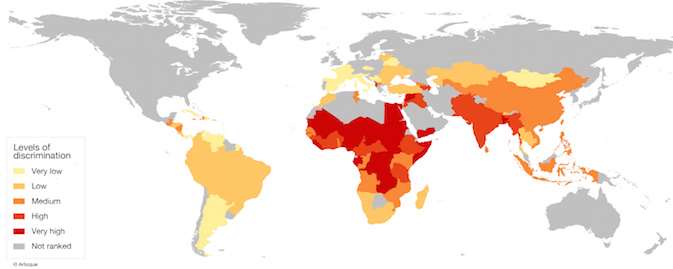
Source : http://www.genderindex.org/content/2014-categories
India was categorized into high level of discrimination in Social Institution Gender Index (SIGI). On average 32% of women have been victims of domestic violence in their lifetime, and more than 49% of women agree that domestic violence is justified under certain circumstances. India was valued 0.265 in SIGI category. Thus, Gender Index reports indicates that formal and informal institution must be concenrned more towards gender issues in India.
Text Box (iv) "The OECD Development Centre's Social Institutions and Gender Index (SIGI) is a cross-country measure of discrimination against women in social institutions (formal and informal laws, social norms, and practices) across 160 countries"
Although, Civil Society organization and social institution have been seeing more active towards women's empowerment in past years. There are some organization who is focusing on gender quality such as PRIA, SEVA, Action India etc.
Participatory Research in Asia (PRIA)-PRIA's focus on participatory approach of all section in democracy. Its goal to achieving building capacities of citizens, communities and institutions to enable vibrant, gender equal society. In 2014-15, the campaign to eliminate violence against women in public spaces reached out to 92,000 community members, building capacities of 8,500 youth and developing 35 citizen youth leaders. In 2013-14, PRIA's reached out to over 6,000 poor and marginalized, impacting over 85,000 people indirectly across 65 gram panchayats in 10 states and 195 slums in 20 cities.
Self Employed Voluntary Association (SEWA )-SEWA is in its attempt of bringing its member, the self employed women into knowledge of world. Through, action oriented approach it gets to know lives of its member and directs action accordingly.
Action India – It has been working for achieving its goal of gender quality and equity both with help of grassroots women. It has significant impact on women's lives as it recognizes their identity in public sphere and private sphere. This association evolves feminist perspectives by their action.
http://www.action-india.org/home
Text Box(v)
"Action India is a grassroots civil society organization working with the vision of gender just and egalitarian society with a gender lens. The mission of Action India is to achieve equality and equity in the society with a right to live with dignity and self esteem."
1.6 Global Context
At global level, internationational NGOs and association are found very active in addressing gender issues.
Although these organization needs to be regulated by some universal norms so that gender disparity can be reduced. Discrimination based on gender is deeply rooted in most societies in the world. So there is need to women's participation in international organization so that they can stand for their right themselves globally.
Even this approach to make women participation equally in compare of men is progressive step. Moreover, gender analysis increases the chances for women to get fair opportunity of expressing themselves.UN Women, The association for Women's rights in Development, Amnesty International, EU and many others have been working for gender equality in collaboration with state civil society.
Ms Openshaw said 'Women human rights defenders challenge gender inequality and stereotypes, advance sexual and reproductive rights and promote women's empowerment and participation. They often also challenge religious and cultural interpretations which subordinate, stigmatize or restrict women,'
Ms Marisa Viana said that support of civil society from all regions for women human rights defenders ,who faced violation showed the seriousness of issue that women human rights defender faced. Thus, it is necessary for states to take strong measures to stop violation against women human rights defenders. Consequently, UN
General Assembly's third committee adopted the first ever resolution on human rights defenders. It is the significant step in protection of those human right activists who face risks and attacks for their work to promote human rights including women's rights.
On the other hand, at global level CIVICUS organization is making tremendous effort to address gender issues within and outside the orgnisation. CIVICUS is an international non-profit organization, which describes itself as "a global alliance dedicated to strengthening citizen action and civil society around the world".
Inclusion of excluded groups must start at home for that CIVICUS first starting challenge to exclusion within civil society organization.Thus, "established CSOs in particular may be accused of reproducing exclusion in their internal workings, by not having a diverse membership, staff and leadership. For example, research points to wide disparity between the percentage of CSO staff who are women and the percentage of women leaders of CSOs, with leadership by women rarer in larger and better resources."

Source; http://www.civicus.org/index.php/en/about-us-125/gender-and-diversity
CIVICUS also refers to Gender Working Group that is "member-based advisory group focused on gender mainstreaming and women leadership across the Alliance. One of objective of the Gender Working Groups is
to generate dialogue around gender issues and increase the visibility of gender issues in civil society. Utilize
CIVICUS membership to address research/policy questions related to gender in civil society establishing substantive papers, positions and advocacy tools on the subject".
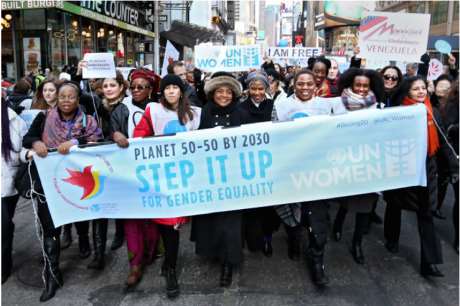
Campaign for gender equality initiated by UN Women
Therefore Voices from groups like JASS, WEDO, and the African Women's Development Fund (ADWF) urged to think about an approach that put women's movements and women's rights defenders front and center and to strategize about how to leverage the growing impatience and anti-colonial sentiments from many nations in the developing world with a more feminist agenda for the United Nations.
Source: http://wedo.org/about-us/vision-mission/
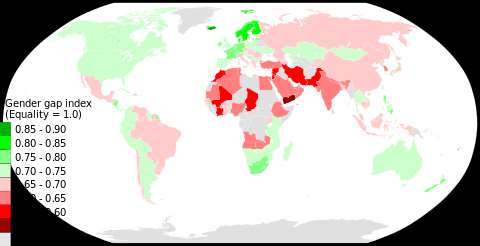
Global Gender Gap Index
The Global Gender Gap Index provides the framework to measure gender equality. The Global Gender Gap
Report 2015 provides a comprehensive overview of current performance and progress over the last decade.
On average, in 2015, over 96% of the gap in health outcomes, 95% of the gap in educational attainment, 59% of the gap in economic participation and 23% of the gap in political empowerment has been closed. No country in the world has achieved gender equality. The highest ranked countries—Iceland, Norway, Finland, Sweden and Ireland —have closed over 80% of their gender gaps, while the lowest ranked country—Yemen—has closed a little less than half of its gender gap (48%). Therefore, it is observed that women's empowerment in all spheres is required in achieving its goal of gender equality and gender equity.
Summary
Civil society plays crucial role in gender analysis.
Women can easily access to civil society than state.
Women's participation in civil society gives opportunity to realize gender equality.
Gender analysis is the study of different roles of men and women in order to measure their development respectively.
Participation of women's organisation brings lot of positive changes in civil society oversight process.
Gender analysis takes diversity into account that has positive impact on special groups such as indigenous people.
Vaclov Havel argues that civil society represents " the power of the powerless".
Main goal of gender analysis approach is to achieve gender equity with gender quality
Gender analysis in institution can be vary in relation with different framework of study.
Participatory Research in Asia has reached out to over 6,000 poor and marginalised people.
Indian civil society have been playing crucial role in achieving women's empowerment.
India is diverse country so there is need to understand gender issues in context of different culture.
Women's participation is increasing in international organisation.
UN Women, CIVICUS, WEDO, JASS and others organisation plays role of civic association and determines women's representation .
Paper No. :Gender and Citizenship
Module : Grassroots Citizenship
P Development Team
Prof. Sumita Parmar Allahabad University, Allahabad
Principal Investigator
Prof. Chandrakala Padia Maharaja Ganga Singh Univesity, Bikaner
Paper Coordinator
Content Writer
Dr. Bulbul Dhar-James, JMI, N Delhi. & Ms. Savita Sagar, UGC Senior Research Fellow,
Content Reviewer
Prof. Chandrakala Padia Maharaja Ganga Singh Univesity, Bikaner
GENDER, GOVERNANCE & POLITICS; Gender and Citizenship
Women's
Studies
Grassroots Citizenship ; Bulbul Dhar-James & Savita Sagar
Description of Module
Subject Name
Women's Studies
Paper Name Gender and Citizenship
Module Name/Title
Grassroots Citizenship – Meaning of Citizenship, Grassroots Citizenship, Issues of Grassroots Citizenship, Indian perspectives; developments of citizenship , Indian Constitution Rights to Women, Women Related Legislation, Women suffrage at Global Level, Women in Parliament globally.
Module Id
Prerequisites
The student is expected to have the knowledge of importance of grassroots citizenship nationally and globally.
Objectives To make the reader understand the concept of citizenship in terms of marginalized identify such as women at local level and sensitize them about its relevance and sensitize them about its significance in today's global world.
Keywords Citizenship, Grassroots Citizenship, Rights, Marginalized, Uniform citizenship, Differentiated citizenship, Gender, Suffrage, Women Participation at local level.
GRASSROOT CITIZENSHIP
Dr. Bulbul Dhar-James Former Director, SNCWS, JMI Email : [email protected]
Ms. Savita Sagar UGC Senior Research Fellow, Department of Political Science,
Jamia Millia Islamia, New Delhi 110025
Email : [email protected]
1.1 Meaning of Citizenship:
Citizenship is the entitlement of rights and privileges that people have in their country as being a member of state. State recognizes its people as a citizen by giving them various rights and duties. Every country has their own criteria of considering people as its citizen such as born in within nation, through parent's citizenship, by staying legally certain years in country, on the basis of marriage and so on. It is the legal status given by the state.
GENDER, GOVERNANCE & POLITICS; Gender and Citizenship
Women's
Studies
Grassroots Citizenship ; Bulbul Dhar-James & Savita Sagar
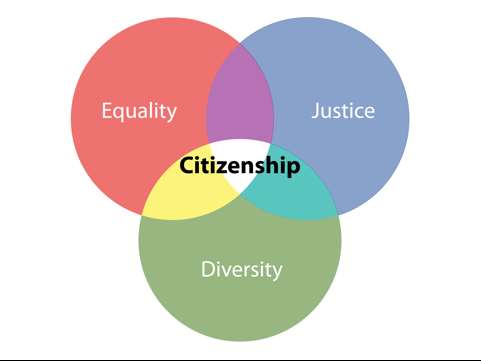
Source: http://www.iriss.org.uk/resources/imagining1
Citizenship is a very constructive concept with which to understand social and Political Processes because of its component parts - RIGHTS, RESPONSIBILITIES & PARTICIPATION, are crucial in any system of governance built upon DEMOCRATIC PRINCIPLES. Our attachment to our identity as a citizen, ensures the legitimacy of the government and it is through the exercise of rights, responsibilities & participation the common institutions of Politics can be sustained and improved.
The commonly accepted definition of citizenship by T.H Marshal in Citizenship and social class (1950) as 'full and equal membership in a political community' holds the promise of equality and integration within the political community.
T.H ,Marshall defines citizenship in context of rights that falls into three category of rights; civil, political, and social. Civil and Political rights are considered negative rights as it puts limits on government action. But social right that Marshal sees it as a positive rights since these rights allowed government to take affirmative action to provide its citizen a minimum social status so that they can enjoy civil and political rights.
Text Box(i)
GENDER, GOVERNANCE & POLITICS; Gender and Citizenship
Women's
Studies
Grassroots Citizenship ; Bulbul Dhar-James & Savita Sagar
Civil rights are individual rights such as freedom of expression, speech, religion, press, assembly, movement and right to equality and own property etc irrespective any differences. Political rights are rights such as right to fair justice, the right to vote, right to participation in politics and right to form association etc.
Liberals like Marshall have assumed that citizenship will be universal in its benefits and demamds : that citizenship will recognize the equality of all members of the polity. Kaith Faulks (2002) points
out that the "problem with this assumption has been highlighted by Feminist writers amongst others who argue that a single universal model of citizenship infact entails supression of important differences". Historically, citizenship is associated with the privileges of membership of political community where their members enjoy certain equal political status in decision making to regulate social life (Bellamy 2008). Anupama Roy considers citizenship as a evolving concept that changes with the course of time.
Text Box(ii)
Globalization means that we cannot rely on states to defend our Rights and facilitate our responsibilities. Contemporary context has highlighted the need for greater cooperation between diverse political communities and the need to rethink citizenship in ways which no longer privilege the relationship between the individual and the state.
GENDER, GOVERNANCE & POLITICS; Gender and Citizenship
Women's
Studies
Grassroots Citizenship ; Bulbul Dhar-James & Savita Sagar
1.2 Grassroots Citizenship
https://participationdictionary.wordpress.com/2014/04/25/g-for-grassroots-movement/
There are multiple meanings of grassroots. Since organizations have their own version of this term.
However, Grassroots term in women's studies indicates to 'women out there'. It involves those poor and marginalized women who are striving for their basic rights and gender equality as well. Thus, it distinction between elite / grassroots, nonpoor /poor, urban rural and here and out there. Some
CSOs, NGOS link this grassroots term to decentralization of power in institution that represents women in decision making process. Challenging second waves of feminism in 1990s third wave feminist raised the voice for marginalized and oppressed women and other identities as well. It is more closed to grassroots citizenship. Thus, third wave was more gender focused rather first and second waves of feminism.
Therefore grassroots citizenship here meant to citizenship at local level where women and other marginalized identities are in centre. Gender equity and equality need to be addressed through grassroots citizenship. So it is well known slogan in global women's movement is "think globally, act locally". It means that changes will not come only by thinking globally but need to act in practice at grassroots level that is called local. Moreover, U.Kaplagam gives more value to this slogan by adding the term think locally, act locally. He argued that feminist theory should come forward to GENDER, GOVERNANCE & POLITICS; Gender and Citizenship
Women's
Studies
Grassroots Citizenship ; Bulbul Dhar-James & Savita Sagar help people to think locally. Therefore, those marginalized women citizen that live in remote areas, and unable to know about their citizenship rights due to lack of awareness can be recognized in context of citizenship. Gendered often neglected because of faith in religion, different social structural.
Sorce; Globalsolutions.org 1.2.1 Issues of grassroots citizenship
Poverty, discrimination and social exclusion that undermine the benefits of citizenship.
Public private divide that creates obstacle to enjoy citizenship rights where female belongs to private sphere called family and male belongs to public sphere.
Women suffer double discrimination due to social divisions such as cast, class, race, religion and due to being women.
Cultural and religious identity.
Hierarchical society that determines gender's role in social and political sphere.
Issues of power and inequality have been addressed by feminist theorist.
Text Box (iii ) "The personal is political "is the slogan used by second wave of feminist in late 1960s. It was the collective voice of feminists that attempted to break the division between public and private sphere.
GENDER, GOVERNANCE & POLITICS; Gender and Citizenship
Women's
Studies
Grassroots Citizenship ; Bulbul Dhar-James & Savita Sagar
Liberal model of citizenship dominates contemporary democracy. Liberal notion has two strands one is republic notion of citizenship and second is liberal individualism. The liberal individual ideology focuses on equality so that each individual cannot be discriminated by the state. Thus, legally it advocates equality before law and uniformity of citizenship disregards any differences.
This notion was criticized on feminist, communitarian and Marxist grounds by calling liberal notion as exclusive and passive tradition of citizenship. On the other hand civic republicanism advocates citizenship rights in context of duties of citizens. Responsible citizens participate in voluntary
association and secure their rights .So this concept bring concept of good citizens and communitarian aspect of citizenship.
Grassroots citizenship gives critical insights to understand right of women. It questions and challenges the public private divide that falls into material and cultural context. Why is this divide prevailing in society? Grassroots citizenship tries to reach out to livelihood, family and infrastructurte.Gender citizenship question on citizenship rights of women that are made in the framework of social structure. All feminist criticized the idea of 'uniform citizenship' because it ignores gender aspects and fails to understand the fact that citizenships are given in patriarchal tradition. So some feminist such as Will Kymilica and Iris Marian Young advocated differentiated citizenship that includes marginalized and excluded section not as an individual but groups
Text Box (iv)
Social structure- "The social structures based on class, caste, gender, ethnicity, region and language limits the possibility of engaging actively in the public sphere and for accessing one's rights".
1.3 Indian perspectives
In Pre-independence, women's movement was basically focused on women's issues not as such gender relation. It was an attempt of bringing about change in status of women. Political participation in national struggle opened the space for women in politics. In this attempt Gandhi's role was significant to encourage women to come out of their home. Women were seen in national struggle as political actor. So in India they did not face problem in getting political rights constitutionally. However, it did not bring any substantial change in their status because mere
GENDER, GOVERNANCE & POLITICS; Gender and Citizenship
Women's
Studies
Grassroots Citizenship ; Bulbul Dhar-James & Savita Sagar getting right to vote was not enough to change mindset of people in society. For that, there was need to active participation in each sphere.
"In India in the 1950s and 1960s, the emphasis shifted to modernizing society, and building a modern nation-state, in the immediate aftermath of independence from British rule. This required challenging many of the cultural practices that had gone into forging a national identity during the anti-colonial struggle. Lawmakers who wrote the Constitution for a newly independent India had to tread cautiously, especially in the domain of the so-called personal laws. These laws about
marriage, inheritance, and many other cultural-traditional practices had to accommodate the sensitivities of religious communities".
The period of 1960s and 1970s was significant in the development of women's movement. They recognized structural inequalities and gender relation in public private sphere. Indian women's movement was the struggle for gender citizenship. So women's movement in India raised many issues related to grassroots citizenship such as division of labour,domestic violence, crime against women, sexual harassment etc.Women's movement have to confront with the state in order to achieve grassroots citizenship.
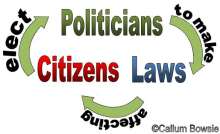
Source; en.wikipedia.org
1.3.1 Indian Constitution Rights to Women:
"The rights and safeguards enshrined in the constitution for women in India are listed below: The state shall not discriminate against any citizen of India on the ground of sex [Article
15(1].
GENDER, GOVERNANCE & POLITICS; Gender and Citizenship
Women's
Studies
Grassroots Citizenship ; Bulbul Dhar-James & Savita Sagar
The state is empowered to make any special provision for women. In other words, the provision enables the state to make affirmative discrimination in favour of women [Article
15(3)].
No citizen shall be discriminated against or be ineligible for any employment or office under the state on the ground of sex [ Article 16(2)].
Traffic in human beings and forced labour are prohibited [Article 23(1)].
The state to secure for men and women equally the right to an adequate means of livelihood
[Article 39(a)].
The state to secure equal pay for equal work for both Indian men and women[Article 39(a)].
The state is required to ensure that the health and strength of women workers are not abused and that they are not forced by economic necessity to enter avocations unsuited to their strength [Article 39(e)].
The state shall make provision for securing just and humane conditions of work and maternity relief [Article 42].
It shall be the duty of every citizen of India to renounce practice derogatory to the dignity of women [Article 51-A(e)].
Onethird of the total number of seats to be filled by direct election in every Panchayat shall be reserved for women [Article 243-D (3)].
Onethird of the total number of offices of chairpersons in the panhayat at each level shall be reserved for women [Article243-D(4)].
One-third of the total number of seats to be filled by direct election in every Municipality shall be reserved for women [Article 243-T(3)].
The offices of chairpersons in the Municipalities shall be reserved for women in such manner as the state legislature may provide [Article 243-T(4).
1.3.3Women –Related Legislation
1. The Indian Penal Code,1860
2. The Indian Evidence Act, 1872
GENDER, GOVERNANCE & POLITICS; Gender and Citizenship
Women's
Studies
Grassroots Citizenship ; Bulbul Dhar-James & Savita Sagar
3. The Indian Christian Marriage Act, 1872 (15 of 1872)
4. The Married Women's Property Act, 1874 (3 of 1874)
5. The Guardians and Wards Act,1890
6. The Workmen's Compensation Act, 1923
7. The Trade Unions Act 1926
8. The Child Marriage Restraint Act, 1929 (19 of 1929)
9. The Payments of Wages Act, 1936
10. The Payments of Wages (Procedure) Act, 1937
11. The Muslim Personal Law (Shariat) Application Act, 1937
12. Employers Liabilities Act 1938
13. The Minimum Wages Act, 1948
14. The Employees' State Insurance Act,1948
15. The Factories Act, 1948
16. The Minimum Wages Act, 1950
17. The Plantation Labour Act, 1951 (amended by Acts Nos. 42 of 1953, 34 of 1960, 53 of1961,
58 of 1981 and 61 of 1986)
18. The Cinematograph Act, 1952
19. The Mines Act 1952
20. The Special Marriage Act, 1954
21. The Protection of Civil Rights Act 1955
22. The Hindu Marriage Act, 1955 (28 of 1989)
23. The Hindu Adoptions & Maintenance Act, 1956
24. The Hindu Minority & Guardianship Act, 1956
25. The Hindu Succession Act, 1956
26. The Maternity Benefit Act, 1961 (53 of 1961)
27. The Beedi & Cigar Workers (Conditions of Employment) Act, 1966
28. The Foreign Marriage Act, 1969 (33 of 1969)
29. The Indian Divorce Act, 1969 (4 of 1969)
30. The Contract Labour (Regulation & Abolition) Act, 1970
31. The Medical Termination of Pregnancy Act, 1971 (34 of 1971)
32. Code of Criminal Procedure, 1973
GENDER, GOVERNANCE & POLITICS; Gender and Citizenship
Women's
Studies
Grassroots Citizenship ; Bulbul Dhar-James & Savita Sagar
33. The Equal Remuneration Act, 1976
34. The Bonded Labour System (Abolition) Act, 1979
35. The Inter-State Migrant Workmen (Regulation of Employment and Conditions of Service) Act,
36. The Family Courts Act, 1984
37. The Muslim women (Protection of Rights on Divorce) Act, 1986
38. Mental Health Act, 1987
39. National Commission for Women Act, 1990 (20 of 1990)
40. The Protection of Human Rights Act, 1993 [As amended by the Protection of Human Rights (Amendment) Act, 2006 - No. 43 of 2006]
41. Juvenile Justice (Care and Protection of Children) Act, 2000
42. The Child Labour (Prohibition & Regulation) Act
43. The Pre-Conception and Pre-Natal Diagnostic Techniques (Prohibition of Sex Selection) Act,
44. The Prohibition of Child Marriage Act, 2006
GENDER, GOVERNANCE & POLITICS; Gender and Citizenship
Women's
Studies
Grassroots Citizenship ; Bulbul Dhar-James & Savita Sagar
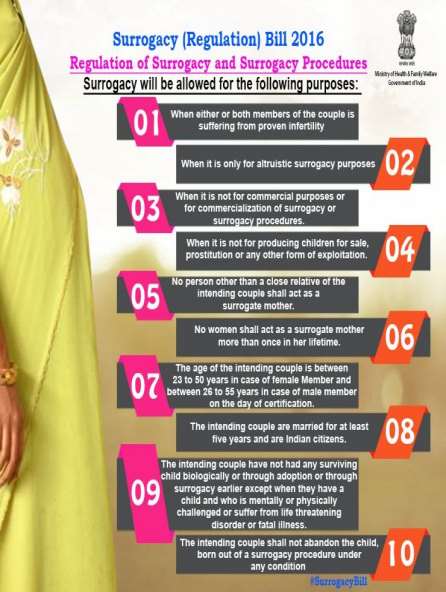
Surrogacy Indian Bill 2016
Recently India's draft Surrogacy (Regulation) Bill has been becoming question of debate. Surrogacy bill 2016 could be crucial to bring transparency in its procedure and also will stop commercialization of surrogacy. This bill somehow, ensures women's rights and stops any violation against women as it gets legality but it has alongside sparked offf debate over the government's role in reproduction.
Text Box V
A surrogacy arrangement or surrogacy agreement is the carrying of pregnancy for intended parents. In surrogacy, a woman carries a child to term for its intended parents via different fertility techniques, including IVF implantation. She is compensated for carrying the child, hence the term commercial surrogacy
As expected, the bill has generated a lot of debate around the country. Opponents have argued that by allowing surrogacy for select classes of citizens on the basis of their lifestyle, sexual orientation, GENDER, GOVERNANCE & POLITICS; Gender and Citizenship
Women's
Studies
Grassroots Citizenship ; Bulbul Dhar-James & Savita Sagar and life choices, the bill would violate citizens' Fundamental Rights as laid down in Article 14 of the Indian Constitution.

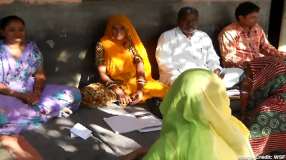
Five Women Sarpanch leaders in Panchayat source; http://www.jaagore.com/power-of-49/5-women-sarpanch-leaders-showing-india-the-wayforward
These women breaks the concept of "glass ceiling" by keeping themselves at leadership position.
Women's representation in local governments can make a difference. Research on panchayats (local councils) in India discovered that the number of drinking water projects in areas with women-led councils was 62 per cent higher than in those with men-led councils. In Norway, a direct causal relationship between the presence of women in municipal councils and childcare coverage was found.Thus, participation at local level increases women's capacity of decision making and problem
GENDER, GOVERNANCE & POLITICS; Gender and Citizenship
Women's
Studies
Grassroots Citizenship ; Bulbul Dhar-James & Savita Sagar solving. Apart of that local institution gives them opportunity to realize their rights in public and private sphere.
Text Box (vi)
Glass ceiling is the notion used by feminist that stops women to be in higher post especially as a leading head in everywhere at work place. It is just assumed that women have not that capability of handling this kind of job. Men are by nature made for that higher executive post.
1.4 Citizenship Movements and Gender
Across the world there is an active, mass-based demand for an end to gendered injustice in all domains of our social, economic, political and cultural lives. Social movements – led by feminist, women's and gender justice activists and movements – have been pivotal in demanding, making and sustaining these changes. However, while women's rights and gender justice are 'on the agenda' in many arenas, activists still encounter strong resistance to changing gendered politics and practices within movements and allied organisations. When it comes to making an impact on transforming gender power relations, social movements matter. Social movements are forms of collective action that emerge in response to situations of inequality, oppression and/or unmet social, political, economic or cultural demands. They are comprised of 'an organised set of constituents pursuing a common political agenda of change through collective action' (Batliwala 2012: 3). Social movements are not inherently progressive. Religious fundamentalisms, neo-Nazism and ethnic nationalism have all been rooted in and propagated by social movements.
GENDER, GOVERNANCE & POLITICS; Gender and Citizenship
Women's
Studies
Grassroots Citizenship ; Bulbul Dhar-James & Savita Sagar
Across the social movement spectrum Women's movements for women's rights and gender justice The majority of historical and contemporary activism on gender justice has been led by women and in all-women movements for change. Progressive women's movements are united around a common cause of challenging gender inequalities and injustices in society, although there is diversity in perspectives on this, including from the vantage points of race, class, ability, age and sexual orientation. Women-led movements for broad social justice agendas Women have also led activism for broader social and political change using approaches that acknowledge both gender inequities and political, social or economic issues, resulting in broad societal or political change and increased rights and justice for women. Men's movements for women's rights and/or gender justice Male gender equality activists have developed theoretical and practical insights into the ways patriarchal power affects men and
boys, questioning definitions of masculinity, including social norms, expectations and behaviours around men's labour, relationships in the family, sexuality, self-care and violence and aggression; and considering how men can relate to women in more egalitarian ways.
Historically, most progressive social movements have not embraced a commitment to consider gender inequality or challenge patriarchy from the outset. Frequently, gender analysis and action begins in mixed movements when women activists start to question why they are being left out of movement visions or not acknowledged in movement leadership.
There is a peculiar quality to injustice – it often seems to blind its victims to other forms of injustice. Movements against injustice carry the same trait: even as they muster indignation and a demand for change among their own citizenry, they can be blind to other injustices, and especially
A gender-just Citizenship movement Affirms the importance of tackling gender inequality and patriarchal power as an integral component of justice for all and names this as an explicit priority for action. • Creates a positive environment for internal reflection and action on women's rights and gender justice.
Provides active and formalised support for women's participation and leadership in all areas of movement practice. • Consistently tackles gender-based violence and establishes zero tolerance for sexual harassment in movement spaces. • Assesses gender bias in movement roles and redistributes labour along genderjust lines. • Enables full participation of both women and men, taking into account care work and reproductive roles. • Appreciates the gender dimensions of backlash and external opposition faced by activists. • Engages with norms and notions around gender, taking into account context-specific gender identities, trans and intersex identities and shifting understandings of gender in social life and activism.
GENDER, GOVERNANCE & POLITICS; Gender and Citizenship
Women's
Studies
Grassroots Citizenship ; Bulbul Dhar-James & Savita Sagar to those practiced within and by their own ranks. The sense of righteousness about their cause often results in a narrow, myopic, and exclusionary view - a hierarchy of injustices where theirs sits at the top, Gender and social Movements more urgently in need of redress than any other.
This is a syndrome that is particularly evident in the context of gender relations because women's subordinate position, and the gendered division of labour, privilege, decision-making power and leadership, has been so normalised, so deeply embedded in the fabric of daily life, that it is invisible unless we consciously search for its manifestations. Despite social justice movements
engage in struggles for a diversity of economic, social and political rights, the aspirations and interests of women within these are either forgotten, assumed to be the same as men's, or equally advanced by the movement's strategic agenda. Worse, many movements have actively opposed a focus on gender issues as divisive and disruptive of the larger struggle, and ironically, accuse women's movements of being too exclusive and myopic in their focus. The result is that there are very few social justice movements in the world that have authentically integrated gender justice within their worldview and strategies for change.
In India's capital city of New Delhi, a young girl was gang raped on December 16th 2012, and brutally assaulted for resisting her attackers. She died a few weeks later from the severe internal injuries inflicted upon her – but not before cities across the nation erupted in a wave of protests that brought men and women of all ages and classes onto the streets, demanding an end to violence against women and more stringent laws to punish the guilty. Veterans of the Indian women's movement, were amazed and bemused by this spontaneous demonstration of outrage, around what had just a decade earlier been considered a 'women's issue'. Somehow, somewhere, a powerful shift had occurred – this young girl's rape and murder, and the thousands of rapes, murders, and more mundane indignities women and girls suffer in daily life, was no longer a women's issue, or the responsibility of women's rights organisations or women's movements at large. It was everyone's issue, because it was everyone's shame.
Young women and men interviewed on television, at the words inscribed on countless placards: 'Teach your sons not to rape', 'Teach your sons to respect women', 'I am a woman, I am free, I will go anywhere, anytime'. Protests, marches, and vigils were being organised by groups across the widest possible spectrum – from neighbourhood residents' associations to human rights groups and youth organisations. It seemed as though our feminist dream that one day, all society would wake up and take ownership of the need to empower women and guarantee gender equality, had actually come true.
GENDER, GOVERNANCE & POLITICS; Gender and Citizenship
Women's
Studies
Grassroots Citizenship ; Bulbul Dhar-James & Savita Sagar
Building gender-just social movements: (Horn 2013) : There is tremendous diversity in social movement practice across contexts, so there is no straightforward 'recipe for change'. But experience shows that change is easier if a number of elements are in place to help alter both internal power dynamics and external strategies so that they are more inclusive of gendered politics viz : Recognise and transform culture, power dynamics and hierarchies within movements By making visible the way that gendered power is understood and practised in the 'deep
structure' of movements we can challenge the hidden and invisible power dynamics that make movement participation uncomfortable or unbearable for women and gender minorities, allow gender-based violence to continue within activist spaces, and undermine the lived politics of a movement.
Support internal activism for change The most powerful accountability mechanism in any movement is its own constituency. It is, therefore, vital to consider and support initiatives by movement members that call for women's rights and gender justice to be addressed in their movements' politics and practices. This might involve supporting both women's collective power and individual change-makers, building feminist leadership, developing platforms and caucuses on equality, and anticipating and responding to backlash.
Draw the line on impunity for gender-based violence Holding movement members to account for ethical conduct around gender relations – be it in public or private – is essential in creating gender-just movements. This includes issues such as domestic violence or sexual harassment by movement members, be it to others in their movements or in their personal lives. It also includes challenging impunity and the failure of movement leadership to take a stand against discrimination or violence within movements.
Develop the politics and make the arguments on gender and movements Political visions are what make a movement, and taking a position on gendered injustice and oppression is a necessary component of building gender-just movements. Elements of this process may include making women's rights and gender justice clearly visible in movements' external agendas, and creating spaces for learning and for open discussions on what a gender focus will mean in different movement contexts.
Build inclusive alliances, shared analysis and common cause The important process of building alliances and finding common cause between feminist and other social movement
GENDER, GOVERNANCE & POLITICS; Gender and Citizenship
Women's
Studies
Grassroots Citizenship ; Bulbul Dhar-James & Savita Sagar politics involves openness to critique and a desire to listen and to change. Intersectional analysis is a useful tool for movements to help identify how different axes of power intersect and to define areas of common struggle between social movements. Common cause may be built around a need to unite against common adversaries, but in the process, movement actors may build longer-term relationships.
Expand inclusion within women's and feminist movements Women's movements are not static; they emerge, grow and change in response to internal and external factors.
Challenging inequalities and the exercise of discriminatory power within women's movements needs to be ongoing, as movements self-critique and work towards increasingly inclusive politics of transformation. This in turn strengthens solidarities with other movements that women's movement members are a part of, and contributes to pushing progressive politics forward.
Operationalise gender justice in movements and movement-linked organisations In many cases movements have an organisational base or platform relevant to or influential in guiding movement thinking and practice. This base can play a key role in determining whether and how women's rights and gender justice are embraced. Organisational change strategies and auditing and evaluation approaches, if adapted and developed for specific movement contexts, can help to support this process, with senior-level commitment a key driver for strategies to transform internal culture and external political agendas.
Remain attentive to movement–organisation power relations Relationships between movements and organisations are multifaceted: organisations may support movements; movements may be allied with organisations or even create them. It is critical to be alert to the tremendous opportunities as well as tensions involved in these interactions.
Organisations explicitly dedicated to movement-building and support should consider how they can encourage and support movements to be inclusive, tackle new forms of oppression and recognise emerging constituencies. Donors should take steps to align their practices with requirements for gender-just movement-building and longer-term transformation.
Stay with it, and support change over time Time is an important factor in social movement development and success. While individual campaigns or instances of uprising for change may take place within a fixed timescale, the broader struggle for women's rights and gender justice remains ongoing. Success can bring backlash, and new forms of injustice, GENDER, GOVERNANCE & POLITICS; Gender and Citizenship
Women's
Studies
Grassroots Citizenship ; Bulbul Dhar-James & Savita Sagar marginalisation and inequality emerge as mainstream power takes on new forms or extends its reach in new domains. While shifts in how movements engage with gender are important, the real test is sustaining this respect and working on the full integration of women's rights and gender justice over time.
1.5 Women's Suffrage at Global Level
New Zealand was the first country to allow women to vote (in 1893), while the King Abdullah of
Saudi Arabia granted women the right to vote in 2011. The United States finally began allowing women to vote in 1920, after the ratification of the 19th Amendment to the Constitution.
1893 New Zealand
1902 Australia
1906 Finland
1913 Norway
1915 Denmark
1917 Canada
1918 Austria, Germany, Poland, Russia
1919 Netherlands
1920 United States
1921 Sweden
1928 Britain, Ireland
1931 Spain
1934 Turkey
1944 France
1945 Italy
1947 Argentina, Japan, Mexico, Pakistan
1949 China
1950 India
1954 Colombia
1957 Malaysia, Zimbabwe
1962 Algeria
GENDER, GOVERNANCE & POLITICS; Gender and Citizenship
Women's
Studies
Grassroots Citizenship ; Bulbul Dhar-James & Savita Sagar
1963 Iran, Morocco
1964 Libya
1967 Ecuador
1971 Switzerland
1972 Bangladesh
1974 Jordan
1976 Portugal
1989 Namibia
1990 Western Samoa
1993 Kazakhstan, Moldova
1994 South Africa
2005 Kuwait
2006 United Arab Emirates
2011 Saudi Arabia
Text Box(vi)
1. "Australian women, with the exception of aboriginal women, won the vote in 1902. Aborigines, male and female, did not have the right to vote until 1962. 2. Canadian women, with the exception of Canadian Indian women, won the vote in 1917. Canadian Indians, male and female, did not win the vote until 1960. Source: The New York Times, May 22, 2005. 3. King Abdullah issued a decree in 2011 ordering that women be allowed to stand as candidates and vote in municipal elections, but their first opportunity did not come until Dec. 2015, almost a year after the king's death in January".
1.5.1 Women in parliaments globally
Women's representation in parliament shows the possibility of using citizenship rights in legal and political term. Somehow, this removes the social and the religious hurdle that comes in their way to participate in poltics.It also breaks the public –private dichotomy. In past years, across the world women are talking interest in politics and becoming part of policy making process that can bring drastic change in their lives. It would be a substantive effort for achieving gender equality through claiming gender citizenship. Although their progress is very slow but it impacted at global and local level.
GENDER, GOVERNANCE & POLITICS; Gender and Citizenship
Women's
Studies
Grassroots Citizenship ; Bulbul Dhar-James & Savita Sagar
"Only 22.8 per cent of all national parliamentarians were women as of June 2016, a slow increase from 11.3 per cent in 1995. As of August 2016, 11 women are serving as Head of State and 10 are serving as Head of Government.
Rwanda had the highest number of women parliamentarians worldwide. Women there have won 63.8 per cent of seats in the lower house. Globally, there are 38 States in which women account for less than 10 per cent of parliamentarians in single or lower houses, as of June 2016, including 4 chambers with no women at all".
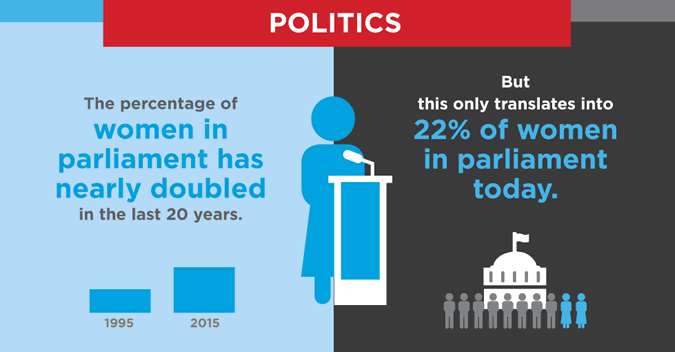
http://www.unwomen.org/en/what-we-do/leadership-and-political-participation/facts-and-figures
Recently, identity based issues are coming up globally for instance ban on Burkini in France got the attention of feminist activist. It is considered as an extension of Franc's nationwide ban on burkas.
Here,It rasises the question on freedom of what to wear or what to not. In this sense, should the state have rights on to decide one's dress? It is again identity issue that is related to one's faith and community.

https://www.theguardian.com/world/2016/aug/24/french-police-make-woman-remove-burkini-onnice-beach
GENDER, GOVERNANCE & POLITICS; Gender and Citizenship
Women's
Studies
Grassroots Citizenship ; Bulbul Dhar-James & Savita Sagar
Summary
In particular Citizenship is the legal status of individual country.
Developments of citizenship rights can be understood in three types of rights civil, political and social.
It is progressive concept that with course of time tries to expand its boundary to excluded and marginalized people.
Grassroots citizenship is gendered focused that is in an attempt of making society, politics and economic equal to all.
Third wave of feminism came as failure of second wave and deals with grassroots citizenship issues while first wave of feminism dealt with women's suffrage.
Grassroots citizenship is very essential for women's right.
There is need to think at local level as people there have been facing discrimination since years.
Indian women's movement has great impact in Indian diverse society to introduce gender relations.
Indian constitution gives significant rights to women however there is need to realize in substantive way
A gender-just Citizenship movement affirms the importance of tackling gender inequality and patriarchal power as an integral component of justice for all and names this as an explicit priority for action. and engages with norms and notions around gender, taking into account context-specific gender identities, trans and intersex identities and shifting understandings of gender in social life
Women participation in local institution can reduce gender disparity in public and private sphere.
Globally, grassroots citizenship can be achieved through equal participation by all excluded and oppressed identities including women, transgender etc
Across the world, women's participation has increased compare to past years.
GENDER, GOVERNANCE & POLITICS; Gender and Citizenship
Women's
Studies
Grassroots Citizenship ; Bulbul Dhar-James & Savita Sagar
Paper No. : Women's Studies as an Academic Discipline Module : Concept of Good Governance
Development Team
Prof. Sumita Parmar Allahabad University, Allahabad
Principal Investigator
Prof. Reicha Tanwar Kurukshetra Univesity, Kurukshetra
Paper Coordinator
Prof. Rajesh Gill Punjab University, Chandigarh
Content Writer
Prof. Reicha Tanwar Kurukshetra Univesity, Kurukshetra
Content Reviewer
Women's Studies as an Academic Discipline Concept of Good Governance, Gender and Citizenship, Gender Budgeting, Mirror Representation, Gender Responsive Governance
Women's Studies
Description of Module
Subject Name Women's Studies
Paper Name Women's Studies as an Academic Discipline
Module Name/Title Concept of Good Governance
Module Id
Pre-requisites The Reader is expected to have the knowledge of Indian social structure
Objectives To make the reader understand the concept of good governance
Keywords Governance ; Gender; Women
Women's Studies as an Academic Discipline Concept of Good Governance, Gender and Citizenship, Gender Budgeting, Mirror Representation, Gender Responsive Governance
Women's Studies
1.1 Concept of Good Governance
Governance is widely understood, when used with regard to government or the public sector, to refer to the institutional underpinnings of public authority and decision making. In this way, governance encompasses the institutions, systems, and other factors that determine how political and economic interactions are structured and how decisions are made and resources allocated. Clearly implicit in the
general concept is the notion that good governance is a positive feature of political systems and that bad governance is a problem that countries need to overcome.
Recently, the terms "governance" and "good governance" are being increasingly used in development literature. Bad governance is being increasingly regarded as one of the root causes of all evil within our societies. Major donors and international financial institutions are increasingly basing their aid and loans on the condition that reforms to ensure "good governance" are undertaken. The concept of "governance" is not new. It is as old as human civilization. Simply put "governance" means: the process of decision-making and the process by which decisions are executed (or not executed).
Governance can be used in several contexts such as corporate governance, international governance, national governance and local governance. Since governance is the process of decision making and the process by which decisions are implemented, an analysis of governance focuses on the formal and informal actors involved in decision-making and implementing the decisions made and the formal and informal structures that have been set in place to arrive at and implement the decision.
The term "good governance" has been extensively used within the international community in the last fifteen years and has acquired the characteristics of a "container concept", which incorporates a variety of principles and is as general as concepts such as globalisation or global governance. Good governance is a term different to governance which is mainly a political and technocratic term without normative aspirations and suggests that governance should be "good" and not "bad". Rachel
Gisselquist highlights the problem of conceptual clarity when it comes to "good governance" and why
Women's Studies as an Academic Discipline Concept of Good Governance, Gender and Citizenship, Gender Budgeting, Mirror Representation, Gender Responsive Governance
Women's Studies this is problematic for the practical outcomes that development institutions and the like are trying to achieve.
What is good governance?
There is no single and exhaustive definition of "good governance," nor is there a delimitation of its scope, that commands universal acceptance. The term is used with great flexibility; which is an advantage, but also a source of some difficulty at the operational level. Depending on the context and the overriding objective sought, good governance has been said at various times to encompass: full respect of human rights, the rule of law, effective participation, multi-actor partnerships, political pluralism, transparent and accountable processes and institutions, an efficient and effective public sector, legitimacy, access to knowledge, information and education, political empowerment of people, equity, sustainability, and attitudes and values that foster responsibility, solidarity and tolerance.
However, there is a significant degree of consensus that good governance relates to political and institutional processes and outcomes that are deemed necessary to achieve the goals of development. It has been said that good governance is the process whereby public institutions conduct public affairs, manage public resources and guarantee the realization of human rights in a manner essentially free of abuse and corruption and with due regard for the rule of law. The true test of "good" governance is the degree to which it delivers on the promise of human rights: civil, cultural, economic, political and Women's Studies as an Academic Discipline Concept of Good Governance, Gender and Citizenship, Gender Budgeting, Mirror Representation, Gender Responsive Governance
Women's Studies social rights. The key question is: are the institutions of governance effectively guaranteeing the right to health, adequate housing, sufficient food, quality education, fair justice and personal security?
Key factors of good governance
The concept of good governance has been clarified by the work of the former Commission on Human
Rights. In its resolution 2000/64, the Commission identified the key attributes of good governance:
transparency
responsibility
accountability
participation
responsiveness (to the needs of the people)
By linking good governance to sustainable human development, emphasizing on the principles such as accountability, participation and the enjoyment of human rights, and rejecting prescriptive approaches to development assistance, the resolution stands as an implicit endorsement of the rights-based approach to development.
Commission on Human Rights Resolution 2000/64 expressly linked good governance to an enabling environment conducive to the enjoyment of human rights and "prompting growth and sustainable human development." In emphasizing the importance of development cooperation for securing good governance in countries in need of external support, the resolution recognized the value of partnership approaches to development cooperation and the inappropriateness of prescriptive approaches.
Almost all major development institutions today say that promoting good governance is an important part of their agendas. In a well-cited quote, former UN Secretary-General Kofi Annan noted that Good governance means creating well-functioning and accountable institutions – political, judicial and administrative – which citizens regard as legitimate, in which they participate in decisions that affect
Women's Studies as an Academic Discipline Concept of Good Governance, Gender and Citizenship, Gender Budgeting, Mirror Representation, Gender Responsive Governance
Women's Studies their daily lives and by which they are empowered.‟ perhaps "good governance is the single most important factor in eradicating poverty and promoting development".
Good governance is recognized as essential to poverty reduction efforts and respect for human rights, as conflict prevention, growth, and environmental protection. Definitions of "governance" range from a restricted view focusing on sound management of the economy, to a more expansive view that embraces political liberalization and problems of social inequality. According to the expansive definition, good governance implies democratic governance, meaning an agenda for participation, human rights, and social justice.
Despite this consensus, "good governance" is an extremely elusive objective. It means different things to different organizations, not to mention to different actors within these organizations (to make matters even more confusing, governance experts also routinely focus on other types of governance — global governance, corporate governance, IT governance, participatory governance and so on which may be related only peripherally to the good governance agenda vis-à-vis domestic politics and administration
Women's Studies as an Academic Discipline Concept of Good Governance, Gender and Citizenship, Gender Budgeting, Mirror Representation, Gender Responsive Governance
Women's Studies
In general, work by the World Bank and other multilateral development banks on good governance address economic institutions and public sector management, including transparency and accountability, regulatory reform, and public sector skills and leadership. Other organizations, like the United Nations, European Commission and OECD, are more likely to highlight democratic governance and human rights, aspects of political governance avoided by the Bank. Some of the many issues that are treated under the governance programmes of various donors include election monitoring, political
party support, combating corruption, building independent judiciaries, security sector reform, improved service delivery, transparency of government accounts, decentralization, civil and political rights, government responsiveness and "forward vision", and the stability of the regulatory environment for private sector activities (including price systems, exchange regimes, and banking systems).
In 1999 political scientist John Gerring spelled out eight "criteria of conceptual goodness" that provide a useful framework. Four of these criteria are especially relevant here: First, "good governance" lacks parsimony. Unlike good concepts, good governance has endless definitions, and we always need the details of each to understand if we are talking about the same thing.
Second, "good governance" lacks differentiation. Well-governed countries often sound a lot like functioning liberal democracies, for instance, and it is not clear how they differ.
Third, "good governance" lacks coherence. Its many possible characteristics — from respect for human rights to efficient banking regulations — do not clearly belong together.
Fourth, and most important, "good governance" lacks theoretical utility. It confuses, rather than aids, in the formulation of theory and the related project of hypothesis testing, not least because the concept is so fluid that analysts can easily define it in the way that best fits their data.
Despite some differences in the definition, the idea of good governance has also influenced across a wide political spectrum. For those on the political right, good governance has meant order, rule of law, Women's Studies as an Academic Discipline Concept of Good Governance, Gender and Citizenship, Gender Budgeting, Mirror Representation, Gender Responsive Governance
Women's Studies and the institutional conditions for free markets to flourish. For those on the political left, good governance incorporates notions of equity and fairness, protection for the poor, for minorities, and for women, and a positive role for the state. For many others found along the continuum from right to left, the concept is attractive for its concern about order, decency, justice, and accountability.
The emergence and popularity of the idea of good governance can be credited to more than its
attractive characteristics and admirable policy goals. Indeed, by the late 1980s, a confluence of intellectual and experiential trends brought increased visibility to this idea. Particularly in the fields of economics and political science, and echoed in practitioner and advocacy communities, the concept was a useful way to re-acknowledge the important role of the state in development. It took on greater life as a solution to a practical dilemma faced by development practitioners—how to frame political interactions in a way that appeared to be apolitical. It also grew in influence as the result of research practices that privileged large samples of countries over in-depth analysis of individual cases. And it became even more popular when advocates of various causes found it a useful umbrella under which to present and justify their particular concerns. The idea of good governance thus proved useful—and flourished from the late 1980s to the present.
Good governance has eight main features. It is participatory, consensus-oriented, accountable, transparent, responsive, effective and efficient, equitable and inclusive and also follows the rule of law.
It assures that corruption is minimized, the views of minorities are taken into consideration and that the voices of the least advantaged people in society are heard in decision-making. It is also accountable to the present and future needs of society.
Women's Studies as an Academic Discipline Concept of Good Governance, Gender and Citizenship, Gender Budgeting, Mirror Representation, Gender Responsive Governance
Women's Studies
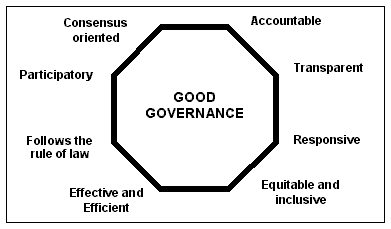
Participation by both men and women is a key cornerstone of good governance. Participation could be either direct or through legitimate intermediate institutions or representatives. It is important to point out that representative democracy does not necessarily mean that the concerns of the most vulnerable in society would be taken into consideration in decision making. Participation needs to be informed and organized. This means freedom of association and expression on the one hand and an organized civil society on the other hand.
Rule of law: Good governance requires fair and transparent legal frameworks that are enforced impartially. It also requires full protection of human rights, particularly those of minorities and downtrodden. Impartial enforcement of laws requires an independent judiciary and an impartial and honest police. Transparency means that decisions taken and their enforcement are done in a manner that follows rules and regulations. It also means that information is freely available and directly accessible to those who will be affected by such decisions and their implementation. It also means that enough information is provided and that it is provided in easily understandable forms and media.
Women's Studies as an Academic Discipline Concept of Good Governance, Gender and Citizenship, Gender Budgeting, Mirror Representation, Gender Responsive Governance
Women's Studies
Responsiveness: Good governance requires that institutions and processes try to serve all stakeholders within a reasonable timeframe.
Consensus oriented: There are several actors and as many view points in a given society. Good governance requires mediation of the different interests in society to reach a broad consensus in society on what is in the best interest of the whole community and how this can be achieved. It also requires a broad and long-term perspective on what is needed for sustainable human development and how to
achieve the goals of such development. This can only achieved from an understanding of the historical, cultural and social contexts of a given society or community. Equity and inclusiveness: A society's well being depends on ensuring that all its members feel that they have a stake in it and do not feel excluded from the mainstream of society. This requires all groups, but particularly the most vulnerable, have opportunities to improve or maintain their well being.
Effectiveness and efficiency: Good governance means that processes and institutions produce results that meet the needs of society while making the best use of resources at their disposal. The concept of efficiency in the context of good governance also covers the sustainable use of natural resources and the protection of the environment.
Accountability is a key requirement of good governance. Not only governmental institutions but also the private sector and civil society organizations must be accountable to the public and to their institutional stakeholders. Who is accountable to whom varies depending on whether decisions or actions taken are internal or external to an organization or institution. In general an organization or an institution is accountable to those who will be affected by its decisions or actions. Accountability cannot be enforced without transparency and the rule of law.
Good governance promotes equity, participation, pluralism, transparency, accountability and the rule of law, in a manner that is effective, efficient and enduring. In translating these principles into practice, it is necessary to conduct free, fair and frequent elections, representative legislatures that make laws and provides oversight, and an independent and impartial judiciary to interpret those laws.
Women's Studies as an Academic Discipline Concept of Good Governance, Gender and Citizenship, Gender Budgeting, Mirror Representation, Gender Responsive Governance
Women's Studies
The greatest threats to good governance come from corruption, violence, injustice and poverty, all of which emphasize on transparency, human security, participation and fundamental freedoms.
Democratic governance advances development, by bringing its energies to bear on such tasks as eradicating poverty, protecting the environment, ensuring gender equality, and providing for sustainable livelihoods. It ensures that civil society plays an active role in setting priorities and making
the needs of the least advantaged people in society known.
In fact, well-governed countries are less likely to be violent and less likely to be poor. When the alienated are allowed speaking and their human rights are protected, they are less likely to turn to violence as a solution. When the poor are given a voice to express their views, their governments are more likely to invest in national policies to reduce poverty. In so practicing, good governance provides the setting for the equitable distribution of benefits from growth.
The UN system works closely with governments to achieve these ends. It also works closely with civil society, a term which encompasses a wide range of organizations and groups from the private sector having varying interests and objectives, including professional, business, and service, religious and recreational bodies.
The UN system promotes good governance through many avenues. The UN Development Programme (UNDP), for example, actively support national processes of democratic transition. In the process, it focuses on providing policy advice and technical support and strengthening the capacity of institutions and individuals. It engages in advocacy and communications, supports public information campaigns, and promotes dialogue. It also facilitates "knowledge networking" and the sharing of good practices.
The International Monetary Fund (IMF) promotes good governance through its programmes of lending and technical assistance. Its approach to combating corruption emphasizes prevention, through measures that strengthen governance. The IMF encourages member countries to improve accountability by enhancing transparency in policies, in line with internationally recognized standards
Women's Studies as an Academic Discipline Concept of Good Governance, Gender and Citizenship, Gender Budgeting, Mirror Representation, Gender Responsive Governance
Women's Studies and codes. In its work with poor countries, the IMF emphasizes adequate systems for tracking public expenditures relating to poverty reduction. In its regular consultations with its members, the IMF also provides policy advice on governance-related issues.
The United Nations Democracy Fund (UNDEF), established in 2005, supports projects that strengthen the voice of civil society, promote human rights and encourage the participation of all groups in
democratic processes. The bulk of its funds go to local civil society organizations, both in the transition and consolidation phases of democratization. In these ways, it complements the UN's work with governments to strengthen democratic governance worldwide.
The United Nations Public Administration Network (UNPAN) was created to set up an internet-based network to link regional and national public administration institutions. Its facilitates the exchange of information and experience, as well as training in the area of public sector policy and management. Its long-term goal is to build the capacity of these regional and national institutions, with the aim of improving public administration overall.
Through such measures as these, the promotion of good governance now runs like a thread through all
UN system activities
The weakness of the good governance concept, however, calls into question each of these projects.
Without stronger concepts, donor agencies have no clear basis upon which to argue the merits of one measurement versus another or to evaluate the relative importance of various components of governance in any classification. Without better measures, donor agencies cannot, in a rigorous manner, empirically test hypotheses about how political and economic institutions change, much less develop evidence-based strategies about how to positively influence this change. Nor can they be very convincing about the rigor of quantitative findings suggesting a causal relationship between (weaklyconceptualized) measures of governance and development outcomes.
Women's Studies as an Academic Discipline Concept of Good Governance, Gender and Citizenship, Gender Budgeting, Mirror Representation, Gender Responsive Governance
Women's Studies
For example, Rwanda provides just one illustration of some of these issues. As many observers note, Rwanda has made clear progress in terms of economic growth, public sector management and regulatory reform since the genocide in 1994. As many other observers note, its record with respect to democracy and respect for civil and political rights has been extremely problematic. Should Rwanda be considered well governed because of its economic progress, or poorly governed because of its democratic deficits? The UK's Department for International Development (DFID), for instance, has
been the largest bilateral donor in Rwanda, effectively arguing the former. Human Rights Watch, among others, sharply criticized DFID policy last year, effectively arguing the latter.
The major question of "how to improve governance?" is, of course, the most pressing from a policy perspective. However, this question cannot be rigorously answered without better addressing the concept of good governance: "how to improve what exactly?"
The relationship between democracy and good governance is also complex in practice. Many
Latin American countries have democratic institutions yet show high rates of corruption, low levels of transparency, and other dimensions of bad governance. Some East Asian countries have demonstrated that it is possible to have relatively good governance with very little democracy.
Neither is good governance consistently associated with good public performance. By most measures of governance, for example, the United States scores high. Its macro economy is relatively well managed, government action is for the most part fairly transparent, and its government is accountable to its citizens.
Therefore it can be said that Good governance is important; it is a condition that we can hope all the world's people can enjoy. At the same time, there is much to be understood about the concept and about how it is achieved in practice. Good governance is important; but like many other good ideas, it is not a panacea. Finally, the nature of governance – both the means and the ends – needs to be understood. Only then does it make sense to elaborate the principles in order to create a meaningful analytical tool to achieve the desired goal of good governance.
Women's Studies as an Academic Discipline Concept of Good Governance, Gender and Citizenship, Gender Budgeting, Mirror Representation, Gender Responsive Governance
Women's Studies
References
Mukhopadhyay, M.. 'Situating Gender and Citizenship in Development Debates: Towards a Strategy' in Gender Justice, Citizenship and Development, eds. M. Mukhopadhyay and N.
Singh, International Development Research Centre, Ottawa,2007
Meer, S. and Sever, C. 'Gender and Citizenship: Overview Report', BRIDGE Development-
Gender, Institute of Development Studies, Brighton,2004
Goetz, A.M.. 'Gender Justice, Citizenship and Entitlements - Core Concepts, Central Debates and New Directions for Research', in Gender Justice, Citizenship and Development, eds. M.
Mukhopadhyay and N. Singh, International Development Research Centre, Ottawa,2007
Mahmud, S. and Musembi, C. N. 'Gender and Citizenship at the Grassroots: Assessing the Effect of NGO Initiatives in Social Mobilization and Political Empowerment in Kenya and Bangladesh', Citizenship, Participation and Accountability – Development Research
Centre,2011
Caiazza, A. 'Called to Speak: Six Strategies That Encourage Women's Political Activism'
Institute for Women's Policy Research, Washington DC,2005
Pitkin, Hannah F.,"Formalistic views of representation", in Pitkin, Hannah F., The concept of representation, Berkeley and Los Angeles: University of California Press.1967
Bashevkin, Sylvia ,"Introduction", in Bashevkin, Sylvia, Women, Power, Politics: The Hidden
Story of Canada's Unfinished Democracy, Oxford University Press,2009
Women's Studies as an Academic Discipline Concept of Good Governance, Gender and Citizenship, Gender Budgeting, Mirror Representation, Gender Responsive Governance
Women's Studies
Kittilson, Miki C.; Fridkin, Kim (2008). "Gender, candidate portrayals and election campaigns: a comparative perspective". Politics and Gender 4 (3): 373.2008
MacIvor, Heather,"Women's participation in politics", in MacIvor, Heather,Women and politics in Canada: and introductory text, Peterborough, Ontario: Broadview Press,1996
Gidengil, Elisabeth; O'Neill, Brenda; Young, Lisa, "Her mother's daughter? The influence of
childhood socialization on women's political engagement". Journal of Women, Politics &
Policy 31 (4): 1. 2010
Newman, Jacquetta; White, Linda A. Women, politics, and public policy: the political struggles of Canadian women. Don Mills, Ontario: Oxford University Press, 2012
Newman, Jacquetta; White, Linda A. Women, politics, and public policy: the political struggles of Canadian women. Don Mills, Ontario: Oxford University Press, 2012
Parliament of Canada. "40th Parliament, 3rd Session". October 18, 2010. RetrievedJune
3, 2013.
L. Grossman, 'Enough is Enough! Guatemalans protest violence against women', Global Fund for Women Newsletter, 2003, http://www.ohchr.org/EN/Issues/Development/GoodGovernance/Pages/GoodGovernanceIndex .aspx
World Bank Annual Report 2007, http:/go.worldbank.org/k40JW601P0.
World Bank (n.d.) "Good Governance and Its Benefits on [sic] Economic Development: An Overview of Current Trends," http://www.worldbank.org/wbi/governance/pdf/eduardpresentation_munich-inwent.pdf
Women's Studies as an Academic Discipline Concept of Good Governance, Gender and Citizenship, Gender Budgeting, Mirror Representation, Gender Responsive Governance
Women's Studies
Gender Budgeting
Dr.Punita Pathak
Introduction
Gender budgeting exercises now take place in more than forty countries around the world, originally inspired by the early experience of countries such as Australia and given further momentum by the United Nation's commitment to gender budgeting in the Beijing Platform for Action. They take place both inside and outside government and there is a wide diversity in the ways in which they are conducted and their scope. A gender budget is not a separate budget for women; instead it is an approach which can be used to highlight the gap between policy statements and the resources committed to their implementation, ensuring that public money is spent in more gender equitable ways. The issue is not whether we are spending the same on women and men, but whether the spending is adequate to women and men's needs
Gender Budgeting has become an integral part of the development policy as it needs a special focused attention, for the reason that the women are oppressed from womb to tomb. The term "gender budgeting" has become a catch all phrase to describe various government initiatives that seek to address gender issues in the domain of public expenditure and policy. Two definitions are quoted to introduce the concept 'Gender-sensitive budgets', 'gender budgets', and 'women's budgets' refer to a variety of processes and tools aimed at facilitating an assessment of the gendered impacts of government budgets.
In the evolution of these exercises, the focus has been on auditing the government budgets for their impact on women and girls. This has meant that, to date, the term 'women's budget' has gained widest use. Recently, however, these budget exercises have begun using gender as a category of analysis so the terminology 'gender-sensitive budgets' is increasingly being adopted. It is important to recognize that 'women's budgets' or 'gender-sensitive budgets' are not separate budgets for women or for men. They are attempts to break down, or disaggregate; the government's mainstream budget according to its impact on women and men and different groups of women and men, with cognizance being given to the society's underpinning gender relations."
"Gender budget initiatives analyze how governments raise and spend public money, with the aim of securing gender equality in decision-making about public resource allocation; and gender equality in the distribution of the impact of government budgets, both in their benefits and in their burdens. The impact of government budgets on the most disadvantaged groups of women is a focus of special attention."
The above definitions underline the fact that gender budgeting is now seen as a socioeconomic tool for ensuring gender equity in the development process and lays a strong emphasis on engendering public expenditure and policy. Critical activities constituting the gender budgeting exercise would include: a) Addressing gap between policy commitment and allocation for women through adequate resource allocation and gender sensitive programme formulation and implementation b) Mainstreaming gender concerns in public expenditure and policy c) Gender audit of public expenditure, programme implementation and policies – relating to public expenditure, fiscal & monetary matters etc.
Objectives of gender budgeting
Expenditure and taxation policies have different implications for, and impacts upon, women and men in terms of their contributions to both the paid and unpaid spheres of work. Gender budget initiatives can reveal these discrepancies and provide governments with the opportunity (in partnership with other actors) to integrate a gender analysis into economic policy. Sharp and Broomhill explain that most gender budgeting initiatives have three core goals. They seek to: (1) Mainstream gender issues within government policies; (2) Promote greater accountability for governments' commitment to gender equality; and (3) Change budgets and policies. They go on to define success of gender budgets as being contingent upon their record in changing budgetary allocations and policies in a way that promotes gender equality. And at times this can be demonstrated - for example the UK Women's Budget Group was able, through gender budget analysis and lobbying activities, to contribute to the reversal of a proposed change to the tax benefit system that would have shifted money from the 'purse to the wallet'. Other times the results of gender budgeting are less tangible.
Susan Himmelweit embraces both the equity and the efficiency arguments for gender budgeting. She argues that it is important to understand and make visible the different effects of policies on women and men in order to make outcomes fairer between women and men. And additionally it is necessary to utilise the efficiency argument which incorporates the different responses of women and men to policy and proposes that this behavioural aspect should also be analyzed and monitored if policy is to meet its objectives. For example, the UK WBG found that the Working Families Tax Credit (WFTC) which was introduced to encourage 'welfare to work' in the UK, will reduce gender inequality between households, since women predominate in those households receiving WFTC. However, the behavioural effects of the WFTC will have the unintended consequence of reinforcing the gendered division of labour since WFTC creates disincentives to employment for the partners of poorly paid men.
Methodologies for gender budgeting
It should be noted that gender budgeting is a relatively new concept and as a result the tools and techniques used to apply the theory are still evolving. Additionally, methodology should and will differ internationally, as it is adapted to the national or even regional context.
Basically gender budgeting can involve analysing any form of public expenditure, or method of raising public money, from a gender perspective and identifying the implications and impacts for women and girls as compared to men and boys. Several toolkits for gender budgeting have been developed - most prominently by Debbie Budlender and Ronda Sharp, Diane Elson and Katherine Rake - examples of which can be found in the appendix.
One key tool is gender impact assessment (GIA). GIA focuses analysis beyond the family or household level, looking at the individual and extends beyond the public, paid economy to the more private, unpaid sphere in which women and their caring work predominate at present. It gives consideration to the longer-term consequences of policy and takes account of the differentials in women's and men's responses to economic incentives.
Gender budgeting approaches
There are no standardised tools for the implementation of gender budgeting. This is mainly due to the extremely different national and local conditions governing budgetary and resource-related decisions. Therefore, translation of the given experiences into other contexts is limited. The different base lines and questions of gender budgeting initiatives require a customised adaptation and harmonisation of tools to the relevant needs.
In the context of various gender budgeting initiatives, a whole range of approaches have been developed that Budlender, among others, compiled in a set of seven tools.
These tools are not to be directly integrated into the work of an administrative authority; however, they do offer important guidance
1. Gender-equality-oriented evaluation of political / economic strategies (by gender equality players)
2. Gender-sensitive check and analysis of individual financial priorities Both approaches ensure the inclusion of the gender perspective in budget-relevant processes at the level of players.
3. Gender-oriented breakdown of the use of public funds (expenses)
4. Gender-oriented breakdown of public revenues
5. Gender-oriented breakdown of the impact of public funds on time management
6. Gender-equality focus in medium-term financial planning
These four approaches (3–6) enable a comprehensive analysis of the implications of budgetary processes on social gender relations. These four approaches help to make genderspecific consequences of allegedly neutral budgetary activities visible.
7. Gender-equality-oriented explanation of budgets. The gender-equality-oriented explanation of budgets includes accountancy and is therefore already a form of controlling.
Tools and steps for action that are based on these gender budgeting approaches have to be tailored to national and regional conditions and to the individual fields of action, subjects and specialised departments in administrative authorities. Already existing GM tools are all also to be considered in order to avoid double work. For example, in the case of legislative procedures for a gender-oriented impact assessment of resource distribution, it would be possible to build on the 'GM-Arbeitshilfe Rechtssetzung' (support document on 'Gender Mainstreaming in the Preparation of Regulations') of the German Government.
Stages in the Budget Cycle
Gender budgeting can be used in any phase of the budget cycle, from planning and identifying objectives and identifying the financial allocations to meet these objectives, to an evaluation of the extent to which these objectives have been met.
Gender Budget Statements
A gender budget statement, like that prepared by the UK Women's Budget Group (external to government) following both the Pre Budget Report and the Budget statement by HM Treasury, is effective in bringing together information on the implications of government expenditure and taxation for women. In countries such as France and Austria, the government produces a gender budget statement alongside their national budget.
Policy areas covered by gender budgeting
Gender budgeting theory and practice has grown out of a widening understanding that economic policy can contribute to narrowing or widening gender gaps across a broad spectrum of policy areas including health, education, welfare, transport and development - hence gender budget initiatives can be applied to any policy area. Additionally gender budgeting is applicable to both macro and micro level economic policy and to both public spending and revenue. Most initiatives around the world have focused on public expenditure, but the UK WBG has spent considerable time analysing tax credits. In practice the extent of gender budget initiatives vary from the broadest analysis of the entire national budget to the more narrow expenditure of selected government departments or programmes or more narrow still, the expenditure on new projects, selected forms of revenue, changes in the tax system or the implementation of new legislation. The extent to which the practice is applied will depend upon government commitment to gender budgeting, resources and expertise available, national and international pressure etc..
The National Budget
One of the most important areas of government macroeconomic policy is the national budget, which deals with both public revenue and public expenditure across all policy areas and expresses the social and economic priorities of the government. The national budget is therefore a key opportunity for carrying out a gender budgeting initiative.
The Gender Machinery of Government
Gender budgeting does not focus solely on gender specific programmes, rather it aims to expose assumptions of gender neutrality across the policy spectrum. However it does have a useful role to play in assessing the funds spent on the gender machinery of government comparative to other ministries or departments. For example analysis conducted in South Australia in 1985/86 revealed that resource allocation to programmes aimed at women and girls was minimal compared to total resource allocation.
Audit of Distribution of Actual Inputs, Activities, Outputs
This kind of analysis links expenditures actually made to the actual participation in the activities provided and enjoyment of the outputs. It is useful where individual participation can be identified. It can be presented in a variety of ways, focussing on distribution of outputs, or funding, or both.
Implementation in the Context of Specialised Tasks
The main steps for implementing gender budgeting need to be taken in the context of specialised tasks: a) Analysis of the actual situation
What does the actual situation regarding the distribution of resources between men and women look like? Who contributes to the services / revenues of a community, and to what extent? What are the reasons for the unequal contribution of women and men to revenues / services? Who benefits from services / expenses? b) Gender-equality-oriented assessment of resource distribution
Do women and men benefit equally / differently (in the case of the latter, how) from the actual distribution of resources? Have gender-related differences in the needs been sufficiently / reasonably taken into account? Can an unequal distribution be justified as compensation for specific discriminations? What is the root causes for gender-related disparities concerning the different resources? What are the next specific goals that may contribute to a reduction of a gender-related unequal distribution of resources?
c) Participation-oriented development of measures for gender equality in resource distribution
Whose interests will prevail in the existing budgetary procedure? How powerful are the different interests when it comes to the distribution of resources? Who needs to be taken onboard in order to avoid gender-specific distortions?
These questions can only be answered in the context of specialised tasks tailored to the individual subject areas. Many of these questions have already come up in the framework of implementing gender mainstreaming in different fields. Gender budgeting is about systematising a gender-based analysis and gender-equality-oriented evaluation with regard to the distribution of resources. As a rule, the working method tools that have been developed so far for gender mainstreaming can be amended or specified accordingly without any significant degree of effort. Working methods and tools that serve to evaluate or analyse the cost impact and consequences for the distribution of resources have to incorporate gender at an analysis level and gender equality as an assessment benchmark. This applies, for instance, to the assessment of follow-up costs of bills, economic impact analyses or the evaluation of programme expenses.
The actors involved in gender budgeting
The nature of gender budget initiatives varies internationally. They have been undertaken at national, provincial or local levels and have been coordinated and led by both governments and civil society groups. There are advantages and disadvantages of each type of exercise. Inside government groups (for example, Australia, Barbados and France) have the benefits of access to government information and the capacity to make direct contributions to the budgetary and economic policy decision-making process. Outside civil society initiatives (for example in the UK, South Africa and Tanzania) may suffer resource and data constraints, but their distance from government allows them to take a critical stance and encourage public debate. a) International Agencies
A number of multiand bi-lateral agencies have expressed support of gender budget initiatives, including: the Commonwealth Secretariat; the International Development Research Centre (IDRC); the European Union (EU); the Nordic Council (of their own budget); the Organisation for Economic Co-operation and Development (OECD); the United
Nations Development Fund for Women (UNIFEM); the Swedish International Development Agency (SIDA); the Swiss Development Corporation; German Technical Cooperation Agency (GTZ); the UK Department for International Development (DFID); the Governments of Denmark, the Netherlands and Norway, and the United Nations Development Programme. Most significantly the United Nations' Beijing Platform for Action called for the integration of a gender perspective into budgetary decision-making and called for governments to be accountable for their gender equality commitments. Additionally the World Bank has promoted the idea of gender budget analysis through its gender publications, in particular the models used in Tanzania and South Africa. And the UN European Economic Commission also has plans to support work on gender and budgets. b) National Actors
At national level a range of actors can play a role in gender budgeting. Initiatives should engage across as many of these groups as possible. The most important actor is, obviously, the government.
c) Government
Experience has shown that gender budget initiatives are most effective when the Ministry of Finance (due to its role in the budgeting process) takes the lead in a government initiative - ideally with close engagement with the Ministry for Gender or Women's affairs. However Budlender et al note that due to absence of established working relationships between the two ministries, some countries have experienced a sidelining of the latter - and so valuable gender expertise is lost from the process. Although the Ministry of Finance is likely to take the lead, other ministries should also play a significant role in the process as it should not be assumed that any government policy is gender neutral. At the outset of the gender budgeting process most governments involve just two or three other key departments - typically health and education – departments that account for a large proportion of government expenditure and have particular relevance for women and those experiencing poverty. Another sector such as agriculture or transport may also be selected to demonstrate that gender budgeting has a role to play outside of the social sector. Within each ministry it is important that the more senior civil servants understand the need for gender budgeting initiatives and support them in principle and that there are civil servants who are equipped with the skills to carry them out. d) Parliament
Gender budget initiatives are also likely to engage with parliamentarians - particularly women members - for example through lobbying activities, awareness raising seminars and fact sheets for their reference and use in the scrutiny and audit of government's public expenditure and revenue plans. However Budlender et al suggest that the effect of this methodology is limited - most parliamentarians are likely to have little or no powers to amend the national budget, although there is unrealized potential in their powers to audit the national budget. However parliamentarians have had a prominent role in both the South African and the Ugandan initiatives - but a few key individuals have led this participation. The Swiss parliament has a high level of budgetary power, but this is set to decrease dramatically with the introduction of New Public Management. e) Civil Society groups
As the Australian example proved, the success of gender budgeting initiatives is limited without the involvement of civil society groups to keep up the pressure and provide expertise.
Often the people involved in these groups are the contemporaries of the government officials so have a good working relationship. They are drawn upon to conduct research and even provide training for Government officials. In the South African, Tanzanian and Ugandan examples, NGO groups work alongside the government, acting as 'critical friends' and nudging the government further in the direction of a gender equality agenda. In the UK, the Women's Budget Group has been instrumental in encouraging the Government to commit to a gender budgeting approach. In an OECD questionnaire on Gender Mainstreaming, Competitiveness and Growth, October 2000, HM Treasury described the UK WBG as a key feature of the consultation process with respect to gender. However there can be scepticism among some external gender economists about the ability of government to tackle gender issues adequately and, conversely, governments can be suspicious of NGOs. Additionally NGOs have concerns about maintaining their independent voice and critical distance. In the Tanzanian example, in which NGOs have worked especially close to government, this was a particular concern amongst the activists. Some of the NGO initiatives draw on the expertise of academics, particularly feminist economists. Several initiatives, such those planned in Bangladesh and Italy are led by academics. Other initiatives, such as the UK Women's Budget Group are led jointly by academics and others from NGOs and trades unions. It is useful for these groups to come together to ensure that research is focused on what is useful for advocacy purposes and so that advocates have enough depth of knowledge to pursue their gender budgeting objectives.
f) Individuals
Individuals in key positions have been essential in ensuring the success of many projects - for example in Barbados, the Philippines, Sri Lanka and Namibia. But ideally initiatives should not be reliant on the support of individuals, as once these key players move on or are replaced the project may suffer setbacks - as in South Africa and Mozambique. Initiatives should aim to build up a firm support base and institutionalize gender budget processes while these people have power and the climate is favourable. g) Regional and Local Actors
An increasing amount of gender budgeting work is being done at the sub-national level, encouraged by the international trend to decentralise budgeting functions and power. Chile, Mexico, Peru, the Philippines, South Africa, Tanzania, Uganda and Spain (in the Basque Country) are among the countries to already have initiated work at this level. Of particular interest are the UNIFEM-supported participatory budget initiatives running in Latin American countries. There are benefits to the decentralisation of both the budgets and the gender budget projects - with the public becoming more engaged with the process now they can see the direct impact of budget decisions. The Ugandan Forum for Women in Democracy argues that local level interventions are most appropriate in their country where women are unlikely to have the resources to engage with decision making outside of their own locality. However, Budlender et al advise gender budget activists to be wary of decentralisation. Inequality can grow between regions, functions may be decentralised but not the spending power and it can mean the state is absolving itself of responsibility of the budgeting function and hence nationally agreed gender budgeting arrangements.
Despite all legislations and policy commitments and planning, women remain a vulnerable group. If we are to translate the policy commitment of Women's Empowerment in to a reality we would have to go beyond the current outlook on gender budgeting which excludes several dimensions of the problem. We have to go in for a more broad based approach that addresses planning, adequate resource allocation, programme design and formulation, targeted intervention and implementation based upon the requirement of women residing at the field level with their participation. This has to be supplemented by relentless reality checks at the field level. Gender mainstreaming has to be a guiding force in all these activities to maximize outreach of public expenditure and benefits for women. Further universalizing access is very important for meaningful outcomes. Inter-state and intrastate imbalances have persisted for a long time and need to be addressed more forcefully. Some overlap of gender and developmental issues will take placethis is inevitable given the wide gap in availability and requirement of socio-economic infrastructure in the country.
The strategy of macro level planning for micro needs and the Strategic Map for gender budgeting as a tool for women's empowerment has been proposed keeping in view the need for a holistic approach to empowerment of women. Any successful strategy for women's empowerment will have to account for the fact that
a) Empowerment cannot be successfully achieved till all aspects social, economic and political are addressed. b) Empowerment should cover women in all regions of the country c) Gender concerns have to be mainstreamed in all aspects of public expenditure and policy as women are equal citizens in the country d) Participation of women in decision making is necessary given their specific needs and to recognize them as equal members of society e) Societal attitudes have to be re-engineered
Resource Allocation and public expenditure are important inputs in the empowerment process and thus Gender Budgeting has a very critical role to play. However, the tool of gender budgeting has to lend itself to this process based upon the requirements of women's empowerment. The allocation and expenditure process has to be focused and appropriately prioritized. The tool should not become an end in itself. The gender budgeting tool thus has to be honed through a) Spatial mapping of status of women and resources to ensure progressive universal coverage. b) Coordination of the flow of public resources to facilitate and ensure convergence of resources with synergy across and within various levels of government
No doubt the resource allocation involved would be of a high order. However, this investment itself could contribute to gender empowerment if utilized in an efficient outcome oriented manner with more involvement of the stakeholders (women) in decision-making and implementation. Further this would lay the foundation for other women specific interventions to be effectively implemented.
References:
Budlender, Debbie and Rhonda Sharp with Kerri Allen, How to do a gender sensitivebudget analysis: Contemporary research and practice, Commonwealth Secretariat, AusAID, 1998
Budlender, Debbie, Diane Elson, Guy Hewitt, Tanni Mukhopadhyay, Gender Budgets Make Cents, Commonwealth Secretariat, IDRC CRDI, UNIFEM, 2002
Elson, Diane, 'Tools for gender integration into macroeconomic policy' in Link in to Gender and Development, 2, Summer , p.13, 1997
Elson, Diane, 'Integrating gender issues into national budgetary policies andprocedures; Some policy options', Journal of International Development, November, 1998
Elson, Diane, 'Gender Budget Initiatives as an aid to Gender Mainstreaming',paper for the Ministerial Conference on Gender Mainstreaming, Competitiveness and Growth, OECD, Paris 23-24 November, 2000
Elson, Diane, 'Gender Responsive Budget Initiatives: Some key dimensions and practical examples' paper for the UNIFEM-OECD-Nordic Council Conference hosted by the Belgian Government on Gender Responsive Budgeting, Brussels October 16-17th, 2001
Himmelweit, Susan, 'Making visible the hidden economy: the case for gender-impact analysis of economic policy', Feminist Economics, 8 (1), 49-70, 2002
Hunt, Karen and Debbie Budlender (eds.) Money MattersWomen and the Government Budget, Idasa, Capetown, 1998
Rake, Katherine, 'Into the mainstream? Why gender audit is an essential tool for policymakers', New Economy, Vol. 7 No. 2 (pp107-110), June, 2000
Rake, Katherine, 'Gender Budgets: The experience of the UK's Women's Budget Group', A paper prepered for the conference 'Gender Balance – Equal Finance', Basel, Switzerland, March, 2002
Sharp, Rhonda & Ray Broomhill, 'Budgeting for equality: The Australian experience', Feminist Economics, 8 (1), 25-47, 2002
St Hill, Donna Gender Analysis of the National Budget: 1998-99, Barbados Pilot,, Draft, Commonwealth Secretariat, London, 1999
Gender Responsive Governance and Mirror Representation
Dr. Punita Pathan
The definition of Governance cannot be explained in a simple manner as it has various definitions depending on who is talking about it and what is the context in which it is used. In simplest way governance refers to decision making by a range of interested people or stakeholders including those in the positions of power and the powerless. The need of effective and working governance, underpinned by the proper principles is utmost for proper functioning at all levels – from the global to the local, in developed and developing countries. To be an effective governance the choices and rights of women's should be preserved along with considering and responding to the differing needs and priorities of women and men in public spending, policies, legislation and treaties.
Gender responsive governance is a concept in which the processes can be understood through a gendered framework. It discusses the evolving and expanding notion of governance. It deals with gender concepts and includes the latest insights in gender responsive governance. Gender responsive governance identifies and implements strategies to increase participation and representation of women and the marginalised groups in an organisation or society at large. It also adopt tools for conducting gender analysis, gender responsive budgeting and mainstreaming gender in programmes or projects It is important to know that the interpretations of gender responsive governance depend upon the institutions concerned and their understanding of governance. In broader terms, gender responsive governance begins with putting gender equality and social justice issues at its core. It is needed to recognise the different needs, interests, priorities and responsibilities of not only women but also men and challenge entrenched gender inequalities. Gender equality issues, such as equal pay, women's right to participate in decision-making, domestic violence, and the recognition of unpaid care work, are to be focused. Institutions and processes are needed to be designed to identify and integrate gender differences into all aspects of decision-making so that policies, plans and programmes equally benefit all women and men across societies. Importantly, gender responsive governance means women and men must have equal involvement in planning and implementing these institutions and processes. The work on gender and governance tends to equate increased representation of women in government with more gender responsive governance.
If agencies towards 'good' and institutions at any level are serious about achieving a more gender responsive approach governance, they need to start with the concepts of defining gender responsive governance and framing their goals. Second, they need to critically analyse the various elements that constitute the governance and the mechanisms through which governance is done. These elements can be broken down broadly into: institutions and processes of governance and the human relationships within and between institutions. The understanding and putting principles of accountability, responsiveness and so on into practice reflect the situations of men and women. Finally, governance institutions and agencies need to consider the practical approaches they will use to bring greater gender equality to their institutions and practices, including gender aware principles to bring about effective governance.
Gender Responsive Governance: Challenges
Government has failed to tackle the entrenched gender inequalities while there has been some progress, policies and legislation which are still not eliminating gender inequalities. For example, trade liberalisation policies led by the World Trade Organisation (WTO) may have led to more employment for some women in developing countries, but these women are often denied their labour rights. Another is the continuing failure in many countries to recognise rape within marriage as a crime. While the international frameworks exist to challenge these gender inequalities – in the form of the UN's Convention on the Elimination of All Forms of Discrimination against Women (CEDAW) and other human rights instruments – signatory countries are not putting their commitments into practice, and others are failing to ratify them. Decision-making is dominated by men. There are still far fewer women than men with the power to make decisions in governance institutions. In 2008, the world average of women in Parliaments was only 17.8 per cent. In the highest decision-making bodies of European Union central banks, there are five times as many men as women. Governance processes often exclude people with caring responsibilities – primarily women. The working arrangements of governance institutions are usually inflexible, making it difficult for women to balance their work with unpaid caring responsibilities. In turn, the processes designed to engage citizens in decision-making – such as participatory budgeting can exclude women by failing to provide crèches or other facilities. Women are not treated equally in governance institutions and processes. Even when women are involved, they are often kept on the margins of decision-making or are confined to 'soft' policy areas such as health and education.
Gender Responsive Governance: Look like
Gender responsive governance requires that gender equality and the realisation of women's rights should be the core of the goals and practices of governance. Policies and legislation should address the differing needs, interests, priorities and responsibilities of women and men, as well as their unequal economic and social power. As already noted, establishing clear, gendered understandings of the principles associated with effective governance is important, but few principles are needed to be incorporated. To enable women to participate more in governance rather than only "adding women". Gender responsive governance reforms in national and local government in the form of electoral quota systems and the establishment of women's ministries have helped to achieve a better gender balance. For example, at 56.3 per 3 cent, the Republic of Rwanda has one of the highest figures in the world for women's representation in national assembly – in large part due to a quota system. A thorough gender analysis of everyday institutional practices is a good way to uncover attitudes, behaviour, thinking and policies that are discriminatory or gender-blind. Likely institutional changes needed include: making rights more central to governance institutions and processes, with stronger systems of accountability for honouring international commitments such as CEDAW; ensuring that policies are responsive to all citizens, informed by participatory processes that identify the different needs of women and men; ensuring that all governance processes are transparent and accountable on gender inequality; building the capacity of women and men in governance institutions to understand gender issues– in turn developing the political will needed to bring about change; and promoting greater flexibility around working hours and ensuring free or affordable childcare facilities are available and accessible. Finally, we need to break down existing ideas of governance as the domain of privileged men removed from the realities of ordinary people and inspire both women and men to identify their own potential roles in bringing about a transformed, more equal society.
Gender Responsive Governance: Institutions and Processes
It is difficult to generalise but certain markers indicate that, despite governance reforms, there has been a fundamental failure to challenge entrenched unequal gendered power relations and other forms of exclusion that have been inbuilt in governing processes and institutions. Such markers include: Gender-responsive reforms in national and local government in the form of electoral quota systems and the establishment of women's ministries have resulted in some progress in achieving a better gender balance in governance such as in Rwanda women's representation in its national assembly is largely due to the application of quotas. However, there are still far fewer women than men in decision-making positions at global, national and local levels of governance including the micro-levels of the community and household. The world average of women in parliaments in April 2008 was only 17.8 per cent, with the highest number in Nordic countries (41.4 per cent) and the lowest in the Pacific and Arab states (IPU website 2009). There were nine female presidents (in India, Ireland, Finland, the Philippines, Liberia, Chile, Argentina, Bosnia Herzegovina and Reunion) and five female prime ministers (in New Zealand, Mozambique, Germany, Ukraine and Moldova) as of 2008 (IPU website 2009). In the highest decision-making bodies of EU central banks there are five times as many men as women (European Commission 2008). Across UN agencies, between 1999 and 2007, the share of female Secretariat staff in professional and higher categories increased by an average of only 0.35 per cent per year between 2004 and 2006, in spite of the UN‟s commitment to a 50–50 gender balance in its staff (UN News Centre 2007). (See the Supporting Resources Collection for further statistics.) Women are not treated equally in governance institutions and processes. Even when women are actively involved in governance, their struggle for equal treatment and recognition is not over. Women are often kept on the margins of decision making in government, confined to soft policy areas such as health and education. Existing systems of governance reinforce this marginalisation, with important decisions often made between men in closed inner circles. Governance institutions fail to take women's 'double burden' into account. The working arrangements of governance institutions are usually inflexible, making it very difficult for women to balance work with the additional caring responsibilities they are often expected to take on. This is as true for citizen-focused participatory processes as it is for state-level and global institutions. Governance policies fail to challenge gender inequalities and to take the different needs of men and women into account. As a result of these inequalities in decision making, governance policies often remain blind to the different needs of men and women. For example, there is a vast amount of evidence indicating that women and other marginalised groups have been negatively affected by trade policy led by the WTO. While many reasons have been identified for the gender imbalance in governance, the most common argument is that the division between public and private spaces has created a barrier to women's participation in governance. Politics has traditionally been considered a male arena because it operates in the public domain, while in many societies women are expected to restrict their activities to the household and immediate community. It is important to bear in mind that these distinctions between private and public are not givens – they are themselves part of a set of accepted ideas about the male and female place in society that have been frequently used as a justification – often by partners, families, communities and women themselves – for women's absence from public life. The public–private argument does little to counteract fixed views on female and male social roles, and may conceal gender inequalities within household or „family‟ governance that may prevent women from becoming involved in more formal governance institutions and processes. These inequalities may be reinforced by cultural or religious practices.. There are other external constraints that prevent women from being fully integrated into governance structures, including lack of financial resources, lack of confidence and a lack of personal or family contacts. Gender-responsive governance reforms, such as gender quotas, have facilitated women's entry into politics to an extent, but are considered by many to be an imperfect and superficial solution that does not tackle the
roots of unequal access. Existing social inequalities and unequally gendered power relations at the micro level also present barriers to change within these institutions.
Gender-Responsive Governance: Need
There are five basic reasons linked to development-focused goals and to broader goals of social justice. a) Governance cannot be effective unless it has gender equality at its centre Governance must lead to a more equitable world, where women also have choices and their rights are realised. It cannot be effective if there is no understanding of the differing needs of women and men in public spending, policies, legislation and treaties. Nor can it be effective if women cannot exercise their right to participate equally in the decisions that affect their lives. In short, governance cannot be effective, or 'good', unless it is gender responsive. b) Women have a right to participate in the decisions that affect their lives. Women remain under-represented at all levels of decision making in governance institutions and less engaged in governance processes more broadly. Achieving greater gender equality in governance is an important end in itself quite simply, those who have traditionally been excluded because of their gender, sexuality, race or for other reasons have the right to play an equal part in governance institutions and processes. For this reason the Beijing Platform for Action (BPfA) devotes one of its 12 critical areas of concern to Women in Power and Decision, making its strategic objective to take measures to ensure women's equal access to and full participation in power structures and decision-making.
c) It will result in policies that promote gender equality and women's rights. While governance institutions can reinforce gender inequalities, they can also challenge them. So ensuring that women play an equal role in shaping the decisions, rules and structures that influence our lives is likely to lead to long-term, sustainable changes. For example, if more women are involved in developing school curricula, there is a good chance they will challenge the gender stereotypes often reinforced through school textbooks. If they have an equal voice in developing legal frameworks, it is likely they will ensure laws do not discriminate against women and that international, gender-focused legislation such as CEDAW is honoured. This could result in greater equality for women in the workplace and a greater commitment to addressing the problem of gender based violence. d) It is a means to shifting gender norms. Governance institutions can reinforce or challenge ideas of what it is to be a woman or a man in any society or community. Statutory or customary laws lay out what is acceptable female behaviour – they can constrain women's freedom of movement and participation in public life but they can also enable greater recognition of women's rights as equal citizens with a potential role in governance. Strategic legislative changes could therefore provide the foundations for shifts in social expectations about the roles and responsibilities men and women should take on and the rights they should enjoy. A higher profile of women as decision-makers in governance would also contribute to a transformation in attitudes towards women in households and communities and provide positive role models for both girls and boys. The increased representation of women in governance institutions has also been shown to increase numbers of women voters strengthening citizenship. Similarly, governance institutions and processes can determine whether gay or transsexual men and women can exercise their citizenship without persecution. e) It is a means to more effective, equitable resource allocation Governance institutions determine how public resources are allocated and whether services take account of women's needs – for example, few governments fund childcare facilities, making it easier for women to take on paid work. A greater recognition of women's as well as men's needs and situations is likely to result in better and more equal allocation of public financial resources – including subsidies for childcare – and more targeted delivery of services such as water, education and health services.
Mirror Representation
The interpretation of political representation as mirror representation of women has gained strength over the last two decades in India. New political parties have emerged, mobilising people through a discourse that appeals to collective identities - be they based on caste, class, tribe, religion, region or language. The fact that gender is now acknowledged as a major social division, testifies to the impact of the second wave of the Indian women's movement. Indian feminists, it seems, have managed to assert sexual difference as one major "principle of vision and of division of the world". Mirror representation involves both identity politics and group representation - which is doubly problematic as far as women are concerned. Three types of arguments were put forth, since 1996, trying to overcome the difficulty of justifying a policy that treats women as a group, when the heterogeneity of women is so obviously at odds with very notion of group. Firstly, it was said, since women constitute half the population, it is only just that some affirmative action be taken to ensure a fair place for them in political assemblies. We must have more women if we want democracy to flourish", was declared, for instance by Najma Heptullah, the deputy chairperson (Congress (I)) of the Rajya Sabha. The invocation of gender equality, however, obviously stumbles upon the figure of 33 per cent, which conflicts with the notion of proportional representation. A few voices were heard, claiming that the logical consequence of demanding justice for women would be to grant them reservations in proportion to their importance in the population, but most participants in the debate seemed to be satisfied with 33 per cent. A Scandinavian social scientist showed that 33 per cent is the proportion at which a minority constitutes a 'critical mass', and is thus able to have an impact on the decisions of the assembly. It is also important to know that 33 per cent represents an acceptable compromise between 10 per cent (i.e, the number of women in parliament - Rajya Sabha and Lok Sabha - today), and 50 per cent. The second argument is that a strong presence of women in political assemblies would ensure that issues concerning women would be more adequately dealt with. The concern for womenrich or poor is for an environment of security, free of criminals, free of violence, for raising families; their domestic responsibilities generate primary concerns for access to water, healthcare, schools for children and in the case of the masses, for income and assets, for shelter and cooking energy. Women's participation in politics is necessary for holistic development and they are bound to have a better perspective on vital issues such as environment, healthcare and education. The third argument is that a massive presence of women in political assemblies would automatically transform the functioning of political life and make it more peaceful, more, honest, more sincerely devoted to the common good. Women's participation in contemporary formal politics is low throughout the world. The argument put forth by scholars Jacquetta Newman and Linda White is that women's participation in the realm of high politics is crucial if the goal is to affect the quality of public policy. As such, the concept of Mirror representation aims to achieve gender parity in public office. In other words, representation of women is linked to their proportion in the population. Mirror representation is premised on the assumption that elected officials of a particular gender would likely support policies that seek to benefit constituents of the same
gender. A key critique is that mirror representation assumes that all members of a particular sex operate under the rubric of a shared identity, without taking into consideration other factors such as age, education, culture, or socio-economic status. However, proponents of mirror representation argue that women have a different relationship with government institutions and public policy than that of men, and therefore merit equal representation on this facet alone. This feature is based on the historical reality that women, regardless of background, have largely been excluded from influential legislative and leadership positions. As Sylvia Bashevkin notes, "representative democracy seems impaired, partial, and unjust when women, as a majority of citizens, fail to see themselves reflected in the leadership of their polity." In fact, the issue of participation of Women in politics is of such importance that the United Nations has identified gender equality in representation (i.e. mirror representation) as a goal in the Convention on the Elimination of All Forms of Discrimination against Women (CEDAW) and the Beijing Platform for Action. Besides seeking equality, the goal of mirror representation is also to recognize the significance of women's involvement in politics, which subsequently legitimizes said involvement. Social and cultural barriers to mirror representation Unlike their male counterparts, female candidates are exposed to several barriers that may impact their desire to run for elected office. These barriers, which hinder mirror representation, include: sex stereotyping, political socialization, lack of preparation for political activity, and balancing work and family. Sex stereotyping Sex stereotyping assumes that masculine and feminine traits are intertwined with leadership. Due to the aggressive and competitive nature of politics, the belief is that participation in elected office requires masculine traits. Hence, the bias levelled against women stems from the incorrect perception that femininity inherently produces weak leadership. Sex stereotyping is far from being a historical narrative. To be sure, the pressure is on women candidates (not men) to enhance their masculine traits in electoral campaigns for the purpose of wooing support from voters who identify with socially constructed gender roles. Political SocializationThe concept of political socialization rests on the concept that, during childhood, women are introduced to socially constructed norms of politics. In other words, sex stereotyping begins at an early age. Therefore, this affects a child's political socialization. Generally, girls tend to see "politics as a male domain." Socialization agents can include family, school, higher education, mass media, and religion. Each of these agents plays a pivotal role in either fostering a desire to enter politics, or dissuading one to do so. Newman and White suggest that women who run for political office have been "socialized toward an interest in and life in politics. Many female politicians report being born into political families with weak gender-role norms." Lack of preparation for political activity This builds upon the concept of political socialization by determining the degree to which women become socialized to pursue careers that may be compatible with formal politics. Careers in law, business, education, and government appear to be common occupations for those that later decide to enter public office. People feel as if women cannot do both things at one as if being a mother and women of high power. Employment as a lawyer or a perhaps as a university professor is significant due to the potential political connections, known as "social capital," that these occupations create. The assumption is that women in such occupations would acquire the necessary preparation and connections to pursue political careers. Balancing work and family The work life balance is invariably more difficult for women as they are generally expected by society to act as the primary caregivers for children, as well as for maintenance of the home. Due to the demands of work-life balance, it is assumed that women would choose to delay political aspirations until their children are older. Research has
shown that new female politicians in Canada and the U.S. are older than their male counterparts. Conversely, a woman may choose to remain childless in order to seek political office. Institutional barriers may also pose as a hindrance for balancing a political career and family. For instance, in Canada, Members of Parliament do not contribute to Employment Insurance; therefore, they are not entitled to paternity benefits. Such lack of parental leave would undoubtedly be a reason for women to delay seeking electoral office. Furthermore, mobility plays a crucial role in the work-family dynamic. Elected officials are usually required to commute long distances to and from their respective capital cities, which can thus be a deterrent for women seeking political office.
References
Ashworth, G. (1996) Gendered Governance: an Agenda for Change
Tambiah, Y. (2003) „The Impact of Gender Inequality on Governance‟, in Nussbaum, M., Basu, A., Tambiah, Y. and Jayal, N.G. (eds) Essays on Gender and Governance, New York: UNDP
Mishra-Panda, S. (2008) „Engendering Governance Institutions: an Introduction‟, In Mishra-Panda , S. (ed.) Engendering Governance Institutions: State, Market and Civil Society' , UK: Sage Publications
Baden, S. (2000) „Gender, Governance and the "Feminisation of Poverty"‟, Women‟s Political Participation and Good Governance: 21st Century Challenges, New York: UNDP
Elson, D. (2006). 'Budgeting for Women's Rights: Monitoring Government Budgets for Compliance with CEDAW', United Nations Development Fund for Women (UNIFEM), New York
Gender and Governance: Concepts and Contexts. Essays on Gender and Governance, UNDP India.
Clots-Figueras, I. (2007). 'Are Female Leaders Good for Education? Evidence from India' Working Paper 07-73, Universidad Carlos III de Madrid
Inter Parliamentary Union (IPU). (2008). 'Equality in Politics: A Survey of Women and Men in Parliaments', Reports and Documents No. 24, IPU, Geneva
Hoare, J. and Gell, F. (eds). (2009). 'Women's Leadership and Participation: Case studies on learning for action', Oxfam, Rugby
Elisabeth Gidengil, Brenda O'Neill, Lisa Young, "Her mother's daughter? The influence of childhood socialization on women's political engagement". Journal of Women, Politics & Policy 31 (4): 1. 2010
Jacquetta Newman, Linda A.White, Women, politics, and public policy: the political struggles of Canadian women. Don Mills, Ontario: Oxford University Press, 2012
Parliament of Canada. "40th Parliament, 3rd Session". October 18, 2010. Retrieved June 3, 2013.
UNFPA and UNIFEM. (2006). 'Gender Responsive Budgeting and Women's Reproductive Rights: A Resource Pack', UNFPA, UNIFEM, New York
Hannah F. Pitkin, "Formalistic views of representation", in Pitkin, Hannah F., The concept of representation, University of California Press Berkeley and Los Angeles,.1967
Gender, Citizenship and Governance
Dr. Punita Pathak In recent years many development actors have used citizenship rights and responsibilities in order to address development goals such as poverty eradication, discrimination and democratisation. Alongside this, women's rights activists, feminist academics and women's social movements have drawn ideas of citizenship in order to achieve greater gender equality. The interaction between development workers, activists and civil society in promoting the rights of citizens can be a powerful force. The concept of citizenship by definition means that some are included and some excluded; and for people the world over, citizenship has been about exclusion. We only have to look at the experiences of migrants in all societies to see how certain groups are excluded from the benefits of membership of nations and communities and the effects that this can have. Such exclusion has served as the basis of citizenship struggles – for example past anti-colonial struggles to include the colonised as full and equal citizens and more recent citizenship struggles to include the right of poor people to basic resources. Exclusion and marginalisation from full citizenship is not only about being an outsider in a geographical sense. Groups such as women, ethnic minorities and the poor can fall outside full citizenship. Experiences of citizenship are therefore also dependent on societal position and rolesroles that are dictated by social relations of unequal power formed on the basis of race, ethnicity, caste, class and gender. The roles and relationships within society's dictate who is "inside" and who is "outside" and which activities are valued. They lead to different types and levels of exclusion from the advantages that membership incurs.
Citizenship is the status of a person who is recognized under the custom or law as being a member of a country. Citizenship is gained by meeting the legal requirements of a national, state or local government. A nation grants certain rights and privileges to its citizens. In return, citizens are expected to obey their country's laws and defend it against its enemies.
Definition
Citizenship is about 'membership of a group or community that confers rights and responsibilities as a result of such membership. It is both a status (and an identity) and a practice or process of relating to the social world through the exercise of rights/protections and the fulfilment of obligations. This person who is entitled to enjoy all the legal rights and privileges granted by a state to the people comprising its constituency and is obligated to obey its laws and to fulfil his/her or duties as called as citizen of that state. The value of citizenship varies from nation to nation. In some countries, a citizen has the right to vote, the right to hold government offices, and the right to collect unemployment insurance payments. Living in a country does not mean that a person is necessarily a citizen of that country. Their rights and duties are determined by political treaties and by the laws of the country in which they stay.
Citizenship is about belonging to a group or community and about the rights and responsibilities associated with such membership. In addition to being about a status, that confers rights and obligations, citizenship is also a practice whereby people are able to participate in shaping their societies. It implies not only rights and responsibilities, but also interaction and influence within the community. The concept originated in western political thought on liberalism and democracy and is based on the notion of the individual as member of a democratic nation state. It describes the relationship between the individual and the state in which the individual was able to secure protections and participate in the public life and decision-making of the nation. The "true citizen" was originally conceived as one who was able to fight and die for his country. In changing historical contexts this warrior citizen became the democratic voter in the context of struggles for universal suffrage and, in the past century, into the individual who could exchange contracts in the market place – now the citizen-consumer. All these "citizens" have been at different times the "true" and "full" members of the community or group – those whose roles indicated membership and who are most highly valued or recognised. Citizenship rights in western thought were traditionally conceived as civil and political rights that enabled people to engage in political debate and decision-making in the public arena. Citizenship bestowed a legal status on such rights, thus giving the individual the means of claiming them and also an avenue by which to seek redress should they be violated.
Gender and citizenship
Feminist scholarship has criticised liberal, republican and social-democratic approaches to citizenship from a gender perspective. Liberalism is based upon the public/private dichotomy, which is premised on individual freedom/right of citizens against the state and on private virtues. The feminist critique argues that one of the implications has been a tendency to exclude motherhood and care work from citizenship. Republicanism is also based upon a public/private dichotomy, which in contrast to liberalism is premised on the political community, participation and public virtues. The feminist critique argues that one of the implications has been a tendency to exclude women and issues of everyday life from the public dialogue. Social Democracy is based upon social equality and on the universal citizenworker model. The feminist critique argues that it has reproduced paternalism, because it is premised on a split between the citizen-worker and citizen-mother. What do the feminist theories and models of social and political inclusion have to offer? One influential model focuses on social inclusion of women citizens and family issues in social politics through "the politics of motherhood" Another more recent model has conceptualised "the right to be cared for and the right to care, e.g. for children and the elderly" as a way to re-integrate care work and family responsibilities in public life. There are two different models of political inclusion: One focuses on the inclusion of women and marginalised groups through "a politics of presence" in political institutions, e.g. gender quotas or parity The other model focuses on the inclusion of women and oppressed groups "from below" through "politics of difference" e.g. voluntary associations in civil society. The feminist approaches to citizenship thus have different vocabularies of gender and citizenship, competing visions of the good citizen and strategies to include women in citizenship. The key concepts are contested, and the discussion is centred round three main issues: (a) equality and difference, (b) work and care, and (c) participation and power. I argue that the potential of the different feminist paradigms is to establish the link between the political and social dimensions of citizenship and to place women's concerns on the public agenda. The challenge is to avoid essentialism by including women's agency in the deliberation about the common good without defining what women's substantive interests are. Carole Pateman's analysis of women's second-class citizenship based upon the public/private divide has been important for the feminist theory of democratic citizenship. The recent French debate about parity, i.e. perfect gender equality in representation, illustrates the ambivalence of Pateman's vision of a 'sexually differentiated' citizenship that recognises biological sex as a basis for citizenship but ignores differences based on ethnicity and colour. From this perspective, the critical question is whether a permanent institutionalisation of gender difference is possible without essentialist perspectives? The materialist-communitarian approach has conceptualised women's caring work in the family and the object of feminist communitarianistmodels is to include caring as a central political value. The models are premised upon a normative assumption about the value of women's caring responsibilities in the family, and for democracy. The idea rests on a belief that women have substantive interests "as women" based on their obligation to care for dependants. I find that the emphasis on caring as the key notion is problematic as a universal strategy, because it is often linked to essentialist divisions of male and female interests and identities. I suggest that there is a need to deconstruct the family and to differentiate between different kinds of care work, for children, the elderly and the handicapped and mentally disabled. The critical question confronting feminists is how care should be organised, and whether women should have the monopoly as caregivers? The pluralist feminist approach has conceptualised women's active citizenship in politics through a 'politics of presence' based upon an equal representation in the political elite or through 'a 'politics of difference' based upon the organisation of oppressed social groups in civil society. The pluralist approach emphasises the connection between the empowerment of women and that of marginalised and oppressed social groups. The vision is a 'pluralist and differentiated citizenship' that includes difference in democracy based upon gender, ethnicity and class.
For some people, citizenship is a site of achievement, of power and validation of their place in the world - a way of achieving positive change and gaining a better standard of living for all groups. For others it can be a malign concept - exclusive, alienating or threatening - serving only to marginalise and exclude by allowing some in and expelling those who do not fit on the basis of gender, class or race. Some may say citizenship has "no relevance" to their lives, lives that are already too full with the pressures of daily life to consider participating in broader decision-making or struggles over rights. Yet many development workers have argued that using the language and the arguments of citizenship is a powerful way of working in development programmes that seek to bring about gender equality through focusing on people and how they interact with institutions.
Citizenship should be inclusive, incorporating the interests and needs of all citizens. A gender perspective on citizenship begins with an assertion of the rights of all women and men to equal treatment. This needs to be enshrined in constitutions, laws and legal processes. Applying equal standards to all citizens may be insufficient, however, if different groups of citizens face particular challenges and have distinct needs. Women and men may have distinct needs, and women of different ages, classes or ethnicities may also have varying needs that require specific attention. The focus on rights thus requires distinguishing between formal and substantive equality, highlighting outcomes for different groups of women, and tailoring rights construction to the needs of women who are most adversely affected by the lack of rights which the particular reforms target.
Citizenship should also be an active concept, beyond mere status and formal rights. Under such a view, citizenship is seen as a relationship that promotes participation and agency. The focus is on how individuals and groups, particularly marginalised groups, claim their rights and pursue social change. It is important to explore and promote forms of dialogue, association and collective action that can provide the space for women's active participation and mobilisation.
Applying a gender perspective, citizenship goes beyond a relationship between the citizen and the state. It extends to a range of other social institutions, such as the family and the household, traditional systems, civil society organisations, economic and other institutions that affect women's and men's lives and opportunities. Although being a citizen allows women to make claims as a citizen in their own right, the identity ascribed to them is still in reality often in relation to a man, whether as a daughter, sister or wife. It is thus important to address not only state-level formal institutional arrangements but also informal institutions in order to improve and guarantee women's entitlements as citizens.
Grassroots citizenship: Much of the literature on gender and citizenship discusses the structural constraints that women face in exercising citizenship rights, in terms of laws, policies and formal public institutions. Active citizenship can also be expressed, however, through micro-level, informal community life.
The effective promotion of agency and rights-claiming by civil society actors through various initiatives can result in shaping active citizenship at the grassroots level. The formation of associations, in particular, has been successful in promoting agency. In some instances, women have facilitated community members' access to services. They have also taken up leadership roles in religious and kin-based institutions. The persistence of male social advantage in more formalised spaces of public life, however, suggests that greater work is needed in order to challenge networks of exclusion.
Caiazza, A. (2005) described 'Called to Speak: Six Strategies That Encourage Women's Political Activism' Institute for Women's Policy Research, Washington DC This report explores the values, experiences, and leadership development of women involved in religious, and particularly interfaith, social justice organising. It aims to show how women's religious activism intersects with women's organising, and to contribute to a greater understanding of the values women share in support of social justice issues and causes. The six strategies are: Provide political role models of women who break the mould Provide space for women to address their fears and embrace their anger Build connections across lines of race and class Gently push women into political leadership (with force if necessary) Develop mentoring programs with activist components Meet women where they are 'Raising Her Voice' (RHV) is a global programme from Oxfam GB to promote poor women's rights and capacity to participate effectively in governance at every level: raising women voices, increasing their influence, and making decision-making institutions more accountable to women. This article is based on the findings of a case study of the Bolivian RHV project. The case study was developed using participatory methods to encourage a wide range of perspectives and deep, collective reflection on the challenges and achievements, to date, of the Cochabamba Platform of Women for Citizenship, and the contribution of RHV to these achievements.
F. Jahan focused on agency and citizenship from the point of view of Bangladeshi immigrant women who have been living in UK for the last two generations. They have a transnational identity, living between two cultures, which often have contradictory elements. The article challenges the notions that immigrant women shaped by Bangladeshi culture are victims of patriarchal ideologies, and that Bangladeshi culture hinders women from development. It rather suggests that it is not Bangladeshi culture or religion that hinders women from exercising agency, but their identity as immigrants.
A full and active citizenship does not limit itself to solely having access to formal rights; rather; it relates to the deep understanding of the quality of the democracy, consequently building a society which places people at the core of decisions and eliminates discrimination based on stereotypes and economic, social, cultural or territorial differences. The right of women and men to participate in an egalitarian manner in all spheres of life, namely in defining the priorities which orient political decision-making processes, is not only a requisite of justice, but equally an integral part of a person's fundamental rights, as it is underlined in the Beijing Platform for Action (UN, 1995) which Portugal undersigned, and where it is considered that "without the active participation of women and the incorporation of women's perspectives at all levels of decision-making, the goals of equality, development and peace cannot be achieved". A balanced participation and representation of women and men in public and political lives implies the empowerment of women in the public sphere and the empowerment of men in the private one. This capacity involves critical action applied to relational models between men and women. In this context, language plays a central role as a structuring element of thought and action. In fact, language is fundamental in the building of identities and in the reproduction of gender-based social representations. The prevalence of masculine over feminine and the frequent invisibility of women in language, reflect effective power inequalities in the relations between both sexes, constituting an obstacle to the development of gender equality that translates into discriminatory practices and inequalities. The media and all of its agents, due to the impact of their influence, may be the indirect representatives of change and the drivers of cultures based on gender equality, as recommended in several community-documents concerning this matter that alert to the role the media may play in maintaining stereotypes that generate limitations on the freedoms of both women and men in several dimensions and roles played throughout their lives. In this manner, it is critical to make the media aware of the role they may play in breaking down gender stereotypes, in view of valuing civic participation as a factor of individual and collective growth; and consequently, their responsibility in encouraging the existence of an active and equal citizenship. In this context, it is important to highlight the role of the Media Regulating Body which is statutorily obliged to ensure respect for the rights, freedoms and guarantees of citizens.
Gender and Citizenship is based on a culture of social responsibility, it is fundamental to promote an active and equal citizenship that values civic participation as a personal and collective factor of development, while equally maximising inclusion and social cohesion, developing people's sense of social belonging and contributing to the inversion of the trajectories of social exclusion. In order to reach this objective, it is possible to point out two decisive factors which have constituted obstacles in the practice of citizenship. On the one hand, there is the persistence of socially gender-based stereotypes and the consequent perpetuation of transformation mechanisms relative to the differences in inequalities. In this sense, the extent of equal political representation should act as a model for Portuguese society, reducing the potential gender-based discrimination and social exclusion as well as reducing the gap between citizens and the Republic's instititutions. On the other hand, the confirmation of weakening citizenship values, attitudes and practices which mould democratic life, evident in the lack of citizenship participation which translates into the existence of a passive citizenship, is namely maximised by the lack of knowledge regarding consecrated, constitutional rights. Keeping this in mind, citizenship education may be oriented towards the reinforcement of an active citizenship and the full exercise of civic rights and duties, constituting itself as a factor of social integration and of a socially, responsible culture.
Citizenship and Gender, maintains as a principle objective, the promotion of an active, responsible and equal participation, founded on a culture of responsibility which values collective action as a personal growth factor and as a mechanism for the inversion of the trajectories of social exclusion. This implies education for and among all citizens, an appreciation of the role played by comprehensive language in the critical fight against gender stereotypes, the strengthening of associative movements and civil society, particularly emphasising Non Governmental Organisations (NGO), and holding the media accountable, as an instrument which may influence behaviours and social attitudes. The balanced participation of women and men in public and political decision-making processes contributes to social cohesion, to a greater reconciliation between political and social life and to solidarity. Over time, this translates into a higher quality of life for all persons.
References:
1. Amy Caiazza, The Ties That Bind: Women's Public Vision for Politics, Religion, and Civil Society. Washington, DC: Institute for Women's Policy Research, 2005. 2. E. R. Auster, Task characteristics as a bridge between macroand microlevel research on salary inequality between men and women. Journal of Management Review, 14, (2), 173-193, 1999. 3. F. Jahan, 'Women's Agency and Citizenship across Transnational Identities: A Case Study of the Bangladeshi Diaspora in the UK', Gender and Development, vol. 19, no. 3, pp. 371-381, 2011. 4. J.Gaventa, & G. Barrett, So What Difference Does it Make? Mapping the Outcomes of Citizen Engagement. Brighton: Institute of Development Studies, 2010. 5. M. Reyes, and A. Asinas, 'Locating Young Women in a Plethora of Issues: Reflections from the Tenth Young Women Leader's Conference', Gender and Development, vol. 19, no. 3, pp. 423-439, 2011. 6. Michael Gecan, Going Public: An Organizer's Guide to Citizen Action. New York: Anchor Books, 2002. 7. Rebecca S. Chopp, and Greeve Davaney Sheila, eds, Horizons in Feminist Theology: Identity, Tradition, and Norms. Minneapolis, MN: Fortress Press, 1997. 8. S. Chant & M. Gutmann, Mainstreaming Men into Gender and Development (2nd ed.). Oxford: Oxfam Publications, 2007. 9. S.Muñiz, and H.Beardon, 'Supporting the Collective Power of Bolivian Women to Attain Citizenship Rights: the Raising Her Voice Project', Gender and Development, vol. 19, no. 3, pp. 383-393, 2011.