
Part 2
in India, the Bharat Stree Mahamandal in Allahabad in 1910. The organization opened several offices in Lahore,Allahabad, Delhi, Karachi, Amritsar ,Hyderabad, Kanpur, Bankura, Hazaribagh, Midnapur and Kolkata to improve the situation of women all over India. In 1904 she opened a swadeshi shop called Lakkhir Bhandar. For her efforts in promoting swadeshi trade, the Indian National Congress gave her a gold medal.
WEBLINKS
www.womensweb.in
www.britannica.com/.../Indian-National...
www.historydiscussion.net/...india/extre..
www.cwds.ac.in/.../womenandindiannat..
https://archive.org/.../panditaramabaisa
www.yourarticlelibrary.com/sociology/..
odisha.gov.in/e-magazine/... /74-76.pdf
Paper-1 Module-4 Women's Participation in Revolutionary Nationalist Movement (A) Personal Details
Role Name Affiliation Principal Investigator Prof. Sumita
Allahabad University, Allahabad Paper Coordinator Prof Chandrakala Padia
Parmar
Chairperson ,IIAS, Shimla and Vice Chancellor MGS University Bikaner Content Writer/Author (CW)
Associate Professor, Dept. of History Maharaja Ganga Singh University, Bikaner (Rajasthan) Mob. : 09828560739 E-mail : [email protected] Content Reviewer (CR)
Dr. Narayan Singh Rao
Chairperson ,IIAS, Shimla and Vice Chancellor MGS University Bikaner Language Editor (LE) Prof. Sumita
Prof Chandrakala Padia
Allahabad University, Allahabad Description of Module
Parmar
Subject Name Women's Studies Paper Name Women, Governance and Politics Module Name Women's Participation in Revolutionary Nationalist Movement Module Id Paper-1 Module-4 Pre-requisites The Reader is expected to have a basic understanding of the 20th century Indian society and Indian national movement.
Women's Participation in Revolutionary Nationalist Movement
Dr. Narayan Singh Rao*
It is often argued that women were invisible in history, hidden from history and consequently were deprived from their legitimate role and space in history. Questions were also raised very frequently that 'was there a women's history'1. Such questions are not relevant in the context of India, because in India right from the inception of human civilization women played
a very vital role in society. Wars could not have been fought, revolutions could not have taken place had the full support of women not been there in such human endevours.2 The women wielded weapons, assumed postures, in the incarnation of Kali, Durga, Amba, Parvati etc. and they restored moral order and peace by punishing the wrong doers. Our shastras, epics and chronicles provide data on revolutionary women who struck terror in the hearts of their foes.3 Rani Durgawati, Tara Bai, Chand Bibi4, Razia Sultana were the great women warriors of their times who gallantly fought against their enemies and earned name and fame.5 Kautilya prominently discusses the role of armed women guards and secret agents in preserving peace and order of the state.6 Rajput women earned name and fame when they gave up their lives to preserve their dignity and honour.7 North East India produced a series of women revolutionaries. These included Kuranganayani who single handedly killed Ragha the leader of the Moamariya rebellion. When a mass based armed rebellion took place against the oppressive and exploitative regime of the Ahom Kings. Women revolutionaries organized themselves under the command of women leaders such as Chandramala, Rambha, * Associate Professor & Head, Department of History, Maharaja Ganga Singh University, Bikaner (Rajasthan)
Jayanti, Bhanumati, Bhadrawati, Subhadra, Suchala, Jaya Rohini and Sumati.
These women revolutionaries wielded weapons such as bows and arrows; paraded in cities and towns with a war cry "United in one person we are going to kill the Mulungs (weak and oppressive). Oh youth hold your bow and arrows tightly and row your boat carefully". These lady warriors inspired the successive waves of the revolutionaries who wanted to end the oppressive
Ahom rule.8 Thus it is not the women who are hidden from history. It is the leading historians of India who could not see through their spectacle the impressive and equally significant role played by the women in our history.
The Marxist as well as nationalist historians deliberately and programmatically excluded women from history. Therefore it is the responsibility of the historians of modern times to provide a healthy corrective by unearthing the facts on history of women, especially their role in revolutionary movements.
India's struggle for freedom against colonial resistance, marked by huge participation of women revolutionary leaders and activists is one of the longest in history. Right from the advent of British rule in Assam, the Queen
Mother of ex-Ahom rulers Raja Rajeshwar Singha protested against the British Commissioner Jenkin for the kind of sufferings under the new regime.
In the First War of Independence (1857)9 Begum Hazrat Mahal heroically defied the mighty British Empire, revolted against the government, took over the reigns at Lucknow. She openly proclaimed her son Brijis Qadir and organized regular administration and raised an army of 40,000 soldiers and officers and offered heroic resistance to the British.10 She inspired people to rise in revolt against the racist colonial government throughout the province of Awadh, rode on an elephant to fight the British Army, defeated the British
Army headed by Colin Campbell and compelled him to retire. She occupied
Banaras, Allahabad in November, 1857. Like a Sultana and Supreme
Commander of the army of Awadh she addressed her sardars: "be courageous, demonstrate your valour and gallantry and fight with our enemy". She restored the moral and confidence of her people and participated in an armed attack on Alam Bagh which controlled by the British and continued to fight against the British till Lucknow was occupied by Colin Campbell on March
19, 1858. Even after the fall of Lucknow she thundered: "Fight against the British in an open field, keep an eye on river Bridges and Ghats, disrupt the postal communication of British, destroy their ration depots, military outposts
and do not allow the firangis any moment of rest." In 1858, she ordered procurement of soldiers and weapons for the defense of Pilibhit. But when she saw that the revolt of 1857-58 was suppressed and most of her supporters were killed, she escaped towards the jungles of Nepal rather than surrendering before the British. Thus Begum Hazrat Mahal was a great revolutionary, lived as independent person, never thought of submission before the foreign government and spent rest of her life in jungles of Nepal.11
One of the most outstanding women revolutionary leaders of India was Rani Lakshmi Bai. Lord Dalhousie, the Governor General had refused to allow her adopted son to succeed to the throne after her husband died and had annexed the state by the application of the Doctrine of Lapse. Rani Lakshmi
Bai joined the sepoys and emerged as one of the most formidable enemies that the British Empire had to contend with. The people of Jhansi revolted on 5 June, 1857 and killed prominent British officials and on 9 June, 1857 Rani
Lakshmi Bai formally became ruler of Jhansi, issued administrative orders, recruited 14 thousand soldiers, prepared artillery guns and hoisted the flag and collected taxes. But British regrouped their armies and on March 22, 1858
Jhansi was surrounded and beseiged by the British army headed by General
Hugh Rose. In the ensuing military encounter Hugh Rose saw that even women soldiers were fighting against the British Army. Lakshmi Bai fought gallantly and did not give up even when on 28 March, 1858 the British Army destroyed her ammunition depot and deprived her of the military assistance of 22,000 soldiers of Tantya Tope. Rani Lakshmi Bai miraculously and gallantly escaped from the cordon of British army and covered the distance of 21 miles by marching throughout the night. In the morning she challenged the British troops and also lost 40 soldiers in the battle. But again she escaped and on April 5, 1858 and arrived at Bhander, and remained without any food for
three days. Subsequently, she came to Kalpi where she could meet Tantya
Tope and the Nawab of Banda. But in the meanwhile General Hugh Rose also appeared on the scene with a strong British expeditionary force and battle between the Rani and the British became inevitable. Rani Lakshmi Bai wore male battle robe, wielded swords, gave a loud battle cry and heroically fought against the British army. But unfortunately, Kalpi came under the control of British and the Rani escaped towards the fort of Gwalior. In the meantime, British General Smith arrived at Gwalior with a strong British Army to compel her to surrender. With stoic courage, supreme spirit of sacrifice, Rani came out from the fort and challenged the British army. She heroically fought at every stage, got wounded her eyes, her right arm was hit by an artillery shell, her woman attendant got killed, she was surrounded on all corners by the British troops. But to everyone's surprise she managed to escape from the British and died as a revolutionary leader far away from the reach of British.
General Hugh Rose, who fought against her paid very high and rich tribute to his enemy when he said that, "here lay the woman who was the only man among the rebels". He also observed that Rani Lakshmi Bai was very affectionate and large hearted towards her soldiers and possessed all the finest qualities of a General. Because of her military prowess and individual gallantry/bravery she emerged as the stalwart competitor of the British in India. Mallison also praised the heroic deeds of Rani and opined that "in the eyes of British whatsoever may be the fault of Rani, but her countrymen would always remember her. He started that "ill treatment and misconduct of the British government compelled her to rise up in arms against the British".12
Avanti Bai Lodhi was another great revolutionary leader of the revolt of 1857. When the British authorities dismissed her son Vikramjeet Singh
from the Rajaship of Ramgarh (Dist. Mandla, Tehsil-Dinderi, Madhya
Pradesh). Avanti Bai Lodhi took up arms, expelled British officers, consolidated and strengthened her hold on administration, reorganized her army by appointing Umrao Singh Lodhi as the new army commander and revolted against the government. Avanti Bai proudly refused to meet the British Commissioner of Jabalpur (August, 1858) and started preparations for a war against the foreign rulers. She strengthened the fort of Ramgarh, increased the strength of her army and contacted village head men and jagirdars of that area. On April 1, 1858 Captain Washington was directed by the British government to occupy Ramgarh. Rani Avanti Bai Lodhi came out in the open field with stoic courage and spirit of supreme sacrifice at the altar of her motherland. She rode on a mounted horse and gallantly fought against the British Army, which even surprised Captain Washington.
The British troops were badly defeated and the son of Captain
Washington was left behind as he hurriedly returned. But the Rani took care of the child and restored the child to captain Washington safe and secure. But the brutal and merciless British authorities dispatched three army contingents from different directions, which surrounded Rani. She fought gallantly. Later she retreated to the jungles and waged guerilla warfare against the British and raided several British Army posts. But ultimately she realized that her arrest was imminent. Therefore, she ended her life by plunging the sword in her chest. She preferred to bravely rather than living as prisoner of the racist foreign rulers. Thus Rani Lakshmi Bai, Zeenat Mahal, Begum Hazrat Mahal and Rani Avanti Bai Lodhi rose in rebellion against the British as revolutionaries and sometimes even surpassed their male counterparts in terms of their military skills, gallantry, courage and spirit of sacrifice for the motherland.13
Being inspired by Bankim Chandra's Ananda Math (1882) women revolutionaries recited the famous slogan of Vande Mataram (hail to the motherland) and came out openly to support the Ilbert Bill that would allow
Indian judges to try cases involving Europeans. In 1905, when the British partitioned Bengal, the revolutionary Bengali women burnt foreign clothes and smashed foreign-made utensils. Women extended their full support to revolutionary organizations. Nanibala Devi (1888-1967), married at eleven and widowed at fifteen, joined the Jugantar Party (a revolutionary outfit). She dedicated her life to violent defeat of the British rulers. Nanibala was a hardcore revolutionary woman who acted as spy, housekeeper, occasionally posing as wife of a revolutionary. She succeeded in hiding her political activities from the British. Women revolutionaries also managed to hide weapons, sheltered fugitive revolutionaries and played domestic roles to cover their subversive and revolutionary acts. Women revolutionary leaders sang in praise of Mother India and posed as regenerated Indian womanhood.14
Being inspired by Netaji Subhash Chandra Bose, Latika Ghosh, an Oxford educated teacher founded Mahila Rashtriya Sangh (MRS). She successfully organized an impressive all women's demonstration against the Simon Commission that aimed at securing self rule. MRS espoused radical ideology and appealed to take a stock of their country; how India was a very rich country, but now ruined by the foreign rulers. She asked women to think and reflect upon the battles between Devis and the Asuras (Demons). Just when Devis were loosing, the fearsome Goddess Durga appeared as Shakti (Divine energy) and the Asuras were defeated. She also gave examples of Rajput Queens who first sent their husbands and sons to the battle and got prepared themselves for all kinds of sacrifices such as Johar. Seeing her courage, and commitment, Netaji gave her the rank of a Colonel in 1928 and motivated her to create a corps of armed women volunteers. Latika Ghosh
beautifully demonstrated the martial qualities of Indian womanhood by organizing armed drill and parade of women volunteers.
In Calcutta, Urmila Devi, Jyotirmoyee Ganguli, Santi Das, and Bimal
Protiba Devi formed the Nari Satyagriha Samiti and staged protests against foreign rule. Initially women got influenced by the political ideas of Mahatma
Gandhi, but soon they got disillusioned and started joining revolutionary groups. The women activists advocated for violent action as the British were also using violence to suppress the revolutionaries. In 1929, when Kamala
Dasgupta read Sarat Chandra Chatterjee's novel Pather Dabi ("The Right of the Way"), attracted by romance and heroism, Kamala joined the Jugantar
Party a way to sacrifice herself for India. Most of the women who joined the extremist organizations/groups were young students at that time.
Revolutionary ideals appealed to them in a big way. They also joined secret societies. Bina Das who fired a Pistol at Governor Jackson is regarded as one of the most dreaded and famous acts by the revolutionary women. Bina, her sister Kalyani, Surama Mitra and Kamala Das Gupta first formed a forum of students to discuss and debate political issues. The Chhatri Sanga (association of female students) organized study circles, discussions and sports events and got accustomed to public life. In 1930, Kalyani led the Chhatri Sangha girls to organize a massive demonstration in front of Bethune College. Kalyani wrote that time was ripe for revolutionary movement and called for spontaneous action without any order from the above: they formed new organizations, recruited women and planned daring attacks. On 18 April, 1930 Indian Republican Army led by Surya Sen attacked the city of Chittagong, though the police successfully counter attacked within few hours.
But this daring strike had an electrifying effect on the youth. A large number of women and girls came forward to join the extremist groups. They started
assisting the revolutionary terrorist groups as housekeepers, messengers, custodians of arms/weapon depots and even as comrades. Kalyani suffered police brutalities when arrested for addressing a meeting in Hazra Park. She was confined in an underground cell without saris, bedding, mosquito net and sufficient water. Such a torture made women all the more violent. They now directly started participating in acts of violence and terrorism. Santi and Suniti (from Comilla) shot Magistrate Stevens to death on December 14, 1931.
Suniti and Santi were taken to Comilla jail where they admitted their guilt without any hesitation and fear. Both the women revolutionaries wanted to be the first women martyrs. But they were disappointed when they heard that they were not going to be hanged but kept in prison.
In February 1932, Bina Das attempted to kill the Governor of Bengal.
She was a well educated Brahman girl belonging to a respectable family, developed her faith in revolution. In 1928, when she was marching with Latika Ghosh, members of secret societies contacted her and she accepted their request instantly. She recruited students for the cause of revolution and decided to shoot Governor Jackson. During the course of her trial she spoke about depression caused by indiscriminate police firing, custodial torture and death of innocents, and police brutalities in Midnapur and Hijli detention centres. She said in the court, "I would go mad if I could not find relief in death. I only sought way to death by offering myself at the feet of my country".
Pritilata Waddedar, a Chittagong School teacher, emerged as a dreaded revolutionary due to her heroic deeds. She led fifteen patriots who organized a miraculous raid on Chittagong Club of Europeans. In the shooting and firing
10-15 people got injured and a European woman got killed. Like a suicide
bomber Pritilata escaped from the club and consumed poison to offer herself as a gift to mother India for her liberation. She left a statement : 'I wonder why there should be any distinction between males and females in a fight for the cause of the country's freedom? If our brothers can join a fight for the cause of motherland why can't the sisters? Instances are not rare that the Rajput ladies…. fought bravely in the battle fields and did not hesitate to kill their country's enemies. The pages of history are replete with high admiration for the historic exploits of these distinguished ladies. Then why should we the modern Indian women be deprived of joining this noble fight to redeem our country from foreign domination? If sisters can stand side by side with the brothers in a Satyagraha movement, why are they not so entitled in a revolutionary movement".
By 1933, the number of women revolutionaries rose to 60-70, who assisted and added revolutionary terrorist organizations. These were all young women patriots who worked for arousing the masses to action and prove that women could be as brave as men. Jyotimoyee Ganguli addressed 300 women and 700 men at Naraghat defying warnings from the police. However, there was lot of discontentment among the women leaders of Congress as the party did not bother about women's issues and rights. Saraladevi Chaudhrani contended that women were treated as separate and inferior and discriminated at every stage of their life. She also expressed doubt about the men that whether they really cared for improving the lives of women. She said that Congress assigned to women the position of law breakers and not the law makers. Thus, because of the paternalistic attitude of Congress leaders many of its women cadres preferred to join revolutionary terrorist organizations or remained with Netaji Subhash Chandra Bose.15
Women Revolutionaries of North East India :
In the first half of 20th century Rani Gaidinliu emerged as one of the greatest revolutionary women of North East India. She was born on January
26, 1915 in Langkao village of Tamenglong district of Manipur in Rongmei
Tribe. Though deprived of education, Gaidinliu joined the Jadonong movement at the age of 13 and aimed at uprooting the foreign religion and culture, and even the British rule. The British government hated the Jadonong movement which aimed at restoration of the indigenous culture of the Nagas, and protection of the traditional rights of the tribals. The British government arrested Jadonong and hanged him to death without any trial. At this hour of mourning Gaidinliu did not shed tears but stoically resolved to fight against the foreign masters. To everyones surprise she took leadership of the Jadonong movement and emerged as spiritual and political leader of the Naga people of North East India at the age of 13. She composed patriotic and revolutionary songs, mobilized Naga people to wage an unequal but heroic struggle to eliminate the British regime. She appealed the Nagas to not to pay taxes. Thousands of men and women joined her movement. People got inspired by the strong moral character of Queen Gaidinliu. No male could compete with her with regard to her extraordinary courage and military leadership skills. The Nagas readily accepted her leadership. But above all she was a God fearing woman.
British authorities were alarmed over the growing popularity of the Jadonong movement which was weakening British authority in the North East
India as armed struggle was launched by the Naga Queen against British authorities in the villages. The British officials complained to the higher authorities in 1932 that her armed followers had challenged the British
Government. Consequently, an operation was launched against the young
freedom loving revolutionary woman who was just 17 year old. The British
Government ordered the 3rd and 4th battalion of Assam Rifles to eliminate the young Naga Queen. J.P. Mills, Deputy Commissioner of Naga Hill District, personally supervised this military operation to arrest the young girl dead or alive. He declared a reward of Rs. 500/- and tax rebate/remission for 10 years to anyone who could provide information about her. Rani Gaidinliu evaded her arrest, gallantly waged guerilla warfare against the British army of 2000-
3000. Like a true General she moved from village to village and mobilized her people to uproot the British regime. She attacked Assam Rifle's troops at Hongrum on March 18, 1932 and shook the very foundations of the British
Empire. The British troops got nervous and fearful, and committed horrible atrocities on the innocent Nagas. In 1932, Gaidinliu moved to Pulomi village to construct a fort. Meanwhile, Captain Mac Donald of Assam Rifles suddenly entered the village with 100 soldiers. He organized a surprise attack on the village and arrested the Naga Queen on October 17, 1932. She was brought to Kohima Jail and after two months she was taken to Imphal and tried in the court of Political Agent and sentenced to life imprisonment. From 1933 to 1947, she spent her time in jails at Guwahati, Shillong, Aizwal and Tura. Rani Gaidinliu was released from jail in 1947. Subsequently, she played a vital role in promotion of indigenous culture and tradition of the people of north east India. She died on February 17, 1992 at the age of 78. Both Mahatma Gandhi and Jawaharlal Nehru praised the historic role of Queen
Gaidinliu in arousing the nationalist consciousness among the people of north east India.16
Revolutionary Assamese Women :
Right from 1857, the women of northeast India jumped into India's struggle for freedom. The songs of Manipuri girl Parwati, Raktima Bora and
Pushpa Uzir motivated the youth of Brahamaputra valley to fight against the British rule. Revolutionary women leaders such as Chandraprova Saikiani, Hemoprova Das, Amol Prova Das, Rajbala Das were the early women freedom fighters of Assam, who promoted Swadeshi and opposed British rule.17
In 1930, prominent women leaders Guneshwari Devi and Mukteshwari
Devi of Nowgong were the first batch of ladies of Assam to be arrested by the British police. Girijabala Gupta organized women at Karimganj, and Chandraprova Saikiani in Gauhati against the British rule. More than 80 women activists were arrested in 1932 by the police.18 In Chaiduar area of Assam, women joined Mrityu Bahini under the leadership of Jogeshwari
Borah, Lokeshwari Mahanta, Chenimai Bhuyan, Rambhawati Bhuyan, Taruni
Mahanta, Labanya Bora and Swarnalata Singha. They toured villages and motivated the women and men folk to fight against the alien rule of British. A 13 year old Revolutionary girl Kanaklata Barua became volunteer of Mritu
Bahini. She insisted on leading a big procession of freedom fighters on September 20, 1942 and said that she was not afraid of bullets of the British military police and was ready to die to uphold the national flag. She was given the leadership of the procession of freedom fighters which targeted the British Police Thana of Gohpur. When elderly leaders advised her to go back she argued that "girls cannot be taken so lightly, we are not tame, women's history is full of heroism and bravery. How anyone expects us to live when our young men have laid down their lives? We will not allow them to die alone. We will do or die together". When the procession reached to the gate of Gohpur Thana, Kanaklata Barua, the youngest freedom fighter rushed to the gate to hoist the national flag on top of the Thana. The policemen on duty warned her and a heated argument ensued. In the meanwhile OC of the Thana ordered firing. Several bullets pierced the heart and shoulder of Kanaklata
Barua. Thus Kanaklata Barua laid down her life, and overnight she became the heroine of northeast India. At a very tender age when she was supposed to be in school and playgrounds, she took up a vow to end the British rule and became the youngest martyr in the annals of India's struggle for freedom.19
Women revolutionaries responded enthusiastically to the call of Netaji
Subhash Chandra Bose when he announced the formation of a strong armed unit of brave Indian women. He called upon the Indian women on July 9, 1943 to join an all women regiment of Indian National Army (INA). Women accepted this challenge and call for duty at the altar of motherland. Thousands of Indian women gathered in Singapore and organized a procession on July
12, 1943. Netaji formed the Rani Jhansi regiment and even the Japanese military officials were surprised when they saw huge response from brave
Indian women. Dr. Lakshmi Swaminathan was appointed as head of this regiment with the rank of Captain and CO. Janaki Davar was appointed as head of nursing department at the age of just 17. The women soldiers of Rani
Jhansi battalion were posted at Singapore, Rangoon and Bangkok with 1000 women soldiers and few nurses. They wore the same uniform used by males, took hair cuts like male recruits, and appeared as smart and fit as their male counterparts. They heroically participated in the Burma campaign, but later on they were withdrawn due to British occupation of Burma. Women soldiers of Rani Jhansi Brigade saw Netaji for the last time on August 14, 1945 when they staged a drama on the life of Rani Jhansi. The women soldiers and officers of INA boldly faced the British officers who interrogated them. They reported in full uniform, smartly saluted, announced their identity of being members of INA. The romantic tales of these women soldiers demonstrated that Indian women were ready to take up arms to liberate their motherland from the foreign rulers.20
The impact of the enrolment of revolutionary women cadets in INA and deployment on the war front, their extraordinary military skills, acts of bravery and the revolutionary terrorist activities organized by them had deep psychological impact. Each and every woman of India felt greatly empowered and got thrilled by hearing tales of these brave women. It was unique experiment that proved that women were as capable as men; they played equal roles and sometimes even surpassed their male counterparts, like Rani
Lakshmi Bai of Jhansi. The extraordinary courage and fortitude displayed by Indian women was one of the reasons for the success of India's struggle for independence.
References :
1. Aparna Basu and Anup Taneja (ed.); Breaking out of Invisibility, Women in Indian History, ICHR, New Delhi, 2002, pp. Preface and Introduction.
2. Ibid.
3. Biswanarayan Shastri (ed.); Kalika Purane Murtivinirdesah, Indira
Gandhi National Centre for the Arts, New Delhi, 1994, pp. 5-109.
4. A.L. Srivastava; The Mughal Empire, 1526-1803 A.D., Agra, 1994, pp.
145, 157, 411.
5. Mohammed Habib & K.A. Nizami; Comprehensive History of India, Vol. V, Part-I, New Delhi, 1970, pp. 237-44.
6. L.N. Rangarajan (ed.); The Arthshastra, New Delhi, 1987, pp. 65-71, 153-156, 499-540.
7. See Reference No. 4, pp. 140-148.
8. S.L. Barua; Last Days of Ahom Monarchy, History of Assam from 1769
to 1826, New Delhi, 1993, pp. 70, 97.
9. S.L. Barua, Comprehensive History of Assam, New Delhi, 1997, pp.
485-486.
10. Bipin Chandra; India's Struggle for Independence, 1857-1947, New
Delhi, 1988, p. 32.
11. L.P. Mathur; Bharat Ki Mahila Swatantra Senani, Jaipur, 2010, pp. 14-
12. Ibid, pp. 7-14. Also see Bipin Chandra, Op.cit., p. 37-39.
13. Ibid, pp. 20-22.
14. See, Geraldine Forbes, Women in Modern India, New Delhi, Cambridge University Press, 2015.
15. Ibid, pp. 135-143.
16. K.S. Singh; Resurrection, Demystification and Gender Struggle, Breaking Out of Invisibility, Women in Indian History, Basu Aparna &
Taneja Anup, Op.cit., p. 206-231.
17. Sheila Bora; The Role of Education in Fashioning Women in Brahamaputra Valley in the Nineteenth and Early Twentieth Century, Presidential Address, Twenty Sixth Session, Proceedings of North East
India History Association, Kokhrajar Session, 2005, pp. 24-26.
18. Ibid, p. 28-29, Also see S.L.Barua; Comprehensive History of Assam, Op.cit., pp. 539-541, 546, 551, 602, 615.
19. Ajit Kumar Kanwar; The Quit India Movement in Assam : A Study of Kanaklata Barua and Other Leading Women of Chaiduar Area of Assam, Proceedings of North East India History Association, 2005, pp.
35-43. Also see Sharma, Dipti; Assames Women in the Freedom
Struggle, Guwahati, 1993, pp. 235-36.
20. Geraldin Forbes, Op.cit., p. 135-42, 212-14, Sarkar Sumit; Modern
India, New Delhi, 1983, pp. 410-411, Gupta Asha; Subhash Chandra
Bose, New Delhi, 2011, pp. 133, 143, Chandra Bipin, Op.cit., p. 470-
Paper-11 Module-5 Gandhian Era and Women's Participation in National Movement (A) Personal Details
Role Name Affiliation Principal Investigator
Allahabad University, Allahabad Paper Coordinator Prof. Chandrakala Padia
Prof. Sumita Parmar
Chairperson ,IIAS, Shimla and Vice Chancellor, MGS University, Bikaner Content Writer/Author (CW)
Assistant Professor, Dept. of Political Science, Vasanta College for Women, Rajghat, Varanasi Content Reviewer (CR)
Dr. Preeti Singh
Chairperson ,IIAS, Shimla and Vice Chancellor, MGS University, Bikaner Language Editor (LE)
Prof. Chandrakala Padia
Allahabad University, Allahabad Description of Module
Prof. Sumita Parmar
Subject Name
Women's Studies
Paper Name Women, Governance and Politics Module Name
Gandhian Era and Women's Participation in National Movement.
Module Id Paper-11 Module-5 Prerequisites
The Reader is expected to have a basic understanding of the 20th century Indian society and Indian national movement. Objectives To make the reader understand how the national movement became a mass movement under the leadership of Gandhi, how a new space was created for women who became an integral part of the national movement, and to critically analyze the contribution of Gandhian era to the cause of women's political participation.
Keywords Public-Private, Swadeshi, Satyagraha, Nonviolence
Gandhian Era and Women's Participation in National
Movement.
Introduction
Arrival of Gandhi and the New Dimensions of National Movement
The national movement had taken an organized form by the 20th century and gradually had extended its scope and base. While in the moderate era it was dominantly limited to a small Western educated elite class, its scope was extended with the advent of extremist leadership. The Partition of Bengal proved to be a crucial event which brought a major shift in the nature of the national movement. With the launch of the Swadeshi movement, the national movement gradually started penetrating into the different sections of the society. But it truly took a mass character only after the arrival of Gandhi, who had rich experience of working with masses and hence was aware of their power. Gandhi had a clear vision of connecting the 'ordinary men' with the national movement. He brought the issues of the poor, illiterate and downtrodden in the mainstream national movement, perhaps, as a part of his strategy of enlarging the base and scope of the national movement. In the beginning, he focused on the local issues affecting the
poor peasantry and working class, e.g. he started his experiment of Satyagraha from Champaran in Bihar (against the exploitation of local farmers by European Indigo planters) in 1917. Then he chose Kheda in Gujarat where he launched a movement in support of the local peasants. In Ahmedabad, he started a movement to support mill workers and even kept a fast unto death for their cause. Through such movements, he made these local issues a matter of national concern and also created a base for the national movement at the grassroot level. His strategy bridged the gap between the elite and the masses, urban and rural, and national and local, hence the national movement which was hitherto dominantly an elite-urban movement and a distant reality for the masses reached the remote corners of the country. Issues and concerns of the peasants and working class became the part of 'national question' and thereby these deprived groups saw a new role for themselves in the national movement. Gandhi's principle of nonviolence and strategy of Satyagraha made it clear that in order to be a part of the national movement, one is not expected to do 'big things' and undertake 'big sacrifices', rather one can be a part of the movement through any given role, space and occupation. Through this approach, Gandhi could connect every role, space and occupation with the cause of nation and could make the national movement everyone's movement. 'Brown has argued that Gandhi appealed to a variety of groups not established in the system of associational politics which resulted in the increased participation of Muslims, low caste Hindus, and commercial men in the national movement'
[Everett, 1995]. But scholars like Brown and Omvedt also argue that though this mass mobilization facilitated the entry of the masses in the national movement, leadership still remained in the hands of the elite class.
Brown and Omvedt consider this mass mobilization a vertical mass
mobilization which is different from or in fact in contrast to the 'Chinese
Communist Party strategy of horizontal mass mobilization. In India power remained in the hands of the educated elite or the "sub – contractors" if they could retain a sufficient number of supporters. Mass mobilization in India was also sporadic. There were periods of political quietude between Gandhian campaigns when earlier patterns of elite representation returned"
[Everett, 1995]. However, though there can be differences of opinion on the nature of mass mobilization during the Gandhian era, the one point which cannot be denied is that mass mobilization was a unique contribution of the Gandhian era.
Creation of New Space for Women
This major shift in the nature of the national movement created a new space for women. This does not mean that earlier women were totally invisible in the national movement. On the contrary, when Gandhi came to India, women had already emerged as a strong force in the Indian National
Congress. Moreover, by this time the scattered attempts of different women groups and leaders to protect women's interests had taken the shape of an organized women's movement. In order to make women's voices audible at the national platform, the Women's Indian Association had already been established in 1917. Besides, the presence of leaders like Sarojini Naidu and Annie Besant in the Indian National Congress made women's presence felt, and their role stronger. But it should be pointed out here that though women were visible, these women mostly represented the elite class, and the illiterate, poor, rural and working class women and their issues were still invisible. The major contribution of the Gandhian era was the inclusion of this 'excluded' section of women in the national movement. Gandhi made
women realize that they had immense potential to contribute to the movement. To quote his words: "Since resistance in Satyagraha is offered through self-suffering. It is a weapon pre-eminently open to women... She can become the leader in Satyagraha which does not require the learning that books give but does require the stout heart that comes from suffering and faith." [Young India, 14 January 1930]
Hence, Gandhi made it clear that there is a special role to be played by women in Satyagraha and in fact Indian women's special ability of selfsuffering would prove them to be the best soldiers of non-violence. Knowing the nature of Indian society, Gandhi made it clear that in order to take part in the movement, women need not necessarily come out of their private domain but could contribute to the movement even through their roles within the family. He suggested that 'Do what you can' because every act is significant. [Forbes, 1998] Through this message, Gandhi ,on the one hand, gave a new agenda to women who were ,so far, unable to see any role for themselves in the world outside the 'private realm', on the other, he did not demand any major change in the Indian social values where the private realm was seen as the centre of women's lives. Thus, his scheme of bringing women into the national movement was not against the traditional structure of Indian society and hence was not opposed. Referring to the uniqueness of Gandhi's scheme of creating a new space for women, Sucheta
Kriplani commented: 'Gandhi's personality was such that it inspired confidence not only in women but in guardians of women, their husbands, fathers and brothers.' [Sucheta Kriplani, Oral History Transcripts, NMML]
What is significant to note here is that Gandhi dismantled the barrier
between the public and private. Though he did not make it essential for women to come out of the private realm, he changed the very character of the private by transporting public concerns and issues to the private realm.
The private realm did not remain anymore the dull sphere where household chores had to be performed in a routine manner, but rather a politically conscious and vibrant space where these household chores had to be performed keeping in mind the broader nationalist goal. Thus, he politicized the private. In fact, by giving this new character and significance to the private sphere, a new space was created for ordinary women in the national movement.
However, Gandhi's appeal to women for agitation against the Rowlatt Act can be regarded as the formal entry of ordinary women in the national movement. The Rowlatt Act of 1919 was an open attack on individual liberty and legally enabled the government to arrest and to detain Indians only on the ground of suspicion and to keep them in prisons without trial.
The Act was fiercely opposed through out the country with the popular slogan: 'Na Vakil, Na Dalil, Na Appeal'. [N. N. Mitra, 1920] Opposing the Act, Gandhi declared April 6, 1919 as the date for general strike. He appealed to women of all classes and communities to take part in Satyagraha against the draconian Act. [CWMG, 1964] Women actively came forward to take part in protests organized in different parts of the country. The massacre at Jallianwala Bagh on April 13, 1919 resulted in increased anger among women against the British rule, especially in the province of Punjab, where women were the major sufferers they had lost their husbands, sons, fathers, and other relatives. The massacre and brutality inflicted upon women by the police under the Martial Law played a very
significant role in raising women's consciousness against British rule.
Women actively worked for collecting funds to help the victims of the Jallianwala Bag massacre. Lado Rani Zutshi set up a stall at the Congress, selling goods made by members of the Kumari Sabha to help the victims.
"According to Lado Rani, the Indians and English were completely polarized in both Amritsar and Lahore in 1919; the open and ugly racism of the English was met by intense resentment..... Recounting one such encounter with an English woman in a bus, she said she was so furious that when she got off the bus, she warned the Punjabi woman who was getting on at the same time to keep out of the Englishwoman's way. The woman retorted that if 'they' said anything to her. She would throw them out of the window" [ Radha Kumar, 1993].
This incidence speaks of the fact that gradually ordinary women had learnt the language of resentment and had become politically conscious to perceive and challenge British racism. This anger paved the way for active participation of women in the Non-Cooperation movement.
Non - Cooperation Movement and Women's Participation
In August 1920 Gandhi decided to launch the NonCooperation Movement and his proposal was accepted by the Indian National Congress at the special session held on August 20, 1920. The major programmes of the Non
- Cooperation Movement were : surrender of titles and honorary positions; resignation from local bodies; boycott of government functions, courts,
government schools and colleges; boycott of foreign goods; and promotion of Swadeshi goods and Khadi. In these programmes women actively participated. Women who participated in this movement can be broadly divided into two groups: first those women who worked for the promotion of Swadeshi and boycott of foreign goods from within the domestic sphere; second those women who came out in the public sphere to support the movement. Women even started making their own organizations. For example, Rashtriya Stree Sangh (RSS), an independent women's organization, was formed with the aim of connecting women to the cause of nation. The members of the organization were required to be members of Congress. It worked for promotion of Khadi in Bombay and organized strikes against the visit of Prince of Wales in November, 1921. However, women who were active in this movement and working to mobilize women were mostly relatives of the prominent male nationalist leaders. Urmila
Devi, widowed sister of C. R. Das, appealed to women to come out of their domestic spaces to serve the nation. The female members of the Das family–Basanti Devi, Urmila Devi and Suniti Devi–actively took part in promotion of Khadi and picketing shops selling foreign cloth and got arrested . Their detainment 'had an electric effect on the people.
Immediately, more than a thousand young men offered themselves for arrest'. [Radha Kumar, 1993] Gandhi appreciated this brave act of women of the Das family and appealed to women from other parts of the country to follow the example set by these women. Forbes argues that the electrifying impact of arrest of women made Gandhi realize the significance of women picketers. 'The arrest of respectable women was viewed as an appropriate tactic to shame men into joining the protests.' [Forbes, 1998]
Women's participation increased rapidly in the movement. The All Indian
Ladies Conference at Ahmadabad was attended by 6000 women who came to listen to Bi Amma who appealed to women to join Congress as volunteers. The participation of women was not limited to any specific province. It was a nationwide feature, but the nature of participation varied from province to province. In Bombay and Calcutta, women actively picketed liquor shops but in Punjab the nature of women's participation was a little different. The following excerpt from Radha Kumar's History of Doing, where she refers to the view of Lajjavanti – who was one of the prominent figures among women leaders in Lahore, throws light on the distinct nature of women's participation in the Non-Cooperation Movement in Punjab: "The nationalist sympathies of all women 'who were even a little educated' were intense though there were restrictions on the nature of their participation. Hundreds of women went hawking Khadi and Charkhas from lane to lane in the city and took out procession to popularize Khadi at which they sang songs mocking 'fashions' and collectively burnt their foreign clothes. But they did not go picketing liquor shops nor did they court arrest."[ Radha Kumar, 1993]
Thus, women from all parts of India took active part in the movement but there was regional variation in the nature of their participation and the activities they were involved in. Moreover, it was not only that women from all provinces participated but there are accounts which prove that women from every section, even the so called 'fallen women', participated in the movement. During Gandhi's visit to Kakinada in April 1921 and with the efforts of Durgabai, a separate meeting for Devadasis was arranged, where
around one thousand women came to listen to Gandhi and who, after listening to him, gave up their jewellery and contributed a sum of Rupees
20,000. Similarly, in Bengal, a group of prostitutes influenced by Gandhi's call collected funds for the Congress in 1922. [Forbes, 1998] These incidents show how women became an essential part of the movement and a new space was opened up for them which filled them with a sense of self worth and freedom. This new sense of freedom among women is beautifully captured in the following poem 'Dance of Liberation' written by the Tamil
Nationalist Poet Subramanya Bharati:
Dance! Rejoice! Those who said it is evil for women to touch books are dead; the lunatics who said they would lock women in their houses cannot show their faces now. They showed us our place in the home as if we were bullocks bred and beaten to dumb labour. We have ended that ring and dance! [taken from Radha Kumar, 1993]
The above lines speak of the changing self perception of women during this era. During this phase the numerical strength of women in the Indian
National Congress was also increasing. A hundred and forty four women delegates attended the 1921 Congress Session. In 1922, the Bengal
Provincial Congress Committee Session was presided over by a woman, Basanti Devi. In addition to this, a special Girl Volunteer Corps' under the headship of Durgabai Deshmukh was formed.
After suspension of the Non-Cooperation Movement, Gandhi turned his focus to a constructive programme where he saw a special role for women.
He projected spinning as the key solution to the Indian problems as well as to the women's problem. [CWMG, XXV] He was of the opinion that educated women should turn their attention to the problems of their rural and
poor sisters and should work for their upliftment. He appealed to educated women to 'descend from their Western heights and come down to India's plains' and argued that 'these questions of the liberation of women, liberation of India, removal of untouchability, amelioration of the economic condition of the masses, and the like, resolve themselves by penetrating into the villages and reconstruction, or rather reformation of village life'.
[ taken from Radha Kumar, 1993]
Women's Participation in Civil Disobedience Movement
The Civil Disobedience Movement, launched by Gandhi in 1930, gave a new momentum to women's participation. The movement started with Gandhi's historic Dandi March from Ahmadabad to Dandi to make salt in defiance of the British rule. Initially, Gandhi was a little reluctant to allow women to participate in the Dandi
March, but his decision was widely opposed by women organizations and Women leaders like Khurshed Naoroji, Margaret
Cousins and Sarojini Naidu. Ultimately due to mounting pressure of women leaders and organizations, Gandhi wrote to the Congress
Committee to allow women to participate in the movement. After removal of the restriction, women from different parts of the country, beating all previous record of women's participation, took active part in the movement. While on his way to Dandi, Gandhi
talked to women at every stop and suggested various ways to them to contribute to the movement viz. 'picketing liquor and toddy shops, boycotting taxed salt and spinning and wearing Khadi.'
[Radha Kumar,1993] Responding to Gandhi's call many women groups were formed. The Congress Working Committee, which was earlier against women's participation in Salt Satyagraha, started giving them major responsibilities. Highlighting the increasing share of women in the movement, Radha Kumar writes that many women were entrusted with the responsibility to lead the Cells which were formed to organize Satyagraha. Sarojini Naidu, Lado Rani Zutshi, Kamala Nehru, Hansa Mehta, Avantikabai
Gokhale, Satyavati, Parvatibai, Rukmini Lakshmipaty, Perin and Goshiben Captain, Lilavati Munshi, Durgabai Deshmukh, Kamaladevi Chattopadhyaya were main among those who took up the leadership role.[Radha Kumar,1993]
Further a number of women organizations like Mahila Rashtriya
Sangha, Desh Sevika Sangha, Nari Satyagraha Samiti, the Ladies'
Picketing Board, Stree Swarajya Sangha and the Swyam Sevika
Sangha were set up by women to mobilize women for political participation. These organizations had twin goals: political mobilization of women, and training them in constructive programmes. Thus, these organizations had a very wide agenda. To
illustrate, the Ladies' Picketing Board in Bengal was divided into five sections: the Boycott and Picketing Section, the Constructive Worker's Section, Swadeshi Prachar Section , Prabhat Pheri Section and a General Section in order to meet broad objectives of the Board which were 'to struggle against the use of foreign goods; to popularize home industries, especially of spinning and weaving Khadi; to arrange processions and meetings demonstrating the greatness of liberty and equality of nations ; to preach to the people the need for removal of untouchability; to enlist as many people as possible as members of the Congress; and to work in accordance with the direction of the Indian
National Congress and in affiliation with the Bengal Provincial Congress
Committee.' [Radha Kumar, 1993]
Organized participation of women in the Civil Disobedience Movement made it clear that women's participation was not only a matter of giving some concession to the weaker sex, rather it was essential to strengthen the voice of the nation against the imperial power. In fact, brutality inflicted by the police upon women Satyagrahis who were nonviolently opposing unjust laws unmasked the 'civilizing mission claim' of the imperial power. British officials themselves accepted that it was participation of women in the movement which put the British government in a tough position. The movement got wide national and international attention and sympathy due to their participation. One of the officials accepted that 'there is no doubt that but for them [women] the movement would never have gained the force it has had. It is due to them that the sympathy of many not otherwise likely to
have been in sympathy has been evoked'. [Government of India, Home
Department, Political File No. 253/30/1930].
Thus, women's massive participation in the nonviolent movement gave validity to the movement and shifted moral authority from the British rulers to 'the unarmed, non violent [Indian] subjects.' [Forbes, 1998] Besides, women's unconditional participation gave validity to women's claims that women have equal potential and commitment to serve the cause of the nation which make them fit to demand their equal share in the political sphere. Forbes rightly comments: "The participation of women in the freedom movement also shaped the movement for women's rights. Most important, it legitimized their claim to a place in government of India".
[Forbes, 1998]
Nonviolent women soldiers proved that if a citizen is a person who has commitment to the country, and who gives priority to the cause of country over the self and can even embrace death for the cause of country, then women are equally capable to be citizens of the country and thus should not be denied the right to vote anymore. Sarala Devi Chaudhurani suggested to women that the best way of attaining rights is through 'the strength of our agitation. We must force men folk to concede to our demands and at the same time carry on propaganda among ourselves'. [Forbes, 1998]
Women's Participation in the National Movement during Gandhian era and Movement for Women's Rights
During the Gandhian phase movement for women's rights and national movement were running parallel. A major demand of the women's
movement was women's franchise. In 1917 Sarojini Naidu led the delegation to meet Montague for women's suffrage. In 1918 due to her efforts a resolution was passed at the Special Congress Session in support of women's suffrage. The arguments she made in support of women's rights were not based on sameness principle rather on the complementarity ideal.
Pleading the case for women suffrage, she ensured that right to vote would never deviate women from their traditional roles. To quote her: "Never, never, for we realize that men and women have their separate goals, separate destinies and thus just as man can never fulfill the responsibility of a woman, a woman cannot fulfill the responsibility of man .... We ask for the vote, not that we might interfere with you in your official functions, your civic duties, your public place and power , but rather that we might lay the foundation of national character in the souls of the children that we hold upon our laps, and instill into them the ideal of national life". [Quoted in Forbes, 1998]
But unlike the moderate tone of Sarojini Naidu, women leaders like Sarala
Devi supported the cause of women's equal share in the public realm arguing that women can perform same roles as 'the fellow workers of men in politics and other spheres.' [Forbes, 1998]
During this phase, on the one hand, awareness among women, especially among the educated women, regarding franchise was taking a concrete shape, on the other nationalist leaders like Gandhi were in favour of postponing the demands of women's franchise and to turn the focus solely on the fight against the common enemy . Some women leaders were also of the similar opinion. To quote Madame Cama: "Work for Indians freedom and independence women will get not only the vote but all other rights."
["Madam Bhikaji Cama", Dictionary of National Biography, Vol. I].
But despite patriarchal oppositions and paternalistic suggestions profranchise women continued their fight. Such women leaders questioned the policy of Indian National Congress relating to women's role in the Indian
National Congress and national movement. In fact, the roots of contemporary demands for equal participation and representation of women in politics can be traced during this phase. Resenting the Indian National
Congress's neglect of women's issues, a meeting was called by women leaders in Bengal to form a separate Congress. [Amrita Bazar Patrika, April
29, 1931] Sarala Devi Chaudhurani stressed the need of a separate Congress for women and gave a call to women to join the worldwide women's movement. Commenting on the limited role given to women by Congress in the national movement, she said Congress 'assigned to women the position of law-breakers only and not law makers. Therefore, women must demand equal treatment and equal status.' [The Hindu, May 3, 1931]
Some of the profranchise women activists and leaders advocated equal rights for women using nationalist arguments. Radha Kumar gives an account of such views, she writes: "They [women] used nationalist argument to defend demands for women's rights to equality with men.... A series of questions were put to male nationalists who either opposed women's rights or counselled caution in the matter of fighting for them. Those who said women would be given their rights in due course were reminded of their own arguments that rights had to be fought for; those who advised a gradual method of gaining these rights were reminded that the Congress moderates had been criticized precisely for advocating this, and so on. Moreover, some women now began to express
that women, in order to be free, had to engage in a struggle with men."[Radha Kumar, 1993]
Such strong views gradually resulted in some success in securing limited right to vote for women at the level of provincial legislatures. But the goal of universal franchise was still a far goal to achieve. Women's organizations and women leaders continued their fights for the right to vote but gradually women leaders themselves got divided on the issue. While leaders like
Begum Shah Nawaz and Mrs. Kamala Subbaroyan agreed on special reservations for women in place of universal franchise as an interim measure at the Round Table Conference, women leaders of Women's
Indian Association , All India Women's Conference and National Council of Women in India were against it and were demanding nothing less than universal franchise.
Thus, the women's movement during this phase was uniform neither on issues nor strategies. It was divided into multiple groups like nationalist and feminist; moderates and extremists; and supporters of sameness principle and complementarity ideal. Further, the women's organizations during this phase did not represent the interests of all Indian women. The ordinary poor, working, rural, illiterate women actively participated in the nationalist movement but women's organizations led by western educated elite women could not integrate these women and their issues into the women's movement. Thus, women's movement remained 'too Hindu, too middle class, and too urban to appeal to or adequately represent all Indian women'.
[Forbes, 1998]
Quit India Movement and Women's Participation
After the active participation of women in the Civil Disobedience
Movement, participation of women became an accepted fact and in fact essential for the success of the movement. Being disappointment by the British war policy and their neglect of Indian demands, All India Congress
Committee in Bombay Session on August 8, 1942 passed the historic 'Quit
India' resolution and urged for a mass nonviolent struggle. But this time it was made clear that people should be prepared for all odds including the arrest of Congress leaders. After the arrest of Congress leaders on August 9, 1942, the outrage of people resulted in a country–wide protest wherein women's participation was remarkable. They were involved in this movement in different capacities–from participating in mass protests, strikes and demonstrations to running parallel government and conducting secret underground activities: "The women not only took out processions and held demonstrations but also organized camps in which women were given training in Indian constitution, civic duties, first aid, democracy and women's organizations. Training in Lathi and Drill was also imparted in these camps". [Hindustan Standard, 1942]
Women Self Defence Committees were set up to impart training in self defence in Barishal, Hooghly, Bally, Chinsurah and Maheshtala in 24
Pargana district, Bengal. To coordinate these self defense committees
Mahila Atmaraksha Samiti was formed. Thus, Gandhi's 'Do and Die' speech had an electrifying impact on all women – ruralurban, illiterate – literate, working class and peasant.
Women leaders like Usha Mehta, Aruna Asaf Ali, Matangini Hazra, Sucheta
Kriplani and Sarojini Naidu led campaigns in a very strategic manner which proved that by this time women were fully capable of not only participating in the movement, but rather of leading the movement. Apart
from these big names there were a large number of women who led campaigns at the local levels. Usha Mehta, who joined the movement as volunteer, set up a radio transmitter 'Voice of Freedom' to broadcast news of protests and arrests which became a major medium of spreading patriotic feelings. Aruna Asaf Ali along with Jaiprakash Narayan, Ram Manohar
Lohia, Achyut Patwaradhan and Sucheta Kriplani went underground with the objective of avoiding detainment and hence to control and direct the movement. Sucheta Kriplani relentlessly worked to maintain contact with different groups engaged in the movement to keep their moral high and to prevent these groups from turning violent. She wrote that her aim 'was to bring the government to a standstill by any method, excluding violence against individuals.' [Forbes, 1998]
Thus, during the Quit India Movement women participated with new vigour as self-disciplined soldiers who could take their own stands in absence of leaders. In the movement women's role was beyond the complementarity ideal advocated by Gandhi. Unlike the previous movements, this time there was no demarcation like men's role and women's role, they almost took up the same responsibility and roles. Further, the cause of the nation took a lead over the cause of women and hence barring a few exceptions women leaders and organizations got united on the point that this was the high time for thinking in terms of the nation and so to put a temporary stop on the feminist agenda. Analyzing the nature of women's participation in the Quit India
Movement and highlighting how it differed from women's participation in earlier movements of Gandhian era, Forbes writes: "In contrast to 1930, when women were asked to wait until men completed the March to Dandi and then assigned special duties, in 1942 women fought
along side men and suffered the same consequences. Activist women were so caught up in the struggle; they ignored gender issues or, like Sucheta
Kriplani, put them aside until independence had been achieved". [ Forbes, 1998]
Women and Gandhian Movements: An Appraisal
On the basis of the above account it can be concluded that the Gandhian era created a wide space for women in mainstream national movement. This time their participation was neither limited nor symbolic. But the scholars have shown their reservations on the nature of women's participation in Gandhian movements and on Gandhi's view on women's role in the movement. Everett criticizes Gandhi's idea of complementary sex roles which supports different set of duties and roles for men and women and argues that 'he was not always so supportive of women's participation in public life.' She, further, charges that though Gandhian movements encouraged women's participations but he was not in favour of giving them leadership roles. Though there were women like Sarojini Naidu and Anasuya
Sarabhai who held leadership position, they were not independent leaders, as 'Gandhi was always the supreme commander. He included women in most of his Satyagraha campaigns but he carefully orchestrated their participation and responded angrily when women wanted to step over the limits he set'.
[Everett, 1995]
Further, most of the women holding leadership positions in Gandhian movements were allowed to assume leadership positions only when their male relatives got arrested. Everett even argued that most of women leaders who joined Gandhian campaigns were relatives of prominent male leaders and were acting as representatives of these male leaders and not as
independent leaders. She argues: "The encouragement of female relatives to participate in the Gandhian campaigns appears to have been motivated in part by the desire of the leaders to maintain their positions of influence."
[Everett, 1995]
Similarly Gail Omvedt argues that Gandhi, though an advocate of political revolution, wanted to keep the Indian social structure and relations intact and thus appeared to be a conservative in the social realm. To quote Omvedt: "...the social function of Gandhian nonviolence in Indian history has been to allow India to achieve a political revolution without having a social revolution." [Gail Omvedt, 1973]
However, despite the above criticisms, it cannot be denied that the Gandhian era unfolded new vistas for women in the political and public realm and created a niche for women in postindependence Indian politics. Madhu
Kishwar writes that Gandhian movements created 'for women a new dignity in public life, a new confidence, and a new self-view' and thus transformed women 'from passive object' to 'active subjects or agents of reform'.
[Madhu Kishwar, 'Gandhi on Women', here taken from Radha Kumar,1993]
SUMMARY
Gandhian era transformed Indian national movement into a mass movement and women across region, class and caste became a major force of the national movement.
In the non-violent Gandhian movements women's qualities of love and nurturance were projected as their major strengths making them the most perfect candidates for Satyagraha.
The credit of including the illiterate, poor and rural women in the mainstream national movement goes to Gandhian movements.
Gandhi initially did not assign the same role to men and women.
Rather, he appealed women to support the cause of Swadeshi through their traditional roles as wives and mothers.
During the Non-Cooperation Movement women actively participated throughout the country, but the nature of their participation had regional variations.
During the Civil Disobedience Movement women's participation took a very organized shape.
Nationalist movement and women's movement were running parallel during this phase.
The nature of women's participation in Quit India Movement was different from previous movements as they took up the same activities like their male counterparts and were not expected to perform a different set of duties.
The Gandhian era gave a new dimension to the private realm by giving it a political character.
The greatest contribution of the Gandhian era is that it transformed women from 'passive objects' to 'active agents'.
References
Forbes, Geraldine. Women in Modern India, U.K.:Cambridge
University Press, 1998.
Kumar, Radha. History of Doing, New Delhi: Zubaan, 1993.
Bala, Usha. Indian Women Freedom Fighters, New Delhi: Manohar, 1986.
Everett,Jana, Matson. Women and Social Change in India, New
Delhi: Heritage Publishers, 1995.
Kriplani , Sucheta. Oral History Transcripts, NMML.
Mitra,N, N. The Indian Annual Register, Vol. I, Calcutta, 1920.
Gandhi,M.K. Collected Works of Mahatma Gandhi , Vol. XV, New
Delhi: The Publication Division, Ministry of Information and Broadcasting , 1964.
Omvedt,Gail. "Gandhi and the Pacification of the Indian Nationalist
Movement", Bulletin of Concerned Asian Scholars, 1973.
Government of India, Home Department, Political File No.
253/30/1930.
Hindustan Standard, 1942.
'Bengal Women's Conference', The Hindu ,May 3, 1931.
'Future of Indian Womanhood', Amrita Bazar Patrika, April 29, 1931.
"Madam Bhikaji Cama", Dictionary of National Biography, Vol. I.
Young India, 14 January 1930.
Paper-11 Module-4 Defining Political Participation. Personal Details.
Role Name Affiliation Principal Investigator Prof.SumitaParmar University of Allahabad Paper Coordinator Prof. Chandrakala Padia
MGS University Bikaner
Content Writer/Author (CW)
Asst. Professor, Vasanta College, Varanasi
Ms. Manisha Misra
(B) Description of Module Items Description of Module Subject Name Women's Studies Paper Name Women, Governance & Politics Module Name/ Title, description
Content Reviewer (CR)
Prof. Chandrakala Padia
MGS University Bikaner
Language Editor (LE) Prof.SumitaParmar University of Allahabad
Defining Political Participation
Module ID Paper-11 Module-4 Pre-requisites Some awareness of the political processes of the country Objectives To show the nature of political participation of women Keywords Participation, feminism, election, representation
DEFINING POLITICAL PARTICIPATION
Women, Governance and Politics
Women's Political Participation: Theories and DebatesUnit-II – Defining Political Participation
Introduction
Meaning of 'Political' According to Aristotle (Politics, 1), 'Man is by nature a political animal'. The term 'political' is inextricably linked to the phenomena of conflict and cooperation. The activity through which people make, preserve and amend the general rules under which they live is known as politics. The study of government, the state and politics, the application of empirical theory and scientific methods to the analysis of political matters comes under the gamut of 'political'. There are several views on politics. It is considered as :-
1. The art of government 2. As public affairs 3. As compromise and consensus 4. As power and the distribution of resources Disagreement about the nature of political activity is matched by controversy about the nature of politics as an academic discipline. One of the most ancient spheres of intellectual enquiry reveals that politics was originally seen as an arm of philosophy, history or law.
Its central purpose was to uncover the principles upon which human society should be based. It is essentially social activity, inextricably linked on the one hand, to the existence of diversity and conflict, and on the other to a willingness to cooperate and act collectively. It is better seen more as a search for conflict resolution than as its achievement, as not all conflicts are, or can be, resolved. There is considerable debate about the realm of 'the political'. Conventionally, politics has narrowly been seen as embracing institutions and actors operating in a 'public' sphere concerned with the collective organization of social existence. However, when politics is understood in terms of power-structured relationships, it may be seen to operate in the 'private' sphere as well.
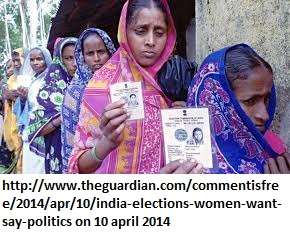
The shorter Oxford English Dictionary defines politics as 'the art and science of government' and as 'that branch of moral philosophy dealing with the state or social organism as a whole'. In this tradition of thought, 'politics' and 'the political' are linked to public life, the state; and political parties.
Women, Governance and Politics
Women's Political Participation: Theories and DebatesUnit-II – Defining Political Participation
But there is widespread recognition of broader and more historically and culturally variable connotations. Vicki Randall identifies the common ground in its relationship to scarce resources and conflict over their distribution. She differentiates the concepts of politics as activity and as relationship. In relation to the arena of public life, feminism has been concerned to expose the gendered nature of political activity, and to win full political participation for women. Basically, feminism is a political project to understand and therefore to change women's inequality and exploitation.
Understanding Participation
Participation is the involvement and consultation of those affected by decisions in the process of decision making. Involvement may include a right to elect representatives, to vote on issues, to campaign and canvass, to decide matters, to veto etc. Participation is related to one's status, education, occupation, income and membership of organization. Participation by both men and women is a key cornerstone of good governance. Participation could be either direct or through legitimate intermediate institutions or representatives. It is important to point out that representative democracy does not necessarily mean that the concerns of the most vulnerable in society would be taken into account in decision making. Participation needs to be informed and organized. This means freedom of association and expression on the one hand and an organized civil society on the other hand. The idea of this participation, assumes greater importance in a democratic system which, indeed, demands it. In International Encyclopedia of the Social Sciences, H. McClosky defines participation as "the principal means by which consent is granted or withdrawn in a democracy and rulers are made accountable to the ruled."
However, in case of female participation, one can find a severe political apathy. Women have remained marginalized and disadvantaged group throughout the globe. The sphere of world politics is no exception to it. J. Ann Tickner, one of the "Scholar-come-Mother Thinker" of the feminist stream of International Relations, is surprised by non-recognition of women's participation and less number of women active in this sphere. Women are not only excluded as active political participators and
Women, Governance and Politics
Women's Political Participation: Theories and DebatesUnit-II – Defining Political Participation researchers but also as subjects of study. In the practical political arena, the supremacy of men and subjection of women exist in most of the societies. After the adoption of democracy in the 20th century by most of the countries in Asia, Africa and Latin American Continent, there is some progress in women's participation in politics. Still, this is not satisfactory.
Studying Political Participation :-
One of the most important ingredients of every political system is 'Political Participation'. It is a known fact that political power in every society is monopolized by a few selective persons. By involving the common people in the affairs of the state, political participation fosters stability and order by reinforcing the legitimacy of political authority.
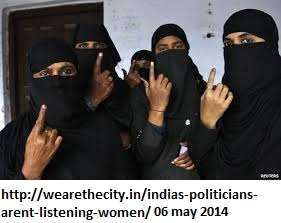
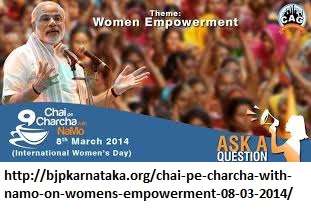
A society in which a major part of the population is denied any participation whatsoever, is likely to be highly vulnerable. That is why even in modern non-democratic political systems, the idea of political participation seems to be well-established. A modern fascist or a modern dictator, notwithstanding whatever power he is free to exercise; will certainly try to cloak his arbitrary decisions with the veil of a mass approval secured through some forms of political participation by the people.
This, however, does not mean that the rate of political participation is always high in modern stable democracies. Indeed a democracy like the U.S.A. reveals a rather poor rate of political participation in comparison with the corresponding rates in other democracies like Australia, New Zealand, Great Britain and the Scandinavian countries.
Women's empowerment and their active participation on the basis of equality in all spheres of life, especially participation in politics, governance, in the decision-making process and policy-formulation are vital for the overall development of society. Let us first of all understand what do we mean by political participation in order to spotlight the problem of women's under-representation in politics. Participation in electoral processes involves much more than just voting. Political participation derives from the freedom to speak out, assemble and associate; the ability to take part in the conduct of public
Women, Governance and Politics
Women's Political Participation: Theories and DebatesUnit-II – Defining Political Participation affairs; and the opportunity to register as a candidate, to campaign, to be elected and to hold office at all levels of government. There is no such thing as a free choice in politics. People's preferences are influenced and conditioned by the social and political context in which they live. One can distinguish three kinds of political participation: Voting, Electoral campaigning and Non-partisan lobbyingparticularly on local community affairs or even particularized contacts with officials to achieve some personal benefit.
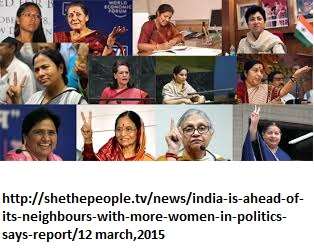
Political participation denotes a series of voluntary activities which have a bearing on the political process that involves issues like the selection of rulers and the various aspects of the formation of public policy. These activities are –