
Part 5
I still have my moments of rage. I remember crossing the campus of a high school in California, on my way to speak to an all-school assembly, and looking around as I walked. The place reminded me of Julie's high school. Suddenly this rage just hit me. So here I was, getting ready to speak to a whole auditorium full of kids about my opposition to the death penalty, and I was thinking to myself, "That bastard doesn't even deserve to live."
I know I don't want Timothy executed, because once he's gone, it will be too late to choose to forgive him.* As long as he's alive, I have to deal with my feelings and emotions. But I do have setbacks, even when I'm sure I want
Bud Welch's protests, Timothy McVeigh was executed by lethal injection on June 11, 2001, in Terre Haute, Indiana.
to forgive. That's probably why I can't handle that word "closure." I get sick of hearing it. The first time someone asked me about closure was the day after Julie's burial. Of course I was still in hell then. In a way, I still am. How can there ever be true closure? A part of my heart is gone.
Bud has been an inspiration to me from the very first time we met, and each time I see him, I sense an increased determination to make the best he can of the tragedy that hit him. While it was grief that first led him to visit the family of his daughter's killer, it is her life-affirming spirit that drives him now. And even if he hasn't yet found the full measure of healing he seeks, his journey – like every journey of forgiveness – is one of hope:
It's a struggle, but it's one I need to wage. In any case, forgiving is not something you just wake up one morning and decide to do. You have to work through your anger and your hatred as long as it's there. You try to live each day a little better than the one before.
Making Ripples
Love in action is a harsh and dreadful thing compared with love in dreams. Love in dreams is greedy for immediate action, rapidly performed and in sight of all. Men will give their lives if only the ordeal does not last long…with all looking on and applauding. But active love is labor and fortitude.
For years, whenever I heard the name Rwanda, my reaction was almost instantaneous. The word genocide jumped to mind, and with it, horrifying images from 1994, when whole villages were wiped out in one of the worst masskillings in recent history. Today, hearing the same name, a very different word comes to mind: forgiveness, and its capacity to redeem even the darkest chapters of human history. The change in my reaction came in 2008, after meeting Jean-Paul Samputu.
193 193
A world-class musician with a busy concert schedule, Jean-Paul has been compared to Paul Simon, and sung everywhere from rural Africa to New York City's Lincoln Center. He has won numerous honors, including the prestigious Kora Award. But it wasn't his music that caught my attention. It was his journey from anger and hatred to forgiveness and joy...
Think about it: one million people were murdered in ninety days! Friends killed friends, brothers killed brothers, sisters killed sisters, and children killed their parents. Parents killed their children, and husbands killed their wives…
Meanwhile, I was touring in Burundi and Uganda – I was well known in Rwanda, and my father had advised me to flee. But I came back in July 1994, at the end of the genocide.
I already knew that my parents were dead – they had been killed in Butare, our home village south of the capital, in May. Three of my brothers had also been killed, and my 34-year-old sister. It was horrible.
My family is Tutsi, and our neighbors were killing our people. But since my sister was married to a Hutu, I thought she would be safe. She wasn't. They killed her little by little, over three days. There are many things I am not able to talk about…
When I got back to Rwanda, I travelled to Butare, and went to my father's house. It was empty. I looked for the neighbors. There was no one around. There were bodies
M A K I N G R I P P L E S everywhere. And the smell! Eventually I found some survivors, and learned who had killed my parents. It was my best childhood friend, Vincent. We had grown up together, played soccer together. I was stunned; it totally destroyed me.
Virtually everybody – every Tutsi – lost family members in 1994. But to think that my parents had been killed by my best friend! I lost my mind. I started to drink and use drugs. I would drink a whole bottle of waragi, an African gin, every day. I used to wonder why I didn't die. Now I know.
For the next nine years I lived in a daze. The anger, pain, and bitterness was totally devastating. There was a war going on in me, tearing me apart. I couldn't sing any more because I was always drunk. I couldn't honor contracts; I was never ready to go on stage.
I went to Uganda, and friends tried to help me. They brought me to one witch doctor after another, but nothing helped. I was angry with myself, and with God. "Where were you, God?" I asked over and over. "How could you permit such things to happen?"
Around this time my wife had a child, Claudia. The baby was severely disabled. That made me even angrier. I blamed God. It destroyed us to have that child, and my wife and I accused each other…
In 1998 the Samputus moved to Canada. They settled in Montreal, home to a sizeable community of Rwandan immigrants, and had another child. In 2000, they separated. Jean-Paul returned to Africa.
I went to Uganda – I was a star there – and put on a big concert. I made money again. But because of my drinking and drugging, I kept landing up in prison. I was in and out, in and out. I know all the prisons there: I did time in all of them.
Finally one of my brothers paid a lot of money to have me released, and I went to join him in Kenya, where he lived. While I was there, a friend of his wife's family, an evangelist named Moses, visited. He said he had come because of me – that God had told him to find me and pray for me.
I was hesitant, but I listened, and then I let him pray over me. To be honest, I was ready for anything at this point. I didn't have any choice. Nothing else had worked.
Moses' prayers were powerful. He helped me overcome my alcoholism and drug addiction by commanding the demons to leave me. He prayed, "Come out of him, in the name of Jesus." Whenever he said the name of Jesus, I felt something strange. Often I fell down, and sometimes I would even vomit. It is hard to describe. All I can say is that when this man prayed, it was unbelievably powerful.
At first, I told him, "You are the best of the best witch doctors." (That was the only thing I knew.) He laughed: "No, I am not a witch doctor." And when I thanked him, he insisted he had done nothing but pray. "Don't thank me. I am not your healer. It is Jesus." Soon I was longing for Jesus. I wanted to find out more about him, who he was. Three months later I stopped drinking, I stopped doing drugs.
In 2003 I went back to Uganda. I was now a Christian, and all the newspapers wrote about it, just like they had earlier, when I had gone to prison. It was a big story: "Samputu changes his life." "Samputu believes in prayer." I went to Sseguku, Uganda's famous Mountain of Prayer. People go there from all over to be with God. I spent three months alone there, trying to find Jesus.
On Sseguku I prayed and prayed, and asked God all my questions. I always received the same answer. It would come to me in dreams, through a voice that I seemed to be talking with. This happened night after night, and the message was always the same: You have to forgive.
I used to go to a church on the mountain, and there I would find the same thing being preached. I did not want to hear it, but it was inescapable. Again and again, I would hear this voice telling me, in my sleep, "You will be healed only when you forgive." But I kept resisting for at least another year.
Again, I was Christian: I had stopped drinking. I was no longer doing drugs. But I was not fully delivered or healed. I was "okay," but there was still bitterness deep inside me. And that was the problem. Because it is not enough to be a Christian, or even to know the whole Bible. That's only half the program. The important thing is to live what you know – to live the truth.
For me this meant one thing: I had to repent and go pay the debts I had everywhere. I had to ask forgiveness for where I had hurt others. I had to forgive Vincent, and I had to forgive my wife.
It was a hard battle. I kept saying No. No! It took months. Then one day it all became too much. I had to give in, to say Yes. I told myself, "I'm ready, right now, to forgive Vincent." With that, I was delivered – totally healed, and freed from everything in my past. I had peace in my heart. All this, just because I had finally said Yes to that voice. I called my wife. I went to look for Vincent. He was in prison, but I found his wife, Regina, and told her to tell Vincent I had forgiven him…
When I asked Jean-Paul to pinpoint what made him forgive his old friend, he said he was worried that he himself was turning into a murderer:
It's a good thing I didn't find Vincent before I did. I had never harmed another person, but in my head, it was what I planned to do. I was going to kill him. And if I hadn't been able to do it myself, I was going to ask someone else to do it for me. That's where hatred leads: you end up becoming a killer yourself, even if you don't have any idea how to kill.
When I did finally forgive Vincent, he had trouble believing me. He said to his wife, "How on earth can he do this? After what I did?" He was sure it was a trick, a political ploy. But his wife told him, "I have talked with Samputu. If you don't accept his forgiveness, that's your problem. But let me tell you one thing. It's not him who's forgiving you. It's God. It's grace."
In the end, Vincent believed me, and this brought about a remarkable thing. Earlier, his wife would not
M A K I N G R I P P L E S allow him back into the house. She couldn't see living with an unrepentant killer. But after Vincent accepted my forgiveness (he saw that it was really God) he was able to repent and to forgive himself. And after that, Regina also forgave him. She said, "If God can forgive you through Samputu, I should be able to forgive you too." And their children also forgave him. He is now at home. The family is together. When I go there I eat with them. That's how the power of forgiveness works.
Jean-Paul's transformation also brought his own family together again. In 2005, he rejoined his wife and children in Canada.
Since then many miracles have happened in my life. God spoke through our disabled daughter's caregiver, and showed us that she was not a cripple but an angel. She said, "God created Claudia, and in his eyes there is nothing wrong with her. You feel bad that you have such a child. You don't even want to look at her. You should be proud of her."
The next time I went to see Claudia (she is not able to live with us, but lives in a special facility), I cried, and my son saw me crying. "Why you crying?" he asked. Then we prayed with her. I could finally say, "God gave me this child."
Through Claudia's caregiver, I came to feel that I am blessed to have such a daughter. And today, instead of accusing each other for our child's condition, my wife and I know what a treasure she is. Now I know why I didn't
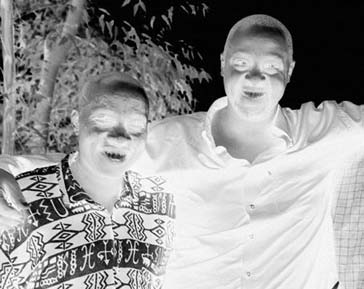
Vincent Ntkirutimana and Jean-Paul Samputu die when I was trying to kill myself with drugs and drink. God saved me to be a father.
As Jean-Paul's story (and almost every other in this book) bears out, forgiving is a deeply personal matter. Ultimately each of us must find healing within, on our own terms, and in our own time. On another level, however, forgiving is much more. Even if its power connects people one by one, the resulting "ripple effect" can be felt on a much broader scale. In fact, forgiveness can be a powerful social force, transforming and empowering whole groups of people.
Historically, Martin Luther King's role in the Civil Rights Movement, and Gandhi's in India's struggle for independence, are the most familiar examples of this. But there are plenty of others. Volumes could be written about South Africa's Truth and Reconciliation Commission, and the hearings it organized in the mid-1990s. Under its guidance, hundreds of victims and perpetrators of the country's brutal apartheid policies came forward to face the past, in hopes of redeeming it and building a more stable society.
In 1999 (and again in 2000) my wife and I travelled through Northern Ireland as participants in a special "Journey for Peace" and met hundreds of adults – and even more inspiring, hundreds of children there – who had come together to heal the wounds of the region's so-called Troubles by promoting dialogue and reconciliation between Catholic and Protestant citizens.
Almost ten years later, the same thing is happening in Rwanda. Take Nyamata, for example, a town south of Kigali. When the genocide began in the spring of 1994, Mukamana, a Tutsi teen, and Aziri, a Hutu farmer, found themselves in opposite camps.
Returning from the well one April day, Mukamana found that her entire family had been hacked to death with machetes. She hid in a field, and later fled to Burundi.
Aziri, the farmer, did not take part in this particular massacre, but later confessed to killing others in the area.
Today, the two are neighbors again, and even go to the same church on Sundays. "We help each other," Aziri told a reporter from IRIN, a news service affiliated with the United Nations. "When a member of one family is sick, we drop by." Even more significant, he says, "Our kids are friends."
Along with about forty other families in Nyamata, Mukamana and Aziri are members of a community where genocide survivors and confessed perpetrators live side by side. The settlement, which they call Imidugudo ("reconciliation village") was started by Steven Gahigi, an Anglican clergyman whose mother, father and siblings were all killed in 1994.
Gahigi thought he had lost his ability to forgive: "I prayed until one night I saw an image of Jesus Christ on the cross…I thought of how he forgave, and I knew that I and others could also do it." Inspired by his vision, Gahigi began preaching forgiveness. He did this not only in Nyamata, but in the prisons where Hutu perpetrators sat awaiting trial. (Thousands were released by the government in 2003, to relieve overcrowding.)
Learning to forgive has not been easy, the villagers say. "For a long time I did not think I could ever forgive," Mukamana admits. But wherever people are willing to face the past honestly, old wounds can be healed, and amazing things can happen. That is what seems to make forgiveness
M A K I N G R I P P L E S possible in Imidugudo, where people even speak to their own children about their roles in 1994. "Genocide has enormous consequences both for those who did it, and for those who survived," says Xavier Namay, an admitted perpetrator. "My children must know what I did so they can rebuild this country positively."
Similar initiatives have popped up elsewhere around the globe in recent years. From Israel to Indonesia, from Baghdad to the Balkans, groups like Christian Peacemaker Teams, the American Friends Service Committee, and other nongovernmental organizations are promoting reconciliation as the only way to overcome ethnic strife. In most cases, their achievements are modest, given the scope of the problems they are tackling. Victories are often followed by setbacks, and by accusations of unfounded optimism or idealism. In Rwanda, for instance, where I attended a conference on forgiving in February 2009, I met plenty of people who are giving their energies to build a new society built on love and trust. But they are still far outnumbered by people who claim that reconciliation is an empty dream. Some of these people openly promote the old ideologies that led to genocide. In the face of such realities, Jean-Paul is matter of fact:
It's true that the cycle of violence often seems endless. Each incident produces another. Each person or group of people seems to have their own enemy. Ironically, those
"enemies" are often not even around anymore. In many cases, they're not even alive. To me, the real enemy is one we all face: the anger and bitterness we carry around with us during the day; the fear and anxiety we sleep with at night. We don't need other people! We are killing ourselves.
People are still imprisoned: by fear, anger, mistrust, suspicion, and revenge. There is still bitterness and resentment, and the racist theories that led to the mass killings of 1994 are still being taught in our schools. People who spent years behind bars are now coming home, and if you meet one of them – if you meet somebody who killed your cousin, your uncle, or your mother, and you talk with him – you can't talk like you did before. It's impossible, without love. Only love can deliver us from old hatreds and bondages and bring about true healing.
People all over the world are hurting like this – not just in Rwanda. Tragically, they act as if there is no way out. They say, "Things happen." "That's the way life is." They won't talk about the solution, which is forgiveness. Only a culture of forgiveness can stop the cycle of violence and despair and set into motion new cycles of hope and love.
This will not happen overnight, because forgiving is a very personal choice. It takes soul-searching. People need to be shown why they should go to all the trouble. They need to hear stories of forgiveness, so that they can be touched. And they need a vision of how things could be, in order to give them hope.
Such a vision is the essence of an old freedom song I remember from the Sixties, which went, "One man's hands can't break a prison down / Two men's hands can't break a prison down / But if two and two and fifty make a million / We'll see that day come 'round…" This is the hope that has led victims and perpetrators of "ethnic cleansing" in a handful of villages in Kosovo to come together and till the soil in communal gardens; it is what prompted Christian survivors of Muslim persecution in 1998–1999 in the Maluka Islands of Indonesia to forgive those who burned their homes and raped their wives and daughters.
It is also what continues to inspire other creative impulses around the world, such as a theatre project in Pittsburgh in the summer of 2008 which brought together Israeli Jews, Arab Muslims, and American Christians to build community. Using "playback," a dramatic form that encourages story-telling, potential antagonists were invited to imagine walking in each other's shoes, and to bat around new solutions, rather than just rehash old problems. (Afterward, participants planned to take what they learned back home, for use as a peacemaking tool.)
"There's so much fear, misunderstanding and hurt," says Roni Ostfield, the director of the project. "And it's real pain. But our hope is always that if one person's heart is open to communication with the other side, maybe that person can touch ten other people, and it can grow from there."
And why shouldn't it? The anthropologist Margaret Mead once admonished, we should "never doubt that a small group of committed people can change the world… Indeed, it's the only thing that ever has." Mead's words rang true in a new way a few years ago, in the wake of the socalled Amish School Massacre.
On October 2, 2006, a milk-truck driver named Charles Roberts walked, unannounced, into a one-room Amish school near his home in eastern Pennsylvania and ordered the boys and the teacher to leave. After tying the legs of the remaining girls, Roberts prepared to shoot them executionstyle, with an automatic rifle and four hundred rounds of ammunition that he brought for the task.
The oldest girl, a thirteen-year-old, begged Roberts to "shoot me first and let the little ones go." Refusing her offer, he opened fire on all of them, killing five and leaving the others critically wounded. He then shot himself as police stormed the building.
No one may ever know his real motive, but Roberts apparently told the children in the school that he was angry at God for taking his little daughter, who had died as a baby several years earlier.
Within hours, the story captured the attention of news media around the world. By evening, television crews had
M A K I N G R I P P L E S clogged the small village of Nickel Mines. They stayed for almost a week, until the killer and the victims were buried.
Brutal as it was, the massacre itself was soon eclipsed by a remarkable second chapter to the story: the forgiving attitude of the families who had lost their daughters. In fact, the blood was barely dry on the schoolhouse floor when members of this deeply religious community approached the parents and the widow of the gunman to offer their sympathy and to ask how they were doing. It went beyond talk – the Amish even set up a fund for the shooter's widow and her children. Food, too, was collected for the gunman's family. On the same day of the massacre, a reporter came across an Amish man making the rounds of several local farms, gathering donations. Most surprising, grieving families accounted for about half of the people who attended the killer's burial, during which they again reached out to his widow, Marie, and her three children.
"Outsiders" generally admire the Amish, but in this case, many found their response to the killings hard to believe. As one TV anchor said, "All religions teach forgiveness. But no one really does it, like the Amish are trying to. What is the difference?"
I don't think it was easy for the Amish to forgive. I know many, and I have friends who know some of the affected families. They are no saintlier than others: indeed, for them, as for most people, forgiving was not a one-time decision.
It took struggle and re-commitment, sometimes daily. One of the victims spent months in a coma; others were braindamaged, and will always require special nursing care. Some of the families are so fearful that they are still schooling their children at home. Everyone involved will be dealing with the residue of that horrifying morning for the rest of their lives.
But as far as open anger or hostility goes, the Amish hold, as they have for centuries, that it is destructive – a waste of energy that will hold them hostage and ultimately kill them, just like their daughters were held hostage and killed by someone else's anger. To these devout followers of Jesus, the only answer is the one he offered on the Cross: "Father, forgive them, for they know not what they do."
Jesus' attitude is not a popular one in our day, even in religious quarters. And in the rare instances where it is promoted publicly, the response is often skeptical, if not downright cynical. Such was the case in 2005, when the Serbian Orthodox Church surprised observers across Europe by asking forgiveness for its support of Milosevic's regime. "We honestly offer our Albanian co-citizens reconciliation and mutual forgiveness," it said in the opening sentence of a public statement.
Critics belittled the apology as a political move, but there were others who embraced the chance for dialogue. They
M A K I N G R I P P L E S noted that whatever its effect, it was the first such attempt to honestly address the hatreds that had led to one atrocity after another across the region for most of the previous decade.
Naysayers similarly questioned the sincerity of Australian Prime Minister Kevin Rudd when, in early 2008, he made a public apology to his country's aboriginal peoples for the government's longstanding policies of racial segregation, containment, and de facto abuse. Others welcomed the Prime Minister's words. One was Fr. Michael Lapsley of South Africa:
Of course, an apology does not take away the truth of the wrong that was done and the pain that continues to be felt through the generations by indigenous Australians. Nevertheless there is no doubt that this representative acknowledgment…can be balm in the wounds, a major step and a turning point on the long journey towards restorative justice and healing for all…
Over the years I have heard many of you speak about your own sense of guilt and shame about what happened in your country's history. Today I am sure that many of you shed tears of joy that finally the day has come in a dignified way to squarely face the horror of what happened and to travel a new journey.
Fr. Lapsley was not responding as a mere observer. Persecuted by the South African government for fighting apartheid,
this activist priest and internationally-known advocate of "restorative justice" had been banned from the country and then lost both hands and an eye in a parcel bomb explosion. Since then, he has worked with victims of torture and founded Cape Town's Institute of Healing Memories, where he counseled hundreds of survivors of violence. He realized that an apology – any apology – is singularly important because it often represents the first crucial step without which dialogue, let alone forgiveness, can never develop.
Fr. Lapsley's work in Cape Town is invaluable far beyond its environs, because it shows us what the path to reconciliation can look like, not just in the face of personal trauma, but also between whole peoples with a centuries-old history of hatred and warfare.
In a nutshell, this work includes listening to people scarred by violence, whether perpetrators or victims, and helping them to deal with their emotions. It means turning them toward reconciliation, and teaching them about forgiveness. It seeks to respect the diversity of ethnic and religious cultures on our planet, and acknowledges that all people are spiritual beings and have intrinsic worth. Finally, it sees that there is no route forward without the willingness of all former enemies to share responsibility for the past, and to recognize that every human is capable of being both a victim and a victimizer.
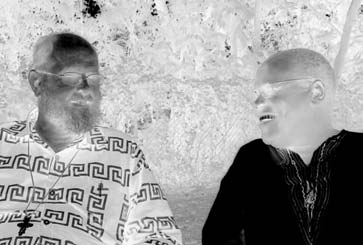
Father Michael Lapsley with Bishop Onweng of Northern Uganda
To face oneself in such a way – to see in oneself the possibility of becoming one's own worst enemy – is a very hard exercise. But it is also liberating. Because as every chapter of this book amply illustrates, there is no victory without struggle, no redemption without remorse, and no healing without pain. There is no such thing as spring without winter. Unless, as the Gospel puts it, the seed dies and is buried, there will be no new grain.
In a world driven by fast-paced excitement and highlevel anxiety, the long, hard work of rebuilding a village torn apart by genocide rarely makes the evening news. Similarly, as I know from my own work speaking about forgiveness in schools, an assembly on non-violence will never attract reporters, whereas a shooting will bring a school instant and
lasting notoriety. But why should success be measured by coverage or publicity?
Dorothy Day, an old acquaintance of mine who worked for decades among New York City's poor, said that in trying to change the world the biggest obstacle is never other people or institutions, but our own sense of discouragement and futility. "We can change the world, to a certain extent," she admonished in a newspaper column. "We can throw our pebble in the pond and be confident that its ever-widening ripples will reach around the world."
I am sure that there are more stories of love and forgiveness in the world than there are stories of hatred and revenge. How long will you wait to let yours be heard? When are you going to throw your pebble in the pond and start making ripples?
At the beginning of this book I wrote about a man who had murdered a seven-year-old girl and asked, "Can such a man be forgiven?" In the years since I first met him, he has undergone a remarkable change. Whereas at first he was emotionally numb and tended to see his crime as the inevitable result of society's ills, he later began to accept responsibility for his own actions. He began to agonize over his need for forgiveness – to weep for others, rather than for himself. Then, gradually but unmistakably, I watched as his remorse worked wonders: he was able to confront the gravity of his deeds, accept the full weight of guilt, and experience a remarkable peace of heart – the peace the Gospels speak of, which "transcends human understanding."
Can such a man be forgiven? If we truly believe in the transforming power of forgiveness, we must believe that he can. For even if his victim's family insists on withholding their forgiveness, redemption can also come from God – and in the case of this man, it is hard to deny the fact that he has experienced its blessing.
Of course, we can never belittle the agony his victim underwent, and the pain her family must still bear. All the remorse in the world cannot undo the crime of murder. But neither can we write off a person like this as hopeless and deny him the opportunity to change. No matter how
213 213
repeatedly we ourselves stumble or fall, we still want others to forgive us, and to believe that we can change. As Jesus of Nazareth put it so many centuries ago, "Let him who is without sin cast the first stone."
Forgiveness is power. It frees us from every constraint of the past, and helps us overcome every obstacle. It can heal both the forgiver and the forgiven. In fact, it would change the world if we allowed it to.
Each of us holds the keys to forgiveness in our hands. It remains to us whether or not we choose to use them.
Johann Christoph Arnold's books on children, marriage, death, peacemaking, and forgiving have sold over 400,000 copies in English and been translated into numer ous languages. A writer with an uncommon wealth of experiences and personal insights, he is also a pastor, and has counseled (with his wife, Verena) thousands of individuals over the last thirty years, including married couples, children, and teens; addicts, prison inmates, and law enforcement officers; educators and students; and the terminally ill.
Arnold is a frequent guest on talk shows and a popular speaker at schools and conferences across the country on the role of forgiveness in nonviolent conflict resolution, and on its importance as a step to reconciliation. An outspoken social critic, he has participated in initiatives for peace and justice around the world. Recent journeys have taken him to Europe, the Middle East, Central America, Southeast Asia, and Africa – and into schools, hospitals, prisons, and refugee camps.
Arnold and his wife have eight children and almost fifty grandchildren, and live in upstate New York.
215 215
Andrea (lost 3 babies) 145
Fielder, Glenn 5
Angelo 19
Foley, Mary and Charlotte 73
Arendt, Hannah 152
Francis of Assisi 47
Arnold, Eberhard 61, 142
Fransham, Delf, Katie, Nicholas 152
Arnold, Heinrich and Annemarie 110
Freud, Anna 161
Arnold, Johann Christoph xiv, 103, 113,
Gahigi, Steven 202
118, 143, 213, 215
Garrett, Hashim 24
Arnold, Verena 118, 215
Ghaidaa (Baghdad bomb survivor) 30
Ateek, Naim 43
Harvey, David 155
Awad, Bishara 41
Heaney, Seamus 16
Aziri, (Hutu farmer) 201
Jackson, Jimmie Lee 53
Beatriz 73
Jaeger, Marietta and Susie 92, 100
Ben-Eliezer, Josef 37
Jane (embittered wife) 3
Bernall, Brad and Misty 98
Jared (victim of racism) 34
Bernall, Cassie 98
Jones, Shavod 175
Blake, William 102
Julie (divorcee) 95, 100
Blumhardt, Johann Christoph 169
Kate (alcoholic mother) 135
Bonhoeffer, Dietrich 117, 163
Keiderling, Karl 131
Brenda (alcoholic) 3
Kelly (jilted fiancée) 94
Bridges, Ruby 56
Kennedy, Robert F. 179
Calonga, Alice 180
King, Carroll and Doris 30
Carlson, Ron, Deborah 86
King, Martin Luther 50, 179
Carrier, Chris 80
Kinkel, Kip 72
Chadwick, Bill and Michael 69
Lapsley, Fr. Michael 209
Chergé, Christian de 57
Lewis, Barbara 97
Christensen, James 56
Lewis, C. S. 65, 102, 121
Coleman, Anne 13, 97, 100
Macdonald, George 92
Coleman, Daniel 14, 97
Mandela, Nelson 1
Coleman, Frances 13, 97
Maria (child abuse victim) 133
Coles, Robert 56, 161
Mark and Debbie (author's friends) 164
Confucius 13
McAllister, David 83
David (Holocaust survivor) 61
McDonald, Steven, Patti, Conor ix, 172
Day, Dorothy 212
McVeigh, Bill, Timothy 189
Don (child abuse victim) 129
Mead, Margaret 206
Dostoevsky, Fyodor 45, 167, 193
Meier, Hans and Margrit 121
Ed and Carol (adultery) 124
Mother Teresa 117
Ehrlich, Hela 35
Mukamana (Tutsi teen) 201
216 216
Sher, Saira 180
Nouwen, Henri J. M. 128
Solzhenitsyn, Aleksandr 32
Ntkirutimana, Vincent 195
Staines, Gladys and Graham 48
Ostfield, Roni 205
Stephen (martyr) 45
Paton, Alan 5, 79
Steve (author's friend) 166
Pat (Vietnam veteran) 160
Stober, Clare 106
Peck, M. Scott 116
Susan (embittered daughter) 138
Phuc, Phan Thi Kim 157
Terry (prison inmate) 184
Plummer, John 157
Thomas, Piri 18
Rhoads, Jon, Gretchen, Alan 147
Tolstoy, Leo 165
Roberts, Charles 206
Tucker, Karla Faye 86
Rodriguez, Roberto 65
Welch, Bud, Julie 187
Ross, Michael 167
Williams, Charles 9
Rudd, Kevin 209
Wilson, Gordon, Marie 16
Samputu, Jean-Paul 193
Shakespeare, William 79