
Part 2
In my heart I heard Jesus' words, "How often did I want to gather you, and you would not." I felt the power of these words and knew that it could unite people across every barrier – people of all nations, races, and religions. It was an overwhelming experience. It turned my life upside down, because I realized that it meant the healing of hatred, and the forgiveness of sins.
In my new faith, I have experienced the reality of forgiveness. And I ask myself, "How, then, can you not forgive others?"
E N D I N G T H E C Y C L E O F H A T R E D
Like Josef, and like so many others on both sides of the Arab-Israeli conflict, Bishara Awad, a Palestinian acquaintance of mine, has been wounded by his share of injustices. Speaking about his life-long struggle to forgive, he once told me:
In 1948, during the terrible war between the Arabs and the Jewish settlers, thousands of Palestinians died and many more became homeless. Our own family was not spared. My father was shot dead by a stray bullet, and there was no decent burial place. No one could leave the area for fear of getting shot at by either side; there was not a priest nor a minister to say a prayer. So Mother read to us from the Bible, and the men who were present buried my father in the courtyard. There was no way they could have taken him to the regular cemetery in the city.
Mother thus became a widow at the age of twenty-nine, and she was left with seven children. I was only nine years old. For weeks we were caught up in the crossfire and were unable to leave our basement room. Then one night, the Jordanian army forced us to run to the Old City. That was the last time we ever saw our home and our furniture. We ran away with nothing but the clothes on our backs, some of us only in pajamas…
In the Old City we were refugees. We were put in a kerosene storage room that had no furniture. A Muslim family gave us some blankets and some food. Life was very hard; I still remember nights when we went to sleep without any food.
Mother had been trained as a nurse, and she got a job at a hospital for $25 a month. She worked at night and continued her studies during the day, and we children were put in orphanages.
My sisters were accepted in a Muslim school, and we boys were placed in a home run by a British woman. To me, this was a real blow. First I had lost my father, and now I was away from my mother and my family. We were allowed to visit home once a month, but otherwise we stayed at the boys' home for the next twelve years. Here, with my two brothers and eighty other boys, my suffering continued. We never had enough to eat. The food was terrible and the treatment harsh.
As an adult, Bishara went to school in the United States and became an American citizen. Later he returned to Israel and took a job teaching in a Christian school. Looking back, he says:
That first year I was very frustrated. I did not accomplish much and I felt defeated…There was mounting hatred against the Jewish oppressors: all of my students were Palestinians, and all had suffered in the same way I had…I wasn't able to help my students, because of the overriding hatred in me. I had harbored it since childhood without even realizing it.
One night I prayed to God in tears. I asked forgiveness for hating the Jews and for allowing hatred to control my life…Instantly he took away my frustration, hopelessness, and hatred and replaced it with love.
E N D I N G T H E C Y C L E O F H A T R E D
In a culture that emphasizes self-preservation and individualism, forgiveness is scoffed at so routinely that most people never stop to really consider its potential to heal wounds such as the ones Bishara described, or to lift the burden of their memory. Instead they sit tight: cramped, trapped, unable to move forward. Whether they do so out of a conscious refusal to forgive, or are simply unable to let go of their pain, it doesn't matter. Either way, they remain inwardly bound. And in the end, there is only one answer to their torment: to keep the hope of freedom in front of them, and to go on believing for them when they lose heart. To quote Naim Ateek, a Palestinian priest in Jerusalem whose life story mirrors Bishara's in several ways:
Bishara Awad
When people hate, its power engulfs them and they are totally consumed by it…Keep struggling against hatred and resentment. At times you will have the upper hand, at times you will feel beaten down. Although it is extremely difficult, never let hatred completely overtake you…
Never stop trying to live the commandment of love and forgiveness. Do not dilute the strength of Jesus' message; do not shun it; do not dismiss it as unreal and impractical. Do not cut it to your size, trying to make it more applicable to real life in the world. Do not change it so that it will suit you. Keep it as it is, aspire to it, desire it, and work for its achievement.
Indeed, far from leaving us weak and vulnerable, forgiveness is empowering, both to the person who grants it and the one who receives it. In bringing relief to the most difficult situations, it allows us to lay aside the riddles of retribution and human fairness, and to experience peace of heart. Finally, it sets into motion a positive chain reaction that passes on the fruits of our forgiveness to others.
Bless Your Persecutors
At some thoughts one stands perplexed – especially at the sight of men's sin – and wonders whether one should use force or humble love. Always decide to use humble love.
If you resolve to do that, once and for all, you can subdue the whole world. Loving humility is marvelously strong, the strongest of all things, and there is nothing else like it.
In a passage of the Gospels known as the Sermon on the Mount, Jesus teaches us not only to love our enemies, but even to "bless" those who persecute us. It wasn't just a sermon. As his unmistakably compassionate plea from the cross shows – "Father, forgive them, for they know not what they do" – he practiced what he preached. So did Stephen, the first Christian martyr, who prayed much the same thing as he was being stoned to death: "Father, do not hold this against them."
45 45
Many people dismiss such an attitude as self-destructive foolishness. How and why should we embrace someone intent on harming or killing us? Why not fight back in selfdefense? When I showed an earlier version of this book to a prison inmate I've corresponded with for years, he reacted in just this way:
I cannot imagine myself ever asking the oppressed – whether Jews, Native Americans, or any other persecuted peoples throughout history – to forgive their oppressors. Who can dare?
I hear you answer: "Jesus!" But when I look at the Jews, I see that it was precisely the followers of Jesus – so-called "Christians" – who became their deadliest enemies, who herded them into the ghettoes of Europe, and when the ghettoes filled, into the ovens of Auschwitz, while millions of Christians stood by in silence. As for the Native Americans, this nation pushed them to the edge of extinction, herded them into reservations, onto the worst lands.
It's easy for folks who live in a virtual paradise, who have enough to eat, farms, land, nice homes, businesses, etc., to preach about forgiveness. But is it really fair to say that to people who live in hellholes – jobless, threatened by imminent death by starvation – people who are, as Frantz Fanon put it, "the wretched of the earth"? Are they to forgive the fat, well-fed millions who voted for their starvation? Who voted for war? Who voted for prisons? Who voted for their perpetual repression? Who wish, in their heart-of-hearts, that they were never born?
B L E S S Y O U R P E R S E C U T O R S
Should they forgive them for the repression to come? For the genocide that is to come?
"Lord, forgive them for what they do, even though they and their ancestors have been doing it for five hundred years…" Can you really embrace such a prayer?
It is for this reason that my heart has been called to political action: to change hellish realities, and to try to transform this world from the hell it is for billions of her inhabitants. Change those conditions, and then perhaps forgiveness can be born.
These words may seem overly harsh to some, but they are significant because their writer holds a perspective unlike that of anyone else in this book. Some twenty-five years ago, in a politically charged trial whose fairness is still being debated in higher courts, he was convicted of murder – many say framed – and sentenced to death. If there is anyone who has a lot to forgive, it is this man. His challenge – how dare the "Christian" world expect forgiveness from the oppressed, while turning a blind eye to the systems of injustice that hold them down – is a valid, vital one. To me, it is answered, at least in part, by a saying attributed to Francis of Assisi: "Preach the gospel at all times. If necessary, use words." In relation to forgiving, this thought brings home an essential issue: so long as we merely theorize about it, admire it, or demand it of others, forgiveness is meaningless. Its real power (as the next story shows) is unleashed only when we are willing to actually practice it.
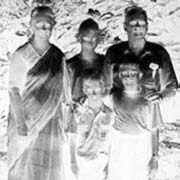
After more than thirty years working with lepers in India, Gladys Staines, a nurse, and her husband Graham, a missionary, had seen plenty of death and dying. But nothing could have prepared her for the night in January 1999 when her husband and their two sons, Philip (10) and Timothy (6) failed to return home from a religious retreat – or for the day after, when news came that their bodies had been found in the family jeep, burned beyond recognition. Nor were the friends who stood with her that harrowing morning prepared for her response. According to a report in The New York Times:
Mrs. Staines shook with grief and, for a time, moved very slowly, as if struggling to part her way through the air. She seemed to be impaled in the middle of a thought, which finally, with quavering voice, she shared. "Whoever did this, we will forgive them," she said.
That sentiment – that example of her living faith – has been widely praised in India, a nation often rent with religion-based violence, most frequently between Hindu and Muslim. D. P. Wadhwa, a Supreme Court judge heading an inquiry into the deaths, and their link to a wider outbreak of anti-Christian attacks, commended Mrs. Staines. "By her conduct, she has put to shame, if they have any shame, not only the perpetrators of the crime but all those who directly or indirectly may have sympathy for them," he said.
Mrs. Staines…has decided to carry on her husband's work, running a home for leprosy patients here in
B L E S S Y O U R P E R S E C U T O R S
Baripada, a dusty, trafficclogged city in the eastern state of Orissa. And she will continue to tell people the "good news," as she confidently calls it, that…God is fair and just, and that divine purposes exist in all that goes on, even if those pur-
poses are at times elusive.
Gladys and Graham Staines with
Indeed, she has yet to fathom why God has taken her sons and husband. Questions leap into her mind – a tumble of thoughts – but she tries to set them aside rather than pursue answers. "I ask myself, do I dwell on the type of death they had? Were they killed first or burned alive? Am I angry? Am I not? I don't know. I cope by not allowing myself to do much thinking. At times I become overcome with sadness. They're not here. I can't play with my boys. Day by day, I start with the Bible, reading prayers. Previously, I could talk to my husband before going to bed. Now I talk to God, pour out my heart to Him, and He gives me the strength and wisdom to go on."
Philip, Timothy and Esther
Of those who murdered her husband and boys, she went on, "I can forgive their deeds, but I cannot forgive their sins. Only Jesus can forgive their sins. And they will have to ask."
After the funeral, which was attended by thousands, Mrs. Staines and her 13-year-old daughter, Esther, the
family's two survivors, faced the throng that had accompanied them to the cemetery and sang a favorite hymn. "Because He lives, I can face tomorrow," the words went. "Because He lives, all fear is gone."
Though unfathomable to many, Gladys Staines's understanding of forgiveness is not unheard of. It has been embraced by countless persecuted minorities throughout history, from the earliest Christian believers, to the Anabaptists of the radical Reformation, to our century's followers of Tolstoy, Gandhi, and Martin Luther King. It is probably best explained in this passage from King's book Strength to Love:
Probably no admonition of Jesus has been more difficult to follow than the command to love our enemies. Some people have sincerely felt that its actual practice is not possible. It is easy, they say, to love those who love you, but how can one love those who openly and insidiously seek to defeat you…?
Far from being the pious injunction of a Utopian dreamer, the command to love one's enemy is an absolute necessity for our survival. Love even for our enemies is the key to the solution of the problems of our world. Jesus is not an impractical idealist; he is the practical realist…
Returning hate for hate multiplies hate, adding deeper darkness to a night already devoid of stars. Darkness cannot drive out darkness; only light can do that. Hate cannot drive out hate; only love can do that. Hate multiplies
B L E S S Y O U R P E R S E C U T O R S hate, violence multiplies violence, and toughness multiplies toughness in a descending spiral of destruction…
Love is the only force capable of transforming an enemy into a friend. We never get rid of an enemy by meeting hate with hate; we get rid of an enemy by getting rid of enmity. By its very nature, hate destroys and tears down; by its very nature, love creates and builds up. Love transforms with redemptive power.
King's commitment to love as a political weapon grew out of his faith, but there was a good streak of pragmatism in his thinking as well. He knew that he and other AfricanAmericans involved in the civil rights movement would have to live for decades to come with the same people they were now confronting. If they let their treatment embitter them, it would soon lead to violence, which would only lead to new cycles of repression and embitterment. Rather than breaking down the walls of racial hatred, it would build them higher. Only by forgiving their oppressors, King said, could AfricanAmericans end the "descending spiral of destruction." Only forgiveness could bring about lasting change:
We must develop and maintain the capacity to forgive. Whoever is devoid of the power to forgive is devoid of the power to love. It is impossible even to begin the act of loving one's enemies without the prior acceptance of the necessity, over and over again, of forgiving those who inflict evil and injury upon us.
It is also necessary to realize that the forgiving act must always be initiated by the person who has been wronged, the victim of some great hurt, the recipient of some tortuous injustice, the absorber of some terrible act of oppression. The wrongdoer may request forgiveness. They may come to themselves, and like the prodigal son, move up some dusty road, their heart palpitating with the desire for forgiveness. But only the injured neighbor, the loving father back home, can really pour out the warm waters of forgiveness.
Forgiveness does not mean ignoring what has been done or putting a false label on an evil act. It means, rather, that the evil act no longer remains as a barrier to the relationship. Forgiveness is a catalyst creating the atmosphere necessary for a fresh start and a new beginning…
To our most bitter opponents we say: We shall match your capacity to inflict suffering by our capacity to endure suffering. We shall meet your physical force with soul force. Do to us what you will, and we shall continue to love you.
We cannot in all good conscience obey your unjust laws, because noncooperation with evil is as much a moral obligation as is cooperation with good. Throw us in jail, and we shall still love you. Send your hooded perpetrators of violence into our community at the midnight hour and beat us and leave us half dead, and we shall still love you. But be ye assured that we will wear you down by our capacity to suffer.
B L E S S Y O U R P E R S E C U T O R S
One day we shall win our freedom, but not only for ourselves. We shall so appeal to your heart and conscience that we shall win you in the process, and our victory will be a double victory.
In the spring of 1965 I marched with King in Marion, Alabama, and experienced firsthand his deep love and humility in the face of injustice. I was visiting the Tuskegee Institute with colleagues from New York when we heard about the death of Jimmie Lee Jackson, a young man who had been shot eight days earlier when a rally at a church in Marion was broken up by police. State troopers from all over central Alabama had converged on the town and beaten the protesters with clubs as they poured out onto the streets.
Martin Luther King
Bystanders later described a scene of utter chaos: white onlookers smashed cameras and shot out street lights, while police officers brutally attacked black men and women, some of whom were kneeling and praying on the steps of their church.
Jimmie's crime was to tackle a state trooper who was mercilessly beating his mother. His punishment: to be shot in the stomach and clubbed over the head until almost dead. Denied admission at the local hospital, he was taken to Selma, where he was able to tell his story to reporters. He died several days later.
At the news of Jimmie's death, we drove to Selma immediately. The viewing, at Brown Chapel, was open-casket, and although the mortician had done his best to cover his injuries, the wounds on Jimmie's head could not be hidden: three murderous blows, each an inch wide and three inches long, ran above his ear, at the base of his skull, and on the top of his head.
Deeply shaken, we attended a memorial service there. The room was packed with about three thousand people (many more stood outside), and we sat on a window sill at the back. We never heard one note of anger or revenge in the service. Instead, a spirit of courage emanated from the men and women of the congregation, especially as they rose to sing the old slave song, "Ain't gonna let nobody turn me 'round."
Later, at a second service in Marion, the atmosphere was decidedly more subdued. Lining the veranda of the county court house across the street stood a long row of state troopers, hands on their night sticks, looking straight at us. These were the same men who had attacked Marion's blacks only
B L E S S Y O U R P E R S E C U T O R S days before. The crowd of whites gathered at nearby City Hall was no less intimidating. Armed with binoculars and cameras, they scanned and photographed us so thoroughly that we felt every one of us had been marked.
Afterwards, at the cemetery, King spoke about forgiveness and love. He pleaded with his people to pray for the police, to forgive the murderer, and to forgive those who were persecuting them. Then we held hands and sang, "We shall overcome." It was an unforgettable moment. If there was ever cause for hatred or vengeance, it was here. But none was to be felt, not even from Jimmie's parents.
Not long ago I read about a remarkable act of forgiveness by the children of Selma in those same days of early 1965. Local students had organized a peaceful after-school march when the town's notorious Sheriff Clark arrived. Clark's deputies began to push and prod the children, and soon they were running. Initially the boys and girls thought the sheriff was marching them toward the county jail, but it soon became clear that they were headed for a prison camp almost five miles out of town. The men did not relent until the children were retching and vomiting. Later they claimed they wanted to wear out Selma's "marching fever" for good.
A few days after this incident, Sheriff Clark was hospitalized with chest pains. Unbelievably, Selma's school children organized a second march outside the court house, chanting prayers for his recovery and carrying get-well signs.
Eminent child psychiatrist Robert Coles observed the same remarkable attitude of forgiveness among children when he was working in a New Orleans hospital in 1960. White parents, openly opposed to a federal court decision that ended segregation in the city's schools, not only withdrew their children from any school that admitted blacks, but picketed these schools as well.
One child, six-year-old Ruby Bridges, was the sole African American student at her school, which meant that for a while she was also the only student there. For weeks she had to be escorted to school by federal marshals. One day, her teacher saw her mouthing words as she passed the lines of angry white parents hurling abuse. When the teacher reported this to Coles, he was curious: What had she said?
When asked, Ruby said that she had been praying for the parents of her white classmates. Coles was perplexed. "But why?" "Because they need praying for," she answered. She had heard in church about Jesus' dying words, "Father, forgive them, for they know not what they do," and had taken them to heart.
Through James Christensen, the prior of a Trappist monastery in Rome, I recently learned of a remarkable story of someone who not only forgave his persecutors, but did
B L E S S Y O U R P E R S E C U T O R S so before the fact. In May 1996, the GIA, a radical Muslim faction active in Algeria, kidnapped seven of James's fellow Trappists in the Atlas Mountains and threatened to hold them hostage until France released several of their own imprisoned compatriots. Several weeks passed, and still the French government refused. In the end, the GIA killed the monks by beheading them.
All France was horrified, and every Catholic church in the country tolled its bells at the same time in the monks' memory. What struck me most about the tragedy, however, was something that had quietly foreshadowed it two years before. The prior of the Algerian monastery, Christian de Chergé, had had a strange premonition that he would soon die a violent death, and wrote a letter forgiving his future assassins, sealed it, and left it with his mother in France. Opened only after his murder, it read in part:
If it should happen one day – and it could be today – that I become a victim of the terrorism that now seems to encompass all the foreigners living in Algeria, I would like my community, my church, my family, to remember that my life was given to God and to Algeria; and that they accept that the sole Master of all life was not a stranger to this brutal departure.
I would like, when the time comes, to have a space of clearness that would allow me to beg forgiveness of God and of my fellow human beings, and at the same time to forgive with all my heart the one who will strike me down.
I could not desire such a death; it seems to me important to state this: How could I rejoice if the Algerian people I love were indiscriminately accused of my murder?
My death, obviously, will appear to confirm those who hastily judged me naïve or idealistic: "Let him tell us now what he thinks of it!" But they should know that…for this life lost, I give thanks to God. In this "thank you," which is said for everything in my life from now on, I certainly include you, my last-minute friend who will not have known what you are doing…I commend you to the God in whose face I see yours. And may we find each other, happy "good thieves" in Paradise, if it please God, the Father of us both.
Who was de Chergé, and what was the source of his deep convictions regarding peace and forgiveness?
According to a book about his religious order, The Monks of Tibhirine, it all began in 1959, when de Chergé was sent to Algeria with the French Army's "pacification" forces. While there he befriended Mohammed, a Muslim policeman, and together they took weekly walks to discuss politics, culture, and theology. One subject that came up again and again was the tense relationship between Algeria's Christians (its French colonizers) and Muslims (its native population). On one of these walks, a squad of Algerian rebels ambushed the two men. De Chergé, wearing his army fatigues, was sure his end had come. Then Mohammed stepped in between his friend and the attackers and told them to leave de Chergé
B L E S S Y O U R P E R S E C U T O R S alone: "He is a godly man." Amazingly, they let both men go. But this act of bravery cost Mohammed his life: he was found murdered in the street the next day.
The episode gripped de Chergé for days – and completely changed his life. He decided to commit himself to God and to the cause of peace. When his tour of duty ended he returned to France and entered a Trappist monastery. Later he studied to become a priest and asked to be transferred to an Algerian base. This wish was granted and he moved back to Africa, eventually becoming the ecclesiastical head of a rural district in the Atlas Mountains.
Christian de Chergé
As abbot, de Chergé made decisions that his overseas superiors saw as unusual and even unwise. Instead of simply evangelizing, he offered the locals employment, medical care, and lessons in literacy and French. He also organized an annual interfaith summit to promote Muslim-Christian dialogue. He even invited Muslims to stay at the compound of Notre-Dame dé Atlas, his monastery. By this, de Chergé aimed to show the world that Muslims and Christians can
live together under one God or Allah. As he explained it, "the only way for us to give witness is…to be what we are in the midst of banal, everyday realities."
Over time, despite de Chergé's efforts – or perhaps because of them? – the GIA grew angry with the Trappists, whom they saw as meddlers. So it was that they were finally kidnapped, held hostage, and murdered.
To many people, the death of de Chergé and his fellow monks proves the worst stereotypes of Islam. But to him it was the expected cost of being a peacemaker. To me, it is a stark reminder of the work that must be done worldwide to spread the healing message of forgiveness. In a time when so many people are willing to die in ongoing armed conflicts between the "Christian" West and the supposed "menace" of Islam – whether in Iraq, Afghanistan, Algeria, or anywhere else – where are there men and women who are willing to die for the sake of peace? Certainly de Chergé was one of these. To quote once more from his remarkable farewell letter:
I know the caricatures which a certain Islamic ideology encourages and which make it easy for some to dismiss the religion as hateful…But such people should know that at last I will be able to see the children of Islam as He sees them – He whose secret joy is to bring forth our common humanity amid our differences.
Forgiveness and Justice
Truth without love kills, but love without truth lies.
David, an Israeli acquaintance, experienced hardships similar to those of Hela and Josef, in Chapter 3, but offers a somewhat different viewpoint. David's story raises an age-old question posed by generations of suffering men and women over the course of human history: Are there no limits to forgiveness?
I was born in Kassel, Germany, in 1929, the fateful year of the financial and economic crash that had such a decisive impact on world affairs and was instrumental in bringing the Nazis to power in Germany…My father was a journalist; mother an educator. Our family was well off, and life was happy until the clouds of fascism began to accumulate.
Like many Jews throughout the country, father did not take the Nazis too seriously at first. How could the solid, cultured Germans fall for that nonsense? But when Hitler
61 61
became chancellor, well-wishing friends advised my parents to leave Germany.
So my father took leave of his beloved homeland, where he was born and raised, and for which he had fought in the First World War. Mother and I followed shortly, and we were reunited in Strasbourg, just over the French border. We took with us only a few of our possessions. It was the end of our normal, accustomed way of life; we had become homeless, wandering Jews, without a nationality and without rights.
For me, a curious three-year-old, it was an exciting time. I quickly learned new customs, a new language, and I made new friends. But a year later we had to move again; as German refugees, we were considered a security risk in border areas. We went to a village in the Vosges – another change. My parents had to learn new trades and a new language, to adapt to a very different culture, to do without most of the comforts of their previous lifestyle – and before that, to make a living under difficult circumstances…
A year later, the factory that employed my mother burned down, which necessitated another move, this time to Marseille. Again my parents tried to eke out a living, and they built up a rather precarious existence. We frequently changed apartments, which meant I frequently had to change schools and friends. I never had the chance to form lasting relationships…
Then the Second World War broke out, and everything went to pieces. I was a stranger again, and an alien one on top of that…France was invaded and then occupied
F O R G I V E N E S S A N D J U S T I C E by the German army, and soon the Gestapo were making arrests…Our apartment and my parents' business were confiscated but, with the help of French friends, we went into hiding.
Finally my parents decided that our only hope of survival lay in escaping over the Pyrenees to Spain. After walking for three days through snow-covered mountains, the Spanish Guardia Civil (border police) caught up with us. Luckily they let us through – as they did most of the nearly 10,000 Jews who illegally crossed into Spain. Had we been shipped back to France, it would have meant sure death…
As it was, we were torn apart at the Gerona police station. Father was sent to a camp in Miranda-del-Ebro, and mother to the local prison. I was left behind on my own. I spent the most miserable night of my life alone in a freezing cell, thinking I had lost my parents forever. The next day I landed in Gerona's orphanage, which did little to improve my spirits. There I turned thirteen (the age Jewish boys are received into the congregation of the faithful) – and missed my bar-mitzvah…
After a few months I was sent to join my mother, and together we were transferred to a prison in Madrid. Later the whole family was reunited, and in 1944, with the assistance of the Jewish Joint Welfare Committee, we were able to move to Palestine.
In spite of all the suffering the Germans caused my family and my people, I still feel attached to their history and culture, which I absorbed through my parents. I have done
my best to recreate links with decent Germans. Still, I can never forget the six million Jews – including 1.5 million innocent children – who were tortured and exterminated by the Nazis and their helpers.
If forgiving means renouncing blind hatred and feelings of revenge – yes, then it is possible. I forgive those who stood by helplessly, and those who did not dare to speak up. I know how much courage it takes to stand up to authority and to oppose the kind of terror the Nazis imposed. But what about the monsters who committed the worst atrocities in human memory?
Is it possible to forgive Hitler and his henchmen, his SS commanders and soldiers, his death-camp guards, his Gestapo officials? Is it possible to forgive torturers and murderers who starved, machine-gunned, and gassed hundreds of thousands of helpless men, women, and children? Are there no limits to forgiveness?
David's question is, I think, not motivated by resentment toward the exterminators of his people, but by a fear that forgiving them would somehow spell exoneration. As someone committed to doing what he can to ensure that similar atrocities never happen again, he cannot bring himself to release them of their responsibility and guilt.
And he shouldn't. Who could ever take it upon himself to excuse a man like Hitler? But forgiveness is not about excusing or exonerating people, nor is it about weighing the morality – or immorality – of their actions.
F O R G I V E N E S S A N D J U S T I C E
Writing in 1947, when the full horrors of the Holocaust had only just come to light, C. S. Lewis wrote, "There is all the difference in the world between forgiving and excusing." Most people, he suggested, don't like to admit when they've done something wrong, so they make excuses for their actions. (In relation to Nazi atrocities, thousands of Germans claimed, after the fall of the Third Reich, that they were only following orders.) Instead of asking for forgiveness, people often try to get others to accept extenuating circumstances, and to see that they themselves aren't really at fault. But, Lewis continued, "if one is not really to blame, then there is nothing to forgive. In that sense forgiveness and excusing are almost opposites."
Real forgiveness means looking steadily at the sin, the sin that is left over without any excuse, after all allowances have been made, and seeing it in all its horror, dirt, meanness and malice, and nevertheless being wholly reconciled to the person who has done it. That, and only that, is forgiveness.
While witnessing the beating of a young man by sheriff 's deputies from the Los Angeles Police Department, Roberto Rodriguez decided to photograph them. Before he knew it, he was attacked by the same club-wielding officers. Hospitalized with a cracked skull, he was then jailed and
charged with attempting to kill the officers who almost took his life.
Roberto, now a nationally syndicated columnist, fought back, and after seven long years, he won both an acquittal and a federal civil rights lawsuit. In the meantime, however, his attempts to challenge the system made him a marked man:
Once during this time I was handcuffed to a bench in a police station, with my picture posted over me, and an article detailing my legal battle with the police department. Each officer who passed by was told not to forget who I was. Apparently they didn't, because during the next few years I was continually harassed – and arrested about sixty times.
Ask Roberto what he thinks about forgiving, and he has answers. But he has plenty of questions, too.
You ask me about forgiveness? Do I need to forgive the deputies who beat me, who made me believe – in the middle of the night – that they were driving me to my final destination? Do I need to forgive the officers who falsely arrested me and relentlessly pursued me, the district attorney who filed charges against me, the prosecutors who tried to put me away? Do I need to forgive the politicians who wouldn't touch me with a ten-foot pole when I pleaded with them for help, or the reporters who painted me as a criminal? And what about my own lawyer, who abandoned my case two days before trial?
F O R G I V E N E S S A N D J U S T I C E
I realize that we cannot be fully human if we have hatred within us – if we are consumed by anger or harbor resentment. These emotions define our lives. Especially for someone who has been brutalized and dehumanized, getting rid of these debilitating emotions is fundamental to healing. But doing that also means searching for something else to fill the void: searching for what it actually means to be human.
I began that search in 1998, on my birthday, when I sang for the first time in almost thirty years. A few months later, I started to paint, and then to write fiction. I had finally begun to regain my humanity.
I still haven't completely recovered from my trauma, but at least I can smile, laugh, and love life once again, and I can make others laugh and smile. I sing at nursing homes and senior centers. I arrived at this through my pursuit of justice, though also through prayer and meditation.
Though thousands of people of color suffer mistreatment at the hands of the law each year, most are not so fortunate as Roberto. Most never see justice served. Should they too be expected to forgive their oppressors? Roberto thinks they must, and not only for their own sake:
Because these abuses continue year after year, there is a lot of bitterness on America's streets, especially among those who have been brutalized and falsely imprisoned. Some are zombies. Others are walking time-bombs, filled with hate and ready to explode. And they do explode. Look what happened in Los Angeles in 1992, after the Rodney
King verdict. Tragically, such outrage usually hurts the very people it is supposed to avenge: family, friends and neighbors.
All this is not a personal tragedy, but a societal one. It is like an out-of-control disease. Far from being a cure, forgiveness is in this realm a luxury at best. Yet precisely because there continue to be such gross injustices, those who have been dehumanized need to forgive – to heal on their own, without waiting for apologies. Forgiveness does not require apologies.
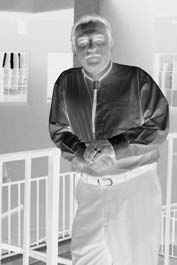
Roberto Rodriguez
Of course this does not mean simply folding one's arms and going merrily home, oblivious of ongoing injustices. It simply means that as one struggles to regain one's humanity and fights for one's rights, one can do so without anger, hatred, and bitterness.
To be more specific: forgiving someone who has brutalized you may help them toward becoming more human. But it is only part of the solution. As a society, we have learned that people who commit acts of violence such as torturing or killing others need more than forgiveness if they are to be prevented from committing similar crimes again. They need to be treated. An oppressor will never find true peace until he exorcises his own demons.
F O R G I V E N E S S A N D J U S T I C E
After Louisiana businessman Bill Chadwick lost his son, Michael, to a drunk driver, he "wanted to see justice done." Like Roberto, however, he discovered that justice alone couldn't bring him the closure he was looking for.
My twenty-one-year-old son Michael was killed instantly on October 23, 1993, in a car crash. His best friend, who was in the back seat, was also killed. The driver, who had been drinking heavily and was speeding recklessly, received minor injuries; he was subsequently charged with two counts of vehicular homicide. Michael had only a trace of alcohol in his system, and his best friend had none.
The wheels of justice grind very slowly. The courts took more than a year to find the case against the driver. We attended hearing after hearing, and each time the case was delayed. There was even an attempt by the defense attorney to discredit the findings of the blood-alcohol tests, although this was unsuccessful. Finally, the defendant pleaded guilty and was sentenced to six years per count, to be served concurrently.
We suggested to the probation office that a boot campstyle program might be of benefit to him – we really weren't out to hurt him, but we believed he needed to pay for what he had done. All the same, we received a pretty ugly letter from his mother suggesting that we had somehow pushed for the maximum sentence. She said that if it had been her son who died, with Michael driving, she would not have held a grudge. I suggested that until her son were actually dead, she should not talk about what she would or wouldn't do.
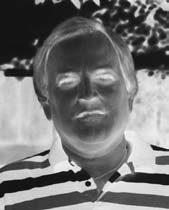
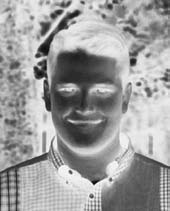
Bill and Michael Chadwick
Her son was finally sentenced to six months in boot camp, with the rest of his six-year sentence to be served on intensive parole. In six months, her son was coming home. Ours was not.
I guess I had bought into the belief that, somehow, things would be different after the driver had been brought to justice. I think that is what people mean when they talk about "closure." We think that if there is someone to blame, then we can put the matter to rest; because then the victim will get some sort of justice, and the pain will finally go away. In the years since Michael's death, I have read countless accounts of bereaved people who are looking for closure of this sort. I have also seen them on Oprah, shouting for the death penalty, as if having the perpetrator dead would somehow help.
I was angry at the driver, of course. But I was angry at Michael, too. After all, he had made some really bad decisions that night; he had put his life in jeopardy. I had to
F O R G I V E N E S S A N D J U S T I C E go through this anger in order to come to grips with my feelings. However, even after the sentencing, I did not find closure. What I did find was a big hole in my soul – and nothing to fill it with.
It was some months later that it hit me: until I could forgive the driver, I would never find the closure I was looking for. Forgiving was different from removing responsibility. The driver was still responsible for Michael's death, but I had to forgive him before I could let the incident go. No amount of punishment could ever even the score. I had to be willing to forgive without the score being even. And this process of forgiveness did not really involve the driver – it involved me. It was a process that I had to go through; I had to change, no matter what he did.
The road to forgiveness was long and painful. I had to forgive more than just the driver. I had to forgive Michael, and God (for allowing it to happen), and myself. Ultimately, it was forgiving myself that was the most difficult. There were many times in my own life I had driven Michael places when I myself was under the influence of alcohol. That was a hard recognition – my need to forgive myself. My anger at other people was just my own fear turned outward. I had projected my own guilt onto others – the driver, the courts, God, Michael – so that I would not have to look at myself. And it wasn't until I could see my part in this that my outlook could change.
This is what I learned: that the closure we seek comes in forgiving. And this closure is really up to us, because the power to forgive does not lie outside us, but within.
In a society like ours, where victim's rights are increasingly seen as unassailable, Bill's insights are not popular ones. For many people, even vindication by a court is no longer enough. They want a personal role in the act of retribution. In several states, murder victims' families are offered spots in the witness rooms of execution chambers, or the opportunity to make statements at sentencing.
Not long ago I read that at the sentencing of Kip Kinkel, a fifteen-year-old who went on a shooting spree in Springfield, Oregon, in 1998, family members of his victims grew so angry that the judge had to cut them off and call the court to order. At one especially chilling moment, the mother of one victim spoke of her agony, and said with unabashed relish that she hoped Kip would be tortured by it in the same way she was for the rest of his life. "That, for me, is the ultimate justice."
However justified this woman's quest might seem, it is a fruitless one. Blinded by her grief, and determined to make the person responsible for it share it with her, she is seeking solace in a place she will never find it: revenge. Though my heart goes out to her, it is clear to me that she will never find healing, but only further heartache and deep disillusionment.
F O R G I V E N E S S A N D J U S T I C E
On the other side of the Atlantic – and the other side of the world, as far as her journey through grief is concerned – Mary Foley, a British woman who also lost a child to teen violence, is on a very different quest. In April 2005, after an argument at a birthday party, her fifteen-year-old daughter Charlotte was stabbed to death by another girl.
Charlotte was so excited about going to that party. It was a sweet sixteen thing, and she knew some of the girls who were going to be there, so I never really thought much about it. She did her hair and her eyebrows – all that stuff – and off she went.
Around 1 a.m. the phone woke me up. It was one of Charlotte's friends, and she was totally distraught. She said, "Charlotte's been stabbed, she's in the hospital." Then the phone went dead…
At the hospital, I was led to a room. A nurse and two doctors came in. The nurse said simply, "I'm so sorry, but Charlotte's dead." I just couldn't believe it was true. There was no way I could begin to take in the fact she was gone. I hadn't even had a chance to say goodbye.
The following day, we went to identify her body. I stared at her – a sheet covered her, up to her neck and she still looked alive, just lying there so peacefully. I prayed that some miracle would happen and she would start breathing.
Meanwhile, we learned what had happened, in bits and pieces. Charlotte knew this girl Marisha, who knew Beatriz, and apparently Marisha and Beatriz had an on
going feud. It wasn't just an argument: Marisha had threatened to shank Beatriz, and so on. They'd argued on the phone that same evening, and were planning to have it out later that night, at the party. My daughter knew nothing of this…
At any rate, around midnight Charlotte and Beatriz exchanged words on the dance floor. Shortly after that, Charlotte went upstairs to freshen up. As she came out of the bedroom onto the landing, Beatriz said "What did you say to me downstairs?" and stabbed her with a 4-inch kitchen knife. She had brought two knives in her handbag. My daughter bled to death.
As Mary sat and sobbed through the subsequent trial in London's famed Old Bailey, she at first seethed with anger and disbelief. Gradually, however, she felt her rage ebbing away, and eventually she felt a strange sense of compassion for Beatriz. By the end of the proceedings, her overriding desire was to forgive the girl and offer her the maternal guidance she had never had.
Forgiveness did not come immediately, even after I knew it was what I wanted. It was hard. My main struggle was seeing Charlotte being stabbed in my imagination, and knowing that I hadn't been there to help her. I often envisaged her bleeding to death. When I saw these things in my mind, the old anger would begin to rise up again in me, and I had to remind myself why I had chosen to forgive: so that I could release all that pain and hurt into the hands of God.
F O R G I V E N E S S A N D J U S T I C E
In March 2006, Beatriz was convicted of murder and sentenced to fourteen years to life. Asked if her decision to forgive Beatriz means that she disagrees with the severity of her punishment, Mary demurs. In fact, she hopes that the sentence will send out a strong message to other young people who carry knives. She notes that the girl had a history of violence and had drawn up a hit list of eighteen people. But as a devout Christian, she also admits feeling that the longest sentence will not necessarily change a criminal's heart. "What Beatriz needs most is a living relationship with Jesus. In the end, that's the only thing in the world that can change her." And so she refuses to simply write off her daughter's murderer:
Beatriz's background is so, so sad. It doesn't condone what she did to my daughter. But she has had so many challenges in her life. She's had trouble at school, at home, with boyfriends, and with girlfriends. All sorts of stuff has happened to her. Her father is wanted by police in connection with the attempted murder of her mother. At one point she was found homeless. She thinks she's worthless. Worst of all, there's never been anyone there for her to talk to. What I am trying to do is fill that gap in her life and be the person who believes she has something positive to offer. In a way, I feel maternal towards her. Maybe because I'm Charlotte's mum I can influence her to learn something while she's in prison.
Today Mary is a popular speaker in schools throughout London. In retelling her story, she draws connections between unhealthy friendships and the violent incidents they often lead to, and she talks about the links between forgiveness and nonviolent conflict resolution. Sometimes, she shares a letter Beatriz sent her from prison:
Dear Mrs. Foley,
It's Beatriz. I don't have the words to say to make it all better and I know nothing I say won't change the situation but I need you to know just how sorry I am for doing what I did. Charlotte should be here and I really regret that split-second of madness. I should never have done that. It was a nasty thing to do and I'm sorry for the pain and the grief I have caused you and your younger children. I'm really sorry Mrs. Foley for hurting your little girl. I didn't mean to take her life. I really didn't. Those were never my intentions. I didn't even mean to stab Charlotte. I can't answer why I took it to that extent. Even at court, I got no reply to why I went over the top. I don't know, Mrs. Foley, what made me extend my arm towards Charlotte, causing all this pain to so many people, but I know how much I wish I could reverse the past. I'm really sorry, Mrs. Foley. I'm sorry to Charlotte as well. She should be here. There's nothing more I can say but sorry, Mrs. Foley. I wish there was more I could do to prove how sorry I am. I'm so upset about all this. All this drama was too unnecessary. Please don't be sad, Mrs. Foley. I hope you don't mind me writing to you. I hope you can find happiness again one
F O R G I V E N E S S A N D J U S T I C E

Mary Foley day. I hate being the person who made you so sad and upset. I feel horrible for what I did to Charlotte. It was so unfair. I didn't want none of this to happen. I really didn't. I'm sorry, Mrs. Foley. It's hard to find the words to say to someone you've hurt, but I just needed you to know how sorry I am. I understand if you don't reply but I would love to hear from you. It'd mean a lot to me. I didn't mean to hurt your daughter, Mrs. Foley.
Lots of love from Beatriz.
P.S. I'd do anything to bring your Charlotte back.
Asked about her reaction to Beatriz's letter, Mary's thoughts involuntarily fly to the P.S. "Well, there isn't anything she can do to bring Charlotte back." But Mary adds that receiving the letter (and a few more since then) have helped her
to "remember that Beatriz is a human, a young person, with emotions."
As for the rest of the family, Mary says each of them is in a different place as regards coming to terms with Charlotte's death. Of her son, Dion, for example, she says that he "hasn't even thought about forgiveness," whereas her husband, Paul, has chosen to forgive.
Most of my extended family and friends think I'm crazy! I feel they want to say it, but don't, because they don't want to hurt my feelings. They may not criticize me to my face, or even verbalize their discomfort, but you can hear it in the questions they ask me. In the end, though, all the criticism in the world won't stop me. What motivates me – what gets me out of bed in the morning – is knowing that God has a purpose for my life. In spite of what I've gone through, I believe that God will use this tragedy for his glory. When I share my story and see the light switch on in people's lives, so that they see that they can choose to forgive – that's what motivates me. They see that they don't have to be reined in or held down by bitterness for the rest of their lives.
The Deeds of Mercy
Though justice be thy plea, consider this: that in the course of justice none of us should see salvation. We do pray for mercy, and that same prayer doth teach us all to render the deeds of mercy.
In his novel Too Late the Phalarope, Alan Paton writes of a respected man who commits what his society sees as an unpardonable sin: adultery. When the affair is brought to light, the man's family is devastated. His friends leave him, his relatives spurn him, and his father dies in shame. Yet a neighbor agonizes over the incident: "An offender can be punished," he says. "But to punish and not to restore, that is the greatest of all offenses…If a man takes unto himself God's right to punish, then he must also take upon himself God's promise to restore."
79 79
If there is anything that reveals the apparent contradictions of the mystery we call forgiveness, it is this thorny "offence." Most of us find it difficult to let go even of relatively small grudges, yet restoration or reconciliation – call it what you will – demands not only that, but the active attempt to embrace a person whom it would be far easier to avoid.
When Miami native Chris Carrier was ten, a former family employee abducted him, assaulted him, shot him in the head, and left him to die in the Florida Everglades. But that isn't the end of the story:
Friday, December 20, 1974, was no ordinary day. It was the last day of school before the Christmas holidays, and we got out early.
I stepped off the bus at 1:15 p.m. and began to walk home. An older-looking man who happened to be walking towards me on the sidewalk appeared to recognize me. Just two houses away from home, he introduced himself as a friend of my father. He told me he was hosting a party for my father and asked if I would help him with some decorations.
I agreed and walked back up the street with him to the local youth center where he had parked his motor caravan. Once inside the vehicle, I put down my things and made myself comfortable.
The Miami I knew quickly disappeared as he drove north. In an area removed from suburban traffic, he stopped on the side of the road. He claimed that he had missed a turn. He handed me a map, instructing me to look for a certain number, and went into the back of the motor caravan "to get something."
As I studied the map and waited, I felt a quick sting in the shoulder, and then another. I turned around to see him standing behind me with an ice pick in his hand. Then he pulled me out of my seat and onto the floor. Kneeling over me, he stabbed me in the chest several times. I pleaded with him to stop and promised him that if he would let me go, I wouldn't say anything.
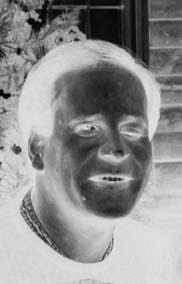
Chris Carrier
I was immeasurably relieved when he stood up. He told me that he was going to drop me off somewhere, after which he would call my father and let him know where I was. He allowed me to sit in the back of the motor caravan as he drove. Yet I was painfully aware that this situation was beyond my control. When I asked him why he was doing this to me, he said that my father had "cost him a great deal of money."
After driving for another hour or so, he turned onto a dusty side road. He told me this was where my father would pick me up. We walked out together into the bushes and I sat down where he told me I should sit. The last thing I remembered was him walking away.
Six days later, the evening of December 26, Chris was found by a local deer hunter. His head was bloody and his eyes were black. He had been shot through the head. Miraculously, there was no brain damage, but he didn't remember being shot.
In the years that followed, Chris struggled daily with the insecurity of knowing that his abductor was still at large.
Everywhere I went, the fear of what was around the corner, what was lurking in the shadows, haunted me. I was alarmed by every noise and motion. Was that a dog? What was that – is it really just the wind? What was that creak in the next room? Was someone coming in our back door? For three years I spent every night without fail in a sleeping bag at the foot of my parents' bed.
Chris also had to come to terms with the physical limitations caused by his injuries: he was now blind in one eye and could no longer take part in contact sports. And as any teenager would, he worried about his appearance.
Chris resented public mention of his survival, and remembers wondering how this "miracle" could have left him so miserable. Then, at the age of thirteen, he underwent
T H E D E E D S O F M E R C Y a change, and began to see his nightmare differently. He realized his injuries could have been much worse – in fact, he could have died. He also recognized that staying angry would never change anything. He decided to stop feeling sorry for himself, and to get on with his life instead.
Then, on September 3, 1996, Chris received a telephone call that changed his life once again. It was a detective from the Coral Gables police department, and he was calling to notify him that an elderly man at a local nursing home, David McAllister, had confessed to being his abductor. (He was, though in the eyes of the law there was never enough evidence to bring him to trial.) David had worked as an aide for an elderly uncle in the Carrier family, but had been fired on account of his drinking problems. Chris visited David the following day.
It was an awkward moment, walking into his room, but as soon as I saw him I was overwhelmed with compassion. The man I found was not an intimidating kidnapper, but a frail seventy-seven-year-old who had been blind for the last half-dozen years.
David's body was ruined by alcoholism and smoking – he weighed little more than sixty pounds. He had no family, or if he did, they wanted nothing to do with him, and no friends. The only material possessions he had were some pictures that children in a nearby primary school had drawn for him. David had a roommate, but they
didn't even know each other or communicate. Here was a man who faced death with only his regrets to keep him company.
When I first spoke to David, he was rather callous. I suppose he thought I was a police officer. A friend who had accompanied me wisely asked him a few simple questions that led to him admitting that he had abducted me. He then asked, "Did you ever wish you could tell that young boy that you were sorry for what you did?" David answered emphatically, "I wish I could." That was when I introduced myself to him.
Unable to see, David clasped my hand and told me he was sorry for what he had done to me. As he did, I looked down at him, and it came over me like a wave: Why should anyone have to face death without family, friends, the joy of life – without hope? I couldn't do anything but offer him my forgiveness and friendship.
In the days that followed this dramatic meeting, Chris began to visit David as often as he could, usually bringing along his wife, Leslie, and their two daughters. The two men spent hours talking, reading, and even praying together, and as they did, the old man's hardness gradually melted away.
Throughout that week I shared with him about the victories of my recovery, and about my life since the horrifying day he had tried to kill me. I'd graduated from high school, from college, and then from graduate school. I had married; I had a beautiful wife and family. I shared these
T H E D E E D S O F M E R C Y things with him so that he could understand, in the way the ancient Israelite Joseph tried to get his brothers to understand, after they had abandoned him, "That which you intended for evil, God has used for good." I let him know that he had not ruined my life, in the end, and that there was nothing between us now.
Three weeks later, just hours after Chris had tucked his ailing friend into bed for the night, David died.
Chris says it wasn't hard for him to forgive, though the reporters who later took interest in his story still don't understand how or why he did it. They admire his ability to forgive, but cannot understand what compelled him. They always go blank when the subject of forgiveness comes up, he says, and seem more comfortable focusing on the drama of his abduction and the details of his torture. But Chris knows why he forgave David:
There is a very pragmatic reason for forgiving. When we are wronged, we can either respond by seeking revenge, or we can forgive. If we choose revenge, our lives will be consumed by anger. When vengeance is served, it leaves one empty. Anger is a hard urge to satisfy and can become habitual. But forgiveness allows us to move on.
There is also a more compelling reason to forgive. Forgiveness is a gift – it is mercy. It is a gift that I have received and also given away. In both cases, it has been completely satisfying.
When infamous "pick-axe murderer" Karla Faye Tucker was executed on February 3, 1998, in Huntsville, Texas, small clusters of death penalty protesters held a candlelight vigil. But many more of the hundreds gathered outside the prison were there to cheer her death. A cardboard sign waved by one man said it all: "May heaven help you. It's sure as hell we won't!"
Inside the prison, however, a man named Ron Carlson was praying for Karla – not in the witness room for her victims' families, where he could have been, but in the one set aside for the family of the murderer.
It has been two years since I met Ron and heard his remarkable journey from hatred to reconciliation, but what he told me sticks in my mind as if it were yesterday:
Shortly after I came home one day at five after a hard day's work – it was the 13th of July, 1983 – the phone rang. It was my father. He said, "Ronnie, you need to come over to the shop right away. We have reason to believe your sister has been murdered." I was floored. I couldn't believe it. I couldn't even believe it when I saw her body being carried out of an apartment on television.
Deborah was my sister, and she raised me. My mother and father divorced when I was very young, and my mother died when I was six. I had no brothers – just one sister – so Deborah was very special. Very special.
Deborah made sure I had clothes to wear, and that there was food on the table. She helped me do my home-
T H E D E E D S O F M E R C Y work, and slapped me on the hand when I did something wrong. She became my mother.
Now she was dead, with dozens of puncture wounds all over her body, and the pick-axe that made them had been left in her heart. Deborah was not one to have enemies. She had simply been in the wrong place at the wrong time. The murderers had come over to steal motorcycle parts from the house where she was staying, and when they discovered Jerry Dean – the guy she was with – they hacked him to death. They were high on drugs. Then they discovered Deborah, so they had to kill her too…
Karla Faye Tucker
Houston was in an uproar. Headlines screamed the gory details of the crime, and the entire city lived in fear. A few weeks later the murderers – two drug addicts named Karla Faye Tucker and Daniel Ryan Garret – were turned in by relatives. Subsequently tried and convicted, they were both sentenced to death by lethal injection. (Daniel later died in prison.) Still, Ron felt no relief.
I was glad they were caught, of course, but I wanted to kill them myself. I was filled with sheer hatred, and I wanted
to get even. I wanted to bury that pick-axe in Karla's heart, just like she had buried it in my sister's.
Ron says that he was a problem drinker and drug abuser before his sister's death, but that after he buried her, he became more heavily involved than ever. Then, about a year later, his father was shot to death.
I was often drunk, and I'd get high on LSD, marijuana, whatever I could get my hands on, as often as I could. I also got into a lot of fights with my wife. I was very angry. I even wanted to kill myself…
Then one night, I just couldn't take it any more. I guess I had come to the point where I knew I had to do something about the hatred and rage that was building in me. It was getting so bad that all I wanted to do was destroy things and kill people. I was heading down the same path as the people who had killed my sister and my dad. Anyway, I opened a Bible, and began to read.
It was really weird. I was high – I was smoking doobies and reading the word of God! But when I got to where they crucified Jesus, I slammed the book shut. For some reason it struck me like it never had before: My God, they even killed Jesus!
Then I got down on my knees – I'd never done this before – and asked God to come into my life and make me into the type of person he wanted me to be, and to be the Lord of my life. That's basically what happened that night.
Later I read more, and a line from the Lord's Prayer – this line that says "forgive us as we forgive" – jumped out at
T H E D E E D S O F M E R C Y me. The meaning seemed clear: "You won't be forgiven until you forgive." I remember arguing to myself, "I can't do that, I could never do that," and God seemed to answer right back, "Well, Ron, you can't. But through me you can."
Not long after that I was talking on the phone with a friend, and he asked me if I knew that Karla was in town, at the Harris County Jail. "You ought to go down there and give her a piece of your mind," he said. Now this friend didn't know where I'd been going spiritually, and I didn't tell him. But I did decide to go see Karla.
When I got there, I walked up to her and told her that I was Deborah's brother. I didn't say anything else at first. She looked at me and said, "You are who?" I repeated myself, and she still stared, like she just couldn't believe what she was hearing. Then she started to cry.