
Part 4
Not long after that I visited my parents. When I was alone with my mother, I asked her to forgive me for the way I had treated her in the past and told her I forgave her
F O R G I V I N G A P A R E N T too. I admitted that I had been angry at her all of my life, even though I wasn't sure why. She didn't understand why I should be angry, but she too apologized for the hurt she had caused. She said, "What has happened has happened, and we can't change that. But we can move on."
For anyone who feels trapped in the quagmire of a difficult relationship, these words are as vital as they are simple. No one can undo the past. But each of us can choose to forgive, and each of us can move on.
Blaming God
It is not right to try to remove all suffering, nor is it right to endure it stoically. Suffering can be used, turned to good account. What makes a life happy or unhappy is not outward circumstances, but our inner attitude to them.
In most cases, when the subject of forgiving comes up, we think of it in terms of our willingness (or unwillingness) to stop blaming a person who has hurt us. Sometimes, though, an injury has no human cause, and try as we might, we cannot find anyone who is truly at fault.
To those who have no belief in God, the result may be a sense of undirected annoyance at the hand dealt them by life. To those who believe, the result is often anger at God. Frustrated by our inability to pin down a reason for our pain, which we are quick to see as unjustified and undeserved, we rebel against it and accuse God. "How can a
142 142
B L A M I N G G O D merciful God permit this?" In the end, our frustration may turn to resentment, or even to rage.
In many ways, it is easier (even for someone who doesn't actually believe in a higher power) to blame God than to face the possibility that there really might be no one to blame. Anger is a legitimate stage of grief, even when there's no obvious target for us to direct it at. It needs to be expressed and dealt with if we hope to find healing and move on.
Still, it is fruitless to stay angry at God. We can hold him responsible for hurting us, but he cannot very well apologize. If there is anything to be done about circumstances we wish we could change, but can't, it is to accept them gracefully. In doing so we may find that even the greatest obstacle can become an opportunity for growth.
Whenever I am tempted to blame God, I remember a period of great frustration I went through several years ago, and what I learned from it. It all began on the way home from a fishing trip in upstate New York – a welcome chance to escape the pressures of my work for a few days – when I noticed that I was losing my voice. At first I ignored it, expecting it to improve within several days. But it only grew worse. Finally my doctor referred me to a specialist. The diagnosis: a paralyzed vocal chord.
The specialist reassured me that my voice would eventually recover, but weeks and then months went by, and there
was no change. His prescription was complete voice rest (I wasn't even allowed to whisper) and frustrating as it was, I held to it religiously. Still there was no improvement. I wondered if I would ever speak again.
To make things worse, right during this time my congregation became embroiled in an extended crisis involving a fallout between several longstanding members. At meeting after meeting I was asked for my input as senior pastor, but instead of being able to respond, I could only sit by in silence and write down the things I most wanted to say.
When a capability like speech – or anything else we take for granted – is taken away from us, we can choose to see it with new appreciation, as the gift it is. But I was too anxious and upset to do that. To be honest, I was angry. Even if God was testing me, I said to myself, he couldn't have picked a worse time.
It was only with time that I was able to see the whole annoying predicament from another angle: I began to realize that it was providing me with an important chance to develop a more flexible outlook on life, to take myself less seriously, and to make the best of an imperfect situation. Three months later, my voice began to return; now, seven years later, it is back to normal. But I have never forgotten those twelve weeks.
Andrea, a woman in my church, struggled to accept a much heavier burden: she miscarried three times before having a healthy child. Unlike mine, Andrea's story is not, strictly speaking, about blaming or "forgiving" God. For her the battle was to accept the loss of her babies without succumbing to the fear that God was somehow trying to punish her. But in showing how she was able to wrestle through her emotions and find peace, it illustrates a similar theme.
Neil and I were delighted to find that I was pregnant after only six months of marriage. But one night, just before Christmas, I felt intense pain that grew rapidly worse. Our doctor wanted to send me to the hospital, and our neighbor, a nurse, came to stay with me until we left for town. She confirmed my worst fears – I would probably lose my baby. The emotional pain was at least as severe as the physical. Why, God? Why me? Why do you have to take away this tiny soul so soon? What have I done wrong?
In order to save my life, an operation was necessary. The baby was lost, and I spent weeks recuperating. What a different Christmas this had become!
We agonized over our loss and felt alone in our pain. When one of our relatives said to us, "Cheer up! Maybe you'll have better luck next time," I felt like I had been slapped in the face. Luck? We had just lost a baby, a real person, a child!
Someone sent me a card that said, "The Lord giveth, and the Lord taketh away, blessed be the name of the
Lord." That made me really upset. How could I thank God for this horrible, painful experience? I couldn't. And I couldn't stop thinking that somehow God was punishing me, even though I couldn't understand why.
Our pastor consoled me: God is a God of love, not of punishment, and he is there to ease our pain. I grasped at his words as a drowning person grabs onto a pole held out from the shore. Neil's loving support seemed like a visible sign of this love, and we discovered that our pain united us in a new way. The words "Weeping shall endure for the night, but joy comes in the morning" especially comforted me, even when I couldn't feel that joy coming, when it seemed that dawn would never break.
Slowly, with time and with the loving help of those around me, I was able to feel that this deeply painful experience had given me an inkling of the love of God, who cares about the suffering of people and who was, I am convinced, right there beside me in my pain. God became more real to me, and I began to trust his love.
But then, some months later, when I was expecting another baby and hoping fervently that all would go well, the same thing happened again. Severe pain, an emergency trip to the hospital, and an operation to save my life. Again another precious little person lost just after it had come into being. Deep pain tore my heart apart. I wrote in my diary: "I cannot see why; perhaps I never will. I need the assurance of faith – Help me!"
Neil stood faithfully beside me. He had lost a sister to cancer some years before, and what he had written then
B L A M I N G G O D was a great source of sustenance: "We are separated from God only in physical distance, and that distance is perhaps not great." I hung on to that with all my strength.
Slowly, over weeks and months, the pain of loss lessened, although it has never departed entirely. About a year later I again lost an unborn child. Once more there was deep pain in my heart, but this time no desperation over why.
Today Andrea is the mother of a beautiful six-year-old daughter. Although thinking about her first three pregnancies always brings back a flood of emotions, she is not bitter. In fact, she is even able to point to two good fruits of her anguish: a greater love for her husband, who "went to hell and back with me," and endless gratitude for her only child.
Like Andrea, Jon and Gretchen Rhoads – a young couple in a nearby town – eagerly awaited the birth of their first child. Alan was born after a seemingly normal pregnancy, and in the beginning everything seemed all right. After he was discharged from the hospital, though, his parents noticed something was wrong. Very wrong. Alan didn't eat well. His muscle tone was poor. He lay very still, almost without moving, and when he breathed, he occasionally made strange gurgling sounds.
Alan was quickly admitted to a nearby university hospital, but he was three months old before his problems
became clear: he would never walk or talk; he was blind; and he had significant abnormalities of the hips, brain, ears, and stomach.
Jon and Gretchen were devastated. They had long suspected that something was wrong, but they hadn't expected it to be this bad. Right away they began to accuse themselves, and it wasn't long before they began to accuse God: Why us?
Jon says that though he was angry, he could never really say at whom. Himself? Gretchen? Alan's doctors? God? Yes, perhaps God, but he couldn't explain why. Still, he refused to become bitter, but concluded instead that "either God does not love us, or this is just how Alan is meant to be. We may never know why, but if we are resentful about Alan's condition, we will kill any joy we have had in him."
Both Jon and Gretchen admit that acceptance is easier to talk about, than to actually practice. There have been plenty of times when they wanted to run away from it all, when they simply couldn't face another visitor offering meaningless words of sympathy.
And while some days bring progress and new hope, others bring setbacks and trials. In his first year alone Alan had a tracheotomy and numerous other surgeries, including an appendectomy. How much more suffering will he have to endure?
In a world quick to offer "early diagnosis" and abortion as the answer to imperfect babies, Alan's parents refuse to see their child as a burden. "He has a great deal to tell us," Gretchen wrote when he was almost one, "and we are not about to let him go."
His small hand reaches up through a tangle of wires to find my cheek. As I stoop to lift him from his bed, his eyelids lift slightly and he gives me a sleepy grin…In the eleven months since his birth, Alan has been hospitalized five times; we have long since stopped counting the outpatient appointments. Each time we come home with more questions and fewer answers; more tears, and less certainty. But as he snuggles against me and looks around curiously, he grins. His smile is a balm to my heart.
How much more pain can Alan bear? What new hurdles await us? His tracheostomy has taken away the few small adventures we had looked forward to: bottles and the chance to explore solid food. No more gurgles of joy, either, and no more cries of frustration.
If he lives, the doctor tells us, he may outgrow the need for these tubes. If he lives. The words cut me to my heart, and yet his smile continues to give me hope. He is teaching me acceptance every day.
In the end, it is this acceptance Gretchen writes of that allows us to "forgive" God. Without it, we are left rebelling against our lot in life, and fighting every cross we feel
unjustly forced to bear. With it, we gain the ability to see our hardships in relation to the suffering of others, and strength to carry them.
Today, despite the predictions of the doctors who examined him as a baby, Alan is a sunny, outgoing teen. He can walk and run – and even dance. Visit his home, and he may pedal out to meet you on his tricycle. Though he can't verbalize (and is still dependent on a feeding tube) he has no problem communicating, be it with a handshake, a wave, a grunt, or a mischievous laugh.
"At the beginning," his father says, "we saw Alan first and foremost in terms of his disabilities. We prayed for him to be healed, and for his handicaps to be overcome. As the years passed, we grew wiser. Now we pray that we may be healed, and that we might find the qualities that make him so perfect – perfect in his innocence and love, in tears and laughter."
In his mother's words, "Of course, it's not all roses with Alan, and when there are decisions to be made, we worry over whether we are doing the right thing. There are also our other children: I fret about whether we give enough time and attention to them. But in grappling with these questions, we constantly come back to forgiveness. Our
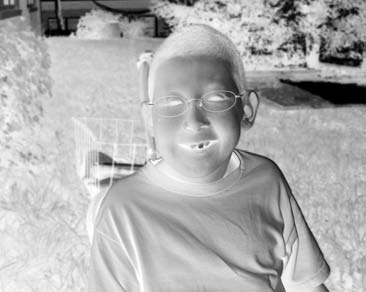
Alan Rhoads parenting depends on it. Our marriage depends on it. To be able to say 'I'm sorry' to each other, to our children, and to God is so vital. That's what lets us start over afresh, with our hearts at peace – ready to laugh with Alan as he cranks up the volume on his favorite music and tugs at our hands to get us to dance with him."
Forgiving Ourselves
Without being forgiven, released from the consequences of what we have done, our capacity to act would, as it were, be confined to a single deed from which we could never recover; we would remain the victims of its consequences forever, not unlike the sorcerer's apprentice who lacked the magic formula to break the spell.
When we assure a person who has hurt us that we no longer hold anything against him, all he has to do is accept our kindness – at least that is what we might hope. But that is often more easily said than done. For many people, the problem of guilt cannot be solved with another's forgiveness, or by any external means at all. For them, peace of mind comes only when they are able to forgive themselves.
I first met Delf Fransham in 1953. That was the year he moved from the United States to the remote South American village where I grew up, and began to teach at
152 152
F O R G I V I N G O U R S E L V E S the local school. There were eleven of us in his class, all boys, and all ruffians, and a few days into his first term we decided to put him to the test.
One typical Paraguayan morning (humid and around 110 degrees), we offered to take him on a hike. Officially, we wanted to show him the sights. Privately, we wanted to see what he was made of. After leading him at least ten kilometers through jungle, prairie, and swampland, we finally turned back. Shortly after we arrived home he collapsed with heat stroke.
Delf was in bed for days, but we hardly gave it a thought. We had achieved exactly what we wanted – proved him a sissy. But we were in for a small surprise. The day he came back to school he said, "Boys, let's try that hike again." We couldn't believe it! We covered the same route again and, sure enough, this time he did not succumb to the heat. Delf won our respect and our hearts that day, and we trusted him from then on. (There was something else to it, too: a talented athlete, he taught us football and loved to play with us.)
Decades later, and only by chance, I found out why Delf had poured so much love and energy into reaching his students. He had lost a child of his own.
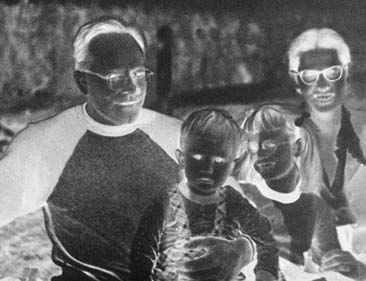
Nicholas was born when the Franshams were still living in the United States, and one day as Delf was backing a pickup load of firewood into their driveway, twenty-month-old
Delf and Katie Fransham with Nicholas and Anna
Nicholas, who was playing outdoors, ran to meet his father. Delf did not see him until it was too late, and ran over him.
Katie, Delf 's wife, was busy inside the house when he carried in their little boy, limp in his arms. She remembers:
I was beside myself – absolutely frantic – but Delf steadied me. We took Nicholas to our doctor, who was also the coroner, and explained what had happened…
There was never any question about forgiving my husband, as I knew I was just as much to blame. Likewise he did not blame me, only himself. We stood in our sorrow together.
Delf, however, could not forgive himself, and the accident haunted him for years. From then on, he went out of his way
F O R G I V I N G O U R S E L V E S to make time for children – time he could not spend with the son he had killed.
Looking back, I remember how his eyes often glistened with tears, and wonder what it was that made them come. Was it that he saw his son in us? Was he imagining the boy his toddler would never become? Whatever the reason, it seems that Delf 's determination to show love to others was his way of making up for the anguish he had caused himself and his family by unintentionally taking a life. I am convinced that it saved him from brooding, and from nursing his feelings of guilt. Through loving others he was able to forgive himself and regain a sense of wholeness and peace.
David Harvey, now nearly seventy, joined the army at sixteen, just before the end of World War II. After spending most of the rest of the war years in training, he was transferred to Africa, then Germany, Italy, Hong Kong, China and the Mediterranean. At first he enjoyed his time in the army, especially the camaraderie he felt among fellow soldiers. But then something happened that changed his life forever.
Part of my service time was spent in Kenya, predominantly carrying out police duties and hunting "terrorists." Much of the time was spent patrolling jungle areas. During one of these patrols I was involved in a terrible accident.
While lying in wait for a band of "terrorists," we ourselves were ambushed. There was a lot of shooting and a lot of confusion, and misunderstood orders. The patrol split into two halves. My half walked in a straight line along an animal path, while the second half cleared the bush on each side. Those in the bush overtook those on the path, and we consequently ended up firing at each other. Directly to my front, the bushes parted and I fired, shooting the patrol commander in the head. Abandoning our mission, we carried the wounded man for sixteen hours through the jungle on a makeshift bamboo stretcher to get him the medical help he so desperately required.
Eventually there was a court of inquiry and, in military terms, I was exonerated of all blame. But my conscience gave me no peace. Four years later, my term of service in the army ended and I returned to civilian life. At first I found this very difficult. In the army I had been given a number instead of a name, trained to comply with any order without question, and to believe that anything I was told to do was correct. This did not fit in with civilian life. But slowly things returned to normal, and I had time to reminisce over my service career. The thing that always came to the forefront was the shooting of my comrade. Where was he? How was he? Had he even survived?
After a number of years, I started to make my own inquiries as to the whereabouts and welfare of my colleague. But all the avenues I tried drew a blank. I met excolleagues, each of whom had a different story as to what had become of him. Then in 1996 my wife, Marion, found
F O R G I V I N G O U R S E L V E S a book which mentioned this very incident. I telephoned the author, who admitted that he hadn't seen him recently, but had heard that he was living in London.
I realized that I had drawn another blank. Frustrated, I decided to enlist the services of a local newspaper. They published my story and photograph in a weekly edition of their paper. Within forty-eight hours I had received a call from the person I had been seeking for years.
It was a difficult experience. After a number of telephone conversations, we arranged to meet each other at my house. In due course, he came bringing presents…to the man who had shot him! Because of me, he was paralysed down one side and had difficulty walking and moving his arm. I asked him, "Can you ever forgive me?" He just hugged me. He had already forgiven me.
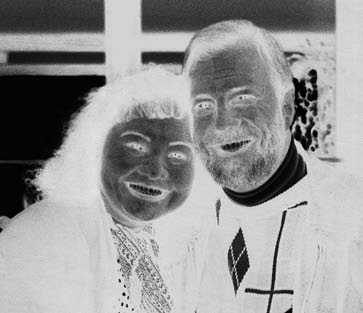
John Plummer lives the quiet life of a Methodist pastor in a sleepy Virginia town these days, but things weren't always so. A helicopter pilot during the Vietnam War, he helped organize a napalm raid on the village of Trang Bang in 1972 – a bombing immortalized by the prize-winning photograph of one of its victims, Phan Thi Kim Phuc.
For the next twenty-four years, John was haunted by the photograph – an image that for many people captured the essence of the war: a naked and burned nine-year-old running toward the camera, with plumes of black smoke billowing in the sky behind her.
Phan Thi Kim Phuc and John Plummer
For twenty-four years John's conscience tormented him. He badly wanted to find the girl to tell her that he was sorry – but he could not. Turning in on himself, he grew more and more depressed (the collapse of two marriages didn't help), and he began to drink.
Then, in an almost unbelievable coincidence, John met Kim during an event at the Vietnam War Memorial on Veterans Day, 1996. Kim had come to Washington, D.C., to lay a wreath for peace; John had come with a group of former pilots unable to come to terms with their shared past, but determined to stick together anyway.
In a speech to the crowd, Kim introduced herself as the girl in the famous photograph. She still suffered immensely from her burns, she said, but she was not bitter, and she wanted people to know that others had suffered even more than she had: "Behind that picture of me, thousands and thousands of people…died. They lost parts of their bodies. Their whole lives were destroyed, and nobody took their picture."
Kim went on to say that although she could not change the past, she had forgiven the men who had bombed her village, and that she felt a calling to promote peace by fostering goodwill between America and Vietnam. John, beside himself, pushed through the crowds and managed to catch her attention before she was whisked away by a police escort. He identified himself as a former pilot in Vietnam and said that he felt responsible for the bombing of her village twenty-four years before. He says:
Kim saw my grief, my pain, my sorrow…She held out her arms to me and embraced me. All I could say was "I'm sorry; I'm sorry" – over and over again. And at the same time she was saying, "It's all right, I forgive you."
John says that it was vital for him to meet face to face with Kim, and to tell her that he had agonized for years over her injuries. Without having had the chance to get that off his chest, he is not sure he could have ever forgiven himself. As
it turned out, of course, he got even more than he hoped for: Kim forgave him.
Reflecting on the way the incident changed his life, John maintains that forgiveness is "neither earned nor even deserved, but a gift." It is also a mystery. He still can't quite grasp how a short conversation could wipe away a twentyfour-year nightmare.
Pat, another Vietnam veteran, is a gentle, quiet man who loves children and horses. In the seven years since I first met him, however, I have become aware that he has a darker side – one that centers on his inability to forgive himself:
Death is on my mind a lot. The deaths I have caused – and wanting my own death – are with me every day. I joke around a lot with the people I work with. I have to, to hide the pain and to keep my mind from thinking. I need to laugh. Laughing keeps the blues away.
But I cannot love. Part of my soul is missing, and it seems I won't ever get it back. I don't know if I can ever forgive myself for all of my wrongs. I live day to day, but I am tired all the time – tired. Will it ever end? I don't see how. It's been with me over twenty-five years now.
People like Pat are often urged to receive formal counseling, to join a support group, or to attend group therapy meetings so as to compare notes with others who have had similar ex-
F O R G I V I N G O U R S E L V E S periences. He has done all of this, and still not found peace. Perhaps, like John, he wishes he could meet the families of those he killed – an unlikely opportunity – or bring the victims themselves back to life so he could ask their forgiveness – an obviously impossible one. So what should he do?
A conversation Robert Coles once had with the psychoanalyst Anna Freud may hint at an answer. Discussing an elderly client with a long and troubled psychological history, Freud suddenly concluded:
You know, before we say good-bye to this lady, we should wonder among ourselves not only what to think – we do that all the time! – but what in the world we would want for her. Oh, I don't mean psychotherapy; she's had lots of that. It would take more years, I suspect, of psychoanalysis than the good Lord has given her…No, she's had her fill of "us," even if she doesn't know it…This poor old lady doesn't need us at all…What she needs…is forgiveness. She needs to make peace with her soul, not talk about her mind. There must be a God, somewhere, to help her, to hear her, to heal her…and we certainly aren't the ones who will be of assistance to her in that regard!
Freud's point is a valid one, even for a person who claims to have no belief in God. At some level, all of us must come to terms with the parts of ourselves that we wish we could erase. All of us yearn for the freedom to live without guilt. At some level, every one of us longs for forgiveness.
Yet when all is said and done, we cannot acquire it. Sometimes the person we have wronged is unable or unwilling to forgive us. Sometimes we are unable or unwilling to forgive ourselves. Even the best psychoanalysis, the most earnest confession of guilt, may not be enough to assure us of lasting relief or healing.
But the power of forgiveness still exists, and as John Plummer found out, it can work wonders even when we are sure that we have neither earned nor deserved it. It comes to us as a gift, often when we feel least worthy of receiving it. Finally, like any gift, it can be accepted or rejected. What we do with it is up to us.
Accepting Responsibility
In the confession of concrete sins the old man dies a painful, shameful death before the eyes of a brother. Because this humiliation is so hard, we continually scheme to avoid it. Yet in the deep mental and physical pain of humiliation before a brother we experience our rescue and salvation.
No one who has read this far will deny that forgiveness can bring about healing, even where healing seemed impossible. Its power might be mysterious, but it is clearly there, and it is so strong that people are sometimes swept away by it against their more rational instincts. All the same it is dangerous to become glib about forgiveness – to act as if it could be plucked off the nearest tree.
Certainly forgiveness is sometimes given and received lightly, or used to whitewash the ugly underside of life. But such forgiveness has no staying power. Even the most genuine declaration of forgiveness will wear thin if it is not
163 163
accompanied by a change of heart, both in the forgiver and the forgiven. In other words, it must cost something if it is to have any lasting effect.
There is, moreover, little value in seeking forgiveness if we let it touch us only momentarily and then slide back into the same behavior that required an apology in the first place. It is true that forgiveness is a gift and that it comes with no strings attached. But it is a useless one unless we let it change us for the better.
Mark and Debbie, friends of mine who used to be part of a small house church on the West Coast, experienced this hard reality firsthand:
Over the years we witnessed the disastrous results of ignoring wrongdoing or secretly hiding it. We lived in a small urban community with several people, one of whom was a single man who had fallen in love with a married woman in our group. Some of us tried to tackle their affair by talking with them separately about it. Yet no one dared to bring it out in the open.
Afraid of being judgmental, we chose to believe that this wasn't a very serious matter, at least not serious enough to bring it out into the open. Didn't we all make mistakes? Who were we to judge? We convinced ourselves that confrontation would not only add to their sense of shame and self-condemnation, but also perpetuate the cycle of failure. In the end we tried to forgive their shortcomings and avoided talking about them any further. Now we see that
A C C E P T I N G R E S P O N S I B I L I T Y this so-called compassion only perpetuated the problem… The man eventually left, and two years later, the woman he was involved with divorced her husband and followed him.
Far from being unique, incidents like this one are widespread. On the surface they may seem to have little to do with forgiveness, because there is never even a clear recognition of wrongdoing, and therefore no admission of the need for redemption. But at root they have everything to do with it. If, as in the case described above, the problem had been confronted, who knows how different the outcome might have been?
Obvious as it sounds, it is vital to remember that we cannot truly receive forgiveness until we acknowledge our need for it by admitting our wrongdoings to someone else, whether to the person we have hurt or (where that is not possible) to someone we trust. Some people dismiss this practice as "confession" – something for old-fashioned Catholics. Others admit that it can be helpful, but claim that guilt can be taken care of just as easily by recognizing a misdeed and resolving not to repeat it. But that is utter foolishness: it is precisely such a recognition that brings about guilty feelings to begin with. That is why Tolstoy writes that the peace of heart attained by forgiving oneself in such a manner is nothing but "deadness of the soul." It
is nothing like the real peace that comes to those who are humble and honest enough to ask those they have wronged for forgiveness.
Guilt works in secret, and it loses its power only when it is allowed out into the open. Often our desire to appear righteous keeps us from admitting our wrongs. Why reveal a foolish choice or a dumb mistake? Yet the more we try to push such things to the back of our minds, the more they will plague us, even if subconsciously. Eventually guilt will add to guilt, and we will become cramped and weighed down.
As for the freedom that comes from owning up to one's faults, Steve, an old friend of mine, says:
In my search for inner peace I pursued various religions and studied psychology but never received more than partial answers. It was only after I saw my personal life for the shambles it was that I could see how urgently I needed to change, and how much I needed forgiveness.
The pivotal experience came inexplicably and unexpectedly: I was suddenly aware what an enormous avalanche of wrongs I had left behind me. Before, this reality had been masked by pride and by my wanting to look good in front of others. But now, memories of everything I had ever done wrong poured out of me like a river of bile.
All I wanted was to be free, to have nothing dark and ugly and hidden within me; I wanted to make good, wherever I could, the wrongs I had done. I had no excuses for myself – youth, circumstances, or bad peers. I was responsible for what I had done.
A C C E P T I N G R E S P O N S I B I L I T Y
On one page after another I poured it all out in clear detail. I felt as though an angel of repentance was slashing at my heart with his sword, such was the pain. I wrote dozens of letters to people and organizations I had cheated, stolen from, and lied to. Finally I felt truly free.
In The Brothers Karamazov Dostoevsky writes about a character who, after confessing to a murder he has kept hidden for decades, experiences the same freedom: "I feel joy and peace for the first time after so many years. There is heaven in my heart…" For the real-life murderer, "heaven" may not come so easily. Still, it should never be ruled out.
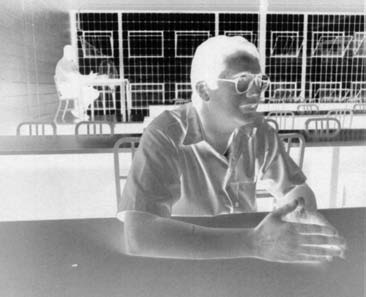
Several years ago I began to correspond with Michael Ross, a Cornell graduate turned serial rapist and killer. Given the enormity of his crimes, the terror of his victims in their last minutes, and the grief of their families, the contempt with which most people treat Michael is hardly surprising. To do anything but hate him, they feel, would be to belittle the immense suffering he has caused.
But what about Michael's own suffering? (After my first visit with him, as I embraced him and said goodbye, he broke down and wept. No one had hugged him for two decades.) What about the fact that he has been deeply remorseful for years? As he wrote in one of several letters to me:
I feel a profound sense of guilt: an intense, overwhelming, and pervasive guilt that surrounds my soul with dark, tormenting clouds of self-hatred, remorse, and sorrow…
Michael Ross
Reconciliation is what I yearn for most: reconciliation with the spirit of my victims, with their families and friends, and finally with myself and God.
It is extremely unlikely that Michael will ever be forgiven by the families of his victims. It is also as good as impossible that the courts will commute his sentence from death to life imprisonment. Still, I have tried to help him see that the fate imposed on him by the law does not have to be the last word.
No matter how tortured the state of his soul, a person like Michael, who is willing to acknowledge his guilt, is far more likely to find redemption than someone whose admis-
A C C E P T I N G R E S P O N S I B I L I T Y sion has been extracted by persuasion or threats. Even if he is denied forgiveness until the day he dies, we must hope and believe that its power can touch him – if only because he yearns for it so desperately, and because he is so determined to become worthy of it.*
While it is plain that forgiveness can transform lives on a personal level, we should not forget that it can influence events on a broader scale as well. In fact, what begins as a change in one individual may affect those around him in such a way that its ripples spread wider and wider, from one person to the next.
About one hundred and fifty years ago, Möttlingen – a village in the Black Forest – experienced just such a movement. Before then, its now famous pastor, Johann Christoph Blumhardt, often sighed about the "fog of apathy" that lay over his parish. Today, aside from the streams of curious visitors that flock to see its church, the place seems equally sleepy. But a plaque on the half-timbered wall of an old house attests to remarkable events that once swept the village off its feet: "Man: think on eternity, and do not mock the time of grace, for judgment is at hand!"
May 13, 2005, Michael Ross was executed by lethal injection in Somers, Connecticut. He was 45.
The "awakening" at Möttlingen, as it is referred to today, began on New Year's Eve 1843, when a young man known for his wild carousing and violent temper came to the rectory door. After pleading to see Blumhardt, he was let in. Once inside, the man confided that he hadn't slept for a whole week, and feared that he would die if he couldn't unburden his conscience. Blumhardt, somewhat cautious, remained aloof at first, but when the man began pouring out a torrent of misdeeds, large and small, he realized the confession was an earnest one.
Thus began an unprecedented wave of confessions in which one remorseful villager after another came to reveal secret sins, and to seek the relief of starting over with a clean conscience. By January 27, 1844 sixteen people had come to the rectory. Three days later, the number had risen to thirtyfive. Ten days later, it stood at more than one hundred and fifty. Soon people were pouring into the parish from neighboring villages as well.
In Möttlingen there was little of the emotionalism of most religious revivals – no exaggerated proclamations of wickedness or public avowals of repentance. What happened there was too quiet and sober for that. Pierced to the heart, people from all walks of life were suddenly able to see themselves in all their shabbiness, and felt compelled from within to break out of old ways.
A C C E P T I N G R E S P O N S I B I L I T Y
Most significant, this movement went beyond words and emotions and produced concrete expressions of repentance and forgiveness. Stolen goods were returned; enemies were reconciled; infidelities were confessed and broken marriages restored. Crimes, including a case of infanticide, were solved. Even the town drunks were affected, and stayed away from the tavern.
Having traveled to Möttlingen several times over the years to visit Blumhardt's descendants (my parents, both strongly influenced by his writings, named me after him), I have often asked myself whether the awakening that took place there was merely an isolated event. But I am sure that is not the case. If the forgiveness found by one repentant man could have such far-reaching effects in his day, why shouldn't we believe that it can have equal power in ours as well?
Not a Step, but a Journey
Peter came to Jesus and said, "Master, how often shall my brother sin against me, and I forgive him? Up to seven times?" Jesus replied, "No, not up to seven times, but up to seventy times seven."
When NYPD officer Steven McDonald entered Central Park on the afternoon of July 12, 1986, he had no reason to expect anything out of the ordinary. True, there had been a recent string of bicycle thefts and other petty crimes in the area, and he and his partner, Sergeant Peter King, were on the lookout. But that was a routine – all in a day's work. Then they came across a cluster of suspicious-looking teens.
When they recognized us as cops, they cut and ran. We chased after them, my partner going in one direction and I in another. I caught up with them about thirty yards away. As I did, I said to them, "Fellas, I'm a police officer. I'd like to talk with you." Then I asked them what their
172 172
N O T A S T E P , B U T A J O U R N E Y names were and where they lived. Finally I asked them, "Why are you in the park today?"
While questioning them I noticed a bulge in the pant leg of the youngest boy – it looked like he might have a gun tucked into one of his socks. I bent down to examine it. As I did, I felt someone move over me, and as I looked up, the taller of the three (he turned out to be 15) was pointing a gun at my head. Before I knew what was happening, there was a deafening explosion, the muzzle flashed, and a bullet struck me above my right eye. I remember the reddish-orange flame that jumped from the barrel, the smell of the gunpowder, and the smoke. I fell backward, and the boy shot me a second time, hitting me in the throat. Then, as I lay on the ground, he stood over me and shot me a third time.
I was in pain; I was numb; I knew I was dying, and I didn't want to die. It was terrifying. My partner was yelling into his police radio: "Ten Thirteen Central! Ten Thirteen!" and when I heard that code, I knew I was in a very bad way. Then I closed my eyes…
Steven doesn't remember what happened next, but when the first officers to respond arrived on the scene, they found Sergeant King sitting on the ground, covered in Steven's blood, cradling him in his arms and rocking him back and forth. He was crying. Knowing that every wasted second could be fatal, the men heaved Steven into the back of their RMP and rushed him to the nearest emergency room, at Harlem's Metropolitan Hospital, twenty blocks away.
Immediately EMT's, nurses, and doctors went to work. For the next forty-eight hours, he hung between life and death. At one point, Steven's chief surgeon even told the police commissioner, "He's not going to make it. Call the family. Tell them to come say goodbye." But then he turned a corner.
They did the impossible: they saved me, but my wounds were devastating. The bullet that struck my throat had hit my spine, and I couldn't move my arms or legs, or breathe without a ventilator. In less than a second, I had gone from being an active police officer to an incapable crime victim. I was paralyzed from the neck down.
When the surgeon came into my room to tell me this, my wife, Patti Ann, was there, and he told her I would need to be institutionalized. We had been married just eight months, and Patti Ann, who was 23 at the time, was three months pregnant. She collapsed to the floor, crying uncontrollably. I cried too, though I was locked in my body, and unable to move or to reach out to her.
Steven spent the next eighteen months in the hospital, first in New York and then in Colorado. It was like learning to live all over again, this time completely dependent on other people. There were endless things to get used to – being fed, bathed, and helped to the bathroom.
Then, about six months after I was shot, Patti Ann gave birth to a baby boy. We named him Conor. To me, Conor's
N O T A S T E P , B U T A J O U R N E Y birth was like a message from God that I should live, and live differently. And it was clear to me that I had to respond to that message. I prayed that I would be changed, that the person I was would be replaced by something new.
That prayer was answered with a desire to forgive the young man who shot me. I wanted to free myself of all the negative, destructive emotions that his act of violence had unleashed in me: anger, bitterness, hatred, and other feelings. I needed to free myself of those emotions so that I could love my wife and our child and those around us.
Then, shortly after Conor's birth, we held a press conference. People wanted to know what I was thinking and how I was doing. That's when Patti Ann told everyone that I had forgiven the young man who tried to kill me.
Steven and his assailant, whose name was Shavod Jones, could not have been more different. Steven was white; Shavod was black. Steven came from the middle-class suburbs of Long Island's Nassau County; Shavod from a Harlem housing project. Their brief encounter might have ended right there. But Steven wouldn't let it. Knowing that his attacker had just altered the course of both of their lives, he felt an uncanny connection to him:
Strangely, we became friends. It began with my writing to him. At first he didn't answer my letters, but then he wrote back. Then one night a year or two later, he called my home from prison and apologized to my wife, my son, and me. We accepted his apology, and I told him I hoped
he and I could work together in the future. I hoped that one day we might travel around the country together sharing how this act of violence had changed both our lives, and how it had given us an understanding of what is most important in life.
Eventually the exchange fizzled out. Then, in late 1995, Shavod was released from prison. Three days later, he was killed in a motorcycle accident. Others might feel Steven's efforts to reach out to his attacker were wasted, but he himself doesn't think so:
I was a badge to that kid, a uniform representing the government. I was the system that let landlords charge rent for squalid apartments in broken-down tenements; I was the city agency that fixed up poor neighborhoods and drove the residents out, through gentrification, regardless of whether they were law-abiding solid citizens, or pushers and criminals; I was the Irish cop who showed up at a domestic dispute and left without doing anything, because no law had been broken.
To Shavod Jones, I was the enemy. He didn't see me as a person, as a man with loved ones, as a husband and father-to-be. He'd bought into all the stereotypes of his community: the police are racist, they'll turn violent, so arm yourself against them. And I couldn't blame him. Society – his family, the social agencies responsible for him, the people who'd made it impossible for his parents to be together – had failed him way before he had met me in Central Park.
N O T A S T E P , B U T A J O U R N E Y
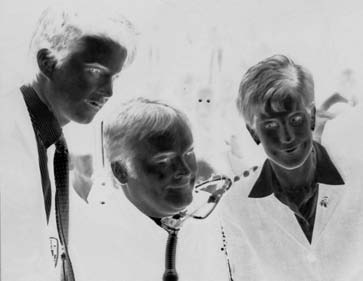
Steven and Patti Ann and Conor McDonald
When visiting Steven in his Long Island home (since meeting in 1997, we have become close friends), I am often struck by the extent of his incapacitation. Life in a wheelchair is hard enough for an elderly person to accept, but to be plucked out of an active, fun-loving life in your prime is devastating. Add to that a tracheostomy to breathe through and total dependence on a nurse and other caregivers, and life can seem pretty confining at times. Steven is matter-offact about this:
There's nothing easy about being paralyzed. I have not been able to hold my wife in my arms for two decades. Conor is now a young man, and I've never been able to have a catch with him. It's frustrating – difficult – ugly – at times.
So why did he forgive? Again, he himself says it best:
I forgave Shavod because I believe the only thing worse than receiving a bullet in my spine would have been to nurture revenge in my heart. Such an attitude would have extended my injury to my soul, hurting my wife, son, and others even more. It's bad enough that the physical effects are permanent, but at least I can choose to prevent spiritual injury.
Again, I have my ups and downs. Some days, when I am not feeling very well, I can get angry. I get depressed. There have been times when I even felt like killing myself. But I have come to realize that anger is a wasted emotion…
Of course, I didn't forgive Shavod right away. It took time. Things have evolved over fourteen years. I think about it almost every day. But I can say this: I've never regretted forgiving him.
Patti Ann feels the same:
It's been hard, very hard, for me to really forgive the boy that shot Steven. Why did he have to do it? I still want to know. Why couldn't my son grow up having the same experiences other kids have with their dads? We still struggle over that one. But I learned long ago that in order for us to get along as a couple, I had to let go of my anger. Otherwise Steven and I wouldn't have been able to go on ourselves. Because when something like that festers inside of you, it just destroys you from the inside out.
Today, Steven is a sought-after speaker at schools in and
N O T A S T E P , B U T A J O U R N E Y around New York City, holding entire auditoriums captive as he retells his story and launches dialogue on the broader issues surrounding it. To him, the cycle of violence that plagues so many lives today – including young lives, like that of Shavod – can be overcome only by breaking down the walls that separate people and make them afraid of each other. The best tools for this, he says, are love, respect, and forgiveness.
Quoting Robert F. Kennedy, Steven likes to point out that "the victims of violence are black and white, rich and poor, young and old, famous and unknown, but they are, most important of all, human beings whom other human beings have loved and needed." And somewhere in each address, he finds a way to refer to Martin Luther King – a man who gives him unending inspiration:
When I was a very young kid, Dr. King came to my town in New York. My mother went to hear him speak, and she was very impressed by what she heard. I hope you can be inspired by his words too. Dr. King said that there's some good in the worst of us, and some evil in the best of us, and that when we learn this, we'll be more loving and forgiving. He also said, "Forgiveness is not an occasional act, it's a permanent attitude." In other words, it is something you have to work for. Just like you have to work to keep your body fit and your mind alert, you've got to work on your heart too. Forgiving is not just a one-time decision. You've got to live forgiveness, every day.
If Steven's story illustrates the ongoing battle that follows every decision to forgive, the next one, about an eight-yearold girl named Saira Sher, shows how that battle cannot be won without a decisive first step.
Saira was three when she was hit by a car while walking across a street in Troy, New York with her mother. Months of surgery, recuperation, and therapy followed, but she never fully recovered.
Today, despite her confinement to a wheelchair and her inability to walk or use her arms and hands (she writes by holding a pen between her teeth), Saira is a spunky nineyear old who has dreams of becoming lead vocalist in her own rock band and founding a home for disabled children. "I'm trapped outside, but free on the inside," she wrote in a recent issue of her school newspaper. "I probably do more than anyone else that can walk. Over all, being paralyzed isn't so bad."
But if you talk to grandmother (and primary caregiver) Alice Calonga, you'll get another angle of the picture:
Saira's an inspiration. She doesn't have any animosity at all. She is a very positive human being, and doesn't dwell on what happened to her or feel sorry for herself. She's just a normal kid, as far as she's concerned. As much as was taken from her, she's given that much back a thousand times in her short life to the people around her. But that still doesn't undo what was done to her…
N O T A S T E P , B U T A J O U R N E Y
I'll never forget the first couple of days after the accident. We were up in Albany in the pediatric ICU and there were a lot of people milling around with their children. But there were two young men there who kind of stood out, because they were always there, watching me. Finally one of them approached me and asked me if I was related to the little girl who got hit by the car. I said I was. Then he asked me if I was her grandmother. I said yes.
At this point I asked him who he was, and he said he was the man who had hit her. I was stunned. Then he asked me if I could forgive him. When I tried to put myself in this stranger's shoes and think how devastated I would feel if I were him, I right away knew I had to forgive him. So I did. Then I hugged him.
Just at that moment my daughter came out of the ICU. She was horrified to see me talking with this man and was very angry at me.
She started telling me how the accident had happened – how the driver had been so impatient, he had driven around the vehicle in front of him, which had stopped for a traffic light, and run into her and Saira. Then, trying to flee the scene, he had accelerated and hit Saira a second time, breaking her neck and crushing her spine.
At first I couldn't believe it. I said, "Nobody would do anything like that." But I soon found out that my daughter was not exaggerating. I was so horrified, I felt like I had been raped. I had been robbed of my forgiveness by a man who wasn't the least bit entitled to it…

Saira Sher
Alice says that despite her shock – and the fury of her daughter, who told her she had no right to forgive anyone for what happened – she is certain she did the right thing.
As angry as some people are that I did it, in my heart I know I forgave that driver for the right reason, even if I was just going on instinct. I can honestly say that if I had not forgiven him at that particular moment, I might never have been able to. It's so clear to me now that he didn't deserve it. But if I were him – if I had done what he did – I know I would still want forgiveness. That's how I was thinking when I originally forgave him.
Of course, since then I've found out a lot more about that driver. He's continued to flout the law and to do bod-
N O T A S T E P , B U T A J O U R N E Y ily harm to others without showing any kind of remorse. Last I heard he had thirty-seven violations on his license! When he hit Saira he already had nineteen. Lord only knows what else he has done.
Alice says it's a daily fight to hang on to her initial offer of forgiveness. But she also says that the struggle has made her a stronger person.
It's taken me such a long time to get over the feeling of having been used. A long time. But I have gotten over it. I don't think he'll ever be worthy of my forgiveness. Still, I can carry my burdens a whole lot easier now, than when I had to carry my anger around as well. And because of that I can live a better life and give my energy to someone who deserves it – someone like Saira.
By illustrating the power of forgiveness in their own lives, people like Steven and Alice make exemplary models for others who want to forgive. But ultimately they are just that: models. And if their stories are to be of any real use beyond merely edifying us, we must find the points at which their journeys intersect with our own.
Obviously, the road to healing and wholeness cannot be the same for everyone. Every person moves at his or her own pace, and there are different paths to the same destination. Some people find strength to forgive within themselves,
others through the help of those around them. Some are able to forgive only when they recognize their own inadequacy and turn to a higher power. Still others are never really able to forgive at all.
Terry, a local prison inmate I correspond with, is thirtyseven years old. So far he's spent nineteen of them in prisons, jails, or detention homes of one kind or another.
Forcibly abducted from his abusive parents by child welfare agents determined to save him and his siblings, Terry and his brothers were shunted from one foster home to another over a period of two decades.
In one foster home Terry was severely beaten by the woman in charge; at another, repeatedly raped by older roommates. In yet another home, the priest who ran it molested him. Multiple escapes were followed by multiple recaptures, which were followed by days of solitary confinement in a locked room, his food passed through a slot in the door, and nothing to wear but undershorts.
Terry has spent so much of his life on drugs and alcohol that parts of his youth are only a blur. He has attempted suicide too many times to count. Still, he yearns to forgive the people who have made his life the hell it is, to forgive himself for the "stupid choices" he recognizes that he himself made along the way, and to be forgiven for the crimes (burglary and drunk driving) that have landed him in jail.
N O T A S T E P , B U T A J O U R N E Y
I'll sit and tell you every one of my sins, and I am truly very sorry for every one, even for the ones I'm not even aware of. Believe me, I've got a good heart. I'd give whatever I have if someone asked me. I love other people but hate myself. Does that make any sense? It hurts me to see someone else hurt, but at the same time I've hurt every person I ever loved. Are all my emotions directed in the wrong places, or am I just a real screwball?
To be honest, a lot of my problems have to do with holding on to grudges. I do not know how to let them go. There's so much pent-up anger in me, so much hate and bitterness inside, I'm just not able to truly love. Nothing seems to be able to block the demons in my head or take away the unexplained pain I feel each and every day.
When I'm with other people, I can fake it. I joke around, I laugh. But once I'm alone, I get sober, and all these feelings – loneliness, abandonment, revenge, suicide – come welling up and take hold of me. I've undergone psychiatric counseling; I've been through rehab and halfway houses. I've been on every medication there is. But nothing works for me. Nothing.
I've begged Jesus to come into my life so many times, and part of him has, or I wouldn't be writing this letter to you. But how do I get rid of all the crap that takes up so much space in my mind? I feel like I'm unable to make a conscious decision to stop hating…
My childhood is over and done, I know, but I am still pissed off at my parents because of what they did to me and my brothers when we were kids. Sometimes I lie in
bed at night dreaming about how I'd punch them in the face if I ever saw them again. I know the Bible says, "Honor your father and mother." But I can't. I try to. I try very hard. But I just can't let my anger go. I am so messed up by my childhood. Last time I saw my oldest brother, he was dying of AIDS. Another brother has been in a mental hospital for forty years now. Another lives upstate and beats the hell out of his children, like Dad beat the hell out of him. I've called the child protection agency on him several times…
I pray for forgiveness. I pray for other people. I pray that God can help me to become the person he wants me to be. I pray that I can accept anything thrown at me in the course of a day. I pray that I can accept who I am.
I need to learn how to rid myself of the hate I feel, because it's killing me. One of my biggest fears is dying in this prison. I'm scared my soul would be stuck here.
I honestly want to forgive those I hate – including my parents – even though dark thoughts enter my mind all the time, and I have to pray daily to remove them. I see my own need for forgiveness too. I want so badly to be a good person and to change my ways.
I've read in the Bible about how Jesus touched people and transformed their lives. They only had to get close enough to him to touch his robe, and then they'd be healed. I know I'm only a speck of dust among millions of others, but I wish I could find that healing for myself. Or am I expecting too much?
N O T A S T E P , B U T A J O U R N E Y
Terry may never be able to confront the people who need his forgiveness, or come to terms with the suffering he has endured at their hands. Even if he did, he might never be able to pull himself together and verbalize the forgiveness he wishes he could grant them. In a situation like his, where the fear of being misunderstood or trampled on is very great, it may be too painful to expose one's deepest feelings.
In the end, however, it is not words that matter. For Terry, as for each of us, it is our inmost attitude that really counts. That is what will tip the scales of our lives in the direction we really want to go, no matter how many conflicting emotions threaten to throw us off balance.
When Bud Welch lost his 23-year-old daughter Julie, he lost the pride of his life, and to this day he cannot say he has forgiven the man who killed her. Still, he refuses to give resentment and despair the upper hand, and tries instead to keep her memory alive by sharing his pride in her with others.
I'm the third of eight children and grew up on a dairy farm, and I've run a service station in Oklahoma City for the last thirty-four years. Until April 19, 1995 – the day Julie and 167 others were killed in the bomb blast that destroyed the Alfred P. Murrah Building – my life was very simple. I had a little girl and loved her a lot.
Julie had a rough start; she was born premature, but she survived and grew healthy and strong. She had just graduated from Marquette with a degree in Spanish and started a job as a translator for the Social Security Administration. At the time of her death she was dating an Air Force lieutenant named Eric. The day after Julie was killed I found out that they had decided to announce their engagement in two weeks.
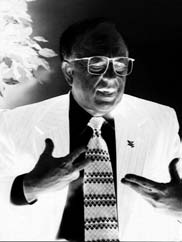
Bud Welch
All my life I have opposed the death penalty. Friends used to tell me that if anyone ever killed one of my family members, I would change. "What if Julie got raped and murdered?" But I always said I'd stick to my guns. Until April 19.
The first four or five weeks after the bombing I had so much anger, pain, hatred, and revenge, that I realized why, when someone is charged with a violent crime, they transport him in a bullet-proof vest. It's because people like me would try to kill him.
By the end of 1995 I was in such bad shape, I was drinking heavily and smoking three packs of cigarettes a day. I was stuck, emotionally, on April 19. I just couldn't get over it. But I knew I had to do something about it. That's when I went down to the bombing site.
N O T A S T E P , B U T A J O U R N E Y
It was a cold January afternoon, and I stood there watching hundreds of people walking along the chain link fence that surrounded the lot where the Murrah Building had stood. I was thinking about the death penalty, and how I wanted nothing more than to see Timothy McVeigh (and anyone else responsible for the bombing) fried. But I was also beginning to wonder whether I would really feel any better once they were executed. Every time I asked myself that question, I got the same answer: No. Nothing positive would come from it. It wouldn't bring Julie back. After all, it was hatred and revenge that made me want to see them dead, and those two things were the very reason that Julie and 167 others were dead…
Once he arrived at this realization, Bud returned to his original belief that executing criminals was wrong, and he has since become a leading opponent of the death penalty. Sought across the country as a speaker on the futility of capital punishment, he makes appearances in churches and town meetings, on college campuses and at activist gatherings. He is always on the go. But nothing he has done means as much to him as his meeting with Timothy's father:
A person like Bill McVeigh is as much a victim as I am, if not more. I can't imagine the pain he and his family have been through. I've lost a daughter, and if Timothy is ever executed he's going to lose a son. I have a son myself, and if he was convicted of killing 168 people, I don't know how I'd deal with that. Bill has to live with that for the rest of his life.
I first saw Bill McVeigh on television a few weeks after the bombing. He was working in his flower bed, and he looked up at the camera for a couple seconds. When he did I saw a father with deep, deep pain in his eyes. I could recognize it, because I was living that pain. I knew right then that someday I had to go tell him that I truly cared how he felt.
So I did. The day I visited him he was out in his garden again, and we spent about half an hour just getting acquainted, kicking dirt and pulling weeds. Then we went into the house so I could meet Jennifer, his 24-year-old daughter. As we walked in I noticed a few family photos on the wall over the kitchen table. The largest one was of Timothy. I kept glancing up at that picture. I knew that they were watching me, so I said, "Gosh, what a goodlooking kid." Bill had told me outdoors that he was having a lot of trouble showing emotion – that he couldn't cry. But when I commented on that photograph he said, "That's Tim's high school graduation picture," and a great big tear rolled down his cheek.
We talked for another hour and a half. When I got ready to leave I shook Bill's hand and extended my hand to Jennifer. She didn't take it. She hugged me around the neck. I don't know who started crying first as we embraced, but we were both in tears. Finally I said, "Honey, we're in this together for the rest of our lives. And we can make the most of it, if we choose. I don't want your brother to die, and I'll do everything in my power to prevent it." Never in my life have I felt closer to God than I did
N O T A S T E P , B U T A J O U R N E Y at that time. I felt like a thousand pounds had been lifted off my shoulders.
Still, Bud says he has no desire to meet his daughter's killer. Sometimes he's not even sure he's really forgiven him:
…At least I don't think I have forgiven him. I was speaking at Oklahoma State University one time, and the Bishop of Tulsa was there. I was telling the group about my struggle, and that I didn't feel that I had forgiven him. Anyway, the bishop chimed in and said, "But I think you have forgiven him." And he started quoting some verse from Scripture, which I'm not very good at doing. But he's a bishop, and I suppose he's qualified. I guess he was trying to convince me that I have forgiven Timothy, and maybe I have.