
Part 3
I said, "Karla, whatever comes out of all this, I want you to know that I forgive you, and that I don't hold anything against you." At that point all my hatred and anger was taken away. It was like some great weight had been lifted off my shoulders.
Ron says he talked with Karla at length, and that during their discussion he discovered that she, too, had recently come to believe in God, and that her faith had changed her whole outlook on life. It was then that he decided he would have to return and find out more about her:
At first I had just wanted to go in, forgive her, and move on, but after that first visit I needed to go back. I wanted to
find out if she was really sincere about this Christian walk she claimed to be on. I also wanted to find out why people kill, why they murder each other. I never found that out, but I did find out that Karla was real. I also found out, through her, that people can change and that God is real.
Karla's mother had been a prostitute and a drug addict, and she'd introduced her daughter to all that when she was very young. Karla started shooting drugs when she was ten. It was only in prison that she turned her life around – through a ministry at the Harris County Jail that reached out to the women, gave them free Bibles, and helped them find something to live for.
Ron visited Karla on death row every second month or so for the next two years, and he also wrote letters to her. They were soon close friends. He remembers:
People just couldn't understand it. They said something was obviously wrong with me – that I should hate the person who killed Deborah, not reach out to her. One relative told me I was disgracing my sister's memory, the way I was acting, and that she was probably rolling in her grave. Another made a public statement the day Karla was to be executed about how happy he and his family were to know that she would soon be dead. He said, "We have a saying in Texas – 'What goes around, comes around.'"
Karla herself was mystified by Ron's attitude toward her. Talking with a Dutch television crew who interviewed her shortly before her execution, she said: "It's unbelievable.
Amazing. Forgiveness is one thing. But to go beyond that and reach out to me – to actively love me…?" If anything, she found it easier to understand the thousands of Texans who wanted her dead:
I can understand their rage. Who wouldn't? It's an expression of their hurt and pain. And I know people don't think I deserve forgiveness. But who does deserve it? I've been given a new life, and the hope – the promise – that this is not the final reality.
Karla went to her death bravely, smiling as she made her last statement – "I am so sorry…I hope God gives you all peace through this" – and humming as she was strapped to the gurney and pumped with lethal chemicals.
As for Ron, he insists that it was useless to execute her: "It does no good whatsoever to kill anyone. It does not make our streets safer. It just makes more victims. Sure, I miss my sister. But I miss Karla too."
When Reconciling Is
Impossible
It may be infinitely worse to refuse to forgive than to murder, because the latter may be an impulse of a moment of heat, whereas the former is a cold and deliberate choice of the heart.
When Marietta Jaeger's seven-year-old daughter was kidnapped from their tent during a camping trip in Montana, her initial reaction was one of rage:
I was seething with hate, ravaged with a desire for revenge. "Even if Susie were brought back alive and well this minute, I could kill that man," I said to my husband, and I meant it with every fiber of my being.
Justifiable as her reaction was, Marietta says she soon realized that no amount of anger could bring her daughter back. Not that she was ready to forgive her daughter's
92 92
W H E N R E C O N C I L I N G I S I M P O S S I B L E kidnapper: she told herself that to do that would be to betray her daughter. Yet deep down inside, she sensed that forgiving him was the only way she would ever be able to cope with her loss.
It was that sense – that and sheer desperation – that led her to pray not only for her daughter's safe return, but for her kidnapper as well. As she prayed over weeks, and then months, her prayers became easier and more earnest. She simply had to find the person who had taken away her beloved child. And she even felt an uncanny desire to talk with him face to face.
Marietta and Susie Jaeger
Then one night, a year to the minute after her daughter had been abducted, Marietta received a phone call. It was the kidnapper. Marietta was afraid – the voice was smug and taunting – but she was also surprised at her strange but genuine feeling of compassion for the man at the other end of the line. And she noticed that, as she calmed down, he did too. They talked for over an hour.
Luckily Marietta was able to record their conversation. Even so it was months before the FBI finally tracked him
down and arrested him, and it was only then that she knew her daughter would never come home. The investigators had found the backbone of a small child among the kidnapper's belongings.
State law offered the death penalty, but Marietta was not out for revenge. She writes: "By then, I had finally come to learn that true justice is not about punishment, but restoration and rehabilitation." Later she requested that her child's killer be given an alternative sentence of life imprisonment with psychiatric counseling. The tormented young man soon committed suicide, but she never regretted her decision to offer him help. And her efforts at peacemaking did not end there. Today, she is part of a group that works for reconciliation between murderers and the families of victims.
Kelly, a long-time acquaintance, lost her fiancé when he left her ten days before their wedding date. It was the last time she ever saw him. They had been engaged for more than a year, and although the relationship had occasionally faltered, she was sure that this time everything was going to work out. She was deeply in love, and very excited. She had finally graduated from nursing school, and her wedding dress was nearly finished. Then everything fell apart:
W H E N R E C O N C I L I N G I S I M P O S S I B L E
My fiancé revealed that he had been dishonest with me – there were things in his past that were still an obstacle to our marriage. To make things worse, he wanted to run away from it all rather than confront it. I was shattered. I wept for days and was heartbroken for years. I blamed myself for his dishonesty, and I became bitter.
Thirty years later, Kelly is still single, but she is no longer bitter. Even though she cannot tell him, she has genuinely and entirely forgiven her fiancé. And although she sometimes still aches for the marriage that never was and the love she lost, she has found fulfillment of another kind in helping and serving other people – the old and the sick, expectant mothers, and disabled children. Happy and energetic, she is too busy to entertain self-pity, and few, if any, of her friends know about her past:
Because I am single, I can do things a busy wife and mother could never do. I can give of myself whenever and wherever I am needed. And I have cared for and loved more children than I ever could have otherwise. But before I could do any of this, I had to stop focusing on myself and my loss. First I had to forgive.
When Julie discovered that her husband, Mike, was molesting their daughter, she was beside herself with shock and anger. Yet after confronting him and taking steps to ensure
that his behavior would not continue, she decided to stay with him. For one thing, she wanted to believe him when he insisted it would never happen again; for another, she could not bear the thought of asking him to leave. But the family broke up anyway.
I was foundering on the verge of desperation. Mike had become a stranger to me, and I could no longer live with him in what had become a hell. We stayed together about a year, struggling to rebuild our relationship – or at very least keep it from falling any further apart – but it was no use.
Finally I left Mike and moved back to my old hometown, taking the children with me. I was angry, hurt, hateful, rejected, despairing, outraged, humiliated – and even this long string of adjectives cannot express what I felt. A battle raged in my heart.
Part of me wanted to forgive Mike, but another part wanted to lash out at him in revenge. This was especially so after he divorced me and married again. Every time I thought of his new wife it rekindled my anger.
This was my battle: deep down, I felt I should forgive Mike, and I genuinely wanted to. But how should I express my forgiveness practically? And how could I, when he showed so little remorse?
I didn't want to gloss over what he had done in any way, and I had let him know, when I left him, that I could never allow our children to stay with him again. But aside from that there seemed nothing I could do, other than
W H E N R E C O N C I L I N G I S I M P O S S I B L E acknowledge the fact that our marriage was over for good, and accept the divorce.
It has not been an easy battle, and it continues still, as I witness the effect of the abuse and the breakup on our five children. I have also discovered that forgiveness is not a one-time thing – it must be affirmed again and again. Sometimes I doubt that I have ever forgiven Mike at all, and I have to battle through that, too. But I know that, ultimately, the wrongs he did to me cannot destroy me.
Anne Coleman, the woman whose story I told in the first chapter, came to a similar conclusion after the murder of her daughter, Frances, and the subsequent death of her son, Daniel, who could not cope with his sister's death. Though this double tragedy shattered every semblance of "normal" life for their mother, she was determined to stand strong, and not to concede defeat. Today, instead of nursing her own wounds, she tends to those of the people around her. In fact, she does much more than that in her work as a volunteer counselor to the men on Delaware's death row.
Anne's involvement with prison inmates began after she met Barbara Lewis, a woman whose son had been sentenced to death. After going to see him together, they began to visit other inmates as well:
That's how I met Billy. He'd had no visitors, and he was very lonely. I cry when I think of how he was hanged; how they made him stand on the gallows in that howling wind for at least fifteen minutes while they waited for the witnesses to arrive. After his execution I thought I couldn't go on.
Then I got to know a little boy called Marcus. His father is also on death row. He has no mother and has lost both of his sisters, and he has nightmares because now he's going to lose his father, too…
I know that hating someone is not going to bring my daughter back. And at this point, I don't know if I'll ever find the person who killed her, anyway. But one has to find healing somehow, and I've found it by helping the Barbaras and Marcuses of this world. Helping them has given me more healing than I ever imagined.
On April 20, 1999, Brad and Misty Bernall of Littleton, Colorado, lost their daughter Cassie in a school shooting that left her and fourteen other classmates dead. Like Anne, the Bernalls may never fully come to terms with their daughter's death. In a way, that would be unnatural, because the memory of a child is something a parent wants to keep alive forever. Nor are they ready, yet, to say "I forgive" from the bottom of their hearts. Still, they are "working on it," as Misty says, rather than seeking revenge.
W H E N R E C O N C I L I N G I S I M P O S S I B L E
Brad and Misty Bernall with Cassie and Chris
Brad and Misty are frustrated by the knowledge that their daughter's killers might have been stopped, had parents, law enforcement officials and school administrators intervened earlier. Nevertheless, while many families of school shooting victims around the country have hired attorneys, filed lawsuits, and become embroiled in bitter shouting matches over who is to blame for their children's deaths, the Bernalls have resisted invitations to join the fray. As Misty put it in a book she wrote about her daughter about six months after her death:
Anger is a destructive emotion. It eats away at whatever peace you have, and in the end it causes nothing but greater pain than you began with. It also makes it that much harder for others to console you, when you're busy nursing resentment. It's not as if I don't have those seeds in me – I know I do – but I'm not going to let other people water them.
There's also the whole question of revenge. It's normal, I think, to want to bite back, whether through filing a lawsuit or by other means. But in the case of Cassie's murderers, we could never go after their families. Even if we did sue them and won, no amount of money is going to bring our daughter back.
Clearly, not every story has a tidy ending. Sometimes, as happened in Littleton, murderers kill themselves. Sometimes, as in the case of Anne's daughter, they are never caught. Fiancés (and even spouses) up and leave, never to be heard from again. Marietta tried to reach out to the man who kidnapped her daughter, and found him too tormented to be helped. Then there are those like Julie, who gather up their courage and confront the person they want to forgive, only to discover that he is not the least bit sorry for his actions. Anyone whose wounds are left to bleed in such painful ways is bound to remain affected for the rest of his or her life.
Unfortunately, those who take the most pains to demand an apology may find that it never comes; and those who smolder year after year, burning with the desire to see justice
W H E N R E C O N C I L I N G I S I M P O S S I B L E finally served, may be similarly disappointed. The fuel of bitterness is always expended in vain. But the opposite is true, too. The love of a forgiving heart is never wasted. It can fill the deepest hole and heal the deepest wound.
Forgiving in Everyday Life
To love at all is to be vulnerable. The only place outside
Heaven where you can be perfectly safe from all the dangers and perturbations of love is Hell.
Most of us will probably never be faced with forgiving a murderer or rapist. But all of us are faced daily with the need to forgive a partner, child, friend or colleague – perhaps dozens of times in a single day. And while doing the latter may be less difficult than the former, it is just as important. In his poem "A Poison Tree," William Blake shows how the smallest resentment can blossom and bear deadly fruit:
I was angry with my friend: I told my wrath, my wrath did end. I was angry with my foe: I told it not, my wrath did grow.
102 102
F O R G I V I N G I N E V E R Y D A Y L I F E
And I watered it in fears, Night and morning with my tears; And I sunned it with smiles, And with soft deceitful wiles.
And it grew both day and night, Till it bore an apple bright; And my foe beheld it shine, And he knew that it was mine,
And into my garden stole When the night had veiled the pole: In the morning glad I see My foe outstretched beneath the tree.
The seeds of Blake's tree are the petty grudges of everyday life. Often they are so small that they are barely noticeable, at least at first. But even if we do not consciously tend to them, they will germinate over time. That is why it is so important to weed out even the most insignificant ones as soon as they take root in us – before they can grow.
I had to learn not to hold on to grudges early in my life. My childhood was a happy one for the most part, but I had my share of unpleasant experiences. A sickly child, I was diagnosed with hydrocephalus ("water on the brain") soon after I was born, and a doctor told my mother I would never walk. Even though this did not prove to be true – I started walking at two-and-a-half – classmates who found out about my condition began calling me "water head." Though
this probably hurt my parents more than me, the nickname upset me a good deal too.
When I was six, I had to have a large tumor removed from my leg. This was the first of many such operations over the next three decades. The surgery lasted two hours, and the threat of infection – this was before the days of antibiotics, and we lived in the backwoods of Paraguay – hung over me for days. After my leg was stitched shut, I had to walk home from the hospital: no one offered me crutches, let alone a wagon ride. I can still see my father's shocked face as I limped into our house, though he didn't say a thing.
That was typical of my parents. We never heard them speak ill of others, and they did not allow us to, either. Like any other parents, they struggled with their feelings when they felt that one of us children had been mistreated, whether by a teacher or any other adult. But they insisted that the only way to overcome the little indignities of life was to rise above them by forgiving.
When I was fourteen, we moved to the United States. The change from a village in the South American wilderness to a high school in New York was enormous. The English language was perhaps the biggest barrier for me, but there were other obstacles to fitting in: I felt awkward and clumsy, and on top of that I was naturally shy. In short, I had very little self-esteem.
F O R G I V I N G I N E V E R Y D A Y L I F E
Every child wants to be recognized by his peers, and I was no different. I desperately wanted to be accepted, and I went out of my way to please my new classmates. At first I was spurned, especially by the class bully. Then I began to fight back, taunting him by talking about him behind his back and laughing in his face when he tried to find out what I had said. Not surprisingly, I received my share of bloody noses.
In my twenties, I dealt with more damaging feelings of rejection, when the woman I was engaged to turned her back on me and broke off our relationship. It was a struggle for me to let go of my hurt feelings and forgive her, especially since I had no idea why she had ended the relationship. Later I convinced myself that it was my fault that things had gone wrong, because I was such an awkward misfit, and I had to forgive myself too.
A few years later, my hopes were dashed again, when another woman broke off our relationship after several months. My world crashed around me as I tried to make sense of what had happened. What had I done wrong?
That second time it took even longer to battle my emotions and rebuild my confidence. But my father assured me that in time I would find the right partner, and a few years down the road he proved to be right.
Perhaps the hardest thing about practicing forgiveness in daily life is that it requires us to confront the reality of our feelings toward those we know best. It is difficult enough to forgive a stranger we might never see again, but it is much harder to forgive a person we love and trust. Our family, our friends, the people we feel closest to at work – they not only know our strengths, but also our weaknesses, our frailties, and our quirks. And when they turn on us, we are often left reeling. At least that's what Clare Stober, a former businesswoman who is now a member of my church, experienced:
Before leaving the advertising agency I co-owned and moving to another state, I had to settle affairs with my partner of ten years. This was complicated by the fact that he and his wife had once been very close to me and had been fellow church members for the past fifteen years. Over time we had grown apart, and I felt I could no longer continue working with them.
None of our advisors wanted to tell me how best to divide our assets equitably. I wanted to go beyond just being fair – I wanted nothing weighing on my conscience – so I made a proposal to that effect. I thought it was a very generous distribution. But my partner saw the whole thing differently and stopped talking to me the day I told him of my desire to leave the business. Unfortunately, it was two more months before I felt my tasks were sufficiently handed over, and the transition was long, silent, lonely, and punctuated by angry words.
F O R G I V I N G I N E V E R Y D A Y L I F E
We still had not signed an agreement by the time I left. Lawyers had been brought in by both sides, but they only clouded the waters. I had wanted an outside source to arbitrate the offer, but my partner fired the arbitrator and sought advice instead from an accountant we had worked with for seven years. The accountant quickly realized that his future lay with the partner who was continuing with the business and helped him to make my leaving very difficult.
It took a lot of offers and counter-offers to come to a final agreement. I won't go into details here, but the result of their demands was that I was made liable for one-half of the firm's earnings for the last full year I was with them, from January to December, even though I only received my share of the earnings through June. I ended up paying $50,000 in taxes which they should have paid.
When I realized what they had done, and that they had done it with forethought and deliberation, I was so angry I could not sleep for days. I felt they had conspired to crush me. I've been through a lot of difficult times in my life, but I have never spent so many sleepless nights, tossing and turning, consumed by anger and deep hurt. When I thought about what had happened during the day, the waves of anger that welled up within me were so powerful they would leave me shaking.
To make matters worse, a friend asked me, "What are you so upset about? It's only money." That made me even more angry. Sure it was "only money," and I didn't really need it at the time. But it was a lot of money, and it was
mine, and they had cheated me. Obviously, the IRS could not be put off, though, so I wrote the check and hoped in a God of vengeance.
My journey to forgiveness took years. It was like crossing a stream by hopping from one stone to another. I took the first step as I was driving alone one night, listening to the radio, and a song came on about forgiveness. The performer explained the lyrics before he sang it. He talked about how we keep our hurts in a cupboard in our hearts and repeatedly bring them out to turn them over and replay them. We examine our hurts over and over, and nurse our self-pity.
There was a surprise at the end of the song: it talked about how we think we're imprisoning those who have hurt us by not forgiving them, but if we look at the face of the person locked in the tower, we'll see that it is our own. At that point I knew, at least intellectually, that forgiveness was the key to getting on with my life.
I took a second step when I began to examine my own feelings and realized that I was more hurt by my partner's cheating me out of money, than by his slander. It began to bother me that I had let money have such a hold on my life and feelings.
Another step came about a year later when I was embarking on a new chapter of my life in a new location. I was talking with a friend who knew my old partner, and she asked me if I had ever forgiven him. I quickly said, "Sure." She wasn't satisfied, but pressed further, explaining to me how important forgiveness was for both of our
F O R G I V I N G I N E V E R Y D A Y L I F E futures, even if we no longer worked together. She said that by not forgiving him, I was somehow binding him and not letting him get on with his life – not to mention that I was hurting my own future in the same way. I asked my friend, "So how does forgiveness work, then?" She described it as a gift – we can will to forgive as much as we want, but ultimately it must be given to us. Reluctantly, I began to will myself to forgive – though in retrospect I see that I still felt it was my partner who should be asking for forgiveness, not me.
The final step came later, during a time of deep spiritual introspection. I was trying to clear up everything in my life that had gone wrong up to that point, and make a clean slate before God. Frankly, I was getting nowhere – I thought I had nothing to clear up.
Then it hit me like a ton of bricks. Sure, I had been wronged, but I had done more than an equal share of wrongs in my life – against my partner, and against others. I sat down and wrote him a letter, telling him how much bitterness I had carried, and asking his forgiveness. I felt such a release as I licked that envelope and put the letter in the post. No matter what their answer, I could now be free of my anger.
About a month later, the same friend who had advised me to forgive happened to call me and asked me if I had been able to do so. I told her that I had, and that I now felt free. She answered, "I thought so. I've noticed a new freedom in him, too."
Already as a teenager, my father was known for his ability to listen and his tendency to think the best of people, and when he became a pastoral counselor, these qualities stood him in good stead. Neither assertive nor articulate (he learned English only as an adult), he would rarely dispense advice, but take in a person's problems quietly and then offer a personal insight or an encouraging word.
Wherever Papa went, people wanted to talk to him. Many had things they wanted to get off their chests; others just needed a receptive ear. Whatever the case, they knew he would make time for them. Unfortunately, the very thing that drew people to him netted him the criticism of envious colleagues, who took advantage of his trust and turned on him.
Papa began to suffer from kidney problems around the time I was born, and as I grew up these problems became worse. Physically, life was harsh in the rural community where we lived: tropical diseases were rampant, and the infant mortality rate was very high. Added to that, there were tensions in our settlement, a close-knit intentional community that consisted primarily of immigrants who had fled wartime Europe.
Given these circumstances, the burden of Papa's responsibilities – he was an appointed leader of the community – weighed on him so heavily that it affected his health. At one point, after several weeks of steady physical decline,
F O R G I V I N G I N E V E R Y D A Y L I F E
The author's parents, Heinrich and Annemarie Arnold his doctors even told him he had only forty hours to live. Fearing the worst, he summoned the entire community to his bedside and passed on his duties to three other men, one of them his brother-in-law.
As it turned out, Papa miraculously recovered, but rather than handing back his responsibilities to him, the community's new leaders told him that his working days were over: the doctor had declared him too weak to continue his demanding schedule.
In fact, the doctor had simply suggested a few weeks of rest. But the "misunderstanding" was deliberate – my father's colleagues wanted him out of the ministry. As ammunition
for their case, they reminded him of the emotional instability he had displayed at the height of his illness, when he had seen strange things and had had bizarre dreams. What, they asked him, were they to make of all that? (Thirty years later another doctor discovered the reason for his hallucinations: they were a side-effect of the primitive bromide medications used to treat him.) Never the kind of person to fight back, Papa meekly gave in and took a new job in the local missionary hospital.
Not long after that, new problems surfaced. Worried that the community was moving away from its original basis – faith, mutual service, and brotherly love – and becoming a committee-led bureaucracy driven by rules and regulations, my parents joined a handful of other members in voicing their concerns. But they were not heard. Instead of welcoming their questions, the leadership accused them of trying to create a split, and several, including Papa, were excommunicated.
Papa was a skilled gardener – he had studied agriculture in Zurich – but even so he was unable to find work. As an outspoken opponent of Nazism, he was looked on with suspicion by the local Germans, who tended to be sympathetic toward Hitler. As for the British and American expatriates in the area, they feared him because he was German. Finally, he found employment as a farm manager in a leper colony.
F O R G I V I N G I N E V E R Y D A Y L I F E
In the early 1940s there was no cure for leprosy, and Papa was warned that if he accepted the position he might never see his wife or children again. (At that time the disease was thought to be contagious). But what could he do? He had to support himself somehow. He took the job.
Finally, after many months, Papa was permitted to rejoin the community. The day he returned I was so excited I could hardly stand it. As soon as I saw him I jumped into his arms. Then, riding on his shoulders as he walked toward our house, I called out to everyone we passed, "Papa is home!" Amazingly, my joy was met mostly with icy stares. It was only years later that I was able to understand. Yes, Papa had been allowed to come back. But he hadn't been forgiven.
Though the anguish my parents suffered in those years must have affected them both deeply, it never embittered them. In fact, it was only decades later that I found out about all that they had gone through – and not from them, but from friends. When I asked them why they hadn't stood up for themselves, my father said simply, "No matter how many times you are betrayed, it is always better to forgive than to live in a spirit of anger and mistrust."
I was deeply impressed by his attitude, but I was also horrified. How would I react, I wondered, if I were treated in such a way?
In 1980 I found out. My church suddenly asked me to step down from my work as assistant elder to my father, a
task I had been appointed to almost ten years earlier. To this day I am not completely sure why it happened. Most probably there was an element of the same divisive jealousy that had resulted in my father's expulsion forty years earlier. Whatever the reason, the very same people who had always praised and encouraged me – including several friends, colleagues, and even several close relatives – began to find fault with everything I had ever done.
Confused and angry, I was tempted to fight back. My father was by then senior elder of four large congregations, and he needed me more than ever; only weeks before, my mother had died of cancer. On top of that, I couldn't see what I had done wrong. True, I was known to be blunt about what I felt, especially in matters where I felt that politeness or diplomacy would mask a real issue, and not everyone in our church appreciated this. Still, I had always tried to be humble and considerate. And now this! I desperately wanted to set my record straight and re-establish my "rightful" place.
Papa, however, refused to support me in fighting back. Instead he pointed me to the Sermon on the Mount, where Jesus speaks of forgiving others for their trespasses so that we, too, may be forgiven. He reminded me that in the end we won't have to answer for what others do to us – only for what we do to them.
F O R G I V I N G I N E V E R Y D A Y L I F E
Suddenly I realized I wasn't as blameless as I had thought I was. I began to see that deep down I held grudges against various members of my church, and that instead of trying to justify myself, I needed to get down on my knees and ask God to forgive me. Then I would find strength to forgive.
I did this, and right away it seemed as if a dam had burst open somewhere deep down inside my heart. Before, my struggle had centered on the pain of hurt pride; now I was able to see things from a new perspective – and it all seemed rather petty.
With a new determination to set things straight and take the blame for whatever tensions existed, I went to everyone I felt I might have hurt in some way in the past, and asked them to forgive me. As I went from one person to the next, the knots in my heart seemed to undo themselves one by one, and by the end of it I felt like a new person.
That year was a very painful one for me, but it was also an important one, because it taught me several lessons I will never forget. First, it does not matter if people misunderstand you or accuse you unjustly. What matters is standing right before God. Second, even though the decision to forgive must always come from within, it is never a matter of willpower alone. The most powerful source of strength is always your own need – your own acknowledgment of weakness and your own experience of being forgiven. Finally,
if your forgiveness is going to bear fruit, the soil around it – the soil of the heart – must be soft enough for it to grow in. If it is not soft – if you are not willing to be humble and vulnerable – your forgiveness will never be more than a fruitless gesture.
Humility and vulnerability are not easy virtues to acquire. In my experience, they come only with hard work, practice, patience, and pain. Still, life is poorer without them. As M. Scott Peck writes:
There is no way that we can live a rich life unless we are willing to suffer repeatedly, experiencing depression and despair, fear and anxiety, grief and sadness, anger and the agony of forgiving, confusion and doubt, criticism and rejection. A life lacking these emotional upheavals will not only be useless to ourselves; it will be useless to others. We cannot heal without being willing to be hurt.
Forgiveness and Marriage
People ask me what advice I have for a married couple struggling in their relationship. I always answer: pray and forgive. And to young people from violent homes, I say: pray and forgive. And again, even to the single mother with no family support: pray and forgive.
Over many years of marriage counseling, I have seen again and again that unless a husband and wife forgive each other daily, marriage can become a living hell. I have also seen that the thorniest problems can often be resolved with three simple words: I am sorry.
Asking one's partner for forgiveness is always difficult, because it requires humility, vulnerability, and the acknowledgment of weakness and failure. Yet there are few things that make a marriage more healthy.
Dietrich Bonhoeffer, the German pastor imprisoned by Hitler for his opposition to the Nazi regime, used to tell
117 117
the members of the small community he founded about the need to "live together in forgiveness," because without forgiveness no human fellowship – least of all a marriage – can survive. "Don't insist on your rights," he once wrote. "Don't blame each other, don't judge or condemn each other, don't find fault with each other, but accept each other as you are, and forgive each other every day from the bottom of your hearts."
In thirty-three years of marriage, my wife, Verena, and I have had no lack of opportunities to test our willingness to forgive. Only a week after our wedding we had our first crisis. We had invited my parents and sisters over to dinner in our new apartment, and Verena had spent all afternoon cooking. My sister, an artist, had made us a set of pottery dishes, and I set the table with them.
My family arrived and we sat down to eat. Suddenly both ends of the table collapsed – I had not snapped the hinged extensions properly into place. Food and broken pottery covered the floor, and my wife fled the room in tears. It was hours before she could forgive me and laugh about the disaster, which has since become a family legend.
By the time we had eight children, there were plenty of opportunities for disagreements. Every evening Verena would bath the children and get them into their pajamas, after which she would have them wait for me on the couch with their favorite picture books. As soon as I came home
F O R G I V E N E S S A N D M A R R I A G E
The author and his wife on their wedding day from work, however, they all wanted to go outdoors again and play with me, so we often ended up romping in the garden. Afterwards, Verena had to clean up the children all over again, which she did, though not without a little justified grumbling.
Most of our children suffered from asthma, and when they were small they woke us almost nightly with their coughing and wheezing. This, too, became a source of occasional tensions, especially when Verena reminded me that I could get out of bed and help them just as well as she could.
There were arguments over my work as well. As a salesman for our publishing house, I spent countless days on the
road. And because my territory covered western New York State – Buffalo, Rochester and Syracuse – I was often a good six or eight hours' drive away from home. Later my work took me to Canada, Europe, Africa, and even Australia. I always ended up defending such trips as vitally important, but this did little to soothe Verena, who packed my suitcases and stayed behind with the children.
Then there was The New York Times. After a hard day on the road, I couldn't see the harm in stretching out with the paper for a few minutes while the children played around me, and I told my wife so. Only later did I realize that it would have been nice to acknowledge the fact that she, too, had been working all day. At the time, I tended to bristle when she reminded me.
I often think about how our marriage might have turned out if we hadn't learned to forgive each other on a daily basis right from the start. So many couples sleep in the same bed and share the same house but remain miles apart inwardly, because they have built up a wall of resentment between themselves. The bricks in this wall may be very small – a forgotten anniversary, a misunderstanding, a business meeting that took precedence over a long-awaited family outing.
Many marriages could be saved by the simple realization that a spouse will never be perfect. Too often, couples assume that a healthy relationship is one that is free from disagreements. Unable to live up to such an unrealistic ex-
F O R G I V E N E S S A N D M A R R I A G E pectation, they either bottle up their true feelings about each other, or else give up, disillusioned, and separate on grounds of "incompatibility."
Human imperfection means that we will make mistakes and hurt each other, unknowingly and even knowingly. In my own personal life I have found that the only fail-safe solution is to forgive, seventy times seven if necessary. C. S. Lewis writes:
To forgive the incessant provocations of daily life – to keep on forgiving the bossy mother-in-law, the bullying husband, the nagging wife, the selfish daughter, the deceitful son – how can we do it? Only, I think, by remembering where we stand, by meaning our words when we say in our prayers each night, "Forgive our trespasses as we forgive those who trespass against us."
The power of forgiveness is wonderfully illustrated by the story of my wife's parents, Hans and Margrit Meier. Hans was a strong-willed man, and his stubbornness caused more than one period of separation in their marriage.
An ardent anti-militarist, Hans was imprisoned only months after their wedding in 1929 because he refused to join the Swiss army. Shortly after his release, the couple was separated again. She had discovered the faith community my grandparents founded and wanted to join it, whereas he
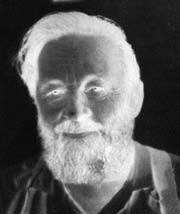

Hans and Margrit Meier was not interested. Having recently given birth to their first child, Margrit begged Hans to join them, but he would not be easily swayed. It was several months before she convinced him to come.
Thirty years and eleven children later, they separated a third time, again over differences regarding their commitment to their church. Hans moved to Buenos Aires, where he remained for the next eleven years. Margrit and most of their children, including Verena, emigrated to the United States.
There were no signs of outward rancor, but there were no signs of healing either. Slowly, a wall of bitterness rose up which threatened to keep them apart forever. When Verena and I married in 1966, Hans did not even attend the wedding.
F O R G I V E N E S S A N D M A R R I A G E
In 1972 I went to Buenos Aires with Verena's brother, Andreas, in an attempt to forge some kind of reconciliation with Hans, but he wasn't interested – at least not at first. He only wanted to recount his side of the story and let us know, once again, how many times he had been hurt. On the last day of our trip, though, something changed. He announced that he would visit us in the United States. He insisted that he would come for just two weeks, and emphasized the fact that he had a return ticket, but it was a start.
When the visit finally materialized, we were disappointed. Hans simply could not forgive. We made every effort to clear up past misunderstandings and acknowledged our guilt in the events leading up to his long estrangement, but we weren't getting anywhere. Intellectually, Hans knew that the only thing standing between us was his inability to forgive. Yet he could not bring himself to do it.
Then came the turning point. In the middle of a discussion that was going nowhere, my uncle Hans-Hermann, who was dying of lung cancer, summoned all his strength, stood up, came over to Hans, and tapped him on the chest saying, "Hans, the change must happen here!" These words cost a tremendous effort: my uncle was receiving supplemental oxygen through nasal tubes and was barely able to speak at the time.
Hans was completely disarmed. His coldness melted away, and he decided then and there to forgive – and
to return to his wife and family. After traveling back to Argentina to wind up his affairs, he moved back in with them for good.
Thankfully, in all their years of separation, Hans and Margrit's bond was never completely broken: Hans never touched another woman, and Margrit prayed daily for her husband's return. Still, it took time for them to rebuild their relationship, and the key was surely their willingness to forgive. In the end, their marriage was fully restored to one of deep love and joy in each other. It lasted till Margrit's death sixteen years later.
The story of my parents-in-law shows that a marriage disrupted by long separation can be healed. But what about one broken by adultery? Is it ever fair to expect a cheated wife or husband to dredge up enough courage to forgive and start over again?
Three years ago I counseled Ed and Carol, a couple whose marriage was in shambles. Even before they were married, Ed had been a problem drinker, and this caused tensions in the house from the very start. Aside from that, however, things went fairly well, and they soon had children: first a boy, and then a girl. To any outsider, it would have seemed the perfect marriage. Inwardly, however, Ed and Carol were
F O R G I V E N E S S A N D M A R R I A G E drifting further and further apart. Then Ed became involved with a neighbor and began an affair with her.
Ed and Carol joined our church a few years later, and around that time he confessed the affair, first to his wife and then to me. As he admitted later, his conscience gave him no peace, and he couldn't stand the pressure of keeping such a secret while pretending that everything was fine.
Carol was dumbfounded. She had sensed for a long time that something was wrong, but she had never imagined such deception. Seething, she told Ed that their marriage was over, and that she would never forgive him.
Though it wasn't hard to sympathize with Carol's anger, I felt that her initial reaction – "I'll never forgive you" – had less to do with the difficulty of forgiving Ed than with the idea of fairness or justice or "getting back" at him. I am sure that deep down she still wanted nothing more than a healthy relationship with the man she loved – the father of her children. But because of the way he had trampled on her, first with his drinking, and then with his adultery, she could not let go of her indignation. Ed didn't deserve another chance, and right now she wasn't going to give him one…
If anything was clear to me, it was that both Ed and Carol needed time and space to work through their problems on their own. For one thing, they were in no state to stay together, and there could be no quick fix. A new relationship
had to be built from the bottom up, and the process would be long and painful. For another, I felt that a temporary separation would give them the objectivity they needed to see each other with new eyes, and might even help them rediscover their original love for each other.
Ed and Carol separated, and for the next months I counseled each of them separately. Ed needed help to see the gravity of his unfaithfulness, which he convinced me he wanted to do, while Carol needed help to see that until she forgave him, the deep wounds he had inflicted on her would never heal. As she herself recognized, her worst fear after learning of Ed's affair had been that he would leave her for good, and she didn't want that to happen, so she would have to make it clear to him that she was willing to take him back.
Later, at Carol's request, they began to communicate by phone calls. Then, as their conversations grew longer and more relaxed, they decided they were ready to try meeting face to face again. Carol still had her ups and downs, but as time went on she found herself wanting to give life with Ed another try – and not just for the sake of the children, who had stayed with her when he had moved out of the house, but for her own sake as well. More important, she admitted that Ed's unfaithfulness had not been solely his fault, and that she too bore a guilt for their estrangement. Meanwhile Ed had stopped drinking and begun to assure Carol in other ways as well that he was going to make their marriage work.
F O R G I V E N E S S A N D M A R R I A G E
Finally, after ten months, Ed and Carol moved back together. In a special service held to celebrate their new beginning, they publicly forgave each other and re-consecrated their marriage. Then, faces beaming, they exchanged new rings.
In a society like ours, where one out of every two marriages ends in divorce, it is tempting to condemn couples who do not stay together. Naturally no one has a right to do that. But after seeing the healing effects of forgiveness in dozens of marriages, including foundering ones like Ed and Carol's, I find it impossible to suppress the hope that hundreds of thousands more could be saved.
Forgiving a Parent
It is freeing to become aware that we do not have to be victims of our past and can learn new ways of responding. But there is a step beyond this recognition…It is the step of forgiveness. Forgiveness is love practiced among people who love poorly. It sets us free without wanting anything in return.
In a world where countless people have been scarred by childhood abuse – psychological, physical, or sexual – it is no wonder that television and radio programs, newspapers and magazines never tire of the theme, but follow one lurid story after another, day after day. On talk show after talk show, survivors pour out their anguish to a curious but ultimately jaded and uncaring public. Yet no amount of soulbaring seems to bring them the healing they seek. How and where can they find it?
128 128
Obviously, the dynamics of every family, as well as the particulars of each instance of abuse, make it useless to offer generic advice or suggestions. Still, the following stories show that the possibility of reconciling should never be ruled out, even in the case of the cruelest parent. They also show the resilience of the human spirit, even when it has been beaten down, and the hope that springs from the mysterious source of strength we call love, whenever we are willing to draw from it.
Don grew up on an Appalachian farm in an extended family of some forty relatives. All of them shared one house and eked out a living on the same small plot of land. His childhood was brutal: he tells of cousins who tried to hang one another and a grandmother who fired at disobedient children with a shotgun full of rock salt.
When Don was about ten his father found a new job and took his wife and children to Long Island. Once there the family's financial situation improved. But their relationships did not. Soon after the move, Don's mother abandoned her husband and children, who were left at the mercy of their father. He beat them so routinely that they lived in constant fear of him. Don still remembers the sick feeling that returned to his stomach each afternoon as he
got off the school bus and thought about what the evening might bring.
Then one day Don's father was seriously injured in a collision that left him paralyzed from the neck down. Once the tyrant of the household, he was now a quadriplegic, utterly dependent on others to care for his daily needs.
Most people from such a home would escape as soon as possible, but not Don. With every reason in the world to abandon his father, he remained at his side for years, feeding him and washing, dressing, and exercising the lifeless limbs that had once beat him mercilessly, sometimes to the point of unconsciousness. (Now married, Don has arranged for a hired nurse to provide his father with 24-hour care, but he still lives nearby and visits him frequently.)
Pressed for an explanation, Don has little to say. He never saw his decision to stay on at home as a heroic or sacrificial deed. He never really even thought about it. But what was the option? How could he leave home, when the man who had brought him into the world – his own father – was as helpless as a baby and there was no one to care for him? "Dad needed me, so I stayed."
Bad memories of the past still haunt Don on occasion, and he says his father still has his demons to fight. Life isn't all roses, by any means. But at least they can talk and share the burdens of the emotional battles they have to wage. And in caring for his father Don says he has finally found a
F O R G I V I N G A P A R E N T measure of the happiness he yearned for as a child. "Call it forgiveness if you like," he says. Whatever it is, it has brought him wholeness and a sense of healing.
Karl Keiderling, a family friend who died several years ago in his eighties, suffered a similarly harsh childhood. The only son of a German working-class family, his early years were clouded by the First World War and the economic devastation that followed it. His mother died when he was four, and his stepmother when he was fourteen. To make matters worse, his father saw him as a burden on the family. When, after his stepmother's death, his father put out an ad in the hopes of finding a new mother for his children, he intentionally excluded Karl: "Widower with three daughters looking for a housekeeper; possibility of future marriage."
Several women applied, and in the end one decided to stay. It was only afterwards that she found out about the existence of a boy in the house, which she never quite got over. Karl's food was always poorer than the rest of the family's, and she complained about him day in and day out.
Karl's father, for his part, was silent in the face of his new wife, and did nothing to defend his son. In fact, he joined her in mistreating the boy and often beat him. His instrument of choice was a leather strap mounted with brass rings. Karl tried to protect himself on occasion, but that
only infuriated his father and earned him extra blows to his head and face.
Unlike Don, Karl left home as soon as he could. Attracted by the youth movement sweeping Europe in those years, he joined ranks with a group of young blue-collar socialists who were set on changing the world. Eventually his wanderings brought him to the rural commune where my grandparents lived. There, my grandfather welcomed him with an embrace and said, "We've been waiting for you to arrive."
Karl immediately felt at home and decided to stay. He threw himself vigorously into the work, chopping wood, hauling water, and tending the garden. But the agony of his childhood, as well as his feelings of resentment toward his father and stepmother, didn't leave him. Day after day his bitterness grew, hanging around him like a heavy cloud and threatening to block out everything good.
Finally Karl went to my grandfather and poured out his need. The response he got astounded him: "Write to your parents and ask their forgiveness for every instance in which you might have hurt their feelings or otherwise caused them grief. And look only at your own guilt, not theirs." Karl was taken aback, so much so that it took him some time before he felt ready to write. But eventually he did, and amazingly, his father answered the letter.
He never apologized for the way he had beaten Karl as a boy, or acknowledged any guilt of his own. But Karl said
F O R G I V I N G A P A R E N T it no longer mattered. Through forgiving, he himself had found freedom from the anger that had weighed on him, and a deep sense of peace. Karl never complained about his childhood again.
Maria, a relative from my wife's side of the family, overcame her resentment toward her abusive father in a similar way:
My mother died at the age of forty-two, leaving behind my father and eight children, aged one to nineteen. Mother's death was devastating for the whole family, but especially for my father, and he suffered an emotional breakdown just when we needed him most. One of the results of his instability was a lack of self-control, and he tried to molest my sister and me. I began to avoid him, and then to hate him.
Soon after this my father moved away, and I left South America for school in Germany. I didn't see him for another seven years. But I held on to my hatred, and it grew inside me.
Later I returned from Europe and became engaged to a childhood friend. My father asked me if we could meet. I flatly refused. I had no desire to see him.
When my fiancé found out about it, however, he did not understand how I could refuse such a meeting. If my father had expressed a longing for reconciliation, wasn't it my duty to respond? It cost me quite a battle to come around to my fiancé's point of view, but he was insistent, and in the end I agreed.
We met my father in a café, found a table, and sat down. Before I had a chance to say a word, he turned to me, broken, and asked for my forgiveness. Disarmed, I melted and assured him of my forgiveness on the spot. There was no way I could have withheld it.
Despite the apparent ease with which Don and Maria forgave their fathers, child abuse is probably the most difficult thing in the world to recover from. Given the imbalance of power between the adult (the perpetrator) and the child (the victim), the blame is always one-sided. And why should the innocent forgive the guilty?
Tragically, many victims of child abuse mistakenly believe that they share some of the blame. They worry that somehow they must have brought on or even deserved what was done to them. In fact, much of the power an abuser holds over his victim, even after the physical abuse itself has stopped, comes from this misguided notion of complicity. It is part of the victimization.
To make matters worse, some people claim that when a victim forgives an abuser, he is implying that he – the victim – is at least partly to blame. Nothing, of course, could be further from the truth. Forgiveness is necessary simply because both victim and victimizer – who in most cases know one another (or are even related) – are prisoners of a shared
F O R G I V I N G A P A R E N T darkness in which both will remain bound until someone opens the door. Forgiveness is the only way out, and even if an abuser chooses to remain in the darkness, that should not hold the victim back.
Kate, a neighbor in her fifties, was abused by her alcoholic mother for years but is now reconciled to her. Like others, her journey shows that when a victim is changed by the willingness to forgive, her abuser may be affected and transformed as well.
I was born in a small Canadian town shortly after World War II, the eldest of five children. Father's construction job was twenty-five miles away, and between travel and a twelve-hour workday he spent very little time at home.
Money was always a problem, and there were other tensions in our family, though I couldn't explain them. All I knew was that the older I got, the more things seemed to go downhill, especially after the birth of my youngest brother, when I was nine. In retrospect it's very clear what happened: Mother had started drinking.
After Kate's mother began to come home drunk, her parents separated. There was no family life to speak of; the house was neglected, and the laundry was never washed. Everything depended on thirteen-year-old Kate.
By the time Jamie, the youngest, started school, Mother was almost never at home. I never managed to do any homework and was not learning very much. I completely failed ninth grade and had to repeat it the following year.
Later two of my sisters left home, found jobs, and rented an apartment in town. But I stayed. Somebody had to look after the little ones. And as poorly as I did it, at least they were given something to eat.
Then Mother found out about a new source of additional income: in an effort to relieve overcrowding at the local hospital for the mentally and physically disabled, the government was paying people to put up "surplus" patients in their own homes. Mother took in two older men and a woman.
I had to give up my bed to one of the men and share a double bed with the woman, who rarely slept. When I told Mother that I couldn't cope with this and wanted the hospital to take the woman back, she wouldn't hear of it. After all, there was a check coming in every month.
Mother said she'd come home in the evenings to help me, and for a while she did. But the drunken state she came home in! Then she'd say that if it wasn't for me, she wouldn't be in such a mess. At first I didn't understand what she meant, but later I found out: my parents had been forced to marry because my mother was already carrying me.
At times Mother became physically abusive. Then in the morning, if she asked me about the bruises on my face and I told her that she had done it, she claimed I was lying.
At sixteen, Kate quit school in order to devote herself totally to the care of her siblings. Around that time she met her husband, Tom, whom she married two years later. She still remembers the guilt she felt when her mother asked accusingly, "Who is going to do the work around here?" Nonetheless, she moved out of the house, and soon she and Tom were raising a family of their own.
At this point I just wanted to forget about my mother. I had my own little family, and I had Tom's parents, who loved my children. Then, suddenly my mother wanted to re-establish contact. I refused. I finally had some leverage, and I was going to pay her back.
By this time my parents' divorce was finalized, and Mother had stopped drinking. Remarkably enough she had come to realize that the combination of alcohol and the blood-pressure medications she was taking would kill her. All the same, I had no desire to visit her. I simply could not trust her.
A few years later, after the birth of another child, Kate found out that her husband had taken a call from her mother, who had asked if she could visit the family. Tom had told her she was welcome.
I was hopping mad. I told Tom, "You call her right back and tell her she can't come. Tell her whatever you want to tell her. This is my baby, and I'm not willing to share it with her." I was very nasty. Later, however, I began to feel
bad, and I went to talk to our pastor. I thought maybe he would have a solution.
As I explained my dilemma to him, he sat there and listened to me. I finished, but he didn't say anything. I waited. I felt fully justified in having done what I did, but I wanted his assurance. I didn't get it. All he said was, "You have to come to peace with your mother."
I said, "You don't know my mother." He replied, "That has nothing to do with it." Meanwhile my mother came anyway. She was not well when she arrived, and she needed a lot of care. I did not make it easy for her.
Then, during the last few days of her visit, I sensed that there was something she was trying to tell me. She even seemed willing to listen to what I had to say to her. As we talked, I realized that Mother wanted a new relationship (by then I desperately wanted one, too) and that she was determined to remove whatever was in the way. It was then that I knew I had to forgive her, so I did. Immediately a wave of relief and healing came over me. It was indescribable, and it has stayed with me to this day.
Not all instances of parent-child estrangement are so black and white. Susan, a Californian from very different circumstances, never suffered real abuse at the hands of her parents. Still she was embittered for years by her mother's personality, which she felt to be distant and cold. And like
Kate, she found that the only route to mutual healing was to face her own lack of love and declare a willingness to forgive.
Ever since I can remember, I have had a difficult relationship with my mother. I feared her angry outbursts, her biting, sarcastic tongue, and I never felt able to please her. As a consequence, I began to nurse a deep anger toward her – a smoldering, hidden anger that made me close myself off to her. I nursed memories of injustices from early childhood, of sharp words and a few blows (none worth remembering). I became extremely sensitive to her reproofs and easily felt rejected.
Somehow we just never had an open, trusting relationship. Instead I looked to the other adults in my life, especially my teachers. My mother resented my attachment to them but was never able to express it. I can remember wishing to be taken out of my family, to be adopted by one of them. I can also remember a strong physical feeling of not belonging that would come over me in waves. But in my desire to be accepted, I tried to be "good" and hid my true feelings.
Things only became worse as I grew into adolescence. I found more and more ways to subtly act out my anger and do what I wanted to do. I also found more ways to sneak around my mother. I even "got back" at her by having a secret affair with our parish priest, who often socialized with my parents.
That relationship eventually ended, and I went off to college and a place of my own. Then I married. Still, I continued to be at odds with my mother. It was actually a very
strange relationship, because I still desperately wanted to please her.
Mom went through extended periods of physical and emotional crisis over those years, but I found it difficult to sympathize or even show much interest. I finally reached out to her when she was going through a twelve-step program for alcoholics. We had a wonderful week of talking and sharing, but then suddenly the doors closed again. I blamed it on her, though I cannot now say why.
Finally it became clear to me that her strong, selfconfident, in-control exterior was just a shell for a very insecure person underneath, and that she was nursing plenty of hurts from her own childhood. We were both trying to reach out to one another in our own way, but both of us were so afraid of rejection that we couldn't be honest with each other. Our efforts were superficial at best.
The breakthrough came a few years later when I was hounded by a friend to listen to a tape of a talk by some writer called Charles Stanley. I had never heard of him, but I was looking for answers to several big questions at the time, so I listened – guardedly. I can't remember exactly what he said, but it was something about relationships, and it was just what I needed to hear at the time. It helped me to see that insofar as my mother and I were estranged, we each had a share of guilt, and until one of us asked the other for forgiveness, the rift might never be breached.