
Unraveling the Threads of Identity
Unraveling the Threads of Identity:
Cloth and Clothing in the Lycus Valley Rosemary Canavan When peering into the ancient past, we are sometimes like scavengers, scouring the surviving artifacts and records for scraps and threads in order to piece together the life and times of the ancient peoples. Yet we do not have all the pieces, threads, or fragments. There are many lacunae. This paper engages the scraps and threads of evidence for the textile trade and especially the cloth and clothing industry of the Lycus Valley as well as considers some of the lacunae. I do this in conversation with Ulrich Huttner's volume, Early Christianity in the Lycus Valley, to further elucidate the propensity of this industry to act as vivid imagery in identity formation in the Letter to the Colossians.
Huttner's volume is a magnificent compilation of information. While taking a historian's approach, he admits that it is too ambitious to think that he would be embarking on illuminating the "mission and expansion of Christianity" by his focus on the Lycus Valley.1 Recognizing the fragmentary nature of the sources available, Huttner ponders the questions that might be answered.2 Determining the Christ followers as a community within a community, Huttner notes that "the collective identity of Christians" becomes the difference between "they" and "us."3 Of course, it is not that simple, for identity and belonging is multilayered. Huttner
This chapter was originally presented by invitation by Dr. Rosemary Canavan, Catholic Theological College, University of Divinity at the Annual Meeting of the Society of Biblical Literature in Atlanta, 22 November 2015.
1. Ulrich Huttner, Early Christianity in the Lycus Valley, trans. David Green, AJEC
85; Early Christianity in Asia Minor 1 (Leiden: Brill, 2013), 1.
2. Huttner, Early Christianity in the Lycus Valley, 5–7.
3. Huttner, Early Christianity in the Lycus Valley, 6–7.
Rosemary Canavan sets out to show how the Christ followers in the Lycus Valley successfully created a "locus," "a space for themselves where they could put their ideas about realizing Jesus' message into practice."
In response I wish to explore some threads of context and material culture that have the propensity for vivid imagery for the hearers of the Letter to the Colossians in the Lycus Valley. Specifically, I will look at the overlay and interconnection of clothing as identity in the production and trade of the clothing and textile industry, religious life and practice, and the associations and guilds of the larger community.
Textile production and trade is not only a major area of life and industry in the Lycus Valley, but it is vital to their identity and survival. It is not surprising to me that clothing becomes the defining metaphor of how the Christ followers are identified in Christ: clothing themselves with the new self, virtues, and love (Col 3:10, 12, 14). Within this the "us" and "them" of other identities is overlaid with their identity in Christ. Before we go much further a word about identity.
Identity Construction Identity is a twentieth-century concept that can be gainfully employed in describing the belonging of peoples to communities in ancient times.
While using identity as a tool, it is vital to retain a sense of how people belonged in the first century. Significantly, families presided over by the patriarch spring to mind. Families were also the determiners of labor skills, mentoring young generations into the skills of their forefathers.
Ethnic connection is first and foremost as is kinship, with layers of tribe, intermarriage, and changes of provincial boundaries to be factored in.
Then, what about wars and new ruling elites, subjugation to new rulers and exile to foreign lands, and invasion by barbarians and marauding hoards? Captivity and slavery were the fate of many oppressed and conquered peoples. The list of identities in Colossians (3:11) seems to cover some of these happenstances of how people came to be recognized. The nomenclature indicates differentiation between one and another: Greek and Jew, Scythian and barbarian, circumcision and uncircumcision, and slave and free. These divisions indicate difference between ethnic group identity and within categories of barbarians or aliens, within religious groups and along economic and political lines. These differences could be recognized in a number of ways, such as the way they spoke, the way they lived and worked, and the way they practiced religion. It is clothing as an
Unraveling the Threads of Identity
overt and visual means of identification and differentiation of one group from the other that I wish to follow through in the tapestry of the Lycus
Valley community identities and the distinction of Christ followers in the larger community.
Context of Clothing and Textile Production Huttner describes the Lycus River as "a lifeline" bringing water for domestic consumption as well as providing the necessary conditions for productive farming of the area.4 This river is fed by the Asopas, Capros, and Cadmus, the latter being likely a tributary of the Capros in the first century. Today the Turkish name for this river is Çürüksu, meaning "rotten water," which does not speak well of its quality. In addition to these fresh water streams, there were hot mineral springs whose alkalinity made them undrinkable. This mineral laden water was advantageous to textile trades, being ideal for such processes as bleaching, setting dyes, and bating leather.5 A recent discovery at the Laodikeia site of a water law dating to 114 CE adds a further perspective. The rule lists fines for interference with the water channels that fed the river water through the arable plain.6 The water law inscription includes a fine for using this water for agricultural purposes.
This fine indicates a priority for this water for consumption as drinking water and imposes penalties to deter landholders, farmers, or other interested parties from hijacking the water to the benefit of their crops, herds, or industry. The institution of such a law implies that such practices were occurring and needed to be controlled.
Trade routes were also determined by the Lycus River providing a natural way through the plains and mountains of the Lycus Valley with Laodikeia as the hub. Routes ran to and from the east, Ephesus, or Miletus via the Lycus Valley to Apamea-Celanae and beyond to Syria or down from Laodikeia to the coast to Attalia (Antalya) and Side.7 These routes were established as early as the time of Persian rule. Milestones from the 4. Huttner, Early Christianity in the Lycus Valley, 18.
5. Huttner does not mention the setting of dyes—my addition. See Huttner, Early Christianity in the Lycus Valley, 19.
6. "Ancient 'Water Law' Unearthed in Laodicea," Hurriyet Daily News, 21 August 2015.
7. Huttner, Early Christianity in the Lycus Valley, 19; William M. Ramsay, The Cities and Bishoprics of Phrygia, 2 vols. (Oxford: Clarendon, 1895), 1:217; H. A.
Rosemary Canavan Roman Imperial period attest to the continuance of the routes linking
Tripolis, Hierapolis, and Laodikeia as well as Tripolis to Philadelphia.8
These trade routes provided the means for the cloth, clothing, and textile industry to offer viable commodities for interregional and world markets rather than just for local consumption.
Cattle, pigs, sheep, and goats all appear on funerary stelae throughout the area, reflecting the importance of animal husbandry to the livelihood of the community. The breadth of industry ranging from the cloth, clothing, and textiles, to leather, lanolin, rope, and string is too much for this response. I note it here to assist in building the perspective of the people in the cities of the Lycus Valley as being immersed in this industry and in a life that connected their work, religious practice, and familial and social connections.
Religious Life and Practice Let me move then to the religious life and practice. Huttner recognizes that "the Christian communities emerged within and alongside a cosmos of religious affiliation from which they isolated themselves but which they also sought to penetrate."9 Isolating from religious practices that were woven into their way of life in the larger Lycus Valley and local Colossian community is likely more difficult than the first fervor of conversion might have seemed. Family, kinship, friendship, and association connections were at stake. Social cohesion would be brought into tension. Philip
A. Harland ably embraces this complexity by paying attention to the "principal social network connections" of associations, namely, the familial or household, shared ethnic or geographical origin, neighborhood or locality, and deity worship or ritual links.10 One association of friends (ἑταῖροι) honored on a stela from Colossae is a prime focus for the visual identity through clothing.11
Ormerod, "A Note on the Eastern Trade-Route in Asia Minor," The Classical Review
26.3 (1912): 76–77.
8. Huttner, Early Christianity in the Lycus Valley, 19.
9. Huttner, Early Christianity in the Lycus Valley, 42.
10. Philip A. Harland, Associations, Synagogues, and Congregations: Claiming a Place in Ancient Mediterranean Society, 2nd rev. ed. with links to inscriptions (Kitchener, ON: Philip A. Harland, 2013), 19.
11. MAMA 6.47, plate 10.
Unraveling the Threads of Identity
The marble stela was raised in honor of Glyko by the association of friends (ἑταῖροι) and is now housed at the Denizli Archaeological Museum.
It is dated to late first to early second century CE.12 The couple on the stela are dressed with their outer garment, himation, in the arm-sling style portraying a public posture of reserve and discipline.13 This pose is known from Demosthenes (384–322 BCE) as a model of self-restraint (σοφροσύνης παράδειγμα) (De Falsa Legatione 251). Both wear an outer garment, a cloak, made from a specially woven cloth, trimitos, a twill woven with three special threads, mitos.14 The weave is more pronounced on the tunic revealed below the cloak on the woman to the left. This garment may be a locally styled tunic of the trimitos cloth that is identified as Laodikeian trimita by the time of the Price Edict of Diocletian.15 The mottled appearance is achieved through weaving two finer threads with a thicker one to produce its mottled appearance. This has also been suggested as a web-like pattern implying a link with Cybele and the net of prophecy that is visible in some of her depictions.16 It may well be possible for a specific style of weave to be used for ritual or religious garments, yet the style appears to have had a broader market than this.
A recent find from Laodikeia of Athena's head reasserts her association with weaving and the textile and clothing industry of the Lycus Valley.17 In a frieze in the Transitorium in the Forum in Rome, Minerva (Rome's equivalent of Athena) is depicted in a weaving contest with Arachne. Dated to the 12. Buckler and Calder, MAMA 6.47, plate10.
13. The arm-sling is one of two styles used in statuary and identified as such in R.
R. R. Smith, "Cultural Choice and Political Identity in Honorific Portrait Statues in the Greek East in the Second Century AD," The Journal of Roman Studies 88 (1998): 62;
Rosemary Canavan, Clothing the Body of Christ at Colossae: A Visual Construction of Identity, WUNT 2/334 (Tübingen: Mohr Siebeck, 2012), 97.
14. For twill woven with three heddles, see Liza Cleland, Glenys Davies, and Lloyd Llewellyn-Jones, eds., Greek and Roman Dress from A to Z (London: Routledge,
2012), 89, 199.
15. Ramsay likens this material to Greek or Smyrna muslin and links it to the Laodikeian trimita tunic. Ramsay, Cities and Bishoprics of Phrygia, 1, 41. See also
Cleland, Davies, and Llewellyn-Jones, Greek and Roman Dress, 89, 126, 99; E. J. W.
Barber, Prehistoric Textiles: The Development of Cloth in the Neolithic and Bronze Age with Special Reference to the Aegean (Princeton: Princeton University Press, 1991),
107–11.
16. Alan H. Cadwallader, Fragments of Colossae: Sifting through the Traces (Hindmarsh: ATF Press, 2015), 51.
17. "Athena's Head Unearthed in Laodicea," Hurriyet Daily News, 15 August 2015.
Rosemary Canavan first century CE in the time of Domitian, this frieze affirms a restoration of Roman virtues espousing women in the domestic arena with wool working skills as symbolic of stability and traditional values.18 This discovery of Athena adds to the current knowledge of the localized manifestation of Zeus, Zeus Ktesis (Ktesios)
Patrios, as the god of sheep and shepherds who is depicted in woolen garb and holds an eagle-topped crook on a funerary stela found at Heracleia Salbake (near modern Vakif), not far from Colossae.19 There is another eagle perched on his other hand. The undergarment or tunic appears to be roughly woven, indicating a course wool weave and the wrap of the cloak shows close folds as of a heavy wool cloth, even perhaps felt, that may indicate a dual function as blanket.
To the right of the figure of Zeus is a small representation of a youthful Hermes, protector and patron of herdsmen and trade.
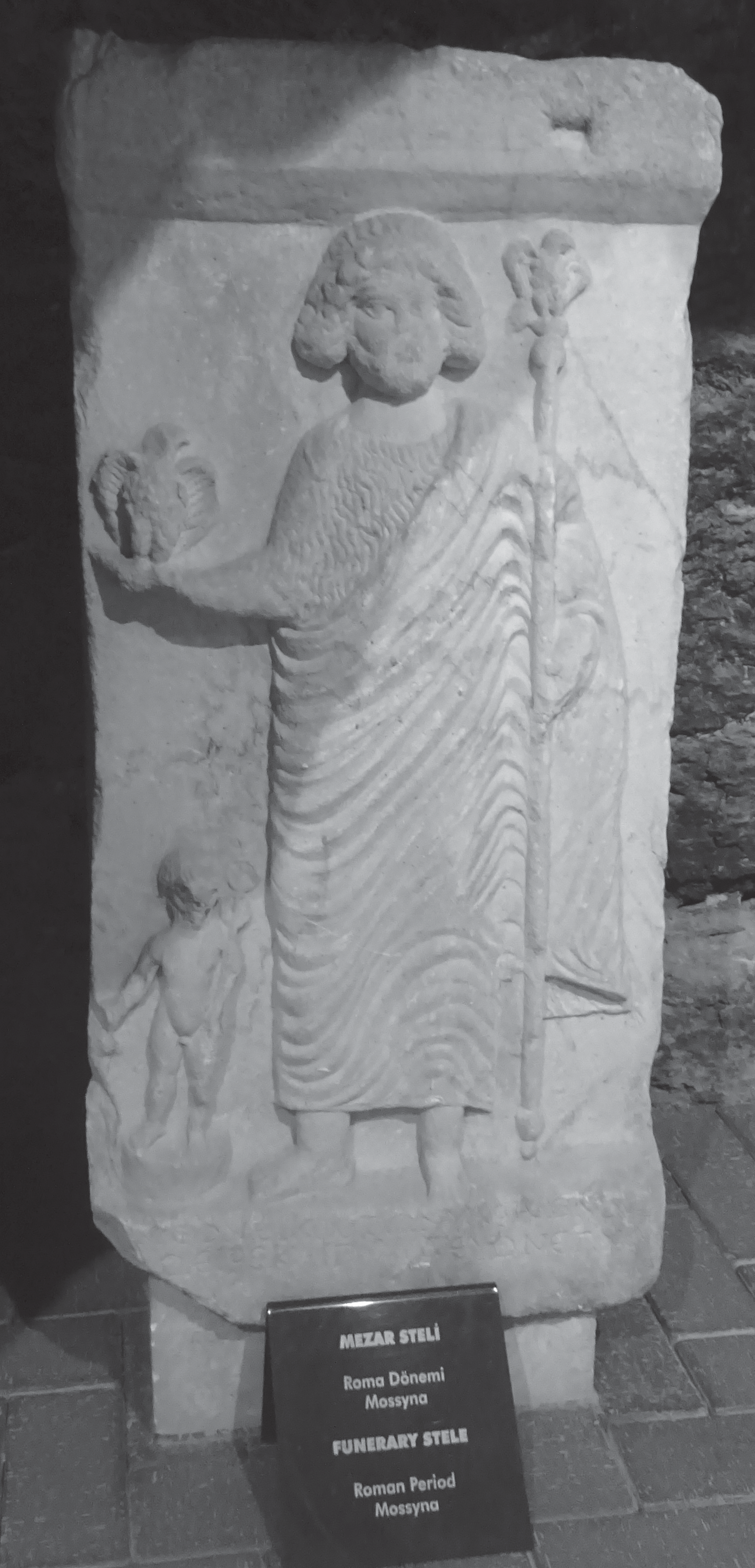
Fig. 3.1. Zeus Ktesis Patrios, Roman Period. Denizli Archaeological Museum. Author's photo.
There are two other images extant in this area: one is a bust, head and shoulders, on the front of an altar with a running dog on one side panel
18. Lena Larsson Lovén, "Wool Work as A Gender Symbol in Ancient Rome:
Roman Textiles and Ancient Sources," in Ancient Textiles: Production, Craft and Society, ed. Carole Gilles and Marie-Louise B. Nosch (Oxford: Oxbow Books, 2007), 234.
19. This funerary stela and the two further depictions of Zeus Ktesis Patrios mentioned are now housed in the Denizli Archaeological Museum. See Rosemary Canavan, "Weaving Threads: Clothing in Colossae," in Cadwallader, Fragments of Colossae,
118; Hatice Erdemir, "Woollen Textiles: An International Trade Good in the Lycus
Valley in Antiquity," in Colossae in Space and Time: Linking to an Ancient City, ed.
Alan H. Cadwallader and Michael Trainor (Göttingen: Vandenhoeck & Ruprecht, 2011), 110.
Unraveling the Threads of Identity
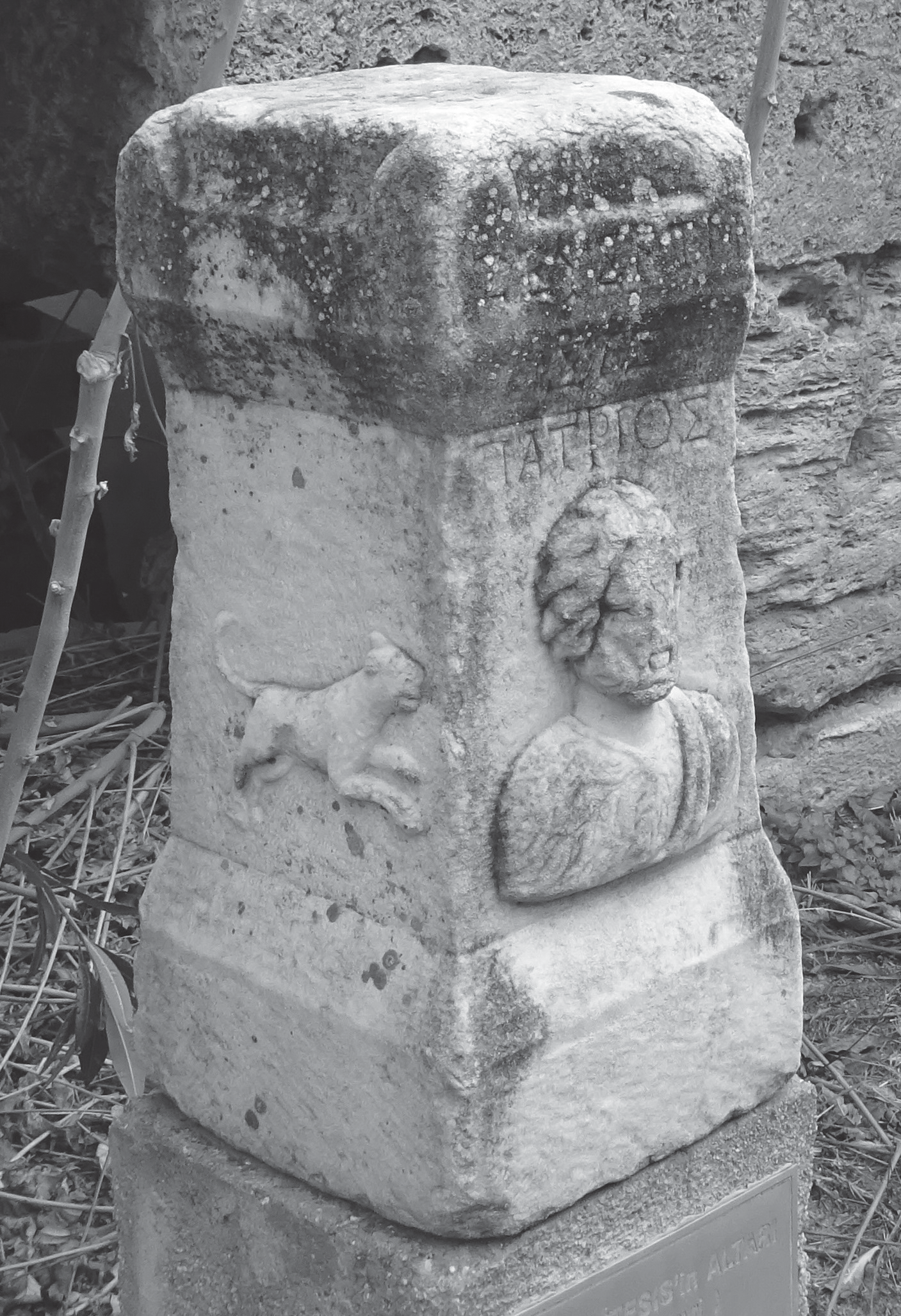
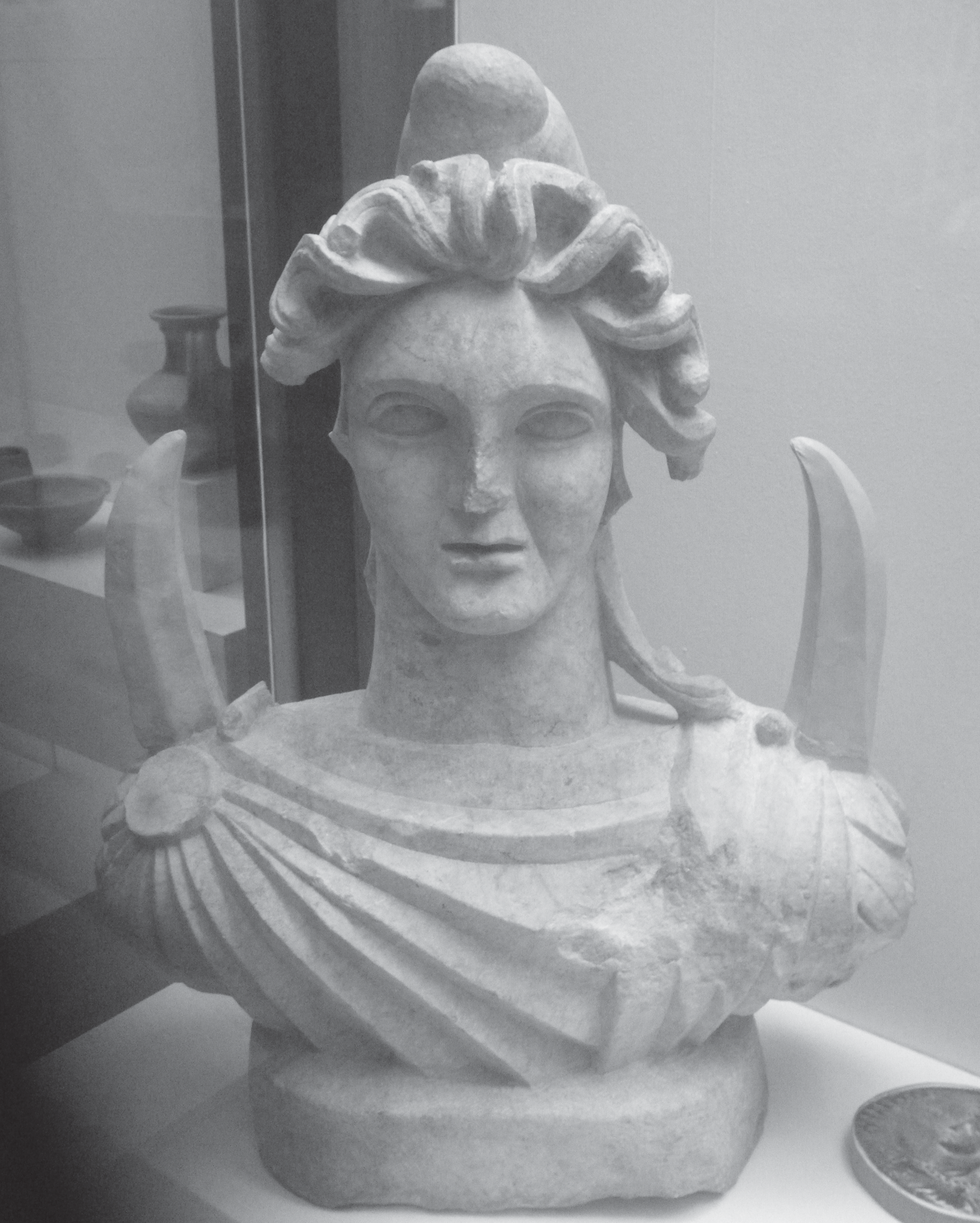
Fig. 3.3. Bust of Mên in the Anatolian Archaeological Museum, Fig. 3.2. Altar for Zeus Ktesis Patrios.
Ankara. Author's photo.
His distinctive woolen clothing visible on the bust. Dog on the side of the altar. Denizli Archaeological Museum. Author's photo. and a thunderbolt on another (see fig. 220); the other is a stone relief showing the god grazing his sheep.
In addition, the god Mên was depicted in lunar iconography with moon-shaped horns on his shoulders. He normally wore a Phrygian cap and a belted tunic. Both the Phrygian cap and the moon-shaped horns identify him on coins minted at Laodikeia and Attouda. The head of Mên graced the obverse of coins minted in Laodikeia, such as one from 14–37
CE with an eagle on the reverse with the name of Dioskouridēs magistrate.21
20. See also MAMA 6.87, plate 16.
21. RPC 1.2907; BMC Phrygia 64; SNG Copenhagen 513. See an image of the Laodikeian coin at Muenzen and Medaillen Deutschland. Accessed 11 October 2015, see http://www.muenzenundmedaillendeutschland.de. Issued under Roman rule in the time of Nero, Kornelios Aineas, ca. 66–68 CE. AE18 (4.04g). On obverse: ΛΑΟΔΙΚΕΩΝ, draped bust of Mên right, wearing laureate Phrygian hat, and with a crescent
Rosemary Canavan At a sanctuary north of Hierapolis, Mên Karou was also portrayed in this manner. He was associated with healing in this area.22
These few examples show the distinctiveness of clothing to identity in the valley and its religious connections. Worship of these gods and many more attested in the area in conjunction with festivals to honor them are part of the fabric of the greater community life. In the Letter to the Colossians the community is exhorted to not be condemned for matters of observing festivals, new moons and Sabbaths (2:16), worship of angels, or dwelling on visions (2:18).
Guilds, Associations, and the Social Strata Huttner identifies some of the extraordinary men and women in the Lycus
Valley. These we know from inscriptions, stelae, monuments, and sarcophagi. He elucidates three women of the famous Laodikeian Zenonis family.
Julia, Claudia, and Antonia were descendants of Polemon I, son of Zenon, who ruled as king of Pontus under Augustus.23 Both Julia and Claudia issued city coins, one under Nero honoring Poppea (ca. 62 CE) and the other under Titus (79–81 CE). Antonia stands out particularly as being one of a select few to attain the provincial high priesthood and the only one attested to hold the office of imperial neokoros in Asia Minor.24 She held the office of priestess for the province's emperor cult (Ἀρχιέρεια τῆς
Ἀσιάς) as well as a priestly office in the city.25
In previous studies I also focused on inscriptions honoring women especially from Asia Minor.26 The names of these women engraved in stone for their benefaction, office-holding, and virtue offered a place of around his shoulders. On the reverse: ΑΙ-ΝΗ-ΑΣ, eagle with open wings standing facing and head left; ΚΟΡ monogram to left.
22. Huttner, Early Christianity in the Lycus Valley, 53.
23. For the source of this paragraph, see Huttner, Early Christianity in the Lycus
Valley, 96–97.
24. Rosalinde A. Kearsley, "Epigraphic Evidence for the Social Impact of Roman Government in Laodicea and Hierapolis," in Colossae in Time and Space: Linking to an Ancient City, ed. Alan H. Cadwallader and Michael Trainor (Göttingen: Vandenhoeck
& Ruprecht, 2011), 146.
25. Rosalinde A. Kearsley indicates that there is no evidence to affirm that Antonia held both titles concurrently. See Kearsley, "Epigraphic Evidence for the Social
Impact of Roman Government," 146.
26. Rosemary Canavan, "Texts, Houses and Public Offices: Investigation of
Unraveling the Threads of Identity
comparison for the opportunity for women to take leadership positions in the Christ communities of the Lycus Valley and beyond in Asia Minor.
Huttner also shines the spotlight on Aelia Larcia D., honored as "benefactress of her native city" for whom Sosthenes son of Skymos, clothier, raised a statue at his own expense, including the base and pedestal.27 This honor brings the clothier also into the historical record. Another clothier, a linen-worker supervisor, in nearby Aphrodisias is memorialized on a stela.28 The inscription is damaged and the remaining words reveal: "[… the] market supervisor, greets the association of linen-workers and the passersby."29 Robert Smith suggests that this stela was raised by the guild of the local linen-workers for their supervisor (ἐνποριάρχης).30 The recognition of these men as clothiers indicates the importance of this industry to the region. Their inclusion in the honors also points to the large workforce, formal and informal, male and female, who are engaged in this industry, an industry in which some might rise to honorable levels. Huttner notes that the association of wool-washers or fullers (ἐριοπλύται) and that of purple-dyers (πορφυροβάφεις) honor Tiberius Claudius Zotikos in two separate inscriptions.31 Zotikos was a member of the highest executive body of the city of Hierapolis in the period from 212 CE: the college of the strategoi.32 Raising monuments and honoring significant leaders in the community has a dual function in the honor system as those who Women in Leadership in Pauline Communities in Asia Minor in the First Century"
(BThHons thesis, Flinders University, 2006).
27. Huttner, Early Christianity in the Lycus Valley, 167. Huttner refers to the inscription in Thomas Corsten, Die Inschriften von Laodikeia am Lykos (Bonn: Habelt,
1997), 104–7, no. 51.
28. Dated to the late second century CE. Dimensions: Height: 51.5 cm, Width:
33.5 cm, Depth: 17 cm. R. R. R. Smith and Kenan T. Erim, Aphrodisias Papers 2: The Theatre, a Sculptor's Workshop, Philosophers, and Coin-Types, Including the Papers given at the Third International Aphrodisias Colloquium Held at New York University on 7 and 8 April, 1989, Journal of Roman Archaeology, Supplementary series (University of Michigan, 1991), 300, R2, plate 154.
29. Smith and Erim, Aphrodisias Papers 2, 301.
30. Smith and Erim, Aphrodisias Papers 2, 301.
31. Huttner, Early Christianity in the Lycus Valley, 166; Richard S. Ascough, Philip A. Harland, and John S. Kloppenborg, Associations in the Greco-Roman World:
A Sourcebook (Waco, TX: Baylor University Press; Berlin: de Gruyter, 2012), 98–99.
32. Huttner, Early Christianity in the Lycus Valley, 166. Huttner refers to the inscriptions in Tullia Ritti, An Epigraphic Guide to Hierapolis (Pamukkale) (Istanbul:
Ege Yayinlari, 2006), 144–46, 82, no. 32, 44.
Rosemary Canavan supply the inscription and monument are also named and take their place of honor. The profile of wool washers/fullers, purple-dyers, and clothiers is enhanced by their association with important people. Their association or the individual's name and occupation are etched into the public record and raise the status of these associations and individuals. Similarly, the inscription for Publius Aelius Herogenes and Marcus Aurelius Diodorus mentions dyers (βάφεις) and purple dyers (πορφυροβάφεις) respectively.33
A further large heroon at Hierapolis is inscribed "the association of dyers crowns this heroon."
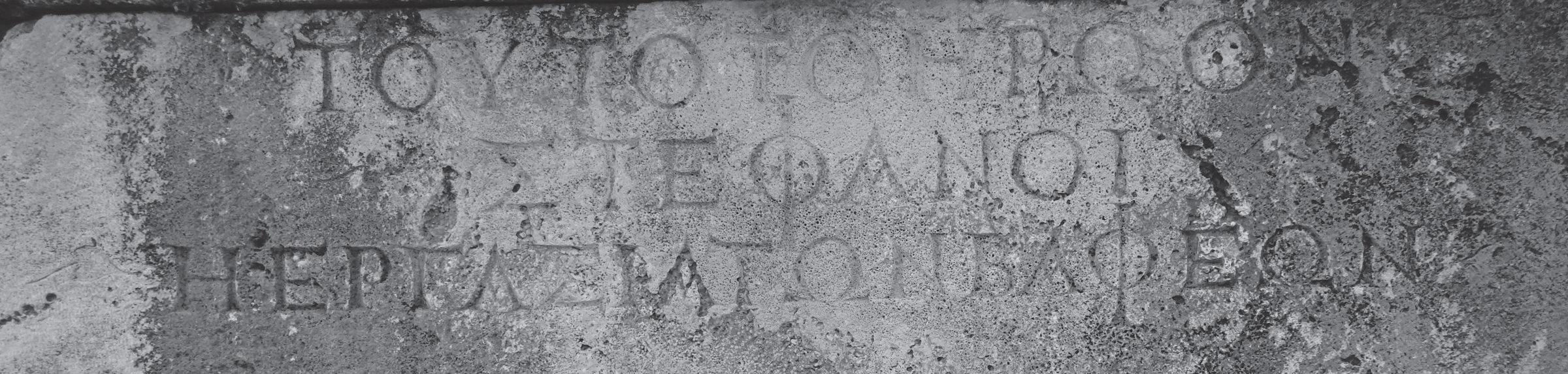
Fig. 3.4. Inscription on heroon raised by the association of the dyers at Hierapolis. Author's photo.
There is no mention of the honorand who, in statue form, may have previously reclined on the top of the heroon. While the recipient is now disconnected from his honor, the association of dyers are well preserved for their investment.
The inscriptions and monuments honoring leading individuals via associations of the textile trade not only indicate the size of this industry in the area but also the raising of the profile of the industry. One further inscription of Publius Aelius Glykon, also noted by Huttner, mentions both purple-dyers and carpet weavers. The inscription lists funds left to the presidency of the purple-dyers (πορφυροβάφεις), which should produce sufficient interest for participation in the festival of the Unleavened Bread,
33. Ascough, Harland, and Kloppenborg, Associations in the Greco-Roman World, 97–98.
Unraveling the Threads of Identity
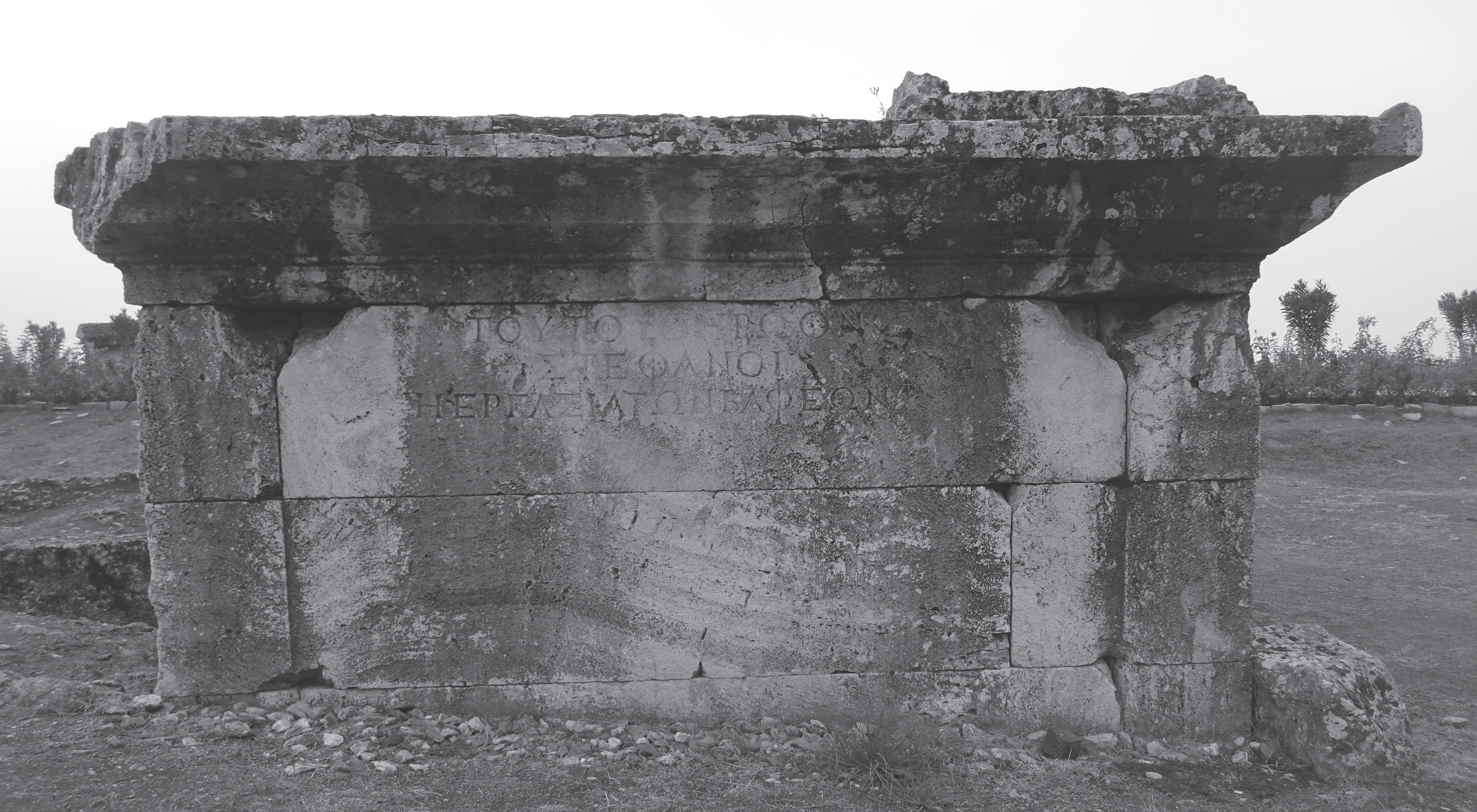
Fig. 3.5. Heroon at Hierapolis crowned by the association of dyers. Author's photo.
Located not far before the Frontinus Gate, 2016. plus further funds whose interest would provide for the carpet weavers to distribute revenue during Kalends and Pentecost festivals.34 Even though dated to the third century CE, we gain some insight into the continuance of festivals of differing religious groups, here Jewish, and the integration of religious life and textile production. Huttner dispels any case for Glykon as a Jewish Christian.35 Glykon's presence does imply the strength of the connection between the trade and religious practice. Should we assume that these associations were only for Jewish purple-dyers and carpet weavers?
What consequences would there then be for Christ followers who might separate themselves within a broader community?
Recent work by Richard Ascough has shown that evidence of associations and collegia is not a consistent pattern across locality or time.36 One consistency that needs to be noted is the lack of any inscriptional evidence of associations for spinning. This can be surmised to be a gender issue as women were spinners. At this point let us move from the structures to the people of the many strands of the textile industry and trade.
34. Ascough, Harland, and Kloppenborg, Associations in the Greco-Roman World, 95–97; Huttner, Early Christianity in the Lycus Valley, 251–53.
35. Huttner, Early Christianity in the Lycus Valley, 252–23.
36. Richard Ascough presented a paper at Annual Meeting of the Society of Biblical Literature, Baltimore in 2013.
Rosemary Canavan The People and the Industry Here I am keen to recover something of the wider group of people in the city of Colossae and the Lycus Valley and their identity relationship with the industry in which they participated. Huttner notes an inscription from Laodikeia where fullers (γναφεῖς) and "simple workers" (ἀπλουργοί) traded.37 Huttner considers these ἀπλουργοί to be engaged in the initial preparation of the wool for dyeing alongside the fullers.38 Perhaps their designation reflects their work with unwashed wool. These workers along with weavers, wool workers, dye workers, purple dyers, and textile dyers are all inscribed in the record even if not in the same location.
As noted earlier, there appear to be no associations for spinners.
Spinning and weaving of wool in the domestic arena is the activity of women. In Rome wool and wool-work are part of a young girl's education and preparation for womanhood and household management.
Symbols of distaff, wool, and wool basket often appear on stelae and funerary reliefs as indication of the virtue of women. Elite women are noted with such symbols as they illustrate their virtue rather than their practice of this work. In Terrace House 2 in Ephesus, decorated distaffs were discovered and are believed to have been displayed in the public area of the house as testament to the virtue of the matrona or women of the house therein.39
The Denizli Archaeological Museum displays spindle whorls from the Middle Bronze Age (1900–1450 BCE) discovered at Beysesultan, less than one hundred kilometres north east of the Lycus Valley.40 The existence of these indicates the advance in the technology of spinning in this area, so that spinning was more consistent, efficient, and faster than hand spinning.
37. Huttner, Early Christianity in the Lycus Valley, 168.
38. Huttner refers to the inscription listed in Corsten, Die Inschriften von Laodikeia am Lykos, 102–4, no. 50. See Huttner, Early Christianity in the Lycus Valley, 168.
39. Elisabeth Trinkl, "Artifacts Related to Preparation of Wool and Textile Processing Found inside the Terrace Houses of Ephesus, Turkey," in Ancient Textiles:
Production, Craft and Society, ed. Carole Gillis and Marie-Louise B. Nosch (Oxford:
Oxbow, 2007), 85.
40. Very similar examples of pottery from the Middle Bronze Age were found in both Beycesultan and Colossae. See Bahardır Duman and Erim Konakçi, "The Silent
Witness of the Mound of Colossae: Pottery Remains," in Cadwallader, Colossae in Space and Time, 259.
Unraveling the Threads of Identity
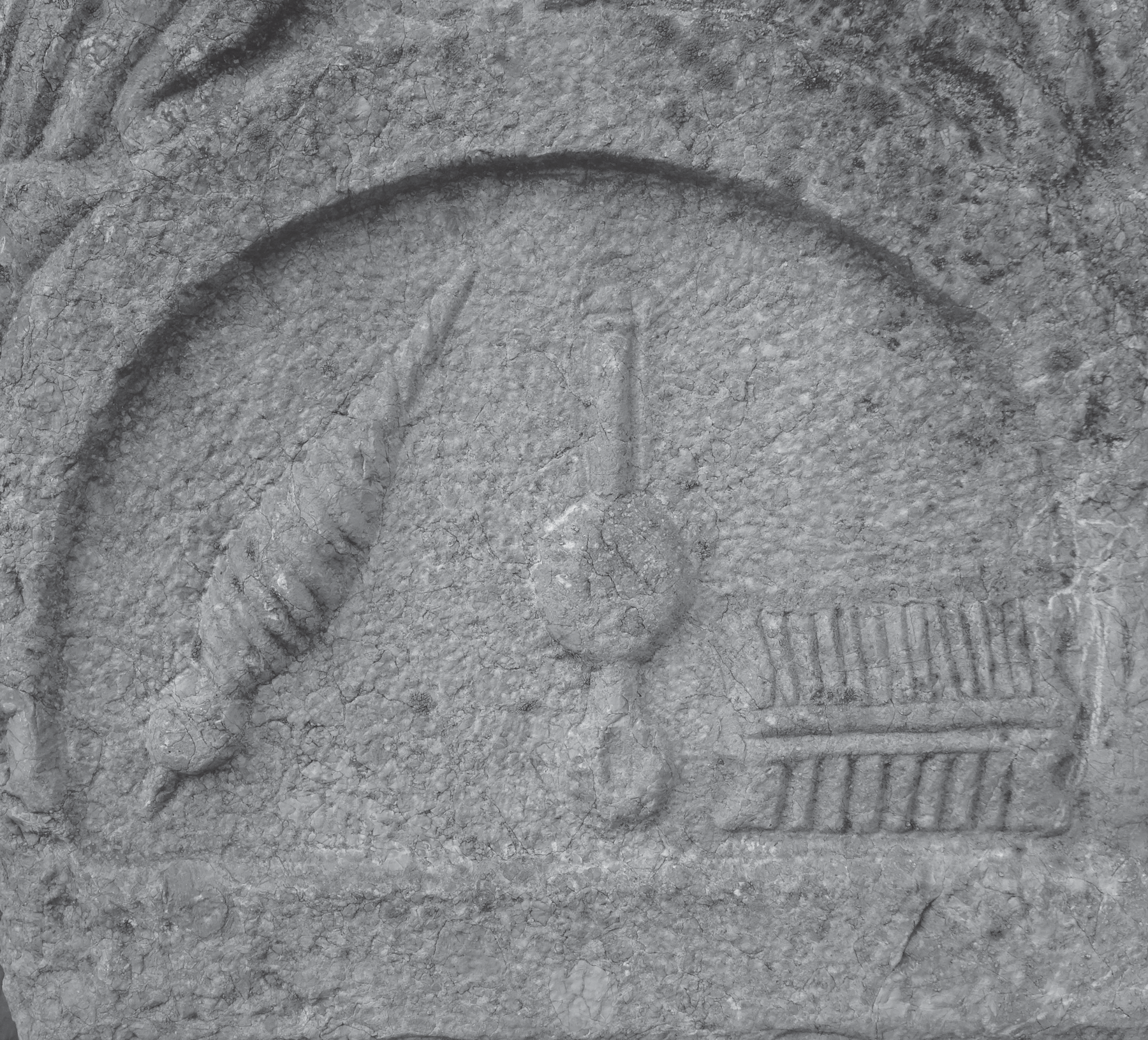
Fig. 3.6. Symbols of wool working on a stela in Boğazköy Museum Garden. Author's photo.
There still appears, though, no consensus of opinion on how the workers were organized. An often-made argument is that production for markets beyond the local city and region required professional workers and production centers.41 These centers were primarily located near the raw material. The Lycus Valley had both raw material and resources to produce a variety of qualities of wool product for local, regional, and overseas markets. Beyond this there was potential for related products such as leather goods, lanolin, rope, webbing, and more. The people who worked in these centers were a significant part of the industry but not the full picture. The diversity of work allied to the textile industry brings me to consider that a majority of people in the valley were connected in some way, whether in administration of trade or water, in production of garments and wool, in dyeing, as traders, graziers and shepherds, or engaged in associations or religious practices or festivals connected to the industry.
The identity of the people in Colossae and the Lycus Valley was connected to their work and what brought status and prestige to their area.
41. Jeroen Poblome, "Comparing Ordinary Craft Production: Textile and Pottery Production in Roman Asia Minor," Journal of the Economic and Social History of the Orient 47.4 (2004): 492–94.
Rosemary Canavan Domestic weaving is not considered to be sufficient to provide enough products for trade. Large weaving mills are in evidence as early as 2000
BCE in Mesopotamia staffed by up to five thousand adult female workers and up to a thousand children.42 In 246 CE there is papyri evidence of a weaver leasing two-thirds of a house for three looms and one extra, if he was to make garments for his own use as well.43 The membership of guilds or associations is given as an indication of the size of production centers.
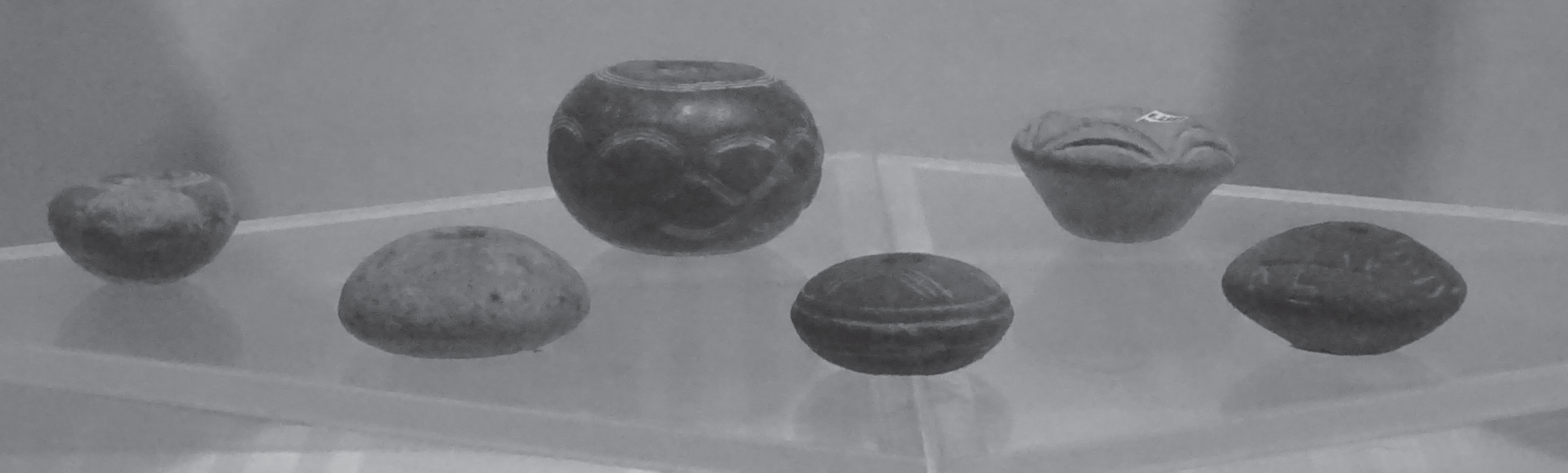
Fig. 3.7. Spindle whorls from Middle Bronze Age (1900–1450 BCE). Beycesultan, Denizli Archaeological Museum. Author's photo.
For example, at Philadelphia, in Asia Minor, in 138 CE the wool-weavers association has twelve members.44 Huttner draws our attention to the concrete evidence of a dyers workshop that was discovered in Laodikeia in 2007.45 Dated to the fifth century CE,46 this workshop also revealed the presence of grinding stones, presses and containers, terracotta and limestone strainers, and a metal cauldron for heating the dye and dyeing the textile.47 Of itself, this dyers workshop can only show that in the fifth century CE this was a form of organization in the dye trade in Laodikeia.
It simply is not clear how the production of textiles and clothing was organized in the Lycus Valley. The stages of production from growing wool, shearing, dyeing the fleece, carding, spinning, and weaving to the end product have quite gendered roles. If this industry was household-based, then centers of production may have had familial and religious links. Within the Lycus
42. Hartmut Waetzoldt, "The Use of Wool for the Production of Strings, Ropes, Braided Mats and Similar Fabrics," in Ancient Textiles: Production, Craft and Society, ed. Carole Gillis and Marie-Louise B. Nosch (Oxford: Oxbow, 2007), 113.
43. Poblome, "Comparing Ordinary Craft Production," 499.
44. Poblome, "Comparing Ordinary Craft Production," 499.
45. Huttner, Early Christianity in the Lycus Valley, 21.
46. This was discovered by Celal Şimşek as Director of the Pamukkale Archaeology Department and the Director of the excavation. See Huttner, Early Christianity in the Lycus Valley, 12; Celal Şimşek, "Laodikeia'da Tekstíl ve Üretím Atölyelerí/Textile and Production Ateliers in Laodikeia," Home Textile 86 (2015): 142–44.
47. Isabella Benda-Weber, "Textile Production Centers, Products and Merchants in the Roman Province of Asia," in Making Textiles in Pre-Roman and Roman Times:
People, Places and Identities, ed. Margarita Gleba and Judit Pásztόkai-Szeöke, Ancient
Textiles Series 13 (Oxford: Oxbow, 2013), 178. See also Şimşek, "Laodikeia'da Tekstíl,"
142–44.
Unraveling the Threads of Identity
Valley it would also seem there was a segmentation between cities. What is clear is that all these stages of production were completed in order to make the fine cloth for which Laodikeia and the Lycus Valley became famous.
Social and Cultural Texture and Intertexture Huttner indicates that the identities listed in Col 3:11 are social and cultural barriers and suggests that the Greek/Jew, circumcision/uncircumcision, and slave/free pairs in Col 3:11 are antitheses.48 He joins a plethora of scholars who are perplexed by the insertion of Scythian and barbarian. So much ink has been spilled trying to work out whether the barbarians and Scythians were represented in the Lycus Valley and how they fit in this listing. I agree with Huttner that, whatever the relationships of these divisions, there is now only one center of belonging: Christ. In clothing oneself with Christ, the prime identity is as a member of the body of Christ regardless of any other affiliations. Huttner also suggests that the equality afforded
Greeks and barbarians in the Isis cult may have assisted the crossing of barriers.49 If we think of these as layers of identity rather than barriers, it may be possible to see something of the acculturation or integration that occurs as people live and work in communities together. Importantly in the Letter to the Colossians, male and female do not feature among the list of identities as in Gal 3:28, where there is "neither male nor female" among those who are baptized and clothed with Christ. This also points for me to the cities and their involvement in the textile industry as the place of dialogue between text and image and text and the surrounding world.
The adapted sociorhetorical diagram below assists in understanding the interaction between the text and the world of the text.50 Within this model, particularly the social and cultural texture and the intertexture show transfer between the represented world of the text and information from the Greco-Roman world and between the verbal signs in the text and language of the world. This interpretive approach has allowed significant
48. Huttner, Early Christianity in the Lycus Valley, 135–37.
49. Huttner, Early Christianity in the Lycus Valley, 136.
50. This diagram is adapted from that originally created by Vernon Robbins. See Vernon Robbins, "Social-Scientific Criticism and Literary Studies," in Modelling Early
Christianity: Social-Scientific Studies of the New Testament in Its Context, ed. Philip
Esler (London: Routledge, 1995), 279.
Rosemary Canavan World of the Interpreter Information (including Material Data) Greco-Roman World Represented World Text Social & Cultural Texture Real Author Sacred Implied Implied Real Reader Inner Texture Ideological Author Author Intertexture Verbal Signs Language (including other texts) Fig. 3.8. Sociorhetorical Analytic breadth of investigation particularly in relation to image and text and the discussion of visual exegesis.51
Indeed, I propose that the sociorhetorical analytic is a profitable tool to bring together the findings of a historically based investigation such as Huttner's with the biblical text and allow each to illuminate the other. I have determinedly focused on information and language in the world of the text (specifically the Lycus Valley) that interact with the social and cultural texture and intertexture of the Letter to the Colossians. In this focus we have observed evidence of how the cities and communities functioned.
We have a complex tapestry of religious, political, cultural, ethnic, and 51. The recommendation of the use of visual exegesis for the interpretation of biblical text is made and demonstrated in Canavan, Clothing the Body of Christ.
Unraveling the Threads of Identity
civic threads that serve as identity and power, inclusion and exclusion.
Many of these aspects are represented in the major industry of the valley: textile production. Zeus, who in the Greek pantheon reigned supreme, is manifest in this region as god of the sheep and shepherds. In the Roman regime, Zeus Ktesis Patrios's woolen garb does not compete with the power of the cuirassed and toga-draped heads of the world. The quality of the wool and garments, the dye, and the cloth provide the means of trade, prosperity, and status not only in the locality but in the wider world, a world governed from Rome. All power and authority in this realm belongs to the emperors who would be gods themselves, clothing themselves in the highest of virtues and managing an uneasy peace born of conquest and oppression. In nearby Aphrodisias, the Sebasteion provided a three-story stone pictogram carving of the order of power. How can the followers of Christ find and maintain their new identity and location within this?
In the Letter to the Colossians, there is a reordering of the cosmos from the beginning of the letter. The faithful ones share in "the inheritance of the saints in the light" (Col 1:12), having been rescued from the power of darkness and transferred to the reign of God's beloved son (Col
1:13). Christ is the head of the body, the ekklēsia, in direct opposition to Roman rule where the emperor, definitively Nero, was the head of the body of Rome and the head of the world, the cosmos.52 This new body, the ekklēsia, needs to be clothed in a recognizable way that identifies as Christ. The members having clothed themselves in this "new self" (Col
3:10) are, as God's chosen and beloved (Col 3:12), to clothe themselves in virtues that emanate Christ. The intricacies of clothing that is the lifeblood of the region becomes the metaphor of their new life, a growing in wisdom and becoming as Christ, being formed as Christ's body, identified through clothing in the virtues of God.
The focus is on Christ as the identity of the members of the body of Christ: the community of believers. The author is exhorting the members to conform to this body by being clothed in virtues and love which will hold them together despite any other allegiances or belonging. It is not the clothing spun, woven, and dyed in their neighborhood but symbolic, metaphorical clothing with virtues and love, providing an outward sign of their belonging and of recognizing each other in Christ. It is these
52. Lucius Annaeus Seneca, Clem. 2.2.1. For further discussion of the body of the emperor, see Canavan, Clothing the Body of Christ, 121–23.
Rosemary Canavan metaphorical images of clothing, body, and virtue that have the propensity to interact with the plethora of propaganda in the form of idealized clothing, body, and virtues of the Roman emperors, their families, and officials expounded in carved statues, reliefs, coins, and funerary monuments. It is the juxtaposition of standing victorious naked hero figures of emperors above crouched naked female personifications of conquered nations that gives rise to a strident discourse between what it is to belong to Christ and be identified in Christ in contrast to being a member of the Roman regime.
Among the list of virtues, Huttner notes "meekness," which he interprets as "meek friendliness" (πραΰτης), as appropriate to a person in authority.53 Paul refers to this meekness as a quality of Christ in 2 Cor
10:1, characterizing it as the way he relates to them while with them.
Paul is a master teacher by example and exhorts his communities to imitate him in imitating Christ (1 Cor 4:16, 11:1; 1 Thess 1:6, 2:14). Putting on the same clothes, clothing in the virtue of Christ makes the followers identifiable in Christ. This same term and virtue is listed as a fruit of the Spirit in Gal 5:23 and translated as "gentleness." In this way the meek friendship or gentleness is further identified with God, like Christ and the bounty of the Spirit. This meek friendliness (πραΰτης) fits well also with χρηστότες, which is usually translated as "kindness" (Col 3:12).
Yet this word also extends in meaning through the range from goodness, excellence, honesty, and uprightness to goodness of heart.54 In terms of intertexture, χρηστότες accompanies virtue in relation to the friendship that, in the civic sense, builds a state of good citizens.55 Such kindness and integrity clothes the members of the body of Christ in the means of belonging and holding together.
Engaging Huttner's diligent research, the inscriptional evidence, images of the gods, trade symbols, and all that we can glean and imagine from the historic record, we have a picture of the significance of the clothing industry. I set out to see the propensity of this industry to be a source of vivid imagery to the Letter to the Colossians. It is fair to say that the clothing industry is instrumental in a network of images. For the emerging faith communities in the Lycus Valley, the imagery of clothing and body
53. Huttner, Early Christianity in the Lycus Valley, 134.
54. LSJ, s.v. "χρηστότες."
55. For Cicero, virtue comes first but friendship is "the greatest of all things." See
Cicero, Amic. 27.71.
Unraveling the Threads of Identity
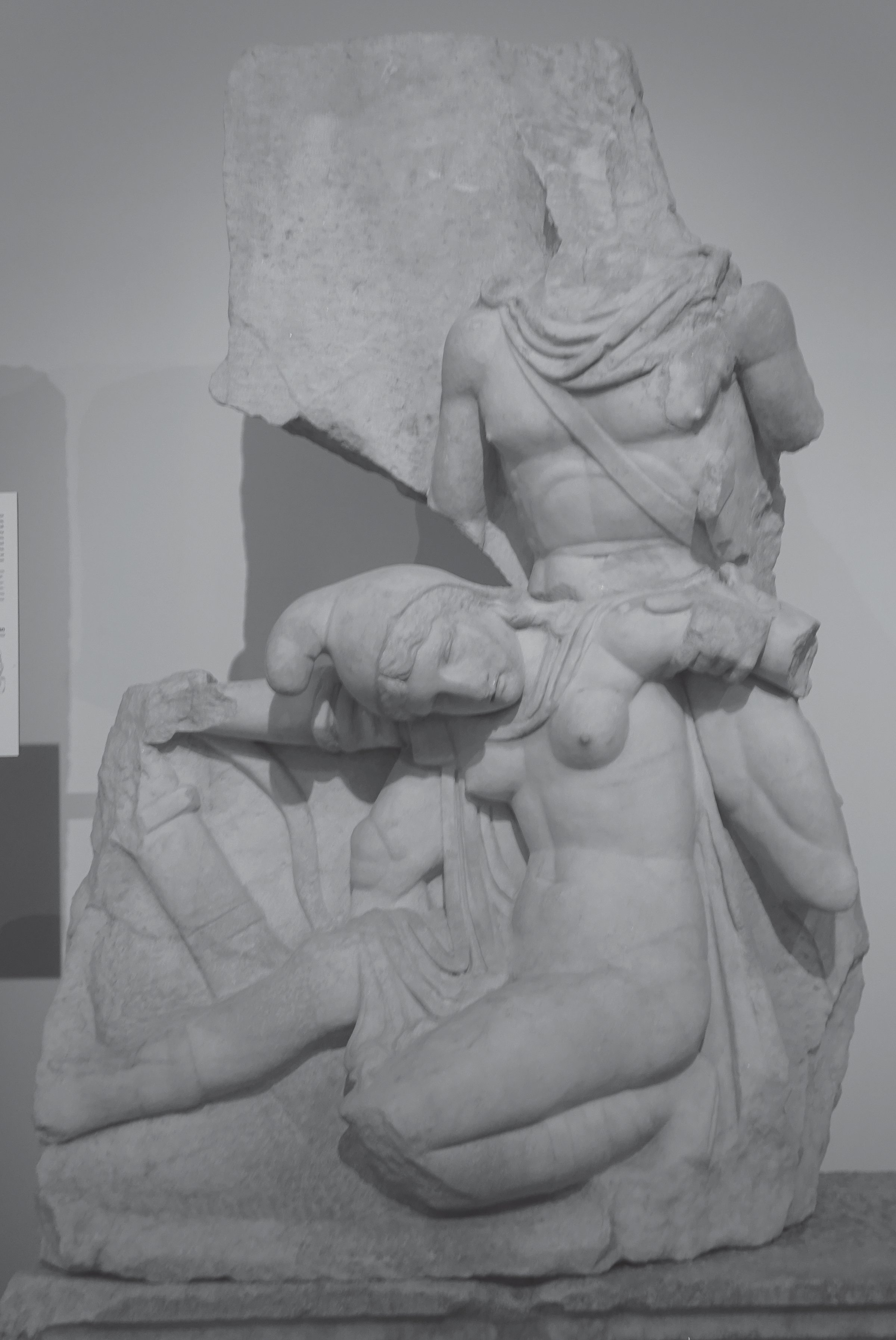
Fig. 3.9. Nero standing above naked female personification of Armenia, white marble relief circa first century CE, Aphrodisias Archaeological Museum,
Geyre, Turkey. assists the development of identity, which may be enhanced by the intensity of engagement with cloth and clothing in this area.
We see in the text of the letter traces of the world in which it was written: the named identities, the reference to festivals, new moon, and Sabbath, and the references to the worship of angels and dwelling on visions. All of these would elicit vivid pictures in the minds of the hearers.
The issues of influence of other philosophy and the engaging in festivals, new moon, and Sabbath indicate something of the identity of the inhabitants of Colossae and the cities of the Lycus Valley and the competing claims on belonging. In chapter 2 the believers are warned against being held captive through philosophy and empty deceit (2:8) according to both human and elemental spirits rather than Christ. The persuasion is then reiterated three times using "in him":
◆ In him the whole fullness of the deity dwells bodily. (2:9) ◆ You have come to fullness in him. (2:10)
Rosemary Canavan ◆ In him also you were circumcised with a spiritual circumcision.
(2:11) Each of these usages points to the identity framework for Christ followers, marking them off for Christ and etching the difference of "us" and "them" with the connection to God, through Christ with no outward identifying sign. The new locus of this community is embraced in the cosmos where
"God rescued us from the power of darkness and transferred us into the kingdom of his beloved son" (1:13). The reconfiguration of the cosmic realm reorders all the other allegiances.
Having elucidated this framework, there is a further exhortation not to be condemned in regard to matters of food and drink and observing festivals, new moon, and Sabbaths. Each of these matters are easily recognizable as adherence to Jewish practice and law. Yet they also intersect with local religious practice in relation to Mên, Zeus (especially the Ktesis
Patrios representation), Athena, and other deities worshipped in the Lycus Valley. These activities are not required for those belonging to the body of Christ (2:17). The alignment of identity to the head, Christ (1:18), facilitates the new cosmic order that is not presided over by the pantheon of Greek and Roman gods nor ruled by the emperor of Rome.
The tour de force of how to be "us" in Christ is the clothing of this body. The rhetorical force of the clothing imagery is delivered through the blending of the rhetography of the cosmos where God reigns in heaven and on earth and his son is head of the body, the ekklēsia, of God's chosen and beloved in the Letter to the Colossians with the reality of the Roman
Empire, best illustrated in physical architecture and statuary at the threestory Aphrodisian Sebasteion: the top story being devoted to the pantheon of gods, the second the imagery of the emperors as heroes and victors making the way for the reign of peace over subjugated peoples and citizens.56 Through this blending there is a transformation of the discourse of the Christ followers that builds their identity in collective terms in Christ.
The clothing that they are to put on or clothe themselves with is the new self (3:10), one that is conforming to Christ, one that is not complete but 56. Rhetography is defined as "the progressive, sensory-aesthetic, and/or argumentative texture of a text (rhetology) that invites a hearer/reader to create a graphic image or picture in the mind that implies a certain kind of truth and/or reality." See
Vernon Robbins, The Invention of Christian Discourse, RRA 1 (Blandford Forum: Deo,
2009), xxvii.
Unraveling the Threads of Identity
still being renewed in knowledge according to its creator (3:10). Furthermore, they are to clothe themselves with the heart of compassion, kindness, humility, gentleness, and patience (3:12). Upon all love that is the bond of maturity (3:14). These community members from all differing identities can relate to clothing that covers over the usual identification markers.
What they are putting on are threads of virtue, ways to weave unity in the body, "holding fast to the head" and "nourished and held together by its ligaments and sinews" so that it "grows with a growth that is from God:"
(Col 2:19). These clothing and body metaphors create a contrast to the body of Rome whose head is the emperor, in this case Nero.57 The identity of those living in the Lycus Valley is embedded in their Greco-Roman cities, which operate as members of the empire. These cities are renowned for their clothing industry. The focus of their status and their daily work becomes the metaphor the Christ followers engage for the understanding of their identity in Christ. Such a strong immersion in the clothing industry suggests the propensity for it to provide a rich source of vivid imagery.
While the hearer or reader in the Lycus Valley may have an enhanced view of the clothing imagery, clothing is specifically linked with virtue and identity drawing a new collective of diverse identities into the body of Christ. The clothing in virtues is distinctive just as the trimitos cloth is in its weave. The list of virtues does not replicate common lists in the Greco-Roman world or those espoused by the Roman Empire but some of these are included in other New Testament writings. The clothing in the Letter to the Colossians is more easily broadly applied. The advantage within the community of believers in the Lycus Valley would be for subsequent local preaching and teaching to pick up on the threads and use them to advantage.
The use of clothing is paramount to setting the identity of the believers in Christ, not just between "us" and "them" but in a new cosmic order. The clothing that is not a barrier but a layer of virtue and relational cohesion is not just about membership of the body but also existence in all the warps and wefts.
57. It is Seneca who implements the term corpus imperii, the body of the empire, and adds Nero as the head of this body. Rome is the head of the world, caput mundi, so by implication Nero is the head of the world. See Seneca, Clem. 2.2.1. For further explanation of the body of the Roman Emperor, see Canavan, Clothing the Body of Christ, 121–23.
Rosemary Canavan Conclusion This response engages only a few threads of the thick-spun fabric of this magnificent volume by Huttner. I trust my little unravelling has shown the value of this work as well as offering persuasion that the context of the textile industry and trade provides vivid imagery for the hearers of the Letter to the Colossians in binding their identity in Christ.
Bibliography "Ancient 'Water Law' Unearthed in Laodicea." Hurriyet Daily News, 21
August 2015.
Ascough, Richard S., Philip A. Harland, and John S. Kloppenborg. Associations in the Greco-Roman World: A Sourcebook. Waco, TX: Baylor
University Press; Berlin: de Gruyter, 2012.
"Athena's Head Unearthed in Laodicea." Hurriyet Daily News, 15 August 2015.
Barber, E. J. W. Prehistoric Textiles: The Development of Cloth in the Neolithic and Bronze Age with Special Reference to the Aegean. Princeton:
Princeton University Press, 1991.
Benda-Weber, Isabella. "Textile Production Centers, Products and Merchants in the Roman Province of Asia." Pages 171–91 in Making Textiles in Pre-Roman and Roman Times: People, Places and Identities.
Edited by Margarita Gleba and Judit Pásztόkai-Szeöke. Ancient Textiles Series 13. Oxford: Oxbow, 2013.
Cadwallader, Alan H. Fragments of Colossae: Sifting through the Traces.
Hindmarsh: ATF Press, 2015.
Canavan, Rosemary. Clothing the Body of Christ at Colossae: A Visual Construction of Identity. WUNT 2/334. Tübingen: Mohr Siebeck, 2012.
———. "Texts, Houses and Public Offices: Investigation of Women in Leadership in Pauline Communities in Asia Minor in the First Century." BThHons thesis, Flinders University, 2006.
———. "Weaving Threads: Clothing in Colossae." Pages 111–33 in Fragments of Colossae: Sifting through the Traces. Edited by Alan H. Cadwallader. Hindmarsh: ATF Press, 2015.
Cleland, Liza, Glenys Davies, and Lloyd Llewellyn-Jones, eds. Greek and Roman Dress from A to Z. London: Routledge, 2012.
Corsten, Thomas. Die Inschriften von Laodikeia am Lykos. Bonn: Habelt, 1997.
Unraveling the Threads of Identity
Duman, Bahardır, and Erim Konakçi. "The Silent Witness of the Mound of Colossae: Pottery Remains." Pages 247–81 in Colossae in Space and Time: Linking to an Ancient City. Edited by Alan H. Cadwallader and Michael Trainor. Göttingen: Vandenhoek & Ruprecht, 2011.
Erdemir, Hatice. "Woollen Textiles: An International Trade Good in the Lycus Valley in Antiquity." Pages 104–29 in Colossae in Space and Time: Linking to an Ancient City. Edited by Alan H. Cadwallader and Michael Trainor. Göttingen: Vandenhoeck & Ruprecht, 2011.
Harland, Philip A. Associations, Synagogues, and Congregations: Claiming a Place in Ancient Mediterranean Society. 2nd rev. ed. Kitchener, ON:
Philip A. Harland, 2013.
Huttner, Ulrich. Early Christianity in the Lycus Valley. Translated by David Green. AJEC 85; Early Christianity in Asia Minor 1. Leiden: Brill,
2013.
Kearsley, Rosalinde A. "Epigraphic Evidence for the Social Impact of Roman Government in Laodicea and Hierapolis." Pages 130–50 in Colossae in Time and Space: Linking to an Ancient City. Edited by Alan
H. Cadwallader and Michael Trainor. Göttingen: Vandenhoeck & Ruprecht, 2011.
Lovén, Lena Larsson. "Wool Work as A Gender Symbol in Ancient Rome:
Roman Textiles and Ancient Sources." Pages 229–38 in Ancient Textiles: Production, Craft and Society. Edited by Carole Gillis and MarieLouise B. Nosch. Oxford: Oxbow, 2007.
Ormerod, H. A. "A Note on the Eastern Trade-Route in Asia Minor." The Classical Review 26.3 (1912): 76–77.
Poblome, Jeroen. "Comparing Ordinary Craft Production: Textile and Pottery Production in Roman Asia Minor." Journal of the Economic and Social History of the Orient 47 (2004): 491–506.
Ramsay, William M. The Cities and Bishoprics of Phrygia. 2 vols. Oxford:
Clarendon, 1895.
Ritti, Tullia. An Epigraphic Guide to Hierapolis (Pamukkale). Istanbul: Ege Yayinlari, 2006.
Robbins, Vernon. The Invention of Christian Discourse. RRA 1. Blandford Forum: Deo, 2009.
———. "Social-Scientific Criticism and Literary Studies." Pages 274–89 in Modelling Early Christianity: Social-Acientific Studies of the New Testament in Its Context. Edited by Philip Esler. London: Routledge, 1995.
Şimşek, Celal. "Laodikeia'da Tekstíl ve Üretím Atölyelerí/Textile and Production Ateliers in Laodikeia." Home Textile 86 (2015): 138–44.
Rosemary Canavan Smith, R. R. R. "Cultural Choice and Political Identity in Honorific Portrait Statues in the Greek East in the Second Century AD." JRS 88
(1998): 56–93.
Smith, R. R. R., and Kenan T. Erim. Aphrodisias Papers 2: The Theatre, a Sculptor's Workshop, Philosophers, and Coin-Types, Including the Papers
Given at the Third International Aphrodisias Colloquium Held at New York University on 7 and 8 April, 1989. Journal of Roman Archaeology
Supplementary Series. University of Michigan, 1991.
Trinkl, Elisabeth. "Artifacts Related to Preparation of Wool and Textile Processing Found inside the Terrace Houses of Ephesus, Turkey."
Pages 81–86 in Ancient Textiles: Production, Craft and Society. Edited by Carole Gillis and Marie-Louise B Nosch. Oxford: Oxbow, 2007.
Waetzoldt, Hartmut. "The Use of Wool for the Production of Strings, Ropes, Braided Mats and Similar Fabrics." Pages 112–21 in Ancient
Textiles: Production, Craft and Society. Edited by Carole Gillis and Marie-Louise B. Nosch. Oxford: Oxbow, 2007.