Search this book
Search results link directly to the matching source page.
CHAPTER EIGHTEEN ASHRAM MOVEMENTS In the earlier chapters we have concentrated mainly onto the development of Christianity in the Malabar Coast after the Mahabali Period. This is because the Malabar coast had direct connection with the Churches in the Greco Roman world - the Roman and the Antiochian tradition. Soon after the seperation of the Nasranis of Malankara and the two sects -Saivites and Vaishnavites - who were apostazised under the influence of the Mani of Syria and later Gnostic sages of India. As a result the gap between the two became large enough to form distinct religions. The latter merging with other local religons formed the Hindu religons. They were not yet considered as a single religion until the time of British.
While the coming of the Syrian Christian immigrants to kerala made the Christianity in this area as the Syrian Christians since the form of worship and traditions were all borrowed from Syrians. Not only that the form and traditions of the original Christianity was fogotten, they were intentionally distorted and destroyed by the Brahminic migration and the subsequent terrorism of the Brahmins conquered all the malankara area. Yet they could not shatter their faith.
After another ten centuries following Islamic invasions, came the Colonial invasions. These opened up a large influx of foreigners for trade and openned up an influx of Christian missionns - Portugese, French, Dutch and finally the English.
Since these people could not recognize the religion of the rest of India, they classified them under three head - Christians, Islam and all the rest as Hinduism. Even though they were woshipping all sorts of different gods, they were all clubbed together as Hinduism as a complex religion. This suited the Hindu people in that it gave them a new identity. The theology of OM, the Upanishads and the Sanatana Dharma became the identity of Hinduism and no more connected to the Christianity.
Several Christian missionaries and other evangelists reached India along with the colonising capitalism. The missionary methods usually followed the "Mission compound method."
In this method the missionaries remained exclusively alien and lived in their own culture within the compound and preached reaching out side. Cultural barriers meant that those who came in faith transformed and immitated the culture of the missionaries. In fact this is what happenned in Malankara where the living style, worship method and liturgy followed the Syrians. This came because the original Thomas Way was hijacked by the Saivites and the Vaishanvites by syncretising local religions and war gods. By the time of colonial era, the original symbols and worhsips forms were totally taken over by the so called non-existent "Hinduism" fragments. When the Roman Catholics came they brought with their faith, their ways of worship and living style. They evidently confused religion with culture as is made evident in the Udayamperoor Synod decrees.
One effective method of interaction was being actively involved in educational, health and social reformation in the country. This method takes a long time to effectively transmit the faith. As such we can see large number of Christian Institutions of Education and Hospitals and Clinics. Until recently almost all institutions of higher educations were run by Christian churches. In fact the association is so strong that Schools are called Pallikoodam (gathering in Church) as they were originally part of the church buildings. In the Indian context, the Guru has several functions that fits the mission activity and in the tranference to faith.
1) To instruct the disciple in the truths of the spiritual world and in attaining the eternal mukthi
2) To awaken the power of spiritutal intuitions and visions. The external Guru guides until the internal Guru takes over. Guru is the upadhyaya.
3) To remove egoism to the destruction of the working of the cosmos as a unity with each part doing its specific work while supporting the rest to accomplish the unity within the body of God which is the cosmos.
4) To connect the disciple within a particular tradition as a member of the local Church which is just an organ of the Body of Christ and leads to the sadhana (spiritual discipline)
5) Guru is the one who performs the samskaras (sacraments) and through them the knowledge of liberation
6) Guru leads the disciples to realize their Dharma All these are the prime function of a missionary.
In the Pallikoodam method which was practiced widely by the British Missionaries they were able to reach out mainly to the lower level of the community especially the lower castes throughout India. After all the whole Israel started as a freedom movement. So it was fitting that the liberation of the lower caste and underprivileged were the starting point. With the political power supporting the missionaries in tha latter period long strides in the liberation took place in every state. The educated Indian soon realized the implications and there were large move in incorporating these liberation principles into the philosphy of Indian culture. Some like Mohan Das Karam Chand Gandhi is renowned for his attempt to elevate the outcastes in their own eyes and in the eyes of the society byre-naming them as "Harijans" ("children of God").
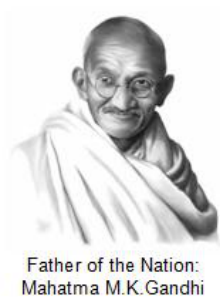
He created three publications, Harijan in English (from 1933 to 1948), Harijan Bandu in Gujarati, and Harijan Sevak in Hindi. These newspapers found the Mahatma concentrating on social and economic problems.
A large number of Harijan caste leaders sprang up around the society, demanding social justice and religious reforms. B. R. Ambedkar stands unique in this respect. He decided that the Harijan community would never gain respect within the Hindu community. He debated whether to lead his mass of followers in Maharashtra State into Buddhism or into Christianity, since neither accepted caste. He eventually chose Buddhism, primarily because of its roots in Indian soil.
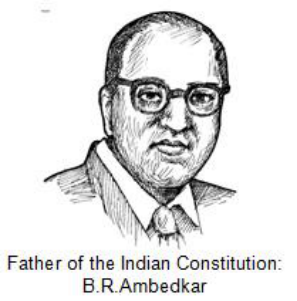
(See my publications on Ambedkar and Hinduism)
Narayana Guru Swamy was an Ezhava leader and struggled with the Hindu System to bring back justice. He essentially based his teachings on Upanishads. It was a time when across southern India, masses of Harijans converted to Christianity especially in central Travancore and in the High Ranges. In Kannur, Basel German Evangelical Mission had an abundant harvest. It was also a social protest movement of liberation, which also had educational. medical and economic benefits within colonial India. In 1896, a petition with more than 13,000 signatories was submitted to the government asking for the recognition of the right of the Ezhavas to enter government service; the upper caste Hindus of the state prevailed upon the Maharajah not to concede the request. In dejection, many of the Ezhavas embraced Christianity, making the Christian population of Travancore increase from six lakhs in 1901 to seventeen lakhs by 1931. Diwan, Sir C. P. Ramaswamy Iyer, realizing the imminent danger, prompted the Maharajah to issue the Temple Entry Proclamation, which abolished the ban on lower-caste people from entering Hindu temples in the state of Travancore. Thus the very presence of the Christian Missions and their welcoming of the caste people into the church did impact the society as a whole.
In a sense, the Ashram was the traditional method of study under a guru in India where the student stayed with the Guru in his home. This
was known as gurukulam. Living together as a family imparts more than just knowledge, but also manners and character. It however had the disadvantage that the children were torn away from their parents to be with the guru and thus taking away a vital part of their growth within the family. It also paved the way to brain washing and development of cults. In this sense the traditional schooling system is superior. However in higher education or after adulthood the Gurukula system works perfectly.
Mission lies in making people disciples. It means teaching which can be done only through communication. All communication is based on symbols. Even the words we speak are simply sounds and they can mean something only when these sound symbols are assigned meaning. This is essentially culture specific. How much more when we are actually communicating through all the five senses. All such communications are culture specific. This is the reason why one of the first attempts of the mission is to translate the Bible into the language of the culture they enter in. To communicate in all its fulness we need to translate the message of salvation into the symbols of the culture.
When we come to Indian culture, most of the underlying religious cultural symbols in the Upanishads (Please note that it is not Vedic symbols of Aryans) are Christian (see my book on Emergence of Hinduism from Christianity). Behind the sacred rituals and sounds we could still see the early message which were embeded by St. Thomas. I have extensively treated these in my studies on Hinduism. Today, most of these symbols are taken over and distorted to some extent through syncretism with local religions and hero worship and New Age Philosophies. Reclaiming it and getting back into the real message of the Personality of Jesus the Lord and Savior is what was intended by some adventurous missionaries. Evidently there is a risk involved in the taking back that it can easily be misunderstood and the strategies can even misfire. As long as we keep the centrality of the Person of Jesus is maintained we should be OK.
It is with this intension some brave missionaries both from the Catholic and Potestant Missions entered into the experiment of starting the Christavashrams. This was relevant and did make an impact especially during the Freedom Struggle period of India to the Christians of India.
Beginners in the field were those who studied the various Indian languages and translated the Bible and wrote Evangelical books. Some
of the pioneers in this field were mentioned earlier.
The pioneer in this area of Christian Ashram was the Italian Jesuit Roberto de Nobili.
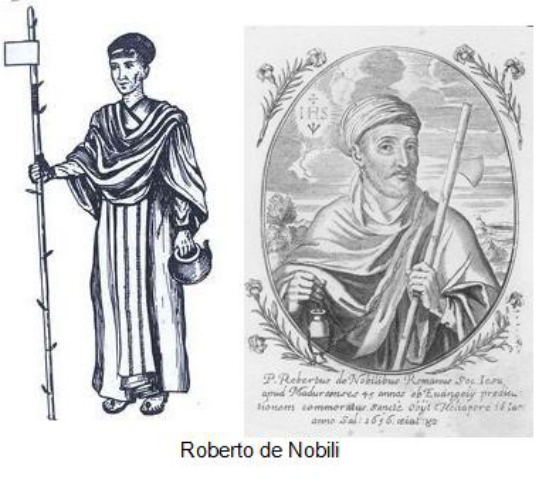
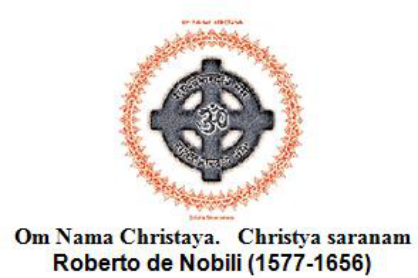
Being a Roman Catholic Missionary of the order of the Jesuits Roberto de Nobili arrived in Goa on May 20, 1605. It is probable that he met here Fr Thomas Stephens, SJ, who had arrived in Goa in 1579, and was probably in the process of composing his Khristapurana which was an attempt to portray the whole biblical story from creation to Christ in the Puranic literary style.
After a short stay in Cochin in Kerala, he took up residence in Madurai in Tamil Nadu in November 1606. He soon called himself a "teacher of wisdom", and began to dress like a Sannyasin. Claiming noble parentage he approached high-caste people, and eagerly engaged in dialogue with Hindu scholars about the truths of Christianity.
De Nobili mastered Sanskrit, Telugu and Tamil languages and literature, with the help of his teacher, Shivadharma and composed Catechisms, apologetic works and philosophic discourses in Tamil, and contributed greatly to the development of modern Tamil prose writing. As he expounded the Christian doctrine in Tamil he coined several new words (which were not used by Christians) to communicate his message. For example he used the word "kovil" for a place of worship, "arul" and "prasadam" for grace, "guru") for priest or teacher, "Vedam" for the Bible, "poosai" for Mass, etc.
He adopted also local Indian customs, such as shaving one's head and keeping only a tiny tuft. He wore a, white dhoti and wooden sandals, to don the look of a sanyasin. His converts retained the'Shendi' or tuft of hair which marked the caste Hindu, and they wore a sacred cord of three strings across the chest. He interpreted the three-stringed thread as representing the Holy Trinity, Father, Son and Holy Spirit.representing trinity and they bore an oval caste mark on their brow, the paste composing or being made of the ashes of sandalwood instead of the ashes of cow dung.
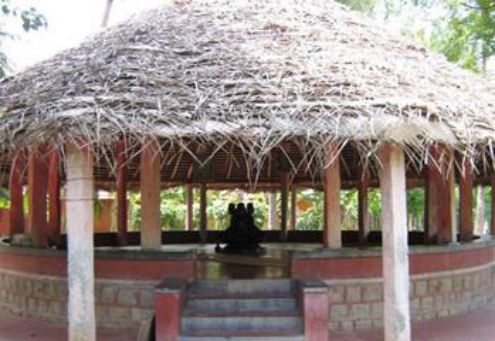
His methods and presentations were opposed by several Catholic and Protestant leaders more out of fear of syncretization. However after thourough enquiry, the Pope supported the attempts.
He was followed in this by Swami Brahmabandhab Upadhyay, who was an Indian Brahmin who converted to Catholicism.
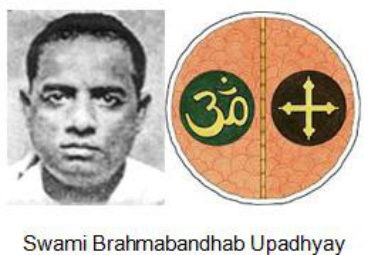
"Brahmabandhav's theology has two aspects of his methodology. a) As it comes clearly in his biography, his whole theological thinking was motivated by his very genuine concern for indigenous expression of Christian faith and life, as Russell Chandran properly evaluates. Russel Chandran says that there are four aspects in which this indigenisation comes to the fore:
(1) Integration of the social structure of India into Christian way of life; (2) The establishment of an Indian Christian monastic order; (3) The employment of Vedanta for the expression of Christian theology; and
(4) The recognition of the Vedas as the Indian Old Testament. Scholars are divided as to whether Brahmabandhav took to the Vedas or the Vedantic philosophy
b) Brahmabandhav also had a very concrete method as how this indigenisation of Christian message in India should take place.
He says it is a three-fold task: First to eradicate from the minds of the Indian people the erroneous and mischievous doctrines (pantheism and transmigration);
Secondly, to lay the basis of Theism by the help of the Vedas; and Thirdly, to build Christianity on that foundation." http://www.ichenetwork.net/CTIP_3.pdf
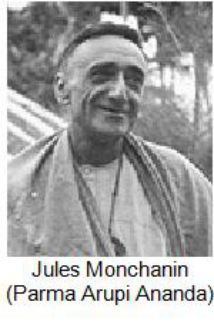
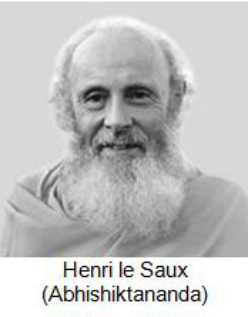
A French Priest Jules Monchanin (1895-1957) (who was later to adopt the name Parma Arupi Anananda), and French Benedictine monk at the Abbey of Kergonan, Henri le Saux (1910-1973) (who was later to adopt the name Abhishiktananda), together formed the Saccidananda Ashram (also called Shantivanam) in 1948 at Tannirpalli in Tiruchirapalli District. Jules Monchanin died in 1957 and Henri Le Saux began to stay six months in the ashram and six months visiting various Hindu Ashrams and began a long period of dialogue with the Hindu leaders. He had visited Ramana Maharshi and his Ashrams continuously.
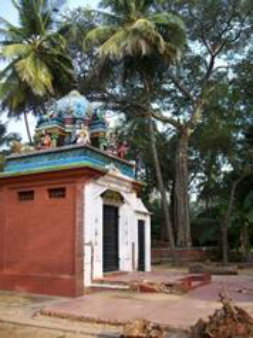
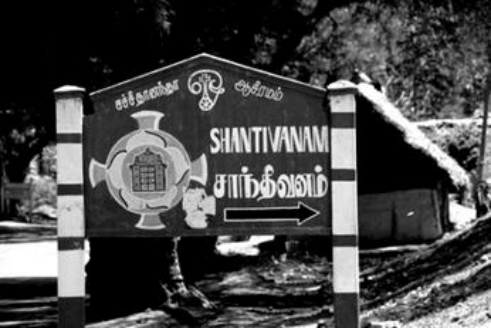
Shantivanam belongs to the Congregation of Camaldolese in the
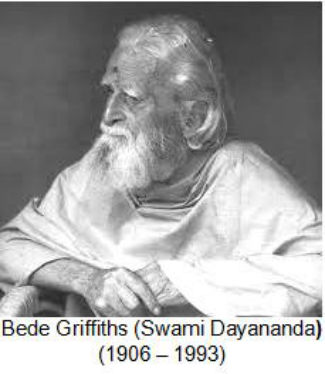
Order of St.Benedict. Bede Griffiths, took over leadership of Saccidananda Ashram after Monchanin's death and le Saux's decision to leave for his hermitage. Bede Griffiths (1906 - 1993), born Alan Richard Griffiths took the name Swami Dayananda ("bliss of compassion").
Zacharias Mar Athanasios, the Bishop of Tiruvalla, invited Fr. Francis Mahieu, a Cistercian monk from the Scourmont Abbey, in Belgium (later known as Francis Acharya) to come to Kerala to start the ashram. In the course of time, Bede Griffiths joined him there. On 1 December 1956, the two of them started the new foundation at Tiruvalla in the Syro- Malankara Catholic Church as Kurisumala Ashram
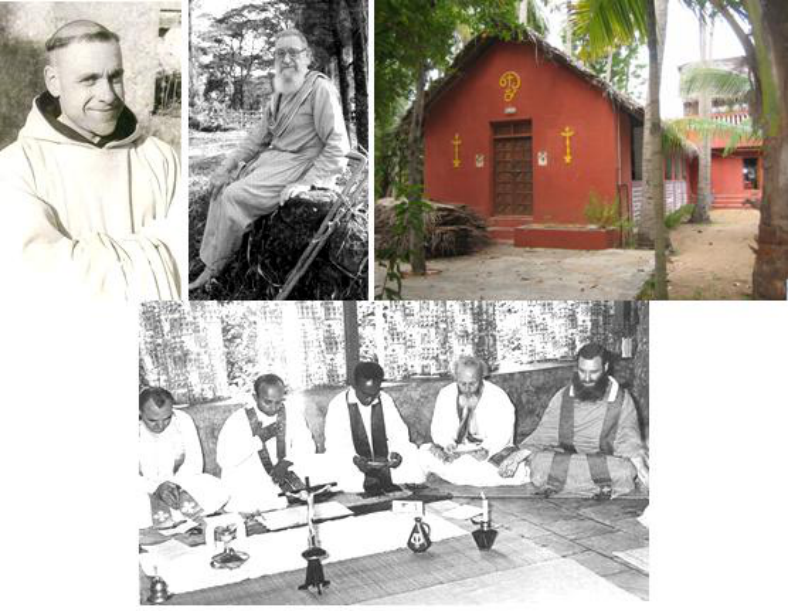
Karunaiyananthar Ashram (Ashram of the One, who is embodiment of Grace) situated near the banks of river Kavery at Thirupanthuruthi.
http://sites.google.com/site/thechristianashrammovement/ gives the following list:
1. Aikiya Alayam, Madras, Tamil Nadu. 2. The Alwaye Fellowship House (1947), Alwaye, Kerala. 3. Anbu Vazhvu Ashram, Palani, Madurai District, Tamil Nadu. 4. Anjali Ashram, Mysore, Karnataka. 5. Anusandhan Ashram, Bhanpuri, Raipur District, Madhya Pradesh. 6. Arupa Ashram, Aruppakotai, Tamil Nadu. 7. Asha Niketan, Bangalore, Karnataka. 8. Asha Niketan, Calcutta, West Bengal. 9. Asha Niketan, Katalur, Kerala. 10. Asha Niketan, Tiruvanmayur, Madras, Tamil Nadu. 11. The Ashram (1931), Perambavoor, Kerala. 12. Asirvanam, Kumbalgud, Bangalore District, Karnataka. 13. Bethany Ashram, Bapatla, Guntur District, Andhra Pradesh. 14. Bethany Ashram (1938), Channapatna, Bangalore District, Karnataka. 15. Bethany Ashram, Lahal, Kerala.
16. Bethany Nature Cure and Yoga Centre, Nalanchira, Trivandrum, Kerala. 17. Bethel Ashram (1957), Gudalur, Nilgiris District, Tamil Nadu. 18. Bethel Ashram, Kattrapally, Warangal District, Andhra Pradesh. 19. Bethel Ashram, Parkal, Warangal District, Andhra Pradesh. 20. Bethel Ashram (1922), Tiruvalla, Kerala. 21. Bethel Ashram, Trichur, Kerala. 22. Calcutta Samaritans, Calcutta, West Bengal. 23. Catholic Church, Garhi, Bihar. 24. Catholic Mission, Rohtak, Haryana. 25. Chayalpadi Ashram, Angamoozhi, Kerala. 26. Christa Krupashrama (1949), Mandagadde, Shimoga District, Karnataka. 27. Christa Mitra Ashram (1940), Ankola, North Kanara District, Karnataka. 28. Christa Panthi Ashram (1942), Sihora, Madhya Pradesh. 29. Christa Prema Seva Ashram (1922), Pune, Maharashtra. 30. Christa Sathia Veda Ashram, Boyalakantla, Kurnool District, Andhra Pradesh. 31. Christa Sevakee Ashram (1950), Karkala, Karnataka. 32. Christa Sisya Ashram (1936), Tadgam, Coimbatore District, Tamil Nadu. 33. Christa Yesudasi Sangha (1935), Ahmadnagar, Maharashtra. 34. Christa Yesudasi Sangha (1919), Malegaon, Nasik District, Maharashtra. 35. Christavashram (1940), Manganam, Kottayam District, Kerala 36. Christian Ashram (1930), Vrindavan, Mathura District, Uttar Pradesh. 37. Christian Medical Fellowship, Oddanchatram, Madurai District, Tamil Nadu. 38. Christiya Bandhu Kulam, Satna, Madhya Pradesh. 39. Christu Dasa Ashram (1929), Palghat, Kerala. 40. Christukulam Ashram (1921), Tripattur, North Arcot District, Tamil Nadu. 41. Deepshikshashram, Narsingpura, Madhya Pradesh. 42. Dhyan Ashram, Manpur, Indore District, Madhya Pradesh. 43. Dhyana Ashram, Madras, Tamil Nadu. 44. Dhyana Ashram, Wynad, Kerala.
45. Dhyana Nilayam, Vishakhapatnam, Andhra Pradesh. 46. Dilaram House, New Delhi. 47. Dilaram House, Calangute, Goa. 48. Dohnavur Fellowship, Dohnavur, Tirunelveli District, Tamil Nadu. 49. Evangelisation Centre, Paramkudi, Ramanathapuram Distict, Tamil Nadu. 50. Fransalian Vidya Niketan, Khamgaon, Buldana District, Maharashtra. 51. Friend's Centre, Rusulai, Hoshangabad District, Madhya Pradesh. 52. Gethesme Ashram, Muvathupuzha, Kerala. 53. Gyan Ashram, Andheri, Bombay, Maharashtra. 54. Ishapanthi Ashram (1922), Puri, Orissa. 55. Jeevan Dhara, Rishikesh, Uttar Pradesh. 56. Jesu Christ Passid Ashram, Cochin, Kerala. 57. Jyoti Niketan Ashram, Bareilly, Uttar Pradesh. 58. Khrist Panthi Ashram (1947), Varanasi, Uttar Pradesh. 59. Khrist Sevashram, Rani, Assam. 60. Kodaikanal Ashram Fellowship (1934), Kodaikanal, Tamil Nadu. 61. Kurishumala Ashram, Vagamon, Kottayam District, Kerala. 62. Little Brothers of Jesus, Alampundi, South Arcot, Distict, Tamil Nadu. 63. Madras Gurukul, Madras, Tamil Nadu. 64. Masihi Gurukul, Varanasi, Uttar Pradesh. 65. Masihi Sadhu Ashram, Maranda, Kangra District, Himachal Pradesh. 66. Meherpur Ashram, Nadia, West Bengal. 67. Menonite Central Committee, Calcutta, West Bengal. 68. Missionary Brothers of Charity, Calcutta, West Bengal. 69. Mitri Bhavan, Varanasi, Uttar Pradesh. 70. New Life Centre, Pune, Maharashtra. 71. Nirmala Mata Ashram, Goa. 72. Om Yeshu Niketan, Bardez, Goa. 73. Prakashpuram Ashram, Udemalpet, Tamil Nadu. 74. Prarthana Ashram (1948), Neyyatinkara, Kerala. 75. Premalaya Ashram (1937), Chamrajanagar, Karnataka. 76. Prem Ashram, Kadari, Chhatarpur District, Madhya Pradesh.
77. Saccidananda Ashram, Bangalore, Karnataka. 78. Saccidananda Ashram, Coorg, Karnataka. 79. Saccidananda Ashram, Narsingpur, Madhya Pradesh. 80. Saccidananda Ashram, (1950), Tannirpalli, (Kulithalai), Tiruchirapalli District, Tamil Nadu. 81. Saccidananda Ashram, Thasra, Kaira District, Gurajat. 82. Sanjeevan Ashram, Nasik, Maharashtra. 83. Sat Tal Ashram (1929), Bhowali, Nainital District, Uttar Pradesh. 84. Sevananda Nilayam (1929), Nandikotkur. Kurnool District, Andhra Pradesh. 85. Shanti Ashram, Bareilly, Uttar Pradesh. 86. Shanti Neer, Harendrapur, Calcutta, West Bengal. 87. Shantivanam, Raipur, Madhya Pradesh. 88. Snanika Arulappara Virakta Math, Deshnur, Belgaum District, Karnataka. 89. Snehalaya, Pune, Maharashtra. 90. Sneh Sadan, Pune, Maharashtra. 91. Spiritual Life Centre, Naraspur, Pune District, Maharashtra. 92. St. Joseph's Boys Village, Periyakulam, Dindigul District, Tamil Nadu. 93. St. Paul's Cathedral Social Services, Calcutta, West Bengal. 94. Suvartha Premi Samithi, Ranthi, Uttar Pradesh. 95. Suvisesha Ashram, Bidadi, Bangalore District, Karnataka. 96. Tapovansarai, Rishikesh, Uttar Pradesh. 97. Tirumalai Ashram, Nagarcoil, Kanya Kumari District, Tamil Nadu. 98. TRACI Community, New Delhi. 99. Vellore Ashram (1930), Vellore, Andhra Pradesh. 100.Vidivelli Ashram (1932), Saymalai, Tirunelveli District, Tamil Nadu. 101.Village Reconstruction Organsiation, Guntur, Andhra Pradesh. 102.Vishram, Bangalore. Karnataka. 103.Yeshu Ashram, Varanasi, Uttar Pradesh. 104.Yesu Ashram, Bangalore, Karnataka. 105.Yesu Karuna Prarthanalaya, Kote, Mysore District, Karnataka. As is evident the movement was soon to be taken over by the Protestant and Evangelical Churches. The Ashram movement went hand in hand with the Indian Independence Movement as a Christian
involvement in the Freedom Struggle. Most of the Indian leaders who were involved were also actively involved in the Struggle for Independence and the Ashram expression was an active expresssion of Indian Independence and cultural identiy.
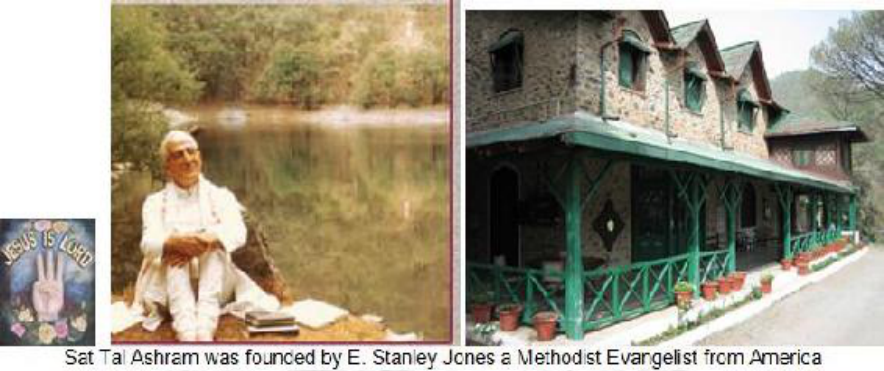
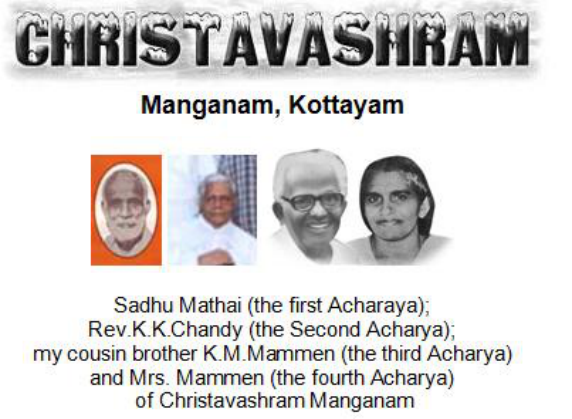
Our family was deeply involved in the Christian involvement in the social justice and as its expression in the Freedom struggle of India. My father M.M.Mammen joined the Salt Satyagraha movment and remained a vegetarial and wore only cloths made with Khadi - native hand woven clothes. We as a family were deeply involved in the Ashrams. There are three Ashrams which were particularly dear our family. Two of my older brothers Dr. M.M.Thomas (of World Council of Churches) and Advocate M.M.Cherian were particularly part of the Sat Tal Ashram, the Christavashram of Manganam, Kottayam and the Kodaikanal Ashram of Dr. R.R.Keithan. It was Rev. Keithan who introduced me to Sarvodaya Movement. As a teen ager I remember to have lived in these ashrams on and off. In fact I was asked to lead one of the Sarvodaya Conferences held in Keithan's Ashram in 1954. So also I led the discussions on Sarvodaya in relation to the Kingdom of God concept in Christianity in the Mahabaleshwar Conference.
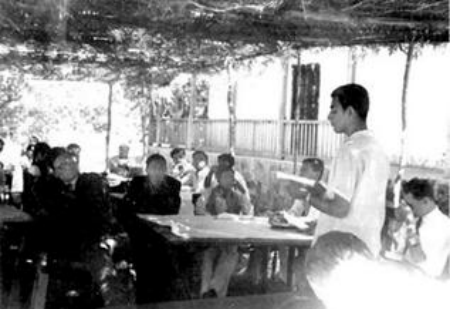
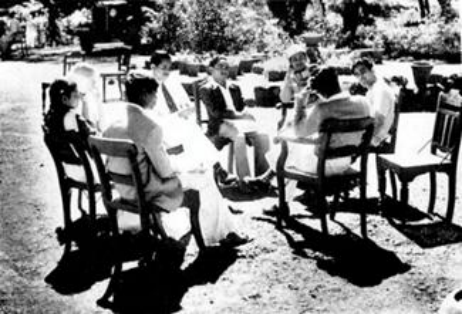
Presenting the Paper on Sarvodaya and Kingdom of God and leading one of the group discussions in Mahabaleshwar Ashram. I was a student of the Royal Institute of Science at Bombay.