
Search this book
Search results link directly to the matching source page.
HISTORY OF CHRISTIANITY IN INDIA
M.M.NINAN
CHAPTER ONE
India Before Christ In order to understand the History of Indian Christianity it is necessary to look into the environment in which Christianity developed in India. At the time of Jesus, India had a very flourishing civilization. It is normal for any country to claim a civilization, which started from the beginning of creation. But this is just a feature of nationalism. The reality is that there had always been civilizations in regions, which sustained life all over the world. Trade and relations between these civilizations molded the religious atmosphere of every civilization and country. India was no different.
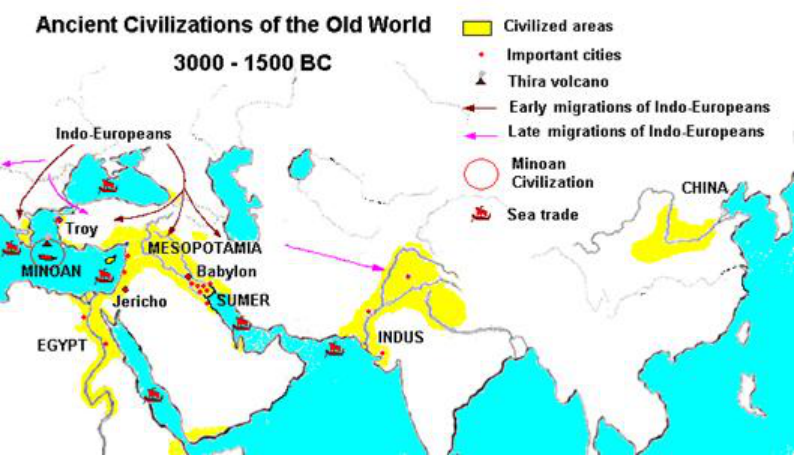
At the time of Jesus, the Aryans were practically all over India. They had a very weak presence in South India where the Dravidians were more concentrated. By the second century BC Aryans must have reached even Sri Lanka. Aryan religion was essentially Vedic Religion. Though for the sake of pushing the date of the origin of Hinduism, Vedic religion is erroneously equated with Hinduism. Vedic religion in fact has nothing to do with Hinduism.
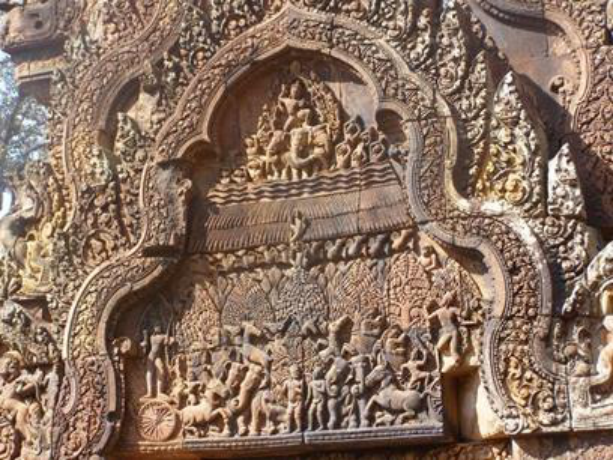
Indra and Agni
Vedism is a polytheistic religion brought to India around 1500 B.C.E. by the Aryans. It was the faith of nomadic warrior tribes whose gods were heroes of war and this reflected in their Scriptures. Thus, Vedic Religion was essentially a worship of the forces of nature.
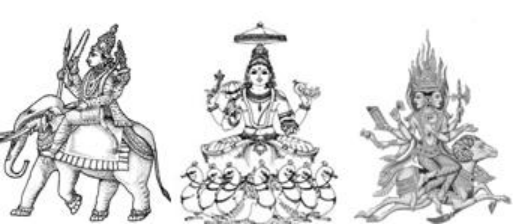
The famous triad gods are Indra, Agni and Varuna. Indra, the god of thunder was the king of gods. Agni, the fire god was the giver of energy and life. Surya or Varuna was the sun god. There are thirty-three gods mentioned in the Vedas. Today they are relegated to the level of secondary gods. There was no concept of Brahman. This concept of the ultimate God is nowhere found in the Vedas.
It would require extreme allegory to impose the later concepts of Para Brahman into Vedic treatments as Swami Aurobindo has done. (1). One will have to manipulate and wrench out the secret meaning and the mystic wisdom couched in allegory and parables if at all they exist. "But all cannot enter into its secret meaning." At any rate it totally lacked the concepts of karma and reincarnation, which dominate Hinduism, as we know of today. (2)(3)

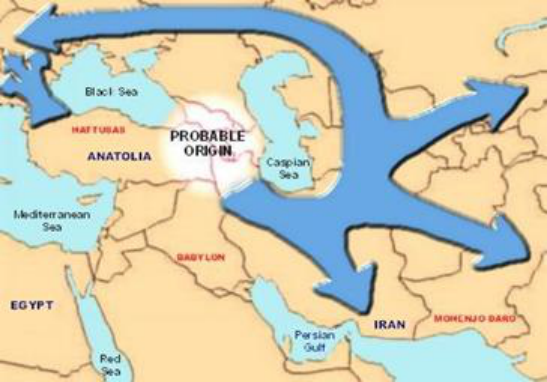
Early Aryan Migration
Vedism came from Persia and is a branch parallel to Zoroastrianism and Mithraism. Vedas are written in a language
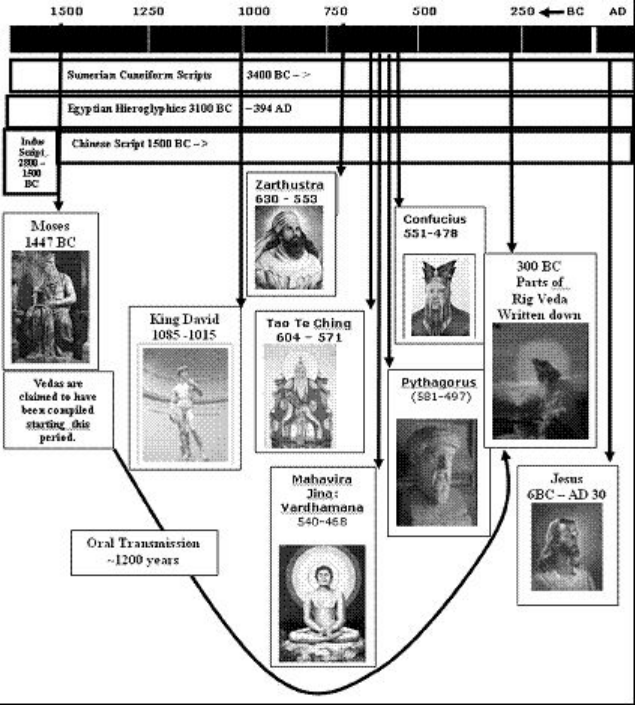
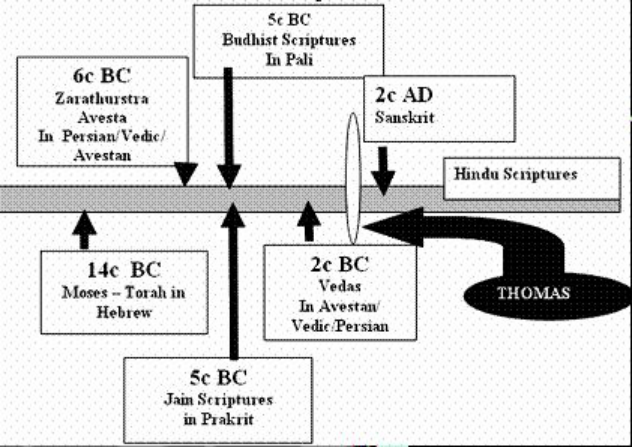
similar to Old Iranian, the language of Zoroastrianism's scriptures, the Avesta. (4) For lack of writing skills, these were not written down till the 2nd C BC. "The Rig Veda, the oldest of the four Vedas, was composed about 1500 B.C., and codified about 600 B.C. It is unknown when it was finally committed to writing, but this probably but this probably was at some point after 300 B.C." (5) (6) (7)
The Vedic language is often erroneously referred to as Sanskrit. Vedas are written in Vedic language, which is very close to the Iranian languages and is almost identical with the Avestan language in which the scriptures of Zoroastrianism are written. Sanskrit on the other hand has close affinity with the Dravidian languages and was developed during the early second century AD. All the three religious branches, Vedic, Zoroastrian and Mithraism grew separately after branching out. Vedism emphasizes, nature worship and rituals involved in offering of sacrifices, magic and witchcraft.
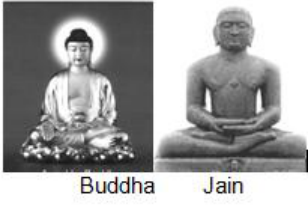
Buddhism and Jainism developed in India around fifth century BC and are atheistic religions. They were essentially materialistic religion of action. The basic teachings of karma and reincarnations or transmigration of souls, brought into India probably by the Greeks, form the background of these religions. Under Emperor Asoka (ca. 273-232 B.C), the third Mauryan emperor, Buddhism spread far and wide; not only in India but also into neighboring countries.
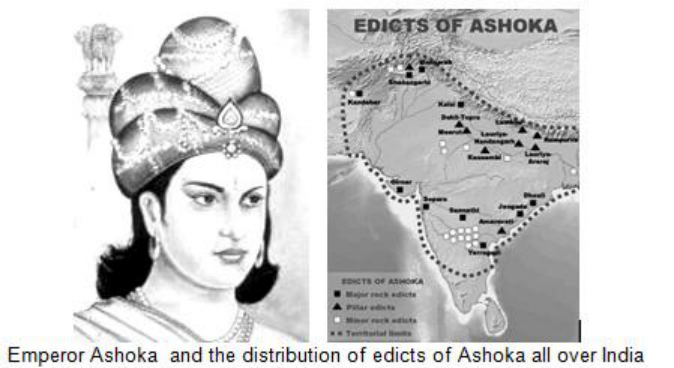
The Emperor Asoka built monolithic pillars with carved epigraphs crowned by capitals, rock-cut architecture, and stupas to spread the gospel. By the first century BC, Vedism, Buddhism and Jainism were the religions of the whole of India.
There must have been also the Dravidian religion all over Southern India. We know very little about the nature of this religion. They had the concept of the "God Most High" - "El Elyon" - the Parameshwara or Maheswara. Most scholars believe that the Dravidian Civilization in Mohen-Jodero and Harappa worshipped Siva as the great God who ruled the heavens and the earth. Their religion included animal sacrifice and was very similar to Judaism. Like Judaism under the judges, early Dravidians did not leave any
symbols or idols or temples. Almost all sophisticated art and architecture were either Jain or Buddhist origin until 300 AD.
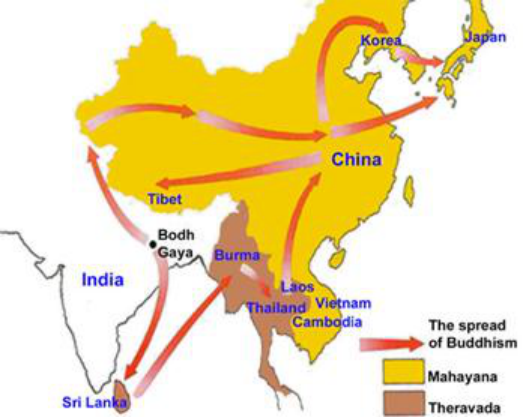
Under the influence of other religions, Buddhism developed later into two branches - Theravada or Hinayana (Lower Vehicle) and Mahayana (Higher Vehicle). Hinayana found mostly in Sri Lanka is still atheistic in content, and Mahayana (Higher Vehicle) found in China and neighboring countries is theistic in content. Theravada Buddhism sees Buddha as a man. Gautama never claimed to be deity, but rather a "way shower." Mahayana Buddhism, however, worships Buddha as a manifestation of the divine Buddha essence. The later sect came into existence by the early second century AD and crystallized by the third century. It emphasizes salvation of sentient beings through the assistance of bodhisattvas, which later became the dominant form of Buddhism in most of Asia. (8)
Socio-Political background
Inter continental trade played a major role in the political, cultural, religious, and artistic exchanges between civilizations. These land routes were in existence for centuries. The trade routes provided much needed luxury and exotic items to other lands. Some areas controlled monopoly of certain goods, like silk by China, Spices by Western coast of India and incense by Northern India and the Arabia.
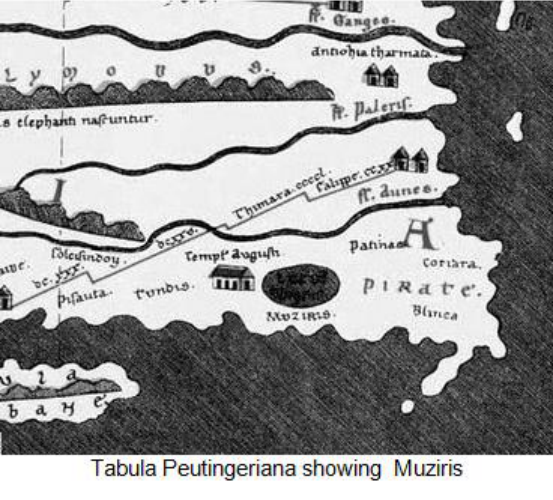
Thus there were Silk routes, Spice (cloves, cinnamon, pepper, nutmeg) routes and Incense routes. The ancient port of Muziris was described by the Roman historian Pliny (A.D. 23-79) as the most important port in the East, and Vanji (Thiruvanjikulam) was the capital city of the Cera people. While discussing the dealings of the Phoenicians with Muziris, Pliny mentions that every year large sum of money was going to India for silk, pearls, gems and spices. He states that Malabar ships were visiting the Persian Gulf, Aden, the Red Sea and Egypt regularly. Ptolemy's mid-second century map of India (9)(10) and the apparent third century (11) Tabula Peutingeriana or Peutinger Table. (A.D. 100-160) and the Periplus (the list of ports with distances) (12) of the Erythraean Sea (AD 90) include Malabar and its port Muziris. Diplomatic relations between India and Roman Empire existed even before the Christian era. Conquerors followed these routes to control them. The land routes were dangerous due to the presence of robbers, and later, sea routes became favorites due to its speed of transport and safety. Land transport was incredibly expensive in comparison with the sea routes. (13)
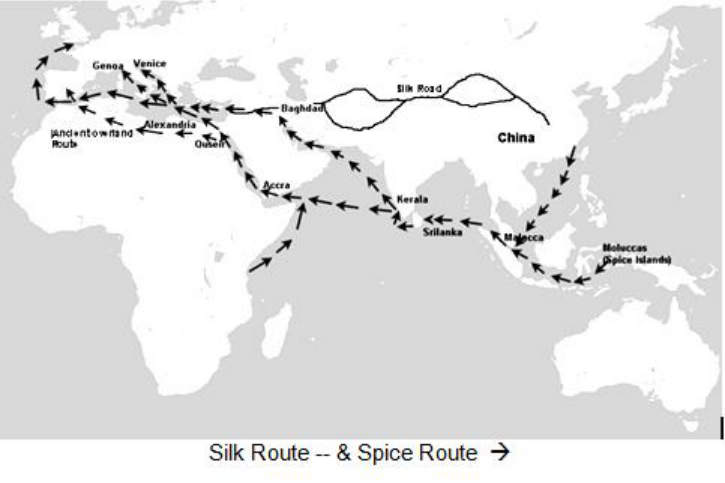
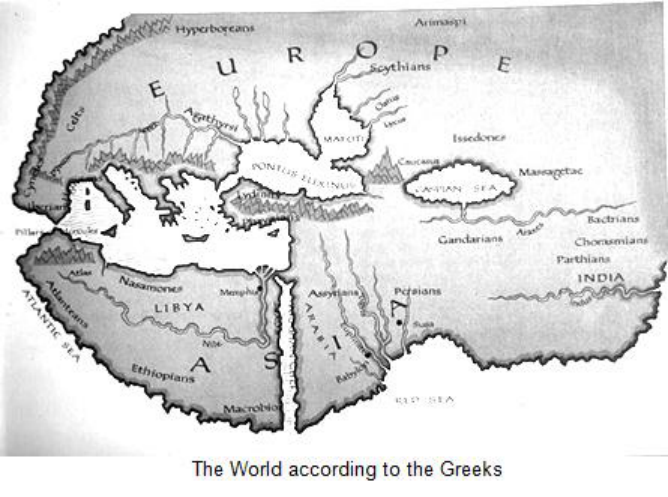
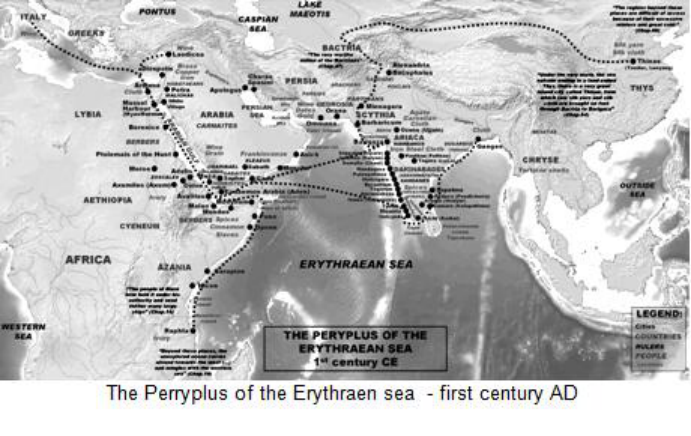
One such route was the spice route connecting Malabar Coast to Yemen, Egypt and to rest of Europe. In A.D. 45 Hippalus discovered the monsoon winds in the Indian Ocean and this discovery reduced the time of transit to less than forty days. It was this route that St.Thomas took. (14) (15)
Trade in Early India, Oxford University Press says the following on page 66: "Thanks to a graphic description left behind by Pliny, historians are able to trace the development of the sea-route to the west coast of India in four-stages. The most developed route, which was also the shortest and safest, began from the Red Sea port of Myos Hormos and /or Berenice and reached the famous Malabar port of Muziris (Muciri of the Tamil Sangam texts) in forty days by following the Hippalus (i.e. the south-western monsoon) wind. Pliny states that the earliest point of maritime contacts between India and the West was Patalene in the Indus delta; the subsequent point was the port of Barbaricum on the middle mouth of the Indus. The third stage made Sigerius or Jaigarh on the Konkan coast the convenient harbour and finally, Muziris became the most important port of call." Essentially by the time Pliny wrote things down Muziris was well established as a major port of call for Roman shipping. Note that the term Roman refers in general to the peoples ruled by the Romans - which included portions of Arabia and regions around the Mediterranean - i.e. present day Palestine/Israel, Armenia and Africa.
Parthians and the Lost Tribes of Israel
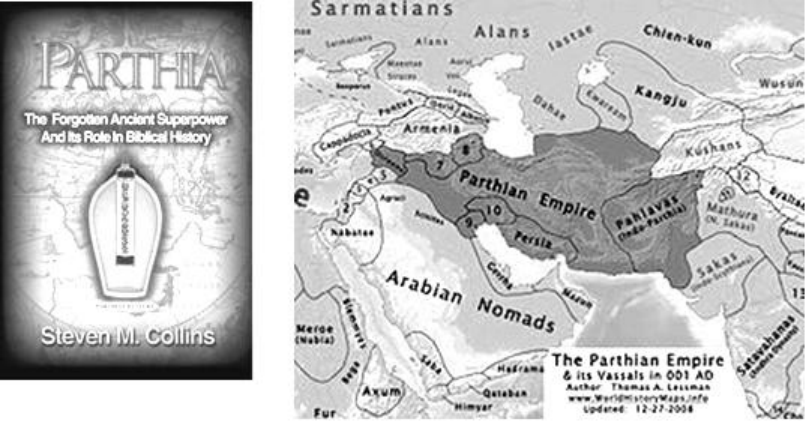
The Parthian Empire (247 BC - 224 AD), also known as the Arsacid Empire was a major Iranian political and cultural power in ancient Persia. Its latter name comes from Arsaces I of Parthia who, as leader of the Parni tribe, founded it in the mid-3rd century BC when he conquered the Parthia region. The Parthian empire was essentially ruled and populated by the innumerable members of the tribes of Israel who were scattered all over the area.
"Dawid's descendants of the House of Phares were ruling over separate groups of the ten tribes of Israel from the Caucasus Mountains to the territory of modern India. Also, many kings of Parthia itself had names indicating that they were also royal members of the Dawidic line of Judah. Such names include the key consonants of PH-R-S in Hellenized forms of their Parthian names (such Parthian royal names as Phraates, Phraortes, and Phraataces are examples). Over the centuries Yehowah kept his promise to Dawid by causing Dawid's descendants to rule over many Israelite nations in Asia.
How did Dawid's descendants (from the defunct kingdom of Judah) ever come to rule over the descendants of the ten tribes in Asia? While Yehowah can easily intervene in world affairs to keep his promises, the Bible suggests how this might have happened. In II Kings 24:8-15, we read that one of the last kings of Judah, Jehoiachin, was carried captive to Babylon by Nebuchadnezzar. Was this the end of him? Hardly! II Kings 25:27-30 shows that after 37 years of captivity, he was a later king of Babylon:
"…did lift up the head of Jehoiachin king of Judah out of prison; and he spake kindly to him, and set his throne above the thrones of the kings that were with him in Babylon…" (KJV)
The king of Babylon was supreme over the Babylonian Empire, but he was served by many subordinate rulers, who were vassal kings
over assigned areas. That a Babylonian king gave Jehoiachin a throne indicates that Jehoiachin was made a vassal ruler over part of the Babylonian Empire. Indeed, the account states that he was set "above" the other vassal kings! Since there were many descendants of the ten tribes of Israel who were subordinate to the Babylonian Empire (which inherited them when it conquered Assyria), it is most likely that Jehoiachin was made a ruler over the Israelites in Babylon's Empire. Since Jehoiachin was a descendant of King Dawid (of the Phares line), his descendants apparently established a dynasty which continued to rule over descendants of the ten tribes when they regained their independence. I Chronicles 3:16-24 records that the royal family of Judah did not die out, but produced many descendants during the generations after the fall of Jerusalem..........
In chapter four an account was cited that a large portion of the ten tribes who escaped Assyrian captivity by migrating northward into the Caucasus were led by a "chief or prince whom they appointed."32 This indicates that they made a clean break with whatever dynasty was ruling Israel in its last days, and that a new leader was "appointed" by the escaping Israelites. The subsequent evidence that their rulers included the name of "Phares" argues that this group of the ten tribes picked a "prince" of Dawid's royal line as their new leader. They migrated in approximately 724-721 B.C., and by 653 B.C. a leader of a Scythian-Cimmerian-Median alliance against Assyria was led by a person named "Phraortes."..... It is logical that Israelite captives would later move to a place of their choosing (after the Assyrian Empire disintegrated), and name one of their new cities in honor of their ancestral capital. The city named "Carta" bears the same Semitic root word which is present in the name "Carthage" (as was discussed earlier in this chapter)......... Josephus and Yahushua The Messiah did not consider the ten tribes to be "lost" at all, but rather living in known geographical locations. It is significant that the Apostle Peter wrote the book of I Peter from the city of Babylon (I Peter 5:13). Since Babylon was a city of the Parthian Empire at that time, it indicates that Peter had heeded
Yahushua Messiah's instructions by traveling to territory ruled by the ten tribes. Historical accounts also assert that the Apostle Thomas traveled within Parthia. Indeed, the early church historian Eusebius identified Thomas as the apostle sent to the Parthians.40 There are historical records which link the Apostle Thomas to the Parthian king Gondophares (mentioned earlier), who reigned in ancient India.41 The presence of the apostles of Yahushua Messiah in Parthian territory shows their recognition that the Parthians were Israelites............................
In conclusion, let us briefly review the overwhelming evidence that the Parthians were Israelites of the ten tribes of Israel who had migrated to Asia. The Parthians were never recorded as being in Asia until after the ten tribes of Israel relocated to Asia. The Bible records that these tribes were placed in the "cities of the Medes," and Parthia's homeland adjoined the territory of the Medes. History records the Parthians were first under the dominion of the Assyrians, and that was also the fate of those Israelites taken captive by the Assyrians. We can see the names of sub-tribes of Ephraim in the Parthian homelands, and history is clear that the Parthians were the kinsmen of the Scythian Saka/Sacae (showing that the Parthians were also known as descendants of Isaac).
The Parthians and Scythians are the people written about by Josephus as the extremely numerous descendants of the ten tribes of Israel. Josephus, who lived in the first century A.D., wrote the following about the ten tribes of Israel: "…the ten tribes are beyond Euphrates till now, and are an immense multitude, and not to be estimated by numbers." ‘The "Lost" - Ten Tribes of Israel - Found!' - Steven M. Collins - CPA Books - PO Box 596 - Boring Oregon 97009.
Indo-Parthian Kingdom of Takshashila
Following the Aryans, other invasions came along the same land route. Persian emperor Darius established two provinces in India - Gandara and Hindush.
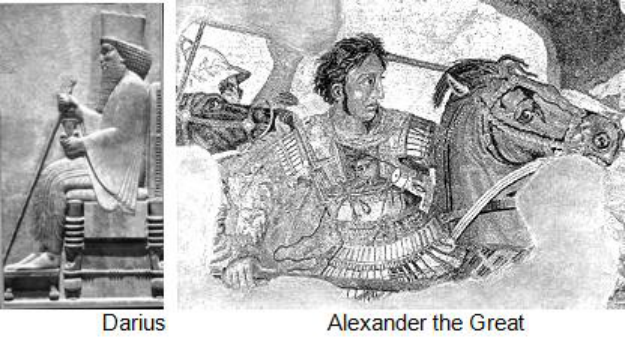
This was followed by the conquest of Alexander the Great (331 BC).
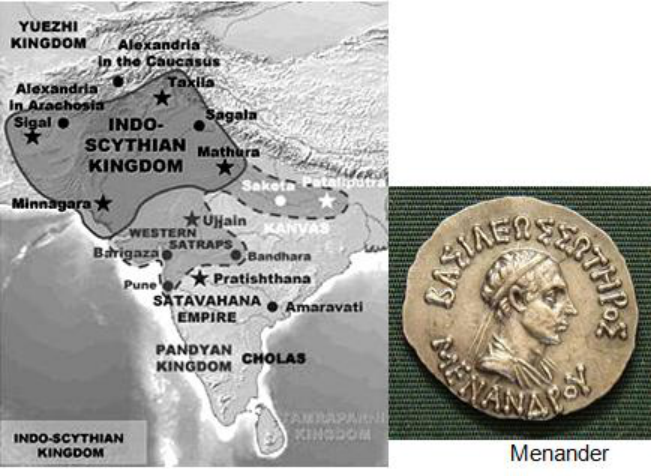
The Indo Greek King Menander I established a kingdom in Taxila in 170 BC. Sakas (Scythians), Kushans and Huns came in from Central Asia. In due course, the Parthians ended up controlling all of Bactria and extensive territories in Northern India, after fighting Kushan Emperor Kujula Kadphises, in the Gandhara region. Taxila was the meeting place of the four great civilizations of the time -- Greco-Roman, Persian, Indian, and Chinese. At that time it was the capital of Hindus - The Indus Valley.
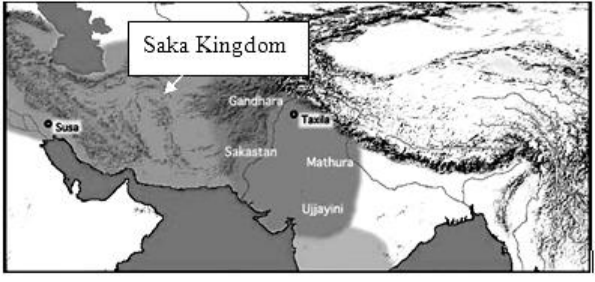
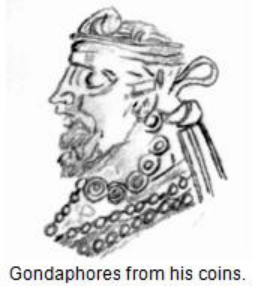
Around 20 AD, Gondophares, one of the Parthian conquerors, declared his independence from the Parthian empire and established the Indo-Parthian kingdom in the conquered territories.
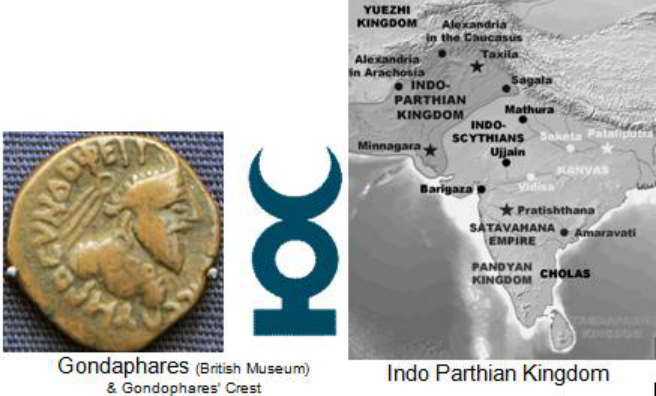
The kingdom barely lasted one century. It started to fragment under Gondophares' successor Abdagases. The northern Indian part of the kingdom was retaken by the Kushans around 75 AD. (9)
References (1). On the Veda. Aurobindo, Sri. (1964). Pondicherry, India: Sri Aurobindo Ashram Aurobindo's writings were published in the monthly review,'Arya' between 1914 and 1920.
(2). J-Claude et Bernard Binett, History of the Hindu religion, Vedism and Hinduism: http://members.tripod.com/historel/orient/10inde.htm. See also Prof. Ingrid Shafer: http://www.usao.edu/~usao- ids3313/ids/html/vedism.html
(3)) Pundit Page: Wyatt Robertson http://www.karma2grace.org/Webcomponents/FAQ/index.asp? det=65 "There are indeed no references to reincarnation in the Rig Veda. Or for that matter in the other Vedas (Sama, Yajur and Atharva)."
(4). Dr. Deen B Chandora: In what language were the Vedas originally written? http://www.geocities.com/vedic_temple/hinducentum/q10.html
(5). Internet Sacred Text Archive: http://www.sacred- texts.com/hin/
(6). Richard K. Hines: http://www.wsu.edu/~dee/ANCINDIA/VEDAS.HTM
(7). Brian Turner: http://www.comparative- religion.com/hinduism/vedas/
(8) Pat Zukeran, Buddhism, http://www.probe.org/docs/buddhism.html
(9) Stevenson, Edward Luther, 1991 Claudius Ptolemy The Geography New York: Dover Publications.
(10) Ptolemy and the Southeast Coast of India http://www.nfobase.com/html/ptolemy_and_the_southeast_coas.html
"The great trading post here was Muziris, Ptolemy has it connected by the Psuedostomus River to the Chera capital of Karur. The Cheras controlled the interior of the southern part of the peninsula and the lower West Coast."
(11) http://www.nfobase.com/html/the_peutinger_table.html "What is really interesting here is the centrality of Muziris. It is marked with a big red circle. It is, indeed, the most important city east of Antioch. Yet it is not connected to anything in the interior, much less across the peninsula. To the left of Muziris is an "Augustinian temple." Many have taken this to be an old Roman structure. But that would seem odd on this decidedly Christian map." Peutinger's Tabula was originally a long parchment map 6.80 metres by 34 centimetres.
(12) The Periplus of the Eritrean Sea http://www.earth- history.com/India/periplus.htm
(13) E. H. Warmington, The Commerce between the Roman Empire and India, London, Curzon Press. 1928, p.14. as quoted in T.V. Philip, East of the Euphrates: Early Christianity in Asia, CSS & ISPCK, India, 1998)