
Search this book
Search results link directly to the matching source page.
CHAPTER SEVENTEEN RAMABAI AND MOTHER TERESA Panditha Ramabai Saraswati (1858-1922) and Mukthi Mission
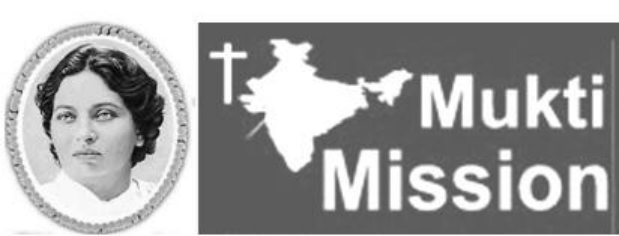
Ramabai Dongre was born into a Brahmin family, the youngest of three children who survived into adulthood (three others died in childhood), near Mangalore, India, on April 23, 1858.1 Her father, Anant Shastri Dongre, an extremely learned priest from Maharashtra, insisted that not only his son but also his wife and daughters be educated, even though such a female education aroused great hostility from his community. So at the age of eight, which is the traditional age for Brahmin boys to begin their twelve- year education, Ramabai began to memorize and learn prodigious numbers of Sanskrit texts. Included in the works she memorized were "whole vocabularies, dictionaries, grammars, commentaries," and complete sacred texts such as the Bhagavata Purana, with its 18,000 verses, and the Bhagavata Gita. Her teacher was her mother, since Ramabai's father was too old and weak to teach her. The family made its living as Puranikas, Sanskrit specialists who traveled extensively all around the country reciting and reading and expounding on the Puranas.
When Ramabai was sixteen, a severe famine devastated south India. There was no food or water even for wandering Brahmin priests and their families. First her father died of starvation, then her
mother, and then finally her sister, leaving only Ramabai and her brother Srinivas barely clinging to life.
She came into contact with Hindu priests and other Sanskrit scholars, both Indian and European, who were astounded at her learning and awarded the titles of ‘Pandita' and then ‘Saraswati'
In Calcutta Ramabai came into contact with the Brahmo Samaj, a reform movement within Hinduism and joined the Brahmo Samaj and started to lecture across North India, particularly on women's issues.
In 1880 her brother died of cholera. Six months later she crossed one of the rigid caste lines by marrying a good friend of her brother, a lawyer of an inferior caste who was a member of the Brahmo Samaj. The two lived together happily for fifteen months before the husband also succumbed to cholera, leaving Ramabai a young widow of twenty-three with a six-month-old baby girl.
Ramabai founded the Arya Mahila Sabha in 1881, in Pune, the very first Indian feminist organization. She studied and taught about issues which surround Indian women especially those involved in the Hindu traditions. She spoke against the practice of child marriage and the terrible constraints on the lives of child widows.
At the age of twenty-five Ramabai went to England in 1883 for medical studies and was disqualified because she was found to be partially deaf, so she studied to be a teacher. She was made Professor of Sanskrit in the Cheltenham Female College, and studied higher mathematics, English literature. Her hosts were sisters of an Anglican mission, the Community of St. Mary the Virgin, headquartered in Wantage, England. Four months after her arrival in England, Ramabai and her daughter were baptized. Soon she had the opportunity to visit USA in 1886. She returned to India in 1889. In less than six weeks a school was opened in Bombay, named the Sharada Sadan.
Mukti Mission was founded in India in 1889 and it became a powerful christian mission. At one time she had around 3000 destitutes in her home.
During the famines of 1896-97 in Madhya Pradesh and 1900-01 in Gujarat, Ramabai was instrumental in bringing over 2000 women and girls who were rescued. These girls were housed in the temporary sheds at the 100 acre farm which she had purchased in 1895 at Kedgaon. In 1904, Ramabai commenced translation of the Bible in Marathi, from the original Hebrew and Greek texts. In 1913, the first edition of the New Testament of Ramabai's translation in Marathi was published. In 1924, the complete Bible was printed in the Mukti Printing Press.
In the 1889 Congress session there were ten Christian delegates of which Pandita Ramabai Saraswati was one.
The Mukti Church celebrated its 100th anniversary in 1999. It is one of the largest churches in India with seating for 2000 people.
MOTHER TERESA
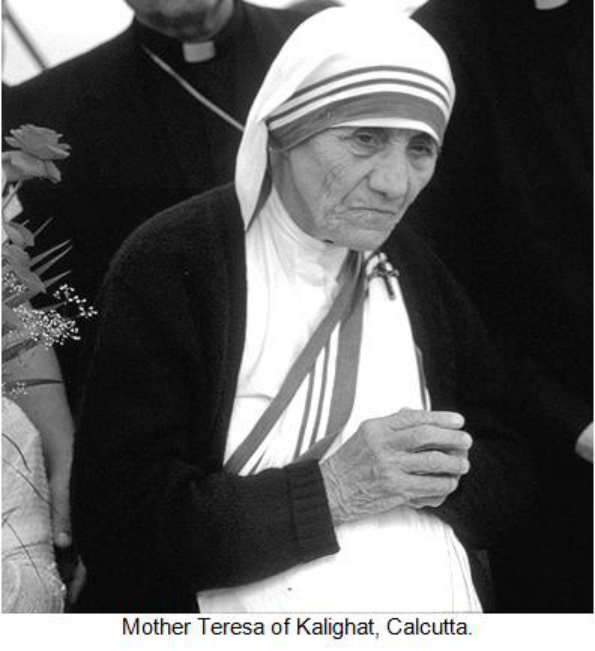
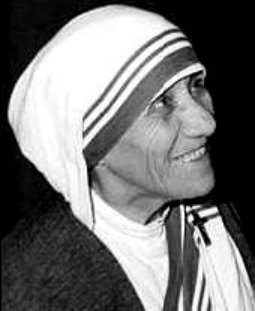
"For I was hungry and you gave me food, I was thirsty and you gave me drink, a stranger and you welcomed me, naked and you clothed me, ill and you cared for me, in prison and you visited me." Then the righteous will answer him and say, "Lord, when did we see you hungry and feed you, or see you thisty and give you drink?".. The king will say to them in reply, "Amen, I say to you, whatever you did to one of these least brothers of mine, you did for me."Matthew 25: 35-40 Agnes Gonxha Bojaxhiu (gonxha meaning "rosebud" or "little flower" in Albanian) was born on 26 August 1910, in Üsküb, Ottoman Empire (now Skopje, capital of the Republic of Macedonia). She left home at age 18 to join the Sisters of Loreto as a missionary. She never again saw her mother or sister.
Agnes initially went to the Loreto Abbey in Rathfarnham, Ireland, to learn English, the language the Sisters of Loreto used to teach school children in India. She arrived in India in 1929, and began her novitiate in Darjeeling, near the Himalayan mountains, where she learnt Bengali and taught at the St. Teresa's School, a schoolhouse
close to her convent. She took her first religious vows as a nun on 24 May 1931. At that time she chose to be named Teresa. She took her solemn vows on 14 May 1937, while serving as a teacher at the Loreto convent school in Entally, eastern Calcutta. Teresa served there for almost twenty years and in 1944 was appointed headmistress.
Although Teresa enjoyed teaching at the school, she was increasingly disturbed by the poverty surrounding her in Calcutta. The Bengal famine of 1943 brought misery and death to the city; and the outbreak of Hindu/Muslim violence in August 1946 plunged the city into despair and horror.
Missionaries of Charity
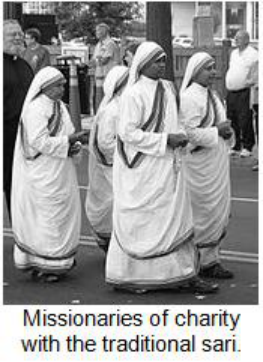
She began her missionary work with the poor in 1948, replacing her traditional Loreto habit with a simple white cotton sari decorated with a blue border. Mother Teresa adopted Indian citizenship, spent a few months in Patna to receive a basic medical training in the Holy Family Hospital and then ventured out into the slums. Initially she started a school in Motijhil (Calcutta); soon she started tending to the needs of the destitute and starving. In the beginning of 1949 she was joined in her effort by a group of young women and laid the foundations to create a new religious community helping the "poorest among the poor".
Her efforts quickly caught the attention of Indian officials, including the prime minister, who expressed his appreciation.
Teresa received Vatican permission on 7 October 1950 to start the diocesan congregation that would become the Missionaries of Charity. Its mission was to care for, in her own words, "the hungry, the naked, the homeless, the crippled, the blind, the lepers, all those people who feel unwanted, unloved, uncared for throughout society, people that have become a burden to the society and are shunned by everyone."
It began as a small order with 13 members in Calcutta; by 1997 it had grown to more than 4,000 nuns running orphanages, AIDS hospices and charity centers worldwide, and caring for refugees, the blind, disabled, aged, alcoholics, the poor and homeless, and victims of floods, epidemics, and famine.
In 1952 Mother Teresa opened the first Home for the Dying in space made available by the city of Calcutta. With the help of Indian officials she converted an abandoned Hindu temple into the Kalighat Home for the Dying, a free hospice for the poor. She renamed it Kalighat, the Home of the Pure Heart (Nirmal Hriday).
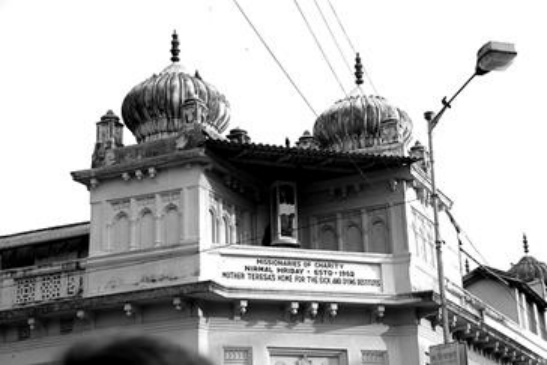
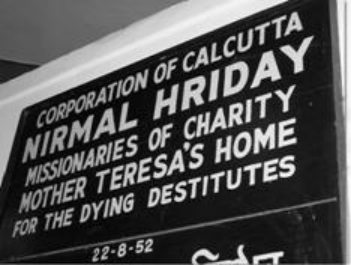
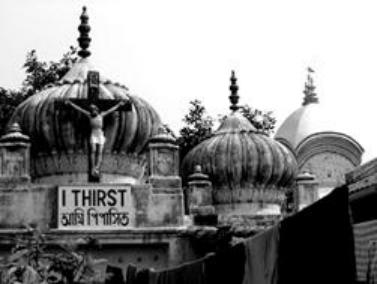
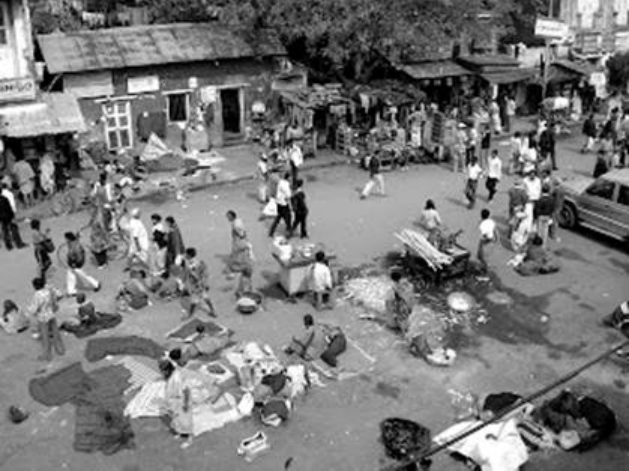
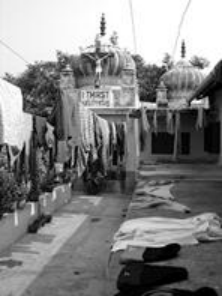
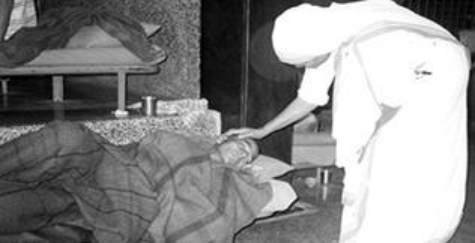
Kalighat, the Home for the Dying and Destitute
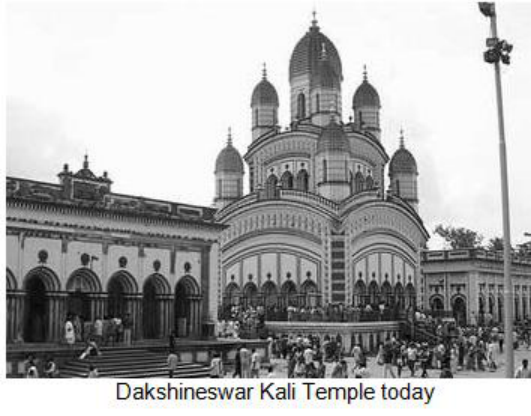
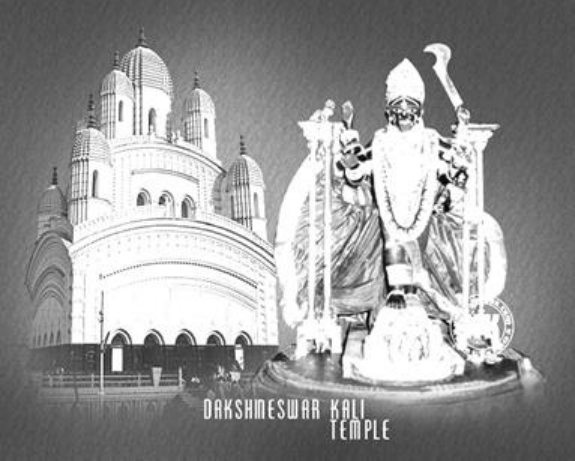
Those brought to the home received medical attention and were afforded the opportunity to die with dignity, according to the rituals of their faith; Muslims were read the Quran, Hindus received water from the Ganges, and Catholics received the Last Rites. "A beautiful death," she said, "is for people who lived like animals to die like angels-loved and wanted."
Mother Teresa soon opened a home for those suffering from leprosy, and called the hospice Shanti Nagar (City of Peace). The Missionaries of Charity also established several leprosy outreach clinics throughout Calcutta, providing medication, bandages and food.
As the Missionaries of Charity took in increasing numbers of lost children, Mother Teresa felt the need to create a home for them. In 1955 she opened the Nirmala Shishu Bhavan, the Children's Home of the Immaculate Heart, as a haven for orphans and homeless youth.
The order soon began to attract both recruits and charitable donations, and by the 1960s had opened hospices, orphanages and leper houses all over India. Mother Teresa then expanded the order throughout the globe. Its first house outside India opened in Venezuela in 1965 with five sisters. Others followed in Rome, Tanzania, and Austria in 1968; during the 1970s the order opened houses and foundations in dozens of countries in Asia, Africa, Europe and the United States.
She died on 5 September 1997. At the time of her death, Mother Teresa's Missionaries of Charity had over 4,000 sisters, and an associated brotherhood of 300 members, operating 610 missions in 123 countries. These included hospices and homes for people with HIV/AIDS, leprosy and tuberculosis, soup kitchens, children's and family counseling programs, personal helpers, orphanages, and schools. The Missionaries of Charity were also aided by Co-Workers, who numbered over 1 million by the 1990s.
Her critic Aroup Chatterjee, blames Mother Teresa for promoting a negative image of his home city as a city of poverty. The Bharatiya Janata Party clashed with her over the Christian Dalits, but praised her in death, sending a representative to her funeral. The Vishwa Hindu Parishad, on the other hand, opposed the government's decision to grant her a state funeral. Its secretary Giriraj Kishore said that "her first duty was to the Church and social service was incidental" and accused her of favouring Christians and conducting "secret baptisms" of the dying. But, in its front page tribute, the Indian fortnightly Frontline dismissed these charges as "patently false" and said that they had "made no impact on the public perception of her work, especially in Calcutta". Although praising her "selfless caring", energy and bravery, the author of the tribute was critical of Mother Teresa's public campaigning against abortion and that she claimed to be non-political when doing so.
President Ronald Reagan presents Mother Teresa with the Presidential Medal of Freedom at a White House ceremony, 1985. In 1979, Mother Teresa was awarded the Nobel Peace Prize, "for work undertaken in the struggle to overcome poverty and distress, which also constitutes a threat to peace." She refused the conventional ceremonial banquet given to laureates, and asked that the $192,000 funds be given to the poor in India, stating that earthly rewards were important only if they helped her help the world's needy.
Quotes of Mother Teresa from ""Suffering into Joy - What Mother Teresa Teaches about True Joy": Eileen Egan Eileen Egan (Author) and Kathleen Egan
"They are Jesus. Everyone is Jesus in a distressing disguise." "The poor are wonderful people. One evening we went and picked up four people from the street. One of the was in a most terrible condition. I told the Sisters: "You take care of the other three. I will take care of this one that looks worse." So I did for her all that my love can do. I put her in bed and there was such a beautiful smile on her face. She took hold of my hand, as she said one word only, "Thank you,", and she died.
I could not help but examine my conscience before her, and I asked, "What would I say if I was in her place?" And my answer was very simple. I would have tried to draw a little attention to myself. I would have said, "I'm hungry; I'm dying, I'm cold, I'm in pain," or something. She gave me much more - she gave me her grateful love. And she died with a smile on her face. Like the man whom we picked up from the drain. half eaten with worms; we brought him to the home. "I have lived like an animal in the street, but I am going to die like an angel, loved and cared for." And it was so wonderful to see the greatness of a man who could speak like that, who could die like that, without blaming anybody, without cursing anybody, without comparing anything. Like an angel - that is the greatness of our people. And that is why we believe what Jesus has said, "I was hungry, I was naked, I was homeless, I was unwanted, unloved, uncared for, and you did it to me."
"In the slums we are the light of God's kindness to the poor. To the children, to all who suffer and are lonely, give always a happy smile. Give them not only your care but your hear."
"Keep giving Jesus to your people not by words, but by your example, by your being in love with Jesus, by radiating his holiness and spreading his fragrance of love everywhere you go. Just keep the joy of Jesus as your strength. Be happy and at peace. Accept whatever he gives- and give whatever he takes with a big smile. You belong to him."
This is the entry Mother Teresa made in our family guest book in
Sanaa 1978 The Ninan family has been privileged to have known Mother
Teresa intimately. We met Mother in 1978 when she arrived in Sanaa, Yemen Arab Republic to start her homes. I was at that time working in the University of Sanaa and worked closely in the establishing of the homes in Yemen. Mother had been a constant visitor to our home whenever she visited Yemen. Since then our family had come to know her intimately and had come to love her. Our children still cherish her involvement in their life, the token gifts of love and the entry she made in our family guest book. Once she surprised everybody when she took her crucifix pin and gave it as a birthday gift to our youngest son Ajit. Here is the Cross. It is still a well guarded prized possession in his house in California.
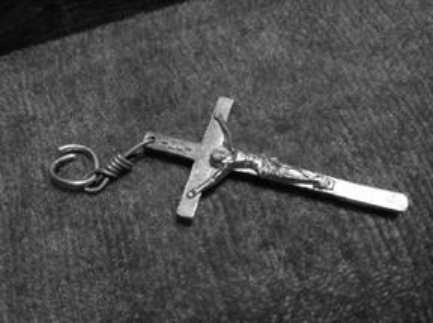
Early in 1978 we had the privilege of inviting the various Ambassadors from all the countries present in Yemen to our house to meet Mother. Missionaries of Charity has now three homes in the Yemen - Hodeidah, Sanaa and Taiz - and at the entrance of each of the homes is the painting "Praying Hands" which I was asked by Mother to paint for her.
We will miss her. We pay our homage of love at this time and extends our condolences to all the sisters and brothers of the
Missionaries of Charity.
The Ninan Family.
Prof. M.M.Ninan Mrs. Ponnamma Ninan
Premeela Ninan
Anil Ninan Preethy Ninan
Ajit Ninan