
Search this book
Search results link directly to the matching source page.
chapter FIFteen Sadhu Sunder singh
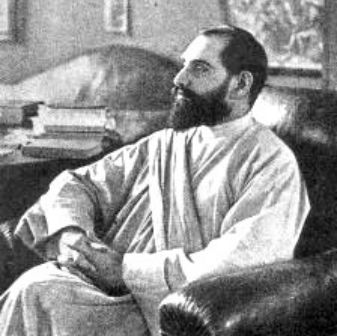
, "You have offered us Christianity in a Western cup... Give it
to us in an Eastern bowl and we will drink of it."
1889-1929 The Story of Sadhu Sunder Singh is the story of how Christianity was reinterpreted in the cultural terms of the Indian Ethos in a particular culture. If Christianity was at home in Kerala because of its long term connection with the Christian world in Europe, it was not received nor interpreted correctly in the elsewhere in India. True Christ and his life impacted many as it was given to them, but the message was still not interpreted in Indian terms. One of the pioneers in this area was Sadhu Sunder Singh and it was a painful process for him. He was indeed the Paul of Bharat.
My father had told me many storied about Sadhu Sunder Singh. One that always stuck in my mind was the story where he met the Saint in person. He was just a boy attending the Maramon Convention where, the Sadhu was invited to speak. My father crept close to the daise where he was sitting and was attracted by the spiritual power that radiated from him and touched his legs. He was to remember this all his life.
The following story is taken almost entirely from http://gloryofhiscross.org/apostle1.HTM as there is no better way of presenting the life of an exceptional Indian Evangelist in all its fulness.
For further details see Sundar Singh By A. J. Appasamy
Sundar Singh: Footprints Over The Mountains By Janet Benge, Geoff Benge
"Against Christian faith Sundar Singh was born in 1889 into an important landowning Sikh family in Patiala state, North India. Sikhs, rejecting Hindu polytheism and Muslim intolerance in the sixteenth century, had become a vigorous nation with a religion of their own. Sundar Singh's mother took him week by week to sit at the feet of a Sadhu, an ascetic holy man, who lived in the jungle some miles away, but she also sent him to a Christian mission school where he could learn English.
Her death when he was fourteen plunged him into violence and despair. He turned on the missionaries, persecuted their Christian converts, and ridiculed their faith. In final defiance of their religion, he bought a Bible and burned it page by page in his home compound while his friends watched. The same night he went to his room determined to commit suicide on a railway line.
Having studied line by line all the religions he knew, having heard from the lips of many religious teachers all they had to tell, and in spite of all still experiencing a deeper and more unsatisfied longing for the shanty he believed possible, Sundar was led by God to see that in none of these things could he find what he sought. In the silent sanctuary of his own heart came the thought at last, that perhaps in the despised book he had so furiously destroyed there might be some help, and so he yet again took the Testament in hand. Torn with anguish and driven to despair, he read there, "Come unto me… and I will give you rest". The words arrested him, and as he continued to read the story of the Cross, the wonder grew.
Vision of Christ The leaven of the gospel had entered his heart and as he read "God so loved the world that He gave His only begotten Son, that whosoever believeth on Him should not perish but have everlasting life", a whisper of comfort came to his heart. Still the burden of languish prevented him from finding rest. At last, he felt he must put an end to the struggle. So one night he made a firm resolve that he would obtain peace before dawn - either in this world or the next. He
knew that at five o'clock each morning, the Ludhiana Express passed at the bottom of his father's garden, and to end his misery seemed no sin to the boy.
In Hindu fashion, he bathed and with the Testament in hand, he retired to his room to spend the time in reading, meditation and prayer. Just before dawn, Sundar became conscious of a bright cloud filling the room, and in the cloud, he saw the radiant figure and face of Christ. As he looked upon the vision it seemed to him that Christ spoke saying, "Why do you oppose me? I am your Savior. I died on the Cross for you". His determined enmity was broken down forever as he looked upon that Face so filled with Divine love and pity.
However, before dawn, he wakened his father to announce that he had seen Jesus Christ in a vision and heard His voice. Henceforth he would follow Christ forever, he declared. Still no more than fifteen, he was utterly committed to Christ and in the twenty-five years left to him would witness heroically for his Lord. The discipleship of the teenager was immediately tested as his father pleaded and demanded that he give up this absurd "conversion." When he refused, Sher Singh gave a farewell feast for his son, then denounced him and expelled him from the family. Several hours later, Sundar realized that his food had been poisoned, and only the help of a nearby Christian community saved his life.
Called to serve On his sixteenth birthday, he was publicly baptized as a Christian in the parish church in Simla, a town high in the Himalayan foothills. For some time previously, he had been staying at the Christian Leprosy Home at Sabathu, not far from Simla, serving the leprosy patients there. It was to remain one of his most beloved bases and he returned there after his baptism. Then, in October 1906, he set out from it in quite a new way. He walked onto the road, a tall, good- looking, vigorous teenager, wearing a yellow robe and turban. Everyone stared at him as he passed. The yellow robe was the "uniform" of a Hindu Sadhu, traditionally an ascetic devoted to the gods, who either begged his way along the roads or sat, silent, remote, and often filthy, meditating in the jungle or some lonely
place. The young Sundar Singh had also chosen the Sadhu's way, but he would be a Sadhu with a difference.
"I am not worthy to follow in the steps of my Lord," he said, "but, like Him, I want no home, no possessions. Like Him I will belong to the road, sharing the suffering of my people, eating with those who will give me shelter, and telling all men of the love of God."
Persecuted for his faith He at once put his vocation to the test by going back to his home village, Rampur, where he was shown an unexpectedly warm welcome. This was poor preparation for the months that were to follow. Scarcely tough enough to meet physical hardship, the sixteen-year-old Sadhu went northward through the Punjab, over the Bannihal Pass into Kashmir, and then back through fanatically Muslim Afghanistan and into the brigand-infested North-West Frontier and Baluchistan. His thin, yellow robe gave him little protection against the snows, and his feet became torn from the rough tracks. Not many months had passed before the little Christian communities of the north were referring to him as "the apostle with the bleeding feet." This initiation showed him what he might expect in the future. He was stoned, arrested, visited by a shepherd who talked with strange intimacy about Jesus and then was gone, and left to sleep in a wayside hut with an unexpected cobra for company. Meetings with the mystical and the sharply material, persecution and welcome, would all characterize his experience in years ahead. From the villages in the Simla hills, the long line of the snow-clad Himalayas and the rosy peak of Nanga Pa rbat, rose in the distance. Beyond them lay Tibet, a closed Buddhist land that missionaries had long failed to penetrate with the gospel. Ever since his baptism, Tibet had beckoned Sundar, and in 1908, at the age of nineteen, he crossed its frontiers for the first time. Any stranger entering into this closed fanatical territory, dominated by Buddhism and devil-worship, risked both terror as well as death. Singh took the risk with his eyes, and his heart, wide open. The state of the people appalled him. Their airless homes, like themselves, were filthy. He himself was stoned as he bathed in some cold water because they believed that "holy men never washed." Food was mostly unobtainable and he existed on hard, parched barley. Everywhere there was hostility. And this was
only "lower Tibet" just across the border. Sundar went back to Sabathu determined to return the next year.
Visit to Tibet On his first journey in 1908, when he was scarcely nineteen years of age, he started alone and was unacquainted with the language spoken in Tibet. He took the help of two Moravian missionaries staying in Tibet. In Tibet, he soon found the people of Tibet resented his teaching, land wherever he went; he was met with bitter opposition and hatred, especially from the Lamas. Notwithstanding this, he reached the important town of Tashigang in safety and was astonished and pleased to receive kindly treatment at the hands of the head Lama of the place. This man was a person of importance and under him served some hundreds of inferior Lamas.
The Lama not only received the Sadhu with kindness but also provided him with food and shelter, and as the weather was bitterly cold, this hospitality was most acceptable. Moreover, the Lama called a gathering of the persons under his control to hear the Sadhu's message, and so he preached the gospel with great thankfulness of heart.
Journeying on from this place, he was fortunate enough to arrive at a town under the rule of another Lama who was a friend of the Lama of Tashigang, and here again he was accorded a welcome and a good hearing. From this place he visited several other towns and villages, but in these he met with even greater opposition than in his earlier work. He was constantly threatened and warned to get out of the country lest some evil should befall him. However, he was not to be thus terrorized, and he continued his work amidst many difficulties.
At a town called Rasar he was arrested and arraigned before the head Lama on the charge of entering the country and preaching the gospel of Christ. He was found guilty, and amidst a crowd of evil- disposed persons, he was led away to the place of execution. The two favorite forms of capital punishment are being sewn up in a wet yak skin and pout out in the sun until death ends the torment, or being cast into the depth of a dry well, the top being firmly fastened over the head of the culprit. The latter was chosen for the Sadhu.
Arrived at the place he was stripped of his clothes, and cast into the dark depths of this ghastly charmel-house with such violence that his right arm was injured. Many others had gone down this same well before him never to return, and he alighted on a mass of human bones land rotting flesh. Any death seemed preferable to this. Wherever he laid his hands, they met putrid flesh, while the odor almost poisoned him. In the words of his Savior, he cried, "Why hast Thou forsaken me?"
Day passed into night, making no change in the darkness of this awful place and bringing no relief by sleep. Without food or even water, the hours grew into days, and Sundar felt he could not last much longer. On the third night, just when he had been crying to God in prayer, he heard a grating sound overhead. Someone was opening the locked lid of his dismal prison. He heard the key turn and the rattle of the iron covering as sit was drawn away. Then a voice reached him from the top of the well, telling him to take hold of the rope that was being let down for his rescue. As the rope reached him he grasped it with all his remaining strength, and was strongly but gently pulled up from the evil place into the fresh air above.
When he arrived at the top of the well, the lid was drawn over again and locked. When he looked round, his deliverer was nowhere to be seen, but the pain in his arm was gone, and the clean air filled him with new life. All that the Sadhu felt able to do was to praise God for His wonderful deliverance, and when morning came, he struggled back to the town, where he rested in the Serai (which means a resting place) until he was able to start preaching again. Back in the city at his old work again was cause for a great commotion. The news was quickly taken to the Lama.
The Sadhu was again arrested and brought to the judgment seat, and being questioned as to what happened he told the story of his marvelous escape. The Lama was greatly angered, declaring that someone must have secured the key and gone to hiss rescue, but when search was made for the key and it was found on his own girdle, he was speechless with amazement and fear. He then ordered Sundar to leave the city and get away as far as possible, lest his powerful God should bring some untold disaster upon himself and his people.
Perseverance in service He had a great desire to visit Palestine and re-live some of the happenings in Jesus' life. In 1908, he went to Bombay, hoping to board a convenient ship. However, to his intense disappointment, the government refused him a permit, and he had to return to the north. It was on this trip that he suddenly recognized a basic dilemma of the Christian mission to India. A Brahmin had collapsed in the hot, crowded carriage and, at the next station, the Anglo-Indian stationmaster came rushing with a cup of water from the refreshment room. The Brahmin -- a high-caste Hindu -- thrust it away in horror. He needed water, but he could only accept it in his own drinking vessel. When that was brought he drank, and revived. In the same way, Sundar Singh realized, India would not widely accept the gospel of Jesus offered in Western guise. That, he recognized, was why many listeners responded to him in his Indian Sadhu's robe.
There was still sharper disillusionment to come. In 1909, he was persuaded to begin training for the Christian ministry at the Anglican college in Lahore. From the beginning, he found himself being tormented by fellow students for being "different" and no doubt too self-assured. This phase ended when their ringleader heard Singh quietly praying for him, with love in his tones and words. However, other tensions remained. Much in the college course seemed irrelevant to the gospel as India needed to hear it, and then, as the course drew to an end, the principal stated that he must now discard his Sadhu's robe and wear "respectable" European clerical dress; use formal Anglican worship; sing English hymns; and never preach outside his parish without special permission. Never again visit Tibet, he asked? That would be, to him, an unthinkable rejection of God's call. With deep sadness he left the college, still dressed in his yellow robe, and in 1912 began his annual trek into Tibet as the winter snows began to melt on the Himalayan tracks and passes.
Kailash Maharishi A North Indian newspaper had published the following: Our world less, selfless and godly brother Sundar Singh has discovered the Christian hermit, the Maharishi at Kailash, who has for years been on the snowy Himalayas praying and interceding for
the world…You have revealed to the world the secret of one of the members of our mission the Maharishi at Kailash.
On the summit of one of the mountains of the Kailash Range was a deserted Buddhist temple, and then rarely visited by man. A few miles from this temple dwelt the great saint known as the Majority of Kailash, in a cave some 13,000 feet above the sea level. All this region is the Olympus of India, the seat of Hindu holy myths, and it is associated in Hindu sacred books with the names of great and devout souls of all times. In one cave, the Sadhu found the skeleton of some nameless holy man who had died while meditating there.
In the summer of 1912, he traveled through these regions alone and on foot, often refreshed by the beautiful scene trough, which he passed, but more often fatigued to the last degree in his difficult and fruitless search for the holy men he hoped to meet there. He would never forget the day when, struck with snow-blindness and almost wearied to death, he staggered drearily on over snowy and stony crags, not knowing whither, he went. Suddenly he lost his balance and fell. Recovering from the fall, he awoke to one of the greatest experiences of his life, for he opened his eyes to find himself lying outside a huge cave, in the shelter of which sat the Maharishi of Kailash in deep meditation.
The sight that met his eyes was so appalling that Sundar closed them and almost fainted. Little by little, he ventured to inspect the object before him, and then discovered that he was looking at a living human being, but so old and clothed with long hair as to appear at first glance like an animal. Sundar realized that thus, unexpectedly he had succeeded in his search after a holy man, and as soon as he could command his voice, he spoke to the aged saint. Recalled from his meditation, the saint opened his eyes and, casting a piercing glance upon the Sadhu, amazed him by saying, ‘Let us kneel and pray.' Then followed a most earnest Christian prayer ending in the name of Jesus. This over, the Maharishi unrolled a ponderous copy of the Gospels in Greek and read some verses from the fifth chapter of Matthew.
Sunder heard from his own lips the account of his wonderful life. He claimed to be of very great age. The roll from which he had read, he explained, had come down to him from Francis Xavier, and the
Sadhu noticed that it was all written in Greek uncials, and may therefore prove to be of value to scholars should it come into their possession. The saint said he was born in Alexandria of a Mohammedan family, and was brought up to be a zealous follower of the Prophet. At the age of thirty, he renounced the world and entered a monastery in order to give himself up entirely to religion. However, the more he read the Qur'an and prayed, the unhappier he became. During these days of spiritual distress, he heard of a Christian saint who had gone over from India to preach in Alexandria, and from him he heard words of life that filled his hopeless soul with joy. He now left the monastery to accompany his teacher in his missionary journeys. After some time spent thus, permission was given him to go on his own account to preach the gospel wherever God sent him. The saint then started out on an evangelistic campaign that lasted a very long time.
The Sadhu had long conversations with him about holy things, and heard many strange things from his lips. His astonishing visions as related to the Sadhu would, if written down, read like another Book of Revelation, so strange and incomprehensible are they, and the Sadhu himself warns readers and hearers of these visions that common interpretations can never disclose the meaning, since the Saint had to clothe his ideals in language that cannot be taken literally. The Sadhu had visited the Maharishi three times.
Sadhu in the Christian world Whether he won many continuing disciples of Christ on these hazardous Tibetan treks is not yet known. For the Tibetan it was Buddhism or nothing. To acknowledge Jesus Christ was to ask for death. But the Sadhu's own courageous preaching cannot have been without effect.
As Sundar Singh moved through his twenties his ministry widened greatly, and long before he was thirty years old his name and picture were familiar all over the Christian world. He described in terms of a vision a struggle with Satan to retain his humility but he was, in fact, always human, approachable and humble, with a sense of fun and a love of nature. This, with his "illustrations" from ordinary life, gave his addresses great impact. Many people said: "He not only looks like Jesus, he talks like Jesus must have talked." Yet, all
his talks and his personal speech sprang out of profound early morning meditation, especially on the Gospels. In 1918, he made a long tour of South India and Ceylon, and the following year he was invited to Burma, Malaya, China, and Japan. Some of the stories from these tours were as strange as any of his Tibetan adventures. He had power over wild things, like the leopard, which crept up to him while he stood praying and crouched as he fondled its head. He had power over evil, typified by the sorcerer who tried to hypnotize him in a railway-carriage and blamed the Bible in the Sadhu's pocket for his failure. He had power over disease and illness, though he never allowed his healing gifts to be publicized.
For a long time Sundar Singh had wanted to visit Britain, and the opportunity came when his old father, Sher Singh, came to tell him that he too had become a Christian and wished to give him the money for his fare to Britain. He visited the West twice, traveling to Britain, the United States, and Australia in 1920 and to Europe again in 1922. He was welcomed by Christians of many traditions, and his words searched the hearts of people who now faced the aftermath of World War I and who seemed to evidence a shallow attitude to life. Sundar was appalled by the materialism, emptiness, and irreligion he found everywhere, contrasting it with Asia's awareness of God, no matter how limited that might be. Once back in India he continued his ministry, though it was clear that he was getting more physically frail.
Sadhu and the Indian churches His gifts, his personal attractiveness, the relevance of Christ as he presented Him to his Indian people could have given Sundar Singh a unique position of leadership in the Indian church. However, to the end of his life he remained a man who sought nothing for him, but only the opportunity to offer Christ to everyone. He was not a member of any denomination, and did not try to begin one of his own, though he shared fellowship with Christians of all kinds. He lived (to use a later phrase) to introduce his own people to "the Christ of the Indian road."
In 1923, Sundar Singh made the last of his regular summer visits to Tibet and came back exhausted. His preaching days were obviously over and, in the next years, in his own home or those of
his friends in the Simla hills he gave himself to meditation, fellowship, and writing some of the things he had lived to preach.
In 1929, against all his friends' advice, Sundar determined to make one last journey to Tibet. In April, he reached Kalka, a small town below Simla, a prematurely aged figure in his yellow robe among pilgrims and holy men who were beginning their own trek to one of Hinduism's holy places some miles away. Where he went after that is unknown. Whether he fell from a precipitous path, died of exhaustion, or reached the mountains, will remain a mystery. Sundar Singh had been seen for the last time. But more than his memory remains, and he had continued to be one of the most treasured and formative figures in the development and story of Christ's church in India.
Sadhu and India Sadhu Sundar Singh disappeared in the foothills of the Himalayas in 1929. As a Christian witness, he had been rejected as well as welcomed, persecuted, and even left for dead. By many missionaries and even Indian Christian leaders he had been regarded as a highly eccentric convert, totally out of step with contemporary Christianity as he wandered the roads in his yellow robe and turban. Yet, even though he never heard the later vogue- word "indigenisation," he had done more than any man in the first half of the twentieth century to establish that "Jesus belongs to India." He made it clear that Christianity is not an imported, alien, foreign religion but is indigenous to Indian needs, aspirations, and faith. He remains one of the permanently significant figures of Indian Christianity."
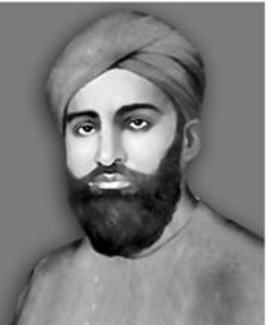
Quotes from Sadhu Sunder Singh
Should I worship Him from fear of hell, may I be cast into it. Should I serve Him from desire of gaining heaven, may He keep me out. But should I worship Him from love alone, He reveals Himself to me, that my whole heart may be filled with His love and presence.
Every Christian, whether man or woman, boy or girl, rich or poor, workman or peasant, writer or priest, judge or official, doctor or lawyer, teacher or pupil, Government official or missionary, is only a Christian on condition that he witnesses for his Lord....all Christians, wherever they are, have the opportunity of witnessing for their Master. They can do this by their upright life, their blameless character, by the integrity of their behaviour and their sincerity in speech, by their enthusiasm for their religion and their love for their Master, using every possible opportunity of telling others about Jesus Christ.
Salt, when dissolved in water, may disappear, but it does not cease to exist. We can be sure of its presence by tasting the water. Likewise, the indwelling Christ, though unseen, will be made evident to others from the love which he imparts to us.
It is not necessary that every single member of the body should become useless and weak before death occurs. A weakness of, or a blow upon, the heart or the brain will suffice to bring an end to life, however strong and healthy other parts of the body may be. Thus one sin by its poisonous effect on the mind and heart is sufficient to ruin the spiritual life not of one only, but of a whole family or nation, even of the whole race. Such was the sin of Adam.
When Jesus entered Jerusalem the people spread their clothes in the way and strewed branches before Him in order to do Him honour. Jesus rode upon an ass, according to the word of the prophet. His feet did not touch the road which was decorated in His honour. It was the ass which trod upon the garments and the branches. But the ass would have been very foolish to have been uplifted on that account; for the road really was not decked in its honour! It would be just as foolish if those who bear Christ to men were to think anything of themselves because of what men do to them for the sake of Jesus. The human spirit abides in the body very
much as the chicken in the shell. If it were possible for the bird within the shell to be told that outside of it was a great widespread world, with all kinds of fruit and flowers, with rivers and grand mountains, that its mother also was there, and that it would see all this when set free from its shell, it could not understand or believe it.... In the same way there are many who are uncertain about the future life and the existence of God, because they cannot see beyond this shell-like body of flesh, and their thoughts, like delicate wings, cannot carry them beyond the narrow confines of the brain. Their weak eyes cannot discover those eternal and unfading treasures which God has prepared for those who love Him. A newborn child has to cry, for only in this way will his lungs expand. A doctor once told me of a child who could not breathe when it was born. In order to make it breathe doctor gave it a slight blow. The mother must have thought the doctor cruel. But he was really doing the kindest thing possible. As with newborn children the lungs are contracted, so are our spiritual lungs. But through suffering God strikes us in love. Then our lungs expand and we can breathe and pray. From my many years experience I can unhesitatingly say that the cross bears those who bear the cross.
Should pain and suffering, sorrow, and grief, rise up like clouds and overshadow for a time the Sun of Righteousness and hide Him from your view, do not be dismayed, for in the end this cloud of woe will descend in showers of blessing on your head, and the Sun of Righteousness rise upon you to set no more for ever.
While I was in Tibet I saw a Buddhist, a monk, who had lived for five or six years in a cave. When he went into the cave he had good eyesight. But because he stayed so long in the darkness his eyes grew weaker and weaker, and at last he became quite blind. It is just the same with us. If we do not use the blessings which we have received from God for His Glory, we are in danger of losing them for ever
The true Christian is like sandalwood, which imparts its fragrance to the axe which cuts it, without doing any harm in return.
A little child often runs to its mother and exclaims:'Mother! Mother!' Very often the child does not want anything in particular, he only wants to be near his mother, to sit upon her lap, or to follow her about the house, for the sheer pleasure of being near her, talking to her, hearing her dear voice. Then the child is happy. His happiness does not consist in asking and receiving all kinds of things from his mother. If that were what he wanted, he would be impatient and obstinate and therefore unhappy. No, his happiness lies in feeling his mother's love and care, and in knowing the joy of her mother love." "It is just the same with the true children of God; they do not trouble themselves so much about spiritual blessings. They only want to sit at the Lord's feet, to be in living touch with Him, and when they do that they are supremely content.
The Indian Seer lost God in Nature; the Christian mystic, on the other hand, finds God in Nature. The Hindu mystic believes that God and Nature are one and the same; the Christian mystic knows that there must be a Creator to account for the universe.
Fish which always live in the depths of the ocean lose some of their faculties, like the Tibetan hermits who always live in the dark. The ostrich loses his power of flying because he does not use his wings. Therefore do not bury the gifts and talents which have been given to you, but use them, that you may enter into the joy of your Lord