
Search this book
Search results link directly to the matching source page.
CHAPTER THIRTEEN St Thomas Evangelical Church of India
Mar Thoma Church was the result of Reformation within the Malankara Church after it shook the burden of Rome. But the many teachings of the Roman and other foreign churches still remained dormant within the church. Though there were no intermarriages between "Mar Thomites" and the" Jacobites" time could not keep them separate. Intermarriage brought in the Jacobite teachings into Marthomite laity. Thus within the church an anti-reformist group developed. When Bishop Abraham Mar Thoma passed away in 1947, Bishop Juhanon Mar Thoma became the Metropolitan.
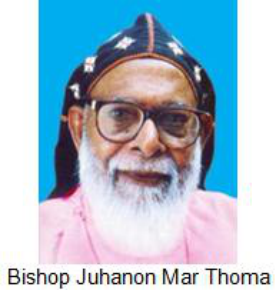
Bishop Juhanon Mar Thoma being brought up by a Jacobite mother directly and indirectly subverted the reformation principles. Mar Thoma laity under the leadership of a prominent scholar and theologian K.N.Daniel opposed these moves within the church.
The main controversy were centered around:
1. Transubstantiation theory of Holy Communion. In his book on "the Holy Quarbana" Juhanon mar Thoma wrote in 1947, "the
Receptionist theory accepted by the reformer Abraham Malpan, cannot be justified by the Bible or by patristic writings." 2. Juhanon Mar Thoma prayed for the dead and to the dead in several public occasions against the beliefs of the Mar Thoma Church and reformers. 3. Emphasis on rituals, candles, crosses, censors etc.
Whether the 66 books of the New and the Old Testaments alone are the basis of its faith or does it include rituals and practices of the church. The reformists contended that the rituals and practices couldn't be given the status as the bible as they have been corrupted through centuries of misuse and syncretism
The controversy took a serious turn when the opposing groups formed parties which were called Sathyopadesha Samiti (The Group of True Teachings - belonging to those who opposed reformation principles) and Pathoyopadesa Samithi (the Group of Acceptable Teachings - belonging to the reformation group)
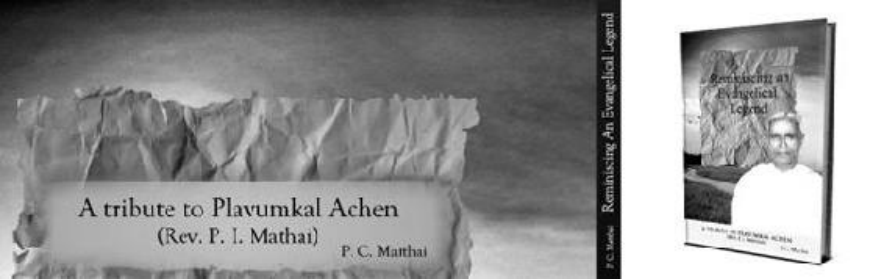
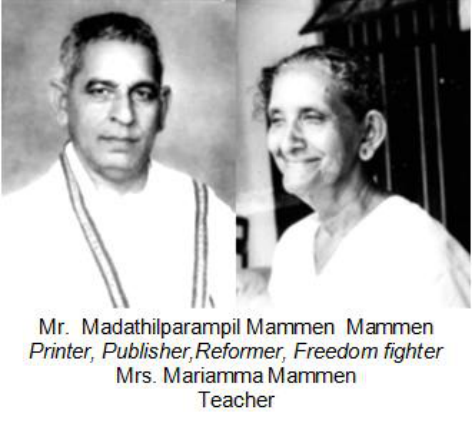
In December 1., 1959 Juhanon Mar Thoma excommunicated four priests Rev.P.I.Mathai (Plavunkal Achen), Rev. P. John Varughese, Rev. C.M.Varughese and Rev. K.O.John) along with three hundred of lay men and women. The ex-communication order was signed on November 7, 1960. Among them was my Father Mr. M.M.Mammen (Press Mammachen) and my mother (Mariamma).
On the 26th of January 1961, 30000 Mar Thomites gathered together in Tiruvalla. There were also ministers of the Mar Thoma church present. Declaration of the formation of the church was read and all the congregation took the oath of allegiance to the declaration and formed the St.Thomas Evangelical Church of India as reconstituted Mar Thoma Church on the principles of reformation held by Abraham Malpan. Following the ancient tradition of the Church of Alexandria (before 328 AD) Rev. P.John Varughese and Rev. K.N.Oommen were consecrated as Bishops by the laying on of hands by the entire body of the ministers of the church.
Bishops K. N. Oommen, P. S. Varughese, John P Varughese.T. C.
Cherian, C. V. Mathew, Thomas Varughese Kerala saw a new revival and the church grew in leaps and bounds. But by 1965 power struggles within the hierarchy broke the growth. Many who were discouraged went back to the Mar Thoma Church and many others joined the Pentecostal Churches. Those who remained grouped into two parts. One group formed a church within the church called St. Thomas Evangelical Fellowship of India and even ordained their own bishops.
Bishop M. K. Koshy It pained all those who loved the reformation and the evangelical thrust the St.Thomas Evangelical Church of India brought within the Malankara Syrian Christians. After a long series of efforts from the laity these differences were finally ironed out and unity returned within the Church. However the damage done by the power struggle to the early evangelistic thrust of the Church into the various parts of India will take a long time to undo.
The major contribution of the St.Thomas Evangelical Church of India was it emphasis on evangelization of India as a whole.
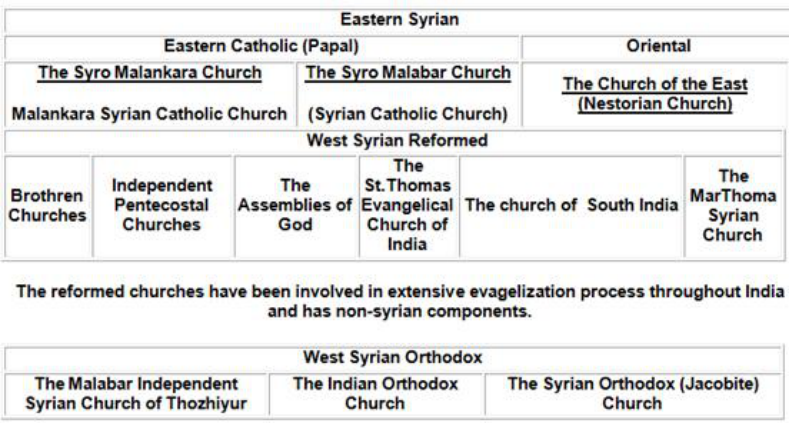
Classification of Malankara Syrian Churches
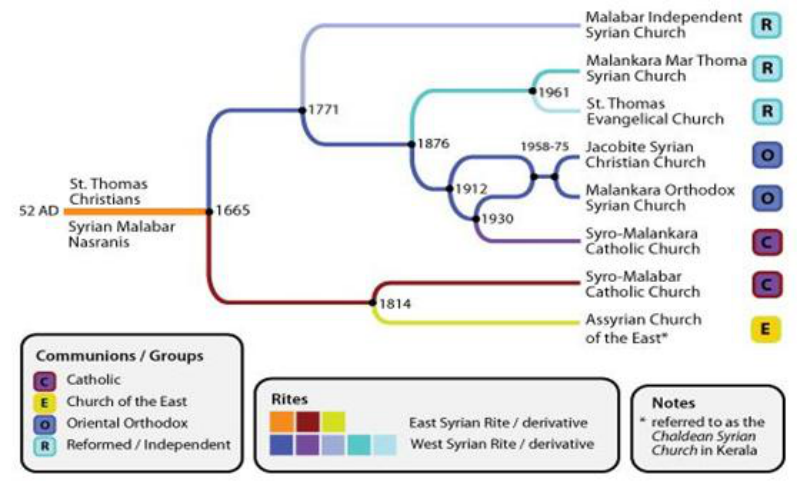
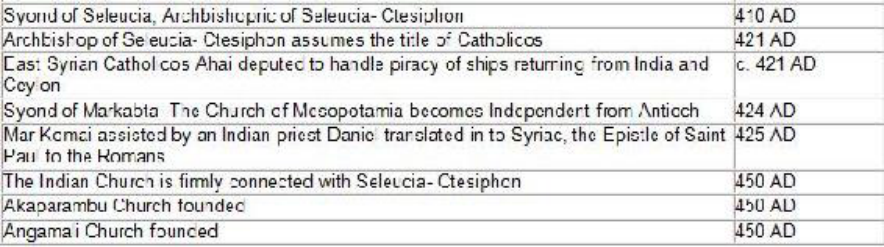
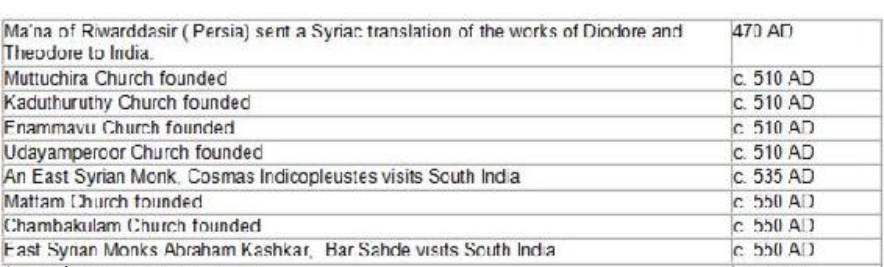
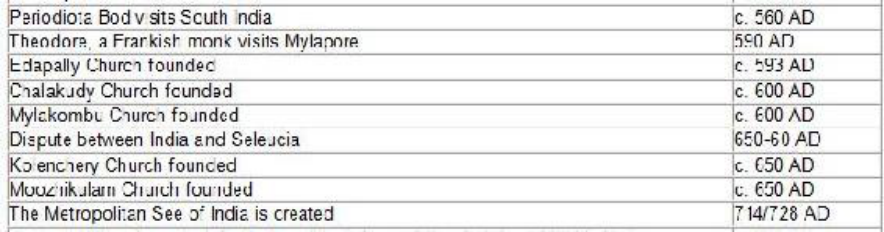
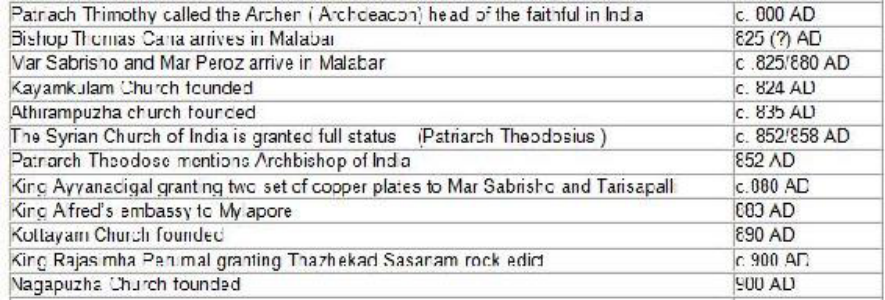
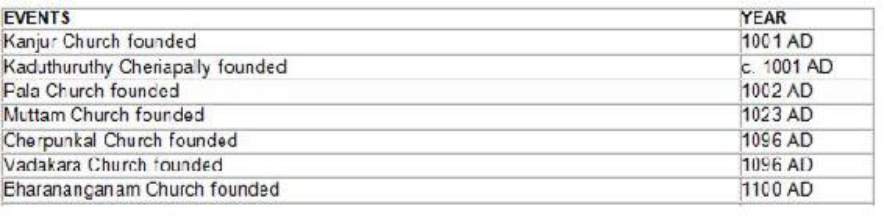
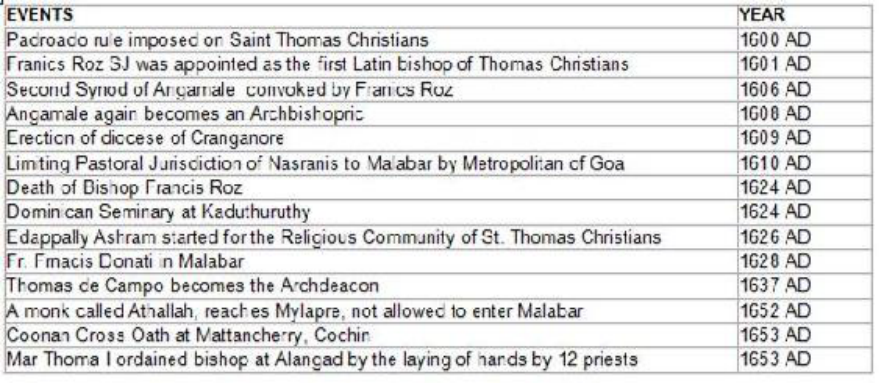
Saint Thomas Christians- Chronological Events from first century to twenty first century
Taken frrom http://nasrani.net/saint-thomas-christians-chronological- events-from-first-century-to-twenty-first-century/
The main references are from, Mackenzie " Christianity in Travancore" (1901), Placid " The Thomas Christians" (1970), Brown " The Indian Christians of Saint Thomas" (1956), Tisserant " Eastern Christianity in India (1957) and Mingana " The early spread of Christianity in India" (1926), Mundadon " History of Christianity in India" Volume I (1984), Thekkedath " History of Christianity in India" Volume II (1982), Malekandathil " Saint Thomas Christians and the Indian Ocean", Menachery " The Nazranies" (1998).
Contents • PART A - FIRST MILLENIUM • PART B- PERIOD FROM 1001 AD TO 1500 AD • PART C- PERIOD FROM 1500 AD TO 1599 AD • PART D- PERIOD FROM 1600 AD TO 1663 AD • PART E- SUCCEEDING CENTURY AMONG CATHOLICS (SYRO MALABAR CHURCH) • PART F- SUCCEEDING CENTURY AMONG JACOBITES (MALANKARA SYRIAC ORTHODOX CHURCH) • PART G- THE DIVISION CHRONOLOGY FROM CATHOLICS (SYRO MALABAR CHURCH) • PART H- THE DIVISION CHRONOLOGY FROM JACOBITES (MALANKARA SYRIAC ORTHODOX CHURCH)
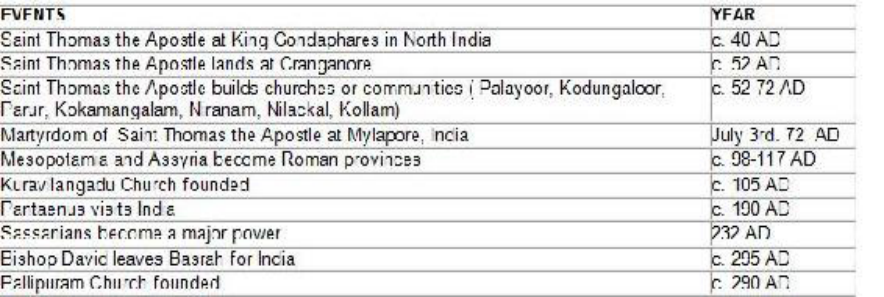
PART A - FIRST MILLENNIUM

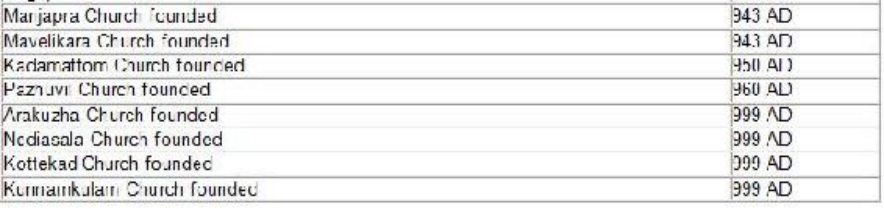
PART B- PERIOD FROM 1001 AD TO 1500 AD
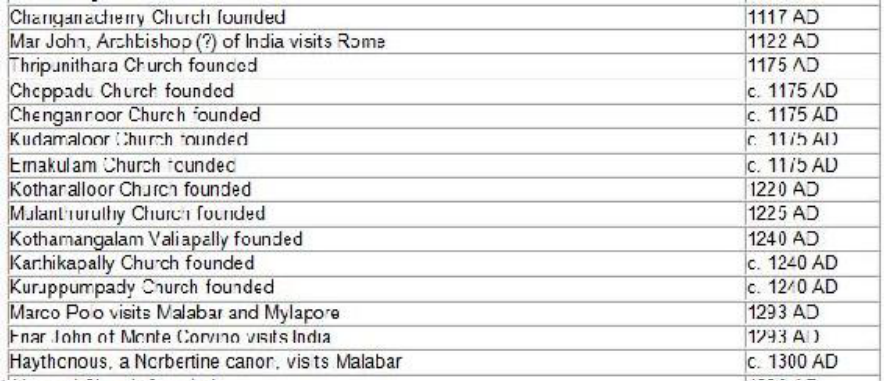
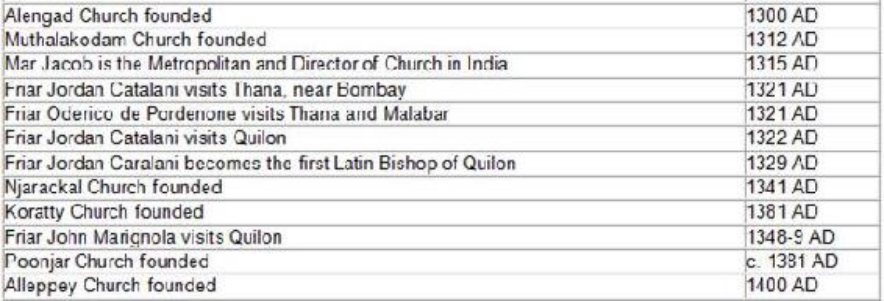
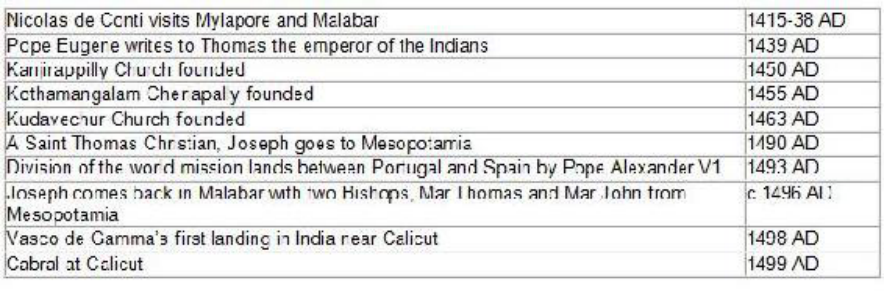
PART C- PERIOD FROM 1500 AD TO 1599 AD
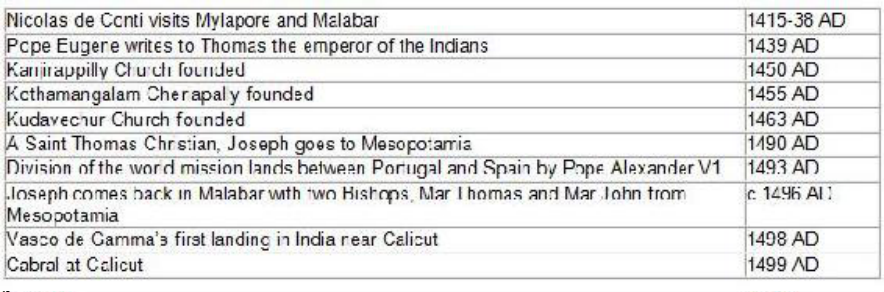
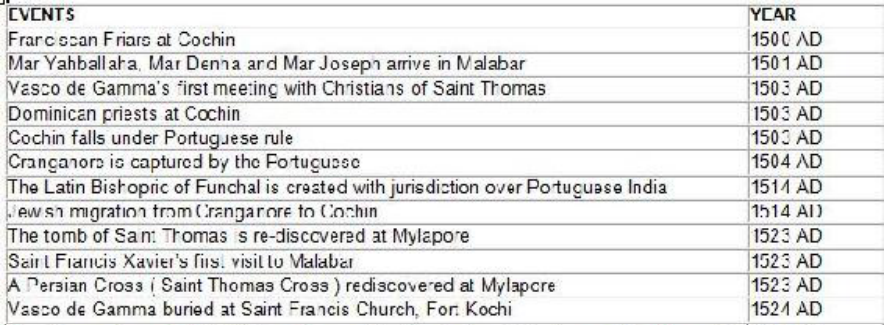
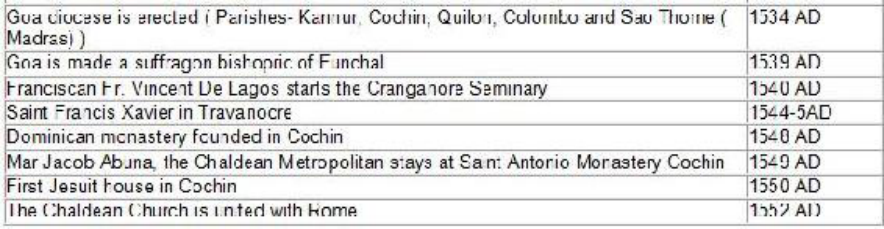
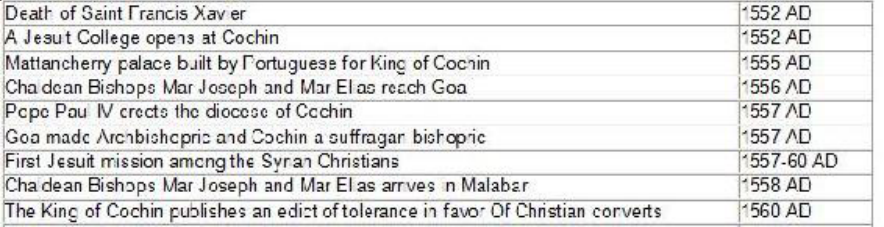
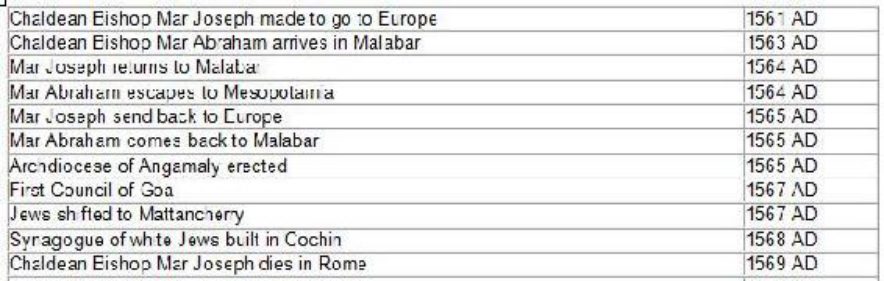
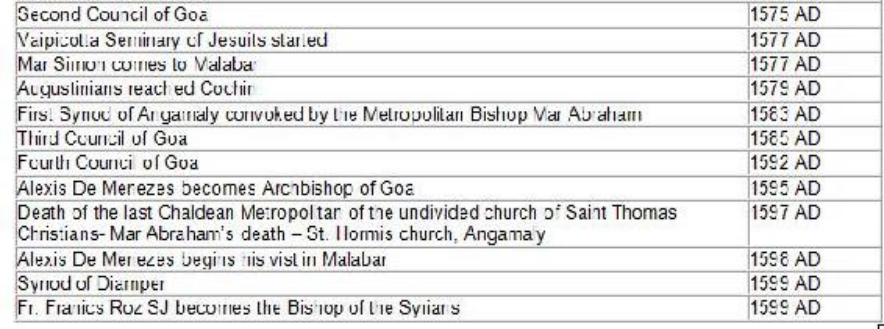
PART D- PERIOD FROM 1600 AD TO 1663 AD
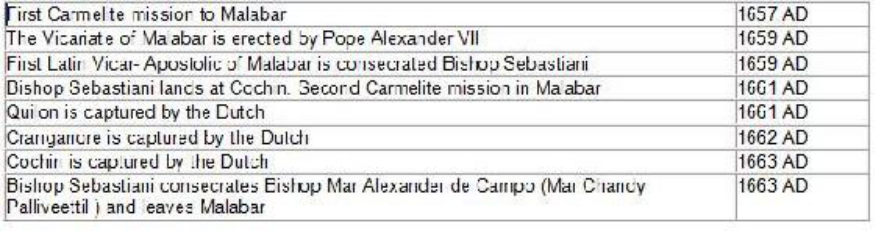
PART E- SUCCEEDING CENTURY AMONG CATHOLICS (SYRO MALABAR CHURCH)
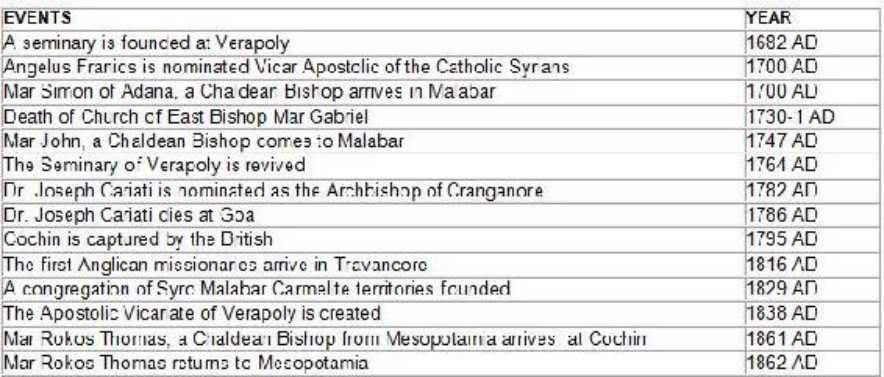
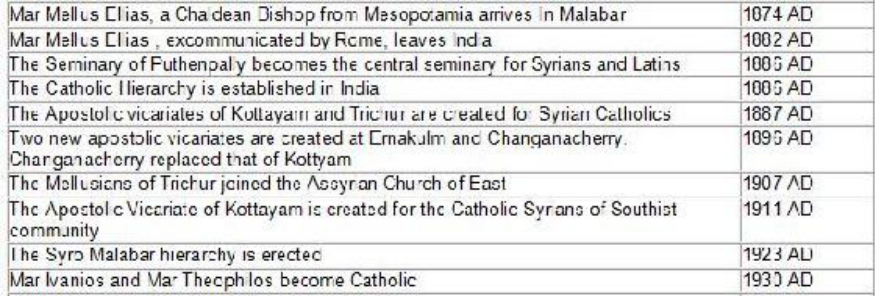
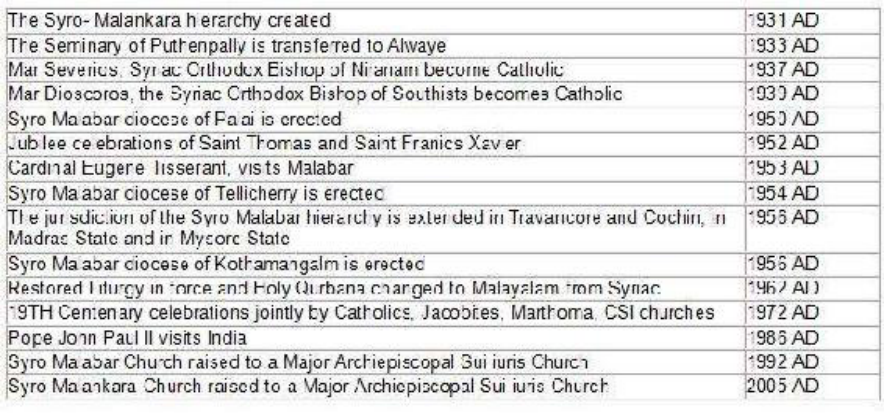
PART F- SUCCEEDING CENTURY AMONG JACOBITES (MALANKARA SYRIAC ORTHODOX CHURCH)
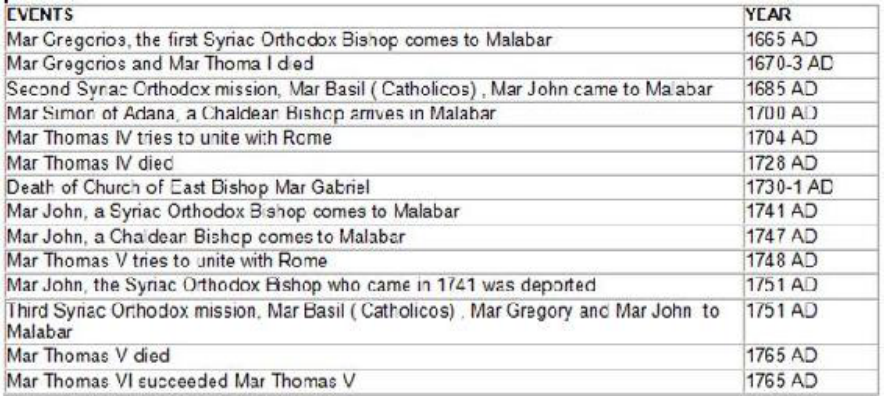
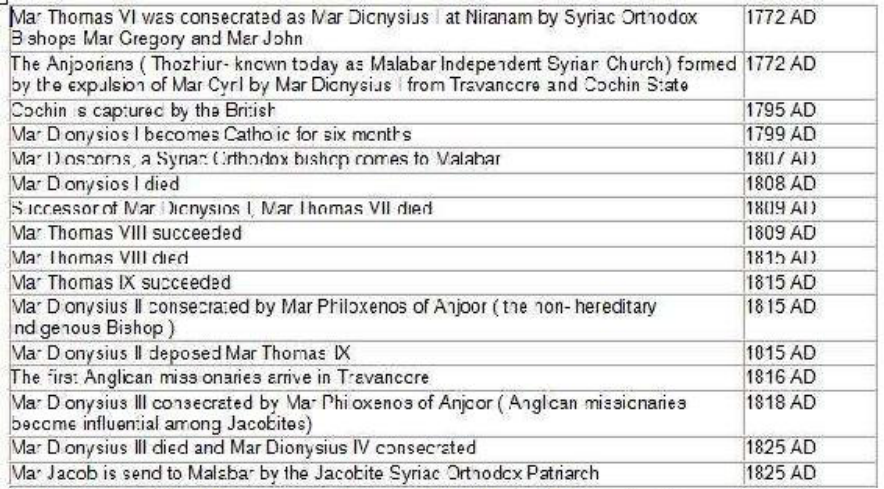
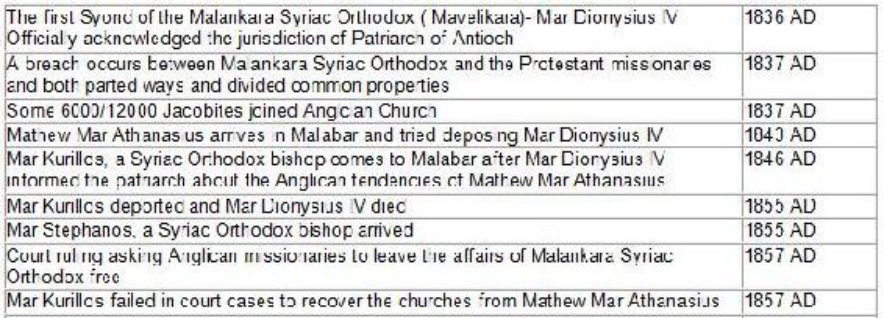
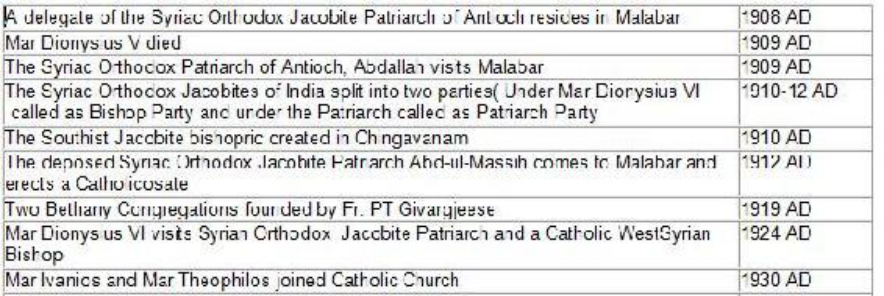
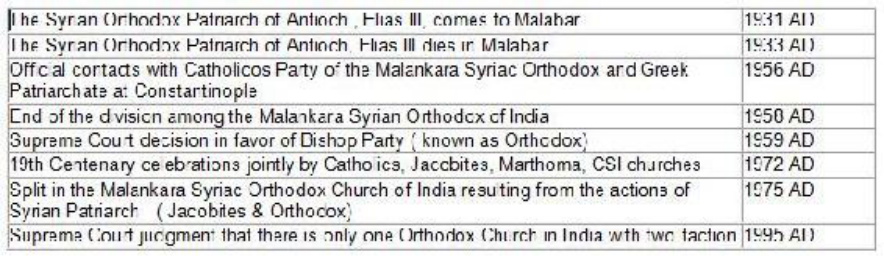
PART G- THE DIVISION CHRONOLOGY FROM CATHOLICS (SYRO MALABAR CHURCH)
From Catholics (Syro Malabar Church) - Formation of Mellusians (known today as Chaldean Syrian Church)

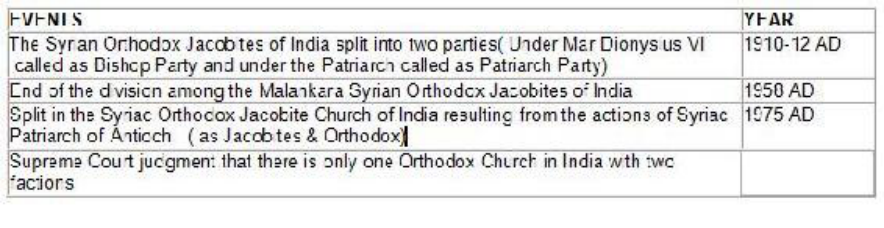
PART H- THE DIVISION CHRONOLOGY FROM JACOBITES (MALANKARA SYRIAC ORTHODOX CHURCH)
From Jacobites (Malankara Syriac Orthodox Church)) - Formation of Thozhiyur Church (known today as Malabar Independent Syrian Church).

From Jacobites (Malankara Syriac Orthodox Church) - Formation of Reformed Jacobites (known today as Malankara Mar Thoma Syrian Church)

From Orthodox (Malankara Orthodox Syriac Church) - Formation of Syro Malankara Church

Split as two groups known today as Orthodox and Jacobites
Split as two groups as Marthoma and Marthoma Evangelical chuches
