
English Christian Web Book
The Reckoning of Time
Bede
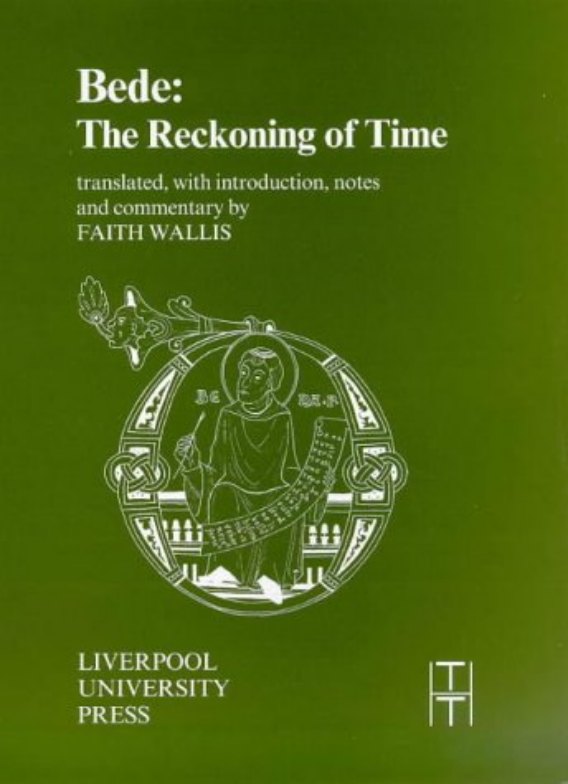
About this book
The Reckoning of Time — Bede.
Author: Bede
- 70 chapters
- 585 PDF pages
- 188,874 words
- ≈ 1453 min read
- English
🔍 Search this book
Ctrl K
Table of Contents
11. Calculating or speaking with the fingers
pp. 112–115 · ≈ 12 min22. Three ways of reckoning time
pp. 116–116 · ≈ 3 min33. The smallest intervals of time
pp. 117–118 · ≈ 7 min44. The reckoning of duodecimal fractions
pp. 119–121 · ≈ 10 min55. The day
pp. 122–126 · ≈ 19 min66. The world's first day
pp. 127–130 · ≈ 15 min77. Night
pp. 131–134 · ≈ 14 min88. The week
pp. 135–138 · ≈ 15 min99. The seventy prophetic weeks
pp. 139–141 · ≈ 10 min1010. The week of the World-Ages
pp. 142–143 · ≈ 7 min1111. The months
pp. 144–148 · ≈ 19 min1212. The Roman months
pp. 149–152 · ≈ 16 min1313. Kalends, nones and ides
pp. 153–153 · ≈ 4 min1414. The Greek months
pp. 154–155 · ≈ 7 min1515. The English months
pp. 156–156 · ≈ 3 min1616. The signs of the twelve months
pp. 157–160 · ≈ 15 min1717. The course of the Moon through the signs
pp. 161–162 · ≈ 8 min1818. More on the course of the Moon: for those who are ignorant of the signs
pp. 163–165 · ≈ 12 min1919. More on the same subject: for those who do not know how to calculate
pp. 166–166 · ≈ 3 min2020. What the age of the Moon is on any given first day of the month
pp. 167–170 · ≈ 15 min2121. What day of the week it is on the kalends
pp. 171–171 · ≈ 4 min2222. A formula for any Moon or weekday
pp. 172–173 · ≈ 8 min2323. For those who do not know how to calculate the age of the Moon
pp. 174–175 · ≈ 12 min2424. The number of hours of moonlight
pp. 176–176 · ≈ 4 min2525. When and why the Moon appears to be facing upwards, facing downwards, or standing upright
pp. 177–179 · ≈ 12 min2626. Why the Moon, though situated beneath the Sun, sometimes appears to be above it
pp. 180–180 · ≈ 4 min2727. On the size, or eclipse, of the Sun and Moon
pp. 181–182 · ≈ 7 min2828. What the power of the Moon can do
pp. 183–184 · ≈ 8 min2929. The harmony of the Moon and the sea
pp. 185–188 · ≈ 16 min3030. Equinoxes and solstices
pp. 189–191 · ≈ 11 min3131. The varying length of days and the di¡erent position of the shadows
pp. 192–193 · ≈ 7 min3232. Why the same days are unequal in length
pp. 194–195 · ≈ 7 min3333. In what places the shadows or days are equal
pp. 196–198 · ≈ 10 min3434. The five circles of the universe and the passage of the stars under the Earth
pp. 199–202 · ≈ 13 min3535. The four seasons, elements and humours
pp. 203–205 · ≈ 11 min3636. Natural years
pp. 206–206 · ≈ 3 min3737. The different years of the ancients
pp. 207–207 · ≈ 3 min3838. The calculation of the leap-year day
pp. 208–209 · ≈ 7 min3939. Measuring the leap-year increment
pp. 210–211 · ≈ 8 min4040. Why it is intercalated on the sixth kalends of March
pp. 212–212 · ≈ 3 min4141. The Moon also has its quarter-day
pp. 213–215 · ≈ 6 min4242. The "leap of the Moon"
pp. 216–217 · ≈ 8 min4343. Why the Moon sometimes appears older than its computed age
pp. 218–223 · ≈ 17 min4444. The nineteen-year cycle
pp. 224–224 · ≈ 3 min4545. Embolismic and common years
pp. 225–226 · ≈ 7 min4646. The ogdoas and the hendecas
pp. 227–228 · ≈ 8 min4747. The years of the Lord's Incarnation
pp. 229–232 · ≈ 15 min4848. Indictions
pp. 233–234 · ≈ 7 min4951. How certain people err concerning the beginning of the first month
pp. 235–237 · ≈ 11 min5052. Formula for finding the number of the lunar epacts
pp. 238–238 · ≈ 3 min5153. Solar epacts
pp. 239–239 · ≈ 4 min5254. Formula for finding the number of the solar epacts, and when leap year will fall
pp. 240–241 · ≈ 7 min5356. The lunar cycle
pp. 242–243 · ≈ 6 min5457. Formula based on the lunar cycle for ¢nding the age of the Moon on 1 January
pp. 244–244 · ≈ 3 min5558. A formula to find what year of the lunar cycle or of the nineteen-year cycle it is
pp. 245–246 · ≈ 7 min5660. A formula for finding it
pp. 247–247 · ≈ 3 min5761. Easter Sunday
pp. 248–249 · ≈ 7 min5862. The Moon of that day
pp. 250–251 · ≈ 7 min5963. The difference between the Pasch and the Feast of Unleavened Bread
pp. 252–253 · ≈ 7 min6064. The allegorical interpretation of Easter
pp. 254–257 · ≈ 14 min6165. The Great Paschal Cycle
pp. 258–259 · ≈ 6 min6266. The Six Ages of this world
pp. 260–341 · ≈ 219 min6367. The remainder of the Sixth Age
pp. 342–342 · ≈ 3 min6468. Three opinions of the faithful as to when the Lord will come
pp. 343–343 · ≈ 3 min6569. The time of Antichrist
pp. 344–345 · ≈ 7 min6670. The Day of Judgement
pp. 346–348 · ≈ 10 min6771. The Seventh Age, and the Eighth Age of the world to come
pp. 349–507 · ≈ 488 min683.1 Letter to Plegwin
pp. 508–518 · ≈ 37 min693.2 Letter to Helmwald
pp. 519–519 · ≈ 2 min703.3 Letter toWicthed
pp. 520–585 · ≈ 154 min
🔖 My bookmarks
Saved in this browser only. Tap 🔖 Bookmark while reading to add a chapter.
If you spot a typographic error from the PDF conversion, please tell us and quote the chapter title or page range.