
Returning the American Gaze: Situating Pandita Ramabai'sAmerican Encounter

Introduction Returning the American Gaze Situating Pandita Ramabai's American Encounter by meera kosambi
The annual commencement of the Woman's Medical College of Pennsylvania,1 celebrated with customary splendor in March 1886, had a wider resonance than usual. It was to serve as a crucible in which international women's history was made. By pioneering women's medical education in the world the college had done Philadelphia proud; and the city's educated elite now responded by thronging to the event. They "stood against the wall . . . , ¤lled every aisle and doorway and sat on the steps," while the students ¤lled the front rows, the faculty the stage, "and a mass of ®owers in baskets, bouquets and different designs covered the footlights three deep" (Philadelphia Press, 12 March 1886). The college's wide outreach had attracted students from all over North America and even from across the seas.2 This discursive intersection of feminism and internationalism was most visibly—and exotically—symbolized by Anandibai Joshee, who had sought in the USA the medical education still denied to women in India, vowing to qualify herself to meet "the growing need for Hindu lady doctors in India" (Dall 1888: 84). Stepping on the stage for her degree, "little Mrs. Joshee, the Indian lady, who graduated with high honors in her class, received quite an ovation. Her native costume, a graceful robe of white linen bordered with gold, was in pronounced contrast against the background of sombre-robed ladies and black-garmented men on the stage" (Philadelphia Press, 12 March 1886). That Anandibai became India's ¤rst woman doctor further reinforced the college's existing Indian connection and its pioneer credentials: the earliest Western women physicians to expand India's medical ¤eld were Americans, led by a WMCP graduate.3
Building on these international linkages the college dean, Dr. Rachel Bodley, had invited Pandita Ramabai—a reputed champion of Indian women's education and distantly related to Anandibai—to be a guest on the occasion. Ramabai, a Brahmin widow and Sanskrit scholar, was then a teacher-pupil at the Cheltenham Ladies' College in England, and had recently converted to Christianity. Her fame had preceded her arrival in Philadelphia thanks to Dr. Bodley's judicious advance publicity (New York Times, 7 March 1886), and her visibility was further heightened by her public lecture the day after the commencement. Under the rubric "A Hindoo Widow Talks to American Women—A Unique and Striking
Scene," the Philadelphia Evening Bulletin gave a glowing account of this "Hindoo
[i.e., Indian] woman of high caste, her slight ¤gure wrapped in the white robe of Indian widowhood, out of which looked a face of most picturesque beauty
and expression"; and of the unwritten address she delivered in ®uent, idiomatic English:
Standing in an easy attitude, with her hands clasped upon the desk before her, and speaking with a voice of the most musical sweetness and distinctness, and with the unembarrassed manner of a genuine simplicity, she told the story of Hindoo womanhood to her American audience in a fashion that won all hearts and rivetted all attention. . . . [She proved] herself a woman who would be remarkable under any nativity. . . . And when the earnest little lady suddenly closed her address by asking an American company of educated and re¤ned men and women to join with her in a moment's silent prayer "to the Great Father of all the nations of the earth" in [sic] behalf of the millions of her Hindoo sisters to whose cause she has given her life, there was something almost startling in the strangeness of the unique situation. (Philadelphia Evening Bulletin, 13 March 1886)
In its coverage the paper succinctly captured the warm and richly complex American response to Pandita Ramabai, whose potentially alienating "Indianness" and "Hinduness" had been signi¤cantly mediated by her multicultural persona and Christian faith. The English-educated and Christian Ramabai was similar enough to be "one of us," while her Sanskrit learning and her Brahmin mystique, dress, and diet made her an exotic "other." She was perceived to have transcended the fate of the highly troped "oppressed Hindu widow," and to have arrogated to herself championship of other widows; to be enlightened enough to have acquired a secular English education in England, and capable enough to impress America's educated elite; to have traversed the globe, straddled cultures and religions, and to now have come to envelop Americans in Christian fellowship.
Ramabai, who had already made a dispassionate and critical study of her own society and that of England, now subjected the American continent and culture to an Indian—albeit internationalized and eclectic—gaze. The product was her
Marathi travelogue-journal United Stateschi Lokasthiti ani Pravasavritta, or The Peoples of the United States (henceforth USLP), which was published in Bombay in December 1889, some months after her return.4 This unique historical document—a critical ethnography of American society, spanning a wide range of subjects from polity to economy, and from religion to domestic life—was to con- ¤rm Ramabai's credentials as a courageous and independent social thinker despite being a colonial subject in a world plotted on the meridian of imperialism and Orientalism.
USLP is located precisely in the interstices between British imperialism and American Orientalism, which is why it con¤rms many current notions about travelogue-journals while challenging others. Recent theorizing about travel
4 Introduction
narratives as a Western genre bears the imprint of Edward Said's landmark analysis of the Western discourse of the Orient—"almost a European invention"—as its civilizational Other. Of direct relevance here is the spearheading role of travelogues, among the whole spectrum of literary productions, in the process of "Orientalizing the Orient" (Said 1991: 1, 49). Further situating Western travel narratives in her in®uential work Imperial Eyes, Mary Louise Pratt (1995:
4–5) has introduced the notion of the "contact zone"—the social space "where disparate cultures meet, clash and grapple with each other, often in highly asymmetrical relations of domination and subordination," like colonialism. The result is the Euroimperialist "production" of "the rest of the world" for a European readership. In Indira Ghose's summing up, "the 'other' constructed in travel writing has not only played a role in the consolidation of colonialism but has also simultaneously served to stabilize the Western constitution of 'self'," so that "travel writing about the other really serves as a mirror held up to the self"
(Ghose 2000: 2–3).
Western women's entry into this Western and male preserve partly subverted the genre while partly reinforcing the categories of race and culture, and the incursion of a non-Western woman like Ramabai introduces further complexity.
Women travelers to colonial India could not transcend colonialism and did not attempt to build feminist bridges; Ramabai, traveling in the opposite direction to the USA, was able to make feminist connections across the racial-cultural divide, partly through the shared bond of Christianity. This was in marked contrast to her contestation of Western hegemony and Orientalism, which was reserved solely for colonial Britain. As Antoinette Burton (1998: 1, 3) has discussed,
Ramabai challenged British imperial power "at the heart of the empire," and penned through her letters a critical ethnography of British society. Inderpal
Grewal (1996: 5–6) has identi¤ed Ramabai's writings about both England and America as an inversion of the Eurocentric, imperialistic travel narratives based on a permanent Othering of the "Natives." Grewal situates her study in the broader conceptual framework of "Home"—the domestic space of the Western traveler, the space of return and of consolidation of the Self enabled by the encounter with the Other—and "Harem," the space of seclusion and incarceration of "Eastern" women, which the colonial power hopes to access and liberate. Both
Burton and Grewal expand Pratt's notion of the contact zone, and demonstrate that it could be shifted to the colonial metropolis or other spaces in the hegemonic West which were accessed by the relatively rare non-Western traveler in the nineteenth century. In her nuanced documentation Ramabai further identi¤es the binary ¤ssures effected by imperialism within the hegemonic West. For a colonial subject like herself who had visited both countries, America as a "contact zone" could not be ideologically as con®ictual as England was.
Despite its primary focus on American society, USLP conceptually weaves toReturning the American Gaze 5
gether three narratives—about the USA, England, and India—written with multiple objectives. The principal theme is a multilayered account of the USA imbued with Ramabai's appreciation of the country's anti-colonial ideology, and her admiration for its system of government and civil society, as well as its liberal and feminist thinking. Through its historical location the text preserves a slice of American history and provides primary historical source materials, such as personal accounts of landmark events and famous people. At the same time Britain is a very real presence in the book through Ramabai's repeatedly voiced critique of the country's system of government, its rigid class-based hierarchy of privilege, its religious intolerance, and the oppressiveness both of the colonial relationship itself and of British of¤cialdom in India. In addition, USLP preserves a slice of Indian history from Ramabai's own vantage point. The India and Indians she critically inscribes into the narrative often diverge from the Indian self-image projected in her compatriots' writings, although her overt nationalism softens the edge of these scattered critiques. The emphatically nationalistic book provides glimpses of the new India of her aspirations, suggesting the major ideological role of America in its construction.
At ¤rst glance USLP appears to be an idealized account of the USA that shares Ramabai's new experiences with her compatriots. It is a celebration of a land of progress, equality, and opportunity, of collective action and citizens' rights. But underneath all this, it serves as Ramabai's nationalistic and anti-British attempt, signi¤cantly mediated by Christianity, to install the USA as an acceptable Western model for India's independence and many-sided progress. This attempt to inspire and consolidate anti-colonial protest projects England as an oppressive imperial power, with the USA as an ideal liberating force and indirectly as a precedent for India to follow in its pursuit of political freedom and social reform.
Ostensibly a description of America and its people, USLP is in reality a vehicle for a strong, nationalistic, and anti-colonial theme whose explicit articulation would certainly have incurred the charge of sedition from the British government. Ramabai's message is thus encoded within the general framework, which extols liberty and freedom, and makes repeated references to the American success in overthrowing the British.
Ideologically USLP is almost as loaded as the Western Orientalist travel narratives, though with a partial endorsement and a partial reversal of the prevalent power equation. Instead of a superior Self looking down at an inferior Other, it presents a Self that is politically colonized and self-critical (colonized, therefore self-critical) looking up to a superior Other which uniquely embodies the strength of the colonizer combined with an anti-colonial value system. But it also presents a Self which resists mental and cultural colonization, and is con- ¤dent in the possession of the "gaze." There is no indication that Ramabai's explicit admiration for America has diluted her pride in her Indian identity, or de6 Introduction
®ected her from her nationalist goal of working toward building a modern India.
But her vantage point and perspective remain distinct from those of other Indian nationalists and reformers. Ramabai's project of establishing a valorized
American model might have succeeded if the Self she presented had corresponded with that of her average Marathi reader. The project ®oundered, I would argue, primarily because her unique international, liberal, feminist, and introspectively critical Self confronted a parochial patriarchal and male reader (given the low level of female literacy) who was acutely vulnerable to Western assaults on his status. The mismatch was magni¤ed by the predictable Hindu reaction to one who had defected to the Christian fold. Additionally Ramabai's (perhaps imperfectly understood) promotion of a Western country—racially and culturally both alien and hegemonic—as a model for emulation was resisted by the prevalent state of Indian nationalism. Today Ramabai's anti-colonial but pro-Western stance, implicit in her anti-British and pro-American rhetoric, provides a fascinating theme for a postcolonial exploration of a (relatively tension-free) diasporic consciousness, of "the ¤ssured identities and hybridities generated by colonial dislocations" (Loomba 1998: 180). For her compatriots it might have smacked of cultural distancing or condescension.
Ramabai's divergent perceptions of India and the West paralleled the different personae conferred upon her, as evinced by the publicity surrounding her maiden speech in Philadelphia. While it established her in the Western world as an icon of "progressive Indian womanhood," the response was far different on the other side of the globe. Reproducing the Philadelphia Evening Bulletin's report of the speech, The Mahratta, western India's socially conservative Englishlanguage weekly, sought to negate Ramabai's achievements through a patriarchal strategy. It installed Anandibai Joshee as an alternative role model and the real icon of Indian womanhood—a conventional wife, submissive to her husband despite her high professional education, and more importantly, still ¤rmly within the Hindu fold, even after spending some years in the USA (Mahratta, 2 July
1886). It is within this complex international scenario that Pandita Ramabai and USLP need to be situated.
In presenting USLP to a wider, English-speaking readership, this book has an agenda which combines several historical strands and scholarly traditions. Translating the text is primarily an exercise in retrieving and reinstating a signi¤cant component of Ramabai's proli¤c but now obscured literary legacy.5 It serves the wider feminist agenda of reclaiming women's writings6 and the postcolonial interest in old travelogues which challenged the established paradigms. This introduction seeks to situate USLP by sketching the Indo-American historical backdrop; tracing the contours of Ramabai's life; and discussing the book's commonalities with other products of the genre to highlight its distinctiveness, including the multiple authorial positions which inhabit it.
Returning the American Gaze 7
The Indo-American Backdrop While spatial and cultural distance inhibited easy communication between the USA and India until the twentieth century, historical parallels had created a tenuous bond since the serendipitous discovery of America. Almost simultaneously the voyages of discovery inspired by the European desire for direct oceanic access to India's fabled riches led Columbus to identify the Americas as the "Indies" in 1492, and conveyed Vasco da Gama successfully to India in 1498. A stronger Indo-American connection was ¤nally to be forged some centuries later on the British imperial anvil. The volume of direct trade between the USA and western India remained small (Gazetteer of Bombay City and Island
[1909] 1977: 420). But the operation of the global economy under imperialism was most dramatically and somewhat unexpectedly manifested during the American Civil War. The wartime disruption of cotton supply to British textile mills created an alternative demand for the raw cotton of western India. This in turn expedited railroad construction to link the cotton-producing areas of the interior to the port city of Bombay, propelling the city to unprecedented growth and prosperity during the short-lived boom.
At the time of Ramabai's visit in the mid-1880s, the Civil War was still within living memory, and Reconstruction still recent history.7 While solving old problems, the Civil War had raised new questions about the agency and modalities for reconstructing the South and reinducting it into the Union. The contentious issue of the social and political status of freed slaves revealed pervasive racism even in the North. The enfranchisement of the blacks was effectively undercut by imposing a poll tax and literacy tests, which also eroded the support base acquired by the Republican Party through its liberal policies, and allowed the Democrats to ensure white rule. Social assimilation of blacks remained a dream; they were either excluded altogether or segregated in "Jim Crow" sections of public facilities (Nieman 1991: 78–113). The country's apparently successful pluralism embodied in the "melting pot" ethos welded native and immigrant communities into one nation, united by a common language and ethos, bridging the divides of nationality, ethnicity, and race. But ¤ssures were apparent just beneath the surface. Federal policies regarding American Indian tribes—subdued through warfare or peaceful means—had oscillated between forced expulsion and forced assimilation. The increasing pressure on their lands for white settlements and farms, combined with the gold rush in California, had led to Indian tribes being gathered in a few reservations; and warfare and genocide had decimated their population from the original ¤ve million to 125,000 in 1880 (O'Brien
1989: 14, 77). Prejudices also grew against the Irish and the Germans (who had together constituted 70 percent of the 4.3 million immigrants to the United
8 Introduction
States between 1840 and 1860); and Chinese immigration was barred on purely racial grounds (Dublin 1993: 8–10).
But the economy was rapidly growing stronger. Industrialization had introduced prosperity in the manufacturing sector and created a wide railroad network to carry raw materials to the factories and ¤nished goods to the retail outlets. Mechanized agriculture led to ®ourishing villages. Urbanization, aided by improved transportation, burgeoned; and by 1870 a quarter of the population already lived in towns and sprawling cities. New York City had crossed the one million population mark in 1880; Chicago was to join it in 1890, with Philadelphia just behind. The industrial sector, increasingly dominated by gigantic corporations, raised the country's output to the combined levels of Britain, France, and Germany. But the exploitative labor relations compelled the workers (both men and women) to organize themselves through the Knights of Labor, and the American Federation of Labor, an association of autonomous unions, both of which were active in the 1880s. Rapid industrialization also threatened the farmers of the cotton-growing South and the wheat-growing West, who were to mobilize themselves politically in the 1890s for the electoral success of the shortlived People's Party, or the Populists.
What impressed Ramabai most was women's entry into the public sphere through various occupations, and through their newly founded organizations aimed primarily at "self-improvement" and increasingly also at social reform.
The landmark convention at Seneca Falls, New York, in 1848 had launched the women's rights movement under the leadership of Lucy Stone and Elizabeth
Cady Stanton. Temperance reform and "home protection" had gathered momentum through the founding of the Woman's Christian Temperance Union in Ohio in 1874. It broadened its scope to most walks of life with its "Do Everything" policy under Frances Willard's leadership, and expanded into an international network. The National Woman Suffrage Association, led by Susan B.
Anthony and others, struggled for women's political rights—a contentious issue foregrounded by the (at least nominal) enfranchisement of the freed male slaves
—which was to claim women activists' energies for a few more decades until they won the vote in 1920 (Evans 1989: 119–43).
In capturing this social landscape Ramabai offers not a sociological analysis but a model of a relatively homogeneous American society (resting implicitly on a white Anglo-Saxon Protestant base). The Philadelphia-Boston axis of her activities slants her account toward New England–based reform campaigns for ethnic assimilation, educational innovation, and humane causes. And her absorption in American feminism turns sections of the book into a veritable who's who of women achievers. Signi¤cantly she is silent about her own visibility in the reform circles, and also about her treatment as an Indian, or about the Returning the American Gaze 9
American perspective on India. The Indian diaspora was yet to contribute in any substantial measure to the American pluralism, and India itself remained largely peripheral to America's culture and economy. But it had registered on the American consciousness through the European Orientalist discourse, and through its emblematic "oppressed Indian woman"—the cruelly treated widow, and the pitiable "heathen mother" who wantonly threw her babies into the river "with her own maternal hands" (Forbes 1986: WS 2)—whose liberation was a Christian responsibility.
It was no accident that America's direct and most abiding encounter with India was channeled through evangelizing efforts. In 1812 some young missionaries from Massachusetts had arrived in Calcutta, and then Bombay, only to be turned away by the English East India Company's ban on missionary activity within its territories (a history which Ramabai alludes to in chapter 2 of USLP). The Charter Act of 1813 introduced curbs on the company's monopoly of India trade and allowed missionaries to function; and the American Marathi Mission was immediately set up in Bombay. It proselytized, produced a new Marathi translation of the Gospel, and opened the ¤rst public schools in Bombay City—a boys' school in 1815 and a girls' school in 1824, which preceded similar initiatives by other American and European missions, and by the government. In 1842 the mission started an Anglo-Marathi journal Dnyanodaya (Rise of Knowledge), which today remains the region's oldest continuously published periodical (Hewat 1953:
22–70; David 2001: 109–11). The journal acknowledged that "[t]he work of the American Mission falls into two departments, the directly Evangelistic, and the Educational, a difference which is more in name than in reality for the end is but one. The young have to be elevated through Christian education, and all through the direct preaching of the Gospel of Christ" (Dnyanodaya, 8 April 1886; emphasis in the original). The mission overtly supported the British government, whose protection was essential for its functioning, in an article entitled "The Destiny of the White Race" (Dnyanodaya, 6 August 1885): "It is fortunate for India that it is England that rules over her. No other of the white races is so ¤tted to ful¤l her high mission over so great an empire. Better than all, it is the mission of the white race to be the instrument through which is carried to the world a pure religion, a true idea of God, a knowledge of a real Saviour."
The civilizing mission of the white race was a crucial part of the high imperialism of the 1880s, and western India's response had evolved through various phases since the beginning of English colonial rule in the early nineteenth century. The Bombay Presidency incorporated the politically and economically dominant western part of the Marathi-speaking region known as Maharashtra
(which was administratively fragmented but enjoyed a cohesive cultural iden10 Introduction
tity), along with some neighboring regions. The Maharashtra region was largely rural and agrarian, although its capital, Bombay, then the largest city in India, was approaching the one million population mark. While British Bombay inducted the region into the orbit of international maritime commerce and industrialization, its cultural heartland remained Poona, the inland precolonial capital. The region's population was chie®y Hindu, with a Muslim minority and small Christian and other religious communities. The contrast between the af- ®uent pockets of British presence and the vast and increasingly impoverished host country was considerable, as was the urban-rural divide in terms of incomes, education, and levels of living—which explains Ramabai's fascination with the prosperity and general advancement of rural USA. Additionally, a consciously deployed British policy highlighted religious tensions, while the mainstream Hindu community was inherently divided by a hierarchical caste structure. This societal fragmentation effectively precluded collective action, which Ramabai found to be an impressive hallmark of American society: it forms yet another pervasive theme of USLP.
The traditional Hindu caste hierarchy, based on a broad but fairly rigid division of labor, was dominated by Brahmins. In Maharashtra their ritual supremacy was reinforced by the political-military and economic power they had enjoyed in pre-British days. This multiple hegemony of Brahmins survived their loss of political power and was articulated in their undisputed leadership of the reform movement. By the mid nineteenth century, the region's public life was in®uenced by the ¤rst generation of educated Maharashtrians, who in turn were impacted by the advanced British technology, secular education (accessible to all social strata and both sexes, at least in theory), and a more ef¤cient and formalized system of administration and justice. Prodded by the social critique inherent in the English system of education and Christian missionary propaganda, they strove to introduce social change through public associations, aided by a spectrum of socioreligious movements for revival (like the Arya Samaj), and for reform (like the Prarthana Samaj, partly modeled on the Brahmo Samaj of Bengal).
The social reform initiatives were loosely aligned along the twin axes of caste inequalities and gender injustice, with a considerable degree of initial overlap.
Given the existing structural inequalities and the region's unique social history of Brahmin dominance, caste-related reform attracted the lower castes, while gender-related reform preoccupied the upper castes known for their rigid patriarchal control of women. The campaign against "Brahminocracy," or Brahmin oppression of the lower castes (known as Shudras or Sudras), was led by Jotirao
Phule (the only low-caste leader of the reform movement) through his casteand gender-egalitarian Satyashodhak Samaj, or "Truth-seekers' Society." Inherent in Phule's work was an interesting statement of crosscultural and internaReturning the American Gaze 11
tional ideological solidarity with other oppressed groups. His most militant antiBrahmin booklet, Slavery, published in 1869, was dedicated in both Marathi and English to "The Good People of the United States, as a token of admiration for their Sublime Disinterested and Self-sacri¤cing Devotion in the cause of Negro
Slavery; and with an earnest desire, that my countrymen may take their noble example as their guide in the emancipation of their Sudra Brothers from the trammels of Brahmin thraldom" (Keer and Malshe 1969: 66–67).8 Phule's multipronged social reform initiatives led him also to open the ¤rst private (nongovernmental and nonmissionary) girls' school in India in 1848, in which his wife
Savitribai, whom he had educated at home, worked as a teacher in the face of stiff public opposition and harassment. By the mid-1850s he had added more schools for low-caste girls and boys, and also opened a private shelter for victimized upper-caste widows, which was another radical innovation (Keer 1974: 20–
45, 86–87).
But gender-related social reform remained primarily an upper-caste concern, its site the well-regulated family unit, which was hierarchically organized along the sex-age grid, sanctioning the dominance of men over women, and of older members over younger ones.9 In urban and relatively af®uent families—which enjoyed greater visibility on the reform scene, and which formed Ramabai's reference group—the extended family collected under one roof all its adult males with their wives and children (and their married sons' families as well). This small community, to which women were con¤ned by the curbs placed on their mobility, inspired the metaphors of "prison-house" and "parrot's cage." Its sexsegregated social landscape matched the spatial division of the house, with the front portion—the buffer zone between the public and domestic spheres—serving as the male domain, and the rear portion as the female realm. Men and women spent their daytime in these separate realms—except at mealtimes, when women served the men and children ¤rst, and ate later by themselves in the dining area located in or near the kitchen, which was the women's domain. The contrast between the Indian extended family and the American nuclear family prompted Ramabai to comment, in The High-Caste Hindu Woman, that in India
"there is no such thing as the family having pleasant times together" (Kosambi 2000d: 149) and for her to savor such moments enjoyed by the average American family, through detailed descriptions in chapters 4 and 5 of USLP.
The rigidly patriarchal upper-caste de¤nition of woman primarily as a wifemother had led to the community's customs of prepubertal marriage for girls, immediate postpubertal consummation of marriage, and early and perpetual motherhood. The trope of the tragically oppressed widow captured her super- ®uity in this social scheme, which led to her acute marginalization within the family, and her relegation to a life of mandatory religious austerities.10 Remarriage remained forbidden for widows, though allowed—and even encouraged—
12 Introduction
for widowers. Traditional education, religious in content, was reserved solely for Brahmin men. Although the newly introduced secular Western education was available to women, few women were allowed schooling, tied as they were to domesticity. A glimmer of change came from the young men who were inspired by the new ideas of companionate marriage to teach their wives basic literacy at home. But education geared to self-actualization and independent thinking (potentially subversive of the family's established authority structure) remained beyond their reach. The opposition to women's higher and professional education included a startling echo of the earlier Western discourse on women's education.
The core issues of social reform—the abolition of child marriage, improved treatment (and possible remarriage) of widows, and introduction of women's education—were promoted increasingly in tension with "political reform," or the nationalistic demand for political autonomy. The ¤rst generation of social reformers was pioneered by G. H. Deshmukh along with Jotirao Phule. Both sought to remodel traditional society by reconciling their admiration for the progressive aspects of British rule with their patriotism. A liberal ideology, a consensual approach to social change, and interventions through the British legal system characterized the second generation of social reformers, led by the Sanskritist R. G. Bhandarkar and Justice M. G. Ranade (both members of the Prarthana Samaj), as well as Justice K. T. Telang. Ramabai's social activism of the early 1880s coincided with the advent of the third generation, dominated by B. G. Tilak and G. G. Agarkar, whose initial friendship changed into bitter enmity as the former pursued political goals and the latter stressed social issues.
The priority of political over social reform, ¤rst articulated by Telang, was effectively transmuted by Tilak into the privileging of political rights as the only legitimate goal for all Indians. The construction of nationalism as a prioritized and male project thus succeeded in both sidelining social reform (potentially bene¤cial to women) and excluding women themselves from the political arena
(Kosambi 2000c).
In this scenario of overlapping reform generations and factions, Ramabai's greatest support came from social reformers like Deshmukh, Ranade, Bhandarkar, and Telang, all of whom were on the advisory board of the Sharada
Sadan, the residential school she opened in 1889. Agarkar championed her cause through his journalistic writings, and Phule was the only social reformer to endorse her conversion to Christianity. In true feminist fashion Ramabai also mobilized some prominent women for her reform effort—notably Ramabai Ranade
(Justice Ranade's wife) who later entered the reform arena herself; Kashibai Kanitkar, the ¤rst major Marathi woman novelist; and Rakhmabai Thakur, who was to work as Maharashtra's ¤rst Hindu woman doctor. Unfortunately Ramabai incurred Tilak's implacable hostility mainly because of his patriarchal dislike of women's agency and visibility in public life (Kelkar 1923: 331). Tilak's ascendance
Returning the American Gaze 13
on the pan-Indian scene at the end of the nineteenth century ¤xed Maharashtra's reform priorities in favor of political rights, chie®y through extremist nationalism, in competition with the moderate nationalism of G. K. Gokhale.
Maharashtra's parallels with other regions of India further clarify the picture.
Bengal is particularly rich in studies of the tension between the struggle for women's liberation and men's nationalistic aspirations in the late nineteenth century. In Partha Chatterjee's reading of the situation, the "woman question" was satisfactorily resolved by male nationalists by formulating the dichotomy between "home" and "outside," which coincided with the private and public spheres of activity, the Indian and colonial areas of in®uence, and the contrast between the "spiritual East" and the "materialistic West" (Chatterjee 1999). Having constructed women as symbols of the domestic sphere and bearers of the Indian culture and tradition, reformers then allowed them full freedom to actualize their potential, according to Chatterjee. We see the Maharashtra situation to be quite divergent, and to parallel more closely what Sumit Sarkar identi¤es
(also for Bengal) as a selection process at work in dictating the "limited and controlled emancipation" of women to suit the needs of their husbands (Sarkar
1994: 101–104). Both these scenarios reveal the absence of women's agency in creating opportunities and shaping their own lives. The most succinct and famous statement of women's marginalization in the social reform discourse that purported to focus on their well-being comes from Lata Mani, in the context of the discourse on widow immolation in early nineteenth century Bengal: "women are neither subjects nor objects, but rather the ground of the discourse" (Mani 1997:
117). Since women's discursive marginalization marked western India as well, Ramabai's appropriation of social leadership became a predictable and perpetual source of friction.
It was during this turbulent period of social reform that the USA was ¤rst placed on Maharashtra's cognitive map, albeit peripherally, through a massive compilation of knowledge in Marathi. During this "translation era," the government and the missions sponsored translations of books on history and biography, including the lives of George Washington, Benjamin Franklin, and Columbus (Jog 1999: 541–49; Date 1944: 917). It was England that the educated classes had learned to live with as a remote but real frame of reference, one that possessed a high degree of intrinsic interest. But the recognition of India's af¤nity with the American people was indicated by isolated references which cropped up in a variety of predictable and even unpredictable contexts.11
Personal experience of the USA remained a rarity, and in the narrative fragments of the few travel accounts written between 1880 and 1920, the dominant themes are not America's prosperity and independence, as in Ramabai's text, but 14 Introduction
Orientalism, Christian proselytism, education, social engagement, and, brie®y, domestic conditions. Western India's predictably limited personal acquaintance with the USA was initiated by Anandibai Joshee's sojourn there for medical studies (Dall 1888; Kosambi 1996). Encouraged and educated by her husband, Gopalrao, eighteen-year-old Anandibai sailed alone for the USA in April 1883 under the escort of American missionary wives. After graduating from WMCP she started working as an intern in Boston at the New England Hospital for Women and Children. But she was unfortunately compelled by incurable consumption to return to India, along with her husband who had arrived earlier. She died in early 1887, without being able to practice medicine.
Anandibai's American experience reached a wide readership through excerpts from her letters, which were published in a local newspaper by her husband (Kesari, 6 November 1883). They described American technological advances and also Anandibai's own activities, like an Indian banquet for her new American friends, through which Maharashtra had made cultural forays into that Western land. Anandibai was liberal in religious matters but a quintessential Hindu, and sensitive to critiques of Hinduism. Her response to America was refracted through intense nationalism, coupled with an unwillingness to probe the depths of India's social problems (and especially to discuss them with outsiders). Bristling at the Christian missionary censure of Indian women's multiple oppression—oppression which Ramabai openly condemned in The High-Caste Hindu
Woman—Anandibai wrote to her husband: "This is the wisdom and reform of the Westerners we praise so highly! It would not be really surprising if they conclude that we [Indians] are the missing link between ape and man. . . . I had no idea that India is such a cruel and barbaric country! And until I met these people
I had no idea either that it is such a heathen country!" (Kanitkar 1912: 207; my translation). A Marathi readership cast in this ideological mold was unlikely to share Ramabai's enthusiasm for America's Christian and missionary reformist ideas.
Gopalrao Joshee had educated his wife, Anandibai, partly to ful¤ll his reformist ambition vicariously (Kanitkar 1912; Kosambi 1996). A year after her departure to the USA Joshee set out to join her, traveling by the Paci¤c route via Ceylon and Burma, from which he sent travel accounts to a Poona newspaper. He followed this with indiscreetly candid discussions and interviews on social and religious matters that left a trail of newspaper reports from California to Philadelphia, which he reached in the summer of 1885. Joshee's critical assessment was that "America is a great country—great in splendor and grandeur. The Americans are a mighty people who have mastered all elements of nature . . . [and delivered] a death blow to the institutions of Royalty and aristocracy, kings and queens." But he faulted the Americans for their vanity, for pampering false ®atterers, and for the color discrimination he had suffered (Joshee 1886: 3, 15). He
Returning the American Gaze 15
also questioned their egalitarianism: "America boasts of having abolished slavery, and yet when Americans get rich, they like to have slaves to serve them, and therefore go to England" (Index, 18 November 1886). But Joshee's primary targets were missionary evangelical methods and American social critique of India. Creating exaggerated social dichotomies, he defended the Indian custom of "early and permanent" child marriage as conducive to a stable, peaceful, and harmonious relationship, and thus preferable to the "late or choice [sic] marriages . . . made and unmade according to the demands of lust" and leading to a high divorce rate (Index, 1 April 1886). At the annual meeting of the Free Religious
Association in Boston in 1886 Joshee mounted a severe attack on what he considered questionable missionary proselytizing strategies, prompting the association president's remark that evangelical Christians would perhaps "now begin to understand how a pagan may feel when he hears his religion characterized by an Orthodox Christian" (Index, 10 June 1886). The fulcrum of Joshee's argument, the popular binary of the spiritual East and materialistic West, was to be later introduced forcefully into the American cultural discourse by Swami
Vivekananda of Bengal at the Parliament of Religions in Chicago in 1893.
Two other eminent Maharashtrians who visited the USA during Ramabai's lifetime displayed widely divergent reactions. Pioneer Buddhist scholar Dharmanand Kosambi, while working as a lecturer at Calcutta University, was invited by a Harvard professor of Sanskrit to join his colleagues in compiling Buddhist texts. During his four trips to the United States (totaling about eight years, between 1910 and 1931), he was deeply impacted by the general advances in the social sciences and the philosophy of socialism. His resultant awareness of the elitist bias of Indian social reform showed him the need to redress the poverty and ignorance of the masses (Sukhtankar 1976). This consciousness of class disparities complemented Ramabai's own consiousness of gender disparities. His contemporary, Parvatibai Athavale, followed partially in Ramabai's footsteps when she went to the USA with the objective of learning English and raising funds for the Widows' Home established by her brother-in-law, the social reformer D. K.
Karve, in Poona in 1896 on the model of Ramabai's own Sharada Sadan. Unfortunately Parvatibai was compelled to eke out a living by doing domestic work, and achieved her ambition only during the last few months of her two-year stay
(1918–1920). Her response to American homes strengthened her views about woman's primary role as a wife-mother-homemaker, and the need to instill an Indian version of the "feminine mystique" (Athavale 1928, 1930). Three decades after Ramabai's ¤rst visit, a fellow Maharashtrian woman—nurtured by an institution inspired by Ramabai but promoting liberal patriarchal reform—was to subvert her feminist message by transmuting her own American experience into its polar opposite.
This spectrum of Maharashtrian responses to American society acquires ad16 Introduction
ditional interest because all ¤ve travelers shared a Brahmin background and indepth exposure to contemporary (and largely upper-caste) sociopolitical reform discourse. Anandibai and Parvatibai reveal the tensions inherent in fashioning new emancipatory spaces for women; Joshee asserts the moral and spiritual superiority of the East over the material prosperity of the West; Kosambi and Ramabai in their larger societal visions locate reform respectively in the realms of economic and political restructuring.
Pandita Ramabai across Continents and Cultures It was almost in the interstices of the extreme social pressures circumscribing the lives of her upper-caste contemporaries that Ramabai's own life unfolded.12 She was born in the sylvan setting of a "forest home" in April 1858 to Dongre, an orthodox Brahmin scholar, and his young second wife. Dongre's ancestors had emigrated from Maharashtra to neighboring Karnataka; but he had lived as a young Sanskrit student in precolonial Poona and imbibed the radical but rarely practiced idea of teaching women Sanskrit, the "sacred language" expressly forbidden by tradition to women and the lower castes. After defending in an assembly of his Brahmin peers his decision to teach his wife Sanskrit, he withdrew to a secluded forest site to run a residential school for Brahmin boys.
When Ramabai was a baby, the youngest of the three surviving Dongre children, the family started on a continual pilgrimage, traversing the entire subcontinent over the next sixteen years. Never exposed to life in an extended family, or even in a settled community, Ramabai was also saved from an early marriage by the unhappy experience of her elder sister. The Dongres, including the three
Sanskrit-educated children, eked out a meager living by reciting stories from the sacred Hindu texts known as the Puranas, which provided Ramabai an early training in public speaking (and also the background for her comments on women and religion in India in chapter 7 of USLP). The family's ritual austerities, coupled with constant travels, claimed the lives of Ramabai's parents and sister during the famine of the 1870s. With her elder brother she continued the familiar Brahmanic lifestyle despite terrible hardships, which reinforced her unique individualism, migratory consciousness, and objective social critique— which were conspicuously absent in her conventionally nurtured contemporaries.
This peripatetic existence lasted until the siblings arrived in Calcutta in 1878.
Twenty-year-old Ramabai was instantly lionized by the city's reformers, and publicly examined by a panel of Sanskrit experts, who awarded her the titles of "Pandita" (learned woman) and "Saraswati" (Goddess of Learning). The reformist Brahmo Samaj inducted her into its efforts to popularize women's education through public lectures—an activity she was to pursue later under the auspices of the Prarthana Samaj of Bombay. But the two intervening years had been
Returning the American Gaze 17
eventful in personal terms. In rapid succession had come her brother's death; her happy but brief marriage to Medhavi, a Bengali non-Brahmin lawyer; the couple's ostracism by his family because of the scandalous intercaste and interregional marriage; and Medhavi's death shortly after the birth of their daughter
Manorama.
At the age of twenty-four Ramabai was left alone in the world—an impecunious widow with a baby daughter, lacking a family or other social support. On the invitation of the Bombay Presidency's social reformers, she came to the home of her ancestors in 1882, making Poona a permanent base for her activities.
She wrote a Marathi book, Stri Dharma Niti or "Morals for Women" (Ramabai [1882] 1967; Kosambi 2000d: 35–101), to sculpt the "New Woman" envisioned by Indian reformers, as described by Geraldine Forbes (1999: 28–30). Circumscribed by the parameters of "benign patriarchy," Ramabai's New Woman was an educated, companionable, but submissive wife, an ef¤cient housewife, and an enlightened mother who would nurture sons capable of restoring India to its former glory. The book was supported by the education department of¤cials and welcomed by the reformers because "the task of championing the women's cause and of speaking or writing on their behalf, which hitherto fell to the lot of men, has now been undertaken by one belonging to the female sex herself" (Kesari, 1
August 1882; my translation).
But her more radical intervention was a women's club called the Arya Mahila Samaj, with branches throughout the Presidency, which pioneered women's agency as subjects rather than objects of reform, against the grain of the contemporary
"associations for women founded by men" (Forbes 1999: 65–70). It met with the predictable male hostility and even the warning that women should not interfere in the "men's task of eradicating the evil social customs," and that "women would have to submit to male control for a long time to come" (Kesari, 8 August
1882; my translation). After testifying on women's general and medical education before the Hunter Commission on Education in 1882 (as she mentions in chapter 1 of USLP), Ramabai decided to study medicine herself in England.
Support for Ramabai's plan came from the Anglican Community of St. Mary the Virgin (CSMV) at Poona, which arranged for her to stay at their headquarters at Wantage, England. In return for accommodation, living expenses, and education, Ramabai agreed to teach Indian languages to the Wantage Sisters selected for work in India. In her Marathi booklet Voyage to England13 Ramabai claims to have clari¤ed to the CSMV that she would not convert to Christianity.
In April 1883 Ramabai sailed with her baby daughter Manorama for England, and gave a cheerful account of her new surroundings, only to shortly suffer severe shocks. Her female friend and companion on the voyage suddenly committed suicide, and she herself was refused admission into medical college because of defective hearing.
18 Introduction
In September 1883, Ramabai was baptized into the Anglican Church as Mary Rama, along with Manorama (Manorama Mary), rather unexpectedly and in contravention of her earlier assurance that such a step was not contemplated
(Ramabai [1883] 1988: 3, 7–8). The actual circumstances of her conversion and baptism still remain unclear, but the news was greeted in India with a wide spectrum of interpretations and responses. At one extreme was the insistence of the Anglican Father Luke Rivington of Bombay that this was inevitable because
Ramabai had earlier been engaged in a serious study of Christianity, and now felt the need to convert after realizing that "Christianity logically follows from Theism" as preached by the Brahmo Samaj and the Prarthana Samaj (Times of India, 12 November 1883). The Times of India (14 November 1883) termed Rivington's general rhetoric "indiscreet exultation" and took sensitive note of the fact that "the sudden news of Ramabai's conversion . . . has fallen like a thunderbolt upon her followers and admirers," and "created a profound sensation among the native communities of Western India." The conservative Hindu skepticism was voiced in The Mahratta's (4 November 1883) cynical assertion that "the learned lady has deceived and disappointed alike her friends and foes" and "enrolled herself into the charitable clan of Christ" for monetary reasons. In her subsequent writings Ramabai herself explained her conversion as a natural outcome of her spiritual quest and intellectual conviction (Ramabai [1907] 1992: 26;
Kosambi 1992). In any case, if Ramabai's conversion resolved her spiritual tensions, it also created fresh problems. Her theological doubts and contestation of colonialism led to considerable friction with the Anglicans. She spent the subsequent two years at the Cheltenham Ladies' College (where the CSMV had enrolled her) studying English and natural sciences, and training to be a teacher, with only occasional visits to Wantage.
Ramabai's conversion experience remains an intriguing research focus. Gauri Viswanathan provides easily the most sophisticated analysis, mainly on the basis of The Letters and Correspondence of Pandita Ramabai, of Ramabai's "anguished search for a personal God" and her "protracted effort to de¤ne a conception of divinity that satis¤ed her craving for interpretive freedom," and at the same time stresses Ramabai's ability "to see the divide between two possible meanings of religion as the source of cultural and national identity on one hand and, on the other, as universal moral value" (Viswanathan 1998: 121). I have examined the problematic against a somewhat different canvas while locating Ramabai as "the site for a series of overlapping encounters—primarily that between Hinduism and Christianity, rationalism and dogma, individualism and Church hierarchy," surrounded by "the larger confrontation between Indianness and Western culture, nationalism and colonial rule, feminism and patriarchy in its multiple guises" (Kosambi 1992: 61). Both these works rely on Ramabai's own written word, her own explication of her religious and spiritual search. A new dimension
Returning the American Gaze 19
is added by Susanne Glover, who concludes on the strength of other source materials that pressure was exerted upon Ramabai to convert to Christianity, though not necessarily amounting to coercion, while at the same time "Ramabai actively sought her own conversion," which gave her "af¤rmation and status within an internationally powerful religious system, as well as opportunities to further her own education and to realize her ambitions" and, most importantly, "salvation as a woman" (Glover 1995: 77, 75).
Despite being a colonial subject on her ¤rst visit to the empire's metropolitan core, Ramabai was astute enough to immediately decipher the contrasts inherent in Britain's rigid class hierarchy: "The people of the numerous good families here are highly cultured and polished. At the same time, the people of the lower classes are uncouth beyond limit" (Ramabai [1883] 1988: 27; my translation). She also reacted to the divide between the arrogant British of¤cialdom in India and the hospitable Britons at home: "whatever may be said of the English in India,
I have almost in all cases found them very polite and kind to strangers at home"
(Letters: 175–76). Her acquaintance with the entire class spectrum can be surmised from the discriminatory treatment expected of the man in the street, and from her documented interaction with of¤cials like Sir Bartle Frere (former governor of the Bombay Presidency) and the prime minister, Mr. Gladstone. Her steady support came from Max Mueller, professor of Sanskrit language and literature at Oxford, who praised her "excellent Sanskrit" and "equally excellent
English," endorsed her scheme to open a widows' home, and later wrote admiringly about her in his memoirs (Times, 22 August 1887; Mueller 1899: 121–29).
Long after leaving England Ramabai mentioned that "[s]he had been everywhere received most kindly, and she had found the English women at home quite different from what she had expected from seeing their sisters in India" (Hong
Kong Daily Press, 16 January 1889). There is no direct evidence of the feminist support she received from British women, only indications such as Miss Manning's help with the private distribution of The High-Caste Hindu Woman, published in the USA in 1887 (Letters: 222), and the famous English feminist Frances
Power Cobbe's review of the book (Kosambi 2000d: 28). The noted Quaker Matilda Sturge marveled that "one of the Hindu race" had set aside "traditions that have been held sacred for many generations," seeing this as an indication of "a spirit that rises above the tyrannies of custom, and longs to break a galling yoke"
(Sturge 1889: 217). A deep imprint was left on Ramabai by the ideas and personality of Miss Dorothea Beale, the pioneering champion of women's education in England, and the "Lady Principal" of the Cheltenham Ladies' College who had nurtured the ®edgling institution to maturity (Raikes 1908; Clarke 1979: 33–86).
20 Introduction
She was also a close friend with whom Ramabai discussed a range of topics, from intricate points of Christian theology to British rule in India.
The only detailed knowledge we have of Ramabai's stay in England revolves solely around her interaction with her spiritual mentor Sister Geraldine and the Anglican establishment, which subjected her to the full force of the asymmetrical power relations of the empire through its racism, Orientalism, religious insularity, authoritarianism, and patriarchal beliefs. The Anglicans viewed Ramabai as an essentialized "Hindoo Native" who shared her "deceitfulness" and "want of candour and sincerity" with "the generality of the Hindoos" (Letters: 114–15).
But some remained hopeful about the British contribution to her future: "I think that Mary Ramabai's knowledge of Indian ways, etc. will give her a power of in®uence which no English woman can have. All that she needs is an English development of her Indian brains" (Letters: 45). Ramabai's potential value as a Brahmin-Anglican wedge into Hindu society made the Anglican Church try to control Ramabai rather possessively, and guard her from all non-Anglican (or "heterodox") Christian in®uences. Sister Geraldine, whose refusal to countenance Ramabai's theological doubts caused most of the friction, identi¤ed as the nationalistic crux of the problem the title "The Church of England": "Had it been The Church of Christ in England, the results with Ramabai might have been different. But the last society such a woman (with her great inspiration to work for the bene¤t of her people) would ally herself with would be—not Catholic Christianity, but the Christianity which bore the impress of their conquerors"
(Letters: 404–6). The friction resulted in Ramabai's ultimate choice of nondenominational Christianity and her deep appreciation of the religious freedom enjoyed by Americans (which she discusses in chapter 7).
The attempted bonding between British and Indian women was doomed to failure given the asymmetrical structure of imperialism. In India the attempt was spearheaded by women missionaries who were, as Geraldine Forbes has shown, "like all missionaries, clearly implicated in the colonial policy of the British. . . . They were not only the helpmates of the imperialists, they were themselves cultural imperialists" (Forbes 1986: 8). Barbara Ramusack has explored "how the categories of race and gender in®uence efforts to promote social reforms within an imperial relationship," and concluded that some British women intervened in India's social reform discourse as "cultural" and not "religious" missionaries, functioning also as "maternal imperialists" (Ramusack 1992: 119).
In "The White Woman's Burden" Antoinette Burton examines the imperial lens through which British feminists of the late nineteenth and early twentieth centuries viewed Indian women, "not as equals but as unfortunates in need of saving by their British feminist 'sisters' . . . [and] as helpless colonial subjects" (Burton 1992: 137). Elsewhere Burton shows that Ramabai's "travels to the metropole
Returning the American Gaze 21
reveal . . . some of the limitations placed on women's international solidarity by the constraints of imperial power relationships on the one hand, and by some
Western women's collaboration in the ideological work of empire, on the other"
(Burton 1995: 30). Here Burton reads Ramabai's relationship with the authoritarian Sister Geraldine, and even with the sympathetic Miss Beale, as "less a question of sisterhood than a struggle for authority—authority over which version of reform for women would prevail in India," so that sisterhood itself became "a contest for authority because of its imperial context" (Burton 1995: 42).
In a different context I have myself identi¤ed in Sister Geraldine's case a "con- ®ation of spiritual and racial/cultural authority with maternal authority," whose successful exercise in Ramabai's case was prevented by the latter's contestation of colonial power (Kosambi 2000a: 64).
Ramabai did not write an account of her three-year sojourn and travels in Britain, which included visits to London, Oxford, Bristol, and Devon, in addition to long periods spent at Wantage and Cheltenham. Nor was she able to ful¤ll her earlier promise to write about "the domestic arrangements in this country . . .
[which] are worth emulating by our countrywomen" (Ramabai [1883] 1988: 27; my translation). When she wrote in detail about the domestic, social, and other conditions of the USA, the references to England did not suggest anything worthy of emulation.
In February 1886 Ramabai left England and sailed with her daughter for Philadelphia to attend WMCP's annual commencement. Her intended stay of three months was to stretch to almost three years. In a case of instantaneous mutual admiration, Ramabai caught the American imagination, and was in turn fascinated by the country and its people. After sending little Manorama to England and then on to India under care of the CSMV, Ramabai traveled throughout the USA from coast to coast, lectured on the need to educate Indian women, especially widows; and also published her internationally acclaimed book, The High-Caste Hindu Woman, in June 1887 (Ramabai [1887] 1981; Kosambi 2000d:
129–80). The book offers an incisive feminist analysis of the upper-caste woman's seamless oppression through all stages of her life, a deconstruction of sacred
Hindu books and their misogynist bias, and a constructive agenda for women's education. As an unof¤cial Indian feminist manifesto (in a tone which sounds militant even to modern Indian ears), The High-Caste Hindu Woman reveals the ideological distance Ramabai had traversed since her Morals for Women. The book was privately published and promoted by Dr. Bodley and by Frances Willard, president of the Woman's Christian Temperance Union (WCTU); and sold about ten thousand copies worldwide within a year.14 The highlight of Ramabai's
American sojourn was the establishment of the Ramabai Association in Boston 22 Introduction
in December 1887, under the presidency of the Rev. Dr. E. E. Hale, the wellknown Unitarian minister, with Frances Willard as one of the vice presidents. It pledged ¤nancial support for her proposed secular school for high-caste widows in India for ten years (after which Ramabai assumed that the school would be self-supporting). The "Ramabai phenomenon" seemed to sweep right across the country. By October 1888 the association also had a subsidiary at San Francisco; sixty-three "circles" across the country, including some in schools; an annual pledge of $5,000 for her school; and $11,000 collected for the school building
(Letters: 182). Two years later the circles had increased to seventy-¤ve; and in some cases the annual membership pledge had been reduced from one dollar to twenty-¤ve cents, "to suit the purses of Sunday-school children and others of small means" (Ramabai Association 1890: 6), demonstrating the pervasive appeal of Ramabai's cause to a wide spectrum of age groups and regions.
Ramabai's appeal for help worked on several levels. She was the very ¤rst Indian to turn for leadership and guidance to the USA as a nonimperialist Western power—which elicited generous support, contrasting sharply with the treatment she had received in England. The USA and Britain thus found themselves locked in competition for "enlightened" social leadership of India, and Ramabai's much-publicized case strengthened the international perception of America stepping in to compensate for Britain's failure. An article in the British paper
Echo admitted that "it had been reserved for American women fully to appreciate and generously to aid this modern apostle of culture to her fellow women of India. . . . [I]t was not until her foot touched American soil that enthusiasm, practical and permanent, was enkindled for herself and her cause. . . . We look upon the Hindu . . . woman as one of a conquered race, a dweller in our Indian dependency. The American regards her as an equal and a comrade" (Dnyanodaya, 24 November 1892). Even years later Sister Geraldine thought it necessary to exonerate Britain: "we may say, perhaps, that the body of [Ramabai's] work was given by America, the soul by her sojourn in the Wantage Community" (Letters: 415).
Most of the close friends and acquaintances Ramabai made during her American visit retained a lifelong contact. She did not make a personal comment about any of them, other than to praise their warmth and generosity. But their descriptions of her, though affectionate, provide clues to the complexity of their perception. The most immediate reaction to Ramabai was prompted by her appearance and personality. The Philadelphia Bulletin's glowing account of her beauty, expressive face, and petite frame also hinted that her light skin and hazel eyes established an instant racial af¤nity. The valence of this appeal comes across vividly in the writings of Caroline Healy Dall, the feminist reformer and writer who was also a personal friend, and whose biography of Anandibai Joshee—"A Kinswoman of the Pundita Ramabai"—expressed the hope that a "rapid sale" of the Returning the American Gaze 23
book would "aid the projects of her friend and cousin, the Pundita Ramabai Sarasvati" (Dall 1888: iv). Dall's ¤rst reaction to Ramabai's appearance, as noted in her journal, was couched in overtly racial terms: "Ramabai is strikingly beautiful. Her face is a clean-cut oval; her eyes dark and large, glow with feeling. She is a brunette, but her cheeks are full of color. Her white widow's saree is drawn closely over her head and fastened under her chin. There is nothing else about her to suggest the Hindu" (Dall 1888: 130–31). That this was a statement of racial acceptability rather than merely one of aesthetic appreciation is con¤rmed by her description of Anandibai's appearance, "like a stout dumpy mulatto girl not especially interesting until her yellow face lights up" (Dall 1888: 115). The adjective "little" repeatedly applied to both women had a patronizing ring that went beyond a reference to their short stature—itself believed to be a sign of racial inferiority.
As signi¤cant as racial acceptability was religious af¤nity. The Christian underpinnings of the American women's movement have been well documented.
Morantz-Sanchez, for example, has noted that among many nineteenth century women reformers, "the religious impulse was transformed into a social commitment and the pursuit of a profession" (Morantz-Sanchez 1985: 104). Barbara Welter has similarly noted the feminization of American religion in interaction with the reform movement of the same period (Welter 1974). Ramabai herself melded a Hindu Brahmin mystique with faith in Christianity, an Oriental aura with a Western education, an insider's knowledge of the "oppressed Hindu womanhood" with an outsider's constructive critique, and an authentic "Hinduness" with the missionary discursive practice. Orientalist overtones dovetailed neatly into admiration and respect in Rachel Bodley's description of Ramabai, "the high-caste Brahman woman, the courageous daughter of the forest, educated, re¤ned, rejoicing in the liberty of the Gospel, and yet by preference retaining a Hindu's care as regards a vegetable diet, and the peculiarities of the dress of Hindu widowhood" (Bodley [1887] 1981: xvii).
Arguably, the greatest impact on Ramabai was made by Frances Willard, president of the WCTU, with whom she formed a personal friendship and who served as a vice president of the Ramabai Association.15 Willard also speaks admiringly of Ramabai's "perception, conscience, benevolence, and indomitable purpose"; of her being "a woman-lover, not as an antithesis of a man-hater, for she is too great-natured not to love all humanity with equal mother-heartedness, but because women need special help" (Willard 1889: 558). But her tone toward
"this gentle Hindu woman" is patronizing: "She is delightful to have about; content if she has books, pen and ink, and peace. She seems a sort of human-like gazelle; incarnate gentleness, combined with such celerity of apprehension, such swiftness of mental pace, adroitness of logic, and equipoise of intention as make her a delightful mental problem" (Willard 1889: 557). At the same time Willard
24 Introduction
admitted to viewing Ramabai as a Christian wedge into Hindu society: "I cannot help cherishing the earnest hope that, under Pundita Ramabai's Christian sway, women never yet reached by the usual missionary appliances of the church may be loosed from the prison house of ignorance, lifted out of the habitations of cruelty, and led from their darkness into the marvelous light of that gospel that elevates women, and with her lifts the world toward heaven" (Willard 1889:
561). It was to Frances Willard that Ramabai owed her intensive exposure to feminist circles—partly through an invitation to the meeting of the International Council of Women held in March–April 1888 in Washington, D.C., and attended by notable women (some of whom Ramabai mentions in chapter 8 of USLP), including Susan B. Anthony, Mary A. Livermore, Elizabeth Cady Stanton, and Lucy Stone (RICW 1888: 12–18).
In the course of her travels Ramabai met a large number of eminent people.
Her primary contacts were in the ¤eld of education, such as Mr. McAlister, the public school superintendent, and Miss Anna Hallowell, the subprimary school superintendent, who facilitated her visits to Philadelphia's schools and colleges
(Letters: 194; Bodley [1887] 1981: xvi). She was also to personally meet pioneering women educators (some of whom are mentioned in chapter 6), such as Elizabeth
Peabody, and also Mrs. Quincy Shaw, who was later closely associated with her school in India.16 This school served as a conduit for the entry of America, speci¤cally American women, into western India's social reform movement, for the ¤rst time under nonmissionary (albeit Christian) auspices. On her return journey to India Ramabai was accompanied by Emma Ryder, an American medical doctor; and awaited in Bombay by Miss Demmon, a schoolteacher who would help with the teaching work (Letters: 230–34; Ramabai Association 1890: 17, 21).
The Ramabai Association soon sent Sarah Hamlin of San Francisco for organizational assistance in 1889–90, and Judith Andrews of Boston to inquire into the problems in Ramabai's school in 1893–94 (Ramabai Association 1890: 22–23;
1894: 12–26). They were followed by a stream of American women missionaries who worked with Ramabai over the years, the most prominent being Minnie
Abrams (see ¤g. 2).
The American involvement in Ramabai's plans exposed two sites of tension.
One was the question of American women's exercise of agency on behalf of their disprivileged, ignorant, passive, and "heathen" sisters. In her introduction to The High-Caste Hindu Woman Bodley refers to the "zenana" or women's secluded quarters in conventional Indian homes. She assumes that Ramabai "has written in the belief that if the depths of thralldom in which the dwellers in Indian zenanas are held by cruel superstition and social customs were only fathomed, the light and love in American homes, which have so comforted her burdened heart, might ®ow forth in an overwhelming tide to bless all Indian women"
(Bodley [1887] 1981: vi). Ramabai would have agreed with Bodley's identi¤cation Returning the American Gaze 25
of American women as a source of inspiration and aid to herself, but not as agents of Indian women's liberation; the linchpin of Ramabai's efforts was her faith in self-help as the only deliverance. In the same introduction, Bodley conveys Ramabai's request to tell the American readers "to help me educate the high-caste child-widows; for I solemnly believe that this hated and despised class of women, educated and enlighted, are, by God's grace, to redeem India!" (Bodley
[1887] 1981: xix). This difference in perceptions of agency was crucial.
The second source of tension was the identi¤cation of Indian women's needs and their implicit or explicit construction as passive recipients of aid. Kumari
Jayawardena shows, in her novel analysis of Indo-American women's (and men's) interaction, that Ramabai's project provided "an early example of the dilemmas of 'global sisterhood' and the predicaments caused by policy diasagreements between Western fund-raisers and Eastern recipients" (Jayawardena 2000: 197). A mutually acceptable mix of feminism, nationalism, and Christianity remained elusive.
Ramabai's range of interests was extraordinarily wide, and her circle of acquaintances extended beyond white America. She met Harriet Tubman, the African American activist who had "led many slaves out of slavery into the free land, like Moses of old," as she wrote to her little daughter. During her two visits to Tubman's home in Auburn, New York, Ramabai "saw some orphan children and old people unable to work for themselves" whom Harriet and her husband supported (Letters: 208). However, there is no mention of this meeting in USLP, nor any indication of Ramabai's ¤rsthand experience of African American homes, lifestyles, and problems. Her sympathy for their plight seems to have stemmed from the prevailing liberal rhetoric rather than personal knowledge.
This is true also of American Indians and the ethnic minorities whose living conditions and discriminatory treatment she describes in chapter 5 from her own assumed niche within white America.
A more personal engagement with humane concerns brought Ramabai into contact with Mr. G. T. Angell, president of the Massachusetts Society for the Prevention of Cruelty to Animals (SPCA), to whom she addressed a succinct letter in February 1888:
As I travel about this country I see thousands of young ladies and old women, as well as little children, wearing whole and half bodies of birds on their bonnets. It shocks and grieves me. There is cruelty enough in my own country, but our gentlewomen do not at present think of beautifying themselves with dead birds. Please send me some lea®ets on this subject, and I will distribute them on trains and street-cars, as well as give them to my friends. God bless you and your humane work. (Pundita Ramabai Humane Pamphlet 1888)
26 Introduction
The letter was used by Mr. Angell for a pamphlet sold by the SPCA in Boston.
The beauty of Nature was another major interest which pervades USLP.
Ramabai's travels took her all across the North American continent, "this wonderful land, so grand and inspiring to the lover of nature, with all its mountains and lovely lakes and rivers" (Letters: 183). Part of her impressive itinerary following her arrival in March 1886 can be reconstructed from her Letters and USLP.
In September 1886 she visited, with Anandibai Joshee, Niagara Falls, "one of the most beautiful and grandest sights of the world; no words are suf¤ciently expressive to describe its beauty and grandeur. . . . I do not wonder that the ancients were moved to worship the Almighty Being manifested in such objects. I stood there stupe¤ed with wonder. Death, Life, Eternity seemed to stand before me" (Letters: 174). The party returned via Carlisle, Pennsylvania. In May 1887
Ramabai was in upstate New York and in Jamaica Plain, Massachusetts; in summer 1887 in Chicago and Saratoga, and probably also in Iowa and Nebraska. In November 1887 she visited Lekoy and Auburn, New York; and then attended the annual meeting of the WCTU in Nashville, Tennessee, traveling via Louisville,
Kentucky. In December that year she was in Boston, overseeing the setting up of the Ramabai Association.
In January 1888 Ramabai went from Philadelphia to Indianapolis by the scenic route through the Allegheny Mountains; the next month she was in and around
Hartford, Connecticut; in March she traveled from Philadelphia to New York in thick winter snow; and then to Washington, D.C., to attend the International
Council of Women meetings. In April 1888 she was in Baltimore, Philadelphia, and Boston. In May Ramabai visited Toronto, and gave a "most interesting lecture, so clever and amusing," in the words of a former Cheltenham student who found her to be "very hard on the male sex" and to hold "very extreme views on the subject of women's rights" (Letters: 209, 181). In July 1888 she unexpectedly traveled by train west from Philadelphia to Denver, where she stopped a few days to visit friends. From there she went through the impressive Royal Gorge, where
"solid walls of granite . . . [rise] on both sides as if to meet the sky. The rays of the sun never reach the depths of this Grand Canyon, the river [Arkansas] ®ows merrily between the two walls so cool and fresh. The blue sky makes a lovely canopy of the great temple of the grand beauty of mountains," and the "more beautiful and grander" Black Canyon of the Gunnison, where "the rocks are cut as if by heavy iron instruments by ®owing water and its winding course seems to have formed a grand castle for the dwelling of wild beauty of the mountains"
(Letters: 216). Ramabai's ¤nal destination was San Francisco, the "largest city in California," renowned for "fruits and ®owers," with its "vast bay girded on three sides by high hills and [forming] a splendid harbour," to attend the annual meeting of the National Education Association, where she was given "a splendid reception" by friends (Letters: 214–15, 217). From there she made an excursion in Returning the American Gaze 27
September to the Washington Territory and to Portland, Oregon, and had an opportunity to admire their "snow-clad mountains" and their "immense forests of pine and ¤r trees" (Letters: 223). On November 28, Ramabai sailed for India from San Francisco.
Ramabai's return voyage to India in late 1888 via Japan and Hong Kong was also publicized by the newspapers of those countries (among them the Japan
Weekly Mail and the Hong Kong Daily Press). Her residential school for highcaste widows, the Sharada Sadan ("Home of Learning"), was opened in Bombay in March 1889 as the ¤rst such initiative for women—offering an education and vocational training in a respectable residential setting principally to widows who were marginalized within the family and who could be spared from domestic duties. The city's social reformers extended full support for this landmark venture, having overcome their earlier disappointment at her religious conversion in their admiration for her enterprising spirit, and success in single-handedly collecting substantial funds. In late 1889 Ramabai published USLP, within whose multifaceted description was embedded Ramabai's image of the "New American
Woman," worthy of emulation by Indians. But this was to be Ramabai's last feminist text—in fact, her last literary intervention in the social arena before her writings veered markedly toward a religious and Christian goal.
Soon after the school moved to Poona in 1890, allegations erupted about Ramabai's violation of religious neutrality. The irreconcilable tension at the core of the Ramabai Association's policy now surfaced: its insistence on secularism was coupled with the expectation of the pupils' voluntary acceptance of Christianity because, as the Rev. Mr. Hazen of Vermont phrased it, "Superstition will disappear before the light of Christianity, just as false ideas of astronomy have disappeared before the light of science" (Ramabai Association 1890: 10). In the same vein Bodley had endorsed, in her introduction to The High-Caste Hindu
Woman, Ramabai's plan to keep the sacred books of Hinduism and Christianity side by side on the school's library shelves, "and for the rest, earnestly pray that God will guide them to His saving truth" (Bodley [1887] 1981: xviii). This attempt at tightrope walking exacted a heavy price. Ramabai's practice of allowing interested students to attend her private prayers, and then sending them to a mission for further lessons in Christianity, caused a scandal and rift with the city's Hindu social reformers, who resigned from the school's advisory board.
The association instituted an inquiry and exonerated Ramabai, but a social boycott inevitably resulted, and many girls were withdrawn by their guardians. Despite the damage, the school continued to function. In 1894 it had two buildings, ran a kindergarten and primary school, and boasted a library called "The Dean
28 Introduction
Bodley Memorial Room," as well as orderly dormitories for the ¤fty-one pupils (including thirty-four widows) who had stayed on, with an ef¤cient kitchen and dining room (Ramabai Association 1894: 12–26). Equally importantly, the school had also provided an impulse for similar ventures within mainstream society,17 although Ramabai's own cherished dream of helping Hindu widows was thwarted by the split.
In 1898 the school completed its ¤rst ten years without achieving Ramabai's dream of self-suf¤ciency. The Ramabai Association, having "accomplished all of its original purposes," was dissolved, and then reconstituted as the American
Ramabai Association. The previous ten years had shown substantial achievements. In the USA seventy-seven circles (with 4,358 members) had kept their pledge and contributed a sum of about $90,000 for annual expenses and other purposes such as the school buildings (Ramabai Association 1898: 4, 6). The school had helped nearly ¤ve hundred Indian girls, including the seventy-¤ve who were then in residence; there were seventy children in the kindergarten;
¤fty of the past students had been trained to earn their own livelihood; and forty-eight of the girls had converted to Christianity over the years (Ramabai
Association 1898: 31, 35).
In the late 1890s Ramabai rescued more than three hundred women and girls from the terrible famine which struck parts of western and central India, and housed them in temporary huts at Kedgaon, a village about forty miles southeast of Poona, where she had bought a hundred-acre farm. This establishment was called the Mukti ("Salvation") Mission, and functioned as an overtly Christian, though nondenominational, institution. It was for the support of the Mukti
Mission as well as the Sharada Sadan that the American Ramabai Association was formed in 1898, when Ramabai herself was present in Boston. Meanwhile, in 1896 Ramabai had sent her ¤fteen-year-old daughter Manorama to England, where she attended a succession of boarding schools; in 1898 Manorama was enrolled in the Chesborough Seminary in North Chili, New York. She graduated in 1900, planning to enter Mount Holyoke College to prepare for medical studies; but was called back to India by her ailing mother.
Ramabai spent the last two decades of her life at Kedgaon, where the Sharada Sadan had to be shifted during the plague epidemic of the late 1890s, and where hundreds of famine victims were already housed in the Mukti Mission. At the turn of the century, the mission housed some two thousand women and girls, in various sections modeled on women's institutions in Britain and America; and introduced a radical innovation in the Indian context. They included the old
Sharada Sadan for Hindu widows, and separate sections for famine victims, sexually victimized women, old women, and blind women. In the late nineteenth and early twentieth centuries, Ramabai not only introduced but also put
Returning the American Gaze 29
into practice the ideology of self-reliance for women in India, by providing them with an education, shelter, and income-earning skills, which feminist activists still advocate a hundred years later as a crucial measure for empowering women.
Visitors to the Mukti Mission were greatly impressed by the sight of girls and women performing not only "women's chores," such as cooking, cleaning, teaching, and nursing, but also tasks which were thought to be a male preserve, such as carpentry, basketry, weaving saris and carpets, running an oil press, and managing a printing press. One admirer described the Mukti Mission as "a female kingdom, from top to bottom" (Dnyanodaya, 28 November 1907).
Ramabai's writings during her later years had a distinctly Christian slant. She contributed short articles to the mission's quarterly bulletin, Mukti Prayer Bell
(which had a picture of the Liberty Bell on the cover), and wrote several tracts and pamphlets, but more importantly also her Christian confessions, A Testimony of Our Inexhaustible Treasure, published in 1907, which contained the last sparks of her feminist reading of the Hindu doctrine (Ramabai [1907] 1992).
About 1905 Ramabai launched her massive lifework, a Marathi translation of the Bible based on the King James Version, the American Standard Version, and the original Greek and Hebrew versions; in the process she also wrote Greek and Hebrew grammars in Marathi. After years of work, the ¤rst proofs of the Marathi Bible were ready just before her death; the complete book was published posthumously in 1924.
Also during these last years, Ramabai created an Indian Christian network, overcoming her earlier alienation from the Indian Christian community, which had objected to the secular policy of her school. Her daughter Manorama, educated abroad, was made vice principal of the Sharada Sadan in 1900. She assisted
Ramabai in all her activities, managed the Mukti Prayer Bell, and opened a Christian girls' school in the princely state of Hyderabad in the south of India.
Manorama's delicate health and overexertion claimed her life at the young age of forty in June 1921. Having faced this last personal tragedy of her life with apparently stoic courage, Ramabai herself passed away the following year at the age of sixty-four, alone in the midst of a very large "family" of women and girls at Mukti Mission.
Reconciliation with and acceptance by mainstream Hindu society in western India was not to occur during Pandita Ramabai's lifetime—or after her death.
The overtly Christian Mukti Mission had exacerbated Ramabai's alienation, and a patriarchal resentment of her feminist initiatives had sealed her marginalization. In today's Maharashtra she is still viewed with suspicion tinged with admiration, and charged with having betrayed the national and social cause by her proselytism. Ramabai's nationalism, feminism, and vision of a casteand gender-egalitarian society still remain to be fully retrieved and appreciated.18
30 Introduction
The scholarly preoccupation with the fascinating parameters of Ramabai's internationalism has frequently obscured her nationalism. Cast in a pan-Indian
Brahmanic mold in early childhood, Ramabai often articulated her love for India through love for its languages, primarily Sanskrit, which symbolized the country's cultural unity and heritage. She seriously shifted her attention to modern Indian languages when the linguistic unity of the ethnically diverse USA inspired her idea of developing the cohesive potential of Hindi—spoken by a plurality of Indians—as the national language, and ousting English as an unwelcome foreign usurper (as she spells out in chapter 6). This was among the earliest suggestions in this regard, if not the ¤rst; it anticipated independent India's linguistic policy by more than half a century.
Cha¤ng against colonial subjugation, Ramabai repeatedly voiced her antiBritish sentiment and her cultural and political nationalism. Initially the opening of her school was welcomed even by her earlier adversaries, who absolved her of the charge of being "denationalized": "[I]t is to her credit that she did not discard her patriotism along with her religion" (Kesari, 28 May 1889; my translation). In December 1889 Ramabai had participated as one of only eight women delegates in the annual meeting of the newly established political association, the Indian National Congress, and the meeting of the social reform body, the National Social Conference, held in tandem in Bombay. Subsequently, during the plague epidemic of the late 1890s, Ramabai had a brief but effective alliance with moderate nationalists. She was most vocal in protesting against the stringent government measures, high-handedly implemented by British soldiers, and her courage was celebrated in a Marathi ballad (Kelkar 1923: 331; Nanda 1998:
106). The gradual elision of Ramabai's nationalism in India's reform narrative can be traced mainly to two causes: her major interventions coincided with the ideological cusp when social reform priorities gave way to political objectives; and her feminist efforts were coupled with a Christianizing agenda which drew down upon her the antagonism of those nationalists who were also social conservatives.
The dilemma of private and public domains of social criticism was a sensitive matter that was resolved in various ways by Ramabai's contemporaries.
Most common was a bifurcation of private critique from public justi¤cation (especially in confrontation with the West) as a nationalistic gesture. Anandibai
Joshee, for example, privately agreed that "early marriage is no doubt a bane" and should be dealt a "deadly blow" through government intervention, but she publicly defended the custom at a meeting of American missionary women in the USA (Kosambi 1996: 3193). Women's public protest against oppression was
Returning the American Gaze 31
doubly condemned because the reform arena was constructed as a male domain, and verbal as well as active participation in it as men's responsibility and right.
Ramabai's analysis of the situation—in her introduction to The Wrongs of Indian Womanhood, by the American missionary Lucia Bierce Fuller—was that most
Indian reformers did not realize the extent of women's oppression and "even those who have suffered the greatest wrongs are reluctant to tell the truth to the world, even if they have the opportunity, for fear they may lower themselves and their nation in the eyes of other nations" (Ramabai [1900] 1984). Her own solution, that any action for "the salvation of woman in India" needs to be predicated upon naming the problem, informed her repeated critique of Indian society in all her writings, including USLP.
This "naming" raises the interesting question about how Ramabai's voicing of these problems differed from the Western Orientalist perceptions (for example, Fuller [1900] 1984), and what discourses it fed into. Ramabai's representation of Indian women, often imbricating the missionary discourse of "the oppressed Hindu womanhood," focused not on women's seclusion but on the related concealment of their problems, ranging from marital harassment to institutionalized oppression of widows, from the plight of deserted women to the ever-present danger of sexual victimization. Only a blurred line separates these almost monolithic representations of "the oppressed Indian woman" (which started in the 1880s and continued for the next twenty-¤ve years) from the Orientalist and missionary emancipatory rhetoric. Another complex question which needs to be posed is whether Ramabai was justi¤ed in her claim to act as the voice of the disprivileged and silenced women of India—the "subalterns" or lowstatus masses as opposed to the articulate and in®uential elites. Gayatri Spivak has forcefully center-staged the issue in her "Can the Subaltern Speak?" (Spivak
1994). The variously victimized women depicted by Ramabai were obviously female subalterns, but how far Ramabai could legitimately represent them as an insider (a ritually low-status widow despite being an internationally famous elite
Brahmin) is debatable.
On the issue of Ramabai's nationalism, some scholars (e.g., Grewal 1996) have read her alienation from the social scene of western India as a result of her con- ®ict with the "nationalists." This locates the con®ict within the arena of nationalist politics (whereas it properly belongs to the arena of social reform), and inadvertently brings Ramabai's own nationalism into question. The "nationalists" referred to are obviously extremist nationalists like Tilak who were also social conservatives, and opposed to Ramabai's feminist initiatives for that reason.
Jayawardena makes explicit both this identi¤cation and the context of Ramabai's support of the British government, dating it from about 1905. In fact, this was the time when Ramabai's Christianizing agenda claimed center stage and she embarked on her massive Bible translation project. Jayawardena contrasts Ramabai's
32 Introduction
initiatives for women's education with those of Annie Besant (an adherent of Theosophy, which drew heavily on Hinduism) and Sister Nivedita (née Margaret
Noble, a "Hindu" nun and a follower of Swami Vivekananda of Bengal), and concludes that "in seeing British rule as the protector of Christianity, Ramabai lost the opportunity to emerge as a truly national woman leader who could also challenge colonialism" (Jayawardena 2000: 203). I would argue that Jayawardena has herself shown the inevitability of this outcome. Both Besant and Nivedita were of Irish ancestry and thus opposed to English domination; as white and British women they were valuable assets in the anticolonial struggle. Both operated within the patriarchal paradigm (Besant opposed widow remarriage and Nivedita glori¤ed the Indian woman chie®y as the mother of sons who would
¤ght for India's freedom); as non-Indians both were beyond the purview of Indian male control. At the same time Ramabai's promotion of feminism and interrogation of Indian patriarchy further undermined her chances of playing a key role in the nationalistic project, which had already been decisively constructed as an exclusively male preserve. The shift in Ramabai's anti-colonial stance and her gradual accommodation of the British government resulted from the ideological antagonism of the political reformers. This dialectic provides a key to the understanding of Ramabai's various ideological evolutions (Kosambi
2000d: 1–32) and brings us back to USLP as her most nationalistic text.
USLP: Text and Context Travelogues as a Marathi literary genre had a mixed ancestry. They derived in part from the authentic historical and geographical fragments embedded within the ¤ctitious contents of the sacred Hindu Puranas, and of the semisacred glori¤cations of pilgrimage sites and rivers.19 But travelogues in a recognizably Western form were slow to appear.20 Despite oft-quoted Sanskrit verses eulogizing travel as part of a man's learning process, India did not have the equivalent of the European "Grand Tour" that was so essential for the contemporary upper-class Englishman. Long-distance travel usually occurred within the paradigm of pilgrimage to holy places and was not basically oriented to the secular experience of excursion and education (although exceptions did exist); travel outside India remained a rarity. In fact, credit for scripting the ¤rst foreign travelogue in Marathi belongs to Ramabai herself for her Voyage to England,21 which prefaces the account of the actual voyage with a general background and ends with a few ¤rst impressions of England. Another related genre was the descriptive accounts of cities, speci¤cally Bombay (Madgavkar [1863] 1961) and Poona (Joshi [1868] 1971), which introduced local history in the 1860s. Possibly in®uenced by these, USLP had the distinction of being the ¤rst—and for a long time the only—travel narrative of the USA written in Marathi; its successor was
Returning the American Gaze 33
to appear thirty-¤ve years later.22 But in the interim, fragments of personal experiences of the United States had appeared in Marathi writings, as described earlier.
The other tradition in which USLP was located was the foreign—mainly European—visitors' accounts of the USA which had appeared in large numbers by the late nineteenth century. Pride of place in this voluminous literature was claimed by Alexis de Tocqueville's Democracy in America in 1835 (Tocqueville
[1835] 1966), described by Max Lerner as "not only the greatest book ever written on America, but probably the greatest on any national polity and culture" (Tocqueville [1835] 1966: xxv). Among woman-authored texts, feminist Harriet Martineau's now classic Society in America published in 1837 (Martineau [1837] 1887) has an obvious af¤nity with USLP. Like Tocqueville, Ramabai was fascinated by the democratic political institutions and egalitarianism of American society. Their fascination stemmed from the direct relevance of the American developments to the political scene in their home countries: in Tocqueville's case the democratic present shared by France and the USA; in Ramabai's case India's present shared with America's British colonial past. Again, viewing American women through their respective British and Indian societal lenses Martineau and Ramabai reached almost diametrically opposite conclusions about American women, partly as a result of the intervening, eventful half-century. Whether Ramabai was familiar with Tocqueville's book is not certain. But she does cite Martineau
(in chapter 8, "The Condition of Women"). Martineau obviously wrote for a dual audience, at home and in the USA, as did Tocqueville, whose book was published in an English translation almost immediately; both had points of departure in a shared Western culture from which they Othered the speci¤cities of the American experience. Ramabai belonged to a culture and society Othered by the entire West. Yet she displays an unusual ability to bridge the cultural divide; her critique comes from a position almost of a surrogate American and becomes a form of introspection. Ramabai seems not to have anticipated an English translation of USLP. How well an Indian woman's critique of American society would have resonated with her contemporary American reformers, and what validity it would have been accorded, makes for interesting speculation.
Other Eastern responses to America pivoted on the country's generally admired technological advancement and generally criticized cultural norms. Successive Chinese travelers, venturing out of the ancient land which ensconced them, reacted most sharply to the rootlessness and restlessness of Americans
(Arkush and Lee 1993).23 Visitors from colonized India responded variously to their American encounters, but generally preferred to assert their cultural superiority (as discussed earlier). Ramabai remained a lone crusader for modernizing
Indian social institutions along American lines.
34 Introduction
Permeated with the educational ethos characteristic of all nineteenth century literature, USLP (started in 1887 in the USA and completed in India by late 1889) aims to share with the Marathi readership (as stated in the Preface) Ramabai's
"happiness [at] seeing the marvelous things in the United States." The ¤rst chapter recounts Ramabai's voyage from Liverpool to Philadelphia, interspersed with lyrically sketched seascapes; and sets the tone for the informative narrative punctuated by social critique and personal comment, and speci¤cally the theme of American solidarity with the women of India across the geographical-cultural divide, contrasted with the British failure to honor their imperial obligation. The second chapter presents a brief history of Columbus's discovery of America (or the "Nethermost World," where the sacred Hindu cosmology might locate it), dwelling on the exploitation of the mistakenly identi¤ed "Indians" (or "our Red brethren"); it condemns the ruthlessness of the Spanish and Portuguese conquistadors, and also that of the early English settlers who are, however, then transformed into good American ¤ghters for independence from Britain.
The roots of the system of self-governance as the key to the country's greatness—particularly the merits of a republic over a monarchy, and the concept of equal rights for citizens—are described in the third chapter, "System of Government."
Chapter 4, "Social Conditions," stresses the seeming classlessness of American society (which Ramabai unconsciously contradicts on occasion later in the text), its egalitarian ethos, and ability as the sole criterion of success; and describes civic amenities in cities, the prosperity of villagers, and the cozy nuclear family. The most interesting (and the least focused) chapter is "Domestic Conditions." It starts appropriately by describing the typical American house, the housewife's daily routine, family interaction, and social etiquette. It then digresses to women's fashions, and ¤nally branches out in diverse unconnected directions: racial and ethnic discrimination, characteristic American traits, the seasons, and American national holidays involving meat eating and cruelty to animals. The importance of universal education, the bene¤ts of the kindergarten system, and the production of books and newspapers are described in chapter 6. The next chapter, on religion, is essentially an endorsement of American secularism as guaranteed through a separation of church and state (as opposed to their integration in England), appreciation of its religious freedom, and a description of various charitable initiatives. The longest chapter (spanning almost a quarter of the text), "The Condition of Women," is the core of Ramabai's agenda; it is also the most cogently developed, through a treatment of women's education, employment, struggle for legal rights, organizations and clubs, and Returning the American Gaze 35
lastly the origin and growth of the WCTU. Here Ramabai's militant feminism comes across through a coalesence of facts and critique, and passionate personal engagement. The last chapter, "Commerce and Industry," does not jell well with the rest of the text, being mainly a statistical description of government departments, growth of cities and the communication network, agriculture, industries and mining, and lastly philanthropy. But it does highlight Ramabai's faith in the progressive potential of industrialization.
These nine exhaustive chapters did not cover the whole book as originally planned, and were published as Part I, with the expectation that additional material would be published separately as Part II.24 The original text had several etchings—of George Washington, of the Star-Spangled Banner and the eagle as the U.S. emblem, and two of American Indians (captioned "Our Red Brothers").
It also had a photograph of Dr. Bodley and one of Frances Willard.
Conceptually the text falls into two parts—Ramabai's original narrative and the factual descriptions derived from secondary sources. (Derivation seems to form an integral part of travel narratives: most nineteenth century British travelogues of India borrowed heavily from older ones, although written in the same language and intended for the same readership.) The derivative part draws chie®y on Andrew Carnegie's Triumphant Democracy, or Fifty Years' March of the Republic25 for the informative and statistical material on government, education, religion, and commerce and industry—material which rarely interested a woman of the time. Although the debt is heavy, the process of selection, condensation, and comment itself provides an authentic personal touch. Carnegie's reiterated stress on the superiority of the American republic over the British monarchy dovetails neatly with Ramabai's own, independently documented anti-colonial stance, and also with her distaste for hierarchy as re®ected in the rigid class structure of Britain (and in the even more rigid caste system in India), and her admiration for the egalitarian American ethos. Her valorization of liberty (most emphatically and ornately articulated at the end of chapter 3, in a heavily Sanskritized and involved sentence running to twelve lines) as a colonial subject constantly cha¤ng at this subjection adds a strong enough personal slant to transform the borrowed material. Also Ramabai's interests are wider than Carnegie's: the discussion of the country's social and domestic conditions is an enriching addition, as is her discussion of the status of women, for which she has relied on the International Council of Women held in 1888 (which she attended) and its report.26 Other books which have left an imprint on USLP, and which formed part of Ramabai's personal library, are Frances Willard's Woman and Temperance and Woman in the Pulpit, and possibly also Berard's History of the United States and John Stuart Mill's On Liberty and The Subjection of Women.
Ramabai's original narrative comprises mainly her description of American domestic conditions, her eyewitness accounts of events such as the annual con36 Introduction
vention of the WCTU in November 1887, reports of meetings with eminent personalities (e.g., the educator Elizabeth Peabody), and her frequent ideological interventions and social critique. Predictably this is a more readable narrative, with its impassioned prose (as in the protest against animal slaughter), vivid and lyrical passages about landscapes and seasons, and occasional self-deprecating humor as well as sarcasm. It is ideologically underpinned by nationalism (associated with anti-colonialism, and valorization of political freedom and selfgovernment); a constructive critique of Indian society (coupled with a belief in social progress through self-reliance, in social equality, and in the abolition of caste/class distinctions); feminism and occasional anti-male rhetoric; and contestation of all forms of elitism, authoritarianism, and religious bigotry. Ramabai's empathy with oppressed peoples—those as obviously alien to her as African
Americans and American Indians ("our Red brethren," despite the use of the prevalent label of "savages," which is descriptive rather than derogatory)—is endearing, considering her contemporary upper-caste Indians' general insularity and assumption of superiority. It stands out against the backdrop of the later
Indian diaspora which made Indians complicit as white America's "solution" to the Afro-American "problem" (Prashad 2000). Ramabai also displays a pronounced tendency to moralize especially from natural phenomena—either a seastorm suggestive of life's adversities, or a devastating snowstorm illustrating the combined strength of individually fragile snow®akes. The pervasive Sanskrit idiom and profuse Sanskrit quotations show how ¤rmly the narrative is embedded in the Indian tradition—only a Sanskritized worldview could spontaneously perceive American universities as "temples of the goddess Saraswati." Interestingly, as a Christian Ramabai distances herself from the doctrine but not the culture of Hinduism. The opening sentences of the chapter on women are a masterly evocation of a Sanskritic Brahmin childhood contrasted with a wiser
Christian adulthood, and an invocation of a Hindu goddess to validate the agency and achievements of American women to an Indian audience.
Complex issues arise from an analysis of the multiple authorial identities which inhabit the book, without overt fragmentation. The occasional tensions arise mainly from Ramabai's differential perceptions of Britain and the USA, and the occasional inconsistencies from her overwhelming desire to highlight the positive elements in American society, while having to reluctantly concede the negative (such as the obstacles to the assimilation of Afro-Americans or to the egalitarian treatment of women). One is tempted to argue that such relatively cohesive multiplicity of subject positions was more easily possible in an age which predated the Indian diaspora and the ambivalences of multiculturalism and hybridity as described by Homi Bhabha, with their inherent disorientation,
Returning the American Gaze 37
dislocation, borderline existence, and also the general "unhomely" condition of the modern world (Bhabha 1997). One might add that Ramabai's migratory consciousness, developed early in life in India, enabled her to better withstand the stresses of modernity and encounters with the West. An ability to draw eclectically upon diverse cultural, religious, and ideological in®uences seems to have saved her from a fractured identity. Antoinette Burton (1998: 73) sees Ramabai as an early subject of the Indian diasporic movement, whose temporary exile in Britain nurtured resistance to colonialism. I would argue that in USLP Ramabai juxtaposed a staunch anti-British stance with an equally strong pro-American one, as a consciously deployed strategy of resistance.
Ramabai's gaze is bifurcated (not fragmented), with a consistent set of double standards: everything British is automatically interrogated and rejected, everything American is lauded, with reluctant exceptions. Although Ramabai makes a reference to the distorted British and American accounts of Indian society (in the opening paragraphs of the chapter "Social Conditions"), she does not engage this Orientalist gaze which embodied and reproduced "historically inscribed inequalities and patterns of discrimination," in Reina Lewis's words (Lewis 1996:
1). The contours of Ramabai's East-West encounter are unique. Arguably her psyche had remained uncolonized when she shifted the "contact zone" to England, as shown by her interrogation of the term "native" to mean a British colonial subject, and of its deployment to "embrace under one term 'native' inhabitants of India, America, Africa, Australia, and all the islands of the Paci¤c"
(Kosambi 2000d: 119). Signi¤cantly, in USLP she herself uses the term "native" in its correct original sense, to describe the inhabitants of America.
But USLP provides room for misinterpretation of her stance as an assertion of personal superiority over fellow Indians (which probably weighed heavily with her readers) by its constant critique of India, which amounts to Othering.
Additionally, her constant valorization of America and the Americans becomes a reverse Othering—emulatory and empathetic rather than distancing and condemnatory—and almost reinforces the effect of Orientalism. She misses no opportunity to critique Britain and assert America's comparative superiority— sometimes unfairly or absurdly so, as, for example, when she acknowledges the USA's but not Britain's adoption of the progressive kindergarten method; and when she valorizes the USA not merely for its more impressive industrial progress, but also for having a richer mineral base than Britain. Having protested against Britain's political colonization Ramabai seems to have succumbed to America' cultural hegemony; having faulted Americans for being prone to boasting (at the end of chapter 4), she proceeds to boast on their behalf. But the nagging dilemma remains: for all her nationalism, Ramabai sees liberation only through a Western model for India's progress.
The nineteenth century hegemonic Western travel accounts of non-Western 38 Introduction
countries projected the newly developed "gaze" (Burton 1998; Grewal 1996). The complexity of Ramabai's own gaze stems from its basic duality: her ideological location is such that she partly shares the American gaze directed at India while partly contesting it. Her "shared gaze" is represented by her strictures on the Indian inertia and pauperism (chapter 7), the absence of cooperative effort in the Indian social tradition (chapters 4 and 5), and the treatment of the highly troped
"oppressed Indian woman" (chapters 1, 5, and especially 8). These observations parallel the American (and Western in general) perception of India to such an extent that they were probably construed by her Maharashtrian (male) contemporaries as a form of the "transculturation" and "autoethnography" described by Pratt, that is, forms of self-representation by colonized groups through the mediation of the colonizers' cultural and conceptual apparatus (Pratt 1995: 6).
That this was not the case, and that Ramabai's self-critical responses were derived from her earlier experiences in India (which long predated her Western travel), is shown by her earliest books such as Morals for Women. Interestingly it is precisely Ramabai's preconversion Brahmanic cultural mindset (vegetarianism, kindness to animals, ritual purity) which provides the strongest critique of America.
Ramabai's various speaking positions shift and imbricate throughout the text, reinforcing her status as a simultaneous insider-outsider who straddled several cultures. Her consciously chosen authorial position is that of an upper-caste,
Sanskritand English-educated Maharashtrian social reformer with a Sanskritized Hindu cultural worldview. The unique combination of Christian religion with Hindu culture which has shaped only this one of all Ramabai's books contrasts with the conspicuous proselytism of nineteenth century Indian Christian literature, including ¤ction. Baba Padmanji's novel Yamuna-Paryatan (The Wanderings of Yamunabai), which ushered in the genre in Marathi in 1857, holds out religious conversion as the only release to the variously oppressed Hindu widows (Padmanji [1857] 1994). Krupabai Satthianadhan's autobiographical English novel Saguna, serially published in India in 1887–88, is a beautifully crafted vehicle for the emancipatory message of Christianity (Satthianadhan [1887–88]
1999). Ramabai's own objective analysis in The High-Caste Hindu Woman of the Hindu woman's oppression which continues seamlessly through all stages of her life re®ects her Othering of Hindu society from a Western vantage point—if it lacks an ostensible Christian motif, it is also devoid of the Hindu idiom. This strong correlation of Ramabai's English prose with a Western, Christian culture, and her Marathi prose with a Hindu culture—both transcending the simple need for rapport with the readers—presents a fascinating avenue for further exploration.
Whether Ramabai succeeded in establishing rapport with the Marathi readers of USLP is doubtful. The intended inclusiveness of "we Maharashtrians" must
Returning the American Gaze 39
have been undermined by the obvious exclusiveness of the like-minded community she really addressed, for which not many could have quali¤ed: the Sanskritand English-educated, upper-caste, progressive, feminist Mahrashtrians whose perspective was shaped by Christianity and who were interested in the details of government and industry in the remote USA. This unintended elitism was aggravated by the constant Othering of Indians, no matter how well-intentioned it was. But even her Indian elitism surrenders itself to American superiority so that while Othering Indians she imperceptibly Others herself. This parallels what Mary John calls (in the very different situation of late twentieth century anthropological research) the "split subject of Indian feminism"—a "subject composed of the investigating subject and the subject of inquiry, at once populated by 'selves' and 'others'" (John 1996: 126). It can be argued that in USLP we glimpse Ramabai's split Self—the Self which has experienced the American encounter (as an empathetic, internationalized Christian feminist) being distinct from the Self which invites the readers to share her narrated experiences (as a Maharashtrian Brahmin nationalist).
Other speaking positions blend with this principal authorial stance. As a Christian—an internationally oriented nondenominational Christian—Ramabai addresses issues related to the separation of church and state, the occasional double standards of the Church, the various Christian denominations and their interrelationships. With an unusual ability to share ideologies and solidarities across cultural divides, she assumes a New England liberalism which included sympathy for the plight of the African Americans and the American Indians, and adopts a Northern American feminist ideological stance from which to view the Southern American women's lack of progress. Ramabai's unexpected advocacy of the temperance cause, explained chie®y by the in®uence of Frances Willard and the WCTU, also ®ows spontaneously from a puritanical mindset.
The book's strength is precisely its breadth of scope, largeness of vision, and plurality of vantage points. Ramabai's "insider" position makes her a Hindu critic of Hinduism and a Christian critic of Christianity;27 she critiques India as an Indian and America mainly as a surrogate American.
USLP met with a varied response at home. The sharpest reactions were drawn by Ramabai's feminism. In its pointedly brief review, Kesari gave a neutral assessment of the contents and narrative style ("elegant and appealing style" and "vivid descriptions"); obliquely suggested that the author's stated policy of seeking the good and ignoring the bad in the American society should be more generally applied (to India, for example); and bared its patriarchal hostility: "It is not surprising that Panditabai has lashed out at the male sex; that is a bad habit she has formed. Who knows how she intends to ful¤l her object without the help
40 Introduction
of men!" (Kesari, 7 January 1890; my translation). The fellow Maharashtrian so boldly and knowledgeably returning the Anglo-American gaze was a woman—a sight disturbing to the male psyche, further aggravated by her enviable international acclaim and foreign travels—both of which had eluded most of her male compatriots. Resentment at her criticism of Hindu doctrine and practice, and of male dominance in India, coupled with a supposedly blind admiration for all things American, ensured for the book at best a lukewarm reception from the mainstream newspapers.
If in the male perception the book's subtext of feminism obscured that of nationalism (conceived as a solely male project), its few educated female readers were strongly impacted by its feminist agenda. In her book review Kashibai
Kanitkar, a writer of repute, starkly contrasted the constricting, illiterate existence forced upon Maharashtrian women with the envious lot of the emancipated American women:
Incarcerating us, women, in the prison of social system, locking up the doors and keeping a strict watch is a task which our menfolk perform loyally and with great pride. . . . Even the American women suffered not a little at the hands of the shortsighted men there; but they were at least able to read and write. They were not obliged to ask for permission to visit a temple on a holy day, or to beg obsequiously for a few pennies to buy coriander leaves to garnish the vegetable. They were therefore able to show their courage. It would be hardly surprising if every one of our countrywomen who reads this book mutters dejectedly that such a golden day will never dawn for us. However, we will have to swallow these words hastily before they reach anyone's ears for fear of committing "treason against men," just as our men are afraid of committing treason against the [British] Government. (Vaidya
1991: 236; my translation) The words, perhaps inspired by Ramabai's account of the American women's dual struggle against the slavery of Africans and women's subjection, also anticipated by a century the currently popular trope of women as a colony. Ramabai's explicit "naming" of the existence of "colonies within colonies, oppressions within oppressions" described by Julia Watson and Sidonie Smith (Smith and Watson 1992: xvi) could not expect to win popularity with the male readership of USLP.
Ramabai's USLP might have succeeded in temporarily feeding the incipient and fragmentary feminism in western India, but it did not appeal to the Maharashtrian nationalistic sentiment as she had intended. Given the contemporary reform climate which prioritized and privileged nationalism as a male project over social issues, which were considered women-oriented and therefore subsidiary, Ramabai's feminist advocacy proved counterproductive to her effective functioning as a social leader. Arguably Ramabai's feminism as much as her
Christian proselytization was responsible for her marginalization through a paReturning the American Gaze 41
triarchal backlash, and it was possibly the same reason why this remarkable book failed to make a long-standing impact; except for occasional and partial airings, it was relegated to dusty obscurity, from which it has only recently been retrieved.28
A Note on the Translation of USLP Stylistically there is an amazing contrast between Ramabai's easy-®owing
English and her more contrived Marathi, although the latter was her mother tongue and she picked up English only at the age of twenty-¤ve, after reaching
England in May 1883. (Her self-deprecatingly humorous account of a one-sided conversation with an Englishman on board the steamer to England describes her attempts to communicate with him through a few words and a great deal of gesticulation. See Ramabai [1883] 1988: 16.) Ramabai's Marathi style veers from ornate ponderousness to impassioned ®uency to colloquial ease, often pervaded by a polemical didacticism. A conscious attempt has been made in this translation to preserve the tone and texture of the original Marathi text, to retain its nineteenth century ®avor, and to avoid anachronisms. The nineteenth century
English words (e.g., "Mohammedan" instead of "Muslim") and spelling of place names (e.g., "Bombay" instead of the current "Mumbai," "Poona" for "Pune,"
"Calcutta" for "Kolkata") which were used by Ramabai herself in her English writings have been retained in the translation—and the old place names also in this introduction—so as to avoid confusion. The translator's classic dilemma of ¤delity versus readability has been settled in favor of ¤delity, and by consciously avoiding the use of compact, modern English words and phrases which would negate Ramabai's skill in describing alien cultural concepts and artifacts to her
Marathi readers. A reference must be made here to Ramabai's efforts to enlarge and enrich the Marathi vocabulary by coining new words (none of which, unfortunately, were to be absorbed into standard Marathi) for citizenship, collective effort, (women's) clubs, and the like, in order to capture their exact nuances.
The book's (Sanskritized) Marathi conceptual structure poses a predictable problem in the task of translation. A classic case is the frequently used Sanskrit word jati, also common in Marathi, which can denote caste, community, race, nationality, or tribe. This problem is resolved by using the appropriate English equivalent in the translation. Another example is that of ¤gures such as a lakh
(100,000) and a crore (10,000,000); these are given in numerals as far as possible.
Amounts originally given only in Indian rupees have been presented here in U.S. dollars (at the exchange rate of three rupees to a dollar mentioned by Ramabai— unbelievable though it seems today, when a dollar fetches about forty-eight rupees!). Amounts originally given in both currencies are retained unchanged.
Many of the Marathi words and expressions used by Ramabai are now ar42 Introduction
chaic, or have undergone a radical change of meaning. As a corrective against a misreading of her text, I have relied on Molesworth's Marathi-English Dictionary
(a 1994 reprint of the second edition of 1857) for her contemporary Marathi usage. No liberties have been taken with the text, except to divide very long paragraphs and sentences into shorter ones; and care has been taken to achieve a translation as faithful as possible to the letter and spirit of the original.
Notes 1. The college was started in 1850 as the Female Medical College of Pennsylvania; it became the Woman's Medical College of Pennsylvania (henceforth
WMCP) in 1867, and the coeducational Medical College of Pennsylvania in 1970 (MacMartin 1995: 4, note 5).
2. The thirty-three graduating students included sixteen from Pennsylvania, fourteen from twelve other states, one from Russia and two from India (one "Indian" woman being in fact British) (Philadelphia Record, 12 March 1886). Also, during the nineteenth century thirteen African American women graduated from WMCP, including Rebecca Cole, the second Afro-American woman doctor
(MacMartin 1995: 4).
3. Clara Swain, a WMCP graduate, arrived in North India in early 1870 and was followed by Clara Seward in 1871 and Sarah Norris in 1873. They were attached to different U.S. foreign missions, and they preceded British women physicians into India (Balfour and Young 1929: 16–18).
4. United Stateschi Lokasthiti ani Pravasavritta, Mumbai: Nirnayasagar Press, 1889; reprint Mumbai: Maharashtra State Board for Literature and Culture, 1996.
The book, written in Marathi (the language of Maharashtra in western India) is referred to by Ramabai's biographers by its English title The Peoples of the United States. This was presumably the title under which the book was copyrighted, to meet the requirement of registering vernacular books under an English title. (The two extant copies of the original publication which I have located do not contain the customary English title page.) The title translates literally as "The Social Conditions and Travel Account of the United States." This is the ¤rst time that USLP has been translated into English; existing analyses of the text are usually based on its brief summary by Sengupta (1970: 195–201).
5. This interest had inspired Adhav's selection of Ramabai's writings (Adhav 1979). My own edited compilations, including translations (Kosambi 2000d,
Kosambi forthcoming) span, together with the present book, all Ramabai's nonreligious writings; and constitute the "Pandita Ramabai canon."
6. A retrieval of women's words as a step toward reconstructing women's history has been the primary impulse for the present book. The emergent feminist
¤eld of women's history strives to explore the structures of patriarchy and their
Returning the American Gaze 43
impact on society, and to recover women's voices and experiences (Ramusack 1990: 139). The most overarching compilation of Indian women's history utilizing existing research is Barbara Ramusack's own "Women in South Asia" (Ramusack 1999). Also easily the most intricate and impressive exploration of the historical reconstitution of patriarchy in colonial India is Recasting Women,
Kumkum Sangari and Sudesh Vaid's collection of essays (1997).
A number of writings by and about Indian women have recently been reprinted and republished. Krupabai Satthianadhan's Saguna, the ¤rst (and superbly crafted) woman-authored autobiographical novel in English, has been edited equally beautifully by Chandani Lokugé (Satthianadhan [1887–88] 1999).
Also edited by Lokugé is Cornelia Sorabji's India Calling (1934), an autobiographical narrative of India's ¤rst woman barrister (Sorabji [1934] 2001). The most "famous and infamous" foreign text about Indian women is the American author Katherine Mayo's controversial Mother India, republished with Mrinalini
Sinha's scholarly and nuanced introduction (Mayo [1927] 1998).
The most panoramic representation of Indian women's literary endeavors in the major Indian languages is the anthology of translated extracts by Susie
Tharu and K. Lalita, spanning several centuries (Tharu and Lalita 1993). Signi¤cant among women's serious Marathi writings is Tarabai Shinde's A Comparison of Women and Men (Shinde 1975), recently translated into English by Rosalind
O'Hanlon (1994). Haimabati Sen's unpublished Bengali memoirs, written from about 1923 to 1933, translated and edited by Geraldine Forbes and Tapan Raychaudhuri, present the personal narrative of a medical woman's struggle in a male-dominated world (Forbes and Raychaudhuri 2000). Another retrieved personal account is Rashsundari Debi's autobiography "Amar Jiban" (1868) in Tanika
Sarkar's sensitive and scholarly translation and exploration (Sarkar 1999).
7. The general background for this brief overview of the late nineteenth century USA comes from OCUSH.
8. Structural similarities in the status of low-caste Indians and African Americans continue to be drawn in India.
9. This description of the upper-caste family life and the reform discourse is based on Kosambi (1988, 1998b, 2000b, and 2000c).
10. Upper-caste widows in Maharashtra were compelled to shave their heads and wear dull maroon saris; in Bengal widows had close-cropped hair and wore plain white saris. Ramabai dressed like a Bengali widow, for reasons explained in the next section.
11. For example, an informative and apparently innocuous book on "Vegetable Substances" concluded with general thoughts on farming, referring among other things to the hard work and innovative methods of the English-speaking
European settlers in North America (so unlike the luxury-loving Spaniards of 44 Introduction
South America), which led to great prosperity and (in a veiled nationalistic message) eventual political independence (Malshe and Chunekar 1970: 216–17).
12. This life sketch is based on Adhav 1979; Chappell, n.d.; Macnicol 1926; Sengupta 1970; and Shah 1977. See also Kosambi 2000d.
13. Voyage to England (Ramabai [1883] 1988) is a long letter by Ramabai describing the background, the actual voyage, and her ¤rst impressions of England.
It was written and ¤rst published in 1883. For a translation, see Kosambi (forthcoming).
14. The edition of the book published in 1888 mentions on the title page that it was the "tenth thousand." A draft of Dr. Bodley's handwritten letter to the present and past students of WMCP appealing to them to buy the book for themselves and to give as a present is preserved in the archives of the Medical
College of Pennsylvania. The High-Caste Hindu Woman was reviewed by a spectrum of newspapers across the American continent, judging by the old clippings preserved in the archives of the Pandita Ramabai Mukti Mission.
15. Willard herself was impacted deeply enough by Ramabai to keep her photograph on her desk (Willard 1889: 423). Ramabai remained in touch with the vast international WCTU network (which she describes in chapter 8). It was also to serve as a support structure for her daughter Manorama in Australia in 1902–
1903 (Our Federation, 15 October 1902, 15 April 1903).
16. Mrs. Quincy Shaw was a trustee of the Sharada Sadan from 1889 to 1898, and one of its vice presidents from 1894 to 1898 (Ramabai Association 1890–
1898). See also chapter 8, note 31.
17. Ramabai's most prominent ideological follower was the social reformer Professor D. K. Karve, who established a residential school for destitute widows in 1896. A college was added and in 1916 also the ¤rst women's university in India, which is still ®ourishing as the SNDT Women's University, the oldest and largest women's university in India. In the early twentieth century Ramabai Ranade managed the Poona branch of the Seva Sadan, which provided shelter and vocational training for destitute women. Both these institutions operated within a liberal patriarchal paradigm.
18. The erasure of Ramabai's contribution from the collective memory of Maharashtra and the rest of India—including feminist activists—has lasted up to the present. It unfortunately belies the assumptions by excellent scholars like
Viswanathan (1998: 118) and Jayawardena (2000: 203) about Ramabai's inspiring in®uence over "succeeding generations of Indian women," although one willingly endorses the sentiment.
19. I am indebted to Dr. S. S. Bahulkar for this information and insight. For a description and analysis of the glori¤cation of rivers, see Feldhaus (1995).
20. Dean Mahomed, a hesitant herald of the Indian diaspora, wrote an EnReturning the American Gaze 45
glish account of his ¤fteen-year career as a soldier in the East India Company's army, and published his Travels after immigrating to Britain in 1794—which made him, according to Michael Fisher, the only Indian to have "appropriated the English genre of the eighteenth century travel narrative" (Fisher 2000: 7).
But few followed his example, in either English or the vernaculars.
21. Ramabai's Voyage was said by a reviewer to be the second such description available in Marathi. The ¤rst to be written originally in Marathi, it was preceded by Englandatil Pravas [Travels in England], an 1867 translation of a Gujarati book; and succeeded by an account of travel to England in two parts, published in 1889 and 1892 (Date 1944: 844).
22. A travel guide to the USA (translated from the Hindi) and a traveloguejournal were published by the same author in, respectively, 1925 and 1926 (Date
1944: 881).
23. The title of Arkush and Lee (1993), Land Without Ghosts, derives from a Chinese visitor's observation (which was generally shared by his compatriots) that American children grow up reading Superman comics infused with a forward-looking dynamism; they do not hear ghost stories which symbolize reverence for the past.
24. A notice to this effect appears in one of the extant copies of the original USLP. Part I was published in haste in time for the annual meeting of the Indian
National Congress held in Bombay in late December 1889.
25. The archives of the Pandita Ramabai Mukti Mission contain Ramabai's personal, heavily marked copy of Carnegie (1886).
26. Ramabai's personal library also contains a copy of this report (RICW 1888).
27. The idea has been suggested by the phrase "Christian critics of Christianity" used by Tyrrel (1991: 83).
28. The book is hailed as a classic in all histories of Marathi literature. Macnicol (1926: 69) mentions that a generation after its publication "the students of the University of Bombay were studying it as a model for the charm and beauty of its language." My senior colleagues read an extract (from the "Seasons" section in chapter 5) in their Marathi school textbook in the late 1940s. I ¤rst discovered an original copy of USLP in a neglected corner of an old library, and referred to it in Kosambi 1988. The book's chances of being "rediscovered" have increased since it was reprinted by the Maharashtra state government in 1996.
46 Introduction
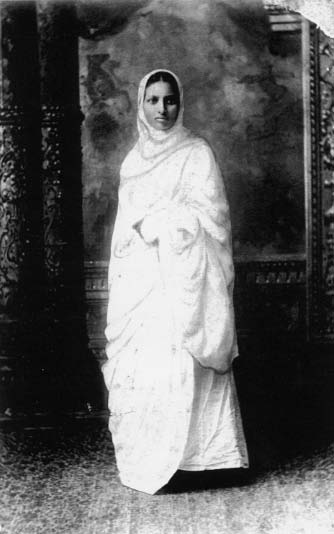
Figure 1. Pandita Ramabai in the United States.
Photo courtesy archives of Pandita Ramabai Mukti Mission.
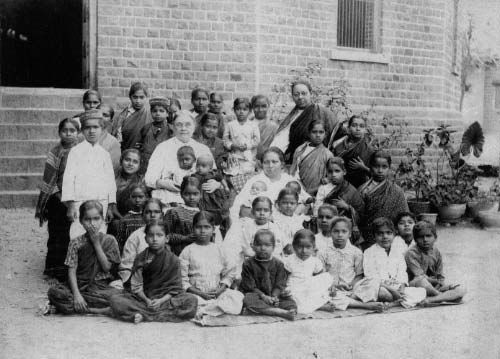
Figure 2. Pandita Ramabai (seated, center) with Manorama (standing behind her) and American missionary Minnie Abrams, with children at Mukti Mission.
Photo courtesy archives of Pandita Ramabai Mukti Mission.
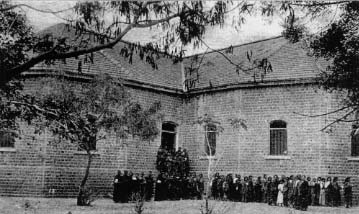
Figure 3. Women coming out of the church at Mukti Mission.
Photo courtesy archives of Pandita Ramabai Mukti Mission.
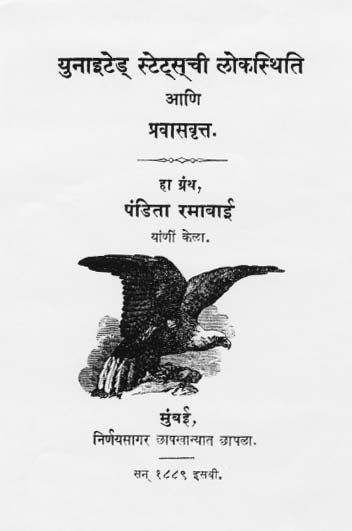
Figure 4. Title page of United Stateschi Lokasthiti ani Pravasavritta, 1889.

The Peoples of the United States pandita ramabai