
1 Corinthians
1 Corinthians
CHAPTER 1
PAUL, called to be an apostle of Jesus Christ through the will of God, and Sosthenes our brother, 2 To the church of God which is at Corinth, to them that are sanctified in Christ Jesus, called to be saints, with all that in every place call upon the name of Jesus Christ our Lord, both theirs and ours:
3 Grace be to you, and peace, from God our Father, and from the Lord Jesus Christ.
4 I thank my God always on your behalf, for the grace of God which is given you by Jesus Christ; 5 That in every thing you are enriched by him, in all utterance, and in all knowledge;
6 Even as the testimony of Christ was confirmed in you:
7 So that you come behind in no gift;
waiting for the coming of our Lord Jesus Christ:
8 Who shall also confirm you to the end, that you may be blameless in the day of our
Lord Jesus Christ.
9 God is faithful, by whom you were called to the fellowship of his Son Jesus Christ our
Lord.
10 Now I beseech you, brethren, by the name of our Lord Jesus Christ, that you all speak the same thing, and that there be no divisions among you; but that you be perfectly joined together in the same mind and in the same judgment.
11 For it has been declared to me of you, my brethren, by them which are of the house of Chloe, that there are contentions among you.
12 Now this I say, that every one of you says, I am of Paul; and I of Apollos; and I of Cephas; and I of Christ.
13 Is Christ divided? was Paul crucified for you? or were you baptized in the name of
Paul?
14 I thank God that I baptized none of you, but Crispus and Gaius; 15 Lest any should say that I had baptized in mine own name.
16 And I baptized also the household of Stephanas: besides, I know not whether I baptized any other.
17 For Christ sent me not to baptize, but to preach the gospel: not with wisdom of words, lest the cross of Christ should be made of none effect.
SPRINGBOARDS FOR
PREACHING AND
WITNESSING
1:18 The Sinking Ship Imagine for a moment that you are standing on the seashore gazing at a large ocean liner.
The sun is shining. There is no wind and the sea is calm. To your amazement, about thirty
people suddenly dive off the end of the ship and cling to a lifeboat.
You shake your head in disbelief at their foolishness. Then without warning, the great ocean liner strikes an iceberg and suddenly sinks, taking all on board with it.
Those who looked like fools in abandoning the ship were actually wise, and those who seemed wise by staying on board were, in truth, fools.
The world scoffs at those who abandon the ship of this world and cling to the lifeboat of the Savior. But Christians know that this great pleasure-cruiser will eventually come into contact with the immovable iceberg of the Law of God, sink into hell ... and take all those on board with it.
18 For the preaching of the cross is to them that perish foolishness; but to us which are saved it is the power of God.
19 For it is written, I will destroy the wisdom of the wise, and will bring to nothing the understanding of the prudent.
20 Where is the wise? where is the scribe? where is the disputer of this world? has not God made foolish the wisdom of this world?
21 For after that in the wisdom of God the world by wisdom knew not God, it pleased
God by the foolishness of preaching to save them that believe.
22 For the Jews require a sign, and the Greeks seek after wisdom:
23 But we preach Christ crucified, to the Jews a stumblingblock, and to the Greeks foolishness; 24 But to them which are called, both Jews and Greeks, Christ the power of God, and the wisdom of God.
25 Because the foolishness of God is wiser than men; and the weakness of God is stronger than men.
POINTS FOR OPEN-AIR
PREACHING
2:4 Watch for "Red Herrings" or "Rabbit Trails"
The Bible warns us to avoid foolish questions because they start arguments (2 Timothy 2:23). Most of us have fallen into the trap of jumping at every objection to the gospel. However, these questions can often be arguments in disguise to sidetrack you from the "weightier matters of the Law."
While apologetics (arguments for God's existence, creation vs. evolution, etc.) are legitimate in evangelism, they should merely be "bait," with the Law of God being the "hook" that brings the conviction of sin.
Those who witness solely in the realm of apologetical argument may just get an intellectual decision rather than a repentant conversion. The sinner may come to a point of acknowledging that the Bible is the Word of God, and Jesus is Lord—but even the devil knows that.
Always pull the sinner back to his responsibility before God on Judgment Day,
as Jesus did in Luke 13:1–5. Whenever you are in an open-air situation, be wary of socalled Christians who are intent on distracting workers from witnessing. They argue about prophecy, of how much water one should baptize with, or in whose name they should be baptized. It is grievous to see five or six
Christians standing around arguing with some sectarian nitpicker, while sinners are sinking into hell. See Acts 21:30 comment.
26 For you see your calling, brethren, how that not many wise men after the flesh, not many mighty, not many noble, are called:
27 But God has chosen the foolish things of the world to confound the wise; and God has chosen the weak things of the world to confound the things which are mighty; 28 And base things of the world, and things which are despised, has God chosen, yes, and things which are not, to bring to nothing things that are:
29 That no flesh should glory in his presence.
30 But of him are you in Christ Jesus, who of God is made to us wisdom, and righteousness, and sanctification, and redemption:
31 That, according as it is written, He that glories, let him glory in the Lord.
1:18 "To convince the world of the truth of Christianity, it must first be convinced of sin.
It is only sin that renders Christ intelligible."
Andrew Murray, The Spirit of Christ 1:23 There were some in John Wesley's day who refused to preach the Law to bring the knowledge of sin. They justified their method by saying that they preached "Christ and Him crucified." So Wesley points to Paul's method of preaching Christ crucified:
"...when Felix sent for Paul, on purpose that he might 'hear him concerning the faith in Christ;' instead of preaching Christ in your sense (which would probably have caused the Governor, either to mock or to contradict and blaspheme,) 'he reasoned of righteousness, temperance, and judgment to come,' till Felix
(hardened as he was) 'trembled,' (Acts 24:24,25). Go thou and tread in his steps.
Preach Christ to the careless sinner, by reasoning 'of righteousness, temperance, and judgment to come!'" John Wesley 1:25 "Everything that can be invented has been invented." Charles H.
Duell, Commissioner, U.S. Office of Patents, 1899 1:27,28 Many years ago, I ran a children's club. At the end of the club I told about one hundred kids to line up for some candy. There was an immediate rush, and the line sorted itself into what I saw as being a line of greed.
The bigger, selfish kids were at the front, and the small and timid ones were at the back. I then did something that gave me great satisfaction. I told them to turn about face.
Everyone did. Then I said to stay where they were, and I took great delight in going to the other end of the line and giving the candy to the smaller, timid kids first.
In a world where the rich get richer and the poor get stomped on, we are informed that
God has gone to the other end of the line with the message of everlasting life. How has He done that? Simply by choosing that which is weak, base, and despised. You can see this by asking a skeptic, "Do you believe that the following biblical accounts actually happened?"
Adam and Eve, Noah's ark, Jonah and the whale, Joshua and the walls of Jericho, Samson and his long hair, Daniel and the lion's den, Moses and the Red Sea Of course he doesn't. To say that he believed such fantastic stories would mean that he would have to surrender his intellectual dignity. Who in their right mind would ever do that? The answer is simply those who understand that God has chosen foolish, base, weak, and despised things of the world to confound those who think they are wise.
CHAPTER 2
And I, brethren, when I came to you, came not with excellency of speech or of wisdom, declaring to you the testimony of God.
2 For I determined not to know any thing among you, save Jesus Christ, and him crucified.
3 And I was with you in weakness, and in fear, and in much trembling.
4 And my speech and my preaching was not with enticing words of man's wisdom, but in demonstration of the Spirit and of power:
5 That your faith should not stand in the wisdom of men, but in the power of God.
6 Howbeit we speak wisdom among them that are perfect: yet not the wisdom of this world, nor of the princes of this world, that come to nothing:
7 But we speak the wisdom of God in a mystery, even the hidden wisdom, which God ordained before the world to our glory:
8 Which none of the princes of this world
knew: for had they known it, they would not have crucified the Lord of glory.
9 But as it is written, Eye has not seen, nor ear heard, neither have entered into the heart of man, the things which God has prepared for them that love him.
10 But God has revealed them to us by his Spirit: for the Spirit searches all things, yes, the deep things of God.
11 For what man knows the things of a man, save the spirit of man which is in him? even so the things of God knows no man, but the Spirit of God.
QUESTIONS & OBJECTIONS
2:14 "I've tried to read the Bible, but I can't understand it."
The Scriptures tell us that the "natural man" cannot understand the things of the Spirit of God. Most Americans would find it difficult to understand the Chinese language. However,
a child who is born into a Chinese family can understand every word. That's why you must be born again with God's Spirit living within you (John 3:3). The moment you become part of God's family, the Bible will begin to make sense.
12 Now we have received, not the spirit of the world, but the spirit which is of God; that we might know the things that are freely given to us of God.
13 Which things also we speak, not in the words which man's wisdom teaches, but which the Holy Spirit teaches; comparing spiritual things with spiritual.
14 But the natural man receives not the things of the Spirit of God: for they are foolishness to him: neither can he know them, because they are spiritually discerned.
15 But he that is spiritual judges all things, yet he himself is judged of no man.
16 For who has known the mind of the Lord, that he may instruct him? But we have the mind of Christ.
2:1–4 Qualifications for Evangelism:
1. A witness need not have "excellency of speech or of wisdom." He should simply declare what he has seen and heard.
2. He must not get sidetracked with unnecessary details, but focus on the essentials of Christ's death on the cross.
3. He must have "weakness" (not trusting in his own strength or ability).
4. He must have "fear" (in Greek, phobos, "that which is caused by being scared").
5. He must have "much trembling"
(awareness of his insufficiency).
Do you meet these qualifications?
2:5 If someone has been converted to the Christian faith by the wisdom of men, all it would take is the wisdom of unconverted men to talk him out of his faith. However, if he is transformed by the power of God, he is not solely motivated to Christianity by his intellect. The Holy Spirit has convicted him of sin, righteousness, and judgment. The motivation is the Law of God working upon
his conscience. That has given him the knowledge that he has offended a holy God.
His repentance is therefore directed at God, who responds in mercy. Those who are converted by God cannot be talked out of their faith because they were not talked into it.
2:11 "Groanings which cannot be uttered are often prayers which cannot be refused."
Spurgeon 2:16 The Mind of God. We can get a glimpse of the incredible mind of God simply by looking at His creation. Take one (very) small part—the mind of man: The brain is a soft lump of tissue weighing about 3 pounds.
It is one of the most watery organs of the body, its outer tissue being 85% water. There is very little relationship between brain size and intelligence. Some very bright people have smaller brains than those who are less intelligent. The brain feels no pain because it has no pain receptors. It floats in fluid inside the skull, and the fluid (derived from blood) acts as a shock absorber. The brain stops
growing in size at about age 15. Its surface is covered with folds. If it were laid out flat, the brain surface would cover two average student desks. The brain has four times as many nerve cells as there are people on Earth.
With its 10 billion neurons, it can record 86 million bits of information each day of our lives. Supporting, protecting, and nourishing these 10 billion neurons are 100 billion glia cells, which make up half the mass of the brain.
The brain continues sending out electrical wave signals as long as 37 hours after death.
Since nerve cells can't reproduce, you have fewer of them as you get older. Persons of 70 or 80 may have only 75% of the nerve cells they were born with. Nerve impulses travel more quickly than cars do, with some up to 250 miles per hour. If all the nerves were laid end to end, they would stretch almost 45 miles. If all the nerve cell connections— axons and dendrites—from a human brain could be placed end to end, they would
encircle the earth many times. The dendrites alone could stretch an estimated 100,000 miles.
Let's now look to the heavens: "They defined the exact shape of the closest major galaxy, a beautiful spiral named Andromeda, containing more than 300 billion stars. The nearest of these is (an incredible) thirteen quintillion (13,000,000,000,000,000,000) miles, or 2.2 million light-years, beyond the Milky Way, a distance calculated by comparing the star's apparent brightness with a star of similar brightness and known distance from Earth. And beyond Andromeda lay billions of other galaxies." Solar System
(Time-Life Books) The incredible complexity of the human brain and the vastness of the heavens speak of the awesome power of the Creator's mind, and together "declare the glory of God"
(Psalm 19:1).
2:16 Evolutionist Stephen Hawking wrote, "It would be very difficult to explain why the
universe should have begun in just this way, except as the act of a God who intended to create beings like us" (A Brief History of Time). He also stated: "Then we shall ... be able to take part in the discussion of the question of why it is that we and the universe exist. If we find the answer to that, it would be the ultimate triumph of human reason—for then we would know the mind of God."
CHAPTER 3
And I, brethren, could not speak to you as to spiritual, but as to carnal, even as to babes in Christ.
2 I have fed you with milk, and not with meat: for hitherto you were not able to bear it, neither yet now are you able.
3 For you are yet carnal: for whereas there is among you envying, and strife, and divisions, are you not carnal, and walk as men?
4 For while one says, I am of Paul; and
another, I am of Apollos; are you not carnal?
5 Who then is Paul, and who is Apollos, but ministers by whom you believed, even as the Lord gave to every man?
6 I have planted, Apollos watered; but God gave the increase.
7 So then neither is he that plants any thing, neither he that waters; but God that gives the increase.
8 Now he that plants and he that waters are one: and every man shall receive his own reward according to his own labor.
9 For we are laborers together with God: you are God's husbandry, you are God's building.
10 According to the grace of God which is given to me, as a wise master-builder, I have laid the foundation, and another built thereon.
But let every man take heed how he build thereupon.
11 For other foundation can no man lay than that is laid, which is Jesus Christ.
12 Now if any man build upon this
foundation gold, silver, precious stones, wood, hay, stubble; 13 Every man's work shall be made manifest: for the day shall declare it, because it shall be revealed by fire; and the fire shall try every man's work of what sort it is.
QUESTIONS & OBJECTIONS
3:17 "Does someone go to hell for committing suicide?"
Those who are adamant that a person who takes his life is committing a mortal sin, and will go to hell, are basing their belief on church doctrine rather than on the Bible.
Scripture is silent on the subject. There are no verses that say "He who takes his own life shall be damned." According to Scripture, only one sin does not have forgiveness, and that is blasphemy of the Holy Spirit (see Mark
3:29 comment).
That means there is forgiveness for every other sin.
Some quote 1 Corinthians 3:17, which says that God will destroy someone who "defiles" the temple of the Holy Spirit. Yet, there is disagreement about what it means to defile the temple. Does this include suicide? Does it include illicit drug abuse (slow suicide), prescription drug abuse, cigarettes (deliberately breathing in poisons that will eventually kill), tattoos, over-eating (digging a grave with your spoon), or alcohol abuse?
God forbid that we add to the pain of someone who has lost a loved one through the tragedy of suicide, by making a judgment about their eternal destiny. God is the ultimate
Judge, and we should therefore leave the issue in His hands. It would be wise to follow the biblical example and not come to any verdict in the case of suicide.
14 If any man's work abide which he has built thereupon, he shall receive a reward.
15 If any man's work shall be burned, he shall suffer loss: but he himself shall be saved; yet so as by fire.
16 Do you not know that you are the temple of God, and that the Spirit of God dwells in you?
17 If any man defile the temple of God, him shall God destroy; for the temple of God is holy, which temple you are.
18 Let no man deceive himself. If any man among you seems to be wise in this world, let him become a fool, that he may be wise.
19 For the wisdom of this world is foolishness with God. For it is written, He takes the wise in their own craftiness.
20 And again, The Lord knows the thoughts of the wise, that they are vain.
21 Therefore let no man glory in men. For all things are yours; 22 Whether Paul, or Apollos, or Cephas, or the world, or life, or death, or things present, or things to come; all are yours; 23 And you are Christ's; and Christ is God's.
3:6,7 See John 4:37,38 comment.
3:13,14 "If we work on marble, it will
perish; if on brass, time will efface it; if we rear up temples, they will crumble into dust; but if we work on immortal minds and imbue them with principles, with the just fear of God and the love of our fellow men, we engrave on those tablets something that will brighten to all eternity." Daniel Webster 3:19 The World's Ignorant Maxims:
1. "All good things must come to an end."
This isn't true for the Christian; see Ephesians 2:4–7. 2. "Which came first, the chicken or the egg?" The chicken; see Genesis 1:20. 3.
"There's no such thing as a free lunch." See Matthew 14:19. 4. "You can't take it with you." The Christian's works "follow" him; see Revelation 14:13. 5. "There are only two things in life that are sure—death and taxes." Plenty of people avoid taxes; none avoid death. See Hebrews 9:27. 6. "Crime doesn't pay." It does ... up until Judgment
Day; see Romans 2:6. 7. "As miserable as sin." Sin gives pleasure; see Hebrews 11:25.
8. "That's impossible!" With God, nothing is impossible; see Mark 10:27. 9. "No one knows!" God does; see 1 John 3:20. 10. "It's the perfect crime." Judgment Day will prove that there is no such thing as a crime that escapes justice; see Hebrews 4:13. 11.
"Seeing is believing." Any magician knows that isn't true. The eyes are easily fooled; see
Proverbs 28:26. 12. "God helps those who help themselves." God helps those who cannot help themselves; see Romans 5:6.
The Bible tells us that it is the Law of the Lord that make wise the simple. (See Psalm
19:7 comment.)
CHAPTER 4
Let a man so account of us, as of the ministers of Christ, and stewards of the mysteries of God.
2 Moreover it is required in stewards, that a man be found faithful.
3 But with me it is a very small thing that I should be judged of you, or of man's judgment: yes, I judge not mine own self.
4 For I know nothing by myself; yet am I not hereby justified: but he that judges me is the Lord.
5 Therefore judge nothing before the time, until the Lord come, who both will bring to light the hidden things of darkness, and will make manifest the counsels of the hearts: and then shall every man have praise of God.
6 And these things, brethren, I have in a figure transferred to myself and to Apollos for your sakes; that you might learn in us not to think of men above that which is written, that no one of you be puffed up for one against another.
7 For who makes you to differ from another? and what have you that you did not receive? now if you did receive it, why do you glory, as if you had not received it?
8 Now you are full, now you are rich, you have reigned as kings without us: and I would
to God you did reign, that we also might reign with you.
9 For I think that God has set forth us the apostles last, as it were appointed to death: for we are made a spectacle to the world, and to angels, and to men.
10 We are fools for Christ's sake, but you are wise in Christ; we are weak, but you are strong; you are honorable, but we are despised.
11 Even to this present hour we both hunger, and thirst, and are naked, and are buffeted, and have no certain dwellingplace;
1 2 And labor, working with our own hands: being reviled, we bless; being persecuted, we suffer it:
1 3 Being defamed, we entreat: we are made as the filth of the world, and are the offscouring of all things to this day.
14 I write not these things to shame you, but as my beloved sons I warn you.
15 For though you have ten thousand instructors in Christ, yet you do not have many
fathers: for in Christ Jesus I have begotten you through the gospel.
16 Wherefore I beseech you, be followers of me.
17 For this cause have I sent to you Timotheus, who is my beloved son, and faithful in the Lord, who shall bring you into remembrance of my ways which be in Christ, as I teach every where in every church.
18 Now some are puffed up, as though I would not come to you.
"In many ministries, there is not enough of probing the heart and arousing the conscience by the revelation of man's alienation from God, and by the declaration of the selfishness and the wickedness of such a state."
CHARLES SPURGEON
19 But I will come to you shortly, if the Lord will, and will know, not the speech of them which are puffed up, but the power.
20 For the kingdom of God is not in word,
but in power.
21 What do you want? shall I come to you with a rod, or in love, and in the spirit of meekness?
4:5 Second coming of Jesus: See Philippians 4:5.
4:15 See Matthew 23:9 comment.
4:16 Pastors often ask me how they can be more effective in reaching their city. This is what I tell them. Ask your congregation how many are concerned for their city. There will be a forest of hands. Ask how many are praying daily for the city. Many hands will appear. Then ask how many are sharing their faith on a regular basis. Give a gauge by asking how many have verbally spoken of the way of salvation to twelve people in the preceding twelve months. About 5 percent will raise their hands.
I once attended an interdenominational prayer meeting, where I could tell who attended a particular church simply by the way they prayed. I could recognize phrases of
their pastors in their prayers. It confirmed that congregations imitate their pastor. This is why I would advise a pastor to join a secular health club, or a golf club, or somewhere where he will rub shoulders with the ungodly.
I encourage him to regularly tell his congregation of his witnessing experiences and to share his fears—to show not only that he "condescends" to witness to the unsaved, but that he has the same fears they have. In this way he can "lead the flock of God," and it won't be long before they imitate him.
CHAPTER 5
It is reported commonly that there is fornication among you, and such fornication as is not so much as named among the Gentiles, that one should have his father's wife.
2 And you are puffed up, and have not rather mourned, that he that has done this deed might be taken away from among you.
3 For I verily, as absent in body, but present in spirit, have judged already, as though I were present, concerning him that has so done this deed, 4 In the name of our Lord Jesus Christ, when you are gathered together, and my spirit, with the power of our Lord Jesus Christ,
5 To deliver such an one to Satan for the destruction of the flesh, that the spirit may be saved in the day of the Lord Jesus.
6 Your glorying is not good. Do you not know that a little leaven leavens the whole lump?
7 Purge out therefore the old leaven, that you may be a new lump, as you are unleavened. For even Christ our passover is sacrificed for us:
8 Therefore let us keep the feast, not with old leaven, neither with the leaven of malice and wickedness; but with the unleavened bread of sincerity and truth.
9 I wrote to you in an epistle not to company with fornicators:
10 Yet not altogether with the fornicators of this world, or with the covetous, or extortioners, or with idolaters; for then you would need to go out of the world.
11 But now I have written to you not to keep company, if any man that is called a brother be a fornicator, or covetous, or an idolater, or a railer, or a drunkard, or an extortioner; with such an one no not to eat.
12 For what have I to do to judge them also that are without? do you not judge them that are within?
13 But them that are without God judges.
Therefore put away from among yourselves that wicked person.
CHAPTER 6
Dare any of you, having a matter against another, go to law before the unjust, and not before the saints?
2 Do you not know that the saints shall judge the world? and if the world shall be
judged by you, are you unworthy to judge the smallest matters?
3 Do you not know that we shall judge angels? how much more things that pertain to this life?
4 If then you have judgments of things pertaining to this life, set them to judge who are least esteemed in the church.
5 I speak to your shame. Is it so, that there is not a wise man among you? no, not one that shall be able to judge between his brethren?
6 But brother goes to law with brother, and that before the unbelievers.
7 Now therefore there is utterly a fault among you, because you go to law one with another. Why do you not rather take wrong? why do you not rather suffer yourselves to be defrauded?
8 Nay, you do wrong, and defraud, and that your brethren.
9 Do you not know that the unrighteous shall not inherit the kingdom of God? Be not deceived: neither fornicators, nor
idolaters, nor adulterers, nor effeminate, nor abusers of themselves with mankind, 10 Nor thieves, nor covetous, nor drunkards, nor revilers, nor extortioners, shall inherit the kingdom of God.
11 And such were some of you: but you are washed, but you are sanctified, but you are justified in the name of the Lord Jesus, and by the Spirit of our God.
12 All things are lawful to me, but all things are not expedient: all things are lawful for me, but I will not be brought under the power of any.
13 Meats for the belly, and the belly for meats: but God shall destroy both it and them.
Now the body is not for fornication, but for the Lord; and the Lord for the body.
14 And God has both raised up the Lord, and will also raise up us by his own power.
15 Do you not know that your bodies are the members of Christ? shall I then take the members of Christ, and make them the members of an harlot? God forbid.
16 What? Do you not know that he which is joined to an harlot is one body? for two, said he, shall be one flesh.
17 But he that is joined to the Lord is one spirit.
18 Flee fornication. Every sin that a man does is without the body; but he that commits fornication sins against his own body.
19 What? Do you not know that your body is the temple of the Holy Spirit which is in you, which you have of God, and you are not your own?
20 For you are bought with a price: therefore glorify God in your body, and in your spirit, which are God's.
6:9,10 Sinners will not enter the kingdom of God: "Who can say, I have made my heart clean, I am pure from my sin?" (Proverbs
20:9). "For there is not a just man on earth who does good and does not sin"
(Ecclesiastes 7:20). "If we say that we have no sin, we deceive ourselves, and the truth is not in us" (1 John 1:8). "For all have sinned,
and come short of the glory of God" (Romans 3:23). See Revelation 21:8 comment.
6:9–11 Homosexuals are deceived if they think they find in Scripture that their lifestyle is okay with God, and that they cannot change.
This list of sins (which encompass most, if not all, of the Ten Commandments) makes it clear who will not be included in the kingdom of God. However, Paul says to those who are now believers, "And such were some of you"
(v.11). No matter what their sins, God can wash sinners clean and make them righteous in His sight. See Jude 7 comment.
6:19 "Coming under the loving Lordship of Jesus Christ means an end to our 'rights' as well as to our wrongs. It means the end of life on our own terms." Larry Tomczak
CHAPTER 7
Now concerning the things whereof you wrote to me: It is good for a man not to touch
a woman.
2 Nevertheless, to avoid fornication, let every man have his own wife, and let every woman have her own husband.
3 Let the husband render to the wife due benevolence: and likewise also the wife to the husband.
4 The wife has not power of her own body, but the husband: and likewise also the husband has not power of his own body, but the wife.
5 Defraud not one the other, except it be with consent for a time, that you may give yourselves to fasting and prayer; and come together again, that Satan tempt you not for your incontinency.
6 But I speak this by permission, and not of commandment.
7 For I would that all men were even as I myself. But every man has his proper gift of God, one after this manner, and another after that.
8 I say therefore to the unmarried and
widows, It is good for them if they abide even as I.
9 But if they cannot contain, let them marry: for it is better to marry than to burn.
10 And to the married I command, yet not I, but the Lord, Let not the wife depart from her husband:
11 But and if she depart, let her remain unmarried, or be reconciled to her husband: and let not the husband put away his wife.
12 But to the rest speak I, not the Lord: If any brother has a wife that believes not, and she be pleased to dwell with him, let him not put her away.
13 And the woman which has an husband that believes not, and if he be pleased to dwell with her, let her not leave him.
14 For the unbelieving husband is sanctified by the wife, and the unbelieving wife is sanctified by the husband: else were your children unclean; but now are they holy.
15 But if the unbelieving depart, let him depart. A brother or a sister is not under
bondage in such cases: but God has called us to peace.
16 For how do you know, O wife, whether you shall save your husband? or how do you know, O man, whether you shall save your wife?
17 But as God has distributed to every man, as the Lord has called every one, so let him walk. And so ordain I in all churches.
18 Is any man called being circumcised? let him not become uncircumcised. Is any called in uncircumcision? let him not be circumcised.
Circumcision is nothing, and uncircumcision is nothing, but the keeping of the commandments of God.
20 Let every man abide in the same calling wherein he was called.
21 Are you called being a servant? care not for it: but if you may be made free, use it rather.
22 For he that is called in the Lord, being a servant, is the Lord's freeman: likewise also
he that is called, being free, is Christ's servant.
23 You are bought with a price; be not the servants of men.
24 Brethren, let every man, wherein he is called, therein abide with God.
25 Now concerning virgins I have no commandment of the Lord: yet I give my judgment, as one that has obtained mercy of the Lord to be faithful.
26 I suppose therefore that this is good for the present distress, I say, that it is good for a man so to be.
27 Are you bound to a wife? Seek not to be loosed. Are you loosed from a wife? Seek not a wife.
28 But and if you marry, you have not sinned; and if a virgin marry, she has not sinned. Nevertheless such shall have trouble in the flesh: but I spare you.
2 9 But this I say, brethren, the time is short: it remains, that both they that have wives be as though they had none;
3 0 And they that weep, as though they wept not; and they that rejoice, as though they rejoiced not; and they that buy, as though they possessed not; 3 1 And they that use this world, as not abusing it: for the fashion of this world passes away.
32 But I would have you without carefulness. He that is unmarried cares for the things that belong to the Lord, how he may please the Lord:
33 But he that is married cares for the things that are of the world, how he may please his wife.
34 There is difference also between a wife and a virgin. The unmarried woman cares for the things of the Lord, that she may be holy both in body and in spirit: but she that is married cares for the things of the world, how she may please her husband.
35 And this I speak for your own profit; not that I may cast a snare upon you, but for that which is comely, and that you may attend
upon the Lord without distraction.
36 But if any man think that he behaves himself uncomely toward his virgin, if she pass the flower of her age, and need so require, let him do what he will, he sins not: let them marry.
37 Nevertheless he that stands steadfast in his heart, having no necessity, but has power over his own will, and has so decreed in his heart that he will keep his virgin, does well.
38 So then he that gives her in marriage does well; but he that gives her not in marriage does better.
39 The wife is bound by the law as long as her husband lives; but if her husband be dead, she is at liberty to be married to whom she will; only in the Lord.
40 But she is happier if she so abide, after my judgment: and I think also that I have the Spirit of God.
*** For how to speak with someone who doesn't believe in the afterlife, see
Psalm 49:15 comment.
*** 7:2–5 Biblical sexuality. The gift of sex came from God; it didn't come about through an evolutionary process. It was given by God for procreation and pleasure. Scripture says that the only time a husband and wife should refrain from the joys of sex is when they are praying and fasting. The Bible also says that a man should be ravished (enraptured) always with her love (Proverbs 5:18–20). The only stipulation is that it is his wife he is to be enraptured with—not the woman down the street.
Those who forsake marriage thinking that they can enjoy sex outside the bonds of the institution risk getting AIDS and numerous other sexually transmitted diseases—several of which are incurable. It is interesting to note that a man and a woman can engage in sex ten thousand times within marriage and never even once risk contracting any sexually transmitted disease.
One who commits fornication (from the Greek Porneia, "illicit sexual intercourse") takes what could lawfully be his as a gift from God, and corrupts it. He is like a child who one night steals a crisp, new twenty-dollar bill from his father's wallet, not realizing that his father intended to give it to him as a gift in the morning.
The fornicator not only sins against God and incurs the wrath of eternal justice, but he sins against his conscience, and his own body
(1 Corinthians 6:18). Fornicators will not inherit the kingdom of God (1 Corinthians
6:9).
CHAPTER 8
Now as touching things offered to idols, we know that we all have knowledge.
Knowledge puffs up, but charity edifies.
2 And if any man think that he knows anything, he knows nothing yet as he ought to know.
3 But if any man love God, the same is known of him.
4 As concerning therefore the eating of those things that are offered in sacrifice to idols, we know that an idol is nothing in the world, and that there is none other God but one.
5 For though there be that are called gods, whether in heaven or in earth, (as there be gods many, and lords many,) 6 But to us there is but one God, the Father, of whom are all things, and we in him; and one Lord Jesus Christ, by whom are all things, and we by him.
7 Howbeit there is not in every man that knowledge: for some with conscience of the idol to this hour eat it as a thing offered to an idol; and their conscience being weak is defiled.
8 But meat commends us not to God: for neither, if we eat, are we the better; neither, if we eat not, are we the worse.
9 But take heed lest by any means this liberty of yours become a stumblingblock to them that are weak.
10 For if any man see you which have knowledge sit at meat in the idol's temple, shall not the conscience of him which is weak be emboldened to eat those things which are offered to idols; 11 And through your knowledge shall the weak brother perish, for whom Christ died?
12 But when you sin so against the brethren, and wound their weak conscience, you sin against Christ.
13 Wherefore, if meat make my brother to offend, I will eat no flesh while the world stands, lest I make my brother to offend.
8:4 See Psalm 115:4–9 comment.
8:9 Although we have incredible liberty as Christians, we are servants of all. If something we are at liberty to do offends an unsaved person, we must stop doing it, for the sake of the gospel. It has been well said that if Paul saw a Jew, he would hide his ham
sandwich behind his back. We need to walk in that same spirit.
CHAPTER 9
Am I not an apostle? am I not free? have I not seen Jesus Christ our Lord? are not you my work in the Lord?
2 If I be not an apostle to others, yet doubtless I am to you: for the seal of mine apostleship are you in the Lord.
3 Mine answer to them that do examine me is this, 4 Have we not power to eat and to drink?
5 Have we not power to lead about a sister, a wife, as well as other apostles, and as the brethren of the Lord, and Cephas?
6 Or I only and Barnabas, have not we power to forbear working?
7 Who goes a warfare any time at his own charges? who plants a vineyard, and eats not of the fruit thereof? or who feeds a flock, and eats not of the milk of the flock?
8 Say I these things as a man? or said not the law the same also?
9 For it is written in the law of Moses, You shall not muzzle the mouth of the ox that treads out the corn. Does God take care for oxen?
10 Or said he it altogether for our sakes?
For our sakes, no doubt, this is written: that he that plows should plow in hope; and that he that threshes in hope should be partaker of his hope.
11 If we have sown to you spiritual things, is it a great thing if we shall reap your carnal things?
12 If others be partakers of this power over you, are not we rather? Nevertheless we have not used this power; but suffer all things, lest we should hinder the gospel of Christ.
13 Do you not know that they which minister about holy things live of the things of the temple? and they which wait at the alter are partakers with the alter?
1 4 Even so has the Lord ordained that
they which preach the gospel should live of the Gospel.
15 But I have used none of these things: neither have I written these things, that it should be so done to me: for it were better for me to die, than that any man should make my glorying void.
16 For though I preach the gospel, I have nothing to glory of: for necessity is laid upon me; yes, woe is to me, if I preach not the gospel!
17 For if I do this thing willingly, I have a reward: but if against my will, a dispensation of the gospel is committed to me.
18 What is my reward then? Verily that, when I preach the gospel, I may make the gospel of Christ without charge, that I abuse not my power in the gospel.
19 For though I be free from all men, yet have I made myself servant to all, that I might gain the more.
2 0 And to the Jews I became as a Jew, that I might gain the Jews; to them that are
under the law, as under the law, that I might gain them that are under the law; 2 1 To them that are without law, as without law, (being not without law to God, but under the law to Christ,) that I might gain them that are without law.
22 To the weak became I as weak, that I might gain the weak: I am made all things to all men, that I might by all means save some.
23 And this I do for the gospel's sake, that I might be partaker thereof with you.
24 Do you not know that they which run in a race run all, but one receives the prize? So run, that you may obtain.
25 And every man that strives for the mastery is temperate in all things. Now they do it to obtain a corruptible crown; but we an incorruptible.
26 I therefore so run, not as uncertainly; so fight I, not as one that beats the air:
27 But I keep under my body, and bring it into subjection: lest that by any means, when I have preached to others, I myself should be a
castaway.
9:16 Second Kings 7:9 tells of lepers who had seen a great victory and initially kept the good news to themselves.
But their consciences spoke to them of their moral obligation to not remain silent: "Then they said one to another, We do not well: this day is a day of good tidings, and we hold our peace." How much more should we feel an obligation to take the Good News of everlasting life to a dying world? We must speak about what we have seen and heard.
Like Paul, we are a "debtor" to those who haven't heard the gospel (Romans 1:14).
"Woe" to us if we do not preach the gospel.
9:22 Gospel tracts—how to use them. If Paul meant "by all means," he no doubt would have used gospel tracts as a means to reach the lost. A Christian book relates the true story of a diver who saw a piece of paper clutched in the shell of an oyster. The man grabbed it, found that it was a gospel tract and said, "I can't hold out any longer. His mercy
is so great that He has caused His Word to follow me even to the bottom of the ocean."
God used a tract to save the man.
Why should a Christian use tracts? Simply because God uses them. He used a tract to save the great missionary Hudson Taylor, as well as innumerable others. That fact alone should be enough incentive for a Christian to always use tracts to reach the lost, but there are even more reasons why we should use them. Here are a few:
• Tracts can provide an opening for us to share our faith. We can watch people's reaction as we give them a tract, and see if they are open to listening to spiritual things.
• They can do the witnessing for us. If we are too timid to speak to someone about the things of God, we can at least give them a tract, or leave it lying around so that someone will pick it up.
• They speak to the individuals when they are ready—they don't read it until they want to.
• They can find their way into people's homes when we can't.
• They don't get into arguments; they just state their case.
Dr. Oswald J. Smith said, "The only way to carry out the Great Commission will be by the means of the printed page." Charles Spurgeon stated, "When preaching and private talk are not available, you need to have a tract ready ... Get good striking tracts, or none at all. But a touching gospel tract may be the seed of eternal life. Therefore, do not go out without your tracts."
If you want people to accept your literature, try to greet them before offering them a tract. If you can get them to respond to a warm "Good morning," or "How are you doing?" that will almost always break the ice and they will take it. After the greeting, don't ask, "Would you like this?" They will probably respond, "What is it?" Instead, say,
"Did you get one of these?" That question has a twofold effect. You stir their curiosity and
make them ask, "One of what?" That's when you hand it to them. It also makes them feel as though they are missing out on something. So they are.
Perhaps you almost pass out at the thought of passing out a tract. Don't worry; you are not alone. We all battle fear. The answer to fear is found in the prayer closet. Ask God to give you a compassion that will swallow your fears. Meditate on the fate of the ungodly.
Give hell some deep thought. Confront what it is that makes you fearful.
Do you like roller coasters? Some Christians want to try bungee-jumping or sky diving. Isn't it strange? We are prepared to risk our lives for the love of fear—and yet we are willing to let a sinner go to hell for fear of giving out a tract. Ask yourself how many piles of bloodied stones you can find where
Christians have been stoned to death for preaching the gospel. How much singed soil can you find where they have been burned at the stake? Part of our fear is a fear of
rejection. We are fearful of looking foolish.
That's a subtle form of pride. The other part of our battle with fear comes directly from the enemy. He knows that fear paralyzes. We must resist the devil and his lies. If God is with us, nothing can be against us.
Never underestimate the power of a gospel tract.
After George Whitefield read one called "The Life of God in the Soul of a Man," he said, "God showed me I must be born again or be damned." He went on to pray, "Lord, if I am not a Christian, or if I am not a real one, for Jesus Christ's sake show me what Christianity is, that I may not be damned at last!" Then his journal tells us
"from that moment ... did I know that I must become a new creature."
If you have never given out tracts, why not begin today? Leave them in a shopping cart, or put them in the mail when you pay bills.
Then each night as you shut your eyes to go to sleep, you will have something very special to pray about—that God will use the tract you
put somewhere. You will also have a deep sense of satisfaction that you played a small part in carrying out the Great Commission to reach this dying world with the gospel of everlasting life. Don't waste your life. Do something for the kingdom of God while you are able to. Always remember: treat every day as though it were your last—one day you will be right. See also Mark 4:14 and Revelation 22:2 comments.
CHAPTER 10
Moreover, brethren, I would not that you should be ignorant, how that all our fathers were under the cloud, and all passed through the sea; 2 And were all baptized unto Moses in the cloud and in the sea; 3 And did all eat the same spiritual meat;
4 And did all drink the same spiritual drink: for they drank of that spiritual Rock that followed them: and that Rock was Christ.
5 But with many of them God was not well pleased: for they were overthrown in the wilderness.
6 Now these things were our examples, to the intent we should not lust after evil things, as they also lusted.
QUESTIONS & OBJECTIONS
10:20 "Why is Christianity better than other religions?"
In all major religions, the followers strive to rid themselves of sin through various practices. They may pray in a prescribed way, do various good works, deny themselves legitimate sexual pleasure, follow dietary restrictions, lie on beds of nails, etc. The uniqueness of Jesus is shown in His statement, "The Son of Man has power on earth to forgive sins." No other religious leader has ever made this claim. Jesus Christ alone can wash away every sin anyone has
ever committed, because of what He did on the cross. By paying the penalty for our sin,
He can release us from the torture of guilt. We cannot do anything in the way of religious works to wash away our sins. Forgiveness is a free gift of God (Ephesians 2:8,9). To see what "religion" does (or rather doesn't do), see the note in Romans 7:24,25.
7 Neither be idolaters, as were some of them; as it is written, The people sat down to eat and drink, and rose up to play.
8 Neither let us commit fornication, as some of them committed, and fell in one day three and twenty thousand.
9 Neither let us tempt Christ, as some of them also tempted, and were destroyed of serpents.
10 Neither murmur, as some of them also murmured, and were destroyed of the destroyer.
11 Now all these things happened to them for ensamples: and they are written for our admonition, upon whom the ends of the world
are come.
12 Wherefore let him that thinks he stands take heed lest he fall.
13 There has no temptation taken you but such as is common to man: but God is faithful, who will not suffer you to be tempted above that you are able; but will with the temptation also make a way to escape, that you may be able to bear it.
14 Wherefore, my dearly beloved, flee from idolatry.
15 I speak as to wise men; judge what I say.
16 The cup of blessing which we bless, is it not the communion of the blood of Christ?
The bread which we break, is it not the communion of the body of Christ?
17 For we being many are one bread, and one body: for we are all partakers of that one bread.
18 Behold Israel after the flesh: are not they which eat of the sacrifices partakers of the alter?
19 What say I then? that the idol is any thing, or that which is offered in sacrifice to idols is any thing?
20 But I say, that the things which the Gentiles sacrifice, they sacrifice to devils, and not to God: and I would not that you should have fellowship with devils.
21 You cannot drink the cup of the Lord, and the cup of devils: you cannot be partakers of the Lord's table, and of the table of devils.
22 Do we provoke the Lord to jealousy? are we stronger than he?
23 All things are lawful for me, but all things are not expedient: all things are lawful for me, but all things edify not.
24 Let no man seek his own, but every man another's wealth.
25 Whatsoever is sold in the shambles, that eat, asking no question for conscience sake:
26 For the earth is the Lord's, and the fulness thereof.
27 If any of them that believe not bid you to
a feast, and you be disposed to go; whatsoever is set before you, eat, asking no question for conscience sake.
28 But if any man say to you, This is offered in sacrifice to idols, eat not for his sake that showed it, and for conscience sake: for the earth is the Lord's, and the fulness thereof:
29 Conscience, I say, not your own, but of the other: for why is my liberty judged of another man's conscience?
"If any man's life at home is unworthy, he should go several miles away before he stands up to preach. When he stands up, he should say nothing."
CHARLES SPURGEON
30 For if I by grace be a partaker, why am I evil spoken of for that for which I give thanks?
31 Whether therefore you eat, or drink, or whatsoever you do, do all to the glory of God.
32 Give none offence, neither to the Jews,
nor to the Gentiles, nor to the church of God:
33 Even as I please all men in all things, not seeking mine own profit, but the profit of many, that they may be saved.
10:1 This chapter shows how subtle idolatry can be. If we create an idol of God in our minds, that idol will not speak to us when we fall into the sin of lust. However, if we keep before us the true revelation of God's omniscient holiness, when Potiphar's wife calls we will flee from sexual sin. Despite our protests that lust easily overcomes our weak wills, verse 13 leaves each of us without excuse. See how that verse is linked to verse 14.
10:4 Just as Moses struck the rock to bring forth life-sustaining water for the Israelites in the desert (Exodus 17:6), it was Moses' Law that came down upon the Rock (Christ) at the cross.
10:14 Idolatry. Those who deny the fact that God is angry at sin insinuate that sinful man (with his measure of desire to see
justice) is more just than God. This is an incredible affront to the integrity of God. The following Time magazine letter to the editor epitomizes idolatry (the oldest sin in the Book):
"Excellent topic! I truly enjoyed reading 'Does Heaven Exist?' I am a devout Christian, and I don't give much thought to heaven. My spirituality isn't based on an anthropomorphic, kick-butt God who will throw four generations of children into eternal damnation because some distant forefather ticked him off [see Proverbs 28:5]. Heaven is the flip side of the absolutely barbaric notion of hell that evolved under that kick-butt mindset ... To me, God is a symbol for something unfathomable, an utter mystery that fills my heart with joy and my spirit with song."
10:20 To many, Eastern religions have a sense of romantic mysticism. It must therefore be a surprise to find that India has 220 million cows that are worshiped as the supreme
givers of life (God). The cow's hooves are bathed in religious ceremonies. Their urine is considered holy and is used to anoint believers. The animal's dung is also applied to the skin of the faithful in religious rituals.
They believe that all the gods inhabit some part of the cow's body. A Christian revival in India would not only provide eternal salvation for the country, but would also release enough meat to feed their hungry population.
CHAPTER 11
Be followers of me, even as I also am of Christ. 2 Now I praise you, brethren, that you remember me in all things, and keep the ordinances, as I delivered them to you.
3 But I would have you know, that the head of every man is Christ; and the head of the woman is the man; and the head of Christ is
God.
4 Every man praying or prophesying,
having his head covered, dishonors his head.
5 But every woman that prays or prophesies with her head uncovered dishonors her head: for that is even all one as if she were shaven.
6 For if the woman be not covered, let her also be shorn: but if it be a shame for a woman to be shorn or shaven, let her be covered.
7 For a man indeed ought not to cover his head, forasmuch as he is the image and glory of God: but the woman is the glory of the man.
8 For the man is not of the woman; but the woman of the man.
9 Neither was the man created for the woman; but the woman for the man.
10 For this cause ought the woman to have power on her head because of the angels.
11 Nevertheless neither is the man without the woman, neither the woman without the man, in the Lord.
12 For as the woman is of the man, even so is the man also by the woman; but all things of
God.
13 Judge in yourselves: is it comely that a woman pray to God uncovered?
14 Does not even nature itself teach you, that, if a man have long hair, it is a shame to him?
15 But if a woman have long hair, it is a glory to her: for her hair is given her for a covering.
16 But if any man seem to be contentious, we have no such custom, neither the churches of God.
17 Now in this that I declare to you I praise you not, that you come together not for the better, but for the worse.
18 For first of all, when you come together in the church, I hear that there be divisions among you; and I partly believe it.
19 For there must be also heresies among you, that they which are approved may be made manifest among you.
20 When you come together therefore into one place, this is not to eat the Lord's supper.
21 For in eating every one takes before other his own supper: and one is hungry, and another is drunken.
22 What? have you not houses to eat and to drink in? or do you despise the church of God, and shame them that have not? What shall I say to you? shall I praise you in this? I praise you not.
23 For I have received of the Lord that which also I delivered to you, That the Lord
Jesus the same night in which he was betrayed took bread:
24 And when he had given thanks, he broke it, and said, Take, eat: this is my body, which is broken for you: this do in remembrance of me.
25 After the same manner also he took the cup, when he had supped, saying, This cup is the new testament in my blood: this do, as oft as you drink it, in remembrance of me.
26 For as often as you eat this bread, and drink this cup, you do show the Lord's death till he come.
27 Wherefore whosoever shall eat this bread, and drink this cup of the Lord, unworthily, shall be guilty of the body and blood of the Lord.
28 But let a man examine himself, and so let him eat of that bread, and drink of that cup.
29 For he that eats and drinks unworthily, eats and drinks damnation to himself, not discerning the Lord's body.
30 For this cause many are weak and sickly among you, and many sleep.
31 For if we would judge ourselves, we should not be judged.
32 But when we are judged, we are chastened of the Lord, that we should not be condemned with the world.
33 Wherefore, my brethren, when you come together to eat, tarry one for another.
34 And if any man hunger, let him eat at home; that you come not together to condemnation. And the rest will I set in order when I come.
11:8 It has been well said that woman was
made from Adam's rib—close to his heart, under his protective arm (Genesis 2:21,22).
11:9
Earth's population refutes evolution. "The evolutionary scientists who believe that man existed for over a million years have an almost insurmountable problem. Using the assumption of forty-three years for an average human generation, the population growth over a million years would produce 23,256 consecutive generations. We calculate the expected population by starting with one couple one million years ago and use the same assumptions of a forty-three-year generation and 2.5 children per family ... The evolutionary theory of a million years of growth would produce trillions´ trillions´ trillions´ trillions of people that should be alive today on our planet. To put this in perspective, this number is vastly greater than the total number of atoms in our vast universe.
If mankind had lived on earth for a million years, we would all be standing on enormously high mountains of bones from the
trillions of skeletons of those who had died in past generations. However, despite the tremendous archeological and scientific investigation in the last two centuries, the scientists have not found a fraction of the trillions of skeletons predicted by the theory of evolutionary scientists." Grant R. Jeffery,
The Signature of God 11:9
One common ancestor.
"Researchers suggest that virtually all modern men—99% of them, says one scientist—are closely related genetically and share genes with one male ancestor, dubbed 'Ychromosome Adam.'
"We are finding that humans have very, very shallow genetic roots which go back very recently to one ancestor ... That indicates that there was an origin in a specific location on the globe, and then it spread out from there." U.S.
News & World Report, December 4, 1995.
CHAPTER 12
Now concerning spiritual gifts, brethren, I would not have you ignorant.
2 You know that you were Gentiles, carried away to these dumb idols, even as you were led.
3 Wherefore I give you to understand, that no man speaking by the Spirit of God calls
Jesus accursed: and that no man can say that Jesus is the Lord, but by the Holy Spirit.
4 Now there are diversities of gifts, but the same Spirit.
And there are differences of administrations, but the same Lord.
6 And there are diversities of operations, but it is the same God which works all in all.
7 But the manifestation of the Spirit is given to every man to profit withal.
8 For to one is given by the Spirit the word of wisdom; to another the word of knowledge by the same Spirit; 9 To another faith by the same Spirit; to another the gifts of healing by the same Spirit;
10 To another the working of miracles; to
another prophecy; to another discerning of spirits; to another divers kinds of tongues; to another the interpretation of tongues:
11 But all these work that one and the selfsame Spirit, dividing to every man severally as he will.
12 For as the body is one, and has many members, and all the members of that one body, being many, are one body: so also is
Christ.
13 For by one Spirit are we all baptized into one body, whether we be Jews or Gentiles, whether we be bond or free; and have been all made to drink into one Spirit.
14 For the body is not one member, but many.
15 If the foot shall say, Because I am not the hand, I am not of the body; is it therefore not of the body?
16 And if the ear shall say, Because I am not the eye, I am not of the body; is it therefore not of the body?
17 If the whole body were an eye, where
were the hearing? If the whole were hearing, where were the smelling?
18 But now has God set the members every one of them in the body, as it has pleased him.
19 And if they were all one member, where were the body?
20 But now are they many members, yet but one body.
21 And the eye cannot say to the hand, I have no need of you: nor again the head to the feet, I have no need of you.
22 Nay, much more those members of the body, which seem to be more feeble, are necessary:
23 And those members of the body, which we think to be less honorable, upon these we bestow more abundant honor; and our uncomely parts have more abundant comeliness.
24 For our comely parts have no need: but God has tempered the body together, having given more abundant honor to that part which lacked:
25 That there should be no schism in the body; but that the members should have the same care one for another.
26 And whether one member suffer, all the members suffer with it; or one member be honored, all the members rejoice with it.
27 Now you are the body of Christ, and members in particular.
28 And God has set some in the church, first apostles, secondarily prophets, thirdly teachers, after that miracles, then gifts of healings, helps, governments, diversities of tongues.
29 Are all apostles? are all prophets? are all teachers? are all workers of miracles?
30 Have all the gifts of healing? do all speak with tongues? do all interpret?
31 But covet earnestly the best gifts: and yet show I to you a more excellent way.
13:2 Speaking the Truth in Love to Jehovah's Witnesses By Clint DeBoer I was raised as a Jehovah's Witness and
remained one until age 11. Coming out of this cult, I entered my teenage years as a bitter atheist where I remained until I graduated from college. Through God's amazing grace I was saved in 1994 after reading the Bible and realizing that it was indeed the true Word of God.
Repeatedly God has blessed me with the passion and privilege to witness to the Jehovah's Witnesses. You've almost certainly had them come knocking on your door on a Saturday afternoon and you may have even engaged a Jehovah's Witness in a theological discussion. In talking to other Christians I find that when presented with a face-to-face encounter with a Jehovah's Witness there are usually two responses:
1) A "frontal assault" via debate or heated discussion; or 2) A polite "no thanks, I'm already a Christian" followed by an all too abrupt closing of the door.
For the mature Christian, what's usually
missing is the realization that this is a true witnessing opportunity—one that has arrived right at your doorstep.
In my earliest attempts at grabbing the proverbial bull by the horns, I tried engaging them in direct debates, often quoting from several texts I had studied regarding the cultic practices of the Jehovah's Witnesses. After several failed "conversion" attempts, often ending with thoroughly frustrated Jehovah's
Witnesses unwilling to ever return to my residence, I arrived at a starthng realization:
Jehovah's Witnesses are real people, with real needs and real feelings. They can feel frustration, anger, fear, and confusion. I then realized that the reason my frontal assaults on the Jehovah's Witnesses never seemed to work was because I had not put myself in their place and taken their feelings into account.
A wise man once said, "When you want to get someone's attention, you don't shine a flashlight in their eyes." In presenting my
arguments and facts without giving them time to prepare, I had forgotten that they were human beings searching for the truth. I had not been speaking this truth in love.
Months later, when I was again presented with an opportunity to speak with Jehovah's
Witnesses at my door, I engaged them in conversation, and agreed to do a weekly Bible study with them in order to further discuss what exactly they believed. They agreed, with the understanding that along the way I would ask questions whenever we arrived at a topic or subject with which I disagreed or failed to understand. The amazing difference was that instead of blindsiding them with questions and points of contention, I was giving them an opportunity to prepare themselves for a topic of discussion.
More importantly, though, I began to care about them personally and yearn for their salvation. In this way, I am able to meet with Witnesses on a weekly basis and take them
off the streets, focusing on critical topics such as the requirement that one be born again to enter the kingdom of God, the unbiblical theology of a two-class system of believers, and the true identity of Jesus Christ.
12:25 "Satan always hates Christian fellowship; it is his policy to keep Christians apart. Anything which can divide saints from one another he delights in." Charles Spurgeon
CHAPTER 13
Though I speak with the tongues of men and of angels, and have not charity, I am become as sounding brass, or a tinkling cymbal.
2 And though I have the gift of prophecy, and understand all mysteries, and all knowledge; and though I have all faith, so that I could remove mountains, and have not charity, I am nothing.
3 And though I bestow all my goods to feed
the poor, and though I give my body to be burned, and have not charity, it profits me nothing.
4 Charity suffers long, and is kind; charity envies not; charity vaunts not itself, is not puffed up, 5 Does not behave itself unseemly, seeks not her own, is not easily provoked, thinks no evil; 6 Rejoice not in iniquity, but rejoices in the truth; 7 Bears all things, believes all things, hope all things, endures all things.
8 Charity never fails: but whether there be prophecies, they shall fail; whether there be tongues, they shall cease; whether there be knowledge, it shall vanish away.
9 For we know in part, and we prophesy in part.
10 But when that which is perfect is come, then that which is in part shall be done away.
11 When I was a child, I spoke as a child, I understood as a child, I thought as a child: but
when I became a man, I put away childish things.
12 For now we see through a glass, darkly; but then face to face: now I know in part; but then shall I know even as also I am known.
13 And now abides faith, hope, charity, these three; but the greatest of these is charity.
CHAPTER 14
Follow after charity, and desire spiritual gifts, but rather that you may prophesy.
"Love will find a way. Indifference will find an excuse."
ANONYMOUS
2 For he that speaks in an un known tongue speaks not to men, but to God: for no man understands him; howbeit in the spirit he speaks mysteries.
3 But he that prophesies speaks to men to edification, and exhortation, and comfort.
4 He that speaks in an unknown tongue
edifies himself; but he that prophesies edifies the church.
5 I would that you all spoke with tongues, but rather that you prophesied: for greater is he that prophesies than he that speaks with tongues, except he interpret, that the church may receive edifying.
6 Now, brethren, if I come to you speaking with tongues, what shall I profit you, except I shall speak to you either by revelation, or by knowledge, or by prophesying, or by doctrine?
7 And even things without life giving sound, whether pipe or harp, except they give a distinction in the sounds, how shall it be known what is piped or harped?
8 For if the trumpet give an uncertain sound, who shall prepare himself to the battle?
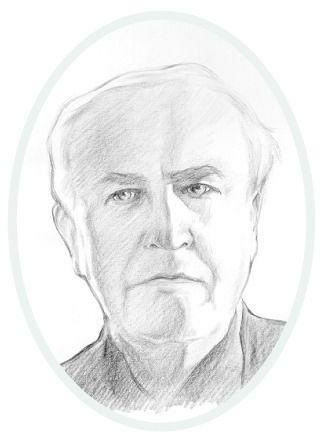
"We do not know one-millionth of one percent about anything." (See 1 Corinthians
8:2.)

9 So likewise you, except you utter by the tongue words easy to be understood, how shall it be known what is spoken? for you shall speak into the air.
10 There are, it may be, so many kinds of voices in the world, and none of them is without signification.
11 Therefore if I know not the meaning of the voice, I shall be to him that speaks a barbarian, and he that speaks shall be a barbarian to me.
12 Even so you, forasmuch as you are zealous of spiritual gifts, seek that you may excel to the edifying of the church.
13 Wherefore let him that speaks in an unknown tongue pray that he may interpret.
14 For if I pray in an unknown tongue, my spirit prays, but my understanding is unfruitful.
15 What is it then? I will pray with the spirit, and I will pray with the understanding also: I will sing with the spirit, and I will sing with the understanding also.
16 Else when you shall bless with the spirit, how shall he that occupies the room of the unlearned say Amen at your giving of thanks, seeing he understands not what you say?
17 For you verily give thanks well, but the other is not edified.
18 I thank my God, I speak with tongues more than you all:
19 Yet in the church I had rather speak five words with my understanding, that by my voice I might teach others also, than ten thousand words in an unknown tongue.
Brethren, be not children in understanding: howbeit in malice be children, but in understanding be men.
21 In the law it is written, With men of other tongues and other lips will I speak to this people; and yet for all that will they not
hear me, says the Lord.
22 Wherefore tongues are for a sign, not to them that believe, but to them that believe not: but prophesying serves not for them that believe not, but for them which believe.
23 If therefore the whole church be come together into one place, and all speak with tongues, and there come in those that are unlearned, or unbelievers, will they not say that you are mad?
24 But if all prophesy, and there come in one that believes not, or one unlearned, he is convinced of all, he is judged of all:
25 And thus are the secrets of his heart made manifest; and so falling down on his face he will worship God, and report that God is in you of a truth.
26 How is it then, brethren? when you come together, everyone of you has a psalm, has a doctrine, has a tongue, has a revelation, has an interpretation. Let all things be done to edifying.
27 If any man speak in an unknown tongue,
let it be by two, or at the most by three, and that by course; and let one interpret.
28 But if there be no interpreter, let him keep silence in the church; and let him speak to himself, and to God.
29 Let the prophets speak two or three, and let the other judge.
30 If any thing be revealed to another that sits by, let the first hold his peace.
31 For you may all prophesy one by one, that all may learn, and all may be comforted.
32 And the spirits of the prophets are subject to the prophets.
33 For God is not the author of confusion, but of peace, as in all churches of the saints.
"It was not the volume of sin that sent Christ to the cross; it was the fact of sin."
RAVI ZACHARIAS
34 Let your women keep silence in the churches: for it is not permitted to them to speak; but they are commanded to be under
obedience, as also says the law.
35 And if they will learn any thing, let them ask their husbands at home: for it is a shame for women to speak in the church.
36 What? came the word of God out from you? or came it to you only?
37 If any man think himself to be a prophet, or spiritual, let him acknowledge that the things that I write to you are the commandments of the Lord.
38 But if any man be ignorant, let him be ignorant.
39 Wherefore, brethren, covet to prophesy, and forbid not to speak with tongues.
40 Let all things be done decently and in order.
QUESTIONS & OBJECTIONS
15:22 "If God is perfect, why did He make an imperfect creation?"
The Bible tells us that the Genesis creation
was "good." There was no sin and therefore no suffering or death. Why then did God give
Adam and Eve the ability to sin, knowing full well that they would sin and bring death and pain to the human race? Some believe that if Adam had been created without the ability to choose, then he would have been a "robot." A father cannot make his children love him.
They choose to love him because they have a free will. Others point out that humanity would never have seen the depth of the love of God, as displayed in the cross, unless
Adam had sinned, and that fact could be one reason why God allowed sin to enter the world.
CHAPTER 15
Moreover, brethren, I declare to you the gospel which I preached to you, which also you have received, and wherein you stand;
2 By which also you are saved, if you keep in memory what I preached to you, unless you
have believed in vain.
3 For I delivered to you first of all that which I also received, how that Christ died for our sins according to the scriptures;
4 And that he was buried, and that he rose again the third day according to the scriptures:
5 And that he was seen of Cephas, then of the twelve:
6 After that, he was seen of above five hundred brethren at once; of whom the greater part remain to this present, but some are fallen asleep.
7 After that, he was seen of James; then of all the apostles.
8 And last of all he was seen of me also, as of one born out of due time.
9 For I am the least of the apostles, that am not meet to be called an apostle, because I persecuted the church of God.
10 But by the grace of God I am what I am: and his grace which was bestowed upon me
was not in vain; but I labored more abundantly than they all: yet not I, but the grace of God which was with me.
11 Therefore whether it were I or they, so we preach, and so you believed.
QUESTIONS & OBJECTIONS
15:39 "Evolution disproves the Bible!"
The Book of Genesis tells us that everything was created by God—nothing "evolved." Every creature was given the ability to reproduce after its own kind as is stated ten times in Genesis 1. Dogs do not produce cats. Neither do cats and dogs have a common ancestry. Dogs began as dogs and are still dogs. They vary in species from Chihuahuas to Saint Bernards, but you will not find a "dat" or a "cog" (part cat/dog) throughout God's creation. Frogs don't reproduce oysters, cows don't have lambs, and pregnant pigs don't give birth to rabbits.
God made monkeys as monkeys, and man as man. Each creature brings forth after its own kind. That's no theory; that's a fact.
Why then should we believe that man comes from another species? If evolution is true, then it is proof that the Bible is false.
However, the whole of creation stands in contradiction to the theory of evolution. Dr.
Kent Hovind of Florida has a standing offer of $250,000 to "anyone who can give any empirical evidence (scientific proof) for evolution." Evolution—true science fiction.
His website is www.drdino.com.
12 Now if Christ be preached that he rose from the dead, how say some among you that there is no resurrection of the dead?
13 But if there be no resurrection of the dead, then is Christ not risen:
14 And if Christ be not risen, then is our preaching vain, and your faith is also vain.
15 Yes, and we are found false witnesses of God; because we have testified of God that he raised up Christ: whom he raised not up, if
so be that the dead rise not.
16 For if the dead rise not, then is not Christ raised:
17 And if Christ be not raised, your faith is vain; you are yet in your sins.
18 Then they also which are fallen asleep in Christ are perished.
19 If in this life only we have hope in Christ, we are of all men most miserable.
20 But now is Christ risen from the dead, and become the firstfruits of them that slept.
21 For since by man came death, by man came also the resurrection of the dead.
22 For as in Adam all die, even so in Christ shall all be made alive.
QUESTIONS & OBJECTIONS
15:45 "Adam was a mythical figure who never really lived."
Adam is a key figure in Scripture. He is described as the "first Adam," the one who
brought sin into the world. He made it necessary for Jesus, the "last Adam," to atone for all humans, and then rise from the grave with the promise of complete redemption for fallen man and fallen creation. If Adam was just a myth, we would not be able to fully understand the work of Jesus.
If Adam and Eve were not real, then we ought to doubt whether their children were real too, and their children ... and then we ought to doubt the first 11 chapters of Genesis, and so on. All the genealogies accept Adam as being a literal person, so their children Cain and Abel (Genesis 4:9,10;
Luke 11:50,51) must be real too. Jesus was descended from Adam, and it is impossible to be descended from a myth.
23 But every man in his own order: Christ the firstfruits; afterward they that are Christ's at his coming.
24 Then comes the end, when he shall have delivered up the kingdom to God, even the Father; when he shall have put down all rule
and all authority and power.
25 For he must reign, till he has put all enemies under his feet.
26 The last enemy that shall be destroyed is death.
27 For he has put all things under his feet.
But when he says, all things are put under him, it is manifest that he is excepted, which did put all things under him.
28 And when all things shall be subdued to him, then shall the Son also himself be subject to him that put all things under him, that God may be all in all.
29 Else what shall they do which are baptized for the dead, if the dead rise not at all? why are they then baptized for the dead?
30 And why stand we in jeopardy every hour?
31 I protest by your rejoicing which I have in Christ Jesus our Lord, I die daily.
15:55 Last Words of Famous People Fearful Last Words:
Cardinal Borgia: "I have provided in the
course of my life for everything except death, and now, alas, I am to die unprepared.
Elizabeth the First: "All my possessions for one moment of time."
Kurt Cobain (suicide note): "Frances and Courtney, I'll be at your altar. Please keep going Courtney, for Frances. For her life will be so much happier without me. I love you. I love you."
Ludwig van Beethoven: "Too bad, too bad! It's too late!"
Thomas Hobbs: "I am about to take my last voyage, a great leap in the dark."
Anne Boleyn: "O God, have pity on my soul. O God, have pity on my soul."
Prince Henry of Wales: "Tie a rope round my body, pull me out of bed, and lay me in ashes, that I may die with repentant prayers to an offended God. O! I in vain wish for that time I lost with you and others in vain recreations."
Socrates: "All of the wisdom of this world is but a tiny raft upon which we must set sail
when we leave this earth. If only there was a firmer foundation upon which to sail, perhaps some divine word."
Sigmund Freud: "The meager satisfaction that man can extract from reality leaves him starving."
Tony Hancock (British comedian):
"Nobody will ever know I existed. Nothing to leave behind me. Nothing to pass on. Nobody to mourn me. That's the bitterest blow of all."
Phillip III, King of France: "What an account I shall have to give to God! How I should like to live otherwise than I have lived."
Luther Burbank: "I don't feel good."
Voltaire (skeptic): "I am abandoned by God and man! I will give you half of what I am worth if you will give me six months' life.
Then I shall go to hell; and you will go with me. O Christ! O Jesus Christ!" (The talented
French writer once said of Jesus, "Curse the wretch!" He stated, "Every sensible man, every honorable man, must hold the Christian
sect in horror ... Christianity is the most ridiculous, the most absurd and bloody religion that has ever infected the world."
He also boasted, "In twenty years Christianity will be no more. My single hand shall destroy the edifice it took twelve apostles to rear." Some years later, Voltaire's house was used by the Geneva Bible Society to print Bibles.
Philosophical Last Words:
Aldus Huxley (humanist): "It is a bit embarrassing to have been concerned with the human problem all one's life and find at the end that one has no more to offer by way of advice than 'Try and be a little kinder.'"
Karl Marx: "Go on, get out! Last words are for fools who haven't said enough!"
Napoleon: "I marvel that where the ambitious dreams of myself and of Alexander and of Caesar should have vanished into thin air, a Judean peasant—Jesus—should be able to stretch his hands across the centuries, and control the destinies of men and nations."
Leonardo da Vinci: "I have offended God and mankind because my work did not reach the quality it should have."
Tolstoy: "Even in the valley of the shadow of death, two and two do not make six."
Benjamin Franklin: "A dying man can do nothing easy."
Grotius: "I have lived my life in a laborious doing of nothing."
Unexpected Demise:
H. G. Wells: "Go away: I'm alright."
General John Sedgwick (during the heat of battle in 1864): "They couldn't hit an elephant at this dist—!"
Bing Crosby: "That was a great game of golf."
Mahatma Ghandi: "I am late by ten minutes. I hate being late. I like to be at the prayer punctually at the stroke of five."
Diana (Spencer), Princess of Wales: "My God. What's happened?" (per police files)
Douglas Fairbanks, Sr.: "Never felt
better."
Franklin D. Roosevelt: "I have a terrific headache."
Sal Mineo: (stabbed through the heart):
"Oh God! No! Help! Someone help!"
Jesse James: "It's awfully hot today."
Lee Harvey Oswald: "I will be glad to discuss this proposition with my attorney, and that after I talk with one, we could either discuss it with him or discuss it with my attorney, if the attorney thinks it is a wise thing to do, but at the present time I have nothing more to say to you."
Unusual Last Words:
Vincent Van Gogh: "I shall never get rid of this depression."
James Dean: "My fun days are over."
Oscar Wilde: "My wallpaper and I are fighting a duel to the death. One or the other of us has to go..."
W. C. Fields: "I'm looking for a loophole."
Louis XVII: "I have something to tell you..."
Assurance of Salvation:
Jonathan Edwards: "Trust in God and you shall have nothing to fear."
Patrick Henry: "Doctor, I wish you to observe how real and beneficial the religion of Christ is to a man about to die..." In his will he wrote: "This is all the inheritance I give to my dear family. The religion of Christ which will give them one which will make them rich indeed."
John Owen: "I am going to Him whom my soul loveth, or rather who has loved me with an everlasting love, which is the sole ground of all my consolation."
D.L. Moody: "I see earth receding; heaven is opening. God is calling me."
Lew Wallace (author of Ben Hur): "Thy will be done."
Alexander Hamilton: "I have a tender reliance on the mercy of the Almighty, through the merits of the Lord Jesus Christ. I am a
sinner. I look to Him for mercy."
William Shakespeare: "I commend my soul into the hands of God my Creator, hoping and assuredly believing, through the only merits of Jesus Christ my Savior, to be made partaker of life everlasting; and my body to the earth, whereof it was made."
Martin Luther: "Into Thy hands I commend my spirit! Thou hast redeemed me, O God of truth."
John Milton (British poet): "Death is the great key that opens the palace of Eternity."
Sir Walter Raleigh (at his execution): "So the heart be right, it is no matter which way the head lieth."
Daniel Webster (just before his death):
"The great mystery is Jesus Christ—the gospel. What would the condition of any of us be if we had not the hope of immortality? ...
Thank God, the gospel of Jesus Christ brought life and immortality to light." His last words were: "I still live."
General William Booth (to his son): "And
the homeless children, Bramwell, look after the homeless. Promise me..."
David Livingstone: "Build me a hut to die in. I am going home."
Charles Dickens: "I commit my soul to the mercy of God, through our Lord and Savior
Jesus Christ, and I exhort my dear children humbly to try and guide themselves by the teaching of the New Testament."
Andrew Jackson: "My dear children, do not grieve for me ... I am my God's. I belong to Him. I go but a short time before you, and ... I hope and trust to meet you all in heaven."
Isaac Watts (hymn-writer): "It is a great mercy that I have no manner of fear or dread of death. I could, if God please, lay my head back and die without terror this afternoon."
32 If after the manner of men I have fought with beasts at Ephesus, what advantage is it to me, if the dead rise not? let us eat and drink; for tomorrow we die.
33 Be not deceived: evil communications corrupt good manners.
34 Awake to righteousness, and sin not; for some have not the knowledge of God: I speak this to your shame.
35 But some man will say, How are the dead raised up? and with what body do they come?
36 You fool, that which you sow is not quickened, except it die:
37 And that which you sow, you sow not that body that shall be, but bare grain, it may chance of wheat, or of some other grain:
38 But God gives it a body as it has pleased him, and to every seed his own body.
39 All flesh is not the same flesh: but there is one kind of flesh of men, another flesh of beasts, another of fishes, and another of birds.
40 There are also celestial bodies, and bodies terrestrial: but the glory of the celestial is one, and the glory of the terrestrial is another.
41 There is one glory of the sun, and another glory of the moon, and another glory of the stars: for one star differs from another
star in glory.
42 So also is the resurrection of the dead. It is sown in corruption; it is raised in incorruption:
43 It is sown in dishonor; it is raised in glory: it is sown in weakness; it is raised in power:
44 It is sown a natural body; it is raised a spiritual body. There is a natural body, and there is a spiritual body.
45 And so it is written, The first man Adam was made a living soul; the last Adam was made a quickening spirit.
46 Howbeit that was not first which is spiritual, but that which is natural; and afterward that which is spiritual.
47 The first man is of the earth, earthy: the second man is the Lord from heaven.
48 As is the earthy, such are they also that are earthy: and as is the heavenly, such are they also that are heavenly.
49 And as we have borne the image of the earthy, we shall also bear the image of the
heavenly.
50 Now this I say, brethren, that flesh and blood cannot inherit the kingdom of God; neither does corruption inherit incorruption.
5 1 Behold, I show you a mystery; We shall not all sleep, but we shall all be changed, 52 In a moment, in the twinkling of an eye, at the last trump: for the trumpet shall sound, and the dead shall be raised incorruptible, and we shall be changed.
5 3 For this corruptible must put on incorruption, and this mortal must put on immortality.
5 4 So when this corruptible shall have put on incorruption, and this mortal shall have put on immortality, then shall be brought to pass the saying that is written,
Death is swallowed up in victory.
55 O death, where is your sting? O grave, where is your victory?
5 6 The sting of death is sin; and the
strength of sin is the law.
5 7 But thanks be to God, who gives us the victory through our Lord Jesus Christ.
58 Therefore, my beloved brethren, be steadfast, unmoveable, always abounding in the work of the Lord, forasmuch as you know that your labor is not in vain in the Lord.
15:6 "The fact that Abraham Lincoln was born, became president, or was assassinated cannot be proven using scientific methods. To be 'scientific' it must be repeatable (as in the testing of gravity). The proofs that Lincoln did exist and was a historical figure are: 1) the written evidence; 2) eyewitness testimony; and 3) physical evidence that remains to this day—the Ford Theatre, birth records, and newspaper articles regarding his election. All these facts are acceptable in a court of law as proof to a judge and jury.
"The resurrection of Jesus Christ from the dead is "evidential": 1) the empty tomb still exists; 2) His birth record is documented all the way back to Adam and Eve; 3) the four
Gospels record His death; 4) the location, and even the names of the political leaders who sentenced Him are historically recorded; 5) there were more than five hundred eyewitnesses who saw Jesus after the resurrection, recorded by the New Testament writers; 6) the very existence of the Christian faith, based on His death and resurrection; 7) the cultural and political evidence of the time, including the Roman calendar separating all of time into 'Before Christ' (b.c.) and 'in the year of our Lord' (a.d.)." Garry T. Ansdell,
D.D.
15:10 "There is nothing but God's grace.
We walk upon it; we breathe it; we live and die by it; it makes the nails and axles of the universe." Robert Louis Stevenson 15:14 If Jesus Christ didn't rise from the tomb, then the Bible is a fraud and any hope of resurrection is therefore in vain. However,
God has given us irrefutable evidence in His Word to strengthen our faith in His promises
—historical, scientific, medical,
archeological, and prophetic evidence.
15:17 "How can anyone lose who chooses to become a Christian? If, when he dies, there turns out to be no God and his faith was in vain, he has lost nothing—in fact, he has been happier in life than his nonbelieving friends.
If, however, there is a God and a heaven and hell, then he has gained heaven and his skeptical friends will have lost everything in hell!" Blaise Pascal 15:29 Some believe in baptizing for the dead, which Paul mentions in these verses.
Note that Paul does not say "we," but "they," thus distancing himself from the practice. See
Acts 2:38 comment for the biblical basis for baptism.
15:31 "We are not merely imperfect creatures who must be improved: we are, as Newman said, rebels who must lay down our arms ... To surrender a self-will inflamed and swollen with years of usurpation is a kind of death ... Hence the necessity to die daily: however often we think we have broken the
rebellious self, we shall still find it alive."
C.S. Lewis, The Problem of Pain 15:34 False converts. Paul acknowledges that there were false converts in their midst; to their shame, some among them did not know God, were dead to righteousness, and were continuing to sin. We also should feel a sense of shame at the state of the lukewarm contemporary Church, where only 2 percent have any real concern for the salvation of the world.
15:39 "This notion of species as 'natural kinds' fits splendidly with creationist tenets of a pre-Darwinian age. Louis Agassiz even argued that species are God's individual thoughts, made incarnate so that we might perceive both His majesty and His message.
Species, Agassiz wrote, are 'instituted by the Divine Intelligence as the categories of his mode of thinking.' But how could a division of the organic world into discrete entities be justified by an evolutionary theory that proclaimed ceaseless change as the
fundamental fact of nature?" Stephen J.
Gould, professor of geology and paleontology, Harvard University 15:58 Discouragement in witnessing. It is easy to become discouraged after trying to reason with sinners. But to do so is to demean the influence of the Holy Spirit in our witness.
If the salvation of a single soul depended solely upon us, we should be depressed if we see little visible and immediate fruit for our labors. However, the Bible tells us that "salvation is of the Lord." We do play a part as a co-laborer with Christ—He may instruct us to roll the stone away, but it is the Lord alone who calls the sinner from the tomb of his deathly state. He gives us opportunity, but He opens the heart of the sinner, and it is Him alone that makes the sinner come to life.
Our confidence should then be in Him.
Jesus said, "With God, nothing shall be impossible." We therefore can always abound in the Lord, knowing that our labors (even with cults) are not in vain. His Word cannot
return void. Our part is simply to be true and faithful in our witness, then to stand back and watch the miracle work of our God. Who knows, perhaps the words we placed in the heart of the person may bear fruit years after they were spoken, and we will have the joy of unwrapping the grave clothes when God, in His time, calls them.
CHAPTER 16
Now concerning the collection for the saints, as I have given order to the churches of Galatia, even so do.
2 Upon the first day of the week let every one of you lay by him in store, as God has prospered him, that there be no gatherings when I come.
3 And when I come, whomsoever you shall approve by your letters, them will I send to bring your liberality to Jerusalem.
4 And if it be meet that I go also, they shall go with me.
5 Now I will come to you, when I shall pass through Macedonia: for I do pass through Macedonia.
6 And it may be that I will abide, yes, and winter with you, that you may bring me on my journey wherever I go.
7 For I will not see you now by the way; but I trust to tarry a while with you, if the Lord permit.
8 But I will tarry at Ephesus until Pentecost.
9 For a great door and effectual is opened to me, and there are many adversaries.
10 Now if Timotheus come, see that he may be with you without fear: for he works the work of the Lord, as I also do.
11 Let no man therefore despise him: but conduct him forth in peace, that he may come to me: for I look for him with the brethren.
12 As touching our brother Apollos, I greatly desired him to come to you with the brethren: but his will was not at all to come at
this time; but he will come when he shall have convenient time.
13 Watch, stand fast in the faith, quit you like men, be strong.
14 Let all your things be done with charity.
15 I beseech you, brethren, (you know the house of Stephanas, that it is the firstfruits of Achaia, and that they have addicted themselves to the ministry of the saints,)
16 That you submit yourselves to such, and to every one that helps with us, and labors.
17 I am glad of the coming of Stephanas and Fortunatus and Achaicus: for that which was lacking on your part they have supplied.
18 For they have refreshed my spirit and yours: therefore acknowledge them that are such.
19 The churches of Asia salute you. Aquila and Priscilla salute you much in the Lord, with the church that is in their house.
20 All the brethren greet you. Greet one another with an holy kiss.
21 The salutation of me Paul with mine
own hand.
22 If any man love not the Lord Jesus Christ, let him be Anathema Maranatha.
23 The grace of our Lord Jesus Christ be with you.
24 My love be with you all in Christ Jesus.
Amen.
"Grace is love that cares and stoops and rescues."
JOHN R.W. STOTT