
Jonathan Edwards Selected Shor
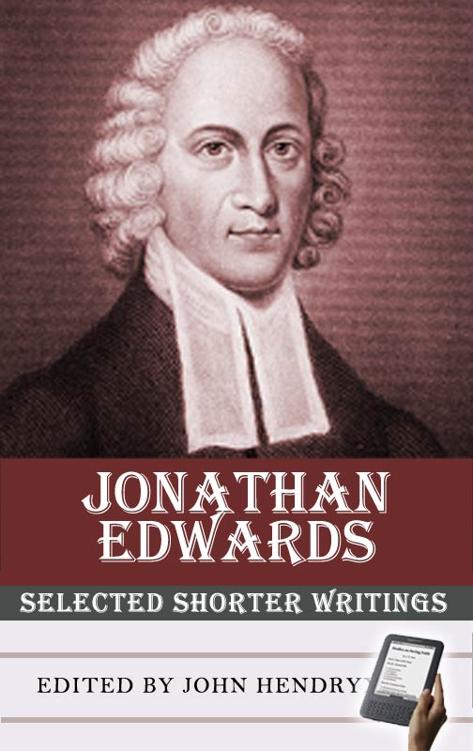
Jonathan Edwards: Selected
Shorter Writings
Edited by John Hendryx
Table of Contents
God Glorified in Man's Dependence
God's Sovereignty in the Salvation of Men
The Sole Consideration, that God Is God
A Divine and Supernatural Light
Christian Knowledge
Distinguishing Marks of a Work of the Spirit of God
Men Naturally are God's Enemies
Treatise on Grace
The Admirable Conjunction of Diverse Excellencies in Christ Jesus
Concerning Efficacious Grace
Glorious Grace
Sinners in the Hands of an Angry God
Unbelievers Despise the Gloy and Excellency of Christ
God the Best Portion of the Christian
Christians A Chosen Generation, A Royal Priesthood, A Holy Nation, A Peculiar People
God Makes Men Sensible Of Their Misery Before He Reveals His Mercy And Love
Man's Natural Blindness to the Things of Religion
God Glorified in Man's Dependence
by Jonathan Edwards
Preached on the Public Lecture in Boston, July 8, 1731; and published at the desire of several ministers and others in Boston who heard it. - This was the first piece published by Mr. Edwards.
"That no flesh should glory in his presence. But of him are ye in Christ Jesus, who of God is made unto us wisdom, and righteousness, and sanctification, and redemption: that, according as it is written, He that glorieth, let him glory in the Lord. " - 1 Corinthians 1:29-31.
Those Christians to whom the apostle directed this epistle, dwelt in a part of the world where human wisdom was in great repute; as the apostle observes in the 22nd verse of this chapter, "The Greeks seek after wisdom." Corinth was not far from Athens, that had been for many ages the most famous seat of philosophy and learning in the world. The apostle therefore observes to them, how God by the gospel destroyed, and brought to naught, their wisdom. The learned Grecians, and their great philosophers, by all their wisdom did not know God, they were not able to find out the truth in divine things. But, after they had done their utmost to no effect, it pleased God at length to reveal himself by the gospel, which they accounted foolishness. He "chose the foolish things of the world to confound the wise, and the weak things of the world to confound the things which are mighty, and the base things of the world, and things that are despised, yea, and things which are not, to bring to naught the things that are." And the apostle informs them in the text why he thus did, That no flesh should glory in his presence, &c.--In which words may be observed,
1. What God aims at in the disposition of things in the affair of redemption, viz. that man should not glory in himself, but alone in God; 1 Cor. i. 29, 31.That no flesh should glory in his presence,--that, according as it is written, He that glorieth, let him glory in the Lord.
2. How this end is attained in the work of redemption, viz. by that absolute and immediate dependence which men have upon God in that work, for all their good. Inasmuch as,
First, all the good that they have is in and through Christ; He is made unto us wisdom, righteousness, sanctification, and redemption. [1 Cor. i. 30.] All the good of the fallen and redeemed creature is concerned in these four things, and cannot be better distributed than into them; but Christ is each of them to us, and we have none of them any otherwise than in him. He is made of God unto us wisdom: in him are all the proper good and true excellency of the understanding. Wisdom was a thing that the Greeks admired; but Christ is the true light of the world; it is through him alone that true wisdom is imparted to the mind. It is in and by Christ that we have righteousness: it is by being in him that we are justified, have our sins pardoned, and are received as righteous into God's favor. It is by Christ that we have sanctification: we have in him true excellency of heart as well as of understanding; and he is made unto us inherent as well as imputed righteousness. It is by Christ that we have redemption, or the actual deliverance from all misery, and the bestowment of all happiness and glory. Thus we have all our good by Christ, who is God.
Secondly, another instance wherein our dependence on God for all our good appears, is this, that it is God that has given us Christ, that we might have these benefits through him; he of God is made unto us wisdom, righteousness, &c.
Thirdly, it is of him that we are in Christ Jesus, and come to have an interest in him, and so do receive those blessings which he is made unto us. It is God that gives us faith whereby we close with Christ.
So that in this verse is shown our dependence on each person in the Trinity for all our good. We are dependent on Christ the Son of God, as he is our wisdom, righteousness, sanctification, and redemption. We are dependent on the Father, who has given us Christ, and made him to be these things to us. We are dependent on the Holy Ghost, for it is of him that we are in Christ Jesus; it is the Spirit of God that gives faith in him, whereby we receive him, and close with him.
DOCTRINE
"God is glorified in the work of redemption in this, that there appears in it so absolute and universal a dependence of the redeemed on him."--Here I propose to show, 1st, that there is an absolute and universal dependence of the redeemed on God for all their good. And, 2dly, that God hereby is exalted and glorified in the work of redemption.
I. There is an absolute and universal dependence of the redeemed on God. The nature and contrivance of our redemption is such, that the redeemed are in every thing directly, immediately, and entirely dependent on God: they are dependent on him for all, and are dependent on him every way.
The several ways wherein the dependence of one being may be upon another for its good, and wherein the redeemed of Jesus Christ depend on God for all their good, are these, viz., that they have all their good of him, and that they have all through him, and that they have all in him: That he is the cause and original whence all their good comes, therein it is of him; and that he is the medium by which it is obtained and conveyed, therein they have it through him; and that he is the good itself given and conveyed, therein it is in him. Now those that are redeemed by Jesus Christ do, in all these respects, very directly and entirely depend on God for their all.
First, the redeemed have all their good of God. God is the great author of it. He is the first cause of it; and not only so, but he is the only proper cause. It is of God that we have our Redeemer. It is God that has provided a Savior for us. Jesus Christ is not only of God in his person, as he is the only-begotten Son of God, but he is from God, as we are concerned in him, and in his office of Mediator. He is the gift of God to us: God chose and anointed him, appointed him his work, and sent him into the world. And as it is God that gives, so it is God that accepts the Savior. He gives the purchaser, and he affords the thing purchased.
It is of God that Christ becomes ours, that we are brought to him, and are united to him. It is of God that we receive faith to close with him, that we may have an interest in him. Eph. ii. 8, "For by grace ye are saved, through faith; and that not of yourselves, it is the gift of
God." It is of God that we actually receive all the benefits that Christ has purchased. It is God that pardons and justifies, and delivers from going down to hell; and into his favor the redeemed are received, when they are justified. So it is God that delivers from the dominion of sin, cleanses us from our filthiness, and changes us from our deformity. It is of God that the redeemed receive all their true excellency, wisdom, and holiness; and that two ways, viz. as the Holy Ghost by whom these things are immediately wrought is from God, proceeds from him, and is sent by him; and also as the Holy Ghost himself is God, by whose operation and indwelling the knowledge of God and divine things, a holy disposition and all grace, are conferred and upheld. And though means are made use of in conferring grace on men's souls, yet it is of God that we have these means of grace, and it is he that makes them effectual. It is of God that we have the Holy Scriptures; they are his word. It is of God that we have ordinances, and their efficacy depends on the immediate influence of his Spirit. The ministers of the gospel are sent of God, and all their sufficiency is of him.--2 Cor. iv. 7, "We have this treasure in earthen vessels, that the excellency of the power may be of God, and not of us." Their success depends entirely and absolutely on the immediate blessing and influence of God.
1. The redeemed have all from the grace of God. It was of mere grace that God gave us his only-begotten Son. The grace is great in proportion to the excellency of what is given. The gift was infinitely precious, because it was of a person infinitely worthy, a person of infinite glory; and also because it was of a person infinitely near and dear to God. The grace is great in proportion to the benefit we have given us in him. The benefit is doubly infinite, in that in him we have deliverance from an infinite, because an eternal, misery, and do also receive eternal joy and glory. The grace in bestowing this gift is great in proportion to our unworthiness to whom it is given; instead of deserving such a gift, we merited infinitely ill of God's hands. The grace is great according to the manner of giving, or in proportion to the humiliation and expense of the method and means by which a way is made for our having the gift. He gave him to dwell amongst us; he gave him to us incarnate, or in our nature; and in the like though sinless infirmities. He gave him to us in a low and afflicted state; and not only so, but as slain, that he might be a feast for our souls.
The grace of God in bestowing this gift is most free. It was what God was under no obligation to bestow. He might have rejected fallen man, as he did the fallen angels. It was what we never did any thing to merit; it was given while we were yet enemies, and before we had so much as repented. It was from the love of God who saw no excellency in us to attract it; and it was without expectation of ever being requited for it. And it is from mere grace that the benefits of Christ are applied to such and such particular persons. Those that are called and sanctified are to attribute it alone to the good pleasure of God's goodness, by which they are distinguished. He is sovereign, and hath mercy on whom he will have mercy.
Man hath now a greater dependence on the grace of God than he had before the fall. He depends on the free goodness of God for much more than he did then. Then he depended on God's goodness for conferring the reward of perfect obedience; for God was not obliged to promise and bestow that reward. But now we are dependent on the grace of God for much more; we stand in need of grace, not only to bestow glory upon us, but to deliver us from hell and eternal wrath. Under the first covenant we depended on God's goodness to give us the reward of righteousness; and so we do now: but we stand in need of God's free and sovereign grace to give us that righteousness; to pardon our sin, and release us from the guilt and infinite demerit of it.
And as we are dependent on the goodness of God for more now than under the first covenant, so we are dependent on a much greater, more free and wonderful goodness. We are now more dependent on God's arbitrary and sovereign good pleasure. We were in our first estate dependent on God for holiness. We had our original righteousness from him; but then holiness was not bestowed in such a way of sovereign good pleasure as it is now. Man was created holy, for it became God to create holy all his reasonable creatures. It would have been a disparagement to the holiness of God's nature, if he had made an intelligent creature unholy. But now when fallen man is made holy, it is from mere and arbitrary grace; God may for ever deny holiness to the fallen creature if he pleases, without any disparagement to any of his perfections.
And we are not only indeed more dependent on the grace of God, but our dependence is much more conspicuous, because our own insufficiency and helplessness in ourselves is much more apparent in our fallen and undone state, than it was before we were either sinful or miserable. We are more apparently dependent on God for holiness, because we are first sinful, and utterly polluted, and afterward holy. So the production of the effect is sensible, and its derivation from God more obvious. If man was ever holy and always was so, it would not be so apparent, that he had not holiness necessarily, as an inseparable qualification of human nature. So we are more apparently dependent on free grace for the favor of God, for we are first justly the objects of his displeasure, and afterwards are received into favor. We are more apparently dependent on God for happiness, being first miserable, and afterwards happy. It is more apparently free and without merit in us, because we are actually without any kind of excellency to merit, if there could be any such thing as merit in creature excellency. And we are not only without any true excellency, but are full of, and wholly defiled with, that which is infinitely odious. All our good is more apparently from God, because we are first naked and wholly without any good, and afterwards enriched with all good.
2. We receive all from the power of God. Man's redemption is often spoken of as a work of wonderful power as well as grace. The great power of God appears in bringing a sinner from his low state, from the depths of sin and misery, to such an exalted state of holiness and happiness. Eph. i. 19. "And what is the exceeding greatness of his power to us-ward who believe, according to the working of his mighty power."-
We are dependent on God's power through every step of our redemption. We are dependent on the power of God to convert us, and give faith in Jesus Christ, and the new nature. It is a work of creation: "If any man be in Christ, he is a new creature," 2 Cor. v. 17. "We are created in Christ Jesus," Eph. ii. 10. The fallen creature cannot attain to true holiness, but by being created again. Eph. v. 24, "And that ye put on the new man, which after God is created in righteousness and true holiness." It is a raising from the dead. Colos. ii. 12, 13. "Wherein also ye are risen with him through the faith of the operation of God, who hath raised him from the dead." Yea, it is a more glorious work of power than mere creation, or raising a dead body to life, in that the effect attained is greater and more excellent. That holy and happy being, and spiritual life, which is produced in the work of conversion, is a far greater and more glorious effect, than mere being and life. And the state from whence the change is made-- a death in sin, a total corruption of nature, and depth of misery--is far more remote from the state attained, than mere death or nonentity.
It is by God's power also that we are preserved in a state of grace. 1 Pet. i. 5."Who are kept by the power of God through faith unto salvation." As grace is at first from God, so it is continually from him, and is maintained by him, as much as light in the atmosphere is all day long from the sun, as well as at first dawning, or sun-rising.-- Men are dependent on the power of God for every exercise of grace, and for carrying on that work in the heart, for subduing sin and corruption, increasing holy principles, and enabling to bring forth fruit in good works. Man is dependent on divine power in bringing grace to its perfection, in making the soul completely amiable in Christ's glorious likeness, and filling of it with a satisfying joy and blessedness; and for the raising of the body to life, and to such a perfect state, that it shall be suitable for a habitation and organ for a soul so perfected and blessed. These are the most glorious effects of the power of God, that are seen in the series of God's acts with respect to the creatures.
Man was dependent on the power of God in his first estate, but he is more dependent on his power now; he needs God's power to do more things for him, and depends on a more wonderful exercise of his power. It was an effect of the power of God to make man holy at the first: but more remarkably so now, because there is a great deal of opposition and difficulty in the way. It is a more glorious effect of power to make that holy that was so depraved, and under the dominion of sin, than to confer holiness on that which before had nothing of the contrary. It is a more glorious work of power to rescue a soul out of the hands of the devil, and from the powers of darkness, and to bring it into a state of salvation, than to confer holiness where there was no prepossession or opposition. Luke xi. 21-22. "When a strong man armed keepeth his palace, his goods are in peace; but when a stronger than he shall come upon him, and overcome him, he taketh from him all his armor, wherein he trusted, and divideth his spoils." So it is a more glorious work of power to uphold a soul in a state of grace and holiness, and to carry it on till it is brought to glory, when there is so much sin remaining in the heart resisting, and Satan with all his might opposing, than it would have been to have kept man from falling at first, when Satan had nothing in man.--Thus we have shown how the redeemed are dependent on God for all their good, as they have all of him.
Secondly, they are also dependent on God for all, as they have all through him. God is the medium of it, as well as the author and fountain of it. All we have, wisdom, the pardon of sin, deliverance from hell, acceptance into God's favor, grace and holiness, true comfort and happiness, eternal life and glory, is from God by a Mediator; and this Mediator is God; which Mediator we have an absolute dependence upon, as he through whom we receive all. So that here is another way wherein we have our dependence on God for all good. God not only gives us the Mediator, and accepts his mediation, and of his power and grace bestows the things purchased by the Mediator; but he the Mediator is God.
Our blessings are what we have by purchase; and the purchase is made of God, the blessings are purchased of him, and God gives the purchaser; and not only so, but God is the purchaser. Yea God is both the purchaser and the price; for Christ, who is God, purchased these blessings for us, by offering up himself as the price of our salvation. He purchased eternal life by the sacrifice of himself. Heb. vii. 27. "He offered up himself." And ix. 26. "He hath appeared to take away sin by the sacrifice of himself." Indeed it was the human nature that was offered; but it was the same person with the divine, and therefore was an infinite price.
As we thus have our good through God, we have a dependence on him in a respect that man in his first estate had not. Man was to have eternal life then through his own righteousness; so that he had partly a dependence upon what was in himself; for we have a dependence upon that through which we have our good, as well as that from which we have it; and though man's righteousness that he then depended on was indeed from God, yet it was his own, it was inherent in himself; so that his dependence was not so immediately on God. But now the righteousness that we are dependent on is not in ourselves, but in God. We are saved through the righteousness of Christ: He is made unto us righteousness; and therefore is prophesied of, Jer. xxiii. 6. under that name, "the Lord our righteousness." In that the righteousness we are justified by is the righteousness of Christ, it is the righteousness of God. 2 Cor. v. 21. "That we might be made the righteousness of God in him."--Thus in redemption we have not only all things of God, but by and through him, 1 Cor. viii. 6. "But to us there is but one God, the Father, of whom are all things, and we in him; and one Lord Jesus Christ, by whom are all things, and we by him."
Thirdly, the redeemed have all their good in God. We not only have it of him, and through him, but it consists in him; he is all our good.-- The good of the redeemed is either objective or inherent. By their objective good, I mean that extrinsic object, in the possession and enjoyment of which they are happy. Their inherent good is that excellency or pleasure which is in the soul itself. With respect to both of which the redeemed have all their good in God, or which is the same thing, God himself is all their good.
1. The redeemed have all their objective good in God. God himself is the great good which they are brought to the possession and enjoyment of by redemption. He is the highest good, and the sum of all that good which Christ purchased. God is the inheritance of the saints; he is the portion of their souls. God is their wealth and treasure, their food, their life, their dwelling-place, their ornament and diadem, and their everlasting honour and glory. They have none in heaven but God; he is the great good which the redeemed are received to at death, and which they are to rise to at the end of the world. The Lord God is the light of the heavenly Jerusalem; and is the "river of the water of life" that runs, and "the tree of life that grows, in the midst of the paradise of God." The glorious excellencies and beauty of God will be what will forever entertain the minds of the saints, and the love of God will be their everlasting feast. The redeemed will indeed enjoy other things; they will enjoy the angels, and will enjoy one another; but that which they shall enjoy in the angels, or each other, or in any thing else whatsoever that will yield them delight and happiness, will be what shall be seen of God in them.
2. The redeemed have all their inherent good in God. Inherent good is twofold; it is either excellency or pleasure. These the redeemed not only derive from God, as caused by him, but have them in him. They have spiritual excellency and joy by a kind of participation of God. They are made excellent by a communication of God's excellency. God puts his own beauty, i.e. his beautiful likeness, upon their souls. They are made partakers of the divine nature, or moral image of God, 2 Pet. i. 4. They are holy by being made partakers of God's holiness, Heb. xii. 10. The saints are beautiful and blessed by a communication of God's holiness and joy, as the moon and planets are bright by the sun's light. The saint hath spiritual joy and pleasure by a kind of effusion of God on the soul. In these things the redeemed have communion with God; that is, they partake with him and of him.
The saints have both their spiritual excellency and blessedness by the gift of the Holy Ghost, and his dwelling in them. They are not only caused by the Holy Ghost, but are in him as their principle. The Holy Spirit becoming an inhabitant, is a vital principle in the soul. He, acting in, upon, and with the soul, becomes a fountain of true holiness and joy, as a spring is of water, by the exertion and diffusion of itself. John iv. 14. "But whosoever drinketh of the water that I shall give him, shall never thirst; but the water that I shall give him, shall be in him a well of water springing up into everlasting life." Compared with chap. vii. 38, 39. "He that believeth on me, as the Scripture hath said, out of his belly shall flow rivers of living water; but this spake he of the Spirit, which they that believe on him should receive." The sum of what Christ has purchased for us, is that spring of water spoken of in the former of those places, and those rivers of living water spoken of in the latter. And the sum of the blessings, which the redeemed shall receive in heaven, is that river of water of life that proceeds from the throne of God and the Lamb, Rev. xxii. 1. Which doubtless signifies the same with those rivers of living water, explained, John vii. 38, 39. which is elsewhere called the "river of God's pleasures."
Herein consists the fullness of good, which the saints receive of Christ. It is by partaking of the Holy Spirit, that they have communion with Christ in his fullness. God hath given the Spirit, not by measure unto him; and they do receive of his fullness, and grace for grace. This is the sum of the saints' inheritance; and therefore that little of the Holy Ghost which believers have in this world, is said to be the earnest of their inheritance, 2 Cor. i. 22. "Who hath also sealed us, and given us the earnest of the Spirit in our hearts." And chap v. 5. "Now he that hath wrought us for the self-same thing, is God, who also hath given unto us the earnest of the Spirit." And "Ye were sealed with that holy Spirit of promise, which is the earnest of our inheritance, until the redemption of the purchased possession. (Eph. i. 13-14) "
The Holy Spirit and good things are spoken of in Scripture as the same; as if the Spirit of God communicated to the soul, comprised all good things, "How much more shall your heavenly Father give good things to them that ask him? (Matt. vii. 11)" In Luke it is, verse xi. 13. "How much more shall your heavenly Father give the Holy Spirit to them that ask him?" This is the sum of the blessings that Christ died to procure, and the subject of gospel-promises. Gal. iii. 13-14. "He was made a curse for us, that we might receive the promise of the Spirit through faith." The Spirit of God is the great promise of the Father, Luke xxiv. 49. "Behold, I send the promise of my Father upon you." The Spirit of God therefore is called "the Spirit of promise,"
Eph. i. 33. This promised thing Christ received, and had given into his hand, as soon as he had finished the work of our redemption, to bestow on all that he had redeemed; "Therefore being by the right hand of God exalted, and having received of the Father the promise of the Holy Ghost, he hath shed forth this, which ye both see and hear. (Acts ii. 13)" So that all the holiness and happiness of the redeemed is in God. It is in the communications, indwelling, and acting of the Spirit of God. Holiness and happiness is in the fruit, here and hereafter, because God dwells in them, and they in God.
Thus God has given us the Redeemer, and it is by him that our good is purchased. So God is the Redeemer and the price; and he also is the good purchased. So that all that we have is of God, and through him, and in him. "For of him, and through him, and to him, or in him, are all things. (Rom. xii. 36)" The same in the Greek that is here rendered to him, is rendered in him, 1 Cor. viii. 6.
II. God is glorified in the work of redemption by this means, viz. by there being so great and universal a dependence of the redeemed on him.
1. Man hath so much the greater occasion and obligation to notice and acknowledge God's perfections and all-sufficiency. The greater the creature's dependence is on God's perfections, and the greater concern he has with them, so much the greater occasion has he to take notice of them. So much the greater concern any one has with and dependence upon the power and grace of God, so much the greater occasion has he to take notice of that power and grace. So much the greater and more immediate dependence there is on the divine holiness, so much the greater occasion to take notice of and acknowledge that. So much the greater and more absolute dependence we have on the divine perfections, as belonging to the several persons of the Trinity, so much the greater occasion have we to observe and own the divine glory of each of them. That which we are most concerned with, is surely most in the way of our observation and notice; and this kind of concern with any thing, viz. dependence, does especially tend to command and oblige the attention and observation. Those things that we are not much dependent upon, it is easy to neglect; but we can scarce do any other than mind that which we have a great dependence on. By reason of our so great dependence on God, and his perfections, and in so many respects, he and his glory are the more directly set in our view, which way soever we turn our eyes.
We have the greater occasion to take notice of God's all-sufficiency, when all our sufficiency is thus every way of him. We have the more occasion to contemplate him as an infinite good, and as the fountain of all good. Such a dependence on God demonstrates his allsufficiency. So much as the dependence of the creature is on God, so much the greater does the creature's emptiness in himself appear; and so much the greater the creature's emptiness, so much the greater must the fullness of the Being be who supplies him. Our having all of God, shows the fullness of his power and grace; our having all through him, shows the fullness of his merit and worthiness; and our having all in him, demonstrates his fullness of beauty, love, and happiness. And the redeemed, by reason of the greatness of their dependence on God, have not only so much the greater occasion, but obligation to contemplate and acknowledge the glory and fullness of God. How unreasonable and ungrateful should we be, if we did not acknowledge that sufficiency and glory which we absolutely, immediately, and universally depend upon!
2. Hereby is demonstrated how great God's glory is considered comparatively, or as compared with the creature's.--By the creature being thus wholly and universally dependent on God, it appears that the creature is nothing, and that God is all. Hereby it appears that God is infinitely above us; that God's strength, and wisdom, and holiness, are infinitely greater than ours. However great and glorious the creature apprehends God to be, yet if he be not sensible of the difference between God and him, so as to see that God's glory is great, compared with his own, he will not be disposed to give God the glory due to his name. If the creature in any respects sets himself upon a level with God, or exalts himself to any competition with him, however he may apprehend that great honor and profound respect may belong to God from those that are at a greater distance, he will not be so sensible of its being due from him. So much the more men exalt themselves, so much the less will they surely be disposed to exalt God. It is certainly what God aims at in the disposition of things in redemption (if we allow the Scriptures to be a Rev. of God's mind,) that God should appear full, and man in himself empty, that God should appear all, and man nothing. It is God's declared design that others should not "glory in his presence," which implies that it is his design to advance his own comparative glory. So much the more man "glories in God's presence," so much the less glory is ascribed to God.
3. By its being thus ordered, that the creature should have so absolute and universal a dependence on God, provision is made that God should have our whole souls, and should be the object of our undivided respect. If we had our dependence partly on God, and partly on something else, man's respect would be divided to those different things on which he had dependence. Thus it would be if we depended on God only for a part of our good, and on ourselves, or some other being, for another part: or if we had our good only from God, and through another that was not God, and in something else distinct from both, our hearts would be divided between the good itself, and him from whom, and him through whom, we received it. But now there is no occasion for this, God being not only he from or of whom we have all good, but also through whom, and is that good itself, that we have from him and through him. So that whatsoever there is to attract our respect, the tendency is still directly towards God; all unites in him as the center.
USE
1. We may here observe the marvelous wisdom of God, in the work of redemption. God hath made man's emptiness and misery, his low, lost, and ruined state, into which he sunk by the fall, an occasion of the greater advancement of his own glory, as in other ways, so particularly in this, that there is now much more universal and apparent dependence of man on God. Though God be pleased to lift man out of that dismal abyss of sin and woe into which he was fallen, and exceedingly to exalt him in excellency and honor, and to a high pitch of glory and blessedness, yet the creature hath nothing in any respect to glory of; all the glory evidently belongs to God, all is in a mere, and most absolute, and divine dependence on the Father, Son, and Holy Ghost. And each person of the Trinity is equally glorified in this work: there is an absolute dependence of the creature on every one for all: all is of the Father, all through the Son, and all in the Holy Ghost. Thus God appears in the work of redemption as all in all.
It is fit that he who is, and there is none else, should be the Alpha and Omega, the first and the last, the all and the only, in this work.
2. Hence those doctrines and schemes of divinity that are in any respect opposite to such an absolute and universal dependence on God, derogate from his glory, and thwart the design of our redemption. And such are those schemes that put the creature in God's stead, in any of the mentioned respects, that exalt man into the place of either Father, Son, or Holy Ghost, in any thing pertaining to our redemption. However they may allow of a dependence of the redeemed on God, yet they deny a dependence that is so absolute and universal. They own an entire dependence on God for some things, but not for others; they own that we depend on God for the gift and acceptance of a Redeemer, but deny so absolute a dependence on him for the obtaining of an interest in the Redeemer. They own an absolute dependence on the Father for giving his Son, and on the Son for working out redemption, but not so entire a dependence on the Holy Ghost for conversion, and a being in Christ, and so coming to a title to his benefits. They own a dependence on God for means of grace, but not absolutely for the benefit and success of those means; a partial dependence on the power of God, for obtaining and exercising holiness, but not a mere dependence on the arbitrary and sovereign grace of God. They own a dependence on the free grace of God for a reception into his favor, so far that it is without any proper merit, but not as it is without being attracted, or moved with any excellency. They own a partial dependence on Christ, as he through whom we have life, as having purchased new terms of life, but still hold that the righteousness through which we have life is inherent in ourselves, as it was under the first covenant. Now whatever scheme is inconsistent with our entire dependence on God for all, and of having all of him, through him, and in him, it is repugnant to the design and tenor of the gospel, and robs it of that which God accounts its luster and glory.
3. Hence we may learn a reason why faith is that by which we come to have an interest in this redemption; for there is included in the nature of faith, a sensible acknowledgment of absolute dependence on God in this affair. It is very fit that it should be required of all, in order to their having the benefit of this redemption, that they should be sensible of, and acknowledge, their dependence on God for it. It is by this means that God hath contrived to glorify himself in redemption; and it is fit that he should at least have this glory of those that are the subjects of this redemption, and have the benefit of it.--Faith is a sensibleness of what is real in the work of redemption; and the soul that believes doth entirely depend on God for all salvation, in its own sense and act. Faith abases men, and exalts God; it gives all the glory of redemption to him alone. It is necessary in order to saving faith, that man should be emptied of himself, be sensible that he is "wretched, and miserable, and poor, and blind, and naked." Humility is a great ingredient of true faith: he that truly receives redemption, receives it as a little child, "Whosoever shall not receive the kingdom of heaven as a little child, he shall not enter therein. (Mark x. 15)" It is the delight of a believing soul to abase itself and exalt God alone: that is the language of it, "Not unto us, O Lord, not unto us, but to thy name give glory. (Psalm cxv. 1)"
4. Let us be exhorted to exalt God alone, and ascribe to him all the glory of redemption. Let us endeavor to obtain, and increase in, a sensibleness of our great dependence on God, to have our eye to him alone, to mortify a self-dependent and self-righteous disposition.
Man is naturally exceeding prone to exalt himself, and depend on his own power or goodness; as though from himself he must expect happiness. He is prone to have respect to enjoyments alien from God and his Spirit, as those in which happiness is to be found.--But this doctrine should teach us to exalt God alone: as by trust and reliance, so by praise. Let him that glorieth, glory in the Lord. Hath any man hope that he is converted, and sanctified, and that his mind is endowed with true excellency and spiritual beauty? That his sins are forgiven, and he received into God's favor, and exalted to the honor and blessedness of being his child, and an heir of eternal life? Let him give God all the glory; who alone makes him to differ from the worst of men in this world, or the most miserable of the damned in hell. Hath any man much comfort and strong hope of eternal life, let not his hope lift him up, but dispose him the more to abase himself, to reflect on his own exceeding unworthiness of such a favor, and to exalt God alone. Is any man eminent in holiness, and abundant in good works, let him take nothing of the glory of it to himself, but ascribe it to him whose "workmanship we are, created in Christ Jesus unto good works."
God's Sovereignty in the Salvation
of Men (Romans 9:18)
by Jonathan Edwards
Sermon IV of Seventeen Occasional Sermons
Therefore hath he mercy on whom he will have mercy, and whom he will he hardeneth. Romans 9:18.
THE apostle, in the beginning of this chapter, expresses his great concern and sorrow of heart for the nation of the Jews, who were rejected of God. This leads him to observe the difference which God made by election between some of the Jews and others, and between the bulk of that people and the christian Gentiles. In speaking of this he enters into a more minute discussion of the sovereignty of God in electing some to eternal life, and rejecting others, than is found in any other part of the Bible; in the course of which he quotes several passages from the Old Testament, confirming and illustrating this doctrine. In the ninth verse he refers us to what God said to Abraham, showing his election of Isaac before Ishmael - 'For this is the word of promise; At this time will I come, and Sarah shall have a son:' then to what God had said to Rebecca, showing his election of Jacob before Esau; 'The elder shall serve the younger:' in the thirteenth verse, to a passage from Malachi, 'Jacob have I loved, but Esau have I hated:' in the fifteenth verse, to what God said to Moses, 'I will have mercy on whom I will have mercy; and I will have compassion on whom I will have compassion:' and the verse preceding the text, to what God says to Pharaoh, 'For the scripture saith unto Pharaoh, Even for this same purpose have I raised thee up, that I might show my power in thee, and that my name might be declared throughout all the earth.' In what the apostle says in the text, he seems to have respect especially to the two last-cited passages: to what God said to Moses in the fifteenth verse, and to what he said to Pharaoh in the verse immediately preceding. God said to Moses, 'I will have mercy on whom I will have mercy.' To this the apostle refers in the former part of the text. And we know how often it is said of Pharaoh, that God hardened his heart. And to this the apostle seems to have respect in the latter part of the text; 'and whom he will he hardeneth.' We may observe in the text,
1. God's different dealing with men. He hath mercy on some, and hardeneth others. When God is here spoken of as hardening some of the children of men, it is not to be understood that God by any positive efficiency hardens any man's heart. There is no positive act in God, as though he put forth any power to harden the heart. To suppose any such thing would be to make God the immediate author of sin. God is said to harden men in two ways: by withholding the powerful influences of his Spirit, without which their hearts will remain hardened, and grow harder and harder; in this sense he hardens them, as he leaves them to hardness. And again, by ordering those things in his providence which, through the abuse of their corruption, become the occasion of their hardening. Thus God sends his word and ordinances to men which, by their abuse, prove an occasion of their hardening. So the apostle said, that he was unto some 'a savour of death unto death.' So God is represented as sending Isaiah on this errand, to make the hearts of the people fat, and to make their ears heavy, and to shut their eyes; lest they should see with their eyes, and hear with their ears, and understand with their heart, and convert, and be healed. Isa. 6:10. Isaiah's preaching was, in itself, of a contrary tendency, to make them better. But their abuse of it rendered it an occasion of their hardening. As God is here said to harden men, so he is said to put a lying spirit in the mouth of the false prophets. 2 Chron. 18:22. That is, he suffered a lying spirit to enter into them. And thus he is said to have bid Shimei curse David. 2 Sam. 16:10. Not that he properly commanded him; for it is contrary to God's commands. God expressly forbids cursing the ruler of the people. Exod. 22:28. But he suffered corruption at that time so to work in Shimei, and ordered that occasion of stirring it up, as a manifestation of his displeasure against David.
2. The foundation of his different dealing with mankind; viz. his sovereign will and pleasure. 'He hath mercy on whom he will have mercy, and whom he will he hardeneth.' This does not imply, merely, that God never shows mercy or denies it against his will, or that he is always willing to do it when he does it. A willing subject or servant, when he obeys his lord's commands, may never do any thing against his will, nothing but what he can do cheerfully and with delight; and yet he cannot be said to do what he wills in the sense of the text. But the expression implies that it is God's mere will and sovereign pleasure, which supremely orders this affair. It is the divine will without restraint, or constraint, or obligation.
Doctrine. God exercises his sovereignty in the eternal salvation of men.
He not only is sovereign, and has a sovereign right to dispose and order in that affair; and he not only might proceed in a sovereign way, if he would, and nobody could charge him with exceeding his right; but he actually does so; he exercises the right which he has. In the following discourse, I propose to show,
I. WHAT IS GOD'S SOVEREIGNTY. II. WHAT GOD'S SOVEREIGNTY IN THE SALVATION OF MEN IMPLIES. III. THAT GOD ACTUALLY DOTH EXERCISE HIS SOVEREIGNTY IN THIS MATTER. IV. THE REASONS FOR THIS EXERCISE.
I. I WOULD SHOW WHAT IS GOD'S SOVEREIGNTY.
The sovereignty of God is his absolute, independent right of disposing of all creatures according to his own pleasure. I will consider this definition by the parts of it.
The will of God is called his mere pleasure,
1. In opposition to any constraint. Men may do things voluntarily, and yet there may be a degree of constraint. A man may be said to do a thing voluntarily, that is, he himself does it; and, all things considered, he may choose to do it; yet he may do it out of fear, and the thing in itself considered be irksome to him, and sorely against his inclination. When men do things thus, they cannot be said to do them according to their mere pleasure.
2. In opposition to its being under the will of another. A servant may fulfil his master's commands, and may do it willingly, and cheerfully, and may delight to do his master's will; yet when he does so, he does not do it of his own mere pleasure. The saints do the will of God freely. They choose to do it; it is their meat and drink. Yet they do not do it of their mere pleasure and arbitrary will; because their will is under the direction of a superior will.
3. In opposition to any proper obligation. A man may do a thing which he is obliged to do, very freely; but he cannot be said to act from his own mere will and pleasure. He who acts from his own mere pleasure, is at full liberty; but he who is under any proper obligation, is not at liberty, but is bound. Now the sovereignty of God supposes, that he has a right to dispose of all his creatures according to his mere pleasure in the sense explained. And his right is absolute and independent. Men may have a right to dispose of some things according to their pleasure. But their right is not absolute and unlimited. Men may be said to have a right to dispose of their own goods as they please. But their right is not absolute; is has limits and bounds. They have a right to dispose of their own goods as they please, provided they do not do it contrary to the law of the state to which they are subject, or contrary to the law of God. Men's right to dispose of their things as they will, is not absolute, because it is not independent. They have not an independent right to what they have, but in some things depend on the community to which they belong, for the right they have; and in every thing depend on God. They receive all the right they have to any thing from God. But the sovereignty of God imports that he has an absolute, and unlimited, and independent right of disposing of his creatures as he will. I proposed to inquire,
II. WHAT GOD'S SOVEREIGNTY IN THE SALVATION OF MEN IMPLIES.
In answer to this inquiry, I observe, it implies that God can either bestow salvation on any of the children of men, or refuse it, without any prejudice to the glory of any of his attributes, except where he has been pleased to declare, that he will or will not bestow it. It cannot be said absolutely, as the case now stands, that God can, without any prejudice to the honour of any of his attributes, bestow salvation on any of the children of men, or refuse it; because, concerning some, God has been pleased to declare either that he will or that he will not bestow salvation on them; and thus to bind himself by his own promise. And concerning some he has been pleased to declare, that he never will bestow salvation upon them; viz. those who have committed the sin against the Holy Ghost. Hence, as the case now stands, he is obliged; he cannot bestow salvation in one case, or refuse it in the other, without prejudice to the honour of his truth. But God exercised his sovereignty in making these declarations. God was not obliged to promise that he would save all who believe in Christ; nor was he obliged to declare, that he who committed the sin against the Holy Ghost should never be forgiven. But it pleased him so to declare. And had it not been so that God had been pleased to oblige himself in these cases, he might still have either bestowed salvation, or refused it, without prejudice to any of his attributes. If it would in itself be prejudicial to any of his attributes to bestow or refuse salvation, then God would not in that matter act as absolutely sovereign. Because it then ceases to be a merely arbitrary thing. It ceases to be a matter of absolute liberty, and is become a matter of necessity or obligation. For God cannot do any thing to the prejudice of any of his attributes, or contrary to what is in itself excellent and glorious. Therefore,
I. God can, without prejudice to the glory of any of his attributes, bestow salvation on any of the children of men, except on those who have committed the sin against the Holy Ghost. The case was thus when man fell, and before God revealed his eternal purpose and plan for redeeming men by Jesus Christ. It was probably looked upon by the angels as a thing utterly inconsistent with God's attributes to save any of the children of men. It was utterly inconsistent with the honour of the divine attributes to save any one of the fallen children of men, as they were in themselves. It could not have been done had not God contrived a way consistent with the honour of his holiness, majesty, justice, and truth. But since God in the gospel has revealed that nothing is too hard for him to do, nothing beyond the reach of his power, and wisdom, and sufficiency; and since Christ has wrought out the work of redemption, and fulfilled the law by obeying, there is none of mankind whom he may not save without any prejudice to any of his attributes, excepting those who have committed the sin against the Holy Ghost. And those he might have saved without going contrary to any of his attributes, had he not been pleased to declare that he would not. It was not because he could not have saved them consistently with his justice, and consistently with his law, or because his attribute of mercy was not great enough, or the blood of Christ not sufficient to cleanse from that sin. But it has pleased him for wise reasons to declare that that sin shall never be forgiven in this world, or in the world to come. And so now it is contrary to God's truth to save such. But otherwise there is no sinner, let him be ever so great, but God can save him without prejudice to any attribute; if he has been a murderer, adulterer, or perjurer, or idolater, or blasphemer, God may save him if he pleases, and in no respect injure his glory. Though persons have sinned long, have been obstinate, have committed heinous sins a thousand times, even till they have grown old in sin, and have sinned under great aggravations: let the aggravations be what they may; if they have sinned under ever so great light; if they have been backsliders, and have sinned against ever so numerous and solemn warnings and strivings of the Spirit, and mercies of his common providence: though the danger of such is much greater than of other sinners, yet God can save them if he pleases, for the sake of Christ, without any prejudice to any of his attributes. He may have mercy on whom he will have mercy. He may have mercy on the greatest of sinners, if he pleases, and the glory of none of his attributes will be in the least sullied. Such is the sufficiency of the satisfaction and righteousness of Christ, that none of the divine attributes stand in the way of the salvation of any of them. Thus the glory of any attribute did not at all suffer by Christ's saving some of his crucifiers.
1. God may save any of them without prejudice to the honour of his holiness. God is an infinitely holy being. The heavens are not pure in his sight. He is of purer eyes than to behold evil, and cannot look on iniquity. And if God should in any way countenance sin, and should not give proper testimonies of his hatred of it, and displeasure at it, it would be a prejudice to the honour of his holiness. But God can save the greatest sinner without giving the least countenance to sin. If he saves one, who for a long time has stood out under the calls of the gospel, and has sinned under dreadful aggravations; if he saves one who, against light, has been a pirate or blasphemer, he may do it without giving any countenance to their wickedness; because his abhorrence of it and displeasure against it have been already sufficiently manifested in the sufferings of Christ. It was a sufficient testimony of God's abhorrence against even the greatest wickedness, that Christ, the eternal Son of God, died for it. Nothing can show God's infinite abhorrence of any wickedness more than this. If the wicked man himself should be thrust into hell, and should endure the most extreme torments which are ever suffered there, it would not be a greater manifestation of God's abhorrence of it, than the sufferings of the Son of God for it. 2. God may save any of the children of men without prejudice to the honour of his majesty. If men have affronted God, and that ever so much, if they have cast ever so much contempt on his authority; yet God can save them, if he pleases, and the honour of his majesty not suffer in the least. If God should save those who have affronted him, without satisfaction, the honour of his majesty would suffer. For when contempt is cast upon infinite majesty, its honour suffers, and the contempt leaves an obscurity upon the honour of the divine majesty, if the injury is not repaired. But the sufferings of Christ do fully repair the injury. Let the contempt be ever so great, yet if so honourable a person as Christ undertakes to be a Mediator for the offender, and in the mediation suffer in his stead, it fully repairs the injury done to the majesty of heaven by the greatest sinner. 3. God may save any sinner whatsoever consistently with his justice. The justice of God requires the punishment of sin. God is the Supreme Judge of the world, and he is to judge the world according to the rules of justice. It is not the part of a judge to show favour to the person judged; but he is to determine according to a rule of justice without departing to the right hand or left. God does not show mercy as a judge, but as a sovereign. And therefore when mercy sought the salvation of sinners, the inquiry was how to make the exercise of the mercy of God as a sovereign, and of his strict justice as a judge, agree together. And this is done by the sufferings of Christ, in which sin is punished fully, and justice answered. Christ suffered enough for the punishment of the sins of the greatest sinner that ever lived. So that God, when he judges, may act according to a rule of strict justice, and yet acquit the sinner, if he be in Christ. Justice cannot require any more for any man's sins, than those sufferings of one of the persons in the Trinity, which Christ suffered. Rom. 3:25,26. 'Whom God hath set forth to be a propitiation through faith in his blood; to declare his righteousness, that he might be just, and the justifier of him which believeth in Christ.' 4. God can save any sinner whatsoever, without any prejudice to the honour of his truth. God passed his word, that sin should be punished with death, which is to be understood not only of the first, but of the second death. God can save the greatest sinner consistently with his truth in this threatening. For sin is punished in the sufferings of Christ, inasmuch as he is our surety, and so is legally the same person, and sustained our guilt, and in his sufferings bore our punishment. It may be objected, that God said, If thou eatest, thou shalt die; as though the same person that sinned must suffer; and therefore why does not God's truth oblige him to that? I answer, that the word then was not intended to be restrained to him, that in his own person sinned. Adam probably understood that his posterity were included, whether they sinned in their own person or not. If they sinned in Adam, their surety, those words, 'if thou eatest,' meant, if thou eatest in thyself, or in thy surety. And therefore, the latter words, 'thou shalt die,' do also fairly allow of such a construction as, thou shalt die in thyself, or in thy surety. Isa. 42:21. 'The Lord is well pleased for his righteousness' sake, he will magnify the law and make it honourable.' But,
II. God may refuse salvation to any sinner whatsoever, without prejudice to the honour of any of his attributes.
There is no person whatever in a natural condition, upon whom God may not refuse to bestow salvation without prejudice to any part of his glory. Let a natural person be wise or unwise, of a good or ill natural temper, of mean or honourable parentage, whether born of wicked or godly parents; let him be a moral or immoral person, whatever good he may have done, however religious he has been, how many prayers soever he has made, and whatever pains he has taken that he may be saved; whatever concern and distress he may have for fear he shall be damned; or whatever circumstances he may be in; God can deny him salvation without the least disparagement to any of his perfections. His glory will not in any instance be the least obscured by it.
1. God may deny salvation to any natural person without any injury to the honour of his righteousness. If he does so, there is no injustice nor unfairness in it. There is no natural man living, let his case be what it will, but God may deny him salvation, and cast him down to hell, and yet not be chargeable with the least unrighteous or unfair dealing in any respect whatsoever. This is evident, because they all have deserved hell: and it is no injustice for a proper judge to inflict on any man what he deserves. And as he has deserved condemnation, so he has never done any thing to remove the liability, or to atone for the sin. He never has done any thing whereby he has laid any obligations on God not to punish him as he deserved. 2. God may deny salvation to any unconverted person whatever without any prejudice to the honour of his goodness. Sinners are sometimes ready to flatter themselves, that though it may not be contrary to the justice of God to condemn them, yet it will not consist with the glory of his mercy. They think it will be dishonourable to God's mercy to cast them into hell, and have no pity or compassion upon them. They think it will be very hard and severe, and not becoming a God of infinite grace and tender compassion. But God can deny salvation to any natural person without any disparagement to his mercy and goodness. That, which is not contrary to God's justice, is not contrary to his mercy. If damnation be justice, then mercy may choose its own object. They mistake the nature of the mercy of God, who think that it is an attribute, which, in some cases, is contrary to justice. Nay, God's mercy is illustrated by it, as in the twenty-third verse of the context. 'That he might make known the riches of his glory on the vessels of mercy, which he had afore prepared unto glory.' 3. It is in no way prejudicial to the honour of God's faithfulness. For God has in no way obliged himself to any natural man by his word to bestow salvation upon him. Men in a natural condition are not the children of promise; but lie open to the curse of the law, which would not be the case if they had any promise to lay hold of
III. GOD DOES ACTUALLY EXERCISE HIS SOVEREIGNTY IN MEN'S SALVATION.
We shall show how he exercises this right in several particulars.
1. In calling one people or nation, and giving them the means of grace, and leaving others without them. According to the divine appointment, salvation is bestowed in connexion with the means of grace. God may sometimes make use of very unlikely means, and bestow salvation on men who are under very great disadvantages; but he does not bestow grace wholly without any means. But God exercises his sovereignty in bestowing those means. All mankind are by nature in like circumstances towards God. Yet God greatly distinguishes some from others by the means and advantages which he bestows upon them. The savages, who live in the remote parts of this continent, and are under the grossest heathenish darkness, as well as the inhabitants of Africa, are naturally in exactly similar circumstances towards God with us in this land. They are no more alienated or estranged from God in their natures than we; and God has no more to charge them with. And yet what a vast difference has God made between us and them! In this he has exercised his sovereignty. He did this of old, when he chose but one people, to make them his covenant people, and to give them the means of grace, and left all others, and gave them over to heathenish darkness and the tyranny of the devil, to perish from generation to generation for many hundreds of years. The earth in that time was peopled with many great and mighty nations. There were the Egyptians, a people famed for their wisdom. There were also the Assyrians and Chaldeans, who were great, and wise, and powerful nations. There were the Persians, who by their strength and policy subdued a great part of the world. There were the renowned nations of the Greeks and Romans, who were famed over the whole world for their excellent civil governments, for their wisdom and skill in the arts of peace and war, and who by their military prowess in their turns subdued and reigned over the world. Those were rejected. God did not choose them for his people, but left them for many ages under gross heathenish darkness, to perish for lack of vision; and chose one only people, the posterity of Jacob, to be his own people, and to give them the means of grace. Psal. 147:19,20. 'He showeth his word unto Jacob, his statutes and his judgments unto Israel. He hath not dealt so with any nation; and as for his judgments, they have not known them.' This nation were a small, inconsiderable people in comparison with many other people. Deut. 7:7. 'The Lord did not set his love upon you, nor choose you, because ye were more in number than any people; for ye were the fewest of all people.' So neither was it for their righteousness; for they had no more of that than other people. Deut. 9:6. 'Understand therefore, that the Lord thy God giveth thee not this good land to possess it for thy righteousness; for thou art a stiff-necked people.' God gives them to understand, that it was from no other cause but his free electing love, that he chose them to be his people. That reason is given why God loved them; it was because he loved them. Deut. 7:8. Which is as much as to say, it was agreeable to his sovereign pleasure, to set his love upon you.
God also showed his sovereignty in choosing that people, when other nations were rejected, who came of the same progenitors. Thus the children of Isaac were chosen, when the posterity of Ishmael and other sons of Abraham were rejected. So the children of Jacob were chosen, when the posterity of Esau were rejected: as the apostle observes in the seventh verse, 'Neither because they are the seed of
Abraham, are they all children; but in Isaac shall thy seed be called:' and again in verses 10, 11, 12, 13. 'And not only this; but when Rebekah also had conceived by one, even by our father Isaac; the children moreover being not yet born, neither having done any good or evil, that the promise of God according to election might stand, not of works, but of him that calleth; it was said unto her, The elder shall serve the younger. As it is written, Jacob have I loved, but Esau have I hated.' The apostle has not respect merely to the election of the persons of Isaac and Jacob before Ishmael and Esau; but of their posterity. In the passage, already quoted from Malachi, God has respect to the nations, which were the posterity of Esau and Jacob; Mal. 1:2,3. 'I have loved you, saith the Lord. Yet ye say, Wherein hast thou loved us? Was not Esau Jacob's brother? saith the Lord: yet I loved Jacob; and I hated Esau, and laid his mountains and his heritage waste for the dragons of the wilderness.' God showed his sovereignty, when Christ came, in rejecting the Jews, and calling the Gentiles. God rejected that nation who were the children of Abraham according to the flesh, and had been his peculiar people for so many ages, and who alone possessed the one true God, and chose idolatrous heathen before them, and called them to be his people. When the Messiah came, who was born of their nation, and whom they so much expected, he rejected them. He came to his own, and his own received him not. John 1:11. When the glorious dispensation of the gospel came, God passed by the Jews, and called those who had been heathens, to enjoy the privileges of it. They were broken off, that the Gentiles might be graffed on. Rom. 11:17. She is now called beloved, that was not beloved. And more are the children of the desolate, than the children of the married wife. Isa. 54:1. The natural children of Abraham are rejected, and God raises up children to
Abraham of stones. That nation, which was so honoured of God, have now been for many ages rejected, and remain dispersed all over the world, a remarkable monument of divine vengeance. And now God greatly distinguishes some Gentile nations from others, and all according to his sovereign pleasure.
2. God exercises his sovereignty in the advantages he bestows upon particular persons. All need salvation alike, and all are, naturally, alike undeserving of it; but he gives some vastly greater advantages for salvation than others. To some he assigns their place in pious and religious families, where they may be well instructed and educated, and have religious parents to dedicate them to God, and put up many prayers for them. God places some under a more powerful ministry than others, and in places where there are more of the outpourings of the Spirit of God. To some he gives much more of the strivings and the awakening influences of the Spirit, than to others. It is according to his mere sovereign pleasure.
3. God exercises his sovereignty in sometimes bestowing salvation upon the low and mean, and denying it to the wise and great. Christ in his sovereignty passes by the gates of princes and nobles, and enters some cottage and dwells there, and has communion with its obscure inhabitants. God in his sovereignty withheld salvation from the rich man, who fared sumptuously every day, and bestowed it on poor Lazarus, who sat begging at his gate. God in this way pours contempt on princes, and on all their glittering splendour. So God sometimes passes by wise men, men of great understanding, learned and great scholars, and bestows salvation on others of weak understanding, who only comprehend some of the plainer parts of Scripture, and the fundamental principles of the christian religion.
Yea, there seem to be fewer great men called, than others. And God in ordering it thus manifests his sovereignty. 1 Cor. 1:26,27,28. 'For ye see your calling, brethren, how that not many wise men after the flesh, not many mighty, not many noble, are called. But God hath chosen the foolish things of the world to confound the wise; and God hath chosen the weak things of the world to confound the things which are mighty; and base things of the world, and things which are despised, hath God chosen, yea, and things which are not, to bring to nought things that are.
4. In bestowing salvation on some who have had few advantages. God sometimes will bless weak means for producing astonishing effects, when more excellent means are not succeeded. God sometimes will withhold salvation from those who are the children of very pious parents, and bestow it on others, who have been brought up in wicked families. Thus we read of a good Abijah in the family of Jeroboam, and of a godly Hezekiah, the son of wicked Ahaz, and of a godly Josiah, the son of a wicked Amon. But on the contrary, of a wicked Amnon and Absalom, the sons of holy David, and that vile Manasseh, the son a good Hezekiah. Sometimes some, who have had eminent means of grace, are rejected, and left to perish, and others, under far less advantages, are saved. Thus the scribes and Pharisees, who had so much light and knowledge of the Scriptures, were mostly rejected, and the poor ignorant publicans saved. The greater part of those, among whom Christ was much conversant, and who heard him preach, and saw him work miracles from day to day, were left; and the woman of Samaria was taken, and many other Samaritans at the same time, who only heard Christ preach, as he occasionally passed through their city. So the woman of Canaan was taken, who was not of the country of the Jews, and but once saw Jesus Christ. So the Jews, who had seen and heard Christ, and saw his miracles, and with whom the apostles laboured so much, were not saved. But the Gentiles, many of them, who, as it were, but transiently heard the glad tidings of salvation, embraced them, and were converted.
5. God exercises his sovereignty in calling some to salvation, who have been very heinously wicked, and leaving others, who have been moral and religious persons. The Pharisees were a very strict sect among the Jews. Their religion was extraordinary. Luke 18:11. They were not as other men, extortioners, unjust, or adulterers. There was their morality. They fasted twice a week, and gave tithes of all that they possessed. There was their religion. But yet they were mostly rejected, and the publicans, and harlots, and openly vicious sort of people, entered into the kingdom of God before them. Matt. 21:31. The apostle describes his righteousness while a Pharisee. Philip. 3:6. 'Touching the righteousness which is of the law, blameless.' The rich young man, who came kneeling to Christ, saying, Good Master, what shall I do, that I may have eternal life, was a moral person. When Christ bade him keep the commandments, he said, and in his own view with sincerity, 'All these have I kept from my youth up.' He had obviously been brought up in a good family, and was a youth of such amiable manners and correct deportment, that it is said, 'Jesus beholding him, loved him.' Still he was left; while the thief, that was crucified with Christ, was chosen and called, even on the cross. God sometimes shows his sovereignty by showing mercy to the chief of sinners, on those who have been murderers, and profaners, and blasphemers. And even when they are old, some are called at the eleventh hour. God sometimes shows the sovereignty of his grace by showing mercy to some, who have spent most of their lives in the service of Satan, and have little left to spend in the service of God.
6. In saving some of those who seek salvation, and not others. Some who seek salvation, as we know both from Scripture and observation, are soon converted; while others seek a long time, and do not obtain at last. God helps some over the mountains and difficulties which are in the way; he subdues Satan, and delivers them from his temptations: but others are ruined by the temptations with which they meet. Some are never thoroughly awakened; while to others God is pleased to give thorough convictions. Some are left to backsliding hearts; others God causes to hold out to the end. Some are brought off from a confidence in their own righteousness; others never get over that obstruction in their way, as long as they live. And some are converted and saved, who never had so great strivings as some who, notwithstanding, perish.
IV. I COME NOW TO GIVE THE REASONS, WHY GOD DOES THUS EXERCISE HIS SOVEREIGNTY IN THE ETERNAL SALVATION OF THE CHILDREN OF MEN.
1. It is agreeable to God's design in the creation of the universe to exercise every attribute, and thus to manifest the glory of each of them. God's design in the creation was to glorify himself, or to make a discovery of the essential glory of his nature. It was fit that infinite glory should shine forth; and it was God's original design to make a manifestation of his glory, as it is. Not that it was his design to manifest all his glory to the apprehension of creatures; for it is impossible that the minds of creatures should comprehend it. But it was his design to make a true manifestation of his glory, such as should represent every attribute. If God glorified one attribute, and not another, such manifestation of his glory would be defective; and the representation would not be complete. If all God's attributes are not manifested, the glory of none of them is manifested as it is: for the divine attributes reflect glory on one another. Thus if God's wisdom be manifested, and not his holiness, the glory of his wisdom would not be manifested as it is; for one part of the glory of the attribute of divine wisdom is, that it is a holy wisdom. So if his holiness were manifested, and not his wisdom, the glory of his holiness would not be manifested as it is; for one thing which belongs to the glory of God's holiness is, that it is a wise holiness. So it is with respect to the attributes of mercy and justice. The glory of God's mercy does not appear as it is, unless it is manifested as a just mercy, or as a mercy consistent with justice. And so with respect to God's sovereignty, it reflects glory on all his other attributes. It is part of the glory of God's mercy, that it is sovereign mercy. So all the attributes of God reflect glory on one another. The glory of one attribute cannot be manifested, as it is, without the manifestation of another. One attribute is defective without another, and therefore the manifestation will be defective. Hence it was the will of God to manifest all his attributes. The declarative glory of God in Scripture is often called God's name, because it declares his nature. But if his name does not signify his nature as it is, or does not declare any attribute, it is not a true name. The sovereignty of God is one of his attributes, and a part of his glory. The glory of God eminently appears in his absolute sovereignty over all creatures, great and small. If the glory of a prince be his power and dominion, then the glory of God is his absolute sovereignty. Herein appear God's infinite greatness and highness above all creatures. Therefore it is the will of
God to manifest his sovereignty. And his sovereignty, like his other attributes, is manifested in the exercises of it. He glorifies his power in the exercise of power. He glorifies his mercy in the exercise of mercy. So he glorifies his sovereignty in the exercise of sovereignty.
2. The more excellent the creature is over whom God is sovereign, and the greater the matter in which he so appears, the more glorious is his sovereignty. The sovereignty of God in his being sovereign over men, is more glorious than in his being sovereign over the inferior creatures. And his sovereignty over angels is yet more glorious that his sovereignty over men. For the nobler the creature is, still the greater and higher doth God appear in his sovereignty over it. It is a greater honour to a man to have dominion over men, that over beasts; and a still greater honour to have dominion over princes, nobles, and kings, than over ordinary men. So the glory of God's sovereignty appears in that he is sovereign over the souls of men, who are so noble and excellent creatures. God therefore will exercise his sovereignty over them. And the further the dominion of any one extends over another, the greater will be the honour. If a man has dominion over another only in some instances, he is not therein so much exalted, as in having absolute dominion over his life, and fortune, and all he has. So God's sovereignty over men appears glorious, that it extends to every thing which concerns them. He may dispose of them with respect to all that concerns them, according to his own pleasure. His sovereignty appears glorious, that it reaches their most important affairs, even the eternal state and condition of the souls of men. Herein it appears that the sovereignty of God is without bounds or limits, in that it reaches to an affair of such infinite importance. God, therefore, as it is his design to manifest his own glory, will and does exercise his sovereignty towards men, over their souls and bodies, even in this most important matter of their eternal salvation. He has mercy on whom he will have mercy, and whom he will he hardens.
APPLICATION.
1. Hence we learn how absolutely we are dependent on God in this great matter of the eternal salvation of our souls. We are dependent not only on his wisdom to contrive a way to accomplish it, and on his power to bring it to pass, but we are dependent on his mere will and pleasure in the affair. We depend on the sovereign will of God for every thing belonging to it, from the foundation to the top-stone. It was of the sovereign pleasure of God, that he contrived a way to save any of mankind, and gave us Jesus Christ, his only-begotten Son, to be our Redeemer. Why did he look on us, and send us a Saviour, and not the fallen angels? It was from the sovereign pleasure of God. It was of his sovereign pleasure what means to appoint. His giving us the Bible, and the ordinances of religion, is of his sovereign grace. His giving those means to us rather than to others, his giving the awakening influences of his Spirit, and his bestowing saving grace, are all of his sovereign pleasure. When he says, 'Let there be light in the soul of such an one,' it is a word of infinite power and sovereign grace.
2. Let us with the greatest humility adore the awful and absolute sovereignty of God. As we have just shown, it is an eminent attribute of the Divine Being, that he is sovereign over such excellent beings as the souls of men, and that in every respect, even in that of their eternal salvation. The infinite greatness of God, and his exaltation above us, appears in nothing more, than in his sovereignty. It is spoken of in Scripture as a great part of his glory. Deut. 32:39. 'See now that I, even I, am he, and there is no God with me. I kill, and I make alive; I wound, and I heal; neither is there any that can deliver out of my hand.' Psal. 115:3. 'Our God is in the heavens; he hath done whatsoever he pleased.' Daniel 4:34,35. 'Whose dominion is an everlasting dominion, and his kingdom is from generation to generation. And all the inhabitants of the earth are reputed as nothing; and he doeth according to his will in the armies of heaven, and among the inhabitants of the earth; and none can stay his hand, or say unto him, What doest thou?' Our Lord Jesus Christ praised and glorified the Father for the exercise of his sovereignty in the salvation of men. Matt. 11:25,26. 'I thank thee, O Father, Lord of heaven and earth, because thou hast hid these things from the wise and prudent, and hast revealed them unto babes. Even so, Father, for so it seemed good in thy sight.' Let us therefore give God the glory of his sovereignty, as adoring him, whose sovereign will orders all things, beholding ourselves as nothing in comparison with him. Dominion and sovereignty require humble reverence and honour in the subject. The absolute, universal, and unlimited sovereignty of God requires, that we should adore him with all possible humility and reverence. It is impossible that we should go to excess in lowliness and reverence of that Being, who may dispose of us to all eternity, as he pleases.
3. Those who are in a state of salvation are to attribute it to sovereign grace alone, and to give all the praise to him, who maketh them to differ from others. Godliness is no cause for glorying, except it be in God. 1 Cor. 1:29,30,31. 'That no flesh should glory in his presence. But of him are ye in Christ Jesus, who of God is made unto us wisdom, and righteousness, and sanctification, and redemption.
That, according as it is written, He that glorieth, let him glory in the Lord.' Such are not, by any means, in any degree to attribute their godliness, their safe and happy state and condition, to any natural difference between them and other men, or to any strength or righteousness of their own. They have no reason to exalt themselves in the least degree; but God is the being whom they should exalt. They should exalt God the Father, who chose them in Christ, who set his love upon them, and gave them salvation, before they were born, and even before the world was. If they inquire, why God set his love on them, and chose them rather than others, if they think they can see any cause out of God, they are greatly mistaken. They should exalt God the Son, who bore their names on his heart, when he came into the world, and hung on the cross, and in whom alone they have righteousness and strength. They should exalt God the Holy Ghost, who of sovereign grace has called them out of darkness into marvellous light; who has by his own immediate and free operation, led them into an understanding of the evil and danger of sin, and brought them off from their own righteousness, and opened their eyes to discover the glory of God, and the wonderful riches of God in Jesus Christ, and has sanctified them, and made them new creatures. When they hear of the wickedness of others, or look upon vicious persons, they should think how wicked they once were, and how much they provoked God, and how they deserved for ever to be left by him to perish in sin, and that it is only sovereign grace which has made the difference. 1 Cor. 6:10. Many sorts of sinners are there enumerated; fornicators, idolaters, adulterers, effeminate, abusers of themselves with mankind. And then in the eleventh verse, the apostle tells them, 'Such were some of you; but ye are washed, but ye are sanctified, but ye are justified, in the name of the Lord Jesus, and by the Spirit of our God.' The people of God have the greater cause of thankfulness, more reason to love God, who hath bestowed such great and unspeakable mercy upon them of his mere sovereign pleasure.
4. Hence we learn what cause we have to admire the grace of God, that he should condescend to become bound to us by covenant; that he, who is naturally supreme in his dominion over us, who is our absolute proprietor, and may do with us as he pleases, and is under no obligation to us; that he should, as it were, relinquish his absolute freedom, and should cease to be merely sovereign in his dispensations towards believers, when once they have believed in Christ, and should, for their more abundant consolation, become bound. So that they can challenge salvation of this Sovereign; they can demand it through Christ, as a debt. And it would be prejudicial to the glory of God's attributes, to deny it to them; it would be contrary to his justice and faithfulness. What wonderful condescension is it in such a Being, thus to become bound to us, worms of the dust, for our consolation! He bound himself by his word, his promise. But he was not satisfied with that; but that we might have stronger consolation still, he hath bound himself by his oath. Heb. 6:13, etc. 'For when God made promise to Abraham, because he could swear by no greater, he sware by himself; saying, Surely blessing I will bless thee, and multiplying I will multiply thee. And so, after he had patiently endured, he obtained the promise. For men verily swear by the greater; and an oath for confirmation is to them an end of all strife. Wherein God, willing more abundantly to show unto the heirs of promise the immutability of his counsel, confirmed it by an oath; that by two immutable things, in which it was impossible for God to lie, we might have a strong consolation, who have fled for refuge to lay hold upon the hope set before us. Which hope we have as an anchor of the soul, both sure and stedfast, and which entereth into that within the veil; whither the forerunner is for us entered, even Jesus, made an high priest for ever after the order of Melchisedec.'
Let us, therefore, labour to submit to the sovereignty of God. God insists, that his sovereignty be acknowledged by us, and that even in this great matter, a matter which so nearly and infinitely concerns us, as our own eternal salvation. This is the stumbling-block on which thousands fall and perish; and if we go on contending with God about his sovereignty, it will be our eternal ruin. It is absolutely necessary that we should submit to God, as our absolute sovereign, and the sovereign over our souls; as one who may have mercy on whom he will have mercy, and harden whom he will.
5. And lastly. We may make use of this doctrine to guard those who seek salvation from two opposite extremes - presumption and discouragement. Do not presume upon the mercy of God, and so encourage yourself in sin. Many hear that God's mercy is infinite, and therefore think, that if they delay seeking salvation for the present, and seek it hereafter, that God will bestow his grace upon them. But consider, that though God's grace is sufficient, yet he is sovereign, and will use his own pleasure whether he will save you or not. If you put off salvation till hereafter, salvation will not be in your power. It will be as a sovereign God pleases, whether you shall obtain it or not. Seeing, therefore, that in this affair you are so absolutely dependent on God, it is best to follow his direction in seeking it, which is to hear his voice to-day: 'To-day if ye will hear his voice, harden not your heart.' Beware also of discouragement. Take heed of despairing thoughts, because you are a great sinner, because you have persevered so long in sin, have backslidden, and resisted the Holy Ghost. Remember that, let your case be what it may, and you ever so great a sinner, if you have not committed the sin against the Holy Ghost, God can bestow mercy upon you without the least prejudice to the honour of his holiness, which you have offended, or to the honour of his majesty, which you have insulted, or of his justice, which you have made your enemy, or of his truth, or of any of his attributes. Let you be what sinner you may, God can, if he pleases, greatly glorify himself in your salvation.
SERMON II. (dated June 1735)
The Sole Consideration, That God is God,
Sufficient to Still All Objections to His
Sovereignty
by Jonathan Edwards
PSALM xlvi. 10. Be still, and know that I am God.
This Psalm seems to be a song of the church in a time of great revolutions and desolations in the world. Therefore the church glories in God as her refuge, and strength, and present help, even in times of the greatest troubles and overturnings, ver. 1, 2, 3. "God is our refuge and strength, a very present help in trouble. Therefore will we not fear, though the earth be removed, and though the mountains be carried into the midst of the sea; though the waters thereof roar and be troubled, though the mountains shake with the swelling thereof." The church makes her boast of God, not only as being her help, by defending her from the desolations and calamities in which the rest of the world were involved, but also by supplying her, as a never-failing river, with refreshment, comfort, and joy, in the times of public calamities. See ver. 4, 5. "There is a river, the streams whereof shall make glad the city of God, the holy place of the tabernacles of the Most High. God is in the midst of her; she shall not be moved: God shall help her, and that right early."
In the 6th and 8th verses. are set forth the terrible changes and calamities which were in the world: "The heathen raged, the kingdoms were moved: he uttered his voice, the earth melted. Come, behold the works of God, what desolations he hath made in the earth." In the verse preceding the text is elegantly set forth the manner in which God delivers the church from these calamities, and especially from the desolations of war, and the rage of their enemies: "He maketh wars to cease unto the end of the earth; he breaketh the bow, and cutteth the spear in sunder; he burneth the chariot in the fire;" i. e. he maketh wars to cease when they are against his people; he breaketh the bow when bent against his saints.
Then follow the words of the text: "Be still, and know that I am God." The great works of God, wherein his sovereignty appeared, had been described in the foregoing verses. In the awful desolations that he made, and by delivering his people by terrible things, he showed his greatness and dominion. Herein he manifested his power and sovereignty, and so commands all to be still, and know that he is God. For, says he, "I will be exalted among the heathen; I will be exalted in the earth."
In the words may be observed,
1. A duty described, to be still before God, and under the dispensations of his providence; which implies that we must be still as to words; not speaking against the sovereign dispensations of Providence, or complaining of them; not darkening counsel by words without knowledge, or justifying ourselves, and speaking great swelling words of vanity. We must be still as to actions and outward behaviour, so as not to oppose God in his dispensations; and as to the inward frame of our hearts, cultivating a calm and quiet submission of soul to the sovereign pleasure of God, whatever it be.
2. We may observe the ground of this duty, viz. the divinity of God. His being God is a sufficient reason why we should be still before him, in no wise murmuring, or objecting, or opposing, but calmly and humbly submitting to him.
3. How we must fulfil this duty, of being still before God, viz. with a sense of his divinity, as seeing the ground of this duty, in that we know him to be God. Our submission is to be such as becomes rational creatures. God doth not require us to submit contrary to reason, but to submit as seeing the reason and ground of submission. —Hence, the bare consideration that God is God, may well be sufficient to still all objections and opposition against the divine sovereign dispensations.
This may appear by the following things.
1. In that he is God, he is an absolutely and infinitely perfect being; and it is impossible that he should do amiss. As he is eternal, and receives not his existence from any other, he cannot be limited in his being, or any attribute, to any certain determinate quantity. If any thing have bounds fixed to it, there must be some cause or reason why those bounds are fixed just where they are. Whence it will follow, that every limited thing must have some cause; and therefore that being which has no cause must be unlimited.
It is most evident by the works of God, that his understanding and power are infinite; for he that hath made all things out of nothing, and upholds, and governs, and manages all things every moment, in all ages, without growing weary, must be of infinite power. He must also be of infinite knowledge; for if he made all things, and upholds and governs all things continually, it will follow, that he knows and perfectly sees all things, great and small, in heaven and earth, continually at one view; which cannot be without infinite understanding.
Being thus infinite in understanding and power, he must also be perfectly holy; for unholiness always argues some defect, some blindness. Where there is no darkness or delusion, there can be no unholiness. It is impossible that wickedness should consist with infinite light. God being infinite in power and knowledge, he must be self-sufficient and all-sufficient; therefore it is impossible that he should be under any temptation to do any thing amiss; for he can have no end in doing it. When any are tempted to do amiss, it is for selfish ends. But how can an all-sufficient Being, who wants nothing, be tempted to do evil for selfish ends? So that God is essentially holy, and nothing is more impossible than that God should do amiss.
2. As he is God, he is so great, that he is infinitely above all comprehension; and therefore it is unreasonable in us to quarrel with his dispensations, because they are mysterious. If he were a being that we could comprehend, he would not be God. It would be unreasonable to suppose any other, than that there should be many things in the nature of God, and in his works and government, to us mysterious, and which we never can fully find out.
What are we? and what do we make of ourselves, when we expect that God and his ways should be upon a level with our understandings? We are infinitely unequal to any such thing, as comprehending God. We may less unreasonably expect that a nutshell should contain the ocean: Job xi. 7,. &c. "Canst thou by searching find out God? canst thou find out the Almighty unto perfection? It is as high as heaven, what canst thou do? deeper than hell, what canst thou know? The measure thereof is longer than the earth, and broader than the sea." If we were sensible of the distance which there is between God and us, we should see the reasonableness of that interrogation of the apostle, Rom. ix. 20. "Who art thou, O man, that repliest against God?"
If we find fault with God's government, we virtually suppose ourselves fit to be God's counsellors; whereas it becomes us rather, with great humility and adoration, to cry out with the apostle, Rom. ix. 33,. &c. "O the depth of the riches, both of the wisdom and knowledge of God! How unsearchable are his judgments, and his ways past finding out! For who hath known the mind of the Lord? or who hath been his counsellor? or who hath first given to him, and it shall be recompensed unto him again? For of him, and through him, and to him are all things: to whom be glory for ever." If little children should rise up and find fault with the supreme legislature of a nation, or quarrel with the mysterious administrations of the sovereign, would it not be looked upon that they meddled with things too high for them? And what are we but babes? Our understandings are infinitely less than those of babes, in comparison with the wisdom of God. It becomes us therefore to be sensible of it, and to behave ourselves accordingly. Psal. cxxxi. 1, 2. "Lord, my heart is not haughty, nor mine eyes lofty; neither do I exercise myself in great matters, or in things too high for me. Surely I have behaved and quieted myself as a child." This consideration alone of the infinite distance between God and us, and between God's understanding and ours, should be enough to still and quiet us concerning all that God does, however mysterious and unintelligible to us.—Nor have we any right to expect, that God should particularly explain to us the reason of his dispensations. It is fit that God should not give any account of his matters to us, worms of the dust, that we may be sensible of our distance from him, and adore and submit to him in humble reverence.
Therefore we find, that when Job was so full of difficulty about the divine dispensations, God did not answer him by particularly explaining the reasons of his mysterious providence; but by showing him what a poor worm, what a nothing he was, and how much he himself was above him. This more became God than it would have done, to enter into a particular debate with him, or to unfold the mysterious difficulties. It became Job to submit to God in those things that he could not understand, and to this the reply tended to bring him. It is fit that God should dwell in thick darkness, or in light to which no man can approach, which no man hath seen nor can see. No wonder that a God of infinite glory shines with a brightness too strong and mighty for mortal eyes. For the angels themselves, those mighty spirits, are represented as covering their faces in this light; Isa. vi.
3. As he is God, all things are his own, and he hath a right to dispose of them according to his own pleasure. All things in this lower world are his; Job xli. 11. "Whatsoever is under the whole heaven is mine." Yea, the whole universe is God's; Deut. x. 14. "Behold the heaven, and the heaven of heavens is the Lord's; the earth also with all that is therein." All things are his, because all things are from him; they are wholly from him, and from him alone. Those things which are made by men, are not wholly from them. When a man builds a house, it is not wholly from him: nothing of which the house is made has its being from him. But all creatures are wholly and entirely the fruits of God's power, and therefore it is fit that they should be subject to, and for, his pleasure. Prov. xvi. 4.—And as all things are from God, so they are upheld in being by him, and would sink into nothing in a moment, if he did not uphold them. And all things are to him. Rom. xi. 36. "For by him, and through him, and to him are all things." Col. i. 16, 17. "For by him were all things created that are in heaven, and that are in earth, visible and invisible, whether they be thrones or dominions, principalities or powers: all things were created by him and for him: and he is before all things, and by him all things consist." All mankind are his; their lives, and breath, and being; "for in him we live, and move, and have our being." Our souls and capacities are from him. Ezek. xviii. 4. "All souls are mine: as the soul of the father, so also the soul of the son, is mine."
4. In that he is God, he is worthy to be sovereign over all things. Sometimes men are the owners of more than they are worthy of. But God is not only the owner of the whole world, as all is from and dependent on him; but such is his perfection, the excellency and dignity of his nature, that he is worthy of sovereignty over all. No man ought in the temper of his mind to be opposite to God's exercising the sovereignty of the universe, as if he were not worthy of it; for to be the absolute sovereign of the universe is not a glory or dignity too great for him. All things in heaven and earth, angels and men, are nothing in comparison with him; all are as the drop of the bucket, and as the light dust of the balance. It is therefore fit that every thing should be in his hands, to be disposed of according to his pleasure.—His will and pleasure are of infinitely greater importance than the will of creatures. It is fit that his will should take place, though contrary to the will of all other beings; that he should make himself his own end; and order all things for himself.—God is possessed of such perfections and excellencies as to qualify him to be the absolute sovereign of the world.—Certainly it is more fit that all things be under the guidance of a perfect unerring wisdom, than that they should be left to themselves to fall in confusion, or be brought to pass by blind causes. Yea, it is not fit that any affairs within the government of God should be left without the direction of his wise providence; least of all, things of the greatest importance.
It is absurd to suppose, that God is obliged to keep every creature from sinning and exposing himself to an adequate punishment. For if so, then it will follow, that there can be no such thing as a moral government of God over reasonable creatures; and it would be an absurdity for God to give commands; for he himself would be the party bound to see to the performance, and there could be no use of promises or threatenings. But if God may leave a creature to sin, and to expose himself to punishment, then it is much fitter and better that the matter should be ordered by wisdom, who should justly lie exposed by sin to punishment, and who not; than that it be left to come to pass by confused chance. It is unworthy of the Governor of the world to leave things to chance; it belongs to him to govern all things by wisdom—And as God has wisdom to qualify him to be sovereign, so he has power also to enable him to execute the determination's of wisdom. And he is essentially and invariably holy and righteous, and infinitely good; whereby he is qualified to govern the world in the best manner.—Therefore, when he acts as sovereign of the world, it is fit that we should be still, and willingly submit, and in no wise oppose his having the glory of his sovereignty; but should in a sense of his worthiness, cheerfully ascribe it to him, and say, "Thine is the kingdom and the power and the glory for ever;" and say with those in Rev. v. 13. "Blessing, and honour, and glory, and power, be to him that sitteth upon the throne."
5. In that he is God, he will be sovereign, and will act as such. He sits on the throne of his sovereignty, and his kingdom ruleth over all. He will be exalted in his sovereign power and dominion, as he himself declares; Ps xlvi. 10. "I will be exalted among the heathen, I will be exalted in the earth." He will have all men to know, that he is most high over all the earth. He doth according to his will in the armies of heaven and amongst the inhabitants of the earth, and none can stay his hand.—There is no such thing as frustrating, or baffling, or undermining his designs; for he is great in counsel, and wonderful in working. His counsel shall stand, and he will do all his pleasure. There is no wisdom, nor understanding, nor counsel against the Lord; whatsoever God doth, it shall be for ever; nothing shall be put to it, nor any thing taken from it. He will work, and who shall let it? He is able to dash in pieces the enemy. If men join hand in hand against him, to hinder or oppose his designs, he breaks the bow, he cuts the spear in sunder, he burneth the chariot in the fire.—He kills and he makes alive, he brings down and raises up just as he pleases. Isa. xlv. 6, 7. "That they may know from the rising of the sun, and from the west, that there is none besides me. I am the Lord, and there is none else: I form the light and create darkness; I make peace and create evil; I the Lord do all these things."
Great men, and rich men, and wise men cannot hinder God from doing his pleasure. He leadeth counsellors away spoiled, he accepteth not the persons of princes, nor regardeth the rich more than the poor. There are many devices in a man's heart, but the counsel of the Lord that shall stand, and the thoughts of his heart to all generations.—When he gives quietness, who can make trouble? When he hides his face, who can behold him? He breaketh down, and it cannot be built up again: he shutteth up a man, and there can be no opening; when he purposeth, who shall disannul it? And when his hand is stretched out, who shall turn it back?—So there is no hindering God from being sovereign, and acting as such. "He hath mercy on whom he will have mercy, and whom he will he hardeneth." "He hath the keys of hell and of death: he openeth, and no man shutteth: he shutteth, and no man openeth." This may show us the folly of opposing ourselves against the sovereign dispensations of God; and how much more wisely they act who quietly and sweetly submit to his sovereign will.
6. In that he is God, he is able to avenge himself on those who oppose his sovereignty. He is wise of heart, and mighty in strength; who hath hardened himself against God and prospered? He that will contend with God must answer it. And what a poor creature is man to fight against God! Is he able to make his part good with him? Whoever of God's enemies deal proudly, he will show that he is above them. They will be but as the chaff before the whirlwind, and shall be as the fat of lambs; they shall consume into smoke, they shall consume away. Isa. xxvii. 4. "Who would set the briers and thorns against him in battle? He would go through them, he would burn them together."
APPLICATION
A manifold improvement might be made of this doctrine, which a little reflection may suggest to each of us. But the improvement which I shall at this time make of it, shall be only in a use of reproof to such under convictions of sin, and fears of hell, as are not still, but oppose the sovereignty of God in the disposals of his grace. This doctrine shows the unreasonableness, and dreadful wickedness, of your refusing heartily to own the sovereignty of God in this matter. It shows that you know not that God is God. If you knew this, you would be inwardly still and quiet; you would humbly and calmly lie in the dust before a sovereign God, and would see sufficient reason for it.
In objecting and quarrelling about the righteousness of God's laws and threatenings, and his sovereign dispensations towards you and others, you oppose his divinity, you show your ignorance of his divine greatness and excellency, and that you cannot bear that he should have divine honour. It is from low, mean thoughts of God, that you do in your minds oppose his sovereignty, that you are not sensible how dangerous your conduct is; and what an audacious thing it is for such a creature as man to strive with his Maker.
What poor creatures are you, that you should set up yourselves for judges over the Most High; that you should take it upon you to call God to an account; that you should say to the great Jehovah, what dost thou? and that you should pass sentence against him! If you knew that he is God, you would not act in this manner; but this knowledge would be sufficient to still and calm you concerning all God's dispensations, and you would say with Eli, in 1 Sam. iii. 18. "It is the Lord, let him do what seemeth good in his sight."—But here I shall be more particular in several things.
1. It is from mean thoughts of God that you are not convinced that you have by your sins deserved his eternal wrath and curse. If you had any proper sense of the infinite majesty, greatness, and holiness of God, you would see, that to be cast into the lake of fire and brimstone, and there to have no rest day nor night, is not a punishment more than equal to the demerit of sin.—You would not have so good a thought of yourselves; you would not be so clean and pure in your own eyes; you would see what vile, unworthy, helldeserving creatures you are. If you had not little thoughts of God, and were to consider how you have set yourselves against him—how you have slighted him, his commandments and threatenings, and despised his goodness and mercy, how often you have disobeyed, how obstinate you have been, how your whole lives have been filled up with sin against God—you would not wonder that God threatens to destroy you for ever, but would wonder that he hath not actually done it before now.
If you had not mean thoughts of God, you would not find fault with him for not setting his love on you who never exercised any love to him. You would not think it unjust in God not to seek your interest and eternal welfare, who never would be persuaded at all to seek his glory; you would not think it unjust in him to slight and disregard you, who have so often and so long made light of God. If you had not mean thoughts of God, you never would think him obliged to bestow eternal salvation upon you, who have never been truly thankful for one mercy which you have already received of him.—What do you think of yourselves? what great ideas have you of yourselves? and what thoughts have you of God, that you think he is obliged to do so much for you though you treat him ever so ungratefully for the kindness which he hath already bestowed upon you all the days of your lives? It must be from little thoughts of God, that you think it unjust in him not to regard you when you call upon him; when he hath earnestly called to you, so long and so often, and you would not be persuaded to hearken to him. What thoughts have you of God, that you think he is more obliged to hear what you say to him, than you are to regard what he says to you?
It is from diminutive thoughts of God, that you think he is obliged to show mercy to you when you seek it, though you have been for a long time wilfully sinning against him, provoking him to anger, and presuming that he would show you mercy when you should seek it. What kind of thoughts have you of God, that you think he is obliged, as it were, to yield himself up to be abused by men, so that when they have done, his mercy and pardoning grace shall not be in his own power, but he must be obliged to dispense them at their call?
2. It is from little thoughts of God, that you quarrel against his justice in the condemnation of sinners, from the doctrine of original sin. It must be because you do not know him to be God, and will not allow him to be sovereign. It is for want of a sense how much God is above you, that those things in him which are above your comprehension, are such difficulties and stumbling-blocks to you: it is for want of a sense how much the wisdom and understanding of God are above yours, and what poor, short-sighted, blind creatures you are, in comparison with him. If you were sensible what God is, you would see it most reasonable to expect that his ways should be far above the reason of man, and that he dwells in light which no man can approach unto, which no man hath seen, nor can see.—If men were sensible how excellent and perfect a Being he is, they would not be so apt to be jealous of him, and to suspect him in things which lie beyond their understandings. It would be no difficulty with them to trust God out of sight. What horrid arrogance in worms of the dust, that they should think they have wisdom enough to examine and determine concerning what God doth, and to pass sentence on it as unjust! If you were sensible how great and glorious a being God is, it would not be such a difficulty with you to allow him the dignity of such absolute sovereignty, as that he should order as he pleases, whether every single man should stand for himself, or whether a common father should stand for all.
3. It is from mean thoughts of God, that you trust in your own righteousness, and think that God ought to respect you for it. If you knew how great a Being he is, if you saw that he is God indeed, you would see how unworthy, how miserable a present it is to be offered to such a Being. It is because you are blind, and know not what a Being he is with whom you have to do, that you make so much of your own righteousness. If you had your eyes open to see that he is God indeed, you would wonder how you could think to commend yourselves to so great a Being by your gifts, by such poor affections, such broken prayers, wherein is so much hypocrisy, and so much selfishness.—If you had not very mean thoughts of God, you would wonder that ever you could think of purchasing the favour and love of so great a God by your services. You would see that it would be unworthy of God to bestow such a mercy upon you, as peace with him, and his everlasting lore, and the enjoyment of himself, for such a price as you have to offer; and that he would exceedingly dishonour himself in so doing.—If you saw what God is, you would exclaim, as Job did, Job xlii. 5, 6. "Now mine eye seeth thee; wherefore I abhor myself, and repent in dust and ashes." And as Isaiah did, chap. vi. 5. "Woe is me, for I am undone, because I am a man of unclean lips; for mine eyes have seen the King, the Lord of hosts."
4. It is from mean thoughts of God, that you contend with him, because he bestows grace on some, and not on others. Thus God doth: he hath mercy on whom he will have mercy; he takes one, and leaves another, of those who are in like circumstances; as it is said of Jacob and Esau, while they were not yet born, and had done neither good nor evil, Rom. ix. 10-13. With this sinners often quarrel; but they who upon this ground quarrel with God, suppose him to be bound to bestow his grace on sinners, for if he be bound to none, then he may take his choice, and bestow it on whom he pleases; and his bestowing it on some brings no obligation on him to bestow it on others. Has God no right to his own grace? is it not at his own disposal? and is God incapable of making a gift or present of it to any man? for a person cannot make a present of that which is not his own, or in his own right. It is impossible to give a debt.
But what a low thought of God does this argue! Consider what it is you would make of God. Must he be so tied up, that he cannot use his own pleasure in bestowing his own gifts? Is he obliged to bestow them on one, because it is his pleasure to bestow them on another? Is not God worthy to have the same right to dispose of his gifts, as a man has of his money? or is it because God is not so great, and therefore should be more subject, more under bounds, than men? Is not God worthy to have as absolute a propriety in his goods as man has in his? At this rate, God cannot make a present of any thing; he has nothing of his own to bestow. If he have a mind to show a peculiar favour to some, to lay some under special obligations, he cannot do it, on the supposition, because his favour is not at his own disposal! The truth is, men have low thoughts of God, or else they would willingly ascribe sovereignty to him in this matter. Matt. xx. 15. "Is it not lawful for me to do what I will with mine own? Is thine eye evil, because I am good?"
God is pleased to show mercy to his enemies, according to his own sovereign pleasure. And surely it is fit he should. How unreasonable is it to think that God stands bound to his enemies! Therefore consider what you do in quarrelling with God, and opposing his sovereignty. Consider with whom it is you contend. Let all who are sensible of their misery, and afraid of the wrath of God, consider these things. Those of you who have been long seeking salvation, but are in great terrors through fear that God will destroy you, consider what you have heard, be still, and know that he is God. When God seems to turn a deaf ear to your cries; when he seems to frown upon you; when he shows mercy to others, your equals, or those who are worse, and who have been seeking a less time than you;—be still. Consider who he is that disposes and orders these things. You shall consider it; you shall know it: he will make all men to know that he is God. You shall either know it for your good here, by submission, or to your cost hereafter.
A Divine and Supernatural Light, Immediately Imparted to the Soul by the
Spirit of God, Shown to be Both Scriptural and Rational Doctrine
[Preached at Northampton, and published at the desire of some of the hearers, in the year 1734.]
Matthew 16:17 - And Jesus answered and said unto him, Blessed art thou, Simon Barjona: for flesh and blood hath not revealed it unto thee, but my Father which is in heaven.
CHRIST says these words to Peter upon occasion of his professing his faith in him as the Son of God. Our Lord was inquiring of his disciples, who men said he was; not that he needed to be informed, but only to introduce and give occasion to what follows. They answer, that some said he was John the Baptist, and some Elias, and others Jeremias, or one of the Prophets. When they had thus given an account who others said he was, Christ asks them, who they said he was? Simon Peter, whom we find always zealous and forward, was the first to answer: he readily replied to the question, Thou art Christ, the Son of the living God.
The Blessing of Peter
Upon this occasion, Christ says as he does to him, and of him in the text: in which we may observe,
That He knew Jesus to be the Christ 1. That Peter is pronounced blessed on this account. Blessed art thou -- "Thou art a happy man, that thou art not ignorant of this, that I am Christ, the Son of the living God. Thou art distinguishingly happy. Others are blinded, and have dark and deluded apprehensions, as you have now given an account, some thinking that I am Elias, and some that I am Jeremias, and some one thing, and some another; but none of them thinking right, all of them misled. Happy art thou, that art so distinguished as to know the truth in this matter."
That God Had Revealed This to Him 2. The evidence of this his happiness declared; viz., that God, and he only, had revealed it to him. This is an evidence of his being blessed.
First, As it shows how peculiarly favored he was of God above others; q.d., "How highly favored art thou, that others that are wise and great men, the Scribes, Pharisees, and Rulers, and the nation in general, are left in darkness, to follow their own misguided apprehensions; and that thou shouldst be singled out, as it were, by name, that my Heavenly Father should thus set his love, on thee, Simon Bar-jona. This argues thee blessed, that thou shouldst thus be the object of God's distinguishing love."
Secondly, It evidences his blessedness also, as it intimates that this knowledge is above any that flesh and blood can reveal. "This is such knowledge as only my Father which is in heaven can give: it is too high and excellent to be communicated by such means as other knowledge is. Thou art blessed, that thou knowest that which God alone can teach thee."
God the Author of All Knowledge
The original of this knowledge is here declared, both negatively and positively. Positively, as God is here declared the author of it. Negatively, as it is declared, that flesh and blood had not revealed it.
All Moral Knowledge and business Skill from God God is the author of all knowledge and understanding whatsoever. He is the author of the knowledge that is obtained by human learning: he is the author of all moral prudence, and of the knowledge and skill that men have in their secular business. Thus it is said of all in Israel that were wise-hearted, and skilled in embroidering, that God had filled them with the spirit of wisdom, Exodus 28:3.
Yet Flesh and Blood Reveals It God is the author of such knowledge; but yet not so but that flesh and blood reveals it. Mortal men are capable of imparting the knowledge of human arts and sciences, and skill in temporal affairs. God is the author of such knowledge by those means: flesh and blood is employed as the mediate or second cause of it; he conveys it by the power and influence of natural means.
God Alone the Author of Spiritual Knowledge But this spiritual knowledge, spoken of in the text, is what God is the author of, and none else: he reveals it, and flesh and blood reveals it not. He imparts this knowledge immediately, not making use of any intermediate natural causes, as he does in other knowledge.
Proposition and Preview What had passed in the preceding discourse naturally occasioned Christ to observe this; because the disciples had been telling how others did not know him, but were generally mistaken about him, and divided and confounded in their opinions of him: but Peter had declared his assured faith, that he was the Son of God. Now it was natural to observe, how it was not flesh and blood that had revealed it to him, but God: for if this knowledge were dependent on natural causes or means, how came it to pass that they, a company of poor fishermen, illiterate men, and persons of low education, attained to the knowledge of the truth; while the Scribes and Pharisees, men of vastly higher advantages, and greater knowledge and sagacity in other matters, remained in ignorance? This could be owing only to the gracious distinguishing influence and revelation of the Spirit of God. Hence, what I would make the subject of my present discourse from these words, is this
Doctrine
That there is such a thing as a spiritual and divine light immediately imparted to the soul by God, of a different nature from any that is obtained by natural means.--And on this subject I would,
I. Show what this divine light is.
II. How it is given immediately by God, and not obtained by natural means.
III. Show the truth of the doctrine. And then conclude with a brief improvement.
I. I would show what this spiritual and divine light is. And in order to it, would show,
First, In a few things what it is not. And here,
Not Mere Conviction of Sin and Misery 1. Those convictions that natural men may have of their sin and misery, is not this spiritual and divine light. Men in a natural condition may have convictions of the guilt that lies upon them, and of the anger of God, and their danger of divine vengeance. Such convictions are from light or sensibleness of truth. That some sinners have a greater conviction of their guilt and misery than others, is because some have more light, or more of an apprehension of truth than others. And this light and conviction may be from the Spirit of God; the Spirit convinces men of sin: but yet nature is much more concerned in it than in the communication of that spiritual and divine light that is spoken of in the doctrine; it is from the Spirit of God only as assisting natural principles, and not as infusing any new principles. Common grace differs from special, in that it influences only by assisting of nature; and not by imparting grace, or bestowing any thing above nature. The light that is obtained is wholly natural, or of no superior kind to what mere nature attains to, though more of that kind be obtained than would be obtained if men were left wholly to themselves: or, in other words, common grace only assists the faculties of the soul to do that more fully which they do by nature, as natural conscience or reason will, by mere nature, make a man sensible of guilt, and will accuse and condemn him when he has done amiss. Conscience is a principle natural to men; and the work that it doth naturally, or of itself, is to give an apprehension of right and wrong, and to suggest to the mind the relation that there is between right and wrong, and a retribution. The Spirit of God, in those convictions which unregenerate men sometimes have, assists conscience to do this work in a further degree than it would do if they were left to themselves: he helps it against those things that tend to stupify it, and obstruct its exercise. But in the renewing and sanctifying work of the Holy Ghost, those things are wrought in the soul that are above nature, and of which there is nothing of the like kind in the soul by nature; and they are caused to exist in the soul habitually, and according to such a stated constitution or law that lays such a foundation for exercises in a continued course, as is called a principle of nature. Not only are remaining principles assisted to do their work more freely and fully, but those principles are restored that were utterly destroyed by the fall; and the mind thence forward habitually exerts those acts that the dominion of sin had made it as wholly destitute of, as a dead body is of vital acts.
The Spirit of God acts in a very different manner in the one case, from what he doth in the other. He may indeed act upon the mind of a natural man, but he acts in the mind of a saint as an indwelling vital principle. He acts upon the mind of an unregenerate person as an extrinsic, occasional agent; for in acting upon them, he doth not unite himself to them; for notwithstanding all his influences that they may be the subjects of, they are still sensual, having not the Spirit, Jude 19. But he unites himself with the mind of a saint, takes him for his temple, actuates and influences him as a new supernatural principle of life and action. There is this difference, that the Spirit of God, in acting in the soul of a godly man, exerts and communicates himself there in his own proper nature. Holiness is the proper nature of the Spirit of God. The Holy Spirit operates in the minds of the godly, by uniting himself to them, and living in them, and exerting his own nature in the exercise of their faculties. The Spirit of God may act upon a creature, and yet not in acting communicate himself. The Spirit of God may act upon inanimate creatures; as, the Spirit moved upon the face of the waters, in the beginning of the creation; so the Spirit of God may act upon the minds of men many ways, and communicate himself no more than when he acts upon an inanimate creature. For instance, he may excite thoughts in them, may assist their natural reason and understanding, or may assist other natural principles, and this without any union with the soul, but may act, as it were, as upon an external object. But as he acts in his holy influences and spiritual operations, he acts in a way of peculiar communication of himself; so that the subject is thence denominated spiritual.
Not Mere Impressions on the Imagination 2. This spiritual and divine light does not consist in any impression made upon the imagination. It is no impression upon the mind, as though one saw any thing with the bodily eyes: it is no imagination or idea of an outward light or glory, or any beauty of form or countenance, or a visible lustre or brightness of any object. The imagination may be strongly impressed with such things; but this is not spiritual light. Indeed when the mind has a lively discovery of spiritual things, and is greatly affected by the power of divine light, it may, and probably very commonly doth, much affect the imagination; so that impressions of an outward beauty or brightness may accompany those spiritual discoveries. But spiritual light is not that impression upon the imagination, but an exceeding different thing from it. Natural men may have lively impressions on their imaginations; and we cannot determine but the devil, who transforms himself into an angel of light, may cause imaginations of an outward beauty, or visible glory, and of sounds and speeches, and other such things; but these are things of a vastly inferior nature to spiritual light.
Not "New Revelations" Apart From Scripture 3. This spiritual light is not the suggesting of any new truths or propositions not contained in the word of God. This suggesting of new truths or doctrines to the mind, independent of any antecedent revelation of those propositions, either in word or writing, is inspiration; such as the prophets and apostles had, and such as some enthusiasts pretend to. But this spiritual light that I am speaking of, is quite a different thing from inspiration: it reveals no new doctrine, it suggests no new proposition to the mind, it teaches no new thing of God, or Christ, or another world, not taught in the Bible, but only gives a due apprehension of those things that are taught in the word of God.
Not Mere Religious Insight or Affection 4. It is not every affecting view that men have of the things of religion that is this spiritual and divine light. Men by mere principles of nature are capable of being affected with things that have a special relation to religion as well as other things. A person by mere nature, for instance, may be liable to be affected with the story of Jesus Christ, and the sufferings he underwent, as well as by any other tragical story: he may be the more affected with it from the interest he conceives mankind to have in it: yea, he may be affected with it without believing it; as well as a man may be affected with what he reads in a romance, or sees acted in a stage play. He may be affected with a lively and eloquent description of many pleasant things that attend the state of the blessed in heaven, as well as his imagination be entertained by a romantic description of the pleasantness of fairy land, or the like. And that common belief of the truth of the things of religion, that persons may have from education or otherwise, may help forward their affection. We read in Scripture of many that were greatly affected with things of a religious nature, who yet are there represented as wholly graceless, and many of them very ill men. A person therefore may have affecting views of the things of religion, and yet be very destitute of spiritual light. Flesh and blood may be the author of this: one man may give another an affecting view of divine things with but common assistance: but God alone can give a spiritual discovery of them. -- But I proceed to show,
Secondly, Positively what this spiritual and divine light is.
Divine Light Defined And it may be thus described: a true sense of the divine excellency of the things revealed in the word of God, and a conviction of the truth and reality of them thence arising. This spiritual light primarily consists in the former of these, viz., a real sense and apprehension of the divine excellency of things revealed in the word of God. A spiritual and saving conviction of the truth and reality of these things, arises from such a sight of their divine excellency and glory; so that this conviction of their truth is an effect and natural consequence of this sight of their divine glory. There is therefore in this spiritual light,
A Sense of the Divinity and Excellency of the Things of Faith 1. A true sense of the divine and superlative excellency of the things of religion; a real sense of the excellency of God and Jesus Christ, and of the work of redemption, and the ways and works of God revealed in the gospel. There is a divine and superlative glory in these things; an excellency that is of a vastly higher kind, and more sublime nature than in other things; a glory greatly distinguishing them from all that is earthly and temporal. He that is spiritually enlightened truly apprehends and sees it, or has a sense of it. He does not merely rationally believe that God is glorious, but he has a sense of the gloriousness of God in his heart. There is not only a rational belief that God is holy, and that holiness is a good thing, but there is a sense of the loveliness of God's holiness. There is not only a speculatively judging that God is gracious, but a sense how amiable God is upon that account, or a sense of the beauty of this divine attribute.
There is a twofold understanding or knowledge of good that God has made the mind of man capable of. The first, that which is merely speculative and notional; as when a person only speculatively judges that any thing is, which, by the agreement of mankind, is called good or excellent, viz., that which is most to general advantage, and between which and a reward there is a suitableness, and the like. And the other is, that which consists in the sense of the heart: as when there is a sense of the beauty, amiableness, or sweetness of a thing; so that the heart is sensible of pleasure and delight in the presence of the idea of it. In the former is exercised merely the speculative faculty, or the understanding, strictly so called, or as spoken of in distinction from the will or disposition of the soul. In the latter, the will, or inclination, or heart, are mainly concerned.
Thus there is a difference between having an opinion, that God is holy and gracious, and having a sense of the loveliness and beauty of that holiness and grace. There is a difference between having a rational judgment that honey is sweet, and having a sense of its sweetness. A man may have the former, that knows not how honey tastes; but a man cannot have the latter unless he has an idea of the taste of honey in his mind. So there is a difference between believing that a person is beautiful, and having a sense of his beauty. The former may be obtained by hearsay, but the latter only by seeing the countenance. There is a wide difference between mere speculative rational judging any thing to be excellent, and having a sense of its sweetness and beauty. The former rests only in the head, speculation only is concerned in it; but the heart is concerned in the latter. When the heart is sensible of the beauty and amiableness of a thing, it necessarily feels pleasure in the apprehension. It is implied in a person's being heartily sensible of the loveliness of a thing, that the idea of it is sweet and pleasant to his soul; which is a far different thing from having a rational opinion that it is excellent.
A Conviction of the Truth of Divine Things 2. There arises from this sense of divine excellency of things contained in the word of God, a conviction of the truth and reality of them; and that either directly or indirectly.
First, Indirectly, and that two ways.
1. As the prejudices that are in the heart, against the truth of divine things, are hereby removed; so that the mind becomes susceptive of the due force of rational arguments for their truth. The mind of man is naturally full of prejudices against the truth of divine things: it is full of enmity against the doctrines of the gospel; which is a disadvantage to those arguments that prove their truth, and causes them to lose their force upon the mind. But when a person has discovered to him the divine excellency of Christian doctrines, this destroys the enmity, removes those prejudices, and sanctifies the reason, and causes it to lie open to the force of arguments for their truth.
Hence was the different effect that Christ's miracles had to convince the disciples from what they had to convince the Scribes and Pharisees. Not that they had a stronger reason, or had their reason more improved; but their reason was sanctified, and those blinding prejudices, that the Scribes and Pharisees were under, were removed by the sense they had of the excellency of Christ and his doctrine.
2. It not only removes the hinderances of reason, but positively helps reason. It makes even the speculative notions the more lively. It engages the attention of the mind, with the fixedness and intenseness to that kind of objects; which causes it to have a clearer view of them, and enables it more clearly to see their mutual relations, and occasions it to take more notice of them. The ideas themselves that otherwise are dim and obscure, are by this means impressed with the greater strength, and have a light cast upon them; so that the mind can better judge of them. As he that beholds the objects on the face of the earth, when the light of the sun is cast upon them; so that the mind can better judge of them. As he that beholds the objects on the face of the earth, when the light of the sun is cast upon them, is under greater advantage to discern them in their true forms and mutual relations, than he that sees them in a dim starlight or twilight.
The mind having a sensibleness of the excellency of divine objects, dwells upon them with delight; and the powers of the soul are more awakened and enlivened to employ themselves in the contemplation of them, and exert themselves more fully and much more to the purpose. The beauty and sweetness of the objects draws on the faculties, and draws forth their exercises: so that reason itself is under far greater advantages for its proper and free exercises, and to attain its proper end, free of darkness and delusion. -- But,
Secondly, A true sense of the divine excellency of the things of God's word doth more directly and immediately convince of the truth of them; and that because the excellency of these things is so superlative. There is a beauty in them that is so divine and godlike, that is greatly and evidently distinguishing of them from things merely human, or that men are the inventors and authors of; a glory that is so high and great, that when clearly seen, commands assent to their divinity and reality. When there is an actual and lively discovery of this beauty and excellency, it will not allow of any such thought as that it is a human work, or the fruit of men's invention. This evidence that they that are spiritually enlightened have of the truth of the things of religion, is a kind of intuitive and immediate evidence. They believe the doctrines of God's word to be divine, because they see divinity in them; i.e., they see a divine, and transcendent, and most evidently distinguishing glory in them; such a glory as, if clearly seen, does not leave room to doubt of their being of God, and not of men.
Such a conviction of the truth of religion as this, arising, these ways, from a sense of the divine excellency of them, is that true spiritual conviction that there is in saving faith. And this original of it, is that by which it is most essentially distinguished from that common assent, which unregenerate men are capable of.
How Divine Light Is Given By God
II. I proceed now to the second thing proposed, viz., to show how this light is immediately given by God, and not obtained by natural means. And here,
Natural Faculties Are Involved 1. It is not intended that the natural faculties are not made use of in it. The natural faculties are the subject of this light: and they are the subject in such a manner, that they are not merely passive, but active in it; the acts and exercises of man's understanding are concemed and made use of in it. God, in letting in this light into the soul, deals with man according to his nature, or as a rational creature; and makes use of his human faculties. But yet this light is not the less immediately from God for that; though the faculties are made use of, it is as the subject and not as the cause; and that acting of the faculties in it, is not the cause, but is either implied in the thing itself (in the light that is imparted) or is the consequence of it. As the use that we make of our eyes in beholding various objects, when the sun arises, is not the cause of the light that discovers those objects to us.
Outward Means Also Involved 2. It is not intended that outward means have no concern in this affair. As I have observed already, it is not in this affair, as it is in inspiration, where new truths are suggested: for here is by this light only given a due apprehension of the same truths that are revealed in the word of God; and therefore it is not given without the word. The gospel is made use of in this affair: this light is the "light of the glorious gospel of Christ", 2 Cor. 4:4. The gospel is as a glass by which this light is conveyed to us, 1 Cor. 13:12. "Now we see through a glass." -- But,
Only God's Spirit Goves Divine Light 3. When it is said that this light is given immediately by God, and not obtained by natural means, hereby is intended, that it is given by God without making use of any means that operate by their own power, or a natural force God makes use of means; but it is not as mediate causes to produce this effect. There are not truly any second causes of it; but it is produced by God immediately. The word of God is no proper cause of this effect: it does not operate by any natural force in it. The word of God is only made use of to convey to the mind the subject matter of this saving instruction: and this indeed it doth convey to us by natural force or influence. It conveys to our minds these and those doctrines; it is the cause of the notion of them in our heads, but not of the sense of the divine excellency of them in our hearts. Indeed a person cannot have spiritual light without the word. But that does not argue, that the word properly causes that light. The mind cannot see the excellency of any doctrine, unless that doctrine be first in the mind; but the seeing of the excellency of the doctrine may be immediately from the Spirit of God; though the conveying of the doctrine or proposition itself may be by the word. So that the notions that are the subject matter of this light, are conveyed to the mind by the word of God; but that due sense of the heart, wherein this light formally consists, is immediately by the Spirit of God. As for instance, that notion that there is a Christ, and that Christ is holy and gracious, is conveyed to the mind by the word of God: but the sense of the excellency of Christ by reason of that holiness and grace, is nevertheless immediately the work of the Holy Spirit. -- I come now,
The Proof and Benefits of Divine Light
III. To show the truth of the doctrine; that is, to show that there is such a thing as that spiritual light that has been described, thus immediately let into the mind by God. And here I would show briefly, that this doctrine is both scriptural and rational.
The Scriptural Proof of this Doctrine
Saints Possess This Knowledge and Sight of God First, It is scriptural. My text is not only full to the purpose, but it is a doctrine that the Scripture abounds in. We are there abundantly taught, that the saints differ from the ungodly in this, that they have the knowledge of God, and a sight of God, and of Jesus Christ. I shall mention but few texts of many. 1 John 3:6, "Whosoever sinneth, has not seen him, nor known him." 3 John 11, "He that doth good, is of God: but he that doth evil, hath not seen God." John 14:19, "The world seeth me no more; but ye see me." John 17:3, "And this is eternal life, that they might know thee, the only true God, and Jesus Christ whom thou hast sent." This knowledge, or sight of God and Christ, cannot be a mere speculative knowledge; because it is spoken of as a seeing and knowing, wherein they differ from the ungodly. And by these Scriptures it must not only be a different knowledge in degree and circumstances, and different in its effects; but it must be entirely different in nature and kind.
This Knowledge and Sight of God Given Immediately by God
And this light and knowledge is always spoken of as immediately given of God, Matt. 11:25-27: "At that time Jesus answered and said, I thank thee O Father, Lord of heaven and earth, because thou hast hid these things from the wise and prudent, and hast revealed them unto babes. Even so, Father, for so it seemed good in thy sight. All things are delivered unto me of my Father: and no man knoweth the Son but the Father: neither knoweth any man the Father, save the Son, and he to whomsoever the Son will reveal him." Here this effect is ascribed alone to the arbitrary operation, and gift of God, bestowing this knowledge on whom he will, and distinguishing those with it, that have the least natural advantage or means for knowledge, even babes, when it is denied to the wise and prudent. And the imparting of the knowledge of God is here appropriated to the Son of God, as his sole prerogative. And again, 2 Cor. 4:6, "For God, who commanded the light to shine out of darkness, hath shined in our hearts, to give the light of the knowledge of the glory of God, in the face of Jesus Christ." This plainly shows, that there is such a thing as a discovery of the divine superlative glory and excellency of God and Christ, and that peculiar to the saints: and also, that it is as immediately from God, as light from the sun: and that it is the immediate effect of his power and will; for it is compared to God's creating the light by his powerful word in the beginning of the creation; and is said to be by the Spirit of the Lord, in the 18th verse of the preceding chapter. God is spoken of as giving the knowledge of Christ in conversion, as of what before was hidden and unseen in that. Gal. 1:15,16, "But when it pleased God, who separated me from my mother's womb, and called me by his grace, to reveal his Son in me." The Scripture also speaks plainly of such a knowledge of the word of God, as has been described, as the immediate gift of God,
Psalm 119:18: "Open thou mine eyes, that I may behold wondrous things out of thy law." What could the Psalmist mean when he begged of God to open his eyes? Was he ever blind? Might he not have resort to the law and see every word and sentence in it when he pleased? and what could he mean by those wondrous things? Was it the wonderful stories of the creation, and deluge, and Israel's passing through the Red Sea, and the like? Were not his eyes open to read these strange things when he would? Doubtless by wondrous things in God's law, he had respect to those distinguishing and wonderful excellencies, and marvellous manifestations of the divine perfections, and glory, that there was in the commands and doctrines of the word, and those works and counsels of God that were there revealed. So the Scripture speaks of a knowledge of God's dispensation, and covenant of mercy, and way of grace towards his people, as peculiar to the saints, and given only by God, Psalm 25:14: "The secret of the Lord is with them that fear him; and he will show them his covenant."
What Arises From This Divine Light And that a true and saving belief of the truth of religion is that which arises from such a discovery, is also what the Scripture teaches. As John 6:40, "And this is the will of him that sent me, that every one which seeth the Son, and believeth on him, may have everlasting life;" where it is plain that a true faith is what arises from a spiritual sight of Christ. and John 17:6,7,8, "I have manifested thy name unto the men which thou gavest me out of the world. Now they have known that all things whatsoever thou hast given me, are of thee. For I have given unto them the words which thou gavest me; and they have received them, and have known surely that I came out from thee, and they have believed that thou didst send me;" where Christ's manifesting God's name to the disciples, or giving them the knowledge of God, was that whereby they knew that Christ's doctrine was of God, and that Christ himself was of him, proceeded from him, and was sent by him. Again, John 12:44,45,46, "Jesus cried and said, He that believeth on me, believeth not on me, but on him that sent me. And he that seeth me, seeth him that sent me. I am come a light into the world, that whosoever believeth on me, should not abide in darkness." Their believing in Christ, and spiritually seeing him, are spoken of as running parallel.
Those Without Such Light Condemned Christ condemns the Jews that they did not know that he was the Messiah, and that his doctrine was true, from an inward distinguishing taste and relish of what was divine, in Luke 12:56,57. He having there blamed the Jews, that though they could discern the face of the sky and of the earth, and signs of the weather, that yet they could not discern those times; or as it is expressed in Matthew, the signs of those times; he adds, yea, and why even of your own selves, judge ye not what is right? i.e., without extrinsic signs. Why have ye not that sense of true excellency, whereby ye may distinguish that which is holy and divine? Why have ye not that savor of the things of God, by which you may see the distinguishing glory, and evident divinity of me and my doctrine?
Those Possessing Divine Light Assured The Apostle Peter mentions it as what gave them (the apostles) good and well grounded assurance of the truth of the gospel, that they had seen the divine glory of Christ. 2 Pet. 1:16, "For we have not followed cunningly devised fables when we made known unto you the power and coming of our Lord Jesus Christ, but were eyewitnesses of his majesty." The apostle has respect to that visible glory of Christ which they saw in his transfiguration: that glory was so divine, having such an ineffable appearance and semblance of divine holiness, majesty and grace, that it evidently denoted him to be a divine person. But if a sight of Christ's outward glory might give a rational assurance of his divinity, why may not an apprehension of his spiritual glory do so too? Doubtless Christ's spiritual glory is in itself as distinguishing, and as plainly showing his divinity, as his outward glory, and a great deal more: for his spiritual glory is that wherein his divinity consists; and the outward glory of his transfiguration showed him to be divine, only as it was a remarkable image or representation of that spiritual glory. Doubtless, therefore, he that has had a clear sight of the spiritual glory of Christ, may say, I have not followed cunningly devised fables, but have been an eyewitness of his majesty, upon as good grounds as the apostle, when he had respect to the outward glory of Christ that he had seen. -- But this brings me to what was proposed next, viz., to show that,
The Rational Proof of This Doctrine
Secondly, This doctrine is rational.
That Divine Things Should Be More Excellent 1. It is rational to suppose, that there is really such an excellency in divine things, that is so transcendent and exceedingly different from what is in other things, that, if it were seen, would most evidently distinguish them. We cannot rationally doubt but that things that are divine, that appertain to the Supreme Being, are vastly different from things that are human; that there is that godlike, high and glorious excellency in them, that does most remarkably difference them from the things that are of men; insomuch that if the difference were but seen, it would have a convincing, satisfying influence upon any one, that they are what they are, viz., divine. What reason can be offered against it? Unless we would argue, that God is not remarkably distinguished in glory from men.
If Christ should now appear to any one as he did on the mount at his transfiguration; or if he should appear to the world in the glory that he now appears in, as he will do at the day of judgment; without doubt, the glory and majesty that he would appear in, would be such as would satisfy every one that he was a divine person, and that religion was true: and it would be a most reasonable, and well grounded conviction too. And why may there not be that stamp of divinity, or divine glory on the word of God, on the scheme and doctrine of the gospel, that may be in like manner distinguishing and as rationally convincing, provided it be but seen? It is rational to suppose, that when God speaks to the world, there should be something in his word or speech vastly different from man's word. Supposing that God never had spoken to the world, but we had noticed that he was about to do it; that he was about to reveal himself from heaven, and speak to us immediately himself, in divine speeches or discourses, as it were from his own mouth, or that he should give us a book of his own inditing; after what manner should we expect that he would speak? Would it not be rational to suppose, that his speech would be exceeding different from man's speech, that he should speak like a God; that is, that there should be such an excellency and sublimity in his speech or word, such a stamp of wisdom, holiness, majesty and other divine perfections, that the word of man, yea of the wisest of men, should appear mean and base in comparison of it? Doubtless it would be thought rational to expect this, and unreasonable to think otherwise. When a wise man speaks in the exercise of his wisdom, there is something in every thing he says, that is very distinguishable from the talk of a little child. So, without doubt, and much more, is the speech of God (if there be any such thing as the speech of God) to be distinguished from that of the wisest of men; agreeably to Jer. 23:28,29. God having there been reproving the false prophets that prophesied in his name, and pretended that what they spake was his word, when indeed it was their own word, says, "The prophet that hath a dream, let him tell a dream; and he that hath my word, let him speak my word faithfully: what is the chaff to the wheat? saith the Lord. Is not my word like as a fire? saith the Lord; and like a hammer that breaketh the rock in pieces?"
That We Should Expect Such Excellent Divine Things to be Seen 2. If there be such a distinguishing excellency in divine things; it is rational to suppose that there may be such a thing as seeing it. What should hinder but that it may be seen? It is no argument, that there is no such thing as such a distinguishing excellency, or that, if there be, that it cannot be seen, that some do not see it, though they may be discerning men in temporal matters. It is not rational to suppose, if there be any such excellency in divine things, that wicked men should see it. It is not rational to suppose, that those whose minds are full of spiritual pollution, and under the power of filthy lusts, should have any relish or sense of divine beauty or excellency; or that their minds should be susceptive of that light that is in its own nature so pure and heavenly. It need not seem at all strange, that sin should so blind the mind, seeing that men's particular natural tempers and dispositions will so much blind them in secular matters; as when men's natural temper is melancholy, jealous, fearful, proud, or the like.
That This Knowledge Should Be Given By God Alone 3. It is rational to suppose, that this knowledge should be given immediately by God, and not be obtained by natural means. Upon what account should it seem unreasonable, that there should be any immediate communication between God and the creature? It is strange that men should make any matter of difficulty of it. Why should not he that made all things, still have something immediately to do with the things that he has made? Where lies the great difficulty, if we own the being of a God, and that he created all things out of nothing, of allowing some immediate influence of God on the creation still? And if it be reasonable to suppose it with respect to any part of the creation, it is especially so with respect to reasonable, intelligent creatures; who are next to God in the gradation of the different orders of beings, and whose business is most immediately with God; who were made on purpose for those exercises that do respect God and wherein they have nextly to do with God: for reason teaches, that man was made to serve and glorify his Creator. And if it be rational to suppose that God immediately communicates himself to man in any affair, it is in this. It is rational to suppose that God would reserve that knowledge and wisdom, that is of such a divine and excellent nature, to be bestowed immediately by himself, and that it should not be left in the power of second causes. Spiritual wisdom and grace is that highest and most excellent gift that ever God bestows on any creature: in this the highest excellency and perfection of a rational creature consists. It is also immensely the most important of all divine gifts: it is that wherein man's happiness consists, and on which his everlasting welfare depends. How rational is it to suppose that God, however he has left meaner goods and lower gifts to second causes, and in some sort in their power, yet should reserve this most excellent, divine, and important of all divine communications, in his own hands, to be bestowed immediately by himself, as a thing too great for second causes to be concerned in!
That This Knowledge is Directly Given By God and Not By Natural Reason It is rational to suppose, that this blessing should be immediately from God; for there is no gift or benefit that is in itself so nearly related to the divine nature, there is nothing the creature receives that is so much of God, of his nature, so much a participation of the deity: it is a kind of emanation of God's beauty, and is related to God as the light is to the sun. It is therefore congruous and fit, that when it is given of God, it should be nextly from himself, and by himself, according to his own sovereign will.
It is rational to suppose, that it should be beyond a man's power to obtain this knowledge and light by the mere strength of natural reason; for it is not a thing that belongs to reason, to see the beauty and loveliness of spiritual things; it is not a speculative thing, but depends on the sense of the heart. Reason indeed is necessary in order to it, as it is by reason only that we are become the subjects of the means of it; which means I have already shown to be necessary in order to it, though they have no proper causal in the affair. It is by reason that we become possessed of a notion of those doctrines that are the subject matter of this divine light; and reason may many ways be indirectly and remotely an advantage to it. And reason has also to do in the acts that are immediately consequent on this discovery: a seeing the truth of religion from hence, is by reason; though it be but by one step, and the inference be immediate. So reason has to do in that accepting of, and trusting in Christ, that is consequent on it. But if we take reason strictly -- not for the faculty of mental perception in general, but for ratiocination, or a power of inferring by arguments -- the perceiving of spiritual beauty and excellency no more belongs to reason, than it belongs to the sense of feeling to perceive colours, or to the power of seeing to perceive the sweetness of food. It is out of reason's province to perceive the beauty or loveliness of any thing: such a perception does not belong to that faculty. Reason's work is to perceive truth and not excellency. It is not ratiocination that gives men the perception of the beauty and amiableness of a countenance, though it may be many ways indirectly an advantage to it; yet it is no more reason that immediately perceives it, than it is reason that perceives the sweetness of honey: it depends on the sense of the heart. -- Reason may determine that a countenance is beautiful to others, it may determine that honey is sweet to others; but it will never give me a perception of its sweetness.
Concluding Improvement
I will conclude with a very brief improvement of what has been said.
This Doctrine Leads Us to Reflect on God's Goodness First, This doctrine may lead us to reflect on the goodness of God, that has so ordered it, that a saving evidence of the truth of the gospel is such, as is attainable by persons of mean capacities and advantages, as well as those that are of the greatest parts and learning. If the evidence of the gospel depended only on history, and such reasonings as learned men only are capable of, it would be above the reach of far the greatest part of mankind. But persons with but an ordinary degree of knowledge, are capable, without a long and subtile train of reasoning, to see the divine excellency of the things of religion: they are capable of being taught by the Spirit of God, as well as learned men. The evidence that is this way obtained, is vastly better and more satisfying, than all that can be obtained by the arguings of those that are most learned, and greatest masters of reason. And babes are as capable of knowing these things, as the wise and prudent; and they are often hid from these things, as the wise and prudent; and they are often hid from these when they are revealed to those. 1 Cor. 1:26,27, "For ye see your calling, brethren, how that not many wise men, after the flesh, not many mighty, not many noble are called. But God hath chosen the foolish things of the world --."
This Doctrine Calls Us to Examine Ourselves Secondly, This doctrine may well put us upon examining ourselves, whether we have ever had this divine light, that has been described, let into our souls. If there be such a thing indeed, and it be not only a notion or whimsy of persons of weak and distempered brains, then doubtless it is a thing of great importance, whether we have thus been taught by the Spirit of God; whether the light of the glorious gospel of Christ, who is the image of God, hath shined unto us, giving us the light of the knowledge of the glory of God in the face of Jesus Christ; whether we have seen the Son, and believed on him, or have that faith of gospel-doctrines which arises from a spiritual sight of Christ.
All Should Seek This Divine and Supernatural Light Thirdly, All may hence be exhorted earnestly to seek this spiritual light. To influence and move to it, the following things may be considered.
1. This is the most excellent and divine wisdom that any creature is capable of. It is more excellent than any human learning; it is far more excellent than all the knowledge of the greatest philosophers or statesmen. Yea, the least glimpse of the glory of God in the face of Christ doth more exalt and ennoble the soul, than all the knowledge of those that have the greatest speculative understanding in divinity without grace. This knowledge has the most noble object that is or can be, viz., the divine glory or excellency of God and Christ. The knowledge of these objects is that wherein consists the most excellent knowledge of the angels, yea, of God himself.
2. This knowledge is that which is above all others sweet and joyful. Men have a great deal of pleasure in human knowledge, in studies of natural things; but this is nothing to that joy which arises from this divine light shining into the soul. This light gives a view of those things that are immensely the most exquisitely beautiful, and capable of delighting the eye of the understanding. This spiritual light is the dawning of the light of glory in the heart. There is nothing so powerful as this to support persons in affliction, and to give the mind peace and brightness in this stormy and dark world.
3. This light is such as effectually influences the inclination, and changes the nature of the soul. It assimilates the nature to the divine nature, and changes the soul into an image of the same glory that is beheld. 2 Cor. 3:18, "But we all with open face, beholding as in a glass the glory of the Lord, are changed into the same image, from glory to glory, even as by the Spirit of the Lord." This knowledge will wean from the world, and raise the inclination to heavenly things. It will turn the heart to God as the fountain of good, and to choose him for the only portion. This light, and this only, will bring the soul to a saving close with Christ. It conforms the heart to the gospel, mortifies its enmity and opposition against the scheme of salvation therein revealed: it causes the heart to embrace the joyful tidings, and entirely to adhere to, and acquiesce in the revelation of Christ as our Saviour: it causes the whole soul to accord and symphonize with it, admitting it with entire credit and respect cleaving to it with full inclination and affection; and it effectually disposes the soul to give up itself entirely to Christ.
4. This light, and this only, has its fruit in a universal holiness of life. No merely notional or speculative understanding of the doctrines of religion will ever bring to this. But this light, as it reaches the bottom of the heart, and changes the nature, so it will effectually dispose to a universal obedience. It shows God's worthiness to be obeyed and served. It draws forth the heart in a sincere love to God, which is the only principle of a true, gracious, and universal obedience; and it convinces of the reality of those glorious rewards that God has promised to them that obey him.
Christian Knowledge
by Jonathan Edwards
Hebrews v. 12.
For when for the time ye ought to be teachers, ye have need that one teach you again which be the first principles of the oracles of God; and are became such as nave need of milk, and not of strong meat.
These words are a complaint, which the apostle makes against the christian Hebrews, for their want of such proficiency in the knowledge of the doctrine and mysteries of religion, as might have been expected of them. The apostle complains, that they had not made that progress in their acquaintance with the things taught in the oracles of God, which they ought to have made. And he means to reprove them, not merely for their deficiency in spiritual and experimental knowledge of divine things, but for their deficiency in a doctrinal acquaintance with the principles of religion, and the truths of christian divinity; as is evident by the manner in which the apostle introduces this reproof. The occasion of his introducing it is this: In the next verse but one preceding, he mentions Christ as being "Called of God an high priest after the order of Melchizedek." [Heb. v. 10.] In the Old Testament, the oracles of God, Melchizedek was held forth as an eminent type of Christ; and the account we there have of him contains many gospel mysteries. These mysteries the apostle was willing to point out to the christian Hebrews; but he apprehended, that through their weakness in knowledge, they would not understand him; and therefore breaks off for the present from saying any thing about Melchizedek, thus, (ver. 11.) "Of whom we have many things to say, and hard to be uttered; seeing ye are all dull of hearing;" i.e. there are many things concerning Melchizedek which contain wonderful gospel-mysteries, and which I would take notice of to you, were it not that I am afraid, that through your dulness, and backwardness in understanding these things, you would only be puzzled and confounded by my discourse, and so receive no benefit; and that it would be too hard for you, as meat that is too strong.
Then come in the words of the text: "For when for the time ye ought to be teachers, ye have need that one teach you again which be the first principles of the oracles of God; and are become such as have need of milk, and not of strong meat." [Heb. v. 12.] As much as to say, Indeed it might have been expected of you, that you should have known enough of the Holy Scriptures, to be able to understand and digest such mysteries: but it is not so with you. The apostle speaks of their proficiency in such knowledge as is conveyed by human teaching: as appears by that expression, "When for the time ye ought to be teachers;" which includes not only a practical and experimental, but also a doctrinal, knowledge of the truths and mysteries of religion.
Again, the apostle speaks of such knowledge, whereby Christians are enabled to understand those things in divinity which are more abstruse and difficult to be understood, and which require great skill in things of this nature. This is more fully expressed in the two next verses: "For every one that useth milk, is unskilful in the word of righteousness; for he is a babe. But strong meat belongeth to them that are of full age, even those who, by reason of use, have their senses exercised to discern both good and evil." [Heb. v. 13-14.] It is such knowledge, that proficiency in it shall carry persons beyond the first principles of religion. As here; "Ye have need that one teach you again which be the first principles of the oracles of God." [Heb. v. 1314.] Therefore the apostle, in the beginning of the next chapter, advises them "to leave the first principles of the doctrine of Christ, and to go on unto perfection." [Heb. 6:1]
We may observe that the fault of this defect appears, in that they had not made proficiency according to their time.—For the time, they ought to have been teachers. As they were Christians, their business was to learn and gain christian knowledge. They were scholars in the school of Christ; and if they had improved their time in learning, as they ought to have done, they might, by the time when the apostle wrote, have been fit to be teachers in this school. To whatever business any one is devoted, it may be expected that his perfection in it shall be answerable to the time he has had to learn and perfect himself.—Christians should not always remain babes, but should grow in christian knowledge; and leaving the food of babes, they should learn to digest strong meat.
DOCTRINE. Every Christian should make a business of endeavouring to grow in knowledge in divinity.—This is indeed esteemed the business of divines and ministers: it is commonly thought to be their work, by the study of the Scriptures, and other instructive books, to gain knowledge; and most seem to think that it may be left to them, as what belongeth not to others. But if the apostle had entertained this notion, he would never have blamed the christian Hebrews for not having acquired knowledge enough to be teachers. Or if he had thought, that this concerned Christians in general only as a thing by the by, and that their time should not in a considerable measure be taken up with this business; he never would have so much blamed them, that their proficiency in knowledge had not been answerable to the time which they had had to learn.
In handling this subject, I shall show—what is intended by divinity— what kind of knowledge in divinity is intended—why knowledge in divinity is necessary.
And why all Christians should make a business of endeavouring to grow in this knowledge.
SECT. I.
What is intended by divinity, as the object of christian knowledge.
Various definitions have been given of this subject by those who have treated on it. I shall not now stand to inquire which, according to the rules of art, is the most accurate definition; but shall so define or describe it, as I think has the greatest tendency to convey a proper notion of it.—It is that science or doctrine which comprehends all those truths and rules which concern the great business of religion.
There are various kinds of arts and sciences taught and learned in the schools, which are conversant about various objects; about the works of nature in general, as philosophy; or the visible heavens, as astronomy; or the sea, as navigation; or the earth, as geography; or the body of man, as physic and anatomy; or the soul of man, with regard to its natural powers and qualities, as logic and pneumatology; or about human government, as politics and jurisprudence. But one science, or kind of knowledge and doctrine, is above all the rest; as it treats concerning God and the great business of religion. Divinity is not learned, as other sciences, merely by the improvement of man's natural reason, but is taught by God himself in a book full of instruction, which he hath given us for that end. This is the rule which God hath given to the world to be their guide in searching after this kind of knowledge, and is a summary of all things of this nature needful for us to know. Upon this account divinity is rather called a doctrine, than an art or science.
Indeed there is what is called natural religion. There are many truths concerning God, and our duty to him, which are evident by the light of nature. But christian divinity, properly so called, is not evident by the light of nature; it depends on revelation. Such are our circumstances now in our fallen state, that nothing which it is needful for us to know concerning God, is manifest by the light of nature, in the manner in which it is necessary for us to know it. For the knowledge of no truth in divinity is of significance to us, any otherwise than as it some way or other belongs to the gospel-scheme, or as it relates to a Mediator. But the light of nature teaches us no truth in this matter. Therefore it cannot be said, that we come to the knowledge of any part of christian truth by the light of nature. It is only the word of God, contained in the Old and New Testament, which teaches us christian divinity.
This comprehends all that is taught in the Scriptures, and so all that we need know, or is to be known, concerning God and Jesus Christ, concerning our duty to God, and our happiness in God. Divinity is commonly defined, the doctrine of living to God; and by some who seem to be more accurate, the doctrine of living to God by Christ. It comprehends all christian doctrines as they are in Jesus, and all christian rules directing us in living to God by Christ. There is no one doctrine, no promise, no rule, but what some way or other relates to the christian and divine life, or our living to God by Christ. They all relate to this, in two respects, viz. as they tend to promote our living to God here in this world, in a life of faith and holiness, and also as they tend to bring us to a life of perfect holiness and happiness, in the full enjoyment of God hereafter.
SECT. II.
What kind of knowledge in divinity, is intended in the doctrine.
There are two kinds of knowledge of divine truth, viz. speculative and practical, or in other terms, natural and spiritual. The former remains only in the head. No other faculty but the understanding is concerned in it. It consists in having a natural or rational knowledge of the things of religion, or such a knowledge as is to be obtained by the natural exercise of our own faculties, without any special illumination of the Spirit of God. The latter rests not entirely in the head, or in the speculative ideas of things; but the heart is concerned in it: it principally consists in the sense of the heart. The mere intellect, without the will or the inclination, is not the seat of it. And it may not only be called seeing, but feeling or tasting. Thus there is a difference between having a right speculative notion of the doctrines contained in the word of God, and having a due sense of them in the heart. In the former consists the speculative or natural knowledge, in the latter consists the spiritual or practical knowledge of them.
Neither of these is intended in the doctrine exclusively of the other: but it is intended that we should seek the former in order to the latter. The latter, or the spiritual and practical, is of the greatest importance; for a speculative without a spiritual knowledge, is to no purpose, but to make our condemnation the greater. Yet a speculative knowledge is also of infinite importance in this respect, that without it we can have no spiritual or practical knowledge.
I have already shown, that the apostle speaks not only of a spiritual knowledge, but of such as can be acquired, and communicated from one to another. Yet it is not to be thought, that he means this exclusively of the other. But he would have the christian Hebrews seek the one, in order to the other. Therefore the former is first and most directly intended; it is intended that Christians should, by reading and other proper means, seek a good rational knowledge of the things of divinity: while the latter is more indirectly intended, since it is to be sought by the other. But I proceed to
SECT. III.
The usefulness and necessity of the knowledge of divine truths.
There is no other way by which any means of grace whatsoever can be of any benefit, but by knowledge. All teaching is in vain, without learning. Therefore the preaching of the gospel would be wholly to no purpose, if it conveyed no knowledge to the mind. There is an order of men which Christ has appointed on purpose to be teachers in his church. But they teach in vain, if no knowledge in these things is gained by their teaching. It is impossible that their teaching and preaching should be a mean of grace, or of any good in the hearts of their hearers, any otherwise than by knowledge imparted to the understanding. Otherwise it would be of as much benefit to the auditory, if the minister should preach in some unknown tongue. All the difference is, that preaching in a known tongue conveys something to the understanding, which preaching in an unknown tongue doth not. On this account, such preaching must be unprofitable. In such things men receive nothing, when they understand nothing; and are not at all edified, unless some knowledge be conveyed; agreeable to the apostle's arguing, 1 Cor. xiv. 2-6.
No speech can be a mean of grace, but by conveying knowledge. Otherwise the speech is as much lost as if there had been no man there, and if he that spoke, had spoken only into the air; as it follows in the passage just quoted, ver. 6-10. God deals with man as with a rational creature; and when faith is in exercise, it is not about something he knows not what. Therefore hearing is absolutely necessary to faith; because hearing is necessary to understanding, Rom x. 14."How shall they believe in him of whom they have not heard?" In like manner, there can be no love without knowledge. It is not according to the nature of the human soul, to love an object which is entirely unknown. The heart cannot be set upon an object of which there is no idea in the understanding. The reasons which induce the soul to love, must first be understood, before they can have a reasonable influence on the heart.
God hath given us the Bible, which is a book of instructions. But this book can be of no manner of profit to us, any otherwise than as it conveys some knowledge to the mind: it can profit us no more than if it were written in the Chinese or Tartarian language, of which we know not one word. So the sacraments of the gospel can have a proper effect no other way, than by conveying some knowledge. They represent certain things by visible signs. And what is the end of signs, but to convey some knowledge of the things signified? Such is the nature of man, that no object can come at the heart but through the door of the understanding: and there can be no spiritual knowledge of that of which there is not first a rational knowledge. It is impossible that any one should see the truth or excellency of any doctrine of the gospel, who knows not what that doctrine is. A man cannot see the wonderful excellency and love of Christ in doing such and such things for sinners, unless his understanding be first informed how those things were done. He cannot have a taste of the sweetness and excellency of divine truth, unless he first have a notion that there is such a thing.
Without knowledge in divinity, none would differ from the most ignorant and barbarous heathens. The heathens remain in gross darkness, because they are not instructed, and have not obtained the knowledge of divine truths.
If men have no knowledge of these things, the faculty of reason in him will be wholly in vain. The faculty of reason and understanding was given for actual understanding and knowledge. If a man have no actual knowledge, the faculty or capacity of knowing is of no use to him. And if he have actual knowledge, yet if he be destitute of the knowledge of those things which are the last end of his being, and for the sake of the knowledge of which he had more understanding given him than the beasts; then still his faculty of reason is in vain; he might as well have been a beast as a man. But divine subjects are the things, to know which we had the faculty of reason given us. They are the things which appertain to the end of our being, and to the great business for which we are made. Therefore a man cannot have his faculty of understanding to any good purpose, further than he hath knowledge of divine truth.
So that this kind of knowledge is absolutely necessary.—Other kinds of knowledge may be very useful. Some other sciences, such as astronomy, natural philosophy, and geography, may be very excellent in their kind. But the knowledge of this divine science is infinitely more useful and important than that of all other sciences whatever.
SECT. IV.
Why all Christians should make a business of endeavouring to grow in the knowledge of divinity.
Christians ought not to content themselves with such degrees of knowledge of divinity as they have already obtained. It should not satisfy them, as they know as much as is absolutely necessary to salvation, but should seek to make progress.
This endeavour to make progress in such knowledge ought not to be attended to as a thing by the bye, but all Christians should make a business of it. They should look upon it as a part of their daily business, and no small part of it neither. It should be attended to as a considerable part of the work of their high calling.—For,
1. Our business should doubtless much consist in employing those faculties, by which we are distinguished from the beasts, about those things which are the main end of those faculties. The reason why we have faculties superior to those of the brutes given us, is, that we are indeed designed for a superior employment. That which the Creator intended should be our main employment, is something above what he intended the beast for, and therefore hath given us superior powers. Therefore, without doubt, it should be a considerable part of our business to improve those superior faculties. But the faculty by which we are chiefly distinguished from the brutes, is the faculty of understanding. It follows then, that we should make it our chief business to improve this faculty, and should by no means prosecute it as a business by the bye. For us to make the improvement of this faculty a business by the bye, is in effect for us to make the faculty of understanding itself a by-faculty, if I may so speak, a faculty of less importance than others: whereas indeed it is the highest faculty we have.
But we cannot make a business of the improvement of our intellectual faculty, any otherwise than by making a business of improving ourselves in actual knowledge. So that those who make not this very much their business; but instead of improving their understanding to acquire knowledge, are chiefly devoted to their inferior power—to please their senses, and gratify their animal appetites—not only behave themselves in a manner not becoming Christians, but also act as if they had forgotten that they are men, and that God hath set them above the brutes, by giving them understanding.
God hath given to man some things in common with the brutes, as his outward senses, his bodily appetites, a capacity of bodily pleasure and pain, and other animal faculties: and some things he hath given him superior to the brutes, the chief of which is a faculty of understanding and reason. Now God never gave man these faculties to be subject to those which he hath in common with the brutes. This would be great confusion, and equivalent to making man to be a servant to the beasts. On the contrary, he has given those inferior powers to be employed in subserviency to man's understanding; and therefore it must be a great part of man's principal business to improve his understanding by acquiring knowledge. If so, then it will follow, that it should be a main part of his business to improve his understanding in acquiring divine knowledge, or the knowledge of the things of divinity: for the knowledge of these things is the principal end of this faculty. God gave man the faculty of understanding, chiefly, that he might understand divine things.
The wiser heathens were sensible that the main business of man was the improvement and exercise of his understanding. But they knew not the object about which the understanding should chiefly be employed. That science which many of them thought should chiefly employ the understanding, was philosophy; and accordingly they made it their chief business to study it. But we who enjoy the light of the gospel are more happy; we are not left, as to this particular, in the dark. God hath told us about what things we should chiefly employ our understandings, having given us a book full of divine instructions, holding forth many glorious objects about which all rational creatures should chiefly employ their understandings. These instructions are accommodated to persons of all capacities and conditions, and proper to be studied, not only by men of learning, but by persons of every character, learned and unlearned, young and old, men and women. Therefore the acquisition of knowledge in these things should be a main business of all those who have the advantage of enjoying the Holy Scriptures.
2. The truths of divinity are superlative excellency, and are worthy that all should make a business of endeavouring to grow in the knowledge of them. They are as much above those things which are treated of in other sciences, as heaven is above the earth. God himself, the eternal Three in one, is the chief object of this science; and next Jesus Christ, as God-man and Mediator, and the glorious work of redemption, the most glorious work that ever was wrought: then the great things of the heavenly world, the glorious and eternal inheritance purchased by Christ, and promised in the gospel; the work of the Holy Spirit of God on the hearts of men; our duty to God, and the way in which we ourselves may become like angels, and like God himself in our measure. All these are objects of this science.
Such things as these have been the main subject of the study of the holy patriarchs, prophets, and apostles, and the most excellent men that ever existed; and they are also the subject of study to the angels in heaven; 1 Pet. i. 10-12.—They are so excellent and worthy to be known, that the knowledge of them will richly pay for all the pains and labour of an earnest seeking of it. If there were a great treasure of gold and pearls accidentally found, and opened with such circumstances that all might have as much as they could gather; would not every one think it worth his while to make a business of gathering while it should last? But that treasure of divine knowledge, which is contained in the Scriptures, and is provided for every one to gather to himself as much of it as he can, is far more rich than any one of gold and pearls. How busy are all sorts of men, all over the world, in getting riches! But this knowledge is a far better kind of riches, than that after which they so diligently and laboriously pursue.
3. Divine truths not only concern ministers, but are of infinite importance to all Christians. It is not with the doctrine of divinity as it is with the doctrine of philosophy and other sciences. These last are generally speculative points, which are of little concern in human life; and it very little alters the case as to our temporal or spiritual interests, whether we know them or not. Philosophers differ about them, some being of one opinion, and others of another. And while they are engaged in warm disputes about them, others may well leave them to dispute among themselves, without troubling their heads much about them; it being of little concern to them, whether the one or the other be in the right.—But it is not thus in matters of divinity. The doctrine of this nearly concern every one. They are about those things which relate to every man's eternal salvation and happiness. The common people cannot say, Let us leave these matters to ministers and divines; let them dispute them out among themselves as they can; they concern not us: for they are of infinite importance to every man. Those doctrine which relate to the essence, attributes, and subsistences of God, concern all; as it is of infinite importance to common people, as well as to ministers, to know what kind of being God is. For he is a Being who hath made us all, "in whom we live, and move, and have our being;" [Acts 17:28] who is the Lord of all; the Being to whom we are all accountable; is the last end of our being, and the only fountain of our happiness.
The doctrine also which relate to Jesus Christ and his mediation, his incarnation, his life and death, his resurrection and ascension, his sitting at the right hand of the Father, his satisfaction and intercession, infinitely concern common people as well as divines. They stand in as much need of this Saviour, and of an interest in his person and offices, and the things which he hath done and suffered, as ministers and divines.—The same may be said of the doctrine which relate to the manner of a sinner's justification, or the way in which he becomes interested in the mediation of Christ. They equally concern all; for all stand in equal necessity of justification before God. That eternal condemnation, to which we are all naturally exposed, is equally dreadful. So with respect to those doctrine which relate to the work of the Spirit of God on the heart, in the application of redemption in our effectual calling and sanctification, all are equally concerned in them. There is no doctrine of divinity whatever, which doth not some way or other concern the eternal interest of every Christian.
4. We may argue in favour of the same position, from the great things which God hath done in order to give us instruction in these things. As to other sciences, he hath left us to ourselves, to the light of our own reason. But divine things being of infinitely greater importance to us, he hath not left us to an uncertain guide; but hath himself given us a revelation of the truth in these matters, and hath done very great things to convey and confirm it to us; raising up many prophets in different ages, immediately inspiring them with this Holy Spirit, and confirming their doctrine with innumerable miracles or wonderful works out of the established course of nature. Yea, he raised up a succession of prophets, which was upheld for several ages.
It was very much for this end that God separated the people of Israel, in so wonderful a manner, from all other people, and kept them separate; that to them he might commit the oracles of God, and that from them they might be communicated to the world. He hath also often sent angels to bring divine instructions to men; and hath often himself appeared in miraculous symbols or representations of his presence: and now in these last days hath sent his own Son into the world, to be his great prophet, to teach us divine truth Heb. i. 1., &c God hath given us a book of divine instructions, which contains the sum of divinity. Now, these things hath God done, not only for the instruction of ministers and men of learning; but for the instruction of all men, of all sorts, learned and unlearned, men, women, and children. And certainly if God doth such great things to teach us, we ought to do something to learn.
God giving instructions to men in these things, is not a business by the by; but what he hath undertaken and prosecuted in a course of great and wonderful dispensations, as an affair in which his heart hath been greatly engaged; which is sometimes in Scripture signified by the expression of God's rising early to teach us, and to send us prophets and teachers. Jer. vii. 25. "Since that day that your fathers came forth out of the land of Egypt, unto this day, I have even sent unto you all my servants the prophets, daily rising up. early, and sending them." And ver. 13. "I spake unto you, rising up early, and speaking." This is a figurative speech, signifying, that God hath done this as a business of great importance, in which he took great care, and had his heart much engaged; because persons are wont to rise early to prosecute such business as they are earnestly engaged in.—If God hath been so engaged in teaching, certainly we should not be negligent in learning; but should make growing in knowledge a great part of the business of our lives.
5. It may be argued from the abundance of the instructions which God hath given us, from the largeness of that book which God hath given to teach us divinity, and from the great variety that is therein contained. Much was taught by Moses of old, which we have transmitted down to us; after that, other books were from time to time added; much is taught us by David and Solomon; and many and excellent are the instructions communicated by the prophets: yet God did not think all this enough, but after this sent Christ and his apostles, by whom there is added a great and excellent treasure to that holy book, which is to be our rule in the study of this important subject.
This book was written for the use of all; all are directed to search the Scriptures, John v. 39. "Search the Scriptures, for in them ye think ye have eternal life; and they are they that testify of me;" and Isa. xxxiv. 16. "Seek ye out of the book of the Lord, and read." They that read and understand are pronounced blessed, Rev. i. 3. "Blessed is he that readeth, and they that understand the words of this prophecy." If this be true of that particular book of the Revelation, much more is it true of the Bible in general. Nor is it to be believed that God would have given instructions in such abundance, if he had intended that receiving instruction should be only a bye concern with us.
It is to be considered, that all those abundant instructions which are contained in the Scriptures were written that they might be understood: otherwise they are not instructions. That which is not given that the learner may understand it, is not given for the learner's instruction; unless we endeavour to grow in the knowledge of divinity, a very great part of those instructions will to us be in vain; for we can receive benefit by no more of the Scriptures than we understand. We have reason to bless God that he hath given us such various and plentiful instruction in his word; but we shall be hypocritical in so doing, if we after all content ourselves with but little of this instruction.
When God hath opened a very large treasure before us, for the supply of our wants, and we thank him that he hath given us so much; if at the same time we be willing to remain destitute of the greatest part of it, because we are too lazy to gather it, this will not show the sincerity of our thankfulness. We are now under much greater advantages to acquire knowledge in divinity, than the people of God were of old, because since that time the canon of Scripture is much increased. But if we be negligent of our advantages, we may be never the better for them, and may remain with as little knowledge as they.
6. However diligent we apply ourselves, there is room enough to increase our knowledge in divine truth. None have this excuse to make for not diligently applying themselves to gain knowledge in divinity, that they already know all; nor can they make this excuse, that they have no need diligently to apply themselves, in order to know all that is to be known. None can excuse themselves for want of business in which to employ themselves. There is room enough to employ ourselves for ever in this divine science, with the utmost application. Those who have applied themselves most closely, have studied the longest, and have made the greatest attainments in this knowledge, know but little of what is to be known. The subject is inexhaustible. That divine Being, who is the main subject of this science, is infinite, and there is no end to the glory of his perfections. His works at the same time are wonderful, and cannot be found out to perfection; especially the work of redemption, about which the science of divinity is chiefly conversant, is full of unsearchable wonders.
The word of God, which is given for our instruction in divinity, contains enough in it to employ us to the end of our lives, and then we shall leave enough uninvestigated to employ the heads of the ablest divines to the end of the world. The psalmist found an end to the things that are human; but he could never find an end to what is contained in the word of God: Psal. cxix. 96. "I have seen an end to all perfection; but thy command is exceeding broad." There is enough in this divine science to employ the understandings of saints and angels to all eternity.
7. It doubtless concerns every one to endeavour to excel in the knowledge of things which pertain to his profession, or principal calling. If it concerns men to excel in any thing, or in any wisdom or knowledge at all, it certainly concerns them to excel in the affairs of their main profession and work. But the calling and work of every Christian is to live to God. This is said to be his high calling, Phil. iii. 14. This is the business, and, if I may so speak, the trade of a Christian, his main work, and indeed should be his only work. No business should be done by a Christian, but as it is some way or other a part of this. Therefore certainly the Christian should endeavour to be well acquainted with those things which belong to this work, that he may fulfil it, and be thoroughly furnished to it.
It becomes one who is called to be a soldier, to excel in the art of war. It becomes a mariner, to excel in the art of navigation. It becomes a physician, to excel in the knowledge of those things which pertain to the art of physic. So it becomes all such as profess to be Christians, and to devote themselves to the practice of Christianity, to endeavour to excel in the knowledge of divinity.
8. It may be argued hence, that God hath appointed an order of men for this end, to assist persons in gaining knowledge in these things. He hath appointed them to be teachers, 1 Cor. xii. 28. and God hath set some in the church; first apostles, secondarily prophets, thirdly teachers: Eph. iv. 11, 2. "He gave some apostles, some prophets, some evangelists, some pastors and teachers, for the perfecting of the saints, for the work of the ministry, for the edifying of the body of Christ." If God hath set them to be teachers, making that their business, then he hath made it their business to impart knowledge. But what kind of knowledge? not the knowledge of philosophy, or of human laws, or of mechanical arts, but of divinity.
If God have made it the business of some to be teachers, it will follow, that he hath made it the business of others to be learners; for teachers and learners are correlates, one of which was never intended to be without the other. God hath never made it the duty of some to take pains to teach those who are not obliged to take pains to learn. He hath not commanded ministers to spend themselves, in order to impart knowledge to those who are not obliged to apply themselves to receive it.
The name by which Christians are commonly called in the New Testament is disciples, the signification of which word is scholars or learners. All Christians are put into the school of Christ, where their business is to learn, or receive knowledge from Christ, their common master and teacher, and from those inferior teachers appointed by him to instruct in his name.
9. God hath in the Scriptures plainly revealed it to be his will, that all Christians should diligently endeavour to excel in the knowledge of divine things. It is the revealed will of God, that Christians should not only have some knowledge of things of this nature, but that they should be enriched with all knowledge: 1 Cor. i. 4, 5. "I thank my God always on your behalf, for the grace of God that is given you by Jesus Christ, that in every thing ye are enriched by him, in all utterance, and in all knowledge," So the apostle earnestly prayed, that the christian Philippians might abound more and more, not only in love, but in christian knowledge; Phil. i. 9. "And this I pray, that your love may abound yet more and more in knowledge, and in all judgment." So the apostle Peter advises to "give all diligence to add to faith virtue, and to virtue knowledge," 2 Pet. i. 5. and the apostle Paul, in the next chapter to that wherein is the text, counsels the christian Hebrews, leaving the first principles of the doctrine of Christ, to go on to perfection. He would by no means have them always to rest only in those fundamental doctrines of repentance, and faith, and the resurrection from the dead, and the eternal judgment, in which they were instructed when baptized, at their first initiation in Christianity. (See Heb. vi. &c.)
SECT. V.
An exhortation that all may diligently endeavor to gain christian knowledge.
Consider yourselves as scholars or disciples, put into the school of Christ; and therefore be diligent to make proficiency in christian knowledge. Content not yourselves with this, that you have been taught your catechism in your childhood, and that you know as much of the principles of religion as is necessary to salvation; else you will be guilty of what the apostle warns against, viz. going no further than laying the foundation of repentance from dead works, &c.
You are all called to be Christians, and this is your profession. Endeavour, therefore, to acquire knowledge in things which pertain to your profession. Let not your teachers have cause to complain, that while they spend and are spent, to impart knowledge to you, you take little pains to learn. It is a great encouragement to an instructor, to have such to teach as make a business of learning, bending their minds to it. This makes teaching a pleasure, when otherwise it will be a very heavy and burdensome task.
You all have by you a large treasure of divine knowledge, in that you have the Bible in your hands; therefore be not contented in possessing but little of this treasure. God hath spoken much to you in the Scriptures; labour to understand as much of what he saith as you can. God hath made you all reasonable creatures; therefore let not the noble faculty of reason or understanding lie neglected. Content not yourselves with having so much knowledge as is thrown in your way, and receive in some sense unavoidably by the frequent inculcation of divine truth in the preaching of the word, of which you are obliged to be hearers, or accidentally gain in conversation; but let it be very much your business to search for it, and that with the same diligence and labour with which men are wont to dig in mines of silver and gold.
Especially I would advise those who are young to employ themselves in this way. Men are never too old to learn; but the time of youth is especially the time for learning; it is peculiarly proper for gaining and storing up knowledge.—Further, to stir up all, both old and young, to this duty, let me entreat you to consider,
1. If you apply yourselves diligently to this work, you will not want employment, when you are at leisure from your common secular business. In this way, you may find something in which you may profitably employ yourselves. You will find something else to do, besides going about from house to house, spending one hour after another in unprofitable conversation, or, at best, to no other purpose but to amuse yourselves, to fill up and wear away your time. And it is to be feared that very much of the time spent in evening visits, is spent to a much worse purpose than that which I have now mentioned. Solomon tells us, Prov. x. 19. "That in the multitude of words, there wanteth not sin." And is not this verified in those who find little else to do but to go to one another's houses, and spend the time in such talk as comes next, or such as any one's present disposition happens to suggest?
Some diversion is doubtless lawful; but for Christians to spend so much of their time, so many long evenings, in no other conversation than that which tends to divert and amuse, if nothing worse, is a sinful way of spending time, and tends to poverty of soul at least, if not to outward poverty: Prov. xiv. 23. "In all labour there is profit; but the talk of the lips tendeth only to penury." Besides, when persons for so much of their time have nothing else to do, but to sit, and talk, and chat, there is great danger of falling into foolish and sinful conversation, venting their corrupt dispositions, in talking against others, expressing their jealousies and evil surmises concerning their neighbours; not considering what Christ hath said,
Matt. xii. 36. "Of every idle word that men shall speak, shall they give account in the day of judgment."
If you would comply with what you have heard from this doctrine, you would find something else to employ your time besides contention, or talking about those public affairs which tend to contention. Young people might find something else to do, besides spending their time in vain company; something that would be much more profitable to themselves, as it would really turn to some good account; something, in doing which they would both be more out of the way of temptation, and be more in the way of duty, and of a divine blessing. And even aged people would have something to employ themselves in, after they are become incapable of bodily labour. Their time, as is now often the case, would not lie heavy upon their hands, as they would with both profit and pleasure be engaged in searching the Scriptures, and in comparing and meditating upon the various truths which they should find there.
2. This would be a noble way of spending your time.—The Holy Spirit gives the Bereans this epithet, because they diligently employed themselves in this business: Acts xvii. 11. "These were more noble than those of Thessalonica, in that they received the word with all readiness of mind, and searched the Scriptures daily, whether those things were so." Similar to this is very much the employment of heaven. The inhabitants of that world spend much of their time in searching into the great things of divinity, and endeavouring to acquire knowledge in them, as we are told of the angels, 1 Pet. i. 12. "Which things the angels desire to look into." This will be very agreeable to what you hope will be your business to all eternity, as you doubtless hope to join in the same employment with the angels of light. Solomon says, Prov. xxv. 2. "It is the honour of kings to search out a matter;" and certainty, above all others, to search out divine matters. Now, if this be the honour even of kings, is it not equally if not much more your honour?
3. This is a pleasant way of improving time. Knowledge is pleasant and delightful to intelligent creatures, and above all, the knowledge of divine things; for in them are the most excellent truths, and the most beautiful and amiable objects held forth to view. However tedious the labour necessarily attending this business may be, yet the knowledge once obtained will richly requite the pains taken to obtain it. "When wisdom entereth the heart, knowledge is pleasant to the soul." Prov. ii. 10.
4. This knowledge is exceedingly useful in christian practice. Such as have much knowledge in divinity have great means and advantages for spiritual and saving knowledge; for no means of grace have a saving effect, otherwise than by the knowledge they impart. The more you have of a rational knowledge of divine things, the more opportunity will there be, when the Spirit shall be breathed into your heart, to see the excellency of these things, and to taste the sweetness of them. The heathens, who have no rational knowledge of the things of the gospel, have no opportunity to see the excellency of them; and therefore the more rational knowledge of these things you have, the more opportunity and advantage you have to see the divine excellency and glory of them.
Again, The more knowledge you have of divine things, the better will you know your duty; your knowledge will be of great use to direct you as to your duty in particular cases. You will also be the better furnished against the temptations of the devil. For the devil often takes advantage of persons' ignorance to ply them with temptations which otherwise would have no hold of them. By having much knowledge, you will be under greater advantages to conduct yourselves with prudence and discretion in your christian course, and so to live much more to the honour of God and religion. Many who mean well, and are full of a good spirit, yet for want of prudence, conduct themselves so as to wound religion. Many have a zeal of God, which doth more hurt than good, because it is not according to knowledge, Rom. x. 2. The reason why many good men behave no better in many instances, is not so much that they want grace, as that they want knowledge. Beside, an increase of knowledge would be a great help to profitable conversation. It would supply you with matter for conversation when you come together, or when you visit your neighbours: and so you would have less temptation to spend the time in such conversation as tends to your own and others' hurt.
5. Consider the advantages you are under to grow in the knowledge of divinity. We are under far greater advantages to gain much of this knowledge now, than God's people under the Old Testament, both because the canon of Scripture is so much enlarged since that time, and also because evangelical truths are now so much more plainly revealed. So that common men are now in some respects under advantages to know more, than the greatest prophets were then. Thus that saying of Christ is in a sense applicable to us, Luke x. 23, 24. "Blessed are the eyes which see the things which ye see. For I tell you, that many prophets and kings have desired to see those things which ye see, and have not seen them; and to hear those things which ye hear, and have not heard them." We are in some respects under far greater advantages for gaining knowledge, now in these latter ages of the church, than Christians were formerly; especially by reason of the art of printing, of which God hath given us the benefit, whereby Bibles and other books of divinity are exceedingly multiplied, and persons may now be furnished with helps for the obtaining of christian knowledge, at a much easier and cheaper rate than they formerly could.
6. We know not what opposition we may meet with in the religious principles which we hold. We know that there are many adversaries to the gospel and its truths. If therefore we embrace those truths, we must expect to be attacked by the said adversaries; and unless we be well informed concerning divine things, how shall we be able to defend ourselves? Beside, the apostle Peter enjoins it upon us, always to be ready to give an answer to every man who asketh us a reason of the hope that is in us. But this we cannot expect to do without considerable knowledge in divine things.
SECT. VI.
Directions for the acquisition of christian knowledge.
1. Be assiduous in reading the Holy Scriptures. This is the fountain whence all knowledge in divinity must be derived. Therefore let not this treasure lie by you neglected. Every man of common understanding who can read, may, if he please, become well acquainted with the Scriptures. And what an excellent attainment would this be!
2. Content not yourselves with only a cursory reading, without regarding the sense. This is an ill way of reading, to which, however, many accustom themselves all their days. When you read, observe what you read. Observe how things come in. Take notice of the drift of the discourse, and compare one scripture with another. For the Scripture, by the harmony of its different parts, casts great light upon itself.—We are expressly directed by Christ, to search the Scriptures, which evidently intends something more than a mere cursory reading. And use means to find out the meaning of the Scripture. When you have it explained in the preaching of the word, take notice of it; and if at any time a scripture that you did not understand be cleared up to your satisfaction, mark it, lay it up, and if possible remember it.
3. Procure, and diligently use, other books which may help you to grow in this knowledge. There are many excellent books extant, which might greatly forward you in this knowledge, and afford you a very profitable and pleasant entertainment in your leisure hours. There is doubtless a great defect in many, that through a lothness to be at a little expense, they furnish themselves with no more helps of this nature. They have a few books indeed, which now and then on sabbath-days they read; but they have had them so long, and read them so often, that they are weary of them, and it is now become a dull story, a mere task to read them.
4. Improve conversation with others to this end. How much might persons promote each other's knowledge in divine things, if they would improve conversation as they might; if men that are ignorant were not ashamed to show their ignorance, and were willing to learn of others; if those that have knowledge would communicate it, without pride and ostentation; and if all were more disposed to enter on such conversation as would be for their mutual edification and instruction.
5. Seek not to grow in knowledge chiefly for the sake of applause, and to enable you to dispute with others; but seek it for the benefit of your souls, and in order to practice.—If applause be your end, you will not be so likely to be led to the knowledge of the truth, but may justly, as often is the case of those who are proud of their knowledge, be led into error to your own perdition. This being your end, if you should obtain much rational knowledge, it would not be likely to be of any benefit to you, but would puff you up with pride: 1 Cor. viii. 1. "Knowledge puffeth up."
6. Seek to God, that he would direct you, and bless you, in this pursuit after knowledge. This is the apostle's direction, Jam. i. 5. "If any man lack wisdom, let him ask it of God, who giveth to all liberally, and upbraideth not." God is the fountain of all divine knowledge: Prov. ii. 6. "The Lord giveth wisdom: out of his mouth cometh knowledge and understanding." Labour to be sensible of your own blindness and ignorance, and your need of the help of God, lest you be led into error, instead of true knowledge: 1 Cor. iii. 18. "If any man would be wise, let him become a fool, that he may be wise."
7. Practise according to what knowledge you have. This will be the way to know more. The psalmist warmly recommends this way of seeking knowledge in divine truth, from his own experience: Psal. cxix. 100. "I understand more than the ancients, because I keep thy precepts." Christ also recommends the same: John vii. 17. "If any man will do his will, he shall know of the doctrine, whether it be of God, or whether I speak of myself."
The Distinguishing Marks of a Work of
the Spirit of God
APPLIED TO THAT UNCOMMON OPERATION THAT HAS LATELY APPEARED ON THE MINDS OF THE PEOPLE OF NEW ENGLAND: WITH A PARTICULAR CONSIDERATION OF THE EXTRAORDINARY CIRCUMSTANCES WITH WHICH THIS WORK IS ATTENDED by Jonathan Edwards
MR. COOPER'S PREFACE TO THE READER.
There are several dispensations, or days of grace, which the church of God has been under from the beginning of time. There is that under the patriarchs; that under the law of Moses; and there is that of the gospel of Jesus Christ, under which we now are. This is the brightest day that ever shone, and exceeds the other, for peculiar advantages. To us who are so happy as to live under the evangelical dispensation, may those words of our Saviour be directed, which he spake to his disciples, when he was first setting up the Messiah's kingdom in the world, and gospel-light and power began to spread abroad: "Blessed are the eyes which see the things that ye see. For I tell you, that many prophets and kings have desired to see those things which ye see, and have not seen them; and to hear those things which ye hear, and have not heard them." [Luke x. 23, 21.]
The Mosaic dispensation, though darkened with types and figures, yet far exceeded the former: but the gospel dispensation so much exceeds in glory, that it eclipses the glory of the legal, as the stars disappear when the sun ariseth, and goeth forth in his strength.— And the chief thing that renders the gospel so glorious is, that it is the ministration of the Spirit. Under the preaching of it, the Holy Spirit was to be poured out in more plentiful measures; not only in miraculous gifts, as in the first times of the gospel, but in his internal saving operations, accompanying the outward ministry, to produce numerous conversions to Christ, and give spiritual life to souls that were before dead in trespasses and sins, and so prepare them for eternal life. Thus the apostle speaks, when he runs a comparison between the Old Testament and the New, the law of Moses and the gospel of Jesus Christ: "For the letter killeth, but the Spirit giveth life. But if the ministration of death, written and engraven in stones, was glorious so that the children of Israel could not stedfastly behold the face of Moses, for the glory of his countenance, which glory was to be done away; how shall not the ministration of the Spirit be rather glorious?" [2 Cor. iii. 6, 7, 8]
This blessed time of the gospel hath several other denominations, which may raise our esteem and value for it. It is called by the evangelical prophet, "The acceptable year of the Lord." [Isa. lxi. 2.] Or, as it may be read, the year of liking, or of benevolence, or of the good will of the Lord; because it would be the special period in which he would display his grace and favour, in an extraordinary manner, and deal out spiritual blessings with a full and liberal hand.—It is also styled by our Saviour, the regeneration, [Matt. xix. 28.] which may refer not only to that glorious restitution of all things, which is looked for at the close of the christian dispensation, but to the renewing work of grace in particular souls, carried on from the beginning to the end of it. But few were renewed and sanctified under the former dispensations, compared with the instances of the grace of God in gospel-times. Such numbers were brought into the gospel-church when it was first set up, as to give occasion for that pleasing admiring question, which was indeed a prophecy of it, [Isa. lx. 8.] "Who are these that fly as a cloud, and as the doves to their windows?" Then the power of the divine Spirit so accompanied the ministry of the word, as that thousands were converted under one sermon.—But notwithstanding this large effusion of the Spirit, when gospel-light first dawned upon the world—that pleasant spring of religion which then appeared on the face of the earth—there was a gradual withdrawing of his saving light and influences; and so the gospel came to be less successful, and the state of Christianity withered in one place and another.
Indeed at the time of the Reformation from popery, when gospellight broke in upon the church, and dispelled the clouds of antichristian darkness that covered it, the power of divine grace so accompanied the preaching of the word, as that it had admirable success in the conversion and edification of souls; and the blessed fruits thereof appeared in the hearts and lives of its professors. That was one of "the days of the Son of man," on which the exalted Redeemer rode forth, in his glory and majesty, on the white horse of the pure gospel, conquering and to conquer;" and the bow in his hand, like that of Jonathan, returned not empty. But what a dead and barren time has it now been, for a great while, with all the churches of the Reformation? The golden showers have been restrained; the influences of the Spirit suspended; and the consequence has been, that the gospel has not had any eminent success. Conversions have been rare and dubious; few sons and daughters have been born to God? and the hearts of Christians not so quickened, warmed, and refreshed under the ordinances, as they have been.
That this has been the sad state of religion among us in this land, for many years (except one or two distinguished places, which have at times been visited with a shower of mercy, while other towns and churches have not been rained upon,) will be acknowledged by all who have spiritual senses exercised, as it has been lamented by faithful ministers and serious Christians. Accordingly it has been a constant petition in our public prayers, from sabbath to sabbath, "That God would pour out his Spirit upon us, and revive his work in the midst of the years." And besides our annual fast-days appointed by government, most of the churches have set apart days, wherein to seek the Lord by prayer and fasting, that he would "come and rain down righteousness upon us."
And now,—"Behold! The Lord whom we have sought, has suddenly come to his temple." The dispensation or grace we are now under, is certainly such as neither we nor our fathers have seen; and in some circumstances so wonderful, that I believe there has not been the like since the extraordinary pouring out of the Spirit immediately after our Lord's ascension. The apostolical times seem to have returned upon us: such a display has there been of the power and grace of the divine Spirit in the assemblies of his people, and such testimonies has he given to the word of the gospel.
I remember a remarkable passage of the late reverend and learned Mr. Howe, which I think it may be worth while to transcribe here. It is in his discourse concerning the "the Prosperous State of the Christian Church before the End of Time, by a plentiful Effusion of the Holy Spirit," page 80. "In such a time," says he, "when the Spirit shall be poured forth plentifully, surely ministers shall have their proportionable share. And when such a time as that shall come, I believe you will hear much other kind of sermons (or they will who shall live to such a time) than you are wont to do now-a-days: souls will surely be dealt with at another rate. It is plain, (says he,) too sadly plain, there is a great retraction of the Spirit of God even from us. We know not how to speak living sense into souls; how to get within you: our words die in our mouths, or drop and die between you and us. We even faint when we speak; long experienced unsuccessfulness makes us despond: we speak not as persons that hope to prevail, that expect to make you serious, heavenly, mindful of God, and to walk more like Christians. The methods of alluring and convincing souls, even that some of us have known, are lost from amongst us in a great part. There have been other ways taken, than we can tell now how to fall upon, for the mollifying of the obdurate, and the awakening of the secure, and the convincing and persuading of the obstinate, and the winning of the disaffected. Surely there will be a large share, that will come even to the part of ministers, when such an effusion of the Spirit shall be, as it is expected: that they shall know how to speak to better purpose, with more compassion, with more seriousness, with more authority and allurement, than we now find we can."
Agreeable to the just expectation of this great and excellent man, we have found it in this remarkable day. A number of preachers have appeared among us, to whom God has given such a large measure of his Spirit, that we are ready sometimes to apply to them the character given of Barnabas, that "he was a good man, and full of the Holy Ghost, and of faith." [Acts xi. 24.] They preach the gospel of the grace of God from place to place, with uncommon zeal and assiduity.
The doctrine they insist on, are the doctrine of the reformation, under the influence whereof the power of godliness so flourished in the last century. The points on which their preaching mainly turns, are those important ones of man's guilt, corruption, and impotence; supernatural regeneration by the Spirit of God, and free justification by faith in the righteousness of Christ; and the marks of the new birth.—The manner of their preaching is not with the enticing words of man's wisdom; howbeit, they speak wisdom among them that are perfect. An ardent love to Christ and souls, warms their breasts, and animates their labours. God has made those his ministers active spirits, a flame of fire in his service; and his word in their mouths has been "as a fire, and as a hammer that breaketh the rock in pieces." In most places where they have laboured, God has evidently wrought with them, and "confirmed the word by signs following." Such a power and presence of God in religious assemblies, has not been known since God set up his sanctuary amongst us. He has indeed "glorified the house of his glory."
This work is truly extraordinary, in respect of its extent. It is more or less in the several provinces that measure many hundred miles on this continent. "He sendeth forth his commandment on earth! His word runneth very swiftly." It has entered and spread in some of the most populous towns, the chief places of concourse and business. And—blessed be God!—it has visited the seats of learning, both here, and in a neighbouring colony. O may the Holy Spirit constantly reside in them both, seize our devoted youth, and form them as polished shafts, successfully to fight the Lord's battles against the powers of darkness, when they shall be called out to service!—It is extraordinary also with respect to the numbers that have been the subjects of this operation. Stupid sinners have been awakened by hundreds; and the inquiry has been general in some places, "What must I do to be saved." I verily believe, that in this our metropolis, there were the last winter some thousands under such religious impressions as they never felt before.
The work has been remarkable also for the various sorts of persons that have been under its influence.—These have been of all ages.
Some elderly persons have been snatched as brands out of the burning, made monuments of divine mercy, and born to God, though out of due time; as the apostle speaks in his own case. [I Cor. xv.] But here, with us it has lain mostly among the young. Sprightly youth have been made to bow like willows to the Redeemer's sceptre, and willingly to subscribe with their own hands to the Lord. And out of the mouths of babes, some little children, has God ordained to himself praise, to still the enemy and the avenger.—They have also been of all ranks and degrees. Some of the great and rich; but more of the low and poor.—Of other countries and nations. Ethiopia has stretched out her hand: some poor negroes have, I trust, been brought into the glorious liberty of the children of God.—Of all qualities and conditions. The most ignorant; the foolish thing of the world, babes in knowledge, have been made wise unto salvation, and taught those heavenly truths, which have been hid from the wise and prudent. Some of the learned and knowing among men, have had those things revealed to them of the Father in heaven, which flesh and blood do not teach: and of these, some who had gone into the modern notions, and had no other than the polite religion of the present times, have had their prejudices conquered, their carnal reasonings overcome, and their understandings made to bow to gospel mysteries; they now receive the truth as it is in Jesus, and their faith no longer "stands in the wisdom of man but in the power of God." Some of the most rude and disorderly are become regular in their behaviour, and sober in all things. The gay and airy are become grave and serious.
Some of the greatest sinners have appeared to be turned into real saints: drunkards have become temperate; fornicators and adulterers of a chaste conversation; swearers and profane persons have learned to fear that glorious and fearful Name, the Lord their God; and carnal worldlings have been made to seek first the kingdom of God and his righteousness. Yea, deriders and scoffers at this work and its instruments, have come under its conquering power. Some of this stamp, who have gone to hear the preacher, (as some did Paul —"What will this babbler say?")—have not been able to resist the power and the Spirit with which he spake; have sat trembling under the word, and gone away from it weeping; and afterward did cleave unto the preacher, as Dionysius the Areopagite did unto Paul. [Acts xvii. 18, 24.] Divers instances of this kind have fallen under my knowledge.
The virtuous and civil have been convinced that morality is not to be relied on for life; and so excited to seek after the new birth, and a vital union to Jesus Christ by faith. The formal professor likewise has been awakened out of his dead formalities, brought under the power of godliness; taken off from his false rests, and brought to build his hope only on the Mediator's righteousness. At the same time, many of the children of God have been greatly quickened and refreshed; have been awakened out of the sleeping frames they were fallen into, and excited to give diligence to make their calling and election sure; and have had precious, reviving, and sealing times.—Thus extensive and general the divine influence has been at his glorious season.
One thing more is worthy of remark; and this is the uniformity of the work. By the accounts I have received in letters, and conversation with ministers and others, who live in different parts of the land where this work is going on, it is the same work that is carried on in one place and another: the method of the Spirit's operation on the minds of the people is the same; though with some variety of circumstances, as is usual at other times: and the particular appearances with which this work is attended, that have not been so common at other times, are also much the same. These are indeed objected by many against the work; but though conversion is the same work, in the main strokes of it, wherever it is wrought; yet it seems reasonable to suppose that at an extraordinary season wherein God is pleased to carry on a work of his grace in a more observable and glorious manner, in a way which he would have to be taken notice of by the world; at such a time, I say, it seems reasonable to suppose, that there may be some particular appearances in the work of conversion, which are not common at other times—when yet there are true conversions wrought—or some circumstances attending the work may be carried to an unusual degree and height. If it were not thus, the work of the Lord would not be so much regarded and spoken of; and so God would not have so much of the glory of it. Nor would the work itself be like to spread so fast; for God has evidently made use of example and discourse in the carrying of it on.
And as to the fruits of this work, (which we have been bid so often to wait for,) blessed be God! So far as there has been time for observation, they appear to be abiding. I do not mean that none have lost their impressions, or that there are no instances of hypocrisy and apostacy. Scripture and experience lead us to expect these, at such a season. It is to me matter of surprise and thankfulness that as yet there have been no more. But I mean, that a great number of those who have been awakened are still seeking and striving to enter in at the strait gate. The most of those who have been thought to be converted, continue to give evidence of their being new creatures, and seem to cleave to the Lord with full purpose of heart. To be sure, a new face of things continues in this town: though many circumstances concur to render such a work not so observable here, [i.e., Boston, in New England.] as in smaller and distant places. Many things not becoming the profession of the gospel are in a measure reformed. Taverns, dancing-schools, and such meetings as have been called assemblies, which have always proved unfriendly to serious godliness, are much less frequented. Many have reduced their dress and apparel, so as to make them look more like the followers of the humble Jesus. And it has been both surprising and pleasant to see how some younger people, and of that sex too which is most fond of such vanities, have put off the "bravery of their ornaments," as the effect and indication of their seeking the inward glories of "the King's daughter." Religion is now much more the subject of conversation at friends' houses, than ever I knew it. The doctrine of grace are espoused and relished. Private religious meetings are greatly multiplied.—The public assemblies (especially lectures) are much better attended; and our auditors were never so attentive and serious. There is indeed an extraordinary appetite after "the sincere milk of the word."
It is more than a twelvemonth since an evening lecture was set up in this town; there are now several: two constantly on Tuesday and Friday evenings; when some of our most capacious houses are well filled with hearers, who by their looks and deportment seem to come to hear that their souls might live. An evening in God's courts is now esteemed better than many elsewhere. There is also great resort to ministers in private. Our hands continue full of work: and many times we have more than we can discourse with distinctly and separately.—I have been thus large and particular, that persons at a distance, who are desirous to know the present state of religion here, into whose hands these papers will come, may receive some satisfaction.
And now, can any be at a loss to what spirit to ascribe this work? To attribute it, as some do, to the devil, is to make the old serpent like the foolish woman, "who plucked down her house with her hands." [Prov. xiv. 1.] Our Saviour has taught us to argue otherwise in such a case as this. "Every kingdom divided against itself shall not stand. And if Satan cast out Satan, he is divided against himself: how then shall his kingdom stand?" [Matt. xii. 25, 26.]
That some entertain prejudices against this work, and others revile and reproach it, does not make it look less like a work of God: it would else want one mark of its being so; for the spirit of this world, and the spirit which is of God, are contrary the one to the other. I do not wonder that Satan rages, and shows his rage in some that are under his influence, when his kingdom is so shaken, and his subjects desert him by hundreds, I hope by thousands.—The prejudices of some, I make no doubt, are owing to the want of opportunity to be rightly informed, and their having received misrepresentations from abroad. Others may be offended, because they have not experienced any thing like such a work in themselves; and if these things be so, they must begin again, and get another foundation laid than that on which they have built; and this is what men are hardly brought to. And others, perhaps, may dislike the present work, because it supports and confirms some principles which they have not yet embraced, and against which such prejudices hang about their minds, as they cannot easily shake off. For it is certain, these fruits do not grow on Arminian ground. I hope none dislike the work, because they have not been used as instruments in it. For if we love our Lord Jesus Christ in sincerity, we shall rejoice to see him increase, though we should decrease. If any are resolutely set to disbelieve this work, to reproach and oppose it, they must be left to the free sovereign power and mercy of God to enlighten and rescue them. These, if they have had opportunity to be rightly informed, I am ready to think, would have been disbelievers, and opposers of the miracles and mission of our Saviour, had they lived in his days. The malignity which some of them have discovered, to me approaches near to the unpardonable sin; and they had need beware, lest they indeed sin the sin which is unto death: for as I believe it can be committed in these days, as well as in the days of the apostles, so I think persons are now in more danger of committing it than at other times. At least, let them come under the awe of that word, Psal. xxviii. 5. "Because they regard not the works of the Lord, nor the operation of his hands, he shall destroy them, and not build them up."
But if any are disposed to receive conviction, have a mind open to light, and are really willing to know of the present work whether it be of God, it is with great satisfaction and pleasure I can recommend to them the following sheets; in which they will find the "distinguishing marks" of such a work, as they are to be found in the Holy Scriptures, applied to the uncommon operation that has been on the minds of many in this land. Here the matter is tried by the infallible touchstone of the Holy Scriptures, and is weighed in the balance of the sanctuary, with great judgment and impartiality.
A performance of this kind is seasonable and necessary; and I desire heartily to bless God, who inclined this his servant to undertake it, and has graciously assisted him in it. The Reverend Author is known to be "a scribe instructed unto the kingdom of heaven;" the place where he has been called to exercise his ministry has been famous for experimental religion; and he has had opportunities to observe this work in many places where it has powerfully appeared, and to converse with numbers that have been the subjects of it. These things qualify him for this undertaking above most. His arguments in favour of the work, are strongly drawn from Scripture, reason, and experience: and I shall believe every candid, judicious reader will say, he writes very free from an enthusiastic or a party spirit. The use of human learning is asserted; a methodical way of preaching, the fruit of study as well as prayer, is recommended; and the exercise of charity in judging others pressed and urged: and those things which are esteemed the blemishes, and are like to be the hinderances of the work, are with great faithfulness cautioned and warned against.— Many, I believe, will be thankful for this publication. Those who have already entertained favourable thoughts of this work, will be confirmed by it; and the doubting may be convinced and satisfied. But if there are any who cannot after all see the signatures of a divine hand on the work, it is to be hoped they will be prevailed on to spare their censures, and stop their oppositions, lest "haply they should be found even to fight against God."
I had yet several things to say, which I see I must suppress, or I shall go much beyond the limits of a preface: and I fear I need to ask pardon both of the reader and the publishers for the length I have run already. Only I cannot help expressing my wish, that those who have been conversant in this work, in one place and another, would transmit accounts of it to such a hand as the Reverend Author of this discourse, to be compiled into a narrative, like that of the conversions at Northampton, which was published a few years ago; that so the world may know this surprising dispensation, in the beginning, progress, and various circumstances of it.
This, I apprehend, would be for the honour of the Holy Spirit, whose work and office has been treated so reproachfully in the christian world. It would be an open attestation to the divinity of a despised gospel: and it might have a happy effect on the other places, where the sound of this marvelous work would by this means be heard. I cannot but think it would be one of the most useful pieces of church history the people of God are blessed with. Perhaps it would come the nearest to the Acts of the Apostles of any thing extant; and all the histories in the world do not come up to that: there we have something as surprising as in the book of Genesis; and a new creation, of another kind, seems to open to our view. But I must forbear.
I will only add my prayer, That the worthy Author of this discourse may long be continued a burning and shining light in the golden candlestick where Christ has placed him, and from thence diffuse his light through these provinces! That the divine Spirit, whose cause is here espoused, would accompany this and the other valuable publications of his servant, with his powerful influences; that they may promote the Redeemer's interest, serve the ends of vital religion, and so add to the Author's present joy, and future crown!
Boston, Nov. 20, 1741. W. COOPER.
THE MARKS OF A WORK OF THE TRUE SPIRIT.
1 John iv. 1.
Beloved, believe not every spirit, but try the spirits whether they are of God; because many false prophets are gone out into the world.
In the apostolic age, there was the greatest outpouring of the Spirit of God that ever was; both as to his extraordinary influences and gifts, and his ordinary operations, in convincing, converting, enlightening, and sanctifying the souls of men. But as the influences of the true Spirit abounded, so counterfeits did also abound: the devil was abundant in mimicking, both the ordinary and extraordinary influences of the Spirit of God, as is manifest by innumerable passages of the apostles' writings. This made it very necessary that the church of Christ should be furnished with some certain rules, distinguishing and clear marks, by which she might proceed safely in judging of the true from the false without danger of being imposed upon. The giving of such rules is the plain design of this chapter, where we have this matter more expressly and fully treated of than any where else in the Bible. The apostle, of set purpose, undertakes to supply the church of God with such marks of the true Spirit as may be plain and safe, and well accommodated to use and practice; and that the subject might be clearly and sufficiently handled, he insists upon it throughout the chapter, which makes it wonderful that what is here said is no more taken notice of in this extraordinary day, when there is such an uncommon and extensive operation on the minds of people, such a variety of opinions concerning it, and so much talk about the work of the Spirit.
The apostle's discourse on this subject is introduced by an occasional mention of the indwelling of the Spirit, as the sure evidence of an interest in Christ. "And he that keepeth his commandments dwelleth in him, and he in him; and hereby we know that he abideth in us, by the Spirit which he hath given us." Whence we may infer, that the design of the apostle is not only to give marks whereby to distinguish the true Spirit from the false, in his extraordinary gifts of prophecy and miracles, but also in his ordinary influences on the minds of his people, in order to their union to Christ, and being built up in him; which is also manifest from the marks themselves that are given, which we shall hereafter notice.
The words of the text are an introduction to this discourse of the distinguishing signs of the true and false Spirit.—Before the apostle proceeds to lay down these signs, he exhorteth Christians, first, against an over credulousness, and a forwardness to admit every specious appearance as the work of a true Spirit. "Beloved, believe not every spirit, but try the spirits whether they are of God. [1 John iv. 1.] " And, second, he shows, that there were many counterfeits, "because many false prophets were gone out into the world. [ibid.]" These did not only pretend to have the Spirit of God in his extraordinary gifts of inspiration, but also to be the great friends and favourites of heaven, to be eminently holy persons, and to have much of the ordinary saving, sanctifying influences of the Spirit of God on their hearts. Hence we are to look upon these words as a direction to examine and try their pretences to the Spirit of God, in both these respects.
My design therefore at this time is to show what are the true, certain, and distinguishing evidences of a work of the Spirit of God, by which we may safely proceed in judging of any operation we find in ourselves, or see in others. And here I would observe, that we are to take the Scriptures as our guide in such cases. This is the great and standing rule which God has given to his church, in order to guide them in things relating to the great concerns of their souls; and it is an infallible and sufficient rule. There are undoubtedly sufficient marks given to guide the church of God in this great affair of judging of spirits, without which it would lie open to woeful delusion, and would be remedilessly exposed to be imposed on and devoured by its enemies. And we need not be afraid to trust these rules. Doubtless that Spirit who indited the Scriptures knew how to give us good rules, by which to distinguish his operations from all that is falsely pretended to be from him. And this, as I observed before, the Spirit of God has here done of set purpose, and done it more particularly and fully than any where else: so that in my present discourse I shall go no where else for rules or marks for the trial of spirits, but shall confine myself to those that I find in this chapter.—But before I proceed particularly to speak to these, I would prepare my way by, first, observing negatively, in some instances, what are not signs or evidences of a work of the Spirit of God.
SECT. I.
Negative Signs; or, What are no signs by which we are to judge of a work and especially, What are no evidences that a work is not from the Spirit of God.
I. Nothing can be certainly concluded from this, That a work is carried on in a way very unusual and extraordinary; provided the variety or difference be such, as may still be comprehended within the limits of scripture rules. What the church has been used to, is not a rule by which we are to judge; because there may be new and extraordinary works of God, and he has heretofore evidently wrought in an extraordinary manner. He has brought to pass new things, strange works; and has wrought in such a manner as to surprise both men and angels.
And as God has done thus in times past, so we have no reason to think but that he will do so still. The prophecies of Scripture give us reason to think that God has things to accomplish, which have never yet been seen. No deviation from what has hitherto been usual, let it be never so great, is an argument that a work is not from the Spirit of God, if it be no deviation from his prescribed rule. The Holy Spirit is sovereign in his operation; and we know that he uses a great variety; and we cannot tell how great a variety he may use, within the compass of the rules he himself has fixed. We ought not to limit God where he has not limited himself.
Therefore it is not reasonable to determine that a work is not from God's Holy Spirit because of the extraordinary degree in which the minds of persons are influenced. If they seem to have an extraordinary conviction of the dreadful nature of sin, and a very uncommon sense of the misery of a Christless condition—or extraordinary views of the certainty and glory of divine things,—and are proportionably moved with very extraordinary affections of fear and sorrow, desire, love, or joy: or if the apparent change be very sudden, and the work be carried on with very unusual swiftness—and the persons affected are very numerous, and many of them are very young, with other unusual circumstances, not infringing upon scripture marks of a work of the Spirit—these things are no argument that the work is not of the Spirit of God.—The extraordinary and unusual degree of influence, and power of operation, if in its nature it be agreeable to the rules and marks given in Scripture, is rather an argument in its favour; for by how much higher the degree which in its nature is agreeable to the rule, so much the more is there of conformity to the rule; and so much the more evident that conformity. When things are in small degrees, though they be really agreeable to the rule, it is not so easily seen whether their nature agrees with the rule.
There is a great aptness in persons to doubt of things that are strange; especially elderly persons, to think that to be right which they have never been used to in their day, and have not heard of in the days of their day, and have not heard of in the days of their fathers. But if it be a good argument that a work is not from the Spirit of God, that it is very unusual, then it was so in the apostles' days. The work of the Spirit then, was carried on in a manner that, in very many respects, was altogether new; such as never had been seen or heard since the world stood. The work was then carried on with more visible and remarkable power than ever; nor had there been seen before such mighty and wonderful effects of the Spirit of God in sudden changes, and such great engagedness and zeal in great multitudes—such a sudden alteration in towns, cities, and countries; such a swift progress, and vast extent of the work—and many other extraordinary circumstances might be mentioned. The great unusualness of the work surprised the Jews; they knew not what to make of it, but could not believe it to be the work of God: many looked upon the persons that were the subjects of it as bereft of reason; as you may see in Acts ii. 13. xxvi. 24. and 1 Cor. iv. 10.
And we have reason from scripture prophecy to suppose, that at the commencement of that last and greatest outpouring of the Spirit of God, that is to be in the latter ages of the world, the manner of the work will be very extraordinary, and such as never has yet been seen; so that there shall be occasion then to say, as in Isa. lxvi. 8. "Who hath heard such a thing? Who hath seen such things? Shall the earth be made to bring forth in one day? Shall a nation be born at once? For as soon as Zion travailed, she brought forth her children." It may be reasonably expected that the extraordinary manner of the work then, will bear some proportion to the very extraordinary events, and that glorious change in the state of the world, which God will bring to pass by it.
II. A work is not to be judged of by any effects on the bodies of men; such as tears, trembling, groans, loud outcries, agonies of body, or the failing of bodily strength. The influence persons are under, is not to be judged of one way or other, by such effects on the body; and the reason is, because the Scripture nowhere gives us any such rule. We cannot conclude that persons are under the influence of the true Spirit because we see such effects upon their bodies, because this is not given as a mark of the true Spirit; nor on the other hand, have we any reason to conclude, from any such outward appearances, that persons are not under the influence of the Spirit of God, because there is no rule of Scripture given us to judge of spirits by, that does either expressly or indirectly exclude such effects on the body, nor does reason exclude them. It is easily accounted for from the consideration of the nature of divine and eternal things, and the nature of man, and the laws of the union between soul and body, how a right influence, a true and proper sense of things, should have such effects on the body, even those that are of the most extraordinary kind, such as taking away the bodily strength, or throwing the body into great agonies, and extorting loud outcries. There are none of us but do suppose, and would have been ready at any time to say it, that the misery of hell is doubtless so dreadful, and eternity so vast, that if a person should have a clear apprehension of that misery as it is, it would be more that his feeble frame could bear, and especially if at the same time he saw himself in great danger of it, and to be utterly uncertain whether he should be delivered from it, yea, and to have no security from it one day or hour. If we consider human nature, we must not wonder, that when persons have a great sense of that which is so amazingly dreadful, and also have a great view of their own wickedness and God's anger, that things seem to them to forebode speedy and immediate destruction. We see the nature of man to be such that when he is in danger of some terrible calamity to which he is greatly exposed, he is ready upon every occasion to think, that now it is coming.—When persons' hearts are full of fear, in time of war, they are ready to tremble at the shaking of a leaf, and to expect the enemy every minute, and to say within themselves, now I shall be slain. If we should suppose that a person saw himself hanging over a great pit, full of fierce and glowing flames, by a thread that he knew to be very weak, and not sufficient to bear his weight, and knew that multitudes had been in such circumstances before, and that most of them had fallen and perished, and saw nothing within reach, that he could take hold of to save him, what distress would he be in! How ready to think that now the thread was breaking, that now, this minute, he should be swallowed up in those dreadful flames! And would not he be ready to cry out in such circumstances? How much more those that see themselves in this manner hanging over an infinitely more dreadful pit, or held over it in the hand of God, who at the same time they see to be exceedingly provoked! No wonder that the wrath of God, when manifested but a little to the soul, overbears human strength.
So it may easily be accounted for, that a true sense of the glorious excellency of the Lord Jesus Christ, and of his wonderful dying love, and the exercise of a truly spiritual love and joy, should be such as very much to overcome the bodily strength. We are all ready to own, that no man can see God and live, and that it is but a very small part of that apprehension of the glory and love of Christ, which the saints enjoy in heaven, that our present frame can bear; therefore it is not at all strange that God should sometimes give his saints such foretastes of heaven, as to diminish their bodily strength. If it was not unaccountable that the queen of Sheba fainted, and had her bodily strength taken away, when she came to see the glory of Solomon, much less is it unaccountable that she who is the antitype of the queen of Sheba, (viz.) the Church, that is brought, as it were, from the utmost ends of the earth, from being an alien and stranger, far off, in a state of sin and misery, should faint when she comes to see the glory of Christ, who is the antitype of Solomon; and especially will be so in that prosperous, peaceful, glorious kingdom, which he will set up in the world in its latter age.
Some object against such extraordinary appearances, that we have no instances of them recorded in the New Testament, under the extraordinary effusions of the Spirit. Were this allowed, I can see no force in the objection, if neither reason, nor any rule of Scripture, exclude such things; especially considering what was observed under the foregoing particular. I do not know that we have any express mention in the New Testament of any person's weeping, or groaning, or sighing through fear of hell, or a sense of God's anger; but is there any body so foolish as from hence to argue, that in whomsoever these things appear, their convictions are not from the Spirit of God? And the reason why we do not argue thus, is, because these are easily accounted for, from what we know of the nature of man, and from what the Scripture informs us in general, concerning the nature of eternal things, and the nature of the convictions of God's Spirit; so that there is no need that any thing should be said in particular concerning these external, circumstantial effects. Nobody supposes that there is any need of express scripture for every external, accidental manifestation of the inward motion of the mind: and though such circumstances are not particularly recorded in sacred history, yet there is a great deal of reason to think, from the general accounts we have, that it could not be otherwise than that such things must be in those days. And there is also reason to think, that such great outpouring of the Spirit was not wholly without those more extraordinary effects on persons' bodies. The jailer in particular, seems to have been an instance of that nature, when he, in the utmost distress and amazement, came trembling, and fell down before Paul and Silas. His falling down at that time does not seem to be a designed putting himself into a posture of supplication, or humble address to Paul and Silas; for he seems not to have said anything to them then; but he first brought them out, and then he says to them, Sirs, what must I do to be saved? Acts xvi. 29, and 30. But his falling down seems to be from the same cause as his trembling. The psalmist gives an account of his crying out aloud, and a great weakening of his body under convictions of conscience, and a sense of the guilt of sin, Psal. xxxii. 3, 4. "When I kept silence my bones waxed old, through my roaring all the day long; for day and night thy hand was heavy upon me: my moisture is turned into the drought of summer."—We may at least argue so much from it, that such an effect of conviction of sin may well in some cases be supposed; for if we should suppose any thing of an auxesis in the expressions, yet the psalmist would not represent his case by what would be absurd, and to which no degree of that exercise of mind he spoke of, would have any tendency.—We read of the disciples, Matt. xiv. 26. that when they saw Christ coming to them in the storm, and took him for some terrible enemy, threatening their destruction in that storm, "they cried out for fear." Why then should it be thought strange, that persons should cry out for fear, when God appears to them, as a terrible enemy, and they see themselves in great danger of being swallowed up in the bottomless gulf of eternal misery? The spouse, once and again, speaks of herself as overpowered with the love of Christ, so as to weaken her body, and make her faint. Cant. ii. 5. "Stay my with flagons, comfort me with apples; for I am sick of love." And chap. v. 8. "I charge you, O ye daughters of Jerusalem, if ye find my Beloved, that ye tell him that I am sick of love." From whence we may at least argue, that such an effect may well be supposed to arise, from such a cause in the saints in some cases, and that such an effect will sometimes be seen in the church of Christ.
It is a weak objection, that the impressions of enthusiasts have a great effect on their bodies. That the Quakers used to tremble, is no argument that Saul, afterwards Paul, and the jailer, did not tremble from real convictions of conscience. Indeed all such objections from effects on the body, let them be greater or less, seem to be exceeding frivolous; they who argue thence, proceed in the dark, they know not what ground they go upon, nor by what rule they judge. The root and course of things is to be looked at, and the nature of the operations and affections are to be inquired into, and examined by the rule of God's word, and not the motions of the blood and animal spirits.
III. It is no argument that an operation on the minds of people is not the work of the Spirit of God, that it occasions a great deal of noise about religion. For though true religion be of a contrary nature to that of the Pharisees—which was ostentatious, and delighted to set itself forth to the view of men for their applause—yet such is human nature, that it is morally impossible there should be a great concern, strong affection, and a general engagedness of mind amongst a people, without causing a notable, visible, and open commotion and alteration amongst that people.—Surely, it is no argument that the minds of persons are not under the influence of God's Spirit, that they are very much moved: for indeed spiritual and eternal things are so great, and of such infinite concern, that there is a great absurdity in men's being but moderately moved and affected by them; and surely it is no argument that they are not moved by the Spirit of God, that they are affected with these things in some measure as they deserve, or in some proportion to their importance. And when was there ever any such thing since the world stood, as a people in general being greatly affected in any affair whatsoever, without noise or stir? The nature of man will not allow it.
Indeed Christ says, Luke xvii. 20. "The kingdom of God cometh not with observation." That is, it will not consist in what is outward and visible; it shall not be like earthly kingdoms, set up with outward pomp, in some particular place, which shall be especially the royal city, and seat of the kingdom; as Christ explains himself in the words next following, "Neither shall they say, Lo here, or lo there; for behold the kingdom of God is within you." Not that the kingdom of
God shall be set up in the world, on the ruin of Satan's kingdom, without a very observable, great effect: a mighty change in the state of things, to the observation and astonishment of the whole world: for such an effect as this is even held forth in the prophecies of Scripture, and is so by Christ himself, in this very place, and even in his own explanation of these forementioned words, ver. 24. "For as the lightning that lightneth out of one part under heaven, shineth unto another part under heaven, so shall also the Son of man be in his day." This is to distinguish Christ's coming to set up his kingdom, from the coming of false Christ's, which he tells us will be in a private manner in the deserts, and in the secret chambers; whereas this event of setting up the kingdom of God, should be open and public, in the sight of the whole world with clear manifestation, like lightning that cannot be hid, but glares in every one's eyes, and shines from one side of heaven to the other. And we find, that when Christ's kingdom came, by that remarkable pouring out of the Spirit in the apostles' days, it occasioned a great stir every where. What a mighty opposition was there in Jerusalem, on occasion of that great effusion of the Spirit! And so in Samaria, Antioch, Ephesus, Corinth, and other places! The affair filled the world with noise, and gave occasion to some to say of the apostles, that they had turned the world upside down. Acts xvii. 6.
IV. It is no argument that an operation on the minds of a people, is not the work of the Spirit of God, that many who are the subjects of it, have great impressions made on their imaginations. That persons have many impressions on their imaginations, does not prove that they have nothing else. It is easy to be accounted for, that there should be much of this nature amongst a people, where a great multitude of all kinds of constitutions have their minds engaged with intense thought and strong affections about invisible things; yea, it would be strange if there should not. Such is our nature, that we cannot think of things invisible, without a degree of imagination. I dare appeal to any man, of the greatest powers of mind, whether he is able to fix his thoughts on God, or Christ, or the things of another world, without imaginary ideas attending his meditations? And the more engaged the mind is, and the more intense the contemplation and affection, still the more lively and strong the imaginary idea will ordinarily be; especially when attended with surprise. And this is the case when the mental prospect is very new, and takes strong hold of the passions, as fear or joy; and when the change of the state and views of the mind is sudden, from a contrary extreme, as from that which was extremely dreadful, to that which is extremely ravishing and delightful. And it is no wonder that many persons do not well distinguish between that which is imaginary and that which is intellectual and spiritual; and that they are apt to lay too much weight on the imaginary part, and are most ready to speak of that in the account they give of their experiences, especially persons of less understanding and of distinguishing capacity.
As God has given us such a faculty as the imagination, and so made us that we cannot think of things spiritual and invisible, without some exercise of this faculty; so, it appears to me, that such is our state and nature, that this faculty is really subservient and helpful to the other faculties of the mind, when a proper use is made of it; though oftentimes, when the imagination is too strong, and the other faculties weak, it overbears, and disturbs them in their exercise. It appears to me manifest, in many instances with which I have been acquainted, that God has really made use of this faculty to truly divine purposes; especially in some that are more ignorant. God seems to condescend to their circumstances, and deal with them as babes; as of old he instructed his church, whilst in a state of ignorance and minority, by types and outward representations. I can see nothing unreasonable in such a position. Let others who have much occasion to deal with souls in spiritual concerns, judge whether experience does not confirm it.
It is no argument that a work is not of the Spirit of God, that some who are the subjects of it have been in a kind of ecstasy, wherein they have been carried beyond themselves, and have had their minds transported into a train of strong and pleasing imaginations, and a kind of visions, as though they were rapt up even to heaven, and there saw glorious sights. I have been acquainted with some such instances, and I see no need of bringing in the help of the devil into the account that we give of these things, nor yet of supposing them to be of the same nature with the visions of the prophets, or St. Paul's rapture into paradise. Human nature, under these intense exercises and affections, is all that need be brought into the account. If it may be well accounted for, that persons under a true sense of the glorious and wonderful greatness and excellency of divine things, and soulravishing views of the beauty and love of Christ, should have the strength of nature overpowered, as I have already shown that it may; then I think it is not at all strange, that amongst great numbers that are thus affected and overborne, there should be some persons of particular constitutions that should have their imaginations thus affected. The effect is no other than what bears a proportion and analogy to other effects of the strong exercise of their minds. It is no wonder, when the thoughts are so fixed, and the affections so strong —and the whole soul so engaged, ravished, and swallowed up—that all other parts of the body are so affected, as to be deprived of their strength, and the whole frame ready to dissolve. Is it any wonder that, in such a case, the brain in particular, (especially in some constitutions,) which we know is most especially affected by intense contemplations and exercises of mind, should be so affected, that its strength and spirits should for a season be diverted, and taken off from impressions made on the organs of external sense, and be wholly employed in a train of pleasing delightful imaginations, corresponding with the present frame of the mind. Some are ready to interpret such things wrong, and to lay too much weight on them, as prophetical visions, divine revelations and sometimes significations from heaven of what shall come to pass; which the issue, in some instances I have known, has shown to be otherwise. But yet, it appears to me that such things are evidently sometimes from the Spirit of God, though indirectly; that is, their extraordinary frame of mind, and that strong and lively sense of divine things which is the occasion of them, is from his Spirit; and also as the mind continues in its holy frame, and retains a divine sense of the excellency of spiritual things even in its rapture; which holy frame and sense is from the Spirit of God, though the imaginations that attend it are but accidental, and therefore there is commonly something or other in them that is confused, improper, and false.
V. It is no sign that a work is not from the Spirit of God, that example is a great means of it. It is surely no argument that an effect is not from God, that means are used in producing it; for we know that it is God's manner to make use of means in carrying on his work in the world, and it is no more an argument against the divinity of an effect, that this means is made use of, than if it was by any other means. It is agreeable to Scripture that persons should be influenced by one another's good example. The Scripture directs us to set good examples to that end, Matt. v. 16. 1 Pet. iii. 1. 1 Tim. iv. 12. Titus ii. 7. and also directs us to be influenced by the good examples of others, and to follow them, 2 Cor. viii. 1-7. Heb. vi. 12. Phil. iii. 17. 1 Cor. iv. 16. and chap. xi. 1. 2 Thess. iii. 9. 1 Thess. i. 7. By which it appears, that example is one of God's means; and certainly it is no argument that a work is not of God, that his own means are made use of to effect it.
And as it is a scriptural way of carrying on God's work, by example, so it is a reasonable way. It is no argument that men are not influenced by reason, that they are influenced by example. This way of persons holding forth truth to one another, has a tendency to enlighten the mind, and to convince reason. None will deny but that for persons to signify things one to another by words, may rationally be supposed to tend to enlighten each other's minds; but the same thing may be signified by actions, and signified much more fully and effectually. Words are of no use any otherwise than as they convey our own ideas to others; but actions, in some cases, may do it much more fully. There is a language in actions; and in some cases, much more clear and convincing that in words. It is therefore no argument against the goodness of the effect, that persons are greatly affected by seeing other so; yea, though the impression be made only be seeing the tokens of great and extraordinary affection in others in their behaviour, taking for granted what they are affected with, without hearing them say one word.
There may be language sufficient in such a case in their behaviour only, to convey their minds to others, and to signify to them their sense of things more than can possibly be done by words only. If a person should see another under extreme bodily torment, he might receive much clearer ideas, and more convincing evidence of what he suffered by his actions in his misery, than he could do only by the words of an unaffected indifferent relater. In like manner he might receive a greater idea of any thing that is excellent and very delightful, from the behaviour of one that is in actual enjoyment, than by the dull narration of one which is inexperienced and insensible himself. I desire that this matter may be examined by the strictest reason. Is it not manifest, that effects produced in persons' minds are rational, since not only weak and ignorant people are much influenced by example, but also those that make the greatest boast of strength of reason, are more influenced by reason held forth in this way, than almost any other way. Indeed the religious affections of many when raised by this means, as by hearing the word preached, or any other means, may prove flashy, and soon vanish, as Christ represents the stony-ground hearers; but the affections of some thus moved by example, are abiding, and prove to be of saving issue.
There never yet was a time of remarkable pouring out of the Spirit, and great revival of religion, but that example had a main hand. So it was at the reformation, and in the apostles' days, in Jerusalem and Samaria, and Ephesus, and other parts of the world, as will be most manifest to any one that attends to the accounts we have in the Acts of the Apostles. As in those days one person was moved by another, so one city or town was influenced by the example of another, 1 Thess. i. 7, 8. "So that ye were ensamples to all that believe in Macedonia and Achaia, for from you sounded out the word of the Lord, not only in Macedonia and Achaia, but also in every place your faith to God-ward is spread abroad."
It is no valid objection against examples being so much used, that the Scripture speaks of the word as the principal means of carrying on God's work; for the word of God is the principal means, nevertheless, by which other means operate and are made effectual. Even the sacraments have no effect but by the word; and so it is that example becomes effectual; for all that is visible to the eye is unintelligible and vain, without the word of God to instruct and guide the mind. It is the word of God that is indeed held forth and applied by example, as the word of the Lord sounded forth to other towns in Macedonia, and Achaia, by the example of those that believe in Thessalonica.
That example should be a great means of propagating the church of God seems to be several ways signified in Scripture: it is signified by Ruth's following Naomi out of the land of Moab, into the land of Israel, when she resolved that she would not leave her, but would go whither she went, and would lodge where she lodged; and that Naomi's people should be her people, and Naomi's God, her God. Ruth, who was the ancestral mother of David, and of Christ was undoubtedly a great type of the church; upon which account her history is inserted in the canon of Scripture. In her leaving the land of Moab and its gods, to come and put her trust under the shadow of the wings of the God of Israel, we have a type of the conversion not only of the Gentile church but of every sinner, that is naturally an alien and stranger, but in his conversion forgets his own people, and fathers house, and becomes a fellow-citizen with the saints and a true Israelite. The same seems to be signified in the effect the example of the spouse, when she was sick of love, has on the daughters of Jerusalem, i.e. Visible Christians, who are first awakened, by seeing the spouse in such extraordinary circumstances, and then converted. See Cant. v. 8, 9. and vi. 1. And this is undoubtedly one way that "the
Spirit and the bride say, come." Rev. xxii. 17. i.e. The Spirit in the bride. It is foretold, that the work of God should be very much carried on by this means, in the last great outpouring of the Spirit, that should introduce the glorious day of the church, so often spoken of in Scripture, Zech. viii. 21-23. "And the inhabitants of one city shall go to another, saying, Let us go speedily to pray before the Lord, and to seek the Lord of hosts: I will go also. Yea, many people, and strong nations, shall come to seek the Lord of hosts in Jerusalem, and to pray before the Lord. Thus saith the Lord of hosts, In those days it shall come to pass, that ten men shall take hold out of all languages of the nations, even shall take hold of the skirt of him that is a Jew, saying, We will go with you, for we have heard that God is with you."
VI. It is no sign that a work is not from the Spirit of God, that many, who seem to be the subjects of it, are guilty of great imprudences and irregularities in their conduct. We are to consider that the end for which God pours out his Spirit, is to make men holy, and not to make them politicians. Is it no wonder that, in a mixed multitude of all sorts—wise and unwise, young and old, of weak and strong natural abilities, under strong impressions of mind—there are many who behave themselves imprudently. There are but few that know how to conduct them under vehement affections of any kind, whether of a temporal or spiritual nature; to do so requires a great deal of discretion, strength, and steadiness of mind. A thousand imprudences will not prove a work to be not of the Spirit of God; yea, if there be not only imprudences, but many things prevailing that are irregular, and really contrary to the rules of God's holy word. That it should be thus may be well accounted for from the exceeding weakness of human nature, together with the remaining darkness and corruption of those that are yet the subjects of the saving influences of God's Spirit, and have a real zeal for God.
We have a remarkable instance, in the New Testament, of a people that partook largely of that great effusion of the Spirit in the apostles' days, among whom there nevertheless abounded imprudences and great irregularities; viz. The church at Corinth. There is scarcely any church more celebrated in the New Testament for being blessed with large measures of the Spirit of God, both in his ordinary influences, in convincing and converting sinners, and also in his extraordinary and miraculous gifts; yet what manifold imprudences, great and sinful irregularities, and strange confusion did they run into, at the Lord's supper, and in the exercise of church discipline! To which may be added, their indecent manner of attending other parts of public worship, their jarring and contention about their teachers, and even the exercise of their extraordinary gifts of prophecy, speaking with tongues, and the like, wherein they spake and acted by the immediate inspiration of the Spirit of God.
And if we see great imprudences, and even sinful irregularities, in some who are great instruments to carry on the work, it will not prove it not to be the work of God. The apostle Peter himself, who was a great, eminently holy, and inspired apostle—and one of the chief instruments of setting up the christian church in the world— when he was actually engaged in this work, was guilty of a great and sinful error in his conduct; of which the apostle Paul speaks, Gal. ii. 11-13. "But when Peter was come to Antioch, I withstood him to the face, because he was to be blamed; for before that certain came from James, he did eat with the Gentiles, but when they were come, he withdrew, and separated himself, fearing them that were of the circumcision; and the other Jews dissembled likewise with him; insomuch, that Barnabas also was carried away with their dissimulation." If a great pillar of the christian church—one of the chief of those who are the very foundations on which, next to Christ, the whole church is said to be built—was guilty of such an irregularity; is it any wonder if other lesser instruments, who have not that extraordinary conduct of the divine Spirit he had, should be guilty of many irregularities?
And in particular, it is no evidence that a work is not of God, if many who are either the subjects or the instrument of it, are guilty of too great forwardness to censure others as unconverted. For this may be through mistakes they have embraced concerning the marks by which they are to judge of the hypocrisy and carnality of others; or from not duly apprehending the latitude the Spirit of God uses in the methods of his operations; or, from want of making due allowance for that infirmity and corruption that may be left in the hearts of the saints; as well as through want of a due sense of their own blindness and weakness, and remaining corruption, whereby spiritual pride may have a secret vent this way, under some disguise, and not be discovered.—If we allow that truly pious men may have a great deal of remaining blindness and corruption, and may be liable to mistakes about the marks of hypocrisy, as undoubtedly all will allow, then it is not unaccountable that they should sometimes run into such errors as these. It is as easy, and upon some accounts more easy to be accounted for, why the remaining corruption of good men should sometimes have an unobserved vent this way, than most other ways; and without doubt (however lamentable) many holy men have erred in this way.
Lukewarmness in religion is abominable, and zeal an excellent grace; yet above all other christian virtues, this needs to be strictly watched and searched; for it is that with which corruption, and particularly pride and human passion, is exceedingly apt to mix unobserved. And it is observable, that there never was a time of great reformation, to cause a revival of zeal in the church of God, but that it has been attended, in some notable instances, with irregularity, and a running out some way or other into an undue severity. Thus in the apostles' days, a great deal of zeal was spent about unclean meats, with heat of spirit in Christians one against another, both parties condemning and censuring one another, as not true Christians; when the apostle had charity for both, as influenced by a spirit of real piety: "he that eats," says he, "to the Lord he eats, and giveth God thanks; and he that eatheth not, to the Lord he eatheth not, and giveth God thanks." So in the church of Corinth, they had got into a way of extolling some ministers, and censuring others, and were puffed up one against another: but yet these things were no sign that the work then so wonderfully carried on, was not the work of God. And after this, when religion was still greatly flourishing in the world, and a spirit of eminent holiness and zeal prevailed in the christian church, the zeal of Christians ran out into a very improper and undue severity, in the exercise of church discipline towards delinquents. In some cases they would by no means admit them into their charity and communion though they appeared never so humble and penitent. And in the days of Constantine the Great, the zeal of Christians against heathenism ran out into a degree of persecution. So in that glorious revival of religion, at the reformation, zeal in many instances appeared in a very improper severity, and even a degree of persecution; yea, in some of the most eminent reformers; as in the great Calvin in particular. And many in those days of the flourishing of vital religion, were guilty of severely censuring others that differed from then in opinion in some points of divinity.
VII. Nor are many errors in judgment, and some delusions of Satan intermixed with the work, any argument that the work in general is not of the Spirit of God. However great a spiritual influence may be, it is not to be expected that the Spirit of God should be given now in the same manner as to the apostles, infallibly to guide them in points of christian doctrine, so that what they taught might be relied on as a rule to the christian church. And if many delusions of Satan appear, at the same time that a great religious concern prevails, it is not an argument that the work in general is not the work of God, any more than it was an argument in Egypt, that there were no true miracles wrought there, by the hand of God, because Jannes and Jambres wrought false miracles at the same time by the hand of the devil. Yea, the same persons may be the subjects of much of the influences of the Spirit of God, and yet in some things be led away by the delusions of Satan, and this be no more of paradox than many other things that are true of real saints, in the present state, where grace dwells with so much corruption, and the new man and the old man subsist together in the same person; and the kingdom of God and the kingdom of the devil remain for a while together in the same heart. Many godly persons have undoubtedly in this and other ages, exposed themselves to woeful delusions, by an aptness to lay too much weight on impulses and impressions, as if they were immediate revelations from God, to signify something future, or to direct them where to go, and what to do.
VIII. If some, who were thought to be wrought upon, fall away into gross errors, or scandalous practices, it is no argument that the work in general is not the work of the Spirit of God. That there are some counterfeits, is no argument that nothing is true: such things are always expected in a time of reformation. If we look into church history, we shall find no instance of any great revival of religion, but what has been attended with many such things. Instances of this nature in the apostles' days were innumerable; some fell away into gross heresies, others into vile practices, though they seemed to be the subjects of a work of the Spirit—and were accepted for a while amongst those that were truly so, as their brethren and companions —and were not suspected till they went out from them. And some of these were teachers and officers—and eminent persons in the christian church—whom God had endowed with miraculous gifts of the Holy Ghost; as appears by the beginning of the 6th chapter of the Hebrews. An instance of these was Judas, who was one of the twelve apostles, and had long been constantly united to, and intimately conversant with, a company of truly experienced disciples, without being discovered or suspected, till he discovered himself by his scandalous practice.
He had been treated by Jesus himself, in all external things, as if he had truly been a disciple, even investing him with the character of apostle, sending him forth to preach the gospel, and enduing him with miraculous gifts of the Spirit. For though Christ knew him, yet he did not then clothe himself with the character of omniscient Judge, and searcher of hearts, but acted the part of a minister of the visible church; (for he was his Father's minister;) and therefore rejected him not, till he had discovered himself by his scandalous practice; thereby giving an example to guides and rulers of the visible church, not to take it upon them to act the part of searcher of hearts, but to be influenced in their administrations by what is visible and open.—There were some instances then of such apostates, as were esteemed eminently full of the grace of God's Spirit. An instance of this nature probably was Nicolas, one of the seven deacons, who was looked upon by the Christians in Jerusalem, in the time of that extraordinary pouring out of the Spirit, as a man full of the Holy Ghost, and was chosen out of the multitude of Christians to that office, for that reason; as you may see in Acts vi. 3, 5. Yet he afterwards fell away and became the head of a sect of vile heretics, of gross practices, called from his name the sect of the Nicolaitans, [But through these heretics assumed his name, it does not follow that he countenanced their enormities. See Calmet's Dict. Nicolas] Rev. ii. 6, and 15.
So in the time of the reformation from popery, how great was the number of those who for a while seemed to join with the reformers, yet fell away into the grossest and most absurd errors, and abominable practices. And it is particularly observable, that in times of great pouring out of the Spirit to revive religion in the world, a number of those who for a while seemed to partake in it, have fallen off into whimsical and extravagant errors, and gross enthusiasm, boasting of high degrees of spirituality and perfection, censuring and condemning others as carnal. Thus it was with the Gnostics in the apostles' times; and thus it was with several sects at the reformation, as Anthony Burgess observes in his book called Spiritual Refinings, Part I. Serm. 23. P. 132. "The first worthy reformers, and glorious instruments of God, found a bitter conflict herein, so that they were exercised not only with formalists, and traditionary papists on the one side, but men that pretended themselves to be more enlightened than the reformers were, on the other side: hence they called those that did adhere to the Scripture, and would try revelations by it, Literists and Vowelists, as men acquainted with the words and vowels of the Scripture, having nothing of the Spirit of God: and wheresoever in any town the true doctrine of the gospel brake forth to the displacing of popery, presently such opinions arose, like tares that came up among the good wheat; whereby great divisions were raised, and the reformation made abominable and odious to the world; as if that had been the sun to give heat and warmth to those worms and serpents to crawl out of the ground. Hence they inveighed against Luther, and said he had only promulgated a carnal gospel."—Some of the leaders of those wild enthusiasts had been for a while highly esteemed by the first reformers, and peculiarly dear to them.—Thus also in England, at the time when vital religion much prevailed in the days of King Charles I, the interregnum, and Oliver Cromwell, such things as these abounded. And so in New England, in her purest days, when vital piety flourished, such kind of things as these broke out. Therefore the devil's sowing such tares is no proof that a true work of the Spirit of God is not gloriously carried on.
IX. It is no argument that a work is not from the Spirit of God, that it seems to be promoted by ministers insisting very much on the terrors of God's holy law, and that with a great deal of pathos and earnestness. If there be really a hell of such dreadful and neverending torments, as is generally supposed, of which multitudes are in great danger—and into which the greater part of men in christian countries do actually from generation to generation fall, for want of a sense of its terribleness, and so for want of taking due care to avoid it —then why is it not proper for those who have the care of souls to take great pains to make men sensible of it? Why should they not be told as much of the truth as can be? If I am in danger of going to hell, I should be glad to know as much as possibly I can of the dreadfulness of it. If I am very prone to neglect due care to avoid it, he does me the best kindness, who does most to represent to me the truth of the case, that sets forth my misery and danger in the liveliest manner.
I appeal to every one, whether this is not the very course they would take in case of exposedness to any great temporal calamity? If any of you who are heads of families saw one of your children in a house all on fire, and in imminent danger of being soon consumed in the flames, yet seemed to be very insensible of its danger, and neglected to escape after you had often called to it—would you go on to speak to it only in a cold and indifferent manner? Would not you cry aloud, and call earnestly to it, and represent the danger it was in, and its own folly in delaying, in the most lively manner of which you was capable? If you should continue to speak to it only in a cold manner, as you are wont to do in ordinary conversation about indifferent matters, would not those about you begin to think you were bereft of reason yourself? This is not the way of mankind in temporal affairs of great moment, that require earnest heed and great haste, and about which they are greatly concerned. They are not wont to speak to other of their danger, and warn them but a little or in a cold and indifferent manner. Nature teaches men otherwise. If we who have the care of souls, knew what hell was, had seen the state of the damned, or by any other means had become sensible how dreadful their case was—and at the same time knew that the greater part of men went thither, and saw our hearers not sensible of their danger— it would be morally impossible for us to avoid most earnestly setting before them the dreadfulness of that misery, and their great exposedness to it, and even to cry aloud to them.
When ministers preach of hell, and warn sinners to avoid it, in a cold manner—though they may say in words that it is infinitely terrible— they contradict themselves. For actions, as I observed before, have a language as well as words. If a preacher's words represent the sinner's state as infinitely dreadful, while his behaviour and manner of speaking contradict it—showing that the preacher does not think so—he defeats his own purpose; for the language of his actions, in such a case, is much more effectual than the bare signification of his words. Not that I think that the law only should be preached: ministers may preach other things too little. The gospel is to be preached as well as the law, and the law is to be preached only to make way for the gospel, and in order that it may be preached more effectually. The main work of ministers is to preach the gospel: "Christ is the end of the law for righteousness." So that a minister would miss it very much if he should insist so much on the terrors of the law, as to forget his Lord, and neglect to preach the gospel; but yet the law is very much to be insisted on, and the preaching of the gospel is like to be in vain without it.
And certainly such earnestness and affection in speaking is beautiful, as becomes the nature and importance of the subject. Not but that there may be such a thing as an indecent boisterousness in a preacher, something besides what naturally arises from the nature of his subject, and in which the matter and manner do not well agree together. Some talk of it as an unreasonable thing to fright persons to heaven; but I think it is a reasonable thing to endeavour to fright persons away from hell. They stand upon its brink, and are just ready to fall into it, and are senseless of their danger. Is it not a reasonable thing to fright a person out of a house on fire? The word fright is commonly used for sudden, causeless fear, or groundless surprise; but surely a just fear, for which there is good reason, is not to be spoken against under any such name.
SECT. II.
What are distinguishing scripture evidences of a work of the Spirit of God.
Having shown, in some instances, what are not evidences that a work wrought among a people, is not a work of the Spirit of God, I now proceed, in the second place, as was proposed, to show positively, what are the sure, distinguishing scripture evidences and marks of a work of the Spirit of God, by which we may proceed in judging of any operation we find in ourselves, or see among a people, without danger of being misled.—And in this, as I said before, I shall confine myself wholly to those marks which are given us by the apostle in the chapter wherein is my text, where this matter is particularly handled, and more plainly and fully than any where else in the Bible. And in speaking to these marks, I shall take them in the order in which I find them in the chapter.
I. When the operation is such as to raise their esteem of that Jesus who was born of the Virgin, and was crucified without the gates of Jerusalem; and seems more to confirm and establish their minds in the truth of what the gospel declares to us of his being the Son of God, and the Saviour of men; is a sure sign that it is from the Spirit of God. This sign the apostle gives us in the 2d and 3d verses,.
"Hereby know ye the Spirit of God; and every spirit that confesseth that Jesus Christ is come in the flesh is of God; and every spirit that confesseth not that Jesus Christ is come in the flesh is not of God." This implies a confessing not only that there was such a person who appeared in Palestine, and did and suffered those things that are recorded of him, but that he was Christ, i.e. The Son of God, anointed to be Lord and Saviour, as the name Jesus Christ implies. That thus much is implied in the apostle's meaning, is confirmed by the 15th verse, where the apostle is still on the same subject of signs of the true Spirit; "Whosoever shall confess that Jesus is the Son of God, God dwelleth in him, and he in God." And it is to be observed that the word confess, as it is often used in the New Testament, signifies more then merely allowing: it implies an establishing and confirming of a thing by testimony, and declaring it with manifestation of esteem and affection; so Matt. x. 32. "Whosoever therefore shall confess me before men, him will I confess also before my Father which is in heaven." Rom. xv. 9. "I will confess to thee among the Gentiles, and sing unto thy name." And Phil. ii. 11. "That every tongue shall confess that Jesus Christ is Lord, to the glory of God the Father." And that this is the force of the expression, as the apostle John uses it in the place, is confirmed in the next chapter, ver. 1. "Whosoever believeth that Jesus is the Christ, is born of God, and every one that loveth him that begat, loveth him also that is begotten of him." And by that parallel place of the apostle Paul, where we have the same rule given to distinguish the true Spirit from all counterfeits, 1 Cor. xii. 3. "Wherefore I give you to understand that no man speaking by the Spirit of God, calleth Jesus accursed; (or will show an ill or mean esteem of him;) and that no man can say that Jesus is the Lord, but by the Holy Ghost."
So that if the spirit that is at work among a people is plainly observed to work so as to convince them of Christ, and lead them to him—to confirm their minds in the belief of the history of Christ as he appeared in the flesh—and that he is the Son of God, and was sent of God to save sinners; that he is the only Saviour, and that they stand in great need of him; and if he seems to beget in them higher and more honourable thoughts of him than they used to have, and to incline their affections more to him; it is a sure sign that it is the true and right Spirit; however incapable we may be to determine, whether that conviction and affection be in that manner, or to that degree, as to be saving or not.
But the words of the apostle are remarkable; the person to whom the Spirit gives testimony, and for whom he raises their esteem, must be that Jesus who appeared in the flesh, and not another Christ in his stead; nor any mystical fantastical Christ; such as the light within. This the spirit of Quakers extols, while it diminishes their esteem of and dependence upon an outward Christ—or Jesus as he came in the flesh—and leads them off from him; but the spirit that gives testimony for that Jesus, and leads to him, can be no other than the Spirit of God.
The devil has the most bitter and implacable enmity against that person, especially in his character of the Saviour of men; he mortally hates the story and doctrine of his redemption; he never would go about to beget in men more honourable thoughts of him, and lay greater weight on his instructions and commands. The Spirit that inclines men's hearts to the seed of the woman, is not the spirit of the serpent that has such an irreconcileable enmity against him. He that heightens men's esteem of the glorious Michael, that prince of angels, is not the spirit of the dragon that is at war with him.
II. When the spirit that is at work operates against the interests of Satan's kingdom, which lies in encouraging and establishing sin, and cherishing men's worldly lusts; this is a sure sign that it is a true, and not a false spirit. This sign we have given us in the 4th and 5th verses. "Ye are of God, little children, and have overcome them; because greater is he that is in you, than he that is in the world. They are of the world, therefore speak they of the world, and the world heareth them." Here is a plain antithesis: it is evident that the apostle is still comparing those that are influenced by the two opposite kinds of spirits, the true and the false, and showing the difference; the one is of God, and overcomes the spirit of the world; the other is of the world, and speaks and savours of the things of the world. The spirit of the devil is here called, "he that is in the world." Christ says, "My kingdom is not of this world." But it is otherwise with Satan's kingdom; he is "the god of this world."
What the apostle means by the world, or "the things that are of the world," we learn by his own words, in the 2d chapter of this epistle, 15th and 16th verses. "Love not the world, neither the things that are in the world: if any man love the world, the love of the Father is not in him: for all that is in the world, the lust of the flesh, and the lust of the eyes, and the pride of life, is not of the Father, but is of the world." So that by the world the apostle evidently means every thing that appertains to the interest of sin, and comprehends all the corruptions and lusts of men, and all those acts and objects by which they are gratified.
So that we may safely determine, from what the apostle says, that the spirit that is at work amongst a people, after such a manner, as to lessen men's esteem of the pleasures, profits, and honours of the world, and to take off their hearts from an eager pursuit after these things; and to engage them in a deep concern about a future state and eternal happiness which the gospel reveals—and puts them upon earnestly seeking the kingdom of God and his righteousness; and the spirit that convinces them of the dreadfulness of sin, the guilt it brings, and the misery to which it exposes; must needs be the Spirit of God.
It is not to be supposed that Satan would convince men of sin, and awaken the conscience; it can no way serve his end, to make that candle of the Lord shine the brighter, and to open the mouth of that vicegerent of God in the soul. It is for his interest, whatever he does, to lull conscience asleep, and keep it quiet. To have that, with its eyes and mouth open in the soul, will tend to clog and hinder all his designs of darkness, and evermore to disturb his affairs, to cross his interest, and disquiet him, so that he can manage nothing to his mind without molestation. Would the devil, when he is about to establish men in sin, take such a course, in the first place, to enlighten and awaken the conscience to see the dreadfulness of sin, and make them exceedingly afraid of it, and sensible of their misery by reason of their past sins, and their great need of deliverance from their guilt? Would he make them more careful, inquisitive, and watchful to discern what is sinful; and to avoid future sins; and so more afraid of the devil's temptations, and more careful to guard against them? What do those men do with their reason, that suppose that the Spirit that operates thus, is the spirit of the devil?
Possibly some may say, that the devil may even awaken men's consciences to deceive them, and make them think they have been the subjects of a saving work of the Spirit of God, while they are indeed still in the gall of bitterness. But to this it may be replied, that the man who has an awakened conscience, is the least likely to be deceived of any man in the world; it is the drowsy, insensible, stupid conscience that is most easily blinded. The more sensible conscience is in a diseased soul, the less easily is it quieted without a real healing. The more sensible conscience is made of the dreadfulness of sin, and of the greatness of a man's own guilt, the less likely is he to rest in his own righteousness, or to be pacified with nothing but shadows. A man that has been thoroughly terrified with a sense of his own danger and misery, is not easily flattered and made to believe himself safe, without any good grounds. To awaken conscience, and convince it of the evil of sin, cannot tend to establish it, but certainly tends to make way for sin and Satan's being cut out. Therefore this is a good argument that the Spirit that operates thus, cannot be the spirit of the devil; except we suppose that Christ knew not how to argue, who told the Pharisees—who supposed that the Spirit by which he wrought, was the spirit of the devil—that Satan would not cast out Satan, Matt. xii. 25, 26.—And therefore, if we see persons made sensible of the dreadful nature of sin, and of the displeasure of God against it; of their own miserable condition as they are in themselves, by reason of sin, and earnestly concerned for their eternal salvation—and sensible of their need of God's pity and help, and engaged to seek it in the use of the means that God has appointed—we may certainly conclude that it is from the Spirit of God, whatever effects this concern has on their bodies; though it cause them to cry out aloud, or to shriek, or to faint; or, though it throw them into convulsions, or whatever other way the blood and spirits are moved.
The influence of the Spirit of God is yet more abundantly manifest, if persons have their hearts drawn off from the world, and weaned from the objects of their worldly lusts, and taken off from worldly pursuits, by the sense they have of the excellency of divine things, and the affection they have to those spiritual enjoyments of another world, that are promised in the gospel.
III. The spirit that operates in such a manner, as to cause in men a greater regard to the Holy Scriptures, and establishes them more in their truth and divinity, is certainly the Spirit of God. This rule the apostle gives us in the 6th verse:. "We are of God; he that knoweth God heareth us; he that is not of God heareth not us: hereby know we the spirit of truth, and the spirit of error." We are of God; that is, "We the apostles are sent forth of God, and appointed by him to teach the world, and to deliver those doctrine and instructions, which are to be their rule; he that knoweth God, heareth us," &c.—The apostle's argument here equally reaches all that in the same sense are of God; that is, all those that God has appointed and inspired to deliver to his church its rule of faith and practice; all the prophets and apostles, whose doctrine God has made the foundation on which he has built his church, as in Eph. ii. 20. in a word, all the penmen of the Holy Scriptures. The devil never would attempt to beget in persons a regard to that divine word which God has given to be the great and standing rule for the direction of his church in all religious matters, and all concerns of their souls, in all ages. A spirit of delusion will not incline persons to seek direction at the mouth of God. To the law and to the testimony, is never the cry of those evil spirits that have no light in them; for it is God's own direction to discover their delusions. Isa. viii. 19, 20. "And when they shall say unto you, Seek unto them that have familiar spirits, and unto wizards that peep and that mutter: should not a people seek unto their God? For the living to the dead? To the law and to the testimony; if they speak not according to this word, it is because there is no light in them." The devil does not say the same as Abraham did, "They have Moses and the prophets, let them hear them:" nor the same that the voice from heaven did concerning Christ, "Hear ye him." Would the spirit of error, in order to deceive men, beget in them a high opinion of the infallible rule, and incline them to think much of it, and be very conversant with it? Would the prince of darkness, in order to promote his kingdom of darkness, lead men to the sun? The devil has ever shown a mortal spite and hatred towards that holy book the Bible: he has done all in his power to extinguish that light; and to draw men off from it: he knows it to be that light by which his kingdom of darkness is to be overthrown. He has had for many ages experience of its power to defeat his purposes, and baffle his designs: it is his constant plague. It is the main weapon which Michael uses in his war with him: it is the sword of the Spirit, that pierces him and conquers him. It is that great and strong sword, with which God punishes Leviathan, that crooked serpent. It is that sharp sword that we read of, Rev. xix. 15. That proceeds out of the mouth of him that sat on the horse, with which he smites his enemies. Every text is a dart to torment the old serpent. He has felt the stinging smart thousands of times; therefore he is engaged against the Bible, and hates every word in it: and we may be sure that he never will attempt to raise persons' esteem of it, or affection to it. And accordingly we see it common in enthusiasts, that they depreciate this written rule, and set up the light within or some other rule above it.
IV. Another rule to judge of spirits may be drawn from those compellations given to the opposite spirits, in the last words of the 6th verse,. "The spirit of truth and the spirit of error." These words exhibit the two opposite characters of the Spirit of God, and other spirits that counterfeit his operations. And therefore, if by observing the manner of the operation of a spirit that is at work among a people, we see that it operates as a spirit of truth, leading persons to truth, convincing them of those things that are true, we may safely determine that it is a right and true spirit. For instance, if we observe that the spirit at work makes men more sensible than they used to be, that there is a God, and that he is a great and sin-hating God; that life is short, and very uncertain; and that there is another world; that they have immortal souls, and must give account of themselves to God, that they are exceeding sinful by nature and practice; that they are helpless in themselves; and confirms them in other things that are agreeable to some sound doctrine; the spirit that works thus operates as a spirit of truth; he represents things as they truly are. He brings men to the light; for whatever makes truth manifest is light; as the apostle Paul observes, Eph. v. 13. "But all things that are reproved (or discovered, as it is in the margin) are made manifest by the light; for whatsoever doth make manifest is light." And therefore we may conclude, that it is not the spirit of darkness that doth thus discover and make manifest the truth. Christ tells us that Satan is a liar, and the father of lies; and his kingdom is a kingdom of darkness. It is upheld and promoted only by darkness and error. Satan has all his power of dominion by darkness. Hence we read of the power of darkness. Luke xxii. 53. And Col. i. 13. And devils are called "the rulers of the darkness of this world." Whatever spirit removes our darkness, and brings us to the light, undeceives us, and, by convincing us of the truth, doth us a kindness. If I am brought to a sight of truth, and am made sensible of things as they really are, my duty is immediately to thank God for it, without standing first to inquire by what means I have such a benefit.
V. If the spirit that is at work among a people operates as a spirit of love to God and man, it is a sure sign that it is the Spirit of God. This sign the apostle insists upon from the 6th verse to the end of the chapter. "Beloved, let us love one another; for love is of God, and every one that loveth is born of God, and knoweth God: he that loveth not, knoweth not God; for God is love," &c. Here it is evident, that the apostle is still comparing those two sorts of persons that are influenced by the opposite kinds of spirits; and mentions love as a mark by which we may know who has the true spirit: but this is especially evident by the 12th and 13th verses. "If we love one another, God dwelleth in us, and his love is perfected in us: hereby know we that we dwell in him, and he in us, because he hath given us of his Spirit." In these verses love is spoken of as if it were that wherein the very nature of the Holy Spirit consisted; or, as if divine love dwelling in us, and the Spirit of God dwelling in us, were the same thing; as it is also in the last two verses of the foregoing chapter, and in the 16th verse. of this chapter. Therefore this last mark which the apostle gives of the true Spirit he seems to speak of as the most eminent: and so insists much more largely upon it, than upon all the rest; and speaks expressly of both love to God and men; of love to men in the 7th, 11th, and 12th verses;. and of love to God, in the 17th, 18th, and 19th verses.; and of both together, in the last two verses; and of love to men, as arising from love to God, in these last two verses.
Therefore, when the spirit that is at work amongst the people, tends this way, and brings many of them to high and exalting thoughts of the Divine Being, and his glorious perfections; and works in them an admiring, delightful sense of the excellency of Jesus Christ; representing him as the chief among ten thousand, and altogether lovely, and makes him precious to the soul; winning and drawing the heart with those motives and incitements to love, of which the apostle speaks in that passage of Scripture we are upon, viz. The wonderful, free love of God in giving his only-begotten Son to die for us, and the wonderful dying love of Christ to us, who had no love to him, but were his enemies; must needs be the Spirit of God, as ver. 9, 10. "In this was manifested the love of God towards us, because God sent his onlybegotten Son into the world, that we might live through him. Herein is love; not that we loved God, but that he loved us, and sent his Son to be the propitiation for our sins." And ver. 16. "And we have known, and believed, the love that God hath to us." And ver. 19. "We love him because he first loved us." The spirit that excites to love on these motives, and makes the attributes of God as revealed in the gospel, and manifested in Christ, delightful objects of contemplation; and makes the soul to long after God and Christ—after their presence and communion, acquaintance with them, and conformity to them— and to live so as to please and honour them; the spirit that quells contentions among men, and gives a spirit of peace and good will, excites to acts of outward kindness, and earnest desires of the salvation of souls-and causes a delight in those that appear as the children God, and followers of Christ; I say, when a spirit operates after this manner among a people, there is the highest kind of evidence of the influence of a true and divine spirit.
Indeed there is a counterfeit love, that often appears among those who are led by a spirit of delusion. There is commonly in the wildest enthusiasts, a kind of union and affection, arising from self-love, occasioned by their agreeing in those things wherein they greatly differ from all others, and from which they are objects of the ridicule of all the rest of mankind. This naturally will cause them so much the more to prize those peculiarities that make them the objects of others' contempt. Thus the ancient Gnostics, and the wild fanatics that appeared at the beginning of the reformation, boasted of their great love one to another; one sect of them, in particular, calling themselves the family of love. But this is quite another thing, than that christian love I have just described: it is only the working of a natural self-love, and no true benevolence, any more that the union and friendship which may be among a company of pirates, that are at war with all the rest of the world. There is enough said in this passage of the nature of a truly christian love, thoroughly to distinguish it from all such counterfeits. It is love that arises from apprehension of the wonderful riches of the free grace and sovereignty of God's love to us, in Christ Jesus; being attended with a sense of our own utter unworthiness, as in ourselves the enemies and haters of God and Christ, and with a renunciation of all our own excellency and righteousness. See ver. 9, 10, 11, and 19. The surest character of true divine supernatural love—distinguishing it from counterfeits that arise from a natural self-love—is, that the christian virtue of humility shines in it; that which above all others renounces, abases, and annihilates what we term self. Christian love, or true charity, is an humble love. 1 Cor. xiii. 4, 5. "Charity vaunteth not itself, is not puffed up, doth not behave itself unseemly, seeketh not her own, is not easily provoked." When therefore we see love in persons attended with a sense of their own littleness, vileness, weakness, and utter insufficiency; and so with self-diffidence, selfemptiness, self-renunciation, and poverty of spirit; these are the manifest tokens of the Spirit of God.
He that thus dwells in love, dwells in God, and God in him. What the apostle speaks of as a great evidence of the true Spirit, is God's love or Christ's love; as ver. 12.—"his love is perfected in us." What kind of love that is, we may see best in what appeared in Christ's example. The love that appeared in that Lamb of God, was not only a love to friends, but to enemies, and a love attended with a meek and humble spirit. "Learn of me," says he, "for I am meek and lowly in heart."— Love and humility are two things the most contrary to the spirit of the devil, of any thing in the world; for the character of that evil spirit, above all things, consists in pride and malice.
Thus I have spoken particularly to the several marks the apostle gives us of a work of the true Spirit. There are some of these things which the devil would not do if he could: thus he would not awaken the conscience, and make men sensible of their miserable state by reason of sin, and sensible of their great need of a Saviour; and he would not confirm men in the belief that Jesus is the Son of God, and the Saviour of sinners, or raise men's value and esteem of him: he would not beget in men's minds an opinion of the necessity, usefulness, and truth of the Holy Scriptures, or incline them to make much use of them; nor would he show men the truth, in things that concern their souls' interest; to undeceive them, and lead them out of darkness into light, and give them a view of things as they really are.
And there are other things that the devil neither can nor will do; he will not give men a spirit of divine love, or christian humility and poverty of spirit; nor could he if he would. He cannot give those things he has not himself: these things are as contrary as possible to his nature. And therefore when there is an extraordinary influence or operation appearing on the minds of a people, if these things are found in it, we are safe in determining that it is the work of God, whatever other circumstances it may be attended with, whatever instruments are used, whatever methods are taken to promote it; whatever means a sovereign God, whose judgments are a great deep, employs to carry it on; and whatever motion there may be of the animal spirits, whatever effects may be wrought on men's bodies. These marks, that the apostle has given us, are sufficient to stand alone, and support themselves. They plainly show the finger of God, and are sufficient to outweigh a thousand such little objections, as many make from oddities, irregularities, errors in conduct, and the delusions and scandals of some professors.
But here some may object to the sufficiency of the marks given, what the apostle Paul says in 2 Cor. xi. 13, 14. "For such are false apostles, deceitful workers, transforming themselves into the apostles of Christ; and no marvel, for Satan himself is transformed into an angel of light."
To which I answer, that this can be no objection against the sufficiency of these marks to distinguish the true from the false spirit, in those false apostles and prophets, in whom the devil was transformed into an angel of light, because it is principally with a view to them that the apostle gives these marks; as appears by the words of the text, "Believe not every spirit, but try the spirits, whether they are of God;" and this is the reason he gives, because many false prophets are gone out into the world: viz. "There are many gone out into the world who are the ministers of the devil, who transform themselves into the prophets of God, in whom the spirit of the devil is transformed into an angel of light; therefore try the spirits by these rules that I shall give you, that you may be able to distinguish the true spirit from the false, under such a crafty disguise." Those false prophets the apostle John speaks of, are doubtless the same sort of men with those false apostles, and deceitful workers, that the apostle Paul speaks of, in whom the devil was transformed into an angel of light: and therefore we may be sure that these marks are especially adapted to distinguish between the true Spirit, and the devil transformed into an angel of light, because they are given especially for that end; that is the apostle's declared purpose and design, to give marks by which the true Spirit may be distinguished from that sort of counterfeits.
And if we look over what is said about these false prophets, and false apostles, (as there is much said about them in the New Testament,) and take notice in what manner the devil was transformed into an angel of light in them, we shall not find any thing that in the least injures the sufficiency of these marks to distinguish the true Spirit from such counterfeits. The devil transformed himself into an angel of light, as there was in them a show, and great boast, of extraordinary knowledge in divine things; Col. ii. 8. 1. Tim. i. 6, 7. and chap. vi. 3-5. 2 Tim. ii. 14-18. Tit. i. 10, 16. Hence their followers called themselves Gnostics, from their great pretended knowledge: and the devil in them mimicked the miraculous gifts of the Holy Spirit, in visions, revelations, prophecies, miracles, &c. Hence they are called false apostles, and false prophets: see Matt. xxiv. 24.
Again, there was a false show of, and lying pretensions to, great holiness and devotion in words: Rom. xvi. 17, 18. Ephes. iv. 14. Hence they are called deceitful workers, and wells and clouds without water. 2 Cor. xi. 13. 2 Pet. ii. 17. Jude 12. There was also in them a show of extraordinary piety and righteousness in their superstitious worship: Col. ii. 16-23. So they had a false, proud, and bitter zeal: Gal. iv. 17, 18. 1 Tim. i. 6. and chap. vi. 4, 5. And likewise a false show of humility, in affecting an extraordinary outward meanness and dejection, when indeed they were "vainly puffed up in their fleshly mind:" and made a righteousness of their humility, and were exceedingly lifted up with their eminent piety: Col. ii. 18, 23. But how do such things as these in the least injure those things that have been mentioned as the distinguishing evidences of the true Spirit?—Besides such vain shows which may be from the devil, there are common influences of the Spirit, which are often mistaken for saving grace; but these are out of the question, because though they are not saving, yet are the work of the true Spirit.
Having thus fulfilled what I at first proposed, in considering what are the certain, distinguishing marks, by which we may safely proceed in judging of any work that falls under our observation, whether it be the work of the Spirit of God or no; I now proceed to the Application.
SECT. III.
Practical inferences.
I. From what has been said, I will venture to draw this inference, viz. That the extraordinary influence that has lately appeared, causing an uncommon concern and engagedness of mind about the things of religion, is undoubtedly, in the general, from the Spirit of God. There are but two things that need to be known in order to such a work's being judged of, viz. Facts and rules. The rules of the word of God we have had laid before us; and as to facts, there are but two ways that we can come at them, so as to be in a capacity to compare them with the rules, either by our own observation, or by information from others who have had opportunity to observe them.
As to this work, there are many things concerning it that are notorious, and which, unless the apostle John was out in his rules, are sufficient to determine it to be in general the work of God. The Spirit that is at work, takes off persons' minds from the vanities of the world, and engages them in a deep concern about eternal happiness, and puts them upon earnestly seeking their salvation, and convinces them of the dreadfulness of sin, and of their own guilty and miserable state as they are by nature. It awakens men's consciences, and makes them sensible of the dreadfulness of God's anger, and causes in them a great desire and earnest care and endeavour to obtain his favour. It puts them upon a more diligent improvement of the means of grace which God has appointed; accompanied with a greater regard to the word of God, a desire of hearing and reading it, and of being more conversant with it than they used to be. And it is notoriously manifest, that the spirit that is at work, in general, operates as a spirit of truth, making persons more sensible of what is really true in those things that concern their eternal salvation: as, that they must die, and that life is very short and uncertain; that there is a great sin-hating God, to whom they are accountable, and who will fix them in an eternal state in another world; and that they stand in great need of a Saviour. It makes persons more sensible of the value of Jesus who was crucified, and their need of him; and that it puts them upon earnestly seeking an interest in him. It cannot be but that these things should be apparent to people in general through the land; for these things are not done in a corner; the work has not been confined to a few towns, in some remoter parts, but has been carried on in many places all over the land, and in most of the principal, the populous, and public places in it. Christ in this respect has wrought amongst us, in the same manner that he wrought his miracles in Judea. It has now been continued for a considerable time; so that there has been a great opportunity to observe the manner of the work. And all such as have been very conversant with the subjects of it, see a great deal more, that, by the rules of the apostle, does clearly and certainly show it to be the work of God.
And here I would observe, that the nature and tendency of a spirit that is at work, may be determined with much greater certainty, and less danger of being imposed upon, when it is observed in a great multitude of people of all sorts, and in various places, than when it is only seen in a few, in some particular place, that have been much conversant one with another. A few particular persons may agree to put a cheat upon others, by a false pretence, and professing things of which they never were conscious. But when the work is spread over great parts of a country, in places distant from one another, among people of all sorts and of all ages, and in multitudes possessed of a sound mind, good understanding, and known integrity; there would be the greatest absurdity in supposing, from all the observation that can be made by all that is heard from and seen in them—for many months together, and by those who are most intimate with them in these affairs, and have long been acquainted with them—that yet it cannot be determined what kind of influence the operation they are under, has upon people's minds, can it not be determined whether it tends to awaken their consciences, or to stupify them; whether it inclines them more to seek their salvation, or neglect it; whether it seems to confirm them in a belief of the Scriptures, or to lead them to deism; whether it makes them have more regard for the great truths of religion, or less?
And here it is to be observed, that for persons to profess that they are so convinced of certain divine truths, as to esteem and love them in a saving manner; and for them to profess, that they are more convinced or confirmed in the truth of them, than they used to be, and find that they have a greater regard to them than they had before, are two very different things. Persons of honesty and common sense, have much greater right to demand credit to be given to the latter profession, than to the former. Indeed in the former, it is less likely that a people in general should be deceived, than some particular persons. But whether persons' convictions, and the alteration in their dispositions and affections, be in a degree and manner that is saving, is beside the present question. If there be such effects on people's judgments, dispositions, and affections, as have been spoken of, whether they be in a degree and manner that is saving or no, it is nevertheless a sign of the influence of the Spirit of God. Scripture rules serve to distinguish the common influences of the Spirit of God, as well as those that are saving, from the influence of other causes.
And as, by the providence of God, I have for some months past been much amongst those who have been the subjects of the work in question; and particularly, have been in the way of seeing and observing those extraordinary things with which many persons have been offended;—such as persons' crying out aloud, shrieking, being put into great agonies of body, &c.—and have seen the manner and issue of such operations, and the fruits of them, for several months together; many of them being persons with whom I have been intimately acquainted in soul concerns, before and since; so I look upon myself called on this occasion to give my testimony, that—so far as the nature and tendency of such a work is capable of falling under the observation of a by-stander, to whom those that have been the subjects of it have endeavoured to open their hearts, or can be come at by diligent and particular inquiry—this work has all those marks that have been pointed out. And this has been the case in very many instances, in every article; and in many others, all those marks have appeared in a very great degree.
The subjects of these uncommon appearances, have been of two sorts; either those who have been in great distress from an apprehension of their sin and misery; or those who have been overcome with a sweet sense of the greatness, wonderfulness, and excellency of divine things.
Of the multitude of those of the former sort, that I have had opportunity to observe, there have been very few, but their distress has arisen apparently from real proper conviction, and being in a degree sensible of that which was the truth. And though I do not suppose, when such things were observed to be common, that persons have laid themselves under those violent restraints to avoid outward manifestations of their distress, that perhaps they otherwise would have done; yet there have been very few in whom there has been any appearance of feigning or affecting such manifestations, and very many for whom it would have been undoubtedly utterly impossible for them to avoid them. Generally, in these agonies they have appeared to be in the perfect exercise of their reason; and those of them who could speak, have been well able to give an account of the circumstances of their mind, and the cause of their distress, at the time, and were able to remember, and give an account of it afterwards. I have know a very few instances of those, who, in their great extremity, have for a short space been deprived, in some measure, of the use of reason; but among the many hundreds, and it may be thousands, that have lately been brought to such agonies, I never yet knew one lastingly deprived of their reason. In some that I have known, melancholy has evidently been mixed; and when it is so, the difference is very apparent; their distresses are of another kind, and operate quite after another manner, than when their distress is from mere conviction. It is not truth only that distresses them, but many vain shadows and notions that will not give place either to Scripture or reason. Some in their great distress have not been well able to give an account of themselves, or to declare the sense they have of things, or to explain the manner and cause of their trouble to others, that yet I have had no reason to think were not under proper convictions, and in whom there has been manifested a good issue. But this will not be at all wondered at, by those who have had much to do with souls under spiritual difficulties: some things of which they are sensible, are altogether new to them; their ideas and inward sensations are new, and what they therefore know not how to express in words. Some who, on first inquiry, said they knew not what was the matter with them, have on being particularly examined and interrogated, been able to represent their case, though of themselves they could not find expressions and forms of speech to do it.
Some suppose, that terrors producing such effects are only a fright. But certainly there ought to be a distinction made between a very great fear, or extreme distress arising from an apprehension of some dreadful truth—a cause fully proportionable to such an effect—and a needless, causeless fright. The latter is of two kinds; either, first, when persons are terrified with that which is not the truth; (of which I have seen very few instances unless in case of melancholy;) or, secondly, when they are in a fright from some terrible outward appearance and noise, and a general notion thence arising. These apprehend, that there is something or other terrible, they know not what; without having in their minds any particular truth whatever. Of such a kind of fright I have seen very little appearance, among either old or young.
Those who are in such extremity, commonly express a great sense of their exceeding wickedness, the multitude and aggravations of their actual sins; their dreadful pollution, enmity, and perverseness; their obstinacy and hardness of heart; a sense of their great guilt in the sight of God; and the dreadfulness of the punishment due to sin. Very often they have a lively idea of the horrible pit of eternal misery; and at the same time it appears to them that the great God who has them in his hands, is exceedingly angry, and his wrath appears amazingly terrible to them. God appears to them so much provoked, and his great wrath so increased; that they are apprehensive of great danger, and that he will not bear with them any longer; but will now forthwith cut them off, and send them down to the dreadful pit they have in view; at the same time seeing no refuge. They see more and more of the vanity of every thing they use to trust to, and with which they flattered themselves, till they are brought wholly to despair in all, and to see that they are at the disposal of the mere will of the God who is so angry with them. Very many, in the midst of their extremity, have been brought to an extraordinary sense of their fully deserving that wrath, and the destruction which was then before their eyes. They feared every moment, that it would be executed upon them; they have been greatly convinced that this would be altogether just, and that God is indeed absolutely sovereign. Very often, some text of Scripture expressing God's sovereignty, has been set home upon their minds, whereby they have been calmed. They have been brought, as it were, to lie at God's feet; and after great agonies, a little before light has arisen, they have been composed and quiet, in submission to a just and sovereign God; but their bodily strength much spent. Sometimes their lives, to appearance, were almost gone; and then light has appeared, and a glorious Redeemer, with his wonderful, all-sufficient grace, has been represented to them often, in some sweet invitation of Scripture. Sometimes the light comes in suddenly, sometimes more gradually, filling their souls with love, admiration, joy, and selfabasement: drawing forth their hearts after the excellent lovely Redeemer, and longings to lie in the dust before him; and that others might behold, embrace, and be delivered by him. They had longings to live to his glory; but were sensible that they can do nothing of themselves, appearing vile in their own eyes, and having much jealousy over their own hearts. And all the appearances of a real change of heart have followed; and grace has acted, from time to time, after the same manner that is used to act in those that were converted formerly, with the like difficulties, temptations, buffetings, and comforts; excepting that in many, the light and comfort have been in higher degrees than ordinary. Many very young children have been thus wrought upon. There have been some instances very much like those (Mark i. 26. and chap. ix. 26.) of whom we read, that "when the devil had cried with a loud voice, and rent them sore, he came out of them." And probably those instances were designed for a type of such things as these. Some have several turns of great agonies, before they are delivered; and others have been in such distress, which has passed off, and no deliverance at all has followed.
Some object against it as great confusion, when there is a number together in such circumstances making a noise; and say, God cannot be the author of it; because he is the God of order, not of confusion. But let it be considered, what is the proper notion of confusion, but the breaking that order of things, whereby they are properly disposed, and duly directed to their end, so that the order and due connexion of means being broken, they fail of their end. Now the conviction of sinners for their conversion is the obtaining of the end of religious means. Not but that I think the persons thus extraordinarily moved, should endeavour to refrain from such outward manifestations, what they well can, and should refrain to their utmost, at the time of their solemn worship. But if God is pleased to convince the consciences of persons, so that they cannot avoid great outward manifestations, even to interrupting and breaking off those public means they were attending, I do not think this is confusion, or an unhappy interruption, any more than if a company should meet on the field to pray for rain, and should be broken off from their exercise by a plentiful shower. Would to God that all the public assemblies in the land were broken off from their public exercises with such confusion as this the next sabbath day! We need not be sorry for breaking the order of means, by obtaining the end to which that order is directed. He who is going to fetch a treasure, need not be sorry that he is stopped, by meeting the treasure in the midst of his journey.
Besides those who are overcome with conviction and distress, I have seen many of late, who have had their bodily strength taken away with a sense of the glorious excellency of the Redeemer, and the wonders of his dying love; with a very uncommon sense of their own littleness and exceeding vileness attending it, with all expressions and appearances of the greatest abasement and abhorrence of themselves. Not only new converts, but many who were, as we hope, formerly converted, have had their love and joy attended with a flood of tears, and a great appearance of contrition and humiliation, especially for their having lived no more to God's glory since their conversion. These have had a far greater sight of their vileness, and the evil of their hearts, than ever they had; with an exceeding earnestness of desire to live better for the time to come, but attended with greater self-diffidence than ever: and many have been overcome with pity to the souls of others, and longing for their salvation.—And many other things I might mention, in this extraordinary work, answering to every one of those marks which have been insisted on. So that if the apostle John knew how to give signs of a work of the true Spirit, this is such a work.
Providence has cast my lot in a place where the work of God has formerly been carried on. I had the happiness to be settled in that place two years with the venerable Stoddard; and was then acquainted with a number who, during that season, were wrought upon under his ministry. I have been intimately acquainted with the experiences of many others who were wrought upon under his ministry, before that period, in a manner agreeable to the doctrine of all orthodox divines. And of late, a work has been carried on there, with very much of uncommon operations; but it is evidently the same work that was carried on there, in different periods, though attended with some new circumstances. And certainly we must throw by all talk of conversion and christian experience; and not only so, but we must throw by our Bibles, and give up revealed religion; if this be not in general the work of God. Not that I suppose the degree of the Spirit's influence is to be determined by the degree of effect on men's bodies; or, that those are always the best experiences which have the greatest influence on the body. And as to the imprudencies, irregularities, and mixture of delusion that has been observed; it is not at all to be wondered at, that a reformation, after a longcontinued and almost universal deadness, should at first, when the revival is new, be attended with such things. In the first creation God did not make a complete world at once; but there was a great deal of imperfection, darkness, and mixture of chaos and confusion, after God first said, "Let there be light," before the whole stood forth in perfect form. When God at first began his great work for the deliverance of his people, after their long-continued bondage in Egypt, there were false wonders mixed with the true for a while; which hardened the unbelieving Egyptians, and made them to doubt of the divinity of the whole work. When the children of Israel first went to bring up the ark of God, after it had been neglected, and had been long absent, they sought not the Lord after the due order, 1 Chron. xv. 13. At the time when the sons of God came to present themselves before the Lord, Satan came also among them. And Solomon's ships, when they brought gold, and silver, and pearls, also brought apes and peacocks. When day-light first appears after a night of darkness, we must expect to have darkness mixt with light for a while, and not have perfect day and the sun risen at once. The fruits of the earth are first green before they are ripe, and come to their proper perfection gradually; and so, Christ tells us, is the kingdom of God. Mark iv. 26, 27, 28. "So is the kingdom of God; as if a man should cast seed into the ground, and should sleep, and rise night and day; and the seed should spring and grow up, he knoweth not how: for the earth bringeth forth fruit of herself; first the blade, then the ear, after that the full corn in the ear."
The imprudences and errors that have attended this work, are the less to be wondered at, if it be considered, that chiefly young persons have been the subjects of it, who have less steadiness and experience, and being in the heat of youth, are much more ready to run to extremes. Satan will keep men secure as long as he can; but when he can do that no longer, he often endeavours to drive them to extremes, and so to dishonour God, and wound religion in that way. And doubtless it has been one occasion of much misconduct, that in many places, people see plainly that their ministers have an ill opinion of the work; and therefore, with just reason, durst not apply themselves to them as their guides in it; and so are without guides.- No wonder then that when a people are as sheep without a shepherd, they wander out of the way. A people in such circumstances, stand in great and continual need of guides, and their guides stand in continual need of much more wisdom than they have of their own. And if a people have ministers that favour the work, and rejoice in it, yet it is not to be expected that either the people or ministers should know so well how to conduct themselves in such an extraordinary state of things—while it is new, and what they never had any experience of before, and time to see their tendency, consequences, and issue. The happy influence of experience is very manifest at this day, in the people among whom God has settled my abode.
The work which has been carried on there this year, has been much purer than that which was wrought there six years before: it has seemed to be more purely spiritual; free from natural and corrupt mixtures, and any thing savouring of enthusiastic wildness and extravagance. It has wrought more by deep humiliation and abasement before God and men; and they have been much freer from imprudences and irregularities. And particularly there has been a remarkable difference in this respect, that whereas many before, in their comforts and rejoicings, did too much forget their distance from God, and were ready in their conversation together of the things of God, and of their own experiences, to talk with too much lightness; but now they seem to have no disposition that way, but rejoice with a more solemn, reverential, humble joy, as God directs. (Psal. ii. 11.) Not because the joy is not as great, and in many instances much greater. Many among us who were wrought upon in that former season, have now had much greater communications from heaven than they had then. Their rejoicing operates in another manner; it abases them, breaks their hearts, and brings them into the dust. When they speak of their joys, it is not with laughter, but a flood of tears. Thus those that laughed before, weep now, and yet by their united testimony, their joy is vastly purer and sweeter than that which before did more raise their animal spirits. They are now more like Jacob, when God appeared to him at Bethel, when he saw the ladder that reached to heaven, and said, "How dreadful is this place!" And like Moses, when God showed him his glory on the mount, when he made haste and "bowed himself unto the earth."
II. Let us all be hence warned, by no means to oppose, or do any thing in the least to clog or hinder, the work; but, on the contrary, do our utmost to promote it. Now Christ is come down from heaven in a remarkable and wonderful work of his Spirit, it becomes all his professed disciples to acknowledge him, and give him honour.
The example of the Jews in Christ's and the apostles' times, is enough to beget in those who do not acknowledge this work, a great jealousy of themselves, and to make them exceeding cautious of what they say or do. Christ then was in the world, and the world knew him not: he came to his own professing people, and his own received him not. That coming of Christ had been much spoken of in the prophecies of Scripture which they had in their hands, and it had been long expected; and yet because Christ came in a manner they did not expect, and which was not agreeable to their carnal reason, they would not own him. Nay, they opposed him, counted him a madman, and pronounced the spirit that he wrought by to be the spirit of the devil. They stood and wondered at the great things done, and knew not what to make of them; but yet they met with so many stumbling-blocks, that they finally could not acknowledge him. And when the Spirit of God came to be poured out so wonderfully in the apostles' days, they looked upon it as confusion and distraction. They were astonished by what they saw and heard, but not convinced. And especially was the work of God then rejected by those that were most conceited of their own understanding and knowledge, agreeable to Isa. xxix. 14. "Therefore, behold, I will proceed to do a marvellous work amongst this people, even a marvellous work and a wonder; for the wisdom of their wise men shall perish, and the understanding of their prudent men shall be hid." And many who had been in reputation for religion and piety, had a great spite against the work, because they saw it tended to diminish their honour, and to reproach their formality and lukewarmness. Some, upon these accounts, maliciously and openly opposed and reproached the work of the Spirit of God, and called it the work of the devil, against inward conviction, and so were guilty of the unpardonable sin against the Holy Ghost.
There is another, a spiritual coming of Christ, to set up his kingdom in the world, that is as much spoken of in scripture prophecy as that first coming, and which has long been expected by the church of God. We have reason to think, from what is said of this, that it will be, in many respects, parallel with the other. And certainly, that low state into which the visible church of God has lately been sunk is very parallel with the state of the Jewish church, when Christ came; and therefore no wonder at all, that when Christ comes, his work should appear a strange work to most; yea, it would be wonder if it should be otherwise. Whether the present work be the beginning of that great and frequently predicted coming of Christ to set up his kingdom, or not, it is evident, from what has been said, that it is a work of the same Spirit, and of the same nature. And there is no reason to doubt, but that the conduct of persons who continue long to refuse acknowledging Christ in the work—especially those who are set to be teachers in his church—will be in like manner provoking to God, as it was in the Jews of old, while refusing to acknowledge Christ; notwithstanding what they may plead of the great stumblingblocks that are in the way, and the cause they have to doubt of the work. The teachers of the Jewish church found innumerable stumbling-blocks, that were to them insuperable. Many things appeared in Christ, and in the work of the Spirit after his ascension, which were exceeding strange to them; they seemed assured that they had just cause for their scruples. Christ and his work were to the Jews a stumbling-block; "But blessed is he," says Christ, "whosoever shall not be offended in me. [Luke vii. 23] " As strange and as unexpected as the manner of Christ's appearance was, yet he had not been long in Judea working miracles, before all those who had opportunity to observe, and yet refused to acknowledge him, brought fearful guilt upon themselves in the sight of God; and Christ condemned them, that though "they could discern the face of the sky, and of the earth, yet they could not discern the signs of those times: and why," says he, "even of yourselves, judge ye not what is right?" Luke xii. At the latter end.
It is not to be supposed that the great Jehovah had bowed the heavens, and appeared here now for so long a time, in such a glorious work of his power and grace in so extensive a manner, in the most public places of the land, and in almost all parts of it—without giving such evidences of his presence, that great numbers, and even many teachers in his church, can remain guiltless in his sight, without ever receiving and acknowledging him, and giving him honour, and appearing to rejoice in his gracious presence; or without so much as once giving him thanks for so glorious and blessed a work of his grace, wherein his goodness does more appear, than if he had bestowed on us all the temporal blessings that the world affords. A long-continued silence in such a case is undoubtedly provoking to God; especially in ministers. It is a secret kind a opposition, that really tends to hinder the work. Such silent ministers stand in the way of the work of God, as Christ said of old, "He that is not with us is against us." Those who stand wondering at this strange work, not knowing what to make of it, and refusing to receive it—and ready it may be sometimes to speak contemptibly of it, as was the case with the Jews of old would do well to consider, and to tremble at St. Paul's words to them, Acts xiii. 40, 41. "Beware therefore lest that come upon you, which is spoken of in the prophets, Behold, ye despisers, and wonder, and perish; for I work a work in your days, which you shall in no wise believe, though a man declare it unto you." Those who cannot believe the work to be true, because of the extraordinary degree and manner of it, should consider how it was with the unbelieving lord in Samaria, who said, "Behold, if the Lord should make windows in heaven, might this thing be?" To whom Elisha said, "Behold, thou shalt see it with thine eyes, but shalt not eat thereof. [2 Kings vii. 19.] " Let all to whom this work is a cloud and darkness—as the pillar of cloud and fire was to the Egyptians—take heed that it be not their destruction, while it gives light to God's Israel.
I would entreat those who quiet themselves, that they proceed on a principle of prudence, and are waiting to see the issue of things and what fruits those that are the subjects of this work will bring forth in their lives and conversations—to consider, whether this will justify a long refraining form acknowledging Christ when he appears so wonderfully and graciously present in the land. It is probable that many of those who are thus waiting, know not for what they are waiting. If they wait to see a work of God without difficulties and stumbling-blocks, it will be like the fool's waiting at the river side to have the water all run by. A work of God without stumbling-blocks is never to be expected. "It must need be that offences come." There never yet was any great manifestation that God made of himself to the world, without many difficulties attending it. It is with the works of God, as with his word: they seem at first full of things that are strange, inconsistent, and difficult to the carnal unbelieving hearts of men. Christ and his work always was, and always will be, a stone of stumbling, and rock of offence, a gin and a snare to many. The prophet Hosea, (chap. xiv.) speaking of a glorious revival of religion in God's church—when God would be as the dew unto Israel, who should grow as the lily, and cast forth his roots as Lebanon, whose branches should spread, &c.—concludes all thus; "Who is wise, and he shall understand these things? Prudent, and he shall know them? For the ways of the Lord are right, and the just shall walk in them: but the transgressors shall fall therein."
It is probable that the stumbling-blocks that now attend this work, will in some respects be increased, and not diminished. We probably shall see more instances of apostacy and gross iniquity among professors. And if one kind of stumbling-blocks are removed, it is to be expected that others will come. It is with Christ's works as it was with his parables; things that are difficult to men's dark minds are ordered of purpose, for the trial of their dispositions and spiritual sense; and that those of corrupt minds and of an unbelieving, perverse, cavilling spirit, "seeing might see and not understand." Those who are now waiting to see the issue of this work, think they shall be better able to determine by and by; but probably many of them are mistaken. The Jews that saw Christ's miracles, waited to see better evidences of his being the Messiah; they wanted a sign from heaven; but they waited in vain; their stumbling-blocks did not diminish, but increase. They found no end to them, and so were more and more hardened in unbelief. Many have been praying for that glorious reformation spoken of in Scripture, who knew not what they have been praying for, (as it was with the Jews when they prayed for the coming of Christ,) and who, if it should come, would not acknowledge or receive it.
This pretended prudence, in persons waiting so long before they acknowledged this work, will probably in the end prove the greatest imprudence. Hereby they will fail of any share of so great a blessing, and will miss the most precious opportunity of obtaining divine light, grace, and comfort, heavenly and eternal benefits, that God ever gave in New England. While the glorious fountain is set open in so wonderful a manner, and multitudes flock to it and receive a rich supply for the wants of their souls, they stand at a distance, doubting, wondering, and receiving nothing, and are like to continue thus till the precious season is past.—It is indeed to be wondered at, that those who have doubted of the work, which has been attended with such uncommon external appearances, should be easy in their doubts, without taking thorough pains to inform themselves, by going where such things have been to be seen, narrowly observing and diligently inquiring into them; not contenting themselves with observing two or three instances, nor resting till they were fully informed by their own observation. I do not doubt but that if this course had been taken, it would have convinced all whose minds are not shut up against conviction. How greatly have they erred, who only from the uncertain reproofs of others, have ventured to speak slightly of these things! That caution of an unbelieving Jew might teach them more prudence, Acts v. 38, 39. "Refrain from these men and let them alone; for if this counsel or this work be of men, it will come to nought; but if it be of God, ye cannot overthrow it; lest haply ye be found to fight against God." Whether what has been said in this discourse be enough to produce conviction, that this is the work of God or not; yet I hope that for the future, they will at least hearken to the caution of Gamaliel, now mentioned; so as not to oppose it, or say any thing which has even an indirect tendency to bring it into discredit, lest they should be found opposers of the Holy Ghost. There is no kind of sins so hurtful and dangerous to the souls of men, as those committed against the Holy Ghost. We had better speak against God the Father, or the Son, than to speak against the Holy Spirit in his gracious operations on the hearts of men. Nothing will so much tend for ever to prevent our having any benefit of his operations on our own souls.
If there be any who still resolutely go on to speak contemptibly of these things, I would beg of them to take heed that they be not guilty of the unpardonable sin. When the Holy Spirit is much poured out, and men's lusts, lukewarmness, and hypocrisy are reproached by its powerful operations, then is the most likely time of any, for this sin to be committed. If the work goes on, it is well if among the many that show an enmity against it, some be not guilty of this sin, if none have been already. Those who maliciously oppose and reproach this work, and call it the work of the devil, want but one thing of the unpardonable sin, and that is, doing it against inward conviction. And though some are so prudent, as not openly to oppose and reproach this work, yet it is to be feared—at this day, when the Lord is going forth so gloriously against his enemies—that many who are silent and inactive, especially ministers, will bring that curse of the angel of the Lord upon themselves, Judg. v. 23. "Curse ye Meroz, said the angel of the Lord, curse ye bitterly the inhabitants thereof; because they came not to the help of the Lord, to the help of the Lord against the mighty."
Since the great God has come down from heaven, and manifested himself in so wonderful a manner in this land, it is vain for any of us to expect any other than to be greatly affected by it in our spiritual state and circumstances, respecting the favour of God, one way or other. Those who do not become more happy by it, will become far more guilty and miserable. It is always so; such a season as proves an acceptable year, and a time of great favour to them who accept and improve it, proves a day of vengeance to others. Isa. lix. 2. When God sends forth his word, it shall not return to him void; much less his Spirit. When Christ was upon earth in Judea, many slighted and rejected him; but it proved in the issue to be no matter of indifference to them. God made all that people to feel that Christ had been among them; those who did not feel it to their comfort, felt it to their great sorrow. When God only sent the prophet Ezekiel to the children of Israel, he declared that whether they would hear or whether they would forbear, yet they should know that there had been a prophet among them; how much more may we suppose that when God has appeared so wonderfully in this land, that he will make every one to know that the great Jehovah had been in New England.—I come now, in the last place,
III. To apply myself to those who are the friends of this work, who have been partakers of it, and are zealous to promote it. Let me earnestly exhort such to give diligent heed to themselves to avoid all errors and misconduct, and whatever may darken and obscure the work; and to give no occasion to those who stand ready to reproach it. The apostle was careful to cut off occasion from those that desired occasion. The same apostle exhorts Titus, to maintain a strict care and watch over himself, that both his preaching and behaviour might be such as "could not be condemned; that he who was of the contrary part might be ashamed, having no evil thing to say of them," Tit. ii. 7, 8. We had need to be wise as serpents and harmless as doves. It is of no small consequence that we should at this day behave ourselves innocently and prudently. We must expect that the great enemy of this work will especially try his utmost with us; and he will especially triumph if he can prevail in any thing to blind and mislead us. He knows it will do more to further his purpose and interest than if he prevailed against a hundred others. We had need to watch and pray, for we are but little children; this roaring lion is too strong for us, and this old serpent too subtle for us.
Humility and self-diffidence, and an entire dependence on our Lord Jesus Christ, will be our best defense. Let us therefore maintain the strictest watch against spiritual pride, or being lifted up with extraordinary experiences and comforts, and the high favours of heaven, that any of us may have received. We had need, after such favours, in a special manner to keep a strict and jealous eye upon our own hearts, lest there should arise self-exalting reflections upon what we have received, and high thoughts of ourselves, as being now some of the most eminent of saints and peculiar favourites of heaven, and that the secret of the Lord is especially with us. Let us not presume, that we above all are fit to be advanced as the great instructors and censors of this evil generation; and, in a high conceit of our own wisdom and discerning, assume to ourselves the airs of prophets, or extraordinary ambassadors of heaven. When we have great discoveries of God made to our souls, we should not shine bright in our own eyes. Moses, when he had been conversing with God in the mount, though his face shone so as to dazzle the eyes of Aaron and the people, yet he did not shine in his own eyes; "he wist not that his face shone." Let none think themselves out of danger of this spiritual pride, even in their best frames. God saw that the apostle Paul (though probably the most eminent saint that ever lived) was not out of danger of it, no not when he had just been conversing with God in the third heaven: see 2 Cor. xii. 7. Pride is the worst viper in the heart; it is the first sin that ever entered into the universe, lies lowest of all in the foundation of the whole building of sin, and is the most secret, deceitful, and unsearchable in its ways of working, of any lusts whatever. It is ready to mix with every thing; and nothing is so hateful to God, contrary to the spirit of the gospel, or of so dangerous consequence; and there is no one sin that does so much let in the devil into the hearts of the saints, and expose them to his delusions. I have seen it in many instances, and that in eminent saints. The devil has come in at this door presently after some eminent experience and extraordinary communion with God, and has woefully deluded and led them astray, till God has mercifully opened their eyes and delivered them; and they themselves have afterwards been made sensible that it was pride that betrayed them.
Some of the true friends of the work of God's Spirit have erred in giving too much heed to impulses and strong impressions on their minds, as though they were immediate significations from heaven to them, of something that should come to pass, or something that it was the mind and will of God that they should do, which was not signified or revealed any where in the Bible without those impulses. These impressions, if they are truly from the Spirit of God, are of a quite different nature from his gracious influences on the hearts of the saints: they are of the nature of the extraordinary gifts of the Spirit, and are properly inspiration, such as the prophets and apostles and others had of old; which the apostle distinguishes from the grace of the Spirit, 1 Cor. xiii.
One reason why some have been ready to lay weight on such impulses, is an opinion they have had, that the glory of the approaching happy days of the church would partly consist in restoring those extraordinary gifts of the Spirit. This opinion, I believe, arises partly through want of duly considering and comparing the nature and value of those two kinds of influences of the Spirit, viz. Those that are ordinary and gracious, and those that are extraordinary and miraculous. The former are by far the most excellent and glorious; as the apostle largely shows. (1 Cor. xii. 31,. &c.) Speaking of the extraordinary gifts of the Spirit, he says, "But covet earnestly the best gifts; and yet I show you a more excellent way;" i.e. a more excellent way of the influence of the Spirit. And then he goes on, in the next chapter, to show what that more excellent way is, even the grace of the Spirit, which summarily consists in charity, or divine love. And throughout that chapter he shows the great preference of that above inspiration. God communicates his own nature to the soul in saving grace in the heart, more than in all miraculous gifts. The blessed image of God consists in that and not in these. The excellency, happiness, and glory of the soul, immediately consists in the former. That is a root which bears infinitely more excellent fruit. Salvation and the eternal enjoyment of God is promised to divine grace, but not to inspiration. A man may have those extraordinary gifts, and yet be abominable to God, and go to hell. The spiritual and eternal life of the soul consists in the grace of the Spirit, which God bestows only on his favourites and dear children. He has sometimes thrown out the other as it were to dogs and swine, as he did to Balaam, Saul, and Judas; and some who, in the primitive times of the christian church, committed the unpardonable sin. (Heb. vi.) Many wicked men at the day of the judgment will plead, "Have we not prophesied in thy name, and in thy name cast out devils, and in thy name done many wonderful works." The greatest privilege of the prophets and apostles, was not their being inspired and working miracles, but their eminent holiness. The grace that was in their hearts, was a thousand times more their dignity and honour, than their miraculous gifts. The things in which we find David comforting himself, are not his being a king, or a prophet, but the holy influences of the Spirit of God in his heart, communicating to him divine light, love, and joy. The apostle Paul abounded in visions, revelations, and miraculous gifts, above all the apostles; but yet he esteems all things but loss for the excellency of the spiritual knowledge of Christ. It was not the gifts but the grace of the apostles, that was the proper evidence of their names being written in heaven; in which Christ directs them to rejoice, much more than in the devils being subject to them. To have grace in the heart, is a higher privilege than the blessed Virgin herself had, in having the body of the second person in the Trinity conceived in her womb, by the power of the Highest overshadowing her: Luke xi. 27, 28. "And it came to pass as he spake these things, a certain woman of the company lift up her voice, and said unto him; Blessed is the womb that bare thee, and the paps that thou hast sucked! But he said, Yea, rather blessed are they that hear the word of God and keep it." See also to the same purpose, Matt. xii. 47,. &c. The influence of the Holy Spirit, or divine charity in the heart, is the greatest privilege and glory of the highest archangel in heaven; yea, this is the very thing by which the creature has fellowship with God himself, with the Father and the Son, in their beauty and happiness. Hereby the saints are made partakers of the divine nature, and have Christ's joy fulfilled in themselves.
The ordinary sanctifying influences of the Spirit of God are the end of all extraordinary gifts, as the apostle shows, Ephes. iv. 11, 12, 13.
They are good for nothing, any further than as they are subordinate to this end; they will be so far from profiting any without it, that they will only aggravate their misery. This is, as the apostle observes, the most excellent way of God's communicating his Spirit to his church, it is the greatest glory of the church in all ages. This glory is what makes the church on earth most like the church in heaven, when prophecy, and tongues, and other miraculous gifts, cease. And God communicates his Spirit only in that more excellent way of which the apostle speaks, viz. charity or divine love, "which never faileth." Therefore the glory of the approaching happy state of the church does not at all require these extraordinary gifts. As that state of the church will be nearest of any to its perfect state in heaven, so I believe it will be like it in this, that all extraordinary gifts shall have ceased and vanished away; and all those stars, and the moon with the reflected light they gave in the night, or in a dark season, shall be swallowed up in the sun of divine love. The apostle speaks of these gifts of inspiration as childish things, in comparison of the influence of the Spirit in divine love; things given to the church only to support it in its minority, till the church should have a complete standing rule established, and all the ordinary means of grace should be settled; but as things that should cease, as the church advanced to the state of manhood. 1 Cor. xiii. 11. "When I was a child, I spake as a child, I understood as a child, I thought as a child; but when I became a man, I put away childish things;" compared with the three preceding verses.
When the apostle, in this chapter, speaks of prophecies, tongues, and revelations ceasing, and vanishing away in the church—when the christian church should be advanced from a state of minority to a state of manhood—he seems to have respect to its coming to an adult state in this world, as well as in heaven; for he speaks of such a state of manhood, wherein those three things, Faith, Hope, and Charity, should remain after miracles and revelation had ceased; as in the last verse,. and "now abideth (menei, remaineth) Faith, Hope, and Charity, these three." The apostle's manner of speaking here shows an evident reference to what he had just been saying before; and here is a manifest antithesis, between remaining, and that failing, ceasing, and vanishing away, spoken of in the 8th verse. The apostle had been showing how all those gifts of inspiration, which were the leadingstrings of the christian church in its infancy, should vanish away, when the church came to a state of manhood. Then he returns to observe, what things remain after those had failed and ceased; and he observes that those three things shall remain in the church, Faith, Hope, and Charity: and therefore the adult state of the church he speaks of, is the more perfect one at which it shall arrive on earth, especially in the latter ages of the world. And this was the more properly observed to the church at Corinth, upon two accounts; because the apostle had before observed to that church, that they were in a state of infancy, chap. iii. 1, 2. And because that church seems above all others to have abounded with miraculous gifts. When the expected glorious state of the church comes, the increase of light shall be so great that it will in some respect answer what is said, ver. 12. of seeing face to face. (See Isa. xxiv. 23. and xxv. 7.)
Therefore I do not expect a restoration of these miraculous gifts in the approaching glorious times of the church, nor do I desire it. It appears to me, that it would add nothing to the glory of those times, but rather diminish from it. For my part, I had rather enjoy the sweet influences of the Spirit, showing Christ's spiritual divine beauty, infinite grace, and dying love, drawing forth the holy exercises of faith, divine love, sweet complacence, and humble joy in God, one quarter of an hour, than to have prophetical visions and revelations the whole year. It appears to me much more probable that God should give immediate revelation to his saints in the dark times of prophecy, than now in the approach of the most glorious and perfect state of his church on earth. It does not appear to me that there is any need of those extraordinary gifts to introduce this happy state, and set up the kingdom of God through the world; I have seen so much of the power of God in a more excellent way, as to convince me that God can easily do it without.
I would therefore entreat the people of God to be very cautious how they give heed to such things. I have seen them fail in very many instances, and know by experience that impressions being made with great power, and upon the minds of true, yea eminent,—saints even in the midst of extraordinary exercises of grace, and sweet communion with God, and attended with texts of Scripture strongly impressed on the mind—are no sure signs of their being revelations from heaven. I have known such impressions fail, in some instances, attended with all these circumstances. They who leave the sure word of prophecy which God has given us as a light shining in a dark place —to follow such impressions and impulses, leave the guidance of the polar star, to follow a Jack with a lantern. No wonder therefore that sometimes they are led into woeful extravagancies.
Moreover, seeing inspiration is not to be expected, let us not despise human learning. They who assert that human learning is of little or no use in the work of the ministry, do not well consider what they say; if they did, they would not say it. By human learning I mean, and suppose others mean, the improvement of common knowledge by human and outward means. And therefore to say, that human learning is of no use, is as much as to say that the education of a child, or that the common knowledge which a grown man has more than a little child, is of no use. At this rate, a child of four years old is as fit for a teacher in the church of God, with the same degree of grace—and capable of doing as much to advance the kingdom of Christ, by his instruction—as a very knowing man of thirty years of age. If adult persons have greater ability and advantage to do service, because they have more knowledge than a little child, then doubtless if they have more human knowledge still, with the same degree of grace, they would have still greater ability and advantage to do service. An increase of knowledge, without doubt, increases a man's advantage either to do good or hurt, according as he is disposed. It is too manifest to be denied, that God made great use of human learning in the apostle Paul, as he also did in Moses and Solomon.
And if knowledge, obtained by human means, is not to be despised, then it will follow that the means of obtaining it are not to be neglected, viz. study; and that this is of great use in order to a preparation for publicly instructing others. And though having the heart full of the powerful influences of the Spirit of God, may at some time enable persons to speak profitably, yea, very excellently, without study; yet this will not warrant us needlessly to cast ourselves down from the pinnacle of the temple, depending upon it that the angel of the Lord will bear us up, and keep us from dashing our foot against a stone, when there is another way to go down, though it be not so quick. And I would pray, that method, in public discourses, which tends greatly to help both the understanding and memory, may not be wholly neglected.
Another thing I would beg the dear children of God more fully to consider of, is, how far, and upon what grounds, the rules of the Holy Scriptures will truly justify their passing censures upon other professing Christians, as hypocrites, and ignorant of real religion. We all know that there is a judging and censuring of some sort or other, that the Scripture very often and very strictly forbids. I desire that those rules of Scripture may be looked into, and thoroughly weighed; and that it may be considered whether our taking it upon us to discern the state of other and to pass sentence upon them as wicked men, though professing Christians, and of a good visible conversation—be not really forbidden by Christ in the New Testament. If it be, then doubtless the disciples of Christ ought to avoid this practice, however sufficient they may think themselves for it, or however needful, or of good tendency, they may think it. It is plain that the sort of judgment which God claims as his prerogative, whatever that be, is forbidden. We know that a certain judging of the hearts of the children of men, is often spoken of as the great prerogative of God, and which belongs only to him; as in 1 Kings viii. 39. "Forgive, and do, and give unto every man according to his ways, whose heart thou knowest; for thou, even thou only, knowest the hearts of all the children of men." And if we examine, we shall find that the judging of hearts which is spoken of as God's prerogative, relates not only to the aims and dispositions of men's hearts in particular actions, but chiefly to the state of their hearts as the professors of religion, and with regard to that profession. This will appear very manifest by looking over the following scriptures; 1 Chron. xxviii. 9. Psal. vii. 9, 10, 11. Psal. xxvi. Throughout. Prov. xvi. 2. and xvii. 3. and xxi. 2. Job ii. 23, 24, 25. Rev. ii. 22, 23. That sort of judging which is God's proper business, is forbidden, as Rom. xiv. 4.
"Who art thou that judgest another man's servant? To his own master he standeth or falleth." "There is one lawgiver that is able to save or destroy; who are thou that judgest another?" 2 Cor. iv. 3, 4. "But with me it is a very small thing, that I should be judged of you, or of man's judgment; yea I judge not mine own self; but he that judgeth me is the Lord."
Again, whatsoever kind of judging is the proper work and business of the day of judgment, is what we are forbidden, as in 1 Cor. iv. 5. "Therefore judge nothing before the time, until the Lord come; who both will bring to light the hidden things of darkness, and will make manifest the counsels of the heart; and then shall every man have praise of God." But to distinguish hypocrites, that have the form of godliness and the visible conversation of godly men, from true saints; or, to separate the sheep from the goats, is the proper business of the day of judgment; yea, it is represented as the main business and end of that day. They therefore do greatly err who take it upon them positively to determine who are sincere, and who are not-to draw the dividing line between true saints and hypocrites, and to separate between sheep and goats, setting the one on the right hand and the other on the left—and to distinguish and gather out the tares from amongst the wheat. Many of the servants of the owner of the field are very ready to think themselves sufficient for this, and are forward to offer their service to this end; but their Lord says, "May, lest while ye gather up the tares, ye root up also the wheat with them. Let both grow together until the harvest;" and in the time of the harvest I will take care to see a thorough separation made; as Matt. xiii. 28, 29, 30. Agreeably to that forementioned prohibition of the apostle, 1 Cor. iv. 5. "Judge nothing before the time." In this parable, by the servants who have the care of the fruit of the field, is doubtless meant the same with the servants who have the care of the fruit of the vineyard, Luke xx. And who are elsewhere represented as servants of the Lord of the harvest, appointed as labourers in his harvest. These we know are ministers of the gospel. Now is that parable in the 13th of Matthew fulfilled: "While men sleep," (during a long sleepy, dead time in the church,) "the enemy has sowed tares;" now is the time "when the blade is sprung up," and religion is reviving; and now some of the servants who have the care of the field say, "Let us go and gather up the tares."—I know there is a great aptness in men who suppose they have had some experience of the power of religion, to think themselves sufficient to discern and determine the state of others by a little conversation with them; and experience has taught me that this is an error. I once did not imagine that the heart of man had been so unsearchable as it is.
I am less charitable, and less uncharitable than once I was. I find more things in wicked men that may counterfeit, and make a fair show of, piety; and more ways that the remaining corruption of the godly may make them appear like carnal men, formalists, and dead hypocrites, than once I knew of. The longer I live, the less I wonder that God challenges it as his prerogative to try the hearts of the children of men, and directs that this business should be let alone till harvest. I desire to adore the wisdom of God, and his goodness to me and my fellow-creatures, that he has not committed this great business into the hands of such a poor, weak, and dim-sighted creature—one of so much blindness, pride, partiality, prejudice, and deceitfulness of heart—but has committed it into the hands of one infinitely fitter for it, and has made it his prerogative.
The talk of some persons, and the account they give of their experiences, is exceedingly satisfying, and such as forbids and banishes the thought of their being any other than the precious children of God. It obliges, and as it were forces, full charity; but yet we must allow the Scriptures to stand good that speak of every thing in the saint, belonging to the spiritual and divine life, as hidden. (Col. iii. 3, 4..) Their food is the hidden manna; they have meat to eat that others know not of; a stranger intermeddles not with their joys. The heart in which they possess their divine distinguishing ornaments, is the hidden man, and in the sight of God only, 1 Pet. iii. 4. Their new name, which Christ has given them, no man knows but he that receives it, Rev. ii. 17. The praise of the true Israelites, whose circumcision is that of the heart, is not of men but of God, Rom. ii. 29. that is, they can be certainly known and discerned to be Israelites, so as to have the honour that belongs to such, only of God; as appears by the use of the like expression by the same apostle, 1 Cor. iv. 5. Here he speaks of its being God's prerogative to judge who are upright Christians, and what he will do at the day of judgment, adding, "and then shall every man have praise of God."
The instance of Judas is remarkable; whom though he had been so much amongst the rest of the disciples, all persons of true experience, yet his associates never seemed to have entertained a thought of his being any other than a true disciple, till he discovered himself by his scandalous practice.—And the instance of Ahitophel is also very remarkable; David did not suspect him, though so wise and holy a man, so great a divine, and had such a great acquaintance with Scripture. He knew more than all his teachers, more than the ancients, was grown old in experience, and was in the greatest ripeness of his judgment. He was a great prophet, and was intimately acquainted with Ahitophel, he being his familiar friend, and most intimate companion in religious and spiritual concerns. Yet David not only never discovered him to be a hypocrite, but relied upon him as a true saint. He relished his religious discourse, it was sweet to him and he counted him an eminent saint; so that he made him above any other man his guide and counsellor in soul matters; but yet he was not only no saint, but a notoriously wicked man, a murderous, vile wretch. Psal. lv. 11-14. "Wickedness is in the midst thereof; deceit and guile depart not from her streets: for it was not an open enemy that reproached me, then I could have borne it; neither was it he that hated me, that did magnify himself against me, then I would have hid myself from him: but it was thou, a man mine equal, my guide and mine acquaintance: we took sweet counsel together, and walked unto the house of God in company."
To suppose that men have ability and right do determine the state of the souls of visible Christians, and so to make an open separation between saints and hypocrites, that true saints may be of one visible company, and hypocrites of another, separated by a partition that men make, carries in it an inconsistency: for it supposes that God has given men power to make another visible church, within his visible church; for by visible Christians or visible saints is meant, persons who have a right to be received as such in the eye of a public charity. None can have a right to exclude any one of this visible church but in the way of that regular ecclesiastical proceeding, which God has established in his visible church.—I beg of those who have a true zeal for promoting this work of God, well to consider these things. I am persuaded, that as many of them as have much to do with souls, if they do not hearken to me now, will be of the same mind when they have had more experience.
And another thing that I would entreat the zealous friends of this glorious work of God to avoid, is managing the controversy with opposers with too much heat, and appearance of an angry zeal; and particularly insisting very much in public prayer and preaching, on the persecution of opposers. If their persecution were ten times so great as it is, me thinks it would not be best to say so much about it. If it becomes Christians to be like lambs, not apt to complain and cry when they are hurt; it becomes them to be dumb and not to open their mouth, after the example of our dear Redeemer; and not to be like swine, that are apt to scream aloud when they are touched. We should not be ready presently to think and speak of tire from heaven, when the Samaritans oppose us, and will not receive us into their villages. God's zealous ministers would do well to think of the direction the apostle Paul gave to a zealous minister, 2 Tim. ii. 24-26. "And the servant of the Lord must not strive, but be gentle unto all men, apt to teach, patient, in meekness instructing those that oppose themselves; if God peradventure will give them repentance, to the acknowledging of the truth; and that they may recover themselves out of the snare of the devil, who are taken captive by him at his will."
I would humbly recommend to those that love the Lord Jesus Christ, and would advance his kingdom, a good attendance to that excellent rule of prudence which Christ has left us, Matt. ix. 16, 17. "No man putteth a piece of new cloth into an old garment; for that which is put in to fill it up, taketh from the garment, and the rent is made worse. Neither do men put new wine into old bottles; else the bottles break and the wine runneth out, and the bottles perish. But they put new wine into new bottles, and both are preserved." I am afraid the wine is now running out in some part of this land, for want of attending to this rule. For though I believe we have confined ourselves too much to a certain stated method and form in the management of our religious affairs; which has had a tendency to cause all our religion to degenerate into mere formality; yet whatever has the appearance of a great innovation—that tends much to shock and surprise people's minds, and to set them a talking and disputing—tends greatly to hinder the progress of the power of religion. It raises the opposition of some, diverts the mind of others, and perplexes many with doubts and scruples. It causes people to swerve from their great business, and turn aside to vain jangling. Therefore that which is very much beside the common practice, unless it be a thing in its own nature of considerable importance, had better be avoided. Herein we shall follow the example of one who had the greatest success in propagating the power of religion. 1 Cor. ix. 20-23. "Unto the Jews I became as a Jew, that I might gain the Jews; to them that are under the law, as under the law, that I might gain them that are under the law; to them that are without law, as without law, (being not without law to God, but under to Christ,) that I might gain them that are without law. To the weak became I as weak, that I might gain the weak. I am made all things to all men, that I might by all means save some. And this I do for the gospel's sake, that I might be partaker thereof with you."
MEN NATURALLY ARE GOD'S ENEMIES.
Romans v. 10.
For if, when we were enemies, we were reconciled to God by the death of his Son.
The apostle, from the beginning of the epistle, to the beginning of this chapter, had insisted on the doctrine of justification by faith alone. In this chapter he goes on to consider the benefits that are consequent on justification, viz. Peace with God, present happiness, and hope of glory. Peace with God is mentioned in the first verse, "Therefore being justified by faith, we have peace with God, through our Lord Jesus Christ." In the following verses he speaks of present blessedness, and hope of glory. "By whom also we have access by faith into this grace, wherein we stand, and rejoice in hope of the glory of God."—And concerning this benefit, the hope of glory, the apostle particularly takes notice of two things, viz. the blessed nature of this hope, and the sure ground of it.
1. He insists on the blessed nature of this hope, in that it enables us to glory in tribulations. This excellent nature of true Christian hope is described in the following words: (ver. 3-5.) "And not only so, but we glory in tribulations also, knowing that tribulation worketh patience; and patience, experience; and experience hope; and hope maketh not ashamed, because the love of God is shed abroad in our hearts by the Holy Ghost which is given unto us." As if he had said, Through hope of a blessed reward, that will abundantly more than make up for all tribulation, we are enabled to bear tribulation with patience.; patiently bearing, and patiently waiting for the reward. And patience works experience; for when we thus bear tribulation with patient waiting for the reward, this brings experience of the earnest of the reward, viz. the earnest of the Spirit, in our feeling the love of God shed abroad in our hearts by the Holy Ghost. So that our hope does not make us ashamed: it is not disappointed; for in the midst of our tribulation, we experience those blessed incomes of the Spirit in our souls, that make even a time of tribulation sweet to us; and is such an earnest as abundantly confirms our hope; and so experience works hope.
2. The apostle takes notice of the sure ground there is for this hope; or the abundant evidence we have, that we shall obtain the glory hoped for, in that peace we have with God, by our justification through Christ's blood. For while we were without strength, in due time Christ died for us; even while we were ungodly and sinners, enemies to God and Christ. (See ver. 6-10.) The apostle's argument is exceeding clear and strong. If God has done already so great a thing for us, as to give us Christ to die and shed his precious blood for us, which was vastly the greatest thing, we need not doubt but that he will bestow life upon us. It is but a small thing for God actually to bestow eternal life, after it is purchased; to what it is for him to give his own Son to die, in order to purchase it. The giving Christ to purchase it, was virtually all: it included the whole grace of God in salvation. When Christ had purchased salvation at such a dear rate, all the difficulty was got through, all was virtually over and done. It is a small thing, in comparison, for God to bestow salvation, after it has been thus purchased at a full price. Sinners who are justified by the death of Christ, are already virtually saved: the thing is, as it were, done: what remains, is no more than the necessary consequence of what is done. Christ when he died made an end of sin: and when he rose from the dead, he did virtually rise with the elect: he brought them up from death with him, and ascended into heaven with them. And therefore, when this is already done, and we are thus reconciled to God through the death of his Son, we need not fear but that we shall be saved by his life. The love of God appears much more in his giving his Son to die for sinners, than in giving eternal life after Christ's death.
The giving of Christ to die for us is here spoken of as a much greater thing, than the actual bestowment of life; because this is all that has any difficulty in it.—When God did this for us, he did it for us as sinners and enemies. But in actually bestowing salvation on us after we are justified, we are not looked upon as sinners, but as perfectly righteous persons: he beholds no iniquity in us. We are no more enemies, but reconciled. When God gave Christ to die for the elect, he looked on them as they are in themselves; but in actually bestowing eternal life, he looks on them as they are in Christ.
There are three epithets used in the text and context, as appertaining to sinners as they are in themselves, ver. 6-8.
They are without strength, they cannot help themselves.—They are ungodly or sinners,—and they are enemies: as in the text.— NATURAL MEN ARE GOD'S ENEMIES.
God, though the Creator of all things, yet has some enemies in the world.—Men in general will own, that they are sinners. There are few, if any, whose consciences are so blinded as not to be sensible they have been guilty of sin. And most sinners will own that they have bad hearts. They will own that they do not love God so much as they should do; that they are not so thankful as they ought to be for mercies; and that in many things they fail. And yet few of them are sensible that they are God's enemies. They do not see how they can be truly so called; for they are not sensible that they wish God any hurt, or endeavour to do him any.
But we see that the Scripture speaks of them as enemies to God. So in our text, and elsewhere, "And you that were sometime alienated, and enemies in your minds by wicked works." Col. i. 21. "The carnal mind is enmity against God." Rom. vii. 7.—And that all natural or unregenerate men are indeed such, is what I shall endeavour now particularly to show. Which I propose to do in the following method. Particularly—In what respects they are enemies to God—To how great a degree they are enemies—And why they are enemies. Then I shall answer some objections.
SECT. I.
In what respects natural men are God's enemies.
1. Their enmity appears in their judgments, their natural relish, their wills, affections, and practice. They have a very mean esteem of God. Men are ready to entertain a good esteem of those with whom they are friends: they are apt to think highly of their qualities, to give them their due praises; and if there be defects, to cover them. But of those to whom they are enemies, they are disposed to have mean thoughts; they are apt to entertain a dishonourable opinion of them: they will be ready to look contemptibly upon any thing that is praiseworthy in them.
So it is with natural men towards God. They entertain very low and contemptible thoughts of God. Whatever honour and respect they may pretend, and make a show of towards God, if their practice be examined, it will show, that they certainly look upon him as a Being that is but little to be regarded. The language of their hearts is, "Who is the Lord, that I should obey his voice?" Exod. v. 2. "What is the
Almighty, that we should serve him? and what profit should we have if we pray unto him?" Job xxi. 15. They count him worthy neither to be loved nor feared. They dare not behave with that slight and disregard towards one of their fellow-creatures, when a little raised above them in power and authority, as they dare, and do, towards God. They value one of their equals much more than God, and are ten times more afraid of offending such, than of displeasing the God that made them. They cast such exceeding contempt on God, as to prefer every vile lust before him. And every worldly enjoyment is set higher in their esteem, than God. A morsel of meat, or a few pence of worldly gain, is preferred before him. God is set last and lowest in the esteem of natural men.
2. They are enemies in the natural relish of their souls. They have an inbred distaste and disrelish of God's perfections. God is not such a being as they would have. Though they are ignorant of God; yet from what they hear of him, and from what is manifest by the light of nature, they do not like him. By his being endowed with such attributes as he is, they have an aversion to him. They hear God is an infinitely holy, pure, and righteous Being, and they do not like him upon this account; they have no relish of such qualifications: they take no delight in contemplating them. It would be a mere task, a bondage to a natural man, to be obliged to set himself to contemplate those attributes of God. They see no manner of beauty or loveliness, nor taste any sweetness, in them. And on account of their distaste of these perfections, they dislike all his other attributes. They have greater aversion to him because he is omniscient and knows all things; and because his omniscience is a holy omniscience. They are not pleased that he is omnipotent, and can do whatever he pleases; because it is a holy omnipotence. They are enemies even to his mercy, because it is a holy mercy. They do not like his immutability, because by this he never will be otherwise than he is, an infinitely holy God.
It is from this disrelish that natural men have of the attributes of God, that they do not love to have much to do with God. The natural tendency of the heart of man is to fly from God, and keep at a distance from him, as far off as possible.—A natural man is averse to communion with God, and is naturally disinclined to those exercises of religion, wherein he has immediately to do with him. It is said of wicked men, Psal. x. 4. "God is not in all their thoughts." It is evident, that the mind of man is naturally averse to thinking about God: and hence if any thoughts of him be suggested to the mind, they soon go away; such thoughts are not apt to rest in the minds of natural men. If any thing is said to them of God, they are apt to forget it: it is like seed that falls upon the hard path, the fowls of the air soon take it away: or like seed that falls upon a rock. Other things will stick; but divine things rebound: and if they were cast into the mind, they meet with that there which soon thrusts them out again: they meet with no suitable entertainment, but are soon chased away.
Hence also it is, that natural men are with difficulty persuaded to be constant in the duty of secret prayer. They would not be so averse to spending a quarter of an hour, night and morning, in some bodily labour; but it is because they are averse to a work, wherein they have so immediately to do with God; and they naturally love to keep at a distance from him.
3. Their wills are contrary to his will. God's will and theirs are exceeding cross the one to the other, God wills those things that they hate, and are most averse to; and they will those things that God hates. Hence they oppose God in their wills: there is a dreadful, violent, and obstinate opposition of the will of natural men to the will of God.
They are very opposite to the commands of God. It is from the enmity of the will, (Rom. vii. 7.) that "the carnal mind is not subject to the law of God, neither indeed can be." Hence natural men are enemies to God's government. They are not loyal subjects, but enemies to God, considered as Lord of the world. They are entire enemies to God's authority.
4. They are enemies to God in their affections. There is in every natural man a seed of malice against God. And it often dreadfully breaks forth. Though it may in great measure lie hid in secure times, when God lets men alone, and they meet with no great disturbance of body or mind; yet, if God does but touch men in their consciences, by manifesting to them a little of his wrath for their sins, this oftentimes brings out the principle of malice against him. This is exercised in dreadful heart-risings, inward wranglings and quarrelings, and blasphemous thoughts; wherein the heart is like a viper, hissing and spitting poison at God. And however free from it the heart may seem to be, when let alone and secure, yet a very little thing will set it in a rage. Temptations will show what is in the heart. The alteration of a man's circumstances will often discover the heart. Pharaoh had no more natural enmity against God than other men; and if other natural men had been in Pharaoh's circumstances, the same corruptions would have put forth themselves in as dreadful a manner. The scribes and Pharisees had naturally no more malice in their hearts against Christ, than other men, and other natural men would, in their case, and having as little restraint, exercise as much malice against Christ as they did. When wicked men come to be cast into hell, then their malice against God will appear. Then their hearts will appear as full of malice, as hell is full of fire. But when wicked men come to be in hell, there will be no new corruptions put into their heart; but only old ones will then break forth without restraint. That is all the difference between a wicked man on earth, and a wicked man in hell, that in hell there will be more to stir up the exercise of corruption, and less to restrain it, than on earth: but there will be no new corruption put in. A wicked man will have no principle of corruption in hell, but what he carried to hell with him. There are now the seeds of all the malice that will be exercised then. The malice of damned spirits is but a branch of the root, that is in the hearts of natural men now. A natural man has a heart like the heart of a devil; only corruption is more under restraint in man than in devils.
5. They are enemies in their practice. They walk contrary to him. In their enmity against God, they are exceeding active. They are engaged in war against God. Indeed they cannot injure God, he is so much above them; but yet they do what they can. They oppose themselves to his honour and glory: they oppose themselves to the interest of his kingdom in the world: they oppose themselves to the will and command of God: and oppose him in his government. They oppose God in his works, and in his declared designs; while he is doing one work, they are doing the contrary. God seeks one thing, and they seek directly the contrary. They list under Satan's banner, and are his willing soldiers in opposing the kingdom of God.
SECT. II.
The degree of men's natural enmity to God.
I now proceed to say something with respect to the degree of this enmity: tending in some measure to show, how great enemies to God are natural men.
1. They have no love to God; their enmity is mere enmity without any mixture of love. A natural man is wholly destitute of any principle of love to God, and therefore never had the least exercise of this love. Some natural men have better tempers than others; and some are better educated than others; and some live a great deal more soberly than others: but one has no more love to God than another; for none have the least spark of that. The heart of a natural man is as destitute of love to God, as a dead, stiff, cold corpse is of vital heat. John v. 43. "I know you, that ye have not the love of God in you."
2. Every faculty and principle of action is wholly under the dominion of enmity against God. The nature of man is wholly infected with this enmity against God. He is tainted with it throughout, in all his faculties and principles. And not only so, but every faculty is entirely and perfectly subdued under it, and enslaved to it. This enmity against God, has the absolute possession of the man. The apostle Paul, speaking of what he was naturally, says, "I am carnal, sold under sin."
The understanding is under the reigning power of this enmity against Goal, so that it is entirely darkened and blinded with regard to the glory and excellency of God. The will is wholly under the reigning power of it. All the affections are governed by enmity against God: there is not one affection, nor one desire, that a natural man has, or that he is ever stirred up to act from, but what contains in it enmity against God. A natural man is as full of enmity against God, as any viper, or any venomous beast, is full of poison.
3. The power of the enmity of natural men against God, is so great, that it is insuperable by any finite power. It has too great and strong a possession of the heart, to be overcome by any created power. Indeed, a natural man never sincerely strives to root out his enmity against God; his endeavours are hypocritical; he delights in his enmity, and chooses it. Neither can others do it, though they sincerely, and to their utmost, endeavour to overcome this enmity. If godly friends and neighbours labour to persuade them to cast away their enmity, and become friends to God, they cannot persuade them to it. Though ministers use never so many arguments and entreaties, and set forth the loveliness of God; tell them of the goodness of God to them, hold forth God's own gracious invitations, and entreat them never so earnestly to cast off their opposition, and be reconciled; yet they cannot overcome it: still they will be as bad enemies to God, as ever they were.—The tongue of men or of angels cannot persuade them to relinquish their opposition to God. Miracles will not do it.— How many miracles did the children of Israel see in the wilderness! yet their enmity against God remained; as appeared by their often murmuring. And how often did Christ use miracles to this end without effect, but the Jews obstinately stood out. Matt. xxiii. 37. "O Jerusalem, Jerusalem, thou that killest the prophets, and stonest them which are sent unto thee, now often would I have gathered thy children together, even as a hen gathereth her chickens under her wings, and ye would not." And how great did the enmity of these people appear to be after all; how spiteful and venomous were their hearts towards Christ, as appears by their cruel treatment of him, in his last sufferings!
4. They are mortal enemies to God; i.e. They have that enmity in their hearts, that strikes at the life of God. A man may be no friend to another, and may have an ill spirit towards him; and yet not be his mortal enemy: his enmity will be satisfied with something short of the death of the person. But it is not so with natural men, with respect to God: they are mortal enemies. Their imbecility is no argument that this is not the tendency of the principle.
Natural men are enemies to the dominion of God; and their nature shows their good-will to dethrone him if they could! Yea, they are enemies to the being of God, and would be glad if there was no God. And therefore it necessarily follows, that they would cause that there should he none, if they could. Psal. xiv. 1. "The fool hath said in his heart, There is no God." This implies, not only an aptness to question the being of God; but, that he inclines it should be so. His heart says, i.e. his inclination says. The words in the original are, "The fool hath said in his heart, No God." That is, I would have none, I do not desire any, I wish there was none; that would suit my inclination best. Let the world be emptied of a God, he stands in my way. And hence he is an atheist in his heart.
The viper's poison is deadly poison; and when he bites he seeks the precious life. And men are in this respect a generation of vipers. Their poison, which is enmity against God, seeks the life of God. Matt. iii. 7. "O generation of vipers." Psal. lviii. 3, 4. "The wicked are estranged from the womb—Their poison is like the poison of a serpent." Deut. xxxii. 32, 33. "For their vine is the vine of Sodom, and of the fields of Gomorrah: their grapes are the grapes of gall, their clusters are bitter. Their vine is the poison of dragons, and the cruel venom of asps." The divine nature being immortal, and infinitely out of our reach, there is no other trial possible, whether the enmity that is naturally in the heart against God, be mortal or no, but only for God to take on him the human nature, and become man; so as to come within man's reach. There can be no other experiment. And what has been the event? Why, when once God became man, and came down to dwell here, among such vipers as fallen men, they hated and persecuted him; and never desisted till they had imbrued their hands in his blood. There was a multitude of them that appeared combined in this design. Nothing would do, but he must be put to death. All cry out, Crucify him, crucify him. Away with him. They had rather Barabbas, who greatly deserved death, should live, than he should not die. Nothing would restrain them from it; even all his preaching, and all his miracles: but they would kill him. And it was not the ordinary kind of execution that would satisfy them; but it must be the most cruel and most ignominious they possibly could invent. And they aggravated it as much as they could, by mocking him, and spitting on him, and scourging him. This shows what the nature and tendency of man's enmity against God is; here it appeared in its true colours.
5. Natural men are greater enemies to God than they are to any other being whatsoever. Natural men may be very great enemies to their fellow-creatures; but not so great as they are to God. There is no other being that so much stands in sinners' way, in those things that they chiefly set their hearts upon, as God. Men are wont to hate their enemies in proportion to two things, viz. their opposition to what they look upon to be their interest,—and their power and ability. A great and powerful enemy will be more hated, than one who is weak and impotent. But none is so powerful as God.
Man's enmity to others may be got over: time may wear it out, and they may be reconciled. But natural men, without a mighty work of God to change their hearts, will never get over their enmity against God. They are greater enemies to God, than they are to the devil. Yea, they treat the devil as their friend and master, and join with him against God. John viii. 44. "Ye are of your father the devil, and the lusts of your father ye will do: he was a murderer from the beginning."
SECT. III.
On what account men are enemies to God.
The general reason is, That God is opposite to them in the worship of their idols. The apostacy of man summarily consists in departing from the true God, to idols; forsaking his Creator, and setting up other things in his room. When God at first created man, he was united to his Creator; the God that made him was his God. The true God was the object of his highest respect, and had the possession of his heart. Love to God was the principle in his heart, that ruled over all other principles; and every thing in the soul was wholly in subjection to it. But when man fell, he departed from the true God, and the union that was between his heart and his Creator was broken: he wholly lost his principle of love to God. And henceforward man clave to other gods. He gave that respect to the creature, which is due to the Creator.—When God ceased to be the object of his supreme love and respect, other things of course became the objects of it.
Man will necessarily have something that he respects as his god. If man do not give his highest respect to the God that made him, there will be something else that has the possession of it. Men will either worship the true God, or some idol: it is impossible it should be otherwise: something will have the heart of man. And that which a man gives his heart to, may be called his god: and therefore when man by the fall extinguished all love to the true God, he set up the creature in his room. For having lost his esteem and love of the true God, and set up other gods in his room, and in opposition to him; and God still demanding their worship, and opposing them; enmity necessarily follows.
That which a man chooses for his god, he sets his heart mainly upon. And nothing will so soon excite enmity, as opposition in that which is dearest. A man will be the greatest enemy to him who opposes him in what he chooses for his god: he will look on none as standing so much in his way, as he that would deprive him of his god. Judg. xviii. 24. "Ye have taken away my gods; and what have I more?" A man, in this respect, cannot serve two masters, that stand in competition for his service. And not only, if he serves one, he cannot serve the other; but if he cleaves to one, he will necessarily hate the other. Matt. vi. 24. "No man can serve two masters; for either he will hate the one, and love the other, or else he will hold to the one, and despise the other. Ye cannot serve God and mammon." And this is the very reason that men hate God. In this case it is, as when two kings set up in one kingdom, in opposition one to the other; and they both challenge the same throne, and are competitors for the same crown: they who are loyal, hearty subjects to the one, will necessarily be enemies to the other. As that which is a man's god, is the object of his highest love; so that God who chiefly opposes him in it, must be the object of his greatest hatred.
The gods which a natural man worships, instead of the God that made him, are himself and the world. He has withdrawn his esteem and honour from God, and proudly exalts himself. As Satan was not willing to be in subjection; and therefore rebelled, and set up himself; so a natural man, in the proud and high thoughts he has of himself, sets up himself upon God's throne. He gives his heart to the world, worldly riches, worldly pleasures, and worldly honours: they have the possession of that regard which is due to God. The apostle sums up all the idolatry of wicked men in their love of the world. 1 John ii. 15, 16. "Love not the world, neither the things that are in the world. If any man love the world, the love of the Father is not in him. For all that is in the world, the lust of the flesh, the lust of the eye, and the pride of life, is not of the Father, but is of the world." And the apostle James observes, that a man must necessarily be the enemy of the true God, if he be a friend of the world. "Whosoever therefore will be a friend of the world, is the enemy of God." James iv. 4.
All the sin that men commit, is what they do in the service of their idols: there is no one act of sin, but what is an act of service to some false god. And therefore wherein soever God opposes sin in them, he is opposite to their worship of their idols: on which account they are his enemies. God opposes them in their service of their idols, in the following respects:
1. He manifests his utter abhorrence of their attachment to their idols. Their idols are what they love above all things: they would by no means part with them. This wickedness is sweet unto them. Job xx. 12. If you take them away, what have they more? If they lose their idols, they lose their all.—To rend away their idols from them, would be more grievous to them, than to rend body and soul asunder: it is like rending their heart in twain. They love their idolatry: but God does not approve of it, but exceedingly hates it: he will by no means be reconciled to it; and therefore they hate him. God declares an infinite hatred of every act they do, in the service of their false gods. He declares himself to be a holy and a jealous God; a God who is very jealous of his own honour; and that greatly abhors giving that honour to another.
2. He utterly forbids their cleaving to those idols, and all the service that they do to them. He not only shows that he dislikes it, but he utterly forbids it; and demands that they should worship him; serve him only, and give their hearts wholly to him: without tolerating any competitor. He allows them to serve their idols in no degree; but requires them to cast them away utterly, and pay no more worship to them, at any time. He requires a final parting with their idols. Not only that they should refrain from them for a while, but cast them away for ever; and never gratify their idolatrous respect to them any more. This is so exceeding contrary to them, and what they are so averse to, that they are enemies to God for it. They cannot endure God's commands, because they forbid all that in which their hearts are so engaged. And as they hate God's commands, so they hate Him whose commands they are.
3. He threatens them with everlasting damnation for their service of their idols. He threatens them for their past idolatry. He threatens them with his eternal wrath, for their having departed from him, and their having chosen to themselves other gods. He threatens them for that disposition they have in their hearts to cleave to other gods: he threatens the least decrees of that respect which they have in their hearts to their idols. He manifests that he will not tolerate any regard to them, but has fixed eternal death, as the wages of every degree of it. And he will not release them from their guilt; he holds them to their obligations; and he will accept of no atonement that they can make. He will not forgive them for whatever they do in religion; whatever pains they take; whatever tears they shed. He will accept of no money or price that they have to offer.
And he threatens every future act of their idolatry. He not only forbids them ever to be guilty of the least act, but forbids them on pain of eternal damnation. So strictly does God prohibit them from the service of their beloved idols! He threatens them with everlasting wrath for all exercises of inordinate love of worldly profit; for all manifestations of inordinate regard to worldly pleasures, or worldly honours. He threatens them with everlasting torments for their selfexaltation. He requires them to deny and renounce themselves, and to abase themselves at his feet, on pain of bearing his wrath to all eternity.
The strictness of God's law is a principal cause of man's enmity against God. If God were one that did not so much hate sin; if he would allow them in the gratification of their lusts in some degree, and his threatenings were not so awful against all criminal indulgence; if his threatenings were not so absolute; if his displeasure could be appeased by a few tears, a little reformation, or the like; they would not be so great enemies, nor hate him so much as they do. But God shows himself to be an implacable enemy to their idols, and has threatened everlasting wrath, infinite calamity, for all that they do in the service of their lusts; and this makes them irreconcilable enemies to him.
For this reason, the scribes and Pharisees were such bitter enemies to Christ; because he showed himself to be such an enemy to their pride, conceit of their own wisdom, self-righteousness, and inordinate affectation of their own honour, which was their god. Natural men are enemies to God, because he is so opposite to them, in that in which they place their all. If you go to take away that which is very dear to a man, nothing will provoke him more. God is infinitely opposite to that in which natural men place all their delight, and all their happiness. He is an enemy to that which natural men value as their greatest honour and highest dignity; and to which they wholly trust; viz. their own righteousness.
Hence natural men are greater enemies to God, than they are to any other being. Some of their fellow-creatures may stand very much in their way, with regard to some things on which they set their hearts; but God opposes them with respect to all their idols, and his opposition to them is infinitely great. None of our fellow-creatures ever oppose us in any of our interests so much as God opposes wicked men in their idolatry. His infinite opposition is manifested by his threatening an infinite punishment, viz. his dreadful wrath to all eternity, misery without end. Hence we need not wonder that natural men are enemies to God.
SECT. IV.
The objection, that men are not conscious of this enmity, answered.
Natural men do not generally conceive themselves to be so bad; they have not this notion of themselves, that they are enemies to God. And therefore when they hear such doctrine as this taught them, they stand ready to make objections. Some may be ready to say, "I do not know, I am not sensible, that I hate God, and have a mortal enmity against him. I feel no such thing in myself, and if I have such enmity, why do not I feel it? If I am a mortal enemy, why should not I know it better than any body else? How can others see what is in my heart better than I myself? If I hate one of my fellow-creatures, I can feel it inwardly working." To such an objection I would answer,
If you do but observe yourself, and search your own heart, unless you are strangely blinded, you may be sensible of those things, wherein enmity does fundamentally consist. Particularly, you may be sensible that you have at least had a low and contemptible estimation of God; and that, in your esteem, you set the trifles and vanities of this world far above him; so as to regard the enjoyment of these things far before the enjoyment of God, and to value these things better than his love.—And you may be sensible that you despise the authority of God, and value his commands and his honour but very little. Or if by some means you have blinded yourself, so as to think you do regard them now, doubtless you can look back and see that you have not regarded them. You may be sensible that you have had a disrelish and aversion towards God; an opposition to thinking of him; so that it would have been a very uncomfortable task to have been confined to that exercise for any time. The vanities of the world, at the same time, have been very pleasing to you; and you have been all swallowed up in them, while you have been averse to the things of religion. If you look into your heart, it is there plain to be seen, that there is an enmity in your will, that it is contrary to God's will, for you have been opposing the will of God all your life long.—These things are plain; it is nothing but some great delusion that can hide them from you. These are the foundation of all enmity: and if these things be in you, all the rest that we have spoken of will follow of course.
2. One reason why you have not more sensibly felt the exercises of malice against God, is that your enmity is now exercised partly in your unbelief of God's being; and this prevents its appearing in other ways. Man has naturally a principle of atheism in him; an indisposition to realize God's being, and a disposition to doubt of it. The being of God does not ordinarily seem real to natural men. All the discoveries that there are of God's being in his works, will not overcome the principle of atheism in the heart. And though they seem in some measure to be rationally convinced, yet it does not appear real; the conviction is feint, there is no strong conviction impressed on the mind, that there is a God: and oftentimes they are ready to think that there is none. Now this will prevent the exercise of this enmity, which otherwise would be felt; particularly, it may be an occasion of there not being sensible exercises of hatred.
It may in some measure be thus illustrated: if you had a rooted malice against another man, a principle that had been long established there, and if you should hear that he was dead, the sensible workings of your malice would not be felt, as when you realized it that he was alive. But if you should afterwards hear the news contradicted, and perceive that your enemy was still alive; you would feel the same workings of hatred that you did before. And thus your not realizing the fact, that God has a being, may prevent those sensible workings of hatred, that otherwise you would have. If wicked men in this world were sensible of the reality of God's being, as the wicked are in another, they would feel more of that hatred which men in another world do. The exercise of corruption in one way, may, and often does, prevent it working in other ways. As covetousness may prevent the exercise of pride, so atheism may prevent malice; and yet it may be no argument of there being any less enmity in the heart; for it is the same enmity, working in another way. The same enmity that in this world works by atheism, will in another world, where there will be no room for atheism, work by malice and blasphemy. The same mortal enmity which, if you saw there was a God, might make you to wish there were none, may now dispose and incline you to think there is none. Men are very often apt to think things are as they would have them to be. The same principle disposes you to think God has no existence, which, if you knew he had, would dispose you, if it were possible, to dispossess him of it.
3. If you think that there is a God, yet you do not realize it, that he is such a God as he really is. You do not realize it, that he is so holy as he is; that he has such a hatred of sin as indeed he has; that he is so just a God as he is, who will by no means clear the guilty. But that in the Psalms is applicable to you: "these things hast thou done, and I kept silence: thou thoughtest that I was altogether such an one as thyself." Psalm 1. 21. So that your atheism appears in this, as well as in thinking there is no God. So that your objection arises from this, that you do not find such a sensible hatred against that god which you have formed, to suit yourself; a god that you like better than the true God. But this is no argument that you have not bitter enmity against the true God; for it was your enmity against the true God, and your not liking him, that has put you upon forming up another in your imagination, that you like better. It is your enmity against those attributes of God's holiness and justice, and the like, that has put you upon conceiting another, who is not so holy as he is, and does not hate sin so much, and will not be so strictly just in punishing it; and whose wrath against sin is not so terrible.
But if you were sensible of the vanity of your own conceits, and that God was not such an one as you have imagined; but that he is, as he is indeed, an infinitely holy, just, sin hating and sin revenging God, who will not tolerate nor endure the worship of idols, you would be much more liable to feel the sensible exercises of enmity against him, than you are now. And this experience confirms. For we see that when men come to be under convictions, and to be made sensible that God is not as they have heretofore imagined; but that he is such a jealous, sin hating God, and whose wrath against sin is so dreadful, they are much more apt to have sensible exercises of enmity against him than before.
4. Your having always been taught that God is infinitely above you, and out of your reach, has prevented your enmity being exercised in those ways, that otherwise it would have been. And hence your enmity has not been exercised in revengeful thoughts; because revenge has never found any room here; it has never found any handle to take hold of: there has been no conception of any such thing, and hence it has lain still. A serpent will not bite, or spit poison, at that which it sees at a great distance; which if it saw near, would do it immediately. Opportunity often shows what men are, whether friends or enemies. Opportunity to do puts men in mind of doing; wakens up such principles as lay dormant before. Opportunity stirs up desire to do, where there was before a disposition, that without opportunity would have lain still. If a man has had an old grudge against another, and has a fair opportunity to be revenged, this will revive his malice, and waken up a desire of revenge.
If a great and sovereign prince injures a poor man, and what he does is looked upon as very cruel, that will not ordinarily stir up passionate revenge, because he is so much above him, and out of his reach. Many a man has appeared calm and meek, when he has had no power in his hands, and has not appeared, either to himself or others, to have any disposition to cruel acts; yet afterwards, when he came to have opportunity by unexpected advancement, or otherwise, has appeared like a ravenous wolf, or devouring lion. So it was with Hazael. "And Hazael said, Why weepeth my lord? And he answered, Because I know the evil that thou wilt do unto the children of Israel: their strong holds wilt thou set on fire, and their young men wilt thou slay with the sword, and wilt dash their children, and rip up their women with child. And Hazael said, But what is thy servant a dog, that he should do this great thing! And Elisha answered, the Lord hath showed me that thou shall be king over Syria," 2 Kings viii. 12, 13. Hazael was then a servant; he had no power in his hands to do as he pleased; and so his cruel disposition had lain hid, and he did not himself imagine that it was there: but afterwards, when he became King of Syria, and was absolute, having none to control him; then it broke out and appeared, and he did as the prophet had foretold. He committed those very acts of cruelty, that he thought it was not in his heart to do. It was want of opportunity that made the difference. It was all in his heart before; he was such a dog then as to do this thing, but only had not opportunity. And therefore when he seems surprised that the prophet should say so of him, all the reason the prophet gives is, "The Lord hath showed me that thou shall be king over Syria."
Some natural men are such "dogs" as to do things, if they had opportunity, which they do not imagine it is in their hearts to do. You object against your having a moral hatred against God; that you never felt any desire to dethrone him. But one reason has been, that it has always been conceived so impossible by you. But if the throne of God were within your reach, and you knew it, it would not be safe one hour. Who knows what thoughts would presently arise in your heart by such an opportunity, and what disposition would be raised up in your heart. Who would trust your heart, that there would not presently be such thoughts as these, though they are enough to make one tremble to mention them? "Now I have opportunity to set myself at liberty—that I need not be kept in continual slavery by the strict law of God.—Then I may take my liberty to walk in that way I like best, and need not be continually in such slavish fear of God's displeasure. And God has not done well by me in many instances. He has done most unjustly by me, in holding me bound to destruction for unbelief, and other things which I cannot help.—He has shown mercy to others, and not to me. I have now an opportunity to deliver myself, and there can be no danger of my being hurt for it. There will be nothing for us to be terrified about, and so keep us in slavery."
Who would trust your heart, that such thoughts would not arise? or others much more horrid and too dreadful to be mentioned? And therefore I forbear. Those natural men are foolishly insensible of what is in their own hearts, who think there would be no danger of any such workings of heart, if they knew they had opportunity.
5. You little consider, how much your having no more of the sensible exercises of hatred to God, is owing to a being restrained by fear. You have always been taught what a dreadful thing it is to hate God, and how terrible his displeasure; that God sees the heart and knows all the thoughts; and that you are in his hands, and he can make you as miserable as he pleases, and as soon as he pleases. And these things have restrained you: and the fear that has risen from them, has kept you from appearing what you are; it has kept down your enmity, and made that serpent afraid to show its head, as otherwise it would do. If a wrathful man were wholly under the power of an enemy, he would be afraid to exercise his hatred in outward acts, unless it were with great disguise. And if it be supposed that such an enemy, in whose power he was, could see his heart, and know all his thoughts; and apprehended that he would put him to a terrible death, if he saw the workings of malice there, how greatly would this restrain! He would be afraid so much as to believe himself, that he hated his enemy: but there would be all manner of disguise and hypocrisy, and feigning even of thoughts and affections.
Thus your enmity has been kept under restraint; and thus it has been from your infancy. You have grown up in it, so that it is become an habitual restraint. You dare not so much as think you hate God. If you do exercise hatred, you have a disguise for it, whereby you endeavour even to hide it from your own conscience; and so have all along deceived yourself. Your deceit is very old and habitual: there has been only restraint; not mortification. There has been an enmity against God in its full strength It has been only restrained, like an enemy that durst not rise up and show himself.
6. One reason why you have not felt more sensible hatred to God may be, because you have not had much trial of what is in your heart. It may be God has hitherto, in a great measure, let you alone. The enmity that is in men's hearts against God, is like a serpent, which, if it be let alone lies still: but if any body disturbs it, will soon hiss, and be enraged, and show its serpentine spiteful nature.
Notwithstanding the good opinion you have of yourself, yet a little trial would show you to be a viper, and your heart would be set all on rage against God. One thing that restrains you now is your hope. You hope to receive many things from God. Your own interest is concerned. So that both hope and fear operate together, to restrain your enmity from sensible exercises. But if once hope were gone, you would soon show what you were; you would feel your enmity against God in a rage.
7. If you pretend that you do not feel enmity against God, and yet act as an enemy, you may certainly conclude that it is not because you are no enemy, but because you do not know your own heart. Actions are the best interpreters of the disposition: they show, better than any thing else, what the heart is. It must be because you do not observe your own behaviour, that you question whether you are an enemy to God.
What other account can you give of your own carriage, but only your being God's enemy? What other account can be given of your opposing God in your ways; walking so exceeding contrary to him, contrary to his counsels, contrary to his commands, and contrary to his glory? What other account can be given of your casting so much contempt upon God; your setting him so low; your acting so much against his authority, and against his kingdom and interest in the world? What other account can be given of your so setting your will in opposition to God's will, and that so obstinately, for so long a time, against so many warnings as you have had? What other account can be given of your joining so much with Satan, in the opposition he is making to the kingdom of God in the world? And that you will join with him against God, though it be so much against your own interest, and though you expose yourself by it to everlasting misery?
Such like behaviour in one man towards another, would be sufficient evidence of enmity. If he should be seen to behave thus, and that it was his constant manner, none would want better evidence that he was an enemy to his neighbour. If you yourself had a servant that carried it towards you, as you do towards God, you would not think there was need of any greater evidence of his being your enemy. Suppose your servant should manifest much contempt of you; and disregard your commands as much as you do the commands of God; should go directly contrary, and in many ways act the very reverse of your commands; should seem to set himself in ways that were contrary to your will obstinately and incorrigibly, without any amendment from your repeated calls, warnings, and threatenings; and should act so cross to you day and night, as you do to God; would he not be justly deemed your enemy? Suppose, further, when you sought one thing, he would seek the contrary; when you did any work, he would, as much as in him lay, undo and destroy that work; and suppose he should continually drive at such ends, as tended to overthrow the ends you aimed at: when you sought to bring to pass any design, he would endeavour to overthrow your design; and set himself as much against your interest, as you do yourself against God's honour. And suppose you should moreover see him, from time to time, with those who were your declared mortal enemies; making them his counsellors, and hearkening to their counsels, as much as you do to Satan's temptations: should you not think you had sufficient evidence that he was your enemy?—Therefore consider seriously your own ways, and weigh your own behaviour, "How canst thou say, I am not polluted?—see thy way in the valley, know what thou hast done." Jer. ii. 23.
SECT. V.
The objections, that they show respect to God, and experience some religious affections, answered.
If natural men may be ready to object, the respect they show to God, from time to time. This makes many to think that they are far from being such enemies to God. They pray to him in secret, and attend on public worship, and take a great deal of pains to do it in a decent manner. It seems to them that they show God a great deal of respect: they use many very respectful terms in their prayer: they are respectful in their manner of speaking, their voice, gestures, and the like.—But to this I answer, That all this is done in mere hypocrisy. All this seeming respect is feigned, there is no sincerity in it: there is external respect, but none in the heart: there is a show, and nothing else. You only cover your enmity with a painted veil. You put on the disguise of a friend, but in your heart you are a mortal enemy. There is external honour, but inward contempt; there is a show of friendship and regard, but inward hatred. You do but deceive yourself with your show of respect; and endeavour to deceive God; not considering that God looks not on the outward appearance, but on the heart.—Here consider particularly,
1. That much of that seeming respect which natural men show to God, is owing to their education. They have been taught from their infancy that they ought to show great respect to God. They have been taught to use respectful language, when speaking about God, and to behave with solemnity, when attending on those exercises of religion, wherein they have to do with him. From their childhood, they have seen that this is the manner of others, when they pray to God, to use reverential expressions, and a reverential behaviour before him.
Those who are brought up in places where they have, commonly from their infancy, heard men take the name of God in vain, and swear and curse, and blaspheme; they learn to do the same; and it becomes habitual to them. And it is the same way, and no other, that you have learned to behave respectfully towards God: not that you have any more respect to God than they; but they have been brought up one way, and you another. In some parts of the world, men are brought up in the worship of idols of silver, and gold, and wood, and stone, made in the shape of men and beast. "They say of them, Let the men that sacrifice, kiss the calf." Hos. xiii. 2. In some parts of the world, they are brought up to worship serpents, and are taught from their infancy to show great respect to them. And in some places, they are brought up in worshipping the devil, who appears to them in a bodily shape; and to behave with a show of great reverence and honour towards him. And what respect you show to God has no better foundation; it comes the same way, and is worth no more.
2. That show of respect which you make is forced. You come to God, and make a great show of respect to him, and use very respectful terms, with a reverential tone and manner of speaking; and your countenance is grave and solemn: you put on an humble aspect; and use humble, respectful postures, out of fear. You are afraid that God will execute his wrath upon you, and so you feign a great deal of respect, that he may not be angry with you. "Through the greatness of thy power shall thine enemies submit themselves unto thee." Psal. lxvi. 3. In the original it is, shall thine enemies lie to thee. It is rendered therefore in the margin, shall yield feigned obedience to thee. All that you do in religion is forced and feigned. Through the greatness of God's power, you yield feigned obedience. You are in God's power, and he is able to destroy you; and so you feign a great deal of respect to him, that he might not destroy you. As one might do towards an enemy that had taken him captive, though he at the same time would gladly make his escape, if he could, by taking away the life of him who had taken him captive.
3. It is not real respect that moves you to behave so towards God: you do it because you hope you shall get by it. It is respect to yourself, and not respect to God, that moves you. You hope to move God by it to bestow the rewards of his children. You are like the Jews who followed Christ, and called him Rabbi, and would make him a king. Not that they honoured him so much in their hearts, as to think him worthy of the honour of a king; or that they had the respect of sincere subjects; but they did it for the sake of the loaves. "Jesus perceived that they would come and make him a king. And when they had found him on the other side of the sea, they said unto him, Rabbi, how camest thou hither? Jesus answered and said unto them, Verily, verily I say unto you, Ye seek me, not because you saw the miracles, but because ye did eat of the loaves, and were filled." John vi. 15, 25, 26.
These things do not argue but that you are implacable enemies to God. If you examine your prayers and other duties, your own consciences will tell you, that the seeming respect which you have shown to God in them, has been only in hypocrisy. Oftentimes you have set forth in your prayers, that God was a great, a glorious, and an infinitely holy God, as if you greatly honoured him on the account of these attributes; and, at the same time, you had no sense in your heart of the greatness and glory of God, or of any excellency in his holiness. Your own consciences will tell you, that you have often pretended to be thankful; you have told God, that you thanked him you was alive, and thanked him for various mercies, when you have not found the least jot of thankfulness in your heart. And so you have told God of your own unworthiness, and set forth what a vile creature you was; when you have had no humble sense of your own unworthiness.
If these forementioned restraints were thrown off, you would soon throw off all your show of respect. Take away fear, and a regard to your own interest, and there would soon be an end to all those appearances of love, honour, and reverence, which now you make. All these things are not at all inconsistent with the most implacable enmity. The devil himself made a show of respect to Christ, when he was afraid that he was going to torment him; and when he hoped to persuade Christ to spare him longer. "When he saw Jesus, he cried out, and fell down before him, and with a loud voice said, What have I to do with thee, Jesus, thou Son of God most high? I beseech thee, torment me not." Luke viii. 28.
Some may perhaps object against this doctrine of their being God's enemies, the religions affections they have sometimes experienced. They may be ready to say, That when they have come before God in prayer, they have not only used respectful terms and gestures, but they have prayed with affection; their prayers have been attended with tears, which they are ready to think showed something in the heart.—But to this it is answered, that these affections have risen from other causes, and not from any true respect to God.
1. They have risen from self-love, and not love to God. If you have wept before God, from the consideration of your own pitiful case; that has been because you loved yourself, and not because you had any respect to God. If your tears have been from sorrow for your sins; you have mourned for your sins, because you have sinned against yourself, and not because you have sinned against God. "When ye fasted and mourned, did ye at all fast unto me, even unto me?" Zech. vii. 5.
2. Pride, and a good thought of themselves, very commonly has a great hand in the affections of natural men. They have a good opinion of what they are doing when they are praying; and the reflection on that affects them: they are affected with their own goodness. Men's self-righteousness often occasions tears. A high opinion of themselves before God, and an imagination of their being persons of great account with him, has affected them in their transactions with God. There is commonly abundance of pride in the midst of tears; and often pride is in a great measure the source of them. And then they are so far from being an argument that you are not an enemy to God, that on the contrary, they are an argument, that you are. In your very tears, you are, in a vain conceit of yourself, exalting yourself against God.
3. The affections of natural men often arise from wrong notions they have of God. They conceive of God after the manner they do of men, as though he were a being liable to be wrought upon in his affections. They conceive of him as one whose heart could be drawn, whose affections can be overcome, by what he sees in them. They conceive of him as being taken with them, and their performances; and this works on their affections; and thus one tear draws another, and their affections increase by reflection. And oftentimes they conceive of God as one that loves them, and is a friend to them: and such a mistake may work much on their affections. But such affections that arise towards God, as they conceit him to be, is no argument that they have not the same implacable hatred towards God, considered as he really is. There is no concluding that men are not enemies, because they are affected and shed tears in their prayers, and the like. Saul was very much affected when David expostulated with him about pursuing after him, and seeking to kill him. David's words wrought exceedingly upon Saul's affections. "And it came to pass when David had made an end of speaking these words unto Saul, that Saul said, Is this thy voice, my son David? and Saul lift up his voice and wept." 1 Sam. xxiv. 16. chap. xxvi. 1,. &c. He was so affected that he wept aloud, and called David his son, though he was but just before seeking his life. But this affection of Saul was no argument that he did not still continue in his enmity against David. He was David's mortal enemy before, and sought his life; and so he did afterwards, it was but a pang: his enmity was not mortified or done away. The next news we hear of Saul is, that he was pursuing David, and seeking his life again.
SECT. VI.
Restraining grace a great privilege.
If natural men are God's enemies; then hence we may learn, how much we are indebted to God for his restraining grace. If all natural men are God's enemies, what would they not do, if they were not restrained! For what has one that is an enemy in his disposition, to restrain him from acting against him to whom he is an enemy? Hatred will not restrain a man from acting any thing against him that is hated. Nothing is too bad for hatred, if it be mere hatred and no love. Hatred shows no kindness either in doing, or forbearing; it will never make a man forbear to act against God; for the very nature of hatred is to seek evil. But wicked men, as has been shown, are mere enemies to God; they have hatred, without any love at all. And hence natural men have nothing within them, in their own nature, to restrain them from any thing that is bad; and therefore their restraint must not be owing to nature, but to restraining grace. And therefore whatever wickedness we have been kept from, it is not because we have not been bad enough to commit it; but it is God has restrained us, and kept us back from sin. There can be no worse principle, than a principle of hatred to God. And there can be no principle that will go further in wickedness than this, if it be neither mortified nor restrained. But it is not mortified in natural men; and therefore all that keeps them from any degree of wickedness, is restrained. If we have seen others do things that we never did; and if they have done worse than we, this is owing to restraining grace. If we have not done as bad as Pharaoh, it is owing to divine restraints. If we have not done as bad as Judas, or as the scribes and Pharisees, or as bad as Herod, or Simon Magus, it is because God has restrained our corruption. If we have ever heard or read of any that have done worse than we; if we have not gone the length in sinning, that the most wicked pirates or carnal persecutors have gone, this is owing to restraining grace. For we are all naturally the enemies of God as much as they. If we have not committed the unpardonable sin, it is owing to restraining grace. There is no worse principle in exercise in that sin, than enmity against God. There is the entire fountain, and all the foundation of the sin against the Holy Ghost, in that enmity against God that naturally reigns in us.
It is not we that restrain ourselves from the commission of the greatest imaginable wickedness; for enmity against God reigns in us and over us; we are under its power and dominion, and are sold tinder it. We do not restrain that which reigns over us. A slave, as long as he continues a mere slave, cannot control his master. "He that committeth sin, is the servant of sin." John viii. 34. So that the restraint of this our cruel tyrant, is owing to God, and not to us. What does a poor, impotent subject do to restrain the absolute Lord, that has him wholly under his power? How much will it appear that the world is indebted to the restraining grace of God, if we consider that the world is full of enemies to God. The world is full of inhabitants; and almost all are God's enemies, his implacable and mortal enemies. What therefore would they not do, what work would they not make, if God did not restrain them?
God's work in the restraint that he exercises over a wicked world, is a glorious work. God's holding the reins upon the corruptions of a wicked world, and setting bounds to their wickedness, is a more glorious work, than his ruling the raging of the sea, and setting bounds to its proud waves, and saying, Hitherto shall thou come, and no further. In hell, God lets the wickedness of wicked spirits have the reins, to rage without restraint; and it would be in a great measure upon earth as it is in hell, did not God restrain the wickedness of the world. But in order to the better understanding how it is owing to the restraining grace of God, that we are kept and withheld from the highest acts of sin, I would here observe several things.
1. Whenever men are withheld from sinning by the common influence of God's Spirit, they are withheld by restraining grace. If sinners are awakened, and are made sensible of the great guilt that sin brings, and that it exposes to a dreadful punishment; under such circumstances they dare not allow themselves in wilful sin: God restrains them by the convictions of his Spirit; and therein their being kept from sin, is owing to restraining grace. And unawakened sinners that live under the gospel, who are in a great measure secure, commonly have some degrees of the influence of God's Spirit, with his ordinances influencing natural conscience. And though they be not sufficient thoroughly to rouse them out of security, or make them reform; yet they keep them from going such lengths in sin, as otherwise they might do. And this is restraining grace. They are indeed very stupid and sottish: yet they would be a great deal more so, if God should let them wholly alone.
2. All the restraints that men are under from the word and ordinances, is from grace. The word and ordinances of God might have some degree of influence on men's natural principles of selflove, to restrain them from sin, without any degree of the influence of God's Spirit: but this would be the restraining grace of God; for God's goodness and mercy to a sinful world appears in his giving his word to be a restraint on the wickedness of the world. When men are restrained by fear of those punishments that the word of God threatens; or by the warnings, the offers, and promises of it; when the word of God works upon hope, or fear, or natural conscience, to restrain men from sin, this is the restraining grace of God, and is owing to his mercy. It is an instance of God's mercy that he has revealed hell, to restrain men's wickedness; and that he has revealed a way of salvation, and a possibility of eternal life. This which has great influence on men to keep them from sin, is the restraining grace of God.
3. When men are restrained from sin, by the light of nature, this also is of grace. If men are destitute of the light of God's word, yet the light of natural conscience teaches that sin brings guilt, and exposes to punishment. The light of nature teaches that there is a God who governs the world, and will reward the good and punish the evil. God is the author of the light of nature, as well as the light of revelation. He in mercy to mankind makes known many things by natural light to work upon men's fear and self-love, in order to restrain their corruptions.
4. When God restrains men's corruptions by his providence, this is from grace. And that whether it be his general providence in ordering the state of mankind; or his providential disposals towards them in particular.
(1.) God greatly restrains the corruption of the world, by ordering the state of mankind. He hath set them here in a mortal state, and in a state of probation for eternity; and that is a great restraint to corruption. God hath "so ordered the state of mankind, that ordinarily many kindsof sin and wickedness are disgraceful, and what tend to the hurt of a man's character and reputation amongst his fellow-men; and that is a great restraint. He hath so disposed the world, that many kinds of wickedness are many ways very contrary to men's temporal interest; and mankind are led to prohibit many kinds of wickedness by human laws; and that is a great restraint. God hath set up a church in the world, made up of those who, if they are answerable to their profession, have the fear and love of God in their hearts; and they by holding forth revealed light, by keeping up the ordinances of God, and by warning others, are a great restraint to the wickedness of the world.
In all these things, the restraining grace of God appears.—It is God's mercy to mankind, that he has so ordered their state, that they should have so many things, by fear and a regard to their own interest, to restrain their corruptions. It is God's mercy to the world, that the state of mankind here differs from the state of the damned in hell; where men will have none of these things to restrain them. The wisdom of God, as well as the attributes of his grace, greatly appear in thus disposing things for the restraining of the wickedness of men.
(2.) God greatly restrains the corruptions of men by his providence towards particular persons; by placing men in such circumstances as to lay them under restraints. And to this it is often owing that some natural men never go such lengths in sinning, or are never guilty of such atrocious wickedness, as some others, that Providence has placed them in different circumstances. If it were not for this, many thousands of natural men, who now live sober and orderly lives, would do as Pharaoh did. The reason why they do not, is, that Providence has placed them in different circumstances. If they were in the same circumstances as Pharaoh was in, they would do as he did. And so, if in the same circumstances as Manassah, as Judas, or Nero. But Providence restrains their corruptions, by putting them in such circumstances, as not to open such a door or outlet for their corruption, as he did to them. So some do not perpetrate such horrid things, they do not live such horribly vicious lives, as some others, because Providence has restrained them, by ordering that they should have a better education than others. Providence has ordered that they should be the children of pious parents, it may be, or should live where they should enjoy many means of grace; and so Providence has laid them under restraints. Now this is restraining grace; or the attribute of God's grace exercised in thus restraining persons.
And oftentimes God restrains men's corruptions by particular events of providence. By particular afflictions they are brought under, or by particular occurrences, whereby God does, as it were, block up men's way in their course of sin, or in some wickedness that they had devised, and that otherwise they would perpetrate. Or something happens unexpected to hold men back from that which they were about to commit. Thus God restrained David by his providence from shedding blood, as he intended to do. "Now therefore, my lord, as the Lord liveth, and as thy soul liveth, seeing the Lord hath withholden thee from coming to shed blood, and from avenging thyself with thine own hand,—" 1 Sam. xxv. 26. God withheld him from it no otherwise, than by ordering it so in his providence that Abigail should come, and by her wisdom should cool, pacify, and persuade him to alter his purpose. See ver. 32, 33, 34.
5. Godly persons are greatly indebted to restraining grace, in keeping them from dreadful acts of sin. So it was in that instance of David, just mentioned. Even godly persons, when God has left, and has not restrained them, have fallen into dreadful acts of sin. So did David, in the case of Uriah; and Lot, and Peter. And when other godly persons are kept from falling into such sins, or much worse sins than these, it is owing to the restraining grace of God. Merely having a principle of grace in their hearts, or merely their being godly persons, without God's presence to restrain them, will not keep them from great acts of sin. That the godly do not fall into the most horrid sins that can be conceived of, is owing not so much to any inconsistence between their falling into such sins, and the having a principle of grace in the heart, as it is owing to the covenant mercy of God, whereby he has promised never to leave nor forsake his people; and that he will not suffer them to be tempted above what they are able; but with the temptation will make a way for them to escape. If saving grace restrains men from great acts of sin, that is owing to God who gives such exercises of grace at that time when the temptation comes, that they are restrained.
Let not the godly therefore be insensible of their obligations to the restraining grace of God. Though they cannot be said to be enemies to God, because a principle of enmity does not reign; yet they have the very same principle and seed of enmity in them, though it be mortified. Though it be not in reigning power, yet it has great strength; and is too strong for them, without God's almighty power to help them against it. Though they be not enemies to God, because they have a principle of love; yet their old man, the body of sin and death that yet remains in them, is a mortal enemy to God. Corruption in the godly, is not better than it is in the wicked; but is of as bad a nature every whit, as that which is in a mortal enemy to God. And though it be not in reigning power; yet it would dreadfully rage, were it not for God's restraining grace.
God gives his restraining grace to both natural and godly men; but there is this difference; he gives his restraining grace to his children in the way of covenant mercy: it is part of the mercy promised in his covenant. God is faithful, and will not leave them to sin in like manner as wicked men do; otherwise they would do every whit as bad.—Let not therefore the godly attribute it to themselves, or merely to their own goodness, that they are not guilty of such horrid crimes as they hear of in others; let them consider it as not owing to them, but to God's restraints. — Thus all, both godly and ungodly, may learn from this doctrine, their great obligations to the restraining grace of God.
SECT. VII.
Why natural men are not willing to come to Christ, and their dreadful condition.
Hence we may learn the reason why natural men will not come to Christ: they do not come because they will not come. "Ye will not come to me, that ye might have life." John v. 40. When we say that natural men are not willing to come to Christ, it is not meant that they are not willing to be delivered from hell; for without doubt, no natural man is willing to go to hell. Nor is it meant, that they are not willing that Christ should keep them from going to hell. Without doubt, natural men under awakenings often greatly desire this. But this does not argue that they are willing to come to Christ: for, notwithstanding their desire to be delivered from hell, their hearts do not close with Christ, but are averse to him. They see nothing in Christ wherefore they should desire him; no beauty nor comeliness to draw their hearts to him. And they are not willing to take Christ as he is; they would fain divide him. There are some things in him that they like, and others that they greatly dislike; but consider him as he is, and as he is offered to them in the gospel, and they are not willing to accept of Christ; for in doing so, they must of necessity part with all their sins; they must sell the world, and part with their own righteousness. But they had rather, for the present, run the venture of going to hell, than do that.
When men are truly willing to come to Christ, they are freely willing. It is not what they are forced and driven to by threatenings; but they are willing to come, and choose to come without being driven. But natural men have no such free willingness; but on the contrary have an aversion. And the ground of it is that which we have heard, viz. That they are enemies to God. Their having such a reigning enmity against God, makes them obstinately refuse to come to Christ. If a man is an enemy to God, he will necessarily be an enemy to Christ too; for Christ is the Son of God; he is infinitely near to God, yea, has the nature of God, as well as the nature of man. He is a Saviour appointed of God; he anointed him, and sent him into the world. And in performing the work of redemption, he wrought the works of God; always did those things that pleased him; and all that he does as a Saviour, is to his glory. And one great thing he aimed at in redemption, was to deliver them from their idols, and bring them to God. The case being so, and sinners being enemies to God, they will necessarily be opposite to coming to Christ; for Christ is of God, and as a Saviour seeks them to bring them to God only: but natural men are not of God, but are averse to him.
Hence we see, how dreadful is the condition of natural men. Their state is a state of enmity with God. If we consider what God is, and what men are, it will be easy for us to conclude that such men as are God's enemies, must be miserable. Consider, ye that are enemies to God, how great he is. He is the eternal God who fills heaven and earth, and whom the heaven of heavens cannot contain. He is the God that made you; in whose hand your breath is, and whose are all your ways; the God in whom you live, and move, and have your being; who has your soul and body in his hands every moment.
You would look on yourself as in very unhappy circumstances, if your neighbours were all your enemies, and none of your fellow-creatures were your friends. If every body were set against you, and all despised and hated you, you would be ready to think, you had better be out of the world than in it. But if it be such a calamity to have enmity maintained between you and your fellow-creatures, what is it, when you and the almighty God are enemies? What avails either the friendship or enmity of your neighbours, poor worms of the dust, in comparison of the friendship or enmity of the great God of heaven and earth?—Consider,
1. If you continue in your enmity a little longer, there will be a mutual enmity between God and you to all eternity. God will appear to be your dreadful and irreconcilable enemy. If you should die an enemy to God, there will be no such thing as any reconciliation after death. God will then appear to you in hatred, without any love, any pity, and any mercy at all. As you hate God, he will hate you. And that will be verified of you: "My soul loathed them, and their soul abhorred me." Zech. xi. 8. And then God will be your enemy for ever. If you be not reconciled so as to become his friend in this life, God never will become your friend after death. If you continue an enemy to God till death, God will continue an enemy to you to all eternity. You will have no mediator offered you; there will be no day's-man betwixt you. So that it becomes you to consider what it will be to have God your enemy to all eternity, without any possibility of being reconciled.
Consider, What will it be to have this enmity to be mutual, and maintained for ever on both sides? For as God will for ever continue an enemy to you, so you will for ever continue an enemy to God. If you continue God's enemy until death, you will always be his enemy. And after death your enmity will have no restraint, but it will break out and rage without control. When you come to be a fire-brand of hell, you will be so in two respects, viz. As you will be full of the fire of God's wrath; and as you will be all on a blaze with spite and malice towards God. You will be as full of the fire of malice, as you will with the fire of divine vengeance, and both will make you full of torment. Then you will appear as you are, a viper indeed. You are now under great disguise; a wolf in sheep's clothing: but then your mask will be pulled off; you shall loose your garments, and walk naked. Rev. xvi. 15. Then will you vent your rage and malice in fearful blasphemies. That same tongue, to cool which you will wish for a drop of water, will be eternally employed in cursing and blaspheming God and Christ. And that not from any new corruption being put into your heart; but only from God's withdrawing his hand from restraining your old corruption. And what a miserable way will this be of spending your eternity!
2. Consider, What will be the consequence of a mutual enmity between God and you, if it be continued? Though hitherto you have met with no very great changes, yet they will come. After a little while, dying time will come; and then what will be the consequence of this enmity? God, whose enemy you are, has the frame of your body in his hands. Your times are in his hand; and he it is that appoints your bounds. And when he sends death to arrest you, to change your countenance, to dissolve your frame, and to take you away from all your earthly friends, and from all that is dear and pleasant to you in the world; what will be the issue? Will not you then stand in need of God's help? Would not he be the best friend in such a case, worth more than ten thousand earthly friends? If God be your enemy, then to whom will you betake yourself for a friend? When you launch forth into the boundless gulf of eternity, then you will need some friend to take care of you, but if God be your enemy, where will you betake yourself? Your soul must go naked into another world, in eternal separation from all worldly things; and your soul will not be in its own power, to defend or dispose of itself. Will you not then need to have God for a friend, into whose hands you may commend your spirit? But how dreadful will it be, to have God your enemy!
The time is coming when the frame of this world shall be dissolved. Christ shall descend in the clouds of heaven, in the glory of his Father; and you, with all the rest of mankind, must stand before his judgment-seat. Then what will be the consequence of this mutual enmity between God and you? If God be your enemy, who will stand your friend? Now, it may be, it does not appear to be very terrible to you to have God for your enemy; but when such changes as these are brought to pass, it will greatly alter the appearance of things. Then
God's favour will appear to you of infinite worth. They, and they only, will then appear happy, who have the love of God: and then you will know that God's enemies are miserable.—But under this head, consider more particularly several things.
(1.) What God can do to his enemies. Or rather, what can he not do? How miserable can he who is almighty make his enemies! Consider, you that are enemies to God, whether or no you shall be able to make your part good with him. "Do we provoke the Lord to jealousy? Are we stronger than he? 1 Cor. x. 22. Have you such a conceit of your own strength, as that you think to try it out with God? Do you intend to run the risk of an encounter with him? Do you imagine that your hands can be strong, or your heart can endure? Do you think you shall be well able to defend yourself, or to escape out of his hand? Do you think that you shall be able to uphold your spirits, when God acts as an enemy towards you? If so, then gird up your loins, and see what the event will be. Therefore thus will I do unto thee?"and because I will do this unto thee, prepare to meet thy God."—Amos iv. 12. Is it not in vain to set the briers and thorns in battle array against devouring flames; which though they seemed to be armed with natural weapons, yet the fire will pass through them, and burn them together? See Isa. xxvii. 4.
And if you endeavour to support yourself under God's wrath, cannot God lay you under such misery, as to cause your spirit quite to fail; so that you shall find no strength to resist him, or to uphold yourself? Why should a worm think of supporting himself against an omnipotent adversary? Consider, God has made your soul; and he can fill it with misery: he made your body, and can bring what torments he will upon it. God who made you, has given you a capacity to bear torment; and he has that capacity in his hands. How dreadful must it be to fall into the hands of such an enemy! Surely, "it is a fearful thing to fall into the hands of the living God." Heb. x. 31.
(2.) If God be your enemy, you may rationally conclude that he will act as such in his dealings with you. We have already observed that you have enmity without any love or true respect. So, if you continue to be so, God will appear to be your mere enemy; and will be so for ever, without being reconciled. But if it be so, he will doubtless act as such. If he eternally hates you, he will act in his dealings with you, as one that hates you without any love or pity. The proper tendency and aim of hatred is the misery of the object hated; so that you may expect God will make you miserable, and that you will not be spared. —Now, God does not act as your mere enemy: if he corrects you, it is in measure. He now exercises abundance of mercy to you. He threatens you now; but it is in a way of warning, and so in a merciful way. He now calls, invites, and strives with you, and waits to be gracious to you. But hereafter there will be an end to all these things: in another world God will cease to show you mercy.
(3.) If you will continue God's enemy, you may rationally conclude that God will deal with you so as to make it appear how dreadful it is to have God for an enemy. It is very dreadful to have a mighty prince for an enemy. "The wrath of a king is as the roaring of a lion." Prov. xix. 12. But if the wrath of a man, a fellow-worm, be so terrible, what is the wrath of God! And God will doubtless show it to be immensely more dreadful. If you will be an enemy, God will act so as to glorify those attributes which he exercises as an enemy; which are his majesty, his power, and justice. His great majesty, his awful justice, and mighty power, shall be showed upon you. "What if God, willing to show his wrath, and to make his power known, endured with much long-suffering the vessels of wrath fitted to destruction." Rom. ix. 22.
(4.) Consider, What God has said he will do to his enemies. He has declared that they shall not escape; but that he will surely punish them. "Thine hand shall find out all thine enemies, thy right hand shall find out all those that hate thee." Ps. xxi. 8. "And repayeth them that hate him to their face, to destroy them: he will not be slack to him that hateth him, he will repay him to his face." Deut. vii. 10. "The Lord shall wound the head of his enemies, and the hairy scalp of such an one as goeth on still in his trespasses." Ps. lxviii. 21.
Yea, God hath sworn that he will be avenged on them; and that in a most awful and dreadful manner. "For I lift up my hand to heaven, and say, I live for ever. If I whet my glittering sword, and mine hand take hold on judgment; I will render vengeance to mine enemies, and I will reward them that hate me. I will make mine arrows drunk with blood, (and my sword shall devour flesh,) and that with the blood of the slain—from the beginning of revenges on the enemy." Deut. xxxii. 40, 41, 42. The terribleness of the threatened destruction is here variously set forth. God Deut. xxxii. 41. "whets his glittering sword," as one that prepares himself to do some great execution. "His hands take hold on judgment," to signify that he will surely reward them as they deserve. "He will render vengeance to his enemies, and reward them that hate him." i.e. He will render their full reward. Deut. xxxii. 42. "I will make mine arrows drunk with blood." This signifies the greatness of the destruction. It shall not be a little of their blood that shall satisfy; but his arrows shall be glutted with their blood. "And his sword shall devour flesh." That is, it shall make dreadful waste of it. This is the terrible manner in which God will one day rise up and execute vengeance on his enemies!
Again, the completeness of their destruction is represented in the following words: "The wicked shall perish, the enemies of the Lord shall be as the fat of lambs, they shall consume: into smoke shall they consume away." Ps. xxxvii. 20. The fat of lambs, when it is burnt in the fire, burns all up; there is not so much as a cinder left; it all consumes into smoke. This represents the perfect destruction of God's enemies in his wrath. So God hath promised Christ; that he would make his enemies his footstool. Ps. cx. 1. i.e. He would pour the greatest contempt upon them, and as it were tread them under foot. Consider, that all these things will be executed on you, if you continue God's enemies.
SECT. VIII.
God may justly withhold mercy.
If natural men are God's enemies, hence we may learn, how justly God may refuse to show you mercy. For is God obliged to show mercy to his enemies? Is God bound to set his love on them that have no love to him; but hate him with perfect hatred? Is he bound to come and dwell with them that have an aversion to him, and choose to keep at a distance from him, and fly from him as one that is hateful to them? Even should you desire the salvation of your soul, is God bound to comply with your desires, when you always resist and oppose his will? Is God bound to put honour upon you, and to advance you to such dignity as to be a child of the King of kings, and the heir of glory, while at the same time you set him too low to have even the lowest place in your heart?
This doctrine affords a strong argument for the absolute sovereignty of God, with respect to the salvation of sinners. If God is pleased to show mercy to his haters, it is certainly fit that he should do it in a sovereign way, without acting as any way obliged. God will show mercy to his mortal enemies; but then he will not be bound, he will have his liberty to choose the objects of his mercy; to show mercy to what enemy he pleases, and to punish and destroy which of his haters he pleases. And certainly this is a fit and reasonable thing. It is fit that God should distribute saving blessings in this way, and in no other, viz. in a sovereign and arbitrary way. And that ever any body thought of or devised any other way for God to show mercy, than to have mercy on whom he will have mercy, must arise from ignorance of their own hearts, whereby they were insensible what enemies they naturally are to God. But consider here the following things:
1. How causelessly you are enemies to God. You have no manner of reason for it, either from what God is, or from what he has done. You have no reason for this from what he is. For he is an infinitely lovely and glorious Being; the fountain of all excellency, all that is amiable and lovely in the universe, is originally and eminently in him. Nothing can possibly be conceived of that could be lovely in God, that is not in him, and that in the greatest possible degree.
And you have no reason for this, from what God has done. For he has been a good and bountiful God to you. He has exercised abundance of kindness to you; has carried you from the womb, preserved your life, taken care of you, and provided for you, all your life long. he has exercised great patience and long-suffering towards you. If it had not been for the kindness of God to you, what would have become of you? What would have become of your body? And what, before this time, would have become of your soul? And you are now, every day and hour, maintained by the goodness and bounty of God. Every new breath you draw, is a new gift of his to you. How causelessly then are you such dreadful enemies to God! And how justly might he for it eternally deprive you of all mercy, seeing you do thus requite God for his mercy and kindness to you!
2. Consider, how you would resent it, if others were such enemies to you, as you are to God. If they had their hearts so full of enmity to you; if they treated you with such contempt, and opposed you, as you do God; how would you resent it! Do you not find that you are apt greatly to resent it, when any oppose you, and show an ill spirit towards you? And though you excuse your own enmity against God from your corrupt nature that you brought into the world with you, which you could not help; yet you do not excuse others for being enemies to you from their corrupt nature that they brought into the world, which they could not help; but are ready bitterly to resent it notwithstanding.
Consider therefore, if you, a poor, unworthy, unlovely creature, do so resent it, when you are hated, how may God justly resent it when you are enemies to him, an infinitely glorious Being; and a Being from whom you have received so much kindness!
3. How unreasonable is it for you to imagine that you can oblige God to have respect to you by any thing that you can do, continuing still to be his enemy. If you think you have prayed, and read, and done something considerable for God; yet who cares for the seeming kindness of an enemy? What value would you yourself set upon a man making a show of friendship, when you knew at the same time, that he was inwardly your mortal enemy? Would you look upon yourself obliged for such respect and kindness? Would you not rather abhor it? Would you count such respect to be valued, as Joab's towards Amasa, who took him by the beard, and kissed him, and said, Art thou in health, my brother? And smote him at the same time under the fifth rib, and killed him! What if you do pray to God? Is he obliged to hear the prayers of an enemy? What if you have taken a great deal of pains, is God obliged to give heaven for the prayers of an enemy? He may justly abhor your prayers, and all that you do in religion, as the flattery of a mortal enemy.
SECT. IX.
Practical Improvement.
Hence we may learn,
1. How wonderful is the love that is manifested in giving Christ to die for us. For this is love to enemies. Rom. v. 10. "While we were enemies, we were reconciled to God by the death of his Son." How wonderful was the love of God the Father, in giving such a gift to those who not only could not be profitable to him, but were his enemies, and to so great a degree! They had great enmity against him; yet so did he love them, that he gave his own Son to lay down his life, in order to save their lives. Though they had enmity that sought to pull God down from his throne; yet he so loved them, that he sent down Christ from heaven, from his throne there, to be in the form of a servant; and instead of a throne of glory, gave him to be nailed to the cross, and to be laid in the grave, that so we might be brought to a throne of glory.
How wonderful was the love of Christ, in thus exercising dying love towards his enemies! He loved those that hated him, with hatred that sought to take away his life, so as voluntarily to lay down his life, that they might have life through him. 1 John. iv. 10. "Herein is love; not that we loved him, but that he loved us, and laid down his life for us."
2. If we are all naturally God's enemies, hence we may learn what a spirit it becomes us as Christians to possess towards our enemies. Though we are enemies to God, yet we hope that God has loved us, that Christ has died for us, that God has forgiven or will forgive us; and will do us good, and bestow infinite mercies and blessings upon us, so as to make us happy for ever. All this mercy we hope has been, or will be, exercised towards us.
Certainly then, it will not become us to be bitter in our spirits against those that are enemies to us, and have injured and ill treated us; and though they have yet an ill spirit towards us. Seeing we depend so much on God's forgiving us, though enemies, we should exercise a spirit of forgiveness towards our enemies. And therefore our Saviour inserted it in that prayer, which he dictated as a general directory to all; "Forgive us our debts, as we forgive our debtors," to enforce the duty upon us, and to show us how reasonable it is. And we ought to love them even while enemies; for so we hope God hath done to us. We should be the children of our Father, who is kind to the unthankful and evil. Luke vi. 35.
If we refuse thus to do, and are of another spirit, we may justly expect that God will deny us his mercy, as he has threatened! "If ye forgive men their trespasses, your heavenly Father will also forgive you: but if ye forgive not men their trespasses, neither will your Father forgive your trespasses." Matt. vi. 14, 15. The same we have in the parable of the man, who owed his lord ten thousand talents. Matt. xviii. 23-35.
Treatise on Grace
by Jonathan Edwards
Table of Contents:
Chapter I: - [Shewing] That Common and Saving Grace Differ, Not Only in Degree, But in Nature and Kind. Chapter II: - Shewing Wherein All Saving Grace Does Summarily Consist. Chapter III: - Shewing How a Principle of Grace is From the Spirit of God.
CHAPTER I. [SHEWING] THAT COMMON AND SAVING GRACE DIFFER, NOT ONLY IN DEGREE, BUT IN NATURE AND KIND.
SUCH phrases as common grace, and special or saving grace, may be understood as signifying either diverse kinds of influence of God's Spirit on the hearts of men, or diverse fruits and effects of that influence. The Spirit of God is supposed sometimes to have some influence upon the minds of men that are not true Christians, and [it is supposed] that those dispositions, frames, and exercises of their minds that are of a good tendency, but are common to them with the saints, are in some respect owing to some influence or assistance of God's Spirit. But as there are some things in the hearts of true Christians that are peculiar to them, and that are more excellent than any thing that is to be found in others, so it is supposed that there is an operation of the Spirit of God different, and that the value which distinguishes them is owing to a higher influence and assistance than the virtues of others. So that sometimes the phrase, common grace, is used to signify that kind of action or influence of the Spirit of God, to which are owing those religious or moral attainments that are common to both saints and sinners, and so signifies as much as common assistance; and sometimes those moral or religious attainments themselves that are the fruits of this assistance, are intended. So likewise the phrase, special or saving grace, is sometimes used to signify that peculiar kind or degree of operation or influence of God's Spirit, whence saving actions and attainments do arise in the godly, or, which is the same thing, special and saving assistance; or else to signify that distinguishing saving virtue itself, which is the fruit of this assistance. These phrases are more frequently understood in the latter sense, viz., not for common and special assistance, but for common and special, or saving virtue, which is the fruit of that assistance, and so I would be understood by these phrases in this discourse.
And that special or saving grace in this sense is not only different from common grace in degree, but entirely diverse in nature and kind, and that natural men only have not a sufficient degree of virtue to be saints, but that they have no degree of that grace that is in godly men, is what I have now to show.
1. This is evident by what Christ says in John iii. 6, where Christ, speaking of Regeneration, says-" That which is born of the flesh is flesh, and that which is born of the Spirit is spirit. ' Now, whatever Christ intends by the terms flesh and spirit in the words, yet this much is manifested and undeniable, that Christ here intends to shew Nicodemus the necessity of a new birth, or another birth than his natural birth, and that, from this argument, that a man that has been the subject only of the first birth, has nothing of that in his heart which be must have in order to enter into the kingdom. He has nothing at all of that which Christ calls spirit, whatever that be. All that a man [teas] that has been the subject only of a natural birth don't go beyond that which Christ calls flesh, for however it may be refined and exalted, yet it cannot be raised above flesh. 'Tis plain, that by flesh and spirit, Christ here intends two things entirely different in nature, which cannot be one from the other. A man cannot have anything of a nature superior to flesh that is not born again, and therefore we must be " born again." That by flesh and spirit are intended certain moral principles, natures, or qualities, entirely different and opposite in their nature one to another, is manifest from other texts, as particularly: Gal. v. 17-" For the flesh lusteth against the spirit, and the spirit against the flesh: and they are contrary the one to the other; so that ye cannot do the things which ye would ;" Ver. 19, " Now the works of the flesh are manifest, which are these: Adultery, fornication," &c. Ver. 22-' But the fruit of the Spirit is love, joy, peace," &c. and by Gal. vi. 8-" For he that soweth to the flesh shall of the flesh reap corruption: but he that soweth to the Spirit shall of the Spirit reap life everlasting." Rom. viii. 69- " For to be carnally minded is death, but to be spiritually minded is life and peace," &c. 1 Cor. iii 1 " And I, brethren, could not speak unto you as unto spiritual, but as unto carnal, even as unto babes in Christ." So that it is manifest by this, that men that have been the subjects only of the first birth, have no degree of that moral principle or quality that those that are new born have, whereby they have a title to the kingdom of heaven. This principle or quality comes out then no otherwise than by birth, and the birth that it must come by is not, cannot be, the first birth, but it must be a new birth. If men that have no title to the kingdom of heaven, could have something of the Spirit, as well as flesh, then Christ's argument would be false. It is plain, by Christ's reasoning, that those that are not in a state of salvation, cannot have these two opposite principles in their hearts together, some flesh and some spirit, lusting one against the other as the godly have, but that they have flesh only.
2. That the only principle in those that are savingly converted, whence gracious acts flow which in the language of Scripture is called the Spirit, and set in opposition to the flesh, is that which others not only have not a sufficient degree of, but have nothing at all of, is further manifest, because the Scripture asserts both negatively, that those that have not the Spirit are not Christ's. Rom. viii. 9 " But ye are not in the flesh but in the Spirit, if so be that the Spirit of God dwell in you. Now if any man have not the Spirit of Christ, he is none of His ;" and also [positively] that those that have the Spirit are His 1 John iii. 24 " Hereby we know that he abideth in us by the Spirit which he hath given us." And our having the Spirit of God dwelling in our hearts is mentioned as a certain sign that persons are entitled to heaven, and is called the earnest of the future inheritance, (2 Cor. i 22, and v. 5, Eph. i 14 ;) which it would not be if others that had no title to the inheritance might have some of it dwelling in them.
Yea, that those that are not true saints have nothing of the Spirit no part nor portion of it, is still more evident, because not only a having any particular motion of the Spirit, but a being of the Spirit is given as a sure sign of being in Christ. 1 John iv. 13-" Hereby know we that we dwell in Him, and He in us, because He hath given us of His Spirit. If those that are not true saints have any degree of that spiritual principle, then though they have not so much, yet they have of it, and so that would be no sign that a person is in Christ. If those that have not a saving interest in Christ have nothing of the Spirit, then they have nothing; no degree of those graces that are the fruits of the Spirit, mentioned in Gal. v. 22-" But the fruit of the Spirit is love, joy, peace, longsuffering, gentleness, goodness, faith meekness, temperance." Those fruits are here mentioned with that very design, that we may know whether we have the Spirit or no.
3. Those that are not true saints, and in a state of salvation, not only have not so much of that holy nature and Divine principle that is in the hearts of the saints, but they do not partake of it, because a being "partakers of the Divine nature" is spoken of as the peculiar privilege of true saints, (2 Pet. i. 4.) It is evident that it is the true saints that the Apostle is there speaking of The words in this verse with the foregoing are these: " According as his Divine power hath given to us all things that pertain to life and godliness, through the knowledge of Him that hath called us to glory and virtue; whereby are given to us exceeding great and precious promises; that by these ye might be partakers of the Divine nature; having escaped the corruption that is in the world through lust." The " Divine nature" and " lust" are evidently here spoken of as two opposite principles in man. Those that are in the world, and that are the men of the world, have only the latter principle; but to be partakers of the Divine nature is spoken of as peculiar to them that are distinguished and separated from the world, by the free and sovereign grace of God giving them all things that pertain to life and godliness, giving the knowledge of Him and calling them to glory and virtue, and giving them the exceeding great and precious promises of the gospel, and that have escaped the corruption of the world of wicked men. And a being partakers of the Divine nature is spoken of, not only as peculiar to the saints, but as one of the highest privileges of the saints.
4. That those that have not a saving in Christ have no degree of that relish and sense of spiritual things or things of the Spirit, of their Divine truth and excellency, which a true saint has, is evident by 1 Cor. ii. 14-'`The natural man receiveth not the things of the Spirit of God, for they are foolishness unto him, neither can he know them, because they are spiritually discerned." A natural man is here set in opposition to a spiritual one, or one that has the Spirit, as appears by the foregoing and following verses. Such we have strewn already the Scripture declares all true saints to be, and no other. Therefore by natural men are meant those that have not the Spirit of Christ and are none of His, and are the subjects of no other than the natural birth. But here we are plainly taught that a natural man is perfectly destitute of any sense, perception, or discerning of those things of the Spirit. [We are taught that] by the words " he neither does nor can know them, or discern them ;" so far from this they are " foolishness unto him ;" he is a perfect stranger, so that he does not know what the talk of such things means; they are words without a meaning to him; he knows nothing of the matter any more than a blind man of colours.
Hence it will follow, that the sense of things of religion that a natural man has, is not only not to the same degree, but nothing of the same nature with that which a true saint has. And besides, if a natural person has the fruit of the Spirit, which is of the same kind with what a spiritual person has, then he. experiences within himself the things of the Spirit of God; and how then can he be said to be such a stranger to them, and have no perception or discerning of them ?
The reason why natural men have no knowledge of spiritual things is, because they have nothing of the Spirit of God dwelling in them. This is evident by the context: for there we are told that it is by the Spirit that these things are taught, (verses 1012 ,) and godly persons in the next verse are called spiritual, because they have the Spirit dwelling in them. Hereby the sense again is confirmed, for natural men are in no degree spiritual; they have only nature and no Spirit. If they had anything of the Spirit, though not in so great a degree as the godly, yet they would be taught spiritual things, or things of the Spirit, in proportion to the measure of the Spirit that they had. The Spirit that searcheth all things would teach them in some measure. There would not be so great a difference that the one could perceive nothing of them, and that they should be foolishness to them, while to the other they appear divinely and remarkably wise and excellent, as they are spoken of in the context, (verses 69,) and as such the apostle spoke here of discerning them.
The reason why natural men have no knowledge or perception of spiritual things is, because they have none of the anointing spoken of. (I John ii. 27 :) " The anointing which ye have received of Him, abideth in you, and you need not that any man teach you." This anointing is evidently spoken of here, as a thing peculiar to true saints. Ungodly men never had any degree of that holy oil poured upon them, and therefore have no discerning of spiritual things. Therefore none of that sense that natural men have of things of religion, is of the same nature with what the godly have. But to these they are totally blind. Therefore in conversion the eyes of the blind are opened. The world is wholly unacquainted with the Spirit of God, as appears by John xiv. 17, where we read about " the Spirit of truth whom the world cannot receive, because it knoweth Him not."
5. Those that go for those in religion that are not true saints and in a state of salvation have no charity, as is plainly implied in the beginning of the XIII.th chapter of the 1st Epistle to the Corinthians. Therefore they have no degree of that kind of grace, disposition, or affection, that is so called. So Christ elsewhere reproves the Pharisees, those high pretenders to religion among the Jews, that they bad not the love of God in them, (John v. 42.)
6. That those that are not true saints have no degree of that grace that the saints have is evident, because they have no communion or fellowship with Christ. If those that are not true saints partake of any of that Spirit, those holy inclinations and affections, and gracious acts of soul that the godly have from the indwelling of the Spirit of Christ, then they would have communion with Christ. The communion of saints with Christ does certainly very much consist in that receiving of His fulness and partaking of His grace spoken of, John i. 16 " Of his fulness have all we received, and grace for grace ;" and in partaking of that Spirit which God gives not by measure unto Him. Partaking of Christ's holiness and grace, His nature, inclinations, tendencies, love, and desires, comforts and delights, must be to have communion with Christ Yea, a believer's communion with the Father and the Son does mainly consist in his partaking of the Holy (host, as appears by 2 Cor. xiii. 14-" The grace of the Lord Jesus Christ, and the love of God, and the communion of the Holy Ghost."
But that unbelievers have no fellowship or communion with Christ appears, (1.) because they are not united to Christ. They are not in Christ. For the Scripture is very plain and evident in this, that those that are in Christ are actually in a state of salvation, and are justified sanctified, accepted of Christ, and shall be saved. Phil. iii. 8, 9- "' Yea doubtless, and I count all thing) but loss for the excellency of the knowledge of Christ Jesus my Lord: for whom I have suffered the loss of all things, and do count them but dung, that I may win Christ, and be found in Him." 2 Cor. v. 17-" If any man be in Christ, he is a new creature: old things are passed away; behold, all things are become new." 1 John ii 5-" But whoso keepeth His word, in him verily is the love of God perfected: hereby know we that we are in Him ;" and iii. 24-" He that keepeth His commandments dwelleth in Him, and He in him: and hereby we know that He abideth in us, by the Spirit which He hath given us. ' But those that are not in Christ, and are not united to Him, can have no degree of communion with Him. For there is communion without union. The members can have no communion with the head or participation of its life and health unless they are united to it. The branch must be united with the vine, otherwise there can be no communication from the vine to it, nor any partaking of any degree of its sap, or life, or influence. So without the union of the wife to the husband, she can have no communion in his goods. (2.) The Scripture does more directly teach that it is only true saints that have communion with Christ, as particularly this is most evidently spoken of as what belongs to the saints, and to them only, in 1 John i. 3, together with verses 6, 7-" That which we have seen and heard declare we unto you, that ye also may have fellowship with us: and truly our fellowship is with the Father, and with his Son Jesus Christ." Ver. 6-" If we say that we have fellowship with him, and walk in darkness, we lie, and do not the truth: but if we walk in the light, as He is in the light, we have fellowship one with another, and the blood of Jesus Christ His Son cleanseth us from all sin." Also in 1 Cor. i 9 " God is faithful, by whom ye were called unto the fellowship of His Son Christ Jesus our Lord."
7. The Scripture speaks of the actual being of a truly holy and gracious principle in the heart, as inconsistent with a man's being a sinner or a wicked man. 1 John iii. 9-" Whosoever is born of God cloth not commit sin; for his seed remaineth in him: and he cannot sin, because he is born of God." Here it is needless to dispute what is intended by this seed, whether it be a principle of true virtue and a holy nature in the soul, or whether it be the word of God as the cause of that virtue. For let us understand it in either sense, it comes to much the same thing in the present argument; for if by the seed is meant the word of God, yet when it is spoken of as abiding in him that is born again, it must be intended, with respect to its effect, as a holy principle in his heart: for the word of God does not abide in one that is born again more than another, any other way than in its effect. The word of God abides in the heart of a regenerate person as a holy seed, a Divine principle there, though it may be but as a seed, a small thing. The seed is a very small part of the plant, and is its first principle. It may be in the heart as a grain of mustard seed, may be hid, and seem to be in a great measure buried in the earth. But yet it is inconsistent with wickedness. The smallest degrees and first principles of a Divine and holy nature and disposition are inconsistent with a state of sin; whence it is said " he cannot sin." There is no need here of a critical inquiry into the import of that expression; for doubtless so much at least is implied through this, " his seed being in him," as is inconsistent with his being a sinner or a wicked man. So that this heavenly plant of true holiness cannot be in the heart of a sinner, no, not so much as in its first principle.
8. This is confirmed by the things that conversion is represented by in the Scriptures, particularly its being represented as a work of creation. When God creates He does not merely establish and perfect the things which were made before, but makes wholly and immediately something entirely new, either out of nothing, or out of that which was perfectly void of any such nature, as when He made man of the dust of the earth. " The things that are seen are not made of things that do appear." Saving grace in man is said to be the new man or a new creature, and corrupt nature the old man. If that nature that is in the heart of a godly man be not different in its nature and kind from all that went before, then the man might possibly have had the same things a year before, and from time to time from the beginning of his life, but only not quite to the same degree. And how then is grace in him, the new man or the new creature ?
Again, conversion is often compared to a resurrection. Wicked men are said to be dead, but when they are converted they are represented as being by Cod's mighty and effectual power raised from the dead. Now there is no medium between being dead and alive. He that is dead has no degree of life; he that has the least degree of life in him is alive. When a man is raised from the dead, life is not only in a greater degree, but it is all new.
The same is manifest by conversion being represented as a new birth or as regeneration. Generation is not only perfecting what is old, but 'tis a begetting from the new. The nature and life that is then received has then its beginning: it receives its first principles.
Again, conversion in Scripture is represented as an opening of the eyes of the blind. In such a work those have light given them that were totally destitute of it before. So in conversion, stones are said to be raised up children to Abraham: while stones they are altogether destitute of all those qualities that afterwards render them the living children of Abraham, and not only had them not in so great a degree. Agreeably to this, conversion is said to be a taking away a heart of stone and a giving a heart of flesh. The man while unconverted has a heart of stone which has no degree of that life and sense that the heart of flesh has, because it yet remains a stone, than which nothing is further from life and sense.
Inference 1. From what has been said, I would observe that it must need & be that conversion is rought at once. That knowledge, that reformation and conviction that is preparatory to conversion may be gradual, and the work of grace after conversion may be gradually carried on, yet that work of grace upon the soul whereby a person is brought out of a state of total corruption and depravity into a state of grace, to an interest in Christ, and to be actually a child of God, is in a moment.
It must needs be the consequence; for if that grace or virtue that a person has when he is brought into a state of grace be entirely different in nature and kind from all that went before, then it will follow that the last instant before a person is actually a child of God and in a state of grace, a person has not the least degree of any real goodness, and of that true virtue that is in a child of God.
Those things by which conversion is represented in Scripture hold forth the same thing. In creation something is brought out of nothing in an instant. God speaks and it its done, He commands and it stands fast. When the dead are raised sea, it is done in a moment. Thus when Christ called Lazarus out of his grave, it was not a gradual work. He said, " Lazarus, come forth," and there went life with the call. He heard His voice and lived. So Christ, John v. 2.;- " Verily, verily, I say unto you, The hour is coming, and now is, when the dead shall hear the voice of the Son of God: and they that hear shall live,"- which words must be understood of the work of conversion. In creation, being is called out of nothing and instantly obeys the call, and in the resurrection the dead are called into life: as soon as the call is given the dead obey.
By reason of this instantaneousness of the work of conversion, one of the names under which conversion is frequently spoken of in Scripture, is calling: Rom. viii. 28 30. " And we know that all things work together for good to them that love God, to them who are the called according to His purpose. For whom He did foreknow, He also did predestinate to be conformed to the image of His Son, that He might be the firstborn among many brethren. Moreover whom He did predestinate, them He also called: and whom He called, them He also justified: and whom He justified, them He also glorified." Acts ii 3739-" Now when hen they heard this, they were pricked in their heart, and said unto Peter and to the rest of the apostles, Men and brethren what shall we do ? Then Peter said unto them, Repent, and be baptized every one of you in the name of Jesus Christ for tile remission of sins, and ye shall receive the gift of the Holy Ghost. For the promise is unto you, and to your children, and to all that are afar off, even as many as the Lord our God shall call." Heb. ix. 15, (last clause)-`' that they which are called might receive the promise of the eternal inheritance." I Thess. v. 23, 24-" And the very God of peace sanctify you wholly.... Faithful is he that calleth you who also will do it." Nothing else can be meant in those places by calling than what Christ does in a sinner's saving conversion. By which it seems evident that it is done at once and not gradually; whereby Christ, through His great power, does but speak the powerful word and it is done, He does but call and the heart of the sinner immediately comes. It seems to be symbolized by Christ's calling His disciples, and their immediately following Him. So when he called Peter, Andrew, James, and John, they were minding other things; but at His call they immediately left all and followed Him. Matt. iv. 18 22 Peter and Andrew were casting a net into the sea, and Christ says to them as He passed by, Follow me; and it is said, they straightway left their nets and followed Him. So James and John were in the ship with Zebedee their father mending their nets, and He called them, and immediately they left the ship and their father and followed Him. So when Matthew was called: Matt. ix. 9-" And as Jesus passed forth from thence, He saw a man, named Matthew, sitting at the receipt of custom: and He saith unto him, Follow me. And he arose and followed Him." Now whether they were then converted or not, yet doubtless Christ in thus calling His first disciples to a visible following of Him, represents to us the manner in which He would call men to be truly His disciples and spiritually to follow Him in all ages. There is something immediately and instantaneously put into their hearts at that call that they had nothing of before, that effectually disposes them to follow.
It is very manifest that almost all the miracles of Christ that He wrought when on earth were types of His great work of converting sinners, and the manner of His working those miracles holds forth the instantaneousness of the work of conversion. Thus when He healed the leper, which represented His healing us of our spiritual leprosy, He put forth His hand and touched him, and said, " I will; be thou clean." And immediately his leprosy was cleansed. Matt. viii. :3; Mark i. 42; Luke v. 13. And so, in opening the eyes of the blind, which represents His opening the eyes of our blind souls, (Matt. xx. 30, &c.,) He touched their eyes, and immediately their eyes received sight, and they followed Him. So Mark x. 52; Luke xviii. 43. So when He healed the sick, which represents His healing our spiritual diseases, or conversion, it was done at once. Thus when He healed Simon's wife's mother, (Mark i 31,) He took her by the hand and lifted her up; and immediately the fever left her, and she ministered unto them. So when the woman which had the issue of blood touched the hem of Christ's garment, immediately the issue of blood stanched, (Luke viii. 44.) So the woman that was bowed together with the spirit of infirmity, when Christ laid His hands upon her, immediately she was made straight, and glorified God, (Luke 13:12,13;) which represents that action on the soul whereby He gives an upright heart, and sets the soul at liberty from its bondage to glorify Him. So the man at the pool of Bethesda, when Christ bade him rise, take up his bed and walk, (he) was immediately made whole, (John v. 8, 9 ) After the same manner Christ cast out devils, which represents His dispossessing the devil of our souls in conversion; and so He settled the winds and waves, representing His subduing, in conversion, the heart of the wicked, which is like the troubled sea, when it cannot rest; and so He raised the dead, which represented His raising dead souls.
The same is confirmed by those things which conversion is compared to in Scripture. It is often compared to a resurrection. Natural men (as was said before) are said to be dead, and to be raised when they are converted by God's mighty effectual power from the dead. Now, there is no medium between being dead and alive; he that is dead has no degree of life in him, he that has the least degree of life in him its alive. When a man is raised from the dead, life is not only in a greater degree in him than it was before, but it is all new. The work of conversion seems to be compared to a raising the dead to life, in this very thing, even its instantaneousness, or its being done, as it were, at a word's speaking. As in John v. 25, (before quoted)-" Verily, verily, I say unto you, the hour is coming and now is when the dead shall hear the voice of the Son of God, and they that hear shall live." He speaks here of a work of conversion, as appears by the preceding verse; and by the words themselves, which spear: of the time of this raising the dead, not only as to come hereafter, but as what was already come. This shows conversion to be an immediate instantaneous work, like to the change made on Lazarus when Christ called him from the grave: there went life with the call, and Lazarus was immediately alive. Immediately before the call sinners are dead or wholly destitute of life, as appears by the expression, '' The dead shall hear the voice," and immediately after the call they are alive; yea, there goes life with the word, as is evident, not only because it is said they shall live, but also because it is said, they shall hear His voice. The first moment they have any life is the moment when Christ calls, and as soon as they are called, which further appears by what was observed before, even that a being called and converted are spoken of in Scripture as the same thing.
The same is confirmed (as observed before) from conversion being compared to a work of creation, which is a work wherein something is made either out of nothing, or out of that having no degree of the same kind of qualities and principles, as when God made man of the dust of the earth. Thus it is said, " If any man be in Christ he is a new creature ;" which obviously implies that he is an exceeding diverse kind of creature from what he was before he was in Christ, that the principle or qualities that he has by which he is a Christian, are entirely new, and what there was nothing of, before he was in Christ.
Inference 2. Hence we may learn that it is impossible for men to convert themselves by their own strength and industry, with only a concurring assistance helping in the exercise of their natural abilities and principles of the soul, and securing their improvement. For what is gained after this manner is a gradual acquisition, and not something instantaneously begotten, and of an entirely different nature, and wholly of a separate kind, from all that was in the nature of the person the moment before. All that men can do by their own strength and industry is only gradually to increase and improve and newmodel and direct qualities, principles, and perfections of nature that they have already. And that is evident, because a man in the exercise and improvement of the strength and principles of his own nature has nothing but the qualities, powers, and perfections that are already in his nature to work with, and nothing but them to work upon; and therefore 'tis impossible that by this only, anything further should be brought to pass, than only a new modification of what is already in the nature of the soul. That which is only by an improvement of natural qualities, principles, and perfectionslet these things be improved never so much and never so industriously, and never so long, they'll still be no more than an improvement of those natural qualities, principles, and perfections; and therefore not anything of an essentially distinct and superior nature and kind.
'Tis impossible (as Dr. Clarke observes) "that any effect should have any perfection that was not in the cause: for if it had, then that perfection would be caused by nothing." 'Tis therefore utterly impossible that men's natural perfections and qualities in that exercise, and however assisted in that exercise, should produce in the soul a principle or perfection of a nature entirely different from all of them, or any manner of improvement or modification of them.
The qualities and principles of natural bodies, such as figure or motion, can never produce anything beyond themselves. If infinite comprehensions and divisions be eternally made, the things must still be eternally the same, and all their possible effects can never be anything but repetitions of the same. Nothing can be produced by only those qualities of figure and motion, beyond figure and motion: and so nothing can be produced in the soul by only its internal principles, beyond these principles or qualities, or new improvements and modifications of them. And if we suppose a concurring assistance to enable to a more full and perfect exercise of those natural principles and qualities, unless the assistance or influence actually produces something beyond the exercise of internal principle: still, it is the same thing. Nothing will be produced but only an improvement and new modification of those principles that are exercised. Therefore it follows that saving grace in the heart, can't be produced in man by mere exercise of what perfections he has in him already, though never so much assisted by moral suasion, and never so much assisted in the exercise of his natural principles, unless there be something more than all this, viz., an immediate infusion or operation of the Divine Being upon the soul. Grace must be the immediate work of God, and properly a production of His Almighty power on the soul.
CHAPTER II. SHEWING WHEREIN ALL SAVING GRACE DOES SUMMARILY CONSIST.
THE next thing that arises for consideration is, What is the nature of this principle in the soul that is so entirely diverse from all that is naturally in the soul ? Here I would observe,—
1. That that saving grace that is in the hearts of the saints, that within them [which is] above nature, and entirely distinguishes 'em from all unconverted men, is radically but one—i.e., however various its exercises are, yet it is but one in its root; 'tis one individual principle in the heart.
'Tis common for us to speak of various graces of the Spirit of God as though they were so many different principles of holiness, and to call them by distinct names as such,—repentance, humility, resignation, thankfulness, &c. But we err if we imagine that these in their first source and root in the heart are properly distinct principles. They all come from the same fountain, and are, indeed, the various exertions and conditions of the same thing; only different denominations according to the various occasions, objects, and manners, attendants and circumstances of its exercise. There is some one holy principle in the heart that is the essence and sum of all grace, the root and source of all holy acts of every kind, and the fountain of every good stream, into which all Christian virtues may ultimately be resolved, and in which all duty and [all] holiness is fulfilled.
Thus the Scripture represents it. Grace in the soul is one fountain of water of life, (John iv. 14,) and not various distinct fountains. So God, in the work of Regeneration, implants one heavenly seed in the soul, and not various different seeds. l John iii. 9 - " Whosoever is born of God cloth not commit sin; for His seed remaineth in him." . . . The Day [that] has arisen on the soul is but one. The oil in the vessel is simple and pure, conferred by one holy anointing. All is " wrought" by one individual work of the Spirit of God. And thus it is there is a consentanation* of graces. Not only is one grace in some way allied to another, and so tends to help and promote one another, but one is really implied in the other. The nature of one involves the nature of another. And the great reason of it is, that all graces have one common essence, the original principle of all, and is but one. Strip the various parts of the Christian soul of their circumstances, concomitants. appendages means, and occasions, and consider that which is, as it were, their soul and essence, and all appears to be the same. [I observe]
2. That principle in the soul of the saints, which is the grand Christian virtue and which is the soul and essence and summary comprehension of all grace, is a principle of Divine Love. This is evident,
(1.) Because we are abundantly taught in the Scripture that Divine Love is the sum of all duty; and that all that God requires of us is fulfilled in it,—i.e., That Love is the sum of all duty of the heart, and its exercises and fruits the sum of all [the] duty of life. But if the duty of the heart, or all due dispositions of hearts, are all summed up in love, then undoubtedly all grace may be summed up in LOVE.
The Scripture teaches us that all our duty is summed up in love; or, which is the same thing, that 'tis the sum of all that is required in the Law; and that, whether we take the Law as signifying the Ten
Commandments, or the whole written Word of God. So when by the Law is meant the Ten Commandments: Rom, xiii 8— " Owe no man anything, but to love one another: for he that loveth another hath fulfilled the law ;" and, therefore, several of these commandments are there rehearsed. And again, in ver. 10, " Love is the fulfilling of the Law." And unless love was the sum of what the Law required, the Law could not be fulfilled in Love. A law is not fulfilled but by obedience to the sum of what it contains. So the same Apostle again: 1 Tim. i a—" Now the end of the commandment is charity" [love.]
If we take the Law in a yet more extensive sense for the whole written Word of God, the Scripture still teaches us that Love is the sum of what is required in it. [Thus] Matt. xxii. 40. There Christ teaches us that on these two precepts of loving God and our neighbour hang all the Law and the Prophets,—that is, all the written Word of God. So that what was called the Law and the Prophets was the whole written Word of God that was then extant. The Scripture teacher this of each table of the Law in particular.
Thus, the Lawyer that we read of in the X.th chapter of Luke, vv. 2a28, mentions the love of God and our neighbour as the sum of the two Tables of the Law; and Christ approves of what he says. When he stood up and tempted Christ with this question, " Master, what shall I do to inherit eternal life ? " Christ asks him what was required of him " in the Law?" He makes answer, " Thou shalt love the Lord thy God with all thy heart, and with all thy soul, and with all thy strength, and with all thy mind, and thy neighbour as thyself; " and Christ replies, " Thou hast answered right; this do, and thou shalt live ;" as much as to say, " Do this, then thou hast fulfilled the whole Law."
So in Matthew xxii., vv. 36-38, that commandment, " Thou shalt love the Lord thy God with all thy heart, and with all thy soul, and with all thy mind," is given by Christ himself as the sum of the first Table of the Law, in answer to the question of the Lawyer, who asked Him, " Which is the great commandment of the Law ?" And in the next verse, loving our neighbours as ourselves is mentioned as the sum of the second Table, as it is also in Romans xiii. 9, where most of the precepts of the second Table are rehearsed over in particular: " For this, Thou not commit adultery, Thou shalt not kill, Thou shalt not steal, Thou shalt not bear false witness, Thou shalt not covet; and if there be any other commandment it is briefly comprehended in this saying, namely, Thou shalt love thy neighbour as thyself''
The Apostle James seems to teach the same thing. James ii. 8— " If ye fulfil the royal law according to the scripture, Thou shalt love thy neighbour as thyself, ye do well."
Thus frequent, express, and particular is the Scripture in teaching us that all duty is comprehended in Love. The Scripture teaches us, in like manner, of nothing else. This is quite another thing than if Religion in general had only sometimes gone under the name of the Love of Cod, as it sometimes goes by the name of the fearing of God, and sometimes the knowledge of God, and sometimes feeling of God.
This argument does fully and irrefragably prove that all grace, and every Christian disposition and habit of mind and heart, especially as to that which is primarily holy and Divine in it, does summarily consist in Divine Love, and may be resolved into it: however, with respect to its kinds and manner of exercise and its appendages, it may be diversified. For certainly there is no duty of heart, or due disposition of mind, but what is included in the " Law and the Prophets," and is required by some precept of that Law and rule which He has given mankind to walk by. But yet the Scripture affords us other evidences of the truth of this.
(2.) The Apostle speaks of Divine Love as that which is the essence of all Christianity in the XIII.th chapter of [the] 1st [Epistle to the] Corinthians. There the Apostle evidently means a comparison between the gifts of the Spirit and the grace of the Spirit. In the foregoing chapter the Apostle had been speaking of the gifts of the Spirit throughout, such as the gift of wisdom, the gift of knowledge, the gift of faith, the gift of healing or working miracles, prophecy, discerning spirits, speaking with tongues, &c.; and in the last verse in the chapter he exhorts the Corinthians to " covet earnestly the best gifts;" but adds, " and yet I shew you a more excellent way," and so proceeds to discourse of the saving grace of the Spirit under the name of agape' love, and to compare this saving grace in the heart with those gifts. Now,'tis manifest that the comparison is between the gifts of the Spirit that were common to both saints and sinners, and that saving grace that distinguishes true saints; and therefore, charity or love is here understood by Divines as intending the same thing as sincere grace of heart.
By love or charity here there is no reason to understand the Apostle [as speaking] only of love to men, but that principle of Divine Love that is in the heart of the saints in the full extent, which primarily has God for its object. For there is no reason to think that the Apostle doesn't mean the same thing by charity here as he does in the VIII.th chapter of the same Epistle, where he is comparing the same two things together, knowledge and charity, as he does here. But there he explains himself to mean by charity the love of God: [verses 1-3] " Now, as touching things offered unto idols, we know that we all have knowledge. Knowledge puffeth up, but charity edifieth And if any man think that he knoweth anything, he knoweth nothing yet as he ought to know. But if any man love God, the same is known of Him," &c.*
'Tis manifest that Love or charity is here (chap. xiii.) spoken of as the very essence of all Christianity, and is the very thing wherein a gracious sincerity consists. For the Apostle speaks of it as the most excellent, the most necessary, and essential thing of all, without which all that makes the greatest, and fairest, and most glittering show in Religion is nothing—without which, " if we speak with the tongues of men and angels, we are become as sounding brass and tinlding cymbals"—and without which, though we have " the gift of prophecy, and understand all mysteries and all knowledge, and have all faith, so that we could remove mountains, and should bestow all our goods to feed the poor, and even give our bodies to be burned, we are nothing." Therefore, how can we understand the Apostle any otherwise than that this is the very thing whereof the essence of all consists; and that he means the same by charity as a gracious charity, as indeed it is generally understood. If a man does all these things here spoken, makes such glorious prophecies, has such knowledge, such faith, and speaks so excellently, and performs such excellent external acts, and does such great things in religion as giving all his goods to the poor and giving his body to be burned, what is wanting but one thing
The very quintessence of all Religion, the very thing wherein lies summarily the sincerity, spirituality, and divinity of Religion. And that, the Apostle teaches us, is LOVE
And further, 'tis manifestly the Apostle's drift to shew how this excellent principle does radically comprehend all that is good. For he goes on to skew how all essences of good and excellent dispositions and exercises, both towards God and towards man, are virtually contained and will flow from this one principle: " Love suffereth long, and is kind, envieth not, . . . endureth all things," &c. The words of this last verse especially respects duties to God, as the former did duties to men, as I would shew more particularly afterwards.
Thus the Apostle don't only love or charity as the most excellent thing in Christianity, and as the quintessence, life and soul of all Religion, but as that which virtually comprehends all holy virtues and exercises. And because Love is the quintessence and soul of all grace, wherein the divinity and holiness of all that belongs to charity does properly and essentially consist; therefore, when Christians come to be in their most perfect state, and the Divine nature in them shall be in its greatest exaltation and purity, and be free from all mixtures, stripped of these appurtenances and that clothing that it has in the present state; and [when] it shall lose many other of its denominations, especially from the peculiar manner and exercises accommodated to the imperfect circumstances of the present state, they will be what will remain. All other names will be swallowed up in the name of charity or love, as the Apostle, agreeably to his chapter on tiers, (1 Cor. chap. xiii,) observes in verses 8-10— Charity never faileth.... But when that which is perfect is come then that which is in part shall be done away." And, therefore, when the Apostle, in the last verse, speaks of charity as the greatest grace, we may well understand him in the same sense as when Christ speaks of the command to love God, &c., as the greatest commandment— viz, that among the graces, that is the source and sum of all graces, as that commanded is spoken of as the sum of all commands, and requiring that duty which is the ground of all other duties.
It must be because Charity is the quintessence and soul of all duty and all good in the bears that the Apostle says that it is " the end of the commandment," for doubtless the main end of the commandment is to promote that which is most essential in Religion and constituent of holiness.
3. Reason bears witness to the same thing.
(1.) Reason testifies that Divine Love is 80 essential in Religion that all Religion is but hypocrisy and a " vain show " without it. What is Religion but the exercise and expressions of regard to the Divine Being ? But certainly if there be no love to Him, there is no sincere regard to Him; and all presences and show of respect to Him, whether it be in word or deed, must be hypocrisy, and of no value in the eyes of Him who sees the heart. How manifest is it that without love there can be no true honour, no sincere praise I And how can obedience be hearty, if it be not a testimony of respect to God ? The fear of God without love is no other than the fear of devils; and all that outward respect and obedience, all that resignation, that repentance and sorrow for sin, that form in religion, that outward devotion that is performed merely from such a fear without love, is all of it a practical lie, as in Psalm lxvi 3 - " . . How terrible art Thou in Thy works ! through the greatness of Thy power shall Thine enemies submit themselves unto Thee." In the original it is " shall Thine enemies lie unto Thee "—i.e., shall yield a feigned or lying obedience and respect to Thee, when still they remain enemies in their hearts. There is never a devil in hell but what would perform all that many a man [has] performed in religion, that had no love to God; and a great deal more if they were in like circumstances and the like hope of gain by it, and be as much of a devil in his heart as he is now. The Devil once seemed to be religious from fear of torment: Luke viii 28 " When he saw Jesus, he cried out, and fell down before Him, and with a loud voice said, What have I to do with Thee, Jesus, Thou Son of God Most High? I beseech Thee, torment me not." Here is external worship. The Devil is religious; he prays—he prays in a humble posture; he falls down before Christ, he lies prostrate; he prays earnestly, he cries with a loud voice; he uses humble expressions—``I beseech Thee, torment me not;" he uses respectful, honourable, adoring expressions—"Jesus, Thou Son of God Most High." Nothing was wanting but Loom
And with respect to duties towards men, no good offices would be accepted by men one from another, if they saw the heart, and knew they did not proceed from any respect in the heart. If a child carry it very respectfully to his father, either from a strong fear, or from hope of having the larger inheritance when his father is dead, or from the like consideration, and not at all from any respect to his father in his heart; if the child's heart were open to the view of his father, and he plainly knew that there was no real regard to him, Would the child's outward honour and obedience be acceptable to the parent ? So if a wife should carry it very well to her husband, and not at all from any love to him, but from other considerations plainly seen, and certainly known by the husband, Would he at all delight in her outward respect any more than if a wooden image were contrived to make respectful motions in his presence ?
If duties towards men are [to be] accepted of God as a part of Religion and the service of the Divine Being, they must be performed not only with a hearty love to men, but that love must flow from regard to Him.
(2.) Reason shows that all good dispositions and duties are wholly comprehended in, and will flow from, Divine Love. Love to God and men implies all proper respect or regard to God and men; and all proper acts and expressions of regard to both will flow from it, and therefore all duty to both. To regard God and men in our heart as we ought, and to have that nature of heart towards them that we ought, is the same thing. And, therefore, a proper regard or love comprehends all virtue of heart; and he that shews all proper regard to God and men in his practice, performs all that in practice towards them which is his duty. The Apostle says, Romans. xiii 10 - " Love works no ill to his neighbour." 'Tis evident by his reasoning in that place, that he means more than is expressed—that love works no ill but all good, all our duty to our neighbour: which Reason plainly shews. And as the Apostle teaches that love to our neighbour works no ill but all good towards our neighbour; so, by a parity of reason, love to God works no ill, but all our duty towards God.
A Christian love to God, and Christian love to men, are not properly two distinct principles in the heart. These varieties are radically the same; the same principle flowing forth towards different objects, according to the order of their existence. God is the First Cause of all things, and the Fountain and Source of all good; and men are derived from Him, something of His image, and are the objects of His mercy. So the first and supreme object of Divine Love is God; and men are loved either as the children of God or His creatures, and those that are in His image, and the objects of His mercy, or in some respects related to God, or partakers of His loveliness, or at least capable of happiness.
That love to God, and a Christian love to men, are thus but one in their root and foundation-principle in the heart, is confirmed by several passages in the First Epistle of John: chap. iii. verses 16, 17— " Hereby perceive we the love of God, because He laid down His life for us: and we ought to lay down our lives for the brethren. But whoso hath this world's goods, . . . how dwelleth the love of God in him ?" Chap. iv. 2(), 21—"If a man say, I love God and hateth his brother, he is a liar: for he that loveth not his brother whom he hath seen, how can he love God whom he hath not seen] And this commandment have we from him, That he who loveth God love his brother also." Chap. v. 1, 2 "Whosoever believeth that Jesus is the Christ is born of God: and every one that loveth Him that begat, loveth him also that is begotten of Him. By this we know that we love the children of God, when we love God, and keep His commandments."
Therefore to explain the nature of Divine Love, what is principally requisite is to explain the nature of love to God. For this may especially be called Divine Love; and herein all Christian love or charity does radically consist, for this is the fountain of all.
As to a definition of Divine Love, things of this nature are not properly capable of a definition. They are better felt than defined. Love is a term as clear m its signification, and that does as naturally suggest to the wind the thing signified by it, as any other term or terms that we can find out or substitute in its room. But yet there may be a great deal of benefit in descriptions that may be given of this heavenly principle though they all are imperfect. They may serve to limit the signification of the term and distinguish this principle from other things, and to exclude counterfeits, and also more clearly to explain some things that de' appertain to its nature.
Divine Love, as it has God for its object, may be thus described. 'Tis the soul's relish of the supreme excellency of the Divine nature, inclining the heart to God as the chief good
The first thing in Divine Love, and that from which everything that appertains to it arises, is a relish of the excellency of the Divine nature; which the soul of man by nature has nothing of
The first effect that is produced in the soul, whereby it is carried above what it has or can have by nature, is to cause it to relish or taste the sweetness of the Divine relation. That is the first and most fundamental thing in Divine Love, and that from which everything else that belongs to Divine Love naturally and necessarily proceeds. When once the soul is brought to relish the excellency of the
Divine nature, then it will naturally, and of course, incline to God every way. It will incline to be with Him and to enjoy Him. It will have benevolence to God. It will be glad that He is happy. It will incline that He should be glorified, and that His will should be done in all things. So that the first effect of the power of God in the heart in REGENERATION, is to give the heart a Divine taste or sense; to cause it to have a relish of the loveliness and sweetness of the supreme excellency of the Divine nature; and indeed this is all the immediate effect of the Divine Power that there is, this is all the Spirit of God needs to do, in order to a production of all good effects in the soul. If God, by an immediate act of His, gives the soul a relish of the excellency of His own nature, other things will follow of themselves without any further act of the Divine power than only what is necessary to uphold the nature of the faculties of the soul. He that is once brought to see, or rather to taste, the superlative loveliness of the Divine Being, will need no more to make him long after the enjoyment of God, to make him rejoice in the happiness of God, and to desire that this supremely excellent Being may be pleased and glorified And if this be true, then the main ground of true love to God is the excellency of His own nature, and not any benefit we have received, or hope to receive, by His goodness to us. Not but that there is such a thing as a gracious gratitude to God for mercies bestowed upon us; and the acts and fruits of His goodness to us may [be,] and very often are, occasions and incitements of the exercise of true love to God, as I must shew more particularly hereafter. But love or affection to God, that has no other good than only some benefit received or looped for from God, is not true love. [If it be] without any sense of a delight in the absolute excellency of the Divine nature, [it.] has nothing Divine in it. Such gratitude towards God requires no more to be in the soul than that human nature that all men are born with, or at least that human nature well cultivated and improved, or indeed not further vitiated and depraved than it naturally is. It is possible that natural men, without the addition of any further principle than they have by nature, may be affected with gratitude by some remarkable kindness of God to them, as that they should be so affected with some great act of kindness of a neighbour. A principle of self-love is all that is necessary to both. But Divine Love is a principle distinct from self-love, and from all that arises from it. Indeed, after a man is come to relish the sweetness of the supreme good there is in the nature of God, self-love may have a hand in an appetite after the enjoyment of that good. For self-love will necessarily make a man desire to enjoy that which is sweet to him. But God's perfections must first savour appetite and [be] sweet to men, or they must first have a taste to relish sweetness in the perfection of God, before self-love can have any influence upon them to cause an appetite after the enjoyment of that sweetness. And therefore that divine taste or relish of the soul, wherein Divine Love cloth most fundamentally consist, is prior to all influence that selflove can have to incline us to God; and so must be a principle quite distinct from it, and independent of it.
CHAPTER III. SHEWING HOW A PRINCIPLE OF GRACE IS FROM THE SPIRIT OF GOD.
I. That this holy and Divine principle, which we have strewn does radically and summarily consist in Divine Low, comes into existence in the soul by the power of God in the influences of the Holy Spirit, the Third Person in the blessed Trinity, is abundantly manifest from the Scriptures.
Regeneration is by the Spirit: John iii. 5, 6—" Verily, verily, I say unto thee, Except a man be born of water, and of the Spirit, he cannot enter into the kingdom of God. That which is born of the flesh is flesh; and that which is born of the Spirit is spirit." And verse 8 - " The wind bloweth where it listeth, and thou hearest the sound thereof, but canst not tell whence it cometh, and whither it goeth: so is every one that is born of the Spirit."
The renewing of the soul is by the Holy Ghost: Titus iii 5— " Not by works of righteousness which we have done, but according to His mercy He saved us, by the washing of regeneration, and renewing of the Holy Ghost." A new heart. is given by God's putting His Spirit within us: Ezekiel 36: 26, 27—"A new heart also will I give you, and a new spirit will I put within you; and I will take away the stony heart out of your flesh, and I will give you an heart of flesh. And I will put my Spirit within you, and cause you to walk in my statutes, and ye shall keep my judgments and do them." Quickening of the dead soul is by the Spirit: John vi. 63 - " It is the Spirit that quickeneth." Sanctification is by the Spirit of God: 2 Thess. ii 13—" God hath from the beginning chosen you to salvation through sanctification of the Spirit, and belief of the truth." Romans xv. 16 - "' that the offering up of the Gentiles might be acceptable, being sanctified by the Holy Ghost." 1 Cor. vi 11—"Such were some of you: but ye are washed, but ye are sanctified, but ye are justified in the name of the Lord Jesus, and by the Spirit of our God." 1 Peter i. 2—·' Elect according to the foreknowledge of God the Father, through sanctification of the Spirit, unto obedience and sprinkling of the blood of Jesus Christ." All grace in the heart is the fruit of the Spirit: Gal. v. 22, 23 - " But the fruit of the Spirit is love, joy, peace, long-suffering gentleness, goodness, faith, meekness, temperance." Eph. v 9—" The fruit of the Spirit is in all goodness, and righteousness, and truth." Hence the Spirit of God is called the Spirit of grace, (Heb. x. 29.)
This doctrine of a gracious nature being by the immediate influence of the Spirit of God, is not only taught in the Scriptures, but is irrefragable to Reason. Indeed there seems to be a strong disposition in men to disbelieve and oppose the doctrine of true disposition, to disbelieve and oppose the doctrine of immediate influence of the
Spirit of God in the hearts of men, or to diminish and make it as small and remote a matter as possible, and put it as far out of sight as may be. Whereas it seems to me, true virtue and holiness would naturally excite a prejudice (if I may so say) in favour of such a doctrine; and that the soul, when in the most excellent frame, and the most lively exercise of virtue,—love to God and delight in Him,— would naturally and unavoidably think of God as kindly communicating Himself to him, and holding communion with him, as though he did as it were see God smiling on him, giving to him and conversing with him; and that if he did not so think of God, but, on the contrary, should conceive that there was no immediate communication between God and him, it would tend greatly to quell his holy motions of soul, and be an exceeding damage to his pleasure.
No good reason can be given why men should have such an in ward disposition to deny any immediate communication between God and the creature, or to make as little of it as possible. 'Tis a strange disposition that men have to thrust God out of the world, or to put Him as far out of sight as they can, and to have in no respect immediately and sensibly to do with Him. Therefore so many schemes have been drawn to exclude, or extenuate, or remove at a great distance, any influence of the Divine Being in the hearts of men, such as the scheme of the Pelagians, the Socinians, &c. And therefore these doctrines are so much ridiculed that ascribe much to the immediate influence of the Spirit, and called enthusiasm, fanaticism, whimsy, and distraction; but no mortal can tell for what.
If we make no difficulty of allowing that God did immediately make the whole Universe at first, and caused it to exist out of nothing, and that every individual thing owes its being to an immediate voluntary, arbitrary act of Almighty power, why should we make a difficulty of supposing that He has still something immediately to do with the things that He has made, and that there is an arbitrary influence still that God has in tile Creation that He has made?
And if it be reasonable to suppose it with respect to any part of the Creation, it is especially so with respect to reasonable creatures who are the highest part of the Creation, next to God, and who are most immediately made for God, and have Him for their next Head, and are created for the business wherein they are mostly concerned. And above all, in that wherein the highest excellency of this highest rank of beings consist, and that wherein he is most conformed to God is nearest to Him, and has God for his most immediate object.
It seems to me most rational to suppose that as we ascend in the order of being we shall at last come immediately to God, the First Cause. In whatever respect we ascend, we ascend in the order of time and succession.
II. The Scripture speaks of this holy and Divine principle in the heart as not only from the Spirit but as being spiritual. Thus saving knowledge is called spiritual understanding: Col 1:9 i. 9—"We desire that ye might be filled with the knowledge of His will in all wisdom and spiritual understanding." So the influences, graces, and comforts of God's Spirit are called spiritual blessings: Eph. i. 3—" Blessed be the God and [father of our Lord Jesus Christ, who hath blessed us with all spiritual blessings in heavenly places in Christ." So the imparting of any gracious benefit is called the imparting of a spiritual gift: Rom. 1:11 "For I long to see you, that I may impart unto you some spiritual gift." And the fruits of the Spirit, which are offered to God, are called spiritual sacrifices: 1 Peter ii. 5—" A spiritual priesthood to offer up spiritual sacrifices, acceptable to God by Jesus Christ." And a spiritual person signifies the same in Scripture as a gracious person and sometimes one that is much under the influence of grace: l Cor. ii. 15—"He that is spiritual judgeth all things, yet he himself is judged of no man;" and iii. 1—" And I, brethren, could not speak unto you as unto spiritual but as unto carnal." Gal. 5:1 1—"If a man be overtaken in a fault, ye which are spiritual restore such an one in the spirit of meekness." And to be graciously minded is called in Scripture a being spiritually minded: Rom. viii 6—" To be spiritually minded is life and peace."
Concerning this, two things are to be noted.
1. That this Divine principle in the heart is not called spiritual, because it has its seat in the soul or spiritual part of man, and not in his body. It is called spiritual, not because of its relation to the spirit of man, in which it is, but because of its relation to the Spirit of God, from which it is. That things are not called spiritual because they appertain not to the body but the spirit of man is evident, because gracious or holy understanding is called spiritual understand in the forementioned passage, (Col. i. 9.) Now, by spiritual understanding cannot be meant that understanding which has its seat in the soul, to distinguish it from other understanding that has its seat in the body, for all understanding has its seat in the soul; and that things are called spiritual because of their relation to the Spirit of God is most plain, by the latter part of the 2nd chapter of 1st Corinthians. There we have both those expressions, one immediately after another, evidently meaning the same thing: verses 1:3, 14 "Which things also we speak, not in the words which man's wisdom teacheth, but which the Holy Ghost teacheth; comparing spiritual things with spiritual. But the natural man receiveth not the things of the Spirit of God." And that by the spiritual man is meant one that has the Spirit is also as plainly evident by the context: verses 10-12 " God hath revealed them unto us by His Spirit: for the Spirit searcheth all things, yea, the deep things of God. For what man knoweth the things of a man," &c. Also ver. 15 " He that is spiritual judgeth all things," by which is evidently meant the same as he that bath the Spirit that " searcheth all things," as we find in the foregoing verses. So persons are said to be spiritually minded, not because they mind things that relate to the soul or spirit of man, but because they mind things that relate to the Spirit of God: Romans 8:5, 6-- "For they that are after the flesh do mind the things of the flesh; but they that are after the Spirit the things of the Spirit. For to be carnally minded is death; but to be spiritually minded is life and peace."
2. It must be observed that where this holy Divine principle of saving grace wrought in the mind is in Scripture called spiritual, what is intended by the expression is not merely nor chiefly that it is from the Spirit of God, but that it is of the nature of the Spirit of God. There are many things in the minds of some natural men that are from the influence of the Spirit, but yet are by no means spiritual things in the scriptural sense of the word. The Spirit of God convinces natural men of sin, (John 16:8.) Natural men may have common grace, common illuminations, and common affections that are from the Spirit of God, as appears by Hebrews 6:4. Natural men have sometimes the influences of the Spirit of God in His common operations and gifts, and therefore God's Spirit is said to be striving with them, and they are said to resist the Spirit, (Acts 7:51;) to grieve and vex God's Holy Spirit, (Eph. 4:30; Isaiah 63:10;) and God is said to depart from them even as the Spirit of the Lord departed from Saul: 1 Sam. 16:14-- "But the Spirit of the Lord departed from Saul, and an evil spirit from the Lord troubled him."
But yet natural men are not in any degree spiritual. The great difference between natural men and godly men seems to be set forth by this, that the one is natural and carnal, and the other spiritual; and natural men are so totally destitute of that which is Spirit, that they know nothing about it, and the reason given for it is because they are not spiritual, (1 Cor. 2:13-15.) Indeed sometimes those miraculous gifts of the Spirit that were common are called spiritual because they are from the Spirit of God; but for the most part the term seems to be appropriate to its gracious influences and fruits on the soul, which are no otherwise spiritual than the common influences of the Spirit that natural men have, in any other respect than this, that this saving grace in the soul, is not only from the Spirit, but it also partakes of the nature of that Spirit that it is from, which the common grace of the Spirit does not. Thus things in Scripture language are said to be earthly, as they partake of an earthly nature, partake of the nature of the earth; so things are said to be heavenly, as they in their nature agree with those things that are in heaven; and so saving grace in the heart is said to be spiritual, and therein distinguished from all other influences of the Spirit, that it is of the nature of the Spirit of God. It partakes of the nature of that Spirit, while no common gift of the Spirit doth so.
But here an enquiry may be raised, viz.:--
Enq. How does saving grace partake of the nature of that Spirit that it is from, so as to be called on that account spiritual, thus essentially distinguishing it from all other effects of the Spirit? for every effect has in some respect or another the nature of its cause, and the common convictions and illuminations that natural men have are in some respects [of] the nature of the Spirit of God; for there is light and understanding and conviction of truth in these common illuminations, and so they are of the nature of the Spirit of God--that is, a discerning spirit and a spirit of truth. But yet saving grace, by its being called spiritual, as though it were thereby distinguished from all other gifts of the Spirit, seems to partake of the nature of the Spirit of God in some very peculiar manner.
Clearly to satisfy this enquiry, we must do these two things:-- 1. We must bear in mind what has already been said of the nature of saving grace, and what I have already shewn to be that wherein its nature and essence lies, and wherein all saving grace is radically and summarily comprised viz., a principle of Divine Love. 2. We must consider what the Scripture reveals to be in a peculiar manner the nature of the Holy Spirit of God, and in an enquiry of this nature I would go no further than I think the Scripture plainly goes before me. The Word of God certainly should be our rule in matters so much above reason and our own notions.
And here I would say--
(1.) That I think the Scripture does sufficiently reveal the Holy Spirit as a proper Divine Person; and thus we ought to look upon Him as a distinct personal agent. He is often spoken of as a person, revealed under personal characters and in personal acts, and it speaks of His being acted on as a person, and the Scripture plainly ascribes every thing to Him that properly denotes a distinct person; and though the word person be rarely used in the Scriptures, yet I believe that we have no word in the English language that does so naturally represent what the Scripture reveals of the distinction of the Eternal Three,--Father, Son, and Holy Ghost,--as to say they are one God but three persons.
(2.) Though all the Divine perfections are to be attributed to each person of the Trinity, yet the Holy Ghost is in a peculiar manner called by the name of Love --A)ga/ph, the same word is that translated charity in the 13th chapter of 1st Corinthians. The Godhead or the Divine essence is once and again said to be Love: 1 John 4:8 -- "He that loveth not knoweth not God; for God is love." So again, ver. 16-- "God is love; and he that dwelleth in love, dwelleth in God, and God in him." But the Divine essence is thus called in a peculiar manner as breathed forth and subsisting in the Holy Spirit; as may be seen in the context of these texts, as in the 12th and 13th verses of the same chapter-- "No man hath seen God at any time. If we love one another, God dwelleth in us, and His love is perfected in us. Hereby know we that we dwell in Him, and He in us, because He hath given us of His Spirit." It is the same argument in both these verses: in the 12th verse the apostle argues that if we have love dwelling in us, we have God dwelling in us; and in the 13th verse he clears the face of the argument by this, that his love which is dwelling in us is God's Spirit. And this shews that the foregoing argument is good, and that if love dwells in us, we know God dwells in us indeed, for the Apostle supposes it as a thing granted and allowed that God's Spirit is God. The Scripture elsewhere does abundantly teach us that the way in which God dwells in the saints is by His Spirit, by their being the temples of the Holy Ghost. Here this apostle teaches us the same thing. He says, "We know that he dwelleth in us, that he hath given us his Spirit;" and this is manifestly to explain what is said in the foregoing verse-- viz., that God dwells in us, inasmuch as His love dwells in us; which love he had told us before--ver. 8--is God himself. And afterwards, in the 16th verse, he expresses it more fully, that this is the way that God dwells in the saint-- viz.. because this love dwells in them, which is God.
Again the same is signified in the same manner in the last verses of the foregoing chapter. In the foregoing verses, speaking of love as a true sign of sincerity and our acceptance with God, beginning with the 18th verse, he sums up the argument thus in the last verse: "And hereby we know that he abideth in us, by the Spirit which he hath given us."
We have also something very much like this in the apostle Paul's writings.
Gal. 5:13-16-- "Use not liberty for an occasion to the flesh, but by love serve one another. For all the law is fulfilled in one word, even in this, Thou shalt love thy neighbour as thyself. But if ye bite and devour one another, take heed that ye be not consumed one of another. This I say then, Walk in the Spirit, and ye shall not fulfil the lust of the flesh." Here it seems most evident that what the apostle exhorts and urges in the 13th, 14th, and 15th verses,-- viz., that they should walk in love, that they might not give occasion to the gratifying of the flesh,--he does expressly explain in the 16th verse by this, that they should walk in the Spirit, that they might not fulfil the lust of the flesh; which the great Mr Howe takes notice of in his "Sermons on the Prosperous State of the Christian Interest before the End of Time," p. 185, published by Mr Evans. His words are,
"Walking in the Spirit is directed with a special eye and reference unto the exercise of this love; as you may see in Galatians 5, the 14th, 15th, and 16th verses compared together. All the law is fulfilled in one word, (he means the whole law of the second table,) even in this, Thou shalt love thy neighbour as thyself. But if ye bite and devour one another, (the opposite to this love, or that which follows on the want of it, or from the opposite principle,) take heed that ye be not consumed one of another. This I say then, (observe the inference,) Walk in the Spirit, and ye shall not fulfil the lust of the flesh. To walk in the Spirit is to walk in the exercise of this love."
So that as the Son of God is spoken of as the wisdom, understanding, and Logos of God, (Proverbs 8; Luke 11:49; John 1, at the beginning,) and is, as divines express things, the personal wisdom of God; so the Spirit of God is spoken of as the love of God, and may with equal foundation and propriety be called the personal love of God. We read in the beloved disciple's writings of these two --Logos and A)ga/ph, both of which are said to be God, (John 1:1; 1 John 4:8-16.) One is the Son of God, and the other the Holy Spirit. There are two things that God is said to be in this First Epistle of John--light and love: chap. 1:5--"God is light." This is the Son of God, who is said to be the wisdom and reason of God, and the brightness of His glory; and in the 4th chapter of the same epistle he says, "God is love," and this he applies to the Holy Spirit.
Hence the Scripture symbol of the Holy Ghost is a dove, which is the emblem of love, and so was continually accounted (as is well known) in the heathen world, and is so made use of by their poets and mythologists, which probably arose partly from the nature and manner of the bird, and probably in part from the tradition of the story of Noah's dove, that came with a message of peace and love after such terrible manifestations of God's wrath in the time of the deluge. This bird is also made use of as an emblem of love in the Holy Scriptures; as it was on that message of peace and love that God sent it to Noah, when it came with an olive-leaf in its mouth, and often in Solomon's Song: Cant. 1:15-- "Thou hast doves' eyes": Cant. 5:12-- "His eyes are as the eyes of doves:" Cant. 5:2-- "Open to me, my love, my dove," and in other places in that song.
This bird, God is pleased to choose as the special symbol of His Holy Spirit in the greatest office or work of the Spirit that ever it has or will exert--viz., in anointing Christ, the great Head of the whole Church of saints, from which Head this holy oil descends to all the members, and the skirts of His garments, as the sweet and precious ointment that was poured on Aaron's head, that great type of Christ. As God the Father then poured forth His Holy Spirit of love upon the Son without measure, so that which was then seen with the eye--viz., a dove descending and lighting upon Christ--signified the same thing as what was at the same time proclaimed to the Son--viz., This is my beloved Son, in whom I am well pleased. This is the Son on whom I pour forth all my love, towards whom my essence entirely flows out in love. See Matt. 3:16,17; Mark 1:10-11; Luke 3:22; John 1:32-33.
This was the anointing of the Head of the Church and our great High Priest, and therefore the holy anointing oil of old with which Aaron and other typical high priests were anointed was the most eminent type of the Holy Spirit of any in the Old Testament. This holy oil, by reason of its soft-flowing and diffusive nature, and its unparalleled sweetness and fragrancy, did most fitly represent Divine Love, or that Spirit that is the deity, breathed forth or flowing out and softly falling in infinite love and delight. It is mentioned as a fit representation of holy love, which is said to be like the precious ointment on the head, that ran down upon the beard, even Aaron's beard, that went down to the skirts of his garments. It was from the fruit of the olive-tree, which it is known has been made use of as a symbol of love or peace, which was probably taken from the olivebranch brought by the dove to Noah in token of the Divine favour; so that the olive-branch and the dove that brought it, both signified the same thing--viz., love, which is specially typified by the precious oil from the olive-tree.
God's love is primarily to Himself, and His infinite delight is in Himself, in the Father and the Son loving and delighting in each other. We often read of the Father loving the Son, and being well pleased in the Son, and of the Son loving the Father. In the infinite love and delight that is between these two persons consists the infinite happiness of God: Prov. 8:30.--"Then I was by him, as one brought up with him: and I was daily his delight, rejoicing always before him;" and therefore seeing the Scripture signifies that the Spirit of God is the Love of God, therefore it follows that Holy Spirit proceeds from or is breathed forth from, the Father and the Son in some way or other infinitely above all our conceptions, as the Divine essence entirely flows out and is breathed forth in infinitely pure love and sweet delight from the Father and the Son; and this is that pure river of water of life that proceeds out of the throne of the Father and the Son, as we read at the beginning of the 22nd chapter of the Revelation; for Christ himself tells us that by the water of life, or living water, is meant the Holy Ghost, (John 7:38, 39.) This river of water of life in the Revelation is evidently the same with the living waters of the sanctuary in Ezekiel, (Ezek. 47:1, etc.;) and this river is doubtless the river of God's pleasure, or of God's own infinite delight spoken of in Ps. 36:7-9-- "How excellent is thy loving-kindness, O God! therefore the children of men put their trust under the shadow of thy wings. They shall be abundantly satisfied with the fatness of thy house; and thou shalt make them drink of the river of thy pleasures. For with thee is the fountain of life." The river of God's pleasures here spoken of is the same with the fountain of life spoken of in the next words. Here, as was observed before, the water of life by Christ's own interpretation is the Holy Spirit. This river of God's pleasures is also the same with the fatness of God's house, the holy oil of the sanctuary spoken of in the next preceding words, and is the same with God's love, or God's excellent loving-kindness, spoken of in the next preceding verse.
I have before observed that the Scripture abundantly reveals that the way in which Christ dwells in the saint is by His Spirit's dwelling in them, and here I would observe that Christ in His prayer, in the 17th chapter of John, seems to speak of the way in which He dwells in them as by the indwelling of the love wherewith the Father has loved Him: John 17:26 "And I have declared unto them thy name, and will declare it; that the love wherewith thou hast loved me may be in them, and I in them." The beloved disciple that wrote this Gospel having taken [such] particular notice of this, that he afterwards in his first epistle once and again speaks of love's dwelling in the saints, and the Spirit's dwelling in them being the same thing.
Again, the Scripture seems in many places to speak of love in Christians as if it were the same with the Spirit of God in them, or at least as the prime and most natural breathing and acting of the Spirit in the soul. So Rom. 5:5-- "Because the love of God is shed abroad in our hearts by the Holy Ghost, which is given unto us:" Col. 1:8-- "Who also declared unto us your love in the Spirit:" 2 Cor. 6:6-- "By kindness, by the Holy Ghost, by love unfeigned:" Phil. 2:1-- "If there be therefore any consolation in Christ, if any comfort of love, if any fellowship of the Spirit, if any bowels and mercies, fulfil ye my joy, that ye be like-minded, having the same love, being of one accord, of one mind."
The Scripture therefore leads us to this conclusion, though it be infinitely above us to conceive how it should be, that yet as the Son of God is the personal word, idea, or wisdom of God, begotten by God, being an infinitely perfect, substantial image or idea of Himself, (as might be very plainly proved from the Holy Scripture, if here were proper occasion for it;) so the Holy Spirit does in some ineffable and inconceivable manner proceed, and is breathed forth both from the Father and the Son, by the Divine essence being wholly poured and flowing out in that infinitely intense, holy, and pure love and delight that continually and unchangeably breathes forth from the Father and the Son, primarily towards each other, and secondarily towards the creature. and so flowing forth in a different subsistence or person in a manner to us utterly inexplicable and inconceivable, and that this is that person that is poured forth into the hearts of angels and saints.
Hence 'tis to be accounted for, that though we often read in Scripture of the Father loving the Son, and the Son loving the Father, yet we never once read either of the Father or the Son loving the Holy Spirit, and the Spirit loving either of them. It is because the Holy Spirit is the Divine Love itself, the love of the Father and the Son. Hence also it is to be accounted for, that we very often read of the love both of the Father and the Son to men, and particularly their love to the saints; but we never read of the Holy Ghost loving them, for the Holy Ghost is that love of God and Christ that is breathed forth primarily towards each other, and flows out secondarily towards the creature. This also will well account for it, that the apostle Paul so often wishes grace, mercy, and peace from God the Father, and from the Lord Jesus Christ, in the beginning of his epistles, without even mentioning the Holy Ghost, because the Holy Ghost is Himself the love and grace of God the Father and the Lord Jesus Christ. He is the deity wholly breathed forth in infinite, substantial, intelligent love: from the Father and Son first towards each other, and secondarily freely flowing out to the creature, and so standing forth a distinct personal subsistence.
Both the holiness and happiness of the Godhead consists in this love. As we have already proved, all creature holiness consists essentially and summarily in love to God and love to other creatures; so does the holiness of God consist in His love, especially in the perfect and intimate union and love there is between the Father and the Son. But the Spirit that proceeds from the Father and the Son is the bond of this union, as it is of all holy union between the Father and the Son, and between God and the creature, and between the creatures among themselves. All seems to be signified in Christ's prayer in the 17th chapter of John, from the 21st verse. Therefore this Spirit of love is the "bond of perfectness" (Col. 3:14) throughout the whole blessed society or family in heaven and earth, consisting of the Father, the head of the family, and the Son, and all His saints that are the disciples, seed, and spouse of the Son. The happiness of God doth also consist in this love; for doubtless the happiness of God consists in the infinite love He has to, and delight He has in Himself; or in other words, in the infinite delight there is between the Father and the Son, spoken of in Prov. 8:30. This delight that the Father and the Son have in each other is not to be distinguished from their love of complacence one in another, wherein love does most essentially consist, as was observed before. The happiness of the deity, as all other true happiness, consists in love and society.
Hence it is the Spirit of God, the third person in the Trinity, is so often called the Holy Spirit, as though "holy" were an epithet some way or other peculiarly belonging to Him, which can be no other way than that the holiness of God does consist in Him. He is not only infinitely holy as the Father and the Son are, but He is the holiness of God itself in the abstract. The holiness of the Father and the Son does consist in breathing forth this Spirit. Therefore He is not only called the Holy Spirit, but the Spirit of holiness: Rom. 1:4-- "According to the Spirit of holiness."
Hence also the river of "living waters," or waters of life, which Christ explains in the 7th [chapter] of John, of the Holy Spirit, is in the forementioned Psalm [36:8] called the "river of God's pleasures;" and hence also that holy oil with which Christ was anointed, which I have shewn was the Holy Ghost, is called the "oil of gladness": Heb. 1:9--"Therefore God, even thy God, hath anointed thee with the oil of gladness above thy fellows." Hence we learn that God's fulness does consist in the Holy Spirit. By fulness, as the term is used in Scripture, as may easily be seen by looking over the texts that mention it, Is intended the good that any one possesses. Now the good that God possesses does most immediately consist in His joy and complacence that He has in Himself. It does objectively, indeed, consist in the Father and the Son; but it doth most immediately consist in the complacence in these elements. Nevertheless the fulness of God consists in the holiness and happiness of the deity. Hence persons, by being made partakers of the Holy Spirit, or having it dwelling in them, are said to be "partakers of the fulness of God" ar Christ. Christ's fulness, as mediator, consists in His having the Spirit given Him "not by measure," (John 3:34.) And so it is that He is said to have "the fulness of the Godhead," [which] is said "to dwell in him bodily," (Col. 2:9.) And as we, by receiving the Holy Spirit from Christ, and being made partakers of His Spirit, are said "to receive of his fulness, and grace for grace." And because this Spirit, which is the fulness of God, consists in the love of God and Christ; therefore we, by knowing the love of Christ, are said "to be filled with all the fulness of God," (Eph. 3:19.) For the way that we know the love of Christ, is by having that love dwelling in us, as 1 John 4:13; because the fulness of God consists in the Holy Spirit. Hence our communion with God the Father and God the Son consists in our possessing of the Holy Ghost, which is their Spirit. For to have communion or fellowship with either, is to partake with Them of Their good in Their fulness in union and society with Them. Hence it is that we read of the saints having fellowship and communion with the Father and with the Son; but never of their having fellowship with the Holy Ghost, because the Holy Ghost is that common good or fulness which they partake of in which their fellowship consists. We read of the communion of the Holy Ghost; but not of communion with Him, which are two very different things.
Persons are said to have communion with each other when they partake with each other in some common good; but any one is said to have communion of anything, with respect to that thing they partake of, in common with others. Hence, in the apostolical benediction, he wishes the "grace of the Lord Jesus Christ, and the love of God the Father, and the communion or partaking of the Holy Ghost." The blessing wished is but one--viz., the Holy Spirit. To partake of the Holy Ghost is to have that love of the Father and the grace of the Son.
From what has been said, it follows that the Holy Spirit is the summum of all good. 'Tis the fulness of God. The holiness and happiness of the Godhead consists in it; and in communion or partaking of it consists all the true loveliness and happiness of the creature. All the grace and comfort that persons here have, and all their holiness and happiness hereafter, consists in the love of the Spirit, spoken of Rom. 15:30; and joy in the Holy Ghost, spoken of Rom. 14:17; Acts 9:31, 13:52. And, therefore, that which in Matt. 7:11- - "If ye then, being evil, know how to give good gifts unto your children, how much more shall your Father which is in heaven, give good things to them that ask Him?" is in Luke 11:13, expressed thus: "If ye then, being evil, know how to give good gifts unto your children; how much more shall your heavenly Father give the Holy Spirit to them that ask Him?" Doubtless there is an agreement in what is expressed by each Evangelist: and giving the Holy Spirit to them that ask, is the same as giving good things to them that ask; for the Holy Spirit is the sum of all good.
Hence we may better understand the economy of the persons of the Trinity as it appears in the part that each one has in the affair of redemption, and shews the equality of each Person concerned in that affair, and the equality of honour and praise due to each of Them. For that work, glory belongs to the Father and the Son, that They so greatly loved the world. To the Father, that He so loved the world, that He gave His only-begotten Son, who was all His delight, who is
His infinite objective Happiness. To the Son, that He so loved the world, that He gave Himself. But there is equal glory due to the Holy Ghost on this account, because He is the Love of the Father and the Son, that flows out primarily towards God, and secondarily towards the elect that Christ came to save. So that, however wonderful the love of the Father and the Son appear to be, so much the more glory belongs to the Holy Spirit, in whom subsists that wonderful and excellent love.
It shews the infinite excellency of the Father thus:--That the Son so delighted in Him, and prized His honour and glory, that when He had a mind to save sinners, He came infinitely low, rather than men's salvation should be the injury of that honour and glory. It shewed the infinite excellency and worth of the Son, that the Father so delighted in Him, that for His sake He was ready to quit His own; yea, and receive into favour those that had deserved infinitely ill at His hands. Both shews the infinite excellency of the Holy Spirit, because He is that delight of the Father and the Son in each other, which is manifested to be so great and infinite by these things.
What has been said shews that our dependence is equally on each Person in this affair. The Father approves and provides the Redeemer, and Himself accepts the price of the good purchased, and bestows that good. The Son is the Redeemer, and the price that is offered for the purchased good. And the Holy Ghost is the good purchased; [for] the Sacred Scriptures seem to intimate that the Holy Spirit is the sum of all that Christ purchased for man, (Gal. 3:13-14.)
What Christ purchased for us is, that we might have communion with God in His good, which consists in partaking or having communion of the Holy Ghost, as I have shewn. All the blessedness of the redeemed consists in partaking of the fulness of Christ, their Head and Redeemer, which, I have observed, consists in partaking of the Spirit that is given Him not by measure. This is the vital sap which the creatures derive from the true vine. This is the holy oil poured on the head, that goes down to the members. Christ purchased for us that we should enjoy the Love: but the love of God flows out in the proceeding of the Spirit; and He purchased for them that the love and joy of God should dwell in them, which is by the indwelling of the Holy Spirit.
The sum of all spiritual good which the saints have in this world, is that spring of living water within them which we read of, (John 4:10;) and those rivers of living waters flowing from within them which we read of, (John 7:38,39,) which we are there told is the Holy Spirit. And the sum of all happiness in the other world, is that river of living water which flows from the throne of God and the Lamb, which is the river of God's pleasures, and is the Holy Spirit, which is often compared in Sacred Scripture to water, to the rain and dew, and rivers and floods of waters, (Isa. 44:3; 32:15; 41:17,18, compared with John 4:14; Isa. 35:6,7; 43:19,20.)
The Holy Spirit is the purchased possession and inheritance of the saints, as appears, because that little of it which the saints have in this world is said to be the earnest of that purchased inheritance, (Eph. 1:13,14; 2 Cor. 1:22, v.5.) 'Tis an earnest of that which we are to have a fulness of hereafter. The Holy Ghost is the great subject of all gospel promises, and therefore is called the Spirit of promise, (Eph.1:13.) He is called the promise of the Father, (Luke 24:49.)
The Holy Ghost being a comprehension of all good things promised in the gospel, we may easily see the force of the Apostle's inquiry: Gal. 3:2-- "This only would I learn of you. Received ye the Spirit by the works of the Law, or by the hearing of faith? " So that in the offer of redemption 'tis of God of whom our good is purchased, and 'tis God that purchases it, and 'tis God also that is the thing purchased. Thus all our good things are of God, and through God, and in God, as Rom. 11:36-- "For of him, and through him, and to him, and in him, [as ei/V is rendered in 1 Cor. 8:6,] are all things: to whom be glory for ever."All our good is of God the Father, and through God the Son, and all is in the Holy Ghost, as He is Himself all our good. And so God is Himself the portion and purchased inheritance of His people. Thus God is the Alpha and Omega in this affair of Redemption.
If we suppose no more than used to be supposed about the Holy Ghost, the honour of the Holy Ghost in the work of Redemption is not equal in any sense to the Father and the Son's; nor is there an equal part of the glory of this work belonging to Him. Merely to apply to us, or immediately to give or hand to us blessing purchased, after it is purchased, is subordinate to the other two Persons,--is but a little thing to the purchaser of it by the paying an infinite price by Christ, by Christ's offering up Himself a sacrifice to procure it; and 'tis but a little thing to God the Father's giving His infinitely dear Son to be a sacrifice for us to procure this good. But according to what has now been supposed, there is an equality. To be the wonderful love of God, is as much as for the Father and the Son to exercise wonderful love; and to be the thing purchased, is as much as to be the price that purchases it. The price, and the thing bought with that price, answer each other in value; and to be the excellent benefit offered, is as much as to offer such an excellent benefit. For the glory that belongs to Him that bestows the gospel, arises from the excellency and value of the gift, and therefore the glory is equal to that excellency of the benefit. And so that Person that is that excellent benefit, has equal glory with Him that bestows such an excellent benefit.
But now to return: from what has been now observed from the Holy Scriptures of the nature of the Holy Spirit, may be clearly understood why grace in the hearts of the saints is called spiritual, in distinction from other things that are the effects of the Spirit in the hearts of men. For by this it appears that the Divine principle in the saints is of the nature of the Spirit; for as the nature of the Spirit of God is Divine Love, so Divine Love is the nature and essence of that holy principle in the hearts of the saints.
The Spirit of God may operate and produce effects upon the minds of natural men that have no grace, as He does when He assists natural conscience and convictions of sin and danger. The Spirit of God may produce effects upon inanimate things, as of old He moved on the face of the waters. But He communicates holiness in His own proper nature only, in those holy effects in the hearts of the saints. And, therefore, those holy effects only are called spiritual; and the saints only are called spiritual persons in Sacred Scripture.
Men's natural faculties and principles may be assisted by the operation of the Spirit of God on their minds, to enable them to exert those acts which, to a greater or lesser degree, they exert naturally. But the Spirit don't at all communicate Himself in it in His own nature, which is Divine Love, any more than when He moved upon the face of the waters.
Hence also we may more easily receive and understand a doctrine that seems to be taught us in the Sacred Scripture concerning grace in the heart--viz., that it is no other than the Spirit of God itself dwelling and acting in the heart of a saint,-- which the consideration of these things will make manifest:--
(1.) That the Sacred Scriptures don't only call grace spiritual, but "spirit."
(2.) That when the Sacred Scriptures call grace spirit, the Spirit of God is intended; and that grace is called "Spirit" no otherwise than as the name of the Holy Ghost, the Third Person in the Trinity is ascribed to it.
1. This holy principle is often called by the name of "spirit" in Sacred Scripture. So in John 3:6-- "That which is born of the Spirit is spirit." Here by flesh and spirit, we have already shewn, are intended those two opposite principles in the heart, corruption and grace. So by flesh and spirit the same things are manifestly intended in Gal. 5:17-- "For the flesh lusteth against the Spirit, and the Spirit against the flesh: and these are contrary the one to the other; so that ye cannot do the things that ye would." This that is here given as the reason why Christians cannot do the things that they would, is manifestly the same that is given for the same thing in the latter part of the 7th chapter of the Romans. The reason there given why they cannot do the things that they would is, that the law of the members war with [and] against the law of the mind; and, therefore, by the law of the members and the law of the mind are meant the same as the flesh and Spirit in Galatians. Yea, they are called by the same name of the flesh and Spirit there, in that context, in the continuation of the same discourse in the beginning of the next chapter:-- "Therefore there is no condemnation to them that are in Christ Jesus, that walk not after the flesh, but after the Spirit." Here the Apostle evidently refers to the same two opposite principles warring one against another, that he had been speaking of in the close of the preceding chapter, which he here calls flesh and Spirit as he does in his Epistle to the Galatians.
This is yet more abundantly clear by the next words, which are, "For the law of the Spirit of life in Christ Jesus hath made me free from the law of sin and death." Here these two things that in the preceding verse are called "flesh and spirit," are in this verse called "the law of the Spirit of life" and "the law of sin and death," evidently speaking still of the same law of our mind and the law of sin spoken of in the last verse of the preceding chapter. The Apostle goes on in the 8th chapter to call aversation and grace by the names of flesh and Spirit, (verses 4-9, and again verses 12,13.) These two principles are called by the same names in Matt. 26:41-- "The spirit indeed is willing, but the flesh is weak." There can be no doubt but that the same thing is intended here by the flesh and spirit as (compare what is said of the flesh and spirit here and in these places) in the 7th and 8th chapters of Romans, and Gal. 5. Again, these two principles are called by the same words in Gal. 6:8. If this be compared with the 18th verse of the foregoing chapter, and with Romans 8:6 and 13, none can doubt but the same is meant in each place.
2. If the Sacred Scriptures be duly observed, where grace is called by the name of "spirit," it will appear that 'tis so called by an ascription of the Holy Ghost, even the third person in the Trinity, to that Divine principle in the hearts of the saints, as though that principle in them were no other than the Spirit of God itself, united to the soul, and living and acting in it, and exerting itself in the use and improvement of its faculties.
Thus it is in the 8th chapter of Romans, as does manifestly appear by verses 9-16-- "But you are not in the flesh, but in the Spirit, if so be the Spirit of God dwell in you," etc. "Now if any man have not the Spirit of Christ, he is none of his," etc.
Here the apostle does fully explain himself what he means when he so often calls that holy principle that is in the hearts of the saints by the name "spirit." This he means, the Spirit of God itself dwelling and acting in them. In the 9th verse he calls it the Spirit of God, and the Spirit of Christ in the 10th verse. He calls it Christ in them in the 11th verse. He calls it the Spirit of Him that raised up Jesus from the dead dwelling in them; and in the 14th verse he calls it the Spirit of God. In the 16th verse he calls it the Spirit itself. So it is called the Spirit of God in 1 Cor. 2:11,12. So that that holy, Divine principle, which we have observed does radically and essentially consist in Divine love, is no other than a communication and participation of that same infinite Divine Love, which is GOD, and in which the Godhead is eternally breathed forth; and subsists in the Third Person in the blessed Trinity. So that true saving grace is no other than that very love of God-- that is, God, in one of the persons of the Trinity, uniting Himself to the soul of a creature, as a vital principle, dwelling there and exerting Himself by the faculties of the soul of man, in His own proper nature, after the manner of a principle of nature.
And we may look back and more fully understand what the apostle John means when he says once and again, "God is Love," and "He that dwelleth in Love dwelleth in God, and God in him," and "If we love one another, God dwelleth in us," and "His Love is perfected in us," [and] "Hereby we know that we dwell in him and he in us, because he has given us of his Spirit."
By this, also, we may understand what the apostle Peter means in his 2nd Epistle 1:4, that the saints are made "partakers of the Divine nature." They are not only partakers of a nature that may, in some sense, be called Divine, because 'tis conformed to the nature of God; but the very deity does, in some sense, dwell in them. That holy and Divine Love dwells in their hearts, and is so united to human faculties, that 'tis itself become a principle of new nature. That love, which is the very native tongue and spirit of God, so dwells in their souls that it exerts itself in its own nature in the exercise of those faculties, after the manner of a natural or vital principle in them.
This shews us how the saints are said to be the "temples of the Holy Ghost" as they are.
By this, also, we may understand how the saints are said to be made "partakers of God's holiness," not only as they partake of holiness that God gives, but partake of that holiness by which He himself is holy. For it has been already observed, the holiness of God consists in that Divine Love in which the essence of God really flows out.
This also shews us how to understand our Lord when He speaks of His joy being fulfilled in the saints: John 17:13-- "And now I come unto thee; and these things I speak in the world, that they might have My joy fulfilled in themselves." It is by the indwelling of that Divine Spirit, which we have shewn to be God the Father's and the Son's infinite Love and Joy in each other. In the 13th verse He says He has spoken His word to His disciples, "that His joy might be fulfilled;" and in verse 26th He says, "And I have declared unto them Thy name, and will declare it; that the love wherewith Thou hast loved Me may be in them, and I in them."
And herein lies the mystery of the vital union that is between Christ and the soul of a believer, which orthodox divines speak so much of, Christ's love--that is, His Spirit is actually united to the faculties of their souls. So it properly lives, acts, and exerts its nature in the exercise of their faculties. By this Love being in them, He is in them, (John 17:26;) and so it is said, 1 Cor. 6:17-- "But he that is joined unto the Lord is one spirit."
And thus it is that the saints are said to live, "yet not they, but Christ lives in them," (Gal. 2:20.) The very promise of spiritual life in their souls is no other than the Spirit of Christ himself. So that they live by His life, as much as the members of the body live by the life of the Lord, and as much as the branches live by the life of the root and stock. "Because I live, ye shall live also," (John 14:19.) "We are dead: but our life is hid with Christ in God," (Col. 3:3.) "When Christ, who is our life, shall appear," (Col 3:4.)
There is a union with Christ, by the indwelling of the Love of Christ, two ways. First, as 'tis from Christ, and is the very Spirit and life and fulness of Christ; and second, as it acts to Christ. For the very nature of it is love and union of heart to Him.
Because the Spirit of God dwells as a vital principle or a principle of new life in the soul, therefore 'tis called the "Spirit of life," (Rom. 8:2;) and the Spirit that "quickens." (John 6:63.)
The Spirit of God is a vital principle in the soul, as the breath of life is in the body: Ezek. 37:5--"Thus saith the Lord God unto these bones, I will cause breath to enter into you, and ye shall live;" and so verses 9,10...
That principle of grace that is in the hearts of the saints is as much a proper communication or participation of the Spirit of God, the Third Person in the Trinity, as that breath that entered into these bodies is represented to be a participation of the wind that blew upon them. The prophet says, "Come from the four winds, O breath, and breathe upon these slain that they may live," is now the very same wind and the same breath; but only was wanted to these bodies to be a vital principle in them, which otherwise would be dead. And therefore Christ himself represents the communication of His Spirit to His disciples by His breathing upon them, and communicating to them His breath, (John 20:22.)
We often, in our common language about things of this nature, speak of a principle of grace. I suppose there is no other principle of grace in the soul than the very Holy Ghost dwelling in the soul and acting there as a vital principle. To speak of a habit of grace as a natural disposition to act grace, as begotten in the soul by the first communication of Divine light, and as the natural and necessary consequence of the first light, it seems in some respects to carry a wrong idea with it. Indeed the first exercise of grace in the first light has a tendency to future acts, as from an abiding principle, by grace and by the covenant of God; but not by any natural force. The giving one gracious discovery or act of grace, or a thousand, has no proper natural tendency to cause an abiding habit of grace for the future; nor any otherwise than by Divine constitution and covenant. But all succeeding acts of grace must be as immediately, and, to all intents and purposes, as much from the immediate acting of the Spirit of God on the soul, as the first; and if God should take away His Spirit out of the soul-- all habits and acts of grace would of themselves cease as immediately as light ceases in a room when a candle is carried out. And no man has a habit of grace dwelling in him any otherwise than as he has the Holy Spirit dwelling in him in his temple, and acting in union with his natural faculties, after the manner of a vital principle. So that when they act grace, 'tis, in the language of the apostle, "not they, but Christ living in them." Indeed the Spirit of God, united to human faculties, acts very much after the manner of a natural principle or habit. So that one act makes way for another, and so it now settles the soul in a disposition to holy acts; but that it does, so as by grace and covenant, and not from any natural necessity.
Hence the Spirit of God seems in Sacred Scripture to be spoken of as a quality of the persons in whom it resided. So that they are called spiritual persons; as when we say a virtuous man, we speak of virtue as the quality of the man. 'Tis the Spirit itself that is the only principle of true virtue in the heart. So that to be truly virtuous is the same as to be spiritual.
And thus it is not only with respect to the virtue that is in the hearts of the saints on earth, but also the perfect virtue and holiness of the saints in heaven. It consists altogether in the indwelling and acting of the Spirit of God in their habits. And so it was with man before the Fall; and so it is with the elect, sinless angels. We have shewn that the holiness and happiness of God consist in the Holy Spirit; and so the holiness and happiness of every holy or truly virtuous creature of
God, in heaven or earth, consist in the communion of the same Spirit.
The Admirable Conjunction of Diverse
Excellencies in Christ Jesus
And one of the elders saith unto me, Weep not: behold, the Lion of the tribe of Judah, the Root of David, hath prevailed to open the book, and to loose the seven seals thereof. And I beheld, and, lo, in the midst of the throne, and of the four beasts, and in the midst of the elders, stood a Lamb as it had been slain. -- Rev. 5:5-6
Introduction
The visions and revelations the apostle John had of the future events of God's providence, are here introduced with a vision of the book of God's decrees, by which those events were fore-ordained. This is represented (Revelation 5:1) as a book in the right hand of him who sat on the throne, "written within and on the back side, and sealed with seven seals." Books, in the form in which they were wont of old to be made, were broad leaves of parchment or paper, or something of that nature, joined together at one edge, and so rolled up together, and then sealed, or some way fastened together, to prevent their unfolding and opening. Hence we read of the roll of a book Jer. 36:2. It seems to have been such a book that John had a vision of here; and therefore it is said to be "written within and on the back side," i. e. on the inside pages, and also on one of the outside pages, namely, that which it was rolled in, in rolling the book up together. And it is said to be "sealed with seven seals," to signify that what was written in it was perfectly hidden and secret; or that God's decrees of future events are sealed, and shut up from all possibility of being discovered by creatures, till God is pleased to make them known. We find that seven is often used in Scripture as the number of perfection, to signify the superlative or most perfect degree of anything, which probably arose from this, that on the seventh day God beheld the works of creation finished, and rested and rejoiced in them, as being complete and perfect.
When John saw this book, he tells us, he "saw a strong angel proclaiming with a loud voice, Who is worthy to open the book, and to loose the seals thereof? And no man in heaven, nor in earth, neither under the earth, was able to open the book, neither to look thereon." And that he wept much, because "no man was found worthy to open and read the book, neither to look thereon." And then tells us how his tears were dried up, namely, that "one of the elders said unto him, "Weep not, Behold the Lion of the tribe of Judah hath prevailed" etc. as in the text. Though no man nor angel, nor any mere creature, was found either able to loose the seals, or worthy to be admitted to the privilege of reading the book, yet this was declared, for the comfort of this beloved disciple, that Christ was found both able and worthy. And we have an account in the succeeding chapters how he actually did it, opening the seals in order, first one, and then another, revealing what God had decreed should come to pass hereafter. And we have an account in this chapter, of his coming and taking the book out of the right hand of him that sat on the throne, and of the joyful praises that were sung to him in heaven and earth on that occasion.
Many things might be observed in the words of the text; but it is to my present purpose only to take notice of the two distinct appellations here given to Christ.
1. He is called a Lion. Behold, the Lion of the tribe of Judah. He seems to be called the Lion of the tribe of Judah, in allusion to what Jacob said in his blessing of the tribe on his death-bed; who, when he came to bless Judah, compares him to a lion, Gen. 49:9. "Judah is a lion's whelp; from the prey, my son, thou art gone up: he stooped down, he couched as a lion, and as an old lion; who shall rouse him up?" And also to the standard of the camp of Judah in the wilderness on which was displayed a lion, according to the ancient tradition of the Jews. It is much on account of the valiant acts of David that the tribe of Judah, of which David was, is in Jacob's prophetical blessing compared to a lion; but more especially with an eye to Jesus Christ, who also was of that tribe, and was descended of David, and is in our text called "the Root of David"; and therefore Christ is here called "the Lion of the tribe of Judah." 2. He is called a Lamb. John was told of a Lion that had prevailed to open the book, and probably expected to see a lion in his vision; but while he is expecting, behold a Lamb appears to open the book, an exceeding diverse kind of creature from a lion. A lion is a devourer, one that is wont to make terrible slaughter of others; and no creature more easily falls a prey to him than a lamb. And Christ is here represented not only as a Lamb, a creature very liable to be slain, but a "Lamb as it had been slain," that is, with the marks of its deadly wounds appearing on it.
That which I would observe from the words, for the subject of my present discourse, is this, namely --
There is an admirable conjunction of diverse excellencies in Jesus Christ.
The lion and the lamb, though very diverse kinds of creatures, yet have each their peculiar excellencies. The lion excels in strength, and in the majesty of his appearance and voice: the lamb excels in meekness and patience, besides the excellent nature of the creature as good for food, and yielding that which is fit for our clothing and being suitable to be offered in sacrifice to God. But we see that Christ is in the text compared to both, because the diverse excellencies of both wonderfully meet in him, -- In handling this subject I would
First, Show wherein there is an admirable conjunction of diverse excellencies in Christ. Second, Show how this admirable conjunction of excellencies appear in Christ's acts. Third, make application.
First, I would show wherein there is an admirable conjunction of diverse excellencies in Jesus Christ. which appears in three things:
A) There is a conjunction of such excellencies in Christ, as, in our manner of conceiving, are very diverse one from another.
B) There is in him a conjunction of such really diverse excellencies, as otherwise would have seemed to us utterly incompatible in the same subject.
C) Such diverse excellencies are exercised in him towards men that otherwise would have seemed impossible to be exercised towards the same object.
A) There is a conjunction of such excellencies in Christ as, in our manner of conceiving, are very diverse one from another. Such are the various divine perfections and excellencies that Christ is possessed of. Christ is a divine person, and therefore has all the attributes of God. The difference between these is chiefly relative, and in our manner of conceiving them. And those which, in this sense, are most diverse, meet in the person of Christ. I shall mention two instances.
1. There do meet in Jesus Christ infinite highness and infinite condescension.
Christ, as he is God, is infinitely great and high above all. He is higher than the kings of the earth; for he is King of kings, and Lord of lords. He is higher than the heavens, and higher than the highest angels of heaven. So great is he, that all men, all kings and princes, are as worms of the dust before him; all nations are as the drop of the bucket, and the light dust of the balance; yea, and angels themselves are as nothing before him. He is so high, that he is infinitely above any need of us; above our reach, that we cannot be profitable to him; and above our conceptions, that we cannot comprehend him. Prov. 30:4 "What is his name, and what is his Son's name, if thou canst tell?" Our understandings, if we stretch them never so far, cannot reach up to his divine glory. Job 11:8 "It is high as heaven, what canst thou do?" Christ is the Creator and great Possessor of heaven and earth. He is sovereign Lord of all. He rules over the whole universe, and doth whatsoever pleaseth him. His knowledge is without bound. His wisdom is perfect, and what none can circumvent. His power is infinite, and none can resist Him. His riches are immense and inexhaustible. His majesty is infinitely awful.
And yet he is one of infinite condescension. None are so low or inferior, but Christ's condescension is sufficient to take a gracious notice of them. He condescends not only to the angels, humbling himself to behold the things that are done in heaven, but he also condescends to such poor creatures as men; and that not only so as to take notice of princes and great men, but of those that are of meanest rank and degree, "the poor of the world," James 2:5. Such as are commonly despised by their fellow creatures, Christ does not despise. I Cor. 1:28 "Base things of the world, and things that are despised, hath God chosen." Christ condescends to take notice of beggars Luke 16:22 and people of the most despised nations. In Christ Jesus is neither "Barbarian, Scythian, bond nor free" (Col. 3:11). He that is thus high condescends to take a gracious notice of little children Matt. 19:14. "Suffer little children to come unto me." Yea, which is more, his condescension is sufficient to take a gracious notice of the most unworthy, sinful creatures, those that have no good deservings, and those that have infinite ill deservings.
Yea, so great is his condescension, that it is not only sufficient to take some gracious notice of such as these, but sufficient for every thing that is an act of condescension. His condescension is great enough to become their friend, to become their companion, to unite their souls to him in spiritual marriage. It is enough to take their nature upon him, to become one of them, that he may be one with them. Yea, it is great enough to abase himself yet lower for them, even to expose himself to shame and spitting; yea, to yield up himself to an ignominious death for them. And what act of condescension can be conceived of greater? Yet such an act as this, has his condescension yielded to, for those that are so low and mean, despicable and unworthy!
Such a conjunction of infinite highness and low condescension, in the same person, is admirable. We see, by manifold instances, what a tendency a high station has in men, to make them to be of a quite contrary disposition. If one worm be a little exalted above another, by having more dust, or a bigger dunghill, how much does he make of himself! What a distance does he keep from those that are below him! And a little condescension is what he expects should be made much of, and greatly acknowledged. Christ condescends to wash our feet; but how would great men, (or rather the bigger worms,) account themselves debased by acts of far less condescension! 2. There meet in Jesus Christ, infinite justice and infinite grace.
As Christ is a divine person, he is infinitely holy and just, hating sin, and disposed to execute condign punishment for sin. He is the Judge of the world, and the infinitely just Judge of it, and will not at all acquit the wicked, or by any means clear the guilty.
And yet he is infinitely gracious and merciful. Though his justice be so strict with respect to all sin, and every breach of the law, yet he has grace sufficient for every sinner, and even the chief of sinners. And it is not only sufficient for the most unworthy to show them mercy, and bestow some good upon them, but to bestow the greatest good; yea, it is sufficient to bestow all good upon them, and to do all things for them. There is no benefit or blessing that they can receive, so great but the grace of Christ is sufficient to bestow it on the greatest sinner that ever lived. And not only so, but so great is his grace, that nothing is too much as the means of this good. It is sufficient not only to do great things, but also to suffer in order to do it, and not only to suffer, but to suffer most extremely even unto death, the most terrible of natural evils; and not only death, but the most ignominious and tormenting, and every way the most terrible that men could inflict; yea, and greater sufferings than men could inflict, who could only torment the body. He had sufferings in his soul, that were the more immediate fruits of the wrath of God against the sins of those he undertakes for.
B) There do meet in the person of Christ such really diverse excellencies, which otherwise would have been thought utterly incompatible in the same subject; such as are conjoined in no other person whatever, either divine, human, or angelical; and such as neither men nor angels would ever have imagined could have met together in the same person, had it not been seen in the person of Christ. I would give some instances.
1. In the person of Christ do meet together infinite glory and lowest humility. Infinite glory, and the virtue of humility, meet in no other person but Christ. They meet in no created person; for no created person has infinite glory, and they meet in no other divine person but Christ. For though the divine nature be infinitely abhorrent to pride, yet humility is not properly predicable of God the Father, and the Holy Ghost, that exist only in the divine nature; because it is a proper excellency only of a created nature; for it consists radically in a sense of a comparative lowness and littleness before God, or the great distance between God and the subject of this virtue; but it would be a contradiction to suppose any such thing in God.
But in Jesus Christ, who is both God and man, those two diverse excellencies are sweetly united. He is a person infinitely exalted in glory and dignity. Phil. 2:6. "Being in the form of God, he thought it not robbery to be equal with God." There is equal honor due to him with the Father. John 5:23. "That all men should honor the Son, even as they honor the Father." God himself says to him, "thy throne, O God, is for ever and ever," Heb. 1:8. And there is the same supreme respect and divine worship paid to him by the angels of heaven, as to God the Father, ver. 6. "Let all the angels of God worship him."
But however he is thus above all, yet he is lowest of all in humility. There never was so great an instance of this virtue among either men or angels, as Jesus. None ever was so sensible of the distance between God and him, or had a heart so lowly before God, as the man Christ Jesus. Matt. 11:29. What a wonderful spirit of humility appeared in him, when he was here upon earth, in all his behavior! In his contentment in his mean outward condition, contentedly living in the family of Joseph the carpenter, and Mary his mother, for thirty years together, and afterwards choosing outward meanness, poverty, and contempt, rather than earthly greatness; in his washing his disciples' feet, and in all his speeches and deportment towards them; in his cheerfully sustaining the form of a servant through his whole life, and submitting to such immense humiliation at death! 2. In the person of Christ do meet together infinite majesty and transcendent meekness. These again are two qualifications that meet together in no other person but Christ. Meekness, properly so called, is a virtue proper only to the creature: we scarcely ever find meekness mentioned as a divine attribute in Scripture; at least not in the New Testament; for thereby seems to be signified, a calmness and quietness of spirit, arising from humility in mutable beings that are naturally liable to be put into a ruffle by the assaults of a tempestuous and injurious world. But Christ, being both God and man, hath both infinite majesty and superlative meekness.
Christ was a person of infinite majesty. It is he that is spoken of, Psalm 45:3. "Gird thy sword upon thy thigh, O most mighty, with thy glory and thy majesty." It is he that is mighty, that rideth on the heavens, and his excellency on the sky. It is he that is terrible out of his holy places; who is mightier than the noise of many waters, yea, than the mighty waves of the sea: before whom a fire goeth, and burneth up his enemies round about; at whose presence the earth quakes, and the hills melt; who sitteth on the circle of the earth, and all the inhabitants thereof are as grasshoppers, who rebukes the sea, and maketh it dry and drieth up the rivers, whose eyes are as a flame of fire, from whose presence, and from the glory of whose power, the wicked shall be punished with everlasting destruction; who is the blessed and only Potentate, the King of kings, and Lord of lords, who hath heaven for his throne, and the earth for his footstool, and is the high and lofty One who inhabits eternity, whose kingdom is an everlasting kingdom, and of whose dominion there is no end.
And yet he was the most marvellous instance of meekness, and humble quietness of spirit, that ever was; agreeable to the prophecies of him, Matthew 21:4f "All this was done, that it might be fulfilled which was spoken by the prophet, saying, Tell ye the daughter of Sion, Behold, thy King cometh unto thee, meek, and sitting upon an ass, and a colt the foal of an ass." And, agreeable to what Christ declares of himself, Matt. 11:29. "I am meek and lowly in heart." And agreeable to what was manifest in his behavior: for there never was such an instance seen on earth, of a meek behavior, under injuries and reproaches, and towards enemies; who, when he was reviled, reviled not again. He had a wonderful spirit of forgiveness, was ready to forgive his worst enemies, and prayed for them with fervent and effectual prayers. With what meekness did he appear in the ring of soldiers that were contemning and mocking him; he was silent, and opened not his mouth, but went as a lamb to the slaughter. Thus is Christ a Lion in majesty and a Lamb in meekness. 3. There meet in the person of Christ the deepest reverence towards God and equality with God. Christ, when on earth, appeared full of holy reverence towards the Father. He paid the most reverential worship to him, praying to him with postures of reverence. Thus we read of his "kneeling down and praying," Luke 22:41. This became Christ, as one who had taken on him the human nature, but at the same time he existed in the divine nature; whereby his person was in all respects equal to the person of the Father. God the Father hath no attribute or perfection that the Son hath not, in equal degree, and equal glory. These things meet in no other person but Jesus Christ. 4. There are conjoined in the person of Christ infinite worthiness of good, and the greatest patience under sufferings of evil.
He was perfectly innocent,and deserved no suffering. He deserved nothing from God by any guilt of his own, and he deserved no ill from men. Yea, he was not only harmless and undeserving of suffering, but he was infinitely worthy; worthy of the infinite love of the Father, worthy of infinite and eternal happiness, and infinitely worthy of all possible esteem, love, and service from all men.
And yet he was perfectly patient under the greatest sufferings that ever were endured in this world. Heb. 12:2. "He endured the cross, despising the shame." He suffered not from his Father for his faults, but ours; and he suffered from men not for his faults but for those things on account of which he was infinitely worthy of their love and honor, which made his patience the more wonderful and the more glorious. 1 Pet. 2:20, "For what glory is it, if when ye be buffeted for your faults, ye shall take it patiently, but if when ye do well. and suffer for it, ye take it patiently; this is acceptable with God. For even hereunto were ye called; because Christ also suffered for us, leaving us an example, that we should follow his steps: who did no sin, neither was guile found in his mouth: who when he was reviled, reviled not again, when he suffered, he threatened not, but committed himself to him that judgeth righteously: who his own self bare our sins in his own body on the tree, that we being dead to sin, should live unto righteousness: by whose stripes ye were healed." There is no such conjunction of innocence, worthiness, and patience under sufferings, as in the person of Christ. 5. In the person of Christ are conjoined an exceeding spirit of obedience, with supreme dominion over heaven and earth.
Christ is the Lord of all things in two respects: he is so, as Godman and Mediator, and thus his dominion is appointed, and given him of the Father. Having it by delegation from God, he is as it were the Father's vicegerent. But he is Lord of all things in another respect, namely, as he is (by his original nature) God; and so he is by natural right the Lord of all, and supreme over all as much as the Father. Thus, he has dominion over the world, not by delegation, but in his own right. He is not an under God, as the Arians suppose, but to all intents and purposes supreme God.
And yet in the same person is found the greatest spirit of obedience to the commands and laws of God that ever was in the universe; which was manifest in his obedience here in this world. John 14:31 "As the Father gave me commandment, even so I do."-- John 15:10. "Even as I have kept my Father's commandments, and abide in his love." The greatness of his obedience appears in its perfection, and in his obeying commands of such exceeding difficulty. Never any one received commands from God of such difficulty, and that were so great a trial of obedience, as Jesus Christ. One of God's commands to him was, that he should yield himself to those dreadful sufferings that he underwent. See John 10:18. "No man taketh it from me, but I lay it down of myself." "This commandment received I of my Father." And Christ was thoroughly obedient to this command of God. Heb. 5:8. "Though he were a Son, yet he learned obedience by the things that he suffered." Philip. 2:8. "He humbled himself, and became obedient unto death, even the death of the cross." Never was there such an instance of obedience in man or angel as this, though he was at the same time supreme Lord of both angels and men. 6. In the person of Christ are conjoined absolute sovereignty and perfect resignation. This is another unparalleled conjunction.
Christ, as he is God, is the absolute sovereign of the world, the sovereign disposer of all events. The decrees of God are all his sovereign decrees; and the work of creation, and all God's works of providence, are his sovereign works. It is he that worketh all things according to the counsel of his own will. Col 1:16f. "By him, and through him, and to him, are all things." John 5:17. "The Father worketh hitherto, and I work." Matt. 8:3. "I will, be thou clean."
But yet Christ was the most wonderful instance of resignation that ever appeared in the world. He was absolutely and perfectly resigned when he had a near and immediate prospect of his terrible sufferings, and the dreadful cup that he was to drink. The idea and expectation of this made his soul exceeding sorrowful even unto death, and put him into such an agony, that his sweat was as it were great drops or clots of blood, falling down to the ground. But in such circumstances he was wholly resigned to the will of God. Matt 26:39. "O my Father, if it be possible, let this cup pass from me: nevertheless, not as I will, but as thou wilt". Verse 42. "O my Father, if this cup may not pass from me, except I drink it, thy will be done." 7. In Christ do meet together self-sufficiency, and an entire trust and reliance on God, which is another conjunction peculiar to the person of Christ.
As he is a divine person, he is self-sufficient, standing in need of nothing. All creatures are dependent on him, but he is dependent on none, but is absolutely independent. His proceeding from the Father, in his eternal generation, argues no proper dependence on the will of the Father; for that proceeding was natural and necessary, and not arbitrary.
But yet Christ entirely trusted in God: -- his enemies say that of him, "He trusted in God that he would deliver him," Matt.
27:43. And the apostle testifies, I Pet. 2:23. "That he committed himself God."
C) Such diverse excellencies are expressed in him towards men, that otherwise would have seemed impossible to be exercised towards the same object; as particularly these three, justice, mercy, and truth. The same that are mentioned in Psalm 85:10. "Mercy and truth are met together, righteousness and peace have kissed each other."
The strict justice of God, and even his revenging justice, and that against the sins of men, never was so gloriously manifested. as in Christ. He manifested an infinite regard to the attribute of God's justice, in that, when he had a mind to save sinners, he was willing to undergo such extreme sufferings, rather than that their salvation should be to the injury of the honor of that attribute. And as he is the Judge of the world, he doth himself exercise strict justice, he will not clear the guilty, nor at all acquit the wicked in judgment.
Yet how wonderfully is infinite mercy towards sinners displayed in him! And what glorious and ineffable grace and love have been and are exercised by him, towards sinful men! Though he be the just Judge of a sinful world, yet he is also the Savior of the world. Though he be a consuming fire to sin, yet he is the light and life of sinners. Rom. 3:25f. "Whom God hath set forth to be a propitiation, through faith in his blood, to declare his righteousness for the remission of sins that are past, through the forbearance of God; to declare, I say, at this time his righteousness, that he might be just, and the justifier of him which believeth in Jesus."
So the immutable truth of God, in the threatenings of his law against the sins of men, was never so manifested as it is in Jesus Christ, for there never was any other so great a trial of the unalterableness of the truth of God in those threatenings, as when sin came to be imputed to his own Son. And then in Christ has been seen already an actual complete accomplishment of those threatenings, which never has been nor will be seen in any other instance; because the eternity that will be taken up in fulfilling those threatenings on others, never will be finished. Christ manifested an infinite regard to this truth of God in his sufferings. And, in his judging the world, he makes the covenant of works, that contains those dreadful threatenings, his rule of judgement. He will see to it, that it is not infringed in the least jot or tittle: he will do nothing contrary to the threatenings of the law, and their complete fulfilment. And yet in him we have many great and precious promises, promises of perfect deliverance from the penalty of the law. And this is the promise that he hath promised us, even eternal life. And in him are all the promises of God yea, and Amen.
Having thus shown wherein there is an admirable conjunction of excellencies in Jesus Christ, I now proceed,
Secondly, To show how this admirable conjunction of excellencies appears in Christ's acts, [ namely:]
A) in his taking of human nature, B) in his earthly life, C) in his sacrificial death, D) in his exaltation in heaven, E) in his final subduing of all evil when he returns in glory.]
A) It appears in what Christ did in taking on him our nature.
In this act, his infinite condescension wonderfully appeared, That he who was God should become man; that the word should be made flesh, and should take on him a nature infinitely below his original nature! And it appears yet more remarkably in the low circumstances of his incarnation: he was conceived in the womb of a poor young woman, whose poverty appeared in this, when she came to offer sacrifices of her purification, she brought what was allowed of in the law only in case of poverty, as Luke 2:24. "According to what Is said in the law of the Lord, a pair of turtle-doves, or two young pigeons." This was allowed only in case the person was so poor that she was not able to offer a lamb. Lev. 12:8.
And though his infinite condescension thus appeared in the manner of his incarnation, yet his divine dignity also appeared in it; for though he was conceived in the womb of a poor virgin, yet he was conceived there by the power of the Holy Ghost. And his divine dignity also appeared in the holiness of his conception and birth. Though he was conceived in the womb of one of the corrupt race of mankind, yet he was conceived and born without sin; as the angel said to the blessed Virgin, Luke 1:35. "The Holy Ghost shall come upon thee, and the power of the Highest shall overshadow thee, therefore also that holy thing which shall be born of thee, shall be called the Son of God."
His infinite condescension marvelously appeared in the manner of his birth. He was brought forth in a stable because there was no room for them in the inn. The inn was taken up by others, that were looked upon as persons of greater account. The Blessed Virgin, being poor and despised, was turned or shut out. Though she was in such necessitous circumstances, yet those that counted themselves her betters would not give place to her; and therefore, in the time of her travail, she was forced to betake herself to a stable; and when the child was born, it was wrapped in swaddling clothes, and laid in a manger. There Christ lay a little infant, and there he eminently appeared as a lamb.
But yet this feeble infant, born thus in a stable, and laid in a manger, was born to conquer and triumph over Satan, that roaring lion. He came to subdue the mighty powers of darkness, and make a show of them openly, and so to restore peace on earth, and to manifest God's good-will towards men, and to bring glory to God in the highest, according as the end of his birth was declared by the joyful songs of the glorious hosts of angels appearing to the shepherds at the same time that the infant lay in the manger; whereby his divine dignity was manifested.
B) This admirable conjunction of excellencies appears in the acts and various passages of Christ's life.
Though Christ dwelt in mean outward circumstances, whereby his condescension and humility especially appeared, and his majesty was veiled; yet his divine divinity and glory did in many of his acts shine through the veil, and it illustriously appeared, that he was not only the Son of man, but the great God.
Thus, in the circumstances of his infancy, his outward meanness appeared; yet there was something then to show forth his divine dignity, in the wise men's being stirred up to come from the east to give honor to him their being led by a miraculous star, and coming and falling down and worshipping him, and presenting him with gold, frankincense, and myrrh. His humility and meekness wonderfully appeared in his subjection to his mother and reputed father when he was a child. Herein he appeared as a lamb. But his divine glory broke forth and shone when, at twelve years old, he disputed with doctors in the temple. In that he appeared, in some measure, as the Lion of the tribe of Judah.
And so, after he entered on his public ministry, his marvellous humility and meekness was manifested in his choosing to appear in such mean outward circumstances; and in being contented in them, when he was so poor that he had not where to lay his head, and depended on the charity of some of his followers for his subsistence, as appears by Luke 8. at the beginning. How meek, condescending, and familiar his treatment of his disciples; his discourses with them, treating them as a father his children, yea, as friends and companions. How patient, bearing such affliction and reproach, and so many injuries from the scribes and Pharisees, and others. In these things he appeared as a Lamb.
And yet he at the same time did in many ways show forth his divine majesty and glory, particularly in the miracles he wrought, which were evidently divine works, and manifested omnipotent power, and so declared him to be the Lion of the tribe of Judah. His wonderful and miraculous works plainly showed him to be the God of nature; in that it appeared by them that he had all nature in his hands, and could lay an arrest upon it, and stop and change its course as he pleased. In healing the sick, and opening the eyes of the blind, and unstopping the ears of the deaf, and healing the lame, he showed that he was the God that framed the eye, and created the ear, and was the author of the frame of man's body. By the dead's rising at his command, it appeared that he was the author and fountain of life, and that "God the Lord, to whom belong the issues from death." By his walking on the sea in a storm, when the waves were raised, he showed himself to be that God spoken of in Job 9:8. "That treadeth on the waves of the sea." By his stilling the storm, and calming the rage of the sea, by his powerful command, saying, "Peace, be still," he showed that he has the command of the universe, and that he is that God who brings things to pass by the word of his power, who speaks and it is done, who commands and it stands fast; Psalm 115:7. "Who stilleth the noise of the seas, the noise of their waves." And Psalm 107:29. "That maketh the storm a calm, so that the waves thereof are still." And Psalm 139:8f. "O Lord God of hosts, who is a strong Lord like unto thee, or to thy faithfulness round about thee? Thou rulest the raging of the sea: when the waves thereof arise, thou stillest them." Christ, by casting out devils, remarkably appeared as the Lion of the tribe of Judah, and showed that he was stronger than the roaring lion, that seizes whom he may devour. He commanded them to come out, and they were forced to obey. They were terribly afraid of him; they fall down before him, and beseech him not so torment them. He forces a whole legion of them to forsake their hold, by his powerful word; and they could not so much as enter into the swine without his leave. He showed the glory of his omniscience, by telling the thoughts of men; as we have often an account. Herein he appeared to be that God spoken of, Amos 4:13. "That declareth unto man what is his thought." Thus, in the midst of his meanness and humiliation, his divine glory appeared in his miracles, John 2:11. "This beginning of miracles did Jesus in Cana of Galilee, and manifested forth his glory."
And though Christ ordinarily appeared without outward glory, and in great obscurity, yet at a certain time he threw off the veil, and appeared in his divine majesty, so far as it could be outwardly manifested to men in this frail state, when he was transfigured in the mount. The apostle Peter, 2 Pet. 1:16,17. was an "eye-witness of his majesty, when he received from God the Father honor and glory, when there came such a voice to him from the excellent glory, This is my beloved Son, in whom I am well pleased; which voice that came from heaven they heard, when they were with him in the holy mount."
And at the same time that Christ was wont to appear in such meekness, condescension, and humility, in his familiar discourses with his disciples, appearing therein as the Lamb of God; he was also wont to appear as The Lion of the tribe of Judah, with divine authority and majesty, in his so sharply rebuking the scribes and Pharisees, and other hypocrites.
C) This admirable conjunction of excellencies remarkably appears in his offering up himself a sacrifice for sinners in his last sufferings.
As this was the greatest thing in all the works of redemption, the greatest act of Christ in that work; so in this act especially does there appear that admirable conjunction of excellencies that has been spoken of. Christ never so much appeared as a lamb, as when he was slain: "He came like a lamb to the slaughter," Isaiah 53:7. Then he was offered up to God as a lamb without blemish, and without spot: then especially did he appear to be the anti-type of the lamb of the passover: 1 Cor 5:7. "Christ our Passover sacrificed for us." And yet in that act he did in an especial manner appear as the Lion of the tribe of Judah; yea, in this above all other acts, in many respects, as may appear in the following things.
1. Then was Christ in the greatest degree of his humiliation, and yet by that, above all other things, his divine glory appears.
Christ's humiliation was great, in being born in such a low condition, of a poor virgin, and in a stable. His humiliation was great, in being subject to Joseph the carpenter, and Mary his mother, and afterwards living in poverty, so as not to have where to lay his head; and in suffering such manifold and bitter reproaches as he suffered, while he went about preaching and working miracles. But his humiliation was never so great as it was, in his last sufferings, beginning with his agony in the garden, till he expired on the cross. Never was he subject to such ignominy as then, never did he suffer so much pain in his body, or so much sorrow in his soul; never was he in so great an exercise of his condescension, humility, meekness, and patience, as he was in these last sufferings; never was his divine glory and majesty covered with so thick and dark a veil; never did he so empty himself and make himself of no reputation, as at this time.
And yet, never was his divine glory so manifested, by any act of his, as in yielding himself up to these sufferings. When the fruit of it came to appear, and the mystery and ends of it to be unfolded in its issue, then did the glory of it appear, then did it appear as the most glorious act of Christ that ever he exercised towards the creature. This act of his is celebrated by the angels and hosts of heaven with peculiar praises, as that which is above all others glorious, as you may see in the context, (Revelation 5:9-12) "And they sang a new song, saying, Thou art worthy to take the book, and to open the seals thereof: for thou wast slain and hast redeemed us to God by thy blood, out of every kindred, and tongue, and people, and nation; and hast made us unto our God kings and priests: and we shall reign on the earth. And I beheld, and I heard the voice of many angels round about the throne, and the beasts, and the elders: and the number of them was ten thousand times ten thousand, and thousands of thousands, saying with a loud voice Worthy is the Lamb that was slain, to receive power, and riches, and wisdom, and strength, and honor, and glory, and blessing." 2. He never in any act gave so great a manifestation of love to God, and yet never so manifested his love to those that were enemies to God, as in that act.
Christ never did any thing whereby his love to the Father was so eminently manifested, as in his laying down his life, under such inexpressible sufferings, in obedience to his command and for the vindication of the honor of his authority and majesty; nor did ever any mere creature give such a testimony of love to God as that was.
And yet this was the greatest expression of his love to sinful men who were enemies to God; Rom. 5:10. "When we were enemies, we were reconciled to God, by the death of his Son." The greatness of Christ's love to such, appears in nothing so much as in its being dying love. That blood of Christ which fell in great drops to the ground, in his agony, was shed from love to God's enemies, and his own. That shame and spitting, that torment of body, and that exceeding sorrow, even unto death, which he endured in his soul, was what he underwent from love to rebels against God to save them from hell, and to purchase for them eternal glory. Never did Christ so eminently show his regard to God's honor, as in offering up himself a victim to Justice. And yet in this above all, he manifested his love to them who dishonored God, so as to bring such guilt on themselves, that nothing less than his blood could atone for it. 3. Christ never so eminently appeared for divine justice, and yet never suffered so much from divine Justice, as when he offered up himself a sacrifice for our sins.
In Christ's great sufferings did his infinite regard to the honor of God's justice distinguishingly appear, for it was from regard to that that he thus humbled himself.
And yet in these sufferings, Christ was the target of the vindictive expressions of that very justice of God. Revenging justice then spent all its force upon him, on account of our guilt; which made him sweat blood, and cry out upon the cross, and probably rent his vitals--broke his heart, the fountain of blood, or some other blood vessels--and by the violent fermentation turned his blood to water. For the blood and water that issued out of his side, when pierced by the spear, seems to have been extravasated blood, and so there might be a kind of literal fulfilment of Psalm 22:14. "I am poured out like water, and all my bones are out of joint: my heart is like wax, it is melted in the midst of my bowels." And this was the way and means by which Christ stood up for the honor of God's justice, namely, by thus suffering its terrible executions. For when he had undertaken for sinners, and had substituted himself in their room, divine justice could have its due honor no other way than by his suffering its revenges.
In this the diverse excellencies that met in the person of Christ appeared, namely, his infinite regard to God's justice, and such love to those that have exposed themselves to it, as induced him thus to yield himself a sacrifice to it. 4. Christ's holiness never so illustriously shone forth as it did in his last sufferings, and yet he never was to such a degree treated as guilty.
Christ's holiness never had such a trial as it had then, and therefore never had so great a manifestation. When it was tried in this furnace it came forth as gold, or as silver purified seven times. His holiness then above all appeared in his steadfast pursuit of the honor of God, and in his obedience to him. For his yielding himself unto death was transcendently the greatest act of obedience that ever was paid to God by any one since the foundation of the world.
And yet then Christ was in the greatest degree treated as a wicked person would have been. He was apprehended and bound as a malefactor. His accusers represented him as a most wicked wretch. In his sufferings before his crucifixion, he was treated as if he had been the worst and vilest of mankind, and then, he was put to a kind of death, that none but the worst sort of malefactors were wont to suffer, those that were most abject in their persons, and guilty of the blackest crimes. And he suffered as though guilty from God himself, by reason of our guilt imputed to him; for he who knew no sin, was made sin for us; he was made subject to wrath, as if he had been sinful himself. He was made a curse for us.
Christ never so greatly manifested his hatred of sin, as against God, as in his dying to take away the dishonor that sin had done to God; and yet never was he to such a degree subject to the terrible effects of God's hatred of sin, and wrath against it, as he was then. in this appears those diverse excellencies meeting in Christ, namely, love to God, and grace to sinners. 5. He never was so dealt with, as unworthy, as in his last sufferings, and yet it is chiefly on account of them that he is accounted worthy.
He was therein dealt with as if he had not been worthy to live: they cry out, "Away with him! away with him! Crucify him."
John 19:15. And they prefer Barabbas before him. And he suffered from the Father, as one whose demerits were infinite, by reason of our demerits that were laid upon him.
And yet it was especially by that act of his subjecting himself to those sufferings that he merited, and on the account of which chiefly he was accounted worthy of the glory of his exaltation. Philip. 2:8, 9. "He humbled himself, and became obedient unto death; wherefore God hath highly exalted him." And we see that it is on this account chiefly, that he is extolled as worthy by saints and angels in the context: "Worthy," say they, "is the Lamb that was slain." This shows an admirable conjunction in him of infinite dignity, and infinite condescension and love to the infinitely unworthy. 6. Christ in his last sufferings suffered most extremely from those towards whom he was then manifesting his greatest act of love.
He never suffered so much from his Father, (though not from any hatred to him, but from hatred to our sins,) for he then forsook him, or took away the comforts of his presence; and then "it pleased the Lord to bruise him, and put him to grief." as Isaiah 53:10. And yet he never gave so great a manifestation of love to God as then, as has been already observed.
So Christ never suffered so much from the hands of men as he did then; and yet never was in so high an exercise of love to men. He never was so ill treated by his disciples; who were so unconcerned about his sufferings, that they .would not watch with him one hour, in his agony; and when he was apprehended, all forsook him and fled, except Peter, who denied him with oaths and curses. And yet then he was suffering, shedding his blood, and pouring out his soul unto death for them. Yea, he probably was then shedding his blood for some of them that shed his blood, for whom he prayed while they were crucifying him; and who were probably afterwards brought home to Christ by Peter's preaching. (Compare Luke 23:34. Acts 2:23,36,37,41. and chap. 3:17. and chap. 4.) This shows an admirable meeting of justice and grace in the redemption of Christ. 7. It was in Christ's last sufferings, above all, that he was delivered up to the power of his enemies; and yet by these, above all, he obtained victory over his enemies.
Christ never was so in his enemies' hands, as in the time of his last sufferings. They sought his life before; but from time to time they were restrained, and Christ escaped out of their hands, and this reason is given for it, that his time was not yet come. But now they were suffered to work their will upon him, he was in a great degree delivered up to the malice and cruelty of both wicked men and devils. And therefore when Christ's enemies came to apprehend him, he says to them, Luke 22:53. "When I was daily with you in the temple ye stretched forth no hand against me: but this is your hour, and the power of darkness."
And yet it was principally by means of those sufferings that he conquered and overthrew his enemies. Christ never so effectually bruised Satan's head, as when Satan bruised his heel. The weapon with which Christ warred against the devil, and obtained a most complete victory and glorious triumph over him, was the cross, the instrument and weapon with which he thought he had overthrown Christ, and brought on him shameful destruction. Col. 2:14,15. "Blotting out the handwriting of ordinances,--nailing it to his cross: and having spoiled principalities and powers, he made a show of them openly, triumphing over them in it." In his last sufferings, Christ sapped the very foundations of Satan's kingdom, he conquered his enemies in their own territories, and beat them with their own weapons as David cut off Goliath's head with his own sword. The devil had, as it were, swallowed up Christ, as the whale did Jonah-- but it was deadly poison to him, he gave him a mortal wound in his own bowels. He was soon sick of his morsel, and was forced to do by him as the whale did by Jonah. To this day he is heart-sick of what he then swallowed as his prey. In those sufferings of Christ was laid the foundation of all that glorious victory he has already obtained over Satan, in the overthrow of his heathenish kingdom in the Roman empire, and all the success the gospel has had since; and also of all his future and still more glorious victory that is to be obtained in the earth. Thus Samson's riddle is most eminently fulfilled, Judges 14:14. "Out of the eater came forth meat, and out of the strong came forth sweetness." And thus the true Samson does more towards the destruction of his enemies at his death than in his life, in yielding up himself to death, he pulls down the temple of Dagon, and destroys many thousands of his enemies, even while they are making themselves sport in his sufferings--and so he whose type was the ark, pulls down Dagon, and breaks off his head and hands in his own temple, even while he is brought in there as Dagon's captive. (1 Samuel 5:1-4)
Thus Christ appeared at the same time, and in the same act, as both a lion and a lamb. He appeared as a lamb in the hands of his cruel enemies; as a lamb in the paws, and between the devouring jaws, of a roaring lion; yea, he was a lamb actually slain by this lion: and yet at the same time, as the Lion of the tribe of Judah, he conquers and triumphs over Satan; destroying his own destroyer; as Samson did the lion that roared upon him, when he rent him as he would a kid. And in nothing has Christ appeared so much as a lion, in glorious strength destroying his enemies, as when he was brought as a lamb to the slaughter. In his greatest weakness he was most strong; and when he suffered most from his enemies, he brought the greatest confusion on his enemies.
Thus this admirable conjunction of diverse excellencies was manifest in Christ, in his offering up himself to God in his last sufferings.
D) It is still manifest in his acts, in his present state of exaltation in heaven. Indeed, in his exalted state, he most eminently appears in manifestation of those excellencies, on the account of which he is compared to a lion; but still he appears as a lamb; Rev. 14:1. "And I looked, and lo, a Lamb stood on mount Zion"; as in his state of humiliation he chiefly appeared as a lamb, and yet did not appear without manifestation of his divine majesty and power, as the Lion of the tribe of Judah. Though Christ be now at the right-hand of God, exalted as King of heaven, and Lord of the universe; yet as he still is in the human nature, he still excels in humility. Though the man Christ Jesus be the highest of all creatures in heaven, yet he as much excels them all in humility as he doth in glory and dignity, for none sees so much of the distance between God and him as he does. And though he now appears in such glorious majesty and dominion in heaven, yet he appears as a lamb in his condescending, mild, and sweet treatment of his saints there, for he is a Lamb still, even amidst the throne of his exaltation, and he that is the Shepherd of the whole flock is himself a Lamb, and goes before them in heaven as such. Rev. 7:17. "For the Lamb, which is in the midst of the throne, shall feed them, and shall lead them unto living fountains of waters, and God shall wipe away all tears from their eyes." Though in heaven every knee bows to him, and though the angels fall down before him adoring him, yet he treats his saints with infinite condescension, mildness, and endearment. And in his acts towards the saints on earth, he still appears as a lamb, manifesting exceeding love and tenderness in his intercession for them, as one that has had experience of affliction and temptation. He has not forgot what these things are, nor has he forgot how to pity those that are subject to them. And he still manifests his lamb-like excellencies, in his dealings with his saints on earth, in admirable forbearance, love, gentleness, and compassion. Behold him instructing, supplying, supporting, and comforting them; often coming to them, and manifesting himself to them by his Spirit, that he may sup with them, and they with him. Behold him admitting them to sweet communion, enabling them with boldness and confidence to come to him, and solacing their hearts. And in heaven Christ still appears, as it were, with the marks of his wounds upon him, and so appears as a Lamb as it had been slain, as he was represented in vision to St John, in the text, when he appeared to open the book sealed with seven seals, which is part of the glory of his exaltation.
E) And lastly, this admirable conjunction of excellencies will be manifest in Christ's acts at the last judgement.
He then, above all other times, will appear as the Lion of the tribe of Judah in infinite greatness and majesty, when he shall come in the glory of his Father, with all the holy angels, and the earth shall tremble before him, and the hills shall melt. This is he (Rev. 20:11.) "that shall sit on a great white throne, before whose face the earth and heaven shall flee away." He will then appear in the most dreadful and amazing manner to the wicked. The devils tremble at the thought of that appearance, and when it shall be, the kings, and the great men, and the rich men, and the chief captains. and the mighty men, and every bond-man and every free-man, shall hide themselves in the dens, and in the rocks of the mountains, and shall cry to the mountains and rocks to fall on them, to hide them from the face and wrath of the Lamb. And none can declare or conceive of the amazing manifestations of wrath in which he will then appear towards these, or the trembling and astonishment the shrieking and gnashing of teeth, with which they shall stand before his judgmentseat, and receive the terrible sentence of his wrath.
And yet he will at the same time appear as a Lamb to his saints; he will receive them as friends and brethren, treating them with infinite mildness and love. There shall be nothing in him terrible to them, but towards them he will clothe himself wholly with sweetness and endearment. The church shall be then admitted to him as his bride; that shall be her wedding-day. The saints shall all be sweetly invited to come with him to inherit the kingdom, and reign in it with him to all eternity.
[I would now show how the aforesaid teaching is of benefit to us, in that
A) it gives us insight into the names of Christ in Scripture, B) it encourages us to accept him as our Savior, C) it encourages us to accept him as our Friend.]
A) From this doctrine we may learn one reason why Christ is called by such a variety of names, and held forth under such a variety of representations, in Scripture. It is the better to signify and exhibit to us that variety of excellencies that meet together and are conjoined in him. Many appellations are mentioned together in one verse Isaiah 9:6. "For unto us a Child is born, unto us a Son is given, and the government shall be upon his shoulder: and his name shall be called Wonderful, Counsellor, the mighty God, the everlasting Father, the Prince of Peace." It shows a wonderful conjunction of excellencies, that the same person should be a Son, born and given, and yet be the everlasting Father, without beginning or end, that he should be a Child, and yet be he whose name is Counsellor, and the mighty God; and well may his name, in whom such things are conjoined, be called wonderful.
By reason of the same wonderful conjunction, Christ is represented by a great variety of sensible things, that are on some account excellent. Thus in some places he is called a Sun, as Mal. 4:2, in others a Star, Numb. 24:17. And he is especially represented by the
Morning star, as being that which excels all other stars in brightness, and is the forerunner of the day, Rev. 22:16. And, as in our text, he is compared to a lion in one verse, and a lamb in the next, so sometimes he is compared to a roe or young hart, another creature most diverse from a lion. So in some places he is called a rock, in others he is compared to a pearl. In some places he is called a man of war, and the Captain of our Salvation, in other places he is represented as a bridegroom. In the second chapter of Canticles, the first verse, he is compared to a rose and a lily, that are sweet and beautiful flowers; in the next verse but one, he is compared to a tree bearing sweet fruit. In Isaiah 53:2 he is called a Root out of a dry ground; but elsewhere, instead of that, he is called the Tree of Life, that grows (not in a dry or barren ground, but) "in the midst of the paradise of God." Rev. 2:7.
B) Let the consideration of this wonderful meeting of diverse excellencies in Christ induce you to accept of him, and close with him as your Savior. As all manner of excellencies meet in him, so there are concurring in him all manner of arguments and motives, to move you to choose him for your Savior, and every thing that tends to encourage poor sinners to come and put their trust in him: his fullness and all-sufficiency as a Savior gloriously appear in that variety of excellencies that has been spoken of.
Fallen man is in a state of exceeding great misery, and is helpless in it; he is a poor weak creature, like an infant cast out in its blood in the day that it is born. But Christ is the lion of the tribe of Judah; he is strong, though we are weak; he hath prevailed to do that for us which no creature else could do. Fallen man is a mean despicable creature, a contemptible worm; but Christ, who has undertaken for us, is infinitely honorable and worthy. Fallen man is polluted, but Christ is infinitely holy; fallen man is hateful, but Christ is infinitely lovely; fallen man is the object of God's indignation, but Christ is infinitely dear to him. We have dreadfully provoked God, but Christ has performed that righteousness which is infinitely precious in God's eyes.
And here is not only infinite strength and infinite worthiness, but infinite condescension, and love and mercy, as great as power and dignity. If you are a poor, distressed sinner, whose heart is ready to sink for fear that God never will have mercy on you, you need not be afraid to go to Christ, for fear that he is either unable or unwilling to help you. Here is a strong foundation, and an inexhaustible treasure, to answer the necessities of your poor soul, and here is infinite grace and gentleness to invite and embolden a poor, unworthy, fearful soul to come to it. If Christ accepts of you, you need not fear but that you will be safe, for he is a strong Lion for your defense. And if you come, you need not fear but that you shall be accepted; for he is like a Lamb to all that come to him, and receives then with infinite grace and tenderness. It is true he has awful majesty, he is the great God, and infinitely high above you; but there is this to encourage and embolden the poor sinner, that Christ is man as well as God; he is a creature, as well as the Creator, and he is the most humble and lowly in heart of any creature in heaven or earth. This may well make the poor unworthy creature bold in coming to him. You need not hesitate one moment; but may run to him, and cast yourself upon him. You will certainly be graciously and meekly received by him. Though he is a lion, he will only be a lion to your enemies, but he will be a lamb to you. It could not have been conceived, had it not been so in the person of Christ, that there could have been so much in any Savior, that is inviting and tending to encourage sinners to trust in him. Whatever your circumstances are, you need not be afraid to come to such a Savior as this. Be you never so wicked a creature, here is worthiness enough; be you never so poor, and mean, and ignorant a creature, there is no danger of being despised, for though he be so much greater than you, he is also immensely more humble than you. Any one of you that is a father or mother, will not despise one of your own children that comes to you in distress: much less danger is there of Christ's despising you, if you in your heart come to him.
Here let me a little expostulate with the poor, burdened, distressed soul.
1. What are you afraid of, that you dare not venture your soul upon Christ? Are you afraid that he cannot save you, that he is not strong enough to conquer the enemies of your soul? But how can you desire one stronger than "the almighty God"? as Christ is called, Isa. 9:6. Is there need of greater than infinite strength? Are you afraid that he will not be willing to stoop so low as to take any gracious notice of you? But then, look on him, as he stood in the ring of soldiers, exposing his blessed face to be buffeted and spit upon by them! Behold him bound with his back uncovered to those that smote him! And behold him hanging on the cross! Do you think that he that had condescension enough to stoop to these things, and that for his crucifiers, will be unwilling to accept of you, if you come to him? Or, are you afraid that if he does accept you, that God the Father will not accept of him for you? But consider, will God reject his own Son, in whom his infinite delight is, and has been, from all eternity, and who is so united to him, that if he should reject him he would reject himself? 2. What is there that you can desire should be in a Savior, that is not in Christ? Or, wherein should you desire a Savior should be otherwise than Christ is? What excellency is there wanting? What is there that is great or good; what is there that is venerable or winning; what is there that is adorable or endearing; or, what can you think of that would be encouraging, which is not to be found in the person of Christ? Would you have your Savior to be great and honorable, because you are not willing to be beholden to a mean person? And, is not Christ a person honorable enough to be worthy that you should be dependent on him? Is he not a person high enough to be appointed to so honorable a work as your salvation? Would you not only have a Savior of high degree, but would you have him, notwithstanding his exaltation and dignity, to be made also of low degree, that he might have experience of afflictions and trials, that he might learn by the things that he has suffered, to pity them that suffer and are tempted? And has not Christ been made low enough for you? and has he not suffered enough? Would you not only have him possess experience of the afflictions you now suffer, but also of that amazing wrath that you fear hereafter, that he may know how to pity those that are in danger, and afraid of it? This Christ has had experience of, which experience gave him a greater sense of it, a thousand times, than you have, or any man living has. Would you have your Savior to be one who is near to God, that so his mediation might be prevalent with him? And can you desire him to be nearer to God than Christ is, who is his only-begotten Son, of the same essence with the Father? And would you not only have him near to God, but also near to you, that you may have free access to him? And would you have him nearer to you than to be in the same nature, united to you by a spiritual union, so close as to be fitly represented by the union of the wife to the husband, of the branch to the vine, of the member to the head; yea, so as to be one spirit? For so he will be united to you, if you accept of him. Would you have a Savior that has given some great and extraordinary testimony of mercy and love to sinners, by something that he has done, as well as by what he says? And can you think or conceive of greater things than Christ has done? Was it not a great thing for him, who was God, to take upon him human nature: to be not only God, but man thenceforward to all eternity? But would you look upon suffering for sinners to be a yet greater testimony of love to sinners, than merely doing, though it be ever so extraordinary a thing that he has done? And would you desire that a Savior should suffer more than Christ has suffered for sinners? What is there wanting, or what would you add if you could, to make him more fit to be your Savior?
But further, to induce you to accept of Christ as your Savior, consider two things particularly.
1. How much Christ appears as the Lamb of God in his invitations to you to come to him and trust in him. With what sweet grace and kindness does he, from time to time, call and invite you, as Prov. 8:4. "Unto you, O men, I call, and my voice is to the sons of men." And Isaiah 55:1-3 "Ho, every one that thirsteth, come ye to the waters, and he that hath no money, come ye, buy and eat-- yea come, buy wine and milk without money, and without price." How gracious is he here in inviting every one that thirsts, and in so repeating his invitation over and over, "Come ye to the waters, come, buy and eat - - yea come!" Mark the excellency of that entertainment which he invites you to accept of; "Come, buy wine and milk!" your poverty, having nothing to pay for it, shall be no objection, "Come, he that hath no money, come without money, and without price!" What gracious arguments and expostulations he uses with you! "Wherefore do ye spend money for that which is not bread? and your labor for that which satisfieth not? Hearken diligently unto me, and eat ye that which is good, and let your soul delight itself in fatness." As much as to say, It is altogether needless for you to continue laboring and toiling for that which can never serve your turn, seeking rest in the world, and in your own righteousness -- I have made abundant provision for you, of that which is really good, and will fully satisfy your desires, and answer your end, and I stand ready to accept of you: you need not be afraid; If you will come to me, I will engage to see all your wants supplied, and you made a happy creature. As he promises in the third verse, "Incline your ear, and come unto me: Hear, and your soul shall live, and I will make an everlasting covenant with you, even the sure mercies of David." And so Prov. 9 at the beginning. How gracious and sweet is the invitation there! "Whoso is simple, let him turn in hither;" let you be never so poor, ignorant, and blind a creature, you shall be welcome. And in the following words Christ sets forth the provision that he has made for you, "Come, eat of my bread, and drink of the wine which I have mingled." You are in a poor famishing state, and have nothing wherewith to feed your perishing soul; you have been seeking something, but yet remain destitute. Hearken, how Christ calls you to eat of his bread, and to drink of the wine that he hath mingled! And how much like a lamb does Christ appear in Matt. 9:28 30. "Come unto me, all ye that labor and are heavy laden, and I will give you rest. Take my yoke upon you, and learn of me, for I am meek and lowly in heart, and ye shall find rest to your souls. For my yoke is easy, and my burden is light." O thou poor distressed soul! whoever thou art, consider that Christ mentions thy very case when he calls to them who labor and are heavy laden! How he repeatedly promises you rest if you come to him! In the 28th verse he says, "I will give you rest." And in the 29th verse, "Ye shall find rest to your souls." This is what you want. This is the thing you have been so long in vain seeking after. O how sweet would rest be to you, if you could but obtain it! Come to Christ, and you shall obtain it. And hear how Christ, to encourage you, represents himself as a lamb! He tells you, that he is meek and lowly in heart, and are you afraid to come to such a one! And again, Rev. 3:20. "Behold, I stand at the door and knock: if any man hear my voice, and open the door, I will come in to him, and I will sup with him and he with me." Christ condescends not only to call you to him, but he comes to you; he comes to your door, and there knocks. He might send an officer and seize you as a rebel and vile malefactor, but instead of that, he comes and knocks at your door, and seeks that you would receive him into your house, as your Friend and Savior. And he not only knocks at your door, but he stands there waiting, while you are backward and unwilling. And not only so, but he makes promises what he will do for you, if you will admit him, what privileges he will admit you to; he will sup with you, and you with him. And again, Rev. 22:16,17. "I am the root and the offspring of David, and the bright and morning star. And the Spirit and the bride say, Come. And let him that heareth, say, Come. And let him that is athirst come. And whosoever will let him take of the water of life freely." How does Christ here graciously set before you his own winning attractive excellency! And how does he condescend to declare to you not only his own invitation, but the invitation of the Spirit and the bride, if by any means he might encourage you to come! And how does he invite every one that will, that they may "take of the water of life freely," that they may take it as a free gift, however precious it be, and though it be the Water of life. 2. If you do come to Christ, he will appear as a Lion, in his glorious power and dominion, to defend you. All those excellencies of his, in which he appears as a lion, shall be yours, and shall be employed for you in your defense, for your safety, and to promote your glory, he will be as a lion to fight against your enemies. He that touches you, or offends you, will provoke his wrath, as he that stirs up a lion. Unless your enemies can conquer this Lion, they shall not be able to destroy or hurt you; unless they are stronger than he, they shall not be able to hinder your happiness. Isaiah 31:4. "For thus hath the Lord spoken unto me, Like as the lion and the young lion roaring on his prey, when a multitude of shepherds is called forth against him, he will not be afraid of their voice, nor abase himself for the noise of them; so shall the Lord of hosts come down to fight for mount Zion, and for the hill thereof."
C) Let what has been said be improved to induce you to love the Lord Jesus Christ, and choose him for your friend and portion. As there is such an admirable meeting of diverse excellencies in Christ, so there is every thing in him to render him worthy of your love and choice, and to win and engage it. Whatsoever there is or can be desirable in a friend, is in Christ, and that to the highest degree that can be desired.
Would you choose for a friend a person of great dignity? It is a thing taking with men to have those for their friends who are much above them; because they look upon themselves honored by the friendship of such. Thus, how taking would it be with an inferior maid to be the object of the dear love of some great and excellent prince. But Christ is infinitely above you, and above all the princes of the earth; for he is the King of kings. So honorable a person as this offers himself to you, in the nearest and dearest friendship.
And would you choose to have a friend not only great but good? In Christ infinite greatness and infinite goodness meet together, and receive lustre and glory one from another. His greatness is rendered lovely by his goodness. The greater any one is without goodness, so much the greater evil; but when infinite goodness is joined with greatness, it renders it a glorious and adorable greatness. So, on the other hand, his infinite goodness receives lustre from his greatness. He that is of great understanding and ability, and is withal of a good and excellent disposition, is deservedly more esteemed than a lower and lesser being with the same kind inclination and good will. Indeed goodness is excellent in whatever subject it be found; it is beauty and excellency itself, and renders all excellent that are possessed of it; and yet most excellent when joined with greatness. The very same excellent qualities of gold render the body in which they are inherent more precious, and of greater value, when joined with greater than when with lesser dimensions. And how glorious is the sight, to see him who is the great Creator and supreme Lord of heaven and earth, full of condescension, tender pity and mercy, towards the mean and unworthy! His almighty power, and infinite majesty and selfsufficiency, render his exceeding love and grace the more surprising And how do his condescension and compassion endear his majesty, power, and dominion, and render those attributes pleasant, that would otherwise be only terrible! Would you not desire that your friend, though great and honorable, should be of such condescension and grace, and so to have the way opened to free access to him, that his exaltation above you might not hinder your free enjoyment of his friendship? -- And would you choose not only that the infinite greatness and majesty of your friend should be, as it were, mollified and sweetened with condescension and grace; but would you also desire to have your friend brought nearer to you? Would you choose a friend far above you, and yet as it were upon a level with you too? Though it be taking with men to have a near and dear friend of superior dignity, yet there is also an inclination in them to have their friend a sharer with them in circumstances. Thus is Christ. Though he be the great God, yet he has, as it were, brought himself down to be upon a level with you, so as to become man as you are that he might not only be your Lord, but your brother, and that he might be the more fit to be a companion for such a worm of the dust. This is one end of Christ's taking upon him man's nature, that his people might be under advantages for a more familiar converse with him than the infinite distance of the divine nature would allow of. And upon this account the church longed for Christ's incarnation, Cant.
8:1. "O that thou wert my brother that sucked the breast of my mother! when I should find thee without, I would kiss thee, yea, I should not be despised." One design of God in the gospel is to bring us to make God the object of our undivided respect, that he may engross our regard every way, that whatever natural inclination there is in our souls, he may be the centre of it; that God may be all in all. But there is an inclination in the creature, not only to the adoration of a Lord and Sovereign, but to complacence in some one as a friend, to love and delight in some one that may be conversed with as a companion. And virtue and holiness do not destroy or weaken this inclination of our nature. But so hath God contrived in the affair of our redemption, that a divine person may be the object even of this inclination of our nature. And in order hereto, such a one is come down to us, and has taken our nature, and is become one of us, and calls himself our friend, brother, and companion. Psalm 122:8. "For my brethren and companions' sake, will I now say, Peace be within thee."
But is it not enough in order to invite and encourage you to free access to a friend so great and high, that he is one of infinite condescending grace, and also has taken your own nature, and is become man? But would you, further to embolden and win you, have him a man of wonderful meekness and humility? Why, such a one is Christ! He is not only become man for you, but far the meekest and most humble of all men, the greatest instance of these sweet virtues that ever was, or will be. And besides these, he has all other human excellencies in the highest perfection. These, indeed, are no proper addition to his divine excellencies. Christ has no more excellency in his person, since his incarnation, than he had before; for divine excellency is infinite, and cannot be added to. Yet his human excellencies are additional manifestations of his glory and excellency to us, and are additional recommendations of him to our esteem and love, who are of finite comprehension. Though his human excellencies are but communications and reflections of his divine, and though this light, as reflected, falls infinitely short of the divine fountain of light in its immediate glory; yet the reflection shines not without its proper advantages, as presented to our view and affection. The glory of Christ in the qualifications of his human nature, appears to us in excellencies that are of our own kind, and are exercised in our own way and manner, and so, in some respect, are peculiarly fitted to invite our acquaintance and draw our affection. The glory of Christ as it appears in his divinity, though far brighter, more dazzles our eyes, and exceeds the strength of our sight or our comprehension; but, as it shines in the human excellencies of Christ, it is brought more to a level with our conceptions, and suitableness to our nature and manner, yet retaining a semblance of the same divine beauty, and a savor of the same divine sweetness. But as both divine and human excellencies meet together in Christ, they set off and recommend each other to us. It tends to endear the divine majesty and holiness of Christ to us, that these are attributes of one in our nature, one of us, who is become our brother, and is the meekest and humblest of men. It encourages us to look upon these divine perfections, however high and great; since we have some near concern in and liberty freely to enjoy them. And on the other hand, how much more glorious and surprising do the meekness, the humility, obedience, resignation, and other human excellencies of Christ appear, when we consider that they are in so great a person, as the eternal Son of God, the Lord of heaven and earth!
By your choosing Christ for your friend and portion, you will obtain these two infinite benefits.
1. Christ will give himself to you, with all those various excellencies that meet in him, to your full and everlasting enjoyment. He will ever after treat you as his dear friend; and you shall ere long be where he is, and shall behold his glory, and dwell with him, in most free and intimate communion and enjoyment.
When the saints get to heaven, they shall not merely see Christ, and have to do with him as subjects and servants with a glorious and gracious Lord and Sovereign, but Christ will entertain them as friends and brethren. This we may learn from the manner of Christ's conversing with his disciples here on earth: though he was their Sovereign Lord, and did not refuse, but required, their supreme respect and adoration, yet he did not treat them as earthly sovereigns are wont to do their subjects. He did not keep them at an aweful distance, but all along conversed with them with the most friendly familiarity, as a father amongst a company of children, yea, as with brethren. So he did with the twelve, and so he did with Mary, Martha, and Lazarus. He told his disciples, that he did not call them servants, but friends, and we read of one of them that leaned on his bosom: and doubtless he will not treat his disciples with less freedom and endearment in heaven. He will not keep them at a greater distance for his being in a state of exaltation; but he will rather take them into a state of exaltation with him. This will be the improvement Christ will make of his own glory, to make his beloved friends partakers with him, to glorify them in his glory, as he says to his Father, John 17:22, 23. "And the glory which thou hast given me, have I given them, that they may be one, even as we are one I in them" etc. We are to consider, that though Christ is greatly exalted, yet he is exalted, not as a private person for himself only, but as his people's head; he is exalted in their name, and upon their account, as the first fruits, and as representing the whole harvest. He is not exalted that he may be at a greater distance from them, but that they may be exalted with him. The exaltation and honor of the head is not to make a greater distance between the head and the members, but the members have the same relation and union with the head they had before, and are honored with the head; and instead of the distance being greater, the union shall be nearer and more perfect. When believers get to heaven, Christ will conform them to himself, as he is set down in his Father's throne, so they shall sit down with him on his throne, and shall in their measure be made like him.
When Christ was going to heaven, he comforted his disciples with the thought, that after a while, he would come again and take them to himself, that they might be with him. And we are not to suppose that when the disciples got to heaven, they found him keeping a greater distance than he used to do. No, doubtless, be embraced them as friends, and welcomed them to his and their Father's house, and to his and their glory. They who had been his friends in this world, who had been together with him here, and had together partaken of sorrows and troubles, are now welcomed by him to rest, and to partake of glory with him. He took them and led them into his chambers, and showed them all his glory; as he prayed, John 17:24. "Father, I will that they also whom thou hast given me, be with me, that they may behold the glory which thou hast given me."
And he led them to his living fountains of waters, and made them partake of his delights, as he prays John 17:13. "That my joy may be fulfilled in themselves," and set them down with him at his table in his kingdom, and made them partake with him of his dainties, according to his promise, Luke 22:30, and led them into his banqueting house, and made them to drink new wine with him in the kingdom of his heavenly Father, as he foretold them when he instituted the Lord's supper, Matt. 26:29.
Yea the saints' conversation with Christ in heaven shall not only be as intimate, and their access to him as free, as of the disciples on earth, but in many respects much more so; for in heaven, that vital union shall be perfect, which is exceeding imperfect here. While the saints are in this world, there are great remains of sin and darkness to separate or disunite them from Christ, which shall then all be removed. This is not a time for that full acquaintance, and those glorious manifestations of love, which Christ designs for his people hereafter; which seems to be signified by his speech to Mary Magdalene, when ready to embrace him, when she met him after his resurrection; John 20:17. "Jesus saith unto her, Touch me not; for I am not yet ascended to my Father."
When the saints shall see Christ's glory and exaltation in heaven, it will indeed possess their hearts with the greater admiration and adoring respect, but it will not awe them into any separation, but will serve only to heighten their surprise and joy, when they find Christ condescending to admit them to such intimate access, and so freely and fully communicating himself to them. So that if we choose Christ for our friend and portion, we shall hereafter be so received to him, that there shall be nothing to hinder the fullest enjoyment of him, to the satisfying the utmost cravings of our souls. We may take our full swing at gratifying our spiritual appetite after these holy pleasures. Christ will then say, as in Cant. 5:1. "Eat, O friends, drink, yea, drink abundantly O beloved." And this shall be our entertainment to all eternity! There shall never be any end of this happiness, or any thing to interrupt our enjoyment of it, or in the least to molest us in it! 2. By your being united to Christ, you will have a more glorious union with and enjoyment of God the Father, than otherwise could be. For hereby the saints' relation to God becomes much nearer; they are the children of God in a higher manner than otherwise could be. For, being members of God's own Son, they are in a sort partakers of his relation to the Father: they are not only sons of God by regeneration, but by a kind of communion in the sonship of the eternal Son. This seems to be intended, Gal. 4:4-6. "God sent forth his Son, made of a woman, made under the law, to redeem them that are under the law, that we might receive the adoption of sons. And because ye are sons, God hath sent forth the Spirit of his Son into your hearts, crying, Abba, Father." The church is the daughter of God not only as he hath begotten her by his word and Spirit but as she is the spouse of his eternal Son.
So we being members of the Son, are partakers in our measure of the Father's love to the Son, and complacence in him. John 17:23. "I in them, and thou in me, -- Thou hast loved them as thou hast loved me." And ver. 26. "That the love wherewith thou hast loved me may be in them." And chap. 16:27. "The Father himself loveth you, because ye have loved me, and have believed that I came out from God." So we shall, according to our capacities, be partakers of the Son's enjoyment of God, and have his joy fulfilled in ourselves, John 17:13. And by this means we shall come to an immensely higher, more intimate and full enjoyment of God, than otherwise could have been. For there is doubtless an infinite intimacy between the Father and the Son which is expressed by his being in the bosom of the Father. And saints being in him, shall, in their measure and manner, partake with him in it, and of the blessedness of it.
And thus is the affair of our redemption ordered, that thereby we are brought to an immensely more exalted kind of union with God, and enjoyment of him, both the Father and the Son, than otherwise could have been. For Christ being united to the human nature, we have advantage for a more free and full enjoyment of him, than we could have had if he had remained only in the divine nature. So again, we being united to a divine person, as his members, can have a more intimate union and intercourse with God the Father, who is only in the divine nature, than otherwise could be. Christ, who is a divine person, by taking on him our nature, descends from the infinite distance and height above us, and is brought nigh to us; whereby we have advantage for the full enjoyment of him. And, on the other hand, we, by being in Christ a divine person, do as it were ascend up to God, through the infinite distance, and have hereby advantage for the full enjoyment of him also.
This was the design of Christ, that he, and his Father, and his people, might all be united in one. John 17:21 23. "That they all may be one, as thou, Father, art in me, and I in thee -- that they also may be one in us; that the world may believe that thou hast sent me. And the glory which thou hast given me, I have given them, that they may be one, even as we are one; I in them and thou in me, that they may be made perfect in one." Christ has brought it to pass, that those whom the Father has given him should be brought into the household of God, that he and his Father, and his people, should be as one society, one family; that the church should be as it were admitted into the society of the blessed Trinity.
Concerning Efficacious Grace
by Jonathan Edwards
1. It is manifest that the Scripture supposes that if ever men are turned from sin, God must undertake it, and he must be the doer of it, that it is his doing that must determine the matter, and that all that others can do will avail nothing without his agency. This is manifest by such texts as these: Jer. 31:18-19, "Turn thou me, and I shall be turned; Thou art the Lord my God. Surely after that I was turned, I repented; and after that I was instructed, I smote upon my thigh," etc. Lam. 5:21, "Turn thou us unto thee, O Lord, and we shall be turned." Psa. 80:3, "Turn us again, O God, and cause thy face to shine, and we shall be saved." The same in Psa. 80:7, 19; Jer. 3:14.
2. According to Dr. Whitby's notion of the assistance of the Spirit, the Spirit of God does nothing in the hearts or minds of men beyond the power of the devil, nothing but what the devil can do, and nothing showing any greater power in any respect than the devil shows and exercises in his temptations. For he supposes that all that the Spirit of God does, is to bring moral motives and inducements to mind, and set them before the understanding, etc. It is possible that God may infuse grace, in some instances, into the minds of such persons as are striving to obtain it in the other way, though they may not observe it, and may not know that it is not obtained by gradual acquisition. But if a man has indeed sought it only in that way, and with as much dependence on himself, and with as much neglect of God in his endeavors and prayers, as such a doctrine naturally leads to, it is not very likely that he should obtain saving grace by the efficacious, mighty power of God. It is most likely that God should bestow this gift in a way of earnest attention to divine truth, and the use of the means of grace, with reflection on one's own sinfulness, and in a way of being more and more convinced of sinfulness, and total corruption and need of divine power to restore the heart, to infuse goodness, and of becoming more and more sensible of one's own impotence, and helplessness and inability to obtain goodness by his own strength. And if a man has obtained no other virtue than what seems to have been wholly in that gradual and insensible way that might be expected from use and custom, in the exercise of his own strength, he has reason to think, however bright his attainments may seem to be, that he has no saving virtue.
3. Great part of the gospel is denied by those who deny pure efficacious grace. They deny that wherein actual salvation and the application of redemption mainly consists, and how unlikely are such to be successful in their endeavors after actual salvation!
Turnbull's explanation of Phil. 2:12, 13, "Work out your own salvation with fear and trembling; for it is God that worketh in you both to will and to do of his own good pleasure," is this (Christian Philosophy, p. 96, 97), "Give all diligence to work out your salvation, for it is God, the Creator of all things, who, by giving you, of his good pleasure, the power of willing and doing, with a sense of right and wrong, and reason to guide and direct you, has visibly made it your end so to do. Your frame shows that to prepare yourselves for great moral happiness, arising from a well cultivated and improved mind, suitably placed, is your end appointed to you by your Creator. Consider, therefore, that by neglecting this your duty, this your interest, you contemn and oppose the good will of God towards you, and his design in creating you."
4. If we look through all the examples we have of conversion in Scripture, the conversion of the apostle Paul, and of the Corinthians ("Such were some of you, but ye are washed," etc.) and all others that the apostles write to, how far were they from this gradual way of conversion, by contracted habits, and by such culture as Turnbull speaks of! Turnbull, in his Christian Philosophy, p. 470, seems to think that the sudden conversions that were in the apostles' days, were instances of their miraculous power, as in these words, "They appealed to the works they wrought, to the samples they gave of their power to foretell future events; their power to cure instantaneously all diseases of the body; their power to cure, in the same extraordinary manner, all diseases of the mind, or to convert bad into good dispositions; their power to bestow gifts and blessings of all sorts, bodily and spiritual." See again to the like purpose, p. 472.
Now I would inquire whether those who thus had the diseases of their minds cured, and their bad converted into good dispositions, had any virtue, or whether those good dispositions of theirs were virtues or anything praiseworthy, and whether, when they were thus converted, they became good men and the heirs of salvation? As Turnbull himself allows, all that are not good men, were called the children of the devil in Scripture. And he asserts that nothing is virtue, but what is obtained by our own culture: that no habit is virtuous, but a contracted one, one that is owing to ourselves, our own diligence, etc. He also holds that none are good men but the virtuous; none others are the heirs of future happiness.
5. What God wrought for the apostle Paul and other primitive Christians, was intended for a pattern to all future ages, for their instruction and excitement, Eph. 2:7; 1 Tim. 1:16. It is natural to expect that the first fruits of the church specially recorded in history, and in that book which is the steady rule of the church in all things pertaining to salvation, should be a pattern to after-ages in those things, those privileges, which equally concern all. Or if it be said that as soon as men take up a strong resolution, they are accepted and looked upon by God as penitents and converts, it may be inquired, "Is there a good man without good habits, or principles of virtue and goodness in his heart?"
6. Turnbull speaks of good men as born again, i.e. changed by culture: Christian Philosophy, p. 282. Is there a good man without such principles as love to God and men, or charity, humility, etc.?
How comes that resolution to be so good, if no principle of virtue be exercised in it?
If it be said, Paul was a good man before he was converted, it may be answered that he did not believe in Christ, and therefore was in a state of condemnation. Besides, he speaks of himself as being then a wicked man.
7. Concerning the supposition advanced by Bishop Butler, and by Turnbull in his Christian Philosophy, that all that God does, even miracles themselves, are wrought according to general laws, such as are called the laws of nature, though unknown to us. And the supposition of Turnbull, that all may be done by angels acting by general laws, I observe, that this seems to be unreasonable. If angels effect these works, acting only by general laws, then they must do them without any immediate, special interposition at all, even without the smallest intimation of the divine mind, what to do, or upon what occasion God would have anything to be done. And what will this doctrine bring inspiration to, which is one kind of miracle? According to this, all significations of the divine mind, even to the prophets and apostles, must be according to general laws, without any special interposition at all of the divine agency.
8. Acts 12:23. God was so angry with Herod for not giving him the glory of his eloquence, that the angel of the Lord smote him immediately, and he died a miserable death: he was eaten of worms, and gave up the ghost. But if it be very sinful for a man to take to himself the glory of such a qualification as eloquence, how much more a man's taking to himself the glory of divine grace, God's own image, and that which is infinitely God's most excellent, precious, and glorious gift, and man's highest honor, excellency, and happiness, whereby he is partaker of the divine nature and becomes a God-like creature? If God was so jealous for the glory of so small a gift, how much more for so high an endowment, this being that alone, of all other things, by which man becomes like God? If man takes the glory of it to himself, he thereby will be in the greatest danger of taking the glory to himself that is due to God, and of setting up himself as standing in competition with God, as vying with the Most High, and making himself a god and not a man. If not giving God the glory of that which is least honorable, provokes God's jealousy, much more must not giving God the glory of that which is infinitely the most honorable. It is allowed, the apostle insists upon it, that the primitive Christians should be sensible that the glory of their gifts belonged to God, and that they made not themselves to differ. But how small a matter is this, if they make themselves to differ in that, which the apostle says is so much more excellent than all gifts!
9. How much more careful has God shown himself, that men should not be proud of their virtue, than of any other gift! See Deu. 9:4; Luke 18:9, and innumerable other places. And the apostle plainly teaches us to ascribe to God the glory, not only of our redemption, but of our wisdom, righteousness, and sanctification; and that no flesh should glory in themselves in these things, 1 Cor. 1:29-31. Again, the apostle plainly directs that all that glory in their virtue should glory in the Lord, 2 Cor. 10:17. It is glorying in virtue and virtuous deeds he is there speaking of, and it is plain that the apostle uses the expression of glorying in the Lord, in such a sense, as to imply ascribing the glory of our virtue to God.
10. The doctrine of men's being the determining causes of their own virtue, teaches them not to do so much as even the proud Pharisee did, who thanked God for making him to differ from other men in virtue, Luke 18.
See Gen. 41:15-16; Job 11:12; Dan. 2:25, etc.; 2 Cor. 3:5-6; 2 Cor. 4:7; 2 Cor. 10:17.
Pro. 20:12, "The hearing ear, and the seeing eye, the Lord hath made, even both of them;" compared with many parallel places that speak about God's giving eyes to see, and ears to hear, and hearts to understand, etc.
11. The Arminian doctrine, and the doctrine of our new philosophers, concerning habits of virtue being only by custom, discipline, and gradual culture, joined with the other doctrine, that the obtaining of these habits in those that have time for it, is in every man's power, according to their doctrine of the freedom of will, tends exceedingly to cherish presumption in sinners, while in health and vigor, and tends to their utter despair, in sensible approaches of death by sickness or old age. 12. Observe that the question with some is whether the Spirit of God does anything at all in these days, since the Scriptures have been completed. With those that allow that he does anything, the question cannot be whether his influence be immediate. For if he does anything at all, his influence must be immediate. Nor can the question be whether his influence with regard to what he intends to do, be efficacious. The questions relating to efficacious grace, controverted between us and the Arminians, are two: First. Whether the grace of God, in giving us saving virtue, be determining and decisive. Second. Whether saving virtue be decisively given by a supernatural and sovereign operation of the Spirit of God; or whether it be only by such a divine influence or assistance, as is imparted in the course of common providence, either according to established laws of nature, or established laws of God's universal providence towards mankind; i.e. either, (1.) Assistance which is given in all natural actions, wherein men do merely exercise and improve the principles of nature and laws of nature, and come to such attainments as are connected with such exercises by the mere laws of nature. For there is an assistance in all such natural actions, because it is by a divine influence that the laws of nature are upheld, and a constant occurrence of divine power is necessary in order to our living, moving, or having a being. This we may call a natural assistance. Or (2.) That assistance, which though it be something besides the upholding of the laws of nature (which take place in all affairs of life), is yet, by a divine, universal constitution in this particular affair of religion, so connected with those voluntary exercises which result from this mere natural assistance, that by this constitution it indiscriminately extends to all mankind, and is certainly connected with such exercises and improvements, as those just mentioned, by a certain, established, known rule, as much as any of the laws of nature. This kind of assistance, though many Arminians call it a supernatural assistance, differs little or nothing from that natural assistance that is established by a law of nature. The law so established is only a particular law of nature, as some of the laws of nature are more general, others more particular. But this establishment, which they suppose to be by divine promise, differs nothing at all from many other particular laws of nature, except only in this circumstance, of the established constitutions being revealed in the Word of God, while others are left to be discovered only by experience. The Calvinists suppose otherwise. They suppose that divine influence and operation, by which saving virtue is obtained, is entirely from, and above common assistance, or that which is given in a course of ordinary providence, according to universally established laws of nature. They suppose a principle of saving virtue is immediately imparted and implanted by that operation, which is sovereign and efficacious in this respect, that its effect proceeds not from any established laws of nature. I mention this as an entirely different question from the other, viz. Whether the grace of God, by which we obtain saving virtue, is determining or decisive. For that it may be, if it be given wholly in a course of nature, or by such an operation as is limited and regulated perfectly according to established, invariable laws. For none will dispute that many things are brought to pass by God in this manner, that are decisively ordered by him, and are brought to pass by his determining providence.
The controversy, as it relates to efficacious grace, in this sense, includes in it these four questions. 1. Whether saving virtue differs from common virtue, or such virtue as those have that are not in a state of salvation, in nature and kind, or only in degree and circumstances?
2. Whether a holy disposition of heart, as an internal governing principle of life and practice, be immediately implanted or infused in the soul, or only be contracted by repeated acts, and obtained by human culture and improvement?
3. Whether conversion, or the change of a person from being a vicious or wicked man, to a truly virtuous character, be instantaneous or gradual?
4. Whether the divine assistance or influence, by which men may obtain true and saving virtue, be sovereign and arbitrary, or whether God, in giving this assistance and its effects, limits himself to certain exact and stated rules, revealed in his Word and established by his promises? 13. Eph. 1:19-20, "What is the exceeding greatness of his power to us-ward, according to the working of his mighty power," or the effectual working, as the word signifies — These words, according to the effectual working of his power, we shall find applied to conversion, to growth in grace, and to raising us up at last. You have them applied to conversion, Eph. 3:7, "Whereof I was made a minister, according to the gift of the grace of God, given to me, by the effectual working of his power." So likewise to grow in grace, Eph. 4:16, "The whole body increaseth with the increase of God, by the effectual working in the measure of every part." — And to the resurrection to glory at the last day, Phil. 3:21, "He will change our vile bodies, according to the effectual working of his might power, whereby he is able to subdue all things to himself."
And that the power of God in conversion, or in giving faith and the spiritual blessings that attend it, is here meant, may be argued from the apostle's change of phrase, that whereas in the foregoing verse, he spoke of the riches of the glory of Christ's inheritance in the saints, he does not go on to say, "and what is the exceeding greatness of his power towards them," (i.e. the saints), which surely would have been most natural, if he still had respect only to the power of God in bestowing the inheritance of future glory. But, instead of that, we see he changes the phrase, "and what is the exceeding greatness of his power to us-ward who believe;" plainly intimating some kind of change of the subject, or a respect to the subject of salvation with regard to something diverse. Whereas before he spoke of saints in their future state only, now he speaks of something that the saints, we that dwell in this world that believe, are the subjects of. And as the apostle includes himself, so it is the more likely he should have the mighty power of God in conversion in his thought: his conversion having been so visible and remarkable an instance of God's marvelous power. Again, the apostle, in praying that they "knowing the exceeding greatness of God's power," etc. prays for such a knowledge and conviction of the power of God to bring them to life and glory, which was a most special remedy against such doubts as the church in the then present state was most exposed to, viz. that their being preserved to glory and salvation through all their trials, persecutions, and the great opposition that was made by the enemies of Christ and their souls. Therefore, after mentioning the glory of their inheritance, he, for their comfort and establishment, mentions the power of God to bring them to the possession of this inheritance, as the apostle Peter does, 1 Pet. 1:4-5, "To an inheritance incorruptible — who are kept by the power of God through faith unto salvation." He speaks to their hearts, for here was their difficulty and temptation to doubting. But if the keeping them in faith showed such great power, much more did the first bringing them from heathenism and the power of sin, darkness, and spiritual death and ruin, into a state of faith and salvation quickening them when dead in trespasses and sins: as it is a greater instance of divine power to raise the dead, than to maintain life that is exposed to danger, and it is a greater work to reconcile us being enemies, than to keep us friends being reconciled. It was natural for the apostle to put them in mind of the power of God manifested in their conversion as he would strengthen their faith in his power to raise them at the last day, and glorify them to eternity. Dr. Goodwin says, he finds most of the Greek fathers ran this way in interpreting the place. He mentions Theophylact and Chrysostom, and cites these words of Chrysostom: "The apostle's scope is to demonstrate by what already was manifested in them, viz. The power of God in working faith, and to raise up their hearts to believe what was not manifested, viz. the raising of them from death to life. It being (saith he) a far more wonderful work to persuade a soul to believe in Christ, than to raise up a dead man, a far more admirable work of the two." Besides, what the apostle says in the continuation of his discourse, explains his meaning, and puts the matter of his intending to include the power of God manifested in their conversion, out of all doubt, as in the very next sentence, "and you hath he quickened, who were dead in trespasses and sins;" and every word that follows to the end of the second chapter, confirms the same thing. I shall mention a few of them: Eph 2:2, "Wherein in time past ye walked — according to the prince of the power of the air, the spirit that now worketh effectually in the children of disobedience." This shows the exceeding greatness of power in their being delivered from such a state, wherein they were held by the great power of so strong an enemy. Eph 2:5-6, "Even when we were dead in sin, hath quickened us together in Christ, and hath raised us up together, and made us sit together in heavenly places in Christ Jesus." These things tend to show how the power of God in their conversion, and the happy, honorable, and glorious change of their state by it, was according to the power that wrought in Christ when he was quickened, raised up, and made to sit in heavenly places, as Eph. 1:19-21. Now to back this with a parallel place, as here in this place the apostle speaks of the greatness of God's power in working faith, and parallels it with the power that raised up Christ from the dead, so we find he says the very same thing in Col. 2:12-13, "Ye are buried with him in baptism, wherein also ye are risen with him through the faith of the operation of God, who hath raised him from the dead." In that text in Ephesians the apostle speaks of faith, "the power that works in us that believe." So in this text in Colossians, "ye are risen with him, through the faith of the operation of God, who hath raised him from the dead." Again, secondly, in Ephesians, together with what there follows in chap. 2, he compares believing to a rising from the dead. So here in Colossians, "ye are risen with him through faith." Thirdly, as in Ephesians the apostle speaks of the work of God in giving faith, as parallel with his work in raising Christ, so he does here in Colossians, "Ye are risen with him through the faith of the operation of God, who hath raised him from the dead." Fourthly, as we in Ephesians are said to believe, according to the efficacious working of God, the word ενεργειας is also used here in Colossians. It is called faith of the operation, or effectual working of God. And as there God is said to be the author, the same that raised up Christ, and to work faith in them, so here it is the faith of the operation of God who raised Christ from the dead, so that, every way, one place is parallel with the other. Some pretend that in that expression, through the faith of the operation of God, there is no respect to God's operation as the efficient cause of faith, but only to the operation of God that raised Christ as the object of faith, which believes that power and operation as it was manifested in raising Christ, and which is believed to be sufficient to raise us up also. But that the apostle means the operation of God in giving faith, appears by Col. 2:11, which introduces these words, where the apostle says, "In whom ye are circumcised with the circumcision made without hands, in putting off the body of the sins of the flesh by the circumcision of Christ." The phrase, made without hands, in Scripture, always denote God's immediate power, above the course of nature, and above second causes. Thus, when he speaks of heaven, 2 Cor. 5:1, he calls it "a house not made with hands," and in Heb. 9:11, the human nature of Christ, which was framed by so wonderful and supernatural a power of the Holy Ghost, is said to be a "tabernacle made without hands."
Note — The foregoing remarks, concerning the texts in Eph. 1:19-20, and in Col. 2:11-13; are taken chiefly from Dr. Goodwin's Works, vol. 1, p. 298, etc. 14. It is a doctrine mightily in vogue, that God has promised his saving grace to men's sincere endeavors in praying for it and using proper means to obtain it, so that it is not God's mere will that determines the matter, whether we shall have saving grace or not, but that the matter is left with us to be determined by the sincerity of our endeavors. But there is vast confusion in all talk of this kind, for want of its being well-explained what is meant by sincerity of endeavor, and through men's deceiving themselves by using words without a meaning. I think the Scripture knows of but one sort of sincerity in religion, and that is a truly pious or holy sincerity. The Bible suggest no notion of any other sort of sincere obedience, or any other sincerity of endeavors, or any doings whatsoever in religion, than doing from love to God and true love to our duty. As to those that endeavor and take pains (let them do ever so much), that yet do nothing freely, or from any true love to or delight in God, or free inclination to virtue, but wholly for by-ends, and from sinister and mercenary views, as being driven and forced against their inclination, or induced by regard to things foreign: — I say, respecting such as these, I find nothing in Scripture that should lead us to call them honest and sincere in their endeavors. I doubt not but that the Scripture promises supernatural, truly divine, and saving blessings, to such a sincerity of endeavor as arises from true love to our duty. But then, as I apprehend, this is only to promise more saving grace to him that seeks it in the exercise of saving grace, agreeably to that repeated saying of our Savior, "to him that hath shall be given, and he shall have more abundance." Persons, in seeking grace with this sincerity, ask in faith. They seek these blessings in the exercise of a saving faith, the great condition of the covenant of grace. And I suppose, promises are made to no sincerity, but what implies this. And whoever supposes that divine promises are made to any other sincerity than this, I imagine he never will be able to make out his scheme, and that for two reasons:
I. On such a supposition, the promises must be supposed to be to an undetermined condition. And, II. Even on the supposition that the promises are made to some other sincerity than a truly pious sincerity, the sovereign grace and will of God must determine the existence of the condition of the promises, and so the whole must still depend on God's determining grace. I. On the supposition that the promises of saving grace are made to some other sincerity of endeavor than that which implies true and saving piety of heart, they must be made to an undetermined condition, and so be in effect no promises at all. If there be anything else worthy to be called sincerity in endeavors after holiness, but a free, pious inclination, or true regard or love to holiness, nothing better can be mentioned than this, viz. endeavors after holiness, from a real willingness of heart to put forth those endeavors for the agent's own sake, yet for such ends as prudence and self-love would propose: such as his own eternal interest, salvation from everlasting misery, etc. So that by sincerity here, is not meant any holy freedom or virtuous disposition or desire, but it signifies no more than reality of disposition and will to endeavor for some end, only provided the end be subservient to selfpreservation. But the thing that truly in this case denominates the endeavor sincere, is the reality of the will or disposition of heart to endeavor, and not the goodness of the will or disposition. Now if this be the sincerity of endeavor which is meant, when men talk of its being the condition of peremptory and decisive promises of saving grace, then it never has (as I know of) yet been told, and I suppose never will or can be told, what the condition of the promise is. The thing that needs to be determined, in order to know this condition, is how great a degree of this sort of sincerity, or real willingness of heart to endeavor that a man must have to be entitled to the promise. For there can be no question but that multitudes that live in gross wickedness, and are men of a very debauched, flagitious behavior, have some degree of it, and there are none, even of those that are the most strict and painful in their endeavor, but have it in a very imperfect degree, and, in many things, fail of this sincerity of endeavor. For it must be kept in mind that the sincerity of heart we are speaking of, attending religious duties, is only a reality of willingness to use endeavors. And every man whatsoever, that uses any endeavor at all for his salvation, or ever performs any religious duty, to the end that he may go to heaven and not to hell, has this sincerity. For whatever men do voluntarily for this end, they do from a real willingness and disposition of heart to do it. For if they were not willing to do it, they would not do it. There surely are no voluntary actions performed without men's being willing to perform them. And is there any man that will assert that God has absolutely or peremptorily promised his saving grace to any man that ever stirs hand or foot, or thinks one thought in order to his salvation? And on the other hand, as to those that go farthest in their endeavors, still they fail, in numberless instances, of exercising this kind of sincerity, consisting in reality of will. For such are guilty of innumerable sins, and every man that commits sin, by so doing, instead of being sincerely willing to do his duty, sincerely wills the contrary. For so far as any actions of his are his sin, so far his will is in what he does. No action is imputed to us any further than it is voluntary, and involves the real disposition of the heart. The man, in this painful endeavor, fails continually of his duty, or (which is the same thing) of perfect obedience. And so far as he does so, he fails of sincerity of endeavor. No man is any further defective in his obedience, than as he is defective in sincerity, for there the defect lies, viz. in his will, and the disposition of his heart. If men were perfect in these, that would be the same thing as to be perfect in obedience, or complete in holiness. Nothing ever of omission or commission is sin, any farther than it includes the real disposition and will, and therefore, no men are any farther sinful, than as they are sincere in sinning, and so far as they are sincere in sinning, so far they are deficient of sincerely endeavoring their duty. Now, therefore, where are the bounds to which men must come in order to be entitled to the promise? Some have a faint sincerity of endeavor, who none do suppose are entitled to the promise. And those that have most sincerity of endeavor, do greatly fail of that degree of sincerity that they ought to have, or fall short of that which God requires. And there are infinite degrees between these two classes. And if every degree of strength of endeavor is not sufficient, and yet some certain degree of it, greatly short of that which God requires, is sufficient, then let it be determined what that degree is.
Some have determined thus, that if men sincerely endeavor to do what they can, God has promised to help them to do more, etc. But this question remains to be resolved, whether the condition of the promise be, that he shall sincerely endeavor to do what he can, constantly, or only sometimes. For there is no man that sincerely endeavors to do his duty to the utmost constantly, with this sort of sincerity consisting in reality of will so to do. If he did, he would perfectly do his duty at all times. For, as was observed before, nothing else is required but the will, and men never fail of their duty or commit sin, but when their real will is to sin.
But if the condition of the promise be sincerely doing what they can sometimes, then it should be declared how often or how great a part of the time of man's life, he must exercise this sincerity. It is manifest that men fail of their duty every day, yea continually, and therefore, that there is a continual defect of sincerity of endeavor in the practice of duty. If it should be said that the condition of the promise of saving grace is that, take one time with another and one duty with another, the sincerity of their will should be chiefly in favor of their duty, or, in other words, that they should be sincere in endeavors to do more than half their duty, though they sincerely neglect the rest. I would inquire where they find such promises as these in the Bible? Besides, I think it can be demonstrated that there is not a man on earth that ever comes up half way to what the law of God requires of him, and consequently, that there is in all more want of sincerity, than any actual possession of it. But whether it be so or no, how does it appear that if men are sincere in endeavors with respect to more than half their duty, God has promised them saving mercy and grace, though through a defect of their sincerity, the rest be neglected?
But if we suppose the sincerity to which divine promises are made, implies a true freedom of the heart in religious endeavors and performances, consisting in love to God and holiness, inclining our hearts to our duty for its own sake, here is something determinate and precise, as a title to the benefit promised does not depend on any particular degree of sincerity to be found out by difficult and unsearchable rules of mathematical calculation, but on the nature of it: — This sincerity being a thing of an entirely distinct nature and kind from anything that is to be found in those men who have no interest in the promises. If men know they have this sincerity, they may know the promises are theirs, though they may be sensible they have very much of a contrary principle in their hearts, the operations of which are as real as of this. This is the only sincerity in religion that the Scripture makes any account of. According to the Word of God, then and then only, is there a sincere universal obedience, when persons love all God's commands, and love all those things wherein holiness consists, and endeavor after obedience to every divine precept, from love and of free choice. Otherwise, in scripture account, there is nothing but sincere disobedience and rebellion, without any sincerity of the contrary. For their disobedience is of free choice, from sincere love to sin, and delight in wickedness. But their refraining from some sins, and performing some external duties, is without the least degree of free choice or sincere love. If here it should be said that men who have no piety of heart in a saving degree, yet may have some degree of love to virtue, and it should be insisted that mankind are born with a moral sense, which implies a natural approbation of and love to virtue. And therefore, men that have not the principle of love to God and virtue established to that degree as to be truly pious men, and entitled to heaven, yet may have such degrees of them as to engage them, with a degree of ingenuous sincerity and free inclination, to seek after farther degrees of virtue, and so with a sincerity above that which has been mentioned, viz. a real willingness to use endeavors from fear and self-interest. — It may be replied that if this be allowed, it will not at all help the matter. For still the same question returns, viz. what degree of this sincerity is it that constitutes the precise condition of the promise? It is supposed that all mankind have this moral sense, but yet it is not supposed that all mankind are entitled to the promises of saving mercy. Therefore the promises depend, as above noticed, on the degree of sincerity, under the same difficulties, and with the same intricacies, and all the forementioned unfixedness and uncertainty. And other things concerning this sincerity, besides the degree of it, are undetermined, viz. how constant this degree of sincerity of endeavor must be; how long it must be continued; and how early it must be begun. Thus, it appears that on the supposition of God's having made any promises of saving grace to the sincere endeavors of ungodly men, it will follow that such promises are made to an undetermined condition. But a supposed promise to an undetermined condition, is truly no promise at all. It is absurd to talk of positive determinate promises made to something not determined, or to a condition that is not fixed in the promise. If the condition be not decided, there is nothing decisive in the affair. If the master of a family should give forth such a pretended promise as this to his servants. "I promise that if any of you will do something, though I tell you not what, that I will surely give him an inheritance among my children:" would this be truly any promise at all? I proceed now to observe, II. On the supposition that the promises of saving grace are made to some other sincerity of endeavor, than that which implies truly pious sincerity, the sovereign grace and will of God must determine the existence of the condition of the promises. And so the whole must still depend on God's determining grace, and that, of whatever kind this sincerity (short of truly pious and saving sincerity), is supposed to be: whether it consists only in a reality of will, arising from foreign motives for a certain degree of endeavors or use of means, or whether it be a certain sincerity or reality of willingness to use endeavors, arising from a natural love of virtue. For all suppose the sincerity, to which the promises are made, to be that in which some are distinguished from others: none supposing that all mankind, without exception, have this sincerity which is the condition of the promises. Therefore, this sincerity must be a distinguishing attainment. And how is it that some attain to it, and not others? It must be in one of these two ways: either by the sovereign gift of God's will, or by their endeavors. To say the former, is to give up the point, and to own that the sovereign grace and will of God determines the existence of the condition of the promises. But if it be said that this distinguishing sincerity of endeavor is obtained by men's own endeavor, then I ask, what sort of endeavor is it attained by? Sincere endeavor or insincere? None will be so absurd, as to say, that this great condition of saving promises is attained to by insincere endeavors. For what tendency, either natural or moral, can the exercise of insincerity have, to produce or attain to sincerity? But if it be said that distinguishing sincerity of endeavor is attained to by distinguishing sincere endeavor, this is to run round in a ridiculous circle, and still the difficulty remains and the question returns: how the distinguishing sincerity that first of all took place in the affair came to have existence, otherwise than by the determining grace of God? And if it be said that there is no need of supposing any such thing as any previous, habitual sincerity, or any such sincerity going before, as shall be an established principle, but that it is sufficient that the free will does sincerely determine itself to endeavor after holiness: — I answer, whether we suppose the sincerity that first entitles to the promises, to be a settled habit or established principle, or not, it does not in the least remove the difficulty, as long as it is something, in which some men are distinguished from others, that precedes the distinguishing endeavor which entitles to the promises, and is the source and spring of those endeavors. This first distinguishing sincerity, which is the spring of the whole affair, must have existence by some means or other. And it must proceed either from some previous sincere endeavor of the man's own, which is a contradiction, or from God, which is the point required, or it must be the effect of chance, in other words, of nothing. If we suppose that distinguishing sincerity of endeavor by which some men are interested in the promises of saving grace, and not others, to be some certain degree of love to virtue, or anything else in the disposition or exercise of the heart, yet it must be owned that all men either are alike by nature, as to love to virtue, or they are not. If they are not, but some have naturally a greater love to virtue than others, and this determines some, rather than others, to the requisite sincerity of endeavor after saving grace, then God determines the affair by his sovereign will. For he, and not men themselves, determines all distinguishing qualifications or advantages that men are born with. Of if there be no difference naturally, but one man is born with the same love to virtue as another, then how do some men first attain to more of this love to virtue than others, and so possess that distinguishing sincerity of endeavor which consists in it? To say it arises from a previous, distinguishing sincerity of endeavor, attempt, desire, or will, is a contradiction. Therefore, it must proceed from the determining grace of God; which being allowed, the great point in dispute is allowed. 15. Eph. 2:8, "By grace are ye saved, through faith; and that not of yourselves: it is the gift of God." Mr. Beach observes, "this text does not mean that their faith is so God's gift, as not to be of themselves, as is most evident to any who reads the original." This is certainly a great mistake. What I suppose he means is that the relative that, being of the neuter gender, and the word πιϚις of the feminine, they do not agree together. But if he would translate the Greek relative that thing, viz. the thing last spoken of, all the difficulty vanishes. Vid. Beza in Loc. Such Scriptures as these, 1 Cor. 15:10, "Not I, but the grace of God that was with me;" Gal. 2:20, "Not I, but Christ liveth in me;" prove efficacious grace. The virtuous actions of men that are rewardable, are not left to men's indifference, without divine ordering and efficacy, so as to be possible to fail. They are often in the Scripture the matter of God's promises. How often does God promise reformations! How often does God promise that great revival of religion in the latter days! Dr. Whitby seems to deny any physical influence at all of the Spirit of God, on the will; and allows an influence by moral suasion and moral causes only, p. 344. This is to deny that the Spirit of God does anything at all, except inspiring the prophets, and giving the means of grace, with God's ordination of this in his providence. If God do anything physically, what he does must be efficacious and irresistible. Such an assistance Dr. Whitby maintains, and, concerning it, says the following things — p. 221, 222. "First. Then I say it must be granted that in raising an idea in my brain by the Holy Spirit, and the impression made upon it there, the action is truly physical. Second. That in those actions I am wholly passive: that is, I myself do nothing formally to produce those ideas, but the good Spirit, without my operation, does produce them in me. Third. That these operations must be irresistible in their production, because they are immediately produced in us without our knowledge of them, and without our will, and so without those faculties by which we are enabled to act." Though it should be allowed that God assists man with a physical assistance, and yet an obliged and promised assistance only, then God does not do, or effect, or give the thing assisted to, any more than if he operated and assisted men only according to the established laws of nature, and men may as properly be said to do it of themselves and of their own power. The doing of the thing, is in the same manner in their power. The assistance by which God assists a drunkard that goes to the tavern, and there drinks excessively, or by which he assists an adulterer or pirate in their actions, is that he upholds the laws of nature; the laws of the nature of the human soul, whereby it is able to perform such and such acts in such order and dependence; the laws of the union of soul and body, and moves the body in such a stated manner in consequence of such acts of the soul; and upholds the laws of motion and causes that there shall be such and such effects in corporeal things, and also of men's minds in consequence of such motions. All the difference is that the assistance which he grants in the duties of religion, is according to a newer establishment than the other, according to a method established a little later, and also that the method of assistance, in the one case, is written and revealed by way of promise or covenant, and not in the other. But if it be said that though God has promised assistance, yet he has not promised the exact degree, as, notwithstanding his promise, he has left himself at liberty to assist some, much more than others, in consequence of the very same endeavor. — I answer, that this will prove a giving up of their whole scheme, and will infallibly bring in the Calvinistical notion of sovereign and arbitrary grace: whereby some, with the very same sincerity of endeavor, with the same degree of endeavor, and the same use of means, nay, although all things are exactly equal in both cases, both as to their persons and behavior, yet one has that success by sovereign grace and God's arbitrary pleasure, that is denied another. If God has left himself no liberty of sovereign grace in giving success to man's endeavors, but his consequent assistance be always tied to such endeavors precisely, then man's success is just as much in his own power, and is in the same way the fruit of his own doings, as the effect and fulfillment of his endeavors to commit adultery or murder, and indeed much more. For his success in those endeavors is not tied to such endeavors, but may be providentially disappointed. Although particular motions follow such and such acts of will, in such a state of body, exactly according to certain laws of nature, yet a man's success in such wickedness is not at all tied to his endeavors by any divine establishment, as the Arminians suppose success is to man's endeavors after conversion. For the Spirit of God, by assisting in the alleged manner, becomes not the efficient cause of those things, as the Scriptures do certainly represent him. If God be not the proper bestower, author, and efficient cause of virtue, then the greatest benefits flow not from him, are not owing to his goodness, nor have we him to thank for them. "Christ upbraids the cities wherein most of his mighty works were done, that they were worse than Sodom, etc. and the Jews of that generation, that they were worse than the men of Ninevah; and the Pharisees, that the publicans and harlots went into the kingdom of God before them. But why did he do this, if the only reason was that the one was brought to repent by effectual grace, and the other not?" (See Whitby, p. 169, 170, 171.) I answer, the unbelief and impenitence of those cities, of that generation, and of those Pharisees, when, on the contrary, the publicans and Nineveh repented, and the men of Sodom would have repented, was an argument that they were worse, more perverse, and hard-hearted than they. Because, though repentance is owing to special, efficacious assistance, yet in his ordinary methods of proceeding with men, God is wont much more rarely to bestow it on those that are more perverse, hard-hearted, and rooted in evil, than others. So much the more as their hearts are hardened, so much the less likely are they to be brought to repentance. And though there be oftentimes exceptions of particular persons, yet it still holds good as a general rule, and especially with regard to societies, nations, cities, and ranks of men: so that Christ might well, from the fact that he mentions, draw an argument of the greater perverseness and stubbornness of those societies and ranks of men that he spoke of. 16. A command and a manifestation of will are not the same thing. A command does not always imply a true desire that the thing commanded should be done. So much at least is manifest by the instance of Abraham commanded to offer up Isaac. That command was not such an effect of the divine will, as the commands to believe and repent, etc. 17. Either the stronger the habitual inclination to good is, the more virtuous, and the stronger the disposition to evil, the more vicious. Or if it be otherwise, then indifference or want of inclination is essential to both virtue and vice. 18. Dr. Whitby's inconsistency appears in that one while, when he is disputing against the decree of election, he maintains that the epistles, where the apostle speaks to the elects, are not written to the converted only, because then it suits his turn that the persons addressed should not be converted. But afterwards, when disputing against efficacious grace, he maintains that where the apostle says, "God worketh in you both to will and to do," etc. Phil. 2:13, he speaks only to them that are converted, p. 228. Again, when it suits the Doctor's turn, when writing about perseverance, then all whom the apostles write to are true saints. As particularly those the apostle Peter writes to, that had precious faith, p. 399. And the Galatians addressed in Paul's epistle, p. 401, 402. 19. When the psalmist prays, "Make me to go in the way of thy statutes;" is it indeed meaning that God would give him the general grace which he gives to all, and which is sufficient for all if they will but improve it? And is this all? 20. Arminians argue that God has obliged himself to bestow a holy and saving disposition, on certain conditions, and that what is given in regeneration, is given either for natural men's asking, or for the diligent improvement of common grace because otherwise, it would not be our fault that we are without it, nor our virtue that we have it. But if this reasoning is just, the holy qualities obtained by the regenerate, are only the fruits of virtue, not virtues themselves. All the virtue likes in asking, and in the diligent improvement of common grace.
21. Pro. 21:1, "The heart of the king is in the hand of the Lord, as the rivers of water; he turneth it whithersoever he will." This shows that the Arminian notion of liberty of will, is inconsistent with the Scripture notion of God's providence and government of the world. See also Jer. 31:18, "Turn me, and I shall be turned." Mat. 7:18, "A good tree cannot bring forth evil fruit; neither can a corrupt tree bring forth good fruit." Let us understand this how we will, it destroys the Arminian notion of liberty, and virtue, and vice. For if it means only a great difficulty, then so much the less liberty, and therefore so much the less virtue or vice. And the preceding verse would be false, which says, "every tree bringeth forth good fruit," etc. Rom. 8:6-9, "For to be carnally minded is death; but to be spiritually minded is life and peace: because the carnal mind is enmity against God; for it is not subject to the law of God, neither indeed can be. So then they that are in the flesh cannot please God. But we are not in the flesh, but in the spirit, if so be that the Spirit of God dwell in you. Now, if any man have not the Spirit of Christ, he is none of his." The design of the apostle in this place overthrows Arminian notions of liberty, virtue, and vice. It appears from Scripture that God gives such assistance to virtue and virtuous acts, as to be properly a determining assistance, so as to determine the effect, which is inconsistent with Arminian notions of liberty. The Scripture shows that God's influence in the case is such, that he is the cause of the effect. He causes it to be: which shows that his influence determines the matter, whether it shall be or not. Otherwise innumerable expressions of Scripture are exceedingly improper, and altogether without a meaning.
22. Dr. Whitby's notion of the assistance of the Spirit is of the same sort with inspiration. Whereas that which I suppose is the true notion, is entirely different. Consequently their notion is much more enthusiastical, does much better agree with, and much more expose to pernicious enthusiasm, than ours. Hence we find that the grossest enthusiasts, such as Quakers and others, are generally Arminians in the doctrines of free will, etc.
23. Scripture expressions are everywhere contrary to the Arminian scheme, according to all use of language of the world in these days. But then they have their refuge here. They say, the ancient figures of speech are exceedingly diverse from ours, and that we in this distant age cannot judge at all of the true sense of expression used so long ago, but by having a skill in antiquity (being versed in ancient history and critically skilled in the ancient languages), not considering that the Scriptures were written for us in these ages on whom the ends of the world are come. Yea, they were designed chiefly for the latter age of the world, in which they shall have their chief, and comparatively almost all their effect. They were written for God's people in those ages, of whom at least ninety-nine in a hundred must be supposed incapable of such knowledge, by their circumstances and education, and nine hundred and ninety-nine in a thousand of God's people that hitherto have been saved by the Scriptures. It is easy, by certain methods of interpretation, to refine and criticize any book to a sense most foreign to the mind of the author.
24. If God be truly unwilling that there should be any moral evil in the world, why does not he cause less moral evil to exist than really does? If it be answered, as is usual to such kind of objections, that though God is unwilling there should be moral evil, yet he will not infringe on man's liberty, or destroy his moral agency to prevent it: — Then I ask that if this be all, why does God cause so much less to exist at some certain times; on the contrary, causes virtue gloriously to prevail? Other times are spoken of and promised, wherein it shall prevail yet vastly more. And this is spoken of as of God's effecting, and is abundantly so spoken of and promised, as what God would do, and none should hinder, etc.
The Arminian principles, denying the efficacious, determining grace of God, as the cause of men's virtue and piety, are wholly inconsistent with the promises and prophecies of the future flourishing of religion and virtue in the world, and never can be made consistent therewith. This flourishing of religion is spoken of as what God will effect, and is made the matter of his abundant promise. It is spoken of as his glorious work and the work of his almighty power, and as what he will effect and none shall hinder and what he will effect against all opposition, removing and overcoming the wickedness of men, etc.
25. Dr. Stebbing says, p. 104, "So much grace as is necessary to lead us to that obedience which is indispensably required in order to salvation, God will give to every one, who humbly and devoutly prays to him for it; for this is the condition, and the only condition prescribed by our Savior, Luke 11:9-13, 'And I say unto you, Ask, and it shall be given you; seek, and ye shall find; knock, and it shall be opened unto you. For every one that asketh, receiveth; and he that seeketh, findeth; and to him that knocketh, it shall be opened. If then ye, being evil, know how to give good gifts unto your children; how much more shall your heavenly Father give the Holy Spirit to them that ask him?' — where the promise of the Spirit is made." Here humility and devotion are mentioned as the condition of that obedience which is indispensably required in order to salvation. By that obedience which is required in order to salvation must be meant, either: 1. That sort of virtue and obedience that is requisite, or, 2. Perseverance in it. If he means that sort of virtue which is requisite in order to salvation, then I would ask what sort of humility and devotion is that, to which God has promised the grace which is necessary to their obtaining that virtue which is the condition of salvation? Must it not be real, sincere humility and devotion? Surely if God has promised so great a gift to any humility and devotion, it must be to that which is sincere and upright. Because that which is not sincere is nothing. It is hypocritical: a mere show of that which is really wanting. And it would be very unreasonable to suppose that God promises such infinite rewards to hypocrisy, which he has often declared to be abominable to him, and which only provokes him the more. But if it be true, sincere, upright humility and devotion, it is unreasonable to suppose that God makes this the condition of that grace which is necessary to his obtaining that kind of virtue which is requisite to salvation. Because he, who has this humility and devotion, has that kind of virtue already. The Scripture everywhere speaks of uprightness and sincerity of heart, as that virtue that is saving. He that sincerely asks for grace to obey, has that sincerity and uprightness of heart that is exercised in sincere obedience. For he that sincerely asks this, is sincerely willing to obey, or sincerely desirous of obeying. Or, 2. If the Doctor, by that obedience that is indispensably required in order to salvation, means perseverance in sincere virtue, and this be promised to devoutly and sincerely asking it, then hereby must be meant, either devoutly and sincerely asking it once, or final perseverance in this sincere asking, or a certain limited continuance in that asking. If a final perseverance in asking be the condition of grace to lead us to persevere, saving virtue is, as said before, the condition of itself. For persevering sincerity is the condition of obtaining persevering sincerity. If it be only once asking, or asked a limited number of times, or a limited continuance in asking, this is contrary to the Arminian doctrine about perseverance. For it supposes a person in this life, on a past condition, to be already, before the end of the day of his probation, so confirmed in obedience that it is impossible for him to fall away.
26. One danger of these Arminian notions is that they strongly tend to prevent conviction of sin.
27. The vast differences of Arminians to an accurate and clear view of the scope and design of the sacred penmen, and a critical knowledge of the original, will prove forever vain and insufficient to help them against such clear evidence as the Scripture exhibits concerning efficacious grace. I desire it may be shown, if it can be that ever any terms that are fuller and stronger are used more frequently, or in greater variety, to signify God's being the author, efficient, and bestower of any kind of benefit, than as to the bestowment of true virtue or goodness of heart: whether concerning the deliverance out of Egypt, or the manna that was rained down from heaven, or the bestowment of the blessings of Canaan, or saving Noah and his family in the ark, or the raising any from the dead, or Christ's giving health to the sick, or sight to the blind, or bread to the hungry in the wilderness, or anything else whatsoever. There also is: the giving being to mankind in their creation; the giving reason to them with their other natural faculties; the giving them life and breath; the giving them the beautiful form of their bodies; the giving them life at the general resurrection; the giving them their glory and happiness in heaven; the prophets and the Word of God by the prophets and others; the giving the means of grace and salvation; and the giving Christ and providing means of salvation in him. Yea, I know of no one thing in Scripture wherein such significant, strong expressions are used, in so great variety, or one half so often, as the bestowment of this benefit of true goodness and piety of heart. But after all, we must be faced down in it with vast confidence, that the Scriptures do not imply any more than only exhibiting means of instruction, leaving the determining and proper causing of the effect wholly with man, as the only proper, efficient, and determining cause: — and that the current of Scripture is all against us, and that it is because we do not understand language, and are bigots and fools for imagining any such thing as that the Scriptures say anything of that nature, and because the divines on our side do not understand Greek, and do not lay the Scripture before them, nor mind the scope of Scripture, nor consider the connection, etc. etc. Perhaps it will be said that every one of those Scriptures, which are brought to prove efficacious grace, may have another interpretation, found out by careful and critical examination. But, alas! Is that the way of the Most High's instructing mankind: to use such a multitude of expressions, in different languages, and various different ages, all which in their natural and most common acceptation, in all languages, nations, and ages, must undoubtedly be understood in a particular sense? Yea, the whole thread and current of all that God says, according to the use of speech among mankind, tends to lead to such an understanding, and so unavoidably leads his people in all ages into such thing; intending only that the true meaning should not be found out, but by the means of acute criticism, which might possibly hit upon the strange, unusual, and surprising meaning?
28. Instead of persons being the determining and efficient causes of their own virtue and piety, after all the moral means God uses with man, let us suppose some third person between God and the subject of this gift of virtue, to be in the very same manner the sovereignly determining cause and efficient of virtue; that he had power to bestow it in us, or cause us to be the subjects of it, just in the same manner as the Arminians suppose we ourselves have power to be the causes of our being the subjects of virtue; and that it depended on this third person's free will, just in the same manner as now they suppose our having virtue depends on our own free will; and that God used moral means with that third person to bestow virtue on us, just in the same manner that he used moral means to persuade us to cause virtue in ourselves, and the moral means had the like tendency to operate on his will as on ours. But finally, it was left entirely to his free will to be the sole determining cause whether we should have virtue, without any such influence on his will as in the least to insure his sovereignty, arbitrary disposal, and perfectly free selfdetermination, and it should be left contingent, whether he would bestow it or not. And in these circumstances, this third person should happen to determine in our favor, and bestow virtue: — Now I ask, would it be proper to ascribe the matter so wholly to God, in such strong terms and in such a great variety; to ascribe it so entirely to him as his gift; to pray to him beforehand for it; to give him thanks; to give him all the glory, etc.? On the contrary, would not this determining cause (whose arbitrary, self-determined, self-possessed, sovereign will, decides the matter), be properly looked upon as the main cause, vastly the most proper cause, the truest author and bestower of the benefit? Would not he be, as it were, all in the cause? Would not the glory properly belong to him, on whose pleasure the determination of the matter properly depended?
29. By regeneration, being new creatures, raised from death in sin, in the New Testament, is not meant merely persons' being brought into the state and privileges of professing Christians, according to Dr. Taylor. When Christ says unto Nicodemus, John 3:3, "Verily, verily, I say unto thee, except a man be born again he cannot see the kingdom of God;" he does not mean merely, that unless a man be brought to a participation of the new state and privileges of the Christian church, he cannot enter on the possession and privileges of the Christian church. For that would be nonsense, and only to say, unless a man be born again, he cannot be born again, or unless a man enter into the new state of things, as erected by the Messiah, he cannot enter on the new state of things as erected by the Messiah. Nor can he mean that unless a man be a professing, Christian, he cannot see the future and eternal privileges of the kingdom of heaven, for he supposes many heathens will see the kingdom of God in that sense.
And how unreasonable would it be to suppose that Christ would teach this doctrine of the necessity of being instated in his newmodeled church, as such a great, important, and main doctrine of his!
Taylor, to make out his scheme, is forced to suppose that by being born of God is meant two things in the New Testament (see p. 127 of his Key, and on Original Sin, p. 144, etc.). So he is forced to suppose that by the kingdom of God is meant two things (p. 125 marginal note, and other places), and so he supposes two senses of our being of the truth, our being of or in God, and knowing God (see p.127 marginal note). He is forced to suppose that many of the expressions, signifying antecedent blessings, are to be taken in a double sense (see p. 138. No. 243, etc.). See how evidently being born of God signifies something else than a being brought into the state of professing Christians, 1 John 2:29, "If ye know that he is righteous, ye know that every one that doth righteousness is born of him." Chap. 3, "Whatsoever is born of God, doth not commit sin; for his seed remaineth in him, and he cannot sin, because he is born of God." Chap. 4:8, "Every one that loveth is born of God, and knoweth God." 1 John 5:4, "Whatsoever is born of God, overcometh the world." Verse 18, "We know that whosoever is born of God, sinneth not; but he that is begotten of God, keepeth himself; and that wicked one toucheth him not."
So it is exceeding apparent that knowing God, and being of God, and in God, having this hope in him, etc. mean something beside our Christian profession, and principles, and privileges. 1 John 2:3, etc. "Hereby do we know that we know him, if we keep his commandments. Whoso keepeth his word, in him verily is the love of God perfected. Hereby know we that we are in him." Chap. 3, "Every one that hath this hope in him, purifieth himself, even as he is pure." Chap. 3:14, "We know that we have passed from death unto life, because we love the brethren." Chap. 4:12, "If we love one another, God dwelleth in us." Taylor supposes that this same apostle, by being born of God, means being received to the privileges of professing Christians. John 1:12 (p. 49); 1 John 5:1 and verse 18 (p. 48); 1 John 3:1 (p. 49).
30. Why does the apostle say, concerning apostates, "they were not of us: if they had been of us, they would no doubt have continued with us; but they went out, that they might be made manifest that they were not at all of us:" — if it be, as Dr. Taylor supposes, that professing Christians are indeed of the society of Christians to all intents and purposes, have all their privileges, are truly the children of God, members of Christ, of the household of God, saints, believers that have obtained like precious faith, are all one body, have one spirit, one faith, one inheritance, have their hearts purified and sanctified, are all the children of light, are all of the household of God, fellow-citizens with the saints, have all fellowship with Christ, etc.?
31. It is true, the nation of the Jews are in the Old Testament said to be elected, called, created, made, formed, redeemed, delivered, saved, bought, purchased, begotten. But particular Jews are no where so spoken of, at least with reference to the same thing, viz. their national redemption, when they were brought out of Egypt, etc.
David, in the book of Psalms, though he is so abundant there in giving thanks to God for his mercies, and is also so frequent in praising God for God's redeeming his people out of Egypt, and the salvation God wrought for the nation and church of Israel at that time, yet he never once blesses God (having respect to that salvation) that God had chosen him and redeemed him, bought him, regenerated him. He never (having reference to that affair) speaks in the language of the apostle, "He loved me, and gave himself for me:" though he often speaks of the blessedness of those men God had chose, and caused to come nigh unto him, agreeably to the language of the New Testament, and often blesses God for redeeming and saving him in particular. But never, in any of these things, has he respect to those national privileges, nor indeed any other of the penmen of the Psalms, which is very strange, if the privilege of being bought, made, created, etc. as applied in the New Testament applies to himself in particular, and which this and the other apostles applied to many other particular persons.
32. That professing Christians are said to be sanctified, washed, etc. does not argue, that all professing Christians are so in fact. For Taylor himself says, "it should be carefully observed, that it is very common in the sacred writings to express not only our Christian privileges, but also the duty to which they oblige, in the present or preterperfect tense; or to speak of that as done, which only ought to be done, and which, in fact, may possibly never be done: as in Mat. 5:13, "Ye are the salt of the earth," that is, ye ought to be. Rom. 2:4, "The goodness of God leadeth thee to repentance;" that is, ought to lead thee: Rom. 6:2; chap. 8:9; Col. 3:3; 1 Pet. 1:6, "Wherein ye greatly rejoice;" i.e. ought to rejoice. 2 Cor. 3:18, "We all with open face (enjoying the means of) beholding, as in a glass, the glory of the Lord, are (ought to be, enjoy the means of being) changed into the same image from glory to glory." 1 Cor. 5:7, "Ye are unleavened," i.e. obligated by the Christian profession to be. Heb. 13:14, "We seek (i.e. we ought to seek, or according to our profession, we seek) a city to come." 1 John 2:12-15; 3:9; 5:4-18, and in other places. (See Taylor's Key, p. 139. No. 244 and p. 144. No.246.) This overthrows all his supposed proofs, that those which he calls antecedent blessings do really belong to all professing Christians.
33. The case was quite otherwise in the Christian church with regard to election, redemption, creation, etc. from what it was with the Jews. With the Jews, election, their redemption out of Egypt, their creation, was a national thing. It began with them as a nation, and descended, as it were, from the nation to particular persons. Particular persons were first of the nation and church of the Jews, so, by that means, had an interest in their election, redemption, etc. that God wrought of old. The being of the nation and church of Israel, was the ground of a participation in these privileges. *31* But it is evident it is contrariwise in Christians. With regard to them, the election, redemption, creation, regeneration, etc. are personal things. They begin with particular persons, and ascend to public societies. Men are first redeemed, bought, created, regenerated, and by that means become members of the Christian church, and this is the ground of their membership. Paul's regeneration, and Christ's loving him and giving himself for him, was the foundation of his being of the Christian church, that holy nation, peculiar people, etc. — whereas, David's being one of the nation of Israel, is the proper ground of his participation in Israel's redemption out of Egypt, and of that birth and formation of the people that were at that time. It is apparent the case was thus. It cannot be otherwise. It is evident that the new creation, regeneration, calling, and justification, are personal things, because they are be personal influences; influences of God's Spirit on particular persons, and personal qualifications.
Their regeneration was a personal thing, and therefore, it is not called simply an entering into the creation, or obtaining a part in the new world or new Jerusalem, etc. but a putting off the old man, and putting on the new man. They are first raised from the dead, and by that means come to belong to the church of Christ. They are first lively or living stones, and by that means come to belong to the spiritual house, and the holy temple. By being lively stones, they come to be parts of the living temple, and capable of it. So that their being alive is prior to their belonging to the Christian church. The Christian calling is represented as being the ground of their belonging to the church. They are called into the church, called into the fellowship of Jesus Christ. Their spiritual baptism or washing, is prior to their being in the church. They are by one spirit baptized into one body. They put on Christ, and so become interested in Christ, and sharers with those that had a part in him. By such a personal work of the Spirit of God, they were first made meet to be partakers with the saints in light, before they were partakers.
34. It will follow from Taylor's scheme, that Simon the sorcerer had an interest in all the antecedent blessings. Yet the apostle tells him he was at that time in the gall of bitterness, and in the bond of iniquity. If he was really justified, washed, cleansed, sanctified, then how was he at that time in the bond of iniquity? Justification, forgiveness, etc. is a release from the bond of iniquity. If the heart be purified by faith, it does not remain in the gall of bitterness.
35. Saving grace differs from common grace, in nature and kind. To suppose only a gradual difference, would not only be to suppose that some in a state of damnation are, within an infinitely little, as good as some in a state of salvation (which greatly disagrees with the Arminian notion of men's being saved by their own virtue and goodness), but this, taken with the Arminian notion of men's falling from grace, will naturally lead us to determine that many that are once in a state of salvation, may be in such a state, and out of it, scores of time in a very short space. For though a person is in a state of salvation, he may be but just in it, and may be infinitely near the limits between a state of salvation and damnation. And as the habits of grace are, according to that scheme, only contracted and raised by consideration and exercise and the exertion of the strength of the mind, and are lost when a man falls from grace by the intermission or cessation of these and by contrary acts and exercises, and as the habits and principles of virtue are raised and sunk, brought into being and abolished by those things, and both the degree of them and the being of them wholly depend on them: — the consequence will naturally be that when a man is first raised to that degree of a virtuous disposition, as to be in a state of salvation, and the degree of virtue is almost infinitely near the dividing line, it will naturally be liable to be a little raised or sunk every hour, according as the thoughts and exercises of the mind are: as the mercury in the thermometer or barometer is never perfectly at rest, but is always rising or subsiding, according to the weight of the atmosphere, or the degree of heat.
36. First. The main thing meant by the word efficacious is this: it being decisive. This seems to be the main question. Second. Its being immediate and arbitrary in that sense, as not to be limited to the laws of nature. Third. That the principles of grace are supernatural in that sense, that they are entirely different from all that is in the heart before conversion. Fourth. That they are infused, and not contracted by custom and exercise. Fifth. That the change is instantaneous and not gradual. These four last heads may be subdivisions of a second general head, so that the divisions may be thus: I. The main thing meant is that it is decisive: II. That it is immediate and supernatural. The four last of the heads mentioned above, may be subdivisions if this last.
So that there are two things relating to the doctrine of efficacious grace, wherein lies the main difference between the Calvinists and Arminians as to this doctrine. I. That the grace of God is determining and decisive as to the conversion of a sinner, or a man's becoming a good man, and having those virtuous qualifications that entitle to an interest in Christ and his salvation. II. That the power, and grace, and operation of the Holy Spirit in or towards the conversion of a sinner is immediate: that the habit of true virtue or holiness is immediately implanted or infused, that the operation goes so far, that a man has habitual holiness given him instantly wholly by the operation of the Spirit of God and not gradually by assistance concurring with our endeavors, so as gradually to advance virtue into a prevailing habit. And besides these, III. It is held by many of late, that there is no immediate interposition of God, but that all is done by general laws.
The former is that which is of greatest importance or consequence in the controversy with Arminians (though the others are also very important), and this only is what I shall consider in this place, perhaps the others may be considered, God willing, in some other discourse.
37. Concerning what the Arminians say, that these are speculative points: all devotion greatly depends on a sense and acknowledgment of our dependence on God. But this is one of the very chief things belonging to our dependence on God: how much stress do the Scriptures lay on our dependence on God! All assistance of the Spirit of God whatsoever, that is by any present influence or effect of the Spirit, anything at all that a person that is converted from sin to God is the subject of, through any immediate influence of the Spirit of God upon him, or anything done by the Spirit since the completing and confirming the canon of the Scriptures, must be done by a physical operation, either on the soul or body.
The Holy Spirit of God does something to promote virtue in men's hearts, and to make them good beyond what the angels can do. But the angels can present motives, can excite ideas of the words of promises and threatenings, etc. and can persuade in this way by moral means: as is evident, because the devils in this way promote vice.
38. There is no objection made to God's producing any effects, or causing any events, by any immediate interposition, producing effects arbitrarily, or by the immediate efforts of his will, but what lies equally against his ordering it so, that any effects should be produced by the immediate interposition of men's will, to produce effects otherwise than the established laws of nature would have produced without men's arbitrary interposition.
I beg the reader's attention to the following quotations — "That otherwise, the world cannot be the object of inquiry and science, and far less of imitation by arts: since imitation necessarily presupposes a certain, determinate object, or fixed ascertainable relations and connections of things; and that, upon the contrary supposition, the world must be absolutely unintelligible. Nature, in order to be understood by us, must always speak the same language to us. It must therefore steadfastly observe the same general laws in its operations, or work uniformly, and according to stated, invariable methods and rules. Those terms, order, beauty, general good, etc. plainly include, in their meaning, analogy; and constancy, uniformity amidst variety; or in other words, the regular observance of general settled laws, in the make and economy, production, and operations or effects, of any object to which they are ascribed. Wherever order, fixed connections, or general laws and unity of design take place, there is certainty in the nature of such objects, and so knowledge may be acquired. But where these do not obtain, there can be nothing but unconnected independent parts. All must be disorder and confusion, and consequently such a loose disjointed heap of things must be an inexplicable chaos. In one word, science, prudence, government, imitation, and art, necessarily suppose the prevalence of general laws throughout all the objects in nature to which they reach. No being can know itself, project or pursue any scheme, or lay down any maxims for its conduct, but so far as its own constitution is certain, and the connection of things relative to it are fixed and constant. For so far only are things ascertainable, and therefore, so far only can rules be drawn from them." Turnbull's Mor. Phil. Part. I. Introd.
"The exercise of all moral powers, dispositions, and affections of mind, as necessarily presuppose an established order of nature or general laws settled by the author of nature with respect to them, as the exercise of our bodily senses about qualities and effects of corporeal beings do with regard to them. We could neither acquire knowledge of any kind, contract habits, or attain to any moral perfection whatsoever, unless the author of our nature had appointed and fixed certain laws relating to our moral powers, and their exercises and acquisitions." Ibid. p. 13, 14. Yet this Turnbull strenuously holds a self-determining power in the will of man. Such like arguments, if they are valid against any interposition at all, will prevail against all interposition of God or man, against the interposition of God ever to bring the world to an end, or amend it; and prove that all shall be according to general laws. And they might as well argue that the making of the world too was by general laws. If it be said that it is of great importance and absolute necessity that God should at last interpose and rectify the course of nature — I answer, this is yielding the point, that in cases of great importance, it is reasonable to suppose there may be an interposition that may be arbitrary, and not by general laws.
39. It is not necessary that men should be able, by the connections of things, to know all future events, nor was this ever in the Creator's designs. If it had been so, he could have enabled them to know the future volitions of men, and those events that depend upon them, which are be far the most important.
40. The nature of virtue being a positive thing, can proceed from nothing but God's immediate influence, and must take its rise from creation or infusion by God. For it must be either from that, or from our own choice and production, either at once or gradually, by diligent culture. But it cannot begin or take its rise from the latter, viz. our choice or voluntary diligence. For if there exist nothing at all of the nature of virtue before, it cannot come from cultivation. For by the supposition there is nothing of the nature of virtue to cultivate, it cannot be by repeated and multiplied acts of virtuous choice, till it becomes a habit. For there can be no one virtuous choice unless God immediately gives it. The first virtuous choice, or a disposition to it, must be immediately given, or it must proceed from a preceding choice. If the first virtuous act of will or choice be from a preceding act of will or choice, that preceding act of choice must be a virtuous act of choice, which is contrary to the supposition. For then there would be a preceding act of choice before the first virtuous act of choice. And if it be said the first virtuous act of choice is from a preceding act of will which is not virtuous, this is absurd. For an act of will not virtuous, cannot produce another act of will of a nature entirely above itself, having something positive in it which the cause has nothing of, and more excellent than it is, — any more than motion can produce thought or understanding, or the collision of two bodies can produce thought, or stones and lead can produce a spirit, or nothing can produce something.
41. As to man's inability to convert himself — In them that are totally corrupt there can be no tendency towards their making their hearts better, till they begin to repent they still approve of it, and that tends to maintain their badness and confirm it. But they cannot begin sincerely to repent of the badness of their hearts till their hearts begin to be better, for repentance consists in a change of the mind and heart. So that it is not men's repentance that first gives rise to their having a better heart, and therefore it cannot be any tendency in them to make their hearts better, that gives rise to it. The heart can have no tendency to make itself better, till it begins to have a better tendency, for therein consists its badness, viz. its having no good tendency or inclination. And to begin to have a good tendency, or, which is the same thing, a tendency and inclination to be better, is the same thing as to begin already to be better. And therefore the heart's inclination to be good, cannot be the thing that first gives rise to its being made good. For its inclination to be better is the same thing with its becoming better.
42. It there be any immediate influence or action of the Spirit of God at all on any created beings, in any part of the universe since the days of the apostles, it is physical. If it be in exciting ideas of motives, or in any respect assisting or promoting any effect, still it is physical, and every whit as much so, as if we suppose the temper and nature of the heart is immediately changed. And it is as near akin to a miracle. If the latter be miraculous, so is the former.
43. Who ever supposed that the term irresistible was properly used with respect to that power by which an infant is brought into being; meaning, irresistible by the infant? Or who ever speaks of a man's walking out of a sound sleep irresistibly, meaning that he cannot resist awaking? Or who says that Adam was formed out of the dust of the earth irresistibly? See what I have said of the use of such terms as irresistible, unfrustrable, etc. in my Inquiry about Liberty.
44. The opponents of efficacious grace and physical operation, may be challenged to show that it is possible that any creature should become righteous without a physical operation, either a being created with the habit of righteousness, or its being immediately infused. See what I have written in my book of Original Sin, in those sections wherein I vindicate the doctrine of original righteousness, and argue, that if Adam was not created righteous, no way can be invented how he could ever become righteous.
45. As to that, Mat. 7:7, "Seek and ye shall find;" it is explained by such places as that, Deu. 4:29, "But if from thence thou shalt seek the Lord thy God, thou shalt find him, if thou seek him with all thy heart and with all thy soul." And by Deu. 30:2-6, "If thou shalt return unto the Lord thy God, and shalt obey his voice with all thy heart and with all thy soul; the Lord thy God will circumcise thine heart, and the heart of thy seed, to love the Lord thy God with all thy heart, and with all thy soul;" which is very parallel with that, "to him that hath shall be given."
46. The Scripture teaches that holiness, both in principle and fruit, is from God. "It is God who worketh in you, both to will and to do of his good pleasure." And Pro. 16:1, "The preparation of the heart in man, and the answer of the tongue, is from the Lord." Comparing this with other parts of the book of Proverbs, evinces that it is a moral preparation, and the answer of the tongue in moral regards, that is meant.
47. Reason shows that the first existence of a principle of virtue cannot be from man himself, nor in any created being whatsoever, but must be immediately given from God, or that otherwise it never can be obtained, whatever this principle be: whether love to God, or be a habit contracted be repeated acts. But it is most absurd to suppose that the first existence of the principle of holy action, should be preceded by a course of holy actions. Because there can be no holy action without a principle of holy inclination. There can be no act done from love that shall be the cause of first introducing the very existence of love.
48. God is said to give true virtue and piety of heart to man: to work it in him, to create it, to form it, and with regard to it we are said to be his workmanship. Yea, that there may be no room to understand it in some improper sense, it is often declared as the peculiar character of God, that he assumes it as his character to be the author and giver of true virtue, in his being called the Sanctifier, he that sanctifies us: "I am he that sanctifieth you." This is spoken of as the great prerogative of God, Lev. 20:8 and other parallel places. He declares expressly that this effect shall be connected with his act, or with what he shall do in order to it. "I will sprinkle clean water, and you shall be clean." What God does is often spoken of as thoroughly effectual; the effect is infallibly consequent. "Turn us, and we shall be turned." Jesus Christ has the great character of a Savior on this account, that "he saves his people from their sins." See Rom. 11:2627, "And so all Israel shall be saved; as it is written, there shall come out of Zion a deliverer, and shall turn away ungodliness from Jacob. For this is my covenant unto them, when I shall take away their sins." God says, "I will put my law into their heart; I will write my law in their inward parts, and they shall not depart from me; I will take away the heart of stone, and give them a heart of flesh; I will give them a heart to know me; I will circumcise their hearts to love me; oh, that there were such a heart in them!" And it is spoken of as his work: to give, to cause, to create such a heart, to put it in them. God is said to incline their hearts, not only to give statutes, but to incline their hearts to his statutes.
Moses speaks of the great moral means that God had used with the children of Israel to enlighten them and convince and persuade them, but of their being yet unpersuaded and unconverted, and gives this as a reason: that God had not given them a heart to perceive, as Deu. 29:4, "Yet the Lord hath not given you a heart to perceive, and eyes to see, and ears to hear, unto this day." The Scripture plainly makes a distinction between exhibiting light, or means of instruction and persuasion, and giving eyes to see, circumcising the heart, etc.
49. Why should Christ teach us to pray in the Lord's prayer, "Thy will be done on earth as it is in heaven," if it is not God's work to bring that effect to pass, and it is left to man's free will and cannot be otherwise, because otherwise it is no virtue, and none of their obedience, or doing of God's will, and God does what he can oftentimes consistently with man's liberty, and those that enjoy the means he uses, do generally neglect and refuse to do his will? He does so much that he can well say, what could I have done more? And yet almost all are at the greatest distance from doing his will. See Col. 1:9-10.
50. If it be as the Arminians suppose, that all men's virtue is of the determination of their own free will, independent on any prior determining, deciding, and disposing of the event; that it is no part of the ordering of God, whether there be many virtuous or few in the world, whether there shall be much virtue or little, or where it shall be, in what nation, country, or when, or in what generation or age, or whether there shall be any at all: — Then none of these things belong to God's disposal, and therefore, surely it does not belong to him to promise them. For it does not belong to him to promise in an affair, concerning which he has not the disposal.
And how can God promise, as he oftentimes does in his Word, glorious times, when righteousness shall generally prevail, and his will shall generally be done; and yet that it is not an effect which belongs to him to determine; it is not left to his determination, but to the sovereign, arbitrary determination of others, independently on any determination of him; and therefore surely they ought to be the promisers? For him to promise, who has it not in his hand to dispose and determine, is a great absurdity, and yet God oftentimes in promising, speaks of himself as the sovereign disposer of the matter, using such expressions as abundantly imply it. Isa. 60:22, "I the Lord do hasten it in its time." Surely this is the language of a promiser, and not merely a predictor. God promises Abraham that "all the families of the earth shall be blessed in him." God swears "every knee shall bow, and every tongue confess." And it is said to be given to Christ, that every nation, etc. should serve and obey him, Dan. 7. After what manner they shall serve and obey him is abundantly declared in other prophecies, as in Isa. 11, and innumerable others. These are spoken of in the next chapter, as excellent things that God does.
51. If God is not the disposing author of virtue, then he is not the giver of it. The very notion of a giver implied a disposing cause of the possession of the benefit. 1 John 4:4, "Ye are of God, little children, and have overcome them (i.e. have overcome your spiritual enemies), because greater is he that is in you, than he that is in the world;" that is, plainly, he is stronger, and his strength overcomes. But how can this be a reason, if God does not put forth an overcoming, effectual strength in the case, but leaves it to free will to get the victory, to determine the point in the conflict? 52. There are no sort of benefits that are so much the subject of the promises of Scripture, as this sort: the bestowment of virtue, or benefits which imply it. How often is the faith of the Gentiles, or their coming into the Christian church, promised to Christ in the Old Testament, Isa. 49:6 and many other places, and he has promised it to his church, chap. 49:18-21 and innumerable other places. See Rom. 15:12-13. What a promise have we, Isa. 60:21, "Thy people also shall be all righteous, they shall inherit the land for ever, the branch of my planting, the work of my hand, that I may be glorified" — compared with the next chapter, 3rd verse, "That they may be called the trees of righteousness, the planting of the Lord, that he might be glorified." See also verse 8th of the same chapter. Likewise Isa. 60:17-18, "I will make thy officers peace, and thy exactors righteousness; violence shall no more be heard in thy land, wasting nor destruction within thy border, but thou shalt call thy walls Salvation, and thy gates praise." Here it is promised that the rulers shall be righteous, and then in the 21st verse following, it is promised that the people shall be so. The change of men to be of a peaceable disposition is promised, as in places innumerable, so in Isa. 11:6-11, "The wolf also shall dwell with the lamb, and the leopard shall lie down with the kid," etc. Isa. 55:5, "Behold, thou shalt call a nation that thou knowest not, and nations that knew not of thee shall run unto thee, because if the Lord thy God, and for the Holy One of Israel, for he hath glorified thee." Jer. 3:15, "And I will give you pastors according to mine heart, which shall feed you with knowledge and understanding." This implies a promise that there should be such pastors in being, and that they should be faithful to feed the people with knowledge and understanding. Jer. 10:23, "The way of man is not in himself." Stebbing owns that on Arminian principles, conversion depending on the determination of free will, it is possible, in its own nature, that none should ever be converted (p. 235). Then all the promises of virtue, of the revival of religion, etc. are nothing. Jer. 31:18, "Turn thou me, and I shall be turned," — compared with Jer. 17:14, "Heal me, O Lord, and I shall be healed; save me, and I shall be saved; for thou art my praise." Which shows the force and meaning of such a phraseology to be, that God alone can be the doer of it, and that if he undertakes it, it will be effectually done. Jer. 31:32-35, "Not according to the covenant that I made with their fathers, in the day that I took them by the hand to being them out of the land of Egypt (which my covenant they brake, although I was a husband unto them, saith the Lord); but this shall be the covenant that I will make with the house of Israel after those days, saith the Lord, I will put my law in their inward parts, and write it in their hearts, and I will be their God, and they shall be my people. And they shall teach no more every man his neighbour, and every man his brother, saving, Know the Lord; for they shall all know me, from the least of them unto the greatest of them, saith the Lord; for I will forgive their iniquity, and I will remember their sin no more." The prophet elsewhere tells what is connected with knowing God, viz. doing judgment and justice, and showing mercy, etc. Jer. 22:16; Jer. 32:39, 40, "And I will give them one heart and one way, that they may fear me for ever, for the good of them and their children after them; and I will make an everlasting covenant with them, that I will not turn away from them to do them good. But I will put my fear in their hearts, and they shall not depart from me." Jer. 33:2, "Thus saith the Lord, the maker thereof, the Lord that formed it." Verse 8, "And I will cleanse them from all their iniquity, whereby they have sinned against me." Eze. 11:18-20, "And they shall come thither, and they shall take away all the detestable things thereof, and all the abomination thereof from thence. And I will give them one heart, and I will put a new spirit within you; and I will take the stony heart out of their flesh, and I will give them a heart of flesh; that they may walk in my statues, and keep mine ordinances, and do them; and they shall be my people, and I will be their God."…. Zec. 12:10 to the end, "And I will pour upon the house of David, and upon the inhabitants of Jerusalem, the spirit of grave and of supplications; and they shall look upon me whom they have pierced," etc. So in the next chapter at the beginning, "I will cut off the names of the idols out of the land, and they shall be no more remembered;" and also, "I will cause the prophets, and also the unclean spirits, to pass out of the land." Mal. 3:3, 4, "And he shall sit as a refiner and purifier of silver; and he shall purify the sons of Levi, and purge them as gold and silver, that they may offer unto the Lord an offering in righteousness. Then shall the offering of Judah and Jerusalem be pleasant unto the Lord, as in the days of old, and as in the former years."…. 53. We are told, Job 28:28. That "the fear of the Lord is wisdom, and to depart from evil is understanding." The same is also abundantly declared in other places. But it is equally declared that God is the author wholly and only, which is denied of other things. It is also abundantly declared in this 28th chapter of Job, that it cannot be obtained of any creature by any means, and it is implied in the end of the chapter that it is God that gives wisdom, is asserted Pro. 2:6: "out of his mouth cometh knowledge and understanding." ….It is the promise of God the Father, Psa. 110:2-3, "Thy people shall be willing in the day of thy power." Psa. 119:35, "Make me to go in the way of thy commandments." Verse 36, "Incline my heart unto thy testimonies."…. 54. We are directed earnestly to pray and cry unto God for wisdom, and the fear of the Lord for this reason: that it is he that giveth wisdom, Pro. 2 at the beginning. Compare Job 28 with Pro. 21:1, "The king's heart is in the hand of the Lord, as the rivers of water; he turneth it whithersoever he will." Here it is represented that the will of God determines the wills of men, and that when God pleases to interpose, he even directs them according to his pleasure, without failure in any instance. This shows that God has not left men's hearts so in their own hands, as to be determined by themselves alone, independently on any antecedent determination. Pro. 28:26, "He that trusteth in his own heart is a fool." A man's to be commended for making a wise improvement of his outward possessions, for his own comfort, yet this is the gift of God. Ecc. 2:24-26, "There is nothing better for a man, than that he should eat and drink, and that he should make his soul enjoy good in his labour. This also I saw that it was from the hand of God."…. John 1:12-13, "As many as received him, to them gave he power to become the sons of God; which were born, not of the will of man, but of God." Thus also we read, Luke 3:8, "God is able of these stones to raise up children of Abraham." John 3:3, "Except a man be born again, he cannot see the kingdom of God." Verse 5, "Except a man be born of water, and of the Spirit, he cannot enter into the kingdom of God. That which is born of flesh is flesh, and that which is born of the Spirit is spirit." Verse 8, "The wind bloweth where it listeth, and thou hearest the sound thereof, but canst not tell whence it cometh, and whither it goeth; so is every one that is born of the Spirit." Jam. 1:18,
"Of his own will begat he us with the word of truth, that we should be a kind of first-fruits of his creatures." What Christ meant by being born again, we may learn by the abundant use of the like phrase by the same disciple that wrote this gospel, in his first epistle. He doubtless learned his language from his Master and particularly from those sayings of his concerning the new birth, which he took more special notice of, and which left the deepest impressions on his mind, which we may suppose are those he records, when he writes the history of his life. Mat. 4:19, "I will make you fishers of men." So Mark 1:16, 20, together with Luke 5, "From henceforth thou shalt catch men." Compared with the foregoing story of Christ's giving them so great a draught of fishers, which was wholly his doing, and ascribed to him. Mark 6:10, "Thy kingdom come; thy will be done." Mat. 11:25-27, "At that time Jesus answered and said, I thank thee, O Father, Lord of heaven and earth, that thou hast hid these things from the wise and prudent, and hast revealed them unto babes. Even so, Father, for so it seemed good in thy sight. All things are delivered unto me of my Father; and no man knoweth the Son, but the Father; neither knoweth any man the Father, save the Son, and he to whomsoever the Son will reveal him." So Luke 10:21, 22; John 6:37, "All that the Father giveth me shall come unto me." Verse 44, "No man can come unto me, except the Father which hath sent me draw him."…. John 10:16, "Other sheep I have, which are not of this fold; them also I must bring; and there shall be one fold and one shepherd." Verse 26-29, "But ye believe not, because ye are not of my sheep, as I said unto you; my sheep hear my voice, and I know them, and they follow me; and I give them eternal life, and they shall never perish, neither shall any pluck them out of my hands. My Father which gave them me," etc…. Acts 15:3, 4, "Declaring the conversion of the Gentiles: — and they declared all things that God had done with them." Verse 9, "And put no difference between us and them, purifying their hearts by faith." Therefore it is not probable that the heart is first purified, to fit it for faith. John 14:12, "Greater works than these shall he do, that the Father may be glorified in the Son." The meaning of it is confirmed from John 12:23, 24, 28-32, and John 17:1-3; Isa. 49:3-5, and 26:15, and Isa. 16:14; Isa. 17:3-5 (especially Isa. 55:4-5), Jer. 30:19; Rom. 9:16, "It is not of him that willeth, nor of him that runneth, but of God that showeth mercy." By such an expression in the apostle's phraseology, from time to time, is meant the use of endeavors, whereby they seek the benefit they would obtain. So what he here says, is agreeable to what he says in Rom. 11:4-7, where he particularly shows that it is God that preserves the remnant, and that it is of the election of his grace and free kindness, and not of their works, but in such a way of freedom, as is utterly inconsistent with its being of their works. And in verse 7, that it is not determined by their seeking, but by God's election. The apostle here, as Dr. Taylor says, has respect to bodies of men, to the posterity of Esau and Jacob, etc. Yet this he applies to a distinction made in those days of the gospel, and that distinction made between those that were in the Christian church, and those that were not, and particularly some of the Jews that were in the Christian church, and others of the same nation that were not: which is made by some believing and accepting Christ, and others rejecting him; by that faith which they professed to exercise with all their hearts; that faith which was a mercy and virtue, and the want of which was a fault; as appears by the objection the apostle supposes, Rom. 9:19, "Why doth he yet find fault?" The want of which faith argued hardness of heart, verse 18 exposed them to wrath and destruction, as a punishment of sin, Rom. 9:22, and exposes persons to be like the inhabitants of Sodom and Gomorrah, verse 29. Rom. 11:4-7, "But what saith the answer of God unto him? I have reserved to myself seven thousand men, who have not bowed the knee to the image of Baal. Even so at this present time, there is a remnant according to the election of grace. And if by grace, then it is no more of works; otherwise grace is no more grace. But if it be of works, then it is no more grace; otherwise work is no more work." 2 Tim. 2:9; Eph. 2:9; Tit. 3:5, "What then? Israel hath not obtained that which he seeketh for; but the election hath obtained it, and the rest were blinded." Rom. 11:1718, "If some of the branches are broken off, and thou, being a wild olive-tree, wert grafted in amongst them, and with them partakest of the root and fatness of the olive-tree; boast not against the branches." Rom. 11:25-27, "Blindness in part is happened to Israel, until the fulness of the Gentiles be come in; and so all Israel shall be saved. As it is written, There shall come out of Zion the Deliverer, and shall turn away ungodliness from Jacob. For this is my covenant unto them, when I shall take away their sins." Together with verses 35, 36, "Who hath first given unto him, and it shall be recompensed to him again? For of him, and through him, and to him, are all things, to whom be glory for ever and ever." 55. That expression, Rom. 1:7 and 1 Cor. 1:2 and elsewhere, called to be saints, implies that God makes the distinction. Compare this with what Christ says, John 10:27, "My sheep hear my voice." Verse 16, "Other sheep have I, which are not of this fold; them also must I bring; and they shall hear my voice; and there shall be one fold and one shepherd." 1 Cor. 1:2628, to the end: "For ye see your calling, brethren, how that not many wise men after the flesh, not many mighty, not many noble, are called: but God hath chosen the foolish things of, etc. That no flesh should glory in his presence. But of him are ye in Christ Jesus," etc. Rom. 11 latter end. Heb. 13:20-21; 1 Cor. 3:5-9, "Who then is Paul, or who is Apollos, but ministers by whom ye believed, even as the Lord gave to every man? I have planted, and Apollos watered; but God gave the increase. So neither is he that planteth anything, neither he that watereth; but God that giveth the increase. — We are labourers together with God, ye are God's husbandry; ye are God's building." According to the Arminian scheme, it ought to have been: I have planted and watered more especially. For we have done it only as his servants. But you yourselves have given the increase: the fruit has been left to your free will. This is agreeable to what the Arminians from time to time insist on, in what they say upon the parable of the vineyard which God planted in a fruitful hill, etc. and looked that it should bring forth grapes, and says, "What could I have done more unto my vineyard?" 2 Cor. 3:3, "Ye are manifestly declared to be the epistle of Christ, ministered by us, written not with ink, but with the Spirit of the living God, not on tables of stone, but on the fleshy tables of the heart." They were the epistle of Christ, as the effect of the Spirit of God in their hearts held forth the light of truth, of gospel truth with its evidence to the world, as the church is compared to a candlestick and called the pillar and ground of the truth. This is agreeable to those scriptures in the Old Testament, that speak of writing God's law in their hearts, etc. Add to this, 2 Cor. 4:6, "For God, who commanded the light to shine out of darkness, hath shined in our hearts, to give the light of the knowledge of the glory of God in the face of Jesus Christ." 2 Cor. 5:14-18, "If one died for all, then were all dead; that they which live, should not henceforth live unto themselves, but unto him which died for them, and rose again. Therefore, if any man be in Christ, he is a new creature: old things are passed away: behold, all things are become new; and all things are of God." 2 Cor. 8:16-17, "Thanks be to God who put the same earnest care into the heart of Titus for you. For indeed he accepted the exhortation. But being more forward, of his own accord he went unto you." So the next chapter speaks of the Corinthians' forwardness and readiness in their bounty to the poor saints, not as of necessity, but with freedom and cheerfulness, according to the purpose of their own hearts or wills. But it yet speaks of their charity as just cause of much thanksgiving to God, and speaks expressly of thanksgiving to him for such a subjection of them to the gospel, and liberal distribution to them. Gal. 1:15-16, "But when it pleased God, who separated me from my mother's womb, and called me by his grace, to reveal his Son in me, that I might preach him among the Gentiles," compared with 2 Cor. 4:6-7 and the account which he gives himself of his conversion, Acts 26:16-18. Gal. 2:19-20, "I through the law am dead to the law, that I might live unto God. I am crucified with Christ; nevertheless I live; yet not I, but Christ liveth in me." Gal. 5:22-23, etc. "The fruit of the Spirit is love, joy, peace, longsuffering, gentleness, goodness, faith, meekness, temperance." 56. The apostle, in Eph. 1:18-20 speaks of some exceeding great work of power, by which they that believe are distinguished. But a bodily resurrection is no such distinguishing work of power. See the words: "The eyes of your understanding being enlightened, that ye may know what is the hope of his calling, and what the riches of the glory of his inheritance in the saints, and what is the exceeding greatness of his power to us-ward who believe, according to the working of his mighty power, which he wrought in Christ Jesus, when he raised him from the dead, and set him at his right hand in heavenly places." The apostle repeats the same thing in substance again in Eph. 3:14 and following verses, and tells us what sort of knowledge he desired, and so earnestly prayed that they might receive, and what is the power that he speaks of: "That they may be able to comprehend with all saints, what is the breadth and length, and depth and height; and to know the love of Christ which passeth knowledge, that ye might be filled with all the fulness of God." And tells us by what means God would dwell in their hearts by faith, etc. Eph. 3:16-17. And he tells us in verse 20 what is the power of God he speaks of. See Rom. 15:13; 1 Pet. 1:3-5, and 2 Thes. 1:11-12. See also what the apostle speaks of as an effect of God's glorious power, Col. 1:11. Eph. 1:18-20 is to be taken in connection with the words which follow in the beginning of the next chapter, which is a continuation of the same discourse, where the apostle abundantly explains himself. In those words, there is an explanation of what had before been more figuratively represented. He here observes that those that believe are the subjects of a like exceeding greatness of power that Christ was, when he was raised from the dead, and set at God's own right hand in heavenly places. And then in the prosecution of this discourse he shows how, viz. in our being raised from the dead, being dead ourselves in trespasses and sins, and raised as Christ was, and made to sit together with him in heavenly places (and this he speaks of, not only as the fruit of the exceeding greatness of his power, but of the riches of his mercy, and exceeding riches of his grace: by grace in opposition to works), that it is by faith, which is the gift of God. The apostle repeats it over and over, that it is by grace, and then explains how: not of works; and that our faith itself, by which it is, is not of ourselves, but is God's gift; and that we are wholly God's workmanship; and that all is owing to God's foreordaining that we should walk in good works. I know not what the apostle could have said more. See Eph. 2:1-10. 57. In Eph. 3 it is spoken of as a glorious mystery of God's will, contrived of old, and determined from the foundation of the world, and his eternal purpose, etc. that God would bring in the Gentiles as fellow-heirs, and of the same body, and partakers of his promise in Christ by the gospel. Which confirms the promises of the Old Testament; shows that they were not foretold only as foreseen, but foredetermined, as what God would bring to pass. This is also spoken of elsewhere, as the fruit of God's eternal purpose, his election, etc. as our adversaries acknowledge. 58. Sincerity itself is spoken of as coming from God. Phil. 1:10, "That ye may approve the things that are excellent; that ye may be sincere and without offence in the day of Christ." And elsewhere God is represented as "creating a clean heart, renewing a right spirit, giving a heart of flesh," etc. The apostle "gives thanks for the faith and love of the Colossians, their being delivered from the power of darkness, etc. and prays that they may be filled with the knowledge of his will in all wisdom and might, agreeable to their knowledge, being fruitful in every good work; and for their perseverance, and that they might be made meet for the reward of the saints." Col. 1:3, 4, 9-13. This argues all to flow from God as the giver. Their first faith and their love that their faith was attended with, and their knowledge and spiritual wisdom and prudence, and walking worthy of the Lord, and universal obedience, and doing every good work, and increasing in grace and being strengthened in it, and their perseverance and cheerfulness in their obedience, and being made meet for their reward, all are from God. They are from God as the determining cause; else, why does the apostle pray that God would bestow or effect these things, it they be not at his determination whether they shall have them or not? He speaks of God's glorious power as manifested in the bestowment of these things. Col. 2:13, "And you being dead in your sins and the uncircumcision of your flesh, hath he quickened together with him." Col. 3:10, "Have put on the new man, which is renewed in knowledge after the image of him that created him." See how many things the apostle gives thanks to God for in the Thessalonians, and prays for them. 2 Thes. 1:3, 4, 11, 12; 1 Thes. 1:2 to the end, and chap. 2:13, 14, and chap. 3:9-13; chap. 5:23, 24; 1 Thes. 3:12, "The Lord make you to increase and abound in love," etc. 1 Thes. 4:9-10, "But as touching brotherly love, ye need not that I should write unto you; for ye yourselves are taught of God to love one another. And indeed ye do it towards all brethren." 1 Thes. 5:23-24, "And the very God of peace sanctify you wholly; and I pray God your whole spirit, and soul, and body, by preserved blameless unto the coming of our Lord Jesus Christ. Faithful is he that hath called you, who also will do it." 2 Thes. 1:3-4, "We are bound to thank God always for you, because your faith groweth exceedingly, and the charity of every one of you all toward each other aboundeth; so that we glory in you, for your faith and patience in all your persecutions and tribulations."…. The apostle thanks God for his own prayers, and for others, 2 Tim. 1:3. If they are from God, then doubtless our prayers for ourselves, our very prayers for the Spirit, are from him. The prophet ascribes persons' prayers to their having the spirit of grace and supplication. True acceptable prayer is spoken of, Rom. 8, as being the language of the Spirit: not that I suppose that the very words are indited, but the disposition is given. 2 Tim. 1:7, "God hath not given us the spirit of fear, but of power and of love, and of a sound mind." 2 Tim. 1:9, "Who hath saved us and called us with a holy calling, not according to our works, but according to his own purpose and grace, which was given us in Christ Jesus before the world began."…. Heb. 13:20-21, "Now the God of peace, who brought again from the dead our Lord Jesus, that great Shepherd of the sheep, through the blood of the everlasting covenant, make you perfect in every good work, and to do his will, working in you that which is well pleasing in his sight, through Jesus Christ, to whom be glory for ever and ever, Amen." See Eph. 1:19, 20, and 1 Cor. 1, latter end. Heb. 12:2, "Jesus the author and finisher of our faith," compared with Phil. 1:5. Jam. 1:5-8, "If any man lack wisdom, let him ask it of God, that giveth to all liberally and upbraideth not, and it shall be given him. But let him ask in faith, nothing wavering; for he that wavereth, is like a wave of the sea, driven of the wind and tossed. For let not that man think he shall obtain anything of the Lord. A double-minded man is unstable in all his ways." So that in order to a man's having any reason to expect to be heard, he must first have faith, and a sincere heart. And what that is which the apostle calls wisdom, may be learnt from Jam. 3:17, 18, "The wisdom that is from above is first pure, then peaceable, gentle, and easy to be entreated, full of mercy and good fruits, without partiality, and without hypocrisy. And the fruit of righteousness is sown in peace to them that make peace." In Jam. 1:5, etc. above cited, God is spoken of as the giver of this wisdom, and in the following part of the chapter, he is spoken of as the giver of this and every benefit of that kind, everything that contains anything of the nature of light or wisdom, or moral good, and this is represented as the fruit of his mere will and pleasure. Jam. 1:16-18, "Do not err, my beloved brethren. Every good gift, and every perfect gift, is from above, and cometh down from the Father of lights, with whom is no variableness nor shadow of turning. Of his own will begat he us by the word of truth, that we should be a kind of first-fruits of his creatures." See
John 1:13, and 3:8. The scope of the apostle, and connection of his discourse, plainly show that the apostle means to assert that all moral good is from God. In the preceding verses, he was warning those he wrote to, not to lay their sins, or pride, or lusts, to the charge of God. And on that occasion he would have them be sensible that every good gift is from God, and no evil, and that God is the Father of light and only of light and that no darkness is from him, because there is no darkness in him; no change from light to darkness; no, not the least shadow. What he says is plainly parallel to what the apostle John says, when he would signify God's perfect holiness without any sin; 1 John 1:5, 6, "This, then, is the message which we have heard of him, and declare unto you, that God is light, and in him is no darkness at all. If we say that we have fellowship with him, and walk in darkness, we lie, and do not the truth." But if all moral good is from God, cometh down from him, and is his gift; then the very first good determination of the will, and every good improvement of assistance, is so. 1 Pet. 1:2-5, "Elect according to the foreknowledge of God, through sanctification of the Spirit unto obedience. Blessed be the God and Father of our Lord Jesus Christ, who, according to his abundant mercy, hath begotten us again unto a lively hope," (or a living hope, i.e. from the dead; to be begotten from the dead, in the phrase of the New Testament, is the same as to be raised from the dead. See Col. 1:18; Rev. 1:5) "by the resurrection of Jesus Christ from the dead, to an inheritance incorruptible and undefiled, reserved in heaven for you, who are kept by the power of God, through faith unto salvation." See Eph. 1:18-20 and Eph. 2 at the beginning. Phil. 2:13, "It is God that worketh in you both to will and to do of his good pleasure." The plain meaning of this text is that it is God by his operation and efficiency who gives the will, and also enables us to put that will in execution, or that he by his efficiency gives both the will and the deed. And this will remain the plain meaning of this text, after this sort of gentlemen have worked upon it a thousand years longer, if any of them shall remain on earth so long. It will be the indisputable meaning of it, notwithstanding their criticisms on the word ενεργων, etc. I question whether any word can be found, in all the Greek language, more expressive and significant of an effectual operation. Wherever the words effectual and effectually are used in our translation of the Bible, this is the word used in the original. See the English Concordance. 59. By the disposing or determining cause or a benefit, I mean a cause that disposes, orders, or determines, whether we shall be actually possessed of the benefit or not: and the same cause may be said to be an efficacious or effectual cause. That cause only can be said to be an efficacious cause, whose efficiency determines, reaches, and produces the effect. A being may be the determiner and disposer of an event, and not properly an efficient or efficacious cause. Because, though he determines the futurity of the event, yet there is no positive efficiency or power of the cause that reaches and produces the effect, but merely a withholding or withdrawing of efficiency or power. Concerning the giver's being a disposer or determiner, let us consider that objection, that when a man gives to a beggar, he does but offer, and leaves it with the determination of the beggar's will, whether he will be possessed of the thing offered. In answer to this I observe that in the instance before us, the very thing given is the fruit of the bounty of the giver. The thing given is virtue, and this consists in the determination of the will is the gift of God. Otherwise virtue is not his gift, and it is an inconsistency to pray to God to give it to us. Why should we pray to God to give us such a determination of will, when that proceeds not from him but ourselves? 60. Everything in the Christian scheme argues that man's title to, and fitness for, heaven, depends on some great divine influence, at once causing a vast change, and not any such gradual change as is supposed to be brought to pass by men themselves in the exercise of their own power. The exceeding diversity of the states of men in another world argues it. 61. Arminians make a great ado about the phrase irresistible grace. But the grand point of controversy really is: what is it that determines, disposes, and decides the matter, whether there shall be saving virtue in the heart or not, and much more properly, whether the grace of God in the affair be determining grace, than whether it be irresistible.
Our case is indeed extremely unhappy, if we have such a book to be our grand and only rule, our light and directory, that is so exceeding perplexed, dark, paradoxical, and hidden everywhere in the manner of expression, as the Scriptures must be to make them consistent with Arminian opinions, by whatever means this has come to pass, whether through the distance of ages, diversity of customs, or by any other cause. It is to be considered that this is given for the rule of all ages, and not only of the most learned, and accurate, and penetrating critics, and men of vast inquiry and skill in antiquity, but for all sorts of persons, of every age and nation, learned and unlearned. If this be true then how unequal and unfit is the provision that is made! How improper to answer the end designed! If men will take subterfuge in pretenses of a vast alteration of phrase, through diversity of ages and nations, what may not men hide themselves from under such a pretense! No words will hold and secure them. It is not in the nature of words to do it. At this rate, language in its nature has no sufficiency to communicate ideas.
62. In efficacious grace we are not merely passive, not yet does God do some, and we do the rest. But God does all, and we do all. God produces all, and we act all. For that is what he produces, viz. our own acts. God is the only proper author and fountain; we only are the proper actors. We are, in different respects, wholly passive and wholly active.
In the Scriptures the same things are represented as from God and from us. God is said to convert, and men are said to convert and turn. God makes a new heart, and we are commanded to make us a new heart. God circumcises the heart, not merely because we must use the means in order to the effect, but the effect itself is out act and out duty. These things are agreeable to that text, "God worketh in you both to will and to do."
63. Christ says that no other than those whom "the Father draws, will come to him;" and Stebbing supposes none but those whom the Father draws in this sense, viz. by first giving them a teachable spirit, etc. But this was false in fact in the apostle Paul and others. At least he did not give it in answer to prayer, as their scheme supposes and must suppose, else efficacious grace is established, and the liberty of the will, in their sense of it, is overthrown.
64. When Christ says, John 10, "Other sheep have I which are not of this fold;" it is unreasonable to suppose he meant all in the world that were then of a teachable disposition. Many of them would be dead before the gospel could be spread among the Gentiles, and many of the Gentiles were doubtless brought in, that at that time were not of a teachable disposition. And unless God's decrees and efficacious grace made a difference, it is unreasonable to suppose any other, than that multitudes, in countries where the apostles never preached, were as teachable as in those countries where they did go, and so they never were brought in according to the words of Christ, "Those whom the Father hath given me, shall come unto me." Christ speaks of the Father's giving them as a thing past, John 10:29, "My Father which gave them me."
When Christ speaks of men being drawn to him, he does not mean any preparation of disposition antecedent to their having the gospel, but a being converted to Christ by faith in the gospel, revealing Christ crucified, as appears by John 12:32, "And I, if I be lifted up from the earth, will draw all men unto me." Acts 15:9, "Purifying their hearts by faith." Therefore we are not to suppose God first purifies the heart with the most excellent virtues, to fit it for faith.
The apostle says, "without faith it is impossible to please God." Therefore, it is not possible that persons should have, before faith, those virtues that are peculiarly amiable to God, as Stebbing supposes.
65. The apostle James tells us that if we do not pray in faith, we have no reason to expect to receive anything, and particularly not to receive divine wisdom. And therefore it is unreasonable to suppose with Stebbing, that persons first pray, even before they have a spirit of meekness, and teachableness, and humility, faith, or repentance, and that God has promised to answer these prayers. Christian virtues being everywhere spoken of as the special effect of grace, and often called by the name of grace, by reason of its being the peculiar fruit of grace, does not well consist with the Arminian notion of assistance, viz. that God is obliged to give us assistance sufficient for salvation from hell, because, forsooth, it is not just to damn us for the want of that which we have not sufficient means to escape; and then after God has given these sufficient means, our improving them well is wholly from ourselves, our own will, and not from God; and the thing wherein Christian virtue consists is wholly and entirely from ourselves.
66. Efficacious grace is not inconsistent with freedom. This appears by 2 Cor. 8:16-17, "Thanks be to God, which put the same earnest care into the heart of Titus for you; for indeed he accepted the invitation; but being more forward, of his own accord he went unto you." So that his forwardness being put into his heart by God, and his being forward of his own accord, are not inconsistent one with the other.
67. According to Arminian principles, men have a good and honest heart, the very thing that is the grand requisite in order to God's acceptance, and so the proper grand condition of salvation, and which is often spoken of in the Scriptures as such, before they have the proper condition of salvation.
See Stebbing, page 48. — This good and honest, meek and humble, sincere heart, they suppose they have before they have faith, repentance, or obedience. Yea, they themselves hold this previous qualification to be the grand and essential requisite in order to God's acceptance, and salvation by Christ; so that they greatly insist that if men have it, they shall be surely saved, though they live and die in ignorance of the gospel, and without faith, and repentance, and holiness, which are necessary in order for salvation, according to them. — (Stebbing, p. 13.)
68. I would ask, how it is possible for us to come by virtue at first, according to Arminian principles, or how we come by our first virtue? Is it natural? Is there some virtuous disposition with which we come into the world? But how is that virtue? That which men bring into the world is necessary, and what men had no opportunity to prevent, and it is not at all from our free will. How then can there be any virtue in it according to their principles? Or is our first virtue wholly from the influence of the Spirit of God without any endeavor or effort of ours, to be partly the cause of it? This to be sure cannot be, by their principles, for, according to them, that which is not at all from us, or that we are not the causes of, is no virtue of ours. Is it wholly from our endeavors without any assistance at all of the Spirit? This is contrary to what they pretend to hold, for they assert that without divine assistance there can be no virtue. (Stebbing, pages 27, 28. and pages 20, 21. and other places.) If they say it is partly from the influence of the Spirit of God, and partly from our own endeavors, I would inquire whether those endeavors that our first virtue partly arises from, be good endeavors, and at all virtuous. If the answer be in the affirmative, this contradicts the supposition. For I am now inquiring what the first virtue is. The first virtue we have, certainly does not arise from virtuous endeavors preceding the first virtue. For that is to suppose virtue before the first virtue. If the answer be that they are no good endeavors, they have nothing at all of the nature of the exercise of any good disposition, or any good aim and intention, or any virtuous sincerity, then I ask, what tendency can such efforts of the mind, as are wholly empty of all goodness, have to produce true moral goodness in the heart?
Can an action that in principles and ends has no degree of moral good, have a tendency to beget a habit of acting from good principles and for good ends? For instance, can a man's doing something purely to satisfy some sensitive appetite of his own, or to increase his own worldly profit, have any kind of tendency to beget a habit of doing, something from true, disinterested benevolence, or to excite to any act from such a principle? Certainly an act perfectly void of benevolence has no more tendency to produce either a habit or act of benevolence, than nothing has a tendency to produce something.
69. Stebbing supposes the assistance God gives, or the operation of the Spirit in order to faith, is to give a good and honest heart, prepared to receive and well improve the Word: as particularly meekness, humility, teachableness, etc. and supposes that these effects of the Spirit are to be obtained by prayer. But he yet allows that the prayer must be acceptably made (page 106), which supposes that some degree of virtue must be exercised in prayer. For surely they do not suppose anything else beside virtue, in prayer or in any other part of religion, is acceptable to God. I suppose they will not deny that there must be at least some virtuous concern for the good of their own souls, to make any external act of religion in them at all acceptable to God, who is a Spirit, and that they will allow that there are multitudes of men, who at present are so wicked, so destitute of virtue that they have not virtue enough for acceptable prayer to God. They have not now so much respect to God or their own souls, as to incline them to pray at all. But they live in a total neglect of that duty. Now I would inquire, how these men shall come by virtue, in order to acceptably praying to God? Or how is it within their reach by virtue of God's promises? Or how can they come by it, save by God's sovereign, arbitrary grace? Shall they pray to God for it, and so obtain it? But this is contrary to the supposition. For it is supposed that they now have not virtue enough to pray acceptably, and this is the very thing inquired: how they come by the virtue necessary in order to their making acceptable prayer? Or shall they work the virtue in themselves wholly without God's assistance? But this is contrary to what they pretend, viz. that all virtue is from God, or by the grace and assistance of God, which they allow to be evident by that scripture, "without me ye can do nothing." Or is God obliged to give, or to assist them to obtain it, without their praying for it, or having virtue enough to ask it of him? That they do not pretend. For they suppose the condition of our obtaining the heavenly Spirit is our seeking, etc. asking, etc. and besides, if God gives it without their first seeking it, that will make God the first determining efficient, yea, the mere and sole author of it, without their doing anything toward it, without their so much as seeking or asking for it: which would be entirely to overthrow their whole scheme, and would, by their principles, make this virtue no virtue at all, because not at all owing to them, or any endeavors of theirs.
If they reply, they must in the first place consider: They are capable of consideration, and if they would consider as they ought and may, they would doubtless pray to God and ask his help, and every man naturally has some virtue in him, which proper consideration would put into exercise so far as to cause him to pray in some measure acceptably, without any new gift from God — I answer, this is inconsistent with many of their principles. It is so, that men should naturally have some virtue in them. For what is natural is necessary; is not from themselves and their own endeavors and free acts; but prevents them all, and therefore cannot be their virtue. If they say, No, consideration will not stir up any virtue that is naturally in them, to cause them to pray virtuously, but God has obliged himself to give virtue enough to enable them to pray and seek acceptable, if they will consider: — I answer, this is more than they pretend. They do not pretend that God has promised any new grace to any man, on any lower condition than asking, seeking, knowing, etc. and if they should think best at last to pretend any promise on lower terms, they had best produce the promises, and tell us what and where they are. If they say, serious consideration itself is some degree of seeking their own good, and there is an implicit prayer in it to the Supreme Being to guide them into the way to their happiness: — I answer, if it be supposed that there is an implicit prayer in their consideration, still they allow that prayer must be in some measure acceptable prayer, in order to its being entitled to an answer, and consequently must have some degree of virtuous respect to God, etc. And if so, then the same question returns with all the aforementioned difficulties over again, viz. How came the profane, thoughtless, vain, inconsiderate person by this new virtue, this new respect to God, that he ever exercises in this serious consideration and implicit prayer?
If they say there is no necessity of supposing any implicit prayer in the first consideration, and yet, if the wicked, profane, careless person makes good improvement of what grace he has, in proper consideration or otherwise, God has obliged himself to give him more, in that general promise, "to him that hath shall be given, and he shall have more abundance:" — then I answer, here is new virtue in his making a good improvement of what common assistance he has, which before he neglected, and made no good improvement of. How came he by this new virtue? Here, again, all the aforementioned difficulties return. Was it wholly from himself? This is contrary to what they pretend. Or is God obliged to give new assistance in order to this new virtue by any promise? If he be, what is the condition of the promise? It is absurd to say, making a good improvement of what assistance they have. For that is the thing we are inquiring after, viz. how comes he by that new virtue, making a good improvement of what he has, when before he had not virtue enough to make such an improvement?
Of whatever kind the assistance is, whether it be some afflictive dispensation of providence, or some other outward dispensation or inward influence, the difficulty is the same. How becomes God obliged to give this assistance, and what is the condition of the promise?
The answer must be that this new virtue is without any new assistance given, and is from God no otherwise than as the former neglected assistance or grace subserves it. But the question is, whence comes the virtue of not neglecting, but improving, that former assistance? Is it proper to say that a man is assisted to improve assistance by the assistance improved? Suppose a number of men were in the water in danger of drowning, and a friend on shore throws out a cord amongst them, but all of them for awhile neglect it. At length one of them takes hold of it and makes improvement of it, and any should inquire, how that man came by the prudence and virtue of improving the cord, when other did not, and he before had neglected it: would it be a proper answer to say that he that threw out the rope, assisted him wisely to improve the rope, by throwing out the rope to him? This would be an absurd answer. The question is not, how he came by his opportunity, but how he came by the virtue and disposition of improvement. His friend on shore gave him the opportunity, and this is all. The man's virtue in improving it was not at all from him.
Would it not be exceedingly impertinent, in such a case, to set forth from time to time, how this man's discretion, and virtue, and prudence, was the gift of his friend on the shore, his mere gift, the fruit of his purpose and mere good pleasure, and of his power; and yet that it was of his own will?
Man's virtue, according to Arminian principles, must consist wholly and entirely in improving assistance: for in that only consists the exercise of their free will in the affair, and not in their having the assistance, although their virtue must be by their principles entirely from themselves, and God has no hand in it. From the latter part of the above discourse, it appears that according to Arminian principles, men's virtue is altogether of themselves, and God has no hand at all in it.
70. When I say that the acts and influences of the Spirit determine the effects, it is not meant that man has nothing to do to determine in the affair. The soul of man undoubtedly, in every instance, does voluntarily determine with respect to his own consequent actions. But this determination of the will of man, or voluntary determination of the soul of man, is the effect determined. This determining act of the soul is not denied, but supposed, as it is the effect we are speaking of, that the influence of God's Spirit determines.
71. The Scripture speaks of this as the reason that good men have virtue, that God has given it to them; and the reason why bad men have it not, that God has not given it to them. These two together clearly prove that God is the determining or disposing cause of virtue or goodness in men.
72. Dr. Stebbing insists upon it, that conversion is the effect of God's Word, and supposes that therefore it is demonstratively evident that it must needs be the effect of men's free will, and not the necessary effect of the Spirit of God. But I say that by their doctrine of selfdetermination it cannot be the effect of the Word of God in any proper sense at all. That it should be the effect of the Word, is as inconsistent with their scheme, as they suppose it to be with ours. Self-determination is utterly inconsistent with conversion's being at all the effect of either the Word or Spirit.
73. They say that commands, threatenings, promises, invitations, counsels, etc. are to no purpose in our scheme. But indeed they can have no place in their scheme: for their scheme excludes all motives.
74. In many particulars their scheme contradicts common sense. It is contrary to common sense, that a being should continually meet with millions of millions of real, proper disappointments and crosses to his proper desires, and not continually lead a distressed and unhappy life. It is contrary to common sense that God should know that an event will certainly come to pass, whose non-existence he at the same time knows is not impossible. It is contrary to common sense that a thing should be the cause of itself, and that a thing not necessary in its own nature should to pass without any cause: that the more indifferent a man is in any moral action, the more virtuous he is, etc.
75. If the grace of God is not disposing and determining, then a gracious man's differing in this respect from another, is not owing to the goodness of God. He owes no thanks to God for it, and so owes no thanks to God, that he is saved, and not others.
But how contrary is this to Scripture! Seeing the Scripture speaks of the gift of virtue, and of the possession of it, as a fruit of God's bounty.
76. A man's conformity to the rule of duty is partly owing to assistance or motive. If his conformity be to ten degrees, and it is in some measure, v.g. to the amount of five degrees, owing to sovereign assistance, then only the remaining five degrees are to be ascribed to the man himself, and therefore are but five degrees of virtue.
77. Dr. Stebbing says, "that a man is indeed both passive and active in his own conversion," and he represents God as partly the cause of man's conversion, and man himself as partly the cause, (p. 208.)
Again, Stebbing says, p. 254. "Faith and regeneration are our works, as well as his gifts, i.e. they arise partly from God and partly from ourselves." But if so, on this scheme, they imply virtue so far only as they are our works.
Men's salvation is attributed wholly and entirely to men in their scheme, and none of the praise of it is due to God, as will most evidently appear, if the matter be considered with a little attention. For, 1. They hold that man's salvation is given as a reward of man's virtue. So is pardon of sin, deliverance from hell, and eternal life and glory in heaven: all is for man's virtue. 2. Rewardable virtue wholly consists in the exercise of a man's own free will. They hold that a man's actions are no farther virtuous nor rewardable, than as they are from man himself. If they are partly from some foreign cause, so far they are not rewardable. It being so, that that virtue which is rewardable in man, is entirely from man himself, hence it is to himself wholly that he is to ascribe his obtaining the reward. If the virtue, which is that thing and that thing only, which obtains the reward, be wholly from man himself, then it will surely follow that his obtaining the reward is wholly from himself.
All their arguments suppose that men's actions are not farther virtuous and rewardable, than as they are from themselves, the fruits of their own free will and self-determination. And men's own virtue, they say, is the only condition of salvation, and so must be the only thing by which salvation is obtained. And this being of themselves only, it surely follows that their obtaining salvation is of themselves only.
They say, their scheme gives almost all the glory to God. That matter, I suppose, may easily be determined, and it may be made to appear beyond all contest, how much they do ascribe to the man, and how much they do not.
By them, salvation is so far from God that it is God that gives opportunity to obtain salvation. It is God that gives the offer and makes the promise, but the obtaining of the thing promised is of men. The being of the promise is of God, but their interest in it is wholly of themselves, of their own free will. And furthermore, it is to be observed that even God's making the offer, and giving the opportunity to obtain salvation, at least that which consists in salvation from eternal misery, is not of God, so as to be owing to any proper grace or goodness of his. For they suppose he was obliged to make the offer, and it would have been a reproach to his justice, he had not given an opportunity to obtain salvation. For they hold, it is unjust for God to make men miserable for Adam's sin, and that it is unjust to punish them for that sin that they cannot avoid, and that, therefore, it is unjust for God not to preserve or save all men that do what they can, or use their sincere endeavors to do their duty. And therefore it certainly follows that it is unjust in God not to give all opportunity to be saved or preserved from misery, and consequently, it is no fruit at all of any grace or kindness in him to give such opportunity, or to make the offer of it. So that all that is the fruit of God's kindness in man's salvation is the positive happiness that belongs to salvation. But neither of these two things are in any respect whatsoever the fruit of God's kindness: neither his deliverance from sin, nor from misery in his virtue and holiness. And when hereafter he shall see the misery of the damned, he will have it to consider, that it is owing in no respect to God that he is delivered from that misery. And that good men differ from others that shall burn in hell to all eternity, is wholly owing to themselves. When they, at the day of judgment, shall behold some set on the left hand of the Judge, while they are on his right hand, and shall see how they differ, they may and, as they would act according to truth, they ought to take all the glory of it unto themselves, and therefore the glory of their salvation belongs to them. For it is evident that a man's making himself to differ with regard to any great spiritual benefit, and his not receiving it from another, but his having it in distinction from others, being from himself, is ground of a man's boasting and glorying in himself with respect to that benefit, and of boasting of it. I say, it is evident by the apostle's words, "Who maketh thee to differ? Why boastest thou, as though thou hadst not received it?" These words plainly imply it.
It is evident that it is God's design to exclude man's boasting in the affair of his salvation. Now let us consider what does give ground for boasting in the apostle's account, and what it is that in his account excludes boasting, or cuts off occasion for it. It is evident by what the apostle says, 1 Cor. 1 latter end, that the entireness and universality of our dependence on God is that which cuts off occasion of boasting; as our receiving our wisdom, justification, holiness, and redemption; and not only so, but that it is of God that we have any part in Christ, Of him are ye in Christ Jesus; nay, further, that it is from God we receive those benefits of wisdom, holiness, etc. through the Savior that we are interested in.
The import of all these things, if we may trust to scripture representations, is that God has contrived to exclude our glorying, that we should be wholly and every way dependent on God for the moral and natural good that belongs to salvation, and that we have all from the hand of God, by his power and grace. And certainly this is wholly inconsistent with the idea that our holiness is wholly from ourselves, and that we are interested in the benefits of Christ rather than others, is wholly of our own decision. And that such a universal dependence is what takes away occasion of taking glory to ourselves, and is a proper ground of an ascription of all glory of the things belonging to man's salvation to God, is manifest from Rom. 11:35, 36, "Or who hath first given unto him, and it shall be recompensed to him again? For of him, and to him, and through him, are all things; to whom be glory for ever and ever. Amen."
The words are remarkable and very insignificant. If we look into all the foregoing discourse, from the beginning of Romans 9 of which this is the conclusion, by not giving to God, but having all this wholly from, through, and in God, is intended that these things, these great benefits forementioned, are thus from God, without being from or through ourselves. That some of the Jews were distinguished from others in enjoying the privileges of Christians, was not of themselves: not of him that willeth, nor of him that runneth, but of God that showeth mercy. It is of him who has mercy on whom he will have mercy. It is of God who makes of the same lump, a vessel to honor and a vessel unto dishonor. It is not of us, nor our works, but of the calling of God, or of him that calleth, Rom. 9:11 and verses 23-24. Not first of our own choice, but of election, chap. 9:11-27 and chap. 11:5. It is all of the grace of God in such a manner as not to be of our works at all, yea, and so as to be utterly inconsistent with its being of our works, Rom. 11:5-7. In such a manner as not first to be of their seeking, their seeking does not determine, but God's election, Rom. 11:7. It is of God and not of man, that some were gathered in, that were wild olive branches in themselves, and were more unlikely as to anything in themselves to be branches, than others, verse 17. Their being grafted in, is owing to God's distinguishing goodness, while he was pleased to use severity towards others, verse 22. Yea, God has so ordered it, on purpose that all should be shut up in unbelief, and be left to be so sinful, that he might have mercy on all: so as more visibly to show the salvation of all to be merely dependent on mercy. Then the apostle fitly concludes all this discourse, Rom. 11:35-36, "Or who hath first given to him, and it shall be recompensed to him again? For of him, and to him, and through him, are all things; to whom be glory for ever. Amen."
Again, in the apostle's account, a benefit's being of our works, gives occasion for boasting, and therefore God has contrived that our salvation shall not be of our works, but of mere grace, Rom. 3:27; Eph. 2:9. And that neither the salvation, nor the condition of it, shall be of our works, but that, with regard to all, we are God's workmanship and his creation antecedently to our works. And his grace and power in producing this workmanship, and his determination or purpose with regard to them, are all prior to our works and the cause of them. See also Rom. 11:4-6.
And it is evident that man's having virtue from himself, and not receiving it from another, and making himself to differ with regard to great spiritual benefits, does give ground for boasting, by the words of the apostle in Rom. 3:27. And this is allowed by those men in spiritual gifts. And if so in them, more so in greater things, and more so in that which in itself is a thousand times more excellent and of ten thousand times greater importance and benefit.
By the Arminian scheme, that which is infinitely the most excellent thing, viz. virtue and holiness, which the apostle sets forth as being infinitely the most honorable and will bring the subjects of it to infinitely the greatest and highest honor; that which is infinitely the highest dignity of man's nature of all things that belong to man's salvation, in comparison of which all things belonging to that salvation are nothing; and that which does infinitely more than anything else constitute the difference between them and others, as more excellent, more worthy, more honorable and happy: — this is from themselves. With regard to this they have not received of another. With regard to this great thing, they, and they only, make themselves to differ from the power or grace of God.
Again, in the apostle's account, this scheme will give occasion to have a great benefit that appertains to salvation, not of grace, but of works.
Virtue is not only the most honorable attainment, but it is that which men, on the supposition of their being possessed of it, are more apt to glory in, than in anything else whatsoever. For what are men so apt to glory in as their own supposed excellency, as in their supposed virtue? And what sort of glorying is that which, it is evident in fact, the Scriptures do chiefly guard against? It is glorying in their own righteousness, their own holiness, their own good works.
It is manifest that in the apostle's account, it is a proper consideration to prevent our boasting, that our distinction from others is not of ourselves, not only in being distinguished in having better gifts and better principles, but in our being made partakers of the great privileges of Christians, such as being engrafted into Christ, and partaking of the fatness of that olive tree. Rom. 11:17-18, "And if some of the branches be broken off, and thou, being a wild olive tree, wert grafted in amongst them, and with them partakest of the root and fatness of the olive tree, boast not against the branches."
Here it is manifest, it is the distinction that was made between some and others, that is the thing insisted on, and the apostle, Rom. 11:22, calls upon them to consider this great distinction and to ascribe it to the distinguishing goodness of God only. "Behold therefore the goodness and severity of God; on them which fell, severity; but toward thee, goodness." And its being owing, not to them, but to God and his distinguishing goodness, is the thing the apostle urges as a reason why they should not boast, but magnify God's grace or distinguishing goodness. And if it be a good reason and the scheme of our salvation be every way so contrived (as the apostle elsewhere signifies) that all occasion of boasting should be precluded, and all reasons given to ascribe all to God's grace, then it is doubtless so ordered that the greatest privileges, excellency, honor, and happiness of Christians, should be that wherein they do not distinguish themselves, but the difference is owing to God's distinguishing goodness.
Stebbing strongly asserts, God is not the author of that difference that is between some and others: that some are good, and others bad.
78. The Arminians differ among themselves. Dr. Whitby supposes what God does is only proposing moral motives, but that in attending, adverting, and considering, we exercise our liberty. But Stebbing supposes that the attention and consideration is itself the thing owing to the Spirit of God (p. 217).
79. Stebbing changes the question (pages 223, 224). He was considering who was the chief glory of our conversion, or of our virtue, and there, answering objections, endeavors to prove the affirmative of another question, viz. whether God is the author of that pardon and salvation, of which conversion and virtue are the condition.
80. Stebbing supposes that one thing wherein the assistance of the Spirit consists is the giving of a meek, teachable, disinterested temper of mind, to prepare men for faith in Christ (pages 217, 259), and that herein consists that drawing of the Father, John 6:44, viz. in giving such a temper of mind.
This he calls the preventing grace of God, that goes before conversion. He often speaks of a part that we do, and a part that God does. And he speaks of this as that part which God does. Therefore this, if it be the part which God does, in distinction from the part which we do (for so he speaks of it), is wholly done by God. And consequently, here is virtue wholly from God, and not at all from the exercise of our own free will, which is inconsistent with his own, and all other Arminian principles. Stebbing speaks of these preparatory dispositions as virtue (p. 30-32), yea, as that wherein virtue does in a peculiar manner consist (p. 31). And he there also, viz. (page 259), talks inconsistently with himself. For he supposes that this meek and teachable temper is given by God, by his preventing grace, and also supposes that all that have this, shall surely come to the Father. He says (page 256), "It is certainly true of the meek, disinterested man, that as he will not reject the gospel at first, so he will not be prevailed on by any worldly considerations to forsake it afterwards."
"He who is under no evil bias of mind, by which he may be prejudiced against the truth (which is the notion of a meek and disinterested man), such a one, I say, cannot possibly fail being wrought upon by the preaching of the Word, which carries in it all that evidence of truth which reason requires," etc. and his words (page 259), are John 6:37-39, "All that the Father giveth me, shall come unto me;" for to be given of the Father signifies the same thing with being drawn of the Father, as has been already shown. And to be drawn of the Father, signifies to be prepared or fitted for the reception of the gospel, by the preventing grace of God, as has also likewise been shown, in being endured with a meek and disinterested temper of mind. Those who are given of the Father, will be the same with Christ's sheep. And the sense of the place is the same with the preceding, where our Savior says that his sheep hear his voice and follow him, i.e. become his obedient disciples. This text, therefore, being no more than a declaration of what will be certain, and (morally speaking) the necessary effect of that disposition, upon the account of which men are said to be given of the Father (to wit, that it will lead them to embrace the gospel, when once proposed to them)." By these things, the preventing grace of God, the part that God does, in distinction from the part that we do, thoroughly decides and determines the case as to our conversion, or our faith and repentance and obedience, notwithstanding all the hand our free will is supposed to have in the case; and which he supposes is what determines man's conversion; and insists upon it most strenuously and magisterially through his whole book. Stebbing supposes the influence of the Spirit necessary to prepare men's hearts (pages 1518). He (pages 17, 18) speaks of this as what the Spirit does and as being his preventing grace, and speaks of it as always effectual, so that all such, and only such as have it, will believe. (See also pages 28-30.)
That these dispositions must be effectual (see pages 46-48).
This teachable, humble, meek spirit is what Stebbing speaks of everywhere as what the Spirit of God gives antecedent to obedience. He insists upon it, that God's assistance is necessary in order to obedience. In pages 20, 21, he plainly asserts that it is necessary in order to our obedience, and declares that our Savior has asserted it in express terms in these words, John 15:5, "Without me ye can do nothing;" i.e. as he says, no good thing. Hence it follows that this teachable, humble, meek disposition, and this good and honest heart, is not the fruit of any good thing we do in the exercise of our free will, but is merely the fruit of divine operation. Here observe well what Stebbing says concerning God's giving grace sufficient for obedience, in answer to prayer. (Pages 103-106.)
81. No reason in the world can be given, why a meek, humble spirit, and sense of the importance of Christian things, should not be as requisite in order to acceptable prayer, as in order to acceptable hearing and believing the Word. It is as much so spoken of. A praying without a good spirit in these and other respects, is represented as no prayer, as ineffectual, and what we have no reason to expect will be answered.
82. If that meekness, etc. depends on some antecedent, selfdetermined act of theirs, and they be determined by that, then their being Christ's, being his sheep, and therein distinguished from others that are not his sheep, is not properly owing to the Father's gift, but to their own gift. The Father's pleasure is not the thing it is to be ascribed to at all, for the Father does nothing in the case decisively. He acts not at all freely in the case, but acts on an antecedent, firm obligation to the persons themselves, but their own pleasure, undetermined by God, is that which disposes and decided in the matter. How impertinent would it be to insist on the gift of the Father in this case, when the thing he speaks of is not from thence!
83. He supposes that the assistance that God gives in order to obedience is giving this good and honest heart (see p. 46, 47, together with p. 40, 45), and therefore, this good and honest heart is not the fruit of our own obedience, but must be the fruit of assistance that precedes our good works, as he often calls it the preventing grace of God. And therefore, if this grace determines the matter, and will certainly be followed with faith and obedience, then all Arminianism and his own scheme, comes to the ground.
84. Stebbing interprets that passage, Luke 18:16-17, which speaks of our being little children and receiving the kingdom of God as little children, of that meekness and humility, etc. that is antecedent to conversion, which it is apparent Christ elsewhere speaks of as consequent on conversion, at Mat. 18.
85. It is manifest the power of God overcomes resistance, and great resistance of some sort. Otherwise there would be no peculiar greatness of power, as distinguishing it from the power of creatures, manifested in bringing men to be willing to be virtuous, which it is apparent there is, by Mat. 19:26, "But Jesus beheld them, and said unto them, With men this is impossible, but with God all things are possible."
86. The Arminian scheme naturally, and by necessary consequence, leads men to take all the glory of all spiritual good (which is immensely the chief, most important, and excellent thing in the whole creation) to ourselves, as much as if we, with regard to those effects, were the supreme, the first cause, self-existent, and independent, and absolutely sovereign disposers. We leave the glory of only the meaner part of creation to God, and take to ourselves all the glory of that which is properly the life, beauty, and glory of the creation, and without which it is all worse than nothing. So that there is nothing left for the great First and Last: no glory for either the Father, Son, or Holy Ghost, in the affair. This is not carrying things too far, but in a consequence truly and certainly to be ascribed to their scheme of things.
87. He may be said to be the giver of money that offers it to us, without being the proper determiner of our acceptance of it. But if the acceptance of an offer itself be the thing which is supposed to be given, he cannot, in any proper sense whatsoever, be properly said to be the giver of this, who is not the determiner of it. But it is the acceptance of offers, and the proper improvement of opportunities, wherein consists virtue. He may be said to be the giver of money or goods that does not determine the wise choice. But if the wise and good choice itself be said to be the thing given, it supposes that the giver determines the existing of such a wise choice. But now this is the thing that God is represented as the giver of, when he is spoken of as the giver of virtue, holiness, etc. for virtue and holiness (as all our opponents in these controversies allow and maintain) is the thing wherein a wise and good choice consists.
88. It is the common way of the Arminians, in their discourses and doctrines, which they pretend are so much more consistent with reason and common sense than the doctrines of the Calvinists, to give no account at all and make no proper answer to the inquiries made, and they do as Mr. Locke says of the Indian philosopher, who, when asked what the world stood upon, answered, it stood upon an elephant. And when asked what the elephant stood upon, he replied, on a broad-backed turtle, etc. None of their accounts will bear to be traced. The first link of the chain, and the fountain of the whole stream, must not be inquired after. If it be, it brings all to a gross absurdity and self-contradiction. And yet, when they have done, they look upon others as stupid bigots, and void of common sense, or at least going directly counter to common sense, and worthy of contempt and indignation, because they will not agree with them.
Glorious Grace
by Jonathan Edwards (1703-1758)
"And he shall bring forth the headstone thereof with shouting, crying, grace, grace!"—Zachariah 4:7
The mercy of God is that attribute which we, the fallen, sinful race of Adam, stand in greatest need of, and God has been pleased, according to our needs, more gloriously to manifest this attribute than any other. The wonders of divine grace are the greatest of all wonders. The wonders of divine power and wisdom in the making [of] this great world are marvelous; other wonders of his justice in punishing sin are wonderful; many wonderful things have happened since the creation of the world, but none like the wonders of grace. "Grace, grace!" is the sound that the gospel rings with, "Grace, grace!" will be that shout which will ring in heaven forever; and perhaps what the angels sung at the birth of Christ, of God's good will towards men, is the highest theme that ever they entered upon.
In order to understand the words of our text, we are to take notice that the scope and design of the chapter is to comfort and encourage the children of Israel, returned out of their Babylonish captivity, in the building of Jerusalem and the temple: who it seems were very much disheartened by reason of the opposition they met with in the work, and the want of [the] external glory of the former temple before the captivity, so that the priests and the Levites, and the chief of the fathers, wept aloud as the rest shouted at the sight, as you may see in Ezra 3: 12, "But many of the priests and Levites, and chief of the fathers, who were ancient men, that had seen the first house, when the foundation of this house was laid before their eyes, wept with a loud voice, and many shouted aloud for joy." You may see a full account of their great oppositions and discouragement's in the fourth and fifth chapters.
The prophets, Haggai and Zechariah, were sent on this occasion to comfort them under those discouragement's. by foretelling the glories of the gospel should be displayed in this latter house, which should render the glories of it far beyond the glories of the former, notwithstanding it was so far exceeded in what is external. In Hag. 2:39,
Who is left among you that saw this house in her first glory? and how do ye see it now? is it not in your eyes in comparison of it as nothing? Yet now be strong, O Zerubbabel, saith the Lord; and be strong, O Joshua, son of Josedech, the high priest; and be strong, all ye people of the land, saith the Lord, and work: for I ; am with you, saith the Lord of hosts: according to the word that I covenanted with you when ye came out of Egypt, so my spirit .; remaineth among you: fear ye not. For thus saith the Lord of hosts; Yet once, it is a little while, and I will shake the heavens, i and the earth, and the sea, and the dry land; And I will shake all nations, and the desire of all nations shall come: and I will fill this house with glory, saith the Lord of hosts. The silver is mine, and the gold is mine, saith the Lord of hosts. The glory of this latter house shall be greater than of the former, saith the Lord of hosts: and in this place will I give peace, saith the Lord of hosts.
See also, in the third chapter of this book, at the eighth verse, "Hear now, O Joshua the high priest, thou and thy fellows that sit before thee: for they are men wondered at; for behold, I will bring forth my servant, the Branch." And the same subject is continued in [his chapter, even the glorious grace of the gospel, which was to be manifested by Christ in this temple, particularly in our text, "and they shall bring forth the headstone with shouting, crying, Grace, grace unto it." The headstone is that which entirely crowns and finishes the whole work, signifying that the entire gospel dispensation was to be finished in mere grace.
This stone was to [be] brought with repeated shouting or rejoicings at the grace of God, signifying the admirableness and gloriousness of this grace.
DOCTRINE.
The gospel dispensation is finished wholly and entirely in free and glorious grace: there is glorious grace, shines in every part of the great work of redemption; the foundation is laid in grace, the superstructure is reared in grace, and the whole is finished in glorious grace.
If Adam had stood and persevered in obedience, he would have been made happy by mere bounty [and] goodness; for God was not obliged to reward Adam for his perfect obedience any otherwise than by covenant, for Adam by standing would not have merited happiness. But yet this grace would not have been such as the grace of the gospel, for he would have been saved upon the account of what he himself did, but the salvation of the gospel is given altogether freely. Rom. 11:6, "And if by grace, then it is no more works: otherwise grace is no more grace. But if it be of works, then it is no more grace; otherwise work is no more work."
That we may give you as full explication of this doctrine as we can in a little space, we shall first, show free grace shines forth in the distinct parts of this wondrous work of redemption; second, speak a little of the gloriousness of this grace.
I. But as to the first, every part of this work was performed of mere grace.
First. It was of free grace that God had any thoughts or designs of rescuing mankind after the fall. If there had not been an immense fountain of goodness in God, he would never have entertained any thoughts at all of ever redeeming us after our defection. Man was happy enough at first, and might have continued so to all eternity, if he would; he was not compelled to fall. If he had not willfully and sinfully rebelled against God, he would never have been driven forth like an unworthy wretch, as he was. But although God had been so overflowing in his bounty to him as to make him head over the lower creation and ruler of all other creatures, and had planted a garden on purpose for his delight, and would have fixed him in an eternal happiness only on the reasonable condition of his obeying the easy commands of his maker; but yet notwithstanding all, he rebelled and turned over, from God to the devil, out of a wicked ambition of being a god himself not content in that happy state that he was in as man and so rebelled against God's authority.
Now who but God of boundless grace, would not have been provoked, after this, to leave him as he was, in the miserable state into which he had brought himself by his disobedience; resolving to help him no more, leaving him to himself and to the punishment he had deserved, leaving him in the devil's hands where he had thrown himself, not being contented in the arms of his Creator; who, but one of boundless grace, would ever have entertained any thoughts of finding out a way for his recovery?
God had no manner of need of us, or of our praises. He has enough in himself for himself, and neither needs nor desires any additions of happiness, and if he did need the worship of his creatures, he had thousands and tenthousands of angels, and if he had not enough, he could create more; or, he could have glorified his justice in man's eternal destruction and ruin, and have with infinite ease created other beings, more perfect and glorious than man, eternally to sing his praises.
Second. But especially was it of rich and boundless grace that he gave his only Son for our restoration. By our fall, we are cast down so low into sin and misery, so deeply plunged into a most miserable and sinful condition, that it may truly be said, although all things are infinitely easy to God with respect to his omnipotency, yet with respect God's holiness and justice, God himself could not redeem us with a great deal of cost, no, not without infinite costs; that is, not without the presence of that, that is of infinite worth and value, even he blood of his Son, and in proper speaking, the blood of God, of divine person.
This was absolutely necessary in order to our redemption, because here was no other way of satisfying God's justice. When we were alien, it was come to this: either we must die eternally, or the Son of God must spill his blood; either we, or God's own Son must suffer
God's wrath, one of the two; either miserable worms of the dust that had deserved it, or the glorious, amiable, beautiful, and innocent Son of God. The fall of man brought it to this; it must be determined one way or t'other and it was determined, by the strangely free and boundless grace of God, that this his own Son, should die that the offending worms might be freed, and set at liberty from their punishment, and that justice might make them happy. Here is grace indeed; well may we shout, "Grace, grace!" at this.
The heathens used to reckon that an only son slain in sacrifice was the greatest gift that could be offered to the gods. It was that, that they used sometimes to offer in times of great distress, and in some parts of the world it is constantly at this day performed. But we have stranger thing than that declared to us in the gospel; not that men sacrificed their only sons to God, but that God gave his only Son to be slain, a sacrifice for man. God once commanded Abraham to offer his only son to him, and perhaps the faith and love of Abraham may be looked upon as wonderful, that he was willing to perform itthere are few that would do it in these days but if you wonder at that, how wonderful is it that, instead of Abraham's offering his only son to God, God should give his only Son to be offered for Abraham, and for every child of Abraham. Certainly, you will acknowledge this to be a wonder not to be paralleled.
And beside, God did not do this for friends, but for enemies and haters of him. He did not do it for loyal subjects, but for rebels; he did not do it for those that were his children, but for the children of the devil; he did not do it for those that were excellent, but for those that were more hateful than toads or vipers; he did not do it for those that could be any way profitable or advantageous to him, but for those that were so weak, that instead of profiting God, they were not able in the least to help themselves.
God has given even fallen man such a gift, that He has left nothing for man to do that he may be happy, but only to receive what is given him. Though he has sinned, yet God requires no amends to be made by him; He requires of him no restoration; if they will receive His Son of Him, He requires neither money nor price; he is to do no penance in order to be forgiven. What God offers, He offers freely. God offers man eternal happiness upon far more gracious terms since he is fallen than before; before, he was to do something himself for his happiness; he was to obey the law: but since he is fallen, God offers to save him for nothing, only if he will receive salvation as it is offered; that is, freely through Christ, by faith in Him.
Third. It was of mere grace that the Son was so freely willing to undertake our salvation. How cheerfully, yea how joyfully, did he undertake it, although he himself was the very person that was to suffer for man. Though He himself was to bear his sin and be made sin for him, yet how cheerfully cloth He speak: Ps. 40:78, "Lo, I come: in the volume of the book it is written of me, I delight to do thy will, O Cod." He says, in Prov. 8:31, that his "delights were with the sons of men," for so did he love them that it seems he himself was willing to die in their room, rather than that they should be miserable. He freely undertook this out of mere love and pity, for he never was and never will be, repaid by them for his blood. 'Twas on that we might be happy.'
Fourth. The application of the redemption of the gospel, by the Holy Spirit, is of mere grace. Although God the Father has provide a savior for us, and Christ has come and died, and there is nothing wanting but our willing and hearty reception of Christ; yet we shall eternally perish yet, if God is not gracious to us, and don't make application of Christ's benefits to our souls. We are dependent on free grace, even for ability to lay hold in Christ already offered, so entirely is the gospel dispensation of mere grace. Eph. 2:810, "For by grace are you saved through faith, and that not of yourselves: it is the gift of God." That is, we shall [be saved] freely and for nothing if we will but accept of Christ, but we are not able to do that of ourselves, but it is the free gift of God: "not of works, lest any man should boast, for we are his workmanship, created in Christ Jesus unto good works, which God hath before ordained that we should walk in them."
II. We shall briefly speak to the gloriousness of this grace. As the grace of the gospel is altogether free, so it is glorious; the angels stoop down, with eyes full of wonder and joy, to look into, and shout for gladness and admiration, at the sight of it. How did the multitudes of heavenly hosts shout at the birth of Christ, crying, "Glory to God in the highest; on earth peace and good will towards men!" Well may the topstone of this house be brought forth with shouting, crying, "Grace, grace!" to it.
All the attributes of God, do illustriously shine forth in the face of Jesus Christ: his wisdom in so contriving his power in conquering death and the devil, and the hard and rocky hearts of depraved men; his justice in punishing sins of men rather upon his own dear Son, than let it go unpunished; but more especially, [in] his grace, that sweet attribute, he has magnified his mercy above all his names.
The grace of God, exhibited in the gospel, is glorious,
First. Because of the greatness of it. Every circumstance of the gospel, grace surprisingly heightens it; let us look on what part we will, we shall see enough to fill us and all the angels in heaven with admiration forever. If we consider it as the grace of God the Father, and consider his greatness, his holiness, his power and justice, immensity and eternity; if we diligently consider how great a being he is, who took such pity and compassion on mankind, it is enough to astonish us. Or, if we consider ourselves, on whom this great God has bestowed this grace, we are nothing but worms, yea less than worms, before God; and not only so, but sinful worms, worms swollen with enmity against God. If we consider him by whom we receive [grace], the Son of God who made heaven and, by his almighty power, [is] equal with the Father; if we consider the greatness of what he didhe died most ignominiously and painfully in our nature it all infinitely heightens the grace of the gospel.
Second. Because of the glorious fruit of this. No less than salvation and eternal glory are the fruits of this grace of the gospel; adoption, union with Christ, communion with God, the indwelling of the Holy Ghost, the heavenly happiness, the pleasure of the eternal paradise, the new Jerusalem, the glorious and triumphant resurrection of the body, and an everlasting reign with Christ in the height of glory, and pleasure and happiness: no less than these things are the effects of this marvelous grace.
What a vast difference is there between a poor, miserable sinner, full of sin, condemned to hellfire, and, a saint shining forth in robes of glory, and crowned with a crown of victory and triumph; but 'tis no less difference than this, is made in the same man by the grace of God in Christ.
APPLICATION.
I. Hence we learn, how they dishonor God and the gospel, who depend on anything else but mere grace. The gospel is far the most glorious manifestation of God's glory that ever was made to man, and the glory of the gospel is free grace and mere mercy. Now those that will not depend on this free grace, they do what they can to deprive the gospel of this glory, and sully the glory of God therein shining forth; they take away the praise, glory, and honor, that is due to God by his free grace and mercy to men, and set up themselves as the objects of it, as if their salvation at least partly, was owing to what' they have done.
This must needs be very provoking and highly affronting to God: For miserable sinners, after they are fallen into such a miserable estate that it is impossible they should be saved by any other means than pure grace, and God is so gloriously rich in his goodness, as to offer this free grace unto them out of pity to them: how provoking must it be to God for these miserable, helpless wretches to attribute any of their salvation to themselves!
It is not an opportunity to buy and procure our own salvation that God offers, but an opportunity to lay hold on that salvation which is already bought and procured for us; neither are we able to [do] this of ourselves, it is the gift of God.
There are some, that hope to be saved quite in another way than ever the gospel proposed; that is, by their own righteousness, by being so good and doing so well, as that God shall take their goodness as sufficient to counterbalance their sin, that they have committed, and thereby they make their own goodness to equal value with Christ's blood. This conceit is very apt to creep into the proud heart of man.
Some openly profess to be able to merit salvation, as papists. Others hold that they are able to prepare and fit themselves for salvation already merited, or at least are able to do something towards it of themselves, and it is to be feared that many that don't openly profess either their own righteousness or their own strength, do very much depend upon both. By this doctrine, how much they dishonor the free grace of the gospel!
II. Let all be exhorted to accept the grace of the gospel. One would think, that there should be no need of such exhortations as this, but alas, such is the dreadful wickedness and the horrible ingratitude of man's heart, that he needs abundance of persuading and entreating to accept of God's kindness, when offered them. We should count it horrible ingratitude in a poor, necessitous creature, to refuse our help and kindness when we, out of mere pity to him, offer to relieve and help him. If you should see a man in extremity of distress, and in a perishing necessity of help and relief, and you should lay out yourself, with much labor and cost, out of compassion to him, that he might be relieved, how would you take it of him, if he should proudly and spitefully refuse it and snuff at it, instead of thanking you for it? Would you not look upon it as a very ungrateful, unreasonable, base thing? And why has not God a thousand times the cause, to look upon you as base and ungrateful, if you refuse his glorious grace in the gospel, that he offers you? When God saw mankind in a most necessitous condition, in the greatest and extremist distress, being exposed to hellfire and eternal death, from which it was impossible he should ever deliver himself, or that ever he should be delivered by any other means, He took pity on them, and brought them from the jaws of destruction by His own blood. Now what hat great ingratitude is it for them to refuse such grace as this?
But so it is: multitudes will not accept a free gift at the hands of the King of the World. They have the daring, horrible presumption as [to] refuse a kindness offered by God himself, and not to accept a gift at the hands of Jehovah, nor not his own Son, his own Son equal with himself. Yea, they'll not accept of him, though he dies for them; yea, though he dies a most tormenting death, though he dies that they may be delivered from hell, and that they may have heaven, they'll not accept of this gift, though they are in such necessity of it, that they must be miserable forever without it. Yea, although God the Father invites and importunes them, they'll not accept of it, though the Son of God himself knocks and calls at their door till his head is wet with the dew, and his locks with the drops of the night, arguing and pleading with them to accept of him for their own sakes, though he makes so many glorious promises, though he holds forth so many precious benefits to tempt them to happiness, perhaps for many years together, yet they obstinately refuse all. Was ever such ingratitude heard of, or can greater be conceived of?
What would you have God do for you, that you may accept of it? Is the gift that he offers too small, that you think it too little, for you to accept of ? Don't Cod offer you his Son, and what could Cod offer more? Yea, we may say God himself has not a greater gift to offer. Did not the Son of God do enough for you, that you won't accept of, him; did he [not] die, and what could he do more? Yea, we may say that the Son of God could not do a greater thing for man. Do you refuse because you want to be invited and wooed? You may hear him, from day to day, inviting of you, if you will but hearken. Or is it because you don't stand in need of God's grace? Don't you need it so much as that you must either receive it or be damned to all eternity, and what greater need can there possibly be?
Alas, miserable creatures that we are, instead of the gift of God offered in the gospel's not being great enough for us, we are not worthy of anything at all: we are less than the least of all God's mercies. Instead of deserving the dying Son of God, we are not worthy of the least crumb of bread, the least drop of water, or the least ray of light; instead of Christ's not having done enough for us by dying, in such pain and ignominy, we are not worthy that he should so much as look on us, instead of shedding his blood. We are not worthy that Christ should once make an offer of the least benefit, instead of his so long urging of us to be eternally happy.
Whoever continues to refuse Christ, will find hereafter, that instead of his having no need of him, that the least drop of his blood would have been more worth to them, than all the world; wherefore, let none be so ungrateful to God and so unwise for themselves, as to refuse the glorious grace of the gospel.
III. Let those who have been made partakers of this free and glorious grace of God, spend their lives much in praises and hallelujahs to God, for the wonders of his mercy in their redemption. To you, O redeemed of the Lord, cloth this doctrine most directly apply itself; you are those who have been made partakers of all this glorious grace of which you have now heard. 'Tis you that God entertained thoughts of restoring after your miserable fall into dreadful depravity and corruption, and into danger of the dreadful misery that unavoidably follows upon it; 'tis for you in particular that God gave his Son, yea, his only Son, and sent him into the world; 'tis for you that the Son of God so freely gave himself; 'tis for you that he was born, died, rose again and ascended, and intercedes; 'tis to you that there the free application of the fruit of these things is made: all this is done perfectly and altogether freely, without any of your desert, without any of your righteousness or strength; wherefore, let your life be spent in praises to God. When you praise him in prayer, let it not be with coldness and indifferency; when you praise him in your closet, let your whole soul be active therein; when you praise him in singing, don't barely make a noise, without any stirring of affection in the heart, without any internal melody. Surely, you have reason to shout, cry, "Grace, grace, be the topstone of the temple!" Certainly, you don't want mercy and bounty to praise God; you only want a heart and lively affections to praise him with.
Surely, if the angels are so astonished at God's mercy to you, and do even shout with joy and admiration at the sight of God's grace to you, you yourself, on whom this grace is bestowed, have much more reason to shout.
Consider that great part of your happiness in heaven, to all eternity, will consist in this: in praising of God, for his free and glorious grace in redeeming you; and if you would spend more time about it on earth, you would find this world would be much more of a heaven to you than it is. Wherefore, do nothing while you are alive, but speak and think and live God's praises.
Sinners in the Hands of an Angry
God
by Jonathan Edwards
This is the classic sermon preached by Jonathan Edwards on July 8, 1741 in Enfield, Massachusetts (now Connecticut).
SERMON VI.
". . .their foot shall slide in due time:" -Deuteronomy 32:35
In this verse is threatened the vengeance of God on the wicked unbelieving Israelites, who were God's visible people, and who lived under the means of grace; but who, notwithstanding all God's wonderful works towards them, remained (as vers 28.) void of counsel, having no understanding in them. Under all the cultivations of heaven, they brought forth bitter and poisonous fruit; as in the two verses next preceding the text. -- The expression I have chosen for my text, their foot shall slide in due time, seems to imply the following things, relating to the punishment and destruction to which these wicked Israelites were exposed.
1. That they were always exposed to destruction; as one that stands or walks in slippery places is always exposed to fall. This is implied in the manner of their destruction coming upon them, being represented by their foot sliding. The same is expressed, Psalm
72:18. "Surely thou didst set them in slippery places; thou castedst them down into destruction."
2. It implies, that they were always exposed to sudden unexpected destruction. As he that walks in slippery places is every moment liable to fall, he cannot foresee one moment whether he shall stand or fall the next; and when he does fall, he falls at once without warning: Which is also expressed in Psalm 73:18,19. "Surely thou didst set them in slippery places; thou castedst them down into destruction: How are they brought into desolation as in a moment!"
3. Another thing implied is, that they are liable to fall of themselves, without being thrown down by the hand of another; as he that stands or walks on slippery ground needs nothing but his own weight to throw him down.
4. That the reason why they are not fallen already and do not fall now is only that God's appointed time is not come. For it is said, that when that due time, or appointed time comes, their foot shall slide. Then they shall be left to fall, as they are inclined by their own weight. God will not hold them up in these slippery places any longer, but will let them go; and then, at that very instant, they shall fall into destruction; as he that stands on such slippery declining ground, on the edge of a pit, he cannot stand alone, when he is let go he immediately falls and is lost.
The observation from the words that I would now insist upon is this. -- "There is nothing that keeps wicked men at any one moment out of hell, but the mere pleasure of God." -- By the mere pleasure of God, I mean his sovereign pleasure, his arbitrary will, restrained by no obligation, hindered by no manner of difficulty, any more than if nothing else but God's mere will had in the least degree, or in any respect whatsoever, any hand in the preservation of wicked men one moment. -- The truth of this observation may appear by the following considerations.
There is nothing that keeps wicked men at any one moment out of hell, but the mere pleasure of God. By the mere pleasure of God, I mean His sovereign pleasure, his arbitrary will, restrained by no obligation, hindered by no manner of difficulty any more than if nothing else but Gods mere will had, in the last degree, or in any respect whatsoever, any hand in the preservation of wicked men one moment. The truth of this observation may appear by the following consideration:
1. There is no want of power in God to cast wicked men into hell at any moment. Men's hands cannot be strong, when God raises up. The strongest have no power to resist Him, nor can any deliver out of His hands. He is not only able to cast wicked men into hell, but he can most easily do it. Sometimes an earthly prince meets with a great deal of difficulty in subduing a rebel, who has found means to fortify himself, and has made himself strong by the number of his followers. But it is not so with God. There is no fortress that is any defense from the power of God. Though hand join in hand, and a vast multitude themselves, they are easily broken in pieces. They are as great heaps of light chaff before the whirlwind; or large quantities of dry stubble before devouring flames. We find it easy to tread on and crush a worm that we see crawling on the earth; so it is for us to cut or singe a slender thread that anything hangs by: thus easy is it for God when He pleases, to cast His enemies down to hell. What are we, that we should think to stand before Him, at whose rebuke the earth trembles, and before whom the rocks are thrown down?
2. They deserve the be cast into hell; so that divine justice never stands in the way; it makes no objection against Gods using His power at any moment to destroy them. Yea, on the contrary, justice calls aloud for an infinite punishment of their sins. Divine justice says of the tree that brings forth such grapes of Sodom, ". . .cut it down; why cumbereth it the ground?"—Luke 13:7. The sword of divine justice is every moment brandished over the hand of arbitrary mercy, and Gods mere will that holds it back.
3. They are already under a sentence of condemnation to hell. They do not only justly deserve to be cast down thither, but the sentence of the law of God, that eternal and immutable rule of righteousness that God has fixed between Him and mankind, is gone out against them, and stands against them; so that they are bound over already to hell. John 3:18—". . .he that believeth not is condemned already," So that every unconverted man properly belongs to hell; that is his place; from thence he is. John 8:23—". . .Ye are from beneath;" and thither he is bound; it is the place that justice, and God's Word, and sentence of His unchangeable law, assign to him.
4. They are now the objects of that very same anger and wrath of God, that is expressed in the torments of hell; and the reason why they do not go down to hell at each moment, is not because God, in whose power they are, is not at present very angry with them; as he is with many miserable creatures now tormented in hell, who there feel and bear the fierceness of His wrath. Yea, God is a great deal more angry with great numbers that are now on earth, yea doubtless with some who may be hearing me speak now, who, it may be are at ease, than he is with many of those that are now in the flames of hell. So it is not because God is unmindful of their wickedness, and does not resent it, that he does not let loose His hand, and cut them off. God is not altogether such a one as themselves, though they may imagine Him to be so. The wrath of God burns against them, their damnation does not slumber; the pit is prepared, the fire is made ready, the furnace is now hot, ready to receive them; the flames do now rage and glow. The glittering sword is whetted, and held over them, and the pit hath opened its mouth under them.
5. The devil stands ready to fall upon them, and seize them as his own, at what moment God shall permit him. They belong to him; he has their souls in his possession, and under his dominion. The Scripture represents them as his goals—Luke 11:21. The devils watch them; they are ever by them, at their right hand; they stand waiting for them; like greedy hungry lions, that see their prey, and expect to have it, but are for the present kept back. If God should withdraw His hand, by which they are restrained, they would in one moment fly upon their poor souls. The old Serpent is gaping for them; hell opens its mouth wide to receive them; and if God should permit it, they would be hastily swallowed up and lost.
6. There are in the souls of wicked men those hellish principles reigning, that would presently kindle and flame out into hell fire, if it were not for God's restraints. There is laid in the very nature of carnal men, a foundation for the torments of hell. There are those corrupt principles, in reigning power in them, and in full possession of them, that are seeds of hell fire. The principles are active and powerful, exceedingly violent in their nature; and if it were not for the restraining hand of God upon them, they would soon break out; they would flame out after the same manner as the same corruption, the same enmity, does in the hearts of damned souls, and would beget the same torments as they do in them. The souls of the wicked are in Scriptures compared to the troubled sea—Isaiah 57:20. For the present, God restrains their wickedness by His mighty power, as He does the raging waves of the troubled sea, saying "Hitherto shalt thou come, and no further," but if God should withdraw that restraining power, it would soon carry all before it. Sin is the ruin and misery of the soul; it is destructive in its nature; and if God should leave it without restraint, there would need nothing else to make the soul perfectly miserable. The corruption of the heart of the man is immoderate and boundless in its fury; and while wicked men live here, it is like fire pent up by the course of nature; and as the heart is now a sink of sin, so, if sin was not restrained, it would immediately turn the soul into a fiery oven, or furnace of fire and brimstone.
7. It is no security to wicked men for one moment, that there are no visible means of death at hand! It is no security to a natural man, that he is now in health, and that he does not see which way he should now immediately go out of the world by any accident, and that there is not visible danger, in any respect, in his circumstances. The manifold and continual experience of the world, in all ages, shows this is no evidence that a man is not on the very brink of eternity and that the next step will not be into another world. The unseen, unthought-of-ways and means of persons going suddenly out of the world are innumerable and inconceivable. Unconverted men walk over the pit of hell on a rotten covering, and there are innumerable places in this covering so weak that they will not bear their weight, and these places are not seen. The arrows of death fly unseen at noon-day; the sharpest sight cannot discern them. God has so many different unsearchable ways of taking wicked men out of the world and sending them to hell, that there is nothing to make it appear that God had need to be at the expense of a miracle, or to go out of the ordinary course of His providence to destroy any wicked man, at any moment. All the means that there are of sinners going out of the world, are so in God's hands, and so universally and absolutely subject to His power and determination, that it does not depend at all the less on the mere will of God, whether sinners shall at any moment go to hell, than if means were never made use of, or at all concerned in the case.
8. Natural men's prudence and care to preserve their own lives, or the care of others to preserve them, do not secure them a moment. To this, divine providence and universal experience do bear testimony. There is this clear evidence that men's own wisdom is no security to them from death; that, if it were otherwise, we should see some difference between the wise and politic men of the world and others, with regard to their liableness to early and unexpected death; but how is it in fact? ". . .how dieth the wise man? as the fool."— Ecclesiastes 2:16.
9. All wicked men's pains and contrivances which they use to escape hell, while they continue to reject Christ, and so remain wicked men, do not secure them, from hell one moment. Almost every natural man that hears of hell, flatters himself that he shall escape it; he depends upon himself for his own security; he flatters himself in what he has done, in what he is now doing, or what he intends to do; every one lays out matters in his own mind, how he shall avoid damnation, and flatters himself that he contrives well for himself, and that his schemes will not fail. They hear indeed that there are but few saved, and that the greater part of men that have died heretofore, are gone to hell; but each one imagines that he forms plans to effect his escape better than others have done. He does not intend to go to that place of torment; he says within himself, that he intends to take effectual care, and to order matters so for himself as not to fail. But the foolish children of men miserably delude themselves in their own schemes, and in confidence in their own strength and wisdom; they trust to nothing but shadow. The greater part of those who heretofore have lived under the same means of grace, and are now dead, are undoubtedly gone to hell; and it was not because they were not as wise as those who are now alive, it was not because they did not lay out matters as well for themselves to secure their own escape. If we could come to speak with them, and inquire of them, one by one, whether they expected, when alive, and when they used to hear about hell, ever to be subjects of that misery, we, doubtless, should hear one and another reply, "No, I never intended to come here: I had arranged matters otherwise in my mind; I thought I should contrive well for myself; I thought my scheme good. I intended to take effectual care; but it came upon me unexpectedly; I did not look for it at that time, and in that manner; it came as a thief. Death outwitted me: God's wrath was to quick for me O my cursed foolishness! I was flattering myself, and pleasing myself with vain dreams of what I would hereafter; and when I was saying peace and safety, then sudden destruction came upon me."
10. God has laid himself under no obligation, by any promise, to keep any natural man out of hell one moment. God certainly has made no promises either of eternal life, or of any deliverance or preservation from eternal death, but what are contained in the covenant of grace, the promises that are given in Christ, in whom all the promises are yea and amen. But surely they have no interest in the promise of the covenant of grace who are not the children of the covenant, who do not believe in any of the promises, and have no interest in the Mediator of the covenant. So that, whatever some have imagined and pretended about promises made to natural men's earnest seeking and knocking, it is plain and manifest, that whatever pains a natural man takes in religion, whatever prayers he makes, till he believes in Christ, God is under no manner of obligation to keep him a moment from eternal destruction. So that thus it is that natural men held in the hand of God over the pit of hell; they have deserved the fiery pit, and are already sentenced to it; and God is dreadfully provoked: His anger is as great towards them as those that are actually suffering the execution of the fierceness of His wrath in hell; and they have done nothing in the least to appease or abate that anger, neither is God in the least bound by any promise to hold them up for one moment. The devil is waiting for them, hell is gaping for them, the flames gather and flash about them, and would fain lay hold on them, and swallow them up; the fire pent up in their own hearts is struggling to break out; and they have no means within reach that can be any security to them. In short they have no refuge, nothing to take hold of; all that preserves them every moment is the mere arbitrary will, and uncovenanted, unobliged forbearance of an incensed God.
Application
The use of this awful subject may be for awakening unconverted persons to a conviction of their danger, this that you have heard is the case of every one out if Christ. That world of misery, that lake of burning brimstone, is extended abroad under you. There is the dreadful pit of the glowing flames of the wrath of God; there is hell's wide gaping mouth open; and you have nothing to stand upon, nor anything between you and hell but the air; it is only the power and mere pleasure of God that holds you up.
You are probably not sensible of this; you find you are kept out of hell, but do not see the hand of God in it, but look at other things, as the good state of your bodily constitution, your care of your own life, and the means you use for your own preservation. But indeed these things are nothing; if God should withdraw His hand, they would avail no more to keep you from falling, than the thin air to hold up a person who is suspended in it.
Your wickedness makes you, as it were, heavy as lead, and to rend downwards with great weight and pressure towards hell, and if God should let you go, you would immediately sink, and swiftly descend and plunge into the bottomless gulf; and your healthy constitution, and your own care and prudence, and best contrivance, and all your righteousness, would have no more influence to uphold you, and keep you out of hell, than a spider's web would have to stop a falling rock. Were it not for the sovereign pleasure of God, the earth would not bear you one moment, for you are a burden to it; the creation groans with you; the creature is made subject to the bondage of your corruption, not willingly; the sun does not willingly shine upon you, to give you light to serve sin and Satan; the earth does not willingly yield her increase, to satisfy your lusts; nor is it willingly to stage for your wickedness to be acted upon; the air does not willingly serve you for breath to maintain the flame of life in your vitals, while you spend your life in the service of God's enemies. God's creatures are good, and were made for men to serve God with; and do not willingly subserve any other purpose, so directly contrary to their nature and end. And the world would spew you out, were it not for the sovereign hand of Him who hath subject it in hope. There are the black clouds of God's wrath now hanging directly over your heads, full of the dreadful storm, and big with thunder; and were it not for the restraining hand of God they would immediately burst forth upon you. The sovereign pleasure of God, for the present, stays His rough wind, otherwise it would come with fury; and your destruction would come like a whirlwind, and would be like the chaff of the summer threshing-floor.
The wrath of God is like great waters that are restrained for the present; but they increase more and more, and rise higher and higher, till an outlet is given; and the longer the stream is stopped the more rapid and mighty is its course when once it is let loose. It is true, that judgment against your evil works has not been executed hitherto; the floods of God's vengeance have been withheld; but your guilt in the meantime is constantly increasing, and you are every day treasuring up more wrath; the waters are constantly rising and waxing more and more mighty; and there is nothing but the mere pleasure of God that holds the waters back, that are unwilling to be stopped, and press hard to go forward. If God should only withdraw His hand from the flood-gate, it would immediately fly open, and the fiery floods of the fierceness and wrath of God, would rush forth with inconceivable fury, and would come upon you with omnipotent power; and if your strength were ten thousand times greater than the strength of the stoutest, sturdiest devil in hell, it would be nothing to withstand or endure it.
The bow of God's wrath is bent, and the arrow made ready on the string; and justice directs the bow to your heart, and strains at the bow: and it is nothing but the mere pleasure of God, and that of an angry God, without any promise or obligation at all, that keeps the arrow one moment from being made drunk with your blood.
Thus all you that never passed under a great change of heart, by the mighty power of the Spirit of God upon your souls; all you that were never born again, and made new creatures, and raised from being dead in sin, to a state of new, and before altogether unexperienced light and life, are in the hands of an angry God. However you may have reformed your life in many things and many have had religious affections, and may keep up a form of religion in your families and closets, and in the house of God, it is nothing but His mere pleasure that keeps you from being this moment swallowed up in everlasting destruction. However unconvinced you may now be of the truth of what you hear, by and by you will be fully convinced of it. Those that are gone from being in the like circumstances with you, see that it was so with them; for destruction came suddenly upon most of them; when they expected nothing of it, and while they were saying, Peace and safety, Now they see, that those things on which they depend for peace and safety, were nothing but thin air and empty shadows.
The God that holds you over the pit of hell, much in the same way as one holds a spider, or some loathsome insect, over the fire, abhors you, and is dreadfully provoked; His wrath towards you burns like fire; he looks upon you as worthy of nothing else but to be cast into the fire; He is of purer eyes than to bear to have you in His sight; you are ten thousand times more abominable in His eyes than the most hateful venomous serpent is in ours. You have offended Him infinitely more than ever a stubborn rebel did his prince; and yet, it is nothing but His hand that holds you from falling into the fire every moment. It is to be ascribed to nothing else, that you did not go to hell the last night; that you were suffered to awake again in this would, after you closed your eyes to sleep; and there is no other reason to be given, why you have not dropped into hell since you arouse in the morning, but that God's hand has held you up. There is no other reason to be given, but His mercy; yea, no other reason can be given why you do not this very moment drop down into hell.
O sinner, consider the fearful danger you are in! It is a great furnace of wrath, a wide and bottomless pit, full of the fire if the wrath that you are held over in the hand of that God whose wrath is provoked and incensed as much against you as against many of the damned in hell. You hang by a slender thread, with the flames of divine wrath flashing about it and ready every moment to singe it, and burn it asunder; and you have no interest in any Mediator, and nothing to lay hold of to save yourself, nothing to keep off the flames of wrath, nothing of your own, nothing that you have done, nothing that you can do, to induce God to spare you one moment. And consider here more particularly.
1. Whose wrath it is. It is the wrath of the infinite God. If it were only the wrath of man, though it were of the most potent prince, it would be comparatively little to be regarded. The wrath of kings is very much dreaded, especially of absolute monarchs, who have the possessions and lives of their subjects wholly in their power, to be disposed of at their mere will. Proverbs 20:2—"The fear of a king is as the roaring of a lion: whoso provoketh him to anger sinneth against his own soul." The subject who very much enrages an arbitrary prince, is liable to suffer the most extreme torments that human art can invent, or human power can inflict. But the greatest earthly potentates, in their greatest majesty and strength, and when clothed in their greatest terrors are but feeble, despicable worms of the dust, in comparison with the great and almighty Creator and King of heaven and earth. It is but little that they can do, when most enraged, and when they have exerted the utmost of their fury. All the kings of the earth, before God, are as grasshoppers; they are nothing, and less than nothing: both their love and their hatred are to be despised. The wrath of the great King of kings, is as much more terrible than theirs, as His majesty is greater. "And I say unto you my friends, Be not afraid of them that kill the body, and after that have no more that they can do. But I will forewarn you whom ye shall fear: Fear him, which after he hath killed hath power to cast into hell; yea, I say unto you, Fear him."—Luke 12:4,5.
2. It is the fierceness of His wrath that you are exposed to. We often read of the fury of God; as in Isaiah 59:18 "According to their deeds, accordingly he will repay, fury to his adversaries," So Isaiah 66:15— "For, behold, the LORD will come with fire, and with his chariots like a whirlwind, to render his anger with fury, and his rebuke with flames of fire." And so also in many other places. Thus we read of ". . .the winepress of the fierceness and wrath of Almighty God."— Revelation 19:15. The words are exceedingly terrible. If it had only been said, "the wrath of God," the words would have implied that which is unspeakably dreadful; but it is said, "the fierceness and wrath of God;" the fury of God! The fierceness of Jehovah! Oh how dreadful must that be! Who can utter or conceive what such expressions carry in them? But it is also, "the fierceness and wrath of Almighty God." As though there would be a very great manifestation of His almighty power in what the fierceness of His wrath should inflict; as though Omnipotence should be, as it were, enraged, and exerted, as men are wont to exert their strength in the fierceness of their wrath. O! Then, what will be the consequence? What will become of the poor worm that shall suffer it? Whose hands can be strong; and whose heart can endure? To what a dreadful inexpressible, inconceivable depth of misery must the poor creature be sunk, who shall be the subject of this! Consider this, you that yet remain in an unregenerate state. That God will execute the fierceness of His anger, implies, that He will inflict wrath without any pity. When God beholds the ineffable extremity of your case, and sees your torment to be so vastly disproportioned to your strength, and sees how your poor soul is crushed, and sinks down, as it were, into an infinite gloom; He will not forbear the execution of His wrath, or in the least lighten His hand: there shall be no moderation or mercy, nor will God then at all stay His rough wind: He will have no regard to your welfare, nor be at all careful lest you should suffer too much in any other sense, than only that you shall not suffer beyond what strict justice requires: nothing shall be withheld, because it is so hard for you to bear. "Therefore will I also deal in fury: mine eye shall not spare, neither will I have pity: and though they cry in mine ears with a loud voice, yet will I not hear them."—Ezekiel 8:18. Now, God stands ready to pity you; this is the day of mercy; you can cry now with some encouragement of obtaining mercy. But when once the day of mercy is passed, your most lamentable and dolorous cries and shrieks will be in vain; you will be wholly lost and thrown away of God, as to any regard to your welfare. God will have no other use to put you to, but to suffer misery; you may be continued in being to no other end! For you will be vessel of wrath fitted to destruction; and there will be no other use of this vessel, but only to be filled full of wrath. God will be so far from pitying you when you cry to Him, that it is said He will only "laugh and mock." "Because I have called, and ye refused; I have stretched out my hand, and no man regarded; But ye have set at nought all my counsel, and would none of my reproof: I also will laugh at your calamity; I will mock when your fear cometh; When your fear cometh as desolation, and your destruction cometh as a whirlwind; when distress and anguish cometh upon you. Then shall they call upon me, but I will not answer; they shall seek me early, but they shall not find me: For that they hated knowledge, and did not choose the fear of the LORD: They would none of my counsel: they despised all my reproof. Therefore shall they eat of the fruit of their own way, and be filled with their own devices. For the turning away of the simple shall slay them, and the prosperity of fools shall destroy them."—Proverbs 1:24-32. How awful are those words of the great God. ". . .I will tread them in mine anger, and trample them in my fury; and their blood shall be sprinkled upon my garments, and I will stain all my raiment:"—Isaiah 63:3. It is, perhaps, impossible to conceive of words that carry in them greater manifestations of these three things namely, contempt, hatred, and fierceness of indignation. If you cry to God to pity you, He will be so far from pitying you in your doleful case, or showing you the least reward or favor, that instead of that, He will only tread you under foot: and though He will know that you cannot bear the weight of Omnipotence treading upon you, yet He will not regard that, but He will crush you under His feet without mercy; He will crush out your blood, and make it fly, and it shall be sprinkled on His garments, so as to stain all His raiment. He will not only hate you, but He will have you in the utmost contempt; no place shall be thought fit for you, but under His feet, to be trodden down as the mire of the streets.
3. The misery you are exposed to is that which God will inflict, to the end that He might show what the wrath of Jehovah is. God hath had it on His heart to show to angels and men, both how excellent His love is, and also how terrible His wrath is. Sometimes earthly kings have a mind to show how terrible their wrath is, by the extreme punishments they would execute on those that provoke them. Nebuchadnezzar, that mighty and haughty monarch of the Chaldean empire, was willing to show his wrath, when enraged with Shadrach, Meshach, and Abednego; and accordingly gave order that the burning, fiery furnace should be heated seven times hotter than it was before; doubtless, it was raised to the utmost degree of fierceness that human art could raise it. But the great God is also willing to show His wrath, and magnify His awful majesty and mighty power in the extreme suffering of His enemies. "What if God, willing to show His wrath, and to make his power known, endured with much long-suffering the vessels of wrath fitted to destruction:"—Romans 9:22. And seeing this is His design, and what He has determined, even to show how terrible the unmixed, unrestrained wrath, the fury and fierceness of Jehovah is, He will do it to effect. There will be something accomplished and brought to pass that will be dreadful with a witness. When the great and angry God hath risen up and executed His awful vengeance on the poor sinner, and the wretch is actually suffering the infinite weight and power of His indignation, then will God call upon the whole universe to behold the awful majesty and mighty power that is to be seen in it. "And the people shall be as the burnings of lime, as thorns cut up shall they be burned in the fire. Hear, ye that are far off, what I have done; and, ye that are near, acknowledge my might. The sinners in Zion are afraid; fearfulness hath surprised the hypocrites. Who among us shall dwell with the devouring fire? who among us shall dwell with everlasting burnings?"—Isaiah 33:12-14. Thus it will be with you that are in an unconverted state, if you continue in it; the infinite might, and majesty, and terribleness, of the omnipotent God, shall be magnified upon you in the ineffable strength of your torments. You shall be tormented in the presence of the holy angels, and in the presence of the Lamb; and when you shall be in this state of suffering, the glorious inhabitants of heaven shall go forth and look on the awful spectacle, that they may see what the wrath and fierceness of the Almighty is; and when they have seen it, they will fall down and adore that great power and majesty. "And it shall come to pass, that from one new moon to another, and from one sabbath to another, shall all flesh come to worship before me, saith the LORD. And they shall go forth, and look upon the carcasses of the men that have transgressed against me: for their worm shall not die, neither shall their fire be quenched; and they shall be an abhorring unto all flesh."—Isaiah 66:23,24.
It is everlasting wrath. It would be dreadful to suffer this fierceness and wrath of Almighty God one moment; but you must suffer it to all eternity. There will be no end to this exquisite horrible misery. When you look forward, you shall see a long forever, a boundless duration, before you, which will swallow up your thoughts, and amaze your souls; and you will absolutely despair of ever having any deliverance's, and end, any mitigation, any rest at all; you will know certainly that you must wear out long ages, millions of millions of ages, in wrestling and conflicting with this almighty merciless vengeance; and then when you have so done, when many ages have actually been spent by you in this manner, you will know that all is but a point to what remains. So that your punishment will indeed be infinite. O, what can express what the state of a soul in such circumstances is! All that we can possibly say about it, gives but a very feeble, faint representation of it; it is inexpressible and inconceivable: for, "Who knoweth the power of God's anger?" How dreadful is the state of those who are daily and hourly in danger of this great wrath and infinite misery! But this is the dismal case of every soul that has not been born again, however moral and strict, sober and religious, they may otherwise be. O that you would consider it, whether you be young or old! There is reason for fear that there are many who will hear this glorious Gospel, who will actually be the subjects of this very misery to all eternity. We know not who they are, or what thoughts they now have. It may be they are now at ease, and hear all these things without much disturbance, and are now flattering themselves that they are not the persons, promising themselves that they shall escape. If we knew that there was one person, and but one, of those that we know, that was to be the subject of this misery, what an awful thing would it be to think of! If we knew who it was, what an awful sight would it be to see such a person! How might every Christian lift up a lamentable and bitter cry over him! But alas! instead of one, how many is it likely will remember these solemn reflections in hell! And some may be in hell in a very short time, before this year is out. And it would be no wonder if some hearers, who are now in health, and quiet and secure, may be there before tomorrow morning. Those of you who finally continue in a natural condition who may keep out of hell longest, will be there in a little time! Your damnation does not slumber; it will come swiftly, and, in all probability, very suddenly, upon many of you. You have reason to wonder that you are not already in hell. It is doubtless the case of some whom you have seen and known, that never deserved hell more than you, and that heretofore appeared as likely to have been now alive as you. Their case is past all hope. They are crying in extreme misery and perfect despair; but here you are in the land of the living, blessed with Bibles and Sabbaths, and ministers, and have an opportunity to obtain salvation. What would not those poor damned, hopeless souls give for one day's opportunity such as you now enjoy? And now you have an extraordinary opportunity, a day wherein Christ has thrown the door of mercy wide open, and stands calling, and crying with a loud voice to poor sinners, a day wherein many are flocking to him, and pressing into the kingdom of God; many are daily coming from the east, west, north, and south; many that were very lately in the same miserable condition that you are in are now in a happy state with their hearts filled with love to Him who has loved them, and washed them from their sins in His own blood, and rejoicing in hope of the glory of God. How awful is it to be left behind at such a day to see so many others feasting, while you are pining and perishing! To see so many rejoicing and singing for joy of heart, while you have cause to mourn for sorrow of heart, and to howl for vexation of spirit! How can you rest one moment in such a condition? Are not your souls as precious as the souls of those who are flocking form day to day to Christ? Are there not many who have lived long in the would, who are not to this day born again, and so are aliens from the commonwealth of Israel, and have done nothing ever since they have lived, but treasure up wrath against the day of wrath? O sirs! Your case, in an especial manner, is extremely dangerous. Your guilt and hardness of heart are extremely great. Do not you see how generally persons of your years are passed over and left, in the dispensations of God's mercy? You had need to consider yourselves, and wake thoroughly out of sleep: you cannot bear the fierceness and wrath of the infinite God. And you, young man, and young woman, will you neglect this precious season which you now enjoy, when so many others of your age are renouncing all youthful vanities, and flocking to Christ? You especially have now an opportunity, but if you neglect it, it will soon be with you as it is with those persons who spent all the precious days of youth in sin, and are now come to such a dreadful pass in blindness and hardness. And you children, who are unconverted, do not you know that you are going down to hell, to bear the dreadful wrath of that God, who is now angry with you every day and every night? Will you be content to be the children of the devil, when so many of the children of the land are converted, and are becoming the holy and happy children of the King of kings? And let every one that is yet out of Christ, and hanging over the pit of hell, whether they be old men and women, or middle aged, or young people, or little children, now hearken to the loud calls of God's word and providence. This acceptable year of the Lord, a day of great mercy to some, will doubtless be a day of as remarkable vengeance to others. Men's hearts harden, and their guilt increases apace at such a day as this, if they neglect their souls. Never was there a period when so many means were employed for the salvation of souls, and if you entirely neglect them, you will eternally curse the day of your birth. Now, undoubtedly it is, as it was in the days of John the Baptist, the axe is laid at the root of the trees, and every tree which brings not forth good fruit, may be hewn down, and cast into the fire. Therefore, let every one that is out of Christ, now awake and flee from the wrath to come. The wrath of Almighty God is now undoubtedly hanging over every unregenerate sinner. Let every one flee out of Sodom: "Escape for your lives, Look not behind you, escape to the mountain, lest you be consumed."
Unbelievers Despise the Glory and
Excellency of Christ
by Jonathan Edwards (1703-1758)
Dated May, 1736
"This is the stone which was set at nought of you builders." -- Acts
4:11
Subject: Unbelievers set nothing by all the glory and excellency that is in Christ.
In the foregoing chapters we have an account of the out-pouring of the Holy Ghost on the apostles, and of its extraordinary effects in their speaking boldly in the name of Jesus, and speaking many strange languages, and so being made the instruments of the sudden conversion of vast multitudes. And in the chapter immediately preceding, there is an account how Peter and John miraculously healed a man who had been a cripple from his birth; which, together with the word which they spake to the people that flocked together on the occasion, was the means of a new accession to the church; so that the number of them that heard the word believed , as we are told in the fourth verse of this chapter, was about five thousand.
This sudden and extraordinary progress of the gospel greatly alarmed the priests and scribes, and other chief men among the Jews; so that they laid hands on Peter and John, and put them in hold, and the next day brought them forth to appear before them, and called them to an account for what they had done. They asked them particularly by what power, or by what name, they had wrought the miracle on the impotent man. Upon which Peter, filled with the Holy Ghost, makes answer, "Ye rulers of the people, and elders of Israel, — Be it known unto you all, and to all the people of Israel, that by the name of Jesus Christ of Nazareth, whom you crucified, whom God raised from the dead, even by him doth this man stand here before you whole. This is the stone which was set at nought by you builders, which is become the head of the corner." The apostle quotes to them as now fulfilled, Psa. 118:22, "The stone which the builders refused is become the head-stone of the corner." This text, in that psalm, the apostle applies by telling them:
I. That This is the stone, i.e. this person of whom he had spoken in the foregoing verse, viz. Jesus Christ of Nazareth, whom they had crucified, and whom God had raised from the dead.
II. That they were the builders spoken of. They before whom the apostle then was, and to whom he was speaking, were rulers, and elders, and scribes of the people, the high priest and other priests.
They, as they were set to be rulers and teachers among God's people, by their office, were called to be builders of the church of God.
III. That they set this stone at nought. They had so done by refusing to accept of him. Christ came to his own, and his own received him not. And not only so, but they had openly manifested the greatest contempt of him. They had mocked him, scourged and spit upon him, and in derision crowned him with a crown of thorns, and arrayed him in a mock robe, and then had put him to a most ignominious death.
IV. That notwithstanding this, he was become the head of the corner. In spite of all that they could do, he had obtained the chief place in the building. God had made him the main foundation of it, by raising him from the dead, and so putting great honor upon him; by pouring out his Spirit, and enduing his disciples with extraordinary gifts; by suddenly converting so many thousands to be the followers of Christ. — They put him to death, that he might have no followers, concluding that that would utterly put an end to his interest in Judea. But they were greatly disappointed. For the gospel had incomparably greater success after Christ's death than before. God had accomplished that very thing which they endeavored to prevent by Christ's crucifixion, viz. Christ's being believed in and submitted to, as the great prophet of God, and prince of his people.
DOCTRINE
Unbelievers set at nought the glory and excellency in Christ.
I. They set at nought the excellency of his person. — Christ is a great and glorious person, a person of infinite worthiness, on which account he is infinitely esteemed and loved of the Father, and is continually adored by the angels. But unbelievers have no esteem at all for him on that account. They have no value for him on account of his being the Son of God. He is not set the higher in their esteem on the account of his standing in so near and honorable a relation to God the Father. He is not valued at all the more for his being a divine person. By his having the divine nature, he is infinitely exalted above all created beings. But he is not at all exalted by it in their esteem. They set nothing by his infinite majesty. His glorious brightness and greatness excite not any true respect or reverence in them.
Christ is the holy One of God. He is so holy that the heavens are not pure in his sight. He is possessed of all that holiness which is the infinite beauty and loveliness of the divine nature. But an unbeliever sets nothing by the holiness of Christ. — Christ is the wisdom of God and the power of God, 1 Cor. 1:24. But an unbeliever sets nothing by his power and wisdom. The Lord Jesus Christ is full of grace and mercy. The mercy and love of God appear no where else so brightly and gloriously as they do in the face of Jesus Christ. — But an unbeliever sets no value at all upon the infinite grace of Christ.
Neither do unbelievers set anything by those excellent virtues which appeared in Christ's human nature when he was upon earth. He was holy, harmless, undefiled, and separate from sinners. He was meek and lowly of heart. He was patient under affliction and injuries. When he was reviled, he reviled not again. But unbelievers set nothing by these things in Jesus Christ. — They very often hear how excellent and glorious a person Christ is. They are told of his holiness, and grace, and condescension, and meekness, and have the excellencies of Christ plainly set forth to them; yet they set all at nought.
II. They set at nought his excellency in his work and office. They are told how glorious and complete a mediator he is, how sufficient to answer all our necessities, and to save sinners to the uttermost. But they make light of it all; yea, they make nothing of it. They hear of the wonderful wisdom of God in contriving such a way of salvation by Christ. They have the manifold wisdom of God set forth to them. But they make no account of the excellency of this way of salvation.
The unbeliever hears what a wonderful thing it was, that he who was in the form of God, and esteemed it no robbery to be equal with God, should take upon him the human nature, and come and live in this world in a mean and low condition. — But he makes nothing of this. He hears much of the dying love of Christ to sinners, how wonderful it was that so glorious a person, who is infinitely above the angels, should so set his love on such worms of the dust, as to come and be made a curse for them, and die a cruel and ignominious death in their stead. But he sets nothing by all this. This dying love of Christ is of no account with him. Those great things that Christ hath done and suffered are with him light matters.
Unbelievers not only set little by the glory and excellency of Christ, but they set nothing by these things. Notwithstanding all the shows and pretenses which many natural men make of respect to Christ, by speaking honorably of him in their prayers, and in their common conversation, and by coming to sacraments, and attending other ordinances of Christ; yet indeed they do not set so much by all the glory and excellency of Christ — either of his person, or of his work as a Savior — as they do by the smallest earthly enjoyment.
I proceed now to mention some evidences of the truth of this doctrine.
First, they never give Christ any honor on account of his glory and excellency. They may, and often do, pay Christ an external and seeming respect; but they do not honor him in their hearts. They have no exalting thoughts of Christ, no inward respect or reverence towards him. All their outward worship is only feigned; none of it arises from any real honor or respect in their hearts towards Christ. It is either only for fashion's sake, and in compliance with custom, or else it is forced, and what they are driven to by fear, as we read, Psa. 66:3, "Through the greatness of thy power shall thine enemies submit themselves unto thee." In the original it is, shall thine enemies lie unto thee, i.e. yield a feigned obedience. Through the greatness of Christ's power, and for fear of his wrath, his enemies who have no respect or honor for him in their hearts, will lie to him, and make a show of respect when they have none.
An unbeliever is not sensible that Christ is worthy of any glory, and therefore does not at all seek the glory of Christ in anything that he does. He does nothing in religion out of respect to Christ's glory, but wholly for other ends; which shows that he sees not Christ to be worthy of any glory. — Christ is set last and lowest in the heart of an unbeliever. — He has high thoughts of other things. He has high thoughts of created objects and earthly enjoyments, but mean and low thoughts of Christ.
The unbeliever shows the mean and contemptible thoughts that he has of Christ, in refusing to accept of him, and in shutting the door of his heart against him. Christ stands at the door and knocks, and sometimes stands many years knocking at the door of his heart, but he refuses to open to him. — Now it certainly shows that men have a very mean thought of a person, when they shut him out of their doors. Unbelievers show the mean and dishonorable thoughts they have of Christ, in that they dare not trust him. They believe not what he says to be true. They will not trust the word of Christ, so far as the word of one of their honest neighbors, or of a servant whom they have found to be faithful. It also appears that they have no real honor for Christ in the hearts, in that they refuse to obey his commands. They do nothing from a spirit of obedience to him. And that external obedience which they render is but a forced, feigned obedience, and not from any respect to Christ's authority or worthiness to be obeyed.
Second, they have no love to him on account of his glory and excellency. If they saw any excellency in Christ, they would have some measure of love to him. But the truth is, they see no form or comeliness in Christ, and hence they have no love at all to him. An unbeliever never exercises one act of true love to Christ. All that he is told of his divine perfections, of his holiness, his meekness, and grace, has no influence at all to draw forth any love. The display of these things doth no more draw forth love out of the heart of an unbeliever than it draws forth love from the stones and rocks.
A natural man hath no love of benevolence towards Christ. Notwithstanding all that is declared to him of the excellency of Christ, he has no good-will toward him. He rejoices not in his glory and happiness. He would not care what became of Christ, if he could but escape hell. If Christ should be dethroned, or should cease to be, he has not so much goodwill to Christ, as would make him concerned about it. And if the kingdom and interest of Christ in the world should go to ruin, it would be nowise grievous to the unbeliever, provided his own interest could be secure.
So also an unbeliever has no love of complacency in Jesus Christ for his excellency. He takes no delight in the consideration of that excellency of Christ of which he is told. — He is told that it is exceedingly beautiful and glorious. But the thoughts of the glory of Christ are nowise entertaining to him. He has no delight in the thoughts of it, or in any contemplations upon it. He takes delight in thinking of earthly objects. But when he comes to turn his mind upon Jesus Christ, if ever he so does, this is to him a dry and barren subject; he finds nothing there to feed and delight his soul; no beauty or loveliness to please or gratify him
Third, unbelievers have no desires after the enjoyment of Christ. If they did set anything by the excellency of Christ, they would have some desires after him on account of that excellency; especially when he is offered to them, and is from time to time set forth as the proper object of their choice and desires. That which men prize, they are wont to desire, especially if it be represented to them as attainable, and as fit and suitable for them. But unbelievers only desire to be delivered from hell, but not to enjoy Christ.
They cannot conceive what happiness there can be in beholding Christ and being with him, in seeing his holiness, and contemplating his wonderful grace and divine glory. They have no relish for any such thing, nor appetite after it.
Fourth, they show that they set at nought the glory and excellency of Christ, in that they seek not a conformity to that glory and excellency. A natural man may seek to be holy, but it is not for holiness' sake, it is only that he may escape wrath. He has no desires after holiness, nor is it indeed holiness that he seeks, because he is all the while an enemy to holiness. A natural man has no desires to have his soul conformed to the glorious beauty and excellency of Christ, nor to have his image upon him.
If he prized or delighted in the excellencies of Christ, he would necessarily desire to be like him so far as he could. — This we see in ourselves and in all men. When we see any qualifications in others that are pleasing to us, it is natural for us to endeavor to imitate, and to be conformed to those persons. Hence men are apt to learn of those for whom they have a great esteem; they naturally fall into an imitation of their ways and manner of behavior. But natural men feel within themselves no disposition or inclination to learn of Christ, or to imitate him. Their tempers and dispositions remain quite contrary to Christ's. Neither do they grow at all better or more conformed to him, but rather worse. 2 Tim. 3:13, "Evil men and seducers shall wax worse and worse."
APPLICATION
I. This doctrine may teach us the heinousness of the sin of unbelief, as this sin sets all the glory and excellency of Christ at nought. It often appears strange to natural men, that unbelief should be spoken of as such a heinous and crying sin. They cannot see such evil in it. There are other sins which often trouble their consciences, when this troubles them not at all, though it be that which brings far greater guilt upon them, than those sins about which they are more troubled.
What has been said may show why unbelief is spoken of as a heinous sin, John 3:18, and Chap. 16:9, and 1 John 5:10. For thereby all the glory of Christ is set at nought, though it be so great, though it be infinite, though it be the glory of the Godhead itself, and though it has been so gloriously manifested in what Christ has done and suffered. Natural men, in their unbelief, cast contempt on all this glory, and tread it under foot, as being nothing worth. Their unbelief treats the excellency of Christ as being of less value than the meanest earthly enjoyments.
II. This doctrine may convict natural men in four particulars.
First, hereby you may be convinced of the greatness of your guilt. Consider how great and excellent that Person is, whom you thus set at nought. Contempt of any person is heinous in proportion to the worthiness and dignity of the person contemned. Though we are but worms of the dust, and very vile, sinful creatures; yet we take it grievously when we are despised. Consider how you yourselves are ready to resent it, when any of your neighbors seem to slight you, and set light by what you say and do, and to make no account of it, but to treat you as if you were good for nothing, or not worth minding. Do you take this well of your neighbors and equals, when you observe anything of this nature? Are you not ready to look upon it with resentment, to think very ill, and to judge that you have great cause to be offended?
But if it be such a crime to despise you and set you at nought, what is it to set at nought the eternal infinitely glorious Son of God, in comparison with whom you and all nations are nothing, and less than nothing, and vanity? You dislike it much to be contemned by your equals. But you would take it yet more grievously to be despised by your inferiors, by those whom, on every account, you must excel, — What a crime is it then for a vile, sinful worm, to set at nought him who is the brightness of the glory of the King of kings!
It would be a crime inexpressibly heinous, to set little by the glory and excellency of such a person. But it is more so, to set nothing at all by it, as you do. You have no value at all for it, as has been shown. And this is the more aggravated, as Christ is a person whom you so much need, and as he came into the world out of infinite grace to sinners, to lay down his life to deliver them from hell, and purchase for them eternal glory. How much has Christ done and suffered, that you might have opportunity to be saved! Yet you set nothing by the blood of Christ, even that blood that was shed for such poor sinners as you are, and that is offered to you for your salvation. But you trample under foot the blood of the Son of God. If Christ had come into the world only to teach us, it would have been a heinous thing to trample under foot his word and instructions. But when he came to die for us, how much more heinous is it to trample under foot his blood!
Men take it hardly to have any of their qualifications or actions despised, which they esteem commendable. But especially do they highly resent it when others slight their kindness. And above all when they put themselves out of their way, and have denied themselves, and suffered considerably to do others a kindness; then to have their kindness despised and set at nought, is what men would above all things resent. How heinous then is it, and how exceedingly provoking to God must it be, thus to set at nought so great kindness and love of Christ, when from love to sinners he suffered so much!
Consider how highly the angels, who are so much above you, do set by the glory and excellency of Christ. They admire and adore the glory of Christ, and cease not day nor night to praise the same in the most exalted strains. Rev. 5:11, 12, "And I beheld, and I heard the voice of many angels round about the throne, and the beasts, and the elders; and the number of them was ten thousand times ten thousand, and thousands of thousands; saying with a loud voice, Worthy is the Lamb that was slain, to receive power, and riches, and wisdom, and strength, and honor, and glory, and blessing". The saints admire the excellency of Christ, and the glorious angels admire it, and every creature in heaven and earth, but only you unbelieving children of men.
Consider not only how much the angels set by the glory of Christ, but how much God himself sets by it; for he is the darling of heaven, he was eternally God's delight; and because of his glory God hath thought him worthy to be appointed the heir of all things, and hath seen fit to ordain that all men should honor the Son even as they honor the Father. — Is he thus worthy of the infinite esteem and love of God himself? And is he worthy of no esteem from you?
Second, hereby you may be convinced of your danger. You must needs think that such guilt will bring great wrath. Dreadful destruction is denounced in Scripture against those that despise only the disciples of Christ, Mat. 18:6. What destruction then will come on them that despise all the glorious excellency of Christ himself ?
Consider that you not only have no value for all the glory and excellency of Christ; but you are enemies to him on that very account. The very ground of that enmity and opposition which there is between your hearts and Jesus Christ, is the glorious perfections and excellencies that there are in Jesus Christ. By being such a holy and excellent Savior, he is contrary to your lusts and corruptions. If there were a Savior offered to you that was agreeable to your corrupt nature, such a Savior you would accept. But Christ being a Savior of such purity, holiness, and divine perfection, this is the cause why you have no inclination to him, but are offended in him.
Instead of being a precious stone in your eyes, he is a stone of stumbling and a rock of offense to you. That he is a Savior who hath manifested such divine perfections in what he hath done and suffered, is one principal reason why you set nothing by him. Consider how provoking this must needs be to God the Father, who has given his only-begotten Son for your salvation; and what wrath it merits from the Son whom you thus treat. And consider how you will hereafter bear this wrath.
Consider that, however Christ be set at nought by you, he shall be the head of the corner. Though you set him low, yet he shall be exalted even with respect to you. It is but a vain thing for you to make light of Christ and treat him with contempt. How much soever you contemn him, you cannot break his bands asunder, nor cast his cords from you. You will still be in his hands. While you despise Christ, God will despise you, and the Lord will have you in derision. God will set his King on his holy hill of Zion in spite of all his enemies; Psa 2:1-6. Though you say, We will not have this man to reign over us, yet Christ will rule over you; Psa 110:2, "Rule thou in the midst of thine enemies." If you will not submit to the scepter of his grace, you shall be subject to the rod of his wrath, and he will rule you with a rod of iron; Psa 2:9-12.
Third, you may hence be led to see how worthless many of those things in yourselves are, that you have been ready to make much of. Particularly, if you set nothing by all the glory of Christ, what are those desires that you have after Christ good for? And that willingness that you think you find to come to Christ? Sinners are often wont to excuse themselves in their unbelief, because they see not but that they are willing to come to Christ and would gladly come to him if they could. And they make much of such desires, as though God were unjust to punish them for not coming to Christ, when they would gladly come if they could. But this doctrine shows that your willingness and desires to come to Christ are not worthy to be mentioned as any excuse. For they are not from any respect to Christ, but are merely forced. You at the same time set nothing by all his excellency and glory.
So you may hence learn the worthlessness of all your pains and endeavors after Christ. When sinners have taken a great deal of pains to get an interest in Christ, they are wont to make a righteousness of it; little considering that at the very time they are taking so much pains, they set nothing at all by Christ for any glory or excellency there is in him; but set him wholly at nought, and seek him out of respect to their own interest.
Fourth, hence learn how justly God might forever refuse to give you an interest in Christ. For why should God give you any part or interest in him whom you set at nought, all whose glory and excellency you value not in the least, but rather trample it under your feet.
Why should God give you any interest in him whom you so despise? Seeing you despise him, how justly might you be obliged to go without any interest in him! How justly might you be refused any part in that precious stone, whose preciousness you esteem no more than that of the stones of the street! Is God obliged to cast such a pearl before swine who will trample it under their feet? Is God obliged to make you possessors of his infinitely glorious and dear Son, when at the same time you count him not worth the having, for the sake of any worth or excellency that there is in him; but merely because you cannot escape hell without him?
God the Best Portion of the Christian
by Jonathan Edwards (1703-1758)
Dated April, 1736
"Whom have I in heaven but thee? and there is none upon earth that
I desire besides thee." -- Psalm 73:25
Subject: 'Tis the spirit of a truly godly man to prefer God before all other things either in heaven or earth.
In this psalm, the psalmist (Asaph) relates the great difficulty which existed in his own mind, from the consideration of the wicked. He observes, verses 2 and 3, "As for me, my feet were almost gone; my steps had well nigh slipped. For I was envious at the foolish, when I saw the prosperity of the wicked." In the 4th and following verses, he informs us, what in the wicked was his temptation. In the first place, he observed, that they were prosperous, and all things went well with them. He then observed their behavior in their prosperity, and the use which they made of it; and that God, notwithstanding such abuse, continued their prosperity. Then he tells us by what means he was helped out of this difficulty, viz. by going into the sanctuary, verses 16, 17. And [he] proceeds to inform us what considerations they were which helped him, viz. — (1.) The consideration of the miserable end of wicked men. However they prosper for the present, yet they come to a woeful end at last, verses 18-20. — (2). The consideration of the blessed end of the saints. Although the saints, while they live, may be afflicted, yet they come to a happy end at last, verses 21-24. — (3.) The consideration, that the godly have much better portion than the wicked, even though they have no other portion but God; as in the text and following verse. Though the wicked are in prosperity, [they] are not in trouble as other men. Yet the godly, though in affliction, are in a state infinitely better, because they have God for their portion. They need desire nothing else. He that hath God, hath all. Thus the psalmist professes the sense and apprehension which he had of things: Whom have I in heaven but thee? and there is none upon earth that I desire besides thee.
In the verse immediately preceding, the psalmist takes notice how the saints are happy in God, both when they are in this world, and also when they are taken to another. They are blessed in God in this world, in that he guides them by his counsel. And when he takes them out of it, they are still happy, in that then he receives them to glory. This probably led him, in the text, to declare that he desired no other portion, either in this world or in that to come, either in heaven or upon earth. — Whence we learn, That it is the spirit of a truly godly man, to prefer God before all other things, either in heaven or on earth.
I. A godly man prefers God before anything else in heaven.
First, he prefers God before anything else that actually is in heaven. Every godly man hath his heart in heaven; his affections are mainly set on what is to be had there. Heaven is his chosen country and inheritance. He hath respect to heaven, as a traveler, who is in a distant land, hath to his own country. The traveler can content himself to be in a strange land for a while, but his own native land is preferred by him to all others: Heb. 11:13, etc. "These all died in faith, not having received the promises, but were persuaded of them, and embraced them, and confessed that they were strangers and pilgrims on the earth. For they that say such things, declare plainly that they seek a country. And truly if they had been mindful of that country from whence they came out, they might have had opportunity to have returned. But now they desire a better country, that is, a heavenly." — The respect which a godly person hath to heaven may be compared to the respect which a child, when he is abroad, hath to his father's house. He can be contented abroad for a little while; but the place to which he desires to return, and in which to dwell, is his own home. Heaven is the true saint's Father's house: John 14:2, "In my Father's house are many mansions." John 20:17, "I ascend to my Father and your Father."
Now, the main reason why the godly man hath his heart thus to heaven is because God is there; that is the palace of the Most High. It is the place where God is gloriously present, where his love is gloriously manifested, where the godly may be with him, see him as he is, and love, serve, praise, and enjoy him perfectly. If God and Christ were not in heaven, he would not be so earnest in seeking it, nor would he take so much pains in a laborious travel through this wilderness, nor would the consideration that he is going to heaven when he dies, be such a comfort to him under toils and afflictions. The martyrs would not undergo cruel sufferings, from their persecutors, with a cheerful prospect of going to heaven, did they not expect to be with Christ, and to enjoy God there. They would not with that cheerfulness forsake all their earthly possessions, and all their earthly friends, as many thousands of them have done, and wander about in poverty and banishment, being destitute, afflicted, tormented, in hopes of exchanging their earthly for a heavenly inheritance, were it not that they hope to be with their glorious Redeemer and heavenly Father. — The believer's heart is in heaven, because his treasure is there.
Second, a godly man prefers God before anything else that might be in heaven. Not only is there nothing actually in heaven, which is in his esteem equal with God; but neither is there any of which he can conceive as possible to be there, which by him is esteemed and desired equally with God. Some suppose quite different enjoyments to be in heaven, from those which the Scriptures teach us. The Mahometans, for instance, suppose that in heaven are to be enjoyed all manner of sensual delights and pleasures. Many things which Mahomet has feigned are to the lusts and carnal appetites of men the most agreeable that he could devise, and with them he flattered his followers. — But the true saint could not contrive one more agreeable to his inclination and desires, than such as is revealed in the Word of God; a heaven of enjoying the glorious God, and the Lord Jesus Christ. There he shall have all sin taken away, and shall be perfectly conformed to God, and shall spend an eternity in exalted exercises of love to him, and in the enjoyment of his love. If God were not to be enjoyed in heaven, but only vast wealth, immense treasures of silver, and gold, great honor of such kind as men obtain in this world, and a fullness of the greatest sensual delights and pleasures; all these things would not make up for the want of God and Christ, and the enjoyment of them there. If it were empty of God, it would indeed be an empty melancholy place. — The godly have been made sensible, as to all creature-enjoyments, that they cannot satisfy the soul; and therefore nothing will content them but God. Offer a saint what you will, [but] if you deny him God, he will esteem himself miserable.
God is the center of his desires; and as long as you keep his soul from its proper center, it will not be at rest.
II.It is the temper of a godly man to prefer God before all other things on the earth.
First, the saint prefers that enjoyment of God, for which he hopes hereafter, to anything in this world. He looketh not so much at the things which are seen and temporal, as at those which are unseen and eternal, 2 Cor. 4:18. It is but a little of God that the saint enjoys in this world. He hath but a little acquaintance with God, and enjoys but a little of the manifestations of the divine glory and love. But God hath promised to give him Himself hereafter in a full enjoyment. And these promises are more precious to the saint, than the most precious earthly jewels. The gospel contains greater treasures, in his esteem, than the cabinets of princes, or the mines of the Indies.
Second, the saints prefer what of God may be obtained in this life before all things in the world. There is a great difference in the present spiritual attainments of the saints. Some attain to much greater acquaintance and communion with God, and conformity to him, than others. But the highest attainments are very small in comparison with what is future. The saints are capable of making progress in spiritual attainments, and they earnestly desire such further attainments. Not contented with those degrees to which they have already attained, they hunger and thirst after righteousness, and, as newborn babes, desire the sincere milk of the word, that they may grow thereby. It is their desire, to know more of God, to have more of his image, and to be enabled more to imitate God and Christ in their walk and conversation. Psa. 27:4, "One thing have I desired of the Lord, that will I seek after, that I may dwell in the house of the Lord all the days of my life, to behold the beauty of the Lord, and to inquire in his temple." Psa. 42:1, 2, "As the hart panteth after the water-brooks, so panteth my soul after thee, O God. My soul thirsteth for God, for the living God: when shall I come and appear before God?" Psa. 63:1, 2, "O God, thou art my God, early will I seek thee: my soul thirsteth for thee, my flesh longeth for thee in a dry and thirsty land, where no water is; to see thy power and thy glory, so as I have seen thee in the sanctuary." See also Psa. 84:1, 2, 3 and Psa. 130:6, "My soul waiteth for the Lord, more than they that watch for the morning; I say, more than they that watch for the morning."
Though every saint has not this longing desire after God to the same degree that the psalmist had, yet they are all of the same spirit. They earnestly desire to have more of his presence in their hearts. That this is the temper of the godly in general, and not of some particular saints only, appears from Isa. 26:8, 9, where not any particular saint, but the church in general speaks thus: "Yea, in the way of thy judgments, O Lord, have we waited for thee; the desire of our soul is to thy name, and to the remembrance of thee. With my soul have I desired thee in the night, and with my spirit within me will I seek thee early." See also Song 3:1, 2, 6, 8.
The saints are not always in the lively exercise of grace, but such a spirit they have, and sometimes they have the sensible exercise of it. They desire God and divine attainments, more than all earthly things; and seek to be rich in grace, more than they do to get earthly riches. They desire the honor which is of God, more than that which is of men, John 5:44, and communion with him, more than any earthly pleasures. They are of the same spirit which the apostle expresses, Phil. 3:8, "Yea, doubtless, and I count all things but loss, for the excellency of the knowledge of Christ Jesus, my Lord, and do count them but dung that I may win Christ."
Third, the saint prefers what he hath already of God before anything in this world. That which was infused into his heart at his conversion, it more precious to him than anything which the world can afford. The views which are sometimes given him of the beauty and excellency of God, are more precious to him than all the treasures of the wicked. The relation of a child in which he stands to God, the union which there is between his soul and Jesus Christ, he values more than the greatest earthly dignity. That image of God which is enstamped on his soul, he values more than any earthly ornaments. It is, in his esteem, better to be adorned with the graces of God's Holy Spirit, than to be made to shine in jewels of gold, and the most costly pearls, or to be admired for the greatest external beauty. He values the robe of Christ's righteousness, which he hath on his soul, more than the robes of princes. The spiritual pleasures and delights which he sometimes has in God, he prefers far before all the pleasures of sin. Psa. 84:10, "A day in thy courts is better than a thousand: I had rather be a doorkeeper in the house of God, than to dwell in the tents of wickedness."
A saint thus prefers God before all other things in this world — 1. As he prefers God before anything else that he possesses in the world. Whatever temporal enjoyments he has, he prefers God to them all. Psa. 16:5, 6, "The Lord is the portion of mine inheritance, and of my cup: thou maintainest my lot. The lines are fallen to me in pleasant places; yea, I have a goodly heritage." If he be rich, he chiefly sets his heart on his heavenly riches. He prefers God before any earthly friend, and the divine favor before any respect shown him by his fellow-creatures. Although inadvertently, these have room in his heart, and too much room; yet he reserves the throne for God; Luke 14:26, "If man come to me, and hate not his father and mother, and wife, and children, and brethren, and sisters, yea, and his own life also, he cannot be my disciple."
2. He prefers God before any earthly enjoyment of which he hath a prospect. The children of men commonly set their hearts more on some earthly happiness for which they hope, and after which they are seeking, than on what they have in present possession. But a godly man prefers God to anything which he has in prospect in this world. He may, indeed, through the prevalence of corruption, be for a season carried away with some enjoyment. However, he will again come to himself. This is not the temper of the man; he is of another spirit.
3. It is the spirit of a godly man to prefer God to any earthly enjoyments of which he can conceive. He not only prefers him to anything which he now possesses, but he sees nothing possessed by any of his fellow-creatures, so estimable. Could he have as much worldly prosperity as he would, could he have earthly things just to his mind, and agreeable to his inclination; he values the portion which he has in God, incomparably more. He prefers Christ to earthly kingdoms.
APPLICATION
First, hence we may learn, that whatever changes a godly man passes through, he is happy; because God, who is unchangeable, is his chosen portion. Though he meet with temporal losses, and be deprived of many, yea, of all his temporal enjoyments; yet God, whom he prefers before all, still remains, and cannot be lost. While he stays in this changeable, troublesome world, he is happy; because his chosen portion, on which he builds as his main foundation for happiness, is above the world, and above all changes. And when he goes into another world, still he is happy, because that portion yet remains. Whatever he be deprived of, he cannot be deprived of his chief portion; his inheritance remains sure to him. — Could worldlyminded men find out a way to secure to themselves those earthly enjoyments on which they mainly set their hearts, so that they could not be lost nor impaired while they live, how great would they account the privilege, though other things which they esteem in a less degree, were liable to the same uncertainty as they now are! Whereas now, those earthly enjoyments, on which men chiefly set their hearts, are often most fading. But how great is the happiness of those who have chosen the Fountain of all good, who prefer him before all things in heaven or on earth, and who can never be deprived of him to all eternity!
Second, let all by these things examine and try themselves, whether they be saints or not. As this which hath been exhibited is the spirit of the saints, so it is peculiar to them. None can use the language of the text, and say, Whom have I in heaven but thee? there is none upon earth that I desire besides thee, but the saints. A man's choice is that which determines his state. He that chooses God for his portion, and prefers him to all other things, is a godly man, for he chooses and worships him as God. To respect him as God, is to respect him above all other things. And if any man respect Him as his God, his God he is. There is an union and covenant relation between that man and the true God. — Every man is as his God is. If you would know what a man is, whether he be a godly man or not, you must inquire what his God is. If the true God be he to whom he hath a supreme respect, whom he regards above all; he is doubtless a servant of the true God. But if the man have something else to which he pays a greater respect than to Jehovah, he is not a godly man.
Inquire, therefore, how it is with you, — whether you prefer God before all other things. It may sometimes be a difficulty for persons to determine this to their satisfaction. The ungodly may be deluded with false affections; the godly in dull frames may be at a loss about it. Therefore you may try yourselves, as to this matter, several ways; if you cannot speak fully to one thing, yet you may perhaps to others.
1. What is it which chiefly makes you desire to go to heaven when you die? Indeed some have no great desire to go to heaven. They do not care to go to hell; but if they could be safe from that, they would not much concern themselves about heaven. If it be not so with you, but you find that you have a desire after heaven, then inquire what it is for. Is the main reason, that you may be with God, have communion with him, and be conformed to him? that you may see God, and enjoy him there? Is this the consideration which keeps your hearts, and your desires, and your expectations towards heaven?
2. If you could avoid death, and might have your free choice, would you choose to live always in this world, without God, rather than in his time to leave the world, in order to be with him? If you might live here in earthly prosperity to all eternity, but destitute of the presence of God and communion with him — having no spiritual intercourse between him and your souls, God and you being strangers to each other for ever — would you choose this rather than to leave the world, in order to dwell in heaven, as the children of God, there to enjoy the glorious privileges of children, in holy and perfect love to God, and enjoyment of him to all eternity?
3. Do you prefer Christ to all others as the way to heaven? He who truly chooses God, prefers him in each person of the Trinity, Father, Son, and Holy Ghost: the Father, as his Father; the Son as his Savior; the Holy Ghost, as his Sanctifier. Inquire, therefore, not only whether you choose the enjoyment of God in heaven as your highest portion and happiness, but also whether you choose Jesus Christ before all others, as your way to heaven. And that in a sense of the excellency of Christ, and of the way of salvation by him, as being that which is to the glory of Christ, and of sovereign grace. Is the way of free grace, by the blood and righteousness of the blessed and glorious Redeemer, the most excellent way to life in your esteem? Doth it add a value to the heavenly inheritance, that it is conferred in this way? Is this far better to you than to be saved by your own righteousness, by any of your own performances, or by any other mediator?
4. If you might go to heaven in what course you please, would you prefer to all others the way of a strict walk with God? They who prefer God as hath been represented, choose him, not only in the end, but in the way. They had rather be with God than with any other, not only when they come to the end of their journey, but also while they are in their pilgrimage. They choose the way of walking with God, though it be a way of labor, and care, and self-denial, rather than a way of sin, though it be a way of sloth, and of gratifying their lusts.
5. Were you to spend your eternity in this world, would you choose rather to live in mean and low circumstances with the gracious presence of God, than to live for ever in earthly prosperity without him? Would you rather spend it in holy living, and serving and walking with God, and in the enjoyment of the privileges of his children? God often manifesting himself to you as your Father, discovering to you his glory, and manifesting his love, lifting the light of his countenance upon you! Would you rather choose these things, though in poverty, than to abound in worldly things, and to live in ease and prosperity, at the same time being an alien from the common wealth of Israel? Could you be content to stand in no childlike relation to God, enjoying no gracious intercourse with him, having no right to be acknowledged by him as his children? Or would such a life as this, though in ever so great earthly prosperity, be esteemed by you a miserable life?
If, after all, there remain with you doubts, and a difficulty to determine concerning yourselves whether you do truly and sincerely prefer God to all other things, I would mention two things which are the surest ways to be determined in this matter, and which seem to be the best grounds of satisfaction in it.
(1) The feeling of some particular, strong, and lively exercise of such a spirit. A person may have such a spirit as is spoken of in the doctrine, and may have the exercise of it in a low degree, and yet remain in doubt whether he have it or not, and be unable to come to a satisfying determination. But God is pleased sometimes to give such discoveries of his glory, and of the excellency of Christ, as do so draw forth the heart, that they know beyond all doubt, that they feel such a spirit as Paul spoke of, when he said, "he counted all things but loss for the excellency of Christ Jesus his Lord;" and they can boldly say, as in the text, "Whom have I in heaven but thee? and there is none upon earth that I desire besides thee." At such times the people of God do not need any help of ministers to satisfy them whether they have the true love of God. They plainly see and feel it; and the Spirit of God then witnesseth with their spirits, that they are the children of God. — Therefore, if you would be satisfied upon this point, earnestly seek such attainments; seek that you may have such clear and lively exercises of this spirit. To this end, you must labor to grow in grace. Though you have had such experiences in times past, and they satisfied you then, yet you may again doubt. You should therefore seek that you may have them more frequently; and the way to that is, earnestly to press forward, that you may have more acquaintance with God, and have the principles of grace strengthened. This is the way to have the exercises of grace stronger, more lively, and more frequent, and so to be satisfied that you have a spirit of supreme love to God.
(2) The other way is to inquire whether you prefer God to all other things in practice, i.e. when you have occasion to manifest by your practice which you prefer — when you must either cleave to one or the other, and must either forsake other things, or forsake God — whether then it be your manner practically to prefer God to all other things whatever, even to those earthly things to which your hearts are most wedded. Are your lives those of adherence to God, and of serving him in this manner?
He who sincerely prefers God to all other things in his heart, will do it in his practice. For when God and all other things come to stand in competition, that is the proper trial what a man chooses; and the manner of acting in such cases must certainly determine what the choice is in all free agents, or those who act on choice. Therefore there is no sign of sincerity so much insisted on in the Bible as this, that we deny ourselves, sell all, forsake the world, take up the cross, and follow Christ whithersoever he goeth. — Therefore, so run, not as uncertainly; so fight, not as those that beat the air; but keep under your bodies, and bring them into subjection. Act not as though you counted yourselves to have apprehended; but this one thing do, "forgetting those things which are behind, and reaching forth unto those things which are before, press toward the mark, for the prize of the high calling of God in Christ Jesus." 2 Pet. 1:5, etc. "And besides this, giving diligence, add to your faith, virtue; and to virtue, knowledge; and to knowledge, temperance; and to temperance, patience; and to patience, godliness; and to godliness, brotherly kindness; and to brotherly kindness, charity. For if these things be in you, and abound, they make you that ye shall neither be barren nor unfruitful in the knowledge of our Lord Jesus Christ."
Christians A Chosen Generation, A Royal
Priesthood, A Holy Nation, A Peculiar
People
by Jonathan Edwards
1 Peter 2:9, "But ye are a chosen generation, a royal priesthood, an holy nation, a peculiar people; that ye should show forth the praises of him who hath called you out of darkness into his marvelous light."
Subject: That true Christians are: I. A chosen generation. II. A royal priesthood. III. A holy nation. IV. A peculiar people.
THE apostle in the preceding verses speaks of the great difference between Christians and unbelievers, on account of their diverse and opposite relations to Jesus Christ. The former have Christ for their foundation, they come to him as a living stone, a stone chosen of God, and precious; and they also as living stones are built up a spiritual house. The Christian church is the temple of God, and particular believers are the stones of which that temple is built. The stones of Solomon's temple, which were so curiously polished and well fitted for their places in that building, were a type of believers. And Christ is the foundation of this building, or the chief corner stone. On the contrary, to the latter, to unbelievers, Christ, instead of being a foundation on which they rest and depend, is a stone of stumbling, and a rock of offense. Instead of being a foundation to support them and keep them from falling, he is an occasion of their stumbling and falling.
And again, to believers Christ is a precious stone: "Unto you therefore which believe, he is precious." But to unbelievers he is a stone that is disallowed, and rejected, and set at nought. They set light by him, as by the stones of the street. They make no account of him, and they disallow him. When they come to build, they cast this stone away as being of no use, not fit for a foundation, and not fit for a place in their building. In the eighth verse the apostle tells the Christians to whom he writes, that those unbelievers who thus reject Christ, and to whom he is a stone of stumbling, and rock of offense, were appointed to this. "And a stone of stumbling, and a rock of offense, even to them which stumble at the word, being disobedient, whereunto also they were appointed." It was appointed that they should stumble at the word that Christ should be an occasion not of their salvation, but of their deeper damnation. And then in our text, he puts the Christians in mind how far otherwise God had dealt with them, than with those reprobates. They were a chosen generation. God had rejected the others in his eternal counsels, but themselves he had chosen from eternity. They were a chosen generation, a royal priesthood, a holy nation, a peculiar people.
As God distinguished the people of Israel of old from all other nations, so he distinguishes true Christians. It is probable the apostle had in his mind some expressions that are used in the Old Testament, concerning the people of Israel. Christians are said here to be a chosen generation, according to what was said of Israel of old. Deu. 10:15, "Only the Lord thy God had a delight in thy fathers to love them, and he chose their seed after them, even you above all people, as it is this day." Christians are here said to be a royal priesthood, a holy nation, a peculiar people, agreeable to what was said of old of Israel, Exo. 19:5, 6, "Now, therefore, if ye will obey my voice indeed, and keep my covenant, then ye shall be a peculiar treasure unto me above all people: for all the earth is mine. And ye shall be unto me a kingdom of priests, and an holy nation. These are the words which thou shalt speak unto the children of Israel."
But there is something further said here of Christians than there of Israel. There, it is promised to Israel that if they obey, they shall be a kingdom of priests. But here, Christians are said to be a priesthood of kings, or a royal priesthood. They are a priesthood, and they are also kings.
I propose to insist distinctly upon the several propositions contained in the words of the text.
I. True Christians are a chosen generation. Two things are here implied.
First, that true Christians are chosen by God from the rest of the world, to be his.
Second, that God's people are of a peculiar descent and pedigree, different from all the world besides.
First, true Christians are chosen by God from the rest of the world.
God does not utterly cast off the world of mankind. Though they are fallen and corrupted, and there is a curse brought upon the world, yet God entertained a design of appropriating a certain number to himself. Indeed all men and all creatures are his, as well since as before the fall. Whether they are elected or not, they are his. God does not lose his right to them by the fall, neither does he lose his power to dispose of them: they are still in his hands. Neither does he lose his end in creating them. God has made all things for himself, even the wicked for the day of evil. It possibly was Satan's design, in endeavoring the fall of man, to cause that God should lose the creature that he had made, by getting him away from God into his own possession, and to frustrate God of his end in creating man. But this Satan has not obtained.
But yet in a sense the wicked may be said not to belong to God. God doth not own them He has rejected them and cast them away. They are not God's portion, they are Satan's portion. God has left them, and they are lost. When man fell, God left and cast off the bulk of mankind. But he was pleased, notwithstanding the universal fall, to choose out a number of them to be his, whom he would still appropriate to himself. Though the world is a fallen world, yet it was the will of God still to have a portion in it, and therefore he chose out some and set them apart for himself, Psa. 4:3, "But know that the Lord hath set apart him that is godly for himself: the Lord will hear when I call unto him." God's portion is his people, and Jacob is the lot of his inheritance, Deu. 32:9. Those who are God's enemies, and to whom he is an enemy, are still his. But those who are his friends, his children, his jewels, that compose his treasure, are his in a very different manner. God has chosen the godly out of the rest of the world to be nearly related to him, to stand in the relation of children, to have a property in him, that they might not only be his people, but that he might be their God. He has chosen these to bestow himself upon them. He has chosen them from among others to be gracious to them, to show them his favor. He has chosen them to enjoy him, to see his glory, and to dwell with him forever. He has chosen them as his treasure, as a man chooses out gems from a heap of stones, with this difference: the man finds gems very different from other stones, and therefore chooses, but God chooses them, and therefore they become gems, and very different from others, Mal. 3:17, "And they shall be mine, saith the Lord of hosts, in that day when I make up my jewels; and I will spare them as a man spareth his own son that serveth him." Psa. 135:4, "For the Lord hath chosen Jacob unto himself, and Israel for his peculiar treasure." God has chosen them for a most noble and excellent use, and therefore they are called vessels unto honor, and elect vessels. God has different uses for different men. Some are destined to a baser use, and are vessels unto dishonor. Others are chosen for the most noble use, for serving and glorifying God, and that God may show the glory of divine grace upon them.
Several things may here be observed concerning this election of God, whereby he chooses truly godly persons.
1. This election supposes that the persons chosen are found among others. The word election denotes this: it signifies a choosing out. The elect are favored by electing grace among the rest of mankind, with whom they are found mixed together as the tares and the wheat. They are found among them in the same sinfulness, and in the same misery, and are alike partakers of original corruption. They are among them in being destitute of anything in them that is good, in enmity against God, in being in bondage to Satan, in condemnation to eternal destruction, and in being without righteousness. So that there is no distinction between them prior to that which the election makes. There is no respect wherein the elect are not among the common multitude of mankind, 1 Cor. 4:7, "For who maketh thee to differ from another? and what hast thou that thou didst not receive? now, if thou didst receive it, why dost thou glory as if thou hadst not received it?" 1 Cor. 6:11, "And such were some of you; but ye are washed, but ye are sanctified, but ye are justified, in the name of the Lord Jesus, and by the Spirit of our God." And therefore,
2. No foreseen excellency in the elected is the motive that influences God to choose them. Election is only from his good pleasure. God's election being the first thing that causes any distinction, there can be no distinction already existing, the foresight of which influences God to choose them. It is not the seeing of any amiability in them above others, that causes God to choose them rather than the rest. God does not choose men, because they are excellent, but he makes them excellent, and because he has chosen them. It is not because God considers them as holy that he chooses them, but he chooses them that they might be holy, Eph. 1:4, 5, "According as he hath chosen us in him before the foundation of the world, that we should be holy, and without blame before him in love; having predestinated us unto the adoption of children by Jesus Christ to himself, according to the good pleasure of his will." God does not choose them from the foresight of any respect they will have towards him more than others. God does not choose men and set his care upon them because they love him, for he has first loved us, 1 John 4:10, "Herein is love, not that we loved God, but that he loved us, and sent his Son to be the propitiation for our sins;" verse 19 (1 John. 4:19), "We love him, because he first loved us."
It is not from any foresight of good works that men do before or after conversion. But on the contrary, men do good works because God has chosen them, John 15:16, "Ye have not chosen me, but I have chosen you, and ordained you, that ye should go and bring forth fruit, and that your fruit should remain; that whatsoever ye shall ask of the Father in my name, he may give it you." Nor did God choose men, because he foresaw that they would believe and come to Christ. Faith is the consequence of election, and not the cause of it, Acts 13:48, "And when the Gentiles heard this they were glad, and glorified the word of the Lord: and as many as were ordained to eternal life, believe." It is because God has chosen men, that he calls them to Christ, and causes them to come to him. To suppose that election is from the foresight of faith, is to place calling before election, which is contrary to the order in which the Scripture represents things, Rom. 8:30, "Moreover, whom he did predestinate, them he also called; and whom he called, them he also justified; and whom he justified, them he also glorified." It is not from the foresight of any, either moral or natural qualifications, that God chooses men, nor because he sees that some men are of a more amiable make, and better natural temper or genius, nor because he foresees that some men will have better abilities, and will have more wisdom than others and so will be able to do more service for God than others, nor because he foresees that they will be great and rich and so possessed of greater advantages to serve him, 1 Cor. 1:27, 28, "But God hath chosen the foolish things of the world, to confound the wise; and God hath chosen the weak things of the world, to confound the things which are mighty; and the base things of the world, and things despised, hath God chosen, yea, and things which are not, to bring to nought things that are." Nor is it from any foresight of men's endeavors after conversion, because he sees that some whom he chooses will do much more than others to obtain heaven. But God chooses them, and therefore awakens them, and prompts them to strive for conversion. Rom. 9:16, "So then it is not of him that willeth, nor of him that runneth, but of God that showeth mercy." Election in Scripture is everywhere referred to God's own good pleasure, Mat. 11:26, "Even so, Father; for so it seemed good in thy sight." 2 Tim. 1:9, "Who hath saved us, and called us with an holy calling, not according to our works, but according to his own purpose and grace, which was given us in Christ Jesus before the world began."
3. True Christians are chosen of God from all eternity, not only before they were born, but before the world was created. They were foreknown of God, and chosen by him out of the world, Eph. 1:4, "According as he hath chosen us in him before the foundation of the world, that we should be holy, and without blame before him in love." 2 Tim. 1:9, "According to his own purpose and grace, which was given us in Christ Jesus, before the world began."
4. God in election set his love upon those whom he elected, Rom. 9:13, "Jacob have I loved, but Esau have I hated." Jer. 31:3, "The Lord hath appeared of old unto me, saying, Yea, I have loved thee with an everlasting love; therefore with loving-kindness have I drawn thee." 1 John 4:19, "We love him because he first loved us." A God of infinite goodness and benevolence loves those that have no excellency to move or attract it. The love of men is consequent upon some loveliness in the object, but the love of God is antecedent to, and the cause of it. Believers were from all eternity beloved both by the Father and the Son. The eternal love of the Father appears in that he from all eternity contrived a way for their salvation, and chose
Jesus Christ to be their Redeemer, and laid help upon him. It is a fruit of this electing love that God sent his Son into the world to die, it was to redeem those whom he so loved. 1 John 4:10, "Herein is love, not that we loved God, but that he loved us, and sent his Son to be the propitiation for our sins." It is a fruit of the eternal, electing love of Jesus Christ, that he was willing to come into the world, and die for sinners, and that he actually came and died, Gal. 2:20, "I am crucified with Christ: nevertheless, I live; yet not I, but Christ liveth in me: and the life which I now live in the flesh, I live by the faith of the Son of God, who loved me, and gave himself for me." And so conversion, and glorification, and all that is done for a believer from the first to the last, is a fruit of electing love.
5. This electing love of God is singly of every particular person. Some deny a particular election, and say that there is no other election than a general determination, that all that believe and obey shall be saved. Some also own no more than an absolute election of nations. But God did from all eternity singly and distinctly choose, and set his love upon, every particular person that ever believes, as is evident by Gal. 2:20, "Who loved me and gave himself for me." God set his love from eternity upon this and that person, as particularly as if there were no other chosen than he. Therefore it is represented as though they were mentioned by name, that their names are written in the book of life, Luke 10:20, "Notwithstanding, in this rejoice not, that the spirits are subject unto you; but rather rejoice, because your names are written in heaven." Rev. 13:8, "And all that dwell upon the earth shall worship him, whose names are not written in the book of life of the Lamb slain from the foundation of the world."
6. In election, believers were from all eternity given to Jesus Christ. As believers were chosen from all eternity, so Christ was from eternity chosen and appointed to be their Redeemer, and he undertook the work of redeeming them. There was a covenant respecting it between the Father and Son. Christ, as we have already observed, loved them before the creation of the world. Then he had their names, as it were, written in a book, and therefore the book of life is called the Lamb's book, Rev. 21:27, "And there shall in no wise enter into it anything that defileth, neither whatsoever worketh abomination, or maketh a lie: but they which are written in the Lamb's book of life." And he bears their names upon his heart, as the high priest of old did the names of the tribes of the children of Israel on his breastplate. Christ often calls the elect those whom God had given him. John 17:2, "As thou hast given him power over all flesh, that he should give eternal life to as many as thou hast given him." In the 9th verse, "I pray for them; I pray not for the world, but for them which thou hast given me; for they are thine." In the 11th verse, "And now I am no more in the world, but these are in the world, and I come to thee. Holy Father, keep through thine own name those whom thou hast given me, that they may be one, as we are."
This part of the subject may suggest to us the following reflections.
(1.) God's thus electing a certain definite number from among fallen men from all eternity, is a manifestation of his glory. It shows the glory of the divine sovereignty. God hereby declares himself the absolute disposer of the creature. He shows us how far his sovereignty and dominion extend, in eternally choosing some and passing by others, and leaving them to perish. God here appears in a majesty that is unparalleled. Those who can see no glory of dominion in this act, have not attained to right apprehensions of God, and never have been made sensible of his glorious greatness. And here is especially shown the glory of divine grace: in God's having chosen his people to blessedness and glory long before they are born, in his choosing them out of the mass of mankind from whom they were not distinguished, and in his love to them being prior to all that they have or do, being uninfluenced by any excellency of theirs, by the light of any labors or endeavors of theirs, or any respect of theirs towards him.
The doctrine of election shows that if those who are converted have earnestly sought grace and holiness, and in that way have obtained it, their obtaining it is not owing to their endeavors, but that it was the grace and mercy of God that caused them earnestly to seek conversion, that they might obtain it. It shows also that faith itself is the gift of God, and that the saints persevering in a way of holiness unto glory, is also the fruit of electing love. Believers' love to God is the fruit of God's love to them, and the giving of Christ, the preaching of the gospel, and the appointing of ordinances, are all fruits of the grace of election. All the grace that is shown to any of mankind, either in this world, or in the world to come, is comprised in the electing love of God.
(2.) If believers are the chosen of God, here is a great argument for their love and gratitude towards him. The consideration of the miserable condition in which God found you, and in which he left others, should move your hearts. How wonderful that God should take such thought of a poor worm from all eternity! God might have left you as well as many others, but it pleased the Lord to set his love upon you. What cause have you for love and thankfulness, that God should make choice of you, and set you apart for himself, rather than so many thousands of others!
God has chosen you not merely to be his subjects and servants, but to be his children, to be his particular treasure. He has chosen you to be blessed forever in the enjoyment of himself, and to dwell with him in his glory. He has given you from all eternity to his Son, to be united unto him, to become the spouse of Christ. He has chosen you that you might be holy and without blame, that you might have your filth taken away, and that you might have the image of God put upon you, and that your soul might be adorned, to be the bride of his glorious and dear Son. What cause for love is here!
(3.) If believers are a chosen generation, let all labor earnestly to make their election sure. If true Christians are chosen of God, this should induce all earnestly to inquire whether they are true Christians. 2 Pet. 1:5-7, "And besides this, giving all diligence, add to your faith, virtue; and to virtue, knowledge; and to knowledge, temperance; and to temperance, patience; and to patience, godliness; and to godliness, brotherly kindness; and to brotherly kindness, charity."
Second, true Christians are a distinct race of men. They are of a peculiar descent or pedigree, different from the rest of the world. This is implied in their being called a generation. There are three significations of the word generation in the Scriptures. Sometimes it means, as is its meaning in the common use, a class of persons among a people, or in the world, that are born together, or so nearly together, that the time of their being in the different stages of the age of man is the same. They shall be young persons, middle aged, and old together. Or they shall be together upon the stage of action. All that are together upon the face of the earth, or the stage of action, are very often accounted as one generation. Thus when God threatened that not one of the Israelites of that generation should see the good land, it is meant, all from twenty years old and upwards.
A second meaning is, those who are born of a common progenitor.
A third meaning of the word in Scripture, is, a certain race of mankind, whose generation and birth agree, not as to time, but as to descent and pedigree, or as to those persons from whom they originally proceeded. So it is to be understood, Mat. 1:1, "This is the book of the generation of Jesus Christ, the Son of David, the son of Abraham;" that is, this is the book that gives an account of his pedigree. And this meaning, viz. those who are of the same race and descent, must be given to the word in the text. The righteous are often spoken of in Scripture as being a distinct generation, Psa. 14:5, "There were they in great fear: for God is in the generation of the righteous." Psa. 24:6, "This is the generation of them that seek him, that seek thy face, O Jacob." Psa. 73:15, "If I say, I will speak thus: behold, I should offend against the generation of thy children."
That the godly are a distinct race appears evident, since they are descended from God. They are a heavenly race, and they are derived from above. The heathen were wont to feign that their heroes and great men were descended from the gods, but God's people are descended from the true and living God, without any fiction, Psa. 22:30, "A seed shall serve him; it shall be accounted to the Lord for a generation." That is, a seed, a posterity, shall serve him, and it shall be accounted to the Lord for his posterity or offspring.
Now the people of God may be considered as descending from God, and as being his posterity, either remotely or immediately.
1. They are remotely descended from God. The church is a distinct race that originally came from God. Other men are of the earth, they are of earthly derivation, they are the posterity of men, but the church is the posterity of God. Thus it is said, Gen. 6:2, "That the sons of God saw the daughters of men, that they were fair; and they took them wives of all which they chose." The sons of God were the children of the church, of the posterity of Seth. The daughters of men were those that were born out of the church, and of the posterity of Cain, and those that adhered to him.
It was God that set up the church in the world, and those who were the first founders of the church were of God, and were called specially the sons of God. Seth was the seed that God appointed, Gen. 4:25, "And Adam knew his wife again; and she bare a son, and called his name Seth. For God, said she, hath appointed me another seed instead of Abel, whom Cain slew." Adam, in Luke's genealogy of Christ (Luke 3:38, "Which was the son of Enos, which was the son of Seth, which was the son of Adam, which was the son of God,") is called the son of God, possibly, not only because he was immediately created by God, but also because he was from God, and was begotten by him. As he was a good man, and was the founder of the church of which Christ himself became a son. He was the first in line of the church, and as such he was from God. When the church was almost extinct God called Abraham out of Ur of the Chaldees, and afterwards out of Haran. Abraham was one immediately from God, and all God's people in all succeeding ages are accounted as the children of Abraham. God promised Abraham that his seed should be as the stars of heaven, and as the sand on the seashore, meaning primarily not his posterity according to the flesh. John the Baptist said, God is able of the stones to raise up children unto Abraham. Those are the seed of Abraham, as we are taught in the New Testament, that are of the faith of Abraham. Christians, as well as Jews, are the seed of Abraham, Gal. 3:29, "And if ye be Christ's, then are ye Abraham's seed, and heirs according to the promise." So the church is the seed of Jacob, who is called God's son, Hos. 11:1, "When Israel was a child, then I loved him, and called my son out of Egypt." All God's people are called Israel, not only his posterity according to the flesh, but proselytes of old, and Gentile Christians now under the gospel. The sincerely godly, and they only, are the true Israel.
So the people of God are descended from God the Father originally, as they are descended from Christ the Son of God. Christians are called the seed of Christ, Gal. 3:29, "And if ye be Christ's," etc. They are, as it were, his posterity. Christ calls them his children, Heb. 2:13, "Behold I and the children which thou hast given me." So that if we trace the pedigree of God's people up to their original, they will be found to be descended from God: they are of heaven, they are not of this world. Other men are of the earth, and are earthly, but these are heavenly, and are of heaven. The wicked are called the men of this world, Psa. 17:14, "From men which are thy hand, O Lord, from men of the world which have their portion in this life, and whose belly thou fillest with thy hid treasure: they are full of children, and leave the rest of their substance to their babes." The first beginnings of the church were from God, the great founder of the church. Jesus Christ is the Son of God, and those men, who under him have been founders, were of God, were of him. God chose them, called them, and created them for this purpose. Since which, God's people are descended one from another; the church is continued and propagated, as it were, by generation. If there were no ordinary and stated means made use of for the continuing and propagating the church, it would not be so. But God's people are made the instruments of one another's conversion, by begetting one another's souls. The church is continued by itself instrumentally through all generations, the people of God are begotten through the education, instruction, and endeavors of those who were God's people before. Therefore the church is represented in Scripture as being the mother of its members, Gal. 4:26, "But Jerusalem which is above is free, which is the mother of us all." Believers are the children of the church, as they are often called, Isa. 49:20, "The children which thou shalt have, after thou hast lost the other, shalt say again in thine ears, the place is too strait for me; give place to me, that I may dwell." Isa. 54:1, "Sing, O barren, thou that didst not bear; break forth into singing, and cry aloud, thou that didst not travail with child: for more are the children of the desolate than the children of the married wife, saith the Lord." And many other places.
God's people are often, through their education and instruction, the spiritual parents of those of whom they are the natural parents. The ministers of the Word and ordinances are spiritual fathers. The apostle tells the Christian Corinthians, that he had begotten them through the gospel.
2. God's people are immediately begotten of God. When they become saints, they are born again, and they have a new nature given them. They have a new life begun, and they are renewed in the whole man by a new generation and birth wherein they are born of God, John 1:12, 13, "But as many as received him, to them gave he power to become the sons of God, even to them that believe on his name: which were born, not of blood, nor of the will of the flesh, nor of the will of man, but of God." They are born of the Spirit of God, John 3:8, "The wind bloweth where it listeth, and thou hearest the sound thereof, but canst not tell whence it cometh nor whither it goeth: so is every one that is born of the Spirit." God is said to have formed the church from the womb, Isa. 44:2, "Thus saith the Lord that made thee, and formed thee from the womb, which will help thee: Fear not, O Jacob my servant; and thou, Jeshurun, whom I have chosen."
This truth also may suggest to us a few profitable reflections.
(1.) Christians ought to bear with one another. It appears from what has been said that they are all of one kindred, that they have a relation to other Christians which they have not to the rest of the world, being of a distinct race from them, but of the same race one with another. They are descended all along from the same progenitors; they are the children of the same universal church of God; they are all the children of Abraham; they are the seed of Jesus Christ; they are the offspring of God. And they are yet much more alike, than their being of the same race originally argues them to be: they are also immediately the children of the same Father. God hath begotten all by the same Word and Spirit. They are all of one family, and should therefore love as brethren, 1 Pet. 3:8, "Finally, be ye all of one mind, having compassion one of another; love as brethren, be pitiful, be courteous."
It is very unbecoming those who are God's offspring, to entertain a spirit of hatred and ill will one towards another. It is very unbecoming to be backward in helping and assisting one another, and supplying each other's wants, much more, to contrive and seek one another's hurt, to be revengeful one towards another.
(2.) Let Christians take heed so to walk that they may not dishonor their pedigree. You are of a very honorable race, more honorable by far than if you were the offspring of kings, and had royal blood in your veins. You are a heavenly offspring, the seed of Jesus Christ, the children of God. They that are of noble race are wont to value themselves highly upon the honor of their families, to dwell on their titles, their coats of arms, and their ensigns of honor, and to recount the exploits of their illustrious forefathers. How much more careful should you be of the honor of your descent: that you in nothing behave yourself unworthy of the great God, the eternal and omnipotent King of heaven and earth, whose offspring you are!
There are many things that are very base, and too mean for such as you. Such are a giving way to earthly-mindedness, a groveling like moles in the earth, a suffering your soul to cleave to those earthly things which ought to be neglected and despised by those who are of heavenly descent, an indulgence of the lusts of the flesh, suffering the soul to be immersed in filth, being taken up with mean and unworthy delights common to the beasts, being intemperate in the gratification of any carnal appetite whatsoever, or a being much concerned about earthly honor. It is surely a disgrace to them, who are accounted to God for a generation, much to care whether they are accounted great upon this dunghill. So it is unworthy of your noble descent to be governed by your passions: you should be guided by higher principles of reason and virtue, and an universal respect to the glory and honor of God.
But Christians should seek after those things which will be to the honor of their birth, after spiritual wisdom, and knowledge of the most worthy and noble truths. They should seek more and more an acquaintance with God, and to be assimilated to him, their great progenitor, and their immediate Father, that they may have the image of his excellent and divine perfections. They should endeavor to act like God, wherein they are capable of imitation of him. They should seek heavenly-mindedness: those noble appetites after heavenly and spiritual enjoyments, a noble ambition after heavenly glory, a contempt of the trifles and mean things of this world. They should seek after those delights and satisfactions that can be enjoyed by none but heavenly minds. They should exercise a spirit of true, universal, and disinterested love and confidence, and Christian charity. They should be much in devotion, and divine contemplation.
(3.) We see here a reason why Christians are of so different a nature and temper from the rest of the world. The truly godly are very different in their disposition from others. They hate those things that the rest of the world love, and love those things for which the rest of the world have no relish, insomuch that others are ready to wonder that they should place any happiness in a strict observance of the self-denying duties of religion. They wonder what delight they can take in spending so much time in meditation and prayer, and that they do not place happiness in those things which themselves do, 1 Pet. 4:4, "Wherein they think it strange that ye run not with them to the same excess of riot; speaking evil of you." But the reason is, they are of a different race, and so derive different dispositions.
It is ordinary to see those who are of different families, of a different temper. The natural temper of parents is commonly in some degree transmitted to their posterity. Indeed, all agree in many things, for all are of the same blood originally. All are descended from the same Adam, and the same Noah. But Christians are born again of another stock, different from all the rest of the world. Therefore they are of a temper by themselves, wherein none of the rest of the world agree with them, Rev. 1:6, "And hath made us kings and priests unto God, and his Father: to him be glory and dominion, for ever and ever."
II. True Christians are a royal priesthood.
The two offices of king and priest were accounted very honorable both among Jews and heathens. But it was a thing not known under the law of Moses, that the same person should sustain both these offices in a stated manner. While Moses himself is said to have been king in Jeshurun, yet his brother Aaron was the high priest. Those who were kings by divine appointment in Israel were of another tribe from the priesthood, viz. the tribe of Judah. Before the giving the law we have an instance of one who was both king and priest, viz. Melchizedek, Gen. 14:18, "And Melchizedek, king of Salem, brought forth bread and wine; and he was the priest of the most high God."
Therefore, in some of the prophecies of Christ, it is spoken of as a remarkable thing of him, that he should be a priest after the order of Melchizedek, Psa. 110:4, "The Lord hath sworn and will not repent; thou art a priest for ever, after the order of Melchizedek." The same again is prophesied of as a wonderful thing by Zechariah, that he should be a priest upon a throne, Zec. 6:13, "Even he shall build the temple of the Lord; and he shall bear the glory, and shall sit and rule upon his throne; and he shall be a priest upon his throne; and the counsel of peace shall be between them both." In this respect the gospel dispensation differs from the legal, that it reveals the compatibility of the two offices. One person, Jesus Christ, is antitype of both kings and priests, under the law. As it is the will of Christ, who became in all things like unto us, that his disciples should in many things become like unto him, so it is in this among others. As Christ is the Son of God, so those that are Christ's are the children of God. As Christ is the heir of God, so as Christ liveth, it is his will that they should live also. As Christ rose from the dead, so it is the will of Christ that his saints should rise also. As Christ is in heaven in glory, so it is the will of Christ that they should be with him where he is. So as Christ is both King and Priest, so shall believers be made kings and priests. What is said in the text is either with respect to what they now are, or what they shall be hereafter. The apostle says, "ye are a royal priesthood;" that is, ye have those honors in reversion. Christians are kings here, as a king who is in his minority, who though the crown is his right, has not yet come actually to reign.
They are indeed in an exalted state while here, but not as they will be hereafter. Christians while here are indeed priests, but not as they will be. Christians are called kings and priests here, in this world, Rev. 1:6, "And hath made us kings and priests unto God and his Father." But in Rev. 5 the saints in heaven speak of this as the consequence of their glory and exaltation, Rev. 5:9, 10, "And they sung a new song, saying, Thou art worthy to take the book, and to open the seals thereof; for thou wast slain, and hast redeemed us to God by thy blood out of every kindred, and tongue, and people, and nation; and hast made us unto our God kings and priests; that we should reign on the earth."
First, Christians are kings.
When Christians are called kings, the Scriptures include both what they actually have in this world, and what they have in a future state. The reward which our Lord Jesus promised to his disciples was a kingdom, Luke 22:29, "And I appoint unto you a kingdom, as my Father hath appointed unto me." Christians, having this promise, are therefore heirs of a kingdom here, which they are hereafter to receive, Jam. 2:5, "Hearken, my beloved brethren; hath not God chosen the poor of this world rich in faith, and heirs of the kingdom which he hath promised to them that love him?"
The reward of the saints is represented as a kingdom, because the possession of a kingdom is the height of human advancement in this world, and as it is the common opinion that those who have a kingdom have the greatest possible happiness. The happiness of a kingdom, or royal state, for which it is so much admired by mankind, consists in these things:
1. The honor of a kingdom.
2. The possessions of kings.
3. The government or authority of kings.
Now with respect to each of these, the happiness of the saints is far greater than that of the kings and greatest potentates in the world.
1. True Christians will be advanced to honors far above those of earthly kings. They will have a vastly higher dignity than any princes. If these are nobly descended, it is not so great an honor as to be the sons of God. If they are nobly educated, and have their minds formed for government, and have princely qualifications, these qualifications are not so honorable as those with which God endows his saints, whose minds he fills with divine knowledge, and gives them true and perfect holiness. Princes appear honorable from their outward enjoyment of honor and dignity, their royal robes, their stately palaces, and their splendid equipage. But these are not so honorable as those white robes, those inherent ornaments, with which the saints shall appear in heaven, with which they "shall shine forth as the sun in the kingdom of their Father." What is a king's palace to those mansions in heaven, that Christ prepares for his saints? The honor of the creature consists in likeness and nearness to the Creator in heaven. The saints shall be like him, for they shall see him as he is. They shall be most near to him, and shall be admitted to a most intimate fellowship.
2. The saints shall have greater and more extensive possessions than any earthly monarch. One reason for which the state of kings is admired is their wealth. They have the most precious things laid up in their treasures. We read of the peculiar treasure of kings, Ecc. 2:8, "I gathered me also silver and gold, and the peculiar treasure of kings and of the provinces: I gat me men singers and women singers, and the delights of the sons of men, as musical instruments, and that of all sorts;" that is, the peculiar treasure of other kings. David conquered and subdued many kings, and spoiled their peculiar treasure, which fell to his son Solomon.
But the precious treasures of kings are not to be compared to those precious things which Christ will give his saints in another world: the gold tried in the fire that Christ has purchased with his own blood, those precious jewels, those graces and joys of his Spirit, and that beauty of mind with which he will endow them. King's possessions are very extensive, especially were they thus when kings were generally absolute, and their whole dominions, their subjects and their fortunes, were looked upon as their possessions. But these fall short of the extensive possessions of the saints, who possess all things. They are the heirs of God, and all that is God's is theirs so far as it can contribute to their happiness, Rev. 21:7, "He that overcometh shall inherit all things; and I will be his God, and he shall be my son." 1 Cor. 3:21, 22, "Therefore let no man glory in men, for all things are yours; whether Paul, or Apollos, or Cephas, or the world, or life, or death, or things present, or things to come; all are yours."
3. The saints shall also be advanced to the authority of kings. Christ has appointed to them a kingdom, and in that kingdom they shall reign. It is promised concerning the saints, that they shall reign, Rev. 5:10, "And hath made us unto our God kings and priests: and we shall reign on the earth." Rev. 22:5, "And there shall be no night there: and they need no candle, neither light of the sun, for the Lord God giveth them light: and they shall reign for ever and ever." It is evident that they shall have a kingdom with respect to rule and government, as appears, Rev. 2:26, 27, "And he that overcometh, and keepeth my works unto the end, to him will I give power over all nations: and he shall rule them with a rod of iron; as the vessels of a potter shall they be broken to shivers: even as I received of my Father." But we must see that we rightly understand this. They shall not be appointed by God as sovereigns of the world, without any superior to direct them. Neither shall they be properly deputies or viceroys, as king Agrippa and some other kings were the deputies of the Roman emperors. But they shall reign in fellowship with Christ as joint heirs. They shall reign in the same kingdom with him, and shall have the happiness of having things done according to their will as much as if their own wills were paramount. Christ wills their will. All things will be disposed in the best manner for them, and to promote their happiness. "To him that overcometh will I grant to sit with me in my throne; even as I also overcame, and am set down with my Father in his throne."
The reigning of the saints will consist partly in judging. For the saints shall judge the world, angels and men with Christ, Mat. 19:28, "And Jesus said unto them, Verily I say unto you, That ye which have followed me, in the regeneration when the Son of man shall sit on the throne of his glory, ye also shall sit upon twelve thrones, judging the twelve tribes of Israel." 1 Cor. 6:2, 3, "Do ye not know that the saints shall judge the world? And if the world shall be judged by you, are ye unworthy to judge the smallest matters? Know ye not that we shall judge angels? how much more things that pertain to this life!" How earnestly do men seek a kingdom! What fatigues, what dangers, what bloodshed, will they not encounter! In seeking conversion, you seek a kingdom. You who are poor, you who are children, have opportunity to obtain a kingdom, to advance yourselves to higher dignity, to more substantial honors, to greater possessions, to more precious treasures, to be clothed in robes of richer splendor, and to fill a loftier throne, than those enjoyed by the greatest earthly monarchs. It is a crown that you are to run for, an incorruptible crown, to be given you by the Great King of heaven, and to be worn by you as long as his throne shall endure. What encouragement is here afforded to the saints under afflictions and reproaches. What are they, to the worth and honor of a heavenly kingdom? When you shall have a crown of glory placed on your head, and be seated on Christ's throne, and shine forth as the light, and are seated at his royal banquet, then you will suffer no more forever. All trouble, all reproach, shall be driven away; you will be too high to be reached by the malice of men and devils, and shall soon forget all your sorrows.
Second, true Christians are priests of God. The priesthood under the law was a very honorable and sacred office, Heb. 5:4, "And no man taketh this honor unto himself, but he that is called of God, as was Aaron." It was on account of this honor that those proud men, Korah and his company, envied Aaron; and God asserted and vindicated Aaron's right to it, by causing his rod to bud.
It was an honor which, before the giving of the law, when every particular family was wont to offer sacrifices for themselves, the firstborn used to claim, and therefore the birthright was so much esteemed and valued. Therefore Jacob had such a desire of having the birthright of his brother Esau, and Esau's despising of it is spoken of as a great instance of his profaneness. A priest is said to be a chief man among his people, Lev. 21:4, "But he shall not defile himself, being a chief man among his people, to profane himself." Because the office of the priesthood was so honorable, it is noticed as a wicked contempt of it in several wicked kings, that they made of the meanest of the people priests. The office was so honorable, that a king, Uzziah, coveted the honor of it, and it is mentioned as an instance of his pride that he did so, 2 Chr. 26:16, "But when he was strong, his heart was lifted up to his destruction: for he transgressed against the Lord his God, and went into the temple of the Lord to burn incense upon the altar of incense." And it was a very sacred office, and that above all other offices. Therefore those things were forbidden the priest that were lawful for all others, such as to be defiled for the dead, or to take to wife one that is put away from her husband, and the reason is given, Lev. 21:6, "They shall be holy unto their God, and not profane the name of their God, for the offerings of the Lord made by fire, and the bread of their God, they do offer; therefore they shall be holy. They shall not take a wife that is a whore, or profane, neither shall they take a woman put away from her husband; for he is holy unto his God. Thou shalt sanctify him therefore, for he offereth the bread of thy God, he shall be holy unto thee: for I, the Lord, which sanctify you, am holy."
Jesus Christ is the only proper priest that is to offer sacrifices, and make atonement for sin, under the New Testament. He was the priest of whom all the priests of old were typical. But yet all believers are herein in a measure conformed to their head, and assimilated to him. The priesthood now is no longer confined to one family, to Aaron and his sons, but all the true Israel are priests. Every true Christian has a work and office that is as sacred as that of the priests was under the law, and everyone is advanced to a like honor, and indeed to a greater. But how every true Christian is a priest of God will appear in the following things.
1. Every true Christian is allowed as near an access to God, and as free a use of the sacred things, as the priests were of old. God under the law dwelt in the tabernacle and temple, that were the symbol of his presence, and those places were holy. The seed of Aaron might go into the holy place to minister before the Lord, but if any other came nigh, he was to be put to death, Num. 3:10, "And thou shalt appoint Aaron and his sons, and they shall wait on their priest's office: and the stranger that cometh nigh, shall be put to death."
But now all are allowed to come nigh, we are all allowed a free access to God, to come with boldness and confidence. God's people are not kept at such a distance now as they were under the law. The church then was in its minority, and the heir, while a child, differs nothing from a servant. The servant is not allowed the free access of a child, he is kept more at a distance with fear and dread. Agreeably to the nature of that dispensation, there were not those special discoveries of the grace and love of God that are now made, and which invite rather than forbid near access.
When God was wont to appear to the children of Israel, it was more with terror and manifestations of awful majesty, and not so much with the discoveries of grace as now. When God appeared on mount Sinai, it was in flaming fire, and with thunder, and lightning, and earthquakes. But in how different a manner did he appear, when he appeared in the person of Christ, with mildness, and gentleness, and love! There is much the same difference between us and them with respect of the liberty of access to God, as there was between the liberty of access of the children of Israel at mount Sinai, and the liberty which Christ's disciples had of approach to him when he was upon earth. At mount Sinai, only Moses and Aaron, and Nadab and Abihu, were allowed to come up into the mount, and none but Moses was to approach nigh, Exo. 24:1, "And he said unto Moses, Come up unto the Lord, thou and Aaron, Nadab and Abihu, and seventy of the elders of Israel; and worship ye afar off." But if any other presumed to touch the mount, God would break forth upon him. But Christ's disciples used daily to converse with him, as an intimate friend, Heb. 12:18, "For ye are not come unto the mount that might be touched, and that burned with fire, nor unto blackness, and darkness, and tempest." Yea, Christians are now allowed as near an approach unto God, as the high priest himself, who was allowed a much nearer approach than any of the other priests. God's dwelling place was the temple, but more especially was it in the holy of holies, in the mercy seat between the cherubim. There was a veil which separated that part of the temple from the rest, and no one might ever enter that veil but the high priest, and that but once a year, not oftener, upon pain of death, Lev. 16:2, "And the Lord said unto Moses, Speak unto Aaron thy brother, that he come not at all times into the holy place, within the veil before the mercy-seat, which is upon the ark, that he die not: for I will appear in the cloud upon the mercy-seat." The way into the holiest of all was not as yet made manifest, but now it is, Heb. 9:7, 8, "But into the second went the high priest alone once every year, not without blood, which he offered for himself, and for the errors of the people. The Holy Ghost thus signifying that the way into the holiest of all was not yet made manifest, while as yet the first tabernacle was standing."
But now we are all allowed as near an access to God as the high priest only was under the law, and with more freedom, for he might approach but once a year. But Christians may approach boldly at all times through the blood of Christ, without any danger of dying, Heb. 4:16, "Let us, therefore, come boldly unto the throne of grace, that we may obtain mercy, and find grace to help in time of need." The throne of grace and the mercy seat are the same thing. "Having, therefore, brethren, boldness to enter into the holiest by the blood of Jesus, by a new and living way, which he hath consecrated for us through the veil, that is to say, his flesh; and having a high priest over the house of God; let us draw near with a true heart, in full assurance of faith, having our hearts sprinkled from an evil conscience, and our bodies washed with pure water." That access into the holiest of all was allowed to all under the gospel, and at any time. It is signified by the rending of the veil, upon the death of Christ, for then was that blood shed by which we have access, Mat. 27:50, 51, "Jesus, when he had cried again with a loud voice, yielded up the ghost. And, behold, the veil of the temple was rent in twain from the top to the bottom; and the earth did quake, and the rocks rent."
But especially will the access of saints in another world be much more near and familiar than that of the high priest. They shall not only enter into the holy of holies, but shall dwell with God in it, for heaven is the holiest of all. They shall then dwell in God's presence, they shall see his face, which no man can see and live.
In this world, though there is greater liberty of access than there was of old, yet still Christians are kept at a great distance from God in comparison of what they will be in heaven, where they shall be admitted even to higher privileges than Moses in the mount, when he besought God to show him his glory. They shall then see with open face, and shall know as they are known.
2. Christians are a priesthood with respect to their offerings to God. The principal part of the work of the priests of old was to offer sacrifice, and to burn incense. As the priests of old offered sacrifice, so the work of Christians is to offer up spiritual sacrifices to God, 1 Pet. 2:5, "Ye also, as lively stones, are built up a spiritual house, an holy priesthood, to offer up spiritual sacrifices, acceptable to God by Jesus Christ." And here,
(1.) Christians offer up their own hearts to God in sacrifice: they dedicate themselves to God, Rom. 6:13, "Neither yield ye your members as instruments of unrighteousness unto sin: but yield yourselves unto God, as those that are alive from the dead, and your members as instruments of righteousness unto God." The Christian gives himself to God freely as of mere choice. He does it heartily; he desires to be God's, and to belong to no other. He gives all the faculties of his soul to God. He gives God his heart, and it is offered to God as a sacrifice in two ways.
Of these, the first is when the heart is broken for sin. A sacrifice, before it can be offered, must be wounded and slain. The heart of a true Christian is first wounded by a sense of sin, of the great evil and danger of it, and is slain with godly sorrow and true repentance. When the heart truly repents, it dies unto sin. Repentance is compared unto a death in the Word of God. Rom. 6:6-8, "Knowing this, that our old man is crucified with him, that the body of sin might be destroyed, that henceforth we should not serve sin. For he that is dead is freed from sin. Now if we be dead with Christ, we believe that we shall also live with him. Likewise reckon ye also yourselves to be dead indeed unto sin, but alive unto God through Jesus Christ our Lord." Gal. 2:20, "I am crucified with Christ: nevertheless I live; yet not I, but Christ liveth in me; and the life which I now live in the flesh, I live by the faith of the Son of God, who loved me, and gave himself for me." As Christ, when he was offered, was offered broken upon the cross. So there is some likeness to this, when a soul is converted: the heart is offered to God slain and broken, Psa. 51:17, "The sacrifices of God are a broken spirit: a broken and a contrite heart, O God, thou wilt not despise."
The second way is when a Christian offers his heart to God, flaming with love. The sacrifice of old was not only to be slain, but to be burnt upon the altar. It was to ascend in flame and smoke, and so to be a sweet savor to God.
That fire upon the altar was a type of two things: it was a type of the fire of the wrath of God, and it was also a type of the fire of the Spirit of God, or of divine love. The Holy Ghost is often compared to fire. With respect to the former, Christ alone is the sacrifice offered in the flame of God's wrath. But with regard to the latter, the hearts of the children of men are offered in the flame of divine love, and ascend up to God in that flame. This divine love is fire from heaven, as the fire upon the altar of old was. When a soul is drawn to God in true conversion, fire comes down from God out of heaven, in which the heart is offered in sacrifice, and the soul is baptized with the Holy Ghost and with fire.
In many of the sacrifices that were offered, only the fat about the inwards was burnt upon the altar, which fat of the inwards thus rising in flame, represented the offering of the soul. It is that which God looks at. It is that which must be offered in sacrifice to God. Especially hereafter, when the saints will be made priests in a more glorious manner than at present, will they offer up their hearts wholly to God in the flame of love. They shall, as it were, all be transformed into love, as burning oil is transformed into flame, and so, in that flame, shall they ascend up to God. Their souls will be as the angels, who are as a flame of fire not only for activity in God's service, but for love too. They shall be a flame ever burning, which shall burn longer than the fire upon the altar in Israel, that never went out, from the time that fire came down out of heaven in the wilderness, till the carrying away into Babylon.
(2.) This spiritual priesthood offers to God the sacrifice of praise.
Many of their sacrifices under the law were sacrifices of peace offerings, which were mostly for thanksgiving and praise. But the spiritual sacrifice of the hearty and sincere praises of a saint, are more acceptable to God than all the bulls, and rams, and he-goats that they offered. The heartfelt praises of one true Christian are of more account with God than all those two and twenty thousand oxen, and a hundred and twenty thousand sheep, which Solomon offered to God at the dedication of the temple, as a sacrifice of peace offerings. Praise is called a sacrifice, Heb. 13:15, "By him, therefore, let us offer the sacrifice of praise to God continually, that is, the fruit of our lips, giving thanks to his name." Psa. 50:13, 14, "Will I eat the flesh of bulls, or drink the blood of goats? Offer unto God thanksgiving, and pay thy vows unto the Most High;" verse 23 "Whoso offereth praise, glorifieth me; and to him that ordereth his conversation aright, will I show the salvation of God;" Psa. 69:30, 31, "I will praise the name of God with a song, and will magnify him with thanksgiving. This also shall please the Lord better than an ox or bullock that hath horns and hoofs." Praises are therefore in Hosea called calves of our lips, because they are like calves offered in sacrifice, Hos. 14:2, "Take with you words, and turn to the Lord: say unto him, Take away all iniquity, and receive us graciously; so will we render the calves of our lips." Only true Christians offer those sacrifices. However hypocrites pretend to praise God, and to offer thanksgiving to him. Yet they, being insincere, offer not sacrifices with which God is well pleased. They offer not spiritual sacrifices, and therefore they are not of the spiritual priesthood. In heaven especially are the saints a holy priesthood upon this account, whose work it is forever to offer these sacrifices to God, who cease not day nor night to praise God and sing forth their ardent joyful hallelujahs.
They sing a new song, a song that never will end, and never will grow old.
(3.) The next sacrifice which is offered by this spiritual priesthood, is obedience, sincere obedience. The sacrifices under the law did not only represent Christ's satisfying for sin by suffering, but they also represented Christ's obeying in suffering. For the sacrifices under the law were not only for propitiation, but they were for purchasing benefits, and so typified not only the satisfaction, but merit, which was by obedience, Psa. 40:6-8, "Sacrifice and offering thou didst not desire: mine ears hast thou opened; burnt-offering and sin-offering hast thou not required. Then said I, Lo, I come: in the volume of the book it is written of me, I delight to do thy will, O my God; yea, thy law is within my heart." And though the obedience of saints has no merit, yet it is pleasing and acceptable to God. It is as a sweetsmelling savor, and is compared to sacrifices, and preferred before them, 1 Sam 15:22, "And Samuel said, Hath the Lord as great delight in burnt-offerings and sacrifices as in obeying the voice of the Lord? Behold, to obey is better than sacrifice, and to hearken than the fat of rams." Christians, by offering obedience to God in their lives and conversation, do what the apostle calls offering their bodies to be a living sacrifice, holy and acceptable to God, as their reasonable service (Rom. 12:1). They offer their bodies, that is they dedicate their bodies to holy uses and purposes. They yield their members as instruments of righteousness unto holiness. The soul, while here, acts externally by the body. And in this Christians serve God. They yield their eyes, their ears, their tongues, their hands, and feet, as servants to God, to be obedient to the dictates of his Word, and of his Holy Spirit in the soul.
(4.) Another sacrifice which we shall mention as offered by this spiritual priesthood is charity, or expressions of Christian love in gifts to others. If the gift flows from a spirit of Christian love although it be but a cup of cold water, it is an acceptable sacrifice to God. And indeed whatsoever is given for a pious use, if it be to promote religion, and uphold the public worship of God, or to benefit a particular person, if it be done from a good spirit, it is a Christian sacrifice, Heb. 13:16, "But to do good, and to communicate, forget not; for with such sacrifices God is well pleased."
But sacrifices of this kind may principally be ranked under two heads, of which the first is:
Liberality to ministers of the gospel. The priests of old lived upon the sacrifices that were offered to God, and what is now offered to ministers for their comfortable and honorable support Christ looks upon as offered to himself. "He that receiveth you, receiveth me." Mat. 10:40. Thus Paul says of those things that were sent him by his hearers, that it was a sacrifice acceptable and well pleasing to God, Phil. 4:14, etc. "Notwithstanding ye have well done that ye did communicate with my affliction. Now, ye Philippians, know also, that in the beginning of the gospel, when I departed from Macedonia, no church communicated with me as concerning giving and receiving, but ye only. For even in Thessalonica ye sent once and again unto my necessity. Not because I desire a gift: but I desire fruit that may abound to your account. But I have all, and abound: I am full, having received of Epaphiroditus the things which were sent from you, an odor of a sweet smell, a sacrifice acceptable, well pleasing to God."
The second is bounty to the poor. Christ accepts what is done to them as being done to himself, Mat. 25:40, "And the King shall answer, and say unto them, Verity I say unto you, Inasmuch as ye have done it unto one of the least of these my brethren, ye have done it unto me." This God prefers before the legal sacrifices. Hos. 6:6, "I desire mercy, and not sacrifice; and the knowledge of God more than burnt-offerings."
(5.) Another offering of this priesthood to God is the prayer of faith. Though this is rather compared to incense in Scripture than to a sacrifice, yet it is equally an evidence of their priesthood. Incense was that sweet confection which we read of, Exo. 30:34, "And the Lord said unto Moses, Take unto thee sweet spices, stacte, and onycha, and galbanum; these sweet spices, with pure frankincense; of each shall there be a like weight." These they were wont to burn upon the censer as they offered it, which made a most fragrant smell. That incense is a type of the merits of Jesus Christ, and seems also to be a type of the prayers of God's people in faith of the former. It was the custom, when the priest in the temple was burning incense, for the people to be praying without, Luke 1:10, "And the whole multitude of the people were praying without at the time of incense." And gracious prayer is compared to incense, Psa. 141:2, "Let my prayer be set forth before thee as incense; and the lifting up of my hands as the evening sacrifice." The prayer of faith is as a fragrant savor to God, through the merits of him towards whom that faith is exercised.
Application
1. Here are great motives for all earnestly to seek that they may become true Christians. It is a great honor to be priests of God. It was a great honor of old to be a priest under the law. It was a greater in some respects than to be a king, because they were nearer to God, and they in their work were more immediately concerned with him: it was a more holy and divine office. But more honorable is it to be of the spiritual priesthood. The access to God is nearer, and an infinitely greater privilege. Especially is the access to God which they will have in another world, where they shall see God, and shall converse with Christ as a man with his friend. If ever a king was ambitious of the honor of the legal priesthood, surely you may well desire the spiritual, which is an eternal priesthood.
Consider that you are capable of receiving this priesthood. Of old, those who were not of the posterity of Aaron, were incapable of the priesthood. It was in vain for them to seek it, but it is not in vain for you to seek this spiritual priesthood. Consider also that you have a call to it, you have warrant sufficient. It would be a dreadful presumption for you to seek this honor if you had not a call to it, Heb. 5:4, "No man taketh this honor unto himself, but he that is called of God, as was Aaron." But you are called, and now it would be presumption and profane contempt in you to refuse it: to refuse such an honor as God offers you. Take heed, therefore, that there be not among you any profane person as Esau, who for a morsel of meat sold his birthright, and sold the priesthood that belonged to it. Take heed that you do not sell this spiritual priesthood for a morsel of meat, or for the trifles of this world, that you are not more concerned about a little worldly pelf or vain glory, than about that which is so sacred and honorable.
For direction, that you may be one of this spiritual priesthood, seek of God his holy anointing, that is that God would pour out his Spirit in his sanctifying influences upon you. The priests of old were consecrated by the holy anointing oil, Exo. 29:7, "Then shalt thou take the anointing oil, and pour it upon his head, and anoint him." Exo. 30:30, "And thou shalt anoint Aaron and his sons, and consecrate them that they may minister unto me in the priest's office." If you are here separated for this holy station and service, you must have that holy anointing of the Spirit of God, typified by the oil that was poured upon Aaron's head. The holy anointing oil of God must be upon you.
2. Let all who profess themselves Christians take heed that they do not defile themselves and profane their sacred character. There was great strictness required of old of the priests, lest they should defile themselves and profane their office, and it was regarded as a dreadful thing to profane it. So holy a God hath threatened in the New Testament, that "if any man defile the temple of God, him will God destroy." 1 Cor. 3:17. As Christians are here called the temple of God, so it is said, in the fifth verse , "Ye are a spiritual house, an holy priesthood." Avoid the commission of all immoralities, or things that have a horrid filthiness in them, things that will dreadfully profane the sacred name by which you are called, and the sacred station wherein you are set.
Take heed especially of lascivious impurities. Such things were looked upon as defiling the holy office of the priesthood of old, insomuch that if but a daughter of a priest was guilty of whoredom, she was to be burnt. Remember Hophni and Phineas, how sorely God dealt with them for profaning their office by their impurities, and with good Eli, that he was no more thorough to restrain them. God brought a curse upon the whole family which never was removed. God took away the priesthood from him, and took away the ark of the covenant from him and from Israel, and delivered it into captivity, and fulfilled his threatening, that there should not be an old man of his house forever.
Take heed of every sin: an allowing any sin whatever is a dreadful presumption of your holy character.
3. See that you well execute your office. Offer up your heart in sacrifice. Get and keep a near access to God. Come with boldness. Offer up a heart broken for sin; offer it up flaming with love to God; offer praise to God. Praise God for his glorious excellency, and for his love and mercy. Consider what great things you have to praise God for: the redemption of Jesus Christ, his sufferings, his obedience, and the gift of that holiness, which makes you like unto God.
Be ready to distribute, willing to communicate, and do good. Consider it is part of your office thus to do to which you are called and anointed, and as a sacrifice well-pleasing to God. Pity others in distress and be ready to help one another. God will have mercy and not sacrifice.
And be much in offering up your prayers to God, and see that all your offerings are offered upon the right altar, otherwise they will be abominable to God. Offer your hearts to God through Jesus Christ.
In his name present the sacrifice of praise, obedience, charity, and of prayer on the golden altar perfumed with the incense of Christ's merits. Your reward will be to have this honor in heaven, to be exalted to that glorious priesthood, to be made a priest unto God forever and ever.
God Makes Men Sensible Of Their Misery
Before He Reveals His Mercy And Love
by Jonathan Edwards
Hosea 5:15, "I will go and return to my place, till they acknowledge their offense, and seek my face: in their affliction they will seek me early."
IN the preceding part of the chapter is threatened the destruction of Ephraim. Ephraim, in the prophets, generally means the ten tribes, or the kingdom of Israel, as distinguished from the kingdom of Judah. When we read of Ephraim and Judah in the prophets, thereby is meant the whole people of Israel of the twelve tribes, as in verse 12 of this chapter, "Therefore will I be unto Ephraim as a moth, and to the house of Judah as rottenness." By Judah is meant the two tribes of Judah and Benjamin, which were under the king of Judah, and by Ephraim is meant the ten tribes under the king of Israel. Ephraim is put for the whole kingdom of Israel, because Samaria, the seat of the kingdom, the royal city, was in that tribe. In the verse immediately preceding the text it is declared in what a terrible manner God was about to deal with Ephraim. (Hos. 5:14) "For I will be unto Ephraim as a lion, and as a young lion to the house of Judah; I, even I, will tear and go away, and none shall rescue him." In the text God declares how he would deal with them after he had torn as a lion, etc. And here,
First, God declares how he would withdraw from them. "I will go and return to my place;" when I have torn as a lion. I will go away; I will leave them in that condition. I will depart from them, and they shall see no more of me.
Second, what God will wait for in them before he returns to them to show them mercy. There are three things here signified.
1. That they should be sensible of their guilt. "Till they acknowledge their offense." It is in the original, "till they become guilty." That is, till they become guilty in their own eyes, till they are sensible of their guilt; in the same sense as the same expression is used in Rom. 3:19, "That every mouth may be stopped, and all the world may become guilty before God:" that is, become guilty in their own eyes.
2. That they would be sensible of their misery, implied in the expression, "in their affliction they shall seek me." Their calamity was brought upon them, before God had torn them, and left them. But in their pride and perverseness, they were not well sensible of their own miserable condition, as this prophet observes in Hos. 7:9.
3. That they should be sensible of their need of God's help, which is implied in their seeking God's face, and seeking him early, that is, with great care and earnestness. Before, they would not seek God. They were not sensible of their helplessness, as we learn in the verse but one preceding the text. "When Ephraim saw his sickness, and Judah his wound, then went Ephraim to the Assyrian, and sent to king Jareb." But as we are there told, he could not heal him, nor cure his wound. And notwithstanding all the help he could afford, God wounded him, tore him as a young lion, and as he declares, would leave him, and he should cease going to any other, and should be sensible that no other could heal, and accordingly come to him for healing.
Doctrine. That it is God's manner to make men sensible of their misery and unworthiness, before he appears in his mercy and love to them.
I. That it is ordinarily thus with respect to the bestowment of great and signal mercies.
II. That it is particularly so with respect to revealing his love and mercy to their souls.
III. That they are made sensible of the desert of their sin.
I. This is God's ordinary way before great and signal expressions of his mercy and favor. He very commonly so orders it in his providence, and so influences men by his Spirit, that they are brought to see their miserable condition as they are in themselves, and to despair of help from themselves, or from an arm of flesh, before he appears for them, and also makes them sensible of their sin, and their unworthiness of God's help. This appears from the account which the Scriptures give us of God's dealings with his people. Joseph, before his great advancement in Egypt, must lie in the dungeon to humble him, and prepare him for such honor and prosperity. The children of Jacob, before Joseph reveals himself to them, and they receive that joy, and honor, and prosperity, which were consequent thereupon, pass through a train of difficulties and anxieties, till at last they are reduced to distress, and are brought to reflect upon their guilt, and to say, that they were verily guilty concerning their brother. God humbled them in his providence, and then an end was put to all their difficulties, and their sorrow was turned into joy upon Joseph's revealing himself to them. Jacob, before he hears the joyful news of Joseph's being yet alive, must be brought into great distress at the parting with Benjamin, and supposed loss of Simeon. He was reduced to great straits in his mind. He says in Gen. 42:36, "All these things are against me." But soon after this he had these gladsome tidings brought to him, "Joseph is yet alive, and he is governor over all the land of Egypt." And to confirm it, he sees the wagons and the noble presents, which Joseph sent to him, so that he was now brought to say, "It is enough; Joseph my son is yet alive. I will go and see him before I die." And so with the children of Israel in Egypt. Their bondage must wax more and more extreme. Their bondage had been very extreme. But yet Pharaoh gives commandment that more work should be laid upon them, and the task-masters tell them they must get their straw where they can find it, and nothing of their work should be diminished. And quickly upon this was their deliverance. So when the children of
Israel were brought to the Red sea, the Egyptians pursued them, and were just at their heels, and they were reduced to the utmost distress. They see that they must assuredly perish, unless God work a miracle for them, for they were shut up on all sides: the Red sea was before them, and the army of the Egyptians encompassing them round behind. And they cried unto the Lord. And then God wonderfully appeared for their help, and made them pass through the Red sea, and put songs of deliverance into their mouths.
So before God brought the children of Israel into Canaan, he led them about in a great and terrible wilderness through a train of difficulties and temptations for forty years, that he might teach them their dependence on him, and the sinfulness of their own hearts. Deu. 32:10, "He found him in a desert land, and in the waste howling wilderness; he led him about, he instructed him, he kept him as the apple of his eye." God brought them into those trials and difficulties in the wilderness to humble them, and let them see what was in their hearts, that they might be convinced of their own perverseness by the many discoveries of it under those temptations, and so that they might be sensible that it was not for their righteousness that God made them his people, and gave them Canaan, seeing it was so evident that they were a stiff-necked people. Deu. 8:2, 3, "And thou shalt remember all the way which the Lord thy God led thee these forty years in the wilderness, to humble thee, and to prove thee, to know what was in thine heart, whether thou wouldest keep his commandments, or no. And he humbled thee and suffered thee to hunger, and fed thee with manna, which thou knewest not, neither did thy fathers know; that he might make thee know that man doth not live by bread only, but by every word that proceedeth out of the mouth of the Lord doth man live." And Deu. 8:15-17, "Who led thee through that great and terrible wilderness, wherein were fiery serpents, and scorpions, and drought, where there was no water; who brought thee forth water out of the rock of flint; who fed thee in the wilderness with manna, which thy fathers knew not, that he might humble thee, and that he might prove thee, to do thee good at thy latter end; and thou say in thine heart, My power and the might of my hand hath gotten me this wealth." And so we have examples of this from time to time in the history of the Judges. When Israel revolted, God gave them into the hands of their enemies. He let them continue in their hands, till they were reduced to great distress, and saw that they were in a helpless condition, and were brought to reflect on themselves, and to cry unto the Lord. And then God raised them up a deliverer. And when they cried unto God, he would not deliver them till he had humbled them, and brought them to own their unworthiness, and to own that they were in God's hands. Judges 10 beginning with the 10th verse, "And the children of Israel cried unto the Lord, saying, We have sinned against thee, both because we have forsaken our God, and also served Balaam. And the Lord said unto the children of Israel, Did not I deliver you from the Egyptians, and from the Amorites, from the children of Ammon, and from the Philistines? The Zidonians also, and the Amalekites, and the Maonites, did oppress you; and ye cried to me, and I delivered you out of their hand. Yet ye have forsaken me, and served other gods; wherefore I will deliver you no more, Go and cry unto the gods which ye have chosen; let them deliver you in the time of your tribulation. And the children of Israel said unto the Lord, We have sinned; do thou unto us whatsoever seemeth good unto thee; deliver us only, we pray thee, this day. And they put away the strange gods from among them, and served the Lord; and his soul was grieved for the misery of Israel." And this is the method in which God declared from the beginning he would proceed with his people. Lev. 26:40, etc. "If they shall confess their iniquity, and the iniquity of their fathers, with their trespass which they trespassed against me, and that also they have walked contrary unto me; and that I also have walked contrary unto them, and have brought them into the land of their enemies; if then their uncircumcised hearts be humbled, and they then accept of the punishment of their iniquity; then will I remember my covenant with Jacob, and also my covenant with Isaac, and also my covenant with Abraham will I remember; and I will remember the land. The land also shall be left of them, and shall enjoy her sabbaths, while she lieth desolate without them; and they shall accept the punishment of their iniquity; because, even because they despised my judgments, and because their soul abhorred my statutes. And yet for all that, when they be in the land of their enemies, I will not cast them away, neither will I abhor them, to destroy them utterly, and to break my covenant with them; for I am the Lord their God. But I will for their sakes remember the covenant of their ancestors, whom I brought forth out of the land of Egypt in the sight of the heathen, that I might be their God." It is God's manner, when he will bestow signal blessings in answer to prayer, to make men seek them and pray for them with a sense of sin and misery. As 1 Kin. 8:38, 39, "What prayer and supplication soever be made by any man, or by all thy people Israel, which shall know every man the plague of his own heart, and spread forth his hands toward this house; then hear thou in heaven, thy dwelling-place, and forgive, and do, and give to every man according to his ways, whose heart thou knowest; for thou, even thou only, knowest the hearts of all the children of men." By knowing the plague of their own hearts is meant both their sin and misery. Being sensible of their misery is included, as is evident from the manner of expressing the same petition of Solomon's prayer, as it is related in 2 Chr. 6:29, "Then what prayer or supplication soever shall be made of any man, or of all thy people Israel, when every man shall know his own sore and his own grief." By which is probably meant his misery and his sin, which is the foundation of it. Paul gives us an account how God brought him to have despair in himself before a great deliverance, which he experienced. 2 Cor. 1:9, 10, "But we had the sentence of death in ourselves, that we should not trust in ourselves, but in God, which raiseth the dead; who delivered us from so great a death." How did Christ humble the woman of Canaan, or bring her to the exercise and expression of a sense of her own unworthiness before he answered her, and healed her daughter! When she continued to cry, after he answered her not a word, and seemed to take no notice of her, and his disciples desired him to send her away, and when she continued crying after him, he gave a very humbling answer, saying, "It is not meet to take the children's bread, and to cast it to dogs." And when she took it well, as owning that being called a dog was not too bad, and owning that she was therefore unworthy of children's bread, she only sought the crumbs, then Christ answered her request. And the experience of God's people in all ages corresponds with those examples. It is God's usual method before remarkable discoveries of his mercy and love to them, especially by spiritual mercies, in a special manner to humble them, and make them sensible of their misery and helplessness in themselves, and of their vileness and unworthiness, either by some remarkably humbling dispensation of his providence or influence of his Spirit.
We are come now,
II. To show particularly that it is God's manner to make men sensible of their misery and unworthiness before he reveals his saving love and mercy to their souls. The mercy of God, which he shows to a sinner when he brings him home to the Lord Jesus Christ, is the greatest and most wonderful exhibition of mercy and love, of which men are ever the subjects. There are other things, in which God greatly expresses his mercy and goodness to men, many temporal favors. The mercies already mentioned, which God bestowed upon his people of old: his advancing Joseph in Egypt, his deliverance of the children of Israel out of Egypt, his leading them through the Red sea on dry land, his bringing them into Canaan, and driving out the heathen from before them, his delivering them from time to time from the hands of their enemies, were great mercies. But they were not equal to this of his people from under the guilt and dominion of sin. Several of them were typical of this, and as God would thus prepare men for the bestowment of those less mercies by making them sensible of their guilt and misery, so especially will he so do, before he makes known to them this great love of his in Jesus Christ. When God designs to show mercy to sinners, it is his manner thus to begin with them.
He first brings them to reflect upon themselves, and consider and be sensible what they are, and what condition they are in. What has already been said proves this. There is a harmony between God's dispensations. And as we see that this is God's manner of dealing with men when he gives them other great and remarkable mercies and manifestations of his favor, it is a confirmation that it is his method of proceeding with the souls of men, when about to reveal his mercy and love to them in Jesus Christ.
First, God makes men consider and be sensible of what sin they are guilty. Before, it may be, they were very regardless of this. They went on sinning, and never reflected upon what they did. [They] never considered or regarded what or how many sins they committed. They saw no cause why they should trouble their minds about it. But when God convinces them, he brings them to reflect upon themselves. He sets their sins in order before their eyes. He brings their old sins to their minds, so that they are fresh in their memory — things which they had almost forgotten. And many things, which they used to regard as light offenses, which were not wont to be a burden to their consciences, nor to appear worthy to be taken notice of, they are now made to reflect upon. Thus they discover of what a multitude of transgressions they have been guilty, which they have heaped up till they are grown up to heaven. There are some sins especially, of which they have been guilty, which are ever before them, so that they cannot get them out of their minds. Sometimes when men are under conviction, their sins follow them, and haunt them like a specter. God makes them sensible of the sin of their hearts, how corrupt and depraved their hearts are. And there are two ways in which he does this. One is by setting before them the sins of their lives. They are so set in order before them, they appear so many and so aggravated, that they are convinced what a fountain of corruption there is in their hearts. Their sinful natures appear by their sinful lives. There is sin enough, which every man has committed, to convince him, that he is sold under sin, that his heart is full of nothing but corruption, if God by his Spirit leads him rightly to consider it.
Another way which God sometimes makes use of, is to leave men to such internal workings of corruption under the temptations which they have in their terrors and fears of hell, as shows them what a corrupt and wicked heart they have. God sometimes brings this good out of this evil, to make men see the corruption of their nature by the workings of it under temptations, which they have in their terrors about damnation. God leads them through the wilderness to prove them, and let them know what is in their hearts, as he did the children of Israel, as we have already observed. By means of the trials which the children of Israel had in the wilderness, they might be made sensible what a murmuring, perverse, rebellious, unfaithful, and idolatrous people they were. So God sometimes makes sinners sensible what wicked hearts they have, by their experience of the exercises of corruption, while they are under convictions. Not that this will in the least excuse men for allowing such workings of corruption in their hearts, because God sometimes leaves men to be wicked, that he may afterwards turn it to their good, when he in infinite wisdom sees meet so to do. We must not go and be wicked on purpose that we may get good by it. It will be very absurd, as well as horridly presumptuous, for us so to do. Though God sometimes in his sovereign mercy makes those workings of corruption, and a spirit of opposition and enmity against God, a means of showing them the vileness of their own hearts, and so to turn to their good. So God oftentimes is provoked thereby utterly to withdraw and forsake them, after the example of those murmurers, whose carcasses fell in the wilderness, of whom God sware in his wrath that they should never enter into his rest. And they who allow themselves therein, are the most likely so to provoke God. But it is God's manner to show men the plague of their own hearts by some means or other, before he reveals his redeeming love to their souls. While sinners are unconvinced, sin lies hid. They take no notice of it. But God makes the law effectual to bring men's own sins of heart and life to be reflected on, and observed. Rom. 7:9, "I was alive without the law once, but when the commandment came, sin revived." Then sin appeared and came to light, which was not before observed. Joseph's revealing himself to his brethren, is probably typical of Christ's revealing himself to the soul of a sinner, making known himself in his love, and in his near relation of a brother, and a redeemer of his soul. But before Joseph revealed himself to them, they were made to reflect upon themselves, and say, "we are verily guilty."
Second, God convinces sinners of the dreadful danger they are in by reason of their sin. Having their sins set before them, God makes them sensible of the relation which their sin has to misery. And here are two things of which they are convinced about their danger.
1. God makes them sensible that his displeasure is very dreadful. Before they heard often about the anger of God, and the fierceness of his wrath, but they were not moved by it. But now they are made sensible that it is a dreadful thing to fall into the hands of the living God. They are made in some measure sensible of the dreadfulness of hell. They are led with fixedness of impression to think what a dismal thing it will be to have God an enraged enemy, setting to work the misery of a soul, and how dismal it will be to dwell in such torment forever without hope. Isa. 33:14 "The sinners in Zion are afraid; fearfulness hath surprised the hypocrites. Who among us shall dwell with the devouring fire? who among us shall dwell with everlasting burnings?" Other sinners are told of hell, but convinced sinners often have hell, as it were, in their view. Their being impressed with a sense of the dreadfulness of its misery, is the cause why it works upon their imagination oftentimes, and it will seem as though they saw the dismal flames of hell; as though they saw God in implacable wrath exerting his fury upon them; as though they heard the cries and shrieks of the damned.
2. They are made in some measure sensible of the connection there is between their sins and that wrath, or how their sin and guilt exposes them to that wrath, of the dreadfulness of which they have such lively apprehensions, and so fear takes hold of them. They are afraid that will be their portion. And they are sensible that they are in a miserable and doleful condition by reason of sin. Many things in the Scriptures make it evident that this is God's method. The account we have of our first parents confirms it. They had a sense of guilt and danger, before Christ was revealed to them. They were guilty, and were afraid of God's wrath, and ran and hid themselves. They were terribly afraid when they heard God coming. And doubtless their sense of their guilt and fear, when they were brought before God, and were called to an account, and God asked them what they had done, and whether they had eaten of that tree, whereof he commanded them that they should not eat, prepared them for a discovery of mercy. God made them sensible of their guilt and danger before he revealed to them the covenant of grace. And it is probable that their reflecting upon what God said about the seed of the woman bruising the serpent's head, soon wrought faith: that it was not long before the discovery God made of a merciful design towards them was a means of true consolation and hope to them. Joseph's brethren were brought into great distress for fear of their lives before Joseph revealed himself to them. Those who were converted by Peter's sermon were first pricked in their hearts in a sense of their guilt and their danger. Acts 2:37. And Paul, before he had his first comfort, trembled, and was astonished. Acts 9:6. And continued three days and three nights, and neither ate nor drank, which expressed his great distress. The jailer, before he was converted, was in terror. He called for a light, and sprang in and came trembling, and fell down before Paul and Silas. Acts 16:29, 30. Christ's invitation is made more especially to the weary and heavy laden, which doubtless has respect, at least partly, to laboring and being weary with a sense of guilt and danger. We read when David was in the cave, that everyone who was in distress, was gathered unto him. 1 Sam. 22:1. This doubtless was written as typifying Jesus Christ, and the referring of those who were in fear and distress unto him. The expression of flying for refuge, by which coming to Christ is signified, implies that before they come, they are in fear of some evil. They apprehend themselves in danger, and this fear gives wings to their feet. Pro. 18:10, "The name of the Lord is a strong tower." The voice of God to a sinner, when he gives him true comfort, is a still small voice. But this voice is preceded by a strong wind, and a terrible earthquake, and fire, as it was in Horeb when Elijah was there. 1 Kin. 19:11, 12, "And, behold, the Lord passed by, and a great and strong wind rent the mountains and brake in pieces the rocks before the Lord; but the Lord was not in the wind; and after the wind an earthquake; but the Lord was not in the earthquake; and after the earthquake a fire; but the Lord was not in the fire; and after the fire a still small voice."
Another thing in the Scriptures, which seems to evince this, is the frequent comparison made between the church spiritually bringing forth Christ, and a woman in travail, in pain to be delivered. John 16:21 and Rev. 12:2. The conversion of a sinner is represented by the same thing. It is bringing forth Christ in the heart. Paul speaks of men's regeneration as of Christ being brought forth in them. Gal. 4:19. And therefore Christ calls believers his mother. Mat. 12:49, 50, "And he stretched forth his hand toward his disciples, and said, Behold my mother and my brethren! For whosoever shall do the will of my Father which is in heaven, the same is my brother, and sister, and mother."
III. They are made sensible of the desert of their sin: that their sin deserves that wrath of God to which it exposes them. They are not only sensible of the dreadfulness of God's wrath, how fearful a thing it would be to fall into the hands of the living God, and to sustain the eternal expressions of his fierce anger, as well as of the connection between their sins and this wrath, and how their sins expose them to it, but God is also wont, before he comforts them, to show them that their sins deserve this wrath. By a clear discovery of the connection between their sin and God's wrath, they are sensible of their danger of hell, of which many are in a measure sensible, who are wholly insensible of their desert of hell. The threatenings of the law make them afraid indeed, that God will punish sins. Yet they have no thorough apprehension of their desert of the punishment threatened, and therefore many, who are afraid, murmur against God. They charge him foolishly with being hard and cruel. But it is God's manner before he speaks peace to them, and reveals his redeeming love and mercy in Jesus Christ, to make them sensible that they also deserve it. Thus Mat. 18:24-26, "And when he had begun to reckon, one was brought unto him which owed him ten thousand talents. But forasmuch as he had not to pay, his lord commanded him to be sold, and his wife and children and all that he had, and payment to be made. The servant therefore fell down and worshipped him, saying, Lord, have patience with me, and I will pay thee all. Then the lord of that servant was moved with compassion, and loosed him, and forgave him the debt." Very commonly when men are first made sensible of their danger, their mouths are open against God and his dealings, that is, their hearts are full of murmurings. But it is God's manner before he comforts and reveals his mercy and love to them, to stop their mouths, and make them acknowledge their guilt, or their desert of the threatened punishment. Rom. 3:19, 20, "Now we know that what things soever the law saith, it saith to them who are under the law, that every mouth may be stopped, and all the world may become guilty before God. Therefore, by the deeds of the law there shall no flesh be justified in his sight; for by the law is the knowledge of sin." God would convince men of their guilt before he reveals a pardon to them. Now a man cannot be said to be thoroughly sensible of his guilt, till he is sensible that he deserves hell. A man must be sensible that he is guilty of death, or guilty of damnation, to use the scriptural mode of expression, before God will reveal to him his freedom from damnation. A sense of guilt consists in two things — in a sense of sin, and in a sense of the relation which sin has to punishment. Now the relation which sin has to punishment, is also twofold. First, the connection which it has with punishment, by which it exposes to it, and brings it. Secondly, its desert of punishment. When a man is truly convinced of his desert of the punishment to which his sin exposes him, then he may be said to be thoroughly sensible of his guilt. Then he is become guilty, in the sense of our text, and in the sense of Rom. 3:20.
Inquiry. How is it that a sinner is made sensible of his desert of God's wrath? A natural man may have a sense of this, though not the same sense which a person may have after conversion, because a natural man cannot have a true sight of sin, and of the evil of it. A man cannot truly know the evil of sin against God, except it be by a discovery of his glory and excellence. Then he will be sensible how great an evil it is to sin against him. Yet it cannot be denied that natural men are capable of a conviction of their desert of hell, or that their consciences may be convinced of it without a sight of God's glory. The consciences of wicked men will also be convinced of the justice of their sentence and of their punishment at the day of judgment, and doubtless will echo to the sentence of the Judge, and condemn them to the same punishment. Here, therefore, we would inquire how it is that a natural man may be made sensible of this. First, we shall show what is the principle assisted. Second, how it is assisted. And third, what are the chief external means which are used in order to this.
First, what principle in man is assisted in convincing him of his desert of eternal punishment? No new principle is infused. Natural men have only natural principles, and therefore all that is done by the Spirit of God before regeneration is by assisting natural principles. To observe, therefore, in answer to this inquiry,
That the principle, which is assisted in making natural men sensible of their desert of wrath, is natural conscience. Though man has lost a principle of love to God, and all spiritual principles, by the fall, yet natural conscience remains. Now there are two things, which are the proper work of natural conscience. One is to give man a sense of right and wrong. A natural man has no sense of the beauty and amiability of virtue, or of the turpitude and odiousness of vice. But yet every man has that naturally within, which testifies to him that some things are right, and others wrong. Thus if a man steals, or commits murder, there is something within, which tells him that he has done wrong. He knows that he has not done right. Rom. 2:14, 15, "For when the Gentiles, which have not the law, do by nature the things contained in the law, these having not the law, are a law unto themselves; which show the work of the law written in their hearts, their conscience also bearing witness, and their thoughts the mean while accusing, or else excusing, one another." And the other work of natural conscience is to suggest the relation there is between right and wrong, and a retribution. Man has that in him, which suggests to him, when he has done ill, a relation between that ill and punishment. If a man has done that which his conscience tells him is wrong, is unjust, his conscience tells him that he deserves to be punished for it. Thus natural conscience has a twofold power; a teaching or accusing, and a condemning power. The Spirit of God, therefore, assists natural conscience the more thoroughly to do this, its work, and so convinces a man of sin. Conscience naturally suggests, when he has done a known evil, that he deserves punishment, and being assisted to its work thoroughly, a man is convinced that he deserves eternal punishment. Though natural conscience does remain in the man since the fall, yet it greatly needs assistance in order to its work. It is greatly hindered in doing its work by sin. Everything in man, which is part of his perfection, is hindered and impaired by sin. A faculty of reason remains since the fall, but it is greatly impaired and blinded. So natural conscience remains, but sin, in a great degree, stupefies it, and hinders it in its work. Now when God convinces a sinner, he assists his conscience against the stupefaction of sin, and helps it to do its work more freely and fully. The Spirit of God works immediately upon men's consciences. In conviction their consciences are awakened. They are convinced in their consciences. Their consciences smite them and condemn them.
Second, it may be inquired how God assists natural conscience so as to convince the sinner of his desert of hell? I answer,
1. In general, it is by light. The whole work of God is carried on in the heart of man from his first convictions to his conversion by light. It is by discoveries which are made to his soul. But by what light is it, that a sinner is made sensible that be deserves God's wrath? It is some discovery that he has, which makes him sensible of the heinousness of disobeying and casting contempt upon God. The light which gives evangelical humiliation, and which makes man sensible of the hateful and odious nature of sin, is a discovery of God's glory and excellence and grace. But what is it which a natural man sees of God, which makes him sensible that sin against God deserves his wrath. For he sees nothing of the excellence and loveliness of God's glory and grace? I answer,
2. Particularly, it seems to be a discovery of God's awful and terrible greatness. Natural men cannot see anything of God's loveliness, his amiable and glorious grace, or anything which should attract their love, but they may see his terrible greatness to excite their terror.
Wicked men in another world, though they do not see his loveliness and grace, yet they see his awful greatness, and that makes them sensible of the heinousness of sin. The damned in hell are sensible of the heinousness of their sin. Their consciences declare it to them. And they are made sensible of it by what they see of the awful greatness of that Being, against whom they have sinned. And wicked men in this world are capable of being made sensible of the heinousness of sin the same way. If a wicked soul is capable while wicked of receiving the discoveries of God's terrible majesty in another world, it is capable of it in this. God may, if he pleases, make wicked men sensible of the same thing here. And in this way natural men may be so made sensible of the heinousness of sin, as to be convinced that they deserve hell, as is evident in that it is by this very means, that wicked men will be made sensible of the justice of their punishment in another world, and at the day of judgment. For then the wicked will see so much of the awful greatness of God, the Judge, that it will convince their consciences what a heinous thing it was in them to disobey and contemn such a God, and will convince them that they therefore deserve his wrath. Which shows that wicked men are capable of being convinced in the same way. A wicked man, while a wicked man, is capable of hearing the thunders, and seeing the devouring fire, of mount Sinai, that is, he is capable of being made sensible of that terrible majesty and greatness of God, which was discovered at the giving of the law. But this brings me to the
Third, thing, viz. the principal outward means, which the Spirit of God makes use of in this work of convincing men of their desert of hell. And that is the law. The Spirit of God in all his work upon the souls of men, works by his Word. And in this whole work of conviction of sin, that part of the word is principally made use of; viz. the Law. It is the law which makes men sensible of their sin; and it is the law, attended with its awful threatenings and curses, which gives a sense of the awful greatness, the authority, the power, the jealousy of God. Wicked men are made sensible of the tremendous greatness of God, as it were, in the same manner in which the children of Israel were, viz. by the thunders, and earthquake, and devouring fire, and sound of the trumpet, and terrible voice at mount Sinai. All the people who were in the camp trembled, and they said, "Let not God speak with us, lest we die." So that it is the law, which God makes use of in assisting the natural conscience to do its work. Gal. 3:24, "Wherefore the law was our schoolmaster to bring us to Christ." It is the law which God makes use of, to make men sensible of their guilt, and to stop their mouths. Rom. 3:19, "Now we know that whatsoever things the law saith, it saith to them that are under the law, that every mouth may be stopped, and all the world may become guilty before God." It is the law, which kills men as to trusting in their own righteousness. "For I was alive without the law once, but when the commandment came, sin revived, and I died." Gal. 2:19, "For I through the law am dead to the law." Conviction, which precedes conversion, is of sin and misery. But men are not thoroughly sensible of their sin or guilt, till they are sensible they deserve hell; nor thoroughly sensible of their misery, till they are sensible they are helpless.
Fourth, it is God's manner to make men sensible of their helplessness in their own strength. It is usual with sinners, when they are first made sensible of their danger of hell, to attempt by their own strength to save themselves. They in some measure see their danger, and endeavor to work out their own deliverance. They are striving to make themselves better. They strive to convert themselves, to work their hearts into a believing frame, and to exercise a saving trust in Christ. Having heard that if ever they believe, they must put their trust in Christ, and in him alone, for salvation, they think they will trust in Christ and cast their souls upon him. And this they endeavor to do in their own strength. This is very common with persons upon a sick bed, when they are afraid that they shall die and go to hell, and are told that they must put their trust in Christ alone for salvation. They attempt to do it in their own strength. So sinners will be striving without a sense of their insufficiency in themselves to bring their own hearts to love God, and to choose him for their portion, and to repent of their sins. Or they strive to make themselves better, that so God may be more willing to convert them and give them his grace, and enable them to believe in Christ, and love God, and repent of their sins. But before God appears to them as their help and deliverance, it is his manner to make them sensible that they are utterly helpless in themselves. They are brought to despair of help from themselves. There is a death to all their hopes from themselves. Rom. 7:9. Before God opens the prison doors, he makes them see that they are shut up, that they are close prisoners, and that there is no way in which they can escape. Christ tells us in Isa. 61:1 that he was sent to bind up the brokenhearted, and to proclaim liberty to captives, and the opening of the prison to them that are bound. Christ was sent to open the prison to them that are not only really, but sensibly, bound. Gal. 3:23, "But before faith came, we were kept under the law, shut up unto the faith, that should afterwards be revealed." God makes men sensible that they are in a forlorn condition, that they are wretched, and miserable, and blind, and naked, before he comforts them. Christ tells us in John 9:39, "For judgment I am come into the world, that they which see not, might see; and that they which see, might be made blind;" meaning, partly at least, by those that see, those who think they see: having respect to the Pharisees, who were proud of their knowledge, and by the blind, those who are sensibly blind. This is emblematically represented by Saul's blindness before his first comfort. He was blind till Ananias came to him to open his eyes, probably designed to intimate to us that before God opens the eyes of men in conversion, he makes them sensibly blind. God brings men to this despair in their own strength in these ways.
1. God oftentimes makes use of men's own experience to convince them that they are helpless in themselves. When they first set out in seeking salvation, it may be they thought it an easy thing to be converted. They thought they should presently bring themselves to repent of their sins, and believe in Christ, and accordingly they strove in their own strength with hopes of success. But they were disappointed. And so God suffers them to go on striving to open their own eyes, and mend their own hearts. But they find no success. They have been striving to see for a long time, yet they are as blind as ever; and can see nothing. It is all Egyptian darkness. They have been striving to make themselves better; but they are bad as ever. They have often striven to do something which is good, to be in the exercise of good affections, which should be acceptable to God, but they have no success. And it seems to them, that instead of growing better, they grow worse and worse. Their hearts are fuller of wicked thoughts than they were at first. They see no more likelihood of their conversion than there was at first. So God suffers them to strive in their own strength, till they are discouraged, and despair of helping themselves. The prodigal son first strove to fill his belly with the husks which the swine did eat. But when he despaired of being helped in that way, then he came to himself, and entertained thoughts of returning to his father's house.
2. God sometimes, by a particular assistance of the understanding, enables men to see so much of their own hearts, as at once causes them to despair of helping themselves. He sometimes convinces them by their own trials, suffering them to try a long time to effect their own salvation, until they are discouraged. But God, if he pleases, can convince men without such endeavors of their own, and sometimes he does so, as must be the case in many sudden conversions, of which the instances are not unfrequent. By revealing to them their own hearts, he sometimes enables them to perceive that they are so remote from the exercise of love to God, of faith, and of every other Christian grace, as well as from the possession of the least degree of spiritual light, that they despair of ever bringing themselves to it. They perceive that within their souls all is darkness as darkness itself, and as the shadow of death, and that it is too much for them to cause light. They find themselves dead to anything good, and therefore despair of bringing themselves to the performance of gracious acts. Thus we have shown that it is God's ordinary manner, before he reveals his redeeming mercy to the souls of men, to make them sensible of their sinfulness and danger, of their desert of the divine wrath, and of their utter helplessness in themselves. This we have shown to be most accordant with the Holy Scriptures, as well as with God's method of dealing with mankind in other things. And we have shown in an imperfect manner how, and by what means, it is that God thus convinces men. This work is what Christ speaks of, as one part of the work of the Holy Ghost, John 16:8, "When he is come, he will convince the world of sin, and of righteousness, and of judgment." It is God's manner to convince men of sin, before he convinces them of righteousness.
I come now to show the reasons of the doctrine.
The propriety of such a method of proceeding is very obvious. How agreeable to the divine wisdom does it seem that the sinner should be brought to such a conviction of his danger and misery, as to perceive his utter incapacity to help himself by any strength or contrivance of his own, and his entire unworthiness of God's help, and desert of his wrath. That he should be brought to acknowledge that God, in the exercise of his holy sovereignty, may with perfect justice deal thus with him before he appears in his pardoning mercy and love as his helper and friend. A man who is converted is successively in two exceedingly different states: first, a very miserable, wretched state of condemnation, and then in a blessed condition, a state of justification. How agreeable, therefore, does it seem to the divine wisdom, that such a man should be conscious of this: first, of his miserable, condemned state, and then of his happy state; that, as he is really first guilty, and under a deep desert of hell, before he is really pardoned and admitted to God's favor, so he should first be conscious that he is guilty, and under such a desert of hell, before he is conscious of being the object of pardoning and redeeming mercy and grace. But the propriety of God's thus dealing with the souls of men will appear perhaps better by considering the following reasons:
1. It is the will of God that the discoveries of his terrible majesty, and awful holiness and justice, should accompany the discoveries of his grace and love, in order that he may give to his creatures worthy and just apprehensions of himself. It is the glory of God that these attributes are united in the divine nature, that as he is a being of infinite mercy and love and grace, so he is a being of infinite and tremendous majesty, and awful holiness and justice. The perfect and harmonious union of these attributes in the divine nature, is what constitutes the chief part of their glory. God's awful and terrible attributes, and his mild and gentle attributes, reflect glory one on the other, and the exercise of the one is in perfect consistency and harmony with that of the other. If there were the exercise of the mild and gentle attributes without the other, [and] if there were love and mercy and grace in inconsistency with God's authority and justice and infinite hatred of sin, it would be no glory. If God's love and grace did not harmonize with his justice and the honor of his majesty, far from being an honor, they would be a dishonor to God. Therefore as God designs to glorify himself when he makes discoveries of the one, he will also make discoveries of the other. When he makes discoveries of his love and grace, it shall appear that they harmonize with those other attributes. Otherwise his true glory would not be discovered. If men were sensible of the love of God without a sense of those other attributes, they would be exposed to have improper and unworthy apprehensions of God, as though he were gracious to sinners in such a manner as did not become a Being of infinite majesty and infinite hatred of sin. And as it would expose to unworthy apprehensions of God, so it would expose the soul in some respects to behave unsuitably towards God. There would not be a due reverence blended with love and joy. Such discoveries of love, without answerable discoveries of awful greatness, would dispose the soul to come with an undue boldness to God. The very nature and design of the gospel show that this is the will of God, that those who have the discoveries of his love, should also have the discoveries of those other attributes. For this was the very end of Christ's laying down his life, and coming into the world, to render the glory of God's authority, holiness, and justice, consistent with his grace in pardoning and justifying sinners, that while God thus manifested his mercy, we might not conceive any unworthy thoughts of him with respect to those other attributes. Seeing, therefore, that this is the very end of Christ's coming into the world, we may conclude that those who are actually redeemed by Christ, and have a true discovery of Christ made to their souls, have a discovery of God's terribleness and justice to prepare them for the discovery of his love and mercy. God, of old, before the death and suffering of Christ were so fully revealed, was ever careful that the discoveries of both should be together, so that men might not apprehend God's mercy in pardoning sin and receiving sinners, to the disparagement of his justice. When God proclaimed his name to Moses, in answer to his desire that he might see God's glory, he indeed proclaimed his mercy: "The Lord, the Lord God, gracious and merciful, longsuffering, and abundant in goodness and truth; keeping mercy for thousands, forgiving iniquity, and transgression, and sin." (Exo. 34:6, 7) But he did not stop here, but also proclaimed his holy justice and vengeance: "and that will by no means clear the guilty; visiting the iniquity of the fathers upon the children, and upon the children's children unto the third and fourth generation." (Exo. 34:7) Thus they are joined together again in the fourth commandment. "For I, the
Lord thy God, am a jealous God, visiting the iniquity of the fathers upon the children unto the third and fourth generation of them that hate me." (Exo. 20:5) Thus we find them joined together in passages too numerous to be mentioned. When God was about to speak to Elijah in Horeb, he was first prepared for such a familiar conversing with God by awful manifestations of the divine majesty. First there was a wind, which rent the rocks, and then an earthquake, and then a devouring fire. 1 Kin. 19:11, 12. God is careful even in heaven, where the discoveries of his love and grace are given in such an exalted degree, also to provide means for a proportional sense of his terribleness, and the dreadfulness of his displeasure, by their beholding it in the miseries and torments of the damned, at the same time that they enjoy his love. Even the man Christ Jesus was first made sensible of the wrath of God, before his exaltation to that transcendent height of enjoyment of the Father's love. And this is one reason that God gives sinners a sense of his wrath against their sins, and of his justice, before he gives them the discoveries of his redeeming love.
2. Unless a man be thus convinced of his sin and misery before God makes him sensible of his redeeming love and mercy, he cannot be sensible of that love and mercy as it is, viz. that it is free and sovereign. When God reveals his redeeming grace to men, and makes them truly sensible of it, he would make them sensible of it as it is. God's grace and love towards sinners is in itself very wonderful, as it redeems from dreadful wrath. But men cannot be sensible of this until they perceive in some adequate degree how dreadful the wrath of God is. God's redeeming grace and love in Christ is free and sovereign, as it is altogether without any worthiness in those who are the objects of it. But men cannot be sensible of this, until they are sensible of their own unworthiness. The grace of God in Christ is glorious and wonderful, as it is not only as the objects of it are without worthiness, but as they deserve the everlasting wrath and displeasure of God. But they cannot be sensible of this until they are made sensible that they deserve God's eternal wrath. The grace of God in Christ is wonderful, as it saves and redeems from so many and so great sins, and from the punishment they have deserved. But sinners cannot be sensible of this till they are in some measure sensible of their sinfulness, and brought to reflect upon the sins of their lives, and to see the wickedness of their hearts. It is the glory of God's grace in Christ, that it is so free and sovereign. And doubtless it is the will of God, that when he reveals his grace to the soul, it should be seen in its proper glory, though not perfectly. When men see the glory of God's grace aright, they see it as free and unmerited, and contrary to the demerit of their sins. All who have a spiritual understanding of the grace of God in Christ, have a perception of the glory of that grace. But the glory of the divine grace appears chiefly in its being bestowed on the sinner when he is in a condition so exceedingly miserable and necessitous. In order, therefore, that the sinner may be sensible of this glory, he must first be sensible of the greatness of his misery, and then of the greatness of the divine mercy. The heart of man is not prepared to receive the mercy of God in Christ, as free and unmerited, till he is sensible of his own demerit. Indeed the soul is not capable of receiving a revelation or discovery of the redeeming grace of God in Christ, as redeeming grace, without being convinced of sin and misery. He must see his sin and misery before he can see the grace of God in redeeming him from that sin and misery.
3. Until the sinner is convinced of his sin and misery, he is not prepared to receive the redeeming mercy and grace of God, as through a Mediator, because he does not see his need of a Mediator till he sees his sin and misery. If there were, on the part of God, any exercise of absolute and immediate mercy towards sinners bestowed without any satisfaction or purchase, the soul might possibly see that without a conviction of its sin and misery. But there is not. All God's mercy to sinners is through a Savior. The redeeming mercy and grace of God is mercy and grace in Christ. And when God discovers his mercy to the soul, he will discover it as mercy in a Savior; and it is his will that the mercy should be received as in and through a Savior, with a full consciousness of its being through his righteousness and satisfaction. It is the will of God, that as all the spiritual comforts which his people receive are in and through Christ, so they should be sensible that they receive them through Christ, and that they can receive them in no other way. It is the will of God that his people should have their eyes directed to Christ, and should depend upon him for mercy and favor, [so] that whenever they receive comforts through his purchase, they should receive them as from him. And that because God would glorify his Son as Mediator, as the glory of man's salvation belongs to Christ, so it is the will of God that all the people of Christ, all who are saved by him, should receive their salvation as of him, and should attribute the glory of it to him. None who will not give the glory of salvation to Christ, should have the benefit of it. Upon this account God insists upon it, and it is absolutely necessary, that a sinner's conviction of his sin, and misery, and helplessness in himself, should precede or accompany the revelation of the redeeming love and grace of God. I shall also mention two other ends which are hereby attained.
4. By this means the redeeming mercy and love of God are more highly prized and rejoiced in, when discovered. By the previous discoveries of danger, misery, and helplessness, and desert of wrath, the heart is prepared to embrace a discovery of mercy. When the soul stands trembling at the brink of the pit, and despairs of any help from itself, it is prepared joyfully to receive tidings of deliverance. If God is pleased at such a time to make the soul hear his still small voice, his call to himself and to a Savior, the soul is prepared to give it a joyful reception. The gospel then, if it be heard spiritually, will be glad tidings indeed, the most joyful which the sinner ever heard. The love of God and of Christ to the world, and to him in particular, will be admired, and Christ will be most precious. To remember what danger he was in, what seas surrounded him, and then to reflect how safe be now is in Christ, and how sufficient Christ is to defend him and to answer all his wants, will cause the greater exultation of soul. God, in this method of dealing with the souls of his elect, consults their happiness, as well as his own glory. And it increases happiness, to be made sensible of their misery and unworthiness, before God comforts them. For their comfort, when they receive it, is so much the sweeter.
5. The heart is more prepared and disposed to praise God for it. This follows from the reasons already mentioned: As they are hereby made sensible how free and sovereign the mercy of God is towards them and how great his grace in saving them, and as they more highly prize the mercy and love of God made known to them, all will dispose them to magnify the name of God, to exalt the love of God the Father in giving his Son to them, and to exalt Jesus Christ by their praise, who laid down his life for them to redeem them from all iniquity. They are ready to say, "How miserable should I have been, had not God had pity upon me, and provided me a Savior! In what a miserable condition should I have been, had not Christ loved me, and given himself for me! I must have endured that dreadful wrath of God; I must have suffered the punishment which I had deserved by all that great sin and wickedness of which I have been guilty."
Man's Natural Blindness In Things Of
Religion
by Jonathan Edwards
Psalm 94:8-11, "Understand, ye brutish among the people: and ye fools, when will ye be wise? He that planted the ear, shall he not hear? he that formed the eye, shall he not see? He that chastiseth the heathen, shall not he correct? he that teacheth man knowledge, shall not he know? The Lord knoweth the thoughts of man, that they are vanity."
SECTION I
Introductory observations.
IN these words the following particulars are to be observed. (1.) A certain spiritual disease charged on some persons, viz. darkness, and blindness of mind, appearing in their ignorance and folly. (2.) The great degree of this disease; so as to render the subjects of it fools. Ye fools, when will ye be wise? And so as to reduce them to a degree of brutishness. Ye brutish among the people. This ignorance and folly were to such a degree, as to render men like beasts. (3.) The obstinacy of this disease; expressed in that interrogation, When will ye be wise? Their blindness and folly were not only very great; but deeply rooted and established, resisting all manner of cure. (4.) Of what nature this blindness is. It is especially in things pertaining to God. They were strangely ignorant of his perfections, like beasts. And had foolish notions of him, as though he did not see, nor know, and as though he would not execute justice, by chastising and punishing wicked men. (5.) The unreasonableness and sottishness of the notion they had of God, that he did not hear, did not observe their reproaches of him and his people, is shown by observing that he planted the ear. It is very unreasonable to suppose that he, who gave power of perceiving words to others, should not perceive them himself. And the sottishness of their being insensible of God's allseeing eye, and particularly of his seeing their wicked actions, appears, in that God is the being who formed the eye and gave others a power of seeing. The sottishness of their apprehension of God, as though he did not know what they did, is argued from his being the fountain and original of all knowledge. The unreasonableness of their expecting to escape God's just chastisements and judgments for sin is set forth by his chastising even the heathen, who did not sin against that light, or against so great mercies, as the wicked in Israel did; nor had ever made such a profession as they. (6.) We may observe, that this dreadful disease is ascribed to mankind in general. The Lord knoweth the thoughts of MAN, that they are vanity. The psalmist had been setting forth the vanity and unreasonableness of the thoughts of some of the children of men. And immediately upon it he observes that this vanity and foolishness of thought is common and natural to mankind.
From these particulars we may fairly deduce the following doctrinal observation: THAT THERE IS AN EXTREME AND BRUTISH BLINDNESS IN THINGS OF RELIGION, WHICH NATURALLY POSSESSES THE HEARTS OF MANKIND. — This doctrine is not to be understood as any reflection on the capacity of the human nature. For God has made man with a noble and excellent capacity. The blindness I speak of is not merely negative ignorance, such as in trees and stones that know nothing. They have no faculties of understanding and perception, whereby they should be capable of any knowledge. And inferior animals, though they have sensitive perception, are not capable of any intellectual views. There is no fault to be found with man's natural faculties. God has given men faculties truly noble and excellent, well capable of true wisdom and divine knowledge. Nor is the blindness I speak of like the ignorance of a new-born infant, which arises from want of necessary opportunity to exert these faculties.
The blindness that is in the heart of man, which is spoken of in the text and doctrine, is neither for want of faculties, nor opportunity to know, but from some positive cause. *2* There is a principle in his heart, of such a blinding and besotting nature, that it hinders the exercises of his faculties about the things of religion, exercises for which God has made him well capable, and for which he gives him abundant opportunity.
In order to make it appear that such an extreme brutish blindness, with respect to the things of religion, does naturally possess the hearts of men, I shall show how this is manifest in those things that appear in men's open profession. And how it is manifest in those things that are found by inward experience, and are visible in men's practice.
SECTION II
Man's natural blindness in religion, manifested by those things which appear in men's open profession.
I WOULD now show, how it is manifest that there is a sottish and brutish blindness in the hearts of men in the things of religion, by those things which appear in men's open profession.
I. It appears in the grossness of that ignorance and those delusions which have appeared among mankind. Man has faculties given him whereby he is well capable of inferring the being of the Creator from the creatures. The invisible things of God are very plainly and clearly to be seen by the things that are made. And the perfections of the Divine Being, his eternal power and Godhead, are very manifest in the works of his hands. And yet grossly absurd notions concerning the Godhead have prevailed in the world. Instead of acknowledging and worshipping the true God, they have fallen off to the worship of idols. Instead of acknowledging the one only true God, they have made a multitude of deities. Instead of worshipping a God, who is an almighty, infinite, all-wise, and holy Spirit, they have worshipped the hosts of heaven, the sun, moon, and stars; and the works of their own hands, images of gold and silver, brass and iron, wood and stone; gods that can neither hear, nor see, nor walk, nor speak, nor do, nor know anything. Some in the shape of men, others in the shape of oxen and calves; some in the shape of serpents, others of fishes, etc.
The sottishness of men in thus worshipping the lifeless images which they themselves have made, is elegantly and forcibly represented by the prophet Isaiah. "The smith with the tongs both worketh in the coals, and fashioneth it with hammers, and worketh it with the strength of his arms. Yea, he is hungry, and his strength faileth; he drinketh no water, and is faint. The carpenter stretcheth out his rule; he marketh it out with a line: he fitteth it with planes, and he marketh it out with the compass, and maketh it after the figure of a man, according to the beauty of a man, that it may remain in the house. He heweth him down cedars, and taketh the cypress and the oak, which he strengtheneth for himself among the trees of the forest; he planteth an ash, and the rain doth nourish it. Then shall it be for a man to burn; for he will take thereof and warm himself; yea, he kindleth it, and baketh bread; yea, he maketh a god, and worshippeth it: he maketh it a graven image, and falleth down thereto. He burneth part thereof in the fire: with part thereof he eateth flesh: he roasteth roast, and is satisfied: yea, he warmeth himself, and saith, Aha, I am warm, I have seen the fire. And the residue thereof he maketh a god, even his graven image: he falleth down unto it, and worshippeth it, and prayeth unto it, and saith, Deliver me, for thou art my god. They have not known, nor understood: for he hath shut their eyes, that they cannot see, and their hearts, that they cannot understand. And none considereth in his heart, neither is there knowledge nor understanding to say, I have burned part of it in the fire, yea, also I have baked bread upon the coals thereof; I have roasted flesh, and eaten it, and shall I make the residue thereof an abomination? shall I fall down to the stock of a tree?" (Isa. 44:12-19).
Many of the images which the heathen worshipped were made in the most monstrous and terrible shapes they could devise. And the more hideous and frightful they appeared, the better they supposed they would serve their turn for gods. Some of their images were made so as to be the most unclean representations; images of men openly exposing their nakedness. These unclean images, they judged, appeared in a god-like manner, and worthy to be worshipped. Many, instead of worshipping a holy and good God, and infinitely perfect Being, ascribed vices to many of the gods which they worshipped. One god they reckoned notorious for drunkenness; others notorious for uncleanness. To others they ascribed lying and stealing; to others cruelty; and yet looked upon them worthy to be worshipped as gods! Many worshipped devils, who appeared to them, and whom they themselves reckoned to be evil spirits. But yet built temples, and offered sacrifices to them because they were afraid of them. Many worshipped beasts and birds and fishes. And the most hateful and loathsome animals were most worshipped. Particularly, serpents were more commonly worshipped than any other beast. Many worshipped rivers and trees and mountains. They worshipped many diseases. There is scarcely anything of which men have not made gods.
And so far has that principle of blindness prevailed, with respect to the things of religion, that it has in a great measure extinguished all light in the minds of many, even in matters of morality, and things that have but a distant relation to religion. So that many whole nations have professedly approved of many things directly contrary to the light of nature. And the most horrid vices and immoralities have been esteemed harmless, yea, accounted virtues among them, such as revenge, cruelty, and incest. Many nations have openly allowed the practice of sodomy. And with some it has been accounted commendable to marry their nearest relations. Many have even worshipped their gods in their temples with acts of drunkenness and whoredom, and the most abominable lewdness. And the more filthy they were in their uncleanness, they thought their gods the more pleased and delighted with it.
Many nations have been so under the influence of mental blindness that they have been void of all civility, and have been reduced to a state very little above the beasts in their common customs, and ordinary way of living, and in a great many things far below the beasts, being, if I may so speak, much more beastly than the beasts themselves. Now this has not been, because these men, with whom this has been the case, have not had the same faculties that we have. That we are not as ignorant as they, is not because we have better natural understandings, or that our minds are by nature more clear, and our eyes more discerning, or that our hearts are not naturally so inclined to sottishness and delusion as theirs. But only because God has not left us so much to ourselves, as he has them. He has given us more instruction to help us against our delusions. God has so ordered it in his providence that we should have his good word to instruct us. And has caused that we should grow up from our infancy under Christian instruction.
II. The extreme blindness and sottishness in things of religion, which is naturally in the hearts of men, appears not only in embracing and professing those errors that are very great, but also those that are so unnatural. They have not only embraced errors which are very contrary to truth, but very contrary to humanity, not only against the light of nature, but against the more innocent inclinations of nature. Such has been, and still is, the blindness of many nations in the world, that they embrace those errors which do not only exclude all true virtue, all holy dispositions, but those that have swallowed up the more harmless inclinations of human nature.
Thus they have embraced many gross delusions that are as contrary as possible to natural affection. Such as offering up their own children in sacrifice to their idol, which has been a common thing in the heathen world. And the parents have not only offered them up to death, but they have brought them, and offered them up to the most cruel and tormenting deaths: as, to be burnt alive, to be broiled to death in burning brass; which was the way of offering up children to Moloch. The image of the idol being made of brass, in a horrid shape, was heated red hot. And the poor child was laid naked in this burning brass, and so burnt to death. And the parents themselves brought the child to this offering, however sweet and pleasant a child it might be. And thus the innocent child was tormented till it died, without any regard to its piteous cries. And it has been the manner of some nations, to offer in sacrifice the fairest and best beloved child that they had. And thus many thousands of poor babes have been offered up. So strong has been the tendency of the hearts of men to delusion, that it has thus overcome those strong natural affections which men have to the fruit of their own bodies.
And many of these delusions have been against men's natural love of their own ease, and aversion to pain. Many have worshipped their idols, and do so to this day, with such rites as are most painful and tormenting, cutting, gashing, and mangling their own flesh. Thus they sottishly worshipped Baal of old. "And they cried aloud, and cut themselves after their manner with knives and lancets, till the blood gushed out upon them." (1 Kin. 18:28). And it is still the custom in some nations grievously to torment themselves, to kindle a fire to scorch their own bodies in a most miserable manner, and to put themselves to various and long-continued torments to please their idols. And it is the manner in some countries for persons, on certain occasions, to kill themselves, yea, to put themselves to cruel deaths, to cast themselves into great fires, and there burn themselves to death. How powerful must be the delusions of the human mind, and how strong the tendency of the heart to carry them such a length, and so to overcome the tenderest feelings of human nature!
III. The extreme blindness of the mind of man will appear further, if we consider how general gross ignorance and delusion has been. It has for the most part prevailed through the greater part of the world. For most of the time from Noah's flood to the coming of Christ, all nations, except the children of Israel, were overspread with gross heathenish darkness; being given up to the most vain and ridiculous notions, and all manner of superstitious, barbarous, absurd, and unnatural practices. And, for the greater part of the time since, most nations of the world have been covered with gross darkness.
So it is at this day. Many nations are under popish darkness, and are in such gross delusions that they worship the Virgin Mary, and a great multitude of dead men, whom their church has canonized for saints, some real saints, and others abominably wicked men. So they worship the bread in the sacrament, and account it not only the real body of Christ, but real Christ in body and soul, and divinity. They carry a wafer, a small piece of bread, in procession, fall down before it, adore it, and account it Christ himself, both in his divine and human nature. And yet believe that the body of Christ is in heaven, and in ten thousand different places on earth at the same time. They think they can do works of supererogation; that is, more good works than they are obliged to do, whereby they bring God into debt to them. They whip themselves, and put themselves to other ridiculous penances and sufferings, whereby they think they appease the anger of God for their sins. And they pay money to the priests to buy the pardon of their sins. Yea, they buy indulgences for future crimes, or pardon for sins before they commit them. They think they defend themselves from evil spirits, by sprinkling holy water. They pay money to buy the souls of their departed friends out of purgatory. They worship the relics of dead saints, such as pieces of their bones, their teeth, their hair, pieces of their garments, and the like. And innumerable other such foolish delusions are they under.
A great part of the nations of the world are Mahometans; many of the articles of whose belief are too childish and ridiculous to be publicly mentioned in solemn assembly. — But the greater part of the inhabitants of the world are to this day gross, barbarous heathens, who have not the knowledge of the true God, but worship idols and devils, with all manner of absurd and foolish rites and ceremonies, and are destitute of even common civility: multitudes of nations being like beasts in human shape. — Now this barbarous ignorance and gross delusion being of such great extent and continuance, shows that the cause is general, and that the defect is in the corrupted nature of mankind, man's natural blindness and proneness of his heart to delusion.
IV. The sottish blindness and folly of the heart of men appears in their being so prone to fall into such gross delusions, soon after they have been favored with clear light. Were not the minds of men exceeding dark, they never would entertain such absurd notions at all. For they are as contrary as possible to reason. Much less would they fall into them after they had once been instructed in the truth. For, were it not very strange and great sottishness indeed, they would — when they come to be informed of the truth, and have opportunity to compare it with those gross errors — behold such a reasonableness in the truth, and such absurdity in those errors, that they would never be in danger of being deluded by them any more. But yet so it is. Mankind, after they have been fully instructed, and have lived in clear light, have, time after time, presently lost the knowledge of the truth, and have exchanged it for the most barbarous and brutish notions.
So it was early after the flood, whereby the wicked world, those that were visibly so, were destroyed; and none were left but those who professed the true religion. And they had such an eminently holy man as Noah to instruct them. And though the true God had so wonderfully and astonishingly manifested himself in that great work of vengeance against his enemies; yet the posterity of Noah, in great part, presently lost the knowledge of the true God, and fell away to idolatry, and that even while Noah was living. And the ancestors of Abraham were tainted with that idolatry, even Terah his own father. "And Joshua said unto all the people, thus saith the Lord God of Israel, your fathers dwelt on the other side of the flood in old time, even Terah the father of Abraham, and father of Nachor: and they served other gods. And I took your father Abraham from the other side of the flood," etc. (Jos. 24:2, 3, 4). It seems as though Abraham was called away from his father's house, and from his own country, for this reason that the country was overrun with idolatry.
And even many of the posterity of Abraham and Isaac — Abraham's posterity by Hagar and Keturah, and that part of Isaac's posterity which were of Esau — though the true religion was so thoroughly taught and practiced in the houses of those holy patriarchs, and God had from time to time so wonderfully and miraculously manifested himself to them, yet — soon cast off the true God, and fell away to idolatry. For, not very long after, we read of the posterity of Jacob as being the only people of God, that he had in all the earth. — And so the people of that part of the land of Canaan, who were under that holy king Melchizedeck, soon totally cast off the worship of the one only true God, which he taught and maintained. For before Joshua brought in the children of Israel, the inhabitants of that land were wholly given to idolatry. So the people of the land of Uz, who were under the government of so great and holy a man as Job, soon lost the knowledge of the true God, and all those religious truths which were then known among them, and sunk into gross idolatry.
So the posterity of Jacob, themselves — though God had manifested himself to them, and had wrought such wonders for them in the time of Jacob and Joseph, yet — presently fell to worship the gods of Egypt. This appears from the words of Joshua, "Put away the gods which your fathers served on the other side of the flood, and in Egypt." (Jos. 24:14). And how soon did they fall to worship a golden calf in the wilderness, in the midst of the wonderful and miraculous manifestations of the one only true God! And notwithstanding idolatry was so strictly forbidden, and the folly and wickedness of it so clearly manifested, in the law of Moses and in God's providence. Yet, how soon did they fall into idolatry after they were brought into the land of Canaan! And when God raised up eminent men, judges to instruct and govern them, and reclaim them from their idolatrous practices, from time to time. Though they professed to be convinced of their foolish delusion, yet they would soon fall again into the most sottish idolatry. And this they did soon after such great light as they enjoyed in the time of Samuel, David, and Solomon. And so, from time to time, down to the Babylonish captivity.
And in the apostles' times, when such great things were done to rouse the attention of mankind, and such great light was spread over many nations, multitudes, after they had been instructed in the Christian religion by the apostles and others, fell away into the grossest heresies, and embraced the most corrupt and absurd notions. — After the Roman empire had been converted from heathenism to Christianity, and the light of the gospel had driven out the sottish ignorance and gross absurdities of pagan idolatry, in which they had continued so long, they soon began to fall away from the truth into antichristian superstition and idolatry, in which are opinions and practices no less absurd than those of the heathen. And a great part of the Christian world fell away to Mahometanism.
And since the reformation, wherein God wonderfully restored gospel light in a great part of the Christian world, which was but about two hundred years ago, many are fallen away again, some to popery, some to gross heresies, and some to atheistical principles. So that the reformed church is greatly diminished. — And as to our nation in particular, which has been a nation favored with light, since the reformation, above most, if not any in the world; how soon has it in great part fallen away! A great part of it to atheism, deism, and gross infidelity. And others to Arminianism, and to the Socinian and Arian heresies, to believe that Christ is a created dependent God. And to hold other foolish absurdities! And many have of late openly disputed and denied the moral evil of some of the greatest and most heinous vices.
These things show how desperately prone mankind are to blindness and delusion, how addicted they are to darkness. — God now and then, by his instructions lifts up some nations out of such gross darkness. But then, how do they sink down into it again, as soon as his hand is withdrawn! Like a heavy stone, which, though it may be forced upwards, yet sinks down again. And will continue to sink lower and lower with a swift progress, if there be nothing to restrain it. That is the woeful tendency of the mind of man since the fall, notwithstanding his noble powers and faculties; even to sink down into a kind of brutality, to lose and extinguish all useful light, and to sink lower and lower into darkness.
V. The extreme and brutish blindness that possesses the hearts of men naturally, appears in their being so confident in gross errors and delusions. Some things mentioned already show how confident and assured they are, particularly, their running such great ventures as offering up their children and cutting and mangling themselves. Multitudes live and die in the most foolish and absurd notions and principles, and never seem to make any doubt of their being in the right.
The Mahometans seem to make no doubt but that, when they die, they shall go to such a paradise as Mahomet has promised them. Where they shall live in all manner of sensual pleasures, and shall spend their time in gratifying the lusts of the flesh. Mahomet promised them that all who die in war for the defense of the Mahometan religion, shall go to this paradise. And they make no doubt of it. Therefore, many of them, as it were, willingly rush on upon the point of the sword.
The papists, many of them at least, make no doubt of the truth of those foolish notions of a purgatory, and the power of the priests to deliver them out of it, and give them eternal life. And therefore will not spare vast sums of money to purchase deliverance from those imaginary torments. How confident are many heretics in the grossest heresies! and how bold are many deists in their infidelity!
VI. The desperateness of that blindness which is in the heart of man, appears, in that no nation or people in the world ever have had any remedy or deliverance from such gross ignorance and delusion, from themselves. No instance can be mentioned of any people whatsoever, who have once fallen into heathenish darkness, or any other gross superstitions and ridiculous opinions in religion, that ever had any remedy by any wisdom of their own. Or that have, of themselves, grown wiser by the improvement of their own faculties, and by instructing one another. Or that ever had any remedy at all, by the teaching of any wise men, who did not professedly act as moved and directed of God, and did not declare, that they had their instructions, in the first place, from him.
Thus in the heathen world. Before Christ's time, the whole world, except the Jews, lay in their darkness for a great many hundred years, even beyond all time of which they had any certain history among them. And there was no remedy, nor any appearance of a remedy; they continued, ages after ages, waxing worse and worse, sinking deeper and deeper. Among all the many nations in the world, no one ever bethought themselves, and emerged out of their brutish darkness. There were indeed some nations that emerged out of slavery, cast off the yoke of their enemies, grew great, and conquered great part of the world. But they never conquered the blindness of their own hearts.
There were some nations who excelled in other knowledge, as the Greeks and Romans. They excelled in policy, and in the form of their civil government. They had wise political rulers. They had excellent laws for regulating their civil state, many of which have been imitated, as a pattern, by many Christian nations ever since. They excelled many other nations in arts, government, and civility, almost as much as men in common do beasts. Yet they never could deliver themselves from their heathenism. Though they were so wise in other things, yet in matters of religion they were very absurd and brutish. For even the Greeks and Romans, in their most flourishing state, worshipped innumerable gods. And some to whom they ascribed great vices. And some they worshipped with most obscene and horrid rites. To some they offered human sacrifices. The Romans had a temple dedicated to the furies, which they worshipped. And they had a multitude of childish notions and fables about their gods.
And though there were raised up some wise men and philosophers among the Greeks and Romans, who borrowed some things concerning the true God from the Jews; yet their instructions never were effectual to deliver any one people, or even one city or town, from their barbarous heathenism, or so much as to get any one society, or company of men, to unite in the public worship of the true God. And these philosophers themselves had many grossly absurd opinions, mingled with those scraps of truth which they had gathered up.
And the Jews, when fallen away to idolatry, as they often did, never recovered of themselves. Never any remedy appeared, unless God raised up, and extraordinarily moved, some person to reprove and instruct them. — And in this age of knowledge, an age wherein learning is carried to a great height, even many learned men seem to be carried away with the gross errors and fooleries of the popish religion.
Europe is a part of the world the most famed for arts and sciences of any. And these things have been carried to a much greater height in this age than in many others. Yet many learned men in Europe at this day, who greatly excel in human arts and literature, are still under popish darkness. A deceived heart has turned them aside. Nor do they seem to have any power to deliver their souls. Nor does it come into their minds that there is a lie in their right hands.
Many men in France and in other countries, who are indeed men of great learning, knowledge, and abilities, yet seem really to think that the church of Rome is the only true church of Christ. And are zealous to uphold and propagate it. And though now, within this hundred years, human learning has been very much promoted, and has risen to a greater height than ever in the world. And has greatly increased not only in our nation, but in France and Italy, and other popish countries. Yet there seems to be no such effect of it, as any considerable turning from popish delusions. But the church of Rome has rather increased of late, than otherwise.
And in England, a land wherein learning flourishes as much as in any in the world, and which is perhaps the most favored with light of any, there are many men of vast learning, and great and strong reason, who have embraced, and do at this day embrace, the gross errors of the Arians and Deists. Our nation, in all its light and learning, if full of infidels, and those that are further from Christianity than the very Mahometans themselves. Of so little avail is human strength, or human reason and learning, as a remedy against the extreme blindness of the human mind. The blindness of the mind, or an inclination to delusion in things of religion is so strong that is will overcome the greatest learning, and the strongest natural reason.
Men, if let alone, will not help one another. Nor will they help themselves. The disease always proves without remedy, unless God delivers. This was observed of old. "And none considereth in his heart, neither is there knowledge nor understanding to say, I have burnt part of it in the fire; yea, also I have baked bread upon the coals thereof; I have roasted flesh, and eaten it: and shall I make the residue thereof an abomination? shall I fall down to the stock of a tree? He feeds on ashes: a deceived heart has turned him aside, that he cannot deliver his soul, nor say, Is there not a lie in my right hand? (Isa. 44:19, 20).
If God lets men alone, no light arises. But the darkness grows thicker and thicker. How is it now, at this very day, among all the nations where the light of the gospel has not come? Many of whose ancestors, without doubt, have been in the midnight darkness of heathenism for above three thousand years. And not one people have delivered themselves, who have not had the light of the gospel. And this is not owing to their want of as good natural abilities as we have. Nor is it because they have an inclination more to neglect their natural abilities, or make a worse improvement of them than we.
VII. The extreme blindness of man's heart, in matters of religion, appears by men falling into gross delusions, or continuing in them, at the same time that they have been under great means of instruction from God. We have many instances of this; as Rachel in Jacob's family; and the Israelites in the wilderness, etc. These last had great means of instruction. Yet they set up the golden calf, etc. And after Joshua's time, they persisted in their delusions and folly, from time to time, even under the reproofs of the prophets, and even in such horrid delusions, so contrary to natural affection, as offering their children in sacrifice to Moloch, burning them alive, in a most cruel manner.
In the time of Christ and the apostles, the Jews had great means of instruction, and most of the nations of the world were put under great advantages to come to the knowledge of the truth. Yet what was the effect? It would be easy to pursue these remarks respecting the papists in the time of the reformation, and since — the Arians and Deists in our day, etc. — but what has been said may be quite sufficient, if the reader will but indulge reflection.
VIII. The exceedingly great blindness of men, in things of religion, appears in the endless disputes and controversies, that there have been, and are, among men, about those things which concern religion. — Of old, the wise men and philosophers among the heathen, were, so to speak, infinitely divided among themselves. Varro, who was one of them, reckons up several hundred opinions about that one point, Wherein man's happiness consisted? And they were continually in disputes one with another. But the effect of their disputes was not any greater union, or any better agreement in their opinions. They were as much divided after they had disputed many ages, as they were at first. Yea, much more.
So there have long been disputes in the Christian world about opinions and principles in religion. There is a vast variety of sects and opinions. And disputes have been carried on, age after age, with great warmth, and thousands of volumes have been written one against another. And all these disputes have not terminated the differences, but they still subsist as much as ever. Yea, they increase and multiply more and more. Instead of ending controversies by disputing, one dispute only lays a foundation for another. And thus the world goes on jangling and contending, daily writing and printing. Being as it were deluged with controversial books. And all to no purpose.
The increase of human learning does not bring these controversies to an issue, but does really increase and multiply them. There probably never was a time in our nation wherein there was such a vast variety of opinions in matters of religion, as at this day. Every now and then, a new scheme of things is broached, and various and contrary opinions are mixed and jumbled, divided and subdivided. And every new writer is willing to have the credit of some new notion.
And after this manner does this miserable world go on in endless confusion, like a great multitude of fool-hardy persons, who go on in the dark, stumbling and justling one against another, without perceiving any remedy for their own, or affording any for their neighbor's, calamity. — Thus I have shown how the extreme blindness that possesses the hearts of men is manifest in what appears in their profession.
SECTION III
Men's extreme blindness manifested by inward experience, and especially in their practices under the gospel.
I COME now to show, how this is manifest in those things that are found by inward experience, and are visible in men's practices under the light of the gospel.
I. This appears in their being so prone to be deceived so many ways, or being liable to such a multiplicity of deceits. There are thousands of delusions in things which concern the affairs of religion, that men commonly are led away with, who yet live under the light of the gospel. — They are many ways deceived about God. They think him to be an exceeding diverse kind of being from what he is, altogether such an one as themselves (Psa. 50:21). They are deceived about his holiness, they do not realize it, that he is such a holy being as he indeed is, or that he hates sin with such a hatred as he declares he does. They are not convinced of his truth, or that he certainly will fulfill his threatenings or his promises. They are not convinced of his justice in punishing sin, as he does. They have very wrong notions of Christ. They are not convinced of his ability to save them, or of the sufficiency of his sacrifice and righteousness, nor of his willingness to receive them.
Men are commonly subject to a great many errors about their duty. They are ready to bring their principles to agree with their practices, instead of bringing their practices to their principles, as they ought to do. They will put innumerable false glosses on the rules of God's
Word, to bend them to a compliance with their lusts. And so they "put darkness for light, and light for darkness; bitter for sweet, and sweet for bitter."
They are subject to deceits and delusions about the things of this world. They imagine that there is happiness and satisfaction to be found in the profits, pleasures, and honors, which are to be had here. They believe all the deluding flatteries and promises of a vain world. And they will hold that deceit and grand delusion, that these things are the highest good. And will act accordingly; will choose these things for their portion. And they will hold and practice upon that error, that these things are of long continuance, and are to be depended upon.
They are greatly deceived about the things of another world. They undervalue that heavenly glory, which is promised to the saints. And are not much terrified with what they hear of the damnation of hell. They cannot realize it, that its torments are so dreadful as they hear, and are very ready to imagine that they are not eternal, but will some time or other have an end.
They are deceived about the state of good men. They think they are not happy, but live a melancholy life. And they are deceived about the wicked. They envy the state of many of them as accounting them well off. "They call the proud happy (Mal. 3:15), and bless the covetous, whom God abhors." (Psa. 10:3). And they strive a great deal more after such enjoyments as these have, than after such as are the portion of the godly.
They are subject to a thousand deceits and delusions about themselves. They think themselves wise, when they are fools. They are deceived about their own hearts. They think them much better than they really are. They think they see many good things in themselves, when indeed there is nothing good there. They appear lovely in their own eyes, when their hearts are like the inside of a grave, full of dead men's bones and rotten flesh, crawling worms, and all uncleanness. Or rather, the inward vault of hell, that is a habitation of devils and every foul spirit. Those things in their hearts are highly esteemed by them, which are an abomination in the sight of God.
Men are very prone to be deceived about their own state, to think themselves something when they are nothing, and to suppose themselves "rich and increased in goods, and to have need of nothing, when they are wretched, and miserable, and poor, and blind, and naked." They are greatly deceived about the principles they act from. They think they are sincere in that in which there is no sincerity. And that they do those things from love to God, which they do only from love to themselves. They call mere speculative or natural knowledge, spiritual knowledge; and put conscience for grace; a servile, for a childlike fear; and common affections, that are only from natural principles, and have no abiding effect, for high discoveries, and eminent actings of grace. Yea, it is common with men to call their vicious dispositions by the name of some virtue. They call their anger and malice, zeal for a righteous cause, or zeal for the public good. And their covetousness, frugality.
They are vastly deceived about their own righteousness. They think their affections and performances lovely to God, which are indeed hateful to him. They think their tears, reformations, and prayers, sufficient to make atonement for their sins, when indeed if all the angels in heaven should offer themselves in sacrifice to God, it would not be sufficient to atone for one of their sins. They think their prayers and works, and religious doings a sufficient price to purchase God's favor and eternal glory. When, as they perform them, they do nothing but merit hell.
They are greatly deceived about their strength. They think they are able to mend their own hearts, and work some good principles in themselves. When they can do no more towards it, than a dead corpse does towards raising itself to life. They vainly flatter themselves, they are able to come to Christ, when they are not. They are greatly deceived about the stability of their own hearts. They foolishly think their own intentions and resolutions of what good they will do hereafter, to be depended on. When indeed there is no dependence at all to be had on them. They are greatly deceived about their opportunities. They think that the long continuance of their opportunity is to be depended on, and that tomorrow it is to be boasted of. When indeed there is the utmost uncertainty of it. They flatter themselves that they shall have a better opportunity to seek salvation hereafter, than they have now. When there is no probability of it, but a very great improbability.
They are greatly deceived about their own actions and practices. Their own faults are strangely hid from their eyes. They live in ways that are very unbecoming Christians, but yet seem not to be at all sensible of it. Those evil ways of theirs, which are very plain to others, are hid from them. Yea, those very things, which they themselves account great faults in others, they will justify themselves in. Those things for which they will be very angry with others, they at the same time do themselves, and oftentimes in a much higher degree, and never once think of it. While they are zealous to pull the mote out of their brother's eye, they know not that a beam is in their own eye.
Those sins that they commit, which they are sensible are sins, they are woefully deceived about. They call great sins, little ones. And in their own imaginations, find out many excuses, which make the guilt very small, while the many heinous aggravations are hid from their eyes. They are greatly deceived about themselves, when they compare themselves with others. They esteem themselves better than their neighbors, who are indeed much better than themselves. They are greatly deceived about themselves, when they compare themselves with God. They are very insensible of the difference there is between God and them, and act in many things as if they thought themselves his equals. Yea, as if they thought themselves above him. Thus manifold are the deceits and delusions that men fall into.
II. The desperate blindness that is natural to men appears in their being so ignorant and blind in things that are so clear and plain. Thus if we consider how great God is, and how dreadful sin against him must be, and how much sin we are guilty of, and of what importance it is that his infinite Majesty should be vindicated; how plain is it, that man's righteousness is insufficient! And yet how greatly will men confide in it! How will they ascribe more to it, than can be ascribed to the righteousness of the sinless and glorious angels of heaven. What can be more plain in itself, than that eternal things are of infinitely greater importance than temporal things? And yet how hard is it thoroughly to convince men of it! How plain is it, that eternal misery in hell is infinitely to be dreaded! And yet how few appear to be thoroughly convinced of this! How plain is it, that life is uncertain! And yet how much otherwise do most men think! How plain is it, that it is the highest prudence in matters of infinite concern to improve the first opportunity, without trusting to another! But yet how few are convinced of this! How reasonable is it, considering that God is a wise and just being, to suppose that there shall be a future state of rewards and punishments, wherein every man shall receive according to his works! And yet, how does this seem like a dream to most men!
What can be in itself more plain and manifest, and easily to be known by us, if it were not for a strange blindness, than we are to ourselves, who are always with, never absent from ourselves; always in our own view, before our own eyes; who have opportunity to look into our own hearts, and see all that passes there? And yet what is there that men are more ignorant of, than they are of themselves! There are many vicious practices, the unlawfulness of which is very plain, the sins are gross, and contrary not only to the Word of God, but to the light of nature. And yet men will often plead, there is no harm in such sins. Such as, many acts of gross uncleanness; and many acts of fraud, injustice and deceitfulness; and many others that might be mentioned.
There is no one thing whatsoever more plain and manifest, and more demonstrable, than the being of a God. It is manifest in ourselves, in our own bodies and souls, and in everything about us wherever we turn our eye, whether to heaven, or to the earth, the air, or the seas. And yet how prone is the heart of man to call this into question! So inclined is the heart of man to blindness and delusion, that it is prone to even atheism itself.
III. The great blindness of the heart of man appears, in that so little a thing will deceive him, and confound his judgment. A little selfinterest, or only the bait of some short gratification of a sensual appetite, or a little stirring of passion, will blind men's eyes, and make them argue and judge most strangely and perversely, and draw the most absurd conclusion, such as, if they were indifferent, they would see to be most unreasonable. The devil finds easy work to deceive them a thousand ways; an argument of the great weakness and blindness of our minds. As a little child, weak in understanding, is very easily deceived.
IV. The woeful blindness that possesses the hearts of men naturally, appears in their being all totally ignorant of that in God, which they had most need to know; viz. the glory and excellency of his nature. Though our faculties, which we have above the beasts, were chiefly given us that we might know this, and though without this knowledge all other will signify nothing to us, and our faculties are as capable of it, as of any other knowledge whatsoever — and which is as plainly and abundantly manifested as anything whatsoever, innumerable ways, both in the word and works of God — yet all men naturally are totally ignorant of this. As ignorant as one born blind is of colors. Natural men of the greatest abilities and learning, are as ignorant of it as the weakest and the most unlearned. Yea, as ignorant as the very stocks and stones. For they see, and can see nothing at all of it.
V. It appears, in that they are so blind in those same things in religious matters, which they are sufficiently sensible of in other matters. In temporal things they are very sensible that it is a point of prudence to improve the first opportunity in things of great importance. But in matters of religion, which are of infinitely the greatest importance, they have not this discernment. In temporal matters they are sensible that it is a great folly long to delay and put off, when life is in danger, and all depends upon it. But in the concerns of their souls, they are insensible of this truth. So in the concerns of this world, they are sensible it is prudence to improve times of special advantage, and to embrace a good offer when made them. They are sensible that things of long continuance are of greater importance, than those of short duration. Yet in religious concerns, none of these things are sensibly discerned. In temporal things they are sufficiently sensible, that it is a point of prudence to lay up for hereafter, in summer to lay up for winter, and to lay up for their families, after they are dead. But men do not generally discern the prudence of making a proper provision for a future state. — In matters of importance in this world, they are sensible of the wisdom of taking thorough care to be on sure grounds. But in their soul's concerns they see nothing of this. Our Savior observed this to be the case with the Jews when he was upon earth. "Ye hypocrites, ye can discern the face of the sky, and of the earth: but how is it that ye do not discern this time?" (Luke 12:56)
VI. The desperate blindness that naturally possesses the hearts of men under the gospel, appears in their remaining so stupidly insensible and deceived, under so great means of instruction and conviction. If they were brought up under heathenish darkness, it would not be so full a demonstration of it. But thus they remain, though under the clearest light, under the glorious light of the gospel, where they enjoy God's own instructions in his word, in a great fullness and plainness, and have the evidence and truth of things set before them from time to time in the plainest manner. They have the arguments of God's being and perfection, and of another world. They are told how eternal things are of greater importance than temporal, and of what importance it is to escape eternal misery. How much it is worth while to take pains for heavenly glory, and how vain their own righteousness is. But yet to what little purpose!
And they have not only great means of instruction in God's Word, but also in providence. They have the evidence of the shortness and uncertainty of life. "He seeth that wise men die, likewise the fool and the brutish person perish, and leave their wealth to others." Yet "their inward thought is, that their houses shall continue for ever, and their dwelling-places to all generations: they call their lands after their own names. nevertheless man being in honor, abideth not: he is like the beasts that perish. This their way is their folly: yet their posterity approve their sayings." They find the world is vain and unsatisfactory. They find the great instability and treachery of their own hearts, and how their own good intentions and resolutions are not to be depended on. They often find by experience that their attempts to make them better, fail. But, alas! With what small effect!
Such abundant evidence is there, both in what appears in the open profession of men, and also by what is found in their inward experience, and is evident in their practice, of the extreme and brutish ignorance and blindness, which naturally possess their hearts.
SECTION IV
Practical inferences and application of the subject.
HAVING shown how the truth of the doctrine is evident, both by what appears in men's open profession, and by those things which are found by inward experience, and are manifest by what is visible in men's practice, I proceed to improve the subject.
I. By this we may see how manifest are the ruins of the fall of man. It is observable in all the kinds of God's creatures that we behold, that they have those properties and qualities, which are every way proportioned to their end. So that they need no more, they stand in need of no greater degree of perfection, in order well to answer the special use for which they seem to be designed. The brute creatures, birds, beasts, fishes, and insects, though there be innumerable kinds of them, yet all seem to have such a degree of perception and perfection given them, as best suits their place in the creation, their manner of living, and the ends for which they were made. There is no defect visible in them. They are perfect in their kind. There seems to be nothing wanting, in order to their filling up their allotted place in the world. And there can be no reasonable doubt but that it was so at first with mankind. It is not reasonable to suppose, that God would make many thousands of kinds of creatures in this lower world, and one kind the highest of them all, to be the head of the rest, and that all the rest should be complete in their kinds, every way endowed with such qualifications as are proportioned to their use and end. And only this most noble creature of all, left exceeding imperfect, notoriously destitute of what he principally stands in need of to answer the end of his being. The principal faculty by which God has distinguished this noble creature from the rest, is his understanding. But would God so distinguish man in his creation from other creatures, and then seal up that understanding with such an extreme blindness, as to render it useless, as to the principal ends of it, and wholly to disenable him from answering the ends of an intelligent creature, and to make his understanding rather a misery than a blessing to him, and rendering him much more mischievous than useful? Therefore, if the Scripture had not told us so, yet we might safely conclude, that mankind are not now, as they were made at first. But that they are in a fallen state and condition.
II. From what has been said, plainly appears the necessity of divine revelation. The deists deny the Scripture to be the Word of God, and hold that there is no revealed religion, that God has given mankind no other rule but his own reason, who is sufficient, without any word or revelation from heaven, to give man a right understanding of divine things, and of his duty. But how is it proved in fact? How much trial has there been, whether man's reason, without a revelation, would be sufficient or not! The whole world, excepting one nation, had the trial till the coming of Christ. And was not this long enough for trial, whether man's reason alone was sufficient to instruct him? Those nations, who all that time lay in such gross darkness, and in such a deplorable helpless condition, had the same natural reason that the deists have. And during this time, there was not only one man, or a succession of single persons, that had the trial, whether their own reason would be sufficient to lead them to the knowledge of the truth. But all nations, who all had the same human faculties that we have. If human reason is really sufficient, and there be no need of anything else, why has it never proved so? Why has it never happened, that so much as one nation, or one city or town, or one assembly of men, have been brought to tolerable notions of divine things, unless it be by the revelation contained in the Scriptures? If it were only one nation that had remained in such darkness, the trial might not be thought so great, because one particular people might be under some disadvantages, which were peculiar. But thus it has been with all nations, except those which have been favored with the Scriptures, and in all ages. Where is any people, who to this day have ever delivered themselves by their own reason, or have been delivered without light fetched from the Scriptures, or by means of the gospel of Jesus Christ?
If human reason is sufficient without the Scripture, is it not strange that, in these latter ages — since navigation has been so improved, and America and many other parts of the world have been discovered, which were before unknown — no one nation has anywhere been found already enlightened, and possessed of true notions about the Divine Being and his perfections, by virtue of that human reason they have been possessed of so many thousand years? The many poor, barbarous nations here, in America, had the faculty of reason to do what they pleased with, before the Europeans came hither, and brought over the light of the gospel. If human reason alone was sufficient, it is strange, that no one people were found, in any corner of the land, who were helped by it, in the chief concern of man.
There has been a great trial, as to what men's reason can do without divine help, in those endless disputes that have been maintained. If human reason alone could help mankind, it might be expected that these disputes would have helped them, and have put an end to men's darkness. The heathen philosophers had many hundreds of years to try their skill in this way. But all without effect. That divine revelation, which the church of God has been possessed of, has been in the world "as a light shining in a dark place." (2 Peter 1:19) It is the only remedy which God has provided for the miserable, brutish blindness of mankind, a remedy without which this fallen world would have sunk down forever in brutal barbarism without any remedy. It is the only means that the true God has made successful in his providence, to give the nations of the world the knowledge of himself; and to bring them off from the worship of false gods.
If human reason be the only proper means, the means that God has designed for enlightening mankind, is it not very strange, that it has not been sufficient, nor has answered this end in any one instance? All the right speculative knowledge of the true God, which the deists themselves have, has been derived from divine revelation. How vain is it to dispute against fact, and the experience of so many thousand years! And to pretend that human reason is sufficient without divine revelation, when so many thousand years' experience, among so many hundreds of nations of different tempers, circumstances, and interests, has proved the contrary! One would think all should acknowledge, that so long a time is sufficient for a trial, especially considering the miseries that the poor nations of the world have been under all this while, for want of light: the innumerable temporal calamities and miseries — such as sacrificing children, and many other cruelties to others, and even to themselves — besides that eternal perdition, which we may reasonably suppose to be the consequence of such darkness.
III. This doctrine should make us sensible, how great a mercy it is to mankind, that God has sent his own Son into the world, to be the light of the world. — The subject shows what great need we stand in of some teacher to be sent from God. And even some of the wiser men among the heathen saw the need of this. They saw that they disputed and jangled among themselves without coming to a satisfying discovery of the truth; and hence they saw, and spoke of, the need there was of a teacher sent from heaven. And it is a wonderful instance of divine mercy that God has so beheld us in our low estate, as to provide such a glorious remedy. He has not merely sent some created angel to instruct us, but his own Son, who is in the bosom of the Father, and of the same nature and essence with him. And therefore infinitely better acquainted with him, and more sufficient to teach a blind world. He has sent him to be the light of the world, as he says of himself, "I am come a light into the world." (John 12:46) When he came, he brought glorious light. It was like the day-spring from on high, visiting a dark world, as Zacharias observes (Luke 1:77, 78, 79). After Christ came, then the glorious gospel began to spread abroad, delivering those "that had sitten in darkness, and in the region of the shadow of death."
What reason have we to rejoice, and praise God, that he has made such excellent provision for us, and has set so glorious a sun in our firmament, such a "Sun of righteousness," after we had extinguished the light which at first enlightened us, and had, as it were, brought the world into that state, in which it was when "without form, and void, and darkness was on the face of it." (Jer. 4:22, 23) — The glory of that light which God has sent into the world is fully answerable to the grossness of that darkness which filled it. For Christ who came to enlighten us is truth and light itself, and the fountain of all light. "He is the light, and in him is no darkness at all." (1 John 1:5)
IV. Hence we may learn, what must be the thing which will bring to pass those glorious days of light, which are spoken of in God's Word. — Though mankind be fallen into such darkness, and the world be mostly in the kingdom of darkness; yet the Scripture often speaks of a glorious day, wherein light shall fill the earth. "For behold the darkness shall cover the earth, and gross darkness the people; but the Lord shall arise upon thee, and his glory shall be seen upon thee. And the Gentiles shall come to thy light, and kings to the brightness of thy rising." (Isa. 60:2, 3.) "And he will destroy in this mountain, the face of the covering cast over all people, and the veil that is spread over all nations." (Isa. 25:7) "The knowledge of God shall fill the earth, as the waters cover the sea." (Isa. 11:9)
By what we have heard, we may on good grounds conclude, that whenever this is accomplished, it will not be effected by human learning, or by the skill or wisdom of great men. What has been before observed of this learned age, is a presumptive evidence of it, wherein spiritual darkness increases with the increase of learning. God will again make foolish the wisdom of this world. And will, as it were, say in his providence, "Where is the wise? where is the scribe? where is the disputer of this world?"
When this shall be accomplished, it will be by a remarkable pouring out of God's own Spirit, with the plain preaching of the gospel of his Son, the preaching of the spiritual, mysterious doctrines of Christ crucified, which to the learned men of this world are foolishness. Those doctrines, which are the stumbling-block of this learned age. "Not by might, nor by power, but by my Spirit, saith the Lord of hosts." It will not be by the enticing words of man's wisdom, but by the demonstration of the Spirit and of power. Not by the wisdom of this world, nor by the princes of this world, that come to nought. But by the gospel, that contains the wisdom of God in a mystery, even the hidden wisdom, which none of the princes of this world, who have nothing to enlighten them but their own learning, know anything of.
The Spirit of God, who searches all things, even the deep things of God, must reveal it. For let natural men be never so worldly wise and learned, they receive not the things of the Spirit. They are foolishness to them. Nor can they know them, because they are spiritually discerned. This great effect, when it is accomplished, will be a glorious effect indeed. And it will be accomplished in such a manner, as most remarkably to show it to be the work of God, and his only. It will be a more glorious work of God than that which we read of in the beginning of Genesis. "And the earth was without form and void, and darkness was upon the face of the deep. And the Spirit of God moved upon the face of the waters: and God said, Let there be light, and there was light." (Gen. 1:2, 3)
V. Hence we may learn the misery of all such persons, as are under the power of that darkness which naturally possesses their hearts. There are two degrees of this misery.
First, that of which all who are in a natural condition are the subjects. The doctrine shows that all such as are in a natural condition, are in a miserable condition. For they are in an extremely dark and blind condition. It is uncomfortable living in darkness. What a sorrowful state would we all be in, if the sun should no more rise upon us, and the moon were to withdraw her shining, and stars to be put out, and we were to spend the rest of our time in darkness! The world would soon perish in such darkness. It was a great plague in Egypt, when they had a total darkness for three days. They who are deprived of sight, are deprived of the most noble of the senses. They have no benefit of eternal light, one of the most excellent and needful of all the things which God has made in the visible creation. But they who are without spiritual sight and light, are destitute of that which is far more excellent and necessary.
That natural men are not sensible of their blindness, and the misery they are under by reason of it, is no argument that they are not miserable. For it is very much the nature of this calamity to be hid from itself, or from those who are under it. Fools are not sensible of their folly. Solomon says, "the fool is wiser in his own conceit, than seven men that can render a reason." (Pro. 26:16) The most barbarous and brutish heathens are not sensible of their own darkness, are not sensible but that they enjoy as great light, and have as good understanding of things, as the most enlightened nations in the world.
Second, another degree of this misery is of those who are judicially given up of God, to the blindness of their own minds. The Scripture teaches us that there are some such. "What then; Israel hath not obtained that which he seeketh for, but the election hath obtained it, and the rest were blinded." (Rom. 11:7) "But their minds were blinded; for until this day remaineth the same veil untaken away." (2 Cor. 3:14) "And he said, Go and tell this people, Hear ye indeed, and understand not; and see ye indeed, and perceive not. Make the heart of this people fat, and their ears heavy, and shut their eyes; lest they see with their eyes, and hear with their ears, and understand with their hearts, and convert and be healed." (Isa. 6:6, 10) This judgment, when inflicted, is commonly for the contempt and abuse of light which has been offered, for the commission of presumptuous sins, and for being obstinate in sin, and resisting the Holy Ghost, and many gracious calls and counsels, warnings and reproofs.
Who the particular persons are, that are thus judicially given up of God to the blindness of their minds, is not known to men. But we have no reason to suppose that there are not multitudes of them, and most in places of the greatest light. There is no manner of reason to suppose that this judgment, which is spoken of in Scripture, is in a great measure peculiar to those old times. As there were many who fell under it in the times of the prophets of old, and of Christ and his apostles. So doubtless there are now also. And though the persons are not known, yet doubtless there may be more reason to fear it concerning some than others. All who are under the power of the blindness of their own minds are miserable. But such as are given up to this blindness, are especially miserable. For they are reserved, and sealed over to the blackness of darkness forever.
SECTION V
Address to sinners.
THE consideration of what has been said of the desperate blindness which possesses the hearts of us all naturally, may well be terrifying to such as are yet in a Christless condition, in this place of light, where the gospel has been so long enjoyed, and where God has in times past so wonderfully poured out his Spirit.
And let such persons, for their awakening, consider the following things:
First, that they are blinded by the god of this world. Their blindness is from hell. This darkness which natural men are under, is from the prince of darkness. This the apostle says expressly of those who remain in unbelief and blindness under the gospel. "But if our gospel be hid, it is hid from them that are lost; in whom the God of this world hath blinded the minds of them that believe not." (2 Cor. 4:3, 4) They belong to the kingdom of darkness. In that darkness which reigns in their souls, the devil reigns. And he holds his dominion there.
Second, consider how God in his word manifests his abhorrence and wrath towards those who remain so sottishly blind and ignorant, in the midst of light. How does God speak of them! "Have all the workers of iniquity no knowledge?" (Psa. 14:4) "Forty years long was I grieved with this generation, and said, It is a people that do err in their heart, and they have not known my ways. Unto whom I sware in my wrath, that they should not enter into my rest." (Psa. 95:10, 11) "The ox knoweth his owner, and the ass his master's crib: but Israel doth not know, my people doth not consider. Ah, sinful nation! — they have provoked the Holy One of Israel unto anger." (Isa. 1:3, 4) "It is a people of no understanding; therefore he that made them will not have mercy on them, and he that formed them will show them no favour." (Isa. 27:10, 11) "My people is foolish, they have not known me, they are sottish children, and they have no understanding: they are wise to do evil, but to do good they have non knowledge." (Jer. 4:22) "Declare this in the house of Jacob, and publish it in the house of Judah, saying, Hear now this, O foolish people, and without understanding, which have eyes and see not, which have ears and hear not. Fear ye not ME, saith the Lord; will ye not tremble at MY presence?" (Jer. 5:20, 21, 22)
Third, consider how much willfulness there is in your ignorance. Sinners are ready wholly to excuse themselves in their blindness; whereas, as observed already, the blindness that naturally possesses the hearts of men, is not a merely negative thing. But they are blinded by "the deceitfulness of sin." (Heb. 3:13) There is a perverseness in their blindness. There is not a mere absence of light, but a malignant opposition to the light. As God says, "they know not, neither will they understand, they walk on in darkness." (Psa. 82:5)
Christ observes, "that every one that doeth evil, hateth the light, neither cometh to the light." And that "this is their condemnation, that light is come into the world, yet men loved darkness rather than light." (John 3:19, 20) And I may appeal to your own consciences, whether you have no willfully rejected the many instructions you have had, and refused to hearken? Whether you have not neglected to seek after the light, and neglected your Bible? Whether you have not been a very negligent hearer of the word preached, and neglected other proper means of knowledge? Whether you have not neglected to cry to God for that wisdom which you need? Yea, have you not resisted the means of knowledge? Have you not resisted and quenched the motions of the Spirit, which at times you have had? And taken a course to make yourself more and more stupid, by stifling the convictions of your own conscience, and doing contrary to the light thereof; whereby you have done those things that have tended to sear your conscience, and make yourself more and more senseless and sottish?
Fourth, consider what is the course that God will take to teach those who will not be taught by the instructions of his word. He will teach them by briers and thorns, and by the flames of hell. Though natural men will remain to all eternity ignorant of the excellency and loveliness of God's nature, and so will have no spiritual knowledge; yet God in another world will make them thoroughly to understand many things, which senseless unawakened sinners are sottishly ignorant of in this world. Their eyes in many respects shall be thoroughly opened in hell. Their judgments will be rectified. They shall be of the same judgment with the godly. They shall be convinced of the reality of those things which they would not be convinced of here: as the being of God, his power, holiness, and justice, that the Scriptures are the Word of God, that Christ is the Son of God, and that time is short and uncertain. They will be convinced of the vanity of the world, of the blessed opportunity they had in the world, and how much it is men's wisdom to improve their time. We read of the rich man, who was so sottishly blind in this world, that "in hell he lift up his eyes, and saw Abraham afar off, and Lazarus in his bosom." (Luke 16:23) With many men, alas! the first time they open their eyes is in hell.
God will make all men to know the truth of those great things which he speaks of in his word, one way or another. For he will vindicate his own truth. He has undertaken to convince all men. They who will not be convinced in this world, by the gentle and gracious methods which God uses with them now, shall be convinced hereafter by severe means. If they will not be convinced for salvation, they shall be convinced by damnation. God will make them know that he is the Lord. And he will make them know that he bears rule. "Consume them in wrath, that they may not be; and let them know that God ruleth in Jacob, unto the ends of the earth." (Psa. 59:13) "Let them be confounded and troubled for ever: yea, let them be put to shame, and perish. That men may know that thou, whose name is Jehovah, art the Most High over all the earth." (Psa. 83:17, 18)
What great care we had need all have, that we be not deceived in matters of religion. If our hearts are all naturally possessed with such an extreme brutish ignorance and blindness in things of religion, and we are exceedingly prone to delusion, then surely great care ought to be taken to avoid it. For that we are naturally prone to delusion, shows our danger. But the greater our danger of any calamity is, the greater had our watchfulness need to be. — Let us therefore be hence warned to take heed that we be not deceived about our duty, about our own hearts, about our ways, about our state, and about our opportunities. Thousands are deceived in these things, and thousands perish by that means. Multitudes fall on our right hand and on our left, and are ruined eternally by their delusion in these things.
How foolish a thing it is for men to lean to their own understanding, and trust their own hearts. If we are so blind, then our own wisdom is not to be depended on, and that advice of the wise man is most reasonable. "Trust in the Lord with all thine heart, and lean not to thine own understanding." (Pro. 3:5) "And he that trusteth in his own heart, is a fool." (Pro. 28:26) — They therefore are fools, who trust to their own wisdom, and will question the mysterious doctrines of religion, because they cannot see through them, and will not trust to the infinite wisdom of God.
Let us therefore become fools. Be sensible of our own natural blindness and folly. There is a treasure of wisdom contained in that one sentence; "If any man among you seemeth to be wise in this world, let him become a fool, that he may be wise." (1 Cor. 3:18) Seeing our own ignorance, and blindness, is the first step towards having true knowledge. "If any man think that he knoweth any thing, he knoweth nothing yet as he ought to know." (1 Cor. 8:2)
Let us ask wisdom of God. If we are so blind in ourselves, then knowledge is not to be sought for out of our own stock, but must be sought from some other source. And we have no where else to go for it, but to the fountain of light and wisdom. True wisdom is a precious jewel. And none of our fellow-creatures can give it us, nor can we buy it with any price we have to give. It is the sovereign gift of God. The way to obtain it is to go to him sensible of our weakness, and blindness, and misery on that account. "If any lack wisdom, let him ask of God." (Jam. 1:5).
MONERGISM BOOKS
Selected Shorter Writings by Jonathan Edwards, Copyright © 2016
All rights reserved under International and Pan-American Copyright Conventions. By payment of the required fees, you have been granted the non-exclusive, non-transferable right to access and read the text of this e-book on-screen. No part of this text may be reproduced, transmitted, downloaded, decompiled, reverse engineered, or stored in or introduced into any information storage and retrieval system, in any form or by any means, whether electronic or mechanical, now known or hereinafter invented, without the express written permission of Monergism Books.
ePub and .mobi Editions November 2011 Requests for information should be addressed to: Monergism Books, PO Box 491, West Linn Or 97068