
Everything on this page is written by UECF.NET as background for readers new to Finney and to this collection. It is our own introductory material, drawn from well-established historical facts about Finney's life and from the bibliographic facts printed in this edition — it is not a quotation or paraphrase of Louis G. Parkhurst Jr.'s own introduction to the printed book.
Who was Charles G. Finney?
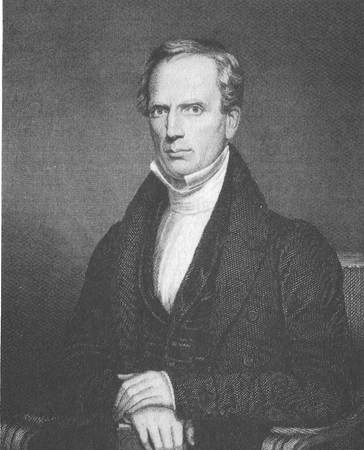
Charles Grandison Finney (1792–1875) was one of the most influential American revivalists of the nineteenth century. Trained as a lawyer in upstate New York, he underwent a dramatic conversion in 1821 and turned from the practice of law to preaching, becoming a central figure in the wave of revivals historians call the Second Great Awakening. His preaching swept through towns across central and western New York — a region so marked by revival fervor that it became known as the ‘Burned-over District’ — and later reached major cities including New York and Boston.
In 1835 Finney joined the faculty of the newly founded Oberlin Collegiate Institute in Ohio, where he taught theology for decades and served as the college's second president from 1851 to 1866. Oberlin under Finney's influence became known both for revivalist fervor and for reform: it was an early center of the abolitionist movement and among the first American colleges to admit women and Black students alongside white men. Finney died at Oberlin in 1875. He is remembered today chiefly through two major works, Lectures on Revivals of Religion (1835) and Systematic Theology (1846, revised 1851), and through the large body of sermons and lectures — including the material gathered in Principles of Holiness — published during his lifetime in periodicals such as The Oberlin Evangelist.
What is Principles of Holiness about?
Principles of Holiness is a themed collection of nineteen lectures and sermons by Charles Finney on the subject of sanctification — what it means for a Christian to be made holy, and whether a fully surrendered, habitually obedient life is a realistic expectation in this world or only a hope for heaven. Thirteen of the nineteen (chapters 3 through 15 of the printed edition) come from a series titled ‘Holiness of Christians in the Present Life,’ which Finney published in The Oberlin Evangelist through 1843. Three more (the sermons on God's benevolence, glory, and the believer's joy in Him) date from the same year, and three earlier pieces — including the two lectures on ‘Christian Perfection’ and the closing lecture, ‘Rest of the Saints’ — come from Finney's Lectures to Professing Christians, first published in 1837.
This particular edition was compiled and introduced by Louis Gifford Parkhurst, Jr., and first published in 1984 by Bethany House Publishers of Minneapolis, Minnesota, as one of several Finney anthologies Parkhurst prepared for that publisher (alongside titles such as Principles of Prayer, Principles of Victory, and Principles of Liberty). This 1984 compilation — its selection, arrangement, editorial introduction, and any updating of Finney's language — remains under copyright. UECF.NET has not reproduced its text; this study companion is built from our own reading of the chapters' arguments and from these publicly available bibliographic facts, not from Parkhurst's own wording.
Major themes of this study companion
Across the introduction, nineteen chapters, and closing appendix you will meet a handful of threads running throughout: that Christian perfection means whole-hearted, disinterested love rather than equality with God's own nature; that selfishness and holiness are opposites that cannot coexist in the same choosing will; that faith, not effort, is the means by which a soul is sanctified; and that unbelief — not the strength of habit or the weakness of the body — is the real reason full sanctification is rare. None of the explanatory prose on these pages is Parkhurst's or Finney's own wording. It is UECF.NET's original teaching, written to send you back to Scripture, and to the printed book itself if you wish to read Finney's own arguments in full.
📖 Start reading the study companion About this web edition →