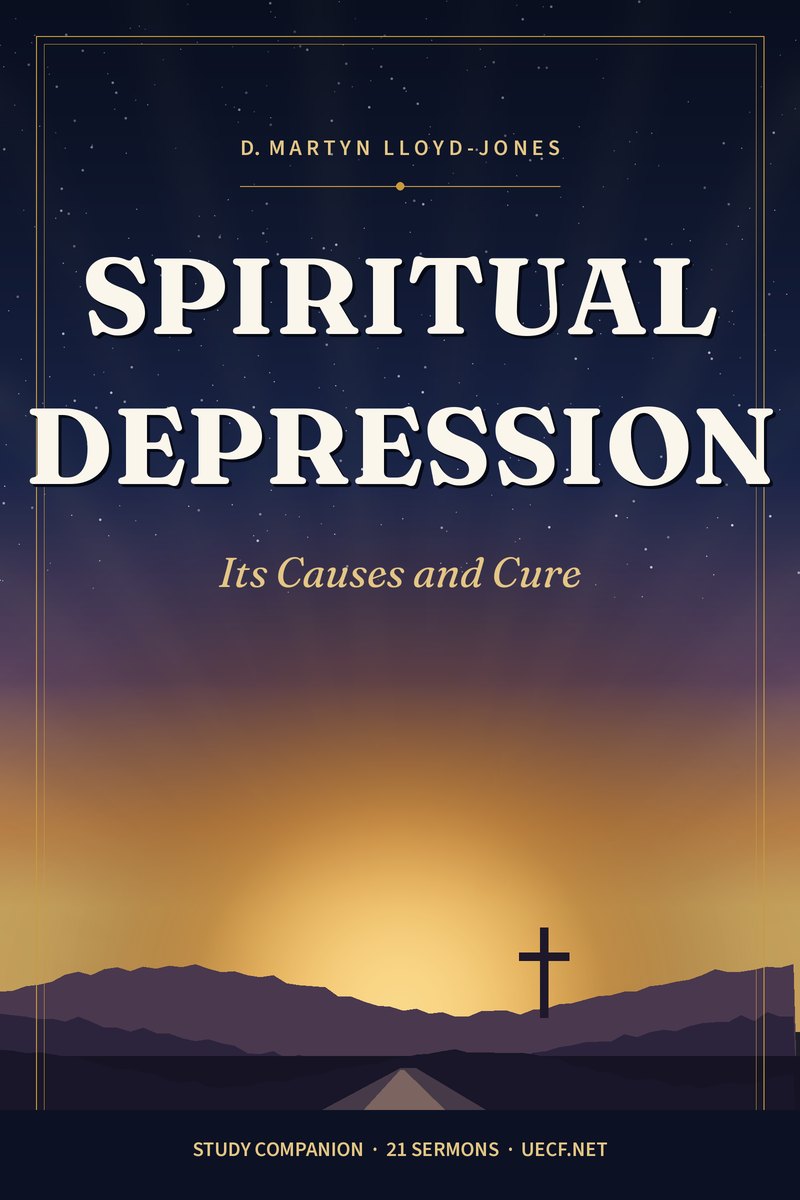
Sermon 1 of 21 · Psalm 42:5, 11

General Consideration

A soul that listens to itself — temperament, tiredness, reaction after blessing, the devil's attacks and, underneath them all, unbelief.

Search this study guide

    The text

    Why art thou cast down, O my soul? and why art thou disquieted in me? hope thou in God: for I shall yet praise him for the help of his countenance.

    Psalm 42:5 KJV

    Why art thou cast down, O my soul? and why art thou disquieted within me? hope thou in God: for I shall yet praise him, who is the health of my countenance, and my God.

    Psalm 42:11 KJV

    At a glance

    The cause

    A soul that listens to itself — temperament, tiredness, reaction after blessing, the devil's attacks and, underneath them all, unbelief.

    The cure

    Take yourself in hand: question your soul, remind it of who God is, and command it to hope in Him.

    Summary of the sermon

    The opening sermon sets the whole series in motion by treating Psalm 42 as a case study. Here is a believer who is plainly unhappy — cut off from public worship, taunted by enemies, his tears his food day and night — and yet he refuses to let his misery have the last word. He turns on his own soul and cross-examines it. That is the pattern Lloyd-Jones wants his hearers to notice before anything else is said.

    Before offering any cure he surveys the ground. Spiritual depression is common among God's people, it is not new, and it matters because an unhappy Christian is a poor advertisement for the gospel in a watching world. Its general causes are many. Temperament plays a part: the introvert who is always examining himself is more prone to it than the extrovert, though temperament has nothing to do with anyone's standing before God. Physical condition plays a part — illness, exhaustion and overwork can produce a gloom that must not be spiritualised away. So does the reaction that so often follows a great spiritual high point, as with Elijah after Carmel. So does the direct activity of the devil. And beneath all of these lies unbelief — failing to hold on to what we already know to be true of God.

    The remedy modelled by the psalmist is the one the whole book keeps returning to. Most of our unhappiness, Lloyd-Jones argues, comes from listening to ourselves instead of talking to ourselves. The self that wakes us in the morning with its complaints must be silenced and addressed: Why are you cast down? Hope in God. I shall yet praise Him. Depression is not cured by brooding, but by deliberate, reasoned self-confrontation grounded in the character of God.

    Key points

    • Spiritual depression is a real, common and ancient affliction of believers, and it damages the Church's witness.
    • Temperament shapes our vulnerability but has no bearing on our salvation.
    • Physical causes — illness, fatigue, overwork — are genuine and must be treated as such.
    • Reaction after blessing, the devil's assaults and, finally, unbelief lie beneath most cases.
    • The cure begins when we stop listening to ourselves and start talking to ourselves about God.

    Illustrations the preacher uses

    • C. H. Spurgeon's lifelong battles with gout and the depression that accompanied it.
    • Elijah under the juniper tree after the triumph on Mount Carmel.
    • A patient who leaves the doctor's surgery having forgotten the detailed instructions — a picture of why general encouragement is not enough.

    Related Scripture

    • Psalm 43
    • 1 Kings 19
    • Genesis 15
    • Jeremiah 20
    • Matthew 11:2–6

    For reflection and discussion

    1. Which of the general causes named here — temperament, physical condition, reaction after blessing, the devil, unbelief — do you recognise most readily in your own experience?
    2. What is the difference between healthy self-examination and the morbid introspection that feeds depression?
    3. What would it look like this week to speak to your soul the way the psalmist does, instead of simply listening to it?

    These notes are an original UECF.NET study companion and are not a reproduction of the book. Read the full sermon — chapter 1, pages 9–22 — in Spiritual Depression: Its Causes and Cure by D. Martyn Lloyd-Jones (Eerdmans, 1965).

    ↑ Back to top