
Why was Jesus of Nazareth
rejected?
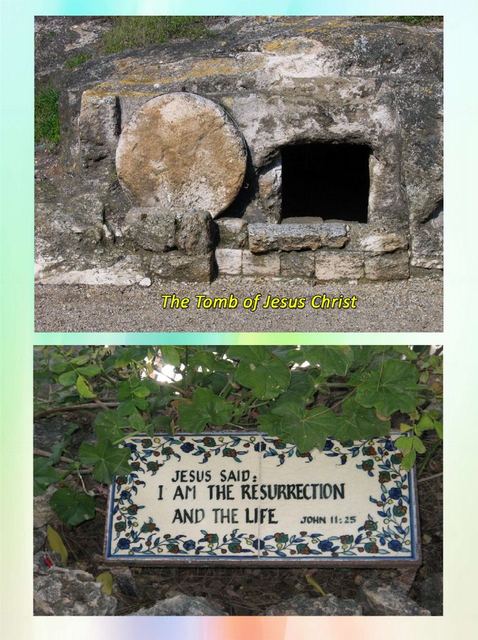
It is really interesting to the true believers to open the Bible, and read about the great heroes of faith. At that time undoubtedly our excitement will be beyond comprehension. When we walk in the places of which our patriarchs Abraham, Elijah, Daniel, John, Peter and Paul walked we feel that it is the gift of God for us to give chance to visit such kind of Holy places. It is certainly a unique opportunity to walk in those places which Jesus Christ walked and feel like singing “I happened to visit Israel and walked those places where Jesus Christ walked”. Why because it is an unforgettable experience in lives. I understand that nobody would feel exhausted to visit the home of our God any number of times, and the place, where our Lord purchased our salvation with His blood. If we visit that place again and again, we come across new Biblical thoughts that make us extremely happy. The believers will be excited and captivated at every new Biblical event, when they come across in their walk. When some pilgrims questioned about their favorite site, they immediately, answer that it was the Sea of Galilee with its panoramic view of the sea, of glistening at the early noon sunshine. It was known as focal point of the Lord’s early ministry. For those people who visit first time will have the glance of the most beautiful city called Jerusalem; and look toward west from the top of the Mount Olives, and across the kidran valley toward the Temple Mount. Another most exciting scene is the “Gordon’s Calvary”, it resembles today a skull upon which the Lamb of God must have been crucified and nearby is a green Garden and empty tomb, where the son of God through His resurrection conquered death for all ages. The most important site in Nazareth is Greek Catholic Church; it is no longer worth seen, because of its pathetic condition. It stands in marked contrast to 91The Mysteries of the Mysterious God the ornate large and with stained glasses windowed, Roman Catholic Church of the Annunciation. The church is a five hundred yards away from the major traditional site commemorating the angelic message to Mary concerning the birth of the son of God. Then to reach the obscured church, one has to walk through the narrow streets, Arab Bazaar, after that a number of narrow turns, then walk into an inconspicuous and with another turn, one can find that noted church. This church generally not kept open, so one has to take prior permission from the authorities to look into that church. At present there is no other church except Jewish synagogue built on the same ruined place of ancient one. At the time of the Lord Jesus Christ, Nazareth was a small insignificant village and not highly regarded. In this context we can recollect the words of Nathaniel. He questioned himself, “Is there any good thing that comes out of Nazareth?” (John 1:46). The population of that village was about 100-150 families. Basing on the population there was only one synagogue to which, Jesus, Mary, Joseph and his brothers and his sisters used to attend. Even today, the Arab of Nazareth calls that church, “The school of the Rabbi”. It was the synagogue, at Nazareth that one of the important roles played during the life and ministry of Jesus Christ. The beginning of Christ’s Ministry – Jesus walked to a small town near the Southern terminus of the Jordan River. It is not far away, but North of which the river enters the “Dead Sea”, the small area to which Jesus had come was “Bethabara”, and that place was located in the Northern section of the Jordan wilderness. The distance between Nazareth and Bethabara was about 75 miles. The visit of Jesus Christ to the place of Bethabara was prompted by the ministry of John the Baptist. He was in that wilderness preaching to Israelites the need for their repentance. Then John Baptized those who believed as an outward sign of commitment to that urgent need. Jesus must have gone there to be Baptized by John in publicity doing. By doing so, Jesus identified himself with John’s ministry, and call for national repentance. His baptism was recorded in three gospels. Apostle Matthew wrote the following lines. 92The Mysteries of the Mysterious God “And Jesus when he was baptized went up strait way out of the water and lo the heavens were opened unto him and the spirit of God, descending like a dove and lighting upon him; and lo a voice from heaven, saying. This is my beloved son in whom I am well pleased” (Matthew 3:16-17) Like Matthew, Apostle Luke also commented the following lines about Christ’s Baptism. Now when all people were baptized it came to pass, Jesus also being baptized and praying the heaven was opened. And the Holy Ghost descended in a bodily shape like dove upon him and a voice came from heaven which said thou art my beloved son in thee I am well pleased (Luke 3:21-22) In Israel men were anointed for identification. And while anointing on behalf of God may have to say “this is my prophet” or “This is my priest” or “This is my King”. Here, anointing was also an indication of empowering, the “title Christ” came from “Greek” word “Christos”, and the word “Messiah” came from the Hebrew word “Mashiach”. The Baptism of the lord was his public anointing in the bible men were anointed with olive oil which was seen as a type of the Holy Spirit. In ancient Israel the priests used to be anointed (Leviticus 21:10). David was anointed as a king by Prophet Samuel. Elijah was commanded to anoinnt as Elisha for the prophetic ministry. Why God wanted to anoint Israel men because whenever God wanted the service of men, he would chose someone and provides power to get the work done. When the work could not be done on any occasion, then it is not lacking the power of God, but due to his unfaithfulness. When the spirit of God descended upon Jesus Christ it is for the purpose of identification. God said, “This is my beloved son”. Then Jesus was led up of the spirit into the wilderness for the temptation of the devil. Prior to this incident Jesus did not participate in any public meetings. However, Jesus was identified as the son of God and empowered with Messianic ministry. The Holy Spirit himself led Jesus into confrontation with Satan. The wicked evil Satan three times tried to tempt the son of man. The testing of Jesus by Satan happened at three different places, and this testing was in the following 93The Mysteries of the Mysterious God way Satan asked Jesus to command the stones to be made bread. It is an appeal to the lust of the flesh. The next test was, if you are the son of God, cast thyself down, it is an appeal to the lust of eyes and the third one was “Fall down and worship me”. It was an indication of pride. Jesus in all stages was tempted like other people, but he never committed any sin, and if he had committed any sin, he would not have become a savior of sin. The testing of the son of man was recorded for the purpose of demonstrating it for the future generations. This attempt has become necessary to exhibit his capability of the Messianic role for which he had come into this world. The first Adam when he was tempted by Satan capitulated the last Adam remained faithful. The Satan failed in his trial to tempt Jesus Christ, for committing any sin and the scripture made it clear assessment. Then the angel came and ministered unto him. After the wilderness testing by the devil, the Lord began to move North ward toward his home in Galilee, which is about three day’s journey. Jesus on his way to his place came across some villages and he preached them in the synagogues. And Jesus returned with the power of the spirit (Devine enablement) into Galilee and there went out a fame of him through all the regions round about. And he taught in their synagogues being glorified of all (Luke 9:14-15) Jesus had returned to Nazareth, after he became successful in his confrontation with Satan. He was empowered with the Holy Spirit and identified as the son of God. Jesus was thirty years old by then. He lived for three more years and died at the age of 33. His first encounter was with his own home town Nazareth, then with his family members in his own synagogue. Apostle Luke described the event in the following lines:- And he came to Nazareth, where he had been brought up and, as his custom was, he went into the synagogue on the Sabbath day, and stood up for to read. And there was delivered unto him the book of the prophet Isaiah. And when he had opened the book, he found the place what it was written. The spirit of the Lord is upon me, because he hath anointed me to preach the gospel to the poor; he hath sent me to heal the broken hearted, to preach deliverance to the 94The Mysteries of the Mysterious God captives, and recovering of sight to the blind, to set at liberty them that are bruised, to preach the acceptable year of the Lord. And he closed the book, and he gave it again to the minister, and sat down. And the eyes of all of them that were in the synagogue transcend focused on him. And he began to say unto them, this day is this scripture fulfilled in your ears. And all bare him witness, and wondered at the gracious words which proceeded out of his mouth. And they said, is not this Joseph’s son? And he said unto them, ye will surely say unto me this proverb, “physician, heal thyself; whatoever we have heard done in Capernaum, do also here in thy country”. And he said, “verily I say unto you, no prophet is accepted in his own country”. (Luke 4:16-24). Apostle Luke was in the habit of using less vocabulary in his writings. It is said, Jesus was out of his home for not less than forty six days. But when he returned, exactly and greeted his mother, brothers and sisters was not mentioned anywhere. Luke was more anxious to make us know the crucial issues as quickly as possible he mentioned here three important points. First point: Jesus was brought up in Nazareth. Though Nazareth was his home town, he was not born there. He spent his early years in Egypt. Second Point: It was his custom to attend the synagogue in Nazareth. He was an observent Jew and Jesus went deep in Judaism. He could know in a very short time the custom, culture and religious practices of his people. About all in his perfect humanity, he was taught each morning by God himself. In this context, prophet Isaiah wrote the following lines: The Lord God hath given me the tongue of the learned, that I should know how to speak a word in season to him that is weary; he walketh morning by morning, he walketh mine ear to hear as the learned. (Isaiah 50:4) It is really difficult to speculate about him for growing up in synagogue in Nazareth. He was at the age of twelve confronting with Rabbis in the Temple of Jerusalem. But in His synagogue at Nazareth whether he observed the traditions and prophecy or whether he remained calm before the Rabbis and aged people. The principle of the authorities was that a man below thirty years was not allowed to teach or preach in the synagogue. Jesus was reasoned with 95The Mysteries of the Mysterious God the Rabbis for years and they must have been best taught in the history of humanity. Though he was in their midst for more than twenty five years he did not take any major role. Jesus used to attend the synagogue week after week and year after year, and listened to the Rabbi preaching in glorious terms of the promised Messiah. They spoke of the coming Messiah, as a great and mighty deliverer to break the yoke of Roman oppression. They never thought, that their expected Messiah had already come and living with them and finally put on cross by his own people and died to save the people from their sin. They never realized their expected Messiah was moving among them and told on certain occasion that he was the Messiah. Third Point: On one occasion in the synagogue Jesus stood up to read the scripture. It was a customary in synagogue to give first preference to the Leviti (Priest) to speak. It is not available the next person they preferred was a visitor and finally any one from the congregation. Jesus after Baptism began his teaching in Galilee. In a very short time his fame spread like wildfire and now he returned to his home synagogue and stood up; He did like that whether through invitation or because his fame was spreading or because he has been anointed by the Holy Spirit at the river Jordan. He wanted to assert himself as he began his Messianic role that we do not know. Jesus stood before the small congregation and we can take it for granted that it was a poor synagogue in Nazareth; which could accommodate men, women and children. And all the gathering was known to him, because he was also one of the members. Then the scroll of prophet Isaiah was brought to him from behind the curton of the ark in front of the synagogue. Jesus had not asked for a particular scroll to be brought for him, the Hebrew Scriptures contain the law, the prophets and the writing and Isaiah is part of the section known as the prophets. When Jesus opened the scroll to read, he did not read from the seventh chapter of the book of Isaiah which spoke about his virgin birth (V-14) or from the ninth chapter which foretold about him as the King of Israel (V-6). Instead of that, he opened the book of Isaiah chapter 61 to read. 96The Mysteries of the Mysterious God In Judaism the scripture reading was assigned for each Sabbath day of the year. Jesus opened the book of Isaiah chapter 61 to read for that Sabbath. “The spirit of the Lord God is upon me”; and Luke wrote And the Holy Ghost descended in a bodily shape like a dove upon him, and a voice came from heaven, which said, thou art my beloved son in thee I am well pleased.(Luke 3:22). As a matter of fact, the spirit of the Lord was upon him. Jesus had been anointed lust at that time and the prescribed that for the Sabbath service at his home synagogue certified to that incomparable fact. This wonderful time was of course the Devine origin. There are six points mentioned below with specific reasons for anointing Jesus.
1. To preach the gospel to the poor (those who realized they were poor in spirit)
2. To heal the broken hearted (those who were griving over their sin, and the sin of the nation)
3. To preach for the deliverance of the captives (those who realized they were enslaved to the world to the flesh and the devil)
4. To provide recovery of the sight to the blind ( the giving of Devine perspective and spiritual discernment to life)
5. To set all liberty to those who were brushed (to offer relieve to all who were wounded as a consequences of their sin)
6. To preach the acceptable year of the lord (to indicate this was the year of Devine redemption, as foretold by the prophet of Isaiah) All this matter was bound up in the message of John the Baptist according to his proclamation to Isaiah; “Repent ye, for the kingdom of heaven is at hand”. Here the more interesting thing is that, when the Lord read from Isaiah 61, he abruptly stopped in the middle of the verse he read. The spirit of the Lord is upon me, because he hath anointed to preach the gospel to the poor; he hath sent me to heal the broken hearted, to preach deliverance of the captives, and recovering of sight to the blind, to set them all liberty that are bruised, to preach the acceptable year of the Lord.(Luke 4:18-
19) 97The Mysteries of the Mysterious God Jesus happened to stop his reading all of a sudden. “And he closed the book (Scroll) and gave it to the minister again and sat down. The eyes of all the people that were gathered on that particular day in the synagogue, were focused on Jesus” (Luke 4:20). Why he stopped reading at a point because, everything to that point described the truth associated with his first coming. And what followed next “and the day of vengeance of our Lord” God (Isaiah 6:2). These words would speak about the outpouring of his wrath of his second coming. This day is the scripture fulfilled in your ears. (Luke 4:21) when Jesus sat down all eyes were concentrated on Him. They were anxiously waiting to hear what he would say. And what he said stunned the congregation beyond comprehension. The matter was what the Messiah would do after his second coming. This news stunned all the congregation that gathered in the synagogue on that day. What is Redemption? Redemption is a religions term or context the most important one in the vocabulary of Biblical words; because it plays a crucial role in the life of a true believer. Christians now and then talk about redemption, when singing hymns in the churches or anywhere. The fact is that all the humanity is redeemed from their sin through the blood of Jesus, the Lamb of God. First of all what is redemption? And what is the meaning of it? Before God? Remember the church, sing, read, redemption center no stamps are necessary. The singing was technically right because men who experience divine redemption do so, freely or literally without cause” (Romans 3:23-24). That is to say, men made no contribution to their own redemption stamps or payments are unnecessary and the fact is that attempt of payment of any kind, to secure redemption would negate the transaction of redemption. “God’s grace is unmerited favor”. Let us see the following points:-
1.Where there is grace, there is no debt.
2.Where there is grace, there is no obligation.
3.Where there is grace, there is no merit. 98The Mysteries of the Mysterious God Is there any law to observe and to acquire the grace of our Lord. It is said Redemption is by grace through faith apart from any human contribution. What millions of intended people who call themselves Christians try to do. Most of the false religions try to circumvent the grace of God, through some kind of works. To say in nut shell, that is what the core of the protestant reformation was all about. If someone reads the sign “Redemption upon no stamp necessary”, and perceived that require redemption requires no payment of any kind that would be equally erronious. And price of redemption was paid completely by the son of the God Jesus who came to pay a debt he did not owe by men, owe a debt that they could never pay. So, the definition of Redemption is the act of deity in which Jesus Christ paid the whole demand of the law, for a sinful man. Then God the father receives the man who is redeemed as a son and heir and the Holy Spirit dwells in the redeemed man. And this act would deliver him from the bondage of sin dwelling in him and into freedom of Christ. The entire glorious truth of redemption is summed up in the Bible by using three words. And each of the three words is translated “Redemption”, but each word has a particular shade of meaning. Ransom – The Bible used the word “Agorazo” to speak of redemption with the use of Agorazo, the emphasis is put on the ransom price to be paid. Let us look into this carefully. The beloved apostle John addressed this subject in the book of Revelation. He wrote “And they sung a new song, saying thou art worthy to take the book and to open the seals thereof, for thou hast slain and hast redeemed (Agorazo, which menns to pay the ransom price) us to God by thy blood out of every kindred and tongue and people and nation. The ransom price to redeem men for the curse of sin is the blood of the Lord Jesus Christ. We have another statement of Apostle Peter in this regard. He condemned the false teachers in the latter days in this way. “But there were false prophets also among the people, as there would be false teachers among you, even denying the Lord who brought them “Agorazo” to pay the ransom; and bring upon themselves swift destruction” (2Peter 2:1) what Peter wanted to say is that in 99The Mysteries of the Mysterious God the later days false teachers would deny the power of the blood of Christ in purchasing men’s redemption unfortunately, it is a perfect, description of millions of people, who call themselves today as Christians, but deny the efficacy of the blood of Christ on Calvary for their salvation. Another great apostle Paul gave his testimony like John and Peter. Paul wrote to the church at Corinth “For ye are brought (once again brought is the transaction of “agorzo” means to pay the ransom”) with a price therefore glorify God in your body and in your spirit, which are God’s” (1 Corinthians 4:20). The logic of Paul is quite simple. Jesus through his blood has paid the price of our redemption. Therefore it is a logical and quite appropriate to glorify God in our body and spirit which legally belong to Christ who paid the price to redeem us. Removal – The second point here is that the Bible uses the word “exagorazo” to speak of redemption. And by adding preface ‘ex’ to agorazo it become exagorazo and the emphasis is now on the re-moral of the redeemed from the slave market of sin and the jurisdiction of Mosaic law, which declared “The soul that sinneth, it shall die” (Ezekiel 13:20). Apostle Paul’s great epistle is Galatians on Christian liberty it has correctly been called the believers emancipation proclamation. Paul’s clarian call is Christ hath redeemed us from the curse of the law, being made a curse for us, as it is written, curse is everyone that hangeth on a tree. Paul was of the opinion that Christ through his crucification has removed us for the curse of the law. The statement of Paul is that to be adopted into the family of God, man had to be removed from the curse of the law which keeps man separated from God and for that to be accomplished Jesus had to become a man. Release – The third point is that Bible used the word “Lurton” to speak of redemption. With the word ‘Lurton’ the emphasis is made not only on paying the price and removing but also releasing the one who was redeemed from all obligations, so that he may choose whom he will serve. Matthew was the tax collector turned disciple. He gave an excellent illustration of this word ‘Lurton’. The disciples were joking over their place of honor in the Lord’s kingdom 100The Mysteries of the Mysterious God they thought the Lord was about to be established and Matthew recorded the Lord’s response. “And whoever will be chief among you let him be your servant, even as the son of man came not to be ministered unto but to minister and to give his life a ransom (ransom comes from ‘Lurton’ which means to redeem and set free) for many” (Matthew 20:27-28). The most brilliant use of this word comes from the inspired pen of the apostle Peter. He said with the precious blood of Jesus as a Lamb without blemish and without spot. The price for our setting free was not the corruptible things of this world but the precious blood of the Lord Jesus Christ. The three words for redemption in the New Testament put together give a complete picture of the glorious doctrine of redemption. The picture behind these words is that of a Roman slave market. The word Agorazo speaks about the ransom price that was paid to purchase slaves from the slave market. The exagorazo speaks of the “removal” of the slave from the slave market; Once the ransom price was paid the release of the slave; and he is made free now, God is really great and gracious. He has paid the price of our redemption. He has freed us from the enslavement of this Godless world and the way of life headed by Satan. He made us free from all kinds of bondage. If we serve Him, it is not because of any force, but because of our love and devotion toward Him. Wisdom gratitude and love argue for willing a must and millions of people through centuries are with unanimous voice proclaimed “His yoke is easy his burden is light”. 101The Mysteries of the Mysterious God
The Mysteries of the Mysterious God The Mysteries of the Mysterious God
Apostle Paul’s Light for
Law and Grace
According to some scholars, Apostle Paul was called the greatest theologist among the Bible writers. As described in this article, Paul strongly fighting not the physical battle, but the spiritual fight; and this contained the message of Christ. The outcome of this message would have an impact on the eternal destiny of millions of people; throughout the centuries. So to say, there is no exaggeration in the above mentioned statement and the reality is that, the fight would continue even in the present days. It is on the part of the believers to say that weather Paul was a great personality or not. Most of the Bible readers know that he had an eye problem. (Galatians 14:14-15). But the truth is that when it would come, to defense, the death point, in the Good name of the gospel message of Christ. He was like a roaring lion to rule us throughout. It is beyond comprehension, whether Paul was the greatest theologian, and Missionary, the world knows it. The commentators offend compared Paul with Moses who was also one of the greatest minds, God ever produced. This Moses, was also called the servant of God, gave us under God’s command, five books, and (the first five books of the Old Testament). They are called Petateuch and they are primarily the Law of Moses to Israelites through God. Apostle Paul, under the influence of God, gave to the Christian believers at least thirteen books, out of twenty seven in the New Testament. Those books contained his most, and the clearest and complete teachings of God’s grace. These two men Moses and Paul were treated as the best and the most influenced persons, in the human history, and also considered most important characters, in the biblical history. Actually they deserve human praise for their achievements and great service to humanity. So to say, without them there is no existence of the Bible, and they were called the true servants of God. And 104The Mysteries of the Mysterious God without them what we call, the present civilization would not have existed, and there is no exaggeration in that statement. Moses and Paul faced many hardships in their lives, but those hardships did not prevent them from accomplishing the works of God. And what all they did under such circumstances, was similar in many ways. As mentioned in (Exodus 4:10) Moses was a stutter where as Paul had an eye problem. Both of them encountered God in different ways. Moses met God at the burning bush of Mount Sinai, where as Paul met God on the Damascus road through the bright light from heaven that made him fall to the ground. Both were opposed by their own people, on certain occasions. In spite of their hurdles from their people, they love their people more than their own lives. Moses interfered for his people at Mount Sinai, and said to God, to save them. But really God killed a particular number of people for their sin at that time. In the same way, Paul loved his nation so much, he happened to intervene and said, he would be willing to be separated from Christ forever. Let us hope for a while that both Moses and Paul happened to live in our times, the life of Christians would have been completely different. As we know, Moses was a “Law giver” where as Paul a teacher and defender of God’s grace. You can take it for granted that both are always with us and encourage us how we must live in this material world. There is no doubt; both of them were really warmest of passive friends. Moses would have enjoyed Paul’s wonderful teaching of the grace of God and Paul would have enjoyed the Law of God. Here, Paul’s fighting in his letter to Galatians was with some legalistic teachers who were missing the law, and grace, which was impossible. The letter of Paul to the Galatians was the first of all he wrote out of thirteen letters, to different people and we see them in the New Testament. It was written probably in 49-50 A.D, after his second missionary journey, and at that time he visited Galilee, also. After the completion of his thirteen letters Paul was considered by eminent people as “Apostle Paul”. There are different compliments about Paul, regarding his thirteen books. 105The Mysteries of the Mysterious God
1.In the Romans it is said that Paul was a servant of Jesus Christ, and he was called to be an Apostle. (Romans 1:1)
2.In the first Corinthians Paul was called an apostle of Jesus Christ (1
Corinthian 1:1)
3.In the second Corinthians Paul was called an apostle of Jesus Christ by the will of God. (2 Corinthian 1:1)
4.In the book of Ephesians, it is said Paul was an apostle of Jesus Christ by the will of God. (Ephesians 1:1)
5.In Colossians it is said, Paul was an apostle of Jesus Christ by the will of God. (Colossians 1:1)
6.In the first Timothy it is said that Paul was an apostle, of Jesus Christ, by the commandment of God our savior (1 Timothy 1:1)
7.It is said in the second Timothy that Paul was an apostle of Christ, by the will of God, according to the promise of life, which is in Christ.
(2 Timothy 1:1)
8.In Titus it is written, that Paul was a servant of God, and an apostle to Jesus Christ (Titus 1:1) Apostle Paul’s prophecy was understood, that the divinely established position of Apostle summed extremely important. His apostleship by the grace of God gave him special and unique authority. As a result of this during these two thousand years, there must be millions of ‘disciples’ Paul Defends his Apostleship In the letter to Galatians Paul began with the information, concerning his apostleship; He did not reveal this in and other letter previously about this. He introduced this letter in the following manner. “Paul an Apostle”, and then he added not of men, neither by man. There were legalistic teachers, who came from Jerusalem and wanted to discredit Paul’s teaching of salvation by grace through faith. Apart from the law by attacking Paul’s Apostleship. Those legalistic leaders strongly believed in Jesus. The true Christians believed in the death burial and resurrection of Jesus Christ yet they argued vehemently that it was an extension of Judaism and the law. It was also time for the gentiles 106The Mysteries of the Mysterious God who believed in Jesus in order to be truly convinced. According to the Judaism the redeemed must be circumcised and also they must strike on to the Mosaic Law. In this way legalistic Jewish believers in Jesus could keep the gentile believers under their influence and control. Some people attacked Paul’s messages of salvation by grace through faith by saying that Paul was not among the twelve apostles of Jesus Christ. They further argued that the twelve members were properly trained by Jesus for three years from the beginning of His ministry till the end that is till he died. In all the stages of the life of Jesus and His disciples Paul was nowhere to claim anything numerous pastors and equally a good number of leaders, and numberless decins in the churches. All of them played their own part in the churches. Some of them claimed the title in strange circumstances and we have to believe it is only the gift of God. The false apostles are always in conflict with the word of God. The most amazing thing is that there were thirteen apostles only throughout the ages for us to remember. The twelve apostles excluding Judas lived and properly trained by Jesus Christ for three years. The eleven disciples received enough degree than any other university. The wonderful thing is they learnt from Christ well where did I come from? How am I being? Where am I going? What it be like when I can go there and what does God truly like? The apostles with either wrote or sanctioned the 29 books of the New Testament. And those apostles happened to guide the churches during the first century and spoke the truth. So to say they were the guardians of the theological truth. The fact is that the apostatic truth has been continued until the New Testament was completed, almost at the end of the first century, when the beloved apostle John penned the most amazing book called “the book of Revelation” which contained many crucial ideas which are beyond comprehension. Till the time of the death of Jesus, Paul was not known to anybody. He was rather against Christianity and even on the work of killing Christians only. When he was going to Damascus on some Mission, Christ appeared to him on the way and changed him completely. Prior to this Paul did not know Jesus 107The Mysteries of the Mysterious God any more till he died and went to heaven to His father. But some legalistic teachers took the initiative to defend Paul and said that Paul was an apostle. He was an apostle of lesser degree, with lesser authority and with lesser status than the twelve original apostles. So, the teaching of grace in addition to Law was treated as error. Paul said he was not “an apostle of men”. But some leaders in the church simply wondered at the abnormal knowledge of Paul in the Bible, in activeness, his courage, his zeal, his faithfulness and love for Christ. By keeping all of them together he was declared apostle. Paul also said, he was an apostle “neither by man” that means, though he was not one of the twelve apostles like Peter, John and James, who were called the pillars of the church; recognized the gift of Paul. They called him and singularly declared him an apostle. Again there arose a great question to be answered. That is if Paul was not a member of the original twelve apostles, and if he was not declared as apostle by a group of leaders of the early church, and also if he was not appointed as an apostle, by twelve original apostles, like Peter, John and James, (who were called the three inner circle of the Lord,), from where, Paul could have his apostolic authority? Paul was originally an orthodox Jew; and his life was completely devoted to the Mosaic Law. He was a Pharisee, and more than that, he was trained by Gamaliel one of Israel’s greatest rabbi. He became a fanatic toward Judaism and quite against Christianity. He whole heartedly, participated in the stoning death of Stephen the first Christian martyr according to the Bible. Paul also got a letter of authority from the high priest to go to Damascus to persecute the Jewish Christians. While he was on the way to Damascus on that purpose, a miraculous thing happened Paul saw a bright light that came down from heaven and threw him to the ground and blinded him. In addition to that, he heard a voice from heaven with the following words “Soul, Soul why Persecutest thou me” (Acts 9:4). Soul was his original name before he accepted Christ. So, Soul a persecutor later became a renowned apostle, with a name Paul. Then he responded to the voice by asking “who art thou Lord”? The response came immediately “I am Jesus though Persecutest”. 108The Mysteries of the Mysterious God Paul was taken to Damascus and there he was taken case off for a few days. Then without the consultation of any apostle or the leaders. Jesus sent Paul to a far off desert place of South east of the “Dead Sea” for three years. Jesus had some aim, when he sent Paul, to Southeast of Arabia without consulting any apostle or leaders of the church. The fact is that Jesus wanted to train Paul, for three years there as he trained His twelve apostles. The apostle Paul tells us himself that the gospel he preached directly was Revelation. Paul’s apostle authority came to him like other twelve original ones, from the son of God. Paul in the first chapter of every letter greeted the church with the words, “grace and peace” He did that on every occasion. It is grace and then peace. It is the grace of God, which is always the persecutor of his peace. The apostle Paul greets the church of Galatia with the following words. Grace unto you, and peace from God the father and from our Lord Jesus Christ. Paul after his apostolic authority was confirmed; he left all his power and ferocity against Jewish Christians and began to love them with his speeches. But the disciples did not believe him for some time. On one occasion he addressed the church of Galatia with the following super strong words. “I marvel (which means Paul was amazed, Perturbed, perplexed and saddened over what he was going to tell people in the following passage. “That you are so soon removed from him that called you into the grace, of Christ unto another gospel which is not another but there be some that trouble you and would pervert the gospel of Christ”. (Galatians 1:6-7) Some of the legalistic teachers were perverting the gospel of Christ (Galatians 1:7) Perversion is unnatural, particularly in this context. It is brought about by trying to unite law and grace which are both mutually exclusive. The bold and courageous servant of God apostle Paul kept the true believers on the right path of biblical doctrine with his wonderful messages. Paul repeated the warning to those who were perverting the gospel by mixing law and grace, which are mutually exclusive. The readers were particularly requested to note the following passage. “God’s grace is unmerited favour, where there is grace, there can be no guilt, and where there is grace, there can be no obligation. 109The Mysteries of the Mysterious God Grace is appropriated by faith and leads to peace”. Law requires works, things to do or refrain from doing, which always leads one to sin or bondage. Work is never completed and never without sin. Christ died on the cross, so that you and I may live a life of faith that leads to peace. It is no wonder that Paul marveled over the insanity of the foolish Galatians were listening to those legalistic preachers. They were moving themselves from grace that leads to peace, unto law that leads to bondage. After Galatians he preached to the Ephesians. For by grace (unmerited favour) are ye saved, through of yourselves, it is the gift of God, Not of works (which is required by the law) lest in his own work” (Ephesians 2:8-9) grace appropriated by faith always leads to peace; Law appropriated by work, always leads to bondage. Christ died on the cross for our sins so that we can live with faith that leads to peace and salvation. The Biblical Order of the New Testament Books The New Testament and the Old Testament were written by a group of divinely inspired and selected penmen, during the first century. Those 2 Timothy 3:16; Peter 1:19-21; Psalm 107; John 10:3 were primarily written as and when God inspired them. The writers wrote them at different times and in different styles. Even then, all of them were sacred contribution of some gifted writers. As a matter of fact God is the Devine author of the whole Bible. For writing the books of the New Testament, His instrument players were, Matthew, Mark, Luke, John, Paul, Peter, James and Jude. Luke was a noted physician. He wrote his book in complete Greek style than John; who wrote as a profoundly and in a simple grammatical style. The difference in style between Luke and John was quite conspicuous and easily explained as Luke was a learned physician, where as John was only a fisherman. The memorable events of the first century were the messages of Jesus Christ. His death, resurrection and speaking of gospel messages at certain places like Asia and Europe which were taken a long time. During the first century, the Christians did not have computers or any other advanced items. So, it took a long time for writing or completing the New Testament and spread among the 110The Mysteries of the Mysterious God people. The copies sent to different places, were true with genuine works of the apostles. They were considered as scriptures and identified as God inspired new canon by the visible church. This process took some centuries. It was due to the Roman rule that started in 64 A.D. They began to persecute the innocent Christians on some plea or other with inhuman behavior, for such brutal crimes Emperor Nero was most popular. Athanasius Stalwart of the council of Niece in 325 A.D, and in 367 A.D listed 27 books we have in our New Testament as canonized. Then Jerome and Augustine considered those books as canonized at about 400 A.D. the Ecumenical council of Hippo 398 A.D carthage mentioned above there were many other officials wanted to maintain this process of writings on a separate scroll in a chest. Then they could be seen and glued together in pages as a book. So with that new invention and with the blessing of Emperor Constantine, the first and the earliest whole New Testament book appeared during the early fourth century A.D. Chronological order of the New Testament books The exact dates of some of the books of the New Testament were not known people of authority discussed among themselves seriously and came to a decision with probable dates. And also, they discussed, regarding the authorship of some books. For example, the book of “Hebrews” has been debated for centuries but in vain. The probable dates of some of the books, and their authors as follows: Mark35 – 55 A.D Matthew35 – 60 A.D Luke45 – 60 A.D John and his books 1, 2, 3 about 80 A.D Mark – The book of Mark was commonly accepted by all as earliest gospel written (35 – 55 A.D) It is really strange that every event we see in Mark’s gospel, can be found in the book of Mathew or in Luke and even found in both. It has been traditionally ascribed to John and Mark, that in their mother’s house, the early Christians used to meet. The real surname of John was “Mark” 111The Mysteries of the Mysterious God (Acts 12:12). He was a cousin of “Barnabas”. He followed Paul and Barnabas during the first Missionary journey (Acts 12:23; 15:36, 39). He must have known Jesus and apostle already. His personnel information he got was from the house of Mary mother of Jesus, made him to write correctly. Eusebutes also gave his personal opinion about the accuracy of Mark in his writings. And the gospel of Mark was found in original Greek in Baker’s book house in 1966. Matthew – 33 – 60 A.D. Matthew was recognized according to his book in 10:3 as a Tax Collector. He was a Republican, who used to collect Taxes to Roman government. Such a man was called by Jesus when he was in Galilee. He was one of the original apostles Matthew happened to travel with Jesus throughout his ministry. He also witnessed the passion and resurrection of Christ. The Detach (teaching) a first century document quotes and refers to the gospel of Mathew as the first century document and that was confirmed authentically. Eusebutes was a great early Christian historian. He quoted four gospels only origin knowing. According to Eusebutes, Matthew first wrote the sayings of Jesus in “Aramaic” language and later repeated the entire book into Greek. The noted scholars believed that Matthew and Luka did not have any access to each other’s gospel as similar accounts such as the sermon on the Mount, the Lord’s Prayer and the olivet discourse have not been worked either to have an exact duplication in wording. Luke 45 – 60 – He was a physician (colonially) and a companion of Paul during his second and third missionary journeys, probably during 15 A.D. his Greek style was note worthy and perhaps matchless. He wrote another book “Acts” also, in a complex and learned Greek style; which has been labeled as classical conia. His book was divided into 24 chapters and it was compared to Matthew 28 chapters. Yet it is called the biggest book in words and it contained more miracles and parables. The believers can also find different ideas and prayers of Mary and the Genealogy of Jesus Christ through the line of Mary His mother who gave birth to Him, by means of the Holy Spirit. According to 112The Mysteries of the Mysterious God some reliable record, John and the mother of Jesus Mary, left Jerusalem, and lived at Ephesians. It is also said authentically that both John and Mary mother of Jesus died in Ephesians only. In that place there are some churches built on their names. As a companion Paul, Luke happened to go to Ephesians, when John and Mary were there and collected more information and also about the details of the apostils as for as possible and other authentic data about all of them. John 90-99 A.D – It is said the fourth gospel, the book of John, “Revelation” and his other three small books were written in perfect Greek style. In the book of Revelation, also he maintained the same style, Mauritanian the person who translated. The Revelation was for the purpose adding to the New Testament of King James Version of the Holy Bible. This book was also with perfect style and penned in simple Greek grammar, so that, it would be easier and more suitable even to a common fisher man of Galilee rather a scholar. This work was done probably in the year 185 A.D. After some time John the disciple of Jesus Christ, thought of himself in his heart to published a gospel, when he was in Ephesians, which is in Asia. The Mauritanian canon (during the second century) says that the fourth gospel of John was written. Then he put a condition to his fellow disciples and Bishops who urged him to write must fast with him for three days and then when they got their minds must be revealed to their minds must be revealed to one another. But in the same night it was revealed to apostles, said that whatever would come out of their mouths must be written. John through the Holy Spirit remembered many things that were not recorded and that were already in circulation; the synaptic gospels like Matthew, Mark and Luke. In addition to that the brethren urged him in his later years to write down all those things in a gospel. John had the gift of super natural and the Holy Spirit that made him to recollect those past things perfectly. Jesus said “but the comforter which is the Holy ghost, whom the father will send in my name he will teach you all things and bring them for your memory and whatever 113The Mysteries of the Mysterious God said unto God” (John 14:26). So, we have the blessings of the “I am “says of our Lord, which enrich our heritage even more. The Book of Acts - 60 A.D. This book contained the full details of the spreading of gospel messages of God, and the development of early churches both Luke and the book of Acts were dedicated to Theophlus (Luke 1:3; Acts 1:1). Both of them were written in an identical and beautiful style. It is also called the complex classical Konia learned style, which was most suitable to an educated physician like Luke chapters 1-12 of Jerusalem ministry, from 13-21 were the details of the three great Missionary journey of apostle Paul, and chapters from 21-28 described Paul’s rest and prison ministry. The book of acts is an ideal transformation between gospels which speak about primarily the ministry of Christ, and then the work of the Holy Spirit encouraging and guarding the church as found in Ephesians. The thirteen Epistles of Pauline were written during the three missionary journeys and his first imprisonment by the Romans and also during his second imprisonment. The book of ‘Revelation’ was given to John on the ilse of Patmore during 95 - 96 A.D. 114The Mysteries of the Mysterious God