
How A Prideful Man Finds His Faith
HOW A PRIDEFUL MAN FINDS HIS FAITH

"FOR THE LORD TAKES PLEASURE IN HIS PEOPLE: HE
ADORNS THE HUMBLE WITH SALVATION.
–Psalm 149:4
HOW A PRIDEFUL MAN FINDS HIS FAITH
person whose books have had a profound impact on my life is Charles "Chuck" Colson. His life story is quite fascinating. Colson was born in Boston on October 16, 1931. He was well educated, graduating with honors from Brown University with a degree in history. He went on to George Washington University where he received his law degree. He then spent two years in the U.S. Marine Corps where he reached the rank of captain. From there he founded his own law firm in Boston, which swiftly grew into a prestigious organization with offices in Boston and Washington D.C. Colson left the firm in January 1969 to join Richard Nixon's administration in the White House. In November of that same year, he was appointed as Special Counsel to the president.
Colson acknowledged in his own words, "I was valuable to the president, because I was willing to be ruthless in getting things done." He was described by many as President Nixon's "hit man" and "hatchet man." He was a very hard, vindictive person and very loyal to President Nixon.
At the height of the Watergate scandal, Colson gained notoriety for being named as one of the Watergate Seven and eventually pleaded guilty to obstruction of justice. He was charged with attempting to defame Pentagon Papers defendant Daniel Ellsberg.
Colson shares an event that happened while he was facing time in prison that forever changed his life. He had a good friend by the name of Tom Phillips who was president of Raytheon, a Fortune 500 company and the largest firm in Massachusetts at the time. One day, Colson was told that something had happened to Tom. He heard that Phillips had some kind of religious experience, and that he had changed quite a bit. Apparently, his new-found faith had become quite important to him.
The Watergate hearings were really beginning to heat up, and so Colson and his wife decided to get away and drive up to the Maine coast. Since they would be driving through Boston, he decided to stop by and visit Tom.
The following are excerpts from that evening as described by Colson himself from his memoir Born Again: It was eight p.m., a gray overcast evening, when I turned off the country road connecting two of Boston's most affluent suburbs, Wellesley and Weston. The towering gentle pines brought sudden darkness and quiet to the narrow macadam street. Another turn a few hundred yards later brought me into a long driveway leading to the Phillipses' big white clapboard Colonial home. As I parked the car I felt a touch of guilt at not telling Patty the truth when I had left her alone with my mother and dad in nearby Dover.
"Just business, honey," had been my explanation. Patty was used to my working at odd times, even on this Sunday night at the start of a week's vacation.
The Phillipses' home is long and rambling. I made the mistake of going to the door nearest the driveway, which turned out to be the entrance to the kitchen. It didn't bother Gert Phillips, a tall smiling woman who greeted me like a long-lost relative even though we had never met before. "Come in. I'm just cleaning up after supper."
After exchanging pleasantries with the Phillips family, Tom and Chuck walked to a screened-in porch at the end of the house.
"Tell me, Chuck," he began, "are you okay?" As the President's confidant and so-called big-shot Washington lawyer I was still keeping my guard up. "I'm not doing too badly, I guess. All of this Watergate business, all the accusations – I suppose it's wearing me down some. But I'd rather talk about you, Tom. You've changed and I'd like to know what happened."
Tom drank from his glass and sat back reflectively. Briefly he reviewed his past, the rapid rise to power at Raytheon: executive vicepresident at 37, president when he was only 40. He had done it with hard work, day and night, nonstop.
"The success came, all right, but something was missing," he mused. "I felt a terrible emptiness. Sometimes I would get up in the middle of the night and pace the floor of my bedroom or stare out into the darkness for hours at a time."
"I don't understand it," I interrupted. "I knew you in those days, Tom. You were a straight arrow, good family life, successful, everything in fact going your way."
"All that may be true, Chuck, but my life wasn't complete. I would go to the office each day and do my job, striving all the time to make the company succeed, but there was a big hole in my life. I began to read the Scriptures, looking for answers. Something made me realize I needed a personal relationship with God, [it] forced me to search."
A prickly feeling ran down my spine. Maybe what I had gone through in the past several months wasn't so unusual after all—except I had not sought spiritual answers. I had not even been aware that finding a personal relationship with God was possible. I pressed him to explain the apparent contradiction between the emptiness inside while seeming to enjoy the affluent life.
"It may be hard to understand," Tom chuckled. "But I didn't seem to have anything that mattered. It was all on the surface. All the material things in life are meaningless if a man hasn't discovered what's underneath them."
We were both silent for a while as I groped for understanding. Outside, the first fireflies punctuated the mauve dusk. Tom got up and switched on two small lamps on end tables in the corners of the porch.
"One night I was in New York on business and noticed that Billy Graham was having a Crusade in Madison Square Garden," Tom continued. "I went—curious, I guess—hoping maybe I'd find some answers. What Graham said that night put it all into place for me. I saw what was missing, the personal relationship with Jesus Christ, the fact that I hadn't ever asked Him into my life, hadn't turned my life over to Him. So I did it—that very night at the Crusade."
Tom's tall, gangling frame leaned toward me, silhouetted by the yellow light behind him. Though his face was shaded, I could see his eyes begin to glisten and his voice became softer. "I asked Christ to come into my life and I could feel His presence with me, His peace within me. I could sense His spirit there with me. Then I went out for a walk alone on the streets of New York. I never liked New York before, but this night it was beautiful. I walked for blocks and blocks, I guess. Everything seemed different to me. It was raining softly and the city lights created a golden glow. Something had happened to me and I knew it."
"That's what you mean by accepting Christ—you just ask?" I was more puzzled than ever.
"That's it, as simple as that," Tom replied. "Of course, you have to want Jesus in your life, really want Him. That's the way it starts. And let me tell you, things then begin to change. Since then I have found a satisfaction and a joy about living that I simply never knew was possible."
The heat at that moment seemed unbearable as I wiped away drops of perspiration over my lip. The iced tea was soothing as I sipped it, although with Tom's points hitting home so painfully, I longed for a scotch and soda. To myself I admitted that Tom was on target: the world of us against them as we saw it from our insulated White House enclave—the Nixon White House against the world. Insecure about our cause, our overkill approach was a way to play it safe. And yet …
"Chuck, I don't think you understand what I'm saying about God until you are willing to face yourself honestly and squarely. This is the first step." Tom reached to the corner table and picked up a small paperback book. I read the title: Mere Christianity by C.S. Lewis.
"I suggest you take this with you and read it while you are on vacation." Tom started to hand it to me, then paused. "Let me read you one chapter."
I leaned back, still on the defensive, my mind and emotions whirling.
There is one vice … There is one fault … which we are more unconscious in ourselves. And the more we have it ourselves, the more we dislike it in others.
The vice I am talking of is Pride or Self-Conceit … Pride leads to every other vice: it is the complete anti-God state of mind.
As he read, I could feel a flush coming into my face and a curious burning sensation that made the night seem even warmer. Lewis's words seemed to pound straight at me.
… it is Pride which has been the chief cause of misery in every nation and every family since the world began. Other vices may sometimes bring people together: you may find good fellowship and jokes and friendliness among drunken people or unchaste people. But Pride always means enmity—it is enmity. And not only enmity between man and man, but enmity to God.
In God you come up against something which is in every respect immeasurably superior to yourself. Unless you know God as that— and, therefore, know yourself as nothing in comparison—you do not know God at all. As long as you are proud you cannot know God. A proud man is always looking down on things and people: and, of course, as long as you are looking down, you cannot see something that is above you.
Suddenly I felt naked and unclean, my bravado defenses gone. I was exposed, unprotected, for Lewis's words were describing me.
Now, sitting there on the dimly lit porch, my self-centered past was washing over me in waves. It was painful. Agony. Desperately I tried to defend myself. What about my sacrifices for government service, the giving up of a big income, putting my stocks into a blind trust? The truth, I saw in an instant, was that I'd wanted the position in the White House more than I'd wanted money. There was no sacrifice. And the more I had talked about my own sacrifices, the more I was really trying to build myself up in the eyes of others. I would eagerly have given up everything I'd ever earned to prove myself at the mountaintop of government. It was pride—Lewis's "great sin"—that had propelled me through life.
Tom finished the chapter on pride and shut the book. I mumbled something noncommittal to the effect that "I'll look forward to reading that." But Lewis's torpedo had hit me amidships. I think Phillips knew it as he stared into my eyes. That one chapter ripped through the protective armor in which I had unknowingly encased myself for fortytwo years. Of course, I had not known God. How could I? I had been concerned with myself. I had done this and that, I had achieved, I had succeeded and I had given God none of the credit, never once thanking Him for any of His gifts to me. I had never thought of anything being "immeasurably superior" to myself, or if I had thought in fleeting moments about the infinite power of God, I had not related Him to my life. In those brief moments while Tom read, I saw myself as I never had before. And the picture was ugly.
"Tom, you've shaken me up. I'll admit that. That chapter describes me. But I can't tell you I'm ready to make the kind of commitment you did. I've got to be certain. I've got to learn a lot more, be sure all my reservations are satisfied. I've got a lot of intellectual hang-ups to get past."
For a moment Tom looked disappointed, then he smiled. "I understand, I understand."
But Tom did not press on. He handed me his copy of Mere Christianity. "Once you've read this, you might want to read the Book of John in the Bible." I scribbled notes of the key passages he quoted.
Tom walked me to the front door and bid me farewell. Outside in the darkness, the iron grip I'd kept on my emotions began to relax. Tears welled up in my eyes as I groped in the darkness for the right key to start my car. Angrily I brushed them away and started the engine. "What kind of weakness is this?" I said to nobody.
The tears spilled over and suddenly I knew I had to go back into the house and pray with Tom. I turned off the motor, got out of the car. As I did, the kitchen light went out, then the light in the dining room. Through the hall window I saw Tom stand aside as Gert started up the stairs ahead of him. Now the hall was in darkness. It was too late. I stood for a moment staring at the darkened house, only one light burning now in an upstairs bedroom. Why hadn't I prayed when he gave me the chance? I wanted to so badly. Now I was alone, really alone.
As I drove out of Tom's driveway, the tears were flowing uncontrollably. There were no streetlights, no moonlight. The car headlights were flooding illumination before my eyes, but I was crying so hard it was like trying to swim underwater. I pulled to the side of the road not more than a hundred yards from the entrance to Tom's driveway, the tires sinking into soft mounds of pine needles.
I remember hoping that Tom and Gert wouldn't hear my sobbing, the only sound other than the chirping of crickets that penetrated the still of the night. With my face cupped in my hands, head leaning forward against the wheel, I forgot about machismo, about pretenses, about fears of being weak. And as I did, I began to experience a wonderful feeling of being released. Then came the strange sensation that water was not only running down my cheeks, but surging through my whole body as well, cleansing and cooling as it went. They weren't tears of sadness and remorse, nor of joy—but somehow, tears of relief.
And then I prayed my first real prayer. "God, I don't know how to find You, but I'm going to try! I'm not much the way I am now, but somehow I want to give myself to You." I didn't know how to say more, so I repeated over and over the words: Take me.
I stayed there in the car, wet-eyed, praying, thinking, for perhaps half an hour, perhaps longer, alone in the quiet of the dark night. Yet for the first time in my life I was not alone at all.
HUMILITY: THE PATH TO CHRIST
Chuck Colson recognized that his life was deeply flawed because of pride. Lewis's words were a wake-up call that spoke powerfully into his life, particularly the passage that said, "Pride is a spiritual cancer; it eats up the very possibility of love, or contentment …" All of his life he had been eaten up by pride and arrogance and he never knew it. He realized how it blinded him to spiritual truth.
PRIDE IS A SPIRITUAL CANCER; IT EATS UP THE VERY
POSSIBILITY OF LOVE, OR CONTENTMENT…" (C.S.
LEWIS)
During the next week while on vacation, Colson read Mere Christianity slowly and deliberately. As he wrestled with Lewis's words his eyes were opened. Finally, early one morning as he was all alone staring at the sea, he humbled his heart and prayed: "Lord Jesus, I believe You. I accept You. Please come into my life. I commit it to You."
Afterwards he said,
With these few words that morning, while the briny sea churned, came a sureness of mind that matched the depth of feeling in my heart. There came something more: strength and serenity, a wonderful new assurance about life, a fresh perception of myself and the world around me. In the process, I felt old fears, tensions, and animosities draining away. I was coming alive to things I'd never seen before; as if God was filling the barren void I'd known for so many months, filling it to its brim with a whole new kind of awareness.
Charles Colson went on to spend seven months in a federal prison and then was released. He then founded "Prison Fellowship" that has ministered to millions of prisoners all over the world. He also became a distinguished author and speaker. Those who knew him best watched God completely transform his life. He died in 2012.
Colson's story is a picture of the theme of this book. Pride is deadly. Lewis says it has been the chief cause of misery in every nation and every family since the world began. On the other hand, humility is the eyes that allow us to see God. It unleashes His grace and strength into our lives and enables us to do that which we cannot do ourselves. Truly, there is power in the humble life.
AFTERWORDS
hen I look at my life and my own spiritual journey, in many ways I was much like Chuck Colson. The great barrier that kept me from coming to faith was pride. Though I had always believed the Christian message to be true I chose to intentionally live without God in my life. The simple reason is that I loved the approval of man more than I loved the approval of God. I was like Pascal's friends who had no interest in spiritual truth because they feared the opinion of their friends and dreaded being labeled weak and religious. I too desired to court the favor of the worldly, popular and successful people in my sphere of influence. I had an image to keep up and an audience to impress.
Though life was good, something began to happen in me that was totally unexpected and which was completely out of my control. I began to experience an emptiness in my life that I could not understand. Over time I concluded that maybe I should start going to church hoping that the emptiness would disappear, but it didn't.
So I began what I would call a spiritual search, reading books and the Bible. I still believed the Christian message to be true, but I had hoped there was a way for me to be a Christian on my own terms. To be quite honest, I was afraid to become a Christian. I was afraid of how God would change my life and what people would think of me if I became a serious follower of Jesus. Yet the sense of an empty, meaningless life persisted.
Then through a series of circumstances, particularly when one of my closest friends was involved in a serious motorcycle accident, I came to a startling conclusion. A choice had to be made. I could not remain neutral towards Jesus. In fact, Christ Himself said, "You are either with Me or against Me." There is no middle ground.
I found myself in a situation similar to Jesus' disciples when Christ Himself confronted them with the necessity of a choice.
In the sixth chapter of John (vs. 66-69), many of his followers began to withdraw from Him and chose to no longer follow Him. They did not like what He was teaching. He is standing there, with only the twelve disciples remaining. He asks them "Do you not want to leave too and go with them?" Peter responds and says: Lord, to whom shall we go? You have words of eternal life. We have believed and have come to know that You are the Holy One of God.
What a powerful response by Peter. If we do not put our faith in You, Jesus, who will we look to for eternal life? Who will we put our hope and faith in? This is the question we are all confronted with. It is the choice we have to make. If I do not look to Christ for eternal life, to whom shall I look? Who will I rely upon?
As I recall, what caused me to wave the white flag and surrender was when I finally asked myself, "What is the alternative?" The alternative was to reject Christ's offer of the forgiveness of my sins, to reject His offer of eternal life, and to walk through life alone without Him. I could not reject Him. Therefore, one evening, I made the decision to humble myself, surrender to Christ, and put my faith in Him. All I can say is that since that day, my life has not been the same. Walking through life with Christ has been the ultimate adventure, and I never dreamed that my life with Him as my guide would have turned out so well.
ACKNOWLEDGEMENTS AND SOURCES
I am first and foremost grateful to all of my family, friends, and colleagues here at The Center for Executive Leadership who have encouraged me along the way as I worked on this project. Most significantly, I want to thank Kim Knott who has worked tirelessly to see this book become a reality.
I would be remiss if I did not acknowledge several individuals whose work greatly influenced and shape the substance of this book. Primarily C.S. Lewis, Tim Keller and Pat Williams, whose work has profoundly shaped my thinking and perspective on the issue of "humility."
Finally, as with any writing, I acknowledge that I am standing on the shoulders of those who have come before me, with deep appreciation to the many people whose writing have informed this work.
SOURCES
Arevanye, "A C.S. Lewis Blog" from "The Window in the Garden Wall", North Atlanta, GA, 2005.
Becker, Ernest, The Denial of Death, Free Press, New York, NY, 1973.
Boorstin, Daniel J., The Image: A Guide to Pseudo-Events in America, Vintage Books, New York, NY, 1992.
Bosch, Henry, Encyclopedia of 7,700 Illustrations, Assurance Publishers, Rockville, MD, 1985.
Brand, Paul, Yancey, Philip, Pain: The Gift Nobody Wants, Harper Collins Publishers, Zondervan, Grand Rapids, MI, 1993.
Brooks, David, The Road to Character, Random House, New York, NY, 1993.
Brubach, Holly, "Enough About You," The New York Times, 2009.
Collins, Jim, How the Mighty Fall, Harper Collins, New York, NY, 2009.
Colson, Charles, Born Again, Chosen Books, Lincoln, VA, 1976
Coutu, Diane "I Was Greedy Too," Harvard Business Review, Aug, 2003.
Dickson, John, Humillitas, Zondervan, Grand Rapids, MI, 2011.
Douglas, Lloyd C., Magnificent Obsession, Grossell and Dunlap, New York, NY, 1929.
Durant, Will, The Story of Civilization: Caesar and Christ—A History of Roman Civilization and Christianity from Their Beginnings to A. C. 325 Through 557, Simon & Schuster, Inc. New York, NY, 1935–1975.
Freitas, Donna, The Happiness Effect, Oxford University Press, New York, NY, 2017
Friedman, Thomas L., "How to Get a Job at Google," The New York Times, 2-22-3024.
George, David, Akin, Daniel L., Holman Old Testament Commentary, Ecclesiastes, Song of Songs, Holman Reference, Broad Man and Holman, Nashville, TN, 2003.
Guinness, Os, Steering Through Chaos, When No One Sees, NAVPRESS, Colorado Springs, CO
2000.
Guinness, Os, The Call, Word Publishing, Nashville, TN, 1998.
Holiday, Ryan, Ego Is the Enemy, Penquin Random House, New York, New York, 2016.
Jenkins, Rob, "Dr. King and the Power of Humility", Gwinnett Daily Post, Atlanta, GA, 01-12-2017
Jones, Thomas, The Prideful Soul's Guide to Humility, Good Book Press, Springhill, TN. 1973.
Keller, Timothy, Counterfeit Gods, Penquin Group-Dutton, New York, NY, 2009.
Keller, Timothy, "Pride; The Case of Nebuchadnezzar—The Seven Deadly Sins," Sermon, Redeemer
Presbyterian Church, New York, NY, 02-05-1995.
Keller, Timothy, "Humility—The Real Signs of the Spirit," Sermon, Redeemer Presbyterian Church, New York, NY, 05-23-2010.
Knappenberger, Brian, "Larry Ellison," TV Segment, "Bloomberg Game Changer, New York, NY, 12-02-2010.
Leung, Rebecca, "Hidden Truth: Lori Hacking Case," News Segment, CBS News, 08-05-2004.
Marsh, Jason, Keltner, Dacher, "Thanksgiving and Gratitude: The Science of Happier Holidays,"
Wall Street Journal, 11-28-2014.
Murray, Andrew, Humility, Christian Literature Crusade, Fort Washington, PA, 1980.
Nicholson, Jeremy, "How Gratitude Influences Loving Behavior," Psychology Today, 09-28-2011.
Nouwen, Henri, The Return of the Prodigal Son, Deckle Edge, Image, Memphis, TN, 1994.
Prince, Derek, Pride Versus Humility, Whitaker House, New Kensington PA, 2016.
Root, Andrew, "Never Let Them See You Cry," Christianity Today, Carol Stream, IL, 2017.
Rosin, Hanna, "The Silicon Valley Suicides," The Atlantic" Boston, MA, 2015.
Simmons III, Richard E., Reliable Truth, Union Hill Publishing, Birmingham, AL 2013.
Simmons III, Richard E., The True Measure of a Man, Union Hill Publishing, Birmingham, AL 2011.
Smith, Adam, The Theory of Moral Sentiments, 1759.
Stott, John, Your Mind Matters: The Place of the Mind in the Christian Life, InterVarsity Press, Downers Grove, IL, 1972.
Twenge, Jean, Campbell, W. Keith, The Narcissism Epidemic, Simon & Schuster, Inc., New York, NY, 2009.
Vanity Fair, April 1991, Vol. 54, Iss.4, pg. 160-169, 196-202, by: Lynn Hirschberg, "The Misfit"
Veblen, Thorstein, The Theory of the Leisure Class, Macmillan, New York, NY, 1899.
Vitz, Paul, Dr., edited by Dallas Willard, A Place for Truth, IVP Books, Downers Grove, IL, 2010.
Walker, Sam, "The Seven Secrets of Great Team Captains," Wall Street Journal, New York, New
York, 2017.
Wikipedia, "Osama bin Laden" St. Petersburg, FL. 2017.
Wikipedia, "Charles Colson" St. Petersburg, FL. 2017.
Willard, Dallas, A Place for Truth, InterVarsity Press, Downers Grove, FL 2010.
Willard, Dallas, The Spirit of the Disciplines, Harcourt Brace, New York, NY, 1991.
Williams, Pat, Humility, Shiloh Run Press, Uhrichsville, OH, 2016.
Yancey, Philip, The Jesus I Never Knew as cited in Durant, Wills, The Story of Civilization, Simon &
Schuster, Inc., New York, NY, 1935–1975.
Yancey, Philip, What Good is God, Faith Words, Zondervan, Grand Rapids, MI, 2010.
Zacharias, Ravi, Jesus Among Other Gods, Word Publishing, Nashville, TN, 2000.
AUTHOR CONTACT AND PUBLISHED
BOOKS
Richard E. Simmons III welcomes inquiries and is available for speaking opportunities to groups, meetings and conferences
For information on scheduling contact: Jimbo Head at [email protected]
Visit our website at: www.thecenterbham.org
ALSO BY RICHARD E. SIMMONS III
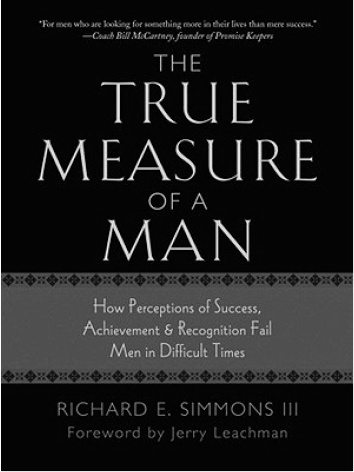
THE TRUE MEASURE OF A MAN How Perceptions of Success, Achievement & Recognition Fail Men in Difficult Times
In our performance-driven culture this book provides liberating truth on how to be set free from the fear of failure, comparing ourselves to others and the false ideas we have about masculinity.
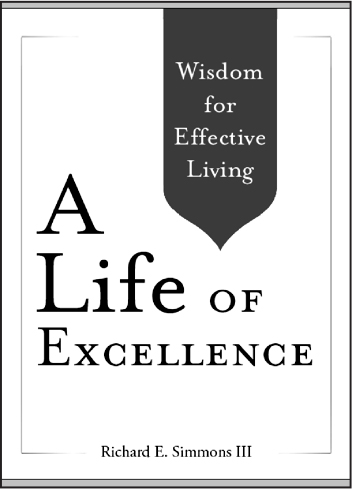
A LIFE OF EXCELLENCE Wisdom for Effective Living
A Life of Excellence lays out three principles that clearly point to a life of excellence. I am convinced that if one lives in accordance with these principles, their life will flourish and prosper. – Richard E. Simmons III
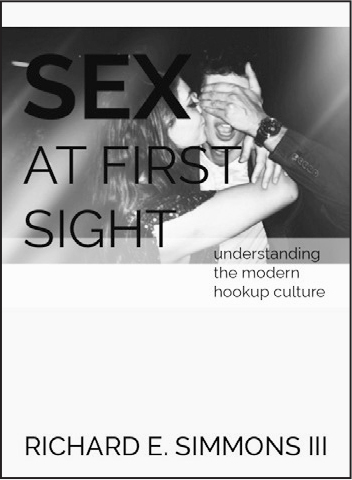
SEX AT FIRST SIGHT Understanding the Modern Hookup Culture
This book explains the hookup culture–how it came about, how it is affecting our younger generation and finally, God's intent for our sexuality.
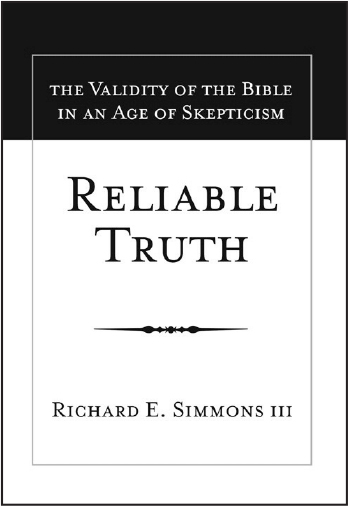
RELIABLE TRUTH The Validity of the Bible in an Age of Skepticism
Do you believe the Bible is the inspired word of God? Reliable Truth offers powerful and compelling evidence why the Bible is valid and true.
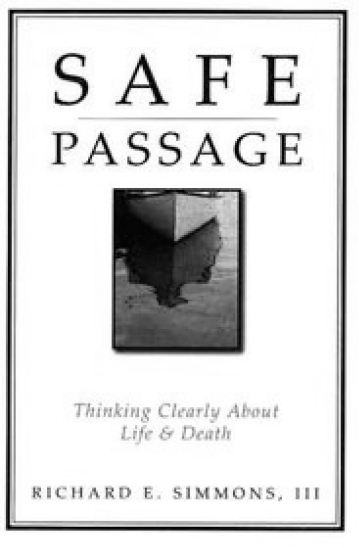
SAFE PASSAGE Thinking Clearly about Life & Death
Safe Passage examines C. S. Lewis's thoughts and perspective on the issue of human mortality.
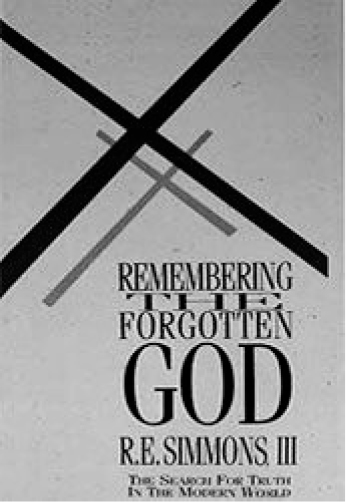
REMEMBERING THE FORGOTTEN GOD The Search for Truth in the Modern World
A fresh, contemporary approach to Christianity, a compassionate yet forceful statement of personal belief.
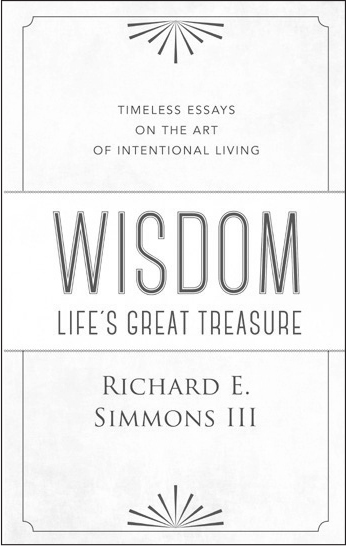
WISDOM: LIFE'S GREAT TREASURE Timeless Essays on the Art of Intentional Living
A collection of short essays on wisdom to serve as a guide to help people walk in wisdom on their journey towards a healthy and meaningful life.
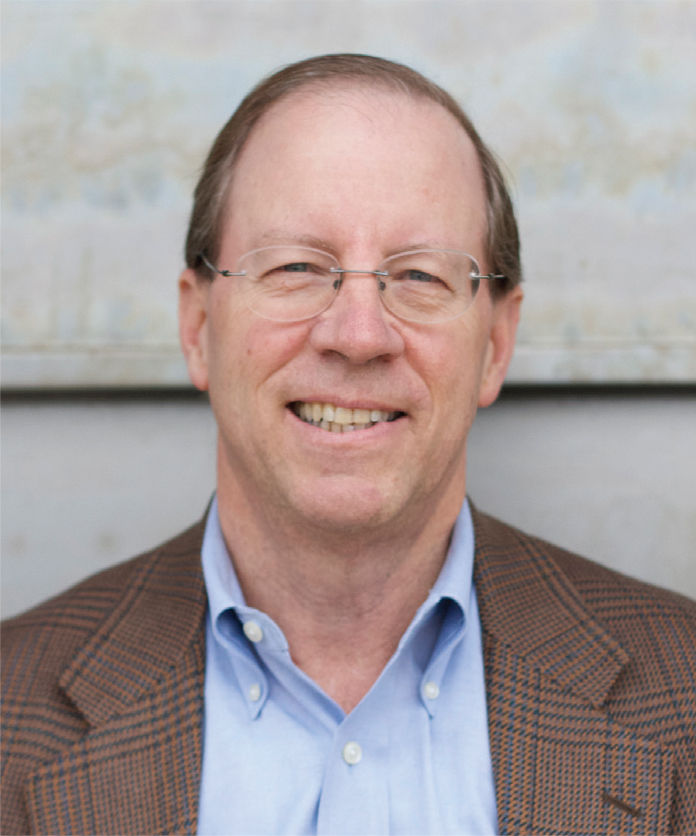
Richard E. Simmons III received his Bachelor of Arts from the University of the South (Sewanee) in 1976. He later studied Risk Management and Insurance at Georgia State prior to beginning a 25-year career with Hilb, Rogal, and Hamilton, a property and casualty insurance firm where he was CEO for ten years.
Much of Simmons' life has been devoted to giving back to the community by advising businessmen and professionals. Through these experiences, he discovered he had a calling for teaching and public speaking.
In December 2000 Simmons founded The Center For Executive Leadership, a not-for-profit, faith-based ministry located in Birmingham, Alabama. When he's not spending time with his wife and three children, you will find him teaching, counseling, writing or speaking to groups across the country.

200 Union Hill Drive, Suite 200 Birmingham, AL 35209 www.thecenterbham.org Jacket design by Jennifer Shoffey Forsythe
This file was downloaded from Z-Library project

Your gateway to knowledge and culture. Accessible for everyone.

z-library.se singlelogin.re go-to-zlibrary.se single-login.ru

Official Telegram channel

Z-Access

https://wikipedia.org/wiki/Z-Library