
Chapter 7 The Uncle’s Visit
Chapter 7
The Uncle’s Visit
The children all perceived the next day that they were still to ask no questions about the letter that had excited their curiosity. They were told that it was from their uncle and nothing more. Lucy’s health began to improve, however, from that day. Seeing one cloud gone from her father’s brow, and catching the sunshine that glowed in her mother’s smile, she felt a weight lifted from her heart. She appeared to herself and her parents almost well. This proved, however, only a temporary improvement, for her cough continued.
Meanwhile, letters from Mr. Whittier became frequent. The recovery of his daughter was proceeding rapidly, and he hoped that after so many years of separation they would meet again soon. These letters were read to the children who rejoiced in the prospect of seeing a real uncle for the first time in their lives.
They sat one evening around the large pine table, busy with books and work and talk. Homemade tallow candles were dispersed here and there about the table for the convenience of those who sewed or read, but they only lit up a circumscribed circle. The large kitchen would have been nearly dark, without the noble fire on the wide hearth. This illuminated every youthful face with a comfortable glow.
“That’s what I call a fire,” remarked Arthur, who had just arranged it afresh. “See how the flames creep around the cold log I just added, and hug it up!” he cried.
“How do you know they hug it?” asked Rebecca, that matter-of-fact young lady finding the figure of speech incomprehensible. “You’re always saying strange things.”
“I know it by my wisdom,” he returned, laughing. “And listen now! Don’t you hear the logs singing to the flames, and thanking them for their friendship?”
“No, I don’t,” said Rebecca, “you don’t either.”
“I wouldn’t thank anybody for friendship that burned me up,” said Hatty.
“When Uncle Arthur comes, we’ll have a rouser,” said Tom, who sat contemplatively viewing the fire. “Mother! Was our Arthur named for Uncle?”
“Why, no indeed,” cried Hatty. “He was named for Grandfather.”
“It seems very odd that Mother had a father,” said Tom.
“It would be a great deal odder if she hadn’t,” retorted Hatty. “Oh, dear! What a long seam! Lucy, how far have you got on yours? To the end? Well—how you do sew!”
Lucy smiled and went on, then stopped to cough.
“I can’t have this,” said her mother. “With that cough, I can’t let you sit bending over work.”
“I’ll sit straighter then,” said Lucy.
“No, dear, that won’t do. There, give it to me now. You must get well first.”
“We have a great deal to do this winter,” said Lucy. “And it’s February now. When will the work get done if I sit still and idle, I wonder?”
“The winter is only half gone,” said Rebecca. “‘Candlemas day. Half your wood and half your hay.’ ”
“But not half your work,” said Hatty.
“They couldn’t get ‘work’ in,” said Rebecca “But they meant it all the same.”
“You’ll never set the world on fire,” said Hatty.
“I don’t want to,” Rebecca answered quietly.
“She’s set somebody on fire, though,” said Arthur. “John Wright says she’s the prettiest girl he knows.” On hearing John Wright’s testimony, the children all laughed. Rebecca sat silent and embarrassed.
“Who cares about John Wright?” she said at last. A fresh burst of laughter was the only reply. Lucy looked up at Arthur, and shook her head a little, though she smiled. “I wouldn’t,” she said.
He smilingly shook his head at her, and said, “Well, I won’t, then.” After a few moments, he looked up again.
“Lucy, can you show me how to do this sum now?” She went around to his side of the table, and he made room for her on his chair. She saw that he had written something on his slate for her to read. She looked over his shoulder and read it: “John Wright says he’s afraid of you.”
She laughed, and wrote back, “Yes. I know I’m a monster.”
“But, Lucy, you never say anything to him when he comes here.”
“That’s because I am afraid of him.”
Arthur stopped playing now and listened to the explanation of the problem.
“How quickly you understand,” she said.
“How nicely you explain,” he answered. “Mother, don’t you think Lucy would make a great teacher?” he asked.
“We must make her well first,” she answered
“There’s somebody knocking,” said Tom, hurrying towards the door.
“It’s only John Wright, I’m sure,” whispered Arthur.
But not all the John Wrights in the world could have made their mother utter such a cry of joy when Tom admitted the guest.
“It must be Uncle Arthur,” said Hatty. “Rebecca, look quick. Is my hair decent?”
Yes, it was Uncle Arthur; and by his side stood a boy of about fourteen, whom he soon introduced as his son Charles. The children looked at him with reverence. There was something in the demeanor of this city boy so utterly superior to anyone in the village that even Hatty hung back a little abashed. He soon made them at ease by feeling so himself, and while Lucy went to see what could be mustered for supper, the whole party became acquainted.
“I wish Helen had come,” said Charles, looking around with an air of satisfaction, “but she wouldn’t.”
“Is she older or younger than you?’” asked Hatty.
“Older,” said Charles. “She’s a very pretty girl. Her hair is just like yours.”
“It runs in the family,” said Hatty.
“I can pop corn,” said Tom, finding himself overlooked.
“You must pop some for me, then,” said Charles.
“Right away?” asked Tom eagerly.
Charles laughed and said yes, he couldn’t wait, and Tom ran off to get some corn, in a perfect tumult of delight.
Lucy and Rebecca soon prepared supper for the travelers and called them to the table.
“I haven’t seen such bread and butter since I was a boy,” said their uncle. “You must have an admirable cook.” The girls smiled.
“Mother makes all the bread,” said Lucy.
“And Rebecca and Lucy make the butter,” said their mother.
“You’re not saying you have no cook?” said Mr. Whittier.
“I’m not saying anything about it,” she answered.
“Excuse me,” he said, “but really, this is not good. Your girls will be fit for nothing.” He seemed so troubled that he couldn’t help speaking for his own relief.
“I think they’re good for a great deal,” said Mrs. Grant.
“Yes, yes, I’m sure; they look like nice girls.”
“Nice girls!” thought his sister, with a little twinge of annoyance. “I declare, I didn’t know I was so proud of them. Well! It does my pride good to get a fall now and then.”
“I am sorry to say,” continued Mr. Whittier, “that I have business in Honeydale, which will make my visit here shorter than I intended. My plan now is to spend tomorrow with you, and then push on to Honeydale, leaving Charles here if you agree, until I return.”
“Then I hope you will spend at least a few days with us,” said Mr. Grant.
“I can’t do that,” answered Mr. Whittier; “but now that I’ve found the way here, I hope to come again. You’ve no idea what lives we businessmen lead. We work, I assure you.”
Mr. Grant thought he knew what work meant, but he did not say so. He only remarked, “Yet you merchants are slow to retire from business.”
“Well,” said Mr. Whittier, “the more a man has, the more he wants, I suppose. As for myself, I hardly care to give up my business until Charles is old enough to take over.”
‘‘Then you don’t intend to educate him?” said Mrs. Grant.
“No. Charles is no bookworm. I did intend to send him to college, but he was so opposed to it that I had to give up all thought of doing so.”
Lucy and Arthur exchanged astonished glances. In their simplicity, they had never doubted that all young people were like themselves. Their reverence for Charles received a severe shock and was in danger of moving to the opposite extreme. He proved, however, that he was a lively, intelligent boy. He was full of fun and good humor, and very soon was on the friendliest terms with them all.
“You’ll like your uncle better as you see more of him,” whispered Mrs. Grant to Lucy, as they went together to arrange a room for him.
“I don’t like him a bit now,” said Lucy.
“You will like him in time. He has admirable qualities and is my brother, at any rate.”
“He doesn’t seem like you at all,” said Lucy. “And I don’t believe I ever shall like him. He shouldn’t go to finding fault with you the minute he’s in our house. I’m sure it is as much his fault as anybody’s that we’re so poor.”
Her mother had not seen Lucy so excited in a long time. “Lucy, you don’t seem like yourself at all. What makes you act like this?” she said anxiously and tenderly.
“I don’t know,” said Lucy, “but I don’t think anything is going right just now. Ever since you said I can’t stay in my room for fear of getting sicker, I’ve been very unhappy. And I’m getting anxious again.”
“I didn’t mean to deprive you of time for your devotion, my dear child,” she answered.
“I do try to be gentle and kind,” said Lucy. “I hope you don’t think I’ve stopped trying.”
“No, dear, I haven’t thought any such thing. You have behaved as you should for a long time, until just now.” She felt disturbed, however. She knew Lucy must be suffering from some kind of nervous difficulty.
“I’ve been cross to the children lately,” said Lucy. “It makes me very unhappy, but I keep doing it.”
“I never call people ‘cross’ when they’re not well,” said Mrs. Grant. “And I’m sure you’re not well.”
“I heard somebody coughing badly last night,” said Mr. Whittier the next morning. “Who was it?”
“It was Lucy,” said her mother. “She has had a cough for several weeks.”
“I don’t wonder, in this cold climate,” he answered. “Why don’t you send her somewhere farther south? You have cold, damp springs here, I believe. She ought to go away before she gets more unwell.”
“The doctor said so long ago,” said her father.
‘‘Then why in the world don’t you send her?” There was an awkward silence. Nobody wanted to say, “Because we’re poor.” It seemed like an appeal to his charities.
“Come,” he said, turning to Hatty, “suppose you go home with me, and let’s see if we can’t nurse you up.”
“Oh, I’m not Lucy. I’m only Hatty,” she replied as soon as she recovered from the confusion.
“Which is Lucy, then?” he asked.
“She isn’t here,” said Arthur. “She’s the prettiest one. The one with the brown eyes.”
His uncle looked at him and laughed, and looked again as if he would say, “I’m curious now!”
“So she’s the prettiest one, is she? And I suppose she has a crowd of admirers about her and is very anxious to wear beautiful bonnets, and all?
“No, she isn’t anything like that,” said Arthur indignantly. “She’s not at all like other girls. And she doesn’t so much as think of admirers,” he added with infinite disgust. His uncle said no more, and with breakfast over, he sat watching them from behind a newspaper while they busied themselves as usual.
All at once, he started up. “Do you keep chickens?” he said, as Tom walked by.
“We keep a lot,” said Tom.
“Come, show them to me,” said Mr. Whittier. “No, go back the rest of you,” he said, seeing Charles and Arthur following.
Hatty waited until he was out of sight, then she boiled over. Walking up to John, who sat privately brushing their uncle’s boots behind the door, she said in a fierce whisper, “I hate him.”
“So do I,” returned John, “or I mean, I would but it’s wrong.”
“I can’t help it if it is wrong,” said Hatty. “He thinks we’re all a pack of geese. I wouldn’t brush his old boots!”
“I have a great mind not to,” said John, stopping. “He only did it to harass me, I know.”
“Did what?” asked Hatty.
“Why, he came out here before breakfast, sort of spying round, and he says, ‘Where’s the boy?’
“‘What boy, Sir?’ I say.
“‘Why, the boot-black,’ he says.
“‘What kind of boy is that, Sir?’ I say. ‘A boy as black as a boot?’ And then he laughed at me and pinched my ear. Look, it’s red now and I suppose he thought he could make me cry, but I wasn’t going to cry for him. And then he says, ‘You’re made of hickory, aren’t you?’
“‘No, Sir,’ I say, ‘I ain’t made of hickory. I’m made of dust.’
“‘Who says you’re made of dust?’ he says, after laughing to himself awhile.
“‘The Bible says so,’ I say, and then he went off and left his boots; so I s’pose he meant for me to clean ’em.”
Meanwhile, the object of this wrath was walking off with Tom, engaged in a diligent pursuit of such knowledge as he could gain from the chickens.
“You must eat chicken a lot,” said Mr. Whittier.
“Oh, no, Sir. Father sends them to market,” said Tom.
“Well, you have plenty of eggs, I suppose.”
“Yes, Sir. But Arthur sells all the eggs his hens lay.”
“What for?”
“Oh, he buys his books with them.”
“What sort of books? Robinson Crusoe and Jack Halyard?”
“He’s read Robinson Crusoe, but I don’t know about Jack Halyard. But I didn’t mean that kind of book. He doesn’t buy such books as those. He swaps for them.”
“Swaps!” said Mr. Whittier.
“Yes. He gives a feller his jack-knife, and a feller gives him a book—most generally old books. But the books he buys with his eggs are study books.”
“Why doesn’t your father buy them for him?”
“Oh, he can’t afford it!” said Tom, opening his eyes as wide as he could, to get a better view of the propounder of this rash question.
“Who washes your clothes?” said his uncle abruptly.
“Mother, Rebecca, and Lucy. And Arthur and John, they make their bed. I’ll make mine as soon as I’m a little bigger. Arthur said he wasn’t going to have Mother or the girls make his bed. They have too much to do, you see.”
“We ain’t so poor as we were,” he continued, finding his uncle greatly struck by his remarks, “for a man sent mother fifty dollars at New Year’s.”
“And what did she do with it?”
“At first she cried. Then she said it would pay for Lucy to go away because the doctor said she must go somewhere. And then Lucy begged her to save it for Arthur when he went to college. There was another man who wrote father a letter, but he didn’t send him any money.”
“Perhaps the man did not dare to.”
“Why not?” asked Tom, innocently.
“For fear your father would be angry.”
“Oh, my father, he don’t get angry. And I don’t believe that was the reason, either.”
“Suppose now I should send him some money. Would he like it, you think?”
“Oh, yes, Sir,” said Tom.
“Well, you needn’t tell anybody anything I’ve asked you. And here’s something for you.” Tom put both hands behind him. “I’ll have to tell,” he said.
“Why?”
“Because I always tell Mother everything. She says it keeps me out of mischief.”
“And so you’re going to tell her I’ve been pumping you with all sorts of questions?”
“I didn’t know you were, Sir. I didn’t know you’d said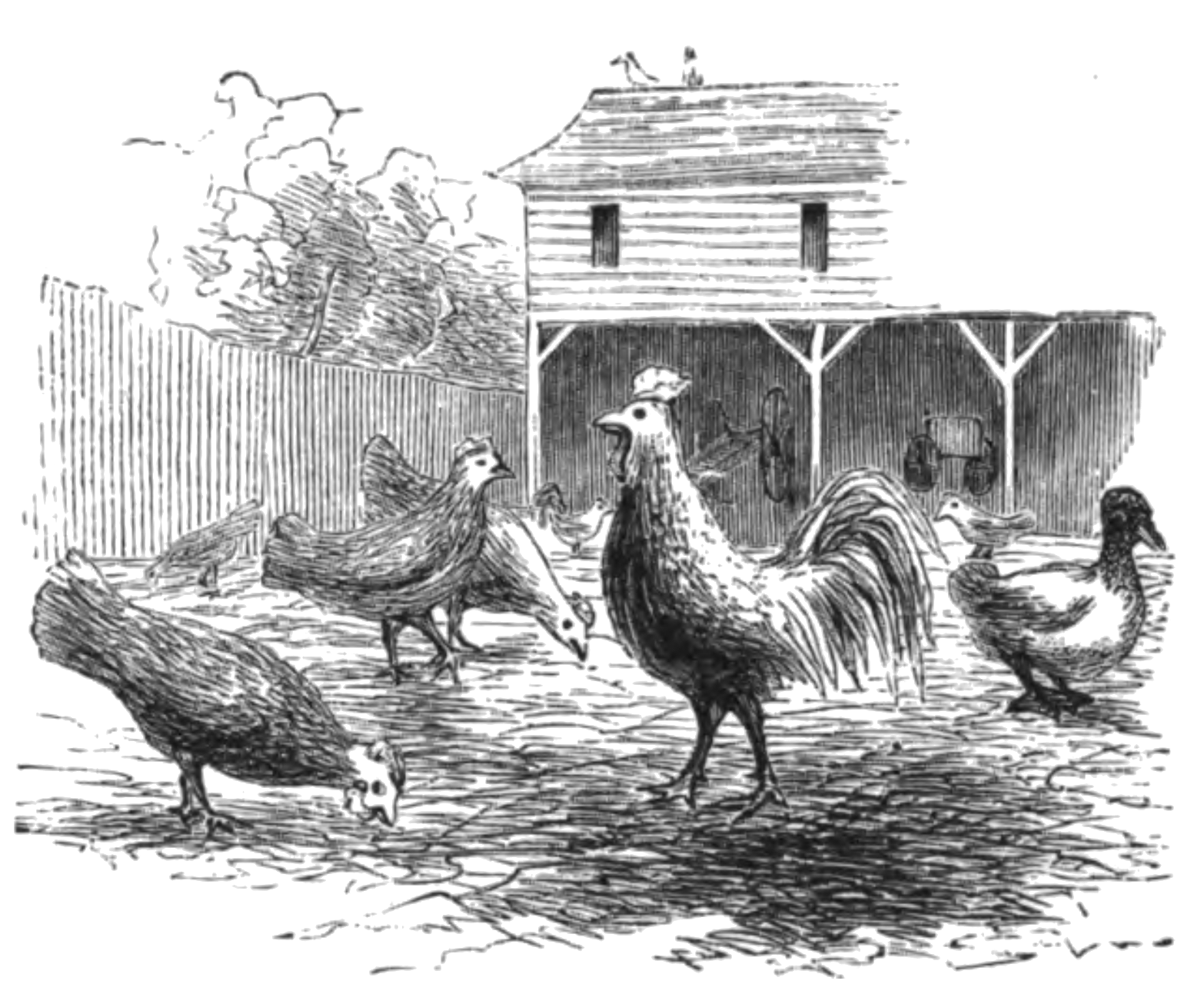 anything naughty.”
“Dear me, I’ve got myself in a fix,” said Mr. Whittier, looking around at the hens and chickens for help with his predicament. “Well, well, be off with you, child, and be sure you don’t forget a word.” Away went Tom, highly indignant, straight to his mother.
“I don’t like that man and he isn’t my uncle,” he shouted.
“Hush, hush, dear,” said his mother.
“I can’t hush, and I ain’t a-going to, either,” cried Tom. “He asked me if we ate chickens and eggs, and why you didn’t buy books for Arthur, and why you didn’t send Lucy away, and he said I mustn’t tell a word of it. When I said I would tell you, he said he’d got into a fix, and gave me a little push, and said, ‘Well, well, be off with you, child.’ And he is a naughty, ugly man.”
“Tom,” said his mother, “you are only a little boy and you make mistakes sometimes, you know. You mustn’t call your uncle a naughty man and get so angry and excited. You spoke very rudely to Mother just now. I’m sure you didn’t understand your uncle. Now listen, you are not to repeat a word of this to anyone.”
“Can’t I tell Lucy?”
“No, not Lucy, or anybody. And sit down here until you’re a good boy.”
“I’m a good boy now. I’ve been good ever so long. Lucy says so. And I don’t like that man.”
“What has got into you all?” said poor Mrs. Grant, half bewildered. “I hardly know which way to turn. Tom, I didn’t expect this from you. You have been such a dear, good boy lately.”
“I’m sorry I’ve troubled you, Mother. I’ll try to be good,” said Tom, throwing his arms around her neck, but instantly relapsing into his defiant mood, as he saw his uncle approaching.
“I’ve made an awkward business of it,” said Mr. Whittier, “but I had a good end in view, and I hope you understand that I did not pry into your affairs out of idle curiosity. I only wanted to find out how I could be of most help to you. And I know you never would tell me yourself, you’re so proud,” he added, smiling. “But now about that debt. Let’s talk the matter over, and have it settled. Of course, you see the impropriety of my letting things go as they are now.”
“What do you propose? I don’t quite understand,” said Mrs. Grant. “Do you want it paid immediately?”
“What are you thinking of?” he cried. “I’m only asking you, who know your husband much better than I do, what will he think if I cancel the debt? Would it offend him, do you think?”
“I don’t know. I wouldn’t use the word ‘offend’, exactly. But he might feel hurt, just at this time. He might think—” she hesitated, not daring to finish her sentence.
“Might think I hoped to wipe off old scores with mere money, I suppose you mean. Don’t be afraid to say it, I had thought of that myself.” He sat silent for a time, then said, “Sarah, you’re my sister. You, at least, should not be unwilling for me to help you bear your burdens. I don’t want to do anything that would revolutionize your family. I only want to make life easier for you and your children in little ways that no one will notice much. I’m ashamed and bitterly regret that I have not been doing it all these years.”
“How many children did you say there were? Ten? Well, I have something to tell you which will interest you, I’m sure. A short time before Father’s death, my eldest child was born. A fine little fellow he was! And we called him Arthur. He lived to be four years old and was the perfect idol of his grandfather, who could never bear him out of his sight. He said one day that he had laid aside a small sum of money for your firstborn, expecting it to be a boy and his namesake, but after waiting several years, and finding your children were all girls, he gave it over to my little Arthur. I was poor then—I know what poverty means—and was glad to know that means were provided for his future education. But God had something better in store for my child and took him from me almost without warning. It was a heavy blow, but it did not bring me to myself. I was immersed in business, struggling along from day to day, and hardly had time to think or feel. Poverty spoiled and soured me, and I grew hard and cold under its petty discipline. Well! That money of my little Arthur has been sitting in the Savings Bank ever since. I never could bear to touch or even think of it. Now let our father’s original wish be satisfied. You can see for yourself that it properly belongs to your son, who bears his name.”
It was difficult for Mrs. Grant to control herself during this recital. It seemed to her that the hand of God was in the matter and that He had Arthur’s interests even more at heart than she had herself. She went into her room, and thanked Him on her knees; how fervently, only a mother can understand.