. For an interesting exposition on this issue, please refer to Dallas Willard’s talk, “Jesus: The Smartest Man Who Ever Lived?” (La Miranda, CA: Biola University Christian Apologetics Program, 2006), CD.
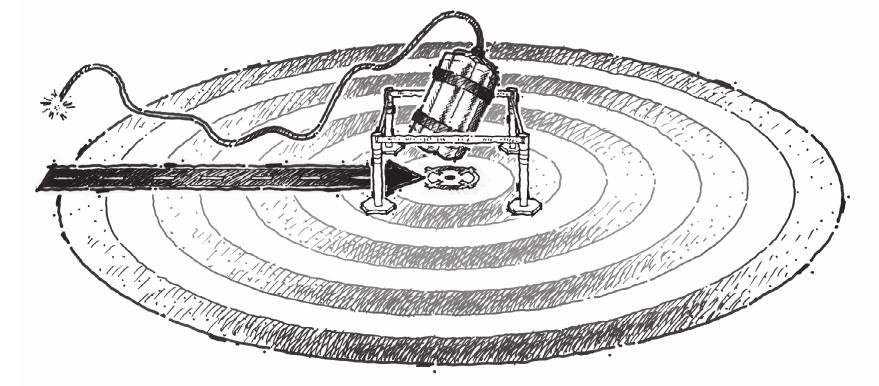
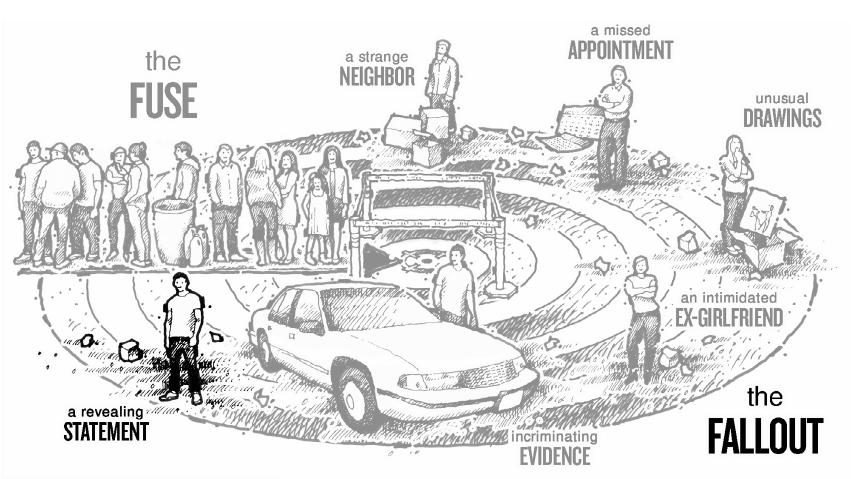
. As an example, judges in jury trials in California instruct jurors to consider the defendant’s motive that may be part of the fuse leading up to a crime. “Having a motive may be a factor tending to show (that the defendant is guilty/ [or] that an (allegation/ [or] special circumstance) is true). Not having a motive may be a factor tending to show (the defendant is not guilty/ [or] that an (allegation/ [or] special circumstance) is not true).” Judicial Council of California,
Judicial Council of California Criminal Jury Instructions
(New York: Matthew Bender, 2021),
CALCRIM
No. 370, https://www.courts.ca.gov/partners/documents/calcrim-2021.pdf.
. Judges in California jury trials also instruct jurors to consider the evidence they may find
after
the commission of a crime. For example, “If the defendant tried to hide evidence or discourage someone from testifying against (him/her), that conduct may show that (he/she) was aware of (his/her) guilt,” “If the defendant tried to create false evidence or obtain false testimony, that conduct may show that (he/she) was aware of (his/her) guilt,” “If the defendant fled [or tried to flee] (immediately after the crime was committed/ [or] after (he/she) was accused of committing the crime), that conduct may show that (he/she) was aware of (his/her) guilt.”
Judicial Council of California Criminal Jury Instructions
,
CALCRIM
No. 371 and 372.
. Prior to the BCE/CE designations, most of the world used
BC
(“before Christ”) and
AD
(
Anno Domini
, or “In the year of our Lord”).
. Judicial Council of California,
Judicial Council of California Criminal Jury Instructions
(New York: Matthew Bender, 2021),
CALCRIM
No. 350, https://www.courts.ca.gov/partners/documents/calcrim-2021.pdf.
. For more information about how the Sumerians used pictographs, refer to Paul Kriwaczek,
Babylon: Mesopotamia and the Birth of Civilization
(New York: St. Martin’s, 2012), as cited at World History Encyclopedia, s.v. “Writing,” by Joshua J. Mark, April 28, 2011, https://www.ancient.eu/writing/.
. For more information about the development of cuneiform, refer to Andrew Robinson,
The Story of Writing: Alphabets, Hieroglyphs & Pictograms
, 2nd ed
.
(London: Thames & Hudson, 2007).
. Most scholars describe the Phoenician alphabet as the first alphabet and the ancestor of the modern Hebrew, Arabic, Cyrillic, Greek, and Latin alphabets. For the purpose of this study, I am citing the ancient Phoenician alphabet as it became the basis for much richer and robust modern alphabets that allow writers to describe people and events with greater clarity. Another excellent resource for information on the development of writing: Steven Roger Fischer,
A History of Writing
(London: Reaktion, 2004). And visit World History Encyclopedia, s.v. “Writing,” by Joshua J. Mark, April 28, 2011, https://www.ancient.eu/writing/.
. For more information on the history of the Greek language, refer to the work of Brian Joseph at The Ohio State University: Brian D. Joseph, “Greek, Ancient,”
OSU
Department of Linguistics, accessed April 3, 2021, https://www.asc.ohio-state.edu/joseph.1/articles/gancient.htm.
. Even the ancients were astonished at the speed with which the Roman Empire conquered the world. Polybius, a Greek historian of the Hellenistic period, wrote, “For who is so worthless or indolent as not to wish to know by what means and under what system of polity the Romans in less than fifty-three years have succeeded in subjecting nearly the whole inhabited world to their sole government—a thing unique in history?” Polybius,
Histories
1.1.5, available here: “Polybius
The Histories
, Book I,” Bill Thayer’s Web Site, last modified December 10, 2016, http://penelope.uchicago.edu/Thayer/E/Roman/Texts/Polybius/1*.html.
. For an ancient perspective of Roman history, read Suetonius’s
The Twelve Caesars
, trans. J. C. Rolfe (Mineola, NY: Dover, 2018). For a modern perspective, read Mary Beard’s
SPQR: A History of Ancient Rome
(New York: Liveright, 2016).
. “Not only was war banished from the greater part of the world, but internally the provinces were safer and more settled because of the peace brought by Rome and its emperors.” Adrian Goldsworthy,
Pax Romana: War, Peace and Conquest in the Roman World
(New Haven, CT: Yale University Press, 2017), 185.
. For more information about the nature of early Greek roads, refer to Robin Watts and Zishan Parks,
Development of Tourism and Travel Industry
(Essex, UK: Ed-Tech, 2018), 94.
.
Judicial Council of California Criminal Jury Instructions
,
CALCRIM
No. 403.
. Ancient historian Herodotus, when describing the speed with which couriers could use roads like the Royal Road, wrote, “There is nothing in the world which travels faster than the Persian couriers. The whole idea is a Persian invention, and works like this: riders are stationed along the road, equal in number to the number of days the journey takes—a man and a horse for each day. Nothing stops these couriers from covering their allotted stage in the quickest possible time—neither snow, rain, heat, nor darkness. The first, at the end of his stage, passes the dispatch to the second, the second to the third, and so on along the line, as in the Greek torch-race which is held in honour of Hephaestus.” Herodotus,
Histories
, trans. Aubrey de Sélincourt (New York: Penguin, 1972), 556.
. Much has been written about the speed of the Roman postal service and, given their superior roads, their ability to deliver messages even faster than the Persians. From antiquity, Byzantine Greek scholar Procopius wrote, “The couriers appointed for the
work, by making use of relays of excellent horses, when engaged in the duties I have mentioned, often covered in a single day, by this means, as great a distance as they would otherwise have covered in ten.” Procopius,
Secret History
, XXX. In modern times, Stanford Mc Krause, assessing the speed of Roman couriers, concluded that a nonurgent messenger could travel thirty-eight to sixty-two miles a day and up to one hundred miles or more each day in urgent situations. Refer to Stanford Mc Krause,
Life in Ancient Rome
, ed. Cambridge Stanford Books (self-pub., Brainy Bookstore Mckrause, n.d.), and A. M. Ramsey, “The Speed of the Roman Imperial Post,”
Journal of Roman Studies
15 (1925): 60–74.
. Tertullian (writing in the second century) describes Tiberius Caesar’s effort to legalize Christianity before the Roman senate. According to this disputed account, Tiberius threatened “wrath against all accusers of the Christians.” Tertullian,
Apology
, chap. 5, available here: “Apology,” New Advent, accessed April 5, 2021, https://www.newadvent.org/fathers/0301.htm.
. A great fire burned in Rome in 64 CE, burning down Nero’s palace. Rumor quickly spread that Nero started the fire to create the need for a new, grander palace. Nero blamed the Christians for the fire and used them as a scapegoat to distract this blame. As a result, Christians were persecuted in gruel manner for many years. Refer to Tacitus,
Annals
15.44, available here: “Tacitus
Annals
, Book
XV
(continued),” Bill Thayer’s Web Site, last modified April 2, 2016, https://penelope.uchicago.edu/Thayer/E/Roman/Texts/Tacitus/Annals/15B*.html.
. Judicial Council of California,
Judicial Council of California Criminal Jury Instructions
(New York: Matthew Bender, 2021),
CALCRIM
No. 520, https://www.courts.ca.gov/partners/documents/calcrim-2021.pdf.
. For more information about Dionysus, read Walter F. Otto’s classic,
Dionysus: Myth and Cult
(Bloomington, IN: Indiana University Press, 1995).
. For a defense of the existence and historicity of Jesus from someone who is skeptical of the
deity
of Jesus (yet still recognizes the strength of the historical evidence), refer to Bart D. Ehrman,
Did Jesus Exist? The Historical Argument for Jesus of Nazareth
(New York: HarperOne, 2012).
. As an example, Mark Thomas of the Atheists of Silicon Valley once presented my students with the following description of a god:
Born of a virgin, in a cave, on December 25
His birth was attended by shepherds
He was considered a great traveling teacher and master
He had twelve companions (or disciples) and promised his followers immortality
He performed miracles and sacrificed himself for world peace
He was buried in a tomb and after three days rose again
His followers celebrated this event each year at the time of his resurrection (and this date later became Easter)
He was called the Good Shepherd and was identified with both the lamb and the lion
He was considered to be the way, the truth, and the light; the Logos; the Redeemer; the Savior; and the Messiah
His followers celebrated Sunday as his sacred day (also known as the Lord’s Day)
His followers celebrated a Eucharist, or Lord’s Supper
He then revealed that this was a description of Mithras, not Jesus. Thomas’s description was, however, nearly completely untrue of Mithras. For more information, refer to my book
Forensic Faith: A Homicide Detective Makes the Case for a More Reasonable, Evidential Christian Faith
(Colorado Springs: Cook, 2017), 89.
. Preston Greene, “Are We Living in a Computer Simulation? Let’s Not Find Out,”
New York Times
, August 10, 2019, https://www.nytimes.com/2019/08/10/opinion/sunday/are-we-living-in-a-computer-simulation-lets-not-find-out.html.
. Greene, “Are We Living in a Computer Simulation?”
. Greene, “Are We Living in a Computer Simulation?”
. Pew Research Center,
The Global Religious Landscape: A Report on the Size and Distribution of the World’s Major Religious Groups as of 2010
, December 2012, https://assets.pewresearch.org/wp-content/uploads/sites/11/2014/01/global-religion-full.pdf.
. Pew,
The Global Religious Landscape, 9.
. Ariela Keysar and Juhem Navarro-Rivera, “A World of Atheism: Global Demographics,” in
The Oxford Handbook of Atheism
, eds. Stephen Bullivant and Michael Ruse (Oxford: Oxford University Press, 2017).
. Arthur Martin, “Why We Are Born to Believe in God: It’s Wired into the Brain, Says Psychologist,”
Daily Mail
, September 7, 2009, https://www.dailymail.co.uk/news/article-1211511/Why-born-believe-God-Its-wired-brain-says-psychologist.html.
. Martin, “Why We Are Born to Believe in God.”
. Refer to Barney Zwartz, “Infants ‘Have Natural Belief in God,’ ”
Sydney Morning Herald
, July 26, 2008, https://www.smh.com.au/national/infants-have-natural-belief-in-god-20080725-3l3b.html; More can also be learned from Dr. Olivera Petrovich’s book,
Natural-Theological Understanding from Childhood to Adulthood: Essays in Developmental Psychology
(London: Routledge
,
2019).
. Patrick McNamara and Wesley Wildman, eds.,
Science and the World’s Religions
, vol. 2,
Persons and Groups
(Santa Barbara: Praeger, 2012), 207.
. Paul Bloom, “Is God an Accident?,”
The Atlantic
, December 2005, https://www.theatlantic.com/magazine/archive/2005/12/is-god-an-accident/304425/.
. Beth Azar, “A Reason to Believe,”
American Psychological Association
41, no. 11 (December 2010): 52, https://www.apa.org/monitor/2010/12/believe.
. For more information about Zoroaster and his birth, refer to a newer volume: Mary Boyce,
Zoroastrians: Their Religious Beliefs and Practices
, 2nd ed., The Library of Religious Beliefs and Practices (London: Routledge, 2001).
. Roman poet Ovid wrote about the manner in which Myrrha conceived Adonis in his book
Metamorphoses
(Book X), available online here: “
Metamorphoses
Book X (A.S. Kline’s Version),” Electronic Text Center, University of Virginia Library, accessed June 23, 2020, https://ovid.lib.virginia.edu/trans/Metamorph10.htm. For more information on Adonis and other Greek gods, refer to Karl Kerényi,
The Gods of the Greeks
(London: Thames & Hudson, 1980).
. For an introductory (and entertaining) view of Indra and other Hindu gods, read this newer reference: Swami Achuthananda,
The Reign of the Vedic Gods
, The Galaxy of Hindu Gods 1 (Queensland, Australia: Relianz, 2018). An online summary of the
Indra mythology can be found at the
World History Encyclopedia
, s.v. “Indra,” by Mark Cartwright, August 8, 2013, https://www.ancient.eu/Indra/.
. For more information on the Buddha (the founder of Buddhism), worshiped from 600–400
BCE
to the present, refer to this more current volume: Vishvapani Blomfield,
Gautama Buddha: The Life and Teachings of the Awakened One
(London: Quercus, 2011).
. This newer volume is a good resource for information about Krishna: Vanamali,
The Complete Life of Krishna: Based on the Earliest Oral Traditions and the Sacred Scriptures
(Rochester, VT: Inner Traditions, 2012).
. An excellent current resource for Osiris: Bojana Mojsov,
Osiris: Death and Afterlife of a God
(Malden, MA: Blackwell, 2005). An online image of the staff (the “crook”) can be seen here:
World History Encyclopedia
, accessed June 23, 2020, https://www.worldhistory.org/img/r/p/500x600/775.jpg.
. For information about Quetzalcóatl, refer to Ignacio Bernal,
Mexico Before Cortez: Art, History, Legend
(New York: Doubleday, 1975). And for a more current resource, see Alfredo López Austin,
The Myth of Quetzalcoatl: Religion, Rulership, and History in the Nahua World,
trans. Russ Davidson and Guilhem Olivier (Boulder: University Press of Colorado, 2015).
. This interaction is described in a poem entitled “Inanna Prefers the Farmer” and can be accessed at the Electronic Text Corpus of Sumerian Literature: “Dumuzid and Enkimdu: Translation,” ETCSL, University of Oxford, accessed June 23, 2020, http://etcsl.orinst.ox.ac.uk/section4/tr40833.htm. For more information about Tammuz (also known as Dumuzi), refer to this newer resource: Stephanie Dalley,
Myths from Mesopotamia: Creation, the Flood, Gilgamesh, and Others
, Oxford World’s Classics (Oxford: Oxford University Press, 2009).
. For more information about Serapis (and other Egyptian deities), refer to Geraldine Pinch,
Egyptian Mythology: A Guide to the Gods, Goddesses, and Traditions of Ancient Egypt
(Oxford: Oxford University Press, 2002).
. The Chinese emperor continued to sacrifice a bull to Shangdi at the Temple of Heaven in Beijing each year until 1911. For a beginner’s guide to Shangdi and other Chinese mythologies, refer to Anne M. Birrell,
Chinese Mythology: An Introduction
(Baltimore: Johns Hopkins University Press, 1999). For a comparison of Shangdi and the God of the Bible, see Chan Kei Thong and Charlene L. Fu,
Finding God in Ancient China: How the Ancient Chinese Worshiped the God of the Bible
(Grand Rapids: Zondervan, 2009).
. The clash between Dionysus and Pentheus did not end well for Pentheus. He ultimately died and was torn to pieces. For more on Dionysus, refer to Walter F. Otto,
Dionysus: Myth and Cult
(Bloomington: Indiana University Press, 1995).
. Many experts believe these Mithraic meal rituals may have been borrowed from Christian practices as Mithraism developed in Rome in the first two centuries (refer to chapter 10). For more information on Mithras, read David Ulansey,
The Origins of the Mithraic Mysteries: Cosmology and Salvation in the Ancient World
(New York: Oxford University Press, 1991) and John R. Hinnells, ed.,
Mithraic Studies: Proceedings of the First International Congress of Mithraic Studies
, 2 vols. (Lanhan, MD: Rowman & Littlefield, 1975).
. For an updated version of a classic description of the Heracles myth, read Diodorus Siculus,
Ancient Greek Myths: A Classic Account of the Origin of the Gods, Dionysus, Heracles, Jason and the Argonauts, Theseus and the Minotaur, Oedipus, and More
, trans. Charles Henry Oldfather (n.p.: Omo Press, 2019). This work is also available
online: “Diodorus Siculus: The Library of History,” Bill Thayer’s Web Site, last modified September 16, 2017, https://penelope.uchicago.edu/Thayer/E/Roman/Texts/Diodorus_Siculus/home.html.
. Herodotus describes Zalmoxis in his
Histories
4.93–96. Refer to the 1921 translation of Herodotus from the Loeb Classical Library, available here: “Herodotus Book IV: chapters 83–98,” Bill Thayer’s Web Site, last modified December 4, 2019, http://penelope.uchicago.edu/Thayer/E/Roman/Texts/Herodotus/4d*.html. (Zalmoxis is described as Salmoxis in this translation.)
. Finding authoritative information on the Santal deities is difficult, but this resource is helpful to understand their myths, folklore, and culture: Abraham Mathew,
Life of Santal Tribe: With Special References to Their Religious Practices, Teachings, Rites and Rituals
(self-pub., Amazon Asia-Pacific Holdings Private Limited, 2018).
. For larger, more readable images, please visit https://coldcasechristianity.com/selected-images-from-person-of-interest/.
. For larger, more readable images, please visit https://coldcasechristianity.com/selected-images-from-person-of-interest/.
.
Judicial Council of California Criminal Jury Instructions
,
CALCRIM
No. 105.
. Lewis to Arthur Graves, October 18, 1931, in
The Collected Letters of C. S. Lewis, ed. Walter Hooper, vol. 1, Family Letters 1905-1931
(San Francisco: Harper, 2004), 977.
. Lexico, s.v. “myth,” accessed June 27, 2020, https://www.lexico.com/en/definition/myth.
. For another resource describing Jesus as a recurring type and figure in the Old Testament (along with predictions related to the coming Messiah), refer to David Limbaugh,
Finding Jesus in the Old Testament
(Washington, DC: Regnery, 2015).
. For a discussion of the similarities between Jesus, Moses, and Elisha, refer to Jeremy Tetreau, “Jesus, Elisha, and Moses: A Study in Typology” (master’s thesis, Liberty University, 2018), https://digitalcommons.liberty.edu/cgi/viewcontent.cgi?article=1799&context=honors.
. For another list of similarities, see W. Clarkson, “Joshua and Jesus: Resemblance and Contrast,” Pulpit Commentary, Electronic Database, accessed June 25, 2020, https://biblehub.com/sermons/auth/clarkson/joshua_and_jesus_resemblance_and_contrast.htm.
. A more expansive list of similarities can be found here: From notes by Bill MacDonald, “A Comparison between Joseph and Jesus,” Jews for Jesus, July 1, 1985, https://jewsforjesus.org/publications/newsletter/newsletter-sep-1985/a-comparison-between-joseph-and-jesus.
. For a more detailed look at the similarities between David and Jesus, refer to James M. Hamilton Jr., “The Typology of David’s Rise to Power: Messianic Patterns in the Book of Samuel,” Julius Brown Gay Lecture, The Southern Baptist Theological Seminary, accessed June 25, 2020, http://d3pi8hptl0qhh4.cloudfront.net/documents/JBGay/the_typology_of_davids_rise_to_power2008-03-101.pdf.
. For a discussion of the similarities between Jesus, Moses, and Elisha, refer to Tetreau, “
Jesus, Elisha, and Moses
.”
. For larger, more readable images, please visit https://coldcasechristianity.com/selected-images-from-person-of-interest/.
. Even secular sources recognize the academic tradition of “typology”: Wikipedia, s.v. “typology (theology),” last modified January 21, 2021, https://en.wikipedia.org/wiki/Typology_(theology).
. Many websites list these prophecies. For example: “More than 300 Messianic Prophecies and Scripture References that Match Yeshua!,” Refiners Fire, accessed July 1, 2020, https://therefinersfire.org/prophecies.htm; “The First Coming of the Messiah: Messianic Prophecies Summary,” Teaching Hearts, accessed July 1, 2020, http://www.teachinghearts.org/dre17hdan09b.html; “351 Old Testament Prophecies Fulfilled in Jesus Christ,” New Testament Christians, accessed July 1, 2020, https://www.newtestamentchristians.com/bible-study-resources/351-old-testament-prophecies-fulfilled-in-jesus-christ/.
. Michael F. Bird describes what I refer to as “clear” prophecy in the following way: “We identify an Old Testament text as ‘messianic’ when the plain sense of the text (i.e., its semantic and linguistic operation) designates a figure with royal qualities who is sent by God, and also that either the text itself was treated as messianic in postbiblical interpretation, or else the pattern of activity that the figure embodies corresponds to a pattern of activity often expected of messianic figures in antiquity.” Michael F. Bird,
Are You the One Who Is to Come? The Historical Jesus and the Messianic Question
(Grand Rapids: Baker Academic, 2009), 46.
. Why don’t more Jews accept the messianic prophecies described in the New Testament? A simple internet search can help us answer this question. Here are the messianic prophecies that modern Jewish believers commonly accept, based on Jewish groups who have established an online presence (i.e., Jews for Jerusalem, https://j4j.me/; Aish HaTorah, https://www.aish.com/; Chabad.org, https://www.chabad.org/; Judaism 101, http://www.jewfaq.org/index.shtml): The Messiah restores the barren land and makes it abundant and fruitful (Amos 9:13–15), leads all nations and ushers in eternal peace (Isaiah 2:4), is worshiped by all nations (Isaiah 2:11–17), is a descendant of King David through Jesse and Judah (Isaiah 11:1), has the “spirit of the Lord” and a “fear of the Lord” (Isaiah 11:2), defeats evil and tyranny (Isaiah 11:4), restores peace on the earth (Isaiah 11:6–9), includes and attracts people from all cultures and nations (Isaiah 11:10), conquers death, hunger, and illness forever (Isaiah 25:7–8), causes the dead to rise again (Isaiah 26:19), is a “bruised reed” who is not “snuff[ed] out” (Isaiah 42:1–4), brings justice to the earth (Isaiah 42:1–4), is a light to people around the world (Isaiah 42:6), takes the barren land and makes it abundant and fruitful (Isaiah 51:3), gives the Jewish people eternal joy and gladness (Isaiah 51:11), is a messenger of peace who announces salvation (Isaiah 52:7), causes all nations to recognize the wrongs they did to Israel (Isaiah 52:13–15), comes to Jerusalem to redeem the descendants of Jacob who have turned from their sins (Isaiah 59:20), ushers in the restoration of Israel’s cities (Ezekiel 16:55), takes the barren land and makes it abundant and fruitful (Ezekiel 36:29–30), ushers in an era in which weapons of war will be destroyed (Ezekiel 39:9), is a descendant of David who reigns as king and “do[es] what is just and right” (Jeremiah 23:5), is a descendant of Judah called “The Lord Our Righteous Savior” (Jeremiah 23:6), ushers in a new era in which Israel will have direct access to the law of God through their minds and hearts and God will forgive their sins (Jeremiah 31:33–34), is a descendant of David (Jeremiah 33:15), ushers in an era in which people will turn to the Jews for spiritual guidance (Zechariah 8:23), and is a descendant of King David (1 Chronicles 22:8–10; 2 Chronicles 7:18).
Interestingly, the messianic prophecies Jews accept account for only 36 percent of the “clear” prophecies I’ve described so far. In other words, even though the most
straightforward reading of the prophecies points to a coming redeemer, restorer, or eternal “king,” Jews deny this reading and interpretation. Unsurprisingly, they reject all the “cloaked” prophecies. Of those they accept, many of them refer not to a
person
of interest but to a
nation
of interest: the nation of Israel. Jewish believers are more likely to embrace prophecies that predict the restoration of Israel, in power and status, than other messianic prophecies. The accepted prophecies are very limited in their ability to answer the six investigative questions required to identify a Messiah at all. Jews typically accept only a few prophecies that describe the Messiah in any detail.
And what about our reliable “informants,” Isaiah, Ezekiel, Jeremiah, and Daniel? Most of the accepted prophecies come from these reliable sources, but interestingly, Jews reject the prophecies of Daniel. While they acknowledge that Daniel made some accurate predictions, many refuse to acknowledge him as a prophet because his book is not included in the prophets section of the Torah (“What is a Prophet?,” Judaism 101, accessed March 9, 2021, http://www.jewfaq.org/prophet.htm). Daniel’s prophecies, if you remember, are the most time-specific prophecies related to the Messiah. In any case, Daniel’s prophecies are curiously missing given his reliable status. Additionally, modern Jews are even selective about
which
prophecies they will accept from the remaining three reliable prophets. For example, they typically reject prophecies from over half the chapters where Isaiah clearly predicts a coming “person of interest.” This is also true for the “clear” prophecies of Ezekiel. Modern Jewish believers accept prophecies from two chapters, while rejecting prophecies from three. In a similar way, they reject one of Jeremiah’s chapters in terms of its prophetic claims. Modern Jewish believers reject the more specific prophecies of Isaiah, Ezekiel, and Jeremiah, even though they find them reliable enough to accept the less specific prophecies I’ve listed here. Why? How are they able to reject some while accepting others? Refer to the sidebar on page 69 to read about the approach Jewish believers use to evaluate messianic prophecies.
. For an in-depth description of messianic prophecies, the manner in which Jewish believers evaluate and reject these prophecies, and a response to the objections of Jewish believers, refer to Michael L. Brown,
Answering Jewish Objections to Jesus
, 5 vols. (Grand Rapids: Baker, 2000–2015).
. Judicial Council of California,
Judicial Council of California Criminal Jury Instructions
(New York: Matthew Bender, 2021),
CALCRIM
No. 336, https://www.courts.ca.gov/partners/documents/calcrim-2021.pdf.
.
Judicial Council of California Criminal Jury Instructions
,
CALCRIM
No. 336.
. Refer to “United States v. Jones,” Oyez, accessed March 9, 2021, https://www.oyez.org/cases/2011/10-1259.
. Skeptics, in response to these predictions of historical events, may simply argue that they were added by editors after the historical events occurred, resulting in an altered text that only
appears
to be an accurate prophesy. But if these predictions were added later, we would expect them to be much clearer and detailed in nature. In addition, we would expect many more “alterations” to exist in an effort to establish
every
prophet as a reliable source. This is simply not the case.
. Siculus wrote, “It happened at this very time that the king of the Assyrians, who was unaware of the defection of the Bactrians and had become elated over his past successes, turned to indulgence and divided among his soldiers for a feast animals and great quantities of both wine and all other provisions. Consequently, since the
whole army was carousing, Arbaces, learning from some deserters of the relaxation and drunkenness in the camp of the enemy, made his attack upon it unexpectedly in the night.” Diodorus Siculus,
Library of History
2.26.4, updated June 2, 2020, http://penelope.uchicago.edu/Thayer/E/Roman/Texts/Diodorus_Siculus/2A*.html.
. For more information about how Cyrus accomplished this, refer to Gauthier Tolini, “
Quelques éléments concernant la prise de Babylone par Cyrus le Grand
,”
Achaemenid Research on Texts and Archaeology
(November 2005), https://www.academia.edu/803050/_Quelques_%C3%A9l%C3%A9ments_concernant_la_prise_de_Babylone_par_Cyrus_le_Grand_octobre_539_av._J.-C._ARTA_2005.003.
. Researcher Harriet Crawford wrote, “The remains of Hammurabi’s own city at Babylon are, unfortunately, almost inaccessible as the water table has risen too high to allow them to be explored.” Harriet Crawford, “Architecture in the Old Babylonian Period,” in
The Babylonian World
, ed. Gwendolyn Leick (New York: Routledge, 2009), 89.
. This bridge is still in existence today. Refer to Ned Stafford, “How Geology Came to Help Alexander the Great,”
Nature
, May 14, 2007, https://www.nature.com/news/2007/070514/full/070514-2.html.
. Today the ruin of Petra is part of Jordan. Refer to Mati Milstein, “Petra,”
National Geographic
, accessed July 4, 2020, https://www.nationalgeographic.com/history/article/lost-city-petra.
. Refer to Daniel 8:5–8: “As I was thinking about this, suddenly a goat with a prominent horn between its eyes came from the west, crossing the whole earth without touching the ground. It came toward the two-horned ram I had seen standing beside the canal and charged at it in great rage. I saw it attack the ram furiously, striking the ram and shattering its two horns. The ram was powerless to stand against it; the goat knocked it to the ground and trampled on it, and none could rescue the ram from its power. The goat became very great, but at the height of its power the large horn was broken off, and in its place four prominent horns grew up toward the four winds of heaven.”
The identity of this king who would defeat Media and Persia was made clear to Daniel later in the revelation: “The two-horned ram that you saw represents the kings of Media and Persia. The shaggy goat is the king of Greece, and the large horn between its eyes is the first king” (Daniel 8:20–21). The “first king” of Greece was none other than Alexander the Great. True to the prediction, Alexander defeated the Persians by 333
BC
but died “at the height of [his] power.” He was only thirty-two years old. Historians debate the cause of his death (between alcoholic liver disease, fever, strychnine poisoning, or typhoid fever), but one thing is certain: after Alexander’s death, his empire was divided (among Cassander in the west, Seleucus in the east, Lysimachus in the north, and Ptolemy in the south), just as Daniel predicted.
. Daniel provides five main apocalyptic prophecies/visions:
Nebuchadnezzar’s prophetic dream (2:31–45)
Vision of four great kingdoms and kingdom of Most High (7)
Vision of Ram and Goat (8)
Seventy weeks (9:24–27)
Broken and divided kingdom and deliverance of saints (11:2–12:4)
Depending on how these prophecies and visions are interpreted, Daniel is describing the rise and fall of the Babylonians, Medes, Persians, and Greeks, or the
rise and fall of the Babylonians, Medes, Persians, Greeks, and Romans. In either case, Daniel successfully predicts the governing empires of the region several hundred years before they rose in history.
For more information about this sequence of nations described by Daniel, refer to Hank Hanegraaff,
Has God Spoken? Memorable Proof of the Bible’s Divine Inspiration
(Nashville: Thomas Nelson, 2011), chapter 12: “Succession of Nations,” 113–27.
. “Clear” prophecies: The Savior—Redeemer—will take his stand “in the end” (Job 19:25–27), be a human, born of a woman, reconcile people to God, crush evil at his own expense (Genesis 3:15), be the descendant of Abraham and through him all nations will be blessed (Genesis 12:3), be the seed of Isaac (Genesis 17:19), be a blessing to the nations (Genesis 18:18), be a descendant of Abraham (Genesis 22:18), be a descendant of Abraham’s son Isaac (Genesis 26:1–5), be a descendant of Isaac’s son Jacob (Genesis 28:13–14), be a descendant of Jacob’s son Judah (Genesis 49:10), be a star coming out of Jacob (Numbers 24:17). “Cloaked” prophecies: The Savior will be an unblemished “Passover lamb” whose bones will not be broken (Exodus 12:5, 46).
. For a larger, more readable version of this image, refer to https://coldcasechristianity.com/selected-images-from-person-of-interest/. The summary of clear claims provided at this point in history by Moses and Job:
WHAT: He will “crush evil”
WHERE: ?
WHY: To “reconcile” us
HOW: At his own expense
WHEN: At “the last”
WHO: A male descendant of Abraham–Judah
. “Clear” prophecies: Psalm 34:19–20 written by David (The Savior will be executed without having a bone broken), Psalm 132:11 written by David (The Savior will be the seed of David), Psalm 2:1–12 written by David (The Savior will be called God’s son), Psalm 16:8–11 written by David (The Savior will not see decay, and he will make known the “path of life”), Psalm 45:2, 6–7 written by David (The Savior will be known for his righteousness). “Cloaked” prophecies: Psalm 31:4–5 written by David (The Savior will cry, “Into your hands I commit my Spirit”), Psalm 31:11 written by David (The Savior will be abandoned), Psalm 31:13 written by David (The Savior will be killed as part of a murderous plot), Psalm 35:11 written by David (The Savior will be accused by false witnesses), Psalm 35:19 written by David (The Savior will be hated without reason), Psalm 109:4 written by David (The Savior prays for his enemies), Psalm 68:18 written by David (The Savior will ascend into the heavens to give gifts), Psalm 22:1 written by David (The Savior will be forsaken and cry out to God), Psalm 22:6 written by David (The Savior will be despised), Psalm 22:7–8 written by David (The Savior will be mocked by people shaking their heads), Psalm 22:14 written by David (The Savior will die), Psalm 22:15 written by David (The Savior will be thirsty when he dies), Psalm 22:16 written by David (The Savior’s hands and feet will be pierced), Psalm 22:17–18 written by David (The Savior will be stripped of his clothing and his executors will cast lots for his clothing), Psalm 110:1–4 written by David (The Savior will be greater than David; he will ascend to God’s right hand and reign forever), Psalm 118:17–18 (The Savior will defeat death), Psalm 118:22–24 written by David (The Savior will become
the cornerstone, even though he was previously rejected), Psalm 118:25–29 written by David (The Savior will be cheered and acclaimed), Psalm 55:12–14 written by David (The Savior will be betrayed by a friend), Psalm 30:3 written by David (The Savior will be brought up from death), Psalm 38:11 written by David (The Savior’s friends will stand far off), Psalm 38:12–13 written by David (The Savior will be quiet before his accusers), Psalm 40:6–8 written by David (The Savior will say he came to do the will of the Father. He will submit voluntarily), Psalm 41:9 written by David (The Savior will be betrayed by a friend with whom he eats bread), Psalm 41:10 written by David (The Savior will be raised up), Psalm 69:4 written by David (The Savior will be hated without cause), Psalm 69:8 written by David (The Savior will be a stranger to his own brothers), Psalm 69:9 written by David (The Savior will be stung by criticisms), Psalm 69:21 written by David (The Savior will be given vinegar to quench his thirst), Psalm 72:10, 15 written by Solomon (The Savior will be adored and visited by “kings” or magi), Psalm 78:1–2 written by Asaph (The Savior will teach in parables).
. The summary of clear claims provided by psalmists at this point in history:
WHAT: He will “crush evil,”
make known the path of righteousness
WHERE: ?
WHY: To “reconcile” us
HOW:
Executed without a broken bone, doesn’t see decay
WHEN: At “the last”
WHO:
“God’s Son,”
a descendant of Judah
. “Clear” prophecies: 2 Samuel 7:12–17 (The Savior will be a descendant of David, and his throne will be established forever), Amos 9:13–15 (The Savior will restore the barren land and make it abundant and fruitful), Micah 5:2–5 (The Savior will be born in Bethlehem, and he will be a source of peace and great to the ends of the earth). “Cloaked” prophecies: Joel 2:28–29 (The Savior will promise the Spirit), Hosea 11:1 (The Savior will be called out of Egypt), Proverbs 30:4 (The Savior will be identified as the “Son of God” who ascends and descends from heaven). For larger, more readable images, please visit https://coldcasechristianity.com/selected-images-from-person-of-interest/.
. The summary of clear claims provided at this point in history by Samuel, Joel, Hosea, Amos, Micah, and Agur son of Jakeh:
WHAT: He will “crush evil,” make known the path of life,
restore the land
WHERE:
Born in Bethlehem
WHY: To “reconcile” us
HOW: Executed without a broken bone, doesn’t see decay,
reigns forever
WHEN: At “the last”
WHO: “God’s Son,” a descendant of Judah,
great to the ends of the earth
. “Clear” prophecies: Isaiah 2:4 (The Savior will lead all nations and usher in eternal peace), Isaiah 2:11–17 (The Savior will be worshiped by all nations), Isaiah 9:6–7 (The Savior will be a descendant of David who will be called Wonderful Counselor, Mighty God, Everlasting Father, and Prince of Peace. He will reign forever), Isaiah 11:1 (The Savior will be called a Nazarene, and he will be a descendant of Jesse, a descendant of Judah. He will be descended from King David), Isaiah 11:2 (The Savior will have the “spirit of the Lord,” and he will have a “fear of God”), Isaiah 11:4 (The Savior will
be defeat evil and tyranny), Isaiah 11:6–9 (He will restore peace on the earth), Isaiah 11:10 (He will include and attract people from all cultures and nations), Isaiah 16:4–5 (The Savior will reign in mercy), Isaiah 25:7–8 (The Savior will conquer death forever. There will be no more hunger or illness), Isaiah 26:19 (The Savior will cause all the dead to rise again), Isaiah 28:16 (The Savior will be a foundation stone laid in Zion), Isaiah 32:1–4 (The Savior will be the King of Kings and Lord of Lords), Isaiah 35:4–6 (The Savior will perform miracles. He will heal the blind, the deaf, the mute, and the lame), Isaiah 40:10–11 (The Savior is a shepherd who cares for his sheep), Isaiah 42:1–4 (The Savior will be a “bruised reed.” He will not “snuff out.” He will bring justice to the earth), Isaiah 42:6 (The Savior will be a light to people around the world), Isaiah 51:3 (The Savior will take the barren land and make it abundant and fruitful), Isaiah 51:11 (The Jewish people will experience eternal joy and gladness), Isaiah 52:7 (The Savior will be a messenger of peace who announces salvation), Isaiah 52:13–15 (The Savior will cause all nations to recognize the wrongs they did to Israel), Isaiah 53:1–3 (The Savior will be despised and forsaken and a man of sorrows), Isaiah 53:4 (The Savior will bear our griefs and sorrows. He will be stricken, smitten, and afflicted), Isaiah 53:5 (The Savior will be pierced through for our sins and crushed for our iniquities. The Savior’s scourging will heal us), Isaiah 53:4–6 (The Savior will suffer for the sins of others), Isaiah 53:7 (The Savior will be oppressed and silent before his accusers), Isaiah 53:8 (The Savior will die because of the sins of God’s people), Isaiah 53:9 (The Savior will be buried in a wealthy man’s tomb), Isaiah 53:10–11 (The Savior will see future generations. He will not remain dead but will justify many), Isaiah 53:12 (The Savior will be “numbered with the transgressors” and intercede for sinners), Isaiah 59:20 (The Savior will come to Jerusalem to redeem the descendants of Jacob who have turned from their sins), Isaiah 61:1–2 (The Savior will bring good news. He will set the captives free and comfort those who mourn), Isaiah 63:8–9 (The Savior will be afflicted along with the afflicted, but he will redeem and save them).
. “Cloaked” prophecies: Isaiah 7:13–14 (The Savior will be born of a virgin and will be called Immanuel, “God with us”), Isaiah 8:14 (The Savior will be a stone that causes people to stumble), Isaiah 9:1–2 (The Savior will appear in Galilee and be a light to Gentiles), Isaiah 40:3–4 (The Savior will be preceded by a forerunner), Isaiah 49:6 (The Savior will bring salvation to the ends of the earth), Isaiah 49:7 (The Savior will be hated without cause), Isaiah 50:6–7 (The Savior will be beaten on his back. His beard will be pulled, and he will be spat upon), Isaiah 60:3, 6 (The Savior will be adored and visited by “kings” or magi).
. The summary of clear claims provided at this point in history by Isaiah:
WHAT: “Crushes evil,” makes known the path of life, conquers death, restores the land, sets the captives free, brings good news of salvation, and shepherds the flock
WHERE: Born in Bethlehem, comes to Jerusalem
WHY: Redeems, intercedes for sinners
HOW: Performs miracles, heals, considered a criminal but remains silent, is despised, scourged, pierced, executed without breaking a bone, dies for our sins, is buried in a wealthy man’s tomb, but doesn’t remain dead, reigns forever
WHEN: Preceded by a forerunner, appears at “the last”
WHO: Descendant of Judah, “God’s Son,” great to the ends of the earth
. “Clear” prophecies: Ezekiel 16:55 (The Savior will usher in the restoration of Israel’s cities), Ezekiel 21:26–27 (The Savior will be exalted from humility), Ezekiel 34:23–24 (The Savior will be a descendant of King David and will be the Good Shepherd), Ezekiel 36:29–30 (The Savior will take the barren land and make it abundant and fruitful), Ezekiel 39:9 (The Savior will usher in an era in which weapons of war will be destroyed), Jeremiah 23:5 (The Savior will be a descendant of David. He will reign as king and “do justice and righteousness”), Jeremiah 23:6 (The Savior will be called “The Lord our righteousness.” He will be a descendant of Judah), Jeremiah 31:31–32 (The Savior will bring in a new covenant), Jeremiah 31:33–34 (The Savior will usher in a new era in which the people of Israel will have direct access to the law of God through their minds and hearts and God will forgive their sin), Jeremiah 33:15 (The Savior will be a descendant of David). “Cloaked” prophecies: Jeremiah 31:15 (The Savior will be the object of a murderous plot, but hope lies ahead), Jeremiah 31:22 (The Savior will be conceived by the Holy Spirit), Psalm 27:12 (The Savior will be accused by false witnesses), Psalm 49:15 written by the sons of Korah (The Savior will be resurrected), Psalm 89:3–4, 27–29, 35–37 written by Ethan the Ezrahite (The Savior will be exalted as the seed of David), Psalm 89:45 written by Ethan the Ezrahite (The Savior will be cut off in his prime while he is still young), Psalm 102:24 (The Savior will be cut off in his prime while he is still young).
. The summary of clear claims provided at this point in history by Ezekiel and Jeremiah, along with psalmists, the sons of Korah, and Ethan the Ezrahite:
WHAT: “Crushes evil,” makes known the path of life, conquers death, restores the land, sets the captives free, brings good news of salvation, and shepherds the flock,
brings in a new covenant
WHERE: Born in Bethlehem, comes to Jerusalem
WHY: Redeems, intercedes for sinners
HOW: Performs miracles, heals, but is despised, considered a criminal but remains silent, scourged, pierced, executed without breaking a bone, dies for our sins, is buried in a wealthy man’s tomb, but doesn’t remain dead,
exalted from humility
, reigns forever
WHEN: Preceded by a forerunner, appears at “the last”
WHO: Descendant of Judah, “God’s Son,” great to the ends of the earth
For larger, more readable images, please visit https://coldcasechristianity.com/selected-images-from-person-of-interest/.
. “Clear” prophecies: Daniel 7:13–14 (The Savior will be the “Son of Man,” and he will have an everlasting throne), Daniel 9:24 (The Savior will come to bring an end to sin, to make atonement for sin, to bring everlasting righteousness, to fulfill prophecy, and to anoint a most holy place), Daniel 9:25 (The Savior will appear after a decree to restore and rebuild Jerusalem. There will be sixty-nine weeks of years (483 years) between the decree and the appearance of the Savior), Daniel 9:26 (The Savior will appear before Jerusalem and the temple is destroyed again).
. For more information about Anderson’s work on the prophecy, refer to Sir Robert Anderson,
The Coming Prince: The Marvelous Prophecy of Daniel’s Seventy Weeks Concerning the Antichrist
(n.p.: Trumpet, 2014).
. Sir Robert Anderson’s interpretation of Daniel’s seventy sevens prophecy is
not
universally accepted. Kim Riddlebarger (PhD from Fuller Theological Seminary and
visiting professor of systematic theology at Westminster Seminary), for example, believes the scriptural symbolism of “seven,” “seventy,” and “week” should lead us to interpret the Daniel passage in a different way. Riddlebarger argues that Daniel’s seventy sevens prophecy ushers in an ultimate Jubilee and eternal Sabbath. Under this interpretation, the seventy sevens refer to a symbolic period of time, not a woodenly literal period of time as Anderson described. Refer to Kim Riddlebarger,
A Case for Amillennialism: Understanding the End Times
(Grand Rapids: Baker, 2013), ch. 12.
. The translators of the
NIV
recognized this truth, translating “weeks” as “sevens.”
. In 464
BC
Artaxerxes, a Persian king, ascended to the throne while the Israelites were in captivity. Nehemiah, the Jewish prophet and cupbearer to King Artaxerxes, was deeply concerned about the ruined condition of Jerusalem after the defeat of the Jews (Nehemiah 1:1–4). As a result, he petitioned the king: “Send me to Judah, to the city of my fathers’ graves, that I may rebuild it. . . . So it pleased the king to send me” (Nehemiah 2:5–6 ESV).
. Once again, not everyone agrees that decree of King Artaxerxes (described in Nehemiah 2:1) is the decree Daniel is referencing in his prophecy. Riddlebarger, for example, believes that Daniel, Ezra, Nehemiah, and Isaiah reference the original decree that the Jews to leave Babylon, return to Jerusalem, and rebuild the temple as foretold by Jeremiah (and hinted at in Daniel 1:21; 2 Chronicles 36:21–22; and Isaiah 44:28). Cyrus the Great was responsible for this decree in 538 BCE.
. The Jewish calendar month was Nisan, and since no day is given, it is reasonable to assume the date would be understood as the first, the Jewish New Year’s Day. In the Julian calendar we presently use, the corresponding date would be March 5, 444 BCE.
. Even if we disagree on Anderson’s literal approach to dating the prophecy, his interpretation of “seven,” “seventy,” and “week,” and his use of the decree of King Artaxerxes (rather than that of Cyrus the Great), the range of Daniel’s prophecy limits the arrival of the Messiah to a timespan between 538
BCE
and 70
CE
at most, and between 458–444
BCE
and 70
CE
at the least.
. Jesus frequently performed miracles and swore his disciples to silence, saying his “hour has not yet come” (John 2:4; 7:6).
. The summary of clear claims provided at this point in history by Daniel:
WHAT: “Crushes evil,” makes known the path of life, conquers death, restores the land, sets the captives free, brings good news of salvation and shepherds the flock, brings in a new covenant
WHERE: Born in Bethlehem, comes to Jerusalem
WHY: Redeems, intercedes for sinners,
makes atonement for sin
HOW: Performs miracles, heals, but is despised, considered a criminal but remains silent, scourged, pierced, executed without breaking a bone, dies for our sins, is buried in a wealthy man’s tomb, but doesn’t remain dead, exalted from humility, reigns forever
WHEN: Preceded by a forerunner,
appears after a decree but before the destruction of the temple
WHO: Descendant of Judah, “God’s Son,”
“Son of Man”
. For a larger, more readable version of this image, refer to https://coldcasechristianity.com/selected-images-from-person-of-interest/.
. “Clear” prophecies: Zechariah 2:10–13 (The Savior is coming and will be sent by God. He will dwell in the midst of his people), Zechariah 8:23 (The Savior will usher in an era in which peoples of the world will turn to the Jews for spiritual guidance), Zechariah 9:9 (The Savior will enter Jerusalem while riding on a donkey), 1 Chronicles 22:8–10 written by Ezra (The Savior will descend from King David), 2 Chronicles 21:7 written by Ezra (The Savior will be a descendant of David who will be on the throne forever), 2 Chronicles 7:18 written by Ezra (The Savior will descend from King David), Malachi 3:1 (The Savior will be preceded by a messenger who will prepare the way for the Lord. The Savior will suddenly enter his temple), Malachi 4:2–3 (The Savior will be the Light of the World), Malachi 4:5–6 (The Messiah would be preceded by Elijah the prophet). “Cloaked” prophecies: Zechariah 10:4 (The Savior will be the cornerstone), Zechariah 11:12–13 (The Savior will be betrayed for thirty pieces of silver. The money was thrown to the potter), Zechariah 12:10 (The Savior will be pierced. People will mourn for him and weep over him like a “firstborn” son), Zechariah 13:6–7 (The Savior will be a shepherd who is pierced with a sword and whose sheep are scattered), 1 Chronicles 17:11–14 written by Ezra (The Savior will be a descendant of David who will be on the throne forever).
. For a larger, more readable version of this image, refer to https://coldcasechristianity.com/selected-images-from-person-of-interest/. The summary of clear claims provided at this point in history by Malachi:
WHAT: “Crushes evil,” makes known the path of life, conquers death, restores the land, sets the captives free, brings good news of salvation and shepherds the flock, brings in a new covenant
WHERE: Born in Bethlehem,
enters Jerusalem on a donkey, dwells in the midst of his people
WHY: Redeems, intercedes for sinners, makes atonement for sin
HOW: Performs miracles, heals, but is despised, considered a criminal but remains silent, scourged, pierced, executed without breaking a bone, dies for our sins, is buried in a wealthy man’s tomb, but doesn’t remain dead, exalted from humility, reigns forever
WHEN: Preceded by a forerunner who
is able to enter the temple,
appears after a decree but before the destruction of the temple
WHO: Descendant of Judah, “God’s Son,” “Son of Man”
. For a larger, more readable version of this image, refer to https://coldcasechristianity.com/selected-images-from-person-of-interest/. Clear prophecies cited here:
WHAT: “Crushes evil,” makes known the path of life, conquers death, restores the land, sets the captives free, brings good news of salvation and shepherds the flock, brings in a new covenant
WHERE: Born in Bethlehem, enters Jerusalem on a donkey, dwells in the midst of his people
WHY: Redeems, intercedes for sinners, makes atonement for sin
HOW: Performs miracles, heals, but is despised, considered a criminal but remains silent, scourged, pierced, executed without breaking a bone, dies for our sins, is buried in a wealthy man’s tomb, but doesn’t remain dead, exalted from humility, reigns forever
WHEN: Preceded by a forerunner, Elijah, is able to enter the temple, appears after a decree but before the destruction of the temple
WHO: Descendant of Judah, “God’s Son,” “Son of Man”
Cloaked prophecies cited here:
WHAT: Comes to do the will of the Father
WHERE: Called out of Egypt, appears in Galilee and is a light to gentiles
WHY: Brings salvation to the earth
HOW: Conceived by the Holy Spirit, born of a virgin, called Immanuel, visited by “kings,” teaches in parables, promises the Spirit, hated without reason, betrayed by a friend for thirty pieces of silver (later thrown to the potter), abandoned, killed as part of a plot, quiet while falsely accused, mocked and criticized, beaten and spat on, bones not broken, stripped of his clothing, executors cast lots, hands and feet are pierced, thirsty when he dies, given vinegar to drink, prays for his enemies, cries, “Into your hands I commit my Spirit,” rises from the grave, ascends to God’s right hand and reigns forever
WHEN: 483 years (173,880 days) after the decree to restore Jerusalem
WHO: The “Son of God,” a shepherd whose sheep are scattered
. For a larger, more readable version of this image, refer to https://coldcasechristianity.com/selected-images-from-person-of-interest/. The summary of prophecies from “reliable informants” (Isaiah, Ezekiel, Jeremiah, and Daniel):
A descendant of David through Judah who arrives 483 years after the decree to restore Jerusalem. He will be preceded by a forerunner, conceived by the Holy Spirit, and born of a virgin. He will be visited by “kings” (magi) and called a Nazarene.
He will appear in Galilee; come to Jerusalem; perform miracles; heal the blind, deaf, mute, and lame. He will shepherd his sheep and bring a message of peace and salvation.
He will be the “Son of Man,” “Wonderful Counselor,” “Mighty God,” and “Prince of Peace.”
He will be hated without a cause, beaten, and abused, and the object of a murderous plot. Despised and forsaken, he will be silent before his accusers, suffer for our iniquities, and pierced through. He will die due to the sins of God’s people and will be buried in a wealthy man’s tomb.
He will conquer death and come back to life, bringing a new covenant and making atonement for sin.
. For larger, more readable images, please visit https://coldcasechristianity.com/selected-images-from-person-of-interest/.
. The dating for the diagram illustrated here is based on data for each ancient mythology as described in our comprehensive Case Note
PDF
file, downloadable here: https://coldcasechristianity.com/case-notes-for-person-of-interest/.
. In this visual summary, the overlap includes every ancient mythology
except
Marduk (worshiped from 1800
BCE
to 485 BCE). Marduk was the God of the Babylonians, and
once Babylon was destroyed, Marduk worship ended. Babylonians did, however, become members of other societies and adopted the gods of those cultures (included in the diagram). The “red zone” I’ve drawn here still accurately includes the greatest number of concurrent worshipers from all groups (including Marduk worshipers).
. During his lifetime, Elvis set several significant records:
Most
US
hit singles (149)
Most
US
No. 1 albums by a male solo artist (9)
Most weeks on
UK
singles chart (111 hits over 1,149 weeks)
Most consecutive weeks on
UK
singles chart (100)
Most “certificates” held by a single artist (132 gold, 70 platinum, and 33 multiplatinum)
Most platinum albums (70)
Elvis remains the second richest dead celebrity (over 1 billion albums sold, $39 million in 2019 alone). Elvis is second only to Michael Jackson.
It should be noted that some of these records have now been eclipsed since Elvis’s death. For more information about the records Elvis held, refer to “Elvis in the Guinness World Record book,” Elvis.net, accessed March 10, 2021, https://www.elvis.net/guinness/guinnessframe.html and Zack O’Malley Greenburg, “The Top-Earning Dead Celebrities of 2019,”
Forbes
, October 30, 2019, https://www.forbes.com/sites/zackomalleygreenburg/2019/10/30/the-top-earning-dead-celebrities-of--2019/.
. Greenburg, “The Top-Earning Dead Celebrities of 2019.”
. In 311
CE
Emperor Galerius issued an edict of toleration regarding Christians in which they were granted an “indulgence”: “Wherefore, for this our indulgence, they ought to pray to their God for our safety, for that of the republic, and for their own, that the commonwealth may continue uninjured on every side, and that they may be able to live securely in their homes.” The Edict of Milan, however, sought also to restore meeting places and properties that had been taken from Christians: “The same shall be restored to the Christians without payment or any claim of recompense and without any kind of fraud or deception.” Both texts available here: “Galerius and Constantine: Edicts of Toleration 311/313,” Internet History Sourcebooks Project, accessed April 6, 2021, https://sourcebooks.fordham.edu/source/edict-milan.asp.
. For more evidence related to the relationship between John and his students (Ignatius and Polycarp) and Paul and his student (Clement), refer to my book
Cold-Case Christianity: A Homicide Detective Investigates the Claims of the Gospels
(Colorado Springs: Cook, 2013), 213–38.
. For larger, more readable images, please visit https://coldcasechristianity.com/selected-images-from-person-of-interest/. Another valuable resource on the ante-Nicene church fathers is Cyril C. Richardson, ed.,
Early Christian Fathers
(New York: Touchstone, 1996). Some scholars doubt the early dating and authenticity of the Gospel of Barnabas. But John Dominic Crossan argues for an early date because the New Testament writers
neither explicitly nor tacitly refer to the Epistle of Barnabas. As a result, he argues for a date as early as the late first century CE:
Richardson and Shukster have also argued for a first-century date. Among several arguments they point to the detail of “a little king, who shall subdue three of the kings under one” and “a little excrescent horn, and that it subdued under one three of the great horns” in Barnabas 4:4–5. They propose a composition “date during or immediately after the reign of Nerva (96–8 C.E.) . . . viewed as bringing to an end the glorious Flavian dynasty of Vespasian, Titus, and Domitian . . . when a powerful, distinguished, and successful dynasty was brought low, humiliated by an assassin’s knife” . . . [and that this] “would argue for an early date, perhaps even before the end of I C.E.” (John Dominic Crossan,
The Cross That Spoke: The Origins of the Passion Narrative
[New York: HarperCollins, 1992], 121).
In addition, Jay Curry Treat, writing in
The Anchor Bible Dictionary
, cites the following: “Since Barnabas 16:3 refers to the destruction of the temple, Barnabas must be written after 70 C.E. It must be written before its first undisputable use in Clement of Alexandria, ca. 190. Since 16:4 expects the temple to be rebuilt, it was most likely written before Hadrian built a Roman temple on the site ca. 135. Attempts to use 4:4–5 and 16:1–5 to specify the time of origin more exactly have not won wide agreement. It is important to remember that traditions of varying ages have been incorporated into this work.” Jay Curry Treat,
The Anchor Bible Dictionary
, ed. David Noel Freedman, vol. 1 (New York: Doubleday, 1992), 613–14.
. Based on research conducted by Steve Morrison, “Early Christian New Testament Quotes before Nicea I (325 A.D.),” Bible Query, accessed January 4, 2020, https://www.biblequery.org/Bible/BibleCanon/EarlyChristianNTQuotes.xlsx.
. For larger, more readable images, please visit https://coldcasechristianity.com/selected-images-from-person-of-interest/. For a summary of early church leaders and the New Testament books from which they quoted or referenced, refer to our comprehensive Case Note
PDF
file, downloadable here: https://coldcasechristianity.com/case-notes-for-person-of-interest/.
. For larger, more readable images, please visit https://coldcasechristianity.com/selected-images-from-person-of-interest/. For the characteristics of Jesus cited by Ignatius, Polycarp, and Clement of Rome, refer to my book
Cold-Case Christianity
, 217–23. For the others and for the details that can be retrieved from the writings of these early leaders, refer to our comprehensive Case Note
PDF
file, downloadable here: https://coldcasechristianity.com/case-notes-for-person-of-interest/.
. Based on Morrison, “Early Christian New Testament Quotes before Nicea I (325 A.D.).”
. Solomon J. Schepps,
The Lost Books of the Bible: Being all the Gospels, Epistles, and Other Pieces Now Extant Attributed in the First Four Centuries to Jesus Christ, His Apostles, and Their Companions, Not Included, by its Compilers, in the Authorized New Testament
(New York: Testament Books / Random House, 1979).
. Many early religious groups rewrote, edited, or created their own narrative of Jesus to affirm a theological belief held by the group. If, for example, a sect of believers held to the idea that matter is inherently corrupt or evil, they wrote gospels describing Jesus as an immaterial spiritual being, denying the physicality of Jesus described in the canonical gospels.
. The word
Gnosticism
is rooted in the Greek word
gnosis
, which means “knowledge” or “to know.” But unlike the Christian definition of
intellectual
knowledge, gnostic knowledge is “mythical” and comes through an esoteric, secret knowledge spoken privately by Jesus or one of his followers. This secret knowledge is the basis for salvation. This differed dramatically from the Christian belief in redemption through the death and resurrection of Jesus. Many Gnostic groups also believed in a lesser creator of the material world (a demiurge) in addition to a more transcendent god. They also held a low view of this inferior creator god, the material universe, and the human body. Unsurprisingly, because of these dramatic differences, early church leaders warned their followers to avoid these late texts and deemed them heretical. By the end of the second century, Gnostics either abandoned their Christian identity or were expelled from the church.
. The earliest disciples of Jesus and leaders of the church knew that these late-appearing gospels were fraudulent. Early leaders such as Polycarp, Irenaeus, Hippolytus, Tertullian, and Epiphanius wrote about most of the noncanonical gospels when they first appeared in history, identifying them as heretical frauds. Irenaeus, writing in 185
CE
about the growing number of noncanonical texts, said there were “an unspeakable number of apocryphal and spurious writings, which they themselves have forged, to bewilder the minds of foolish men, and of such as are ignorant of the Scriptures of truth.” Irenaeus,
Against Heresies 1.20
, in
The Ante-Nicene Fathers,
eds. Alexander Roberts, James Donaldson, and A. Cleveland Coxe, vol. 1 (Buffalo, NY: Christian Literature, 1885). This work is available online: “Against Heresies (Book I, Chapter 20),” New Advent, accessed March 12, 2021, https://www.newadvent.org/fathers/0103120.htm. Those who were closest to the action knew the late noncanonical texts were not to be trusted.
. The authors of the noncanonical gospels allowed their theological presuppositions to corrupt their work. Many of the noncanonical texts were written by Gnostic authors utilizing the pseudonym of an apostle to legitimize the text while co-opting the person of Jesus to legitimize their theology. As a result, Jesus was often portrayed as the source of hidden, esoteric wisdom communicated in sayings or dialogues with a selected disciple who was privileged enough to be “enlightened.” In addition, Jesus was often described as a “Docetic” immaterial spirit without a body, forcing the author to account for the appearance of a bodily death at the crucifixion or other physical appearances described in the New Testament.
. For larger, more readable images, please visit https://coldcasechristianity.com/selected-images-from-person-of-interest/. To review the names and dates of the noncanonical gospels, refer to endnote 18 below. The gospels found in the New Testament appeared very early in history. There is good reason to believe that Mark’s gospel was written as early as 50
CE
and that John’s gospel was written no later than 70 CE. These texts appeared early enough to be eyewitness accounts of Jesus’s life, just as they claim to be. By comparison, the entire catalog of noncanonical gospels were written much later in history (The Gospel of Thomas, for example, was written from 110–180 CE, the Gospel of Mary from 120–180 CE, and the Gospel of Judas from 130–170 CE). The noncanonical gospels appear far too late to have been written by eyewitnesses to the life of Jesus.
. Another excellent resource for these texts is Paul Foster, ed.,
The Non-Canonical Gospels
(London: T&T Clark, 2008).
. To review what the noncanonical gospels say about Jesus, despite their unique distortions, and to review the overlapping assumptions of the noncanonical gospels and the facts that can be reconstructed from them, refer to our comprehensive Case Note
PDF
file, downloadable here: https://coldcasechristianity.com/case-notes-for-person-of-interest/.
. For larger, more readable images, please visit https://coldcasechristianity.com/selected-images-from-person-of-interest/.
. For larger, more readable images, please visit https://coldcasechristianity.com/selected-images-from-person-of-interest/.
. Some of these ancient manuscripts are Roman in origin, others are Jewish, and some are Christian. Before you reject the Christian sources as biased, recognize that many non-Christian, hostile voices have been reliably and accurately recorded by Christian authors. Celsus, for example, was a second-century Greek philosopher who opposed Christianity. He wrote a document entitled
On the True Doctrine
. The only evidence we have for the existence of Celsus (or the existence of this document) comes from a
Christian
source (Origen of Alexandria’s ancient response,
Contra Celsum
). No serious scholar doubts the existence of Celsus or the content of his attack on Christianity (see, for example, the manner in which both are assumed as accurate here: Britannica, s.v. “Celsus,” accessed March 10, 2021, https://www.britannica.com/biography/Celsus, and here: Encyclopedia.com, s.v. “Celsus,” accessed March 10, 2021, https://www.encyclopedia.com/people/philosophy-and-religion/philosophy-biographies/celsus. In a similar way, other ancient, hostile, non-Christians have been recorded by Christian authors. Our list of hostile voices therefore includes those who have been recorded in this way.
. For larger, more readable images, please visit https://coldcasechristianity.com/selected-images-from-person-of-interest/. To review the statements of the ancient non-Christian voices related to Jesus and his followers and a complete list of these voices, refer to our comprehensive Case Note
PDF
file, downloadable here: https://coldcasechristianity.com/case-notes-for-person-of-interest/.
. Our comprehensive Case Note
PDF
file is available for download here: https://coldcase christianity.com/case-notes-for-person-of-interest/.
. For a complete list of the Christian and non-Christian sources cited here, refer to our comprehensive Case Note
PDF
file, downloadable here: https://coldcasechristianity.com/case-notes-for-person-of-interest/.
. For an excellent list of early church writings, see Matthew Barrett’s article “The Well-Trained Theologian: Essential Texts for Retrieving Classical Christian Theology,”
Credo
, April 1, 2020, https://credomag.com/2020/04/the-well-trained-theologian-essential-texts-for-retrieving-classical-christian-theology/, and his
PDF
document (with an excellent set of hyperlinks to each document), accessed April 5, 2021: https://www.dropbox.com/s/rfcr23ikrhyx4q5/Final-Well%20Trained%20Theologian-Matthew%20Barrett.pdf?dl=0. Here are just a few of the books that have been written about Jesus:
The History of the Church
by Eusebius of Caesarea (c. 330 CE)
Hymns on Paradise
by Ephrem the Syrian (c. 360 CE)
On the Holy Spirit
by Basil of Caesarea (c. 365 CE)
On God and Christ: The Five Theological Orations and Two Letters to Cledonius
by Gregory of Nazianzus (c. 365 CE)
On the Providence of God
by Saint John Chrysostom (c. 410 CE)
The City of God
by Augustine of Hippo (c. 426 CE)
The Rule of St. Benedict
by Benedict of Nursia (516 CE)
The Book of Pastoral Rule
by Gregory the Great (c. 575 CE)
On the Cosmic Mystery of Jesus Christ
by Maximus the Confessor (c. 640 CE)
On the Ascetical Life
by Isaac of Nineveh (c. 680 CE)
On Holy Images
by John of Damascus (c
.
730 CE)
On the Holy Icons
by Theodore the Studite (c. 815 CE)
The Voice of the Eagle
by Johannes Eriugena (c. 860 CE)
Commentary on the Apocalypse
by Oecumenius of Trikka (c. 990 CE)
On the Mystical Life: The Ethical Discourses
by Symeon the New Theologian (c. 995 CE)
A Prayer of Saint Fulbert of Notre Dame
by Fulbert de Chartres (c. 1010 CE)
The Book to Dispel Worry
by Elijah di Nisibis (c. 1030 CE)
Mediaeval Continuation
by Lanfranc of Canterbury (c. 1070 CE)
On Loving God
by Bernard of Clairvaux (c. 1120 CE)
Ethical Writings
by Peter Abelard (c. 1130 CE)
The Journey of the Mind to God
by Bonaventure (1259 CE)
Cum Graecis Commentariis
by Maximus Planudes (c
.
1290 CE)
Predestination, God’s Foreknowledge, and Future Contingents
by William of Ockham (c. 1324 CE)
Revelations of St. Bridget on the Life and Passion of Our Lord and the Life of His Blessed Mother
by Bridget of Sweden (c. 1370 CE)
The Dialogue
by Catherine of Siena (c. 1378 CE)
The Imitation of Christ
by Thomas à Kempis (1418 CE)
Summa Theologica
by Thomas Aquinas (1485 CE)
On the Freedom of a Christian
by Martin Luther (1520 CE)
The Dark Night of the Soul
by St. John of the Cross (1578 CE)
Revelations of Divine Love
by Julian of Norwich (1670 CE)
The Pilgrim’s Progress
by John Bunyan (1678 CE)
Sinners in the Hands of an Angry God
by Jonathan Edwards (1741 CE)
A Plain Account of Christian Perfection
by John Wesley (1766 CE)
Fear and Trembling
by Søren Kierkegaard (1843 CE)
The Life and Times of Jesus the Messiah
by Alfred Edersheim (1883 CE)
Humility
by Andrew Murray (1884 CE)
Orthodoxy
by G. K. Chesterton (1908 CE)
My Utmost for His Highest
by Oswald Chambers (1924 CE)
The Cost of Discipleship
by Dietrich Bonhoeffer (1937 CE)
The Pursuit of God
by A. W. Tozer (1948 CE)
Mere Christianity
by C. S. Lewis (1952 CE)
Through Gates of Splendor
by Elisabeth Elliot (1957 CE)
The God Who Is There
by Francis Schaeffer (1968 CE)
The Canon of Scripture
by F. F. Bruce (1988 CE)
And purely tongue in cheek:
Cold-Case Christianity
,
God’s Crime Scene
, and
Forensic Faith
by J. Warner Wallace (2013–2017 CE)
. For a partial list of Christian publishing companies that reflect the magnitude of the literary fallout Jesus caused, refer to our comprehensive Case Note
PDF
file, downloadable here: https://coldcasechristianity.com/case-notes-for-person-of-interest/.
. To get an idea of the number of publishers that exist in each religious worldview, visit the following sites for Buddhism: “Buddhist Book Publishers,” Purify Mind, http://purifymind.com/Publishers.htm; “Buddhist Books Websites,” BuddhaNet, http://www.buddhanet.net/l_books.htm; and Wikipedia’s entry on Buddhist Publishing Companies, https://en.wikipedia.org/wiki/Category:Buddhist_publishing_companies; for Hinduism: “Religion Publishers’ Directory of India,” Publishers Global, https://www.publishersglobal.com/directory/india/subject/religion-publishers; and for Islam: “17 Top Islamic Book Publishing Companies,” Writing Tips Oasis, https://writingtipsoasis.com/islamic-book-publishing-companies/; and “Islamic Book Publishers,” The Halal Life, https://thehalallife.co.uk/islamic-book-publishers/. All sites accessed April 9, 2021.
. For more information related to Peter Dickson’s research, see Martin Kettle, “When Fame Is an Open Book,”
Guardian
, September 13, 1999, https://www.theguardian.com/world/1999/sep/14/martinkettle.
. Encyclopedia.com, s.v. “Library of Congress,” accessed August 14, 2020, https://www.encyclopedia.com/literature-and-arts/journalism-and-publishing/libraries-books-and-printing/library-congress.
. Kettle, “When Fame Is an Open Book.”
. Kettle, “When Fame Is an Open Book.”
. Google Books, https://books.google.com/.
. I conducted this search using Google Books (https://books.google.com/) on February 4, 2020. Keep in mind, however, that these statistics vary on a daily basis based on the tagging and publisher’s listing of books for each historical figure.
. For larger, more readable images, please visit https://coldcasechristianity.com/selected-images-from-person-of-interest/. For a partial list of Jesus films illustrating the impact Jesus had on screenplays and motion pictures, refer to our comprehensive Case Note
PDF
file, downloadable here: https://coldcasechristianity.com/case-notes-for-person-of-interest/.
. Even a cursory search of Christian movie titles on Wikipedia reveals 371 titles. See Wikipedia, s.v. “List of Christian Films,” accessed August 15, 2020, https://en.wikipedia.org/wiki/List_of_Christian_films.
. “Official Jesus Film Project Ministry Statistics,” Jesus Film Project, May 27, 2020, https://www.jesusfilm.org/about/learn-more/statistics.html; Franklin Foer, “1979 Bible Film is the Most-Watched Movie of All Time,”
New York Times
, July 22, 2003, 1AR; and Giles Wilson, “The Most Watched Film in History,”
BBC News
, July 21, 2003, http://news.bbc.co.uk/2/hi/uk_news/magazine/3076809.stm.
. For larger, more readable images, please visit https://coldcasechristianity.com/selected-images-from-person-of-interest/.
. The following depictions of Jesus’s life contain the gospel accounts as screenplays:
The Visual Bible: Matthew
(1993)
Director: Regardt van den Bergh / Producer: Chuck Bush
The Visual Bible: The Gospel of John
(2003)
Director: Philip Saville / Producers: Garth H. Drabinsky, Chris Chrisafis
The Gospel of Matthew
(2014)
Director: David Batty / Producers: Brent Ryan Green, Mart Green, Hannah Leader
The Gospel of John
(2015)
Director: David Batty / Producer: Hannah Leader
The Gospel of Luke
(2015)
Director: David Batty / Producer: Hannah Leader
The Gospel of Mark
(2016)
Director: David Batty / Producer: Hannah Leader
. An excellent resource for information related to the Christ figures in
Star Trek
,
Star Wars
,
I, Robot
,
The Fifth Element
,
Lost
,
Tron
,
Pleasantville
,
The Matrix
,
The Terminator
,
Planet of the Apes
,
Doctor Who
, and Marvel Comics is James L. Papandrea,
From Star Wars to Superman: Christ Figures in Science Fiction and Superhero Films
(Manchester, NH: Sophia Institute, 2017). Here are several examples of Christ figures in fictional literature:
Uncle Tom and Eva Saint Clare in Harriet Beecher Stowe’s novel
Uncle Tom’s Cabin
(1852)
Sydney Carton in Charles Dickens’s novel
A Tale of Two Cities
(1859)
Jean Valjean in Victor Hugo’s novel
Les Misérables
(1862)
Prince Myshkin in Fyodor Dostoevsky’s novel
The Idiot
(1869)
Jim Conklin in Stephen Crane’s novel
The Red Badge of Courage
(1894)
Billy Budd in Herman Melville’s novel
Billy Budd
(1924)
Joe Christmas in William Faulkner’s novel
Light in August
(1932)
Superman in Jerry Siegel and Joe Shuster’s
DC
Comic series (1938)
Jim Casy in John Steinbeck’s novel
The Grapes of Wrath
(1939)
John Singer in Carson McCullers’s novel
The Heart is a Lonely Hunter
(1940)
Meursault in Albert Camus’s novel
The Outsider
(1942)
Chris Keller in Arthur Miller’s screenplay
All My Sons
(1947)
Aragorn, Gandalf, and Frodo Baggins in J. R. R. Tolkien’s novel
The Lord of the Rings
(1949)
Aslan in C. S. Lewis’s
The Chronicles of Narnia series
(1950–1956)
Klaatu in Edmund H. North’s screenplay
The Day the Earth Stood Still
(1951)
Zyra in Sydney Boehm’s screenplay
When Worlds Collide
(1951)
Santiago in Ernest Hemingway’s novel
The Old Man and the Sea
(1952)
Shane in A. B. Guthrie Jr.’s screenplay
Shane
(1953)
Simon in William Golding’s novel
Lord of the Flies
(1954)
Babette in Karen Blixen’s novel
Babette’s Feast
(1958)
Finny in John Knowles’s novel
A Separate Peace
(1959)
Mama in Lorraine Hansberry’s play
A Raisin in the Sun
(1959)
The Boy in Jakub Goldberg, Roman Polanski, and Jerzy Skolimowski’s screenplay
Knife in the Water
(1962)
Randle Patrick McMurphy in Ken Kesey’s novel
One Flew Over the Cuckoo’s Nest
(1962)
The Doctor in Sydney Newman’s television series
Doctor Who
(1963)
Paul Atreides in Frank Herbert’s novel
Dune
(1965)
Claude in Michael Weller’s screenplay
Hair
(1967)
Lucas Jackson in Frank Pierson and Donn Pearce’s screenplay
Cool Hand Luke
(1967)
George Taylor in Michael Wilson and Rod Serling’s screenplay
Planet of the Apes
(1968)
Anakin Skywalker in George Lucas’s screenplays
Star Wars: Episodes I-VI
(1977–2005)
Max Rockatansky in James McCausland and George Miller’s screenplay
Mad Max
(1979)
Ellen Ripley in Dan O’Bannon’s screenplay
Alien
(1979)
Spock in Jack B. Sowards’s screenplay
Star Trek II: The Wrath of Khan
(1982)
E.T. in Melissa Mathison’s screenplay
E.T. the Extra-Terrestrial
(1982)
Flynn in Steven Lisberger and Bonnie MacBird’s screenplay
Tron
(1982)
The Alien in Bruce A. Evans and Raynold Gideon’s screenplay
Starman
(1984)
John Connor in James Cameron and Gale Anne Hurd’s screenplay
The Terminator
(1984)
Optimus Prime in Jim Shooter and Dennis O’Neil’s backstory for
Transformers
(1984)
Goku in Akira Toriyama’s
Dragon Ball
series (1984)
Andrew “Ender” Wiggin in Orson Scott Card’s novel
Ender’s Game
(1985)
Sergeant Elias K. Grodin in Oliver Stone’s screenplay
Platoon
(1986)
Alex J. Murphy in Edward Neumeier and Michael Miner’s screenplay
RoboCop
(1987)
Nausicaä in Hayao Miyazaki’s manga comic
Nausicaä of the Valley of the Wind
(1987)
The T-800 in James Cameron and William Wisher’s screenplay
Terminator 2: Judgment Day
(1991)
Kamui Shirō in Satsuki Igarashi, Nanase Ohkawa, Tsubaki Nekoi, and Mokona’s manga comic series
X
(1992)
Kahless in Ronald D. Moore and James E. Brooks’s screenplay
Star Trek: The Next Generation, “Rightful Heir,”
Season 6, Episode 23 (1992)
The Boy in Lois Lowry’s novel
The Giver
(1993)
Andy in Stephen King and Frank Darabont’s screenplay
Shawshank Redemption
(1994)
Simba in Irene Mecchi, Jonathan Roberts, and Linda Woolverton’s screenplay
The Lion King
(1994)
James Cole in David and Janet Peoples’s screenplay
Twelve Monkeys
(1995)
Jeremy Reed in Victor Salva’s screenplay
Powder
(1995)
Sister Helen Prejean in Tim Robbins’s screenplay
Dead Man Walking
(1995)
Karl Childers in Billy Bob Thornton’s screenplay
Sling Blade
(1996)
Kikyo in Rumiko Takahashi’s manga comic
Inuyasha
(1996)
John Coffey in Stephen King’s short story
The Green Mile
(1996)
Harry Potter in J. K. Rowling’s Harry Potter series (1997)
Adria the Orici in Brad Wright and Jonathan Glassner’s television series
Stargate SG-1
(1997)
Leeloo in Luc Besson and Robert Mark Kamen’s screenplay
The Fifth Element
(1997)
Hercules in Ron Clements and John Musker’s screenplay
Hercules
(1997)
Blade in David S. Goyer’s screenplay
Blade
(1998)
David in Gary Ross’s screenplay
Pleasantville
(1998)
Private Witt in Terrence Malick’s screenplay
The Thin Red Line
(1998)
Truman in Andrew Niccol’s screenplay
The Truman Show
(1998)
Neo in Lana and Lilly Wachowski’s screenplay
The Matrix
(1999)
The Iron Giant in Tim McCanlies and Brad Bird’s screenplay
The Iron Giant
(1999)
Prot in Charles Leavitt’s screenplay
K-Pax
(2001)
Anasûrimbor Kellhus in R. Scott Bakker’s
The Prince of Nothing series (2004–2006) and The Aspect-Emperor
series (2009–2017)
Sonny in Jeff Vintar and Akiva Goldsman’s screenplay
I, Robot
(2004)
Jack Shephard in J. J. Abrams, Jeffrey Lieber, and Damon Lindelof’s television series
Lost
(2004–2010)
Evan Treborn in J. Mackye Gruber and Eric Bress’s screenplay
The Butterfly Effect
(2004)
The Boy in Cormac McCarthy’s novel
The Road
(2006)
King Leonidas I in Zack Snyder, Kurt Johnstad, and Michael B. Gordon’s screenplay
300
(2007)
Lieutenant Commander Shepard in Drew Karpyshyn, Casey Hudson, and Preston Watamaniuk’s
Mass Effect
video game series (2007–2017)
Bruce Wayne/Batman in Jonathan and Christopher Nolan’s screenplay
The Dark Knight
(2008)
Walt in Nick Schenk’s screenplay
Gran Torino
(2008)
Arlen in Peter V. Brett’s novel
The Warded Man
(2008)
Katniss Everdeen in Suzanne Collins’s
The Hunger Games
series (2008–2010)
Cole MacGrath in Sucker Punch Productions’
inFAMOUS
video game (2009)
Thomas in James Dashner’s novel
The Maze Runner
(2009)
Signless in Andrew Hussie’s webcomic
Homestuck
(2009)
Flynn Rider in Dan Fogelman’s screenplay
Tangled
(2010)
Thor in Ashley Miller, Zack Stentz, and Don Payne’s screenplay
Thor
(2011)
Anna in Chris Buck, Jennifer Lee, and Shane Morris’s screenplay
Frozen
(2013)
Emmet in Phil Lord and Christopher Miller’s screenplay
The Lego Movie
(2014)
Eleven in Matt and Ross Duffer’s television series
Stranger Things
(2016)
Jesse Custer in Sam Catlin, Evan Goldberg, and Seth Rogen’s television series
Preacher
(2016)
. For larger, more readable images, please visit https://coldcasechristianity.com/selected-images-from-person-of-interest/.
. For more information on identifying Christ figures, refer to this more robust profile and: “How to Identify a Christ Figure,” Mill Valley School District, accessed March 12, 2021, https://www.mvschools.org/cms/lib03/CA01001212/Centricity/Domain/132/How%20to%20identify%20a%20Christ%20Figure%20in%20literature.doc.
. “The story of [Tiberius Caesar’s] reign is known from four sources, the
Annals
of Tacitus and the biography of Suetonius, written some eighty or ninety years later, the brief contemporary record of Velleius Paterculus, and the third-century history of Cassius
Dio. These disagree amongst themselves in the wildest possible fashion, both in major matters of political action or motive and in specific details of minor events. . . . But this does not prevent the belief that the material of Tacitus can be used to write a history of Tiberius.” A. N. Sherwin White,
Roman Society and Roman Law in the New Testament: The Sarum Lectures 1960–1961
(Eugene, OR: Wipf & Stock, 2004), 187–88. In addition, New Testament scholar Justin Bass describes the evidence in this manner: “Tiberius was the most powerful man in the world of his day. Jesus was one of the poorest, belonging to the peasant class as a Jewish carpenter. He even died the most shameful death, a slave’s death, on a cross during Tiberius’ reign. Yet we have far more reliable written sources and closer to the time of Jesus’ actual life and death than this Caesar of Rome.” Justin Bass,
The Bedrock of Christianity: The Unalterable Facts of Jesus’ Death and Resurrection
(Bellingham, WA: Lexham, 2020), cited at Sean McDowell, “The Historical Evidence for Jesus vs. Tiberius Caesar,” Sean McDowell, May 22, 2020, https://seanmcdowell.org/blog/the-historical-evidence-for-jesus-is-greater-than-for-caesar#_ftn1.
. Judicial Council of California,
Judicial Council of California Criminal Jury Instructions
(New York: Matthew Bender, 2021),
CALCRIM
No. 105, https://www.courts.ca.gov/partners/documents/calcrim-2021.pdf.
. For more on the basilica at Ottobeuren Abbey, refer to Wikipedia, s.v. “Ottobeuren Abbey,” last modified January 23, 2021, https://en.wikipedia.org/wiki/Ottobeuren_Abbey; or “Ottobeuren Abbey,” Bavaria, accessed September 7, 2020, https://www.bavaria.by/experiences/city-country-culture/churches-monasteries/ottobeuren-abbey/.
. For more on the nature of first-century churches in Israel, refer to Clifford Merton Jones, ed.,
New Testament Illustrations: Photographs, Maps, and Diagrams
(London: Cambridge University Press, 1966), 61; and “Ancient Houses—What Were They Like?,” Jesus’s Story, accessed September 7, 2020, https://www.jesus-story.net/nazareth-houses/.
. Excellent examples are Romanesque churches like the rural church of São Pedro de Lourosa: Paul M.R. Maeyaert, “Central nave of the Church of São Pedro de Lourosa (Coimbra),” July 2009, photograph, Wikipedia, accessed September 7, 2020, https://en.wikipedia.org/wiki/Portuguese_Romanesque_architecture#/media/File:PM_33274_P_Lourosa.jpg; and the Church of Igreja de São Fins de Friestas: José Antonio Gil Martínez, “Interior,” November 2011, photograph, Wikipedia, accessed September 7, 2020, https://pt.wikipedia.org/wiki/Igreja_de_S%C3%A3o_Fins_de_Friestas#/media/Ficheiro:Mosteiro_de_Sanfins_de_Friestas.jpg.
. There are many amazing examples of Christian dome architecture, from early primitive domes like the one at the Arian Baptistry in Ravenna, Italy: Petar Milošević, “Ceiling mosaic of Arian Baptistry,” April 2015, photograph, Wikipedia, accessed September 7, 2020, https://en.wikipedia.org/wiki/Arian_Baptistery#/media/File:Arian_Baptistry_ceiling_mosaic_-_Ravenna.jpg; to the Gesu Jesuit Church Golden Dome Cupola in Rome, surrounded by windows and painted with heavenly images: Livio Andronico, “Dome,” May 2015, photograph, Wikipedia, accessed September 7, 2020, https://en.wikipedia.org/wiki/Church_of_the_Ges%C3%B9#/media/File:Dome_of_Church_of_the_Ges%C3%B9_(Rome).jpg.
. The plans for the dome are on display at the Metropolitan Museum in New York: Etienne DuPérac, “Speculum Romanae Magnificentiae: Longitudinal Section Showing
the Interior of Saint Peter’s Basilica as Conceived by Michelangelo,” 1569, print, The Met, New York, accessed September 7, 2020, https://www.metmuseum.org/art/collection/search/364511.
. Travel sites for the city of Rome still tout this title: “Rome, the City of Domes,” Walks inside Rome, accessed September 7, 2020, https://www.walksinsiderome.com/blog/about-rome/rome-the-city-of-domes/.
. To review a few artistic highlights from this period of ancient Christian history, refer to our comprehensive Case Note
PDF
file, downloadable here: https://coldcasechristianity.com/case-notes-for-person-of-interest/.
. Justin Martyr,
The First Apology of Justin, the Martyr
, Chapter 45, in
Early Christian Fathers
, ed. Cyril C. Richardson (New York: Touchstone, 1996). This work is available online: “
The First Apology of Justin, the Martyr
: The Text,” Christian Classics Ethereal Library, accessed August 31, 2020, https://www.ccel.org/ccel/richardson/fathers.x.ii.iii.html.
. To review a limited survey of Christian art during this period demonstrating the prolific diversity of creativity that dominated the Early Middle Ages, refer to our comprehensive Case Note
PDF
file, downloadable here: https://coldcasechristianity.com/case-notes-for-person-of-interest/.
. To review a brief sample of art created in the Renaissance, refer to our comprehensive Case Note
PDF
file, downloadable here: https://coldcasechristianity.com/case-notes-for-person-of-interest/.
. To review a sample of Christian art from the post-Renaissance, modern period, demonstrating the diversity of style, culture, and media used during this period, refer to our comprehensive Case Note
PDF
file, downloadable here: https://coldcasechristianity.com/case-notes-for-person-of-interest/.
. To review examples of how Jesus inspired art across the globe, refer to our comprehensive Case Note
PDF
file, downloadable here: https://coldcasechristianity.com/case-notes-for-person-of-interest/.
. In
Cold-Case Christianity
, I make a case for the early dating of Mark, circa 45–50 CE. J. Warner Wallace,
Cold-Case Christianity: A Homicide Detective Investigates the Claims of the Gospels
(Colorado Springs: Cook Publishers, 2013), 160–171.
. To review the ancient paintings, murals, etchings, and sculptures used to re-create the episodes in the gospel of Mark, refer to our comprehensive Case Note
PDF
file, downloadable here: https://coldcasechristianity.com/case-notes-for-person-of-interest/.
. To review examples of how Jesus inspired every genre of art (along with the top masters in every genre), refer to our comprehensive Case Note
PDF
file, downloadable here: https://coldcasechristianity.com/case-notes-for-person-of-interest/.
. To review descriptions of the images of the Buddha that demonstrate the homogenous nature of Buddhistic art across cultures, refer to our comprehensive Case Note
PDF
file, downloadable here: https://coldcasechristianity.com/case-notes-for-person-of-interest/.
. To review descriptions of the art that demonstrates the diversity of genre and style in Jesus illustrations across nations, refer to our comprehensive Case Note
PDF
file, downloadable here: https://coldcasechristianity.com/case-notes-for-person-of-interest/.
. “Forever,” MP3 audio, track 2 on Chris Tomlin,
The Noise We Make
, Sparrow/sixtep, 2001.
. Paul instructed local congregations to sing in a particular way: “What then, brothers? When you come together, each one has a hymn, a lesson, a revelation, a tongue, or an interpretation. Let all things be done for building up” (1 Corinthians 14:26 ESV),
“And do not get drunk with wine, for that is debauchery, but be filled with the Spirit, addressing one another in psalms and hymns and spiritual songs, singing and making melody to the Lord with your heart” (Ephesians 5:18–19 ESV). James also instructed congregations to continue singing: “Is anyone among you suffering? Let him pray. Is anyone cheerful? Let him sing praise” (James 5:13 ESV).
. For more information on the early New Testament hymns, refer to Matthew E. Gordley,
New Testament Christological Hymns: Exploring Texts, Contexts, and Significance
(Downers Grove, IL:
IVP
Academic, 2018).
. To review the Christian hymns used to assemble data about Jesus, refer to our comprehensive Case Note
PDF
file, downloadable here: https://coldcasechristianity.com/case-notes-for-person-of-interest/.
. For larger, more readable images, please visit https://coldcasechristianity.com/selected-images-from-person-of-interest/. To review the details about Jesus that can be retrieved from the aforementioned hymns, refer to our comprehensive Case Note
PDF
file, downloadable here: https://coldcasechristianity.com/case-notes-for-person-of-interest/.
. For larger, more readable images, please visit https://coldcasechristianity.com/selected-images-from-person-of-interest/. To review the periods of music history characterized by prominent Christians who contributed to the growth and development of musical style, refer to our comprehensive Case Note
PDF
file, downloadable here: https://coldcasechristianity.com/case-notes-for-person-of-interest/.
. For larger, more readable images, please visit https://coldcasechristianity.com/selected-images-from-person-of-interest/. To review the Christian innovators who helped advance the cause of music by contributing in a number of significant ways, refer to our comprehensive Case Note
PDF
file, downloadable here: https://coldcasechristianity.com/case-notes-for-person-of-interest/.
. For larger, more readable images, please visit https://coldcasechristianity.com/selected-images-from-person-of-interest/. To review a partial list of 508 Christian recording artists (from 1950 to the present), refer to our comprehensive Case Note
PDF
file, downloadable here: https://coldcasechristianity.com/case-notes-for-person-of-interest/.
. To review the list of the 148 greatest recording artists of all time (along with their songs about Jesus), refer to our comprehensive Case Note
PDF
file, downloadable here: https://coldcasechristianity.com/case-notes-for-person-of-interest/.
. For more information about the departure of young people from Christianity, read the data posted on our Cold-Case Christianity website: J. Warner Wallace, “UPDATED: Are Young People Really Leaving Christianity,” Cold-Case Christianity, January 12, 2019, https://coldcasechristianity.com/writings/are-young-people-really-leaving-christianity/. And for more information about the plight of young Christians and how we can better prepare them for university and beyond, see by Sean McDowell and J. Warner Wallace,
So the Next Generation Will Know: Preparing Young Christians for a Challenging World
(Colorado Springs: Cook, 2019).
. For more on the manner in which Jesus repeated the words of Moses from Deuteronomy 6:5 but replaced Moses’s use of the word
might
with the word
mind
, see my book
Forensic Faith: A Homicide Detective Makes the Case for a More Reasonable, Evidential Christian Faith
(Colorado Springs: Cook, 2017), 33–34.
. Descriptions of the educational (catechism) process preceding baptism is described in the works of Augustine (
On the Merits and the Forgiveness of Sins
,
On the Catechising of the Uninstructed
, and Sermon 224), Ambrose (
On the Mysteries and The Treatise on the Sacraments
), Tertullian (
On Baptism
), Hippolytus (
A Text for Students
), and the Didache. For more information, refer to L. L. Mitchell, “The Development of Catechesis in the Third and Fourth Century: From Hippolytus to Augustine,” in
A Faithful Church: Issues in the History of Catechesis
, eds. John H. Westerhoff and O. C. Edwards Jr. (Harrisburg, PA: Morehouse, 1981), 48–78.
. Ulfilas’s parents were Cappadocian Greeks who were enslaved by the Goths, and Ulfilas was either born into captivity or made captive when very young.
. For more information, refer to D. James Kennedy and Jerry Newcombe,
What If Jesus Had Never Been Born?
, (Nashville: Thomas Nelson, 1994), 42.
. For updated statistics, refer to “2020 Scripture Access Statistics,” Wycliffe Global Alliance, accessed April 6, 2021, https://www.wycliffe.net/resources/statistics/.
. For more on the limitations of Greek and Roman institutions of education, refer to Charles H. Haskins,
The Rise of Universities
(New York: Holt, 1923), 3.
. For more information on the early use of the Didache, see Clayton N. Jefford, ed.,
The Didache in Context: Essays on Its Text, History, and Transmission
(Leiden: Brill, 1995).
. See Ignatius,
The Epistle of Ignatius to the Philadelphians
, in
The Ante-Nicene Fathers
, eds. Alexander Roberts and James Donaldson (Grand Rapids: Eerdmans, 1981), 1:81.
. W. M. Ramsay,
The Church in the Roman Empire Before A.D. 170
(London: Hodder & Stoughton, 1893), 345.
. For more, refer to
Wikipedia
, s.v. “School of Nisibis,” last modified February 25, 2021, https://en.wikipedia.org/wiki/School_of_Nisibis.
. Daniel J. Boorstin,
The Discoverers: A History of Man’s Search to Know His World and Himself
(New York: Random House, 1983), 492–93.
.
Britannica
, s.v. “Cassiodorus,” accessed September 17, 2020, https://www.britannica.com/biography/Cassiodorus.
. See a comprehensive list of the oldest schools in the world at Wikipedia, s.v. “List of Oldest Schools,” last modified March 24, 2021, https://en.wikipedia.org/wiki/List_of_oldest_schools.
. Pierre Riché,
Daily Life in the World of Charlemagne
(Philadelphia: University of Pennsylvania Press, 1988), 191.
. Charlemagne, from his “
De litteris colendis,
” in
Translations and Reprints from the Original Sources of European History
, trans. D. C. Munro, vol. 6, bk. 5 (Philadelphia: University of Pennsylvania Press, 1900), 12–14. Also found here: “Charlemagne: Letter to Baugaulf of Fulda, c. 780–800,” Internet History Sourcebooks Project, accessed April 6, 2021, https://sourcebooks.fordham.edu/source/carol-baugulf.asp.
. This motto is still listed on the University’s Wikipedia page:
Wikipedia
, s.v. “University of Bologna,” accessed September 20, 2020, https://en.wikipedia.org/wiki/University_of_Bologna.
. This is described at the university’s website: “What Does the University’s Motto ‘Dominus Illuminatio Mea’ Mean?,” University of Oxford, last modified June 28, 2017, https://uni-of-oxford.custhelp.com/app/answers/detail/a_id/121/~/what-does-the-universitys-motto-dominus-illuminatio-mea-mean?. As John Dickerson describes, “looking to God as provider and director was the principle on which Oxford was
founded.” John Dickerson,
Jesus Skeptic: A Journalist Explores the Credibility and Impact of Christianity
(Grand Rapids: Baker, 2019), 92.
. For more, refer to
Britannica
, s.v. “Universities of Paris I–XIII,” accessed September 20, 2020, https://www.britannica.com/topic/Universities-of-Paris-I-XIII.
. J. K. Hyde, the professor of medieval history at the University of Manchester until he died in 1986, noted that all universities in the world are based on the three prototypes offered at Oxford, Paris, and Bologna. For more on this, refer to Thomas Bender, ed.,
The University and the City: From Medieval Origins to the Present
(New York: Oxford University Press, 1988), 13. Charles Haskins observed that our modern universities are the “lineal descendant of medieval Paris and Bologna.” For more on this, refer to Charles Homer Haskins,
The Rise of Universities
(New York: Henry Holt, 1923; London: Routledge, 2017), 5. Citation refers to the Routledge edition.
. Gutenberg wasn’t the first Westerner to develop a printing press, but he was the first to create the kind of press that made the mass production of books possible. He once said, “I know what I want to do: I wish to manifold [print] the Bible.” For more on this, see Kennedy and Newcombe,
What If Jesus Had Never Been Born?
, 43.
. Bugenhagen was also called the “father of the Deutsche volkschule” (the German public school). For more information, refer to Lars P. Qualben,
A History of the Christian Church
(New York: Thomas Nelson, 1958), 241.
. For more information, refer to Douglas H. Shantz, “Philipp Melanchthon: The Church’s Teacher, Luther’s Colleague,”
Christian Info News
(February 1997).
. For more information, refer to John Comenius, “A Brief Proposal Regarding the Renewal of Schools in the Kingdom of Bohemia,” in
J. A. Comenius: Selections from His Works
(Prague: Statni Pedagogicke Nakladatelstvi, 1964), 28.
. For more on Jean-Baptiste de La Salle’s role in education, refer to Gabriel Compayré,
The History of Pedagogy
, trans. W. H. Payne (Boston: D.C. Heath, 1896), 262.
. Luther scolded parents who neglected the education of their children, writing, “I shall really go after the shameful, despicable, damnable parents who are not parents at all but despicable hogs and venomous beasts devouring their own young.” Martin Luther, “Introduction: A Sermon on Keeping Children in School,” in
Luther’s Works: The Christian in Society III
, trans. Charles M. Jacobs, ed. Robert Schultz (Philadelphia: Fortress, 1967), 46:211.
. Qualben,
A History of the Christian Church
, 270.
. For more information about Friedrich Froebel’s contribution to education, refer to Harry Good and James D. Teller,
A History of Western Education
(Boston: Houghton Mifflin, 1948), 281–85.
. For more information on Johann Sturm, refer to Lewis Spitz and Barbara Sher Tinsley,
Johann Sturm on Education
(St. Louis: Concordia, 1995), 85. Sturm was convinced that students needed to be taught Christian values, and that without them all education was a waste of time. For more on this, refer to refer to Good and Teller,
A History of Western Education
, 153.
. Michel de l’Épée developed sign language specifically for use in schools. He was motivated by a desire for deaf people to hear the gospel of Jesus Christ. For more information on this, refer to Harlan Lane,
When the Mind Hears: A History of the Deaf
(New York: Random House, 1984), 58.
. For more information, refer to Richard A. Tennant and Marianne Gluszak Brown,
The American Sign Language Handshape Dictionary
(Washington, DC: Clerc Books / Gallaudet University Press, 1998), 10.
. Braille saw his work with the blind as a holy mission. On his deathbed, he said, “I’m convinced that my mission is finished on earth; I tasted yesterday the supreme delight; God condescended to brighten my eyes with the splendor of eternal hope.” Alvin J. Schmidt,
How Christianity Changed the World
(Grand Rapids: Zondervan, 2001), 183.
. A summary of Frank Charles Laubach’s work can he found at
Wikipedia
, s.v. “Frank Laubach,” last modified April 2, 2020, https://en.wikipedia.org/wiki/Frank_Laubach.
. I conducted an internet search of universities in March 2020 and found 76 Buddhist, 52 Hindu, and 143 Jewish institutions. A search for Christian universities revealed 2,868 institutions.
. “World University Rankings,” The Center for World University Rankings, accessed September 22, 2020, https://cwur.org/; “U.S. News Best Colleges,” U. S. News and World Report, accessed September 22, 2020, https://www.usnews.com/best-colleges; and “The 100 Best Universities in the World Today,” The Best Schools, July 29, 2019, https://thebestschools.org/rankings/best-universities-world-today.
. To review a summary of the Christian foundations for each university, refer to our comprehensive Case Note
PDF
file, downloadable here: https://coldcasechristianity.com/case-notes-for-person-of-interest/.
. For larger, more readable images, please visit https://coldcasechristianity.com/selected-images-from-person-of-interest/. To review details about Jesus and his followers that can be discerned from campus buildings and charters, refer to our comprehensive Case Note
PDF
file, downloadable here: https://coldcasechristianity.com/case-notes-for-person-of-interest/.
. To review what some university founders spoke or wrote about Jesus, refer to our comprehensive Case Note
PDF
file, downloadable here: https://coldcasechristianity.com/case-notes-for-person-of-interest/.
. “Forensic Science,” United States Department of Justice, last modified January 15, 2021, https://www.justice.gov/olp/forensic-science.
. For a robust defense of theism (the existence of God) from science and philosophy, please read my book
God’s Crime Scene: A Cold-Case Detective Examines the Evidence for a Divinely Created Universe
(Colorado Springs: Cook, 2015). In it, I present the evidence for intelligent design and demonstrate the insufficiencies of evolutionary processes.
. Annie Laurie Gaylor, “Catherine Fahringer,” Freedom from Religion Foundation, accessed September 28, 2020, https://ffrf.org/news/day/dayitems/item/14551-catherine-fahringer.
. In addition, scientism is self-refuting. The statement, “Science is the only way to really know the truth,” cannot be verified by science. This statement is a philosophical proclamation that defies its own claim: it cannot be verified or confirmed as “true” through any scientific examination or method. For people who make this claim, there is at least one truth they can know without the benefit of science: that science is the only way to really know the truth!
. Barberini initially admired Galileo’s intelligence and sharp, biting sense of humor. In 1611 he even defended Galileo’s view on floating bodies, even though another leader, Cardinal Gonzaga, opposed Galileo.
. When Barberini became pope in 1623, he conducted six interviews with Galileo. In these meetings, Urban gave Galileo permission to write about the Copernican
hypothesis
. But when Galileo published
Dialogue Concerning the Two Chief World Systems
in 1632, it contained the mocking description of a pope (named Simplicio) who held the Aristotelian views Galileo had previously debunked in his treatise. Urban never forgave Galileo for this indiscretion.
. For a brief summary of Galileo’s interaction with the Catholic Church, refer to Dinesh D’Souza, “An Atheist Fable: Reopening the Galileo Case,” in
What’s So Great about Christianity
(Carol Stream, IL: Tyndale, 2008). Also, Richard J. Blackwell,
Galileo, Bellarmine, and the Bible
(Notre Dame: University of Notre Dame Press, 1991).
. Edward Grant, “Science and the Medieval University,” in
Rebirth, Reform, and Resilience: Universities in Transition, 1300–1700
, eds. James M. Kittelson and Pamela J. Transue (Columbus: Ohio State University Press, 1984), 68–102.
. “Between 1150 and 1500, more literate Europeans had had access to scientific materials than any of their predecessors in earlier cultures, thanks largely to the emergence, rapid growth, and naturalistic arts curricula of medieval universities.” Michael H. Shank, “Myth 2: That the Medieval Christian Church Suppressed the Growth of Science,” in
Galileo Goes to Jail and Other Myths about Science and Religion, ed. Ronald L. Numbers
(Cambridge: Harvard University Press, 2009), 26–27.
. John Heilbron,
The Sun in the Church: Cathedrals as Solar Observatories
(Cambridge: Harvard University Press, 1999), 3. Also refer to David C. Lindberg and Ronald L. Numbers, eds.,
When Science and Christianity Meet
(Chicago: University of Chicago Press, 2003).
. Galileo Galilei to the Grand Duchess Christina of Tuscany, letter, 1615, available here: “Galileo Galilei: Letter to the Grand Duchess Christina of Tuscany, 1615,” Internet History Sourcebooks Project, accessed April 7, 2021, https://sourcebooks.fordham.edu/mod/galileo-tuscany.asp. It should also be noted that this quote does
not
mean Galileo (or any of the Christian scientists who followed him) believed that the Bible had
nothing
to say about the nature of the real world as revealed by science. In fact, many scientific truths are affirmed in the Christian Scriptures, well before these truths were inferred from scientific discoveries. For example, the book of Job accurately describes important constellations (J. Warner Wallace, “Is the Astronomy in the Book of Job Scientifically Consistent?,” Cold-Case Christianity, August 17, 2018, https://coldcasechristianity.com/writings/is-the-astronomy-in-the-book-of-job-scientifically-consistent/); Genesis accurately describes the standard cosmological model of a universe that came into being from nothing (J. Warner Wallace, “Is God Real? Science Agrees with the Bible: The Universe Began to Exist,” Cold-Case Christianity, November 23, 2018, https://coldcasechristianity.com/writings/science-agrees-with-the-bible-the-universe-began-to-exist/); and numerous biblical passages correctly describe features of our world and the universe (J. Warner Wallace, “Scientific Consistency in the Bible Is More Important than Scientific Revelation,” Cold-Case Christianity, April 20, 2018, https://coldcasechristianity.com/writings/scientific-consistency-in-the-bible-is-more-important-than-scientific-revelation/).
. Galileo Galilei,
Discoveries and Opinions of Galileo
, ed. Stillman Drake (New York: Doubleday, 1957), 128.
. This chart is clearly not to scale and was formed with “tip of the iceberg” statistics.
We gathered information from online resources for the most significant scientific developments and the most important scientists from all of history (including Christian and non-Christian scientists). If you’re interested in replicating the chart, you might simply begin by searching for the most significant scientific discoveries or the most significant scientists in each century. This won’t reveal
every
piece of data that could be used in a chart such as this, but it will reveal enough to create a proportional chart.
. For more on this precipitous decline in Muslim scientific achievement, refer to Robert R. Reilly,
The Closing of the Muslim Mind: How Intellectual Suicide Created the Modern Islamist Crisis
(Wilmington, DE: Intercollegiate Studies Institute, 2010). Reilly argues that a theological battle took place within Islam between the Mu‘tazilites (who were advocates of reason) and their opponents, the Ash‘arites (ultimately represented by al-Ghazali). As the theology of al-Ghazali and the Ash‘arites prevailed, the role of philosophy, reason, and scientific investigation suffered. According to Reilly, the Ash‘arites proposed a notion of God that allowed for Allah to change our world at any moment for motivations known only to Allah. If this is true, our ability—as humans—to understand causal relationships within the natural realm would be nullified, given that we cannot understand the unknown motivations of Allah. “The fatal disconnect,” Reilly says, “between the Creator and the mind of his creature is the source of Sunni Islam’s most profound woes. This bifurcation, located not in the Quran but in early Islamic theology, ultimately led to the closing of the Muslim mind.” Reilly,
The Closing of the Muslim Mind
, 4.
. Diogenes Allen,
Christian Belief in a Postmodern World: The Full Wealth of Conviction
(Louisville: Westminster John Knox, 1989), 23.
. This illustration is from Hans Rottenhammer’s 1602
CE
painting,
Götterfest, Hochzeit von Bacchus und Ariadne
(
Festival of the gods, wedding of Bacchus and Ariadne
). It is typical of how the Greek and Roman gods have been depicted and reflects their nature. I’ve purposely clothed many of the gods in the illustration as most of them are naked in the original painting.
. Alfred North Whitehead (1861–1947), a British mathematician and philosopher, wrote that the origin of science required Christianity’s “insistence on the rationality of God.” Alfred North Whitehead,
Science and the Modern World
(New York: Macmillan, 1925; New York: Free Press, 1997), 18. Citation refers to the Free Press edition.
.
New World Encyclopedia
, s.v. “Johannes Kepler,” accessed September 25, 2020, https://www.newworldencyclopedia.org/entry/Johannes_Kepler.
. Galileo, “Letter to the Grand Duchess Christina.”
. Refer again to Psalm 19:1–2 and Romans 1:20.
. Wernher von Braun, “Religious Implications of Space Exploration: A Personal View,” November 22, 1971, Belmont Abbey College, North Carolina. Cited here: “Dr. Wernher von Braun at Wheaton College,” ReCollections, Wheaton College, September 28, 2011, https://recollections.wheaton.edu/2011/09/dr-wernher-von-braun-at-wheaton-college/.
. With very few exceptions. For example, Archimedes (c. 287–c. 212 BCE) built a water screw and a device to study geometry, and Galen (c. 129–c. 210 CE) dissected animals and some human cadavers.
. Oxford Reference, s.v. “miracle,” accessed March 12, 2021, https://www.oxfordreference.com/view/10.1093/oi/authority.20110803100200612#:~:text=A%20surprising%20and%20welcome%20event,%2C%20from%20mirus%20'wonderful'.
. For more, refer to Lynn White, “The Significance of Medieval Christianity,” in
The Vitality of the Christian Tradition
, ed. George F. Thomas (New York: Harper, 1945), 93.
. For larger, more readable images, please visit https://coldcasechristianity.com/selected-images-from-person-of-interest/. To review a list of ancient Christians who contributed to the development of the sciences, refer to our comprehensive Case Note
PDF
file, downloadable here: https://coldcasechristianity.com/case-notes-for-person-of-interest/.
. The kalam cosmological argument is based on the notion of a “prime mover.” William Lane Craig has popularized the argument with the following syllogism:
1. Whatever begins to exist has a cause.
2. The universe began to exist.
3. Therefore, the universe has a cause.
Accordingly, if the universe has a cause, then an uncaused, personal Creator of the universe exists:
Transcending the entire universe there exists a cause which brought the universe into being ex nihilo . . . our whole universe was caused to exist by something beyond it and greater than it. For it is no secret that one of the most important conceptions of what theists mean by ‘God’ is Creator of heaven and earth. (William Lane Craig and J. P. Moreland, eds.,
The Blackwell Companion to Natural Theology
[New York: Wiley, 2009], 149.)
. To review a list of Christians who contributed to the development of the sciences in the Early Middle Ages, refer to our comprehensive Case Note
PDF
file, downloadable here: https://coldcasechristianity.com/case-notes-for-person-of-interest/.
. For larger, more readable images, please visit https://coldcasechristianity.com/selected-images-from-person-of-interest/.
. According to Gary Ferngren, Ph.D. (an expert on the early formation of hospitals), “The hospital was, in origin and conception, a distinctively Christian institution, rooted in Christian concepts of charity and philanthropy. There were no pre-Christian institutions in the ancient world that served the purpose that Christian hospitals were created to serve. . . . None of the provisions for health care in classical times . . . resembled hospitals as they developed in the late fourth century” Gary B. Ferngren,
Medicine and Health Care in Early Christianity
(Baltimore: Johns Hopkins University Press, 2016), 124. A more robust chronicle of the role Christianity played in the formation of early modern hospitals can be found here: Chris R. Armstrong, ed., “Healthcare and Hospitals in the Mission of the Church,”
Christian History
no. 101 (2011)
,
accessed February 24, 2021, https://christianhistoryinstitute.org/magazine/issue/healthcare-and-hospitals-in-the-mission-of-the-church.
. Wikipedia, s.v. “Catholic Church and health care,” accessed February 24, 2021, https://en.wikipedia.org/wiki/Catholic_Church_and_health_care.
. To review a list of Christians who contributed to the development of the sciences in the Middle Ages, refer to our comprehensive Case Note
PDF
file, downloadable here: https://coldcasechristianity.com/case-notes-for-person-of-interest/.
. To review a list of Christians who contributed to the development of the sciences in the early Renaissance period, refer to our comprehensive Case Note
PDF
file, downloadable here: https://coldcasechristianity.com/case-notes-for-person-of-interest/.
. To review a list of Christians who contributed to the development of the sciences in the scientific revolution, refer to our comprehensive Case Note
PDF
file, downloadable here: https://coldcasechristianity.com/case-notes-for-person-of-interest/.
. For larger, more readable images, please visit https://coldcasechristianity.com/selected-images-from-person-of-interest/.
. The Accademia dei Lincei (founded in Rome in 1603), the Accademia del Cimento (founded in Florence in 1657), the Royal Society of London (founded in England in 1660), and the Royal Academy of Sciences (founded in Paris in 1666) were all founded by Christians or had Christians as their majority membership.
. For larger, more readable images, please visit https://coldcasechristianity.com/selected-images-from-person-of-interest/.
. Richard Dawkins,
The Blind Watchmaker: Why the Evidence of Evolution Reveals a Universe without Design
(New York: Norton, 1986), 6.
. To review a list of Christians who contributed to the development of the sciences in the late modern period, refer to our comprehensive Case Note
PDF
file, downloadable here: https://coldcasechristianity.com/case-notes-for-person-of-interest/.
. For larger, more readable images, please visit https://coldcasechristianity.com/selected-images-from-person-of-interest/. To review a list of Christian scientists who were instrumental in advocating or interacting with the theory of evolution, refer to our comprehensive Case Note
PDF
file, downloadable here: https://coldcasechristianity.com/case-notes-for-person-of-interest/.
. To review a list of living Christian scientists who are still active in their disciplines, refer to our comprehensive Case Note
PDF
file, downloadable here: https://coldcasechristianity.com/case-notes-for-person-of-interest/.
.
New World Encyclopedia
, s.v. “Johannes Kepler.”
. For the names related to each “science father,” refer to the Case Notes related to each group of contributors.
. To review a list institutions, societies, academies, associations, and universities that have given awards to Christian scientists, refer to our comprehensive Case Note
PDF
file, downloadable here: https://coldcasechristianity.com/case-notes-for-person-of-interest/.
. This diagram was constructed from research found in Baruch Aba Shalev,
100 Years of Nobel Prizes
(New Delhi, India: Atlantic, 2003).
. For more on this, refer to Shalev,
100 Years of Nobel Prizes
and “Religion of Nobel Prize Winners,” Wikimedia Commons, last modified February 2, 2021, https://commons.wikimedia.org/wiki/File:Religion_of_Nobel_Prize_winners.png.
. Refer to Lee Rainie, Scott Keeter, and Andrew Perrin, “Trust and Distrust in America,” Pew Research Center, July 22, 2019, https://www.pewresearch.org/politics/2019/07/22/trust-and-distrust-in-america/.
. For larger, more readable images, please visit https://coldcasechristianity.com/selected-images-from-person-of-interest/. To review a summary of the claims historic (and contemporary) scientists have made about the nature of Jesus and his followers, refer to our comprehensive Case Note
PDF
file, downloadable here: https://coldcasechristianity.com/case-notes-for-person-of-interest/.
. Henry F. Schaefer III,
Science and Christianity: Conflict or Coherence?
(Athens, GA: University of Georgia, 2003), 71.
. Indra (the god we described in chapter 3) is an ancient deity in the Hindu religion.
. For more information on sadhus, refer to Encyclopedia.com, s.v. “Sadhu,” last updated February 27, 2021, https://www.encyclopedia.com/philosophy-and-religion/eastern-religions/hinduism/sadhu.
. For an excellent description of how one Hindu perceives saint Ishu, read Shaunaka Rishi Das, “Jesus in Hinduism,” BBC, last modified March 24, 2009, https://www.bbc.co.uk/religion/religions/hinduism/beliefs/jesus_1.shtml.
. For more on this, refer to “Digest 224A: Srila Prabhupada as Acharya,” Ask Romapada Swami, accessed March 12, 2021, https://askromapadaswami.com/digest-00224a-srila-prabhupada-as-acharya-by-romapadaswami.
. More on this also at Das, “Jesus in Hinduism.”
. Some Hindus see Jesus as a symbol of what humans can attain, rather than as a true historical person.
. Huston Smith describes it similarly: “Many Hindus acknowledge Christ as a God-man, while believing that there have been others, such as Rama, Krishna, and the Buddha.” Huston Smith,
The World’s Religions: Our Great Wisdom Traditions
(New York: HarperOne, 1991), 36. For many Hindus, Jesus is divine in his modeling, if not in his nature, and he is not the only such model. Jesus is simply one of many “ishtas” (forms of the divine) in the history of humankind.
. Gandhi once said the Sermon on the Mount in the New Testament “went straight to my heart.” M. K. Gandhi,
An Autobiography or The Story of My Experiments with Truth
(Ahmedabad: Navajivan, 1927), 49. He also said, “What does Jesus mean to me? To me, he was one of the greatest teachers humanity has ever had.” M. S. Deshpande, ed.,
Light of India: Message of the Mahatmaji
(Mumbai: Wilco Publishing House, 1958), 66.
. Gandhi said, “Jesus lived and died in vain if He did not teach us to regulate the whole of life by the eternal law of love.” M. K. Gandhi,
Non-Violence in Peace and War, Volume I
(Ahmedabad: Navajivan, 1948), 181; and “Jesus was the most active resister known perhaps to history. His was non-violence par excellence.” Gandhi,
Non-Violence in Peace and War
, 1:16. From Gandhi again: “Jesus expressed as no other could the spirit and will of God. It is in this sense that I see him and recognize as the Son of God. And because the life of Jesus has the significance and the transcendence to which I have alluded, I believe that he belongs not solely to Christianity but to the entire world, to all races and people. It matters little under what flag, name or doctrine they may work, profess a faith or worship a God inherited from their ancestors.” M. K. Gandhi,
My Religion
, ed. Bharatan Kumarappa (Ahmedabad: Navajivan, 1955), 25.
. This map was reconstructed with data from Pew Research: “Percentage of Hindus by Country, According to the Pew Research Center,”
Wikipedia
, June 29, 2014, https://en.wikipedia.org/wiki/Hinduism_by_country#/media/File:Hinduism_percent_population_in_each_nation_World_Map_Hindu_data_by_Pew_Research.svg.
. For more information on Pausanias, refer to “Pausanias, Description of Greece, Book 1.1–16,” Theoi Project, accessed April 8, 2021, https://www.theoi.com/Text/Pausanias1A.html. This site includes a translation of his work: Pausanias,
Description of Greece
, trans. W. H. S. Jones and H. A. Ormerod, Loeb Classical Library Volumes (Cambridge, MA: Harvard University Press; London: William Heinemann, 1918). According to Jan Bremmer, “Apparently, things started to change in the second century
CE
when
Pausanias (7.17.12) relates that his body would not see corruption. Arnobius’ mention of the moving little finger probably has to be assigned to the same period.” Jan N. Bremmer, “Attis: A Greek God in Anatolian Pessinous and Catullan Rome,”
Mnemosyne
57, no. 5 (2004): 534–73, www.jstor.org/stable/4433594. See Pausanias,
Description of Greece
7.17.12, available online here: “Pausanias, Description of Greece, Book 7.17–27,” Theoi Project, accessed April 8, 2021, https://www.theoi.com/Text/Pausanias7B.html.
. According to George C. Ring, “The likelihood is that the propagandists of the Cybele and Attis cult acquired an imperfect knowledge of rebirth in Christ, borrowed the term renatus and attached it clumsily to a pagan purification rite.” George C. Ring, “Christ’s Resurrection and the Dying and Rising Gods,”
The Catholic Biblical Quarterly
6, no. 2 (April 1944): 224, www.jstor.org/stable/43719772. In addition, Duncan Fishwick states, “One would think the addition of an earlier stage to the cycle of Attis’ life coincided with the new importance Attis assumed in the second half of the second century when he first became a god of resurrection and the rival of Dionysus and Osiris.” Duncan Fishwick, “The Cannophori and the March Festival of Magna Mater,”
Transactions and Proceedings of the American Philological Association
97 (1966): 198, https://www.jstor.org/stable/2936006. In addition, Fishwick states, “The final stage of development saw the growth of the Hilaria into the high point of a festival that by the third and fourth centuries A. D. celebrated the death and resurrection of Attis. When exactly the joyful rites of this day (their nature is uncertain) first found their place in the cult is not clear. The earliest possible mention is a passage in the Historia Augusta from the life of Alexander Severus (37.6); all other texts belong to the late third and fourth centuries.” Fishwick, “The Cannophori and the March Festival,” 202. Fishwick demonstrates that stories of Attis’s resurrection and divinity (and the creation of rebirth ceremonies for followers) came well after the appearance of Christianity.
. G. Sfameni Gasparro agrees: “The Attis cult evolved in response to Christianity.” G. Sfameni Gasparro,
Soteriology and Mystic Aspects in the Cult of Cybele and Attis: Education and Society in the Middle Ages and Renaissance
(Leiden: Brill Academic, 1997), 106.
. “Also, in philosophical circles, especially among Stoics and Cynics, and thanks to an allegorical interpretation of his legend, Hercules had then become a paragon of the wise man and the incarnation of all virtues. Concurrently, philosophical thought endowed with him a cosmic significance. The Stoic Cornutus, giving an allegorical exegesis of mythology in his treatise Theologiae Graecae Compendium, shows Hercules as ‘the Logos infused in all things, which gives nature both its power and its cohesion.’ ” Marcel Simon, “Early Christianity and Pagan Thought: Confluences and Conflicts,”
Religious Studies
9, no. 4 (December 1973): 396, https://www.jstor.org/stable/20005092.
. Simon, “Early Christianity and Pagan Thought,” 396.
. John described Jesus as the Logos (the “Word”) in John 1:1 and John 1:14.
. In Colossians 1:17, Paul describes Jesus as “before all things, and in him all things hold together.”
. “The Christian influence appears even more indisputable in the case of Julian the Apostate. There is hardly a doubt that here transposition and plagiarism were deliberate. In his eyes, Hercules was the model both of a wise man and of a sovereign. To the traditional feats which Hercules was credited with by mythology, Julian added others: Hercules crossed the sea dry-shod, an obvious transposition of the episode in
the Gospel when Jesus walks on the waters. His interpretation of Hercules’ character was directly inspired by Christianity. It is to make him the saviour of the universe that Jupiter begot his son: which he did through the agency of Athene Pronoia, who played a part very closely comparable to—and described in the same terms as—that which the Christian symbols of faith attribute to the Holy Ghost. So that the divine triad thus sketched out closely resembles a Trinity.” Simon, “Early Christianity and Pagan Thought,” 398. For further confirmation of Julian’s influence and beliefs related to Heracles, refer to David Neal Greenwood, “Crafting Divine Personae in Julian’s
Oration
7,”
Classical Philology
109, no. 2 (2014): 140–49, https://doi.org/10.1086/675618.
. Simon, “Early Christianity and Pagan Thought,” 398.
. Justin Martyr describes several adaptations of mythology to incorporate elements of the Jesus story:
“Be well assured, then, Trypho,” I continued, “that I am established in the knowledge of and faith in the Scriptures by those counterfeits which he who is called the devil is said to have performed among the Greeks; just as some were wrought by the Magi in Egypt, and others by the false prophets in Elijah’s days. For when they tell that Bacchus, son of Jupiter, was begotten by [Jupiter’s] intercourse with Semele, and that he was the discoverer of the vine; and when they relate, that being torn in pieces, and having died, he rose again, and ascended to heaven; and when they introduce wine into his mysteries, do I not perceive that [the devil] has imitated the prophecy announced by the patriarch Jacob, and recorded by Moses? And when they tell that Hercules was strong, and travelled over all the world, and was begotten by Jove of Alcmene, and ascended to heaven when he died, do I not perceive that the Scripture which speaks of Christ, ‘strong as a giant to run his race,’ has been in like manner imitated? And when he [the devil] brings forward sculapius as the raiser of the dead and healer of all diseases, may I not say that in this matter likewise he has imitated the prophecies about Christ?” (Justin Martyr,
Dialogue with Trypho
69. Available online here: “Roberts-Donaldson English Translation:
Dialogue with Trypho
,” Early Christian Writings, accessed April 8, 2021, http://www.earlychristianwritings.com/text/justinmartyr-dialoguetrypho.html.)
. “The German writer, Weber, held that Krishnaism was indebted to Christianity on the grounds that the worship of Krishna as the sole deity was a post-Christian phase in Hinduism, and the legend of his birth and the celebration of his birthdays, the honour paid to his mother Devika, and his life as a herdsman, all showed Christian influence (XI p. 131) . . . Summing up the data Hopkins says, ‘Considering how late are these Krishna legends in India, there can be no doubt that the Hindus borrowed the tales, but not in name.’ ” Benjamin Walker,
The Hindu World: An Encyclopedic Survey of Hinduism, in Two Volumes, vol. 1
(New York: Praeger, 1968), 240.
. Dr. Edwin Bryant, professor of Hinduism at Rutgers University, observes that parallels such as this one come from two Hindu scriptures, the Bhagavata Purana and the Harivamsa. Bryant believes the Bhagavata Purana “to be prior to the 7th century
CE
(although many scholars have hitherto considered it to be 11 century CE).” Mike Licona, “A Refutation of Acharaya S’s Book, The Christ Conspiracy,” Risen Jesus, July 8, 2015, https://www.risenjesus.com/a-refutation-of-acharya-ss-book-the-christ-conspiracy. Most
sources place the composition of the Harivamsa between the fourth and sixth centuries CE. Both scriptures appear hundreds of years after the gospel accounts had been written and circulated.
. Scholar Richard Garbe states,
The celebration of Krishna’s birthday, however, is an imitation of the Christian festival. . . . We have proof that the first Nestorian mission into central north India took place in the year 639; and since there is no doubt that the Christmas festival and other Christian elements had been brought by the Nestorians into that region, that is, into the home of Krishnaism, the time (the first half of the seventh century) agrees very well with the age of the Puranas which are our earliest sources for the observance of Krishna’s birthday . . . Christian influence upon the Krishna festival is further very distinctly betrayed by the fact that in it the scene of the ancient Krishna legend—according to which Krishna was born in prison under circumstances of poverty and danger and was made away with in great haste and rescued by his father—appears in a completely altered form. The place of Krishna’s birth has become a peaceful cattle stall (
gokula
) in which form for the festive purpose a confinement home (
sûtikâgriha
) is set up and is fitted out with a picture of the mother lying upon a bed with the divine child at her breast, and also with paintings or sculptured representations of Krishna’s father, of shepherds and shepherdesses, cattle, asses, etc., including all sorts of deities and demigods in the air. Hence exactly the same as the scene among the shepherds after the birth of the Saviour is represented in Christianity for purposes of edification . . . The result of the whole festival is that the Christian stories of the birth of Jesus are widely known in their Indian garb among the Hindus down to the present day, even if otherwise they know nothing of Christianity. (Richard Garbe, “Christian Elements in Later Krishnaism and in Other Hinduistic Sects,”
The Monist
24, no. 1 (January 1914): 36–41, https://www.jstor.org/stable/27900474.)
In addition, “Some scholars believe that, except for the name, the Krishna cycle of stories has borrowed extensively from Christian sources, especially in relation to the birth, childhood and divinity of Jesus. The Great orientalist, Sir William Jones, held that the spurious Gospels which abounded in the first years of Christianity found their way to India and were known to the Hindus.” Walker,
The Hindu World
, 240.
. “The German writer, [Albrecht] Weber, held that Krishnaism was indebted to Christianity on the grounds that the worship of Krishna as the sole deity was a post-Christian phase in Hinduism, and the legend of his birth and the celebration of his birthdays, the honour paid to his mother Devika, and his life as a herdsman, all showed Christian influence (XI p. 131). . . . Summing up the data [Edward Washburn] Hopkins says, ‘Considering how late are these Krishna legends in India, there can be no doubt that the Hindus borrowed the tales, but not in name.’ ” Walker,
The Hindu World
, 240.
. “According to others, Krishna’s victory over Kaliya is a travestied version of Christ’s victory over Satan, the Serpent.” Walker,
The Hindu World
, 240.
. “The legend there given of the raising of the dead son of Duhshalâ by Krishna must be referred to Christian influence, because the older form of the story of Duhshalâ as it appears in the
Mahâbhârata
, XIV, 2275–2297, knows nothing of the awakening of the son.” Garbe, “Christian Elements in Later Krishnaism,” 42.
. “Krishna Consciousness (Bhakti-Yoga),” Krishna.com, accessed October 3, 2020, http://www.krishna.com/info/krishna-consciousness-bhakti-yoga.
. “God also has unlimited representatives—His devotees—who work on His behalf to give knowledge and love of God to everyone in the material world. Jesus was the perfect guru, showing by example how to love and serve God. For us to be able to love God, we have to learn about Him from someone who knows—God’s trusted representative—and to have as much faith in his representative as we have in God Himself.” “If Jesus Is the Only Way, Is Krishna Consciousness Invalid?,” Krishna.com, accessed October 3, 2020, http://www.krishna.com/if-jesus-only-way-krishna-consciousness-invalid.
. “We accept Christ as the Son of God, as God’s empowered representative on earth, but not as the sole representative who has ever come or will ever come. The Supreme Person visits this world in many ways. Sometimes God sends His son, like Christ, but sometimes He comes Himself, as Krishna or Rama.” “Jesus, Christianity, and Hell,” Krishna.com, accessed October 3, 2020, http://www.krishna.com/jesus-christianity-and-hell.
. Srila Prabhupada once said,
Such a great personality, the son of God. He wanted to deliver God consciousness. And in return, he was crucified. We don’t take Jesus Christ as insignificant. We give him all honor. He is a pure representative of God. Of course, he directed his preaching according to time, place, and circumstance, the era and region and people’s mentality. In any case, he is a pure representative of God. . . . Unless Christ is God’s representative, how can he be so enduringly famous? That we know—Christ represents God. In Melbourne, when a priest asked me, “What is your idea of Jesus Christ?” I told them, “He’s our guru.” This they very much appreciated. Christ is preaching consciousness of God. So he is our guru, our spiritual master. That’s a fact. Don’t take him otherwise. He’s our guru. (“Christ Is Our Guru,” Krishna.com, accessed October 3, 2020, http://www.krishna.com/christ-our-guru.)
In addition, Srila Prabhupada repeatedly refers to Jesus as “Lord Jesus” in interviews such as the ones found here: “The Reading Room,” Krishna.com, accessed April 8, 2021, http://www.krishna.com/taxonomy/term/76/contact?page=2.
. As an example, the dialogue quoted at “Christ is Our Guru,” Krishna.com, demonstrates the degree to which Hare Krishna believers accept what is written in the New Testament (even as they make different inferences from the biblical data).
. J. P. Arendzen wrote, “The origin of the cult of Mithra dates from the time that the Hindus and Persians still formed one people, for the god Mithra occurs in the religion and the sacred books of both races, i.e. in the Vedas and in the Avesta. In Vedic hymns he is frequently mentioned and is nearly always coupled with Varuna, but beyond the bare occurrence of his name, little is known of him.” J. P. Arendzen, “Mithraism,”
The Catholic Encyclopedia
, vol. 10 (New York: Appleton, 1911). Available online here: “Mithraism,” New Advent, accessed October 3, 2020, http://www.newadvent.org/cathen/10402a.htm. In addition, Bruce Metzger, the Princeton biblical scholar, suggested this idea of rebirth was likely an example of Christianity influencing Mithraism. See Lee Strobel,
The Case for the Real Jesus: A Journalist Investigates Current Attacks on the Identity of Christ
(Grand Rapids: Zondervan, 2007), 175.
. “The form of the cult most familiar to us, the initiatory cult, does not seem to derive from Persia at all. It is found first in the west, has no significant resemblance to its supposed Persian ‘origins’, and seems largely to be a western construct.” Mary Beard, John S. North, and Simon Price,
Religions of Rome: Volume 1, A History
(New York: Cambridge University Press, 1998), 279.
. “The idea of a rebirth through the instrumentality of the taurobolium only emerges in isolated instances towards the end of the fourth century A.D.; it is not originally associated with this blood-bath.” Gunter Wagner,
Pauline Baptism and the Pagan Mysteries: The Problem of the Pauline Doctrine of Baptism in Romans VI.1–11, in the Light of its Religio-Historical “Parallels,”
(Edinburgh: Oliver & Boyd, 1967), 266.
. The earliest dating for this liturgy is somewhere between the mid-second century and the fourth century. Refer to Marvin Meyer, “The Mithras Liturgy,” in
The Historical Jesus in Context
, eds. A. J. Levine, Dale C. Allison Jr., and John Dominic Crossan (Princeton: Princeton University Press, 2006), 182. This is well after the earliest Christian document establishes a similar meal (Paul’s description of the Lord’s Supper in 1 Corinthians 11, dated as early as 55 CE). In addition, Justin Martyr described this borrowing from Christianity in
First Apology
, chapter 66 (written between 155 and 157 CE): “For the apostles, in the memoirs composed by them, which are called Gospels, have thus delivered unto us what was enjoined upon them; that Jesus took bread, and when He had given thanks, said, ‘This do ye in remembrance of Me, this is My body,’ and that, after the same manner, having taken the cup and given thanks, He said, ‘This is My blood,’ and gave it to them alone. Which the wicked devils have imitated in the mysteries of Mithras, commanding the same thing to be done. For, that bread and a cup of water are placed with certain incantations in the mystic rites of one who is being initiated, you either know or can learn.” Available online here: “Saint Justin Martyr (110–165),
First Apology
, Chapter 66,” Logos Virtual Library, accessed March 12, 2021, https://www.logoslibrary.org/justin/apology1/66.html.
. Nyogen Senzaki, “Not Far from Buddhahood,” in
101 Zen Stories
(London: Rider, 1919).
. According to the Dalai Lama, “Jesus Christ also lived previous lives. So, you see, he reached a high state, either as a
Bodhisattva
, or an enlightened person, through Buddhist practice or something like that.” James A. Beverley,
Nelson’s Illustrated Guide to Religions: A Comprehensive Introduction to the Religions of the World
(Nashville: Thomas Nelson, 2009), 68.
. His Holiness the Dalai Lama,
The Good Heart: A Buddhist Perspective on the Teachings of Jesus
(Somerville, MA: Wisdom, 1996), 83. Also discussed here: John B. Cobb Jr., review of
A Good Heart: A Buddhist Perspective on the Teachings of Jesus
, by His Holiness the Dalai Lama,
Journal of Ecumenical Studies
34, no. 4 (Fall 1997): 580, http://ccbs.ntu.edu.tw/FULLTEXT/JR-EPT/cobb.htm.
. For example, when talking about the Sermon on the Mount, the Dalai Lama, said, “About the sermon on the mount: The practice of tolerance and patience that is being advocated in these passages is extremely similar to the practice of tolerance and patience that is advocated in Buddhism in general.” His Holiness the Dalai Lama,
The Good Heart
, 46.
. “And so, in the Christian tradition, we see that one does not read the Gospels merely to learn about the facts of the life of Jesus or the answers to catechism questions. It is an awakening of the mystical intelligence. One could say that reading the Gospels in this
way is the strengthening of buddhi, spiritual intelligence.” Laurence Freeman in His Holiness the Dalai Lama,
The Good Heart
, 26.
. Buddhists accept this miracle of Jesus in addition to many others, although “magical acts” such as these are not seen as exceptional: “Magic as such is theologically neutral for Buddhists. Most, and perhaps all, of the extraordinary feats Jesus performed Buddhists would classify as “common accomplishments” (
thun mongs ba’I dngos grub
): common because they are feats that can be accomplished by Buddhists and non-Buddhists alike, requiring a certain degree of meditative competence, but no real degree of permanent spiritual maturity. This being said, the fact that Jesus performed these various actions for the benefit of others does point to an important fact: namely, that he was operating from an altruistic motivation, and this perhaps is the more important point for Buddhists: not that Jesus was a magician, but that he was a loving one.” José Ignacio Cabezón, “Jesus through a Buddhist’s Eyes,”
Buddhist-Christian Studies
19 (1999): 54, https://www.jstor.org/stable/1390519.
. These passages are described specifically in His Holiness the Dalai Lama,
The Good Heart
. While the Dalai Lama may interpret the passages differently than Christians, he accepts the teaching of the New Testament as a reliable account of the teaching and actions of Jesus.
. This map was reconstructed with data from Pew Research: “Percentage of Buddhists by Country, According to Pew Research Center,” Wikipedia, June 29, 2014, https://en.wikipedia.org/wiki/Buddhism_by_country#/media/File:Buddhism_percent_population_in_each_nation_World_Map_Buddhist_data_by_Pew_Research.svg.
. “She said, ‘Indeed, I seek refuge in the Most Merciful from you, [so leave me], if you should be fearing of Allah.’ He said, ‘I am only the messenger of your Lord to give you [news of] a pure boy.’ She said, ‘How can I have a boy while no man has touched me and I have not been unchaste?’ He said, ‘Thus [it will be]; your Lord says, “It is easy for Me, and We will make him a sign to the people and a mercy from Us. And it is a matter [already] decreed.” ’ So she conceived him, and she withdrew with him to a remote place,” (Qur’an 19:18–22). Both Muslims and Christians believe that Jesus was miraculously born without a human biological father by the will of God and that his mother, Mary (Maryam in Arabic), is among the most saintly, pious, chaste, and virtuous women ever. See John Esposito,
What Everyone Needs to Know About Islam
(New York: Oxford University Press, 2002), 31.
. From the Qur’an 19:19: “He responded, ‘I am only a messenger from your Lord, sent to bless you with a pure son.’ ” And from the Qur’an 3:36: “When she delivered, she said, ‘My Lord! I have given birth to a girl,’—and Allah fully knew what she had delivered—‘and the male is not like the female. I have named her Mary, and I seek Your protection for her and her offspring from Satan, the accursed.’ ” The Islamic Hadith (a collection of Muslim literature said to contain the words and actions of the prophet Muhammad) also affirms that Allah uniquely prevented Satan from touching Jesus in any way. “Abu Huraira said, ‘I heard Allah’s Apostle saying, “There is none born among the off-spring of Adam, but Satan touches it. A child therefore, cries loudly at the time of birth because of the touch of Satan, except Mary and her child.” ’ ”
Sahih al-Bukhari (The Authentic Collection)
4.55.641, https://www.sahih-bukhari.com/Pages/Bukhari_4_55.php. “Abu Huraira reported Allah’s Messenger (may peace be upon him) as saying: The satan touches every son of Adam on the day when his mother gives
birth to him with the exception of Mary and her son,”
Sahih Muslim
30.5838, http://www.hadithcollection.com/sahihmuslim/Sahih%20Muslim%20Book%2030.%20The%20Excellent%20Qualities%20Of%20The%20Holy%20Prophet%20(PBUH)%20And%20His%20Companions/sahih-muslim-book-030-hadith-number-5838.html.
. “Then We sent following their footsteps Our messengers and followed [them] with Jesus, the son of Mary, and gave him the Gospel. And We placed in the hearts of those who followed him compassion and mercy,” (Qur’an 57:27); “O you who have believed, be supporters of Allah, as when Jesus, the son of Mary, said to the disciples, ‘Who are my supporters for Allah?’ The disciples said, ‘We are supporters of Allah.’ And a faction of the Children of Israel believed and a faction disbelieved. So We supported those who believed against their enemy, and they became dominant” (Qur’an 61:14).
. “And We did certainly give Moses the Torah and followed up after him with messengers. And We gave Jesus, the son of Mary, clear proofs and supported him with the Pure Spirit. But is it [not] that every time a messenger came to you, [O Children of Israel], with what your souls did not desire, you were arrogant? And a party [of messengers] you denied and another party you killed” (Qur’an 2:87). The Qur’an specifies that Jesus was able to perform miracles—though only by the will of God—including being able to raise the dead, restore sight to the blind, and cure lepers. See Diane Morgan,
Essential Islam: A Comprehensive Guide to Belief and Practice
(Santa Barbara, CA: ABC-Clio, 2010), 45–46. One miracle attributed to Jesus in the Qur’an but not in the New Testament is his being able to speak at only a few days old, to defend his mother from accusations of adultery (Qur’an 19:27–33). “I cure the blind and the leper, and I give life to the dead—by permission of Allah. And I inform you of what you eat and what you store in your houses. Indeed in that is a sign for you, if you are believers” (Qur’an 3:49).
. “[Mention] when Allah said, ‘O Jesus, indeed I will take you and raise you to Myself and purify you from those who disbelieve and make those who follow you [in submission to Allah alone] superior to those who disbelieve until the Day of Resurrection. Then to Me is your return, and I will judge between you concerning that in which you used to differ’ ” (Qur’an 3:55).
. While Muhammad is described as the final prophet from God, he listed the previous prophets and included Jesus in that list. Muslims believe Jesus was a prophet, but they deny that he is God: “The Messiah, son of Mary, was not but a messenger; [other] messengers have passed on before him. And his mother was a supporter of truth. They both used to eat food. Look how We make clear to them the signs; then look how they are deluded” (Qur’an 5:75). The Qur’an mentions Jesus by name twenty-five times—more often than Muhammad. See Youssef H. Aboul-Enein,
Militant Islamist Ideology: Understanding the Global Threat
(Annapolis, MD: Naval Institute, 2010), 20. Islam emphasizes that Jesus was a mortal human who, like all other prophets, had been divinely chosen to spread God’s message. See Darrell J. Fasching and Dell deChant,
Comparative Religious Ethics: A Narrative Approach
(New York: Wiley & Sons, 2001), 241, 274–75. Unlike Christian writings, the Qur’an does not describe Jesus as the Son of God but as one of four major human messengers (out of many prophets) sent by God throughout history to guide humankind. See Annemarie Schimmel,
Mystical Dimensions of Islam
(Chapel Hill: University of North Carolina Press, 1975), 202. “And Zechariah and John and Jesus and Elias—and all were of the righteous” (Qur’an 6:85).
. “When the apostle prayed the noon prayer on the day of the conquest he ordered that all the idols which were round the Ka’ba should be collected and burned with fire and broken up. . . . Quraysh had put pictures in the Ka’ba including two of Jesus son of Mary and Mary (on both of whom be peace!). . . . The apostle ordered that the pictures should be erased except those of Jesus and Mary.” A. Guillaume,
The Life of Muhammad: A Translation of Ishaq’s “Sirat Rasul Allah”
(Oxford: Oxford University Press, 1955), 552.
. While Muslims believe Jesus was to be revered as a prophet and apostle of God, they do not believe he was more than this: “O People of the Scripture, do not commit excess in your religion or say about Allah except the truth. The Messiah, Jesus, the son of Mary, was but a messenger of Allah and His word which He directed to Mary and a soul [created at a command] from Him. So believe in Allah and His messengers. And do not say, ‘Three’; desist—it is better for you. Indeed, Allah is but one God. Exalted is He above having a son. To Him belongs whatever is in the heavens and whatever is on the earth. And sufficient is Allah as Disposer of affairs” (Qur’an 4:171).
. And [make him] a messenger to the Children of Israel, [who will say], “Indeed I have come to you with a sign from your Lord in that I design for you from clay [that which is] like the form of a bird, then I breathe into it and it becomes a bird by permission of Allah. And I cure the blind and the leper, and I give life to the dead—by permission of Allah. And I inform you of what you eat and what you store in your houses. Indeed in that is a sign for you, if you are believers. And [I have come] confirming what was before me of the Torah and to make lawful for you some of what was forbidden to you. And I have come to you with a sign from your Lord, so fear Allah and obey me. Indeed, Allah is my Lord and your Lord, so worship Him. That is the straight path.” (Qur’an 3:49–51)
For more on this, see Cyril Glassé,
The New Encyclopedia of Islam, 3rd ed.
(Lanham, MD: Rowman & Littlefield, 2008), 270–71, and John L. Esposito, ed.,
The Oxford Dictionary of Islam
(Oxford: Oxford University Press, 2003), 158. Muslims also believe that Jesus received a gospel from God, called the Injil. However, Muslims hold that Jesus’s original message was lost or altered and that the Christian New Testament does not accurately represent God’s original message to humankind. See James C. Paget, “Quests for the Historical Jesus,” in
The Cambridge Companion to Jesus
, ed. Markus Bockmuehl (Cambridge: Cambridge University Press, 2001), 83.
. “And there is none from the People of the Scripture but that he will surely believe in Jesus before his death. And on the Day of Resurrection he will be against them a witness” (Qur’an 4:159). While Muslims acknowledge the ascension, they either deny that Jesus was crucified or that he died on the cross. Most simply believe Jesus’s death was an illusion (and some even believe that Judas Iscariot was mistaken for Jesus on the cross): “And [for] their saying, ‘Indeed, we have killed the Messiah, Jesus, the son of Mary, the messenger of Allah.’ And they did not kill him, nor did they crucify him; but [another] was made to resemble him to them. And indeed, those who differ over it are in doubt about it. They have no knowledge of it except the following of assumption. And they did not kill him, for certain” (Qur’an 4:157).
. While Muslims acknowledge the second coming, they maintain that Jesus will return as a Muslim (“Ummati”) and as a follower of Muhammad, returning to earth to revive Islam.
. This map was reconstructed with data from Pew Research: “Percentage of Muslims by Country, According to Pew Research Center,”
Wikipedia
, June 29, 2014, https://en.wikipedia.org/wiki/Muslim_world#/media/File:Islam_percent_population_in_each_nation_World_Map_Muslim_data_by_Pew_Research.svg.
. “As to the position of Christianity, let it be stated without any hesitation or equivocation that its divine origin is unconditionally acknowledged, that the Sonship and Divinity of Jesus Christ are fearlessly asserted, that the divine inspiration of the Gospel is fully recognized, that the reality of the mystery of the Immaculacy of the Virgin Mary is confessed.” Shoghi Effendi,
The Promised Day Is Come, rev. ed.
(Wilmette, IL: Bahá’í, 1980), 109–10. “Reflect upon the state and condition of Mary. So deep was the perplexity of that most beauteous countenance, so grievous her case, that she bitterly regretted she had ever been born.” Bahá’u’lláh,
The Kitáb-i-Íqán: The Book of Certitude
, trans. Shoghi Effendi Rabbani (Wilmette, IL: Bahá’í, 1970), 56–57. “The Founder of the Christian Faith is designated by Bahá’u’lláh as the ‘Spirit of God,’ is proclaimed as the One Who ‘appeared out of the breath of the Holy Ghost,’ and is even extolled as the ‘Essence of the Spirit.’ His mother is described as ‘that veiled and immortal, that most beauteous, countenance,’ and the station of her Son eulogized as a ‘station which hath been exalted above the imaginings of all that dwell on earth.’ ” Effendi,
The Promised Day Is Come
, 109–10.
. Bahá’u’lláh cited the star and argued that every “manifestation” of God was announced by celestial phenomena and human precursors. Refer to Bahá’u’lláh,
The Kitáb-i-Íqán: The Book of Certitude
, 64.
. “As to the sign in the invisible heaven—the heaven of divine knowledge and understanding—it was Yahya [John], son of Zechariah, who gave unto the people the tidings of the Manifestation of Jesus.” Bahá’u’lláh,
The Kitáb-i-Íqán: The Book of Certitude
, 64. Bahá’u’lláh also wrote that John the Baptist came to prepare the people for his successor. See Bahá’u’lláh,
Iqtidarat va Chand Lawh-i Digar
(Bombay, 1892), 95–96.
. Islamic Sufi mystics considered Jesus the perfect ascetic and also embraced several noncanonical legends that describe Jesus in this way. See James Roy King, “Jesus and Joseph in Rumi’s
Mathnawi
,”
The Muslim World 80
, no. 2 (April 1990): 81–95, https://doi.org/10.1111/j.1478-1913.1990.tb03487.x. Bahá’u’lláh occasionally quoted these sources in addition to the gospel accounts. Refer to Ishraq-Khavari,
Ma’idih-’i Asmani
, vol. 8 (Tehran: Bahá’í, 1971–3), 128; Javad Nurbakhsh,
Jesus in the Eyes of the Sufis
, trans. Terry Graham, Leonard Lewisohn, and Hamid Mashkuri (London: Khaniqah-i Ni`matu’llahi, 1983), 98–100; and Bahá’u’lláh,
The Kitáb-i-Íqán: The Book of Certitude
, 130–31.
. “As to the position of Christianity, let it be stated without any hesitation or equivocation that its divine origin is unconditionally acknowledged, that the Sonship and Divinity of Jesus Christ are fearlessly asserted.” Effendi,
The Promised Day Is Come
, 109–10.
. Bahá’u’lláh believed that Jesus possessed spiritual sovereignty. Despite his references to miracle stories, Bahá’u’lláh rejected a purely literal interpretation of them in the Gospels and in the Qur’an. He was more interested in what he thought the scriptures were trying to communicate on a spiritual level, interpreting Jesus’s miracles as a symbol of his spiritual impact. “We testify that when He came into the world, He shed the splendor of His glory upon all created things. Through Him the leper recovered
from the leprosy of perversity and ignorance. Through Him, the unchaste and wayward were healed. Through His power, born of Almighty God, the eyes of the blind were opened, and the soul of the sinner sanctified.” Bahá’u’lláh,
Gleanings from the Writings of Bahá’u’lláh
, trans. Shoghi Effendi Rabbani (Wilmette, IL: Bahá’í, 1976), 85.
. According to Bahá’u’lláh, this story has been cited so the reader “will comprehend the inner meaning of sovereignty and the like, spoken of in the traditions and scriptures.” Bahá’u’lláh,
The Kitáb-i-Íqán: The Book of Certitude
, 133–35.
. “Leprosy may be interpreted as any veil that interveneth between man and the recognition of the Lord, his God. Whoso alloweth himself to be shut out from Him is indeed a leper, who shall not be remembered in the Kingdom of God, the Mighty, the All-Praised. We bear witness that through the power of the Word of God every leper was cleansed, every sickness was healed, every human infirmity was banished. He it is Who purified the world. Blessed is the man who, with a face beaming with light, hath turned towards Him.” Bahá’u’lláh,
Gleanings from the Writings of Bahá’u’lláh
, 86.
. Bahá’u’lláh also quoted the apostle Paul’s letter to the Romans (13:1–2): “Let every soul be subject to the higher powers.” Bahá’u’lláh,
Epistle to the Son of the Wolf
, trans. Shoghi Effendi Rabbani (Wilmette, IL: Bahá’í, 1976), 89–91.
. “The primacy of Peter, the Prince of the Apostles, is upheld and defended. . . . Peter is recognized as one whom God has caused “the mysteries of wisdom and of utterance to flow out of his mouth.” Effendi,
The Promised Day Is Come
, 109–10.
. Bahá’u’lláh quoted John 16:5–7, describing the Counselor or Comforter (Gr.
paraclete
) who would come once Jesus departed. Bahá’u’lláh,
Athar-i Qalam-i A`la,
vol. 4 (Tehra: Bahá’í, 1968), 11–12.
. “He Who was Thy Spirit (Jesus), O my God, withdrew all alone in the darkness of the night preceding His last day on earth, and falling on His face to the ground besought Thee saying, ‘If it be Thy will, O my Lord, my Well-Beloved, let this cup, through thy grace and bounty, pass from Me.’ By Thy bounty, O Thou Who art the Lord of all names and the Creator of the heavens! I can smell the fragrance of the words which, in His love for Thee, His lips uttered.” Bahá’u’lláh
, Prayers and Meditations
, trans. Shoghi Effendi Rabbani (Wilmette, IL: Bahá’í, 1971), 192–93.
. “Similarly, call thou to mind the day when the Jews, who had surrounded Jesus, Son of Mary, were pressing Him to confess His claim of being the Messiah and Prophet of God, so that they might declare Him an infidel and sentence Him to death. Then, they led Him away, He Who was the Day-star of the heaven of divine Revelation, unto Pilate and Caiaphas, who was the leading divine (
a`zam-i `ulama
) of that age. The chief priests were all assembled in the palace, also a multitude of people who had gathered to witness His sufferings, to deride and injure Him.” Bahá’u’lláh,
The Kitáb-i-Íqán: The Book of Certitude
, 132–33. Bahá’u’lláh acknowledged that Jesus responded to his accusers in the following manner: “Beholdest thou not the Son of Man sitting on the right hand of power and might?” (summarizing Mark 14:62). Bahá’u’lláh,
The Kitáb-i-Íqán: The Book of Certitude
, 133.
. Bahá’u’lláh affirmed that God’s will permitted the crucifixion. Bahá’u’lláh,
Gleanings from the Writings of Bahá’u’lláh
, 89, and Bahá’u’lláh,
Athar-i Qalam-i A`la
, 4:9. In the
Book of Certitude
, Bahá’u’lláh writes that Jesus was “persecuted and killed” (
idha’ va qatl
). Bahá’u’lláh,
The Kitáb-i-Íqán
, 103. Bahá’u’lláh also stated, “Know thou that when the Son of Man yielded up His breath to God, the whole creation wept with a great
weeping. By sacrificing Himself, however, a fresh capacity was infused into all created things. Its evidences, as witnessed in all the peoples of the earth, are now manifest before thee. The deepest wisdom which the sages have uttered, the profoundest learning which any mind hath unfolded, the arts which the ablest hands have produced, the influence exerted by the most potent of rulers, are but manifestations of the quickening power released by His transcendent, His all-pervasive, and resplendent Spirit” Bahá’u’lláh,
Gleanings from the Writings of Bahá’u’lláh
, 85.
. Bahá’u’lláh took God’s command to Abraham to sacrifice his first-born, “to sacrifice him as a ransom [
fida’i
] for the sins and iniquities [
`isyan va khataha
] of all the peoples of the earth.” Bahá’u’lláh,
Gleanings from the Writings of Bahá’u’lláh
, 76, and Ishraq-Khavari,
Ma’idih-’i Asmani,
7:77. Then he compared this act to Jesus: “This same honor [
maqam
], Jesus, the Son of Mary, besought the one true God . . . to confer upon Him.” Bahá’u’lláh,
Gleanings from the Writings of Bahá’u’lláh
, 76, and Ishraq-Khavari,
Ma’idih-’i Asmani,
7:77. Bahá’í rejects the idea of original sin, so the redemption offered is not based on the sin of Adam, but rather on the historical guilt of having tortured and killed the messengers of God.
. Bahá’u’lláh took a figurative approach to interpretation and considered the idea of the kingdom of God as a present reality rather than a future idea. In his view, the “resurrection” of the “dead” involves infusing spiritual faith and life into deadened souls. Bahá’u’lláh,
The Kitáb-i-Íqán: The Book of Certitude
, 118; and Nurbakhsh,
Jesus in the Eyes of the Sufis
, 84. Consistent with his symbolic approach to Jesus’s miracles, he considered resurrection narratives in Matthew and Luke to be spiritual events in the lives of the disciples rather than a physical reality. Bahá’u’lláh,
Munajat (Rio de Janeiro: Editora Bahá’í-Brasil, 1981)
, 103–5; and `Abdu’l-Bahá,
An-Nur al-Abha fi Mufawadat `Abdi’l-Bahá
(New Delhi: Bahá’í, 1983), 76–78.
. According to Bahá’u’lláh, Jesus severs himself from this world when on the cross and “ascends” into the divine presence.
`Abdu’l-Hamid
Ishraq-Khavari, ed.,
Ganj-i Shayigan
(Tehran: Bahá’í, 1967), 193–94. He appears to consider it symbolically: “They at last heaped on His blessed Person such woes that He took His flight unto the fourth heaven.” Bahá’u’lláh,
The Kitáb-i-Íqán: The Book of Certitude
, 133.
. See Juan Cole, “The Concept of Manifestation in the Bahá’í Writings,”
The Journal of Bahá’í Studies
9 (1982): 1–38; Peter Smith, “Progressive Revelation,”
A Concise Encyclopedia of the Bahá’í Faith
(Oxford: Oneworld, 2000), 276–77; and “The Bahá’í Faith and Christianity,” Bahá’ís of the United States, accessed October 1, 2020, https://www.bahai.us/christianity/.
. “The deepest wisdom which the sages have uttered, the profoundest learning which any mind hath unfolded, the arts which the ablest hands have produced, the influence exerted by the most potent of rulers, are but manifestations of the quickening power released by His transcendent, His all-pervasive, and resplendent Spirit.” Bahá’u’lláh,
Gleanings from the Writings of Bahá’u’lláh
, 85.
. This map reconstructed from “Bahá’í Houses of Worship,” Wikipedia, February 15, 2007, https://en.wikipedia.org/wiki/Bah%C3%A1%CA%BC%C3%AD_House_of_Worship#/media/File:Bahai-house-worship-locations.png.
. For more information, refer to Hadrat Mirza Ghulam Ahmad,
Jesus in India
, trans. Qazi Abdul Hamid and Chaudhry Muhammad Ali (Qadian: Islam International Publications, 2003), https://www.alislam.org/library/books/Jesus-in-India.pdf.
. Refer to the Ahmadi Muslim website for this section: “Jesus, a Humble Prophet of God,” Al Islam, accessed October 6, 2020, https://www.alislam.org/jesus/.
. “It is not unreasonable to conclude, that the Biblical usage of the term ‘Son of God’ does not necessarily connote a literal ‘sonship to God’ but a metaphorical one instead.” “Jesus, a Humble Prophet of God,” Al Islam accessed October 6, 2020, https://www.alislam.org/jesus/.
. Mirza Ghulam Ahmad wrote that Jesus lost consciousness on the cross and only appeared dead; he described this condition in a manner similar to Jonah’s condition in the belly of the fish. According to Ahmad, Jesus was removed from the cross and his injuries were treated with “
Marham-e-Issa
” (“Ointment of Jesus”). He appeared to his disciples, then traveled to Afghanistan and Kashmir, where he continued to teach, preach, and heal the sick. He eventually died at the age of 120 in India and was supposedly buried in Srinaga. “Jesus, a Humble Prophet of God,” Al Islam, accessed October 6, 2020, https://www.alislam.org/jesus/.
. This map was reconstructed with data from Pew Research: “World Ahmadi Muslim Population,” Wikipedia, September 26, 2016, https://en.wikipedia.org/wiki/Ahmadiyya_by_country#/media/File:Ahmadiyya_population_map.svg.
. Wouter Hanegraaff,
New Age Religion and Western Culture: Esotericism in the Mirror of Secular Thought
(Leiden: Brill, 1996), 189–90.
. J. Gordon Melton, “New Thought and the New Age,” in
Perspectives on the New Age
, eds. James R. Lewis and J. Gordon Melton (Albany, NY: State University of New York Press, 1992), 22; Chopra: “I want to offer the possibility that Jesus was truly, as he proclaimed, a savior . . . Not the savior, not the one and only Son of God. Rather Jesus embodied the highest level of enlightenment. He spent his brief adult life describing it, teaching it, and passing it on to future generations. . . . Jesus intended to save the world by showing others the path to God-consciousness.” Deepak Chopra in Michelle Nichols, “Who Is Jesus? He’s Three People, says Deepak Chopra,”
Reuters
, February 21, 2008, https://www.reuters.com/article/us-religion-chopra/who-is-jesus-hes-three-people-says-deepak-chopra-idUSN1918295720080221.
. They typically highlight those areas of Jesus’s teaching that align with the principles of Eastern mysticism, and they often distort the words of Jesus to accomplish this. They also typically ignore Jesus’s teaching about his own identity. Many revere Jesus’s moral teaching, and some argue that the ethics of Jesus are not those of the Christians who follow him.
. This, even though they reject the idea that salvation can be found through Jesus. See Fritz Ridenour,
So What’s the Difference? A Look at 20 Worldviews, Faiths, and Religions and How They Compare to Christianity
(Ventura, CA: Gospel Light, 2001), 151.
. Chopra in Nichols, “Who Is Jesus? He’s Three People, says Deepak Chopra.”
. To review a summary of what we can learn about Jesus from the scriptures and statements of competing religious systems, refer to our comprehensive Case Note
PDF
file, downloadable here: https://coldcasechristianity.com/case-notes-for-person-of-interest/.
. In this chapter, I purposely omitted several unorthodox, pseudo-Christian movements, including Mormonism, Christian Science, Jehovah’s Witnesses, The Way International, and the Unification Church. These historically late corruptions of Christianity include the New Testament in their sacred texts, so the entire story of Jesus can easily be reconstructed (although each religion makes its own theological conclusions). If every
New Testament manuscript were destroyed, these religions would lose their scripture, just like Christianity. For this reason, I focused on non-Christian religions that use something other than the New Testament as their holy text.
. For larger, more readable images, please visit https://coldcasechristianity.com/selected-images-from-person-of-interest/.
. “Religious Composition by Country, 2010–2050,” Pew Research Center, April 2, 2015, https://www.pewforum.org/2015/04/02/religious-projection-table/2020/number/all.
. Judicial Council of California,
Judicial Council of California Criminal Jury Instructions
(New York: Matthew Bender, 2021),
CALCRIM
No. 103, https://www.courts.ca.gov/partners/documents/calcrim-2021.pdf.
. This section was inspired by a sermon called “Arise Sir Knight!” by Dr. James Allan Francis from
The Real Jesus and Other Sermons
(Philadelphia: Judson, 1926), 123–24. The text of the original sermon is available online: “One Solitary Life,” Anointed Christian Links, accessed April 9, 2021, http://www.anointedlinks.com/one_solitary_life_original.html.
. For more information about the reliability of the New Testament gospels, please read J. Warner Wallace,
Cold-Case Christianity: A Homicide Detective Investigates the Claims of the Gospels
(Colorado Springs: Cook Publishers, 2013).
. Here are a few more examples:
Therefore, this is what the Lord, the L
ORD
Almighty, says:
“My people who live in Zion,
do not be afraid of the Assyrians,
who beat you with a rod
and lift up a club against you, as Egypt did.” (Isaiah 10:24)
This is what the Sovereign L
ORD
says: This is Jerusalem, which I have set in the center of the nations, with countries all around her. (Ezekiel 5:5)
This is what the L
ORD
says:
“For three sins of Israel,
even for four, I will not relent.
They sell the innocent for silver,
and the needy for a pair of sandals.” (Amos 2:6)
This is what the Sovereign L
ORD
says about Edom—
We have heard a message from the L
ORD
:
An envoy was sent to the nations to say,
“Rise, let us go against her for battle.” (Obadiah 1:1)
This is what the L
ORD
says:
“As for the prophets
who lead my people astray,
they proclaim ‘peace’
if they have something to eat,
but prepare to wage war against anyone
who refuses to feed them.” (Micah 3:5)
This is what the L
ORD
says:
“Although they have allies and are numerous,
they will be destroyed and pass away.
Although I have afflicted you, Judah,
I will afflict you no more.” (Nahum 1:12)
This is what the L
ORD
Almighty says: “These people say, ‘The time has not yet come to rebuild the L
ORD
’s house.’ ” (Haggai 1:2)
This is what the L
ORD
says: “I will return to Jerusalem with mercy, and there my house will be rebuilt. And the measuring line will be stretched out over Jerusalem.” (Zechariah 1:16)
. Additional examples:
Truly I tell you, until heaven and earth disappear, not the smallest letter, not the least stroke of a pen, will by any means disappear from the Law until everything is accomplished. (Matthew 5:18)
Truly I tell you, among those born of women there has not risen anyone greater than John the Baptist; yet whoever is least in the kingdom of heaven is greater than he. (Matthew 11:11)
Truly I tell you, if anyone says to this mountain, “Go, throw yourself into the sea,” and does not doubt in their heart but believes that what they say will happen, it will be done for them. (Mark 11:23)
Truly I tell you, wherever the gospel is preached throughout the world, what she has done will also be told, in memory of her. (Mark 14:9)
Very truly I tell you, a time is coming and has now come when the dead will hear the voice of the Son of God and those who hear will live. (John 5:25)
Very truly I tell you Pharisees, anyone who does not enter the sheep pen by the gate, but climbs in by some other way, is a thief and a robber. (John 10:1)
. Later, when addressing Pontius Pilate’s questions about Jesus’s position as the “King of the Jews,” Jesus said,
“My kingdom is not of this world. If it were, my servants would fight to prevent my arrest by the Jewish leaders. But now my kingdom is from another place.”
“You are a king, then!” said Pilate.
Jesus answered, “You say that I am a king. In fact, the reason I was born and came into the world is to testify to the truth. Everyone on the side of truth listens to me.” (John 18:36–37)
Jesus repeatedly told his listeners that he was not of human origin and that he and God the Father came from the same spiritual kingdom.
. In other places in the Gospels, the “angels of God” and the “kingdom of God” were described as belonging to God the Father, not Jesus:
I tell you, whoever publicly acknowledges me before others, the Son of Man will also acknowledge before the angels of God. But whoever disowns me before others will be disowned before the angels of God. (Luke 12:8–9)
To claim that God’s angels are, in fact,
his
angels (as in Matthew 13:41) would be highly inappropriate unless Jesus and God are one in the same. Jesus also made several comments about his relationship with God the Father that would be difficult to understand if Jesus did not consider himself equal in essence with God:
Jesus answered, “I am the way and the truth and the life. No one comes to the Father except through me. If you really know me, you will know my Father as well. From now on, you do know him and have seen him.”
Philip said, “Lord, show us the Father and that will be enough for us.”
Jesus answered: “Don’t you know me, Philip, even after I have been among you such a long time? Anyone who has seen me has seen the Father.” (John 14:6–9)
Anyone who loves me will obey my teaching. My Father will love them, and we will come to them and make our home with them. (John 14:23)
These statements make sense if we hear them in the way Jesus intended them to be heard. He appeared to be saying he and the Father are one. Other statements confirm this as well.
. Speaking again to nonbelievers, Jesus made the argument that his miracles alone should have been enough to demonstrate his deity. These miracles were proof that he was, in fact, God:
Jesus answered, “I did tell you, but you do not believe. The works I do in my Father’s name testify about me, but you do not believe because you are not my sheep. My sheep listen to my voice; I know them, and they follow me. I give them eternal life, and they shall never perish; no one will snatch them out of my hand. My Father, who has given them to me, is greater than all; no one can snatch them out of my Father’s hand. I and the Father are one.” (John 10:25–30)
The Jewish leaders knew what Jesus said here; they knew Jesus claimed equality with God. That’s why they sought to stone him for blasphemy:
His Jewish opponents picked up stones to stone him, but Jesus said to them, “I have shown you many good works from the Father. For which of these do you stone me?”
“We are not stoning you for any good work,” they replied, “but for blasphemy, because you, a mere man, claim to be God.” (John 10:31–33)
. When God first appeared to Moses in the burning bush, Moses was adept enough to ask God for his name. And God gave Moses an interesting reply:
God said to Moses, “I
AM WHO
I
AM
. This is what you are to say to the Israelites: ‘I
AM
has sent me to you.’ ” (Exodus 3:14)
For generations after this interaction between God and Moses, the Israelites revered the name of God (“I
AM
”) as a precious title that was not to be slandered or given to anyone or anything other than God himself. Then along came Jesus. The gospel of John tells us that on a day when the Pharisees were questioning Jesus’s power, authority, and teaching, they accused him of being demon possessed. Look at how he responded:
“I am not possessed by a demon,” said Jesus, “but I honor my Father and you dishonor me. I am not seeking glory for myself; but there is one who seeks it, and he is the judge. Very truly I tell you, whoever obeys my word will never see death.”
At this they exclaimed, “Now we know that you are demon-possessed! Abraham died and so did the prophets, yet you say that whoever obeys your word will never taste death. Are you greater than our father Abraham? He died, and so did the prophets. Who do you think you are?”
Jesus replied, “If I glorify myself, my glory means nothing. My Father, whom you claim as your God, is the one who glorifies me. Though you do not know him, I know him. If I said I did not, I would be a liar like you, but I do know him and obey his word. Your father Abraham rejoiced at the thought of seeing my day; he saw it and was glad.”
“You are not yet fifty years old,” they said to him, “and you have seen Abraham!”
“Very truly I tell you,” Jesus answered, “before Abraham was born, I am!” (John 8:49–58)
Jesus made two remarkable statements. First, he claimed to be eternal and to have existed before Abraham! But more importantly, Jesus called himself by the ancient title ascribed only to God himself, “I
AM
.” The Pharisees knew exactl y what Jesus meant by this. From their perspective, Jesus said specifically, “I am God.” How do we know this was their interpretation of his words? We know it from their reaction. They responded by attempting to stone Jesus for claiming to be God (an act of blasphemy they considered worthy of death): “At this, they picked up stones to stone him, but Jesus hid himself, slipping away from the temple grounds” (John 8:59).
When Jesus took on God’s holy title as his own, he was stating the modern equivalent of “I am God.” He did this repeatedly over the course of his ministry (see Mark 14:62; John 18:5–6; John 8:24; and John 8:28).
. Jesus’s disciples were raised in a first-century Jewish culture and faith system, so they understood the universally accepted notion that God alone is worthy of our worship. This concept was central to the Ten Commandments (see Exodus 20:3–6) and was repeatedly taught throughout the Jewish scripture (see Deuteronomy 4:35; 6:4; 6:13–16; 32:39; 2 Samuel 7:22; and Isaiah 8:13; 43:10–11). The Old Testament was clear about this truth; Yahweh was the only God the Jews were to love, fear, worship, and revere. The authors of the New Testament often repeated this message. Jesus frequently quoted the Jewish scriptures, proclaiming the existence of one God we are to serve and worship (see Matthew 4:10). The New Testament provides us with a number of
examples of people trying to worship something or someone other than God, and then being instructed to worship God alone (take a look at Revelation 22:8–9; Acts 10:25–26 and 14:11–15). The disciples, like other first-century Jewish believers, understood that God alone was to be worshiped. To worship something or someone other than God was to be an idolater, and this violated the first commandment of God.
. Matthew 2:10–12; 8:2; 9:18–19; 14:32–33; 20:20–21; 28:8–10 and John 9:35–38. From his first days on earth to his last, Jesus was worshiped as God. Those who were in a position to see his power, hear his teaching, and witness his resurrection were convinced by what they saw. Jesus claimed to be God and then demonstrated the power and authority that belong to God alone. The disciples responded in worship, even though their Jewish upbringing taught them the danger of worshiping anything or anyone other than God. The disciples worshiped Jesus without fear because they knew they were not breaking the commands of God. They knew they were still worshiping the only true God.
. The writers of Scripture described Jesus as more than simply our Savior. According to the Bible, Jesus is also our creator:
Through him all things were made; without him nothing was made that has been made. (John 1:3)
In him all things were created: things in heaven and on earth, visible and invisible, whether thrones or powers or rulers or authorities; all things have been created through him and for him. (Colossians 1:16)
Jesus also repeatedly demonstrated his divine authority to forgive sin:
Jesus stepped into a boat, crossed over and came to his own town. Some men brought to him a paralyzed man, lying on a mat. When Jesus saw their faith, he said to the man, “Take heart, son; your sins are forgiven.”
At this, some of the teachers of the law said to themselves, “This fellow is blaspheming!”
Knowing their thoughts, Jesus said, “Why do you entertain evil thoughts in your hearts? Which is easier: to say, ‘Your sins are forgiven,’ or to say, ‘Get up and walk’? But I want you to know that the Son of Man has authority on earth to forgive sins.” So he said to the paralyzed man, “Get up, take your mat and go home.” Then the man got up and went home. When the crowd saw this, they were filled with awe. (Matthew 9:1–8)
As the creator of life, Jesus also demonstrated the ability to give of eternal life:
I give them eternal life, and they shall never perish; no one will snatch them out of my hand. (John 10:28)
I am the resurrection and the life. The one who believes in me will live, even though they die; and whoever lives by believing in me will never die. (John 11:25–26)
As the author of our lives, Jesus proclaimed the right to evaluate how we have lived as his creation:
When the Son of Man comes in his glory, and all the angels with him, he will sit on his glorious throne. All the nations will be gathered before him, and he will separate the people one from another as a shepherd separates the sheep from the goats. He will put the sheep on his right and the goats on his left. (Matthew 25:31–33)
. For more information about the evidence for Jesus’s resurrection, read Wallace,
Cold-Case Christianity
, and also J. Warner Wallace, “A Brief Review of Explanations Offered for the Resurrection,” Cold-Case Christianity, May 4, 2018, https://coldcasechristianity.com/writings/a-brief-review-of-explanations-offered-for-the-resurrection-free-bible-insert/.
. Romans 6:23 says, “For the wages of sin is death, but the gift of God is eternal life in Christ Jesus our Lord.”
. 2 Corinthians 5:21: “God made him who had no sin to be sin for us, so that in him we might become the righteousness of God.”
. Here are a few promises for those of us who are willing to trust Jesus:
If you declare with your mouth, “Jesus is Lord,” and believe in your heart that God raised him from the dead, you will be saved. (Romans 10:9)
For God so loved the world that he gave his one and only Son, that whoever believes in him shall not perish but have eternal life. For God did not send his Son into the world to condemn the world, but to save the world through him. Whoever believes in him is not condemned, but whoever does not believe stands condemned already because they have not believed in the name of God’s one and only Son. (John 3:16–18)
Very truly I tell you, whoever hears my word and believes him who sent me has eternal life and will not be judged but has crossed over from death to life. (John 5:24)
. If God is all-powerful, do humans really have the ability to decide and embrace claims supported by the evidence? I address this apparent tension between God’s sovereignty and human freedom in
Forensic Faith: A Homicide Detective Makes the Case for a More Reasonable, Evidential Christian Faith
(Colorado Springs: Cook, 2017), and in this brief article: “Why Make the Case for Christianity, If God Is in Control?,” Cold-Case Christianity, July 31, 2017, https://coldcasechristianity.com/writings/why-make-the-case-for-christianity-if-god-is-in-control/.