
Gregory-of-Nazianzus-Theological-Orations
Gregory of Nazianzus
Five Theological Orations
Translated with an introduction and
notes by
Stephen Reynolds
©Estate of Stephen Reynolds 2011
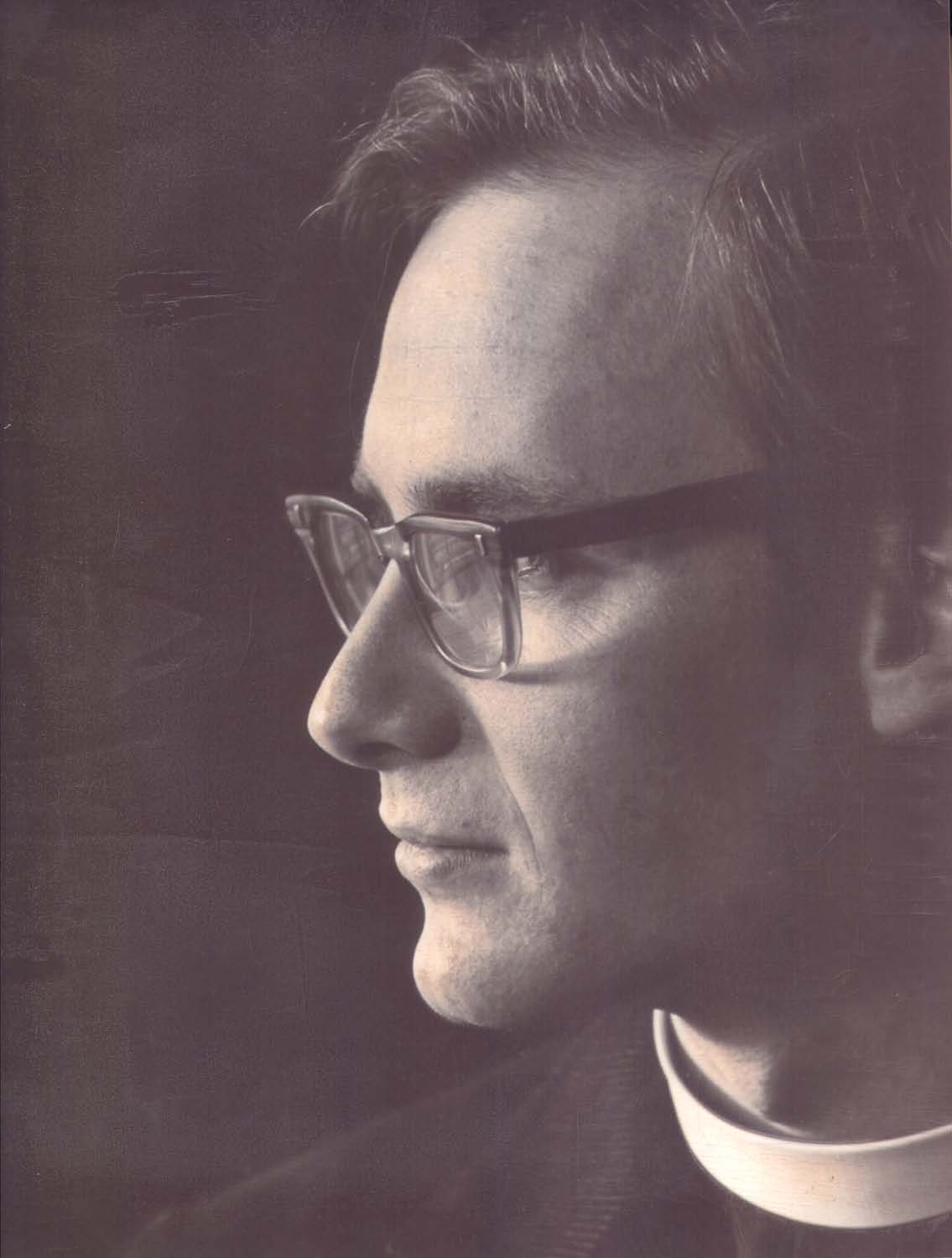
The Rev'd Dr. Stephen Reynolds 1951-2011
This translation was produced for students in the well-known course "Three Personed-God", which Stephen Reynolds taught in the Faculty of Divinity at Trinity College six times between 2001 and 2009.
David Neelands, Dean of Divinity, Trinity College iii
Table of Contents
Introduction v The First Theological Oration, Preliminary Discourse 1 The Second Theological Oration, On Theology 13 The Third Theological Oration, On the Son, 1 45 The Fourth Theological Oration, On the Son, 2 71 The Fifth Theological Oration, On the Holy Spirit 97
Introduction
REGORY of Nazianzus (330 – 389) has been treated as one of the brightest stars in the firmament of the Christian tradition. The Orthodox name him "The Theologian"1 – a title they accord only one other, St John the Apostle and Evangelist – and honour him with two feastdays, January 25th and January 30th. The western Catholic tradition has ranked him among "the Four Doctors of the Eastern Church"2 and honoured him on May 9th. (When the Roman Catholic church revised its Calendar in 1969, Gregory was joined with Basil the Great in a single memorial on January 2nd.3
) In spite of these accolades, Gregory has not received anything like the attention that western scholars have devoted to other ancient writers. This is especially true in the English-speaking world. Until recently, the only major modern study of Gregory in English is Rosemary Radford Ruether's Gregory of Nazianzus: Rhetor and Philosopher (Oxford: Oxford University Press, 1969). Ms Ruether has since moved on to other issues. This work is still well worth consulting, but it has now been supplanted by a full-scale, even magisterial study: John McGuckin's Saint Gregory of Nazianzus. An Intellectual Biography (Crestwood, N.Y.: St Vladimir's Seminary Press, 2001).
The standard English translation of Gregory's Five Theological Orations has been the one produced by Charles Gordon Browne and James Edward Swallow for the Library of Nicene and Post-Nicene Fathers, volume 7 (1893). I have used this translation in the past, but with mounting misgivings. So, for this course, I went back to the Greek text and began to revise Browne and Swallow's version. It turned out to be a major undertaking. Browne and Swallow produced a truly awful translation – it is so literal as to be incomprehensible as English, and at many others points it is not only inaccurate but downright wrong. In my revision, I have used The Five Theological Orations of Gregory of Nazianzus, ed. Arthur James Mason (Cambridge: Cambridge University Press, 1899); and besides the Greek text there established, it will be clear that I have been heavily indebted to Mason's notes on the text. I have also consulted the French translation
1 The title is meant in the strictest possible sense: Gregory defended the divinity (theo-) of the Word (logos) who became flesh (cf. John 1.1-14).
2 The other three are Basil the Great, John Chrysostom, and Cyril of Alexandria. "The Four Doctors of the Western Church" are Ambrose of Milan, Augustine of Hippo, Jerome, and Gregory the Great. Doctor, of course, is the Latin word for "teacher" – as in the BAS designation, "Teacher of the Faith". 3 In the Calendar of the Anglican Church of Canada's Book of Common Prayer (1962), Gregory is to be commemorated on the traditional western date, May 9th. The Calendar of the church's Book of Alternative Services (1985) adopted the new Roman usage and appoints Gregory's memorial, with Basil the Great, on January 2nd.
Basil died on January 1st in 379; the Orthodox continue to honour him, alone, on that date. In the Roman Calendar of 1969, however, January 1st is now the Solemnity of Mary the Mother of God; the BAS Calendar made the same date the festival of the Baptism of the Lord. Since feasts of our Lord (and, in the mentalité of Roman Catholicism, any feast of our Lady is tantamount to a feast of our Lord) take precedence over all other festivals, the memorial of Basil and Gregory had to be postponed by one day.
produced by Paul Gallay in the Sources chrétiennes series, No. 250 (Paris: Éditions du Cerf, 1978). Again, Gallay's annotations, though less detailed than Mason's, have been very helpful.
The First Theological Oration
(Oration 27)
Preliminary Discourse against the Disciples of Eunomius
Y argument is addressed to those who take pride in their own eloquence – so, to begin with a text of Scripture: I am against you, O arrogant one,1 not only in your system of teaching, but also in the way you hear things, and in your cast of mind. For the ears and tongues of certain persons – and not only their ears and tongues but also (I now see) even their hands – are eager to scratch at our words.2 They are people who delight in profane chatter, and in paradoxes of pseudo-knowledge, and in wranglings over words, which tend to no profit.3 For thus does Paul, the preacher and establisher of the Word cut short,4 the disciple and teacher of the fishermen,5
1 Jeremiah 50.31.
2 Cf. 2 Timothy 4.3-4: "For the time is coming when people will not put up with sound doctrine, but having itching ears, they will accumulate for themselves teachers to suit their own desires, and will turn away from listening to the truth and wander away to myths." 3 Cf. 2 Timothy 2.14b, 16: "Warn them before God that they are to avoid wrangling over words, which does no good but only ruins those who are listening…. Avoid profane chatter, for it will lead people into more and more impiety." 4 Cf. Romans 9.28: "For the Lord will finish his work and cut it short in righteousness, because the Lord will make the sentence shortened on the earth." 5 In Gregory's view, Paul was the "disciple" of Simon Peter and John ("the fishermen") in the sense that he followed or came after them. Paul was also "the teacher" (or "master") of "the fishermen" not only in the sense that he trained Timothy and Titus, who as his companions and fellowworkers fulfilled the apostolic mission of "fishing for people" (cf. Mark 1.17), but in the sense that he rebuked Peter for not being "straightforward about the truth of the gospel" (Galatians 2.11-14).
Gregory of Nazianzus call all that is excessive or superfluous in discourse. But as to those to whom we refer, would that they, whose tongue is so voluble and clever in applying itself to noble and approved language, would likewise pay some attention to actions. For then perhaps in a little while they would become less sophistical, and less strange and astonishing as word-tumblers, if I may use a ridiculous expression about ridiculous behaviour.6
2. But since they neglect every path of righteousness, and look only to this one point, namely, which of the propositions submitted to them they shall bind or loose, (like those persons who in the theatres perform wrestling matches in public, but not that kind of wrestling in which the victory is won according to the rules of the sport, but a kind to deceive the eyes of those who are ignorant in such matters, and to catch applause), and every marketplace must buzz with their talking; and every dinner party be made tedious with silly talk and mind-numbing conversation; and every festival be made unfestive and full of dejection, and every occasion of mourning be consoled by a greater calamity – their questions – and all the women's apartments accustomed to simplicity be thrown into confusion and be robbed of its flower of modesty by the torrent of their words. This being the case, the evil is intolerable and not to be borne, and our Great Mystery is in danger of being made a thing of little moment. Well then, let these spies bear with us, moved as we are with parental compassion, and as holy Jeremiah says, torn in our hearts;
7 let them bear with us so far as not to give a savage reception to our discourse upon this subject; and let them, if indeed they can, restrain their tongues for a short while and lend us their ears. However that may be, you shall at any rate suffer no loss. For either we shall have spoken in the ears of those that will hear,8 and our words will bear some fruit, namely an advantage to you (since the Sower sows the Word upon every kind of mind;9 and the good and fertile bears fruit), or else you will depart despising this discourse of ours as you have despised others, and having drawn from it further material for gainsaying and railing at us, upon which to feast yourselves yet more.
And you must not be astonished if I speak a language which is strange to you and contrary to your custom, who profess to know everything and to
6 Gregory is comparing the Eunomians with the kind of cir-cus-performers who "tumble," i.e. do gymnastic tricks – but with words and concepts. 7 Cf. Jeremiah 4.19. 8 Cf. Mark 4.9, 23: "Let anyone with ears to hear listen!" 9 Mark 4.14.
Theological Orations
teach everything in too audacious and high-flying a manner – not to irk you by saying ignorant and rash.
3. Not to every one, my friends, does it belong to philosophise about God10
– not to every one. The subject is not so cheaply acquired, nor is it for earth-bound minds. And I will add, not before every audience, nor at all times, nor on all points; but on certain occasions, and before certain persons, and within certain limits.
Philosophising about God does not belong to all persons, because it is permitted only to those who have been examined and have a solid footing in contemplation [theoria], and who have been previously purified in soul and body, or at the very least are being purified. For the impure to touch the pure is, we may safely say, not safe, just as it is unsafe to fix weak eyes upon the sun's rays. And what is the permitted occasion? It is when we are free from all external defilement or disturbance, and when that which rules within us is not confused with vexatious and roving impressions, like persons mixing up good writing with bad, or filth with the sweet odours of unguents. For it is necessary to be truly at leisure to know God; and when we can get a convenient season, to discern the straight road of the things divine. And who are the permitted persons? Those to whom the subject is of real concern, and not those who make it a matter of pleasant gossip, like any other thing, after the races, or the theatre, or a concert, or a dinner, or still lower activities. To such people, idle jests and pretty contradictions about these subjects are a part of their amusement.
10 to philosophise about God (peri theou philosophein): This phrase might be translated as "to do theology," for that is what Gregory basically meant here. Using the term theology to designate "the study of God" as a distinct discipline was not current in Gregory's day, nor did it become so until the late Middle Ages. But translating "philosophising about God" as "doing theology" or "theologising" would not only be an anachronism; it would also lose some of the nuance that Gregory intended. "Philosophy" referred to and embraced far more than the modern notion of philosophy as an academic discipline. It was not a matter of abstract speculation in a vacuum (or an ivory tower), any more than it was a matter of what nowadays often passes for philosophy, wisecracks outfitted in GAP duds. "Philosophy" was for Gregory a rigorous discipline of the whole self for the sake of meditating on, and knowing, what is truly real – in this case, the mystery of God. Thus, to be a "philosopher about God" was not only to be a student or teacher of propositions concerning divinity; it was to be a lover of the highest and truest Wisdom, which is the knowledge of God.
11 that which rules within us: i.e. the reason or the rational soul.
Gregory of Nazianzus
Next, on what subjects and to what extent may we philosophise? On matters within our reach, and to such an extent as the mental power and grasp of our audience may extend. No further, for just as excessively loud sounds injure the hearing, or too much food the body, or just as excessive burdens beyond the strength of the bearers injure them, or excessive rains the earth – so too these hearers may be pressed down and overborne by the difficulty of the arguments and may even lose some of the understanding that they originally possessed.
4. Now, I am not saying that it is not needful to remember God at all times. I must not be misunderstood, or I shall be having these nimble and quick people down upon me again. For we ought to think of God even more often than we draw our breath; and if the expression is permissible, we ought to do nothing else. Indeed, I am one of those who entirely approve that word which bids us meditate day and night,12 and cry out in the evening, in the morning, and at noon day,13 and bless the Lord at all times;14 or, to use Moses's words, when one lies down, or when one gets up, or when one walks on the road, or whatever else one is doing15 – and by this recollection we are to be moulded to purity. So that it is not the continual remembrance of God that I would hinder, but only the talking about God. Nor do I consider even that to be wrong in itself, but only when inappropriate; nor do I object to teaching about God, but only to lack of judgement in doing so. As eating too much honey, even though it is honey, makes one vomit;16 and, as Solomon and I think, there is a time for every thing,17 and that which is good ceases to be good if it be not done in a good way; just as a flower is quite out of season in winter, and just as a man's clothing does not become a woman, nor a
12 Cf. Psalm 1.2: "Their delight is in the law of the Lord, and on his law they meditate day and night."
13 Psalm 55.17. 14 Psalm 34.1. 15 Cf. Deuteronomy 6.7: "Recite [these words] to your children and talk about them when you are at home and when you are away, when you lie down and when you rise." 16 Cf. Proverbs 25.16: "If you have found honey, eat only enough for you, or else, having too much, you will vomit it." even though it is honey: The idea is that honey is one of the very best of things in itself. 17 Ecclesiastes 3.1.
woman's a man; and as geometry is out of place in mourning,18 or tears at a party – shall we in this instance alone disregard the proper time, in a matter in which discretion should be respected most of all?
5. Surely not, my friends and brethren – for I will still call you "brethren," even though you do not behave like brothers. Let us not think so, nor yet, like excited and ungovernable horses, throwing off our driver Reason, and spitting out the bit of restraining Reverence, let us run wide of the turning post.
19 Instead, let us philosophise within our proper bounds, and not be carried away into Egypt, nor be swept down into Assyria,20 nor sing the Lord's song in a strange land,21 by which I mean before any kind of audience, strangers or kindred, hostile or friendly, sympathetic or unsympathetic, who watch what we do with a critical eye, and would like the spark of what is wrong in us to become a flame, and secretly kindle and fan it and raise it to heaven with their breath and make it higher than the Babylonian flame which burnt up every thing around it.22
For since their strength lies not in their own teachings, they hunt for it in our weak points. And therefore they apply themselves to our – shall I say "misfortunes" or "failings"? – like flies to wounds. But let us at least be no longer ignorant of ourselves, or pay too little attention to the due order in these matters. And if it be impossible to put an end to the existing hostility, let us at least agree upon this, that we will utter mysteries under our breath, and holy things in a holy manner, and we will not cast to profane ears that which may not be uttered, nor give evidence that we possess less gravity than
18 as geometry is out of place in mourning. Some ancient writers classified geometry as part of musical studies, and thus as something fun to do. There is no accounting for tastes.
19 nor yet, like excited and ungovernable horses … run wide of the turning post. Gregory's metaphor has to do with chariot races in the hippodrome of Constantinople: he compares reason ("that which rules within us") with the driver of a chariot. The turning post was the point round which the charioteer had to steer his vehicle to begin the second lap of the race; the tighter the turn, the better for the charioteer's chances of winning, placing, or showing. 20 not be carried away into Egypt, nor be swept down into Assyria. Cf. Hosea 9.3: "They shall not remain in the land of the LORD; but Ephraim shall return to Egypt, and in Assyria they shall eat unclean food." 21 Psalm 137.4 (LXX 136.4). 22 the Babylonian flame which burnt up every thing around it. Daniel 3.1923 (Shadrach, Meshach, and Abegnego thrown into the furnace).
Gregory of Nazianzus those who worship demons and serve shameful fables and deeds; for they would sooner give their blood to the uninitiated than certain words. But let us recognise that as in dress and diet and laughter and behaviour there is a certain decorum, so there is also in speech and silence; since among the many titles and powers of God, we pay the highest honour to "Word". Let even our disputes then be kept within bounds.
6. Why should someone who is a hostile listener to such words be allowed to hear about the begetting of God or God's creation,23 or how God was made out of things which had no existence, or of section and analysis and division?24 Why do we make our accusers our judges? Why do we put swords into the hands of oar enemies?25 Think for a minute: how, or with what temper, will arguments about such subjects be received by those who approve of adulteries and the corruption of children, and who worship the passions and cannot conceive of anything higher than the body, who until quite recently set up gods for themselves – and gods, at that, who were noted for the vilest deeds? Will it not first be from a material standpoint, shamefully and ignorantly, and in the sense to which they have been accustomed? Will they not make your theology a defence for their own gods and passions? For if we ourselves wantonly misuse these words,26 it will be a long time before we shall persuade them to accept our philosophy. And if they are in their own persons inventors of evil,27 how should they refrain from grasping at such things when
23 the begetting of God or God's creation. Gregory here alludes to the different positions of the Nicene and Arian movements regarding the status of the Son of God. The Nicene movement insisted that the Son was "begotten (gennethenta), not made (poiethenta);" the Arians, that the Son was created (genethenta), that is, made.
24 or how God was made out of things which had no existence, or of section and analysis and division. These are Eunomian refinements of the basic Arian position. 25 Why do we make our accusers our judges? Why do we put swords into the hands of oar enemies? The Eunomians, it seems, had a habit of discussing theological issues and promoting their own views at the drop of a hat, regardless of who was present. Gregory is saying that this allows pagans to despise the Christian faith which Nicenes and Eunomians both profess. 26 these words. "Begetting [of God]" and "[God's] creation," mentioned in the first sentence of this section. 27 Romans 1.30.
offered to them? Such results come to us from our rivalry. Such results dog those who fight for the Word beyond what the Word approves – they are behaving like insane persons who set their own house on fire, or abuse their own children, or disavow their own parents and treat them as strangers.
7. But when we have excluded from the conversation whatever is alien to it,28 and sent the great legion on its way to the abyss in the herd of swine,29 the next thing is to look to ourselves, and polish our theological self to beauty like a statue. The first point to be considered is: – What is this great rivalry of speech and endless talking? What is this new disease of insatiability? Why have we tied our hands and armed our tongues? We do not praise either hospitality, or brotherly love, or conjugal affection, or virginity; nor do we admire liberality to the poor, or the chanting of Psalms, or nightlong vigils, or tears. We do not subdue the body by fasting, or go forth to God by prayer; nor do we subject the worse to the better – I mean the dust to the spirit30 – as they would do who form a just judge-ment of our composite nature. We do not make our life a preparation for death, nor do we make ourselves masters of our passions, mindful of our heavenly nobility; nor tame our anger when it swells and rages, nor our pride that brings about a fall,31 nor unreasonable grief, nor ignorant pleasure,32 nor insincere laughter, nor undisciplined eyes, nor insatiable ears, nor excessive talk, nor absurd thoughts, nor any of the
28 when we have excluded from the conversation whatever is alien to it. Gregory does not mean pagan persons but pagan notions and attitudes which had entered into Christian discourse. 29 sent the great legion on its way to the abyss in the herd of swine. Mark 5.1-13. 30 I mean the dust to the spirit. Cf. 1 Corinthians 15.46-49: "But it is not the spiritual that is first, but the physical, and then the spiritual. The first man was from the earth, a man of dust; the second man is from heaven. As was the man of dust, so are those who are of the dust; and as is the man of heaven, so are those who are of heaven. Just as we have borne the image of the man of dust, we will also bear the image of the man of heaven." 31 our pride that brings about a fall. Cf. Proverbs 16.18: "Pride goes before destruction, and a haughty spirit before a fall." 32 ignorant pleasure. Gregory is not condemning all pleasure; he is deploring senseless pleasure, pleasure which does know why it is pleased, or what is truly pleasing, and so is indiscriminate and ephemeral.
Gregory of Nazianzus occasions which the Evil One gets against us from sources within ourselves; bringing upon us the death that comes through the windows, as Holy Scripture says;33 that is, through the senses. Indeed, we do the very opposite, and have given liberty to the passions of others, as kings give releases from service in honour of a victory, only on condition that they incline to our side, and make their assault upon God more boldly, or more impiously. And we give them an evil reward for a thing which is not good, license of tongue for their impiety.
8. And yet, O chatty dialectician, I will question you a little, and you shall declare to me, as the One who answers through whirlwind and cloud says to Job.
34 Are there many dwelling-places in God's house,35 as you have heard, or only one? Of course you will admit that there are many, and not only one. Now, are they all to be filled, or only some and others not, so that some will be left empty and will have been prepared to no purpose? Of course all will be filled, for nothing can be in vain which has been done by God. And can you tell me what you will consider this dwelling-place to be? Is it the rest and glory which is in store there for the blessed, or something else? – "No, not anything else." – Since then we are agreed upon this point, let us further examine another also. Is there anything that procures these different dwellingplaces, as I think there is; or is there nothing? – "Certainly there is." – What is it? Is it not that there are various modes of conduct, and various aims, one leading one way, another leading another way, according to the proportion of faith, and these we call ways? Must we, then, travel all, or just some, of these ways – the same individual travelling along them all, if that is possible, or, if not, along as many as may be; or else along some of them? And even if this may not be, it would still be a great thing, at least as it appears to me, to travel excellently along even one. – "You are right in your conception." – When you hear there is but one way, and that narrow,36 what then does the word seem to you to mean? That there is but one way, on account of its excellence. For it is but one, even though it may be split into many parts. And it is narrow because of its difficulties, and because it is trodden by few in
33 the death that comes through the windows. Cf. Jeremiah 9.21: "Death has come up into our windows, it has entered our palaces, to cut off the children from the streets and the young men from the squares."
34 Job 38.1, 3 35 John 14.2. 36 there is but one way, and that narrow. Cf. Matthew 7.13-14: "Enter through the narrow gate…. For the gate is narrow and the road is hard that leads to life, and there are few who find it."
comparison with the multitude of the adversaries and of those who travel along the road of wickedness. – "So I think too." – Well, then, my good friend, since this is so, why do you, as though condemning our doctrine for a certain poverty, rush headlong down that way which leads through what you call arguments and speculations, but I frivolities and quackeries? Let Paul reprove you with those bitter reproaches in which, after his list of the gifts of grace, he says, Are all apostles? Are all prophets? etc.37
9. But it may be as you say. You are high, even higher than the heights, even above the clouds – if you wish, a spectator of things invisible, a hearer of things unspeakable,
38 one who has ascended after Elijah,39 and who after Moses has been deemed worthy of the vision of God,40 and after Paul has been caught up into heaven. Why then do you set up your companions as saints and ordain them as theologians all in a single day, and as it were breathe into them instruction and make them many councils of ignorant oracles? Why do you entangle those who are weaker in your spider's web, as if it were something great and wise? Why do you stir up wasps' nests against the faith? Why do you suddenly spring a flood of dialectics upon us, as the myths of old say that the earth sprouted the giants?41
Why have you collected, like offscourings, every worthless thing that has human form into one torrent, and having made them sillier by flattery, fashioned a new workshop, cleverly making a harvest for yourself out of their want of understanding?
10. Do you deny these things? Do you care for nothing but controversy? Must your tongue rule you at any cost, and can you not restrain the throes of your talk? You may find many other deserving subjects for discussion. Turn this disease of yours to these with some advantage. Attack the silence of Pythagoras, and the Orphic beans, and that preposterous brag, "Himself has
37 1 Corinthians 12.29. 38 a spectator of things invisible, a hearer of things unspeakable. Cf. 2 Corinthians 12.2, 4: "I know a person in Christ who fourteen years ago was caught up to the third heaven…, into Paradise and heard things that are not to be told, that no mortal is permitted to repeat." 39 2 Kings 2.11. 40 Exodus 34.6. 41 In ancient Greek mythology, the giants not only sprang out of earth but also warred against the gods. Therein lies the edge of Gregory's allusion – that the Eunomians, like the mythic giants, were waging war on God.
Gregory of Nazianzus spoken."42 Attack the "Ideas" of Plato,43 and the transbodiments and circulations of our souls,44 and the reminiscences,45 and the unlovely loves for lovely bodies, though directed to the beloved's soul. Attack the atheism of Epicurus, and his atoms, and his doctrine of pleasure, unworthy of a philosopher;46 or Aristotle's petty Providence, and his artificial system, and his discourses about the mortality of the soul, and the exclusively human focus of
42 Attack the silence of Pythagoras, and the Orphic beans, and the novel brag about "Himself has spoken." Pythagoras was a Greek philosopher and mathematician who flourished in the sixth century B.C.E. He developed a philosophy which was also a religious cult. Novices underwent several years' probation, during which they had to maintain total silence; and the rule of the Pythagorean master was absolute, such that all discussion came to an end as soon as he announced Αυτος εφα (Autos epha – "Himself has spoken"). One strain of Pythagoreanism assimilated elements of the Orphic cult, an ancient Greek mystery religion devoted to Orpheus (of "and Eurydice" fame); as part of its strict dietary laws, members were forbidden to eat beans, on the grounds that they held human souls at an early stage of their migration toward humanity.
43 the "Ideas" of Plato. In Plato's thought, Ideas were the eternal archetypes or patterns of all existing things, according to which divine Reason formed those things. 44 the transbodiments and circulations of our souls. Another of Plato's doctrines was that souls "migrated" after death (and a thousand-year waiting period) from one body to another body; the type of body to which the soul migrated depended on the soul's merit in its previous venue – if good, it might pass from an elephant's body to a human's; if bad, from a human body to that of a snake. 45 the reminiscences. A reference to the previous doctrine. Plato held that the soul "remembers" the knowledge it acquired in a previous embodiment. 46 the atheism of Epicurus, and his atoms, and his doctrine of pleasure, unworthy of a philosopher. Epicurus (ca. 340-270 B.C.E.) was a thoroughgoing materialist who held that pleasure was the only unmitigated good and pain the only unmitigated evil. In his view, "atoms" were the primary materials which made up everything, and they were eternal. He did not deny the existence of the gods, just that they had any impact or influence on the life of the world.
his teachings.47 Attack the haughtiness of the Stoa,48 or the greed and vulgarity of the Cynic.49
Attack for me the emptiness that is full of absurdities – all that stuff about the gods and the sacrifices and the idols and demons, whether beneficent or malignant, and all the tricks that people play with divination, the calling up of gods or of souls, and the power of the stars. And if these things seem to you unworthy of discussion as petty and already often confuted, and you wish to keep to your line, and seek to satisfy your ambition in it; then here too I will provide you with broad paths. Philosophise about the world or worlds; about matter; about soul; about natures endowed with reason, good or bad; about resurrection, about judgement, about reward, or the sufferings of Christ. For in these subjects to hit the mark is not useless, and to miss it is not dangerous. But with God we shall have converse, in this life only in a small degree; but a little later, it may be, more perfectly, in the Same, our Lord Jesus Christ, to Whom be glory for ever. Amen.
47 Aristotle's dismissive treatment of Providence, … and the exclusively human focus of his teachings. Aristotle (384-322 B.C.E.) was the first truly systematic philosopher in that he sought to construct an account of reality according to an intelligible system, working from physical entities back to first principles. He conceived of a divine First Unmoved Mover who (or which) started the creative process but did not interfere thereafter – hence Gregory's remark about Aristotle's dismissive treatment of Providence. The rest of Aristotle's "theology" is very thin, so that his philosophy can seem to be (as Gregory complains) devoid of any serious or sustained reference to the divine. 48 the haughtiness of the Stoa. The Stoa was a colonnade in Athens where the philosopher Zeno of Citium (ca 335-ca. 263 B.C.E.) gathered his disciples; hence the name "Stoic". Zeno and the Stoics opposed Epicurus (see fn. 46) and preached apatheia, the eradication of all feeling so that one might be absolutely unmoved by any external force and thus completely free. This made their teaching seem "haughty". 49 the Cynic. Cynics sought total freedom by despising and indeed consciously outraging social conventions – they cultivated "freeloading," performed bodily functions, even copulated, in public, and refused to bathe.
Gregory of Nazianzus
The Second Theological Oration
Oration
On Theology
N the previous Discourse we laid down clearly what sort of character theologians ought to have, and on what kind of subject they may philosophise, and when, and to what extent. We saw that theologians ought to be pure (as far as possible), in order that light may be apprehended by light; and that they ought to consort with thoughtful people, in order that their word may not be fruitless through falling on an unfruitful soil;1 and that the suitable season is when we have gained an inner calm from the whirl of outward things; so that we are not like those panting with rage and lose our breath; and that the extent to which we may go is that to which we have ourselves advanced, or to which we are advancing. Since then these things are so, and we have broken up for ourselves the fallow ground of divinity so as not to sow upon thorns,2 and have levelled the surface of the ground,3 being formed and forming others by Holy Scripture – let us now enter upon theological questions, setting at the chief the Father, the Son, and the Holy Spirit, of whom we are to treat; that the Father may be well pleased, and the Son may help us, and the Holy Ghost may inspire us; or rather that one illumination may come upon us from the one God, one in diversity, diverse in unity – which is the marvel itself.
§ 2. Now when I eagerly go up on to the Mount
– or, to use a truer expression, when I both eagerly long and at the same time am anxiously
1 Cf. Mark 4.18-19: "And others are those sown among the thorns: these are the ones who hear the word, but the cares of the world, and the lure of wealth, and the desire for other things come in and choke the word, and it proves unfruitful."
2 Cf. Jeremiah 4.3: "For thus says the LORD to the people of Judah and to the inhabitants of Jerusalem: Break up your fallow ground, and do not sow among thorns."
3 Cf. Isaiah 28.25: "When they have levelled its surface, do they not scatter dill, sow cummin, and plant wheat in rows and barley in its proper place, and spelt as the border?"
4 Gregory here begins a meditative "riff" on Exodus 19, the story of the Israelites camped before Mount Sinai.
Gregory of Nazianzus fearful (the one through my hope and the other through my weakness) to enter within the cloud and hold converse with God, for so God commands – then, if any be an Aaron, let him go up with me, and let him stand near, being ready, if it must be so, to remain outside the Cloud. But if any be a Nadad or an Abihu, or of the Order of the Elders, let him go up indeed, but let him stand afar off, according to the value of his purification.5 But if any belong to the multitude who are unworthy of this height of contemplation, if they are altogether impure let them not approach at all, for it would be dangerous for them. But if they are at least temporarily purified, let them remain below and listen to the Voice alone and to the trumpet, the bare words of piety, and let them see the mountain smoking and lightning, at once a terror and a marvel to those who cannot go up. But if any are evil and savage beasts, and altogether incapable of taking in the topics of contemplation and theology, let them not hurtfully and malignantly lurk in their dens among the woods, to catch hold of some teaching or saying by a sudden spring, and to tear the sound words 6 to pieces by their misrepresentations. Instead, let them stand afar off and withdraw from the Mount, or they shall be stoned and crushed and perish miserably in their wickedness. For to those who are like wild beasts true and sound discourses are stones. If they are a leopard let them die with their spots.7 If they are a ravening and roaring lion, seeking what they may devour of our souls or of our words;8 or a wild boar, trampling under foot the precious and translucent pearls of the Truth;9 or an Arabian wolf and a stranger,10 or one keener even than these in tricks of argument; or a jackal
5 Cf. Exodus 24.1-2: "Then [the LORD] said to Moses, 'Come up to the LORD, you and Aaron, Nadab, and Abihu, and seventy of the elders of Israel, and worship at a distance. Moses alone shall come near the LORD; but the others shall not come near, and the people shall not come up with him.' "
6 1 Timothy 6.3; 2 Timothy 1.13. 7 If they are a leopard let them die with their spots. Cf. Jeremiah 13.23: "Can Ethiopians change their skin or leo-pards their spots?" 8 Cf. 1 Peter 5.8b: "Like a roaring lion your adversary the devil prowls around, looking for someone to devour." 9 Cf. Matthew 7.6: "Do not throw your pearls before swine, or they will trample them under foot and turn and maul you."
(that is, a treacherous and faithless soul) which changes its shape according to circumstances or necessities, and feeds on dead or putrid bodies or on little vineyards when the large ones have escaped them; or any other carnivorous beast, rejected by the Law of Moses as unclean for food or enjoyment – our discourse must withdraw from such and be engraved on solid tables of stone, and that on both sides because the Law is partly visible, and partly hidden; the one part belonging to the mob who remain below, the other to the few who press on up the Mount.
3. What is this that has happened to me, O friends, initiates in the mysteries,11 and fellow-lovers of the truth? I was running to lay hold on God; so I went up the Mount and drew aside the curtain of the Cloud, and entered away from matter and material things, and as far as I could I withdrew within myself. And then when I looked up, I barely saw the back of God; although I was sheltered by the Rock, the Word that was made flesh for us.12 And when I looked a little closer, I saw, not the first and unmingled Nature, known to itself – to the Trinity, I mean; not that which dwells behind the first veil and is hidden by the Cherubim,13 but only that Nature which at last even reaches to
10 an Arabian wolf comes from Habakkuk 1.8, according to the Septuagint. NRSV translates the Hebrew text as "more menacing than wolves at dusk". Gregory perhaps means and a stranger to interpret the image.
11 initiates in the mysteries. I.e., they have been baptised.
12 I barely saw the back of God; although I was sheltered by the Rock, the Word that was made flesh for us. Cf. Exodus 33.18-23: Moses said, 'Show me your glory, I pray.' And he said, 'I will make all my goodness pass before you, and will proclaim before you the name, "The LORD" …. But,' he said, 'you cannot see my face; for no one shall see me and live.' And the LORD continued, 'See, there is a place by me where you shall stand on the rock; and while my glory passes by I will put you in a cleft of the rock, and I will cover you with my hand until I have passed by; then I will take away my hand, and you shall see my back; but my face shall not be seen.' "
13 that which dwells behind the first veil and is hidden by the Cherubim. Gregory is referring to the Ark of the Covenant. Exodus 25.17-21: "Then you shall make a mercy seat of pure gold; two cubits and a half shall be its length, and a cubit and a half its width. You shall make two cherubim of gold; you shall make them of hammered work, at the two ends of the mercy seat. Make one cherub at the one end, and one cherub at the other; of one piece with the mercy seat you shall make the cherubim at its two ends. The cherubim shall spread out their wings above,
Gregory of Nazianzus us. And that is, as far as I can learn, the Majesty – or, as holy David calls it, the Glory14 – which is manifested among the creatures, which it has produced and governs. For these are the "back" of God, which the divine Trinity leaves behind as tokens of itself – like the shadows and reflection of the sun in the water which show the sun to our weak eyes, because we cannot look at the sun itself, since by its unmixed light it is too strong for our power of perception. In this way then shall you discourse about God, even if you were a Moses and a god to Pharaoh,15 even if you were caught up like Paul to the Third Heaven and had heard unspeakable words,16 even if you were raised above them both and exalted to the status of an angel or archangel. For though a thing be all heavenly, or above heaven, and far higher in nature and nearer to God than we are, yet it is further distant from God and from the complete comprehension of God's nature, than it is lifted above our complex and lowly and weighed-down composition.17 overshadowing the mercy seat with their wings. They shall face one to another; the faces of the cherubim shall be turned toward the mercy seat. You shall put the mercy seat on the top of the ark; and in the ark you shall put the covenant that I shall give you." And Exodus 26.30-31, describing the tabernacle (or "tent of meeting") which was hold the Ark: "Then you shall erect the tabernacle according to the plan for it that you were shown on the mountain. You shall make a curtain [or veil] of blue, purple, and crimson yarns, and of fine twisted linen; it shall be made with cherubim skilfully worked into it."
14 Psalm 8.1: "You have set your glory above the heavens" (NRSV). A. J. Mason comments: "Gregory prefers the word [µεγαλοπρεπεια, "glory"] because it expresses not the abstract quality, like µεγαλειοτης ["majesty"], but the impression produced by its manifestation."
15 Cf. Exodus 7.1: "The LORD said to Moses, 'See, I have made you like God to Pharaoh, and your brother Aaron shall be your prophet.' "
16 2 Corinthians 12.2, 4: "I know a person in Christ who fourteen years ago was caught up to the third heaven…, into Paradise and heard things that are not to be told, that no mortal is permitted to repeat."
17 Cf. Wisdom 9.15: "For a perishable body weighs down the soul, and this earthy tent burdens the thoughtful mind." By our composition (krama), Gregory means humanity's composite nature, our being made up of body and soul.
4. Therefore we must begin again in this way. It is difficult to have a clear idea of God, but to define God in words is an impossibility, as one of the Greek theologians taught18 – not unskilfully, it seems to me – with the intention that he might be thought to have apprehended God; in that he says it is a hard thing to do; and yet may escape being convicted of ignorance because of the impossibility of giving expression to the apprehension. But in my opinion it is impossible to express God, and yet more impossible to form a clear idea of Him. For that which may be conceived may perhaps be made clear by language, if not adequately, at least dimly, to any one who is not hard of hearing or dull of understanding. But to exhaust the whole of so great a subject is quite impossible and impracticable, not merely to the utterly careless and ignorant but even to those who are spiritually exalted and who love God, and likewise to every other created nature. For the darkness of this world and the thick covering of the flesh are an obstacle to the full understanding of the truth. I do not know whether it is the same with the higher natures and purer Intelligences19 which because of their nearness to God, and because they are illumined with all His Light, may possibly see, if not the whole, at any rate more perfectly and distinctly than we do – some perhaps more, some less than others, in proportion to their rank.
20 What concerns us is not only the peace of God which surpasses all understanding and knowledge,21 nor only the things which God has stored up in promise for the righteous, which no eye has seen, nor ear heard, nor the human heart conceived except in a very small degree,22 nor the accurate knowledge of the creation. For even of this I would have you know that you have only a shadow when you hear the words, I will consider your heavens, the work of your fingers, the moon and the stars and the settled order which prevails among them,23
§ 5. But let this question be dropped for now.
not as if the Psalmist were considering them now, but as destined to do so hereafter. But far before them is that nature which is above them, and out of which they spring, the Incomprehensible and Illimitable – not, I mean, as to the fact of its being, but as to its nature. For our preaching is not futile, nor is our faith in
18 Plato, Timaeus 28 E.
19 the higher natures and purer Intelligences. I.e. angels and archangels.
20 this question. I.e. regarding the angels' knowledge of God.
21 Philippians 4.7.
22 1 Corinthians 2.9; cf. Isaiah 64.4.
23 Psalm 8.4.
Gregory of Nazianzus vain,24 nor is this the doctrine we proclaim; for we would not have you take our candid statement as a starting point for a quibbling denial of God, or for exalting yourself against me on account of my confession of ignorance. For it is one thing to be persuaded of the existence of a thing, and quite another to know what it is.
6. Now our own eyes and the Law of Nature teach us that God exists, and that He is both the creative Cause of all things and the Cause-thatmaintains-all-things-in-harmony. Our eyes teach us this, because they fall on visible objects and see them in beautiful stability and progress – immovably moving and revolving, so to speak. Natural Law teaches us the same truth because, through these visible things and their order, it reasons back to their Author. For how could this Universe have come into being or been put together, unless God had called it into existence, and held it together? For every one who sees a beautifully made lute, and considers the skill with which it has been fitted together and arranged, or who hears its melody, would think of none but the lute-maker or the lute-player and would let their thoughts run back to him, although they might not know him by sight. And thus to us also is manifested that which made and moves and preserves all created things, even though He may not be comprehended by the mind. And very wanting in sense are those who will not willingly go thus far in following natural proofs. But not even this which we have imagined or fashioned for ourselves, or which reason has sketched for us, is the same as God. If someone has ever attained, to one degree or another, some under-standing of God, what proof is there of the fact? Who ever reached this extremity of wisdom? Who was ever deemed worthy of so great a gift? Who has opened the mouth of their mind and drawn in the Spirit,
25 so that by the One who searches all things, even the depths of God,26 such a person takes in God and no longer needs to advance further, since such a person already possesses the ultimate object of desire and that to which a high-minded person's whole life and all their intelligence press forward?
24 our preaching is not futile, nor is our faith in vain. Cf. 1 Corinthians 15.14, 17: "If Christ has not been raised, then our proclamation has been in vain and your faith has been in vain…. If Christ has not been raised, your faith is futile and you are still in your sins."
25 Who has opened the mouth of their mind and drawn in the Spirit. Cf. Psalm 119.131: "I opened my mouth and drew in my breath." The Greek for "breath" is pneuma, which may also mean "Spirit".
26 1 Corinthians 2.10.
7. For what will you conceive the Deity to be, if you rely upon all the approximations of reason? Or to what will reason carry you, O most philosophic of humans and best of theologians, who boast of your familiarity with the Unlimited? Is God a body? How then is God the Infinite and Limitless, and formless, and intangible, and invisible? Are bodies described in this way? That would be a real stretch! – for such is not the nature of a body! Or will you say that God has a body, but not these attributes? What gross stupidity, that a Deity should possess nothing more than we do. For how is God an object of worship if He is circumscribed? Or how shall God escape being composed of elements, and therefore subject to be resolved into them again, or even altogether dissolved? For every compound is a starting point of strife, and strife of separation, and separation of dissolution. But dissolution is altogether foreign to God and to the First Nature. Therefore there can be no separation in order that there may be no dissolution, and no strife in order that there may be no separation, and no composition in order that there may be no strife. Thus also there must be no body in order that there may be no composition, and so the argument is established by going back from last to first.
8. And how shall we preserve the truth that God pervades all things and fills all – as it is written, Do I not fill heaven and earth? says the Lord;27 and The Spirit of the Lord fills the world 28 – if God partly contains and partly is contained? For either God will occupy an empty Universe, and so all things will have vanished for us. The result of this is, that we will have insulted God by making Him a body and by robbing Him of all things which He has made. That, or else God will be a body contained in other bodies – which is impossible – or He will be enfolded in them, or contrasted with them, as liquids are mixed and one divides and is divided by another. Such a view is more absurd and muddle-headed than even the atoms of Epicurus; and so this argument concerning the body will collapse, having no "body" and no solid basis at all. But we might assert that God is immaterial (as for example that "fifth element" which some have imagined29
), and that He is carried round in circular movement. Let us assume that God is immaterial, and that He is "the fifth element"; and, if they please, let God be bodiless as well, in accordance with the independent drift and arrangement of their argument. For I will not at present differ with them on this point. In what respect, then, will God be
27 Jeremiah 23.24.
28 Wisdom 1.7.
29 Aristotle postulated the existence of a fifth element (quint-essence) made up of formless matter (in the strict Aristotelian sense of Matter without any Form), in addition to the basic elements of earth, air, water, and fire.
Gregory of Nazianzus one of those things which are in movement and agitation, to say nothing of the insult involved in making the Creator subject to the same movement as creatures, and unite the One who carries all (if they will allow even this) with those whom He carries. Again, what is the force that moves your "fifth element," and what is it that moves all things, and what moves that, and what is the force that moves that? And so on and so on without end. And how can God help being altogether contained in space if He is subject to motion? But if they assert that God is something other than this "fifth element;" perhaps having an angelic nature, how do they know that angels have bodies and what kind of bodies they have? And in that case, how far could God, to whom the angels minister, be superior to the angels? And if God is above them, we will again have to introduce an irrational swarm of bodies and end up with a bottomless pit of nonsense which can stop nowhere.
9. And so we see that God is not a body. For no inspired teacher has yet asserted or admitted such a notion, nor does the idea have any place in our courtyard. Nothing then remains but to grant that God is incorporeal. But this term incorporeal, though granted, still does not set God's essence before us or contain that essence within itself – any more than do the terms unbegotten, and unoriginate, and unchanging, and incorruptible, and any other predicate which is used of God or in relation to God. For what light does it shed on God's existence, with respect to His nature and underlying essence, to say that God has no beginning, and is incapable of change or limitation? Indeed, the whole question of God's existence is still left for further considera-tion and exposition by those who truly have the mind of God and are advanced in contemplation. For just as to say, "It is a body," or "It was begotten," is not sufficient to present clearly to the mind the various objects of which these predicates are used, but you must also express the subject of which you use them, if you would present the object of your thought clearly and adequately. For every one of these predicates, corporeal, begotten, mortal, may be used of a human, or a cow, or a horse: -- just so, those who eagerly pursue the nature of the One who is Being itself30 will not stop at saying what God is not, but must go on beyond that and say what God is. For clearly it is easier to take in some single point than to go on disowning point after point in endless detail, in order, both by the elimination of negatives and the assertion of positives, to arrive at a comprehension of this subject.
But those who state what God is not without going on to say what God is, act in much the same way as those who, when asked how many two-timesfive make, would give as their answer, "Not two, not three, not four, nor five, nor twenty, nor thirty, nor in short any number below ten, nor any
30 the nature of the One who is Being itself (ten tou ontos … phusin). An allusion to Exodus 3.14: "God said to Moses, 'I AM WHO I AM.' He said further, 'Thus you shall say to the Israelites, ' I AM has sent me to you.' " multiple of ten" – but would not answer "ten," nor settle the mind of their questioner upon the firm ground of the answer. For it is much easier, and more concise to declare what a thing is not from what it is, than to demonstrate what it is by stripping it of what it is not. Surely this is obvious to every one.
10. Now since we have ascertained that God is incorporeal, let us proceed a little further with our examination. Is the divine nature nowhere, or is it somewhere? For if the divine nature is nowhere, then some person of a very inquiring turn of mind might ask, "How then can it exist at all?" For if the non-existent is nowhere, then that which is nowhere is also perhaps nonexistent. But if the divine nature is somewhere, God must be either in the universe or above the universe. And if the divine nature is in the universe, then God must be either in some section of it or extending everywhere throughout the whole of it. If in some section, then God will be circumscribed by that part which is less than the divine nature.31 But if the divine nature extends everywhere, then God will be circumscribed by something which is merely larger than any other large thing – I mean the universal, which contains the particular. If the All-in-all that is God is contained by the everything that is the universe, it cannot be exempt from limitation in any given place. This follows if the divine nature is contained in the universe.32
And besides, where was God before the universe was created? This is a point of no little difficulty.
On the other hand, if the divine nature is above the universe, what distinguishes it from the universe? And just where is this above located? And how could this being elevated above be distinguished in thought from what it is elevated above, if there is no boundary to divide and define them? Is it not necessary that there be some space in between to mark off the universe from that which is above the universe? And what could this be but a place, which we have already rejected? For I have not yet brought forward the point that God would be altogether circumscribed, if the divine nature were even comprehensible in thought. For comprehension is one form of circumscription.
31 then God will be circumscribed by that part which is less than the divine nature. Which, logically speaking, is absurd.
32 But if the divine nature extends everywhere…. This follows if the divine nature is contained in the universe. Here Gregory's grammar so peculiar that editors of the Greek text wish that they could translate this passage into intelligible Greek. His point seems to be this: The uni-verse may be the largest of all "places" because it contains all other "places," but it is still circumscribed, not infinite. So, if the divine nature were extended throughout the universe, it would be circumscribed, and subject to the limitations of each particular "place" within the universe.
Gregory of Nazianzus
11. Now, why have I gone into all this, perhaps too painstakingly for most people to listen to and for the prevailing manner of discourse, which despises noble simplicity and prefers conundrums? This is why: so that the tree may be known by its fruits33 – I mean, that the darkness which is at work in such teaching may be known by the obscurity of the arguments. For my purpose in doing so was not to get credit for myself for astonishing utterances or excessive wisdom through tying knots and solving difficul-ties (this was the great miraculous gift of Daniel34), but to make clear the point at which my argument has aimed from the first. And what was this? That the divine nature cannot be apprehended by human reason, and that we cannot even represent to ourselves all its greatness. And this not out of jealousy, for jealousy is far from the divine nature, which is free of passions, the only good and Lord of all – especially jealousy of the most precious among all His creatures.35 For what does the Word prefer to those who are gifted with rational discourse?36
Why, even their very existence is a proof of God's supreme goodness. Nor yet is this incomprehensibility meant to increase the glory and honour of the God who already has enough, as if God's possession of glory and majesty depended upon the impossibility of approaching Him. For it is utterly sophistical and foreign to the character, I will not say of God, but of any moderately good human being who has anything of a proper conscience, to seek their own supremacy by throwing a hindrance in the way of another.
12. But whether there are other reasons for the incomprehensibility of the divine nature, let those attend who are nearer God and are eyewitnesses and beholders of God's unsearchable judgements
37 – if there are any who are so eminent in virtue and walk in the paths of the abyss, as the saying goes.38
But
33 Cf. Matthew 7.17, 20: "In the same way, every good tree bears good fruit, but the bad tree bears bad fruit…. Thus you will know them by their fruits." 34 Cf. Daniel 5.12: "An excellent spirit, knowledge, and understanding to interpret dreams, explain riddles, and solve problems were found in this Daniel."
35 I.e. humankind.
36 Gregory here makes a pun which cannot be rendered in English. The Word (Logos) prefers the creature who is LOGIKĒ, "capable of rational discourse".
37 Romans 11.33: "How unsearchable are [God's] judgements and how inscrutable his ways!"
as for ourselves, so far as we have attained understanding, measuring by means of our puny measure things which are contemplated with difficulty, we say that perhaps one reason [for the incomprehensibility of the divine nature] is to prevent us from too casually throwing away the knowledge of it because it was so easily come by. For people cling tightly to that which they acquire with labour; but that which they acquire easily they quickly throw away, because it can be easily recovered. And so it is turned into a blessing – at least to all who are sensible – that this blessing is not too easy. Or perhaps it is in order that we may not share the fate of fallen Lucifer, lest, as a result of receiving the full light, our necks become stiff against the Lord Almighty and we fall from the height that we had attained – a downfall most pitiable of all. Or perhaps it may be to give a greater reward hereafter to those who by their labour and glorious life have here been purified and have persevered in seeking what they desired.
Therefore this darkness39 of the body has been placed between us and God, like the cloud of old between the Egyptians and the Hebrews;40 and this is perhaps what is meant by The Lord made darkness His secret place 41 – that is to say, our thickness, through which few can see even a little. But let those discuss this point whose business it is; and let them ascend as far as they can in the inquiry. To us who are (as Jeremiah says) prisoners of the earth,42 and covered with the thickness of carnal nature, this any event is known: As it is impossible for humans to step over their own shadows, however fast they may move (for the shadow will always move on as fast as it is being overtaken), or as it is impos-sible for the eye to draw near to visible objects apart from the intervening air and light, or for a fish to glide about outside of the waters – so there is no way for those who are in the body to be conversant with objects of pure thought apart from bodily objects. For something in our own environment is always creeping in, even when the mind
38 Job 38.16
39 Cf. Exodus 10.22: "Moses stretched out his hand toward heaven, and there was dense darkness in all the land of Egypt for three days."
40 Exodus 14.19-20: "The angel of God who was going be-fore the Israelite army moved and went behind them; and the pillar of cloud moved from in front of them and took its place behind them. It came between the army of Egypt and the army of Israel. And so the cloud was there with the darkness, and it lit up the night; one did not come near the other all night."
41 Psalm 18.12 [LXX 17.12].
42 Lamentations 3.34.
Gregory of Nazianzus has most fully detached itself from the visible, and collected itself, and is attempting to apply itself to those invisible things which are akin to itself.
13. Are not "wind," "fire," and "light,"43 "love," "wisdom," and "righteousness,"44 "mind" and "word,"45 and other similar terms – are not these the names of the First Nature? What then? Can yon conceive of wind apart from motion and diffusion; or of fire without its fuel and its upward motion and its proper colour and form? Or of light not mingled with air and separated from that which is (so to speak) its parent and source? And how do you conceive of a mind? Is it not a faculty in someone rather than existing on its own, and are not thoughts, whether silent or uttered, its movements? And word – what else can you think it than that which is either silent within ourselves or else outpoured (for I shrink from saying dispersed)?46
And if you conceive of wisdom, what is it but the habit of mind which you know as such, and which exercises itself in contemplation of things either divine or human? And righteousness and love, are they not praiseworthy dispositions, the one opposed to injustice, the other to hate? On some occasions they intensify, on others they relax themselves; now they take possession of us, then they leave us alone – in short, they make us what we are and change us as colours do bodies.
Or are we rather to abandon all these terms and look at the divine nature absolutely, as best we can, gathering a fragmentary sort of image in accordance with our conjectures? What then is this manufactured image, which is made with these terms without being these terms? Or rather, how can
43 Wind. John 3.8: "The wind [to pneuma] blows where it chooses, and you hear the sound of it, but you do not know where it comes from or where it goes. So it is with everyone who is born of the Spirit [ek tou pneumatos]." John 4.24: "God is spirit [pneuma]." Fire. Deuteronomy 4.24: "For the LORD your God is a devouring fire, a jealous God." Light. John 9.5: "Jesus answered…, 'As long as I am in the world, I am the light of the world.' " 44 Love. 1 John 4.16: "God is love, and those who abide in love abide in God, and God abides in them." Wisdom. 1 Corinthians 1.24: "Christ the power of God and the wisdom of God." Righteousness. Jeremiah 23.6: "The LORD is our righteousness." 45 Word. John 1.1: "The Word was God." See fn. 36 above.
46 outpoured (for I shrink from saying dispersed). When a word is uttered, its sound falls away; in that sense, the word perishes or is lost. But in another sense – perhaps in the sense of conveying meaning – it can and must be said to endure beyond, and even apart from, its actual utterance.
that which is One by its Nature, without composite parts and without comparison, still be all of qualities signified by these terms – and be each one of them in perfection? Thus our mind wearies itself in its efforts to transcend corporeal things and consort with the incorporeal, stripped of all clothing of corporeal ideas, so long as it investigates with its inherent weakness what is above its strength. For every rational nature longs for God and for the First Cause, but is unable to grasp God for the reasons I have mentioned. Faint, therefore, with the desire and (as it were) restive and impatient of the disability, the mind tries a second course. Either it looks at things that are seen and out of some of them makes a god – and a big mistake; for in what respect and to what extent can that which is seen be higher and more godlike than that which sees, that it should worship what it sees? Or else, by means of the beauty and order of the things that are seen, the mind comes to know that which is above sight, without suffering the loss of God through the magnificence of visible things.
14. That is why some have made a god of the sun, others of the moon, others of the host of stars, others of heaven itself with all its hosts, to which they have attributed the guiding of the universe, according to the quality or quantity of their movement. Others again have made gods of the elements – earth, air, water, fire – because of their useful nature, since without them human life cannot possibly exist. Others again have worshipped any chance visible objects, setting up the most beautiful of what they saw as their gods. And there are those who worship pictures and images, at first of their own ancestors – at least, such is the case with the more affectionate and sensual – and honour the departed with memorials, and afterwards even the pictures and images of strangers are worshipped by people of a later generation separated from them by a long period of time. They do this through ignorance of the First Nature, and follow the traditional honours as lawful and necessary – for usage, when confirmed by time, was held to be Law. And I think that certain admirers of arbitrary power, who extolled bodily strength and admired beauty, after a while made a god out of the one whom they honoured, perhaps getting hold of some fable to help on their imposture.
15. And some of those who were most subject to passion deified their passions or honoured them among their gods – anger and blood-thirstiness, lust and drunkenness, and every similar wickedness – and made out of this an ignoble and unjust excuse for their own sins. And some they left on earth, and some they hid beneath the earth (this being the only sign of wisdom about them), and some they raised to heaven. What a ridiculous partitioning! Then they gave to each of these concepts the name of some god or demon by the authority and arbitrary license of their error, and set up statues whose costliness is a snare. And they thought to honour them with sacrifices of blood and fat, and sometimes even by most shameful actions, frenzies and manslaughter. For such honours were the fitting due of such gods. And before
Gregory of Nazianzus now people have insulted themselves by worshipping monsters, and fourfooted beasts, and creeping things – and those of the very vilest and most absurd – and have made an offering to them of the glory of God, so that it is not easy to decide whether we ought most to despise the worshippers or the objects of their worship. Probably the worshippers are by far the most contemptible, for though they are of a rational nature and have received grace from God, they have set up the worse as the better. And this was the trick of the Evil One, who abused good to an evil purpose, as in most of his evil deeds. For he laid hold of their desire as it wandered in search of God, in order to seize the power for himself and steal the desire, leading it by the hand like a blind man asking a road; and he hurled down and scattered some in one direction and some in another, into the one pit of death and destruction.
16. This was their course. In our case, however, reason has welcomed our desire for God and recognised our inability to go forward without a leader and guide. Then, applying itself to things that can be seen and observing the things which have been since the beginning, reason doe not stop even there. For it was not reason's wish to grant the sovereignty to things which are subject to the senses as much as we are. By these things, then, it leads us to what is above them, and by which these things are given being. For what ordained things in heaven and things on earth, and those things which pass through air, and those which live in water – or rather the things which were before these, heaven and earth, air and water? Who mingled these, and who separated them? What is this community that they have with each other, this mutual dependence, this harmony? For I commend the person, though a heathen, who said, "What gave movement to these and drives their ceaseless and unhindered motion?"47
Is it not their artisan, the one who implanted reason in them all, in accordance with which the universe is moved and controlled? But who is this artisan? Is it not the One who made them and brought them into being? For we clearly cannot attribute such a power to a chance accident. For, suppose that its existence is accidental, to what will you let us ascribe its order? And if you like we will grant you this point; but then, to what then will you ascribe its preservation and protection in accordance with the terms of its first creation. Do these belong to chance, or to something else? Surely not to chance. And what can this "something else" be but God? Thus, reason that proceeds from God – the reason that is implanted in all from the beginning and is the first law in us, and is bound up in all, leads us up to God through visible things. Let us begin again, and reason this out.
17. What God is in nature and essence, no human ever yet has discovered or can discover. Whether it will ever be discovered is a question that whoever wishes may examine and decide. In my opinion, it will be discovered when
47 Cf. Plato, Laws 896a – 897c.
that within us which is godlike and divine – I mean our mind and reason – has mingled with its Like, and the image has ascended to the Archetype, of which it now has the desire. And this, I think, is the whole of philosophy, that we shall know even as we are known.48 But for the time being, all that comes to us is a little emanation and, as it were, a small reflection of a great Light.49
So that if anyone has known God, or has had the testimony of Scripture to their knowledge of God, we are to understand such a person to have possessed a degree of knowledge which gave them the appearance of being more fully enlightened than another who did not enjoy the same degree of illumination. This relative superiority is spoken of as if it were absolute knowledge, not because it is really such, but by comparison with the power of that other person.
50 He ended up only hoping – and even so, it was not a hope of knowing but only of calling upon God.. And Enoch was taken up,51 but it is not clear whether it was because he already comprehended the divine nature or in order that he might comprehend it. And Noah's glory was that he was pleasing to God;52 he was entrusted with saving the whole world, or rather the seeds of the world, in a small ark which escaped the deluge.53 And Abraham, great Patriarch though he was, was justified by faith54 and offered a strange victim, the prefiguration of the Great Sacrifice.55
18. Thus Enosh hoped to call upon the Name of the Lord.
He saw God, but not as God – he fed God as if God had
48 1 Corinthians 13.12.
49 Cf. Wisdom 7.26: "For she [sc. wisdom] is a reflection of eternal light, a spotless mirror of the working of God, and an image of his goodness." Hebrews 1.3: "He [sc. the Son of God] is the reflection of God's glory and the exact imprint of God's very being."
50 Genesis 4.24 according to the Septuagint. Enosh was the son of Seth, the third child of Adam and Eve.
51 Genesis 5.24.
52 Genesis 6.8.
53 Genesis 6.13 – 7.19.
54 Genesis 15.6; Romans 4.3.
55 Genesis 22.1-14. This is the story of Abraham's readiness to sacrifice his son Isaac in obedience to God, and how God provided a ram to take
Gregory of Nazianzus been a human.56 Nevertheless, he was approved because he worshipped God as far as he understood. And Jacob saw a vision of a high-reaching ladder with angels ascending it, and in a mystery he anointed a pillar – perhaps to signify the Rock that was anointed for our sake – and gave that place the name of the House of God in honour of the Lord whom he saw.57 Jacob also wrestled with God as with a human being.58 Whatever this wrestling of God with a mortal may mean – possibly a comparison of human virtue with God's – Jacob bore on his body the marks of the struggle,59 which shows the defeat of the created nature; and as a reward of his reverence he received a change of his name; from Jacob to Israel – that great, that honourable name.60
Yet
Isaac's place. Gregory probably saw the substitute-ram, rather than Isaac, as the "type," or prefiguring, of Christ's sacrifice on the cross.
56 Genesis 18.1-8: "The LORD appeared to Abraham by the oaks of Mamre, as he sat at the entrance of his tent in the heat of the day. He looked up and saw three men standing near him. When he saw them, he ran from the tent entrance to meet them, and bowed down to the ground. He said, 'My lord, if I find favour with you, do not pass by your servant. Let a little water be brought, and wash your feet, and rest yourselves under the tree. Let me bring a little bread, that you may refresh yourselves, and after that you may pass on – since you have come to your servant.' So they said, 'Do as you have said.' And Abraham hastened into the tent to Sarah, and said, 'Make ready quickly three measures of choice flour, knead it, and make cakes.' Abraham ran to the herd, and took a calf, tender and good, and gave it to the servant, who hastened to prepare it. Then he took curds and milk and the calf that he had prepared, and set it before them; and he stood by them under the tree while they ate."
57 Genesis 28.12-18. he anointed a pillar – perhaps to signify the Rock that was anointed for our sake. I.e. Christ, considered as "the chief cornerstone" (Psalm 118.22; Matthew 21.42, Mark 12.10; Luke 20.17).
58 Genesis 32.24-30.
59 Genesis 32.25: "When the man saw that he did not prevail against Jacob, he struck him on the hip socket; and Jacob's hip was put out of joint as he wrestled with him."
60 Genesis 32.27-28: "So he said to him, 'What is your name?' And he said, 'Jacob.' Then the man said, 'You shall no longer be called Jacob, but Israel [i.e. The one who strives with God or God strives], for you have striven with God and with humans, and have prevailed.' " neither he nor, after him, any member of all the twelve tribes who where his children could boast of having taken in the nature or seen the totality of God.
19. To Elijah, as you learn from the story,61 neither the strong wind, nor the fire, nor the earthquake, but a light breath of wind indicated the presence of God – and even this did not reveal the divine nature. And who was this Elijah? The man whom a chariot of fire took up to heaven,62 signifying the superhuman excellency of his righteousness.
63 and, later, at the disciple Peter? The one could not endure the vision even of an angel who manifested God, and said, "We are undone, O wife, for we have seen God!"64 – speaking as though even a vision of God, let alone the nature of God, could not be grasped by human beings. And the other, the disciple Peter, could not endure the presence of Christ in his boat and therefore begged him to depart65 – and this though Peter was more zealous than the others for the knowledge of Christ, and for this reason he was called "blessed"66 and was entrusted with the greatest gifts. What would you say of Isaiah or Ezekiel, who witnessed very great mysteries, and of the other prophets? For the first of these saw the Lord of hosts sitting on the throne of glory, and encircled and praised and hidden by the six-wingèd seraphs, and was himself purged by the live coal and equipped for his prophetic office.67 And the second describes the cherubim who are the chariot of God, and the throne which is on top of them, and the heavens above the throne, and the One who appeared in the heavens, and voices, and forces, and actions.68
And are you not amazed at the judge Manoah
And whether this was an appearance by day,
61 1 Kings 19.11-12.
62 2 Kings 2.11-12.
63 Manoah was the father of Samson; see Judges 13.2-23.
64 Cf. Judges 13.22: "And Manoah said to his wife, 'We shall surely die, for we have seen God.' "
65 Luke 5.1-10. Beholding the awesome catch of fish that Jesus had afforded, "Simon Peter… fell down at Jesus' knees, saying, 'Go away from me, Lord, for I am a sinful man!' "
66 Matthew 16.17: "And Jesus answered him, 'Blessed are you, Simon son of Jonah! For flesh and blood has not revealed this to you, but my Father in heaven.' "
67 Isaiah 6.1-8.
Gregory of Nazianzus visible only to saints, or an unerring vision of the night, or an impression on the mind holding converse with the future as if it were the present; or some other ineffable form of prophecy, I cannot say – the God of the prophets knows, and so do they who are the object of such inspirations. But neither these of whom I am speaking, nor any of those who are like them, ever (as it is written)"stood in the council" – that is, the substance – "of the Lord," or saw or proclaimed the nature of God.69
70 and what his own advance, or ascension, or assumption there involved, perhaps we should know something more about God, if this was the mystery of the rapture. But since it was not to be told,71 we too will honour it by silence. We will hear Paul say this much about it, that we know only in part and we prophesy only in part.72 This and similar statements are the confessions of one who is not untrained in knowledge,73 who threatens to give proof of Christ speaking in him, the great defender and teacher of the truth. That is why he judges all knowledge on earth to be nothing but seen in a mirror, dimly,74 for it rests upon weak images of the truth. Now, unless I appear to anyone too careful and over-anxious about the examination of this matter, perhaps it was of this and nothing else that the Word himself intimated that there were things which could not now be endured, but which should be endured and cleared up hereafter,75
20. If Paul had been permitted to utter what the third heaven contained and which John, the forerunner of the
68 Ezekiel 1.4-28.
69 Cf. Jeremiah 23.18: "For who has stood in the council of the LORD so as to see and to hear his word? Who has given heed to his word so as to proclaim it?" In the Greek text of the Septuagint, the word for "council" is hupostemas, whose root is the verb huphistemi, "to undergird, to shore up". That seems to be Gregory's justification for interpreting "council" in the sense of "substance" (hupostasis).
70 2 Corinthians 12.2-4.
71 Cf. 2 Corinthians 12.4: He "heard things that are not to be told, that no mortal is permitted to repeat." 72 1 Corinthians 13.9.
73 2 Corinthians 11.6: "I may be untrained in speech, but not in knowledge."
74 1 Corinthians 13.12.
Word and great voice of the Truth declared even the whole world could not contain.76
21. The truth in its totality, then, and every effort to give an account of it are hard to work out and difficult to contemplate. We seek to perform a great work with a puny instrument when we pursue knowledge of reality with merely human wisdom, and when we approach with the senses – or not without the senses, which carry us away and mislead us – those realities which are only to be grasped by the mind. Unable to encounter naked reality with the naked mind, we can draw no nearer to the truth and have our minds formed by what they perceive.
When it comes to discourse about God, the more perfect it would be, the harder it is to get a grip on the subject. It is open to more criticisms, and answering them takes more work. For every criticism, however small, stops the discussion in its tracks and cuts off its further advance. It is just like those who suddenly pull the reins of horses in full career and turn them right around by the unexpected shock. Thus Solomon, who was the wisest of all mortals, whether before him or in his own time,77 to whom God gave breadth of heart and a power of contemplation more abundant than the sands on the seashore78 – even he, the more he entered into the depth,79 the more dizzy he became; he declared the furthest point of Wisdom to be the discovery of how very far off she was from him.80
Paul also tries to arrive at, I will not say the nature of God – for this he knew was utterly impossible – but only the judgements of God. And since he
75 Cf. John 16.12: "I still have many things to say to you, but you cannot bear them now."
76 John 21.25: "There are also many other things that Jesus did; if every one of them were written down, I suppose that the world itself could not contain the books that would be written." Gregory oddly confuses St John the evangelist with St John the Baptist.
77 Cf. 1 Kings 3.11-12: "God said to [Solomon]…, 'I give you a wise and discerning mind; no one like you has been before you and no one like you shall arise after you.' "
78 1 Kings 4.29: "God gave Solomon very great wisdom, discernment, and breadth of understanding as vast as the sand on the seashore."
79 Romans 11.33: "O the depth of the riches and wisdom and knowledge of God!"
80 Cf. Ecclesiastes 7.23: "All this I have tested by wisdom; I said, 'I will be wise,' but it was far from me."
Gregory of Nazianzus finds no way out and no halting place in the ascent, and since the earnest searching of his mind after knowledge does not end in any definite conclusion, because some fresh unattained point is being continually disclosed to him – O marvel, that I have a like experience! – he closes his discourse with astonishment, and calls this the riches and the depth of God, and confesses the incomprehensibility of the judgements of God,81 in almost the same words as David, who at one point calls God's judgements the great deep whose foundations cannot be reached by measure or sense,82 and at another says that such knowledge is too wonderful for him and for his nature and too strong for his own power or grasp.83
22. Indeed, David says, if I leave everything else alone to consider myself and the whole of human nature and its constitution, what is this mixture that makes us what we are?
84 What is this movement which animates us? How has the mortal been mingled with the immortal, and how it is that I flow downwards and yet am borne upwards? How does the soul circulate through the body? How does it give life to the body and share in its feelings? How does it come about that the spirit is at once subject to limitations and unlimited, dwelling in us and yet traversing all things in swift motion and flow? How is it both received and imparted by means of speech, and how does it pass through the air and enters with the things around us? How does it share in the senses, and enshroud itself away from the senses? And even before these questions – how were we fashioned and constituted at first in the workshop of nature,85 and what form and fulfilment will we receive at the end? How do we have the instinct for nourishment, and how it is
81 Romans 11.33: "O the depth of the riches and wisdom and knowledge of God! How unsearchable are his judgements and how inscrutable his ways!"
82 Psalm 36.7.
83 Psalm 139.6: "Such knowledge is too wonderful for me; it is so high that I cannot attain to it."
84 Cf. Psalm 139.12-15: "You yourself created my inward parts; you knit me together in my mother's womb. I will thank you because I am marvellously made; your works are wonderful, and I know it well. My body was not hidden from you, while I was being made in secret and woven in the depths of the earth. Your eyes beheld my limbs, yet unfinished in the womb; all of them were written in your book; they were fashioned day by day, when as yet there was none of them."
85 the workshop of nature. I.e. the mother's womb.
provisioned? Who brought us spontaneously to those first springs and sources of life?86
How is the body nourished by food, and the soul by reason? What is the propensity of nature, the mutual relation between parents and children, that it should be held together by a spell of love? How is it that species are constant, and are different in their characteristics, although there are so many that their individual marks cannot be described? How is it that the same animal is both mortal and immortal – mortal because it dies, immortal because it reproduces? For one departs, and another takes its place, just like the flow of a river, which is never still, yet ever constant. And you might ponder many more points concerning our members and parts, how they are co-ordinated and differentiated with a view both to usefulness and to beauty – how some are connected and others disjoined, some are more excellent and others less comely, some are united and others divided, some contain and others are contained, according to the law and reason of nature. Much too might be said about voices and ears. How is it that the voice is carried by the vocal organs and received by the ears, and both are joined by the vibration and resonance of the intermediate air? Much too could be said about the eyes, which have an indescribable communion with visible objects, and which are moved by the will alone and along with it, and enjoy the same privilege as the mind. For with equal speed the mind is joined to the objects of thought, the eye to those of sight. Much too might be said concerning the other senses, which are like receptacles of external objects, but are not subject to the reason. And much concerning our rest in sleep, and the figments of dreams, and of memory and remembrance; of calculation, and anger, and desire – in a word, all by which this little world called humanity is swayed.
23. Do you wish me to enumerate the differences of the other animals, both from us and from each other – differences of nature, and of production, and of nourishment, and of region, and of temper, and as it were of social life? How is it that some are gregarious and others solitary, some are herbivores and others carnivores, some fierce and others tame, some fond of humans and domesticated, others untameable and free? And some, we might say, border on reason and power of learning, while others are altogether destitute of reason and incapable of being taught. Some are provided with numerous senses, others have fewer; some are attached to a place, and some are apt to migrate. Some are very swift, and some very slow; some are remarkable for their size and beauty, or for one or another of these traits; others are very small or very ugly, or both. Some are strong, others weak; some are skilful in defending themselves, others timid and crafty, and still others are unguarded. Some are laborious and thrifty, others altogether idle and improvident. And before we come to such points as these, how is it that
86 those first springs and sources of life. I.e. the mother's breasts, and the milk which they provides the infant.
Gregory of Nazianzus some are crawling things, and others upright; that some are attached to their habitat, while others are amphibious; that some are fond of adorning themselves, and others take no such care; that some are married and others single; that some are temperate and others intemperate; that some have numerous offspring and others do not; that some are long-lived and others live only a short while? It would be a weary discourse to go through all the details.
24. Look also at the swimming tribe gliding through the waters, and as it were flying through the liquid element, and breathing its own air, but in danger when in contact with ours, as we are in the waters. Mark their habits and dispositions, their intercourse and their births, their size and their beauty, and their affection for places and their wanderings, and their gatherings and scatterings, and their features which so nearly resemble those of the animals that dwell on land – in some cases held in common, in other cases peculiar to themselves, both in name and shape.
And consider the tribes of birds, and their varieties of form and colour, both of those which are voiceless and of songbirds. What is the reason of their melody, and from whom did it come? Who gave to the grasshopper the lute in his breast, and the songs and chirruping on the branches, when they are moved by the sun to make their midday music, and sing among the groves, and escort the wayfarer with their voices? Who wove the song for the swan when it spreads its wings to the breezes and turns its hissing into a melody? For I will not speak of the forced voices,87 and all the rest that art contrives against the truth. From where does the peacock, that boastful bird of Media, get his love of beauty and of praise (for it is fully conscious of his own beauty), so that when it sees any one approaching, or when he shows off (as they say) before his peahens, he raises his neck and spreads his tail in circle around him, glittering like gold and studded with stars, and makes a spectacle of his beauty to his lovers with pompous strides? Now holy Scripture admires the cleverness of women in weaving, saying, Who gave to woman skill in weaving and cleverness in the art of embroidery?88
This belongs to a living creature who has reason and abounds in wisdom and who reaches even as far as the things of heaven.
25. I would also have you marvel at the natural intelligence even of irrational creatures and explain, if you can, its cause. How is it that birds have for nests rocks and trees and roofs, and adapt them both for safety and beauty and for the comfort of their little ones? From where do bees and spiders get their love of work and art? Bees plan their honeycombs and join them
87 forced voices. Gregory means the sounds made by parrots and other birds which can be trained to speak or whistle.
88 Job 38.36, according to the Septuagint.
together by hexagonal cells set one beside the other, and secure the fabric by means of the dividing wall and the alternation of angles with straight lines – and this is done in such dark hives, that the structure itself is invisible. And spiders weave their intricate webs by such light and almost airy threads stretched in various ways from almost invisible beginnings, to make a precious dwelling and at the same time a trap for weaker creatures with a view to enjoyment of food. What Euclid ever imitated these creatures, while pursuing philosophical enquiries with lines that have no real existence, and wearying himself with proofs? What Palamedes89 ever drew up tactics to rival the movements and groupings of cranes which, we are told, go through the same drill-like movements without breaking rank, in such complicated patterns of flight? Who were their Phidias, Zeuxis, and Polygnotos, who were the Parrhasios and Aglaophon who knew how to draw and fashion excessively beautiful things?90 What harmonious dance of Knossos, the work of Dædalos, wrought for a girl and attaining the highest pitch of beauty? What Cretan labyrinth, hard to get through, hard to unravel (to express myself in the manner of the poets), and continually intersecting itself through the tricks of its construction?91
I will not speak of the ants' storehouses and storekeepers, and of their collections of wood in quantities corresponding to the time for which it is wanted, and all the other details which we know are told of their marches and leaders and of the good order which prevails in their works.
26. If the explanation of all these things is within your reach, and if you have understood what they show, look as well at the diversity of plants, and especially at the artistic skill displayed in the leaves, which is adapted to give so much pleasure to the eye as well as so much protection to the fruit. Look, too, at the variety and lavish abundance of fruits, and most of all at the
89 Palamedes was a king who took part in the Trojan War. Legend credited him with inventing the tactical manœuvre of armies on the battlefield.
90 Phidias was the most famous sculptor of Athens during its "Golden Age" (5th century B.C.E.). Zeuxis, Polygnotos, Parrhasios, and Aglaophon were Greek painters of the 5th – 4th centuries B.C.E.
91 Dædalos (Daedalus) was a figure of Greek mythology. He was supposed to have made statues of young men and maidens, and then made them move as if to music; this was done for Ariadne, the daughter of King Minos of Crete. (Homer refers to this story in Iliad 18, 592.) He also constructed the Labyrinth in the royal palace of Minos at Knossos; this house the Minotaur, a monster half-human and half-bull. Dædalos is perhaps best known for having built wings for his son Ikaros (Icarus) so that he could fly away from Crete; but Ikaros flew too close to the sun, which melted the wings, and he plummeted into the sea.
Gregory of Nazianzus amazing beauty of such as are most necessary. And consider the power of the roots,92 the juices, the flowers, and the scents – not only so very sweet, but also good as medicines – and the grace and qualities of colours; and again the costly value and the brilliance of precious stones. For nature has set all things in front of you, as in a banquet offered to all, both what is necessary for living and what gives us pleasure, in order that, if nothing else, you may know God by His benefits, and by your own sense of want be made wiser than you were.
Next, travel the length and breadth of the earth, the common mother of all, and the bays of the sea connected together with one another and with the land, and the beau-tiful forests, and the rivers and springs abundant and perennial – not only of waters fresh and fit for drinking, which run on the surface of the earth; but also such as run beneath the earth and flow under caverns, then are forced up and out by a violent blast and, filled with heat by the intensity of struggle and resistance, burst out by little and little wherever they get a chance, and hence supply our need of hot baths in many parts of the earth, and in conjunction with the cold give us a healing which is without cost and spontaneous. Tell me how these things happen and where they come from! What is this immense network wrought without a worker? These things are no less worthy of admiration, in respect of their mutual relations than when considered separately.
How is it that the earth stands solid and unswerving? On what is it supported? What is it that props it up, and on what does that rest? For indeed even reason knows nothing for the earth to rest upon, but only the will of God. And how is it that part of it is drawn up into mountain summits and part laid down in plains – and this, in various and different ways, with the landscape modifying itself by degrees? And How is it that the earth is both more fertile our needs and more beautiful by its variety; part being distributed
92 Cf. Wisdom 7.17, 20: "For it is [God] who gave me unerring knowledge of what exists, to know the structure of the world and the activity of the elements…, the natures of animals and the tempers of wild animals, the powers of spirits and the thoughts of human beings, THE VARIETIES OF PLANTS AND THE VIRTUES OF ROOTS."
93 the bays of the sea connected together with one another and with the land. It is easy to understand how the bays of the sea are con-nected… with the land, but not how they are connected together with one another. A. J. Mason notes that Gregory "is no doubt thinking of the deeply indented coast of the Aegean. [Its bays] are connected with each other, apparently, because the coasting vessels pass along from bay to bay, rounding the headlands, and plying between the towns that lie in the gulfs."
into habitations and part left uninhabited – that is, all the great heights of mountains and the various clefts of its coast line cut off from it. Is not this the clearest sign of the majestic working of God?
27. And with respect to the sea, even if I did not marvel at its greatness, I should have marvelled at its gentleness and way in which, although unbound, it remains within its boundaries;94 and if I did not marvel at its gentleness, surely I should marvel at its greatness. But since I marvel at both, I will praise the power that is in both. What gathered it? What bounded it? How is it raised and lulled to rest, as though respecting its neighbour earth? How, moreover, does it receive all the rivers and yet remain the same?95 If it is not through the very abundance of its mass, I do not know what else can be said. How is the boundary of it, though an element of such magnitude, only sand?96 Have your natural philosophers with their knowledge of useless details anything to tell us? – I mean those who are really trying to "measure the sea with a wineglass"97 and such mighty works by their own conceptions. Or shall I explain it from Scripture, in a way that is concise and yet more convincing and more true than the longest discussions? God has traced a command on the face of the water 98
– this is the bond which enchains the liquid element. And how does this element convey the land mariner in a small vessel and with a little breeze (do you not wonder at the sight of this? is your mind not astonished?), that earth and sea may be bound together by needs and commerce, and that things so widely separated by nature should be thus brought together into one for human beings?
94 Cf. Job 38.8-11: "[Then the LORD answered Job out of the whirlwind….:] 'Who shut in the sea with doors when it burst out from the womb? – when I made the clouds its garment, and thick darkness its swaddling band, and prescribed bounds for it, and set bars and doors, and said, "Thus far shall you come, and no farther, and here shall your proud waves be stopped"?' "
95 Cf. Ecclesiastes 1.7: "All streams run to the sea, but the sea is not full; to the place where the streams flow, there they continue to flow." 96 Cf. Jeremiah 5.22: "Do you not fear me? says the LORD; do you not tremble before me? I placed the sand as a boundary for the sea, a perpetual barrier that it cannot pass; though the waves toss, they cannot prevail, though they roar, they cannot pass over it." 97 Apparently a proverbial expression, though this one passage is the sole evidence of it. The expression appears nowhere else in the surviving ancient Greek literature, whether classical or Christian.
98 Job 26.10, according to the Septuagint.
Gregory of Nazianzus
What are the first fountains of springs? Mortal, see if you can trace out or find any of these things. And who was it who cleft the plains and the mountains for the rivers, and gave them an unhindered course? And what about the marvel on the other side, that the sea never overflows and the rivers never cease to flow? And how are the waters fed, and why in different ways, some being fed from above, while others drink with their roots? – if I may luxuriate a little in my language when speaking of the luxuriant gifts of God.99
28. And now, leaving the earth and the things of earth, soar into the air on the wings of thought, that our discussion may proceed methodically; and from there I will take you up to heavenly things, and to heaven itself, and to things which are above heaven. My discourse hesitates to ascend to that which lies beyond, but still it shall ascend as far as possible.
Who poured forth the air, that great and abundant wealth which is not measured out to humans according to their rank or circumstances, is not restrained by boundaries, is not divided out according to people's ages? Instead, like the distribution of the manna, each person receives enough, and it is valued for its equal distribution.100
It is the chariot of the wingèd creation, the seat of the winds, the moderator of the seasons, the animator of living things – or rather it maintains the soul in union with the body. In it bodies have their being, and by it we speak; in it is the light and all that it illumines, as well as the external aspect of things which light transmits through the air? And mark, if you will, what follows. I cannot give to the air the whole empire of all that is thought to belong to the air. What are the storehouses of the
99 And how are the waters fed …. if I may luxuriate a little in my language when speaking of the luxuriant gifts of God. Both the English translation of Browne and Swallow and the French translation of Gallay take this passage to be a reference to the power of water to nurture plant-life. But such a mundane reference makes nonsense of Gregory's closing apology for luxuriating in his language. As A. J. Mason points out, Gregory is not talking about how water nourishes plants, but about how the waters themselves get their "nourishment". Some waters, he says, are fed from above, i.e. by rain-fall; other waters drink with their roots, i.e. are fed by underground springs.
100 Cf. Exodus 16.17-18: "The Israelites [gathered the manna], some gathering more, some less. But when they measured it with an omer, those who gathered much had nothing over, and those who gathered little had no shortage; they gathered as much as each of them needed."
winds?101 What are the treasuries of the snow?102 as Scripture says: Who has begotten the drops of dew,103 and from whose womb did the ice come forth?
104 Who is it that binds up the waters in the clouds,105 who sometimes holds back part of the moisture in the clouds by means of the Word106 – what a wonder! – and at other times pours it out on the face of all the earth;107 who sheds it at the right time and in equal measure, without permitting the moisture's whole substance to go out free and uncontrolled – for just enough rain fell to cleanse the world in the days of Noah, and the One who cannot lie is not forgetful of His own covenant108 – but without holding it back entirely so that we should never again need an Elijah to bring the drought to an end?109 If God shuts up the heavens, it says,110 who will open them? If God
101 Cf. Psalm 135.7: "[The LORD] bring up rain clouds from the ends of the earth; he sends out lightning with the rain, and bring the winds out of his storehouse."
102 Cf. Job 38.22: "[Then the LORD answered Job out of the whirlwind:] 'Have you entered the storehouses of the snow, or have you seen the storehouses of the hail?' "
103 Job 38.28.
104 Job 38.29.
105 Job 26.8.
106 Cf. Sirach 48.3: "By the word of the Lord [Elijah] shut up the heavens."
107 Cf. Job 5.10: "[The LORD] gives rain on the earth and sends waters on the fields."
108 Cf. Genesis 9.12-15: "God said, 'This is the sign of the covenant that I make between me and you and every living creature that is with you, for all future generations: I have set my bow in the clouds, and it shall be a sign of the covenant between me and the earth. When I bring clouds over the earth and the bow is seen in the clouds, I will remember my covenant that is between me and you and every living creature of all flesh; and the waters shall never again become a flood to destroy all flesh.' "
109 Cf. 1 Kings 18.41-46.
110 2 Chronicles 7.13.
Gregory of Nazianzus opens the windows of heaven,111 who will shut them? Who could endure too much or too little rain from the One who makes it fall,112 unless God govern the universe with His own measures and balances?113
What speculations will you dream up concerning thunder and lightning – you who thunder from the earth and cannot shine with even little sparks of truth? To what mists rising from earth will you attribute the creation of thunderclouds? Is it due to some thickening of the air, or some compression or bumping together of thin clouds, so as to make you think that the compression causes the lightning, and the bumping together makes the thunder? Or what wind, finding itself constrained and having no outlet, will produce the lightning by its compression, and the thunder by its bursting out?
If you have travelled with your thought through the air and all the things of air, now reach out with me to heaven and the things of heaven. And let faith lead us rather than reason, if you have truly learnt the weakness of the latter in matters nearer to you, and know reason by knowing the things that are above reason, so as not to be completely of the earth or attached to the earth, because you are ignorant even of your ignorance.
29. Who spread the sky around us, and set the stars in their place? Or rather, before that, what are the sky and the stars? Can you tell me, O exalted one? – you who do not know what lies at your very feet, and cannot even take the measure of yourself, and yet must busy yourself with what is above your nature and stand open-mouthed before that which has no limit? Granted, you understand the stars, their orbits and periods, their waxings and wanings, their settings and risings, some parts of the zodiac, and all the other things which make you so proud of your wonderful knowledge. But you have not arrived at a comprehension of the realities themselves, only at an observation of a certain movement which, confirmed by long practice and collecting the observations of many others into a systematic explanation, has acquired the name of "science". Likewise, the phases of the moon are known to most people, but it is due to observation with the eyes that they are so well known. If you, however, are very learned in this subject and have a just claim to admiration, tell me what is the cause of this order and this movement! How did the sun come to be like a beacon to the whole world, and to all eyes like the leader of some chorus, whose brightness conceals all the stars more
111 Malachi 3.10.
112 Cf. Matthew 5.45: "Your Father in heaven [who] makes his sun rise on the evil and on the good, and sends rain on the righteous and on the unrighteous."
113 Cf. Job 28.25: "He gave to the wind its weight, and apportioned out the waters by measure."
completely than some of them conceal others. The proof of this is that, if they shine against it, the sun outshines them and does not even allow us to perceive that they rose simultaneously with it, fair like a bridegroom, swift and large as a giant 114 -- for I will not let the sun's praises be sung from any other source but my own Scriptures. It so powerful that from one end of the world to the other it embraces all things in its heat, and nothing is hidden from its heat.115
The sun fills every eye with light, and every bodily creature with heat; it warms, but does not burn, thanks to the gentleness of its temper and the order of its movement; it is present to all and embraces all equally.
30. And what do you have to say about this (if you have noticed it): "The sun holds the same position in the realm of the senses as God holds in the realm of the Ideas," as someone who is not one of ours has said
116 For the one gives light to the eyes as the Other enlightens the mind; and as the one is the most beautiful object in the visible world, so is the Other the most beautiful object in the intelligible world.117 But who gave the sun its movement at first? And what is it keeps it moving in its orbit,118 though in its nature it is stable and immovable, truly untiring, the giver and sustainer of life, and all the other titles that the poets justly sing of it, and never resting in its course or its benefits? How does it come to be the creator of day when above the earth, and of night when below it – or whatever may be the right expression when one contemplates the sun? What are the increase and decrease of day and night in relation to one another, and their regular irregularities – to use a somewhat paradoxical expression? How does the sun happen to be the maker and divider of the seasons which arrive and depart in regular order, and as in
114 Psalm 19.5.
115 Psalm 19.6.
116 Plato, Republic 508 c.
117 the intelligible world. The order of reality which can only be apprehended by pure thought. In Platonic and Neo-Platonic philosophies, this meant that the intelligible order was the "most real" reality. By contrast, the sensible order (the dimension of reality which can be apprehended by the senses) is a world of shadows, transient, changeable, and finite.
118 Copernicus and Galileo were still more than a thousand years in the future when Gregory wrote; he and his contemporaries took for granted the astronomical system of Ptolemy (2nd century C.E.), according to which the earth was the centre of the universe and the sun orbited around it.
Gregory of Nazianzus a dance interweave with each other, or stand apart by a law of love on the one hand, and of order on the other, and mingle little by little, and steal on their neighbour, just as nights and days do, so as not to give us pain by their suddenness. But now we will let the sun follow its own course.119
As for you, do you know the nature and phases of the moon, the measure of its light, its courses, and how it is that the sun bears rule over the day and the moon presides over the night? How is it that the moon gives confidence to wild beasts, while the sun rouses humans to do their work, raising or lowering itself as may be most serviceable?
120 Do you know the chains of the Pleiades or the cords of Orion121 as the One who counts the number of the stars and calls them all by their names?122 Do you know the differences of the glory of each123 and the order of their movement, that I should trust you when you use them to weave the web of human concerns and arm the creature against the Creator?124
31. What do you say? Shall we stop here, limiting our discussion to matter and visible things? Or, since our mind knows the tabernacle of Moses to be a figure of the whole creation
– I mean the entire system of things visible and
119 I.e. Enough said about the sun.
120 Cf. Psalm 104.20-24: "You appointed the moon to mark the seasons, and the sun knows the time of its setting. You make darkness that it may be night, in which the beasts of the forest prowl. The lions roar after their prey and seek their food from God. The sun rises, and they slip away and lay themselves down in their dens. Mortals go forth to their work and to their labour until the evening."
121 Cf. Job 38.31: "Can you bind the chains of the Pleiades, or loose the cords of Orion?"
122 Psalm 147.4.
123 Cf. 1 Corinthians 15.41: "There is one glory of the sun, and another glory of the moon, and another glory of the stars; indeed, star differs from star in glory."
124 Here Gregory is targeting astrology.
125 Cf. Wisdom 9.8: "You have given command to build a temple on your holy mountain, and an altar in the city of your habitation, a copy of the holy tent that you prepared from the beginning." Also Hebrews 9.24: "For Christ did not enter a sanctuary made by human hands, a mere copy of the true one, but he entered into heaven itself."
invisible 126 – shall we pass through the first veil and, stepping beyond the realm of the senses, shall we look into the Holy Place – that is to say, into spiritual and heavenly nature?127 But we cannot see even this in an incorporeal way, although it is incorporeal itself. This spiritual and heavenly nature is called – or is – "fire" and "wind". For it is said that God makes the winds His messengers and flames of fire His servants128 – {a curious turn of phrase,] unless to make means preserving them in the law of their original creation.129 The angelic nature, then, is called "wind" and "fire" – wind, to signify that part of their nature that is pure intelligence, and fire, to signify that part of their nature that purifies; for I know that the same names are appropriate to the First Nature. But we must reckon the angelic nature incorporeal, at least in comparison with our nature, or as nearly so as possible. You see how this subject makes our heads swim and how we are able to advance only so far. All we know is that there are Angels and Archangels,130 Thrones, Dominions, Rulers, Powers,131 Splendours, Ascensions,132 Spiritual Powers or Spirits,133
126 Colossians 1.16.
127 nature (phusis) has a collective sense here; it refers to all created beings, such as angels, who are spiritual and heavenly in nature. 128 Psalm 104.4.
129 A. J. Mason comments: "To 'make' the angels winds suggests a change in their mode of existence; but Gregory thinks that it may denote what is contained in the original act of creation, and not something subsequent." By the way, the word angel is derived from the Greek word αγγελος, which means "messenger".
130 Romans 8.38; Daniel 10.13, 1 Thessalonians 4.16; Jude 9.
131 Colossians 1.16.
132 This seems to be the only place in all of Greek patristic literature where Splendours and Ascensions are named as part of the heavenly hierarchy. With respect to Ascensions (αναβασεις, anabaseis), Mason remarks that Gregory may have been thinking of what Jacob saw in his dream (Genesis 28.12): "And he dreamed that there was a ladder set up on the earth, the top of it reaching to heaven; and the angels of God were ascending and descending on it." Cf. John 1.51: "And [Jesus] said to [Nathanael], 'Very truly, I tell you, you will see heaven opened and the angels of God ascending and descending upon the Son of Man.' "
133 Cf. Ephesians 1.21, Revelation 4.5.
Gregory of Nazianzus natures pure and unalloyed, incapable (or hardly capable) of turning to evil, ever circling in chorus round the First Cause – else, how could we sing their praises, these beings who shine with brilliance drawn from the purest Splendour, or one in one degree and one in another, according to their nature and rank? They are so marked and formed by God's beauty, that they become secondary Lights, and can enlighten others by shining the First Light on them and thereby communicate their own selves. They are servants of God's will,134 powerful by their innate strength and by that which was imparted to them, traversing the universe, readily present to all at any place through their zeal for service and the agility of their nature. Some of them have received as their portion one part of the world, and others are put in charge of some other part of the universe, as He decided who ordered and distributed them. They bring all things into unity, with a view to the approval of the Creator of all things; for which alone they care. They hymn the divine majesty and eternally contemplate the eternal glory. This is not that God may be increased in glory – for nothing can be added to that which is full or to the One who supplies good things to all others – but that even these natures, who are the first after God, may never cease to receive blessings.
If I have sung these things fittingly, thanks should be given to the Trinity and to the one divinity in the Three. If the result has been less adequate than I desired, even so my discourse has gained its purpose. For this is what I was labouring to show – that if even the secondary natures surpass the power of our intellect, by how much more, then, does the First and Only Nature – for I hesitate to say merely "that which is above all".
134 Cf. Hebrews 1.14: "Are not all angels spirits in the divine service, sent to serve for the sake of those who are to inherit salvation?"
The Third Theological Oration
On the Son,
HIS, then, is what can be said to check our opponents' propensity to engage in debate at the drop of a hat, with the consequent danger of over-hasty judgement in all matters but above all in discussions which have to do with God. But rebuking others is a matter of no difficulty at all – it is the easiest thing in the world, and any one so disposed can do it – whereas establishing one's own position in exchange for theirs is what a pious and intelligent person should do. So let us rely on the Holy Spirit – who among our opponents is dishonoured but among us is adored1 – and bring out into the light of public view our own opinions (whatever they may be) concerning the divine nature, like some well-born and well-bred child. Not that on other occasions I have been silent, for concerning this one subject I am full of strength and daring. But in the present circum-stances I am even bolder to declare the truth, lest by shrinking back (as it is written) I should be condemned as displeasing to God.2
And since every discourse has two parts, the one establishing one's own position, and the other overthrowing the position of one's opponents, let me first of all state the teaching of our side, and then try to refute that of our opponents. I will do both as briefly as possible, so that my arguments may be taken in at a glance – as in the elementary treatises which our opponents have devised to deceive simple or foolish persons. Besides, a lengthy discourse makes it all too easy to lose the train of thought, like water which is not contained in a channel but spreading over open land, goes to waste.
2. The three most ancient opinions concerning God are Anarchy, Polyarchy, and Monarchy.3
The first two are the sport of the children of the
1 A reference to the fact that Arians in general, and Eunomius and his disciples in particular, denied the divinity of the Holy Spirit.
2 Cf. Hebrews 10.38-39: " 'My soul takes no pleasure in anyone who shrinks back' [Habakkuk 2.4, acc. to Septuagint]. But we are not among those who shrink back and so are lost, but among those who have faith and so are saved." 3 Anarchy means "without (a-, an-) sovereignty" or "a condition where nobody and nothing rules," in effect, atheism; Polyarchy, "sovereignty
Gregory of Nazianzus
Greeks, and may they continue to be so. For Anarchy is, in effect, pure disorder. Polyarchy is a state of discord, and thus anarchy, and thus disorder. For both these tend to the same thing, namely disorder – and disorder leads to disintegration, for disorder is the prelude to disintegration.
It is Monarchy that we hold in honour – but not a Monarchy that is contained in one single person.4 For it is possible for this one person, if at variance with itself, to become a plurality of persons. But it is a plurality which consists of an equality of nature, a unanimity of will, and an identity of action, and which converges back into the One from which they come – a thing unheard of among created natures. In this case, though the sovereignty is distinct with respect to number, yet it is not divided with respect to substance. Thus from the beginning 5 the One, moving toward the Twofold, found its rest in the Threefold. This is what we mean by Father, Son, and Holy Spirit. The Father begets and produces – to be sure, without passion,6 and without reference to time, and not in a physical manner. The Son is begotten, and the Holy Spirit is produced -- I do not know how to express this in terms which exclude all reference to things that can be seen. For we certainly do not have the audacity to speak of "an overflow of goodness," as some Greek philosophers dared to speak of "an overflowing bowl" in his discussion of "the First Cause" and "the Second Cause".7
Let us take care never to look on this exercised by many (polus)," in effect, polytheism; Monarchy, "sovereignty exercised by one (monos)," in effect, monotheism. These terms make it clear that Gregory is thinking of divinity primarily the sense of rulership or mastery over the community of creation.
4 This is the first time that Gregory uses the term person – προσωπον (PROSOPON) – in connexion with God. The word originally designated the mask worn by an actor while playing a part in the ancient Greek theatre, whether drama or comedy. (Two such masks – one laughing, the other frowning – still represent acting and the theatre.) Hence, prosopon came to refer to one's presence to others – as in T. S. Eliot's line, "To prepare a face to meet the faces that you meet" ("The Love Song of J. Alfred Prufrock"). 5 1 John 1.1: "We declare to you what was from the beginning…." 6 Without passion. That is to say, not in a way that subjects the Father to change, alteration, or modification. 7 This is a disparaging reference to Plotinus, Enneads V, 1.6, where Plotinus defined the First Cause as "the One" and the Second Cause as "Being".
Theological Orations 3: On the Son,
generation8 as involuntary, like some natural overflow, hard to hold back, and by no means befitting our conception of divinity. Therefore let us abide within our own bounds and speak of "the one who is unbegotten," "the one who is begotten," and "the one who proceeds from the Father," as God the Word says somewhere.9
3. When did the one who is begotten and the one who proceeds from the Father come into being? They are above and beyond the notion of a "when". Indeed, if I may speak somewhat more boldly – they came into being when the Father did. And when did the Father come into being? There never was a time when the Father did not exist. And the same thing is true of the Son and the Holy Spirit. Ask me again: "When was the Son begotten?" And again I will answer you: When the Father was unbegotten. – "And when did the Holy Spirit proceed?" When the Son was, not proceeding, but begotten beyond the sphere of time and in a manner which cannot be expressed – although we cannot avoid the imagery of time when we wish to express what is above time. For such expressions as when and before and after and from the beginning are not timeless, however much we twist their meaning. It will be necessary for us to adopt the standard of Eternity, that interval which extends through all things above and beyond time, and which is not divided or measured by any movement, nor by the revolution of the sun, as time is measured.
8 this generation – γεννησις (gennesis). This term means "this begetting," as in the siring or the breeding of offspring, thus (by extension) the act by which one causes another to exist. The Nicene movement insisted on this term, when speaking of the Son's origin from (and relation to) the Father, because Arians insisted that the Son came from the Father by way of γενεσις (genesis) – literally, "beginning of life," "creation".
9 John 15.26: "When the Advocate comes, whom I will send to you from the Father, the Spirit of truth WHO COMES FROM THE FATHER, he will testify on my behalf." 10 Eternity appears to be a temporal concept, insofar as we tend to think of it as the endless extension of time. This much Gregory concedes when he speaks of that interval which extends through all things above and beyond time. But he immediately qualifies the character of this interval in the following clauses. The truth is, eternity does not have to do with time so much as with the transcendence of time. For eternity is not simply time in unending extension; it is a condition in which time has literally ceased to be countable. In a sense, eternity is other-than-time, time's opposite.
Gregory of Nazianzus
How then can the one who is begotten and the one who proceeds not be "without beginning," if they are eternal? It is because they are from the Father, but not after the Father.11
For whatever is without beginning is eternal, though whatever is eternal is not necessarily without beginning, so long as it may be referred to the Father as its origin. So the begotten one and the one who proceeds are not without beginning with respect to causation. But it is evident that the cause does not necessarily come before its effects, for the sun is not prior to its light. And yet the begotten one and the one who proceeds are in some sense without beginning with respect to time, even though you would scare simple minds with your quibbles; for the sources of time are not subject to time.
12 Because it is incorporeal. For if corporeal generation involves passion, incorporeal generation excludes it. And I in my turn will ask you: How can the Son be God if He is created?13
§ 4. But how can this generation of the Son be without passion?
For that which is created is not God. I refrain from reminding you that, if we take "creation" in a corporeal sense, passions are present here, too – such as time, desire, imagination, thought, hope, pain, risk, failure, success, all of which and many more affect the creature, as is clear to every one. Indeed, I am amazed that you do not venture so far as to think of carnal couplings, terms of pregnancy and the dangers of miscarriage – as if the Father could not have begotten at all if He had not begotten thus. Or again, I am surprised that you did not count up the various ways in which birds and mammals and fishes generate themselves, and classify under one of these
11 This paragraph is directed against the teaching of Eunomius, who maintained that an cause must be prior to the thing it causes. Since the Unbegotten (the Father) caused or originated the Begotten (the Son), the Unbegotten must come before the Begotten, both in the order of time and in the order of being. Gregory concedes that the Unbegotten originates the Begotten, but points out that a cause need not precede its effect. As we shall see later on in this Oration, it is possible to conceive of a cause which would not be a cause, or even be at all, without the presence of its effects.
12 without passion. See footnote 6, page 34 – though, as Gregory's exposition here makes clear, he is also thinking of passion in the sense sexual intercourse. 13 Arians generally asserted that the Son is created, but not all Arians agreed that this meant the Son was not divine – divinity, such Arians opined, was delegated to the Son by the Father. Eunomius and his disciples had no truck with this latter view – since the Son was created, they asserted, he was not divine, and not God.
modes of generation the divine and unspeakable mode of generation – or else, as a result of your novel hypothesis, get rid of the Son altogether. And you cannot even see this, that as the Son's generation according to the flesh differs from all others – for where among humans have you known of a Godbearing virgin?14
– so does He differ also in His spiritual generation. Or rather He whose existence is not the same as ours, differs from us also in His generation.
5. What Father, then, is this who never had a beginning as a father? – One whose very existence had no beginning; for one whose existence had a beginning must also have begun to be a Father. He did not become a Father at some point after He began to be, because His being had no beginning. And He is Father in the proper sense of the word, for He is not at the same time Son; just as the Son is Son in the proper sense of the word, because He is not at the same time Father. These names do not belong to us in the proper sense, because we are both parent and child, and not one more than the other. And we come from two parents, not from only one, with the result that there is a division in us. Moreover, we become human by degrees, and perhaps not quite human but such as our parents did not desire; we leave our parents and they leave us, so that only the relations remain, without the underlying reality.
"But," say our opponents, "do not the very expressions begot and was begotten imply a beginning of generation?"
16 Well, then, suppose we do not use these expressions but say that "the Son was begotten from the beginning"? This allows us easily to evade your far-fetched and time-loving objections.17
14 God-bearing virgin – θεοτοκος παρθηενος (theotokos parthenos). Gregory already uses the title of the blessed Virgin Mary – theotokos, "God-bearer" – which would precipitate the council of Ephesus (431).
15 Gregory is referring to our gradual development both in the womb and through infancy, childhood, adolescence, and adulthood. Even so, some children fail to attain the full maturity as human beings, through handicaps of mind or body, so that (as Mason comments) "the wishes of human parents for their offspring are often far from realised." 16 The Eunomian objection, as Gregory frames it, now moves beyond (or rather behind) the fact of generation and how it happens, to consider the grammar of the terms used to express it. The term begot is past tense, the term was begotten is passive perfect tense – and verb-tenses necessarily imply the idea of a moment when. 17 Gregory solves the Eunomian objection by proposing a formula which sets the "moment" of the Son's being begotten before the beginning of
Gregory of Nazianzus
Will you file a charge against us as if we were forging something contrary to Scripture and the truth? Why, every one knows that in practice we very often find tenses interchanged when time is spoken of. This is especially so in the holy Scriptures, not only with respect to the past tense and the present tense, but even with respect to the future tense – for instance, Why have the nations raged together? 18 when it is clear that they had not yet raged; and they shall pass through the river on foot,19 where the meaning is they did cross over. It would take too long to cite all the expressions of this kind which have been noticed by the diligent.
6. So much for this point. What is their next objection, contentious and impudent as ever? "How did the Father beget the Son," they ask, " – was it willingly or unwillingly?" Then they bind us on both sides with cords – or so they think. But these cords are not strong, indeed they are quite flimsy. For if the Father begot the Son unwillingly, they say, the Father was under compulsion – and who could compel the Father? And how could the One so compelled be God? But if the Father begot the Son willingly, the Son is offspring of the will – and how then is He the Son of the Father? They have recast the will as some new kind of mother in place of the Father. One thing, however, is delightful about the way they talk – that they set aside the notion of passion [in the Father's begetting of the Son], and take refuge in the will. For the will is not a passion.
Next, let us look at what they consider their strong point. And it is best to grapple with them at close quarters. – You yourself, who so recklessly assert whatever takes your fancy; were you begotten willingly or unwillingly by your father? If unwillingly, then he was under compulsion. What violence! And who did the compelling? You will hardly say it was nature, for nature admits of self-restraint. If you were begotten willingly, then your father disappears by a few syllables, for you are shown to be a child of the will and not of your father. But I move on to the relation between God and creatures, and I put your question to your own wisdom. Did God create all things willingly, or under compulsion? If under compulsion, here also is the tyranny and one who played the tyrant. If God created willingly, the creatures also are deprived of their God – and, before other creatures, you who invent such arguments and tricks of logic. For a partition is set up between the Creator and the creatures in the shape of the will. And yet I think that the person who wills is distinct from the act of willing, the one who begets from the act of time – that is to say, the Son was already begotten when the beginning began. 18 Psalm 2.1 (according to the Septuagint). 19 Psalm 66.6 (according to the Septuagint).
Theological Orations 3: On the Son, 1 begetting, the speaker from the speech – unless we are all very stupid. On the one hand we have the mover, and on the other hand (so to speak) the movement. Thus the thing willed is not the offspring of the will, for it does not follow that the will as such produced it. Nor is that which is begotten the offspring of the act of begetting as such, nor is what is heard the offspring of speech. No, the thing willed is the offspring of the person who willed it; what is begotten is the offspring of the person who did the begetting; and what is heard is the offspring of the person who spoke. But God transcends all this, and it may be that in God the will to beget is itself the act of generation. Absolutely nothing intervenes, so that the generation of the Son surpasses even the will.20
7. Do you wish me to play games for a bit with the Father also? For your example encourages me to be so bold.
Does the Father will to be God, or is it against His will? Just try to escape from your own clever sleight-of-hand? If the Father is God by an act of will, when did He begin to will? It could not have been before He began to be God, for He was never anything else. Or did one part of Him will it, while another part was the result of that will? If so, He is divisible. In that case, is not the Father – according to you – Himself the offspring of the will? And if the Father is God against His will, what compelled Him to be God? And how is He God if He was compelled – and compelled to no other thing but this, namely, to be God? My opponent asks: How was the Son begotten? How was the Son created? – if (as you say) He was created? For this is a part of the same difficulty. Perhaps you would say, "The Son was created by will and word." You still have not solved the whole difficulty; for it yet remains for you to show how will and word came to have such effective power. For humanity was not created in this way.
8. How then was the Son begotten? His generation would not be a big issue, if you could have comprehended it – you who have no real knowledge even of your own generation, or who comprehend only a very little of it, and of that little you are ashamed to speak; and then you think you know the whole thing? You will have to go through a lot of hard work before you discover the laws which explain how you were composed, formed, and came into the light of day; how the soul is bonded to the body, the mind to the
20 Gregory appears to mean that the generation of the Son is an act of God's very existence – that is, an act by which God is God – not a choice or decision made subsequently. The Father does not will the Son into existence, as if the Father had options, because (as Gregory will argue a little further on) the Father cannot be the Father without the Son. 21 In Gregory's view, the Eunomians had been "playing games" with (the concept of) the Son; he will now do them one better by pretending to "play games" with (the concept of) the Father.
Gregory of Nazianzus soul, and reason to the mind; how happen movement, growth, assimilation of food, sensation, memory, recollection, and all the other faculties which make you what you are; how some of these faculties belong to the soul and body together, while others belong either to the soul alone or to the body alone, and still others work in mutual co-operation. For those faculties which come to maturity later in life nonetheless received their laws at the time of conception. Tell me what these laws are. Even if you can, do not venture to expound the generation of God, for that is dangerous. For even if you knew all about your own generation, you do not know a thing about God's. And if you do not understand your own, how can you know about God's? So far as God is harder to explain than humanity, by so much is the heavenly generation harder to comprehend than your own. And if you say that, because you are unable to comprehend it, therefore the Son cannot have been begotten, it will be time for you to write off any number of things which you cannot comprehend – and first of all, God Himself. For you cannot say what God is, despite your boldness and your presumptuous investigations. Give up your verbal diarrhœa, your hairsplittings and analytical dissections, your habit of imagining incorporeal nature as a body, and then you may perhaps think something of value concerning the divine generation. How was the Son begotten? – Once again I exclaim with indignation that the begetting of God must be honoured by silence. It is a great thing for you to learn that the Son was begotten. But as for the how of it, we acknowledge that not even angels can conceptualise it, much less you. Shall I tell you how it was? It was in a manner known to the Father who begot and to the Son who was begotten. Anything more than this is hidden by a cloud and escapes your dim sight.
9. Ah, but did the Father generate someone who already existed, or someone who did not exist?22 What twaddle! This is a question which applies to you or me – on the one hand, we already existed before we were born, as Levi was in the loins of Abraham;23 on the other hand, we came into existence [at a particular moment in time]. So in a certain sense we come partly from what existed and partly from what was nonexistent; whereas the contrary is the case with the primæval matter, which was certainly created out of what was non-existent, notwithstanding some philosophers who represent it as
22 Gregory is paraphrasing a dilemma that Arians posed to defenders of the Nicene settlement: "Did the Son exist before He was begotten?"
23 Hebrews 7.10. The idea, almost universal in the ancient world, is that all subsequent individuals are contained in the "seed" of a (male) ancestor. This notion undergirds the doctrine of Original Sin: since all human beings were present in the seed of Adam from the beginning, all are tainted with his guilt.
being unbegotten.24 But in God, being begotten coincides with existence from the beginning.25 On what, then, will you base this captious question?26 For what is older than what is from the beginning, if we may place there the previous existence or non-existence of the Son? In either case we destroy its claim to be the beginning.27
Or if we were to ask you whether the Father came of already-existing elements or of nothing, perhaps you will say that the Father is twofold, partly pre-existing, partly existing; or that His case is the same as that of the Son – that is, that the Father came into being out of nothingness, because of your ridiculous questions and your houses of sand which cannot stand against the slightest ripple of wind.
I do not admit either solution, and I declare that your question contains an absurdity, not a difficulty to answer. If you think, in accordance with your assumptions, that one or other of these alternatives must necessarily be true in every case, let me ask you one little question: – Is time in time, or is it not in time? If it is contained in time, what is this time? And why is this time different from the time it contains? And how does it contain it? But if time is not contained in time, what surpassing wisdom will introduce a timeless time? Now, with respect to the statement, "I am now telling a lie," admit one of these alternatives, either that it is true or that it is false, without qualification – for we cannot admit that it is both. But it is impossible to choose either alternative without qualification. For, necessarily, either I am lying, and so telling the truth, or else I am telling the truth, and so lying.
As in the first case
24 An allusion to the teachings of Plato and Aristotle.
25 1 John 1.1. It should be clear by now that Gregory understands from the beginning to mean "from all eternity". 26 I.e. the question with which Gregory opened this section: "Did the Father generate someone who already existed, or someone who did not exist?" 27 Mason (p. 85, note on line 7) comments: "[Gregory is asking the Eunomians:] Where will you find a place, a date, for your question to apply to? '[The Son was a]lready in existence when He was begotten' implies a time before the begetting; but there was no such time. He was begotten from the beginning. What was there before 'the beginning,' that we may say whether the Son existed or not? In either case, whether we affirm or deny His existence, it is clear that the subsequent moment at which we suppose Him to have been begotten cannot really have been the beginning." 28 This philosophical word-puzzle went a long way back; Cicero, the great Roman orator and philosophiaster of the 1st century B.C.E., attributed it to the still more ancient Greek sophist Chryssipus.
Gregory of Nazianzus contraries are true and in the second case both are false, is it any wonder, then, that your clever puzzle becomes silly? Give me the solution of one more riddle. Were you present at your own generation, and are you now present to yourself? Or is neither the case? If you were and are present, who were you, and with whom are you present? And how did your individual self become thus both subject and object? But if neither of the above is the case, how did you get separated from yourself, and what is the cause of this disjoining? But, you will say, it is stupid to make a fuss about the question, whether a single individual is present to himself or not, for such things apply to others, not to oneself. Well, you may be certain that it is even more stupid to discuss the question, whether that which was begotten from the beginning existed before its generation or not. For such a question arises only with respect to things which can be divided by intervals of time.
10. But they say, "The Unbegotten and the Begotten are not the same. If this is so, then is the Son not the same thing as the Father."29 It is hardly necessary to point out that this line of argument clearly excludes either the Son or the Father from the divine nature. For if to be Unbegotten is the essence of God, to be begotten is not that essence. If the opposite is true, the Unbegotten is excluded from divinity. What argument can contradict this? Choose then whichever blasphemy you prefer, my new theologian, if indeed you are eager at all costs to be blasphemous. Next, in what sense do you say that the Unbegotten and the Begotten are not the same? If you mean that the Uncreated and the created are not the same, I agree with you; for certainly the unoriginate being30 and created being are not of the same nature. But if you say that the One who begot and the One who is begotten are not the same [sc. in nature], the statement is inaccurate. For it is in fact a necessary truth that they are the same. For it is the very essence of the act of begetting, that the offspring is, with respect to nature, the same thing as the parent. Or again, we may argue this way. What do you mean by "Unbegotten" and "Begotten"? If you mean the simple fact of being unbegotten or being begotten, these are not the same. But if you mean those to whom these terms apply, how are they not the same? For example, wisdom and lack of wisdom
29 is not the same thing. This Eunomian objection is driving at more than a difference of persons – i.e. the person of the Father is different from the person of the Son. The same thing in question is the divine substance or nature. The Eunomians, then, are trying to "prove" that the Father and the Son differ in the natures that each possesses.
30 the unoriginate being means, of course, the divine nature considered as that which never had an origin, that is, a start or beginning. In philosophical as well as theological terms, an origin implies a cause outside of (and superior to) the thing originated.
are not the same in themselves. Yet both are attributes of the same thing, humanity; they do not divide the essences, but mark divisions within the same essence. Are immortality, innocence, and immutability also the essence of God? If so, God has many essences and not just one – that, or the divine essence is a compound of these qualities. For God cannot be all these things without forming a compound – if all these things are essences.
11. In fact, they do not assert this, for these qualities are common also to other beings.31 But God's essence is proper to God alone. No doubt those who consider matter and form to be unbegotten,32 would refuse to allow that being unbegotten is the property of God alone – as for the "darkness" of the Manichæans, we throw it away as even complete garbage.33 But suppose that being unbegotten is something proper to God alone. What about Adam? Was he not alone the direct creature of God? "Yes," you will say. Was he then the only human being? "Not at all." And why so? Because humanity does not consist in direct creation; that which is begotten is also human. Just so, neither is the One who is unbegotten alone God, though that One alone is the Father. But grant that the One who is begotten is also God. For the Begotten comes from God, as you must allow, despite your excessive attachment to [the notion of] the Unbegotten. Then how do you describe the essence of God? Not by declaring what it is, but by excluding what it is not. For your language states only that God is not begotten; it does not express what is the real nature or condition of that which does not have any generation. What then is the essence of God? It is your own folly which prompts you to ask the question – you who carry out rash inquiries into the generation of God. To us, however, it will be a very great thing if we learn the truth of this generation at some point in the far off future, when the impenetrable darkness of this present age are taken away for us,34 according to the promise of the One who is without
31 For example, angels are immortal, while doves and lambs are often called "innocent".
32 A reference to the teachings of those philosophers who were more Platonist than Plato himself. 33 The Manichæans were the ancient world's version of "New Age". They were not a single movement so much as a gaggle of sects, each of which asserted its own variant of a common myth as the only path of salvation. According to one of the basic elements in this common myth, "Light" (which was pure spirit, therefore the Good) and "Darkness" (which was matter, therefore Evil) were eternal principles and equally "unbegotten". 34 Cf. 1 Corinthians 13.12: "Now we see in a mirror, dimly [or darkly], but then we will see face to face. Now I know only in part; then I will know
Gregory of Nazianzus
falsehood.35
This, then, may be the thought and the hope of those who are purifying themselves for the sake of that knowledge. For our part, we will be bold enough to say this much: – If it is a great thing for the Father to be altogether underived [from anything else], it is no less a thing for the Son to have been derived from such a Father. For not only does the Son share the glory of the One who is underived, since he comes from the Underived, but he also has the additional glory of His generation – a reality so very great and so truly venerable for those whose minds are not altogether attached to the earth and immersed the realm of matter.
12. "But," they say, "if the Son is the same as the Father when it comes to essence, then if the Father is unbegotten, the Son must be unbegotten, too." Quite so – if unbegottenness is the essence of God. That would make the Son a strange mixture, the begotten-Unbegotten. But if the difference [between being begotten and being unbegotten] surrounds the essence,
36 how can you be so certain in speaking of this? Are you also your parent's parent, so as to be in no way inferior to your parent, since you are the same with your parent in essence?37 Is it not evident that our inquiry into the essence of God – if we attempt it at all – will in no way affect "property"?38 In any case, it can be demonstrated that "unbegotten" and "God" are not synonyms – and in this way: – If the two terms were synonyms, God, who is God of certain beings, must also be the Unbegotten of certain beings – or conversely, since God is the Unbegotten of no-one, so must God be the God of no-one.39
For terms which fully, even as I have been fully known." In Gregory's day, as earlier in Paul's, mirrors were made of polished silver, not of glass; so the reflections they gave were indeed "dim" or "dark".
35 Titus 1.2. 36 That is to say, the difference between begotten and unbegotten has to do with the ways in which the divine nature is realised and exists, not with that nature in and of itself. 37 Gregory is pursuing an implication of the Eunomian objection posed at the beginning of this section. If you are not your parent's parent (Gregory actually says, "your father's father"), then the Eunomians' own position requires them to say that no-one has the same essence – the same human nature – as his or her parent. 38 Property. As in the Prayer of Humble Access (CanBCP 1962, p. 83), "But thou art the same Lord, Whose property is always to have mercy." A "property" is something proper to a class of beings, a distinguishing characteristic which differentiates one thing from another.
are absolutely synonymous must be identically applied. But surely God is not "the Unbegotten of certain beings" – to whom has He ever been "the Unbegotten"? God is "the God of certain beings" – in other words, of all things. How then can "God" and "unbegotten" be identical terms? And again, since [the terms "begotten" and "unbegotten"] contradict one another, like "possession" and "deprivation," we would have to say that contradictory essences co-exist in God – which is impossible. Or again, since possession comes before deprivation, the latter destroying the former, not only must the essence of the Son come before that of the Father, but the essence of the Son must also be destroyed by the Father – at least, according to your hypothesis!
13. What now remains of their invincible arguments? Perhaps their last refuge will be this argument: "If God has never ceased to beget, the begetting is imperfect – and when will He cease? But if God has ceased begetting, then He must have begun begetting." Thus again these carnal minds bring forward carnal arguments. I will not as yet say whether the Son is eternally begotten or not, until I have examined with greater exactness the text, Before all the mountains I was begotten.40
But I cannot see the necessity of their conclusion. For if (according to them) whatever comes to an end must also have had a beginning, then surely whatever has no end had no beginning. What then will they decide concerning the soul, or concerning the angelic nature? If the soul had a beginning, it will also have an end; and if it has no end, it is evident that (according to them) it had no beginning. But the truth is that the soul did have a beginning – and it will never have an end. Their assertion, then, that whatever will have an end must also have had a beginning, is untrue. Our own position is this: – Just as in the case of a horse or an ox or a human, the same definition applies to all the individuals of the same species, and whatever shares the definition has also a right to the name; so in the very same way there is one essence of God, and one nature, and one Name. And although the diversity of our viewpoints leads us to use distinct names, yet whatever is
39 God, who is God of certain beings …. so must God be the God of noone. This argument is based on the notion that the term "God" designates a relationship – God is the God of so-and-so. Mason (p. 91, note on line 1) notes that this argument has its limitations; if pursued in isolation, one might end up saying that "apart from creation, God would not be God". Mason, of course, lived before Alfred North Whitehead and "process theology," which basically maintained this very notion in the sense that, as God precedes and guides creation in and through its process of development, so God needs creation in order to realise the divine being.
40 Proverbs 8.25, where the speaker is Lady Wisdom. Gregory postponed his examination of this text until the Fourth Theological Oration § 2.
Gregory of Nazianzus properly called by this one Name really is God. By the same token, what God is in nature, that is what He is truly called – given that, for us, the truth is not in the names but in the realities themselves. But our opponents, as if afraid to leave any stone unturned in subverting the truth, acknowledge that the Son is God when they are compelled to do so by the divine Word and the testimonies of Scripture – but they then explain that the Son shares the name of God only in an equivocal sense.41
14. We raise this objection against them: "What do you mean to say, then – that the Son is not properly God, just as a picture of an animal is not properly an animal? And if the Son is not properly God, in what sense is He God at all?" And they reply, "What is to hinder us from using these terms in an equivocal sense, while in both cases applying them in a proper sense?"
And they will give us such instances as the dog which runs on land and the dogfish; where the word "dog" is equivocal and at the same time applied to both animals in the proper sense – for it is an aspect of such a class in the order of equivocal predication, in which one thing may receive the same designation as another thing and be treated as its equivalent, although the two things are of different natures. But in this case, O best of humans (!), when you include two natures under the same name, you do not assert that either is better than the other, or that the one is older and the other younger, or that one is more and the other less of what is predicated of them both, for there is no connecting link which forces this necessity upon them. The first kind of dog is not more of a dog and the other kind less of a dog than the other – that is to say, the dogfish is not more of a dog than the dog which runs on land, or the land-dog more of a dog than the dogfish. Why should they be? on what principle? There is a community of name between things of equal value, though of different nature. In the case of which we are speaking, however, you attach to God an awesome solemnity and say that God is too high to be described as having any essence or nature – a quality which belongs to God alone and indeed constitutes divinity itself. Then you give this "description" to the Father, while you deprive the Son of it, and make Him subject to the Father, and give Him only a secondary honour and worship. And even as
41 in an equivocal sense. Equivocal predication is a rhetorical manœuvre by which different things with different natures are called or designated by the same name. The application of the same name to two different things has no basis in reality. Hence, in Eunomian thought, the Son may indeed be called "God," but the name is really a fiction because the Son does not have or share the nature of God.
42 That is to say, the name "God" may be applied both to the Father and to the Son in a proper sense – but the word will have different value or meaning when applied to one or the other Person.
your syllables pronounce the Son to be like the Father, you really mutilate His divinity and pass treacherously from an equivocation which implies an exact equality to an equivocation which associates things that are not equal. And so the person in a painted portrait and the actual person bear for you a much closer relation to divinity than the dogs in the example you gave. Either that, or else you must concede to both [the Father and the Son] not only a community of name but also an equal dignity of natures, even though you suppose these natures to be different – and thus you destroy the example of your dogs, which you had invented to demonstrate the inequality of natures. For what advantage is it to have the same name, if those whom you distinguish do not have equality of honour? For it was not to prove an equality but an inequality that you took refuge in your dogs. How could anybody be more clearly convicted of fighting both against his own arguments and against the divine nature?
15. And when we admit that the Father is greater than the Son by virtue of being the cause of the Son's existence, they take as their secondary premise that the Father is the cause by nature. And when they deduce from this that the Father is also greater [than the Son] by nature, I cannot tell whom they deceive the most – themselves or those to whom they address such language. For everything which is said about particular individuals cannot also be said, without qualification, about their underlying nature, for the different particulars may belong to different individuals. Suppose I took the same premise – namely, "The father is greater [than the son] by nature" – and then made this my secondary premise, "But the father is not by nature necessarily greater, nor even by nature necessarily a father." What then could stop me from concluding, "Therefore, the greater is not in every respect greater, nor is the father in every respect a father?" Or, if you prefer, let us put it in this way: "God is an essence: But an essence is not in every respect God." Draw the conclusion for yourself: "Therefore, God is not in every respect God." I think the fallacy here is in arguing from the relative to the absolute use of a term, to use the technical expression of the logicians. For while we assign the term "greater" to the Father's nature viewed as a Cause, they infer it of the Father's nature viewed in itself. It is just as if we were to say that So-and-so was a dead man, and they were to infer that all humanity, with qualification, was dead.
16. And how shall we pass over the following point, which is no less amazing than the one we have just heard? "Father," they say, "is a name which designates either an essence or an action" – and think that they have pinned us down on both sides.43
If we say that it is a name of an essence, they will say that we agree with them that the Son is of another essence, since there
43 Gregory again resorts to the metaphor of wrestling. A contestant is deemed to have won the match when he (or, in modern North America, she) has pinned both shoulders of his/her opponent to the mat.
Gregory of Nazianzus is but one essence of God – and, according to them, the Father has taken possession of this essence first. On the other hand, if we say that "the Father" is the name of an action, we shall be supposed to acknowledge plainly that the Son is created and not begotten. For where we find someone performing an action, there we must also find the result of the action. And they will say that they wonder how what is made can be identical with what made it. I myself should have been awed by your distinction, if it had been necessary to accept one or other of the alternatives. But it is not necessary; we may dispense with both alternatives and state a third and truer one: – "Father" is not a name which designates either an essence or an action, O mighty sages; it is the name of the RELATION in which the Father stands to the Son and the Son to the Father. For just as with us humans these names ["father" and "son"] make known a genuine and intimate relation, so in the case before us now they designate an identity of nature between the One who is begotten and the One who begets. Nevertheless, let us (for the sake of argument) concede to you that "Father" is a name which designates an essence. It will still imply the notion of a Son, and will not make that Son to be of a different nature, according to the ideas of the whole world and the force of these names. Let "Father" be the name of an action, if you like; but you will not defeat us in this way, either. The Father's action will still have produced the same result which is "of one being with" Him44
– otherwise, the your notion of an action with respect to the Son would be absurd. Do you see how, even though you try to fight unfairly, we escape your tricky manœuvres?
And now that we have shown how invincible you are in your arguments and manœuvres, let us look at your strength in the divine words of Scripture, just in case you count on using them to persuade us.
17. For it is from these great and sublime words that we have learned the divinity of the Son and proclaimed it. And what are they? These: "God," "the Word," "the One who was in the beginning and with the beginning and the beginning": In the beginning was the Word, and the Word was with God, and the Word was God,45 and With you is the beginning,46 and He who calls her the beginning from all generations.47
Then the Son is "only-begotten": It is God the only-begotten Son, who is close to the Father's heart, who has made
44 "of one being with [the Father]" – όµοουσιον τω Πατρι (homoousion tō Patri). This is the first time that Gregory makes use of the phrase which all Arians regarded as the Nicene Creed's chief rock of offence.
45 John 1.1. 46 Psalm 109.3 (Septuagint). 47 Isaiah 41.4. The "she" who is thus called is righteousness.
him known.48 The Son is "the way, the truth, the life, the light": I am the way, the truth, and the life,49 and I am the light of the world.50 The Son is "wisdom" and "power": Christ the power of God and the wisdom of God.51 The Son is "the reflection," "the imprint," "the image," "the seal": Who is the reflection of God's glory and the exact imprint of God's very substance,52 and the image of [God's] goodness,53 and it is on him that God the Father has set his seal.54 The Son is "Lord," "King," "He Who Is," "the Almighty": the LORD rained fire from the LORD,55 and A sceptre of righteousness is the sceptre of your kingdom;56 and Who is and who was and who is to come, the Almighty.57
– All of these things are clearly spoken of the Son, with all the other passages of the same force; and none of them is an afterthought, added later to the Son or the Spirit, any more than to the Father Himself. For their perfection is not affected by additions. There never was a time when the Father was without the Word; there never was a time when He was not the Father; there never was a time when He was without truth, or without wisdom, or without power, or devoid of life, of splendour, or of good-ness.
18. But in opposition to all these, enumerate for me the passages which your scorn misunderstands, such as My God and your God,
58 or the Father is greater [than I],59 or He created me,60 or "God made me,"61 or He sanctified
48 John 1.18. The Greek word µονογενης (monogenes), here translated as "only-begotten" for the sake of keeping Gregory's point in view, is now generally taken to mean "only" or "unique".
49 John 14.6. 50 John 8.12. 51 1 Corinthians 1.24. 52 Hebrews 1.3. 53 Wisdom 7.26. 54 John 6.27. 55 Genesis 19.24. 56 Psalm 45.7; Hebrews 1.8. 57 Revelation 1.8. 58 John 20.17. 59 John 14.28.
Gregory of Nazianzus me.62 Add, if you like, the terms servant,63 and obedient,64 and such expressions as the Father gave to him 65 and He learned,66 He was commanded 67 and He was sent,68 and He can do nothing on his own69 in the way of speaking70 or judging71 or granting72 or willing.73
And furthermore,
60 Proverbs 8.22 (Lady Wisdom is speaking).
61 Cf. Acts 2.36: "God has made him both Lord and Messiah, this Jesus whom you crucified." 62 Cf. John 10.36: "Can you say that the one whom the Father has sanctified and sent into the world is blaspheming because I said, 'I am God's Son'?" 63 Isaiah 49.3, 5. In these two verses the Septuagint uses the word δουλος, "slave," as opposed to παις, which refers to an attendant or courtier. 64 Philippians 2.8: "[Christ] … became obedient to the point of death – even death on a cross." 65 Cf. John 18.9: "I did not lose a single one of those whom you [O Father] gave me." 66 Hebrews 5.8: "Although [Christ] was a Son, he learned obedience through what he suffered." 67 Gregory (or his opponents) appear to be thinking of John 15.10: "If you keep my commandments, you will abide in my love, just as I have kept my Father's commandments and abide in his love." 68 John 9.4: "We must work the works of him who sent me while it is day." 69 John 5.19: "Jesus said to them, 'Very truly, I tell you, the Son can do nothing on his own, but only what he sees the Father doing; for whatever the Father does, the Son does likewise.' " 70 John 8.28: "So Jesus said, 'When you have lifted up the Son of Man, then you will realise that I am he, and that I do nothing on my own, but I speak these things as the Father instructed me.' " John 12.49: "I have not spoken on my own, but the Father who sent me has himself given me a commandment about what to say and what to speak." 71 John 8.15-16: "You judge by human standards; I judge no one. Yet even if I do judge, my judgement is valid; for it is not I alone who judge, but I and the Father who sent me."
these – his ignorance,74 his submission,75 his praying,76 his questions,77 his improvement and gradual perfecting.78 And if you like, add qualities even more humble than these – his sleeping,79 his being hungry,80 his fatigue,81 his weeping,82 and his dread and anguish.83
Perhaps you would make even his cross and death a matter of reproach to him. I fancy you will leave his resurrection and ascension to me, since in these events is found something to support our position. And you could pick up a good many other things as
72 Mark 10.40: "But to sit at my right hand or at my left is not mine to grant, but it is for those for whom it has been prepared." Cf. Matthew 20.23.
73 Matthew 26.39: [In Gethsemane Jesus] "prayed, 'My Father, if it is possible, let this cup pass from me; yet not what I want but what you want.' " John 5.30: "I can do nothing on my own. As I hear, I judge; and my judgement is just, because I seek to do not my own will but the will of him who sent me." 74 Mark 13.32: "But about that day or hour no one knows, neither the angels in heaven, nor the Son, but only the Father." Cf. Matthew 24.36. 75 Luke 2.51. 76 Luke 6.12: "Now during those days [Jesus] went out to the mountain to pray; and he spent the night in prayer to God." 77 Luke 2.46: The child Jesus was "sitting among the teachers [in the Temple], listening to them and asking them questions." Mason, by contrast, guesses that Gregory was thinking of John 11.34 (before the raising of Lazarus). 78 Luke 2.51: "And Jesus increased in wisdom and in years, and in divine and human favour." Cf. Hebrews 2.10. 79 Matthew 8.24. 80 Matthew 4.2 (the temptation in the wilderness). 81 John 4.6 (just before encountering the Samaritan woman at Jacob's well). 82 John 11.35 (at the tomb of Lazarus). 83 Mark 12.33, Luke 22.44 (in Gethsemane).
Gregory of Nazianzus well, if you desire to piece together what is, for you, God in an equivocal and fraudulent sense – but who is, for us, is true God and equal to the Father.
For it is very easy to examine these scriptural texts one by one and give you a truly religious interpretation of each, so as to clear away the stumblingblock which you find in their literal sense – assuming, of course, that your stumbling is honest and not wilfully malicious. To give you the explanation in one sentence: – What is lofty, you are to attribute to the divinity, to that nature in Him which transcends sufferings and the body; but all that is humble, you are to attribute to the composite condition of Him who for your sakes emptied himself 84 and became flesh – yes, it is no worse to say, was made human and afterwards was also exalted.85
The result will be that you will
84 Philippians 2.7.
85 Cf. Leo the Great, Epistle 28 (to Flavian of Constantinople), § 4: "For he who is true God is also a true human being; and there is no falsehood in this unity as long as the lowliness of humanity and the pre-eminence of God co-exist in mutual relationship. For just as God does not change by his bowing down, so human nature is not swal-lowed up by being exalted. Each nature exercises what is proper to it, in communion with the other. The Word does what is proper to the Word, the flesh fulfils what is proper to the flesh. One nature is resplendent with miracles, the other falls victim to injuries. And just as the Word does not lose equality with the Father's glory, so the flesh does not leave behind the nature of our race. One and the same person – this must be said over and over again – is truly the Son of God and truly the child of humanity. He is God in virtue of the fact that in the beginning was the Word, and the Word was with God, and the Word was God [John 1.1]. He is human in virtue of the fact that the Word was made flesh and dwelt among us [John 1.14]. He is God in virtue of the fact that all things were made through him, and without him not one thing was made [John 1.3]; he is human in virtue of the fact that he was born of a woman, born under the law [Gal. 4.4]…. To hunger, to thirst, to be weary, and to sleep is obviously human. But to satisfy five thousand people with five loaves, and to give to a woman of Samaria living water, the drinking of which allows the drinker never to thirst again; to walk on the surface of the sea with feet that do not sink, and to rebuke the storm so as to overcome the uplifted waves – this, without a doubt, is divine. And then – to pass over many other examples – just as it does not belong to the same nature to weep with pity for a dead friend and, after the stone had been removed from the tomb where that friend had lain for four days, by a voice of command to raise him alive again… – just so, it does not belong to the same nature to say, I and the Father are one, and to say, The abandon these carnal and earth-bound doctrines; you will learn to rise above these things and to ascend with His divinity; you will not remain permanently among visible things, but will raise yourself to be among spiritual things. Then you will understand which passages refer to His divine nature, and which to His accommodation to our condition.86
19. For He whom you now treat with contempt was once above you. He who is now human was once uncompounded. What He was, He continued to be; what He was not, He took to Himself. In the beginning He was uncaused – for what causes God? But afterwards He was born for a cause – and that cause was, that you might be saved, you who insult Him and despise His divinity because He took upon Him your coarseness and, having united himself with flesh by means of the soul,
87 became human, the earthly God. Our humanity was joined to and made one with God – the higher nature having prevailed – in order that I too might be made God as truly as He is made human. He was born – but He had been begotten eternally: He was born of a woman – but she was a Virgin. The first is human, the second divine.88 He is without a father here below, but without a mother on high.89
Both of these facts belong to his divinity. He was carried in his mother's womb – but He was recognised by the prophet, himself still in the womb, leaping in
Father is greater than I [John 10.30, 14.28]. For though in the Lord Jesus Christ there is one person consisting of God and human being, yet the principle whereby suffering is common to both is one thing, and the principle whereby glory is common to both is another thing. For from us he has the humanity which is less than the Father; from the Father he has the divinity which is equal with the Father."
86 His accommodation to our condition. In Greek, the single word οικονοµια (oikonomia) – "economy". 87 having union with flesh by means of the soul. Gregory means that the divine nature of the Son/Word is united with human flesh through its union with human nature's rational soul. 88 I.e. it is human to be born, and born of a woman; it is divine to be begotten eternally and, when born as a human in time and space, to be born of a virgin. 89 Cf. Ambrose, On the Sacraments IV.3, § 12: "The Son of God was born without a mother by a heavenly birth, because he was born of God the Father alone. And again, he was born without a father when he was born of a virgin."
Gregory of Nazianzus the presence of the Word for whose sake he had been made.90 He was wrapped in swaddling clothes – but He shed the swathing shroud of the grave by His rising again. He was laid in a manger – but He was glorified by angels, and proclaimed by a star, and worshipped by magi. Why are you offended by what is seen by the eyes, without looking at what is perceived by the spirit? He was driven into exile into Egypt – but He drove away the Egyptian idols.91 He had no form or majesty in the eyes of the Jews92 – but to David He is the fairest of men 93 – and on the mountain He shone as bright as the lightning and became more resplendent than the sun,94 thereby initiating us into the mystery of things to come.
20. He was baptised as a human, but He took away sins as God – not because He himself needed to be purified, but in order to sanctify the element of water. He was tempted as a human, but He conquered as God -- indeed, He bids us take courage, for He has conquered the world.
95 He hungered, but He fed thousands – indeed, He is the living Bread from heaven.96 He thirsted, but He cried, Let anyone who is thirsty come to me and drink – yes, and He promised that fountains should flow from those who believe.97 He was wearied, but He is the rest of those who are weary and carrying heavy burdens.98 He was heavy with sleep, but He walked lightly over the sea99 – indeed, He rebuked the winds and made Peter light as he began to sink.100
90 John the Baptist, in Luke 1.41: "When Elizabeth heard Mary's greeting, the child leaped in her womb."
91 A Christian legend maintained that, when the infant Jesus was brought into Egypt (during the flight from Herod, Matthew 2.13-15), his entrance into the land broke all the idols of Egypt. 92 Isaiah 53.2. 93 Psalm 45.2. 94 Matthew 17.2 (the Transfiguration). 95 John 16.33. 96 John 6.41. 97 John 7.37-38. 98 Matthew 11.28. 99 Matthew 8.24, Mark 4.38; Matthew 14.25, Mark 6.48, John 6.19. 100 Matthew 8.26, Mark 4.39; Matthew 29.31.
pays tribute, but it is out of a fish101 – yes, and He is the king for those who demanded it of him.102 He is called a Samaritan and a demoniac,103 but He saves the one who was going down from Jerusalem and fell into the hands of robbers;104 the demons acknowledge Him and He drives them out demons; He sinks a legion of foul spirits in the sea105 and watched the prince of the demons fall like a flash of lightning.106 People cast stones at him, but he is not taken.107 He prays, but He hears prayer. He weeps, but He causes tears to cease.108 He asks where Lazarus was buried, for He was human; but He raises Lazarus, for He was God.109 He is sold, and at a very cheap price – merely for thirty pieces of silver – but He redeems the world, and that at a very great price – for the price was His own blood. Like a lamb He is led to the slaughter,110 but He is the shepherd of Israel – and now of the whole world also. Like a sheep He is silent, yet He is the Word – and is proclaimed by the voice of one crying out in the wilderness.111 He is bruised and wounded,112 but He cures every disease and every sickness.113 He is lifted up on the tree 114 and
101 Matthew 17.24-27.
102 Cf. John 18.37: "Pilate asked him, 'So you are a king?' Jesus answered, 'You say that I am a king. For this I was born, and for this I came into the world, to testify to the truth.' " 103 John 8.48. 104 Luke 10.30 (the parable of the good Samaritan). 105 Mark 5.1-20, Matthew 8.28-34, Luke 26-33. 106 Luke 10.18. 107 John 10.31, 39. 108 John 11.35 (Jesus weeps at the tomb of Lazarus); Luke 7.13 (Jesus tells the widow of Nain not to weep). 109 John 11.34, 38-44. 110 Isaiah 53.7. 111 Mark 1.3; cf. Isaiah 40.3. 112 Cf. Isaiah 53.5. 113 Matthew 9.35. 114 1 Peter 2.24.
Gregory of Nazianzus nailed there, but He restores us by the tree of life; He saves even the thief crucified with Him, and He wrapped the visible world in darkness. He is given vinegar to drink and is fed with gall – who? He who turned the water into wine,115 who overcame the bitter taste,116 who is Himself most sweet and altogether desirable.117 He lays down His life, but He has power to take it again.118 And the veil [of the temple] is torn, for the doors of heaven are opened; the rocks are cleft, the dead arise.119 He dies, but He gives life and by His death He abolishes death.120 He is buried, but He rises again; He goes down into the place of the dead, but He brings up souls. He ascends to Heaven, and shall come again to judge the living and the dead 121
– and to put to the test such words as yours. If certain passages [of the Scriptures] give you a starting point for your error, let certain others put an end to it.
21. Such is our response to those who try to puzzle us. It is not given willingly, for idle chatter and arguing are disagreeable to the faithful – and besides, one Adversary is enough for us. But making a response was necessary for the sake of our assailants – medicines, after all, exist because of diseases – in order that they may be led to see that they are not all-wise or invincible in those vain arguments which make the Gospel null and void. For when we set faith aside and advance mere force of argument; when we defeat the authority of the Spirit by our contentions, and then our argument is not strong enough for the importance of the subject – and this must necessarily be the case, since it is put in motion by an organ of so little power as is our mind – what happens? The weakness of the argument makes the mystery look
115 John 2.7-9.
116 Cf. Exodus 15.23-25: "When they came to Marah, they could not drink the water of Marah because it was bitter. That is why it was called Marah. And the people complained against Moses, saying, 'What shall we drink?' He cried out to the LORD; and the LORD showed him a piece of wood; he threw it into the water, and the water became sweet." 117 Song of Solomon 5.16. 118 John 10.17-18. 119 Matthew 27.52. 120 John 5.21; Hebrews 2.14, 2 Timothy 1.10. 121 2 Timothy 4.1. This statement is also found in the Nicene Creed. 122 Namely, Satan.
weak, and thus eloquence empties the cross of its power, as Paul thought.123
For faith is what completes our argument.
124 who enables our minds to unravel the tightly-twisted knots of their violent teachings – may He change these people and make them believers instead of argument-crafters, disciples of Christ instead of what they now are called.125 This also is what we exhort you: We entreat you on behalf of Christ, be reconciled to God,126 and do not quench the Spirit127 – or rather, may Christ be reconciled to you, and may the Spirit, even at this late date, enlighten you. But if you are too fond of your quarrel, we at any rate will hold fast to the Trinity, and by the Trinity may we be saved, remaining pure and blameless128 until the more perfect revelation of that which we desire, in Christ himself our Lord, to whom be the glory for ever and ever. Amen.129
May He who gives powers of interpretation and solves riddles,
123 Cf. 1 Corinthians 1.17: "Christ did not send me to baptise but to proclaim the gospel, and not with eloquent wisdom, so that the cross of Christ might not be emptied of its power." 124 Cf. Daniel 5.16. King Belshazzar to Daniel: "But I have heard that you can give interpretations and solve problems." 125 I.e. disciples of Eunomius. 126 2 Corinthians 5.20. 127 1 Thessalonians 5.19. 128 Philippians 1.10. 129 Revelation 1.6.
Gregory of Nazianzus
The Fourth Theological Oration
On the Son,
Y the power of the Spirit we have broken the twistings and turnings of our opponents' arguments, and have dispersed the cluster of difficulties and objections which were ripped from the holy Scriptures by those who profane the Bible and pervert the sense of its texts in order to win the mob to their side and confuse the way of truth. And I am convinced that we have done so without any obfuscation for those who are well-intentioned. We have attributed to the divinity [of the Son] the higher and worthier expressions, and the lower and more human to Him who was for us the Second Adam1 and the God made capable of suffering to vanquish sin. But we have not yet gone through the passages in detail, because our argument was in a hurry. Since you seek a brief explanation of each one, so that you may not be carried away by insidious arguments, we will summarise the difficulties, giving them numbers so that you may keep them more easily in mind.
[1.] § 2. In our opponents' eyes the following is only too ready to hand: The LORD created me as the beginning of his ways, with a view to his works.2 How shall we meet this? Shall we bring an accusation against Solomon, or reject his earlier words because of his fall later in life?3 Shall we say that the words are those of Wisdom herself, the knowledge, so to speak, and the fashioning principle in accordance with which all things were made?4
For Scripture often
1 Cf. 1 Corinthians 15.45: "Thus it is written, The first man, Adam, became a living being [Gen. 2.7]; the last Adam became a life-giving spirit."
2 Proverbs 8.22 (Septuagint). 3 1 Kings 11.1-8, where it says that "when Solomon was old, his wives turned away his heart after other gods; and his heart was not true to the LORD his God, as was the heart of his father David." 4 Cf. Wisdom of Solomon 8.5-6: "If riches are a desirable possession in life, what is richer than wisdom, the active cause of all things? And if
Gregory of Nazianzus personifies many lifeless objects – for instance, The sea said such and such, and The deep says, "It is not in me,"5 and The heavens declare the glory of God,6 and again a command is given to a sword,7 and the mountains and hills are asked why they skip.8 We do not cite any of these passages, though some of our predecessors used them as powerful arguments. But let us grant that the expression [in Proverbs 8] is used of our Saviour Himself, the true Wisdom. Let us consider one small point together. Among all things that exist, what is without origin? Divinity. For no one can tell the origin of God – if it were otherwise, it would be something older than God. But what is the cause of the humanity which God assumed for our sake? It was surely our salvation. What else could it be? Since we clearly find here [in Proverbs] both The LORD created me and He begets me,9 the argument is simple. Whatever we find joined with a cause we are to refer to the humanity, but all that is absolute and without origin we are to deposit in the account of His divinity. Well, then, is not this expression created said in connection with a cause? He created me, it says, as the beginning of his ways, with a view to his works. Now, the works of His hands are faithfulness and justice.10
It was for sake of these works that He was anointed with divinity, for this anointing is an anointing of the humanity. By contrast, the expression He begets me is not connected with a cause – or it is for you to show how it might be so. What argument then will disprove that Wisdom is called created with respect to his generation here below, but begotten with respect to the first and more incomprehensible generation?
3. In the same category are texts where He is called the servant who serves the good of many, and say that it is a great thing for Him to be called understanding is effective, who more than she is fashioner of what exists?"
5 Job 28.14. 6 Psalm 19.1. 7 Zechariah 13.7: " 'Awake, O sword, against my shepherd, against the man who is my associate,' says the LORD of hosts. Strike the shepherd, that the sheep may be scattered; I will turn my hand against the little ones." 8 Psalm 114.6: "[What ailed you,] You mountains, that you skipped like rams? you little hills, like young sheep?" 9 Proverbs 8.22, 25. 10 Psalm 111.7.
Theological Orations 4: On the Son,
the child of God.12 For in truth He was in servitude to flesh and to birth and to the passions which belong to us with a view to our liberation and that of all those whom He has saved, who were imprisoned by sin. What can be greater for the lowliness of humanity than to be intermingled with God, and by this intermingling to be deified,13 and that the Dayspring from on high should so break upon us,14 that the holy one who is to be born should be called the Son of the Most High,15 and that the name that is above every name should be bestowed upon Him16 – and what else can this name be but God? – and that every knee should bow to Him 17 who emptied himself for us and mingled the form of God with the form of a slave,18 and that the entire house of Israel should know that God has made him both Lord and Messiah?19
For all this was done by the action of the One who has been begotten, and by the good pleasure of the One who begot Him.
11 Isaiah 49.2, 53.11 (Septuagint). 12 Isaiah 49.6 (Septuagint). 13 The notion of the "deification" (or "divinising") of humans was of capital importance to defenders of Nicene orthodoxy such as Athanasius, Basil the Great, and Gregory of Nyssa. It was the reason why they insisted on the divinity of the Saviour. For if salvation is nothing other or less than to become participants of the divine nature (2 Peter 1.4), the Saviour must have the very nature that he bestows – after all, no one can give what they lack. The language of "deification" was, to be sure, somewhat perilous in its implications. Athanasius and the others did not teach that humans ceased to be human and actually became God; they understood the term in the sense of 2 Peter 1.4, as the way in which humans became capable precisely as humans of sharing in the life of the three-personed God. 14 Luke 1.78 (Song of Zechariah). 15 Luke 1.32 (Gabriel speaking to Mary at the Annunication). 16 Philippians 2.9. 17 Philippians 2.10. 18 Philippians 2.6, 7. 19 Acts 2.36.
Gregory of Nazianzus
[2.] § 4. What is the second of their great irresistible passages? He must reign until such and such a time20 and must remain in heaven until the time of universal restoration,21 and sit at the right hand [of God], until all his enemies are subjugated.22 But after this happens? Must He cease to be King, or be removed from heaven? Who will make Him cease, or for what cause? What an audacious exegete you are, to pose as such an adversary of his reign! And yet you have heard that of his kingdom there will be no end.23 Your mistake arises from not understanding that the word until does not always exclude what is yet to come, but indicates what is the case up to a given time, without denying what comes after that time. Otherwise, to cite but one example, how would you understand the text, I am with you always, to the end of the age?24
Does it mean that after the end of the age He will no longer be with them? If so, for what reason?
But this is not your only error. You also fail to distinguish between the things that are signified. He is said to reign in one sense as the almighty King, both of the willing and the unwilling; but in another sense He is said to reign as producing submission in us and placing us under His sovereignty as those willingly accept that He should be our king. Of His kingdom, considered in the former sense, there shall be no end. But in the second sense, what end will there be? His taking us as His servants on our entrance into a state of salvation. For what need is there to produce submission in us when we have already submitted? After this submission, He arises to judge the earth
25 and to separate the saved from the lost.26
After that He takes His stand in the midst of
20 1 Corinthians 15.25.
21 Acts 3.21. 22 Psalm 110.1. 23 Luke 1.33. 24 Matthew 28.20. 25 Psalm 94.2. 26 Cf. Matthew 25.31-46 (the parable of the sheep and the goats).
gods27 – that is, of the saved28 – distinguishing and deciding of which honour and of which dwelling place 29 each is worthy.
5. In the next place, take the subjection by which you subject the Son to the Father. "What!" you say, "is He not subject now, and is it still necessary for Him who (you say) is God to be subjected to God?"
30 You are speaking of [the Son] as if He were some robber or a rival of God. But look at it in this way: – Just as for my sake He was called a curse,31 who destroyed the curse of which I was the object; and [just as for my sake He was called] sin,32 who takes away the sin of the world; and [just as for my sake He] became new Adam to take the place of the old – so He makes my disobedience His own as Head of the whole body. As long as I am disobedient and rebellious, then, both by denial of God and by my passions, by just so long is Christ also called disobedient on my account. But when all things are subjected to him 33
– on the one hand by acknowledging God and on the other by being transformed – then He Himself also will have fulfilled His submission, bringing me whom He has saved to God. For this, in my view, is the subjection of Christ – namely, the fulfilling of the Father's will. But as the Son subjects all to the Father, so does the Father subject all to the Son – the Son by His action, the Father by
27 Psalm 82.1.
28 Gregory here follows through on the notion of "deified" humanity. 29 John 14.2: "In my Father's house there are many dwelling places. If it were not so, would I have told you that I go to prepare a place for you?" 30 Gregory is imagining (or paraphrasing) the Eunomian response, which has in view 1 Corinthians 15.27-28: "For God has put all things in subjection under his feet [Ps. 8.7]. But when it says, All things are put in subjection, it is plain that this does not include the One who put all things in subjection under him. When all things are subjected to him, then the Son himself will also be subjected to the one who put all things in subjection under him, so that God may be all in all." 31 Galatians 3.13: "Christ redeemed us from the curse of the law by becoming a curse for us – for it is written, Cursed is everyone who hangs on a tree [Deut. 27.26]." 32 2 Corinthians 5.21: "For our sake [God] made him to be sin who knew no sin, so that in him we might become the righteousness of God." 33 1 Corinthians 15.28.
Gregory of Nazianzus
His good pleasure, as we have already said.34
Thus He who subjects [all things] presents to God that which he has subjected, claiming us as His own.
In the same category, it seems to me, is the expression, My God, my God, why have you forsaken me?
35 It was not that He was forsaken either by the Father or (as some have thought ) by His own divinity, as if His divinity were afraid of the Passion, and therefore withdrew itself from Him in His sufferings – for who compelled Him either to be born on earth at all or to be lifted up on the cross? But as I said, He was representing us. For we were the ones forsaken and despised before, but now by the sufferings of Him who could not suffer, we were taken up and saved. Similarly, He makes our folly and our transgressions His own and says what follows in the Psalm;36 for it is very evident that the Psalm 21 [22] 37 refers to Christ.
6. The same consideration applies to the text which says that He learned obedience through what he suffered;
38 likewise, the references to His loud cries and tears, to His supplications being heard, and to His reverence 39 – all as if in a drama marvellously constructed for our advantage. For as the Word, He was neither obedient nor disobedient. Such expressions belong to servants and inferiors; obedience applies to the better sort, while disobedience belongs to those who deserve punishment. But in the form of a slave,40
He bows down to the level of His fellow slaves – or rather, He bows down to His slaves – and takes upon Him a form not His own, bearing in Himself all that I am and all
34 In the present Oration, at the end of § 3 (p. 73).
35 Psalm 22.1, Mark 15.34. 36 what follows in the Psalm, immediately after the line quoted at the opening of this paragraph. Psalm 22.1-2: "My God, my God, why have you forsaken me?* and are so far from my cry and from the words of my distress? O my God, I cry in the daytime, but you do not answer;* by night as well, but I find no rest." 37 In the Psalter of the Septuagint, Psalms 9 and 10 are combined as Psalm 9, so that the numeration of subsequent Psalms is one less than in the Psalter of the Masoretic Hebrew text – until Psalm 148, because where the Masoretic text has Psalm 147, the Septuagint has two Psalms, 146 and 147. 38 Hebrews 5.8. 39 Hebrews 5.7. 40 Philippians 2.7.
that is mine in order that He might consume in Himself whatever is bad as fire consumes wax or as the sun disperses the mists of earth, and in order that I may partake of His nature by the blending.41
This is how He honours obedience by what he does, and He proves it in action by His sufferings. For it is not enough to possess the interior disposition, just as it would not be enough for us, unless we also proved it by our acts; for action is the proof of a disposition.
And perhaps it would not be wrong to assume that He reckons our obedience by the art of His love and measures everything by His own sufferings, in order that He might know our condition – how much is demanded of us and how much we must be forgiven – by His own, weighing our weakness in accordance with His sufferings. For if the light that shines in the darkness
42 of this life was persecuted by the other darkness – I mean the Evil One and the Tempter – what strokes will subdue those who are darkness,43 given their greater weaker? And is it any wonder that, though He entirely escaped, we have been (at least in part) overtaken? For it is even more astounding that He should have been chased than that we should have been captured – at least to those who reason aright on the subject. I will add yet another text to those I have mentioned, because I think it clearly tends to the same sense: Because he himself was tested by what he suffered, he is able to help those who are being tested.44 But God will be all in all 45 when all things are restored46
– not in the sense that the Father alone will exist; the Son being entirely absorbed back into Him like a torch taken off a great pyre for a while and then returned to it. (I would not let even the Sabellians be hurt by
41 Gregory does not mean that there is anything bad in Christ's own self, considered in isolation from us. But Gregory's point is that there is no longer such a person. By the grace of baptism, we become "members incorporate of His mystical body". This means that we ourselves are "inside" Christ, part of His very self, so that the bad in us is consumed from within Christ by incorporation into Him.
42 John 1.5. 43 Cf. Ephesians 5.8: "For once you were darkness, but now in the Lord you are light." 44 Hebrews 2.18. 45 1 Corinthians 15.28. 46 Cf. Acts 3.21, quoted in fn. 21.
Gregory of Nazianzus this text.47) No, it will be the whole [triune] divinity, when we ourselves shall be no longer divided as we now are by emotions and passions, bearing nothing at all of God, or very little; on the contrary, we shall be entirely like God,48 for we shall be able to hold God whole and alone. This is the perfection toward which we hasten. Paul himself gives us an even stronger proof. Here49 he speaks of God in an indeterminate manner; elsewhere his language clearly specifies Christ. And where is that? Where he says that there is no longer Greek and Jew, circumcised and uncircumcised, barbarian, Scythian, slave and free; BUT CHRIST IS ALL AND IN ALL.50
[3.] § 7. In the third place there is the term greater;51 and in the fourth place the saying, To my God and your God.52
And indeed, if the Son had been called greater without being called equal, this might perhaps have been a point in their favour. But if we find both words clearly used, what will these hearties have to say? How will it strengthen their argument? How will they reconcile the irreconcilable? For it is an impossibility that the same thing should be at once greater than and equal to the same thing. The obvious solution is that the greater refers to origination, while the equal belongs to the nature; and this we acknowledge with great good will. But perhaps some one else will back up our attack on your argument and assert that the One who is from such a Cause is not inferior to the One who has no cause; for it would share the glory of the Uncaused, because it is from the Uncaused. And there is,
47 Sabellius (early 3rd century) was supposed to have taught that the names "Father," "Son," and "Holy Spirit" were simply successive "modes" – as it were, masks or guises – assumed by the one God.
48 Cf. 1 John 3.2: "Beloved, we are God's children now; what we will be has not yet been revealed. What we do know is this: when he is revealed, we will be like him." 49 At 1 Corinthians 15.28, where Paul says that God will be all in all. 50 Colossians 3.11. 51 John 14.28: "If you loved me, you would rejoice that I am going to the Father, because the Father is greater than I." 52 John 20.17: "Jesus said to [Mary Magdalene], 'Do not hold on to me, because I have not yet ascended to the Father. But go to my brothers and say to them, "I am ascending to my Father and your Father, to my God and your God." ' " besides, the generation – a matter so great and venerable, at least for humans who have any sense at all. For to say that the Father is greater than the Son considered as human is true indeed, but is no great thing. For what marvel is it if God is greater than humanity? Surely that is enough to say in answer to their talk about greater.
8. As to the other passage [To my God and your God 53], my God would be used in respect, not of the Word as such, but of the visible Word. For how could there be a God of Him who is God in the proper sense? In the same way the Father is not Father of the One who is seen but of the Word as such; for our Lord was of two natures; so that one expression is used properly, the other improperly in each of the two cases; but exactly the opposite way to their use in our own case. For with respect to us, God is properly our God, but not properly our Father. And this is the cause of the error of the heretics – their joining of these two names [God and Father], which are interchanged because of the union of the natures [in Christ].54 And an indication of this is found in the fact that wherever the natures are distinguished in our thoughts from one another, the names are also distinguished – as you hear in Paul's words, The God of our Lord Jesus Christ, the Father of glory.55
The God of Christ, but the Father of glory. For although these two terms express a single whole, yet this is not by a unity of nature so much as by a union of two natures. What could be clearer?
53 John 20.17 (see previous footnote). 54 these two names … are interchanged because of the union of the natures. This is a succinct statement of what would later be known, in the technical language of classical christology, as communicatio idiomatum, "the exchange (or interchange) of characteristics". What belongs to Christ's divine nature may also be attributed to Christ's human nature, and vice versa, because of "the hypostatic union," the union of the two natures which is the one person (hypostasis) of Jesus Christ. 55 Ephesians 1.17.
Gregory of Nazianzus
[5.] § 9. In the fifth place, let it be said that the Son receives life,56 or judgement,57 or the inheritance of the nations,58 or power over all flesh,59 or glory,60 or disciples, or whatever else is mentioned. This also belongs to the human nature. And yet if you were to ascribe it to the divine nature as well, it would be no absurdity. For you would not so ascribe it as if it were newly acquired, but as belonging to Him from the beginning by reason of His nature, not by reason of a favour.
[6.] § 10. In the sixth place, let it be noted that, as it is written, The Son can do nothing on his own, but only what he sees the Father doing.61 The solution of this is as follows: – can and cannot are not words with only one meaning, but have many meanings. On the one hand they are used to denote lack of strength, sometimes with respect to time, sometimes in relation to a certain object – as for instance, a little child cannot be an athletic wrestler, or a puppy cannot tell one thing from another or fight with some other dog. Some day, perhaps, the child will be an athletic wrestler, the puppy will see, will fight with that dog, though it may still be unable to fight with any other dog. Or again, can and cannot sometimes denote something which is true as a general rule. For instance: A city built on a hill cannot be hid 62
– even though it might possibly be hidden by another, higher hill standing in front of it. Or in another sense can and cannot may denote something which is not reasonable: The
56 John 5.26: "For just as the Father has life in himself, so he has granted the Son also to have life in himself"
57 John 5.27: "And [the Father] has given [the Son] authority to execute judgement, because he is the Son of Man." 58 Psalm 2.8: "Ask of me, and I will give you the nations for your inheritance." 59 John 17.2: "[Father,] you have given [the Son] power over all flesh, to give eternal life to all whom you have given him." 60 John 17.1: "Father, the hour has come; glorify your Son so that the Son may glorify you." Revelation 5.12: "Worthy is the Lamb that was slaughtered to receive power and wealth and wisdom and might and honour and glory and blessing!" 61 John 5.19. 62 Matthew 5.14.
wedding guests cannot mourn as long as the Bridegroom is with them, can they? 63 – whether it concerns Him as visible in bodily form – for the time of His presence among us was not one of mourning, but of gladness – or whether it concerns Him as the Word who is spiritually discerned – for why should those who are cleansed by the word [of the Word] keep a bodily fast?64 Or again, can and cannot may denote something which is contrary to the will, as in the text: He could do no deed of power there because of unbelief,65 that is, the unbelief of those who should have received Him. For since a healing requires both faith in the patient and power in the Healer, when one of the two was absent the other was impossible. But probably this use of cannot is related to the sense of something unreasonable. For healing is not reasonable in the case of those who would afterwards be injured by unbelief. The same sense applies to the saying, The world cannot hate you,66 as well as to the saying, How can you speak good things, when you are evil? 67 For how is either of these things impossible, except that it is contrary to the will? There is a somewhat similar meaning in the texts which imply that a thing impossible by nature is possible to God if He so wills68 – as that a man cannot be born a second time,69 or that the eye of a needle will not let a camel through it.70
For what could prevent either of these things happening, if God so willed?
63 Matthew 9.15.
64 John 15.3: "You have already been cleansed by the word that I have spoken to you." 65 A conflation of Mark 6.5 and Matthew 13.58. 66 John 7.7. 67 Matthew 12.34. 68 Matthew 19.26: "Jesus looked at them and said, 'For mortals it is impossible, but for God all things are possible.' " 69 John 3.4: "Nicodemus said to [Jesus], 'How can anyone be born after having grown old? Can one enter a second time into the mother's womb and be born?' " 70 Matthew 19.24: "Again I tell you, it is easier for a camel to go through the eye of a needle than for someone who is rich to enter the kingdom of God."
Gregory of Nazianzus
11. And besides all this, there is the absolutely impossible and inadmissible, such as what we are now examining. For as we assert that it is impossible for God to be evil or not to exist – for this would indicate weakness in God rather than strength – or for the non-existent to exist, or for two and two to make both four and ten, so it is impossible and inconceivable that the Son should do anything that the Father does not do.71 For all that the Father has is the Son's72 – and by the same token, all that belongs to the Son is the Father's.73 Nothing then is peculiar [to either One], because all things are common [to both]. For their being itself is common and equal, even though the Son receives it from the Father. It is in this sense that it is said, I live by the Father 74 -- not as though His life and being were kept together by the Father, but because He has His being from the Father beyond all time and beyond all cause. But how does He see the Father acting and do likewise? Is it like those who paint pictures and trace letters, because they cannot attain the truth except by looking at the original and by letting themselves be guided by it? But how shall Wisdom stand in need of a teacher, or be incapable of acting unless taught? And in what sense does the Father do anything in the present or in the past? Did He make another world before this one, or is He going to make a world to come? And did the Son look at that earlier world and make this world? Or will He look at the world to come and make one like it? According to this argument there must be four worlds – two made by the Father, and two by the Son. What an absurdity! He cleanses lepers, delivers people from evil spirits and diseases, revives the dead, walks on the sea, and does all His other works – but in what context and at what time did the Father do these acts before the Son? Is it not clear that the Father impressed the ideas of these same actions, and the Word brings them to pass, not in slavish or unskilful fashion, but with full knowledge and in a masterly way – or to speak more properly, like the Father? It is in this sense that I understand the statement, Whatever is done by the Father, the Son does likewise 75
– not, that is, because of the likeness of the things done, but with respect to the equality of power.
71 Cf. John 5.19: "Jesus said to them, 'Very truly, I tell you, the Son can do nothing on his own, but only what he sees the Father doing; for whatever the Father does, the Son does likewise.' "
72 John 16.15: "All that the Father has is mine." 73 Cf. John 17.10 (Jesus, in prayer to the Father): "All mine are yours, and yours are mine." 74 John 6.57. 75 John 5.19.
This also may well be the meaning of the passage which says that the Father is still working, and the Son also is working.76 Not only that, but it refers also to the government and preservation of the things which He has made – as is shown by the passages which say, He makes the winds His messengers,77 and He has set the earth upon its foundations 78 – once for all were these things were established and made, – and He strengthens the thunder 79and creates the wind 80
– the principle of all these things was given once for all, but their activity continues even to the present.
[7.] § 12. In the seventh place, let them cite the text which says that the Son came down from heaven, not to do His own will, but the will of Him who sent Him.81 Well, if this had not been said by the very One who came down, we should say that the expression bears the imprint of the human nature, not that of the Saviour regarded as such, for His will as the Saviour cannot be opposed to God, seeing that it is altogether possessed by God. It is His human will, then, considered in the light of our condition, inasmuch as the human will does not absolutely follow the divine will, but most of the time struggles against and resists it. This is also we understand the words, Father, if it is possible, let this cup pass from me; yet do let not what I will but let what you will prevail.82
For it is not likely that He did not know whether it was possible or not, or that He would oppose will to will. But since this is the language of Him who assumed our nature (for He was the One who came down), and not of the nature which He assumed, we must meet the objection in this way: – The passage does not mean that the Son has a special will of His own apart from that of the Father but, one the contrary, that He has no other will but the Father's. So the meaning would be, "I have come down from heaven not to do my own will, for there is no will of mine apart from yours, but only
76 John 5.17.
77 Psalm 104.4. 78 Psalm 104.5. 79 Job 38.25. 80 Amos 4.13. 81 John 6.38. 82 Matthew 26.39 (Jesus in the garden of Gethsemane). The last portion of the passage (yet do not let….) is Gregory's paraphrase.
Gregory of Nazianzus that will which is common to you and me together; for as We have one divine nature, so We have one will." For many such expressions are used in this double way, and are expressed not positively but negatively – for example, God does not give the Spirit by measure,83 for as a matter of fact He does not give the Spirit to the Son, nor does He measure the Spirit, for God is not measured by God. Or again, Not because of any guilt or sin of mine:84 the words are not used because He has these things, but because He does not have them. And again: It is not on the ground of our righteous deeds that we have done,85 for we have not done any. And this meaning is evident also in the following passage: "What then," He says, is the will of my Father? It is that all who believe in the Son should be saved and obtain the final resurrection."86 Now is this the will of the Father, but not of the Son? Or does He preach the gospel and receive people's faith against His will? Who could believe that? Then there also is the passage, making much the same point, which says that the word which is heard is not the Son's but the Father's.87
For I cannot see how what is common to two can be said to belong only to one, however much I consider it – and I do not think any one else can, either. If then you hold this opinion concerning the will, you will be right and reverent in your opinion – that is what I think, and so does every sensible person.
[8.] § 13. The eighth passage is, That they may know you, the only true God, and Jesus Christ whom you have sent;88 and, No one is good but God alone.89 The solution of this appears to me very easy. For if you set the words only true on the Father alone, where will you set the Truth Himself?90
For if that is
83 John 3.34
84 Psalm 59.5 (Septuagint). 85 Daniel 9.18 (Septuagint). 86 A paraphrase of John 6.40: "This is indeed the will of my Father, that all who see the Son and believe in him may have eternal life; and I will raise them up on the last day." 87 John 14.24: "Whoever does not love me does not keep my words; and the word that you hear is not mine, but is from the Father who sent me." 88 John 17.3. 89 Mark 10.18, Luke 18.19.
how you understand the meaning of these words: To the only wise God,91 or: To Him alone who has immortality and dwells in unapproachable light, whom no one has ever seen or can see,92 or: To the King of the ages, immortal, invisible, the only God 93 – then the Son disappears for you, condemned to death, or to dark-ness, or to being neither wise, nor king, nor invisible, nor God at all, which sums up all these points. And how will you prevent His goodness, which especially belongs to God alone, from perishing with the rest? I think that the passage, That they may know you, the only true God, was said to overthrow those gods which are falsely so called. For He would not have added and Jesus Christ whom you have sent, if the only true God were contrasted with Him, and the sentence did not proceed upon the basis of the divine nature which is theirs in common. As for the text No one is good, it is Christ's response to the lawyer who wished to put him to the test and who was acknowledging His goodness insofar as He is human.94 For perfect goodness, He says, is God's alone, even if a human is called perfectly good – as in the text, A good person brings good things out of the good treasure of his heart.95 And: I will give the kingdom to someone who is better than you 96 –words of God, speaking to Saul about David. Or again: Do good, O LORD, to those who are good,97 and all other expressions of the same kind concerning those of us who are praiseworthy, upon whom the outflowing of the Supreme Good has come in a secondary degree. It will be best of all if we can persuade you of this. But if not, what will you say to the suggestion on the
90 Cf. John 14.16: "Jesus said to [Thomas], 'I AM the way, and THE TRUTH, and the life.' "
91 Romans 16.27. 92 1 Timothy 6.16. 93 1 Timothy 1.17. 94 Gregory has confused Luke 10.25-28, which recounts how "a lawyer stood up to test Jesus" with a question about what he had to do to inherit eternal life, with Luke 18.18-23, the story of the rich ruler. In the former episode, the lawyer addressed Jesus simply as "Teacher"; it is in the latter episode that the ruler addressed Jesus as "Good Teacher," and got the response which Gregory discusses. 95 Matthew 12.35. 96 1 Samuel 15.28 (Septuagint). 97 Psalm 125.4.
Gregory of Nazianzus other side, that on your hypothesis the Son has been called the only God. In what passage? Why, in this: This is your God; no other can be compared to Him,98 and a little further on, Afterward He appeared on earth and consorted with humankind.99
This addition proves clearly that the words are not used of the Father, but of the Son; for it was He who in bodily form consorted with us and was found among us humans here below. Now, if the opinion should prevail which holds that these words are said in opposition to the Father and not in opposition to imaginary gods, we lose the Father by the very terms which we were pressing against the Son. And what could be more disastrous than such a victory?
[9.] § 14. In the ninth place, they cite this text: [Christ] always lives to make intercession for us.100 How good and truly mystical and generous to humans! For to intercede does not imply, as it ordinarily does for most mortals, to seek vengeance – there would be a hint of inferiority in that – but it is to act as a representative for us by virtue of His mediation, just as the Spirit also is said to intercede for us.101 For there is one God, and one mediator between God and humankind, Christ Jesus, himself human.102 For He still pleads even now as human being for my salvation; for He still has the body which He assumed, until He makes me God by the power of His incarnation, even though He is no longer known according to the flesh103 – I mean, the passions which belong to the body, the same as ours, except for sin.104
Likewise, we have an
98 Baruch 3.35.
99 Baruch 3.37. 100 Hebrews 7.25. 101 Cf. Romans 8.26: "Likewise the Spirit helps us in our weakness; for we do not know how to pray as we ought, but that very Spirit intercedes with sighs too deep for words." 102 Cf. 1 Timothy 2.5. 103 Cf. 2 Corinthians 5.16: "Even though we once knew Christ from a human point of view [κατα σαρκα, according to the flesh], we know him no longer in that way." 104 Hebrews 4.15: "For we do not have a high priest who is unable to sympathise with our weaknesses, but we have one who in every respect has been tested as we are, yet without sin."
advocate, Jesus Christ,105 not in the sense that he prostrates Himself for us before the Father and falls at the Father's feet like a slave – away with a notion so truly slavish and unworthy of the Spirit! For the Father does not require this, nor does the Son submit to it. Has anyone the right to think such a thing of God? But by what He suffered as human being, He as the Word and the Counsellor persuades me to endure. I think this is the meaning of His advocacy.
[10.] § 15. In the tenth place, our opponents raise the objection of the ignorance of Christ and his statement that no one knows the last day or hour, not even the Son Himself, but only the Father.106 But how can Wisdom be ignorant of anything which exists – Wisdom who made the worlds, who perfects and renews them, who is the end of all things that were made, who knows the things of God as the our human spirit knows the things that are in us?107
For what can be more perfect than this knowledge? How then does He accurately know all things before that hour, and all things that are to happen about the time of the end, but is ignorant of the hour itself? For such a thing would be like a riddle – as if someone were to say that they accurately knew everything in front of the wall, but did not know the wall itself; or that, knowing the end of the day, they did not know the beginning of the night. In such cases, knowledge of the one necessarily brings in the other. Surely everyone sees that He knows as God, but that He says He does not know as a human – if one may separate what is visible from what is spiritual. For in this passage the name the Son is absolute and without regard to relation, [that is to say,] without adding the Son of whom. This allows us to suppose that we are to interpret the ignorance in the most reverent sense, by attributing it to Christ's human nature, not to His divine nature.
16. If this argument appears adequate to you, let us stop here and enquire no further. But if not, our second argument is as follows: – Let us allow that He refers His knowledge of the greatest events, as well as of everything else, to the First Cause, in honour of One who begot Him. And I do not think that
105 1 John 2.1: "But if anyone does sin, we have an advocate with the Father, Jesus Christ the righteous" 106 A paraphrase of Mark 13.32: "But about that day or hour no one knows, neither the angels in heaven, nor the Son, but only the Father." 107 who knows the things of God as the our human spirit knows the things that are in us. Cf. 1 Corinthians 2.11: "For what human being knows what is truly human except the human spirit that is within? So also no one comprehends what is truly God's except the Spirit of God."
Gregory of Nazianzus it would be stingy of us to say, as one of the learned men of our own day has said,108 that not even the Son knows the day or hour otherwise than as the Father knows it. What do we conclude from this? Since the Father has this knowledge, therefore the Son has it also, as it is evident that this cannot be known or comprehended by any but the First Nature.
109 and having kept commandments,110 and having always done those things that please the Father.111 And then there are the passages about His being made perfect,112 and His exaltation, and His learning obedience through what He suffered;113 and also that He is high priest,114
It remains for us to interpret the passages about His receiving commands, and that He makes an
108 Gregory means his friend Basil the Great, who made this very point in his Letter 236: "The sense, then, in Mark is this: regarding that day or hour no one knoweth, neither the angels in heaven, nay not even the Son would have known [it] had not the Father known [it]; for from the Father was knowledge given Him [i.e. the Son] from the beginning. And this is the most reverential and befitting divinity to say of the Son, that from Him with whom He is consubstantial He derives both His power of knowing and His being observed in all wisdom and glory befitting His Godhead." St Basil: The Letters, trans. Roy J. Deferrari. Loeb Classical Library, 4 vols. (Cambridge, Mass.: Harvard University Press, 1926-1932), vol. 3 (1930), p. 395.
109 Cf. John 10.18: "I have power to lay down [my life], and I have power to take it up again. I have received this command from my Father." 110 Cf. John 15.10: "If you keep my commandments, you will abide in my love, just as I have kept my Father's commandments and abide in his love." 111 Cf. John 8.29: "And the One who sent me is with me; he has not left me alone, for I always do what is pleasing to him." 112 Cf. Hebrews 5.9: "And having been made perfect, [Christ] became the source of eternal salvation for all who obey him." 113 Cf. Hebrews 5.8: "Although he was a Son, he learned obedience through what he suffered." 114 Hebrews 5.10: "[Christ] having been designated by God a high priest according to the order of Melchizedek." Hebrews 6.20: "Jesus, a forerunner on our behalf, has entered [the inner sanctuary of heaven], oblation,115 and that He is betrayed, and that he offers supplications to Him who was able to save Him from death,116 and that he goes through the agony and sweats blood and prays,117 and all other things of the same sort. At the very least it should be evident to every one that such expressions have to do with the human nature which is capable of suffering, not with that nature which is unchangeable and above all capacity to suffer.
All that we have said concerning these objections, brief as it is, will serve as a basis and rough draft for the use of those who can give a more complete treatment. It may be worthwhile, however, and consistent with what has been already said, not to pass over without remark the actual titles of the Son. For these are numerous, and they apply to many different aspects of Him. We shall set before you the meaning of each one of them, and point out the mystical significance of the names.
17. We will begin with this: – The divine nature cannot be expressed by any name. And this is proved not only by argument, but also by the wisest and most ancient of the Hebrews, so far as they have given us reason for conjecture. For they gave honour to God with particular characters,118 and would not even allow the name of anything inferior to God to be written with the same letters as that of God, because they thought that the Deity should be unconnected even to that extent with anything of ours. How then could they have admitted that a word whose sound melts away119 can having become a high priest for ever according to the order of Melchizedek."
115 Cf. Hebrews 8.3: "For every high priest is appointed to offer gifts and sacrifices; hence it is necessary for this priest also to have something to offer." 116 Cf. Hebrews 5.7: "In the days of his flesh, Jesus offered up prayers and supplications, with loud cries and tears, to the one who was able to save him from death." 117 Luke 22.44 (Jesus in the garden of Gethsemane). 118 A reference to "the Tetragrammaton," the four consonants YHWH. Cf. Exodus 3.13-14: "But Moses said to God, 'If I come to the Israelites and say to them, "The God of your ancestors has sent me to you," and they ask me, "What is his name?" what shall I say to them?' God said to Moses, 'YHWH [I AM WHO I AM].' He said further, 'Thus you shall say to the Israelites, "I AM has sent me to you." ' "
Gregory of Nazianzus designate the indissoluble and indivisible nature? For no one has ever breathed the whole of the air; neither has any mind entirely comprehended, or any word exhaustively contained, the being of God. But we sketch Him by His attributes, and so fashion from various features found in different quarters a certain image of Him which is faint and feeble. The best theologians for us are not those who have discovered the whole – our present imprisonment120 does not have room for the whole – but those who have imagined the divine nature better than others and have gathered more fully in themselves an image or shadow – or whatever we may call it – of the Truth.
18. This is as far as we can go, then: "The One Who Is" and "God" are the special names of the divine essence – and of these two terms, especially "The One Who Is". This is so not only because, when He spoke to Moses on the mountain and Moses asked what His Name was, this was what He called Himself, ordering him to tell the people: I AM has sent me. It is also because we find that this name is the most appropriate. For even if the word Theos [God] – as those who are skilled in these matters say – were derived from theein [to run] or from aithein [to burn], because He always moving and because He devours our evil dispositions (that is why He is also called a devouring fire),
121 "God" would still be a relative, not an absolute name. The same is true with "Lord," which also is said to be a name of God: I am the LORD your God, He says, that is my name,122 and: The LORD is his name.123
But we are enquiring into a nature whose being is absolute, not into being that is bound up with something else. But "that which is" is really proper to God, and belongs to Him entirely, without any limitation or dis-ability, without anything coming before Him or after Him, because in Him there is no past or future.
19. Of the other titles, some clearly refer to His power, others to His governing of the world – and this viewed under a twofold aspect, the one independent of the Incarnation, the other with reference to the Incarnation. For instance, "the Almighty," "the King" – whether "of glory" or "of the ages"
119 Gregory still lived in a culture in which words were primarily heard rather than (as in our culture) seen or read. 120 Ό δεσµος (ho desmos) = "bond" or "chain". The idea is that the soul is bound, restrained, imprisoned by the body. 121 Deuteronomy 4.24: "For the LORD your God is a devouring fire, a jealous God." Cf. Hebrews 12.29. 122 Exodus 20.2 and Isaiah 42.8. 123 Exodus 15.3 (the song of Moses at the Red Sea).
or "of the powers" or "of the beloved" or "of kings" – and "the Lord of Sabaoth" (that is, "of hosts") or "of powers" or "of lords". All these titles clearly belong to His authority. But "the God of salvation" or "of vengeance" or "of peace" or "of righteousness" or "of Abraham, Isaac, and Jacob" and of all the spiritual Israel that sees God – these belong to His governing of the world. Since we are governed by these three things: the fear of punishment, the hope of salvation and of glory besides, and the practice of the virtues by which these are attained, – the title "God of vengeance" governs the fear, and the title "God of salvation" governs our hope, and the title "God of virtues"124 governs our practice. So, those who attain any of these three things may (so to speak) carry God in them-selves and press on more readily toward perfection and toward that affinity with God which arises out of practising the virtues.
Such are the names common to the divine nature. But the proper name of the One who is without beginning is the Father, that of the One who is begotten without beginning is the Son, and that of the One who proceeds or goes forth without being begotten is the Holy Spirit.
Let us now turn to the names of the Son, which were our starting point in this part of our argument.
20. It seems to me that He is called "Son" because He is identical with the Father in essence – and not only for this reason, but also because He is from the Father. And He is called Only-Begotten, not because He is the only Son from the Father alone, and nothing but a Son; but also because the manner of His sonship is peculiar to Himself and not shared by bodies.
And He is called "the Word," because He is related to the Father as word to mind125 – not only because His generation is exempt from passion, but also because of his union [with the Father] and His expressing [of the Father].126 This relationship might also be compared to the relation between a definition and the thing defined, since "definition" is also called logos. For He says that anyone who has known the Son – for this is the meaning of has seen – has also known the Father.127
And the Son is a concise and easy demonstration of the
124 The "virtues" here are "peace" and "righteousness".
125 He is related to the Father as word [λογος – logos] to mind. Here word has the sense of "spoken word," that which expresses the speaker's mind. 126 the union. The name "Word" befits the Son because the Son and the Father are as inseparably united as word and mind. (This statement makes sense in the Greek, because λογος [logos] not only means "word" but also "reason" and "discourse".) the expressing. The Son is the perfect expression of the Father's existence. 127 John 14.9: "Whoever has seen me has seen the Father."
Gregory of Nazianzus
Father's nature. For every thing that is begotten is a silent definition of the one that begot it. And if any should say that this name ["Word"] was given Him because He is present to all that exists, they would not be wrong. For is there anything that does not exist through the Word?128
He is also called "Wisdom," insofar as He is the knowledge of things divine and human. For how is it possible that He who made all things should be ignorant of the governing principles of what He has made? And He is also called "Power," insofar as He sustains the things which have been made
129 and furnishes them with power to hold themselves together. And He is called "Truth," as being one and not many by nature – for truth is one and falsehood is manifold – and also as being the pure seal of the Father130 and His genuine imprint.131 He is also called "the Image,"132 in that he is "of one being with the Father,"133 and because He comes from the Father and not the Father from Him. For the nature of an image is to be the reproduction of its model and of the thing whose name it bears. In this context, however, there is more. An image is normally a motionless representation of something which moves. In this case, however, the Image is the living reproduction of the Living One, and has a more exact likeness to that One than Seth had to Adam134 or any other child to its parent. For such is the nature of simple things135 that it would be wrong to say that they are alike in one particular and unlike in another; on the contrary, the whole image altogether resembles the whole of the object that it represents and is really identical with the object rather than like it.
128 Cf. John 1.3: "All things came into being through [the Word], and without him not one thing came into being."
129 John 1.3. 130 John 6.27: "It is on him [sc. the Son of Man] that God the Father has set his seal." 131 Hebrews 1.3: "He is … the exact imprint of God's very being." 132 Cf. 2 Corinthians 4.4: "…the light of the gospel of the glory of Christ, who is the image (εικων – eikon, "icon") of God." 133 Gregory uses the Nicene Creed's adjective 'οµοουσιον (homoousion). 134 Seth was the child that Adam and Eve had after Cain murdered Abel (Genesis 4.15). 135 simple things. "Simple" in the sense of being uncompounded, without parts, not diverse in constitution.
Moreover, the Son is called "Light,"136 in that He is the enlightenment of souls that are cleansed in their under-standing [logos] and in their life. For if ignorance and sin are darkness, knowledge and godly life will be light. And the Son is called "Life,"137 because He is Light, and the Power that constitutes and gives being to every reasonable nature. For in Him we live and move and have our being,138 according to the double power and the double breathing by which we all received from Him the breath of life and (as many of us as are capable of it, and in so far as we open the mouth 139 of our understanding) the Holy Spirit.140 He is "Righteousness,"141 because He rewards all according to what they deserve,142 and because He is a righteous arbiter both for those under the Law [of Moses] and for those under grace,143 as well as for the soul and the body, so that the former should rule and the latter obey, and the higher should have supremacy over the lower, that the worse may not rebel
136 Cf. John 1.9: "The true light, which enlightens everyone, was coming into the world." 8.12: "Again Jesus spoke to them, saying, 'I am the light of the world. Whoever follows me will never walk in darkness but will have the light of life.' " 9.5: "As long as I am in the world, I am the light of the world."
137 John 14.6: "Jesus said to [Thomas], 'I am the way, and the truth, and the life.' " 138 Acts 17.28. 139 Psalm 119.131. 140 the double power and the double breathing. The two breathings, which are two acts of divine power, refer to Genesis 2.7 ("The LORD God formed man from the dust of the ground, and breathed into his nostrils the breath of life; and the man became a living being") and John 20.22 ("[The risen Lord] breathed on them and said to them, 'Receive the Holy Spirit' "). 141 Cf. 1 Corinthians 1.30: "[God] is the source of your life in Christ Jesus, who became for us wisdom from God, and righteousness and sanctification and redemption." 142 Cf. Matthew 16.27: "For the Son of Man is to come with his angels in the glory of his Father, and then he will repay everyone for what has been done." 143 Romans 6.14: "Sin will have no dominion over you, since you are not under law but under grace."
Gregory of Nazianzus against the better. The Son is called "Sanctification,"144 insofar as He is Purity, that the pure may be embraced by Purity. And He is called "Redemption,"145 because He liberates us who were held captive under sin, by giving Himself for us as the ransom which purifies the world. And He is called "Resurrection,"146 because He raises us up from here and brings us to life again, who were slain by sin.
21. These names are still common to Him who is above us and to Him who became what He is for our sake.
147 But others are properly our own and belong to the human nature that He assumed. Thus He is called "the man" (ανθωπος). This is so not only in order that through His body He might be accessible to those creatures who have bodies – otherwise, He would be inaccessible because of His incomprehensible nature, – but also in order that through Himself He might sanctify humanity and become (as it were) a leaven for the whole lump; and by uniting to Himself what was condemned might release it from all condemnation, becoming for all humans all things that we are, except sin – body, soul, mind, and all those things through which death comes. Thus He became a human, who is the combination of all these – God in visible form, by virtue that which is perceived invisibly. He is "Son of Man," both on account of Adam and on account of the Virgin from whom He came – from the one as the first ancestor, from the other as His mother, both in accordance with the law of generation and apart from it.148 He is "Christ,"149 because of His divinity. For this is the anointing of His humanity, and this anointing does not sanctify by means of an extrinsic action, as is the case with all other "anointed ones" [χριστους – christous], but by means of the presence
144 1 Corinthians 1.30 (see footnote 141).
145 Cf. Mark 10.45: "For the Son of Man came not to be served but to serve, and to give his life a ransom [λυτρον – lutron] for many." The word here translated as "redemption" is λυτρον. 146 John 11.25: "Jesus said to [Martha], 'I am the resurrection and the life.' " 147 Gregory means both the divine Word in himself, who is above us, and the divine Word incarnate as Jesus Christ, who became what He is for our sake. 148 The incarnate Word was born in accordance with the laws of nature, but his conception in Mary's womb was, as a miracle, exempt from those same laws. 149 The Greek word χριστος (christos) translates the Aramaic word meshieh, "anointed one," and means the same thing.
of the Anointing One in His fullness. The effect of this presence is that the One who anoints is called "human," and makes what is anointed God. He is "the Way"150 insofar as He leads us through Himself; "the Gate,"151 insofar as He lets us enter; "the Shepherd,"152 insofar as He makes His flock dwell in a place of green pastures and rears it by the still waters,153 leading us through this life and protecting us from wild beasts; He makes the straying sheep turn back and brings back what was lost, binds up what was broken and watches over the strong,154 and He gathers them together in the fold on high by the words of his knowledge as Shepherd. He is called "the Sheep," because He is slaughtered; "the Lamb,"155 because He is without blemish;156 "the High Priest,"157 because He offers the sacrifice; "Melchizedek," because He is without mother in that nature which is above us and without father in our nature, without genealogy above (for who, it says, shall declare His generation?158
), and because He is King of Salem, which means "peace," and
150 John 14.6: "Jesus said to [Thomas], 'I am the way, and the truth, and the life.' "
151 John 10.9: "I am the gate. Whoever enters by me will be saved, and will come in and go out and find pasture." 152 John 10.11: "I am the good shepherd." 153 Cf. Psalm 23.1-2: "The LORD is my shepherd;* I shall not be in want. He makes me lie down in green pastures * and leads me beside still waters." 154 Cf. Ezekiel 34.16: "I will seek the lost, [says the Lord GOD,] and I will bring back the strayed, and I will bind up the injured, and I will strengthen the weak, but the fat and the strong I will destroy. I will feed them with justice. 155 Cf. Isaiah 53.7: "Like a lamb that is led to the slaughter, and like a sheep that before its shearers is silent, so he did not open his mouth." 156 Cf. Exodus 12.3, 5: As one of the ordinances of the Passover meal, "the whole congregation of Israel… are to take a lamb for each family, a lamb for each household…. Your lamb shall be without blemish, a year-old male; you may take it from the sheep or from the goats." 157 See footnote 114, page 88. 158 Isaiah 53.8 (Septuagint).
Gregory of Nazianzus
King of Righteousness, and because He receives one-tenth of everything from patriarchs when they prevail over evil powers.159
These, then, are the titles of the Son. Walk through them – through those that are lofty; with an attitude of reverence for God; through those that belong to the body, with an attitude suitable to them. Or rather, walk through these name with an attitude altogether of reverence for God, so that you may become God by ascending from below for the sake of Him who, for us, came down from on high. In all things and above all things, keep to this and you will never err with respect either to the loftier or to the lowlier names. Jesus Christ yesterday and today bodily, the same in the order of the Spirit for ever and ever.
Amen.
159 Cf. Hebrews 6.20 – 7.3: "[Jesus has] become a high priest for ever according to the order of Melchizedek. This 'King Melchizedek of Salem, priest of the Most High God, met Abraham as he was returning from defeating the kings and blessed him' [Gen. 14.18-19]; and to him Abraham apportioned 'one-tenth of everything' [Gen. 14.20]. His name, in the first place, means 'king of righteousness'; next he is also king of Salem, that is, 'king of peace'. Without father, without mother, without genealogy, having neither beginning of days nor end of life, but resembling the Son of God, he remains a priest for ever." 160 Hebrews 13.8.
The Fifth Theological Oration
On the Holy Spirit
UCH, then, is our account of the Son, and by means of our discourse He has escaped those who would stone Him, passing through the midst of them.1 For the Word is not stoned, but casts stones when He pleases; and uses a sling against wild beasts – that is, our opponent's words – which approach the mount [of God] in a godless manner.2 "But what do you have to say about the Holy Spirit?" they say. "From where do you import this strange god, of whom Scripture is silent?" And even those who keep within bounds regarding the Son speak in this way.3
For just as we find that roads and rivers split off from one another and join again, so it happens in this case as well through the superabundance of impiety: people who differ in all other respects have here some points of agreement, so that you never can tell for certain either where they are of one mind or where they are in conflict.
2. Now the subject of the Holy Spirit presents a special difficulty. It is not only because, when these men have become weary in their disputations concerning the Son, they struggle with greater heat against the Spirit – for it
1 Cf. Luke 4.28-30: "When they heard this, all in the synagogue [at Nazareth] were filled with rage. They got up, drove him out of the town, and led him to the brow of the hill on which their town was built, so that they might hurl him off the cliff. But he passed through the midst of them and went on his way." 2 Cf. Exodus 19.12-13: "[The LORD said to Moses:] 'You shall set limits for the people all around, saying, "Be careful not to go up the mountain or to touch the edge of it. Any who touch the mountain shall be put to death. No hand shall touch them, but they shall be stoned or shot with arrows; whether animal or human being, they shall not live." ' " 3 A reference to conservative church-leaders who were "Nicene-friendly" on the question of the Son's eternal divinity but became "fellowtravellers" of the Arians on the question of the Spirit. Gregory and his associates called all such people Pneumatomachoi, "fighters (or gangsters) against the Spirit".
Gregory of Nazianzus seems to be absolutely necessary for them to have some object on which to vent their impiety, or life would appear to them no longer worth living. It is also because we ourselves, worn out by the multitude of their questions, are in something like the same state as people who have lost their appetite. Having taken a dislike to some particular kind of food, they are disgusted by all food. Just so with us – we are disgusted by all discussions. Nevertheless, so long as the Spirit aids us, our argument will run swiftly and God may be glorified.4
We will leave to others who have worked upon this subject for us as well as for themselves, as we have worked upon it for them, the task of examining carefully and distinguishing in how many senses the word Spirit or the word Holy are used and understood in Scripture, with the evidence suitable to such an enquiry; we will also leave to others the additional task of showing how the combination of the two words – I mean, "Holy Spirit" – is used in a peculiar sense. Let us now apply ourselves to what comes after those subjects.
3. Certain people, then, thinking that we have introduced the Holy Spirit as a strange or counterfeit god; are angry at us and fight very hard to defend "the letter".
5 But they should know that they are afraid where there is nothing to fear;6 and I would have them clearly understand that their love for "the letter" is but a cloak for their impiety, as we shall see later on when we refute their objections to the utmost of our power. But we have so much confidence in the divinity of the Spirit whom we adore, that we will begin our teaching concerning His divinity by applying to Him the names which belong to the Trinity, even though some persons may think us reckless. The Father was the true light which enlightens every one who comes into the world.7
The Son
4 Cf. Psalm 147.15: "[The LORD] sends forth his command to the earth,* and his word runs very swiftly." And 2 Thessalonians 3.1: "Finally, brothers and sisters, pray for us, so that the word of the Lord may spread rapidly and be glorified everywhere…."
5 "the letter". I.e. of the Scriptures. Gregory does not say "the letter of the Scriptures," because he will not concede to the opponents he now has in view that they are, in truth, faithfully interpreting the Scriptures. Cf. Oration 4, § 1 (page 71), where Gregory spoke of "difficulties and objections which were ripped from the holy Scriptures by those who profane the Bible and pervert the sense of its texts in order to win the mob to their side and confuse the way of truth." 6 Psalm 53.5 (Septuagint, Ps. 52.6). 7 John 1.9. This is how the Authorised ("King James") Version and both the English Revised Version (1881) and the American Standard Version (1901)
Theological Orations 5: On the Holy Spirit was the true light which enlightens every one who comes into the world. The other Advocate 8 was the true light which enlightens every one who comes into the world. He was, and He was, and He was – but was One. He was light, and light, and light – but one Light, one God. This was what David realised long ago when he said. In your light we see light.9 And now we have both seen and proclaim in a brief and simple fashion the theology of the Trinity:10 from Light – the Father – we know Light – the Son – in Light – the Holy Spirit. Whoever rejects it, let them reject it, and whoever commits iniquity, let them commit it – we proclaim what we have understood. We will get us up to a high mountain, if we are not heard below; we will exalt the Spirit and will not fear11
– or if we are afraid, it shall be of keeping silence, not of proclaiming.
4. If ever there was a time when the Father was not, then there was a time when the Son was not. If ever there was a time when the Son was not, then there was a time when the Spirit was not. If the One was from the beginning, then the Three were so, too. If you throw down one of the Three, I will be so bold as to say that you do not exalt the other Two. For what is the use of an imperfect divinity? Or rather, what divinity can there be if it is not perfect? And how can that be perfect which lacks something it should have? And surely there is something missing if it does not have holiness – and how would it have this if it does not have the Holy Spirit? For either translate this verse. The RSV and the NRSV translate it: "The true light, which enlightens everyone, was coming into the world."
8 John 14.16: "And I will ask the Father, and he will give you another Advocate, to be with you for ever." 9 Psalm 36.9. 10 Cf. 1 John 1.3, 5: "We declare to you what we have seen and heard so that you also may have fellowship with us; and truly our fellowship is with the Father and with his Son Jesus Christ…. This is the message we have heard from him and proclaim to you, that God is light and in him there is no darkness at all." By the way, Gregory actually uses the word θεολογια (theologia) here. 11 Cf. Isaiah 40.9: "Get you up to a high mountain, O Zion, herald of good tidings; lift up your voice with strength, O Jerusalem, herald of good tidings, lift it up, do not fear; say to the cities of Judah, 'Here is your God!' " 12 1 John 1.1.
Gregory of Nazianzus holiness is something different from the Spirit – and if so, let someone tell me how we might conceive of it – or if holiness is the same as the Spirit, how is the Spirit not from the beginning, as if it were better for God to be at once imperfect and without the Spirit? If He is not from the beginning, He is in the same rank as I am, even though a little before me – for we are both separated from God by time. If He is in the same rank as I am, how can He make me God or join me with the divine nature?
5. Or rather, let me reason with you about Him by resuming a point made somewhat earlier, for we have already discussed the Trinity. The Sadducees denied altogether the existence of the Holy Spirit, just as they did that of angels and the resurrection; I do not know how they could have rejected the important testimonies concerning Him in the Old Testament. And among the Greeks,13 it seems to me that the better "theologians" and those who come nearest to us have formed some conception of Him, though they have differed as to His name. They have addressed Him as "Mind of the universe,"14 or as "External Mind,"15 and the like. But of the wise among ourselves, some have conceived of him as an energy, some as a creature, some as God; and some have been uncertain what to call Him – out of reverence for Scripture, they say, as if it did not make the matter clear either way. And therefore they neither worship Him nor treat Him with dishonour, but take up a neutral position – or rather, a very miserable one – with respect to Him. And of those who consider Him to be God, some are orthodox only in their thinking,16 while others venture to be orthodox with the lips as well. And I have heard of some who are even cleverer: they measure divinity! These fellows agree with us that there are Three; but they have separated these Three from one another so completely as to make one of them infinite both in essence and power, and the second in power but not in essence, and the third circumscribed in both. Thus they imitate in another way those who call them "the Creator," "the Co-operator," and "the Servant," and see in the rank and dignity implied by these names a subordination in reality.
6. We cannot, of course, enter into any discussion with those who do not even believe in the Spirit's existence, nor with Greek babblers; for the oil of the unrighteous will not anoint our discourse!
With the others, however, we
13 Gregory means non-Christian Greek philosophers.
14 Plato, Phaedo 97 c-d; Philebus 28 c. 15 Aristotle, The Generation of Animals II.3, 9. 16 I.e. some of the orthodox keep their belief in the divinity of the Spirit to themselves; they lack the courage of their conviction.
Theological Orations 5: On the Holy Spirit will argue in this way. The Holy Spirit must be ranked either among those beings which exist in and of themselves, or among the things which are observed in something else. Those who are skilled in such matters call the first a "substance" [ουσια – ousia] and the second an "accident".18 Now if the Spirit were an "accident," He would be an energy of God – what else could He be, or from whom else could He come? Surely this is the best way to avoid the notion of composition?19 And if He is an energy of God, He has all the qualities which belong to an energy. [This means,] He will be the author of effect, and He will cease to exist as soon as He has been effected – for this is the nature of an energy. But how is it that the Spirit acts,20 and utters speech, and sets apart,21 and is grieved,22 and is angered, and does such things as clearly indicate a being that moves, not a movement? But if He is a substance and not an attribute of a substance, He will be regarded either as a creature or as God. For anything between these two, whether it has nothing in common with either or is a compound of both, not even those who invented the goatstag could imagine. Now, if He is a creature, how do we believe "in" Him, how are we made perfect "in" Him? For it is not the same thing to believe in a thing and to believe statements about it. The first belongs to divinity, the second to – well, anything. But if the Spirit is God, then He is neither a creature, nor a thing made, nor a fellow servant, nor any of these lowly appellations.
7. There – now it is your turn. Let the slings be let go; let the syllogism be woven. Either He is altogether Unbegotten, you say, or else He is Begotten. If
17 Psalm 141.5. 18 These are the two basic categories, or classes, of Aristotle's metaphysics. A "substance" (or "essence") is the underlying nature which makes something to be what it is. "Accidents" are the subsequent characteristics which give the ousia its particularity – such as colour, height, place, etc. 19 Composition involves complexity; the simpler explanation is always to be preferred. 20 Cf. 1 Corinthians 12.11: "All these [gifts] are activated by one and the same Spirit, who allots to each one individually just as the Spirit chooses." 21 Cf. Acts 13.2: "While they were worshipping the Lord and fasting, the Holy Spirit said, 'Set apart for me Barnabas and Saul for the work to which I have called them.' " 22 Cf. Ephesians 4.30: "And do not grieve the Holy Spirit of God, with which you were marked with a seal for the day of redemption."
Gregory of Nazianzus
He is Unbegotten, there are two who are without origin. If he is Begotten, you must make a further subdivision: He comes either from the Father or from the Son. If He comes from the Father, there are two Sons – and they are Brothers! And you may make them twins if you like, or the one older and the other younger, since you are so very fond of bodily notions. But someone will then say that, if He comes from the Son, we catch a glimpse of God the Grandson! Could anything be more absurd? Such is the word-play of those who are skilled in doing evil 23 and refuse to write what is good. For my part, if I saw the necessity of the distinction, I should have acknowledged the facts without fear of the names. For the Son is "Son" according to an exalted kind of relation, since there is no other way in which we can state that He is from God and of one being [homoousion]. It does not follow from this, that we should consider it necessary to apply, in a metaphorical sense, the terms of this lower world, especially those which have to do with our familial relationships, to the divinity. If that were so, you might imagine that God is a male because he is called "God" and "Father,"24 and that "divinity" is feminine because of the grammatical gender of the word, and that Spirit is neuter because It does not "beget"! But if you would be silly enough to say, with the old myths and fables, that God has begotten the Son by a marriage with His own will, we should be introduced to the hermaphrodite god of Marcion, who made up these strange "æons".25
8. But since we do not admit your first distinction, which declares that there is no intermediary between the Begotten and the Unbegotten, poof! along with your famous distinction, away go your Brothers and your Grandsons, in the same way as an intricate chain falls apart when the first link is broken, so are your fantasies broken, the whole lot of them, and disappear
23 Jeremiah 4.22. 24 In the Greek language, θεος (theos – "god") and πατηρ (pater – "father") are masculine in gender. 25 Marcion was a second-century teacher commonly associated with the Gnostic movement. His theology – or what we know of his theology – did not have anything to do with a "hermaphrodite god" or with "æons," strange or not. The notion of hermaphrodite beings was very much a part of the teaching of Valentinus, a genuine Gnostic of the second century, and his disciple Marcos proposed a system of "æons". Gregory may have confused Marcos with Marcion. This may be why one of the two groups in the manuscript tradition of The Five Theological Orations has the reading "Marcion and Valentinus". Mason accepts "and Valentinus" in his edition, Gallay (SC 250, p. 288-289, footnote 2) rejects it as a later interpolation.
Theological Orations 5: On the Holy Spirit from theology. For, tell me, what position in your distinction will you assign to that which proceeds? It appears as an intermediate term, and it is introduced by a better theologian than you – our Saviour Himself. Or perhaps to suit your Third Testament you have removed these words from your Gospels: The Holy Spirit who proceeds from the Father?26
Inasmuch as the Spirit proceeds from that Source, He is no creature; inasmuch as He is not Begotten, He is not Son; and inasmuch as He is between the Unbegotten and the Begotten, He is God. Thus does He escape the webs of your syllogisms and manifest Himself as God, stronger than your distinctions. What then is this "procession"? You tell me what is the unbegottenness of the Father, and I will explain to you the natural history of the Son's generation and the Spirit's procession. Then both of us will be raving mad for prying into the mystery of God. And who are we to do these things? – we who cannot even see what lies at our feet, or number the sand of the sea, or the drops of rain, or the days of eternity, much less enter into the depths of God and provide an account of that nature which is so unspeakable and so utterly above our reason?
9. "What does the Spirit lack," say they, "which prevents His being a Son? For if there were not something lacking, He would be a Son, wouldn't He?" We assert that there is nothing lacking, for God does not "lack" anything. But the difference of way in which Each is manifested – if I may so express myself – or rather, the difference of their mutual relations to each other, has caused the difference of their names. For indeed it is not some deficiency in the Son which prevents His being Father – Sonship, after all, is not a deficiency – and yet He is not Father. Otherwise, there is some deficiency in the Father, with respect to His not being Son, for the Father is not Son. And yet these terms do not either a deficiency or a subordination with respect to the divine essence. On the contrary, the expressions "being Unbegotten" or "being Begotten" or "Proceeding" have given the name of Father to the first, the name of Son to the second, and the name of Holy Spirit to the third, of whom we are speaking here, of the Holy Ghost. Thus is the distinction of the Three hypostases may be preserved in the one nature and one dignity of the divinity. For neither is the Son the Father, for there is only one Father, but the
26 John 15.26.
27 hypostases ('υποστασεις) – singular: hypostasis ('υποστασις). This term literally means "that which is standing (stasis) under (hypo-)". In this literal sense, earlier Greek Christian theologians treated the term as a synonym for "underlying nature". Gregory, however, is here using hypostasis in the sense of "distinct existence in relation to others" – or, as we would say, "person". In this case, "that which is standing under" is not the one nature itself so much each individual's possession of that one nature.
Gregory of Nazianzus
Son is what the Father is. Nor is the Spirit the Son because He comes from God, for there is only one Son, the Only-begotten; but the Spirit is what the Son is. The Three are One with respect to the divinity, and the One is Three with respect to the properties.28 Thus, the One is not the unity meant by Sabellius,29 and the Three are not the three meant by the pernicious faction of today.
10. "What then? Is the Spirit God?" Certainly. "Well then, is He 'of one Being [homoousion]'?" Yes, since He is God. "Go ahead," says my opponent, "convince me that from the same Source spring one who is a Son and one who is not a Son, then convince me that these are 'of one Being' [with the Source], and I will admit a God and a God." And you – you show me that there is another God and still only one nature of God, and I will show you the same Trinity, with the same name and the same reality. But since God is One and the supreme nature is One, how can I present with any comparison? Or will you seek it again in lower regions and in your own surroundings? It is very shameful – and not only shameful but also very foolish – to take from things below a guess at things above, and to seek in changeable things the image of unchangeable reality. It is, as Isaiah says, to seek the living among the dead.
30 But still, for your sake, I will try to give my exposition some support from here below. I think I will pass over other points, though I might bring forward many examples from animal-life, some generally known, others only known to a few, of what nature has contrived with wonderful art in connection with the generation of animals. For not only are likes said to generate likes, and unlike things to beget things unlike either parent, but also like things are said to be begotten by unlike things, and unlike things by like things.31 And if we may believe the story, there is yet another mode of generation, when an animal is self-consumed and self-begotten.32
There are
28 See Third Theological Oration, page 56, footnote 38.
29 Sabellius was a Christian theologian of the early 3rd century, perhaps originally from Rome. He was the most notorious advocate of "modalism," the theory that the one and indivisible divine nature manifested itself in three successive "modes," or masks, without any real or objective distinction. 30 Isaiah 8.19. 31 The rather bizarre-sounding biology here is derived from Aristotle's Generation of Animals. Nevertheless, the point makes some sense if one remembers mules – the hybrid offspring of a male donkey and a female horse.
Theological Orations 5: On the Holy Spirit also creatures which depart in some way from their true natures and undergo change and transformation from one creature into another, by a magnificence of nature. And indeed sometimes in the same species part may be generated and part not; and yet all of one substance; which is more like our present subject. I will just mention one fact of our own nature that everyone knows, and then I will pass on to another part of the subject.
11. What was Adam? A creature of God. What then was Eve? A fragment of the creature.33
And what was Seth? The begotten of both. Does it then seem to you that the creature, the fragment, and the begotten-of-both are the same thing? Of course not. Are they 'of the same being [homoousia],' or what? Of course they are – how can they not be 'of one being'? Well then, here it is an acknowledged fact that different persons may have the same being. I do not speak in this way because I attribute createdness or being a fragment or any property of body to the divinity – let none of your tricky advocates come down on me again! – but in order that I may contemplate in these figures, as on a stage, things which are objects of pure thought alone. For it is not possible for any comparison to match exactly the whole truth in its purity. "But," our opponents say, "what is the meaning of all this? For is not the one an offspring, and the other a something else of the One? Did not both Eve and Seth come from the one Adam? And were they both begotten by him?" Not at all – Eve was a fragment of him, and Seth was begotten by him. And yet the two were one and the same thing; for both were human beings – no-one will deny that. Will you then give up your contention against the Spirit, by pretending that either He must be begotten or else He can be neither of the same Being nor God. Will you not admit from human examples the possibility of our position? I think it will be well for you, unless you are determined to be very quarrelsome and to fight against the evidence.
12. "But who has ever worshipped the Spirit?" our opponent asks "Who among all the figures of the Old or the New Testament? Who has ever prayed to Him? Where is it written that we ought to worship Him or pray to Him, and from where do you get this opinion of yours?" We will give a fuller explanation later on, when we discuss the question of unwritten teachings.
32 I.e. the (legendary) phœnix.
33 Cf. Genesis 2.22-23: "So the LORD God caused a deep sleep to fall upon the man, and he slept; then he took one of his ribs and closed up its place with flesh. And the rib that the LORD God had taken from the man he made into a woman and brought her to the man. Then the man said, 'This at last is bone of my bones and flesh of my flesh; this one shall be called Woman, for out of Man this one was taken.' " 34 See § 26 and § 27 of the present Oration.
Gregory of Nazianzus
For the time being it will be enough to say just this: it is in the Spirit that we worship, and it is in the Spirit that we pray. For Scripture says: God is Spirit, and those who worship Him must worship in Spirit and in truth.35 And again: We do not know how to pray as we ought, but that very Spirit intercedes with sighs too deep for words. And: I will pray with the Spirit, but I will pray with the mind also 36
– that is, in the mind and in the Spirit. Therefore it seems to me that worshipping or praying with the Spirit is simply the Spirit offering prayer or worship to Himself. And what godly or learned person would disapprove of this? For in fact to worship the One is to worship the Three, because the honour, like the divinity, is equal among the Three.
So I will not be frightened by the text, All things have been made by the Son, as if the Holy Spirit were included in this all things. For the text actually says: All things WHICH have been made, and not simply all things. For the Father was not made, nor were any of the things which were not made. Prove that the Father was made, and then give Him to the Son and number Him among the creatures; but until you can prove this, you will gain nothing for your impiety from this comprehensive phrase. For if the Father was made, it was certainly through Christ – I myself would not deny that. But if the Father was not made, how can He be either one of the all things which have been made, or how can He have been made through Christ? Cease then to dishonour the Father by your opposition to the Only-begotten – for it is no real honour to the Father to rob Him of the Son by presenting the latter as a creature, however superior. And cease to dishonour the Son by your opposition to the Spirit. For the Son is not the maker of a fellow servant, but shares glory with One of equal honour. Rank nothing in the Trinity with yourself, lest you fall away from the Trinity. Do not cut off from Either the one and equally august nature, because if you overthrow any of the Three, you will have overthrown the whole. Better to have an incomplete notion of the union [of the Three] than to venture on a complete impiety.
13. Our argument has now come to its principal point; and I am grieved that a problem that was long dead and had given way to faith, is now stirred up afresh. Nevertheless, it is necessary to stand against these babblers and not to let judgement be given against us by default, when we have the Word on our side and stand in defence of the Spirit. "If there is a God and a God and a God," they say, "how is it that there are not Three Gods? or how can what is
35 Romans 8.26. 36 1 Corinthians 14.15. 37 Cf. John 1.3.
Theological Orations 5: On the Holy Spirit glorified not be a polyarchy?"38
Who are they that talk this way? Those who have achieved complete impiety, or even those who occupy the second rank in impiety – I mean those who think rightly about the Son. For my response is directed partly against both in common, partly against these latter in particular. To this second group I say: What right have you who worship the Son, even though you have revolted from the Spirit, to call us tritheists? Are not you ditheists? For if you deny also the worship of the Only-begotten, you have clearly ranged yourself among our adversaries. And why should we deal kindly with you as not quite dead? But if you do worship Him, and are so far in the way of salvation, we will ask you what reasons you have to give for your ditheism, if you are charged with it? If you know a skilful argument, answer, and give us also the means to answer. For the very same reason with which you will repel a charge of ditheism will prove sufficient for us against a charge of tritheism. And thus we shall win the day by making use of you, our accusers, as our advocates. Could anything be more generous than that?
14. And how are we to combat and dispute against both of these parties together? What is our response? For us there is one God, because there is only one divine nature, and all that proceeds from the One is referred to It, although we believe that there are Three. For one is not more and another less God; nor is One before and another after; neither are They divided in will or parted in power; nor can you find here any of the qualities of divisible things. To put the matter concisely, the divine nature undivided in those who are distinct; there is a unique fusion of Light, as if three suns were joined to each other. Therefore, when we look at the divine nature, the First Cause, and the Monarchy, it is the One that appears to us. But when we look at those in whom the divine nature dwells, at those who timelessly and with equal glory come out of the First Cause – then there are Three whom we worship.
15. "So what?" our opponent perhaps will say; "Don't the Greeks also believe that there is one divinity, as their more advanced philosophers declare, and don't we treat humanity as one, namely the entire race? And yet they still have many gods, don't they, not One, just as there are many human beings?" But in the case of humanity, our common nature has a unity which is conceivable only in thought; and the individuals are very different from one another, for they are divided by time and by the capacity to experience and to act. For we are not only composite beings; we are also contrasted beings, both with respect to one another and with respect to our own selves. We do we remain entirely the same even for a single day, to say nothing of a whole lifetime, but both in body and in soul are in a perpetual state of flux and change. And perhaps the same may be said of the angels and of the whole of
38 polyarchy. See Oration 3, § 2 (page 45 and footnote 3). 39 Monarchy. Again, see Oration 3, § 2 (page 45 and footnote 3).
Gregory of Nazianzus that superior nature which is second to the Trinity alone; although they are simple40 in some measure and more firmly oriented to Beauty, since they are nearer to the supreme Beauty.
16. Nor do those whom the Greeks worship, the gods and the "dæmons"
41 (as they call them), need us to be their accusers. Their own theologians convict42 these gods of being subject to passions and infighting, full of innumerable evils and liable to changes. These "gods" struggle not only with one another but even with their first causes, whom the Greeks call Ocean, Tethys, Phanes, and several other names; last of all there was a certain god who, through love of power, hated his children and swallowed up all the rest through his greediness so that he might become "the father" of all "the mortals and gods" whom he had miserably devoured and then vomited out again.43 And if these are nothing but myths and fables, as they say in order to escape the shamefulness of the story, what will they say about the saying that "all things are divided into three parts," and that three gods preside over a different part of the Universe, each having a distinct province as well as a distinct rank?44
But this is not our faith. This is not the portion of Jacob, says my theologian.
But each of the Three is as entirely one with Those with whom it is united as it is with itself, because of the identity of essence and power among Them. And this is the ground of the union, so far as we have apprehended it. If then this account is the true one, let us thank God for the glimpse He has granted us; if it is not, let us seek for a better.
40 simple. I.e. not composite, not composed of different parts (for example, soul and body) the way humans are.
41 In the mythology of ancient Greek polytheism, "dæmons" were beings in between the gods and humans; they did not possess immortality. 42 Gregory may be thinking of Plato, who in The Republic II and III, denounced the stories of the gods told by earlier Greek poets such as Hesiod and Homer. 43 Gregory is referring to Saturn, the Roman god of agriculture. 44 Cf. Homer, Iliad XV.189, where the god Poseidon speaks the quoted words and states that he rules the surface of the earth, while Zeus rules the heavens, and Hades rules the underworld. 45 Jeremiah 10.16.
Theological Orations 5: On the Holy Spirit
17. As for the arguments with which you would over-throw the union which we support, I do not know whether we should say you are jesting or in earnest. For what is this argument? "Things of one essence [homoousia]," you say, "are counted together" – and by this "counted together," you mean to say that they can be reduced into a single number – "but things which are not of one essence [homoousia] are not counted together. So then," you add, "you cannot avoid speaking of three gods, according to this account, while we do not run any risk at all of it, inasmuch as we assert that they are not 'of one essence' [homoousia]." And so by a single word you have freed yourselves from trouble and made yourselves the victors. But it is a pernicious victory, for in fact you have acted like those who hang themselves for fear of death. For to save yourselves trouble in your championship of monotheism, you have denied the divine nature and surrendered to your opponents the very point that you were seeking to establish. But for my part, I will not surrender what I worship, whatever the trouble it may cost me. And yet on this point I cannot see what the trouble is.
18. You say, "Things of the same essence [homoousia] are counted together, but things which are not 'of the same essence' are counted one by one." Where did you get this from? From which teachers or spinners of myth? Do you not know that every number expresses the quantity of what is included under it, and not the nature of the things them-selves? But I am so old fashioned – or perhaps I should say so ignorant – as to use the word three for just that number of things, even if they are of a different nature; and by the same token to use one and one and one to designate so many different units, even if they are united in essence. For I am not looking at the things themselves so much as at the quantity of the things with respect to which the enumera-tion is made. But since you hold so very close to "the literal meaning" [of the Scriptures] – although you are contending against "the literal meaning" – please take your proofs from this source. In the book of Proverbs it says: Three things are stately in their stride, the lion, the he-goat, and the rooster; and to these is added a fourth, a king haranguing his people 46 – not to mention the other sets of four which are there counted up, although things of different natures. And I find two cherubim counted separately by Moses.47
According to the rules of your craft, how could the former things be called three when they differ so greatly in their nature, or the latter things be treated
46 Proverbs 30.29-30 (Septuagint).
47 Exodus 37.7-8: When constructing the ark of the covenant, Moses "made two cherubim of hammered gold; at the two ends of the mercy seat he made them, one cherub at the one end, and one cherub at the other end; of one piece with the mercy seat he made the cherubim at its two ends."
Gregory of Nazianzus as distinct units when they are in nature so similar and so united? For if I were to speak of God and Mammon as two masters,48 counting them under one designation [i.e. "master"] despite the vast difference between them, I should probably be even more ridiculous in your eyes for my method of numbering things together.
19. "But to my mind," our opponent says, "those things are said to be numbered together and of the same essence when they are reciprocally designated by the same name – for example, 'three humans' or 'three gods'. But this does not apply to a group of three composed of different things." What does this retort amount to? It befits someone laying down the law as to names, not to one who is asserting the truth. I also will concede that Peter, Paul, and John are not three and are not "of the same being [homoousioi]," insofar as I cannot say "three Peters," or "three Pauls," or "three Johns".
For what you have reserved for names which are common to a general class of things, we claim – in conformity with your analytical figment – for proper names as well; otherwise, you will be unfair in not conceding to others what you arrogate for yourself.
What does John say? In his Catholic Epistles he says: There are three that bear witness: the Spirit and the water and the blood.
Do you think he is talking nonsense? – Talking nonsense, first, because he has been so bold as to assign a single numeral to things which are not "of the same being [homoousia]," though you say this ought to be done only in the case of things which are "of the same being". For who would assert that these three "witnesses" have the same essence? Talking nonsense, secondly, because he has not been consistent in the way he happened upon his terms. For after using three in the masculine gender [τρεις – treis], he adds three words which are neuter [τα τρια – ta tria], contrary to the rules and regulations which you and your grammarians have laid down. For what is the difference between putting
48 Cf. Matthew 6.24: "No one can serve two masters; for a slave will either hate the one and love the other, or be devoted to the one and despise the other. You cannot serve God and Wealth [µαµωνα – mamona]." Μαµωνα, "wealth," is one of those curious survivals of an Aramaic word or phrase into the Greek of the evangelists; another example is Mark 5.41.
49 Peter, Paul, and John are not three and are not "of the same being," insofar as I cannot say "three Peters," or "three Pauls," or "three Johns". Peter, Paul, and John do not have the same existence, such that any one of their three names could be used interchangeably for the other two. 50 1 John 5.7-8.
Theological Orations 5: On the Holy Spirit a masculine-gender three first, and then adding one and one and one in the neuter gender, or after a masculine-gender one and one and one to use the three not in the masculine but in the neuter gender? Is this not what you yourself reject in the case of the divinity?
What have you to say about the word καρκινος [karkinos], which can mean an animal, an instrument, and a constellation?51 And what about the word "dog"? – now something which runs on the ground, now something which swims in the sea, now something which sits in the heavens?52
Do you not see that three crabs or three dogs are being spoken of? – "Why, certainly." – Well then, are they therefore of the same essence [homoousia]? – "Only a fool would say that." – So you see how completely your argument – that only things of the same essence [homoousia] can be counted together – has broken down, and is refuted by all these instances. For if things of same essence are not always designated by the same numeral, and things not of the same essence can be designated by the same numeral, and if the nouns in both cases are stated with the numerals – what remains of your teachings?
20. I note also this further point, which is not without its bearing on the subject. Don't one and one added together make two, and doesn't two, divided again, resolve back into one and one? – "Obviously." – In that case, according to your theory, if elements which are added together must have the same essence, and things which have different essences must be counted separately, then it will follow that the same things must have both the same essence and different essences! I laugh at your calculating now in one order, then in another order, of which you are so proud, as if the things themselves depend upon the order in which they are named. If this were so, according to the same law, it would follow that, since holy Scripture names the same things now in one order, then in another order on account of their equal dignity of nature, what prevents them from being at once more honourable and less honourable than themselves? I make the same observation concerning the names God and Lord, and concerning the prepositions of whom, and by whom, and in whom, by which you presume to subject the divinity to your own rules, attributing the first [i.e. God] to the Father, the second [i.e. Lord] to the Son, and the third [i.e. the prepositions] to the Holy Spirit. What would you do, then, if each of these expressions were invariably allotted to Each [of
51 That is to say, καρκινος can refer to a crab (shellfish), to a pair of pincers, or to the constellation Cancer. 52 That is to say, a pooch, a dog-fish, or one of two constellations (Canis Major ["the Larger Dog" = Orion's Hound], and Canis Minor ["the Lesser Dog"]). Gregory used the example of the dog and the dog-fish to make a similar point about the ambivalence of language in Oration 3, § 14 (pages 58-59).
Gregory of Nazianzus the Three] – since, in fact, all these expressions are applied to all Three, as is evident to those who have studied the question? Nevertheless, you make the expressions a basis for asserting an inequality of nature and dignity.
This is sufficient for those who do not totally lack sense. But it hard for you, once you have assaulted the Spirit, to check your rush and, like a furious boar, not push your quarrel to the bitter end and charge into the blade until you have received a fatal wound in your own breast. All right, then, let us go on to see what further argument remains to you.
21. Over and over again you come back at us with this reply: "It's not in Scripture." But that the Holy Spirit is not an alien smuggled into our religion but acknowledged and plainly set forth both by the ancients and by those of our own day, is a point already demonstrated by many who have dealt with this subject and who have handled the holy Scriptures, not with indifference or as a mere pastime but by opening up the letter of the text and looking into the inner meaning. These have been deemed worthy to see the beauty hidden there, and have been illumined by the light of knowledge.
We in our turn will prove our teaching as succinctly as possible, in order not to seem to be over-curious or improperly ambitious by building on a foundation laid by someone else.53
But since the fact that Scripture does not very clearly or very often say in so many words that the Spirit is God, as it says first of the Father and afterwards of the Son – since this has provoked your blasphemy as well as this excessive wordiness and impiety of yours, we will release you from this inconvenience by a short discussion of things and names, and especially of their use in Scripture.
22. Some things have no existence but are spoken of [in the Scriptures]; other things which do exist are not spoken of; some neither exist nor are spoken of, and some both exist and are spoken of. Do you ask me for proof of this? I am ready to give it. According to Scripture, God sleeps and awakens,
54 is angry, walks, has the cherubim for His throne.55
And yet when
53 Romans 15.20.
54 Cf. Psalm 44.23: "Awake, O Lord! why are you sleeping?" Psalm 78.65: "Then, O LORD, you woke as though from sleep." Jeremiah 31.26: "Thereupon I awoke and looked [says the LORD], and my sleep was pleasant to me." 55 God's anger. E.g. Psalm 79.5: "How long will you be angry, O LORD?* will your fury blaze like fire for ever?" Isaiah 5.25: "Therefore the anger of the LORD was kindled against his people, and he stretched out his hand against them and struck them; the mountains quaked, and their corpses were like refuse in the streets. For all this his anger has not turned away, and his hand is stretched out still." God walks. E.g. Genesis 3.8:
Theological Orations 5: On the Holy Spirit has He ever been subject to such things [as sleeping and waking and anger]? Have you ever heard that God has a body [which walks and sits on a throne]? These are figures of speech, not realities. For we have designated as well as possible the things of God by reference to things of our own. His letting us alone and (as it were) not caring for us, for reasons known to Himself, is what we call His sleeping; for our own sleep is such a state of inactivity. And again, His sudden turning to do us good is the waking up, for to wake up is to sleep no longer, as to turn towards someone is no longer to turn away. And when He punishes, we say He is angry; for so it is with us, punishment is the result of anger. And His working now here, now there, we call walking; for walking is to move from one place to another. His resting among the holy company of heaven – so to speak, His loving to dwell among them – is His sitting and being enthroned; this, too, is an image that we derive from our own condition, for God rests on no-one and nothing so much as on the saints. His swiftness of movement is called flying,56 and His watchful care is called His "face,"57 and his giving and bestowing is His "hand".58
In short, the various powers or activities of God have been pictured for us by various bodily images.
23. Again, where do you get your terms Unbegotten and Without-origin, those two citadels of your position?
Or we ourselves – where do we get our
"[Adam and Eve] heard the sound of the LORD God walking in the garden at the time of the evening breeze." God has the cherubim for His throne. E.g. Psalm 80.1: "Hear, O Shepherd of Israel, leading Joseph like a flock;* shine forth, you that are enthroned upon the cherubim." Isaiah 37.16: "O LORD of hosts, God of Israel, who are enthroned above the cherubim, you are God, you alone, of all the kingdoms of the earth."
56 Cf. Psalm 18.11: "[The LORD] mounted on cherubim and flew; / He swooped on the wings of the wind." 57 Cf. (among many other places) Psalm 27.11-12: "You speak in my heart and say, 'Seek my face.' / Your face, LORD, will I seek. Hide not your face from me, / nor turn away your servant in displeasure." 58 Cf. (again, among many other places) Psalm 145.15-16: "The eyes of all wait upon you, O LORD, / and you give them their food in due season. You open wide your hand / and satisfy the needs of every living creature." 59 Gregory's point is that the two terms in question, "unbegotten" and "without-origin" (αναρχον – anarchon), are not to be found in the Scriptures.
Gregory of Nazianzus term Immortal? Show me exactly where these terms are found, or else we will discard them or erase them as not contained in Scripture. You are slain by your own principle – the names you rely on are overthrown and with them the rampart behind which you took shelter with such confidence. Is it not evident that they derived from passages which imply them, though the terms themselves do not actually occur? What are these passages? – I am the first, and I am the last;60 and, Before me there was no god, nor shall there be any after me.61
For all that depends on that I am makes for my side, for it has neither beginning nor ending. When you accept this – that nothing is before Him, and that He does not have a prior cause, – you have impli-citly given Him the titles Unbegotten and Without-origin. And to say that He has no end of being is to call Him Immortal and Imperishable. The first two pairs of terms are thus accounted for.
Now, what are the things which do not exist in fact and are not spoken of? These: "God is evil;" "A sphere is square;" "The past is present;" "Humanity is not a compound being." Have you ever known anyone so stupid as to dare to think or to assert anything of the sort?
It remains to show what are the things which both exist and are spoken of: God, human being, angel, judgement, vanity – namely, syllogisms such as yours – and the subversion of faith and emptying of the mystery.
24. Seeing that there is so much diversity in terms and things, why are you such a slave to the letter, so taken with Jewish wisdom and attached to syllables at the expense of realities? If you said "two times five" or "two times seven," and if I concluded that you meant "ten" or "fourteen"; or if you spoke of a being that had a soul and was rational and mortal, and if I concluded that you meant a human being – would you think that I was talking nonsense? Surely not, because I would be merely stating what you meant. After all, words belong as much to the one who speaks them as to the one who prompts them. Just as here I have been focusing less on your terms than on your thought, so if I found something else which is not stated at all or not clearly stated in Scripture, but which is included in Scripture's meaning, I would not refrain from expressing it out of fear of you – you slanderer of words! In this way, we will hold our own against the semi-orthodox – among whom I do not count you.62
For since you deny the titles of the Son, which are so many and so clear, it is quite evident that even if you learnt a great many more and clearer ones you would not be moved to reverence. But now
60 Isaiah 41.4.
61 Isaiah 43.10. 62 the semi-orthodox are those who affirmed the divinity of the Son but denied that of the Spirit; see §§ 1-2 (pages 97-98) of the present Oration.
Theological Orations 5: On the Holy Spirit
I will again take up the argument broached a little earlier and show you, though you are so clever, the reason for the obscurity.63
25. In the course of the history of the world, there have been two notable "shakings"
64 in human life. These are called the two Testaments – or, on account of the wide fame of the matter, two "earthquakes". The first "earthquake" shifted the world from idols to the Law of Moses, the second shifted the world from the Law to the Gospel. And in the Gospel we are taught of a third "earthquake" – namely, from this earth to what cannot be moved or shaken.65 Now, the two Testaments are alike in this respect, that the change was not made suddenly or at the first movement of the action. Why not? – for this is something we must know. This is why: – So that we might be persuaded, not compelled. For nothing that is involuntary is durable, as is the case with streams or trees which are kept back by force. But that which is voluntary is more durable and secure. The former result [i.e. lack of durability] is due to one who uses force, the latter result is due to ourselves. The one is due to the gentleness of God, the other to a tyrannical power. God did not think it necessary for Him to benefit the unwilling, but to do good to the willing. So, like a tutor-escort66 or physician, He removes one custom and condones another, making some concessions to pleasure, just as physicians do with their patients when they artfully blend their medicine with something agreeable so that it may be taken. For it is no very easy matter to change from those habits which custom and use have made honourable. For instance, the Law cut off the idol, but left the sacrifices; the Gospel abolished the sacrifices but did not forbid circumcision. Then, once people had accepted the
63 I.e. the Scripture's obscurity on the issue of the divinity of the Holy Spirit.
64 Cf. Hebrews 12.26-27: "At that time his voice shook the earth; but now he has promised, Yet once more I will shake not only the earth but also the heaven [Haggai 2.6]. This phrase, Yet once more, indicates the removal of what is shaken – that is, created things – so that what cannot be shaken may remain." 65 Hebrews 12.27 (see previous footnote). 66 Cf. Galatians 3.24-26: "Therefore the law was our disciplinarian until Christ came, so that we might be justified by faith. But now that faith has come, we are no longer subject to a disciplinarian, for in Christ Jesus you are all children of God through faith." The Greek word which the NRSV translates as "disciplinarian" is παιδαγωγος (paidagogos). In the ancient world, a pedagogue was a slave who either tutored the sons of his master in their first lessons at home or escorted them to school.
Gregory of Nazianzus curtailment, they also yielded what had been conceded to them – in the first instance the sacrifices, in the second circumcision. They became Jews instead of Gentiles, and instead of Jews, Christians, being beguiled into the Gospel by gradual changes. Paul is a proof of this. Having at one time defended circumcision and the purifications ordained by the Law of Moses, he developed to the point where he could say: Why am I still being persecuted if I am still preaching circumcision?67
His former conduct belonged to the temporary dispensation, his latter conduct, to maturity.
26. To this I may compare the case of theology, except that the procedure is reversed. For in the case that I just illustrated, the change is made by successive subtractions; here, perfection is reached by additions. For the matter stands thus: – The Old Testament proclaimed the Father openly, and the Son more obscurely. The New Testament manifested the Son, and suggested the divinity of the Spirit. Now the Spirit Himself dwells among us, and supplies us with a clearer demonstration of Himself. For it was not safe, when the divinity of the Father was not yet acknowledged, plainly to proclaim the Son; nor when the Son's divinity was not yet received was it safe to burden us further (if I may use so bold an expression) with the Holy Spirit – lest, like those loaded with food beyond their strength and looking directly at the light of the sun with eyes as yet too weak to bear it, people risk the loss even of what was within the reach of their powers. But by gradual additions and (as David says) ascents,
68 by advances and progress from glory to glory,69 the light of the Trinity comes to shine with the greater clarity.
It was for this reason, I think, that the Spirit gradually came to dwell in the disciples [of Jesus], measuring Himself out to them according to their capacity to receive Him at the beginning of the Gospel, after the passion, after the ascension. He perfected their powers, He was breathed upon them,
70 and He appeared in tongues of fire.71
And indeed little by little He was disclosed by
67 Galatians 5.11.
68 Cf. Psalm 84.6: "[Those whose hearts are set on the pilgrims' way] will climb from height to height, / and the God of gods will appear in Zion." 69 2 Corinthians 3.18. 70 Cf. John 20.22: "When [Jesus] had said this, he breathed on them and said to them, 'Receive the Holy Spirit.' " 71 Acts 2.1-4: "When the day of Pentecost had come, they were all together in one place. And suddenly from heaven there came a sound like the rush of a violent wind, and it filled the entire house where they were sitting. Divided tongues, as of fire, appeared among them, and a tongue rested
Theological Orations 5: On the Holy Spirit
Jesus, as you will learn for yourself if you read more carefully. I will ask the Father, He says, and he will give you another Advocate, the Spirit of truth.72 He said this so that He might not seem to be a rival God,73 or to be speaking to them by some other authority. Again: The Father will send him, but in my name.74 He leaves out the I will ask, but He keeps the will send. And again: I will send [the Advocate to you]75 – there you have His own dignity. Then: He will come 76
– there you have the authority of the Spirit.
27. You see enlightenment breaking upon us gradually. You also see the order of theology, which it is better for us to abide by – neither proclaiming things too suddenly nor keeping them hidden to the very end. For the former course [of proclaiming things too suddenly] would be inept, the latter course [of keeping them hidden to the end] would be impious; the former would be calculated to startle outsiders, the latter to alienate our own people.
I will add another point to what I have said, one which may already have occurred to some others, but which I think a fruit of my own thought. Our Saviour filled his disciples with many teachings but He had certain things which, He said, could not be borne by them at that time,
78 perhaps for the reasons I have mentioned; therefore He kept them hidden. And again He said that all things would be taught us by the Spirit at the time of His coming to dwell among us.79
One of these things, I take it, was the Spirit's own divinity, on each of them. All of them were filled with the Holy Spirit and began to speak in other languages, as the Spirit gave them ability."
72 John 14.16-17. 73 A rival God – i.e. a rival to the Father. 74 John 14.26. 75 John 16.7. 76 John 16.8. 77 the order of theology. By theology Gregory here means God's revelation or self-disclosure, and (as Gregory suggests) its "order" is geared to the spiritual maturity of the hearers, whether they are ready to take the next step in understanding what God has revealed to faith. 78 John 16.12: "I still have many things to say to you, but you cannot bear them now." 79 John 16.13: "When the Spirit of truth comes, he will guide you into all the truth; for he will not speak on his own, but will speak whatever he hears, and he will declare to you the things that are to come."
Gregory of Nazianzus to be made clear later on when such knowledge would be more opportune and more readily received, after our Saviour resumed His place in glory. For then it [sc. the knowledge of the Spirit's divinity] would no longer be received with incredulity because of its marvellous character. For what greater thing than this did He promise or the Spirit teach? If indeed anything is to be considered great and worthy of the majesty of God, it is this promise and this teaching.
28. Such is my position, then, with regard to these questions. I hope it will always be my position, and that of whoever is dear to me; to worship the Father as God, the Son as God, and the Holy Spirit as God, three individualities,80 one divinity, undivided in honour and glory and essence and kingdom – as one of our own inspired philosophers showed not long ago.81 If any are otherwise minded, or follow the temper of the times, now being of one mind, now of another, thinking unsoundly on the greatest subject of all, let them not see the rising of the Morning Star, as Scripture says,82 nor the glory of its brightness. For if the Spirit is not to be worshipped, how can He deify me by baptism? And if He is to be worshipped, surely He is an object of adoration – and if an object of adoration, He must be God. The one is linked to the other, a truly golden and saving chain. And indeed from the Spirit comes our new birth, and from the new birth our new creation,83 and from the new creation our deeper knowledge of the dignity of Him from whom it is derived.
But now shall burst upon you the swarm of testimonies which will demonstrate to
29. This is what could be said, assuming that "it's not in Scripture".
80 three individualities = ιδιοτητας (idiotetas). We are used to saying "three persons," but that is not the word that Gregory uses.
81 Gregory probably means his friend Basil the Great (d. 379), who wrote his treatise On the Holy Spirit in 374-375. In that treatise, Basil argued for the equality – indeed, the identity – of honour, glory, and sovereignty to be attributed to the Father, the Son, and the Spirit. 82 Cf. Job 3.9 (Septuagint); 2 Peter 1.19: "You will do well to be attentive to this as to a lamp shining in a dark place, until the day dawns and the morning star rises in your hearts." 83 our new creation. Gregory uses the word αναπλησις (anaplesis), which means "reconstruction," "rebuilding". He could thus be referring not to "the new creation" so much as to the restoration of our humanity to its state before the fall of Adam and Eve. 84 Cf. § 21 (above, page 112).
Theological Orations 5: On the Holy Spirit all who are not too dense, or total strangers to the Spirit, that the divinity of the Holy Spirit is most assuredly "in Scripture". Look at these facts: – Christ comes into the world; the Spirit goes before Him.85 He is baptised; the Spirit bears witness.86 He is tempted; the Spirit leads Him.87 He works miracles; the Spirit accompanies Him.88 He ascends; the Spirit takes His place. What great things are there which make up our idea of God, that the Spirit cannot do? What titles are there which make up our idea of God, that are not applied to the Spirit, except only "Unbegotten" and "Begotten"? For it was necessary that what distinguishes the Father and the Son should remain peculiar to Them, in order that there be no confusion in the divinity which sets all things, even chaos itself, in due arrangement and good order. Indeed, I tremble when I think of the abundance of the titles and how many names are violated by those who attack the Spirit. He is called "the Spirit of God,"89 "the Spirit of Christ,"90 "the mind of Christ,"91 "the Spirit of the Lord,"92 and "the Lord" in
85 Cf. Luke 1.35: "The angel said to [Mary], 'The Holy Spirit will come upon you, and the power of the Most High will overshadow you; therefore the child to be born will be holy; he will be called Son of God.' "
86 Luke 3.21-22: "Now when all the people were baptised, and when Jesus also had been baptised and was praying, the heaven was opened, and the Holy Spirit descended upon him in bodily form like a dove. And a voice came from heaven, 'You are my Son, the Beloved; with you I am well pleased.' " 87 Luke 4.2, 14: "Jesus, full of the Holy Spirit, returned from the Jordan and was led by the Spirit in the wilderness." 88 Matthew 12.28: "[Jesus said,] 'But if it is by the Spirit of God that I cast out demons, then the kingdom of God has come to you.' " 89 1 Corinthians 2.11: "For what human being knows what is truly human except the human spirit that is within? So also no one comprehends what is truly God's except the Spirit of God." 90 Romans 8.9: "Anyone who does not have the Spirit of Christ does not belong to him." 91 1 Corinthians 2.13, 16: "And we speak of these things in words not taught by human wisdom but taught by the Spirit, interpreting spiritual things to those who are spiritual…. For who has known the mind of the Lord so as to instruct him? [Isa. 40.13] But we have the mind of Christ." 92 Wisdom of Solomon 1.7: "Because the spirit of the Lord has filled the world, and that which holds all things together knows what is said…."
Gregory of Nazianzus
His own right,93 "the Spirit of adoption,"94 "of truth,"95 "of freedom;"96 "the Spirit of wisdom, "of understanding," "of counsel," "of might," "of knowledge," "of godliness," "of the fear of God".97 For He is the Maker of all these qualities, filling all with His essence, containing all things, filling the world in His essence, yet incapable of being comprehended in His power by the world; good, upright, governing; He sanctifies by nature and not by adoption, He is not sanctified; He measures, He is not measured; He is shared in but does not share; He fills but is not filled; He contains and is not contained; He is received as an inheritance, glorified, reckoned with the Father and the Son; He is held out as a threat.98 He is "the finger of God";99 fire, like God – to manifest, as I take it, His oneness of being [with the Father and the Son]; – the Spirit who creates all things, who by baptism and by resurrection creates anew; the Spirit who knows all things, who teaches, who blows wherever and to whatever extent He chooses;100 the Spirit who leads, speaks, sends forth, sets apart, is angry, is put to the test; who reveals, enlightens, gives life – or rather, who is Light itself and Life itself; – who makes us His
93 2 Corinthians 3.17: "Now the Lord is the Spirit."
94 Romans 8.15: "For you did not receive a spirit of slavery to fall back into fear, but you have received the Spirit of adoption." 95 John 14.17: "This is the Spirit of truth, whom the world cannot receive, because it neither sees him nor knows him. You know him, because he abides with you, and he will be in you." 96 2 Corinthians 3.17: "where the Spirit of the Lord is, there is freedom." 97 Isaiah 11.2: "The spirit of the LORD shall rest on him [i.e. the branch of Jesse], the spirit of wisdom and understanding, the spirit of counsel and might, the spirit of knowledge and the fear of the LORD." 98 Mark 3.29: "Whoever blasphemes against the Holy Spirit can never have forgiveness, but is guilty of an eternal sin." 99 Luke 11.20: "But if it is by the finger of God that I cast out the demons, then the kingdom of God has come to you." This is part of Jesus' response to those who said he "cast out demons by Beelzebul, the ruler of the demons". Luke's account of the episode makes no mention of the Spirit; Gregory was evidently harmonising it with Mark 3.22-29. 100 John 3.8: "[Jesus said,] 'The wind [το πνευµα – to pneuma] blows where it chooses, and you hear the sound of it, but you do not know where it comes from or where it goes. So it is with everyone who is born of the Spirit [εκ του πνευµατος – ek tou pneumatos].' "
Theological Orations 5: On the Holy Spirit temples;101 who deifies; who conducts us in the way of perfection, so that He precedes baptism and is to be sought after baptism; who does all that God does. He is divided into tongues of fire; He distributes spiritual gifts; making apostles, prophets, evangelists, pastors, and teachers. He is intelligent, manifold, clear, piercing, unpolluted, irresistible102
– all of which is the same as saying that the Spirit is supreme Wisdom and works in a variety of ways; that He illumines and penetrates all things; that He is own master, unchangeable, almighty, all-seeing, penetrating all spirits that are intelligent, pure, most subtle – the angelic powers, I think, – as well as the spirits of the apostles and prophets in the same manner, though not in the same places, since they lived here and there – thus showing that nothing circumscribes Him.
30. Those who speak and teach these things, and who moreover call Him another Paraclete
103 in the sense of another God; those who know that blasphemy against Him alone cannot be forgiven,104 and those who branded Ananias and Sapphira with such fearful infamy for having lied to the Holy Spirit – that is to say, for having lied to God and not to a human105
– what do you think of such people? Do they proclaim that the Spirit is God, or something else? Now really, you must be extraordinarily dull and far from the Spirit if you have any doubt about this and need some one to teach you. So important, then, and so vivid are His names. Why is it necessary to lay before you these testimonies word for word?
And whatever the Scriptures also say in more lowly fashion – that He is given, sent, distributed; that He is the gift, the bounty, the inspiration, the
101 1 Corinthians 3.16: "Do you not know that you are God's temple and that God's Spirit dwells in you?" 102 Wisdom 7.22-23: "There is in [Lady Wisdom] a spirit that is intelligent, holy, unique, manifold, subtle, mobile, clear, unpolluted, distinct, invulnerable, loving the good, keen, irresistible, beneficent, humane, steadfast, sure, free from anxiety, all-powerful, overseeing all, and penetrating through all spirits that are intelligent, pure, and altogether subtle." 103 John 14.16: "I will ask the Father, and he will give you another Advocate [allon Parakleton], to be with you for ever."
104 Mark 3.29; see footnote 98 (page 120). 105 Acts 5.1-11.
Gregory of Nazianzus promise, the intercession for us106 and any other expressions of the sort (not to recite them all one by one) – is to be referred to the First Cause, in order to show from whom He comes and, on the other hand, to show that three separate principles, as conceived by polytheists,107 are not admitted. For it is equally impious to confuse like Sabellius and to divide like Arius – the former with respect to the person,108 the latter with respect to the natures.
31. I have very carefully considered this matter in my own mind, and have looked at it in every point of view, in order to find some illustration of this most important subject; but I have been unable to discover anything on earth with which to compare the divine nature. Even if I did discover some tiny likeness, what was most important [about God] eluded me and left me still here below with my example. As others have done before, I have imagined a source, a fountain, and a river, to see if the first might be analogous to the Father, the second to the Son, and the third to the Holy Spirit. For in these there is no distinction in time, nor are they separated from one another with respect to continuity, though each of the three seem to be distinguished in some way by its proper characteristics. But I was afraid in the first place that, by this analogy, I might be suggesting some sort of flow in the divine nature, which would exclude stability. Secondly, I was afraid that this image would introduce a numerical unity [of person]. For the source and the spring and the river are only one thing, though they take different forms.
32. Again, I thought of the sun, a ray, and light. But here once more there was a danger that people might imagine a certain compound in the nature which is uncompounded, such as there is in the sun and what belongs to it. In the second place, there is the risk that we should assign the essence to the Father but deny any distinctive existence to the others, and thus make
106 Romans 8.26: "Likewise the Spirit helps us in our weak-ness; for we do not know how to pray as we ought, but that very Spirit intercedes with sighs too deep for words." 107 as conceived by polytheists. This phrase renders a single word (an adverb) in Gregory's text – πολυθεως (polytheos), "polytheistically". It appears to be a "hapax legomenon," the one and only occurrence of this word in all of Greek literature. 108 With respect to the person (τω προσωπω – to prosopo). It is unusual for Gregory to use the term προσωπον to designate "divine person"; he normally used the term hypostasis. Given the association of προσωπον with a theatrical mask, it may have struck him as the most appropriate term when referring to Sabellius.
Theological Orations 5: On the Holy Spirit
Them only powers of God, existing in Him without being hypostases.109
For neither the ray nor the light is another sun, but they are only emanations from the sun and attributes of its essence. And if we stick to this analogy, we also run the risk of attributing both being and non-being to God – and nothing could be more absurd than that. I have also heard that some one has suggested an explanation in these terms: – A ray of the sun flashing upon a wall and trembling with the movement of the moisture which the beam has taken up in mid-air, and then, being checked by the hard surface, has set up a strange quivering. For it quivers with many rapid movements, and is one as much as it is many, and many as much as it is one; because by the swiftness of its uniting and separating it escapes before the eye can see it.
33. But it is not possible for me to make use even of this analogy; because it is quite clear what gives the ray its motion. But there is nothing prior to God which could set Him in motion; for He is Himself the cause of all things, and He has no prior cause. And secondly, this analogy will not do because here also there is a suggestion of such things as composition, diffusion, and an unsettled and unstable nature – none of which we can suppose in the divine nature. In a word, there is no fixed point for my mind in these illustrations from which to consider the Object which I am trying to represent to myself, unless one shrewdly accepts one point of the image while rejecting the others. Finally, it seems best to me to let the images and the shadows go, as being deceitful and falling very far short of the truth, and to attach myself to the more reverent conception, relying on few words, using the guidance of the Holy Ghost, keeping to the end as my genuine comrade and companion the enlightenment which I have received from Him. Thus shall I continue my way through this life, persuading all others, so far as I am able, to worship the Father, the Son, and the Holy Spirit, the one and only divinity and the one and only power: To whom be all glory and honour and might for ever and ever.
Amen.
109 hypostases. This is Gregory's technical term for "persons"; it refers not only to an individual's presence or manner of presence to others, but also to the underlying reality which makes the individual who he or she is in relation to others. 110 Revelation 1.6, 5.13.