
The Saint and His Saviour
C. H. Spurgeon · The Saint and His Saviour: The Progress of the Soul in the Knowledge of Jesus
About this book
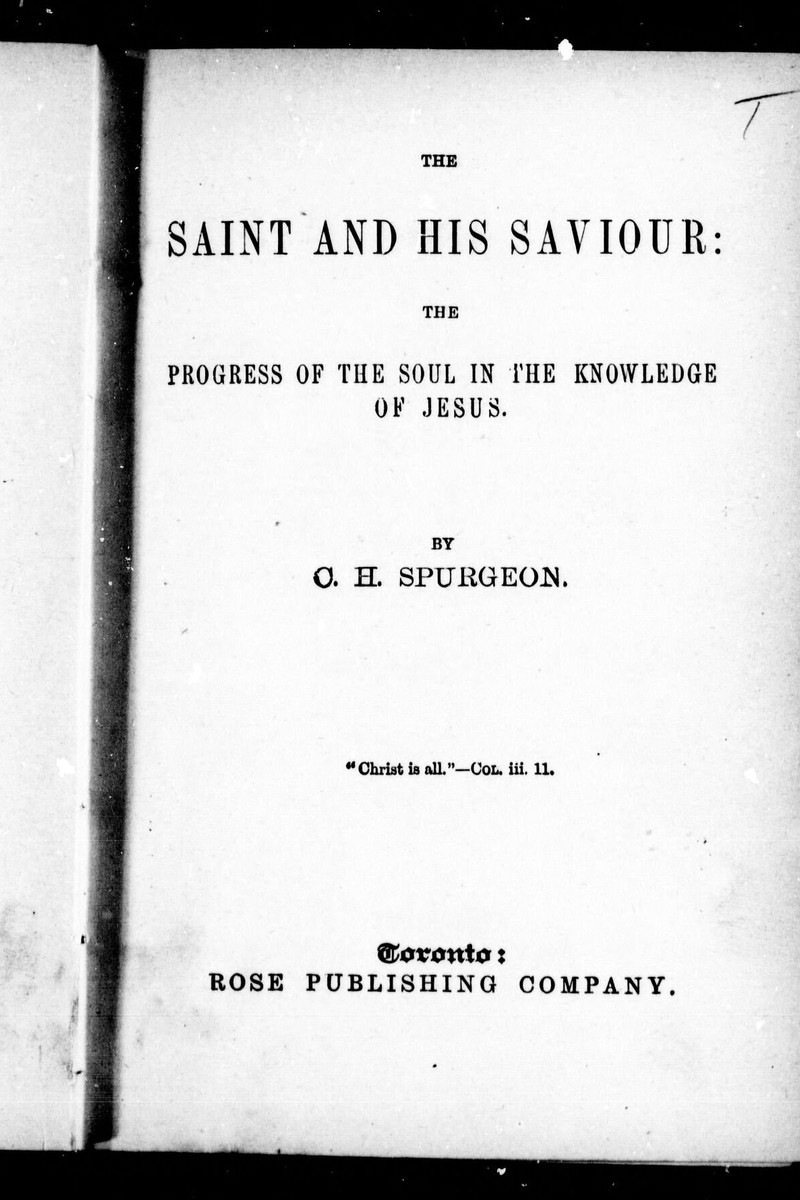
The Saint and His Saviour: The Progress of the Soul in the Knowledge of Jesus was written by Charles Haddon Spurgeon and first published in 1883 by the Rose Publishing Company, Toronto. Its epigraph is Paul's word to the Colossians: “Christ is all” (Col. iii. 11), and the whole book unfolds that text — tracing the believer's path from a stranger's first, cold acquaintance with Jesus through to settled, joyful communion with him.
Twelve chapters follow the soul's progress: from The Despised Friend and Faithful Wounds, through pardon, joy, and completeness in Christ, to seasons when the Saviour seems to hide his face, and on to Communion Preserved. Spurgeon closes every chapter with a short, direct evangelistic word of his own headed “To the Unconverted Reader” — a distinctive feature of this book, preserved here after each chapter exactly as in the original. This UECF.NET web edition follows the 1883 Rose Publishing Company (Toronto) printing digitized by the University of Alberta Libraries via Canadiana.org, and preserves its chapter order, titles, Scripture epigraphs, quotations, and wording; obvious scanning (OCR) errors have been corrected against the sense of the text.
- 12 Chapters
- 12 “To the Unconverted Reader” postscripts
- 103,295 words
- ≈ 470 min read
- 1883
- English
Source: The Saint and His Saviour: The Progress of the Soul in the Knowledge of Jesus, by C. H. Spurgeon (Rose Publishing Company, Toronto, 1883). Digitized from a University of Alberta Libraries copy via Canadiana.org and hosted by the Internet Archive (identifier cihm_33548); this public-domain text is presented here as a UECF.NET Web Book for online reading. Cover image: the book's own 1883 title page, from the source scan.
Search this book
Table of Contents
with “To the Unconverted Reader”2Faithful Wounds
with “To the Unconverted Reader”3Jesus Desired
with “To the Unconverted Reader”4Jesus Pardoning
with “To the Unconverted Reader”5Joy at Conversion
with “To the Unconverted Reader”6Complete in Christ
with “To the Unconverted Reader”7Love to Jesus
with “To the Unconverted Reader”8Love's Logic
with “To the Unconverted Reader”9Jesus in the Hour of Trouble
with “To the Unconverted Reader”10Jesus Hiding Himself
with “To the Unconverted Reader”11The Causes of Apparent Desertion
with “To the Unconverted Reader”12Communion Preserved
with “To the Unconverted Reader”