
Articles
Articles - United Evangelical Christian Fellowship(UECF), New Jersey - Popular Christian Website Telugu Hindi Tamil Malayalam Indian Christian audio Songs and daily bible devotions
United
Evangelical Christian Fellowship (UECF)
Interesting Facts
History
The Bible was written by about 40 men who engaged in writing it during
a period of about 1600 years dating from 1500 B.C. to about 100 years after Christ.
These men wrote as they were moved by the Holy Spirit. 2 Peter 1:21.
They wrote not in words of human wisdom but in words taught by the Holy Ghost. 1 Corinthians 2:13.
The first translation of an English Bible was initiated by John Wycliffe and completed
by John Purvey in 1388. The Bible was translated into chapters by Stephen Langton about 1228.
The
Old Testament was divided into verses by R. Nathan
in 1448 and the New Testament by
Robert Stephanus in 1551.
The Bible, divided into
chapters and verses first appeared in
the Geneva Bible of 1560.
BOOKS
Books in the Bible 66
The Old Testament 39
The New Testament 27
Middle Book of Old Testament Proverbs
Middle Book of New Testament 2 Thessalonians
CHAPTERS
Bible 1189
Old Testament 929
New Testament 260
Middle Chapter of Old Testament Job 29
Middle Chapter of New Testament Romans 13
Middle and shortest chapter of the Bible Psalm 117
Longest Chapter of the Bible Psalm 119
VERSES
Old Testament 23,214
New Testament 7,959
Middle Verse in the Old Testament 2 Chronicles 20:17
Middle verse in the New Testament Acts 17:17
Shortest verse of the Old Testament 1 Chronicles 1:25
Shortest verse in the New Testament John 11:35
Longest verse in the Bible Esther 8:9
WORDS
In the Old Testament c. 592,439
In the New Testament c. 181,253
Who is Jesus
The
Bible, from cover to cover,addresses the question,
"Who is this Jesus?" Consider the themes
of the sixty-six books:
In Genesis, He is the creator God.
In Exodus, He is the redeemer.
In Leviticus, He is your sanctification.
In Numbers, He is your guide.
In Deuteronomy, He is your teacher.
In Joshua, He is the mighty conqueror.
In Judges,He gives victory over enemies.
In Ruth, He is your kinsman, your lover, your
redeemer.
In Ist Samuel, he is the root of Jesse.
In 2nd Samuel, He is the son of David.
In 1st Kings and 2nd Kings, He is King of kings and
Lord of lords.
In 1st and 2nd Chronicles, He is your intercessor
and high priest.
In Ezra,He is your temple,your house of worship.
In Nehemiah, He is your mighty wall, protecting you
from your enemies.
In Esther, He stands in the gap to deliver you from
your enemies.
In Job, He is the arbitrator who not only
understands your struggles, but has the power to do
something about them.
In Psalms, He is your song and your reason to sing.
In Proverbs, He is your wisdom, helping you make
sense of life and live it successfully.
In Ecclesiastes, He is your purpose, delivering you
from vanity.
In the Song of Solomon, He is your lover, your rose
of Sharon.
In Isaiah, He is the mighty counselor, the prince of
peace,
the everlasting father, and more. In short, He's
everything you need.
In Jeremiah, He is your balm of Gilead, the soothing
salve for your sin-sick soul.
In Lamentations, He is the ever-faithful one upon
whom you can depend.
In Ezekiel, He is your wheel in the middle of a
wheel, the one who Assures that dry, dead bones will
come alive again.
In Daniel, He is the ancient of days,
the everlasting God who never runs out of time.
In Hosea, He is your faithful lover, always
beckoning you to come back,
Even when you have abandoned Him.
In Joel, He is your refuge, keeping you safe in
times of trouble.
In Amos, He is the husbandman, the one you can
depend on to stay by yourside.
In Obadiah, He is Lord of the kingdom.
In Jonah, He is your salvation, bringing you back
within His will.
In Micah, He is judge of the nation.
In Nahum, He is the jealous God.
In Habakkuk, He is the Holy One.
In Zephaniah, He is the witness.
In Haggai, He overthrows the enemies.
In Zechariah, He is Lord of Hosts.
In Malachi, He is the Lord who does not change.
In
Matthew, He is king of the Jews.
In Mark, He is the servant.
In Luke, He is the Son of Man, feeling what you
feel.
In John, He is the Son of God.
In Acts, He is savior of the world.
In Romans, He is the righteousness of God.
In 1st Corinthians, He is the rock that followed
Israel.
In 2nd Corinthians, He is the triumphant one, giving
victory.
In Galatians, He is your liberty; He sets you free.
In Ephesians, He is head of the church.
In Philippians, He is your joy.
In Colossians, He is your completeness.
In 1st Thessalonians, He is your hope.
In 2nd Thessalonians, He is the Lord of peace.
In 1st Timothy, He is your faith.
In 2nd Timothy, He is your stability.
In Titus, He is our great God and Savior.
In Philemon, He is your benefactor.
In Hebrews, He is your perfection.
In James, He is the power behind your faith.
In 1st Peter, He is your example.
In 2nd Peter, He is your purity.
In 1st John, He is your life.
In 2nd John, He is your pattern.
In 3rd John, He is your motivation.
In Jude, He is the foundation of your faith.
In the Revelation, He is your coming king.
From the beginning of the world to its end,
there is no place you can look and not see Jesus.
He is everywhere.He is everything.
"He is before all things, and in Him all things
hold together."
Colossians 1:17)
Bakth Singh - Great Man of God
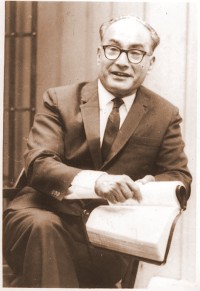
One who never sought recognition or status for what he believed the Lord was calling him to do, Bakht Singh launched an indigenous church-planting movement in India that eventually saw more than 10,000 local churches planted throughout India, Pakistan and offshore Sri Lanka. The movement also spread to Australia and even to the United States.
Singh was born on June 6, 1903, of well-to-do parents, Jawahar Mal Chabra and Lakshmi Bai, in the northern sector of Punjab that later became part of Pakistan. His parents were followers of the Sikh religion which is dominant in the Punjab region.
After graduating from the government college in Lahore (now in Pakistan), he went as a foreign student to England in 1926 and enrolled in the King’s College in London to study mechanical engineering. While there he quit practicing his Sikh religion, but still kept the Sikh custom of not cutting his hair or beard.
In 1929 Singh went to Canada and studied agricultural engineering at the University of Manitoba in Winnipeg. Local residents John and Edith Hayward befriended him and invited him to live with them. Devout Christians, they ended every supper by reading the Bible.
Singh’s religious upbringing had taught him to oppose Christianity, and he once had torn a Bible apart with his bare hands. This time, however, when the Haywards gave him a New Testament, he took it to his room and read it. It was reading the New Testament that brought him to personal faith in the Lord Jesus Christ.
Singh returned to India in 1933 to preach the gospel and was met in Bombay by his mother and father. “We are the only ones who know you are a Christian,” they said. “Please keep it a secret and you can read your Bible and go to church as much as you want.”
“Can I live without breathing?” Singh replied. “I have given my whole life to Christ who died for me. I cannot follow Him secretly.” “If you cannot keep the matter secret, then you cannot come home,” his parents replied, and left him.
Singh began speaking as a fiery itinerant preacher and revivalist throughout India, that then included Pakistan, and gained a large following. He at first worked as an Anglican evangelist, and then later independently.
“Singh’s role in the 1937 revival that swept the Martinbur United Presbyterian Church inaugurated one of the most notable movements in the history of the church in the Indian subcontinent,” stated Dr. Jonathan Bonk in Biographical Dictionary of Christian Missions published by Simon & Schuster Macmillan in 1998.
“The early years of his ministry were marked by mighty miracles and wonders, including physical healings and great revivals.
Singh eventually realized that the new wine required new wineskins. He obtained his vision for starting thoroughly contextualized local assemblies patterned on New Testament principles after spending a night in prayer on a mountaintop in 1941.
He held his first “Holy Convocation,” based on Leviticus 23, in Madras in 1941. After this convocations were held annually in Madras and Hyderabad in the South, and in Ahmadabad and Kalimpong in the North.
The one in Hyderabad was always the largest, drawing up to 25,000 participants. They would eat and sleep in huge tents, and meet under a large thatch pandal for hours-long prayer, praise and teaching meetings that began at dawn and ended late at night.
Workers for the meetings were not recruited. The care and feeding of guests was handled by volunteers. Expenses for the meetings were given by voluntary offerings; no appeals were issued.
Bakht Singh's messages were basically outlines of Scripture verses, "line upon line, precept upon precept" (Isaiah 28:10). Persons wanting to know how to do the work of the Lord would go to Hebron, his headquarters in Hyderabad. There they were taught the Scriptures daily and participated in daily chores and street preaching and witnessing. They would stay until they thought they had learned what they needed to know, and then leave to do God's work, returning when they wanted to.
Singh contracted Parkinson's disease and was totally bedridden for the last ten years. One Indian couple dedicated themselves to caring for him round the clock.
Memorial services were held on Friday, September 22, in Hyderabad. According to David Burder, Christian Aid field staff member in Delhi, some 250,000 people attended and, holding their Bibles high, followed the van carrying the mortal remains to the common people’s cemetery. Altogether, from Monday through Friday, over 600,000 people paid their respects to the departed spiritual leader. One police officer remarked, “This is the first time I have seen so large a procession so peaceful in all my service so far.”
Though public services could not be held at the soccer stadium as originally planned because of opposition from the RSS, a nationalistic Hindu youth society, a member of the Andhra Pradesh State Legislature, who was also a member of the BJP, the pro-Hindu National Peoples’ Party now in power, came, knelt before the casket and stayed through the entire service. No foreigner was visible so as not to lend credence to the false rumor that Christianity is a foreign religion.
Christianity in India
History
Authentic Indian religion or a Western import? Christianity came to India in two main periods: the first century missionary activity of Thomas, the disciple of Jesus, and the Western missionary activity from 1500 to 1975. Today there are about 27 million Christians in India, nearly the total population of Canada.
This large community represents less than three percent of the total population of India.
Missionaries came to India in response to famine and poverty. People who came to faith were frequently put out of their own communities with no place to go but to the mission. Many children were orphaned by famine and they also became dependent on the mission. One mission in the 1930s reported that 80 percent of their converts were financially dependent on the mission. These factors removed the converts from their own culture. They became strangers in their own land. These new Christians were perceived as giving allegiance to a foreign land and culture. A pastor related that a tribal person came to him and said, “I have cut my hair and put on long trousers. What else do I have to do to be a Christian?”
Indian Christians in society
India, which is 83 percent Hindu, is a country of minorities, with 180 million Muslims, 70 million tribal people, 60 million Sikhs and uncounted millions of others. Each of these groups represents a potential voting block in India’s democracy. However, Christians are not in significant numbers to be catered to by the national politicians.
Christians in India are discriminated against in certain government programs. The government has a program of reservations for jobs and university education. This program gives preference to people of the lower castes and those below caste. To qualify for these benefits, applicants must state their caste origin. Christians, having denounced caste, are unable to do this. Yet many Christians come from the very groups for whom these programs were devised. This represents a major loss to these people struggling for education and jobs.
Government jobs are widely sought and highly valued. The perception of many Christians is that they do not have an equal opportunity for these jobs and subsequent promotions. On the other hand, some Christians benefit by being perceived as more honest, resulting in more rapid promotions.
Despite minority status, Christians are seen as leaders in medical care and education. This reflects the emphasis of many foreign missions. There are disproportionately more Christian doctors and nurses compared to the general population. It is estimated that more than 30 percent of the nurses in India are Christian. The quality of medical care and education in Christian institutions is believed to be higher than that available through government institutions.
Christianity in India: north vs. south
Indians concede that the conditions for Christians in the south differ from the north. Christians in the north go about their business quietly. The programs of some churches appear to be aimed at survival more than an open involvement in the larger community. One church leader in the south said, “To be Christian in the north means Western clothes, speaking English and eating beef. In the south Christians are part of the fabric of society. We have always been here.”
Christians in southern India date their origins back to the landing of Thomas on their shores. Thomas established churches throughout southern India. Catholic missionaries came in 1505 with Vasco de Gama and instituted changes including penance, prayers for the dead and the confessional. Two hundred years later church leaders became aware of their history though the help of British missionaries.
Subsequently a reform movement started from within the church. These reforms represent a return to the original tenets of the church prior to 1600. Southern Christians have a strong sense of continuity from the first century to the present. Their liturgy is 2000 years old. Members are happy to be known as part of the church.
There is a strong lay movement. Since government workers are required to retire at age 55, an impressive amount of social work is done by lay members of the church.
The church in India is a mosaic of places where the church is thriving and places where it is merely surviving. Christians face the future with caution of persecution, and hope in a loving God.
Episodes of Christian Persecution in South Asia
Religions of the world generally claim to be divine or heavenly revealed codes of life, with their foundation on eternally boundless goodness, kindness, benevolence and compassion. Nevertheless, interpretation, application and implementation of the religious scriptures, rests entirely with the earthly man, with reference to certain context on earth. Hence, all religions, in practice appear to reflect vast range of human behavior stretched from extremities of good and evil, brotherhood and barbarity, sacrifice and snatch, benevolence and bloodshed, mercy and misery, development and devastation, piety and plunder, truce and terror, salvation and slavery as well as warmth and war.
Not to speak of man's blood stained religious past, his current history is also no less than an ongoing bloodbath in the sacred name of religion. May it be East, West, North or South, religious barbarianism is evident from Ireland to Yugoslavia in Europe, from Sudan to Nigeria in Africa and from Middle East and Far East to South Asian region in Asia. Muslims, Hindus, Christians, Jews and Buddhists are openly involved in one context or another in Interfaith and Intrafaith violence. They are disturbing peace of the Earth, denying in practice the divine or heavenly virtue of goodness underlying the world religions, and making Earth a hell for fellow humans.
This paper tends to narrate briefly the story of Christian suffering in the various states of the South Asian region including Afghanistan, Bangladesh, India, Iran, Pakistan and Sri Lanka, during the second half of the 20th century and continuing vigorously at the outset of the 21st century in the Third Millennium. Christians in this part of the world have experienced state oppression as well as societal persecution immensely, amidst the growing religious fundamentalism in the region evident from the country reports below.
AFGHANISTAN
Afghanistan had an Anglican Church Diocese managed from Peshawar in Pakistan, till the period of King Zahir Shah, the monarch deposed by Sardar Daud in 1973 who lives in exile. A considerable number of Afghan Christians lived in Kabul, the capital of Afghanistan and some other areas. The Christians worshipped in privacy, mostly in secrecy due to combined oppression of state and orthodox tribal society. In the last days of Zahir Shah's rule a half constructed Church building was attacked and demolished by the intolerant local population with collaboration of equally intolerant Afghan government. It is ironic that Zahir Shah who could not tolerate presence of single church in his capital, had to seek refuge in Rome, the city of churches, after his dethronement.
Afghanistan is an Islamic state with almost 100 percent Muslim population, an essential outcome of extreme intolerance for followers of other faiths. Intolerance and ruthless killing by the Afghan government reminds the modern world of savage behavior of cannibal tribes of the dark ages. To them, the West is the Christian West that must be annihilated for glorification of their faith. Hence, Afghan government has harbored countless notable anti-West or anti-Christian holy warriors, to carry out violence in the name of religion.
The tiny local Christian population could not survive and was totally exterminated, by killing and forced abandonment of their homeland, leaving no trace behind.
BANGLADESH
Bangladesh was carved out of religiously fanatic Pakistan in 1971. Nevertheless, it is a secular state unlike Pakistan and in some degree tolerant contrary to Christian-cum-West hostile Afghanistan.
The Christian community is more or less 3 percent of the population. The state normally does not discriminate against Christians. They are allowed to worship, establish worship places, practice and preach Christian faith and proselytize at par with followers of other religions. However, Christians are destined to face some degree of state-reared discrimination in political offices and government jobs. This indicates a low degree of state oppression, with provision of some fundamental rights attached to it.
Unlike tolerant face of the state, Islamists of Bangladesh including fundamentalist religio-political parties, orthodox clergy and fanatic intelligentsia pose a constant threat to Christians as well as Hindus and Buddhists. There is immense pressure on the government to do away with the secular character of the state and implement Islamic laws in letter and spirit. These elements disallow Christian preaching and proselytizing with violent means. Though there are not signs of organized religious violence on the Christian community, but incidents of sporadic violence continued in one way or the other during the past half century targeting Christian clergy, missionaries, Churches, institutions and individuals. However, at the break of the new century, it appears optimistic that the religionists of Bangladesh are not in a position to exert enough pressure to religionize the laws of the land. This aspect is source of peace and security for the state and cause for solace for Christians and other religious minorities, otherwise religious terrorism would have been only one step away from their doorsteps.
INDIA
India, the largest state of South Asia is secular by constitution. Rule of the former ruling party Indian National Congress maintained India's secular identity for more or less 4 decades from its independence in 1947. Nonetheless, pressure of the militant Hindu fundamentalist organizations like RSS (Rashtriya Swayamsewak Sangh) kept diverting its direction time and again. The present ruling party BJP is one of the offshoots of RSS. BJP tends to appear Hindu religionist than secularist. Hence, BJP-led rule signifies efforts to convert India into a Hindu India. In the awake of these circumstances almost all of religio-political as well as politico-religious Hindu revivalist organizations like RSS, Bahrang Dal, Vishwa Hindu Parishad, Hindu Jagran Manch and Hindu Dharma Raksha Samiti, overtly or covertly look committed for revival of Hindu glory and oreprimand of all non-Hindu Indian communities including Christians, Muslims, Sikhs etc.
It is heart breaking to see that under the skies of World's largest democracy, dreamworld of Mahatma Gandhi and Mother Teresa non-Hindu religious communities of India, sharing equal rights with Hindus in the constitution, are cracking under societal terrorism coupled with state oppression, at the dawn of 21st century.
Christians make less than 3 percent of the total Indian population of about 1 billion. Hindu religionists are angered with this small community over "forced" conversions of Hindus to Christian faith during the past two centuries. As a matter of fact those "forced" converts were not Hindus. They were "Shudras" or Dalits and tribesmen declared outcaste and untouchable by the Hindu society. A large number of them, by their own choice, became Christian or Muslim to regain human respect and dignity, lost under social set-up of Hinduism.
Oppression on Christians was sporadic for many years. However, BJP led government and Hinduist activists geared it up in 1997. Now it has assumed the form of savagery and barbarity. States of Gujrat, Tamil Nadu, Kerala, Orissa, Haryana, and Madhya Pradesh saw the worst episodes of oppression though Delhi and other parts of India were not trouble free either.
Church buildings, schools, hostels, hospitals, convents and parish houses of Catholic, Anglican, Methodist, Pentecostal, Indian, Seventh Day Adventist, Evangelist and several other denominations were attacked, looted, burned and demolished. Fathers, pastors and missionaries were killed or burnt alive. Nuns were insulted, manhandled and raped. Christian Dalits and congregation members were attacked, killed and wounded. Besides immeasurable losses of life, honor, dignity and property, psychological losses are even greater. Attacks are going on even now in July 2000, in many parts of India.
BJP led government and its religionist compatriots have failed to realize that the small Christian community is determined and destined to survive despite this enormous oppression and persecution but this oppression, persecution and violence would mar India's democratic face so terribly that it would be very hard to reform.
IRAN
Modern Iran is fundamentalist in letter and spirit. The present Islamist regime came in power in 1979 after dethronement of King Raza Shah Pehlave, the last Iranian monarch who died in exile in U. S. A. Iran has 99 percent Muslim population of which 89 percent belong to Shi'a sect and 10 percent to the Sunni. The non-Muslim religious minorities including Christians, Zoroastrians, Bahais and Jews are less than 1 percent. Christian population was about 3,00,000 during the period of King Raza before 1979. The figures have dropped down to 1,17,000 after 21 years of ruthless religious persecution. These might be the number of survivors of the colossal oppression.
After the religionists took over, there was indiscriminate bloodshed of Christian. Countless Christian politicians, social leaders, businessmen, forces men, civil services men, religious leaders, preachers, teachers and people from all walks of life were killed, disappeared and harassed to abandon their homeland. Bishop Dehqani's son, a professor at Tehran University was killed and the Bishop and his remaining family members had to run to Italy for refuge. Secretary of Iran Bible Society Tatwoos Michaelian was killed and nothing is known about his family members. Iranian Evangelical pastors Mehdi Dibaj and Haik Hovsepian Mehr were murdered and the fate of their families is unknown. Number of murdered and disappeared Evangelical pastors, preachers and workers is very high. All of this oppression was carried out by the religionist administration, fundamentalist youth, revolutionary guards, policemen and secret services personnel.
It is common to charge active Christians or converts with crimes like "drug offences", "rebellian", "apostasy" and "espionage" to arrest, exterminate, imprison or exile them. State oppression and high degree discrimination against Christians and of course other religious minorities is running in full gear in every walk of life including state affairs, Polities, Education, Judiciary, Services, Business etc. etc. Christian institutions are monitored, Church activities are watched and even Prayer meetings are spied. Iranian Christian community is undergoing as ugly a slavery as of Pharaos of the ancient Egypt. To tell the truth, it is hard to differentiate between Iranian religionist government or a fascist mafia rule under cover of a religion. The message religionists of Iran are transmitting very loudly, the world over, at the rise of the 21st century, is that we are fundamentalist, fanatics, prejudiced, bigoted, intolerant, bloodthirsty and terrorist because we are religionist. Alas! Iran, beautiful Iran is experiencing such an ugly oppression of history.
PAKISTAN
Islamic Republic of Pakistan created in 1947 is hung between secularism and Islam on ideological frontiers as well as between political government and army rule on the administrative horizons. Pakistan's 95 percent population is Muslim while religious minorities including Christians, Hindus, Ahmadis, Sikhs, Buddhists and Scheduled Castes are 5 percent. Christians are less than 3 percent. Pakistan came into being as exclusive homeland for Muslims, though Christians also opted for it. Hence, Islamic option has always been very high. Eventually, with gradual rise of religious fundamentalism, fanaticism and terrorism religious and sectarian violence became common feature of its national life. Religious scholars and religio-political parties accelerated the religious frenzy on pretext of annihilating Christians, Hindus, Jews and the Western nations. High illiteracy rate in the masses of the country, proved to be a springboard for religious scholars to gain mass popularity and momentum for their annihilative mission. Hence, Pakistan became a sanctuary to rear nursery of religious violence and terrorism, to be exported across the borders. Rapid growth of religious fanaticism in the country became a hanging sword for Christian community besides other smaller communities. It must be spelled out that it is a double-edged sword, one edge being the state and other the society.
State oppression combined with societal violence became the order of the day. Dozens of Christians were persecuted under false charges of Blasphemy Laws. Many persons, priests and nuns were murdered. Many churches were burnt. Several Christian villages were burnt and devastated. Christian educational institutions were nationalized. Separate Electorate was imposed to weaken, and marginalize the Christians politically, socially and economically. Legislative assemblies made anti-minority laws and debarred Christians and other minorities from many basic rights. State, legislative, judiciary, police, religious clergy and fundalists worked hand and glove to oppress and persecute the Christian community, anywhere and in any way. Bishop John Joseph Shaheed had to lay down his life to rescue the Christian community, almost an endangered community, here. Christians of Pakistan have a long saga of suffering from 1947 to date. They have suffered but survived. Nonetheless, religious terrorism is flourishing with greater speed. If Pakistan's secularist Muslims, Christians and other communities do not turn this tide, every sign of goodness and humanism may be swayed away.
SRI LANKA
Sri Lanka is Buddhist dominant state with Hindus, Christians and Muslims s religious minorities. The state and judicial system do not tend to discriminate against its citizens on religious grounds. Nevertheless, Buddhist society offers strong resistance to religious rights of the Christians and other religious communities. Open Christian preaching and proselytizing is resisted by the Buddhists. Evangelical clergy is met with hostility and harassment. An Evangelical Church leader was murdered in 1988, and a church hall was bombed in 1999. These incidents are ugly but rare. Sri Lanka secularists must devote themselves to discourage religious discrimination and violence to save democratic face of their nation.
BHUTAN, MALDEEP & NEPAL
Hindu dominant Bhutan and Nepal and Muslim dominant Maldeep (Maldev) are also significant states of South Asia. However unlike most other states these tend to promote religious and social harmony for their national stability, opposed to religious and social intolerance which ultimately may destabilize a state.
THE LAST WORD
Religiously intolerant states, nations, parties, organizations, clergy, intelligentsia and individuals of South Asia region must realize that their oppression on Christians and other religious communities is not adding to the beauty and goodness of their religion but rather is marred its face for ages to me come. Those responsible for restrictions, curbs, subjugation and annihilation of Christians and other religious minorities, must bear in mind that their faith has responsibilities for mankind and not selfish motives for their own religious kind . Those angered on proselytization or conversions of their co-religionists must know that exit from one faith or ideology and entrance into another, is by all means an individual's right to choose his favorite belief for his inner joy, without even the slightest societal compulsion. Religion is a code of morality which must not be mixed up with a mafia where entrants have only an entrance but not an exit. Nonetheless Christian, Muslim and other missionaries, preachers and proselytizers must review and re-evaluate whether their proselytizing is based on honest preaching or pressure, bribe and tricks as charged by the antagonists.
It is need of the hour that civilized nations, democratic Muslims and Hindus and Human Rights organizations must carefully study the ills of human behavior in this part of the world and must come up with remedial measures, before it is too late.
QUESTIONS ABOUT BAPTISM ?
There can be no doubt that baptism is an important Bible topic. It is directly mentioned about 100 times in twelve different books of the New Testament. Jesus spoke of it after He rose from the dead, telling His apostles, "Go ye therefore, and teach all nations, baptizing them in the name of the Father, and of the Son, and of the Holy Ghost" (Matthew 28:19). It is thus Christ's will that His followers go and teach (make disciples of) all nations, baptizing those who believe and receive His teaching.
The teaching of the Bible about water baptism is not complicated. Unfortunately, throughout history men have often given conflicting answers to questions dealing with baptism, such as how does it take place, who should receive it, and what is its purpose. This has left a great number of people confused. We ask you to carefully consider what the New Testament says about these vital topics. While it is true that various other kinds of baptism are mentioned in the Scriptures, in this tract all references to "baptism" are to water baptism.
SPRLINKING, POURING, OR IMMERSION?
Modern dictionaries of the English language indicate that baptism can be administered by one of three ways: by sprinkling water, by pouring water, or by immersion in water. Today some religious groups accept all three of these as a valid means of carrying out baptism, whereas others insist that only one of these three is acceptable.
What is it that sprinkling, pouring and immersion have in common? Each of them involves the use of water. But do each of them meet all the Bible criteria for baptism? Let us turn to the Scriptures and see:
* Water is the proper element for baptism (Acts 10:48).
* John the Baptist baptized in Aenon "because there was much water there" (John 3:23).
* Baptism involves coming to a place where there is water (getting water and the one to be baptized together, Acts 8:36).
* Baptism involves a going down into the water (Acts 8:38).
* Baptism takes place in water (Acts 8:39).
* After baptism there is a coming up out of the water (Matthew 3:16; Acts 8:39).
* Baptism involves a burial ("Buried with him in baptism," Colossians 2:12).
* Baptism involves a resurrection (Rom. 6:4,5).
The above facts from the Bible clearly point to the conclusion that baptism is a complete immersion of the body in water, and not simply sprinkling or pouring water on someone. The New Testament was written in the first century in the Koine Greek language. The Greek word "baptisma," from which we get our word "baptism," is defined simply as "immersion, submersion" (Thayer's Greek-English Lexicon of the New Testament, page 94).
Again, we recognize that many people in our time consider sprinkling and pouring to be legitimate "forms" of baptism. The truth, however, is that Scriptural baptism is an immersion, and using sprinkling or pouring as substitutes for immersion is something that men decided to do long after the Bible was written. Our obligation is to speak and act "as the oracles of God" (1 Peter 4:11), not the traditions of men.
WHO SHOULD BE BAPTIZED?
Not every person is a proper candidate for baptism. That is, not every person is one who ought to be baptized. According to the New Testament what kind of person can be baptized? What must he do or be able to do before baptism? Consider the example of the approximately 3000 Jews who were baptized on the day of Pentecost (Acts 2). Before they were baptized they first heard the word of God preached, as Peter said to them, "Hearken to my words" (2:14; 2:37). Before they were baptized they had knowledge about Jesus Christ, for Peter said to them, "Therefore let all the house of Israel know assuredly that God hath made that same Jesus, whom ye have crucified, both Lord and Christ" (2:36). Before they were baptized they were pricked in their heart (2:37). Before they were baptized they could speak or communicate. They were able to ask, "Men and brethren what shall we do" (2:37)? This question also shows that before being baptized they had a desire to know what one must do to be saved.
Further, we learn that those who were baptized on that great day were sinners. We know this is true because Peter commanded them to repent (2:38), and only sinners can and need to repent. Those who were baptized understood the purpose of what they were doing. Peter said, "Repent and be baptized every one of you in the name of Jesus Christ for the remission of sins …" (2:38). In addition, those who were baptized did so as a result of having gladly received the word (2:41).
Other accounts of baptism in the book of Acts give us the following additional helpful information: those who were baptized were men and women (Acts 8:12), they themselves expressed a desire to be baptized ("What doth hinder me to be baptized," 8:36), they confessed their faith in Jesus as the Son of God (8:37), and rejoiced after being baptized (8:39).
Friends, the above references from the Bible make it plain that the only ones who ought to be baptized are those people who are sinners, have already heard the gospel preached, understand and believe the gospel, are willing to repent of their sins, confess their faith in Jesus Christ, and truly understand the purpose of baptism.
WHAT ABOUT BAPTIZING BABIES?
Should infants be baptized? Some believe that they should, some say that they should not, and yet others think that it does not really matter. What do the Scriptures indicate?
As we have already seen, there are certain things that a person must be able to understand and do before being baptized. Babies and small children simply cannot do these, and thus they are not proper candidates for baptism.
Some groups have traditionally practiced what is called "infant baptism." Is the baptism of babies found in the Bible? If so, in which book, in which chapter, and in which verse do we read about it? Friends, there is no such passage! If in the New Testament there is no command to baptize infants, no example of such, or no implication that God allows it, then we must conclude that infant baptism is not from God, but from men. Where is the New Testament authority to baptize infants? There is none! Therefore, it is not in harmony with God's will to baptize them.
WHAT IS THE PURPOSE OF BAPTISM?
The word of God gives such a plain answer to this question that all who will take the time to honestly investigate the Scriptures will see the Lord's truth. Before Paul was baptized, a servant of Jesus told him, "And now why tarriest thou? arise, and be baptized, and wash away thy sins, calling on the name of the Lord" (Acts 22:16). According to this statement, what was the purpose of Paul's baptism? Was it not to wash away his sins?
Twenty chapters before this it is recorded that on the day of Pentecost the Jews who assembled in Jerusalem asked the apostles, "Men and brethren, what shall we do?" What did the Holy Spirit say to them through the apostle Peter? "Repent and be baptized every one of you in the name of Jesus Christ for the remission of sins, and ye shall receive the gift of the Holy Ghost" (Acts 2:38). Were those people told to be baptized because they had already received the remission of sins before they were baptized, or were they told to be baptized in order to have their sins remitted? Peter's statement makes it obvious that the purpose of their baptism was to receive "the remission of sins."
What about Mark 16:16? Jesus said, "He that believeth and is baptized shall be saved; but he that believeth not shall be damned." According to these words of Jesus, who shall be saved? One that just believes? No. One that just is baptized? No. Rather, one who believes AND is baptized.
In the New Testament there are at least six passages in which mention is made of both (1) baptism and (2) salvation or the reception of a blessing from the Lord. In each case baptism is mentioned first as the condition of receiving the blessing (or entering a new relationship). The following chart summarizes this:
Mark 16:16/Baptized/Shall be saved
Acts 2:38/Be baptized/Remission of sins
Acts 22:16/Be baptized/Wash away sins
Romans 6:3,4/Baptized/Into Christ, newness of life
Galatians 3:27 / Baptized / Into Christ
1 Peter 3:21/Baptism/Does now save
Please take a Bible and read all of these passages yourself. You will see that they do not teach that baptism in water is the only condition of salvation. But they do show without a doubt that in God's plan one must be baptized in water in order to be saved or to have his sins cleansed.
It is significant that baptism is mentioned in each recorded case of conversion in the book of Acts. This in no way implies that baptism is more important than faith or repentance. But, it does show that, just like faith and repentance, baptism is an essential condition of salvation.
Baptism is not "all" that one must do to please the Lord. After a person has been baptized in harmony with what the Scriptures teach, then he is in Christ (Romans 6:3,4). But as a new creation or babe in Christ (2 Corinthians 5:17), he is just beginning his life as a Christian. After baptism he has the solemn responsibility to faithfully serve Jesus all the days of his life.
WE WISH YOU A MERRY NIMROD?
"We
wish you a Merry Christmas,
"We wish you a Merry Christmas,
"We wish you a Merry Christmas,
"And a Happy New Year!"
So goes the popular English carol. But how many realise that the original "Christmas" festival, and the spirit of the modern one, has little or nothing to do with Christianity, but is rooted in the vilest of paganism? The original Christmas festival originated in the Babylon founded by Nimrod, the grandsom of Ham, the son of Noah. Actually Christmas and Western Capitalism are perfect bed-fellows for it was Nimrod who originated the Babylonish system of organised competition, of man-ruled governments and empires based upon the competitive and profit-making economic system. It was Nimrod who built the original tower of Babel, the first city of Babylon, Nineveh (the capital of Assyria) and many other commercial and pagan-religious centres.
Nimrod was so evil that he married his own mother, Semiramis. After Nimrod's untimely death, Semiramis established a false Messiah or anti-Christ doctrine which was adopted subsequently by many pagan religions. She claimed that a full-grown evergreen tree sprang overnight from a dead tree stump, which symbolised the springing forth unto new life of the dead Nimrod. On each anniversary of his birth, she claimed, Nimrod would visit the evergreen tree and leave gifts upon it. 25 December was the birthday of Nimrod. It is from this myth, created by a woman living in an incestual relationship with one of the most wicked men that ever lived on the earth, that we get the original Christmas tree.
After her death Semiramis was worshipped as the "Queen of Heaven", and Nimrod, under various names, became the "divine son of heaven". Through the generations, in this idolatrous worship, Nimrod also became the false Messiah, son of Baal the Sun-god. In this false Babylonish system, the "Mother and Child" (Semiramis and Nimrod reborn) became chief objects of worship in all pagan religions. The names varied in different countries and languages. In Egypt it was Isis and Osiris; in Asia, Cybele and Deoius; in pagan Rome, Fortuna and Jupiterpuer. Even in Greece, China, Japan, and Tibet this counterpart of the Madonna is to be found, and long before the first advent of Christ.
The evergreen tree, which a symbol of the annual rebirth of this false Messiah, lies at the centre of the Christmas festival. Here in Norway children dance around the Christmas tree, imitating a pagan rite established by Nimrod and his priests thousands of years ago. Long ago the Lord emphatically warned against imitating these pagan customs:
"Thus saith the Lord: Learn not the way of the heathen...For the customs of the people are vain: for one cutteth a tree out of the forest, the work of the hands of the workman, with the axe. They deck it with silver and with gold; they fasten it with nails and with hammers, that it move not" (Jeremiah 10:2-6).
Yet this is what the materialistic, Nimrodian Western world does every year at Christmastime, "decking" the tree with decorations, lights, presents, and flags. They fix their trees in pots so that they can't "move".
There are many other traditions associated with Christmas, such as the Yule log, the exchanging of presents and Christmas cards, Santa Claus (Nimrod himself) and so on, all of which have the same pagan origin. The exchanging of presents in particular is part of the intoxicating commerical season when people seasonally bankrupt themselves and governments, in some countries (such as Norway) have lower taxes in December to encourage people to spend.
The Christmas season does not honour Christ -- it honours Nimrod, and therefore Satan. No Christian presented with the facts of its origin has any excuse to celebrate it any longer. He should be morally outraged and revolted and boycot the whole season. Celebration of this devilish system is for New Covenant Christians, who know the facts, a compromise with the world, a denial of the true Messiah, Jesus Christ, who was born on 6 April and not 25 December.
Brethren and sisters, if you are true to the times and seasons of the Lord, and break the bonds of Christmas celebration, He will surely bless you, and He will turn vanity into spiritual prosperity. I counsel you to gather together with the saints over the Christmas season and make it a special time of fellowship and worship apart from the world and the false religious systems that are so much in league with the Nimrodian economic and political system -- a system that will soon play a major rôle in the return of a far worse Nimrod than he who established Babylon, even the Antichrist. Instead go and tell your friends about Jesus who came to free people from all sin, including pagan traditions, and invite them to receive Him as their Saviour.
So shall we say: "We wish you a Merry Christmas" this Christmas? God forbid! And let us stop calling it "Christmas" for such defiles the name of Christ. Let us call it what it really is, The Festival of Nimrod or Brumalia (the Roman name). Would you wish anyone a "Happy Nimrod" or a "Happy Brumalia"?
So what should be do when people wish you a "Happy Christmas?" Remember, that much good is done during this season and this should be encouraged. Whatever is good is of God. Sometimes you will have time to explain what your position is regarding this festival but often you won't. If someone wishes you a "Merry Christmas" in passing, why not reply by saying: "May God bless you", as Jesus would have done? Who knows. Maybe their curiosity will get the better of them and you will be given the opportunity to witness of Christ. Then the season really will become holy to you, and not because of any pagan festival, but because you stood up for the truth and brought salvation into the world through your witness. Thus every day will become a Holy Day -- a true "holiday". - Amen.
GOING THROUGH THE FIRE
Chronicles
7:1 Now when Solomon had made an end of praying,
the fire came down from heaven, and consumed the
burnt offering and the sacrifices;
and the glory of the LORD filled the house.
We won't enjoy His glory without His fire. His fire
consumes a willing sacrifice now, or an unwilling
sacrifice later. It is not the 'flesh' that will
taste of His glory (1 Corinthians 1:29), for 'the
spirit of man is the candle of the Lord' (Proverbs
20:27). His Word searches out the inward parts,
igniting us with His fire, burning out the dross of
worldly things. 'Did not our heart burn within us,
while He talked with us by the way, and while He
opened to us the scriptures? 'said the disciples of
Jesus' words (Luke 24:32). His 'rhema' words search
us, try us, locate us, take us through the fire,
reveal His glory! Peter tells us the 'fiery trials'
also come to make us partakers of Christ's
sufferings that we may rejoice in His revealed
glory. Again: no fire, no glory! It was in fire that
the early Church was born on each head a tongue of
fire at Pentecost. It was from a bush of fire that
Moses heard God's command. The fire may be
unpleasant, but the glory is worth it! Jesus
counsels you, today, to'buy of Me gold tried in the
fire' (Revelation 3:18). John the Baptist introduced
Jesus as the One Who would baptize with the Holy
Spirit, and with fire! Let us welcome the fire as we
would His Spirit. From whatever source comes the
heat of unkind words, the pain of persecution, the
blessings He would seem to withhold He is at work,
dear one, forging you in the character of His mould!
FOR THE LOST
Those who are well have no need of a physician, but those who are sick.... I did not come to call the righteous, but sinners to repentance. (Matt. 9:12-13) Imagine you stumble into the doctor’s office with a severe case of pneumonia. You discover the doctor is not in his office, but out conducting a special conference. He cannot see you today. “What is the conference?” you inquire. The nurse informs you that he has called all the people who are not sick to gather and talk about how great they feel. They are discussing illness, but only to the extent that they are celebrating the diseases they don’t have. You rush down to the convention center and stomp into the conference screaming, “What are you doing? I need a doctor!” All of the well dressed, healthy folks peer down their noses at you as you hear someone exclaim “get her out of here, she is sick!” You immediately feel a tug at your arm and a burly gentlemen leads you out of the building. Sadly, we sometimes operate our churches that way.We spend the majority of our lives trying to please other Christians. We forget that we are suppo sed to be helping the “Great Physician” minister to the sick. Don’t forget your commission. Prayer: Lord help me to seek out the lost, not gather in a holy huddle.
DO YOU BELIEVE?
And
when He came into the house the blind men came to
Him and Jesus said to them, “Do you believe I am
able to do this?” They said to Him, “Yes, Lord.”
Imagine you are at the circus. The ringmaster makes
an announcement. This act involves a member from the
audience. At that very moment, you raise your hand
to waive at a friend and accidentally are chosen as
a volunteer. The usher takes you right down to the
center ring, where you stand next to the tight-rope
walker. The ringmaster thrusts the microphone in
your face and the circus performer asks, “Do you
believe that I can walk across that rope way up
there?” “Of course you can,” you confidently
respond. “Are you sure?” “Yes, I’m sure.”
“Then,” continues the performer, “right now
you are going to demonstrate your belief as you ride
on my back across this arena.” “But..but..wait..”
Your voice trails off as they lead you to the top of
the ladder, your anxiety is quickly replace with
fear. Your belief in God only go as far as you are
willing to exercise them. We say we believe in God,
but many times it is only superficial belief.
Additionally, a lack of belief can cause many
serious problems:
Despair = a lack of belief God can solve our
problems
Anxiety = a lack of belief God is in control
Fear = a lack of belief God will protect
We can’t avoid life’s struggles. Are you willing
to believe? Are you willing to substantiate that
belief with action? Do you believe that He can? Will
you say, “Yes Lord?”
WHOSE YOKE ARE YOU CARRYING?
For my yoke is easy and my burden is light (Matt. 11:30) For some reason, most teenagers all fall into the same trap. I remember turning sixteen and thinking about independence. I assumed, suddenly, I needed to carry the weight of the world on my shoulders. As I was shouldering this incredible weight, I failed to notice that there was someone very near that was dying to help me shoulder it – my parents Many Christians treat God the same way. We want to solve all our own problems, carry our own burdens and make our own path. Meanwhile, the Lord stands very near inviting us to “cast all our cares” (I Pt. 5:7) upon Him. The reason His yoke is “easy” is because He wants to lift it off our shoulders. He already paid the price and earned the right to carry it. God will never give us responsibility that He doesn’t have the ability to accomplish. Too many of us work to the level of our incompetence instead of to the level of God’s omnipotence. Cast all your cares on Him and find that His yoke is easy and His burden is light.
COMPLACENCY
So, then because you are lukewarm, and neither cold nor hot, I will vomit you out of my mouth. Because you say “I am rich, have become wealthy, and have need of nothing” -- and do not know that you are wretched, miserable, poor, blind and naked-- (Rev 3:16-17) Too many of our cities, towns and churches live under the disguise of contentment. Under the cloak of false contentment many times likes a festering pool of complacency. Jesus described that attitude as “lukewarm.” Complacency causes us to have a false impression of ourselves. When God blesses us, like He did the Laodaceans, we sometimes become apathetic and proud. We assume we’ve got it all together, but in God’s eyes we are missing the mark. We lose our intensity. We are not against God, but we are not doing anything for Him. We are like coffee that has sits too long on our desk. We appear to God as lukewarm coffee that He can’t tolerate. We should be hot (Lk. 24:32), we used to be cold (Mt 24:12), but now we have become lukewarm. We lose our intuition. When we become complacent we have the wrong impression of ourselves. We shift our value system to that of the world. Because God has brought some success to our lives, we assume that we’ve arrived or “got it made,” yet God says we are really wretched, miserable, poor, blind and naked in His eyes. In the later verses of chapter 3, Jesus explains what need to happen. First, God must heat us up and anytime something heats up the impurities are burned off. We must be disciplined. When my kids are obedient, they get a blessing. When they are don’t understand (cold), they get conviction and direction. But, when they are lukewarm (complacent), they get correction. Be zealous for the things of God. Behold, he stands and knocks!!
Petals of Prayer and Praise
MAY
EACH MOMENT OF YOUR DAY UNFOLD TENDERLY, LIKE ROSE
PETALS IN SUNLIGHT GLOWING SO SOFTLY! TOUCHING EVERY
PART OF YOUR LIFE WITH HIS LOVE LIGHT, IN JESUS
EVERY HOUR OF YOUR DAY IS JUST RIGHT. PRECIOUS
PETALS REVEALING GOD'S LOVE AND HIS GRACE, GIVING
GLORY TO GOD AS YOU ABIDE IN YOUR PLACE! PETALS OF
PRAYER AND PRAISE UNFOLDING ALL DAY LONG, AS YOU
ABIDE IN GOD'S LIGHT YOU ARE ALWAYS STRONG! FOR EVEN
WHEN YOUR LIFE PETALS ARE SADLY CRUSHED, THAN GOD'S
SWEET FRAGRANCE OF LOVE RISES AND IS TOUCHED! EVERY
MINUTE OF EVERY DAY YOU CAN BE, GOD'S BEAUTIFUL ROSE
PETALS FOR PEOPLE TO SEE! BELIEVE AND TRUST IN JESUS
CHRIST TO BE YOUR LORD AND SAVIOR: YOU WILL RECEIVE
GOD'S LOVE AND LIGHT, AND YOU WILL SHINE WITH TRUE
BEAUTY FOR ETERNITY!
LIFE
Life's Tug Of War. Life can seem ungrateful and not always kind. Life can pull at your heartstrings and play with your mind. Life can be blissful and happy and free. Life can put beauty in the things that you see. Life can place challenges right at your feet. Life can make good of the hardships that we meet. Life can overwhelm you and make your head spin. Life can reward those determined to win. Life can be hurtful and not always fair. Life can surround you with people who care. Life clearly does offer its ups and its downs. Life's days can bring you both smiles and frowns. Life teaches us to take the good with the bad. Life is a mixture of happy and sad. So..... Take the life that you have and give it your best. Think positive, be happy let God do the rest. Take the challenges that life has laid at your feet. Take pride and be thankful for each one you meet. To yourself give forgiveness if you stumble and fall. Take each day that is dealt you and give it your all. Take the love that you're given and return it with care. Have faith that when needed it will always be there. Take time to find the beauty in the things that you see. Take life's simple pleasures let them set your heart free. The idea here is simply to even the score. As you are met and faced with Life's Tug Of War. There are only two ways to live your life; One is as though nothing is a miracle. The other is as though everything is.
Heaven's Grocery Store
I was walking down life's highway a long time ago, one day I saw a sign that read "Heaven's Grocery Store. As I got a little closer the door came open wide, and when I came to myself I was standing inside. I saw a host of Angels, they were standing everywhere one handed me a blanket and said, "My child shop with care, everything a Christian needs is in that grocery store, and all you can't carry, come back the next day for more. First I got some Patience, Love was in the same row, further down was Understanding, needed everywhere you go. I got a box or two of Wisdom, a bag or two of Faith, I just couldn't miss the Holy Ghost, it was all over the place. I stopped to get some Strength and Courage to help me run this race, but then my blanket was getting full and I remembered I needed Grace. I didn't forget Salvation which like the others was free, so I tried to get enough of that to save both you and me. Then I started to the counter to pay my grocery bill, for I thought I had everything to do my master's will. As I went up the aisle, I saw Prayer and had to put it in, for I knew when I stepped outside, I would run right into sin. Peace and Joy were plentiful, they were on the last shelf, Song and Praises were hanging near so I just helped myself. Then, I said to the Angel "How much do I owe?" the Angel smiled and said "Just take them everywhere you go". Again I politely asked"How much do I really owe?". The Angel smiled again and said,"My Child, Jesus Paid Your Bill A Long Time Ago."
Bad things can happen to good people
God
is good all the time! Yet, there times in our lives
when we go through trials and tribulations and as
Christians we must endure. Despite what the world or
optimistic preachers may say, bad things can happen
to good people. In fact, as you read this, I know in
my heart that you have gone through times and
situations that can not be classified as good. Times
of confusion, times of seeking and needing answers,
yet the answers seem aloof and hard to find.
These
difficult times I believe God allows in our lives
for several reasons. The first and foremost is so we
can turn to him with faith and hope, knowing he will
deliver us from the wiles and snares of the enemy.
It is during these time when we are down we can look
up to God. These trials give us the opportunity to
trust in God, to stand still fear not and watch God.
Paul the Apostle tells us in 2 Timothy 3:12 In fact,
everyone who wants to live a godly life in Christ
Jesus will be persecuted.
I
know it is difficult to thank God for bad trials,
yet we are to rejoice and give God thanks for all
circumstance. This is His will for us in Christ.
James said in chapter 1:2 Consider it pure joy, my
brothers, whenever you face trials of many kinds, 3
because you know that the testing of your faith
develops perseverance. 4 Perseverance must finish
its work so that you may be mature and complete, not
lacking anything. 5 If any of you lacks wisdom, he
should ask God, who gives generously to all without
finding fault, and it will be given to him. 6 But
when he asks, he must believe and not doubt, because
he who doubts is like a wave of the sea, blown and
tossed by the wind. That man should not think he
will receive anything from the Lord;
If we believe and do not doubt; if we put all of our trust in God, and give him praise for our trials, he will quickly provide answers and give us direction and hope. The first step in this process is Trust God; the second is to obey Him.
1 Thessalonians 5:16
Be joyful always;
17:pray continually;
18:give thanks in all circumstances, for this is God's will for you in Christ Jesus.
FORGIVE
The
Lord's Prayer is divided into six couplets. The
first teaches about God's nature.
The second asks for his will to be done now. The
third asks him to provide for our
material needs. Now we are looking at the fourth
couplet. It asks him to forgive
our mistakes. The first line of the two is "and
forgive us our debts," our trespasses.
There
are several dynamics in this short phrase. The first
is the admission that we need forgiving. The next is
that God has the power to forgive. Also, it assumes
God is
inclined to forgive. Overall it is a confession that
we are fallible. "Occasionally" we
have made some noticeable mistakes.
The petition for forgiveness ties to Jesus'
Beatitudes. It relates to most of them. For .
us to admit faults and ask for forgiveness, the key
Beatitude attitudes must be felt. .
To ask for forgiveness, one would be poor in spirit,
mourning, meek, searching for .
righteousness, merciful, seeking purity of heart and
also wanting to be a peacemaker.
Of
course, asking for forgiveness can be done from the
fear of expected or deserved .
divine punishment. However, the prayer doesn't
require a particular motive. It just.
requests God to forgive our mistakes. The fact that
we ask God for forgiveness .
acknowledges his power and primacy. .
On
a more general basis, here we acknowledge that there
is some proper order for all.
of us. The prayer says, "forgive us our
debts." The plural pronoun of us implies .
that all people have fallen short of God's
requirements. All are in the same boat. .
We
have a commonality as humans standing before God.
None of us is better than .
another. If we all have fallen short of God's
requirements and need his forgiveness, .
what are our shortcomings? Do you know yours?
WILL
"Thy will be done." Let me ask you a
question. Assuming you are going to the Spirit
world - Heaven - after you die, what are you going
to do for eternity? Do you know?
Have you thought about it? I know what I am going to
do in the hereafter Heaven.
I am going to do what I am told to do. I am going to
do what God tells me to do.
I am going to be obedient to his "will".
Doing God's will is a choice, of sorts, in this world. It becomes a necessity in the world to come. The world to come, Heaven in the hereafter sense, is called "Paradise." Life there, we assume, will be trouble free and always in the presence of God. There we think we will be bathed in God's love, and always be carefree and joyful.
Do you have any reason to dispute that picture of life after death? Maybe you are not sure of what the living conditions will be in that later heaven, but you know you will not be in control. Don't you? You do know you will need to do what you are told to do. Don't you? I do!
In this prayer phrase, we are agreeing with the inevitable. God's will shall be done because he is God and he has the power to cause anything to happen. Honestly spoken, this phrase is our intellectual commitment to submit to God's will as we can best understand it and conform to it. Here we admit God has a will and we will follow it if we can figure out how. Instinctively, or at least hopefully, we think God can show us his will.
Now this part of the prayer becomes more than a thoughtless liturgy. It is our acknowledgement that God is real, alive, and has a will. We are agreeing to accept and implement his will. Now we wonder, what is supposed to happen next?
WORKS
The good news about a life of faith in God's kingdom is that he is in control. Along with his authority over you, he continues to have responsibility for you. It is as if he says to you, "The buck stops here." God is working for your well being.
When you took Jesus' teachings seriously, and accepted them for your way of life, you won God's protection. From then on you became God's responsibility. He is your protector. You know this from the "Lord's Prayer." God is your Abba, Daddy. You do not need to do more religious works to prod him.
Rituals, liturgies, prayer formulas, piety, or special knowledge are not needed. He is working in your life because he loves you, and not because of what you do. All your Father wants from you is acknowledgment that he is the source of your good fortune. He appreciates your gratitude.
Living in God's Kingdom of Heaven is that simple. All you say is, "God is God, and I am his child, and he is taking care of me. I will do my best and he will make all things work out for good." For some people, that is too simple.
Faith is accepting life as it is, without complaint. It is knowing God will work out all things for your benefit, sooner or later. Lack of faith is losing trust in God's willingness to protect you and pour his love and providence into your life. God never forgets a name. He will never leave you or forsake you. Your name is engraved in his mind.
When things are not going according to your plans, you can become frustrated. Things are not supposed to work out according to your plans. Don't forget, you turned yourself over to him some time ago. Final planning is in his hands, not yours. No amount of religious works can change that.
You
Now
you know what you think about God. What do you
suppose God thinks about you?
Can you write that in twenty words?
This is not a popular question. Imagining what God thinks about us is not our most sought after thrill. In the past, our primary efforts were directed toward keeping God at bay.
Responses to this question run from one extreme to the other. On one end a few say, "I have been so bad, God could never accept me. Surely God has turned my portrait toward the wall. There is little for me to write, and I can put that into four words: I am too bad!"
At the other extreme are a few who insist they have never done anything really wrong. "After all," these confide, "I have never been in jail. Surely God thinks I am O.K. I can write that with only three words: I am fine."
In the middle, many think, "I do the best I can. What more could God expect? Lots of people live lives worse than me. I am sure he accepts me as I am. In two words I say: I try."
The most common belief is that God judges us by our acts and our behavior. But, we imagine the good works necessary to fully please God will take too much attention and effort. To many, living with both eyes on God seems irrelevant, foolish, detrimental to happiness, and unnecessarily stressful.
Regardless of our self-image, none of us want to have our secrets reviewed on the front page of our local newspaper. We have all done some things that are embarrassing. God knows about those events. We imagine those events are the basis of what God thinks about us. So why hurry to read his list?
We suppose that someday, sometime in the future, we will consider God's opinion more seriously. Until then we say, "Let's get on with the business at hand. There are decisions to make, bills to pay, and fun to be had. Because God knows me, he understands how busy I am. He will forgive me."
End Times Signs - Sign No.1
Have you ever wondered why the tiny nation of Israel is in the news almost every day? Why when Israel does anything it almost certainly makes headlines? Why the entire focus of peace in the middle east centers around Israel ? Why Israel , what is it that's so significant about this tiny little country about the size of Connecticut?Well it all started with a promise, a promise from God, and God wouldn't be God if he did not keep his promise. The promise from God was given about 4,000 years ago to a man named Abraham. What was this promise and what does it have to do with us in the 21st century? Well the promise was:
"Leave your country, your people and your father's household and go to the land I will show you. I will make you into a great nation and I will bless you; I will make your name great, and you will be a blessing. I will bless those who bless you, and whoever curses you, I will curse; and all peoples on earth will be blessed through you." Genesis 12:1-3
So Abraham, packed up his bags, loaded up his camels and donkeys, left the land where he had grown up. Left the people that he had loved all his life and left the protection and comfort of his own Father and family. This was a big step of faith, but he trusted God to keep his promise and God did! Although Abraham did not personally get to see this land himself, God fulfilled his promise through Abraham's descendents. God led the descendents of Abraham into a land flowing with milk and honey. He blessed them, they prospered and grew into a great nation. Just as God had promised. The land, the promised land, is known today as Israel, well part of it any way, actually the land that Israel occupies today is just a small part of the land that God had promised to Abraham. Even though Israel is giving away land now, in the near future they will obtain all the land that God promised to Abraham. But that's another story that we will get to later.
Now, Israel was a nation, they occupied the land. They did not own the land, God owned the land, but you might say that God leased the land to Israel. As with all leases there is a lease agreement, a list of rules and regulations that must be followed. God gave Israel a list of rules and regulations that the people were to abide by. As long as Israel obeyed the rules they would be allowed to live in the land. Imagine having God as your landlord. One rule in particular that God gave Israel, was a rule regarding the very land itself. The law is as follows:
'When you enter the land I am going to give you, the land itself must observe a Sabbath to the LORD. For six years sow your fields, and for six years prune your vineyards and gather their crops. But in the seventh year the land is to have a Sabbath of rest, a Sabbath to the LORD. Do not sow your fields or prune your vineyards. Do not reap what grows of itself or harvest the grapes of your untended vines. The land is to have a year of rest. Whatever the land yields during the Sabbath year will be food for you--for yourself, your manservant and maidservant, and the hired worker and temporary resident who live among you, as well as for your livestock and the wild animals in your land. Whatever the land produces may be eaten. "'Count off seven Sabbaths of years--seven times seven years--so that the seven Sabbaths of years amount to a period of forty-nine years. Then have the trumpet sounded everywhere on the tenth day of the seventh month; on the Day of Atonement sound the trumpet throughout your land. Consecrate the fiftieth year and proclaim liberty throughout the land to all its inhabitants. It shall be a jubilee for you; each one of you is to return to his family property and each to his own clan. The fiftieth year shall be a jubilee for you; do not sow and do not reap what grows of itself or harvest the untended vines. For it is a jubilee and is to be holy for you; eat only what is taken directly from the fields. "'In this Year of Jubilee everyone is to return to his own property. Leviticus 25: 2-13
This rule must have been in the fine print, because Israel never once obeyed. The rule basically says, that Israel could farm the land, plant and harvest their crops and reap the bounty. They could do this for six years, but every seventh year they had to let the land rest. No planting, no tending of the crops, but whatever did grow they were allowed to eat and to feed to their animals. They were not allowed to harvest and sell their crops. Secondly after seven of these seven year periods (7x7=49) were completed they were to proclaim the 50th year as a year of Jubilee.
The year of Jubilee was a special time, it was a year of liberty, not only for the land but also for the people. The land again was to remain idle, no planting, no harvesting. All slaves were to be set free, property reverted back to the original owners, families were reunited. God set these rules so that no one would have excessive debt and slaves would not be in bondage no longer than 49 years. It was also a time for the people of Israel to give thanks and honor God for allowing them to live and use the land. If the people had obeyed God everything would have been just fine, but the people of Israel became greedy and stubborn. There would be no celebration, they were about to get evicted.
God being a gracious and patient landlord, put up with Israel's disobedience and gave them chance after chance to follow the rules he had set forth. Finally God said enough is enough and removed the blessing and protection that he had provided the people of Israel. For hundreds of years they had won battle after battle, conquering all their enemies and reaping great riches, possessions and livestock. They were feared by all their enemies, because even their enemies could see that the hand of God protected the Israelites. With the removal of God's protection, Israel soon lost their position as a Sovereign Nation. Israel was conquered and destroyed by King Nebuchadnezzar of Babylon for the first time in 606 BC. The cities of Israel were laid waste and the people of Israel were taken captive, many as slaves. Never again would they be a Sovereign Nation, they existed in various forms of provinces in a succession of empires: Babylon, Media-Persia, Greece and Rome.
The people of Israel tried to regain their previous status and attempted many times to regroup and form their own ruling government, but the final blow came in 70 AD. The Roman legion under orders from Titus were dispatched to Jerusalem to put down the latest in a series of Israeli rebellions. Their orders were to destroy Israel as a nation and a distinct people. History tells us that more than a million Jews were killed, the Jewish Temple was completely destroyed. The survivors were scattered as slaves and were even forbidden to assemble into groups of more than three under penalty of death. The Jews were scattered around the Asian and European continents, humiliated and despised where ever they went. They remained homeless, known as the wandering Jews, they kept to themselves. Where ever they went they faced persecution, but they never forgot the promise that God had made to Abraham. They knew sometime in the future, God would fulfill his promise and they would once again, overcome all odds and become that Great Nation that God had intended them to be. A nation that would be a blessing to the whole world.
Take a stand to withstand
COLOSSIANS 2:5,6,7
Greetings in the most loving name of our Lord.
I write these few lines in order that no one may delude you with beguiling speech. Yet I am with you in spirit, rejoicing to see your good order and the firmness of your faith in Christ As therefore, you received Christ Jesus, the Lord, so live in Christ, rooted and built up in him and established in the faith, just you were taught (NKJV) abounding in thanksgiving.
From the above verses, we could see a counseling, exhortation or warning to all of us, not to be deluded with beguiling speech i.e. attractive speech to deceive people. Satan knows that if you are well established with the word of God and have a good foundation in your spiritual life, he cannot carry out his plans. Hence he would try to deviate your thoughts by giving attractive speeches to stop the growth of your life in the Lord. Therefore, Paul says that we have to be so vigilant in our lives by giving due regard to the following principles of spiritual development and prosperity.
1. RECEIVING CHRIST
JOHN: 1.11 He came to his own home, and his own people received Him not. But to all who received Him, who believed in His name, he gave power to become children of God. God gives power, privilege to become his sons and daughters, when we get faith in the name of Jesus and accept him as our personal saviour. Accepting Him in the sense, receiving Jesus in our hearts as saviour by faith.
I Thes. 2:13 And we also thank God constantly for this, that when you received the word of God which you heard from us, you accepted it not as the word of men, which is at work in you believers.
Here Paul says accepting the word of God is also a method to receive Jesus in our hearts. I Thes 1:6 is talking about the testimony of the believers in Thessolonian. And you became imitators of us and of Lord, for you receive the word in much affliction with joy inspired by the Holy Spirit.
So from the above verses, we come to understand that we have to receive the faith in Jesus name, receive the word of God and put it in our practice to show our testimony for His glory, so that people will see Jesus in us.
2. ROOTED IN CHRIST
The strength of the tree is in its roots, which goes deeper into the earth. In the same way every believer must have a deep root in Jesus Christ. A righteous man is compared with a tree. Ps.1:3 He is like a tree, planted by the streams of water that yields its fruits in its season and its leaf does not wither. In all that he does, he prospers. Jer17:7-8.
Blessed is the man who trusts in the Lord, he is like a tree planted by water that sends out its root by the stream and does not fear when heat comes for its leaves remain green and is not anxious in the drought. For it does not cease to bear fruits. If the root does not go deeper into the land and fails to supply the needed strength to its branches the tree cannot give fruits(results) Luke 8:12-13.
The seed is the word of God. The ones along the paths are those who have heard, then the devil comes, and takes away the word from the hearts, that they may not believe and be saved. And the ones on the rock are those who , when they hear the word, receive it with joy, but as these have no deep root, they believe for a while and in times of temptations fall away.Therefore it should be understood people who do not have deep root(foundation), they fall away because of temptations, unbelief, and riches and pleasure of worldly life.
HOW WE CAN HAVE DEEP ROOT?
Job 14:7-9. For there is hope for a tree if it cut down, that will sprout again and that its shoots will not cease though its root grow old in the earth and its stumps die in the ground, yet at the scent of water it will bud and put forth branches like a young plant. Verse 8 says about scent of water or smell of water. Water is the anointing of the Holy Spirit. So as a tree smells the water, a believer should be filled with the anointing of the Holy Spirit, and he should meditate the word of God and keep it in his heart(Isa.55:13). The tree will send the strength to all the branches only after sucking the water by its deep roots. In the same way we have to eat (meditate) the word of God and keep it to have good fellowship in Christ.
Matt 4:4 It is written Man shall not live by bread alone, but by every word that proceedeth out of the mouth of God.It is not the tree that supports the root, but it is the root that supports the entire tree.In the same way we the believers, if we have a very strong fellowship or foundation (Luke 6:47) we will not be ashamed by any satanic forces. Romans 11:18 Remember it is not you that support the root, but the root that supports you.
3. BUILD- UP? IN CHRIST
Matt.7:24. ? Every one who hears these words of mine and does them will be like a wise men who built his house upon the rock (Jesus Christ) This portion explains how we have to take the word of God as our guide and trust the name of the Lord. People have to seek the permission of the word of God before getting into any work.
Heb.2:1 Therefore we ought to give the more earnest heed to the things which we have heard, lest at any time we should let them slip. Luke 11:28 Blessed are they that hear the word of God and keep it. Therefore we can be assured of a blessed and strong life as long as we are in complete union with his word.
4. LIVING IN CHRIST
It is a life that we must give implicit obedience towards God and demonstrate the features of Jesus Christ. if you want to live in Kuwait. You have to maintain your position safe by valid visa and prepared to conduct yourself according to the rules and regulations of this country. You cannot change it according to your convenience. In the same way if you want to have real spiritual prosperity you have to be in full realization of His biblical expectation.
II Cor.5:17. Therefore if anyone in Christ, he is a new creation, the old has passed away, behold the new has come.
II Cor.2:14 Thanks be to God, who in Christ always leads us in triumph and through us spreads the fragrance of the knowledge of Him every where. Eph.5:8. For once you were darkness, but now you are the light in the Lord. Walk as children of light. Gal.1:23. (Testimony of Paul in the churches of Judea) He who once persecuted us in times, now preaches the faith which once he destroyed.
5. ESTABLISH IN FAITH
People in this world wants to establish their position, status, business, family in their respective countries. They go on doing something to maintain the same position. Christ has started the faith in our hearts by His words. Bible tells us faith cometh by hearing and hearing by the word of God.
Heb. 11:6 And without faith it is impossible to please Him. For whosoever would draw near to God must believe that He exists and that He rewards those who seek Him. Apostle Paul was so confident in His faith and he says in II Tim 1:12 I know whom I have believed and I am sure that he is able to guard until that day. Meditating the word of God and putting the same into practice can make a person to be established in his faith.
I Tim 6:12 Fight the good fight of the faith, take hold of the eternal life to which you were called.
Jn 20:31 These are written that you may believe that Jesus is the Christ, the Son of God and that believing you may have life in His name.
We live in an acquisitive society where worth is judged by wealth. So we have to realise a greatest commission delegated by our Lord, the work of bringing others to His faith. We should not be in bondage to inordinate desire ? a slave to our passions. We must live on His summons not on a guess but on our goal.
So let us pray O God how can we face the future unless we are empowered by your spirit. Give us, O give us the dynamic energy as the early churches experience and enjoyed, so that we can truly turn the world upside down. Bring us to the point, where we rely not on our natural wisdom and expertise but the direction and the wisdom of the spirit. Forgive us for our guilty silence if we refuse to share with others that you have done for us. We come to your presence to make it responsive to your perfect will. Help us vitally Christians, so that we draw people not to ourselves but to you.
In Jesus name Amen.
Eva..Sampath Samraj.
Why do we need Sunday School?
Sunday School started in the year 1780 in England, by a great individual named Robert Reiks with 12 children. Now Sunday School has spread all over the world’s churches and it should be a never ending program.
So then why do we need Sunday School?
Here are some points that I’ll give you: To transform the younger generation for Christ, the head of the church. If you read Luke 1:66 there is a question in that verse and it says, “What then is this child going to be?” If I ask this question to one of our parents. We will get unique answers. One parent might say, My son is going to be a doctor or nurse or even a computer science major, but do we have the eagerness to dedicate our children for the Kingdom of God. We all know Jesus Christ has certain expectations about a child and He expects to make progress in their spiritual life. HOW CAN WE PREPARE THEM FOR GOD’S KINGDOM? Sunday School is the nursery of our church. It needs the essential training and care to confirm them in Christ. We can summarize the effectiveness of Sunday School in three words. Know, Grow and Glow! Knowing what, Growing with whom and Glowing where.
The children have to know and understand in Sunday School, that God is Almighty and the creator of all things. Teaching them Jesus Christ is the Son of God and our Savior. Conform and Strengthen them in the Holy Spirit, who leads us for all the truth. All religions in this world are very particular to pass on their faith to future generations. Think as ourselves, as families, as a church, how much are we interested in exchanging our creed or faith to our children. What about our homes? Are our homes set apart for the purpose of God. There is a saying, Charity begins at home. Christian education is originated from the Jews education, that is why we can see lot of Hebrew influence in Christian education. We know that there were no schools in the early ages. Then how did Jews teach laws to their children. Read Ps. 78:1-7; Deu. 6:7. We see a responsibility of a parent to their children. Parents are the prime teachers of Sunday School. An infant child begins learning from the An infant child begins learning from the mother’s lap. In child psychology, it says the life begins before five years of age. Let us think in this very busy life of ours, are we paying any attention to the very important spiritual needs of a child. This only can be accomplished by a Teacher in a Parent. So let the children know, as we see in John 14:6, that He is the Way, Truth and the Life.
What about growing: Parents are very conscious about the physical growth of a child, like visiting a doctor. We are making an appointment with that doctor, but whatabout making an appointment with Jesus Christ for their spiritual growth. Are we making it or can we make it? Yes, we can. To grow in Christ, we have to maintain certain disciplines:
1. Having family prayers at our homes, coming together attending church services to pray. Prayers are very important to build personal relationships with God.
2. Regular readings of the Word of God, you could read it at any time, make it as a practice.
3. Giving up bad practices so you could grow in Christ. The bad practices are: not honoring your parents, not respecting elders, and not listen to Pastor. Maintaining these disciplines we all could grow in Christ.
What about glowing: The meaning of the word glow is to shine. According to the Scriptures, every child is an exhibitionist. If you read Numbers 8, Moses instructed Aaron to set seven lamps of lamp stand in the Tabernacle, so the light can be shown “outward.” I’m sure that is what Jesus had in mind when He said, “Let your light shine before men, that they see your good works and glorify your father.” The children are to exhibit the glory of God, and the only way they can do it to let that glory be transmitted through them. The light also can be hidden. Jesus urged us not to put our light “under a bushel.” The children must be exposed: they must be set free to shine in public. The light can also be extinguished. The natural enemy of light is not only darkness, but also water and wind. We must not “quench the spirit” which is another way of saying that we must keep our light fed with oil. We must not let it blown out by the winds of disobedience to Gods will. Turn the light outward through our children. Not the doubting, hesitating, fearful but the spirit-controlled, joyful, then we shall become a child of God and shine as a light in the dark world.
My dear friends and children, by knowing him, growing in him, and glowing through him our Sunday School be a blessing to the Social, Cultural, and Spiritual growth of the entire society. May God bless us all. Amen.
I am the True Vine
When Jesus says that He is the vine and His people are His branches, we understand that He is speaking in figurative language again. Jesus is not literally a vine with branches coming off Him and fruit hanging on Him, any more than that He is literally bread or a door. Rather, Jesus is drawing a figure that was very familiar to these Jewish disciples, familiar because vines were a common part of the landscape and of the farming of that day. There were many vineyards in Judea. The disciples would easily be able to grasp the truth of which Jesus spoke if He used this figure. Besides, this figure would be familiar because it was part of Old Testament, biblical language. In the Old Testament, Israel was called “God’s vine”-for example, Psalm 80:8, 9.
When Jesus calls Himself the vine, then, He is drawing a beautiful picture of Himself with His church. He and His people are one plant, one living organism. It is a figure similar to that of the church as Christ’s body with Christ as its Head. So here, Christ is the main vine and His people make up the branches joined to Him. Together they are a united, living organism.
Christ is the source of all life and strength and every blessing of salvation to His people. In a vineyard, the vine is the main trunk of the plant. The branches depend on the vine for their life, for their vitality and nutrients. The vine is the source, the tap of these things to the branches. The vine is the means of support, literally as well as physically, to the branches. Without the vine the branches have nothing. They die. That is why they have to be connected to the vine. It is this way, spiritually, with Christ and His people. His relationship to them and ours to Him is such that He is the vine, the source of our life, our strength, our salvation. He is our total spiritual support. We depend on Him for everything, just as the branch depends on the vine for everything. Without Christ we are nothing. It is in Christ that all the nutrients of God’s grace that we stand in need of are found: forgiveness and righteousness and life. That is why we must be united to Him as branches to the vine. That union is by faith.
Jesus is also the source of fertility. He is the One who causes the branches to bear fruit. This is one of the major points in this passage in John 15. Five times our Lord mentions bearing fruit or not bearing fruit. And it all hinges, you will notice, on being connected to the vine. Just as in nature the vine is the power of the branches being able to produce fruit, so also in the realm of the spiritual, Christ is the only power that enables His people to produce fruit. The spiritual fertility is in Him.
Therefore Christ stresses here, negatively, that without Him we can do nothing. We have no ability to produce good fruit without Christ. That certainly says something about our spiritual condition by nature, does it not? All we can produce, of ourselves, in sin, is the fruit of sin. More evil, more depravity, more death. The only reason, child of God, that you and I can bear any fruit pleasing to God is because Christ is our vine, the source of our spiritual strength and productivity. All our good is in Him. All our strength to do any good is in Him.
You know what that fruit of which Jesus speaks is, do you not? It is the fruit of faith: a real, visible, living, working faith. Not a mere profession but a faith that confesses the name of Christ personally, publicly, boldly, unashamedly before the church-world and before the unbelieving world. The fruit of which Jesus speaks is the fruit of a life lived for Christ in submission to His Word, in obedience to His commandments. The fruit of which Christ speaks here is the fruit of a godly character, bearing the image of Christ, such as: purity, integrity, love, faithfulness. It is the fruit of a holy walk, antithetical, separate from the world and pleasing to God. It is the fruit, dear listener, of daily repentance and conversion, sorrowing over your sins and turning from them. These are the fruits which Christ, the vine, produces in His people as branches. These are the infallible signs of a true Christian. We may ask ourselves today: “Do we have these fruits? Are we bearing them, and are they visible before others?”
It is at this point that we need to see how important this fruit-bearing is from the viewpoint of what the Father does as the Husbandman, or Vine-dresser, that is, the One who cares for the vine and its branches. That is part of the figure.
In the first place, Jesus says that every branch that does not bear fruit the Father takes away. There are those who believe that this verse teaches that believers can fall away and lose their salvation. But it is evident from the rest of Scripture that this cannot happen. So our text cannot mean this, either.
I believe the text is referring to hypocrites, to unbelievers who are masquerading as Christians. They are “branches” in the sense that they belong to the visible manifestation of the church and appear to be in Christ, even profess Him with their mouth, but in reality, they are not. So it is that they do not bear any real fruit, either. They only bear wild grapes. Because they do not bear good fruit, the Father prunes the vine of these dead, barren branches. He cuts them off from Christ, the vine, that is, from any connection to Him, because they must be shown that they have no part in Christ.
Let that purpose be an incentive to you to abide in Christ. Then the purpose of God being glorified will also be fulfilled in you. That is the ultimate purpose of being on the vine and abiding in Him, the ultimate purpose of your bearing the fruit of good works in your life-so that the Father may be glorified through your much fruit. Let the desire that the Father be glorified fill you. Go and abide in Christ and bear much fruit.
PSALM
23:
The Lord is my Shepherd -- RELATIONSHIP
I shall not want -- SELF-CONTROL
He maketh me to lie down in green pastures -- REST
He leadeth me beside still waters -- REFRESHMENT
He restoreth my soul -- HEALING
He leadeth me in the paths of righteousness --
GUIDANCE
For His name sake -- PURPOSE
Yea, though I walk through the valley of the shadow
of death -- TESTING
I will fear no evil -- PROTECTION
For thou art with me -- FAITHFULNESS
Thy rod and thy staff they comfort me -- SOLACE
Thou preparest a table before me in the presence of
mine enemies -- HOPE
Thou anointest my head with oil -- CONSECRATION
My cup runneth over -- ABUNDANCE
Surely goodness and mercy shall follow me all the
days of my life -- BLESSING
And I will dwell in the house of the Lord --
SECURITY
Forever -- ETERNITY
TELEVISION (Psalm 23)
It maketh me to sit
down and do nothing for his name's sake,
because it reqireth all my spare time.
It keepeth me away from doing my duty as a
Christian,
because it presenteth so many good shows that I must
see.
It restoreth my
knowledge of the things of the world.
and keepeth me away from the study of God's word.
It leadeth me in the paths of falling to attend the
evening worship service,
and doing nothing in the kingdom of God.
Yes, though I live
to be a hundred I shall keep on viewing my T.V.
as long as it will work, for it is my closest
companian.
Its sounds and its pictures they never comfort me.
It presenteth
entertainment before me, and keepeth me,
and keepeth me away from doing important things with
my family.
It fills my head with ideas which differ from those
set forth in the word of God.
Surely, no good
thing will come of my life, because my T.V. offereth
me no good time to do the will of GOD; thus I will
dwell in spiritual poverty
all the days of my life.
This is Original Psalm 23 (Blue color sentences are
converted and black one is original one)
1. The LORD [is] my
shepherd; I shall not want.
The T.V. set is my shepherd, my spiritual growth shall want.
2. He maketh me to lie down in green
pastures: he leadeth me beside the still
waters.
It
maketh me to sit down and do nothing for his name's
sake,
because it reqireth all my
spare time.
It keepeth me away from doing
my duty as a Christian,
because it presenteth so many
good shows that I must see.
3. He restoreth my soul: he leadeth me in
the paths of righteousness for his name's
sake.
It
restoreth my knowledge of the things of the world.
and keepeth me away from the
study of God's word.
It leadeth me in the paths of
falling to attend the evening worship service,
and doing nothing in the
kingdom of God.
4. Yea, though I walk through the valley of
the shadow of death, I will fear no evil: for
thou [art] with me; thy rod and thy staff they
comfort me.
Yes,
though I live to be a hundred I shall keep on
viewing my T.V.
as long as it will work, for
it is my closest companian.
Its sounds and its pictures
they never comfort me.
5. Thou preparest a table before me in the
presence of mine enemies: thou anointest my
head with oil; my cup runneth over.
It
presenteth entertainment before me, and keepeth me,
and keepeth me away from doing
important things with my family.
It fills my head with ideas
which differ from those set forth in the word of
God.
6. Surely goodness and mercy shall follow
me all the days of my life: and I will dwell in
the house of the LORD for ever.
Surely,
no good thing will come of my life, becuase my T.V.
offereth me no good time to do the will of GOD;
thus I will dwell in spiritual
poverty all the days of my life.
Judge Me Not
My Dear Friend,
Judge
me not for I am but a sinner
depending on God's Mercy and Grace
judge me not when I stumble or fall
as I run through life's terrible race
Please
judge me not when my faults show forth
and my sinful ways come to light
Judge not my many weaknesses seen each day
Nor my problems that multiplied by night
Place not your judgement on what you see
Instead, do look deeply into my heart
judge me as Jesus would; give me a chance
Help me to always make a brand new start
Let
Judgement fall on my soul that cries out
begging for love, kind words and reprieve
Judge me forgivingly; overlook my sins
See with repentance I grieve
Judge not with scorn this man that was born -
the creature that lives in this flesh
Judge me as Christ would have me to be -
reborn in His Spirit afresh
Judge
me as Jesus at Calvary
forgave all my sins when He died
judge me with that kind of love if you would
I believe you could. . . . if you tried
Judge
not, and you shall not be judged.
Condemn not, and you shall not be condemned.
Forgive, and you will be forgiven.
( Luke 6 : 37 )
Television – A Modern day Idol
When will we learn that the world’s offerings are garbage - that only Jesus satisfies?
Look inside the average house of anyone earning more than Rs.3,000/- a month. Amongst the various things you will find there will almost invariably be a television set. In the lounge room, the chairs will all be arranged so that everyone can see the television. Day after day, the occupants of this house will have the television running. Everyone, from the little children to grandpa and grandma will spend an average of 3-5 hours per day with their eyes glued to this marvellous invention. Young people, as well as Mum and Dad, will most likely have their own television set in their bedroom also, so as to be able to watch what they want, when they want, and avoid conflicts with others in the house about what to watch.
The television industry today has tremendous influence over what people today think and believe. Like the church steeples of former times, today, television antennas rise from virtually every apartment block and home, reaching as it were, to heaven. They bring to your home the values and the messages that television’s masters want you to hear. They don’t tell you what they don’t want you to know about. Of course you trust them. If something is presented as truth on TV, it must be true, right? And if it is not on TV, its obviously not worth knowing or talking about, right?
Are You Worshipping at the Shrine of Television?
If I was to tell you that in order to follow Jesus you should spend at least two hours a day praying I would be told off by pastors everywhere (perhaps rightly so) and would be regarded by many as a religious fanatic. But two hours a day is not enough for most people today to give to the television set. They would gladly devote more time to the television, if it were possible, and often it is. Men come home tired from work, and the first thing they do is grab something out of the fridge and plonk themselves right in front of the tube, often totally ignoring their wives and children. Wives and mothers, often feeling neglected by husbands who compare them with the beautiful women on the tube, spend hours every day escaping into a fantasy world of television soap opera romances. Young children, feeling rejected by their parents who have no time for them, spend hour after hour watching the cartoons and TV shows. Many times these cartoons are full of occultic images and depict a lost world without God, a pagan world of witchcraft and magic. MTV is full of lustful images, mockery of God and the Bible, and music designed to impregnate the soul with a spirit more in harmony with the spirit of antichrist than with the Spirit of God. Yet preachers all too often remain silent. Perhaps it is because they and their children are watching the same garbage and they are unable to offer them anything better.
Incidentally, I am not saying you must pray two hours a day to follow Jesus, nor am I saying that the television is intrinsically evil. We follow Jesus because we want to, we pray because we want to, not because someone tells us we have to.God gives us time to grow. Some television programs may have value, but usually they impart the spirit of those people who produced the show, which is usually not the same thing as the Spirit of God. This statement applies many times to television evangelists as well - not always, but certianly at times. The News often imparts a spirit of fear, while many times even documentaries about the beauties of nature are constantly full of the unproven and godless nonsense concerning the theory of evolution. Instead of giving glory to God for His Creation they subtly seek to deny His existence and put it all down to mindless chance and the laws of physics which are assumed to exist eternally without the need for anyone to create them.
The television is useful when used to play worthwhile Christian videos - be they films or teachings. Beyond this, there may be many profitable things the television could be used for, but most of what I have seen will not draw you closer to God at all. It will make you focus on the things of this world and lose the vision of eternity, if you ever had it. It won’t renew your mind; it will corrupt your mind and conform you to the world. When you sit glued to the television, you have no way of controlling what image will appear on the screen next.
Some things on television are not harmful in small quantities - like sport, but they are irrelevant distractions for anyone who has a high purpose in life. I’ve found something worth giving my life for - I’d rather develop a focus on that now. You may feel that the television doesn’t affect you. You are mature, and you can control it. If it doesn’t affect you, why are you wasting your time with it? Why not do something creative yourself? Why not change the world for better instead of just observing all the real and imagined evil that the television will bring into your living room?
One of the most honest advertisements I have seen for television was in Southern India. There is a brand of television that has on its advertisements the image of a horned devil claiming to exercise power over those who watch it. Big business also knows about the power of television. That is why they spend multiplied millions of dollars to use it to tell you to buy their products. They know it works, even if you think you are not being brainwashed by the TV. That is part of the power of it.
An idol is anything people value more than God Almighty. An idol is what we are willing to trust in, sacrifice for, and give time and attention to more than God. If people gave the kind of time to God which they currently give to receiving the things of the world through television, there would be a worldwide revival and incredible blessing. How wonderful it would be if we would give time to considering the things of God instead of the things of the world, and get hold of a real Christian faith. We could experience the things God promises believers in the Bible - love, peace, joy, purpose, prosperity, healing and so on - after we pass through the initial wilderness experiences that come to all who begin to follow the Lord. The greatest thing of all is the incredible fulfilment that is found in actually knowing God personally.